EP4094970B1 - Driving system of motor, power system and electric vehicle - Google Patents
Driving system of motor, power system and electric vehicle Download PDFInfo
- Publication number
- EP4094970B1 EP4094970B1 EP20920644.0A EP20920644A EP4094970B1 EP 4094970 B1 EP4094970 B1 EP 4094970B1 EP 20920644 A EP20920644 A EP 20920644A EP 4094970 B1 EP4094970 B1 EP 4094970B1
- Authority
- EP
- European Patent Office
- Prior art keywords
- circuit
- motor
- battery module
- winding
- faulty
- Prior art date
- Legal status (The legal status is an assumption and is not a legal conclusion. Google has not performed a legal analysis and makes no representation as to the accuracy of the status listed.)
- Active
Links
Images





Classifications
-
- B—PERFORMING OPERATIONS; TRANSPORTING
- B60—VEHICLES IN GENERAL
- B60L—PROPULSION OF ELECTRICALLY-PROPELLED VEHICLES; SUPPLYING ELECTRIC POWER FOR AUXILIARY EQUIPMENT OF ELECTRICALLY-PROPELLED VEHICLES; ELECTRODYNAMIC BRAKE SYSTEMS FOR VEHICLES IN GENERAL; MAGNETIC SUSPENSION OR LEVITATION FOR VEHICLES; MONITORING OPERATING VARIABLES OF ELECTRICALLY-PROPELLED VEHICLES; ELECTRIC SAFETY DEVICES FOR ELECTRICALLY-PROPELLED VEHICLES
- B60L53/00—Methods of charging batteries, specially adapted for electric vehicles; Charging stations or on-board charging equipment therefor; Exchange of energy storage elements in electric vehicles
- B60L53/20—Methods of charging batteries, specially adapted for electric vehicles; Charging stations or on-board charging equipment therefor; Exchange of energy storage elements in electric vehicles characterised by converters located in the vehicle
- B60L53/22—Constructional details or arrangements of charging converters specially adapted for charging electric vehicles
-
- B—PERFORMING OPERATIONS; TRANSPORTING
- B60—VEHICLES IN GENERAL
- B60L—PROPULSION OF ELECTRICALLY-PROPELLED VEHICLES; SUPPLYING ELECTRIC POWER FOR AUXILIARY EQUIPMENT OF ELECTRICALLY-PROPELLED VEHICLES; ELECTRODYNAMIC BRAKE SYSTEMS FOR VEHICLES IN GENERAL; MAGNETIC SUSPENSION OR LEVITATION FOR VEHICLES; MONITORING OPERATING VARIABLES OF ELECTRICALLY-PROPELLED VEHICLES; ELECTRIC SAFETY DEVICES FOR ELECTRICALLY-PROPELLED VEHICLES
- B60L3/00—Electric devices on electrically-propelled vehicles for safety purposes; Monitoring operating variables, e.g. speed, deceleration or energy consumption
- B60L3/0023—Detecting, eliminating, remedying or compensating for drive train abnormalities, e.g. failures within the drive train
- B60L3/0046—Detecting, eliminating, remedying or compensating for drive train abnormalities, e.g. failures within the drive train relating to electric energy storage systems, e.g. batteries or capacitors
-
- B—PERFORMING OPERATIONS; TRANSPORTING
- B60—VEHICLES IN GENERAL
- B60L—PROPULSION OF ELECTRICALLY-PROPELLED VEHICLES; SUPPLYING ELECTRIC POWER FOR AUXILIARY EQUIPMENT OF ELECTRICALLY-PROPELLED VEHICLES; ELECTRODYNAMIC BRAKE SYSTEMS FOR VEHICLES IN GENERAL; MAGNETIC SUSPENSION OR LEVITATION FOR VEHICLES; MONITORING OPERATING VARIABLES OF ELECTRICALLY-PROPELLED VEHICLES; ELECTRIC SAFETY DEVICES FOR ELECTRICALLY-PROPELLED VEHICLES
- B60L3/00—Electric devices on electrically-propelled vehicles for safety purposes; Monitoring operating variables, e.g. speed, deceleration or energy consumption
- B60L3/04—Cutting off the power supply under fault conditions
-
- B—PERFORMING OPERATIONS; TRANSPORTING
- B60—VEHICLES IN GENERAL
- B60L—PROPULSION OF ELECTRICALLY-PROPELLED VEHICLES; SUPPLYING ELECTRIC POWER FOR AUXILIARY EQUIPMENT OF ELECTRICALLY-PROPELLED VEHICLES; ELECTRODYNAMIC BRAKE SYSTEMS FOR VEHICLES IN GENERAL; MAGNETIC SUSPENSION OR LEVITATION FOR VEHICLES; MONITORING OPERATING VARIABLES OF ELECTRICALLY-PROPELLED VEHICLES; ELECTRIC SAFETY DEVICES FOR ELECTRICALLY-PROPELLED VEHICLES
- B60L50/00—Electric propulsion with power supplied within the vehicle
- B60L50/50—Electric propulsion with power supplied within the vehicle using propulsion power supplied by batteries or fuel cells
-
- B—PERFORMING OPERATIONS; TRANSPORTING
- B60—VEHICLES IN GENERAL
- B60L—PROPULSION OF ELECTRICALLY-PROPELLED VEHICLES; SUPPLYING ELECTRIC POWER FOR AUXILIARY EQUIPMENT OF ELECTRICALLY-PROPELLED VEHICLES; ELECTRODYNAMIC BRAKE SYSTEMS FOR VEHICLES IN GENERAL; MAGNETIC SUSPENSION OR LEVITATION FOR VEHICLES; MONITORING OPERATING VARIABLES OF ELECTRICALLY-PROPELLED VEHICLES; ELECTRIC SAFETY DEVICES FOR ELECTRICALLY-PROPELLED VEHICLES
- B60L50/00—Electric propulsion with power supplied within the vehicle
- B60L50/50—Electric propulsion with power supplied within the vehicle using propulsion power supplied by batteries or fuel cells
- B60L50/51—Electric propulsion with power supplied within the vehicle using propulsion power supplied by batteries or fuel cells characterised by AC-motors
-
- B—PERFORMING OPERATIONS; TRANSPORTING
- B60—VEHICLES IN GENERAL
- B60L—PROPULSION OF ELECTRICALLY-PROPELLED VEHICLES; SUPPLYING ELECTRIC POWER FOR AUXILIARY EQUIPMENT OF ELECTRICALLY-PROPELLED VEHICLES; ELECTRODYNAMIC BRAKE SYSTEMS FOR VEHICLES IN GENERAL; MAGNETIC SUSPENSION OR LEVITATION FOR VEHICLES; MONITORING OPERATING VARIABLES OF ELECTRICALLY-PROPELLED VEHICLES; ELECTRIC SAFETY DEVICES FOR ELECTRICALLY-PROPELLED VEHICLES
- B60L53/00—Methods of charging batteries, specially adapted for electric vehicles; Charging stations or on-board charging equipment therefor; Exchange of energy storage elements in electric vehicles
- B60L53/20—Methods of charging batteries, specially adapted for electric vehicles; Charging stations or on-board charging equipment therefor; Exchange of energy storage elements in electric vehicles characterised by converters located in the vehicle
- B60L53/24—Using the vehicle's propulsion converter for charging
-
- B—PERFORMING OPERATIONS; TRANSPORTING
- B60—VEHICLES IN GENERAL
- B60L—PROPULSION OF ELECTRICALLY-PROPELLED VEHICLES; SUPPLYING ELECTRIC POWER FOR AUXILIARY EQUIPMENT OF ELECTRICALLY-PROPELLED VEHICLES; ELECTRODYNAMIC BRAKE SYSTEMS FOR VEHICLES IN GENERAL; MAGNETIC SUSPENSION OR LEVITATION FOR VEHICLES; MONITORING OPERATING VARIABLES OF ELECTRICALLY-PROPELLED VEHICLES; ELECTRIC SAFETY DEVICES FOR ELECTRICALLY-PROPELLED VEHICLES
- B60L58/00—Methods or circuit arrangements for monitoring or controlling batteries or fuel cells, specially adapted for electric vehicles
- B60L58/10—Methods or circuit arrangements for monitoring or controlling batteries or fuel cells, specially adapted for electric vehicles for monitoring or controlling batteries
- B60L58/18—Methods or circuit arrangements for monitoring or controlling batteries or fuel cells, specially adapted for electric vehicles for monitoring or controlling batteries of two or more battery modules
-
- H—ELECTRICITY
- H02—GENERATION; CONVERSION OR DISTRIBUTION OF ELECTRIC POWER
- H02P—CONTROL OR REGULATION OF ELECTRIC MOTORS, ELECTRIC GENERATORS OR DYNAMO-ELECTRIC CONVERTERS; CONTROLLING TRANSFORMERS, REACTORS OR CHOKE COILS
- H02P25/00—Arrangements or methods for the control of AC motors characterised by the kind of AC motor or by structural details
- H02P25/16—Arrangements or methods for the control of AC motors characterised by the kind of AC motor or by structural details characterised by the circuit arrangement or by the kind of wiring
- H02P25/22—Multiple windings; Windings for more than three phases
-
- H—ELECTRICITY
- H02—GENERATION; CONVERSION OR DISTRIBUTION OF ELECTRIC POWER
- H02P—CONTROL OR REGULATION OF ELECTRIC MOTORS, ELECTRIC GENERATORS OR DYNAMO-ELECTRIC CONVERTERS; CONTROLLING TRANSFORMERS, REACTORS OR CHOKE COILS
- H02P27/00—Arrangements or methods for the control of AC motors characterised by the kind of supply voltage
- H02P27/04—Arrangements or methods for the control of AC motors characterised by the kind of supply voltage using variable-frequency supply voltage, e.g. inverter or converter supply voltage
- H02P27/06—Arrangements or methods for the control of AC motors characterised by the kind of supply voltage using variable-frequency supply voltage, e.g. inverter or converter supply voltage using DC to AC converters or inverters
-
- H—ELECTRICITY
- H02—GENERATION; CONVERSION OR DISTRIBUTION OF ELECTRIC POWER
- H02P—CONTROL OR REGULATION OF ELECTRIC MOTORS, ELECTRIC GENERATORS OR DYNAMO-ELECTRIC CONVERTERS; CONTROLLING TRANSFORMERS, REACTORS OR CHOKE COILS
- H02P29/00—Arrangements for regulating or controlling electric motors, appropriate for both AC and DC motors
- H02P29/02—Providing protection against overload without automatic interruption of supply
- H02P29/024—Detecting a fault condition, e.g. short circuit, locked rotor, open circuit or loss of load
- H02P29/025—Detecting a fault condition, e.g. short circuit, locked rotor, open circuit or loss of load the fault being a power interruption
-
- H—ELECTRICITY
- H02—GENERATION; CONVERSION OR DISTRIBUTION OF ELECTRIC POWER
- H02P—CONTROL OR REGULATION OF ELECTRIC MOTORS, ELECTRIC GENERATORS OR DYNAMO-ELECTRIC CONVERTERS; CONTROLLING TRANSFORMERS, REACTORS OR CHOKE COILS
- H02P29/00—Arrangements for regulating or controlling electric motors, appropriate for both AC and DC motors
- H02P29/02—Providing protection against overload without automatic interruption of supply
- H02P29/024—Detecting a fault condition, e.g. short circuit, locked rotor, open circuit or loss of load
- H02P29/028—Detecting a fault condition, e.g. short circuit, locked rotor, open circuit or loss of load the motor continuing operation despite the fault condition, e.g. eliminating, compensating for or remedying the fault
-
- H—ELECTRICITY
- H02—GENERATION; CONVERSION OR DISTRIBUTION OF ELECTRIC POWER
- H02P—CONTROL OR REGULATION OF ELECTRIC MOTORS, ELECTRIC GENERATORS OR DYNAMO-ELECTRIC CONVERTERS; CONTROLLING TRANSFORMERS, REACTORS OR CHOKE COILS
- H02P4/00—Arrangements specially adapted for regulating or controlling the speed or torque of electric motors that can be connected to two or more different electric power supplies
-
- B—PERFORMING OPERATIONS; TRANSPORTING
- B60—VEHICLES IN GENERAL
- B60L—PROPULSION OF ELECTRICALLY-PROPELLED VEHICLES; SUPPLYING ELECTRIC POWER FOR AUXILIARY EQUIPMENT OF ELECTRICALLY-PROPELLED VEHICLES; ELECTRODYNAMIC BRAKE SYSTEMS FOR VEHICLES IN GENERAL; MAGNETIC SUSPENSION OR LEVITATION FOR VEHICLES; MONITORING OPERATING VARIABLES OF ELECTRICALLY-PROPELLED VEHICLES; ELECTRIC SAFETY DEVICES FOR ELECTRICALLY-PROPELLED VEHICLES
- B60L2210/00—Converter types
- B60L2210/40—DC to AC converters
-
- H—ELECTRICITY
- H02—GENERATION; CONVERSION OR DISTRIBUTION OF ELECTRIC POWER
- H02J—ELECTRIC POWER NETWORKS; CIRCUIT ARRANGEMENTS OR SYSTEMS FOR SUPPLYING OR DISTRIBUTING ELECTRIC POWER; SYSTEMS FOR STORING ELECTRIC ENERGY
- H02J2105/00—Networks for supplying or distributing electric power characterised by their spatial reach or by the load
- H02J2105/30—Networks for supplying or distributing electric power characterised by their spatial reach or by the load the load networks being external to vehicles, i.e. exchanging power with vehicles
- H02J2105/33—Networks for supplying or distributing electric power characterised by their spatial reach or by the load the load networks being external to vehicles, i.e. exchanging power with vehicles exchanging power with road vehicles
- H02J2105/37—Networks for supplying or distributing electric power characterised by their spatial reach or by the load the load networks being external to vehicles, i.e. exchanging power with vehicles exchanging power with road vehicles exchanging power with electric vehicles [EV] or with hybrid electric vehicles [HEV]
-
- H—ELECTRICITY
- H02—GENERATION; CONVERSION OR DISTRIBUTION OF ELECTRIC POWER
- H02M—APPARATUS FOR CONVERSION BETWEEN AC AND AC, BETWEEN AC AND DC, OR BETWEEN DC AND DC, AND FOR USE WITH MAINS OR SIMILAR POWER SUPPLY SYSTEMS; CONVERSION OF DC OR AC INPUT POWER INTO SURGE OUTPUT POWER; CONTROL OR REGULATION THEREOF
- H02M1/00—Details of apparatus for conversion
- H02M1/0067—Converter structures employing plural converter units, other than for parallel operation of the units on a single load
- H02M1/008—Plural converter units for generating at two or more independent and non-parallel outputs, e.g. systems with plural point of load switching regulators
-
- H—ELECTRICITY
- H02—GENERATION; CONVERSION OR DISTRIBUTION OF ELECTRIC POWER
- H02M—APPARATUS FOR CONVERSION BETWEEN AC AND AC, BETWEEN AC AND DC, OR BETWEEN DC AND DC, AND FOR USE WITH MAINS OR SIMILAR POWER SUPPLY SYSTEMS; CONVERSION OF DC OR AC INPUT POWER INTO SURGE OUTPUT POWER; CONTROL OR REGULATION THEREOF
- H02M7/00—Conversion of AC power input into DC power output; Conversion of DC power input into AC power output
- H02M7/42—Conversion of DC power input into AC power output without possibility of reversal
- H02M7/44—Conversion of DC power input into AC power output without possibility of reversal by static converters
- H02M7/48—Conversion of DC power input into AC power output without possibility of reversal by static converters using discharge tubes with control electrode or semiconductor devices with control electrode
- H02M7/493—Conversion of DC power input into AC power output without possibility of reversal by static converters using discharge tubes with control electrode or semiconductor devices with control electrode the static converters being arranged for operation in parallel
-
- H—ELECTRICITY
- H02—GENERATION; CONVERSION OR DISTRIBUTION OF ELECTRIC POWER
- H02M—APPARATUS FOR CONVERSION BETWEEN AC AND AC, BETWEEN AC AND DC, OR BETWEEN DC AND DC, AND FOR USE WITH MAINS OR SIMILAR POWER SUPPLY SYSTEMS; CONVERSION OF DC OR AC INPUT POWER INTO SURGE OUTPUT POWER; CONTROL OR REGULATION THEREOF
- H02M7/00—Conversion of AC power input into DC power output; Conversion of DC power input into AC power output
- H02M7/66—Conversion of AC power input into DC power output; Conversion of DC power input into AC power output with possibility of reversal
- H02M7/68—Conversion of AC power input into DC power output; Conversion of DC power input into AC power output with possibility of reversal by static converters
- H02M7/72—Conversion of AC power input into DC power output; Conversion of DC power input into AC power output with possibility of reversal by static converters using discharge tubes with control electrode or semiconductor devices with control electrode
- H02M7/79—Conversion of AC power input into DC power output; Conversion of DC power input into AC power output with possibility of reversal by static converters using discharge tubes with control electrode or semiconductor devices with control electrode using devices of a triode or transistor type requiring continuous application of a control signal
- H02M7/81—Conversion of AC power input into DC power output; Conversion of DC power input into AC power output with possibility of reversal by static converters using discharge tubes with control electrode or semiconductor devices with control electrode using devices of a triode or transistor type requiring continuous application of a control signal arranged for operation in parallel
-
- Y—GENERAL TAGGING OF NEW TECHNOLOGICAL DEVELOPMENTS; GENERAL TAGGING OF CROSS-SECTIONAL TECHNOLOGIES SPANNING OVER SEVERAL SECTIONS OF THE IPC; TECHNICAL SUBJECTS COVERED BY FORMER USPC CROSS-REFERENCE ART COLLECTIONS [XRACs] AND DIGESTS
- Y02—TECHNOLOGIES OR APPLICATIONS FOR MITIGATION OR ADAPTATION AGAINST CLIMATE CHANGE
- Y02T—CLIMATE CHANGE MITIGATION TECHNOLOGIES RELATED TO TRANSPORTATION
- Y02T10/00—Road transport of goods or passengers
- Y02T10/60—Other road transportation technologies with climate change mitigation effect
- Y02T10/70—Energy storage systems for electromobility, e.g. batteries
-
- Y—GENERAL TAGGING OF NEW TECHNOLOGICAL DEVELOPMENTS; GENERAL TAGGING OF CROSS-SECTIONAL TECHNOLOGIES SPANNING OVER SEVERAL SECTIONS OF THE IPC; TECHNICAL SUBJECTS COVERED BY FORMER USPC CROSS-REFERENCE ART COLLECTIONS [XRACs] AND DIGESTS
- Y02—TECHNOLOGIES OR APPLICATIONS FOR MITIGATION OR ADAPTATION AGAINST CLIMATE CHANGE
- Y02T—CLIMATE CHANGE MITIGATION TECHNOLOGIES RELATED TO TRANSPORTATION
- Y02T10/00—Road transport of goods or passengers
- Y02T10/60—Other road transportation technologies with climate change mitigation effect
- Y02T10/72—Electric energy management in electromobility
Definitions
- This application relates to the field of power electronic technologies, and in particular, to a motor drive system, a power system, and an electric vehicle.
- a motor of the electric vehicle is driven by using a vehicle-mounted power battery pack as a power supply, so that the motor drives wheels of the vehicle to rotate, and then drives the vehicle to travel.
- FIG. 1 is a schematic diagram of a motor drive system.
- the motor drive system includes a power battery pack 101, a DC-AC (direct current-alternating current) circuit 102, and a motor 103.
- the power battery pack 101 includes a plurality of batteries connected in series and in parallel. For example, the batteries may be first connected in parallel, and then connected in series.
- the DC-AC circuit can convert a direct current output by the power battery pack 101 into an alternating current, and provide the alternating current for the motor 103.
- US 2018/065491 A1 discloses an apparatus including a multi-channel DC bus assembly comprising a first channel and a second channel, a first electromechanical device coupled to a positive DC link of the first channel, and a second electromechanical device coupled to a positive DC link of the second channel.
- a first DC-to-AC voltage inverter is coupled to the positive DC link of the first channel and a second DC-to-AC voltage inverter is coupled to the positive DC link of the second channel.
- US 2019/229670 A1 discloses an electric-motor driving apparatus that drives an electric motor having a winding structure in which a first multi-phase winding and a second multi-phase winding are wound.
- CN 110239350 A discloses a multichannel modular electric drive system for an electric automobile comprising n inverter units and a multichannel permanent magnet synchronous motor; each inverter unit comprises one group of storage batteries, a three-phase voltage-type inverter and one group of switching switches.
- JP 407087604A discloses a driver for an electric vehicle comprising a plurality of power converting means 102 for feeding power independently to the winding of a driving power generating means 103 in an electric vehicle, and a database 106 for determining the combination of sound power converting means 102 upon failure of any one power converting means 102.
- US 2018/361871 A1 discloses a motor driving apparatus incudes a driving circuit outputting a three-phase alternating current and a main controller, wherein the driving circuit comprises a U-phase electric driving circuit, a V-phase electric driving circuit, and a W-phase electric driving circuit, each of the electric driving circuits comprises n storage batteries and n corresponding electric driving, and wherein input ends of the n electric driving units are connected to the corresponding storage batteries and output ends of the n electric driving units are cascaded to output one phase of the three-phase alternating current.
- JP2019068575A discloses an inverter control device in which when a fail/safe control is performed by detecting overcurrent, an overcurrent occurrence factor is estimated in consideration of a possibility that one of switching elements of an inverter is in the off failure state.
- embodiments of this application provide a motor drive system, a power system, and an electric vehicle. In this way, a vehicle can continue to travel when some batteries in a power battery pack are faulty.
- the invention is defined in the appended claims.
- this application provides a motor drive system, configured to drive a motor that uses a power battery pack as a power supply.
- the power battery pack includes at least two battery modules that are independent of each other, the drive system includes at least two direct current-alternating current DC-AC circuits, and the battery modules one-to-one correspond to the DC-AC circuits.
- Each battery module is correspondingly connected to an input end of one DC-AC circuit, and an output end of each DC-AC circuit is connected to a corresponding winding of the motor.
- the DC-AC circuit converts a direct current provided by the corresponding battery module into an alternating current to drive the corresponding winding of the motor.
- the power battery pack is divided into battery modules that are independent of each other, and each battery module supplies power to a winding of the motor by using a DC-AC circuit corresponding to the battery module. Therefore, when a battery module is faulty, normal power supply by another battery module is not affected, and the another battery module that supplies power normally can continue to supply power to a corresponding motor winding.
- the drive system further includes a vehicle control unit, a primary controller, and at least two secondary controllers.
- Each DC-AC circuit is corresponding to one secondary controller.
- the vehicle control unit sends a disable instruction to a secondary controller corresponding to the faulty battery module by using the primary controller, so that the secondary controller receiving the disable instruction controls a corresponding DC-AC circuit to stop working.
- Each DC-AC circuit corresponds to one secondary controller.
- a quantity of the secondary controllers is the same as a quantity of the DC-AC circuits.
- the vehicle control unit when it is determined that a battery module is faulty, the vehicle control unit sends a disable instruction to the primary controller, and the disable instruction carries an ID of the faulty battery module.
- the primary controller controls, based on the ID of the faulty battery module, a DC-AC circuit corresponding to the faulty battery module to stop working.
- the primary controller when it is determined that a battery module is faulty, is configured to control a DC-AC circuit corresponding to the faulty battery module to stop working, and send fault information of the faulty battery module to the vehicle control unit.
- the vehicle control unit is configured to display the fault information on a display.
- the primary controller can control a corresponding DC-AC circuit to stop working, to reduce impact caused by the fault and implement fault isolation.
- a DC-AC circuit corresponding to a battery module that works normally can be controlled to continue working, so that another battery module that works normally can continue to supply power to a corresponding motor winding, facilitating vehicle rescue. Therefore, redundancy of the drive system is further improved.
- a circuit structure is simplified and costs are reduced because no secondary controller is needed.
- the primary controller when it is determined that a battery module is faulty, the primary controller sends a disable instruction to a secondary controller corresponding to the faulty battery module, so that the secondary controller receiving the disable instruction controls a corresponding DC-AC circuit to stop working.
- fault information of the faulty battery module is sent to the vehicle control unit.
- impact caused by the fault can be reduced, fault isolation can be implemented, and a DC-AC circuit corresponding to a battery module that works normally can be controlled to continue to work, so that another battery module that works normally can continue to supply power to a corresponding motor winding, facilitating vehicle rescue. Therefore, redundancy of the drive system is further improved.
- the vehicle control unit is further configured to obtain a load of the motor, and send a control instruction to the primary controller based on the load.
- the primary controller is further configured to control a quantity of working DC-AC circuits based on the control instruction, and the quantity of working DC-AC circuits is positively correlated with the load.
- a quantity of battery modules that supply power can be selected based on a scenario of the electric vehicle. This reduces energy consumption and prolongs an endurance mileage of the power battery pack.
- the primary controller when it is determined that a winding of the motor is faulty, is further configured to control a DC-AC circuit corresponding to the faulty winding to stop working.
- a DC-AC circuit corresponding to the faulty winding can be controlled in time to stop working, implementing fault isolation.
- a winding of the motor is three-phase winding
- three phases of each three-phase winding are interlaced with each other at phase angles of 120°.
- a winding of the motor when a winding of the motor is three-phase winding, every two adjacent three-phase windings are interlaced at a first preset angle, and a value range of the first preset angle is 0° to 180°.
- a value range of the first preset angle is 0° to 180°.
- the first preset angle is 60°
- a phase angle of the winding U2/V2/W2 may lead a phase angle of the winding U1/V1/W1 by 60°
- a phase angle of the winding U3/V3/W3 may lead the phase angle of the winding U2/V2/W2 by 60°.
- the DC-AC circuit is a two-level three-phase half-bridge circuit, a two-level three-phase full-bridge circuit, or a multi-level circuit.
- a negative electrode of each battery module is connected to a common reference ground.
- the drive system further includes a charger.
- the DC-AC circuit is a two-level three-phase half-bridge circuit, and the negative electrode of each battery module is connected to the common reference ground, a first end of the charger is connected to a common tap of windings of the motor, and a second end of the charger is connected to the common reference ground.
- the charger may output a direct-current voltage, and may also output an alternating-current voltage.
- the charger When the charger outputs a direct current, the charging current flows through the motor winding, the DC-AC circuit, the battery module, the common reference ground, and flows back to the charger.
- a controllable switching transistor in a DC-AC circuit may be controlled to convert a current flowing through the DC-AC circuit into a direct current, and then the direct current is transmitted to a corresponding battery module.
- the DC-AC circuit is configured to implement alternating current-direct current conversion, and is equivalent to an inverter.
- the battery modules are independent of each other, and the charger can separately charge the battery modules.
- charging of the faulty battery module may be stopped, and another normal battery module can still be normally charged without being affected. Therefore, redundancy of the drive system is improved.
- this application provides a power system.
- the power system includes a motor, a power battery pack, and the drive system provided in any one of the foregoing implementations.
- the power battery pack includes at least two battery modules that are independent of each other, the drive system is configured to drive windings of the motor, and the motor is configured to supply power to a load.
- the motor includes N windings, a quantity of phases of each of the N windings is 2 or 3, and N is an integer greater than or equal to 2.
- the power system divides the power battery pack into battery modules that are independent of each other, and each battery module supplies power to a winding of the motor by using a DC-AC circuit corresponding to the battery module. Therefore, when a battery module is faulty, normal power supply by another battery module is not affected, and the another battery module that supplies power normally can continue to supply power to a corresponding motor winding.
- each winding is correspondingly connected to an output end of one DC-AC circuit.
- a third possible implementation when the quantity of phases of each winding is 3, a first end of each phase in each winding is correspondingly connected to an output end of each phase in one DC-AC circuit, and a second end of each phase in each winding is connected together.
- a negative electrode of each battery module is connected to a common reference ground.
- one end of the charger is connected to a common tap of windings of a three-phase motor, and the other end is connected to the common reference ground of the battery modules of the drive system.
- the windings of the motor may be any one of the following: six-phase windings, nine-phase windings, twelve-phase windings, or fifteen-phase windings.
- this application further provides an electric vehicle, including the power system according to any one of the foregoing possible implementations.
- the power system divides a power battery pack into battery modules that are independent of each other, and each battery module supplies power to a winding of the motor by using a DC-AC circuit corresponding to the battery module. Therefore, when a battery module is faulty, normal power supply by another battery module is not affected, and the another battery module that supplies power normally can continue to supply power to a corresponding motor winding.
- the power battery pack corresponding to the drive system includes at least two battery modules that are independent of each other.
- the drive system includes at least two DC-AC circuits, and the battery modules one-to-one correspond to the DC-AC circuits.
- a quantity of the battery modules is the same as a quantity of the DC-AC circuits.
- Each battery module is correspondingly connected to an input end of one DC-AC circuit, and an output end of each DC-AC circuit is connected to one corresponding winding of the motor, that is, the DC-AC circuits one-to-one correspond to each winding of the motor.
- the DC-AC circuit can convert a direct current provided by the corresponding battery module into an alternating current to drive a winding of the motor.
- the power battery pack is divided into battery modules that are independent of each other, and each battery module supplies power to a winding of the motor by using a DC-AC circuit corresponding to the battery module. Therefore, when a battery module is faulty, normal power supply by another battery module is not affected, and the another battery module that supplies power normally can continue to supply power to a corresponding motor winding.
- a power battery pack 101 of an electric vehicle includes a plurality of batteries connected in series and in parallel. Generally, the batteries are first connected in parallel, and then connected in series. No switch is disposed inside the power battery pack. Therefore, a high-voltage direct current continuously exists at two ends of the power battery pack, and a voltage range is generally between 200 V and 800 V.
- a DC-AC circuit 102 can invert a direct current that is output by the power battery pack 101 into an alternating current, and provide the alternating current for a motor 103.
- a protection system of the electric vehicle When some batteries in the power battery pack are faulty, a protection system of the electric vehicle is triggered.
- the protection system controls the power battery pack to stop supplying power to the DC-AC circuit 102, so that the electric vehicle stops. In actual application, the electric vehicle can only passively wait for rescue, but cannot actively travel to a maintenance station.
- a power battery pack corresponding to the drive system includes at least two battery modules that are independent of each other.
- the drive system includes at least two DC-AC circuits, and the battery modules one-to-one correspond to the DC-AC circuits.
- a quantity of the battery modules is the same as a quantity of the DC-AC circuits.
- Each battery module is correspondingly connected to an input end of one DC-AC circuit, and an output end of each DC-AC circuit is correspondingly connected to one winding of the motor, that is, the DC-AC circuits one-to-one correspond to each winding of the motor.
- An embodiment of this application provides a motor drive system, used in an electric vehicle, and specifically configured to drive a motor of the electric vehicle.
- the electric vehicle includes a power battery pack.
- the power battery pack may include a plurality of batteries.
- the plurality of batteries form at least two battery modules that are independent of each other.
- a quantity of battery modules may be determined based on an actual situation. This is not specifically limited in this embodiment of this application. The following provides specific descriptions with reference to the accompanying drawings.
- FIG. 2 is a schematic diagram of a motor drive system according to an embodiment of this application.
- the drive system includes DC-AC circuits 102a1 to 102an.
- Output voltages of the battery modules may be equal or not equal.
- quantities of batteries included in the battery modules may be equal or not equal. This is not specifically limited in this embodiment of this application.
- an output voltage of the battery module 101a1 may be 36 V
- an output voltage of the battery module 101a2 may be 24 V
- an insulation system between a live metal part of the battery module and a metal part of a vehicle frame may be damaged, or insulation performance may deteriorate (which may be caused by abnormalities such as external force extrusion, collision, or puncture of the battery module in actual application). This may cause uncontrollable discharge of battery energy, electric leakage, or the like.
- the output voltage of the battery module 101a1 may be set to be not higher than a safe voltage across a human body.
- a quantity of the DC-AC circuits is the same as a quantity of the battery modules, and each battery module is correspondingly connected to an input end of one DC-AC circuit.
- the battery module 101a1 is connected to the DC-AC circuit 102a1
- the battery module 101a2 is connected to the DC-AC circuit 102a2, ...
- the battery module 101an is connected to the DC-AC circuit 102an.
- each DC-AC circuit is correspondingly connected to a winding of a motor 103, and a quantity of the motor windings is the same as a quantity of the DC-AC circuits.
- a correspondingly connected DC-AC circuit may be a two-level three-phase half-bridge DC-AC circuit, a two-level three-phase full-bridge DC-AC circuit, or a multi-level DC-AC circuit.
- the DC-AC circuit is configured to convert a direct current provided by the corresponding battery module into an alternating current to drive a winding of the motor 103.
- the battery modules correspondingly connected to the DC-AC circuits are independent of each other. When some battery modules are faulty, normal power supply by another battery module is not affected. In actual application, the DC-AC circuit that is correspondingly connected to the faulty battery module may further stop working, implementing fault source isolation. This prevents escalation of fault impact and reduces an accident risk.
- the DC-AC circuit 102a1 correspondingly connected to the battery module 101a1 stops working, so that the faulty battery module 101a1 stops supplying power to the corresponding motor winding.
- another battery module that works normally can continue to supply power to a corresponding motor winding. In this way, the vehicle can continue to travel.
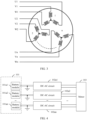
- FIG. 3 is a schematic diagram of arrangement of motor windings according to an embodiment of this application.
- the arrangement manner of the motor windings shown in the figure corresponds to FIG. 2 .
- a quantity of the windings of the motor is n times of 3, where n is an integer greater than or equal to 2. That is, the motor includes n three-phase windings: U1/V1/W1, U2/V2/W2, ..., and Un/Vn/Wn.
- U1/V1/W1, U2/V2/W2, ..., and Un/Vn/Wn For each three-phase winding, three phases of each three-phase winding are interlaced with each other at phase angles of 120°.
- every two adjacent three-phase windings are interlaced at a first preset angle, and a value range of the first preset angle is 0° to 180°.
- a phase angle of the winding U2/V2/W2 may lead a phase angle of the winding U1/V1/W1 by 60°
- a phase angle of the winding U3/V3/W3 may lead the phase angle of the winding U2/V2/W2 by 60°.
- a specific value of the first preset angle may be determined based on an actual situation. This is not specifically limited in this embodiment of this application.
- FIG. 4 is a schematic diagram of another motor drive system according to an embodiment of this application.
- the drive system shown in FIG. 4 differs from the drive system shown in FIG. 2 in that a winding used by a motor 103 is a two-phase winding.
- a correspondingly connected DC-AC circuit may be a DC-AC circuit of a full-bridge structure.
- FIG. 5 is a schematic diagram of another arrangement of motor windings according to an embodiment of this application.
- a quantity of the windings of the motor is n times of 2, where n is an integer greater than or equal to 2. That is, the motor includes n two-phase windings: U1/V1, U2/V2, ..., and Un/Vn. Both ends of each phase of each winding of the motor are led out and connected to a DC-AC circuit.
- the power battery pack corresponding to the drive system includes at least two battery modules that are independent of each other.
- the drive system includes at least two DC-AC circuits, and the battery modules one-to-one correspond to the DC-AC circuits.
- a quantity of the battery modules is the same as a quantity of the DC-AC circuits.
- Each battery module is correspondingly connected to an input end of one DC-AC circuit, and an output end of each DC-AC circuit is correspondingly connected to one winding of the motor, that is, the DC-AC circuits one-to-one correspond to each winding of the motor.
- the DC-AC circuit can convert a direct current provided by the corresponding battery module into an alternating current to drive a winding of the motor.
- the power battery pack is divided into battery modules that are independent of each other, and each battery module supplies power to a winding of the motor by using a DC-AC circuit corresponding to the battery module. Therefore, when a battery module is faulty, normal power supply by another battery module is not affected, and the another battery module that supplies power normally can continue to supply power to a corresponding motor winding. In this way, the electric vehicle can continue to travel.
- the drive system further includes a component having a control function, and can control a working status of each DC-AC circuit.
- a component having a control function can control a working status of each DC-AC circuit.
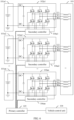
- FIG. 6 is a schematic diagram of still another motor drive system according to an embodiment of this application.
- a motor of the drive system uses a three-phase winding, and further includes a vehicle control unit 104, a primary controller 105, and secondary controllers 106a1 to 106an.
- Each DC-AC circuit corresponds to one secondary controller.
- a quantity of the secondary controllers is the same as a quantity of the DC-AC circuits.
- the secondary controller can control a working status of a correspondingly connected DC-AC circuit.
- the secondary controller may control the working status of the DC-AC circuit by sending a drive signal to each controllable switching transistor in the correspondingly connected DC-AC circuit.
- the drive signal may be a PWM (Pulse Width Modulation, pulse-width modulation) signal.
- Working data of batteries in a power battery pack may be collected by using a temperature sensor, a voltage sensor, a current sensor, and the like. Whether a battery is faulty may be determined based on the sampled working data.
- the vehicle control unit 104 may determine a faulty battery module based on the sampled working data.
- another component having a data processing function on an electric vehicle may determine a faulty battery module based on the sampled working data, and notify the vehicle control unit 104 of a corresponding result. This is not specifically limited in this embodiment of this application.
- the vehicle control unit 104 When determining that some battery modules are faulty, the vehicle control unit 104 sends a disable instruction to a secondary controller corresponding to the faulty battery module by using the primary controller 105, so that the secondary controller receiving the disable instruction controls a corresponding DC-AC circuit to stop working, implementing fault isolation.
- the vehicle control unit 104 may further report a fault status to a driver, for example, by displaying the fault status on a display of the vehicle or giving a voice notification.
- a DC-AC circuit corresponding to another battery module that works normally may continue to work or be disabled based on a control logic of the vehicle control unit 104 or an instruction delivered by the vehicle driver.
- the vehicle control unit 104 may further determine fault severity and correspondingly execute different control logics.
- the vehicle control unit 104 may send a disable instruction to all secondary controllers by using the primary controller 105, so that all DC-AC circuits stop working, and the driver may further be prompted to leave the vehicle.
- the vehicle control unit 104 when determining that a battery module has a minor fault, for example, low battery or poor contact of the battery, the vehicle control unit 104 sends a disable instruction to a secondary controller corresponding to the faulty battery module by using the primary controller 105, so that the secondary controller controls a corresponding DC-AC circuit to stop working, and another battery module that works normally may continue to supply power to a corresponding motor winding. In this way, the vehicle can continue to travel.
- a minor fault for example, low battery or poor contact of the battery
- the vehicle control unit 104 sends a disable instruction to a secondary controller corresponding to the faulty battery module by using the primary controller 105, so that the secondary controller controls a corresponding DC-AC circuit to stop working, and another battery module that works normally may continue to supply power to a corresponding motor winding. In this way, the vehicle can continue to travel.
- FIG. 7 is a diagram of a control sequence of DC-AC circuits according to an embodiment of this application.
- the vehicle control unit 104 determines that a battery module 101ax is faulty (x may be any value from 1 to n) and the fault is a minor fault, the vehicle control unit 104 sends a disable instruction to a secondary controller corresponding to the faulty battery module 101ax by using the primary controller, so that the secondary controller controls the corresponding DC-AC circuit 102ax to stop working, and other DC-AC circuits such as 102a1 and 102a2 may continue to work normally. In this way, the electric vehicle can continue to travel.
- the vehicle control unit 104 may further determine a quantity of working DC-AC circuits based on a load of the motor.
- FIG. 8 is a sequence diagram of a correspondence between a load of a motor and a working status of each DC-AC circuit according to an embodiment of this application.
- the vehicle control unit 104 may obtain a load of the motor, and send a control instruction to the primary controller 105 based on the load.
- the primary controller 105 controls a quantity of working DC-AC circuits based on the control instruction, and the quantity of working DC-AC circuits is positively correlated with the load. In other words, as the load increases, more DC-AC circuits are gradually put into operation.
- the vehicle control unit when determining that a battery module is faulty, can send a disable instruction to a secondary controller corresponding to the faulty battery module by using the primary controller, so that the secondary controller receiving the disable instruction controls a corresponding DC-AC circuit to stop working, to reduce impact caused by the fault and implement fault isolation.
- the another battery module that supplies power normally can continue to supply power to a corresponding motor winding. In this way, the electric vehicle can continue to travel.
- the vehicle control unit can further send a control instruction to the primary controller based on a load of the motor, so that the primary controller controls a quantity of working DC-AC circuits based on the control instruction.
- a quantity of battery modules that supply power can be selected based on a scenario of the electric vehicle. This reduces energy consumption and prolongs an endurance mileage of a power battery pack.
- the fault of the motor winding includes at least one of a winding short-circuit fault and a winding open-circuit fault.
- the primary controller when it is determined that a motor winding is faulty, can control a DC-AC circuit corresponding to the faulty winding to stop working, implementing fault isolation.
- the vehicle control unit may determine a faulty motor winding, and send a disable instruction to a secondary controller corresponding to the faulty winding by using the primary controller, so that the secondary controller receiving the disable instruction controls a corresponding DC-AC circuit to stop working, implementing fault isolation.
- the vehicle control unit delivers a control instruction controlling a DC-AC circuit to a secondary controller by using the primary controller is used as an example.
- the following describes another manner of controlling the DC-AC circuit with reference to the accompanying drawings.
- the drive system provided in this embodiment of this application also includes a vehicle control unit 104, a primary controller 105, and secondary controllers 106a1 to 106an.
- the primary controller 105 in this embodiment of this application is configured to: send a disable instruction to a secondary controller corresponding to the faulty battery module, so that the secondary controller receiving the disable instruction controls a corresponding DC-AC circuit to stop working; and send fault information of the faulty battery module to the vehicle control unit 104.
- the vehicle control unit 104 is configured to notify a driver of the fault information, for example, by displaying the fault information on a display of a vehicle or giving a voice notification. Details are described below.
- Working data of batteries in a power battery pack may be collected by using a temperature sensor, a voltage sensor, a current sensor, and the like. Whether a battery is faulty may be determined based on the sampled working data.
- the primary controller 105 may determine a faulty battery module based on the sampled working data.
- another component having a data processing function on an electric vehicle may determine a faulty battery module based on the sampled working data, and notify the primary controller 105 of a corresponding result. This is not specifically limited in this embodiment of this application.
- the primary controller 105 When determining that a battery module is faulty, the primary controller 105 sends a disable instruction to a secondary controller corresponding to the faulty battery module, so that the secondary controller receiving the disable instruction controls a corresponding DC-AC circuit to stop working, implementing fault isolation.
- the primary controller 105 may further feed back the fault information to the vehicle control unit 105.
- a DC-AC circuit corresponding to another battery module that works normally may continue to work or be disabled based on a control logic of the primary controller 105 or an instruction delivered by the vehicle driver.
- the primary controller 105 may send a disable instruction to all secondary controllers, so that the secondary controllers control all DC-AC circuits to stop working.
- fault information may further be sent to the vehicle control unit 105, to prompt the driver to leave the vehicle.
- the primary controller 105 when determining that a battery module has a minor fault, for example, low battery or poor contact of the battery, the primary controller 105 sends a disable instruction only to a secondary controller corresponding to the faulty battery module, to control only a DC-AC circuit corresponding to the faulty battery module to stop working, and a DC-AC circuit corresponding to another battery module that works normally may normally work. In this way, the vehicle can continue to travel.
- a minor fault for example, low battery or poor contact of the battery
- the primary controller 105 sends a disable instruction only to a secondary controller corresponding to the faulty battery module, to control only a DC-AC circuit corresponding to the faulty battery module to stop working, and a DC-AC circuit corresponding to another battery module that works normally may normally work. In this way, the vehicle can continue to travel.
- the primary controller 105 determines that a battery module 101ax (x may be any value from 1 to n) is faulty and the fault is a minor fault
- the primary controller sends a disable instruction to a secondary controller 106ax, so that the secondary controller 106ax controls, based on the disable instruction, a DC-AC circuit 102ax to stop working, and another DC-AC circuit can continue to work normally. In this way, the electric vehicle can continue to travel.
- the vehicle control unit 104 may further determine a working status of each DC-AC circuit based on a load of the motor.
- the vehicle control unit 104 may obtain a load of the motor, and send a control instruction to the primary controller 105 based on the load.
- the control instruction may further include an ID of each DC-AC circuit that needs to be put into operation.
- the primary controller 105 may control, by using the secondary controller, a quantity of working DC-AC circuits based on the control instruction, and the quantity of working DC-AC circuits is positively correlated with the load. In other words, as the load increases, more DC-AC circuits are gradually put into operation.
- the primary controller when determining that a battery module is faulty, the primary controller sends a disable signal to a secondary controller corresponding to the faulty battery module, so that the secondary controller controls a corresponding DC-AC circuit to stop working, to reduce impact caused by the fault and implement fault isolation.
- a DC-AC circuit corresponding to another battery module that works normally may normally work. In this way, the vehicle can continue to travel, facilitating vehicle rescue. Therefore, redundancy of the drive system is further improved.
- the vehicle control unit can further send a control instruction to the primary controller based on a load of the motor, so that the primary controller controls, by using the secondary controller, a quantity of working DC-AC circuits based on the control instruction.
- a quantity of battery modules that supply power can be selected based on a scenario of the electric vehicle. This reduces energy consumption and prolongs an endurance mileage of a power battery pack.
- control system when a motor winding is faulty, the control system provided in this embodiment of this application can further perform fault isolation. Details are described below.
- the primary controller in this embodiment of this application can further send a disable instruction to a secondary controller corresponding to the faulty winding, so that the secondary controller controls a corresponding DC-AC circuit to stop working, implementing fault isolation.
- the vehicle control unit may determine a faulty motor winding, and send a disable instruction to a secondary controller corresponding to the faulty winding by using the primary controller, so that the secondary controller controls a corresponding DC-AC circuit to stop working, implementing fault isolation.
- a drive system includes a vehicle control unit, a primary controller, and a secondary controller.
- the following describes another manner of controlling a DC-AC circuit with reference to the accompanying drawings.
- FIG. 9 is a schematic diagram of yet another motor drive system according to an example of this application.
- the drive system corresponds to FIG. 2 .
- a motor uses a three-phase winding, and the drive system further includes a vehicle control unit 104 and a primary controller 105.
- the primary controller 105 is separately connected to each DC-AC circuit, and can control a working status of each DC-AC circuit.
- Working data of batteries in a power battery pack may be collected by using a temperature sensor, a voltage sensor, a current sensor, and the like. Whether a battery is faulty may be determined based on the sampled working data.
- the vehicle control unit 104 may determine a faulty battery module based on the sampled working data.
- another component having a data processing function on an electric vehicle may determine a faulty battery module based on the sampled working data, and notify the vehicle control unit 104 of a corresponding result. This is not specifically limited in this embodiment of this application.
- the battery module is numbered in advance, ID of the battery module is obtained, and a correspondence between the battery module and the ID is stored in the vehicle control unit 104.
- the vehicle control unit 104 can send a disable instruction to the primary controller 105.
- the disable instruction carries an ID of the faulty battery module, and can indicate a DC-AC circuit that specifically needs to be disabled.
- the primary controller 105 controls, based on the ID of the faulty battery module, a DC-AC circuit corresponding to the faulty battery module to stop working, implementing fault isolation.
- the vehicle control unit 104 may further notify a driver of a fault status, for example, by displaying the fault status on a display of the vehicle or giving a voice notification.
- a DC-AC circuit corresponding to another battery module that works normally may continue to work or be disabled based on a control logic of the vehicle control unit 104 or an instruction delivered by the vehicle driver.
- the vehicle control unit 104 may further determine fault severity and correspondingly execute different control logics.
- the vehicle control unit 104 may send, to the primary controller 105, a disable instruction carrying IDs of all battery modules, so that the primary controller 105 controls all DC-AC circuits to stop working, and the driver may further be prompted to leave the vehicle.
- a critical fault for example, a risk of fire or explosion
- the vehicle control unit 104 may control only a DC-AC circuit corresponding to the faulty battery module to stop working, and another battery module that works normally may continue to supply power to a corresponding motor winding. In this way, the vehicle can continue to travel to a maintenance point.
- the vehicle control unit 104 determines that a battery module 101ax (x may be any value from 1 to n) is faulty and the fault is a minor fault, the vehicle control unit sends, to the primary controller, a disable instruction carrying an ID of the battery module 101ax, so that the primary controller controls a DC-AC circuit 102ax to stop working, and other DC-AC circuits such as 102a1 and 102a2 may continue to work normally. In this way, the electric vehicle can continue to travel.
- a battery module 101ax x may be any value from 1 to n
- the vehicle control unit sends, to the primary controller, a disable instruction carrying an ID of the battery module 101ax, so that the primary controller controls a DC-AC circuit 102ax to stop working, and other DC-AC circuits such as 102a1 and 102a2 may continue to work normally. In this way, the electric vehicle can continue to travel.
- the vehicle control unit may further determine a working status of each DC-AC circuit based on a load of the motor.
- the vehicle control unit 104 may obtain a load of the motor, and send a control instruction to the primary controller 105 based on the load.
- the control instruction further includes an ID of each DC-AC circuit that needs to be put into operation.
- the primary controller 105 controls a quantity of working DC-AC circuits based on the control instruction, and the quantity of working DC-AC circuits is positively correlated with the load. In other words, as the load increases, more DC-AC circuits are gradually put into operation.
- the vehicle control unit when determining that a battery module is faulty, can send, to the primary controller, a disable instruction carrying an ID of the faulty battery module, so that the primary controller controls, based on the disable instruction, a corresponding DC-AC circuit to stop working, to reduce impact caused by the fault and implement fault isolation.
- a DC-AC circuit corresponding to another battery module that works normally may normally work. In this way, the vehicle can continue to travel, facilitating vehicle rescue. Therefore, redundancy of the drive system is further improved.
- a circuit structure is simplified and costs are reduced because no secondary controller is needed.
- the vehicle control unit can further send a control instruction to the primary controller based on a load of the motor, so that the primary controller controls a quantity of working DC-AC circuits based on the control instruction.
- a quantity of battery modules that supply power can be selected based on a scenario of the electric vehicle. This reduces energy consumption and prolongs an endurance mileage of a power battery pack.
- control system when a motor winding is faulty, the control system provided in this embodiment of this application can further perform fault isolation. Details are described below.
- the primary controller when it is determined that a motor winding is faulty, can control a DC-AC circuit corresponding to the faulty winding to stop working, implementing fault isolation.
- the vehicle control unit may determine a faulty motor winding, and send a disable instruction to the primary controller, so that the primary controller controls a corresponding DC-AC circuit to stop working, implementing fault isolation.
- the motor drive system provided in this example of this application also includes a vehicle control unit 104 and a primary controller 105.
- the primary controller 105 in this example of this application is configured to control a DC-AC circuit corresponding to the faulty battery module to stop working, and send fault information of the faulty battery module to the vehicle control unit 104.
- the vehicle control unit 105 is configured to notify a driver of the fault information, for example, by displaying the fault information on a display of a vehicle or giving a voice notification. Details are described below.
- Working data of batteries in a power battery pack may be collected by using a temperature sensor, a voltage sensor, a current sensor, and the like. Whether a battery is faulty may be determined based on the sampled working data.
- the primary controller 105 may determine a faulty battery module based on the sampled working data.
- another component having a data processing function on an electric vehicle may determine a faulty battery module based on the sampled working data, and notify the primary controller 105 of a corresponding result. This is not specifically limited in this example of this application.
- the primary controller 105 controls a DC-AC circuit corresponding to the faulty battery module to stop working, implementing fault isolation. In addition, fault information is fed back to the vehicle control unit 105.
- a DC-AC circuit corresponding to another battery module that works normally may continue to work or be disabled based on a control logic of the primary controller 105 or an instruction delivered by the vehicle driver.
- the primary controller 105 may further determine fault severity and correspondingly execute different control logics.
- the primary controller 105 may control all DC-AC circuits to stop working, and may further send fault information to the vehicle control unit 105, to prompt the driver to leave the vehicle.
- a critical fault for example, a potential risk of fire or explosion
- the primary controller 105 may control only a DC-AC circuit corresponding to the faulty battery module to stop working, and another battery module that works normally may continue to supply power to a corresponding motor winding. In this way, the vehicle can continue to travel.
- the primary controller 105 determines that a battery module 101ax (x may be any value from 1 to n) is faulty and the fault is a minor fault, the primary controller controls a DC-AC circuit 102ax to stop working, and other DC-AC circuits such as 102a1 and 102a2 may continue to work normally.
- a battery module 101ax x may be any value from 1 to n
- the primary controller controls a DC-AC circuit 102ax to stop working, and other DC-AC circuits such as 102a1 and 102a2 may continue to work normally.
- Another battery module that works normally may continue to supply power to a corresponding motor winding. In this way, the vehicle can continue to travel.
- the vehicle control unit 104 may further determine a working status of each DC-AC circuit based on a load of the motor.
- the vehicle control unit 104 may obtain a load of the motor, and send a control instruction to the primary controller 105 based on the load.
- the control instruction may further include an ID of each DC-AC circuit that needs to be put into operation.
- the primary controller 105 controls a quantity of working DC-AC circuits based on the control instruction, and the quantity of working DC-AC circuits is positively correlated with the load. In other words, as the load increases, more DC-AC circuits are gradually put into operation.
- the primary controller when determining that a battery module is faulty, can control a corresponding DC-AC circuit to stop working, to reduce impact caused by the fault and implement fault isolation.
- a DC-AC circuit corresponding to a battery module that works normally can be controlled to continue working, so that another battery module that works normally can continue to supply power to a corresponding motor winding, facilitating vehicle rescue. Therefore, redundancy of the drive system is further improved.
- a circuit structure is simplified and costs are reduced because no secondary controller is needed.
- the vehicle control unit can further send a control instruction to the primary controller based on a load of the motor, so that the primary controller controls a quantity of working DC-AC circuits based on the control instruction.
- a quantity of battery modules that supply power can be selected based on a scenario of the electric vehicle. This reduces energy consumption and prolongs an endurance mileage of a power battery pack.
- control system when a motor winding is faulty, the control system provided in this example of this application can further perform fault isolation. Details are described below.
- the primary controller in this embodiment of this application can control a DC-AC circuit corresponding to the faulty winding to stop working, implementing fault isolation.
- the vehicle control unit may determine a faulty motor winding, and notify the primary controller, so that the primary controller controls a corresponding DC-AC circuit to stop working, implementing fault isolation.
- a negative electrode of each battery module may or may not be connected to a common reference ground. This is not specifically limited in embodiments of this application.
- the DC-AC circuit is a two-level three-phase half-bridge circuit
- the DC-AC circuit may also be a two-level three-phase full-bridge circuit, a multi-level circuit, or another circuit that can implement direct current-alternating current conversion.
- the following uses an example in which the DC-AC circuit is a two-level three-phase full-bridge circuit for description.
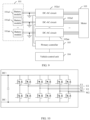
- FIG. 10 is a schematic diagram of a two-level three-phase full-bridge circuit according to an embodiment of this application.
- U1 and U2 are outputs of a first group of full-bridge inverters
- V1 and V2 are outputs of a second group of full-bridge inverters
- W1 and W2 are outputs of a third group of full-bridge inverters.
- the DC-AC circuit may alternatively have another implementation based on an actual requirement. Details are not described herein in this embodiment of this application.
- a motor uses a three-phase winding
- a DC-AC circuit uses a two-level three-phase half-bridge circuit
- a negative electrode of each battery module is connected to a common reference ground to describe a working principle of charging the battery module by using the drive system provided in this application.
- FIG. 11 is a schematic diagram of charging of a drive system according to an embodiment of this application.
- an external charger 200 may be connected. One end of the charger 200 is connected to a common tap of windings of a three-phase motor, and the other end is connected to the common reference ground of the battery modules of the drive system.
- the charger 200 may output a direct-current voltage, or may output an alternating-current voltage. The following provides separate descriptions.
- a current flow direction in a charging process is shown by arrow directions in FIG. 11 .
- the charging current sequentially flows through the motor winding, a DC-AC circuit, and the battery module, and flows back to the charger through the common reference ground.
- a controllable switching transistor in a DC-AC circuit may be controlled to convert a current flowing through the DC-AC circuit into a direct current, and then the direct current is transmitted to a corresponding battery module.
- the DC-AC circuit is configured to implement alternating current-direct current conversion, and is equivalent to an inverter.
- the drive system includes a vehicle control unit, a primary controller, and a secondary controller.
- the vehicle control unit determines, based on a type of an output current (a direct current or an alternating current) of a charging pile and working statuses of the battery modules and the windings (whether a fault occurs), a control instruction corresponding to each DC-AC circuit.
- the vehicle control unit sends the control instruction to each corresponding secondary controller by using the primary controller, so that each secondary controller controls a working status of a controllable switching transistor in a corresponding DC-AC circuit based on the control instruction, to charge batteries in the battery modules.
- the drive system includes a vehicle control unit, a primary controller, and a secondary controller.
- the primary controller determines, based on a type of an output current (a direct current or an alternating current) of a charging pile and working statuses of the battery modules and the windings (whether a fault occurs), a control instruction corresponding to each DC-AC circuit.
- the primary controller sends the control instruction to each corresponding secondary controller, so that each secondary controller controls a working status of a controllable switching transistor in a corresponding DC-AC circuit based on the control instruction, to charge batteries in the battery modules.
- the primary controller can further feed back charging information to the vehicle control unit, so that the vehicle control unit displays the charging information on a display.
- the charging information is not specifically limited in this embodiment of this application.
- the charging information may include an ID of a battery module that is being charged.
- the drive system includes a vehicle control unit and a primary controller.
- the vehicle control unit determines, based on a type of an output current (a direct current or an alternating current) of a charging pile and working statuses of the battery modules and the windings (whether a fault occurs), a control instruction corresponding to each DC-AC circuit.
- the vehicle control unit sends the control instruction to the primary controller, so that the primary controller controls a working status of a controllable switching transistor in a corresponding DC-AC circuit based on the control instruction, to charge batteries in the battery modules.
- the drive system includes a vehicle control unit and a primary controller.
- the primary controller controls, based on a type of an output current (a direct current or an alternating current) of a charging pile and working statuses of the battery modules and the windings (whether a fault occurs), a working status of a controllable switching transistor in each DC-AC circuit, to charge batteries in the battery modules.
- the primary controller can further feed back charging information to the vehicle control unit, so that the vehicle control unit displays the charging information on a display.
- the battery modules are independent of each other, and the charger can separately charge the battery modules.
- charging of the faulty battery module may be stopped, and another normal battery module can still be normally charged without being affected. Therefore, redundancy of the drive system is improved.
- an embodiment of this application further provides a power system.
- the power system may be used in an electric vehicle.
- FIG. 12 is a schematic diagram of a power system according to an embodiment of this application.
- a power system 300 includes a power battery pack 101, a drive system 100, and a motor 103.
- the drive system 100 is configured to drive windings of the motor 103.
- the power battery pack 101 includes at least two battery modules that are independent of each other.
- the battery modules one-to-one correspond to DC-AC circuits. That is, as shown in the figure, each battery module corresponds to one DC-AC circuit, and each DC-AC circuit corresponds to one winding of the motor.
- a quantity of the battery modules is the same as a quantity of the DC-AC circuits.
- Output voltages of the battery modules may be equal or not equal.
- quantities of batteries included in the battery modules may be equal or not equal. This is not specifically limited in this embodiment of this application.
- the drive system 100 includes DC-AC circuits 102a1 to 102an.
- the DC-AC circuit is configured to convert a direct current provided by the corresponding battery module into an alternating current to drive a winding of the motor.
- the motor 103 is configured to supply power to a load.
- the motor includes N windings, and a quantity of phases of each of the N windings may be 2 or 3. That is, the motor may include N two-phase windings or N three-phase windings. This is not specifically limited in this embodiment of this application.
- N is an integer greater than or equal to 2.
- Each winding of the motor 103 is correspondingly connected to an output end of one DC-AC circuit.
- the DC-AC circuit may be a full-bridge circuit, and two ends of each phase in each winding are respectively connected to two output ends of each phase in a corresponding DC-AC circuit.
- the DC-AC circuit may be a two-level three-phase half-bridge circuit, a two-level three-phase full-bridge circuit, or a multi-level circuit.
- a first end of each phase in each winding is correspondingly connected to an output end of each phase in one DC-AC circuit, and a second end of each phase in each winding is connected together.
- the windings of the motor may be six-phase windings, nine-phase windings, twelve-phase windings, fifteen-phase windings, or the like. This is not specifically limited in this embodiment of this application.
- a negative electrode of each battery module may or may not be connected to a common reference ground. This is not specifically limited in embodiments of this application.
- the power battery pack corresponding to the drive system of the power system includes at least two battery modules that are independent of each other.
- the drive system includes at least two DC-AC circuits, and the battery modules one-to-one correspond to the DC-AC circuits.
- a quantity of the battery modules is the same as a quantity of the DC-AC circuits.
- Each battery module is correspondingly connected to an input end of one DC-AC circuit, and an output end of each DC-AC circuit is correspondingly connected to one winding of the motor, that is, the DC-AC circuits one-to-one correspond to each winding of the motor.
- a quantity of phases of each winding of the motor may be 2 or 3.
- the DC-AC circuit can convert a direct current provided by the corresponding battery module into an alternating current to drive a winding of the motor.
- the power battery pack is divided into battery modules that are independent of each other, and each battery module supplies power to a winding of the motor by using a DC-AC circuit corresponding to the battery module. Therefore, when a battery module is faulty, normal power supply by another battery module is not affected, and the another battery module that supplies power normally can continue to supply power to a corresponding motor winding.
- the drive system can further control a quantity of working DC-AC circuits based on a load of the motor. That is, a quantity of battery modules that supply power can be selected based on a scenario in which an electric vehicle is located. This reduces energy consumption and prolongs an endurance mileage of the power battery pack.
- the power system provided in this embodiment of this application may be further used in another scenario in which a motor winding is driven by using a battery pack. This is not specifically limited in this embodiment of this application.
- an example of this application further provides a motor drive method.
- the following provides specific descriptions.
- FIG. 13 is a flowchart of a motor drive method according to an embodiment of this application.
- the method is used to drive a motor that uses a power battery pack as a power supply.
- the power battery pack includes at least two battery modules.
- the battery modules one-to-one correspond to DC-AC circuits.
- Each battery module corresponds to one DC-AC circuit, and each DC-AC circuit corresponds to one winding of the motor.
- a quantity of the battery modules is the same as a quantity of the DC-AC circuits.
- the windings of the motor may be two-phase windings or three-phase windings.
- the method is used to control a DC-AC circuit to convert a direct current provided by a corresponding battery module into an alternating current to drive a winding of the motor, and specifically includes the following steps.
- S401 Control a DC-AC circuit corresponding to a faulty battery module to stop working when it is determined that the battery module is faulty.
- S402 Control a DC-AC circuit corresponding to a battery module that is not faulty to work normally when it is determined that the battery module is not faulty.
- the drive system includes a vehicle control unit, a primary controller, and a secondary controller.
- the vehicle control unit When determining a battery module is faulty, the vehicle control unit sends a disable instruction to a secondary controller corresponding to the faulty battery module by using the primary controller, so that the secondary controller receiving the disable instruction controls a corresponding DC-AC circuit to stop working.
- the DC-AC circuit stops driving a winding of the motor, implementing fault isolation.
- the vehicle control unit may further report a fault status to a driver, for example, by displaying the fault status on a display of the vehicle or giving a voice notification.
- a DC-AC circuit corresponding to another battery module that works normally may continue to work or be disabled based on a control logic of the vehicle control unit or an instruction delivered by the vehicle driver.
- the drive system includes a vehicle control unit, a primary controller, and a secondary controller.
- the primary controller When determining that a battery module is faulty, the primary controller sends a disable instruction to a secondary controller corresponding to the faulty battery module, so that the secondary controller receiving the disable instruction controls a corresponding DC-AC circuit to stop working, implementing fault isolation. In addition, fault information is fed back to the vehicle control unit.
- a DC-AC circuit corresponding to another battery module that works normally may continue to work or be disabled based on a control logic of the primary controller or an instruction delivered by the vehicle driver.
- the drive system includes a vehicle control unit and a primary controller.
- the primary controller controls, based on an ID of a faulty battery module, a DC-AC circuit corresponding to the faulty battery module to stop working, implementing fault isolation.
- the vehicle control unit may further notify the driver of a fault status.
- a DC-AC circuit corresponding to another battery module that works normally may continue to work or be disabled based on a control logic of the vehicle control unit or an instruction delivered by the vehicle driver.
- the drive system includes a vehicle control unit and a primary controller.
- the primary controller When determining that a battery module is faulty, the primary controller controls a DC-AC circuit corresponding to the faulty battery module to stop working, implementing fault isolation. In addition, fault information is fed back to the vehicle control unit.
- a DC-AC circuit corresponding to another battery module that works normally may continue to work or be disabled based on a control logic of the primary controller or an instruction delivered by the vehicle driver.
- the vehicle control unit is further configured to obtain a load of the motor, and send a control instruction to the primary controller based on the load.
- the primary controller is further configured to control a quantity of working DC-AC circuits based on the control instruction, and the quantity of working DC-AC circuits is positively correlated with the load. In other words, as the load increases, more DC-AC circuits are gradually put into operation.
- the primary controller is further configured to control a DC-AC circuit corresponding to the faulty winding to stop working, implementing fault isolation.
- a DC-AC circuit corresponding to the faulty battery module stops working, to reduce impact caused by the fault and implement fault isolation.
- a DC-AC circuit corresponding to a battery module that works normally can be controlled to continue working, so that the battery module that works normally can continue to supply power to an electric vehicle. In this way, the vehicle can continue to travel, facilitating vehicle rescue. Therefore, redundancy of the drive system is further improved.
- an embodiment of this application further provides an electric vehicle.
- the following provides specific descriptions with reference to the accompanying drawing.
- FIG. 14 is a schematic diagram of an electric vehicle according to an embodiment of this application.
- An electric vehicle 1400 provided in this embodiment of this application includes a power system 300.
- the power system 300 specifically includes a power battery pack, a drive system, and a motor.
- the drive system is configured to drive windings of the motor.
- the power battery pack includes at least two battery modules that are independent of each other.
- the battery modules one-to-one correspond to DC-AC circuits. That is, as shown in the figure, each battery module corresponds to one DC-AC circuit, and each DC-AC circuit corresponds to one winding of the motor.
- a quantity of the battery modules is the same as a quantity of the DC-AC circuits.
- Output voltages of the battery modules may be equal or not equal.
- quantities of batteries included in the battery modules may be equal or not equal. This is not specifically limited in this embodiment of this application.
- the drive system further includes at least two DC-AC circuits.
- the DC-AC circuit is configured to convert a direct current provided by the corresponding battery module into an alternating current to drive a winding of the motor.
- the motor is configured to supply power to a load.
- the motor includes N windings, and a quantity of phases of each of the N windings may be 2 or 3. That is, the motor may include N two-phase windings or N three-phase windings. This is not specifically limited in this embodiment of this application.
- N is an integer greater than or equal to 2.
- Each winding of the motor is correspondingly connected to an output end of one DC-AC circuit.
- the electric vehicle provided in this embodiment of this application includes a power system.
- a power battery pack corresponding to a drive system of the power system includes at least two battery modules that are independent of each other.
- the drive system includes at least two DC-AC circuits, and the battery modules one-to-one correspond to the DC-AC circuits.
- a quantity of the battery modules is the same as a quantity of the DC-AC circuits.
- Each battery module is correspondingly connected to an input end of one DC-AC circuit, and an output end of each DC-AC circuit is correspondingly connected to one winding of the motor, that is, the DC-AC circuits one-to-one correspond to each winding of the motor.
- a quantity of phases of each winding of the motor may be 2 or 3.
- the DC-AC circuit can convert a direct current provided by the corresponding battery module into an alternating current to drive a winding of the motor.
- the power battery pack is divided into battery modules that are independent of each other, and each battery module supplies power to a winding of the motor by using a DC-AC circuit corresponding to the battery module. Therefore, when a battery module is faulty, normal power supply by another battery module is not affected, and the another battery module that supplies power normally can continue to supply power to a corresponding motor winding.
- the drive system can further control a quantity of working DC-AC circuits based on a load of the motor. That is, a quantity of battery modules that supply power can be selected based on a scenario in which an electric vehicle is located. This reduces energy consumption and prolongs an endurance mileage of the power battery pack.
- a type of the controllable switching transistor described in this application may be any one of the following: a relay, an insulated gate bipolar transistor (Insulated Gate Bipolar Transistor, IGBT), a metal-oxide-semiconductor field-effect transistor (Metal Oxide Semiconductor Field Effect Transistor, MOSFET), a SiC MOSFET (Silicon Carbide Metal Oxide Semiconductor, silicon carbide field-effect transistor), or the like. This is not specifically limited in embodiments of this application.
- At least one (item) refers to one or more and "a plurality of” refers to two or more.
- the term “and/or” is used to describe an association relationship between associated objects, and indicates that three relationships may exist. For example, “A and/or B” may indicate the following three cases: Only A exists, only B exists, and both A and B exist, where A and B may be singular or plural.
- the character “/” usually indicates an "or” relationship between the associated objects. At least one of the following items (pieces) or a similar expression thereof refers to any combination of these items, including any combination of singular items (pieces) or plural items (pieces).
- At least one of a, b, or c may indicate a, b, c, a and b, a and c, b and c, or a, b, and c, where a, b, and c may be singular or plural.
Landscapes
- Engineering & Computer Science (AREA)
- Power Engineering (AREA)
- Transportation (AREA)
- Mechanical Engineering (AREA)
- Life Sciences & Earth Sciences (AREA)
- Sustainable Development (AREA)
- Sustainable Energy (AREA)
- Electric Propulsion And Braking For Vehicles (AREA)
- Charge And Discharge Circuits For Batteries Or The Like (AREA)
- Inverter Devices (AREA)
- Control Of Ac Motors In General (AREA)
Description
- This application relates to the field of power electronic technologies, and in particular, to a motor drive system, a power system, and an electric vehicle.
- With intensified energy shortage and environmental pollution in modern society, electric vehicles have received extensive attention from all walks of life. A motor of the electric vehicle is driven by using a vehicle-mounted power battery pack as a power supply, so that the motor drives wheels of the vehicle to rotate, and then drives the vehicle to travel.
-
FIG. 1 is a schematic diagram of a motor drive system. - The motor drive system includes a
power battery pack 101, a DC-AC (direct current-alternating current)circuit 102, and amotor 103. Thepower battery pack 101 includes a plurality of batteries connected in series and in parallel. For example, the batteries may be first connected in parallel, and then connected in series. The DC-AC circuit can convert a direct current output by thepower battery pack 101 into an alternating current, and provide the alternating current for themotor 103. - When some batteries in the
power battery pack 101 are faulty, a protection system of the electric vehicle is triggered, and the protection system controls the power battery pack to stop supplying power to the DC-AC (direct current-alternating current)circuit 102. Consequently, the electric vehicle stops and cannot continue to travel. -
US 2018/065491 A1 discloses an apparatus including a multi-channel DC bus assembly comprising a first channel and a second channel, a first electromechanical device coupled to a positive DC link of the first channel, and a second electromechanical device coupled to a positive DC link of the second channel. A first DC-to-AC voltage inverter is coupled to the positive DC link of the first channel and a second DC-to-AC voltage inverter is coupled to the positive DC link of the second channel. -
US 2019/229670 A1 discloses an electric-motor driving apparatus that drives an electric motor having a winding structure in which a first multi-phase winding and a second multi-phase winding are wound. -
CN 110239350 A discloses a multichannel modular electric drive system for an electric automobile comprising n inverter units and a multichannel permanent magnet synchronous motor; each inverter unit comprises one group of storage batteries, a three-phase voltage-type inverter and one group of switching switches. -
JP 407087604A -
US 2018/361871 A1 discloses a motor driving apparatus incudes a driving circuit outputting a three-phase alternating current and a main controller, wherein the driving circuit comprises a U-phase electric driving circuit, a V-phase electric driving circuit, and a W-phase electric driving circuit, each of the electric driving circuits comprises n storage batteries and n corresponding electric driving, and wherein input ends of the n electric driving units are connected to the corresponding storage batteries and output ends of the n electric driving units are cascaded to output one phase of the three-phase alternating current. -
JP2019068575A - To resolve the foregoing technical problem, embodiments of this application provide a motor drive system, a power system, and an electric vehicle. In this way, a vehicle can continue to travel when some batteries in a power battery pack are faulty. The invention is defined in the appended claims.
- According to a first aspect, this application provides a motor drive system, configured to drive a motor that uses a power battery pack as a power supply. The power battery pack includes at least two battery modules that are independent of each other, the drive system includes at least two direct current-alternating current DC-AC circuits, and the battery modules one-to-one correspond to the DC-AC circuits. Each battery module is correspondingly connected to an input end of one DC-AC circuit, and an output end of each DC-AC circuit is connected to a corresponding winding of the motor. The DC-AC circuit converts a direct current provided by the corresponding battery module into an alternating current to drive the corresponding winding of the motor.
- The power battery pack is divided into battery modules that are independent of each other, and each battery module supplies power to a winding of the motor by using a DC-AC circuit corresponding to the battery module. Therefore, when a battery module is faulty, normal power supply by another battery module is not affected, and the another battery module that supplies power normally can continue to supply power to a corresponding motor winding.
- With reference to the first aspect, the drive system further includes a vehicle control unit, a primary controller, and at least two secondary controllers. Each DC-AC circuit is corresponding to one secondary controller. When it is determined that a battery module is faulty, the vehicle control unit sends a disable instruction to a secondary controller corresponding to the faulty battery module by using the primary controller, so that the secondary controller receiving the disable instruction controls a corresponding DC-AC circuit to stop working.
- Each DC-AC circuit corresponds to one secondary controller. In other words, a quantity of the secondary controllers is the same as a quantity of the DC-AC circuits. When determining that a battery module is faulty, the vehicle control unit can send a disable instruction to a secondary controller corresponding to the faulty battery module by using the primary controller, so that the secondary controller receiving the disable instruction controls a corresponding DC-AC circuit to stop working. Impact caused by the fault is reduced and fault isolation is implemented. In addition, the another battery module that supplies power normally can continue to supply power to a corresponding motor winding. In this way, the electric vehicle can continue to travel.
- With reference to the first aspect, in a first possible implementation, when it is determined that a battery module is faulty, the vehicle control unit sends a disable instruction to the primary controller, and the disable instruction carries an ID of the faulty battery module. When receiving the disable instruction, the primary controller controls, based on the ID of the faulty battery module, a DC-AC circuit corresponding to the faulty battery module to stop working.
- In this implementation, impact caused by the fault can be reduced, fault isolation can be implemented, and a DC-AC circuit corresponding to another battery module that works normally can work normally. In this way, a vehicle can continue to travel, facilitating vehicle rescue. Therefore, redundancy of the drive system is further improved. In addition, a circuit structure is simplified and costs are reduced because no secondary controller is needed.
- With reference to any one of the first aspect and the foregoing implementations, in a second possible implementation, when it is determined that a battery module is faulty, the primary controller is configured to control a DC-AC circuit corresponding to the faulty battery module to stop working, and send fault information of the faulty battery module to the vehicle control unit. The vehicle control unit is configured to display the fault information on a display.
- In this implementation, when it is determined that a battery module is faulty, the primary controller can control a corresponding DC-AC circuit to stop working, to reduce impact caused by the fault and implement fault isolation. In addition, a DC-AC circuit corresponding to a battery module that works normally can be controlled to continue working, so that another battery module that works normally can continue to supply power to a corresponding motor winding, facilitating vehicle rescue. Therefore, redundancy of the drive system is further improved. In addition, a circuit structure is simplified and costs are reduced because no secondary controller is needed.
- With reference to any one of the first aspect and the foregoing implementations, in a third possible implementation, when it is determined that a battery module is faulty, the primary controller sends a disable instruction to a secondary controller corresponding to the faulty battery module, so that the secondary controller receiving the disable instruction controls a corresponding DC-AC circuit to stop working. In addition, fault information of the faulty battery module is sent to the vehicle control unit.
- In this implementation, impact caused by the fault can be reduced, fault isolation can be implemented, and a DC-AC circuit corresponding to a battery module that works normally can be controlled to continue to work, so that another battery module that works normally can continue to supply power to a corresponding motor winding, facilitating vehicle rescue. Therefore, redundancy of the drive system is further improved.
- With reference to any one of the first aspect and the foregoing implementations, in a fourth possible implementation, the vehicle control unit is further configured to obtain a load of the motor, and send a control instruction to the primary controller based on the load. The primary controller is further configured to control a quantity of working DC-AC circuits based on the control instruction, and the quantity of working DC-AC circuits is positively correlated with the load.
- Therefore, a quantity of battery modules that supply power can be selected based on a scenario of the electric vehicle. This reduces energy consumption and prolongs an endurance mileage of the power battery pack.
- With reference to any one of the first aspect and the foregoing implementations, in a fifth possible implementation, when it is determined that a winding of the motor is faulty, the primary controller is further configured to control a DC-AC circuit corresponding to the faulty winding to stop working.
- Therefore, when a winding of the motor is faulty, a DC-AC circuit corresponding to the faulty winding can be controlled in time to stop working, implementing fault isolation.
- With reference to any one of the first aspect and the foregoing implementations, in a sixth possible implementation, when a winding of the motor is three-phase winding, three phases of each three-phase winding are interlaced with each other at phase angles of 120°.
- With reference to any one of the first aspect and the foregoing implementations, in an seventh possible implementation, when a winding of the motor is three-phase winding, every two adjacent three-phase windings are interlaced at a first preset angle, and a value range of the first preset angle is 0° to 180°. For example, there are three three-phase windings: U1/V1/W1, U2/V2/W2, and U3/V3/W3. When the first preset angle is 60°, a phase angle of the winding U2/V2/W2 may lead a phase angle of the winding U1/V1/W1 by 60°, and a phase angle of the winding U3/V3/W3 may lead the phase angle of the winding U2/V2/W2 by 60°.
- With reference to any one of the first aspect and the foregoing implementations, in a eighth possible implementation, the DC-AC circuit is a two-level three-phase half-bridge circuit, a two-level three-phase full-bridge circuit, or a multi-level circuit.
- With reference to any one of the first aspect and the foregoing implementations, in a ninth possible implementation, when the DC-AC circuit is a two-level three-phase half-bridge circuit, a negative electrode of each battery module is connected to a common reference ground.
- With reference to any one of the first aspect and the foregoing implementations, in an tenth possible implementation, the drive system further includes a charger. When the DC-AC circuit is a two-level three-phase half-bridge circuit, and the negative electrode of each battery module is connected to the common reference ground, a first end of the charger is connected to a common tap of windings of the motor, and a second end of the charger is connected to the common reference ground.
- The charger may output a direct-current voltage, and may also output an alternating-current voltage. When the charger outputs a direct current, the charging current flows through the motor winding, the DC-AC circuit, the battery module, the common reference ground, and flows back to the charger.
- When the charger outputs an alternating current, a controllable switching transistor in a DC-AC circuit may be controlled to convert a current flowing through the DC-AC circuit into a direct current, and then the direct current is transmitted to a corresponding battery module. In this case, the DC-AC circuit is configured to implement alternating current-direct current conversion, and is equivalent to an inverter.
- In a charging process, the battery modules are independent of each other, and the charger can separately charge the battery modules. For a faulty battery module, charging of the faulty battery module may be stopped, and another normal battery module can still be normally charged without being affected. Therefore, redundancy of the drive system is improved.
- According to a second aspect, this application provides a power system. The power system includes a motor, a power battery pack, and the drive system provided in any one of the foregoing implementations. The power battery pack includes at least two battery modules that are independent of each other, the drive system is configured to drive windings of the motor, and the motor is configured to supply power to a load. The motor includes N windings, a quantity of phases of each of the N windings is 2 or 3, and N is an integer greater than or equal to 2.
- The power system divides the power battery pack into battery modules that are independent of each other, and each battery module supplies power to a winding of the motor by using a DC-AC circuit corresponding to the battery module. Therefore, when a battery module is faulty, normal power supply by another battery module is not affected, and the another battery module that supplies power normally can continue to supply power to a corresponding motor winding.
- With reference to the second aspect, in a first possible implementation, each winding is correspondingly connected to an output end of one DC-AC circuit.
- With reference to any one of the second aspect and the foregoing possible implementation, in a second possible implementation, when the quantity of phases of each winding is 2, two ends of each phase in each winding are respectively connected to two output ends of each phase in a corresponding DC-AC circuit.
- With reference to any one of the second aspect and the foregoing possible implementations, in a third possible implementation, when the quantity of phases of each winding is 3, a first end of each phase in each winding is correspondingly connected to an output end of each phase in one DC-AC circuit, and a second end of each phase in each winding is connected together.
- With reference to any one of the second aspect and the foregoing possible implementations, in a fourth possible implementation, a negative electrode of each battery module is connected to a common reference ground. In this case, when a charger is used to charge the power battery pack, one end of the charger is connected to a common tap of windings of a three-phase motor, and the other end is connected to the common reference ground of the battery modules of the drive system.
- With reference to any one of the second aspect and the foregoing possible implementations, in a fifth possible implementation, when a quantity of the windings of the motor is N times of 3, the windings of the motor may be any one of the following: six-phase windings, nine-phase windings, twelve-phase windings, or fifteen-phase windings.
- According to a third aspect, this application further provides an electric vehicle, including the power system according to any one of the foregoing possible implementations. The power system divides a power battery pack into battery modules that are independent of each other, and each battery module supplies power to a winding of the motor by using a DC-AC circuit corresponding to the battery module. Therefore, when a battery module is faulty, normal power supply by another battery module is not affected, and the another battery module that supplies power normally can continue to supply power to a corresponding motor winding.
- The solutions provided in this application have at least the following advantages.
- The power battery pack corresponding to the drive system includes at least two battery modules that are independent of each other. The drive system includes at least two DC-AC circuits, and the battery modules one-to-one correspond to the DC-AC circuits. In other words, a quantity of the battery modules is the same as a quantity of the DC-AC circuits. Each battery module is correspondingly connected to an input end of one DC-AC circuit, and an output end of each DC-AC circuit is connected to one corresponding winding of the motor, that is, the DC-AC circuits one-to-one correspond to each winding of the motor. The DC-AC circuit can convert a direct current provided by the corresponding battery module into an alternating current to drive a winding of the motor. In the solutions of this application, the power battery pack is divided into battery modules that are independent of each other, and each battery module supplies power to a winding of the motor by using a DC-AC circuit corresponding to the battery module. Therefore, when a battery module is faulty, normal power supply by another battery module is not affected, and the another battery module that supplies power normally can continue to supply power to a corresponding motor winding.
-
-
FIG. 1 is a schematic diagram of a motor drive system; -
FIG. 2 is a schematic diagram of a motor drive system according to an embodiment of this application; -
FIG. 3 is a schematic diagram of arrangement of motor windings according to an embodiment of this application; -
FIG. 4 is a schematic diagram of another motor drive system according to an embodiment of this application; -
FIG. 5 is a schematic diagram of another arrangement of motor windings according to an embodiment of this application; -
FIG. 6 is a schematic diagram of still another motor drive system according to an embodiment of this application; -
FIG. 7 is a diagram of a control sequence of DC-AC circuits according to an embodiment of this application; -
FIG. 8 is a sequence diagram of a correspondence between a load of a motor and a working status of each DC-AC circuit according to an embodiment of this application; -
FIG. 9 is a schematic diagram of yet another motor drive system according to an example of this application; -
FIG. 10 is a schematic diagram of a two-level three-phase full-bridge circuit according to an embodiment of this application; -
FIG. 11 is a schematic diagram of charging of a drive system according to an embodiment of this application; -
FIG. 12 is a schematic diagram of a power system according to an example of this application; -
FIG. 13 is a flowchart of a motor drive method according to an example of this application; and -
FIG. 14 is a schematic diagram of an electric vehicle according to an embodiment of this application. - To enable a person skilled in the art to better understand technical solutions provided in embodiments of this application, the following first describes a motor drive system.
- Still refer to the motor drive system shown in
FIG. 1 . Apower battery pack 101 of an electric vehicle includes a plurality of batteries connected in series and in parallel. Generally, the batteries are first connected in parallel, and then connected in series. No switch is disposed inside the power battery pack. Therefore, a high-voltage direct current continuously exists at two ends of the power battery pack, and a voltage range is generally between 200 V and 800 V A DC-AC circuit 102 can invert a direct current that is output by thepower battery pack 101 into an alternating current, and provide the alternating current for amotor 103. - When some batteries in the power battery pack are faulty, a protection system of the electric vehicle is triggered. The protection system controls the power battery pack to stop supplying power to the DC-
AC circuit 102, so that the electric vehicle stops. In actual application, the electric vehicle can only passively wait for rescue, but cannot actively travel to a maintenance station. - To resolve the foregoing technical problem, this application provides a motor drive system, a power system, and a drive method. A power battery pack corresponding to the drive system includes at least two battery modules that are independent of each other. The drive system includes at least two DC-AC circuits, and the battery modules one-to-one correspond to the DC-AC circuits. In other words, a quantity of the battery modules is the same as a quantity of the DC-AC circuits. Each battery module is correspondingly connected to an input end of one DC-AC circuit, and an output end of each DC-AC circuit is correspondingly connected to one winding of the motor, that is, the DC-AC circuits one-to-one correspond to each winding of the motor. When a battery module is faulty, normal power supply by another battery module is not affected, and the another battery module that normally supplies power may continue to supply power to a corresponding motor winding. In this way, a vehicle can continue to travel.
- To make a person skilled in the art better understand the technical solutions in this application, the following clearly describes the technical solutions in embodiments of this application with reference to the accompanying drawings in embodiments of this application.
- It may be understood that terms such as "first" and "second" in embodiments of this application are merely used for ease of description, and do not constitute a limitation on this application.
- An embodiment of this application provides a motor drive system, used in an electric vehicle, and specifically configured to drive a motor of the electric vehicle. The electric vehicle includes a power battery pack. The power battery pack may include a plurality of batteries. The plurality of batteries form at least two battery modules that are independent of each other. A quantity of battery modules may be determined based on an actual situation. This is not specifically limited in this embodiment of this application. The following provides specific descriptions with reference to the accompanying drawings.
- Refer to
FIG. 2. FIG. 2 is a schematic diagram of a motor drive system according to an embodiment of this application. - The drive system includes DC-AC circuits 102a1 to 102an.
- Battery modules are 101a1, 101a2, ..., and 101an, and the battery modules are independent of each other, n indicates a quantity of the battery modules. For example, when n = 2, the power battery pack includes a battery module 101a1 and a battery module 101a2.
- Output voltages of the battery modules may be equal or not equal. In other words, quantities of batteries included in the battery modules may be equal or not equal. This is not specifically limited in this embodiment of this application.
- For example, an output voltage of the battery module 101a1 may be 36 V, and an output voltage of the battery module 101a2 may be 24 V
- In actual application, an insulation system between a live metal part of the battery module and a metal part of a vehicle frame may be damaged, or insulation performance may deteriorate (which may be caused by abnormalities such as external force extrusion, collision, or puncture of the battery module in actual application). This may cause uncontrollable discharge of battery energy, electric leakage, or the like. To reduce safety risks, the output voltage of the battery module 101a1 may be set to be not higher than a safe voltage across a human body.
- A quantity of the DC-AC circuits is the same as a quantity of the battery modules, and each battery module is correspondingly connected to an input end of one DC-AC circuit. To be specific, the battery module 101a1 is connected to the DC-AC circuit 102a1, the battery module 101a2 is connected to the DC-AC circuit 102a2, ..., and the battery module 101an is connected to the DC-AC circuit 102an.
- An output end of each DC-AC circuit is correspondingly connected to a winding of a
motor 103, and a quantity of the motor windings is the same as a quantity of the DC-AC circuits. - In
FIG. 2 , the motor winding being a three-phase winding is used as an example. In this case, a correspondingly connected DC-AC circuit may be a two-level three-phase half-bridge DC-AC circuit, a two-level three-phase full-bridge DC-AC circuit, or a multi-level DC-AC circuit. - The DC-AC circuit is configured to convert a direct current provided by the corresponding battery module into an alternating current to drive a winding of the
motor 103. - The battery modules correspondingly connected to the DC-AC circuits are independent of each other. When some battery modules are faulty, normal power supply by another battery module is not affected. In actual application, the DC-AC circuit that is correspondingly connected to the faulty battery module may further stop working, implementing fault source isolation. This prevents escalation of fault impact and reduces an accident risk.
- For example, when the battery module 101a1 is faulty, the DC-AC circuit 102a1 correspondingly connected to the battery module 101a1 stops working, so that the faulty battery module 101a1 stops supplying power to the corresponding motor winding.
- In this case, another battery module that works normally can continue to supply power to a corresponding motor winding. In this way, the vehicle can continue to travel.
- Refer to
FIG. 3. FIG. 3 is a schematic diagram of arrangement of motor windings according to an embodiment of this application. - The arrangement manner of the motor windings shown in the figure corresponds to
FIG. 2 . A quantity of the windings of the motor is n times of 3, where n is an integer greater than or equal to 2. That is, the motor includes n three-phase windings: U1/V1/W1, U2/V2/W2, ..., and Un/Vn/Wn. For each three-phase winding, three phases of each three-phase winding are interlaced with each other at phase angles of 120°. - In addition, every two adjacent three-phase windings are interlaced at a first preset angle, and a value range of the first preset angle is 0° to 180°. For example, when n = 3 and the first preset angle is 60°, a phase angle of the winding U2/V2/W2 may lead a phase angle of the winding U1/V1/W1 by 60°, and a phase angle of the winding U3/V3/W3 may lead the phase angle of the winding U2/V2/W2 by 60°. A specific value of the first preset angle may be determined based on an actual situation. This is not specifically limited in this embodiment of this application.
- Refer to
FIG. 4. FIG. 4 is a schematic diagram of another motor drive system according to an embodiment of this application. - The drive system shown in
FIG. 4 differs from the drive system shown inFIG. 2 in that a winding used by amotor 103 is a two-phase winding. In this case, a correspondingly connected DC-AC circuit may be a DC-AC circuit of a full-bridge structure. - For descriptions of battery modules and a working principle, refer to a corresponding part in the description in
FIG. 2 . Details are not described herein again. - Refer to
FIG. 5. FIG. 5 is a schematic diagram of another arrangement of motor windings according to an embodiment of this application. - The arrangement manner of the motor windings shown in the figure corresponds to
FIG. 4 . In this case, a quantity of the windings of the motor is n times of 2, where n is an integer greater than or equal to 2. That is, the motor includes n two-phase windings: U1/V1, U2/V2, ..., and Un/Vn. Both ends of each phase of each winding of the motor are led out and connected to a DC-AC circuit. - In conclusion, the power battery pack corresponding to the drive system provided in this embodiment of this application includes at least two battery modules that are independent of each other. The drive system includes at least two DC-AC circuits, and the battery modules one-to-one correspond to the DC-AC circuits. In other words, a quantity of the battery modules is the same as a quantity of the DC-AC circuits. Each battery module is correspondingly connected to an input end of one DC-AC circuit, and an output end of each DC-AC circuit is correspondingly connected to one winding of the motor, that is, the DC-AC circuits one-to-one correspond to each winding of the motor. The DC-AC circuit can convert a direct current provided by the corresponding battery module into an alternating current to drive a winding of the motor. In the solutions of this application, the power battery pack is divided into battery modules that are independent of each other, and each battery module supplies power to a winding of the motor by using a DC-AC circuit corresponding to the battery module. Therefore, when a battery module is faulty, normal power supply by another battery module is not affected, and the another battery module that supplies power normally can continue to supply power to a corresponding motor winding. In this way, the electric vehicle can continue to travel.
- The drive system further includes a component having a control function, and can control a working status of each DC-AC circuit. The following specifically describes an implementation and a working principle of the component having a control function with reference to the accompanying drawings. In the following embodiment, an example in which the winding of the motor is a three-phase winding is used. It may be understood that a principle is similar when the winding of the motor is a two-phase winding.
- Refer to
FIG. 6. FIG. 6 is a schematic diagram of still another motor drive system according to an embodiment of this application. - A motor of the drive system uses a three-phase winding, and further includes a
vehicle control unit 104, aprimary controller 105, and secondary controllers 106a1 to 106an. - Each DC-AC circuit corresponds to one secondary controller. In other words, a quantity of the secondary controllers is the same as a quantity of the DC-AC circuits. The secondary controller can control a working status of a correspondingly connected DC-AC circuit. In actual application, the secondary controller may control the working status of the DC-AC circuit by sending a drive signal to each controllable switching transistor in the correspondingly connected DC-AC circuit. The drive signal may be a PWM (Pulse Width Modulation, pulse-width modulation) signal.
- Working data of batteries in a power battery pack may be collected by using a temperature sensor, a voltage sensor, a current sensor, and the like. Whether a battery is faulty may be determined based on the sampled working data.
- In a possible implementation, the
vehicle control unit 104 may determine a faulty battery module based on the sampled working data. In another possible implementation, another component having a data processing function on an electric vehicle may determine a faulty battery module based on the sampled working data, and notify thevehicle control unit 104 of a corresponding result. This is not specifically limited in this embodiment of this application. - When determining that some battery modules are faulty, the
vehicle control unit 104 sends a disable instruction to a secondary controller corresponding to the faulty battery module by using theprimary controller 105, so that the secondary controller receiving the disable instruction controls a corresponding DC-AC circuit to stop working, implementing fault isolation. - In addition, the
vehicle control unit 104 may further report a fault status to a driver, for example, by displaying the fault status on a display of the vehicle or giving a voice notification. - A DC-AC circuit corresponding to another battery module that works normally may continue to work or be disabled based on a control logic of the
vehicle control unit 104 or an instruction delivered by the vehicle driver. - In actual application, the
vehicle control unit 104 may further determine fault severity and correspondingly execute different control logics. - For example, when determining that a battery module has a critical fault, for example, a risk of fire or explosion, the
vehicle control unit 104 may send a disable instruction to all secondary controllers by using theprimary controller 105, so that all DC-AC circuits stop working, and the driver may further be prompted to leave the vehicle. - For another example, when determining that a battery module has a minor fault, for example, low battery or poor contact of the battery, the
vehicle control unit 104 sends a disable instruction to a secondary controller corresponding to the faulty battery module by using theprimary controller 105, so that the secondary controller controls a corresponding DC-AC circuit to stop working, and another battery module that works normally may continue to supply power to a corresponding motor winding. In this way, the vehicle can continue to travel. - The following provides specific descriptions with reference to the accompanying drawings.
- Refer to
FIG. 7. FIG. 7 is a diagram of a control sequence of DC-AC circuits according to an embodiment of this application. - In an example in which the
vehicle control unit 104 determines that a battery module 101ax is faulty (x may be any value from 1 to n) and the fault is a minor fault, thevehicle control unit 104 sends a disable instruction to a secondary controller corresponding to the faulty battery module 101ax by using the primary controller, so that the secondary controller controls the corresponding DC-AC circuit 102ax to stop working, and other DC-AC circuits such as 102a1 and 102a2 may continue to work normally. In this way, the electric vehicle can continue to travel. - The
vehicle control unit 104 may further determine a quantity of working DC-AC circuits based on a load of the motor. The following provides specific descriptions with reference to the accompanying drawings. - Refer to
FIG. 8. FIG. 8 is a sequence diagram of a correspondence between a load of a motor and a working status of each DC-AC circuit according to an embodiment of this application. - The
vehicle control unit 104 may obtain a load of the motor, and send a control instruction to theprimary controller 105 based on the load. - The
primary controller 105 controls a quantity of working DC-AC circuits based on the control instruction, and the quantity of working DC-AC circuits is positively correlated with the load. In other words, as the load increases, more DC-AC circuits are gradually put into operation. - In conclusion, according to the control system provided in this embodiment of this application, when determining that a battery module is faulty, the vehicle control unit can send a disable instruction to a secondary controller corresponding to the faulty battery module by using the primary controller, so that the secondary controller receiving the disable instruction controls a corresponding DC-AC circuit to stop working, to reduce impact caused by the fault and implement fault isolation. In addition, the another battery module that supplies power normally can continue to supply power to a corresponding motor winding. In this way, the electric vehicle can continue to travel.
- Further, according to the motor drive system provided in this embodiment of this application, the vehicle control unit can further send a control instruction to the primary controller based on a load of the motor, so that the primary controller controls a quantity of working DC-AC circuits based on the control instruction. In other words, a quantity of battery modules that supply power can be selected based on a scenario of the electric vehicle. This reduces energy consumption and prolongs an endurance mileage of a power battery pack.
- In addition, when a motor winding is faulty, the control system provided in this embodiment of this application can further perform fault isolation. Details are described below. The fault of the motor winding includes at least one of a winding short-circuit fault and a winding open-circuit fault.
- In a possible implementation, when it is determined that a motor winding is faulty, the primary controller can control a DC-AC circuit corresponding to the faulty winding to stop working, implementing fault isolation.
- In another possible implementation, the vehicle control unit may determine a faulty motor winding, and send a disable instruction to a secondary controller corresponding to the faulty winding by using the primary controller, so that the secondary controller receiving the disable instruction controls a corresponding DC-AC circuit to stop working, implementing fault isolation.
- In the foregoing embodiment, that the vehicle control unit delivers a control instruction controlling a DC-AC circuit to a secondary controller by using the primary controller is used as an example. The following describes another manner of controlling the DC-AC circuit with reference to the accompanying drawings.
- Still refer to the motor drive system shown in
FIG. 6 . The drive system provided in this embodiment of this application also includes avehicle control unit 104, aprimary controller 105, and secondary controllers 106a1 to 106an. A difference lies in that, when it is determined that a battery module is faulty, theprimary controller 105 in this embodiment of this application is configured to: send a disable instruction to a secondary controller corresponding to the faulty battery module, so that the secondary controller receiving the disable instruction controls a corresponding DC-AC circuit to stop working; and send fault information of the faulty battery module to thevehicle control unit 104. Thevehicle control unit 104 is configured to notify a driver of the fault information, for example, by displaying the fault information on a display of a vehicle or giving a voice notification. Details are described below. - Working data of batteries in a power battery pack may be collected by using a temperature sensor, a voltage sensor, a current sensor, and the like. Whether a battery is faulty may be determined based on the sampled working data.
- In a possible implementation, the
primary controller 105 may determine a faulty battery module based on the sampled working data. In another possible implementation, another component having a data processing function on an electric vehicle may determine a faulty battery module based on the sampled working data, and notify theprimary controller 105 of a corresponding result. This is not specifically limited in this embodiment of this application. - When determining that a battery module is faulty, the
primary controller 105 sends a disable instruction to a secondary controller corresponding to the faulty battery module, so that the secondary controller receiving the disable instruction controls a corresponding DC-AC circuit to stop working, implementing fault isolation. Theprimary controller 105 may further feed back the fault information to thevehicle control unit 105. - A DC-AC circuit corresponding to another battery module that works normally may continue to work or be disabled based on a control logic of the
primary controller 105 or an instruction delivered by the vehicle driver. - For example, when determining that a battery module has a critical fault, for example, a potential risk of fire or explosion, the
primary controller 105 may send a disable instruction to all secondary controllers, so that the secondary controllers control all DC-AC circuits to stop working. In addition, fault information may further be sent to thevehicle control unit 105, to prompt the driver to leave the vehicle. - For another example, when determining that a battery module has a minor fault, for example, low battery or poor contact of the battery, the
primary controller 105 sends a disable instruction only to a secondary controller corresponding to the faulty battery module, to control only a DC-AC circuit corresponding to the faulty battery module to stop working, and a DC-AC circuit corresponding to another battery module that works normally may normally work. In this way, the vehicle can continue to travel. - Still refer to the diagram of the control sequence shown in
FIG. 7 . In an example in which theprimary controller 105 determines that a battery module 101ax (x may be any value from 1 to n) is faulty and the fault is a minor fault, the primary controller sends a disable instruction to a secondary controller 106ax, so that the secondary controller 106ax controls, based on the disable instruction, a DC-AC circuit 102ax to stop working, and another DC-AC circuit can continue to work normally. In this way, the electric vehicle can continue to travel. - Still refer to the sequence diagram shown in
FIG. 8 . Thevehicle control unit 104 may further determine a working status of each DC-AC circuit based on a load of the motor. - The
vehicle control unit 104 may obtain a load of the motor, and send a control instruction to theprimary controller 105 based on the load. In this case, the control instruction may further include an ID of each DC-AC circuit that needs to be put into operation. - The
primary controller 105 may control, by using the secondary controller, a quantity of working DC-AC circuits based on the control instruction, and the quantity of working DC-AC circuits is positively correlated with the load. In other words, as the load increases, more DC-AC circuits are gradually put into operation. - In conclusion, according to the control system provided in this embodiment of this application, when determining that a battery module is faulty, the primary controller sends a disable signal to a secondary controller corresponding to the faulty battery module, so that the secondary controller controls a corresponding DC-AC circuit to stop working, to reduce impact caused by the fault and implement fault isolation. A DC-AC circuit corresponding to another battery module that works normally may normally work. In this way, the vehicle can continue to travel, facilitating vehicle rescue. Therefore, redundancy of the drive system is further improved.
- Further, according to the motor drive system provided in this embodiment of this application, the vehicle control unit can further send a control instruction to the primary controller based on a load of the motor, so that the primary controller controls, by using the secondary controller, a quantity of working DC-AC circuits based on the control instruction. In other words, a quantity of battery modules that supply power can be selected based on a scenario of the electric vehicle. This reduces energy consumption and prolongs an endurance mileage of a power battery pack.
- In addition, when a motor winding is faulty, the control system provided in this embodiment of this application can further perform fault isolation. Details are described below.
- In a possible implementation, when determining that a motor winding is faulty, the primary controller in this embodiment of this application can further send a disable instruction to a secondary controller corresponding to the faulty winding, so that the secondary controller controls a corresponding DC-AC circuit to stop working, implementing fault isolation.
- In another possible implementation, the vehicle control unit may determine a faulty motor winding, and send a disable instruction to a secondary controller corresponding to the faulty winding by using the primary controller, so that the secondary controller controls a corresponding DC-AC circuit to stop working, implementing fault isolation.
- The foregoing embodiment is described by using an example in which a drive system includes a vehicle control unit, a primary controller, and a secondary controller. The following describes another manner of controlling a DC-AC circuit with reference to the accompanying drawings.
- Refer to
FIG. 9. FIG. 9 is a schematic diagram of yet another motor drive system according to an example of this application. - The drive system corresponds to
FIG. 2 . A motor uses a three-phase winding, and the drive system further includes avehicle control unit 104 and aprimary controller 105. - The
primary controller 105 is separately connected to each DC-AC circuit, and can control a working status of each DC-AC circuit. - Working data of batteries in a power battery pack may be collected by using a temperature sensor, a voltage sensor, a current sensor, and the like. Whether a battery is faulty may be determined based on the sampled working data.
- In a possible implementation, the
vehicle control unit 104 may determine a faulty battery module based on the sampled working data. In another possible implementation, another component having a data processing function on an electric vehicle may determine a faulty battery module based on the sampled working data, and notify thevehicle control unit 104 of a corresponding result. This is not specifically limited in this embodiment of this application. - The battery module is numbered in advance, ID of the battery module is obtained, and a correspondence between the battery module and the ID is stored in the
vehicle control unit 104. - When determining that a battery module is faulty, the
vehicle control unit 104 can send a disable instruction to theprimary controller 105. The disable instruction carries an ID of the faulty battery module, and can indicate a DC-AC circuit that specifically needs to be disabled. - When receiving the disable instruction, the
primary controller 105 controls, based on the ID of the faulty battery module, a DC-AC circuit corresponding to the faulty battery module to stop working, implementing fault isolation. In addition, thevehicle control unit 104 may further notify a driver of a fault status, for example, by displaying the fault status on a display of the vehicle or giving a voice notification. - A DC-AC circuit corresponding to another battery module that works normally may continue to work or be disabled based on a control logic of the
vehicle control unit 104 or an instruction delivered by the vehicle driver. - In actual application, the
vehicle control unit 104 may further determine fault severity and correspondingly execute different control logics. - For example, when determining that a battery module has a critical fault, for example, a risk of fire or explosion, the
vehicle control unit 104 may send, to theprimary controller 105, a disable instruction carrying IDs of all battery modules, so that theprimary controller 105 controls all DC-AC circuits to stop working, and the driver may further be prompted to leave the vehicle. - For another example, when determining that a battery module has a minor fault, for example, low battery or poor contact of the battery, the
vehicle control unit 104 may control only a DC-AC circuit corresponding to the faulty battery module to stop working, and another battery module that works normally may continue to supply power to a corresponding motor winding. In this way, the vehicle can continue to travel to a maintenance point. - The following provides specific descriptions with reference to the accompanying drawing.
- Still refer to the diagram of the control sequence shown in
FIG. 7 . In an example in which thevehicle control unit 104 determines that a battery module 101ax (x may be any value from 1 to n) is faulty and the fault is a minor fault, the vehicle control unit sends, to the primary controller, a disable instruction carrying an ID of the battery module 101ax, so that the primary controller controls a DC-AC circuit 102ax to stop working, and other DC-AC circuits such as 102a1 and 102a2 may continue to work normally. In this way, the electric vehicle can continue to travel. - Still refer to the sequence diagram shown in
FIG. 8 . The vehicle control unit may further determine a working status of each DC-AC circuit based on a load of the motor. - The
vehicle control unit 104 may obtain a load of the motor, and send a control instruction to theprimary controller 105 based on the load. In this case, the control instruction further includes an ID of each DC-AC circuit that needs to be put into operation. - The
primary controller 105 controls a quantity of working DC-AC circuits based on the control instruction, and the quantity of working DC-AC circuits is positively correlated with the load. In other words, as the load increases, more DC-AC circuits are gradually put into operation. - In conclusion, according to the control system provided in this embodiment of this application, when determining that a battery module is faulty, the vehicle control unit can send, to the primary controller, a disable instruction carrying an ID of the faulty battery module, so that the primary controller controls, based on the disable instruction, a corresponding DC-AC circuit to stop working, to reduce impact caused by the fault and implement fault isolation. A DC-AC circuit corresponding to another battery module that works normally may normally work. In this way, the vehicle can continue to travel, facilitating vehicle rescue. Therefore, redundancy of the drive system is further improved. In addition, a circuit structure is simplified and costs are reduced because no secondary controller is needed.
- Further, according to the motor drive system provided in this example of this application, the vehicle control unit can further send a control instruction to the primary controller based on a load of the motor, so that the primary controller controls a quantity of working DC-AC circuits based on the control instruction. In other words, a quantity of battery modules that supply power can be selected based on a scenario of the electric vehicle. This reduces energy consumption and prolongs an endurance mileage of a power battery pack.
- In addition, when a motor winding is faulty, the control system provided in this embodiment of this application can further perform fault isolation. Details are described below.
- In a possible implementation, when it is determined that a motor winding is faulty, the primary controller can control a DC-AC circuit corresponding to the faulty winding to stop working, implementing fault isolation.
- In another possible implementation, the vehicle control unit may determine a faulty motor winding, and send a disable instruction to the primary controller, so that the primary controller controls a corresponding DC-AC circuit to stop working, implementing fault isolation.
- The foregoing embodiment is described by using an example in which a vehicle control unit sends, to a primary controller, a disable instruction carrying an ID of a faulty battery module, and then the primary controller controls a working status of a DC-AC circuit based on the disable instruction. The following describes still another manner of controlling a DC-AC circuit with reference to the accompanying drawings.
- Still refer to the schematic diagram of the motor drive system shown in
FIG. 9 . - As described in example 4, the motor drive system provided in this example of this application also includes a
vehicle control unit 104 and aprimary controller 105. - However, a difference lies in that, when it is determined that a battery module is faulty, the
primary controller 105 in this example of this application is configured to control a DC-AC circuit corresponding to the faulty battery module to stop working, and send fault information of the faulty battery module to thevehicle control unit 104. Thevehicle control unit 105 is configured to notify a driver of the fault information, for example, by displaying the fault information on a display of a vehicle or giving a voice notification. Details are described below. - Working data of batteries in a power battery pack may be collected by using a temperature sensor, a voltage sensor, a current sensor, and the like. Whether a battery is faulty may be determined based on the sampled working data.
- In a possible implementation, the
primary controller 105 may determine a faulty battery module based on the sampled working data. In another possible implementation, another component having a data processing function on an electric vehicle may determine a faulty battery module based on the sampled working data, and notify theprimary controller 105 of a corresponding result. This is not specifically limited in this example of this application. - When determining that a battery module is faulty, the
primary controller 105 controls a DC-AC circuit corresponding to the faulty battery module to stop working, implementing fault isolation. In addition, fault information is fed back to thevehicle control unit 105. - A DC-AC circuit corresponding to another battery module that works normally may continue to work or be disabled based on a control logic of the
primary controller 105 or an instruction delivered by the vehicle driver. - In actual application, the
primary controller 105 may further determine fault severity and correspondingly execute different control logics. - For example, when determining that a battery module has a critical fault, for example, a potential risk of fire or explosion, the
primary controller 105 may control all DC-AC circuits to stop working, and may further send fault information to thevehicle control unit 105, to prompt the driver to leave the vehicle. - For another example, when determining that a battery module has a minor fault, for example, low battery or poor contact of the battery, the
primary controller 105 may control only a DC-AC circuit corresponding to the faulty battery module to stop working, and another battery module that works normally may continue to supply power to a corresponding motor winding. In this way, the vehicle can continue to travel. - The following provides specific descriptions with reference to the accompanying drawing.
- Still refer to the diagram of the control sequence shown in
FIG. 7 . In an example in which theprimary controller 105 determines that a battery module 101ax (x may be any value from 1 to n) is faulty and the fault is a minor fault, the primary controller controls a DC-AC circuit 102ax to stop working, and other DC-AC circuits such as 102a1 and 102a2 may continue to work normally. Another battery module that works normally may continue to supply power to a corresponding motor winding. In this way, the vehicle can continue to travel. - Still refer to the sequence diagram shown in
FIG. 8 . Thevehicle control unit 104 may further determine a working status of each DC-AC circuit based on a load of the motor. - The
vehicle control unit 104 may obtain a load of the motor, and send a control instruction to theprimary controller 105 based on the load. In this case, the control instruction may further include an ID of each DC-AC circuit that needs to be put into operation. - The
primary controller 105 controls a quantity of working DC-AC circuits based on the control instruction, and the quantity of working DC-AC circuits is positively correlated with the load. In other words, as the load increases, more DC-AC circuits are gradually put into operation. - In conclusion, according to the control system provided in this embodiment of this application, when determining that a battery module is faulty, the primary controller can control a corresponding DC-AC circuit to stop working, to reduce impact caused by the fault and implement fault isolation. In addition, a DC-AC circuit corresponding to a battery module that works normally can be controlled to continue working, so that another battery module that works normally can continue to supply power to a corresponding motor winding, facilitating vehicle rescue. Therefore, redundancy of the drive system is further improved. In addition, a circuit structure is simplified and costs are reduced because no secondary controller is needed.
- Further, according to the motor drive system provided in this example of this application, the vehicle control unit can further send a control instruction to the primary controller based on a load of the motor, so that the primary controller controls a quantity of working DC-AC circuits based on the control instruction. In other words, a quantity of battery modules that supply power can be selected based on a scenario of the electric vehicle. This reduces energy consumption and prolongs an endurance mileage of a power battery pack.
- In addition, when a motor winding is faulty, the control system provided in this example of this application can further perform fault isolation. Details are described below.
- In a possible implementation, when it is determined that a motor winding is faulty, the primary controller in this embodiment of this application can control a DC-AC circuit corresponding to the faulty winding to stop working, implementing fault isolation.
- In another possible implementation, the vehicle control unit may determine a faulty motor winding, and notify the primary controller, so that the primary controller controls a corresponding DC-AC circuit to stop working, implementing fault isolation.
- The foregoing drive systems provided in
drive system embodiment 2 to example 5 are described by using an example in which the motor winding is a three-phase winding. It may be understood that when the motor winding is a two-phase winding, the control manners provided inEmbodiment 2 toEmbodiment 5 are also applicable. Details are not described again in embodiments of this application. - In addition, a negative electrode of each battery module may or may not be connected to a common reference ground. This is not specifically limited in embodiments of this application.
- Further, an example in which the DC-AC circuit is a two-level three-phase half-bridge circuit is used in the foregoing embodiments. In actual application, the DC-AC circuit may also be a two-level three-phase full-bridge circuit, a multi-level circuit, or another circuit that can implement direct current-alternating current conversion. The following uses an example in which the DC-AC circuit is a two-level three-phase full-bridge circuit for description.
- Refer to
FIG. 10. FIG. 10 is a schematic diagram of a two-level three-phase full-bridge circuit according to an embodiment of this application. - U1 and U2 are outputs of a first group of full-bridge inverters, V1 and V2 are outputs of a second group of full-bridge inverters, and W1 and W2 are outputs of a third group of full-bridge inverters.
- As described above, the DC-AC circuit may alternatively have another implementation based on an actual requirement. Details are not described herein in this embodiment of this application.
- The following uses an example in which a motor uses a three-phase winding, a DC-AC circuit uses a two-level three-phase half-bridge circuit, and a negative electrode of each battery module is connected to a common reference ground to describe a working principle of charging the battery module by using the drive system provided in this application.
- Refer to
FIG. 11. FIG. 11 is a schematic diagram of charging of a drive system according to an embodiment of this application. - For specific descriptions of the drive system, refer to the foregoing embodiments. Details are not described herein again in this embodiment of this application. It should be noted that negative electrodes of battery modules in the drive system provided in this embodiment of this application are connected to a common reference ground.
- When a power battery pack is being charged, an
external charger 200 may be connected. One end of thecharger 200 is connected to a common tap of windings of a three-phase motor, and the other end is connected to the common reference ground of the battery modules of the drive system. - The
charger 200 may output a direct-current voltage, or may output an alternating-current voltage. The following provides separate descriptions. - When the
charger 200 outputs a direct current, a current flow direction in a charging process is shown by arrow directions inFIG. 11 . The charging current sequentially flows through the motor winding, a DC-AC circuit, and the battery module, and flows back to the charger through the common reference ground. - When the
charger 200 outputs an alternating current, a controllable switching transistor in a DC-AC circuit may be controlled to convert a current flowing through the DC-AC circuit into a direct current, and then the direct current is transmitted to a corresponding battery module. In this case, the DC-AC circuit is configured to implement alternating current-direct current conversion, and is equivalent to an inverter. - For the foregoing two cases, a working status of the switching transistor of the DC-AC circuit needs to be controlled. The following specifically describes various implementations.
- Implementation 1: The drive system includes a vehicle control unit, a primary controller, and a secondary controller.
- When determining that the drive system is charging the battery modules, the vehicle control unit determines, based on a type of an output current (a direct current or an alternating current) of a charging pile and working statuses of the battery modules and the windings (whether a fault occurs), a control instruction corresponding to each DC-AC circuit.
- The vehicle control unit sends the control instruction to each corresponding secondary controller by using the primary controller, so that each secondary controller controls a working status of a controllable switching transistor in a corresponding DC-AC circuit based on the control instruction, to charge batteries in the battery modules.
- Implementation 2: The drive system includes a vehicle control unit, a primary controller, and a secondary controller.
- When determining that the drive system is charging the battery modules, the primary controller determines, based on a type of an output current (a direct current or an alternating current) of a charging pile and working statuses of the battery modules and the windings (whether a fault occurs), a control instruction corresponding to each DC-AC circuit.
- The primary controller sends the control instruction to each corresponding secondary controller, so that each secondary controller controls a working status of a controllable switching transistor in a corresponding DC-AC circuit based on the control instruction, to charge batteries in the battery modules.
- The primary controller can further feed back charging information to the vehicle control unit, so that the vehicle control unit displays the charging information on a display. The charging information is not specifically limited in this embodiment of this application. For example, the charging information may include an ID of a battery module that is being charged.
- Implementation 3: The drive system includes a vehicle control unit and a primary controller.
- When determining that the drive system is charging the battery modules, the vehicle control unit determines, based on a type of an output current (a direct current or an alternating current) of a charging pile and working statuses of the battery modules and the windings (whether a fault occurs), a control instruction corresponding to each DC-AC circuit.
- The vehicle control unit sends the control instruction to the primary controller, so that the primary controller controls a working status of a controllable switching transistor in a corresponding DC-AC circuit based on the control instruction, to charge batteries in the battery modules.
- Implementation 4: The drive system includes a vehicle control unit and a primary controller.
- When determining that the drive system is charging the battery modules, the primary controller controls, based on a type of an output current (a direct current or an alternating current) of a charging pile and working statuses of the battery modules and the windings (whether a fault occurs), a working status of a controllable switching transistor in each DC-AC circuit, to charge batteries in the battery modules.
- The primary controller can further feed back charging information to the vehicle control unit, so that the vehicle control unit displays the charging information on a display.
- In conclusion, when the battery modules are being charged by using the drive system provided in this application, the battery modules are independent of each other, and the charger can separately charge the battery modules. For a faulty battery module, charging of the faulty battery module may be stopped, and another normal battery module can still be normally charged without being affected. Therefore, redundancy of the drive system is improved.
- Based on the motor drive systems provided in the foregoing embodiments, an embodiment of this application further provides a power system. The power system may be used in an electric vehicle. The following provides specific descriptions with reference to the accompanying drawing.
- Refer to
FIG. 12. FIG. 12 is a schematic diagram of a power system according to an embodiment of this application. - A
power system 300 includes apower battery pack 101, adrive system 100, and amotor 103. - The
drive system 100 is configured to drive windings of themotor 103. - The
power battery pack 101 includes at least two battery modules that are independent of each other. The battery modules one-to-one correspond to DC-AC circuits. That is, as shown in the figure, each battery module corresponds to one DC-AC circuit, and each DC-AC circuit corresponds to one winding of the motor. A quantity of the battery modules is the same as a quantity of the DC-AC circuits. - Output voltages of the battery modules may be equal or not equal. In other words, quantities of batteries included in the battery modules may be equal or not equal. This is not specifically limited in this embodiment of this application.
- The
drive system 100 includes DC-AC circuits 102a1 to 102an. - The DC-AC circuit is configured to convert a direct current provided by the corresponding battery module into an alternating current to drive a winding of the motor.
- For specific descriptions of the
drive system 100, refer to the foregoing drive system embodiments. Details are not described herein again in this embodiment of this application. - The
motor 103 is configured to supply power to a load. The motor includes N windings, and a quantity of phases of each of the N windings may be 2 or 3. That is, the motor may include N two-phase windings or N three-phase windings. This is not specifically limited in this embodiment of this application. N is an integer greater than or equal to 2. - Each winding of the
motor 103 is correspondingly connected to an output end of one DC-AC circuit. - When the quantity of phases of each winding of the
motor 103 is 2, that is, when the windings of themotor 103 are two-phase windings, the DC-AC circuit may be a full-bridge circuit, and two ends of each phase in each winding are respectively connected to two output ends of each phase in a corresponding DC-AC circuit. - When the quantity of phases of each winding of the
motor 103 is 3, that is, when the windings are three-phase windings, the DC-AC circuit may be a two-level three-phase half-bridge circuit, a two-level three-phase full-bridge circuit, or a multi-level circuit. A first end of each phase in each winding is correspondingly connected to an output end of each phase in one DC-AC circuit, and a second end of each phase in each winding is connected together. - Optionally, when a quantity of the windings of the
motor 103 is N times of 3, the windings of the motor may be six-phase windings, nine-phase windings, twelve-phase windings, fifteen-phase windings, or the like. This is not specifically limited in this embodiment of this application. - A negative electrode of each battery module may or may not be connected to a common reference ground. This is not specifically limited in embodiments of this application.
- In conclusion, the power battery pack corresponding to the drive system of the power system includes at least two battery modules that are independent of each other. The drive system includes at least two DC-AC circuits, and the battery modules one-to-one correspond to the DC-AC circuits. In other words, a quantity of the battery modules is the same as a quantity of the DC-AC circuits. Each battery module is correspondingly connected to an input end of one DC-AC circuit, and an output end of each DC-AC circuit is correspondingly connected to one winding of the motor, that is, the DC-AC circuits one-to-one correspond to each winding of the motor. A quantity of phases of each winding of the motor may be 2 or 3. The DC-AC circuit can convert a direct current provided by the corresponding battery module into an alternating current to drive a winding of the motor. In the solutions of this application, the power battery pack is divided into battery modules that are independent of each other, and each battery module supplies power to a winding of the motor by using a DC-AC circuit corresponding to the battery module. Therefore, when a battery module is faulty, normal power supply by another battery module is not affected, and the another battery module that supplies power normally can continue to supply power to a corresponding motor winding.
- The drive system can further control a quantity of working DC-AC circuits based on a load of the motor. That is, a quantity of battery modules that supply power can be selected based on a scenario in which an electric vehicle is located. This reduces energy consumption and prolongs an endurance mileage of the power battery pack.
- It may be understood that the power system provided in this embodiment of this application may be further used in another scenario in which a motor winding is driven by using a battery pack. This is not specifically limited in this embodiment of this application.
- Based on the motor drive system provided in the foregoing embodiments, an example of this application further provides a motor drive method. The following provides specific descriptions.
- Refer to
FIG. 13. FIG. 13 is a flowchart of a motor drive method according to an embodiment of this application. - The method is used to drive a motor that uses a power battery pack as a power supply. The power battery pack includes at least two battery modules. The battery modules one-to-one correspond to DC-AC circuits. Each battery module corresponds to one DC-AC circuit, and each DC-AC circuit corresponds to one winding of the motor. A quantity of the battery modules is the same as a quantity of the DC-AC circuits. The windings of the motor may be two-phase windings or three-phase windings.
- For specific descriptions of a motor drive system, refer to the foregoing embodiments. Details are not described herein again in this example of this application.
- The method is used to control a DC-AC circuit to convert a direct current provided by a corresponding battery module into an alternating current to drive a winding of the motor, and specifically includes the following steps.
- S401: Control a DC-AC circuit corresponding to a faulty battery module to stop working when it is determined that the battery module is faulty.
- S402: Control a DC-AC circuit corresponding to a battery module that is not faulty to work normally when it is determined that the battery module is not faulty.
- Because a device having a control function in the drive system may have different implementations, the foregoing drive method also has different implementations correspondingly. The following separately provides specific descriptions.
- Implementation 1: The drive system includes a vehicle control unit, a primary controller, and a secondary controller.
- When determining a battery module is faulty, the vehicle control unit sends a disable instruction to a secondary controller corresponding to the faulty battery module by using the primary controller, so that the secondary controller receiving the disable instruction controls a corresponding DC-AC circuit to stop working. The DC-AC circuit stops driving a winding of the motor, implementing fault isolation. In addition, the vehicle control unit may further report a fault status to a driver, for example, by displaying the fault status on a display of the vehicle or giving a voice notification.
- A DC-AC circuit corresponding to another battery module that works normally may continue to work or be disabled based on a control logic of the vehicle control unit or an instruction delivered by the vehicle driver.
- Implementation 2: The drive system includes a vehicle control unit, a primary controller, and a secondary controller.
- When determining that a battery module is faulty, the primary controller sends a disable instruction to a secondary controller corresponding to the faulty battery module, so that the secondary controller receiving the disable instruction controls a corresponding DC-AC circuit to stop working, implementing fault isolation. In addition, fault information is fed back to the vehicle control unit.
- A DC-AC circuit corresponding to another battery module that works normally may continue to work or be disabled based on a control logic of the primary controller or an instruction delivered by the vehicle driver.
- Implementation 3: The drive system includes a vehicle control unit and a primary controller.
- When receiving a disable instruction, the primary controller controls, based on an ID of a faulty battery module, a DC-AC circuit corresponding to the faulty battery module to stop working, implementing fault isolation. In addition, the vehicle control unit may further notify the driver of a fault status.
- A DC-AC circuit corresponding to another battery module that works normally may continue to work or be disabled based on a control logic of the vehicle control unit or an instruction delivered by the vehicle driver.
- Implementation 4: The drive system includes a vehicle control unit and a primary controller.
- When determining that a battery module is faulty, the primary controller controls a DC-AC circuit corresponding to the faulty battery module to stop working, implementing fault isolation. In addition, fault information is fed back to the vehicle control unit.
- A DC-AC circuit corresponding to another battery module that works normally may continue to work or be disabled based on a control logic of the primary controller or an instruction delivered by the vehicle driver.
- The vehicle control unit is further configured to obtain a load of the motor, and send a control instruction to the primary controller based on the load.
- The primary controller is further configured to control a quantity of working DC-AC circuits based on the control instruction, and the quantity of working DC-AC circuits is positively correlated with the load. In other words, as the load increases, more DC-AC circuits are gradually put into operation.
- When it is determined that a motor winding is faulty, the primary controller is further configured to control a DC-AC circuit corresponding to the faulty winding to stop working, implementing fault isolation.
- In conclusion, according to the method provided in this embodiment of this application, when it is determined that a battery module is faulty, a DC-AC circuit corresponding to the faulty battery module stops working, to reduce impact caused by the fault and implement fault isolation. In addition, a DC-AC circuit corresponding to a battery module that works normally can be controlled to continue working, so that the battery module that works normally can continue to supply power to an electric vehicle. In this way, the vehicle can continue to travel, facilitating vehicle rescue. Therefore, redundancy of the drive system is further improved.
- Based on the power system provided in the foregoing embodiment, an embodiment of this application further provides an electric vehicle. The following provides specific descriptions with reference to the accompanying drawing.
- Refer to
FIG. 14. FIG. 14 is a schematic diagram of an electric vehicle according to an embodiment of this application. - An
electric vehicle 1400 provided in this embodiment of this application includes apower system 300. Thepower system 300 specifically includes a power battery pack, a drive system, and a motor. - The drive system is configured to drive windings of the motor.
- The power battery pack includes at least two battery modules that are independent of each other. The battery modules one-to-one correspond to DC-AC circuits. That is, as shown in the figure, each battery module corresponds to one DC-AC circuit, and each DC-AC circuit corresponds to one winding of the motor. A quantity of the battery modules is the same as a quantity of the DC-AC circuits.
- Output voltages of the battery modules may be equal or not equal. In other words, quantities of batteries included in the battery modules may be equal or not equal. This is not specifically limited in this embodiment of this application.
- The drive system further includes at least two DC-AC circuits.
- The DC-AC circuit is configured to convert a direct current provided by the corresponding battery module into an alternating current to drive a winding of the motor.
- For specific descriptions of the drive system, refer to the foregoing drive system embodiments. Details are not described herein again in this embodiment.
- The motor is configured to supply power to a load. The motor includes N windings, and a quantity of phases of each of the N windings may be 2 or 3. That is, the motor may include N two-phase windings or N three-phase windings. This is not specifically limited in this embodiment of this application. N is an integer greater than or equal to 2.
- Each winding of the motor is correspondingly connected to an output end of one DC-AC circuit.
- In conclusion, the electric vehicle provided in this embodiment of this application includes a power system. A power battery pack corresponding to a drive system of the power system includes at least two battery modules that are independent of each other. The drive system includes at least two DC-AC circuits, and the battery modules one-to-one correspond to the DC-AC circuits. In other words, a quantity of the battery modules is the same as a quantity of the DC-AC circuits. Each battery module is correspondingly connected to an input end of one DC-AC circuit, and an output end of each DC-AC circuit is correspondingly connected to one winding of the motor, that is, the DC-AC circuits one-to-one correspond to each winding of the motor. A quantity of phases of each winding of the motor may be 2 or 3. The DC-AC circuit can convert a direct current provided by the corresponding battery module into an alternating current to drive a winding of the motor. In the solutions of this application, the power battery pack is divided into battery modules that are independent of each other, and each battery module supplies power to a winding of the motor by using a DC-AC circuit corresponding to the battery module. Therefore, when a battery module is faulty, normal power supply by another battery module is not affected, and the another battery module that supplies power normally can continue to supply power to a corresponding motor winding.
- The drive system can further control a quantity of working DC-AC circuits based on a load of the motor. That is, a quantity of battery modules that supply power can be selected based on a scenario in which an electric vehicle is located. This reduces energy consumption and prolongs an endurance mileage of the power battery pack. A type of the controllable switching transistor described in this application may be any one of the following: a relay, an insulated gate bipolar transistor (Insulated Gate Bipolar Transistor, IGBT), a metal-oxide-semiconductor field-effect transistor (Metal Oxide Semiconductor Field Effect Transistor, MOSFET), a SiC MOSFET (Silicon Carbide Metal Oxide Semiconductor, silicon carbide field-effect transistor), or the like. This is not specifically limited in embodiments of this application.
- It should be understood that in this application, "at least one (item)" refers to one or more and "a plurality of" refers to two or more. The term "and/or" is used to describe an association relationship between associated objects, and indicates that three relationships may exist. For example, "A and/or B" may indicate the following three cases: Only A exists, only B exists, and both A and B exist, where A and B may be singular or plural. The character "/" usually indicates an "or" relationship between the associated objects. At least one of the following items (pieces) or a similar expression thereof refers to any combination of these items, including any combination of singular items (pieces) or plural items (pieces). For example, at least one of a, b, or c may indicate a, b, c, a and b, a and c, b and c, or a, b, and c, where a, b, and c may be singular or plural.
Claims (18)
- A motor drive system for an electric vehicle, configured to drive a motor (103) of the electric vehicle that uses a power battery pack (101) as a power supply,wherein the power battery pack comprises at least two battery modules (101a1:101an) that are independent of each other, the drive system comprises a vehicle control unit (104), a primary controller (105), at least two secondary controllers (106a1:106an) and at least two direct current-alternating current DC-AC circuits (102a1:102an), the battery modules one-to-one correspond to the DC-AC circuits, the primary controller is connected to the secondary controllers and the vehicle control unit, and each DC-AC circuit corresponds and is connected to one secondary controller;each battery module is correspondingly connected to an input end of one DC-AC circuit, and an output end of each DC-AC circuit is connected to a corresponding winding of the motor;the DC-AC circuit is configured to convert a direct current provided by the corresponding battery module into an alternating current to drive the corresponding winding of the motor; andwhen it is determined that a battery module is faulty, the vehicle control unit is configured to send a disable instruction to a secondary controller corresponding to the faulty battery module by using the primary controller, so that the secondary controller receiving the disable instruction controls a corresponding DC-AC circuit to stop working.
- The drive system according to claim 1, whereinwhen it is determined that a battery module is faulty, the vehicle control unit is configured to send a disable instruction to the primary controller, wherein the disable instruction carries an ID of the faulty battery module; andwhen receiving the disable instruction, the primary controller is configured to control, based on the ID of the faulty battery module, a DC-AC circuit corresponding to the faulty battery module to stop working.
- The drive system according to claim 1, whereinwhen it is determined that a battery module is faulty, the primary controller is configured to control a DC-AC circuit corresponding to the faulty battery module to stop working, and send fault information of the faulty battery module to the vehicle control unit; andthe vehicle control unit is configured to display the fault information on a display of the vehicle.
- The drive system according to claim 1, wherein
when it is determined that a battery module is faulty, the primary controller is configured to: send a disable instruction to a secondary controller corresponding to the faulty battery module, so that the secondary controller receiving the disable instruction controls a corresponding DC-AC circuit to stop working; and send fault information of the faulty battery module to the vehicle control unit. - The drive system according to any one of claims 1 to 4, wherein the vehicle control unit is further configured to obtain a load of the motor, determine a quantity of DC-AC circuits to be operated in a working state based on the load of the motor, and send a control instruction to the primary controller based on the load; and
the primary controller is further configured to control a quantity of working DC-AC circuits based on the control instruction. - The drive system according to any one of claims 1 to 4, wherein when it is determined that a winding of the motor is faulty, the primary controller is further configured to control a DC-AC circuit corresponding to the faulty winding to stop working.
- The drive system according to any one of claims 1 to 6, wherein when a winding of the motor is three-phase winding, three phases of each three-phase winding are interlaced with each other at phase angles of 120°.
- The drive system according to claim 7, wherein when a winding of the motor is three-phase winding, every two adjacent three-phase windings are interlaced at a first preset angle, and a value range of the first preset angle is 0° to 180°.
- The drive system according to any one of claims 1 to 6, wherein the DC-AC circuit is a two-level three-phase half-bridge circuit, a two-level three-phase full-bridge circuit, or a multi-level circuit.
- The drive system according to claim 9, wherein when the DC-AC circuit is a two-level three-phase half-bridge circuit, a negative electrode of each battery module is connected to a common reference ground.
- The drive system according to claim 10, further comprising a charger (200), wherein a first end of the charger is connected to a common tap of windings of the motor, and a second end of the charger is connected to the common reference ground.
- A power system (300), comprising a motor (103), a power battery pack (101), and the drive system (100) according to any one of claims 1 to 11, whereinthe power battery pack comprises at least two battery modules that are independent of each other;the drive system is configured to drive windings of the motor; andthe motor is configured to supply power to a load, wherein the motor comprises N windings, a quantity of phases of each of the N windings is 2 or 3, and N is an integer greater than or equal to 2.
- The power system according to claim 12, wherein each winding is correspondingly connected to an output end of one DC-AC circuit.
- The power system according to claim 13, wherein when the quantity of phases of each winding is 2, two ends of each phase in each winding are respectively connected to two output ends of each phase in a corresponding DC-AC circuit.
- The power system according to claim 13, wherein when the quantity of phases of each winding is 3, a first end of each phase in each winding is correspondingly connected to an output end of each phase in a DC-AC circuit, and a second end of each phase in each winding is connected together.
- The power system according to any one of claims 12 to 15, wherein a negative electrode of each battery module is connected to a common reference ground.
- The power system according to any one of claims 12 to 15, wherein when a quantity of the windings of the motor is N times of 3, the windings of the motor may be any one of the following: six-phase windings, nine-phase windings, twelve-phase windings, or fifteen-phase windings.
- An electric vehicle (1400), comprising the power system according to any one of claims 12 to 17.
Applications Claiming Priority (1)
| Application Number | Priority Date | Filing Date | Title |
|---|---|---|---|
| PCT/CN2020/075643 WO2021163864A1 (en) | 2020-02-18 | 2020-02-18 | Driving system of motor, power system and electric vehicle |
Publications (3)
| Publication Number | Publication Date |
|---|---|
| EP4094970A1 EP4094970A1 (en) | 2022-11-30 |
| EP4094970A4 EP4094970A4 (en) | 2023-04-05 |
| EP4094970B1 true EP4094970B1 (en) | 2025-01-22 |
Family
ID=77390298
Family Applications (1)
| Application Number | Title | Priority Date | Filing Date |
|---|---|---|---|
| EP20920644.0A Active EP4094970B1 (en) | 2020-02-18 | 2020-02-18 | Driving system of motor, power system and electric vehicle |
Country Status (5)
| Country | Link |
|---|---|
| US (1) | US12202361B2 (en) |
| EP (1) | EP4094970B1 (en) |
| JP (1) | JP2023515441A (en) |
| CN (1) | CN113905922B (en) |
| WO (1) | WO2021163864A1 (en) |
Families Citing this family (5)
| Publication number | Priority date | Publication date | Assignee | Title |
|---|---|---|---|---|
| KR102932048B1 (en) * | 2022-01-14 | 2026-02-26 | 미쓰비시덴키 가부시키가이샤 | Motor control unit and semiconductor unit |
| CN115051615A (en) * | 2022-06-01 | 2022-09-13 | 华为数字能源技术有限公司 | Power assembly and vehicle |
| CN115276512A (en) * | 2022-08-18 | 2022-11-01 | 南通大学 | High-reliability multi-channel modularized permanent magnet motor driving system |
| WO2025090932A1 (en) * | 2023-10-25 | 2025-05-01 | Magna International Inc. | System and method for swappable battery modules in light electric vehicles |
| CN120056732A (en) * | 2023-11-28 | 2025-05-30 | 比亚迪股份有限公司 | Electric automobile control system and electric automobile |
Citations (3)
| Publication number | Priority date | Publication date | Assignee | Title |
|---|---|---|---|---|
| JPH0787604A (en) * | 1993-09-14 | 1995-03-31 | Hitachi Ltd | Electric car drive |
| US20180361871A1 (en) * | 2016-02-29 | 2018-12-20 | Huawei Technologies Co., Ltd. | Motor Driving Apparatus And Electric Vehicle |
| JP2019068575A (en) * | 2017-09-29 | 2019-04-25 | アイシン・エィ・ダブリュ株式会社 | Inverter control device |
Family Cites Families (15)
| Publication number | Priority date | Publication date | Assignee | Title |
|---|---|---|---|---|
| JP4136786B2 (en) * | 2003-05-14 | 2008-08-20 | 富士電機ホールディングス株式会社 | Two-phase AC system |
| JP5251141B2 (en) * | 2008-01-23 | 2013-07-31 | 富士電機株式会社 | Power conversion system |
| JP5412095B2 (en) * | 2008-11-27 | 2014-02-12 | 日立オートモティブシステムズ株式会社 | Electric motor control device and operation control method |
| JP5428445B2 (en) * | 2009-03-27 | 2014-02-26 | 日産自動車株式会社 | Electric motor control system |
| JP5321614B2 (en) * | 2011-02-28 | 2013-10-23 | 株式会社デンソー | Rotating machine control device |
| CN103434415A (en) * | 2013-08-09 | 2013-12-11 | 浙江吉利汽车研究院有限公司 | Motor vehicle driving system |
| US9834098B2 (en) * | 2014-01-30 | 2017-12-05 | General Electric Company | Vehicle propulsion system with multi-channel DC bus and method of manufacturing same |
| DE102014203553A1 (en) | 2014-02-27 | 2015-08-27 | Robert Bosch Gmbh | Electric drive system |
| JP2016096709A (en) * | 2014-11-05 | 2016-05-26 | 日本電産エレシス株式会社 | Motor drive device and electric power steering device |
| JP6979767B2 (en) * | 2014-11-05 | 2021-12-15 | 日本電産株式会社 | Motor drive and electric power steering |
| CN105539156B (en) * | 2015-12-15 | 2018-03-27 | 北汽福田汽车股份有限公司 | High-voltage control circuit, method and automobile |
| US10756666B2 (en) * | 2016-10-13 | 2020-08-25 | Mitsubishi Electric Corporation | Electric-motor driving apparatus, electric motor system and refrigeration cycle apparatus |
| CN107499165A (en) * | 2017-09-01 | 2017-12-22 | 北京友信宏科电子科技股份有限公司 | A kind of vehicle-mounted All-in-One control device and system based on cascade magnetic coupling technology |
| JP7081958B2 (en) * | 2018-03-30 | 2022-06-07 | 本田技研工業株式会社 | Vehicle power system |
| CN110239350A (en) * | 2019-06-28 | 2019-09-17 | 南通大学 | A multi-channel modular electric drive system for electric vehicles |
-
2020
- 2020-02-18 WO PCT/CN2020/075643 patent/WO2021163864A1/en not_active Ceased
- 2020-02-18 CN CN202080035377.4A patent/CN113905922B/en active Active
- 2020-02-18 EP EP20920644.0A patent/EP4094970B1/en active Active
- 2020-02-18 JP JP2022549540A patent/JP2023515441A/en active Pending
-
2022
- 2022-08-17 US US17/889,695 patent/US12202361B2/en active Active
Patent Citations (3)
| Publication number | Priority date | Publication date | Assignee | Title |
|---|---|---|---|---|
| JPH0787604A (en) * | 1993-09-14 | 1995-03-31 | Hitachi Ltd | Electric car drive |
| US20180361871A1 (en) * | 2016-02-29 | 2018-12-20 | Huawei Technologies Co., Ltd. | Motor Driving Apparatus And Electric Vehicle |
| JP2019068575A (en) * | 2017-09-29 | 2019-04-25 | アイシン・エィ・ダブリュ株式会社 | Inverter control device |
Also Published As
| Publication number | Publication date |
|---|---|
| EP4094970A4 (en) | 2023-04-05 |
| US20230075867A1 (en) | 2023-03-09 |
| JP2023515441A (en) | 2023-04-13 |
| US12202361B2 (en) | 2025-01-21 |
| EP4094970A1 (en) | 2022-11-30 |
| WO2021163864A1 (en) | 2021-08-26 |
| CN113905922A (en) | 2022-01-07 |
| CN113905922B (en) | 2024-06-11 |
Similar Documents
| Publication | Publication Date | Title |
|---|---|---|
| EP4094970B1 (en) | Driving system of motor, power system and electric vehicle | |
| US11431184B2 (en) | Power supply device | |
| KR102586914B1 (en) | Power converting apparatus for charging vehicle battery and Method for controlling the same | |
| US9154051B2 (en) | Operating state circuit for an inverter and method for setting operating states of an inverter | |
| US9043066B2 (en) | Vehicle and control method of vehicle | |
| EP2364872B1 (en) | Battery charging circuit and charging method | |
| EP2733843B1 (en) | Vehicle and vehicle control method | |
| CN103339787B (en) | Controllable energy store and the method for running controllable energy store | |
| US9774215B2 (en) | Power conversion apparatus | |
| CN103348553B (en) | The charging of accumulator | |
| US9793710B2 (en) | Energy storing device with cooling elements, and method for cooling energy storing cells | |
| CN103338968B (en) | For being the system of charging accumulator and the method for running this charge system | |
| US20140104906A1 (en) | Energy storage device, and system having an energy storage device | |
| US10787088B2 (en) | Vehicle electrical system with inverter, energy store, electrical machine and DC transmission terminal | |
| US9843075B2 (en) | Internal energy supply of energy storage modules for an energy storage device, and energy storage device with such an internal energy supply | |
| CN102577071A (en) | Discharge device of power conversion system | |
| WO2019064705A1 (en) | Power conversion device | |
| US20160001674A1 (en) | Apparatus for providing an electric voltage with a serial stack converter and a drive arrangement | |
| JP2013195183A (en) | Fault monitoring system of power supply device, vehicle mounted with fault monitoring system, and fault monitoring method of power supply device | |
| CN103339819B (en) | System for charging an energy store and method for operating the charging system | |
| JP2022119108A (en) | power converter | |
| US9088240B2 (en) | Energy storage device for a separately excited electrical machine | |
| US9035612B2 (en) | Method for transferring energy between at least two energy storage cells in a controllable energy store | |
| CN103098337A (en) | System for charging an energy store and method for operating the charging system | |
| JP2011223705A (en) | Discharge controller for inverter |
Legal Events
| Date | Code | Title | Description |
|---|---|---|---|
| STAA | Information on the status of an ep patent application or granted ep patent |
Free format text: STATUS: THE INTERNATIONAL PUBLICATION HAS BEEN MADE |
|
| PUAI | Public reference made under article 153(3) epc to a published international application that has entered the european phase |
Free format text: ORIGINAL CODE: 0009012 |
|
| STAA | Information on the status of an ep patent application or granted ep patent |
Free format text: STATUS: REQUEST FOR EXAMINATION WAS MADE |
|
| 17P | Request for examination filed |
Effective date: 20220826 |
|
| AK | Designated contracting states |
Kind code of ref document: A1 Designated state(s): AL AT BE BG CH CY CZ DE DK EE ES FI FR GB GR HR HU IE IS IT LI LT LU LV MC MK MT NL NO PL PT RO RS SE SI SK SM TR |
|
| A4 | Supplementary search report drawn up and despatched |
Effective date: 20230309 |
|
| RIC1 | Information provided on ipc code assigned before grant |
Ipc: H02P 25/22 20060101ALI20230302BHEP Ipc: H02M 7/81 20060101ALI20230302BHEP Ipc: H02M 7/493 20070101ALI20230302BHEP Ipc: H02M 1/00 20060101ALI20230302BHEP Ipc: B60L 53/24 20190101ALI20230302BHEP Ipc: B60L 50/51 20190101ALI20230302BHEP Ipc: B60L 50/50 20190101ALI20230302BHEP Ipc: B60L 58/18 20190101ALI20230302BHEP Ipc: B60L 15/20 20060101ALI20230302BHEP Ipc: B60L 3/00 20060101AFI20230302BHEP |
|
| DAV | Request for validation of the european patent (deleted) | ||
| DAX | Request for extension of the european patent (deleted) | ||
| STAA | Information on the status of an ep patent application or granted ep patent |
Free format text: STATUS: EXAMINATION IS IN PROGRESS |
|
| 17Q | First examination report despatched |
Effective date: 20240108 |
|
| RIC1 | Information provided on ipc code assigned before grant |
Ipc: H02P 29/024 20160101ALI20240715BHEP Ipc: H02P 25/22 20060101ALI20240715BHEP Ipc: H02M 7/81 20060101ALI20240715BHEP Ipc: H02M 7/493 20070101ALI20240715BHEP Ipc: H02M 1/00 20060101ALI20240715BHEP Ipc: B60L 53/24 20190101ALI20240715BHEP Ipc: B60L 50/51 20190101ALI20240715BHEP Ipc: B60L 50/50 20190101ALI20240715BHEP Ipc: B60L 3/04 20060101ALI20240715BHEP Ipc: H02P 29/028 20160101ALI20240715BHEP Ipc: H02P 4/00 20060101ALI20240715BHEP Ipc: B60L 58/18 20190101ALI20240715BHEP Ipc: B60L 15/20 20060101ALI20240715BHEP Ipc: B60L 3/00 20190101AFI20240715BHEP |
|
| GRAP | Despatch of communication of intention to grant a patent |
Free format text: ORIGINAL CODE: EPIDOSNIGR1 |
|
| STAA | Information on the status of an ep patent application or granted ep patent |
Free format text: STATUS: GRANT OF PATENT IS INTENDED |
|
| INTG | Intention to grant announced |
Effective date: 20240906 |
|
| P01 | Opt-out of the competence of the unified patent court (upc) registered |
Free format text: CASE NUMBER: APP_53678/2024 Effective date: 20240926 |
|
| GRAS | Grant fee paid |
Free format text: ORIGINAL CODE: EPIDOSNIGR3 |
|
| GRAA | (expected) grant |
Free format text: ORIGINAL CODE: 0009210 |
|
| STAA | Information on the status of an ep patent application or granted ep patent |
Free format text: STATUS: THE PATENT HAS BEEN GRANTED |
|
| AK | Designated contracting states |
Kind code of ref document: B1 Designated state(s): AL AT BE BG CH CY CZ DE DK EE ES FI FR GB GR HR HU IE IS IT LI LT LU LV MC MK MT NL NO PL PT RO RS SE SI SK SM TR |
|
| REG | Reference to a national code |
Ref country code: GB Ref legal event code: FG4D |
|
| REG | Reference to a national code |
Ref country code: CH Ref legal event code: EP |
|
| REG | Reference to a national code |
Ref country code: IE Ref legal event code: FG4D |
|
| REG | Reference to a national code |
Ref country code: DE Ref legal event code: R096 Ref document number: 602020045372 Country of ref document: DE |
|
| REG | Reference to a national code |
Ref country code: NL Ref legal event code: MP Effective date: 20250122 |
|
| PG25 | Lapsed in a contracting state [announced via postgrant information from national office to epo] |
Ref country code: NL Free format text: LAPSE BECAUSE OF FAILURE TO SUBMIT A TRANSLATION OF THE DESCRIPTION OR TO PAY THE FEE WITHIN THE PRESCRIBED TIME-LIMIT Effective date: 20250122 |
|
| PG25 | Lapsed in a contracting state [announced via postgrant information from national office to epo] |
Ref country code: RS Free format text: LAPSE BECAUSE OF FAILURE TO SUBMIT A TRANSLATION OF THE DESCRIPTION OR TO PAY THE FEE WITHIN THE PRESCRIBED TIME-LIMIT Effective date: 20250422 |
|
| PG25 | Lapsed in a contracting state [announced via postgrant information from national office to epo] |
Ref country code: FI Free format text: LAPSE BECAUSE OF FAILURE TO SUBMIT A TRANSLATION OF THE DESCRIPTION OR TO PAY THE FEE WITHIN THE PRESCRIBED TIME-LIMIT Effective date: 20250122 |
|
| PG25 | Lapsed in a contracting state [announced via postgrant information from national office to epo] |
Ref country code: PL Free format text: LAPSE BECAUSE OF FAILURE TO SUBMIT A TRANSLATION OF THE DESCRIPTION OR TO PAY THE FEE WITHIN THE PRESCRIBED TIME-LIMIT Effective date: 20250122 |
|
| PG25 | Lapsed in a contracting state [announced via postgrant information from national office to epo] |
Ref country code: ES Free format text: LAPSE BECAUSE OF FAILURE TO SUBMIT A TRANSLATION OF THE DESCRIPTION OR TO PAY THE FEE WITHIN THE PRESCRIBED TIME-LIMIT Effective date: 20250122 |
|
| REG | Reference to a national code |
Ref country code: LT Ref legal event code: MG9D |
|
| PG25 | Lapsed in a contracting state [announced via postgrant information from national office to epo] |
Ref country code: IS Free format text: LAPSE BECAUSE OF FAILURE TO SUBMIT A TRANSLATION OF THE DESCRIPTION OR TO PAY THE FEE WITHIN THE PRESCRIBED TIME-LIMIT Effective date: 20250522 Ref country code: NO Free format text: LAPSE BECAUSE OF FAILURE TO SUBMIT A TRANSLATION OF THE DESCRIPTION OR TO PAY THE FEE WITHIN THE PRESCRIBED TIME-LIMIT Effective date: 20250422 |
|
| REG | Reference to a national code |
Ref country code: AT Ref legal event code: MK05 Ref document number: 1761231 Country of ref document: AT Kind code of ref document: T Effective date: 20250122 |
|
| PG25 | Lapsed in a contracting state [announced via postgrant information from national office to epo] |
Ref country code: HR Free format text: LAPSE BECAUSE OF FAILURE TO SUBMIT A TRANSLATION OF THE DESCRIPTION OR TO PAY THE FEE WITHIN THE PRESCRIBED TIME-LIMIT Effective date: 20250122 |
|
| PG25 | Lapsed in a contracting state [announced via postgrant information from national office to epo] |
Ref country code: LV Free format text: LAPSE BECAUSE OF FAILURE TO SUBMIT A TRANSLATION OF THE DESCRIPTION OR TO PAY THE FEE WITHIN THE PRESCRIBED TIME-LIMIT Effective date: 20250122 Ref country code: PT Free format text: LAPSE BECAUSE OF FAILURE TO SUBMIT A TRANSLATION OF THE DESCRIPTION OR TO PAY THE FEE WITHIN THE PRESCRIBED TIME-LIMIT Effective date: 20250522 |
|
| PG25 | Lapsed in a contracting state [announced via postgrant information from national office to epo] |
Ref country code: BG Free format text: LAPSE BECAUSE OF FAILURE TO SUBMIT A TRANSLATION OF THE DESCRIPTION OR TO PAY THE FEE WITHIN THE PRESCRIBED TIME-LIMIT Effective date: 20250122 Ref country code: GR Free format text: LAPSE BECAUSE OF FAILURE TO SUBMIT A TRANSLATION OF THE DESCRIPTION OR TO PAY THE FEE WITHIN THE PRESCRIBED TIME-LIMIT Effective date: 20250423 |
|
| PG25 | Lapsed in a contracting state [announced via postgrant information from national office to epo] |
Ref country code: AT Free format text: LAPSE BECAUSE OF FAILURE TO SUBMIT A TRANSLATION OF THE DESCRIPTION OR TO PAY THE FEE WITHIN THE PRESCRIBED TIME-LIMIT Effective date: 20250122 |
|
| PG25 | Lapsed in a contracting state [announced via postgrant information from national office to epo] |
Ref country code: SE Free format text: LAPSE BECAUSE OF FAILURE TO SUBMIT A TRANSLATION OF THE DESCRIPTION OR TO PAY THE FEE WITHIN THE PRESCRIBED TIME-LIMIT Effective date: 20250122 |
|
| REG | Reference to a national code |
Ref country code: CH Ref legal event code: PL |
|
| PG25 | Lapsed in a contracting state [announced via postgrant information from national office to epo] |
Ref country code: SM Free format text: LAPSE BECAUSE OF FAILURE TO SUBMIT A TRANSLATION OF THE DESCRIPTION OR TO PAY THE FEE WITHIN THE PRESCRIBED TIME-LIMIT Effective date: 20250122 |
|
| PG25 | Lapsed in a contracting state [announced via postgrant information from national office to epo] |
Ref country code: DK Free format text: LAPSE BECAUSE OF FAILURE TO SUBMIT A TRANSLATION OF THE DESCRIPTION OR TO PAY THE FEE WITHIN THE PRESCRIBED TIME-LIMIT Effective date: 20250122 |
|
| PG25 | Lapsed in a contracting state [announced via postgrant information from national office to epo] |
Ref country code: MC Free format text: LAPSE BECAUSE OF FAILURE TO SUBMIT A TRANSLATION OF THE DESCRIPTION OR TO PAY THE FEE WITHIN THE PRESCRIBED TIME-LIMIT Effective date: 20250122 |
|
| PG25 | Lapsed in a contracting state [announced via postgrant information from national office to epo] |
Ref country code: LU Free format text: LAPSE BECAUSE OF NON-PAYMENT OF DUE FEES Effective date: 20250218 Ref country code: IT Free format text: LAPSE BECAUSE OF FAILURE TO SUBMIT A TRANSLATION OF THE DESCRIPTION OR TO PAY THE FEE WITHIN THE PRESCRIBED TIME-LIMIT Effective date: 20250122 |
|
| PG25 | Lapsed in a contracting state [announced via postgrant information from national office to epo] |
Ref country code: CH Free format text: LAPSE BECAUSE OF NON-PAYMENT OF DUE FEES Effective date: 20250228 |
|
| PG25 | Lapsed in a contracting state [announced via postgrant information from national office to epo] |
Ref country code: EE Free format text: LAPSE BECAUSE OF FAILURE TO SUBMIT A TRANSLATION OF THE DESCRIPTION OR TO PAY THE FEE WITHIN THE PRESCRIBED TIME-LIMIT Effective date: 20250122 Ref country code: CZ Free format text: LAPSE BECAUSE OF FAILURE TO SUBMIT A TRANSLATION OF THE DESCRIPTION OR TO PAY THE FEE WITHIN THE PRESCRIBED TIME-LIMIT Effective date: 20250122 |
|
| REG | Reference to a national code |
Ref country code: DE Ref legal event code: R097 Ref document number: 602020045372 Country of ref document: DE |
|
| PG25 | Lapsed in a contracting state [announced via postgrant information from national office to epo] |
Ref country code: RO Free format text: LAPSE BECAUSE OF FAILURE TO SUBMIT A TRANSLATION OF THE DESCRIPTION OR TO PAY THE FEE WITHIN THE PRESCRIBED TIME-LIMIT Effective date: 20250122 |
|
| PG25 | Lapsed in a contracting state [announced via postgrant information from national office to epo] |
Ref country code: SK Free format text: LAPSE BECAUSE OF FAILURE TO SUBMIT A TRANSLATION OF THE DESCRIPTION OR TO PAY THE FEE WITHIN THE PRESCRIBED TIME-LIMIT Effective date: 20250122 |
|
| PLBE | No opposition filed within time limit |
Free format text: ORIGINAL CODE: 0009261 |
|
| STAA | Information on the status of an ep patent application or granted ep patent |
Free format text: STATUS: NO OPPOSITION FILED WITHIN TIME LIMIT |
|
| REG | Reference to a national code |
Ref country code: BE Ref legal event code: MM Effective date: 20250228 |
|
| GBPC | Gb: european patent ceased through non-payment of renewal fee |
Effective date: 20250422 |
|
| 26N | No opposition filed |
Effective date: 20251023 |
|
| PG25 | Lapsed in a contracting state [announced via postgrant information from national office to epo] |
Ref country code: GB Free format text: LAPSE BECAUSE OF NON-PAYMENT OF DUE FEES Effective date: 20250422 |
|
| PG25 | Lapsed in a contracting state [announced via postgrant information from national office to epo] |
Ref country code: FR Free format text: LAPSE BECAUSE OF NON-PAYMENT OF DUE FEES Effective date: 20250322 |
|
| PG25 | Lapsed in a contracting state [announced via postgrant information from national office to epo] |
Ref country code: BE Free format text: LAPSE BECAUSE OF NON-PAYMENT OF DUE FEES Effective date: 20250228 |
|
| PG25 | Lapsed in a contracting state [announced via postgrant information from national office to epo] |
Ref country code: IE Free format text: LAPSE BECAUSE OF NON-PAYMENT OF DUE FEES Effective date: 20250218 |
|
| PGFP | Annual fee paid to national office [announced via postgrant information from national office to epo] |
Ref country code: DE Payment date: 20251230 Year of fee payment: 7 |