EP4094969A1 - Vehicle control apparatus, vehicle and vehicle control method - Google Patents
Vehicle control apparatus, vehicle and vehicle control method Download PDFInfo
- Publication number
- EP4094969A1 EP4094969A1 EP22173167.2A EP22173167A EP4094969A1 EP 4094969 A1 EP4094969 A1 EP 4094969A1 EP 22173167 A EP22173167 A EP 22173167A EP 4094969 A1 EP4094969 A1 EP 4094969A1
- Authority
- EP
- European Patent Office
- Prior art keywords
- vehicle
- driver
- driving
- function
- control apparatus
- Prior art date
- Legal status (The legal status is an assumption and is not a legal conclusion. Google has not performed a legal analysis and makes no representation as to the accuracy of the status listed.)
- Granted
Links
Images



Classifications
-
- B—PERFORMING OPERATIONS; TRANSPORTING
- B60—VEHICLES IN GENERAL
- B60W—CONJOINT CONTROL OF VEHICLE SUB-UNITS OF DIFFERENT TYPE OR DIFFERENT FUNCTION; CONTROL SYSTEMS SPECIALLY ADAPTED FOR HYBRID VEHICLES; ROAD VEHICLE DRIVE CONTROL SYSTEMS FOR PURPOSES NOT RELATED TO THE CONTROL OF A PARTICULAR SUB-UNIT
- B60W50/00—Details of control systems for road vehicle drive control not related to the control of a particular sub-unit, e.g. process diagnostic or vehicle driver interfaces
- B60W50/08—Interaction between the driver and the control system
-
- B—PERFORMING OPERATIONS; TRANSPORTING
- B60—VEHICLES IN GENERAL
- B60W—CONJOINT CONTROL OF VEHICLE SUB-UNITS OF DIFFERENT TYPE OR DIFFERENT FUNCTION; CONTROL SYSTEMS SPECIALLY ADAPTED FOR HYBRID VEHICLES; ROAD VEHICLE DRIVE CONTROL SYSTEMS FOR PURPOSES NOT RELATED TO THE CONTROL OF A PARTICULAR SUB-UNIT
- B60W10/00—Conjoint control of vehicle sub-units of different type or different function
- B60W10/18—Conjoint control of vehicle sub-units of different type or different function including control of braking systems
- B60W10/184—Conjoint control of vehicle sub-units of different type or different function including control of braking systems with wheel brakes
-
- B—PERFORMING OPERATIONS; TRANSPORTING
- B60—VEHICLES IN GENERAL
- B60W—CONJOINT CONTROL OF VEHICLE SUB-UNITS OF DIFFERENT TYPE OR DIFFERENT FUNCTION; CONTROL SYSTEMS SPECIALLY ADAPTED FOR HYBRID VEHICLES; ROAD VEHICLE DRIVE CONTROL SYSTEMS FOR PURPOSES NOT RELATED TO THE CONTROL OF A PARTICULAR SUB-UNIT
- B60W60/00—Drive control systems specially adapted for autonomous road vehicles
- B60W60/005—Handover processes
- B60W60/0059—Estimation of the risk associated with autonomous or manual driving, e.g. situation too complex, sensor failure or driver incapacity
-
- B—PERFORMING OPERATIONS; TRANSPORTING
- B60—VEHICLES IN GENERAL
- B60K—ARRANGEMENT OR MOUNTING OF PROPULSION UNITS OR OF TRANSMISSIONS IN VEHICLES; ARRANGEMENT OR MOUNTING OF PLURAL DIVERSE PRIME-MOVERS IN VEHICLES; AUXILIARY DRIVES FOR VEHICLES; INSTRUMENTATION OR DASHBOARDS FOR VEHICLES; ARRANGEMENTS IN CONNECTION WITH COOLING, AIR INTAKE, GAS EXHAUST OR FUEL SUPPLY OF PROPULSION UNITS IN VEHICLES
- B60K28/00—Safety devices for propulsion-unit control, specially adapted for, or arranged in, vehicles, e.g. preventing fuel supply or ignition in the event of potentially dangerous conditions
- B60K28/02—Safety devices for propulsion-unit control, specially adapted for, or arranged in, vehicles, e.g. preventing fuel supply or ignition in the event of potentially dangerous conditions responsive to conditions relating to the driver
- B60K28/06—Safety devices for propulsion-unit control, specially adapted for, or arranged in, vehicles, e.g. preventing fuel supply or ignition in the event of potentially dangerous conditions responsive to conditions relating to the driver responsive to incapacity of driver
-
- B—PERFORMING OPERATIONS; TRANSPORTING
- B60—VEHICLES IN GENERAL
- B60K—ARRANGEMENT OR MOUNTING OF PROPULSION UNITS OR OF TRANSMISSIONS IN VEHICLES; ARRANGEMENT OR MOUNTING OF PLURAL DIVERSE PRIME-MOVERS IN VEHICLES; AUXILIARY DRIVES FOR VEHICLES; INSTRUMENTATION OR DASHBOARDS FOR VEHICLES; ARRANGEMENTS IN CONNECTION WITH COOLING, AIR INTAKE, GAS EXHAUST OR FUEL SUPPLY OF PROPULSION UNITS IN VEHICLES
- B60K28/00—Safety devices for propulsion-unit control, specially adapted for, or arranged in, vehicles, e.g. preventing fuel supply or ignition in the event of potentially dangerous conditions
- B60K28/02—Safety devices for propulsion-unit control, specially adapted for, or arranged in, vehicles, e.g. preventing fuel supply or ignition in the event of potentially dangerous conditions responsive to conditions relating to the driver
- B60K28/06—Safety devices for propulsion-unit control, specially adapted for, or arranged in, vehicles, e.g. preventing fuel supply or ignition in the event of potentially dangerous conditions responsive to conditions relating to the driver responsive to incapacity of driver
- B60K28/066—Safety devices for propulsion-unit control, specially adapted for, or arranged in, vehicles, e.g. preventing fuel supply or ignition in the event of potentially dangerous conditions responsive to conditions relating to the driver responsive to incapacity of driver actuating a signalling device
-
- B—PERFORMING OPERATIONS; TRANSPORTING
- B60—VEHICLES IN GENERAL
- B60W—CONJOINT CONTROL OF VEHICLE SUB-UNITS OF DIFFERENT TYPE OR DIFFERENT FUNCTION; CONTROL SYSTEMS SPECIALLY ADAPTED FOR HYBRID VEHICLES; ROAD VEHICLE DRIVE CONTROL SYSTEMS FOR PURPOSES NOT RELATED TO THE CONTROL OF A PARTICULAR SUB-UNIT
- B60W10/00—Conjoint control of vehicle sub-units of different type or different function
- B60W10/04—Conjoint control of vehicle sub-units of different type or different function including control of propulsion units
- B60W10/06—Conjoint control of vehicle sub-units of different type or different function including control of propulsion units including control of combustion engines
-
- B—PERFORMING OPERATIONS; TRANSPORTING
- B60—VEHICLES IN GENERAL
- B60W—CONJOINT CONTROL OF VEHICLE SUB-UNITS OF DIFFERENT TYPE OR DIFFERENT FUNCTION; CONTROL SYSTEMS SPECIALLY ADAPTED FOR HYBRID VEHICLES; ROAD VEHICLE DRIVE CONTROL SYSTEMS FOR PURPOSES NOT RELATED TO THE CONTROL OF A PARTICULAR SUB-UNIT
- B60W10/00—Conjoint control of vehicle sub-units of different type or different function
- B60W10/20—Conjoint control of vehicle sub-units of different type or different function including control of steering systems
-
- B—PERFORMING OPERATIONS; TRANSPORTING
- B60—VEHICLES IN GENERAL
- B60W—CONJOINT CONTROL OF VEHICLE SUB-UNITS OF DIFFERENT TYPE OR DIFFERENT FUNCTION; CONTROL SYSTEMS SPECIALLY ADAPTED FOR HYBRID VEHICLES; ROAD VEHICLE DRIVE CONTROL SYSTEMS FOR PURPOSES NOT RELATED TO THE CONTROL OF A PARTICULAR SUB-UNIT
- B60W30/00—Purposes of road vehicle drive control systems not related to the control of a particular sub-unit, e.g. of systems using conjoint control of vehicle sub-units
- B60W30/08—Active safety systems predicting or avoiding probable or impending collision or attempting to minimise its consequences
- B60W30/09—Taking automatic action to avoid collision, e.g. braking and steering
-
- B—PERFORMING OPERATIONS; TRANSPORTING
- B60—VEHICLES IN GENERAL
- B60W—CONJOINT CONTROL OF VEHICLE SUB-UNITS OF DIFFERENT TYPE OR DIFFERENT FUNCTION; CONTROL SYSTEMS SPECIALLY ADAPTED FOR HYBRID VEHICLES; ROAD VEHICLE DRIVE CONTROL SYSTEMS FOR PURPOSES NOT RELATED TO THE CONTROL OF A PARTICULAR SUB-UNIT
- B60W40/00—Estimation or calculation of non-directly measurable driving parameters for road vehicle drive control systems not related to the control of a particular sub unit, e.g. by using mathematical models
- B60W40/02—Estimation or calculation of non-directly measurable driving parameters for road vehicle drive control systems not related to the control of a particular sub unit, e.g. by using mathematical models related to ambient conditions
- B60W40/04—Traffic conditions
-
- B—PERFORMING OPERATIONS; TRANSPORTING
- B60—VEHICLES IN GENERAL
- B60W—CONJOINT CONTROL OF VEHICLE SUB-UNITS OF DIFFERENT TYPE OR DIFFERENT FUNCTION; CONTROL SYSTEMS SPECIALLY ADAPTED FOR HYBRID VEHICLES; ROAD VEHICLE DRIVE CONTROL SYSTEMS FOR PURPOSES NOT RELATED TO THE CONTROL OF A PARTICULAR SUB-UNIT
- B60W40/00—Estimation or calculation of non-directly measurable driving parameters for road vehicle drive control systems not related to the control of a particular sub unit, e.g. by using mathematical models
- B60W40/08—Estimation or calculation of non-directly measurable driving parameters for road vehicle drive control systems not related to the control of a particular sub unit, e.g. by using mathematical models related to drivers or passengers
-
- B—PERFORMING OPERATIONS; TRANSPORTING
- B60—VEHICLES IN GENERAL
- B60W—CONJOINT CONTROL OF VEHICLE SUB-UNITS OF DIFFERENT TYPE OR DIFFERENT FUNCTION; CONTROL SYSTEMS SPECIALLY ADAPTED FOR HYBRID VEHICLES; ROAD VEHICLE DRIVE CONTROL SYSTEMS FOR PURPOSES NOT RELATED TO THE CONTROL OF A PARTICULAR SUB-UNIT
- B60W50/00—Details of control systems for road vehicle drive control not related to the control of a particular sub-unit, e.g. process diagnostic or vehicle driver interfaces
- B60W50/08—Interaction between the driver and the control system
- B60W50/087—Interaction between the driver and the control system where the control system corrects or modifies a request from the driver
-
- B—PERFORMING OPERATIONS; TRANSPORTING
- B60—VEHICLES IN GENERAL
- B60W—CONJOINT CONTROL OF VEHICLE SUB-UNITS OF DIFFERENT TYPE OR DIFFERENT FUNCTION; CONTROL SYSTEMS SPECIALLY ADAPTED FOR HYBRID VEHICLES; ROAD VEHICLE DRIVE CONTROL SYSTEMS FOR PURPOSES NOT RELATED TO THE CONTROL OF A PARTICULAR SUB-UNIT
- B60W50/00—Details of control systems for road vehicle drive control not related to the control of a particular sub-unit, e.g. process diagnostic or vehicle driver interfaces
- B60W50/08—Interaction between the driver and the control system
- B60W50/12—Limiting control by the driver depending on vehicle state, e.g. interlocking means for the control input for preventing unsafe operation
-
- B—PERFORMING OPERATIONS; TRANSPORTING
- B60—VEHICLES IN GENERAL
- B60W—CONJOINT CONTROL OF VEHICLE SUB-UNITS OF DIFFERENT TYPE OR DIFFERENT FUNCTION; CONTROL SYSTEMS SPECIALLY ADAPTED FOR HYBRID VEHICLES; ROAD VEHICLE DRIVE CONTROL SYSTEMS FOR PURPOSES NOT RELATED TO THE CONTROL OF A PARTICULAR SUB-UNIT
- B60W50/00—Details of control systems for road vehicle drive control not related to the control of a particular sub-unit, e.g. process diagnostic or vehicle driver interfaces
- B60W50/08—Interaction between the driver and the control system
- B60W50/14—Means for informing the driver, warning the driver or prompting a driver intervention
-
- B—PERFORMING OPERATIONS; TRANSPORTING
- B60—VEHICLES IN GENERAL
- B60W—CONJOINT CONTROL OF VEHICLE SUB-UNITS OF DIFFERENT TYPE OR DIFFERENT FUNCTION; CONTROL SYSTEMS SPECIALLY ADAPTED FOR HYBRID VEHICLES; ROAD VEHICLE DRIVE CONTROL SYSTEMS FOR PURPOSES NOT RELATED TO THE CONTROL OF A PARTICULAR SUB-UNIT
- B60W50/00—Details of control systems for road vehicle drive control not related to the control of a particular sub-unit, e.g. process diagnostic or vehicle driver interfaces
- B60W50/08—Interaction between the driver and the control system
- B60W50/14—Means for informing the driver, warning the driver or prompting a driver intervention
- B60W50/16—Tactile feedback to the driver, e.g. vibration or force feedback to the driver on the steering wheel or the accelerator pedal
-
- B—PERFORMING OPERATIONS; TRANSPORTING
- B60—VEHICLES IN GENERAL
- B60W—CONJOINT CONTROL OF VEHICLE SUB-UNITS OF DIFFERENT TYPE OR DIFFERENT FUNCTION; CONTROL SYSTEMS SPECIALLY ADAPTED FOR HYBRID VEHICLES; ROAD VEHICLE DRIVE CONTROL SYSTEMS FOR PURPOSES NOT RELATED TO THE CONTROL OF A PARTICULAR SUB-UNIT
- B60W60/00—Drive control systems specially adapted for autonomous road vehicles
- B60W60/001—Planning or execution of driving tasks
-
- B—PERFORMING OPERATIONS; TRANSPORTING
- B60—VEHICLES IN GENERAL
- B60W—CONJOINT CONTROL OF VEHICLE SUB-UNITS OF DIFFERENT TYPE OR DIFFERENT FUNCTION; CONTROL SYSTEMS SPECIALLY ADAPTED FOR HYBRID VEHICLES; ROAD VEHICLE DRIVE CONTROL SYSTEMS FOR PURPOSES NOT RELATED TO THE CONTROL OF A PARTICULAR SUB-UNIT
- B60W60/00—Drive control systems specially adapted for autonomous road vehicles
- B60W60/001—Planning or execution of driving tasks
- B60W60/0015—Planning or execution of driving tasks specially adapted for safety
-
- B—PERFORMING OPERATIONS; TRANSPORTING
- B60—VEHICLES IN GENERAL
- B60W—CONJOINT CONTROL OF VEHICLE SUB-UNITS OF DIFFERENT TYPE OR DIFFERENT FUNCTION; CONTROL SYSTEMS SPECIALLY ADAPTED FOR HYBRID VEHICLES; ROAD VEHICLE DRIVE CONTROL SYSTEMS FOR PURPOSES NOT RELATED TO THE CONTROL OF A PARTICULAR SUB-UNIT
- B60W60/00—Drive control systems specially adapted for autonomous road vehicles
- B60W60/005—Handover processes
- B60W60/0051—Handover processes from occupants to vehicle
-
- B—PERFORMING OPERATIONS; TRANSPORTING
- B60—VEHICLES IN GENERAL
- B60W—CONJOINT CONTROL OF VEHICLE SUB-UNITS OF DIFFERENT TYPE OR DIFFERENT FUNCTION; CONTROL SYSTEMS SPECIALLY ADAPTED FOR HYBRID VEHICLES; ROAD VEHICLE DRIVE CONTROL SYSTEMS FOR PURPOSES NOT RELATED TO THE CONTROL OF A PARTICULAR SUB-UNIT
- B60W60/00—Drive control systems specially adapted for autonomous road vehicles
- B60W60/007—Emergency override
-
- B—PERFORMING OPERATIONS; TRANSPORTING
- B60—VEHICLES IN GENERAL
- B60W—CONJOINT CONTROL OF VEHICLE SUB-UNITS OF DIFFERENT TYPE OR DIFFERENT FUNCTION; CONTROL SYSTEMS SPECIALLY ADAPTED FOR HYBRID VEHICLES; ROAD VEHICLE DRIVE CONTROL SYSTEMS FOR PURPOSES NOT RELATED TO THE CONTROL OF A PARTICULAR SUB-UNIT
- B60W40/00—Estimation or calculation of non-directly measurable driving parameters for road vehicle drive control systems not related to the control of a particular sub unit, e.g. by using mathematical models
- B60W40/08—Estimation or calculation of non-directly measurable driving parameters for road vehicle drive control systems not related to the control of a particular sub unit, e.g. by using mathematical models related to drivers or passengers
- B60W2040/0818—Inactivity or incapacity of driver
-
- B—PERFORMING OPERATIONS; TRANSPORTING
- B60—VEHICLES IN GENERAL
- B60W—CONJOINT CONTROL OF VEHICLE SUB-UNITS OF DIFFERENT TYPE OR DIFFERENT FUNCTION; CONTROL SYSTEMS SPECIALLY ADAPTED FOR HYBRID VEHICLES; ROAD VEHICLE DRIVE CONTROL SYSTEMS FOR PURPOSES NOT RELATED TO THE CONTROL OF A PARTICULAR SUB-UNIT
- B60W40/00—Estimation or calculation of non-directly measurable driving parameters for road vehicle drive control systems not related to the control of a particular sub unit, e.g. by using mathematical models
- B60W40/08—Estimation or calculation of non-directly measurable driving parameters for road vehicle drive control systems not related to the control of a particular sub unit, e.g. by using mathematical models related to drivers or passengers
- B60W2040/0818—Inactivity or incapacity of driver
- B60W2040/0827—Inactivity or incapacity of driver due to sleepiness
-
- B—PERFORMING OPERATIONS; TRANSPORTING
- B60—VEHICLES IN GENERAL
- B60W—CONJOINT CONTROL OF VEHICLE SUB-UNITS OF DIFFERENT TYPE OR DIFFERENT FUNCTION; CONTROL SYSTEMS SPECIALLY ADAPTED FOR HYBRID VEHICLES; ROAD VEHICLE DRIVE CONTROL SYSTEMS FOR PURPOSES NOT RELATED TO THE CONTROL OF A PARTICULAR SUB-UNIT
- B60W40/00—Estimation or calculation of non-directly measurable driving parameters for road vehicle drive control systems not related to the control of a particular sub unit, e.g. by using mathematical models
- B60W40/08—Estimation or calculation of non-directly measurable driving parameters for road vehicle drive control systems not related to the control of a particular sub unit, e.g. by using mathematical models related to drivers or passengers
- B60W2040/0818—Inactivity or incapacity of driver
- B60W2040/0863—Inactivity or incapacity of driver due to erroneous selection or response of the driver
-
- B—PERFORMING OPERATIONS; TRANSPORTING
- B60—VEHICLES IN GENERAL
- B60W—CONJOINT CONTROL OF VEHICLE SUB-UNITS OF DIFFERENT TYPE OR DIFFERENT FUNCTION; CONTROL SYSTEMS SPECIALLY ADAPTED FOR HYBRID VEHICLES; ROAD VEHICLE DRIVE CONTROL SYSTEMS FOR PURPOSES NOT RELATED TO THE CONTROL OF A PARTICULAR SUB-UNIT
- B60W50/00—Details of control systems for road vehicle drive control not related to the control of a particular sub-unit, e.g. process diagnostic or vehicle driver interfaces
- B60W2050/0001—Details of the control system
- B60W2050/0019—Control system elements or transfer functions
- B60W2050/0028—Mathematical models, e.g. for simulation
- B60W2050/0029—Mathematical model of the driver
-
- B—PERFORMING OPERATIONS; TRANSPORTING
- B60—VEHICLES IN GENERAL
- B60W—CONJOINT CONTROL OF VEHICLE SUB-UNITS OF DIFFERENT TYPE OR DIFFERENT FUNCTION; CONTROL SYSTEMS SPECIALLY ADAPTED FOR HYBRID VEHICLES; ROAD VEHICLE DRIVE CONTROL SYSTEMS FOR PURPOSES NOT RELATED TO THE CONTROL OF A PARTICULAR SUB-UNIT
- B60W50/00—Details of control systems for road vehicle drive control not related to the control of a particular sub-unit, e.g. process diagnostic or vehicle driver interfaces
- B60W2050/0001—Details of the control system
- B60W2050/0019—Control system elements or transfer functions
- B60W2050/0028—Mathematical models, e.g. for simulation
- B60W2050/0031—Mathematical model of the vehicle
-
- B—PERFORMING OPERATIONS; TRANSPORTING
- B60—VEHICLES IN GENERAL
- B60W—CONJOINT CONTROL OF VEHICLE SUB-UNITS OF DIFFERENT TYPE OR DIFFERENT FUNCTION; CONTROL SYSTEMS SPECIALLY ADAPTED FOR HYBRID VEHICLES; ROAD VEHICLE DRIVE CONTROL SYSTEMS FOR PURPOSES NOT RELATED TO THE CONTROL OF A PARTICULAR SUB-UNIT
- B60W2420/00—Indexing codes relating to the type of sensors based on the principle of their operation
- B60W2420/40—Photo, light or radio wave sensitive means, e.g. infrared sensors
- B60W2420/403—Image sensing, e.g. optical camera
-
- B—PERFORMING OPERATIONS; TRANSPORTING
- B60—VEHICLES IN GENERAL
- B60W—CONJOINT CONTROL OF VEHICLE SUB-UNITS OF DIFFERENT TYPE OR DIFFERENT FUNCTION; CONTROL SYSTEMS SPECIALLY ADAPTED FOR HYBRID VEHICLES; ROAD VEHICLE DRIVE CONTROL SYSTEMS FOR PURPOSES NOT RELATED TO THE CONTROL OF A PARTICULAR SUB-UNIT
- B60W2540/00—Input parameters relating to occupants
- B60W2540/043—Identity of occupants
-
- B—PERFORMING OPERATIONS; TRANSPORTING
- B60—VEHICLES IN GENERAL
- B60W—CONJOINT CONTROL OF VEHICLE SUB-UNITS OF DIFFERENT TYPE OR DIFFERENT FUNCTION; CONTROL SYSTEMS SPECIALLY ADAPTED FOR HYBRID VEHICLES; ROAD VEHICLE DRIVE CONTROL SYSTEMS FOR PURPOSES NOT RELATED TO THE CONTROL OF A PARTICULAR SUB-UNIT
- B60W2540/00—Input parameters relating to occupants
- B60W2540/12—Brake pedal position
-
- B—PERFORMING OPERATIONS; TRANSPORTING
- B60—VEHICLES IN GENERAL
- B60W—CONJOINT CONTROL OF VEHICLE SUB-UNITS OF DIFFERENT TYPE OR DIFFERENT FUNCTION; CONTROL SYSTEMS SPECIALLY ADAPTED FOR HYBRID VEHICLES; ROAD VEHICLE DRIVE CONTROL SYSTEMS FOR PURPOSES NOT RELATED TO THE CONTROL OF A PARTICULAR SUB-UNIT
- B60W2540/00—Input parameters relating to occupants
- B60W2540/18—Steering angle
-
- B—PERFORMING OPERATIONS; TRANSPORTING
- B60—VEHICLES IN GENERAL
- B60W—CONJOINT CONTROL OF VEHICLE SUB-UNITS OF DIFFERENT TYPE OR DIFFERENT FUNCTION; CONTROL SYSTEMS SPECIALLY ADAPTED FOR HYBRID VEHICLES; ROAD VEHICLE DRIVE CONTROL SYSTEMS FOR PURPOSES NOT RELATED TO THE CONTROL OF A PARTICULAR SUB-UNIT
- B60W2540/00—Input parameters relating to occupants
- B60W2540/22—Psychological state; Stress level or workload
-
- B—PERFORMING OPERATIONS; TRANSPORTING
- B60—VEHICLES IN GENERAL
- B60W—CONJOINT CONTROL OF VEHICLE SUB-UNITS OF DIFFERENT TYPE OR DIFFERENT FUNCTION; CONTROL SYSTEMS SPECIALLY ADAPTED FOR HYBRID VEHICLES; ROAD VEHICLE DRIVE CONTROL SYSTEMS FOR PURPOSES NOT RELATED TO THE CONTROL OF A PARTICULAR SUB-UNIT
- B60W2540/00—Input parameters relating to occupants
- B60W2540/221—Physiology, e.g. weight, heartbeat, health or special needs
-
- B—PERFORMING OPERATIONS; TRANSPORTING
- B60—VEHICLES IN GENERAL
- B60W—CONJOINT CONTROL OF VEHICLE SUB-UNITS OF DIFFERENT TYPE OR DIFFERENT FUNCTION; CONTROL SYSTEMS SPECIALLY ADAPTED FOR HYBRID VEHICLES; ROAD VEHICLE DRIVE CONTROL SYSTEMS FOR PURPOSES NOT RELATED TO THE CONTROL OF A PARTICULAR SUB-UNIT
- B60W2540/00—Input parameters relating to occupants
- B60W2540/223—Posture, e.g. hand, foot, or seat position, turned or inclined
-
- B—PERFORMING OPERATIONS; TRANSPORTING
- B60—VEHICLES IN GENERAL
- B60W—CONJOINT CONTROL OF VEHICLE SUB-UNITS OF DIFFERENT TYPE OR DIFFERENT FUNCTION; CONTROL SYSTEMS SPECIALLY ADAPTED FOR HYBRID VEHICLES; ROAD VEHICLE DRIVE CONTROL SYSTEMS FOR PURPOSES NOT RELATED TO THE CONTROL OF A PARTICULAR SUB-UNIT
- B60W2540/00—Input parameters relating to occupants
- B60W2540/225—Direction of gaze
-
- B—PERFORMING OPERATIONS; TRANSPORTING
- B60—VEHICLES IN GENERAL
- B60W—CONJOINT CONTROL OF VEHICLE SUB-UNITS OF DIFFERENT TYPE OR DIFFERENT FUNCTION; CONTROL SYSTEMS SPECIALLY ADAPTED FOR HYBRID VEHICLES; ROAD VEHICLE DRIVE CONTROL SYSTEMS FOR PURPOSES NOT RELATED TO THE CONTROL OF A PARTICULAR SUB-UNIT
- B60W2540/00—Input parameters relating to occupants
- B60W2540/229—Attention level, e.g. attentive to driving, reading or sleeping
-
- B—PERFORMING OPERATIONS; TRANSPORTING
- B60—VEHICLES IN GENERAL
- B60W—CONJOINT CONTROL OF VEHICLE SUB-UNITS OF DIFFERENT TYPE OR DIFFERENT FUNCTION; CONTROL SYSTEMS SPECIALLY ADAPTED FOR HYBRID VEHICLES; ROAD VEHICLE DRIVE CONTROL SYSTEMS FOR PURPOSES NOT RELATED TO THE CONTROL OF A PARTICULAR SUB-UNIT
- B60W2540/00—Input parameters relating to occupants
- B60W2540/26—Incapacity
Definitions
- the present invention relates to a vehicle control apparatus, a vehicle and a vehicle control method and, in particular, to a vehicle control apparatus and a vehicle control method for driving assistance.
- a vehicle that can travel by automated driving technology has been developed. Under automated driving control, the vehicle travels by proactively performing a vehicle operation (SAE Level of Driving Automation 3 or higher). In other words, a driver does not have to perform the vehicle operations such as of an accelerator, a brake, and a steering wheel.
- SAE Level of Driving Automation 3 or higher a driver does not have to perform the vehicle operations such as of an accelerator, a brake, and a steering wheel.
- the automated driving technology is useful for the driver with normal driving ability, and is particularly useful for an elderly person with reduced driving ability and a person with mild cognitive impairment (MCI) in terms of travel safety.
- MCI mild cognitive impairment
- the present applicant has proposed a vehicle control apparatus that provides driving assistance or a driving load so as to balance the required driving ability with the current driving ability (see Patent document 1, for example).
- the driver can drive the vehicle in a balancing state between the required driving ability and the current driving ability.
- the driver can enjoy and concentrate on safe driving regardless of difficulty of the traffic environment or a level of the current driving ability.
- Patent document 1 Japanese Patent No. 6,555,649
- the present invention has been made to solve a problem as described above, and therefore has a purpose of providing a vehicle control apparatus, vehicle and a vehicle control method capable of maintaining and improving a driver's driving ability while securing safe driving by automated driving.
- a vehicle control apparatus executes driving assistance control for a vehicle.
- the vehicle control apparatus may be configured to execute the driving assistance control of the vehicle, such that the vehicle travels according to traffic environment and travel environment around the vehicle.
- the vehicle travels by using plural travel functions, which include a running function, a stopping function, and a turning function, by a vehicle operation using plural driving functions of a driver.
- the vehicle control apparatus executes: all functions substitution processing in which, when loss or a sign of loss of any of the plural driving functions of the driver is detected, the vehicle is controlled such that the vehicle performs all of the plural driving functions instead; optimization processing in which, when a temporary reduction of driving performance of any of the plural driving functions of the driver is detected, the vehicle is controlled to eliminate the temporary reduction of the driving performance by applying physical stimulation to the driver or by providing the driver with information that makes the driver recognize the temporary reduction of the driving performance; and assistance processing in which, when a chronic reduction of the driving performance of any of the plural driving functions of the driver is detected, the vehicle is controlled to maintain or improve the driving performance by providing the driver with information on assistance with exertion of the driving performance.
- the vehicle when any of the driver's driving ability is lost or there is a sign of such loss, the vehicle performs all of the driving functions instead. Thus, safety of vehicle travel is ensured.
- the driving performance when any of the driving performance is temporarily reduced, the physical stimulation is applied to the driver, or the driver is provided with the information that makes the driver recognize the temporary reduction of the driving performance. Thus, it is possible to recover the temporarily reduced driving ability of the driver and to cause the driver himself/herself to continue driving.
- the driving performance when any of the driving performance is chronically reduced, the driving performance is maintained or improved by providing the driver with the information on the assistance with the exertion of the driving performance.
- the vehicle can compensate for the driver's lack of ability or can urge the driver to improve his/her ability while allowing the driver to proactively exert his or her driving performance. Therefore, it is possible to maintain or improve the driver's driving ability through driving while ensuring safe travel by automated driving.
- the vehicle control apparatus may further execute insufficient function substitution processing in which, when the temporary reduction or the chronic reduction of the driving performance of any of the plural driving functions of the driver is detected, the vehicle is controlled such that the vehicle performs the driver's driving function with the driving performance instead.
- the vehicle control apparatus even when the driver's driving ability is low, the vehicle performs the driving function associated with the insufficient driving performance instead. Thus, the safety of the vehicle travel is ensured, and the driver can extend driving life without giving up driving.
- the plural driving functions of the driver may include a perceptual function to perceive the traffic environment and the travel environment, a determination function to determine a necessary driving operation in the traffic environment and the travel environment, and an operation function to perform the driving operation.
- the vehicle control apparatus determines for each of the plural driving functions whether the driver has specified driving performance. In this way, it is possible to identify an insufficient function with low driving performance and to appropriately select the insufficient function, for which the optimization processing or the assistance processing should be executed.
- None of the all functions substitution processing, the optimization processing and the assistance processing may be executed, when it is determined that none of the perceptual function, the determination function, and the operation function is insufficient.
- information with a different content may be provided according to each of the plural driving functions of the driver.
- appropriate assistance information can be provided according to a type of the insufficient function.
- a vehicle control method is a vehicle control method for executing driving assistance control for a vehicle such that the vehicle travels according to traffic environment and travel environment around the vehicle, the vehicle traveling by using plural travel functions, which include a running function, a stopping function, and a turning function, by a vehicle operation using plural driving functions of a driver.
- the vehicle control method includes: an all functions substitution step in which, when loss or a sign of loss of any of the plural driving functions of the driver is detected, the vehicle is controlled such that the vehicle performs all of the plural driving functions instead; an optimization step in which, when a temporary reduction of driving performance of any of the plural driving functions of the driver is detected, the vehicle is controlled to eliminate the temporary reduction of the driving performance by applying physical stimulation to the driver or by providing the driver with information that makes the driver recognize the temporary reduction of the driving performance; and an assistance step in which, when a chronic reduction of the driving performance of any of the plural driving functions of the driver is detected, the vehicle is controlled to maintain or improve the driving performance by providing the driver with information on assistance with exertion of the driving performance.
- the vehicle control apparatus and the vehicle control method in the present invention it is possible to maintain or improve the driver's driving ability while ensuring the safe travel by the automated driving.
- Fig. 1 is an explanatory view of the vehicle control.
- the vehicle control apparatus 100 (see Fig. 2 ) in this embodiment is configured on a premise that a driver proactively performs a vehicle operation of a vehicle 1. Accordingly, the vehicle control apparatus 100 assists with the vehicle operation of the vehicle 1 in an appropriate level according to the driver's condition. In other words, in this embodiment, in principle, driving assistance control of the vehicle 1 is provided to fill a gap between the vehicle operation that the driver desires to perform and the vehicle operation that the driver can perform. For example, the driver's reduced driving function is primarily assisted. Furthermore, the vehicle control apparatus 100 is configured to automatically switch the vehicle 1 to automated driving control at a specified time.
- the vehicle control apparatus 100 intervenes in the vehicle operation only at a particular time to execute the driving assistance control (automatic acceleration, automatic braking, automatic steering, or the like).
- the particular time are a time when the driver's driving ability is temporarily reduced (for example, due to fatigue or drowsiness) and a time when travel environment is relatively difficult (for example, a surrounding traffic condition is complicated, a road shape is complicated, or surrounding environment is dark).
- the travel environment may include a surrounding traffic condition, a road shape, a road surface friction coefficient and/or information regarding the surrounding environment.
- the vehicle control apparatus 100 compensates for the reduced driving ability.
- the vehicle control apparatus 100 executes the driving assistance control to maintain or recover the reduced driving ability or to further improve the driving ability.
- the vehicle control apparatus 100 executes the driving assistance control to maintain safe travel.
- the vehicle control apparatus 100 executes the automated driving control and also executes processing to notify outside of an emergency situation.
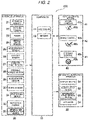
- Fig. 2 is a block diagram of the vehicle control apparatus.
- the vehicle control apparatus 100 may have, as main components, a controller 10 such as an electronic control unit (ECU), an in-vehicle apparatus 20, a vehicle control system 40, and an information notification apparatus 50.
- ECU electronice control unit
- in-vehicle apparatus 20 a vehicle control system 40
- information notification apparatus 50 an information notification apparatus
- the in-vehicle apparatus 20 may include an in-vehicle camera 21, an outside camera 22, a radar 23, and plural vehicle behavior sensors (a vehicle speed sensor 24, an acceleration sensor 25, a yaw rate sensor 26) to detect behavior of the vehicle 1, plural operation detection sensors (a steering angle sensor 27, a steering torque sensor 28, an accelerator operation amount sensor 29, a brake depression amount sensor 30) to detect the driver's operation, a positioning device 31, a navigation system 32, and an information communication device 33.
- vehicle behavior sensors a vehicle speed sensor 24, an acceleration sensor 25, a yaw rate sensor 26
- plural operation detection sensors a steering angle sensor 27, a steering torque sensor 28, an accelerator operation amount sensor 29, a brake depression amount sensor 30
- the vehicle control system 40 may include an engine control system 41, a brake control system 42, and a steering control system 43 that respectively correspond to a running function, a stopping function, and a turning function of the vehicle.
- the information notification apparatus 50 may include a display device 51, an audio output device 52, an information transmission device 53, and plural actuators 54.
- the controller 10 may be constructed of a computer device that includes: a processor 11; memory 12 that stores various programs executed by the processor 11 and data; an input/output device; and the like.
- the controller 10 is configured to output a control signal for executing the vehicle control (the driving assistance control and the automated driving control) to the vehicle control system 40 and the information notification apparatus 50 on the basis of a signal received from the in-vehicle apparatus 20.
- the in-vehicle camera 21 captures an image of the driver of the vehicle 1 and outputs image information. Based on this image information, the controller 10 may determine a facial expression and an upper body posture of the driver.
- the outside camera 22 captures an image around the vehicle 1 (typically, front of the vehicle 1) and outputs image information. Based on this image information, the controller 10 may identify a target object and a position thereof on the outside of the vehicle.
- the target objects may at least include a traffic participant and a boundary of a travel road. More specifically, the target objects include surrounding moving bodies (a vehicle, a pedestrian, and the like) and immobile structures (an obstacle, a parked vehicle, the travel road, a lane marking, a stop line, a traffic signal, a traffic sign, an intersection, and the like).
- the radar 23 measures the position and a speed of the target object that exists around the vehicle 1 (typically, in front of the vehicle 1).
- a millimeter-wave radar a laser radar (LIDAR), an ultrasonic sensor, or the like can be used.
- LIDAR laser radar
- the vehicle speed sensor 24 detects a speed (a vehicle speed) of the vehicle 1.
- the acceleration sensor 25 detects acceleration of the vehicle 1.
- the yaw rate sensor 26 detects a yaw rate generated to the vehicle 1.
- the steering angle sensor 27 detects a rotation angle (a steering angle) of a steering wheel 43b of the vehicle 1.
- the steering torque sensor 28 detects rotational torque that is associated with rotation of the steering wheel 43b.
- the accelerator operation amount sensor 29 detects a depression amount of an accelerator pedal 41b.
- the brake depression amount sensor 30 detects a depression amount of a brake pedal 42b.
- the positioning device 31 may include a GPS receiver and/or a gyroscope sensor, and may detect a position of the vehicle 1 (current vehicle position information).
- the navigation system 32 stores map information therein and can provide the map information to the controller 10.
- the controller 10 can calculate an entire travel route (including a travel lane, the intersection, the traffic signal, and the like) to a destination on the basis of the map information and the current vehicle position information.
- the information communication device 33 communicates with an external communication device.
- the information communication device 33 performs inter-vehicular communication with another vehicle and road-vehicle communication with an external communication device, receives various pieces of driving information and traffic information (traffic jam information, speed limit information, and the like), and provides the information to the controller 10.
- driving information and traffic information traffic jam information, speed limit information, and the like
- the engine control system 41 may control drive power of an engine system (an internal combustion engine, an electric motor, or the like) of the vehicle 1.
- the controller 10 drives the engine system by sending a control signal to an engine controller 41a on the basis of input from the accelerator pedal 41b, and can thereby accelerate or decelerate the vehicle 1.
- the brake control system 42 may control drive power of a brake system of the vehicle 1.
- the brake control system 42 includes brake actuators such as a hydraulic pump and a valve unit.
- the controller 10 drives the brake system by sending a control signal to a brake controller 42a on the basis of input from the brake pedal 42b, and can thereby decelerate the vehicle 1.
- the steering control system 43 may control drive power of a steering system of the vehicle 1.
- the steering control system 43 includes an electric motor for an electric power steering system, and the like, for example.
- the controller 10 drives the steering system by sending a control signal to a steering controller 43a on the basis of input from the steering wheel 43b, and can thereby change an advancing direction of the vehicle 1.
- the display device 51 can visually display assistance information (visual information) for assisting the driver with the vehicle operation in a display area. More specifically, the display device 51 may be a HUD.
- the display area corresponds to size of an entire or partial front windshield of the vehicle 1, and the assistance information is displayed in the driver's field of view.
- a liquid-crystal display may be used.
- the audio output device 52 may be a speaker, for example, and can provide assistance information (auditory information) for assisting the driver with the vehicle operation.
- the information transmission device 53 can transmit information on driving assistance to an external information communication device (for example, the driver's mobile information terminal).
- an external information communication device for example, the driver's mobile information terminal.
- the actuators 54 may include an electric motor, a gear mechanism, and the like.
- the plural actuators 54 are configured to move each of plural operation sections to be operated at the time when the driver drives the vehicle 1 (for example, the accelerator pedal 41b, the brake pedal 42b, and the steering wheel 43b) in an operation direction without the driver's input.
- the controller 10 outputs a control signal to each of the actuators 54 and can thereby cause the corresponding operation section to demonstrate desired behavior.
- the vehicle control system (for example, the engine control system, the brake control system, and the steering control system) in this embodiment may be configured to be actuated by a drive-by-wire method.
- the vehicle control system in this embodiment may be configured that the operation input from the operation section is transmitted as a control signal via the controller 10, and a drive unit corresponding to the operation section receives the control signal and is driven on the basis of the control signal.
- the controller 10 can output the control signal to the drive unit independently of movement of the operation section by the actuator 54.
- Fig. 3 is an explanatory view illustrating the processing procedure by the vehicle control apparatus. More specifically, Fig. 3 illustrates that the controller 10 processes input information from the in-vehicle apparatus 20 to provide various types of the vehicle control (the driving assistance control and the automated driving control) by using the vehicle control system 40 and the information notification apparatus 50.
- the controller 10 processes input information from the in-vehicle apparatus 20 to provide various types of the vehicle control (the driving assistance control and the automated driving control) by using the vehicle control system 40 and the information notification apparatus 50.
- Contents of the vehicle control are an advanced driver-assistance system (ADAS), the automatic acceleration, the automatic braking, the automatic steering, automatic vehicle posture stabilization control, automated driving (level 3 or higher), and maintenance assistance processing and improvement assistance processing for the driver's driving ability.
- the ADAS may at least include assistance functions for following a preceding vehicle, preventing a collision with the preceding vehicle, preventing lane departure, and the like (automatic entry avoidance control).
- the automatic vehicle posture stabilization control is control to stabilize a posture of the vehicle 1, that is, vehicle dynamics (a pitch, a roll, and a yaw) and to prevent sideslip, overturning, and the like.
- the in-vehicle apparatus 20 continuously transmits the acquired information to the controller 10. Based on the acquired information, the controller 10 may perform the following calculations or makes the following evaluations.
- the controller 10 may evaluate traffic environment around the vehicle 1 on the basis of the input information from the outside camera 22, the radar 23, the positioning device 31, the navigation system 32 (the map information), and the like (traffic environment evaluation).
- the traffic environment may be one or more objects around the vehicle.
- the traffic environment may include another vehicle, the pedestrian, a border line, a guard rail, the stop line, and/or the traffic sign.
- the controller 10 may calculate the position, a speed, and the like of the target object (the vehicle, the pedestrian, a border line, a guard rail, the stop line, the traffic sign, or the like) around the vehicle 1.
- the target object the vehicle, the pedestrian, a border line, a guard rail, the stop line, the traffic sign, or the like
- the controller 10 may evaluate a physical function of the driver on the basis of information from the steering angle sensor 27, the steering torque sensor 28, the brake depression amount sensor 30, the in-vehicle camera 21, and the like (physical function evaluation). More specifically, the controller 10 may estimate levels of the driver's physical functions to operate the operation section with an appropriate operation amount and at an appropriate operation speed and to visually capture visual stimulation on the outside of the vehicle.
- the driver operates the operation section with the appropriate operation amount and at appropriate operation speed is evaluated by a difference between a combination of the operation amount and the operation speed (the steering angle, a steering angular velocity, the depression amount, a depression speed, or a brake hydraulic pressure of the brake pedal 42b, or the like) actually input by the driver via the operation section and a combination of a target operation amount and a target operation speed at the time of traveling on a target travel route.
- the target travel route may be calculated by using results of the traffic environment evaluation, a travel environment evaluation, the physical function evaluation, and the like such that the vehicle 1 can travel safely and efficiently.
- the controller 10 may evaluate travel environment around the vehicle 1 on the basis of the information from the outside camera 22, the vehicle speed sensor 24, the acceleration sensor 25, the positioning device 31, and the like (the travel environment evaluation).
- the travel environment may be one or more physical quantities that affect the vehicle dynamics.
- the travel environment may include a curve radius and/or a road surface friction coefficient of the travel road.
- the controller 10 estimates physical quantities (for example, a curve radius and a road surface friction coefficient of the travel road) that affect the vehicle dynamics.
- the controller 10 may calculate the current vehicle dynamics of the vehicle 1 on the basis of the information from the vehicle speed sensor 24, the acceleration sensor 25, the yaw rate sensor 26, and the like (vehicle dynamics calculation).
- vehicle dynamics includes the speed, the acceleration, the yaw rate, three-axis rotational moment (pitch, yaw, and roll), and the like.
- the controller 10 may determine the driver's arousal level on the basis of the image information from the in-vehicle camera 21 (arousal level determination). For example, the arousal level is evaluated by opening amounts of the driver's eyes and/or mouth and by a position or the posture of the driver's upper body. For example, the arousal level can be evaluated in four levels (zero, low, moderate, and high arousal).
- the controller 10 may determine whether there is a predicted risk in the traffic environment evaluation and the travel environment evaluation.
- the predicted risks include a traffic risk due to the traffic environment (for example, a collision of the vehicle 1 with the other vehicle) and a travel risk due to the travel environment affecting the vehicle dynamics (for example, spinning on a curved road). Then, the controller 10 evaluates risk-reducing action taken by the driver in response to this predicted risk on the basis of the information from the in-vehicle apparatus 20, the in-vehicle camera 21, and the like (risk-reducing action evaluation).
- the risks include a vehicle accident, such as the collision of the vehicle 1, and states where postural stability of the vehicle 1 is lost or reduced (spinning, overturning, and the like).
- Risk objects causing such a risk include the traffic participants (the other vehicle, the pedestrian, and the like), the guard rail, the border line, the traffic signal (a red light), the stop line, and the like.
- the risk objects may further include risk-generating portions of the travel road (a clipping point on the curved road, and the like). Each of these target objects becomes the risk object in such a circumstance where the respective object possibly poses the risk in the near future (for example, within a specified period such as 10 seconds) in the case where the current vehicle behavior (vehicle dynamics) continues.
- the risk-reducing action is action taken by the driver in response to the predicted risk and, in particular, the vehicle operation (the acceleration, braking, and/or steering) that is performed to reduce a probability of occurrence of the predicted risk.
- the risk-reducing action is the vehicle operation to reduce a collision probability or the vehicle operation to set the closest distance between the vehicle 1 and the other vehicle to be equal to or longer than a specified distance.
- the object which is unlikely to pose the risk at a current time point but should be perceived during the travel, and the object, which possibly poses the risk in the future beyond a specified period, may be included as the risk objects.
- the risk-reducing action includes such action that the driver perceives the risk object (for example, the other vehicle with the collision possibility or a location near the clipping point on the curved road) before operating the operation section.
- the risk-reducing action includes shifting of the driver's sightline to the risk object and shifting of the driver's posture to handle the risk (that is, perception of the risk object by the driver) on the basis of the image information from the in-vehicle camera 21.
- the controller 10 may evaluate the driver's current cognitive load on the basis of the result of the traffic environment evaluation (cognitive load evaluation). For example, the controller 10 evaluates that, according to the vehicle speed, the driver's cognitive load is greater as the number of the target objects within a specified distance from the vehicle 1 is increased. For example, the cognitive load can be evaluated in three levels (low, moderate, and high). In addition, the controller 10 may analyze and learn the driver's cognitive ability level on the basis of information on the vehicle operation by the driver and the driver's sightline direction, and may then update the driver's cognitive ability level. In this case, the cognitive load evaluation can be calculated by a ratio of a magnitude of the current cognitive load to the driver's cognitive ability level.
- the controller 10 may store a vehicle model, which defines physical motion of the vehicle 1, in a storage section.
- the vehicle model represents a relationship between specifications of the vehicle 1 (mass, wheelbase, and the like) and physical variations (the speed, the acceleration, the steering angle, and the like) by an equation of motion.
- the result of the travel environment evaluation (for example, the road surface friction coefficient) can also be applied to the vehicle model.
- the controller 10 stores a driver model of the driver who drives the vehicle 1 in the storage section.
- the controller 10 analyzes and learns the driver's operation characteristic on the basis of the input information from the in-vehicle apparatus 20, and constantly updates the driver model.
- the driver model represents the driver's operation characteristic and includes an operation amount, a reaction delay time (time constant), and the like for a particular operation under a certain condition.
- the result of the cognitive load evaluation (the magnitude of the cognitive load) and the result of the physical function evaluation can also be applied to the driver model. For example, in a situation where the cognitive load is high, the driver model is corrected to reduce the driver's operating ability.
- the controller 10 can predict the driver's operation.
- the controller 10 also stores an ideal driver model, which represents the driver's ideal operation characteristic with the high driving ability, in the storage section, and thus can also predict the ideal operation.
- the controller 10 applies the input information from the in-vehicle apparatus 20 to the vehicle model and the driver model, and can thereby calculate the vehicle dynamics that is predicted to be generated in a period from the current time point to the near future (vehicle dynamics prediction calculation).
- vehicle dynamics prediction calculation by inputting current conditions (the traffic environment, the travel environment, the cognitive load, and the physical function) into the driver model and the vehicle model, the controller 10 can predict the vehicle operation (a type of the operation, the operation amount, operation timing, and the like) to be performed by the driver after a specified period (for example, after 10 seconds) from the current time point, and can calculate predicted vehicle dynamics to be generated by the predicted vehicle operation.
- the controller 10 makes a driving ability evaluation.
- the driving ability represents a measure of the driver's ability to avoid the various risks.
- the controller 10 evaluates or calculates the driving ability against the risk on the basis of the result of the risk-reducing action evaluation (the risk-reducing action taken by the driver), a difference between the predicted vehicle dynamics and the actual vehicle dynamics, and the result of the cognitive load evaluation (the magnitude of the cognitive load).
- the driving ability against the risk can be a required risk-reducing time that is required by the driver to reduce the predicted risk.
- the required risk-reducing time may be a time from initiation of the risk-reducing action to disappearance of the predicted risk or a required time from the driver's perception of the risk to completion of the risk-reducing action. In this case, in the case where the driving ability is evaluated as low, the required risk-reducing time is output as a large value.
- the controller 10 uses the driver model to calculate a predictive travel route of the vehicle 1 at a future time point in a case where it is assumed that the current vehicle behavior continues only for a specified time.
- the specified time reaches a certain time, the risk can no longer be avoided in the predictive travel route at the time point.
- a time until occurrence of the risk in the predictive travel route, which is calculated at this time, (a risk margin time) may be set as the required risk-reducing time.
- the controller 10 can update driving ability data by using the calculated driving ability evaluation.
- the driver's driving ability changes over time. For example, the driving ability of a novice driver tends to be improved while the driving ability of the elderly person tends to be reduced.
- Plural driving ability data sets may be provided in a manner to correspond to plural evaluation periods. For example, the driving ability data sets in a short term (one to six months before the current time point), a medium term (three to nine months before the current time point), and a long term (one to two years before the current time point) can be created.
- the controller 10 may perform a function redistribution calculation on the basis of the current vehicle dynamics, the result of the driving ability evaluation (the current driving ability), the result of the cognitive load evaluation, and the result of the physical function evaluation.
- the controller 10 may execute the driving assistance control and the automated driving control on the basis of this calculation.
- the driver for example, the novice driver or the elderly person
- his/her own driving functions a perceptual function, a determination function, and the physical function.
- the controller 10 may execute the driving assistance control such that the vehicle 1 performs the driving function, which is related to the insufficient driving ability, instead.
- the automated driving control is executed, and the driver's driving function is substituted with an equivalent and corresponding function of the vehicle 1.
- the controller 10 may compare the result of the driving ability evaluation (the current driving ability against the predicted risk) to the driving ability data. Then, in the case where the current driving ability is lower than the driving ability in the past, the controller 10 provides assistance (including the automated driving) to compensate for the reduced driving ability.
- the controller 10 executes processing to wake the driver (for example, blowing cool air to the driver) .
- the controller 10 executes the automated driving.
- a human-machine system configured to include the driver and the vehicle in the embodiment of the present invention.
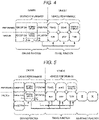
- Fig. 4 is an explanatory view of a conventional human-machine system
- Fig. 5 is an explanatory view of the human-machine system in this embodiment.
- the driver at least has the perceptual function, the determination function, and an operation function (or the physical function) in relation to driving of the vehicle, and exerts perceptual performance, determination performance, and operational performance (or motion performance) by using these driving functions.
- the driver captures the object by using the perceptual function (the perceptual performance), selects or determines the vehicle operation to be performed for the captured object by using the determination function (the determination performance), and performs the selected vehicle operation with the appropriate operation amount and at the appropriate timing by using the operation function (the operational performance).
- the vehicle at least has the running function, the stopping function, and the turning function. When these travel functions are used for the driver's vehicle operation, the vehicle exerts travel performance, braking performance, and steering stability performance to travel.
- the vehicle when the driver exerts the perceptual performance, the determination performance, and the operational performance to operate the vehicle, the vehicle exerts the travel performance, the braking performance, and the steering stability performance. In this way, the vehicle as the human-machine system can travel safely.
- the vehicle in order to efficiently exert three types of the performance of the vehicle, the vehicle is provided with an interface that mediates between the driver's function and the vehicle function. In this way, overall vehicle performance (for example, braking ability, fuel economy, and the like) is improved.
- the vehicle substitutes for all or most of the perceptual function, the determination function, and the physical function of the driver.
- the in-vehicle camera, the acceleration sensor, the radar, and the like substitute for the perceptual function.
- the computer in the vehicle substitutes for the determination function.
- the in-vehicle actuator substitutes for the physical function.
- the driver only needs to have the physical function to give a minimum instruction such as an engine start in an exceptional case, and needs not have most of the driving function and the driving ability (the driving performance).
- Fig. 5 illustrates an example of the human-machine system in this embodiment.
- driving function substitution processing and driving performance assistance processing are executed.
- At least one type of the driving performance (perceptional, determination, and operational) related to the driving functions (perceptual, determination, and operation) is in the low level for the driver with the low driving ability (for example, the novice driver or the elderly person).
- the driving performance of the driver with average driving ability can also be in the relatively low level.
- the vehicle control apparatus 100 executes the driving function substitution processing to substitute the driving function related to the low driving ability of the driver (an insufficient function) with the corresponding function of the vehicle 1.
- the vehicle control apparatus 100 detects, of the driver's driving functions, the driving function (perceptual, determination, or operation) with low performance, and intervenes in the vehicle operation such that the vehicle 1 only assists this low driving function (the insufficient function). In this way, even when the driver's driving ability is partially reduced, the travel function of the human-machine system, which is configured to include the driver and the vehicle 1, is maintained.
- the determination function and the determination performance of the driver are substituted with the equivalent function and the equivalent performance of the vehicle 1.
- the vehicle control apparatus 100 executes the driving performance assistance processing to maintain or recover the driving ability of the insufficient function.
- Fig. 5 illustrates a Z function for executing this assistance processing.
- the driver is urged to take action to maintain or recover the driving ability in a specified time for the insufficient function among the driver's driving functions (perceptual, determination, and operation).
- the driving function substitution processing and the driving performance assistance processing are no longer executed.
- the vehicle control apparatus 100 executes the driving performance assistance processing to improve the driver's driving performance.
- Fig. 5 illustrates an X function for executing this assistance processing. In this processing, the driver is urged to improve his or her driving ability in a specified time for at least the insufficient function among the driver's driving functions.
- Fig. 5 illustrates, as an example, a case where the driver's operational performance is lower than a required level.
- the driving performance assistance processing for improving the driver's driving performance is processing to provide the driver with advice on driving action that the driver should perform so as to raise the driver's driving ability to a higher level of the driving ability. For example, a recommended vehicle operation by an experienced driver with the high driving ability is taught to the driver. This corresponds to that the driver leans a driving technique from the experienced driver. With this assistance processing, the driver learns a model vehicle operation for the poor function among the perceptual function, the determination function, and the operation function, and can thereby improve his/her driving ability.
- Fig. 6 is a flowchart of the driving assistance control. After receiving the driving request (the destination and the like) from the driver or the outside via an input device (for example, the navigation system 32 or the information communication device 33), the controller 10 repeatedly executes the driving assistance control (for example, every 0.1 second).
- the driving assistance control for example, every 0.1 second.
- the controller 10 may acquire the information from the in-vehicle apparatus 20 every specified time (for example, every 0.1 second) (S1). Based on the acquired information, the controller 10 may execute the processing such as the traffic environment evaluation, the travel environment evaluation, the physical function evaluation, the risk-reducing action evaluation, and the vehicle dynamics calculation.
- the controller 10 calculates the target travel route on the basis of the acquired information and the driving request (S2).
- the target travel route includes: a target travel path (positional information at plural positions) in a specified period (for example, 10 seconds) from the current time point; the speed at each position on the path; and the like.
- the controller 10 calculates the target travel route with specified levels of safety and travel efficiency.
- the controller 10 can calculate plural target travel routes, each of which satisfies a specified constraint condition (for example, that lateral acceleration is equal to or lower than a specified value).
- the controller 10 can set the plural target travel routes to avoid the obstacle.
- the vehicle 1 can travel on another travel route.
- the other travel route does not satisfy a specified standard, the travel efficiency and ride comfort thereon are poor.
- the controller 10 calculates target vehicle dynamics for travel on the target travel route (S3).
- the target vehicle dynamics includes the speed, the acceleration, the yaw rate, the three-axis rotational moment (pitch, yaw, and roll), and the like at each of the positions on the target travel route.
- the target vehicle dynamics is a target control value that is used when the vehicle 1 executes the driving assistance control and the automated driving control.
- Plural types of the target vehicle dynamics (or the plural target control values) can be set in a manner to correspond to the plural target travel routes.
- the controller 10 calculates an operation amount of a target vehicle operation (the accelerator operation amount, a brake depression amount, the steering angle, or the like) that is a driving performance request for the driver and the vehicle 1 in order to achieve a physical quantity of the target vehicle dynamics at each of the positions on the target travel route, or calculates the control signal for the vehicle control system 40 (human-machine performance request setting processing).
- the driving performance request with a specified range is set due to the plural target travel routes.
- the controller 10 determines whether the insufficient function exists among the driver's driving functions (S4). More specifically, the controller 10 determines whether each of the driving functions (the perceptual function, the determination function, and the operation function) exerts the driving performance necessary to avoid the predicted risk.
- the controller 10 predicts the risk, which occurs within a specified time, from the current vehicle behavior (vehicle dynamics).
- the controller 10 calculates a time from the current time point to the occurrence of the predicted risk (the traffic risk or the travel risk) (that is, a risk margin time TTR (time to risk)).
- the risk margin time TTR is an expected time until the vehicle 1 enters a risk area in the case where the vehicle 1 maintains the current vehicle behavior (the vehicle dynamics such as the speed and the acceleration).
- the entry to the risk area means the collision of the vehicle 1 with the other vehicle or a position, at which spinning of the vehicle 1 is predicted, in the curved road, for example.
- the controller 10 determines whether the risk object is perceived (for example, whether the driver moves his/her sightline to the risk object, or whether the driver tilts his/her head or upper body in response to the lateral G) by specified time (for example, by a specified time before predicted occurrence time of the predicted risk, or by the time when the vehicle 1 moves away from any of the target travel routes). In the case where the driver does not perceive the risk object by the specified time, the controller 10 identifies the perceptual function as the insufficient function.
- the controller 10 determines whether the driver has made an appropriate determination to reduce the risk and initiated recommended risk-reducing action by the above specified time.
- the recommended risk-reducing action is the target vehicle operation (for example, an accelerator, brake, or steering operation) for the target vehicle dynamics. Once the target vehicle dynamics is achieved, the risk is avoided.
- the controller 10 determines whether the brake operation has been initiated on the basis of the information from the brake depression amount sensor 30. Meanwhile, in the case where the steering operation is required to avoid the collision with the obstacle in front, the controller 10 determines whether the steering operation has been initiated on the basis of the information from the steering angle sensor 27. In the case where the driver has not initiated the recommended risk-reducing action by the specified time, the controller 10 identifies the determination function as the insufficient function.
- the controller 10 determines whether the driver has appropriately executed the vehicle operation for the risk-reducing action (mainly, whether a vehicle operation amount is appropriate) so as to reduce the probability of occurrence of the predicted risk to zero. Accordingly, the controller 10 calculates the probability of occurrence of the predicted risk by using the vehicle model in consideration of a change in the vehicle dynamics caused by the risk-reducing action in addition to the current vehicle dynamics. In the case where the driver does not appropriately perform the vehicle operation for the risk-reducing action, the controller 10 identifies the operation function as the insufficient function.
- the controller 10 determines, in regard to the insufficient function, how the driver's driving ability is reduced (S5). More specifically, the controller 10 determines (1) whether any of the driver's driving functions has been lost or there is a sign of loss of any of the driver's driving functions (LOSS OR SIGN OF LOSS OF FUNCTION), (2) whether the driving performance of any of the driver's driving functions has temporarily been reduced (TEMPORARY), or (3) whether the driving performance of any of the driver's driving functions has chronically been reduced (CHRONIC).
- the controller 10 determines that any of the driving functions has been lost when the driver's arousal level is low or in the event of abnormality in which the driving ability is lost (for example, severe drowsiness or the loss of consciousness). Meanwhile, the controller 10 determines that there is a sign of loss of any of the driving functions in the case where such an abnormality sign is detected that the driving ability is reduced rapidly or over a predetermined period (several minutes to several tens of minutes) (for example, at the onset of the acute illness or when the drowsiness level is high) (S5: LOSS OR SIGN OF LOSS OF FUNCTION).
- the controller 10 controls the vehicle 1 by the vehicle control system 40 such that the vehicle 1 performs all of the plural driving functions instead (S6: ALL FUNCTIONS SUBSTITUTION PROCESSING). In other words, the automated driving control is executed. Thereafter, the controller 10 terminates the processing.
- the controller 10 determines that the driving performance of any of the driving functions has temporarily been reduced when the driver's arousal level is moderate (for example, when the driver's fatigue or mild drowsiness is detected) (S 5: TEMPORARY).
- the controller 10 controls the vehicle 1 to eliminate a temporary reduction of the driving performance by applying physical stimulation to the driver or providing the driver with information that makes the driver recognize the temporary reduction of the driving performance (S7: OPTIMIZATION PROCESSING). For example, the controller 10 attempts to recover the arousal level by providing the driver with visual, auditory, or tactile noise which has an effective frequency band (15 to 20 kHz) for maintaining arousal but of which the driver is not conscious or by blowing cool air to the driver.
- S7 OPTIMIZATION PROCESSING
- the controller 10 may use the display device 51 to highlight the risk object in the display area, may use the audio output device 52 to notify of appearance of the risk object by voice (such as "An obstacle is present ahead.”, or the like). When the driver is urged by such notification and perceives the risk object, a temporary reduction of the driver's perceptual performance can be eliminated.
- the controller 10 may use the information notification apparatus 50 to notify the driver of appropriate determination action to be performed in order to travel on the target travel route. In this way, the driver can acknowledge an appropriate driving determination, and at least a temporary reduction of the determination performance can be eliminated. More specifically, the controller 10 displays driving operation assistance information by the display device 51, or informs the driving operation assistance information by voice using the audio output device 52.
- the driving operation assistance information includes contents and order of the target vehicle operations to be performed by the driver in response to the risk.
- the controller 10 may use the information notification apparatus 50 to notify the driver of the appropriate operation amount and appropriate operation timing for the travel on the target travel route by the movement of the operation section. In this way, the driver learns the appropriate operation, and at least a temporary reduction of the operational performance can be eliminated. More specifically, the controller 10 uses the actuator 54 to move the operation section (for example, the brake pedal 42b or the steering wheel 43b) for the intervened vehicle control to an operating position that corresponds to the appropriate operation amount.
- the operation section for example, the brake pedal 42b or the steering wheel 43b
- controller 10 may control the vehicle 1 by the vehicle control system 40 such that the vehicle 1 performs the driving function with the temporarily reduced driving performance instead (S8: INSUFFICIENT FUNCTION SUBSTITUTION PROCESSING).
- the controller 10 sets the detected risk object as a tracking object and executes tracking control.
- the controller 10 executes the vehicle control to disable the vehicle operation by the driver or override the vehicle operation by the driver with another vehicle operation so as to avoid the risk.
- the control signal is no longer generated on the basis of the operation of the operation section.
- the target vehicle operation is deceleration by the brake operation (that is, the target travel route is set to a route on which the vehicle 1 is decelerated before reaching the obstacle).
- the controller 10 disables the steering operation, and outputs the control signal to the brake controller 42a so as to stop the vehicle 1 before reaching the obstacle.
- the controller 10 disables the brake operation, and outputs the control signal to the steering controller 43a so as to avoid the obstacle.
- the controller 10 executes the vehicle control for avoiding the risk. For example, in the case where the driver depresses the brake pedal 42b to avoid the collision with the obstacle but the depression amount is insufficient due to the small depression force by the driver, the controller 10 outputs the control signal corresponding to the appropriate operation amount to the brake controller 42a such that the vehicle 1 stops before reaching the obstacle. Meanwhile, in the case where the driver operates the steering wheel 43b to avoid the collision with the obstacle but the operation amount thereof is insufficient due to the low arm strength of the driver, in order to secure a clearance from the obstacle, the controller 10 outputs the control signal corresponding to the appropriate operation amount to the steering controller 43a. After the insufficient function substitution processing, the controller 10 terminates the processing.
- the controller 10 determines that the driving performance of any of the driver's driving functions is chronically reduced (S5: CHRONIC).
- the controller 10 controls the vehicle 1 to provide the driver with information on assistance with exertion of the driving performance so as to maintain or improve the driving performance (S9: ASSISTANCE PROCESSING).
- the controller 10 may be configured to control the information notification apparatus 50 to notify the driver. Specifically, the controller 10 may be configured to control the information notification apparatus 50 to notify the driver so that the driver learns perceptual action, e.g., a perceived object and timing.
- the controller 10 may use the information notification apparatus 50 to notify the driver of an exertion mode of the perceptual function by the experienced driver with the high driving ability to travel on the target travel route.
- the driver may learn model perceptual action (a perceived object, timing, and the like) of the experienced driver, and can thereby improve the perceptual performance.
- the vehicle operation includes the perceptual action.
- the controller 10 visually highlights the target to be perceived in the display area of the display device 51.
- the controller 10 may notify of the target to be perceived by using the audio output device 52.
- the controller 10 limits the driver's viewable range in front of the vehicle to a narrower range.
- the display device 51 darkens (or reduces transparency of) a portion of the display area that corresponds to a peripheral portion of the front windshield and thereby narrows the range where the driver can see the outside through the front windshield.
- the driver feels a fast moving speed of outside scenery within the narrow viewable range.
- the controller 10 may notify of an overspeed state of the vehicle 1 by using the display device 51 or the audio output device 52.
- the controller 10 uses the display device 51 or the audio output device 52 to notify the driver that the external G is applied to the vehicle 1 and also to notify the posture to be assumed by the driver.
- the controller 10 uses the information notification apparatus 50 to notify the driver of an exertion mode of the determination function by the experienced driver with the high driving ability to travel on the target travel route. In this way, the driver learns model determination action of the experienced driver to travel on the target travel route, and can thereby improve the determination performance.
- the controller 10 uses the information notification apparatus 50 to notify the driver of the driving operation assistance information after termination of driving.
- the driving operation assistance information includes information on the vehicle operation that is performed by the driver when making the right turn (a left turning operation) and information on the target vehicle operation to be performed by the driver when making the right turn.
- the driving operation assistance information includes information on the vehicle operation by the driver on the curved road and information on the target vehicle operation to be performed by the driver on the curved road.
- the driver may be notified of the driving operation assistance information during the travel of the vehicle 1.
- the driver is notified of the assistance information of the determination function after the termination of driving.
- the controller 10 uses the information notification apparatus 50 to notify the driver of the appropriate operation amount and the appropriate operation speed of the operation section to travel on the target travel route. In this way, the driver learns model operation action (the operation amount, the operation speed, and the like) of the experienced driver, and can thereby improve the operational performance.
- the controller 10 can use the display device 51 and/or the audio output device 52 to notify the driver that a rotational operation speed of the steering wheel 43b is low and to notify the driver of the actual operation amount, the target operation amount, visual expression of the actual route and the target travel route, and the like.
- the controller 10 can use the display device 51 and/or the audio output device 52 to notify the driver that the depression speed of the brake pedal 42b is low and to notify the driver of the actual operation speed, the target operation speed, the visual expression of the actual route and the target travel route, and the like.
- the controller 10 controls the vehicle 1 by the vehicle control system 40 such that the vehicle 1 performs the driving function with the chronically reduced driving performance instead (S8: INSUFFICIENT FUNCTION SUBSTITUTION PROCESSING). After the insufficient function substitution processing, the controller 10 terminates the processing.
- the problem to be solved by the invention and the effects of the invention are not limited to those described above.
- the present invention can solve problems not described above and can exert effects not described above.
- the present invention may solve only a part of the problem described above or exert some of the effects described above.
- optimization processing substitution processing, and assistance processing merely constitute one example.
- various types of the optimization processing to eliminate the temporary reduction of the driving performance of the function various types of the substitution processing in which the vehicle performs the function instead, and various types of the assistance processing to maintain or improve the driving performance of the function can be adopted.
- the vehicle control apparatus 100 in this embodiment executes the driving assistance control for the vehicle 1 such that the vehicle 1 travels according to the traffic environment and the travel environment around the vehicle 1.
- the vehicle 1 travels by using the plural travel functions, which are the running function, the stopping function, and the turning function, by the vehicle operation using the driver's plural driving functions.
- the vehicle control apparatus 100 is configured to execute: the all functions substitution processing (S6) in which, when the loss or the sign of the loss of any of the plural driving functions of the driver is detected, the vehicle 1 is controlled such that the vehicle 1 performs all of the plural driving functions instead; the optimization processing (S7) in which, when the temporary reduction of the driving performance of any of the plural driving functions of the driver is detected, the vehicle 1 is controlled to eliminate the temporary reduction of the driving performance by applying the physical stimulation to the driver or by providing the driver with the information that makes the driver recognize the temporary reduction of the driving performance; and the assistance processing (S9) in which, when the chronic reduction of the driving performance of any of the plural driving functions of the driver is detected, the vehicle 1 is controlled to maintain or improve the driving performance by providing the driver with the information on the assistance with the exertion of the driving performance.
- the all functions substitution processing S6
- the optimization processing in which, when the temporary reduction of the driving performance of any of the plural driving functions of the driver is detected, the vehicle 1 is controlled to eliminate the temporary reduction of the driving performance by applying the
- the vehicle 1 performs all of the driving functions instead.
- the safety of the vehicle travel is ensured.
- the physical stimulation is applied to the driver, or the driver is provided with the information that makes the driver recognize the temporary reduction of the driving performance.
- the driving performance is maintained or improved by providing the driver with the information on the assistance with the exertion of the driving performance.
- the vehicle 1 can compensate for the driver's lack of ability or can urge the driver to improve his/her ability while allowing the driver to proactively exert his or her driving performance. Therefore, it is possible to maintain or improve the driver's driving ability through driving while ensuring the safe travel by the automated driving.
- the vehicle control apparatus 100 further executes the insufficient function substitution processing (S8) in which, when the temporary reduction or the chronic reduction of the driving performance of any of the plural driving functions of the driver is detected, the vehicle 1 is controlled such that the vehicle 1 performs the driver's driving function with the driving performance instead.
- the vehicle 1 performs the driving function associated with the insufficient driving performance instead.
- the safety of the vehicle travel is ensured, and the driver can extend driving life without giving up driving.
- the plural driving functions of the driver include the perceptual function to perceive the traffic environment and the travel environment, the determination function to determine the necessary driving operation in the traffic environment and the travel environment, and the operation function to perform the driving operation.
- the driving performance determination processing it is determined for each of the plural driving functions whether the driver has the specified driving performance. In this way, in this embodiment, it is possible to identify the insufficient function with the low driving performance and to appropriately select the insufficient function, for which the optimization processing or the assistance processing should be executed.
- the information with the different content is provided according to each of the plural driving functions of the driver.
- the appropriate assistance information can be provided according to the type of the insufficient function.
Landscapes
- Engineering & Computer Science (AREA)
- Automation & Control Theory (AREA)
- Transportation (AREA)
- Mechanical Engineering (AREA)
- Human Computer Interaction (AREA)
- Chemical & Material Sciences (AREA)
- Combustion & Propulsion (AREA)
- Physics & Mathematics (AREA)
- Mathematical Physics (AREA)
- Control Of Driving Devices And Active Controlling Of Vehicle (AREA)
- Traffic Control Systems (AREA)
Abstract
Description
- The present invention relates to a vehicle control apparatus, a vehicle and a vehicle control method and, in particular, to a vehicle control apparatus and a vehicle control method for driving assistance.
- A vehicle that can travel by automated driving technology (or autonomous driving technology) has been developed. Under automated driving control, the vehicle travels by proactively performing a vehicle operation (SAE Level of
Driving Automation 3 or higher). In other words, a driver does not have to perform the vehicle operations such as of an accelerator, a brake, and a steering wheel. The automated driving technology is useful for the driver with normal driving ability, and is particularly useful for an elderly person with reduced driving ability and a person with mild cognitive impairment (MCI) in terms of travel safety. - Meanwhile, some of the drivers have a desire to drive the vehicle by himself/herself. However, in the case where required driving ability, which is required for the driver according to traffic environment or the like, is not balanced with the driver's current driving ability, the driver may feel bored of or, conversely, be psychologically stressed by driving. In view of the above, the present applicant has proposed a vehicle control apparatus that provides driving assistance or a driving load so as to balance the required driving ability with the current driving ability (see Patent document 1, for example). With this vehicle control apparatus, the driver can drive the vehicle in a balancing state between the required driving ability and the current driving ability. As a result, the driver can enjoy and concentrate on safe driving regardless of difficulty of the traffic environment or a level of the current driving ability.
- [Patent document 1]
Japanese Patent No. 6,555,649 - In the technique disclosed in Patent document 1, in the case where the driver's current driving ability is relatively insufficient, the necessary driving assistance is provided. Thus, safety of vehicle driving is enhanced. However, since the driver has to rely on the vehicle for the insufficient driving ability, this technique cannot maintain or improve the driver's driving ability. For this reason, this technique cannot extend the driver's safe driving life.
- The present invention has been made to solve a problem as described above, and therefore has a purpose of providing a vehicle control apparatus, vehicle and a vehicle control method capable of maintaining and improving a driver's driving ability while securing safe driving by automated driving.
- The above purpose is achieved by the invention as defined in independent claims. Particularly, a vehicle control apparatus executes driving assistance control for a vehicle. The vehicle control apparatus may be configured to execute the driving assistance control of the vehicle, such that the vehicle travels according to traffic environment and travel environment around the vehicle. The vehicle travels by using plural travel functions, which include a running function, a stopping function, and a turning function, by a vehicle operation using plural driving functions of a driver. The vehicle control apparatus executes: all functions substitution processing in which, when loss or a sign of loss of any of the plural driving functions of the driver is detected, the vehicle is controlled such that the vehicle performs all of the plural driving functions instead; optimization processing in which, when a temporary reduction of driving performance of any of the plural driving functions of the driver is detected, the vehicle is controlled to eliminate the temporary reduction of the driving performance by applying physical stimulation to the driver or by providing the driver with information that makes the driver recognize the temporary reduction of the driving performance; and assistance processing in which, when a chronic reduction of the driving performance of any of the plural driving functions of the driver is detected, the vehicle is controlled to maintain or improve the driving performance by providing the driver with information on assistance with exertion of the driving performance.
- According to the present invention, when any of the driver's driving ability is lost or there is a sign of such loss, the vehicle performs all of the driving functions instead. Thus, safety of vehicle travel is ensured. In addition, according to the present invention, when any of the driving performance is temporarily reduced, the physical stimulation is applied to the driver, or the driver is provided with the information that makes the driver recognize the temporary reduction of the driving performance. Thus, it is possible to recover the temporarily reduced driving ability of the driver and to cause the driver himself/herself to continue driving. Furthermore, according to the present invention, when any of the driving performance is chronically reduced, the driving performance is maintained or improved by providing the driver with the information on the assistance with the exertion of the driving performance. Thus, instead of performing the function instead, the vehicle can compensate for the driver's lack of ability or can urge the driver to improve his/her ability while allowing the driver to proactively exert his or her driving performance. Therefore, it is possible to maintain or improve the driver's driving ability through driving while ensuring safe travel by automated driving.
- The vehicle control apparatus may further execute insufficient function substitution processing in which, when the temporary reduction or the chronic reduction of the driving performance of any of the plural driving functions of the driver is detected, the vehicle is controlled such that the vehicle performs the driver's driving function with the driving performance instead.
- According to the vehicle control apparatus as described above, even when the driver's driving ability is low, the vehicle performs the driving function associated with the insufficient driving performance instead. Thus, the safety of the vehicle travel is ensured, and the driver can extend driving life without giving up driving.
- The plural driving functions of the driver may include a perceptual function to perceive the traffic environment and the travel environment, a determination function to determine a necessary driving operation in the traffic environment and the travel environment, and an operation function to perform the driving operation.
- According to the vehicle control apparatus as described above, it is determined for each of the plural driving functions whether the driver has specified driving performance. In this way, it is possible to identify an insufficient function with low driving performance and to appropriately select the insufficient function, for which the optimization processing or the assistance processing should be executed.
- None of the all functions substitution processing, the optimization processing and the assistance processing may be executed, when it is determined that none of the perceptual function, the determination function, and the operation function is insufficient.
- In the assistance processing, information with a different content may be provided according to each of the plural driving functions of the driver.
- According to the vehicle control apparatus as described above, appropriate assistance information can be provided according to a type of the insufficient function.
- A vehicle control method according to another aspect is a vehicle control method for executing driving assistance control for a vehicle such that the vehicle travels according to traffic environment and travel environment around the vehicle, the vehicle traveling by using plural travel functions, which include a running function, a stopping function, and a turning function, by a vehicle operation using plural driving functions of a driver. The vehicle control method includes: an all functions substitution step in which, when loss or a sign of loss of any of the plural driving functions of the driver is detected, the vehicle is controlled such that the vehicle performs all of the plural driving functions instead; an optimization step in which, when a temporary reduction of driving performance of any of the plural driving functions of the driver is detected, the vehicle is controlled to eliminate the temporary reduction of the driving performance by applying physical stimulation to the driver or by providing the driver with information that makes the driver recognize the temporary reduction of the driving performance; and an assistance step in which, when a chronic reduction of the driving performance of any of the plural driving functions of the driver is detected, the vehicle is controlled to maintain or improve the driving performance by providing the driver with information on assistance with exertion of the driving performance.
- In the method as described above, it is also possible to maintain or improve the driver's driving ability while ensuring the safe travel by the automated driving.
- According to the vehicle control apparatus and the vehicle control method in the present invention, it is possible to maintain or improve the driver's driving ability while ensuring the safe travel by the automated driving.
-
- [
Fig. 1] Fig. 1 is an explanatory view of vehicle control in an embodiment of the present invention. - [
Fig. 2] Fig. 2 is a block diagram of a vehicle control apparatus in the embodiment of the present invention. - [
Fig. 3] Fig. 3 is an explanatory view illustrating a processing procedure by the vehicle control apparatus in the embodiment of the present invention. - [
Fig. 4] Fig. 4 is an explanatory view of a conventional human-machine system. - [
Fig. 5] Fig. 5 is an explanatory view of a human-machine system in the embodiment of the present invention. - [
Fig. 6] Fig.6 is a flowchart of driving assistance control in the embodiment of the present invention. - A description will hereinafter be made on a vehicle control apparatus and a vehicle control method according to an embodiment of the present invention with reference to the accompanying drawings. All of the features as shown in the drawings may not necessarily be essential.
- First, a description will be made on an overview of vehicle control that is provided by the vehicle control apparatus according to the embodiment of the present invention with reference to
Fig. 1. Fig. 1 is an explanatory view of the vehicle control. - The vehicle control apparatus 100 (see
Fig. 2 ) in this embodiment is configured on a premise that a driver proactively performs a vehicle operation of a vehicle 1. Accordingly, thevehicle control apparatus 100 assists with the vehicle operation of the vehicle 1 in an appropriate level according to the driver's condition. In other words, in this embodiment, in principle, driving assistance control of the vehicle 1 is provided to fill a gap between the vehicle operation that the driver desires to perform and the vehicle operation that the driver can perform. For example, the driver's reduced driving function is primarily assisted. Furthermore, thevehicle control apparatus 100 is configured to automatically switch the vehicle 1 to automated driving control at a specified time. - More specifically, in the case where the driver has normal driving ability, the
vehicle control apparatus 100 intervenes in the vehicle operation only at a particular time to execute the driving assistance control (automatic acceleration, automatic braking, automatic steering, or the like). Examples of the particular time are a time when the driver's driving ability is temporarily reduced (for example, due to fatigue or drowsiness) and a time when travel environment is relatively difficult (for example, a surrounding traffic condition is complicated, a road shape is complicated, or surrounding environment is dark). - In some aspects, the travel environment may include a surrounding traffic condition, a road shape, a road surface friction coefficient and/or information regarding the surrounding environment.
- In the case where the driving ability of the driver (for example, an elderly person or a person with MCI) is partially reduced (for example, a lack of muscle strength to operate a steering wheel), the
vehicle control apparatus 100 compensates for the reduced driving ability. In addition, thevehicle control apparatus 100 executes the driving assistance control to maintain or recover the reduced driving ability or to further improve the driving ability. - Meanwhile, in the case where such an abnormality sign is detected that the driver's conscious level or driving ability is reduced rapidly or over a specified period (several minutes to several tens of minutes) (for example, at onset of an acute illness or when a drowsiness level is high), the
vehicle control apparatus 100 executes the driving assistance control to maintain safe travel. In an event of abnormality in which the driver loses consciousness or driving ability, in order to avoid occurrence of an accident, thevehicle control apparatus 100 executes the automated driving control and also executes processing to notify outside of an emergency situation. - Next, a description will be made on a configuration of the vehicle control apparatus according to the embodiment of the present invention with reference to
Fig. 2. Fig. 2 is a block diagram of the vehicle control apparatus. As illustrated inFig. 2 , thevehicle control apparatus 100 may have, as main components, acontroller 10 such as an electronic control unit (ECU), an in-vehicle apparatus 20, avehicle control system 40, and aninformation notification apparatus 50. - The in-
vehicle apparatus 20 may include an in-vehicle camera 21, anoutside camera 22, aradar 23, and plural vehicle behavior sensors (avehicle speed sensor 24, anacceleration sensor 25, a yaw rate sensor 26) to detect behavior of the vehicle 1, plural operation detection sensors (asteering angle sensor 27, asteering torque sensor 28, an acceleratoroperation amount sensor 29, a brake depression amount sensor 30) to detect the driver's operation, apositioning device 31, anavigation system 32, and an information communication device 33. - The
vehicle control system 40 may include anengine control system 41, abrake control system 42, and asteering control system 43 that respectively correspond to a running function, a stopping function, and a turning function of the vehicle. Theinformation notification apparatus 50 may include adisplay device 51, anaudio output device 52, aninformation transmission device 53, andplural actuators 54. - The
controller 10 may be constructed of a computer device that includes: aprocessor 11;memory 12 that stores various programs executed by theprocessor 11 and data; an input/output device; and the like. Thecontroller 10 is configured to output a control signal for executing the vehicle control (the driving assistance control and the automated driving control) to thevehicle control system 40 and theinformation notification apparatus 50 on the basis of a signal received from the in-vehicle apparatus 20. - The in-
vehicle camera 21 captures an image of the driver of the vehicle 1 and outputs image information. Based on this image information, thecontroller 10 may determine a facial expression and an upper body posture of the driver. - The
outside camera 22 captures an image around the vehicle 1 (typically, front of the vehicle 1) and outputs image information. Based on this image information, thecontroller 10 may identify a target object and a position thereof on the outside of the vehicle. The target objects may at least include a traffic participant and a boundary of a travel road. More specifically, the target objects include surrounding moving bodies (a vehicle, a pedestrian, and the like) and immobile structures (an obstacle, a parked vehicle, the travel road, a lane marking, a stop line, a traffic signal, a traffic sign, an intersection, and the like). - The
radar 23 measures the position and a speed of the target object that exists around the vehicle 1 (typically, in front of the vehicle 1). For example, as theradar 23, a millimeter-wave radar, a laser radar (LIDAR), an ultrasonic sensor, or the like can be used. - The
vehicle speed sensor 24 detects a speed (a vehicle speed) of the vehicle 1. Theacceleration sensor 25 detects acceleration of the vehicle 1. Theyaw rate sensor 26 detects a yaw rate generated to the vehicle 1. Thesteering angle sensor 27 detects a rotation angle (a steering angle) of asteering wheel 43b of the vehicle 1. Thesteering torque sensor 28 detects rotational torque that is associated with rotation of thesteering wheel 43b. The acceleratoroperation amount sensor 29 detects a depression amount of anaccelerator pedal 41b. The brakedepression amount sensor 30 detects a depression amount of a brake pedal 42b. - The
positioning device 31 may include a GPS receiver and/or a gyroscope sensor, and may detect a position of the vehicle 1 (current vehicle position information). Thenavigation system 32 stores map information therein and can provide the map information to thecontroller 10. Thecontroller 10 can calculate an entire travel route (including a travel lane, the intersection, the traffic signal, and the like) to a destination on the basis of the map information and the current vehicle position information. - The information communication device 33 communicates with an external communication device. For example, the information communication device 33 performs inter-vehicular communication with another vehicle and road-vehicle communication with an external communication device, receives various pieces of driving information and traffic information (traffic jam information, speed limit information, and the like), and provides the information to the
controller 10. - The
engine control system 41 may control drive power of an engine system (an internal combustion engine, an electric motor, or the like) of the vehicle 1. Thecontroller 10 drives the engine system by sending a control signal to anengine controller 41a on the basis of input from theaccelerator pedal 41b, and can thereby accelerate or decelerate the vehicle 1. - The
brake control system 42 may control drive power of a brake system of the vehicle 1. For example, thebrake control system 42 includes brake actuators such as a hydraulic pump and a valve unit. Thecontroller 10 drives the brake system by sending a control signal to abrake controller 42a on the basis of input from the brake pedal 42b, and can thereby decelerate the vehicle 1. - The
steering control system 43 may control drive power of a steering system of the vehicle 1. Thesteering control system 43 includes an electric motor for an electric power steering system, and the like, for example. Thecontroller 10 drives the steering system by sending a control signal to asteering controller 43a on the basis of input from thesteering wheel 43b, and can thereby change an advancing direction of the vehicle 1. - The
display device 51 can visually display assistance information (visual information) for assisting the driver with the vehicle operation in a display area. More specifically, thedisplay device 51 may be a HUD. The display area corresponds to size of an entire or partial front windshield of the vehicle 1, and the assistance information is displayed in the driver's field of view. Instead of the HUD, a liquid-crystal display may be used. - The
audio output device 52 may be a speaker, for example, and can provide assistance information (auditory information) for assisting the driver with the vehicle operation. - The
information transmission device 53 can transmit information on driving assistance to an external information communication device (for example, the driver's mobile information terminal). - The
actuators 54 may include an electric motor, a gear mechanism, and the like. Theplural actuators 54 are configured to move each of plural operation sections to be operated at the time when the driver drives the vehicle 1 (for example, theaccelerator pedal 41b, the brake pedal 42b, and thesteering wheel 43b) in an operation direction without the driver's input. Thecontroller 10 outputs a control signal to each of theactuators 54 and can thereby cause the corresponding operation section to demonstrate desired behavior. - The vehicle control system (for example, the engine control system, the brake control system, and the steering control system) in this embodiment may be configured to be actuated by a drive-by-wire method. In addition, the vehicle control system in this embodiment may be configured that the operation input from the operation section is transmitted as a control signal via the
controller 10, and a drive unit corresponding to the operation section receives the control signal and is driven on the basis of the control signal. Thus, thecontroller 10 can output the control signal to the drive unit independently of movement of the operation section by theactuator 54. - Next, a description will be made on a processing procedure by the vehicle control apparatus according to the embodiment of the present invention with reference to
Fig. 3. Fig. 3 is an explanatory view illustrating the processing procedure by the vehicle control apparatus. More specifically,Fig. 3 illustrates that thecontroller 10 processes input information from the in-vehicle apparatus 20 to provide various types of the vehicle control (the driving assistance control and the automated driving control) by using thevehicle control system 40 and theinformation notification apparatus 50. - Contents of the vehicle control are an advanced driver-assistance system (ADAS), the automatic acceleration, the automatic braking, the automatic steering, automatic vehicle posture stabilization control, automated driving (
level 3 or higher), and maintenance assistance processing and improvement assistance processing for the driver's driving ability. The ADAS may at least include assistance functions for following a preceding vehicle, preventing a collision with the preceding vehicle, preventing lane departure, and the like (automatic entry avoidance control). The automatic vehicle posture stabilization control is control to stabilize a posture of the vehicle 1, that is, vehicle dynamics (a pitch, a roll, and a yaw) and to prevent sideslip, overturning, and the like. - The in-
vehicle apparatus 20 continuously transmits the acquired information to thecontroller 10. Based on the acquired information, thecontroller 10 may perform the following calculations or makes the following evaluations. - The
controller 10 may evaluate traffic environment around the vehicle 1 on the basis of the input information from theoutside camera 22, theradar 23, thepositioning device 31, the navigation system 32 (the map information), and the like (traffic environment evaluation). - The traffic environment may be one or more objects around the vehicle. For example, the traffic environment may include another vehicle, the pedestrian, a border line, a guard rail, the stop line, and/or the traffic sign.
- More specifically, the
controller 10 may calculate the position, a speed, and the like of the target object (the vehicle, the pedestrian, a border line, a guard rail, the stop line, the traffic sign, or the like) around the vehicle 1. - In addition, the
controller 10 may evaluate a physical function of the driver on the basis of information from thesteering angle sensor 27, thesteering torque sensor 28, the brakedepression amount sensor 30, the in-vehicle camera 21, and the like (physical function evaluation). More specifically, thecontroller 10 may estimate levels of the driver's physical functions to operate the operation section with an appropriate operation amount and at an appropriate operation speed and to visually capture visual stimulation on the outside of the vehicle. Whether the driver operates the operation section with the appropriate operation amount and at appropriate operation speed is evaluated by a difference between a combination of the operation amount and the operation speed (the steering angle, a steering angular velocity, the depression amount, a depression speed, or a brake hydraulic pressure of the brake pedal 42b, or the like) actually input by the driver via the operation section and a combination of a target operation amount and a target operation speed at the time of traveling on a target travel route. Based on a driving request (the destination and the like), the target travel route may be calculated by using results of the traffic environment evaluation, a travel environment evaluation, the physical function evaluation, and the like such that the vehicle 1 can travel safely and efficiently. - The
controller 10 may evaluate travel environment around the vehicle 1 on the basis of the information from theoutside camera 22, thevehicle speed sensor 24, theacceleration sensor 25, thepositioning device 31, and the like (the travel environment evaluation). - The travel environment may be one or more physical quantities that affect the vehicle dynamics. Specifically, the travel environment may include a curve radius and/or a road surface friction coefficient of the travel road.
- More specifically, the
controller 10 estimates physical quantities (for example, a curve radius and a road surface friction coefficient of the travel road) that affect the vehicle dynamics. - In addition, the
controller 10 may calculate the current vehicle dynamics of the vehicle 1 on the basis of the information from thevehicle speed sensor 24, theacceleration sensor 25, theyaw rate sensor 26, and the like (vehicle dynamics calculation). The vehicle dynamics includes the speed, the acceleration, the yaw rate, three-axis rotational moment (pitch, yaw, and roll), and the like. - The
controller 10 may determine the driver's arousal level on the basis of the image information from the in-vehicle camera 21 (arousal level determination). For example, the arousal level is evaluated by opening amounts of the driver's eyes and/or mouth and by a position or the posture of the driver's upper body. For example, the arousal level can be evaluated in four levels (zero, low, moderate, and high arousal). - The
controller 10 may determine whether there is a predicted risk in the traffic environment evaluation and the travel environment evaluation. The predicted risks include a traffic risk due to the traffic environment (for example, a collision of the vehicle 1 with the other vehicle) and a travel risk due to the travel environment affecting the vehicle dynamics (for example, spinning on a curved road). Then, thecontroller 10 evaluates risk-reducing action taken by the driver in response to this predicted risk on the basis of the information from the in-vehicle apparatus 20, the in-vehicle camera 21, and the like (risk-reducing action evaluation). - The risks include a vehicle accident, such as the collision of the vehicle 1, and states where postural stability of the vehicle 1 is lost or reduced (spinning, overturning, and the like). Risk objects causing such a risk include the traffic participants (the other vehicle, the pedestrian, and the like), the guard rail, the border line, the traffic signal (a red light), the stop line, and the like. The risk objects may further include risk-generating portions of the travel road (a clipping point on the curved road, and the like). Each of these target objects becomes the risk object in such a circumstance where the respective object possibly poses the risk in the near future (for example, within a specified period such as 10 seconds) in the case where the current vehicle behavior (vehicle dynamics) continues. The risk-reducing action is action taken by the driver in response to the predicted risk and, in particular, the vehicle operation (the acceleration, braking, and/or steering) that is performed to reduce a probability of occurrence of the predicted risk. For example, in the case where the predicted routes of the vehicle 1 and the other vehicle intersect and the collision between these vehicles is predicted, the risk-reducing action is the vehicle operation to reduce a collision probability or the vehicle operation to set the closest distance between the vehicle 1 and the other vehicle to be equal to or longer than a specified distance. Furthermore, the object, which is unlikely to pose the risk at a current time point but should be perceived during the travel, and the object, which possibly poses the risk in the future beyond a specified period, may be included as the risk objects.
- In addition, the risk-reducing action includes such action that the driver perceives the risk object (for example, the other vehicle with the collision possibility or a location near the clipping point on the curved road) before operating the operation section. For example, the risk-reducing action includes shifting of the driver's sightline to the risk object and shifting of the driver's posture to handle the risk (that is, perception of the risk object by the driver) on the basis of the image information from the in-
vehicle camera 21. - The
controller 10 may evaluate the driver's current cognitive load on the basis of the result of the traffic environment evaluation (cognitive load evaluation). For example, thecontroller 10 evaluates that, according to the vehicle speed, the driver's cognitive load is greater as the number of the target objects within a specified distance from the vehicle 1 is increased. For example, the cognitive load can be evaluated in three levels (low, moderate, and high). In addition, thecontroller 10 may analyze and learn the driver's cognitive ability level on the basis of information on the vehicle operation by the driver and the driver's sightline direction, and may then update the driver's cognitive ability level. In this case, the cognitive load evaluation can be calculated by a ratio of a magnitude of the current cognitive load to the driver's cognitive ability level. - The
controller 10 may store a vehicle model, which defines physical motion of the vehicle 1, in a storage section. The vehicle model represents a relationship between specifications of the vehicle 1 (mass, wheelbase, and the like) and physical variations (the speed, the acceleration, the steering angle, and the like) by an equation of motion. The result of the travel environment evaluation (for example, the road surface friction coefficient) can also be applied to the vehicle model. - The
controller 10 stores a driver model of the driver who drives the vehicle 1 in the storage section. Thecontroller 10 analyzes and learns the driver's operation characteristic on the basis of the input information from the in-vehicle apparatus 20, and constantly updates the driver model. The driver model represents the driver's operation characteristic and includes an operation amount, a reaction delay time (time constant), and the like for a particular operation under a certain condition. The result of the cognitive load evaluation (the magnitude of the cognitive load) and the result of the physical function evaluation can also be applied to the driver model. For example, in a situation where the cognitive load is high, the driver model is corrected to reduce the driver's operating ability. Meanwhile, in the case where it is determined, from the result of the physical function evaluation, that a depression force or arm strength is low, such a determination is reflected to the time constant related to the operation amount and the operation speed of the operation section. By using the driver model, thecontroller 10 can predict the driver's operation. Thecontroller 10 also stores an ideal driver model, which represents the driver's ideal operation characteristic with the high driving ability, in the storage section, and thus can also predict the ideal operation. - The
controller 10 applies the input information from the in-vehicle apparatus 20 to the vehicle model and the driver model, and can thereby calculate the vehicle dynamics that is predicted to be generated in a period from the current time point to the near future (vehicle dynamics prediction calculation). In other words, by inputting current conditions (the traffic environment, the travel environment, the cognitive load, and the physical function) into the driver model and the vehicle model, thecontroller 10 can predict the vehicle operation (a type of the operation, the operation amount, operation timing, and the like) to be performed by the driver after a specified period (for example, after 10 seconds) from the current time point, and can calculate predicted vehicle dynamics to be generated by the predicted vehicle operation. - Furthermore, the
controller 10 makes a driving ability evaluation. The driving ability represents a measure of the driver's ability to avoid the various risks. Thecontroller 10 evaluates or calculates the driving ability against the risk on the basis of the result of the risk-reducing action evaluation (the risk-reducing action taken by the driver), a difference between the predicted vehicle dynamics and the actual vehicle dynamics, and the result of the cognitive load evaluation (the magnitude of the cognitive load). For example, the driving ability against the risk can be a required risk-reducing time that is required by the driver to reduce the predicted risk. The required risk-reducing time may be a time from initiation of the risk-reducing action to disappearance of the predicted risk or a required time from the driver's perception of the risk to completion of the risk-reducing action. In this case, in the case where the driving ability is evaluated as low, the required risk-reducing time is output as a large value. - For example, the
controller 10 uses the driver model to calculate a predictive travel route of the vehicle 1 at a future time point in a case where it is assumed that the current vehicle behavior continues only for a specified time. When the specified time reaches a certain time, the risk can no longer be avoided in the predictive travel route at the time point. Then, a time until occurrence of the risk in the predictive travel route, which is calculated at this time, (a risk margin time) may be set as the required risk-reducing time. - The
controller 10 can update driving ability data by using the calculated driving ability evaluation. The driver's driving ability changes over time. For example, the driving ability of a novice driver tends to be improved while the driving ability of the elderly person tends to be reduced. Plural driving ability data sets may be provided in a manner to correspond to plural evaluation periods. For example, the driving ability data sets in a short term (one to six months before the current time point), a medium term (three to nine months before the current time point), and a long term (one to two years before the current time point) can be created. - The
controller 10 may perform a function redistribution calculation on the basis of the current vehicle dynamics, the result of the driving ability evaluation (the current driving ability), the result of the cognitive load evaluation, and the result of the physical function evaluation. Thecontroller 10 may execute the driving assistance control and the automated driving control on the basis of this calculation. During normal driving, the driver (for example, the novice driver or the elderly person) exerts driving performance by using his/her own driving functions (a perceptual function, a determination function, and the physical function). However, in the case where the driver cannot avoid the predicted risk (that is, in the case where the driver's driving performance does not satisfy the required driving ability to avoid the predicted risk), thecontroller 10 may execute the driving assistance control such that the vehicle 1 performs the driving function, which is related to the insufficient driving ability, instead. Meanwhile, in the event of abnormality (for example, loss of consciousness), for example, the automated driving control is executed, and the driver's driving function is substituted with an equivalent and corresponding function of the vehicle 1. - In addition, the
controller 10 may compare the result of the driving ability evaluation (the current driving ability against the predicted risk) to the driving ability data. Then, in the case where the current driving ability is lower than the driving ability in the past, thecontroller 10 provides assistance (including the automated driving) to compensate for the reduced driving ability. When the driver's arousal level is moderate (for example, the mild drowsiness), thecontroller 10 executes processing to wake the driver (for example, blowing cool air to the driver) . When the driver's arousal level is low (for example, the severe drowsiness or the loss of consciousness), thecontroller 10 executes the automated driving. - Next, a description will be made on a human-machine system configured to include the driver and the vehicle in the embodiment of the present invention.
Fig. 4 is an explanatory view of a conventional human-machine system, andFig. 5 is an explanatory view of the human-machine system in this embodiment. - As illustrated in
Fig. 4 , the driver (a human) at least has the perceptual function, the determination function, and an operation function (or the physical function) in relation to driving of the vehicle, and exerts perceptual performance, determination performance, and operational performance (or motion performance) by using these driving functions. The driver captures the object by using the perceptual function (the perceptual performance), selects or determines the vehicle operation to be performed for the captured object by using the determination function (the determination performance), and performs the selected vehicle operation with the appropriate operation amount and at the appropriate timing by using the operation function (the operational performance). Meanwhile, the vehicle at least has the running function, the stopping function, and the turning function. When these travel functions are used for the driver's vehicle operation, the vehicle exerts travel performance, braking performance, and steering stability performance to travel. - Just as described, when the driver exerts the perceptual performance, the determination performance, and the operational performance to operate the vehicle, the vehicle exerts the travel performance, the braking performance, and the steering stability performance. In this way, the vehicle as the human-machine system can travel safely. Conventionally, in order to efficiently exert three types of the performance of the vehicle, the vehicle is provided with an interface that mediates between the driver's function and the vehicle function. In this way, overall vehicle performance (for example, braking ability, fuel economy, and the like) is improved.
- During the automated driving, the vehicle substitutes for all or most of the perceptual function, the determination function, and the physical function of the driver. For example, the in-vehicle camera, the acceleration sensor, the radar, and the like substitute for the perceptual function. The computer in the vehicle substitutes for the determination function. The in-vehicle actuator substitutes for the physical function. The driver only needs to have the physical function to give a minimum instruction such as an engine start in an exceptional case, and needs not have most of the driving function and the driving ability (the driving performance).
-
Fig. 5 illustrates an example of the human-machine system in this embodiment. In this embodiment, driving function substitution processing and driving performance assistance processing (maintenance assistance and improvement assistance) are executed. At least one type of the driving performance (perceptional, determination, and operational) related to the driving functions (perceptual, determination, and operation) is in the low level for the driver with the low driving ability (for example, the novice driver or the elderly person). The driving performance of the driver with average driving ability (a normal driver) can also be in the relatively low level. - In this embodiment, in the case where the driver's driving ability is low at the time of detecting the predicted risk (or at the time of encountering the risk), the
vehicle control apparatus 100 executes the driving function substitution processing to substitute the driving function related to the low driving ability of the driver (an insufficient function) with the corresponding function of the vehicle 1. In this processing, thevehicle control apparatus 100 detects, of the driver's driving functions, the driving function (perceptual, determination, or operation) with low performance, and intervenes in the vehicle operation such that the vehicle 1 only assists this low driving function (the insufficient function). In this way, even when the driver's driving ability is partially reduced, the travel function of the human-machine system, which is configured to include the driver and the vehicle 1, is maintained. InFig. 5 , as an example, the determination function and the determination performance of the driver are substituted with the equivalent function and the equivalent performance of the vehicle 1. - In addition, in this embodiment, when executing the driving function substitution processing, the
vehicle control apparatus 100 executes the driving performance assistance processing to maintain or recover the driving ability of the insufficient function.Fig. 5 illustrates a Z function for executing this assistance processing. By this processing, the driver is urged to take action to maintain or recover the driving ability in a specified time for the insufficient function among the driver's driving functions (perceptual, determination, and operation). In the case where the driver's driving ability is recovered to such a level in which the predicted risk can be avoided, the driving function substitution processing and the driving performance assistance processing are no longer executed. - In this embodiment, during a normal time when no predicted risk is detected, the
vehicle control apparatus 100 executes the driving performance assistance processing to improve the driver's driving performance.Fig. 5 illustrates an X function for executing this assistance processing. In this processing, the driver is urged to improve his or her driving ability in a specified time for at least the insufficient function among the driver's driving functions.Fig. 5 illustrates, as an example, a case where the driver's operational performance is lower than a required level. - The driving performance assistance processing for improving the driver's driving performance is processing to provide the driver with advice on driving action that the driver should perform so as to raise the driver's driving ability to a higher level of the driving ability. For example, a recommended vehicle operation by an experienced driver with the high driving ability is taught to the driver. This corresponds to that the driver leans a driving technique from the experienced driver. With this assistance processing, the driver learns a model vehicle operation for the poor function among the perceptual function, the determination function, and the operation function, and can thereby improve his/her driving ability.
- Next, a description will be made on a processing flow of the driving assistance control by the vehicle control apparatus according to the embodiment of the present invention.
Fig. 6 is a flowchart of the driving assistance control. After receiving the driving request (the destination and the like) from the driver or the outside via an input device (for example, thenavigation system 32 or the information communication device 33), thecontroller 10 repeatedly executes the driving assistance control (for example, every 0.1 second). - First, as illustrated in
Fig. 6 , thecontroller 10 may acquire the information from the in-vehicle apparatus 20 every specified time (for example, every 0.1 second) (S1). Based on the acquired information, thecontroller 10 may execute the processing such as the traffic environment evaluation, the travel environment evaluation, the physical function evaluation, the risk-reducing action evaluation, and the vehicle dynamics calculation. - Then, the
controller 10 calculates the target travel route on the basis of the acquired information and the driving request (S2). The target travel route includes: a target travel path (positional information at plural positions) in a specified period (for example, 10 seconds) from the current time point; the speed at each position on the path; and the like. By using the driving request and the results of the traffic environment evaluation, the travel environment evaluation, the physical function evaluation, and the like, thecontroller 10 calculates the target travel route with specified levels of safety and travel efficiency. Thecontroller 10 can calculate plural target travel routes, each of which satisfies a specified constraint condition (for example, that lateral acceleration is equal to or lower than a specified value). For example, in the case where the obstacle exists ahead of the vehicle 1, thecontroller 10 can set the plural target travel routes to avoid the obstacle. Here, even when the vehicle 1 moves away from the target travel route, the vehicle 1 can travel on another travel route. However, since the other travel route does not satisfy a specified standard, the travel efficiency and ride comfort thereon are poor. - Then, the
controller 10 calculates target vehicle dynamics for travel on the target travel route (S3). The target vehicle dynamics includes the speed, the acceleration, the yaw rate, the three-axis rotational moment (pitch, yaw, and roll), and the like at each of the positions on the target travel route. The target vehicle dynamics is a target control value that is used when the vehicle 1 executes the driving assistance control and the automated driving control. Plural types of the target vehicle dynamics (or the plural target control values) can be set in a manner to correspond to the plural target travel routes. - Furthermore, the
controller 10 calculates an operation amount of a target vehicle operation (the accelerator operation amount, a brake depression amount, the steering angle, or the like) that is a driving performance request for the driver and the vehicle 1 in order to achieve a physical quantity of the target vehicle dynamics at each of the positions on the target travel route, or calculates the control signal for the vehicle control system 40 (human-machine performance request setting processing). The driving performance request with a specified range is set due to the plural target travel routes. - Next, the
controller 10 determines whether the insufficient function exists among the driver's driving functions (S4). More specifically, thecontroller 10 determines whether each of the driving functions (the perceptual function, the determination function, and the operation function) exerts the driving performance necessary to avoid the predicted risk. - For example, based on the traffic environment evaluation, the travel environment evaluation, and the like, the
controller 10 predicts the risk, which occurs within a specified time, from the current vehicle behavior (vehicle dynamics). Thecontroller 10 calculates a time from the current time point to the occurrence of the predicted risk (the traffic risk or the travel risk) (that is, a risk margin time TTR (time to risk)). The risk margin time TTR is an expected time until the vehicle 1 enters a risk area in the case where the vehicle 1 maintains the current vehicle behavior (the vehicle dynamics such as the speed and the acceleration). The entry to the risk area means the collision of the vehicle 1 with the other vehicle or a position, at which spinning of the vehicle 1 is predicted, in the curved road, for example. - In regard to the perceptual function, based on the result of the risk-reducing action evaluation, the
controller 10 determines whether the risk object is perceived (for example, whether the driver moves his/her sightline to the risk object, or whether the driver tilts his/her head or upper body in response to the lateral G) by specified time (for example, by a specified time before predicted occurrence time of the predicted risk, or by the time when the vehicle 1 moves away from any of the target travel routes). In the case where the driver does not perceive the risk object by the specified time, thecontroller 10 identifies the perceptual function as the insufficient function. - In regard to the determination function, based on the result of the risk-reducing action evaluation, the
controller 10 determines whether the driver has made an appropriate determination to reduce the risk and initiated recommended risk-reducing action by the above specified time. The recommended risk-reducing action is the target vehicle operation (for example, an accelerator, brake, or steering operation) for the target vehicle dynamics. Once the target vehicle dynamics is achieved, the risk is avoided. For example, in the case where the brake operation is required to avoid a collision with the obstacle in front, thecontroller 10 determines whether the brake operation has been initiated on the basis of the information from the brakedepression amount sensor 30. Meanwhile, in the case where the steering operation is required to avoid the collision with the obstacle in front, thecontroller 10 determines whether the steering operation has been initiated on the basis of the information from thesteering angle sensor 27. In the case where the driver has not initiated the recommended risk-reducing action by the specified time, thecontroller 10 identifies the determination function as the insufficient function. - In regard to the operation function, the
controller 10 determines whether the driver has appropriately executed the vehicle operation for the risk-reducing action (mainly, whether a vehicle operation amount is appropriate) so as to reduce the probability of occurrence of the predicted risk to zero. Accordingly, thecontroller 10 calculates the probability of occurrence of the predicted risk by using the vehicle model in consideration of a change in the vehicle dynamics caused by the risk-reducing action in addition to the current vehicle dynamics. In the case where the driver does not appropriately perform the vehicle operation for the risk-reducing action, thecontroller 10 identifies the operation function as the insufficient function. - If the insufficient function does not exist (S4: NO), the probability of occurrence of the predicted risk becomes zero within the specified time, and thus the
controller 10 terminates the processing. - On the other hand, if the insufficient function exists (S4: YES), the
controller 10 determines, in regard to the insufficient function, how the driver's driving ability is reduced (S5). More specifically, thecontroller 10 determines (1) whether any of the driver's driving functions has been lost or there is a sign of loss of any of the driver's driving functions (LOSS OR SIGN OF LOSS OF FUNCTION), (2) whether the driving performance of any of the driver's driving functions has temporarily been reduced (TEMPORARY), or (3) whether the driving performance of any of the driver's driving functions has chronically been reduced (CHRONIC). - The
controller 10 determines that any of the driving functions has been lost when the driver's arousal level is low or in the event of abnormality in which the driving ability is lost (for example, severe drowsiness or the loss of consciousness). Meanwhile, thecontroller 10 determines that there is a sign of loss of any of the driving functions in the case where such an abnormality sign is detected that the driving ability is reduced rapidly or over a predetermined period (several minutes to several tens of minutes) (for example, at the onset of the acute illness or when the drowsiness level is high) (S5: LOSS OR SIGN OF LOSS OF FUNCTION). - In this case, the
controller 10 controls the vehicle 1 by thevehicle control system 40 such that the vehicle 1 performs all of the plural driving functions instead (S6: ALL FUNCTIONS SUBSTITUTION PROCESSING). In other words, the automated driving control is executed. Thereafter, thecontroller 10 terminates the processing. - The
controller 10 determines that the driving performance of any of the driving functions has temporarily been reduced when the driver's arousal level is moderate (for example, when the driver's fatigue or mild drowsiness is detected) (S 5: TEMPORARY). - In this case, the
controller 10 controls the vehicle 1 to eliminate a temporary reduction of the driving performance by applying physical stimulation to the driver or providing the driver with information that makes the driver recognize the temporary reduction of the driving performance (S7: OPTIMIZATION PROCESSING). For example, thecontroller 10 attempts to recover the arousal level by providing the driver with visual, auditory, or tactile noise which has an effective frequency band (15 to 20 kHz) for maintaining arousal but of which the driver is not conscious or by blowing cool air to the driver. - Alternatively, the
controller 10 may use thedisplay device 51 to highlight the risk object in the display area, may use theaudio output device 52 to notify of appearance of the risk object by voice (such as "An obstacle is present ahead.", or the like). When the driver is urged by such notification and perceives the risk object, a temporary reduction of the driver's perceptual performance can be eliminated. - Further alternatively, the
controller 10 may use theinformation notification apparatus 50 to notify the driver of appropriate determination action to be performed in order to travel on the target travel route. In this way, the driver can acknowledge an appropriate driving determination, and at least a temporary reduction of the determination performance can be eliminated. More specifically, thecontroller 10 displays driving operation assistance information by thedisplay device 51, or informs the driving operation assistance information by voice using theaudio output device 52. The driving operation assistance information includes contents and order of the target vehicle operations to be performed by the driver in response to the risk. - Further alternatively, the
controller 10 may use theinformation notification apparatus 50 to notify the driver of the appropriate operation amount and appropriate operation timing for the travel on the target travel route by the movement of the operation section. In this way, the driver learns the appropriate operation, and at least a temporary reduction of the operational performance can be eliminated. More specifically, thecontroller 10 uses theactuator 54 to move the operation section (for example, the brake pedal 42b or thesteering wheel 43b) for the intervened vehicle control to an operating position that corresponds to the appropriate operation amount. - Furthermore, the
controller 10 may control the vehicle 1 by thevehicle control system 40 such that the vehicle 1 performs the driving function with the temporarily reduced driving performance instead (S8: INSUFFICIENT FUNCTION SUBSTITUTION PROCESSING). - More specifically, in the case where the perceptual performance is temporarily reduced, the
controller 10 sets the detected risk object as a tracking object and executes tracking control. - Meanwhile, in the case where the determination performance is temporarily reduced, the
controller 10 executes the vehicle control to disable the vehicle operation by the driver or override the vehicle operation by the driver with another vehicle operation so as to avoid the risk. In the drive-by-wire vehicle 1, even when the driver operates the operation section, due to disablement of the vehicle operation, the control signal is no longer generated on the basis of the operation of the operation section. For example, in the case where the obstacle in front is avoided, it is assumed that the driver performs the steering operation to drive by a side of the obstacle. Meanwhile, since an oncoming vehicle is approaching, the target vehicle operation is deceleration by the brake operation (that is, the target travel route is set to a route on which the vehicle 1 is decelerated before reaching the obstacle). In this situation, thecontroller 10 disables the steering operation, and outputs the control signal to thebrake controller 42a so as to stop the vehicle 1 before reaching the obstacle. On the contrary, in the case where the target vehicle operation is the steering operation but the driver performs the brake operation, thecontroller 10 disables the brake operation, and outputs the control signal to thesteering controller 43a so as to avoid the obstacle. - In the case where the performance of the operation function is temporarily reduced, the
controller 10 executes the vehicle control for avoiding the risk. For example, in the case where the driver depresses the brake pedal 42b to avoid the collision with the obstacle but the depression amount is insufficient due to the small depression force by the driver, thecontroller 10 outputs the control signal corresponding to the appropriate operation amount to thebrake controller 42a such that the vehicle 1 stops before reaching the obstacle. Meanwhile, in the case where the driver operates thesteering wheel 43b to avoid the collision with the obstacle but the operation amount thereof is insufficient due to the low arm strength of the driver, in order to secure a clearance from the obstacle, thecontroller 10 outputs the control signal corresponding to the appropriate operation amount to thesteering controller 43a. After the insufficient function substitution processing, thecontroller 10 terminates the processing. - In the case where the result of the driving ability evaluation (the current driving ability against the predicted risk) is compared to the driving ability data and the current driving ability is lower than the driving ability in the past, the
controller 10 determines that the driving performance of any of the driver's driving functions is chronically reduced (S5: CHRONIC). - In this case, the
controller 10 controls the vehicle 1 to provide the driver with information on assistance with exertion of the driving performance so as to maintain or improve the driving performance (S9: ASSISTANCE PROCESSING). - The
controller 10 may be configured to control theinformation notification apparatus 50 to notify the driver. Specifically, thecontroller 10 may be configured to control theinformation notification apparatus 50 to notify the driver so that the driver learns perceptual action, e.g., a perceived object and timing. - More specifically, in the case where the perceptual performance is chronically reduced, in order to bring the driver's driving performance (perceptual performance) close to a level in which the vehicle 1 can travel on the target travel route, the
controller 10 may use theinformation notification apparatus 50 to notify the driver of an exertion mode of the perceptual function by the experienced driver with the high driving ability to travel on the target travel route. In this way, the driver may learn model perceptual action (a perceived object, timing, and the like) of the experienced driver, and can thereby improve the perceptual performance. In this embodiment, the vehicle operation includes the perceptual action. - For example, in the case where the driver does not perceive a target to be perceived when making a right turn, the
controller 10 visually highlights the target to be perceived in the display area of thedisplay device 51. Alternatively, thecontroller 10 may notify of the target to be perceived by using theaudio output device 52. - In the case where the driver does not perceive overspeeding, the
controller 10 limits the driver's viewable range in front of the vehicle to a narrower range. In this case, thedisplay device 51 darkens (or reduces transparency of) a portion of the display area that corresponds to a peripheral portion of the front windshield and thereby narrows the range where the driver can see the outside through the front windshield. As a result, the driver feels a fast moving speed of outside scenery within the narrow viewable range. Thus, the driver can easily notice overspeeding of the vehicle 1. Thecontroller 10 may notify of an overspeed state of the vehicle 1 by using thedisplay device 51 or theaudio output device 52. - In the case where the driver does not perceive external G, the
controller 10 uses thedisplay device 51 or theaudio output device 52 to notify the driver that the external G is applied to the vehicle 1 and also to notify the posture to be assumed by the driver. - In the case where the determination performance is chronically reduced, in order to bring the driver's driving performance (determination performance) close to the level in which the vehicle 1 can travel on the target travel route, the
controller 10 uses theinformation notification apparatus 50 to notify the driver of an exertion mode of the determination function by the experienced driver with the high driving ability to travel on the target travel route. In this way, the driver learns model determination action of the experienced driver to travel on the target travel route, and can thereby improve the determination performance. - For example, in the case where the driver once operates the steering wheel in a left turning direction and thereafter operates the steering wheel in a right turning direction when making the right turn, the
controller 10 uses theinformation notification apparatus 50 to notify the driver of the driving operation assistance information after termination of driving. In this case, the driving operation assistance information includes information on the vehicle operation that is performed by the driver when making the right turn (a left turning operation) and information on the target vehicle operation to be performed by the driver when making the right turn. - For example, in the case where initiation timing of the brake operation or the steering operation by the driver is late on the curved road, the driving operation assistance information includes information on the vehicle operation by the driver on the curved road and information on the target vehicle operation to be performed by the driver on the curved road.
- The driver may be notified of the driving operation assistance information during the travel of the vehicle 1. However, due to such a possibility that the driver who is notified of the assistance information gets confused, in this embodiment, the driver is notified of the assistance information of the determination function after the termination of driving.
- In the case where the operational performance is chronically reduced, in order to bring the driver's driving performance (operational performance) close to the level in which the vehicle 1 can travel on the target travel route, the
controller 10 uses theinformation notification apparatus 50 to notify the driver of the appropriate operation amount and the appropriate operation speed of the operation section to travel on the target travel route. In this way, the driver learns model operation action (the operation amount, the operation speed, and the like) of the experienced driver, and can thereby improve the operational performance. - For example, in the case where the driver rotates the
steering wheel 43b to the right when making the right turn, but a rotational operation amount is small due to the low arm strength of the driver, and the actual travel route is shifted away from the target travel route, thecontroller 10 can use thedisplay device 51 and/or theaudio output device 52 to notify the driver that a rotational operation speed of thesteering wheel 43b is low and to notify the driver of the actual operation amount, the target operation amount, visual expression of the actual route and the target travel route, and the like. - For example, in the case where the driver depresses the brake pedal 42b on the curved road, but the depression speed is low due to the small depression force of the driver, and the actual travel route is located on an outer side of the target travel route, the
controller 10 can use thedisplay device 51 and/or theaudio output device 52 to notify the driver that the depression speed of the brake pedal 42b is low and to notify the driver of the actual operation speed, the target operation speed, the visual expression of the actual route and the target travel route, and the like. - After the assistance processing in step S9, the
controller 10 controls the vehicle 1 by thevehicle control system 40 such that the vehicle 1 performs the driving function with the chronically reduced driving performance instead (S8: INSUFFICIENT FUNCTION SUBSTITUTION PROCESSING). After the insufficient function substitution processing, thecontroller 10 terminates the processing. - The description has been made so far on the embodiment of the present invention. However, the specific configuration and means in the present invention can be modified and improved within the scope of the technical idea of each invention described in the claims. A description will hereinafter be made on such modified examples.
- Firstly, the problem to be solved by the invention and the effects of the invention are not limited to those described above. The present invention can solve problems not described above and can exert effects not described above. In addition, the present invention may solve only a part of the problem described above or exert some of the effects described above.
- The above-described optimization processing, substitution processing, and assistance processing merely constitute one example. According to each of the driving functions, various types of the optimization processing to eliminate the temporary reduction of the driving performance of the function, various types of the substitution processing in which the vehicle performs the function instead, and various types of the assistance processing to maintain or improve the driving performance of the function can be adopted.
- Lastly, a description will be made on operational effects of the
vehicle control apparatus 100 according to this embodiment and the modified examples of this embodiment. - The
vehicle control apparatus 100 in this embodiment executes the driving assistance control for the vehicle 1 such that the vehicle 1 travels according to the traffic environment and the travel environment around the vehicle 1. The vehicle 1 travels by using the plural travel functions, which are the running function, the stopping function, and the turning function, by the vehicle operation using the driver's plural driving functions. Thevehicle control apparatus 100 is configured to execute: the all functions substitution processing (S6) in which, when the loss or the sign of the loss of any of the plural driving functions of the driver is detected, the vehicle 1 is controlled such that the vehicle 1 performs all of the plural driving functions instead; the optimization processing (S7) in which, when the temporary reduction of the driving performance of any of the plural driving functions of the driver is detected, the vehicle 1 is controlled to eliminate the temporary reduction of the driving performance by applying the physical stimulation to the driver or by providing the driver with the information that makes the driver recognize the temporary reduction of the driving performance; and the assistance processing (S9) in which, when the chronic reduction of the driving performance of any of the plural driving functions of the driver is detected, the vehicle 1 is controlled to maintain or improve the driving performance by providing the driver with the information on the assistance with the exertion of the driving performance. - Just as described, in this embodiment, when any of the driver's driving ability is lost or there is the sign of such loss, the vehicle 1 performs all of the driving functions instead. Thus, the safety of the vehicle travel is ensured. In addition, in this embodiment, in the case where any of the driving performance is temporarily reduced, the physical stimulation is applied to the driver, or the driver is provided with the information that makes the driver recognize the temporary reduction of the driving performance. Thus, it is possible to recover the temporarily reduced driving ability of the driver and to cause the driver himself/herself to continue driving. Furthermore, in this embodiment, in the case where any of the driving performance is chronically reduced, the driving performance is maintained or improved by providing the driver with the information on the assistance with the exertion of the driving performance. Thus, instead of performing the function instead, the vehicle 1 can compensate for the driver's lack of ability or can urge the driver to improve his/her ability while allowing the driver to proactively exert his or her driving performance. Therefore, it is possible to maintain or improve the driver's driving ability through driving while ensuring the safe travel by the automated driving.
- In this embodiment, the
vehicle control apparatus 100 further executes the insufficient function substitution processing (S8) in which, when the temporary reduction or the chronic reduction of the driving performance of any of the plural driving functions of the driver is detected, the vehicle 1 is controlled such that the vehicle 1 performs the driver's driving function with the driving performance instead. Just as described, in this embodiment, even when the driver's driving ability is low, the vehicle 1 performs the driving function associated with the insufficient driving performance instead. Thus, in this embodiment, the safety of the vehicle travel is ensured, and the driver can extend driving life without giving up driving. - In this embodiment, the plural driving functions of the driver include the perceptual function to perceive the traffic environment and the travel environment, the determination function to determine the necessary driving operation in the traffic environment and the travel environment, and the operation function to perform the driving operation. In this embodiment that is configured as described above, in the driving performance determination processing, it is determined for each of the plural driving functions whether the driver has the specified driving performance. In this way, in this embodiment, it is possible to identify the insufficient function with the low driving performance and to appropriately select the insufficient function, for which the optimization processing or the assistance processing should be executed.
- In this embodiment, in the assistance processing, the information with the different content is provided according to each of the plural driving functions of the driver. In this embodiment that is configured as described above, the appropriate assistance information can be provided according to the type of the insufficient function.
-
- 1
- Vehicle
- 10
- Controller
- 20
- In-vehicle apparatus
- 40
- Vehicle control system
- 50
- Information notification apparatus
- 100
- Vehicle control apparatus
Claims (15)
- A vehicle control apparatus (100) configured to execute driving assistance control for a vehicle (1) such that the vehicle (1) travels according to traffic environment and travel environment around the vehicle (1), the vehicle (1) being configured to travel by using plural travel functions, which include a running function, a stopping function, and a turning function, by a vehicle operation using plural driving functions of a driver, the vehicle control apparatus (100) being configured to execute:all functions substitution processing in which, when loss or a sign of loss of any of the plural driving functions of the driver is detected, the vehicle (1) is controlled such that the vehicle (1) performs all of the plural driving functions instead;optimization processing in which, when a temporary reduction of driving performance of any of the plural driving functions of the driver is detected, the vehicle (1) is controlled to eliminate the temporary reduction of the driving performance by applying physical stimulation to the driver or by providing the driver with information that makes the driver recognize the temporary reduction of the driving performance; andassistance processing in which, when a chronic reduction of the driving performance of any of the plural driving functions of the driver is detected, the vehicle (1) is controlled to maintain or improve the driving performance by providing the driver with information on assistance with exertion of the driving performance.
- The vehicle control apparatus (100) according to claim 1 further configured to execute:
insufficient function substitution processing in which, when the temporary reduction or the chronic reduction of the driving performance of any of the plural driving functions of the driver is detected, the vehicle (1) is controlled such that the vehicle (1) performs the driver's driving function with the driving performance instead. - The vehicle control apparatus (100) according to claim 1 or 2, wherein
the plural driving functions of the driver include at least one of a perceptual function to perceive the traffic environment and the travel environment, a determination function to determine a necessary driving operation in the traffic environment and the travel environment, and an operation function to perform the driving operation. - The vehicle control apparatus (100) according to claim 3, wherein vehicle control apparatus (100) is configured to identify the perceptual function as an insufficient function, based on whether the driver moves a sightline, a head and/or an upper body.
- The vehicle control apparatus (100) according to claim 3 or 4, wherein vehicle control apparatus (100) is configured to identify the determination function as an insufficient function, based on whether the driver performs or initiates a brake operation and/or a steering operation.
- The vehicle control apparatus (100) according to any one of claims 3 to 5, wherein vehicle control apparatus (100) is configured to identify the operation function as an insufficient function, based on whether an operation amount performed by the driver is enough to prevent a collision or a slip of the vehicle (1).
- The vehicle control apparatus (100) according to any one of the preceding claims, wherein
in the assistance processing, information with a different content is provided according to each of the plural driving functions of the driver. - The vehicle control apparatus (100) according to any one of the preceding claims, wherein the vehicle control apparatus (100) is configured to execute none of the all functions substitution processing, the optimization processing and the assistance processing, when no insufficient driving function of the driver is detected.
- The vehicle control apparatus (100) according to any one of the preceding claims, further comprising:an engine control system (41) corresponding to the running function;a brake control system (42) corresponding to the stopping function; anda steering control system (43) corresponding to the turning function.
- The vehicle control apparatus (100) according to any one of the preceding claims, wherein the vehicle control apparatus (100) is configured to determine that any of the driving functions is lost or to be lost when the driver's loss of consciousness is detected.
- The vehicle control apparatus (100) according to any one of the preceding claims, wherein the vehicle control apparatus (100) is configured to determine that the driving performance of any of the driving functions is temporarily reduced when driver's fatigue is detected.
- The vehicle control apparatus (100) according to any one of the preceding claims, wherein the vehicle control apparatus (100) is configured to determine that the driving performance of any of the driver's driving functions is chronically reduced when it is determined, based on driving ability data, that current driving ability of the driver is lower than past driving ability of the driver.
- The vehicle control apparatus (100) according to any one of the preceding claims, wherein the vehicle control apparatus (100) is configured to predict a risk of a collision and/or spinning based on the traffic environment and the travel environment so as to be used to determine whether any of the driving functions is lost or to be lost, and/or whether the driving ability of any of the driving functions is reduced.
- A vehicle (1) comprising the vehicle control apparatus (100) according to any one of the preceding claims.
- A vehicle control method for executing driving assistance control for a vehicle (1) such that the vehicle (1) travels according to traffic environment and travel environment around the vehicle (1), the vehicle (1) being configured to travel by using plural travel functions, which include a running function, a stopping function, and a turning function, by a vehicle operation using plural driving functions of a driver, the vehicle control method comprising:an all functions substitution step in which, when loss or a sign of loss of any of the plural driving functions of the driver is detected, the vehicle (1) is controlled such that the vehicle (1) performs all of the plural driving functions instead;an optimization step in which, when a temporary reduction of driving performance of any of the plural driving functions of the driver is detected, the vehicle (1) is controlled to eliminate the temporary reduction of the driving performance by applying physical stimulation to the driver or by providing the driver with information that makes the driver recognize the temporary reduction of the driving performance; andan assistance step in which, when a chronic reduction of the driving performance of any of the plural driving functions of the driver is detected, the vehicle (1) is controlled to maintain or improve the driving performance by providing the driver with information on assistance with exertion of the driving performance.
Applications Claiming Priority (1)
| Application Number | Priority Date | Filing Date | Title |
|---|---|---|---|
| JP2021085874A JP7709670B2 (en) | 2021-05-21 | 2021-05-21 | Vehicle control device and vehicle control method |
Publications (2)
| Publication Number | Publication Date |
|---|---|
| EP4094969A1 true EP4094969A1 (en) | 2022-11-30 |
| EP4094969B1 EP4094969B1 (en) | 2025-01-08 |
Family
ID=81653544
Family Applications (1)
| Application Number | Title | Priority Date | Filing Date |
|---|---|---|---|
| EP22173167.2A Active EP4094969B1 (en) | 2021-05-21 | 2022-05-13 | Vehicle control apparatus, vehicle and vehicle control method |
Country Status (4)
| Country | Link |
|---|---|
| US (1) | US20220371625A1 (en) |
| EP (1) | EP4094969B1 (en) |
| JP (1) | JP7709670B2 (en) |
| CN (1) | CN115384538B (en) |
Families Citing this family (1)
| Publication number | Priority date | Publication date | Assignee | Title |
|---|---|---|---|---|
| KR20230129099A (en) * | 2022-02-28 | 2023-09-06 | 현대자동차주식회사 | Electrification vehicle and driving control method therefor |
Citations (5)
| Publication number | Priority date | Publication date | Assignee | Title |
|---|---|---|---|---|
| US20120212353A1 (en) * | 2011-02-18 | 2012-08-23 | Honda Motor Co., Ltd. | System and Method for Responding to Driver Behavior |
| EP3187358A2 (en) * | 2015-12-29 | 2017-07-05 | Thunder Power New Energy Vehicle Development Company Limited | Onboard system for mitigating distraction risk |
| US20180194365A1 (en) * | 2015-06-29 | 2018-07-12 | Lg Electronics Inc. | Vehicle driving assistance method and vehicle |
| US20180268695A1 (en) * | 2017-03-14 | 2018-09-20 | Hyundai Mobis Co., Ltd. | Apparatus and method of safety support for vehicle |
| JP6555649B2 (en) | 2017-03-30 | 2019-08-07 | マツダ株式会社 | Vehicle driving support system and vehicle driving support method |
Family Cites Families (10)
| Publication number | Priority date | Publication date | Assignee | Title |
|---|---|---|---|---|
| JP2003099897A (en) | 2001-09-20 | 2003-04-04 | Nissan Motor Co Ltd | Curve driving support device |
| JP6160566B2 (en) * | 2014-06-11 | 2017-07-12 | マツダ株式会社 | Vehicle control device |
| EP3230142B1 (en) | 2014-12-12 | 2022-03-16 | Sony Group Corporation | Method for switching modes for operating a vehicle |
| US10710594B2 (en) * | 2016-12-28 | 2020-07-14 | Faurecia Automotive Seating, Llc | Occupant-status prediction system |
| JP6555647B2 (en) * | 2017-03-30 | 2019-08-07 | マツダ株式会社 | Vehicle driving support system and vehicle driving support method |
| JP6593712B2 (en) * | 2017-03-30 | 2019-10-23 | マツダ株式会社 | Vehicle driving support system |
| JP7106998B2 (en) * | 2018-06-05 | 2022-07-27 | トヨタ自動車株式会社 | Driving support device |
| US20200387156A1 (en) | 2019-06-06 | 2020-12-10 | Denso International America, Inc. | Autonomous Coach Vehicle Learned From Human Coach |
| KR102218526B1 (en) * | 2019-07-26 | 2021-02-19 | 엘지전자 주식회사 | Method, system, and vehicle for preventing drowsy driving |
| JP7617697B2 (en) * | 2021-03-25 | 2025-01-20 | パナソニックオートモーティブシステムズ株式会社 | Driving characteristic determination device, driving characteristic determination method, and driving characteristic determination program |
-
2021
- 2021-05-21 JP JP2021085874A patent/JP7709670B2/en active Active
-
2022
- 2022-05-13 EP EP22173167.2A patent/EP4094969B1/en active Active
- 2022-05-18 US US17/746,965 patent/US20220371625A1/en not_active Abandoned
- 2022-05-20 CN CN202210558591.9A patent/CN115384538B/en active Active
Patent Citations (5)
| Publication number | Priority date | Publication date | Assignee | Title |
|---|---|---|---|---|
| US20120212353A1 (en) * | 2011-02-18 | 2012-08-23 | Honda Motor Co., Ltd. | System and Method for Responding to Driver Behavior |
| US20180194365A1 (en) * | 2015-06-29 | 2018-07-12 | Lg Electronics Inc. | Vehicle driving assistance method and vehicle |
| EP3187358A2 (en) * | 2015-12-29 | 2017-07-05 | Thunder Power New Energy Vehicle Development Company Limited | Onboard system for mitigating distraction risk |
| US20180268695A1 (en) * | 2017-03-14 | 2018-09-20 | Hyundai Mobis Co., Ltd. | Apparatus and method of safety support for vehicle |
| JP6555649B2 (en) | 2017-03-30 | 2019-08-07 | マツダ株式会社 | Vehicle driving support system and vehicle driving support method |
Also Published As
| Publication number | Publication date |
|---|---|
| JP7709670B2 (en) | 2025-07-17 |
| JP2022178808A (en) | 2022-12-02 |
| US20220371625A1 (en) | 2022-11-24 |
| CN115384538B (en) | 2025-05-02 |
| CN115384538A (en) | 2022-11-25 |
| EP4094969B1 (en) | 2025-01-08 |
Similar Documents
| Publication | Publication Date | Title |
|---|---|---|
| JP7256982B2 (en) | Vehicle travel control device | |
| US11225248B2 (en) | Vehicle control apparatus | |
| US20170327110A1 (en) | Driving assistance control device for vehicle | |
| CN103459225B (en) | driving support system | |
| JP2020160885A (en) | Vehicle travel control device | |
| EP3936403B1 (en) | Travel control system for vehicle | |
| JPWO2019142284A1 (en) | Vehicle control device | |
| EP3904186B1 (en) | Vehicle travel control device | |
| JP7312378B2 (en) | Vehicle HMI device | |
| US11688185B2 (en) | Consciousness state determination system and autonomous driving apparatus | |
| JP2009292345A (en) | Driving support device | |
| JP2022157398A (en) | VEHICLE CONTROL DEVICE AND VEHICLE CONTROL METHOD | |
| JP2008222055A (en) | Driving assistance control device | |
| US12172674B2 (en) | Vehicle control apparatus | |
| EP4094969B1 (en) | Vehicle control apparatus, vehicle and vehicle control method | |
| EP4091897B1 (en) | Vehicle control apparatus, vehicle and driving assistance method | |
| JP2022178812A (en) | Vehicle control device | |
| US11097729B2 (en) | Vehicle control device | |
| JP7786047B2 (en) | Vehicle control device | |
| JP7739761B2 (en) | Vehicle control device | |
| JP7255699B2 (en) | Vehicle operation switching device, vehicle operation system, vehicle operation switching method | |
| JP7752826B2 (en) | Vehicle control device | |
| JP7804888B2 (en) | Driver condition determination device | |
| JP2024048772A (en) | Driver Abnormality Prediction Detection Device |
Legal Events
| Date | Code | Title | Description |
|---|---|---|---|
| PUAI | Public reference made under article 153(3) epc to a published international application that has entered the european phase |
Free format text: ORIGINAL CODE: 0009012 |
|
| STAA | Information on the status of an ep patent application or granted ep patent |
Free format text: STATUS: THE APPLICATION HAS BEEN PUBLISHED |
|
| AK | Designated contracting states |
Kind code of ref document: A1 Designated state(s): AL AT BE BG CH CY CZ DE DK EE ES FI FR GB GR HR HU IE IS IT LI LT LU LV MC MK MT NL NO PL PT RO RS SE SI SK SM TR |
|
| STAA | Information on the status of an ep patent application or granted ep patent |
Free format text: STATUS: REQUEST FOR EXAMINATION WAS MADE |
|
| 17P | Request for examination filed |
Effective date: 20230511 |
|
| RBV | Designated contracting states (corrected) |
Designated state(s): AL AT BE BG CH CY CZ DE DK EE ES FI FR GB GR HR HU IE IS IT LI LT LU LV MC MK MT NL NO PL PT RO RS SE SI SK SM TR |
|
| GRAP | Despatch of communication of intention to grant a patent |
Free format text: ORIGINAL CODE: EPIDOSNIGR1 |
|
| STAA | Information on the status of an ep patent application or granted ep patent |
Free format text: STATUS: GRANT OF PATENT IS INTENDED |
|
| RIC1 | Information provided on ipc code assigned before grant |
Ipc: B60W 50/00 20060101ALN20240910BHEP Ipc: B60W 40/08 20120101ALN20240910BHEP Ipc: B60W 50/08 20200101ALI20240910BHEP Ipc: B60W 60/00 20200101ALI20240910BHEP Ipc: B60W 50/14 20200101ALI20240910BHEP Ipc: B60W 30/09 20120101ALI20240910BHEP Ipc: B60W 10/20 20060101ALI20240910BHEP Ipc: B60W 10/184 20120101ALI20240910BHEP Ipc: B60W 10/06 20060101ALI20240910BHEP Ipc: B60W 50/12 20120101ALI20240910BHEP Ipc: B60K 28/06 20060101AFI20240910BHEP |
|
| INTG | Intention to grant announced |
Effective date: 20241004 |
|
| GRAS | Grant fee paid |
Free format text: ORIGINAL CODE: EPIDOSNIGR3 |
|
| GRAA | (expected) grant |
Free format text: ORIGINAL CODE: 0009210 |
|
| STAA | Information on the status of an ep patent application or granted ep patent |
Free format text: STATUS: THE PATENT HAS BEEN GRANTED |
|
| AK | Designated contracting states |
Kind code of ref document: B1 Designated state(s): AL AT BE BG CH CY CZ DE DK EE ES FI FR GB GR HR HU IE IS IT LI LT LU LV MC MK MT NL NO PL PT RO RS SE SI SK SM TR |
|
| REG | Reference to a national code |
Ref country code: GB Ref legal event code: FG4D |
|
| REG | Reference to a national code |
Ref country code: CH Ref legal event code: EP |
|
| REG | Reference to a national code |
Ref country code: DE Ref legal event code: R096 Ref document number: 602022009494 Country of ref document: DE |
|
| REG | Reference to a national code |
Ref country code: IE Ref legal event code: FG4D |
|
| REG | Reference to a national code |
Ref country code: LT Ref legal event code: MG9D |
|
| REG | Reference to a national code |
Ref country code: NL Ref legal event code: MP Effective date: 20250108 |
|
| REG | Reference to a national code |
Ref country code: AT Ref legal event code: MK05 Ref document number: 1758121 Country of ref document: AT Kind code of ref document: T Effective date: 20250108 |
|
| PG25 | Lapsed in a contracting state [announced via postgrant information from national office to epo] |
Ref country code: NL Free format text: LAPSE BECAUSE OF FAILURE TO SUBMIT A TRANSLATION OF THE DESCRIPTION OR TO PAY THE FEE WITHIN THE PRESCRIBED TIME-LIMIT Effective date: 20250108 |
|
| PG25 | Lapsed in a contracting state [announced via postgrant information from national office to epo] |
Ref country code: RS Free format text: LAPSE BECAUSE OF FAILURE TO SUBMIT A TRANSLATION OF THE DESCRIPTION OR TO PAY THE FEE WITHIN THE PRESCRIBED TIME-LIMIT Effective date: 20250408 |
|
| PG25 | Lapsed in a contracting state [announced via postgrant information from national office to epo] |
Ref country code: PL Free format text: LAPSE BECAUSE OF FAILURE TO SUBMIT A TRANSLATION OF THE DESCRIPTION OR TO PAY THE FEE WITHIN THE PRESCRIBED TIME-LIMIT Effective date: 20250108 |
|
| PGFP | Annual fee paid to national office [announced via postgrant information from national office to epo] |
Ref country code: DE Payment date: 20250402 Year of fee payment: 4 |
|
| PG25 | Lapsed in a contracting state [announced via postgrant information from national office to epo] |
Ref country code: ES Free format text: LAPSE BECAUSE OF FAILURE TO SUBMIT A TRANSLATION OF THE DESCRIPTION OR TO PAY THE FEE WITHIN THE PRESCRIBED TIME-LIMIT Effective date: 20250108 |
|
| PG25 | Lapsed in a contracting state [announced via postgrant information from national office to epo] |
Ref country code: NO Free format text: LAPSE BECAUSE OF FAILURE TO SUBMIT A TRANSLATION OF THE DESCRIPTION OR TO PAY THE FEE WITHIN THE PRESCRIBED TIME-LIMIT Effective date: 20250408 Ref country code: IS Free format text: LAPSE BECAUSE OF FAILURE TO SUBMIT A TRANSLATION OF THE DESCRIPTION OR TO PAY THE FEE WITHIN THE PRESCRIBED TIME-LIMIT Effective date: 20250508 |
|
| PG25 | Lapsed in a contracting state [announced via postgrant information from national office to epo] |
Ref country code: HR Free format text: LAPSE BECAUSE OF FAILURE TO SUBMIT A TRANSLATION OF THE DESCRIPTION OR TO PAY THE FEE WITHIN THE PRESCRIBED TIME-LIMIT Effective date: 20250108 |
|
| PG25 | Lapsed in a contracting state [announced via postgrant information from national office to epo] |
Ref country code: LV Free format text: LAPSE BECAUSE OF FAILURE TO SUBMIT A TRANSLATION OF THE DESCRIPTION OR TO PAY THE FEE WITHIN THE PRESCRIBED TIME-LIMIT Effective date: 20250108 Ref country code: PT Free format text: LAPSE BECAUSE OF FAILURE TO SUBMIT A TRANSLATION OF THE DESCRIPTION OR TO PAY THE FEE WITHIN THE PRESCRIBED TIME-LIMIT Effective date: 20250508 |
|
| PG25 | Lapsed in a contracting state [announced via postgrant information from national office to epo] |
Ref country code: GR Free format text: LAPSE BECAUSE OF FAILURE TO SUBMIT A TRANSLATION OF THE DESCRIPTION OR TO PAY THE FEE WITHIN THE PRESCRIBED TIME-LIMIT Effective date: 20250409 Ref country code: BG Free format text: LAPSE BECAUSE OF FAILURE TO SUBMIT A TRANSLATION OF THE DESCRIPTION OR TO PAY THE FEE WITHIN THE PRESCRIBED TIME-LIMIT Effective date: 20250108 |
|
| PG25 | Lapsed in a contracting state [announced via postgrant information from national office to epo] |
Ref country code: AT Free format text: LAPSE BECAUSE OF FAILURE TO SUBMIT A TRANSLATION OF THE DESCRIPTION OR TO PAY THE FEE WITHIN THE PRESCRIBED TIME-LIMIT Effective date: 20250108 |
|
| PG25 | Lapsed in a contracting state [announced via postgrant information from national office to epo] |
Ref country code: SE Free format text: LAPSE BECAUSE OF FAILURE TO SUBMIT A TRANSLATION OF THE DESCRIPTION OR TO PAY THE FEE WITHIN THE PRESCRIBED TIME-LIMIT Effective date: 20250108 |
|
| PG25 | Lapsed in a contracting state [announced via postgrant information from national office to epo] |
Ref country code: SM Free format text: LAPSE BECAUSE OF FAILURE TO SUBMIT A TRANSLATION OF THE DESCRIPTION OR TO PAY THE FEE WITHIN THE PRESCRIBED TIME-LIMIT Effective date: 20250108 |
|
| REG | Reference to a national code |
Ref country code: DE Ref legal event code: R097 Ref document number: 602022009494 Country of ref document: DE |
|
| PG25 | Lapsed in a contracting state [announced via postgrant information from national office to epo] |
Ref country code: DK Free format text: LAPSE BECAUSE OF FAILURE TO SUBMIT A TRANSLATION OF THE DESCRIPTION OR TO PAY THE FEE WITHIN THE PRESCRIBED TIME-LIMIT Effective date: 20250108 |
|
| PG25 | Lapsed in a contracting state [announced via postgrant information from national office to epo] |
Ref country code: EE Free format text: LAPSE BECAUSE OF FAILURE TO SUBMIT A TRANSLATION OF THE DESCRIPTION OR TO PAY THE FEE WITHIN THE PRESCRIBED TIME-LIMIT Effective date: 20250108 Ref country code: CZ Free format text: LAPSE BECAUSE OF FAILURE TO SUBMIT A TRANSLATION OF THE DESCRIPTION OR TO PAY THE FEE WITHIN THE PRESCRIBED TIME-LIMIT Effective date: 20250108 |
|
| PG25 | Lapsed in a contracting state [announced via postgrant information from national office to epo] |
Ref country code: RO Free format text: LAPSE BECAUSE OF FAILURE TO SUBMIT A TRANSLATION OF THE DESCRIPTION OR TO PAY THE FEE WITHIN THE PRESCRIBED TIME-LIMIT Effective date: 20250108 |
|
| PG25 | Lapsed in a contracting state [announced via postgrant information from national office to epo] |
Ref country code: SK Free format text: LAPSE BECAUSE OF FAILURE TO SUBMIT A TRANSLATION OF THE DESCRIPTION OR TO PAY THE FEE WITHIN THE PRESCRIBED TIME-LIMIT Effective date: 20250108 |
|
| PLBE | No opposition filed within time limit |
Free format text: ORIGINAL CODE: 0009261 |
|
| STAA | Information on the status of an ep patent application or granted ep patent |
Free format text: STATUS: NO OPPOSITION FILED WITHIN TIME LIMIT |
|
| REG | Reference to a national code |
Ref country code: CH Ref legal event code: L10 Free format text: ST27 STATUS EVENT CODE: U-0-0-L10-L00 (AS PROVIDED BY THE NATIONAL OFFICE) Effective date: 20251119 |
|
| 26N | No opposition filed |
Effective date: 20251009 |
|
| REG | Reference to a national code |
Ref country code: CH Ref legal event code: H13 Free format text: ST27 STATUS EVENT CODE: U-0-0-H10-H13 (AS PROVIDED BY THE NATIONAL OFFICE) Effective date: 20251223 |
|
| PG25 | Lapsed in a contracting state [announced via postgrant information from national office to epo] |
Ref country code: LU Free format text: LAPSE BECAUSE OF NON-PAYMENT OF DUE FEES Effective date: 20250513 |
|
| PG25 | Lapsed in a contracting state [announced via postgrant information from national office to epo] |
Ref country code: CH Free format text: LAPSE BECAUSE OF NON-PAYMENT OF DUE FEES Effective date: 20250531 |
|
| PG25 | Lapsed in a contracting state [announced via postgrant information from national office to epo] |
Ref country code: IT Free format text: LAPSE BECAUSE OF FAILURE TO SUBMIT A TRANSLATION OF THE DESCRIPTION OR TO PAY THE FEE WITHIN THE PRESCRIBED TIME-LIMIT Effective date: 20250108 |
|
| REG | Reference to a national code |
Ref country code: BE Ref legal event code: MM Effective date: 20250531 |
|
| PG25 | Lapsed in a contracting state [announced via postgrant information from national office to epo] |
Ref country code: MC Free format text: LAPSE BECAUSE OF FAILURE TO SUBMIT A TRANSLATION OF THE DESCRIPTION OR TO PAY THE FEE WITHIN THE PRESCRIBED TIME-LIMIT Effective date: 20250108 |
|
| PG25 | Lapsed in a contracting state [announced via postgrant information from national office to epo] |
Ref country code: IE Free format text: LAPSE BECAUSE OF NON-PAYMENT OF DUE FEES Effective date: 20250513 |
|
| PG25 | Lapsed in a contracting state [announced via postgrant information from national office to epo] |
Ref country code: BE Free format text: LAPSE BECAUSE OF NON-PAYMENT OF DUE FEES Effective date: 20250531 |
|
| PG25 | Lapsed in a contracting state [announced via postgrant information from national office to epo] |
Ref country code: FR Free format text: LAPSE BECAUSE OF NON-PAYMENT OF DUE FEES Effective date: 20250531 |