EP4094802A1 - Quality assurance device and method for cancer treatment system using electric field - Google Patents
Quality assurance device and method for cancer treatment system using electric field Download PDFInfo
- Publication number
- EP4094802A1 EP4094802A1 EP20936566.7A EP20936566A EP4094802A1 EP 4094802 A1 EP4094802 A1 EP 4094802A1 EP 20936566 A EP20936566 A EP 20936566A EP 4094802 A1 EP4094802 A1 EP 4094802A1
- Authority
- EP
- European Patent Office
- Prior art keywords
- electric field
- distribution
- quality assurance
- electromagnetic
- phantom
- Prior art date
- Legal status (The legal status is an assumption and is not a legal conclusion. Google has not performed a legal analysis and makes no representation as to the accuracy of the status listed.)
- Granted
Links
Images


Classifications
-
- A—HUMAN NECESSITIES
- A61—MEDICAL OR VETERINARY SCIENCE; HYGIENE
- A61N—ELECTROTHERAPY; MAGNETOTHERAPY; RADIATION THERAPY; ULTRASOUND THERAPY
- A61N1/00—Electrotherapy; Circuits therefor
- A61N1/40—Applying electric fields by inductive or capacitive coupling ; Applying radio-frequency signals
-
- A—HUMAN NECESSITIES
- A61—MEDICAL OR VETERINARY SCIENCE; HYGIENE
- A61N—ELECTROTHERAPY; MAGNETOTHERAPY; RADIATION THERAPY; ULTRASOUND THERAPY
- A61N1/00—Electrotherapy; Circuits therefor
- A61N1/02—Details
- A61N1/08—Arrangements or circuits for monitoring, protecting, controlling or indicating
-
- A—HUMAN NECESSITIES
- A61—MEDICAL OR VETERINARY SCIENCE; HYGIENE
- A61N—ELECTROTHERAPY; MAGNETOTHERAPY; RADIATION THERAPY; ULTRASOUND THERAPY
- A61N1/00—Electrotherapy; Circuits therefor
- A61N1/18—Applying electric currents by contact electrodes
- A61N1/32—Applying electric currents by contact electrodes alternating or intermittent currents
- A61N1/36—Applying electric currents by contact electrodes alternating or intermittent currents for stimulation
- A61N1/36002—Cancer treatment, e.g. tumour
-
- A—HUMAN NECESSITIES
- A61—MEDICAL OR VETERINARY SCIENCE; HYGIENE
- A61N—ELECTROTHERAPY; MAGNETOTHERAPY; RADIATION THERAPY; ULTRASOUND THERAPY
- A61N1/00—Electrotherapy; Circuits therefor
- A61N1/18—Applying electric currents by contact electrodes
- A61N1/32—Applying electric currents by contact electrodes alternating or intermittent currents
- A61N1/36—Applying electric currents by contact electrodes alternating or intermittent currents for stimulation
- A61N1/36014—External stimulators, e.g. with patch electrodes
- A61N1/3603—Control systems
-
- A—HUMAN NECESSITIES
- A61—MEDICAL OR VETERINARY SCIENCE; HYGIENE
- A61N—ELECTROTHERAPY; MAGNETOTHERAPY; RADIATION THERAPY; ULTRASOUND THERAPY
- A61N1/00—Electrotherapy; Circuits therefor
- A61N1/02—Details
- A61N1/04—Electrodes
- A61N1/0404—Electrodes for external use
- A61N1/0472—Structure-related aspects
- A61N1/0476—Array electrodes (including any electrode arrangement with more than one electrode for at least one of the polarities)
-
- A—HUMAN NECESSITIES
- A61—MEDICAL OR VETERINARY SCIENCE; HYGIENE
- A61N—ELECTROTHERAPY; MAGNETOTHERAPY; RADIATION THERAPY; ULTRASOUND THERAPY
- A61N1/00—Electrotherapy; Circuits therefor
- A61N1/40—Applying electric fields by inductive or capacitive coupling ; Applying radio-frequency signals
- A61N1/403—Applying electric fields by inductive or capacitive coupling ; Applying radio-frequency signals for thermotherapy, e.g. hyperthermia
Definitions
- the present invention relates to a quality assurance apparatus and method for a cancer treatment system with an electric field.
- Techniques for treating cancer with electromagnetic waves involve treating cancer by removing tumors using different principles depending on treatment frequency bands.
- the principle used in an X-ray frequency band near 10 10 MHz is to break and kill cancer cells' deoxyribonucleic acid (DNA) double helix, and another used in a 10 MHz frequency band is to remove cancer by generating heat within a tumor.
- DNA deoxyribonucleic acid
- Non-Patent Documents 1 and 2 Techniques for treating cancer with an electric field (or tumor treating fields (TTFields)) were first reported in 2004 (see Non-Patent Documents 1 and 2), and involve treating cancer using the principle of delaying cell division and death by transmitting an AC electric field of low-intensity (1 to 3 V/cm) in an intermediate frequency band (50 to 500 kHz) to dividing tumor cells. Since a cancer treatment device with an electric field for patients with recurrent glioblastoma multiforme brain tumors was approved by the United States Food and Drug Administration (FDA) in 2011, despite its short history, as of 2020, it has received great interest and treatment is being performed at about 1,000 treatment centers worldwide.
- FDA United States Food and Drug Administration
- a treatment planning system based on a patient's medical image using magnetic resonance imaging (MRI), computed tomography (CT), or the like is required.
- a general work procedure of a TPS is as follows. First, the patient's medical image (MRI, CT, etc.) is reconstructed into a three-dimensional medical image, boundaries of each tissue and tumor are segmented, and material constants required for electric field calculation, that is, electrical conductivity and dielectric constants (relative permittivity and relative dielectric constant), are assigned to each partitioned region. Thereafter, an insulated electrode array (or transducer array) is attached to the skin region and is subjected to mesh work, and then a voltage is calculated at each node and an electric field of each element is finally calculated, using a finite element method.
- MRI magnetic resonance imaging
- CT computed tomography
- Patent Document 3 which was previously filed by the present applicant, a method of transmitting an optimal result, that is, a method of transmitting a prescription electric field to a tumor and a minimum electric field to a normal tissue, by adjusting a position of each electrode and a magnitude of a current (or voltage) applied to the electrode using the above-described work procedure and an optimization algorithm is proposed.
- a distribution and intensity of an electric field calculated by the TPS inevitably have a difference from a distribution and intensity of an electric field transmitted into a human body by a cancer treatment device with an electric field.
- an output error of the cancer treatment device with the electric field an error due to an inaccurate position of the insulated electrode array, a modeling error that occurs in a process of converting medical image information into finite elements, a numerical analysis error of the finite element method, etc. are present.
- Patent Document 1 Korea University Industry-Academic Cooperation Foundation, "Method of treating cancer using fusion of alternative electric field and radiation therapy," Korean Patent Application Publication No. 10-2017-0028601, Published on March 14, 2017
- Patent Document 2 Korea University Industry-Academic Cooperation Foundation, "Method and apparatus for treating cancer using discontinuous fractional alternative electric field," Korean Patent Registration No. 10-1688520, published on December 22, 2016
- Patent Document 3 Korea University Industry-Academic Cooperation Foundation, FieldCure Co., Ltd., "Cancer electric field treatment apparatus using optimization algorithm,” Korean Patent Registration No. 10-2104961, published on April 27, 2020
- Patent Document 4 BOMZON ZEEV, "Optimized TTField treatment of overhead electrode position based on MRI-based conductivity measurement," Korean Patent Application Publication No. 10-2018-0072811, published on June 29, 2018
- Patent Document 5 Novocure Limited, "Decreased motility of cancer cells using TTField," Korean Patent Application Publication No. 10-2018-0133431, published on December 14, 2018
- Patent Document 6 Novocure Limited, "Arrays for longitudinal transmission of tumor treating fields to body," Korean Patent Application Publication No. 10-2019-0022861, published on March 6, 2019
- Patent Document 7 BOMZON ZEEV, "Treatment of patients using tumor treating fields optimized with templates with variable electrode positions," Korean Patent Application Publication No. 10-2019-0104036, published on September 5, 2019
- Patent Document 8 Novocure Limited, "Temperature measurement in arrays to transmit tumor treating fields," Korean Patent Application Publication No. 10-2020-0008542, published on January 28, 2020
- Non-Patent Document 1 Kirson, Eilon D., et al., "Disruption of cancer cell replication by alternating electric fields," Cancer research 64.9 (2004): 3288-3295
- Non-Patent Document 2 Kirson, Eilon D., et al., "alternating electric fields arrest cell proliferation in animal tumor models and human brain tumors," Proceedings of the National Academy of Sciences 104.24 (2007): 10152-10157
- Non-Patent Document 3 Ballo, Matthew T., et al., "Correlation of tumor treating fields dosimetry to survival outcomes in newly diagnosed glioblastoma: A large-scale numerical simulation-based analysis of data from the phase 3 EF-14 randomized trial," International Journal of Radiation Oncology, Biology, Physics 104.5 (2019): 1106-1113
- a quality assurance apparatus for a cancer treatment system with an electric field there is provided a quality assurance apparatus for a cancer treatment system with an electric field.
- the quality assurance apparatus for a cancer treatment system with an electric field may include an electric field generator configured to transmit an electric field to an inside of an electromagnetic phantom through an electrode array attached to the electromagnetic phantom, a measurement unit configured to measure any one of a voltage, a current, and an electric field inside the electromagnetic phantom, a data collection unit configured to collect a value measured by the measurement unit and convert the measured value into a digital value, an analysis unit configured to calculate and monitor a distribution and intensity of the electric field inside the electromagnetic phantom through the value transmitted from the data collection unit, and a verification unit configured to verify the electric field monitored by the analysis unit.
- a quality assurance method for a cancer treatment system with an electric field there is provided a quality assurance method for a cancer treatment system with an electric field.
- the quality assurance method for a cancer treatment system with an electric field may include setting information on an electromagnetic phantom, a position of an electrode array, output information of an electric field generator, and a position of a probe array, calculating a distribution of an expected voltage and a distribution of an expected electric field of an inside of an electromagnetic phantom through a simulation on the basis of the set information, arranging the electrode array and the probe array in the electromagnetic phantom on the basis of the set information, applying, by an electromagnetic generator, an electric field to the inside of the electromagnetic phantom, measuring a distribution of a voltage and a distribution of an electric field inside the electromagnetic phantom through the probe array, determining whether a difference between the calculated distribution of the electric field and the measured distribution of the electric field is within a preset allowable range, and when it is determined that the difference is within the allowable range, determining that the cancer treatment system with an electric field is operating normally.
- an insulated electrode array is directly attached to a human body to form an electromagnetic field inside the human body and perform treatment, and in this case, it is not easy to directly measure an electric field formed inside the human body.
- an electromagnetic phantom which is formed in a structure similar to that of the human body using a biological material having material constants (e.g., electrical conductivity and dielectric constant) similar to those of the human body may be used.
- material constants e.g., electrical conductivity and dielectric constant
- FIG. 1 is a configuration diagram of a quality assurance apparatus for a cancer treatment system with an electric field according to an embodiment of the present invention.
- the quality assurance apparatus for the cancer treatment system with the electric field may transmit an electric field to an inside of an electromagnetic phantom 100 to which an electrode array 220 is attached using an electric field generator 210 of a cancer treatment system 200 with an electric field, and may measure any one of a voltage, a current, and an electric field inside the electromagnetic phantom 100 through a measurement unit 310.
- the measurement unit 310 may measure an impedance between electrodes, measure a current at one point, or directly measure the electric field, and may additionally measure temperatures at a plurality of points as necessary. Further, the measurement unit 310 may measure any one of the voltage, the current, and the electric field at each position while a position thereof is changed by a moving unit 370. Further, the measurement unit 310 may correct measured values using pre-stored calibration data.
- a data collection unit 320 may collect the values measured by the measurement unit 310, convert the values into digital values, and transmit the converted digital values to an analysis unit 330.
- the analysis unit 330 may calculate and monitor a distribution and intensity of the electric field inside the electromagnetic phantom 100 through the transmitted values. Specifically, the analysis unit 330 may monitor a distribution of the voltage, the distribution of the electric field, or a distribution of a square of the electric field inside the electromagnetic phantom 100 or monitor energy (product of permittivity and the square of the electric field) transmitted to a unit volume, and may additionally monitor a distribution of temperatures.
- a simulation unit 350 may calculate a distribution of an electric field to be formed inside the electromagnetic phantom 100 through a simulation using conductivity and permittivity of the electromagnetic phantom 100 stored in a storage unit 360, and a value of the electric field applied by the electric field generator 210.
- a verification unit 340 may verify the electric field monitored by the analysis unit 330. Specifically, the verification unit 340 may comparatively analyze the distribution of the electric field calculated by the analysis unit 330 and the distribution of the electric field calculated by the simulation unit 350 to verify accuracy of the distribution of the electric field, and when a difference between the distributions of the electric fields is greater than or equal to a preset value, the verification unit 340 may dynamically change a treatment plan for treatment with an electric field, which is established by a treatment plan establishment unit 230. Further, the verification unit 340 may provide information on an error distribution up to a point at which the distributions of the electric fields calculated by the analysis unit 330 and the simulation unit 350 match.
- FIG. 2 is a diagram illustrating an electromagnetic phantom to which a plurality of electrode arrays are attached and a probe array for measuring a distribution and intensity of an electric field therein according to an embodiment of the present invention
- FIG. 3 is a diagram illustrating a probe array in which a plurality of probes are disposed according to an embodiment of the present invention.
- the electromagnetic phantom 100 used in the embodiment of the present invention may be made of a biological material having material constants, that is, electrical conductivity and dielectric constants, similar to those of the human body (i.e., a material whose material constants differ from those of the human body within preset ranges), and may be formed in a structure similar to that of the human body.
- a shape, a size, and material constants of the electromagnetic phantom 100 may be predetermined values, and the corresponding values may be stored in the storage unit 360 in order to perform an accurate simulation on the distribution and intensity of the electric field. Further, in consideration of the fact that the material constant is a frequency-dependent value, an AC impedance analyzer may be used to accurately determine the material constant.
- one or more electrode arrays 220 are attached to an outside of the electromagnetic phantom 100, and the electric field generator 210 may flow an AC current of a preset treatment frequency (e.g., 50 to 500 kHz) or apply an AC voltage through one or more electrode arrays 220.
- a preset treatment frequency e.g. 50 to 500 kHz
- a voltage and an electric field may be generated inside the electromagnetic phantom 100, and a distribution of the generated electric field may be measured through the measurement unit 310, for example, implemented as a probe array.
- a probe array 310 may have a structure in which a plurality of probes 311 including probes for voltage measurement are arranged at preset intervals.
- the current may be measured through each of the plurality of probes 311 or the electric field may be directly measured.
- a position of the probe array 310 may be automatically controlled by the moving unit 370 implemented as a stepping motor, a positioning device, or the like.
- Values measured by the plurality of probes 311 may be corrected using calibration data of each probe and may be converted into digital values together with corresponding position information by the data collection unit 320.
- the analysis unit 330 may calculate and monitor a distribution of the electric field at each measurement position inside the electromagnetic phantom 100 using the digital values.
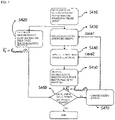
- FIG. 4 is a flowchart of a quality assurance method for a cancer treatment system with an electric field according to another embodiment of the present invention.
- a position of an electrode array in addition to information on the electromagnetic phantom (shape, size, and material constants of an electromagnetic phantom), which is used for electric field verification, a position of an electrode array, output information of the electric field generator (output waveform and intensity of a current from the electric field generator), a position of a probe array, and the like may be set (S410).
- a distribution of an expected voltage and a distribution of an expected electric field inside the electromagnetic phantom may be calculated through a simulation on the basis of the information set in operation S410 (S420).
- the voltage and electric field calculated in this way are expressed as V expected and E expected , respectively.
- the electrode array and the probe array may be disposed in the electromagnetic phantom as set in operation S410 (S430), and the electric field may be applied to the inside of the electromagnetic phantom by flowing, by an electromagnetic generator, the current set in the electrode array (S440).
- a distribution of a voltage and a distribution of an electric field inside the electromagnetic phantom may be measured through the probe array (S450).
- the voltage and electric field calculated in this way are expressed as V actual and E actual , respectively.
- Equation 5 denotes vacuum permittivity
- ⁇ r denotes relative permittivity of a tumor
- Equations 6 and 7 ⁇ denotes electrical conductivity of the tumor.
- Equation 5 and Equation 6 represent stored energy and consumed energy per unit volume of the tumor, respectively.
- Equation 7 represents a power loss density per unit volume of the tumor.
- the most important indicator in radiation therapy is a dose irradiated to a tumor and normal organs.
- a treatment electric field transmitted to a tumor and normal cells may be expressed as energy per unit volume as in Equations 5 and 6 described above.
- the power loss density as shown in Equation 7 is proposed as a dose density of a technique for treating cancer with an electric field.
- the corresponding position may be checked and the electrode array or the probe array may be rearranged (S430), and operations S440 to S460 may be performed again.
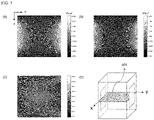
- FIG. 5 is a diagram illustrating a distribution of an expected voltage and a distribution of a measured voltage according to an embodiment of the present invention, and illustrates a result of comparing a distribution
- (C) of FIG. 5 shows percent errors of two distributions. It can be seen that an average of the percent error for
Landscapes
- Health & Medical Sciences (AREA)
- Life Sciences & Earth Sciences (AREA)
- Animal Behavior & Ethology (AREA)
- General Health & Medical Sciences (AREA)
- Engineering & Computer Science (AREA)
- Biomedical Technology (AREA)
- Nuclear Medicine, Radiotherapy & Molecular Imaging (AREA)
- Radiology & Medical Imaging (AREA)
- Veterinary Medicine (AREA)
- Public Health (AREA)
- Heart & Thoracic Surgery (AREA)
- Hospice & Palliative Care (AREA)
- Oncology (AREA)
- Biophysics (AREA)
- Neurology (AREA)
- Radiation-Therapy Devices (AREA)
Abstract
Description
- The present invention relates to a quality assurance apparatus and method for a cancer treatment system with an electric field.
- Techniques for treating cancer with electromagnetic waves involve treating cancer by removing tumors using different principles depending on treatment frequency bands. The principle used in an X-ray frequency band near 1010 MHz is to break and kill cancer cells' deoxyribonucleic acid (DNA) double helix, and another used in a 10 MHz frequency band is to remove cancer by generating heat within a tumor.
- Techniques for treating cancer with an electric field (or tumor treating fields (TTFields)) were first reported in 2004 (see Non-Patent Documents 1 and 2), and involve treating cancer using the principle of delaying cell division and death by transmitting an AC electric field of low-intensity (1 to 3 V/cm) in an intermediate frequency band (50 to 500 kHz) to dividing tumor cells. Since a cancer treatment device with an electric field for patients with recurrent glioblastoma multiforme brain tumors was approved by the United States Food and Drug Administration (FDA) in 2011, despite its short history, as of 2020, it has received great interest and treatment is being performed at about 1,000 treatment centers worldwide.
- Although it is known that the techniques for treating cancer with an electric field have little effect on normal cells, which divide very slowly compared to tumor cells, study results thereon are still insignificant and there is a potential risk of side effects that have not been shown yet. Therefore, it is necessary to transmit a minimal electric field to normal tissue in order to prevent side effects.
- In order to effectively perform the technique, a treatment planning system (TPS) based on a patient's medical image using magnetic resonance imaging (MRI), computed tomography (CT), or the like is required. A general work procedure of a TPS is as follows. First, the patient's medical image (MRI, CT, etc.) is reconstructed into a three-dimensional medical image, boundaries of each tissue and tumor are segmented, and material constants required for electric field calculation, that is, electrical conductivity and dielectric constants (relative permittivity and relative dielectric constant), are assigned to each partitioned region. Thereafter, an insulated electrode array (or transducer array) is attached to the skin region and is subjected to mesh work, and then a voltage is calculated at each node and an electric field of each element is finally calculated, using a finite element method.
- In Patent Document 3, which was previously filed by the present applicant, a method of transmitting an optimal result, that is, a method of transmitting a prescription electric field to a tumor and a minimum electric field to a normal tissue, by adjusting a position of each electrode and a magnitude of a current (or voltage) applied to the electrode using the above-described work procedure and an optimization algorithm is proposed.
- However, a distribution and intensity of an electric field calculated by the TPS inevitably have a difference from a distribution and intensity of an electric field transmitted into a human body by a cancer treatment device with an electric field. In other words, an output error of the cancer treatment device with the electric field, an error due to an inaccurate position of the insulated electrode array, a modeling error that occurs in a process of converting medical image information into finite elements, a numerical analysis error of the finite element method, etc. are present.
- Therefore, in order to verify the accuracy of distribution and intensity of the electric field, which are products of the TPS, there is a need for a technique for guaranteeing the quality of a cancer treatment system with an electric field.
- (Patent Document 1)
Korea University Industry-Academic Cooperation Foundation, "Method of treating cancer using fusion of alternative electric field and radiation therapy," Korean Patent Application Publication No. 10-2017-0028601, Published on March 14, 2017 - (Patent Document 2)
Korea University Industry-Academic Cooperation Foundation, "Method and apparatus for treating cancer using discontinuous fractional alternative electric field," Korean Patent Registration No. 10-1688520, published on December 22, 2016 - (Patent Document 3)
Korea University Industry-Academic Cooperation Foundation, FieldCure Co., Ltd., "Cancer electric field treatment apparatus using optimization algorithm," Korean Patent Registration No. 10-2104961, published on April 27, 2020 - (Patent Document 4)
BOMZON ZEEV, "Optimized TTField treatment of overhead electrode position based on MRI-based conductivity measurement," Korean Patent Application Publication No. 10-2018-0072811, published on June 29, 2018 - (Patent Document 5)
Novocure Limited, "Decreased motility of cancer cells using TTField," Korean Patent Application Publication No. 10-2018-0133431, published on December 14, 2018 - (Patent Document 6)
Novocure Limited, "Arrays for longitudinal transmission of tumor treating fields to body," Korean Patent Application Publication No. 10-2019-0022861, published on March 6, 2019 - (Patent Document 7)
BOMZON ZEEV, "Treatment of patients using tumor treating fields optimized with templates with variable electrode positions," Korean Patent Application Publication No. 10-2019-0104036, published on September 5, 2019 - (Patent Document 8)
Novocure Limited, "Temperature measurement in arrays to transmit tumor treating fields," Korean Patent Application Publication No. 10-2020-0008542, published on January 28, 2020 - (Non-Patent Document 1) Kirson, Eilon D., et al., "Disruption of cancer cell replication by alternating electric fields," Cancer research 64.9 (2004): 3288-3295
- (Non-Patent Document 2) Kirson, Eilon D., et al., "alternating electric fields arrest cell proliferation in animal tumor models and human brain tumors," Proceedings of the National Academy of Sciences 104.24 (2007): 10152-10157
- (Non-Patent Document 3) Ballo, Matthew T., et al., "Correlation of tumor treating fields dosimetry to survival outcomes in newly diagnosed glioblastoma: A large-scale numerical simulation-based analysis of data from the phase 3 EF-14 randomized trial," International Journal of Radiation Oncology, Biology, Physics 104.5 (2019): 1106-1113
- Therefore, there is a need in the art for a method of measuring and verifying a distribution and intensity of an electric field transmitted to a patient before or during treatment using an AC electric field for the purpose of cancer treatment with an electric field.
- Objects of the present invention are not limited to the above-described object and other objects that are not described may be clearly understood by those skilled in the art from the following descriptions.
- According to an aspect of the present invention, there is provided a quality assurance apparatus for a cancer treatment system with an electric field.
- The quality assurance apparatus for a cancer treatment system with an electric field may include an electric field generator configured to transmit an electric field to an inside of an electromagnetic phantom through an electrode array attached to the electromagnetic phantom, a measurement unit configured to measure any one of a voltage, a current, and an electric field inside the electromagnetic phantom, a data collection unit configured to collect a value measured by the measurement unit and convert the measured value into a digital value, an analysis unit configured to calculate and monitor a distribution and intensity of the electric field inside the electromagnetic phantom through the value transmitted from the data collection unit, and a verification unit configured to verify the electric field monitored by the analysis unit.
- According to another aspect of the present invention, there is provided a quality assurance method for a cancer treatment system with an electric field.
- The quality assurance method for a cancer treatment system with an electric field may include setting information on an electromagnetic phantom, a position of an electrode array, output information of an electric field generator, and a position of a probe array, calculating a distribution of an expected voltage and a distribution of an expected electric field of an inside of an electromagnetic phantom through a simulation on the basis of the set information, arranging the electrode array and the probe array in the electromagnetic phantom on the basis of the set information, applying, by an electromagnetic generator, an electric field to the inside of the electromagnetic phantom, measuring a distribution of a voltage and a distribution of an electric field inside the electromagnetic phantom through the probe array, determining whether a difference between the calculated distribution of the electric field and the measured distribution of the electric field is within a preset allowable range, and when it is determined that the difference is within the allowable range, determining that the cancer treatment system with an electric field is operating normally.
- In addition, the solutions for solving the above-described objects do not enumerate all the characteristics of the present invention. Various features of the present invention and its advantages and effects may be understood in more detail with reference to the following specific embodiments.
- The above and other objects, features and advantages of the present invention will become more apparent to those of ordinary skill in the art by describing exemplary embodiments thereof in detail with reference to the accompanying drawings, in which:
-
FIG. 1 is a configuration diagram of a quality assurance apparatus for a cancer treatment system with an electric field according to an embodiment of the present invention; -
FIG. 2 is a diagram illustrating an electromagnetic phantom to which a plurality of electrode arrays are attached and a probe array for measuring a distribution and intensity of an electric field therein according to an embodiment of the present invention; -
FIG. 3 is a diagram illustrating a probe array in which a plurality of probes are disposed according to an embodiment of the present invention; -
FIG. 4 is a flowchart of a quality assurance method for a cancer treatment system with an electric field according to another embodiment of the present invention; and -
FIG. 5 shows diagrams showing a distribution of a square of an expected electric field and a distribution of a square of a measured electric field according to an embodiment of the present invention. - Hereinafter, exemplary embodiments of the present invention that can be easily performed by those skilled in the art will be described in detail with reference to the accompanying drawings. However, in the description of the exemplary embodiments of the present invention, when it is determined that detailed descriptions of related well-known functions or configurations unnecessarily obscure the gist of the present invention, the detailed descriptions thereof will be omitted. Further, parts performing similar functions and operations throughout the drawings are denoted by the same reference numerals.
- In addition, throughout this specification, when a part is referred to as being "connected" to another part, it includes "directly connected" and "indirectly connected" via an intervening part. Also, when a certain part "includes" a certain component, this does not exclude other components from being included unless described otherwise, and other components may in fact be included.
- Generally, in a cancer treatment system with an electric field, an insulated electrode array is directly attached to a human body to form an electromagnetic field inside the human body and perform treatment, and in this case, it is not easy to directly measure an electric field formed inside the human body.
- Therefore, in embodiments of the present invention that will be described below, an electromagnetic phantom which is formed in a structure similar to that of the human body using a biological material having material constants (e.g., electrical conductivity and dielectric constant) similar to those of the human body may be used. When a distribution of the electric field formed inside the electromagnetic phantom is measured by attaching electrodes to the electromagnetic phantom formed in this way, it is possible to identify a distribution of an electric field actually formed inside the human body.
- Further, when a distribution of an electromagnetic field measured through the electromagnetic phantom matches a distribution of an electric field calculated by a simulation, it can be estimated that an intensity of the electric field calculated by the simulation is accurate.
- Hereinafter, a quality assurance apparatus and method for a cancer treatment system with an electric field according to embodiments of the present invention will be described in more detail with reference to
FIGS. 1 to 5 . -
FIG. 1 is a configuration diagram of a quality assurance apparatus for a cancer treatment system with an electric field according to an embodiment of the present invention. - Referring to
FIG. 1 , the quality assurance apparatus for the cancer treatment system with the electric field according to the embodiment of the present invention may transmit an electric field to an inside of anelectromagnetic phantom 100 to which anelectrode array 220 is attached using anelectric field generator 210 of acancer treatment system 200 with an electric field, and may measure any one of a voltage, a current, and an electric field inside theelectromagnetic phantom 100 through ameasurement unit 310. Specifically, themeasurement unit 310 may measure an impedance between electrodes, measure a current at one point, or directly measure the electric field, and may additionally measure temperatures at a plurality of points as necessary. Further, themeasurement unit 310 may measure any one of the voltage, the current, and the electric field at each position while a position thereof is changed by a movingunit 370. Further, themeasurement unit 310 may correct measured values using pre-stored calibration data. - A
data collection unit 320 may collect the values measured by themeasurement unit 310, convert the values into digital values, and transmit the converted digital values to ananalysis unit 330. - The
analysis unit 330 may calculate and monitor a distribution and intensity of the electric field inside theelectromagnetic phantom 100 through the transmitted values. Specifically, theanalysis unit 330 may monitor a distribution of the voltage, the distribution of the electric field, or a distribution of a square of the electric field inside theelectromagnetic phantom 100 or monitor energy (product of permittivity and the square of the electric field) transmitted to a unit volume, and may additionally monitor a distribution of temperatures. - Meanwhile, a
simulation unit 350 may calculate a distribution of an electric field to be formed inside theelectromagnetic phantom 100 through a simulation using conductivity and permittivity of theelectromagnetic phantom 100 stored in astorage unit 360, and a value of the electric field applied by theelectric field generator 210. - A
verification unit 340 may verify the electric field monitored by theanalysis unit 330. Specifically, theverification unit 340 may comparatively analyze the distribution of the electric field calculated by theanalysis unit 330 and the distribution of the electric field calculated by thesimulation unit 350 to verify accuracy of the distribution of the electric field, and when a difference between the distributions of the electric fields is greater than or equal to a preset value, theverification unit 340 may dynamically change a treatment plan for treatment with an electric field, which is established by a treatmentplan establishment unit 230. Further, theverification unit 340 may provide information on an error distribution up to a point at which the distributions of the electric fields calculated by theanalysis unit 330 and thesimulation unit 350 match. -
FIG. 2 is a diagram illustrating an electromagnetic phantom to which a plurality of electrode arrays are attached and a probe array for measuring a distribution and intensity of an electric field therein according to an embodiment of the present invention, andFIG. 3 is a diagram illustrating a probe array in which a plurality of probes are disposed according to an embodiment of the present invention. - Referring to
FIGS. 2 and3 , theelectromagnetic phantom 100 used in the embodiment of the present invention may be made of a biological material having material constants, that is, electrical conductivity and dielectric constants, similar to those of the human body (i.e., a material whose material constants differ from those of the human body within preset ranges), and may be formed in a structure similar to that of the human body. - Here, a shape, a size, and material constants of the
electromagnetic phantom 100 may be predetermined values, and the corresponding values may be stored in thestorage unit 360 in order to perform an accurate simulation on the distribution and intensity of the electric field. Further, in consideration of the fact that the material constant is a frequency-dependent value, an AC impedance analyzer may be used to accurately determine the material constant. - In order to transmit an AC electric field to the inside of the
electromagnetic phantom 100, one ormore electrode arrays 220 are attached to an outside of theelectromagnetic phantom 100, and theelectric field generator 210 may flow an AC current of a preset treatment frequency (e.g., 50 to 500 kHz) or apply an AC voltage through one ormore electrode arrays 220. - Accordingly, when the AC current flows through one or
more electrode arrays 220, a voltage and an electric field may be generated inside theelectromagnetic phantom 100, and a distribution of the generated electric field may be measured through themeasurement unit 310, for example, implemented as a probe array. - According to an embodiment, as illustrated in
FIG. 3 , aprobe array 310 may have a structure in which a plurality ofprobes 311 including probes for voltage measurement are arranged at preset intervals. Here, the current may be measured through each of the plurality ofprobes 311 or the electric field may be directly measured. Further, in order to rapidly and accurately measure the current or the electric field, a position of theprobe array 310 may be automatically controlled by the movingunit 370 implemented as a stepping motor, a positioning device, or the like. Values measured by the plurality ofprobes 311 may be corrected using calibration data of each probe and may be converted into digital values together with corresponding position information by thedata collection unit 320. Further, theanalysis unit 330 may calculate and monitor a distribution of the electric field at each measurement position inside theelectromagnetic phantom 100 using the digital values. -
FIG. 4 is a flowchart of a quality assurance method for a cancer treatment system with an electric field according to another embodiment of the present invention. - Referring to
FIG. 4 , first, in addition to information on the electromagnetic phantom (shape, size, and material constants of an electromagnetic phantom), which is used for electric field verification, a position of an electrode array, output information of the electric field generator (output waveform and intensity of a current from the electric field generator), a position of a probe array, and the like may be set (S410). - Thereafter, a distribution of an expected voltage and a distribution of an expected electric field inside the electromagnetic phantom may be calculated through a simulation on the basis of the information set in operation S410 (S420). The voltage and electric field calculated in this way are expressed as Vexpected and Eexpected, respectively.
- Thereafter, the electrode array and the probe array may be disposed in the electromagnetic phantom as set in operation S410 (S430), and the electric field may be applied to the inside of the electromagnetic phantom by flowing, by an electromagnetic generator, the current set in the electrode array (S440).
- Thereafter, a distribution of a voltage and a distribution of an electric field inside the electromagnetic phantom may be measured through the probe array (S450). The voltage and electric field calculated in this way are expressed as Vactual and Eactual, respectively.
- Thereafter, it is determined whether a difference between the distributions of two electric fields is within a preset allowable range (S460), and when it is determined that the difference is within the corresponding range, it may be determined that the cancer treatment system with the electric field is operating normally and the method may be completed.
- In this case, various comparison indices such as the Euclidean distance (or L2 norm) of Equation 1 or a percentage error of Equation 2 may be used to compare the distributions of two electric fields. Here, various indices such as those in Equations 3 to 7 may be used for x. In Equation 5, ε denotes vacuum permittivity, and εr denotes relative permittivity of a tumor. In Equations 6 and 7, σ denotes electrical conductivity of the tumor. Equation 5 and Equation 6 represent stored energy and consumed energy per unit volume of the tumor, respectively. Equation 7 represents a power loss density per unit volume of the tumor.


- The most important indicator in radiation therapy is a dose irradiated to a tumor and normal organs. Here, the dose is the unit (Gy=J/kg) of energy per unit mass. Similarly, in the cancer treatment with the electric field, a treatment electric field transmitted to a tumor and normal cells may be expressed as energy per unit volume as in Equations 5 and 6 described above. Meanwhile, in Non-Patent Document 3, the power loss density as shown in Equation 7 is proposed as a dose density of a technique for treating cancer with an electric field.
- Further, in the radiation therapy, treatment is performed through energy of radiation absorbed by a patient. Even in the cancer treatment with the electric field, when the difference between the distributions is out of the above-described allowable range, causes of several errors may be considered to check a value of energy transmitted to the patient.
- As an example, when the position of the electrode array or probe array is not a planned position (case 1), the corresponding position may be checked and the electrode array or the probe array may be rearranged (S430), and operations S440 to S460 may be performed again.
- As another example, when a setting error of the electric field generator or a functional error of hardware is generated (case 2), the setting of the electromagnetic generator may be checked and changed (S470), and then operations S440 to S460 may be performed again.
-
FIG. 5 is a diagram illustrating a distribution of an expected voltage and a distribution of a measured voltage according to an embodiment of the present invention, and illustrates a result of comparing a distribution |E expected |2 in (A) ofFIG. 5 calculated by a simulation and a distribution |E actual |2 in (B) ofFIG. 5 measured on ahorizontal plane 401 between two electrodes, when two flat electrode arrays (10×10 cm2) are attached to a box-shaped electromagnetic phantom (20×20×20 cm3) filled with water (electrical conductivity σ=0.02 S/m and relative permittivity εr=81), and the electric field generator flows an AC current of 200 kHz. Here, the probes are disposed every 1 cm along each of an X-axis and a Y-axis. Further, (C) ofFIG. 5 shows percent errors of two distributions. It can be seen that an average of the percent error for |E |2 is 18.0±3.1%, which is greater than an average of the percent error for |E | of 9.5±1.7%. - According to an embodiment of the present invention, by checking a distribution and intensity of an electric field transmitted to a patient before applying the electric field for the purpose of cancer treatment, to identify the accuracy of treatment, it is possible to prevent potential side effects and increase effectiveness of the treatment.
- Effects of the present invention are not limited to the above-described effects and other effects that are not described may be clearly understood by those skilled in the art from the above detailed descriptions.
- The present invention is not limited by the above-described embodiments and the accompanying drawings. It will be apparent to those of ordinary skill in the art that the components according to the present invention can be substituted, modified, and changed without departing from the spirit of the present invention.
Claims (15)
- A quality assurance apparatus for a cancer treatment system with an electric field, the quality assurance apparatus comprising:an electric field generator configured to transmit an electric field to an inside of an electromagnetic phantom through an electrode array attached to the electromagnetic phantom;a measurement unit configured to measure any one of a voltage, a current, and an electric field inside the electromagnetic phantom;a data collection unit configured to collect a value measured by the measurement unit and convert the measured value into a digital value;an analysis unit configured to calculate and monitor a distribution and intensity of the electric field inside the electromagnetic phantom through the value transmitted from the data collection unit; anda verification unit configured to verify the electric field monitored by the analysis unit.
- The quality assurance apparatus of claim 1, wherein the electric field generator generates an electric field of 50 to 500 kHz.
- The quality assurance apparatus of claim 1, wherein the measurement unit measures an impedance between electrodes included in the electrode array.
- The quality assurance apparatus of claim 1, wherein the measurement unit measures a current at one point of the electromagnetic phantom.
- The quality assurance apparatus of claim 1, wherein the measurement unit measures an electric field of the electromagnetic phantom.
- The quality assurance apparatus of claim 1, further comprising a moving unit configured to move a position of the measurement unit,
wherein the measurement unit measures any one of a voltage, a current, and an electric field at each position to which the measurement unit is moved by the moving unit. - The quality assurance apparatus of claim 1, wherein the measurement unit corrects the measured value using pre-stored calibration data.
- The quality assurance apparatus of claim 1, wherein the analysis unit monitors a distribution of a voltage, a distribution of an electric field, and a distribution of a square of the electric field inside the electromagnetic phantom, or monitors energy transmitted to a unit volume.
- The quality assurance apparatus of claim 1, wherein:the measurement unit further measures temperatures at a plurality of points of the electromagnetic phantom; andthe analysis unit further monitors a distribution of the temperatures of the electromagnetic phantom.
- The quality assurance apparatus of claim 1, further comprising a simulation unit configured to calculate a distribution of the electric field to be formed inside the electromagnetic phantom through a simulation using conductivity and permittivity of the electromagnetic phantom and a value of the electric field applied by the electric field generator.
- The quality assurance apparatus of claim 10, wherein the verification unit comparatively analyzes the distribution of the electric field calculated by the analysis unit and the distribution of the electric field calculated by the simulation unit, and when a difference between the distributions of the electric fields is greater than or equal to a preset value, dynamically changes a treatment plan for cancer treatment with the electric field.
- The quality assurance apparatus of claim 1, wherein the electromagnetic phantom is made of a material whose material constant differs within a preset range from that of a human body.
- A quality assurance method for a cancer treatment system with an electric field, the quality assurance method comprising:setting information on an electromagnetic phantom, a position of an electrode array, output information of an electric field generator, and a position of a probe array;calculating a distribution of an expected voltage and a distribution of an expected electric field of an inside of an electromagnetic phantom through a simulation on the basis of the set information;arranging the electrode array and the probe array in the electromagnetic phantom on the basis of the set information;applying, by an electromagnetic generator, an electric field to the inside of the electromagnetic phantom;measuring a distribution of a voltage and a distribution of an electric field inside the electromagnetic phantom through the probe array;determining whether a difference between the calculated distribution of the electric field and the measured distribution of the electric field is within a preset allowable range; andwhen it is determined that the difference is within the allowable range, determining that the cancer treatment system with an electric field is operating normally.
- The quality assurance method of claim 13, wherein, when it is determined that the difference is out of the allowable range, the position of the electrode array or probe array is identified and the electrode array or probe array is rearranged, and then the applying of the electric field, the measuring of the distribution of the electric field, and the determining of whether the difference is within the allowable range are performed again.
- The quality assurance method of claim 13, wherein, when it is determined that the difference is out of the allowable range, the setting of the electromagnetic generator is identified and changed, and then the applying of the electric field, the measuring of the distribution of the electric field, and the determining of whether the difference is within the allowable range are performed again.
Applications Claiming Priority (2)
| Application Number | Priority Date | Filing Date | Title |
|---|---|---|---|
| KR1020200058964A KR102464313B1 (en) | 2020-05-18 | 2020-05-18 | Apparatus and Method for Quality Assurance in Electric Field Therapy |
| PCT/KR2020/009403 WO2021235592A1 (en) | 2020-05-18 | 2020-07-16 | Quality assurance device and method for cancer treatment system using electric field |
Publications (4)
| Publication Number | Publication Date |
|---|---|
| EP4094802A1 true EP4094802A1 (en) | 2022-11-30 |
| EP4094802A4 EP4094802A4 (en) | 2024-02-21 |
| EP4094802B1 EP4094802B1 (en) | 2026-01-21 |
| EP4094802C0 EP4094802C0 (en) | 2026-01-21 |
Family
ID=78708653
Family Applications (1)
| Application Number | Title | Priority Date | Filing Date |
|---|---|---|---|
| EP20936566.7A Active EP4094802B1 (en) | 2020-05-18 | 2020-07-16 | Quality assurance device for cancer treatment system using electric field |
Country Status (4)
| Country | Link |
|---|---|
| US (1) | US12171998B2 (en) |
| EP (1) | EP4094802B1 (en) |
| KR (1) | KR102464313B1 (en) |
| WO (1) | WO2021235592A1 (en) |
Families Citing this family (7)
| Publication number | Priority date | Publication date | Assignee | Title |
|---|---|---|---|---|
| CN114724680A (en) * | 2022-03-22 | 2022-07-08 | 河北普尼医疗科技有限公司 | Treatment method and system based on artificial intelligence deep learning |
| KR102953368B1 (en) | 2023-04-05 | 2026-04-17 | 주식회사 뉴아인 | Apparartus of apoptosis using electric field |
| KR102953371B1 (en) | 2023-04-05 | 2026-04-17 | 주식회사 뉴아인 | Electric field focusing device for apoptosis |
| KR20240149472A (en) | 2023-04-05 | 2024-10-15 | 주식회사 뉴아인 | Electric field focusing device for apoptosis |
| KR102916862B1 (en) * | 2023-11-01 | 2026-01-23 | 재단법인 대구경북첨단의료산업진흥재단 | System for optimizing impulses of electromagnetic waves and method thereof |
| CN117438039B (en) * | 2023-12-19 | 2024-03-22 | 湖南安泰康成生物科技有限公司 | Method and device for determining application distribution of electrode plates |
| WO2025149939A1 (en) * | 2024-01-10 | 2025-07-17 | Lifebridge Innovations, Pbc | Apparatus and method for optimizing and adapting treatment of multiple tumors in patients with metastatic disease by electric field |
Family Cites Families (26)
| Publication number | Priority date | Publication date | Assignee | Title |
|---|---|---|---|---|
| US5284144A (en) * | 1989-11-22 | 1994-02-08 | The United States Of America As Represented By The Secretary Of The Dept. Of Health & Human Services | Apparatus for hyperthermia treatment of cancer |
| US5540737A (en) * | 1991-06-26 | 1996-07-30 | Massachusetts Institute Of Technology | Minimally invasive monopole phased array hyperthermia applicators and method for treating breast carcinomas |
| DE19907774A1 (en) * | 1999-02-19 | 2000-08-31 | Schwerionenforsch Gmbh | Method for verifying the calculated radiation dose of an ion beam therapy system |
| ES2344215T3 (en) * | 2004-12-07 | 2010-08-20 | Standen Ltd. | ELECTRODES TO APPLY A LIVE ELECTRIC FIELD DURING A DILATED TIME PERIOD. |
| US20060199159A1 (en) * | 2005-03-01 | 2006-09-07 | Neuronetics, Inc. | Head phantom for simulating the patient response to magnetic stimulation |
| US20100259259A1 (en) * | 2005-09-21 | 2010-10-14 | Markus Zahn | Systems and methods for tuning properties of nanoparticles |
| US20100180702A1 (en) * | 2006-10-25 | 2010-07-22 | Yuji Koyamashita | Whole-body phantom and process for producing the same |
| EP2725972A1 (en) * | 2011-06-29 | 2014-05-07 | The Procter and Gamble Company | Apparatus and method for contactlessly monitoring the condition of a living subject using electromagnetic waves |
| KR101378875B1 (en) * | 2013-03-19 | 2014-03-27 | 사회복지법인 삼성생명공익재단 | Method, apparatus and system for manufacturing phantom customized to patient |
| EP3119473A1 (en) * | 2014-03-17 | 2017-01-25 | The United States of America, as represented by The Secretary, Department of Health and Human Services | System with an electromagnetic field generator with coils for treating tumors and a method for treating tissue |
| KR101527939B1 (en) * | 2014-08-05 | 2015-06-10 | 고려대학교 산학협력단 | Exposure and dose analysis fusion apparatus for radiation |
| KR101747232B1 (en) * | 2014-12-16 | 2017-06-14 | 사회복지법인 삼성생명공익재단 | Method and apparatus for verifying a manufactured radiation beam intensity modulator |
| KR101688520B1 (en) | 2015-05-14 | 2016-12-22 | 고려대학교 산학협력단 | Apparatus and Method for Treating Cancer Using Discontinuous Fractional Alternative Electric Field |
| KR102186403B1 (en) | 2015-09-04 | 2020-12-04 | 고려대학교 산학협력단 | Method for Treating Cancer Using Alternative Electric Field in Combination with Radiation Therapy |
| US10188851B2 (en) | 2015-10-28 | 2019-01-29 | Novocure Limited | TTField treatment with optimization of electrode positions on the head based on MRI-based conductivity measurements |
| US10548665B2 (en) * | 2016-02-29 | 2020-02-04 | Pulse Biosciences, Inc. | High-voltage analog circuit pulser with feedback control |
| US10821283B2 (en) * | 2016-04-04 | 2020-11-03 | Novocure Gmbh | Reducing motility of cancer cells using tumor treating fields (TTFields) |
| US20170244110A1 (en) * | 2016-05-09 | 2017-08-24 | Mohammad Abdolahad | Integrated methods and systems for electrical monitoring of cancer cells stimulated by electromagnetic waves |
| US20180001075A1 (en) | 2016-06-30 | 2018-01-04 | Novocure Limited | Arrays for Longitudinal Delivery of TTFields to a Body |
| CN116747440A (en) | 2016-08-18 | 2023-09-15 | 诺沃库勒有限责任公司 | Temperature measurement in an array for delivering tumor treatment electric fields |
| WO2018057953A2 (en) * | 2016-09-23 | 2018-03-29 | Beth Isreal Deaconess Medical Center, Inc. | System and methods for cancer treatment using alternating electric fields |
| DK3554631T3 (en) | 2016-12-13 | 2022-05-30 | Novocure Gmbh | TREATMENT OF PATIENTS WITH TTFIELDS WITH ELECTRODEPOSITIONS OPTIMIZED USING DEFORMABLE TEMPLATES |
| KR102104961B1 (en) | 2018-07-03 | 2020-04-27 | 고려대학교산학협력단 | Apparatus for alternating electric fields therapy using optimized algorithm |
| MX2020013431A (en) * | 2018-07-18 | 2021-05-27 | Novocure Gmbh | Using power loss density and related measures to quantify the dose of tumor treating fields (ttfields). |
| KR102809351B1 (en) * | 2018-09-20 | 2025-05-23 | 한국전자통신연구원 | Cancer treatment device, nanoparticle probe, method for inhibiting cancer cell division, and cancer treatment system |
| US11691006B2 (en) * | 2019-04-22 | 2023-07-04 | Boston Scientific Scimed, Inc. | Electrical stimulation devices for cancer treatment |
-
2020
- 2020-05-18 KR KR1020200058964A patent/KR102464313B1/en active Active
- 2020-07-16 US US17/799,894 patent/US12171998B2/en active Active
- 2020-07-16 WO PCT/KR2020/009403 patent/WO2021235592A1/en not_active Ceased
- 2020-07-16 EP EP20936566.7A patent/EP4094802B1/en active Active
Also Published As
| Publication number | Publication date |
|---|---|
| KR102464313B1 (en) | 2022-11-08 |
| US20230087717A1 (en) | 2023-03-23 |
| US12171998B2 (en) | 2024-12-24 |
| EP4094802A4 (en) | 2024-02-21 |
| EP4094802B1 (en) | 2026-01-21 |
| WO2021235592A1 (en) | 2021-11-25 |
| EP4094802C0 (en) | 2026-01-21 |
| KR20210142299A (en) | 2021-11-25 |
Similar Documents
| Publication | Publication Date | Title |
|---|---|---|
| EP4094802B1 (en) | Quality assurance device for cancer treatment system using electric field | |
| US11678836B2 (en) | Method and apparatus for estimating temperature in a body | |
| EP0928157B1 (en) | Electromagnetic imaging and therapeutic (emit) systems | |
| JP2024513854A5 (en) | ||
| US20130123885A1 (en) | Apparatus, systems, computer-accessible medium and methods for facilitating radio frequency hyperthermia and thermal contrast in a magnetic resonance imaging system | |
| Godart et al. | Reconstruction of high-resolution 3D dose from matrix measurements: error detection capability of the COMPASS correction kernel method | |
| US10661091B2 (en) | System and method for hyperthermia treatment using radiofrequency phased arrays | |
| EP3361978B1 (en) | Systems for monitoring patient motion via capacitive position sensing | |
| CN106896334A (en) | The method and magnetic resonance imaging system of active implant surrounding tissue temperature under a kind of advance assessment MR | |
| Meyer et al. | A framework for clinical commissioning of 3D‐printed patient support or immobilization devices in photon radiotherapy | |
| Steensma et al. | Tier‐based formalism for safety assessment of custom‐built radio‐frequency transmit coils | |
| Sanpitak et al. | On the accuracy of Tier 4 simulations to predict RF heating of wire implants during magnetic resonance imaging at 1.5 T | |
| Erhardt et al. | It's the little things: on the complexity of planar electrode heating in MRI | |
| Chendi et al. | EPID-based 3D dosimetry for pre-treatment FFF VMAT stereotactic body radiotherapy plan verification using dosimetry CheckTM | |
| Petzold et al. | Towards an integrated radiofrequency safety concept for implant carriers in MRI based on sensor‐equipped implants and parallel transmission | |
| Paulides et al. | Clinical introduction of novel microwave hyperthermia technology: the HYPERcollar3D applicator for head and neck hyperthermia | |
| Sekar et al. | Characterization and clinical evaluation of a novel 2D detector array for conventional and flattening filter free (FFF) IMRT pre-treatment verification | |
| Drizdal et al. | Application of photogrammetry reconstruction for hyperthermia quality control measurements | |
| Radzi et al. | Experiencing In-vivo dosimetry verification in Malaysia: A patient-specific EPID-based approach | |
| CN119896469B (en) | Method and system for constructing individual head tissue conductivity model | |
| Poni | Precision Hyperthermia: The Role of Modular Radiofrequency Applicators, Electrical Impedance Tomography and Online Optimization | |
| Dąbrowski et al. | Daily patient geometry correction: application of NAL and eNAL protocols | |
| Kumar Pandey et al. | Resolution limits for radiation-induced acoustic imaging for in vivo radiation dosimetry | |
| Sheen et al. | Robust dosimetric evaluation of FLASH proton beams using plane-parallel ionization chambers and EBT-XD films for pre-clinical studies | |
| De Lazzari et al. | Quality assurance phantoms for deep hyperthermia devices: design principles informed by computational modeling |
Legal Events
| Date | Code | Title | Description |
|---|---|---|---|
| STAA | Information on the status of an ep patent application or granted ep patent |
Free format text: STATUS: THE INTERNATIONAL PUBLICATION HAS BEEN MADE |
|
| PUAI | Public reference made under article 153(3) epc to a published international application that has entered the european phase |
Free format text: ORIGINAL CODE: 0009012 |
|
| STAA | Information on the status of an ep patent application or granted ep patent |
Free format text: STATUS: REQUEST FOR EXAMINATION WAS MADE |
|
| 17P | Request for examination filed |
Effective date: 20220825 |
|
| AK | Designated contracting states |
Kind code of ref document: A1 Designated state(s): AL AT BE BG CH CY CZ DE DK EE ES FI FR GB GR HR HU IE IS IT LI LT LU LV MC MK MT NL NO PL PT RO RS SE SI SK SM TR |
|
| DAV | Request for validation of the european patent (deleted) | ||
| DAX | Request for extension of the european patent (deleted) | ||
| A4 | Supplementary search report drawn up and despatched |
Effective date: 20240122 |
|
| RIC1 | Information provided on ipc code assigned before grant |
Ipc: A61N 1/08 20060101ALI20240116BHEP Ipc: A61N 1/36 20060101ALI20240116BHEP Ipc: A61N 1/40 20060101AFI20240116BHEP |
|
| GRAP | Despatch of communication of intention to grant a patent |
Free format text: ORIGINAL CODE: EPIDOSNIGR1 |
|
| STAA | Information on the status of an ep patent application or granted ep patent |
Free format text: STATUS: GRANT OF PATENT IS INTENDED |
|
| RIC1 | Information provided on ipc code assigned before grant |
Ipc: A61N 1/40 20060101AFI20251030BHEP Ipc: A61N 1/36 20060101ALI20251030BHEP Ipc: A61N 1/04 20060101ALN20251030BHEP |
|
| GRAS | Grant fee paid |
Free format text: ORIGINAL CODE: EPIDOSNIGR3 |
|
| INTG | Intention to grant announced |
Effective date: 20251110 |
|
| GRAA | (expected) grant |
Free format text: ORIGINAL CODE: 0009210 |
|
| STAA | Information on the status of an ep patent application or granted ep patent |
Free format text: STATUS: THE PATENT HAS BEEN GRANTED |
|
| AK | Designated contracting states |
Kind code of ref document: B1 Designated state(s): AL AT BE BG CH CY CZ DE DK EE ES FI FR GB GR HR HU IE IS IT LI LT LU LV MC MK MT NL NO PL PT RO RS SE SI SK SM TR |
|
| REG | Reference to a national code |
Ref country code: CH Ref legal event code: F10 Free format text: ST27 STATUS EVENT CODE: U-0-0-F10-F00 (AS PROVIDED BY THE NATIONAL OFFICE) Effective date: 20260121 |
|
| REG | Reference to a national code |
Ref country code: DE Ref legal event code: R096 Ref document number: 602020065705 Country of ref document: DE |
|
| REG | Reference to a national code |
Ref country code: IE Ref legal event code: FG4D |
|
| U01 | Request for unitary effect filed |
Effective date: 20260217 |
|
| U07 | Unitary effect registered |
Designated state(s): AT BE BG DE DK EE FI FR IT LT LU LV MT NL PT RO SE SI Effective date: 20260223 |