EP4093638B1 - Locking cargo restraint with multiple retracting cables - Google Patents
Locking cargo restraint with multiple retracting cables Download PDFInfo
- Publication number
- EP4093638B1 EP4093638B1 EP21744195.5A EP21744195A EP4093638B1 EP 4093638 B1 EP4093638 B1 EP 4093638B1 EP 21744195 A EP21744195 A EP 21744195A EP 4093638 B1 EP4093638 B1 EP 4093638B1
- Authority
- EP
- European Patent Office
- Prior art keywords
- spool
- selector
- cargo restraint
- restraint device
- tensioner
- Prior art date
- Legal status (The legal status is an assumption and is not a legal conclusion. Google has not performed a legal analysis and makes no representation as to the accuracy of the status listed.)
- Active
Links
Images








Classifications
-
- B—PERFORMING OPERATIONS; TRANSPORTING
- B60—VEHICLES IN GENERAL
- B60R—VEHICLES, VEHICLE FITTINGS, OR VEHICLE PARTS, NOT OTHERWISE PROVIDED FOR
- B60R9/00—Supplementary fittings on vehicle exterior for carrying loads, e.g. luggage, sports gear or the like
- B60R9/04—Carriers associated with vehicle roof
- B60R9/048—Carriers characterised by article-gripping, -covering,-retaining, or -locking means
-
- B—PERFORMING OPERATIONS; TRANSPORTING
- B60—VEHICLES IN GENERAL
- B60P—VEHICLES ADAPTED FOR LOAD TRANSPORTATION OR TO TRANSPORT, TO CARRY, OR TO COMPRISE SPECIAL LOADS OR OBJECTS
- B60P7/00—Securing or covering of load on vehicles
- B60P7/06—Securing of load
-
- B—PERFORMING OPERATIONS; TRANSPORTING
- B65—CONVEYING; PACKING; STORING; HANDLING THIN OR FILAMENTARY MATERIAL
- B65H—HANDLING THIN OR FILAMENTARY MATERIAL, e.g. SHEETS, WEBS, CABLES
- B65H54/00—Winding, coiling, or depositing filamentary material
- B65H54/56—Winding of hanks or skeins
- B65H54/58—Swifts or reels adapted solely for the formation of hanks or skeins
- B65H54/585—Reels for rolling tape-like material, e.g. flat hose or strap, into flat spiral form; Means for retaining the roll after removal of the reel
-
- B—PERFORMING OPERATIONS; TRANSPORTING
- B65—CONVEYING; PACKING; STORING; HANDLING THIN OR FILAMENTARY MATERIAL
- B65H—HANDLING THIN OR FILAMENTARY MATERIAL, e.g. SHEETS, WEBS, CABLES
- B65H59/00—Adjusting or controlling tension in filamentary material, e.g. for preventing snarling; Applications of tension indicators
- B65H59/02—Adjusting or controlling tension in filamentary material, e.g. for preventing snarling; Applications of tension indicators by regulating delivery of material from supply package
- B65H59/04—Adjusting or controlling tension in filamentary material, e.g. for preventing snarling; Applications of tension indicators by regulating delivery of material from supply package by devices acting on package or support
-
- B—PERFORMING OPERATIONS; TRANSPORTING
- B65—CONVEYING; PACKING; STORING; HANDLING THIN OR FILAMENTARY MATERIAL
- B65H—HANDLING THIN OR FILAMENTARY MATERIAL, e.g. SHEETS, WEBS, CABLES
- B65H75/00—Storing webs, tapes, or filamentary material, e.g. on reels
- B65H75/02—Cores, formers, supports, or holders for coiled, wound, or folded material, e.g. reels, spindles, bobbins, cop tubes, cans, mandrels or chucks
- B65H75/34—Cores, formers, supports, or holders for coiled, wound, or folded material, e.g. reels, spindles, bobbins, cop tubes, cans, mandrels or chucks specially adapted or mounted for storing and repeatedly paying-out and re-storing lengths of material provided for particular purposes, e.g. anchored hoses, power cables
- B65H75/38—Cores, formers, supports, or holders for coiled, wound, or folded material, e.g. reels, spindles, bobbins, cop tubes, cans, mandrels or chucks specially adapted or mounted for storing and repeatedly paying-out and re-storing lengths of material provided for particular purposes, e.g. anchored hoses, power cables involving the use of a core or former internal to, and supporting, a stored package of material
- B65H75/40—Cores, formers, supports, or holders for coiled, wound, or folded material, e.g. reels, spindles, bobbins, cop tubes, cans, mandrels or chucks specially adapted or mounted for storing and repeatedly paying-out and re-storing lengths of material provided for particular purposes, e.g. anchored hoses, power cables involving the use of a core or former internal to, and supporting, a stored package of material mobile or transportable
- B65H75/42—Cores, formers, supports, or holders for coiled, wound, or folded material, e.g. reels, spindles, bobbins, cop tubes, cans, mandrels or chucks specially adapted or mounted for storing and repeatedly paying-out and re-storing lengths of material provided for particular purposes, e.g. anchored hoses, power cables involving the use of a core or former internal to, and supporting, a stored package of material mobile or transportable attached to, or forming part of, mobile tools, machines or vehicles
- B65H75/425—Cores, formers, supports, or holders for coiled, wound, or folded material, e.g. reels, spindles, bobbins, cop tubes, cans, mandrels or chucks specially adapted or mounted for storing and repeatedly paying-out and re-storing lengths of material provided for particular purposes, e.g. anchored hoses, power cables involving the use of a core or former internal to, and supporting, a stored package of material mobile or transportable attached to, or forming part of, mobile tools, machines or vehicles attached to, or forming part of a vehicle, e.g. truck, trailer, vessel
-
- B—PERFORMING OPERATIONS; TRANSPORTING
- B65—CONVEYING; PACKING; STORING; HANDLING THIN OR FILAMENTARY MATERIAL
- B65H—HANDLING THIN OR FILAMENTARY MATERIAL, e.g. SHEETS, WEBS, CABLES
- B65H75/00—Storing webs, tapes, or filamentary material, e.g. on reels
- B65H75/02—Cores, formers, supports, or holders for coiled, wound, or folded material, e.g. reels, spindles, bobbins, cop tubes, cans, mandrels or chucks
- B65H75/34—Cores, formers, supports, or holders for coiled, wound, or folded material, e.g. reels, spindles, bobbins, cop tubes, cans, mandrels or chucks specially adapted or mounted for storing and repeatedly paying-out and re-storing lengths of material provided for particular purposes, e.g. anchored hoses, power cables
- B65H75/38—Cores, formers, supports, or holders for coiled, wound, or folded material, e.g. reels, spindles, bobbins, cop tubes, cans, mandrels or chucks specially adapted or mounted for storing and repeatedly paying-out and re-storing lengths of material provided for particular purposes, e.g. anchored hoses, power cables involving the use of a core or former internal to, and supporting, a stored package of material
- B65H75/44—Constructional details
- B65H75/4418—Arrangements for stopping winding or unwinding; Arrangements for releasing the stop means
- B65H75/4428—Arrangements for stopping winding or unwinding; Arrangements for releasing the stop means acting on the reel or on a reel blocking mechanism
- B65H75/4431—Manual stop or release button
Definitions
- the present invention relates generally to restraints, and more particularly to a locking cargo restraint with multiple retracting cables that may be used to secure items during transport or storage.
- the restraint device can be used to directly connect the cargo to another object by connecting one end of the restraint device to the cargo, wrapping the flexible member around the cargo and the object, and fastening the device's opposite end to the object.
- the restraint device may also be used by connecting both of its ends to a first item and wrapping its flexible member around a second item.
- these traditional straps are unwieldy and difficult to use, since they easily tangle during the restraining process. Further, these straps are difficult to efficiently store, requiring the user to manually wrap them to prevent tangling. Finally, the straps may only effectively secure one item at a time, or several items that easily nest together.
- security devices such as keyed or coded theft deterrents (examples include cable locks, bike locks, and padlocks).
- keyed or coded theft deterrents examples include cable locks, bike locks, and padlocks.
- these devices are not able to sufficiently restrain cargo against unwanted motion. Further, they work best when the cargo and the storage location provide appropriate features for the locks to act on.
- variable length security devices do not provide a mechanism for tensioning the flexible member to better restrain or secure the cargo. In effect, flexible security devices only tether the cargo without restraining the cargo against shifting.
- JP 2001 287741 A discloses a locking cargo restraint device for use of anchoring at least one item to a surface, comprising: a case body that defines an interior region, the case body including two or more apertures extending from the interior region to an exterior region of the case body; a first cable member and a second cable member, each of the first cable member and the second cable member including a first end and a second end; a first spool and a second spool, each spool having a cavity in an interior portion of the spool, and each spool secured to the interior region of the case body; wherein the first end of the first cable member extends through a first aperture of the two or more apertures, and the first end of the second cable member extends through a second aperture of the two or more apertures; wherein the second end of the first cable member is in mechanical connection with the first spool and the second end of the second cable member is in mechanical connection with the second spool; and a tensioner assembly secured within the interior of the case body that engage
- the present invention overcomes many of the shortcomings and limitations of the prior art cargo restraint and security devices discussed above.
- the invention is an easily portable locking cargo restraint, which uses two or more cables to secure one or more items to a base or surface.
- the device is an efficient restraint device because the cables can be individually pulled to different lengths so that the cables can restrain multiple items or irregularly shaped items.
- the cables are retractably mounted within a central body for easy storage and retrieval, ensuring the user need not worry about tangled cable.
- the retractable cables may be individually spring biased to pull the cables into the central body after use, efficiently stowing the cables with minimal user intervention.
- the cables themselves may have connectors, such as hooked ends, to engage with available mounting points on the base or surface used to secure the item. Alternatively, the connectors may engage with each other so that the cables surround both the cargo items and the base used to secure the items.
- the device incorporates security mechanisms to deter item theft.
- the cables and tensioning mechanisms of the device are housed within a case to prevent unauthorized users from tampering with the device.
- the device may feature a keyed lock that can prevent unauthorized users adjusting the cables' tension, preventing them from loosening the restraints to steal the items.
- the cables themselves may be constructed of a cut-resistant material to deter theft.
- Fig. 1 illustrates a locking cargo restraint with multiple retracting cables 100, hereinafter referred to simply as cargo restraint 100, as installed to secure representative cargo items 10.
- a plurality of cables 105 of the cargo restraint 100 attach to a representative base 20, with the base 20 being affixed to a representative vehicle 30.
- each of the cables 105 may extend to different lengths to allow the user to secure multiple cargo items.
- the cables 105 are also equipped with connectors 107, shown as hooks in Fig. 1 , that may be selectively engaged with a surface such as the base 20 when the connectors 107 are attached to the base 20.
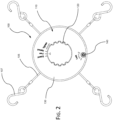
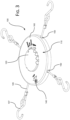
- Figs. 2 and 3 illustrate a first embodiment of the cargo restraint 100.
- a case or cover 110 may be provided, with a mode selection knob 120 affixed to an exterior surface 130 of the case 110.
- the mode selection knob 120 may be rotated to select an operating mode from a number of possible operating modes.
- a keyed lock 140 may be used to prevent rotation of the mode selection knob 120 in a first direction, thereby preventing the cargo restraint 100 from engaging different operation modes without using a key (or other known or foreseeable unlocking means) to disable the keyed lock 140.
- the mode selection knob 120 and the keyed lock 140 preferably interface with various internal mechanisms of the cargo restraint 100 to allow the user to manipulate the cables 105 in a variety of ways.
- a plurality of apertures 150 extend from the interior of the case 110 to its exterior.
- the apertures 150 allow for a plurality of cables to exit the case 110.
- two or more cables 105 extend from the case 110 via the apertures 150.
- the case 110 may include a case top 160.
- Fig. 4 illustrates a case bottom 170, and when the case top 160 and the case bottom 170 are fastened together, they form a cylinder.
- the interior volume of this cylinder preferably houses the internal mechanisms of the cargo restraint 100.
- Fig. 4 also illustrates these various internal mechanisms of the cargo restraint 100 once the case top 160 of the case 110 has been removed from the body 180 of the cargo restraint 100.
- the case bottom 170 may provide a mounting point for the mechanisms within the interior of the case, though such mechanisms may be mounted to the case top 160.
- the case bottom 170 protects the mechanisms from weather and tampering.
- the cargo restraint 100 includes four spools 190 which may rotate in either a first direction or a second direction.
- each spool 190 may have a bias spring 200 that may apply torque to the spool 190 in a first direction that winds the cable 105 onto the spool 190.
- each spool 190 may have a plurality of ratchet teeth 210 on its outside perimeter.
- the teeth 210 may be engaged by a tensioner assembly 220 to rotate the spools 190 and further retract the cables 105 into the interior housing of the spools 190.
- the cargo restraint 100 may also include a selector assembly 230 that may engage with the teeth 210 to limit rotation of the spools 190.
- the selector assembly 230 is preferably operationally coupled to the mode selection knob 120.
- the selector assembly 230 may change position within the case 110 as a user selects different modes of operation via the mode selection knob 120.
- the selector assembly 230 can be locked into position by the keyed lock 140.
- the keyed lock 140 may include a lock arm 240, which can rotate when engaged by the user to prevent the selector assembly 230 from releasing the spools 190 (as illustrated in Fig. 13 ).
- Figs. 5 and 6 illustrate one embodiment of the selector assembly 230 and tensioner assembly 220.
- the selector assembly 230 is generally comprised of selector arms 250, selector pawls 260, and selector springs 270.
- the selector assembly 230 rotates about a selector shaft 280.
- the pawls 260 may be mounted on pivots at the ends of the selector arms 250.
- a selector spring 270 on the same pivot as the pawl 260 preferably provides a restorative torque when the pawl 260 is deflected in either a first or a second direction.
- a selector spring tab 290 may prevent one side of the selector spring 270 from rotating with the selector pawl 260 and the other side of the selector spring 270.
- selector spring 270 may apply a restorative force to the selector pawl 260.
- Selector detent holes 300 provide "seats" for a detent plunger 310 (not pictured) to settle into and resist an accidental change in operational mode.
- the tensioner assembly 220 in this embodiment, is rigidly fixed to the mode selection knob 120, and the mode selection knob 120 pivots on the selector shaft 280.
- the tensioner assembly 220 may include a tensioner body 320, tensioner pawls 330, and a tensioner tab 350 (tensioner tab 350 not illustrated in Figs. 5 and 6 ).
- the tensioner assembly 220 and the selector assembly 230 are mechanically connected by a tensioner spring 360 and a series of travel stops composed of the tensioner tab 350, a tensioner stop 370, and a selector tab 380 (travel stops not illustrated in Figs. 5 and 6 ).
- the tensioner assembly 220, via the selector assembly 230 is mechanically coupled to the mode selection knob 120 via the selector shaft 280.
- the tensioner pawls 330 engage the spools 190, applying added tension to the cables 105.
- the surface of the front end 470 of the pawl 330 features a tapered shape.
- the tapered shape of the front end of the pawl 330 and force applied by the spring 420 may be designed such that the tensioner pawls 330 will skip over ratchet teeth 210 when a predetermined level of tension is present in the cables 105. This design allows the cables 105 to attain the predetermined level of tension without over-tensioning any individual cable 105.
- the tensioner pawl 330 ends are shaped such that they can easily skip over ratchet teeth 210 when the tensioner assembly 220 is rotated in the first direction as the mode selection knob 120 returns to the "Retract" position.
- Fig. 17 is a top perspective view of the spool 190.
- the spool 190 has a top surface 550.
- the top surface 550 of the spool 190 has spring restraints 560 arranged around its periphery to prevent the bias spring 200 (not illustrated) from impinging on other parts of the internal mechanism of the cargo restraint 100.
- the free end of the bias spring 200 acts against one end of a spring restraint 560 to apply a retracting force to the spool 190.
- Fig. 18 is a top perspective view of the tensioner assembly 220 as installed in the cargo restraint 100.
- the mode selection knob 120 is set to "Retract," which allows the cables 105 to retract into the spool 190 while preventing the cables 105 from being pulled out of the spool 190.
- the tensioner tab 350 rests against the selector tab 380 under the preload torque of the tensioner spring 360 (not illustrated).
- Fig. 19 is a top perspective view of the tensioner assembly 220 with the mode selection knob 120 being rotated in the "Tighten" direction by the operator.
- the selector tab 380 and the selector assembly 230 are kept stationary by the selector stop 410, while the tensioner assembly 220 has been rotated in the second direction against the tensioner spring 360, opening a gap 570 between the tensioner tab 350 and the selector tab 380.
- the tensioner assembly 220 is prevented from rotating further when the selector tab 270 engages the tensioner stop 370 at the end of the slot in the tensioner body 320.
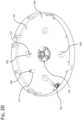
- Fig. 20 illustrates a bottom perspective view of an inner face 580 of the case top 160.
- a detent plunger 310 is attached to the case top 160.
- the detent plunger 310 is a cylinder with a first end attached to the case top 160 and a second end composed of a ball tip 590.
- the ball tip 590 of the detent plunger 310 engages the selector detent holes 300 on the selector assembly 230 (see Fig. 5 ) to prevent the device from leaving a selected mode without input from the mode selection knob 120.
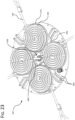
- Fig. 23 illustrates an alternate embodiment of the cargo restraint 100.
- the pivoting selector pawls 260 are replaced by flexible mode selector fingers 620.
- the flexible selector fingers 620 are positioned at the end of the selector arms 250 that are along the perimeter of the case 110.
- each selector arm 250 features two sets of flexible selector fingers 620, only one set of which can engage with the ratchet teeth 210 of the spools 190 at any time.
- a first set of the flexible mode selection fingers 620 engage the ratchet teeth 210 of the spools 190.
- the selector fingers 620 In the "Retract" mode, if the spool 190 rotates in the direction of retraction, the selector fingers 620 easily flex and skip over the ratchet teeth 210; in comparison, if the cable 105 is pulled such that the spool 190 tries to rotate in the direction of extension, the selector fingers 620 catch on the ratchet teeth 210 and prevent the spools 190 from rotating.
- the selector arm 250 is rotated to the "Extend” position, a second set of selector fingers 620 engages the spools 190.
- the selection fingers 620 In this mode, if the spool 190 rotates in the direction of extension, the selection fingers 620 easily flex and skip over the ratchet teeth 210, while if the spool 190 rotates in the direction of retraction, the selection fingers 620 catch on the ratchet teeth 210 and prevent the spools 190 from rotating.
- the tensioning mechanism 200, the sliding tension pawls 330, and springs 420 are replaced with a tensioning mechanism 630.
- the tensioning mechanism 630 features flexible tensioner fingers 640 with angled flanges.
- the mode selection knob 120 is rotated in the "Tighten" direction, the angled flanges engage the ratchet teeth 210 of the spools 190 and rotate the spools 190 in the direction of retraction. If the tension in one or more cables 105 reaches a predetermined level, the angled flange will slide off of a ratchet tooth by the flexing action the tensioner finger 640. In this way, the tension in the cable 105 will not exceed the pre-determined level.
Landscapes
- Engineering & Computer Science (AREA)
- Mechanical Engineering (AREA)
- Transportation (AREA)
- Storing, Repeated Paying-Out, And Re-Storing Of Elongated Articles (AREA)
- Lock And Its Accessories (AREA)
- Hooks, Suction Cups, And Attachment By Adhesive Means (AREA)
- Transmission Devices (AREA)
Description
- This Application claims priority to
U.S. Provisional Patent Application Serial No. 62/965,260, filed on January 24, 2020 - The present invention relates generally to restraints, and more particularly to a locking cargo restraint with multiple retracting cables that may be used to secure items during transport or storage.
- People who engage in outdoor recreation often transport large items that are stowed in a truck bed, on a trailer, or in a cargo hold attached to the hitch of a vehicle. Such large items include food and drink coolers. These items, if left unrestrained, can slide around the truck bed or off the cargo hold, resulting in damage to the items or their contents. To prevent unwanted movement of the items relative to the transport mechanism, users often restrain the items with devices such as ropes, ratchet straps, and bungee cords. These restraint devices often feature a flexible member that can wrap around objects, as well as connecting means to link the flexible member to the cargo or a surface. The restraint device can be used to directly connect the cargo to another object by connecting one end of the restraint device to the cargo, wrapping the flexible member around the cargo and the object, and fastening the device's opposite end to the object. The restraint device may also be used by connecting both of its ends to a first item and wrapping its flexible member around a second item. However, these traditional straps are unwieldy and difficult to use, since they easily tangle during the restraining process. Further, these straps are difficult to efficiently store, requiring the user to manually wrap them to prevent tangling. Finally, the straps may only effectively secure one item at a time, or several items that easily nest together.
- In addition, the outdoor recreation market has trended toward more expensive products. For instance, manufacturers have developed premium tailgate-mounted coolers with extra features, high functionality, and luxury branding. These and other expensive products are frequently stowed on the exterior of vehicles, becoming targets for theft.
- To deter theft of cargo items, consumers have turned to security devices, such as keyed or coded theft deterrents (examples include cable locks, bike locks, and padlocks). Unfortunately, these devices are not able to sufficiently restrain cargo against unwanted motion. Further, they work best when the cargo and the storage location provide appropriate features for the locks to act on.
- Even flexible security devices, which usually use a cut-resistant flexible member such as wire rope or chain, do not guard against unwanted cargo motion. First, the loops of the flexible members are typically of a fixed length that cannot be shortened or elongated to secure cargo tightly to another item. Second, variable length security devices do not provide a mechanism for tensioning the flexible member to better restrain or secure the cargo. In effect, flexible security devices only tether the cargo without restraining the cargo against shifting.
- Thus, the market has failed to develop a convenient and effective method for simultaneously restraining cargo items against unwanted motion and deterring the theft of cargo items. Without locks, traditional restraining methods are easily removed. Traditional locking ratchet straps are vulnerable to tampering or cutting of the straps. Further, as stated previously, security devices are ineffective at restraining cargo.
- To solve the dual issues of restraining cargo items and deterring theft, some manufacturers have added integrated security cables to their luxury outdoor items. Disadvantageously, these cables increase the item's cost and create a scenario in which securing cargo involves a tangle of security cables and cargo restraints from each individual item the user wishes to transport. Moreover, the failure of the cable mechanism in such an item renders the item's theft-deterrent aspect inoperable and requires repairing the mechanism, replacing the entire item, or supplying an external method of security at additional cost.
- Therefore, the market calls for a cargo restraint device that incorporates ease of use and storage while meeting the dual requirements of cargo restraint and cargo security for items of a variety of shapes and sizes.
-
JP 2001 287741 A - Aspects of the invention are defined by the appended claims.
- The present invention overcomes many of the shortcomings and limitations of the prior art cargo restraint and security devices discussed above.
- The invention is an easily portable locking cargo restraint, which uses two or more cables to secure one or more items to a base or surface. First, the device is an efficient restraint device because the cables can be individually pulled to different lengths so that the cables can restrain multiple items or irregularly shaped items. Second, the cables are retractably mounted within a central body for easy storage and retrieval, ensuring the user need not worry about tangled cable. Third, the retractable cables may be individually spring biased to pull the cables into the central body after use, efficiently stowing the cables with minimal user intervention. Finally, the cables themselves may have connectors, such as hooked ends, to engage with available mounting points on the base or surface used to secure the item. Alternatively, the connectors may engage with each other so that the cables surround both the cargo items and the base used to secure the items.
- In addition, the device incorporates security mechanisms to deter item theft. The cables and tensioning mechanisms of the device are housed within a case to prevent unauthorized users from tampering with the device. Also, the device may feature a keyed lock that can prevent unauthorized users adjusting the cables' tension, preventing them from loosening the restraints to steal the items. Moreover, the cables themselves may be constructed of a cut-resistant material to deter theft.
- These and other aspects and advantages of the present invention will become apparent to those skilled in the art after considering the following detailed description in connection with the accompanying drawings.
- For a better understanding of the various embodiments of the present invention, reference may be made to the accompanying drawings in which:
-
Fig. 1 is a perspective view of a locking cargo restraint with multiple retracting cables restraining cargo on the back of a representative passenger vehicle, the restraint constructed according to the teachings of the present invention; -
Fig. 2 is a top plan view of the locking cargo restraint with multiple retracting cables; -
Fig. 3 is a top perspective view of the locking cargo restraint ofFig. 2 ; -
Fig. 4 is a top perspective view of interior mechanisms housed within a case of the cargo restraint ofFig. 2 , the interior mechanisms including a selector assembly and a tensioner assembly; -
Fig. 5 is a top perspective view of the selector assembly and the tensioner assembly ofFig. 4 ; -
Fig. 6 is a cross-section view of the selector assembly and the tensioner assembly ofFig. 5 ; -
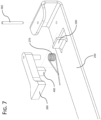
Fig. 7 is an exploded view of a selector pawl as assembled to a selector arm ofFig.4 ; -
Fig. 8 is a cross section of the tensioner assembly and a selector arm ofFig. 4 with a mode selection knob shown; -
Fig. 9 is a partial top plan view of the interior mechanisms of the cargo restraint ofFig. 4 when the device is in an extend mode; -
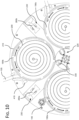
Fig. 10 is a partial top plan view of the interior mechanisms of the cargo restraint ofFig. 4 when the device is in a free mode; -
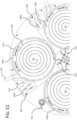
Fig. 11 is a partial top plan view of the interior mechanisms of the cargo restraint ofFig. 4 when the device is in a retract mode; -
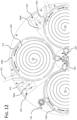
Fig. 12 is a partial top plan view of the interior mechanisms of the cargo restraint ofFig. 4 when the device is in a tighten mode; -
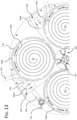
Fig. 13 is a partial top plan view of the interior mechanisms of the cargo restraint ofFig. 4 when the device is in the retract mode and a keyed lock is in a locked position; -
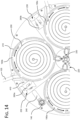
Fig. 14 is a partial top plan view of the interior mechanisms of the cargo restraint ofFig. 4 when the device is in the tighten mode; -
Fig. 15 is an exploded view of one embodiment of the tensioner assembly ofFig. 4 ; -
Fig. 16 is a bottom perspective view of a spool ofFig. 4 ; -
Fig. 17 is a top perspective view of the spool ofFig. 16 ; -
Fig. 18 is a partial top perspective view of the tensioner assembly ofFig. 11 ; -
Fig. 19 is a partial top perspective view of the tensioner assembly ofFig. 12 ; -
Fig. 20 is a bottom perspective view of an upper portion of the case ofFig. 2 ; -
Fig. 21 is a partial cross-sectional view of the selector arm and a detent plunger ofFig. 4 ; -
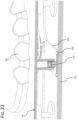
Fig. 22 is a partial cross-sectional view of the selector arm and the detent plunger ofFig. 21 , perpendicular to the cross section ofFig. 21 ; and -
Fig. 23 is a perspective view of an alternative embodiment of interior mechanisms of the cargo restraint ofFig. 1 . - While the disclosure is susceptible to various modifications and alternative forms, a specific embodiment thereof is shown by way of example in the drawings and will herein be described in detail.
- The invention will now be described with reference to the drawing figures, in which like reference numerals refer to like parts throughout. For purposes of clarity in illustrating the characteristics of the present invention, proportional relationships of the elements have not necessarily been maintained in the drawing figures.
-
Fig. 1 illustrates a locking cargo restraint with multiple retractingcables 100, hereinafter referred to simply ascargo restraint 100, as installed to securerepresentative cargo items 10. As illustrated in this embodiment, a plurality ofcables 105 of thecargo restraint 100 attach to arepresentative base 20, with the base 20 being affixed to arepresentative vehicle 30. In this embodiment, each of thecables 105 may extend to different lengths to allow the user to secure multiple cargo items. Here, thecables 105 are also equipped withconnectors 107, shown as hooks inFig. 1 , that may be selectively engaged with a surface such as thebase 20 when theconnectors 107 are attached to thebase 20. -
Figs. 2 and3 illustrate a first embodiment of thecargo restraint 100. A case or cover 110 may be provided, with amode selection knob 120 affixed to anexterior surface 130 of thecase 110. Themode selection knob 120 may be rotated to select an operating mode from a number of possible operating modes. Akeyed lock 140 may be used to prevent rotation of themode selection knob 120 in a first direction, thereby preventing thecargo restraint 100 from engaging different operation modes without using a key (or other known or foreseeable unlocking means) to disable thekeyed lock 140. As will be explained in greater detail herein below, themode selection knob 120 and thekeyed lock 140 preferably interface with various internal mechanisms of thecargo restraint 100 to allow the user to manipulate thecables 105 in a variety of ways. - Turning to
Fig. 3 , a plurality ofapertures 150 extend from the interior of thecase 110 to its exterior. Theapertures 150 allow for a plurality of cables to exit thecase 110. Preferably, two ormore cables 105 extend from thecase 110 via theapertures 150. - Further, the
case 110 may include acase top 160.Fig. 4 illustrates acase bottom 170, and when thecase top 160 and the case bottom 170 are fastened together, they form a cylinder. The interior volume of this cylinder preferably houses the internal mechanisms of thecargo restraint 100. -
Fig. 4 also illustrates these various internal mechanisms of thecargo restraint 100 once thecase top 160 of thecase 110 has been removed from thebody 180 of thecargo restraint 100. The case bottom 170 may provide a mounting point for the mechanisms within the interior of the case, though such mechanisms may be mounted to thecase top 160. In combination with thecase top 160, thecase bottom 170 protects the mechanisms from weather and tampering. In the embodiment captured inFig. 4 , thecargo restraint 100 includes fourspools 190 which may rotate in either a first direction or a second direction. Also, eachspool 190 may have abias spring 200 that may apply torque to thespool 190 in a first direction that winds thecable 105 onto thespool 190. Further, eachspool 190 may have a plurality ofratchet teeth 210 on its outside perimeter. Theteeth 210 may be engaged by atensioner assembly 220 to rotate thespools 190 and further retract thecables 105 into the interior housing of thespools 190. - The
cargo restraint 100 may also include aselector assembly 230 that may engage with theteeth 210 to limit rotation of thespools 190. Theselector assembly 230 is preferably operationally coupled to themode selection knob 120. Thus, theselector assembly 230 may change position within thecase 110 as a user selects different modes of operation via themode selection knob 120. Moreover, theselector assembly 230 can be locked into position by thekeyed lock 140. Thekeyed lock 140 may include alock arm 240, which can rotate when engaged by the user to prevent theselector assembly 230 from releasing the spools 190 (as illustrated inFig. 13 ). -
Figs. 5 and6 illustrate one embodiment of theselector assembly 230 andtensioner assembly 220. In this embodiment, theselector assembly 230 is generally comprised ofselector arms 250,selector pawls 260, and selector springs 270. Theselector assembly 230 rotates about aselector shaft 280. Thepawls 260 may be mounted on pivots at the ends of theselector arms 250. Aselector spring 270 on the same pivot as thepawl 260 preferably provides a restorative torque when thepawl 260 is deflected in either a first or a second direction. Aselector spring tab 290 may prevent one side of theselector spring 270 from rotating with theselector pawl 260 and the other side of theselector spring 270. Thus, theselector spring 270 may apply a restorative force to theselector pawl 260. Selector detent holes 300 provide "seats" for a detent plunger 310 (not pictured) to settle into and resist an accidental change in operational mode. - The
tensioner assembly 220, in this embodiment, is rigidly fixed to themode selection knob 120, and themode selection knob 120 pivots on theselector shaft 280. Thetensioner assembly 220 may include atensioner body 320,tensioner pawls 330, and a tensioner tab 350 (tensioner tab 350 not illustrated inFigs. 5 and6 ). Thetensioner assembly 220 and theselector assembly 230 are mechanically connected by atensioner spring 360 and a series of travel stops composed of thetensioner tab 350, atensioner stop 370, and a selector tab 380 (travel stops not illustrated inFigs. 5 and6 ). Thetensioner assembly 220, via theselector assembly 230, is mechanically coupled to themode selection knob 120 via theselector shaft 280. Thus, when themode selection knob 120 is turned in a "Tighten" direction, thetensioner pawls 330 engage thespools 190, applying added tension to thecables 105. -
Fig. 7 provides an exploded detail view of aselector pawl 260. The components illustrated inFig. 7 help couple thepawl 260 to theselector arm 250. Apawl pivot shaft 390 is preferably inserted through the folded end of theselector arm 250 and thepawl 260, forming a pivot for thepawl 260. The portion of thepawl 260 through which thepivot shaft 390 is inserted is itself inserted into the body of theselector spring 270. The arms of theselector spring 270 are placed on the opposite sides of theselector spring tab 290 and apawl spring tab 400. Thus, when the end of thepawl 260 is deflected, theselector spring 270 will apply force to theselector spring tab 290 and thepawl spring tab 400 in a direction to restore thepawl 260 to a neutral position. -
Fig. 8 illustrates themode selection knob 120 coupled to thetensioner assembly 220 and theselector assembly 230. Screws or other fastening means that would be appreciated by those in the art may rigidly attach themode selection knob 120 to thetensioner assembly 220. Thetensioner assembly 220 may rotate in each a first direction and a second direction. Thetensioner tab 350 of thetensioner assembly 220 engages theselector tab 380 to limit the rotation of thetensioner assembly 220 in a first direction relative to theselector assembly 230. Thetensioner spring 360, as shown, is a torsional spring that engages thetensioner tab 350 andselector tab 380 to transmit torque in the second direction from thetensioner assembly 220 to theselector assembly 230. Thetensioner spring 360 applies a preload to thetensioner tab 350 and theselector tab 380, which keeps them in contact with one another as themode selection knob 120 is turned. In this embodiment, when thetensioner spring 360 preload is exceeded, thetensioner assembly 220 may turn in the second direction separately from theselector assembly 230. -
Figs. 9 ,10 , and11 illustrate a first, a second, and a third position of theselector assembly 230. The movement of theselector assembly 230 to these positions corresponds with an "Extend" mode, a "Free" mode, and a "Retract" mode of operation for thecargo restraint 100. The "Extend" mode allows thecables 105 to be unspooled while simultaneously preventing thecables 105 from retracting into the body of thecargo restraint 100, the "Free" mode allows thecables 105 to move in or out of the body of thecargo restraint 100, and the "Retract" mode allows thecables 105 to retract into the body of thecargo restraint 100 while preventing them from being extended. - In
Fig. 9 , theselector assembly 230 is in the first position, corresponding in this embodiment to the "Extend" mode of thecargo restraint 100. In this mode, theselector assembly 230 is rotated in a first direction so that theselector pawls ratchet teeth 210 of thespools cable 105 retraction. In this mode, the bias springs 200 cannot rotate thespools 190 to retract thecables 105, and thetensioner pawls 330 do not engage theratchet teeth 210. - In
Fig. 10 , theselector assembly 230 is in the second position, corresponding in this embodiment to the "Free" mode of operation of thecargo restraint 100. In this mode, theselector assembly 230 rests in the second position such that theselector pawls ratchet teeth 210 of thespools tensioner pawls 330 do not engage theratchet teeth 210. In this mode, thespools 190 are free to rotate and the bias springs 200 will rotate thespools 190 to retract thecables 105 unless external tension is applied to thecables 105. - In
Fig. 11 , theselector assembly 230 is in the third position, corresponding in this embodiment to the "Retract" mode of operation of thecargo restraint 100. In this mode, theselector assembly 230 has been rotated in the second direction so that the selector pawls (260a, 260b) engage theratchet teeth 210 of thespools spools 190 from rotating in the direction ofcable 105 extension. In this mode, the bias springs 200 can rotate thespools 190 to retract thecables 105, but tension applied to thecables 105 externally cannot rotate thespools 190 to extend thecables 105. Further, in this mode, thetensioner pawls 330 do not engage theratchet teeth 210. - In
Fig. 12 , themode selection knob 120 is turned in the "Tighten" direction, which allows the user to manually add tension to thecables 105. In this mode, theselector assembly 230 is in the third position, the same position as seen in the "Retract" mode ofFig. 11 . Aselector stop 410 prevents theselector assembly 230 from rotating in the second direction past the "Retract" position. Thetensioner spring 270 allows thetensioner assembly 220 to continue rotating and engage theratchet teeth 210 with thetensioner pawls 330. As the operator continues to rotate themode selection knob 120 in the "Tighten" direction, thetensioner pawls 330 on thetensioner assembly 220 rotate thespools 190 in the direction of retraction, applying additional tension to thecables 105. - The
keyed lock 140 may be set to a locked position and an unlocked position.Fig. 12 illustrates thekeyed lock 140 in the unlocked position, whileFig. 13 shows thekeyed lock 140 set to the locked position. As thekeyed lock 140 is moved from the unlocked to the locked position, alock arm 240 is rotated. In the locked position, thelock arm 240 is situated such that it prevents theselector assembly 230 from leaving the "Retract" position. -
Fig. 14 illustrates the interior of thecargo restraint 100 when thekeyed lock 140 is set to the locked position, and themode selection knob 120 is turned in the "Tighten" direction. In this configuration, themode selection knob 120 can be used to tighten thecables 105 even when thekeyed lock 140 is already set to the locked position. Theselector stop 410 prevents theselector assembly 230 from rotating in the second direction while thelock arm 240 prevents theselector assembly 230 from rotating in the first direction. At the same time, thespools 190 are prevented from rotating in the second direction so that the tension on thecables 105 is not released. -
Fig. 15 is an exploded detail view of one embodiment of thetensioner assembly 220. In this embodiment, thetensioner assembly 220 is comprised of atensioner body 320 withtensioner pawls 330 and their accompanying mechanisms. Aspring 420 is inserted into eachtensioner pawl 330, and both thespring 420 andtensioner pawl 330 slide over a post on aspring guide 430. Apawl guide 440 may then be inserted through aslot 450 in thetensioner body 320 and pinned to thetensioner pawl 330 via apin 460. Thespring 420 preloads thetensioner pawl 330 radially outward from thetensioner body 320 and against the end of theslot 450. - The
tensioner pawl 330 may include afront end 470 and aback end 480. In this embodiment, theback end 480 of thetensioner pawl 330 contains anaperture 490 such that thespring 420 may be inserted into the body of thepawl 330 via theaperture 490. Thetensioner pawl 330 and thespring 420 may then be coupled to thetensioner assembly 220 as described in the preceding paragraph. - When the
tensioner assembly 220 rotates in a second direction relative to theselector assembly 230, thetensioner pawls 330 can engage theratchet teeth 210 of thespools 190. As thetensioner assembly 220 continues to rotate relative to theselector assembly 230, thetensioner pawls 330 slide in theslots 450 to allow them to follow the curvature of thespools 190. Thesprings 420 apply a force to maintain engagement between thetensioner pawls 330 and theratchet teeth 210. - The surface of the
front end 470 of thepawl 330 features a tapered shape. The tapered shape of the front end of thepawl 330 and force applied by thespring 420 may be designed such that thetensioner pawls 330 will skip over ratchetteeth 210 when a predetermined level of tension is present in thecables 105. This design allows thecables 105 to attain the predetermined level of tension without over-tensioning anyindividual cable 105. Thetensioner pawl 330 ends are shaped such that they can easily skip over ratchetteeth 210 when thetensioner assembly 220 is rotated in the first direction as themode selection knob 120 returns to the "Retract" position. -
Fig. 16 provides a bottom perspective view of thespool 190. Thespool 190 features abottom surface 500 that features anaperture 510. In this embodiment, theaperture 510 features twoend portions 520 and acenter portion 530. The twoend portions 520 are wider than thecenter portion 530, and the twoend portions 520 have substantially the same diameter. Thus, theend portions 520 and thecenter portion 530 of theaperture 510 create a barbell-type shape. - One end of the
cable 105 is fed through theaperture 510; this end of thecable 105 is equipped with acable stop 540. Thecable stop 540 may be an open cylinder that is attached to thecable 105 via a fastening means. Thecable stop 540 is narrower than the two ends of the aperture, but is wider than the center portion of the aperture. Therefore, thecable stop 540 catches on thecenter portion 530 of theaperture 510 to prevent thecable 105 from unwinding completely from, or slipping on around, thespool 190. The embodiment illustrated inFig. 16 is just one method known in the art to connect a cable end to a rotating body. -
Fig. 17 is a top perspective view of thespool 190. Thespool 190 has atop surface 550. Thetop surface 550 of thespool 190 hasspring restraints 560 arranged around its periphery to prevent the bias spring 200 (not illustrated) from impinging on other parts of the internal mechanism of thecargo restraint 100. The free end of thebias spring 200 acts against one end of aspring restraint 560 to apply a retracting force to thespool 190. -
Fig. 18 is a top perspective view of thetensioner assembly 220 as installed in thecargo restraint 100. In this drawing, themode selection knob 120 is set to "Retract," which allows thecables 105 to retract into thespool 190 while preventing thecables 105 from being pulled out of thespool 190. Here, thetensioner tab 350 rests against theselector tab 380 under the preload torque of the tensioner spring 360 (not illustrated). -
Fig. 19 is a top perspective view of thetensioner assembly 220 with themode selection knob 120 being rotated in the "Tighten" direction by the operator. Theselector tab 380 and theselector assembly 230 are kept stationary by theselector stop 410, while thetensioner assembly 220 has been rotated in the second direction against thetensioner spring 360, opening agap 570 between thetensioner tab 350 and theselector tab 380. Thetensioner assembly 220 is prevented from rotating further when theselector tab 270 engages the tensioner stop 370 at the end of the slot in thetensioner body 320. -
Fig. 20 illustrates a bottom perspective view of aninner face 580 of thecase top 160. In this embodiment, adetent plunger 310 is attached to thecase top 160. Thedetent plunger 310 is a cylinder with a first end attached to thecase top 160 and a second end composed of aball tip 590. Theball tip 590 of thedetent plunger 310 engages the selector detent holes 300 on the selector assembly 230 (seeFig. 5 ) to prevent the device from leaving a selected mode without input from themode selection knob 120. - As also illustrated in
Fig. 20 ,spring hubs 600 are attached to thecase top 160. In this embodiment, thespring hubs 600 are cylinders extending from the inner face of thecase top 160. Thespring hubs 600 feature an aperture running through the entire body of the cylinder and aslot 610 that extends from the aperture of thespring hub 600 to its outer edge. Theslot 610 of thespring hub 600 securely captures a tab at the center of the bias spring 200 (as illustrated inFig. 4 ). Preferably, there is onespring hub 600 for eachspool 190. Thespring hub 600 holds fixed a first end of thebias spring 200 as a second end of thebias spring 200 applies torque to thespools 190 in the direction ofcable 105 retraction. -
Fig. 21 illustrates a cross section through thedetent plunger 310 and theselector arm 250. As illustrated, theball tip 590 of thedetent plunger 310 is forced under spring pressure into one of the selector detent holes 300 to hold theselector arm 250 in position until the torque applied to themode selection knob 120 exceeds a predetermined amount. Theselector arm 250 may feature a plurality of detent holes 230 to correspond with different modes of operation of thecargo restraint 100. -
Fig. 22 illustrates a cross section through thedetent plunger 310 andselector arm 250 perpendicular to the cross section inFig. 21 . In this embodiment, theselector arm 250 features three selector detent holes 300. -
Fig. 23 illustrates an alternate embodiment of thecargo restraint 100. In this embodiment, the pivotingselector pawls 260 are replaced by flexiblemode selector fingers 620. Theflexible selector fingers 620 are positioned at the end of theselector arms 250 that are along the perimeter of thecase 110. Also, eachselector arm 250 features two sets offlexible selector fingers 620, only one set of which can engage with theratchet teeth 210 of thespools 190 at any time. When theselector arm 250 is rotated to the "Retract" position, a first set of the flexiblemode selection fingers 620 engage theratchet teeth 210 of thespools 190. In the "Retract" mode, if thespool 190 rotates in the direction of retraction, theselector fingers 620 easily flex and skip over theratchet teeth 210; in comparison, if thecable 105 is pulled such that thespool 190 tries to rotate in the direction of extension, theselector fingers 620 catch on theratchet teeth 210 and prevent thespools 190 from rotating. When theselector arm 250 is rotated to the "Extend" position, a second set ofselector fingers 620 engages thespools 190. In this mode, if thespool 190 rotates in the direction of extension, theselection fingers 620 easily flex and skip over theratchet teeth 210, while if thespool 190 rotates in the direction of retraction, theselection fingers 620 catch on theratchet teeth 210 and prevent thespools 190 from rotating. - As also illustrated in
Fig. 23 , thetensioning mechanism 200, the slidingtension pawls 330, and springs 420 are replaced with atensioning mechanism 630. Thetensioning mechanism 630 featuresflexible tensioner fingers 640 with angled flanges. When themode selection knob 120 is rotated in the "Tighten" direction, the angled flanges engage theratchet teeth 210 of thespools 190 and rotate thespools 190 in the direction of retraction. If the tension in one ormore cables 105 reaches a predetermined level, the angled flange will slide off of a ratchet tooth by the flexing action thetensioner finger 640. In this way, the tension in thecable 105 will not exceed the pre-determined level. As themode selection knob 120 andtensioning mechanism 630 rotate back to the "Retract" position, the second face of the angled flange will slide along the opposite face of theratchet teeth 210 to flex thetensioner finger 640 so that the tensioning mechanism may return to the "retract" position while leaving thespools 190 stationary.
Claims (14)
- A locking cargo restraint device (100) for use of anchoring at least one item (10) to a surface (20), comprising:a case body (110) that defines an interior region, the case body including two or more apertures (150) extending from the interior region to an exterior region of the case body;a first cable member (105) and a second cable member (105), each of the first cable member and the second cable member including a first end and a second end;a first spool (190/190a) and a second spool (190/190b), each spool having a cavity in an interior portion of the spool, and each spool secured to the interior region of the case body;wherein the first end of the first cable member extends outside the case body through a first aperture of the two or more apertures, and the first end of the second cable member extends outside the case body through a second aperture of the two or more apertures;wherein the second end of the first cable member is in mechanical connection with the first spool and the second end of the second cable member is in mechanical connection with the second spool; and
a tensioner assembly (220, 630) secured within the interior of the case body that engages with the first spool and the second spool to selectively cause each of the spools to rotate,wherein the second end of each of the first and second cable members is contained within the interior region of the case body;the locking cargo restraint device further comprising:a respective connector (107) affixed to the first end of each of the first and second cable members for attaching each of the first and second cable members to the surface;wherein as one spool of the first and second spools rotates in a first direction (RET), its respective cable member winds around the spool;wherein as one spool of the first and second spools rotates in a second direction (EXT), its respective cable member unwinds from the spool;the tensioner assembly (220, 630) engages the first and second spool members to rotate the first and second spool members in the first direction; anda selector assembly (230) secured within the interior of the case body for preventing rotation of the first and second spools in the first direction and allowing rotation of the first and second spools in the second direction when a mode selection knob (120) is placed in a first position and for preventing the rotation of the first and second spools in the second direction and allowing rotation of the first and second spools in the first direction when the mode selection knob is placed in a second position. - The locking cargo restraint device of claim 1, wherein:when the first spool rotates in a first direction (RET), the first cable member winds within the first spool;wherein when the first spool rotates in a second direction (EXT), the first cable member unwinds within the first spool;wherein when the second spool rotates in a first direction (RET), the second cable member winds within the second spool; andwherein when the second spool rotates in a second direction (EXT), the second cable member unwinds within the second spool.
- The locking cargo restraint device of claim 1 or 2, wherein the tensioner assembly engages with the first spool and the second spool to selectively cause each spool to rotate in the first direction.
- The locking cargo restraint device of claim 1, 2 or 3, the locking cargo restraint device further comprising a selector assembly (230) that may prevent rotation of the first spool and the second spool.
- The locking cargo restraint device of claim 4, the locking cargo restraint device further comprising:a mode selection knob (120) affixed to an exterior surface (130) of the case body;a detent (310, 590) attached to an interior surface (580) of the case body; and
wherein the detent operably engages with the selector assembly to hold the selector assembly in a preset position until the position of the selector assembly is changed by the mode selection knob, or wherein the locking cargo restraint device further includes a lock mechanism (140) on an exterior surface (130) of the case body to limit the operation of the selector assembly. - The locking cargo restraint device of any preceding claim, wherein:the case body further includes of a top portion (160) and a bottom portion (170); andwherein the top portion and the bottom portion of the case body are separable from each other.
- The locking cargo restraint device of any preceding claim, wherein the locking cargo restraint device further includes a lock mechanism (140) on an exterior surface (130) of the case body to limit the motion of the selector assembly.
- The locking cargo restraint device of any preceding claim, wherein the tensioner assembly slips at a predetermined cable tension to prevent over-tensioning of the first and second cable members.
- The locking cargo restraint device of any preceding claim, wherein each of the first and second spools further includes a bias spring (200) that applies tension to each of the first and second cable members.
- The locking cargo restraint device of any preceding claim, wherein an exterior surface of each of the first and second spools further includes a plurality of teeth (210).
- The locking cargo restraint device of claim 10, wherein the tensioner assembly further (220) includes a tensioner body (320) and tensioner pawls (330), the tensioner pawls being engageable with the plurality of teeth on the exterior surface of the first and second spools to increase the tension in the two or more cable members by causing rotation of the two or more spool members in the first direction.
- The locking cargo restraint device of claim 10 or 11, wherein:the selector assembly further includes two or more selector arms (250) including pawls (260) mounted thereon, the pawls being engageable with the plurality of teeth on the exterior of the first and second spools members; andwherein the selector assembly may be placed in a first, second, or third position optionally the locking cargo restraint device further comprising:further optionally wherein:a detent (310, 590) secured to the case body; andwherein the detent is engageable with a first selector arm of the two or more of selector arms to hold the two or more of selector arms in a preset position until the position of the two or more selector arms is changed by the mode selection knob,the first selector arm further includes a plurality of apertures (300) that extend through a body of the first selector arm; andthe detent further includes a detent plunger (310) with a ball tip (590) that selectively engages with the plurality of apertures within the first selector arm, corresponding to the first position, the second position, and the third position of the mode selection knob, yet further optionally wherein the first position of the mode selection knob corresponds with a first position of the selector assembly, the second position of the mode selection knob corresponds with a second position of the selector assembly, and the third position of the mode selection knob corresponds with a third position of the selector assembly.
- The locking cargo restraint device of any of claims 10 to 12, wherein the tensioner assembly (630) is further comprises flexible tensioner fingers (640) with angled flanges, the flexible tensioner fingers being engageable with the plurality of teeth on the exterior surface of the first and second spools to increase the tension in the first and second cable members by causing rotation of the first and second spools in the first direction.
- The locking cargo restraint device of any of claims 10 to 13, wherein:the selector assembly further includes two or more flexible selector fingers (620), the two or more flexible selector fingers being engageable with the plurality of teeth on the exterior surface of the first and second spools; andwherein the selector assembly may be placed in a first, second, or third position, optionally wherein the locking cargo restraint device further includes a lock mechanism (140) on an exterior surface (130) of the case body to limit the operation of the selector assembly.
Applications Claiming Priority (2)
| Application Number | Priority Date | Filing Date | Title |
|---|---|---|---|
| US202062965260P | 2020-01-24 | 2020-01-24 | |
| PCT/US2021/014637 WO2021150907A1 (en) | 2020-01-24 | 2021-01-22 | Locking cargo restraint with multiple retracting cables |
Publications (4)
| Publication Number | Publication Date |
|---|---|
| EP4093638A1 EP4093638A1 (en) | 2022-11-30 |
| EP4093638A4 EP4093638A4 (en) | 2024-02-21 |
| EP4093638C0 EP4093638C0 (en) | 2025-05-07 |
| EP4093638B1 true EP4093638B1 (en) | 2025-05-07 |
Family
ID=76992794
Family Applications (1)
| Application Number | Title | Priority Date | Filing Date |
|---|---|---|---|
| EP21744195.5A Active EP4093638B1 (en) | 2020-01-24 | 2021-01-22 | Locking cargo restraint with multiple retracting cables |
Country Status (8)
| Country | Link |
|---|---|
| US (1) | US12503056B2 (en) |
| EP (1) | EP4093638B1 (en) |
| JP (1) | JP7664268B2 (en) |
| CN (1) | CN115023368B (en) |
| AU (1) | AU2021209678B2 (en) |
| ES (1) | ES3037713T3 (en) |
| MX (1) | MX2022008952A (en) |
| WO (1) | WO2021150907A1 (en) |
Families Citing this family (2)
| Publication number | Priority date | Publication date | Assignee | Title |
|---|---|---|---|---|
| US12473173B2 (en) * | 2023-02-03 | 2025-11-18 | Purdue Research Foundation | Interchangeable cable management system |
| CN116552367B (en) * | 2023-06-26 | 2025-09-02 | 中国人民解放军陆军炮兵防空兵学院 | A fastening device for carriage packaging |
Family Cites Families (12)
| Publication number | Priority date | Publication date | Assignee | Title |
|---|---|---|---|---|
| JP3068357B2 (en) * | 1992-07-24 | 2000-07-24 | 象印チエンブロック株式会社 | Belt buckling machine |
| CA2156939A1 (en) * | 1995-08-25 | 1997-02-26 | Michael George Hayhoe | Slack reduction turnbuckles attachment device |
| JPH10330047A (en) | 1997-05-30 | 1998-12-15 | Michio Imagawa | Rope tensioner |
| JP3926966B2 (en) * | 2000-04-07 | 2007-06-06 | 中央発條株式会社 | Loading device fastening device |
| US6684667B2 (en) * | 2001-08-10 | 2004-02-03 | Zelco Industries, Inc. | Luggage strap with ratchet and lock |
| US20060185357A1 (en) * | 2004-05-07 | 2006-08-24 | Kovacevich Ian D | Independently drawing and tensioning lines with bi-directional rotary device having two spools |
| TWM326488U (en) * | 2007-07-20 | 2008-02-01 | Ching-Rung Lin | Hook positioning structure of hand puller |
| US7789603B2 (en) * | 2007-07-20 | 2010-09-07 | Indiana Mills & Manufacturing, Inc. | Retractable tie down device |
| US8973222B2 (en) * | 2011-03-18 | 2015-03-10 | Winston Products Llc | Retractable ratcheting tie down |
| KR101509659B1 (en) | 2013-05-09 | 2015-04-08 | 이영숙 | two-way belt lock device of removable type for medium to large-cargo strap |
| CN206126509U (en) | 2016-10-17 | 2017-04-26 | 广东电网有限责任公司江门供电局 | Test wire winding and unwinding devices |
| US11643298B2 (en) * | 2021-04-28 | 2023-05-09 | Corey B. Johnson | Bidirectional spool apparatus and method of use |
-
2021
- 2021-01-22 ES ES21744195T patent/ES3037713T3/en active Active
- 2021-01-22 AU AU2021209678A patent/AU2021209678B2/en active Active
- 2021-01-22 US US17/759,333 patent/US12503056B2/en active Active
- 2021-01-22 JP JP2022544316A patent/JP7664268B2/en active Active
- 2021-01-22 CN CN202180010677.1A patent/CN115023368B/en active Active
- 2021-01-22 EP EP21744195.5A patent/EP4093638B1/en active Active
- 2021-01-22 WO PCT/US2021/014637 patent/WO2021150907A1/en not_active Ceased
- 2021-01-22 MX MX2022008952A patent/MX2022008952A/en unknown
Also Published As
| Publication number | Publication date |
|---|---|
| EP4093638A4 (en) | 2024-02-21 |
| EP4093638A1 (en) | 2022-11-30 |
| CA3167779A1 (en) | 2021-07-29 |
| EP4093638C0 (en) | 2025-05-07 |
| WO2021150907A1 (en) | 2021-07-29 |
| ES3037713T3 (en) | 2025-10-06 |
| CN115023368A (en) | 2022-09-06 |
| US12503056B2 (en) | 2025-12-23 |
| US20230073654A1 (en) | 2023-03-09 |
| CN115023368B (en) | 2025-01-24 |
| JP7664268B2 (en) | 2025-04-17 |
| MX2022008952A (en) | 2022-12-15 |
| AU2021209678A1 (en) | 2022-07-28 |
| JP2023511381A (en) | 2023-03-17 |
| AU2021209678B2 (en) | 2025-12-11 |
Similar Documents
| Publication | Publication Date | Title |
|---|---|---|
| US5282706A (en) | Retractable tie-down assembly | |
| US11447061B2 (en) | Ratchet configurations | |
| US6524041B1 (en) | Locking ratchet for a lashing mechanism | |
| US6007053A (en) | Retractable tie-down assembly with fine tightness adjustment | |
| EP4051618B1 (en) | Ratchet load binder with tamper deterrence features | |
| US6322279B1 (en) | Adjustable attachment device | |
| US5800105A (en) | Vehicle tie-down mechanism | |
| US4913608A (en) | Strap tightening device | |
| EP4093638B1 (en) | Locking cargo restraint with multiple retracting cables | |
| US9862300B1 (en) | Ratcheting strap with take-up reel | |
| CA2665470A1 (en) | Extendable handle leverage ratchet | |
| US9296330B2 (en) | Cargo restraint | |
| US20110176884A1 (en) | Rigid tie down | |
| US6929438B1 (en) | Cargo restraint apparatus | |
| AU3772593A (en) | Strap collector | |
| AU643945B2 (en) | Bicycle accessory for carrying a shackle | |
| US20030059269A1 (en) | Cargo restraint apparatus | |
| US6623224B2 (en) | Apparatus and system for securing cargo | |
| CA3167779C (en) | Locking cargo restraint with multiple retracting cables | |
| US20060188354A1 (en) | Cargo restraint apparatus | |
| US6539590B2 (en) | Seat belt tightner | |
| US6530127B2 (en) | Restraint device with release mechanism | |
| JP3093477B2 (en) | Tire anti-skid device fasteners | |
| WO2025174924A1 (en) | Dual spool ratcheting web retractor | |
| US20250010672A1 (en) | Hitch hook |
Legal Events
| Date | Code | Title | Description |
|---|---|---|---|
| STAA | Information on the status of an ep patent application or granted ep patent |
Free format text: STATUS: THE INTERNATIONAL PUBLICATION HAS BEEN MADE |
|
| PUAI | Public reference made under article 153(3) epc to a published international application that has entered the european phase |
Free format text: ORIGINAL CODE: 0009012 |
|
| STAA | Information on the status of an ep patent application or granted ep patent |
Free format text: STATUS: REQUEST FOR EXAMINATION WAS MADE |
|
| 17P | Request for examination filed |
Effective date: 20220819 |
|
| AK | Designated contracting states |
Kind code of ref document: A1 Designated state(s): AL AT BE BG CH CY CZ DE DK EE ES FI FR GB GR HR HU IE IS IT LI LT LU LV MC MK MT NL NO PL PT RO RS SE SI SK SM TR |
|
| DAV | Request for validation of the european patent (deleted) | ||
| DAX | Request for extension of the european patent (deleted) | ||
| A4 | Supplementary search report drawn up and despatched |
Effective date: 20240123 |
|
| RIC1 | Information provided on ipc code assigned before grant |
Ipc: B60R 9/06 20060101ALI20240117BHEP Ipc: B65H 75/44 20060101ALI20240117BHEP Ipc: B65H 75/48 20060101ALI20240117BHEP Ipc: B60P 7/08 20060101AFI20240117BHEP |
|
| STAA | Information on the status of an ep patent application or granted ep patent |
Free format text: STATUS: EXAMINATION IS IN PROGRESS |
|
| 17Q | First examination report despatched |
Effective date: 20240910 |
|
| GRAP | Despatch of communication of intention to grant a patent |
Free format text: ORIGINAL CODE: EPIDOSNIGR1 |
|
| STAA | Information on the status of an ep patent application or granted ep patent |
Free format text: STATUS: GRANT OF PATENT IS INTENDED |
|
| INTG | Intention to grant announced |
Effective date: 20241127 |
|
| GRAS | Grant fee paid |
Free format text: ORIGINAL CODE: EPIDOSNIGR3 |
|
| GRAA | (expected) grant |
Free format text: ORIGINAL CODE: 0009210 |
|
| STAA | Information on the status of an ep patent application or granted ep patent |
Free format text: STATUS: THE PATENT HAS BEEN GRANTED |
|
| AK | Designated contracting states |
Kind code of ref document: B1 Designated state(s): AL AT BE BG CH CY CZ DE DK EE ES FI FR GB GR HR HU IE IS IT LI LT LU LV MC MK MT NL NO PL PT RO RS SE SI SK SM TR |
|
| REG | Reference to a national code |
Ref country code: GB Ref legal event code: FG4D |
|
| REG | Reference to a national code |
Ref country code: CH Ref legal event code: EP |
|
| REG | Reference to a national code |
Ref country code: IE Ref legal event code: FG4D |
|
| U01 | Request for unitary effect filed |
Effective date: 20250509 |
|
| U07 | Unitary effect registered |
Designated state(s): AT BE BG DE DK EE FI FR IT LT LU LV MT NL PT RO SE SI Effective date: 20250516 |
|
| REG | Reference to a national code |
Ref country code: ES Ref legal event code: FG2A Ref document number: 3037713 Country of ref document: ES Kind code of ref document: T3 Effective date: 20251006 |
|
| PG25 | Lapsed in a contracting state [announced via postgrant information from national office to epo] |
Ref country code: NO Free format text: LAPSE BECAUSE OF FAILURE TO SUBMIT A TRANSLATION OF THE DESCRIPTION OR TO PAY THE FEE WITHIN THE PRESCRIBED TIME-LIMIT Effective date: 20250807 Ref country code: GR Free format text: LAPSE BECAUSE OF FAILURE TO SUBMIT A TRANSLATION OF THE DESCRIPTION OR TO PAY THE FEE WITHIN THE PRESCRIBED TIME-LIMIT Effective date: 20250808 |
|
| PG25 | Lapsed in a contracting state [announced via postgrant information from national office to epo] |
Ref country code: PL Free format text: LAPSE BECAUSE OF FAILURE TO SUBMIT A TRANSLATION OF THE DESCRIPTION OR TO PAY THE FEE WITHIN THE PRESCRIBED TIME-LIMIT Effective date: 20250507 |
|
| PG25 | Lapsed in a contracting state [announced via postgrant information from national office to epo] |
Ref country code: HR Free format text: LAPSE BECAUSE OF FAILURE TO SUBMIT A TRANSLATION OF THE DESCRIPTION OR TO PAY THE FEE WITHIN THE PRESCRIBED TIME-LIMIT Effective date: 20250507 |
|
| PG25 | Lapsed in a contracting state [announced via postgrant information from national office to epo] |
Ref country code: RS Free format text: LAPSE BECAUSE OF FAILURE TO SUBMIT A TRANSLATION OF THE DESCRIPTION OR TO PAY THE FEE WITHIN THE PRESCRIBED TIME-LIMIT Effective date: 20250807 |
|
| PG25 | Lapsed in a contracting state [announced via postgrant information from national office to epo] |
Ref country code: IS Free format text: LAPSE BECAUSE OF FAILURE TO SUBMIT A TRANSLATION OF THE DESCRIPTION OR TO PAY THE FEE WITHIN THE PRESCRIBED TIME-LIMIT Effective date: 20250907 |
|
| PG25 | Lapsed in a contracting state [announced via postgrant information from national office to epo] |
Ref country code: SM Free format text: LAPSE BECAUSE OF FAILURE TO SUBMIT A TRANSLATION OF THE DESCRIPTION OR TO PAY THE FEE WITHIN THE PRESCRIBED TIME-LIMIT Effective date: 20250507 |
|
| PG25 | Lapsed in a contracting state [announced via postgrant information from national office to epo] |
Ref country code: CZ Free format text: LAPSE BECAUSE OF FAILURE TO SUBMIT A TRANSLATION OF THE DESCRIPTION OR TO PAY THE FEE WITHIN THE PRESCRIBED TIME-LIMIT Effective date: 20250507 |
|
| PG25 | Lapsed in a contracting state [announced via postgrant information from national office to epo] |
Ref country code: SK Free format text: LAPSE BECAUSE OF FAILURE TO SUBMIT A TRANSLATION OF THE DESCRIPTION OR TO PAY THE FEE WITHIN THE PRESCRIBED TIME-LIMIT Effective date: 20250507 |
|
| U20 | Renewal fee for the european patent with unitary effect paid |
Year of fee payment: 6 Effective date: 20260129 |
|
| PLBE | No opposition filed within time limit |
Free format text: ORIGINAL CODE: 0009261 |
|
| STAA | Information on the status of an ep patent application or granted ep patent |
Free format text: STATUS: NO OPPOSITION FILED WITHIN TIME LIMIT |
|
| REG | Reference to a national code |
Ref country code: CH Ref legal event code: L10 Free format text: ST27 STATUS EVENT CODE: U-0-0-L10-L00 (AS PROVIDED BY THE NATIONAL OFFICE) Effective date: 20260318 |
|
| PGFP | Annual fee paid to national office [announced via postgrant information from national office to epo] |
Ref country code: GB Payment date: 20260123 Year of fee payment: 6 |
|
| PGFP | Annual fee paid to national office [announced via postgrant information from national office to epo] |
Ref country code: ES Payment date: 20260227 Year of fee payment: 6 |
|
| 26N | No opposition filed |
Effective date: 20260210 |