EP4093107A1 - Multimedia service processing method, storage medium, chip, and related device - Google Patents
Multimedia service processing method, storage medium, chip, and related device Download PDFInfo
- Publication number
- EP4093107A1 EP4093107A1 EP21741600.7A EP21741600A EP4093107A1 EP 4093107 A1 EP4093107 A1 EP 4093107A1 EP 21741600 A EP21741600 A EP 21741600A EP 4093107 A1 EP4093107 A1 EP 4093107A1
- Authority
- EP
- European Patent Office
- Prior art keywords
- tau
- volte
- ims
- detecting
- timer
- Prior art date
- Legal status (The legal status is an assumption and is not a legal conclusion. Google has not performed a legal analysis and makes no representation as to the accuracy of the status listed.)
- Withdrawn
Links
Images



Classifications
-
- H—ELECTRICITY
- H04—ELECTRIC COMMUNICATION TECHNIQUE
- H04W—WIRELESS COMMUNICATION NETWORKS
- H04W60/00—Affiliation to network, e.g. registration; Terminating affiliation with the network, e.g. de-registration
-
- H—ELECTRICITY
- H04—ELECTRIC COMMUNICATION TECHNIQUE
- H04W—WIRELESS COMMUNICATION NETWORKS
- H04W60/00—Affiliation to network, e.g. registration; Terminating affiliation with the network, e.g. de-registration
- H04W60/04—Affiliation to network, e.g. registration; Terminating affiliation with the network, e.g. de-registration using triggered events
-
- H—ELECTRICITY
- H04—ELECTRIC COMMUNICATION TECHNIQUE
- H04L—TRANSMISSION OF DIGITAL INFORMATION, e.g. TELEGRAPHIC COMMUNICATION
- H04L65/00—Network arrangements, protocols or services for supporting real-time applications in data packet communication
- H04L65/10—Architectures or entities
- H04L65/1016—IP multimedia subsystem [IMS]
-
- H—ELECTRICITY
- H04—ELECTRIC COMMUNICATION TECHNIQUE
- H04L—TRANSMISSION OF DIGITAL INFORMATION, e.g. TELEGRAPHIC COMMUNICATION
- H04L65/00—Network arrangements, protocols or services for supporting real-time applications in data packet communication
- H04L65/1066—Session management
- H04L65/1069—Session establishment or de-establishment
-
- H—ELECTRICITY
- H04—ELECTRIC COMMUNICATION TECHNIQUE
- H04L—TRANSMISSION OF DIGITAL INFORMATION, e.g. TELEGRAPHIC COMMUNICATION
- H04L65/00—Network arrangements, protocols or services for supporting real-time applications in data packet communication
- H04L65/1066—Session management
- H04L65/1073—Registration or de-registration
-
- H—ELECTRICITY
- H04—ELECTRIC COMMUNICATION TECHNIQUE
- H04W—WIRELESS COMMUNICATION NETWORKS
- H04W36/00—Hand-off or reselection arrangements
- H04W36/0005—Control or signalling for completing the hand-off
- H04W36/0011—Control or signalling for completing the hand-off for data sessions of end-to-end connection
- H04W36/0022—Control or signalling for completing the hand-off for data sessions of end-to-end connection for transferring data sessions between adjacent core network technologies
- H04W36/00224—Control or signalling for completing the hand-off for data sessions of end-to-end connection for transferring data sessions between adjacent core network technologies between packet switched [PS] and circuit switched [CS] network technologies, e.g. circuit switched fallback [CSFB]
-
- H—ELECTRICITY
- H04—ELECTRIC COMMUNICATION TECHNIQUE
- H04W—WIRELESS COMMUNICATION NETWORKS
- H04W76/00—Connection management
- H04W76/10—Connection setup
-
- H—ELECTRICITY
- H04—ELECTRIC COMMUNICATION TECHNIQUE
- H04W—WIRELESS COMMUNICATION NETWORKS
- H04W8/00—Network data management
- H04W8/02—Processing of mobility data, e.g. registration information at HLR [Home Location Register] or VLR [Visitor Location Register]; Transfer of mobility data, e.g. between HLR, VLR or external networks
- H04W8/06—Registration at serving network Location Register, VLR or user mobility server
-
- H—ELECTRICITY
- H04—ELECTRIC COMMUNICATION TECHNIQUE
- H04W—WIRELESS COMMUNICATION NETWORKS
- H04W8/00—Network data management
- H04W8/02—Processing of mobility data, e.g. registration information at HLR [Home Location Register] or VLR [Visitor Location Register]; Transfer of mobility data, e.g. between HLR, VLR or external networks
- H04W8/08—Mobility data transfer
Definitions
- This disclosure relates to technical field of communication, in particular to a method for processing a multimedia service, a storage medium, a chip, and a related device.
- VoLTE voice over long term evolution
- LTE long term evolution
- TAU tracking area update
- Embodiments of the disclosure provide a method for processing a multimedia service, a storage medium, a chip, and a related device, which can quickly establish a voice over long term evolution (VoLTE) service link for a user equipment (UE), and reduce a probability of a VoLTE video service falling back to a circuit switched (CS) voice service.
- VoIP voice over long term evolution
- UE user equipment
- CS circuit switched
- embodiments of the disclosure provide a method for processing a multimedia service.
- the method is applicable to a UE.
- the method includes: transmitting a tracking area update (TAU) request immediately, upon detecting that the UE initiates a VoLTE call request before a first timer expires; and establishing a VoLTE service link for the UE, upon detecting that a TAU is successful.
- TAU tracking area update
- inventions of the disclosure further provide a smart terminal.
- the smart terminal includes a storing device and a processor.
- the storing device is configured to store program instructions.
- the processor is configured to invoke the program instructions to: transmit a TAU request immediately, upon detecting that a UE initiates a VoLTE call request before a first timer expires, and establish a VoLTE service link for the UE, upon detecting that a TAU is successful.
- inventions of the disclosure further provide a device for processing a multimedia service.
- the device includes: a transmitting module configured to: transmit a TAU request immediately, upon detecting that a UE initiates a VoLTE call request before a first timer expires; and an establishing module configured to: establish a VoLTE service link for the UE, upon detecting that a TAU is successful.
- inventions of the disclosure further provide a computer-readable storage medium.
- the computer-readable storage medium is for storing a computer program.
- the computer program causes a computer to execute the above method for processing a multimedia service.
- inventions of the disclosure provide a chip.
- the chip is configured to: output a TAU request to transmit the TAU request, upon detecting that a UE initiates a VoLTE call request before a first timer expires, and establish a VoLTE service link for the UE, upon detecting that a TAU is successful.
- the module device includes a communication module and a chip module.
- the chip module is configured to output a TAU request, upon detecting that a UE initiates a VoLTE call request before a first timer expires.
- the communication module is configured to transmit the TAU request.
- the chip module is further configured to establish a VoLTE service link for the UE, upon detecting that a TAU is successful.
- the TAU While waiting for re-triggering the TAU, if the UE initiates the VoLTE call request, the TAU is triggered immediately, and the synchronization between the UE and the network is quickly completed.
- the VoLTE service link for the UE can be quickly established, and the probability that the VoLTE video service falls back to the CS voice service can be reduced.
- voice over long term evolution is a standard long term evolution (LTE) voice solution defined by the global system for mobile communications association (GSMA), which means that a user equipment (UE) accesses an evolved packet core (EPC) through LTE and then an IP multimedia subsystem (IMS) provides users with high-quality voice or video services.
- GSMA global system for mobile communications association
- UE user equipment
- EPC evolved packet core
- IMS IP multimedia subsystem
- the UE in embodiments of the disclosure includes, but is not limited to, a smart phone, a tablet computer, a media player, a smart TV, a smart bracelet, a smart wearable device, a personal digital assistant (PDA), and a mobile Internet device (MID), and the like.
- MID mobile Internet device
- the TA is defined as a free movement area where the UE does not need to update the service. Therefore, when the UE moves from one TA to another TA, the location must be registered again on the new TA, to inform the network to change the stored location information of the UE. This process is called tracking area update (TAU).
- TAU tracking area update
- the TAU includes: a periodic TAU configured by the network, or a TAU initiated by the UE according to requirement on mobility management entity (MME) load balancing, or the UE entering the evolved universal mobile telecommunications system-terrestrial radio access network (EUTRAN) from the universal mobile telecommunications system-terrestrial radio access network (UTRAN) through re-selection, etc.
- MME mobility management entity
- EUTRAN evolved universal mobile telecommunications system-terrestrial radio access network
- UTRAN universal mobile telecommunications system-terrestrial radio access network
- HLR home location register
- the registration information at least includes the TA information of the UE, and the registration information may also include a globally unique temporary identity (GUTI) allocated to the UE by the network device and a request of establishing user plane resources for the UE, etc. It can be understood that, the contents of the registration information can be adjusted based on actual needs, which is not limited herein.
- GUI globally unique temporary identity
- a first timer will start; during running of the first timer, although the UE is in the state of attempting to register and update the location of the tracking area, it suspends transmitting the TAU request; after the first timer expires, the UE retransmits the TAU request, to perform TAU; only after the TAU is successful, the UE can transmit the INVITE message to the IMS to request establishment of the VoLTE service link for the UE. That is, the baseband chip of the UE will preferentially wait for the first timer to expire before performing TAU, and delay the transmission of the IMS signaling of the VoLTE call request.
- the delay in establishing the VoLTE service link for the UE becomes longer, or the VoLTE service is changed into a voice service in the circuit switched domain.
- TAU failure of the UE such as lower layer failure, third timer timeout, TAU rejection caused by evolved packet system-mobility management (EPS-mobility management, EMM).
- the first timer is used for timing the waiting time from failing of the TAU to re-initiating of the TAU request, where the first timer may be T3411 timer and the standard duration of the first timer may be 10 s.
- the third timer is used for timing the TAU, and the third timer may be T3430 timer.
- the first timer and its standard duration and the third timer and its standard duration may be defined by the protocol. It should be noted that, when the actual timing of the first timer reaches the standard duration of the first timer, the first timer stops; when the actual timing of the third timer reaches the standard duration of the third timer, the third timer stops.
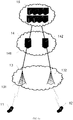
- FIG. 1a is a scenario diagram of establishing a VoLTE service link provided in embodiments of the disclosure.
- UE 11 initiates a request to establish a VoLTE call request for VoLTE video or voice call with UE 12. Then, UE 11 transmits an INVITE message to IMS 15 through LTE 13 and EPC 14, to request IMS 15 to establish a VoLTE service link for UE 11, that is, a VoLTE service link between UE 11 and UE 12.
- IMS 15 makes an addressed call to UE 12 through EPC 14 and LTE 13, and then UE 12 rings.
- the VoLTE service link between UE 11 and UE 12 is successfully established.
- IMS 15 After receiving the INVITE message, IMS 15 transmits a response message to UE 11 through EPC 14 and LTE 13, informing UE 11 that IMS 15 has received the INVITE message, and establishment of the VoLTE service link between UE 11 and UE 12 can be started.
- UE 11 communicates with the IMS through eNB 131 in LTE 13 and the public data network-gateway (PGW) 141 in EPC 14;
- PGW public data network-gateway
- UE 12 communicates with the IMS through eNB 132 in LTE 13 and the PGW 142 in EPC 14.
- FIG. 1b is a schematic flowchart of a method for processing a multimedia service provided in embodiments of the disclosure. As specifically shown in FIG. 1b , the method is applicable to a user equipment and includes the following.
- the VoLTE call request requests to establish a VoLTE service link for the UE, that is, establish the VoLTE service link between the UE and another UE, and the VoLTE service includes VoLTE voice service and VoLTE video service.
- a first timer does not expire, perform S102.
- the fact that the first timer does not expire means that the current timing of the first timer does not exceed the standard duration of the first timer.
- the first timer and the standard duration of the first timer may be defined by a protocol.
- the first timer may be T3411 timer, and the standard duration of the first timer may be 10 s.
- the UE While the first timer is running, the UE is in a state of attempting to register and update the location of the tracking area, that is, an attempting-to-update state.
- the state of attempting to register and update the location of the tracking area refers to a state that the UE waits for the next TAU after the last TAU failure, that is, a state that the UE waits to retransmit the tracking area update request after the last TAU failure.
- the last TAU refers to the most recently executed TAU.
- the maximum number of attempts of the TAU may be defined by the protocol. For example, if the maximum number of attempts of the TAU is 5, the TAU can attempt to execute 5 times at most.
- the state of attempting to register and update the location of the tracking area may be defined by the protocol.
- the UE transmits the TAU request immediately. Specifically, the UE triggers to stop the first timer and immediately transmits the TAU request.
- the tracking area update request requests the network device to update the registration information of the UE, to achieve quick synchronization of the registration information of the UE between the network device and the UE.
- the registration information at least includes location information of the TA of the UE.
- the registration information may also include a GUTI allocated to the UE by the network device and a request of establishing user plane resources for the UE, etc. It can be understood that, the contents of the registration information can be adjusted based on actual needs, which is not limited herein.
- FIG. 2 is a schematic flowchart of another method for processing a multimedia service provided in embodiments of the disclosure.
- the present specification provides method operations as described in the embodiments or flow charts, but more or few operations may be included based on routine or non-creative work.
- the sequence of operations enumerated in the embodiments is merely one of many execution sequences of the operations, and does not represent the only execution sequence.
- the methods shown in the embodiments or the accompanying drawings may be executed in sequence or in parallel. Specifically, as shown in FIG. 2 , the method includes the following.
- the last TAU refers to the most recently executed TAU.
- the maximum number of attempts of the TAU may be defined by the protocol. For example, if the maximum number of attempts of the TAU is 5, the TAU can attempt to execute 5 times at most.
- the procedure of TAU of the UE includes the following.
- the UE transmits the TAU request to the network device, and the network device updates the registration information of the UE stored in the network device based on the TAU request.
- the registration information at least includes location information of the TA of the UE.
- the registration information may also include a GUTI allocated to the UE by the network device and a request of establishing user plane resources for the UE, etc. It can be understood that, the contents of the registration information can be adjusted based on actual needs, which is not limited herein.
- the TAU request may be transmitted by the non-access stratum (NAS) of LTE for the UE.
- NAS non-access stratum
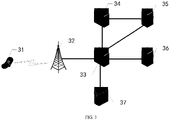
- FIG. 3 is a system architecture diagram of a TAU provided in embodiments of the disclosure.
- the TAU of the UE includes the following.
- UE 31 transparently transmits the TAU request to destination MME 33 through eNB 32.
- Destination MME 33 obtains context information of UE 31 from original MME 34 based on the TAU request, where destination MME 33 refers to the MME to which UE 31 currently belongs, and original MME 34 refers to the MME to which UE 31 belongs before TAU of UE 31.
- destination MME 33 determines that the SGW does not change, it transmits a bearer update request to original SGW 35 to instruct original SGW 35 to update context information of bearers of UE 31 and original MME 34 of UE 31. If destination MME 33 determines that the SGW has changed, it transmits a create session request to new SGW 36 to establish a session between destination MME 33 and new SGW 36. Then, destination MME 33 transmits a location update request to HSS 37 to instruct HSS 37 to update the registration information of UE 31 and instruct HSS 37 to notify original MME 34 to delete the registration information of UE 31. Finally, destination MME 33 interacts with UE 31, so that TAU of UE 31 succeeds. That is, destination MME 33 transmits a feedback message to UE 31 through eNB 32, where the feedback message indicates that the TAU is successful.
- the first timer will be triggered to start timing; during the timing of the first timer, although the UE is in the state of attempting to register and update the location of the tracking area, it suspends transmitting the TAU request; after the first timer expires, the UE retransmits the TAU request, for performing the TAU again.
- the fact that the first timer expires means that the current timing of the first timer exceeds the standard duration of the first timer.
- the first timer is used for timing the waiting time before re-initiating the TAU request after the last TAU fails.
- the first timer and the standard duration of the first timer may be defined by a protocol.
- the first timer may be T3411 timer, and the standard duration of the first timer may be 10 s.
- the UE initiates a VoLTE call request.
- the VoLTE call request requests to establish a VoLTE service link for the UE, that is, establish the VoLTE service link between the UE and another UE, and the VoLTE service includes VoLTE voice service and VoLTE video service.
- the method further includes: performing S203 if the first timer expires.
- the fact that the first timer does not expire means that the timing of the first timer does not exceed the standard duration of the first timer.
- the state of attempting to register and update the location of the tracking area refers to a state that the UE waits for the next TAU after the last TAU failure, that is, a state that the UE waits to retransmit the tracking area update request after the last TAU failure.
- the state of attempting to register and update the location of the tracking area can be defined by the protocol.
- the UE immediately transmits the TAU request. Specifically, the UE triggers to stop the first timer and transmits the TAU request immediately.
- the TAU request requests the network device to update the registration information of the UE.
- the first timer stops and the UE transmits the tracking area update request immediately. This can avoid waiting for the first timer to expire before transmitting the tracking area update request, which may cause delay in establishing the VoLTE service link for the UE or cause the VoLTE video service to fall back to the CS voice service, bringing a bad experience to the user. As such, synchronization of the registration information between the UE and the network device can be achieved quickly, thereby quickly establishing the VoLTE service link for the UE.
- S204 is performed; if the UE detects that the tracking area update fails, S201 is performed. Before S204 is performed, it is also necessary to determine whether the number of attempts of the TAU exceeds the maximum number of attempts of the TAU, and if not, S204 is performed.
- the UE transmits an INVITE message to the IMS.
- the INVITE message requests the IMS to establish the VoLTE service link for the UE.
- the INVITE message can be specifically used for requesting to register the UE to the IMS so that the IMS provides the UE with high-quality voice or video services, and used for requesting to make calls with other UEs.
- the detecting that the TAU is successful may be that the UE receives a feedback message transmitted by the network device, where the feedback message indicates that the TAU is successful.
- the second timer when the INVITE message is transmitted to the IMS, the second timer starts.
- the second timer is used to enable the VOLTE call to support the silent redial mechanism, and to provide protection timing for the VOLTE call.
- the second timer and the standard duration of the second timer may be defined by the silent redial mechanism.
- the second timer is Tcall timer
- the standard duration of the second timer is 6 s. It should be noted that, when the actual timing of the second timer reaches the standard duration of the second timer, the first timer stops.
- the response message is transmitted by the IMS, and the response message indicates that the INVITE message is received by the IMS.
- the response message may be a 100 Trying message transmitted by the server in the IMS, and the IMS transmits the response message to the UE through EPC and LTE sequentially.
- CSFB circuit switched fallback
- the voice call request requests to establish a voice service for the UE in a circuit switched domain.
- the UE establishes the voice service through CSFB, and maintains the state of the IMS.
- the tracking area update while waiting for re-triggering the tracking area update, if the UE initiates the VoLTE call request, the tracking area update is triggered immediately, and the synchronization between the UE and the network is quickly completed.
- the VoLTE service link for the UE can be quickly established, and the probability that the VoLTE video service falls back to the CS voice service can be reduced.
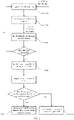
- FIG. 4 is a schematic flowchart of another method for processing a multimedia service provided in embodiments of the disclosure. As specifically shown in FIG. 4 , the method includes the following.
- the UE initiates a VoLTE call request, where the VoLTE call request requests establishment of a VoLTE service link for the UE.
- S402 is executed.
- the fact that the first timer has not timed out means that the current timing of the first timer does not exceed the standard duration of the first timer.
- the first timer and the standard duration of the first timer may be specified by the protocol.
- the first timer is T3411 timer, and the standard duration of the first timer may be 10 s.
- the UE immediately transmits a tracking area update request to the network device. Specifically, the UE triggers to stop the first timer and the UE immediately transmits the tracking area update request to the network device.
- the tracking area update request requests the network device to update the registration information of the UE.
- the registration information at least includes location information of the TA of the UE, and the registration information may also include a GUTI allocated to the UE by the network device and a request of establishing user plane resources for the UE, etc. It can be understood that, the contents of the registration information can be adjusted based on actual needs, which is not limited herein.
- the network device if the network device successfully updates the TA of the UE, it transmits a feedback message to the UE.
- the feedback message indicates that the TAU is successful.
- the UE receives the feedback message. That is, the UE detects that the TAU is successful.
- the UE establishes the VoLTE service link for the UE.
- the tracking area update while waiting for re-triggering the tracking area update, if the UE initiates the VoLTE call request, the tracking area update is triggered immediately, and the synchronization between the UE and the network is quickly completed.
- the VoLTE service link for the UE can be quickly established, and the probability that the VoLTE video service falls back to the CS voice service can be reduced.
- FIG. 5 is a schematic structural diagram of a smart terminal provided in embodiments of the disclosure.
- the smart terminal may be a terminal such as a smartphone, a tablet computer, or a personal computer (PC).
- the smart terminal includes: a storage device 502 and a processor 501.
- the smart terminal may further include a data interface 503 and a user interface 504.
- Various types of buses can also be used to establish connections between various hardware.
- the smart terminal can exchange data with other terminals, servers, and other devices, and the user interface 504 can provide a touch screen, physical buttons, etc. to achieve human-computer interaction between the user and the smart terminal.
- the storage device 502 may include a volatile memory, such as random-access memory (RAM).
- the storage device 502 may also include a non-volatile memory, such as flash memory, solid-state drive (SSD), and the like.
- the storage device 502 may also include a combination of the above memories.
- the processor 501 may be a central processing unit (CPU).
- the processor 501 may further include a hardware chip.
- the above-mentioned hardware chip may be an application-specific integrated circuit (ASIC), a programmable logic device (PLD), or the like.
- ASIC application-specific integrated circuit
- PLD programmable logic device
- the above PLD can be field-programmable gate array (FPGA), generic array logic (GAL), etc.
- the storing device is configured to store program instructions.
- the processor 501 is configured to invoke the program instructions to implement related operations of the method shown in the above embodiments of the disclosure.
- the processor 501 is configured to invoke the program instructions to: transmit a TAU request immediately, upon detecting that a UE initiates a VoLTE call request before a first timer expires, and establish a VoLTE service link for the UE, upon detecting that a TAU is successful.
- the processor 501 is further configured to: trigger to start the first timer, upon detecting that a last TAU fails.
- the processor 501 is further configured to: transmit an INVITE message to an IMS, upon detecting that the TAU is successful, where the INVITE message requests the IMS to establish the VoLTE service link for the UE.
- the processor 501 is further configured to: trigger to start a second timer when transmitting the INVITE message to the IMS.
- the processor 501 is configured to: establish the VoLTE service link for the UE based on a response message, if the response message is received by the UE before the second timer expires, where the response message is transmitted by the IMS and indicates that the INVITE message is received by the IMS.
- the processor 501 is further configured to: initiate a voice call request through CSFB, if no response message is received by the UE before the second timer expires, where the voice call request requests to establish a voice service for the UE in a circuit switched domain, and the response message is transmitted by the IMS and indicates that the INVITE message is received by the IMS.
- FIG. 6 is a schematic structural diagram of a device for processing a multimedia service provided in embodiments of the disclosure.
- the device can be set in a smart terminal.
- the device may be a computer program (including program code) running in the smart terminal, or may be a physical device included in the smart terminal.
- the device can execute the method shown in any of the embodiments in FIG. 1 b , FIG. 2 , and FIG. 4 of the disclosure.
- the device includes a transmitting module 601 and an establishing module 602.
- the transmitting module 601 is configured to: transmit a TAU request immediately, upon detecting that a UE initiates a VoLTE call request before a first timer expires.
- the establishing module 602 is configured to: establish a VoLTE service link for the UE, upon detecting that a TAU is successful.
- the device further includes a triggering module 603.
- the triggering module 603 is configured to: trigger to start the first timer, upon detecting that a last TAU fails.
- the establishing module 602 is further configured to: transmit an INVITE message to an IMS, upon detecting that the TAU is successful, where the INVITE message requests the IMS to establish the VoLTE service link for the UE.
- the triggering module 603 is further configured to: trigger to start a second timer when transmitting the INVITE message to the IMS.
- the establishing module 602 is configured to: establish the VoLTE service link for the UE based on a response message, if the response message is received by the UE before the second timer expires, where the response message is transmitted by the IMS and indicates that the INVITE message is received by the IMS.
- the establishing module 602 is further configured to: initiate a voice call request through CSFB, if no response message is received by the UE before the second timer expires, where the voice call request requests to establish a voice service for the UE in a circuit switched domain, and the response message is transmitted by the IMS and indicates that the INVITE message is received by the IMS.
- embodiments of the disclosure further provide a computer-readable storage medium.
- the computer-readable storage medium is used to store a computer program, and the computer program causes the computer to execute the method shown in any of the embodiments in FIG. 1 b , FIG. 2 and FIG. 4 of the disclosure.
- the computer storage medium here may include the built-in storage medium in the smart terminal, and also the extended storage medium supported by the smart terminal.
- the computer storage medium provides storage space, and the storage space stores the operating system of the smart terminal.
- one or more instructions suitable for being loaded and executed by the processor are also stored in the storage space, and these instructions may be one or more computer programs (including program codes).
- the computer storage medium herein may be a high-speed RAM, or a non-volatile memory, such as at least one disk memory.
- the computer storage medium can also be at least one computer storage medium located remotely from the above processor.
- the program can be stored in a computer-readable storage medium, and when the program is executed, the program can include the procedures of the above method embodiments.
- the storage medium may be a magnetic disk, an optical disk, a ROM or a RAM, and the like.
- inventions of the disclosure provide a chip.
- the chip is configured to: output a TAU request to transmit the TAU request, upon detecting that a UE initiates a VoLTE call request before a first timer expires, and establish a VoLTE service link for the UE, upon detecting that a TAU is successful.
- the chip is further configured to: trigger to start the first timer, upon detecting that a last TAU fails, before transmitting the TAU request, upon detecting that the UE initiates the VoLTE call request before a first timer expires.
- the chip is further configured to: output an INVITE message to transmit the INVITE message to an IMS, upon detecting that the TAU is successful, where the INVITE message requests the IMS to establish the VoLTE service link for the UE.
- the chip is further configured to: trigger to start a second timer when outputting the INVITE message to the IMS.
- the chip is configured to: establish the VoLTE service link for the UE based on a response message, if the response message is received by the UE before the second timer expires, where the response message is transmitted by the IMS and indicates that the INVITE message is received by the IMS.
- the chip is further configured to: initiate a voice call request through CSFB, if no response message is received by the UE before the second timer expires, where the voice call request requests to establish a voice service for the UE in a circuit switched domain, and the response message is transmitted by the IMS and indicates that the INVITE message is received by the IMS.
- the chip described above includes at least one processor, at least one first memory, and at least one second memory.
- the at least one first memory and the at least one processor are interconnected through wires.
- the first memory stores instructions.
- the at least one second memory and the at least one processor are interconnected through wires.
- the second memory stores data needs to be stored of any of the embodiments in FIG. 1 b , FIG. 2 , and FIG. 4 .
- modules included in the device or product can be implemented by hardware such as circuits; alternatively, at least some modules may be implemented by a software program, where the software program runs on a processor integrated in the chip, and the remaining (if any) modules can be implemented by hardware such as circuits.
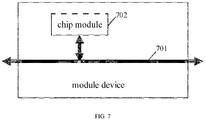
- FIG. 7 is a schematic structural diagram of a module device provided in embodiments of the disclosure.
- the module device includes a communication module 701 and a chip module 702.
- the chip module 702 is configured to output a TAU request, upon detecting that a UE initiates a VoLTE call request before a first timer expires.
- the communication module 701 is configured to transmit the TAU request.
- the chip module 702 is further configured to establish a VoLTE service link for the UE, upon detecting that a TAU is successful.
- the chip module 702 is further configured to: trigger to start the first timer, upon detecting that a last TAU fails, before transmitting the TAU request, upon detecting that the UE initiates the VoLTE call request before a first timer expires.
- the chip module 702 is further configured to: output an INVITE message, upon detecting that the TAU is successful.
- the communication module 701 is further configured to transmit the INVITE message to an IMS, where the INVITE message requests the IMS to establish the VoLTE service link for the UE.
- the chip module 702 is further configured to: trigger to start a second timer when outputting the INVITE message to the IMS.
- the chip module 702 is configured to: establish the VoLTE service link for the UE based on a response message, if the response message is received by the UE before the second timer expires, where the response message is transmitted by the IMS and indicates that the INVITE message is received by the IMS.
- the chip module 702 is further configured to: initiate a voice call request through CSFB, if no response message is received by the UE before the second timer expires, where the voice call request requests to establish a voice service for the UE in a circuit switched domain, and the response message is transmitted by the IMS and indicates that the INVITE message is received by the IMS.
- the module device can execute the method described in any of the embodiments in FIG. 1 b , FIG. 2 , and FIG. 4 .
- the module device can execute the method described in any of the embodiments in FIG. 1 b , FIG. 2 , and FIG. 4 .
- modules included in the device or product can be implemented by hardware such as circuits, where different modules may be located in the same component (e.g., chip, circuit module, etc.) or in different components of the chip module 702; alternatively, at least some modules may be implemented by a software program, where the software program runs on a processor integrated in the chip module 702, and the remaining (if any) modules can be implemented by hardware such as circuits.
Landscapes
- Engineering & Computer Science (AREA)
- Computer Networks & Wireless Communication (AREA)
- Signal Processing (AREA)
- Multimedia (AREA)
- Business, Economics & Management (AREA)
- General Business, Economics & Management (AREA)
- Telephonic Communication Services (AREA)
- Mobile Radio Communication Systems (AREA)
Abstract
Description
- This disclosure relates to technical field of communication, in particular to a method for processing a multimedia service, a storage medium, a chip, and a related device.
- As demands of users on high-quality audio and video calls gradually increase, more and more users choose to use voice over long term evolution (VoLTE). To ensure that various long term evolution (LTE) services for a user equipment (UE) can be performed normally, a tracking area update (TAU) needs to be performed. During the TAU, the UE initiates a VoLTE service, and needs to wait for success of the TAU before establishing the VoLTE service. How to quickly establish a VoLTE service link for the UE has become a hot research issue.
- Embodiments of the disclosure provide a method for processing a multimedia service, a storage medium, a chip, and a related device, which can quickly establish a voice over long term evolution (VoLTE) service link for a user equipment (UE), and reduce a probability of a VoLTE video service falling back to a circuit switched (CS) voice service.
- To solve the above technical problem, embodiments of the disclosure provide a method for processing a multimedia service. The method is applicable to a UE.
- The method includes: transmitting a tracking area update (TAU) request immediately, upon detecting that the UE initiates a VoLTE call request before a first timer expires; and establishing a VoLTE service link for the UE, upon detecting that a TAU is successful.
- Accordingly, embodiments of the disclosure further provide a smart terminal. The smart terminal includes a storing device and a processor.
- The storing device is configured to store program instructions. The processor is configured to invoke the program instructions to: transmit a TAU request immediately, upon detecting that a UE initiates a VoLTE call request before a first timer expires, and establish a VoLTE service link for the UE, upon detecting that a TAU is successful.
- Accordingly, embodiments of the disclosure further provide a device for processing a multimedia service. The device includes: a transmitting module configured to: transmit a TAU request immediately, upon detecting that a UE initiates a VoLTE call request before a first timer expires; and an establishing module configured to: establish a VoLTE service link for the UE, upon detecting that a TAU is successful.
- Accordingly, embodiments of the disclosure further provide a computer-readable storage medium. The computer-readable storage medium is for storing a computer program. The computer program causes a computer to execute the above method for processing a multimedia service.
- Accordingly, embodiments of the disclosure provide a chip. The chip is configured to: output a TAU request to transmit the TAU request, upon detecting that a UE initiates a VoLTE call request before a first timer expires, and establish a VoLTE service link for the UE, upon detecting that a TAU is successful.
- Accordingly, embodiments of the disclosure provide a module device. The module device includes a communication module and a chip module.
- The chip module is configured to output a TAU request, upon detecting that a UE initiates a VoLTE call request before a first timer expires. The communication module is configured to transmit the TAU request. The chip module is further configured to establish a VoLTE service link for the UE, upon detecting that a TAU is successful.
- The following advantageous effect can be achieved by implementing embodiments of the disclosure.
- While waiting for re-triggering the TAU, if the UE initiates the VoLTE call request, the TAU is triggered immediately, and the synchronization between the UE and the network is quickly completed. Thus, the VoLTE service link for the UE can be quickly established, and the probability that the VoLTE video service falls back to the CS voice service can be reduced.
- To illustrate technical solutions in embodiments of the disclosure more clearly, the following briefly introduces accompanying drawings used in the description of the embodiments. Apparently, the drawings in the following description are merely some embodiments of the disclosure. For those of ordinary skill in the art, other drawings can also be obtained from these drawings without creative effort.
-
FIG. 1a is a scenario diagram of establishing a voice over long term evolution (VoLTE) service link provided in embodiments of the disclosure. -
FIG. 1b is a schematic flowchart of a method for processing a multimedia service provided in embodiments of the disclosure. -
FIG. 2 is a schematic flowchart of another method for processing a multimedia service provided in embodiments of the disclosure. -
FIG. 3 is a system architecture diagram of a tracking area update (TAU) provided in embodiments of the disclosure. -
FIG. 4 is a schematic flowchart of another method for processing a multimedia service provided in embodiments of the disclosure. -
FIG. 5 is a schematic structural diagram of a smart terminal provided in embodiments of the disclosure. -
FIG. 6 is a schematic structural diagram of a device for processing a multimedia service provided in embodiments of the disclosure. -
FIG. 7 is a schematic structural diagram of a module device provided in embodiments of the disclosure. - In embodiments of the disclosure, voice over long term evolution (VoLTE) is a standard long term evolution (LTE) voice solution defined by the global system for mobile communications association (GSMA), which means that a user equipment (UE) accesses an evolved packet core (EPC) through LTE and then an IP multimedia subsystem (IMS) provides users with high-quality voice or video services. It should be noted that, the UE in embodiments of the disclosure includes, but is not limited to, a smart phone, a tablet computer, a media player, a smart TV, a smart bracelet, a smart wearable device, a personal digital assistant (PDA), and a mobile Internet device (MID), and the like.
- In the LTE system, to facilitate management of a location of the UE, the concept of tracking area (TA) is proposed. The TA is defined as a free movement area where the UE does not need to update the service. Therefore, when the UE moves from one TA to another TA, the location must be registered again on the new TA, to inform the network to change the stored location information of the UE. This process is called tracking area update (TAU). The TAU includes: a periodic TAU configured by the network, or a TAU initiated by the UE according to requirement on mobility management entity (MME) load balancing, or the UE entering the evolved universal mobile telecommunications system-terrestrial radio access network (EUTRAN) from the universal mobile telecommunications system-terrestrial radio access network (UTRAN) through re-selection, etc. It can be understood that, the TAU can be initiated based on actual needs, and the method for initiating the TAU is not limited herein. During the TAU of the UE, many network elements are involved, such as: evolved base station (e-Node, eNB), MME, serving gateway (SGW), home subscriber server (HSS), and home location register (HLR).
- During the TAU of the UE, if the UE initiates a VoLTE call request, the UE needs to wait for success of the TAU, to achieve synchronization of registration information between the UE and the network, and then the UE can transmit an INVITE message to the IMS to request establishment of a VoLTE service link for the UE. The registration information at least includes the TA information of the UE, and the registration information may also include a globally unique temporary identity (GUTI) allocated to the UE by the network device and a request of establishing user plane resources for the UE, etc. It can be understood that, the contents of the registration information can be adjusted based on actual needs, which is not limited herein. At present, if the UE fails the last TAU, a first timer will start; during running of the first timer, although the UE is in the state of attempting to register and update the location of the tracking area, it suspends transmitting the TAU request; after the first timer expires, the UE retransmits the TAU request, to perform TAU; only after the TAU is successful, the UE can transmit the INVITE message to the IMS to request establishment of the VoLTE service link for the UE. That is, the baseband chip of the UE will preferentially wait for the first timer to expire before performing TAU, and delay the transmission of the IMS signaling of the VoLTE call request. As such, the delay in establishing the VoLTE service link for the UE becomes longer, or the VoLTE service is changed into a voice service in the circuit switched domain. There are many reasons for the TAU failure of the UE, such as lower layer failure, third timer timeout, TAU rejection caused by evolved packet system-mobility management (EPS-mobility management, EMM). The first timer is used for timing the waiting time from failing of the TAU to re-initiating of the TAU request, where the first timer may be T3411 timer and the standard duration of the first timer may be 10 s. The third timer is used for timing the TAU, and the third timer may be T3430 timer. The first timer and its standard duration and the third timer and its standard duration may be defined by the protocol. It should be noted that, when the actual timing of the first timer reaches the standard duration of the first timer, the first timer stops; when the actual timing of the third timer reaches the standard duration of the third timer, the third timer stops.
- Referring to
FIG. 1a, FIG. 1a is a scenario diagram of establishing a VoLTE service link provided in embodiments of the disclosure. As shown inFIG. 1a , in this scenario,UE 11 initiates a request to establish a VoLTE call request for VoLTE video or voice call withUE 12. Then,UE 11 transmits an INVITE message toIMS 15 throughLTE 13 andEPC 14, to requestIMS 15 to establish a VoLTE service link forUE 11, that is, a VoLTE service link betweenUE 11 andUE 12.IMS 15 makes an addressed call toUE 12 throughEPC 14 andLTE 13, and thenUE 12 rings. WhenUE 12 goes off-hook, the VoLTE service link betweenUE 11 andUE 12 is successfully established. After receiving the INVITE message,IMS 15 transmits a response message toUE 11 throughEPC 14 andLTE 13, informingUE 11 thatIMS 15 has received the INVITE message, and establishment of the VoLTE service link betweenUE 11 andUE 12 can be started. Specifically,UE 11 communicates with the IMS througheNB 131 inLTE 13 and the public data network-gateway (PGW) 141 inEPC 14;UE 12 communicates with the IMS througheNB 132 inLTE 13 and thePGW 142 inEPC 14. - Referring to
FIG. 1b, FIG. 1b is a schematic flowchart of a method for processing a multimedia service provided in embodiments of the disclosure. As specifically shown inFIG. 1b , the method is applicable to a user equipment and includes the following. - S101, detect that the UE initiates a VoLTE call request. The VoLTE call request requests to establish a VoLTE service link for the UE, that is, establish the VoLTE service link between the UE and another UE, and the VoLTE service includes VoLTE voice service and VoLTE video service.
- If a first timer does not expire, perform S102. The fact that the first timer does not expire means that the current timing of the first timer does not exceed the standard duration of the first timer. The first timer and the standard duration of the first timer may be defined by a protocol. For example, the first timer may be T3411 timer, and the standard duration of the first timer may be 10 s. While the first timer is running, the UE is in a state of attempting to register and update the location of the tracking area, that is, an attempting-to-update state. The state of attempting to register and update the location of the tracking area refers to a state that the UE waits for the next TAU after the last TAU failure, that is, a state that the UE waits to retransmit the tracking area update request after the last TAU failure. The last TAU refers to the most recently executed TAU. The maximum number of attempts of the TAU may be defined by the protocol. For example, if the maximum number of attempts of the TAU is 5, the TAU can attempt to execute 5 times at most. The state of attempting to register and update the location of the tracking area may be defined by the protocol.
- S102, transmit the TAU request immediately. Specifically, the UE triggers to stop the first timer and immediately transmits the TAU request.
- The tracking area update request requests the network device to update the registration information of the UE, to achieve quick synchronization of the registration information of the UE between the network device and the UE. Thus, the VoLTE service for the UE can be quickly established, and the probability that the VoLTE video service falls back to the CS voice service can be reduced. The registration information at least includes location information of the TA of the UE. The registration information may also include a GUTI allocated to the UE by the network device and a request of establishing user plane resources for the UE, etc. It can be understood that, the contents of the registration information can be adjusted based on actual needs, which is not limited herein. After it is detected that the TAU is successful, perform S103.
- S103, establish a VoLTE service link for the UE.
- It should be noted that, for the implementation of the method described in
FIG. 1b , reference may be made to the description of the subsequent embodiments. - Referring to
FIG. 2, FIG. 2 is a schematic flowchart of another method for processing a multimedia service provided in embodiments of the disclosure. The present specification provides method operations as described in the embodiments or flow charts, but more or few operations may be included based on routine or non-creative work. The sequence of operations enumerated in the embodiments is merely one of many execution sequences of the operations, and does not represent the only execution sequence. In practice, when a terminal or storage medium product is executed, the methods shown in the embodiments or the accompanying drawings may be executed in sequence or in parallel. Specifically, as shown inFIG. 2 , the method includes the following. - If a last TAU of the UE fails, perform S201. The last TAU refers to the most recently executed TAU. The maximum number of attempts of the TAU may be defined by the protocol. For example, if the maximum number of attempts of the TAU is 5, the TAU can attempt to execute 5 times at most.
- S201, trigger to start the first timer.
- In embodiments of the disclosure, the procedure of TAU of the UE includes the following. The UE transmits the TAU request to the network device, and the network device updates the registration information of the UE stored in the network device based on the TAU request. The registration information at least includes location information of the TA of the UE. The registration information may also include a GUTI allocated to the UE by the network device and a request of establishing user plane resources for the UE, etc. It can be understood that, the contents of the registration information can be adjusted based on actual needs, which is not limited herein. The TAU request may be transmitted by the non-access stratum (NAS) of LTE for the UE.
- Referring to
FIG. 3, FIG. 3 is a system architecture diagram of a TAU provided in embodiments of the disclosure. As shown inFIG. 3 , the TAU of the UE includes the following.UE 31 transparently transmits the TAU request todestination MME 33 througheNB 32.Destination MME 33 obtains context information ofUE 31 fromoriginal MME 34 based on the TAU request, wheredestination MME 33 refers to the MME to whichUE 31 currently belongs, andoriginal MME 34 refers to the MME to whichUE 31 belongs before TAU ofUE 31. Next, ifdestination MME 33 determines that the SGW does not change, it transmits a bearer update request tooriginal SGW 35 to instructoriginal SGW 35 to update context information of bearers ofUE 31 andoriginal MME 34 ofUE 31. Ifdestination MME 33 determines that the SGW has changed, it transmits a create session request tonew SGW 36 to establish a session betweendestination MME 33 andnew SGW 36. Then,destination MME 33 transmits a location update request toHSS 37 to instructHSS 37 to update the registration information ofUE 31 and instructHSS 37 to notifyoriginal MME 34 to delete the registration information ofUE 31. Finally,destination MME 33 interacts withUE 31, so that TAU ofUE 31 succeeds. That is,destination MME 33 transmits a feedback message toUE 31 througheNB 32, where the feedback message indicates that the TAU is successful. - If the UE fails the last TAU, the first timer will be triggered to start timing; during the timing of the first timer, although the UE is in the state of attempting to register and update the location of the tracking area, it suspends transmitting the TAU request; after the first timer expires, the UE retransmits the TAU request, for performing the TAU again. The fact that the first timer expires means that the current timing of the first timer exceeds the standard duration of the first timer. The first timer is used for timing the waiting time before re-initiating the TAU request after the last TAU fails. The first timer and the standard duration of the first timer may be defined by a protocol. For example, the first timer may be T3411 timer, and the standard duration of the first timer may be 10 s.
- S202, the UE initiates a VoLTE call request. The VoLTE call request requests to establish a VoLTE service link for the UE, that is, establish the VoLTE service link between the UE and another UE, and the VoLTE service includes VoLTE voice service and VoLTE video service.
- If the first timer does not expire, which means that the UE is in the state of attempting to register and update the location of the tracking area, perform S203. The method further includes: performing S203 if the first timer expires. The fact that the first timer does not expire means that the timing of the first timer does not exceed the standard duration of the first timer. The state of attempting to register and update the location of the tracking area refers to a state that the UE waits for the next TAU after the last TAU failure, that is, a state that the UE waits to retransmit the tracking area update request after the last TAU failure. The state of attempting to register and update the location of the tracking area can be defined by the protocol.
- S203, the UE immediately transmits the TAU request. Specifically, the UE triggers to stop the first timer and transmits the TAU request immediately. The TAU request requests the network device to update the registration information of the UE.
- If the first timer does not expire, the first timer stops and the UE transmits the tracking area update request immediately. This can avoid waiting for the first timer to expire before transmitting the tracking area update request, which may cause delay in establishing the VoLTE service link for the UE or cause the VoLTE video service to fall back to the CS voice service, bringing a bad experience to the user. As such, synchronization of the registration information between the UE and the network device can be achieved quickly, thereby quickly establishing the VoLTE service link for the UE.
- After the UE detects that the tracking area update succeeds, S204 is performed; if the UE detects that the tracking area update fails, S201 is performed. Before S204 is performed, it is also necessary to determine whether the number of attempts of the TAU exceeds the maximum number of attempts of the TAU, and if not, S204 is performed.
- At S204, the UE transmits an INVITE message to the IMS. The INVITE message requests the IMS to establish the VoLTE service link for the UE. The INVITE message can be specifically used for requesting to register the UE to the IMS so that the IMS provides the UE with high-quality voice or video services, and used for requesting to make calls with other UEs.
- The detecting that the TAU is successful may be that the UE receives a feedback message transmitted by the network device, where the feedback message indicates that the TAU is successful.
- In embodiments of the disclosure, when the INVITE message is transmitted to the IMS, the second timer starts. The second timer is used to enable the VOLTE call to support the silent redial mechanism, and to provide protection timing for the VOLTE call. The second timer and the standard duration of the second timer may be defined by the silent redial mechanism. For example, the second timer is Tcall timer, and the standard duration of the second timer is 6 s. It should be noted that, when the actual timing of the second timer reaches the standard duration of the second timer, the first timer stops.
- If the second timer does not expire and the UE receives the response message, that is, the UE receives the response message before the second timer expires, S205 is performed. If the second timer expires and the UE receives no response message, that is, the UE receives no response message before the second timer expires, S206 is performed. The fact that the second timer does not expire means that the current timing of the second timer does not exceed the standard duration of the second timer. The fact the second timer expires means that the current timing of the second timer exceeds the standard duration of the second timer. The response message is transmitted by the IMS, and the response message indicates that the INVITE message is received by the IMS. The response message may be a 100 Trying message transmitted by the server in the IMS, and the IMS transmits the response message to the UE through EPC and LTE sequentially.
- S205, establish the VoLTE service link for the UE based on the response message.
- S206, the UE initiates a voice call request through circuit switched fallback (CSFB).
- The voice call request requests to establish a voice service for the UE in a circuit switched domain. The UE establishes the voice service through CSFB, and maintains the state of the IMS.
- In embodiments of the disclosure, while waiting for re-triggering the tracking area update, if the UE initiates the VoLTE call request, the tracking area update is triggered immediately, and the synchronization between the UE and the network is quickly completed. Thus, the VoLTE service link for the UE can be quickly established, and the probability that the VoLTE video service falls back to the CS voice service can be reduced.
- Referring to
FIG. 4, FIG. 4 is a schematic flowchart of another method for processing a multimedia service provided in embodiments of the disclosure. As specifically shown inFIG. 4 , the method includes the following. - S401, the UE initiates a VoLTE call request, where the VoLTE call request requests establishment of a VoLTE service link for the UE.
- If the first timer has not timed out, S402 is executed. The fact that the first timer has not timed out means that the current timing of the first timer does not exceed the standard duration of the first timer. The first timer and the standard duration of the first timer may be specified by the protocol. For example, the first timer is T3411 timer, and the standard duration of the first timer may be 10 s.
- S402, the UE immediately transmits a tracking area update request to the network device. Specifically, the UE triggers to stop the first timer and the UE immediately transmits the tracking area update request to the network device.
- The tracking area update request requests the network device to update the registration information of the UE. The registration information at least includes location information of the TA of the UE, and the registration information may also include a GUTI allocated to the UE by the network device and a request of establishing user plane resources for the UE, etc. It can be understood that, the contents of the registration information can be adjusted based on actual needs, which is not limited herein.
- S403, if the network device successfully updates the TA of the UE, it transmits a feedback message to the UE. The feedback message indicates that the TAU is successful.
- S404, the UE receives the feedback message. That is, the UE detects that the TAU is successful.
- S405, the UE establishes the VoLTE service link for the UE.
- In embodiments of the disclosure, while waiting for re-triggering the tracking area update, if the UE initiates the VoLTE call request, the tracking area update is triggered immediately, and the synchronization between the UE and the network is quickly completed. Thus, the VoLTE service link for the UE can be quickly established, and the probability that the VoLTE video service falls back to the CS voice service can be reduced.
- Referring to
FIG. 5, FIG. 5 is a schematic structural diagram of a smart terminal provided in embodiments of the disclosure. The smart terminal may be a terminal such as a smartphone, a tablet computer, or a personal computer (PC). The smart terminal includes: astorage device 502 and aprocessor 501. In addition, the smart terminal may further include adata interface 503 and auser interface 504. Various types of buses can also be used to establish connections between various hardware. - Through the
data interface 503, the smart terminal can exchange data with other terminals, servers, and other devices, and theuser interface 504 can provide a touch screen, physical buttons, etc. to achieve human-computer interaction between the user and the smart terminal. - The
storage device 502 may include a volatile memory, such as random-access memory (RAM). Thestorage device 502 may also include a non-volatile memory, such as flash memory, solid-state drive (SSD), and the like. Thestorage device 502 may also include a combination of the above memories. - The
processor 501 may be a central processing unit (CPU). Theprocessor 501 may further include a hardware chip. The above-mentioned hardware chip may be an application-specific integrated circuit (ASIC), a programmable logic device (PLD), or the like. The above PLD can be field-programmable gate array (FPGA), generic array logic (GAL), etc. - Optionally, the storing device is configured to store program instructions. The
processor 501 is configured to invoke the program instructions to implement related operations of the method shown in the above embodiments of the disclosure. - In an embodiment, the
processor 501 is configured to invoke the program instructions to: transmit a TAU request immediately, upon detecting that a UE initiates a VoLTE call request before a first timer expires, and establish a VoLTE service link for the UE, upon detecting that a TAU is successful. - In an embodiment, the
processor 501 is further configured to: trigger to start the first timer, upon detecting that a last TAU fails. - In an embodiment, the
processor 501 is further configured to: transmit an INVITE message to an IMS, upon detecting that the TAU is successful, where the INVITE message requests the IMS to establish the VoLTE service link for the UE. - In an embodiment, the
processor 501 is further configured to: trigger to start a second timer when transmitting the INVITE message to the IMS. - In an embodiment, the
processor 501 is configured to: establish the VoLTE service link for the UE based on a response message, if the response message is received by the UE before the second timer expires, where the response message is transmitted by the IMS and indicates that the INVITE message is received by the IMS. - In an embodiment, the
processor 501 is further configured to: initiate a voice call request through CSFB, if no response message is received by the UE before the second timer expires, where the voice call request requests to establish a voice service for the UE in a circuit switched domain, and the response message is transmitted by the IMS and indicates that the INVITE message is received by the IMS. - Referring to
FIG. 6 , which is a schematic structural diagram of a device for processing a multimedia service provided in embodiments of the disclosure. The device can be set in a smart terminal. The device may be a computer program (including program code) running in the smart terminal, or may be a physical device included in the smart terminal. The device can execute the method shown in any of the embodiments inFIG. 1 b ,FIG. 2 , andFIG. 4 of the disclosure. Referring specifically toFIG. 6 , the device includes atransmitting module 601 and an establishingmodule 602. - The transmitting
module 601 is configured to: transmit a TAU request immediately, upon detecting that a UE initiates a VoLTE call request before a first timer expires. - The establishing
module 602 is configured to: establish a VoLTE service link for the UE, upon detecting that a TAU is successful. - In an embodiment, the device further includes a triggering
module 603. The triggeringmodule 603 is configured to: trigger to start the first timer, upon detecting that a last TAU fails. - In an embodiment, the establishing
module 602 is further configured to: transmit an INVITE message to an IMS, upon detecting that the TAU is successful, where the INVITE message requests the IMS to establish the VoLTE service link for the UE. - In an embodiment, the triggering
module 603 is further configured to: trigger to start a second timer when transmitting the INVITE message to the IMS. - In an embodiment, the establishing
module 602 is configured to: establish the VoLTE service link for the UE based on a response message, if the response message is received by the UE before the second timer expires, where the response message is transmitted by the IMS and indicates that the INVITE message is received by the IMS. - In an embodiment, the establishing
module 602 is further configured to: initiate a voice call request through CSFB, if no response message is received by the UE before the second timer expires, where the voice call request requests to establish a voice service for the UE in a circuit switched domain, and the response message is transmitted by the IMS and indicates that the INVITE message is received by the IMS. - Accordingly, embodiments of the disclosure further provide a computer-readable storage medium. The computer-readable storage medium is used to store a computer program, and the computer program causes the computer to execute the method shown in any of the embodiments in
FIG. 1 b ,FIG. 2 andFIG. 4 of the disclosure. It can be understood that, the computer storage medium here may include the built-in storage medium in the smart terminal, and also the extended storage medium supported by the smart terminal. The computer storage medium provides storage space, and the storage space stores the operating system of the smart terminal. In addition, one or more instructions suitable for being loaded and executed by the processor are also stored in the storage space, and these instructions may be one or more computer programs (including program codes). It should be noted that, the computer storage medium herein may be a high-speed RAM, or a non-volatile memory, such as at least one disk memory. Optionally, the computer storage medium can also be at least one computer storage medium located remotely from the above processor. - Those of ordinary skill in the art can understand that, all or part of procedures in the above method embodiments can be implemented by instructing relevant hardware through a computer program. The program can be stored in a computer-readable storage medium, and when the program is executed, the program can include the procedures of the above method embodiments. The storage medium may be a magnetic disk, an optical disk, a ROM or a RAM, and the like.
- Accordingly, embodiments of the disclosure provide a chip. The chip is configured to: output a TAU request to transmit the TAU request, upon detecting that a UE initiates a VoLTE call request before a first timer expires, and establish a VoLTE service link for the UE, upon detecting that a TAU is successful.
- In an embodiment, the chip is further configured to: trigger to start the first timer, upon detecting that a last TAU fails, before transmitting the TAU request, upon detecting that the UE initiates the VoLTE call request before a first timer expires.
- In an embodiment, the chip is further configured to: output an INVITE message to transmit the INVITE message to an IMS, upon detecting that the TAU is successful, where the INVITE message requests the IMS to establish the VoLTE service link for the UE.
- In an embodiment, the chip is further configured to: trigger to start a second timer when outputting the INVITE message to the IMS.
- In an embodiment, the chip is configured to: establish the VoLTE service link for the UE based on a response message, if the response message is received by the UE before the second timer expires, where the response message is transmitted by the IMS and indicates that the INVITE message is received by the IMS.
- In an embodiment, the chip is further configured to: initiate a voice call request through CSFB, if no response message is received by the UE before the second timer expires, where the voice call request requests to establish a voice service for the UE in a circuit switched domain, and the response message is transmitted by the IMS and indicates that the INVITE message is received by the IMS.
- In one embodiment, the chip described above includes at least one processor, at least one first memory, and at least one second memory. The at least one first memory and the at least one processor are interconnected through wires. The first memory stores instructions. The at least one second memory and the at least one processor are interconnected through wires. The second memory stores data needs to be stored of any of the embodiments in
FIG. 1 b ,FIG. 2 , andFIG. 4 . - For each device or product that is applied to or integrated in the chip, various modules included in the device or product can be implemented by hardware such as circuits; alternatively, at least some modules may be implemented by a software program, where the software program runs on a processor integrated in the chip, and the remaining (if any) modules can be implemented by hardware such as circuits.
- Referring to
FIG. 7, FIG. 7 is a schematic structural diagram of a module device provided in embodiments of the disclosure. The module device includes acommunication module 701 and achip module 702. - The
chip module 702 is configured to output a TAU request, upon detecting that a UE initiates a VoLTE call request before a first timer expires. Thecommunication module 701 is configured to transmit the TAU request. Thechip module 702 is further configured to establish a VoLTE service link for the UE, upon detecting that a TAU is successful. - In an embodiment, the
chip module 702 is further configured to: trigger to start the first timer, upon detecting that a last TAU fails, before transmitting the TAU request, upon detecting that the UE initiates the VoLTE call request before a first timer expires. - In an embodiment, the
chip module 702 is further configured to: output an INVITE message, upon detecting that the TAU is successful. Thecommunication module 701 is further configured to transmit the INVITE message to an IMS, where the INVITE message requests the IMS to establish the VoLTE service link for the UE. - In an embodiment, the
chip module 702 is further configured to: trigger to start a second timer when outputting the INVITE message to the IMS. - In an embodiment, the
chip module 702 is configured to: establish the VoLTE service link for the UE based on a response message, if the response message is received by the UE before the second timer expires, where the response message is transmitted by the IMS and indicates that the INVITE message is received by the IMS. - In an embodiment, the
chip module 702 is further configured to: initiate a voice call request through CSFB, if no response message is received by the UE before the second timer expires, where the voice call request requests to establish a voice service for the UE in a circuit switched domain, and the response message is transmitted by the IMS and indicates that the INVITE message is received by the IMS. - It should be noted that, the module device can execute the method described in any of the embodiments in
FIG. 1 b ,FIG. 2 , andFIG. 4 . For details, reference may be made to the implementations provided in the above operations, and details are not described herein again. - For each device or product that is applied to or integrated in the
chip module 702, various modules included in the device or product can be implemented by hardware such as circuits, where different modules may be located in the same component (e.g., chip, circuit module, etc.) or in different components of thechip module 702; alternatively, at least some modules may be implemented by a software program, where the software program runs on a processor integrated in thechip module 702, and the remaining (if any) modules can be implemented by hardware such as circuits. - The embodiments disclosed above are merely part of the embodiments of the disclosure, and cannot be used to limit the scope of the disclosure. Those of ordinary skill in the art can understand that, all or part of procedures of the above embodiments and the equivalent changes made based on the claims of the disclosure still belong to the scope covered by the disclosure.
Claims (16)
- A method for processing a multimedia service, applicable to a user equipment (UE) and comprising:transmitting a tracking area update (TAU) request, upon detecting that the UE initiates a voice over long term evolution (VoLTE) call request before a first timer expires; andestablishing a VoLTE service link for the UE, upon detecting that a TAU is successful.
- The method of claim 1, wherein prior to: transmitting the TAU request, upon detecting that the UE initiates the VoLTE call request before the first timer expires, the method further comprises:
triggering to start the first timer, upon detecting that a last TAU fails. - The method of claim 1 or 2, wherein subsequent to detecting that the TAU is successful, the method further comprises:
transmitting an INVITE message to an IP multimedia subsystem (IMS), wherein the INVITE message requests the IMS to establish the VoLTE service link for the UE. - The method of claim 3, further comprising:
triggering to start a second timer when transmitting the INVITE message to the IMS. - The method of claim 4, wherein establishing the VoLTE service link for the UE comprises:establishing the VoLTE service link for the UE based on a response message, if the response message is received by the UE before the second timer expires, whereinthe response message is transmitted by the IMS and indicates that the INVITE message is received by the IMS.
- The method of claim 4, further comprising:initiating a voice call request through circuit switched fallback (CSFB), if no response message is received by the UE before the second timer expires, whereinthe voice call request requests to establish a voice service for the UE in a circuit switched domain, and the response message is transmitted by the IMS and indicates that the INVITE message is received by the IMS.
- A smart terminal, comprising:a storing device configured to store program instructions; anda processor configured to invoke the program instructions to: transmit a tracking area update (TAU) request, upon detecting that a user equipment (UE) initiates a voice over long term evolution (VoLTE) call request before a first timer expires, and establish a VoLTE service link for the UE, upon detecting that a TAU is successful.
- The smart terminal of claim 7, wherein the processor is further configured to: trigger to start the first timer, upon detecting that a last TAU fails.
- The smart terminal of claim 7 or 8, wherein the processor is further configured to: transmit an INVITE message to an IP multimedia subsystem (IMS), upon detecting that the TAU is successful, wherein the INVITE message requests the IMS to establish the VoLTE service link for the UE.
- The smart terminal of claim 9, wherein the processor is further configured to: trigger to start a second timer when transmitting the INVITE message to the IMS.
- The smart terminal of claim 10, wherein the processor is configured to: establish the VoLTE service link for the UE based on a response message, if the response message is received by the UE before the second timer expires, wherein
the response message is transmitted by the IMS and indicates that the INVITE message is received by the IMS. - The smart terminal of claim 10, wherein the processor is further configured to: initiate a voice call request through circuit switched fallback (CSFB), if no response message is received by the UE before the second timer expires, wherein
the voice call request requests to establish a voice service for the UE in a circuit switched domain, and the response message is transmitted by the IMS and indicates that the INVITE message is received by the IMS. - A device for processing a multimedia service, comprising:a transmitting module configured to: transmit a tracking area update (TAU) request, upon detecting that a user equipment (UE) initiates a voice over long term evolution (VoLTE) call request before a first timer expires; andan establishing module configured to: establish a VoLTE service link for the UE, upon detecting that a TAU is successful.
- A computer-readable storage medium for storing a computer program, wherein the computer program causes a computer to execute the method of any of claims 1-6.
- A chip, configured to: output a tracking area update (TAU) request to transmit the TAU request, upon detecting that a user equipment (UE) initiates a voice over long term evolution (VoLTE) call request before a first timer expires, and establish a VoLTE service link for the UE, upon detecting that a TAU is successful.
- A module device comprising a communication module and a chip module, whereinthe chip module is configured to output a tracking area update (TAU) request, upon detecting that a user equipment (UE) initiates a voice over long term evolution (VoLTE) call request before a first timer expires;the communication module is configured to transmit the TAU request; andthe chip module is further configured to establish a VoLTE service link for the UE, upon detecting that a TAU is successful.
Applications Claiming Priority (2)
| Application Number | Priority Date | Filing Date | Title |
|---|---|---|---|
| CN202010049233.6A CN111263435B (en) | 2020-01-16 | 2020-01-16 | Multimedia service processing method, intelligent terminal and device |
| PCT/CN2021/077600 WO2021143941A1 (en) | 2020-01-16 | 2021-02-24 | Multimedia service processing method, storage medium, chip, and related device |
Publications (2)
| Publication Number | Publication Date |
|---|---|
| EP4093107A1 true EP4093107A1 (en) | 2022-11-23 |
| EP4093107A4 EP4093107A4 (en) | 2024-04-03 |
Family
ID=70948894
Family Applications (1)
| Application Number | Title | Priority Date | Filing Date |
|---|---|---|---|
| EP21741600.7A Withdrawn EP4093107A4 (en) | 2020-01-16 | 2021-02-24 | MULTIMEDIA SERVICE PROCESSING METHOD, STORAGE MEDIUM, CHIP AND RELATED DEVICE |
Country Status (3)
| Country | Link |
|---|---|
| EP (1) | EP4093107A4 (en) |
| CN (1) | CN111263435B (en) |
| WO (1) | WO2021143941A1 (en) |
Families Citing this family (6)
| Publication number | Priority date | Publication date | Assignee | Title |
|---|---|---|---|---|
| CN111263435B (en) * | 2020-01-16 | 2023-02-10 | 展讯通信(上海)有限公司 | Multimedia service processing method, intelligent terminal and device |
| CN113923613B (en) * | 2021-10-14 | 2022-09-16 | 维沃移动通信有限公司 | Call processing method and device, electronic equipment and storage medium |
| CN114374672B (en) * | 2021-12-27 | 2024-05-24 | 北京小米移动软件有限公司 | Method, device, electronic device and storage medium for initiating telephone service |
| CN116669171A (en) * | 2022-02-21 | 2023-08-29 | 北京小米移动软件有限公司 | Communication control method, device, terminal and storage medium |
| CN117135758A (en) * | 2022-07-21 | 2023-11-28 | 惠州Tcl移动通信有限公司 | Calling method, system, storage medium and terminal |
| CN117768856A (en) * | 2022-09-26 | 2024-03-26 | 荣耀终端有限公司 | Network fallback methods, equipment and storage media |
Family Cites Families (10)
| Publication number | Priority date | Publication date | Assignee | Title |
|---|---|---|---|---|
| US9584553B2 (en) * | 2013-06-28 | 2017-02-28 | Qualcomm Incorporated | User experience of a voice call associated with a device |
| US20160212782A1 (en) * | 2015-01-15 | 2016-07-21 | Mediatek Inc. | Methods for efficient wireless communications and communications apparatus utilizing the same |
| CN106612542B (en) * | 2015-10-23 | 2019-10-22 | 展讯通信(上海)有限公司 | VoLTE terminal registration method and device |
| US20170280366A1 (en) * | 2016-03-23 | 2017-09-28 | Qualcomm Incorporated | Achieving dual sim dual active operation in an lte + lte device by downgrading user equipment category to 1 for one sim |
| WO2017171920A1 (en) * | 2016-03-28 | 2017-10-05 | Intel IP Corporation | Trigger for attach-tau for pending ims call request in radio access networks |
| US10009865B2 (en) * | 2016-06-27 | 2018-06-26 | Blackberry Limited | Reliability of VoLTE/ViLTE calls |
| CN106255083B (en) * | 2016-10-11 | 2020-02-14 | 深圳市万普拉斯科技有限公司 | Terminal device communication control method and terminal device |
| CN108738128A (en) * | 2017-04-20 | 2018-11-02 | 成都鼎桥通信技术有限公司 | The method and device of tracking area update |
| CN108124512B (en) * | 2017-09-30 | 2021-01-22 | 深圳市欢太科技有限公司 | CSFB-based terminal detection method and device and computer storage medium |
| CN111263435B (en) * | 2020-01-16 | 2023-02-10 | 展讯通信(上海)有限公司 | Multimedia service processing method, intelligent terminal and device |
-
2020
- 2020-01-16 CN CN202010049233.6A patent/CN111263435B/en active Active
-
2021
- 2021-02-24 EP EP21741600.7A patent/EP4093107A4/en not_active Withdrawn
- 2021-02-24 WO PCT/CN2021/077600 patent/WO2021143941A1/en not_active Ceased
Also Published As
| Publication number | Publication date |
|---|---|
| WO2021143941A1 (en) | 2021-07-22 |
| CN111263435B (en) | 2023-02-10 |
| CN111263435A (en) | 2020-06-09 |
| EP4093107A4 (en) | 2024-04-03 |
Similar Documents
| Publication | Publication Date | Title |
|---|---|---|
| US10750411B2 (en) | Handling IMS and CSFB call at user equipment in wireless network | |
| CN111263435B (en) | Multimedia service processing method, intelligent terminal and device | |
| JP5562457B2 (en) | How to handle emergency sessions | |
| US9143990B2 (en) | Method and device for handling failure of mobility management device in ISR activated scenario | |
| US11122471B2 (en) | On-demand circuit-switched (CS) network registration | |
| TWI697247B (en) | Device and method of handling a connection in a wireless communication system | |
| CN113395205B (en) | Method, user equipment and storage medium for establishing voice call | |
| EP3648512B1 (en) | Method for processing session in wireless communication, and terminal device | |
| WO2025167151A1 (en) | Session control methods, device and storage medium | |
| WO2013139235A1 (en) | Paging method and device | |
| CN106255083A (en) | A kind of terminal equipment in communication control method and terminal unit | |
| WO2012055093A1 (en) | Calling processing method and device in mobile switching center pool | |
| WO2016145575A1 (en) | Service processing method, related device and system | |
| WO2024037611A1 (en) | Registration information synchronization method and apparatus, and device and medium | |
| WO2021037136A1 (en) | Service indication method and device | |
| CN102378208A (en) | Processing method for VLR fault and system thereof | |
| US12526879B2 (en) | IMS PDN/PDU for emergency call | |
| CN107682310B (en) | Packet domain voice service registration method, device, storage medium and mobile terminal | |
| CN114286301B (en) | Voice service control method and device, storage medium, terminal equipment | |
| US11510034B2 (en) | Trigger management for roaming calls in IMS networks | |
| WO2023174321A1 (en) | Voice service implementation method, apparatus, and terminal | |
| KR20240044508A (en) | Method and device for session management | |
| US12635006B2 (en) | Network core handling of dual stack internet protocol (IP) | |
| CN112449385B (en) | Method and device for dual-mode single-standby wireless voice call continuity before ringing | |
| CN120239047A (en) | Communication method and device, and computer readable storage medium |
Legal Events
| Date | Code | Title | Description |
|---|---|---|---|
| STAA | Information on the status of an ep patent application or granted ep patent |
Free format text: STATUS: THE INTERNATIONAL PUBLICATION HAS BEEN MADE |
|
| PUAI | Public reference made under article 153(3) epc to a published international application that has entered the european phase |
Free format text: ORIGINAL CODE: 0009012 |
|
| STAA | Information on the status of an ep patent application or granted ep patent |
Free format text: STATUS: REQUEST FOR EXAMINATION WAS MADE |
|
| 17P | Request for examination filed |
Effective date: 20220816 |
|
| AK | Designated contracting states |
Kind code of ref document: A1 Designated state(s): AL AT BE BG CH CY CZ DE DK EE ES FI FR GB GR HR HU IE IS IT LI LT LU LV MC MK MT NL NO PL PT RO RS SE SI SK SM TR |
|
| XX | Miscellaneous (additional remarks) |
Free format text: A REQUEST FOR RESTORATION OF THE RIGHT OF PRIORITY UNDER RULE 49TER.2 PCT IS PENDING BEFORE THE EPO AS DESIGNATED OFFICE. |
|
| DAV | Request for validation of the european patent (deleted) | ||
| DAX | Request for extension of the european patent (deleted) | ||
| REG | Reference to a national code |
Ref country code: DE Ref legal event code: R079 Free format text: PREVIOUS MAIN CLASS: H04W0060000000 Ipc: H04W0036000000 |
|
| A4 | Supplementary search report drawn up and despatched |
Effective date: 20240229 |
|
| RIC1 | Information provided on ipc code assigned before grant |
Ipc: H04W 8/08 20090101ALN20240223BHEP Ipc: H04W 8/06 20090101ALN20240223BHEP Ipc: H04L 65/1073 20220101ALI20240223BHEP Ipc: H04L 65/1069 20220101ALI20240223BHEP Ipc: H04L 65/1016 20220101ALI20240223BHEP Ipc: H04W 60/04 20090101ALI20240223BHEP Ipc: H04W 36/00 20090101AFI20240223BHEP |
|
| STAA | Information on the status of an ep patent application or granted ep patent |
Free format text: STATUS: THE APPLICATION HAS BEEN WITHDRAWN |
|
| 18W | Application withdrawn |
Effective date: 20250221 |