EP4091913B1 - Assembly configured to co-operate with a steering rod adjustment tool for adjusting a length of a steering rod in a steering gear assembly of a vehicle. - Google Patents
Assembly configured to co-operate with a steering rod adjustment tool for adjusting a length of a steering rod in a steering gear assembly of a vehicle. Download PDFInfo
- Publication number
- EP4091913B1 EP4091913B1 EP22174030.1A EP22174030A EP4091913B1 EP 4091913 B1 EP4091913 B1 EP 4091913B1 EP 22174030 A EP22174030 A EP 22174030A EP 4091913 B1 EP4091913 B1 EP 4091913B1
- Authority
- EP
- European Patent Office
- Prior art keywords
- connector element
- steering rod
- assembly according
- adjustment tool
- steering
- Prior art date
- Legal status (The legal status is an assumption and is not a legal conclusion. Google has not performed a legal analysis and makes no representation as to the accuracy of the status listed.)
- Active
Links
Images

Classifications
-
- B—PERFORMING OPERATIONS; TRANSPORTING
- B62—LAND VEHICLES FOR TRAVELLING OTHERWISE THAN ON RAILS
- B62D—MOTOR VEHICLES; TRAILERS
- B62D17/00—Means on vehicles for adjusting camber, castor, or toe-in
-
- B—PERFORMING OPERATIONS; TRANSPORTING
- B62—LAND VEHICLES FOR TRAVELLING OTHERWISE THAN ON RAILS
- B62D—MOTOR VEHICLES; TRAILERS
- B62D7/00—Steering linkage; Stub axles or their mountings
- B62D7/20—Links, e.g. track rods
-
- B—PERFORMING OPERATIONS; TRANSPORTING
- B60—VEHICLES IN GENERAL
- B60G—VEHICLE SUSPENSION ARRANGEMENTS
- B60G2204/00—Indexing codes related to suspensions per se or to auxiliary parts
- B60G2204/40—Auxiliary suspension parts; Adjustment of suspensions
- B60G2204/45—Stops limiting travel
-
- B—PERFORMING OPERATIONS; TRANSPORTING
- B60—VEHICLES IN GENERAL
- B60G—VEHICLE SUSPENSION ARRANGEMENTS
- B60G2206/00—Indexing codes related to the manufacturing of suspensions: constructional features, the materials used, procedures or tools
- B60G2206/01—Constructional features of suspension elements, e.g. arms, dampers, springs
- B60G2206/10—Constructional features of arms
- B60G2206/11—Constructional features of arms the arm being a radius or track or torque or steering rod or stabiliser end link
-
- B—PERFORMING OPERATIONS; TRANSPORTING
- B60—VEHICLES IN GENERAL
- B60G—VEHICLE SUSPENSION ARRANGEMENTS
- B60G2206/00—Indexing codes related to the manufacturing of suspensions: constructional features, the materials used, procedures or tools
- B60G2206/01—Constructional features of suspension elements, e.g. arms, dampers, springs
- B60G2206/90—Maintenance
- B60G2206/93—Tools used for adjustments
Definitions
- the invention relates to an assembly configured to co-operate with a steering rod adjustment tool for adjusting a length of a steering rod in a steering gear assembly of a vehicle.
- the steering gear assembly of a vehicle usually comprises a steering rod between the steering column and the steering knuckle as known from US6074125 A .
- the length of the steering rod can be adjusted by rotating an adjustment part of the steering rod, so that the steering knuckles, and thus the wheels, can be aligned.
- Specialized steering rod adjustment tools are available to rotate the adjustment part of the steering rod.
- Such a steering rod adjustment tool may comprise a frame having arms defining an u-shaped opening configured to receive an adjustment part of the steering rod.
- the steering rod adjustment tool may further comprise an engagement part rotatable with respect to the frame and is configured to engage the steering rod adjustment part. A rotation of the engagement part with respect to the tool frame may thus result in a rotation of the steering rod adjustment part, thereby adjusting the length of the steering rod.
- the steering rod adjustment part has to have a correct rotational orientation with respect to the u-shaped opening of the steering rod adjustment tool. Since access to the steering rod and the steering rod adjustment part is limited in a vehicle, the steering rod adjustment tool can typically engage the steering rod adjustment part from a limited access angle, or within a small range of different access angles. This means that the adjustment part may be in the wrong rotational position for engagement with the steering rod engagement tool and the steering rod adjustment tool cannot be used.
- the invention provides an assembly configured to co-operate with a steering rod adjustment tool for adjusting a length of a steering rod in a steering gear assembly of a vehicle. More particularly, the invention provides an assembly comprising a connector element and a steering rod.
- the steering rod comprises an adjustment part which is rotatable around a longitudinal steering rod axis.
- the connector element comprises a body and is configured to be clenched around the adjustment part of the steering rod.
- the connector element has a circumferential outer wall comprising a plurality of substantially planar contact surfaces which are angled with respect to each other. The plurality of contact surfaces are configured to engage the steering rod adjustment tool such that the steering rod adjustment tool can apply a moment or torque to the connector element.
- the steering rod adjustment tool does not directly engage the adjustment part of the steering rod, but engages the contact surfaces of the connector element. This means the steering rod adjustment tool can engage the connector element in a substantially linear movement fashion, and is able to set the length of the steering rod by rotating the engagement part of the adjustment tool while keeping the adjustment tool steady with respect to the steering rod.
- the outer circumference of the connector element may e.g. form a hexagonal cross section. This means the steering rod adjustment tool only needs access angle adjustments in a range of ⁇ 30°.
- the connector element may comprise a first and a second connector element part which are pivotable with respect to each other.
- the connector element may have a closed position in which the connector element is configured to be clenched around the adjustment part of the steering rod e.g. by having an inner wall circumference that can be adapted to close fit an outer shape of the steering rod adjustment part.
- the connector element may also have an open position in which first ends of the first and the second connector element parts are spaced apart, in which open position the connector element may be moved towards and around the steering rod or away from the steering rod.
- the connector element In the open position, the connector element may be attached to or removed from the adjustment part of the steering rod, while in the closed position, the connector element remains clenched around the adjustment part.
- the first and the second connector element parts may at second ends thereof be joined together by a flexible hinge element.
- the flexible hinge element may adjoin and confine the two connector elements parts e.g. by means of a strip forming one of the contact surfaces for engagement when the connector element is in the closed position.
- the flexible hinge element may bias the connector element towards the closed position.
- the flexible strip element may thus function as a hinge for the two connector element parts.
- the first end of the first adaptor part may comprise a locking element, and the first end of the second adaptor part may comprise a snap-in area. Together the locking element and snap-in area may form a snap-fit connection.
- a snap-fit connection provides a quick way to adjoint the two parts without need of any fastener, such as screws or bolts, or adhesive.
- the first ends of the first and second connector element parts may be opposite the second ends of their respective connector element part.
- the connector element may comprise an engagement flange adjacent the circumferential outer wall.
- the engagement flange may have an outer diameter which is greater than a diameter of the circumferential outer wall.
- the engagement flange may be used to guide the steering rod engagement tool.
- the steering rod adjustment tool may abut the engagement flange. An operator of the steering rod adjustment tool would than know that the steering rod adjustment tool is in the right position for engaging the connector element. Also the engagement flange will prevent the steering rod adjustment tool from sliding of the contact surfaces.
- the connector element may comprise a confinement flange for confining movement of the connector element with respect to the steering rod in an axial direction of the steering rod.
- the confinement flange may have an inner diameter which is smaller than an outer diameter of the adjustment part of the steering rod.
- the confinement flange When the connector element is in the closed position, the only possible movement is along the axial direction of the steering rod. Because the inner diameter of the confinement flange is smaller than the outer diameter of the adjustment part, the confinement flange may catch behind the adjustment part. The confinement flange thus confines the adjustment part and prevents the connector element to move with respect to the adjustment part in the axial direction of the steering rod.
- the connector element may be monolithic and it may be 3D printed. It may e.g. be made of a plastic.
- the assembly according to the invention may further comprise the steering rod adjustment tool.
- the steering rod adjustment tool may comprise a frame having arms defining an u-shaped opening configured to receive the connector element.
- the steering rod adjustment tool may further comprise an engagement part rotatable with respect to the frame.
- the engagement part may be configured to engage at least two contact surfaces of the connector element. A rotation of the engagement part with respect to the steering rod adjustment tool frame may result in the steering rod adjustment tool applying a moment or torque to the connector element.
- the engagement part may have a crescent shape, wherein an inner surface of the engagement part may match the circumferential outer wall of the connector element.
- the steering rod adjustment tool may be moved to connector element so that the u-shaped opening can receive the connector element and the engagement part can engage the contact surfaces.
- the connector element may then be rotated by the movement of the engagement part. This means that no further movement of the steering rod adjustment tool is needed.
- the adjust said steering rod is still possible.
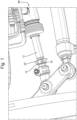
- the invention relates to an assembly configured to co-operate with a steering rod adjustment tool 36 for adjusting a length of a steering rod 12 in a steering gear assembly 48 of a vehicle.
- An example of such an assembly is shown in figure 1 .
- the assembly comprises a connector element 10 and a steering rod 12.
- the steering rod 12 comprises an adjustment part 14 which is rotatable around a longitudinal steering rod axis.
- the connector element 10 comprises a body 16 and is configured to be clenched around the adjustment part 14 of the steering rod 12.
- the connector element 10 has a circumferential outer wall 18 comprising a plurality of substantially planar contact surfaces 20 which are angled with respect to each other.
- the plurality of substantially planar contact surfaces 20 are configured to engage the steering rod adjustment tool 36 such that the steering rod adjustment tool 36 can apply a moment or torque to the connector element 10.
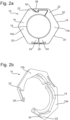
- the connector element 10 comprises a first and a second connector element part 10a, 10b which are pivotable with respect to each other, wherein the connector element 10 has a closed position in which the connector element 10 is configured to be clenched around the adjustment part 14 of the steering rod 12, and wherein the connector element 10 has an open position in which first ends 22 of the first and the second connector element parts 10a, 10b are spaced apart, in which open position the connector element 10 may be moved towards and around the steering rod 12 or away from the steering rod 12.
- the connector element 10 may be configured to be clenched around the adjustment part 14 of the steering rod by having an inner wall circumference 19 that can be adapted to shape fit an outer shape of the steering rod adjustment.
- the shape of the inner wall circumference 19 can thus be made to match an outer shape of the adjustment part 14. In this way the connector element 10 can be securely clenched to the adjustment part 14 without slipping, e.g. when a moment or torque is applied to the connector element 10.
- the inner wall circumference 19 may be made of a deformable material, e.g. a foam which is flexible enough to adapt to the shape of the adjustment part 14 but also firm enough for the connector element 10 to be clenched to the adjustment part 14.
- the inner wall circumference 19 may also be made to match the outer shaped of the adjustment part 14, to form the shape fit connection e.g. when the latter shape is known.
- the first and the second connector element parts 10a, 10b at second ends 24 thereof may be joined together by a flexible strip element 26.
- the flexible strip element 26 adjoins and confines the two connector elements parts 10a, 10b when the connector element is in the closed position.
- the flexible strip element 26 may bias the connector element 10 towards the closed position.
- the first end 22 of the first adaptor part 10a may comprise a locking element 28, and the first end 22 of the second adaptor part 10b may comprise a snap-in area 30. Together the locking element 28 and snap-in area 30 form a snap-fit connection.
- the first ends 22 of the first and second connector element parts 10a, 10b may be opposite the second ends 24 of their respective connector element part 10a, 10b.
- the two parts 10a, 10b of the connector element 10 may be put in the open position.
- the adjustment part 14 of the steering rod 12 may be moved between said ends 22 to that the connector element 10 can envelope the adjustment part 14.
- the adjustment part 14 can have different shapes. It can have a hexagonal shape, such as the circumferential outer wall 18 of the connector element 10. It may also have two flattened part in an otherwise round steering rod 12, as is shown in the cut-through view of the example in figure 3 .
- the flexible strip element 26 functions as a hinge for the two connector element parts 10a, 10b, so that after the connector element parts 10a, 10b are placed around the adjustment part 14, the first ends 22 of the ring parts 10a, 10b may be moved towards each other in order to set the connector element 10 in the closed position.
- the flexible strip element 26 holds the second ends 24 of the ring parts 10a, 10b together when the connector element 10 is in the closed position. The moment of torque applied to the adaptor 10 will than mainly be intercepted by these ring parts 10a, 10b and not by the flexible strip element 26.
- the flexible strip element provides one of the contact surfaces 20 for engagement with the steering rod adjustment tool 36.
- the snap-fit connection keeps the connector element parts 10a, 10b together, when the connector element 10 is in the closed position.
- a snap-fit connection provides a quick way to adjoint the two parts 10a, 10b. It does not need any fastener, such as screws or bolts, or adhesive.
- the connector element 10 comprises an engagement flange 32 adjacent the circumferential outer wall 18.
- the engagement flange 32 has an outer diameter which is greater than a diameter of the circumferential outer wall 18.
- the engagement flange 32 facilitates the engagement of the steering rod engagement tool 36 with the connector element 10.
- the engagement flange 32 may be used to guide the steering rod engagement tool 36. When the steering rod engagement tool 36 engages the contact surfaces 20 of the circumferential outer wall 18, the steering rod adjustment tool 36 may abut the engagement flange 32. An operator of the steering rod adjustment tool 36 would than know that the steering rod adjustment tool 36 is in the right position for engaging the connector element 10. Also the engagement flange 32 will prevent the steering rod adjustment tool 36 from sliding off the contact surfaces.
- he connector element 10 comprises a confinement flange for confining movement of the connector element 10 with respect to the steering rod 12 in an axial direction of the steering rod 12.
- the confinement flange has an inner diameter which is smaller than an outer diameter of the adjustment part 14 of the steering rod 12.
- the confinement flange 24 thus confines the adjustment part 14 and prevents the connector element 10 to move with respect to the adjustment part 14 in the axial direction of the steering rod 10.
- the connector element 10 comprises six contact surfaces 20 which, when viewed in an axial direction of the connector element 10, form a hexagonal cross section of the connector element 10.
- the connector element 10 takes the shape of a standard nut.
- the circumferential outer wall 18 is radial symmetric over an angle of 60°. This means the steering rod adjustment tool only needs an access angle in the range of 60°.
- the connector element 10 is monolithic, and the connector element may be 3D printed.
- Such a connector element 10 may be easily fabricated. 3D printing provides an accurate product, which is cost effective, especially in low quantities.
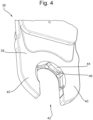
- the assembly further comprising the steering rod adjustment tool 36, of which an example is shown in figure 4 .
- the steering rod adjustment tool 36 comprises a frame 38 having arms 40 defining an u-shaped opening 42 configured to receive the connector element 10.
- the steering rod adjustment tool 36 further comprises an engagement part 44 rotatable with respect to the frame 38.
- the engagement part 44 is configured to engage at least two contact surfaces 20 of the connector element 10. A rotation of the engagement part 44 with respect to the steering rod adjustment tool frame 38 results in the steering rod adjustment tool 36 applying a moment or torque to the connector element 10.
- the engagement part 44 may have a crescent shape.
- An inner surface 46 of the engagement part may match the circumferential outer wall 18 of the connector element 10.
- the steering rod adjustment tool 36 may be moved to connector element 10 so that the u-shaped opening can receive the connector element 10 and the engagement part 44 can engage the contact surfaces 20.
- the connector element 10 may then be rotated by the movement of the engagement part 44. This means that no further movement of the steering rod adjustment tool 36 is needed.
- the adjust said steering rod 10 As shown in figure 4 , the inner surface 46 of the engagement part 44 has four parts which are angled with respect to each other. These parts match the contour or shape of the circumferential wall 18 of the adaptor 10 shown in figures 2 and 3 . Because of this match the possibility of transferring moment or torque from the engagement part 44 to the connector element 10 is greatly enhanced.
Landscapes
- Engineering & Computer Science (AREA)
- Chemical & Material Sciences (AREA)
- Combustion & Propulsion (AREA)
- Transportation (AREA)
- Mechanical Engineering (AREA)
- Steering Controls (AREA)
Description
- The invention relates to an assembly configured to co-operate with a steering rod adjustment tool for adjusting a length of a steering rod in a steering gear assembly of a vehicle.
- The steering gear assembly of a vehicle, such as a car or truck, usually comprises a steering rod between the steering column and the steering knuckle as known from
US6074125 A . The length of the steering rod can be adjusted by rotating an adjustment part of the steering rod, so that the steering knuckles, and thus the wheels, can be aligned. Specialized steering rod adjustment tools are available to rotate the adjustment part of the steering rod. Such a steering rod adjustment tool may comprise a frame having arms defining an u-shaped opening configured to receive an adjustment part of the steering rod. The steering rod adjustment tool may further comprise an engagement part rotatable with respect to the frame and is configured to engage the steering rod adjustment part. A rotation of the engagement part with respect to the tool frame may thus result in a rotation of the steering rod adjustment part, thereby adjusting the length of the steering rod. - For the steering rod adjustment tool to be able to engage the steering rod adjustment part, the steering rod adjustment part has to have a correct rotational orientation with respect to the u-shaped opening of the steering rod adjustment tool. Since access to the steering rod and the steering rod adjustment part is limited in a vehicle, the steering rod adjustment tool can typically engage the steering rod adjustment part from a limited access angle, or within a small range of different access angles. This means that the adjustment part may be in the wrong rotational position for engagement with the steering rod engagement tool and the steering rod adjustment tool cannot be used.
- An object of the invention is to provide a solution to the above mentioned problem. To that end, the invention provides an assembly configured to co-operate with a steering rod adjustment tool for adjusting a length of a steering rod in a steering gear assembly of a vehicle. More particularly, the invention provides an assembly comprising a connector element and a steering rod. The steering rod comprises an adjustment part which is rotatable around a longitudinal steering rod axis. The connector element comprises a body and is configured to be clenched around the adjustment part of the steering rod. The connector element has a circumferential outer wall comprising a plurality of substantially planar contact surfaces which are angled with respect to each other. The plurality of contact surfaces are configured to engage the steering rod adjustment tool such that the steering rod adjustment tool can apply a moment or torque to the connector element.
- With the assembly according to the invention, the steering rod adjustment tool does not directly engage the adjustment part of the steering rod, but engages the contact surfaces of the connector element. This means the steering rod adjustment tool can engage the connector element in a substantially linear movement fashion, and is able to set the length of the steering rod by rotating the engagement part of the adjustment tool while keeping the adjustment tool steady with respect to the steering rod.
- The outer circumference of the connector element may e.g. form a hexagonal cross section. This means the steering rod adjustment tool only needs access angle adjustments in a range of < 30°.
- The connector element may comprise a first and a second connector element part which are pivotable with respect to each other. The connector element may have a closed position in which the connector element is configured to be clenched around the adjustment part of the steering rod e.g. by having an inner wall circumference that can be adapted to close fit an outer shape of the steering rod adjustment part. The connector element may also have an open position in which first ends of the first and the second connector element parts are spaced apart, in which open position the connector element may be moved towards and around the steering rod or away from the steering rod.
- In the open position, the connector element may be attached to or removed from the adjustment part of the steering rod, while in the closed position, the connector element remains clenched around the adjustment part.
- The first and the second connector element parts may at second ends thereof be joined together by a flexible hinge element. The flexible hinge element may adjoin and confine the two connector elements parts e.g. by means of a strip forming one of the contact surfaces for engagement when the connector element is in the closed position. The flexible hinge element may bias the connector element towards the closed position.
- The flexible strip element may thus function as a hinge for the two connector element parts.
- The first end of the first adaptor part may comprise a locking element, and the first end of the second adaptor part may comprise a snap-in area. Together the locking element and snap-in area may form a snap-fit connection.
- A snap-fit connection provides a quick way to adjoint the two parts without need of any fastener, such as screws or bolts, or adhesive.
- The first ends of the first and second connector element parts may be opposite the second ends of their respective connector element part.
- The connector element may comprise an engagement flange adjacent the circumferential outer wall. The engagement flange may have an outer diameter which is greater than a diameter of the circumferential outer wall.
- The engagement flange may be used to guide the steering rod engagement tool. When the steering rod engagement tool engages the contact surfaces of the circumferential outer wall, the steering rod adjustment tool may abut the engagement flange. An operator of the steering rod adjustment tool would than know that the steering rod adjustment tool is in the right position for engaging the connector element. Also the engagement flange will prevent the steering rod adjustment tool from sliding of the contact surfaces.
- The connector element may comprise a confinement flange for confining movement of the connector element with respect to the steering rod in an axial direction of the steering rod. The confinement flange may have an inner diameter which is smaller than an outer diameter of the adjustment part of the steering rod.
- When the connector element is in the closed position, the only possible movement is along the axial direction of the steering rod. Because the inner diameter of the confinement flange is smaller than the outer diameter of the adjustment part, the confinement flange may catch behind the adjustment part. The confinement flange thus confines the adjustment part and prevents the connector element to move with respect to the adjustment part in the axial direction of the steering rod.
- The connector element may be monolithic and it may be 3D printed. It may e.g. be made of a plastic.
- The assembly according to the invention may further comprise the steering rod adjustment tool. The steering rod adjustment tool may comprise a frame having arms defining an u-shaped opening configured to receive the connector element. The steering rod adjustment tool may further comprise an engagement part rotatable with respect to the frame. The engagement part may be configured to engage at least two contact surfaces of the connector element. A rotation of the engagement part with respect to the steering rod adjustment tool frame may result in the steering rod adjustment tool applying a moment or torque to the connector element. The engagement part may have a crescent shape, wherein an inner surface of the engagement part may match the circumferential outer wall of the connector element.
- The steering rod adjustment tool may be moved to connector element so that the u-shaped opening can receive the connector element and the engagement part can engage the contact surfaces. The connector element may then be rotated by the movement of the engagement part. This means that no further movement of the steering rod adjustment tool is needed. Thus also with the smallest access angle to reach the steering rod, is still is possible the adjust said steering rod.
- The present invention will be further elucidated with reference to figures of an example in which various embodiments of the invention are incorporated. The embodiments may be combined or may be applied separately from each other.
-
-
Figure 1 shows an example of an assembly according to the invention; -
Figure 2a shows an example of a connector element according to the invention in a closed position; -
Figure 2b shows the example of the connector element in an open position; -
Figure 3 shows a schematic cut-through view of the example offigure 1 ; and -
Figure 4 shows an example of a steering rod adjustment tool. - In this application similar or corresponding features are denoted by similar or corresponding reference signs. The description of the various embodiments is not limited to the examples shown in the figures and the reference numbers used in the detailed description and the claims are not intended to limit the description of the embodiments, but are included to elucidate the embodiments by referring to the example shown in the figures.
- In the most general terms, the invention relates to an assembly configured to co-operate with a steering
rod adjustment tool 36 for adjusting a length of a steeringrod 12 in asteering gear assembly 48 of a vehicle. An example of such an assembly is shown infigure 1 . The assembly comprises aconnector element 10 and asteering rod 12. The steeringrod 12 comprises anadjustment part 14 which is rotatable around a longitudinal steering rod axis. Theconnector element 10 comprises abody 16 and is configured to be clenched around theadjustment part 14 of the steeringrod 12. Theconnector element 10 has a circumferentialouter wall 18 comprising a plurality of substantially planar contact surfaces 20 which are angled with respect to each other. The plurality of substantially planar contact surfaces 20 are configured to engage the steeringrod adjustment tool 36 such that the steeringrod adjustment tool 36 can apply a moment or torque to theconnector element 10. - The effects and advantages of the assembly have been described in the summary section and these effects and advantages are inserted here by reference.
- In an embodiment, of which an example is shown in
figures 1-3 , theconnector element 10 comprises a first and a secondconnector element part connector element 10 has a closed position in which theconnector element 10 is configured to be clenched around theadjustment part 14 of the steeringrod 12, and wherein theconnector element 10 has an open position in which first ends 22 of the first and the secondconnector element parts connector element 10 may be moved towards and around the steeringrod 12 or away from the steeringrod 12. - The
connector element 10 may be configured to be clenched around theadjustment part 14 of the steering rod by having aninner wall circumference 19 that can be adapted to shape fit an outer shape of the steering rod adjustment. The shape of theinner wall circumference 19 can thus be made to match an outer shape of theadjustment part 14. In this way theconnector element 10 can be securely clenched to theadjustment part 14 without slipping, e.g. when a moment or torque is applied to theconnector element 10. Theinner wall circumference 19 may be made of a deformable material, e.g. a foam which is flexible enough to adapt to the shape of theadjustment part 14 but also firm enough for theconnector element 10 to be clenched to theadjustment part 14. Theinner wall circumference 19 may also be made to match the outer shaped of theadjustment part 14, to form the shape fit connection e.g. when the latter shape is known. - The first and the second
connector element parts flexible strip element 26. Theflexible strip element 26 adjoins and confines the twoconnector elements parts flexible strip element 26 may bias theconnector element 10 towards the closed position. - The
first end 22 of thefirst adaptor part 10a may comprise a lockingelement 28, and thefirst end 22 of thesecond adaptor part 10b may comprise a snap-inarea 30. Together the lockingelement 28 and snap-inarea 30 form a snap-fit connection. The first ends 22 of the first and secondconnector element parts connector element part - In order to attach the
connector element 10 to theadjustment part 14 of the steeringrod 12 the twoparts connector element 10 may be put in the open position. When the first ends 22 of theconnector element parts adjustment part 14 of the steeringrod 12 may be moved between said ends 22 to that theconnector element 10 can envelope theadjustment part 14. Theadjustment part 14 can have different shapes. It can have a hexagonal shape, such as the circumferentialouter wall 18 of theconnector element 10. It may also have two flattened part in an otherwiseround steering rod 12, as is shown in the cut-through view of the example infigure 3 . Theflexible strip element 26 functions as a hinge for the twoconnector element parts connector element parts adjustment part 14, the first ends 22 of thering parts connector element 10 in the closed position. As can be seen infigures 2 and3 , theflexible strip element 26 holds the second ends 24 of thering parts connector element 10 is in the closed position. The moment of torque applied to theadaptor 10 will than mainly be intercepted by thesering parts flexible strip element 26. Also, the flexible strip element provides one of the contact surfaces 20 for engagement with the steeringrod adjustment tool 36. On the other end of theconnector element 10, the snap-fit connection keeps theconnector element parts connector element 10 is in the closed position. A snap-fit connection provides a quick way to adjoint the twoparts - In an embodiment, of which an example is shown in
figure 1 , theconnector element 10 comprises anengagement flange 32 adjacent the circumferentialouter wall 18. Theengagement flange 32 has an outer diameter which is greater than a diameter of the circumferentialouter wall 18. - The
engagement flange 32 facilitates the engagement of the steeringrod engagement tool 36 with theconnector element 10. Theengagement flange 32 may be used to guide the steeringrod engagement tool 36. When the steeringrod engagement tool 36 engages the contact surfaces 20 of the circumferentialouter wall 18, the steeringrod adjustment tool 36 may abut theengagement flange 32. An operator of the steeringrod adjustment tool 36 would than know that the steeringrod adjustment tool 36 is in the right position for engaging theconnector element 10. Also theengagement flange 32 will prevent the steeringrod adjustment tool 36 from sliding off the contact surfaces. - In an embodiment, which is not shown in the figures, he
connector element 10 comprises a confinement flange for confining movement of theconnector element 10 with respect to the steeringrod 12 in an axial direction of the steeringrod 12. The confinement flange has an inner diameter which is smaller than an outer diameter of theadjustment part 14 of the steeringrod 12. - When the
connector element 10 is in the closed position, the only possible movement is along the axial direction of the steeringrod 10. Because the inner diameter of the confinement flange is smaller than the outer diameter of theadjustment part 14, the confinement flange may be hooked behind theadjustment part 14. Theconfinement flange 24 thus confines theadjustment part 14 and prevents theconnector element 10 to move with respect to theadjustment part 14 in the axial direction of the steeringrod 10. - In an embodiment, of which an example is shown in
figures 2 and3 , theconnector element 10 comprises sixcontact surfaces 20 which, when viewed in an axial direction of theconnector element 10, form a hexagonal cross section of theconnector element 10. - In this embodiment, the
connector element 10 takes the shape of a standard nut. The circumferentialouter wall 18 is radial symmetric over an angle of 60°. This means the steering rod adjustment tool only needs an access angle in the range of 60°. - In an embodiment the
connector element 10 is monolithic, and the connector element may be 3D printed. - Such a
connector element 10 may be easily fabricated. 3D printing provides an accurate product, which is cost effective, especially in low quantities. - In an embodiment the assembly further comprising the steering
rod adjustment tool 36, of which an example is shown infigure 4 . The steeringrod adjustment tool 36 comprises aframe 38 havingarms 40 defining anu-shaped opening 42 configured to receive theconnector element 10. The steeringrod adjustment tool 36 further comprises anengagement part 44 rotatable with respect to theframe 38. Theengagement part 44 is configured to engage at least twocontact surfaces 20 of theconnector element 10. A rotation of theengagement part 44 with respect to the steering rodadjustment tool frame 38 results in the steeringrod adjustment tool 36 applying a moment or torque to theconnector element 10. Theengagement part 44 may have a crescent shape. Aninner surface 46 of the engagement part may match the circumferentialouter wall 18 of theconnector element 10. - The steering
rod adjustment tool 36 may be moved toconnector element 10 so that the u-shaped opening can receive theconnector element 10 and theengagement part 44 can engage the contact surfaces 20. Theconnector element 10 may then be rotated by the movement of theengagement part 44. This means that no further movement of the steeringrod adjustment tool 36 is needed. Thus also with the smallest access angle to reach the steeringrod 10, is still is possible the adjust saidsteering rod 10. As shown infigure 4 , theinner surface 46 of theengagement part 44 has four parts which are angled with respect to each other. These parts match the contour or shape of thecircumferential wall 18 of theadaptor 10 shown infigures 2 and3 . Because of this match the possibility of transferring moment or torque from theengagement part 44 to theconnector element 10 is greatly enhanced. - The various embodiments which are described above may be used implemented independently from one another and may be combined with one another in various ways. The reference numbers used in the detailed description and the claims do not limit the description of the embodiments nor do they limit the claims. The reference numbers are solely used to clarify by referring to the non-limiting example in the figures.
-
- 10 - connector element
- 10a - first connector element part
- 10b - second connector element part
- 12 - steering rod
- 14 - adjustment part
- 16 - body
- 18 - circumferential outer wall
- 19 - inner wall circumference
- 20 - contact surface
- 22 - first end (of the first/second connector element part)
- 24 - second end (of the first/second connector element part)
- 26 - flexible strip element
- 28 - locking element
- 30 - snap-in area
- 32 -engagement flange
- 36 - steering rod adjustment tool
- 38 - steering rod adjustment tool frame
- 40 - arm
- 42 - u-shaped opening
- 44 - engagement part
- 46 - inner surface (of the engagement part)
- 48 - steering gear assembly
Claims (14)
- An assembly configured to co-operate with a steering rod adjustment tool (36) for adjusting a length of a steering rod (12) in a steering gear assembly (48) of a vehicle,wherein the assembly comprises a connector element (10) and a steering rod (12),wherein the steering rod (12) comprises an adjustment part (14) which is rotatable around a longitudinal steering rod axis,characterized in that the connector element (10) comprises a body (16) configured to be clenched around the adjustment part (14) of the steering rod (12), and wherein the connector element (10) has a circumferential outer wall (18) comprising a plurality of substantially planar contact surfaces (20) which are angled with respect to each other and are configured to engage the steering rod adjustment tool (36) such that the steering rod adjustment tool (36) can apply a moment or torque to the connector element (10).
- The assembly according to claim 1, wherein the connector element (10) has an inner wall circumference (19) that can be adapted to shape fit an outer shape of the steering rod adjustment part (14).
- The assembly according to claim 1 or 2, wherein the connector element (10) comprises a first and a second connector element part (10a, 10b) which are pivotable with respect to each other, wherein the connector element (10) has a closed position in which the connector element (10) is configured to be clenched around the adjustment part (14) of the steering rod (12), and wherein the connector element (10) has an open position in which first ends (22) of the first and the second connector element parts (10a, 10b) are spaced apart, in which open position the connector element (10) may be moved towards and around the steering rod (12) or away from the steering rod (12).
- The assembly according to claim 3, wherein the first and the second connector element parts (10a, 10b) at second ends (24) thereof are joined together by a flexible strip element (26), wherein the flexible strip element (26) adjoins and confines the two connector elements parts (10a, 10b) when the connector element is in the closed position, and wherein the flexible strip element (26) biases the connector element (10) towards the closed position.
- The assembly according to claims 3 or 4, wherein the first end (22) of the first adaptor part (10a) comprises a locking element (28), and wherein the first end (22) of the second adaptor part (10b) comprises a snap-in area (30), wherein the locking element (28) and snap-in area (30) together form a snap-fit connection.
- The assembly according to claim 4 or 5, wherein the first ends (22) of the first and second connector element parts (10a, 10b) are opposite the second ends (24) of their respective connector element part (10a, 10b).
- The assembly according to any one of the preceding claims, wherein the connector element (10) comprises an engagement flange (32) adjacent the circumferential outer wall (18), and having an outer diameter which is greater than a diameter of the circumferential outer wall (18).
- The assembly according to any one of the preceding claims, wherein the connector element (10) comprises a confinement flange for confining movement of the connector element (10) with respect to the steering rod (12) in an axial direction of the steering rod (12), and wherein the confinement flange has an inner diameter which is smaller than an outer diameter of the adjustment part (14) of the steering rod (12).
- The assembly according to any one of the preceding claims, wherein the connector element (10) comprises six contact surfaces (20) which, when viewed in an axial direction of the connector element (10), form a hexagonal cross section of the connector element (10).
- The assembly according to any one of the preceding claims, wherein the connector element (10) is monolithic.
- The assembly according to claim 10, wherein the connector element is 3D printed.
- The assembly according to any one of the preceding claims, further comprising the steering rod adjustment tool (36).
- The assembly according to claim 12, wherein the steering rod adjustment tool (36) comprises a frame (38) having arms (40) defining an u-shaped opening (42) configured to receive the connector element (10), wherein the steering rod adjustment tool (36) further comprises an engagement part (44) rotatable with respect to the frame (38), wherein the engagement part (44) is configured to engage at least two contact surfaces (20) of the connector element (10), and wherein a rotation of the engagement part (44) with respect to the steering rod adjustment tool frame (38) results in the steering rod adjustment tool (36) applying a moment or torque to the connector element (10).
- The assembly according to claim 13, wherein the engagement part (44) has a crescent shape, wherein an inner surface (46) of the engagement part matches the circumferential outer wall (18) of the connector element (10).
Applications Claiming Priority (1)
| Application Number | Priority Date | Filing Date | Title |
|---|---|---|---|
| NL2028242A NL2028242B1 (en) | 2021-05-19 | 2021-05-19 | Assembly |
Publications (3)
| Publication Number | Publication Date |
|---|---|
| EP4091913A1 EP4091913A1 (en) | 2022-11-23 |
| EP4091913B1 true EP4091913B1 (en) | 2024-03-20 |
| EP4091913C0 EP4091913C0 (en) | 2024-03-20 |
Family
ID=77627458
Family Applications (1)
| Application Number | Title | Priority Date | Filing Date |
|---|---|---|---|
| EP22174030.1A Active EP4091913B1 (en) | 2021-05-19 | 2022-05-18 | Assembly configured to co-operate with a steering rod adjustment tool for adjusting a length of a steering rod in a steering gear assembly of a vehicle. |
Country Status (2)
| Country | Link |
|---|---|
| EP (1) | EP4091913B1 (en) |
| NL (1) | NL2028242B1 (en) |
Family Cites Families (4)
| Publication number | Priority date | Publication date | Assignee | Title |
|---|---|---|---|---|
| US6074125A (en) * | 1998-06-26 | 2000-06-13 | Chrysler Corporation | Tie rod assemble for a motor vehicle and related method |
| US7201530B2 (en) * | 2002-08-07 | 2007-04-10 | Zf-Lemforder Corporation | Adjustable torque rod |
| DE102010040419A1 (en) * | 2010-09-08 | 2012-03-08 | Zf Friedrichshafen Ag | Clamp-free clamping bandage |
| DE102016200296A1 (en) * | 2016-01-13 | 2017-07-13 | Zf Friedrichshafen Ag | Length adjustable two-point link, in particular for a steering or a chassis of a commercial vehicle |
-
2021
- 2021-05-19 NL NL2028242A patent/NL2028242B1/en active
-
2022
- 2022-05-18 EP EP22174030.1A patent/EP4091913B1/en active Active
Also Published As
| Publication number | Publication date |
|---|---|
| NL2028242B1 (en) | 2022-12-05 |
| EP4091913A1 (en) | 2022-11-23 |
| EP4091913C0 (en) | 2024-03-20 |
Similar Documents
| Publication | Publication Date | Title |
|---|---|---|
| US9039041B2 (en) | Steering column anti-rotation pin | |
| EP4090223B1 (en) | Endoscope control handle with a steering assembly | |
| CN102438876B (en) | Steering device | |
| EP1516798A1 (en) | Shock absorbing steering column unit for vehicle | |
| US20080007052A1 (en) | Connector mounting structure | |
| MX2012010519A (en) | Rotatable bar pin bushing assembly. | |
| US20210316777A1 (en) | Foldable steering wheel assembly and steering apparatus comprising the same | |
| US10882472B2 (en) | String-shaped-object binder | |
| US6783137B2 (en) | Steering knuckle carrier-to-suspension arm pivotal connection and method of assembling and preloading the pivotal connection | |
| US5221154A (en) | Device for retaining a shaft housed at least partially in a sleeve, which parts are capable of relative translational and rotational motion, and its application to motor vehicle steering systems | |
| CA1312450C (en) | Pipe clip | |
| US20190092398A1 (en) | Device and method for fastening a vehicle accessory | |
| CN110318623B (en) | Adjusting device for adjusting the elevation of a component | |
| US10040472B2 (en) | Steering column for a motor vehicle | |
| US4400007A (en) | Method and structure for adjusting caster or camber | |
| CN103889820A (en) | Steering column including improved depth blocking mechanism | |
| US6167777B1 (en) | Tiltable steering column lock mechanism | |
| US5505106A (en) | Adjustable tie-rod assembly for a motor vehicle | |
| EP4091913B1 (en) | Assembly configured to co-operate with a steering rod adjustment tool for adjusting a length of a steering rod in a steering gear assembly of a vehicle. | |
| WO2019158360A1 (en) | Steering sensor device comprising a plug-in/rotative connection | |
| EP0899471B1 (en) | Boot seal for a ball and socket joint | |
| JP3259818B2 (en) | Circuit connection device for vehicle steering module | |
| US5564313A (en) | Steering column assembly, especially for a motor vehicle | |
| JPS583122B2 (en) | plastic joint | |
| US4430905A (en) | Motor vehicle steering column |
Legal Events
| Date | Code | Title | Description |
|---|---|---|---|
| PUAI | Public reference made under article 153(3) epc to a published international application that has entered the european phase |
Free format text: ORIGINAL CODE: 0009012 |
|
| STAA | Information on the status of an ep patent application or granted ep patent |
Free format text: STATUS: THE APPLICATION HAS BEEN PUBLISHED |
|
| AK | Designated contracting states |
Kind code of ref document: A1 Designated state(s): AL AT BE BG CH CY CZ DE DK EE ES FI FR GB GR HR HU IE IS IT LI LT LU LV MC MK MT NL NO PL PT RO RS SE SI SK SM TR |
|
| STAA | Information on the status of an ep patent application or granted ep patent |
Free format text: STATUS: REQUEST FOR EXAMINATION WAS MADE |
|
| 17P | Request for examination filed |
Effective date: 20230510 |
|
| P01 | Opt-out of the competence of the unified patent court (upc) registered |
Effective date: 20230505 |
|
| RBV | Designated contracting states (corrected) |
Designated state(s): AL AT BE BG CH CY CZ DE DK EE ES FI FR GB GR HR HU IE IS IT LI LT LU LV MC MK MT NL NO PL PT RO RS SE SI SK SM TR |
|
| GRAP | Despatch of communication of intention to grant a patent |
Free format text: ORIGINAL CODE: EPIDOSNIGR1 |
|
| STAA | Information on the status of an ep patent application or granted ep patent |
Free format text: STATUS: GRANT OF PATENT IS INTENDED |
|
| INTG | Intention to grant announced |
Effective date: 20231016 |
|
| GRAS | Grant fee paid |
Free format text: ORIGINAL CODE: EPIDOSNIGR3 |
|
| GRAA | (expected) grant |
Free format text: ORIGINAL CODE: 0009210 |
|
| STAA | Information on the status of an ep patent application or granted ep patent |
Free format text: STATUS: THE PATENT HAS BEEN GRANTED |
|
| AK | Designated contracting states |
Kind code of ref document: B1 Designated state(s): AL AT BE BG CH CY CZ DE DK EE ES FI FR GB GR HR HU IE IS IT LI LT LU LV MC MK MT NL NO PL PT RO RS SE SI SK SM TR |
|
| REG | Reference to a national code |
Ref country code: GB Ref legal event code: FG4D |
|
| REG | Reference to a national code |
Ref country code: CH Ref legal event code: EP |
|
| REG | Reference to a national code |
Ref country code: IE Ref legal event code: FG4D |
|
| REG | Reference to a national code |
Ref country code: DE Ref legal event code: R096 Ref document number: 602022002404 Country of ref document: DE |
|
| P04 | Withdrawal of opt-out of the competence of the unified patent court (upc) registered |
Effective date: 20240422 |
|
| U01 | Request for unitary effect filed |
Effective date: 20240419 |
|
| U07 | Unitary effect registered |
Designated state(s): AT BE BG DE DK EE FI FR IT LT LU LV MT NL PT SE SI Effective date: 20240425 |
|
| U20 | Renewal fee for the european patent with unitary effect paid |
Year of fee payment: 3 Effective date: 20240521 |
|
| PG25 | Lapsed in a contracting state [announced via postgrant information from national office to epo] |
Ref country code: GR Free format text: LAPSE BECAUSE OF FAILURE TO SUBMIT A TRANSLATION OF THE DESCRIPTION OR TO PAY THE FEE WITHIN THE PRESCRIBED TIME-LIMIT Effective date: 20240621 |
|
| PG25 | Lapsed in a contracting state [announced via postgrant information from national office to epo] |
Ref country code: RS Free format text: LAPSE BECAUSE OF FAILURE TO SUBMIT A TRANSLATION OF THE DESCRIPTION OR TO PAY THE FEE WITHIN THE PRESCRIBED TIME-LIMIT Effective date: 20240620 Ref country code: HR Free format text: LAPSE BECAUSE OF FAILURE TO SUBMIT A TRANSLATION OF THE DESCRIPTION OR TO PAY THE FEE WITHIN THE PRESCRIBED TIME-LIMIT Effective date: 20240320 |
|
| PG25 | Lapsed in a contracting state [announced via postgrant information from national office to epo] |
Ref country code: RS Free format text: LAPSE BECAUSE OF FAILURE TO SUBMIT A TRANSLATION OF THE DESCRIPTION OR TO PAY THE FEE WITHIN THE PRESCRIBED TIME-LIMIT Effective date: 20240620 Ref country code: NO Free format text: LAPSE BECAUSE OF FAILURE TO SUBMIT A TRANSLATION OF THE DESCRIPTION OR TO PAY THE FEE WITHIN THE PRESCRIBED TIME-LIMIT Effective date: 20240620 Ref country code: HR Free format text: LAPSE BECAUSE OF FAILURE TO SUBMIT A TRANSLATION OF THE DESCRIPTION OR TO PAY THE FEE WITHIN THE PRESCRIBED TIME-LIMIT Effective date: 20240320 Ref country code: GR Free format text: LAPSE BECAUSE OF FAILURE TO SUBMIT A TRANSLATION OF THE DESCRIPTION OR TO PAY THE FEE WITHIN THE PRESCRIBED TIME-LIMIT Effective date: 20240621 |
|
| PG25 | Lapsed in a contracting state [announced via postgrant information from national office to epo] |
Ref country code: IS Free format text: LAPSE BECAUSE OF FAILURE TO SUBMIT A TRANSLATION OF THE DESCRIPTION OR TO PAY THE FEE WITHIN THE PRESCRIBED TIME-LIMIT Effective date: 20240720 |
|
| PG25 | Lapsed in a contracting state [announced via postgrant information from national office to epo] |
Ref country code: SM Free format text: LAPSE BECAUSE OF FAILURE TO SUBMIT A TRANSLATION OF THE DESCRIPTION OR TO PAY THE FEE WITHIN THE PRESCRIBED TIME-LIMIT Effective date: 20240320 |
|
| PG25 | Lapsed in a contracting state [announced via postgrant information from national office to epo] |
Ref country code: ES Free format text: LAPSE BECAUSE OF FAILURE TO SUBMIT A TRANSLATION OF THE DESCRIPTION OR TO PAY THE FEE WITHIN THE PRESCRIBED TIME-LIMIT Effective date: 20240320 |
|
| PG25 | Lapsed in a contracting state [announced via postgrant information from national office to epo] |
Ref country code: CZ Free format text: LAPSE BECAUSE OF FAILURE TO SUBMIT A TRANSLATION OF THE DESCRIPTION OR TO PAY THE FEE WITHIN THE PRESCRIBED TIME-LIMIT Effective date: 20240320 |
|
| PG25 | Lapsed in a contracting state [announced via postgrant information from national office to epo] |
Ref country code: PL Free format text: LAPSE BECAUSE OF FAILURE TO SUBMIT A TRANSLATION OF THE DESCRIPTION OR TO PAY THE FEE WITHIN THE PRESCRIBED TIME-LIMIT Effective date: 20240320 |
|
| PG25 | Lapsed in a contracting state [announced via postgrant information from national office to epo] |
Ref country code: SK Free format text: LAPSE BECAUSE OF FAILURE TO SUBMIT A TRANSLATION OF THE DESCRIPTION OR TO PAY THE FEE WITHIN THE PRESCRIBED TIME-LIMIT Effective date: 20240320 |
|
| PG25 | Lapsed in a contracting state [announced via postgrant information from national office to epo] |
Ref country code: SM Free format text: LAPSE BECAUSE OF FAILURE TO SUBMIT A TRANSLATION OF THE DESCRIPTION OR TO PAY THE FEE WITHIN THE PRESCRIBED TIME-LIMIT Effective date: 20240320 Ref country code: SK Free format text: LAPSE BECAUSE OF FAILURE TO SUBMIT A TRANSLATION OF THE DESCRIPTION OR TO PAY THE FEE WITHIN THE PRESCRIBED TIME-LIMIT Effective date: 20240320 Ref country code: RO Free format text: LAPSE BECAUSE OF FAILURE TO SUBMIT A TRANSLATION OF THE DESCRIPTION OR TO PAY THE FEE WITHIN THE PRESCRIBED TIME-LIMIT Effective date: 20240320 Ref country code: PL Free format text: LAPSE BECAUSE OF FAILURE TO SUBMIT A TRANSLATION OF THE DESCRIPTION OR TO PAY THE FEE WITHIN THE PRESCRIBED TIME-LIMIT Effective date: 20240320 Ref country code: IS Free format text: LAPSE BECAUSE OF FAILURE TO SUBMIT A TRANSLATION OF THE DESCRIPTION OR TO PAY THE FEE WITHIN THE PRESCRIBED TIME-LIMIT Effective date: 20240720 Ref country code: ES Free format text: LAPSE BECAUSE OF FAILURE TO SUBMIT A TRANSLATION OF THE DESCRIPTION OR TO PAY THE FEE WITHIN THE PRESCRIBED TIME-LIMIT Effective date: 20240320 Ref country code: CZ Free format text: LAPSE BECAUSE OF FAILURE TO SUBMIT A TRANSLATION OF THE DESCRIPTION OR TO PAY THE FEE WITHIN THE PRESCRIBED TIME-LIMIT Effective date: 20240320 |
|
| REG | Reference to a national code |
Ref country code: DE Ref legal event code: R097 Ref document number: 602022002404 Country of ref document: DE |
|
| P05 | Withdrawal of opt-out of the competence of the unified patent court (upc) changed |
Free format text: CASE NUMBER: APP_21992/2024 Effective date: 20240425 |
|
| PG25 | Lapsed in a contracting state [announced via postgrant information from national office to epo] |
Ref country code: MC Free format text: LAPSE BECAUSE OF FAILURE TO SUBMIT A TRANSLATION OF THE DESCRIPTION OR TO PAY THE FEE WITHIN THE PRESCRIBED TIME-LIMIT Effective date: 20240320 |
|
| PLBE | No opposition filed within time limit |
Free format text: ORIGINAL CODE: 0009261 |
|
| STAA | Information on the status of an ep patent application or granted ep patent |
Free format text: STATUS: NO OPPOSITION FILED WITHIN TIME LIMIT |
|
| PG25 | Lapsed in a contracting state [announced via postgrant information from national office to epo] |
Ref country code: MC Free format text: LAPSE BECAUSE OF FAILURE TO SUBMIT A TRANSLATION OF THE DESCRIPTION OR TO PAY THE FEE WITHIN THE PRESCRIBED TIME-LIMIT Effective date: 20240320 |
|
| 26N | No opposition filed |
Effective date: 20241223 |
|
| PG25 | Lapsed in a contracting state [announced via postgrant information from national office to epo] |
Ref country code: IE Free format text: LAPSE BECAUSE OF NON-PAYMENT OF DUE FEES Effective date: 20240518 |
|
| U20 | Renewal fee for the european patent with unitary effect paid |
Year of fee payment: 4 Effective date: 20250401 |
|
| PG25 | Lapsed in a contracting state [announced via postgrant information from national office to epo] |
Ref country code: CY Free format text: LAPSE BECAUSE OF FAILURE TO SUBMIT A TRANSLATION OF THE DESCRIPTION OR TO PAY THE FEE WITHIN THE PRESCRIBED TIME-LIMIT; INVALID AB INITIO Effective date: 20220518 |
|
| PG25 | Lapsed in a contracting state [announced via postgrant information from national office to epo] |
Ref country code: HU Free format text: LAPSE BECAUSE OF FAILURE TO SUBMIT A TRANSLATION OF THE DESCRIPTION OR TO PAY THE FEE WITHIN THE PRESCRIBED TIME-LIMIT; INVALID AB INITIO Effective date: 20220518 |
|
| REG | Reference to a national code |
Ref country code: CH Ref legal event code: H13 Free format text: ST27 STATUS EVENT CODE: U-0-0-H10-H13 (AS PROVIDED BY THE NATIONAL OFFICE) Effective date: 20251223 |
|
| PG25 | Lapsed in a contracting state [announced via postgrant information from national office to epo] |
Ref country code: CH Free format text: LAPSE BECAUSE OF NON-PAYMENT OF DUE FEES Effective date: 20250531 |
|
| PGFP | Annual fee paid to national office [announced via postgrant information from national office to epo] |
Ref country code: GB Payment date: 20260324 Year of fee payment: 5 |