EP4090120A1 - Configuration method for two-step random access msg a resources and related apparatus - Google Patents
Configuration method for two-step random access msg a resources and related apparatus Download PDFInfo
- Publication number
- EP4090120A1 EP4090120A1 EP20914439.3A EP20914439A EP4090120A1 EP 4090120 A1 EP4090120 A1 EP 4090120A1 EP 20914439 A EP20914439 A EP 20914439A EP 4090120 A1 EP4090120 A1 EP 4090120A1
- Authority
- EP
- European Patent Office
- Prior art keywords
- time
- resource
- terminal device
- pusch
- domain
- Prior art date
- Legal status (The legal status is an assumption and is not a legal conclusion. Google has not performed a legal analysis and makes no representation as to the accuracy of the status listed.)
- Withdrawn
Links
Images


Classifications
-
- H—ELECTRICITY
- H04—ELECTRIC COMMUNICATION TECHNIQUE
- H04W—WIRELESS COMMUNICATION NETWORKS
- H04W74/00—Wireless channel access
- H04W74/08—Non-scheduled access, e.g. ALOHA
- H04W74/0833—Random access procedures, e.g. with 4-step access
- H04W74/0841—Random access procedures, e.g. with 4-step access with collision treatment
-
- H—ELECTRICITY
- H04—ELECTRIC COMMUNICATION TECHNIQUE
- H04W—WIRELESS COMMUNICATION NETWORKS
- H04W74/00—Wireless channel access
- H04W74/002—Transmission of channel access control information
-
- H—ELECTRICITY
- H04—ELECTRIC COMMUNICATION TECHNIQUE
- H04L—TRANSMISSION OF DIGITAL INFORMATION, e.g. TELEGRAPHIC COMMUNICATION
- H04L5/00—Arrangements affording multiple use of the transmission path
- H04L5/003—Arrangements for allocating sub-channels of the transmission path
- H04L5/0053—Allocation of signalling, i.e. of overhead other than pilot signals
-
- H—ELECTRICITY
- H04—ELECTRIC COMMUNICATION TECHNIQUE
- H04W—WIRELESS COMMUNICATION NETWORKS
- H04W56/00—Synchronisation arrangements
- H04W56/004—Synchronisation arrangements compensating for timing error of reception due to propagation delay
- H04W56/0045—Synchronisation arrangements compensating for timing error of reception due to propagation delay compensating for timing error by altering transmission time
-
- H—ELECTRICITY
- H04—ELECTRIC COMMUNICATION TECHNIQUE
- H04W—WIRELESS COMMUNICATION NETWORKS
- H04W74/00—Wireless channel access
- H04W74/08—Non-scheduled access, e.g. ALOHA
- H04W74/0833—Random access procedures, e.g. with 4-step access
- H04W74/0836—Random access procedures, e.g. with 4-step access with 2-step access
-
- H—ELECTRICITY
- H04—ELECTRIC COMMUNICATION TECHNIQUE
- H04W—WIRELESS COMMUNICATION NETWORKS
- H04W74/00—Wireless channel access
- H04W74/08—Non-scheduled access, e.g. ALOHA
- H04W74/0866—Non-scheduled access, e.g. ALOHA using a dedicated channel for access
-
- H—ELECTRICITY
- H04—ELECTRIC COMMUNICATION TECHNIQUE
- H04W—WIRELESS COMMUNICATION NETWORKS
- H04W74/00—Wireless channel access
- H04W74/08—Non-scheduled access, e.g. ALOHA
- H04W74/0833—Random access procedures, e.g. with 4-step access
- H04W74/0838—Random access procedures, e.g. with 4-step access using contention-free random access [CFRA]
Definitions
- the disclosure relates to the field of communication technology, and more particularly to methods for 2-step random access (RA) message (MSG) A resource configuration and related apparatuses.
- RA 2-step random access
- MSG 2-step random access
- a new radio (NR) system has a relatively small coverage, and signal transmission delays between user equipments (UEs) at different locations in a same cell and a base station are little different.
- UEs transmit preambles during random access (RA)
- RA random access
- RACH random access channel
- RO RACH occasion
- the base station can know a point of time at which the UE transmits the preamble, and can determine a timing advance (TA) of the UE and a random access radio network temporary identifier (RA-RNTI) used by the UE to transmit a random access response (RAR).
- TA timing advance
- RA-RNTI random access radio network temporary identifier
- NTN non-terrestrial network
- the satellite has a great coverage, for different UEs within a same satellite coverage, since the UEs are located at different locations, signal transmission delays between the UEs and the satellite may be greatly different.
- a maximum difference of signal transmission delays between different UEs and a base station in an NTN cell is 10.3 milliseconds (ms).
- Such great signal transmission delay difference may result in that preambles transmitted by different UEs that use a same RACH resource for preamble transmission arrive the base station at different times.
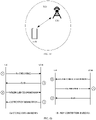
- a length of a preamble receiving window at the base station may be extended to 2 ⁇ (a maximum one-way delay-a minimum one-way delay), and as illustrated in FIG. 1A , an RO represents an RACH occasion.
- the base station needs to know an RO in which a UE transmits a preamble in response to reception of the preamble, and then determines an initial TA of the UE.
- a time interval between ROs adjacent in a time domain is less than a length of the preamble receiving window, there may be a problem that preamble receiving windows corresponding to ROs at different times overlap in time as illustrated in FIG. 1B .
- the base station when the base station receives a preamble in an overlap of the preamble receiving windows, the base station does not know that the preamble is transmitted in which RO (RO1 or RO2), and then cannot determine a TA of the UE.
- a method for 2-step RA MSG A resource configuration is provided in implementations of the disclosure.
- the method includes the following.
- a terminal device receives first configuration information from a network device.
- the first configuration information includes a physical random access channel (PRACH) resource configuration of a 2-step RA MSG A resource, physical uplink shared channel (PUSCH) resource configurations of the 2-step RA MSG A resource, and a correspondence between a PRACH time-domain resource configuration and the PUSCH resource configurations.
- the PRACH resource configuration includes the PRACH time-domain resource configuration, and the PRACH time-domain resource configuration is for determining random access channel (RACH) occasion (RO) time-domain resource locations.
- RACH random access channel
- RO occasion
- the correspondence is for constraining PUSCH occasions (POs) corresponding to different RO time-domain resource locations to be distributed on different PUSCH resource configurations during any period of time having a length equal to a length of a preamble receiving window.
- a method for 2-step RA MSG A resource configuration is provided in implementations of the disclosure.
- the method includes the following.
- a network device transmits first configuration information to a terminal device.
- the first configuration information includes a PRACH resource configuration of a 2-step RA MSG A resource, PUSCH resource configurations of the 2-step RA MSG A resource, and a correspondence between a PRACH time-domain resource configuration and the PUSCH resource configurations.
- the PRACH resource configuration includes the PRACH time-domain resource configuration, and the PRACH time-domain resource configuration is for determining RO time-domain resource locations.
- the correspondence is for constraining POs corresponding to different RO time-domain resource locations to be distributed on different PUSCH resource configurations during any period of time having a length equal to a length of a preamble receiving window.
- an apparatus for 2-step RA MSG A resource configuration is provided in implementations of the disclosure.
- the apparatus is applied to a terminal device and includes a processing unit and a communication unit.
- the processing unit is configured to receive first configuration information from a network device through using the communication unit.
- the first configuration information includes a PRACH resource configuration of a 2-step RA MSG A resource, PUSCH resource configurations of the 2-step RA MSG A resource, and a correspondence between a PRACH time-domain resource configuration and the PUSCH resource configurations.
- the PRACH resource configuration includes the PRACH time-domain resource configuration, and the PRACH time-domain resource configuration is for determining RO time-domain resource locations.
- the correspondence is for constraining POs corresponding to different RO time-domain resource locations to be distributed on different PUSCH resource configurations during any period of time having a length equal to a length of a preamble receiving window.
- an apparatus for 2-step RA MSG A resource configuration is provided in implementations of the disclosure.
- the apparatus is applied to a network device and includes a processing unit and a communication unit.
- the processing unit is configured to transmit first configuration information to a terminal device through using the communication unit.
- the first configuration information includes a PRACH resource configuration of a 2-step RA MSG A resource, PUSCH resource configurations of the 2-step RA MSG A resource, and a correspondence between a PRACH time-domain resource configuration and the PUSCH resource configurations.
- the PRACH resource configuration includes the PRACH time-domain resource configuration, and the PRACH time-domain resource configuration is for determining RO time-domain resource locations.
- the correspondence is for constraining POs corresponding to different RO time-domain resource locations to be distributed on different PUSCH resource configurations during any period of time having a length equal to a length of a preamble receiving window.
- a terminal device in implementations of the disclosure.
- the terminal device includes a processor, a memory, a communication interface, and one or more program(s), where the one or more program(s) is stored in the memory and is configured to be performed by the processor, and the one or more program(s) includes instructions used for performing any of the methods in the first aspect.
- a network device in implementations of the disclosure.
- the network device includes a processor, a memory, a communication interface, and one or more program(s), where the one or more program(s) is stored in the memory and is configured to be performed by the processor, and the one or more program(s) includes instructions used for performing any of the methods in the second aspect.
- a chip in implementations of the disclosure.
- the chip includes a processor configured to invoke and execute a computer program stored in a memory, to enable a device equipped with the chip to perform some or all of the operations illustrated in any of the methods in the first or second aspect.
- a computer-readable storage medium in implementations of the disclosure.
- the computer-readable storage medium is configured to store a computer program used for performing electronic data interchange, where the computer program enables a computer to perform some or all of the operations illustrated in any of the methods in the first or second aspect.
- a computer program in implementations of the disclosure.
- the computer program can be operated to enable a computer to perform some or all of the operations illustrated in any of the methods in the first or second aspect.
- the computer program may be a software installation package.
- the first configuration information is synchronized between the network device and the terminal device.
- the first configuration information includes the PRACH resource configuration of the 2-step RA MSG A resource, the PUSCH resource configurations of the 2-step RA MSG A resource, and the correspondence between the PRACH time-domain resource configuration and the PUSCH resource configurations.
- the PRACH resource configuration includes the PRACH time-domain resource configuration, and the PRACH time-domain resource configuration is for determining the RO time-domain resource locations.
- a PO corresponding to a preamble received within an overlap of preamble receiving windows is only associated with a single determined RO time-domain resource location, which can avoid that the PO associated with the preamble received within the overlap of the preamble receiving windows corresponds to multiple ROs, thereby effectively solving preamble receiving window blur at a network side.
- the technical solutions of implementations in the disclosure can be applied to an exemplary communication system 100 as illustrated in FIG. 1C , and the exemplary communication system 100 includes a terminal device 110 and a network device 120, where the terminal device 110 communicates with the network device 120.
- the exemplary communication system 100 for example may be: a non-terrestrial network (NTN) system, a global system of mobile communication (GSM) system, a code division multiple access (CDMA) system, a wideband code division multiple access (WCDMA) system, a general packet radio service (GPRS) system, a long term evolution (LTE) system, an LTE frequency division duplex (FDD) system, an LTE time division duplex (TDD) system, a universal mobile telecommunication system (UMTS), a worldwide interoperability for microwave access (WiMAX) communication system, a future 5th generation (5G) system, or a new radio (NR).
- NTN non-terrestrial network
- GSM global system of mobile communication
- CDMA code division multiple access
- WCDMA wideband code division multiple access
- GPRS general packet radio service
- LTE long term evolution
- FDD LTE frequency division duplex
- TDD LTE time division duplex
- UMTS universal mobile telecommunication system
- the terminal device 110 in implementations of the disclosure may refer to a user equipment (UE), an access terminal, a subscriber unit, a subscriber station, a mobile station, a mobile platform, a remote station, a remote terminal, a mobile device, a user terminal, a terminal, a wireless communication device, a user agent, or a user apparatus.
- UE user equipment
- an access terminal a subscriber unit, a subscriber station, a mobile station, a mobile platform, a remote station, a remote terminal, a mobile device, a user terminal, a terminal, a wireless communication device, a user agent, or a user apparatus.
- the terminal device also may be a cellular radio telephone, a cordless telephone, a session initiation protocol (SIP) telephone, a wireless local loop (WLL) station, a personal digital assistant (PDA), a handheld device with wireless communication functions, a computing device, other processing devices coupled with a wireless modem, a relay device, an in-vehicle device, a wearable device, a terminal device in the future 5G network, a terminal device in a future evolved public land mobile network (PLMN), or the like, which will not be limited herein.
- SIP session initiation protocol
- WLL wireless local loop
- PDA personal digital assistant
- PLMN public land mobile network
- the network device 120 in implementations of the disclosure can communicate with the terminal device.
- the network device may be a base transceiver station (BTS) in the GSM or CDMA system, a NodeB (NB) in the WCDMA system, an evolved NodeB (eNB or eNodeB) in the LTE system, or a radio controller in a cloud radio access network (CRAN) scenario.
- the network device also may be a relay device, an access point (AP), an in-vehicle device, a wearable device, a network device in the future 5G network, a network device in the future evolved PLMN, or one antenna panel or one group of antenna panels (including multiple antenna panels) in a base station in the 5G system.
- BTS base transceiver station
- NB NodeB
- eNB or eNodeB evolved NodeB
- CRAN cloud radio access network
- the network device also may be a relay device, an access point (AP), an in-vehicle device, a wear
- the network device also may be a network node constructing a next generation NodeB (gNB) or a transmission point (TP), such as a baseband unit (BBU), a distributed unit (DU), or the like, which will not be limited herein.
- gNB next generation NodeB
- TP transmission point
- BBU baseband unit
- DU distributed unit
- the gNB may include a centralized unit (CU) and a DU.
- the gNB also may include an active antenna unit (AAU).
- the CU achieves a part of functions of the gNB, and the DU achieves a part of functions of the gNB.
- the CU is responsible for processing non-real-time protocols and services, to achieve functions of a radio resource control (RRC) layer and a packet data convergence protocol (PDCP) layer.
- RRC radio resource control
- PDCP packet data convergence protocol
- the DU is responsible for processing physical (PHY)-layer protocols and real-time services, to achieve functions of a radio link control (RLC) layer, a medium access control (MAC) layer, and a PHY layer.
- RLC radio link control
- MAC medium access control
- the AAU achieves a part of processing functions of the PHY layer and related functions of radio frequency (RF) processing and active antennas. Since information of the RRC layer may be finally converted into information of the PHY layer or be obtained by transforming the information of the PHY layer, in this architecture, high-layer signaling, such as RRC-layer signaling, also can be considered as transmitted by the DU or by a combination of the DU and the AAU.
- the network device may be a device that includes at least one of a CU node, a DU node, or an AAU node.
- the CU can be considered as a network device in an RAN or in a core network (CN), which will not be limited herein.
- the terminal device 110 or the network device 120 includes a hardware layer, an operating system layer running above the hardware layer, and an application layer running above the operating system layer.
- the hardware layer includes a central processing unit (CPU), a memory management unit (MMU), a memory (also called main memory), or other hardware.
- the operating system may be any one or various computer operating systems that achieve service processing through processes, e.g., a Linux ® operating system, a Unix ® operating system, an Android ® operating system, an iOS ® operating system, a Windows ® operating system, or the like.
- the application layer includes a browser, an address book, a word processing software, an instant messaging software, or other applications.
- a specific structure of the execution body of the method provided in implementations of the disclosure is not particularly limited herein, as long as the execution body can perform communication according to the method provided in implementations of the disclosure by running a program containing codes for realizing the method provided in implementations of the disclosure.
- the execution body of the method provided in implementations of the disclosure may be a terminal device or a function module that is in the terminal device and can invoke and execute the program.
- NTN generally provides communication services to ground users with satellite communication.
- the satellite communication Compared with terrestrial cellular network communication, the satellite communication has many unique advantages.
- the satellite communication is not limited by user regions. For example, general land communication cannot cover areas where communication devices cannot be set up such as oceans, mountains, or deserts, or where communication coverage is not provided due to a sparse population.
- general land communication cannot cover areas where communication devices cannot be set up such as oceans, mountains, or deserts, or where communication coverage is not provided due to a sparse population.
- the satellite communication theoretically every corner of the earth can be covered by the satellite communication because a satellite can cover a larger ground and further can orbit around the earth. Then the satellite communication has a greater society value.
- the satellite communication can cover at a lower cost remote mountainous areas and poor and backward countries or regions, so that people in these regions can enjoy an advanced voice communication and mobile Internet technology, which is conducive to narrowing a digital divide with developed regions and promoting development of these regions. Furthermore, a satellite communication distance is long, and a communication cost does not increase obviously when the communication distance increases. Finally, the satellite communication is more stable and not limited by natural disasters.
- a communication satellite can be classified into a low-earth orbit (LEO) satellite, a medium-earth orbit (MEO) satellite, a geostationary earth orbit (GEO) satellite, a high elliptical orbit (HEO) satellite, or the like according to different orbit altitudes.
- LEO low-earth orbit
- MEO medium-earth orbit
- GEO geostationary earth orbit
- HEO high elliptical orbit
- an LEO satellite and a GEO satellite are mainly researched.
- An altitude of an LEO satellite ranges from 500 kilometers (km) to 1500 km, and a corresponding orbital period is about 1.5 hours (h) to 2 h.
- a signal transmission delay of single-hop communication between users is generally less than 20 millisecond (ms).
- a maximum satellite viewing time is 20 minutes.
- a signal transmission distance is short, a link loss is small, and a transmission power requirement for a user terminal is not high.
- An orbit altitude of a GEO satellite is 35786 km, and a rotation period around the earth is 24 h.
- a signal transmission delay of single-hop communication between users is generally 250 ms.
- the satellite uses multiple beams to cover the ground.
- a satellite can form dozens or even hundreds of beams to cover the ground, and a satellite beam can cover a ground area of tens to hundreds of kilometers in diameter.
- RA NR random access
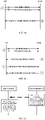
- FIG. ID In an NR release 15 (Rel-15), two 4-step RA modes are mainly supported, i.e., a contention-based RA mode and a non-contention-based RA mode, as illustrated in FIG. ID.
- the contention-based RA procedure is divided into 4 steps, and the non-contention-based RA procedure is divided into 2 steps, where detailed steps are as follows.
- the terminal device activates an RA-response window in response to transmission of the MSG 1, and monitors within the window a physical downlink control channel (PDCCH) scrambled by a random access radio network temporary identifier (RA-RNTI).
- PDCCH physical downlink control channel
- RA-RNTI random access radio network temporary identifier
- RA-RNTI 1+s_id+14 ⁇ t_id+14 ⁇ 80 ⁇ f_id+14 ⁇ 80 ⁇ 8 ⁇ ul_carrier_id, where s_id represents an index of a first orthogonal frequency division multiplexing (OFDM) symbol of a PRACH occasion (PO) (0 ⁇ s_id ⁇ 14), t_id represents an index of a first slot of a PO in a system frame (0 ⁇ t_id ⁇ 80), f id represents an index of a PO in a frequency domain (0 ⁇ f_id ⁇ 8), and ul_carrier_id represents a UL carrier for preamble transmission (0 represents a normal UL carrier, and 1 represents a supplementary uplink (SUL) carrier).
- OFDM orthogonal frequency division multiplexing
- the RA-RNTI is related to a PRACH time-frequency resource that is used for transmission of the MSG 1 by the UE.
- the terminal device can obtain a physical downlink shared channel (PDSCH) scheduled by the PDCCH in response to successful reception of the PDCCH scrambled by the RA-RNTI, where the PDSCH contains an RAR.
- the RAR contains the following information.
- a subheader of the RAR contains a back-off indicator (BI) indicating a fallback time of MSG 1 retransmission.
- a payload of the RAR contains a tag for adjusting UL timing.
- UL grant the UL grant is a UL resource indication for scheduling MSG 3.
- Temporary cell-radio network temporary identifier (C-RNTI) the temporary C-RNTI is for scrambling a PDCCH of MSG 4 (at initial access).
- the terminal device determines that the RAR is successfully received if the terminal device receives the PDCCH scrambled by the RA-RNTI and the RAR contains an index of a preamble transmitted by the terminal device.
- the RA procedure ends in response to successful reception of MSG 2 by the terminal device.
- the terminal device For the contention-based RA, the terminal device further needs to perform MSG 3 transmission and MSG 4 reception in response to successful reception of the MSG 2.
- the terminal device transmits MSG 3 on a network scheduled resource.
- the MSG 3 is mainly used to inform the network of a type of an event that triggers a random access channel (RACH) procedure.
- a UE identifier (ID) and an establishment cause may be carried in the MSG 3 if there is an initial access random procedure, or a connected-UE ID and an establishment cause may be carried in the MSG 3 if there is an RRC reestablishment.
- the network transmits MSG 4 to the terminal device.
- the MSG 4 has two functions of which one is for contention resolution and the other is for RRC configuration message transmission from the network to the terminal device.
- the contention resolution has two manners: one is that the MSG 4 is scheduled by a PDCCH scrambled by a C-RNTI if the UE makes the MSG 3 carry the C-RNTI, and the other is that the MSG 4 is scheduled by a PDCCH scrambled by a temporary C-RNTI if the UE makes the MSG 3 carry no C-RNTI, e.g., initial access.
- the contention resolution is that the UE receives a PDSCH for the MSG 4 and matches a common control channel (CCCH) service data unit (SDU) in the PDSCH.
- CCCH common control channel
- SDU service data unit
- a main purpose of the RA is that the terminal device obtains UL synchronization with a cell.
- the network can determine a point of time at which the terminal device transmits a preamble according to an RACH time-domain resource used for receiving the preamble from the terminal device, determine an initial TA of the terminal device according to the point of time for transmitting the preamble and a point of time for receiving the preamble, and inform the terminal device through an RAR.
- MSG A in the 2-step RA contains a preamble transmitted on a PRACH and payload information transmitted on a PUSCH.
- the terminal device monitors a response at a network side within a configured window in response to transmission of the MSG A.
- the terminal device ends the RA if receiving an indication indicating successful contention resolution transmitted by the network, as illustrated in FIG. IE.
- the terminal device performs MSG 3 transmission and monitors a contention resolution result if receiving a fallback indication in MSG B, as illustrated in FIG. IF.
- the terminal device continues transmission of the MSG A if contention resolution fails in response to MSG 3 transmission.
- a MSG A resource configuration in the 2-step RA includes a PRACH resource configuration and a PUSCH resource configuration.
- the PRACH resource configuration of the MSG A includes a PRACH time-frequency resource configuration and a start-preamble root sequence configuration.
- a PRACH time-domain resource configuration is indicated by an RACH configuration index.
- a PRACH resource repetition period can be obtained with the RACH configuration index.
- the PRACH resource repetition period contains the number of RACH occasions (ROs), a lasting time of each RO, or the like.
- a PRACH frequency-domain resource configuration contains an RACH start frequency-domain resource index and the number of RACH resources (i.e., the number of consecutive RACH frequency-domain resources) that can be used for frequency division multiplexing at a same point of time.
- a PRACH frequency-domain resource can be determined as a consecutive frequency-domain resource according to the PRACH frequency-domain resource configuration.
- Each cell broadcasts a start-preamble root sequence, and based on the start-preamble root sequence configured, an available preamble set for the cell can be obtained through cyclic shift.
- a PUSCH configuration for the MSG A contains the following.
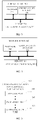
- FIG. 2A is a schematic flow chart illustrating a method for 2-step RA MSG A resource configuration provided in implementations of the disclosure, the method includes the following.
- a network device transmits first configuration information to a terminal device.
- the first configuration information includes a PRACH resource configuration of a 2-step RA MSG A resource, PUSCH resource configurations of the 2-step RA MSG A resource, and a correspondence between a PRACH time-domain resource configuration and the PUSCH resource configurations.
- the PRACH resource configuration includes the PRACH time-domain resource configuration, and the PRACH time-domain resource configuration is for determining RO time-domain resource locations.
- the correspondence is for constraining POs corresponding to different RO time-domain resource locations to be distributed on different PUSCH resource configurations during any period of time having a length equal to a length of a preamble receiving window.
- the PRACH resource configuration includes a single PRACH resource configuration
- the PUSCH resource configurations include at least two PUSCH resource configurations, where the at least two PUSCH resource configurations are non-overlapping mutually.
- the preamble receiving window illustrated in the disclosure is also called an RACH receiving window, which specifically refers to a time-domain resource for preamble reception by the network device, where the time-domain resource is preconfigured by a network side according to a protocol.
- the terminal device receives the first configuration information from the network device.
- the first configuration information includes the PRACH resource configuration of the 2-step RA MSG A resource, the PUSCH resource configurations of the 2-step RA MSG A resource, and the correspondence between the PRACH time-domain resource configuration and the PUSCH resource configurations.
- the PRACH resource configuration includes the PRACH time-domain resource configuration, and the PRACH time-domain resource configuration is for determining the RO time-domain resource locations.
- the first configuration information is synchronized between the network device and the terminal device.
- the first configuration information includes the PRACH resource configuration of the 2-step RA MSG A resource, the PUSCH resource configurations of the 2-step RA MSG A resource, and the correspondence between the PRACH time-domain resource configuration and the PUSCH resource configurations.
- the PRACH resource configuration includes the PRACH time-domain resource configuration, and the PRACH time-domain resource configuration is for determining the RO time-domain resource locations.
- a PO corresponding to a preamble received within an overlap of preamble receiving windows is only associated with a single determined RO time-domain resource location, which can avoid that the PO associated with the preamble received within the overlap of the preamble receiving windows corresponds to multiple ROs, thereby effectively solving preamble receiving window blur at a network side.
- the first configuration information is a cell public configuration
- the first configuration information is carried by a system message.
- the first configuration information can be carried in a system information block x (SIBx) (1 ⁇ x).
- SIBx system information block x
- the first configuration information can be configured by multiplexing the system message.
- the PRACH resource configuration further includes a PRACH frequency-domain resource configuration indicating a consecutive PRACH frequency-domain resource.
- the PRACH resource configuration is a single PRACH resource configuration and includes the PRACH time-domain resource configuration and the PRACH frequency-domain resource configuration, and the PRACH time-domain resource indicates a PRACH-resource distribution in a time domain, such that each RO time-domain resource location can be determined.
- the PRACH frequency-domain resource configuration indicates the consecutive PRACH frequency-domain resource, where the consecutive PRACH frequency-domain resource may be a frequency-domain resource of one or more transport blocks, which will not be limited herein.
- the PUSCH resource configurations include N PUSCH resource configurations, and N is an integer greater than 1.
- the N PUSCH resource configurations include at least one of: the N PUSCH resource configurations corresponding to a same MCS and a same TBS, or a value of N depending on the length of the preamble receiving window and an RACH-resource distribution density in the time domain.
- N may be a maximum number of ROs corresponding to different time-domain resource locations within a period of time having a length equal to the length of the preamble receiving window, e.g., 1, 2, 3, or the like, which will not be limited herein.
- each RO time-domain resource location determined by the PRACH time-domain resource configuration corresponds to one of the N PUSCH resource configurations in the correspondence.
- Each RO in the time domain determined by the PRACH time-domain resource configuration corresponds to one of the N PUSCH resource configurations, that is, PUSCH resources corresponding to any two different ROs are different mutually.
- the N PUSCH resource configurations correspond to a same time-domain resource configuration.
- the N PUSCH resource configurations have frequency-domain start locations different from each other and correspond to a same or different number of PUSCH frequency-domain resources for frequency division multiplexing. Any two PUSCH resources corresponding to a same time-domain location in the N PUSCH resource configurations are non-overlapping mutually in a frequency domain.
- the correspondence is for constraining PO frequency-domain resource locations corresponding to different ROs to be different from each other during any period of time having a length equal to the length of the preamble receiving window.
- different PUSCH resource configurations corresponding to different ROs are distinguished with frequency division multiplexing.
- the N PUSCH resource configurations corresponding to the same time-domain resource configuration means that a time offset between each of the N PUSCH resource configurations and an RO corresponding to each of the N PUSCH resource configurations is the same.
- the corresponding PUSCH frequency-domain resources for frequency division multiplexing refer to PUSCH resources that are in a same time domain and different frequency domains, that is, the number of POs for frequency division multiplexing on a same time-domain resource may be same or different.
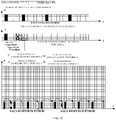
- the PUSCH resource configurations of the MSG A include 4 PUSCH resource configurations, specifically PUSCH resource configuration 1 of the MSG A, PUSCH resource configuration 2 of the MSG A, PUSCH resource configuration 3 of the MSG A, and PUSCH resource configuration 4 of the MSG A.
- the PUSCH resource configuration 1 corresponds to RO1 time-domain resource location, and a time offset of the PUSCH resource configuration 1 relative to the RO1 time-domain resource location is time offset 1.
- the PUSCH resource configuration 2 corresponds to RO2 time-domain resource location, and a time offset of the PUSCH resource configuration 2 relative to the RO2 time-domain resource location is time offset 2.
- the PUSCH resource configuration 3 corresponds to RO3 time-domain resource location, and a time offset of the PUSCH resource configuration 3 relative to the RO3 time-domain resource location is time offset 3.
- the PUSCH resource configuration 4 corresponds to RO4 time-domain resource location, and a time offset of the PUSCH resource configuration 4 relative to the RO4 time-domain resource location is time offset 4.
- the correspondence between the PRACH resource configuration and the PUSCH resource configurations specifically includes that the PUSCH resource configuration 1 of the MSG A is mapped to the first time-domain RO in the PRACH resource period, the PUSCH resource configuration 2 of the MSG A is mapped to the second time-domain RO in the PRACH resource period, the PUSCH resource configuration 3 of the MSG A is mapped to the third time-domain RO in the PRACH resource period, and the PUSCH resource configuration 4 of the MSG A is mapped to the fourth time-domain RO in the PRACH resource period.
- a PO associated with a single preamble received within an overlap of preamble receiving windows only corresponds to a single determined RO, which can avoid that the PO associated with the preamble received within the overlap of the preamble receiving windows corresponds to multiple ROs.
- the network device can determine, according to a PUSCH for the MSG A received, a PRACH resource for transmitting a preamble of the MSG A by the terminal device, thereby effectively solving preamble receiving window blur at a network side.
- the N PUSCH resource configurations correspond to a same frequency-domain resource configuration.
- the N PUSCH resource configurations correspond to different time-domain resource configurations.
- the N PUSCH resource configurations are non-overlapping mutually in the time domain, where non-overlapping mutually in the time domain means that time offsets of POs relative to ROs are different.
- the N PUSCH resource configurations corresponding to different time-domain resource configurations means that the N PUSCH resource configurations correspond to different time offsets, where each of the time offsets is a time offset of a PO slot relative to an RO slot.
- the N PUSCH resource configurations corresponding to different time-domain resource configurations means that the N PUSCH resource configurations correspond to different in-slot start time offsets, where each of the in-slot start time offsets is a start-symbol sequence number of a first PO within each PO slot.
- the correspondence is for constraining PO time-domain resource locations corresponding to different ROs to be different from each other during any period of time having a length equal to the length of the preamble receiving window.
- the PUSCH resource configurations of the MSG A include 4 PUSCH resource configurations, specifically PUSCH resource configuration 1 of the MSG A, PUSCH resource configuration 2 of the MSG A, PUSCH resource configuration 3 of the MSG A, and PUSCH resource configuration 4 of the MSG A.
- the PUSCH resource configuration 1 corresponds to RO1 time-domain resource location, and a time offset of the PUSCH resource configuration 1 relative to the RO1 time-domain resource location is time offset 1.
- the PUSCH resource configuration 2 corresponds to RO2 time-domain resource location, and a time offset of the PUSCH resource configuration 2 relative to the RO2 time-domain resource location is time offset 2.
- the PUSCH resource configuration 3 corresponds to RO3 time-domain resource location, and a time offset of the PUSCH resource configuration 3 relative to the RO3 time-domain resource location is time offset 3.
- the PUSCH resource configuration 4 corresponds to RO4 time-domain resource location, and a time offset of the PUSCH resource configuration 4 relative to the RO4 time-domain resource location is time offset 4.
- the time offset 1, the time offset 2, the time offset 3, and the time offset 4 are different from each other.
- the PUSCH resource configuration 1 of the MSG A is mapped to the first time-domain RO in a PRACH resource repetition period.
- the PUSCH resource configuration 2 of the MSG A is mapped to the second time-domain RO in the PRACH resource repetition period.
- the PUSCH resource configuration 3 of the MSG A is mapped to the third time-domain RO in the PRACH resource repetition period.
- the PUSCH resource configuration 4 of the MSG A is mapped to the fourth time-domain RO in the PRACH resource repetition period.
- a PO associated with a single preamble received within an overlap of preamble receiving windows only corresponds to a single determined RO, which can avoid that the PO associated with the preamble received within the overlap of the preamble receiving windows corresponds to multiple ROs.
- the network device can determine, according to the PUSCH for the MSG A received, the PRACH resource for transmitting the preamble of the MSG A by the terminal device, thereby effectively solving preamble receiving window blur at a network side.
- the N PUSCH resource configurations correspond to a same time-frequency resource configuration.
- the N PUSCH resource configurations correspond to different demodulation reference signal (DMRS) sequences. Any two of N DMRS sequences corresponding to the N PUSCH resource configurations have no intersection.
- DMRS demodulation reference signal
- the correspondence is for constraining DMRS sequences of POs corresponding to different ROs to be different from each other during any period of time having a length equal to the length of the preamble receiving window.
- the N PUSCH resource configurations correspond to different DMRS sequences, and any two of the DMRS sequences have no intersection, that is, POs associated with different ROs correspond to different DMRS sequences with no intersection
- a PO associated with a single preamble received within an overlap of preamble receiving windows only corresponds to a single determined RO, which can avoid that the PO associated with the preamble received within the overlap of the preamble receiving windows corresponds to multiple ROs.
- the network device can determine, according to the PUSCH for the MSG A received, the PRACH resource for transmitting the preamble of the MSG A by the terminal device, thereby effectively solving preamble receiving window blur at a network side.
- the method further includes the following in response to reception of the first configuration information from the network device by the terminal device.
- the terminal device transmits the MSG A according to the first configuration information during the RA.
- the terminal device receives an RAR from the network device, where the RAR includes an initial TA of the terminal device.
- the method further includes the following in response to transmission of the first configuration information by the network device to the terminal device.
- the network device receives the MSG A from the terminal device, where the MSG A is transmitted by the terminal device according to the first configuration information during the RA.
- the network device transmits the RAR to the terminal device, where the RAR includes the initial TA of the terminal device.
- the terminal device when the terminal device transmits the MSG A during the RA, the terminal device determines a PRACH resource to be used and a PUSCH resource to be used according to the PRACH resource configuration and the PUSCH resource configurations indicated by the network device as follows.
- the terminal device determines the PRACH resource first, and determines a PUSCH resource configuration corresponding to an RO time-domain resource according to the correspondence between the PRACH time-domain resource and the PUSCH resource configurations.
- the terminal device then self-selects a PUSCH resource from the PUSCH resource configuration (in a case of contention-based RA) or determines a PUSCH resource in the PUSCH resource configuration according to an indication of the network device (in a case of non-contention-based RA).
- the network device determines the PRACH time-domain resource that is used by the terminal device to transmit the preamble of the MSG A in response to reception of the MSG A from the terminal device, such that an RA-RNTI for the terminal device can be determined.
- the network device determines the initial TA of the terminal device according to a point of time at which the terminal device transmits the preamble and a point of time at which the network receives the preamble, and informs the terminal device of the initial TA with the RAR
- the terminal device can interact with the network device, and the initial TA of the terminal device can be determined based on the correspondence above. Since POs corresponding to different RO time-domain resource locations are distributed on different PUSCH resource configurations, a PO associated with a single preamble received within an overlap of preamble receiving windows only corresponds to a single determined RO.
- the network device can determine, according to the PUSCH for the MSG A received, the PRACH resource for transmitting the preamble of the MSG A by the terminal device, thereby effectively solving preamble receiving window blur at a network side and improving a success rate of initial-TA determination.
- the initial TA is obtained by performing the following operations by the network device.
- the PRACH time-domain resource that is used by the terminal device to transmit the preamble of the MSG A is determined according to a frequency-domain resource location of the PUSCH for receiving the MSG A and the correspondence.
- the RA-RNTI for the terminal device is determined according to the PRACH time-domain resource used.
- the TA of the terminal device is determined according to the point of time (the point of time can be obtained according to a PRACH time-domain location) at which the terminal device transmits the preamble and the point of time at which the network device receives the preamble.
- the terminal device can interact with the network device as follows.
- the PRACH time-domain resource that is used by the terminal device to transmit the preamble of the MSG A is determined according to the frequency-domain resource location of the PUSCH for receiving the MSG A and the correspondence.
- the RA-RNTI for the terminal device is determined according to the PRACH time-domain resource used.
- the TA of the terminal device is determined according to the point of time at which the terminal device transmits the preamble and the point of time at which the network device receives the preamble. Since POs corresponding to different RO time-domain resource locations are distributed on different PUSCH resource configurations, a PO associated with a single preamble received within an overlap of preamble receiving windows only corresponds to a single determined RO.
- the network device can determine, according to the PUSCH for the MSG A received, the PRACH resource for transmitting the preamble of the MSG A by the terminal device, thereby effectively solving preamble receiving window blur at a network side and improving a success rate of initial-TA determination.
- the initial TA is obtained by performing the following operations by the network device.
- the PRACH time-domain resource that is used by the terminal device to transmit the preamble of the MSG A is determined according to a time offset of the PUSCH for receiving the MSG A relative to the PRACH for receiving the MSG A (a corresponding PRACH time-domain resource can be determined according to a time offset since different configurations correspond to different time offsets).
- the RA-RNTI for the terminal device is determined according to the PRACH time-domain resource used.
- the TA of the terminal device is determined according to the point of time at which the terminal device transmits the preamble and the point of time at which the network device receives the preamble.
- the terminal device can interact with the network device as follows.
- the PRACH time-domain resource that is used by the terminal device to transmit the preamble of the MSG A is determined according to the time offset of the PUSCH for receiving the MSG A relative to the PRACH for receiving the MSG A.
- the RA-RNTI for the terminal device is determined according to the PRACH time-domain resource used.
- the TA of the terminal device is determined according to the point of time at which the terminal device transmits the preamble and the point of time at which the network device receives the preamble.
- the network device can determine, according to the PUSCH for the MSG A received, the PRACH resource for transmitting the preamble of the MSG A by the terminal device, thereby effectively solving preamble receiving window blur at a network side and improving a success rate of initial-TA determination.
- the initial TA is obtained by performing the following operations by the network device.
- the PRACH time-domain resource that is used by the terminal device to transmit the preamble of the MSG A is determined according to a DMARS sequence corresponding to the PUSCH for receiving the MSG A and the correspondence.
- the RA-RNTI for the terminal device is determined according to the PRACH time-domain resource used.
- the TA of the terminal device is determined according to the point of time at which the terminal device transmits the preamble and the point of time at which the network device receives the preamble.
- the terminal device can interact with the network device as follows.
- the PRACH time-domain resource that is used by the terminal device to transmit the preamble of the MSG A is determined according to the DMARS sequence corresponding to the PUSCH for receiving the MSG A and the correspondence.
- the RA-RNTI for the terminal device is determined according to the PRACH time-domain resource used.
- the TA of the terminal device is determined according to the point of time at which the terminal device transmits the preamble and the point of time at which the network device receives the preamble. Since POs corresponding to different RO time-domain resource locations are distributed on different PUSCH resource configurations, a PO associated with a single preamble received within an overlap of preamble receiving windows only corresponds to a single determined RO.
- the network device can determine, according to the PUSCH of the MSG A received, the PRACH resource for transmitting the preamble of the MSG A by the terminal device, thereby effectively solving preamble receiving window blur at a network side and improving a success rate of initial-TA determination.
- FIG. 3 is a schematic structural diagram illustrating a terminal device 300 provided in implementations of the disclosure.
- the terminal device 300 includes a processor 310, a memory 320, a communication interface 330, and one or more program (s) 321, where the one or more program (s) 321 is stored in the memory 320 and is configured to be performed by the processor 310, and the one or more program (s) 321 includes instructions used for performing the following operations.
- the first configuration information is received from a network device.
- the first configuration information includes a PRACH resource configuration of a 2-step RA MSG A resource, PUSCH resource configurations of the 2-step RA MSG A resource, and a correspondence between a PRACH time-domain resource configuration and the PUSCH resource configurations.
- the PRACH resource configuration includes the PRACH time-domain resource configuration, and the PRACH time-domain resource configuration is for determining RO time-domain resource locations.
- the correspondence is for constraining POs corresponding to different RO time-domain resource locations to be distributed on different PUSCH resource configurations during any period of time having a length equal to a length of a preamble receiving window.
- the first configuration information is synchronized between the network device and the terminal device.
- the first configuration information includes the PRACH resource configuration of the 2-step RA MSG A resource, the PUSCH resource configurations of the 2-step RA MSG A resource, and the correspondence between the PRACH time-domain resource configuration and the PUSCH resource configurations.
- the PRACH resource configuration includes the PRACH time-domain resource configuration, and the PRACH time-domain resource configuration is for determining the RO time-domain resource locations.
- a PO corresponding to a preamble received within an overlap of preamble receiving windows is only associated with a single determined RO time-domain resource location, which can avoid that the PO associated with the preamble received within the overlap of the preamble receiving windows corresponds to multiple ROs, thereby effectively solving preamble receiving window blur at a network side.
- the first configuration information is a cell public configuration
- the first configuration information is carried by a system message.
- the PRACH resource configuration further includes a PRACH frequency-domain resource configuration indicating a consecutive PRACH frequency-domain resource.
- the PUSCH resource configurations include N PUSCH resource configurations, and N is an integer greater than 1.
- the N PUSCH resource configurations include at least one of: the N PUSCH resource configurations corresponding to a same MCS and a same TBS or a value of N depending on the length of the preamble receiving window and an RACH-resource distribution density in a time domain.
- each RO time-domain resource location determined by the PRACH time-domain resource configuration corresponds to one of the N PUSCH resource configurations in the correspondence.
- the N PUSCH resource configurations correspond to a same time-domain resource configuration.
- the N PUSCH resource configurations have frequency-domain start locations different from each other and correspond to a same or different number of PUSCH frequency-domain resources for frequency division multiplexing. Any two PUSCH resources corresponding to a same time-domain location in the N PUSCH resource configurations are non-overlapping mutually in a frequency domain.
- the correspondence is for constraining PO frequency-domain resource locations corresponding to different ROs to be different from each other during any period of time having a length equal to the length of the preamble receiving window.
- the N PUSCH resource configurations correspond to a same frequency-domain resource configuration.
- the N PUSCH resource configurations correspond to different time-domain resource configurations.
- the N PUSCH resource configurations are non-overlapping mutually in the time domain, where non-overlapping mutually in the time domain means that time offsets of POs relative to ROs are different.
- the N PUSCH resource configurations correspond to different time-domain resource configurations as follows.
- the N PUSCH resource configurations correspond to different time offsets, where each of the time offsets is a time offset of a PO slot relative to an RO slot.
- the N PUSCH resource configurations correspond to different in-slot start time offsets, where each of the in-slot start time offsets is a start-symbol sequence number of a first PO within each PO slot.
- the correspondence is for constraining PO time-domain resource locations corresponding to different ROs to be different from each other during any period of time having a length equal to the length of the preamble receiving window.
- the N PUSCH resource configurations correspond to a same time-frequency resource configuration.
- the N PUSCH resource configurations correspond to different DMRS sequences. Any two of N DMRS sequences corresponding to the N PUSCH resource configurations have no intersection.
- the correspondence is for constraining DMRS sequences of POs corresponding to different ROs to be different from each other during any period of time having a length equal to the length of the preamble receiving window.
- the program further includes instructions used for performing the following operations.
- MSG A is transmitted according to the first configuration information during RA, and an RAR is received from the network device, where the RAR includes an initial TA of the terminal device.
- the initial TA is obtained by performing the following operations by the network device.
- a PRACH time-domain resource that is used by the terminal device to transmit the preamble of the MSG A is determined according to a frequency-domain resource location of a PUSCH for receiving the MSG A and the correspondence.
- An RA-RNTI for the terminal device is determined according to the PRACH time-domain resource used.
- the TA of the terminal device is determined according to a point of time at which the terminal device transmits the preamble and a point of time at which the network device receives the preamble.
- the initial TA is obtained by performing the following operations by the network device.
- the PRACH time-domain resource that is used by the terminal device to transmit the preamble of the MSG A is determined according to a time offset of the PUSCH for receiving the MSG A relative to the PRACH for receiving the MSG A.
- the RA-RNTI for the terminal device is determined according to the PRACH time-domain resource used.
- the TA of the terminal device is determined according to the point of time at which the terminal device transmits the preamble and the point of time at which the network device receives the preamble.
- the initial TA is obtained by performing the following operations by the network device.
- the PRACH time-domain resource that is used by the terminal device to transmit the preamble of the MSG A is determined according to a DMARS sequence corresponding to the PUSCH for receiving the MSG A and the correspondence.
- the RA-RNTI for the terminal device is determined according to the PRACH time-domain resource used.
- the TA of the terminal device is determined according to the point of time at which the terminal device transmits the preamble and the point of time at which the network device receives the preamble.
- FIG. 4 is a schematic structural diagram illustrating a network device 400 provided in implementations of the disclosure.
- the network device 400 includes a processor 410, a memory 420, a communication interface 430, and one or more program (s) 421, where the one or more program (s) 421 is stored in the memory 420 and is configured to be performed by the processor 410, and the one or more program (s) 421 includes instructions used for performing the following operations.
- the first configuration information is transmitted to a terminal device.
- the first configuration information includes a PRACH resource configuration of a 2-step RA MSG A resource, PUSCH resource configurations of the 2-step RA MSG A resource, and a correspondence between a PRACH time-domain resource configuration and the PUSCH resource configurations.
- the PRACH resource configuration includes the PRACH time-domain resource configuration, and the PRACH time-domain resource configuration is for determining RO time-domain resource locations.
- the correspondence is for constraining POs corresponding to different RO time-domain resource locations to be distributed on different PUSCH resource configurations during any period of time having a length equal to a length of a preamble receiving window.
- the first configuration information is synchronized between the network device and the terminal device.
- the first configuration information includes the PRACH resource configuration of the 2-step RA MSG A resource, the PUSCH resource configurations of the 2-step RA MSG A resource, and the correspondence between the PRACH time-domain resource configuration and the PUSCH resource configurations.
- the PRACH resource configuration includes the PRACH time-domain resource configuration, and the PRACH time-domain resource configuration is for determining the RO time-domain resource locations.
- a PO corresponding to a preamble received within an overlap of preamble receiving windows is only associated with a single determined RO time-domain resource location, which can avoid that the PO associated with the preamble received within the overlap of the preamble receiving windows corresponds to multiple ROs, thereby effectively solving preamble receiving window blur at a network side.
- the first configuration information is a cell public configuration
- the first configuration information is carried by a system message.
- the PRACH resource configuration further includes a PRACH frequency-domain resource configuration indicating a consecutive PRACH frequency-domain resource.
- the PUSCH resource configurations include N PUSCH resource configurations, and N is an integer greater than 1.
- the N PUSCH resource configurations include at least one of: the N PUSCH resource configurations corresponding to a same MCS and a same TBS or a value of N depending on the length of the preamble receiving window and an RACH-resource distribution density in a time domain.
- each RO time-domain resource location determined by the PRACH time-domain resource configuration corresponds to one of the N PUSCH resource configurations in the correspondence.
- the N PUSCH resource configurations correspond to a same time-domain resource configuration.
- the N PUSCH resource configurations have frequency-domain start locations different from each other and correspond to a same or different number of PUSCH frequency-domain resources for frequency division multiplexing. Any two PUSCH resources corresponding to a same time-domain location in the N PUSCH resource configurations are non-overlapping mutually in a frequency domain.
- the correspondence is for constraining PO frequency-domain resource locations corresponding to different ROs to be different from each other during any period of time having a length equal to the length of the preamble receiving window.
- the N PUSCH resource configurations correspond to a same frequency-domain resource configuration.
- the N PUSCH resource configurations correspond to different time-domain resource configurations.
- the N PUSCH resource configurations are non-overlapping mutually in the time domain, where non-overlapping mutually in the time domain means that time offsets of POs relative to ROs are different.
- the N PUSCH resource configurations correspond to different time-domain resource configurations as follows.
- the N PUSCH resource configurations correspond to different time offsets, where each of the time offsets is a time offset of a PO slot relative to an RO slot.
- the N PUSCH resource configurations correspond to different in-slot start time offsets, where each of the in-slot start time offsets is a start-symbol sequence number of a first PO within each PO slot.
- the correspondence is for constraining PO time-domain resource locations corresponding to different ROs to be different from each other during any period of time having a length equal to the length of the preamble receiving window.
- the N PUSCH resource configurations correspond to a same time-frequency resource configuration.
- the N PUSCH resource configurations correspond to different DMRS sequences. Any two of N DMRS sequences corresponding to the N PUSCH resource configurations have no intersection.
- the correspondence is for constraining DMRS sequences of POs corresponding to different ROs to be different from each other during any period of time having a length equal to the length of the preamble receiving window.
- the program further includes instructions used for performing the following operations.
- MSG A is received from the terminal device, where the MSG A is transmitted by the terminal device according to the first configuration information during RA, and an RAR is transmitted to the terminal device, where the RAR includes an initial TA of the terminal device.
- the initial TA is obtained by performing the following operations by the network device.
- a PRACH time-domain resource that is used by the terminal device to transmit the preamble of the MSG A is determined according to a frequency-domain resource location of a PUSCH for receiving the MSG A and the correspondence.
- An RA-RNTI for the terminal device is determined according to the PRACH time-domain resource used.
- the TA of the terminal device is determined according to a point of time at which the terminal device transmits the preamble and a point of time at which the network device receives the preamble.
- the initial TA is obtained by performing the following operations by the network device.
- the PRACH time-domain resource that is used by the terminal device to transmit the preamble of the MSG A is determined according to a time offset of the PUSCH for receiving the MSG A relative to the PRACH for receiving the MSG A.
- the RA-RNTI for the terminal device is determined according to the PRACH time-domain resource used.
- the TA of the terminal device is determined according to the point of time at which the terminal device transmits the preamble and the point of time at which the network device receives the preamble.
- the initial TA is obtained by performing the following operations by the network device.
- the PRACH time-domain resource that is used by the terminal device to transmit the preamble of the MSG A is determined according to a DMARS sequence corresponding to the PUSCH for receiving the MSG A and the correspondence.
- the RA-RNTI for the terminal device is determined according to the PRACH time-domain resource used.
- the TA of the terminal device is determined according to the point of time at which the terminal device transmits the preamble and the point of time at which the network device receives the preamble.
- the terminal device includes hardware structures and/or software modules for performing the respective functions.
- the present disclosure can be implemented in hardware or a combination of the hardware and computer software. Whether a function is implemented by way of the hardware or hardware driven by the computer software depends on the particular application and design constraints of the technical solution. Those skilled in the art may use different methods to implement the illustrated functions for each particular application, but such implementation should not be considered as beyond the scope of the present disclosure.
- each functional unit may be divided according to each function, and two or more functions may be integrated in one processing unit.
- the above-mentioned integrated unit can be implemented in the form of hardware or software program modules. It should be noted that the division of units in the implementations of the present disclosure is schematic, and is merely a logical function division, and there may be other division manners in actual implementation.
- FIG. 5 is a block diagram illustrating functional units of the apparatus for 2-step RA MSG A resource configuration involved in the foregoing implementations.
- the apparatus 500 for 2-step RA MSG A resource configuration is applied to a terminal device and includes a processing unit 502 and a communication unit 503.
- the processing unit 502 is configured to control and manage actions of the terminal device, for example, the processing unit 502 is configured to support the terminal device to perform the operations at 101 and the operations at 102 in FIG. 2A and/or other processes of the technology illustrated in the disclosure.
- the communication unit 503 is configured to support communication between the terminal device and other devices.
- the terminal device further includes a storage unit 501 configured to store program codes and data of the terminal device.
- the processing unit 502 can be a processor or a controller, for example, a central processing unit (CPU), a general-purpose processor, a digital signal processor (DSP), an application specific integrated circuit (ASIC), a field programmable gate array (FPGA), other programmable logic devices, transistor logic devices, hardware components, or any combination thereof.
- CPU central processing unit
- DSP digital signal processor
- ASIC application specific integrated circuit
- FPGA field programmable gate array
- the processor also may be a combination realizing computing functions, for example, a combination of one or more microprocessors, a combination of the DSP and the microprocessor, or the like.
- the communication unit 503 may be a communication interface, a transceiver, a transceiver circuit, or the like.
- the storage unit 501 may be a memory. When the processing unit 502 is the processor, the communication unit 503 is the communication interface, and the storage unit 501 is the memory, the terminal device involved in implementations of the disclosure may be the terminal device illustrated in
- the processing unit 502 is configured to perform any of operations performed by the terminal device in the foregoing method implementations, and when performing data transmission such as transmitting, it is possible to invoke the communication unit 503 to complete corresponding operations, which will be illustrated below in detail.
- the processing unit 502 is configured to receive first configuration information from a network device through using the communication unit.
- the first configuration information includes a PRACH resource configuration of a 2-step RA MSG A resource, PUSCH resource configurations of the 2-step RA MSG A resource, and a correspondence between a PRACH time-domain resource configuration and the PUSCH resource configurations.
- the PRACH resource configuration includes the PRACH time-domain resource configuration, and the PRACH time-domain resource configuration is for determining RO time-domain resource locations.
- the correspondence is for constraining POs corresponding to different RO time-domain resource locations to be distributed on different PUSCH resource configurations during any period of time having a length equal to a length of a preamble receiving window.
- the first configuration information is a cell public configuration
- the first configuration information is carried by a system message.
- the PRACH resource configuration further includes a PRACH frequency-domain resource configuration indicating a consecutive PRACH frequency-domain resource.
- the PUSCH resource configurations include N PUSCH resource configurations, and N is an integer greater than 1.
- the N PUSCH resource configurations include at least one of: the N PUSCH resource configurations corresponding to a same MCS and a same TBS or a value of N depending on the length of the preamble receiving window and an RACH-resource distribution density in a time domain.
- each RO time-domain resource location determined by the PRACH time-domain resource configuration corresponds to one of the N PUSCH resource configurations in the correspondence.
- the N PUSCH resource configurations correspond to a same time-domain resource configuration.
- the N PUSCH resource configurations have frequency-domain start locations different from each other and correspond to a same or different number of PUSCH frequency-domain resources for frequency division multiplexing. Any two PUSCH resources corresponding to a same time-domain location in the N PUSCH resource configurations are non-overlapping mutually in a frequency domain.
- the correspondence is for constraining PO frequency-domain resource locations corresponding to different ROs to be different from each other during any period of time having a length equal to the length of the preamble receiving window.
- the N PUSCH resource configurations correspond to a same frequency-domain resource configuration.
- the N PUSCH resource configurations correspond to different time-domain resource configurations.
- the N PUSCH resource configurations are non-overlapping mutually in the time domain, where non-overlapping mutually in the time domain means that time offsets of POs relative to ROs are different.
- the N PUSCH resource configurations correspond to different time-domain resource configurations as follows.
- the N PUSCH resource configurations correspond to different time offsets, where each of the time offsets is a time offset of a PO slot relative to an RO slot.
- the N PUSCH resource configurations correspond to different in-slot start time offsets, where each of the in-slot start time offsets is a start-symbol sequence number of a first PO within each PO slot.
- the correspondence is for constraining PO time-domain resource locations corresponding to different ROs to be different from each other during any period of time having a length equal to the length of the preamble receiving window.
- the N PUSCH resource configurations correspond to a same time-frequency resource configuration.
- the N PUSCH resource configurations correspond to different DMRS sequences. Any two of N DMRS sequences corresponding to the N PUSCH resource configurations have no intersection.
- the correspondence is for constraining DMRS sequences of POs corresponding to different ROs to be different from each other during any period of time having a length equal to the length of the preamble receiving window.
- the processing unit in response to reception of the first configuration information from the network device by the processing unit through using the communication unit, is further configured to transmit, through using the communication unit, MSG A according to the first configuration information during RA, and receive an RAR from the network device through using the communication unit, where the RAR includes an initial TA of the terminal device.
- the initial TA is obtained by performing the following operations by the network device.
- a PRACH time-domain resource that is used by the terminal device to transmit a preamble of the MSG A is determined according to a frequency-domain resource location of a PUSCH for receiving the MSG A and the correspondence.
- An RA-RNTI for the terminal device is determined according to the PRACH time-domain resource used.
- the TA of the terminal device is determined according to a point of time at which the terminal device transmits the preamble and a point of time at which the network device receives the preamble.
- the initial TA is obtained by performing the following operations by the network device.
- the PRACH time-domain resource that is used by the terminal device to transmit the preamble of the MSG A is determined according to a time offset of the PUSCH for receiving the MSG A relative to the PRACH for receiving the MSG A.
- the RA-RNTI for the terminal device is determined according to the PRACH time-domain resource used.
- the TA of the terminal device is determined according to the point of time at which the terminal device transmits the preamble and the point of time at which the network device receives the preamble.
- the initial TA is obtained by performing the following operations by the network device.
- the PRACH time-domain resource that is used by the terminal device to transmit the preamble of the MSG A is determined according to a DMARS sequence corresponding to the PUSCH for receiving the MSG A and the correspondence.
- the RA-RNTI for the terminal device is determined according to the PRACH time-domain resource used.
- the TA of the terminal device is determined according to the point of time at which the terminal device transmits the preamble and the point of time at which the network device receives the preamble.
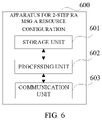
- FIG. 6 is a block diagram illustrating functional units of the apparatus for 2-step RA MSG A resource configuration related in the foregoing implementations.
- the apparatus 600 for 2-step RA MSG A resource configuration is applied to a network device and includes a processing unit 602 and a communication unit 603.
- the processing unit 602 is configured to control and manage actions of the network device, for example, the processing unit 502 is configured to support the network device to perform the operations at 202 and the operations at 204 in FIG. 2A and/or other processes of the technology illustrated in the disclosure.
- the communication unit 603 is configured to support communication between the network device and other devices.
- the network device further includes a storage unit 601 configured to store program codes and data of a terminal device.
- the processing unit 602 can be a processor or a controller, for example, a CPU, a general-purpose processor, a DSP, an ASIC, a FPGA, other programmable logic devices, transistor logic devices, hardware components, or any combination thereof.
- the processor also may be a combination of computing functions, for example, a combination of one or more microprocessors, a combination of the DSP and the microprocessor, or the like.
- the communication unit 603 may be a communication interface, a transceiver, a transceiver circuit, or the like.
- the storage unit 601 may be a memory. If the processing unit 602 is a processor, the communication unit 603 is a communication interface, and the storage unit 601 is a memory, the terminal device involved in implementations of the disclosure may be the network device illustrated in FIG. 4 .
- the processing unit 602 is configured to transmit first configuration information to the terminal device through using the communication unit 603.
- the first configuration information includes a PRACH resource configuration of a 2-step RA MSG A resource, PUSCH resource configurations of the 2-step RA MSG A resource, and a correspondence between a PRACH time-domain resource configuration and the PUSCH resource configurations.
- the PRACH resource configuration includes the PRACH time-domain resource configuration, and the PRACH time-domain resource configuration is for determining RO time-domain resource locations.
- the correspondence is for constraining POs corresponding to different RO time-domain resource locations to be distributed on different PUSCH resource configurations during any period of time having a length equal to a length of a preamble receiving window.
- the first configuration information is a cell public configuration
- the first configuration information is carried by a system message.
- the PRACH resource configuration further includes a PRACH frequency-domain resource configuration indicating a consecutive PRACH frequency-domain resource.
- the PUSCH resource configurations include N PUSCH resource configurations, and N is an integer greater than 1.
- the N PUSCH resource configurations include at least one of: the N PUSCH resource configurations corresponding to a same MCS and a same TBS or a value of N depending on the length of the preamble receiving window and an RACH-resource distribution density in a time domain.
- each RO time-domain resource location determined by the PRACH time-domain resource configuration corresponds to one of the N PUSCH resource configurations in the correspondence.
- the N PUSCH resource configurations correspond to a same time-domain resource configuration.
- the N PUSCH resource configurations have frequency-domain start locations different from each other and correspond to a same or different number of PUSCH frequency-domain resources for frequency division multiplexing. Any two PUSCH resources corresponding to a same time-domain location in the N PUSCH resource configurations are non-overlapping mutually in a frequency domain.
- the correspondence is for constraining PO frequency-domain resource locations corresponding to different ROs to be different from each other during any period of time having a length equal to the length of the preamble receiving window.
- the N PUSCH resource configurations correspond to a same frequency-domain resource configuration.
- the N PUSCH resource configurations correspond to different time-domain resource configurations.
- the N PUSCH resource configurations are non-overlapping mutually in the time domain, where non-overlapping mutually in the time domain means that time offsets of POs relative to ROs are different.
- the N PUSCH resource configurations correspond to different time-domain resource configurations as follows.
- the N PUSCH resource configurations correspond to different time offsets, where each of the time offsets is a time offset of a PO slot relative to an RO slot.
- the N PUSCH resource configurations correspond to different in-slot start time offsets, where each of the in-slot start time offsets is a start-symbol sequence number of a first PO within each PO slot.
- the correspondence is for constraining PO time-domain resource locations corresponding to different ROs to be different from each other during any period of time having a length equal to the length of the preamble receiving window.
- the N PUSCH resource configurations correspond to a same time-frequency resource configuration.
- the N PUSCH resource configurations correspond to different DMRS sequences. Any two of N DMRS sequences corresponding to the N PUSCH resource configurations have no intersection.
- the correspondence is for constraining DMRS sequences of POs corresponding to different ROs to be different from each other during any period of time having a length equal to the length of the preamble receiving window.
- the processing unit in response to transmission of the first configuration information by the processing unit to the terminal device through using the communication unit, is further configured to receive MSG A from the terminal device, where the MSG A is transmitted by the terminal device according to the first configuration information during RA, and transmit an RAR to the terminal device, where the RAR includes an initial TA of the terminal device.
- the initial TA is obtained by performing the following operations by the network device.
- a PRACH time-domain resource that is used by the terminal device to transmit a preamble of the MSG A is determined according to a frequency-domain resource location of a PUSCH for receiving the MSG A and the correspondence.
- An RA-RNTI for the terminal device is determined according to the PRACH time-domain resource used.
- the TA of the terminal device is determined according to a point of time at which the terminal device transmits the preamble and a point of time at which the network device receives the preamble.
- the initial TA is obtained by performing the following operations by the network device.
- the PRACH time-domain resource that is used by the terminal device to transmit the preamble of the MSG A is determined according to a time offset of the PUSCH for receiving the MSG A relative to the PRACH for receiving the MSG A.
- the RA-RNTI for the terminal device is determined according to the PRACH time-domain resource used.
- the TA of the terminal device is determined according to the point of time at which the terminal device transmits the preamble and the point of time at which the network device receives the preamble.
- the initial TA is obtained by performing the following operations by the network device.
- the PRACH time-domain resource that is used by the terminal device to transmit the preamble of the MSG A is determined according to a DMARS sequence corresponding to the PUSCH for receiving the MSG A and the correspondence.
- the RA-RNTI for the terminal device is determined according to the PRACH time-domain resource used.
- the TA of the terminal device is determined according to the point of time at which the terminal device transmits the preamble and the point of time at which the network device receives the preamble.
- a chip is further provided in implementations of the disclosure.
- the chip includes a processor configured to invoke and execute a computer program stored in a memory, to enable a device equipped with the chip to execute some or all of the operations performed by the terminal device in the above-mentioned method implementations.
- a computer-readable storage medium is further provided in implementations of the disclosure.
- the computer-readable storage medium is configured to store a computer program used for performing electronic data interchange, where the computer program enables a computer to execute some or all of the operations performed by the terminal device in the above-mentioned method implementations.
- a computer-readable storage medium is further provided in implementations of the disclosure.
- the computer-readable storage medium is configured to store a computer program used for performing electronic data interchange, where the computer program enables a computer to execute some or all of the operations performed by the network device in the above-mentioned method implementations.
- a computer program product is further provided in implementations of the disclosure.
- the computer program product includes a computer program which can be operated to enable a computer to execute some or all of the operations performed by the terminal device in the above-mentioned method implementations.
- the computer program product may be a software installation package.
- the algorithmic operations and the method illustrated in implementations may be implemented as hardware, or may be implemented by a processor performing software instructions.
- the software instructions may be composed with corresponding software modules.
- the software module can be stored in a storage medium such as a random access memory (RAM), a flash memory, a read only memory (ROM), an erasable programmable read-only memory (EPROM), an electrically erasable programmable read-only memory (EEPROM), a register, a hard disc, a mobile hard disc, or a compact disc read-only memory (CD-ROM), or in storage media with any other forms known in this field.
- An exemplary storage medium is coupled to the processor, so that the processor can read information from the storage medium and can write information to the storage medium.
- the storage medium can also be a part of the processor.
- the processor and the storage medium may be located in an ASIC.
- the ASIC may be located in an access network device, a target network device, or a core network device.
- the processor and the storage medium may also be presented as discrete components in the access network device, the target network device, or the core network device.
- all or part of the illustrated functions can be implemented through software, hardware, firmware, or any other combination thereof.
- all or part of the above implementations can be implemented in the form of a computer program product.
- the computer program product includes one or more computer instructions. When the computer instructions are loaded and executed on a computer, all or part of the processes or functions of the implementations of the disclosure are performed.
- the computer can be a general-purpose computer, a special-purpose computer, a computer network, or other programmable apparatuses.
- the computer instructions can be stored in a computer-readable storage medium, or transmitted from one computer-readable storage medium to another computer-readable storage medium.
- the computer instruction can be transmitted from one website, computer, server, or data center to another website, computer, server, or data center in a wired manner or in a wireless manner.
- the wired manner can be a coaxial cable, an optical fiber, a digital subscriber line (DSL), etc.
- the wireless manner can be, for example, infrared, wireless, microwave, etc.
- the computer-readable storage medium can be any computer-accessible usable-medium or a data storage device such as a server, a data center, or the like which is integrated with one or more usable media.
- the usable medium can be a magnetic medium (such as a soft disc, a hard disc, or a magnetic tape), an optical medium (such as a digital video disc (DVD)), or a semiconductor medium (such as a solid state disk (SSD)), etc.
- a magnetic medium such as a soft disc, a hard disc, or a magnetic tape
- an optical medium such as a digital video disc (DVD)
- a semiconductor medium such as a solid state disk (SSD)
Landscapes
- Engineering & Computer Science (AREA)
- Signal Processing (AREA)
- Computer Networks & Wireless Communication (AREA)
- Mobile Radio Communication Systems (AREA)
Abstract
Description
- The disclosure relates to the field of communication technology, and more particularly to methods for 2-step random access (RA) message (MSG) A resource configuration and related apparatuses.
- At present, a new radio (NR) system has a relatively small coverage, and signal transmission delays between user equipments (UEs) at different locations in a same cell and a base station are little different. When UEs transmit preambles during random access (RA), the preambles transmitted by different UEs through using a same random access channel (RACH) time-frequency resource (i.e., a same RACH occasion (RO)) each arrive the base station within an RO time. Once the base station receives a preamble transmitted by a UE, the base station then can know a point of time at which the UE transmits the preamble, and can determine a timing advance (TA) of the UE and a random access radio network temporary identifier (RA-RNTI) used by the UE to transmit a random access response (RAR).
- Compared with a cellular network used by a conventional NR, signal transmission delays between UEs and a satellite in a non-terrestrial network (NTN) are greatly increased. In addition, the satellite has a great coverage, for different UEs within a same satellite coverage, since the UEs are located at different locations, signal transmission delays between the UEs and the satellite may be greatly different. According to discussion for NTN application scenarios during release-16 (Rel-16) standardization, a maximum difference of signal transmission delays between different UEs and a base station in an NTN cell is 10.3 milliseconds (ms). Such great signal transmission delay difference may result in that preambles transmitted by different UEs that use a same RACH resource for preamble transmission arrive the base station at different times. For ensuring that the base station can receive preambles transmitted by different UEs in the cell, a length of a preamble receiving window at the base station may be extended to 2∗(a maximum one-way delay-a minimum one-way delay), and as illustrated in
FIG. 1A , an RO represents an RACH occasion. - The base station needs to know an RO in which a UE transmits a preamble in response to reception of the preamble, and then determines an initial TA of the UE. In the NTN, since a relatively long preamble receiving window needs to be introduced, if a time interval between ROs adjacent in a time domain is less than a length of the preamble receiving window, there may be a problem that preamble receiving windows corresponding to ROs at different times overlap in time as illustrated in
FIG. 1B . As such, when the base station receives a preamble in an overlap of the preamble receiving windows, the base station does not know that the preamble is transmitted in which RO (RO1 or RO2), and then cannot determine a TA of the UE. - For possible preamble receiving window blur at a network side in the NTN, it is necessary to formulate a corresponding solution at a standard level.
- Methods for 2-step random access (RA) message (MSG) A resource configuration and related apparatuses are provided in implementations of the disclosure, which is possible to effectively solve preamble receiving window blur at a network side.
- In a first aspect, a method for 2-step RA MSG A resource configuration is provided in implementations of the disclosure. The method includes the following.
- A terminal device receives first configuration information from a network device. The first configuration information includes a physical random access channel (PRACH) resource configuration of a 2-step RA MSG A resource, physical uplink shared channel (PUSCH) resource configurations of the 2-step RA MSG A resource, and a correspondence between a PRACH time-domain resource configuration and the PUSCH resource configurations. The PRACH resource configuration includes the PRACH time-domain resource configuration, and the PRACH time-domain resource configuration is for determining random access channel (RACH) occasion (RO) time-domain resource locations. The correspondence is for constraining PUSCH occasions (POs) corresponding to different RO time-domain resource locations to be distributed on different PUSCH resource configurations during any period of time having a length equal to a length of a preamble receiving window.
- In a second aspect, a method for 2-step RA MSG A resource configuration is provided in implementations of the disclosure. The method includes the following.
- A network device transmits first configuration information to a terminal device. The first configuration information includes a PRACH resource configuration of a 2-step RA MSG A resource, PUSCH resource configurations of the 2-step RA MSG A resource, and a correspondence between a PRACH time-domain resource configuration and the PUSCH resource configurations. The PRACH resource configuration includes the PRACH time-domain resource configuration, and the PRACH time-domain resource configuration is for determining RO time-domain resource locations. The correspondence is for constraining POs corresponding to different RO time-domain resource locations to be distributed on different PUSCH resource configurations during any period of time having a length equal to a length of a preamble receiving window.
- In a third aspect, an apparatus for 2-step RA MSG A resource configuration is provided in implementations of the disclosure. The apparatus is applied to a terminal device and includes a processing unit and a communication unit.
- The processing unit is configured to receive first configuration information from a network device through using the communication unit. The first configuration information includes a PRACH resource configuration of a 2-step RA MSG A resource, PUSCH resource configurations of the 2-step RA MSG A resource, and a correspondence between a PRACH time-domain resource configuration and the PUSCH resource configurations. The PRACH resource configuration includes the PRACH time-domain resource configuration, and the PRACH time-domain resource configuration is for determining RO time-domain resource locations. The correspondence is for constraining POs corresponding to different RO time-domain resource locations to be distributed on different PUSCH resource configurations during any period of time having a length equal to a length of a preamble receiving window.
- In a fourth aspect, an apparatus for 2-step RA MSG A resource configuration is provided in implementations of the disclosure. The apparatus is applied to a network device and includes a processing unit and a communication unit.
- The processing unit is configured to transmit first configuration information to a terminal device through using the communication unit. The first configuration information includes a PRACH resource configuration of a 2-step RA MSG A resource, PUSCH resource configurations of the 2-step RA MSG A resource, and a correspondence between a PRACH time-domain resource configuration and the PUSCH resource configurations. The PRACH resource configuration includes the PRACH time-domain resource configuration, and the PRACH time-domain resource configuration is for determining RO time-domain resource locations. The correspondence is for constraining POs corresponding to different RO time-domain resource locations to be distributed on different PUSCH resource configurations during any period of time having a length equal to a length of a preamble receiving window.
- In a fifth aspect, a terminal device is provided in implementations of the disclosure. The terminal device includes a processor, a memory, a communication interface, and one or more program(s), where the one or more program(s) is stored in the memory and is configured to be performed by the processor, and the one or more program(s) includes instructions used for performing any of the methods in the first aspect.
- In a sixth aspect, a network device is provided in implementations of the disclosure. The network device includes a processor, a memory, a communication interface, and one or more program(s), where the one or more program(s) is stored in the memory and is configured to be performed by the processor, and the one or more program(s) includes instructions used for performing any of the methods in the second aspect.
- In a seventh aspect, a chip is provided in implementations of the disclosure. The chip includes a processor configured to invoke and execute a computer program stored in a memory, to enable a device equipped with the chip to perform some or all of the operations illustrated in any of the methods in the first or second aspect.
- In an eighth aspect, a computer-readable storage medium is provided in implementations of the disclosure. The computer-readable storage medium is configured to store a computer program used for performing electronic data interchange, where the computer program enables a computer to perform some or all of the operations illustrated in any of the methods in the first or second aspect.
- In a ninth aspect, a computer program is provided in implementations of the disclosure. The computer program can be operated to enable a computer to perform some or all of the operations illustrated in any of the methods in the first or second aspect. The computer program may be a software installation package.
- It can be seen that, in implementations of the disclosure, the first configuration information is synchronized between the network device and the terminal device. The first configuration information includes the PRACH resource configuration of the 2-step RA MSG A resource, the PUSCH resource configurations of the 2-step RA MSG A resource, and the correspondence between the PRACH time-domain resource configuration and the PUSCH resource configurations. The PRACH resource configuration includes the PRACH time-domain resource configuration, and the PRACH time-domain resource configuration is for determining the RO time-domain resource locations. Since the correspondence can be used to constrain POs corresponding to different RO time-domain resource locations to be distributed on different PUSCH resource configurations during any period of time having a length equal to the length of the preamble receiving window, a PO corresponding to a preamble received within an overlap of preamble receiving windows is only associated with a single determined RO time-domain resource location, which can avoid that the PO associated with the preamble received within the overlap of the preamble receiving windows corresponds to multiple ROs, thereby effectively solving preamble receiving window blur at a network side.
- The following will give a brief introduction to the accompanying drawings used for illustrating implementations or the related art.
-
FIG. 1A is a schematic diagram illustrating a preamble receiving window provided in implementations of the disclosure. -
FIG. 1B is a schematic diagram illustrating overlapping of preamble receiving windows on a transmission resource provided in implementations of the disclosure. -
FIG. 1C is a system architecture diagram illustrating an exemplary communication system provided in implementations of the disclosure. -
FIG. 1D is a schematic diagram illustrating a contention-based random access (RA) mode and a non-contention-based RA mode in a new radio (NR) release-15 (Rel-15) provided in implementations of the disclosure. -
FIG. 1E is a schematic diagram illustrating successful 2-step RA contention resolution in a release-16 (Rel-16) provided in implementations of the disclosure. - FIG. IF is a schematic diagram illustrating 2-step RA including a fallback procedure in a Rel-16 provided in implementations of the disclosure.
-
FIG. 2A is a schematic flow chart illustrating a method for 2-step RA message (MSG) A resource configuration provided in implementations of the disclosure. -
FIG. 2B is a schematic diagram illustrating a correspondence between a physical random access channel (PRACH) resource configuration and physical uplink shared channel (PUSCH) resource configurations provided in implementations of the disclosure. -
FIG. 2C is a schematic diagram illustrating another correspondence between a PRACH resource configuration and PUSCH resource configurations provided in implementations of the disclosure. -
FIG. 3 is a schematic structural diagram illustrating a terminal device provided in implementations of the disclosure. -
FIG. 4 is a schematic structural diagram illustrating a network device provided in implementations of the disclosure. -
FIG. 5 is a block diagram illustrating function units of an apparatus for 2-step RA MSG A resource configuration provided in implementations of the disclosure. -
FIG. 6 is a block diagram illustrating function units of an apparatus for 2-step RA MSG A resource configuration provided in implementations of the disclosure. - The following will describe technical solutions of implementations in the disclosure with reference to accompanying drawings.
- The technical solutions of implementations in the disclosure can be applied to an
exemplary communication system 100 as illustrated inFIG. 1C , and theexemplary communication system 100 includes aterminal device 110 and anetwork device 120, where theterminal device 110 communicates with thenetwork device 120. - The
exemplary communication system 100 for example may be: a non-terrestrial network (NTN) system, a global system of mobile communication (GSM) system, a code division multiple access (CDMA) system, a wideband code division multiple access (WCDMA) system, a general packet radio service (GPRS) system, a long term evolution (LTE) system, an LTE frequency division duplex (FDD) system, an LTE time division duplex (TDD) system, a universal mobile telecommunication system (UMTS), a worldwide interoperability for microwave access (WiMAX) communication system, a future 5th generation (5G) system, or a new radio (NR). - The
terminal device 110 in implementations of the disclosure may refer to a user equipment (UE), an access terminal, a subscriber unit, a subscriber station, a mobile station, a mobile platform, a remote station, a remote terminal, a mobile device, a user terminal, a terminal, a wireless communication device, a user agent, or a user apparatus. The terminal device also may be a cellular radio telephone, a cordless telephone, a session initiation protocol (SIP) telephone, a wireless local loop (WLL) station, a personal digital assistant (PDA), a handheld device with wireless communication functions, a computing device, other processing devices coupled with a wireless modem, a relay device, an in-vehicle device, a wearable device, a terminal device in the future 5G network, a terminal device in a future evolved public land mobile network (PLMN), or the like, which will not be limited herein. - The
network device 120 in implementations of the disclosure can communicate with the terminal device. The network device may be a base transceiver station (BTS) in the GSM or CDMA system, a NodeB (NB) in the WCDMA system, an evolved NodeB (eNB or eNodeB) in the LTE system, or a radio controller in a cloud radio access network (CRAN) scenario. Alternatively, the network device also may be a relay device, an access point (AP), an in-vehicle device, a wearable device, a network device in the future 5G network, a network device in the future evolved PLMN, or one antenna panel or one group of antenna panels (including multiple antenna panels) in a base station in the 5G system. Alternatively, the network device also may be a network node constructing a next generation NodeB (gNB) or a transmission point (TP), such as a baseband unit (BBU), a distributed unit (DU), or the like, which will not be limited herein. - In some deployments, the gNB may include a centralized unit (CU) and a DU. The gNB also may include an active antenna unit (AAU). The CU achieves a part of functions of the gNB, and the DU achieves a part of functions of the gNB. For example, the CU is responsible for processing non-real-time protocols and services, to achieve functions of a radio resource control (RRC) layer and a packet data convergence protocol (PDCP) layer. The DU is responsible for processing physical (PHY)-layer protocols and real-time services, to achieve functions of a radio link control (RLC) layer, a medium access control (MAC) layer, and a PHY layer. The AAU achieves a part of processing functions of the PHY layer and related functions of radio frequency (RF) processing and active antennas. Since information of the RRC layer may be finally converted into information of the PHY layer or be obtained by transforming the information of the PHY layer, in this architecture, high-layer signaling, such as RRC-layer signaling, also can be considered as transmitted by the DU or by a combination of the DU and the AAU. It can be understood that, the network device may be a device that includes at least one of a CU node, a DU node, or an AAU node. In addition, the CU can be considered as a network device in an RAN or in a core network (CN), which will not be limited herein.
- In implementations of the disclosure, the
terminal device 110 or thenetwork device 120 includes a hardware layer, an operating system layer running above the hardware layer, and an application layer running above the operating system layer. The hardware layer includes a central processing unit (CPU), a memory management unit (MMU), a memory (also called main memory), or other hardware. The operating system may be any one or various computer operating systems that achieve service processing through processes, e.g., a Linux® operating system, a Unix® operating system, an Android® operating system, an iOS® operating system, a Windows® operating system, or the like. The application layer includes a browser, an address book, a word processing software, an instant messaging software, or other applications. Furthermore, a specific structure of the execution body of the method provided in implementations of the disclosure is not particularly limited herein, as long as the execution body can perform communication according to the method provided in implementations of the disclosure by running a program containing codes for realizing the method provided in implementations of the disclosure. For example, the execution body of the method provided in implementations of the disclosure may be a terminal device or a function module that is in the terminal device and can invoke and execute the program. - At present, a third generation partnership project (3GPP) is researching an NTN technology. NTN generally provides communication services to ground users with satellite communication. Compared with terrestrial cellular network communication, the satellite communication has many unique advantages. At first, the satellite communication is not limited by user regions. For example, general land communication cannot cover areas where communication devices cannot be set up such as oceans, mountains, or deserts, or where communication coverage is not provided due to a sparse population. However, for the satellite communication, theoretically every corner of the earth can be covered by the satellite communication because a satellite can cover a larger ground and further can orbit around the earth. Then the satellite communication has a greater society value. The satellite communication can cover at a lower cost remote mountainous areas and poor and backward countries or regions, so that people in these regions can enjoy an advanced voice communication and mobile Internet technology, which is conducive to narrowing a digital divide with developed regions and promoting development of these regions. Furthermore, a satellite communication distance is long, and a communication cost does not increase obviously when the communication distance increases. Finally, the satellite communication is more stable and not limited by natural disasters.
- A communication satellite can be classified into a low-earth orbit (LEO) satellite, a medium-earth orbit (MEO) satellite, a geostationary earth orbit (GEO) satellite, a high elliptical orbit (HEO) satellite, or the like according to different orbit altitudes. At present, an LEO satellite and a GEO satellite are mainly researched.
- An altitude of an LEO satellite ranges from 500 kilometers (km) to 1500 km, and a corresponding orbital period is about 1.5 hours (h) to 2 h. A signal transmission delay of single-hop communication between users is generally less than 20 millisecond (ms). A maximum satellite viewing time is 20 minutes. A signal transmission distance is short, a link loss is small, and a transmission power requirement for a user terminal is not high.
- An orbit altitude of a GEO satellite is 35786 km, and a rotation period around the earth is 24 h. A signal transmission delay of single-hop communication between users is generally 250 ms.
- In order to ensure coverage of a satellite and improve a system capacity of an entire satellite communication system, the satellite uses multiple beams to cover the ground. A satellite can form dozens or even hundreds of beams to cover the ground, and a satellite beam can cover a ground area of tens to hundreds of kilometers in diameter.
- The following may be triggered during NR random access (RA).
- (1) Radio connection establishment when a UE performs initial access: the UE switches from a radio resource control (RRC) idle (RRC _IDLE) state to an RRC connected (RRC_CONNECTED) state.
- (2) RRC connection reestablishment: RRC connection reestablishment is conducive for the UE to reestablishing a radio connection in response to a radio link failure.
- (3) Handover: the UE needs to establish uplink (UL) synchronization with a new cell.
- (4) In the RRC_CONNECTED state, downlink (DL) data arrives, and in this case, UL is in an out-of-synchronization state.
- (5) In the RRC_CONNECTED state, UL data arrives, and in this case, UL is in an out-of-synchronization state or has no physical uplink control channel (PUCCH) resource for scheduling request (SR) transmission.
- (6) SR failure.
- (7) A synchronization reconfiguration request from RRC.
- (8) A UE switches from an RRC inactive (RRC_INACTIVE) state to an RRC _CONNECTED state.
- (9) Time calibration establishment during secondary cell (SCell) adding.
- (10) A request for other scheduling indications (SIs).
- (11) Beam failure recovery.
- In an NR release 15 (Rel-15), two 4-step RA modes are mainly supported, i.e., a contention-based RA mode and a non-contention-based RA mode, as illustrated in FIG. ID. As illustrated in FIG. ID, the contention-based RA procedure is divided into 4 steps, and the non-contention-based RA procedure is divided into 2 steps, where detailed steps are as follows.
- 1. A terminal device transmits message (MSG) 1 to a network.
The terminal device selects a physical random access channel (PRACH) resource and transmits a preamble selected on the PRACH resource selected. The PRACH resource and the preamble can be assigned by a base station if there is the non-contention-based RA. The base station can estimate, according to the preamble, UL timing and a size of a grant needed forMSG 3 transmission by the terminal device. - 2. The network transmits a random access response (RAR) to the terminal device.
- The terminal device activates an RA-response window in response to transmission of the
MSG 1, and monitors within the window a physical downlink control channel (PDCCH) scrambled by a random access radio network temporary identifier (RA-RNTI). The RA-RNTI is computed as follows. - RA-RNTI=1+s_id+14×t_id+14×80×f_id+14×80×8×ul_carrier_id, where s_id represents an index of a first orthogonal frequency division multiplexing (OFDM) symbol of a PRACH occasion (PO) (0≤s_id<14), t_id represents an index of a first slot of a PO in a system frame (0≤t_id<80), f id represents an index of a PO in a frequency domain (0≤f_id<8), and ul_carrier_id represents a UL carrier for preamble transmission (0 represents a normal UL carrier, and 1 represents a supplementary uplink (SUL) carrier).
- That is, the RA-RNTI is related to a PRACH time-frequency resource that is used for transmission of the
MSG 1 by the UE. - The terminal device can obtain a physical downlink shared channel (PDSCH) scheduled by the PDCCH in response to successful reception of the PDCCH scrambled by the RA-RNTI, where the PDSCH contains an RAR. The RAR contains the following information. A subheader of the RAR contains a back-off indicator (BI) indicating a fallback time of
MSG 1 retransmission. RA preamble identifier (RAPID) in the RAR: the RAPID is a preamble index received by a network response. A payload of the RAR contains a tag for adjusting UL timing. UL grant: the UL grant is a UL resource indication forscheduling MSG 3. Temporary cell-radio network temporary identifier (C-RNTI): the temporary C-RNTI is for scrambling a PDCCH of MSG 4 (at initial access). - The terminal device determines that the RAR is successfully received if the terminal device receives the PDCCH scrambled by the RA-RNTI and the RAR contains an index of a preamble transmitted by the terminal device.
- For the non-contention-based RA, the RA procedure ends in response to successful reception of
MSG 2 by the terminal device. For the contention-based RA, the terminal device further needs to performMSG 3 transmission andMSG 4 reception in response to successful reception of theMSG 2. - 3. The terminal device transmits
MSG 3 on a network scheduled resource. - The
MSG 3 is mainly used to inform the network of a type of an event that triggers a random access channel (RACH) procedure. For example, a UE identifier (ID) and an establishment cause may be carried in theMSG 3 if there is an initial access random procedure, or a connected-UE ID and an establishment cause may be carried in theMSG 3 if there is an RRC reestablishment. - 4. The network transmits
MSG 4 to the terminal device. - The
MSG 4 has two functions of which one is for contention resolution and the other is for RRC configuration message transmission from the network to the terminal device. The contention resolution has two manners: one is that theMSG 4 is scheduled by a PDCCH scrambled by a C-RNTI if the UE makes theMSG 3 carry the C-RNTI, and the other is that theMSG 4 is scheduled by a PDCCH scrambled by a temporary C-RNTI if the UE makes theMSG 3 carry no C-RNTI, e.g., initial access. The contention resolution is that the UE receives a PDSCH for theMSG 4 and matches a common control channel (CCCH) service data unit (SDU) in the PDSCH. - As can be seen from the above RA, a main purpose of the RA is that the terminal device obtains UL synchronization with a cell. During the RA, the network can determine a point of time at which the terminal device transmits a preamble according to an RACH time-domain resource used for receiving the preamble from the terminal device, determine an initial TA of the terminal device according to the point of time for transmitting the preamble and a point of time for receiving the preamble, and inform the terminal device through an RAR.
- At present, the 2-step RA is in a Rel-16 standardization discussion, and introduction of the 2-step RA can reduce both delays and signaling overheads. MSG A in the 2-step RA contains a preamble transmitted on a PRACH and payload information transmitted on a PUSCH. The terminal device monitors a response at a network side within a configured window in response to transmission of the MSG A. The terminal device ends the RA if receiving an indication indicating successful contention resolution transmitted by the network, as illustrated in FIG. IE. The terminal device performs
MSG 3 transmission and monitors a contention resolution result if receiving a fallback indication in MSG B, as illustrated in FIG. IF. The terminal device continues transmission of the MSG A if contention resolution fails in response toMSG 3 transmission. - In NR, a MSG A resource configuration in the 2-step RA includes a PRACH resource configuration and a PUSCH resource configuration.
- The PRACH resource configuration of the MSG A includes a PRACH time-frequency resource configuration and a start-preamble root sequence configuration.
- A PRACH time-domain resource configuration is indicated by an RACH configuration index. A PRACH resource repetition period can be obtained with the RACH configuration index. The PRACH resource repetition period contains the number of RACH occasions (ROs), a lasting time of each RO, or the like.
- A PRACH frequency-domain resource configuration contains an RACH start frequency-domain resource index and the number of RACH resources (i.e., the number of consecutive RACH frequency-domain resources) that can be used for frequency division multiplexing at a same point of time. A PRACH frequency-domain resource can be determined as a consecutive frequency-domain resource according to the PRACH frequency-domain resource configuration.
- Each cell broadcasts a start-preamble root sequence, and based on the start-preamble root sequence configured, an available preamble set for the cell can be obtained through cyclic shift.
- A PUSCH configuration for the MSG A contains the following.
- ① A time offset indicating a time offset of a PO slot relative to an RO slot.
- ② A modulation and coding scheme (MCS) and a transport block size (TBS) supported by a PO.
- ③ A PUSCH time-domain resource indicating a PO distribution within a slot.
- ④ A PUSCH frequency-domain resource configuration indicating a PO start frequency-domain resource index (a physical resource block (PRB) index), the number of PRBs occupied by each PO in a frequency domain, a frequency-domain gap between different POs in the frequency domain, or the number of POs for frequency division multiplexing.
- Based on the above technical background and the technical problem of the disclosure, a method for 2-step RA MSG A resource configuration is provided in implementations of the disclosure, which will be illustrated below in detail with a combination of accompanying drawings.
- Referring to
FIG. 2A, FIG. 2A is a schematic flow chart illustrating a method for 2-step RA MSG A resource configuration provided in implementations of the disclosure, the method includes the following. - At 2a01, a network device transmits first configuration information to a terminal device. The first configuration information includes a PRACH resource configuration of a 2-step RA MSG A resource, PUSCH resource configurations of the 2-step RA MSG A resource, and a correspondence between a PRACH time-domain resource configuration and the PUSCH resource configurations. The PRACH resource configuration includes the PRACH time-domain resource configuration, and the PRACH time-domain resource configuration is for determining RO time-domain resource locations. The correspondence is for constraining POs corresponding to different RO time-domain resource locations to be distributed on different PUSCH resource configurations during any period of time having a length equal to a length of a preamble receiving window.
- The PRACH resource configuration includes a single PRACH resource configuration, and the PUSCH resource configurations include at least two PUSCH resource configurations, where the at least two PUSCH resource configurations are non-overlapping mutually.
- The preamble receiving window illustrated in the disclosure is also called an RACH receiving window, which specifically refers to a time-domain resource for preamble reception by the network device, where the time-domain resource is preconfigured by a network side according to a protocol.
- At 2a02, the terminal device receives the first configuration information from the network device. The first configuration information includes the PRACH resource configuration of the 2-step RA MSG A resource, the PUSCH resource configurations of the 2-step RA MSG A resource, and the correspondence between the PRACH time-domain resource configuration and the PUSCH resource configurations. The PRACH resource configuration includes the PRACH time-domain resource configuration, and the PRACH time-domain resource configuration is for determining the RO time-domain resource locations.
- It can be seen that, in implementations of the disclosure, the first configuration information is synchronized between the network device and the terminal device. The first configuration information includes the PRACH resource configuration of the 2-step RA MSG A resource, the PUSCH resource configurations of the 2-step RA MSG A resource, and the correspondence between the PRACH time-domain resource configuration and the PUSCH resource configurations. The PRACH resource configuration includes the PRACH time-domain resource configuration, and the PRACH time-domain resource configuration is for determining the RO time-domain resource locations. Since the correspondence can be used to constrain POs corresponding to different RO time-domain resource locations to be distributed on different PUSCH resource configurations during any period of time having a length equal to the length of the preamble receiving window, a PO corresponding to a preamble received within an overlap of preamble receiving windows is only associated with a single determined RO time-domain resource location, which can avoid that the PO associated with the preamble received within the overlap of the preamble receiving windows corresponds to multiple ROs, thereby effectively solving preamble receiving window blur at a network side.
- In a possible implementation, the first configuration information is a cell public configuration, and the first configuration information is carried by a system message.
- For example, the first configuration information can be carried in a system information block x (SIBx) (1≤x).
- As can be seen in the example, the first configuration information can be configured by multiplexing the system message.
- In possible implementations, the PRACH resource configuration further includes a PRACH frequency-domain resource configuration indicating a consecutive PRACH frequency-domain resource.
- The PRACH resource configuration is a single PRACH resource configuration and includes the PRACH time-domain resource configuration and the PRACH frequency-domain resource configuration, and the PRACH time-domain resource indicates a PRACH-resource distribution in a time domain, such that each RO time-domain resource location can be determined. The PRACH frequency-domain resource configuration indicates the consecutive PRACH frequency-domain resource, where the consecutive PRACH frequency-domain resource may be a frequency-domain resource of one or more transport blocks, which will not be limited herein.
- In possible implementations, the PUSCH resource configurations include N PUSCH resource configurations, and N is an integer greater than 1. The N PUSCH resource configurations include at least one of: the N PUSCH resource configurations corresponding to a same MCS and a same TBS, or a value of N depending on the length of the preamble receiving window and an RACH-resource distribution density in the time domain.
- N may be a maximum number of ROs corresponding to different time-domain resource locations within a period of time having a length equal to the length of the preamble receiving window, e.g., 1, 2, 3, or the like, which will not be limited herein.
- In possible implementations, each RO time-domain resource location determined by the PRACH time-domain resource configuration corresponds to one of the N PUSCH resource configurations in the correspondence.
- Each RO in the time domain determined by the PRACH time-domain resource configuration corresponds to one of the N PUSCH resource configurations, that is, PUSCH resources corresponding to any two different ROs are different mutually.
- In a possible implementation, the N PUSCH resource configurations correspond to a same time-domain resource configuration. The N PUSCH resource configurations have frequency-domain start locations different from each other and correspond to a same or different number of PUSCH frequency-domain resources for frequency division multiplexing. Any two PUSCH resources corresponding to a same time-domain location in the N PUSCH resource configurations are non-overlapping mutually in a frequency domain.
- In possible implementations, the correspondence is for constraining PO frequency-domain resource locations corresponding to different ROs to be different from each other during any period of time having a length equal to the length of the preamble receiving window.
- In specific implementations, different PUSCH resource configurations corresponding to different ROs are distinguished with frequency division multiplexing.
- The N PUSCH resource configurations corresponding to the same time-domain resource configuration means that a time offset between each of the N PUSCH resource configurations and an RO corresponding to each of the N PUSCH resource configurations is the same.
- The corresponding PUSCH frequency-domain resources for frequency division multiplexing refer to PUSCH resources that are in a same time domain and different frequency domains, that is, the number of POs for frequency division multiplexing on a same time-domain resource may be same or different.
- For example, as illustrated in
FIG. 2B , supposing that the PRACH resource configuration of the MSG A corresponds to 4 ROs in an RACH resource period, specifically a first time-domain RO, a second time-domain RO, a third time-domain RO, and a fourth time-domain RO. The PUSCH resource configurations of the MSG A include 4 PUSCH resource configurations, specificallyPUSCH resource configuration 1 of the MSG A,PUSCH resource configuration 2 of the MSG A,PUSCH resource configuration 3 of the MSG A, andPUSCH resource configuration 4 of the MSG A. ThePUSCH resource configuration 1 corresponds to RO1 time-domain resource location, and a time offset of thePUSCH resource configuration 1 relative to the RO1 time-domain resource location is time offset 1. ThePUSCH resource configuration 2 corresponds to RO2 time-domain resource location, and a time offset of thePUSCH resource configuration 2 relative to the RO2 time-domain resource location is time offset 2. ThePUSCH resource configuration 3 corresponds to RO3 time-domain resource location, and a time offset of thePUSCH resource configuration 3 relative to the RO3 time-domain resource location is time offset 3. ThePUSCH resource configuration 4 corresponds to RO4 time-domain resource location, and a time offset of thePUSCH resource configuration 4 relative to the RO4 time-domain resource location is time offset 4. Time offset 1= time offset 2= time offset 3= time offset 4. The correspondence between the PRACH resource configuration and the PUSCH resource configurations specifically includes that thePUSCH resource configuration 1 of the MSG A is mapped to the first time-domain RO in the PRACH resource period, thePUSCH resource configuration 2 of the MSG A is mapped to the second time-domain RO in the PRACH resource period, thePUSCH resource configuration 3 of the MSG A is mapped to the third time-domain RO in the PRACH resource period, and thePUSCH resource configuration 4 of the MSG A is mapped to the fourth time-domain RO in the PRACH resource period. - As can be seen in the example, since any two PUSCH resources corresponding to the same time-domain location in the N PUSCH resource configurations are non-overlapping mutually in the frequency domain, a PO associated with a single preamble received within an overlap of preamble receiving windows only corresponds to a single determined RO, which can avoid that the PO associated with the preamble received within the overlap of the preamble receiving windows corresponds to multiple ROs. The network device can determine, according to a PUSCH for the MSG A received, a PRACH resource for transmitting a preamble of the MSG A by the terminal device, thereby effectively solving preamble receiving window blur at a network side.
- In a possible implementation, the N PUSCH resource configurations correspond to a same frequency-domain resource configuration. The N PUSCH resource configurations correspond to different time-domain resource configurations. The N PUSCH resource configurations are non-overlapping mutually in the time domain, where non-overlapping mutually in the time domain means that time offsets of POs relative to ROs are different.
- In possible implementations, the N PUSCH resource configurations corresponding to different time-domain resource configurations means that the N PUSCH resource configurations correspond to different time offsets, where each of the time offsets is a time offset of a PO slot relative to an RO slot.
- In possible implementations, the N PUSCH resource configurations corresponding to different time-domain resource configurations means that the N PUSCH resource configurations correspond to different in-slot start time offsets, where each of the in-slot start time offsets is a start-symbol sequence number of a first PO within each PO slot.
- In possible implementations, the correspondence is for constraining PO time-domain resource locations corresponding to different ROs to be different from each other during any period of time having a length equal to the length of the preamble receiving window.
- For example, as illustrated in
FIG. 2C , supposing that the PRACH resource configuration of the MSG A corresponds to 4 ROs in an RACH resource period, specifically a first time-domain RO, a second time-domain RO, a third time-domain RO, and a fourth time-domain RO. The PUSCH resource configurations of the MSG A include 4 PUSCH resource configurations, specificallyPUSCH resource configuration 1 of the MSG A,PUSCH resource configuration 2 of the MSG A,PUSCH resource configuration 3 of the MSG A, andPUSCH resource configuration 4 of the MSG A. ThePUSCH resource configuration 1 corresponds to RO1 time-domain resource location, and a time offset of thePUSCH resource configuration 1 relative to the RO1 time-domain resource location is time offset 1. ThePUSCH resource configuration 2 corresponds to RO2 time-domain resource location, and a time offset of thePUSCH resource configuration 2 relative to the RO2 time-domain resource location is time offset 2. ThePUSCH resource configuration 3 corresponds to RO3 time-domain resource location, and a time offset of thePUSCH resource configuration 3 relative to the RO3 time-domain resource location is time offset 3. ThePUSCH resource configuration 4 corresponds to RO4 time-domain resource location, and a time offset of thePUSCH resource configuration 4 relative to the RO4 time-domain resource location is time offset 4. The time offset 1, the time offset 2, the time offset 3, and the time offset 4 are different from each other. ThePUSCH resource configuration 1 of the MSG A is mapped to the first time-domain RO in a PRACH resource repetition period. ThePUSCH resource configuration 2 of the MSG A is mapped to the second time-domain RO in the PRACH resource repetition period. ThePUSCH resource configuration 3 of the MSG A is mapped to the third time-domain RO in the PRACH resource repetition period. ThePUSCH resource configuration 4 of the MSG A is mapped to the fourth time-domain RO in the PRACH resource repetition period. - As can be seen in the example, since PO time-domain resource locations corresponding to different ROs within the preamble receiving window are different mutually and the N PUSCH resource are non-overlapping mutually in the time domain, a PO associated with a single preamble received within an overlap of preamble receiving windows only corresponds to a single determined RO, which can avoid that the PO associated with the preamble received within the overlap of the preamble receiving windows corresponds to multiple ROs. The network device can determine, according to the PUSCH for the MSG A received, the PRACH resource for transmitting the preamble of the MSG A by the terminal device, thereby effectively solving preamble receiving window blur at a network side.
- In a possible implementation, the N PUSCH resource configurations correspond to a same time-frequency resource configuration. The N PUSCH resource configurations correspond to different demodulation reference signal (DMRS) sequences. Any two of N DMRS sequences corresponding to the N PUSCH resource configurations have no intersection.
- In possible implementations, the correspondence is for constraining DMRS sequences of POs corresponding to different ROs to be different from each other during any period of time having a length equal to the length of the preamble receiving window.
- As can be seen in the example, since the N PUSCH resource configurations correspond to different DMRS sequences, and any two of the DMRS sequences have no intersection, that is, POs associated with different ROs correspond to different DMRS sequences with no intersection, a PO associated with a single preamble received within an overlap of preamble receiving windows only corresponds to a single determined RO, which can avoid that the PO associated with the preamble received within the overlap of the preamble receiving windows corresponds to multiple ROs. The network device can determine, according to the PUSCH for the MSG A received, the PRACH resource for transmitting the preamble of the MSG A by the terminal device, thereby effectively solving preamble receiving window blur at a network side.
- In a possible implementation, the method further includes the following in response to reception of the first configuration information from the network device by the terminal device. The terminal device transmits the MSG A according to the first configuration information during the RA. The terminal device receives an RAR from the network device, where the RAR includes an initial TA of the terminal device.
- Correspondingly, the method further includes the following in response to transmission of the first configuration information by the network device to the terminal device. The network device receives the MSG A from the terminal device, where the MSG A is transmitted by the terminal device according to the first configuration information during the RA. The network device transmits the RAR to the terminal device, where the RAR includes the initial TA of the terminal device.
- In specific implementations, when the terminal device transmits the MSG A during the RA, the terminal device determines a PRACH resource to be used and a PUSCH resource to be used according to the PRACH resource configuration and the PUSCH resource configurations indicated by the network device as follows. The terminal device determines the PRACH resource first, and determines a PUSCH resource configuration corresponding to an RO time-domain resource according to the correspondence between the PRACH time-domain resource and the PUSCH resource configurations. The terminal device then self-selects a PUSCH resource from the PUSCH resource configuration (in a case of contention-based RA) or determines a PUSCH resource in the PUSCH resource configuration according to an indication of the network device (in a case of non-contention-based RA).
- The network device determines the PRACH time-domain resource that is used by the terminal device to transmit the preamble of the MSG A in response to reception of the MSG A from the terminal device, such that an RA-RNTI for the terminal device can be determined. The network device determines the initial TA of the terminal device according to a point of time at which the terminal device transmits the preamble and a point of time at which the network receives the preamble, and informs the terminal device of the initial TA with the RAR
- As can be seen in the example, the terminal device can interact with the network device, and the initial TA of the terminal device can be determined based on the correspondence above. Since POs corresponding to different RO time-domain resource locations are distributed on different PUSCH resource configurations, a PO associated with a single preamble received within an overlap of preamble receiving windows only corresponds to a single determined RO. The network device can determine, according to the PUSCH for the MSG A received, the PRACH resource for transmitting the preamble of the MSG A by the terminal device, thereby effectively solving preamble receiving window blur at a network side and improving a success rate of initial-TA determination.
- In possible implementations, the initial TA is obtained by performing the following operations by the network device. The PRACH time-domain resource that is used by the terminal device to transmit the preamble of the MSG A is determined according to a frequency-domain resource location of the PUSCH for receiving the MSG A and the correspondence. The RA-RNTI for the terminal device is determined according to the PRACH time-domain resource used. The TA of the terminal device is determined according to the point of time (the point of time can be obtained according to a PRACH time-domain location) at which the terminal device transmits the preamble and the point of time at which the network device receives the preamble.
- As can be seen in the example, the terminal device can interact with the network device as follows. The PRACH time-domain resource that is used by the terminal device to transmit the preamble of the MSG A is determined according to the frequency-domain resource location of the PUSCH for receiving the MSG A and the correspondence. The RA-RNTI for the terminal device is determined according to the PRACH time-domain resource used. The TA of the terminal device is determined according to the point of time at which the terminal device transmits the preamble and the point of time at which the network device receives the preamble. Since POs corresponding to different RO time-domain resource locations are distributed on different PUSCH resource configurations, a PO associated with a single preamble received within an overlap of preamble receiving windows only corresponds to a single determined RO. The network device can determine, according to the PUSCH for the MSG A received, the PRACH resource for transmitting the preamble of the MSG A by the terminal device, thereby effectively solving preamble receiving window blur at a network side and improving a success rate of initial-TA determination.
- In the possible implementation, the initial TA is obtained by performing the following operations by the network device. The PRACH time-domain resource that is used by the terminal device to transmit the preamble of the MSG A is determined according to a time offset of the PUSCH for receiving the MSG A relative to the PRACH for receiving the MSG A (a corresponding PRACH time-domain resource can be determined according to a time offset since different configurations correspond to different time offsets). The RA-RNTI for the terminal device is determined according to the PRACH time-domain resource used. The TA of the terminal device is determined according to the point of time at which the terminal device transmits the preamble and the point of time at which the network device receives the preamble.
- As can be seen in the example, the terminal device can interact with the network device as follows. The PRACH time-domain resource that is used by the terminal device to transmit the preamble of the MSG A is determined according to the time offset of the PUSCH for receiving the MSG A relative to the PRACH for receiving the MSG A. The RA-RNTI for the terminal device is determined according to the PRACH time-domain resource used. The TA of the terminal device is determined according to the point of time at which the terminal device transmits the preamble and the point of time at which the network device receives the preamble. Since POs corresponding to different RO time-domain resource locations are distributed on different PUSCH resource configurations, a PO associated with a single preamble received within an overlap of preamble receiving windows only corresponds to a single determined RO. The network device can determine, according to the PUSCH for the MSG A received, the PRACH resource for transmitting the preamble of the MSG A by the terminal device, thereby effectively solving preamble receiving window blur at a network side and improving a success rate of initial-TA determination.
- In possible implementations, the initial TA is obtained by performing the following operations by the network device. The PRACH time-domain resource that is used by the terminal device to transmit the preamble of the MSG A is determined according to a DMARS sequence corresponding to the PUSCH for receiving the MSG A and the correspondence. The RA-RNTI for the terminal device is determined according to the PRACH time-domain resource used. The TA of the terminal device is determined according to the point of time at which the terminal device transmits the preamble and the point of time at which the network device receives the preamble.
- As can be seen in the example, the terminal device can interact with the network device as follows. The PRACH time-domain resource that is used by the terminal device to transmit the preamble of the MSG A is determined according to the DMARS sequence corresponding to the PUSCH for receiving the MSG A and the correspondence. The RA-RNTI for the terminal device is determined according to the PRACH time-domain resource used. The TA of the terminal device is determined according to the point of time at which the terminal device transmits the preamble and the point of time at which the network device receives the preamble. Since POs corresponding to different RO time-domain resource locations are distributed on different PUSCH resource configurations, a PO associated with a single preamble received within an overlap of preamble receiving windows only corresponds to a single determined RO. The network device can determine, according to the PUSCH of the MSG A received, the PRACH resource for transmitting the preamble of the MSG A by the terminal device, thereby effectively solving preamble receiving window blur at a network side and improving a success rate of initial-TA determination.
- In consistence with the implementations in
FIG. 2 , referring toFIG. 3, FIG. 3 is a schematic structural diagram illustrating aterminal device 300 provided in implementations of the disclosure. As illustrated inFIG. 3 , theterminal device 300 includes aprocessor 310, amemory 320, acommunication interface 330, and one or more program (s) 321, where the one or more program (s) 321 is stored in thememory 320 and is configured to be performed by theprocessor 310, and the one or more program (s) 321 includes instructions used for performing the following operations. - First configuration information is received from a network device. The first configuration information includes a PRACH resource configuration of a 2-step RA MSG A resource, PUSCH resource configurations of the 2-step RA MSG A resource, and a correspondence between a PRACH time-domain resource configuration and the PUSCH resource configurations. The PRACH resource configuration includes the PRACH time-domain resource configuration, and the PRACH time-domain resource configuration is for determining RO time-domain resource locations. The correspondence is for constraining POs corresponding to different RO time-domain resource locations to be distributed on different PUSCH resource configurations during any period of time having a length equal to a length of a preamble receiving window.
- It can be seen that, in implementations of the disclosure, the first configuration information is synchronized between the network device and the terminal device. The first configuration information includes the PRACH resource configuration of the 2-step RA MSG A resource, the PUSCH resource configurations of the 2-step RA MSG A resource, and the correspondence between the PRACH time-domain resource configuration and the PUSCH resource configurations. The PRACH resource configuration includes the PRACH time-domain resource configuration, and the PRACH time-domain resource configuration is for determining the RO time-domain resource locations. Since the correspondence can be used to constrain POs corresponding to different RO time-domain resource locations to be distributed on different PUSCH resource configurations during any period of time having a length equal to the length of preamble receiving window, a PO corresponding to a preamble received within an overlap of preamble receiving windows is only associated with a single determined RO time-domain resource location, which can avoid that the PO associated with the preamble received within the overlap of the preamble receiving windows corresponds to multiple ROs, thereby effectively solving preamble receiving window blur at a network side.
- In a possible implementation, the first configuration information is a cell public configuration, and the first configuration information is carried by a system message.
- In a possible implementation, the PRACH resource configuration further includes a PRACH frequency-domain resource configuration indicating a consecutive PRACH frequency-domain resource.
- In a possible implementation, the PUSCH resource configurations include N PUSCH resource configurations, and N is an integer greater than 1. The N PUSCH resource configurations include at least one of: the N PUSCH resource configurations corresponding to a same MCS and a same TBS or a value of N depending on the length of the preamble receiving window and an RACH-resource distribution density in a time domain.
- In a possible implementation, each RO time-domain resource location determined by the PRACH time-domain resource configuration corresponds to one of the N PUSCH resource configurations in the correspondence.
- In a possible implementation, the N PUSCH resource configurations correspond to a same time-domain resource configuration. The N PUSCH resource configurations have frequency-domain start locations different from each other and correspond to a same or different number of PUSCH frequency-domain resources for frequency division multiplexing. Any two PUSCH resources corresponding to a same time-domain location in the N PUSCH resource configurations are non-overlapping mutually in a frequency domain.
- In a possible implementation, the correspondence is for constraining PO frequency-domain resource locations corresponding to different ROs to be different from each other during any period of time having a length equal to the length of the preamble receiving window.
- In a possible implementation, the N PUSCH resource configurations correspond to a same frequency-domain resource configuration. The N PUSCH resource configurations correspond to different time-domain resource configurations. The N PUSCH resource configurations are non-overlapping mutually in the time domain, where non-overlapping mutually in the time domain means that time offsets of POs relative to ROs are different.
- In a possible implementation, the N PUSCH resource configurations correspond to different time-domain resource configurations as follows. The N PUSCH resource configurations correspond to different time offsets, where each of the time offsets is a time offset of a PO slot relative to an RO slot. Alternatively, the N PUSCH resource configurations correspond to different in-slot start time offsets, where each of the in-slot start time offsets is a start-symbol sequence number of a first PO within each PO slot.
- In a possible implementation, the correspondence is for constraining PO time-domain resource locations corresponding to different ROs to be different from each other during any period of time having a length equal to the length of the preamble receiving window.
- In a possible implementation, the N PUSCH resource configurations correspond to a same time-frequency resource configuration. The N PUSCH resource configurations correspond to different DMRS sequences. Any two of N DMRS sequences corresponding to the N PUSCH resource configurations have no intersection.
- In a possible implementation, the correspondence is for constraining DMRS sequences of POs corresponding to different ROs to be different from each other during any period of time having a length equal to the length of the preamble receiving window.
- In a possible implementation, the program further includes instructions used for performing the following operations. In response to reception of the first configuration information from the network device, MSG A is transmitted according to the first configuration information during RA, and an RAR is received from the network device, where the RAR includes an initial TA of the terminal device.
- In a possible implementation, the initial TA is obtained by performing the following operations by the network device. A PRACH time-domain resource that is used by the terminal device to transmit the preamble of the MSG A is determined according to a frequency-domain resource location of a PUSCH for receiving the MSG A and the correspondence. An RA-RNTI for the terminal device is determined according to the PRACH time-domain resource used. The TA of the terminal device is determined according to a point of time at which the terminal device transmits the preamble and a point of time at which the network device receives the preamble.
- In a possible implementation, the initial TA is obtained by performing the following operations by the network device. The PRACH time-domain resource that is used by the terminal device to transmit the preamble of the MSG A is determined according to a time offset of the PUSCH for receiving the MSG A relative to the PRACH for receiving the MSG A. The RA-RNTI for the terminal device is determined according to the PRACH time-domain resource used. The TA of the terminal device is determined according to the point of time at which the terminal device transmits the preamble and the point of time at which the network device receives the preamble.
- In a possible implementation, the initial TA is obtained by performing the following operations by the network device. The PRACH time-domain resource that is used by the terminal device to transmit the preamble of the MSG A is determined according to a DMARS sequence corresponding to the PUSCH for receiving the MSG A and the correspondence. The RA-RNTI for the terminal device is determined according to the PRACH time-domain resource used. The TA of the terminal device is determined according to the point of time at which the terminal device transmits the preamble and the point of time at which the network device receives the preamble.
- Referring to
FIG. 4, FIG. 4 is a schematic structural diagram illustrating anetwork device 400 provided in implementations of the disclosure. As illustrated inFIG. 4 , thenetwork device 400 includes aprocessor 410, amemory 420, acommunication interface 430, and one or more program (s) 421, where the one or more program (s) 421 is stored in thememory 420 and is configured to be performed by theprocessor 410, and the one or more program (s) 421 includes instructions used for performing the following operations. - First configuration information is transmitted to a terminal device. The first configuration information includes a PRACH resource configuration of a 2-step RA MSG A resource, PUSCH resource configurations of the 2-step RA MSG A resource, and a correspondence between a PRACH time-domain resource configuration and the PUSCH resource configurations. The PRACH resource configuration includes the PRACH time-domain resource configuration, and the PRACH time-domain resource configuration is for determining RO time-domain resource locations. The correspondence is for constraining POs corresponding to different RO time-domain resource locations to be distributed on different PUSCH resource configurations during any period of time having a length equal to a length of a preamble receiving window.
- It can be seen that, in implementations of the disclosure, the first configuration information is synchronized between the network device and the terminal device. The first configuration information includes the PRACH resource configuration of the 2-step RA MSG A resource, the PUSCH resource configurations of the 2-step RA MSG A resource, and the correspondence between the PRACH time-domain resource configuration and the PUSCH resource configurations. The PRACH resource configuration includes the PRACH time-domain resource configuration, and the PRACH time-domain resource configuration is for determining the RO time-domain resource locations. Since the correspondence can be used to constrain POs corresponding to different RO time-domain resource locations to be distributed on different PUSCH resource configurations during any period of time having a length equal to the length of the preamble receiving window, a PO corresponding to a preamble received within an overlap of preamble receiving windows is only associated with a single determined RO time-domain resource location, which can avoid that the PO associated with the preamble received within the overlap of the preamble receiving windows corresponds to multiple ROs, thereby effectively solving preamble receiving window blur at a network side.
- In a possible implementation, the first configuration information is a cell public configuration, and the first configuration information is carried by a system message.
- In a possible implementation, the PRACH resource configuration further includes a PRACH frequency-domain resource configuration indicating a consecutive PRACH frequency-domain resource.
- In a possible implementation, the PUSCH resource configurations include N PUSCH resource configurations, and N is an integer greater than 1. The N PUSCH resource configurations include at least one of: the N PUSCH resource configurations corresponding to a same MCS and a same TBS or a value of N depending on the length of the preamble receiving window and an RACH-resource distribution density in a time domain.
- In a possible implementation, each RO time-domain resource location determined by the PRACH time-domain resource configuration corresponds to one of the N PUSCH resource configurations in the correspondence.
- In a possible implementation, the N PUSCH resource configurations correspond to a same time-domain resource configuration. The N PUSCH resource configurations have frequency-domain start locations different from each other and correspond to a same or different number of PUSCH frequency-domain resources for frequency division multiplexing. Any two PUSCH resources corresponding to a same time-domain location in the N PUSCH resource configurations are non-overlapping mutually in a frequency domain.
- In a possible implementation, the correspondence is for constraining PO frequency-domain resource locations corresponding to different ROs to be different from each other during any period of time having a length equal to the length of the preamble receiving window.
- In a possible implementation, the N PUSCH resource configurations correspond to a same frequency-domain resource configuration. The N PUSCH resource configurations correspond to different time-domain resource configurations. The N PUSCH resource configurations are non-overlapping mutually in the time domain, where non-overlapping mutually in the time domain means that time offsets of POs relative to ROs are different.
- In a possible implementation, the N PUSCH resource configurations correspond to different time-domain resource configurations as follows. The N PUSCH resource configurations correspond to different time offsets, where each of the time offsets is a time offset of a PO slot relative to an RO slot. Alternatively, the N PUSCH resource configurations correspond to different in-slot start time offsets, where each of the in-slot start time offsets is a start-symbol sequence number of a first PO within each PO slot.
- In a possible implementation, the correspondence is for constraining PO time-domain resource locations corresponding to different ROs to be different from each other during any period of time having a length equal to the length of the preamble receiving window.
- In a possible implementation, the N PUSCH resource configurations correspond to a same time-frequency resource configuration. The N PUSCH resource configurations correspond to different DMRS sequences. Any two of N DMRS sequences corresponding to the N PUSCH resource configurations have no intersection.
- In a possible implementation, the correspondence is for constraining DMRS sequences of POs corresponding to different ROs to be different from each other during any period of time having a length equal to the length of the preamble receiving window.
- In a possible implementation, the program further includes instructions used for performing the following operations. In response to transmission of the first configuration information to the terminal device, MSG A is received from the terminal device, where the MSG A is transmitted by the terminal device according to the first configuration information during RA, and an RAR is transmitted to the terminal device, where the RAR includes an initial TA of the terminal device.
- In a possible implementation, the initial TA is obtained by performing the following operations by the network device. A PRACH time-domain resource that is used by the terminal device to transmit the preamble of the MSG A is determined according to a frequency-domain resource location of a PUSCH for receiving the MSG A and the correspondence. An RA-RNTI for the terminal device is determined according to the PRACH time-domain resource used. The TA of the terminal device is determined according to a point of time at which the terminal device transmits the preamble and a point of time at which the network device receives the preamble.
- In a possible implementation, the initial TA is obtained by performing the following operations by the network device. The PRACH time-domain resource that is used by the terminal device to transmit the preamble of the MSG A is determined according to a time offset of the PUSCH for receiving the MSG A relative to the PRACH for receiving the MSG A. The RA-RNTI for the terminal device is determined according to the PRACH time-domain resource used. The TA of the terminal device is determined according to the point of time at which the terminal device transmits the preamble and the point of time at which the network device receives the preamble.
- In a possible implementation, the initial TA is obtained by performing the following operations by the network device. The PRACH time-domain resource that is used by the terminal device to transmit the preamble of the MSG A is determined according to a DMARS sequence corresponding to the PUSCH for receiving the MSG A and the correspondence. The RA-RNTI for the terminal device is determined according to the PRACH time-domain resource used. The TA of the terminal device is determined according to the point of time at which the terminal device transmits the preamble and the point of time at which the network device receives the preamble.
- The foregoing solution of the implementations of the disclosure is mainly illustrated from the viewpoint of interaction process of various network elements. It can be understood that, in order to implement the above functions, the terminal device includes hardware structures and/or software modules for performing the respective functions. Those skilled in the art should readily recognize that, in combination with the units and algorithmic operations of various examples illustrated in the implementations disclosed herein, the present disclosure can be implemented in hardware or a combination of the hardware and computer software. Whether a function is implemented by way of the hardware or hardware driven by the computer software depends on the particular application and design constraints of the technical solution. Those skilled in the art may use different methods to implement the illustrated functions for each particular application, but such implementation should not be considered as beyond the scope of the present disclosure.
- According to the implementations of the disclosure, functional units may be divided for the terminal device in accordance with the foregoing method examples. For example, each functional unit may be divided according to each function, and two or more functions may be integrated in one processing unit. The above-mentioned integrated unit can be implemented in the form of hardware or software program modules. It should be noted that the division of units in the implementations of the present disclosure is schematic, and is merely a logical function division, and there may be other division manners in actual implementation.
- In the case of the integrated unit,
FIG. 5 is a block diagram illustrating functional units of the apparatus for 2-step RA MSG A resource configuration involved in the foregoing implementations. Theapparatus 500 for 2-step RA MSG A resource configuration is applied to a terminal device and includes aprocessing unit 502 and acommunication unit 503. Theprocessing unit 502 is configured to control and manage actions of the terminal device, for example, theprocessing unit 502 is configured to support the terminal device to perform the operations at 101 and the operations at 102 inFIG. 2A and/or other processes of the technology illustrated in the disclosure. Thecommunication unit 503 is configured to support communication between the terminal device and other devices. The terminal device further includes astorage unit 501 configured to store program codes and data of the terminal device. - The
processing unit 502 can be a processor or a controller, for example, a central processing unit (CPU), a general-purpose processor, a digital signal processor (DSP), an application specific integrated circuit (ASIC), a field programmable gate array (FPGA), other programmable logic devices, transistor logic devices, hardware components, or any combination thereof. Various exemplary logical blocks, modules, and circuits illustrated in conjunction with the disclosure may be achieved or implemented. The processor also may be a combination realizing computing functions, for example, a combination of one or more microprocessors, a combination of the DSP and the microprocessor, or the like. Thecommunication unit 503 may be a communication interface, a transceiver, a transceiver circuit, or the like. Thestorage unit 501 may be a memory. When theprocessing unit 502 is the processor, thecommunication unit 503 is the communication interface, and thestorage unit 501 is the memory, the terminal device involved in implementations of the disclosure may be the terminal device illustrated inFIG. 3 . - In specific implementations, the
processing unit 502 is configured to perform any of operations performed by the terminal device in the foregoing method implementations, and when performing data transmission such as transmitting, it is possible to invoke thecommunication unit 503 to complete corresponding operations, which will be illustrated below in detail. - The
processing unit 502 is configured to receive first configuration information from a network device through using the communication unit. The first configuration information includes a PRACH resource configuration of a 2-step RA MSG A resource, PUSCH resource configurations of the 2-step RA MSG A resource, and a correspondence between a PRACH time-domain resource configuration and the PUSCH resource configurations. The PRACH resource configuration includes the PRACH time-domain resource configuration, and the PRACH time-domain resource configuration is for determining RO time-domain resource locations. The correspondence is for constraining POs corresponding to different RO time-domain resource locations to be distributed on different PUSCH resource configurations during any period of time having a length equal to a length of a preamble receiving window. - In a possible implementation, the first configuration information is a cell public configuration, and the first configuration information is carried by a system message.
- In a possible implementation, the PRACH resource configuration further includes a PRACH frequency-domain resource configuration indicating a consecutive PRACH frequency-domain resource.
- In a possible implementation, the PUSCH resource configurations include N PUSCH resource configurations, and N is an integer greater than 1. The N PUSCH resource configurations include at least one of: the N PUSCH resource configurations corresponding to a same MCS and a same TBS or a value of N depending on the length of the preamble receiving window and an RACH-resource distribution density in a time domain.
- In a possible implementation, each RO time-domain resource location determined by the PRACH time-domain resource configuration corresponds to one of the N PUSCH resource configurations in the correspondence.
- In a possible implementation, the N PUSCH resource configurations correspond to a same time-domain resource configuration. The N PUSCH resource configurations have frequency-domain start locations different from each other and correspond to a same or different number of PUSCH frequency-domain resources for frequency division multiplexing. Any two PUSCH resources corresponding to a same time-domain location in the N PUSCH resource configurations are non-overlapping mutually in a frequency domain.
- In a possible implementation, the correspondence is for constraining PO frequency-domain resource locations corresponding to different ROs to be different from each other during any period of time having a length equal to the length of the preamble receiving window.
- In a possible implementation, the N PUSCH resource configurations correspond to a same frequency-domain resource configuration. The N PUSCH resource configurations correspond to different time-domain resource configurations. The N PUSCH resource configurations are non-overlapping mutually in the time domain, where non-overlapping mutually in the time domain means that time offsets of POs relative to ROs are different.
- In a possible implementation, the N PUSCH resource configurations correspond to different time-domain resource configurations as follows. The N PUSCH resource configurations correspond to different time offsets, where each of the time offsets is a time offset of a PO slot relative to an RO slot. Alternatively, the N PUSCH resource configurations correspond to different in-slot start time offsets, where each of the in-slot start time offsets is a start-symbol sequence number of a first PO within each PO slot.
- In a possible implementation, the correspondence is for constraining PO time-domain resource locations corresponding to different ROs to be different from each other during any period of time having a length equal to the length of the preamble receiving window.
- In a possible implementation, the N PUSCH resource configurations correspond to a same time-frequency resource configuration. The N PUSCH resource configurations correspond to different DMRS sequences. Any two of N DMRS sequences corresponding to the N PUSCH resource configurations have no intersection.
- In a possible implementation, the correspondence is for constraining DMRS sequences of POs corresponding to different ROs to be different from each other during any period of time having a length equal to the length of the preamble receiving window.
- In a possible implementation, in response to reception of the first configuration information from the network device by the processing unit through using the communication unit, the processing unit is further configured to transmit, through using the communication unit, MSG A according to the first configuration information during RA, and receive an RAR from the network device through using the communication unit, where the RAR includes an initial TA of the terminal device.
- In a possible implementation, the initial TA is obtained by performing the following operations by the network device. A PRACH time-domain resource that is used by the terminal device to transmit a preamble of the MSG A is determined according to a frequency-domain resource location of a PUSCH for receiving the MSG A and the correspondence. An RA-RNTI for the terminal device is determined according to the PRACH time-domain resource used. The TA of the terminal device is determined according to a point of time at which the terminal device transmits the preamble and a point of time at which the network device receives the preamble.
- In a possible implementation, the initial TA is obtained by performing the following operations by the network device. The PRACH time-domain resource that is used by the terminal device to transmit the preamble of the MSG A is determined according to a time offset of the PUSCH for receiving the MSG A relative to the PRACH for receiving the MSG A. The RA-RNTI for the terminal device is determined according to the PRACH time-domain resource used. The TA of the terminal device is determined according to the point of time at which the terminal device transmits the preamble and the point of time at which the network device receives the preamble.
- In a possible implementation, the initial TA is obtained by performing the following operations by the network device. The PRACH time-domain resource that is used by the terminal device to transmit the preamble of the MSG A is determined according to a DMARS sequence corresponding to the PUSCH for receiving the MSG A and the correspondence. The RA-RNTI for the terminal device is determined according to the PRACH time-domain resource used. The TA of the terminal device is determined according to the point of time at which the terminal device transmits the preamble and the point of time at which the network device receives the preamble.
- In the case of the integrated unit,
FIG. 6 is a block diagram illustrating functional units of the apparatus for 2-step RA MSG A resource configuration related in the foregoing implementations. Theapparatus 600 for 2-step RA MSG A resource configuration is applied to a network device and includes aprocessing unit 602 and acommunication unit 603. Theprocessing unit 602 is configured to control and manage actions of the network device, for example, theprocessing unit 502 is configured to support the network device to perform the operations at 202 and the operations at 204 inFIG. 2A and/or other processes of the technology illustrated in the disclosure. Thecommunication unit 603 is configured to support communication between the network device and other devices. The network device further includes astorage unit 601 configured to store program codes and data of a terminal device. - The
processing unit 602 can be a processor or a controller, for example, a CPU, a general-purpose processor, a DSP, an ASIC, a FPGA, other programmable logic devices, transistor logic devices, hardware components, or any combination thereof. Various exemplary logical blocks, modules, and circuits illustrated in conjunction with the disclosure may be achieved or implemented. The processor also may be a combination of computing functions, for example, a combination of one or more microprocessors, a combination of the DSP and the microprocessor, or the like. Thecommunication unit 603 may be a communication interface, a transceiver, a transceiver circuit, or the like. Thestorage unit 601 may be a memory. If theprocessing unit 602 is a processor, thecommunication unit 603 is a communication interface, and thestorage unit 601 is a memory, the terminal device involved in implementations of the disclosure may be the network device illustrated inFIG. 4 . - The
processing unit 602 is configured to transmit first configuration information to the terminal device through using thecommunication unit 603. The first configuration information includes a PRACH resource configuration of a 2-step RA MSG A resource, PUSCH resource configurations of the 2-step RA MSG A resource, and a correspondence between a PRACH time-domain resource configuration and the PUSCH resource configurations. The PRACH resource configuration includes the PRACH time-domain resource configuration, and the PRACH time-domain resource configuration is for determining RO time-domain resource locations. The correspondence is for constraining POs corresponding to different RO time-domain resource locations to be distributed on different PUSCH resource configurations during any period of time having a length equal to a length of a preamble receiving window. - In a possible implementation, the first configuration information is a cell public configuration, and the first configuration information is carried by a system message.
- In a possible implementation, the PRACH resource configuration further includes a PRACH frequency-domain resource configuration indicating a consecutive PRACH frequency-domain resource.
- In a possible implementation, the PUSCH resource configurations include N PUSCH resource configurations, and N is an integer greater than 1. The N PUSCH resource configurations include at least one of: the N PUSCH resource configurations corresponding to a same MCS and a same TBS or a value of N depending on the length of the preamble receiving window and an RACH-resource distribution density in a time domain.
- In a possible implementation, each RO time-domain resource location determined by the PRACH time-domain resource configuration corresponds to one of the N PUSCH resource configurations in the correspondence.
- In a possible implementation, the N PUSCH resource configurations correspond to a same time-domain resource configuration. The N PUSCH resource configurations have frequency-domain start locations different from each other and correspond to a same or different number of PUSCH frequency-domain resources for frequency division multiplexing. Any two PUSCH resources corresponding to a same time-domain location in the N PUSCH resource configurations are non-overlapping mutually in a frequency domain.
- In a possible implementation, the correspondence is for constraining PO frequency-domain resource locations corresponding to different ROs to be different from each other during any period of time having a length equal to the length of the preamble receiving window.
- In a possible implementation, the N PUSCH resource configurations correspond to a same frequency-domain resource configuration. The N PUSCH resource configurations correspond to different time-domain resource configurations. The N PUSCH resource configurations are non-overlapping mutually in the time domain, where non-overlapping mutually in the time domain means that time offsets of POs relative to ROs are different.
- In a possible implementation, the N PUSCH resource configurations correspond to different time-domain resource configurations as follows. The N PUSCH resource configurations correspond to different time offsets, where each of the time offsets is a time offset of a PO slot relative to an RO slot. Alternatively, the N PUSCH resource configurations correspond to different in-slot start time offsets, where each of the in-slot start time offsets is a start-symbol sequence number of a first PO within each PO slot.
- In a possible implementation, the correspondence is for constraining PO time-domain resource locations corresponding to different ROs to be different from each other during any period of time having a length equal to the length of the preamble receiving window.
- In a possible implementation, the N PUSCH resource configurations correspond to a same time-frequency resource configuration. The N PUSCH resource configurations correspond to different DMRS sequences. Any two of N DMRS sequences corresponding to the N PUSCH resource configurations have no intersection.
- In a possible implementation, the correspondence is for constraining DMRS sequences of POs corresponding to different ROs to be different from each other during any period of time having a length equal to the length of the preamble receiving window.
- In a possible implementation, in response to transmission of the first configuration information by the processing unit to the terminal device through using the communication unit, the processing unit is further configured to receive MSG A from the terminal device, where the MSG A is transmitted by the terminal device according to the first configuration information during RA, and transmit an RAR to the terminal device, where the RAR includes an initial TA of the terminal device.
- In a possible implementation, the initial TA is obtained by performing the following operations by the network device. A PRACH time-domain resource that is used by the terminal device to transmit a preamble of the MSG A is determined according to a frequency-domain resource location of a PUSCH for receiving the MSG A and the correspondence. An RA-RNTI for the terminal device is determined according to the PRACH time-domain resource used. The TA of the terminal device is determined according to a point of time at which the terminal device transmits the preamble and a point of time at which the network device receives the preamble.
- In a possible implementation, the initial TA is obtained by performing the following operations by the network device. The PRACH time-domain resource that is used by the terminal device to transmit the preamble of the MSG A is determined according to a time offset of the PUSCH for receiving the MSG A relative to the PRACH for receiving the MSG A. The RA-RNTI for the terminal device is determined according to the PRACH time-domain resource used. The TA of the terminal device is determined according to the point of time at which the terminal device transmits the preamble and the point of time at which the network device receives the preamble.
- In a possible implementation, the initial TA is obtained by performing the following operations by the network device. The PRACH time-domain resource that is used by the terminal device to transmit the preamble of the MSG A is determined according to a DMARS sequence corresponding to the PUSCH for receiving the MSG A and the correspondence. The RA-RNTI for the terminal device is determined according to the PRACH time-domain resource used. The TA of the terminal device is determined according to the point of time at which the terminal device transmits the preamble and the point of time at which the network device receives the preamble.
- It can be understood that, since the method implementations and the apparatus implementations are different representation forms of the same technical concept, the contents of the method implementations in the disclosure may be synchronously adapted to the apparatus implementations, which will not be repeated herein.
- A chip is further provided in implementations of the disclosure. The chip includes a processor configured to invoke and execute a computer program stored in a memory, to enable a device equipped with the chip to execute some or all of the operations performed by the terminal device in the above-mentioned method implementations.
- A computer-readable storage medium is further provided in implementations of the disclosure. The computer-readable storage medium is configured to store a computer program used for performing electronic data interchange, where the computer program enables a computer to execute some or all of the operations performed by the terminal device in the above-mentioned method implementations.
- A computer-readable storage medium is further provided in implementations of the disclosure. The computer-readable storage medium is configured to store a computer program used for performing electronic data interchange, where the computer program enables a computer to execute some or all of the operations performed by the network device in the above-mentioned method implementations.
- A computer program product is further provided in implementations of the disclosure. The computer program product includes a computer program which can be operated to enable a computer to execute some or all of the operations performed by the terminal device in the above-mentioned method implementations. The computer program product may be a software installation package.
- The algorithmic operations and the method illustrated in implementations may be implemented as hardware, or may be implemented by a processor performing software instructions. The software instructions may be composed with corresponding software modules. The software module can be stored in a storage medium such as a random access memory (RAM), a flash memory, a read only memory (ROM), an erasable programmable read-only memory (EPROM), an electrically erasable programmable read-only memory (EEPROM), a register, a hard disc, a mobile hard disc, or a compact disc read-only memory (CD-ROM), or in storage media with any other forms known in this field. An exemplary storage medium is coupled to the processor, so that the processor can read information from the storage medium and can write information to the storage medium. Of course, the storage medium can also be a part of the processor. The processor and the storage medium may be located in an ASIC. In addition, the ASIC may be located in an access network device, a target network device, or a core network device. Of course, the processor and the storage medium may also be presented as discrete components in the access network device, the target network device, or the core network device.
- Those skilled in the art can appreciate that, in the above-mentioned one or more implementations, all or part of the illustrated functions can be implemented through software, hardware, firmware, or any other combination thereof. When implemented by software, all or part of the above implementations can be implemented in the form of a computer program product. The computer program product includes one or more computer instructions. When the computer instructions are loaded and executed on a computer, all or part of the processes or functions of the implementations of the disclosure are performed. The computer can be a general-purpose computer, a special-purpose computer, a computer network, or other programmable apparatuses. The computer instructions can be stored in a computer-readable storage medium, or transmitted from one computer-readable storage medium to another computer-readable storage medium. For example, the computer instruction can be transmitted from one website, computer, server, or data center to another website, computer, server, or data center in a wired manner or in a wireless manner. Examples of the wired manner can be a coaxial cable, an optical fiber, a digital subscriber line (DSL), etc. The wireless manner can be, for example, infrared, wireless, microwave, etc. The computer-readable storage medium can be any computer-accessible usable-medium or a data storage device such as a server, a data center, or the like which is integrated with one or more usable media. The usable medium can be a magnetic medium (such as a soft disc, a hard disc, or a magnetic tape), an optical medium (such as a digital video disc (DVD)), or a semiconductor medium (such as a solid state disk (SSD)), etc.
- The above-mentioned implementations provide further details of the purpose, technical solutions and beneficial effects of the implementations of this disclosure. It can be understood that, the above is only specification implementation manners of the implementations of the disclosure and is not intended to limit the scope of protection of the implementations of the disclosure. Any modification, equivalent arrangements and improvement made on the basis of the technical solution of the implementations of the disclosure shall be included in the scope of protection of the implementations of the disclosure.
Claims (69)
- A method for 2-step random access (RA) message (MSG) A resource configuration, comprising:receiving, by a terminal device, first configuration information from a network device, the first configuration information comprising a physical random access channel (PRACH) resource configuration of a 2-step RA MSG A resource, physical uplink shared channel (PUSCH) resource configurations of the 2-step RA MSG A resource, and a correspondence between a PRACH time-domain resource configuration and the PUSCH resource configurations, the PRACH resource configuration comprising the PRACH time-domain resource configuration, the PRACH time-domain resource configuration being for determining random access channel (RACH) occasion (RO) time-domain resource locations, whereinthe correspondence is for constraining PUSCH occasions (POs) corresponding to different RO time-domain resource locations to be distributed on different PUSCH resource configurations during any period of time having a length equal to a length of a preamble receiving window.
- The method of claim 1, wherein the first configuration information is a cell public configuration, and the first configuration information is carried by a system message.
- The method of claim 1 or 2, wherein the PRACH resource configuration further comprises a PRACH frequency-domain resource configuration indicating a consecutive PRACH frequency-domain resource.
- The method of claim 3, whereinthe PUSCH resource configurations comprise N PUSCH resource configurations, and N is an integer greater than 1; andthe NPUSCH resource configurations comprise at least one of:the NPUSCH resource configurations corresponding to a same modulation and coding scheme (MCS) and a same transport block size (TBS); ora value of N depending on the length of the preamble receiving window and an RACH-resource distribution density in a time domain.
- The method of claim 4, wherein each RO time-domain resource location determined by the PRACH time-domain resource configuration corresponds to one of the N PUSCH resource configurations in the correspondence.
- The method of claim 5, whereinthe NPUSCH resource configurations correspond to a same time-domain resource configuration;the NPUSCH resource configurations have frequency-domain start locations different from each other and correspond to a same or different number of PUSCH frequency-domain resources for frequency division multiplexing; andany two PUSCH resources corresponding to a same time-domain location in the N PUSCH resource configurations are non-overlapping mutually in a frequency domain.
- The method of claim 5, wherein the correspondence is for constraining PO frequency-domain resource locations corresponding to different ROs to be different from each other during any period of time having a length equal to the length of the preamble receiving window.
- The method of claim 5, whereinthe NPUSCH resource configurations correspond to a same frequency-domain resource configuration;the NPUSCH resource configurations correspond to different time-domain resource configurations; andthe NPUSCH resource configurations are non-overlapping mutually in the time domain,wherein non-overlapping mutually in the time domain means that time offsets of POs relative to ROs are different.
- The method of claim 8, wherein the N PUSCH resource configurations corresponding to different time-domain resource configurations comprises:the NPUSCH resource configurations corresponding to different time offsets, wherein each of the time offsets is a time offset of a PO slot relative to an RO slot; orthe NPUSCH resource configurations corresponding to different in-slot start time offsets, wherein each of the in-slot start time offsets is a start-symbol sequence number of a first PO within each PO slot.
- The method of claim 5, wherein the correspondence is for constraining PO time-domain resource locations corresponding to different ROs to be different from each other during any period of time having a length equal to the length of the preamble receiving window.
- The method of claim 5, whereinthe N PUSCH resource configurations correspond to a same time-frequency resource configuration;the NPUSCH resource configurations correspond to different demodulation reference signal (DMRS) sequences; andany two of N DMRS sequences corresponding to the N PUSCH resource configurations have no intersection.
- The method of claim 5, wherein the correspondence is for constraining DMRS sequences of POs corresponding to different ROs to be different from each other during any period of time having a length equal to the length of the preamble receiving window.
- The method of any of claims 1 to 12, wherein in response to reception of the first configuration information from the network device by the terminal device, the method further comprises:transmitting, by the terminal device, MSG A according to the first configuration information during RA; andreceiving, by the terminal device, a random access response (RAR) from the network device, wherein the RAR comprises an initial timing advance (TA) of the terminal device.
- The method of claim 13, wherein the initial TA is obtained by performing the following operations by the network device:determining a PRACH time-domain resource that is used by the terminal device to transmit a preamble of the MSG A, according to a frequency-domain resource location of a PUSCH for receiving the MSG A and the correspondence;determining a random access radio network temporary identifier (RA-RNTI) for the terminal device according to the PRACH time-domain resource used; anddetermining the TA of the terminal device according to a point of time at which the terminal device transmits the preamble and a point of time at which the network device receives the preamble.
- The method of claim 13, wherein the initial TA is obtained by performing the following operations by the network device:determining a PRACH time-domain resource that is used by the terminal device to transmit a preamble of the MSG A, according to a time offset of a PUSCH for receiving the MSG A relative to a PRACH for receiving the MSG A;determining an RA-RNTI for the terminal device according to the PRACH time-domain resource used; anddetermining the TA of the terminal device according to a point of time at which the terminal device transmits the preamble and a point of time at which the network device receives the preamble.
- The method of claim 13, wherein the initial TA is obtained by performing the following operations by the network device:determining a PRACH time-domain resource that is used by the terminal device to transmit a preamble of the MSG A, according to a DMARS sequence corresponding to a PUSCH for receiving the MSG A and the correspondence;determining an RA-RNTI for the terminal device according to the PRACH time-domain resource used; anddetermining the TA of the terminal device according to a point of time at which the terminal device transmits the preamble and a point of time at which the network device receives the preamble.
- A method for 2-step random access (RA) message (MSG) A resource configuration, comprising:transmitting, by a network device, first configuration information to a terminal device, the first configuration information comprising a physical random access channel (PRACH) resource configuration of a 2-step RA MSG A resource, physical uplink shared channel (PUSCH) resource configurations of the 2-step RA MSG A resource, and a correspondence between a PRACH time-domain resource configuration and the PUSCH resource configurations, the PRACH resource configuration comprising the PRACH time-domain resource configuration, the PRACH time-domain resource configuration being for determining random access channel (RACH) occasion (RO) time-domain resource locations, whereinthe correspondence is for constraining PUSCH occasions (POs) corresponding to different RO time-domain resource locations to be distributed on different PUSCH resource configurations during any period of time having a length equal to a length of a preamble receiving window.
- The method of claim 17, wherein the first configuration information is a cell public configuration, and the first configuration information is carried by a system message.
- The method of claim 17 or 18, wherein the PRACH resource configuration further comprises a PRACH frequency-domain resource configuration indicating a consecutive PRACH frequency-domain resource.
- The method of claim 19, whereinthe PUSCH resource configurations comprise N PUSCH resource configurations, and N is an integer greater than 1; andthe NPUSCH resource configurations comprise at least one of:the NPUSCH resource configurations corresponding to a same modulation and coding scheme (MCS) and a same transport block size (TBS); ora value of N depending on the length of the preamble receiving window and an RACH-resource distribution density in a time domain.
- The method of claim 20, wherein each RO time-domain resource location determined by the PRACH time-domain resource configuration corresponds to one of the N PUSCH resource configurations in the correspondence.
- The method of claim 21, whereinthe N PUSCH resource configurations correspond to a same time-domain resource configuration;the NPUSCH resource configurations have frequency-domain start locations different from each other and correspond to a same or different number of PUSCH frequency-domain resources for frequency division multiplexing; andany two PUSCH resources corresponding to a same time-domain location in the N PUSCH resource configurations are non-overlapping mutually in a frequency domain.
- The method of claim 21, wherein the correspondence is for constraining PO frequency-domain resource locations corresponding to different ROs to be different from each other during any period of time having a length equal to the length of the preamble receiving window.
- The method of claim 21, whereinthe NPUSCH resource configurations correspond to a same frequency-domain resource configuration;the NPUSCH resource configurations correspond to different time-domain resource configurations; andthe NPUSCH resource configurations are non-overlapping mutually in the time domain, wherein non-overlapping mutually in the time domain means that time offsets of POs relative to ROs are different.
- The method of claim 24, wherein the NPUSCH resource configurations corresponding to different time-domain resource configurations comprises:the NPUSCH resource configurations corresponding to different time offsets, wherein each of the time offsets is a time offset of a PO slot relative to an RO slot; orthe NPUSCH resource configurations corresponding to different in-slot start time offsets, wherein each of the in-slot start time offsets is a start-symbol sequence number of a first PO within each PO slot.
- The method of claim 21, wherein the correspondence is for constraining PO time-domain resource locations corresponding to different ROs to be different from each other during any period of time having a length equal to the length of the preamble receiving window.
- The method of claim 21, whereinthe N PUSCH resource configurations correspond to a same time-frequency resource configuration;the NPUSCH resource configurations correspond to different demodulation reference signal (DMRS) sequences; andany two of N DMRS sequences corresponding to the N PUSCH resource configurations have no intersection.
- The method of claim 21, wherein the correspondence is for constraining DMRS sequences of POs corresponding to different ROs to be different from each other during any period of time having a length equal to the length of the preamble receiving window.
- The method of any of claims 17 to 28, wherein in response to transmission of the first configuration information by the network device to the terminal device, the method further comprises:receiving, by the network device, MSG A from the terminal device, wherein the MSG A is transmitted by the terminal device according to the first configuration information during RA; andtransmitting, by the network device, a random access response (RAR) to the terminal device, wherein the RAR comprises an initial timing advance (TA) of the terminal device.
- The method of claim 29, wherein the initial TA is obtained by performing the following operations by the network device:determining a PRACH time-domain resource that is used by the terminal device to transmit a preamble of the MSG A, according to a frequency-domain resource location of a PUSCH for receiving the MSG A and the correspondence;determining a random access radio network temporary identifier (RA-RNTI) for the terminal device according to the PRACH time-domain resource used; anddetermining the TA of the terminal device according to a point of time at which the terminal device transmits the preamble and a point of time at which the network device receives the preamble.
- The method of claim 29, wherein the initial TA is obtained by performing the following operations by the network device:determining a PRACH time-domain resource that is used by the terminal device to transmit a preamble of the MSG A, according to a time offset of a PUSCH for receiving the MSG A relative to a PRACH for receiving the MSG A;determining an RA-RNTI for the terminal device according to the PRACH time-domain resource used; anddetermining the TA of the terminal device according to a point of time at which the terminal device transmits the preamble and a point of time at which the network device receives the preamble.
- The method of claim 29, wherein the initial TA is obtained by performing the following operations by the network device:determining a PRACH time-domain resource that is used by the terminal device to transmit a preamble of the MSG A, according to a DMARS sequence corresponding to a PUSCH for receiving the MSG A and the correspondence;determining an RA-RNTI for the terminal device according to the PRACH time-domain resource used; anddetermining the TA of the terminal device according to a point of time at which the terminal device transmits the preamble and a point of time at which the network device receives the preamble.
- An apparatus for 2-step random access (RA) message (MSG) A resource configuration, the apparatus being applied to a terminal device and comprising:a communication unit; anda processing unit configured to receive first configuration information from a network device through using the communication unit, wherein the first configuration information comprises a physical random access channel (PRACH) resource configuration of a 2-step RA MSG A resource, physical uplink shared channel (PUSCH) resource configurations of the 2-step RA MSG A resource, and a correspondence between a PRACH time-domain resource configuration and the PUSCH resource configurations, the PRACH resource configuration comprises the PRACH time-domain resource configuration, and the PRACH time-domain resource configuration is for determining random access channel (RACH) occasion (RO) time-domain resource locations, whereinthe correspondence is for constraining PUSCH occasions (POs) corresponding to different RO time-domain resource locations to be distributed on different PUSCH resource configurations during any period of time having a length equal to a length of a preamble receiving window.
- The apparatus of claim 33, wherein the first configuration information is a cell public configuration, and the first configuration information is carried by a system message.
- The apparatus of claim 33 or 34, wherein the PRACH resource configuration further comprises a PRACH frequency-domain resource configuration indicating a consecutive PRACH frequency-domain resource.
- The apparatus of claim 35, whereinthe PUSCH resource configurations comprise N PUSCH resource configurations, and N is an integer greater than 1; andthe NPUSCH resource configurations comprise at least one of:the NPUSCH resource configurations corresponding to a same modulation and coding scheme (MCS) and a same transport block size (TBS); ora value of N depending on the length of the preamble receiving window and an RACH-resource distribution density in a time domain.
- The apparatus of claim 36, wherein each RO time-domain resource location determined by the PRACH time-domain resource configuration corresponds to one of the N PUSCH resource configurations in the correspondence.
- The apparatus of claim 37, whereinthe N PUSCH resource configurations correspond to a same time-domain resource configuration;the NPUSCH resource configurations have frequency-domain start locations different from each other and correspond to a same or different number of PUSCH frequency-domain resources for frequency division multiplexing; andany two PUSCH resources corresponding to a same time-domain location in the N PUSCH resource configurations are non-overlapping mutually in a frequency domain.
- The apparatus of claim 37, wherein the correspondence is for constraining PO frequency-domain resource locations corresponding to different ROs to be different from each other during any period of time having a length equal to the length of the preamble receiving window.
- The apparatus of claim 37, whereinthe NPUSCH resource configurations correspond to a same frequency-domain resource configuration;the NPUSCH resource configurations correspond to different time-domain resource configurations; andthe NPUSCH resource configurations are non-overlapping mutually in the time domain, wherein non-overlapping mutually in the time domain means that time offsets of POs relative to ROs are different.
- The apparatus of claim 40, wherein the N PUSCH resource configurations corresponding to different time-domain resource configurations comprises:the NPUSCH resource configurations corresponding to different time offsets, wherein each of the time offsets is a time offset of a PO slot relative to an RO slot; orthe NPUSCH resource configurations corresponding to different in-slot start time offsets, wherein each of the in-slot start time offsets is a start-symbol sequence number of a first PO within each PO slot.
- The apparatus of claim 40, wherein the correspondence is for constraining PO time-domain resource locations corresponding to different ROs to be different from each other during any period of time having a length equal to the length of the preamble receiving window.
- The apparatus of claim 40, whereinthe N PUSCH resource configurations correspond to a same time-frequency resource configuration;the NPUSCH resource configurations correspond to different demodulation reference signal (DMRS) sequences; andany two of N DMRS sequences corresponding to the N PUSCH resource configurations have no intersection.
- The apparatus of claim 40, wherein the correspondence is for constraining DMRS sequences of POs corresponding to different ROs to be different from each other during any period of time having a length equal to the length of the preamble receiving window.
- The apparatus of any of claims 33 to 44, wherein in response to reception of the first configuration information from the network device by the processing unit through using the communication unit, the processing unit is further configured to:transmit, through using the communication unit, MSG A according to the first configuration information during RA; andreceive, through using the communication unit, a random access response (RAR) from the network device, wherein the RAR comprises an initial timing advance (TA) of the terminal device.
- The apparatus of claim 45, wherein the initial TA is obtained by performing the following operations by the network device:determining a PRACH time-domain resource that is used by the terminal device to transmit a preamble of the MSG A, according to a frequency-domain resource location of a PUSCH for receiving the MSG A and the correspondence;determining a random access radio network temporary identifier (RA-RNTI) for the terminal device according to the PRACH time-domain resource used; anddetermining the TA of the terminal device according to a point of time at which the terminal device transmits the preamble and a point of time at which the network device receives the preamble.
- The apparatus of claim 45, wherein the initial TA is obtained by performing the following operations by the network device:determining a PRACH time-domain resource that is used by the terminal device to transmit a preamble of the MSG A, according to a time offset of a PUSCH for receiving the MSG A relative to a PRACH for receiving the MSG A;determining an RA-RNTI for the terminal device according to the PRACH time-domain resource used; anddetermining the TA of the terminal device according to a point of time at which the terminal device transmits the preamble and a point of time at which the network device receives the preamble.
- The apparatus of claim 45, wherein the initial TA is obtained by performing the following operations by the network device:determining a PRACH time-domain resource that is used by the terminal device to transmit a preamble of the MSG A, according to a DMARS sequence corresponding to a PUSCH for receiving the MSG A and the correspondence;determining an RA-RNTI for the terminal device according to the PRACH time-domain resource used; anddetermining the TA of the terminal device according to a point of time at which the terminal device transmits the preamble and a point of time at which the network device receives the preamble.
- An apparatus for 2-step random access (RA) message (MSG) A resource configuration, the apparatus being applied to a network device and comprising:a communication unit; anda processing unit configured to transmit first configuration information to a terminal device through using the communication unit, the first configuration information comprises a physical random access channel (PRACH) resource configuration of a 2-step RA MSG A resource, physical uplink shared channel (PUSCH) resource configurations of the 2-step RA MSG A resource, and a correspondence between a PRACH time-domain resource configuration and the PUSCH resource configurations, the PRACH resource configuration comprises the PRACH time-domain resource configuration, and the PRACH time-domain resource configuration is for determining random access channel (RACH) occasion (RO) time-domain resource locations, whereinthe correspondence is for constraining PUSCH occasions (POs) corresponding to different RO time-domain resource locations to be distributed on different PUSCH resource configurations during any period of time having a length equal to a length of a preamble receiving window.
- The apparatus of claim 49, wherein the first configuration information is a cell public configuration, and the first configuration information is carried by a system message.
- The apparatus of claim 50, wherein the PRACH resource configuration further comprises a PRACH frequency-domain resource configuration indicating a consecutive PRACH frequency-domain resource.
- The apparatus of claim 51, whereinthe PUSCH resource configurations comprise N PUSCH resource configurations, and N is an integer greater than 1; andthe NPUSCH resource configurations comprise at least one of:the NPUSCH resource configurations corresponding to a same modulation and coding scheme (MCS) and a same transport block size (TBS); ora value of N depending on the length of the preamble receiving window and an RACH-resource distribution density in a time domain.
- The apparatus of claim 52, wherein each RO time-domain resource location determined by the PRACH time-domain resource configuration corresponds to one of the N PUSCH resource configurations in the correspondence.
- The apparatus of claim 53, whereinthe NPUSCH resource configurations correspond to a same time-domain resource configuration;the N PUSCH resource configurations have frequency-domain start locations different from each other and correspond to a same or different number of PUSCH frequency-domain resources for frequency division multiplexing; andany two PUSCH resources corresponding to a same time-domain location in the N PUSCH resource configurations are non-overlapping mutually in a frequency domain.
- The apparatus of claim 53, wherein the correspondence is for constraining PO frequency-domain resource locations corresponding to different ROs to be different from each other during any period of time having a length equal to the length of the preamble receiving window.
- The apparatus of claim 53, whereinthe NPUSCH resource configurations correspond to a same frequency-domain resource configuration;the NPUSCH resource configurations correspond to different time-domain resource configurations; andthe NPUSCH resource configurations are non-overlapping mutually in the time domain, wherein non-overlapping mutually in the time domain means that time offsets of POs relative to ROs are different.
- The apparatus of claim 56, wherein the N PUSCH resource configurations corresponding to different time-domain resource configurations comprises:the NPUSCH resource configurations corresponding to different time offsets, wherein each of the time offsets is a time offset of a PO slot relative to an RO slot; orthe NPUSCH resource configurations corresponding to different in-slot start time offsets, wherein each of the in-slot start time offsets is a start-symbol sequence number of a first PO within each PO slot.
- The apparatus of claim 53, wherein the correspondence is for constraining PO time-domain resource locations corresponding to different ROs to be different from each other during any period of time having a length equal to the length of the preamble receiving window.
- The apparatus of claim 53, whereinthe N PUSCH resource configurations correspond to a same time-frequency resource configuration;the NPUSCH resource configurations correspond to different demodulation reference signal (DMRS) sequences; andany two of N DMRS sequences corresponding to the N PUSCH resource configurations have no intersection.
- The apparatus of claim 53, wherein the correspondence is for constraining DMRS sequences of POs corresponding to different ROs to be different from each other during any period of time having a length equal to the length of the preamble receiving window.
- The apparatus of any of claims 49 to 60, wherein in response to transmission of the first configuration information by the processing unit to the terminal device through using the communication unit, the processing unit is further configured to:receive MSG A from the terminal device through using the communication unit, wherein the MSG A is transmitted by the terminal device according to the first configuration information during RA; andtransmit a random access response (RAR) to the terminal device through using the communication unit, wherein the RAR comprises an initial timing advance (TA) of the terminal device.
- The apparatus of claim 61, wherein the initial TA is obtained by performing the following operations by the network device:determining a PRACH time-domain resource that is used by the terminal device to transmit a preamble of the MSG A, according to a frequency-domain resource location of a PUSCH for receiving the MSG A and the correspondence;determining a random access radio network temporary identifier (RA-RNTI) for the terminal device according to the PRACH time-domain resource used; anddetermining the TA of the terminal device according to a point of time at which the terminal device transmits the preamble and a point of time at which the network device receives the preamble.
- The apparatus of claim 61, wherein the initial TA is obtained by performing the following operations by the network device:determining a PRACH time-domain resource that is used by the terminal device to transmit a preamble of the MSG A, according to a time offset of a PUSCH for receiving the MSG A relative to a PRACH for receiving the MSG A;determining an RA-RNTI for the terminal device according to the PRACH time-domain resource used; anddetermining the TA of the terminal device according to a point of time at which the terminal device transmits the preamble and a point of time at which the network device receives the preamble.
- The apparatus of claim 61, wherein the initial TA is obtained by performing the following operations by the network device:determining a PRACH time-domain resource that is used by the terminal device to transmit a preamble of the MSG A, according to a DMARS sequence corresponding to a PUSCH for receiving the MSG A and the correspondence;determining an RA-RNTI for the terminal device according to the PRACH time-domain resource used; anddetermining the TA of the terminal device according to a point of time at which the terminal device transmits the preamble and a point of time at which the network device receives the preamble.
- A terminal device, comprising:a processor;a memory;a communication interface; andone or more programs;the one or more programs being stored in the memory and configured to be performed by the processor, and the one or more programs comprising instructions used for performing any of the methods of claims 1 to 18.
- A network device, comprising:a processor;a memory;a communication interface; andone or more programs;the one or more programs being stored in the memory and configured to be performed by the processor, and the one or more programs comprising instructions used for performing any of the methods of claims 19 to 32.
- A chip, comprising:
a processor configured to invoke and execute a computer program stored in a memory, to enable a device equipped with the chip to perform any of the methods of claims 1 to 16 or 17 to 32. - A computer-readable storage medium configured to store a computer program used for electronic data interchange, wherein the computer program enables a computer to perform any of the methods of claims 1 to 16 or 17 to 32.
- A computer program enabling a computer to perform any of the methods of claims 1 to 16 or 17 to 32.
Applications Claiming Priority (1)
| Application Number | Priority Date | Filing Date | Title |
|---|---|---|---|
| PCT/CN2020/072874 WO2021142807A1 (en) | 2020-01-17 | 2020-01-17 | Configuration method for two-step random access msg a resources and related apparatus |
Publications (2)
| Publication Number | Publication Date |
|---|---|
| EP4090120A1 true EP4090120A1 (en) | 2022-11-16 |
| EP4090120A4 EP4090120A4 (en) | 2023-01-04 |
Family
ID=76863288
Family Applications (1)
| Application Number | Title | Priority Date | Filing Date |
|---|---|---|---|
| EP20914439.3A Withdrawn EP4090120A4 (en) | 2020-01-17 | 2020-01-17 | CONFIGURATION METHOD FOR TWO-STAGE RANDOM ACCESS MSG A RESOURCES AND ASSOCIATED APPARATUS |
Country Status (4)
| Country | Link |
|---|---|
| US (1) | US12439458B2 (en) |
| EP (1) | EP4090120A4 (en) |
| CN (1) | CN114902783A (en) |
| WO (1) | WO2021142807A1 (en) |
Cited By (1)
| Publication number | Priority date | Publication date | Assignee | Title |
|---|---|---|---|---|
| WO2024077577A1 (en) * | 2022-10-14 | 2024-04-18 | Qualcomm Incorporated | Random access and uplink shared channel occasion mapping patterns for random access procedures |
Families Citing this family (7)
| Publication number | Priority date | Publication date | Assignee | Title |
|---|---|---|---|---|
| BR112021018872A2 (en) * | 2019-03-27 | 2021-11-30 | Idac Holdings Inc | Method implemented in a wireless transmit/receive unit, and, apparatus |
| US12324028B2 (en) * | 2020-08-19 | 2025-06-03 | Qualcomm Incorporated | Synchronization signal block to physical random access channel mapping with multiple resource block sets |
| US12063694B2 (en) * | 2021-07-30 | 2024-08-13 | Qualcomm Incorporated | Full duplex random access channel communication |
| CN113939006B (en) * | 2021-09-26 | 2025-01-28 | 中国信息通信研究院 | Terminal timing advance reporting method and device |
| CN116406023B (en) * | 2023-06-08 | 2023-11-17 | 北京智芯微电子科技有限公司 | Two-step random access method, communication device and communication chip |
| CN119729794A (en) * | 2023-09-27 | 2025-03-28 | 华为技术有限公司 | Communication method and communication device |
| WO2025098531A2 (en) * | 2025-01-13 | 2025-05-15 | 深圳传音控股股份有限公司 | Processing method, communication device, and storage medium |
Family Cites Families (7)
| Publication number | Priority date | Publication date | Assignee | Title |
|---|---|---|---|---|
| CN101562897B (en) | 2008-04-18 | 2010-11-17 | 大唐移动通信设备有限公司 | Method, device and system for determining random access preamble response sending window |
| US10681736B2 (en) * | 2011-10-27 | 2020-06-09 | Lg Electronics Inc. | Method for allowing terminal to perform random access step in wireless communication system and device therefor |
| EP3915329B1 (en) * | 2019-02-15 | 2026-01-14 | Nokia Technologies Oy | Structure of message from user equipment to base station in 2-step random access |
| CN111586861B (en) * | 2019-02-15 | 2022-11-18 | 华为技术有限公司 | Random access method, equipment and system |
| CN118201126A (en) * | 2019-03-29 | 2024-06-14 | 中兴通讯股份有限公司 | Transmission method, device, terminal, base station, communication system and storage medium |
| CN110312312B (en) * | 2019-03-29 | 2022-11-25 | 北京紫光展锐通信技术有限公司 | Uplink transmission resource acquisition method, data transmission method and electronic equipment |
| US12349205B2 (en) * | 2019-05-03 | 2025-07-01 | Apple Inc. | Mapping between PRACH preambles and PUSCH resource units for 2-step RACH |
-
2020
- 2020-01-17 WO PCT/CN2020/072874 patent/WO2021142807A1/en not_active Ceased
- 2020-01-17 CN CN202080091771.XA patent/CN114902783A/en active Pending
- 2020-01-17 EP EP20914439.3A patent/EP4090120A4/en not_active Withdrawn
-
2022
- 2022-07-08 US US17/860,795 patent/US12439458B2/en active Active
Cited By (1)
| Publication number | Priority date | Publication date | Assignee | Title |
|---|---|---|---|---|
| WO2024077577A1 (en) * | 2022-10-14 | 2024-04-18 | Qualcomm Incorporated | Random access and uplink shared channel occasion mapping patterns for random access procedures |
Also Published As
| Publication number | Publication date |
|---|---|
| US12439458B2 (en) | 2025-10-07 |
| CN114902783A (en) | 2022-08-12 |
| US20220346158A1 (en) | 2022-10-27 |
| EP4090120A4 (en) | 2023-01-04 |
| WO2021142807A1 (en) | 2021-07-22 |
Similar Documents
| Publication | Publication Date | Title |
|---|---|---|
| US12439458B2 (en) | Method for 2-step random access message a resource configuration and terminal device | |
| US12376080B2 (en) | Random access resource configuration method and apparatus, device, and storage medium | |
| US12177904B2 (en) | Random access method and device | |
| US12356458B2 (en) | RACH procedures for non-terrestrial networks for user equipment | |
| EP3768028B1 (en) | Method and device for communication | |
| US12563514B2 (en) | Wireless communication method and terminal device | |
| US12408195B2 (en) | Method and apparatus for random access type selection | |
| US20230328798A1 (en) | Random access methods, terminal device and network device | |
| US20250351142A1 (en) | Rach procedures for non-terrestrial networks for base station | |
| EP4090121A1 (en) | Random access method and apparatus | |
| US20250024548A1 (en) | Wireless communication method, terminal device, and network device | |
| US20240155692A1 (en) | Communication method, terminal device and network device | |
| EP4199625A1 (en) | Channel transmission method, terminal device and network device | |
| EP4539562A1 (en) | Random access method and apparatus, device, and storage medium | |
| US20240284517A1 (en) | Communication method, terminal device, and network device | |
| US12526756B2 (en) | Cell switching method, terminal device, and storage medium | |
| CN117882460A (en) | Information reporting method, device, equipment, storage medium and program product | |
| WO2025208336A1 (en) | Information indication method and apparatus, device, and storage medium |
Legal Events
| Date | Code | Title | Description |
|---|---|---|---|
| STAA | Information on the status of an ep patent application or granted ep patent |
Free format text: STATUS: THE INTERNATIONAL PUBLICATION HAS BEEN MADE |
|
| PUAI | Public reference made under article 153(3) epc to a published international application that has entered the european phase |
Free format text: ORIGINAL CODE: 0009012 |
|
| STAA | Information on the status of an ep patent application or granted ep patent |
Free format text: STATUS: REQUEST FOR EXAMINATION WAS MADE |
|
| 17P | Request for examination filed |
Effective date: 20220811 |
|
| AK | Designated contracting states |
Kind code of ref document: A1 Designated state(s): AL AT BE BG CH CY CZ DE DK EE ES FI FR GB GR HR HU IE IS IT LI LT LU LV MC MK MT NL NO PL PT RO RS SE SI SK SM TR |
|
| REG | Reference to a national code |
Ref country code: DE Ref legal event code: R079 Free format text: PREVIOUS MAIN CLASS: H04W0074080000 Ipc: H04W0074000000 |
|
| A4 | Supplementary search report drawn up and despatched |
Effective date: 20221206 |
|
| RIC1 | Information provided on ipc code assigned before grant |
Ipc: H04W 74/08 20090101ALN20221130BHEP Ipc: H04L 5/00 20060101ALI20221130BHEP Ipc: H04W 74/00 20090101AFI20221130BHEP |
|
| DAV | Request for validation of the european patent (deleted) | ||
| DAX | Request for extension of the european patent (deleted) | ||
| STAA | Information on the status of an ep patent application or granted ep patent |
Free format text: STATUS: EXAMINATION IS IN PROGRESS |
|
| 17Q | First examination report despatched |
Effective date: 20231019 |
|
| STAA | Information on the status of an ep patent application or granted ep patent |
Free format text: STATUS: THE APPLICATION HAS BEEN WITHDRAWN |
|
| 18W | Application withdrawn |
Effective date: 20240115 |