EP4087139A1 - Method and device for creating gene mutation dictionary and using the dictionary to compress genome data - Google Patents
Method and device for creating gene mutation dictionary and using the dictionary to compress genome data Download PDFInfo
- Publication number
- EP4087139A1 EP4087139A1 EP19958459.0A EP19958459A EP4087139A1 EP 4087139 A1 EP4087139 A1 EP 4087139A1 EP 19958459 A EP19958459 A EP 19958459A EP 4087139 A1 EP4087139 A1 EP 4087139A1
- Authority
- EP
- European Patent Office
- Prior art keywords
- mutant
- data
- dictionary
- mutation
- gene mutation
- Prior art date
- Legal status (The legal status is an assumption and is not a legal conclusion. Google has not performed a legal analysis and makes no representation as to the accuracy of the status listed.)
- Pending
Links
Images


Classifications
-
- G—PHYSICS
- G16—INFORMATION AND COMMUNICATION TECHNOLOGY [ICT] SPECIALLY ADAPTED FOR SPECIFIC APPLICATION FIELDS
- G16B—BIOINFORMATICS, i.e. INFORMATION AND COMMUNICATION TECHNOLOGY [ICT] SPECIALLY ADAPTED FOR GENETIC OR PROTEIN-RELATED DATA PROCESSING IN COMPUTATIONAL MOLECULAR BIOLOGY
- G16B50/00—ICT programming tools or database systems specially adapted for bioinformatics
- G16B50/50—Compression of genetic data
-
- H—ELECTRICITY
- H03—ELECTRONIC CIRCUITRY
- H03M—CODING; DECODING; CODE CONVERSION IN GENERAL
- H03M7/00—Conversion of a code where information is represented by a given sequence or number of digits to a code where the same, similar or subset of information is represented by a different sequence or number of digits
- H03M7/30—Compression; Expansion; Suppression of unnecessary data, e.g. redundancy reduction
- H03M7/40—Conversion to or from variable length codes, e.g. Shannon-Fano code, Huffman code, Morse code
- H03M7/4031—Fixed length to variable length coding
- H03M7/4037—Prefix coding
- H03M7/4043—Adaptive prefix coding
-
- G—PHYSICS
- G16—INFORMATION AND COMMUNICATION TECHNOLOGY [ICT] SPECIALLY ADAPTED FOR SPECIFIC APPLICATION FIELDS
- G16B—BIOINFORMATICS, i.e. INFORMATION AND COMMUNICATION TECHNOLOGY [ICT] SPECIALLY ADAPTED FOR GENETIC OR PROTEIN-RELATED DATA PROCESSING IN COMPUTATIONAL MOLECULAR BIOLOGY
- G16B20/00—ICT specially adapted for functional genomics or proteomics, e.g. genotype-phenotype associations
- G16B20/20—Allele or variant detection, e.g. single nucleotide polymorphism [SNP] detection
-
- G—PHYSICS
- G16—INFORMATION AND COMMUNICATION TECHNOLOGY [ICT] SPECIALLY ADAPTED FOR SPECIFIC APPLICATION FIELDS
- G16B—BIOINFORMATICS, i.e. INFORMATION AND COMMUNICATION TECHNOLOGY [ICT] SPECIALLY ADAPTED FOR GENETIC OR PROTEIN-RELATED DATA PROCESSING IN COMPUTATIONAL MOLECULAR BIOLOGY
- G16B30/00—ICT specially adapted for sequence analysis involving nucleotides or amino acids
- G16B30/10—Sequence alignment; Homology search
-
- H—ELECTRICITY
- H03—ELECTRONIC CIRCUITRY
- H03M—CODING; DECODING; CODE CONVERSION IN GENERAL
- H03M7/00—Conversion of a code where information is represented by a given sequence or number of digits to a code where the same, similar or subset of information is represented by a different sequence or number of digits
- H03M7/30—Compression; Expansion; Suppression of unnecessary data, e.g. redundancy reduction
-
- H—ELECTRICITY
- H03—ELECTRONIC CIRCUITRY
- H03M—CODING; DECODING; CODE CONVERSION IN GENERAL
- H03M7/00—Conversion of a code where information is represented by a given sequence or number of digits to a code where the same, similar or subset of information is represented by a different sequence or number of digits
- H03M7/30—Compression; Expansion; Suppression of unnecessary data, e.g. redundancy reduction
- H03M7/70—Type of the data to be coded, other than image and sound
Definitions
- the present disclosure relates to the technical field of genomic data storage, and in particular, to a method and device for creating a gene mutation dictionary, and a method and device for compressing genomic data using the gene mutation dictionary.
- the human genome has been mapped. However, the genomes of most individuals have not yet been mapped. Once the individual genome maps are completed, there will be a problem that the existing computer systems around the world would not have enough storage space to store the data.
- the size of genomic data alone constitutes one of the main obstacles to the true spread of genomics to the world.
- the raw data of the sequenced human genome may have a size of 200 to 300 gigabytes, while the analyzed genomic data may occupy 1 terabyte.
- the size of data alone can be a very tricky problem for building a whole genome library.
- Storing human genomic data is not just about storage, and the purpose thereof is not only to understand how genes usually interact, but also to be able to apply genomic data to individuals for personalized medical care.
- the personalized medical care may usher in a thriving era when the genetic maps can be drawn and used by individuals.
- the existing genomic data are coded to store genetic information, an individual can learn about his or her genetic information by checking his or her own genetic codes, which benefits the general public.
- the current method of reducing data storage space is data compression, for example, through data compression tools such as gzip.
- data compression tools such as gzip.
- a compression rate of the data compression tools for general programs or texts is only about 60%.
- the compressed data still occupies a lot of storage space.
- the data compression is still an utterly inadequate measure when it comes to the dramatic increase in sequencing data.
- the data compression may save storage space of genomic data and can hide data in a lossless and transparent manner.
- an individual wants to view his/her own genetic information, the data must be decompressed. It is troublesome to known an individual's genomic information by repeatedly compressing and decompressing. In addition, decompression still requires large storage to support, and the cost is not particularly reduced.
- the purpose of the present disclosure is to provide a method for creating a gene mutation dictionary, and a method and device for compressing genomic data using the gene mutation dictionary, which solve the problems in terms of genomic data compression, significantly reduces the storage size, and greatly reduces the cost of data storage.
- the present disclosure provides a method for creating a gene mutation dictionary.
- the method includes: obtaining genome sequence data of a plurality of individuals of a species and reference genome data of the species; aligning genome sequence data of each of the plurality of individuals to the reference genome data to obtain a mutation result of the genome sequence data of each of the plurality of individuals relative to the reference genome data; and partitioning a genome of the species into a plurality of unit regions of biological significance; and generating a plurality mutant patterns of the plurality of individuals in each unit region by statistically analyzing mutant status for each of the plurality of unit regions based on the mutation result, and numbering the mutant patterns, to obtain the gene mutation dictionary.
- the gene mutation dictionary includes the mutant patterns corresponding to each unit region and index numbers of the mutant patterns.
- the species is the Homo sapiens, and the plurality of individuals includes 1000 or more human individuals.
- the plurality of unit regions includes coding regions, non-coding regions, and genes.
- the number of the plurality of unit regions of biological significance ranges from thousands to tens of thousands.
- the number of the plurality of unit regions of biological significance is 60,000, with a tolerable error range from -10% to 10%.
- said generating the plurality of mutant patterns by statistically analyzing mutant status for each of the plurality of unit regions, and numbering the mutant patterns includes: for each of the plurality of unit regions, numbering and counting, based on the mutation results of the plurality of individuals, the mutant patterns in accordance with an order of the plurality of individuals, wherein a count is the number of individuals supporting the mutant pattern. If the mutation result of a latter individual is consistent with the mutation result of any previous individual, the mutant pattern and the index number of the previous individual are adopted as those of the latter individual and the count of the mutant pattern is added one.
- the above method further includes: sorting the mutant patterns in a descending order of the counts of the mutant patterns, and renumbering the mutant patterns in the sorted order.
- the present disclosure provides a device for creating a gene mutation dictionary.
- the device includes: a data obtaining unit configured to obtain genome sequence data of a plurality of individuals of a species and reference genome data of the species; a data alignment unit configured to align genome sequence data of each of the plurality of individuals to the reference genome data to obtain a mutation result of the genome sequence data of each of the plurality of individuals relative to the reference genome data; a partitioning unit configured to partition a genome of the species into a plurality of unit regions of biological significance; and a dictionary generation unit configured to generate mutant patterns of the plurality of individuals in each unit region by statistically analyzing mutant status for each of the plurality of unit regions based on the mutation result, and number the mutant patterns, to obtain the gene mutation dictionary.
- the gene mutation dictionary includes the mutant patterns corresponding to each unit region and index numbers of the mutant patterns.
- the present disclosure provides a computer-readable storage medium including a program.
- the program is executable by a processor to implement the method of the first aspect.
- the present disclosure provides a method for compressing genomic data using a gene mutation dictionary.
- the method includes: obtaining genome sequencing data of an individual, the genome sequencing data including a plurality of unit regions of biological significance; aligning the genome sequencing data to the gene mutation dictionary generated by the method of the first aspect, to obtain a mutant pattern and an index number of the mutant pattern in each of the plurality of unit regions of the individual, the mutant pattern being consistent with a mutant status of each of the plurality of unit regions; and storing the index number of the mutant pattern for a corresponding one of the plurality of unit regions of the individual instead of storing actually measured mutation.
- the present disclosure provides a device for compressing genomic data using a gene mutation dictionary.
- the device includes: a data obtaining unit configured to obtain genome sequencing data of an individual, the genome sequencing data including a plurality of unit regions of biological significance; a data alignment unit configured to align the genome sequencing data to the gene mutation dictionary generated by the method of the first aspect, to obtain a mutant pattern and an index number of the mutant pattern, the mutant pattern being consistent with a mutant status of each of the plurality of unit regions of the individual; and a data storage unit configured to store the index number of the mutant pattern for each of the plurality of unit regions of the individual instead of storing actually measured mutation.
- the present disclosure provides a computer-readable storage medium including a program.
- the program is executable by a processor to implement the method of the fourth aspect.
- the present disclosure provides a method for restoring genomic data compressed using a gene mutation dictionary.
- the method includes: obtaining compressed genomic data, the compressed genomic data being generated through compression using the gene mutation dictionary generated by the method of the first aspect, the compressed genomic data including index numbers of mutant patterns of a plurality of unit regions in the gene mutation dictionary; finding, from the compressed genomic data, the index number of the mutant pattern for each of the plurality of unit regions in the gene mutation dictionary; and extracting, from the gene mutation dictionary, the mutant pattern corresponding to the index number and a mutation result of the mutant pattern on respective base sites.
- the present disclosure provides a device for restoring genomic data compressed using a gene mutation dictionary.
- the device includes: a data obtaining unit configured to obtain compressed genomic data, the compressed genomic data being generated through compression using the gene mutation dictionary generated by the method of the first aspect, the compressed genomic data including index numbers of mutant patterns of a plurality of unit regions in the gene mutation dictionary; an index number obtaining unit configured to find, from the compressed genomic data, the index number of the mutant pattern for each of the plurality of unit regions in the gene mutation dictionary; and a mutation extraction unit configured to extract, from the gene mutation dictionary, the mutant pattern corresponding to the index number and a mutation result of the mutant pattern on respective base sites.
- the present disclosure provides a computer-readable storage medium including a program.
- the program is executable by a processor to implement the method of the seventh aspect.
- the method of the present disclosure solves the problems in terms of genomic data compression, and it can achieve a compression amount of about 25,000 times, which significantly reduces the storage size and greatly reduces the cost of storing data.
- the genomic data of the whole genome which is effectively encoded through the method of the present disclosure, can be compressed to a size of about 120kb, which greatly reduces the storage cost of genomic data in addition to the great reduction of the sequencing cost.
- the method of the present disclosure uses bioinformatics to compress the sequence information (about 3GB) of the human genome from nearly 3,000,000,000 bases to about only 120KB, which is nearly 25,000 times of data compression without loss of genetic information.
- the method of the present disclosure mainly includes three technical solutions.
- an embodiment of the present disclosure provides a method for creating a gene mutation dictionary, including the following steps:
- Genome sequence data of a plurality of individuals of a species and reference genome data of the species are obtained.
- the method for creating a gene mutation dictionary according to the present disclosure is applicable to any species, especially the species having the storage requirements of individual genome sequencing data, mainly the storage of human genomic data.
- the method of the present disclosure requires genome sequence data of multiple individuals, for example, genome sequence data of more than 1,000 people.
- genome sequence data of more than 1,000 people Generally speaking, the more individual samples, the more comprehensive the mutant patterns are in the created gene mutation dictionary.
- the genome data information of at least 1,000 people should be included, and the genome data information of more than one million people is optimal.
- the reference genome data is human reference genome data.
- the genome sequence data of each of the plurality of individuals is aligned to the reference genome data to obtain a mutation result of the genome sequence data of each of the plurality of individuals relative to the reference genome data.
- the genome sequence alignment can be performed with various methods, for example, by means of sequence alignment software such as BWA or SOAP2.
- sequence alignment software such as BWA or SOAP2.
- the mutation result of each individual's genome sequence data relative to the reference genome data is obtained through the sequence alignment, and the mutation result is reflected by a difference between the base of the individual's genome and the base of the reference genome at each base site.
- the genome of said species is partitioned into a plurality of unit regions of biological significance.
- the biologically significant unit regions may include coding regions, non-coding regions, genes, etc. on the genome. In other embodiments, the biologically significant unit regions may be genes of all the human biotypes, etc.
- the number of the plurality of unit regions of biological significance may be thousands to tens of thousands.
- the number of the plurality of unit regions is 60,000, with a tolerable error range from -10% to 10%, for example, 54,000 to 66,000 biologically significant unit regions.
- the biologically significant unit regions include 30,000 gene coding regions and 30,000 non-coding regions, each with a tolerable error range from -10% to 10%.
- the entire human genomic data (about 3GB) is partitioned into about 60,000 unit regions, among which 30,000 unit regions are the gene coding regions and the other 30,000 unit regions are the non-coding regions.
- Each non-coding region has a size of about 100kb.
- Mutant patterns of the plurality of individuals in each unit region are generated by statistically analyzing mutant status for each of the plurality of unit regions based on the mutation result, and the mutant patterns are numbered, to obtain the above-mentioned gene mutation dictionary.
- the gene mutation dictionary includes the mutant patterns corresponding to each unit region and index numbers of the mutant patterns.
- a mutant pattern refers to a specific combination of mutation sites in a specific unit region of biological significance, including positions and base changes of the mutation sites in the unit region. There is at least one mutation site difference between any two mutant patterns. That is, as long as at least one mutation site difference is present, these two mutant patterns are different mutant patterns.
- the numbering of the mutant patterns means that the mutant types are sequentially coded in order.
- a typical but non-limiting coding manner is to use a combination of an index number of a biologically significant unit region and an index number of a mutant pattern corresponding thereto as a code of a particular mutant pattern.
- said generating the plurality of mutant patterns by statistically analyzing mutant status for each unit region, and numbering the mutant patterns include the following step: for each of the unit regions, numbering and counting, based on the mutation results of the plurality of individuals, the mutant patterns in accordance with an order of the plurality of individuals. A count is the number of individuals supporting the mutant pattern. If the mutation result of a latter individual is consistent with the mutation result of any previous individual, the mutant pattern and the index number of the previous individual are adopted as those of the latter individual and the count of the mutant pattern is added one.
- the above method further includes: sorting the mutant patterns in a descending order of the counts of the mutant patterns, and renumbering the mutant patterns in the sorted order.
- the mutant status for each of about 60,000 unit regions of the human genome is statistically analyzed.
- Each unit region (gene or intron) is statistically analyzed as follows.
- the mutation result a mutation combination of all mutation sites obtained through the alignment is denoted as pattern-1
- the count of pattern-1 is recorded as 1;
- the patterns are sorted based on the counts thereof in a descending order, and the pattern with the highest count is redefined as pattern-1, the pattern with a second highest count is defined as pattern-2, and so on.
- the biologically significant unit regions may be partitioned according to other biological criteria, such as the counts of biotypes of human genes.
- FIG. 2 illustrates the counts of biotypes of human genes.
- the program may be stored in a computer-readable storage medium.
- the storage medium may include read-only memory, random access memory, magnetic disk, optical disk, hard disk, etc.
- the program is executed by a computer to exert the above-mentioned functions.
- the program is stored in a memory of the device, and when the program in the memory is executed by a processor, all or part of the above functions can be realized.
- the program may be stored in a server, another computer, or a storage medium such as a magnetic disk, an optical disk, a flash disk or a mobile hard disk, and the program can be downloaded or copied to be saved in a memory of a local device or it can update the version of the system of the local device.
- the program in the memory when being executed by a processor, can implement all or part of the functions in the above embodiments.
- an embodiment of the present disclosure provides a computer-readable storage medium including a program, which is executable by a processor to implement the method for creating the gene mutation dictionary of the present disclosure.
- the present disclosure further provides a method for compressing genomic data using the gene mutation dictionary. As illustrated in FIG. 4 , the method includes the following steps.
- Genome sequencing data of an individual is obtained.
- the genome sequencing data includes a plurality of unit regions of biological significance.
- the genome sequencing data is aligned to the gene mutation dictionary generated by the method for creating the gene mutation dictionary according to the present disclosure, to obtain a mutant pattern and an index number of the mutant pattern, which is consistent with a mutant status of each of the plurality of unit regions of the individual.
- the index number of the mutant pattern for each unit region of the individual is stored instead of storing actually measured mutation.
- the present disclosure further provides a device for compressing genomic data using a gene mutation dictionary.
- the device includes: a data obtaining unit 501 configured to obtain genome sequencing data of an individual, the genome sequencing data including a plurality of unit regions of biological significance; a data alignment unit 502 configured to align the genome sequencing data to the gene mutation dictionary generated by the method for creating the gene mutation dictionary according to the present disclosure, to obtain a mutant pattern and an index number of the mutant pattern, which is consistent with a mutant status of each of the plurality of unit regions of the individual; and a data storage unit 503 configured to store the index number of the mutant pattern for each of the plurality of unit regions of the individual instead of storing actually measured mutation.
- the present disclosure further provides a computer-readable storage medium including a program, which is executable by a processor to implement the method for compressing genomic data using the gene mutation dictionary according to the present disclosure.
- the present disclosure further provides a method for restoring genomic data compressed by using the gene mutation dictionary. As illustrated in FIG. 6 , the method includes the following steps.
- Compressed genomic data which is generated through compression using the gene mutation dictionary generated by the method for creating the gene mutation dictionary according to the present disclosure, is obtained.
- the compressed genomic data includes index numbers of mutant patterns of a plurality of unit regions in the gene mutation dictionary.
- the index number of the mutant pattern for each of the plurality of unit regions in the gene mutation dictionary is found from the compressed genomic data.
- the mutant pattern corresponding to the index number and a mutation result of the mutant pattern on respective base sites are extracted from the gene mutation dictionary.
- the present disclosure further provides a device for restoring genomic data compressed by using a gene mutation dictionary.
- the device includes: a data obtaining unit 701 configured to obtain compressed genomic data, which is generated through compression using the gene mutation dictionary generated by the method for creating the gene mutation dictionary according to the present disclosure, and which includes index numbers of mutant patterns of a plurality of unit regions in the gene mutation dictionary; an index number obtaining unit 702 configured to find, from the compressed genomic data, the index number of the mutant pattern for each of the plurality of unit regions in the gene mutation dictionary; and a mutation extraction unit 703 configured to extract, from the gene mutation dictionary, the mutant pattern corresponding to the index number and a mutation result of the mutant pattern on respective base sites.
- the present disclosure provides a computer-readable storage medium including a program, which is executable by a processor to implement the method for restoring genomic data compressed by using the gene mutation dictionary according to the present disclosure.
- each gene can finally obtain a maximum of 2,504 mutant patterns (when each individual has a different mutation).
- FIG. 8 illustrates a schematic diagram of a result of the mutant pattern list of the Chr21_KRTAP12-4 gene in the 1,000 Genomes Project according to an embodiment of the present disclosure.
- Table 1 lists the statistically analysis results of mutant patterns of 30 genes that are randomly selected from nearly 30,000 genes in 2,504 human samples of the database of 1,000 Genomes Project. It is clear that the number of the mutant patterns of the mutants is significantly smaller than the number of the samples. It indicates that for a certain mutant pattern, multiple people have exactly the same mutation result. When the mutant pattern is stored instead of storing respective sample mutants, the required storage space can be greatly reduced.
- the human genomic data in the database was aligned, and the mutant patterns were classified for each unit region.
- the genes of all the people were numerated in the above manner and collected to obtain a complete gene mutation dictionary.
- a typical gene mutation dictionary is similar to the form in FIG. 9 .
- each unit region was stored with 2 bytes, which can store 65,536 mutant patterns, and thus can store biologically significant mutants. If a unit region had fewer than 65,536 mutant patterns, the remaining mutant patterns can be used for new patterns discovered later. If a certain unit had more than 65,536 mutant patterns, the mutant patterns in this unit can be stored with 3 bytes, and in this case, 16,777,216 mutant patterns are included.
- the sequencing result was aligned to the gene mutation dictionary for each unit region, as illustrated in FIG. 10 .
- the gene mutation dictionary instead of the actually measured mutations of the unit region, only the index numbers of mutant patterns of each unit region were stored.
- FIG. 10 illustrates a storage process of a human gene mutation dictionary.
- OR4F29, SAMD11, LEMD2, GNG3, KRTAP29-1 these five genes of one person were analyzed.
- gene 1 it was determined through alignment that pattern-7 was completely consistent;
- gene 2 it was determined through alignment that pattern-2 was completely consistent;
- gene 3 it was determined through alignment that pattern-5 was completely consistent;
- gene 4 it was determined through alignment that pattern-2 was completely consistent; and for gene 5, it was determined through alignment that pattern-4 was completely consistent.
- the mutation information of the 5 genes of this individual can be stored as index numbers for the 5 mutant patterns, and the mutation information of each gene of this individual was stored as a corresponding mutant pattern index number, which can save a lot of storage.
- a typical human mutant sequence storage format is as follows:
- the number before the decimal point is an index of the unit region, and the number after the decimal point is an index of the corresponding mutant pattern.
- the gene sequencing result can also be completely restored based on the stored index numbers of the gene mutant patterns and the gene mutation dictionary.
- each unit region e.g., gene
- the mutants corresponding to the mutant patterns of each unit region are fixed. Therefore, based on the index of the unit region for gene storage and the index of the corresponding mutant patterns, the actual mutations can be deduced directly.
- the whole human genome sequencing will become one of the human physical examination items.
- the storage of human mutants based on the gene mutation dictionary would be similar to the data format of FIG. 9 .
- a person is born, he or she can have a high-depth genome sequencing to establish his/her genetic sequence reference. Thereafter, a physical examination of the whole genome sequencing can be carried out every year or at an appropriate time. Most of the time, there may be no gene mutation. Once a mutation occurs, a mutant pattern thereof may be significantly different from that at birth, so as to easily identify the gene mutation.
- Table 2 an example of storage of physical examination items for one individual's whole human genome sequencing is illustrated, in which the first column lists the indexes of gene units, and the second and following columns list the number of indexes of mutant patterns corresponding to the respective indexes of the gene units.
- Table 2 Storage examples of human whole-genome sequencing mutants for precision medicine Index of gene unit At birth 1 year old 2 years old ... 40 years old 41 years old 1 20 20 20 ... 20 20 2 30 30 30 ... 30 30 2 32 32 32 ... 32 32 3 40 40 40 ... 40 40 4 22 22 22 ... 22 22 5 45 45 45 ... 49 49 6 123 123 123 ... 123 7 67 67 67 ... 67 67 8 2345 2345 ...
Landscapes
- Engineering & Computer Science (AREA)
- Health & Medical Sciences (AREA)
- Physics & Mathematics (AREA)
- Life Sciences & Earth Sciences (AREA)
- Theoretical Computer Science (AREA)
- Bioinformatics & Cheminformatics (AREA)
- Spectroscopy & Molecular Physics (AREA)
- General Health & Medical Sciences (AREA)
- Biophysics (AREA)
- Medical Informatics (AREA)
- Bioinformatics & Computational Biology (AREA)
- Biotechnology (AREA)
- Evolutionary Biology (AREA)
- Chemical & Material Sciences (AREA)
- Analytical Chemistry (AREA)
- Proteomics, Peptides & Aminoacids (AREA)
- Genetics & Genomics (AREA)
- Molecular Biology (AREA)
- Bioethics (AREA)
- Databases & Information Systems (AREA)
- Information Retrieval, Db Structures And Fs Structures Therefor (AREA)
- Management, Administration, Business Operations System, And Electronic Commerce (AREA)
- Measuring Or Testing Involving Enzymes Or Micro-Organisms (AREA)
Abstract
Description
- The present disclosure relates to the technical field of genomic data storage, and in particular, to a method and device for creating a gene mutation dictionary, and a method and device for compressing genomic data using the gene mutation dictionary.
- The human genome has been mapped. However, the genomes of most individuals have not yet been mapped. Once the individual genome maps are completed, there will be a problem that the existing computer systems around the world would not have enough storage space to store the data. The size of genomic data alone constitutes one of the main obstacles to the true spread of genomics to the world. The raw data of the sequenced human genome may have a size of 200 to 300 gigabytes, while the analyzed genomic data may occupy 1 terabyte. The size of data alone can be a very tricky problem for building a whole genome library.
- Storing human genomic data is not just about storage, and the purpose thereof is not only to understand how genes usually interact, but also to be able to apply genomic data to individuals for personalized medical care. For example, the personalized medical care may usher in a thriving era when the genetic maps can be drawn and used by individuals. However, if the existing genomic data are coded to store genetic information, an individual can learn about his or her genetic information by checking his or her own genetic codes, which benefits the general public.
- The current method of reducing data storage space is data compression, for example, through data compression tools such as gzip. However, a compression rate of the data compression tools for general programs or texts is only about 60%. The compressed data still occupies a lot of storage space. The data compression is still an utterly inadequate measure when it comes to the dramatic increase in sequencing data.
- The data compression may save storage space of genomic data and can hide data in a lossless and transparent manner. However, if an individual wants to view his/her own genetic information, the data must be decompressed. It is troublesome to known an individual's genomic information by repeatedly compressing and decompressing. In addition, decompression still requires large storage to support, and the cost is not particularly reduced.
- The purpose of the present disclosure is to provide a method for creating a gene mutation dictionary, and a method and device for compressing genomic data using the gene mutation dictionary, which solve the problems in terms of genomic data compression, significantly reduces the storage size, and greatly reduces the cost of data storage.
- According to a first aspect of the present disclosure, the present disclosure provides a method for creating a gene mutation dictionary. The method includes: obtaining genome sequence data of a plurality of individuals of a species and reference genome data of the species; aligning genome sequence data of each of the plurality of individuals to the reference genome data to obtain a mutation result of the genome sequence data of each of the plurality of individuals relative to the reference genome data; and partitioning a genome of the species into a plurality of unit regions of biological significance; and generating a plurality mutant patterns of the plurality of individuals in each unit region by statistically analyzing mutant status for each of the plurality of unit regions based on the mutation result, and numbering the mutant patterns, to obtain the gene mutation dictionary. The gene mutation dictionary includes the mutant patterns corresponding to each unit region and index numbers of the mutant patterns.
- In a preferred embodiment, the species is the Homo sapiens, and the plurality of individuals includes 1000 or more human individuals.
- In a preferred embodiment, the plurality of unit regions includes coding regions, non-coding regions, and genes.
- In a preferred embodiment, the number of the plurality of unit regions of biological significance ranges from thousands to tens of thousands.
- In a preferred embodiment, the number of the plurality of unit regions of biological significance is 60,000, with a tolerable error range from -10% to 10%.
- In a preferred embodiment, the plurality of unit regions includes 30,000 gene coding regions and 30,000 non-coding regions, each with a tolerable error range from -10% to 10%.
- In a preferred embodiment, said generating the plurality of mutant patterns by statistically analyzing mutant status for each of the plurality of unit regions, and numbering the mutant patterns includes: for each of the plurality of unit regions, numbering and counting, based on the mutation results of the plurality of individuals, the mutant patterns in accordance with an order of the plurality of individuals, wherein a count is the number of individuals supporting the mutant pattern. If the mutation result of a latter individual is consistent with the mutation result of any previous individual, the mutant pattern and the index number of the previous individual are adopted as those of the latter individual and the count of the mutant pattern is added one. If the mutation result of the latter individual is inconsistent with the mutation result of any previous individual, a new mutant pattern is added to the dictionary, and the new mutant pattern is provided with an index number and counted, until all the mutant patterns for each unit region as well as the index numbers and counts of all the mutant patterns are obtained.
- In a preferred embodiment, the above method further includes: sorting the mutant patterns in a descending order of the counts of the mutant patterns, and renumbering the mutant patterns in the sorted order.
- According to a second aspect of the present disclosure, the present disclosure provides a device for creating a gene mutation dictionary. The device includes: a data obtaining unit configured to obtain genome sequence data of a plurality of individuals of a species and reference genome data of the species; a data alignment unit configured to align genome sequence data of each of the plurality of individuals to the reference genome data to obtain a mutation result of the genome sequence data of each of the plurality of individuals relative to the reference genome data; a partitioning unit configured to partition a genome of the species into a plurality of unit regions of biological significance; and a dictionary generation unit configured to generate mutant patterns of the plurality of individuals in each unit region by statistically analyzing mutant status for each of the plurality of unit regions based on the mutation result, and number the mutant patterns, to obtain the gene mutation dictionary. The gene mutation dictionary includes the mutant patterns corresponding to each unit region and index numbers of the mutant patterns.
- According to a third aspect of the present disclosure, the present disclosure provides a computer-readable storage medium including a program. The program is executable by a processor to implement the method of the first aspect.
- According to a fourth aspect of the present disclosure, the present disclosure provides a method for compressing genomic data using a gene mutation dictionary. The method includes: obtaining genome sequencing data of an individual, the genome sequencing data including a plurality of unit regions of biological significance; aligning the genome sequencing data to the gene mutation dictionary generated by the method of the first aspect, to obtain a mutant pattern and an index number of the mutant pattern in each of the plurality of unit regions of the individual, the mutant pattern being consistent with a mutant status of each of the plurality of unit regions; and storing the index number of the mutant pattern for a corresponding one of the plurality of unit regions of the individual instead of storing actually measured mutation.
- According to a fifth aspect of the present disclosure, the present disclosure provides a device for compressing genomic data using a gene mutation dictionary. The device includes: a data obtaining unit configured to obtain genome sequencing data of an individual, the genome sequencing data including a plurality of unit regions of biological significance; a data alignment unit configured to align the genome sequencing data to the gene mutation dictionary generated by the method of the first aspect, to obtain a mutant pattern and an index number of the mutant pattern, the mutant pattern being consistent with a mutant status of each of the plurality of unit regions of the individual; and a data storage unit configured to store the index number of the mutant pattern for each of the plurality of unit regions of the individual instead of storing actually measured mutation.
- According to a sixth aspect of the present disclosure, the present disclosure provides a computer-readable storage medium including a program. The program is executable by a processor to implement the method of the fourth aspect.
- According to a seventh aspect of the present disclosure, the present disclosure provides a method for restoring genomic data compressed using a gene mutation dictionary. The method includes: obtaining compressed genomic data, the compressed genomic data being generated through compression using the gene mutation dictionary generated by the method of the first aspect, the compressed genomic data including index numbers of mutant patterns of a plurality of unit regions in the gene mutation dictionary; finding, from the compressed genomic data, the index number of the mutant pattern for each of the plurality of unit regions in the gene mutation dictionary; and extracting, from the gene mutation dictionary, the mutant pattern corresponding to the index number and a mutation result of the mutant pattern on respective base sites.
- According to an eighth aspect of the present disclosure, the present disclosure provides a device for restoring genomic data compressed using a gene mutation dictionary. The device includes: a data obtaining unit configured to obtain compressed genomic data, the compressed genomic data being generated through compression using the gene mutation dictionary generated by the method of the first aspect, the compressed genomic data including index numbers of mutant patterns of a plurality of unit regions in the gene mutation dictionary; an index number obtaining unit configured to find, from the compressed genomic data, the index number of the mutant pattern for each of the plurality of unit regions in the gene mutation dictionary; and a mutation extraction unit configured to extract, from the gene mutation dictionary, the mutant pattern corresponding to the index number and a mutation result of the mutant pattern on respective base sites.
- According to a ninth aspect of the present disclosure, the present disclosure provides a computer-readable storage medium including a program. The program is executable by a processor to implement the method of the seventh aspect.
- The method of the present disclosure solves the problems in terms of genomic data compression, and it can achieve a compression amount of about 25,000 times, which significantly reduces the storage size and greatly reduces the cost of storing data. With the rapid expansion of sequencing data, the size of genomic data storage has almost reached an incredible level. The genomic data of the whole genome, which is effectively encoded through the method of the present disclosure, can be compressed to a size of about 120kb, which greatly reduces the storage cost of genomic data in addition to the great reduction of the sequencing cost.
-
-
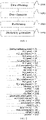
FIG. 1 is a flowchart of a method for creating a gene mutation dictionary according to an embodiment of the present disclosure. -
FIG. 2 illustrates counts of biotypes of all the human genes according to an embodiment of the present disclosure. -
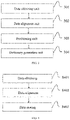
FIG. 3 is a structural block diagram of a device for creating a gene mutation dictionary according to an embodiment of the present disclosure. -
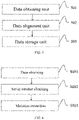
FIG. 4 is a flowchart of a method for compressing genomic data using a gene mutation dictionary according to an embodiment of the present disclosure. -
FIG. 5 is a structural block diagram of a device for compressing genomic data using a gene mutation dictionary according to an embodiment of the present disclosure. -
FIG. 6 is a flowchart of a method for restoring genomic data compressed using a gene mutation dictionary according to an embodiment of the present disclosure. -
FIG. 7 is a structural block diagram of a device for restoring genomic data compressed using a gene mutation dictionary according to an embodiment of the present disclosure. -
FIG. 8 illustrates a list of mutant patterns of Chr21_KRTAP12-4 gene in 1,000 Genomes Project according to an embodiment of the present disclosure. -
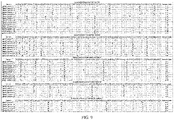
FIG. 9 is a schematic diagram of a typical gene mutation dictionary according to an embodiment of the present disclosure. -
FIG. 10 is a schematic diagram of a storage process of a human gene mutation dictionary according to an embodiment of the present disclosure. - The present disclosure is described in detail below by means of specific embodiments with reference to the accompanying drawings. In the following embodiments, many details are described to facilitate the understanding of the present disclosure. However, those skilled in the art can readily recognize that some of these features may be omitted under different circumstances, or may be replaced by other materials and methods.
- In addition, the features, operations, or characteristics described in the specification may be combined in any suitable manner to constitute various embodiments. At the same time, the steps or actions in the description involving method may also be exchanged or adjusted in order in a manner apparent to those skilled in the art. Therefore, the various sequences in the specification and drawings are only for the purpose of clearly describing a certain embodiment and are not meant to be a necessary order, unless it is specified that a certain sequence must be followed.
- In the era with a continuous increase of individual genomic data, many companies and institutions give priority to solving the problem of data compression by means of computers and high-performance storage. Since merely the data format has been changed without changing the data, the storage size is not significantly reduced.
- The method of the present disclosure, different from the common data compression for reducing the storage space, uses bioinformatics to compress the sequence information (about 3GB) of the human genome from nearly 3,000,000,000 bases to about only 120KB, which is nearly 25,000 times of data compression without loss of genetic information.
- In order to compress genomic data, the method of the present disclosure mainly includes three technical solutions.
- (1) Multiple biologically significant patterns are created and encoded with numbers to generate a gene mutation dictionary. In some embodiments, the whole human genome has about 30,000 genes. After the 1,000 human genomes, 10,000 human genomes, and even 1 million human genomes are sequenced, a mutation dictionary is created based on all the determined mutants for each gene as a unit. In some embodiments, for non-coding regions such as introns, each 100kb sequence can serve as a unit (3GB human genome will have 30,000 units of 100kb), and a mutant dictionary is created with mutants after sequencing, each gene as a unit. In this way, the whole human genome can be divided into 60,000 units, including 30,000 coding gene regions and 30,000 non-coding regions. In other embodiments, the number of units may be appropriately increased or reduced according to the mutation patterns of the genome. According to the mutation patterns in each unit, 28 (=256) mutation patterns take 1 byte for storage; 216 (=65,536) mutation patterns take 2 bytes for storage; and 224 (= 16,777,216) mutation patterns take 3 bytes for storage; the gene mutation dictionary may be stored in a large database.
- (2) After the individual genome is sequenced, only the reference numbers of patterns of each unit are stored according to the gene mutation dictionary, instead of storing the actual detected mutations. If each pattern is represented by 2 bytes, each person's whole genome only needs a storage size of 60000∗2 = 120kb, thereby achieving nearly 25,000 times of data compression.
- (3) Gene mutation information is obtained. Based on the stored reference numbers of gene patterns and the gene mutation dictionary, the results of gene sequencing can also be completely restored.
- As illustrated in
FIG. 1 , an embodiment of the present disclosure provides a method for creating a gene mutation dictionary, including the following steps: - Genome sequence data of a plurality of individuals of a species and reference genome data of the species are obtained.
- The method for creating a gene mutation dictionary according to the present disclosure is applicable to any species, especially the species having the storage requirements of individual genome sequencing data, mainly the storage of human genomic data. The method of the present disclosure requires genome sequence data of multiple individuals, for example, genome sequence data of more than 1,000 people. Generally speaking, the more individual samples, the more comprehensive the mutant patterns are in the created gene mutation dictionary. Generally speaking, in some embodiments, the genome data information of at least 1,000 people should be included, and the genome data information of more than one million people is optimal. Accordingly, the reference genome data is human reference genome data.
- The genome sequence data of each of the plurality of individuals is aligned to the reference genome data to obtain a mutation result of the genome sequence data of each of the plurality of individuals relative to the reference genome data.
- In the embodiments of the present disclosure, the genome sequence alignment can be performed with various methods, for example, by means of sequence alignment software such as BWA or SOAP2. The mutation result of each individual's genome sequence data relative to the reference genome data is obtained through the sequence alignment, and the mutation result is reflected by a difference between the base of the individual's genome and the base of the reference genome at each base site.
- The genome of said species is partitioned into a plurality of unit regions of biological significance.
- In the embodiments of the present disclosure, the biologically significant unit regions may include coding regions, non-coding regions, genes, etc. on the genome. In other embodiments, the biologically significant unit regions may be genes of all the human biotypes, etc.
- In the embodiments of the present disclosure, the number of the plurality of unit regions of biological significance may be thousands to tens of thousands. For example, in some embodiments, the number of the plurality of unit regions is 60,000, with a tolerable error range from -10% to 10%, for example, 54,000 to 66,000 biologically significant unit regions. In a preferred embodiment of the present disclosure, the biologically significant unit regions include 30,000 gene coding regions and 30,000 non-coding regions, each with a tolerable error range from -10% to 10%.
- For example, in an embodiment, based on the biologically significant unit regions such as coding regions, non-coding regions, genes, etc., the entire human genomic data (about 3GB) is partitioned into about 60,000 unit regions, among which 30,000 unit regions are the gene coding regions and the other 30,000 unit regions are the non-coding regions. Each non-coding region has a size of about 100kb.
- Mutant patterns of the plurality of individuals in each unit region are generated by statistically analyzing mutant status for each of the plurality of unit regions based on the mutation result, and the mutant patterns are numbered, to obtain the above-mentioned gene mutation dictionary. The gene mutation dictionary includes the mutant patterns corresponding to each unit region and index numbers of the mutant patterns.
- In the embodiments of the present disclosure, a mutant pattern refers to a specific combination of mutation sites in a specific unit region of biological significance, including positions and base changes of the mutation sites in the unit region. There is at least one mutation site difference between any two mutant patterns. That is, as long as at least one mutation site difference is present, these two mutant patterns are different mutant patterns.
- In the embodiments of the present disclosure, the numbering of the mutant patterns means that the mutant types are sequentially coded in order. A typical but non-limiting coding manner is to use a combination of an index number of a biologically significant unit region and an index number of a mutant pattern corresponding thereto as a code of a particular mutant pattern.
- In an embodiment of the present disclosure, said generating the plurality of mutant patterns by statistically analyzing mutant status for each unit region, and numbering the mutant patterns include the following step: for each of the unit regions, numbering and counting, based on the mutation results of the plurality of individuals, the mutant patterns in accordance with an order of the plurality of individuals. A count is the number of individuals supporting the mutant pattern. If the mutation result of a latter individual is consistent with the mutation result of any previous individual, the mutant pattern and the index number of the previous individual are adopted as those of the latter individual and the count of the mutant pattern is added one. If the mutation result of the latter individual is inconsistent with the mutation result of any previous individual, a new mutant pattern is provided with an index number and counted, until all the mutant patterns for each unit region as well as the index numbers and counts of all the mutant patterns are obtained. Further, the above method further includes: sorting the mutant patterns in a descending order of the counts of the mutant patterns, and renumbering the mutant patterns in the sorted order.
- For example, in an embodiment of the present disclosure, based on the mutation result analyzed in the previous step, the mutant status for each of about 60,000 unit regions of the human genome is statistically analyzed. Each unit region (gene or intron) is statistically analyzed as follows. For a person-1, the mutation result (a mutation combination of all mutation sites) obtained through the alignment is denoted as pattern-1, the count of pattern-1 is recorded as 1; for a next person-2, this unit region is aligned, and if the mutation result of the person-2 obtained through the alignment is consistent with the mutation result of the person-1, the same pattern, i.e., the pattern-1, is obtained, and thus the count of pattern-1 is 1+1=2, and so on; or if this unit region of the person-2 is aligned and a mutation result inconsistent with that of the person-1 is obtained, the mutation result is recorded as a new pattern, i.e., pattern-2, and a count of pattern-2 is recorded as 1, until the individual samples in the database are all statistically analyzed. In order to accelerate the retrieval of the subsequent gene mutation dictionary, in the preferred method of the present disclosure, the patterns are sorted based on the counts thereof in a descending order, and the pattern with the highest count is redefined as pattern-1, the pattern with a second highest count is defined as pattern-2, and so on.
- In the embodiments of the present disclosure, the biologically significant unit regions may be partitioned according to other biological criteria, such as the counts of biotypes of human genes. For example,
FIG. 2 illustrates the counts of biotypes of human genes. - The present disclosure further provides a device for creating a gene mutation dictionary, corresponding to the method for creating the gene mutation dictionary of the present disclosure. As illustrated in
FIG. 3 , the device includes: adata obtaining unit 301 configured to obtain genome sequence data of a plurality of individuals of a species and reference genome data of the species; adata alignment unit 302 configured to align genome sequence data of each of the plurality of individuals to the reference genome data to obtain a mutation result of the genome sequence data of each of the plurality of individuals relative to the reference genome data; apartitioning unit 303 configured to partition a genome of the species into a plurality of unit regions of biological significance; and adictionary generation unit 304 configured to generate mutant patterns of the plurality of individuals in each unit region by statistically analyzing mutant status for each of the plurality of unit regions based on the mutation result, and number the mutant patterns, to obtain the gene mutation dictionary, the gene mutation dictionary including the mutant patterns corresponding to each unit region and index numbers of the mutant patterns. - Those skilled in the art can understand that all or part of the functions of the various methods in the foregoing embodiments may be implemented by means of hardware or by means of computer programs. When all or part of the functions in the above embodiments are implemented by means of a computer program, the program may be stored in a computer-readable storage medium. The storage medium may include read-only memory, random access memory, magnetic disk, optical disk, hard disk, etc. The program is executed by a computer to exert the above-mentioned functions. For example, the program is stored in a memory of the device, and when the program in the memory is executed by a processor, all or part of the above functions can be realized. In addition, when all or part of the functions in the above-mentioned embodiments are implemented by means of a computer program, the program may be stored in a server, another computer, or a storage medium such as a magnetic disk, an optical disk, a flash disk or a mobile hard disk, and the program can be downloaded or copied to be saved in a memory of a local device or it can update the version of the system of the local device. The program in the memory, when being executed by a processor, can implement all or part of the functions in the above embodiments.
- Therefore, an embodiment of the present disclosure provides a computer-readable storage medium including a program, which is executable by a processor to implement the method for creating the gene mutation dictionary of the present disclosure.
- On the basis of the gene mutation dictionary of the present disclosure, the present disclosure further provides a method for compressing genomic data using the gene mutation dictionary. As illustrated in
FIG. 4 , the method includes the following steps. - Genome sequencing data of an individual is obtained. The genome sequencing data includes a plurality of unit regions of biological significance.
- The genome sequencing data is aligned to the gene mutation dictionary generated by the method for creating the gene mutation dictionary according to the present disclosure, to obtain a mutant pattern and an index number of the mutant pattern, which is consistent with a mutant status of each of the plurality of unit regions of the individual.
- The index number of the mutant pattern for each unit region of the individual is stored instead of storing actually measured mutation.
- The present disclosure further provides a device for compressing genomic data using a gene mutation dictionary. As illustrated in
FIG. 5 , the device includes: adata obtaining unit 501 configured to obtain genome sequencing data of an individual, the genome sequencing data including a plurality of unit regions of biological significance; adata alignment unit 502 configured to align the genome sequencing data to the gene mutation dictionary generated by the method for creating the gene mutation dictionary according to the present disclosure, to obtain a mutant pattern and an index number of the mutant pattern, which is consistent with a mutant status of each of the plurality of unit regions of the individual; and adata storage unit 503 configured to store the index number of the mutant pattern for each of the plurality of unit regions of the individual instead of storing actually measured mutation. - The present disclosure further provides a computer-readable storage medium including a program, which is executable by a processor to implement the method for compressing genomic data using the gene mutation dictionary according to the present disclosure.
- The present disclosure further provides a method for restoring genomic data compressed by using the gene mutation dictionary. As illustrated in
FIG. 6 , the method includes the following steps. - Compressed genomic data, which is generated through compression using the gene mutation dictionary generated by the method for creating the gene mutation dictionary according to the present disclosure, is obtained. The compressed genomic data includes index numbers of mutant patterns of a plurality of unit regions in the gene mutation dictionary.
- The index number of the mutant pattern for each of the plurality of unit regions in the gene mutation dictionary is found from the compressed genomic data.
- The mutant pattern corresponding to the index number and a mutation result of the mutant pattern on respective base sites are extracted from the gene mutation dictionary.
- The present disclosure further provides a device for restoring genomic data compressed by using a gene mutation dictionary. As illustrated in
FIG. 7 , the device includes: adata obtaining unit 701 configured to obtain compressed genomic data, which is generated through compression using the gene mutation dictionary generated by the method for creating the gene mutation dictionary according to the present disclosure, and which includes index numbers of mutant patterns of a plurality of unit regions in the gene mutation dictionary; an indexnumber obtaining unit 702 configured to find, from the compressed genomic data, the index number of the mutant pattern for each of the plurality of unit regions in the gene mutation dictionary; and amutation extraction unit 703 configured to extract, from the gene mutation dictionary, the mutant pattern corresponding to the index number and a mutation result of the mutant pattern on respective base sites. - According to a ninth aspect of the present disclosure, the present disclosure provides a computer-readable storage medium including a program, which is executable by a processor to implement the method for restoring genomic data compressed by using the gene mutation dictionary according to the present disclosure.
- The technical solutions and effects of the present disclosure will be described in detail below by means of examples. It should be understood that these examples are merely illustrative and should not be construed as limiting the present disclosure.
-
- (1) Gene database was collected. In the example of the present disclosure, a gene database of 1,000 Genomes Project was collected, and gene data was collected.
- (2) The collected genetic data was aligned to the human reference genome.
- (3) The collected whole human genomic data was partitioned into approximately 60,000 biologically significant unit regions such as coding regions, non-coding regions, genes, etc., among which 30,000 unit regions were gene coding regions and the other 30,000 unit regions were non-coding regions. Each non-coding region had a size of about 100 kb.
- (4) Based the mutation result analyzed in the previous step, the mutant status for each of about 60,000 unit regions of the human genome was statistically analyzed. Each unit region (gene or intron) was statistically analyzed as follows. For a person-1, the mutation result (a mutation combination of all mutation sites) obtained through the alignment was denoted as pattern-1, the count of pattern-1 was recorded as 1; for a next person-2, this unit region was aligned, and if the mutation result of the person-2 obtained through the alignment was consistent with the mutation result of the person-1, the same pattern, i.e., the pattern-1, was obtained, and thus the count of pattern-1 is 1+1=2, and so on; or if this unit region of the person-2 was aligned and a mutation result inconsistent with that of the person-1 was obtained, the mutation result was recorded as a new pattern, i.e., pattern-2, and the count of pattern-2 was recorded as 1, until the individual samples in the database were all statistically analyzed. In order to accelerate the retrieval of the subsequent gene mutation dictionary, in the preferred method of the present disclosure, the patterns are sorted based on the counts thereof in a descending order, and the pattern with the highest count is redefined as pattern-1, the pattern with a second highest count is defined as pattern-2, and so on.
- In the present example, mutations of all the coding regions (about 30,000 genes) of the genome information of 2,504 people (data from the library of 1,000 Genomes Project) were analyzed. Mutation analysis was performed on each gene of these 2,504 people. According to the numbering method in step (4) of the present example, each gene can finally obtain a maximum of 2,504 mutant patterns (when each individual has a different mutation).
- As an example, for the KRTAP12-4 gene, a mutant dictionary was created and mutants were statistically analyzed based on VCF files of 2,504 samples of the 1,000 Genomes Project. The results of statistical analysis indicated that, among the 2,504 samples, 831 samples had the same mutant pattern of the KRTAP12-4 gene with a highest mutation frequency, that is, a homozygous mutation from base A to base G occurred at position 460742022 of chromosome NO. 21; 318 samples (12.7%) had a mutation with the second highest mutation frequency; and 16 samples has unique patterns. It is worth noting that the 2504 samples had only 33 mutant patterns, and the data size thereof was further compressed by 75 times when compared to the VCF files, which were already compressed to a great extent.
FIG. 8 illustrates a schematic diagram of a result of the mutant pattern list of the Chr21_KRTAP12-4 gene in the 1,000 Genomes Project according to an embodiment of the present disclosure. - Table 1 lists the statistically analysis results of mutant patterns of 30 genes that are randomly selected from nearly 30,000 genes in 2,504 human samples of the database of 1,000 Genomes Project. It is clear that the number of the mutant patterns of the mutants is significantly smaller than the number of the samples. It indicates that for a certain mutant pattern, multiple people have exactly the same mutation result. When the mutant pattern is stored instead of storing respective sample mutants, the required storage space can be greatly reduced.
[Table 1] Statistically analysis results of mutant patterns of 30 genes randomly selected from the database of the 1,000 Genomes Project Gene ID Chromosome Count of SNP pattern Gene length AL645608.2 1 104 1940 PRAMEF14 1 64 5242 PRAMEF19 1 67 3516 C2CD4D 1 181 2738 MGC10955 2 104 922 IQCF5 3 107 1863 HSD17B8 6 181 2189 RP11-521M14.2 8 61 1072 DKFZP667F0711 10 180 2445 CHCHD1 10 63 1605 HUG1 10 62 1088 AL355531.2 10 107 641 OR4C16 11 182 932 OR5D13 11 68 944 C11orf31 11 182 2161 OR5B12 11 65 1053 GNG3 11 66 1543 PPP1R14B 11 105 2457 CARD18 11 182 2005 OR6C70 12 104 938 RPS26 12 183 2479 RHOV 15 105 2075 MT1H 16 179 1315 KRTAP9-3 17 106 990 NT5C 17 182 1570 RP4-583P15.14 20 68 2128 AC016586.1 19 183 2027 ADM5 19 106 1911 RIMBP3B 22 68 5783 KRTAP10-8 21 105 875 - In the present example, the human genomic data in the database was aligned, and the mutant patterns were classified for each unit region. The genes of all the people were numerated in the above manner and collected to obtain a complete gene mutation dictionary. A typical gene mutation dictionary is similar to the form in
FIG. 9 . - In the present example, for instance, each unit region was stored with 2 bytes, which can store 65,536 mutant patterns, and thus can store biologically significant mutants. If a unit region had fewer than 65,536 mutant patterns, the remaining mutant patterns can be used for new patterns discovered later. If a certain unit had more than 65,536 mutant patterns, the mutant patterns in this unit can be stored with 3 bytes, and in this case, 16,777,216 mutant patterns are included.
- After the human genome of an individual was sequenced, the sequencing result was aligned to the gene mutation dictionary for each unit region, as illustrated in
FIG. 10 . In the gene mutation dictionary, instead of the actually measured mutations of the unit region, only the index numbers of mutant patterns of each unit region were stored. -
FIG. 10 illustrates a storage process of a human gene mutation dictionary. For example, for the first 100 bp mutant patterns of genes OR4F29, SAMD11, LEMD2, GNG3, KRTAP29-1, these five genes of one person were analyzed. Forgene 1, it was determined through alignment that pattern-7 was completely consistent; forgene 2, it was determined through alignment that pattern-2 was completely consistent; forgene 3, it was determined through alignment that pattern-5 was completely consistent; forgene 4, it was determined through alignment that pattern-2 was completely consistent; and forgene 5, it was determined through alignment that pattern-4 was completely consistent. Then, the mutation information of the 5 genes of this individual can be stored as index numbers for the 5 mutant patterns, and the mutation information of each gene of this individual was stored as a corresponding mutant pattern index number, which can save a lot of storage. - In the present example, a typical human mutant sequence storage format is as follows:
- 1.7
- 2.1
- 3.5
- 4.2
- 5.4
- ...
- 60000.35
- The number before the decimal point is an index of the unit region, and the number after the decimal point is an index of the corresponding mutant pattern.
- If the mutant pattern of each gene is represented by 2 bytes, the whole genome of each person is divided into 60,000 genes, which requires a storage size of only 60,000∗2 = 120kb, achieving nearly 25,000 times of data compression.
- In the present example, the gene sequencing result can also be completely restored based on the stored index numbers of the gene mutant patterns and the gene mutation dictionary.
- Since each unit region (e.g., gene) in the gene mutation dictionary corresponds to a fixed region in the whole genome, the mutants corresponding to the mutant patterns of each unit region are fixed. Therefore, based on the index of the unit region for gene storage and the index of the corresponding mutant patterns, the actual mutations can be deduced directly.
- The whole human genome sequencing will become one of the human physical examination items. The storage of human mutants based on the gene mutation dictionary would be similar to the data format of
FIG. 9 . When a person is born, he or she can have a high-depth genome sequencing to establish his/her genetic sequence reference. Thereafter, a physical examination of the whole genome sequencing can be carried out every year or at an appropriate time. Most of the time, there may be no gene mutation. Once a mutation occurs, a mutant pattern thereof may be significantly different from that at birth, so as to easily identify the gene mutation. - As illustrated in Table 2, an example of storage of physical examination items for one individual's whole human genome sequencing is illustrated, in which the first column lists the indexes of gene units, and the second and following columns list the number of indexes of mutant patterns corresponding to the respective indexes of the gene units.
Table 2 Storage examples of human whole-genome sequencing mutants for precision medicine Index of gene unit At birth 1 year old 2 years old ... 40 years old 41 years old 1 20 20 20 ... 20 20 2 30 30 30 ... 30 30 2 32 32 32 ... 32 32 3 40 40 40 ... 40 40 4 22 22 22 ... 22 22 5 45 45 45 ... 49 49 6 123 123 123 ... 123 123 7 67 67 67 ... 67 67 8 2345 2345 2345 ... 2345 2345 9 3214 3214 3214 ... 3214 3214 10 112 112 112 ... 112 112 11 22 22 22 ... 22 22 12 34 34 34 ... 34 34 13 56 56 56 ... 56 56 14 789 789 789 ... 789 789 15 991 991 991 ... 991 23 16 123 123 123 ... 123 123 17 135 135 135 ... 135 135 ... ... ... ... ... ... ... 60000 123 123 123 ... 123 123 - The above specific examples are intended to illustrate the present disclosure and merely to help understand the present disclosure, rather than limiting the present disclosure. For those skilled in the art to which the present disclosure pertains, several simple deductions, modifications or substitutions can also be made based on the concept of the present disclosure.
Claims (16)
- A method for creating a gene mutation dictionary, comprising:obtaining genome sequence data of a plurality of individuals of a species and reference genome data of the species;aligning genome sequence data of each of the plurality of individuals to the reference genome data to obtain a mutation result of the genome sequence data of each of the plurality of individuals relative to the reference genome data; andpartitioning a genome of the species into a plurality of unit regions of biological significance; andgenerating a plurality of mutant patterns of the plurality of individuals in each unit region by statistically analyzing mutant status for each of the plurality of unit regions based on the mutation result, and numbering the mutant patterns, to obtain the gene mutation dictionary, wherein the gene mutation dictionary comprises the mutant patterns corresponding to each unit region and index numbers of the mutant patterns.
- The method according to claim 1, wherein the species is the Homo sapiens, and the plurality of individuals comprises 1,000 or more human individuals.
- The method according to claim 1, wherein the plurality of unit regions comprises coding regions, non-coding regions, and genes.
- The method according to claim 1, wherein the number of the plurality of unit regions of biological significance ranges from thousands to tens of thousands.
- The method according to claim 4, wherein the number of the plurality of unit regions of biological significance is 60,000, with a tolerable error range from -10% to 10%.
- The method according to claim 5, wherein the plurality of unit regions comprises 30,000 gene coding regions and 30,000 non-coding regions, each with a tolerable error range from - 10% to 10%.
- The method according to claim 1, wherein said generating the plurality of mutant patterns by statistically analyzing mutant status for each of the plurality of unit regions, and numbering the mutant patterns comprises:
for each of the plurality of unit regions, numbering and counting, based on the mutation results of the plurality of individuals, the mutant patterns in accordance with an order of the plurality of individuals, wherein a count is the number of individuals supporting the mutant pattern, and wherein if the mutation result of a latter individual is consistent with the mutation result of any previous individual, the mutant pattern and the index number of the previous individual are adopted as those of the latter individual and the count of the mutant pattern is added one; if the mutation result of the latter individual is inconsistent with the mutation result of any previous individual, a new mutant pattern is added to the dictionary, and the new mutant pattern is provided with an index number and counted, until all the mutant patterns for each unit region as well as the index numbers and counts of all the mutant patterns are obtained. - The method according to claim 7, further comprising:
sorting the mutant patterns in a descending order of the counts of the mutant patterns, and renumbering the mutant patterns in the sorted order. - A device for creating a gene mutation dictionary, the device comprising:a data obtaining unit configured to obtain genome sequence data of a plurality of individuals of a species and reference genome data of the species;a data alignment unit configured to align genome sequence data of each of the plurality of individuals to the reference genome data to obtain a mutation result of the genome sequence data of each of the plurality of individuals relative to the reference genome data;a partitioning unit configured to partition a genome of the species into a plurality of unit regions of biological significance; anda dictionary generation unit configured to generate mutant patterns of the plurality of individuals in each unit region by statistically analyzing mutant status for each of the plurality of unit regions based on the mutation result, and number the mutant patterns, to obtain the gene mutation dictionary, wherein the gene mutation dictionary comprises the mutant patterns corresponding to each unit region and index numbers of the mutant patterns.
- A computer-readable storage medium, comprising a program, wherein the program is executable by a processor to implement the method according to any one of claims 1 to 8.
- A method for compressing genomic data using a gene mutation dictionary, the method comprising:obtaining genome sequencing data of an individual, the genome sequencing data comprising a plurality of unit regions of biological significance;aligning the genome sequencing data to the gene mutation dictionary generated by the method according to any one of claims 1 to 8, to obtain a mutant pattern and an index number of the mutant pattern in each of the plurality of unit regions of the individual, the mutant pattern being consistent with a mutant status of each of the plurality of unit regions; andstoring the index number of the mutant pattern for each of the plurality of unit regions of the individual instead of storing actually measured mutation.
- A device for compressing genomic data using a gene mutation dictionary, the device comprising:a data obtaining unit configured to obtain genome sequencing data of an individual, the genome sequencing data comprising a plurality of unit regions of biological significance;a data alignment unit configured to align the genome sequencing data to the gene mutation dictionary generated by the method according to any one of claims 1 to 8, to obtain a mutant pattern and an index number of the mutant pattern, the mutant pattern being consistent with a mutant status of a corresponding one of the plurality of unit regions of the individual; anda data storage unit configured to store the index number of the mutant pattern for each of the plurality of unit regions of the individual instead of storing actually measured mutation.
- A computer-readable storage medium, comprising a program, wherein the program is executable by a processor to implement the method according to claim 11.
- A method for restoring genomic data compressed using a gene mutation dictionary, the method comprising:obtaining compressed genomic data, the compressed genomic data being generated through compression using the gene mutation dictionary generated by the method according to any one of claims 1 to 8, the compressed genomic data comprising index numbers of mutant patterns of a plurality of unit regions in the gene mutation dictionary;finding, from the compressed genomic data, the index number of the mutant pattern for each of the plurality of unit regions in the gene mutation dictionary; andextracting, from the gene mutation dictionary, the mutant pattern corresponding to the index number and a mutation result of the mutant pattern on respective base sites.
- A device for restoring genomic data compressed using a gene mutation dictionary, the device comprising:a data obtaining unit configured to obtain compressed genomic data, the compressed genomic data being generated through compression using the gene mutation dictionary generated by the method according to any one of claims 1 to 8, the compressed genomic data comprising index numbers of mutant patterns of a plurality of unit regions in the gene mutation dictionary;an index number obtaining unit configured to find, from the compressed genomic data, the index number of the mutant pattern for each of the plurality of unit regions in the gene mutation dictionary; anda mutation extraction unit configured to extract, from the gene mutation dictionary, the mutant pattern corresponding to the index number and a mutation result of the mutant pattern on respective base sites.
- A computer-readable storage medium, comprising a program, wherein the program is executable by a processor to implement the method according to claim 14.
Applications Claiming Priority (1)
| Application Number | Priority Date | Filing Date | Title |
|---|---|---|---|
| PCT/CN2019/130731 WO2021134574A1 (en) | 2019-12-31 | 2019-12-31 | Method and device for creating gene mutation dictionary and using the dictionary to compress genome data |
Publications (2)
| Publication Number | Publication Date |
|---|---|
| EP4087139A1 true EP4087139A1 (en) | 2022-11-09 |
| EP4087139A4 EP4087139A4 (en) | 2023-01-18 |
Family
ID=76687198
Family Applications (1)
| Application Number | Title | Priority Date | Filing Date |
|---|---|---|---|
| EP19958459.0A Pending EP4087139A4 (en) | 2019-12-31 | 2019-12-31 | METHOD AND APPARATUS FOR GENERATION OF A GENE MUTATION DICTIONARY AND USE OF THE DICTIONARY TO COMPRESS GENOME DATA |
Country Status (4)
| Country | Link |
|---|---|
| US (1) | US20220383987A1 (en) |
| EP (1) | EP4087139A4 (en) |
| CN (1) | CN114930724B (en) |
| WO (1) | WO2021134574A1 (en) |
Families Citing this family (4)
| Publication number | Priority date | Publication date | Assignee | Title |
|---|---|---|---|---|
| CN114550818B (en) * | 2022-01-28 | 2025-04-15 | 赛纳生物科技(北京)有限公司 | A method for evaluating mixed signals in gene sequencing |
| CN119998885A (en) * | 2022-10-13 | 2025-05-13 | 深圳华大智造科技股份有限公司 | Reference sequence construction method, metagenomic data compression method and electronic device |
| CN121002575A (en) * | 2023-01-18 | 2025-11-21 | 卡迪埃技术有限公司 | Systems and methods for using blockchain to analyze, store, and share genomic data. |
| CN116246715B (en) * | 2023-04-27 | 2024-04-16 | 倍科为(天津)生物技术有限公司 | Multi-sample gene mutation data storage method, device, equipment and medium |
Family Cites Families (14)
| Publication number | Priority date | Publication date | Assignee | Title |
|---|---|---|---|---|
| JP2003188735A (en) * | 2001-12-13 | 2003-07-04 | Ntt Data Corp | Data compression apparatus and method and program |
| US20040153255A1 (en) * | 2003-02-03 | 2004-08-05 | Ahn Tae-Jin | Apparatus and method for encoding DNA sequence, and computer readable medium |
| JP4881237B2 (en) * | 2007-06-29 | 2012-02-22 | 株式会社東芝 | Screen transfer device and method, and program for image transfer |
| EP2612271A4 (en) * | 2010-08-31 | 2017-07-19 | Annai Systems Inc. | Method and systems for processing polymeric sequence data and related information |
| CN102081707B (en) * | 2011-01-07 | 2013-04-17 | 深圳大学 | DNA sequence data compression and decompression system, and method therefor |
| US8937564B2 (en) * | 2013-01-10 | 2015-01-20 | Infinidat Ltd. | System, method and non-transitory computer readable medium for compressing genetic information |
| KR20150119403A (en) * | 2013-03-22 | 2015-10-23 | 후지쯔 가부시끼가이샤 | Compression device, compression method, dictionary generation device, dictionary generation method, expansion device, expansion method, expansion program, and information processing system |
| CN103546162B (en) * | 2013-09-22 | 2016-08-17 | 上海交通大学 | Based on non-contiguous contextual modeling and the gene compression method of entropy principle |
| JP6198659B2 (en) * | 2014-04-03 | 2017-09-20 | 株式会社日立ハイテクノロジーズ | Sequence data analysis apparatus, DNA analysis system, and sequence data analysis method |
| AU2015267190B2 (en) * | 2014-05-30 | 2020-10-01 | Sequenom, Inc. | Chromosome representation determinations |
| KR101832373B1 (en) * | 2015-08-28 | 2018-02-26 | 주식회사 케이티 | Reduction and delivery apparatus for the genetic variant information and method thereof |
| WO2018213235A1 (en) * | 2017-05-16 | 2018-11-22 | Life Technologies Corporation | Methods for compression of molecular tagged nucleic acid sequence data |
| CN110021369B (en) * | 2017-10-24 | 2020-03-17 | 人和未来生物科技(长沙)有限公司 | Gene sequencing data compression and decompression method, system and computer readable medium |
| CN109450452B (en) * | 2018-11-27 | 2020-07-10 | 中国科学院计算技术研究所 | Compression method and system for sampling dictionary tree index aiming at gene data |
-
2019
- 2019-12-31 CN CN201980102589.7A patent/CN114930724B/en active Active
- 2019-12-31 EP EP19958459.0A patent/EP4087139A4/en active Pending
- 2019-12-31 WO PCT/CN2019/130731 patent/WO2021134574A1/en not_active Ceased
-
2022
- 2022-06-29 US US17/809,892 patent/US20220383987A1/en active Pending
Also Published As
| Publication number | Publication date |
|---|---|
| EP4087139A4 (en) | 2023-01-18 |
| CN114930724A (en) | 2022-08-19 |
| WO2021134574A1 (en) | 2021-07-08 |
| CN114930724B (en) | 2025-07-04 |
| US20220383987A1 (en) | 2022-12-01 |
Similar Documents
| Publication | Publication Date | Title |
|---|---|---|
| US20220383987A1 (en) | Method and device for creating gene mutation dictionary, and method and device for compressing genomic data using the dictionary | |
| Hach et al. | SCALCE: boosting sequence compression algorithms using locally consistent encoding | |
| CN110506272B (en) | Method and apparatus for accessing to access unit structured bioinformatic data | |
| Vergara et al. | Genotype imputation performance of three reference panels using African ancestry individuals | |
| EP2724278B1 (en) | Methods and systems for data analysis | |
| US10381106B2 (en) | Efficient genomic read alignment in an in-memory database | |
| Ahmadi et al. | Hobbes: optimized gram-based methods for efficient read alignment | |
| US20170308643A1 (en) | Dynamic genome reference generation for improved ngs accuracy and reproducibility | |
| Liu et al. | Sequence alignment/map format: a comprehensive review of approaches and applications | |
| EP2444914A2 (en) | Genetic information management system and method | |
| Wandelt et al. | RCSI: Scalable similarity search in thousand (s) of genomes | |
| CN104112011B (en) | The method and device that a kind of mass data is extracted | |
| CN102945242A (en) | Managing storage method, system, and computer system | |
| Deorowicz et al. | AGC: compact representation of assembled genomes with fast queries and updates | |
| AU2018221458B2 (en) | Method and apparatus for the compact representation of bioinformatics data using multiple genomic descriptors | |
| Ren et al. | Evaluating de Bruijn graph assemblers on 454 transcriptomic data | |
| US20140244639A1 (en) | Surprisal data reduction of genetic data for transmission, storage, and analysis | |
| US20250156379A1 (en) | Optimizing storage of data in row-oriented data storages | |
| US12597491B2 (en) | Method and apparatus for compressing fastq data through character frequency-based sequence reordering | |
| JP7362481B2 (en) | A method for encoding genome sequence data, a method for decoding encoded genome data, a genome encoder for encoding genome sequence data, a genome decoder for decoding genome data, and a computer-readable recording medium | |
| Xiao et al. | K-mer counting: memory-efficient strategy, parallel computing and field of application for bioinformatics | |
| CN106960133B (en) | A kind of disease prediction method and device | |
| Shibuya et al. | Indexing k-mers in linear space for quality value compression | |
| Nothaft | Scalable Genome Resequencing with ADAM and avocado | |
| Chakraborty et al. | Motif distribution in genomes gives insights into gene clustering and co-regulation |
Legal Events
| Date | Code | Title | Description |
|---|---|---|---|
| STAA | Information on the status of an ep patent application or granted ep patent |
Free format text: STATUS: THE INTERNATIONAL PUBLICATION HAS BEEN MADE |
|
| PUAI | Public reference made under article 153(3) epc to a published international application that has entered the european phase |
Free format text: ORIGINAL CODE: 0009012 |
|
| STAA | Information on the status of an ep patent application or granted ep patent |
Free format text: STATUS: REQUEST FOR EXAMINATION WAS MADE |
|
| 17P | Request for examination filed |
Effective date: 20220728 |
|
| AK | Designated contracting states |
Kind code of ref document: A1 Designated state(s): AL AT BE BG CH CY CZ DE DK EE ES FI FR GB GR HR HU IE IS IT LI LT LU LV MC MK MT NL NO PL PT RO RS SE SI SK SM TR |
|
| A4 | Supplementary search report drawn up and despatched |
Effective date: 20221220 |
|
| RIC1 | Information provided on ipc code assigned before grant |
Ipc: H03M 7/30 20060101AFI20221214BHEP |
|
| DAV | Request for validation of the european patent (deleted) | ||
| DAX | Request for extension of the european patent (deleted) | ||
| STAA | Information on the status of an ep patent application or granted ep patent |
Free format text: STATUS: EXAMINATION IS IN PROGRESS |
|
| 17Q | First examination report despatched |
Effective date: 20250523 |