EP4086785A1 - Face recognition-based video recommendation method and apparatus, and television - Google Patents
Face recognition-based video recommendation method and apparatus, and television Download PDFInfo
- Publication number
- EP4086785A1 EP4086785A1 EP20908558.8A EP20908558A EP4086785A1 EP 4086785 A1 EP4086785 A1 EP 4086785A1 EP 20908558 A EP20908558 A EP 20908558A EP 4086785 A1 EP4086785 A1 EP 4086785A1
- Authority
- EP
- European Patent Office
- Prior art keywords
- face
- user
- face feature
- video recommendation
- archive
- Prior art date
- Legal status (The legal status is an assumption and is not a legal conclusion. Google has not performed a legal analysis and makes no representation as to the accuracy of the status listed.)
- Granted
Links
Images

Classifications
-
- G—PHYSICS
- G06—COMPUTING OR CALCULATING; COUNTING
- G06V—IMAGE OR VIDEO RECOGNITION OR UNDERSTANDING
- G06V10/00—Arrangements for image or video recognition or understanding
- G06V10/70—Arrangements for image or video recognition or understanding using pattern recognition or machine learning
- G06V10/74—Image or video pattern matching; Proximity measures in feature spaces
-
- G—PHYSICS
- G06—COMPUTING OR CALCULATING; COUNTING
- G06F—ELECTRIC DIGITAL DATA PROCESSING
- G06F16/00—Information retrieval; Database structures therefor; File system structures therefor
- G06F16/70—Information retrieval; Database structures therefor; File system structures therefor of video data
- G06F16/73—Querying
- G06F16/735—Filtering based on additional data, e.g. user or group profiles
-
- G—PHYSICS
- G06—COMPUTING OR CALCULATING; COUNTING
- G06F—ELECTRIC DIGITAL DATA PROCESSING
- G06F16/00—Information retrieval; Database structures therefor; File system structures therefor
- G06F16/70—Information retrieval; Database structures therefor; File system structures therefor of video data
- G06F16/78—Retrieval characterised by using metadata, e.g. metadata not derived from the content or metadata generated manually
- G06F16/783—Retrieval characterised by using metadata, e.g. metadata not derived from the content or metadata generated manually using metadata automatically derived from the content
-
- G—PHYSICS
- G06—COMPUTING OR CALCULATING; COUNTING
- G06V—IMAGE OR VIDEO RECOGNITION OR UNDERSTANDING
- G06V40/00—Recognition of biometric, human-related or animal-related patterns in image or video data
- G06V40/10—Human or animal bodies, e.g. vehicle occupants or pedestrians; Body parts, e.g. hands
- G06V40/16—Human faces, e.g. facial parts, sketches or expressions
- G06V40/161—Detection; Localisation; Normalisation
-
- G—PHYSICS
- G06—COMPUTING OR CALCULATING; COUNTING
- G06V—IMAGE OR VIDEO RECOGNITION OR UNDERSTANDING
- G06V40/00—Recognition of biometric, human-related or animal-related patterns in image or video data
- G06V40/10—Human or animal bodies, e.g. vehicle occupants or pedestrians; Body parts, e.g. hands
- G06V40/16—Human faces, e.g. facial parts, sketches or expressions
- G06V40/168—Feature extraction; Face representation
-
- G—PHYSICS
- G06—COMPUTING OR CALCULATING; COUNTING
- G06V—IMAGE OR VIDEO RECOGNITION OR UNDERSTANDING
- G06V40/00—Recognition of biometric, human-related or animal-related patterns in image or video data
- G06V40/10—Human or animal bodies, e.g. vehicle occupants or pedestrians; Body parts, e.g. hands
- G06V40/16—Human faces, e.g. facial parts, sketches or expressions
- G06V40/172—Classification, e.g. identification
-
- H—ELECTRICITY
- H04—ELECTRIC COMMUNICATION TECHNIQUE
- H04N—PICTORIAL COMMUNICATION, e.g. TELEVISION
- H04N21/00—Selective content distribution, e.g. interactive television or video on demand [VOD]
- H04N21/20—Servers specifically adapted for the distribution of content, e.g. VOD servers; Operations thereof
- H04N21/25—Management operations performed by the server for facilitating the content distribution or administrating data related to end-users or client devices, e.g. end-user or client device authentication, learning user preferences for recommending movies
- H04N21/251—Learning process for intelligent management, e.g. learning user preferences for recommending movies
-
- H—ELECTRICITY
- H04—ELECTRIC COMMUNICATION TECHNIQUE
- H04N—PICTORIAL COMMUNICATION, e.g. TELEVISION
- H04N21/00—Selective content distribution, e.g. interactive television or video on demand [VOD]
- H04N21/40—Client devices specifically adapted for the reception of or interaction with content, e.g. set-top-box [STB]; Operations thereof
- H04N21/45—Management operations performed by the client for facilitating the reception of or the interaction with the content or administrating data related to the end-user or to the client device itself, e.g. learning user preferences for recommending movies, resolving scheduling conflicts
- H04N21/466—Learning process for intelligent management, e.g. learning user preferences for recommending movies
Definitions
- the present disclosure relates to a field of smart television technology, and more specifically, to a face recognition-based video recommendation method and an apparatus, a television, and a storage medium.
- a technical problem to be solved by the present disclosure is to provide a face recognition-based video recommendation method and an apparatus, a television, and a storage medium, so as to reduce operation steps of users choosing to watch videos and to provide convenience for users to use.
- an embodiment of the present disclosure provides a face recognition-based video recommendation method, the method includes:
- the method before the step of acquiring the face image, the method further includes: establishing the archive in advance.
- the step of establishing the archive in advance further includes:
- the step of acquiring the face feature set of the user from the face image according to the face recognition algorithm includes:
- the step of processing the face image to obtain the processed face image includes:
- the step of displaying the first video recommendation set if the face feature set of the at least one user matches the face feature sets in the archive includes: displaying the first video recommendation set if a degree of matching between the face feature set of the at least one user and the face feature sets in the archive is greater than or equal to a threshold value.
- the step of displaying the second video recommendation set if each face feature set does not match the face feature sets in the archive further includes: displaying the second video recommendation set if a degree of matching between the face feature set of the at least one user and the face feature sets in the archive is less than a threshold value.
- the first video recommendation set includes a first video recommendation subset and a second video recommendation subset; the step of displaying the first video recommendation set if the face feature set of the at least one user matches the face feature sets in the archive, further includes:
- the first video recommendation subset corresponding to the only one user is a user favorite video set corresponding to the only one user.
- the second video recommendation subset corresponding to the face feature sets of the multiple users is an intersection of multiple user favorite video sets corresponding to the multiple users.
- the second video recommendation set is a public favorite video set.
- the method before the step of acquiring the face image, the method further includes: determining the user favorite video set based on a view history in a user account.
- the method further includes:
- an embodiment of the present disclosure provides a face recognition-based video recommendation apparatus, the apparatus includes:
- an embodiment of the present disclosure provides a television, including a memory and a processor, the memory stores a computer program, and the processor implements the following steps when executing the computer program:
- an embodiment of the present disclosure further provides a computer-readable storage medium on which a computer program is stored, and when the computer program is executed by a processor, the following steps are implemented:
- a face image is acquired first, the face image including a face of at least one user; and then a face feature set of the user is obtained from the face image according to a face recognition algorithm; finally, the face feature set is compared with face feature sets in an archive; if a face feature set of at least one user matches the face feature sets in the archive, a first video recommendation set is displayed; if each face feature set does not match the face feature sets in the archive, a second video recommendation set is displayed.
- Using the method to recommend video to users reduces the operation steps of users choosing to watch videos and provides convenience for users to use.
- the television can acquire an image of a user through a camera, and then recognize the user based on the acquired image face, and combine with big data to recommend to the user a video that the user may like according to a result of recognition.
- a video recommendation method in the embodiment of the present disclosure a smart television shows the user's favorite content through recommendation, and the user can easily find a video he or she wants to watch, improving user experiences, reducing an operation process for the user, and more accurately recommending content for the user, which provides convenience for the user to use.
- an intelligent recommendation provides real-time and accurate recommendation service for different scenarios through in-depth mining of user behavior and business features, which quickly improves user activity and a click conversion rate.
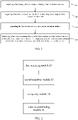
- An embodiment of the present disclosure provides a face recognition-based video recommendation method, as shown in FIG. 1 , the method includes: S1: acquiring a face image, the face image including a face of at least one user.
- the face image or a video stream of a user may be acquired through a camera on a smart television. Wherein there may be multiple users watching the smart television, so there may be multiple users in the face image.
- the method before starting to use a video recommendation function in the present disclosure, it is necessary to establish an archive in advance, i.e., before step S1, the method includes: S0: establishing the archive in advance.
- a face feature set of a user is acquired and stored in the archive.
- a process of establishing the archive i.e., step S0 includes: S01: acquiring face images of users.
- the face image or video stream is captured through the camera on the smart television, and further, the face images of the users are obtained based on the video stream captured by the camera.
- S02 obtaining face feature sets of the users from the face images of the users.
- multiple face features are obtained from the face images of the users, and then facial features and facial contour features of the users are selected from the obtained multiple face features to form face feature sets.
- S03 storing the face feature sets of the users in the archive, wherein the face feature sets of the users correspond to accounts of the users.
- the face feature sets and the features in the face feature sets are stored in the archive by means of binary fields.
- the archive is stored on cloud servers.
- the archive of persons using the smart television the face feature sets of Liu and Wang, Liu's wife, is established in advance. Specifically, face images of Liu and Wang respectively are acquired, and the face feature sets of Liu and Wang respectively are obtained from the face images of Liu and Wang according to the face recognition algorithm, and then the face feature sets of Liu and Wang respectively are stored in the archive, wherein the face feature set of Liu corresponds to an account of Liu, and the face feature set of Wang corresponds to an account of Wang.
- the user can be identified and automatically logged in when the user uses the smart television, and then a user's favorite type of video can be recommended for the user subsequently.
- S2 acquiring the face feature set of the user from the face image according to the face recognition algorithm.
- the face feature set is acquired from the face image by the face recognition algorithm
- face recognition is a biometric recognition technology for performing identity recognition based on a face feature information of a person.
- a series of related technologies for capturing face images or video streams with a video camera or a camera and automatically detecting and tracking face features in the face images, and then performing the face recognition on detected faces, are also called portrait recognition, facial recognition, etc.
- the face feature set corresponding to each of the multiple face images is obtained by a face recognition algorithm.
- step S2 includes: S21: processing the face image to obtain a processed face image.
- processing the face graphics includes performing analog-to-digital conversion, binarization processing, and smoothing processing on the face image.
- step S21 includes:
- S211 converting an acquired face image from an analog signal to a digital signal to obtain a first image.
- the face image is pre-processed, and the analog signal received by the camera is converted into a digital signal by means of an A/D converter.
- a gray value of pixel points of the image is set to 0 or 255, which is a process of rendering a whole image with a distinct black and white effect.
- certain areas of excessive brightness variation or some bright spots may appear on a remote sensing image due to factors such as sensors and atmosphere.
- a processing method to suppress the noise and level out image brightness is image smoothing.
- Image smoothing is actually low-pass filtering, and the smoothing process causes blurring of image edges.
- the noise is reduced by filtering.
- transforming of the third image in step S214 includes: at least translating, transposing, mirroring, rotating, scaling the third image, and processing the third image by geometric transformations such as translating, transposing, mirroring, rotating, scaling, etc., for correcting the systematic errors of an image acquisition system and random errors in a position of an instrument (imaging angles, perspective relationship, and even a lens itself).
- the face recognition algorithm is used to identify and extract face feature points to obtain the face feature set of the user.
- an open source OpenCV algorithm is used to extract feature points of a face.
- landmarks of the face may be obtained, that is, position points of eyes, a nose and a mouth may be obtained. Relationship between these landmarks and combinations thereof is the feature points of the face.
- a process of the face recognition algorithm may include: 1. using OpenCV's Haar facial detector or lbp facial detector to detect faces in the acquired face image; 2. creating objects of a Facemark class, which in OpenCV is using a smart pointer (PTR); 3. loading landmark detector (lbfmodel.yaml), this facial detector is trained on thousands of face images with landmark labels and obtained; 4. running the facial detector on the acquired face image, an output of the facial detector is a vector containing one or more rectangles, i.e., there may be one or more faces in the face image; 5.
- S22 performing face feature recognition on the processed face image to obtain the face features of the user.
- the camera of the television captures the face images.
- the face images are processed to obtain processed face images, and then face recognition is performed on the processed face images to obtain the face features of two users, Liu and Wang.
- S23 filtering the face features of the user to obtain the face feature set of the user, wherein the face feature set of the user at least includes facial features and facial contour features of the user.
- 4096 pixel point data can be obtained in a 64x64 image, and points on the image are divided into different subsets that often belong to isolated points, continuous curves, or continuous regions.
- a position of a user's mole may be used as a feature, sizes of the eyes may be used as a feature, a position of the eyes relative to the nose may be used as a feature, a shape of the mouth may also be used as a feature, and so on. The more features, the higher accuracy of the recognition.
- the face feature sets of multiple users are stored in the archive in advance, and the face feature set of each of the multiple users is compared with the face feature sets in the archive. During comparison, a degree of matching between each face feature set and the face feature set of each user pre-stored in the archive is determined. Each degree of matching is compared with a threshold value. If each degree of matching is less than the threshold value, it is determined that each face feature set does not match the face feature sets in the archive. If the degree of matching in each degree of matching is greater than or the threshold value, it is determined that a face feature set of at least one user matches the face feature sets in the archive.
- the comparison succeeds and the face feature set of the user matches the face feature sets in the archive; if the degree of matching between the face feature set of the user and the face feature sets in the archive is less than the threshold value, the comparison fails and the face feature set of the user does not match the face feature sets in the archive.
- the comparison succeeds; if the degree of matching between face feature sets of all users and the face feature sets in the archive is less than the threshold value, the comparison fails.
- the face feature set of the user obtained from the face image includes: a1 and a2, and the face feature sets of multiple users pre-stored in the archive include b1 and b2.
- the degree of matching between a1 and b1 is determined
- the degree of matching between a1 and b2 is determined
- the degree of matching between a2 and b1 is determined
- the degree of matching between a2 and b2 is determined.
- the first video recommendation set is a user favorite video set
- the second video recommendation set is a public favorite video set.
- step S4 includes:
- the displayed video recommendation set is determined according to the degree of matching between the face feature set of the at least one user and the face feature sets in the archive. If the face feature set of the at least one user is a1, the pre-stored face feature sets of multiple users include b1 and b2, if the degree of matching between a1 and b1 is greater than the threshold value, the first video recommendation set corresponding to b1 is played; if the degree of matching between a1 and b1 is less than the threshold value, and the degree of matching between a1 and b2 is also less than the threshold value, the second video recommendation set is displayed.
- the first video recommendation set includes a first video recommendation subset and a second video recommendation subset.
- the step of displaying the first video recommendation set if the face feature set of the at least one user matches the face feature sets in the archive includes:
- the first video recommendation subset corresponding to the user is a user favorite video set corresponding to the user and an intersection of multiple user favorite video sets corresponding to the multiple users. If the acquired user faces are multiple and there are multiple face feature sets matching the face features in the archive, the second video recommendation subset is displayed.
- the first video recommendation subset is displayed, wherein the first video recommendation subset is the user favorite video set. If the face feature sets of the multiple users match the face feature sets in the archive, the second video recommendation subset is displayed, wherein the second video recommendation subset is the intersection of multiple user favorite video sets.
- the method before the step of acquiring the face image, the method further includes determining the user favorite video set based on a view history in a user account. Specifically, the user favorite video set is determined based on the viewing history in the user account, in combination with a big data algorithm.
- the method further includes: creating an account for the at least one user; storing the face feature set of the at least one user to the archive, the face feature set of the user associated with the account of the user.
- the face recognition-based video recommendation method provided in the present disclosure may display the first video recommendation set for the at least one user.
- the television shows user's favorite content through intelligent recommendation, and the user can easily find the video he or she wants to watch, improving the user experiences, reducing the operation process for the user, and more accurately recommending content for the user, which provides convenience for the user to use.
- the intelligent recommendation provides real-time and accurate recommendation service for different scenarios through in-depth mining of the user behavior and the business features, which quickly improves the user activity and the click conversion rate.
- An embodiment of the present disclosure provides a face recognition-based video recommendation apparatus, as shown in FIG. 2 , and the apparatus includes:
- the television shows user's favorite content through intelligent recommendation, and the user can easily find the video he or she wants to watch, improving the user experiences, reducing the operation process for the user, and more accurately recommending content for the user, which provides convenience for the user to use.
- the intelligent recommendation provides real-time and accurate recommendation service for different scenarios through in-depth mining of the user behavior and the business features, which quickly improves the user activity and the click conversion rate.
- the present disclosure provides a computer device, which may be a terminal with an internal structure as shown in FIG. 3 .
- the computer device includes a processor, a memory, a network interface, a display screen, and an input device coupled via a system bus.
- the processor of the computer device is configured to provide computing and control capabilities.
- the memory of the computer device includes a non-volatile storage medium and an internal memory.
- the non-volatile storage medium stores an operating system and a computer program.
- the internal memory provides an environment for implementation of the operating system and the computer program in the non-volatile storage medium.
- the network interface of the computer device is used to communicate with an external terminal via a network connection.
- the computer program is executed by the processor in order to implement a method of generating a natural language model.
- the display screen of the computer device may be a liquid crystal display screen or an electronic ink display screen
- the input device of the computer device may be a touch layer covered on the display screen, or may also be a button, a trackball or a trackpad arranged on a housing of the computer device, or may further be an external keyboard, a trackpad, or a mouse, etc.
- FIG. 3 is only a block diagram of a part of a structure related to solutions of the present disclosure and does not constitute a limitation to the computer device to which the solution of the present disclosure is applied.
- a specific computer device may include more or less components than those illustrated in FIG. 3 , or combinations of certain components, or have a different arrangement of the components.
- An embodiment of the present disclosure provides a computer device comprising a memory and a processor, the memory storing a computer program, and the processor implementing the following steps when executing the computer program:
- An embodiment of the present disclosure further provides a computer-readable storage medium having a computer program stored thereon, and the computer program when executed by a processor implements following steps:
Landscapes
- Engineering & Computer Science (AREA)
- Theoretical Computer Science (AREA)
- Multimedia (AREA)
- General Physics & Mathematics (AREA)
- Health & Medical Sciences (AREA)
- Physics & Mathematics (AREA)
- Oral & Maxillofacial Surgery (AREA)
- General Health & Medical Sciences (AREA)
- Databases & Information Systems (AREA)
- Human Computer Interaction (AREA)
- Computer Vision & Pattern Recognition (AREA)
- Computing Systems (AREA)
- Data Mining & Analysis (AREA)
- General Engineering & Computer Science (AREA)
- Signal Processing (AREA)
- Computational Linguistics (AREA)
- Artificial Intelligence (AREA)
- Evolutionary Computation (AREA)
- Medical Informatics (AREA)
- Software Systems (AREA)
- Library & Information Science (AREA)
- Image Analysis (AREA)
- Image Processing (AREA)
- Two-Way Televisions, Distribution Of Moving Picture Or The Like (AREA)
- Collating Specific Patterns (AREA)
- Information Retrieval, Db Structures And Fs Structures Therefor (AREA)
Abstract
Description
- This disclosure claims priority benefit to
Chinese Patent Application No. 201911391967.6, filed on December 30, 2019 - The present disclosure relates to a field of smart television technology, and more specifically, to a face recognition-based video recommendation method and an apparatus, a television, and a storage medium.
- With continuous progress of science, people's living standards are constantly improving, and more and more attention are paid to life experiences. Everyone has their own hobbies and interests, and everyone's favorite videos are different. At present, when television recommends videos for users, users need to log in their accounts on the television before they get recommended contents, which is a complicated operation process and not convenient for users.
- Therefore, the existing technology needs to be improved.
- A technical problem to be solved by the present disclosure is to provide a face recognition-based video recommendation method and an apparatus, a television, and a storage medium, so as to reduce operation steps of users choosing to watch videos and to provide convenience for users to use.
- In a first aspect, an embodiment of the present disclosure provides a face recognition-based video recommendation method, the method includes:
- acquiring a face image, the face image including a face of at least one user;
- acquiring a face feature set of the user from the face image according to a face recognition algorithm;
- comparing the face feature set with face feature sets in an archive;
- displaying a first video recommendation set if a face feature set of the at least one user matches the face feature sets in the archive, and
- displaying a second video recommendation set if each face feature set does not match the face feature sets in the archive.
- In one embodiment, before the step of acquiring the face image, the method further includes:
establishing the archive in advance. - In one embodiment, the step of establishing the archive in advance further includes:
- acquiring face image of users;
- obtaining face feature sets of the users from the face images of the users according to the face recognition algorithm;
- storing the face feature sets of the users in the archive, wherein the face feature sets of the users correspond to accounts of the users.
- In one embodiment, the step of acquiring the face feature set of the user from the face image according to the face recognition algorithm, includes:
- processing the face image to obtain a processed face image;
- performing face feature recognition on the processed face image to obtain face features of the user;
- filtering the face features of the user to obtain the face feature set of the user, wherein the face feature set of the user at least includes facial features and facial contour features of the user.
- In one embodiment, the step of processing the face image to obtain the processed face image includes:
- converting an acquired face image from an analog signal to a digital signal to obtain a first image;
- performing a binarization process on the first image to obtain a second image;
- performing a smoothing process on the second image to obtain a third image;
- transforming the third image to obtain the processed face image, wherein transformation is used to correct systematic errors in the third image.
- In one embodiment, the step of displaying the first video recommendation set if the face feature set of the at least one user matches the face feature sets in the archive includes:
displaying the first video recommendation set if a degree of matching between the face feature set of the at least one user and the face feature sets in the archive is greater than or equal to a threshold value. - In one embodiment, the step of displaying the second video recommendation set if each face feature set does not match the face feature sets in the archive, further includes:
displaying the second video recommendation set if a degree of matching between the face feature set of the at least one user and the face feature sets in the archive is less than a threshold value. - In one embodiment, the first video recommendation set includes a first video recommendation subset and a second video recommendation subset; the step of displaying the first video recommendation set if the face feature set of the at least one user matches the face feature sets in the archive, further includes:
- if among the face feature set of the at least one user, a face feature set of only one user matches the face feature sets in the archive, displaying the first video recommendation subset corresponding to the only one user; and
- if among the face feature set of the at least one user, face feature sets of multiple users match the face feature sets in the archive, displaying the second video recommendation subset corresponding to the face feature sets of the multiple users.
- In one embodiment, the first video recommendation subset corresponding to the only one user is a user favorite video set corresponding to the only one user.
- In one embodiment, the second video recommendation subset corresponding to the face feature sets of the multiple users is an intersection of multiple user favorite video sets corresponding to the multiple users.
- In one embodiment, the second video recommendation set is a public favorite video set.
- In one embodiment, before the step of acquiring the face image, the method further includes:
determining the user favorite video set based on a view history in a user account. - In one embodiment, after the step of displaying the second video recommendation set if each face feature set does not match the face feature sets in the archive, the method further includes:
- creating an account for the at least one user;
- storing the face feature set of the at least one user to the archive, the face feature set of the user associated with the account of the user.
- In a second aspect, an embodiment of the present disclosure provides a face recognition-based video recommendation apparatus, the apparatus includes:
- a first acquiring module configured to acquire a face image, the face image including a face of at least one user;
- a second acquiring module configured to acquire a face feature set of the user from the face image according to a face recognition algorithm;
- a comparing module configured to compare the face feature set with face feature sets in an archive; and
- a video recommending module configured to display a first video recommendation set if a face feature set of at least one user matches the face feature sets in the archive, and to display a second video recommendation set if each face feature set does not match the face feature sets in the archive.
- In a third aspect, an embodiment of the present disclosure provides a television, including a memory and a processor, the memory stores a computer program, and the processor implements the following steps when executing the computer program:
- acquiring a face image, the face image including a face of at least one user;
- acquiring a face feature set of the user from the face image according to a face recognition algorithm;
- comparing the face feature set with face feature sets in an archive;
- displaying a first video recommendation set if a face feature set of at least one user matches the face feature sets in the archive, and
- displaying a second video recommendation set if each face feature set does not match the face feature sets in the archive.
- In a fourth aspect, an embodiment of the present disclosure further provides a computer-readable storage medium on which a computer program is stored, and when the computer program is executed by a processor, the following steps are implemented:
- acquiring a face image, the face image including a face of at least one user;
- acquiring a face feature set of the user from the face image according to a face recognition algorithm;
- comparing the face feature set with face feature sets in an archive;
- displaying a first video recommendation set if a face feature set of at least one user matches the face feature sets in the archive, and
- displaying a second video recommendation set if each face feature set does not match the face feature sets in the archive.
- Compared with the prior art, the embodiments of the present disclosure have the following advantages:
according to the method provided by the embodiments of the present disclosure, a face image is acquired first, the face image including a face of at least one user; and then a face feature set of the user is obtained from the face image according to a face recognition algorithm; finally, the face feature set is compared with face feature sets in an archive; if a face feature set of at least one user matches the face feature sets in the archive, a first video recommendation set is displayed; if each face feature set does not match the face feature sets in the archive, a second video recommendation set is displayed. Using the method to recommend video to users reduces the operation steps of users choosing to watch videos and provides convenience for users to use. - To illustrate the embodiments of the present disclosure or the technical solutions in the prior art clearly, appended drawings required in the descriptions of the embodiments and the prior arts are briefly described as follows. Obviously, the following drawings merely illustrate some embodiments of the present disclosure. For those skilled in the art, other drawings may be acquired according to the drawings without devoting effort.
-
FIG. 1 is a schematic flowchart of a face recognition-based video recommendation method in an embodiment of the present disclosure. -
FIG. 2 is a schematic structural diagram of a face recognition-based video recommendation apparatus in an embodiment of the present disclosure. -
FIG. 3 is an internal structural diagram of a computer device in an embodiment of the present disclosure. - To make those skilled in the art better understand the solutions of the present disclosure, the technical solutions in the embodiments of the present disclosure will be clearly and completely described below with reference to the accompanying drawings in the embodiments of the present disclosure. Obviously, the described embodiments are some of the embodiments of the present disclosure rather than all of the embodiments. All other embodiments obtained by a person skilled in the art based on the embodiments of the present disclosure without creative efforts shall fall within the protection scope of the present disclosure.
- After research, it is found that in related technologies, when television recommends videos for users, the users need to log in their accounts on the television before they get recommended content, which is a complicated operation process and is not a good experience for the users.
- To solve the above problem, in the embodiment of the present disclosure, the television can acquire an image of a user through a camera, and then recognize the user based on the acquired image face, and combine with big data to recommend to the user a video that the user may like according to a result of recognition. Through a video recommendation method in the embodiment of the present disclosure, a smart television shows the user's favorite content through recommendation, and the user can easily find a video he or she wants to watch, improving user experiences, reducing an operation process for the user, and more accurately recommending content for the user, which provides convenience for the user to use. At a same time, an intelligent recommendation provides real-time and accurate recommendation service for different scenarios through in-depth mining of user behavior and business features, which quickly improves user activity and a click conversion rate.
- Various non-limiting embodiments of the present disclosure will be described in detail below with reference to the accompanying drawings.
- An embodiment of the present disclosure provides a face recognition-based video recommendation method, as shown in
FIG. 1 , the method includes:
S1: acquiring a face image, the face image including a face of at least one user. - In the embodiment of the present disclosure, the face image or a video stream of a user may be acquired through a camera on a smart television. Wherein there may be multiple users watching the smart television, so there may be multiple users in the face image.
- In an optional manner of an embodiment of the present disclosure, before starting to use a video recommendation function in the present disclosure, it is necessary to establish an archive in advance, i.e., before step S1, the method includes:
S0: establishing the archive in advance. - In the embodiment of the present disclosure, a face feature set of a user is acquired and stored in the archive. Specifically, a process of establishing the archive, i.e., step S0 includes:
S01: acquiring face images of users. - In the embodiment of the present disclosure, the face image or video stream is captured through the camera on the smart television, and further, the face images of the users are obtained based on the video stream captured by the camera.
- S02: obtaining face feature sets of the users from the face images of the users.
- In the embodiment of the present disclosure, based on a face recognition algorithm, multiple face features are obtained from the face images of the users, and then facial features and facial contour features of the users are selected from the obtained multiple face features to form face feature sets.
- S03: storing the face feature sets of the users in the archive, wherein the face feature sets of the users correspond to accounts of the users.
- In the embodiment of the present disclosure, the face feature sets and the features in the face feature sets are stored in the archive by means of binary fields. The archive is stored on cloud servers.
- For example, before a user Liu uses a video recommendation function of the smart television, the archive of persons using the smart television, the face feature sets of Liu and Wang, Liu's wife, is established in advance. Specifically, face images of Liu and Wang respectively are acquired, and the face feature sets of Liu and Wang respectively are obtained from the face images of Liu and Wang according to the face recognition algorithm, and then the face feature sets of Liu and Wang respectively are stored in the archive, wherein the face feature set of Liu corresponds to an account of Liu, and the face feature set of Wang corresponds to an account of Wang. Through the above steps, the user can be identified and automatically logged in when the user uses the smart television, and then a user's favorite type of video can be recommended for the user subsequently.
- S2: acquiring the face feature set of the user from the face image according to the face recognition algorithm.
- In the embodiment of the present disclosure, the face feature set is acquired from the face image by the face recognition algorithm, and face recognition is a biometric recognition technology for performing identity recognition based on a face feature information of a person. A series of related technologies for capturing face images or video streams with a video camera or a camera and automatically detecting and tracking face features in the face images, and then performing the face recognition on detected faces, are also called portrait recognition, facial recognition, etc. When there are multiple face images, the face feature set corresponding to each of the multiple face images is obtained by a face recognition algorithm.
- In an optional manner of the embodiment of the present disclosure, step S2 includes:
S21: processing the face image to obtain a processed face image. - In the embodiment of the present disclosure, processing the face graphics includes performing analog-to-digital conversion, binarization processing, and smoothing processing on the face image.
- Specifically, step S21 includes:
- S211: converting an acquired face image from an analog signal to a digital signal to obtain a first image.
- In the embodiment of the present disclosure, the face image is pre-processed, and the analog signal received by the camera is converted into a digital signal by means of an A/D converter.
- S212: performing the binarization process on the first image to obtain a second image.
- In the embodiment of the present disclosure, a gray value of pixel points of the image is set to 0 or 255, which is a process of rendering a whole image with a distinct black and white effect.
- S213: performing a smoothing process on the second image to obtain a third image.
- In the embodiment of the present disclosure, certain areas of excessive brightness variation or some bright spots (also called noise) may appear on a remote sensing image due to factors such as sensors and atmosphere. A processing method to suppress the noise and level out image brightness is image smoothing. Image smoothing is actually low-pass filtering, and the smoothing process causes blurring of image edges. In order to suppress the noise of a target image under a condition that image detail features are retained as much as possible, the noise is reduced by filtering.
- S214: transforming the third image to obtain the processed face image, wherein transformation is used to correct systematic errors in the third image.
- In the embodiment of the present disclosure, transforming of the third image in step S214 includes: at least translating, transposing, mirroring, rotating, scaling the third image, and processing the third image by geometric transformations such as translating, transposing, mirroring, rotating, scaling, etc., for correcting the systematic errors of an image acquisition system and random errors in a position of an instrument (imaging angles, perspective relationship, and even a lens itself).
- By processing the acquired face image as described above, irrelevant information in the acquired face image is eliminated, useful and real information in the acquired face image is highlighted, and the processed face image facilitates the face recognition of the user in subsequent steps with better recognition results.
- In the embodiment of the present disclosure, the face recognition algorithm is used to identify and extract face feature points to obtain the face feature set of the user. For example, an open source OpenCV algorithm is used to extract feature points of a face. First, use a facial detector of OpenCV to detect the face, and landmarks of the face may be obtained, that is, position points of eyes, a nose and a mouth may be obtained. Relationship between these landmarks and combinations thereof is the feature points of the face.
- In the embodiment of the present disclosure, a process of the face recognition algorithm may include: 1. using OpenCV's Haar facial detector or lbp facial detector to detect faces in the acquired face image; 2. creating objects of a Facemark class, which in OpenCV is using a smart pointer (PTR); 3. loading landmark detector (lbfmodel.yaml), this facial detector is trained on thousands of face images with landmark labels and obtained; 4. running the facial detector on the acquired face image, an output of the facial detector is a vector containing one or more rectangles, i.e., there may be one or more faces in the face image; 5. capturing a face ROI of an original image according to a face rectangular box, and then using a facial landmark detector to detect the face ROI, for each face we can obtain multiple landmarks and store them in the set; 6. according to the obtained landmarks, we can draw them on the face image and display them.
- S22: performing face feature recognition on the processed face image to obtain the face features of the user.
- For example, while Liu and his wife Wang are watching television together, the camera of the television captures the face images. The face images are processed to obtain processed face images, and then face recognition is performed on the processed face images to obtain the face features of two users, Liu and Wang.
- S23: filtering the face features of the user to obtain the face feature set of the user, wherein the face feature set of the user at least includes facial features and facial contour features of the user.
- In the embodiment of the present disclosure, if there are multiple user faces in the face image, face feature sets of multiple users are obtained.
- For example, 4096 pixel point data can be obtained in a 64x64 image, and points on the image are divided into different subsets that often belong to isolated points, continuous curves, or continuous regions. A position of a user's mole may be used as a feature, sizes of the eyes may be used as a feature, a position of the eyes relative to the nose may be used as a feature, a shape of the mouth may also be used as a feature, and so on. The more features, the higher accuracy of the recognition.
- S3: comparing the face feature set with face feature sets in the archive.
- In the embodiment of the present disclosure, the face feature sets of multiple users are stored in the archive in advance, and the face feature set of each of the multiple users is compared with the face feature sets in the archive. During comparison, a degree of matching between each face feature set and the face feature set of each user pre-stored in the archive is determined. Each degree of matching is compared with a threshold value. If each degree of matching is less than the threshold value, it is determined that each face feature set does not match the face feature sets in the archive. If the degree of matching in each degree of matching is greater than or the threshold value, it is determined that a face feature set of at least one user matches the face feature sets in the archive.
- In a case of only one user, if the degree of matching between the face feature set of the user and the face feature sets in the archive is greater than or equal to the threshold value, the comparison succeeds and the face feature set of the user matches the face feature sets in the archive; if the degree of matching between the face feature set of the user and the face feature sets in the archive is less than the threshold value, the comparison fails and the face feature set of the user does not match the face feature sets in the archive. In a case of multiple users, if the degree of matching between a face feature set of one user and the face feature sets in the archive is greater than or equal to the threshold value, the comparison succeeds; if the degree of matching between face feature sets of all users and the face feature sets in the archive is less than the threshold value, the comparison fails.
- For example, the face feature set of the user obtained from the face image includes: a1 and a2, and the face feature sets of multiple users pre-stored in the archive include b1 and b2. During the comparison, the degree of matching between a1 and b1 is determined, the degree of matching between a1 and b2 is determined, the degree of matching between a2 and b1 is determined, and the degree of matching between a2 and b2 is determined.
- S4: displaying a first video recommendation set if the face feature set of the at least one user matches the face feature sets in the archive and displaying a second video recommendation set if each face feature set does not match the face feature sets in the archive.
- In the embodiment of the present disclosure, the first video recommendation set is a user favorite video set, and the second video recommendation set is a public favorite video set.
- Specifically, step S4 includes:
- S41: displaying the first video recommendation set if the degree of matching between the face feature set of the at least one user and the face feature sets in the archive is greater than or equal to the threshold value.
- S42: displaying the second video recommendation set if the degree of matching between the face feature set of the at least one user and the face feature sets in the archive is less than the threshold value.
- In the present disclosure, the displayed video recommendation set is determined according to the degree of matching between the face feature set of the at least one user and the face feature sets in the archive. If the face feature set of the at least one user is a1, the pre-stored face feature sets of multiple users include b1 and b2, if the degree of matching between a1 and b1 is greater than the threshold value, the first video recommendation set corresponding to b1 is played; if the degree of matching between a1 and b1 is less than the threshold value, and the degree of matching between a1 and b2 is also less than the threshold value, the second video recommendation set is displayed.
- In an optional manner of an embodiment of the present disclosure, the first video recommendation set includes a first video recommendation subset and a second video recommendation subset. The step of displaying the first video recommendation set if the face feature set of the at least one user matches the face feature sets in the archive includes:
- if among the face feature set of the at least one user, a face feature set of only one user matches the face feature sets in the archive, displaying the first video recommendation subset;
- if among the face feature set of the at least one user, face feature sets of multiple users match the face feature sets in the archive, displaying the second video recommendation subset.
- In the embodiment of the present disclosure, the first video recommendation subset corresponding to the user is a user favorite video set corresponding to the user and an intersection of multiple user favorite video sets corresponding to the multiple users. If the acquired user faces are multiple and there are multiple face feature sets matching the face features in the archive, the second video recommendation subset is displayed.
- In the embodiment of the present disclosure, if a face feature set of one user matches the face feature sets in the archive, the first video recommendation subset is displayed, wherein the first video recommendation subset is the user favorite video set. If the face feature sets of the multiple users match the face feature sets in the archive, the second video recommendation subset is displayed, wherein the second video recommendation subset is the intersection of multiple user favorite video sets.
- In the embodiment of the present disclosure, before the step of acquiring the face image, the method further includes determining the user favorite video set based on a view history in a user account. Specifically, the user favorite video set is determined based on the viewing history in the user account, in combination with a big data algorithm.
- After the step of displaying the second video recommendation set if each face feature set does not match the face feature sets in the archive, the method further includes: creating an account for the at least one user; storing the face feature set of the at least one user to the archive, the face feature set of the user associated with the account of the user. Thus, during a next use of the at least one user, the face recognition-based video recommendation method provided in the present disclosure may display the first video recommendation set for the at least one user.
- Through a video recommendation method in the embodiment of the present disclosure, the television shows user's favorite content through intelligent recommendation, and the user can easily find the video he or she wants to watch, improving the user experiences, reducing the operation process for the user, and more accurately recommending content for the user, which provides convenience for the user to use. At a same time, the intelligent recommendation provides real-time and accurate recommendation service for different scenarios through in-depth mining of the user behavior and the business features, which quickly improves the user activity and the click conversion rate.
- An embodiment of the present disclosure provides a face recognition-based video recommendation apparatus, as shown in
FIG. 2 , and the apparatus includes: - a first acquiring
module 20 configured to acquire a face image, the face image including a face of at least one user; - a second acquiring
module 22 configured to acquire a face feature set of the user from the face image according to a face recognition algorithm; - a comparing
module 24 configured to compare the face feature set with face feature sets in an archive; and - a
video recommending module 26 configured to display a first video recommendation set if a face feature set of at least one user matches the face feature sets in the archive, and to display a second video recommendation set if each face feature set does not match the face feature sets in the archive. - Through the video recommendation method in the embodiment of present disclosure, the television shows user's favorite content through intelligent recommendation, and the user can easily find the video he or she wants to watch, improving the user experiences, reducing the operation process for the user, and more accurately recommending content for the user, which provides convenience for the user to use. At a same time, the intelligent recommendation provides real-time and accurate recommendation service for different scenarios through in-depth mining of the user behavior and the business features, which quickly improves the user activity and the click conversion rate.
- In one embodiment, the present disclosure provides a computer device, which may be a terminal with an internal structure as shown in
FIG. 3 . The computer device includes a processor, a memory, a network interface, a display screen, and an input device coupled via a system bus. Wherein, the processor of the computer device is configured to provide computing and control capabilities. The memory of the computer device includes a non-volatile storage medium and an internal memory. The non-volatile storage medium stores an operating system and a computer program. The internal memory provides an environment for implementation of the operating system and the computer program in the non-volatile storage medium. The network interface of the computer device is used to communicate with an external terminal via a network connection. The computer program is executed by the processor in order to implement a method of generating a natural language model. The display screen of the computer device may be a liquid crystal display screen or an electronic ink display screen, and the input device of the computer device may be a touch layer covered on the display screen, or may also be a button, a trackball or a trackpad arranged on a housing of the computer device, or may further be an external keyboard, a trackpad, or a mouse, etc. - It should be understood by those skilled in the art that the structure illustrated in
FIG. 3 is only a block diagram of a part of a structure related to solutions of the present disclosure and does not constitute a limitation to the computer device to which the solution of the present disclosure is applied. A specific computer device may include more or less components than those illustrated inFIG. 3 , or combinations of certain components, or have a different arrangement of the components. - An embodiment of the present disclosure provides a computer device comprising a memory and a processor, the memory storing a computer program, and the processor implementing the following steps when executing the computer program:
- acquiring a face image, the face image including a face of at least one user;
- acquiring a face feature set of the user from the face image according to a face recognition algorithm;
- comparing the face feature set with face feature sets in an archive;
- displaying a first video recommendation set if a face feature set of the at least one user matches the face feature sets in the archive, and
- displaying a second video recommendation set if each face feature set does not match the face feature sets in the archive.
- An embodiment of the present disclosure further provides a computer-readable storage medium having a computer program stored thereon, and the computer program when executed by a processor implements following steps:
- acquiring a face image, the face image comprising a face of at least one user;
- acquiring a face feature set of the user from the face image according to a face recognition algorithm;
- comparing the face feature set with face feature sets in an archive;
- displaying a first video recommendation set if a face feature set of the at least one user matches the face feature sets in the archive, and
- displaying a second video recommendation set if each face feature set does not match the face feature sets in the archive.
- The technical features of the above-mentioned implementations may be combined in any combination. For brevity of description, not all possible combinations of the technical features in the above implementations are described. However, as long as there is no contradiction in combination of these technical features, it should be considered as the scope of the present specification.
- The implementations described above merely provide several implementations of the present disclosure, and their descriptions are relatively specific and detailed, but they are not to be construed as limiting the protection scope of the present disclosure. It should be noted that for those of ordinary skill in the art, variations and improvements may be made without departing from the concept of the present disclosure, which fall within the protection scope of the present disclosure. The protection scope of the present disclosure is defined by the appended claims.
Claims (16)
- A face recognition-based video recommendation method, characterized in that the method comprises:acquiring a face image, the face image comprising a face of at least one user;acquiring a face feature set of the user from the face image according to a face recognition algorithm;comparing the face feature set with face feature sets in an archive;displaying a first video recommendation set if a face feature set of the at least one user matches the face feature sets in the archive, anddisplaying a second video recommendation set if each face feature set does not match the face feature sets in the archive.
- The face recognition-based video recommendation method as claimed in claim 1, characterized in that before the step of acquiring the face image, the method further comprises: establishing the archive in advance.
- The face recognition-based video recommendation method as claimed in claim 2, characterized in that the step of establishing the archive in advance further comprises:acquiring face images of users;obtaining face feature sets of the users from the face images of the users according to the face recognition algorithm; andstoring the face feature sets of the users in the archive, wherein the face feature sets of the users correspond to accounts of the users.
- The face recognition-based video recommendation method as claimed in claim 1, characterized in that the step of acquiring the face feature set of the user from the face image according to the face recognition algorithm further comprises:processing the face image to obtain a processed face image;performing face feature recognition on the processed face image to obtain face features of the user; andfiltering the face features of the user to obtain the face feature set of the user, wherein the face feature set of the user at least includes facial features and facial contour features of the user.
- The face recognition-based video recommendation method as claimed in claim 4, characterized in that the step of processing the face image to obtain the processed face image comprises:converting an acquired face image from an analog signal to a digital signal to obtain a first image;performing a binarization process on the first image to obtain a second image;performing a smoothing process on the second image to obtain a third image; andtransforming the third image to obtain the processed face image, wherein transformation is used to correct systematic errors in the third image.
- The face recognition-based video recommendation method as claimed in claim 1, characterized in that the step of displaying the first video recommendation set if the face feature set of the at least one user matches the face feature sets in the archive comprises:
displaying the first video recommendation set if a degree of matching between the face feature set of the at least one user and the face feature sets in the archive is greater than or equal to a threshold value. - The face recognition-based video recommendation method as claimed in claim 1, characterized in that the step of displaying the second video recommendation set if each face feature set does not match the face feature sets in the archive comprises:
displaying the second video recommendation set if a degree of matching between the face feature set of the at least one user and the face feature sets in the archive is less than a threshold value. - The face recognition-based video recommendation method as claimed in claim 1, characterized in that the first video recommendation set includes a first video recommendation subset and a second video recommendation subset; the step of displaying the first video recommendation set if the face feature set of the at least one user matches the face feature sets in the archive comprises:if among the face feature set of the at least one user, a face feature set of only one user matches the face feature sets in the archive, displaying the first video recommendation subset corresponding to the only one user; andif among the face feature set of the at least one user, face feature sets of multiple users match the face feature sets in the archive, displaying the second video recommendation subset corresponding to the face feature sets of the multiple users.
- The face recognition-based video recommendation method as claimed in claim 8, characterized in that the first video recommendation subset corresponding to the only one user is a user favorite video set corresponding to the only one user.
- The face recognition-based video recommendation method as claimed in claim 8, characterized in that the second video recommendation subset corresponding to the face feature sets of the multiple users is an intersection of multiple user favorite video sets corresponding to the multiple users.
- The face recognition-based video recommendation method as claimed in claim 1, characterized in that the second video recommendation set is a public favorite video set.
- The face recognition-based video recommendation method as claimed in claim 1, characterized in that before the step of acquiring the face image, the method further comprises:
determining a user favorite video set based on a view history in a user account. - The face recognition-based video recommendation method as claimed in claim 1, characterized in that after the step of displaying the second video recommendation set if each face feature set does not match the face feature sets in the archive, the method further comprises:creating an account for the at least one user; andstoring the face feature set of the at least one user to the archive, the face feature set of the user associated with the account of the user.
- A face recognition-based video recommendation apparatus, characterized in that the apparatus comprises:a first acquiring module configured to acquire a face image, the face image including a face of at least one user;a second acquiring module configured to acquire a face feature set of the user from the face image according to a face recognition algorithm; anda comparing module configured to compare the face feature set with face feature sets in an archive; anda video recommending module configured to display a first video recommendation set if a face feature set of at least one user matches the face feature sets in the archive, and to display a second video recommendation set if each face feature set does not match the face feature sets in the archive.
- A television, the television comprising: a memory and a processor, the memory storing a computer program, characterized in that the processor implements the steps of the method as claimed in any one of claims 1-13 when executing the computer program.
- A computer-readable storage medium, on which a computer program is stored, characterized in that when the computer program is executed by a processor, the steps of the method as claimed in any one of claims 1-13 are implemented.
Applications Claiming Priority (2)
| Application Number | Priority Date | Filing Date | Title |
|---|---|---|---|
| CN201911391967.6A CN113127681A (en) | 2019-12-30 | 2019-12-30 | Video recommendation method and device based on face recognition and television |
| PCT/CN2020/110999 WO2021135285A1 (en) | 2019-12-30 | 2020-08-25 | Face recognition-based video recommendation method and apparatus, and television |
Publications (3)
| Publication Number | Publication Date |
|---|---|
| EP4086785A1 true EP4086785A1 (en) | 2022-11-09 |
| EP4086785A4 EP4086785A4 (en) | 2024-01-10 |
| EP4086785B1 EP4086785B1 (en) | 2026-01-28 |
Family
ID=76686393
Family Applications (1)
| Application Number | Title | Priority Date | Filing Date |
|---|---|---|---|
| EP20908558.8A Active EP4086785B1 (en) | 2019-12-30 | 2020-08-25 | Face recognition-based video recommendation method and apparatus, and television |
Country Status (5)
| Country | Link |
|---|---|
| US (1) | US12524985B2 (en) |
| EP (1) | EP4086785B1 (en) |
| JP (1) | JP7675725B2 (en) |
| CN (1) | CN113127681A (en) |
| WO (1) | WO2021135285A1 (en) |
Families Citing this family (1)
| Publication number | Priority date | Publication date | Assignee | Title |
|---|---|---|---|---|
| CN114117125B (en) * | 2021-12-02 | 2025-04-29 | 北京达佳互联信息技术有限公司 | Video push method, device, equipment, medium and computer program product |
Family Cites Families (15)
| Publication number | Priority date | Publication date | Assignee | Title |
|---|---|---|---|---|
| US20030097196A1 (en) * | 2001-11-13 | 2003-05-22 | Koninklijke Philips Electronics N.V. | Method and apparatus for generating a stereotypical profile for recommending items of interest using item-based clustering |
| CN1788280A (en) | 2003-05-12 | 2006-06-14 | 皇家飞利浦电子股份有限公司 | Apparatus and method for performing profile based collaborative filtering |
| JP2006324809A (en) * | 2005-05-17 | 2006-11-30 | Sony Corp | Information processing apparatus, information processing method, and computer program |
| JP4820712B2 (en) * | 2005-08-05 | 2011-11-24 | アイシン・エィ・ダブリュ株式会社 | Road marking recognition system |
| US8660319B2 (en) * | 2006-05-05 | 2014-02-25 | Parham Aarabi | Method, system and computer program product for automatic and semi-automatic modification of digital images of faces |
| US10517521B2 (en) * | 2010-06-07 | 2019-12-31 | Affectiva, Inc. | Mental state mood analysis using heart rate collection based on video imagery |
| JP2013109537A (en) | 2011-11-21 | 2013-06-06 | Nippon Hoso Kyokai <Nhk> | Interest degree estimation device and program thereof |
| CN103618918A (en) * | 2013-11-27 | 2014-03-05 | 青岛海信电器股份有限公司 | Method and device for controlling display of smart television |
| KR102197098B1 (en) * | 2014-02-07 | 2020-12-30 | 삼성전자주식회사 | Method and apparatus for recommending content |
| CN104363474A (en) * | 2014-11-14 | 2015-02-18 | 四川长虹电器股份有限公司 | Multiuser-based smart television program recommending system and method |
| CN105263052A (en) * | 2015-10-13 | 2016-01-20 | 微鲸科技有限公司 | Audio-video push method and system based on face identification |
| CN105979364A (en) * | 2015-12-01 | 2016-09-28 | 乐视致新电子科技(天津)有限公司 | Smart television user data discrimination method and device |
| CN105868259A (en) * | 2015-12-29 | 2016-08-17 | 乐视致新电子科技(天津)有限公司 | Video recommendation method and device based on face identification |
| WO2018056478A1 (en) * | 2016-09-23 | 2018-03-29 | 에픽트, 인크. | Content menu-providing apparatus and method |
| JP2018163460A (en) * | 2017-03-24 | 2018-10-18 | ソニー株式会社 | Information processing apparatus, information processing method, and program |
-
2019
- 2019-12-30 CN CN201911391967.6A patent/CN113127681A/en active Pending
-
2020
- 2020-08-25 EP EP20908558.8A patent/EP4086785B1/en active Active
- 2020-08-25 WO PCT/CN2020/110999 patent/WO2021135285A1/en not_active Ceased
- 2020-08-25 JP JP2022537838A patent/JP7675725B2/en active Active
- 2020-08-25 US US17/758,186 patent/US12524985B2/en active Active
Also Published As
| Publication number | Publication date |
|---|---|
| CN113127681A (en) | 2021-07-16 |
| EP4086785A4 (en) | 2024-01-10 |
| JP2023508306A (en) | 2023-03-02 |
| EP4086785B1 (en) | 2026-01-28 |
| JP7675725B2 (en) | 2025-05-13 |
| US20220374469A1 (en) | 2022-11-24 |
| WO2021135285A1 (en) | 2021-07-08 |
| US12524985B2 (en) | 2026-01-13 |
Similar Documents
| Publication | Publication Date | Title |
|---|---|---|
| US11367310B2 (en) | Method and apparatus for identity verification, electronic device, computer program, and storage medium | |
| KR100947990B1 (en) | Gaze Tracking Device Using Differential Image Entropy and Its Method | |
| US10318797B2 (en) | Image processing apparatus and image processing method | |
| US9058536B1 (en) | Image-based character recognition | |
| US20120051605A1 (en) | Method and apparatus of a gesture based biometric system | |
| TW201911130A (en) | Method and device for remake image recognition | |
| CN105654039B (en) | The method and apparatus of image procossing | |
| EP2336949A1 (en) | Apparatus and method for registering plurality of facial images for face recognition | |
| CN111091590A (en) | Image processing method, image processing device, storage medium and electronic equipment | |
| CN107172354A (en) | Method for processing video frequency, device, electronic equipment and storage medium | |
| JP6326847B2 (en) | Image processing apparatus, image processing method, and image processing program | |
| US20090169108A1 (en) | System and method for recognizing smiling faces captured by a mobile electronic device | |
| CN111429338A (en) | Method, apparatus, device and computer-readable storage medium for processing video | |
| CN107644105A (en) | Question searching method and device | |
| CN109313797B (en) | Image display method and terminal | |
| CN112422817A (en) | Image processing method and device | |
| CN112488072A (en) | Method, system and equipment for acquiring face sample set | |
| EP4086785B1 (en) | Face recognition-based video recommendation method and apparatus, and television | |
| CN111199169A (en) | Image processing method and device | |
| CN106599889A (en) | Method and apparatus for recognizing characters | |
| CN113225451B (en) | Image processing method and device and electronic equipment | |
| CN108764033A (en) | Auth method and device, electronic equipment, computer program and storage medium | |
| US11037015B2 (en) | Identification of key points in multimedia data elements | |
| EP2336975A1 (en) | Apparatus and method for image registration in portable terminal | |
| CN105808180B (en) | Picture adjusting method and system |
Legal Events
| Date | Code | Title | Description |
|---|---|---|---|
| STAA | Information on the status of an ep patent application or granted ep patent |
Free format text: STATUS: THE INTERNATIONAL PUBLICATION HAS BEEN MADE |
|
| PUAI | Public reference made under article 153(3) epc to a published international application that has entered the european phase |
Free format text: ORIGINAL CODE: 0009012 |
|
| STAA | Information on the status of an ep patent application or granted ep patent |
Free format text: STATUS: REQUEST FOR EXAMINATION WAS MADE |
|
| 17P | Request for examination filed |
Effective date: 20220727 |
|
| AK | Designated contracting states |
Kind code of ref document: A1 Designated state(s): AL AT BE BG CH CY CZ DE DK EE ES FI FR GB GR HR HU IE IS IT LI LT LU LV MC MK MT NL NO PL PT RO RS SE SI SK SM TR |
|
| DAV | Request for validation of the european patent (deleted) | ||
| DAX | Request for extension of the european patent (deleted) | ||
| A4 | Supplementary search report drawn up and despatched |
Effective date: 20231212 |
|
| RIC1 | Information provided on ipc code assigned before grant |
Ipc: G06V 40/16 20220101ALI20231206BHEP Ipc: G06V 10/74 20220101ALI20231206BHEP Ipc: G06F 16/783 20190101ALI20231206BHEP Ipc: G06F 16/735 20190101AFI20231206BHEP |
|
| GRAP | Despatch of communication of intention to grant a patent |
Free format text: ORIGINAL CODE: EPIDOSNIGR1 |
|
| STAA | Information on the status of an ep patent application or granted ep patent |
Free format text: STATUS: GRANT OF PATENT IS INTENDED |
|
| INTG | Intention to grant announced |
Effective date: 20251112 |
|
| GRAS | Grant fee paid |
Free format text: ORIGINAL CODE: EPIDOSNIGR3 |
|
| GRAA | (expected) grant |
Free format text: ORIGINAL CODE: 0009210 |
|
| STAA | Information on the status of an ep patent application or granted ep patent |
Free format text: STATUS: THE PATENT HAS BEEN GRANTED |
|
| P01 | Opt-out of the competence of the unified patent court (upc) registered |
Free format text: CASE NUMBER: UPC_APP_0015055_4086785/2025 Effective date: 20251128 |
|
| AK | Designated contracting states |
Kind code of ref document: B1 Designated state(s): AL AT BE BG CH CY CZ DE DK EE ES FI FR GB GR HR HU IE IS IT LI LT LU LV MC MK MT NL NO PL PT RO RS SE SI SK SM TR |
|
| RAP3 | Party data changed (applicant data changed or rights of an application transferred) |
Owner name: SHENZHEN TCL DIGITAL TECHNOLOGY LTD. |
|
| REG | Reference to a national code |
Ref country code: CH Ref legal event code: F10 Free format text: ST27 STATUS EVENT CODE: U-0-0-F10-F00 (AS PROVIDED BY THE NATIONAL OFFICE) Effective date: 20260128 Ref country code: GB Ref legal event code: FG4D |
|
| RAP4 | Party data changed (patent owner data changed or rights of a patent transferred) |
Owner name: SHENZHEN TCL DIGITAL TECHNOLOGY LTD. |
|
| REG | Reference to a national code |
Ref country code: IE Ref legal event code: FG4D |
|
| REG | Reference to a national code |
Ref country code: DE Ref legal event code: R096 Ref document number: 602020066346 Country of ref document: DE |
|
| REG | Reference to a national code |
Ref country code: NL Ref legal event code: MP Effective date: 20260128 |
|
| PG25 | Lapsed in a contracting state [announced via postgrant information from national office to epo] |
Ref country code: NL Free format text: LAPSE BECAUSE OF FAILURE TO SUBMIT A TRANSLATION OF THE DESCRIPTION OR TO PAY THE FEE WITHIN THE PRESCRIBED TIME-LIMIT Effective date: 20260128 |
|
| REG | Reference to a national code |
Ref country code: AT Ref legal event code: MK05 Ref document number: 1882279 Country of ref document: AT Kind code of ref document: T Effective date: 20260128 |
|
| PG25 | Lapsed in a contracting state [announced via postgrant information from national office to epo] |
Ref country code: RS Free format text: LAPSE BECAUSE OF FAILURE TO SUBMIT A TRANSLATION OF THE DESCRIPTION OR TO PAY THE FEE WITHIN THE PRESCRIBED TIME-LIMIT Effective date: 20260428 |
|
| PG25 | Lapsed in a contracting state [announced via postgrant information from national office to epo] |
Ref country code: ES Free format text: LAPSE BECAUSE OF FAILURE TO SUBMIT A TRANSLATION OF THE DESCRIPTION OR TO PAY THE FEE WITHIN THE PRESCRIBED TIME-LIMIT Effective date: 20260128 |
|
| PG25 | Lapsed in a contracting state [announced via postgrant information from national office to epo] |
Ref country code: PL Free format text: LAPSE BECAUSE OF FAILURE TO SUBMIT A TRANSLATION OF THE DESCRIPTION OR TO PAY THE FEE WITHIN THE PRESCRIBED TIME-LIMIT Effective date: 20260128 |
|
| PG25 | Lapsed in a contracting state [announced via postgrant information from national office to epo] |
Ref country code: GR Free format text: LAPSE BECAUSE OF FAILURE TO SUBMIT A TRANSLATION OF THE DESCRIPTION OR TO PAY THE FEE WITHIN THE PRESCRIBED TIME-LIMIT Effective date: 20260429 |
|
| REG | Reference to a national code |
Ref country code: LT Ref legal event code: MG9D |
|
| PG25 | Lapsed in a contracting state [announced via postgrant information from national office to epo] |
Ref country code: LT Free format text: LAPSE BECAUSE OF FAILURE TO SUBMIT A TRANSLATION OF THE DESCRIPTION OR TO PAY THE FEE WITHIN THE PRESCRIBED TIME-LIMIT Effective date: 20260128 |
|
| PG25 | Lapsed in a contracting state [announced via postgrant information from national office to epo] |
Ref country code: NO Free format text: LAPSE BECAUSE OF FAILURE TO SUBMIT A TRANSLATION OF THE DESCRIPTION OR TO PAY THE FEE WITHIN THE PRESCRIBED TIME-LIMIT Effective date: 20260428 |
|
| PG25 | Lapsed in a contracting state [announced via postgrant information from national office to epo] |
Ref country code: AT Free format text: LAPSE BECAUSE OF FAILURE TO SUBMIT A TRANSLATION OF THE DESCRIPTION OR TO PAY THE FEE WITHIN THE PRESCRIBED TIME-LIMIT Effective date: 20260128 Ref country code: SE Free format text: LAPSE BECAUSE OF FAILURE TO SUBMIT A TRANSLATION OF THE DESCRIPTION OR TO PAY THE FEE WITHIN THE PRESCRIBED TIME-LIMIT Effective date: 20260128 Ref country code: FI Free format text: LAPSE BECAUSE OF FAILURE TO SUBMIT A TRANSLATION OF THE DESCRIPTION OR TO PAY THE FEE WITHIN THE PRESCRIBED TIME-LIMIT Effective date: 20260128 |
|
| PG25 | Lapsed in a contracting state [announced via postgrant information from national office to epo] |
Ref country code: HR Free format text: LAPSE BECAUSE OF FAILURE TO SUBMIT A TRANSLATION OF THE DESCRIPTION OR TO PAY THE FEE WITHIN THE PRESCRIBED TIME-LIMIT Effective date: 20260128 |
|
| PG25 | Lapsed in a contracting state [announced via postgrant information from national office to epo] |
Ref country code: PT Free format text: LAPSE BECAUSE OF FAILURE TO SUBMIT A TRANSLATION OF THE DESCRIPTION OR TO PAY THE FEE WITHIN THE PRESCRIBED TIME-LIMIT Effective date: 20260528 Ref country code: IS Free format text: LAPSE BECAUSE OF FAILURE TO SUBMIT A TRANSLATION OF THE DESCRIPTION OR TO PAY THE FEE WITHIN THE PRESCRIBED TIME-LIMIT Effective date: 20260528 |
|
| PG25 | Lapsed in a contracting state [announced via postgrant information from national office to epo] |
Ref country code: LV Free format text: LAPSE BECAUSE OF FAILURE TO SUBMIT A TRANSLATION OF THE DESCRIPTION OR TO PAY THE FEE WITHIN THE PRESCRIBED TIME-LIMIT Effective date: 20260128 |
|
| PG25 | Lapsed in a contracting state [announced via postgrant information from national office to epo] |
Ref country code: BG Free format text: LAPSE BECAUSE OF FAILURE TO SUBMIT A TRANSLATION OF THE DESCRIPTION OR TO PAY THE FEE WITHIN THE PRESCRIBED TIME-LIMIT Effective date: 20260128 |