EP4086446B1 - Hybrid electric idle and braking for an aircraft - Google Patents
Hybrid electric idle and braking for an aircraft Download PDFInfo
- Publication number
- EP4086446B1 EP4086446B1 EP22172394.3A EP22172394A EP4086446B1 EP 4086446 B1 EP4086446 B1 EP 4086446B1 EP 22172394 A EP22172394 A EP 22172394A EP 4086446 B1 EP4086446 B1 EP 4086446B1
- Authority
- EP
- European Patent Office
- Prior art keywords
- spool
- low
- generator
- aircraft
- mode
- Prior art date
- Legal status (The legal status is an assumption and is not a legal conclusion. Google has not performed a legal analysis and makes no representation as to the accuracy of the status listed.)
- Active
Links
Images



Classifications
-
- F—MECHANICAL ENGINEERING; LIGHTING; HEATING; WEAPONS; BLASTING
- F02—COMBUSTION ENGINES; HOT-GAS OR COMBUSTION-PRODUCT ENGINE PLANTS
- F02K—JET-PROPULSION PLANTS
- F02K5/00—Plants including an engine, other than a gas turbine, driving a compressor or a ducted fan
-
- B—PERFORMING OPERATIONS; TRANSPORTING
- B64—AIRCRAFT; AVIATION; COSMONAUTICS
- B64D—EQUIPMENT FOR FITTING IN OR TO AIRCRAFT; FLIGHT SUITS; PARACHUTES; ARRANGEMENT OR MOUNTING OF POWER PLANTS OR PROPULSION TRANSMISSIONS IN AIRCRAFT
- B64D27/00—Arrangement or mounting of power plants in aircraft; Aircraft characterised by the type or position of power plants
- B64D27/02—Aircraft characterised by the type or position of power plants
- B64D27/16—Aircraft characterised by the type or position of power plants of jet type
-
- B—PERFORMING OPERATIONS; TRANSPORTING
- B64—AIRCRAFT; AVIATION; COSMONAUTICS
- B64D—EQUIPMENT FOR FITTING IN OR TO AIRCRAFT; FLIGHT SUITS; PARACHUTES; ARRANGEMENT OR MOUNTING OF POWER PLANTS OR PROPULSION TRANSMISSIONS IN AIRCRAFT
- B64D27/00—Arrangement or mounting of power plants in aircraft; Aircraft characterised by the type or position of power plants
- B64D27/02—Aircraft characterised by the type or position of power plants
- B64D27/24—Aircraft characterised by the type or position of power plants using steam or spring force
-
- B—PERFORMING OPERATIONS; TRANSPORTING
- B64—AIRCRAFT; AVIATION; COSMONAUTICS
- B64D—EQUIPMENT FOR FITTING IN OR TO AIRCRAFT; FLIGHT SUITS; PARACHUTES; ARRANGEMENT OR MOUNTING OF POWER PLANTS OR PROPULSION TRANSMISSIONS IN AIRCRAFT
- B64D27/00—Arrangement or mounting of power plants in aircraft; Aircraft characterised by the type or position of power plants
- B64D27/02—Aircraft characterised by the type or position of power plants
- B64D27/30—Aircraft characterised by electric power plants
- B64D27/33—Hybrid electric aircraft
-
- B—PERFORMING OPERATIONS; TRANSPORTING
- B64—AIRCRAFT; AVIATION; COSMONAUTICS
- B64D—EQUIPMENT FOR FITTING IN OR TO AIRCRAFT; FLIGHT SUITS; PARACHUTES; ARRANGEMENT OR MOUNTING OF POWER PLANTS OR PROPULSION TRANSMISSIONS IN AIRCRAFT
- B64D27/00—Arrangement or mounting of power plants in aircraft; Aircraft characterised by the type or position of power plants
- B64D27/02—Aircraft characterised by the type or position of power plants
- B64D27/30—Aircraft characterised by electric power plants
- B64D27/35—Arrangements for on-board electric energy production, distribution, recovery or storage
-
- B—PERFORMING OPERATIONS; TRANSPORTING
- B64—AIRCRAFT; AVIATION; COSMONAUTICS
- B64D—EQUIPMENT FOR FITTING IN OR TO AIRCRAFT; FLIGHT SUITS; PARACHUTES; ARRANGEMENT OR MOUNTING OF POWER PLANTS OR PROPULSION TRANSMISSIONS IN AIRCRAFT
- B64D31/00—Power plant control systems; Arrangement of power plant control systems in aircraft
- B64D31/16—Power plant control systems; Arrangement of power plant control systems in aircraft for electric power plants
- B64D31/18—Power plant control systems; Arrangement of power plant control systems in aircraft for electric power plants for hybrid-electric power plants
-
- F—MECHANICAL ENGINEERING; LIGHTING; HEATING; WEAPONS; BLASTING
- F01—MACHINES OR ENGINES IN GENERAL; ENGINE PLANTS IN GENERAL; STEAM ENGINES
- F01D—NON-POSITIVE DISPLACEMENT MACHINES OR ENGINES, e.g. STEAM TURBINES
- F01D15/00—Adaptations of machines or engines for special use; Combinations of engines with devices driven thereby
- F01D15/10—Adaptations for driving, or combinations with, electric generators
-
- F—MECHANICAL ENGINEERING; LIGHTING; HEATING; WEAPONS; BLASTING
- F01—MACHINES OR ENGINES IN GENERAL; ENGINE PLANTS IN GENERAL; STEAM ENGINES
- F01D—NON-POSITIVE DISPLACEMENT MACHINES OR ENGINES, e.g. STEAM TURBINES
- F01D19/00—Starting of machines or engines; Regulating, controlling, or safety means in connection therewith
- F01D19/02—Starting of machines or engines; Regulating, controlling, or safety means in connection therewith dependent on temperature of component parts, e.g. of turbine-casing
-
- F—MECHANICAL ENGINEERING; LIGHTING; HEATING; WEAPONS; BLASTING
- F01—MACHINES OR ENGINES IN GENERAL; ENGINE PLANTS IN GENERAL; STEAM ENGINES
- F01D—NON-POSITIVE DISPLACEMENT MACHINES OR ENGINES, e.g. STEAM TURBINES
- F01D21/00—Shutting-down of machines or engines, e.g. in emergency; Regulating, controlling, or safety means not otherwise provided for
-
- F—MECHANICAL ENGINEERING; LIGHTING; HEATING; WEAPONS; BLASTING
- F02—COMBUSTION ENGINES; HOT-GAS OR COMBUSTION-PRODUCT ENGINE PLANTS
- F02C—GAS-TURBINE PLANTS; AIR INTAKES FOR JET-PROPULSION PLANTS; CONTROLLING FUEL SUPPLY IN AIR-BREATHING JET-PROPULSION PLANTS
- F02C7/00—Features, components parts, details or accessories, not provided for in, or of interest apart form groups F02C1/00 - F02C6/00; Air intakes for jet-propulsion plants
- F02C7/32—Arrangement, mounting, or driving, of auxiliaries
-
- F—MECHANICAL ENGINEERING; LIGHTING; HEATING; WEAPONS; BLASTING
- F02—COMBUSTION ENGINES; HOT-GAS OR COMBUSTION-PRODUCT ENGINE PLANTS
- F02C—GAS-TURBINE PLANTS; AIR INTAKES FOR JET-PROPULSION PLANTS; CONTROLLING FUEL SUPPLY IN AIR-BREATHING JET-PROPULSION PLANTS
- F02C7/00—Features, components parts, details or accessories, not provided for in, or of interest apart form groups F02C1/00 - F02C6/00; Air intakes for jet-propulsion plants
- F02C7/36—Power transmission arrangements between the different shafts of the gas turbine plant, or between the gas-turbine plant and the power user
-
- B—PERFORMING OPERATIONS; TRANSPORTING
- B64—AIRCRAFT; AVIATION; COSMONAUTICS
- B64D—EQUIPMENT FOR FITTING IN OR TO AIRCRAFT; FLIGHT SUITS; PARACHUTES; ARRANGEMENT OR MOUNTING OF POWER PLANTS OR PROPULSION TRANSMISSIONS IN AIRCRAFT
- B64D27/00—Arrangement or mounting of power plants in aircraft; Aircraft characterised by the type or position of power plants
- B64D27/02—Aircraft characterised by the type or position of power plants
- B64D27/026—Aircraft characterised by the type or position of power plants comprising different types of power plants, e.g. combination of a piston engine and a gas-turbine
-
- F—MECHANICAL ENGINEERING; LIGHTING; HEATING; WEAPONS; BLASTING
- F05—INDEXING SCHEMES RELATING TO ENGINES OR PUMPS IN VARIOUS SUBCLASSES OF CLASSES F01-F04
- F05D—INDEXING SCHEME FOR ASPECTS RELATING TO NON-POSITIVE-DISPLACEMENT MACHINES OR ENGINES, GAS-TURBINES OR JET-PROPULSION PLANTS
- F05D2220/00—Application
- F05D2220/30—Application in turbines
- F05D2220/32—Application in turbines in gas turbines
- F05D2220/323—Application in turbines in gas turbines for aircraft propulsion, e.g. jet engines
-
- F—MECHANICAL ENGINEERING; LIGHTING; HEATING; WEAPONS; BLASTING
- F05—INDEXING SCHEMES RELATING TO ENGINES OR PUMPS IN VARIOUS SUBCLASSES OF CLASSES F01-F04
- F05D—INDEXING SCHEME FOR ASPECTS RELATING TO NON-POSITIVE-DISPLACEMENT MACHINES OR ENGINES, GAS-TURBINES OR JET-PROPULSION PLANTS
- F05D2220/00—Application
- F05D2220/70—Application in combination with
- F05D2220/76—Application in combination with an electrical generator
-
- F—MECHANICAL ENGINEERING; LIGHTING; HEATING; WEAPONS; BLASTING
- F05—INDEXING SCHEMES RELATING TO ENGINES OR PUMPS IN VARIOUS SUBCLASSES OF CLASSES F01-F04
- F05D—INDEXING SCHEME FOR ASPECTS RELATING TO NON-POSITIVE-DISPLACEMENT MACHINES OR ENGINES, GAS-TURBINES OR JET-PROPULSION PLANTS
- F05D2260/00—Function
- F05D2260/40—Transmission of power
-
- F—MECHANICAL ENGINEERING; LIGHTING; HEATING; WEAPONS; BLASTING
- F05—INDEXING SCHEMES RELATING TO ENGINES OR PUMPS IN VARIOUS SUBCLASSES OF CLASSES F01-F04
- F05D—INDEXING SCHEME FOR ASPECTS RELATING TO NON-POSITIVE-DISPLACEMENT MACHINES OR ENGINES, GAS-TURBINES OR JET-PROPULSION PLANTS
- F05D2260/00—Function
- F05D2260/42—Storage of energy
-
- F—MECHANICAL ENGINEERING; LIGHTING; HEATING; WEAPONS; BLASTING
- F05—INDEXING SCHEMES RELATING TO ENGINES OR PUMPS IN VARIOUS SUBCLASSES OF CLASSES F01-F04
- F05D—INDEXING SCHEME FOR ASPECTS RELATING TO NON-POSITIVE-DISPLACEMENT MACHINES OR ENGINES, GAS-TURBINES OR JET-PROPULSION PLANTS
- F05D2260/00—Function
- F05D2260/90—Braking
- F05D2260/903—Braking using electrical or magnetic forces
Definitions
- Exemplary embodiments of the present disclosure pertain to the art of rotating machinery and, more particularly, to a method and a system for hybrid electric idle and braking for an aircraft.
- EP 3 611 360 A1 discloses an aircraft engine having a low-idle mode and a high-idle mode, wherein in the low-idle mode power is directed from a lower spool to off takes, and in the high-idle mode the speed of the high spool is increased.
- US 2017/0226934 A1 discloses a device for removing power from at least one rotating shaft of a turbojet and transforming the excess power into electrical energy.
- an engine system of an aircraft that includes an energy storage system, a gas turbine engine, and a controller.
- the gas turbine engine includes a low spool, a high spool, a low-spool generator operably coupled to the low spool, and a high-spool electric motor operably coupled to the high spool.
- the controller is configured to detect a braking condition of the aircraft, determine a storage capacity state of the energy storage system, transfer power from the low-spool generator to the energy storage system based on the storage capacity state of the energy storage system, transfer power to the high spool through the high-spool electric motor to support combustion in the gas turbine engine while a rotational speed of the low spool is reduced responsive to the low-spool generator extracting energy from the low spool, and split energy output of the low-spool generator between the energy storage system and the high-spool electric motor based on the storage capacity state and a target speed of the high spool, wherein the storage capacity state indicates a capacity to receive a power surge from the low-spool generator.
- the controller can be further configured to detect the braking condition based on a thrust command and an operating mode of the aircraft.
- power transfer can be performed based on determining that the operating mode of the aircraft is a taxi mode or a landing mode.
- the low-spool generator can be a low-spool electric machine configurable between a low-spool generator mode and a low-spool motor mode of operation
- the high-spool electric motor can be a high-spool electric machine configurable between a high-spool generator mode and a high-spool motor mode of operation.
- the controller can be configured to determine a demand associated with one or more accessories driven by the high spool and one or more target engine pressures, and control the high-spool electric motor to adjust a rotational speed of the high spool during the braking condition based on the demand associated with the one or more accessories driven by the high spool and the one or more target engine pressures.
- the controller can be configured to monitor for a flutter condition during landing of the aircraft and adjust operation of the low-spool generator and/or the high-spool electric motor to reduce the flutter condition.
- the braking condition can include operating the gas turbine engine at a minimum fuel limit, and the low-spool generator can reduce a speed and thrust output of the low spool below nominal minimum values associated with the minimum fuel limit by adding a load to the low spool.
- the gas turbine engine can include a thrust reverser, and power transfer to the high spool through the high-spool electric motor can be performed when the thrust reverser is deployed.
- a method that includes detecting a braking condition of an aircraft having a gas turbine engine including a low spool and a high spool and determining a storage capacity state of an energy storage system of the aircraft.
- Power can be transferred from a low-spool generator to the energy storage system based on the storage capacity state of the energy storage system.
- Power can be transferred to the high spool through a high-spool electric motor to support combustion in the gas turbine engine while a rotational speed of the low spool is reduced responsive to the low-spool generator extracting energy from the low spool.
- the method includes splitting the energy output of the low-spool generator between the energy storage system and the high-spool electric motor based on the storage capacity state and a target speed of the high spool; wherein the storage capacity state indicates a capacity to receive a power surge from the low-spool generator.
- the method can include detecting the braking condition based on a thrust command and an operating mode of the aircraft.
- the method can include determining a demand associated with one or more accessories driven by the high spool and one or more target engine pressures, and controlling the high-spool electric motor to adjust a rotational speed of the high spool during the braking condition based on the demand associated with the one or more accessories driven by the high spool and the one or more target engine pressures.
- the method can include monitoring for a flutter condition during landing of the aircraft, and adjusting operation of the low-spool generator and/or the high-spool electric motor to reduce the flutter condition.
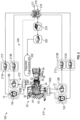
- FIG. 1 schematically illustrates an aircraft 10 that includes a pair of hybrid electric propulsion systems 100A, 100B (also referred to as hybrid gas turbine engines 100A, 100B or hybrid propulsion systems 100A, 100B).
- Each of the hybrid electric propulsion systems 100A, 100B includes a gas turbine engine 20 with a low spool 30 configured to drive rotation of a fan 42.
- Gas turbine engine 20 also includes a high spool 32 that operates at higher speeds and pressures than the low spool 30.
- a low-spool electric machine 12 can extract or add rotational power, for instance, by modifying torque and speed of the low spool 30 and fan 42.
- a high-spool electric machine 13 can be configured to extract or add rotational power to the high spool 32.
- At least one power source 16 of the aircraft 10 can provide electrical power to or receive electrical power from the low-spool electric machine 12 and/or the high-spool electric machine 13 of the gas turbine engines 20 and/or other components of the aircraft 10.
- the power source 16 can be an energy storage system that stores electrical and/or mechanical energy.
- the power source 16 can include one or more of a battery, a super capacitor, an ultra-capacitor, a flywheel, and the like.
- the power source 16 can also be coupled to one or more components of the additional thermal engine.
- the power source 16 can be coupled to other energy producing or consuming systems of the aircraft 10, such as an electrical power distribution system, an environmental control system, an anti-ice/deicing system, and/or other such aircraft systems (not depicted).
- the aircraft 10 also includes a wheel and brake system 60 that allows for ground-based movement, steering, and braking of the aircraft 10.
- Embodiments of the present disclosure control operation of the hybrid electric propulsion systems 100A, 100B to reduce brake wear of the wheel and brake system 60 as further described herein.
- FIG. 1 illustrates a simplified example of the gas turbine engine 20, it will be understood that any number of spools can be incorporated, and inclusion or omission of other elements and subsystems are contemplated. Further, systems described herein can be used in a variety of applications and need not be limited to gas turbine engines for aircraft applications.
- FIG. 2 illustrates a hybrid electric propulsion system 100 (also referred to as hybrid gas turbine engine 100, hybrid propulsion system 100, or engine system 100) as a further example of the hybrid electric propulsion system 100A, 100B of FIG. 1 .
- the hybrid electric propulsion system 100 includes gas turbine engine 20 operably coupled to an electrical power system 210 as part of a hybrid electric aircraft, such as aircraft 10 of FIG. 1 .
- One or more mechanical power transmissions 150 can be operably coupled between the gas turbine engine 20 and the electrical power system 210.
- the gas turbine engine 20 includes one or more spools, such as low spool 30 and high spool 32, each with at least one compressor section and at least one turbine section operably coupled to a shaft (e.g., low pressure compressor 44 and low pressure turbine 46 coupled to inner shaft 40 and high pressure compressor 52 and high pressure turbine 54 coupled to outer shaft 50).
- a shaft e.g., low pressure compressor 44 and low pressure turbine 46 coupled to inner shaft 40 and high pressure compressor 52 and high pressure turbine 54 coupled to outer shaft 50.
- the electrical power system 210 can include a low-spool electric machine 12 and a high-spool electric machine 13.
- the low-spool electric machine 12 can be configurable between a low-spool motor mode of operation and a low-spool generator mode of operation.
- the low-spool electric machine 12 can be implemented as a low-spool electric motor 12A and a low-spool generator 12B coupled to the mechanical power transmission 150A.
- the high-spool electric machine 13 can be configurable between a high-spool motor mode of operation and a high-spool generator mode of operation.
- the high-spool electric machine 13 can be implemented as a high-spool electric motor 13A and a high-spool generator 13B coupled to the mechanical power transmission 150B.
- the low-spool electric machine 12 and high-spool electric machine 13 can have a large capacity, such as a megawatt or more.
- the electrical power system 210 can also include low-spool power conditioning electronics 212 and high-spool power conditioning electronics 213.
- the low-spool power conditioning electronics 212 can include motor drive electronics 212A and rectifier electronics 212B.
- the high-spool power conditioning electronics 213 can include motor drive electronics 213A and rectifier electronics 213B.
- the motor drive electronics 212A, 213A are operable to condition current to electric motors 12A, 13A (e.g., DC-to-AC converters) respectively.
- the rectifier electronics 212B, 213B are operable to condition current from the generators 12B, 13B (e.g., AC-to-DC converters) respectively.
- the low-spool power conditioning electronics 212 and high-spool power conditioning electronics 213 can interface with an energy storage management system 216 that further interfaces with an energy storage system 218.
- the energy storage management system 216 can be a bidirectional DC-DC converter that regulates voltages between energy storage system 218 and electronics 212A, 212B, 213A, 213B.
- the energy storage system 218 can include one or more energy storage devices, such as a battery, a super capacitor, an ultra-capacitor, and the like.
- the energy storage management system 216 can facilitate various power transfers within the hybrid electric propulsion system 100.
- the energy storage management system 216 may also transfer power to one or more electric motors on the aircraft 10 of FIG. 1 , or to external loads 217 and receive power from one or more external power sources 219 (e.g., power source 16 of FIG. 1 , aircraft power, auxiliary power unit power, cross-engine power, and the like).
- a power conditioning unit 220 and/or other components can be powered by the energy storage system 218.
- the power conditioning unit 220 can distribute electric power to support actuation and other functions of the gas turbine engine 20.
- the power conditioning unit 220 can power an integrated fuel control unit 222 to control fuel flow to the gas turbine engine 20.
- the power conditioning unit 220 can also power a plurality of actuators (not depicted), such as bleed actuators, vane actuators, and the like.
- One or more accessories 70 can also be driven by or otherwise interface with the gas turbine engine 20.
- accessories 70 can include oil pumps, fuel pumps, and other such components.
- the accessories 70 include an oil pump driven through gearing, such as mechanical power transmission 150B, in response to rotation of the high spool 32 and/or the high-spool electric motor 13A.
- accessories 70 can be electrically driven through power provided by the energy storage management system 216 or other such sources of electrical power.
- any effectors that can change a state of the gas turbine engine 20 and/or the electrical power system 210 may be referred to as hybrid electric system control effectors 240.
- Examples of the hybrid electric system control effectors 240 can include the electric motors 12A, 13A, generators 12B, 13B, integrated fuel control unit 222, and/or other elements (not depicted).
- Transfer of power between the low spool 30 and high spool 32 can be performed by configuring the electric machines 12, 13 in opposite modes of operation.
- configuring the low-spool electric machine 12 in a low-spool generator mode of operation or engaging operation of the low-spool generator 12B can extract mechanical power and output electrical power that can drive the high-spool electric machine 13 in a high-spool motor mode of operation or upon engaging operation of the high-spool electric motor 13A.
- a portion of the electric power output from the low-spool electric machine 12 can be stored in the energy storage system 218 and/or distributed elsewhere in the aircraft 10 of FIG. 1 through the energy storage management system 216.
- lowering fuel flow to a minimum fuel limit at engine idle can support combustion in the gas turbine engine 20 but may result in excess thrust leading to wear on the wheel and brake system 60.
- Engaging the low-spool generator 12B or operating the low-spool electric machine 12 in a low-spool generator mode can further reduce the rotational speed of the low spool 30 during the braking condition due to a mechanical load increase on the low spool 30.
- Using the low-spool generator 12B during a braking condition can reduce thrust below a nominal minimum thrust that typically results from operating the gas turbine engine 20 at idle while maintaining the minimum fuel limit, which may also be referred to as hybrid electric idle.
- the thrust reduction can also reduce the wear of brakes of the wheel and brake system 60 during the braking condition.
- power from the low-spool generator 12B and/or from the energy storage system 218 can be transferred to the high-spool electric machine 13 in high-spool motor mode or the high-spool electric motor 13A while the low spool 30 is slowed.
- Speed and torque control of the high spool 32 can be monitored and adjusted by the addition of rotational power based on the demand associated with the one or more accessories 70 driven by the high spool 32 and one or more target engine pressures.
- thrust reversers 75 are deployed on the gas turbine engine 20, a greater amount of compensation may be needed from the high-spool electric motor 13A. If engine braking through engaging the low-spool generator 12B is performed while the aircraft 10 of FIG.
- the low-spool generator 12B can be disengaged or operated in a reduced output mode if needed to maintain stability within the gas turbine engine 20.
- Flutter may appear as unstable spinning of the fan 42, which can be detected through speed, vibrations, or other types of sensors.
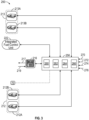
- FIG. 3 is a schematic diagram of control signal paths 250 of the hybrid electric propulsion system 100 of FIG. 2 and is described with continued reference to FIGS. 1 and 2 .
- a controller 256 can interface with the low-spool power conditioning electronics 212, high-spool power conditioning electronics 213, energy storage management system 216, integrated fuel control unit 222, accessories 70, and/or other components (not depicted) of the hybrid electric propulsion system 100.
- the controller 256 can control and monitor for fault conditions of the gas turbine engine 20 and/or the electrical power system 210.
- the controller 256 can be integrally formed or otherwise in communication with a full authority digital engine control (FADEC) of the gas turbine engine 20.
- FADEC full authority digital engine control
- the controller 256 can be an aircraft level control or be distributed between one or more systems of the aircraft 10 of FIG. 1 .
- the controller 256 can include a processing system 260, a memory system 262, and an input/output interface 264.
- the controller 256 can also include various operational controls, such as a hybrid engine control 266 that controls the hybrid electric system control effectors 240, for instance, based on a thrust command 270, an operating mode 272, a braking command 274, and/or a thrust reverser command 276.
- the thrust command 270 can be a throttle lever angle or a command derived based on a throttle lever angle control of the aircraft 10 of FIG. 1 .
- the operating mode 272 can indicate whether the aircraft 10 is in a pre-takeoff taxi, takeoff, climb, cruise, descent, landing, or post-landing taxi mode, or other such operating modes, for example.
- the operating mode 272 can be determined by a system of the aircraft 10 based on tracking various parameters, such as weight-on-wheels, altitude, velocity, and other such aircraft parameters.
- the braking command 274 can indicate that the aircraft 10 is to be slowed based on a pilot command or other input.
- the thrust reverser command 276 can indicate a pilot request to deploy the thrust reversers 75 of FIG. 2 .
- the processing system 260 can include any type or combination of central processing unit (CPU), including one or more of: a microprocessor, a digital signal processor (DSP), a microcontroller, an application specific integrated circuit (ASIC), a field programmable gate array (FPGA), or the like.
- the memory system 262 can store data and instructions that are executed by the processing system 260.
- the memory system 262 may include random access memory (RAM), read only memory (ROM), or other electronic, optical, magnetic, or any other computer readable medium onto which is stored data and algorithms in a non-transitory form.
- the input/output interface 264 is configured to collect sensor data from the one or more system sensors and interface with various components and subsystems, such as components of the motor drive electronics 212A, 213A, rectifier electronics 212B, 213B, energy storage management system 216, integrated fuel control unit 222, accessories 70, and/or other components (not depicted) of the hybrid electric propulsion system 100.
- the controller 256 provides a means for controlling the hybrid electric system control effectors 240 using a hybrid engine control 266 that can be dynamically updated during operation of the hybrid electric propulsion system 100.
- the means for controlling the hybrid electric system control effectors 240 can be otherwise subdivided, distributed, or combined with other control elements.
- the controller 256 with hybrid engine control 266 can apply control laws and access/update models to determine how to control and transfer power between the low spool 30 and high spool 32, as well as power transfers between multiple gas turbine engines 20.
- sensed and/or derived parameters related to speed, flow rate, pressure ratios, temperature, thrust, and the like can be used to establish operational schedules and transition limits to maintain efficient operation of the gas turbine engine 20.
- the operating mode 272 of the gas turbine engine 20 can have different power settings, thrust requirements, flow requirements, and temperature effects.
- each of the gas turbine engines 20 can have different settings and splits between electric and fuel-burn based operations in one or more of the operating modes.
- the hybrid engine control 266 can control electric current provided to the low-spool electric motor 12A and high-spool electric motor 13A and loading effects of the low-spool generator 12B and high-spool generator 13B.
- the hybrid engine control 266 can also determine a power split between delivering fuel to the combustor 56 and using the low-spool generator 12B and/or high-spool electric motor 13A to modify rotation speeds and thrust of the gas turbine engine 20.
- the controller 256 can blend the power distribution between the hybrid electric system control effectors 240 and fuel burn in the combustor 56. From a pilot's perspective, the setting of a throttle lever angle produces thrust command 270 without the pilot having to distinguish between whether motor-based thrust or fuel burn based thrust is needed, although the pilot may control whether fuel is on or off.
- the hybrid electric propulsion systems 100A, 100B can be independently controlled such that one of the hybrid electric propulsion systems 100A, 100B is operating in a fuel burning mode while the other of the hybrid electric propulsion systems 100A, 100B is operated using the low-spool electric motor 12A and/or the high-spool electric motor 13A.
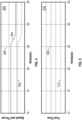
- FIGS. 4-7 illustrate an example scenario of a response of the engine system 100 of FIG. 2 to a braking condition.
- FIG. 4 is a plot 300 of low-spool speed 302 and low-spool thrust 304 before and after a braking condition 306.
- FIG. 5 is a plot 310 of fuel flow 312 before and after the braking condition 306.
- FIG. 6 is a plot 320 of low-spool torque 322 and a high spool torque 324 before and after the braking condition 306.
- FIG. 7 is a plot 330 of low-spool electrical power output 332 and high-spool electric power output 334 before and after the braking condition 306.
- gas turbine engine 20 is running on a minimum fuel limit and cannot reach a lower thrust.
- the braking condition 306 occurs at about a time of 25 seconds, and the controller 256 switches to a thrust spoiling mode where a further reduction of the low-spool speed 302 and low-spool thrust 304 is initiated while the fuel flow 312 remains at the minimum fuel limit.
- the controller 256 puts the low-spool electric machine 12 in low-spool generator mode or engages the low-spool generator 12B depending on the system configuration.
- the low-spool generator 12B absorbs some energy from the low spool 30, increasing low-spool torque 322 and low-spool electrical power output 332.
- the controller 256 can also put the high-spool electric machine 13 into high-spool motor mode or engage the high-spool electric motor 13A that reduces high spool torque 324 and high-spool electric power output 334.
- FIGS. 4-7 illustrates one example scenario, many other braking and power transfer scenarios can be achieved by the engine system 100 of FIG. 2 .
- FIG. 8 is a flow chart illustrating a method 400 for providing hybrid electric idle and braking for an aircraft, in accordance with an embodiment.
- the method 400 may be performed, for example, by the aircraft 10 through the hybrid electric propulsion systems 100A, 100B of FIG. 1 .
- the method 400 is described primarily with respect to the hybrid electric propulsion system 100 of FIG. 2 ; however, it will be understood that the method 400 can be performed on other configurations (not depicted).
- Method 400 pertains to the controller 256 executing embedded code for braking and thrust control using hybrid engine control 266 along with other control functions, where the controller 256 can be an aircraft-level control or distributed between aircraft and engine system levels of control.
- the controller 256 can detect a braking condition of the aircraft 10.
- the braking condition can be received as an input signal based on a pilot request, such as braking command 274.
- the braking condition can be an intermittent braking condition that occurs for a predetermined interval.
- the intermittent braking condition can be used to reduce acceleration, such as inching forward during ground-based operation of the aircraft 10.
- the braking condition may be removed, for instance, until another braking command 274 is received.
- braking can be applied using a braking on-off duty cycle which can be configured within a range.
- the duty cycle can be a configured with braking active 10%, 25%, 50%, 75%, 90%, or another value between braking fully on and fully off during intermittent braking.
- the braking condition may be detected based on operating conditions of the gas turbine engine 20 and/or the aircraft 10.
- the braking condition can be determined based on a thrust command 270 and an operating mode 272 of the aircraft 10, such as an idle thrust in a taxi mode or a landing mode.
- the braking condition need not be associated with an explicit command to apply brakes.
- Other operating modes above idle where reduced power settings are desired may also or alternatively be a valid operating condition for the process described herein.
- the controller 256 can determine a storage capacity state of the energy storage system 218 of the aircraft 10.
- the storage capacity state can indicate a capacity to receive a power surge from the low-spool generator 12B of one or more of the gas turbine engines 20.
- the determination can include considering whether both gas turbine engines 20 are operating in a fuel combustion state, an electrical demand of the aircraft 10 from the energy storage system 218, and storage capacity remaining.
- the ability of the energy storage system 218 to accept an influx of current from the low-spool generator 12B of either or both of the gas turbine engines 20 of the aircraft 10 may use a customized charging schedule where the ability of the energy storage system 218 to be charged can have a non-linear mapping. For instance, a charging rate between a 50% and 60% capacity may differ from a charging rate between 90% and 100% capacity.
- power can be transferred from a low-spool generator 12B to the energy storage system 218 based on the storage capacity state of the energy storage system 218.
- the controller 256 can be configured to split energy output of the low-spool generator 12B between the energy storage system 218 and the high-spool electric motor 13A based on the storage capacity state and a target speed of the high spool 32.
- the energy transfer can be performed in response to detecting the braking condition or during braking.
- power can be transferred to the high spool 32 through the high-spool electric motor 13A to support combustion in the gas turbine engine 20 while a rotational speed of the low spool 30 is reduced responsive to the low-spool generator 12B extracting energy from the low spool 30.
- the controller 256 can determine a demand associated with one or more accessories 70 driven by the high spool 32 and one or more target engine pressures.
- the high-spool electric motor 13A can be controlled to adjust a rotational speed of the high spool 32 based on the demand associated with the one or more accessories 70 driven by the high spool 32 and the one or more target engine pressures.
- Power transfer to the high spool 32 through the high-spool electric motor 13A can be performed or modified when the thrust reverser 75 is deployed. The power transfer can be performed in response to detecting the braking condition or during braking.
- the controller 256 can also be configured to monitor for a flutter condition during landing of the aircraft 10 and adjust operation of the low-spool generator 12B and/or the high-spool electric motor 13A to reduce the flutter condition.
- the braking condition can include operating the gas turbine engine 20 at a minimum fuel limit.
- the low-spool generator 12B can reduce a speed and thrust output of the low spool 30 below nominal minimum values associated with the minimum fuel limit by adding a load to the low spool 30.
Landscapes
- Engineering & Computer Science (AREA)
- Mechanical Engineering (AREA)
- General Engineering & Computer Science (AREA)
- Aviation & Aerospace Engineering (AREA)
- Chemical & Material Sciences (AREA)
- Combustion & Propulsion (AREA)
- Control Of Eletrric Generators (AREA)
Description
- Exemplary embodiments of the present disclosure pertain to the art of rotating machinery and, more particularly, to a method and a system for hybrid electric idle and braking for an aircraft.
- Gas turbine engines are typically inefficient to operate at low power settings. Operation of a gas turbine engine at idle is the typical lowest power setting available once the gas turbine engine has been started. In some instances, thrust produced at idle may be greater than the thrust needed for ground-based operations, such as taxiing and waiting in a parked position prior to takeoff or after landing. This can result in excess fuel consumption and may reduce component life with many repeated taxi, takeoff, and landing cycles. The excess thrust is typically managed by using brakes. Brake wear and deterioration can occur during taxi prior to takeoff and after landing.
EP 3 611 360 A1 discloses an aircraft engine having a low-idle mode and a high-idle mode, wherein in the low-idle mode power is directed from a lower spool to off takes, and in the high-idle mode the speed of the high spool is increased.US 2017/0226934 A1 discloses a device for removing power from at least one rotating shaft of a turbojet and transforming the excess power into electrical energy. - According to a first aspect there is provided an engine system of an aircraft that includes an energy storage system, a gas turbine engine, and a controller. The gas turbine engine includes a low spool, a high spool, a low-spool generator operably coupled to the low spool, and a high-spool electric motor operably coupled to the high spool. The controller is configured to detect a braking condition of the aircraft, determine a storage capacity state of the energy storage system, transfer power from the low-spool generator to the energy storage system based on the storage capacity state of the energy storage system, transfer power to the high spool through the high-spool electric motor to support combustion in the gas turbine engine while a rotational speed of the low spool is reduced responsive to the low-spool generator extracting energy from the low spool, and split energy output of the low-spool generator between the energy storage system and the high-spool electric motor based on the storage capacity state and a target speed of the high spool, wherein the storage capacity state indicates a capacity to receive a power surge from the low-spool generator.
- Optionally, the controller can be further configured to detect the braking condition based on a thrust command and an operating mode of the aircraft.
- Optionally, power transfer can be performed based on determining that the operating mode of the aircraft is a taxi mode or a landing mode.
- Optionally, the low-spool generator can be a low-spool electric machine configurable between a low-spool generator mode and a low-spool motor mode of operation, and the high-spool electric motor can be a high-spool electric machine configurable between a high-spool generator mode and a high-spool motor mode of operation.
- Optionally, the controller can be configured to determine a demand associated with one or more accessories driven by the high spool and one or more target engine pressures, and control the high-spool electric motor to adjust a rotational speed of the high spool during the braking condition based on the demand associated with the one or more accessories driven by the high spool and the one or more target engine pressures.
- Optionally, the controller can be configured to monitor for a flutter condition during landing of the aircraft and adjust operation of the low-spool generator and/or the high-spool electric motor to reduce the flutter condition.
- Optionally, the braking condition can include operating the gas turbine engine at a minimum fuel limit, and the low-spool generator can reduce a speed and thrust output of the low spool below nominal minimum values associated with the minimum fuel limit by adding a load to the low spool.
- Optionally, the gas turbine engine can include a thrust reverser, and power transfer to the high spool through the high-spool electric motor can be performed when the thrust reverser is deployed.
- According to a second aspect there is provided a method that includes detecting a braking condition of an aircraft having a gas turbine engine including a low spool and a high spool and determining a storage capacity state of an energy storage system of the aircraft. Power can be transferred from a low-spool generator to the energy storage system based on the storage capacity state of the energy storage system. Power can be transferred to the high spool through a high-spool electric motor to support combustion in the gas turbine engine while a rotational speed of the low spool is reduced responsive to the low-spool generator extracting energy from the low spool. The method includes splitting the energy output of the low-spool generator between the energy storage system and the high-spool electric motor based on the storage capacity state and a target speed of the high spool; wherein the storage capacity state indicates a capacity to receive a power surge from the low-spool generator.
- Optionally, the method can include detecting the braking condition based on a thrust command and an operating mode of the aircraft.
- Optionally, the method can include determining a demand associated with one or more accessories driven by the high spool and one or more target engine pressures, and controlling the high-spool electric motor to adjust a rotational speed of the high spool during the braking condition based on the demand associated with the one or more accessories driven by the high spool and the one or more target engine pressures.
- Optionally, the method can include monitoring for a flutter condition during landing of the aircraft, and adjusting operation of the low-spool generator and/or the high-spool electric motor to reduce the flutter condition.
- The following descriptions should not be considered limiting in any way. With reference to the accompanying drawings, like elements are numbered alike:
-
FIG. 1 is a schematic diagram of an aircraft; -
FIG. 2 is a schematic diagram of a hybrid electric propulsion system; -
FIG. 3 is a schematic diagram of control signal paths of a hybrid electric propulsion system; -
FIG. 4 is a plot of low-spool speed and thrust before and after a braking condition; -
FIG. 5 is a plot of fuel flow before and after a braking condition; -
FIG. 6 is a plot of torque change on a low spool and a high spool before and after a braking condition; -
FIG. 7 is a plot of electrical power output change at a low-spool electric machine and a high-spool electric machine before and after a braking condition; and -
FIG. 8 is a flow chart illustrating a method. - A detailed description of one or more embodiments of the disclosed apparatus and method are presented herein by way of exemplification and not limitation with reference to the Figures.
-
FIG. 1 schematically illustrates anaircraft 10 that includes a pair of hybridelectric propulsion systems gas turbine engines hybrid propulsion systems electric propulsion systems gas turbine engine 20 with alow spool 30 configured to drive rotation of afan 42.Gas turbine engine 20 also includes ahigh spool 32 that operates at higher speeds and pressures than thelow spool 30. A low-spoolelectric machine 12 can extract or add rotational power, for instance, by modifying torque and speed of thelow spool 30 andfan 42. A high-spoolelectric machine 13 can be configured to extract or add rotational power to thehigh spool 32. - At least one
power source 16 of theaircraft 10 can provide electrical power to or receive electrical power from the low-spoolelectric machine 12 and/or the high-spoolelectric machine 13 of thegas turbine engines 20 and/or other components of theaircraft 10. Thepower source 16 can be an energy storage system that stores electrical and/or mechanical energy. For example, thepower source 16 can include one or more of a battery, a super capacitor, an ultra-capacitor, a flywheel, and the like. Where theaircraft 10 includes an additional thermal engine (not depicted), such as an auxiliary power unit, thepower source 16 can also be coupled to one or more components of the additional thermal engine. Thepower source 16 can be coupled to other energy producing or consuming systems of theaircraft 10, such as an electrical power distribution system, an environmental control system, an anti-ice/deicing system, and/or other such aircraft systems (not depicted). - The
aircraft 10 also includes a wheel and brake system 60 that allows for ground-based movement, steering, and braking of theaircraft 10. Embodiments of the present disclosure control operation of the hybridelectric propulsion systems - While the example of
FIG. 1 illustrates a simplified example of thegas turbine engine 20, it will be understood that any number of spools can be incorporated, and inclusion or omission of other elements and subsystems are contemplated. Further, systems described herein can be used in a variety of applications and need not be limited to gas turbine engines for aircraft applications. -
FIG. 2 illustrates a hybrid electric propulsion system 100 (also referred to as hybridgas turbine engine 100,hybrid propulsion system 100, or engine system 100) as a further example of the hybridelectric propulsion system FIG. 1 . In the example ofFIG. 2 , the hybridelectric propulsion system 100 includesgas turbine engine 20 operably coupled to anelectrical power system 210 as part of a hybrid electric aircraft, such asaircraft 10 ofFIG. 1 . One or more mechanical power transmissions 150 (e.g., 150A, 150B) can be operably coupled between thegas turbine engine 20 and theelectrical power system 210. Thegas turbine engine 20 includes one or more spools, such aslow spool 30 andhigh spool 32, each with at least one compressor section and at least one turbine section operably coupled to a shaft (e.g.,low pressure compressor 44 andlow pressure turbine 46 coupled to inner shaft 40 andhigh pressure compressor 52 andhigh pressure turbine 54 coupled to outer shaft 50). - The
electrical power system 210 can include a low-spoolelectric machine 12 and a high-spoolelectric machine 13. The low-spoolelectric machine 12 can be configurable between a low-spool motor mode of operation and a low-spool generator mode of operation. Alternatively, the low-spoolelectric machine 12 can be implemented as a low-spoolelectric motor 12A and a low-spool generator 12B coupled to themechanical power transmission 150A. Similarly, the high-spoolelectric machine 13 can be configurable between a high-spool motor mode of operation and a high-spool generator mode of operation. Alternatively, the high-spoolelectric machine 13 can be implemented as a high-spoolelectric motor 13A and a high-spool generator 13B coupled to themechanical power transmission 150B. The low-spoolelectric machine 12 and high-spoolelectric machine 13 can have a large capacity, such as a megawatt or more. - In the example of
FIG. 2 , themechanical power transmission 150A can include a gearbox operably coupled between the inner shaft 40 and the low-spoolelectric machine 12. Themechanical power transmission 150B can include a gearbox operably coupled between theouter shaft 50 and the high-spoolelectric machine 13. Themechanical power transmission electric machines electric machines - The
electrical power system 210 can also include low-spoolpower conditioning electronics 212 and high-spoolpower conditioning electronics 213. The low-spoolpower conditioning electronics 212 can includemotor drive electronics 212A andrectifier electronics 212B. Similarly, the high-spoolpower conditioning electronics 213 can includemotor drive electronics 213A andrectifier electronics 213B. Themotor drive electronics electric motors rectifier electronics generators power conditioning electronics 212 and high-spoolpower conditioning electronics 213 can interface with an energystorage management system 216 that further interfaces with anenergy storage system 218. The energystorage management system 216 can be a bidirectional DC-DC converter that regulates voltages betweenenergy storage system 218 andelectronics energy storage system 218 can include one or more energy storage devices, such as a battery, a super capacitor, an ultra-capacitor, and the like. The energystorage management system 216 can facilitate various power transfers within the hybridelectric propulsion system 100. The energystorage management system 216 may also transfer power to one or more electric motors on theaircraft 10 ofFIG. 1 , or toexternal loads 217 and receive power from one or more external power sources 219 (e.g.,power source 16 ofFIG. 1 , aircraft power, auxiliary power unit power, cross-engine power, and the like). - A
power conditioning unit 220 and/or other components can be powered by theenergy storage system 218. Thepower conditioning unit 220 can distribute electric power to support actuation and other functions of thegas turbine engine 20. For example, thepower conditioning unit 220 can power an integratedfuel control unit 222 to control fuel flow to thegas turbine engine 20. Thepower conditioning unit 220 can also power a plurality of actuators (not depicted), such as bleed actuators, vane actuators, and the like. - One or
more accessories 70 can also be driven by or otherwise interface with thegas turbine engine 20. Examples ofaccessories 70 can include oil pumps, fuel pumps, and other such components. As one example, theaccessories 70 include an oil pump driven through gearing, such asmechanical power transmission 150B, in response to rotation of thehigh spool 32 and/or the high-spoolelectric motor 13A. Alternatively,accessories 70 can be electrically driven through power provided by the energystorage management system 216 or other such sources of electrical power. - Engagement and operation of the low-spool
electric motor 12A, low-spool generator 12B, high-spoolelectric motor 13A, and high-spool generator 13B can change depending upon an operating state of thegas turbine engine 20 and any commands received. Collectively, any effectors that can change a state of thegas turbine engine 20 and/or theelectrical power system 210 may be referred to as hybrid electricsystem control effectors 240. Examples of the hybrid electricsystem control effectors 240 can include theelectric motors generators fuel control unit 222, and/or other elements (not depicted). - Transfer of power between the
low spool 30 andhigh spool 32 can be performed by configuring theelectric machines electric machine 12 in a low-spool generator mode of operation or engaging operation of the low-spool generator 12B can extract mechanical power and output electrical power that can drive the high-spoolelectric machine 13 in a high-spool motor mode of operation or upon engaging operation of the high-spoolelectric motor 13A. Further, a portion of the electric power output from the low-spoolelectric machine 12 can be stored in theenergy storage system 218 and/or distributed elsewhere in theaircraft 10 ofFIG. 1 through the energystorage management system 216. - As an example, during a braking condition, lowering fuel flow to a minimum fuel limit at engine idle can support combustion in the
gas turbine engine 20 but may result in excess thrust leading to wear on the wheel and brake system 60. Engaging the low-spool generator 12B or operating the low-spoolelectric machine 12 in a low-spool generator mode can further reduce the rotational speed of thelow spool 30 during the braking condition due to a mechanical load increase on thelow spool 30. Using the low-spool generator 12B during a braking condition can reduce thrust below a nominal minimum thrust that typically results from operating thegas turbine engine 20 at idle while maintaining the minimum fuel limit, which may also be referred to as hybrid electric idle. The thrust reduction can also reduce the wear of brakes of the wheel and brake system 60 during the braking condition. - To maintain combustion and provide rotational power to the
accessories 70, power from the low-spool generator 12B and/or from theenergy storage system 218 can be transferred to the high-spoolelectric machine 13 in high-spool motor mode or the high-spoolelectric motor 13A while thelow spool 30 is slowed. Speed and torque control of thehigh spool 32 can be monitored and adjusted by the addition of rotational power based on the demand associated with the one ormore accessories 70 driven by thehigh spool 32 and one or more target engine pressures. When thrust reversers 75 are deployed on thegas turbine engine 20, a greater amount of compensation may be needed from the high-spoolelectric motor 13A. If engine braking through engaging the low-spool generator 12B is performed while theaircraft 10 ofFIG. 1 is airborne, performance conditions, such as flutter, can be monitored to determine possible stability issues. Accordingly, the low-spool generator 12B can be disengaged or operated in a reduced output mode if needed to maintain stability within thegas turbine engine 20. Flutter may appear as unstable spinning of thefan 42, which can be detected through speed, vibrations, or other types of sensors. -
FIG. 3 is a schematic diagram ofcontrol signal paths 250 of the hybridelectric propulsion system 100 ofFIG. 2 and is described with continued reference toFIGS. 1 and2 . Acontroller 256 can interface with the low-spoolpower conditioning electronics 212, high-spoolpower conditioning electronics 213, energystorage management system 216, integratedfuel control unit 222,accessories 70, and/or other components (not depicted) of the hybridelectric propulsion system 100. In embodiments, thecontroller 256 can control and monitor for fault conditions of thegas turbine engine 20 and/or theelectrical power system 210. For example, thecontroller 256 can be integrally formed or otherwise in communication with a full authority digital engine control (FADEC) of thegas turbine engine 20. Alternatively, thecontroller 256 can be an aircraft level control or be distributed between one or more systems of theaircraft 10 ofFIG. 1 . In embodiments, thecontroller 256 can include aprocessing system 260, amemory system 262, and an input/output interface 264. Thecontroller 256 can also include various operational controls, such as ahybrid engine control 266 that controls the hybrid electricsystem control effectors 240, for instance, based on athrust command 270, an operatingmode 272, abraking command 274, and/or athrust reverser command 276. Thethrust command 270 can be a throttle lever angle or a command derived based on a throttle lever angle control of theaircraft 10 ofFIG. 1 . The operatingmode 272 can indicate whether theaircraft 10 is in a pre-takeoff taxi, takeoff, climb, cruise, descent, landing, or post-landing taxi mode, or other such operating modes, for example. The operatingmode 272 can be determined by a system of theaircraft 10 based on tracking various parameters, such as weight-on-wheels, altitude, velocity, and other such aircraft parameters. Thebraking command 274 can indicate that theaircraft 10 is to be slowed based on a pilot command or other input. Thethrust reverser command 276 can indicate a pilot request to deploy the thrust reversers 75 ofFIG. 2 . - The
processing system 260 can include any type or combination of central processing unit (CPU), including one or more of: a microprocessor, a digital signal processor (DSP), a microcontroller, an application specific integrated circuit (ASIC), a field programmable gate array (FPGA), or the like. Thememory system 262 can store data and instructions that are executed by theprocessing system 260. In embodiments, thememory system 262 may include random access memory (RAM), read only memory (ROM), or other electronic, optical, magnetic, or any other computer readable medium onto which is stored data and algorithms in a non-transitory form. The input/output interface 264 is configured to collect sensor data from the one or more system sensors and interface with various components and subsystems, such as components of themotor drive electronics rectifier electronics storage management system 216, integratedfuel control unit 222,accessories 70, and/or other components (not depicted) of the hybridelectric propulsion system 100. Thecontroller 256 provides a means for controlling the hybrid electricsystem control effectors 240 using ahybrid engine control 266 that can be dynamically updated during operation of the hybridelectric propulsion system 100. The means for controlling the hybrid electricsystem control effectors 240 can be otherwise subdivided, distributed, or combined with other control elements. - The
controller 256 withhybrid engine control 266 can apply control laws and access/update models to determine how to control and transfer power between thelow spool 30 andhigh spool 32, as well as power transfers between multiplegas turbine engines 20. For example, sensed and/or derived parameters related to speed, flow rate, pressure ratios, temperature, thrust, and the like can be used to establish operational schedules and transition limits to maintain efficient operation of thegas turbine engine 20. For instance, the operatingmode 272 of thegas turbine engine 20 can have different power settings, thrust requirements, flow requirements, and temperature effects. With respect to theaircraft 10 ofFIG. 1 , each of thegas turbine engines 20 can have different settings and splits between electric and fuel-burn based operations in one or more of the operating modes. Thehybrid engine control 266 can control electric current provided to the low-spoolelectric motor 12A and high-spoolelectric motor 13A and loading effects of the low-spool generator 12B and high-spool generator 13B. Thehybrid engine control 266 can also determine a power split between delivering fuel to thecombustor 56 and using the low-spool generator 12B and/or high-spoolelectric motor 13A to modify rotation speeds and thrust of thegas turbine engine 20. - In embodiments, the
controller 256 can blend the power distribution between the hybrid electricsystem control effectors 240 and fuel burn in thecombustor 56. From a pilot's perspective, the setting of a throttle lever angle produces thrustcommand 270 without the pilot having to distinguish between whether motor-based thrust or fuel burn based thrust is needed, although the pilot may control whether fuel is on or off. With respect to theaircraft 10, the hybridelectric propulsion systems electric propulsion systems electric propulsion systems electric motor 12A and/or the high-spoolelectric motor 13A. -
FIGS. 4-7 illustrate an example scenario of a response of theengine system 100 ofFIG. 2 to a braking condition.FIG. 4 is aplot 300 of low-spool speed 302 and low-spool thrust 304 before and after abraking condition 306.FIG. 5 is aplot 310 offuel flow 312 before and after thebraking condition 306.FIG. 6 is aplot 320 of low-spool torque 322 and ahigh spool torque 324 before and after thebraking condition 306.FIG. 7 is aplot 330 of low-spoolelectrical power output 332 and high-spoolelectric power output 334 before and after thebraking condition 306. In the example scenario ofFIGS. 4-7 ,gas turbine engine 20 is running on a minimum fuel limit and cannot reach a lower thrust. Thebraking condition 306 occurs at about a time of 25 seconds, and thecontroller 256 switches to a thrust spoiling mode where a further reduction of the low-spool speed 302 and low-spool thrust 304 is initiated while thefuel flow 312 remains at the minimum fuel limit. Thecontroller 256 puts the low-spoolelectric machine 12 in low-spool generator mode or engages the low-spool generator 12B depending on the system configuration. The low-spool generator 12B absorbs some energy from thelow spool 30, increasing low-spool torque 322 and low-spoolelectrical power output 332. Thecontroller 256 can also put the high-spoolelectric machine 13 into high-spool motor mode or engage the high-spoolelectric motor 13A that reduceshigh spool torque 324 and high-spoolelectric power output 334. Although the sequence ofFIGS. 4-7 illustrates one example scenario, many other braking and power transfer scenarios can be achieved by theengine system 100 ofFIG. 2 . - Referring now to
FIG. 8 with continued reference toFIGS. 1-7 ,FIG. 8 is a flow chart illustrating amethod 400 for providing hybrid electric idle and braking for an aircraft, in accordance with an embodiment. Themethod 400 may be performed, for example, by theaircraft 10 through the hybridelectric propulsion systems FIG. 1 . For purposes of explanation, themethod 400 is described primarily with respect to the hybridelectric propulsion system 100 ofFIG. 2 ; however, it will be understood that themethod 400 can be performed on other configurations (not depicted). -
Method 400 pertains to thecontroller 256 executing embedded code for braking and thrust control usinghybrid engine control 266 along with other control functions, where thecontroller 256 can be an aircraft-level control or distributed between aircraft and engine system levels of control. - At
block 402, thecontroller 256 can detect a braking condition of theaircraft 10. The braking condition can be received as an input signal based on a pilot request, such asbraking command 274. The braking condition can be an intermittent braking condition that occurs for a predetermined interval. For example, the intermittent braking condition can be used to reduce acceleration, such as inching forward during ground-based operation of theaircraft 10. After the predetermined interval elapses, the braking condition may be removed, for instance, until anotherbraking command 274 is received. There can be an interval between braking applications to support intermittent braking. For example, braking can be applied using a braking on-off duty cycle which can be configured within a range. For instance, the duty cycle can be a configured with braking active 10%, 25%, 50%, 75%, 90%, or another value between braking fully on and fully off during intermittent braking. Further, the braking condition may be detected based on operating conditions of thegas turbine engine 20 and/or theaircraft 10. For example, the braking condition can be determined based on athrust command 270 and anoperating mode 272 of theaircraft 10, such as an idle thrust in a taxi mode or a landing mode. The braking condition need not be associated with an explicit command to apply brakes. Other operating modes above idle where reduced power settings are desired may also or alternatively be a valid operating condition for the process described herein. - At
block 404, thecontroller 256 can determine a storage capacity state of theenergy storage system 218 of theaircraft 10. The storage capacity state can indicate a capacity to receive a power surge from the low-spool generator 12B of one or more of thegas turbine engines 20. The determination can include considering whether bothgas turbine engines 20 are operating in a fuel combustion state, an electrical demand of theaircraft 10 from theenergy storage system 218, and storage capacity remaining. The ability of theenergy storage system 218 to accept an influx of current from the low-spool generator 12B of either or both of thegas turbine engines 20 of theaircraft 10 may use a customized charging schedule where the ability of theenergy storage system 218 to be charged can have a non-linear mapping. For instance, a charging rate between a 50% and 60% capacity may differ from a charging rate between 90% and 100% capacity. - At
block 406, power can be transferred from a low-spool generator 12B to theenergy storage system 218 based on the storage capacity state of theenergy storage system 218. Thecontroller 256 can be configured to split energy output of the low-spool generator 12B between theenergy storage system 218 and the high-spoolelectric motor 13A based on the storage capacity state and a target speed of thehigh spool 32. The energy transfer can be performed in response to detecting the braking condition or during braking. - At
block 408, power can be transferred to thehigh spool 32 through the high-spoolelectric motor 13A to support combustion in thegas turbine engine 20 while a rotational speed of thelow spool 30 is reduced responsive to the low-spool generator 12B extracting energy from thelow spool 30. For example, thecontroller 256 can determine a demand associated with one ormore accessories 70 driven by thehigh spool 32 and one or more target engine pressures. The high-spoolelectric motor 13A can be controlled to adjust a rotational speed of thehigh spool 32 based on the demand associated with the one ormore accessories 70 driven by thehigh spool 32 and the one or more target engine pressures. Power transfer to thehigh spool 32 through the high-spoolelectric motor 13A can be performed or modified when the thrust reverser 75 is deployed. The power transfer can be performed in response to detecting the braking condition or during braking. - The
controller 256 can also be configured to monitor for a flutter condition during landing of theaircraft 10 and adjust operation of the low-spool generator 12B and/or the high-spoolelectric motor 13A to reduce the flutter condition. The braking condition can include operating thegas turbine engine 20 at a minimum fuel limit. The low-spool generator 12B can reduce a speed and thrust output of thelow spool 30 below nominal minimum values associated with the minimum fuel limit by adding a load to thelow spool 30. - While the above description has described the flow process of
FIG. 8 in a particular order, it should be appreciated that unless otherwise specifically required in the attached claims that the ordering of the steps may be varied. Also, it is clear to one of ordinary skill in the art that, the hybrid electric idle and braking described herein can be combined with aircraft and propulsion system control features, such as fuel flow control, power management, emergency operation, and the like. - The term "about" is intended to include the degree of error associated with measurement of the particular quantity based upon the equipment available at the time of filing the application. For example, "about" can include a range of ± 8% or 5%, or 2% of a given value.
- The terminology used herein is for the purpose of describing particular embodiments only and is not intended to be limiting of the present disclosure. As used herein, the singular forms "a", "an" and "the" are intended to include the plural forms as well, unless the context clearly indicates otherwise. It will be further understood that the terms "comprises" and/or "comprising," when used in this specification, specify the presence of stated features, integers, steps, operations, elements, and/or components, but do not preclude the presence or addition of one or more other features, integers, steps, operations, element components, and/or groups thereof.
- While the present invention has been described with reference to an exemplary embodiment or embodiments, it will be understood by those skilled in the art that various changes may be made without departing from the scope of the present invention as defined by the claims. In addition, many modifications may be made to adapt a particular situation or material to the teachings of the present disclosure without departing from the scope of the claims. Therefore, it is intended that the present invention not be limited to the particular embodiment disclosed as the best mode contemplated for carrying out this present disclosure, but that the present invention will include all embodiments falling within the scope of the claims.
Claims (14)
- An engine system (100; 100A, 100B) of an aircraft (10), the engine system comprising:an energy storage system (16; 218);a gas turbine engine (20) comprising a low spool (30), a high spool (32), a low-spool generator (12B) operably coupled to the low spool, and a high-spool electric motor (13A) operably coupled to the high spool; anda controller (256) configured to:detect a braking condition (306) of the aircraft (10);determine a storage capacity state of the energy storage system (16; 218);transfer power from the low-spool generator (12B) to the energy storage system based on the storage capacity state of the energy storage system;transfer power to the high spool (32) through the high-spool electric motor (13A) to support combustion in the gas turbine engine (20) while a rotational speed of the low spool (30) is reduced responsive to the low-spool generator extracting energy from the low spool; andsplit energy output of the low-spool generator (12B) between the energy storage system (16; 218) and the high-spool electric motor (13A) based on the storage capacity state and a target speed of the high spool (32), wherein the storage capacity state indicates a capacity to receive a power surge from the low-spool generator.
- The engine system of claim 1, wherein the controller (256) is further configured to detect the braking condition (306) based on a thrust command (270) and an operating mode (272) of the aircraft (10); and/or
wherein power transfer is performed based on determining that the operating mode (272) of the aircraft (10) is a taxi mode or a landing mode. - The engine system of claim 1 or 2, wherein the low-spool generator (12B) is a low-spool electric machine (12) configurable between a low-spool generator mode and a low-spool motor (12A) mode of operation, and the high-spool electric motor (13A) is a high-spool electric machine (13) configurable between a high-spool generator (13B) mode and a high-spool motor mode of operation.
- The engine system of any preceding claim, wherein the controller (256) is configured to:determine a demand associated with one or more accessories (70) driven by the high spool (32) and one or more target engine pressures; andcontrol the high-spool electric motor (13A) to adjust a rotational speed of the high spool during the braking condition (306) based on the demand associated with the one or more accessories driven by the high spool and the one or more target engine pressures.
- The engine system of any preceding claim, wherein the controller (256) is configured to monitor for a flutter condition during landing of the aircraft (10) and adjust operation of the low-spool generator (12B) and/or the high-spool electric motor (13A) to reduce the flutter condition; and/or
wherein the gas turbine engine (20) further comprises a thrust reverser (75), and power transfer to the high spool (32) through the high-spool electric motor (13A) is performed when the thrust reverser is deployed. - The engine system of any preceding claim, wherein the braking condition (306) comprises operating the gas turbine engine (20) at a minimum fuel limit, and the low-spool generator (12B) reduces a speed and thrust output of the low spool (30) below nominal minimum values associated with the minimum fuel limit by adding a load to the low spool.
- A method (400) comprising:detecting (402) a braking condition of an aircraft comprising a gas turbine engine, the gas turbine engine comprising a low spool and a high spool;determining (404) a storage capacity state of an energy storage system of the aircraft;transferring power (406) from a low-spool generator to the energy storage system based on the storage capacity state of the energy storage system;transferring power (408) to the high spool through a high-spool electric motor to support combustion in the gas turbine engine while a rotational speed of the low spool is reduced responsive to the low-spool generator extracting energy from the low spool; andsplitting energy output of the low-spool generator (12B) between the energy storage system (16; 218) and the high-spool electric motor (13A) based on the storage capacity state and a target speed of the high spool (32); wherein the storage capacity state indicates a capacity to receive a power surge from the low-spool generator.
- The method of claim 7, further comprising:
detecting (402) the braking condition (306) based on a thrust command (270) and an operating mode (272) of the aircraft (10). - The method of claim 7 or 8, wherein power transfer (406, 408) is performed based on determining that the operating mode (272) of the aircraft (10) is a taxi mode or a landing mode.
- The method of any of claims 7 to 9, wherein the low-spool generator (12B) is a low-spool electric machine (12) configurable between a low-spool generator mode and a low-spool motor (12A) mode of operation, and the high-spool electric motor (13A) is a high-spool electric machine (13) configurable between a high-spool generator (13B) mode and a high-spool motor mode of operation.
- The method of any of claims 7 to 10,
the method further comprising:determining a demand associated with one or more accessories (70) driven by the high spool (32) and one or more target engine pressures; andcontrolling the high-spool electric motor (13A) to adjust a rotational speed of the high spool during the braking condition (306) based on the demand associated with the one or more accessories driven by the high spool and the one or more target engine pressures. - The method of any of claims 7 to 11, further comprising:monitoring for a flutter condition during landing of the aircraft (10); andadjusting operation of the low-spool generator (12B) and/or the high-spool electric motor (13A) to reduce the flutter condition.
- The method of any of claims 7 to 12, wherein the braking condition (306) comprises operating the gas turbine engine (20) at a minimum fuel limit, and the low-spool generator (12B) reduces a speed and thrust output of the low spool (30) below nominal minimum values associated with the minimum fuel limit by adding a load to the low spool.
- The method of any of claims 7 to 13, wherein the gas turbine engine (20) further comprises a thrust reverser (75), and power transfer (408) to the high spool (32) through the high-spool electric motor (13A) is performed when the thrust reverser is deployed.
Applications Claiming Priority (1)
| Application Number | Priority Date | Filing Date | Title |
|---|---|---|---|
| US17/314,202 US12060834B2 (en) | 2021-05-07 | 2021-05-07 | Hybrid electric idle and braking for an aircraft |
Publications (2)
| Publication Number | Publication Date |
|---|---|
| EP4086446A1 EP4086446A1 (en) | 2022-11-09 |
| EP4086446B1 true EP4086446B1 (en) | 2025-04-23 |
Family
ID=81597835
Family Applications (1)
| Application Number | Title | Priority Date | Filing Date |
|---|---|---|---|
| EP22172394.3A Active EP4086446B1 (en) | 2021-05-07 | 2022-05-09 | Hybrid electric idle and braking for an aircraft |
Country Status (2)
| Country | Link |
|---|---|
| US (2) | US12060834B2 (en) |
| EP (1) | EP4086446B1 (en) |
Families Citing this family (7)
| Publication number | Priority date | Publication date | Assignee | Title |
|---|---|---|---|---|
| FR3132279B1 (en) * | 2022-02-01 | 2024-01-12 | Safran Aircraft Engines | Braking process for an aircraft turbomachine |
| EP4414541A1 (en) * | 2023-02-07 | 2024-08-14 | The Boeing Company | Hybrid turbine and multiple-spool electric power system for aircraft |
| US12246843B2 (en) | 2023-02-07 | 2025-03-11 | The Boeing Company | Hybrid turbine and multiple-spool electric power system for aircraft |
| US12034306B1 (en) | 2023-02-07 | 2024-07-09 | The Boeing Company | Hybrid turbine and multiple-spool electric power system for aircraft |
| US12583605B2 (en) * | 2024-03-22 | 2026-03-24 | Rtx Corporation | Fast thrust response using optimal power splitting in hybrid electric aircraft |
| US20260043355A1 (en) * | 2024-08-06 | 2026-02-12 | The Boeing Company | System to Selectively Transfer Power of a Turbine Engine |
| US20260071576A1 (en) * | 2024-09-10 | 2026-03-12 | General Electric Company | Propulsion system having fluidly separate lubrication systems for propulsors and turbo-engine |
Family Cites Families (14)
| Publication number | Priority date | Publication date | Assignee | Title |
|---|---|---|---|---|
| FR2915523A1 (en) | 2007-04-27 | 2008-10-31 | Snecma Sa | DEVICE FOR GENERATING ELECTRIC ENERGY IN A DOUBLE-BODY GAS TURBINE ENGINE |
| GB0912340D0 (en) * | 2009-07-16 | 2009-08-26 | Rolls Royce Plc | Aircraft power management system |
| WO2014143218A1 (en) * | 2013-03-13 | 2014-09-18 | Rolls-Royce North American Technologies, Inc. | Gas turbine engine and electrical system comprising electrical buses |
| EP2930335B1 (en) | 2014-04-10 | 2019-09-18 | Rolls-Royce North American Technologies, Inc. | Fuel-air ratio control of gas turbine engines |
| FR3024755B1 (en) | 2014-08-08 | 2019-06-21 | Safran Aircraft Engines | HYBRIDIZING THE COMPRESSORS OF A TURBOJET ENGINE |
| US10344709B2 (en) * | 2015-09-10 | 2019-07-09 | Honeywell International Inc. | System and method for reducing idle thrust in a translating cowl thrust reverser |
| US10717539B2 (en) | 2016-05-05 | 2020-07-21 | Pratt & Whitney Canada Corp. | Hybrid gas-electric turbine engine |
| EP3246526B1 (en) * | 2016-05-18 | 2021-03-24 | Rolls-Royce Corporation | Control of low pressure shaft generator for gas turbine engine |
| US11230385B2 (en) * | 2017-06-08 | 2022-01-25 | General Electric Company | Hybrid-electric propulsion system for an aircraft |
| US11565821B2 (en) * | 2018-07-30 | 2023-01-31 | Raytheon Technologies Corporation | Hybrid energy storage system control for an aircraft engine |
| US10995674B2 (en) | 2018-08-17 | 2021-05-04 | Raytheon Technologies Corporation | Modified aircraft idle for reduced thermal cycling |
| EP4481182A3 (en) * | 2019-05-02 | 2025-03-19 | RTX Corporation | High and low spool differential gear assembly |
| GB2588073A (en) * | 2019-06-12 | 2021-04-21 | Rolls Royce Plc | Limiting spool speeds in a gas turbine engine |
| GB2584694B (en) | 2019-06-12 | 2024-01-03 | Rolls Royce Plc | Preventing surge |
-
2021
- 2021-05-07 US US17/314,202 patent/US12060834B2/en active Active
-
2022
- 2022-05-09 EP EP22172394.3A patent/EP4086446B1/en active Active
-
2024
- 2024-07-11 US US18/769,507 patent/US20260063075A1/en active Pending
Also Published As
| Publication number | Publication date |
|---|---|
| US20260063075A1 (en) | 2026-03-05 |
| US20220356849A1 (en) | 2022-11-10 |
| EP4086446A1 (en) | 2022-11-09 |
| US12060834B2 (en) | 2024-08-13 |
Similar Documents
| Publication | Publication Date | Title |
|---|---|---|
| EP4086446B1 (en) | Hybrid electric idle and braking for an aircraft | |
| US11549464B2 (en) | Hybrid gas turbine engine starting control | |
| EP3770399B1 (en) | Asymmetric hybrid aircraft idle | |
| EP3931098B1 (en) | Normal mode operation of hybrid electric propulsion systems | |
| US9688414B2 (en) | Intelligent integrated control system and method | |
| EP2990626B1 (en) | Operation of aircraft engines during transient conditions | |
| US8979705B2 (en) | Method and system for controlling aircraft engine starter/generator | |
| US11725580B2 (en) | Turbine over-speed brake for hybrid electric gas turbine engine | |
| EP4102046A1 (en) | Hybrid electric idle transition for aircraft | |
| EP4174299B1 (en) | Hybrid electric single engine descent mode activation logic | |
| US12258141B2 (en) | Hybrid electric single engine descent energy management | |
| EP3772579B1 (en) | Gas turbine engine spool coupling system | |
| EP4173958B1 (en) | Power extraction control for descent in a hybrid electric propulsion system | |
| EP3767092B1 (en) | Modulated combustor bypass for hybrid idle | |
| EP4174300A1 (en) | Hybrid electric single engine descent restart | |
| JP7511536B2 (en) | Aircraft Propulsion Systems | |
| JP7580355B2 (en) | Aircraft Propulsion Systems |
Legal Events
| Date | Code | Title | Description |
|---|---|---|---|
| PUAI | Public reference made under article 153(3) epc to a published international application that has entered the european phase |
Free format text: ORIGINAL CODE: 0009012 |
|
| STAA | Information on the status of an ep patent application or granted ep patent |
Free format text: STATUS: THE APPLICATION HAS BEEN PUBLISHED |
|
| AK | Designated contracting states |
Kind code of ref document: A1 Designated state(s): AL AT BE BG CH CY CZ DE DK EE ES FI FR GB GR HR HU IE IS IT LI LT LU LV MC MK MT NL NO PL PT RO RS SE SI SK SM TR |
|
| STAA | Information on the status of an ep patent application or granted ep patent |
Free format text: STATUS: REQUEST FOR EXAMINATION WAS MADE |
|
| 17P | Request for examination filed |
Effective date: 20230509 |
|
| RBV | Designated contracting states (corrected) |
Designated state(s): AL AT BE BG CH CY CZ DE DK EE ES FI FR GB GR HR HU IE IS IT LI LT LU LV MC MK MT NL NO PL PT RO RS SE SI SK SM TR |
|
| RAP3 | Party data changed (applicant data changed or rights of an application transferred) |
Owner name: RTX CORPORATION |
|
| GRAP | Despatch of communication of intention to grant a patent |
Free format text: ORIGINAL CODE: EPIDOSNIGR1 |
|
| STAA | Information on the status of an ep patent application or granted ep patent |
Free format text: STATUS: GRANT OF PATENT IS INTENDED |
|
| RIC1 | Information provided on ipc code assigned before grant |
Ipc: F01D 15/10 20060101ALI20241022BHEP Ipc: F02K 5/00 20060101ALI20241022BHEP Ipc: F02C 7/36 20060101AFI20241022BHEP |
|
| INTG | Intention to grant announced |
Effective date: 20241115 |
|
| GRAS | Grant fee paid |
Free format text: ORIGINAL CODE: EPIDOSNIGR3 |
|
| GRAA | (expected) grant |
Free format text: ORIGINAL CODE: 0009210 |
|
| STAA | Information on the status of an ep patent application or granted ep patent |
Free format text: STATUS: THE PATENT HAS BEEN GRANTED |
|
| AK | Designated contracting states |
Kind code of ref document: B1 Designated state(s): AL AT BE BG CH CY CZ DE DK EE ES FI FR GB GR HR HU IE IS IT LI LT LU LV MC MK MT NL NO PL PT RO RS SE SI SK SM TR |
|
| REG | Reference to a national code |
Ref country code: GB Ref legal event code: FG4D |
|
| REG | Reference to a national code |
Ref country code: CH Ref legal event code: EP |
|
| REG | Reference to a national code |
Ref country code: DE Ref legal event code: R096 Ref document number: 602022013407 Country of ref document: DE |
|
| REG | Reference to a national code |
Ref country code: IE Ref legal event code: FG4D |
|
| PGFP | Annual fee paid to national office [announced via postgrant information from national office to epo] |
Ref country code: DE Payment date: 20250520 Year of fee payment: 4 |
|
| PGFP | Annual fee paid to national office [announced via postgrant information from national office to epo] |
Ref country code: FR Payment date: 20250520 Year of fee payment: 4 |
|
| PGFP | Annual fee paid to national office [announced via postgrant information from national office to epo] |
Ref country code: AT Payment date: 20250721 Year of fee payment: 4 |
|
| REG | Reference to a national code |
Ref country code: NL Ref legal event code: MP Effective date: 20250423 |
|
| PG25 | Lapsed in a contracting state [announced via postgrant information from national office to epo] |
Ref country code: NL Free format text: LAPSE BECAUSE OF FAILURE TO SUBMIT A TRANSLATION OF THE DESCRIPTION OR TO PAY THE FEE WITHIN THE PRESCRIBED TIME-LIMIT Effective date: 20250423 |
|
| REG | Reference to a national code |
Ref country code: AT Ref legal event code: MK05 Ref document number: 1787952 Country of ref document: AT Kind code of ref document: T Effective date: 20250423 |
|
| PG25 | Lapsed in a contracting state [announced via postgrant information from national office to epo] |
Ref country code: FI Free format text: LAPSE BECAUSE OF FAILURE TO SUBMIT A TRANSLATION OF THE DESCRIPTION OR TO PAY THE FEE WITHIN THE PRESCRIBED TIME-LIMIT Effective date: 20250423 Ref country code: ES Free format text: LAPSE BECAUSE OF FAILURE TO SUBMIT A TRANSLATION OF THE DESCRIPTION OR TO PAY THE FEE WITHIN THE PRESCRIBED TIME-LIMIT Effective date: 20250423 Ref country code: PT Free format text: LAPSE BECAUSE OF FAILURE TO SUBMIT A TRANSLATION OF THE DESCRIPTION OR TO PAY THE FEE WITHIN THE PRESCRIBED TIME-LIMIT Effective date: 20250825 |
|
| REG | Reference to a national code |
Ref country code: LT Ref legal event code: MG9D |
|
| PG25 | Lapsed in a contracting state [announced via postgrant information from national office to epo] |
Ref country code: GR Free format text: LAPSE BECAUSE OF FAILURE TO SUBMIT A TRANSLATION OF THE DESCRIPTION OR TO PAY THE FEE WITHIN THE PRESCRIBED TIME-LIMIT Effective date: 20250724 Ref country code: NO Free format text: LAPSE BECAUSE OF FAILURE TO SUBMIT A TRANSLATION OF THE DESCRIPTION OR TO PAY THE FEE WITHIN THE PRESCRIBED TIME-LIMIT Effective date: 20250723 |
|
| PG25 | Lapsed in a contracting state [announced via postgrant information from national office to epo] |
Ref country code: PL Free format text: LAPSE BECAUSE OF FAILURE TO SUBMIT A TRANSLATION OF THE DESCRIPTION OR TO PAY THE FEE WITHIN THE PRESCRIBED TIME-LIMIT Effective date: 20250423 |
|
| PG25 | Lapsed in a contracting state [announced via postgrant information from national office to epo] |
Ref country code: BG Free format text: LAPSE BECAUSE OF FAILURE TO SUBMIT A TRANSLATION OF THE DESCRIPTION OR TO PAY THE FEE WITHIN THE PRESCRIBED TIME-LIMIT Effective date: 20250423 |
|
| PG25 | Lapsed in a contracting state [announced via postgrant information from national office to epo] |
Ref country code: HR Free format text: LAPSE BECAUSE OF FAILURE TO SUBMIT A TRANSLATION OF THE DESCRIPTION OR TO PAY THE FEE WITHIN THE PRESCRIBED TIME-LIMIT Effective date: 20250423 Ref country code: AT Free format text: LAPSE BECAUSE OF FAILURE TO SUBMIT A TRANSLATION OF THE DESCRIPTION OR TO PAY THE FEE WITHIN THE PRESCRIBED TIME-LIMIT Effective date: 20250423 |
|
| PG25 | Lapsed in a contracting state [announced via postgrant information from national office to epo] |
Ref country code: RS Free format text: LAPSE BECAUSE OF FAILURE TO SUBMIT A TRANSLATION OF THE DESCRIPTION OR TO PAY THE FEE WITHIN THE PRESCRIBED TIME-LIMIT Effective date: 20250723 |
|
| PG25 | Lapsed in a contracting state [announced via postgrant information from national office to epo] |
Ref country code: IS Free format text: LAPSE BECAUSE OF FAILURE TO SUBMIT A TRANSLATION OF THE DESCRIPTION OR TO PAY THE FEE WITHIN THE PRESCRIBED TIME-LIMIT Effective date: 20250823 |
|
| PG25 | Lapsed in a contracting state [announced via postgrant information from national office to epo] |
Ref country code: LV Free format text: LAPSE BECAUSE OF FAILURE TO SUBMIT A TRANSLATION OF THE DESCRIPTION OR TO PAY THE FEE WITHIN THE PRESCRIBED TIME-LIMIT Effective date: 20250423 |
|
| REG | Reference to a national code |
Ref country code: CH Ref legal event code: H13 Free format text: ST27 STATUS EVENT CODE: U-0-0-H10-H13 (AS PROVIDED BY THE NATIONAL OFFICE) Effective date: 20251223 |
|
| PG25 | Lapsed in a contracting state [announced via postgrant information from national office to epo] |
Ref country code: DK Free format text: LAPSE BECAUSE OF FAILURE TO SUBMIT A TRANSLATION OF THE DESCRIPTION OR TO PAY THE FEE WITHIN THE PRESCRIBED TIME-LIMIT Effective date: 20250423 Ref country code: SM Free format text: LAPSE BECAUSE OF FAILURE TO SUBMIT A TRANSLATION OF THE DESCRIPTION OR TO PAY THE FEE WITHIN THE PRESCRIBED TIME-LIMIT Effective date: 20250423 |
|
| PG25 | Lapsed in a contracting state [announced via postgrant information from national office to epo] |
Ref country code: LU Free format text: LAPSE BECAUSE OF NON-PAYMENT OF DUE FEES Effective date: 20250509 |
|
| PG25 | Lapsed in a contracting state [announced via postgrant information from national office to epo] |
Ref country code: CH Free format text: LAPSE BECAUSE OF NON-PAYMENT OF DUE FEES Effective date: 20250531 |
|
| PG25 | Lapsed in a contracting state [announced via postgrant information from national office to epo] |
Ref country code: CZ Free format text: LAPSE BECAUSE OF FAILURE TO SUBMIT A TRANSLATION OF THE DESCRIPTION OR TO PAY THE FEE WITHIN THE PRESCRIBED TIME-LIMIT Effective date: 20250423 |
|
| PG25 | Lapsed in a contracting state [announced via postgrant information from national office to epo] |
Ref country code: EE Free format text: LAPSE BECAUSE OF FAILURE TO SUBMIT A TRANSLATION OF THE DESCRIPTION OR TO PAY THE FEE WITHIN THE PRESCRIBED TIME-LIMIT Effective date: 20250423 |
|
| REG | Reference to a national code |
Ref country code: DE Ref legal event code: R097 Ref document number: 602022013407 Country of ref document: DE |
|
| PG25 | Lapsed in a contracting state [announced via postgrant information from national office to epo] |
Ref country code: SK Free format text: LAPSE BECAUSE OF FAILURE TO SUBMIT A TRANSLATION OF THE DESCRIPTION OR TO PAY THE FEE WITHIN THE PRESCRIBED TIME-LIMIT Effective date: 20250423 |
|
| PG25 | Lapsed in a contracting state [announced via postgrant information from national office to epo] |
Ref country code: IT Free format text: LAPSE BECAUSE OF FAILURE TO SUBMIT A TRANSLATION OF THE DESCRIPTION OR TO PAY THE FEE WITHIN THE PRESCRIBED TIME-LIMIT Effective date: 20250423 |
|
| REG | Reference to a national code |
Ref country code: BE Ref legal event code: MM Effective date: 20250531 |
|
| PG25 | Lapsed in a contracting state [announced via postgrant information from national office to epo] |
Ref country code: MC Free format text: LAPSE BECAUSE OF FAILURE TO SUBMIT A TRANSLATION OF THE DESCRIPTION OR TO PAY THE FEE WITHIN THE PRESCRIBED TIME-LIMIT Effective date: 20250423 |
|
| PG25 | Lapsed in a contracting state [announced via postgrant information from national office to epo] |
Ref country code: RO Free format text: LAPSE BECAUSE OF FAILURE TO SUBMIT A TRANSLATION OF THE DESCRIPTION OR TO PAY THE FEE WITHIN THE PRESCRIBED TIME-LIMIT Effective date: 20250423 |
|
| PLBE | No opposition filed within time limit |
Free format text: ORIGINAL CODE: 0009261 |
|
| STAA | Information on the status of an ep patent application or granted ep patent |
Free format text: STATUS: NO OPPOSITION FILED WITHIN TIME LIMIT |
|
| REG | Reference to a national code |
Ref country code: CH Ref legal event code: L10 Free format text: ST27 STATUS EVENT CODE: U-0-0-L10-L00 (AS PROVIDED BY THE NATIONAL OFFICE) Effective date: 20260304 |
|
| 26N | No opposition filed |
Effective date: 20260126 |
|
| PG25 | Lapsed in a contracting state [announced via postgrant information from national office to epo] |
Ref country code: IE Free format text: LAPSE BECAUSE OF NON-PAYMENT OF DUE FEES Effective date: 20250509 |
|
| PG25 | Lapsed in a contracting state [announced via postgrant information from national office to epo] |
Ref country code: BE Free format text: LAPSE BECAUSE OF NON-PAYMENT OF DUE FEES Effective date: 20250531 |