EP4084506A1 - Methods for configuring and receiving transmission resource of positioning reference signal, and terminal - Google Patents
Methods for configuring and receiving transmission resource of positioning reference signal, and terminal Download PDFInfo
- Publication number
- EP4084506A1 EP4084506A1 EP20904335.5A EP20904335A EP4084506A1 EP 4084506 A1 EP4084506 A1 EP 4084506A1 EP 20904335 A EP20904335 A EP 20904335A EP 4084506 A1 EP4084506 A1 EP 4084506A1
- Authority
- EP
- European Patent Office
- Prior art keywords
- prs resource
- prs
- resource set
- slot
- present disclosure
- Prior art date
- Legal status (The legal status is an assumption and is not a legal conclusion. Google has not performed a legal analysis and makes no representation as to the accuracy of the status listed.)
- Pending
Links
- 238000000034 method Methods 0.000 title claims abstract description 96
- 230000005540 biological transmission Effects 0.000 title claims abstract description 63
- 230000011664 signaling Effects 0.000 claims abstract description 81
- 230000001360 synchronised effect Effects 0.000 claims description 10
- 125000004122 cyclic group Chemical group 0.000 claims description 3
- 230000006870 function Effects 0.000 description 12
- 230000000694 effects Effects 0.000 description 10
- 230000006854 communication Effects 0.000 description 8
- 238000004891 communication Methods 0.000 description 7
- 230000008569 process Effects 0.000 description 6
- 230000009286 beneficial effect Effects 0.000 description 5
- 238000012545 processing Methods 0.000 description 5
- 230000008878 coupling Effects 0.000 description 3
- 238000010168 coupling process Methods 0.000 description 3
- 238000005859 coupling reaction Methods 0.000 description 3
- 238000010586 diagram Methods 0.000 description 2
- 238000012986 modification Methods 0.000 description 2
- 230000004048 modification Effects 0.000 description 2
- 238000004364 calculation method Methods 0.000 description 1
- 230000008859 change Effects 0.000 description 1
- 238000005352 clarification Methods 0.000 description 1
- 238000004590 computer program Methods 0.000 description 1
- 238000013461 design Methods 0.000 description 1
- 238000005516 engineering process Methods 0.000 description 1
- 238000005259 measurement Methods 0.000 description 1
- 230000003287 optical effect Effects 0.000 description 1
Images

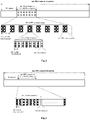


Classifications
-
- H—ELECTRICITY
- H04—ELECTRIC COMMUNICATION TECHNIQUE
- H04L—TRANSMISSION OF DIGITAL INFORMATION, e.g. TELEGRAPHIC COMMUNICATION
- H04L5/00—Arrangements affording multiple use of the transmission path
- H04L5/003—Arrangements for allocating sub-channels of the transmission path
- H04L5/0048—Allocation of pilot signals, i.e. of signals known to the receiver
- H04L5/0051—Allocation of pilot signals, i.e. of signals known to the receiver of dedicated pilots, i.e. pilots destined for a single user or terminal
-
- H—ELECTRICITY
- H04—ELECTRIC COMMUNICATION TECHNIQUE
- H04L—TRANSMISSION OF DIGITAL INFORMATION, e.g. TELEGRAPHIC COMMUNICATION
- H04L5/00—Arrangements affording multiple use of the transmission path
- H04L5/003—Arrangements for allocating sub-channels of the transmission path
- H04L5/0048—Allocation of pilot signals, i.e. of signals known to the receiver
-
- G—PHYSICS
- G01—MEASURING; TESTING
- G01S—RADIO DIRECTION-FINDING; RADIO NAVIGATION; DETERMINING DISTANCE OR VELOCITY BY USE OF RADIO WAVES; LOCATING OR PRESENCE-DETECTING BY USE OF THE REFLECTION OR RERADIATION OF RADIO WAVES; ANALOGOUS ARRANGEMENTS USING OTHER WAVES
- G01S5/00—Position-fixing by co-ordinating two or more direction or position line determinations; Position-fixing by co-ordinating two or more distance determinations
- G01S5/0009—Transmission of position information to remote stations
- G01S5/0072—Transmission between mobile stations, e.g. anti-collision systems
-
- G—PHYSICS
- G01—MEASURING; TESTING
- G01S—RADIO DIRECTION-FINDING; RADIO NAVIGATION; DETERMINING DISTANCE OR VELOCITY BY USE OF RADIO WAVES; LOCATING OR PRESENCE-DETECTING BY USE OF THE REFLECTION OR RERADIATION OF RADIO WAVES; ANALOGOUS ARRANGEMENTS USING OTHER WAVES
- G01S5/00—Position-fixing by co-ordinating two or more direction or position line determinations; Position-fixing by co-ordinating two or more distance determinations
- G01S5/02—Position-fixing by co-ordinating two or more direction or position line determinations; Position-fixing by co-ordinating two or more distance determinations using radio waves
- G01S5/0205—Details
-
- H—ELECTRICITY
- H04—ELECTRIC COMMUNICATION TECHNIQUE
- H04L—TRANSMISSION OF DIGITAL INFORMATION, e.g. TELEGRAPHIC COMMUNICATION
- H04L5/00—Arrangements affording multiple use of the transmission path
- H04L5/003—Arrangements for allocating sub-channels of the transmission path
- H04L5/0053—Allocation of signalling, i.e. of overhead other than pilot signals
-
- H—ELECTRICITY
- H04—ELECTRIC COMMUNICATION TECHNIQUE
- H04L—TRANSMISSION OF DIGITAL INFORMATION, e.g. TELEGRAPHIC COMMUNICATION
- H04L5/00—Arrangements affording multiple use of the transmission path
- H04L5/0091—Signalling for the administration of the divided path, e.g. signalling of configuration information
- H04L5/0094—Indication of how sub-channels of the path are allocated
-
- H—ELECTRICITY
- H04—ELECTRIC COMMUNICATION TECHNIQUE
- H04W—WIRELESS COMMUNICATION NETWORKS
- H04W64/00—Locating users or terminals or network equipment for network management purposes, e.g. mobility management
-
- G—PHYSICS
- G01—MEASURING; TESTING
- G01S—RADIO DIRECTION-FINDING; RADIO NAVIGATION; DETERMINING DISTANCE OR VELOCITY BY USE OF RADIO WAVES; LOCATING OR PRESENCE-DETECTING BY USE OF THE REFLECTION OR RERADIATION OF RADIO WAVES; ANALOGOUS ARRANGEMENTS USING OTHER WAVES
- G01S2205/00—Position-fixing by co-ordinating two or more direction or position line determinations; Position-fixing by co-ordinating two or more distance determinations
- G01S2205/01—Position-fixing by co-ordinating two or more direction or position line determinations; Position-fixing by co-ordinating two or more distance determinations specially adapted for specific applications
-
- H—ELECTRICITY
- H04—ELECTRIC COMMUNICATION TECHNIQUE
- H04L—TRANSMISSION OF DIGITAL INFORMATION, e.g. TELEGRAPHIC COMMUNICATION
- H04L27/00—Modulated-carrier systems
- H04L27/26—Systems using multi-frequency codes
- H04L27/2601—Multicarrier modulation systems
- H04L27/2602—Signal structure
- H04L27/26025—Numerology, i.e. varying one or more of symbol duration, subcarrier spacing, Fourier transform size, sampling rate or down-clocking
-
- H—ELECTRICITY
- H04—ELECTRIC COMMUNICATION TECHNIQUE
- H04W—WIRELESS COMMUNICATION NETWORKS
- H04W4/00—Services specially adapted for wireless communication networks; Facilities therefor
- H04W4/30—Services specially adapted for particular environments, situations or purposes
- H04W4/40—Services specially adapted for particular environments, situations or purposes for vehicles, e.g. vehicle-to-pedestrians [V2P]
Definitions
- the present disclosure relates to the field of communication technology, in particular to a method for configuring a transmission resource for a positioning reference signal, a method for receiving a transmission resource for a positioning reference signal, and a User Equipment (UE).
- UE User Equipment
- a New Radio (NR) Vehicle-to-Everything (V2X) system also needs to perform positioning to obtain a position of one vehicle relative to another.
- NR New Radio
- V2X Vehicle-to-Everything
- one vehicle needs to transmit a Sidelink Positioning Reference Signal (S-PRS) via a Sidelink interface, and then a neighboring vehicle may obtain its position relative to the vehicle through the measurement and calculation in accordance with the S-PRS.
- S-PRS Sidelink Positioning Reference Signal
- a plurality of S-PRSs is transmitted by a UE 1, and each of the other UEs surrounding the UE 1, e.g., a UE 2 to a UE 5, may obtain its position relative to the UE 1 in accordance with the S-PRSs from the UE 1.
- FR1 and FR2 are defined in a 5 th -Generation (5G) NR.
- FR1 refers to a 5G Sub-6GHz (less than 6GHz) frequency band
- FR2 refers to a 5G millimeter wave frequency band.
- a time/frequency resource occupied by each of the S-PRS beams is called as one S-PRS resource, and all the S-PRS resources are grouped into one S-PRS resource set. For one S-PRS resource set, it at most includes 64 S-PRS resources. How to configure time/frequency resource positions occupied by these PRS resources becomes a problem to be solved.
- the S-PRS resource set transmitted by the UE fails to be defined, and there is no scheme about how to configure the plurality of S-PRS resources.
- An object of the present disclosure is to provide a method for configuring a transmission resource for a positioning reference signal, a method for receiving a transmission resource for a positioning reference signal, and a UE, so as to enable the UE to obtain PRS resource information included in an S-PRS resource set through a small signaling overhead, thereby to enable the UE to complete a Sidelink positioning procedure in accordance with a received S-PRS resource, and reduce the signaling overhead and implementation complexity.
- the present disclosure provides the following technical solutions.
- the present disclosure provides in some embodiments a method for configuring a transmission resource for a PRS for a UE, including transmitting an S-PRS resource set.
- An S-PRS resource included in the S-PRS resource set is preconfigured, or configured through PC5 Radio Resource Control (RRC) signaling, or configured through base station RRC signaling.
- RRC Radio Resource Control
- At least one of the following parameters is pre-configured or configured through signaling: an offset amount of a first S-PRS resource in one S-PRS resource set relative to a first reference point; the quantity of S-PRS resources in one S-PRS resource set; the quantity of S-PRS resource groups included in one S-PRS resource set; a time interval between two adjacent S-PRS resource groups included in one S-PRS resource set; the quantity of S-PRS resources included in one S-PRS resource group; or a time interval between two adjacent S-PRS resources included in one S-PRS resource group.
- the offset amount of the first S-PRS resource in one S-PRS resource set relative to the first reference point includes the quantity of slots and/or the quantity of symbols by which the first S-PRS resource in one S-PRS resource is offset relative to the first reference point.
- the first reference point is at least one of a first slot within a first radio frame, a start position of an S-PRS resource set period to which the S-PRS resource belongs, or a first slot within a radio frame where the first S-PRS resource included in the S-PRS resource set to which the S-PRS resource belongs is located.
- the time interval between the two adjacent S-PRS resource groups in the S-PRS resource set is the quantity of slots and/or the quantity of symbols between the two adjacent S-PRS resource groups in the S-PRS resource set, and the time intervals between every two adjacent S-PRS resource groups are the same or different.
- the time intervals between every two adjacent S-PRS resource groups included in one S-PRS resource set are X0 slots and/or X1 symbols, where X0 and X1 are each a positive integer greater than or equal to 1.
- the quantity of S-PRS resources in each S-PRS resource group is the same.
- the time interval between the two adjacent S-PRS resources included in one S-PRS resource group is the quantity of slots and/or the quantity of symbols between the two adjacent S-PRS resources in the S-PRS resource group, and the time intervals between every two adjacent S-PRS resources included in one S-PRS resource group are the same or different.
- the time intervals between every two adjacent S-PRS resources included in one S-PRS resource group are Y0 slots and/or Y1 symbols, where Y0 and Y1 are each a positive integer greater than or equal to 1.
- a value of the parameter is determined in accordance with at least one of a SubCarrier Spacing (SCS) used by the UE, an FR and information carried in a Physical Sidelink Broadcast Channel (PSBCH).
- SCS SubCarrier Spacing
- PSBCH Physical Sidelink Broadcast Channel
- at least one of a slot offset amount of each S-PRS resource relative to a second reference point or a symbol offset amount relative to a third reference point is preconfigured or configured.
- the second reference point for the slot offset amount is one of a start position of an S-PRS resource set period, a first slot within a radio frame where a first S-PRS resource in an S-PRS resource set to which the S-PRS resource belongs is located, a slot where the first S-PRS resource included in the S-PRS resource set to which the S-PRS resource belongs is located, or a start position of the S-PRS resource set to which the S-PRS resource belongs.
- the third reference point for the symbol offset amount is a first symbol within a slot where the S-PRS resource is located.
- the quantity of symbols occupied by each S-PRS resource in one S-PRS resource set is configurable.
- the quantity of symbols occupied by each S-PRS resource in one S-PRS resource set is the same.
- the quantity of symbols occupied by one S-PRS resource is 2, 4, 6 or 12
- the quantity of symbols occupied by one S-PRS resource is 2, 4 or 6.
- the quantity of S-PRS resources in one S-PRS resource set is the same as the quantity of Sidelink-Synchronous Signal Blocks (S-SSBs) in a set of Sidelink synchronous resources within a Sidelink synchronization period.
- S-SSBs Sidelink-Synchronous Signal Blocks
- an S-PRS period configured by the UE is the same as the Sidelink synchronization period.
- an index number of the S-PRS resource is the same as an index number of the S-SSB.
- each of the S-PRS resources having a same index number as the S-SSB transmission resource is offset by a same offset amount from the S-SSB transmission resource, and the offset amount is configurable.
- the slot is a physical slot, an NR air-interface slot, an uplink slot or a Sidelink slot
- the symbol is a physical Orthogonal Frequency Division Multiplexing (OFDM) symbol, an NR air-interface OFDM symbol, an uplink symbol or a Sidelink symbol.
- OFDM Orthogonal Frequency Division Multiplexing
- the present disclosure provides in some embodiments a method for receiving a transmission resource for a PRS for a UE, including receiving an S-PRS resource set.
- An S-PRS resource included in the S-PRS resource set is preconfigured, or configured through PC5 RRC signaling, or configured through base station RRC signaling.
- At least one of the following parameters is pre-configured or configured through signaling: an offset amount of a first S-PRS resource in one S-PRS resource set relative to a first reference point; the quantity of S-PRS resources in one S-PRS resource set; the quantity of S-PRS resource groups included in one S-PRS resource set; a time interval between two adjacent S-PRS resource groups included in one S-PRS resource set; the quantity of S-PRS resources included in one S-PRS resource group; or a time interval between two adjacent S-PRS resources included in one S-PRS resource group.
- the offset amount of the first S-PRS resource in one S-PRS resource set relative to the first reference point includes the quantity of slots and/or the quantity of symbols by which the first S-PRS resource in one S-PRS resource is offset relative to the first reference point.
- the first reference point is at least one of a first slot within a first radio frame, a start position of an S-PRS resource set period to which the S-PRS resource belongs, or a first slot within a radio frame where the first S-PRS resource included in the S-PRS resource set to which the S-PRS resource belongs is located.
- the time interval between the two adjacent S-PRS resource groups in the S-PRS resource set is the quantity of slots and/or the quantity of symbols between the two adjacent S-PRS resource groups in the S-PRS resource set, and the time intervals between every two adjacent S-PRS resource groups are the same or different.
- the time intervals between every two adjacent S-PRS resource groups included in one S-PRS resource set are X0 slots and/or X1 symbols, where X0 and X1 are each a positive integer greater than or equal to 1.
- the quantity of S-PRS resources in each S-PRS resource group is the same.
- the time interval between the two adjacent S-PRS resources included in one S-PRS resource group is the quantity of slots and/or the quantity of symbols between the two adjacent S-PRS resources in the S-PRS resource group, and the time intervals between every two adjacent S-PRS resources included in one S-PRS resource group are the same or different.
- the time intervals between every two adjacent S-PRS resources included in one S-PRS resource group are Y0 slots and/or Y1 symbols, where Y0 and Y1 are each a positive integer greater than or equal to 1.
- a value of the parameter is determined in accordance with at least one of an SCS used by the UE, an FR and information carried in a PSBCH.
- At least one of a slot offset amount of each S-PRS resource relative to a second reference point or a symbol offset amount relative to a third reference point is preconfigured or configured.
- the second reference point for the slot offset amount is one of a start position of an S-PRS resource set period, a first slot within a radio frame where a first S-PRS resource in an S-PRS resource set to which the S-PRS resource belongs is located, a slot where the first S-PRS resource included in the S-PRS resource set to which the S-PRS resource belongs is located, or a start position of the S-PRS resource set to which the S-PRS resource belongs.
- the third reference point for the symbol offset amount is a first symbol within a slot where the S-PRS resource is located.
- the quantity of symbols occupied by each S-PRS resource in one S-PRS resource set is configurable.
- the quantity of symbols occupied by each S-PRS resource in one S-PRS resource set is the same.
- the quantity of symbols occupied by one S-PRS resource is 2, 4, 6 or 12
- the quantity of symbols occupied by one S-PRS resource is 2, 4 or 6.
- the quantity of S-PRS resources in one S-PRS resource set is the same as the quantity of S-SSBs in a set of Sidelink synchronous resources within a Sidelink synchronization period.
- an S-PRS period configured by the UE is the same as the Sidelink synchronization period.
- an index number of the S-PRS resource is the same as an index number of the S-SSB.
- each of the S-PRS resources having a same index number as the S-SSB transmission resource is offset by a same offset amount from the S-SSB transmission resource, and the offset amount is configurable.
- the slot is a physical slot, an NR air-interface slot, an uplink slot or a Sidelink slot
- the symbol is a physical OFDM symbol, an NR air-interface OFDM symbol, an uplink symbol or a Sidelink symbol.
- the present disclosure provides in some embodiments a UE, including a transceiver, a processor, and a memory storing therein a program to be executed by the processor.
- the processor is configured to execute the program, so as to transmit an S-PRS resource set.
- An S-PRS resource included in the S-PRS resource set is preconfigured, or configured through PC5 RRC signaling, or configured through base station RRC signaling.
- the present disclosure provides in some embodiments a device for configuring a transmission resource for a PRS, including a transceiver module configured to transmit an S-PRS resource set.
- An S-PRS resource included in the S-PRS resource set is preconfigured, or configured through PC5 RRC signaling, or configured through base station RRC signaling.
- the present disclosure provides in some embodiments a UE, including a transceiver, a processor, and a memory storing therein a program to be executed by the processor.
- the processor is configured to execute the program, so as to receive an S-PRS resource set.
- An S-PRS resource included in the S-PRS resource set is preconfigured, or configured through PC5 RRC signaling, or configured through base station RRC signaling.
- the present disclosure provides in some embodiments a device for receiving a transmission resource for a PRS, including a transceiver module configured to receive an S-PRS resource set.
- An S-PRS resource included in the S-PRS resource set is preconfigured, or configured through PC5 RRC signaling, or configured through base station RRC signaling.
- the present disclosure provides in some embodiments a processor-readable storage medium storing therein an instruction to be executed by a processor.
- the instruction is executed by the processor so as to implement the above-mentioned methods.
- the present disclosure has the following beneficial effects.
- a configuration scheme adapted to the S-PRS resource set has been given.
- the UE may, through small signaling overhead, obtain information about a transmission occasion for the PRS resource included in the S-PRS resource set.
- it is able for the UE to implement the Sidelink positioning procedure in accordance with the received S-PRS resource, thereby to reduce the signaling overhead as well as the implementation complexity.
- S-SSB Sidelink Synchronization Signal Block
- S-PSS Sidelink-Primary Synchronization Signal
- S-SSS Sidelink-Secondary Synchronization Signal
- a UE A transmits the S-SSB
- another UE B receives the S-SSB transmitted by the UE A
- a plurality of S-SSBs may probably be transmitted.
- the Sidelink communication may be performed.
- a UE in the NR V2X system may transmit various service channels and signals, e.g., a Physical Sidelink Control Channel (PSCCH), a Physical Sidelink Shared Channel (PSSCH), a Physical Sidelink Feedback Channel (PSFCH) and various Sidelink Reference Signals such as Sidelink Demodulation Reference Signal (SL DMRS), Sidelink Channel State Information Reference Signal (SL CSI-RS) and Sidelink Phase-tracking Reference Signal (SL PT-RS), to complete a Sidelink communication process between vehicles.
- PSCCH Physical Sidelink Control Channel
- PSSCH Physical Sidelink Shared Channel
- PSFCH Physical Sidelink Feedback Channel
- SL DMRS Sidelink Demodulation Reference Signal
- SL CSI-RS Sidelink Channel State Information Reference Signal
- SL PT-RS Sidelink Phase-tracking Reference Signal
- a first symbol within each slot is used for Automatic Gain Control (AGC), so as to adjust a power amplifier and adapt to a rapid change in received signal strength.
- a last symbol within each slot is used for Guard Period (GP), so as to provide a reserved time for transmission and reception switch or eliminate inter-symbol interference caused by a timing offset.
- AGC Automatic Gain Control
- GP Guard Period
- the present disclosure provides in some embodiments a method for configuring a transmission resource for a PRS for a UE, which includes Step 21 of transmitting an S-PRS resource set.
- An S-PRS resource included in the S-PRS resource set is preconfigured, or configured through PC5 RRC signaling, or configured through base station RRC signaling.
- the S-PRS resource when the UE is outside a coverage range of a network device, the S-PRS resource is preconfigured, or configured through the PC5 RRC signaling.
- the S-PRS resource is configured through the base station RRC signaling.
- One S-PRS resource set includes at least one S-PRS resource, and each S-PRS resource is preconfigured, or configured through the PC5 RRC signaling, or configured through the base station RRC signaling.
- a specific configuration scheme depends on an actual scenario.
- the S-PRS transmitted by the UE is preconfigured or configured in accordance with different scenarios through one or more of the following three modes: (1) preconfiguring the PRS at a UE side; (2) configuring the PRS at the UE side through the PC5 RRC signaling; and (3) configuring the PRS at the UE side through the base station RRC signaling.
- the S-PRS resource is pre-configured or configured through only the PC5 RRC signaling.
- the UE may receive the base station RRC signaling so as to configure the S-PRS resource.
- the UE within the coverage range of the base station may receive the base station signaling, so it may configure a transmission occasion for the S-PRS resource directly through the base station RRC signaling.
- different configuration modes are selected flexibly in accordance with different scenarios, so it is able for the UE outside the coverage range and the UE within the coverage range to obtain configuration information about the S-PRS, thereby to perform Sidelink positioning in accordance with the configuration information about the S-PRS.
- At least one of the following parameters is pre-configured or configured through signaling: an offset amount of a first S-PRS resource in one S-PRS resource set relative to a first reference point; the quantity of S-PRS resources in one S-PRS resource set; the quantity of S-PRS resource groups included in one S-PRS resource set; a time interval between two adjacent S-PRS resource groups included in one S-PRS resource set; the quantity of S-PRS resources included in one S-PRS resource group; or a time interval between two adjacent S-PRS resources included in one S-PRS resource group.
- the offset amount of the first S-PRS resource in one S-PRS resource set relative to the first reference point includes the quantity of slots and/or the quantity of symbols by which the first S-PRS resource in one S-PRS resource is offset relative to the first reference point.
- the first reference point is at least one of a first slot within a first radio frame (the first slot within the first radio frame refers to System Frame Number (SFN) 0 slot 0), a start position of an S-PRS resource set period to which the S-PRS resource belongs, or a first slot within a radio frame where the first S-PRS resource included in the S-PRS resource set to which the S-PRS resource belongs is located.
- SFN System Frame Number
- all the S-PRS resources may form an S-PRS resource set, and a part of the S-PRS resources may form a resource group.
- the time interval between the two adjacent S-PRS resource groups in the S-PRS resource set is the quantity of slots and/or the quantity of symbols between the two adjacent S-PRS resource groups in the S-PRS resource set, and the time intervals between every two adjacent S-PRS resource groups are the same or different.
- the time intervals between every two adjacent S-PRS resource groups included in one S-PRS resource set are X0 slots and/or X1 symbols, where X0 and X1 are each a positive integer greater than or equal to 1.
- the quantity of S-PRS resources in each S-PRS resource group is the same.
- the time interval between the two adjacent S-PRS resources included in one S-PRS resource group is the quantity of slots and/or the quantity of symbols between the two adjacent S-PRS resources in the S-PRS resource group, and the time intervals between every two adjacent S-PRS resources included in one S-PRS resource group are the same or different.
- the time intervals between every two adjacent S-PRS resources included in one S-PRS resource group are Y0 slots and/or Y1 symbols, where Y0 and Y1 are each a positive integer greater than or equal to 1.
- a value of the parameter is determined in accordance with at least one of an SCS used by the UE, an FR and information carried in a PSBCH.
- each S-PRS resource in one S-PRS resource set is preconfigured, or configured through the PC5 RRC signaling, or configured through the base station RRC signaling.
- at least one of N1 to N6 is preconfigured or configured, where N1 indicates an offset amount of the first S-PRS resource in one S-PRS resource set relative to the first reference point, N2 indicates the quantity of S-PRS resources in one S-PRS resource set, N3 indicates the quantity of S-PRS resource groups included in one S-PRS resource set, N4 indicates the time interval between two adjacent S-PRS resource groups included in one S-PRS resource set, N5 indicates the quantity of S-PRS resources included in one S-PRS resource group, and N6 indicates the time interval between two adjacent S-PRS resources included in one S-PRS resource group.
- N1 refers to one or both of the quantity of slots or the quantity of symbols of offset relative to the start position of the period.
- the first reference point may be one of the start position of the S-PRS resource set period to which the S-PRS resource belongs, or the first slot, e.g., slot 0, within the radio frame where the first S-PRS resource included in the S-PRS resource set to which the S-PRS resource belongs is located.
- the entire S-PRS resource set is just one S-PRS resource group.
- the time interval (N4) between the two adjacent S-PRS resource groups in the S-PRS resource set is one or both of the quantity of slots and the quantity of symbols between the two adjacent S-PRS resource groups in the S-PRS resource set, and the time intervals between every two adjacent S-PRS resource groups are the same or different.
- the time intervals (N4) between every two adjacent S-PRS resource groups included in one S-PRS resource set are X0 slots or X1 symbols or both, where X0 and X1 are each a positive integer greater than or equal to 1.
- the quantity of S-PRS resources (N5) in each S-PRS resource group is the same.
- the time interval (N6) between the two adjacent S-PRS resources included in one S-PRS resource group is one or both of the quantity of slots and the quantity of symbols between the two adjacent S-PRS resources in the S-PRS resource group, and the time intervals between every two adjacent S-PRS resources included in one S-PRS resource group are the same or different.
- the time intervals (N6) between every two adjacent S-PRS resources included in one S-PRS resource group are same Y0 slots or Y1 symbols or both, where Y0 and Y1 are each a positive integer greater than or equal to 1.
- the slot refers to a physical slot, an NR air-interface slot, an uplink slot or a Sidelink slot
- the symbol refers to a physical OFDM symbol, an NR air-interface OFDM symbol, an uplink symbol or a Sidelink symbol.
- the values of the above parameters are determined in accordance with at least one of the SCS used by the UE, the FR and the information carried in the PSBCH.
- N1 refers to the information about the offset amount
- N4 and N6 refer to the information about the time intervals. Units of these three parameters are one or both of the quantity of slots and the quantity of symbols. For example, N1 is 240 slots, N4 is 32 slots, and N6 is 2 slots.
- N2, N3 and N5 are the information about the quantity of PRS resources or PRS resource groups. For example, N2 is 64 PRS resources, N3 is 8 PRS resource groups, and N5 is 8 PRS resources.
- N4 may have different values for one PRS resource set.
- N6 may have different values for one PRS resource group.
- the entire S-PRS resource set includes just one S-PRS resource group.
- S-PRS resource group there is no such a concept as S-PRS resource group, and one S-PRS resource set directly includes 64 S-PRS resources.
- N1, N2 and N6 needs to be configured for the transmission of the S-PRS resource.
- a plurality of PRS resource sets may be configured within one PRS resource set period, and each PRS resource set may correspond to one Transmission Reception Point (TRP), so the present disclosure is not limited to such a condition where merely one PRS resource set has been configured.
- TRP Transmission Reception Point
- N1 to N6 needs to be configured to configure the transmission occasion of the PRS resource set.
- the time intervals between every adjacent PRS resources are the same, it is able to configure the transmission occasion of the S-PRS resource through small signaling overhead, and at this time, it is able for the UE to obtain the information about the transmission occasion of the S-PRS resource in accordance with a configuration message.
- At least one of a slot offset amount of each S-PRS resource relative to a second reference point or a symbol offset amount relative to a third reference point is preconfigured or configured.
- the second reference point for the slot offset amount is one of a start position of an S-PRS resource set period, a first slot within a radio frame where a first S-PRS resource in an S-PRS resource set to which the S-PRS resource belongs is located, a slot where the first S-PRS resource included in the S-PRS resource set to which the S-PRS resource belongs is located, or a start position of the S-PRS resource set to which the S-PRS resource belongs.
- the third reference point for the symbol offset amount is a first symbol within a slot where the S-PRS resource is located.
- at least one of a slot offset amount of each S-PRS resource relative to the second reference point or a symbol offset amount relative to the third reference point is preconfigured or configured.
- the second reference point for the slot offset amount is one of the start position of the S-PRS resource set period, the first slot (slot 0) within a radio frame where a first S-PRS resource in an S-PRS resource set to which the S-PRS resource belongs is located, a slot where the first S-PRS resource included in the S-PRS resource set to which the S-PRS resource belongs is located, or a start position of the S-PRS resource set to which the S-PRS resource belongs.
- the third reference point for the symbol offset amount is a first symbol within a slot where the S-PRS resource is located.
- the quantity of slots between the reference point and the S-PRS resource is calculated, and then the quantity of the slots is taken as the slot offset amount of the S-PRS resource.
- the symbol offset amount refers to the quantity of symbols by which the S-PRS resource is offset from the first symbol within the slot.
- the quantity of symbols occupied by each S-PRS resource in one S-PRS resource set is configurable.
- the quantity of symbols occupied by each S-PRS resource in one S-PRS resource set is the same.
- the quantity of symbols occupied by one S-PRS resource is 2, 4, 6 or 12
- the quantity of symbols occupied by one S-PRS resource is 2, 4 or 6.
- each S-PRS resource is described as follows.
- the quantity of symbols occupied by each S-PRS resource in one S-PRS resource set is configurable, and particularly the quantity of symbols occupied by each S-PRS resource in one S-PRS resource set is the same.
- the quantity of symbols occupied by one S-PRS resource is 2, 4, 6 or 12
- the quantity of symbols occupied by one S-PRS resource is 2, 4 or 6.
- the quantity of symbols occupied by each S-PRS resource in one S-PRS resource set is the same.
- a first symbol within each slot is AGC and a last symbol is GP.
- the quantity of available symbols within one slot is 12, and when the extended CP is configured in the system, the quantity of available symbols within one slot is 10.
- the quantity of symbols occupied by one S-PRS resource is 2, 4, 6 or 12
- the quantity of symbols occupied by one S-PRS resource is 2, 4 or 6.
- the maximum quantity of available symbols for one S-PRS resource may be flexibly selected in accordance with whether the normal CP or the extended CP is configured in the system, so as to be adapted to characteristics of the Sidelink slot.
- the quantity of S-PRS resources in one S-PRS resource set is the same as the quantity of S-SSBs in a set of Sidelink synchronous resources within a Sidelink synchronization period.
- an S-PRS period configured by the UE is the same as the Sidelink synchronization period.
- an index number of the S-PRS resource is the same as an index number of the S-SSB.
- each of the S-PRS resources having a same index number as the S-SSB transmission resource is offset by a same offset amount from the S-SSB transmission resource, and the offset amount is configurable.
- the S-PRS resource and the S-SSB resource will be described hereinafter.
- the quantity of S-PRS resources in one S-PRS resource set is the same as the quantity of S-SSBs in a set of synchronization resources within one synchronization period.
- the S-PRS period is the same as the synchronization period.
- the index number of the S-PRS resource is the same as the index number of the S-SSB.
- the S-PRS resources having a same index number as the same index number as the S-SSB is offset by a same offset amount from the S-SSB, and the offset amount is configurable.
- one S-PRS resource set includes a plurality of S-PRS resources
- its object is to transmit the S-PRS resources in different beam directions.
- the quantity of S-PRS resources in one S-PRS resource set is the same as the quantity of beam directions.
- the quantity of S-SSBs in one S-SSB set is also the same as the quantity of beams directions.
- the quantity of S-PRS resources in one S-PRS resource set should be the same as the quantity of S-SSBs in a set of synchronization resources within the synchronization period.
- the index number of the S-PRS resource in a same beam direction as the S-SSB is the same as the index number of the S-SSB.
- it is able to simplify the configuration, and enable an index number of a strongest beam for the S-PRS resource identified in the positioning process to be the same as an index number of a strongest beam for the SSB identified in the synchronization process, thereby to reduce a scanning and identification delay for the strongest beam for the S-PRS resource, and increase an identification success rate of the strongest beam.
- Fig. 6 shows S-PRS beam scanning by a UE 1
- Fig. 7 shows S-SSB beam scanning by the UE 1.
- one S-PRS resource set includes four S-PRS resources, and the quantity of S-PRS resources is the same as the quantity of S-SSBs.
- Different beam patterns represent different beam scanning directions, and in a same beam direction, an index number of the S-PRS resource is the same as the index number of the S-SSB.
- the configuration of the S-PRS resource is interrelated with the configuration of the S-SSB, and the transmission occasion of the S-PRS resource having a same index as the S-SSB is offset from the transmission occasion of the S-SSB by a constant offset amount, so as to reduce the signaling overhead for configuring the transmission occasion of the S-PRS resource.
- one S-SSB set includes four S-SSBs with transmission occasions as T1, T2, T3 and T4 respectively, and the transmission occasion of the S-PRS resource having a same index as the S-SSB is offset from the transmission occasion of the S-SSB by 6 slots.
- the transmission occasions of the four S-PRS resources in one S-PRS resource set are T1+6, T2+6, T3+6 and T4+6 respectively. In this way, it is able to reduce the signaling overhead for configuring the S-PRS resource as well as the configuration complexity.
- the S-PRS resource is associated with the S-SSB resource, and such configuration parameters of the S-PRS resource as quantity, index number and transmission occasion are obtained in accordance with the configuration parameters of the S-SSB resource.
- it is able to reduce the signaling overhead for configuring the S-PRS resource as well as the configuration complexity.
- the slot is a physical slot, an NR air-interface slot, an uplink slot or a Sidelink slot
- the symbol is a physical OFDM symbol, an NR air-interface OFDM symbol, an uplink symbol or a Sidelink symbol.
- the present disclosure provides in some embodiments a method for receiving a transmission resource for a PRS for a UE, including Step 81 of receiving an S-PRS resource set.
- An S-PRS resource included in the S-PRS resource set is preconfigured, or configured through PC5 RRC signaling, or configured through base station RRC signaling.
- the S-PRS resource when the UE is outside a coverage range of a network device, the S-PRS resource is preconfigured, or configured through PC5 RRC signaling.
- the S-PRS resource is configured through base station RRC signaling.
- At least one of the following parameters is pre-configured or configured through signaling: an offset amount of a first S-PRS resource in one S-PRS resource set relative to a first reference point; the quantity of S-PRS resources in one S-PRS resource set; the quantity of S-PRS resource groups included in one S-PRS resource set; a time interval between two adjacent S-PRS resource groups included in one S-PRS resource set; the quantity of S-PRS resources included in one S-PRS resource group; or a time interval between two adjacent S-PRS resources included in one S-PRS resource group.
- the offset amount of the first S-PRS resource in one S-PRS resource set relative to the first reference point includes the quantity of slots and/or the quantity of symbols by which the first S-PRS resource in one S-PRS resource is offset relative to the first reference point.
- the first reference point is at least one of a first slot within a first radio frame, a start position of an S-PRS resource set period to which the S-PRS resource belongs, or a first slot within a radio frame where the first S-PRS resource included in the S-PRS resource set to which the S-PRS resource belongs is located.
- the time interval between the two adjacent S-PRS resource groups in the S-PRS resource set is the quantity of slots and/or the quantity of symbols between the two adjacent S-PRS resource groups in the S-PRS resource set, and the time intervals between every two adjacent S-PRS resource groups are the same or different.
- the time intervals between every two adjacent S-PRS resource groups included in one S-PRS resource set are X0 slots and/or X1 symbols, where X0 and X1 are each a positive integer greater than or equal to 1.
- the quantity of S-PRS resources in each S-PRS resource group is the same.
- the time interval between the two adjacent S-PRS resources included in one S-PRS resource group is the quantity of slots and/or the quantity of symbols between the two adjacent S-PRS resources in the S-PRS resource group, and the time intervals between every two adjacent S-PRS resources included in one S-PRS resource group are the same or different.
- the time intervals between every two adjacent S-PRS resources included in one S-PRS resource group are Y0 slots and/or Y1 symbols, where Y0 and Y1 are each a positive integer greater than or equal to 1.
- a value of the parameter is determined in accordance with at least one of an SCS used by the UE, a Frequency Range (FR) and information carried in a PSBCH.
- SCS Frequency Range
- At least one of a slot offset amount of each S-PRS resource relative to a second reference point or a symbol offset amount relative to a third reference point is preconfigured or configured.
- the second reference point for the slot offset amount is one of a start position of an S-PRS resource set period, a first slot within a radio frame where a first S-PRS resource in an S-PRS resource set to which the S-PRS resource belongs is located, a slot where the first S-PRS resource included in the S-PRS resource set to which the S-PRS resource belongs is located, or a start position of the S-PRS resource set to which the S-PRS resource belongs.
- the third reference point for the symbol offset amount is a first symbol within a slot where the S-PRS resource is located.
- the quantity of symbols occupied by each S-PRS resource in one S-PRS resource set is configurable.
- the quantity of symbols occupied by each S-PRS resource in one S-PRS resource set is the same.
- the quantity of symbols occupied by one S-PRS resource is 2, 4, 6 or 12
- the quantity of symbols occupied by one S-PRS resource is 2, 4 or 6.
- the quantity of S-PRS resources in one S-PRS resource set is the same as the quantity of S-SSBs in a set of Sidelink synchronous resources within a Sidelink synchronization period.
- an S-PRS period configured by the UE is the same as the Sidelink synchronization period.
- an index number of the S-PRS resource is the same as an index number of the S-SSB.
- each of the S-PRS resources having a same index number as an S-SSB transmission resource is offset by a same offset amount from the S-SSB transmission resource, and the offset amount is configurable.
- the slot is a physical slot, an NR air-interface slot, an uplink slot or a Sidelink slot
- the symbol is a physical OFDM symbol, an NR air-interface OFDM symbol, an uplink symbol or a Sidelink symbol.
- the present disclosure further provides in some embodiments a UE 90, which includes a transceiver 91, a processor 92, and a memory 93 storing therein a program to be executed by the processor 92.
- the processor 92 is configured to execute the program, so as to transmit an S-PRS resource set.
- An S-PRS resource included in the S-PRS resource set is preconfigured, or configured through PC5 RRC signaling, or configured through base station RRC signaling.
- the S-PRS resource when the UE is outside a coverage range of a network device, the S-PRS resource is preconfigured, or configured through PC5 RRC signaling.
- the S-PRS resource is configured through base station RRC signaling.
- At least one of the following parameters is pre-configured or configured through signaling: an offset amount of a first S-PRS resource in one S-PRS resource set relative to a first reference point; the quantity of S-PRS resources in one S-PRS resource set; the quantity of S-PRS resource groups included in one S-PRS resource set; a time interval between two adjacent S-PRS resource groups included in one S-PRS resource set; the quantity of S-PRS resources included in one S-PRS resource group; or a time interval between two adjacent S-PRS resources included in one S-PRS resource group.
- the offset amount of the first S-PRS resource in one S-PRS resource set relative to the first reference point includes the quantity of slots and/or the quantity of symbols by which the first S-PRS resource in one S-PRS resource is offset relative to the first reference point.
- the first reference point is at least one of a first slot within a first radio frame, a start position of an S-PRS resource set period to which the S-PRS resource belongs, or a first slot within a radio frame where the first S-PRS resource included in the S-PRS resource set to which the S-PRS resource belongs is located.
- the time interval between the two adjacent S-PRS resource groups in the S-PRS resource set is the quantity of slots and/or the quantity of symbols between the two adjacent S-PRS resource groups in the S-PRS resource set, and the time intervals between every two adjacent S-PRS resource groups are the same or different.
- the time intervals between every two adjacent S-PRS resource groups included in one S-PRS resource set are X0 slots and/or X1 symbols, where X0 and X1 are each a positive integer greater than or equal to 1.
- the quantity of S-PRS resources in each S-PRS resource group is the same.
- the time interval between the two adjacent S-PRS resources included in one S-PRS resource group is the quantity of slots and/or the quantity of symbols between the two adjacent S-PRS resources in the S-PRS resource group, and the time intervals between every two adjacent S-PRS resources included in one S-PRS resource group are the same or different.
- the time intervals between every two adjacent S-PRS resources included in one S-PRS resource group are Y0 slots and/or Y1 symbols, where Y0 and Y1 are each a positive integer greater than or equal to 1.
- a value of the parameter is determined in accordance with at least one of an SCS used by the UE, an FR and information carried in a PSBCH.
- At least one of a slot offset amount of each S-PRS resource relative to a second reference point or a symbol offset amount relative to a third reference point is preconfigured or configured.
- the second reference point for the slot offset amount is one of a start position of an S-PRS resource set period, a first slot within a radio frame where a first S-PRS resource in an S-PRS resource set to which the S-PRS resource belongs is located, a slot where the first S-PRS resource included in the S-PRS resource set to which the S-PRS resource belongs is located, or a start position of the S-PRS resource set to which the S-PRS resource belongs.
- the third reference point for the symbol offset amount is a first symbol within a slot where the S-PRS resource is located.
- the quantity of symbols occupied by each S-PRS resource in one S-PRS resource set is configurable.
- the quantity of symbols occupied by each S-PRS resource in one S-PRS resource set is the same.
- the quantity of symbols occupied by one S-PRS resource is 2, 4, 6 or 12
- the quantity of symbols occupied by one S-PRS resource is 2, 4 or 6.
- the quantity of S-PRS resources in one S-PRS resource set is the same as the quantity of S-SSBs in a set of Sidelink synchronous resources within a Sidelink synchronization period.
- an S-PRS period configured by the UE is the same as the Sidelink synchronization period.
- an index number of the S-PRS resource is the same as an index number of the S-SSB.
- each of the S-PRS resources having a same index number as the S-SSB transmission resource is offset by a same offset amount from the S-SSB transmission resource, and the offset amount is configurable.
- the slot is a physical slot, an NR air-interface slot, an uplink slot or a Sidelink slot
- the symbol is a physical OFDM symbol, an NR air-interface OFDM symbol, an uplink symbol or a Sidelink symbol.
- the UE in the embodiments of the present disclosure corresponds to the method in Fig. 2 , so the implementation of the UE may refer to that of the method in Fig. 2 with a same technical effect.
- the transceiver 91 communicates with the memory 93 and the processor 92 via a bus interface.
- a function of the processor 92 may also be implemented by the transceiver 91, and a function of the transceiver 91 may also be achieved by the processor 92.
- the UE in the embodiments of the present disclosure is capable of implementing all steps in the method with a same technical effect, and contents identical to those in the method embodiments and the beneficial effects will not be further particularly defined herein.
- the present disclosure further provides in some embodiments a device 100 for configuring a transmission resource for a PRS, including a transceiver module 101 configured to transmit an S-PRS resource set.
- An S-PRS resource included in the S-PRS resource set is preconfigured, or configured through PC5 RRC signaling, or configured through base station RRC signaling.
- the S-PRS resource when the UE is outside a coverage range of a network device, the S-PRS resource is preconfigured, or configured through PC5 RRC signaling.
- the S-PRS resource is configured through base station RRC signaling.
- At least one of the following parameters is pre-configured or configured through signaling: an offset amount of a first S-PRS resource in one S-PRS resource set relative to a first reference point; the quantity of S-PRS resources in one S-PRS resource set; the quantity of S-PRS resource groups included in one S-PRS resource set; a time interval between two adjacent S-PRS resource groups included in one S-PRS resource set; the quantity of S-PRS resources included in one S-PRS resource group; or a time interval between two adjacent S-PRS resources included in one S-PRS resource group.
- the offset amount of the first S-PRS resource in one S-PRS resource set relative to the first reference point includes the quantity of slots and/or the quantity of symbols by which the first S-PRS resource in one S-PRS resource is offset relative to the first reference point.
- the first reference point is at least one of a first slot within a first radio frame, a start position of an S-PRS resource set period to which the S-PRS resource belongs, or a first slot within a radio frame where the first S-PRS resource included in the S-PRS resource set to which the S-PRS resource belongs is located.
- the time interval between the two adjacent S-PRS resource groups in the S-PRS resource set is the quantity of slots and/or the quantity of symbols between the two adjacent S-PRS resource groups in the S-PRS resource set, and the time intervals between every two adjacent S-PRS resource groups are the same or different.
- the time intervals between every two adjacent S-PRS resource groups included in one S-PRS resource set are X0 slots and/or X1 symbols, where X0 and X1 are each a positive integer greater than or equal to 1.
- the quantity of S-PRS resources in each S-PRS resource group is the same.
- the time interval between the two adjacent S-PRS resources included in one S-PRS resource group is the quantity of slots and/or the quantity of symbols between the two adjacent S-PRS resources in the S-PRS resource group, and the time intervals between every two adjacent S-PRS resources included in one S-PRS resource group are the same or different.
- the time intervals between every two adjacent S-PRS resources included in one S-PRS resource group are Y0 slots and/or Y1 symbols, where Y0 and Y1 are each a positive integer greater than or equal to 1.
- a value of the parameter is determined in accordance with at least one of an SCS used by the UE, an FR and information carried in a PSBCH.
- At least one of a slot offset amount of each S-PRS resource relative to a second reference point or a symbol offset amount relative to a third reference point is preconfigured or configured.
- the second reference point for the slot offset amount is one of a start position of an S-PRS resource set period, a first slot within a radio frame where a first S-PRS resource in an S-PRS resource set to which the S-PRS resource belongs is located, a slot where the first S-PRS resource included in the S-PRS resource set to which the S-PRS resource belongs is located, or a start position of the S-PRS resource set to which the S-PRS resource belongs.
- the third reference point for the symbol offset amount is a first symbol within a slot where the S-PRS resource is located.
- the quantity of symbols occupied by each S-PRS resource in one S-PRS resource set is configurable.
- the quantity of symbols occupied by each S-PRS resource in one S-PRS resource set is the same.
- the quantity of symbols occupied by one S-PRS resource is 2, 4, 6 or 12
- the quantity of symbols occupied by one S-PRS resource is 2, 4 or 6.
- the quantity of S-PRS resources in one S-PRS resource set is the same as the quantity of S-SSBs in a set of Sidelink synchronous resources within a Sidelink synchronization period.
- an S-PRS period configured by the UE is the same as the Sidelink synchronization period.
- an index number of the S-PRS resource is the same as an index number of the S-SSB.
- each of the S-PRS resources having a same index number as the S-SSB transmission resource is offset by a same offset amount from the S-SSB transmission resource, and the offset amount is configurable.
- the slot is a physical slot, an NR air-interface slot, an uplink slot or a Sidelink slot
- the symbol is a physical OFDM symbol, an NR air-interface OFDM symbol, an uplink symbol or a Sidelink symbol.
- the device further includes a processing module 102 configured to process information to be transmitted by the transceiver module 101.
- the device in the embodiments of the present disclosure is capable of implementing all steps in the method with a same technical effect, and contents identical to those in the method embodiments and the beneficial effects will not be further particularly defined herein.
- the present disclosure further provides in some embodiments a UE 110, which includes a transceiver 111, a processor 112, and a memory 113 storing therein a program to be executed by the processor 112.
- the processor 112 is configured to execute the program, so as to receive an S-PRS resource set.
- An S-PRS resource included in the S-PRS resource set is preconfigured, or configured through PC5 RRC signaling, or configured through base station RRC signaling.
- the S-PRS resource when the UE is outside a coverage range of a network device, the S-PRS resource is preconfigured, or configured through the PC5 RRC signaling.
- the S-PRS resource is configured through the base station RRC signaling.
- At least one of the following parameters is pre-configured or configured through signaling: an offset amount of a first S-PRS resource in one S-PRS resource set relative to a first reference point; the quantity of S-PRS resources in one S-PRS resource set; the quantity of S-PRS resource groups included in one S-PRS resource set; a time interval between two adjacent S-PRS resource groups included in one S-PRS resource set; the quantity of S-PRS resources included in one S-PRS resource group; or a time interval between two adjacent S-PRS resources included in one S-PRS resource group.
- the offset amount of the first S-PRS resource in one S-PRS resource set relative to the first reference point includes the quantity of slots and/or the quantity of symbols by which the first S-PRS resource in one S-PRS resource is offset relative to the first reference point.
- the first reference point is at least one of a first slot within a first radio frame, a start position of an S-PRS resource set period to which the S-PRS resource belongs, or a first slot within a radio frame where the first S-PRS resource included in the S-PRS resource set to which the S-PRS resource belongs is located.
- the time interval between the two adjacent S-PRS resource groups in the S-PRS resource set is the quantity of slots and/or the quantity of symbols between the two adjacent S-PRS resource groups in the S-PRS resource set, and the time intervals between every two adjacent S-PRS resource groups are the same or different.
- the time intervals between every two adjacent S-PRS resource groups included in one S-PRS resource set are X0 slots and/or X1 symbols, where X0 and X1 are each a positive integer greater than or equal to 1.
- the quantity of S-PRS resources in each S-PRS resource group is the same.
- the time interval between the two adjacent S-PRS resources included in one S-PRS resource group is the quantity of slots and/or the quantity of symbols between the two adjacent S-PRS resources in the S-PRS resource group, and the time intervals between every two adjacent S-PRS resources included in one S-PRS resource group are the same or different.
- the time intervals between every two adjacent S-PRS resources included in one S-PRS resource group are Y0 slots and/or Y1 symbols, where Y0 and Y1 are each a positive integer greater than or equal to 1.
- a value of the parameter is determined in accordance with at least one of an SCS used by the UE, an FR and information carried in a PSBCH.
- At least one of a slot offset amount of each S-PRS resource relative to a second reference point or a symbol offset amount relative to a third reference point is preconfigured or configured.
- the second reference point for the slot offset amount is one of a start position of an S-PRS resource set period, a first slot within a radio frame where a first S-PRS resource in an S-PRS resource set to which the S-PRS resource belongs is located, a slot where the first S-PRS resource included in the S-PRS resource set to which the S-PRS resource belongs is located, or a start position of the S-PRS resource set to which the S-PRS resource belongs.
- the third reference point for the symbol offset amount is a first symbol within a slot where the S-PRS resource is located.
- the quantity of symbols occupied by each S-PRS resource in one S-PRS resource set is configurable.
- the quantity of symbols occupied by each S-PRS resource in one S-PRS resource set is the same.
- the quantity of symbols occupied by one S-PRS resource is 2, 4, 6 or 12
- the quantity of symbols occupied by one S-PRS resource is 2, 4 or 6.
- the quantity of S-PRS resources in one S-PRS resource set is the same as the quantity of S-SSBs in a set of Sidelink synchronous resources within a Sidelink synchronization period.
- an S-PRS period configured by the UE is the same as the Sidelink synchronization period.
- an index number of the S-PRS resource is the same as an index number of the S-SSB.
- each of the S-PRS resources having a same index number as an S-SSB transmission resource is offset by a same offset amount from the S-SSB transmission resource, and the offset amount is configurable.
- the slot is a physical slot, an NR air-interface slot, an uplink slot or a Sidelink slot
- the symbol is a physical OFDM symbol, an NR air-interface OFDM symbol, an uplink symbol or a Sidelink symbol.
- the UE in the embodiments of the present disclosure corresponds to the method in Fig. 8 , so the implementation of the UE may refer to that of the method in Fig. 2 with a same technical effect.
- the transceiver 111 communicates with the memory 113 and the processor 112 via a bus interface.
- a function of the processor 112 may also be implemented by the transceiver 111, and a function of the transceiver 111 may also be achieved by the processor 112.
- the UE in the embodiments of the present disclosure is capable of implementing all steps in the method with a same technical effect, and contents identical to those in the method embodiments and the beneficial effects will not be particularly further defined herein.
- the present disclosure further provides in some embodiments a device 120 for receiving a transmission resource for a PRS, including a transceiver module 121 configured to receive an S-PRS resource set.
- a transceiver module 121 configured to receive an S-PRS resource set.
- An S-PRS resource included in the S-PRS resource set is preconfigured, or configured through PC5 RRC signaling, or configured through base station RRC signaling.
- the S-PRS resource when the UE is outside a coverage range of a network device, the S-PRS resource is preconfigured, or configured through the PC5 RRC signaling.
- the S-PRS resource is configured through the base station RRC signaling.
- At least one of the following parameters is pre-configured or configured through signaling: an offset amount of a first S-PRS resource in one S-PRS resource set relative to a first reference point; the quantity of S-PRS resources in one S-PRS resource set; the quantity of S-PRS resource groups included in one S-PRS resource set; a time interval between two adjacent S-PRS resource groups included in one S-PRS resource set; the quantity of S-PRS resources included in one S-PRS resource group; or a time interval between two adjacent S-PRS resources included in one S-PRS resource group.
- the offset amount of the first S-PRS resource in one S-PRS resource set relative to the first reference point includes the quantity of slots and/or the quantity of symbols by which the first S-PRS resource in one S-PRS resource is offset relative to the first reference point.
- the first reference point is at least one of a first slot within a first radio frame, a start position of an S-PRS resource set period to which the S-PRS resource belongs, or a first slot within a radio frame where the first S-PRS resource included in the S-PRS resource set to which the S-PRS resource belongs is located.
- the time interval between the two adjacent S-PRS resource groups in the S-PRS resource set is the quantity of slots and/or the quantity of symbols between the two adjacent S-PRS resource groups in the S-PRS resource set, and the time intervals between every two adjacent S-PRS resource groups are the same or different.
- the time intervals between every two adjacent S-PRS resource groups included in one S-PRS resource set are X0 slots and/or X1 symbols, where X0 and X1 are each a positive integer greater than or equal to 1.
- the quantity of S-PRS resources in each S-PRS resource group is the same.
- the time interval between the two adjacent S-PRS resources included in one S-PRS resource group is the quantity of slots and/or the quantity of symbols between the two adjacent S-PRS resources in the S-PRS resource group, and the time intervals between every two adjacent S-PRS resources included in one S-PRS resource group are the same or different.
- the time intervals between every two adjacent S-PRS resources included in one S-PRS resource group are Y0 slots and/or Y1 symbols, where Y0 and Y1 are each a positive integer greater than or equal to 1.
- a value of the parameter is determined in accordance with at least one of an SCS used by the UE, an FR and information carried in a PSBCH.
- At least one of a slot offset amount of each S-PRS resource relative to a second reference point or a symbol offset amount relative to a third reference point is preconfigured or configured.
- the second reference point for the slot offset amount is one of a start position of an S-PRS resource set period, a first slot within a radio frame where a first S-PRS resource in an S-PRS resource set to which the S-PRS resource belongs is located, a slot where the first S-PRS resource included in the S-PRS resource set to which the S-PRS resource belongs is located, or a start position of the S-PRS resource set to which the S-PRS resource belongs.
- the third reference point for the symbol offset amount is a first symbol within a slot where the S-PRS resource is located.
- the quantity of symbols occupied by each S-PRS resource in one S-PRS resource set is configurable.
- the quantity of symbols occupied by each S-PRS resource in one S-PRS resource set is the same.
- the quantity of symbols occupied by one S-PRS resource is 2, 4, 6 or 12
- the quantity of symbols occupied by one S-PRS resource is 2, 4 or 6.
- the quantity of S-PRS resources in one S-PRS resource set is the same as the quantity of S-SSBs in a set of Sidelink synchronous resources within a Sidelink synchronization period.
- an S-PRS period configured by the UE is the same as the Sidelink synchronization period.
- an index number of the S-PRS resource is the same as an index number of the S-SSB.
- each of the S-PRS resources having a same index number as an S-SSB transmission resource is offset by a same offset amount from the S-SSB transmission resource, and the offset amount is configurable.
- the slot is a physical slot, an NR air-interface slot, an uplink slot or a Sidelink slot
- the symbol is a physical OFDM symbol, an NR air-interface OFDM symbol, an uplink symbol or a Sidelink symbol.
- the device in the embodiments of the present disclosure corresponds to the method in Fig. 8 , so the implementation of the device may refer to that of the method in Fig. 8 with a same technical effect.
- the device further includes a processing module 122 configured to process information to be transmitted by the transceiver module 121. It should be further appreciated that, the device in the embodiments of the present disclosure is capable of implementing all steps in the method with a same technical effect, and contents identical to those in the method embodiments and the beneficial effects will not be further particularly defined herein.
- the present disclosure further provides in some embodiments a processor-readable storage medium storing therein an instruction executed by a processor. The processor is configured to execute the instruction so as to implement the above-mentioned method in Fig. 2 or 8 with a same technical effect.
- the device and method may be implemented in any other ways.
- the embodiments for the apparatus is merely for illustrative purposes, and the modules or units are provided merely on the basis of their logic functions. During the actual application, some modules or units may be combined together or integrated into another system. Alternatively, some functions of the module or units may be omitted or not executed.
- the coupling connection, direct coupling connection or communication connection between the modules or units may be implemented via interfaces, and the indirect coupling connection or communication connection between the modules or units may be implemented in an electrical or mechanical form or in any other form.
- the units may be, or may not be, physically separated from each other.
- the units for displaying may be, or may not be, physical units, i.e., they may be arranged at an identical position, or distributed on a plurality of network elements. Parts or all of the units may be selected in accordance with the practical need, so as to achieve the purpose of the present disclosure.
- the functional units in the embodiments of the present disclosure may be integrated into a processing unit, or the functional units may exist independently, or two or more functional units may be combined together.
- the functional units are implemented in a software form and sold or used as a separate product, they may be stored in a processor-readable medium.
- the technical solutions of the present disclosure partial or full, or parts of the technical solutions of the present disclosure contributing to the related art, may appear in the form of software products, which may be stored in a storage medium and include several instructions so as to enable computer equipment (a personal computer, a server or network equipment) to execute all or parts of the steps of the method according to the embodiments of the present disclosure.
- the storage medium includes any medium capable of storing therein program codes, e.g., a Universal Serial Bus (USB) flash disk, a mobile Hard Disk (HD), a Read-Only Memory (ROM), a Random Access Memory (RAM), a magnetic disk or an optical disk.
- USB Universal Serial Bus
- HD Hard Disk
- ROM Read-Only Memory
- RAM Random Access Memory
- the embodiments of the present disclosure may be implemented by hardware, software, firmware, middleware, microcode or a combination thereof.
- the processor may include one or more of an Application Specific Integrated Circuit (ASIC), a Digital Signal Processor (DSP), a DSP device (DSPD), a Programmable Logic Device (PLD), a Field-Programmable Gate Array (FPGA), a general-purpose processor, a controller, a microcontroller, a microprocessor, any other electronic unit capable of achieving the functions in the present disclosure, or a combination thereof.
- ASIC Application Specific Integrated Circuit
- DSP Digital Signal Processor
- DSPD DSP device
- PLD Programmable Logic Device
- FPGA Field-Programmable Gate Array
- the scheme in the embodiments of the present disclosure may be implemented through modules capable of achieving the functions in the present disclosure (e.g., processes or functions).
- Software codes may be stored in the memory and executed by the processor.
- the memory may be implemented inside or outside the processor.
- the members and/or steps may be subdivided and/or recombined, which shall also be deemed as equivalents of the present disclosure.
- the steps for executing the above-mentioned processings may be performed in a chronological order.
- some steps may also be performed in parallel, or independently of each other.
- the purposes of the present disclosure may also be implemented by one program or a set of programs running on any computing device, e.g., a known general-purpose computer, or implemented merely by a program product including programs codes capable of implementing the method or device.
- this program product and a storage medium storing therein the program product also constitute a part of the present disclosure.
- the storage medium may be any known storage medium or a storage medium that may occur in future.
- the members and/or steps may be subdivided and/or recombined, which shall also be deemed as equivalents of the present disclosure.
- the steps for executing the above-mentioned processings may be performed in a chronological order. It should be appreciated that, some steps may also be performed in parallel, or independently of each other.
Landscapes
- Engineering & Computer Science (AREA)
- Signal Processing (AREA)
- Computer Networks & Wireless Communication (AREA)
- Physics & Mathematics (AREA)
- General Physics & Mathematics (AREA)
- Radar, Positioning & Navigation (AREA)
- Remote Sensing (AREA)
- Mobile Radio Communication Systems (AREA)
Abstract
Description
- This application claims a priority of the
Chinese patent application No.201911365078.2 filed in China on December 26, 2019 - The present disclosure relates to the field of communication technology, in particular to a method for configuring a transmission resource for a positioning reference signal, a method for receiving a transmission resource for a positioning reference signal, and a User Equipment (UE).
- In order to support a driverless function, a New Radio (NR) Vehicle-to-Everything (V2X) system also needs to perform positioning to obtain a position of one vehicle relative to another. In order to achieve the relative positioning between the vehicles, one vehicle needs to transmit a Sidelink Positioning Reference Signal (S-PRS) via a Sidelink interface, and then a neighboring vehicle may obtain its position relative to the vehicle through the measurement and calculation in accordance with the S-PRS.
- As shown in
Fig. 1 , a plurality of S-PRSs is transmitted by a UE 1, and each of the other UEs surrounding the UE 1, e.g., a UE 2 to a UE 5, may obtain its position relative to the UE 1 in accordance with the S-PRSs from the UE 1. - Different Frequency Ranges (FRs), i.e., FR1 and FR2, are defined in a 5th-Generation (5G) NR. FR1 refers to a 5G Sub-6GHz (less than 6GHz) frequency band, and FR2 refers to a 5G millimeter wave frequency band. For the UE, a wave for the S-PRS is very narrow within FR2, so a plurality of S-PRS beams needs to be transmitted in a beam scanning mode. A time/frequency resource occupied by each of the S-PRS beams is called as one S-PRS resource, and all the S-PRS resources are grouped into one S-PRS resource set. For one S-PRS resource set, it at most includes 64 S-PRS resources. How to configure time/frequency resource positions occupied by these PRS resources becomes a problem to be solved.
- In the related art, the S-PRS resource set transmitted by the UE fails to be defined, and there is no scheme about how to configure the plurality of S-PRS resources.
- An object of the present disclosure is to provide a method for configuring a transmission resource for a positioning reference signal, a method for receiving a transmission resource for a positioning reference signal, and a UE, so as to enable the UE to obtain PRS resource information included in an S-PRS resource set through a small signaling overhead, thereby to enable the UE to complete a Sidelink positioning procedure in accordance with a received S-PRS resource, and reduce the signaling overhead and implementation complexity.
- In order to solve the above-mentioned technical problem, the present disclosure provides the following technical solutions.
- In one aspect, the present disclosure provides in some embodiments a method for configuring a transmission resource for a PRS for a UE, including transmitting an S-PRS resource set. An S-PRS resource included in the S-PRS resource set is preconfigured, or configured through PC5 Radio Resource Control (RRC) signaling, or configured through base station RRC signaling.
- In a possible embodiment of the present disclosure, in a configuration pattern for each S-PRS resource included in the S-PRS resource set, at least one of the following parameters is pre-configured or configured through signaling: an offset amount of a first S-PRS resource in one S-PRS resource set relative to a first reference point; the quantity of S-PRS resources in one S-PRS resource set; the quantity of S-PRS resource groups included in one S-PRS resource set; a time interval between two adjacent S-PRS resource groups included in one S-PRS resource set; the quantity of S-PRS resources included in one S-PRS resource group; or a time interval between two adjacent S-PRS resources included in one S-PRS resource group.
- In a possible embodiment of the present disclosure, the offset amount of the first S-PRS resource in one S-PRS resource set relative to the first reference point includes the quantity of slots and/or the quantity of symbols by which the first S-PRS resource in one S-PRS resource is offset relative to the first reference point.
- In a possible embodiment of the present disclosure, the first reference point is at least one of a first slot within a first radio frame, a start position of an S-PRS resource set period to which the S-PRS resource belongs, or a first slot within a radio frame where the first S-PRS resource included in the S-PRS resource set to which the S-PRS resource belongs is located.
- In a possible embodiment of the present disclosure, when one S-PRS resource set includes at least two S-PRS resource groups, the time interval between the two adjacent S-PRS resource groups in the S-PRS resource set is the quantity of slots and/or the quantity of symbols between the two adjacent S-PRS resource groups in the S-PRS resource set, and the time intervals between every two adjacent S-PRS resource groups are the same or different.
- In a possible embodiment of the present disclosure, the time intervals between every two adjacent S-PRS resource groups included in one S-PRS resource set are X0 slots and/or X1 symbols, where X0 and X1 are each a positive integer greater than or equal to 1.
- In a possible embodiment of the present disclosure, the quantity of S-PRS resources in each S-PRS resource group is the same.
- In a possible embodiment of the present disclosure, the time interval between the two adjacent S-PRS resources included in one S-PRS resource group is the quantity of slots and/or the quantity of symbols between the two adjacent S-PRS resources in the S-PRS resource group, and the time intervals between every two adjacent S-PRS resources included in one S-PRS resource group are the same or different.
- In a possible embodiment of the present disclosure, the time intervals between every two adjacent S-PRS resources included in one S-PRS resource group are Y0 slots and/or Y1 symbols, where Y0 and Y1 are each a positive integer greater than or equal to 1.
- In a possible embodiment of the present disclosure, a value of the parameter is determined in accordance with at least one of a SubCarrier Spacing (SCS) used by the UE, an FR and information carried in a Physical Sidelink Broadcast Channel (PSBCH). In a possible embodiment of the present disclosure, at least one of a slot offset amount of each S-PRS resource relative to a second reference point or a symbol offset amount relative to a third reference point is preconfigured or configured.
- In a possible embodiment of the present disclosure, the second reference point for the slot offset amount is one of a start position of an S-PRS resource set period, a first slot within a radio frame where a first S-PRS resource in an S-PRS resource set to which the S-PRS resource belongs is located, a slot where the first S-PRS resource included in the S-PRS resource set to which the S-PRS resource belongs is located, or a start position of the S-PRS resource set to which the S-PRS resource belongs.
- In a possible embodiment of the present disclosure, the third reference point for the symbol offset amount is a first symbol within a slot where the S-PRS resource is located. In a possible embodiment of the present disclosure, the quantity of symbols occupied by each S-PRS resource in one S-PRS resource set is configurable.
- In a possible embodiment of the present disclosure, the quantity of symbols occupied by each S-PRS resource in one S-PRS resource set is the same.
- In a possible embodiment of the present disclosure, when a normal Cyclic Prefix (CP) is configured in a system, the quantity of symbols occupied by one S-PRS resource is 2, 4, 6 or 12, and when an extended CP is configured in the system, the quantity of symbols occupied by one S-PRS resource is 2, 4 or 6.
- In a possible embodiment of the present disclosure, the quantity of S-PRS resources in one S-PRS resource set is the same as the quantity of Sidelink-Synchronous Signal Blocks (S-SSBs) in a set of Sidelink synchronous resources within a Sidelink synchronization period.
- In a possible embodiment of the present disclosure, an S-PRS period configured by the UE is the same as the Sidelink synchronization period.
- In a possible embodiment of the present disclosure, when a beam direction of an S-PRS resource is the same as a beam direction of an S-SSB, an index number of the S-PRS resource is the same as an index number of the S-SSB.
- In a possible embodiment of the present disclosure, each of the S-PRS resources having a same index number as the S-SSB transmission resource is offset by a same offset amount from the S-SSB transmission resource, and the offset amount is configurable. In a possible embodiment of the present disclosure, the slot is a physical slot, an NR air-interface slot, an uplink slot or a Sidelink slot, and the symbol is a physical Orthogonal Frequency Division Multiplexing (OFDM) symbol, an NR air-interface OFDM symbol, an uplink symbol or a Sidelink symbol.
- In another aspect, the present disclosure provides in some embodiments a method for receiving a transmission resource for a PRS for a UE, including receiving an S-PRS resource set. An S-PRS resource included in the S-PRS resource set is preconfigured, or configured through PC5 RRC signaling, or configured through base station RRC signaling.
- In a possible embodiment of the present disclosure, in a configuration pattern for each S-PRS resource included in the S-PRS resource set, at least one of the following parameters is pre-configured or configured through signaling: an offset amount of a first S-PRS resource in one S-PRS resource set relative to a first reference point; the quantity of S-PRS resources in one S-PRS resource set; the quantity of S-PRS resource groups included in one S-PRS resource set; a time interval between two adjacent S-PRS resource groups included in one S-PRS resource set; the quantity of S-PRS resources included in one S-PRS resource group; or a time interval between two adjacent S-PRS resources included in one S-PRS resource group.
- In a possible embodiment of the present disclosure, the offset amount of the first S-PRS resource in one S-PRS resource set relative to the first reference point includes the quantity of slots and/or the quantity of symbols by which the first S-PRS resource in one S-PRS resource is offset relative to the first reference point.
- In a possible embodiment of the present disclosure, the first reference point is at least one of a first slot within a first radio frame, a start position of an S-PRS resource set period to which the S-PRS resource belongs, or a first slot within a radio frame where the first S-PRS resource included in the S-PRS resource set to which the S-PRS resource belongs is located.
- In a possible embodiment of the present disclosure, when one S-PRS resource set includes at least two S-PRS resource groups, the time interval between the two adjacent S-PRS resource groups in the S-PRS resource set is the quantity of slots and/or the quantity of symbols between the two adjacent S-PRS resource groups in the S-PRS resource set, and the time intervals between every two adjacent S-PRS resource groups are the same or different.
- In a possible embodiment of the present disclosure, the time intervals between every two adjacent S-PRS resource groups included in one S-PRS resource set are X0 slots and/or X1 symbols, where X0 and X1 are each a positive integer greater than or equal to 1.
- In a possible embodiment of the present disclosure, the quantity of S-PRS resources in each S-PRS resource group is the same.
- In a possible embodiment of the present disclosure, the time interval between the two adjacent S-PRS resources included in one S-PRS resource group is the quantity of slots and/or the quantity of symbols between the two adjacent S-PRS resources in the S-PRS resource group, and the time intervals between every two adjacent S-PRS resources included in one S-PRS resource group are the same or different.
- In a possible embodiment of the present disclosure, the time intervals between every two adjacent S-PRS resources included in one S-PRS resource group are Y0 slots and/or Y1 symbols, where Y0 and Y1 are each a positive integer greater than or equal to 1. In a possible embodiment of the present disclosure, a value of the parameter is determined in accordance with at least one of an SCS used by the UE, an FR and information carried in a PSBCH.
- In a possible embodiment of the present disclosure, at least one of a slot offset amount of each S-PRS resource relative to a second reference point or a symbol offset amount relative to a third reference point is preconfigured or configured.
- In a possible embodiment of the present disclosure, the second reference point for the slot offset amount is one of a start position of an S-PRS resource set period, a first slot within a radio frame where a first S-PRS resource in an S-PRS resource set to which the S-PRS resource belongs is located, a slot where the first S-PRS resource included in the S-PRS resource set to which the S-PRS resource belongs is located, or a start position of the S-PRS resource set to which the S-PRS resource belongs.
- In a possible embodiment of the present disclosure, the third reference point for the symbol offset amount is a first symbol within a slot where the S-PRS resource is located. In a possible embodiment of the present disclosure, the quantity of symbols occupied by each S-PRS resource in one S-PRS resource set is configurable.
- In a possible embodiment of the present disclosure, the quantity of symbols occupied by each S-PRS resource in one S-PRS resource set is the same.
- In a possible embodiment of the present disclosure, when a normal CP is configured in a system, the quantity of symbols occupied by one S-PRS resource is 2, 4, 6 or 12, and when an extended CP is configured in the system, the quantity of symbols occupied by one S-PRS resource is 2, 4 or 6.
- In a possible embodiment of the present disclosure, the quantity of S-PRS resources in one S-PRS resource set is the same as the quantity of S-SSBs in a set of Sidelink synchronous resources within a Sidelink synchronization period.
- In a possible embodiment of the present disclosure, an S-PRS period configured by the UE is the same as the Sidelink synchronization period.
- In a possible embodiment of the present disclosure, when a beam direction of an S-PRS resource is the same as a beam direction of an S-SSB, an index number of the S-PRS resource is the same as an index number of the S-SSB.
- In a possible embodiment of the present disclosure, each of the S-PRS resources having a same index number as the S-SSB transmission resource is offset by a same offset amount from the S-SSB transmission resource, and the offset amount is configurable. In a possible embodiment of the present disclosure, the slot is a physical slot, an NR air-interface slot, an uplink slot or a Sidelink slot, and the symbol is a physical OFDM symbol, an NR air-interface OFDM symbol, an uplink symbol or a Sidelink symbol. In yet another aspect, the present disclosure provides in some embodiments a UE, including a transceiver, a processor, and a memory storing therein a program to be executed by the processor. The processor is configured to execute the program, so as to transmit an S-PRS resource set. An S-PRS resource included in the S-PRS resource set is preconfigured, or configured through PC5 RRC signaling, or configured through base station RRC signaling.
- In still yet another aspect, the present disclosure provides in some embodiments a device for configuring a transmission resource for a PRS, including a transceiver module configured to transmit an S-PRS resource set. An S-PRS resource included in the S-PRS resource set is preconfigured, or configured through PC5 RRC signaling, or configured through base station RRC signaling.
- In still yet another aspect, the present disclosure provides in some embodiments a UE, including a transceiver, a processor, and a memory storing therein a program to be executed by the processor. The processor is configured to execute the program, so as to receive an S-PRS resource set. An S-PRS resource included in the S-PRS resource set is preconfigured, or configured through PC5 RRC signaling, or configured through base station RRC signaling.
- In still yet another aspect, the present disclosure provides in some embodiments a device for receiving a transmission resource for a PRS, including a transceiver module configured to receive an S-PRS resource set. An S-PRS resource included in the S-PRS resource set is preconfigured, or configured through PC5 RRC signaling, or configured through base station RRC signaling.
- In still yet another aspect, the present disclosure provides in some embodiments a processor-readable storage medium storing therein an instruction to be executed by a processor. The instruction is executed by the processor so as to implement the above-mentioned methods.
- The present disclosure has the following beneficial effects.
- According to the embodiments of the present disclosure, a configuration scheme adapted to the S-PRS resource set has been given. Through this scheme, the UE may, through small signaling overhead, obtain information about a transmission occasion for the PRS resource included in the S-PRS resource set. As a result, it is able for the UE to implement the Sidelink positioning procedure in accordance with the received S-PRS resource, thereby to reduce the signaling overhead as well as the implementation complexity.
-
-
Fig. 1 is a schematic view showing the transmission of a PRS by a UE; -
Fig. 2 is a flow chart of a method for configuring a transmission resource for a PRS according to an embodiment of the present disclosure; -
Fig. 3 is a schematic view showing a relative position configuration scheme of an S-PRS resource set according to an embodiment of the present disclosure; -
Fig. 4 is another schematic view showing the relative position configuration scheme of the S-PRS resource set according to an embodiment of the present disclosure; -
Fig. 5 is a schematic view showing an absolute position configuration scheme of the S-PRS resource set according to an embodiment of the present disclosure; -
Fig. 6 is a schematic view showing S-PRS beam scanning performed by aUE 1 according to an embodiment of the present disclosure; -
Fig. 7 is a schematic view showing S-SSB beam scanning performed by theUE 1 according to an embodiment of the present disclosure; -
Fig. 8 is a flow chart of a method for receiving a transmission resource for a PRS by the UE according to an embodiment of the present disclosure; -
Fig. 9 is a schematic view showing architecture of a UE at a transmitting side according to an embodiment of the present disclosure; -
Fig. 10 is a block diagram of a device for configuring a transmission resource for a PRS for the UE at the transmitting side according to an embodiment of the present disclosure; -
Fig. 11 is a schematic view showing architecture of a UE at a receiving side according to an embodiment of the present disclosure; and -
Fig. 12 is a block diagram of a device for receiving a transmission resource for a PRS for the UE at the receiving side according to an embodiment of the present disclosure. - Exemplary embodiments of the present disclosure will be described in more detail below with reference to the accompanying drawings. While exemplary embodiments of the present disclosure are shown in the drawings, it should be understood that the present disclosure may be embodied in various forms and should not be limited by the embodiments set forth herein. Rather, these embodiments are provided so that the present disclosure will be more thoroughly understood, and will fully convey the scope of the present disclosure to those skilled in the art.
- In a 5G NR V2X system, sidelink communication is performed between UEs through a PC5 interface (Sidelink). Prior to the transmission of service data, at first synchronization needs to be established between the two UEs at the PC5 interface (Sidelink). A synchronization signal for the NR V2X system is carried in a Sidelink Synchronization Signal Block (S-SSB). One S-SSB is carried in each slot, and the S-SSB consists of a Sidelink-Primary Synchronization Signal (S-PSS), a Sidelink-Secondary Synchronization Signal (S-SSS) and a PSBCH. As a method for establishing the synchronization, a UE A transmits the S-SSB, another UE B receives the S-SSB transmitted by the UE A, and a plurality of S-SSBs may probably be transmitted. Once the UE B has received and demodulated the S-SSB successfully, the synchronization is established between the two UEs for the subsequent Sidelink communication.
- After the synchronization has been established between the two UEs, the Sidelink communication may be performed. During the communication, a UE in the NR V2X system may transmit various service channels and signals, e.g., a Physical Sidelink Control Channel (PSCCH), a Physical Sidelink Shared Channel (PSSCH), a Physical Sidelink Feedback Channel (PSFCH) and various Sidelink Reference Signals such as Sidelink Demodulation Reference Signal (SL DMRS), Sidelink Channel State Information Reference Signal (SL CSI-RS) and Sidelink Phase-tracking Reference Signal (SL PT-RS), to complete a Sidelink communication process between vehicles. In addition, for Sidelink slots, a first symbol within each slot is used for Automatic Gain Control (AGC), so as to adjust a power amplifier and adapt to a rapid change in received signal strength. A last symbol within each slot is used for Guard Period (GP), so as to provide a reserved time for transmission and reception switch or eliminate inter-symbol interference caused by a timing offset.
- As shown in
Fig. 2 , the present disclosure provides in some embodiments a method for configuring a transmission resource for a PRS for a UE, which includesStep 21 of transmitting an S-PRS resource set. An S-PRS resource included in the S-PRS resource set is preconfigured, or configured through PC5 RRC signaling, or configured through base station RRC signaling. - In a possible embodiment of the present disclosure, when the UE is outside a coverage range of a network device, the S-PRS resource is preconfigured, or configured through the PC5 RRC signaling.
- In a possible embodiment of the present disclosure, when the UE is within the coverage range of the network device, the S-PRS resource is configured through the base station RRC signaling.
- During the implementation, in the embodiments of the present disclosure, different configuration modes are selected in accordance with different scenarios. One S-PRS resource set includes at least one S-PRS resource, and each S-PRS resource is preconfigured, or configured through the PC5 RRC signaling, or configured through the base station RRC signaling. In actual configuration, a specific configuration scheme depends on an actual scenario. Hence, the S-PRS transmitted by the UE is preconfigured or configured in accordance with different scenarios through one or more of the following three modes: (1) preconfiguring the PRS at a UE side; (2) configuring the PRS at the UE side through the PC5 RRC signaling; and (3) configuring the PRS at the UE side through the base station RRC signaling.
- It is impossible for the UE outside a coverage range of a base station to receive the base station signaling, so the S-PRS resource is pre-configured or configured through only the PC5 RRC signaling. Once the UE moves into the coverage range of the base station, it may receive the base station RRC signaling so as to configure the S-PRS resource. The UE within the coverage range of the base station may receive the base station signaling, so it may configure a transmission occasion for the S-PRS resource directly through the base station RRC signaling.
- According to the embodiments of the present disclosure, different configuration modes are selected flexibly in accordance with different scenarios, so it is able for the UE outside the coverage range and the UE within the coverage range to obtain configuration information about the S-PRS, thereby to perform Sidelink positioning in accordance with the configuration information about the S-PRS.
- In a possible embodiment of the present disclosure, in a configuration pattern for each S-PRS resource included in the S-PRS resource set, at least one of the following parameters is pre-configured or configured through signaling: an offset amount of a first S-PRS resource in one S-PRS resource set relative to a first reference point; the quantity of S-PRS resources in one S-PRS resource set; the quantity of S-PRS resource groups included in one S-PRS resource set; a time interval between two adjacent S-PRS resource groups included in one S-PRS resource set; the quantity of S-PRS resources included in one S-PRS resource group; or a time interval between two adjacent S-PRS resources included in one S-PRS resource group.
- In a possible embodiment of the present disclosure, the offset amount of the first S-PRS resource in one S-PRS resource set relative to the first reference point includes the quantity of slots and/or the quantity of symbols by which the first S-PRS resource in one S-PRS resource is offset relative to the first reference point.
- In a possible embodiment of the present disclosure, the first reference point is at least one of a first slot within a first radio frame (the first slot within the first radio frame refers to System Frame Number (SFN) 0 slot 0), a start position of an S-PRS resource set period to which the S-PRS resource belongs, or a first slot within a radio frame where the first S-PRS resource included in the S-PRS resource set to which the S-PRS resource belongs is located.
- In a possible embodiment of the present disclosure, all the S-PRS resources may form an S-PRS resource set, and a part of the S-PRS resources may form a resource group. When one S-PRS resource set includes at least two S-PRS resource groups, the time interval between the two adjacent S-PRS resource groups in the S-PRS resource set is the quantity of slots and/or the quantity of symbols between the two adjacent S-PRS resource groups in the S-PRS resource set, and the time intervals between every two adjacent S-PRS resource groups are the same or different.
- In a possible embodiment of the present disclosure, the time intervals between every two adjacent S-PRS resource groups included in one S-PRS resource set are X0 slots and/or X1 symbols, where X0 and X1 are each a positive integer greater than or equal to 1.
- In a possible embodiment of the present disclosure, the quantity of S-PRS resources in each S-PRS resource group is the same.
- In a possible embodiment of the present disclosure, the time interval between the two adjacent S-PRS resources included in one S-PRS resource group is the quantity of slots and/or the quantity of symbols between the two adjacent S-PRS resources in the S-PRS resource group, and the time intervals between every two adjacent S-PRS resources included in one S-PRS resource group are the same or different.
- In a possible embodiment of the present disclosure, the time intervals between every two adjacent S-PRS resources included in one S-PRS resource group are Y0 slots and/or Y1 symbols, where Y0 and Y1 are each a positive integer greater than or equal to 1. In a possible embodiment of the present disclosure, a value of the parameter is determined in accordance with at least one of an SCS used by the UE, an FR and information carried in a PSBCH.
- During the implementation, in a relative position configuration of the S-PRS resource, each S-PRS resource in one S-PRS resource set is preconfigured, or configured through the PC5 RRC signaling, or configured through the base station RRC signaling. Through the relative position configuration scheme, at least one of N1 to N6 is preconfigured or configured, where N1 indicates an offset amount of the first S-PRS resource in one S-PRS resource set relative to the first reference point, N2 indicates the quantity of S-PRS resources in one S-PRS resource set, N3 indicates the quantity of S-PRS resource groups included in one S-PRS resource set, N4 indicates the time interval between two adjacent S-PRS resource groups included in one S-PRS resource set, N5 indicates the quantity of S-PRS resources included in one S-PRS resource group, and N6 indicates the time interval between two adjacent S-PRS resources included in one S-PRS resource group.
- N1 refers to one or both of the quantity of slots or the quantity of symbols of offset relative to the start position of the period. The first reference point may be one of the start position of the S-PRS resource set period to which the S-PRS resource belongs, or the first slot, e.g., slot 0, within the radio frame where the first S-PRS resource included in the S-PRS resource set to which the S-PRS resource belongs is located. Particularly, when N3, N4 and N5 are not configured, the entire S-PRS resource set is just one S-PRS resource group.
- In a possible embodiment of the present disclosure, when one S-PRS resource set includes at least two S-PRS resource groups, the time interval (N4) between the two adjacent S-PRS resource groups in the S-PRS resource set is one or both of the quantity of slots and the quantity of symbols between the two adjacent S-PRS resource groups in the S-PRS resource set, and the time intervals between every two adjacent S-PRS resource groups are the same or different.
- Particularly, the time intervals (N4) between every two adjacent S-PRS resource groups included in one S-PRS resource set are X0 slots or X1 symbols or both, where X0 and X1 are each a positive integer greater than or equal to 1.
- Particularly, the quantity of S-PRS resources (N5) in each S-PRS resource group is the same.
- The time interval (N6) between the two adjacent S-PRS resources included in one S-PRS resource group is one or both of the quantity of slots and the quantity of symbols between the two adjacent S-PRS resources in the S-PRS resource group, and the time intervals between every two adjacent S-PRS resources included in one S-PRS resource group are the same or different.
- Particularly, the time intervals (N6) between every two adjacent S-PRS resources included in one S-PRS resource group are same Y0 slots or Y1 symbols or both, where Y0 and Y1 are each a positive integer greater than or equal to 1.
- In the embodiments of the present disclosure, the slot refers to a physical slot, an NR air-interface slot, an uplink slot or a Sidelink slot, and the symbol refers to a physical OFDM symbol, an NR air-interface OFDM symbol, an uplink symbol or a Sidelink symbol.
- The values of the above parameters are determined in accordance with at least one of the SCS used by the UE, the FR and the information carried in the PSBCH.
- As shown in
Fig. 3 , in order to preconfigure or configure one PRS resource in one PRS resource set, at least one of N1 to N6 inFig. 3 needs to be configured. N1 refers to the information about the offset amount, and N4 and N6 refer to the information about the time intervals. Units of these three parameters are one or both of the quantity of slots and the quantity of symbols. For example, N1 is 240 slots, N4 is 32 slots, and N6 is 2 slots. N2, N3 and N5 are the information about the quantity of PRS resources or PRS resource groups. For example, N2 is 64 PRS resources, N3 is 8 PRS resource groups, and N5 is 8 PRS resources. - It should be appreciated that, as mentioned hereinabove, the values of the time interval (N4) between every adjacent PRS resource groups in a same PRS resource set may be different, i.e., N4 may have different values for one PRS resource set. Similarly, N6 may have different values for one PRS resource group.
- Particularly, when N3, N4 and N5 are not configured, the entire S-PRS resource set includes just one S-PRS resource group. As shown in
Fig. 4 , there is no such a concept as S-PRS resource group, and one S-PRS resource set directly includes 64 S-PRS resources. At this time, merely at least one of N1, N2 and N6 needs to be configured for the transmission of the S-PRS resource. - In addition, a plurality of PRS resource sets may be configured within one PRS resource set period, and each PRS resource set may correspond to one Transmission Reception Point (TRP), so the present disclosure is not limited to such a condition where merely one PRS resource set has been configured.
- Based on the above-mentioned configuration scheme, merely at least one of N1 to N6 needs to be configured to configure the transmission occasion of the PRS resource set. When the time intervals between every adjacent PRS resources are the same, it is able to configure the transmission occasion of the S-PRS resource through small signaling overhead, and at this time, it is able for the UE to obtain the information about the transmission occasion of the S-PRS resource in accordance with a configuration message.
- In a possible embodiment of the present disclosure, at least one of a slot offset amount of each S-PRS resource relative to a second reference point or a symbol offset amount relative to a third reference point is preconfigured or configured.
- In a possible embodiment of the present disclosure, the second reference point for the slot offset amount is one of a start position of an S-PRS resource set period, a first slot within a radio frame where a first S-PRS resource in an S-PRS resource set to which the S-PRS resource belongs is located, a slot where the first S-PRS resource included in the S-PRS resource set to which the S-PRS resource belongs is located, or a start position of the S-PRS resource set to which the S-PRS resource belongs.
- In a possible embodiment of the present disclosure, the third reference point for the symbol offset amount is a first symbol within a slot where the S-PRS resource is located. During the implementation, in an absolute position configuration scheme for the S-PRS resource, at least one of a slot offset amount of each S-PRS resource relative to the second reference point or a symbol offset amount relative to the third reference point is preconfigured or configured.
- The second reference point for the slot offset amount is one of the start position of the S-PRS resource set period, the first slot (slot 0) within a radio frame where a first S-PRS resource in an S-PRS resource set to which the S-PRS resource belongs is located, a slot where the first S-PRS resource included in the S-PRS resource set to which the S-PRS resource belongs is located, or a start position of the S-PRS resource set to which the S-PRS resource belongs.
- The third reference point for the symbol offset amount is a first symbol within a slot where the S-PRS resource is located.
- As shown in
Fig. 5 , for all the S-PRS resources in one S-PRS resource set, with a first slot (slot 0) within a radio frame where a first S-PRS resource included in the S-PRS resource set to which the S-PRS resource belongs is located as a reference point, the quantity of slots between the reference point and the S-PRS resource is calculated, and then the quantity of the slots is taken as the slot offset amount of the S-PRS resource. The symbol offset amount refers to the quantity of symbols by which the S-PRS resource is offset from the first symbol within the slot. - Based on the above-mentioned configuration scheme, it is necessary to preconfigure or configure at least one of the slot offset amount of each S-PRS resource relative to the second reference point or the symbol offset amount relative to the third reference point, so that the UE obtains information about a transmission occasion for the S-PRS resource from the configuration message in a flexible manner.
- In a possible embodiment of the present disclosure, the quantity of symbols occupied by each S-PRS resource in one S-PRS resource set is configurable.
- In a possible embodiment of the present disclosure, the quantity of symbols occupied by each S-PRS resource in one S-PRS resource set is the same.
- In a possible embodiment of the present disclosure, when a normal Cyclic Prefix (CP) is configured in a system, the quantity of symbols occupied by one S-PRS resource is 2, 4, 6 or 12, and when an extended CP is configured in the system, the quantity of symbols occupied by one S-PRS resource is 2, 4 or 6.
- In the embodiments of the present disclosure, specifically the quantity of symbols occupied by each S-PRS resource is described as follows. The quantity of symbols occupied by each S-PRS resource in one S-PRS resource set is configurable, and particularly the quantity of symbols occupied by each S-PRS resource in one S-PRS resource set is the same.
- When the normal CP is configured in the system, the quantity of symbols occupied by one S-PRS resource is 2, 4, 6 or 12, and when the extended CP is configured in the system, the quantity of symbols occupied by one S-PRS resource is 2, 4 or 6.
- In order to simplify the configuration and considering the consistency when different S-PRS resources are measured by the UE, the quantity of symbols occupied by each S-PRS resource in one S-PRS resource set is the same.
- Within Sidelink slots, a first symbol within each slot is AGC and a last symbol is GP. Hence, when the normal CP is configured in the system, the quantity of available symbols within one slot is 12, and when the extended CP is configured in the system, the quantity of available symbols within one slot is 10. When the normal CP is configured in the system, the quantity of symbols occupied by one S-PRS resource is 2, 4, 6 or 12, and when the extended CP is configured in the system, the quantity of symbols occupied by one S-PRS resource is 2, 4 or 6.
- In the embodiments of the present disclosure, the maximum quantity of available symbols for one S-PRS resource may be flexibly selected in accordance with whether the normal CP or the extended CP is configured in the system, so as to be adapted to characteristics of the Sidelink slot.
- In a possible embodiment of the present disclosure, the quantity of S-PRS resources in one S-PRS resource set is the same as the quantity of S-SSBs in a set of Sidelink synchronous resources within a Sidelink synchronization period.
- In a possible embodiment of the present disclosure, an S-PRS period configured by the UE is the same as the Sidelink synchronization period.
- In a possible embodiment of the present disclosure, when a beam direction of an S-PRS resource is the same as a beam direction of an S-SSB, an index number of the S-PRS resource is the same as an index number of the S-SSB.
- In a possible embodiment of the present disclosure, each of the S-PRS resources having a same index number as the S-SSB transmission resource is offset by a same offset amount from the S-SSB transmission resource, and the offset amount is configurable. In the embodiments of the present disclosure, a relationship between the S-PRS resource and the S-SSB resource will be described hereinafter. The quantity of S-PRS resources in one S-PRS resource set is the same as the quantity of S-SSBs in a set of synchronization resources within one synchronization period. Especially, the S-PRS period is the same as the synchronization period. When the beam direction of the S-PRS resource is the same as the beam direction of the S-SSB, the index number of the S-PRS resource is the same as the index number of the S-SSB. The S-PRS resources having a same index number as the same index number as the S-SSB is offset by a same offset amount from the S-SSB, and the offset amount is configurable.
- When one S-PRS resource set includes a plurality of S-PRS resources, its object is to transmit the S-PRS resources in different beam directions. Generally speaking, the quantity of S-PRS resources in one S-PRS resource set is the same as the quantity of beam directions. For the S-SSB set in the synchronization resource, the quantity of S-SSBs in one S-SSB set is also the same as the quantity of beams directions. Hence, the quantity of S-PRS resources in one S-PRS resource set should be the same as the quantity of S-SSBs in a set of synchronization resources within the synchronization period. Especially, the index number of the S-PRS resource in a same beam direction as the S-SSB is the same as the index number of the S-SSB. Through the same quantity and the same index number, it is able to simplify the configuration, and enable an index number of a strongest beam for the S-PRS resource identified in the positioning process to be the same as an index number of a strongest beam for the SSB identified in the synchronization process, thereby to reduce a scanning and identification delay for the strongest beam for the S-PRS resource, and increase an identification success rate of the strongest beam.
-
Fig. 6 shows S-PRS beam scanning by aUE 1, andFig. 7 shows S-SSB beam scanning by theUE 1. As shown inFigs. 6 and7 , one S-PRS resource set includes four S-PRS resources, and the quantity of S-PRS resources is the same as the quantity of S-SSBs. Different beam patterns represent different beam scanning directions, and in a same beam direction, an index number of the S-PRS resource is the same as the index number of the S-SSB. - The configuration of the S-PRS resource is interrelated with the configuration of the S-SSB, and the transmission occasion of the S-PRS resource having a same index as the S-SSB is offset from the transmission occasion of the S-SSB by a constant offset amount, so as to reduce the signaling overhead for configuring the transmission occasion of the S-PRS resource. For example, one S-SSB set includes four S-SSBs with transmission occasions as T1, T2, T3 and T4 respectively, and the transmission occasion of the S-PRS resource having a same index as the S-SSB is offset from the transmission occasion of the S-SSB by 6 slots. At this time, the transmission occasions of the four S-PRS resources in one S-PRS resource set are T1+6, T2+6, T3+6 and T4+6 respectively. In this way, it is able to reduce the signaling overhead for configuring the S-PRS resource as well as the configuration complexity.
- In the embodiments of the present disclosure, the S-PRS resource is associated with the S-SSB resource, and such configuration parameters of the S-PRS resource as quantity, index number and transmission occasion are obtained in accordance with the configuration parameters of the S-SSB resource. As a result, it is able to reduce the signaling overhead for configuring the S-PRS resource as well as the configuration complexity.
- In the embodiments of the present disclosure, the slot is a physical slot, an NR air-interface slot, an uplink slot or a Sidelink slot, and the symbol is a physical OFDM symbol, an NR air-interface OFDM symbol, an uplink symbol or a Sidelink symbol. According to the method for configuring the transmission resource for the S-PRS in the embodiments of the present disclosure, a configuration scheme adapted to the S-PRS resource set has been given. Through this scheme, it is able for the UE to obtain information about the PRS resource in the S-PRS resource set with small signaling overhead, thereby to enable the UE to complete a Sidelink positioning process in accordance with the received S-PRS resource, and reduce the signaling overhead as well as the implementation complexity.
- As shown in
Fig. 8 , the present disclosure provides in some embodiments a method for receiving a transmission resource for a PRS for a UE, includingStep 81 of receiving an S-PRS resource set. An S-PRS resource included in the S-PRS resource set is preconfigured, or configured through PC5 RRC signaling, or configured through base station RRC signaling. - In a possible embodiment of the present disclosure, when the UE is outside a coverage range of a network device, the S-PRS resource is preconfigured, or configured through PC5 RRC signaling.
- In a possible embodiment of the present disclosure, when the UE is within the coverage range of the network device, the S-PRS resource is configured through base station RRC signaling.
- In a possible embodiment of the present disclosure, in a configuration pattern for each S-PRS resource included in the S-PRS resource set, at least one of the following parameters is pre-configured or configured through signaling: an offset amount of a first S-PRS resource in one S-PRS resource set relative to a first reference point; the quantity of S-PRS resources in one S-PRS resource set; the quantity of S-PRS resource groups included in one S-PRS resource set; a time interval between two adjacent S-PRS resource groups included in one S-PRS resource set; the quantity of S-PRS resources included in one S-PRS resource group; or a time interval between two adjacent S-PRS resources included in one S-PRS resource group.
- In a possible embodiment of the present disclosure, the offset amount of the first S-PRS resource in one S-PRS resource set relative to the first reference point includes the quantity of slots and/or the quantity of symbols by which the first S-PRS resource in one S-PRS resource is offset relative to the first reference point.
- In a possible embodiment of the present disclosure, the first reference point is at least one of a first slot within a first radio frame, a start position of an S-PRS resource set period to which the S-PRS resource belongs, or a first slot within a radio frame where the first S-PRS resource included in the S-PRS resource set to which the S-PRS resource belongs is located.
- In a possible embodiment of the present disclosure, when one S-PRS resource set includes at least two S-PRS resource groups, the time interval between the two adjacent S-PRS resource groups in the S-PRS resource set is the quantity of slots and/or the quantity of symbols between the two adjacent S-PRS resource groups in the S-PRS resource set, and the time intervals between every two adjacent S-PRS resource groups are the same or different.
- In a possible embodiment of the present disclosure, the time intervals between every two adjacent S-PRS resource groups included in one S-PRS resource set are X0 slots and/or X1 symbols, where X0 and X1 are each a positive integer greater than or equal to 1.
- In a possible embodiment of the present disclosure, the quantity of S-PRS resources in each S-PRS resource group is the same.
- In a possible embodiment of the present disclosure, the time interval between the two adjacent S-PRS resources included in one S-PRS resource group is the quantity of slots and/or the quantity of symbols between the two adjacent S-PRS resources in the S-PRS resource group, and the time intervals between every two adjacent S-PRS resources included in one S-PRS resource group are the same or different.
- In a possible embodiment of the present disclosure, the time intervals between every two adjacent S-PRS resources included in one S-PRS resource group are Y0 slots and/or Y1 symbols, where Y0 and Y1 are each a positive integer greater than or equal to 1.
- In a possible embodiment of the present disclosure, a value of the parameter is determined in accordance with at least one of an SCS used by the UE, a Frequency Range (FR) and information carried in a PSBCH.
- In a possible embodiment of the present disclosure, at least one of a slot offset amount of each S-PRS resource relative to a second reference point or a symbol offset amount relative to a third reference point is preconfigured or configured.
- In a possible embodiment of the present disclosure, the second reference point for the slot offset amount is one of a start position of an S-PRS resource set period, a first slot within a radio frame where a first S-PRS resource in an S-PRS resource set to which the S-PRS resource belongs is located, a slot where the first S-PRS resource included in the S-PRS resource set to which the S-PRS resource belongs is located, or a start position of the S-PRS resource set to which the S-PRS resource belongs.
- In a possible embodiment of the present disclosure, the third reference point for the symbol offset amount is a first symbol within a slot where the S-PRS resource is located. In a possible embodiment of the present disclosure, the quantity of symbols occupied by each S-PRS resource in one S-PRS resource set is configurable.
- In a possible embodiment of the present disclosure, the quantity of symbols occupied by each S-PRS resource in one S-PRS resource set is the same.
- In a possible embodiment of the present disclosure, when a normal CP is configured in a system, the quantity of symbols occupied by one S-PRS resource is 2, 4, 6 or 12, and when an extended CP is configured in the system, the quantity of symbols occupied by one S-PRS resource is 2, 4 or 6.
- In a possible embodiment of the present disclosure, the quantity of S-PRS resources in one S-PRS resource set is the same as the quantity of S-SSBs in a set of Sidelink synchronous resources within a Sidelink synchronization period.
- In a possible embodiment of the present disclosure, an S-PRS period configured by the UE is the same as the Sidelink synchronization period.
- In a possible embodiment of the present disclosure, when a beam direction of an S-PRS resource is the same as a beam direction of an S-SSB, an index number of the S-PRS resource is the same as an index number of the S-SSB.
- In a possible embodiment of the present disclosure, each of the S-PRS resources having a same index number as an S-SSB transmission resource is offset by a same offset amount from the S-SSB transmission resource, and the offset amount is configurable. In a possible embodiment of the present disclosure, the slot is a physical slot, an NR air-interface slot, an uplink slot or a Sidelink slot, and the symbol is a physical OFDM symbol, an NR air-interface OFDM symbol, an uplink symbol or a Sidelink symbol. It should be appreciated that, the method is implemented at a receiving end corresponding to the method in
Fig. 2 , and the implementation of the method may refer to that of the method inFig. 2 with a same technical effect. - As shown in
Fig. 9 , the present disclosure further provides in some embodiments aUE 90, which includes atransceiver 91, aprocessor 92, and amemory 93 storing therein a program to be executed by theprocessor 92. Theprocessor 92 is configured to execute the program, so as to transmit an S-PRS resource set. An S-PRS resource included in the S-PRS resource set is preconfigured, or configured through PC5 RRC signaling, or configured through base station RRC signaling. - In a possible embodiment of the present disclosure, when the UE is outside a coverage range of a network device, the S-PRS resource is preconfigured, or configured through PC5 RRC signaling.
- In a possible embodiment of the present disclosure, when the UE is within the coverage range of the network device, the S-PRS resource is configured through base station RRC signaling.
- In a possible embodiment of the present disclosure, in a configuration pattern for each S-PRS resource included in the S-PRS resource set, at least one of the following parameters is pre-configured or configured through signaling: an offset amount of a first S-PRS resource in one S-PRS resource set relative to a first reference point; the quantity of S-PRS resources in one S-PRS resource set; the quantity of S-PRS resource groups included in one S-PRS resource set; a time interval between two adjacent S-PRS resource groups included in one S-PRS resource set; the quantity of S-PRS resources included in one S-PRS resource group; or a time interval between two adjacent S-PRS resources included in one S-PRS resource group.
- In a possible embodiment of the present disclosure, the offset amount of the first S-PRS resource in one S-PRS resource set relative to the first reference point includes the quantity of slots and/or the quantity of symbols by which the first S-PRS resource in one S-PRS resource is offset relative to the first reference point.
- In a possible embodiment of the present disclosure, the first reference point is at least one of a first slot within a first radio frame, a start position of an S-PRS resource set period to which the S-PRS resource belongs, or a first slot within a radio frame where the first S-PRS resource included in the S-PRS resource set to which the S-PRS resource belongs is located.
- In a possible embodiment of the present disclosure, when one S-PRS resource set includes at least two S-PRS resource groups, the time interval between the two adjacent S-PRS resource groups in the S-PRS resource set is the quantity of slots and/or the quantity of symbols between the two adjacent S-PRS resource groups in the S-PRS resource set, and the time intervals between every two adjacent S-PRS resource groups are the same or different.
- In a possible embodiment of the present disclosure, the time intervals between every two adjacent S-PRS resource groups included in one S-PRS resource set are X0 slots and/or X1 symbols, where X0 and X1 are each a positive integer greater than or equal to 1.
- In a possible embodiment of the present disclosure, the quantity of S-PRS resources in each S-PRS resource group is the same.
- In a possible embodiment of the present disclosure, the time interval between the two adjacent S-PRS resources included in one S-PRS resource group is the quantity of slots and/or the quantity of symbols between the two adjacent S-PRS resources in the S-PRS resource group, and the time intervals between every two adjacent S-PRS resources included in one S-PRS resource group are the same or different.
- In a possible embodiment of the present disclosure, the time intervals between every two adjacent S-PRS resources included in one S-PRS resource group are Y0 slots and/or Y1 symbols, where Y0 and Y1 are each a positive integer greater than or equal to 1.
- In a possible embodiment of the present disclosure, a value of the parameter is determined in accordance with at least one of an SCS used by the UE, an FR and information carried in a PSBCH.
- In a possible embodiment of the present disclosure, at least one of a slot offset amount of each S-PRS resource relative to a second reference point or a symbol offset amount relative to a third reference point is preconfigured or configured.
- In a possible embodiment of the present disclosure, the second reference point for the slot offset amount is one of a start position of an S-PRS resource set period, a first slot within a radio frame where a first S-PRS resource in an S-PRS resource set to which the S-PRS resource belongs is located, a slot where the first S-PRS resource included in the S-PRS resource set to which the S-PRS resource belongs is located, or a start position of the S-PRS resource set to which the S-PRS resource belongs.
- In a possible embodiment of the present disclosure, the third reference point for the symbol offset amount is a first symbol within a slot where the S-PRS resource is located. In a possible embodiment of the present disclosure, the quantity of symbols occupied by each S-PRS resource in one S-PRS resource set is configurable.
- In a possible embodiment of the present disclosure, the quantity of symbols occupied by each S-PRS resource in one S-PRS resource set is the same.
- In a possible embodiment of the present disclosure, when a normal CP is configured in a system, the quantity of symbols occupied by one S-PRS resource is 2, 4, 6 or 12, and when an extended CP is configured in the system, the quantity of symbols occupied by one S-PRS resource is 2, 4 or 6.
- In a possible embodiment of the present disclosure, the quantity of S-PRS resources in one S-PRS resource set is the same as the quantity of S-SSBs in a set of Sidelink synchronous resources within a Sidelink synchronization period.
- In a possible embodiment of the present disclosure, an S-PRS period configured by the UE is the same as the Sidelink synchronization period.
- In a possible embodiment of the present disclosure, when a beam direction of an S-PRS resource is the same as a beam direction of an S-SSB, an index number of the S-PRS resource is the same as an index number of the S-SSB.
- In a possible embodiment of the present disclosure, each of the S-PRS resources having a same index number as the S-SSB transmission resource is offset by a same offset amount from the S-SSB transmission resource, and the offset amount is configurable. In a possible embodiment of the present disclosure, the slot is a physical slot, an NR air-interface slot, an uplink slot or a Sidelink slot, and the symbol is a physical OFDM symbol, an NR air-interface OFDM symbol, an uplink symbol or a Sidelink symbol.
- It should be appreciated that, the UE in the embodiments of the present disclosure corresponds to the method in
Fig. 2 , so the implementation of the UE may refer to that of the method inFig. 2 with a same technical effect. In the UE, thetransceiver 91 communicates with thememory 93 and theprocessor 92 via a bus interface. A function of theprocessor 92 may also be implemented by thetransceiver 91, and a function of thetransceiver 91 may also be achieved by theprocessor 92. It should be further appreciated that, the UE in the embodiments of the present disclosure is capable of implementing all steps in the method with a same technical effect, and contents identical to those in the method embodiments and the beneficial effects will not be further particularly defined herein. - As shown in
Fig. 10 , the present disclosure further provides in some embodiments adevice 100 for configuring a transmission resource for a PRS, including atransceiver module 101 configured to transmit an S-PRS resource set. An S-PRS resource included in the S-PRS resource set is preconfigured, or configured through PC5 RRC signaling, or configured through base station RRC signaling. - In a possible embodiment of the present disclosure, when the UE is outside a coverage range of a network device, the S-PRS resource is preconfigured, or configured through PC5 RRC signaling.
- In a possible embodiment of the present disclosure, when the UE is within the coverage range of the network device, the S-PRS resource is configured through base station RRC signaling.
- In a possible embodiment of the present disclosure, in a configuration pattern for each S-PRS resource included in the S-PRS resource set, at least one of the following parameters is pre-configured or configured through signaling: an offset amount of a first S-PRS resource in one S-PRS resource set relative to a first reference point; the quantity of S-PRS resources in one S-PRS resource set; the quantity of S-PRS resource groups included in one S-PRS resource set; a time interval between two adjacent S-PRS resource groups included in one S-PRS resource set; the quantity of S-PRS resources included in one S-PRS resource group; or a time interval between two adjacent S-PRS resources included in one S-PRS resource group.
- In a possible embodiment of the present disclosure, the offset amount of the first S-PRS resource in one S-PRS resource set relative to the first reference point includes the quantity of slots and/or the quantity of symbols by which the first S-PRS resource in one S-PRS resource is offset relative to the first reference point.
- In a possible embodiment of the present disclosure, the first reference point is at least one of a first slot within a first radio frame, a start position of an S-PRS resource set period to which the S-PRS resource belongs, or a first slot within a radio frame where the first S-PRS resource included in the S-PRS resource set to which the S-PRS resource belongs is located.
- In a possible embodiment of the present disclosure, when one S-PRS resource set includes at least two S-PRS resource groups, the time interval between the two adjacent S-PRS resource groups in the S-PRS resource set is the quantity of slots and/or the quantity of symbols between the two adjacent S-PRS resource groups in the S-PRS resource set, and the time intervals between every two adjacent S-PRS resource groups are the same or different.
- In a possible embodiment of the present disclosure, the time intervals between every two adjacent S-PRS resource groups included in one S-PRS resource set are X0 slots and/or X1 symbols, where X0 and X1 are each a positive integer greater than or equal to 1.
- In a possible embodiment of the present disclosure, the quantity of S-PRS resources in each S-PRS resource group is the same.
- In a possible embodiment of the present disclosure, the time interval between the two adjacent S-PRS resources included in one S-PRS resource group is the quantity of slots and/or the quantity of symbols between the two adjacent S-PRS resources in the S-PRS resource group, and the time intervals between every two adjacent S-PRS resources included in one S-PRS resource group are the same or different.
- In a possible embodiment of the present disclosure, the time intervals between every two adjacent S-PRS resources included in one S-PRS resource group are Y0 slots and/or Y1 symbols, where Y0 and Y1 are each a positive integer greater than or equal to 1.
- In a possible embodiment of the present disclosure, a value of the parameter is determined in accordance with at least one of an SCS used by the UE, an FR and information carried in a PSBCH.
- In a possible embodiment of the present disclosure, at least one of a slot offset amount of each S-PRS resource relative to a second reference point or a symbol offset amount relative to a third reference point is preconfigured or configured.
- In a possible embodiment of the present disclosure, the second reference point for the slot offset amount is one of a start position of an S-PRS resource set period, a first slot within a radio frame where a first S-PRS resource in an S-PRS resource set to which the S-PRS resource belongs is located, a slot where the first S-PRS resource included in the S-PRS resource set to which the S-PRS resource belongs is located, or a start position of the S-PRS resource set to which the S-PRS resource belongs.
- In a possible embodiment of the present disclosure, the third reference point for the symbol offset amount is a first symbol within a slot where the S-PRS resource is located. In a possible embodiment of the present disclosure, the quantity of symbols occupied by each S-PRS resource in one S-PRS resource set is configurable.
- In a possible embodiment of the present disclosure, the quantity of symbols occupied by each S-PRS resource in one S-PRS resource set is the same.
- In a possible embodiment of the present disclosure, when a normal CP is configured in a system, the quantity of symbols occupied by one S-PRS resource is 2, 4, 6 or 12, and when an extended CP is configured in the system, the quantity of symbols occupied by one S-PRS resource is 2, 4 or 6.
- In a possible embodiment of the present disclosure, the quantity of S-PRS resources in one S-PRS resource set is the same as the quantity of S-SSBs in a set of Sidelink synchronous resources within a Sidelink synchronization period.
- In a possible embodiment of the present disclosure, an S-PRS period configured by the UE is the same as the Sidelink synchronization period.
- In a possible embodiment of the present disclosure, when a beam direction of an S-PRS resource is the same as a beam direction of an S-SSB, an index number of the S-PRS resource is the same as an index number of the S-SSB.
- In a possible embodiment of the present disclosure, each of the S-PRS resources having a same index number as the S-SSB transmission resource is offset by a same offset amount from the S-SSB transmission resource, and the offset amount is configurable. In a possible embodiment of the present disclosure, the slot is a physical slot, an NR air-interface slot, an uplink slot or a Sidelink slot, and the symbol is a physical OFDM symbol, an NR air-interface OFDM symbol, an uplink symbol or a Sidelink symbol. It should be appreciated that, the device in the embodiments of the present disclosure corresponds to the method in
Fig. 2 , so the implementation of the device may refer to that of the method inFig. 2 with a same technical effect. The device further includes aprocessing module 102 configured to process information to be transmitted by thetransceiver module 101. It should be further appreciated that, the device in the embodiments of the present disclosure is capable of implementing all steps in the method with a same technical effect, and contents identical to those in the method embodiments and the beneficial effects will not be further particularly defined herein. As shown inFig. 11 , the present disclosure further provides in some embodiments aUE 110, which includes atransceiver 111, aprocessor 112, and amemory 113 storing therein a program to be executed by theprocessor 112. Theprocessor 112 is configured to execute the program, so as to receive an S-PRS resource set. An S-PRS resource included in the S-PRS resource set is preconfigured, or configured through PC5 RRC signaling, or configured through base station RRC signaling. - In a possible embodiment of the present disclosure, when the UE is outside a coverage range of a network device, the S-PRS resource is preconfigured, or configured through the PC5 RRC signaling.
- In a possible embodiment of the present disclosure, when the UE is within the coverage range of the network device, the S-PRS resource is configured through the base station RRC signaling.
- In a possible embodiment of the present disclosure, in a configuration pattern for each S-PRS resource included in the S-PRS resource set, at least one of the following parameters is pre-configured or configured through signaling: an offset amount of a first S-PRS resource in one S-PRS resource set relative to a first reference point; the quantity of S-PRS resources in one S-PRS resource set; the quantity of S-PRS resource groups included in one S-PRS resource set; a time interval between two adjacent S-PRS resource groups included in one S-PRS resource set; the quantity of S-PRS resources included in one S-PRS resource group; or a time interval between two adjacent S-PRS resources included in one S-PRS resource group.
- In a possible embodiment of the present disclosure, the offset amount of the first S-PRS resource in one S-PRS resource set relative to the first reference point includes the quantity of slots and/or the quantity of symbols by which the first S-PRS resource in one S-PRS resource is offset relative to the first reference point.
- In a possible embodiment of the present disclosure, the first reference point is at least one of a first slot within a first radio frame, a start position of an S-PRS resource set period to which the S-PRS resource belongs, or a first slot within a radio frame where the first S-PRS resource included in the S-PRS resource set to which the S-PRS resource belongs is located.
- In a possible embodiment of the present disclosure, when one S-PRS resource set includes at least two S-PRS resource groups, the time interval between the two adjacent S-PRS resource groups in the S-PRS resource set is the quantity of slots and/or the quantity of symbols between the two adjacent S-PRS resource groups in the S-PRS resource set, and the time intervals between every two adjacent S-PRS resource groups are the same or different.
- In a possible embodiment of the present disclosure, the time intervals between every two adjacent S-PRS resource groups included in one S-PRS resource set are X0 slots and/or X1 symbols, where X0 and X1 are each a positive integer greater than or equal to 1.
- In a possible embodiment of the present disclosure, the quantity of S-PRS resources in each S-PRS resource group is the same.
- In a possible embodiment of the present disclosure, the time interval between the two adjacent S-PRS resources included in one S-PRS resource group is the quantity of slots and/or the quantity of symbols between the two adjacent S-PRS resources in the S-PRS resource group, and the time intervals between every two adjacent S-PRS resources included in one S-PRS resource group are the same or different.
- In a possible embodiment of the present disclosure, the time intervals between every two adjacent S-PRS resources included in one S-PRS resource group are Y0 slots and/or Y1 symbols, where Y0 and Y1 are each a positive integer greater than or equal to 1. In a possible embodiment of the present disclosure, a value of the parameter is determined in accordance with at least one of an SCS used by the UE, an FR and information carried in a PSBCH.
- In a possible embodiment of the present disclosure, at least one of a slot offset amount of each S-PRS resource relative to a second reference point or a symbol offset amount relative to a third reference point is preconfigured or configured.
- In a possible embodiment of the present disclosure, the second reference point for the slot offset amount is one of a start position of an S-PRS resource set period, a first slot within a radio frame where a first S-PRS resource in an S-PRS resource set to which the S-PRS resource belongs is located, a slot where the first S-PRS resource included in the S-PRS resource set to which the S-PRS resource belongs is located, or a start position of the S-PRS resource set to which the S-PRS resource belongs.
- In a possible embodiment of the present disclosure, the third reference point for the symbol offset amount is a first symbol within a slot where the S-PRS resource is located. In a possible embodiment of the present disclosure, the quantity of symbols occupied by each S-PRS resource in one S-PRS resource set is configurable.
- In a possible embodiment of the present disclosure, the quantity of symbols occupied by each S-PRS resource in one S-PRS resource set is the same.
- In a possible embodiment of the present disclosure, when a normal CP is configured in a system, the quantity of symbols occupied by one S-PRS resource is 2, 4, 6 or 12, and when an extended CP is configured in the system, the quantity of symbols occupied by one S-PRS resource is 2, 4 or 6.
- In a possible embodiment of the present disclosure, the quantity of S-PRS resources in one S-PRS resource set is the same as the quantity of S-SSBs in a set of Sidelink synchronous resources within a Sidelink synchronization period.
- In a possible embodiment of the present disclosure, an S-PRS period configured by the UE is the same as the Sidelink synchronization period.
- In a possible embodiment of the present disclosure, when a beam direction of an S-PRS resource is the same as a beam direction of an S-SSB, an index number of the S-PRS resource is the same as an index number of the S-SSB.
- In a possible embodiment of the present disclosure, each of the S-PRS resources having a same index number as an S-SSB transmission resource is offset by a same offset amount from the S-SSB transmission resource, and the offset amount is configurable. In a possible embodiment of the present disclosure, the slot is a physical slot, an NR air-interface slot, an uplink slot or a Sidelink slot, and the symbol is a physical OFDM symbol, an NR air-interface OFDM symbol, an uplink symbol or a Sidelink symbol.
- It should be appreciated that, the UE in the embodiments of the present disclosure corresponds to the method in
Fig. 8 , so the implementation of the UE may refer to that of the method inFig. 2 with a same technical effect. In the UE, thetransceiver 111 communicates with thememory 113 and theprocessor 112 via a bus interface. A function of theprocessor 112 may also be implemented by thetransceiver 111, and a function of thetransceiver 111 may also be achieved by theprocessor 112. It should be further appreciated that, the UE in the embodiments of the present disclosure is capable of implementing all steps in the method with a same technical effect, and contents identical to those in the method embodiments and the beneficial effects will not be particularly further defined herein. - As shown in
Fig. 12 , the present disclosure further provides in some embodiments adevice 120 for receiving a transmission resource for a PRS, including atransceiver module 121 configured to receive an S-PRS resource set. An S-PRS resource included in the S-PRS resource set is preconfigured, or configured through PC5 RRC signaling, or configured through base station RRC signaling. - In a possible embodiment of the present disclosure, when the UE is outside a coverage range of a network device, the S-PRS resource is preconfigured, or configured through the PC5 RRC signaling.
- In a possible embodiment of the present disclosure, when the UE is within the coverage range of the network device, the S-PRS resource is configured through the base station RRC signaling.
- In a possible embodiment of the present disclosure, in a configuration pattern for each S-PRS resource included in the S-PRS resource set, at least one of the following parameters is pre-configured or configured through signaling: an offset amount of a first S-PRS resource in one S-PRS resource set relative to a first reference point; the quantity of S-PRS resources in one S-PRS resource set; the quantity of S-PRS resource groups included in one S-PRS resource set; a time interval between two adjacent S-PRS resource groups included in one S-PRS resource set; the quantity of S-PRS resources included in one S-PRS resource group; or a time interval between two adjacent S-PRS resources included in one S-PRS resource group.
- In a possible embodiment of the present disclosure, the offset amount of the first S-PRS resource in one S-PRS resource set relative to the first reference point includes the quantity of slots and/or the quantity of symbols by which the first S-PRS resource in one S-PRS resource is offset relative to the first reference point.
- In a possible embodiment of the present disclosure, the first reference point is at least one of a first slot within a first radio frame, a start position of an S-PRS resource set period to which the S-PRS resource belongs, or a first slot within a radio frame where the first S-PRS resource included in the S-PRS resource set to which the S-PRS resource belongs is located.
- In a possible embodiment of the present disclosure, when one S-PRS resource set includes at least two S-PRS resource groups, the time interval between the two adjacent S-PRS resource groups in the S-PRS resource set is the quantity of slots and/or the quantity of symbols between the two adjacent S-PRS resource groups in the S-PRS resource set, and the time intervals between every two adjacent S-PRS resource groups are the same or different.
- In a possible embodiment of the present disclosure, the time intervals between every two adjacent S-PRS resource groups included in one S-PRS resource set are X0 slots and/or X1 symbols, where X0 and X1 are each a positive integer greater than or equal to 1.
- In a possible embodiment of the present disclosure, the quantity of S-PRS resources in each S-PRS resource group is the same.
- In a possible embodiment of the present disclosure, the time interval between the two adjacent S-PRS resources included in one S-PRS resource group is the quantity of slots and/or the quantity of symbols between the two adjacent S-PRS resources in the S-PRS resource group, and the time intervals between every two adjacent S-PRS resources included in one S-PRS resource group are the same or different.
- In a possible embodiment of the present disclosure, the time intervals between every two adjacent S-PRS resources included in one S-PRS resource group are Y0 slots and/or Y1 symbols, where Y0 and Y1 are each a positive integer greater than or equal to 1. In a possible embodiment of the present disclosure, a value of the parameter is determined in accordance with at least one of an SCS used by the UE, an FR and information carried in a PSBCH.
- In a possible embodiment of the present disclosure, at least one of a slot offset amount of each S-PRS resource relative to a second reference point or a symbol offset amount relative to a third reference point is preconfigured or configured.
- In a possible embodiment of the present disclosure, the second reference point for the slot offset amount is one of a start position of an S-PRS resource set period, a first slot within a radio frame where a first S-PRS resource in an S-PRS resource set to which the S-PRS resource belongs is located, a slot where the first S-PRS resource included in the S-PRS resource set to which the S-PRS resource belongs is located, or a start position of the S-PRS resource set to which the S-PRS resource belongs.
- In a possible embodiment of the present disclosure, the third reference point for the symbol offset amount is a first symbol within a slot where the S-PRS resource is located. In a possible embodiment of the present disclosure, the quantity of symbols occupied by each S-PRS resource in one S-PRS resource set is configurable.
- In a possible embodiment of the present disclosure, the quantity of symbols occupied by each S-PRS resource in one S-PRS resource set is the same.
- In a possible embodiment of the present disclosure, when a normal CP is configured in a system, the quantity of symbols occupied by one S-PRS resource is 2, 4, 6 or 12, and when an extended CP is configured in the system, the quantity of symbols occupied by one S-PRS resource is 2, 4 or 6.
- In a possible embodiment of the present disclosure, the quantity of S-PRS resources in one S-PRS resource set is the same as the quantity of S-SSBs in a set of Sidelink synchronous resources within a Sidelink synchronization period.
- In a possible embodiment of the present disclosure, an S-PRS period configured by the UE is the same as the Sidelink synchronization period.
- In a possible embodiment of the present disclosure, when a beam direction of an S-PRS resource is the same as a beam direction of an S-SSB, an index number of the S-PRS resource is the same as an index number of the S-SSB.
- In a possible embodiment of the present disclosure, each of the S-PRS resources having a same index number as an S-SSB transmission resource is offset by a same offset amount from the S-SSB transmission resource, and the offset amount is configurable. In a possible embodiment of the present disclosure, the slot is a physical slot, an NR air-interface slot, an uplink slot or a Sidelink slot, and the symbol is a physical OFDM symbol, an NR air-interface OFDM symbol, an uplink symbol or a Sidelink symbol.
- It should be appreciated that, the device in the embodiments of the present disclosure corresponds to the method in
Fig. 8 , so the implementation of the device may refer to that of the method inFig. 8 with a same technical effect. The device further includes aprocessing module 122 configured to process information to be transmitted by thetransceiver module 121. It should be further appreciated that, the device in the embodiments of the present disclosure is capable of implementing all steps in the method with a same technical effect, and contents identical to those in the method embodiments and the beneficial effects will not be further particularly defined herein. The present disclosure further provides in some embodiments a processor-readable storage medium storing therein an instruction executed by a processor. The processor is configured to execute the instruction so as to implement the above-mentioned method inFig. 2 or8 with a same technical effect. - It should be appreciated that, units and steps described in the embodiments of the present disclosure may be implemented in the form of electronic hardware, or a combination of a computer program and the electronic hardware. Whether or not these functions are executed by hardware or software depends on specific applications or design constraints of the technical solution. Different methods may be adopted with respect to the specific applications so as to achieve the described functions, without departing from the scope of the present disclosure.
- It should be further appreciated that, for convenience and clarification, operation procedures of the system, device and units described hereinabove may refer to the corresponding procedures in the method embodiment, and thus will not be further particularly defined herein.
- It should be further appreciated that, the device and method may be implemented in any other ways. For example, the embodiments for the apparatus is merely for illustrative purposes, and the modules or units are provided merely on the basis of their logic functions. During the actual application, some modules or units may be combined together or integrated into another system. Alternatively, some functions of the module or units may be omitted or not executed. In addition, the coupling connection, direct coupling connection or communication connection between the modules or units may be implemented via interfaces, and the indirect coupling connection or communication connection between the modules or units may be implemented in an electrical or mechanical form or in any other form.
- The units may be, or may not be, physically separated from each other. The units for displaying may be, or may not be, physical units, i.e., they may be arranged at an identical position, or distributed on a plurality of network elements. Parts or all of the units may be selected in accordance with the practical need, so as to achieve the purpose of the present disclosure.
- In addition, the functional units in the embodiments of the present disclosure may be integrated into a processing unit, or the functional units may exist independently, or two or more functional units may be combined together.
- In the case that the functional units are implemented in a software form and sold or used as a separate product, they may be stored in a processor-readable medium. Based on this, the technical solutions of the present disclosure, partial or full, or parts of the technical solutions of the present disclosure contributing to the related art, may appear in the form of software products, which may be stored in a storage medium and include several instructions so as to enable computer equipment (a personal computer, a server or network equipment) to execute all or parts of the steps of the method according to the embodiments of the present disclosure. The storage medium includes any medium capable of storing therein program codes, e.g., a Universal Serial Bus (USB) flash disk, a mobile Hard Disk (HD), a Read-Only Memory (ROM), a Random Access Memory (RAM), a magnetic disk or an optical disk.
- It should be appreciated that, the embodiments of the present disclosure may be implemented by hardware, software, firmware, middleware, microcode or a combination thereof. For the hardware implementation, the processor may include one or more of an Application Specific Integrated Circuit (ASIC), a Digital Signal Processor (DSP), a DSP device (DSPD), a Programmable Logic Device (PLD), a Field-Programmable Gate Array (FPGA), a general-purpose processor, a controller, a microcontroller, a microprocessor, any other electronic unit capable of achieving the functions in the present disclosure, or a combination thereof.
- For the software implementation, the scheme in the embodiments of the present disclosure may be implemented through modules capable of achieving the functions in the present disclosure (e.g., processes or functions). Software codes may be stored in the memory and executed by the processor. The memory may be implemented inside or outside the processor.
- It should be further appreciated that, according to the device and the method in the embodiments of the present disclosure, the members and/or steps may be subdivided and/or recombined, which shall also be deemed as equivalents of the present disclosure. In addition, the steps for executing the above-mentioned processings may be performed in a chronological order. In addition, some steps may also be performed in parallel, or independently of each other. It should be further appreciated that, after reading the descriptions of the present disclosure, it is able for a person skilled in the art, using a basic programming skill, to implement any or all steps of the method and any or all members of the device in any computing device (including a processor and a storage medium) or a network consisting of the computing devices, in the form of hardware, firmware, software or a combination thereof.
- Hence, the purposes of the present disclosure may also be implemented by one program or a set of programs running on any computing device, e.g., a known general-purpose computer, or implemented merely by a program product including programs codes capable of implementing the method or device. In other words, this program product and a storage medium storing therein the program product also constitute a part of the present disclosure. Obviously, the storage medium may be any known storage medium or a storage medium that may occur in future. It should be further appreciated that, according to the device and the method in the embodiments of the present disclosure, the members and/or steps may be subdivided and/or recombined, which shall also be deemed as equivalents of the present disclosure. In addition, the steps for executing the above-mentioned processings may be performed in a chronological order. It should be appreciated that, some steps may also be performed in parallel, or independently of each other.
- The above are optional embodiments of the present disclosure. It should be note that, a person skilled in the art may make further modifications and improvements without departing from the principle of the present disclosure, and these modifications and improvements shall also fall within the scope of the present disclosure.
Claims (44)
- A method for configuring a transmission resource for a Positioning Reference Signal (PRS) for a User Equipment (UE), comprising:
transmitting a Sidelink Positioning Reference Signal (S-PRS) resource set, wherein an S-PRS resource comprised in the S-PRS resource set is preconfigured, or configured through PC5 Radio Resource Control (RRC) signaling, or configured through base station RRC signaling. - The method according to claim 1, wherein in a configuration pattern for each S-PRS resource comprised in the S-PRS resource set, at least one of following parameters is configured through signaling or pre-configured:an offset amount of a first S-PRS resource in one S-PRS resource set relative to a first reference point;the quantity of S-PRS resources in one S-PRS resource set;the quantity of S-PRS resource groups comprised in one S-PRS resource set;a time interval between two adjacent S-PRS resource groups comprised in one S-PRS resource set;the quantity of S-PRS resources comprised in one S-PRS resource group;a time interval between two adjacent S-PRS resources comprised in one S-PRS resource group.
- The method according to claim 2, wherein the offset amount of the first S-PRS resource in one S-PRS resource set relative to the first reference point comprises:
the quantity of slots and/or the quantity of symbols by which the first S-PRS resource in one S-PRS resource is offset relative to the first reference point. - The method according to claim 2, wherein the first reference point is at least one of following positions:a first slot within a first radio frame;a start position of an S-PRS resource set period to which the S-PRS resource belongs;a first slot within a radio frame where the first S-PRS resource in the S-PRS resource set to which the S-PRS resource belongs is located.
- The method according to claim 2, wherein
when one S-PRS resource set comprises at least two S-PRS resource groups, the time interval between the two adjacent S-PRS resource groups in the S-PRS resource set is the quantity of slots and/or the quantity of symbols between the two adjacent S-PRS resource groups in the one S-PRS resource set, and the time intervals between every two adjacent S-PRS resource groups are same or different. - The method according to claim 5, wherein
the time intervals between every two adjacent S-PRS resource groups in one S-PRS resource set are X0 slots and/or X1 symbols, respectively, where X0 and X1 are each a positive integer greater than or equal to 1. - The method according to claim 2, wherein the quantity of S-PRS resources comprised in each S-PRS resource group is same.
- The method according to claim 2, wherein
the time interval between the two adjacent S-PRS resources comprised in the one S-PRS resource group is the quantity of slots and/or the quantity of symbols between the two adjacent S-PRS resources in the one S-PRS resource group, and the time intervals between every two adjacent S-PRS resources in the one S-PRS resource group are same or different. - The method according to claim 8, wherein
the time intervals between every two adjacent S-PRS resources in the one S-PRS resource group are Y0 slots and/or Y1 symbols, respectively, where Y0 and Y1 are each a positive integer greater than or equal to 1. - The method according to claim 2, wherein
a value of the parameter is determined in accordance with at least one of a SubCarrier Spacing (SCS) used by the UE, a Frequency Range (FR), and information carried in a Physical Sidelink Broadcast Channel (PSBCH). - The method according to claim 1, wherein
at least one of a slot offset amount of each S-PRS resource relative to a second reference point or a slot offset amount of each S-PRS resource relative to a symbol offset amount relative to a third reference point is preconfigured or configured. - The method according to claim 11, wherein the second reference point for the slot offset amount is one of:a start position of an S-PRS resource set period;a first slot within a radio frame where a first S-PRS resource in an S-PRS resource set to which the S-PRS resource belongs is located;a slot where the first S-PRS resource in the S-PRS resource set to which the S-PRS resource belongs is located;a start position of the S-PRS resource set to which the S-PRS resource belongs.
- The method according to claim 11, wherein the third reference point for the symbol offset amount is a first symbol within a slot where the S-PRS resource is located.
- The method according to claim 1, wherein the quantity of symbols occupied by each S-PRS resource in one S-PRS resource set is configurable.
- The method according to claim 14, wherein the quantity of symbols occupied by each S-PRS resource in one S-PRS resource set is same.
- The method according to claim 14, whereinwhen a normal Cyclic Prefix (CP) is configured in a system, the quantity of symbols occupied by the one S-PRS resource is 2, 4, 6 or 12;when an extended CP is configured in the system, the quantity of symbols occupied by the one S-PRS resource is 2, 4 or 6.
- The method according to claim 1, wherein the quantity of S-PRS resources in one S-PRS resource set is same as the quantity of Sidelink-Synchronous Signal Blocks (S-SSBs) in a set of Sidelink synchronous resources within one Sidelink synchronization period.
- The method according to claim 1, wherein an S-PRS period configured by the UE is same as the Sidelink synchronization period.
- The method according to claim 1, wherein when a beam direction of an S-PRS resource is same as a beam direction of an S-SSB, an index number of the S-PRS resource is same as an index number of the S-SSB.
- The method according to claim 19, wherein the S-PRS resource having a same index number as the S-SSB transmission resource is offset by a same offset amount from the S-SSB transmission resource, and the offset amount is configurable.
- The method according to any one of claims 3 to 6, 8, 9, and 11 to 13, whereinthe slot is a physical slot, or a New Radio (NR) air-interface slot, or an uplink slot, or a Sidelink slot;the symbol is a physical Orthogonal Frequency Division Multiplexing (OFDM) symbol, or an NR air-interface OFDM symbol, or an uplink symbol, or a Sidelink symbol.
- A method for receiving a transmission resource for a PRS for a UE, comprising:
receiving an S-PRS resource set, wherein an S-PRS resource comprised in the S-PRS resource set is preconfigured, or configured through PC5 RRC signaling, or configured through base station RRC signaling. - The method according to claim 22, wherein in a configuration pattern for each S-PRS resource comprised in the S-PRS resource set, at least one of following parameters is configured through signaling or pre-configured:an offset amount of a first S-PRS resource in one S-PRS resource set relative to a first reference point;the quantity of S-PRS resources in one S-PRS resource set;the quantity of S-PRS resource groups comprised in one S-PRS resource set;a time interval between two adjacent S-PRS resource groups comprised in one S-PRS resource set;the quantity of S-PRS resources comprised in one S-PRS resource group;a time interval between two adjacent S-PRS resources comprised in one S-PRS resource group.
- The method according to claim 23, wherein the offset amount of the first S-PRS resource in one S-PRS resource set relative to the first reference point comprises:
the quantity of slots and/or the quantity of symbols by which the first S-PRS resource in one S-PRS resource is offset relative to the first reference point. - The method according to claim 23, wherein the first reference point is at least one of following positions:a first slot within a first radio frame;a start position of an S-PRS resource set period to which the S-PRS resource belongs;a first slot within a radio frame where the first S-PRS resource in the S-PRS resource set to which the S-PRS resource belongs is located.
- The method according to claim 23, wherein
when one S-PRS resource set comprises at least two S-PRS resource groups, the time interval between the two adjacent S-PRS resource groups in the S-PRS resource set is the quantity of slots and/or the quantity of symbols between the two adjacent S-PRS resource groups in the one S-PRS resource set, and the time intervals between every two adjacent S-PRS resource groups are same or different. - The method according to claim 26, wherein
the time intervals between every two adjacent S-PRS resource groups in one S-PRS resource set are X0 slots and/or X1 symbols, respectively, where X0 and X1 are each a positive integer greater than or equal to 1. - The method according to claim 23, wherein the quantity of S-PRS resources in each S-PRS resource group is same.
- The method according to claim 23, wherein
the time interval between the two adjacent S-PRS resources comprised in the one S-PRS resource group is the quantity of slots and/or the quantity of symbols between the two adjacent S-PRS resources in the one S-PRS resource group, and the time intervals between every two adjacent S-PRS resources in the one S-PRS resource group are same or different. - The method according to claim 29, wherein
the time intervals between every two adjacent S-PRS resources in the one S-PRS resource group are Y0 slots and/or Y1 symbols, respectively, where Y0 and Y1 are each a positive integer greater than or equal to 1. - The method according to claim 22, wherein
at least one of a slot offset amount of each S-PRS resource relative to a second reference point or a slot offset amount of each S-PRS resource relative to a symbol offset amount relative to a third reference point is preconfigured or configured. - The method according to claim 31, wherein the second reference point for the slot offset amount is one of:a start position of an S-PRS resource set period;a first slot within a radio frame where a first S-PRS resource in an S-PRS resource set to which the S-PRS resource belongs is located;a slot where the first S-PRS resource in the S-PRS resource set to which the S-PRS resource belongs is located;a start position of the S-PRS resource set to which the S-PRS resource belongs.
- The method according to claim 31, wherein the third reference point for the symbol offset amount is a first symbol within a slot where the S-PRS resource is located.
- The method according to claim 22, wherein the quantity of symbols occupied by each S-PRS resource in one S-PRS resource set is configurable.
- The method according to claim 34, wherein the quantity of symbols occupied by each S-PRS resource in one S-PRS resource set is same.
- The method according to claim 22, wherein the quantity of S-PRS resources in one S-PRS resource set is same as the quantity of S-SSBs in a set of Sidelink synchronous resources within one Sidelink synchronization period.
- The method according to claim 22, wherein an S-PRS period configured by the UE is same as the Sidelink synchronization period.
- The method according to claim 22, wherein when a beam direction of an S-PRS resource is same as a beam direction of an S-SSB, an index number of the S-PRS resource is same as an index number of the S-SSB.
- The method according to claim 38, wherein the S-PRS resource having a same index number as the S-SSB transmission resource is offset by a same offset amount from the S-SSB transmission resource, and the offset amount is configurable.
- A UE, comprising a transceiver, a processor, and a memory storing therein a program to be executed by the processor, wherein the processor is configured to execute the program to:
transmit an S-PRS resource set, and an S-PRS resource comprised in the S-PRS resource set is preconfigured, or configured through PC5 RRC signaling, or configured through base station RRC signaling. - A device for configuring a transmission resource for a PRS, comprising:
a transceiver module configured to transmit an S-PRS resource set, wherein an S-PRS resource comprised in the S-PRS resource set is preconfigured, or configured through PC5 RRC signaling, or configured through base station RRC signaling. - A UE, comprising a transceiver, a processor, and a memory storing therein a program to be executed by the processor, wherein the processor is configured to execute the program to:
receive an S-PRS resource set, wherein an S-PRS resource comprised in the S-PRS resource set is preconfigured, or configured through PC5 RRC signaling, or configured through base station RRC signaling. - A device for receiving a transmission resource for a PRS, comprising:
a transceiver module configured to receive an S-PRS resource set, wherein an S-PRS resource comprised in the S-PRS resource set is preconfigured, or configured through PC5 RRC signaling, or configured through base station RRC signaling. - A processor-readable storage medium storing therein an instruction, wherein the instruction is configured to be executed by a processor, to implement the method according to any one of claims 1 to 21 or the method according to any one of claims 22 to 39.
Applications Claiming Priority (2)
| Application Number | Priority Date | Filing Date | Title |
|---|---|---|---|
| CN201911365078.2A CN113055136B (en) | 2019-12-26 | 2019-12-26 | Method and terminal for configuring and receiving transmission resources of positioning reference signals |
| PCT/CN2020/120873 WO2021129060A1 (en) | 2019-12-26 | 2020-10-14 | Methods for configuring and receiving transmission resource of positioning reference signal, and terminal |
Publications (2)
| Publication Number | Publication Date |
|---|---|
| EP4084506A1 true EP4084506A1 (en) | 2022-11-02 |
| EP4084506A4 EP4084506A4 (en) | 2023-03-08 |
Family
ID=76506026
Family Applications (1)
| Application Number | Title | Priority Date | Filing Date |
|---|---|---|---|
| EP20904335.5A Pending EP4084506A4 (en) | 2019-12-26 | 2020-10-14 | PROCEDURE FOR CONFIGURING AND RECEIVING TRANSMISSION RESOURCES OF POSITIONING REFERENCE SIGNALS AND TERMINAL DEVICE |
Country Status (4)
| Country | Link |
|---|---|
| US (1) | US12309094B2 (en) |
| EP (1) | EP4084506A4 (en) |
| CN (2) | CN113055136B (en) |
| WO (1) | WO2021129060A1 (en) |
Cited By (2)
| Publication number | Priority date | Publication date | Assignee | Title |
|---|---|---|---|---|
| US20240072966A1 (en) * | 2021-06-30 | 2024-02-29 | Guangdong Oppo Mobile Telecommunications Corp., Ltd. | Methods and apparatus for configuring a reference signal |
| GB2629856A (en) * | 2023-05-12 | 2024-11-13 | Nokia Technologies Oy | Apparatus, method, and computer program |
Families Citing this family (39)
| Publication number | Priority date | Publication date | Assignee | Title |
|---|---|---|---|---|
| JP2024514805A (en) * | 2021-04-12 | 2024-04-03 | クゥアルコム・インコーポレイテッド | Resource set processing prioritization decision based on resource index information |
| CN115643637B (en) * | 2021-07-19 | 2026-03-17 | 维沃移动通信有限公司 | Positioning method and device |
| US11929951B2 (en) * | 2021-07-19 | 2024-03-12 | Qualcomm Incorporated | Sidelink positioning reference signal transmissions |
| CN115696562A (en) * | 2021-07-26 | 2023-02-03 | 维沃移动通信有限公司 | Positioning method, device, terminal and medium |
| CN115696563B (en) * | 2021-07-26 | 2026-03-20 | 维沃移动通信有限公司 | Positioning methods, devices, communication equipment and media |
| EP4369818B1 (en) * | 2021-07-27 | 2025-06-25 | Guangdong Oppo Mobile Telecommunications Corp., Ltd. | Method, apparatus, and device for location acquisition, medium, chip, product, and program |
| CN115706630B (en) * | 2021-08-02 | 2024-10-22 | 中信科智联科技有限公司 | Direct link positioning method, device and user equipment |
| CN115707133B (en) * | 2021-08-02 | 2026-04-21 | 中信科智联科技有限公司 | A method, apparatus, and user equipment for selecting resources for a direct link. |
| CN115706627B (en) * | 2021-08-02 | 2025-01-24 | 中信科智联科技有限公司 | Method for sending, method for receiving and device for direct link positioning reference signal |
| US20240373397A1 (en) * | 2021-08-20 | 2024-11-07 | Lenovo (Beijing) Limited | Method and apparatus for sidelink positioning reference signal transmission |
| US20230066384A1 (en) * | 2021-09-02 | 2023-03-02 | Apple Inc. | Configuration of Sidelink Positioning Reference Signals |
| CN115767713B (en) * | 2021-09-03 | 2025-12-23 | 中兴通讯股份有限公司 | Communication node positioning reference signal transmission method, device, node and medium |
| US12382327B2 (en) | 2021-09-22 | 2025-08-05 | Qualcomm Incorporated | Sidelink control message for sidelink position estimation procedure |
| CN115866741B (en) * | 2021-09-24 | 2026-02-03 | 维沃移动通信有限公司 | Reference signal transmission method and device and related equipment |
| CA3221377A1 (en) * | 2021-10-22 | 2023-04-27 | Zte Corporation | Systems and methods for side-link communication for positioning information |
| CN116366216B (en) * | 2021-12-24 | 2026-04-03 | 维沃移动通信有限公司 | Methods, equipment, and readable storage media for processing positioning reference signals |
| CN116867077A (en) * | 2022-03-21 | 2023-10-10 | 维沃移动通信有限公司 | SL-PRS scheduling method, device, terminal and medium |
| WO2023197121A1 (en) * | 2022-04-11 | 2023-10-19 | 北京小米移动软件有限公司 | Method for transmitting direct ranging signal and apparatus |
| WO2023204318A1 (en) * | 2022-04-21 | 2023-10-26 | Sharp Kabushiki Kaisha | User equipments and methods |
| US20250267681A1 (en) * | 2022-04-21 | 2025-08-21 | Sharp Kabushiki Kaisha | User equipment and methods |
| CN117098150A (en) * | 2022-05-11 | 2023-11-21 | 维沃移动通信有限公司 | Side link positioning method, device, terminal, server and wireless access network equipment |
| CN117202354A (en) * | 2022-05-26 | 2023-12-08 | 上海朗帛通信技术有限公司 | A method and device used for positioning |
| CN117200952B (en) * | 2022-05-28 | 2026-02-06 | 华为技术有限公司 | Sidestream positioning reference signal resource allocation method, device and system and storage medium |
| CN117395781A (en) * | 2022-07-01 | 2024-01-12 | 展讯半导体(南京)有限公司 | Reference signal transmission method and device, computer-readable storage medium |
| WO2024011632A1 (en) * | 2022-07-15 | 2024-01-18 | Oppo广东移动通信有限公司 | Resource configuration method and apparatus, device, and storage medium |
| CN119404568A (en) * | 2022-07-19 | 2025-02-07 | 英特尔公司 | Resource pool configuration for sidelink positioning |
| WO2024016290A1 (en) * | 2022-07-21 | 2024-01-25 | 北京小米移动软件有限公司 | Sl prs resource activation method and apparatus |
| CN118975180A (en) * | 2022-08-08 | 2024-11-15 | Oppo广东移动通信有限公司 | Communication method and terminal equipment |
| CN120512227A (en) * | 2022-08-09 | 2025-08-19 | Oppo广东移动通信有限公司 | Transmission method, positioning reference signal configuration method, device, equipment and medium |
| US12587998B2 (en) | 2022-10-28 | 2026-03-24 | Samsung Electronics Co., Ltd | Method and device for pattern design for sidelink positioning reference signals |
| WO2024130632A1 (en) * | 2022-12-22 | 2024-06-27 | Oppo广东移动通信有限公司 | Wireless communication method, terminal device, and network device |
| EP4641989A1 (en) * | 2022-12-22 | 2025-10-29 | Guangdong Oppo Mobile Telecommunications Corp., Ltd. | Sidelink control information sending method and apparatus, and device and medium |
| EP4661568A4 (en) * | 2023-02-01 | 2026-03-25 | Beijing Xiaomi Mobile Software Co Ltd | METHOD AND DEVICE FOR SENDING PLANNING INFORMATION AND STORAGE MEDIUM |
| EP4661567A4 (en) * | 2023-02-01 | 2026-03-25 | Beijing Xiaomi Mobile Software Co Ltd | PLANNING METHOD AND DEVICES FOR SIDELINK POSITIONING REFERENCE SIGNAL |
| CN116830509A (en) * | 2023-02-03 | 2023-09-29 | 北京小米移动软件有限公司 | Sidelink positioning reference signal transmission method, device and storage medium |
| CN118510012A (en) * | 2023-02-16 | 2024-08-16 | 大唐移动通信设备有限公司 | Information processing method, device and readable storage medium |
| CN116438775A (en) * | 2023-02-17 | 2023-07-14 | 北京小米移动软件有限公司 | A method and device for sending sidelink SL positioning reference signal PRS |
| EP4654699A1 (en) * | 2023-07-14 | 2025-11-26 | Guangdong Oppo Mobile Telecommunications Corp., Ltd. | Method for radio communication, and communication device |
| CN119485735A (en) * | 2023-08-10 | 2025-02-18 | 大唐移动通信设备有限公司 | Information transmission method, device and equipment |
Family Cites Families (25)
| Publication number | Priority date | Publication date | Assignee | Title |
|---|---|---|---|---|
| KR101738162B1 (en) | 2009-04-10 | 2017-05-22 | 엘지전자 주식회사 | Method and apparatus of transmitting positioning reference signal in wireless communication system |
| CN101931857B (en) * | 2009-06-19 | 2013-04-24 | 华为技术有限公司 | Positioning reference signal sending and receiving method, device and system |
| CN101931862B (en) | 2009-06-22 | 2013-11-06 | 华为技术有限公司 | Positioning information transmitting method and device |
| US8374633B2 (en) * | 2009-10-05 | 2013-02-12 | Motorola Mobility Llc | Muting indication to enable improved time difference of arrival measurements |
| CN102595450B (en) * | 2011-01-10 | 2014-12-24 | 华为技术有限公司 | Configuration method and communication device for measurement gap |
| WO2013139041A1 (en) | 2012-03-23 | 2013-09-26 | Renesas Mobile Corporation | Device-to-device resource allocation method and apparatus |
| CN104010363B (en) * | 2013-02-26 | 2018-05-29 | 华为技术有限公司 | Method and device for sending and receiving positioning reference signal subframe |
| US10178571B2 (en) | 2014-08-28 | 2019-01-08 | Lg Electronics Inc. | Method for performing positioning in wireless communication system and device therefor |
| US20160095092A1 (en) | 2014-09-25 | 2016-03-31 | Intel Corporation | Resource allocation and use for device-to-device assisted positioning in wireless cellular technologies |
| JP6640979B2 (en) * | 2015-07-08 | 2020-02-05 | テレフオンアクチーボラゲット エルエム エリクソン(パブル) | Location information in communication networks |
| CN106656446B (en) | 2015-11-03 | 2020-06-26 | 中兴通讯股份有限公司 | Reference signal transmission method and device, reception method and device |
| US11570577B2 (en) * | 2016-08-12 | 2023-01-31 | Sony Corporation | Location server, infrastructure equipment, communications device and methods for the use of supplementary positioning reference signals |
| US10256957B2 (en) | 2016-08-12 | 2019-04-09 | Innovative Technology Lab Co., Ltd. | Method and apparatus for transmitting/receiving positioning reference signal |
| US10631301B2 (en) * | 2016-09-30 | 2020-04-21 | Qualcomm Incorporated | Positioning reference signal enhancements |
| WO2018068817A1 (en) | 2016-10-10 | 2018-04-19 | Huawei Technologies Co., Ltd. | Communication nodes and methods for implementing a positioning-related signalling exchange |
| KR102269925B1 (en) | 2017-03-31 | 2021-06-29 | 텔레호낙티에볼라게트 엘엠 에릭슨(피유비엘) | Method, apparatus, and computer-readable storage medium for broadcasting geolocation information in a radio frame transmitted from an unmanned aerial vehicle |
| CN109327901B (en) | 2017-08-01 | 2023-06-20 | 北京三星通信技术研究有限公司 | Method and device for allocating positioning resources |
| WO2019141090A1 (en) * | 2018-01-19 | 2019-07-25 | 电信科学技术研究院有限公司 | Positioning method and related device |
| US20190230618A1 (en) | 2018-01-23 | 2019-07-25 | Nokia Technologies Oy | Using sidelink information in radio-based positioning |
| CN110365455B (en) * | 2018-04-09 | 2021-07-30 | 大唐移动通信设备有限公司 | A positioning reference signal transmission method and device |
| KR102392079B1 (en) * | 2018-05-04 | 2022-05-02 | 주식회사 케이티 | Apparatus and Method of performing positioning in new radio |
| US11811689B2 (en) | 2018-11-23 | 2023-11-07 | Beijing Xiaomi Mobile Software Co., Ltd. | Transmission method and apparatus based on direct link |
| CN110536234A (en) | 2019-08-13 | 2019-12-03 | 中兴通讯股份有限公司 | Location information determination method, device, first terminal and second terminal |
| CN110545533B (en) | 2019-08-16 | 2022-09-09 | 中国信息通信研究院 | A kind of vehicle networking feedback resource allocation method and terminal device |
| WO2021086093A1 (en) * | 2019-11-03 | 2021-05-06 | 엘지전자 주식회사 | Method and device for transmitting s-prs in nr v2x |
-
2019
- 2019-12-26 CN CN201911365078.2A patent/CN113055136B/en active Active
- 2019-12-26 CN CN202210975562.2A patent/CN115276941A/en active Pending
-
2020
- 2020-10-14 WO PCT/CN2020/120873 patent/WO2021129060A1/en not_active Ceased
- 2020-10-14 US US17/789,152 patent/US12309094B2/en active Active
- 2020-10-14 EP EP20904335.5A patent/EP4084506A4/en active Pending
Cited By (4)
| Publication number | Priority date | Publication date | Assignee | Title |
|---|---|---|---|---|
| US20240072966A1 (en) * | 2021-06-30 | 2024-02-29 | Guangdong Oppo Mobile Telecommunications Corp., Ltd. | Methods and apparatus for configuring a reference signal |
| EP4319012A4 (en) * | 2021-06-30 | 2024-06-26 | Guangdong Oppo Mobile Telecommunications Corp., Ltd. | REFERENCE SIGNAL CONFIGURATION METHOD AND APPARATUS, APPARATUS AND READABLE STORAGE MEDIUM |
| GB2629856A (en) * | 2023-05-12 | 2024-11-13 | Nokia Technologies Oy | Apparatus, method, and computer program |
| WO2024235576A1 (en) * | 2023-05-12 | 2024-11-21 | Nokia Technologies Oy | Apparatus, method, and computer program |
Also Published As
| Publication number | Publication date |
|---|---|
| CN115276941A (en) | 2022-11-01 |
| WO2021129060A1 (en) | 2021-07-01 |
| CN113055136B (en) | 2022-08-30 |
| EP4084506A4 (en) | 2023-03-08 |
| US12309094B2 (en) | 2025-05-20 |
| US20230050447A1 (en) | 2023-02-16 |
| CN113055136A (en) | 2021-06-29 |
Similar Documents
| Publication | Publication Date | Title |
|---|---|---|
| US12309094B2 (en) | Methods for configuring and receiving transmission resource for positioning reference signal, and user equipment | |
| US20250274921A1 (en) | Method, device, apparatus, and storage medium for indicating and receiving resource location | |
| EP4068810B1 (en) | Methods for transmitting and receiving sidelink positioning reference signal, and terminal | |
| US11877316B2 (en) | Apparatuses and methods for establishing an initial access | |
| JP7027466B2 (en) | Random access method and device | |
| US12349085B2 (en) | Signal transmission method, signal reception method, and user equipment | |
| CN110971281B (en) | Beam scanning method, beam configuration method, terminal and network equipment | |
| CA3059806C (en) | Random access method, random access response method, terminal device, and network device | |
| CA3095838A1 (en) | Communications method and apparatus | |
| EP3461195B1 (en) | Method and device for transmitting data | |
| CN112788731B (en) | Information sending and receiving method, device and terminal | |
| WO2019157725A1 (en) | Method and apparatus for determining resource of control channel, and computer storage medium | |
| EP3499763B1 (en) | Synchronous processing method, apparatus and device | |
| CN114268530A (en) | Signal sending and receiving method, terminal and device | |
| US20180213564A1 (en) | Method and Apparatus for Sending Signal by Using Unlicensed Carrier | |
| EP4236385A1 (en) | Communication method, apparatus and system | |
| WO2022000162A1 (en) | Methods and systems for reference signaling in wireless communication networks | |
| CN110972252B (en) | Signal sending method, waveform configuration method, terminal and network equipment | |
| US20200045680A1 (en) | Communication method and apparatus | |
| CN113709894B (en) | Search space configuration method and device |
Legal Events
| Date | Code | Title | Description |
|---|---|---|---|
| STAA | Information on the status of an ep patent application or granted ep patent |
Free format text: STATUS: THE INTERNATIONAL PUBLICATION HAS BEEN MADE |
|
| PUAI | Public reference made under article 153(3) epc to a published international application that has entered the european phase |
Free format text: ORIGINAL CODE: 0009012 |
|
| STAA | Information on the status of an ep patent application or granted ep patent |
Free format text: STATUS: REQUEST FOR EXAMINATION WAS MADE |
|
| 17P | Request for examination filed |
Effective date: 20220705 |
|
| AK | Designated contracting states |
Kind code of ref document: A1 Designated state(s): AL AT BE BG CH CY CZ DE DK EE ES FI FR GB GR HR HU IE IS IT LI LT LU LV MC MK MT NL NO PL PT RO RS SE SI SK SM TR |
|
| REG | Reference to a national code |
Ref country code: DE Ref legal event code: R079 Free format text: PREVIOUS MAIN CLASS: H04W0004020000 Ipc: H04L0005000000 |
|
| A4 | Supplementary search report drawn up and despatched |
Effective date: 20230206 |
|
| RIC1 | Information provided on ipc code assigned before grant |
Ipc: H04L 27/26 20060101ALN20230131BHEP Ipc: H04W 4/02 20090101ALI20230131BHEP Ipc: H04L 5/00 20060101AFI20230131BHEP |
|
| DAV | Request for validation of the european patent (deleted) | ||
| DAX | Request for extension of the european patent (deleted) | ||
| STAA | Information on the status of an ep patent application or granted ep patent |
Free format text: STATUS: EXAMINATION IS IN PROGRESS |
|
| 17Q | First examination report despatched |
Effective date: 20250114 |