EP4084437A1 - Data transmission method, terminal, and computer-readable storage medium - Google Patents
Data transmission method, terminal, and computer-readable storage medium Download PDFInfo
- Publication number
- EP4084437A1 EP4084437A1 EP21775215.3A EP21775215A EP4084437A1 EP 4084437 A1 EP4084437 A1 EP 4084437A1 EP 21775215 A EP21775215 A EP 21775215A EP 4084437 A1 EP4084437 A1 EP 4084437A1
- Authority
- EP
- European Patent Office
- Prior art keywords
- data
- terminal device
- hot
- server
- cold
- Prior art date
- Legal status (The legal status is an assumption and is not a legal conclusion. Google has not performed a legal analysis and makes no representation as to the accuracy of the status listed.)
- Granted
Links
Images
Classifications
-
- H—ELECTRICITY
- H04—ELECTRIC COMMUNICATION TECHNIQUE
- H04L—TRANSMISSION OF DIGITAL INFORMATION, e.g. TELEGRAPHIC COMMUNICATION
- H04L67/00—Network arrangements or protocols for supporting network services or applications
- H04L67/01—Protocols
- H04L67/02—Protocols based on web technology, e.g. hypertext transfer protocol [HTTP]
- H04L67/025—Protocols based on web technology, e.g. hypertext transfer protocol [HTTP] for remote control or remote monitoring of applications
-
- G—PHYSICS
- G06—COMPUTING OR CALCULATING; COUNTING
- G06F—ELECTRIC DIGITAL DATA PROCESSING
- G06F11/00—Error detection; Error correction; Monitoring
- G06F11/07—Responding to the occurrence of a fault, e.g. fault tolerance
- G06F11/14—Error detection or correction of the data by redundancy in operations
- G06F11/1446—Point-in-time backing up or restoration of persistent data
- G06F11/1458—Management of the backup or restore process
-
- H—ELECTRICITY
- H04—ELECTRIC COMMUNICATION TECHNIQUE
- H04L—TRANSMISSION OF DIGITAL INFORMATION, e.g. TELEGRAPHIC COMMUNICATION
- H04L67/00—Network arrangements or protocols for supporting network services or applications
- H04L67/01—Protocols
- H04L67/06—Protocols specially adapted for file transfer, e.g. file transfer protocol [FTP]
-
- H—ELECTRICITY
- H04—ELECTRIC COMMUNICATION TECHNIQUE
- H04L—TRANSMISSION OF DIGITAL INFORMATION, e.g. TELEGRAPHIC COMMUNICATION
- H04L67/00—Network arrangements or protocols for supporting network services or applications
- H04L67/01—Protocols
- H04L67/10—Protocols in which an application is distributed across nodes in the network
- H04L67/1095—Replication or mirroring of data, e.g. scheduling or transport for data synchronisation between network nodes
-
- G—PHYSICS
- G06—COMPUTING OR CALCULATING; COUNTING
- G06F—ELECTRIC DIGITAL DATA PROCESSING
- G06F11/00—Error detection; Error correction; Monitoring
- G06F11/07—Responding to the occurrence of a fault, e.g. fault tolerance
- G06F11/14—Error detection or correction of the data by redundancy in operations
- G06F11/1446—Point-in-time backing up or restoration of persistent data
- G06F11/1458—Management of the backup or restore process
- G06F11/1464—Management of the backup or restore process for networked environments
-
- Y—GENERAL TAGGING OF NEW TECHNOLOGICAL DEVELOPMENTS; GENERAL TAGGING OF CROSS-SECTIONAL TECHNOLOGIES SPANNING OVER SEVERAL SECTIONS OF THE IPC; TECHNICAL SUBJECTS COVERED BY FORMER USPC CROSS-REFERENCE ART COLLECTIONS [XRACs] AND DIGESTS
- Y02—TECHNOLOGIES OR APPLICATIONS FOR MITIGATION OR ADAPTATION AGAINST CLIMATE CHANGE
- Y02D—CLIMATE CHANGE MITIGATION TECHNOLOGIES IN INFORMATION AND COMMUNICATION TECHNOLOGIES [ICT], I.E. INFORMATION AND COMMUNICATION TECHNOLOGIES AIMING AT THE REDUCTION OF THEIR OWN ENERGY USE
- Y02D10/00—Energy efficient computing, e.g. low power processors, power management or thermal management
Definitions
- Embodiments of the present application relate to, but not limited to, the technical field of information, and in particular, to a data transmission method, a terminal device, and a computer-readable storage medium.
- the server When remotely managing the terminal device, the server needs to continuously acquire a large amount of information of the terminal device, such as data rate and total data traffic.
- the terminal device In order to maintain such continuous collection of mass data, the terminal device is required to be able to accurately and quickly acquire and upload terminal device data (e.g., data rate and total data traffic) to the server.
- terminal device data e.g., data rate and total data traffic
- the terminal device will first store real-time data, such as data rate and total data traffic, into a terminal device resource, such as a nonvolatile memory, so as to ensure that the original data will not be lost after the terminal device is restarted or abnormal, and then reads related data from the terminal device resource, such as the nonvolatile memory, and sends the related data to the server.
- the terminal device data stored in the terminal device resource such as the nonvolatile memory will be constantly updated due the change of the service function of the terminal device.
- the terminal device needs to constantly read the terminal device resource such as the nonvolatile memory. In this case, the frequency of reading and writing the terminal device resource such as the nonvolatile memory, will be very high, thus affecting the service life and stability of such terminal device resource.
- embodiments of the present application provide a data transmission method, a terminal device, and a computer-readable storage medium.
- an embodiment of the present application provides a data transmission method applied to a terminal device.
- the method includes: acquiring first data; storing the first data as hot data and transmitting the hot data to a server; backing up the hot data as the cold data according to a running time; and transmitting the cold data to the server according to a running state.
- an embodiment of the present application further provides a terminal device.
- the terminal device includes a memory, a processor, and a computer program stored in the memory and executable by the processor, where the computer program, when executed by the processor, causes the processor to implement the data transmission method described above.
- an embodiment of the present application further provides a computer-readable storage medium storing computer-executable instructions which, when executed by a processor, cause the processor to implement the data transmission method described above.
- Embodiments of the present application provide a data transmission method, a terminal device, and a computer-readable storage medium.
- the terminal device acquires first data and needs to send the first data to a server, particularly when the first data includes a large quantity of real-time data
- the first data is stored as hot data and transmitted to the server.
- the hot data will be stored in a memory which can be conveniently and quickly accessed, in the process of the terminal device frequently reading the hot data and transmitting the hot data to the server, the frequency of reading and writing a terminal device resource, such as a nonvolatile memory, can be decreased, thereby increasing the stability of the terminal device resource.
- the hot data is backed up as the cold data according to a running time of the terminal device.
- the hot data can be stored as a backup, so that the original data will not be lost even if the terminal device is restarted or abnormally started or shut down.
- the cold data can be transmitted to the server according to a running state of the terminal device, even if the terminal device is restarted or abnormally started or shut down, when the terminal device is restarted, historical data stored as the cold data may be transmitted to the server, and thus the remote management of the terminal device by the server can be maintained.
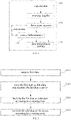
- FIG. 1 is a schematic diagram of an architecture platform for executing a data transmission method according to an embodiment of the present application.
- the architecture platform may be applied to a smart terminal device, such as a smartphone, a tablet personal computer, a desktop computer, a laptop or a smart television.
- the architecture platform includes a data module 110, a fast access memory 120, a nonvolatile memory 130, and a data transmission module 140.
- the data module 110 is connected to the fast access memory 120 through a memory interface
- the fast access memory 120 is connected to the nonvolatile memory 130
- the fast access memory 120 and the nonvolatile memory 130 are connected to the data transmission module 140, respectively.
- the data module 110 is configured to provide detailed mass real-time data (e.g., user data and metadata) all the time.
- the user data may be user database files, etc.
- the metadata may be volume sizes of volumes, a network address of a memory controller, a replication policy, and other data used by a file system or the memory controller, etc.
- the fast access memory 120 is configured to store the real-time data provided by the data module 110 as hot data, so that a large quantity of real-time data can be read and written frequently without affecting the stability of the terminal device resource.
- the hot data is data that does not need to be stored for a long time, but needs to be accessed frequently.
- the nonvolatile memory 130 is configured to back up the hot data in the fast access memory 120 as the cold data, so that the original data will not be lost when the terminal device is restarted or abnormally started or shut down.
- the cold data is data that needs to be stored for a long time but does not need to be accessed frequently.
- the data transmission module 140 is configured to send the hot data in the fast access memory 120 or the cold data in the nonvolatile memory 130 to the server according to a mobile transport protocol, so as to implement the remote management of the terminal device by the server.
- the data transmission module 140 packs the data first, for example, by a Simple Object Access Protocol (SOAP), into a SOAP packet, and then sends the SOAP packet to the server according to the Hyper Text Transfer Protocol (HTTP).
- SOAP Simple Object Access Protocol
- HTTP Hyper Text Transfer Protocol
- the architecture platform described in the embodiment of the present application is intended to illustrate the technical schemes of the embodiments of the present application more clearly, and does not constitute a limitation to the technical schemes provided by the embodiments of the present application.
- the technical schemes provided by the embodiments of the present application are also applicable to similar technical problems.
- FIG. 1 does not constitute a limitation to the embodiments of the present application, and may include more or less components than those shown, combine some components, or arrange different components.
- various modules and devices may cooperate with one another to implement the data transmission method.
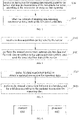
- FIG. 2 is a flowchart of a data transmission method according to an embodiment of the present application.
- the method includes, but not limited to, step S100, step S200, step S300 and step S400.
- the first data may be data generated by a terminal device itself, e.g., log data, data rate, data traffic and other data generated when the terminal device maintains its normal operation.
- the first data may also be data generated based on the operation of a user, e.g., various data generated by an application of the terminal device when the user uses the application.
- the first data may include user data or metadata.
- the user data may be user database files, etc.
- the metadata may be volume sizes of volumes, a network address of a memory controller, a replication policy, and other data used by a file system or the memory controller, etc.
- related analysis and processing may be performed on the first data, so that corresponding operations can be performed on the first data in the subsequent steps.
- the first data is stored as hot data, and the hot data is transmitted to a server.
- the hot data may be data which is being accessed at a frequency higher than a threshold frequency, e.g., metadata frequently modified by a file system.
- the threshold frequency may be appropriately selected according to actual usage, which is not specifically limited in the present embodiment.
- the first data may be stored in a fast access memory and may be marked with a hot data attribute, that is, the first data may be stored as hot data.
- the hot data i.e., the first data
- the hot data may be synchronously read from the fast access memory and transmitted to the server, so as to implement the remote management of the terminal device by the server.
- the data module provides detailed mass first data (real-time data) to the fast access memory through the memory interface.
- the data transmission module may simultaneously read the hot data from the fast access memory and send the hot data to the server according to a mobile transport protocol, so as to implement the remote management of the terminal device by the server.
- the hot data is backed up as the cold data according to a running time.
- the cold data may be user data which is being accessed at a frequency lower than a threshold frequency.
- the threshold frequency may be appropriately selected according to actual usage, which is not specifically limited in the present embodiment.
- the hot data i.e., the first data
- the hot data in the fast access memory may be backed up as the cold data, so that the original data will not be lost when the terminal device is restarted or abnormally started or shut down.
- both the running time and the running period may be appropriately selected according to actual usage, which is not specifically limited in the present embodiment.
- the fast access memory continuously stores first data from the data module as hot data, and the stored hot data is continuously sent to the data transmission module.
- the first data stored in the fast access memory may be read out and stored in the nonvolatile memory, and the first data stored in the nonvolatile memory is marked with a cold data attribute. That is, the hot data stored in the fast access memory is backed up as the cold data stored in the nonvolatile memory, so that the original data of the terminal device will not be lost even if the terminal device is restarted or abnormally started or shut down.
- the cold data is transmitted to the server according to a running state.
- the running state includes various different states of the terminal device, such as a normal running state and a restarted state.
- the terminal device can send the cold data stored in the nonvolatile memory to the server according to an instruction of the server.
- the terminal device may first read historical data, such as historical data rate and traffic, from the cold data stored in the nonvolatile memory, and then transmit the historical data to the server, so that the remote management of the terminal device by the server can be maintained.
- the frequency of reading and writing a terminal resource such as a nonvolatile memory can be decreased, so that the stability of the terminal resource can be increased.
- the hot data may be backed up as the cold data according to the running time of the terminal device, when the terminal device is restarted or abnormally started or shut down, the original data of the terminal device will not be lost.
- the cold data may also be transmitted to the server according to the running state of the terminal device, even if the terminal device is restarted or abnormally started or shut down, when the terminal device is restarted, the historical data stored as the cold data may be transmitted to the server, so that the remote management of the terminal device by the server can be maintained.
- the first data transmitted to the server can be separately stored as hot data and cold data, that is, the hot data is stored in the fast access memory and the cold data is stored in the terminal resource such as the nonvolatile memory, the situation of frequently reading the terminal resource such as the nonvolatile memory, in a short time in some cases can be avoided, thereby increasing the execution speed of a program of the terminal device and prolonging the service life of the memory of the terminal device to some extent.
- the running time in S300 includes a transmission time of the hot data, and then in this embodiment, S300 may include the following step.
- the hot data is backed up as the cold data according to the transmission time of the hot data.
- the transmission time of the hot data may be a time for the data transmission module to read the hot data from the fast access memory, or a time for the data transmission module to transmit the hot data to the server.
- the fast access memory In the process of the fast access memory continuously storing the first data from the data module as hot data, the fast access memory will also continuously send the stored hot data to the data transmission module.
- the hot data may be backed up as the cold data according to the transmission time of the hot data, so that the original data will not be lost when the terminal device is restarted or abnormally started or shut down.
- S310 includes, but not limited to, the following step.
- the hot data when the transmission time of the hot data reaches the set time, e.g., when the time for the data transmission module to read the hot data from the fast access memory reaches the set time or when the time for the data transmission module to transmit the hot data to the server reaches the set time, in order to avoid data loss caused by the terminal device being restarted or abnormally started or shut down, the hot data may be backed up as the cold data, so that the original data will not be lost when the terminal device is restarted or abnormally started or shut down.
- the set time may be 5 seconds or 10 seconds, and may be appropriately selected according to actual usage, which is not specifically limited in the present embodiment.
- the running state at S400 includes a restarted state, and then in this embodiment, S400 may include the following step.
- the cold data is transmitted to the server.
- the terminal device when the terminal device is in the restarted state, after the terminal device is started normally, the terminal device may read historical data such as historical data rate and traffic, from the cold data stored in the nonvolatile memory first, and then transmit the historical data to the server, so that the remote management of the terminal device by the server can be maintained.
- historical data such as historical data rate and traffic
- the data transmission method further includes the following steps.
- the hot data is backed up as the cold data.
- the server in the process of the server acquiring the real-time data of the terminal device, there may be a case that the server temporarily does not require the terminal device to upload the real-time data.
- the server will issue the instruction of stopping data reporting to the terminal device.
- the terminal device After receiving the instruction of stopping data reporting sent by the server, the terminal device will stop the transmission of the hot data to the server according to the instruction of stopping data reporting. It should be noted that the process of backing up the hot data as the cold data is independent of the process of the terminal device sending the hot data to the server.
- the terminal device can still back up the hot data as the cold data, so that the original data will not be lost when the terminal device is restarted or abnormally started or shut down.
- the hot data when the duration of stopping data reporting reaches the set time, in order to avoid data loss caused by the terminal device being restarted or abnormally started or shut down, the hot data may be backed up as the cold data, so that the original data will not be lost when the terminal device is restarted or abnormally started or shut down.
- the terminal device stopping data reporting does not mean that the terminal device stops operation, and on the contrary the terminal device will continue to generate a large quantity of new real-time data. Therefore, the duration for which the terminal device has stopped data reporting is a running time of the terminal device, and when the duration of stopping data reporting reaches the set time, that is, when the running time of the terminal device reaches the set time, the terminal device will back up the hot data as the cold data.
- the set time may be 5 seconds or 10 seconds, and may be appropriately selected according to actual usage, which is not specifically limited in the present embodiment.
- the data transmission method further includes the following steps.
- a mutual conversion between the hot data and the cold data is performed according to the data acquisition policy, and the converted hot data is sent to the server.
- the server may change the policy of acquiring the real-time data type of the terminal, and therefore it is required to acquire terminal device data matching the changed application scenario, so as to ensure that the server can remotely manage the terminal device.
- the terminal device receives the data acquisition policy sent by the server, perform the mutual conversion between the hot data and the cold data according to the data acquisition policy, and then sends the converted hot data to the server, so as to meet the requirement of the remote management of the terminal device by the server.
- the data acquisition policy may be related to application scenarios, such as acquiring user data of the terminal device in a first scenario and acquiring metadata of the terminal device in a second scenario.
- the data acquisition policy may be related to a running state of the terminal device, for example, when the terminal device is in the normal running state, the data of the terminal device stored in the fast access memory is acquired; when the terminal device is in the restarted state, the data of the terminal device stored in the nonvolatile memory is acquired.
- the terminal device when the data acquisition policy indicates that the data to be acquired is stored in the nonvolatile memory, it means that the terminal device needs to frequently read the terminal device data originally stored as the cold data.
- the terminal device may perform the mutual conversion between the hot data and the cold data first according to the data acquisition policy, so that the temporary data originally stored as hot data is stored as the cold data, while the terminal device data originally stored as the cold data is stored as hot data. Then, the terminal device sends the converted hot data to the server, thereby ensuring that the server can perform subsequent remote management on the terminal device.
- the process of performing the mutual conversion between the hot data and the cold data at S800 includes, but not limited to, the following steps.
- the data acquisition policy is parsed to obtain an updated instruction of reporting data.
- the mutual conversion between the hot data and the cold data is performed according to the updated instruction of reporting data.
- the terminal device after receiving the data acquisition policy sent by the server, parses the received data acquisition policy first to obtain an updated instruction of reporting data carried by the data acquisition policy, and performs the mutual conversion between the hot data and the cold data according to the updated instruction of reporting data, so that the terminal device can send updated data required by the server to the server, and thus the server can maintain the remote management of the terminal device.
- the terminal device may parse the data acquisition policy according to a mobile transport protocol adopted by the terminal device. For example, if the terminal device adopts the SOAP to pack data, the terminal device adopts the SOAP to parse the data acquisition policy, so as to obtain the updated instruction of reporting data carried in an SOAP packet.
- the updated instruction of reporting data may be aimed at the updating of specific data or a set of data.
- the server updates the log data of the terminal device that was originally required to be acquired continuously to be acquired into the user data of the terminal device, since the data originally required to be acquired by the server is the log data of the terminal device, i.e. the log data which originally needs to be frequently read by the terminal device, the log data is originally stored in the fast access memory; after receiving the updated instruction of reporting data sent by the server, the terminal device determines that it is no longer required to read the log data frequently, but it is required to read the user data frequently.
- the terminal device stores the user data originally stored as the cold data as hot data and the log data originally stored as hot data as the cold data, so that in the process of the terminal device subsequently frequently reading the user data, the frequent reading of the terminal resource such as the nonvolatile memory can be avoided, thereby increasing the stability of the terminal resource.
- the updated instruction of reporting data updates a set of data, for example, the server originally requested to acquire data A, data B and data C of the terminal device, among which data A and data C are frequently acquired and data B are occasionally acquired by the server, in order to decrease the frequency of the terminal device reading the nonvolatile memory so as to increase the stability of the terminal resource, the terminal device stores data A and data C as hot data and data B as the cold data; after the terminal receives the updated instruction of reporting data sent by the server, and the updated instruction of reporting data indicates that the server needs to frequently acquire data B and occasionally acquire data A and data C, the terminal device stores data A and data C originally stored as hot data as the cold data and data B originally stored as the cold data as hot data. Therefore, in the process of the terminal device subsequently frequently reading data B, the frequent reading of the terminal resource such as the nonvolatile memory can be avoided, thus increasing the stability of the terminal resource.
- the data transmission method further includes the following step.
- a result of conversion between the hot data and the cold data is sent to the server.
- the terminal device after the terminal device performs the mutual conversion between the hot data and the cold data according to the data acquisition policy sent by the server, the terminal device will feed back a result of conversion between the hot data and the cold data according to the data acquisition policy to the server, so that the server may perform subsequent data acquisition operation according to the result of conversion, so as to maintain the remote management of the terminal device by the server.
- the result of conversion between the hot data and the cold data includes successful conversion and unsuccessful conversion. If the result of conversion is successful conversion, the server may request the terminal device to upload real-time data according to the result of conversion indicating successful conversion. If the result of conversion is unsuccessful conversion, the server may resend the data acquisition policy to the terminal device according to the result of conversion indicating unsuccessful conversion, or the server may maintain the original data acquisition policy instead of adopting a new data acquisition policy.
- the processing operation which is performed by the server according to the result of conversion may be appropriately selected according to actual application, which is not specifically limited by the present embodiment.
- an embodiment of the present application further provides a terminal device, which includes a memory 601, a processor 602, and a computer program stored in the memory 601 and executable by the processor 602.
- the processor and the memory may be connected through a bus or in other ways.
- the memory may be configured to store a non-transitory software program and a non-transitory computer-executable program.
- the memory may include a high-speed random access memory, and may also include a non-transitory memory, e.g., at least one disk storage device, flash memory device or other non-transitory solid-state storage devices.
- the memory may include memories arranged remotely relative to the processor, and these remote memories may be connected to the processor through a network. Examples of the aforementioned network include, but not limited to, the Internet, an intranet, a local area network, a mobile communication network, and combinations thereof.
- the terminal device in the present embodiment may include the architecture platform shown in the embodiment of FIG. 1 .
- the terminal device in the present embodiment and the architecture platform in the embodiment shown in FIG. 1 belong to the same inventive concept, so the terminal device and the architecture platform have the same implementation principle and technical effect, which will not be described in detail herein.
- the non-transitory software program and instructions required to implement the data transmission method of the aforementioned embodiment are stored in the memory which, when executed by the processor, cause the processor to implement the data transmission method of the aforementioned embodiment, e.g., the aforementioned method steps S100 to S400 in FIG. 2 , S500 and S600 in FIG. 3 , S700 and S800 in FIG. 4 and S810 and S820 in FIG. 5 .
- the embodiment of the terminal device described above are merely schematic, in which the units illustrated as separate components may or may not be physically separated, that is, the units may be located in one place or distributed on a plurality of network units. Some or all of the modules may be selected according to actual needs to achieve the objective of the scheme of the present embodiment.
- an embodiment of the present application further provides a computer-readable storage medium storing computer-executable instructions which, when executed by a processor or a controller, e.g., the processor in the aforementioned embodiment of the terminal device, cause the processor to implement the data transmission method in the aforementioned embodiment, e.g., the aforementioned method steps S100 to S400 in FIG. 2 , S500 and S600 in FIG. 3 , S700 and S800 in FIG. 4 and S810 and S820 in FIG. 5 .
- An embodiment of the present application provides a data transmission method, a terminal device and a computer-readable storage medium, which can increase the stability of a terminal resource.
- the embodiment of the present application includes: acquiring first data; storing the first data as hot data and transmitting the hot data to a server; backing up the hot data as the cold data according to a running time; and transmitting the cold data to the server according to a running state.
- the terminal device acquires first data and needs to send the first data, particularly, including a large quantity of real-time data, to a server, the first data is stored as hot data, and the hot data is transmitted to the server.
- the hot data will be stored in a memory which can be conveniently and quickly accessed, in the process of the terminal device frequently reading the hot data and transmitting the hot data to the server, the frequency of reading and writing a terminal device resource such as a nonvolatile memory can be decreased, thereby increasing the stability of the terminal device resource.
- the hot data is backed up as the cold data according to the running time of the terminal device. Because the cold data will be stored in the terminal device resource such as a nonvolatile memory, the hot data can be stored as a backup, so that the original data will not be lost even if the terminal device is restarted or abnormally started or shut down.
- the cold data can be transmitted to the server according to a running state of the terminal device, even if the terminal device is restarted or abnormally started or shut down, when the terminal device is restarted, the historical data stored as the cold data may be transmitted to the server, and thus the remote management of the terminal device by the server can be maintained.
- Computer storage media include volatile and nonvolatile, removable and non-removable media implemented in any method or technology for storing information (such as computer-readable instructions, data structures, program modules or other data).
- Computer storage media include but are not limited to RAM, ROM, EEPROM, flash memory or other memory technologies, CD-ROM, digital versatile disk (DVD) or other optical disk storage, magnetic cassettes, magnetic tapes, magnetic disk storage or other magnetic storage devices or any other media that can be used to store desired information and can be accessed by computers.
- communication media typically contain computer-readable instructions, data structures, program modules or other data in a modulated data signal such as carriers or other transmission mechanisms, and can include any information delivery media.
Landscapes
- Engineering & Computer Science (AREA)
- Computer Networks & Wireless Communication (AREA)
- Signal Processing (AREA)
- Theoretical Computer Science (AREA)
- Quality & Reliability (AREA)
- Physics & Mathematics (AREA)
- General Engineering & Computer Science (AREA)
- General Physics & Mathematics (AREA)
- Information Retrieval, Db Structures And Fs Structures Therefor (AREA)
- Debugging And Monitoring (AREA)
- Retry When Errors Occur (AREA)
Abstract
Description
- Embodiments of the present application relate to, but not limited to, the technical field of information, and in particular, to a data transmission method, a terminal device, and a computer-readable storage medium.
- In the era of the vigorous development of the Internet of Everything, various devices which were separated before have been connected together by the network. In this case, there are more and more application scenarios of remote management terminal devices. Data are transmitted between a terminal device and a server through a specific connection protocol to carry out actions necessary for initialization and operation management, such as service subscription, function setting, file uploading and downloading and device diagnosis.
- When remotely managing the terminal device, the server needs to continuously acquire a large amount of information of the terminal device, such as data rate and total data traffic. In order to maintain such continuous collection of mass data, the terminal device is required to be able to accurately and quickly acquire and upload terminal device data (e.g., data rate and total data traffic) to the server. In some cases, the terminal device will first store real-time data, such as data rate and total data traffic, into a terminal device resource, such as a nonvolatile memory, so as to ensure that the original data will not be lost after the terminal device is restarted or abnormal, and then reads related data from the terminal device resource, such as the nonvolatile memory, and sends the related data to the server.
- However, the terminal device data stored in the terminal device resource such as the nonvolatile memory, will be constantly updated due the change of the service function of the terminal device. Moreover, when the server acquires the data of the terminal device, the terminal device needs to constantly read the terminal device resource such as the nonvolatile memory. In this case, the frequency of reading and writing the terminal device resource such as the nonvolatile memory, will be very high, thus affecting the service life and stability of such terminal device resource.
- The following is a summary of the topic described in detail herein. This summary is not intended to limit the protection scope of the claims.
- In accordance with an aspect of the present application, embodiments of the present application provide a data transmission method, a terminal device, and a computer-readable storage medium.
- In accordance with an aspect of the present application, an embodiment of the present application provides a data transmission method applied to a terminal device. The method includes: acquiring first data; storing the first data as hot data and transmitting the hot data to a server; backing up the hot data as the cold data according to a running time; and transmitting the cold data to the server according to a running state.
- In accordance with an aspect of the present application, an embodiment of the present application further provides a terminal device. The terminal device includes a memory, a processor, and a computer program stored in the memory and executable by the processor, where the computer program, when executed by the processor, causes the processor to implement the data transmission method described above.
- In accordance with an aspect of the present application, an embodiment of the present application further provides a computer-readable storage medium storing computer-executable instructions which, when executed by a processor, cause the processor to implement the data transmission method described above.
- Other features and advantages of the present application will be set forth in the following description, and will partially become apparent from the description, or may be understood by practicing the present application. The objective and other advantages of the present application can be achieved and obtained by the structure particularly specified in the description, the claims and the accompanying drawings.
- The accompanying drawings are provided for a further understanding of the technical schemes of the present application and constitute a part of the description. The accompanying drawings and the embodiments of the present application are used to illustrate the technical schemes of the present application, but do not constitute a limitation to the technical schemes of the present application.
-
FIG. 1 is a schematic diagram of an architecture platform for executing a data transmission method according to an embodiment of the present application; -
FIG. 2 is a flowchart of a data transmission method according to an embodiment of the present application; -
FIG. 3 is a flowchart of a data transmission method according to another embodiment of the present application; -
FIG. 4 is a flowchart of a data transmission method according to yet another embodiment of the present application; -
FIG. 5 is a flowchart of a mutual conversion between hot data and cold data in a data transmission method according to yet another embodiment of the present application; and -
FIG. 6 is a schematic diagram of a terminal device according to an embodiment of the present application. - In order to make the objective, technical schemes and advantages of the present application clearer, the present application will be further described in detail below in conjunction with the accompanying drawings and embodiments. It should be understood that the specific embodiments described herein are merely intended to illustrate the present application, and are not intended to limit the present application.
- It should be noted that, although functional modules are divided in the schematic diagram of the device and logical orders are shown in the flowcharts, in some cases, the modules may be divided in a different manner, or the steps shown or described may be executed in an order different from the orders as shown in the flowcharts. The terms "first", "second" and the like in the description, the claims and the above accompanying drawings are used to distinguish similar objects, and are not necessarily used to describe a specific sequence or a precedence order.
- Embodiments of the present application provide a data transmission method, a terminal device, and a computer-readable storage medium. When the terminal device acquires first data and needs to send the first data to a server, particularly when the first data includes a large quantity of real-time data, the first data is stored as hot data and transmitted to the server. Because the hot data will be stored in a memory which can be conveniently and quickly accessed, in the process of the terminal device frequently reading the hot data and transmitting the hot data to the server, the frequency of reading and writing a terminal device resource, such as a nonvolatile memory, can be decreased, thereby increasing the stability of the terminal device resource. In addition, the hot data is backed up as the cold data according to a running time of the terminal device. Because the cold data will be stored in the terminal device resource such as a nonvolatile memory, the hot data can be stored as a backup, so that the original data will not be lost even if the terminal device is restarted or abnormally started or shut down. In addition, because the cold data can be transmitted to the server according to a running state of the terminal device, even if the terminal device is restarted or abnormally started or shut down, when the terminal device is restarted, historical data stored as the cold data may be transmitted to the server, and thus the remote management of the terminal device by the server can be maintained.
- The embodiments of the present application will be further set forth below with reference to the accompanying drawings.
- As shown in
FIG. 1, FIG. 1 is a schematic diagram of an architecture platform for executing a data transmission method according to an embodiment of the present application. In the example ofFIG. 1 , the architecture platform may be applied to a smart terminal device, such as a smartphone, a tablet personal computer, a desktop computer, a laptop or a smart television. The architecture platform includes adata module 110, afast access memory 120, anonvolatile memory 130, and adata transmission module 140. Thedata module 110 is connected to thefast access memory 120 through a memory interface, thefast access memory 120 is connected to thenonvolatile memory 130, and thefast access memory 120 and thenonvolatile memory 130 are connected to thedata transmission module 140, respectively. - The
data module 110 is configured to provide detailed mass real-time data (e.g., user data and metadata) all the time. The user data may be user database files, etc. The metadata may be volume sizes of volumes, a network address of a memory controller, a replication policy, and other data used by a file system or the memory controller, etc. Thefast access memory 120 is configured to store the real-time data provided by thedata module 110 as hot data, so that a large quantity of real-time data can be read and written frequently without affecting the stability of the terminal device resource. The hot data is data that does not need to be stored for a long time, but needs to be accessed frequently. Thenonvolatile memory 130 is configured to back up the hot data in thefast access memory 120 as the cold data, so that the original data will not be lost when the terminal device is restarted or abnormally started or shut down. The cold data is data that needs to be stored for a long time but does not need to be accessed frequently. Thedata transmission module 140 is configured to send the hot data in thefast access memory 120 or the cold data in thenonvolatile memory 130 to the server according to a mobile transport protocol, so as to implement the remote management of the terminal device by the server. In an embodiment, when thedata transmission module 140 sends data to the server, thedata transmission module 140 packs the data first, for example, by a Simple Object Access Protocol (SOAP), into a SOAP packet, and then sends the SOAP packet to the server according to the Hyper Text Transfer Protocol (HTTP). - The architecture platform described in the embodiment of the present application is intended to illustrate the technical schemes of the embodiments of the present application more clearly, and does not constitute a limitation to the technical schemes provided by the embodiments of the present application. As will be known by those having ordinary skill in the art, with the development of terminal device technology and the emergence of new application scenarios, the technical schemes provided by the embodiments of the present application are also applicable to similar technical problems.
- It can be understood by those having ordinary skill in the art that the structural relationship between the various modules and devices shown in
FIG. 1 does not constitute a limitation to the embodiments of the present application, and may include more or less components than those shown, combine some components, or arrange different components. - In the architecture platform shown in
FIG. 1 , various modules and devices may cooperate with one another to implement the data transmission method. - Based on the aforementioned architecture platform and the structural relationship between each module and each device in the aforementioned architecture platform, various embodiments of the data transmission method of the present application are proposed.
- As shown in
FIG. 2, FIG. 2 is a flowchart of a data transmission method according to an embodiment of the present application. The method includes, but not limited to, step S100, step S200, step S300 and step S400. - At S100, first data is acquired.
- In an embodiment, the first data may be data generated by a terminal device itself, e.g., log data, data rate, data traffic and other data generated when the terminal device maintains its normal operation. In addition, the first data may also be data generated based on the operation of a user, e.g., various data generated by an application of the terminal device when the user uses the application.
- In an embodiment, the first data may include user data or metadata. The user data may be user database files, etc. The metadata may be volume sizes of volumes, a network address of a memory controller, a replication policy, and other data used by a file system or the memory controller, etc.
- In an embodiment, after the first data is acquired, related analysis and processing may be performed on the first data, so that corresponding operations can be performed on the first data in the subsequent steps.
- At S200, the first data is stored as hot data, and the hot data is transmitted to a server.
- In an embodiment, the hot data may be data which is being accessed at a frequency higher than a threshold frequency, e.g., metadata frequently modified by a file system. The threshold frequency may be appropriately selected according to actual usage, which is not specifically limited in the present embodiment. After the first data is acquired, the first data may be stored in a fast access memory and may be marked with a hot data attribute, that is, the first data may be stored as hot data. When the first data is stored as hot data, the hot data (i.e., the first data) may be synchronously read from the fast access memory and transmitted to the server, so as to implement the remote management of the terminal device by the server.
- Illustration will be given below by way of a specific example.
- In an embodiment, referring to the architecture platform shown in
FIG. 1 , the data module provides detailed mass first data (real-time data) to the fast access memory through the memory interface. When the fast access memory stores the first data as hot data, the data transmission module may simultaneously read the hot data from the fast access memory and send the hot data to the server according to a mobile transport protocol, so as to implement the remote management of the terminal device by the server. - At S300, the hot data is backed up as the cold data according to a running time.
- In an embodiment, the cold data may be user data which is being accessed at a frequency lower than a threshold frequency. The threshold frequency may be appropriately selected according to actual usage, which is not specifically limited in the present embodiment. When the running time meets a certain condition, e.g., reaching a certain running time or meeting a certain running period, the hot data (i.e., the first data) in the fast access memory may be backed up as the cold data, so that the original data will not be lost when the terminal device is restarted or abnormally started or shut down. In an embodiment, both the running time and the running period may be appropriately selected according to actual usage, which is not specifically limited in the present embodiment.
- It should be noted that the process of backing up the hot data as the cold data according to the running time will not affect the operation of transmitting the hot data to the server.
- Illustration will be given below by way of a specific example.
- In an embodiment, referring to the architecture platform shown in
FIG. 1 , the fast access memory continuously stores first data from the data module as hot data, and the stored hot data is continuously sent to the data transmission module. When a certain running time is reached, for example, after the running time reaches 5 seconds, the first data stored in the fast access memory may be read out and stored in the nonvolatile memory, and the first data stored in the nonvolatile memory is marked with a cold data attribute. That is, the hot data stored in the fast access memory is backed up as the cold data stored in the nonvolatile memory, so that the original data of the terminal device will not be lost even if the terminal device is restarted or abnormally started or shut down. - At S400, the cold data is transmitted to the server according to a running state.
- In an embodiment, the running state includes various different states of the terminal device, such as a normal running state and a restarted state. For example, when the terminal device is in the normal running state, the terminal device can send the cold data stored in the nonvolatile memory to the server according to an instruction of the server. For another example, when the terminal device is in the restarted state, after the terminal device is started normally, the terminal device may first read historical data, such as historical data rate and traffic, from the cold data stored in the nonvolatile memory, and then transmit the historical data to the server, so that the remote management of the terminal device by the server can be maintained.
- In an embodiment, by adopting the data transmission method including the steps of S100, S200, S300 and S400, when the terminal device sends data to the server, the frequency of reading and writing a terminal resource such as a nonvolatile memory can be decreased, so that the stability of the terminal resource can be increased. In addition, since the hot data may be backed up as the cold data according to the running time of the terminal device, when the terminal device is restarted or abnormally started or shut down, the original data of the terminal device will not be lost. Further, since the cold data may also be transmitted to the server according to the running state of the terminal device, even if the terminal device is restarted or abnormally started or shut down, when the terminal device is restarted, the historical data stored as the cold data may be transmitted to the server, so that the remote management of the terminal device by the server can be maintained. Furthermore, in an embodiment, since the first data transmitted to the server can be separately stored as hot data and cold data, that is, the hot data is stored in the fast access memory and the cold data is stored in the terminal resource such as the nonvolatile memory, the situation of frequently reading the terminal resource such as the nonvolatile memory, in a short time in some cases can be avoided, thereby increasing the execution speed of a program of the terminal device and prolonging the service life of the memory of the terminal device to some extent.
- In addition, in an embodiment, the running time in S300 includes a transmission time of the hot data, and then in this embodiment, S300 may include the following step.
- At S310, the hot data is backed up as the cold data according to the transmission time of the hot data.
- In an embodiment, the transmission time of the hot data may be a time for the data transmission module to read the hot data from the fast access memory, or a time for the data transmission module to transmit the hot data to the server. In the process of the fast access memory continuously storing the first data from the data module as hot data, the fast access memory will also continuously send the stored hot data to the data transmission module. In the process of continuously transmitting the hot data, e.g., in the process of the data transmission module reading the hot data from the fast access memory or the data transmission module transmitting the hot data to the server, in order to avoid data loss caused by the terminal device being restarted or abnormally started or shut down, the hot data may be backed up as the cold data according to the transmission time of the hot data, so that the original data will not be lost when the terminal device is restarted or abnormally started or shut down.
- In addition, in an embodiment, S310 includes, but not limited to, the following step.
- At S311, when the transmission time of the hot data reaches a set time, the hot data is backed up as the cold data.
- In an embodiment, when the transmission time of the hot data reaches the set time, e.g., when the time for the data transmission module to read the hot data from the fast access memory reaches the set time or when the time for the data transmission module to transmit the hot data to the server reaches the set time, in order to avoid data loss caused by the terminal device being restarted or abnormally started or shut down, the hot data may be backed up as the cold data, so that the original data will not be lost when the terminal device is restarted or abnormally started or shut down.
- In an embodiment, the set time may be 5 seconds or 10 seconds, and may be appropriately selected according to actual usage, which is not specifically limited in the present embodiment.
- In addition, in an embodiment, the running state at S400 includes a restarted state, and then in this embodiment, S400 may include the following step.
- At S410, in the restarted state, the cold data is transmitted to the server.
- In an embodiment, when the terminal device is in the restarted state, after the terminal device is started normally, the terminal device may read historical data such as historical data rate and traffic, from the cold data stored in the nonvolatile memory first, and then transmit the historical data to the server, so that the remote management of the terminal device by the server can be maintained.
- In addition, referring to
FIG. 3 , in an embodiment, the data transmission method further includes the following steps. - At S500, an instruction of stopping data reporting sent by the server is received, and the transmission of the hot data to the server is stopped according to the instruction of stopping data reporting stop.
- At S600, when the duration of stopping data reporting reaches a set time, the hot data is backed up as the cold data.
- In an embodiment, in the process of the server acquiring the real-time data of the terminal device, there may be a case that the server temporarily does not require the terminal device to upload the real-time data. At this point, the server will issue the instruction of stopping data reporting to the terminal device. After receiving the instruction of stopping data reporting sent by the server, the terminal device will stop the transmission of the hot data to the server according to the instruction of stopping data reporting. It should be noted that the process of backing up the hot data as the cold data is independent of the process of the terminal device sending the hot data to the server. Therefore, even if the terminal device stops the transmission of the hot data to the server according to the instruction of stopping data reporting, the terminal device can still back up the hot data as the cold data, so that the original data will not be lost when the terminal device is restarted or abnormally started or shut down.
- In an embodiment, when the duration of stopping data reporting reaches the set time, in order to avoid data loss caused by the terminal device being restarted or abnormally started or shut down, the hot data may be backed up as the cold data, so that the original data will not be lost when the terminal device is restarted or abnormally started or shut down. It should be noted that the terminal device stopping data reporting does not mean that the terminal device stops operation, and on the contrary the terminal device will continue to generate a large quantity of new real-time data. Therefore, the duration for which the terminal device has stopped data reporting is a running time of the terminal device, and when the duration of stopping data reporting reaches the set time, that is, when the running time of the terminal device reaches the set time, the terminal device will back up the hot data as the cold data.
- In an embodiment, the set time may be 5 seconds or 10 seconds, and may be appropriately selected according to actual usage, which is not specifically limited in the present embodiment.
- In addition, referring to
FIG. 4 , in an embodiment, the data transmission method further includes the following steps. - At S700, a data acquisition policy sent by the server is received.
- At S800, a mutual conversion between the hot data and the cold data is performed according to the data acquisition policy, and the converted hot data is sent to the server.
- In an embodiment, with the change of an application scenario, the server may change the policy of acquiring the real-time data type of the terminal, and therefore it is required to acquire terminal device data matching the changed application scenario, so as to ensure that the server can remotely manage the terminal device. In this case, the terminal device receives the data acquisition policy sent by the server, perform the mutual conversion between the hot data and the cold data according to the data acquisition policy, and then sends the converted hot data to the server, so as to meet the requirement of the remote management of the terminal device by the server.
- In an embodiment, there may be different policy types of the data acquisition policy sent by the server. For example, the data acquisition policy may be related to application scenarios, such as acquiring user data of the terminal device in a first scenario and acquiring metadata of the terminal device in a second scenario. For another example, the data acquisition policy may be related to a running state of the terminal device, for example, when the terminal device is in the normal running state, the data of the terminal device stored in the fast access memory is acquired; when the terminal device is in the restarted state, the data of the terminal device stored in the nonvolatile memory is acquired.
- In an embodiment, when the data acquisition policy indicates that the data to be acquired is stored in the nonvolatile memory, it means that the terminal device needs to frequently read the terminal device data originally stored as the cold data. In order to decrease the frequency of reading the nonvolatile memory and increase the stability of the terminal resource, the terminal device may perform the mutual conversion between the hot data and the cold data first according to the data acquisition policy, so that the temporary data originally stored as hot data is stored as the cold data, while the terminal device data originally stored as the cold data is stored as hot data. Then, the terminal device sends the converted hot data to the server, thereby ensuring that the server can perform subsequent remote management on the terminal device.
- In addition, referring to
FIG. 5 , in an embodiment, the process of performing the mutual conversion between the hot data and the cold data at S800 includes, but not limited to, the following steps. - At S810, the data acquisition policy is parsed to obtain an updated instruction of reporting data.
- At S820, the mutual conversion between the hot data and the cold data is performed according to the updated instruction of reporting data.
- In an embodiment, after receiving the data acquisition policy sent by the server, the terminal device parses the received data acquisition policy first to obtain an updated instruction of reporting data carried by the data acquisition policy, and performs the mutual conversion between the hot data and the cold data according to the updated instruction of reporting data, so that the terminal device can send updated data required by the server to the server, and thus the server can maintain the remote management of the terminal device.
- In an embodiment, the terminal device may parse the data acquisition policy according to a mobile transport protocol adopted by the terminal device. For example, if the terminal device adopts the SOAP to pack data, the terminal device adopts the SOAP to parse the data acquisition policy, so as to obtain the updated instruction of reporting data carried in an SOAP packet.
- In an embodiment, there may be different instruction types of the updated instruction of reporting data. For example, the updated instruction of reporting data may be aimed at the updating of specific data or a set of data.
- In an embodiment, if the updated instruction of reporting data updates specific data, for example, the server updates the log data of the terminal device that was originally required to be acquired continuously to be acquired into the user data of the terminal device, since the data originally required to be acquired by the server is the log data of the terminal device, i.e. the log data which originally needs to be frequently read by the terminal device, the log data is originally stored in the fast access memory; after receiving the updated instruction of reporting data sent by the server, the terminal device determines that it is no longer required to read the log data frequently, but it is required to read the user data frequently. Therefore, the terminal device stores the user data originally stored as the cold data as hot data and the log data originally stored as hot data as the cold data, so that in the process of the terminal device subsequently frequently reading the user data, the frequent reading of the terminal resource such as the nonvolatile memory can be avoided, thereby increasing the stability of the terminal resource.
- In an embodiment, if the updated instruction of reporting data updates a set of data, for example, the server originally requested to acquire data A, data B and data C of the terminal device, among which data A and data C are frequently acquired and data B are occasionally acquired by the server, in order to decrease the frequency of the terminal device reading the nonvolatile memory so as to increase the stability of the terminal resource, the terminal device stores data A and data C as hot data and data B as the cold data; after the terminal receives the updated instruction of reporting data sent by the server, and the updated instruction of reporting data indicates that the server needs to frequently acquire data B and occasionally acquire data A and data C, the terminal device stores data A and data C originally stored as hot data as the cold data and data B originally stored as the cold data as hot data. Therefore, in the process of the terminal device subsequently frequently reading data B, the frequent reading of the terminal resource such as the nonvolatile memory can be avoided, thus increasing the stability of the terminal resource.
- In addition, in an embodiment, the data transmission method further includes the following step.
- At S900, a result of conversion between the hot data and the cold data is sent to the server.
- In an embodiment, after the terminal device performs the mutual conversion between the hot data and the cold data according to the data acquisition policy sent by the server, the terminal device will feed back a result of conversion between the hot data and the cold data according to the data acquisition policy to the server, so that the server may perform subsequent data acquisition operation according to the result of conversion, so as to maintain the remote management of the terminal device by the server.
- In an embodiment, the result of conversion between the hot data and the cold data includes successful conversion and unsuccessful conversion. If the result of conversion is successful conversion, the server may request the terminal device to upload real-time data according to the result of conversion indicating successful conversion. If the result of conversion is unsuccessful conversion, the server may resend the data acquisition policy to the terminal device according to the result of conversion indicating unsuccessful conversion, or the server may maintain the original data acquisition policy instead of adopting a new data acquisition policy. The processing operation which is performed by the server according to the result of conversion may be appropriately selected according to actual application, which is not specifically limited by the present embodiment.
- In addition, referring to
FIG. 6 , an embodiment of the present application further provides a terminal device, which includes amemory 601, aprocessor 602, and a computer program stored in thememory 601 and executable by theprocessor 602. - The processor and the memory may be connected through a bus or in other ways.
- As a non-transitory computer-readable storage medium, the memory may be configured to store a non-transitory software program and a non-transitory computer-executable program. In addition, the memory may include a high-speed random access memory, and may also include a non-transitory memory, e.g., at least one disk storage device, flash memory device or other non-transitory solid-state storage devices. In some embodiments, the memory may include memories arranged remotely relative to the processor, and these remote memories may be connected to the processor through a network. Examples of the aforementioned network include, but not limited to, the Internet, an intranet, a local area network, a mobile communication network, and combinations thereof.
- It should be noted that the terminal device in the present embodiment may include the architecture platform shown in the embodiment of
FIG. 1 . The terminal device in the present embodiment and the architecture platform in the embodiment shown inFIG. 1 belong to the same inventive concept, so the terminal device and the architecture platform have the same implementation principle and technical effect, which will not be described in detail herein. - The non-transitory software program and instructions required to implement the data transmission method of the aforementioned embodiment are stored in the memory which, when executed by the processor, cause the processor to implement the data transmission method of the aforementioned embodiment, e.g., the aforementioned method steps S100 to S400 in
FIG. 2 , S500 and S600 inFIG. 3 , S700 and S800 inFIG. 4 and S810 and S820 inFIG. 5 . - The embodiment of the terminal device described above are merely schematic, in which the units illustrated as separate components may or may not be physically separated, that is, the units may be located in one place or distributed on a plurality of network units. Some or all of the modules may be selected according to actual needs to achieve the objective of the scheme of the present embodiment.
- In addition, an embodiment of the present application further provides a computer-readable storage medium storing computer-executable instructions which, when executed by a processor or a controller, e.g., the processor in the aforementioned embodiment of the terminal device, cause the processor to implement the data transmission method in the aforementioned embodiment, e.g., the aforementioned method steps S100 to S400 in
FIG. 2 , S500 and S600 inFIG. 3 , S700 and S800 inFIG. 4 and S810 and S820 inFIG. 5 . - An embodiment of the present application provides a data transmission method, a terminal device and a computer-readable storage medium, which can increase the stability of a terminal resource.
- The embodiment of the present application includes: acquiring first data; storing the first data as hot data and transmitting the hot data to a server; backing up the hot data as the cold data according to a running time; and transmitting the cold data to the server according to a running state. According to the scheme provided by the embodiments of the present application, when the terminal device acquires first data and needs to send the first data, particularly, including a large quantity of real-time data, to a server, the first data is stored as hot data, and the hot data is transmitted to the server. Because the hot data will be stored in a memory which can be conveniently and quickly accessed, in the process of the terminal device frequently reading the hot data and transmitting the hot data to the server, the frequency of reading and writing a terminal device resource such as a nonvolatile memory can be decreased, thereby increasing the stability of the terminal device resource. In addition, the hot data is backed up as the cold data according to the running time of the terminal device. Because the cold data will be stored in the terminal device resource such as a nonvolatile memory, the hot data can be stored as a backup, so that the original data will not be lost even if the terminal device is restarted or abnormally started or shut down. Further, because the cold data can be transmitted to the server according to a running state of the terminal device, even if the terminal device is restarted or abnormally started or shut down, when the terminal device is restarted, the historical data stored as the cold data may be transmitted to the server, and thus the remote management of the terminal device by the server can be maintained.
- It can be understood by those having ordinary skill in the art that all or some of the steps in the method and the system disclosed above may be implemented as software, firmware, hardware and an appropriate combination thereof. Some or all of the physical components may be implemented as software executed by a processor (such as a central processing unit, a digital signal processor or a microprocessor), hardware or an integrated circuit (such as an application-specific integrated circuit). Such software may be distributed on computer-readable media, which may include computer storage media (or non-transitory media) and communication media (or transitory media). As well-known to those having ordinary skill in the art, the term "computer storage media" include volatile and nonvolatile, removable and non-removable media implemented in any method or technology for storing information (such as computer-readable instructions, data structures, program modules or other data). Computer storage media include but are not limited to RAM, ROM, EEPROM, flash memory or other memory technologies, CD-ROM, digital versatile disk (DVD) or other optical disk storage, magnetic cassettes, magnetic tapes, magnetic disk storage or other magnetic storage devices or any other media that can be used to store desired information and can be accessed by computers. Furthermore, it is well-known to those having ordinary skill in the art that communication media typically contain computer-readable instructions, data structures, program modules or other data in a modulated data signal such as carriers or other transmission mechanisms, and can include any information delivery media.
- Some embodiments of the present application have been described in detail above, but the present application is not limited thereto. Those having ordinary skill in the art may make various equivalent modifications or replacements without departing from the scope of the present application, and these equivalent modifications or replacements shall be included in the scope defined by the claims of the present application.
Claims (10)
- A data transmission method, applied to a terminal device, comprising:acquiring first data;storing the first data as hot data, and transmitting the hot data to a server;backing up the hot data as the cold data according to a running time; andtransmitting the cold data to the server according to a running state.
- The data transmission method of claim 1, wherein in response to the running time comprising a transmission time of the hot data, backing up the hot data as the cold data according to a running time comprises:
backing up the hot data as the cold data according to the transmission time of the hot data. - The data transmission method of claim 2, wherein backing up the hot data as the cold data according to the transmission time of the hot data comprises:
in response to the transmission time of the hot data reaching a set time, backing up the hot data as the cold data. - The data transmission method of claim 1, wherein in response to the running state comprising a restarted state, transmitting the cold data to the server according to a running state comprises:
in response to being in the restarted state, transmitting the cold data to the server. - The data transmission method of claim 1, further comprising:receiving an instruction of stopping data reporting sent by the server, and stopping the transmission of the hot data to the server according to the instruction of stopping data reporting; andin response to the duration of stopping data reporting reaching a set time, backing up the hot data as the cold data.
- The data transmission method of claim 1, further comprising:receiving a data acquisition policy sent by the server; andperforming a mutual conversion between the hot data and the cold data according to the data acquisition policy, and sending the converted hot data to the server.
- The data transmission method of claim 6, wherein performing a mutual conversion between the hot data and the cold data according to the data acquisition policy comprises:parsing the data acquisition policy to obtain a updated instruction of reporting data; andperforming the mutual conversion between the hot data and the cold data according to the updated instruction of reporting data.
- The data transmission method of claim 6 or 7, further comprising:
sending a result of conversion between the hot data and the cold data to the server. - A terminal device, comprising a memory, a processor, and a computer program stored in the memory and executable by the processor, wherein the computer program, when executed by the processor, causes the processor to perform the data transmission method of any of claims 1 to 8.
- A computer-readable storage medium, storing computer-executable instructions which, when executed by a processor, causes the processor to perform the data transmission method of any of claims 1 to 8.
Applications Claiming Priority (2)
| Application Number | Priority Date | Filing Date | Title |
|---|---|---|---|
| CN202010212684.7A CN113452726B (en) | 2020-03-24 | 2020-03-24 | Data transmission method, terminal and computer-readable storage medium |
| PCT/CN2021/078457 WO2021190246A1 (en) | 2020-03-24 | 2021-03-01 | Data transmission method, terminal, and computer-readable storage medium |
Publications (3)
| Publication Number | Publication Date |
|---|---|
| EP4084437A1 true EP4084437A1 (en) | 2022-11-02 |
| EP4084437A4 EP4084437A4 (en) | 2023-06-14 |
| EP4084437B1 EP4084437B1 (en) | 2025-07-02 |
Family
ID=77806512
Family Applications (1)
| Application Number | Title | Priority Date | Filing Date |
|---|---|---|---|
| EP21775215.3A Active EP4084437B1 (en) | 2020-03-24 | 2021-03-01 | Data transmission method, terminal, and computer-readable storage medium |
Country Status (5)
| Country | Link |
|---|---|
| EP (1) | EP4084437B1 (en) |
| JP (1) | JP7429792B2 (en) |
| CN (1) | CN113452726B (en) |
| ES (1) | ES3040750T3 (en) |
| WO (1) | WO2021190246A1 (en) |
Families Citing this family (2)
| Publication number | Priority date | Publication date | Assignee | Title |
|---|---|---|---|---|
| CN115691600A (en) * | 2022-10-21 | 2023-02-03 | 超聚变数字技术有限公司 | Memory, computing equipment and data storage method |
| CN115685394B (en) * | 2022-11-10 | 2023-08-01 | 中科三清科技有限公司 | Data processing method, device and medium |
Family Cites Families (19)
| Publication number | Priority date | Publication date | Assignee | Title |
|---|---|---|---|---|
| CN101526923B (en) * | 2009-04-02 | 2012-04-04 | 成都市华为赛门铁克科技有限公司 | Data processing method and device and flash memory storage system |
| US8935366B2 (en) * | 2009-04-24 | 2015-01-13 | Microsoft Corporation | Hybrid distributed and cloud backup architecture |
| US9767676B2 (en) * | 2012-01-11 | 2017-09-19 | Honeywell International Inc. | Security system storage of persistent data |
| CN103257830A (en) * | 2012-02-17 | 2013-08-21 | 联想(北京)有限公司 | Storage cell accessing method and storage cell |
| CN104572478B (en) * | 2013-10-14 | 2018-07-06 | 联想(北京)有限公司 | Data access method and data access device |
| KR101548222B1 (en) * | 2013-10-18 | 2015-08-31 | ㈜윈웨이시스템 | Data Backup System and Method thereof |
| CN104850418B (en) * | 2014-02-18 | 2019-02-05 | 联想(北京)有限公司 | A kind of information processing method and electronic equipment |
| CN104536904B (en) * | 2014-12-29 | 2018-01-09 | 杭州华为数字技术有限公司 | A kind of method of data management, equipment and system |
| CN104966023A (en) * | 2015-03-10 | 2015-10-07 | 深圳市腾讯计算机系统有限公司 | Data protection system, method and apparatus |
| CN105138422B (en) * | 2015-08-10 | 2018-09-21 | 北京联想核芯科技有限公司 | Control method and electronic equipment |
| CN105677257A (en) * | 2016-02-04 | 2016-06-15 | 联想(北京)有限公司 | Data storage method and electronic equipment |
| CN105930283A (en) * | 2016-04-12 | 2016-09-07 | 珠海市魅族科技有限公司 | Information storage method and mobile terminal |
| US10643406B2 (en) * | 2016-04-20 | 2020-05-05 | Gopro, Inc. | Data logging in aerial platform |
| CN107908367A (en) * | 2017-11-16 | 2018-04-13 | 郑州云海信息技术有限公司 | Method, apparatus, equipment and the storage medium that data store in storage system |
| TWI647567B (en) * | 2017-12-13 | 2019-01-11 | 國立中正大學 | Method for locating hot and cold access zone using memory address |
| CN108171079A (en) * | 2017-12-27 | 2018-06-15 | 深圳创维-Rgb电子有限公司 | A kind of collecting method based on terminal, device, terminal and storage medium |
| CN108363813B (en) * | 2018-03-15 | 2020-06-02 | 北京星选科技有限公司 | Data storage method, device and system |
| CN108829344A (en) * | 2018-05-24 | 2018-11-16 | 北京百度网讯科技有限公司 | Date storage method, device and storage medium |
| CN109857737B (en) * | 2019-01-03 | 2024-04-16 | 平安科技(深圳)有限公司 | Cold and hot data storage method and device and electronic equipment |
-
2020
- 2020-03-24 CN CN202010212684.7A patent/CN113452726B/en active Active
-
2021
- 2021-03-01 JP JP2022540582A patent/JP7429792B2/en active Active
- 2021-03-01 ES ES21775215T patent/ES3040750T3/en active Active
- 2021-03-01 WO PCT/CN2021/078457 patent/WO2021190246A1/en not_active Ceased
- 2021-03-01 EP EP21775215.3A patent/EP4084437B1/en active Active
Also Published As
| Publication number | Publication date |
|---|---|
| JP7429792B2 (en) | 2024-02-08 |
| ES3040750T3 (en) | 2025-11-04 |
| JP2023509040A (en) | 2023-03-06 |
| EP4084437A4 (en) | 2023-06-14 |
| EP4084437B1 (en) | 2025-07-02 |
| WO2021190246A1 (en) | 2021-09-30 |
| CN113452726B (en) | 2024-02-20 |
| CN113452726A (en) | 2021-09-28 |
Similar Documents
| Publication | Publication Date | Title |
|---|---|---|
| US9753954B2 (en) | Data node fencing in a distributed file system | |
| EP1921871B1 (en) | A method and download agent for downloading in parallel | |
| US20180191815A1 (en) | Data transmission method and device, distributed storage system | |
| CN109842651B (en) | Uninterrupted service load balancing method and system | |
| EP3826267B1 (en) | File sending method, file receiving method and file transceiving apparatus | |
| CN111083193A (en) | Long connection message sending method, server and storage medium | |
| US20120233126A1 (en) | Portable device and backup method thereof | |
| US20160087926A1 (en) | Data storage method and mail relay method of storage system in mail system | |
| EP4084437B1 (en) | Data transmission method, terminal, and computer-readable storage medium | |
| CN107040576B (en) | Information push method and device, communication system | |
| JP2022550401A (en) | Data upload method, system, device and electronic device | |
| CN102780603A (en) | Web traffic control method and device | |
| US20180121531A1 (en) | Data Updating Method, Device, and Related System | |
| WO2023116438A1 (en) | Data access method and apparatus, and device | |
| WO2020029588A1 (en) | Data reading method, device, system, and distributed system | |
| CN107145302B (en) | Method and equipment for executing file writing in distributed storage system | |
| CN105141685A (en) | File read-write system and meta data memory thereof as well as method and device for reading and writing files | |
| CN112153132A (en) | File uploading method, device and equipment based on virtualization management platform | |
| CN112084163B (en) | Data writing method and device and computer equipment | |
| US12314411B2 (en) | Data access method and apparatus | |
| CN108287793A (en) | The way to play for time and server of response message | |
| CN115499426B (en) | Method, device, equipment and medium for transmitting massive small files | |
| US20140325174A1 (en) | Access control apparatus, access control method, and computer program product | |
| CN113542388A (en) | Reliable data transmission method and device, computer equipment and storage medium | |
| US12131752B2 (en) | Technology of managing video collaboration service |
Legal Events
| Date | Code | Title | Description |
|---|---|---|---|
| STAA | Information on the status of an ep patent application or granted ep patent |
Free format text: STATUS: THE INTERNATIONAL PUBLICATION HAS BEEN MADE |
|
| PUAI | Public reference made under article 153(3) epc to a published international application that has entered the european phase |
Free format text: ORIGINAL CODE: 0009012 |
|
| STAA | Information on the status of an ep patent application or granted ep patent |
Free format text: STATUS: REQUEST FOR EXAMINATION WAS MADE |
|
| 17P | Request for examination filed |
Effective date: 20220727 |
|
| AK | Designated contracting states |
Kind code of ref document: A1 Designated state(s): AL AT BE BG CH CY CZ DE DK EE ES FI FR GB GR HR HU IE IS IT LI LT LU LV MC MK MT NL NO PL PT RO RS SE SI SK SM TR |
|
| REG | Reference to a national code |
Ref country code: DE Ref legal event code: R079 Free format text: PREVIOUS MAIN CLASS: H04L0029080000 Ipc: H04L0067109500 Ref document number: 602021033434 Country of ref document: DE |
|
| A4 | Supplementary search report drawn up and despatched |
Effective date: 20230512 |
|
| RIC1 | Information provided on ipc code assigned before grant |
Ipc: G06F 11/14 20060101ALI20230508BHEP Ipc: H04L 67/1095 20220101AFI20230508BHEP |
|
| DAV | Request for validation of the european patent (deleted) | ||
| DAX | Request for extension of the european patent (deleted) | ||
| GRAP | Despatch of communication of intention to grant a patent |
Free format text: ORIGINAL CODE: EPIDOSNIGR1 |
|
| STAA | Information on the status of an ep patent application or granted ep patent |
Free format text: STATUS: GRANT OF PATENT IS INTENDED |
|
| RIC1 | Information provided on ipc code assigned before grant |
Ipc: G06F 11/14 20060101ALI20250317BHEP Ipc: H04L 67/1095 20220101AFI20250317BHEP |
|
| INTG | Intention to grant announced |
Effective date: 20250404 |
|
| GRAS | Grant fee paid |
Free format text: ORIGINAL CODE: EPIDOSNIGR3 |
|
| GRAA | (expected) grant |
Free format text: ORIGINAL CODE: 0009210 |
|
| STAA | Information on the status of an ep patent application or granted ep patent |
Free format text: STATUS: THE PATENT HAS BEEN GRANTED |
|
| AK | Designated contracting states |
Kind code of ref document: B1 Designated state(s): AL AT BE BG CH CY CZ DE DK EE ES FI FR GB GR HR HU IE IS IT LI LT LU LV MC MK MT NL NO PL PT RO RS SE SI SK SM TR |
|
| REG | Reference to a national code |
Ref country code: GB Ref legal event code: FG4D |
|
| REG | Reference to a national code |
Ref country code: CH Ref legal event code: EP |
|
| REG | Reference to a national code |
Ref country code: DE Ref legal event code: R096 Ref document number: 602021033434 Country of ref document: DE |
|
| REG | Reference to a national code |
Ref country code: IE Ref legal event code: FG4D |
|
| REG | Reference to a national code |
Ref country code: ES Ref legal event code: FG2A Ref document number: 3040750 Country of ref document: ES Kind code of ref document: T3 Effective date: 20251104 |
|
| REG | Reference to a national code |
Ref country code: NL Ref legal event code: MP Effective date: 20250702 |
|
| PG25 | Lapsed in a contracting state [announced via postgrant information from national office to epo] |
Ref country code: PT Free format text: LAPSE BECAUSE OF FAILURE TO SUBMIT A TRANSLATION OF THE DESCRIPTION OR TO PAY THE FEE WITHIN THE PRESCRIBED TIME-LIMIT Effective date: 20251103 |
|
| PG25 | Lapsed in a contracting state [announced via postgrant information from national office to epo] |
Ref country code: NL Free format text: LAPSE BECAUSE OF FAILURE TO SUBMIT A TRANSLATION OF THE DESCRIPTION OR TO PAY THE FEE WITHIN THE PRESCRIBED TIME-LIMIT Effective date: 20250702 |
|
| REG | Reference to a national code |
Ref country code: AT Ref legal event code: MK05 Ref document number: 1810598 Country of ref document: AT Kind code of ref document: T Effective date: 20250702 |
|
| PG25 | Lapsed in a contracting state [announced via postgrant information from national office to epo] |
Ref country code: IS Free format text: LAPSE BECAUSE OF FAILURE TO SUBMIT A TRANSLATION OF THE DESCRIPTION OR TO PAY THE FEE WITHIN THE PRESCRIBED TIME-LIMIT Effective date: 20251102 |
|
| PG25 | Lapsed in a contracting state [announced via postgrant information from national office to epo] |
Ref country code: NO Free format text: LAPSE BECAUSE OF FAILURE TO SUBMIT A TRANSLATION OF THE DESCRIPTION OR TO PAY THE FEE WITHIN THE PRESCRIBED TIME-LIMIT Effective date: 20251002 |
|
| REG | Reference to a national code |
Ref country code: LT Ref legal event code: MG9D |
|
| PG25 | Lapsed in a contracting state [announced via postgrant information from national office to epo] |
Ref country code: AT Free format text: LAPSE BECAUSE OF FAILURE TO SUBMIT A TRANSLATION OF THE DESCRIPTION OR TO PAY THE FEE WITHIN THE PRESCRIBED TIME-LIMIT Effective date: 20250702 |
|
| PG25 | Lapsed in a contracting state [announced via postgrant information from national office to epo] |
Ref country code: FI Free format text: LAPSE BECAUSE OF FAILURE TO SUBMIT A TRANSLATION OF THE DESCRIPTION OR TO PAY THE FEE WITHIN THE PRESCRIBED TIME-LIMIT Effective date: 20250702 |
|
| PG25 | Lapsed in a contracting state [announced via postgrant information from national office to epo] |
Ref country code: HR Free format text: LAPSE BECAUSE OF FAILURE TO SUBMIT A TRANSLATION OF THE DESCRIPTION OR TO PAY THE FEE WITHIN THE PRESCRIBED TIME-LIMIT Effective date: 20250702 |
|
| PGFP | Annual fee paid to national office [announced via postgrant information from national office to epo] |
Ref country code: FR Payment date: 20251231 Year of fee payment: 6 |
|
| PG25 | Lapsed in a contracting state [announced via postgrant information from national office to epo] |
Ref country code: GR Free format text: LAPSE BECAUSE OF FAILURE TO SUBMIT A TRANSLATION OF THE DESCRIPTION OR TO PAY THE FEE WITHIN THE PRESCRIBED TIME-LIMIT Effective date: 20251003 |
|
| PG25 | Lapsed in a contracting state [announced via postgrant information from national office to epo] |
Ref country code: SE Free format text: LAPSE BECAUSE OF FAILURE TO SUBMIT A TRANSLATION OF THE DESCRIPTION OR TO PAY THE FEE WITHIN THE PRESCRIBED TIME-LIMIT Effective date: 20250702 Ref country code: CZ Free format text: LAPSE BECAUSE OF FAILURE TO SUBMIT A TRANSLATION OF THE DESCRIPTION OR TO PAY THE FEE WITHIN THE PRESCRIBED TIME-LIMIT Effective date: 20250702 |
|
| PG25 | Lapsed in a contracting state [announced via postgrant information from national office to epo] |
Ref country code: LV Free format text: LAPSE BECAUSE OF FAILURE TO SUBMIT A TRANSLATION OF THE DESCRIPTION OR TO PAY THE FEE WITHIN THE PRESCRIBED TIME-LIMIT Effective date: 20250702 |
|
| PG25 | Lapsed in a contracting state [announced via postgrant information from national office to epo] |
Ref country code: BG Free format text: LAPSE BECAUSE OF FAILURE TO SUBMIT A TRANSLATION OF THE DESCRIPTION OR TO PAY THE FEE WITHIN THE PRESCRIBED TIME-LIMIT Effective date: 20250702 Ref country code: PL Free format text: LAPSE BECAUSE OF FAILURE TO SUBMIT A TRANSLATION OF THE DESCRIPTION OR TO PAY THE FEE WITHIN THE PRESCRIBED TIME-LIMIT Effective date: 20250702 |
|
| PG25 | Lapsed in a contracting state [announced via postgrant information from national office to epo] |
Ref country code: RS Free format text: LAPSE BECAUSE OF FAILURE TO SUBMIT A TRANSLATION OF THE DESCRIPTION OR TO PAY THE FEE WITHIN THE PRESCRIBED TIME-LIMIT Effective date: 20251002 |
|
| PG25 | Lapsed in a contracting state [announced via postgrant information from national office to epo] |
Ref country code: SM Free format text: LAPSE BECAUSE OF FAILURE TO SUBMIT A TRANSLATION OF THE DESCRIPTION OR TO PAY THE FEE WITHIN THE PRESCRIBED TIME-LIMIT Effective date: 20250702 |
|
| PGFP | Annual fee paid to national office [announced via postgrant information from national office to epo] |
Ref country code: GB Payment date: 20260106 Year of fee payment: 6 |
|
| PG25 | Lapsed in a contracting state [announced via postgrant information from national office to epo] |
Ref country code: DK Free format text: LAPSE BECAUSE OF FAILURE TO SUBMIT A TRANSLATION OF THE DESCRIPTION OR TO PAY THE FEE WITHIN THE PRESCRIBED TIME-LIMIT Effective date: 20250702 |
|
| PGFP | Annual fee paid to national office [announced via postgrant information from national office to epo] |
Ref country code: DE Payment date: 20260102 Year of fee payment: 6 |
|
| PG25 | Lapsed in a contracting state [announced via postgrant information from national office to epo] |
Ref country code: IT Free format text: LAPSE BECAUSE OF FAILURE TO SUBMIT A TRANSLATION OF THE DESCRIPTION OR TO PAY THE FEE WITHIN THE PRESCRIBED TIME-LIMIT Effective date: 20250702 |
|
| PG25 | Lapsed in a contracting state [announced via postgrant information from national office to epo] |
Ref country code: EE Free format text: LAPSE BECAUSE OF FAILURE TO SUBMIT A TRANSLATION OF THE DESCRIPTION OR TO PAY THE FEE WITHIN THE PRESCRIBED TIME-LIMIT Effective date: 20250702 Ref country code: SK Free format text: LAPSE BECAUSE OF FAILURE TO SUBMIT A TRANSLATION OF THE DESCRIPTION OR TO PAY THE FEE WITHIN THE PRESCRIBED TIME-LIMIT Effective date: 20250702 |