EP4084181A1 - Doped phosphorus-sulfur iodide solid electrolyte, preparation method therefor, and use thereof - Google Patents
Doped phosphorus-sulfur iodide solid electrolyte, preparation method therefor, and use thereof Download PDFInfo
- Publication number
- EP4084181A1 EP4084181A1 EP20907182.8A EP20907182A EP4084181A1 EP 4084181 A1 EP4084181 A1 EP 4084181A1 EP 20907182 A EP20907182 A EP 20907182A EP 4084181 A1 EP4084181 A1 EP 4084181A1
- Authority
- EP
- European Patent Office
- Prior art keywords
- solid electrolyte
- optionally
- lithium
- phosphorus
- sulfur
- Prior art date
- Legal status (The legal status is an assumption and is not a legal conclusion. Google has not performed a legal analysis and makes no representation as to the accuracy of the status listed.)
- Pending
Links
- 239000007784 solid electrolyte Substances 0.000 title claims abstract description 162
- PDNILYSUALOYEL-UHFFFAOYSA-N S(I)I.[P] Chemical compound S(I)I.[P] PDNILYSUALOYEL-UHFFFAOYSA-N 0.000 title claims abstract description 73
- 238000002360 preparation method Methods 0.000 title claims abstract description 38
- 238000000498 ball milling Methods 0.000 claims abstract description 72
- WHXSMMKQMYFTQS-UHFFFAOYSA-N Lithium Chemical compound [Li] WHXSMMKQMYFTQS-UHFFFAOYSA-N 0.000 claims abstract description 37
- 229910052744 lithium Inorganic materials 0.000 claims abstract description 37
- 238000005245 sintering Methods 0.000 claims abstract description 36
- 239000002243 precursor Substances 0.000 claims abstract description 34
- NINIDFKCEFEMDL-UHFFFAOYSA-N Sulfur Chemical compound [S] NINIDFKCEFEMDL-UHFFFAOYSA-N 0.000 claims abstract description 28
- 239000000126 substance Substances 0.000 claims abstract description 23
- 239000012298 atmosphere Substances 0.000 claims abstract description 22
- 229910052740 iodine Inorganic materials 0.000 claims abstract description 19
- OAICVXFJPJFONN-UHFFFAOYSA-N Phosphorus Chemical compound [P] OAICVXFJPJFONN-UHFFFAOYSA-N 0.000 claims abstract description 17
- 229910052717 sulfur Inorganic materials 0.000 claims abstract description 17
- 229910052698 phosphorus Inorganic materials 0.000 claims abstract description 16
- 239000011593 sulfur Substances 0.000 claims abstract description 16
- 239000011630 iodine Substances 0.000 claims abstract description 14
- 239000011574 phosphorus Substances 0.000 claims abstract description 13
- ZCYVEMRRCGMTRW-UHFFFAOYSA-N 7553-56-2 Chemical compound [I] ZCYVEMRRCGMTRW-UHFFFAOYSA-N 0.000 claims abstract description 12
- 238000000034 method Methods 0.000 claims abstract description 12
- ZOKXTWBITQBERF-UHFFFAOYSA-N Molybdenum Chemical group [Mo] ZOKXTWBITQBERF-UHFFFAOYSA-N 0.000 claims abstract description 9
- WFKWXMTUELFFGS-UHFFFAOYSA-N tungsten Chemical group [W] WFKWXMTUELFFGS-UHFFFAOYSA-N 0.000 claims abstract description 9
- 238000002156 mixing Methods 0.000 claims abstract description 8
- 229910052750 molybdenum Chemical group 0.000 claims abstract description 3
- 239000011733 molybdenum Chemical group 0.000 claims abstract description 3
- 229910052721 tungsten Inorganic materials 0.000 claims abstract description 3
- 239000010937 tungsten Substances 0.000 claims abstract description 3
- 239000002131 composite material Substances 0.000 claims description 36
- 239000000843 powder Substances 0.000 claims description 33
- HSZCZNFXUDYRKD-UHFFFAOYSA-M lithium iodide Chemical compound [Li+].[I-] HSZCZNFXUDYRKD-UHFFFAOYSA-M 0.000 claims description 28
- 239000003792 electrolyte Substances 0.000 claims description 26
- IJGRMHOSHXDMSA-UHFFFAOYSA-N Atomic nitrogen Chemical compound N#N IJGRMHOSHXDMSA-UHFFFAOYSA-N 0.000 claims description 24
- XKRFYHLGVUSROY-UHFFFAOYSA-N Argon Chemical compound [Ar] XKRFYHLGVUSROY-UHFFFAOYSA-N 0.000 claims description 18
- BJIVMUMXKMFHBM-UHFFFAOYSA-N S(I)I.[P].[Li] Chemical compound S(I)I.[P].[Li] BJIVMUMXKMFHBM-UHFFFAOYSA-N 0.000 claims description 17
- GLNWILHOFOBOFD-UHFFFAOYSA-N lithium sulfide Chemical compound [Li+].[Li+].[S-2] GLNWILHOFOBOFD-UHFFFAOYSA-N 0.000 claims description 17
- 238000010438 heat treatment Methods 0.000 claims description 16
- CYQAYERJWZKYML-UHFFFAOYSA-N phosphorus pentasulfide Chemical compound S1P(S2)(=S)SP3(=S)SP1(=S)SP2(=S)S3 CYQAYERJWZKYML-UHFFFAOYSA-N 0.000 claims description 13
- 229910052734 helium Inorganic materials 0.000 claims description 12
- 239000001307 helium Substances 0.000 claims description 12
- SWQJXJOGLNCZEY-UHFFFAOYSA-N helium atom Chemical compound [He] SWQJXJOGLNCZEY-UHFFFAOYSA-N 0.000 claims description 12
- 229910052757 nitrogen Inorganic materials 0.000 claims description 12
- 229910052786 argon Inorganic materials 0.000 claims description 9
- VNWKTOKETHGBQD-UHFFFAOYSA-N methane Chemical compound C VNWKTOKETHGBQD-UHFFFAOYSA-N 0.000 claims description 9
- 239000000463 material Substances 0.000 claims description 8
- 239000006258 conductive agent Substances 0.000 claims description 7
- VGYDTVNNDKLMHX-UHFFFAOYSA-N lithium;manganese;nickel;oxocobalt Chemical compound [Li].[Mn].[Ni].[Co]=O VGYDTVNNDKLMHX-UHFFFAOYSA-N 0.000 claims description 7
- 239000007774 positive electrode material Substances 0.000 claims description 7
- 238000001816 cooling Methods 0.000 claims description 6
- 239000007789 gas Substances 0.000 claims description 6
- 238000000227 grinding Methods 0.000 claims description 6
- CWQXQMHSOZUFJS-UHFFFAOYSA-N molybdenum disulfide Chemical compound S=[Mo]=S CWQXQMHSOZUFJS-UHFFFAOYSA-N 0.000 claims description 5
- 229910052982 molybdenum disulfide Inorganic materials 0.000 claims description 5
- ITRNXVSDJBHYNJ-UHFFFAOYSA-N tungsten disulfide Chemical compound S=[W]=S ITRNXVSDJBHYNJ-UHFFFAOYSA-N 0.000 claims description 5
- OKTJSMMVPCPJKN-UHFFFAOYSA-N Carbon Chemical compound [C] OKTJSMMVPCPJKN-UHFFFAOYSA-N 0.000 claims description 4
- 239000006229 carbon black Substances 0.000 claims description 4
- PNDPGZBMCMUPRI-UHFFFAOYSA-N iodine Chemical compound II PNDPGZBMCMUPRI-UHFFFAOYSA-N 0.000 claims description 4
- GELKBWJHTRAYNV-UHFFFAOYSA-K lithium iron phosphate Chemical compound [Li+].[Fe+2].[O-]P([O-])([O-])=O GELKBWJHTRAYNV-UHFFFAOYSA-K 0.000 claims description 4
- 125000004429 atom Chemical group 0.000 claims description 2
- 125000004437 phosphorous atom Chemical group 0.000 claims description 2
- 229910001416 lithium ion Inorganic materials 0.000 description 23
- HBBGRARXTFLTSG-UHFFFAOYSA-N Lithium ion Chemical compound [Li+] HBBGRARXTFLTSG-UHFFFAOYSA-N 0.000 description 22
- MCMNRKCIXSYSNV-UHFFFAOYSA-N Zirconium dioxide Chemical compound O=[Zr]=O MCMNRKCIXSYSNV-UHFFFAOYSA-N 0.000 description 20
- 239000012300 argon atmosphere Substances 0.000 description 16
- 230000000052 comparative effect Effects 0.000 description 14
- 239000010453 quartz Substances 0.000 description 10
- VYPSYNLAJGMNEJ-UHFFFAOYSA-N silicon dioxide Inorganic materials O=[Si]=O VYPSYNLAJGMNEJ-UHFFFAOYSA-N 0.000 description 10
- 230000037427 ion transport Effects 0.000 description 9
- 230000032258 transport Effects 0.000 description 9
- 238000012360 testing method Methods 0.000 description 7
- 229910052782 aluminium Inorganic materials 0.000 description 6
- 239000013078 crystal Substances 0.000 description 6
- XAGFODPZIPBFFR-UHFFFAOYSA-N aluminium Chemical compound [Al] XAGFODPZIPBFFR-UHFFFAOYSA-N 0.000 description 5
- 239000011888 foil Substances 0.000 description 5
- 239000012299 nitrogen atmosphere Substances 0.000 description 4
- 239000005486 organic electrolyte Substances 0.000 description 4
- 239000002994 raw material Substances 0.000 description 4
- 229910015965 LiNi0.8Mn0.1Co0.1O2 Inorganic materials 0.000 description 3
- UCKMPCXJQFINFW-UHFFFAOYSA-N Sulphide Chemical compound [S-2] UCKMPCXJQFINFW-UHFFFAOYSA-N 0.000 description 3
- 230000015572 biosynthetic process Effects 0.000 description 3
- 229910052794 bromium Inorganic materials 0.000 description 3
- 229910052801 chlorine Inorganic materials 0.000 description 3
- 230000000694 effects Effects 0.000 description 3
- 229910003480 inorganic solid Inorganic materials 0.000 description 3
- 238000003786 synthesis reaction Methods 0.000 description 3
- 210000001787 dendrite Anatomy 0.000 description 2
- 238000011156 evaluation Methods 0.000 description 2
- 238000004880 explosion Methods 0.000 description 2
- 238000004519 manufacturing process Methods 0.000 description 2
- 238000011160 research Methods 0.000 description 2
- 239000002203 sulfidic glass Substances 0.000 description 2
- 238000010998 test method Methods 0.000 description 2
- 229910009297 Li2S-P2S5 Inorganic materials 0.000 description 1
- 229910009228 Li2S—P2S5 Inorganic materials 0.000 description 1
- 229910010854 Li6PS5Br Inorganic materials 0.000 description 1
- 229910010848 Li6PS5Cl Inorganic materials 0.000 description 1
- 229910010850 Li6PS5X Inorganic materials 0.000 description 1
- VCUFZILGIRCDQQ-KRWDZBQOSA-N N-[[(5S)-2-oxo-3-(2-oxo-3H-1,3-benzoxazol-6-yl)-1,3-oxazolidin-5-yl]methyl]-2-[[3-(trifluoromethoxy)phenyl]methylamino]pyrimidine-5-carboxamide Chemical compound O=C1O[C@H](CN1C1=CC2=C(NC(O2)=O)C=C1)CNC(=O)C=1C=NC(=NC=1)NCC1=CC(=CC=C1)OC(F)(F)F VCUFZILGIRCDQQ-KRWDZBQOSA-N 0.000 description 1
- 238000002441 X-ray diffraction Methods 0.000 description 1
- 230000009286 beneficial effect Effects 0.000 description 1
- 238000006243 chemical reaction Methods 0.000 description 1
- 230000003247 decreasing effect Effects 0.000 description 1
- 238000011161 development Methods 0.000 description 1
- 238000009826 distribution Methods 0.000 description 1
- 238000005265 energy consumption Methods 0.000 description 1
- 238000004146 energy storage Methods 0.000 description 1
- 238000005516 engineering process Methods 0.000 description 1
- 229910052732 germanium Inorganic materials 0.000 description 1
- 239000011521 glass Substances 0.000 description 1
- 229910052736 halogen Inorganic materials 0.000 description 1
- -1 halogen ion Chemical class 0.000 description 1
- 238000000713 high-energy ball milling Methods 0.000 description 1
- 229910052751 metal Inorganic materials 0.000 description 1
- 239000002184 metal Substances 0.000 description 1
- 229910052760 oxygen Inorganic materials 0.000 description 1
- 238000012856 packing Methods 0.000 description 1
- 229920000642 polymer Polymers 0.000 description 1
- 229910052711 selenium Inorganic materials 0.000 description 1
- 229910052710 silicon Inorganic materials 0.000 description 1
- 229910052718 tin Inorganic materials 0.000 description 1
Images


Classifications
-
- C—CHEMISTRY; METALLURGY
- C01—INORGANIC CHEMISTRY
- C01B—NON-METALLIC ELEMENTS; COMPOUNDS THEREOF; METALLOIDS OR COMPOUNDS THEREOF NOT COVERED BY SUBCLASS C01C
- C01B17/00—Sulfur; Compounds thereof
- C01B17/22—Alkali metal sulfides or polysulfides
-
- H—ELECTRICITY
- H01—ELECTRIC ELEMENTS
- H01M—PROCESSES OR MEANS, e.g. BATTERIES, FOR THE DIRECT CONVERSION OF CHEMICAL ENERGY INTO ELECTRICAL ENERGY
- H01M10/00—Secondary cells; Manufacture thereof
- H01M10/05—Accumulators with non-aqueous electrolyte
- H01M10/056—Accumulators with non-aqueous electrolyte characterised by the materials used as electrolytes, e.g. mixed inorganic/organic electrolytes
- H01M10/0561—Accumulators with non-aqueous electrolyte characterised by the materials used as electrolytes, e.g. mixed inorganic/organic electrolytes the electrolyte being constituted of inorganic materials only
- H01M10/0562—Solid materials
-
- C—CHEMISTRY; METALLURGY
- C01—INORGANIC CHEMISTRY
- C01B—NON-METALLIC ELEMENTS; COMPOUNDS THEREOF; METALLOIDS OR COMPOUNDS THEREOF NOT COVERED BY SUBCLASS C01C
- C01B25/00—Phosphorus; Compounds thereof
- C01B25/14—Sulfur, selenium, or tellurium compounds of phosphorus
-
- H—ELECTRICITY
- H01—ELECTRIC ELEMENTS
- H01B—CABLES; CONDUCTORS; INSULATORS; SELECTION OF MATERIALS FOR THEIR CONDUCTIVE, INSULATING OR DIELECTRIC PROPERTIES
- H01B1/00—Conductors or conductive bodies characterised by the conductive materials; Selection of materials as conductors
- H01B1/06—Conductors or conductive bodies characterised by the conductive materials; Selection of materials as conductors mainly consisting of other non-metallic substances
-
- H—ELECTRICITY
- H01—ELECTRIC ELEMENTS
- H01M—PROCESSES OR MEANS, e.g. BATTERIES, FOR THE DIRECT CONVERSION OF CHEMICAL ENERGY INTO ELECTRICAL ENERGY
- H01M10/00—Secondary cells; Manufacture thereof
- H01M10/05—Accumulators with non-aqueous electrolyte
- H01M10/052—Li-accumulators
- H01M10/0525—Rocking-chair batteries, i.e. batteries with lithium insertion or intercalation in both electrodes; Lithium-ion batteries
-
- H—ELECTRICITY
- H01—ELECTRIC ELEMENTS
- H01M—PROCESSES OR MEANS, e.g. BATTERIES, FOR THE DIRECT CONVERSION OF CHEMICAL ENERGY INTO ELECTRICAL ENERGY
- H01M10/00—Secondary cells; Manufacture thereof
- H01M10/05—Accumulators with non-aqueous electrolyte
- H01M10/058—Construction or manufacture
-
- H—ELECTRICITY
- H01—ELECTRIC ELEMENTS
- H01M—PROCESSES OR MEANS, e.g. BATTERIES, FOR THE DIRECT CONVERSION OF CHEMICAL ENERGY INTO ELECTRICAL ENERGY
- H01M10/00—Secondary cells; Manufacture thereof
- H01M10/05—Accumulators with non-aqueous electrolyte
- H01M10/058—Construction or manufacture
- H01M10/0585—Construction or manufacture of accumulators having only flat construction elements, i.e. flat positive electrodes, flat negative electrodes and flat separators
-
- H—ELECTRICITY
- H01—ELECTRIC ELEMENTS
- H01M—PROCESSES OR MEANS, e.g. BATTERIES, FOR THE DIRECT CONVERSION OF CHEMICAL ENERGY INTO ELECTRICAL ENERGY
- H01M4/00—Electrodes
- H01M4/02—Electrodes composed of, or comprising, active material
- H01M4/13—Electrodes for accumulators with non-aqueous electrolyte, e.g. for lithium-accumulators; Processes of manufacture thereof
- H01M4/139—Processes of manufacture
-
- H—ELECTRICITY
- H01—ELECTRIC ELEMENTS
- H01M—PROCESSES OR MEANS, e.g. BATTERIES, FOR THE DIRECT CONVERSION OF CHEMICAL ENERGY INTO ELECTRICAL ENERGY
- H01M4/00—Electrodes
- H01M4/02—Electrodes composed of, or comprising, active material
- H01M4/36—Selection of substances as active materials, active masses, active liquids
- H01M4/362—Composites
- H01M4/366—Composites as layered products
-
- H—ELECTRICITY
- H01—ELECTRIC ELEMENTS
- H01M—PROCESSES OR MEANS, e.g. BATTERIES, FOR THE DIRECT CONVERSION OF CHEMICAL ENERGY INTO ELECTRICAL ENERGY
- H01M4/00—Electrodes
- H01M4/02—Electrodes composed of, or comprising, active material
- H01M4/62—Selection of inactive substances as ingredients for active masses, e.g. binders, fillers
-
- C—CHEMISTRY; METALLURGY
- C01—INORGANIC CHEMISTRY
- C01P—INDEXING SCHEME RELATING TO STRUCTURAL AND PHYSICAL ASPECTS OF SOLID INORGANIC COMPOUNDS
- C01P2002/00—Crystal-structural characteristics
- C01P2002/50—Solid solutions
- C01P2002/52—Solid solutions containing elements as dopants
-
- C—CHEMISTRY; METALLURGY
- C01—INORGANIC CHEMISTRY
- C01P—INDEXING SCHEME RELATING TO STRUCTURAL AND PHYSICAL ASPECTS OF SOLID INORGANIC COMPOUNDS
- C01P2002/00—Crystal-structural characteristics
- C01P2002/70—Crystal-structural characteristics defined by measured X-ray, neutron or electron diffraction data
- C01P2002/72—Crystal-structural characteristics defined by measured X-ray, neutron or electron diffraction data by d-values or two theta-values, e.g. as X-ray diagram
-
- C—CHEMISTRY; METALLURGY
- C01—INORGANIC CHEMISTRY
- C01P—INDEXING SCHEME RELATING TO STRUCTURAL AND PHYSICAL ASPECTS OF SOLID INORGANIC COMPOUNDS
- C01P2006/00—Physical properties of inorganic compounds
- C01P2006/40—Electric properties
-
- H—ELECTRICITY
- H01—ELECTRIC ELEMENTS
- H01M—PROCESSES OR MEANS, e.g. BATTERIES, FOR THE DIRECT CONVERSION OF CHEMICAL ENERGY INTO ELECTRICAL ENERGY
- H01M10/00—Secondary cells; Manufacture thereof
- H01M10/05—Accumulators with non-aqueous electrolyte
- H01M10/052—Li-accumulators
-
- H—ELECTRICITY
- H01—ELECTRIC ELEMENTS
- H01M—PROCESSES OR MEANS, e.g. BATTERIES, FOR THE DIRECT CONVERSION OF CHEMICAL ENERGY INTO ELECTRICAL ENERGY
- H01M2300/00—Electrolytes
- H01M2300/0017—Non-aqueous electrolytes
- H01M2300/0065—Solid electrolytes
- H01M2300/0068—Solid electrolytes inorganic
- H01M2300/008—Halides
-
- Y—GENERAL TAGGING OF NEW TECHNOLOGICAL DEVELOPMENTS; GENERAL TAGGING OF CROSS-SECTIONAL TECHNOLOGIES SPANNING OVER SEVERAL SECTIONS OF THE IPC; TECHNICAL SUBJECTS COVERED BY FORMER USPC CROSS-REFERENCE ART COLLECTIONS [XRACs] AND DIGESTS
- Y02—TECHNOLOGIES OR APPLICATIONS FOR MITIGATION OR ADAPTATION AGAINST CLIMATE CHANGE
- Y02E—REDUCTION OF GREENHOUSE GAS [GHG] EMISSIONS, RELATED TO ENERGY GENERATION, TRANSMISSION OR DISTRIBUTION
- Y02E60/00—Enabling technologies; Technologies with a potential or indirect contribution to GHG emissions mitigation
- Y02E60/10—Energy storage using batteries
-
- Y—GENERAL TAGGING OF NEW TECHNOLOGICAL DEVELOPMENTS; GENERAL TAGGING OF CROSS-SECTIONAL TECHNOLOGIES SPANNING OVER SEVERAL SECTIONS OF THE IPC; TECHNICAL SUBJECTS COVERED BY FORMER USPC CROSS-REFERENCE ART COLLECTIONS [XRACs] AND DIGESTS
- Y02—TECHNOLOGIES OR APPLICATIONS FOR MITIGATION OR ADAPTATION AGAINST CLIMATE CHANGE
- Y02P—CLIMATE CHANGE MITIGATION TECHNOLOGIES IN THE PRODUCTION OR PROCESSING OF GOODS
- Y02P70/00—Climate change mitigation technologies in the production process for final industrial or consumer products
- Y02P70/50—Manufacturing or production processes characterised by the final manufactured product
Definitions
- the present application relates to the technical field of solid electrolytes, for example, to a doped phosphorus-sulfur iodide solid electrolyte, a preparation method and use thereof.
- Lithium-ion batteries are green and clean energy storage devices; their current main market involves mobile phones, digital cameras, laptops and other fields, and their main direction in the future is the new energy vehicle industry such as hybrid vehicles and pure electric vehicles; with the rapid development of science and technology, especially the rapid growth of the new energy vehicle industry in recent years, the various requirements for lithium-ion batteries are increasing, which requires the lithium-ion batteries to have long service life and high power density characteristics in addition to high safety performance and high energy density.
- the traditional organic electrolyte used in the battery may overheat due to battery overcharge, short circuit and other problems during use, resulting in a fire or explosion, which poses a safety hazard; therefore, solid electrolytes, whose electrical conductivity is comparable to that of organic electrolytes, and which have high energy density and high safety performance, have gradually attracted attention and have been widely studied.
- solid electrolytes Compared with traditional organic electrolytes, solid electrolytes have extremely high thermal stability, and there will be no fire and explosion caused by the use of flammable electrolytes in lithium-ion batteries; when the organic electrolytes are used in batteries, there is still an unsolved problem that the metal lithium generates lithium dendrites during the battery utilization as a negative electrode, which leads to the short circuit of the battery and deteriorate the battery cycle performance, while the good mechanical property of solid electrolytes inhibits the growth of part of lithium dendrites, and thus there are less limitation on the application of the lithium negative electrode, and thereby it is believed that solid electrolytes have more promising future.
- the solid electrolytes are mainly divided into two categories: inorganic solid electrolytes and polymer solid electrolytes, in which the inorganic solid electrolytes have become a research hotspot in recent years due to their higher room temperature ionic conductivity; the inorganic solid electrolytes are divided into oxide solid electrolytes and sulfide solid electrolytes; among them, the sulfide electrolytes have become a research hotspot due to their relatively higher ionic conductivity and softer mechanical properties.
- argyrodite-type sulfide electrolytes whose room temperature conductivity also can reach 10 -3 S/cm, have been paid more and more attention, which originates from Ag 8 GeS 6 materials with high Ag + and Cu + conductivity, which means the structure also possesses transport channels suitable for fast Li + transport.
- X - halogen ion
- PS 4 3- polyhedron and S 2- ion occupy part of octahedral voids and tetrahedral voids, respectively, and there are cage-like polyhedrons around free S 2- , and it is through this cage-like structure that lithium ions are transported.
- X - halogen ion
- PS 4 3- polyhedron and S 2- ion occupy part of octahedral voids and tetrahedral voids, respectively, and there
- the present application provides a doped phosphorus-sulfur iodide solid electrolyte, a preparation method and use thereof.
- the doped phosphorus-sulfur iodide solid electrolyte utilizes the large ionic radius of M element to expand the lithium ion transport channel in the structure to improve the ionic conductivity of Li 6 PS 5 I.
- Raw materials used in the preparation method are convenient and easy to obtain, the solid electrolyte Li 6-x M x P 1-x S 5 I is prepared through preparation processes such as high-energy ball-milling and powder sintering, and the doped electrolyte exhibits high energy density and stable cycle performance when used in solid-state batteries.
- the present application provides a doped phosphorus-sulfur iodide solid electrolyte, a general chemical formula of the solid electrolyte is Li 6-x M x P 1-x S 5 I, in which 0 ⁇ x ⁇ 0.8, and M is tungsten and/or molybdenum.
- x may be 0.01, 0.03, 0.05, 0.1, 0.15, 0.2, 0.25, 0.3, 0.4, 0.5, 0.6, 0.7, 0.75, 0.79 or the like.
- the doped phosphorus-sulfur iodide solid electrolyte provided in the present application, W and/or Mo elements with larger ionic radius are doped into Li 6 PS 5 I, which can expand the ion transport channel, namely, facilitate to lithium ions transporting between cages; and the lithium ion vacancies generated after doping W and/or Mo elements increase the quantity of transport channels between cages, which is conductive to the transport of lithium ions.
- the doped phosphorus-sulfur iodide solid electrolyte has an ionic conductivity of more than or equal to 1.0 ⁇ 10 -3 S/cm and a wide electrochemical stability window, satisfying the transport requirement of lithium ions.
- 0.05 ⁇ x ⁇ 0.3 for example, x may be 0.05, 0.08, 0.1, 0.15, 0.2, 0.25, 0.28, 0.3 or the like; the appropriate doping amount can expand the lithium ion transport channel and generate lithium vacancies, thereby improving the conductivity; however, excessive doping can lead to structural collapsing and carrier concentration decreasing, which in turn reduces the ionic conductivity.
- the M atom is doped at a position of the phosphorus atom, and the structure has abundant ion transport channels, which is conducive to the transport of lithium ions.
- the present application provides a preparation method of the solid electrolyte according to the first aspect, and the method includes the following steps:
- the M element doped phosphorus-sulfur iodide solid electrolyte is obtained; the large ionic radius of the M element expands the lithium ion transport channel in the structure to improve the ionic conductivity of Li 6 PS 5 I, overcoming the problem of low ionic conductivity of Li 6 PS 5 I.
- the method has simple and easy-to-obtain raw materials, simple synthesis process, good crystal structure of the synthesized electrolyte, and high application value.
- a gas of the inert atmosphere in step (1) includes any one or a combination of at least two of argon, nitrogen or helium, in which the typical but non-limiting combination includes: nitrogen and argon, nitrogen and helium, etc.
- the lithium source in step (1) includes any one or a combination of at least two of lithium sulfide, lithium phosphide or lithium iodide, in which the typical but non-limiting combination includes: lithium sulfide and lithium phosphide, lithium sulfide and lithium iodide, etc.
- the phosphorus source in step (1) includes any one or a combination of at least two of phosphorus pentasulfide, lithium phosphide or red phosphorus, in which the typical but non-limiting combination includes: phosphorus pentasulfide and lithium phosphide, lithium phosphide and red phosphorus, etc.
- the iodine source in step (1) includes lithium iodide and/or an iodine element.
- the sulfur source in step (1) includes any one or a combination of at least two of a sulfur powder, phosphorus pentasulfide or lithium sulfide, in which the typical but non-limiting combination includes: the sulfur powder and phosphorus pentasulfide, the sulfur powder and lithium sulfide, etc.
- the M source in step (1) includes any one or a combination of at least two of a tungsten powder, a molybdenum powder, tungsten disulfide or molybdenum disulfide, in which a typical but non-limiting combination includes: the tungsten powder and tungsten disulfide, molybdenum disulfide and the molybdenum powder, etc.
- lithium, phosphorus, iodine, M and sulfur in the lithium source, the phosphorus source, the iodine source, the M source and the sulfur source in step (1) have a molar ratio of (5.2-6):(0.2-1):1:(0-0.8):5, such as 5.2:0.2:1:0.8:5, 5.3:0.3:1:0.7:5, 5.4:0.4:1:0.6:5, 5.5:0.5:1:0.5:5, 5.6:0.6:1:0.4:5, 5.7:0.7:1:0.3:5, 5.8:0.8:1:0.2:5 or 5.95:0.95:1:0.05:5, and optionally (5.7-5.95):(0.7-0.95):1:(0.05-0.3):5
- a ball-to-material ratio of the ball-milling in step (1) is (10-30): 1, such as 10:1, 12:1, 15:1, 20:1, 25:1, 28:1 or 30:1, and optionally (15-25):1; if the ball-to-material ratio is less than 10:1, the grinding is insufficient; if the ball-to-material ratio is greater than 30:1, the production efficiency is low.
- a rotation speed of the ball-milling in step (1) is 100-800 rpm, such as 100 rpm, 120 rpm, 150 rpm, 200 rpm, 300 rpm, 400 rpm, 500 rpm, 600 rpm, 700 rpm, 750 rpm or 800 rpm, and optionally 200-600 rpm; if the rotation speed is less than 100 rpm, the grinding is uneven; if the rotation speed is greater than 800 rpm, the energy consumption is too high.
- a time of the ball-milling in step (1) is 13-48 h, such as 13 h, 15 h, 18 h, 20 h, 24 h, 30 h, 36 h, 42 h, 45 h or 48 h, and optionally 20-36 h.
- a gas of the inert atmosphere in step (2) includes any one or a combination of at least two of argon, nitrogen or helium, in which the typical but non-limiting combination includes: nitrogen and argon, nitrogen and helium, etc.
- a heating rate of the sintering in step (2) is 0.5-10°C/min, such as 0.5°C/min, 1°C/min, 2°C/min, 5°C/min, 7°C/min, 9°C/min or 10°C/min, and optionally 1-5°C/min; if the heating rate is less than 0.5°C/min, the production efficiency is low; if the heating rate is greater than 10°C/min, the reaction is insufficient.
- a temperature of the sintering in step (2) is 200-700°C, such as 200°C, 250°C, 300°C, 350°C, 400°C, 500°C, 550°C, 600°C, 650°C or 700°C, and optionally 300-550°C; if the temperature is lower than 200°C, the target phase cannot be synthesized; if the temperature is higher than 700°C, the target phase also cannot be synthesized.
- a time of the sintering in step (2) is 2-24 h, such as 2 h, 3 h, 5 h, 10 h, 12 h, 15 h, 20 h, 22 h or 24 h, and optionally 3-18 h.
- step (2) further includes: performing natural cooling after the sintering, and then grinding.
- the method includes the following steps:
- the present application provides an all-solid-state battery, and the all-solid-state battery includes the doped lithium phosphorus-sulfur iodide solid electrolyte according to the first aspect.
- the solid electrolyte has a high lithium ion transport rate, resulting in that the all-solid-state battery has high energy density and stable cycle performance.
- the present application provides a preparation method of the all-solid-state battery according to the third aspect, and the method includes the following steps:
- the lithium ion conductivity of the positive electrode can be improved; additionally, by using the doped lithium phosphorus-sulfur iodide solid electrolyte, the lithium ion transport rate can be improved.
- the composite positive electrode/electrolyte sheet in the present application refers to the composite positive electrode/electrolyte sheet, which is prepared by subjecting the composite positive electrode powder to a first tableting in a mold, subsequently adding the doped lithium phosphorus-sulfur iodide solid electrolyte, and performing a second tableting, so that the positive electrode sheet, which is formed by compressing the composite positive electrode powder, is in direct contact with the electrolyte sheet formed by compressing the doped lithium phosphorus-sulfur iodide solid electrolyte.
- the positive electrode active material in step (a) includes any one or a combination of at least two of sulfur, lithium iron phosphate, lithium cobaltate or lithium nickel manganese cobalt oxide, in which the typical but non-limiting combination inclueds: lithium iron phosphate and lithium nickel manganese cobalt oxide, lithium cobaltate and lithium nickel manganese cobalt oxide, etc.
- the conductive agent in step (a) includes any one or a combination of at least two of a conductive carbon black, a graphite powder or a Cabot carbon black, in which the typical but non-limiting combination includes: the conductive carbon black and the graphite powder, the conductive carbon black and the Cabot carbon black, the graphite powder and the Cabot carbon black, etc.
- a part by weight of the positive electrode active material in step (a) is 10-80 parts
- a part by weight of the doped lithium phosphorus-sulfur iodide solid electrolyte is 5-50 parts
- a part by weight of the conductive agent is 5-80 parts, such as 10 parts, 12 parts, 15 parts, 20 parts, 30 parts, 40 parts, 50 parts, 60 parts, 65 parts, 70 parts, 75 parts or 80 parts.
- the part by weight of the doped lithium phosphorus-sulfur iodide solid electrolyte may be 5 parts, 10 parts, 15 parts, 20 parts, 30 parts, 40 parts, 45 parts or 50 parts; the part by weight of the conductive agent may be 5 parts, 10 parts 15 parts, 20 parts, 30 parts, 40 parts, 50 parts, 60 parts, 65 parts, 70 parts, 75 parts or 80 parts.
- a gas of the inert atmosphere in step (a) includes any one or a combination of at least two of argon, nitrogen or helium, in which the typical but non-limiting combination includes: nitrogen and argon, nitrogen and helium, etc.
- a rotation speed of the ball-milling in step (a) is 10-350 rpm, such as 10 rpm, 15 rpm, 20 rpm, 30 rpm, 50 rpm, 80 rpm, 100 rpm, 150 rpm, 200 rpm, 300 rpm, 320 rpm or 350 rpm, and optionally 100-300 rpm.
- a time of the ball-milling in step (a) is 1-10 h, such as 1 h, 3 h, 5 h, 7 h, 9 h or 10 h, and optionally 3-8 h.
- pressures of the first tableting and the second tableting in step (b) are independently 20-300 MPa, such as 20 Mpa, 25 Mpa, 30 Mpa, 50 Mpa, 100 Mpa, 120 Mpa, 150 Mpa, 200 Mpa, 250 Mpa, 280 Mpa or 300 Mpa, and optionally 50-200 MPa
- the composite positive electrode powder and the doped lithium phosphorus-sulfur iodide solid electrolyte in step (b) have a mass ratio of (3-100):1, such as 3:1, 5:1, 10:1, 20:1, 50:1, 70:1, 80:1, 90:1 or 100:1, and optionally (5-20):1.
- the present application provides a preparation method of an all-solid-state battery, including the following steps:
- This example provides a preparation method of a doped phosphorus-sulfur iodide solid electrolyte, including the following steps:
- the tungsten-doped phosphorus-sulfur iodide solid electrolyte prepared in this example has a chemical formula of Li 5.9 W 0.1 P 0.9 S 5 I.
- This example provides a preparation method of a doped phosphorus-sulfur iodide solid electrolyte, including the following steps:
- the tungsten-doped phosphorus-sulfur iodide solid electrolyte prepared in this example has a chemical formula of Li 5.8 W 0.2 P 0.8 S 5 I.
- This example provides a preparation method of a doped phosphorus-sulfur iodide solid electrolyte, including the following steps:
- the tungsten-doped phosphorus-sulfur iodide solid electrolyte prepared in this example has a chemical formula of Li 5.7 W 0.3 P 0.7 S 5 I.
- This example provides a preparation method of a doped phosphorus-sulfur iodide solid electrolyte, including the following steps:
- the molybdenum-doped phosphorus-sulfur iodide solid electrolyte prepared in this example has a chemical formula of Li 5.9 Mo 0.1 P 0.9 S 5 I.
- This example provides a preparation method of a doped phosphorus-sulfur iodide solid electrolyte, including the following steps:
- the molybdenum-doped phosphorus-sulfur iodide solid electrolyte prepared in this example has a chemical formula of Li 5.8 Mo 0.2 P 0.8 S 5 I.
- This example provides a preparation method of a doped phosphorus-sulfur iodide solid electrolyte, including the following steps:
- the molybdenum-doped phosphorus-sulfur iodide solid electrolyte prepared in this example has a chemical formula of Li 5.7 Mo 0.3 P 0.7 S 5 I.
- This example provides a preparation method of a doped phosphorus-sulfur iodide solid electrolyte, including the following steps:
- the molybdenum-tungsten-doped phosphorus-sulfur iodide solid electrolyte prepared in this example has a chemical formula of Li 5.6 Mo 0.3 W 0.1 P 0.6 S 5 I.
- This example provides a preparation method of a doped phosphorus-sulfur iodide solid electrolyte, including the following steps:
- the molybdenum-doped phosphorus-sulfur iodide solid electrolyte prepared in this example has a chemical formula of Li 5.25 Mo 0.75 P 0.25 S 5 I.
- This example provides a preparation method of a doped phosphorus-sulfur iodide solid electrolyte, including the following steps:
- the tungsten-doped phosphorus-sulfur iodide solid electrolyte prepared in this example has a chemical formula of Li 5.5 W 0.5 P 0.5 S 5 I.
- This comparative example provides a preparation method of a non-doped phosphorus-sulfur iodide solid electrolyte, including the following steps:
- the non-doped phosphorus-sulfur iodide solid electrolyte prepared in this comparative example has a chemical formula of Li 6 PS 5 I.
- This application example provides an all-solid-state battery, and a solid electrolyte of the battery is the tungsten-doped phosphorus-sulfur iodide solid electrolyte prepared in Example 1, of which the chemical formula is Li 5.9 W 0.1 P 0.9 S 5 I.
- a preparation method of the all-solid-state battery includes the following steps:
- This application example provides an all-solid-state battery, and a solid electrolyte of the battery is the tungsten-doped phosphorus-sulfur iodide solid electrolyte prepared in Example 2, of which the chemical formula is Li 5.8 W 0.2 P 0.8 S 5 I.
- a preparation method of the all-solid-state battery includes the following steps:
- This application example provides an all-solid-state battery, and a solid electrolyte of the battery is the tungsten-doped phosphorus-sulfur iodide solid electrolyte prepared in Example 3, of which the chemical formula is Li 5.7 W 0.3 P 0.7 S 5 I.
- a preparation method of the all-solid-state battery includes the following steps:
- This application example provides an all-solid-state battery, and a solid electrolyte of the battery is the molybdenum-doped phosphorus-sulfur iodide solid electrolyte prepared in Example 4, of which the chemical formula is Li 5.9 Mo 0.1 P 0.9 S 5 I.
- a preparation method of the all-solid-state battery includes the following steps:
- step (2) was replaced with the molybdenum-doped phosphorus-sulfur iodide solid electrolyte prepared in Example 5, of which the chemical formula is Li 5.8 Mo 0.2 P 0.8 S 5 I.
- step (2) was replaced with the molybdenum-doped phosphorus-sulfur iodide solid electrolyte prepared in Example 6, of which the chemical formula is Li 5.7 Mo 0.3 P 0.7 S 5 I.
- the all-solid-state battery prepared in this application example was tested for capacity at 0.05C.
- the test results are shown in FIG. 3 , and it can be seen from the figure that the capacity of the all-solid-state battery was 105 mAh/g.
- step (2) was replaced with the molybdenum-tungsten-doped phosphorus-sulfur iodide solid electrolyte prepared in Example 7, of which the chemical formula is Li 5.6 Mo 0.3 W 0.1 P 0.6 S 5 I.
- step (2) was replaced with the molybdenum-doped phosphorus-sulfur iodide solid electrolyte prepared in Example 8, of which the chemical formula is Li 5.25 Mo 0.75 P 0.25 S 5 I.
- step (2) was replaced with the tungsten-doped phosphorus-sulfur iodide solid electrolyte prepared in Example 9, of which the chemical formula is Li 5.5 W 0.5 P 0.5 S 5 I.
- the all-solid-state batteries prepared in Application Examples 1-9 and Comparative Application Example 1 were tested for ionic conductivity and capacity.
- the test method for ionic conductivity was that: an incubator was used to heat up and keep warm, the alternating current impedance was measured each time point when the temperature was increased 5°C and kept for 10 min, so as to obtain a curve graph of the ionic conductivity of the corresponding electrolyte as a function of temperature from 30°C to 100°C.
- the curve of the ionic conductivity of solid electrolytes prepared in Examples 1-6 and Comparative Example 1 as a function of temperature is shown in FIG. 2 . It can be seen from the figure that the ionic conductivity of the phosphorus-sulfur iodide solid electrolyte could reach more than or equal to 1.0 ⁇ 10 -3 S/cm; with the temperature increased, the ionic conductivity increased; at the same temperature, with the a molar content of doping element increased, the ionic conductivity increased, and the doping effect of Mo element was better than the doping effect of W element.
- the test method for capacity was that: at 25°C, the assembled battery was subjected to a constant-current charge-discharge test, and the charge-discharge rate was 0.05C.
- the test results are shown in Table 1.
- Table 1 Initial discharge specific capacity (mAh/g) Discharge specific capacity after 100 cycles (mAh/g) Application Example 1 10 6 Application Example 2 15 8 Application Example 3 60 42 Application Example 4 65 45 Application Example 5 96 78 Application Example 6 105 97 Application Example 7 90 76 Application Example 8 32 25 Application Example 9 28 23 Comparative Application Example 1 5 2
- the doped phosphorus-sulfur iodide solid electrolyte provided in the present application can improve the ionic conductivity by doping W and/or Mo elements with larger ionic radius into Li 6 PS 5 I, and the ionic conductivity can reach more than or equal to 1.0 ⁇ 10 -3 S/cm, and the electrochemical stability window is wide;
- the preparation method of the doped phosphorus-sulfur iodide solid electrolyte provided in the present application has simple and easy-to-obtain raw materials, simple synthesis process, and good crystal structure of the synthesized electrolyte;
- the all-solid-state battery provided in the present application has high energy density and stable cycle performance by using the doped phosphorus-sulfur iodide solid electrolyte, and has wide application prospects.
Landscapes
- Chemical & Material Sciences (AREA)
- Chemical Kinetics & Catalysis (AREA)
- General Chemical & Material Sciences (AREA)
- Electrochemistry (AREA)
- Engineering & Computer Science (AREA)
- Organic Chemistry (AREA)
- Manufacturing & Machinery (AREA)
- Inorganic Chemistry (AREA)
- Physics & Mathematics (AREA)
- General Physics & Mathematics (AREA)
- Condensed Matter Physics & Semiconductors (AREA)
- Composite Materials (AREA)
- Materials Engineering (AREA)
- Secondary Cells (AREA)
- Conductive Materials (AREA)
- Battery Electrode And Active Subsutance (AREA)
Abstract
Description
- The present application relates to the technical field of solid electrolytes, for example, to a doped phosphorus-sulfur iodide solid electrolyte, a preparation method and use thereof.
- Lithium-ion batteries are green and clean energy storage devices; their current main market involves mobile phones, digital cameras, laptops and other fields, and their main direction in the future is the new energy vehicle industry such as hybrid vehicles and pure electric vehicles; with the rapid development of science and technology, especially the rapid growth of the new energy vehicle industry in recent years, the various requirements for lithium-ion batteries are increasing, which requires the lithium-ion batteries to have long service life and high power density characteristics in addition to high safety performance and high energy density. However, the traditional organic electrolyte used in the battery may overheat due to battery overcharge, short circuit and other problems during use, resulting in a fire or explosion, which poses a safety hazard; therefore, solid electrolytes, whose electrical conductivity is comparable to that of organic electrolytes, and which have high energy density and high safety performance, have gradually attracted attention and have been widely studied.
- Compared with traditional organic electrolytes, solid electrolytes have extremely high thermal stability, and there will be no fire and explosion caused by the use of flammable electrolytes in lithium-ion batteries; when the organic electrolytes are used in batteries, there is still an unsolved problem that the metal lithium generates lithium dendrites during the battery utilization as a negative electrode, which leads to the short circuit of the battery and deteriorate the battery cycle performance, while the good mechanical property of solid electrolytes inhibits the growth of part of lithium dendrites, and thus there are less limitation on the application of the lithium negative electrode, and thereby it is believed that solid electrolytes have more promising future. The solid electrolytes are mainly divided into two categories: inorganic solid electrolytes and polymer solid electrolytes, in which the inorganic solid electrolytes have become a research hotspot in recent years due to their higher room temperature ionic conductivity; the inorganic solid electrolytes are divided into oxide solid electrolytes and sulfide solid electrolytes; among them, the sulfide electrolytes have become a research hotspot due to their relatively higher ionic conductivity and softer mechanical properties. At present, the mature sulfide solid electrolytes mainly include glass phase Li2S-P2S5 and crystal phase Li10±1MP2X12 (M=Ge, Si, Sn, Al or P; X=O, S or Se), microcrystalline phase Li11P3S7, etc., the room temperature ionic conductivity of which can reach 10-3-10-2 S/cm.
- In recent years, argyrodite-type sulfide electrolytes, whose room temperature conductivity also can reach 10-3 S/cm, have been paid more and more attention, which originates from Ag8GeS6 materials with high Ag+ and Cu+ conductivity, which means the structure also possesses transport channels suitable for fast Li+ transport. The argyrodite-type sulfide electrolytes have a class of Li6PS5X (X=Cl, Br and I) electrolytes with a room temperature conductivity of 7 × 10⁻³ S/cm. The crystal structure of the electrolytes is face-centered cubic packing formed by halogen ion X- (X=Cl, Br and I), while PS4 3- polyhedron and S2- ion occupy part of octahedral voids and tetrahedral voids, respectively, and there are cage-like polyhedrons around free S2-, and it is through this cage-like structure that lithium ions are transported. In this structure, different degrees of positional disorder between X- (X=Cl, Br and I) and S2- will highly affect the ionic conductivity. In the structure, there is almost no positional disorder between I-, which has larger ionic radius, and S2-. So compared with the ionic conductivity of Li6PS5Cl and Li6PS5Br which has reached 10-3 S/cm, the conductivity of Li6PS5I, which is only 10-8-10-7 level, cannot satisfy the requirements of lithium ion transport.
- Therefore, it has been an urgent problem to be solved about how to improve the ionic conductivity of Li6PS5I for facilitating to the transport of lithium ions.
- The following is a summary of the subject specifically described in the present disclosure. This summary is not intended to limit the protection scope of the claims.
- The present application provides a doped phosphorus-sulfur iodide solid electrolyte, a preparation method and use thereof. The doped phosphorus-sulfur iodide solid electrolyte utilizes the large ionic radius of M element to expand the lithium ion transport channel in the structure to improve the ionic conductivity of Li6PS5I. Raw materials used in the preparation method are convenient and easy to obtain, the solid electrolyte Li6-xMxP1-xS5I is prepared through preparation processes such as high-energy ball-milling and powder sintering, and the doped electrolyte exhibits high energy density and stable cycle performance when used in solid-state batteries.
- To achieve the object, the present application uses the technical solutions described below.
- In a first aspect, the present application provides a doped phosphorus-sulfur iodide solid electrolyte, a general chemical formula of the solid electrolyte is Li6-xMxP1-xS5I, in which 0<x<0.8, and M is tungsten and/or molybdenum.
- In the present application, x may be 0.01, 0.03, 0.05, 0.1, 0.15, 0.2, 0.25, 0.3, 0.4, 0.5, 0.6, 0.7, 0.75, 0.79 or the like.
- For the doped phosphorus-sulfur iodide solid electrolyte provided in the present application, W and/or Mo elements with larger ionic radius are doped into Li6PS5I, which can expand the ion transport channel, namely, facilitate to lithium ions transporting between cages; and the lithium ion vacancies generated after doping W and/or Mo elements increase the quantity of transport channels between cages, which is conductive to the transport of lithium ions. The doped phosphorus-sulfur iodide solid electrolyte has an ionic conductivity of more than or equal to 1.0×10⁻³ S/cm and a wide electrochemical stability window, satisfying the transport requirement of lithium ions.
- Optionally, 0.05≤x≤0.3, for example, x may be 0.05, 0.08, 0.1, 0.15, 0.2, 0.25, 0.28, 0.3 or the like; the appropriate doping amount can expand the lithium ion transport channel and generate lithium vacancies, thereby improving the conductivity; however, excessive doping can lead to structural collapsing and carrier concentration decreasing, which in turn reduces the ionic conductivity.
- Optionally, and the M atom is doped at a position of the phosphorus atom, and the structure has abundant ion transport channels, which is conducive to the transport of lithium ions.
- In a second aspect, the present application provides a preparation method of the solid electrolyte according to the first aspect, and the method includes the following steps:
- (1) in an inert atmosphere, mixing a lithium source, a phosphorus source, an iodine source, a sulfur source and an M source, and then ball-milling the same, so as to obtain a solid electrolyte precursor; and
- (2) sintering the solid electrolyte precursor obtained in step (1) in an inert atmosphere or in vacuum, so as to obtain the doped phosphorus-sulfur iodide solid electrolyte.
- In the preparation method of the doped phosphorus-sulfur iodide solid electrolyte provided in the present application, by adding the M source, and through ball-milling and sintering process, the M element doped phosphorus-sulfur iodide solid electrolyte is obtained; the large ionic radius of the M element expands the lithium ion transport channel in the structure to improve the ionic conductivity of Li6PS5I, overcoming the problem of low ionic conductivity of Li6PS5I. The method has simple and easy-to-obtain raw materials, simple synthesis process, good crystal structure of the synthesized electrolyte, and high application value.
- Optionally, a gas of the inert atmosphere in step (1) includes any one or a combination of at least two of argon, nitrogen or helium, in which the typical but non-limiting combination includes: nitrogen and argon, nitrogen and helium, etc.
- Optionally, the lithium source in step (1) includes any one or a combination of at least two of lithium sulfide, lithium phosphide or lithium iodide, in which the typical but non-limiting combination includes: lithium sulfide and lithium phosphide, lithium sulfide and lithium iodide, etc.
- Optionally, the phosphorus source in step (1) includes any one or a combination of at least two of phosphorus pentasulfide, lithium phosphide or red phosphorus, in which the typical but non-limiting combination includes: phosphorus pentasulfide and lithium phosphide, lithium phosphide and red phosphorus, etc.
- Optionally, the iodine source in step (1) includes lithium iodide and/or an iodine element.
- Optionally, the sulfur source in step (1) includes any one or a combination of at least two of a sulfur powder, phosphorus pentasulfide or lithium sulfide, in which the typical but non-limiting combination includes: the sulfur powder and phosphorus pentasulfide, the sulfur powder and lithium sulfide, etc.
- Optionally, the M source in step (1) includes any one or a combination of at least two of a tungsten powder, a molybdenum powder, tungsten disulfide or molybdenum disulfide, in which a typical but non-limiting combination includes: the tungsten powder and tungsten disulfide, molybdenum disulfide and the molybdenum powder, etc.
- Optionally, in terms of element content, lithium, phosphorus, iodine, M and sulfur in the lithium source, the phosphorus source, the iodine source, the M source and the sulfur source in step (1) have a molar ratio of (5.2-6):(0.2-1):1:(0-0.8):5, such as 5.2:0.2:1:0.8:5, 5.3:0.3:1:0.7:5, 5.4:0.4:1:0.6:5, 5.5:0.5:1:0.5:5, 5.6:0.6:1:0.4:5, 5.7:0.7:1:0.3:5, 5.8:0.8:1:0.2:5 or 5.95:0.95:1:0.05:5, and optionally (5.7-5.95):(0.7-0.95):1:(0.05-0.3):5
- Optionally, a ball-to-material ratio of the ball-milling in step (1) is (10-30): 1, such as 10:1, 12:1, 15:1, 20:1, 25:1, 28:1 or 30:1, and optionally (15-25):1; if the ball-to-material ratio is less than 10:1, the grinding is insufficient; if the ball-to-material ratio is greater than 30:1, the production efficiency is low.
- Optionally, a rotation speed of the ball-milling in step (1) is 100-800 rpm, such as 100 rpm, 120 rpm, 150 rpm, 200 rpm, 300 rpm, 400 rpm, 500 rpm, 600 rpm, 700 rpm, 750 rpm or 800 rpm, and optionally 200-600 rpm; if the rotation speed is less than 100 rpm, the grinding is uneven; if the rotation speed is greater than 800 rpm, the energy consumption is too high.
- Optionally, a time of the ball-milling in step (1) is 13-48 h, such as 13 h, 15 h, 18 h, 20 h, 24 h, 30 h, 36 h, 42 h, 45 h or 48 h, and optionally 20-36 h.
- Optionally, a gas of the inert atmosphere in step (2) includes any one or a combination of at least two of argon, nitrogen or helium, in which the typical but non-limiting combination includes: nitrogen and argon, nitrogen and helium, etc.
- Optionally, a heating rate of the sintering in step (2) is 0.5-10°C/min, such as 0.5°C/min, 1°C/min, 2°C/min, 5°C/min, 7°C/min, 9°C/min or 10°C/min, and optionally 1-5°C/min; if the heating rate is less than 0.5°C/min, the production efficiency is low; if the heating rate is greater than 10°C/min, the reaction is insufficient.
- Optionally, a temperature of the sintering in step (2) is 200-700°C, such as 200°C, 250°C, 300°C, 350°C, 400°C, 500°C, 550°C, 600°C, 650°C or 700°C, and optionally 300-550°C; if the temperature is lower than 200°C, the target phase cannot be synthesized; if the temperature is higher than 700°C, the target phase also cannot be synthesized.
- Optionally, a time of the sintering in step (2) is 2-24 h, such as 2 h, 3 h, 5 h, 10 h, 12 h, 15 h, 20 h, 22 h or 24 h, and optionally 3-18 h.
- Optionally, step (2) further includes: performing natural cooling after the sintering, and then grinding.
- As an optional technical solution of the present application, the method includes the following steps:
- (1) in an inert atmosphere, according to a molar ratio of (5.7-5.95):(0.7-0.95):1:(0.05-0.3):5 of lithium, phosphorus, iodine, M and sulfur elements, mixing the lithium source, the phosphorus source, the iodine source, the sulfur source and the M source, and then with a ball-to-material ratio controlled at (10-30): 1, ball-milling the same at a rotation speed of 200-600 rpm for 13-48 h, in which every 30-40 min during the ball-milling, the ball mill is stopped for 3-10 min for cooling, so as to obtain a solid electrolyte precursor; and
- (2) subjecting the solid electrolyte precursor obtained in step (1) to an inert atmosphere or vacuum, heating the precursor to 200-700°C at a rate of 0.5-10°C/min, sintering the precursor for 2-24 h, then naturally cooling the product to 18-30°C, and grinding the product into a powder, so as to obtain the doped lithium phosphorus-sulfur iodide solid electrolyte.
- In a third aspect, the present application provides an all-solid-state battery, and the all-solid-state battery includes the doped lithium phosphorus-sulfur iodide solid electrolyte according to the first aspect.
- For the all-solid-state battery provided in the present application, by using a W and/or Mo element doped phosphorus-sulfur iodide solid electrolyte, the solid electrolyte has a high lithium ion transport rate, resulting in that the all-solid-state battery has high energy density and stable cycle performance.
- In a fourth aspect, the present application provides a preparation method of the all-solid-state battery according to the third aspect, and the method includes the following steps:
- (a) mixing a positive electrode active material, the doped lithium phosphorus-sulfur iodide solid electrolyte and a conductive agent, and ball-milling the same in an inert atmosphere, so as to obtain a composite positive electrode powder;
- (b) subjecting the composite positive electrode powder obtained in step (a) to a first tableting, then adding the doped lithium phosphorus-sulfur iodide solid electrolyte, and performing a second tableting, so as to obtain a composite positive electrode/electrolyte sheet, and attaching a lithium sheet on the sheet, and assembling the same, so as to obtain the all-solid-state battery.
- In the preparation method of the all-solid-state battery provided in the present application, by adding the doped lithium phosphorus-sulfur iodide solid electrolyte to the positive electrode, the lithium ion conductivity of the positive electrode can be improved; additionally, by using the doped lithium phosphorus-sulfur iodide solid electrolyte, the lithium ion transport rate can be improved.
- The composite positive electrode/electrolyte sheet in the present application refers to the composite positive electrode/electrolyte sheet, which is prepared by subjecting the composite positive electrode powder to a first tableting in a mold, subsequently adding the doped lithium phosphorus-sulfur iodide solid electrolyte, and performing a second tableting, so that the positive electrode sheet, which is formed by compressing the composite positive electrode powder, is in direct contact with the electrolyte sheet formed by compressing the doped lithium phosphorus-sulfur iodide solid electrolyte.
- Optionally, the positive electrode active material in step (a) includes any one or a combination of at least two of sulfur, lithium iron phosphate, lithium cobaltate or lithium nickel manganese cobalt oxide, in which the typical but non-limiting combination inclueds: lithium iron phosphate and lithium nickel manganese cobalt oxide, lithium cobaltate and lithium nickel manganese cobalt oxide, etc.
- Optionally, the conductive agent in step (a) includes any one or a combination of at least two of a conductive carbon black, a graphite powder or a Cabot carbon black, in which the typical but non-limiting combination includes: the conductive carbon black and the graphite powder, the conductive carbon black and the Cabot carbon black, the graphite powder and the Cabot carbon black, etc.
- Optionally, a part by weight of the positive electrode active material in step (a) is 10-80 parts, a part by weight of the doped lithium phosphorus-sulfur iodide solid electrolyte is 5-50 parts and a part by weight of the conductive agent is 5-80 parts, such as 10 parts, 12 parts, 15 parts, 20 parts, 30 parts, 40 parts, 50 parts, 60 parts, 65 parts, 70 parts, 75 parts or 80 parts.
- The part by weight of the doped lithium phosphorus-sulfur iodide solid electrolyte may be 5 parts, 10 parts, 15 parts, 20 parts, 30 parts, 40 parts, 45 parts or 50 parts; the part by weight of the conductive agent may be 5 parts, 10 parts 15 parts, 20 parts, 30 parts, 40 parts, 50 parts, 60 parts, 65 parts, 70 parts, 75 parts or 80 parts.
- Optionally, a gas of the inert atmosphere in step (a) includes any one or a combination of at least two of argon, nitrogen or helium, in which the typical but non-limiting combination includes: nitrogen and argon, nitrogen and helium, etc.
- Optionally, a rotation speed of the ball-milling in step (a) is 10-350 rpm, such as 10 rpm, 15 rpm, 20 rpm, 30 rpm, 50 rpm, 80 rpm, 100 rpm, 150 rpm, 200 rpm, 300 rpm, 320 rpm or 350 rpm, and optionally 100-300 rpm.
- Optionally, a time of the ball-milling in step (a) is 1-10 h, such as 1 h, 3 h, 5 h, 7 h, 9 h or 10 h, and optionally 3-8 h.
- Optionally, pressures of the first tableting and the second tableting in step (b) are independently 20-300 MPa, such as 20 Mpa, 25 Mpa, 30 Mpa, 50 Mpa, 100 Mpa, 120 Mpa, 150 Mpa, 200 Mpa, 250 Mpa, 280 Mpa or 300 Mpa, and optionally 50-200 MPa
- Optionally, the composite positive electrode powder and the doped lithium phosphorus-sulfur iodide solid electrolyte in step (b) have a mass ratio of (3-100):1, such as 3:1, 5:1, 10:1, 20:1, 50:1, 70:1, 80:1, 90:1 or 100:1, and optionally (5-20):1.
- Exemplarily, the present application provides a preparation method of an all-solid-state battery, including the following steps:
- (a) mixing 10-80 parts by weight of a positive electrode active material, 5-50 parts by weight of a doped solid electrolyte and 5-80 parts by weight of a conductive carbon black, and ball-milling the same in an inert atmosphere, in which a ball-milling time is 1-10 h, a ball-milling rotation speed is 10-350 rpm, so as to obtain a composite positive electrode powder;
- (b) with a 14 mm mold taken as a tableting tool, firstly, laying an aluminum foil on the bottom of the mold, then adding 2-16 mg of the composite positive electrode powder obtained in step (a) and compressing the powder with a pressure of 20-300 MPa into a sheet, and then adding 50-200 mg of a solid electrolyte powder and compressing the same with a pressure of 20-300 MPa into a composite positive electrode/electrolyte sheet; and
- (c) attaching a lithium sheet with a diameter of 9 mm on the composite positive electrode/electrolyte sheet obtained in step (b) as a negative electrode, putting the obtained module into a 2025 battery case for assembling, so as to obtain the all-solid-state battery.
- Compared with the prior art, the present application has at least the following beneficial effects:
- (1) The doped phosphorus-sulfur iodide solid electrolyte provided in the present application expands the ion transport channel by doping W and/or Mo elements with larger ionic radius, and the lithium ion vacancies generated after doping increase the quantity of transport channels between cages, facilitating to the transport of lithium ions; the doped phosphorus-sulfur iodide solid electrolyte has an ionic conductivity of more than or equal to 1.0×10⁻³ S/cm and a wide electrochemical stability window;
- (2) The preparation method of the doped phosphorus-sulfur iodide solid electrolyte provided in the present application, by adding M source and perfroming ball-milling and sintering process, gives the M element-doped phosphorus-sulfur iodide solid electrolyte, and improves the ionic conductivity of Li6PS5I; the method has simple and easy-to-obtain raw materials, simple synthesis process, good crystal structure of the synthesized electrolyte, and high application value; and
- (3) An all-solid-state battery provided in the present application has high energy density and stable cycle performance by using the doped phosphorous-sulfur-iodine solid electrolyte; furthermore, the lithium ion conductivity of the positive electrode can be improved by adding the doped phosphorous-sulfur-iodine solid electrolyte to the positive electrode.
- Other aspects will become apparent upon reading and understanding the detailed description and drawings.
-
-
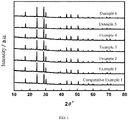
FIG. 1 shows XRD patterns of solid electrolytes prepared in Examples 1-6 and Comparative Example 1. -
FIG. 2 shows ionic conductivity curves of solid electrolytes prepared in Examples 1-6 and Comparative Example 1 as a function of temperature. -
FIG. 3 shows an initial charge-discharge curve of an all-solid-state battery prepared in Application Example 6. - Technical solutions used in the present application for achieving the predetermined technical effect are further illustrated below in conjunction with accompanying drawings and specific embodiments, and the specific embodiments of the present application are described in detail below.
- This example provides a preparation method of a doped phosphorus-sulfur iodide solid electrolyte, including the following steps:
- (1) 0.478 g, 0.500 g, 0.670 g, 0.092 g and 0.048 g of lithium sulfide, phosphorus pentasulfide, lithium iodide, a tungsten powder and a sulfur powder were weighted out respectively according to a molar ratio of 2.45:0.45:1:0.1:0.3, and ball-milled in a ball-milling jar under argon atmosphere protection, in which 20 zirconia balls with a diameter of 12 mm were used, a ball-milling rotation speed was 350 rpm, a ball-milling time was 18 h, and the ball mill was cooled every 30 min for 10 min during the operation, so as to obtain a solid electrolyte precursor; and
- (2) Under the argon atmosphere, the solid electrolyte precursor was transferred from the ball-milling jar to a quartz tube, and then put into a tube furnace for sintering, in which a heating rate was 2°C/min, and a sintering temperature was 550°C; after the temperature was kept for 5 h, the product was naturally cooled and then ground into a powder, so as to obtain the tungsten-doped phosphorus-sulfur iodide solid electrolyte.
- The tungsten-doped phosphorus-sulfur iodide solid electrolyte prepared in this example has a chemical formula of Li5.9W0.1P0.9S5I.
- This example provides a preparation method of a doped phosphorus-sulfur iodide solid electrolyte, including the following steps:
- (1) 0.468 g, 50.444 g, 0.670 g, 0.184 g and 0.096 g of lithium sulfide, phosphorus pentasulfide, lithium iodide, a tungsten powder and a sulfur powder were weighted out respectively according to a molar ratio of 2.4:0.4:1:0.2:0.6, and ball-milled in a ball-milling jar under argon atmosphere protection, in which 20 zirconia balls with a diameter of 12 mm were used, a ball-milling rotation speed was 400 rpm, a ball-milling time was 15 h, and the ball mill was cooled every 35 min for 6 min during the operation, so as to obtain a solid electrolyte precursor; and
- (2) Under the argon atmosphere, the solid electrolyte precursor was transferred from the ball-milling jar to a quartz tube, and then put into a tube furnace for sintering, in which a heating rate was 1°C/min, and a sintering temperature was 550°C; after the temperature was kept for 5 h, the product was naturally cooled and then ground into a powder, so as to obtain the tungsten-doped phosphorus-sulfur iodide solid electrolyte.
- The tungsten-doped phosphorus-sulfur iodide solid electrolyte prepared in this example has a chemical formula of Li5.8W0.2P0.8S5I.
- This example provides a preparation method of a doped phosphorus-sulfur iodide solid electrolyte, including the following steps:
- (1) 0.458 g, 50.3885 g, 0.670 g, 20.372 g and 0.048 g of lithium sulfide, phosphorus pentasulfide, lithium iodide, tungsten disulfide and a sulfur powder were weighted out respectively according to a molar ratio of 2.35:0.35:1:0.3:0.9, and ball-milled in a ball-milling jar under argon atmosphere protection, in which 18 zirconia balls with a diameter of 12 mm were used, a ball-milling rotation speed was 350 rpm, a ball-milling time was 18 h, and the ball mill was cooled every 30 min for 10 min during the operation, so as to obtain a solid electrolyte precursor; and
- (2) Under the argon atmosphere, the solid electrolyte precursor was transferred from the ball-milling jar to a quartz tube, and then put into a tube furnace for sintering, in which a heating rate was 2°C/min, and a sintering temperature was 550°C; after the temperature was kept for 2 h, the product was naturally cooled and then ground into a powder, so as to obtain the tungsten-doped phosphorus-sulfur iodide solid electrolyte.
- The tungsten-doped phosphorus-sulfur iodide solid electrolyte prepared in this example has a chemical formula of Li5.7W0.3P0.7S5I.
- This example provides a preparation method of a doped phosphorus-sulfur iodide solid electrolyte, including the following steps:
- (1) 0.478 g, 50.500 g, 0.670 g, 0.048 g and 0.048 g of lithium sulfide, phosphorus pentasulfide, lithium iodide, a molybdenum powder and a sulfur powder were weighted out respectively according to a molar ratio of 2.45:0.45:1:0.1:0.3, and ball-milled in a ball-milling jar under argon atmosphere protection, in which 20 zirconia balls with a diameter of 12 mm were used, a ball-milling rotation speed was 350 rpm, a ball-milling time was 18 h, and the ball mill was cooled every 30 min for 10 min during the operation, so as to obtain a solid electrolyte precursor; and
- (2) Under the argon atmosphere, the solid electrolyte precursor was transferred from the ball-milling jar to a quartz tube, and then put into a tube furnace for sintering, in which a heating rate was 2°C/min, and a sintering temperature was 550°C; after the temperature was kept for 5 h, the product was naturally cooled and then ground into a powder, so as to obtain the molybdenum-doped phosphorus-sulfur iodide solid electrolyte.
- The molybdenum-doped phosphorus-sulfur iodide solid electrolyte prepared in this example has a chemical formula of Li5.9Mo0.1P0.9S5I.
- This example provides a preparation method of a doped phosphorus-sulfur iodide solid electrolyte, including the following steps:
- (1) 0.468 g, 50.444 g, 0.670 g, 0.096 g and 0.096 g of lithium sulfide, phosphorus pentasulfide, lithium iodide, a molybdenum powder and a sulfur powder were weighted out respectively according to a molar ratio of 2.4:0.4:1:0.2:0.6, and ball-milled in a ball-milling jar under argon atmosphere protection, in which 20 zirconia balls with a diameter of 12 mm were used, a ball-milling rotation speed was 400 rpm, a ball-milling time was 15 h, and the ball mill was cooled every 35 min for 6 min during the operation, so as to obtain a solid electrolyte precursor; and
- (2) Under the argon atmosphere, the solid electrolyte precursor was transferred from the ball-milling jar to a quartz tube, and then put into a tube furnace for sintering, in which a heating rate was 1°C/min, and a sintering temperature was 550°C; after the temperature was kept for 5 h, the product was naturally cooled and then ground into a powder, so as to obtain the molybdenum-doped phosphorus-sulfur iodide solid electrolyte.
- The molybdenum-doped phosphorus-sulfur iodide solid electrolyte prepared in this example has a chemical formula of Li5.8Mo0.2P0.8S5I.
- This example provides a preparation method of a doped phosphorus-sulfur iodide solid electrolyte, including the following steps:
- (1) 0.458 g, 50.389 g, 0.67 g, 20.24 g and 0.048 g of lithium sulfide, phosphorus pentasulfide, lithium iodide, molybdenum disulfide and a sulfur powder were weighted out respectively according to a molar ratio of 2.35:0.35:1:0.3:0.3, and ball-milled in a ball-milling jar under argon atmosphere protection, in which 18 zirconia balls with a diameter of 12 mm were used, a ball-milling rotation speed was 500 rpm, a ball-milling time was 24 h, and the ball mill was cooled every 35 min for 6 min during the operation, so as to obtain a solid electrolyte precursor; and
- (2) Under the argon atmosphere, the solid electrolyte precursor was transferred from the ball-milling jar to a quartz tube, and then put into a tube furnace for sintering, in which a heating rate was 2°C/min, and a sintering temperature was 550°C; after the temperature was kept for 2 h, the product was naturally cooled and then ground into a powder, so as to obtain the molybdenum-doped phosphorus-sulfur iodide solid electrolyte.
- The molybdenum-doped phosphorus-sulfur iodide solid electrolyte prepared in this example has a chemical formula of Li5.7Mo0.3P0.7S5I.
- This example provides a preparation method of a doped phosphorus-sulfur iodide solid electrolyte, including the following steps:
- (1) 0.644 g, 0.312 g, 1.34 g, 0.288 g, 0.184 g and 1.152 g of lithium sulfide, lithium phosphide, lithium iodide, a molybdenum powder, a tungsten powder and a sulfur powder were weighted out respectively according to a molar ratio of 1.4:0.6:1:0.3:0.1:3.6, and ball-milled in a ball-milling jar under nitrogen atmosphere protection, in which 20 zirconia balls with a diameter of 12 mm were used, a ball-milling rotation speed was 200 rpm, a ball-milling time was 13 h, and the ball mill was cooled every 30 min for 3 min during the operation, so as to obtain a solid electrolyte precursor; and
- (2) Under the nitrogen atmosphere, the solid electrolyte precursor was transferred from the ball-milling jar to a quartz tube, and then put into a tube furnace for sintering, in which a heating rate was 0.5°C/min, and a sintering temperature was 200°C; after the temperature was kept for 24 h, the product was naturally cooled and then ground into a powder, so as to obtain the molybdenum-tungsten-doped phosphorus-sulfur iodide solid electrolyte.
- The molybdenum-tungsten-doped phosphorus-sulfur iodide solid electrolyte prepared in this example has a chemical formula of Li5.6Mo0.3W0.1P0.6S5I.
- This example provides a preparation method of a doped phosphorus-sulfur iodide solid electrolyte, including the following steps:
- (1) 1.208 g, 0.0775 g, 1.27 g, 1.2 g and 0.28 g of lithium sulfide, red phosphorus, an iodine element, molybdenum disulfide and a sulfur powder were weighted out respectively according to a molar ratio of 2.625:0.25:0.5:0.75:0.875, and ball-milled in a ball-milling jar under helium atmosphere protection, in which 25 zirconia balls with a diameter of 12 mm were used, a ball-milling rotation speed was 600 rpm, a ball-milling time was 48 h, and the ball mill was cooled every 40 min for 10 min during the operation, so as to obtain a solid electrolyte precursor; and
- (2) Under the nitrogen atmosphere, the solid electrolyte precursor was transferred from the ball-milling jar to a quartz tube, and then put into a tube furnace for sintering, in which a heating rate was 10°C/min, and a sintering temperature was 700°C; after the temperature was kept for 2 h, the product was naturally cooled and then ground into a powder, so as to obtain the molybdenum-doped phosphorus-sulfur iodide solid electrolyte.
- The molybdenum-doped phosphorus-sulfur iodide solid electrolyte prepared in this example has a chemical formula of Li5.25Mo0.75P0.25S5I.
- This example provides a preparation method of a doped phosphorus-sulfur iodide solid electrolyte, including the following steps:
- (1) 0.26 g, 1.34 g, 1.24 g, 0.69 g and 0.8 g of lithium phosphide, lithium iodide, tungsten disulfide, lithium sulfide and sulfur were weighted out respectively according to a molar ratio of 0.5:1:0.5:1.5:2.5, and ball-milled in a ball-milling jar under argon atmosphere protection, in which 15 zirconia balls with a diameter of 12 mm were used, a ball-milling rotation speed was 400 rpm, a ball-milling time was 36 h, and the ball mill was cooled every 35 min for 8 min during the operation, so as to obtain a solid electrolyte precursor; and
- (2) The solid electrolyte precursor was transferred from the ball-milling jar to a quartz tube, and then put into a tube furnace for sintering, in which under vacuum, a heating rate was 5°C/min, and a sintering temperature was 300°C; after the temperature was kept for 12 h, the product was naturally cooled and then ground into a powder, so as to obtain the tungsten-doped phosphorus-sulfur iodide solid electrolyte.
- The tungsten-doped phosphorus-sulfur iodide solid electrolyte prepared in this example has a chemical formula of Li5.5W0.5P0.5S5I.
- This comparative example provides a preparation method of a non-doped phosphorus-sulfur iodide solid electrolyte, including the following steps:
- (1) 1 g, 0.9678 g and 0.369 g of lithium sulfide, phosphorus pentasulfide and lithium iodide were weighted out respectively according to a molar ratio of 5:1:2, and ball-milled in a ball-milling jar under argon atmosphere protection, in which 18 zirconia balls with a diameter of 12 mm were used, a ball-milling rotation speed was 500 rpm, a ball-milling time was 24 h, and the ball mill was cooled every 35 min for 6 min during the operation, so as to obtain a solid electrolyte precursor; and
- (2) Under the argon atmosphere, the solid electrolyte precursor was transferred from the ball-milling jar to a quartz tube, and then put into a tube furnace for sintering, in which a heating rate was 2°C/min, and a sintering temperature was 550°C; after the temperature was kept for 2 h, the product was naturally cooled and then ground into a powder, so as to obtain the non-doped phosphorus-sulfur iodide solid electrolyte.
- The non-doped phosphorus-sulfur iodide solid electrolyte prepared in this comparative example has a chemical formula of Li6PS5I.
- This application example provides an all-solid-state battery, and a solid electrolyte of the battery is the tungsten-doped phosphorus-sulfur iodide solid electrolyte prepared in Example 1, of which the chemical formula is Li5.9W0.1P0.9S5I.
- A preparation method of the all-solid-state battery includes the following steps:
- (1) 8 g of lithium iron phosphate, 1 g of a conductive carbon black and 1 g of a solid electrolyte were ball-milled for 6 h in a ball-milling jar under argon atmosphere protection, and a ball-milling rotation speed was 180 rpm, so as to obtain a composite positive electrode powder;
- (2) With a 14 mm mold taken as a tableting tool, firstly, an aluminum foil was laid on the bottom of the mold, then 8 mg of the composite positive electrode powder obtained in step (1) was added and compressed with a pressure of 200 MPa into a composite positive electrode sheet, and then 100 mg of the tungsten-doped phosphorus-sulfur iodide solid electrolyte was added and compressed with a pressure of 150 MPa into a composite positive electrode/electrolyte sheet; and
- (3) A lithium sheet with a diameter of 9 mm was attached on the composite positive electrode/electrolyte sheet obtained in step (2) as a negative electrode, and what obtained was put into a 2025 battery case for assembling, so as to obtain the all-solid-state battery.
- This application example provides an all-solid-state battery, and a solid electrolyte of the battery is the tungsten-doped phosphorus-sulfur iodide solid electrolyte prepared in Example 2, of which the chemical formula is Li5.8W0.2P0.8S5I.
- A preparation method of the all-solid-state battery includes the following steps:
- (1) 5 g of lithium nickel manganese cobalt oxide (LiNi0.8Mn0.1Co0.1O2), 1.5 g of a conductive carbon black and 1.5 g of a solid electrolyte were ball-milled for 1 h in a ball-milling jar under nitrogen atmosphere protection, and a ball-milling rotation speed was 50 rpm, so as to obtain a composite positive electrode powder;
- (2) With a 14 mm mold taken as a tableting tool, firstly, an aluminum foil was laid on the bottom of the mold, then 16 mg of the composite positive electrode powder obtained in step (1) was added and compressed with a pressure of 50 MPa into a composite positive electrode sheet, and then 50 mg of the tungsten-doped phosphorus-sulfur iodide solid electrolyte was added and compressed with a pressure of 50 MPa into a composite positive electrode/electrolyte sheet; and
- (3) A lithium sheet with a diameter of 9 mm was attached on the composite positive electrode/electrolyte sheet obtained in step (2) as a negative electrode, and what obtained was put into a 2025 battery case for assembling, so as to obtain the all-solid-state battery.
- This application example provides an all-solid-state battery, and a solid electrolyte of the battery is the tungsten-doped phosphorus-sulfur iodide solid electrolyte prepared in Example 3, of which the chemical formula is Li5.7W0.3P0.7S5I.
- A preparation method of the all-solid-state battery includes the following steps:
- (1) 8 g of lithium nickel manganese cobalt oxide (LiNi0.8Mn0.1Co0.1O2), 0.5 g of a conductive carbon black and 5 g of a solid electrolyte were ball-milled for 10 h in a ball-milling jar under helium atmosphere protection, and a ball-milling rotation speed was 350 rpm, so as to obtain a composite positive electrode powder;
- (2) With a 14 mm mold taken as a tableting tool, firstly, an aluminum foil was laid on the bottom of the mold, then 2 mg of the composite positive electrode powder obtained in step (1) was added and compressed with a pressure of 300 MPa into a composite positive electrode sheet, and then 200 mg of the tungsten-doped phosphorus-sulfur iodide solid electrolyte was added and compressed with a pressure of 300 MPa into a composite positive electrode/electrolyte sheet; and
- (3) A lithium sheet with a diameter of 9 mm was attached on the composite positive electrode/electrolyte sheet obtained in step (2) as a negative electrode, and what obtained was put into a 2025 battery case for assembling, so as to obtain the all-solid-state battery.
- This application example provides an all-solid-state battery, and a solid electrolyte of the battery is the molybdenum-doped phosphorus-sulfur iodide solid electrolyte prepared in Example 4, of which the chemical formula is Li5.9Mo0.1P0.9S5I.
- A preparation method of the all-solid-state battery includes the following steps:
- (1) 4.5 g of lithium nickel manganese cobalt oxide (LiNi0.8Mn0.1Co0.1O2), 2.5 g of a conductive carbon black and 4 g of a solid electrolyte were ball-milled for 5 h in a ball-milling jar under helium atmosphere protection, and a ball-milling rotation speed was 120 rpm, so as to obtain a composite positive electrode powder;
- (2) With a 14 mm mold taken as a tableting tool, firstly, an aluminum foil was laid on the bottom of the mold, then 5 mg of the composite positive electrode powder obtained in step (1) was added and compressed with a pressure of 120 MPa into a composite positive electrode sheet, and then 120 mg of the molybdenum-doped phosphorus-sulfur iodide solid electrolyte was added and compressed with a pressure of 150 MPa into a composite positive electrode/electrolyte sheet; and
- (3) A lithium sheet with a diameter of 9 mm was attached on the composite positive electrode/electrolyte sheet obtained in step (2) as a negative electrode, and what obtained was put into a 2025 battery case for assembling, so as to obtain the all-solid-state battery.
- Compared with Application Example 2, the only difference is that the solid electrolyte in step (2) was replaced with the molybdenum-doped phosphorus-sulfur iodide solid electrolyte prepared in Example 5, of which the chemical formula is Li5.8Mo0.2P0.8S5I.
- Compared with Application Example 2, the only difference is that the solid electrolyte in step (2) was replaced with the molybdenum-doped phosphorus-sulfur iodide solid electrolyte prepared in Example 6, of which the chemical formula is Li5.7Mo0.3P0.7S5I.
- The all-solid-state battery prepared in this application example was tested for capacity at 0.05C. The test results are shown in
FIG. 3 , and it can be seen from the figure that the capacity of the all-solid-state battery was 105 mAh/g. - Compared with Application Example 2, the only difference is that the solid electrolyte in step (2) was replaced with the molybdenum-tungsten-doped phosphorus-sulfur iodide solid electrolyte prepared in Example 7, of which the chemical formula is Li5.6Mo0.3W0.1P0.6S5I.
- Compared with Application Example 2, the only difference is that the solid electrolyte in step (2) was replaced with the molybdenum-doped phosphorus-sulfur iodide solid electrolyte prepared in Example 8, of which the chemical formula is Li5.25Mo0.75P0.25S5I.
- Compared with Application Example 2, the only difference is that the solid electrolyte in step (2) was replaced with the tungsten-doped phosphorus-sulfur iodide solid electrolyte prepared in Example 9, of which the chemical formula is Li5.5W0.5P0.5S5I.
- Compared with Application Example 6, the only difference is that the solid electrolyte in step (2) was replaced with the non-doped phosphorus-sulfur iodide solid electrolyte prepared in Comparative Example 1, of which the chemical formula is Li6PS5I.
- Evaluation of phosphorus-sulfur iodide solid electrolyte performance:
The phosphorus-sulfur iodide solid electrolytes prepared in the above examples and comparative examples were subjected to XRD test. In the test, the test results of Examples 1-6 and Comparative Example 1 are shown inFIG. 1 . It can be seen from the figure that the distribution patterns of diffraction peak position of all samples are the same, which indicates that the synthesized materials all have the same crystal structure. - Evaluation of all-solid-state battery performance:
The all-solid-state batteries prepared in Application Examples 1-9 and Comparative Application Example 1 were tested for ionic conductivity and capacity. The test method for ionic conductivity was that: an incubator was used to heat up and keep warm, the alternating current impedance was measured each time point when the temperature was increased 5°C and kept for 10 min, so as to obtain a curve graph of the ionic conductivity of the corresponding electrolyte as a function of temperature from 30°C to 100°C. - In the test, the curve of the ionic conductivity of solid electrolytes prepared in Examples 1-6 and Comparative Example 1 as a function of temperature is shown in
FIG. 2 . It can be seen from the figure that the ionic conductivity of the phosphorus-sulfur iodide solid electrolyte could reach more than or equal to 1.0×10⁻³ S/cm; with the temperature increased, the ionic conductivity increased; at the same temperature, with the a molar content of doping element increased, the ionic conductivity increased, and the doping effect of Mo element was better than the doping effect of W element. - The test method for capacity was that: at 25°C, the assembled battery was subjected to a constant-current charge-discharge test, and the charge-discharge rate was 0.05C. The test results are shown in Table 1.
Table 1 Initial discharge specific capacity (mAh/g) Discharge specific capacity after 100 cycles (mAh/g) Application Example 1 10 6 Application Example 2 15 8 Application Example 3 60 42 Application Example 4 65 45 Application Example 5 96 78 Application Example 6 105 97 Application Example 7 90 76 Application Example 8 32 25 Application Example 9 28 23 Comparative Application Example 1 5 2 - It can be seen from Table 1 that:
- (1) Combining the application examples 1-9 together, it can be seen that for the all-solid-state batteries assembled in the application examples 1-2 and the application examples 8-9, the initial discharge specific capacity was 10-32 mAh/g, the discharge specific capacity after 100 cycles was 6-25 mAh/g, and the specific capacity was not high, of which the main reason was that the lithium ion conductivity of the solid electrolyte used was low; for the all-solid-state batteries prepared by using the doped phosphorus-sulfur iodide solid electrolyte in application examples 3-7, the initial discharge specific capacity was 60-105 mAh/g, and the discharge specific capacity after 100 cycles was 42-97 mAh/g, which indicates that the all-solid-state batteries prepared in application examples 3-7 have high energy density and stable cycle performance;
- (2) Combining Application Example 6 and Comparative Application Example 1 together, it can be seen that for the all-solid-state battery prepared by using the molybdenum-doped phosphorus-sulfur iodide solid electrolyte in Application Example 6, the initial discharge specific capacity was 105 mAh/g, and the discharge specific capacity after 100 cycles was 97 mAh/g; for the all-solid-state battery prepared by using the non-doped phosphorus-sulfur iodide solid electrolyte in Comparative Application Example 1, the initial discharge specific capacity was 5 mAh/g, and the discharge specific capacity after 100 cycles was 2 mAh/g, which indicates that the all-solid-state battery prepared by using molybdenum-doped phosphorus-sulfur iodide solid electrolyte in Application Example 6 has higher energy density and stable cycle performance.
- In conclusion, the doped phosphorus-sulfur iodide solid electrolyte provided in the present application can improve the ionic conductivity by doping W and/or Mo elements with larger ionic radius into Li6PS5I, and the ionic conductivity can reach more than or equal to 1.0×10⁻³ S/cm, and the electrochemical stability window is wide; the preparation method of the doped phosphorus-sulfur iodide solid electrolyte provided in the present application has simple and easy-to-obtain raw materials, simple synthesis process, and good crystal structure of the synthesized electrolyte; the all-solid-state battery provided in the present application has high energy density and stable cycle performance by using the doped phosphorus-sulfur iodide solid electrolyte, and has wide application prospects.
- The applicant has stated that although the detailed structural features of the present application are illustrated through the above embodiments in the present application, the present application is not limited to the above detailed structural features, which means that the present application does not necessarily rely on the above detailed structural features to be implemented.
Claims (15)
- A doped phosphorus-sulfur iodide solid electrolyte, of which a general chemical formula is Li6-xMxP1-xS5I, wherein 0<x<0.8, and M is tungsten and/or molybdenum.
- The solid electrolyte according to claim 1, wherein 0.05≤x≤0.3.
- The solid electrolyte according to claim 1 or 2, wherein the solid electrolyte has a cubic argyrodite structure, and the M atom is doped at a position of the phosphorus atom.
- A preparation method of the solid electrolyte according to any one of claims 1 to 3, comprising the following steps:(1) in an inert atmosphere, mixing a lithium source, a phosphorus source, an iodine source, a sulfur source and an M source, and then ball-milling the same, so as to obtain a solid electrolyte precursor; and(2) sintering the solid electrolyte precursor obtained in step (1) in an inert atmosphere or in vacuum, so as to obtain the doped phosphorus-sulfur iodide solid electrolyte.
- The preparation method according to claim 4, wherein in terms of element content, lithium, phosphorus, iodine, M and sulfur in the lithium source, the phosphorus source, the iodine source, the M source and the sulfur source in step (1) have a molar ratio of (5.2-5.95):(0.2-0.95):1:(0.05-0.8):5, optionally (5.7-5.95):(0.7-0.95):1:(0.05-0.3):5.
- The preparation method according to claim 4 or 5, wherein a ball-to-material ratio of the ball-milling in step (1) is (10-30):1, optionally (15-25):1.
- The preparation method according to any one of claims 4 to 6, wherein a gas of the inert atmosphere in step (1) comprises any one or a combination of at least two of argon, nitrogen or helium;optionally, the lithium source in step (1) comprises any one or a combination of at least two of lithium sulfide, lithium phosphide or lithium iodide;optionally, the phosphorus source in step (1) comprises any one or a combination of at least two of phosphorus pentasulfide, lithium phosphide or red phosphorus;optionally, the iodine source in step (1) comprises lithium iodide and/or an iodine element;optionally, the sulfur source in step (1) comprises any one or a combination of at least two of a sulfur powder, phosphorus pentasulfide or lithium sulfide;optionally, the M source in step (1) comprises any one or a combination of at least two of a tungsten powder, a molybdenum powder, tungsten disulfide or molybdenum disulfide;optionally, a rotation speed of the ball-milling in step (1) is 100-800 rpm, optionally 200-600 rpm;optionally, a time of the ball-milling in step (1) is 13-48 h, optionally 20-36 h.
- The preparation method according to any one of claims 4 to 7, wherein a gas of the inert atmosphere in step (2) comprises any one or a combination of at least two of argon, nitrogen or helium;optionally, a heating rate of the sintering in step (2) is 0.5-10°C/min, optionally 1-5°C/min;optionally, a temperature of the sintering in step (2) is 200-700°C, optionally 300-550°C;optionally, a time of the sintering in step (2) is 2-24 h, optionally 3-18 h;optionally, step (2) further comprises: performing natural cooling after the sintering, and then grinding.
- The preparation method according to any one of claims 4 to 8, wherein the method comprises the following steps:(1) in an inert atmosphere, according to a molar ratio of (5.7-5.95):(0.7-0.95):1:(0.05-0.3):5 of lithium, phosphorus, iodine, M and sulfur elements, mixing the lithium source, the phosphorus source, the iodine source, the sulfur source and the M source, and then with a ball-to-material ratio controlled at (10-30):1, ball-milling the same at a rotation speed of 200-600 rpm for 13-48 h, wherein every 30-40 min during the ball-milling, the ball mill is stopped for 3-10 min for cooling, so as to obtain a solid electrolyte precursor; and(2) subjecting the solid electrolyte precursor obtained in step (1) to an inert atmosphere or vacuum, heating the precursor to 200-700°C at a rate of 0.5-10°C/min, sintering the precursor for 2-24 h, then naturally cooling the product to 18-30°C, and grinding the product into a powder, so as to obtain the doped lithium phosphorus-sulfur iodide solid electrolyte.
- An all-solid-state battery, comprising the doped lithium phosphorus-sulfur iodide solid electrolyte according to any one of claims 1 to 3.
- A preparation method of the all-solid-state battery according to claim 10, comprising the following steps:(a) mixing a positive electrode active material, the doped lithium phosphorus-sulfur iodide solid electrolyte and a conductive agent, and ball-milling the same in an inert atmosphere, so as to obtain a composite positive electrode powder;(b) subjecting the composite positive electrode powder obtained in step (a) to a first tableting, then adding the doped lithium phosphorus-sulfur iodide solid electrolyte, and performing a second tableting, so as to obtain a composite positive electrode/electrolyte sheet, and attaching a lithium sheet on the sheet, and assembling the same, so as to obtain the all-solid-state battery.
- The preparation method according to claim 11, wherein in step (a), a part by weight of the positive electrode active material is 10-80 parts, a part by weight of the doped lithium phosphorus-sulfur iodide solid electrolyte is 5-50 parts and a part by weight of the conductive agent is 5-80 parts.
- The preparation method according to claim 11 or 12, wherein in step (b), the composite positive electrode powder and the doped lithium phosphorus-sulfur iodide solid electrolyte have a mass ratio of (3-100): 1, optionally (5-20):1.
- The preparation method according to any one of claims 11 to 13, wherein the positive electrode active material in step (a) comprises any one or a combination of at least two of sulfur, lithium iron phosphate, lithium cobaltate or lithium nickel manganese cobalt oxide;optionally, the conductive agent in step (a) comprises any one or a combination of at least two of a conductive carbon black, a graphite powder or a Cabot carbon black;optionally, a gas of the inert atmosphere in step (a) comprises any one or a combination of at least two of argon, nitrogen or helium;optionally, a rotation speed of the ball-milling in step (a) is 10-350 rpm, optionally 100-300 rpm;optionally, a time of the ball-milling in step (a) is 1-10 h, optionally 3-8 h.
- The preparation method according to any one of claims 11 to 14, wherein pressures of the first tableting and the second tableting in step (b) are independently 20-300 MPa, optionally 50-200 MPa.
Applications Claiming Priority (2)
| Application Number | Priority Date | Filing Date | Title |
|---|---|---|---|
| CN201911384024.0A CN111092262B (en) | 2019-12-28 | 2019-12-28 | A kind of doped phosphorus sulfur iodide solid electrolyte and its preparation method and use |
| PCT/CN2020/094270 WO2021128738A1 (en) | 2019-12-28 | 2020-06-04 | Doped phosphorus-sulfur iodide solid electrolyte, preparation method therefor, and use thereof |
Publications (2)
| Publication Number | Publication Date |
|---|---|
| EP4084181A1 true EP4084181A1 (en) | 2022-11-02 |
| EP4084181A4 EP4084181A4 (en) | 2024-06-26 |
Family
ID=70398503
Family Applications (1)
| Application Number | Title | Priority Date | Filing Date |
|---|---|---|---|
| EP20907182.8A Pending EP4084181A4 (en) | 2019-12-28 | 2020-06-04 | Doped phosphorus-sulfur iodide solid electrolyte, preparation method therefor, and use thereof |
Country Status (6)
| Country | Link |
|---|---|
| US (1) | US12341153B2 (en) |
| EP (1) | EP4084181A4 (en) |
| JP (1) | JP7352030B2 (en) |
| KR (1) | KR102674455B1 (en) |
| CN (1) | CN111092262B (en) |
| WO (1) | WO2021128738A1 (en) |
Cited By (1)
| Publication number | Priority date | Publication date | Assignee | Title |
|---|---|---|---|---|
| US12407016B2 (en) | 2023-02-17 | 2025-09-02 | Mercedes-Benz Group AG | Sulfide solid electrolyte for solid-state batteries and method for production |
Families Citing this family (33)
| Publication number | Priority date | Publication date | Assignee | Title |
|---|---|---|---|---|
| CN111092262B (en) * | 2019-12-28 | 2021-04-20 | 横店集团东磁股份有限公司 | A kind of doped phosphorus sulfur iodide solid electrolyte and its preparation method and use |
| US20230246197A1 (en) * | 2020-06-09 | 2023-08-03 | National Institute Of Advanced Industrial Science And Technology | Positive electrode mixture for composite all-solid-state lithium sulfur battery |
| CN114552021A (en) * | 2020-11-26 | 2022-05-27 | 中国科学院大连化学物理研究所 | A kind of solid electrolyte and its preparation method and application |
| CN112768756B (en) * | 2021-01-13 | 2022-04-19 | 河北光兴半导体技术有限公司 | Solid electrolyte material, and composite solid electrolyte and all-solid-state battery prepared from same |
| CN120221767A (en) * | 2021-05-07 | 2025-06-27 | 北京航空航天大学 | Solid electrolyte material and preparation method thereof, solid-state battery and device |
| CN113745650B (en) * | 2021-08-20 | 2022-07-15 | 高能时代(珠海)新能源科技有限公司 | A kind of sulfide solid electrolyte stable to lithium negative electrode and preparation method thereof and lithium ion battery |
| CN113659199B (en) * | 2021-08-20 | 2024-03-22 | 蜂巢能源科技有限公司 | Sulfide solid electrolyte, preparation method thereof and lithium ion battery |
| CN114122508B (en) * | 2021-11-26 | 2024-02-23 | 湖州昆仑先端固态电池科技有限公司 | Sulfide solid electrolyte and preparation method and application thereof |
| CN114267874B (en) * | 2021-12-23 | 2024-09-03 | 燕山大学 | Sulfur silver germanium ore type sulfide solid electrolyte containing lithium halide coating layer and preparation thereof |
| CN114843592B (en) * | 2022-03-16 | 2025-12-16 | 浙江锋锂新能源科技有限公司 | Mixed conductor sulfide solid electrolyte, preparation method and all-solid-state battery |
| CN114709474B (en) * | 2022-04-28 | 2023-07-11 | 上海屹锂新能源科技有限公司 | Bismuth-doped sulfur silver germanium ore type sulfide solid electrolyte and preparation method thereof |
| CN114883642B (en) * | 2022-05-13 | 2025-04-01 | 上海屹锂新能源科技有限公司 | A molybdenum-doped argyrodite-type sulfide electrolyte and a preparation method thereof |
| CN114933331B (en) * | 2022-05-13 | 2023-02-17 | 上海屹锂新能源科技有限公司 | Sulfide solid electrolyte and preparation method thereof |
| CN115051027B (en) * | 2022-07-27 | 2024-12-24 | 燕山大学 | A lithium argyrodite-type solid electrolyte containing a lithium halide in-situ precipitation phase and its preparation method and application |
| CN115377483B (en) * | 2022-08-12 | 2024-12-17 | 浙江大学 | High-performance sulfide solid electrolyte material, preparation method thereof and application thereof in all-solid-state battery |
| CN115377481A (en) * | 2022-08-23 | 2022-11-22 | 合肥国轩高科动力能源有限公司 | Organic-inorganic composite solid electrolyte, preparation method thereof and lithium ion solid battery |
| CN115458731B (en) * | 2022-10-28 | 2025-09-19 | 中国长江三峡集团有限公司 | Positive electrode material and preparation method thereof |
| CN116072962A (en) * | 2023-03-23 | 2023-05-05 | 香河昆仑新能源材料股份有限公司 | A kind of sulfide solid state electrolyte and its preparation method and application |
| CN116565178A (en) * | 2023-06-25 | 2023-08-08 | 瑞浦兰钧能源股份有限公司 | A kind of lithium-sulfur battery positive electrode matrix material and its preparation method and application |
| CN116809326A (en) * | 2023-07-06 | 2023-09-29 | 浙江锂威能源科技有限公司 | Coating die head and coating process |
| CN117069121B (en) * | 2023-07-14 | 2025-11-18 | 东风汽车集团股份有限公司 | A method for preparing tungsten-doped Li9B19S33 |
| KR20250062386A (en) * | 2023-10-31 | 2025-05-08 | 주식회사 에코프로비엠 | Solid electrolyte for secondary battery and manufacturing method for the same |
| KR20250062385A (en) * | 2023-10-31 | 2025-05-08 | 주식회사 에코프로비엠 | Solid electrolyte for secondary battery and manufacturing method for the same |
| WO2025150922A1 (en) * | 2024-01-09 | 2025-07-17 | 주식회사 솔리비스 | Sulfide-based solid electrolyte and method for preparing same |
| CN118507816B (en) * | 2024-04-03 | 2025-03-04 | 中国科学院精密测量科学与技术创新研究院 | A solid electrolyte material and its preparation method and application |
| CN120824408A (en) * | 2024-04-11 | 2025-10-21 | 宁德时代新能源科技股份有限公司 | Sulfide solid electrolyte and preparation method thereof, solid electrolyte membrane, electrode plate, solid-state battery and electrical device |
| CN118380643B (en) * | 2024-06-21 | 2024-10-08 | 上海兆钠新能源科技有限公司 | Sulfide solid electrolyte and all-solid sodium ion battery |
| CN118645682B (en) * | 2024-07-31 | 2025-10-24 | 北京科技大学 | A modified sulfide solid electrolyte and its synthesis method and use |
| CN119263232B (en) * | 2024-12-09 | 2025-04-29 | 上海屹锂新能源科技有限公司 | Sulfur silver germanium ore type solid electrolyte and preparation method and application thereof |
| CN119315016B (en) * | 2024-12-13 | 2025-03-25 | 中国科学院大连化学物理研究所 | All-solid-state lithium-ion battery positive electrode material and preparation method and application |
| CN119674199A (en) * | 2024-12-17 | 2025-03-21 | 江西赣锋锂业集团股份有限公司 | A modified doped lithium phosphorus sulfur chlorine solid electrolyte and its preparation method and application |
| CN120072913B (en) * | 2025-04-29 | 2025-08-05 | 上海屹锂新能源科技有限公司 | Composite positive electrode material and preparation method and application thereof |
| CN120341351B (en) * | 2025-06-13 | 2025-10-21 | 北京恩力动力技术有限公司 | Sulfide solid electrolyte and preparation method thereof |
Family Cites Families (23)
| Publication number | Priority date | Publication date | Assignee | Title |
|---|---|---|---|---|
| JP2011003500A (en) | 2009-06-22 | 2011-01-06 | Samsung Electronics Co Ltd | All solid lithium secondary battery |
| JP5553004B2 (en) * | 2010-11-08 | 2014-07-16 | トヨタ自動車株式会社 | Sulfide solid electrolyte material, lithium solid battery, and method for producing sulfide solid electrolyte material |
| JP6390101B2 (en) * | 2013-03-18 | 2018-09-19 | Tdk株式会社 | Solid lithium ion conductor and electrochemical device |
| DE102013219606A1 (en) | 2013-09-27 | 2015-04-02 | Robert Bosch Gmbh | Electrode material with lithium argyrodite |
| CN103560267B (en) * | 2013-11-01 | 2016-05-11 | 国家电网公司 | All solid lithium secondary battery electrolyte, its preparation method and all solid lithium secondary battery |
| KR102765039B1 (en) * | 2015-12-04 | 2025-02-11 | 퀀텀스케이프 배터리, 인코포레이티드 | Electrolyte and catholyte compositions comprising lithium, phosphorus, sulfur and iodine, electrolyte membranes for electrochemical devices, and an annealing method for producing these electrolytes and catholytes. |
| CN106887638A (en) * | 2015-12-15 | 2017-06-23 | 国联汽车动力电池研究院有限责任公司 | A kind of composite solid electrolyte material, its preparation method and all solid state lithium ion secondary cell comprising the electrolyte |
| US11245131B2 (en) * | 2015-12-25 | 2022-02-08 | Samsung Electronics Co., Ltd. | Solid electrolyte and lithium battery including the same |
| EP3419098B1 (en) | 2016-02-19 | 2019-11-27 | FUJIFILM Corporation | Solid electrolytic composition, electrode sheet for full-solid secondary batteries, full-solid secondary battery, and method for manufacturing electrode sheet for full-solid secondary batteries and full-solid secondary battery |
| WO2018003333A1 (en) * | 2016-07-01 | 2018-01-04 | 三井金属鉱業株式会社 | Sulfide-based solid electrolyte for lithium secondary battery |
| JP6945382B2 (en) * | 2016-09-08 | 2021-10-06 | 出光興産株式会社 | Sulfide solid electrolyte |
| US11011796B2 (en) * | 2016-10-21 | 2021-05-18 | Quantumscape Battery, Inc. | Electrolyte separators including lithium borohydride and composite electrolyte separators of lithium-stuffed garnet and lithium borohydride |
| CN106684432B (en) * | 2017-01-25 | 2019-02-05 | 浙江大学 | High ionic conductivity sulfide solid state electrolyte material, preparation method and application thereof |
| CN106848391B (en) | 2017-03-15 | 2019-05-14 | 郑州新世纪材料基因组工程研究院有限公司 | A kind of lithium ion battery solid electrolyte and preparation method thereof |
| JP6878059B2 (en) * | 2017-03-15 | 2021-05-26 | トヨタ自動車株式会社 | Sulfide solid electrolyte and its manufacturing method |
| KR102833170B1 (en) * | 2017-05-24 | 2025-07-10 | 시온 파워 코퍼레이션 | Ionically conductive compounds and related uses |
| JP7236648B2 (en) * | 2017-09-08 | 2023-03-10 | パナソニックIpマネジメント株式会社 | Sulfide solid electrolyte material and battery using the same |
| EP3706209A4 (en) * | 2017-10-30 | 2020-12-16 | FUJIFILM Corporation | Composition for forming active material layer, method for preparing same, electrode sheet for all-solid secondary battery, and method for manufacturing all-solid secondary battery |
| KR20190066792A (en) | 2017-12-06 | 2019-06-14 | 현대자동차주식회사 | A method for manufacturing a sulfide-based solid electrolyte having crystal structure of argyrodite |
| CN108832172B (en) | 2018-06-22 | 2021-01-15 | 中国科学院宁波材料技术与工程研究所 | All-solid-state electrolyte material, preparation method thereof, and all-solid-state lithium secondary battery |
| CN109193026A (en) * | 2018-10-17 | 2019-01-11 | 浙江工业大学 | Preparation method of chalcogenide solid electrolyte |
| CN109638347A (en) * | 2018-12-02 | 2019-04-16 | 桂林理工大学 | A kind of preparation and application of nanoscale Argyrodite type solid electrolyte material |
| CN111092262B (en) * | 2019-12-28 | 2021-04-20 | 横店集团东磁股份有限公司 | A kind of doped phosphorus sulfur iodide solid electrolyte and its preparation method and use |
-
2019
- 2019-12-28 CN CN201911384024.0A patent/CN111092262B/en active Active
-
2020
- 2020-06-04 WO PCT/CN2020/094270 patent/WO2021128738A1/en not_active Ceased
- 2020-06-04 US US17/787,884 patent/US12341153B2/en active Active
- 2020-06-04 KR KR1020217032463A patent/KR102674455B1/en active Active
- 2020-06-04 EP EP20907182.8A patent/EP4084181A4/en active Pending
- 2020-06-04 JP JP2022539738A patent/JP7352030B2/en active Active
Cited By (1)
| Publication number | Priority date | Publication date | Assignee | Title |
|---|---|---|---|---|
| US12407016B2 (en) | 2023-02-17 | 2025-09-02 | Mercedes-Benz Group AG | Sulfide solid electrolyte for solid-state batteries and method for production |
Also Published As
| Publication number | Publication date |
|---|---|
| CN111092262A (en) | 2020-05-01 |
| CN111092262B (en) | 2021-04-20 |
| US12341153B2 (en) | 2025-06-24 |
| EP4084181A4 (en) | 2024-06-26 |
| JP2023509023A (en) | 2023-03-06 |
| KR20210136101A (en) | 2021-11-16 |
| KR102674455B1 (en) | 2024-06-11 |
| WO2021128738A1 (en) | 2021-07-01 |
| US20230041325A1 (en) | 2023-02-09 |
| JP7352030B2 (en) | 2023-09-27 |
Similar Documents
| Publication | Publication Date | Title |
|---|---|---|
| US12341153B2 (en) | Doped phosphorus-sulfur iodide solid electrolyte, preparation method therefor, and use thereof | |
| EP4057390A1 (en) | Carbon-coated lithium-rich oxide composite material and preparation method therefor | |
| CN101955175B (en) | Industrial preparation method for lithium iron phosphate | |
| CN106602009A (en) | Lithium-rich positive electrode modified material of lithium ion battery and preparation method of lithium-rich positive electrode modified material | |
| KR20210096557A (en) | Anode material and electrochemical and electronic devices comprising the anode material | |
| WO2024011621A1 (en) | Lithium manganese iron phosphate positive electrode active material and preparation method therefor, positive electrode sheet, secondary battery and electric device | |
| CN108807920B (en) | LASO-coated octahedral-structure lithium nickel manganese oxide composite material and preparation method thereof | |
| CN101752562A (en) | Compound doped modified lithium ion battery anode material and preparation method thereof | |
| CN104241642A (en) | Lithium molybdate cathode material for lithium ion battery and preparation method thereof | |
| CN101931073A (en) | A kind of preparation method of lithium iron phosphate/carbon composite cathode material | |
| CN110350164B (en) | Multiphase composite high-nickel ternary positive electrode material and preparation method thereof | |
| CN111484247A (en) | Glass positive electrode material and preparation method and application thereof | |
| CN103441281A (en) | Preparation method of magnesium-doped manganese lithium phosphate/carbon composite nanofibers | |
| CN106025182A (en) | Titanium and chromium doped iron fluoride-carbon nanometer composite positive electrode material, and preparation method and application thereof | |
| CN109546099B (en) | A kind of graphite composite negative electrode material and preparation method thereof, lithium ion battery | |
| CN104176785B (en) | A kind of Cu2+,Co2+,Ce4+,Ag+Doping ferric flouride composite positive pole and preparation method | |
| CN104150542B (en) | A Cu2+, co2+, ag+doped iron fluoride composite anode material and its preparation method | |
| CN101209823B (en) | Preparation method for lithium ion secondary battery positive pole active substance lithium iron phosphate | |
| CN103682267B (en) | A kind of carbon solid acid Aluminate doping phosphoric acid titanium lithium three component surface modification ferric fluoride anode material and preparation methods | |
| CN117682564A (en) | A nanosheet-assembled flower-like ferric fluoride high-performance lithium battery cathode material and its application | |
| CN104150543A (en) | A kind of Cu2+, Ce4+, Ag+ doped ferric fluoride composite cathode material and preparation method | |
| KR20240142537A (en) | Positive electrode active material and method for producing the same, positive electrode plate, secondary battery, battery module, battery pack and electric device | |
| CN103490048B (en) | The two component surface modification ferric fluoride anode materials of a kind of titanate esters doping phosphoric acid titanium lithium and preparation method | |
| CN107658448A (en) | The preparation method of zero strain hydridization LTO lithium cell cathode materials and the cathode of lithium battery containing the negative material | |
| CN104393243A (en) | A preparation method of carbon self-coated nano-scale SrLi2Ti6O14 |
Legal Events
| Date | Code | Title | Description |
|---|---|---|---|
| STAA | Information on the status of an ep patent application or granted ep patent |
Free format text: STATUS: THE INTERNATIONAL PUBLICATION HAS BEEN MADE |
|
| PUAI | Public reference made under article 153(3) epc to a published international application that has entered the european phase |
Free format text: ORIGINAL CODE: 0009012 |
|
| STAA | Information on the status of an ep patent application or granted ep patent |
Free format text: STATUS: REQUEST FOR EXAMINATION WAS MADE |
|
| 17P | Request for examination filed |
Effective date: 20220707 |
|
| AK | Designated contracting states |
Kind code of ref document: A1 Designated state(s): AL AT BE BG CH CY CZ DE DK EE ES FI FR GB GR HR HU IE IS IT LI LT LU LV MC MK MT NL NO PL PT RO RS SE SI SK SM TR |
|
| DAV | Request for validation of the european patent (deleted) | ||
| DAX | Request for extension of the european patent (deleted) | ||
| A4 | Supplementary search report drawn up and despatched |
Effective date: 20240528 |
|
| RIC1 | Information provided on ipc code assigned before grant |
Ipc: H01M 10/0525 20100101ALI20240522BHEP Ipc: H01M 4/62 20060101ALI20240522BHEP Ipc: H01M 4/36 20060101ALI20240522BHEP Ipc: H01M 4/139 20100101ALI20240522BHEP Ipc: C01B 25/14 20060101ALI20240522BHEP Ipc: C01B 17/22 20060101ALI20240522BHEP Ipc: H01M 10/0562 20100101AFI20240522BHEP |
|
| STAA | Information on the status of an ep patent application or granted ep patent |
Free format text: STATUS: EXAMINATION IS IN PROGRESS |
|
| 17Q | First examination report despatched |
Effective date: 20250303 |