EP4083722B1 - Method for automatically generating a behavior tree program for controlling a machine - Google Patents
Method for automatically generating a behavior tree program for controlling a machine Download PDFInfo
- Publication number
- EP4083722B1 EP4083722B1 EP21171641.0A EP21171641A EP4083722B1 EP 4083722 B1 EP4083722 B1 EP 4083722B1 EP 21171641 A EP21171641 A EP 21171641A EP 4083722 B1 EP4083722 B1 EP 4083722B1
- Authority
- EP
- European Patent Office
- Prior art keywords
- machine
- behavior tree
- controller
- unit
- tasks
- Prior art date
- Legal status (The legal status is an assumption and is not a legal conclusion. Google has not performed a legal analysis and makes no representation as to the accuracy of the status listed.)
- Active
Links
Images


Classifications
-
- G—PHYSICS
- G06—COMPUTING OR CALCULATING; COUNTING
- G06F—ELECTRIC DIGITAL DATA PROCESSING
- G06F8/00—Arrangements for software engineering
- G06F8/30—Creation or generation of source code
- G06F8/31—Programming languages or programming paradigms
-
- G—PHYSICS
- G05—CONTROLLING; REGULATING
- G05B—CONTROL OR REGULATING SYSTEMS IN GENERAL; FUNCTIONAL ELEMENTS OF SUCH SYSTEMS; MONITORING OR TESTING ARRANGEMENTS FOR SUCH SYSTEMS OR ELEMENTS
- G05B19/00—Program-control systems
- G05B19/02—Program-control systems electric
- G05B19/04—Program control other than numerical control, i.e. in sequence controllers or logic controllers
- G05B19/042—Program control other than numerical control, i.e. in sequence controllers or logic controllers using digital processors
-
- G—PHYSICS
- G05—CONTROLLING; REGULATING
- G05B—CONTROL OR REGULATING SYSTEMS IN GENERAL; FUNCTIONAL ELEMENTS OF SUCH SYSTEMS; MONITORING OR TESTING ARRANGEMENTS FOR SUCH SYSTEMS OR ELEMENTS
- G05B19/00—Program-control systems
- G05B19/02—Program-control systems electric
- G05B19/18—Numerical control [NC], i.e. automatically operating machines, in particular machine tools, e.g. in a manufacturing environment, so as to execute positioning, movement or co-ordinated operations by means of program data in numerical form
- G05B19/4155—Numerical control [NC], i.e. automatically operating machines, in particular machine tools, e.g. in a manufacturing environment, so as to execute positioning, movement or co-ordinated operations by means of program data in numerical form characterised by program execution, i.e. part program or machine function execution, e.g. selection of a program
-
- G—PHYSICS
- G06—COMPUTING OR CALCULATING; COUNTING
- G06N—COMPUTING ARRANGEMENTS BASED ON SPECIFIC COMPUTATIONAL MODELS
- G06N5/00—Computing arrangements using knowledge-based models
- G06N5/04—Inference or reasoning models
-
- G—PHYSICS
- G05—CONTROLLING; REGULATING
- G05B—CONTROL OR REGULATING SYSTEMS IN GENERAL; FUNCTIONAL ELEMENTS OF SUCH SYSTEMS; MONITORING OR TESTING ARRANGEMENTS FOR SUCH SYSTEMS OR ELEMENTS
- G05B2219/00—Program-control systems
- G05B2219/30—Nc systems
- G05B2219/33—Director till display
- G05B2219/33051—BBC behavior based control, stand alone module, cognitive, independent agent
Definitions
- the present disclosure relates to computer implemented method for automatically generating a behavior tree program for controlling a machine, e.g., in an industrial automation system and an assistant apparatus configured to perform the method.
- Behavior trees are a powerful programming paradigm to overcome the limitations of classical PLC programming approaches.
- a behavior tree describes switchings between a finite set of tasks in a modular fashion. Their strength results from their ability to create very complex tasks composed of simple tasks, without worrying how the simple tasks are implemented.
- a task describes single behavior steps, several tasks are combined into compositions defining in which order and under which condition the single tasks shall be executed.
- Behavior trees present some similarities to hierarchical state machines with the key difference that the main building block of a behavior is a task rather than a state. Its ease of human understanding make behavior trees less error prone.
- the expression behavior tree and behavior tree program are used as synonyms throughout this document.
- behavior trees are manually created and entered to a controller of the machine or system of machine by automation engineers. While behavior trees are easier to handle than classical PLC programming languages, they still need some amount on training for the automation engineer.
- FRENCH KEVI N ET AL 11 Learning Behavi or Trees From Demonstration11, 2019 INTERNATIONAL CONFERENCE ON ROBOTICS AND AUTOMATION (ICRA), IEEE, 20 May 2019 (2019-05-20), pages 7791-7797, XP033594088, DOI: 10.1109/ICRA.2019.8794104 describes a learning from demonstration (LfD) approach to program a robot for an arbitrary task.
- the robot learns from these demonstrations a behavior tree representing the task.
- the transitions between learned actions are modeled as a finite state machine.
- a finite state machine is generated using a nearest neighbors' classifier for state transitions. Every action that the robot is told to perform and current state pair is recorded.
- the decision tree is converted to a behavior tree. The behavior tree is then used to execute the task without human input.
- a computer-implemented method for automatically generating a behavior tree program for controlling a machine comprising the steps of
- Machine commands are entered by the user to control the machine.
- the machine command is executed in the controller and invokes one or several extensive closed program sections executing an action of the machine or an action of a component of the machine.
- Machine commands are structured according to, e.g., programming languages of the IEC 61131 standard. Instead of programing the behavior tree, the behavior tree is automatically generated based on the interaction of the user with the machine. The user's intention with respect to the operation of the machine, which is not available explicitly, gathered without asking the user directly but by observation, prediction and extrapolation of the user behavior.
- Statistical inference is a process of using data analysis to infer properties of an underlying distribution of probability. The structure of the behavior tree is derived using statistical inference.
- Methods applied for statistical inference can be, e.g., association rule mining, an apriori algorithm, or methods for sequential pattern mining.
- the machine command is transmitted in a communication connection between the user interface and the controller via a communication protocol, e.g. OPC UA, Profinet.
- the machine command activates a machine behavior, a functionality or an operational state in the machine.
- Machine commands define the machine behavior, the functionality or an operational state on different level of details from high level describing a complete action to low level comprising very precise and detailed components of an action. This allows a detailed analysis considering the substructures of the machine commands and enables a prediction of the structure of the behavior tree close to the user's intended machine operation.
- machine command and "high-level machine command” are used as synonyms.
- the supervision data comprises status information and/or sensor data of the machine when controlled by the controller executing the high-level machine commands.
- Status information comprise information whether the execution of the machine command and/or the action activated by the machine command was executed successfully of failed.
- Status information comprises also senor data values collected by sensors in the machine or in components of the machine providing information on the condition of the machine or conditions of the performed automation process.
- the supervision data can be provided independent of the execution of a machine command. Therefore, the status information provides a comprehensive overview on the operation of the machine.
- At least one task of the behavior tree is derived from at least one machine command at the inference unit.
- Tasks provide the basic components of a behavior tree and when executed preform an action of the machine.
- the inference unit provides the basic components of behavior tree and therefore generates the behavior tree from scratch, i.e., without any input of programming elements of the behavior tree.
- the structure of the behavior tree is inferred by analyzing
- the inference unit derives by the described analyzing steps further structure of the behavior tree, especially composites and decorators defining rules with respect to condition and sequence the tasks are executed. Especially a decorator is inferred by analyzing the co-occurrence of supervision data values and changes of supervision data value with task execution, task cancellations and task parametrizations. Co-occurrence means analyzing which supervision data values or value chances occur at the same time as or timely related to the execution of one or several tasks or the cancellation of one or several tasks or the parameter settings of the task.
- a composite combining several tasks of the behavior tree is inferred by analyzing a sequence of successfully performed tasks and failed tasks and a transition probability for each pair of tasks in the sequence.
- the inference unit provides suggestions for further machine commands to the user interface to be entered by the user.
- the inference unit provides a suggestion for a further behavior tree structure element to the user interface to be entered by the user.
- the structure of the behavior tree comprises at least on structure element, the structure element comprises a composition of behavior tree components.
- Behavior tree components are, e.g., tasks, composites, and decorators.
- the suggestion assists the user to improve in programming the behavior tree and improves the quality of the resulting behavior tree.
- the inference unit comprises a semantic model providing domain knowledge on at least one of a sequence of tasks, conditions of the tasks and a transition probability for each pair of tasks in the sequence related to a specific machine operation scenario.
- the semantic model comprises a collection of behavior tree components related to specific machine operation scenarios, wherein the behavior tree components define typical sequences of tasks and conditions under which the tasks shall be executed.
- the semantic model can provide information about tasks that can fail, and which fallback solutions are possible in this case. This accelerates the generation of the behavior tree for a new operation scenario and the generation of variants of the operation scenario. It further allows the inference unit to provide extensive suggestions According to an embodiment of the invention, the inference unit provides a recommendation for the behavior tree structure element to the user interface based on an assumption with respect to a further intended machine operation for verification or modification of the recommendation.
- the inference unit the possibility to receive instant feedback of the user and early alignment of the behavior tree program with the machine operation intended by the user
- the generated behavior tree program is provided from the inferring unit to the controller for controlling the machine.
- the generated behavior tree program can be provided directly from the inferring unit to the controller or the generated behavior tree program can be transferred from the inferring unit to the user interface which forwards it from the user interface to the controller when an acknowledgement of the user is received.
- the direct provision allows a fast implementation of the behavior tree.
- the indirect provision via user interface allows the user to approve, correct or prohibit the implementation, i.e., the execution of the automatically generated behavior tree in the controller.
- an assistance system for assisted generating a behavior tree program for a machine comprising a programming interface, an observer unit, a logging unit and an inference unit, wherein
- the user interface comprises a graphical user interface configured to display the supervision data, a suggestion or a recommendation to the user and/or input the sequence of machine commands or feedback to the suggestion and/or recommendations by the user.
- This provides a flexible communication between the user and the controller.
- the logging unit is configured as a knowledge base.
- the knowledge base is a technology used to store complex structured and unstructured information used by a computer system providing an expert system.
- a knowledge base represents facts and ways of reasoning about those facts to deduce new facts or highlight inconsistencies.
- the knowledge base is structured as a knowledge graph.
- a computer program product directly loadable into the internal memory of a digital computer comprising software code portions for performing the steps according to one of the preceding claims when said product is run on said digital computer.
- connection or coupling of functional blocks, devices, components, or other physical or functional elements could also be implemented by an indirect connection or coupling, e.g., via one or more intermediate elements.
- a connection or coupling of elements or components can for example be implemented by a wire-based, a wireless connection, and/or a combination of a wire-based and a wireless connection.
- Functional blocks can be implemented by dedicated hardware, by firmware and/or software installed on programmable hardware, and/or by a combination of dedicated hardware and firmware or software.
- Fig. 1 schematically illustrates a programming system 10 for programming a machine 14, e.g., in classical automation industry.
- the programming system comprises an operating interface 11, a programming interface 12 automation, a controller 13 and a machine 14.
- the machine 14 can be any kind of machine in manufacturing, e.g., automation cells, factory cells, production lines, process lines, assembly lines, or autonomous guided vehicles, short AGVs, Robots, and further.
- the programming interface 12 is the interface between a user 16, e.g., an automation engineer and the controller 13.
- the automation engineer uses the programming interface 12 to define an automation program 15.
- the automation program 15 can be structured according to any kind of programming language which is able to control a machine. Examples for programming languages structured text programming languages of the IEC 61131 standard for programmable logic controller, short PLC, like Step7 comprising contact plan KOP, function plan FUB and Graph7.
- the programming interface 12 transmits the automation program 15 to the controller 13.
- the automation program 15 is executed on the controller 13.
- the controller 13 can be an automation system, a personal computer, an edge device, a PLC or any other kind of logical machine.
- the user 16, e.g., a machine operator uses the operating interface 11 to monitor and control the machine 14.
- Figure 2 illustrates an assistance system 20 generating a behavior tree program 28 for controlling a machine 24 according to an embodiment of the present disclosure.
- the machine 24 can be any kind of machine in manufacturing, e.g., automation cells, factory cells, production lines, process lines, assembly lines, or autonomous guided vehicles, short AGVs, Robots, and further, like machine 14.
- the controller unit 23 controls the machine 24 by executing the behavior tree program 28.
- the assistance system 20 assists in generating a behavior tree program for a machine 24, comprising a programming interface 21, an observer unit 25, a logging unit 26 and an inference unit 27.
- the user interface 21 is the interface between a user 22, e.g., a machine operator or an automation engineer and the controller unit 23.
- the user interface 21 is configured as a Graphical User interface, a display, a keyboard, a mouse, control units, and the like.
- the user interface 21 is configured to receive input from a user in a role as machine operator, i.e., entering machine commands during operation of the machine.
- the user 22 controls the machine 24 by entering machine commands into the user interface 21.
- Machine commands especially high-level machine commands, define a production step, a transportation step, a material flow, material handling, material processing, assembly steps, and so on.
- the user 22 uses the user interface 21 to monitor and control the machine.
- the machine e.g., a conveyor belt
- the user enters a first machine commands which, when executed at the controller, instructs the machine to put a block on the conveyor belt.
- a second machine command the user 22 starts the conveyor belt.
- a third machine command the user 22 stops the conveyor belt when the block hits a light Barrier.
- the observer unit 25 intercepts the communication on a communication connection 29 between the user interface 21 and controller unit 23.
- the observer unit 25 collects all user machine commands entered to the user interface 21, which are intended for the controller unit 23.
- the observer unit 25 is a support tool to understand the user intention.
- the observer unit 25 collects the interaction of the user 22 and the feedback, i.e., supervision data from the machine or from components of the machine, e.g., sensors and light barrier of a machine configured as a conveyor belt with several activities being performed while transporting an object.
- the logging unit 26 stores the communication, i.e., machine commands and supervision data observed and copied on the connection between user interface 21 and controller unit 23.
- the logging unit 26 can be a database, a list, a file, a knowledge graph, a knowledge base, or similar.
- the logging unit 26 is the central storage system and contains all relevant information which the user 22 enters to the user interface 21 to derive the automation program for the controller unit 23.
- the inference unit 27 derives the behavior tree from the information in the logging unit 26.
- the inference unit 27 derives at least one task of the behavior tree from at least one machine command. Tasks in the behavior tree typically correspond to machine commands.
- the inference unit 27 comprises a statistical inference functionality, also called statistical inference engine, that learns from the stored machine commands and supervision data, which tasks are typically executed in parallel or in sequence, what are usual parameter settings for tasks under which conditions, which tasks usually follow certain other tasks, events, e.g., proximity alert, or conditions, e.g., light barrier interrupted?
- Methods applied for statistical inference can be, e.g., association rule mining, the apriori algorithm, or methods for sequential pattern mining.
- the inference unit 27 sends suggestions to the user interface 21 to assist the user 22 to automate operations.
- FIG. 3 An example for statistical inference performed in inference unit 27 is shown in Figure 3 .
- the assistance system 20 observes and stores two log files L1, L2 containing a sequence of machine commands that have been executed. Based on the machine commands tasks T11,..., T15, T21,..., T26 are derived.
- the Log files L1, L2 further comprise the success status and the state of variables for each task T11,..., T15, T21,..., T26.
- tasks T11, T14, T15, T21-T23, T25, T26 have finished successfully, tasks T12, T13, T24 have failed.
- transition probabilities TP for success and failure are inferred by the inference unit 27.
- the inference unit 27 can now provide suggestions S for sequence composites and fallback composites to the user 22, who can confirm or reject those suggestions.
- Figure 4A shows a sequence 30 of tasks T31,...,T33.
- the tasks are performed with high transition probabilities, see values indicated above the arrows between two tasks.
- the sequence 30 of tasks T31,...,T33 is a candidate for being inferred as a sequence composite in case of successful task execution.
- Tasks that follow with high probability on a failed task are a candidate for a fallback composite.
- Figure 4B shows such a fallback composite 40 of tasks T41,...,T45.
- Task 42 which is a successfully executed task, follows task T41 with a high transition probability.
- the identification of decorators can also be supported by analysis of the log files. Decorators are attached to either a composite or a task and define whether a branch in the behavior tree, or even a single node, can be executed. The Decorator can also modify the success or failure status of the decorated task or composite.
- Task T51 is followed by Task T52 or by Task T53.
- the probability for a sequence of tasks T51-T52-T53 correlates with the values of variable A
- the probability for the sequence T51-T53 correlates with the value of variable B. That means that variable A and B are candidates for an "if" decorator.
- Candidates for a "guard” decorator can be identified by inferring whether the value of a specific variable changes for failed tasks. In the example in Figure 5B the task T56 fails, and the value of variable A has changed. Variable A is a candidate for a "guard" decorator.
- Candidates for a "Wait" decorator can be identified by observation if the value of a specific variable changes at the same time as a new task starts.
- the example in Figure 5C shows a value change of a variable A correlating with a transition between tasks T54 and T55.
- Figure 6 shows a behavior tree program 50 generated automatically by the assistance system 20.
- the behavior tree 50 controlling the system to move to a light barrier, see 51.
- the behavior tree component 52 represents a "sequence" composite.
- behavior tree component 54 represents “ ⁇ > stop”
- component 56 represents " ⁇ > go right.
- the generated program learnt that:
- the inference unit 27 can comprise a semantic model, which provides domain knowledge. As an example, it provides the information "task can only be executed with a certain security level, picking of a robot arm is only successful in 90% of the cases and consequently "fallback" is necessary.
- the semantic model can provide information about tasks that can fail, and which fallback solutions are possible.
- the inference unit 27 can make recommendations to the user 22 based on assumptions. The user 22 can verify or correct the assumptions. Whenever the inference unit 27 is unsure about something when creating the behavior tree program, user input can be requested, e.g., parallel tasks, fallbacks, preconditions, wait conditions, loops, if-else-statements, stop conditions. An example question to user is "We noticed that task A is typically executed after the light barrier is interrupted. Do you want to save this as a precondition?"
- the assistance system 20 is configured to perform a computer implemented method for automatically generating a behavior tree program for controlling a machine 24 as shown schematically in Figure 7 .
- a sequence of machine commands input by the user 22 at the user interface 21 are transmitted to the controller unit 23. While the machine commands are executed in the controller unit 23 supervision data are received, see step S2, in the user interface 21 from the controller unit 23.
- the machine commands and supervision data are transferred on a communication connection between the user interface 21 and the controller unit 23, e.g., via a protocol messages according to OPV UA, Profinet and the like.
- a Machine command activates a machine behavior, a functionality, or an operational state in the machine 24.
- Supervision data comprises status information and/or sensor data of the machine when controlled by the controller executing the machine commands.
- the machine commands and supervision data are observed and copied at the communication connection between the controller 23 and the user interface 21, see step S3. Subsequently in step S4, the machine commands and the supervision data are stored in the logging unit 26.
- a behavior tree program is derived from the stored machine commands and the supervision data by machine learning, especially by statistical interference.
- a least one task of the behavior tree is derived from at least one machine command at the inference unit 27.
- the structure and the components, i.e., composites and decorators of the behavior tree are inferred by analysing, which of the derived tasks are executed in which temporal relation to each other, the return value of the supervision data, the parameter settings for the task with respect to the execution of the task, the co-occurrence of supervision data values and changes of supervision data value with task execution, task cancellations and task parametrizations.
- the inference unit 27 provides suggestions for further machine commands to the user interface 21 to be entered by the user.
- the inference unit 27 provides suggestions for further machine commands to the user interface 21, which can in return be accepted and entered by the user.
- the suggestions can also be ignored and/or different machine commands or behavior task structure elements, i.e., tasks, composites or decorators can be entered.
- the inference unit 27 provides a recommendation for a behavior tree structure element to the user interface 21 based on an assumption with respect to a further intended machine operation for verification or modification of the recommendation.
- the generated behavior tree program is sent to the controller unit 23 to control the machine 24, see step S6.
Landscapes
- Engineering & Computer Science (AREA)
- Physics & Mathematics (AREA)
- General Physics & Mathematics (AREA)
- Software Systems (AREA)
- Theoretical Computer Science (AREA)
- General Engineering & Computer Science (AREA)
- Automation & Control Theory (AREA)
- Computing Systems (AREA)
- Manufacturing & Machinery (AREA)
- Human Computer Interaction (AREA)
- Artificial Intelligence (AREA)
- Computational Linguistics (AREA)
- Data Mining & Analysis (AREA)
- Evolutionary Computation (AREA)
- Mathematical Physics (AREA)
- Programmable Controllers (AREA)
- Devices For Executing Special Programs (AREA)
Description
- The present disclosure relates to computer implemented method for automatically generating a behavior tree program for controlling a machine, e.g., in an industrial automation system and an assistant apparatus configured to perform the method.
- In various technical fields, there is a need to control a machine or a system of machine. For example, in the industrial automation context autonomous machines gain more and more of importance. There are continuous efforts made in the process and manufacturing industry to efficiently implement a lot size one production based on factories equipped with modular and autonomous machines acting on the shop floor. At the same time, modular and in particular autonomous machines are hard to program and coordinate.
- In the case of structured text, programming languages of the IEC 61131 standard for programmable logic controller, short PLC, follow the imperative programming paradigm. They define the behavior of a concrete machine as a rigid sequence with explicit decision points. In the case of function block diagrams, a logical circuit is emulated. This is a good fit for the classical factory where precisely defined repetitive movements are desired, reactions depend on simple, often binary sensor input and the machine has a limited number of states, like for example running, idle, off, etc.
- Behavior trees are a powerful programming paradigm to overcome the limitations of classical PLC programming approaches. A behavior tree describes switchings between a finite set of tasks in a modular fashion. Their strength results from their ability to create very complex tasks composed of simple tasks, without worrying how the simple tasks are implemented. A task describes single behavior steps, several tasks are combined into compositions defining in which order and under which condition the single tasks shall be executed. Behavior trees present some similarities to hierarchical state machines with the key difference that the main building block of a behavior is a task rather than a state. Its ease of human understanding make behavior trees less error prone. The expression behavior tree and behavior tree program are used as synonyms throughout this document.
- Nowadays, behavior trees are manually created and entered to a controller of the machine or system of machine by automation engineers. While behavior trees are easier to handle than classical PLC programming languages, they still need some amount on training for the automation engineer.
- FRENCH KEVI N ET AL: 11 Learning Behavi or Trees From Demonstration11, 2019 INTERNATIONAL CONFERENCE ON ROBOTICS AND AUTOMATION (ICRA), IEEE, 20 May 2019 (2019-05-20), pages 7791-7797, XP033594088, DOI: 10.1109/ICRA.2019.8794104 describes a learning from demonstration (LfD) approach to program a robot for an arbitrary task. The robot learns from these demonstrations a behavior tree representing the task. The transitions between learned actions are modeled as a finite state machine. A finite state machine is generated using a nearest neighbors' classifier for state transitions. Every action that the robot is told to perform and current state pair is recorded. Finally, the decision tree is converted to a behavior tree. The behavior tree is then used to execute the task without human input.
- Therefore, it is one object of this invention to support the automation engineer in generating of a behavior tree.
- These objects are addressed by the subject matter of the independent claims. Advantageous embodiments are proposed in the dependent claims.
- According to a first aspect, a computer-implemented method for automatically generating a behavior tree program for controlling a machine is proposed, the method comprising the steps of
- transmitting a sequence of machine commands input by a user from a user interface to a controller,
- receiving supervision data in the user interface from the controller while the machine commands are executed in the controller controlling the machine,
- observing and copying the machine commands and supervision data transmitted between the controller and the user interface,
- storing the machine commands and the supervision data in a logging unit,
- generating a behavior tree program derived from the stored machine commands and the supervision data by statistical inference, and
- sending the generated behavior tree program to the controller unit to control the machine.
- Machine commands are entered by the user to control the machine. The machine command is executed in the controller and invokes one or several extensive closed program sections executing an action of the machine or an action of a component of the machine. Machine commands are structured according to, e.g., programming languages of the IEC 61131 standard. Instead of programing the behavior tree, the behavior tree is automatically generated based on the interaction of the user with the machine. The user's intention with respect to the operation of the machine, which is not available explicitly, gathered without asking the user directly but by observation, prediction and extrapolation of the user behavior. Statistical inference is a process of using data analysis to infer properties of an underlying distribution of probability. The structure of the behavior tree is derived using statistical inference. Methods applied for statistical inference can be, e.g., association rule mining, an apriori algorithm, or methods for sequential pattern mining. The machine command is transmitted in a communication connection between the user interface and the controller via a communication protocol, e.g. OPC UA, Profinet.
- According to an embodiment of the invention, the machine command activates a machine behavior, a functionality or an operational state in the machine.
- Machine commands define the machine behavior, the functionality or an operational state on different level of details from high level describing a complete action to low level comprising very precise and detailed components of an action. This allows a detailed analysis considering the substructures of the machine commands and enables a prediction of the structure of the behavior tree close to the user's intended machine operation. In this description the expressions "machine command" and "high-level machine command" are used as synonyms.
- According to an embodiment of the invention, the supervision data comprises status information and/or sensor data of the machine when controlled by the controller executing the high-level machine commands.
- Status information comprise information whether the execution of the machine command and/or the action activated by the machine command was executed successfully of failed. Status information comprises also senor data values collected by sensors in the machine or in components of the machine providing information on the condition of the machine or conditions of the performed automation process. The supervision data can be provided independent of the execution of a machine command. Therefore, the status information provides a comprehensive overview on the operation of the machine.
- According to an embodiment of the invention, at least one task of the behavior tree is derived from at least one machine command at the inference unit.
- Tasks provide the basic components of a behavior tree and when executed preform an action of the machine. The inference unit provides the basic components of behavior tree and therefore generates the behavior tree from scratch, i.e., without any input of programming elements of the behavior tree.
- According to an embodiment of the invention, the structure of the behavior tree is inferred by analyzing
- which of the derived tasks are executed in which temporal relation to each other,
- the return value of the supervision data,
- the parameter settings for the task with respect to the execution of the task,
- the co-occurrence of supervision data values and changes of supervision data value with task execution, task cancellations and task parametrizations.
- The inference unit derives by the described analyzing steps further structure of the behavior tree, especially composites and decorators defining rules with respect to condition and sequence the tasks are executed. Especially a decorator is inferred by analyzing the co-occurrence of supervision data values and changes of supervision data value with task execution, task cancellations and task parametrizations. Co-occurrence means analyzing which supervision data values or value chances occur at the same time as or timely related to the execution of one or several tasks or the cancellation of one or several tasks or the parameter settings of the task.
- According to an embodiment of the invention, a composite combining several tasks of the behavior tree, is inferred by analyzing a sequence of successfully performed tasks and failed tasks and a transition probability for each pair of tasks in the sequence.
- According to an embodiment of the invention, the inference unit provides suggestions for further machine commands to the user interface to be entered by the user.
- This supports the user to automate machine operation. The user requires less knowledge of the machine command programming of the machine. Suggestions of the inference unit can be checked and reviewed and can used to train the inference unit continuously.
- According to an embodiment of the invention, the inference unit provides a suggestion for a further behavior tree structure element to the user interface to be entered by the user. The structure of the behavior tree comprises at least on structure element, the structure element comprises a composition of behavior tree components. Behavior tree components are, e.g., tasks, composites, and decorators. The suggestion assists the user to improve in programming the behavior tree and improves the quality of the resulting behavior tree.
- According to an embodiment of the invention, the inference unit comprises a semantic model providing domain knowledge on at least one of a sequence of tasks, conditions of the tasks and a transition probability for each pair of tasks in the sequence related to a specific machine operation scenario.
- The semantic model comprises a collection of behavior tree components related to specific machine operation scenarios, wherein the behavior tree components define typical sequences of tasks and conditions under which the tasks shall be executed. The semantic model can provide information about tasks that can fail, and which fallback solutions are possible in this case. This accelerates the generation of the behavior tree for a new operation scenario and the generation of variants of the operation scenario. It further allows the inference unit to provide extensive suggestions
According to an embodiment of the invention, the inference unit provides a recommendation for the behavior tree structure element to the user interface based on an assumption with respect to a further intended machine operation for verification or modification of the recommendation. - This provides the inference unit the possibility to receive instant feedback of the user and early alignment of the behavior tree program with the machine operation intended by the user
According to an embodiment of the invention, the generated behavior tree program is provided from the inferring unit to the controller for controlling the machine. - The generated behavior tree program can be provided directly from the inferring unit to the controller or the generated behavior tree program can be transferred from the inferring unit to the user interface which forwards it from the user interface to the controller when an acknowledgement of the user is received. The direct provision allows a fast implementation of the behavior tree. The indirect provision via user interface allows the user to approve, correct or prohibit the implementation, i.e., the execution of the automatically generated behavior tree in the controller.
- According to a second aspect, an assistance system for assisted generating a behavior tree program for a machine is proposed, comprising a programming interface, an observer unit, a logging unit and an inference unit, wherein
- the interface unit is configured to transmit a sequence of machine commands input by a user from the user interface to a controller, and to receive supervision data from the controller while the machine commands are executed in the controller controlling the machine,
- the observer unit is configured to observe and to copy the machine commands and the supervision data transmitted between the controller and the user interface,
- the logging unit is configured to store the machine commands and the supervision data,
- the inference unit is configured to generate a behavior tree program derived from the stored machine commands and supervision data by statistical inference, and to send the generated behavior tree program at the controller unit to operate the machine.
- According to an embodiment of the invention, the user interface comprises a graphical user interface configured to display the supervision data, a suggestion or a recommendation to the user and/or input the sequence of machine commands or feedback to the suggestion and/or recommendations by the user.
- This provides a flexible communication between the user and the controller.
- According to an embodiment of the invention, the logging unit is configured as a knowledge base.
- The knowledge base is a technology used to store complex structured and unstructured information used by a computer system providing an expert system. A knowledge base represents facts and ways of reasoning about those facts to deduce new facts or highlight inconsistencies. Preferably, the knowledge base is structured as a knowledge graph.
- According to a third aspect, a computer program product directly loadable into the internal memory of a digital computer is proposed, comprising software code portions for performing the steps according to one of the preceding claims when said product is run on said digital computer.
- In the following, embodiments of the present disclosure will be described in more detail and with reference to the accompanying drawings.
- Fig. 1
- schematically illustrates a classical programming system for programming a machine according.
- Fig. 2
- schematically illustrates an assistance system generating a behavior tree for controlling a machine according to an embodiment of the present disclosure.
- Fig. 3
- schematically illustrates inferring of structure elements of a of behavior tree according to an embodiment of the present disclosure.
- Fig. 4A-B
- schematically illustrates inferring a composite of a of behavior tree according to an embodiment of the present disclosure.
- Fig. 5A-C
- schematically illustrates inferring a decorator of a of behavior tree according to an embodiment of the present disclosure.
- Fig. 6
- schematically illustrates a generated behavior tree program according to an embodiment of the present disclosure.
- Fig. 7
- shows a flowchart for schematically illustrating a method according to an embodiment of the present disclosure.
- It is noted that in the following detailed description of embodiments the accompanying drawings are only schematic and that the illustrated elements are not necessarily shown to scale. Rather, the drawings are intended to illustrate functions and cooperation of components. Here, it is to be understood that any connection or coupling of functional blocks, devices, components, or other physical or functional elements could also be implemented by an indirect connection or coupling, e.g., via one or more intermediate elements. A connection or coupling of elements or components can for example be implemented by a wire-based, a wireless connection, and/or a combination of a wire-based and a wireless connection. Functional blocks can be implemented by dedicated hardware, by firmware and/or software installed on programmable hardware, and/or by a combination of dedicated hardware and firmware or software.
-
Fig. 1 schematically illustrates aprogramming system 10 for programming amachine 14, e.g., in classical automation industry. - The programming system comprises an operating
interface 11, aprogramming interface 12 automation, acontroller 13 and amachine 14. Themachine 14 can be any kind of machine in manufacturing, e.g., automation cells, factory cells, production lines, process lines, assembly lines, or autonomous guided vehicles, short AGVs, Robots, and further. - The
programming interface 12 is the interface between auser 16, e.g., an automation engineer and thecontroller 13. The automation engineer uses theprogramming interface 12 to define anautomation program 15. Theautomation program 15 can be structured according to any kind of programming language which is able to control a machine. Examples for programming languages structured text programming languages of the IEC 61131 standard for programmable logic controller, short PLC, like Step7 comprising contact plan KOP, function plan FUB and Graph7. Theprogramming interface 12 transmits theautomation program 15 to thecontroller 13. Theautomation program 15 is executed on thecontroller 13. Thecontroller 13 can be an automation system, a personal computer, an edge device, a PLC or any other kind of logical machine. During operation of the machine, theuser 16, e.g., a machine operator uses the operatinginterface 11 to monitor and control themachine 14. -
Figure 2 illustrates anassistance system 20 generating abehavior tree program 28 for controlling amachine 24 according to an embodiment of the present disclosure. Themachine 24 can be any kind of machine in manufacturing, e.g., automation cells, factory cells, production lines, process lines, assembly lines, or autonomous guided vehicles, short AGVs, Robots, and further, likemachine 14. Thecontroller unit 23 controls themachine 24 by executing thebehavior tree program 28. Theassistance system 20 assists in generating a behavior tree program for amachine 24, comprising aprogramming interface 21, anobserver unit 25, alogging unit 26 and aninference unit 27. - The
user interface 21 is the interface between auser 22, e.g., a machine operator or an automation engineer and thecontroller unit 23. Theuser interface 21 is configured as a Graphical User interface, a display, a keyboard, a mouse, control units, and the like. Theuser interface 21 is configured to receive input from a user in a role as machine operator, i.e., entering machine commands during operation of the machine. During a training phase of theassistance system 20, especially of theinference unit 27, theuser 22 controls themachine 24 by entering machine commands into theuser interface 21. Machine commands, especially high-level machine commands, define a production step, a transportation step, a material flow, material handling, material processing, assembly steps, and so on. - The
user 22 uses theuser interface 21 to monitor and control the machine. To control the machine, e.g., a conveyor belt, the user enters a first machine commands which, when executed at the controller, instructs the machine to put a block on the conveyor belt. By a second machine command theuser 22 starts the conveyor belt. By a third machine command theuser 22 stops the conveyor belt when the block hits a light Barrier. - The
observer unit 25 intercepts the communication on acommunication connection 29 between theuser interface 21 andcontroller unit 23. Theobserver unit 25 collects all user machine commands entered to theuser interface 21, which are intended for thecontroller unit 23. Theobserver unit 25 is a support tool to understand the user intention. Theobserver unit 25 collects the interaction of theuser 22 and the feedback, i.e., supervision data from the machine or from components of the machine, e.g., sensors and light barrier of a machine configured as a conveyor belt with several activities being performed while transporting an object. - The
logging unit 26 stores the communication, i.e., machine commands and supervision data observed and copied on the connection betweenuser interface 21 andcontroller unit 23. Thelogging unit 26 can be a database, a list, a file, a knowledge graph, a knowledge base, or similar. Thelogging unit 26 is the central storage system and contains all relevant information which theuser 22 enters to theuser interface 21 to derive the automation program for thecontroller unit 23. - The
inference unit 27 derives the behavior tree from the information in thelogging unit 26. Theinference unit 27 derives at least one task of the behavior tree from at least one machine command. Tasks in the behavior tree typically correspond to machine commands. Theinference unit 27 comprises a statistical inference functionality, also called statistical inference engine, that learns from the stored machine commands and supervision data, which tasks are typically executed in parallel or in sequence, what are usual parameter settings for tasks under which conditions, which tasks usually follow certain other tasks, events, e.g., proximity alert, or conditions, e.g., light barrier interrupted? Methods applied for statistical inference can be, e.g., association rule mining, the apriori algorithm, or methods for sequential pattern mining. - In doing so, preconditions, fallback scenarios, as well as typical sequences of tasks can be learned and tasks, composites providing a logical interconnection of several tasks, like a sequence composite or a fallback composite. The
inference unit 27 sends suggestions to theuser interface 21 to assist theuser 22 to automate operations. - An example for statistical inference performed in
inference unit 27 is shown inFigure 3 . Theassistance system 20 observes and stores two log files L1, L2 containing a sequence of machine commands that have been executed. Based on the machine commands tasks T11,..., T15, T21,..., T26 are derived. The Log files L1, L2 further comprise the success status and the state of variables for each task T11,..., T15, T21,..., T26. InFigure 3 , tasks T11, T14, T15, T21-T23, T25, T26 have finished successfully, tasks T12, T13, T24 have failed. Based on this information transition probabilities TP for success and failure are inferred by theinference unit 27. Theinference unit 27 can now provide suggestions S for sequence composites and fallback composites to theuser 22, who can confirm or reject those suggestions. -
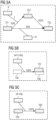
Figure 4A shows asequence 30 of tasks T31,...,T33. The tasks are performed with high transition probabilities, see values indicated above the arrows between two tasks. Thesequence 30 of tasks T31,...,T33 is a candidate for being inferred as a sequence composite in case of successful task execution. - Tasks that follow with high probability on a failed task are a candidate for a fallback composite.
Figure 4B shows such afallback composite 40 of tasks T41,...,T45. Task 42, which is a successfully executed task, follows task T41 with a high transition probability. - The identification of decorators can also be supported by analysis of the log files. Decorators are attached to either a composite or a task and define whether a branch in the behavior tree, or even a single node, can be executed. The Decorator can also modify the success or failure status of the decorated task or composite.
- In
Figure 5A , Task T51 is followed by Task T52 or by Task T53. The probability for a sequence of tasks T51-T52-T53 correlates with the values of variable A, the probability for the sequence T51-T53 correlates with the value of variable B. That means that variable A and B are candidates for an "if" decorator. - Candidates for a "guard" decorator can be identified by inferring whether the value of a specific variable changes for failed tasks. In the example in
Figure 5B the task T56 fails, and the value of variable A has changed. Variable A is a candidate for a "guard" decorator. - Candidates for a "Wait" decorator can be identified by observation if the value of a specific variable changes at the same time as a new task starts. The example in
Figure 5C shows a value change of a variable A correlating with a transition between tasks T54 and T55. -
Figure 6 shows abehavior tree program 50 generated automatically by theassistance system 20. Thebehavior tree 50 controlling the system to move to a light barrier, see 51. Thebehavior tree component 52 represents a "sequence" composite.Behavior tree component 53 represents "wait for light-barrier = false",behavior tree component 54 represents "< > stop",component 55 represents "wait for sensor_2 = true andcomponent 56 represents "< > go right. The generated program learnt that: - sensor_2 triggers the start of the conveyor belt (wait for value change of sensor 2)
- light_barrier stops the conveyor belt (wait for value change of light_barrier).
- The
inference unit 27 can comprise a semantic model, which provides domain knowledge. As an example, it provides the information "task can only be executed with a certain security level, picking of a robot arm is only successful in 90% of the cases and consequently "fallback" is necessary. The semantic model can provide information about tasks that can fail, and which fallback solutions are possible. Theinference unit 27 can make recommendations to theuser 22 based on assumptions. Theuser 22 can verify or correct the assumptions. Whenever theinference unit 27 is unsure about something when creating the behavior tree program, user input can be requested, e.g., parallel tasks, fallbacks, preconditions, wait conditions, loops, if-else-statements, stop conditions. An example question to user is "We noticed that task A is typically executed after the light barrier is interrupted. Do you want to save this as a precondition?" - The
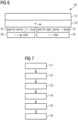
assistance system 20 is configured to perform a computer implemented method for automatically generating a behavior tree program for controlling amachine 24 as shown schematically inFigure 7 . - In a first step S1 a sequence of machine commands input by the
user 22 at theuser interface 21 are transmitted to thecontroller unit 23. While the machine commands are executed in thecontroller unit 23 supervision data are received, see step S2, in theuser interface 21 from thecontroller unit 23. The machine commands and supervision data are transferred on a communication connection between theuser interface 21 and thecontroller unit 23, e.g., via a protocol messages according to OPV UA, Profinet and the like. A Machine command activates a machine behavior, a functionality, or an operational state in themachine 24. Supervision data comprises status information and/or sensor data of the machine when controlled by the controller executing the machine commands. The machine commands and supervision data are observed and copied at the communication connection between thecontroller 23 and theuser interface 21, see step S3. Subsequently in step S4, the machine commands and the supervision data are stored in thelogging unit 26. - In step S5, a behavior tree program is derived from the stored machine commands and the supervision data by machine learning, especially by statistical interference. A least one task of the behavior tree is derived from at least one machine command at the
inference unit 27. The structure and the components, i.e., composites and decorators of the behavior tree are inferred by analysing, which of the derived tasks are executed in which temporal relation to each other, the return value of the supervision data, the parameter settings for the task with respect to the execution of the task, the co-occurrence of supervision data values and changes of supervision data value with task execution, task cancellations and task parametrizations. theinference unit 27 provides suggestions for further machine commands to theuser interface 21 to be entered by the user. - The
inference unit 27 provides suggestions for further machine commands to theuser interface 21, which can in return be accepted and entered by the user. The suggestions can also be ignored and/or different machine commands or behavior task structure elements, i.e., tasks, composites or decorators can be entered. Theinference unit 27 provides a recommendation for a behavior tree structure element to theuser interface 21 based on an assumption with respect to a further intended machine operation for verification or modification of the recommendation. Finally, the generated behavior tree program is sent to thecontroller unit 23 to control themachine 24, see step S6. - It is to be understood that the above description of examples is intended to be illustrative and that the illustrated concepts are susceptible to various modifications. For example, the illustrated concepts could be applied to monitoring various types of machine or machine systems and various types of data which can be monitored on a machine or machine system, and the refined label information may be utilized in various ways.
Claims (15)
- A computer implemented method for automatically generating a behavior tree program (28) for controlling a machine (24), the method comprising the steps of:- transmitting (S1) a sequence of machine commands input by a user from a user interface (21) to a controller (23),- receiving (S2) supervision data in the user interface (21) from the controller (23) while the machine commands are executed in the controller (23) controlling the machine (24),- observing and copying (S3) the machine commands and supervision data transmitted between the controller (23) and the user interface (21),- storing (S4) the machine commands and the supervision data in a logging unit (26),- generating (S5) a behavior tree program derived from the stored machine commands and the supervision data by statistical inference, and- sending (S6) the generated behavior tree program to the controller unit (23) to control the machine.
- Computer implemented method according to claim 1, wherein the machine command activates a machine behavior, a functionality or an operational state in the machine (24).
- Computer implemented method according to claim 1, wherein the supervision data comprises status information and/or sensor data of the machine (24) when controlled by the controller executing the machine commands.
- Computer implemented method according to any of the preceding claims, wherein at least one task of the behavior tree program (28) is derived from at least one machine command at an inference unit (27).
- Computer implemented method according to claim 4, wherein the structure of the behavior tree program (28) is inferred by analyzing- which of the derived tasks are executed in which temporal relation to each other,- the return value of the supervision data,- the parameter settings for the task with respect to the execution of the task,- the co-occurrence of supervision data values and changes of supervision data value with task execution, task cancellations and task parametrizations.
- Computer implemented method according to claim 5, wherein a composite, combining several tasks of the behavior tree program, is inferred by analyzing a sequence of successfully performed tasks and failed tasks and a transition probability for each pair of tasks in the sequence.
- Computer implemented method according to any of claims 4-6, wherein the inference unit (27) provides suggestions for further machine commands to the user interface (21) to be entered by the user (22).
- Computer implemented method according to any of claims 4-6, wherein the inference unit (27) provides a suggestion for a further behavior tree structure element to the user interface (21) to be entered by the user (22).
- Computer implemented method according to any of the preceding claims, wherein the inference unit (27) comprises a semantic model providing domain knowledge on at least one of a sequence of tasks, conditions of the tasks and a transition probability for each pair of tasks in the sequence related to a specific machine operation scenario.
- Computer implemented method according to any of the preceding claims, wherein the inference unit (27) provides a recommendation for a behavior tree structure element to the user interface (21) based on an assumption with respect to a further intended machine operation for verification or modification of the recommendation.
- Computer implemented method according to any of the preceding claims, wherein the generated behavior tree program (28) is provided from the inference unit (27) to the controller (23) for controlling the machine (24).
- Assistance system for assisted generating a behavior tree program for a machine (24), comprising a programming interface (21), an observer unit (25), a logging unit (26) and an inference unit (27), wherein- the interface unit (21) is configured to transmit a sequence of machine commands input by a user from the user interface (21) to a controller (23), and to receive supervision data from the controller (23) while the machine commands are executed in the controller controlling the machine (24),- the observer unit (25) is configured to observe and to copy the machine commands and the supervision data transmitted between the controller (23) and the user interface (21),- the logging unit (26) is configured to store the machine commands and the supervision data,- the inference unit (27) is configured to generate a behavior tree program (28) derived from the stored machine commands and supervision data by statistical inference, and to send the generated behavior tree program (28) at the controller unit (23) to operate the machine (24).
- Assistance system according to claim 12, wherein the user interface (21) comprises a graphical user interface configured to display the supervision data, a suggestion or a recommendation to the user (22) and/or input the sequence of machine commands or feedback to the suggestion and/or recommendations by the user (22).
- Assistance system according to claim 12 or 13, wherein the logging unit (26) is configured as a knowledge graph or a knowledge base.
- A computer program product directly loadable into the internal memory of a digital computer, comprising software code portions for performing the steps according to one of the preceding claims 1-11 when said product is run on said digital computer.
Priority Applications (3)
| Application Number | Priority Date | Filing Date | Title |
|---|---|---|---|
| EP21171641.0A EP4083722B1 (en) | 2021-04-30 | 2021-04-30 | Method for automatically generating a behavior tree program for controlling a machine |
| US17/724,731 US11782419B2 (en) | 2021-04-30 | 2022-04-20 | Method for automatically generating a behavior tree program for controlling a machine |
| CN202210465642.3A CN115268855A (en) | 2021-04-30 | 2022-04-29 | Method for automatically generating behavior tree programs for controlling machines |
Applications Claiming Priority (1)
| Application Number | Priority Date | Filing Date | Title |
|---|---|---|---|
| EP21171641.0A EP4083722B1 (en) | 2021-04-30 | 2021-04-30 | Method for automatically generating a behavior tree program for controlling a machine |
Publications (3)
| Publication Number | Publication Date |
|---|---|
| EP4083722A1 EP4083722A1 (en) | 2022-11-02 |
| EP4083722C0 EP4083722C0 (en) | 2024-11-06 |
| EP4083722B1 true EP4083722B1 (en) | 2024-11-06 |
Family
ID=75746524
Family Applications (1)
| Application Number | Title | Priority Date | Filing Date |
|---|---|---|---|
| EP21171641.0A Active EP4083722B1 (en) | 2021-04-30 | 2021-04-30 | Method for automatically generating a behavior tree program for controlling a machine |
Country Status (3)
| Country | Link |
|---|---|
| US (1) | US11782419B2 (en) |
| EP (1) | EP4083722B1 (en) |
| CN (1) | CN115268855A (en) |
Families Citing this family (3)
| Publication number | Priority date | Publication date | Assignee | Title |
|---|---|---|---|---|
| US20250165891A1 (en) * | 2022-01-29 | 2025-05-22 | Siemens Aktiengesellschaft | Workflow Construction and Monitoring Method and System |
| CN118541654A (en) * | 2022-01-29 | 2024-08-23 | 西门子股份公司 | Workflow generation method, device, system, medium and program product |
| CN119106544B (en) * | 2024-08-15 | 2025-04-18 | 北京方州科技有限公司 | A method and device for realizing simulation model behavior based on behavior tree |
Family Cites Families (8)
| Publication number | Priority date | Publication date | Assignee | Title |
|---|---|---|---|---|
| US6021403A (en) * | 1996-07-19 | 2000-02-01 | Microsoft Corporation | Intelligent user assistance facility |
| WO2005020003A2 (en) * | 2003-08-13 | 2005-03-03 | National Instruments Corporation | Creating a graphical user interface for selected parameters of a graphical program |
| WO2016155857A1 (en) * | 2015-03-27 | 2016-10-06 | Bühler AG | Adaptive cross plant control and steering system, and corresponding method thereof |
| EP3214510B1 (en) * | 2016-03-03 | 2021-06-30 | Magazino GmbH | Controlling process of robots having a behavior tree architecture |
| US11222202B2 (en) * | 2019-01-14 | 2022-01-11 | Deere & Company | Targeted testing and machine-learning systems for detecting and identifying machine behavior |
| US12372944B2 (en) * | 2020-07-31 | 2025-07-29 | Aurora Flight Sciences Corporation, a subsidiary of The Boeing Company | Causing a robot to execute a mission using a behavior tree and a leaf node library |
| SE2150130A1 (en) * | 2021-02-04 | 2021-02-04 | Abb Schweiz Ag | COMBINING PLANNING AND LEARNING OF BEHAVIOR TREES FOR AN INDUSTRIAL ROBOT |
| EP4040293A1 (en) * | 2021-02-04 | 2022-08-10 | Magazino GmbH | Controlling an apparatus, e.g., a robot, with a behavior tree |
-
2021
- 2021-04-30 EP EP21171641.0A patent/EP4083722B1/en active Active
-
2022
- 2022-04-20 US US17/724,731 patent/US11782419B2/en active Active
- 2022-04-29 CN CN202210465642.3A patent/CN115268855A/en active Pending
Also Published As
| Publication number | Publication date |
|---|---|
| US11782419B2 (en) | 2023-10-10 |
| EP4083722C0 (en) | 2024-11-06 |
| US20220350308A1 (en) | 2022-11-03 |
| CN115268855A (en) | 2022-11-01 |
| EP4083722A1 (en) | 2022-11-02 |
Similar Documents
| Publication | Publication Date | Title |
|---|---|---|
| Miyagi et al. | Modeling and analysis of fault-tolerant systems for machining operations based on Petri nets | |
| US11782419B2 (en) | Method for automatically generating a behavior tree program for controlling a machine | |
| EP3602216B1 (en) | Process image within controllers enabling visibility and accessibility of real world objects | |
| JP6031202B1 (en) | Cell control device for finding the cause of abnormalities in manufacturing machines | |
| Medeiros | A survey of control architectures for autonomous mobile robots | |
| US20110288667A1 (en) | Industrial robot system | |
| CN113168564A (en) | Method and system for generating artificial intelligence model | |
| Dahl et al. | Interactive formal specification for efficient preparation of intelligent automation systems | |
| Riascos et al. | Detection and treatment of faults in manufacturing systems based on Petri Nets | |
| US20010037362A1 (en) | Automation system for solving a technical-process task and corresponding method | |
| Lou et al. | Large language model-enabled cognitive agent for self-aware manufacturing | |
| Verma et al. | Automatic generation of behavior trees for the execution of robotic manipulation tasks | |
| US20180059657A1 (en) | Production controller equipped with function of identifying cause upon operation stop of production facility including manufacturing facilities | |
| US20250334946A1 (en) | Application Module for a Control Device | |
| Malburg et al. | Towards Adaptive Workflow Management by Case-based Reasoning and Automated Planning. | |
| Eiband et al. | Unifying skill-based programming and programming by demonstration through ontologies | |
| Crosby et al. | Integrating mission, logistics, and task planning for skills-based robot control in industrial kitting applications | |
| Karbouj et al. | Adaptive Robotic Behavior in Industrial Human–Robot Collaboration: A Systematic Review of Taxonomies, Enabling Mechanisms, and Research Frontiers | |
| Vyatkin et al. | LLM-based iterative requirements refinement in FSM with IEC 61499 code generation | |
| JP7743140B1 (en) | Drawing generation device, drawing generation method, and computer program | |
| KR20220050953A (en) | Systems and methods for controlling at least one machine, in particular a collection of machines | |
| Moon et al. | Software-defined self-learning control system for industrial robots by using reinforcement learning | |
| Oruganti et al. | HARMONIC: A content-centric cognitive robotic architecture | |
| Samuel et al. | Architectural issues in implementing a distributed control system for an industry 4.0 Prototype | |
| JP7864275B1 (en) | Large-scale language model twin system |
Legal Events
| Date | Code | Title | Description |
|---|---|---|---|
| PUAI | Public reference made under article 153(3) epc to a published international application that has entered the european phase |
Free format text: ORIGINAL CODE: 0009012 |
|
| STAA | Information on the status of an ep patent application or granted ep patent |
Free format text: STATUS: THE APPLICATION HAS BEEN PUBLISHED |
|
| AK | Designated contracting states |
Kind code of ref document: A1 Designated state(s): AL AT BE BG CH CY CZ DE DK EE ES FI FR GB GR HR HU IE IS IT LI LT LU LV MC MK MT NL NO PL PT RO RS SE SI SK SM TR |
|
| STAA | Information on the status of an ep patent application or granted ep patent |
Free format text: STATUS: REQUEST FOR EXAMINATION WAS MADE |
|
| 17P | Request for examination filed |
Effective date: 20230502 |
|
| RBV | Designated contracting states (corrected) |
Designated state(s): AL AT BE BG CH CY CZ DE DK EE ES FI FR GB GR HR HU IE IS IT LI LT LU LV MC MK MT NL NO PL PT RO RS SE SI SK SM TR |
|
| GRAP | Despatch of communication of intention to grant a patent |
Free format text: ORIGINAL CODE: EPIDOSNIGR1 |
|
| STAA | Information on the status of an ep patent application or granted ep patent |
Free format text: STATUS: GRANT OF PATENT IS INTENDED |
|
| INTG | Intention to grant announced |
Effective date: 20240711 |
|
| GRAS | Grant fee paid |
Free format text: ORIGINAL CODE: EPIDOSNIGR3 |
|
| GRAA | (expected) grant |
Free format text: ORIGINAL CODE: 0009210 |
|
| STAA | Information on the status of an ep patent application or granted ep patent |
Free format text: STATUS: THE PATENT HAS BEEN GRANTED |
|
| AK | Designated contracting states |
Kind code of ref document: B1 Designated state(s): AL AT BE BG CH CY CZ DE DK EE ES FI FR GB GR HR HU IE IS IT LI LT LU LV MC MK MT NL NO PL PT RO RS SE SI SK SM TR |
|
| REG | Reference to a national code |
Ref country code: GB Ref legal event code: FG4D |
|
| REG | Reference to a national code |
Ref country code: CH Ref legal event code: EP |
|
| REG | Reference to a national code |
Ref country code: DE Ref legal event code: R096 Ref document number: 602021021260 Country of ref document: DE |
|
| REG | Reference to a national code |
Ref country code: IE Ref legal event code: FG4D |
|
| U01 | Request for unitary effect filed |
Effective date: 20241107 |
|
| U07 | Unitary effect registered |
Designated state(s): AT BE BG DE DK EE FI FR IT LT LU LV MT NL PT RO SE SI Effective date: 20241115 |
|
| PG25 | Lapsed in a contracting state [announced via postgrant information from national office to epo] |
Ref country code: IS Free format text: LAPSE BECAUSE OF FAILURE TO SUBMIT A TRANSLATION OF THE DESCRIPTION OR TO PAY THE FEE WITHIN THE PRESCRIBED TIME-LIMIT Effective date: 20250306 Ref country code: HR Free format text: LAPSE BECAUSE OF FAILURE TO SUBMIT A TRANSLATION OF THE DESCRIPTION OR TO PAY THE FEE WITHIN THE PRESCRIBED TIME-LIMIT Effective date: 20241106 |
|
| PG25 | Lapsed in a contracting state [announced via postgrant information from national office to epo] |
Ref country code: ES Free format text: LAPSE BECAUSE OF FAILURE TO SUBMIT A TRANSLATION OF THE DESCRIPTION OR TO PAY THE FEE WITHIN THE PRESCRIBED TIME-LIMIT Effective date: 20241106 |
|
| PG25 | Lapsed in a contracting state [announced via postgrant information from national office to epo] |
Ref country code: NO Free format text: LAPSE BECAUSE OF FAILURE TO SUBMIT A TRANSLATION OF THE DESCRIPTION OR TO PAY THE FEE WITHIN THE PRESCRIBED TIME-LIMIT Effective date: 20250206 |
|
| PG25 | Lapsed in a contracting state [announced via postgrant information from national office to epo] |
Ref country code: GR Free format text: LAPSE BECAUSE OF FAILURE TO SUBMIT A TRANSLATION OF THE DESCRIPTION OR TO PAY THE FEE WITHIN THE PRESCRIBED TIME-LIMIT Effective date: 20250207 |
|
| PG25 | Lapsed in a contracting state [announced via postgrant information from national office to epo] |
Ref country code: PL Free format text: LAPSE BECAUSE OF FAILURE TO SUBMIT A TRANSLATION OF THE DESCRIPTION OR TO PAY THE FEE WITHIN THE PRESCRIBED TIME-LIMIT Effective date: 20241106 |
|
| PG25 | Lapsed in a contracting state [announced via postgrant information from national office to epo] |
Ref country code: RS Free format text: LAPSE BECAUSE OF FAILURE TO SUBMIT A TRANSLATION OF THE DESCRIPTION OR TO PAY THE FEE WITHIN THE PRESCRIBED TIME-LIMIT Effective date: 20250206 |
|
| U20 | Renewal fee for the european patent with unitary effect paid |
Year of fee payment: 5 Effective date: 20250417 |
|
| PG25 | Lapsed in a contracting state [announced via postgrant information from national office to epo] |
Ref country code: SM Free format text: LAPSE BECAUSE OF FAILURE TO SUBMIT A TRANSLATION OF THE DESCRIPTION OR TO PAY THE FEE WITHIN THE PRESCRIBED TIME-LIMIT Effective date: 20241106 |
|
| PG25 | Lapsed in a contracting state [announced via postgrant information from national office to epo] |
Ref country code: SK Free format text: LAPSE BECAUSE OF FAILURE TO SUBMIT A TRANSLATION OF THE DESCRIPTION OR TO PAY THE FEE WITHIN THE PRESCRIBED TIME-LIMIT Effective date: 20241106 |
|
| PG25 | Lapsed in a contracting state [announced via postgrant information from national office to epo] |
Ref country code: CZ Free format text: LAPSE BECAUSE OF FAILURE TO SUBMIT A TRANSLATION OF THE DESCRIPTION OR TO PAY THE FEE WITHIN THE PRESCRIBED TIME-LIMIT Effective date: 20241106 |
|
| PLBE | No opposition filed within time limit |
Free format text: ORIGINAL CODE: 0009261 |
|
| STAA | Information on the status of an ep patent application or granted ep patent |
Free format text: STATUS: NO OPPOSITION FILED WITHIN TIME LIMIT |
|
| 26N | No opposition filed |
Effective date: 20250807 |
|
| REG | Reference to a national code |
Ref country code: CH Ref legal event code: H13 Free format text: ST27 STATUS EVENT CODE: U-0-0-H10-H13 (AS PROVIDED BY THE NATIONAL OFFICE) Effective date: 20251125 |
|
| PG25 | Lapsed in a contracting state [announced via postgrant information from national office to epo] |
Ref country code: MC Free format text: LAPSE BECAUSE OF FAILURE TO SUBMIT A TRANSLATION OF THE DESCRIPTION OR TO PAY THE FEE WITHIN THE PRESCRIBED TIME-LIMIT Effective date: 20241106 |
|
| GBPC | Gb: european patent ceased through non-payment of renewal fee |
Effective date: 20250430 |
|
| PG25 | Lapsed in a contracting state [announced via postgrant information from national office to epo] |
Ref country code: GB Free format text: LAPSE BECAUSE OF NON-PAYMENT OF DUE FEES Effective date: 20250430 |
|
| PG25 | Lapsed in a contracting state [announced via postgrant information from national office to epo] |
Ref country code: CH Free format text: LAPSE BECAUSE OF NON-PAYMENT OF DUE FEES Effective date: 20250430 |
|
| PG25 | Lapsed in a contracting state [announced via postgrant information from national office to epo] |
Ref country code: IE Free format text: LAPSE BECAUSE OF NON-PAYMENT OF DUE FEES Effective date: 20250430 |