EP4083394B1 - Adjustable valve mechanism - Google Patents
Adjustable valve mechanism Download PDFInfo
- Publication number
- EP4083394B1 EP4083394B1 EP20904908.9A EP20904908A EP4083394B1 EP 4083394 B1 EP4083394 B1 EP 4083394B1 EP 20904908 A EP20904908 A EP 20904908A EP 4083394 B1 EP4083394 B1 EP 4083394B1
- Authority
- EP
- European Patent Office
- Prior art keywords
- end portion
- swinging arm
- swinging
- arm
- moving device
- Prior art date
- Legal status (The legal status is an assumption and is not a legal conclusion. Google has not performed a legal analysis and makes no representation as to the accuracy of the status listed.)
- Active
Links
Images





Classifications
-
- F—MECHANICAL ENGINEERING; LIGHTING; HEATING; WEAPONS; BLASTING
- F01—MACHINES OR ENGINES IN GENERAL; ENGINE PLANTS IN GENERAL; STEAM ENGINES
- F01L—CYCLICALLY OPERATING VALVES FOR MACHINES OR ENGINES
- F01L13/00—Modifications of valve-gear to facilitate reversing, braking, starting, changing compression ratio, or other specific operations
- F01L13/0015—Modifications of valve-gear to facilitate reversing, braking, starting, changing compression ratio, or other specific operations for optimising engine performances by modifying valve lift according to various working parameters, e.g. rotational speed, load, torque
-
- F—MECHANICAL ENGINEERING; LIGHTING; HEATING; WEAPONS; BLASTING
- F01—MACHINES OR ENGINES IN GENERAL; ENGINE PLANTS IN GENERAL; STEAM ENGINES
- F01L—CYCLICALLY OPERATING VALVES FOR MACHINES OR ENGINES
- F01L1/00—Valve-gear or valve arrangements, e.g. lift-valve gear
- F01L1/12—Transmitting gear between valve drive and valve
-
- F—MECHANICAL ENGINEERING; LIGHTING; HEATING; WEAPONS; BLASTING
- F01—MACHINES OR ENGINES IN GENERAL; ENGINE PLANTS IN GENERAL; STEAM ENGINES
- F01L—CYCLICALLY OPERATING VALVES FOR MACHINES OR ENGINES
- F01L1/00—Valve-gear or valve arrangements, e.g. lift-valve gear
- F01L1/12—Transmitting gear between valve drive and valve
- F01L1/18—Rocking arms or levers
- F01L1/181—Centre pivot rocking arms
- F01L1/182—Centre pivot rocking arms the rocking arm being pivoted about an individual fulcrum, i.e. not about a common shaft
-
- F—MECHANICAL ENGINEERING; LIGHTING; HEATING; WEAPONS; BLASTING
- F01—MACHINES OR ENGINES IN GENERAL; ENGINE PLANTS IN GENERAL; STEAM ENGINES
- F01L—CYCLICALLY OPERATING VALVES FOR MACHINES OR ENGINES
- F01L1/00—Valve-gear or valve arrangements, e.g. lift-valve gear
- F01L1/12—Transmitting gear between valve drive and valve
- F01L1/18—Rocking arms or levers
- F01L1/185—Overhead end-pivot rocking arms
-
- F—MECHANICAL ENGINEERING; LIGHTING; HEATING; WEAPONS; BLASTING
- F01—MACHINES OR ENGINES IN GENERAL; ENGINE PLANTS IN GENERAL; STEAM ENGINES
- F01L—CYCLICALLY OPERATING VALVES FOR MACHINES OR ENGINES
- F01L1/00—Valve-gear or valve arrangements, e.g. lift-valve gear
- F01L1/46—Component parts, details, or accessories, not provided for in preceding subgroups
-
- F—MECHANICAL ENGINEERING; LIGHTING; HEATING; WEAPONS; BLASTING
- F01—MACHINES OR ENGINES IN GENERAL; ENGINE PLANTS IN GENERAL; STEAM ENGINES
- F01L—CYCLICALLY OPERATING VALVES FOR MACHINES OR ENGINES
- F01L13/00—Modifications of valve-gear to facilitate reversing, braking, starting, changing compression ratio, or other specific operations
- F01L13/0015—Modifications of valve-gear to facilitate reversing, braking, starting, changing compression ratio, or other specific operations for optimising engine performances by modifying valve lift according to various working parameters, e.g. rotational speed, load, torque
- F01L13/0021—Modifications of valve-gear to facilitate reversing, braking, starting, changing compression ratio, or other specific operations for optimising engine performances by modifying valve lift according to various working parameters, e.g. rotational speed, load, torque by modification of rocker arm ratio
- F01L13/0026—Modifications of valve-gear to facilitate reversing, braking, starting, changing compression ratio, or other specific operations for optimising engine performances by modifying valve lift according to various working parameters, e.g. rotational speed, load, torque by modification of rocker arm ratio by means of an eccentric
-
- F—MECHANICAL ENGINEERING; LIGHTING; HEATING; WEAPONS; BLASTING
- F01—MACHINES OR ENGINES IN GENERAL; ENGINE PLANTS IN GENERAL; STEAM ENGINES
- F01L—CYCLICALLY OPERATING VALVES FOR MACHINES OR ENGINES
- F01L13/00—Modifications of valve-gear to facilitate reversing, braking, starting, changing compression ratio, or other specific operations
- F01L13/0015—Modifications of valve-gear to facilitate reversing, braking, starting, changing compression ratio, or other specific operations for optimising engine performances by modifying valve lift according to various working parameters, e.g. rotational speed, load, torque
- F01L13/0063—Modifications of valve-gear to facilitate reversing, braking, starting, changing compression ratio, or other specific operations for optimising engine performances by modifying valve lift according to various working parameters, e.g. rotational speed, load, torque by modification of cam contact point by displacing an intermediate lever or wedge-shaped intermediate element, e.g. Tourtelot
-
- F—MECHANICAL ENGINEERING; LIGHTING; HEATING; WEAPONS; BLASTING
- F02—COMBUSTION ENGINES; HOT-GAS OR COMBUSTION-PRODUCT ENGINE PLANTS
- F02D—CONTROLLING COMBUSTION ENGINES
- F02D13/00—Controlling the engine output power by varying inlet or exhaust valve operating characteristics, e.g. timing
- F02D13/02—Controlling the engine output power by varying inlet or exhaust valve operating characteristics, e.g. timing during engine operation
- F02D13/0203—Variable control of intake and exhaust valves
- F02D13/0207—Variable control of intake and exhaust valves changing valve lift or valve lift and timing
-
- F—MECHANICAL ENGINEERING; LIGHTING; HEATING; WEAPONS; BLASTING
- F01—MACHINES OR ENGINES IN GENERAL; ENGINE PLANTS IN GENERAL; STEAM ENGINES
- F01L—CYCLICALLY OPERATING VALVES FOR MACHINES OR ENGINES
- F01L1/00—Valve-gear or valve arrangements, e.g. lift-valve gear
- F01L1/02—Valve drive
- F01L1/04—Valve drive by means of cams, camshafts, cam discs, eccentrics or the like
- F01L1/047—Camshafts
- F01L1/053—Camshafts overhead type
-
- F—MECHANICAL ENGINEERING; LIGHTING; HEATING; WEAPONS; BLASTING
- F01—MACHINES OR ENGINES IN GENERAL; ENGINE PLANTS IN GENERAL; STEAM ENGINES
- F01L—CYCLICALLY OPERATING VALVES FOR MACHINES OR ENGINES
- F01L1/00—Valve-gear or valve arrangements, e.g. lift-valve gear
- F01L1/12—Transmitting gear between valve drive and valve
- F01L1/18—Rocking arms or levers
-
- F—MECHANICAL ENGINEERING; LIGHTING; HEATING; WEAPONS; BLASTING
- F01—MACHINES OR ENGINES IN GENERAL; ENGINE PLANTS IN GENERAL; STEAM ENGINES
- F01L—CYCLICALLY OPERATING VALVES FOR MACHINES OR ENGINES
- F01L2820/00—Details on specific features characterising valve gear arrangements
- F01L2820/01—Absolute values
-
- F—MECHANICAL ENGINEERING; LIGHTING; HEATING; WEAPONS; BLASTING
- F02—COMBUSTION ENGINES; HOT-GAS OR COMBUSTION-PRODUCT ENGINE PLANTS
- F02D—CONTROLLING COMBUSTION ENGINES
- F02D13/00—Controlling the engine output power by varying inlet or exhaust valve operating characteristics, e.g. timing
- F02D13/02—Controlling the engine output power by varying inlet or exhaust valve operating characteristics, e.g. timing during engine operation
- F02D2013/0296—Changing the valve lift only
Definitions
- the present invention relates to a variable valve mechanism of an engine.
- variable valve mechanism that changes lift characteristics of a valve that opens or closes an intake port or an exhaust port of an engine, i.e., changes open/close timings, open/close amounts, and the like of the valve.
- PTL 1 discloses a variable valve mechanism of an internal combustion engine including a control cam that moves a swinging arm (rocker arm) disposed between a drive cam and a valve stem.
- the control cam is disposed at a base end of the swinging arm so as to be rotatable, and a fulcrum portion of the base end of the swinging arm is rotatably attached to a portion of the control cam which portion is located away from a rotational center of the control cam.
- a tip portion of the swinging arm is in contact with a cap disposed at an upper end of the valve stem.
- the control cam is rotated by a driving unit by a predetermined angle.
- EP 1 072 762 B1 discloses a valve command device for an internal combustion engine.
- the valve position is controlled by a rocker arm, mounted to oscillate on an axis and driven by rotation of a control cam. It is fitted with the means to adjust the lift of the valve.
- DE 10 2011 051487 A1 discloses an electro-hydraulic valve control designed to change the valve lift and opening/closing times according to the operating state of an engine.
- US 8 919 307 B2 discloses a valve train system including a camshaft comprising a camshaft lobe that is rotatable about a camshaft axis. Additionally, a control shaft is rotatable about a control shaft axis and includes an eccentric control shaft slot. The control shaft is for changing the magnitude of opening a combustion valve.
- JP 2005 171922 A discloses a variable valve mechanism in which a lift can be continuously changed by a simple mechanism.
- the valve mechanism comprises a rocker arm swinging with a rotation of a cam, a valve provided at one end of the rocker arm which is opened/closed by the swing of the rocker arm.
- the tip portion of the swinging arm moves in a direction intersecting with a valve axis. At this time, the tip portion of the swinging arm moves along an upper surface of the cap disposed at the upper end of the valve stem. To suppress abrasion of the portion where the tip portion of the swinging arm and the valve contact each other, the tip portion of the swinging arm is desired not to be displaced relative to the valve as much as possible when the swinging arm moves in order to change the lift characteristics.
- An object of the present invention is to provide a variable valve mechanism of an engine, the variable valve mechanism being able to suppress displacement of a swinging arm relative to a valve when the swinging arm moves in order to change lift characteristics.
- variable valve mechanism is a variable valve mechanism that changes a lift characteristic of a valve that opens or closes an intake port or an exhaust port of an engine.
- the variable valve mechanism includes: a cam that rotates about a rotating shaft in association with rotation of a crank shaft of the engine; a swinging arm that is disposed between the cam and the valve and is pushed by the rotating cam to swing and push the valve by a first end portion of the swinging arm; a moving device that moves a second end portion of the swinging arm; a regulating member that is coupled to the first end portion of the swinging arm so as to be rotatable about a swinging shaft parallel to the rotating shaft and regulates displacement of the first end portion of the swinging arm relative to the valve when the second end portion of the swinging arm is moved by the moving device; and a connection member that connects the second end portion of the swinging arm to the moving device such that when the second end portion of the swinging arm is moved by the moving device, movement of
- the variable valve mechanism also includes: an engaging pin extending in parallel with the rotating shaft of the cam disposed at one of the second end portion of the swinging arm and the connection member; the other of the second end portion of the swinging arm and the connection member includes an insertion hole having an elongated hole shape into which the engaging pin is inserted; when the second end portion of the swinging arm is moved by the moving device, the second end portion of the swinging arm moves about the swinging shaft while making the engaging pin slide in a longitudinal direction of the insertion hole; and a curvature radius of an outer peripheral surface portion of the engaging pin contacting an inner peripheral surface of the insertion hole when viewed from a direction in which the rotating shaft of the cam extends is larger than a length that is half a width of the insertion hole in a transverse direction.
- the regulating member regulates the displacement of the first end portion of the swinging arm relative to the valve.
- the connection member connects the second end portion of the swinging arm to the moving device such that when the second end portion of the swinging arm is moved by the moving device, the movement of the second end portion of the swinging arm about the swinging shaft is allowed. Therefore, the displacement of the swinging arm relative to the valve can be suppressed when moving the swinging arm in order to change the lift characteristics.
- the present invention can provide a variable valve mechanism of an engine, the variable valve mechanism being able to suppress displacement of a swinging arm relative to a valve when moving the swinging arm in order to change lift characteristics.
- FIG. 1 is a schematic sectional view showing an intake-side variable valve mechanism 20A of an engine according to Embodiment 1. First, the configuration of the engine that adopts the variable valve mechanism 20A according to Embodiment 1 will be described.
- the engine described in the present embodiment is a double overhead camshaft (DOHC) engine.
- DOHC double overhead camshaft
- An intake port 4 and an exhaust port (not shown) which communicate with a combustion chamber 3 are disposed at a cylinder head 2 of the engine.
- an intake valve 10 which opens or closes the combustion chamber 3 with respect to the intake port 4 and an exhaust valve (not shown) which opens or closes the combustion chamber 3 with respect to the exhaust port are disposed at the cylinder head 2.
- the engine includes: the intake-side variable valve mechanism 20A that opens or closes the intake valve 10; and an exhaust-side variable valve mechanism that opens or closes the exhaust valve.
- Such engine is mounted on, for example, a motorcycle.
- a paper surface upper side in FIG. 1 is defined as an "upper side” of the engine
- a paper surface lower side in FIG. 1 is defined as a “lower side” of the engine.
- a paper surface right side in FIG. 1 is defined as a "front side” of the engine
- a paper surface left side in FIG. 1 is defined as a “rear side” of the engine.
- a paper surface deep side in FIG. 1 is defined as a "left side” of the engine, and a paper surface near side in FIG.
- a lower direction in the concept of directions in the embodiments defined as above does not have to coincide with a vertically lower direction and may be inclined with respect to the vertically lower direction at an angle of less than 90 degrees.
- a below-described valve axis C2 may be inclined with respect to a vertical direction.
- valve 10 at the intake side and the valve at the exhaust side are substantially the same in structure as each other, and the variable valve mechanism 20A at the intake side and the variable valve mechanism at the exhaust side are substantially the same in structure as each other. Therefore, hereinafter, the valve 10 at the intake side and the variable valve mechanism 20A at the intake side will be mainly described.
- the "intake valve 10" and the "intake port 4" are simply referred to as a "valve 10" and a "port 4.”
- the valve 10 includes a valve main body 11.
- the valve main body 11 includes: a flange portion 11a that opens or closes the port 4; and a stem portion 11b that extends upward from the flange portion 11a.
- a spring retainer 13 is attached to an upper end portion of the stem portion 11b through a cotter (not shown).
- a spring seat 15 is attached to an upper surface of the cylinder head 2.
- a valve spring 17 is interposed between the spring seat 15 and the spring retainer 13. The valve main body 11 is biased upward by the valve spring 17. With this, the flange portion 11a is brought into contact with a peripheral portion (valve seat) 4a of the port 4 to close the port 4.
- a tappet 18 is attached to an upper end of the stem portion 11b through a shim (not shown).
- a shim not shown.
- the variable valve mechanism 20A changes lift characteristics of the valve 10. Specifically, the variable valve mechanism 20A changes a maximum lift amount, open/close timings, and an open time of the valve 10.
- the variable valve mechanism 20A includes a cam 21, a swinging arm 23, a regulating arm (regulating member) 25, a moving device 31, and a connection member 33.
- the cam 21 rotates in association with the rotation of a crank shaft (not shown) of the engine.
- a camshaft 22 (rotating shaft) to which the cam 21 is fixed is arranged above the valve 10.
- the camshaft 22 extends horizontally in the left-right direction.
- the camshaft 22 is connected to the crank shaft through a rotation transmission mechanism (not shown), such as a chain, and rotates in association with the crank shaft.
- a rotation transmission mechanism not shown
- the camshaft 22 is orthogonal to the axis C2 of the valve 10 (i.e., orthogonal to a straight line obtained by extending a center line of the stem portion 11b).
- an axis C1 of the camshaft 22 is located on the axis C2 of the valve 10 when viewed from a direction along the axis C1.
- the axis C1 of the camshaft 22 does not have to be located on the axis C2 of the valve 10 when viewed from the direction along the axis C1.
- the axis C1 may be located in front of or behind the axis C2 of the valve 10.
- An outer peripheral surface of the cam 21 around the axis C1 includes a base circle 21a and a cam nose 21b.
- the base circle 21a has a perfect circle shape located away from the axis C1 of the camshaft 22 by a certain distance.
- the cam nose 21b bulges outward in a radial direction from the base circle 21a.
- the swinging arm 23 is disposed between the cam 21 and the valve 10.
- the swinging arm 23 extends in a direction orthogonal to a direction parallel to the axis C1 of the camshaft 22 (i.e., in a direction perpendicular to the axis C1).
- the swinging arm 23 swings so as to change an extending direction of the swinging arm 23 relative to the axis C2 of the valve 10 when viewed from the direction along the axis C1.
- the swinging arm 23 is arranged such that a first end portion 23a of the swinging arm 23 is in contact with the cam 21 and the tappet 18. Specifically, the outer peripheral surface (at least the cam nose 21b) of the cam 21 is in contact with an upper surface of the first end portion 23a, and an upper surface (tappet surface) 18a of the tappet 18 is in contact with a lower surface of the first end portion 23a.
- the upper surface 18a of the tappet 18 is a surface orthogonal to the valve axis C2.
- a second end portion 23b of the swinging arm 23 is located behind the first end portion 23a, i.e., the second end portion 23b located at an opposite side of the first end portion 23a in the extending direction of the swinging arm 23 is located behind the first end portion 23a.
- a first end portion 25a of the regulating arm 25 is coupled to the first end portion 23a of the swinging arm 23. More specifically, the first end portion 23a of the swinging arm 23 and the first end portion 25a of the regulating arm 25 are coupled to each other so as to be rotatable relative to each other by a first swinging shaft 24 extending in parallel with the axis C1 of the camshaft 22. When viewed from the direction along the axis C1, the first swinging shaft 24 is located on the axis C2 of the valve 10.
- the first end portion 23a of the swinging arm 23 includes a peripheral surface having a circular shape whose center is an axis C3 of the first swinging shaft 24 when viewed from the direction along the axis C1.
- the circular peripheral surface is smoothly connected to an upper surface of an extending portion of the swinging arm 23 which portion extends linearly in the extending direction of the swinging arm 23 when viewed from the direction along the axis C1.
- the first end portion 25a of the regulating arm 25 includes a peripheral surface having a circular shape whose center is the axis C3 of the first swinging shaft 24 and which is smaller in diameter than the first end portion 23a when viewed from the direction along the axis C1.
- the shape of the swinging arm 23 and the shape of the regulating arm 25 are not limited to the above shapes.
- the first end portion 25a of the regulating arm 25 may be the same in diameter as or larger in diameter than the first end portion 23a of the swinging arm 23 when viewed from the direction along the axis C1.
- the first end portion 25a of the regulating arm 25 may be in contact with the outer peripheral surface of the cam 21 and/or the upper surface 18a of the tappet 18.
- the regulating arm 25 extends in a direction orthogonal to a direction parallel to the axis C1 of the camshaft 22 (i.e., in a direction perpendicular to the axis C1).
- a second end portion 25b of the regulating arm 25 is located in front of the first end portion 25a, i.e., the second end portion 25b located at an opposite side of the first end portion 25a in an extending direction of the regulating arm 25 is located in front of the first end portion 25a.
- the regulating arm 25 may extend rearward from the first end portion 25a of the swinging arm 23.
- the first swinging shaft 24 may be formed integrally with the swinging arm 23 or the regulating arm 25.
- the second end portion 25b of the regulating arm 25 is supported by a rotation supporting portion 27 so as to be rotatable about a second swinging shaft 26.
- the second swinging shaft 26 is parallel to the camshaft 22 and is disposed at a fixed position with respect to the axis C1 of the camshaft 22.
- the axis C3 of the first swinging shaft 24 is displaced relative to the axis C1 of the camshaft 22 by the rotation of the cam 21, but an axis C4 of the second swinging shaft 26 is not displaced relative to the axis C1 of the camshaft 22 regardless of the rotation of the cam 21.
- the rotation supporting portion 27 may support the second end portion 25b of the regulating arm 25 through the second swinging shaft 26 such that the second swinging shaft 26 is not displaced relative to the axis C1 of the camshaft 22.
- the rotation supporting portion 27 is, for example, a member attached to any of the cylinder head 2, a cylinder head cover (not shown) attached to an upper portion of the cylinder head 2, and a casing 5 covering the cylinder head 2.
- the rotation supporting portion 27 may be a separate member from the cylinder head 2, the cylinder head cover, and the casing or may be a part of any of the cylinder head 2, the cylinder head cover, and the casing.
- the second swinging shaft 26 may be formed integrally with the regulating arm 25 or the rotation supporting portion 27.
- the second end portion 25b of the regulating arm 25 is supported so as to be rotatable about the second swinging shaft 26 arranged fixedly with respect to the axis C1 of the camshaft 22. Therefore, the regulating arm 25 regulates the displacement of the first end portion 23a of the swinging arm 23 relative to the valve 10. More specifically, the regulating arm 25 restricts the movement of the first end portion 23a of the swinging arm 23 to the turning about the axis C4.
- the moving device 31 and the connection member 33 are located behind the axis C2 of the valve 10.
- the moving device 31 moves the second end portion 23b of the swinging arm 23. Specifically, the moving device 31 positions the second end portion 23b of the swinging arm 23 in an extending direction (upper-lower direction) of the axis C2 of the valve 10.
- the moving device 31 includes: a fixed member 31a disposed at a fixed position with respect to the axis C1 of the camshaft 22; and a movable portion 31b that is movable (displaceable) relative to the fixed member 31a.
- the moving device 31 is a linear motion actuator that linearly (for example, the extending direction of the axis C2 of the valve 10) moves the movable portion 31b relative to the fixed member 31a.
- the moving device 31 may be a turning actuator.
- the moving device 31 is a hydraulic actuator including a hydraulic control valve and a hydraulic cylinder.
- the moving device 31 does not have to be of a hydraulic type, and for example, may be of a mechanical type, a motor type, or an electromagnet type.
- the moving device 31 may include a link mechanism, a worm gear, a rack and pinion, or the like.
- connection member 33 that connects the second end portion 23b of the swinging arm 23 to the moving device 31 is disposed at the movable portion 31b of the moving device 31.
- the connection member 33 connects the second end portion 23b of the swinging arm 23 to the moving device 31.
- an engaging pin 41 is disposed at the second end portion 23b of the swinging arm 23.
- the connection member 33 includes an insertion hole 34 into which the engaging pin 41 is inserted.
- the engaging pin 41 extends in parallel with a direction in which the axis C1 of the camshaft 22 extends.
- the insertion hole 34 is open in the direction (left-right direction) in which the axis C1 of the camshaft 22 extends.
- connection member 33 connects the second end portion 23b of the swinging arm 23 to the moving device 31 such that when the second end portion 23b of the swinging arm 23 is moved by the moving device 31, the movement of the second end portion 23b of the swinging arm 23 about the axis C3 of the first swinging shaft 24 is allowed. This will be described in more detail with reference to FIG. 2 .
- FIG. 2 is an enlarged view showing the vicinity of the connection member 33.
- the insertion hole 34 has an elongated hole shape. When viewed from the direction in which the axis C1 of the camshaft 22 extends, a longitudinal direction of the insertion hole 34 is a direction intersecting with the valve axis C2 (see FIG. 1 ). In the present example, when viewed from the direction in which the axis C1 of the camshaft 22 extends, the longitudinal direction of the insertion hole 34 is orthogonal to the valve axis C2.
- An inner peripheral surface of the insertion hole 34 when viewed from the direction in which the axis C1 of the camshaft 22 extends includes a first inner peripheral surface portion 34a and a second inner peripheral surface portion 34b which are opposed to each other in a transverse direction of the insertion hole 34 (in the present example, in a direction along the valve axis C2).
- the first inner peripheral surface portion 34a and the second inner peripheral surface portion 34b are flat surface portions parallel to each other.
- a section of the engaging pin 41 which section is obtained by cutting the engaging pin 41 in a direction perpendicular to the axis C1 of the camshaft 22 has a substantially heart shape.
- An outer peripheral surface of the engaging pin 41 includes: a first outer peripheral surface portion 41a contacting the first inner peripheral surface portion 34a; and a second outer peripheral surface portion 41b contacting the second inner peripheral surface portion 34b.
- the displacement of the first end portion 23a of the swinging arm 23 relative to the valve 10 is regulated by the regulating arm 25. Therefore, when the swinging arm 23 is pushed by the rotating cam 21 or when the second end portion 23b of the swinging arm 23 is moved by the moving device 31, the engaging pin 41 rotates in the insertion hole 34 and slides in the longitudinal direction of the insertion hole 34.
- the engaging pin 41 is formed such that to reduce contact surface pressure between the engaging pin 41 and the inner peripheral surface of the insertion hole 34, each of a curvature radius of the first outer peripheral surface portion 41a and a curvature radius of the second outer peripheral surface portion 41b when viewed from the direction in which the axis C1 of the camshaft 22 extends is larger than a length that is half a width w of the insertion hole 34 in the transverse direction.
- variable valve mechanism 20A Next, the operation of the variable valve mechanism 20A will be described with reference to FIGS. 3A, 3B , 4A, 4B , and 5 .
- FIGS. 3A, 3B , 4A, and 4B show the variable valve mechanisms 20A whose states are different from each other.
- the variable valve mechanisms 20A shown in FIGS. 3A and 3B and the variable valve mechanisms 20A shown in FIGS. 4A and 4B are different from each other regarding the position of the connection member 33.
- the states shown in FIGS. 3A and 3B and the states shown in FIGS. 4A and 4B are different from each other regarding the lift characteristics of the valve 10 operated by the variable valve mechanism 20A.
- the state of the variable valve mechanism 20A shown in each of FIGS. 3A and 3B is referred to as a low lift state
- the state of the variable valve mechanism 20A shown in which the maximum lift amount of the valve 10 is larger than that in the state shown in each of FIGS. 3A and 3B is referred to as a high lift state.
- FIG. 5 is a graph in which: a horizontal axis represents a rotation angle ⁇ of the cam 21; and a vertical axis represents a lift amount (i.e., a distance from the valve seat 4a to the flange portion 11a) of the valve 10.
- a solid line shows a relation between the rotation angle ⁇ and the lift amount when the variable valve mechanism 20A is in the low lift state
- a two-dot chain line shows a relation between the rotation angle ⁇ and the lift amount when the variable valve mechanism 20A is in the high lift state.
- variable valve mechanism 20A in the low lift state will be described.
- the cam 21 when the base circle 21a of the cam 21 is located at a position opposed to the swinging arm 23, the cam 21 does not push down the swinging arm 23 (see a range of 0° ⁇ ⁇ ⁇ ⁇ a and a range of ⁇ b ⁇ ⁇ ⁇ 360° in FIG. 5 ). Therefore, the swinging arm 23 does not push down the valve main body 11, and thus, the valve 10 continues to close the port 4.
- the base circle 21a of the cam 21 is located at the position opposed to the swinging arm 23, the base circle 21a does not have to contact the swinging arm 23.
- the swinging arm 23 swings while the lift amount of the valve 10 changes. Specifically, a movement range (movement trajectory) of the first end portion 23a of the swinging arm 23 is regulated by the regulating arm 25, and the first end portion 23a of the swinging arm 23 turns about the axis C4 of the second swinging shaft 26. On the other hand, the second end portion 23b of the swinging arm 23 moves in accordance with the movement of the first end portion 23a of the swinging arm 23 while making the engaging pin 41 slide in the insertion hole 34.
- variable valve mechanism 20A in the high lift state will be described.
- the connection member 33 is located at a position closer to the cam 21 than that in the low lift state shown in FIGS. 3A and 3B .
- variable valve mechanism 20A in the high lift state is the same as that in the low lift state.
- the cam 21 does not push down the swinging arm 23 (see the range of 0° ⁇ ⁇ ⁇ ⁇ a and the range of ⁇ b ⁇ ⁇ ⁇ 360° in FIG. 5 ).
- the valve 10 continues to close the port 4.
- the swinging arm 23 swings while the lift amount of the valve 10 changes. Specifically, the movement range (movement trajectory) of the first end portion 23a of the swinging arm 23 is regulated by the regulating arm 25, and the first end portion 23a of the swinging arm 23 turns about the axis C4 of the second swinging shaft 26. On the other hand, the second end portion 23b of the swinging arm 23 moves in accordance with the movement of the first end portion 23a of the swinging arm 23 while making the engaging pin 41 slide in the insertion hole 34.
- the moving device 31 moves the connection member 33 close to the cam 21.
- the swinging arm 23 swings while the connection member 33 moves.
- the movement range (movement trajectory) of the first end portion 23a of the swinging arm 23 is regulated by the regulating arm 25.
- the second end portion 23b of the swinging arm 23 is moved in a moving direction (upward) by the moving device 31 so as to turn about the axis C3 of the first swinging shaft 24 while making the engaging pin 41 slide in the insertion hole 34.
- variable valve mechanism 20A of the present embodiment when the second end portion 23b of the swinging arm 23 is moved by the moving device 31, the regulating arm 25 regulates the displacement of the first end portion 23a of the swinging arm 23 relative to the valve 10.
- connection member 33 connects the second end portion 23b of the swinging arm 23 to the moving device 31 such that when the second end portion 23b of the swinging arm 23 is moved by the moving device 31, the movement of the second end portion 23b of the swinging arm 23 about the first swinging shaft 24 is allowed. Therefore, the displacement of the first end portion 23a of the swinging arm 23 relative to the valve 10 can be suppressed at the time of the movement of the swinging arm 23 by the change in the lift characteristics.
- each of the curvature radiuses of the first outer peripheral surface portion 41a and the second outer peripheral surface portion 41b of the engaging pin 41 contacting the inner peripheral surface of the insertion hole 34 when viewed from a direction in which the camshaft 22 as the rotating shaft of the cam 21 extends is larger than the length that is half the width w of the insertion hole 34 in the transverse direction. Therefore, the contact surface pressure between the engaging pin 41 and the insertion hole 34 when moving the swinging arm 23 in order to change the lift characteristics can be reduced.
- FIG. 6 is a schematic sectional view showing the intake-side variable valve mechanism 20B of the engine according to Embodiment 2 and its vicinity.
- the displacement of the first end portion 23a of the swinging arm 23 relative to the valve 10 is regulated by a regulating member 51 disposed at an upper end portion of the valve 10 instead of the regulating arm 25 supported by the rotation supporting portion 27.
- the regulating member 51 is connected to the valve 10.
- the regulating member 51 is fixed to the upper surface 18a of the tappet 18.
- the first end portion 23a of the swinging arm 23 and the regulating member 51 are coupled to each other so as to be rotatable relative to each other by the first swinging shaft 24 extending in parallel with the axis C1 of the camshaft 22.
- the first swinging shaft 24 is arranged on the axis C2 of the valve 10.
- the first swinging shaft 24 does not have to be located on the axis C2 of the valve 10 and may be located in front of or behind the axis C2 of the valve 10.
- the cam 21 is in contact with the upper surface of the first end portion 23a of the swinging arm 23, but the upper surface 18a of the tappet 18 is not in contact with the lower surface of the first end portion 23a of the swinging arm 23. Therefore, when the swinging arm 23 is pushed by the cam 21, the swinging arm 23 pushes the valve 10 through the regulating member 51.
- the present embodiment can obtain the same effects as Embodiment 1. Moreover, in the present embodiment, since the regulating member 51 is connected to the valve 10, the displacement of the first end portion 23a of the swinging arm 23 relative to the valve 10 can be further suppressed.
- the second moving device 71 and the second connection member 73 are located in front of the axis C2 of the valve 10.
- the second swinging arm 63, the second moving device 71, and the second connection member 73 are substantially the same in structure as the first swinging arm 23, the first moving device 31, and the first connection member 33 described in the above embodiment, respectively. More specifically, the second swinging arm 63, the second moving device 71, and the second connection member 73 are substantially symmetrical to the first swinging arm 23, the first moving device 31, and the first connection member 33 across a predetermined plane perpendicular to the front-rear direction.
- the second swinging arm 63 is disposed between the cam 21 and the valve 10.
- a first end portion 63a of the second swinging arm 63 is coupled to the regulating member 51 so as to be rotatable about the first swinging shaft 24.
- the cam 21 is in contact with an upper surface of the first end portion 63a of the second swinging arm 63, but the upper surface 18a of the tappet 18 is not in contact with a lower surface of the first end portion 63a of the second swinging arm 63.
- the second swinging arm 63 is pushed by the rotating cam 21 to swing and push the valve 10 through the regulating member 51.
- the second moving device 71 moves a second end portion 63b of the second swinging arm 63.
- the second moving device 71 is the same in configuration as the first moving device 31.
- the second moving device 71 includes: a fixed member 71a disposed at a fixed position with respect to the axis C1 of the camshaft 22; and a movable portion 71b that is movable (displaceable) relative to the fixed member 71a.
- the second moving device 71 may be the same in configuration as the first moving device 31 or may be different in configuration from the first moving device 31.
- the first moving device 31 is a linear motion actuator
- the second moving device 71 may be a turning actuator.
- the second connection member 73 connects the second end portion 63b of the second swinging arm 63 to the second moving device 71 such that when the second end portion 63b of the second swinging arm 63 is moved by the second moving device 71, the movement of the second end portion 63b of the second swinging arm 63 about the first swinging shaft 24 is allowed.
- An engaging pin 81 is disposed at the second end portion 63b of the second swinging arm 63.
- the second connection member 73 includes an insertion hole 74 into which the engaging pin 81 is inserted. Since the engaging pin 81 and the insertion hole 74 are respectively the same in configuration as the engaging pin 41 and the insertion hole 34, explanations thereof are omitted.
- the present embodiment can obtain the same effects as Embodiment 2. Moreover, in the present embodiment, the valve 10 can be pushed down by not only the first swinging arm 23 but also the second swinging arm 63, and the position of the second end portion 63b of the second swinging arm 63 can be changed by the second moving device 71. Therefore, the degree of freedom of the change of the lift characteristics of the valve 10 can be improved.
- the above embodiments mainly describes the intake-side variable valve mechanism.
- the present invention is also applicable to the exhaust-side variable valve mechanism.
- front and rear may be respectively read as “rear” and "front.”
- DOHC DOHC
- SOHC single overhead camshaft
- the engaging pin is disposed at the end portion of the swinging arm, and the insertion hole is disposed at the connection member.
- the engaging pin may be disposed at the connection member, and the insertion hole may be disposed at the end portion of the swinging arm.
- the shape of the engaging pin is not limited to the above embodiments.
- the outer peripheral surface of the engaging pin may have a circular shape having a diameter that is equal to the width w of the insertion hole 34 in the transverse direction.
- the insertion hole 34 does not have to be long in a direction orthogonal to the valve axis C2 and may be long in a direction oblique to the direction orthogonal to the valve axis C2.
Landscapes
- Engineering & Computer Science (AREA)
- Mechanical Engineering (AREA)
- General Engineering & Computer Science (AREA)
- Chemical & Material Sciences (AREA)
- Combustion & Propulsion (AREA)
- Valve Device For Special Equipments (AREA)
- Valve-Gear Or Valve Arrangements (AREA)
Description
- The present invention relates to a variable valve mechanism of an engine.
- Conventionally proposed is a variable valve mechanism that changes lift characteristics of a valve that opens or closes an intake port or an exhaust port of an engine, i.e., changes open/close timings, open/close amounts, and the like of the valve.
- For example, PTL 1 discloses a variable valve mechanism of an internal combustion engine including a control cam that moves a swinging arm (rocker arm) disposed between a drive cam and a valve stem. The control cam is disposed at a base end of the swinging arm so as to be rotatable, and a fulcrum portion of the base end of the swinging arm is rotatably attached to a portion of the control cam which portion is located away from a rotational center of the control cam. A tip portion of the swinging arm is in contact with a cap disposed at an upper end of the valve stem. The control cam is rotated by a driving unit by a predetermined angle. When the driving unit rotates the control cam by the predetermined angle, the position of the swinging arm relative to the drive cam changes. As a result, a position where the swinging arm and the drive cam contact each other changes, and therefore, a valve timing and a valve lift amount change.
-
EP 1 072 762 B1 discloses a valve command device for an internal combustion engine. The valve position is controlled by a rocker arm, mounted to oscillate on an axis and driven by rotation of a control cam. It is fitted with the means to adjust the lift of the valve. -
DE 10 2011 051487 A1 discloses an electro-hydraulic valve control designed to change the valve lift and opening/closing times according to the operating state of an engine. -
US 8 919 307 B2 discloses a valve train system including a camshaft comprising a camshaft lobe that is rotatable about a camshaft axis. Additionally, a control shaft is rotatable about a control shaft axis and includes an eccentric control shaft slot. The control shaft is for changing the magnitude of opening a combustion valve. -
JP 2005 171922 A - PTL 1:
Japanese Laid-Open Utility Model Application Publication No. 3-5906 - According to the above-described variable valve mechanism, when the control cam is rotated in order to change the lift characteristics of the valve, the tip portion of the swinging arm moves in a direction intersecting with a valve axis. At this time, the tip portion of the swinging arm moves along an upper surface of the cap disposed at the upper end of the valve stem. To suppress abrasion of the portion where the tip portion of the swinging arm and the valve contact each other, the tip portion of the swinging arm is desired not to be displaced relative to the valve as much as possible when the swinging arm moves in order to change the lift characteristics.
- An object of the present invention is to provide a variable valve mechanism of an engine, the variable valve mechanism being able to suppress displacement of a swinging arm relative to a valve when the swinging arm moves in order to change lift characteristics.
- In order to solve the above problems, a variable valve mechanism according to one aspect of the present invention is a variable valve mechanism that changes a lift characteristic of a valve that opens or closes an intake port or an exhaust port of an engine. The variable valve mechanism includes: a cam that rotates about a rotating shaft in association with rotation of a crank shaft of the engine; a swinging arm that is disposed between the cam and the valve and is pushed by the rotating cam to swing and push the valve by a first end portion of the swinging arm; a moving device that moves a second end portion of the swinging arm; a regulating member that is coupled to the first end portion of the swinging arm so as to be rotatable about a swinging shaft parallel to the rotating shaft and regulates displacement of the first end portion of the swinging arm relative to the valve when the second end portion of the swinging arm is moved by the moving device; and a connection member that connects the second end portion of the swinging arm to the moving device such that when the second end portion of the swinging arm is moved by the moving device, movement of the second end portion of the swinging arm about the swinging shaft is allowed. The variable valve mechanism also includes: an engaging pin extending in parallel with the rotating shaft of the cam disposed at one of the second end portion of the swinging arm and the connection member; the other of the second end portion of the swinging arm and the connection member includes an insertion hole having an elongated hole shape into which the engaging pin is inserted; when the second end portion of the swinging arm is moved by the moving device, the second end portion of the swinging arm moves about the swinging shaft while making the engaging pin slide in a longitudinal direction of the insertion hole; and a curvature radius of an outer peripheral surface portion of the engaging pin contacting an inner peripheral surface of the insertion hole when viewed from a direction in which the rotating shaft of the cam extends is larger than a length that is half a width of the insertion hole in a transverse direction.
- According to the above configuration, when the second end portion of the swinging arm is moved by the moving device, the regulating member regulates the displacement of the first end portion of the swinging arm relative to the valve. Moreover, the connection member connects the second end portion of the swinging arm to the moving device such that when the second end portion of the swinging arm is moved by the moving device, the movement of the second end portion of the swinging arm about the swinging shaft is allowed. Therefore, the displacement of the swinging arm relative to the valve can be suppressed when moving the swinging arm in order to change the lift characteristics.
- The present invention can provide a variable valve mechanism of an engine, the variable valve mechanism being able to suppress displacement of a swinging arm relative to a valve when moving the swinging arm in order to change lift characteristics.
-
-
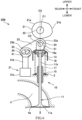
FIG. 1 is a schematic sectional view showing a variable valve mechanism of an engine according to Embodiment 1 and its vicinity. -
FIG. 2 is an enlarged view showing the vicinity of a connection member shown inFIG. 1 . -
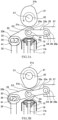
FIG. 3A is a diagram showing an operation performed at the time of low lift of the variable valve mechanism shown inFIG. 1 and shows that a base circle of a cam is located at a position opposed to a swinging arm. -
FIG. 3B is a diagram showing an operation performed at the time of the low lift of the variable valve mechanism shown inFIG. 1 and shows that a cam nose of the cam is located at the position opposed to the swinging arm. -
FIG. 4A is a diagram showing an operation performed at the time of high lift of the variable valve mechanism shown inFIG. 1 and shows that the base circle of the cam is located at the position opposed to the swinging arm. -
FIG. 4B is a diagram showing an operation performed at the time of the high lift of the variable valve mechanism shown inFIG. 1 and shows that the cam nose of the cam is located at the position opposed to the swinging arm. -
FIG. 5 is a graph showing a relation between a cam rotation angle and a valve lift amount. -
FIG. 6 is a schematic sectional view showing the variable valve mechanism of the engine according toEmbodiment 2 and its vicinity. -
FIG. 7 is a schematic sectional view showing the variable valve mechanism of the engine according toEmbodiment 3 and its vicinity. - Hereinafter, preferred embodiments of the present invention will be described with reference to the drawings. In the drawings, the same reference signs are used for the same or corresponding components, and the repetition of the same explanation is avoided.
-
FIG. 1 is a schematic sectional view showing an intake-sidevariable valve mechanism 20A of an engine according to Embodiment 1. First, the configuration of the engine that adopts thevariable valve mechanism 20A according to Embodiment 1 will be described. - The engine described in the present embodiment is a double overhead camshaft (DOHC) engine. An
intake port 4 and an exhaust port (not shown) which communicate with acombustion chamber 3 are disposed at acylinder head 2 of the engine. Moreover, anintake valve 10 which opens or closes thecombustion chamber 3 with respect to theintake port 4 and an exhaust valve (not shown) which opens or closes thecombustion chamber 3 with respect to the exhaust port are disposed at thecylinder head 2. The engine includes: the intake-sidevariable valve mechanism 20A that opens or closes theintake valve 10; and an exhaust-side variable valve mechanism that opens or closes the exhaust valve. - Such engine is mounted on, for example, a motorcycle. Hereinafter, for convenience of explanation, the concept of directions mentioned in the embodiments is substantially based on a rider of the motorcycle on which the engine is mounted. Specifically, a paper surface upper side in
FIG. 1 is defined as an "upper side" of the engine, and a paper surface lower side inFIG. 1 is defined as a "lower side" of the engine. A paper surface right side inFIG. 1 is defined as a "front side" of the engine, and a paper surface left side inFIG. 1 is defined as a "rear side" of the engine. A paper surface deep side inFIG. 1 is defined as a "left side" of the engine, and a paper surface near side inFIG. 1 is defined as a "right side" of the engine. A lower direction in the concept of directions in the embodiments defined as above does not have to coincide with a vertically lower direction and may be inclined with respect to the vertically lower direction at an angle of less than 90 degrees. For example, a below-described valve axis C2 may be inclined with respect to a vertical direction. - The
valve 10 at the intake side and the valve at the exhaust side are substantially the same in structure as each other, and thevariable valve mechanism 20A at the intake side and the variable valve mechanism at the exhaust side are substantially the same in structure as each other. Therefore, hereinafter, thevalve 10 at the intake side and thevariable valve mechanism 20A at the intake side will be mainly described. In addition, hereinafter, the "intake valve 10" and the "intake port 4" are simply referred to as a "valve 10" and a "port 4." - The
valve 10 includes a valvemain body 11. The valvemain body 11 includes: aflange portion 11a that opens or closes theport 4; and astem portion 11b that extends upward from theflange portion 11a. Aspring retainer 13 is attached to an upper end portion of thestem portion 11b through a cotter (not shown). Aspring seat 15 is attached to an upper surface of thecylinder head 2. Avalve spring 17 is interposed between thespring seat 15 and thespring retainer 13. The valvemain body 11 is biased upward by thevalve spring 17. With this, theflange portion 11a is brought into contact with a peripheral portion (valve seat) 4a of theport 4 to close theport 4. - A
tappet 18 is attached to an upper end of thestem portion 11b through a shim (not shown). When thevariable valve mechanism 20A pushes down thetappet 18, theflange portion 11a separates from thevalve seat 4a to open theport 4. - The
variable valve mechanism 20A changes lift characteristics of thevalve 10. Specifically, thevariable valve mechanism 20A changes a maximum lift amount, open/close timings, and an open time of thevalve 10. Thevariable valve mechanism 20A includes acam 21, a swingingarm 23, a regulating arm (regulating member) 25, a movingdevice 31, and aconnection member 33. - The
cam 21 rotates in association with the rotation of a crank shaft (not shown) of the engine. Specifically, a camshaft 22 (rotating shaft) to which thecam 21 is fixed is arranged above thevalve 10. Thecamshaft 22 extends horizontally in the left-right direction. Thecamshaft 22 is connected to the crank shaft through a rotation transmission mechanism (not shown), such as a chain, and rotates in association with the crank shaft. Thus, thecam 21 fixed to thecamshaft 22 rotates together with thecamshaft 22. - In the present embodiment, the
camshaft 22 is orthogonal to the axis C2 of the valve 10 (i.e., orthogonal to a straight line obtained by extending a center line of thestem portion 11b). To be specific, an axis C1 of thecamshaft 22 is located on the axis C2 of thevalve 10 when viewed from a direction along the axis C1. However, the axis C1 of thecamshaft 22 does not have to be located on the axis C2 of thevalve 10 when viewed from the direction along the axis C1. The axis C1 may be located in front of or behind the axis C2 of thevalve 10. - An outer peripheral surface of the
cam 21 around the axis C1 includes abase circle 21a and acam nose 21b. Thebase circle 21a has a perfect circle shape located away from the axis C1 of thecamshaft 22 by a certain distance. Thecam nose 21b bulges outward in a radial direction from thebase circle 21a. - The swinging
arm 23 is disposed between thecam 21 and thevalve 10. The swingingarm 23 extends in a direction orthogonal to a direction parallel to the axis C1 of the camshaft 22 (i.e., in a direction perpendicular to the axis C1). When the swingingarm 23 is pushed by the rotatingcam 21, the swingingarm 23 swings so as to change an extending direction of the swingingarm 23 relative to the axis C2 of thevalve 10 when viewed from the direction along the axis C1. - The swinging
arm 23 is arranged such that afirst end portion 23a of the swingingarm 23 is in contact with thecam 21 and thetappet 18. Specifically, the outer peripheral surface (at least thecam nose 21b) of thecam 21 is in contact with an upper surface of thefirst end portion 23a, and an upper surface (tappet surface) 18a of thetappet 18 is in contact with a lower surface of thefirst end portion 23a. Theupper surface 18a of thetappet 18 is a surface orthogonal to the valve axis C2. Asecond end portion 23b of the swingingarm 23 is located behind thefirst end portion 23a, i.e., thesecond end portion 23b located at an opposite side of thefirst end portion 23a in the extending direction of the swingingarm 23 is located behind thefirst end portion 23a. - A
first end portion 25a of the regulatingarm 25 is coupled to thefirst end portion 23a of the swingingarm 23. More specifically, thefirst end portion 23a of the swingingarm 23 and thefirst end portion 25a of the regulatingarm 25 are coupled to each other so as to be rotatable relative to each other by a first swingingshaft 24 extending in parallel with the axis C1 of thecamshaft 22. When viewed from the direction along the axis C1, the first swingingshaft 24 is located on the axis C2 of thevalve 10. - The
first end portion 23a of the swingingarm 23 includes a peripheral surface having a circular shape whose center is an axis C3 of the first swingingshaft 24 when viewed from the direction along the axis C1. The circular peripheral surface is smoothly connected to an upper surface of an extending portion of the swingingarm 23 which portion extends linearly in the extending direction of the swingingarm 23 when viewed from the direction along the axis C1. Thefirst end portion 25a of the regulatingarm 25 includes a peripheral surface having a circular shape whose center is the axis C3 of the first swingingshaft 24 and which is smaller in diameter than thefirst end portion 23a when viewed from the direction along the axis C1. However, the shape of the swingingarm 23 and the shape of the regulatingarm 25 are not limited to the above shapes. For example, thefirst end portion 25a of the regulatingarm 25 may be the same in diameter as or larger in diameter than thefirst end portion 23a of the swingingarm 23 when viewed from the direction along the axis C1. To be specific, thefirst end portion 25a of the regulatingarm 25 may be in contact with the outer peripheral surface of thecam 21 and/or theupper surface 18a of thetappet 18. - The regulating
arm 25 extends in a direction orthogonal to a direction parallel to the axis C1 of the camshaft 22 (i.e., in a direction perpendicular to the axis C1). Asecond end portion 25b of the regulatingarm 25 is located in front of thefirst end portion 25a, i.e., thesecond end portion 25b located at an opposite side of thefirst end portion 25a in an extending direction of the regulatingarm 25 is located in front of thefirst end portion 25a. However, the regulatingarm 25 may extend rearward from thefirst end portion 25a of the swingingarm 23. Moreover, the first swingingshaft 24 may be formed integrally with the swingingarm 23 or the regulatingarm 25. - The
second end portion 25b of the regulatingarm 25 is supported by arotation supporting portion 27 so as to be rotatable about asecond swinging shaft 26. Thesecond swinging shaft 26 is parallel to thecamshaft 22 and is disposed at a fixed position with respect to the axis C1 of thecamshaft 22. To be specific, the axis C3 of the first swingingshaft 24 is displaced relative to the axis C1 of thecamshaft 22 by the rotation of thecam 21, but an axis C4 of the second swingingshaft 26 is not displaced relative to the axis C1 of thecamshaft 22 regardless of the rotation of thecam 21. - The
rotation supporting portion 27 may support thesecond end portion 25b of the regulatingarm 25 through the second swingingshaft 26 such that the second swingingshaft 26 is not displaced relative to the axis C1 of thecamshaft 22. Therotation supporting portion 27 is, for example, a member attached to any of thecylinder head 2, a cylinder head cover (not shown) attached to an upper portion of thecylinder head 2, and acasing 5 covering thecylinder head 2. Therotation supporting portion 27 may be a separate member from thecylinder head 2, the cylinder head cover, and the casing or may be a part of any of thecylinder head 2, the cylinder head cover, and the casing. Thesecond swinging shaft 26 may be formed integrally with the regulatingarm 25 or therotation supporting portion 27. - As above, the
second end portion 25b of the regulatingarm 25 is supported so as to be rotatable about the second swingingshaft 26 arranged fixedly with respect to the axis C1 of thecamshaft 22. Therefore, the regulatingarm 25 regulates the displacement of thefirst end portion 23a of the swingingarm 23 relative to thevalve 10. More specifically, the regulatingarm 25 restricts the movement of thefirst end portion 23a of the swingingarm 23 to the turning about the axis C4. - The moving
device 31 and theconnection member 33 are located behind the axis C2 of thevalve 10. The movingdevice 31 moves thesecond end portion 23b of the swingingarm 23. Specifically, the movingdevice 31 positions thesecond end portion 23b of the swingingarm 23 in an extending direction (upper-lower direction) of the axis C2 of thevalve 10. The movingdevice 31 includes: a fixedmember 31a disposed at a fixed position with respect to the axis C1 of thecamshaft 22; and amovable portion 31b that is movable (displaceable) relative to the fixedmember 31a. - For example, the moving
device 31 is a linear motion actuator that linearly (for example, the extending direction of the axis C2 of the valve 10) moves themovable portion 31b relative to the fixedmember 31a. However, the movingdevice 31 may be a turning actuator. For example, the movingdevice 31 is a hydraulic actuator including a hydraulic control valve and a hydraulic cylinder. However, the movingdevice 31 does not have to be of a hydraulic type, and for example, may be of a mechanical type, a motor type, or an electromagnet type. Moreover, the movingdevice 31 may include a link mechanism, a worm gear, a rack and pinion, or the like. - The
connection member 33 that connects thesecond end portion 23b of the swingingarm 23 to the movingdevice 31 is disposed at themovable portion 31b of the movingdevice 31. Theconnection member 33 connects thesecond end portion 23b of the swingingarm 23 to the movingdevice 31. Specifically, an engagingpin 41 is disposed at thesecond end portion 23b of the swingingarm 23. Theconnection member 33 includes aninsertion hole 34 into which the engagingpin 41 is inserted. The engagingpin 41 extends in parallel with a direction in which the axis C1 of thecamshaft 22 extends. Theinsertion hole 34 is open in the direction (left-right direction) in which the axis C1 of thecamshaft 22 extends. When the engagingpin 41 is inserted into and held in theinsertion hole 34, thesecond end portion 23b of the swingingarm 23 and themovable portion 31b of the movingdevice 31 are connected to each other. - The
connection member 33 connects thesecond end portion 23b of the swingingarm 23 to the movingdevice 31 such that when thesecond end portion 23b of the swingingarm 23 is moved by the movingdevice 31, the movement of thesecond end portion 23b of the swingingarm 23 about the axis C3 of the first swingingshaft 24 is allowed. This will be described in more detail with reference toFIG. 2 . -
FIG. 2 is an enlarged view showing the vicinity of theconnection member 33. Theinsertion hole 34 has an elongated hole shape. When viewed from the direction in which the axis C1 of thecamshaft 22 extends, a longitudinal direction of theinsertion hole 34 is a direction intersecting with the valve axis C2 (seeFIG. 1 ). In the present example, when viewed from the direction in which the axis C1 of thecamshaft 22 extends, the longitudinal direction of theinsertion hole 34 is orthogonal to the valve axis C2. An inner peripheral surface of theinsertion hole 34 when viewed from the direction in which the axis C1 of thecamshaft 22 extends includes a first innerperipheral surface portion 34a and a second innerperipheral surface portion 34b which are opposed to each other in a transverse direction of the insertion hole 34 (in the present example, in a direction along the valve axis C2). The first innerperipheral surface portion 34a and the second innerperipheral surface portion 34b are flat surface portions parallel to each other. - A section of the engaging
pin 41 which section is obtained by cutting the engagingpin 41 in a direction perpendicular to the axis C1 of thecamshaft 22 has a substantially heart shape. An outer peripheral surface of the engagingpin 41 includes: a first outerperipheral surface portion 41a contacting the first innerperipheral surface portion 34a; and a second outerperipheral surface portion 41b contacting the second innerperipheral surface portion 34b. - As described above, the displacement of the
first end portion 23a of the swingingarm 23 relative to thevalve 10 is regulated by the regulatingarm 25. Therefore, when the swingingarm 23 is pushed by the rotatingcam 21 or when thesecond end portion 23b of the swingingarm 23 is moved by the movingdevice 31, the engagingpin 41 rotates in theinsertion hole 34 and slides in the longitudinal direction of theinsertion hole 34. - Moreover, the engaging
pin 41 is formed such that to reduce contact surface pressure between the engagingpin 41 and the inner peripheral surface of theinsertion hole 34, each of a curvature radius of the first outerperipheral surface portion 41a and a curvature radius of the second outerperipheral surface portion 41b when viewed from the direction in which the axis C1 of thecamshaft 22 extends is larger than a length that is half a width w of theinsertion hole 34 in the transverse direction. - Next, the operation of the
variable valve mechanism 20A will be described with reference toFIGS. 3A, 3B ,4A, 4B , and5 . -
FIGS. 3A, 3B ,4A, and 4B show thevariable valve mechanisms 20A whose states are different from each other. Thevariable valve mechanisms 20A shown inFIGS. 3A and 3B and thevariable valve mechanisms 20A shown inFIGS. 4A and 4B are different from each other regarding the position of theconnection member 33. The states shown inFIGS. 3A and 3B and the states shown inFIGS. 4A and 4B are different from each other regarding the lift characteristics of thevalve 10 operated by thevariable valve mechanism 20A. Hereinafter, the state of thevariable valve mechanism 20A shown in each ofFIGS. 3A and 3B is referred to as a low lift state, and the state of thevariable valve mechanism 20A shown in each ofFIGS. 4A and 4B in which the maximum lift amount of thevalve 10 is larger than that in the state shown in each ofFIGS. 3A and 3B is referred to as a high lift state. -
FIG. 5 is a graph in which: a horizontal axis represents a rotation angle θ of thecam 21; and a vertical axis represents a lift amount (i.e., a distance from thevalve seat 4a to theflange portion 11a) of thevalve 10. InFIG. 5 , a solid line shows a relation between the rotation angle θ and the lift amount when thevariable valve mechanism 20A is in the low lift state, and a two-dot chain line shows a relation between the rotation angle θ and the lift amount when thevariable valve mechanism 20A is in the high lift state. - First, the
variable valve mechanism 20A in the low lift state will be described. As shown inFIG. 3A , when thebase circle 21a of thecam 21 is located at a position opposed to the swingingarm 23, thecam 21 does not push down the swinging arm 23 (see a range of 0° ≤ θ < θa and a range of θb < θ < 360° inFIG. 5 ). Therefore, the swingingarm 23 does not push down the valvemain body 11, and thus, thevalve 10 continues to close theport 4. When thebase circle 21a of thecam 21 is located at the position opposed to the swingingarm 23, thebase circle 21a does not have to contact the swingingarm 23. - When the
cam 21 rotates, and thecam nose 21b of thecam 21 starts contacting an upper surface of the swinging arm 23 (see θ = θa inFIG. 5 ), thecam 21 pushes down the valvemain body 11 through the swingingarm 23, and thus, theflange portion 11a separates from thevalve seat 4a to open theport 4. Then, as thecam 21 rotates, a push-down amount of thetappet 18 by thefirst end portion 23a of the swingingarm 23 gradually increases, i.e., the lift amount of the valvemain body 11 gradually increases. After the lift amount has become maximum (seeFIG. 3B ), the lift amount gradually decreases until theflange portion 11a is brought into contact with thevalve seat 4a (see θ = θb inFIG. 5 ). The swingingarm 23 swings while the lift amount of thevalve 10 changes. Specifically, a movement range (movement trajectory) of thefirst end portion 23a of the swingingarm 23 is regulated by the regulatingarm 25, and thefirst end portion 23a of the swingingarm 23 turns about the axis C4 of the second swingingshaft 26. On the other hand, thesecond end portion 23b of the swingingarm 23 moves in accordance with the movement of thefirst end portion 23a of the swingingarm 23 while making the engagingpin 41 slide in theinsertion hole 34. - Next, the
variable valve mechanism 20A in the high lift state will be described. In the high lift state shown inFIGS. 4A and 4B , theconnection member 33 is located at a position closer to thecam 21 than that in the low lift state shown inFIGS. 3A and 3B . - The operation of the
variable valve mechanism 20A in the high lift state is the same as that in the low lift state. To be specific, as shown inFIG. 4A , when thebase circle 21a of thecam 21 is located at the position opposed to the swingingarm 23, thecam 21 does not push down the swinging arm 23 (see the range of 0° ≤ θ < θa and the range of θb < θ < 360° inFIG. 5 ). To be specific, thevalve 10 continues to close theport 4. - When the
cam 21 rotates, and thecam nose 21b of thecam 21 starts contacting the upper surface of the swinging arm 23 (see θ = θa inFIG. 5 ), thecam 21 pushes down the valvemain body 11 through the swingingarm 23, and thus, theflange portion 11a separates from thevalve seat 4a to open theport 4. Then, as thecam 21 rotates, the push-down amount of thetappet 18 by thefirst end portion 23a of the swingingarm 23 gradually increases, i.e., the lift amount of the valvemain body 11 gradually increases. After the lift amount has become maximum (seeFIG. 4B ), the lift amount gradually decreases until theflange portion 11a is brought into contact with thevalve seat 4a (see θ = θb inFIG. 5 ). The swingingarm 23 swings while the lift amount of thevalve 10 changes. Specifically, the movement range (movement trajectory) of thefirst end portion 23a of the swingingarm 23 is regulated by the regulatingarm 25, and thefirst end portion 23a of the swingingarm 23 turns about the axis C4 of the second swingingshaft 26. On the other hand, thesecond end portion 23b of the swingingarm 23 moves in accordance with the movement of thefirst end portion 23a of the swingingarm 23 while making the engagingpin 41 slide in theinsertion hole 34. - Next, the displacement of the swinging
arm 23 in thevariable valve mechanism 20A by a change in the lift characteristics of thevalve 10 will be described. To change the state of thevariable valve mechanism 20A from the low lift state to the high lift state, the movingdevice 31 moves theconnection member 33 close to thecam 21. The swingingarm 23 swings while theconnection member 33 moves. Specifically, the movement range (movement trajectory) of thefirst end portion 23a of the swingingarm 23 is regulated by the regulatingarm 25. On the other hand, thesecond end portion 23b of the swingingarm 23 is moved in a moving direction (upward) by the movingdevice 31 so as to turn about the axis C3 of the first swingingshaft 24 while making the engagingpin 41 slide in theinsertion hole 34. - As described above, according to the
variable valve mechanism 20A of the present embodiment, when thesecond end portion 23b of the swingingarm 23 is moved by the movingdevice 31, the regulatingarm 25 regulates the displacement of thefirst end portion 23a of the swingingarm 23 relative to thevalve 10. Moreover, theconnection member 33 connects thesecond end portion 23b of the swingingarm 23 to the movingdevice 31 such that when thesecond end portion 23b of the swingingarm 23 is moved by the movingdevice 31, the movement of thesecond end portion 23b of the swingingarm 23 about the first swingingshaft 24 is allowed. Therefore, the displacement of thefirst end portion 23a of the swingingarm 23 relative to thevalve 10 can be suppressed at the time of the movement of the swingingarm 23 by the change in the lift characteristics. - Moreover, in the present embodiment, when the
second end portion 23b of the swingingarm 23 is moved by the movingdevice 31, thesecond end portion 23b of the swingingarm 23 moves about the first swingingshaft 24 while making the engagingpin 41 slide in the longitudinal direction of theinsertion hole 34. Therefore, the movement of thesecond end portion 23b of the swingingarm 23 when moving the swingingarm 23 in order to change the lift characteristics can be regulated to the longitudinal direction of theinsertion hole 34. - Moreover, in the present embodiment, each of the curvature radiuses of the first outer
peripheral surface portion 41a and the second outerperipheral surface portion 41b of the engagingpin 41 contacting the inner peripheral surface of theinsertion hole 34 when viewed from a direction in which thecamshaft 22 as the rotating shaft of thecam 21 extends is larger than the length that is half the width w of theinsertion hole 34 in the transverse direction. Therefore, the contact surface pressure between the engagingpin 41 and theinsertion hole 34 when moving the swingingarm 23 in order to change the lift characteristics can be reduced. - Moreover, in the present embodiment, the
second end portion 25b of the regulatingarm 25 is supported so as to be rotatable about the second swingingshaft 26 disposed at a fixed position with respect to the axis C1 of thecamshaft 22. Therefore, the displacement of thefirst end portion 23a of the swingingarm 23 relative to thevalve 10 can be regulated by a simple configuration. - Next, a
variable valve mechanism 20B according toEmbodiment 2 will be described with reference toFIG. 6. FIG. 6 is a schematic sectional view showing the intake-sidevariable valve mechanism 20B of the engine according toEmbodiment 2 and its vicinity. In thevariable valve mechanism 20B of the present embodiment, the displacement of thefirst end portion 23a of the swingingarm 23 relative to thevalve 10 is regulated by a regulatingmember 51 disposed at an upper end portion of thevalve 10 instead of the regulatingarm 25 supported by therotation supporting portion 27. - The regulating
member 51 is connected to thevalve 10. In the present embodiment, the regulatingmember 51 is fixed to theupper surface 18a of thetappet 18. Thefirst end portion 23a of the swingingarm 23 and the regulatingmember 51 are coupled to each other so as to be rotatable relative to each other by the first swingingshaft 24 extending in parallel with the axis C1 of thecamshaft 22. For example, when viewed from the direction along the axis C1, the first swingingshaft 24 is arranged on the axis C2 of thevalve 10. However, when viewed from the direction along the axis C1, the first swingingshaft 24 does not have to be located on the axis C2 of thevalve 10 and may be located in front of or behind the axis C2 of thevalve 10. - The
cam 21 is in contact with the upper surface of thefirst end portion 23a of the swingingarm 23, but theupper surface 18a of thetappet 18 is not in contact with the lower surface of thefirst end portion 23a of the swingingarm 23. Therefore, when the swingingarm 23 is pushed by thecam 21, the swingingarm 23 pushes thevalve 10 through the regulatingmember 51. - The
tappet 18 and the regulatingmember 51 may be formed integrally or may be formed separately. Moreover, instead of thetappet 18, the regulatingmember 51 may be connected to the upper end portion of thestem portion 11b directly or through a member different from thetappet 18. Furthermore, the regulatingmember 51 and the upper end portion of thestem portion 11b may be coupled to each other so as to be rotatable relative to each other by the first swingingshaft 24 extending in parallel with the axis C1 of thecamshaft 22. - The present embodiment can obtain the same effects as Embodiment 1. Moreover, in the present embodiment, since the regulating
member 51 is connected to thevalve 10, the displacement of thefirst end portion 23a of the swingingarm 23 relative to thevalve 10 can be further suppressed. - Next, a
variable valve mechanism 20C according toEmbodiment 3 will be described with reference toFIG. 7. FIG. 7 is a schematic sectional view showing the intake-sidevariable valve mechanism 20C of the engine according toEmbodiment 3 and its vicinity. As withEmbodiment 2, thevariable valve mechanism 20C of the present embodiment includes the regulatingmember 51 connected to thevalve 10. Thevariable valve mechanism 20C of the present embodiment further includes a swingingarm 63, a movingdevice 71, and aconnection member 73 which are different from the swingingarm 23, the movingdevice 31, and theconnection member 33. - In the present embodiment, the swinging
arm 23, the movingdevice 31, and theconnection member 33 are respectively referred to as a first swingingarm 23, a first movingdevice 31, and afirst connection member 33, and the swingingarm 63, the movingdevice 71, and theconnection member 73 are respectively referred to as asecond swinging arm 63, a second movingdevice 71, and asecond connection member 73. - The second moving
device 71 and thesecond connection member 73 are located in front of the axis C2 of thevalve 10. Thesecond swinging arm 63, the second movingdevice 71, and thesecond connection member 73 are substantially the same in structure as the first swingingarm 23, the first movingdevice 31, and thefirst connection member 33 described in the above embodiment, respectively. More specifically, the second swingingarm 63, the second movingdevice 71, and thesecond connection member 73 are substantially symmetrical to the first swingingarm 23, the first movingdevice 31, and thefirst connection member 33 across a predetermined plane perpendicular to the front-rear direction. - To be specific, the second swinging
arm 63 is disposed between thecam 21 and thevalve 10. Afirst end portion 63a of the second swingingarm 63 is coupled to the regulatingmember 51 so as to be rotatable about the first swingingshaft 24. Thecam 21 is in contact with an upper surface of thefirst end portion 63a of the second swingingarm 63, but theupper surface 18a of thetappet 18 is not in contact with a lower surface of thefirst end portion 63a of the second swingingarm 63. As with the first swingingarm 23, the second swingingarm 63 is pushed by the rotatingcam 21 to swing and push thevalve 10 through the regulatingmember 51. - The second moving
device 71 moves asecond end portion 63b of the second swingingarm 63. The second movingdevice 71 is the same in configuration as the first movingdevice 31. The second movingdevice 71 includes: a fixedmember 71a disposed at a fixed position with respect to the axis C1 of thecamshaft 22; and amovable portion 71b that is movable (displaceable) relative to the fixedmember 71a. The second movingdevice 71 may be the same in configuration as the first movingdevice 31 or may be different in configuration from the first movingdevice 31. For example, the first movingdevice 31 is a linear motion actuator, and the second movingdevice 71 may be a turning actuator. - The
second connection member 73 connects thesecond end portion 63b of the second swingingarm 63 to the second movingdevice 71 such that when thesecond end portion 63b of the second swingingarm 63 is moved by the second movingdevice 71, the movement of thesecond end portion 63b of the second swingingarm 63 about the first swingingshaft 24 is allowed. - An engaging
pin 81 is disposed at thesecond end portion 63b of the second swingingarm 63. Thesecond connection member 73 includes aninsertion hole 74 into which the engagingpin 81 is inserted. Since the engagingpin 81 and theinsertion hole 74 are respectively the same in configuration as the engagingpin 41 and theinsertion hole 34, explanations thereof are omitted. - The present embodiment can obtain the same effects as
Embodiment 2. Moreover, in the present embodiment, thevalve 10 can be pushed down by not only the first swingingarm 23 but also the second swingingarm 63, and the position of thesecond end portion 63b of the second swingingarm 63 can be changed by the second movingdevice 71. Therefore, the degree of freedom of the change of the lift characteristics of thevalve 10 can be improved. - The present invention is not limited to the above-described embodiments, and various modifications may be made within the scope of the present invention, as defined by the apendent claims.
- For example, the above embodiments mainly describes the intake-side variable valve mechanism. However, the present invention is also applicable to the exhaust-side variable valve mechanism. In this case, regarding the concept of directions mentioned in the above embodiments, "front" and "rear" may be respectively read as "rear" and "front."
- Moreover, the embodiments describe the DOHC engine. However, the present invention is also applicable to other engines, such as a single overhead camshaft (SOHC) engine.
- Moreover, in the above embodiments, the engaging pin is disposed at the end portion of the swinging arm, and the insertion hole is disposed at the connection member. However, in the present invention, the engaging pin may be disposed at the connection member, and the insertion hole may be disposed at the end portion of the swinging arm. Moreover, the shape of the engaging pin is not limited to the above embodiments. For example, when viewed from the direction in which the axis C1 of the
camshaft 22 extends, the outer peripheral surface of the engaging pin may have a circular shape having a diameter that is equal to the width w of theinsertion hole 34 in the transverse direction. Furthermore, theinsertion hole 34 does not have to be long in a direction orthogonal to the valve axis C2 and may be long in a direction oblique to the direction orthogonal to the valve axis C2. - In the above embodiment, by inserting the engaging
pin 41 into theinsertion hole 34, theconnection member 33 connects thesecond end portion 23b of the swingingarm 23 to the movingdevice 31. However, the configuration of the connection member of the present teaching is not limited to this. To be specific, the connection member of the present invention may have any configuration as long as the connection member connects thesecond end portion 23b of the swingingarm 23 to the movingdevice 31 such that when thesecond end portion 23b of the swingingarm 23 is moved by the movingdevice 31, the movement of thesecond end portion 23b of the swingingarm 23 about the first swingingshaft 24 is allowed. -
- 2
- cylinder head
- 3
- combustion chamber
- 4
- port
- 10
- valve
- 11
- valve main body
- 11a
- flange portion
- 11b
- stem portion
- 13
- spring retainer
- 15
- spring seat
- 17
- valve spring
- 18
- tappet
- 20A, 20B, 20C
- variable valve mechanism
- 21
- cam
- 22
- camshaft (rotating shaft)
- 23
- swinging arm (first swinging arm)
- 24
- first swinging shaft (swinging shaft)
- 25
- regulating arm (regulating member)
- 26
- second swinging shaft
- 27
- rotation supporting portion
- 31
- moving device (first moving device)
- 33
- connection member (first connection member)
- 34
- insertion hole
- 41
- engaging pin
- 51
- regulating member
- 63
- second swinging arm
- 71
- second moving device
- 73
- second connection member
Claims (4)
- A variable valve mechanism (20A, 20B, 20C) that changes a lift characteristic of a valve (10) that opens or closes an intake port or an exhaust port of an engine,
the variable valve mechanism comprising:a cam (21) that rotates about a rotating shaft (22) in association with rotation of a crank shaft of the engine;a swinging arm (23) that is disposed between the cam (21) and the valve (10) and is pushed by the rotating cam (21) to swing and push the valve (10) by a first end portion (23a) of the swinging arm (23);a moving device (31) that moves a second end portion (23b) of the swinging arm (23);a regulating member (51) that is coupled to the first end portion (23a) of the swinging arm (23) so as to be rotatable about a swinging shaft (24) parallel to the rotating shaft (22) and regulates displacement of the first end portion (23a) of the swinging arm (23) relative to the valve (10) when the second end portion (23b) of the swinging arm (23) is moved by the moving device (31); anda connection member (33) that connects the second end portion (23b) of the swinging arm (23) to the moving device (31) such that when the second end portion (23b) of the swinging arm (23) is moved by the moving device (31), movement of the second end portion (23b) of the swinging arm (23) about the swinging shaft (24) is allowed,whereinan engaging pin (41) extending in parallel with the rotating shaft (22) of the cam (21) is disposed at one of the second end portion (23b) of the swinging arm (23) and the connection member (33);the other of the second end portion (23b) of the swinging arm (23) and the connection member (33) includes an insertion hole (34) having an elongated hole shape into which the engaging pin (41) is inserted; andwhen the second end portion (23b) of the swinging arm (23) is moved by the moving device (31), the second end portion (23b) of the swinging arm (23) moves about the swinging shaft (24) while making the engaging pin (41) slide in a longitudinal direction of the insertion hole (34); characterised in thata curvature radius of an outer peripheral surface portion of the engaging pin (41) contacting an inner peripheral surface of the insertion hole (34) when viewed from a direction in which the rotating shaft (22) of the cam (21) extends is larger than a length that is half a width of the insertion hole (34) in a transverse direction. - The variable valve mechanism according to claim 1, wherein:the regulating member (51) is a regulating arm extending from the first end portion (23a) of the swinging arm (23); anda first end portion (25a) of the regulating arm is coupled to the first end portion (23a) of the swinging arm (23) so as to be rotatable about a first swinging shaft (24) that is the swinging shaft (24),the variable valve mechanism further comprisinga rotation supporting portion (27) that supports a second end portion (23b) of the regulating arm such that the second end portion (23b) of the regulating arm is rotatable about a second swinging shaft (26) that is parallel to the rotating shaft (22) and is disposed at a fixed position with respect to an axis of the rotating shaft (22).
- The variable valve mechanism according to claim 1, wherein:the regulating member (51) is connected to the valve (10); andthe swinging arm (23) pushes the valve (10) through the regulating member (51).
- The variable valve mechanism according to claim 3, wherein the swinging arm (23), the moving device (31), and the connection member (33) are a first swinging arm (23), a first moving device (31), and a first connection member (33), respectively,
the variable valve mechanism further comprising:a second swinging arm that is disposed between the cam (21) and the valve (10), includes a first end portion (23a) coupled to the regulating member (51) so as to be rotatable about the swinging shaft (24), and is pushed by the rotating cam (21) to swing and push the valve (10) through the regulating member (51);a second moving device that moves a second end portion (23b) of the second swinging arm; anda second connection member that connects the second end portion (23b) of the second swinging arm to the second moving device such that when the second end portion (23b) of the second swinging arm is moved by the second moving device, movement of the second end portion (23b) of the second swinging arm about the swinging shaft (24) is allowed.
Applications Claiming Priority (2)
| Application Number | Priority Date | Filing Date | Title |
|---|---|---|---|
| JP2019234730A JP7369613B2 (en) | 2019-12-25 | 2019-12-25 | variable valve mechanism |
| PCT/JP2020/035965 WO2021131190A1 (en) | 2019-12-25 | 2020-09-24 | Adjustable valve mechanism |
Publications (3)
| Publication Number | Publication Date |
|---|---|
| EP4083394A1 EP4083394A1 (en) | 2022-11-02 |
| EP4083394A4 EP4083394A4 (en) | 2024-01-17 |
| EP4083394B1 true EP4083394B1 (en) | 2025-06-25 |
Family
ID=76575304
Family Applications (1)
| Application Number | Title | Priority Date | Filing Date |
|---|---|---|---|
| EP20904908.9A Active EP4083394B1 (en) | 2019-12-25 | 2020-09-24 | Adjustable valve mechanism |
Country Status (4)
| Country | Link |
|---|---|
| US (1) | US11773758B2 (en) |
| EP (1) | EP4083394B1 (en) |
| JP (1) | JP7369613B2 (en) |
| WO (1) | WO2021131190A1 (en) |
Family Cites Families (19)
| Publication number | Priority date | Publication date | Assignee | Title |
|---|---|---|---|---|
| JPS5867909U (en) * | 1981-10-30 | 1983-05-09 | いすゞ自動車株式会社 | Internal combustion engine intake/exhaust valve stop device |
| JPH035906U (en) | 1989-05-31 | 1991-01-21 | ||
| JPH035906A (en) | 1989-06-02 | 1991-01-11 | Matsushita Electric Ind Co Ltd | magnetic head |
| JPH0681618A (en) * | 1992-09-01 | 1994-03-22 | Suzuki Motor Corp | Valve mechanism of engine |
| JP2924489B2 (en) * | 1992-09-16 | 1999-07-26 | トヨタ自動車株式会社 | Valve train of internal combustion engine |
| JPH1136833A (en) * | 1997-07-22 | 1999-02-09 | Otix:Kk | Variable valve system mechanism |
| FR2796982B1 (en) * | 1999-07-28 | 2001-10-26 | Peugeot Citroen Automobiles Sa | DEVICE FOR CONTROLLING A VALVE AND INTERNAL COMBUSTION ENGINE PROVIDED WITH SUCH A DEVICE |
| JP2005171922A (en) * | 2003-12-12 | 2005-06-30 | Nippon Piston Ring Co Ltd | Variable valve mechanism |
| JP4771874B2 (en) | 2005-09-15 | 2011-09-14 | 株式会社オティックス | Variable valve mechanism |
| JP2007262958A (en) | 2006-03-28 | 2007-10-11 | Toyota Motor Corp | Variable valve mechanism for internal combustion engine |
| DE102011051487B4 (en) * | 2010-11-12 | 2017-01-12 | Hyundai Motor Co. | Electrohydraulic valve control |
| DE102011116439A1 (en) * | 2011-10-19 | 2013-04-25 | Daimler Ag | Valve train device for internal combustion engine of motor car, has adjustment device provided for adjustment of full-variable valve and comprising adjustment element, and rocker arms connected to element and moved with respect to cam shaft |
| JP2013164030A (en) * | 2012-02-10 | 2013-08-22 | Aisin Seiki Co Ltd | Valve control mechanism for engine |
| US8919307B2 (en) * | 2013-04-05 | 2014-12-30 | Delphi Technologies, Inc. | Valve train system for providing continuously variable valve lift |
| US9790819B2 (en) * | 2014-11-14 | 2017-10-17 | Hyundai Motor Company | Variable valve lift system |
| US9732639B1 (en) * | 2015-10-20 | 2017-08-15 | Anthony Dike | Variable lift valve train |
| CN106761999B (en) | 2016-12-13 | 2019-08-20 | 辽宁工业大学 | A Continuously Variable Rocker Arm Valve Mechanism |
| CN106837465A (en) * | 2016-12-30 | 2017-06-13 | 浙江大学 | The engine valve actuating mechanism of stepless variable valve lift |
| CN110173320A (en) * | 2019-06-28 | 2019-08-27 | 广汽三菱汽车有限公司 | The valve lift apparatus that valve stroke and valve opening time can be changed simultaneously |
-
2019
- 2019-12-25 JP JP2019234730A patent/JP7369613B2/en active Active
-
2020
- 2020-09-24 US US17/788,747 patent/US11773758B2/en active Active
- 2020-09-24 EP EP20904908.9A patent/EP4083394B1/en active Active
- 2020-09-24 WO PCT/JP2020/035965 patent/WO2021131190A1/en not_active Ceased
Also Published As
| Publication number | Publication date |
|---|---|
| EP4083394A1 (en) | 2022-11-02 |
| JP2021102946A (en) | 2021-07-15 |
| US11773758B2 (en) | 2023-10-03 |
| US20230025775A1 (en) | 2023-01-26 |
| JP7369613B2 (en) | 2023-10-26 |
| EP4083394A4 (en) | 2024-01-17 |
| WO2021131190A1 (en) | 2021-07-01 |
Similar Documents
| Publication | Publication Date | Title |
|---|---|---|
| EP1873362B1 (en) | Variable valve mechanism | |
| US8047168B2 (en) | Continuously variable valve lift system for engine | |
| US7578272B2 (en) | Multiple cylinder engine | |
| EP2557280A1 (en) | Valve actuator for internal combustion engine | |
| US20190353058A1 (en) | Continuous variable valve duration apparatus and engine provided with the same | |
| EP4083394B1 (en) | Adjustable valve mechanism | |
| JP2002276315A (en) | Variable valve train for internal combustion engine | |
| KR100758194B1 (en) | Engine valve operating system | |
| US7789053B2 (en) | Continuous variable valve lift apparatus | |
| US8794204B2 (en) | Valvetrain for overhead valve engine | |
| KR100925948B1 (en) | Variable valve lift device | |
| JP3699820B2 (en) | Valve operating device for internal combustion engine | |
| JP4469341B2 (en) | Variable valve mechanism | |
| JP2005291014A (en) | Variable valve gear for engine | |
| JPH11210434A (en) | Variable valve train for internal combustion engine | |
| JPH11336521A (en) | Variable valve train for internal combustion engine | |
| JP2009133289A (en) | Engine valve gear | |
| US20060219198A1 (en) | Variable valve drive for changing the control timing of cam-actuated gas-exchange valves | |
| JP5516699B2 (en) | Variable valve gear and internal combustion engine | |
| JP4462618B2 (en) | Valve lift variable valve operating device in internal combustion engine | |
| JP5447211B2 (en) | Variable valve operating device for internal combustion engine | |
| JP2008115779A (en) | Valve operating device for internal combustion engine | |
| JP2007239705A (en) | Variable valve gear for engine | |
| JP2005226541A (en) | Variable valve mechanism | |
| JP2009036170A (en) | Variable valve gear for V-type internal combustion engine |
Legal Events
| Date | Code | Title | Description |
|---|---|---|---|
| STAA | Information on the status of an ep patent application or granted ep patent |
Free format text: STATUS: THE INTERNATIONAL PUBLICATION HAS BEEN MADE |
|
| PUAI | Public reference made under article 153(3) epc to a published international application that has entered the european phase |
Free format text: ORIGINAL CODE: 0009012 |
|
| STAA | Information on the status of an ep patent application or granted ep patent |
Free format text: STATUS: REQUEST FOR EXAMINATION WAS MADE |
|
| 17P | Request for examination filed |
Effective date: 20220719 |
|
| AK | Designated contracting states |
Kind code of ref document: A1 Designated state(s): AL AT BE BG CH CY CZ DE DK EE ES FI FR GB GR HR HU IE IS IT LI LT LU LV MC MK MT NL NO PL PT RO RS SE SI SK SM TR |
|
| DAV | Request for validation of the european patent (deleted) | ||
| DAX | Request for extension of the european patent (deleted) | ||
| A4 | Supplementary search report drawn up and despatched |
Effective date: 20231215 |
|
| RIC1 | Information provided on ipc code assigned before grant |
Ipc: F01L 1/18 20060101ALI20231211BHEP Ipc: F01L 1/12 20060101ALI20231211BHEP Ipc: F01L 13/00 20060101AFI20231211BHEP |
|
| GRAP | Despatch of communication of intention to grant a patent |
Free format text: ORIGINAL CODE: EPIDOSNIGR1 |
|
| STAA | Information on the status of an ep patent application or granted ep patent |
Free format text: STATUS: GRANT OF PATENT IS INTENDED |
|
| INTG | Intention to grant announced |
Effective date: 20250117 |
|
| RIN1 | Information on inventor provided before grant (corrected) |
Inventor name: TAKAO, SATORU Inventor name: SATO, YOSHICHIKA Inventor name: SAKURAI, YOUTA Inventor name: HISANO, ATSUSHI |
|
| GRAS | Grant fee paid |
Free format text: ORIGINAL CODE: EPIDOSNIGR3 |
|
| GRAA | (expected) grant |
Free format text: ORIGINAL CODE: 0009210 |
|
| STAA | Information on the status of an ep patent application or granted ep patent |
Free format text: STATUS: THE PATENT HAS BEEN GRANTED |
|
| AK | Designated contracting states |
Kind code of ref document: B1 Designated state(s): AL AT BE BG CH CY CZ DE DK EE ES FI FR GB GR HR HU IE IS IT LI LT LU LV MC MK MT NL NO PL PT RO RS SE SI SK SM TR |
|
| REG | Reference to a national code |
Ref country code: GB Ref legal event code: FG4D |
|
| REG | Reference to a national code |
Ref country code: CH Ref legal event code: EP |
|
| REG | Reference to a national code |
Ref country code: CH Ref legal event code: EP |
|
| REG | Reference to a national code |
Ref country code: IE Ref legal event code: FG4D |
|
| REG | Reference to a national code |
Ref country code: DE Ref legal event code: R096 Ref document number: 602020053547 Country of ref document: DE |
|
| PG25 | Lapsed in a contracting state [announced via postgrant information from national office to epo] |
Ref country code: FI Free format text: LAPSE BECAUSE OF FAILURE TO SUBMIT A TRANSLATION OF THE DESCRIPTION OR TO PAY THE FEE WITHIN THE PRESCRIBED TIME-LIMIT Effective date: 20250625 |
|
| PGFP | Annual fee paid to national office [announced via postgrant information from national office to epo] |
Ref country code: DE Payment date: 20250917 Year of fee payment: 6 |
|
| REG | Reference to a national code |
Ref country code: LT Ref legal event code: MG9D |
|
| PG25 | Lapsed in a contracting state [announced via postgrant information from national office to epo] |
Ref country code: NO Free format text: LAPSE BECAUSE OF FAILURE TO SUBMIT A TRANSLATION OF THE DESCRIPTION OR TO PAY THE FEE WITHIN THE PRESCRIBED TIME-LIMIT Effective date: 20250925 Ref country code: GR Free format text: LAPSE BECAUSE OF FAILURE TO SUBMIT A TRANSLATION OF THE DESCRIPTION OR TO PAY THE FEE WITHIN THE PRESCRIBED TIME-LIMIT Effective date: 20250926 |
|
| PG25 | Lapsed in a contracting state [announced via postgrant information from national office to epo] |
Ref country code: BG Free format text: LAPSE BECAUSE OF FAILURE TO SUBMIT A TRANSLATION OF THE DESCRIPTION OR TO PAY THE FEE WITHIN THE PRESCRIBED TIME-LIMIT Effective date: 20250625 |
|
| PGFP | Annual fee paid to national office [announced via postgrant information from national office to epo] |
Ref country code: GB Payment date: 20250916 Year of fee payment: 6 |
|
| PG25 | Lapsed in a contracting state [announced via postgrant information from national office to epo] |
Ref country code: HR Free format text: LAPSE BECAUSE OF FAILURE TO SUBMIT A TRANSLATION OF THE DESCRIPTION OR TO PAY THE FEE WITHIN THE PRESCRIBED TIME-LIMIT Effective date: 20250625 |
|
| PGFP | Annual fee paid to national office [announced via postgrant information from national office to epo] |
Ref country code: FR Payment date: 20250917 Year of fee payment: 6 Ref country code: AT Payment date: 20250917 Year of fee payment: 6 |
|
| PG25 | Lapsed in a contracting state [announced via postgrant information from national office to epo] |
Ref country code: RS Free format text: LAPSE BECAUSE OF FAILURE TO SUBMIT A TRANSLATION OF THE DESCRIPTION OR TO PAY THE FEE WITHIN THE PRESCRIBED TIME-LIMIT Effective date: 20250925 |
|
| PG25 | Lapsed in a contracting state [announced via postgrant information from national office to epo] |
Ref country code: LV Free format text: LAPSE BECAUSE OF FAILURE TO SUBMIT A TRANSLATION OF THE DESCRIPTION OR TO PAY THE FEE WITHIN THE PRESCRIBED TIME-LIMIT Effective date: 20250625 |
|
| REG | Reference to a national code |
Ref country code: NL Ref legal event code: MP Effective date: 20250625 |
|
| PG25 | Lapsed in a contracting state [announced via postgrant information from national office to epo] |
Ref country code: NL Free format text: LAPSE BECAUSE OF FAILURE TO SUBMIT A TRANSLATION OF THE DESCRIPTION OR TO PAY THE FEE WITHIN THE PRESCRIBED TIME-LIMIT Effective date: 20250625 |
|
| PG25 | Lapsed in a contracting state [announced via postgrant information from national office to epo] |
Ref country code: PT Free format text: LAPSE BECAUSE OF FAILURE TO SUBMIT A TRANSLATION OF THE DESCRIPTION OR TO PAY THE FEE WITHIN THE PRESCRIBED TIME-LIMIT Effective date: 20251027 |
|
| PG25 | Lapsed in a contracting state [announced via postgrant information from national office to epo] |
Ref country code: IS Free format text: LAPSE BECAUSE OF FAILURE TO SUBMIT A TRANSLATION OF THE DESCRIPTION OR TO PAY THE FEE WITHIN THE PRESCRIBED TIME-LIMIT Effective date: 20251025 |
|
| PG25 | Lapsed in a contracting state [announced via postgrant information from national office to epo] |
Ref country code: SM Free format text: LAPSE BECAUSE OF FAILURE TO SUBMIT A TRANSLATION OF THE DESCRIPTION OR TO PAY THE FEE WITHIN THE PRESCRIBED TIME-LIMIT Effective date: 20250625 |
|
| PGFP | Annual fee paid to national office [announced via postgrant information from national office to epo] |
Ref country code: IT Payment date: 20251020 Year of fee payment: 6 |
|
| PG25 | Lapsed in a contracting state [announced via postgrant information from national office to epo] |
Ref country code: CZ Free format text: LAPSE BECAUSE OF FAILURE TO SUBMIT A TRANSLATION OF THE DESCRIPTION OR TO PAY THE FEE WITHIN THE PRESCRIBED TIME-LIMIT Effective date: 20250625 |
|
| PG25 | Lapsed in a contracting state [announced via postgrant information from national office to epo] |
Ref country code: PL Free format text: LAPSE BECAUSE OF FAILURE TO SUBMIT A TRANSLATION OF THE DESCRIPTION OR TO PAY THE FEE WITHIN THE PRESCRIBED TIME-LIMIT Effective date: 20250625 |
|
| PG25 | Lapsed in a contracting state [announced via postgrant information from national office to epo] |
Ref country code: EE Free format text: LAPSE BECAUSE OF FAILURE TO SUBMIT A TRANSLATION OF THE DESCRIPTION OR TO PAY THE FEE WITHIN THE PRESCRIBED TIME-LIMIT Effective date: 20250625 |
|
| PG25 | Lapsed in a contracting state [announced via postgrant information from national office to epo] |
Ref country code: SK Free format text: LAPSE BECAUSE OF FAILURE TO SUBMIT A TRANSLATION OF THE DESCRIPTION OR TO PAY THE FEE WITHIN THE PRESCRIBED TIME-LIMIT Effective date: 20250625 |
|
| PG25 | Lapsed in a contracting state [announced via postgrant information from national office to epo] |
Ref country code: ES Free format text: LAPSE BECAUSE OF FAILURE TO SUBMIT A TRANSLATION OF THE DESCRIPTION OR TO PAY THE FEE WITHIN THE PRESCRIBED TIME-LIMIT Effective date: 20250625 |
|
| PG25 | Lapsed in a contracting state [announced via postgrant information from national office to epo] |
Ref country code: RO Free format text: LAPSE BECAUSE OF FAILURE TO SUBMIT A TRANSLATION OF THE DESCRIPTION OR TO PAY THE FEE WITHIN THE PRESCRIBED TIME-LIMIT Effective date: 20250625 |
|
| PG25 | Lapsed in a contracting state [announced via postgrant information from national office to epo] |
Ref country code: DK Free format text: LAPSE BECAUSE OF FAILURE TO SUBMIT A TRANSLATION OF THE DESCRIPTION OR TO PAY THE FEE WITHIN THE PRESCRIBED TIME-LIMIT Effective date: 20250625 |
|
| PLBE | No opposition filed within time limit |
Free format text: ORIGINAL CODE: 0009261 |
|
| STAA | Information on the status of an ep patent application or granted ep patent |
Free format text: STATUS: NO OPPOSITION FILED WITHIN TIME LIMIT |