EP4081723B1 - An electro-hydraulic propulsion system combined power module - Google Patents
An electro-hydraulic propulsion system combined power module Download PDFInfo
- Publication number
- EP4081723B1 EP4081723B1 EP20845689.7A EP20845689A EP4081723B1 EP 4081723 B1 EP4081723 B1 EP 4081723B1 EP 20845689 A EP20845689 A EP 20845689A EP 4081723 B1 EP4081723 B1 EP 4081723B1
- Authority
- EP
- European Patent Office
- Prior art keywords
- hydraulic
- motor
- generator
- power
- power module
- Prior art date
- Legal status (The legal status is an assumption and is not a legal conclusion. Google has not performed a legal analysis and makes no representation as to the accuracy of the status listed.)
- Active
Links
Images








Classifications
-
- B—PERFORMING OPERATIONS; TRANSPORTING
- B60—VEHICLES IN GENERAL
- B60K—ARRANGEMENT OR MOUNTING OF PROPULSION UNITS OR OF TRANSMISSIONS IN VEHICLES; ARRANGEMENT OR MOUNTING OF PLURAL DIVERSE PRIME-MOVERS IN VEHICLES; AUXILIARY DRIVES FOR VEHICLES; INSTRUMENTATION OR DASHBOARDS FOR VEHICLES; ARRANGEMENTS IN CONNECTION WITH COOLING, AIR INTAKE, GAS EXHAUST OR FUEL SUPPLY OF PROPULSION UNITS IN VEHICLES
- B60K7/00—Disposition of motor in, or adjacent to, traction wheel
- B60K7/0015—Disposition of motor in, or adjacent to, traction wheel the motor being hydraulic
-
- F—MECHANICAL ENGINEERING; LIGHTING; HEATING; WEAPONS; BLASTING
- F16—ENGINEERING ELEMENTS AND UNITS; GENERAL MEASURES FOR PRODUCING AND MAINTAINING EFFECTIVE FUNCTIONING OF MACHINES OR INSTALLATIONS; THERMAL INSULATION IN GENERAL
- F16H—GEARING
- F16H61/00—Control functions within control units of change-speed- or reversing-gearings for conveying rotary motion ; Control of exclusively fluid gearing, friction gearing, gearings with endless flexible members or other particular types of gearing
- F16H61/38—Control of exclusively fluid gearing
- F16H61/40—Control of exclusively fluid gearing hydrostatic
- F16H61/44—Control of exclusively fluid gearing hydrostatic with more than one pump or motor in operation
-
- B—PERFORMING OPERATIONS; TRANSPORTING
- B60—VEHICLES IN GENERAL
- B60K—ARRANGEMENT OR MOUNTING OF PROPULSION UNITS OR OF TRANSMISSIONS IN VEHICLES; ARRANGEMENT OR MOUNTING OF PLURAL DIVERSE PRIME-MOVERS IN VEHICLES; AUXILIARY DRIVES FOR VEHICLES; INSTRUMENTATION OR DASHBOARDS FOR VEHICLES; ARRANGEMENTS IN CONNECTION WITH COOLING, AIR INTAKE, GAS EXHAUST OR FUEL SUPPLY OF PROPULSION UNITS IN VEHICLES
- B60K17/00—Arrangement or mounting of transmissions in vehicles
- B60K17/34—Arrangement or mounting of transmissions in vehicles for driving both front and rear wheels, e.g. four wheel drive vehicles
- B60K17/356—Arrangement or mounting of transmissions in vehicles for driving both front and rear wheels, e.g. four wheel drive vehicles having fluid or electric motor, for driving one or more wheels
-
- B—PERFORMING OPERATIONS; TRANSPORTING
- B60—VEHICLES IN GENERAL
- B60K—ARRANGEMENT OR MOUNTING OF PROPULSION UNITS OR OF TRANSMISSIONS IN VEHICLES; ARRANGEMENT OR MOUNTING OF PLURAL DIVERSE PRIME-MOVERS IN VEHICLES; AUXILIARY DRIVES FOR VEHICLES; INSTRUMENTATION OR DASHBOARDS FOR VEHICLES; ARRANGEMENTS IN CONNECTION WITH COOLING, AIR INTAKE, GAS EXHAUST OR FUEL SUPPLY OF PROPULSION UNITS IN VEHICLES
- B60K6/00—Arrangement or mounting of plural diverse prime-movers for mutual or common propulsion, e.g. hybrid propulsion systems comprising electric motors and internal combustion engines
-
- B—PERFORMING OPERATIONS; TRANSPORTING
- B60—VEHICLES IN GENERAL
- B60L—PROPULSION OF ELECTRICALLY-PROPELLED VEHICLES; SUPPLYING ELECTRIC POWER FOR AUXILIARY EQUIPMENT OF ELECTRICALLY-PROPELLED VEHICLES; ELECTRODYNAMIC BRAKE SYSTEMS FOR VEHICLES IN GENERAL; MAGNETIC SUSPENSION OR LEVITATION FOR VEHICLES; MONITORING OPERATING VARIABLES OF ELECTRICALLY-PROPELLED VEHICLES; ELECTRIC SAFETY DEVICES FOR ELECTRICALLY-PROPELLED VEHICLES
- B60L50/00—Electric propulsion with power supplied within the vehicle
- B60L50/50—Electric propulsion with power supplied within the vehicle using propulsion power supplied by batteries or fuel cells
- B60L50/60—Electric propulsion with power supplied within the vehicle using propulsion power supplied by batteries or fuel cells using power supplied by batteries
-
- B—PERFORMING OPERATIONS; TRANSPORTING
- B60—VEHICLES IN GENERAL
- B60L—PROPULSION OF ELECTRICALLY-PROPELLED VEHICLES; SUPPLYING ELECTRIC POWER FOR AUXILIARY EQUIPMENT OF ELECTRICALLY-PROPELLED VEHICLES; ELECTRODYNAMIC BRAKE SYSTEMS FOR VEHICLES IN GENERAL; MAGNETIC SUSPENSION OR LEVITATION FOR VEHICLES; MONITORING OPERATING VARIABLES OF ELECTRICALLY-PROPELLED VEHICLES; ELECTRIC SAFETY DEVICES FOR ELECTRICALLY-PROPELLED VEHICLES
- B60L7/00—Electrodynamic brake systems for vehicles in general
- B60L7/10—Dynamic electric regenerative braking
-
- F—MECHANICAL ENGINEERING; LIGHTING; HEATING; WEAPONS; BLASTING
- F15—FLUID-PRESSURE ACTUATORS; HYDRAULICS OR PNEUMATICS IN GENERAL
- F15B—SYSTEMS ACTING BY MEANS OF FLUIDS IN GENERAL; FLUID-PRESSURE ACTUATORS, e.g. SERVOMOTORS; DETAILS OF FLUID-PRESSURE SYSTEMS, NOT OTHERWISE PROVIDED FOR
- F15B15/00—Fluid-actuated devices for displacing a member from one position to another; Gearing associated therewith
- F15B15/08—Characterised by the construction of the motor unit
- F15B15/088—Characterised by the construction of the motor unit the motor using combined actuation, e.g. electric and fluid actuation
-
- F—MECHANICAL ENGINEERING; LIGHTING; HEATING; WEAPONS; BLASTING
- F16—ENGINEERING ELEMENTS AND UNITS; GENERAL MEASURES FOR PRODUCING AND MAINTAINING EFFECTIVE FUNCTIONING OF MACHINES OR INSTALLATIONS; THERMAL INSULATION IN GENERAL
- F16H—GEARING
- F16H39/00—Rotary fluid gearing using pumps and motors of the volumetric type, i.e. passing a predetermined volume of fluid per revolution
- F16H39/02—Rotary fluid gearing using pumps and motors of the volumetric type, i.e. passing a predetermined volume of fluid per revolution with liquid motors at a distance from liquid pumps
-
- F—MECHANICAL ENGINEERING; LIGHTING; HEATING; WEAPONS; BLASTING
- F15—FLUID-PRESSURE ACTUATORS; HYDRAULICS OR PNEUMATICS IN GENERAL
- F15B—SYSTEMS ACTING BY MEANS OF FLUIDS IN GENERAL; FLUID-PRESSURE ACTUATORS, e.g. SERVOMOTORS; DETAILS OF FLUID-PRESSURE SYSTEMS, NOT OTHERWISE PROVIDED FOR
- F15B2211/00—Circuits for servomotor systems
- F15B2211/20—Fluid pressure source, e.g. accumulator or variable axial piston pump
- F15B2211/205—Systems with pumps
- F15B2211/20507—Type of prime mover
- F15B2211/20515—Electric motor
-
- F—MECHANICAL ENGINEERING; LIGHTING; HEATING; WEAPONS; BLASTING
- F15—FLUID-PRESSURE ACTUATORS; HYDRAULICS OR PNEUMATICS IN GENERAL
- F15B—SYSTEMS ACTING BY MEANS OF FLUIDS IN GENERAL; FLUID-PRESSURE ACTUATORS, e.g. SERVOMOTORS; DETAILS OF FLUID-PRESSURE SYSTEMS, NOT OTHERWISE PROVIDED FOR
- F15B2211/00—Circuits for servomotor systems
- F15B2211/20—Fluid pressure source, e.g. accumulator or variable axial piston pump
- F15B2211/21—Systems with pressure sources other than pumps, e.g. with a pyrotechnical charge
- F15B2211/212—Systems with pressure sources other than pumps, e.g. with a pyrotechnical charge the pressure sources being accumulators
-
- F—MECHANICAL ENGINEERING; LIGHTING; HEATING; WEAPONS; BLASTING
- F15—FLUID-PRESSURE ACTUATORS; HYDRAULICS OR PNEUMATICS IN GENERAL
- F15B—SYSTEMS ACTING BY MEANS OF FLUIDS IN GENERAL; FLUID-PRESSURE ACTUATORS, e.g. SERVOMOTORS; DETAILS OF FLUID-PRESSURE SYSTEMS, NOT OTHERWISE PROVIDED FOR
- F15B2211/00—Circuits for servomotor systems
- F15B2211/30—Directional control
- F15B2211/305—Directional control characterised by the type of valves
- F15B2211/30525—Directional control valves, e.g. 4/3-directional control valve
-
- Y—GENERAL TAGGING OF NEW TECHNOLOGICAL DEVELOPMENTS; GENERAL TAGGING OF CROSS-SECTIONAL TECHNOLOGIES SPANNING OVER SEVERAL SECTIONS OF THE IPC; TECHNICAL SUBJECTS COVERED BY FORMER USPC CROSS-REFERENCE ART COLLECTIONS [XRACs] AND DIGESTS
- Y02—TECHNOLOGIES OR APPLICATIONS FOR MITIGATION OR ADAPTATION AGAINST CLIMATE CHANGE
- Y02T—CLIMATE CHANGE MITIGATION TECHNOLOGIES RELATED TO TRANSPORTATION
- Y02T10/00—Road transport of goods or passengers
- Y02T10/60—Other road transportation technologies with climate change mitigation effect
- Y02T10/62—Hybrid vehicles
-
- Y—GENERAL TAGGING OF NEW TECHNOLOGICAL DEVELOPMENTS; GENERAL TAGGING OF CROSS-SECTIONAL TECHNOLOGIES SPANNING OVER SEVERAL SECTIONS OF THE IPC; TECHNICAL SUBJECTS COVERED BY FORMER USPC CROSS-REFERENCE ART COLLECTIONS [XRACs] AND DIGESTS
- Y02—TECHNOLOGIES OR APPLICATIONS FOR MITIGATION OR ADAPTATION AGAINST CLIMATE CHANGE
- Y02T—CLIMATE CHANGE MITIGATION TECHNOLOGIES RELATED TO TRANSPORTATION
- Y02T10/00—Road transport of goods or passengers
- Y02T10/60—Other road transportation technologies with climate change mitigation effect
- Y02T10/70—Energy storage systems for electromobility, e.g. batteries
-
- Y—GENERAL TAGGING OF NEW TECHNOLOGICAL DEVELOPMENTS; GENERAL TAGGING OF CROSS-SECTIONAL TECHNOLOGIES SPANNING OVER SEVERAL SECTIONS OF THE IPC; TECHNICAL SUBJECTS COVERED BY FORMER USPC CROSS-REFERENCE ART COLLECTIONS [XRACs] AND DIGESTS
- Y02—TECHNOLOGIES OR APPLICATIONS FOR MITIGATION OR ADAPTATION AGAINST CLIMATE CHANGE
- Y02T—CLIMATE CHANGE MITIGATION TECHNOLOGIES RELATED TO TRANSPORTATION
- Y02T90/00—Enabling technologies or technologies with a potential or indirect contribution to GHG emissions mitigation
- Y02T90/10—Technologies relating to charging of electric vehicles
- Y02T90/16—Information or communication technologies improving the operation of electric vehicles
Definitions
- This invention relates to a combined singular power module containing a decoupled Electric Motor and Hydraulic Valving system designed to be used in Multi wheel Vehicles of all descriptions.
- the invention results in a simpler more compact, lighter and therefore more cost-effective solution to the hybrid electric internal combustion engine and hydraulic-electric power units that exist today.
- the aim of the present invention is to provide an electric vehicle drive which is convenient to manufacture and/or reliable, and/or efficient. Other benefits will become apparent in description.
- Efficiency is further improved by the ability of the propulsion motor to operate as a generator to recover braking energy to be re-used when needed.
- this is ideally achieved by storing the braking energy in accumulators and then using this to power the motor as a generator to recharge the batteries, or to drive the system with increased power for short periods of time, ie; overtaking.
- the unit is insulated to keep the heat in the system and subsequently turn this into electricity via a Heat Recovery System and use this to also recharge the batteries therefore further increasing the overall efficiency. Minimum energy loss through the heat produced in the system.
- the Heat Recovery System can be utilised as the cooling system thus improving overall efficiency.
- the cooling and Hydraulic system is a combined system, initially using a water/glycol based fluid which is encompasses the 'Green' ethos.
- the Motor/Generators being decoupled can be designed to run much faster than current solutions, thus reducing the quantity of rare earth magnet material required. This also further reduces the overall cost element, and allows greater freedom in the location of the major components for different types of vehicles
- This fully integrated hydro-electric propulsion unit is smaller, lighter, more efficient, less complicated and more cost effective than existing vehicle drive solutions. It decouples the drive to.
- It can have more than one Motor/Generator which can allow full optimization for Powering or Charging the storage systems independently, or at the same time.
- This High-speed compact Permanent Magnet Motor/Generator can reduce size and weight and further improves the efficiency of the vehicle.
- This invention optimizes the use of the Electro/hydraulic transmission approach, by opening the possibility to increase energy storage capability, by the utilization of two types of energy storage, namely, hydraulic storage and battery storage systems.
- the hydraulic system is used to reduce the battery rate of charge and discharge at starting and braking and thus increases its life.
- the accumulators can also be independently charged externally by compressed air temporarily attached to inlets provided if required.
- WO 2019/175572 A describes an electric vehicle with an electro-hydraulic propulsion system.
- an electromobility Power unit as defined in claim 1.
- an electromobility Power Module solution that uses an electro/hydraulic architecture that decouples the drive from the transmission system.
- the present invention allows greater degrees of freedom in the location of the major components for different types of vehicles to achieve optimal weight distribution and for performance vehicle low center of gravity.
- the location of the Power Module drives the location of the center of gravity and can improve the vehicle's handling and road holding characteristics.
- the Power Module eliminates the driveshafts and associated transmission components thus reducing the overall part count and simplifying the complete mechanical design
- the Power Module can operate at substantially constant high- speed to reduce its size and weight and further improves the efficiency of the vehicle.
- the hydraulic storage system in combination with the battery storage provides redundant energy storage solutions.
- the hydraulic storage system reduces the charge and discharge rate on the battery thus increases its life
- This invention allows for multi wheel driven-vehicle architectures without complicated mechanical drive systems.
- the fully integrated hydro-electric propulsion unit that is smaller, lighter, more efficient, less complicated and more cost effective solution to existing vehicle drive solutions. It decouples the drive to allow greater freedom in the location of the major components for different types of vehicles
- It can have more than one Motor/Generator which can allow full optimization for Powering or charging the storage systems independently, or at the same time.
- the present invention relates to an integrated Electro/Hydraulic Power Module and its practical implementation in a standard or a sports vehicle.
- the devices and methods of the present invention are not limited tousle in the specific applications that are described herein.
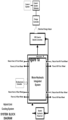
- FIG. 1 there is shown the schematic of a fully integrated electro/hydraulic power module that uses hydraulic power as means of power distribution and control.
- a Motor/Hydraulic Integrated System includes an electric motor/generator which is driven by batteries, (or charges the batteries via the bi-directional converter), as controlled by charge controller and control system.
- the electric motor is connected to turbomachinery that controls the wheels of the vehicle via hydraulic lines to and from each wheel.
- the wheels are driven by a variable hydraulic Pump/Motor system, with an inbuilt hydraulic failsafe ABS system.
- the integrated unit is water cooled as shown in FIG 1 , and is insulated to keep the heat in.
- a heat recovery system may also be included, for example an organic Rankine cycle heat to electric converter (which may use a peltier device to convert the heat to electricity) which can then be used to drive the motor or store electric power in the battery.
- the cooled hydraulic fluid from the converter can then be circulated back via a Sealed Hydraulic Reservoir to a Water Jacket surrounding the Motor/Hydraulic Integrated System by a Hybrid Unit Cooling System.
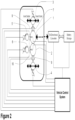
- FIG. 2 is a schematic diagram which showing the key circuitry within the system and their interconnections, namely the integrated control valving and distribution to the input/output ports for the power module, wheel drive and braking, and the integrated Motor/Generators assembly.
- the whole power and drive system is shown, the subsystems of which will be discussed separately.
- the motor/generators assemblies 2 which are independently controlled integrated units within the Power Unit.
- the motor/generators 1 and 2 drive or are driven by the integrated hydraulic motors/pumps 3, 4, which are enabled via the clutches 7 and 8. This allows the system to utilize stored energy from the batteries or hydraulic accumulators to power the system. It also allows the stored braking energy from the hydraulic braking accumulators to charge the batteries.
- the control system would regulate and activate the units 1 to 10 accordingly.
- the motor/generators 1 or 2 drive the pump assemblies 3 and 4.
- the pump assemblies 3 and 4 via valve assemblies, 23, 24 and 25 ( FIG 6 ) can drive the wheels directly or pressurise the accumulator system which in both cases can provide power to the motor/pump units driving the wheels.
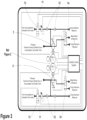
- FIG 3 there is shown the Schematic of the systems to drive Motor/Generators, via the Motors configuration of the Pump/Motors assemblies 3 and 4, via clutches 7 and 8, (Ref FIG 2 ) and valves 11 to 14, as a generator using the power from the braking Accumulator to charge the batteries.
- the two Motor/Generators systems are independent of each other, and the applications available and the configuration at any one time is set by the control system; one Motor/Generator may be operating to pressurize hydraulic fluid, while the other Motor/Generator is acting to charge the batteries, or alternatively both Motor/Generators may be pressurizing hydraulic fluid simultaneously, or acting as generators to charge the batteries simultaneously.
- the motor/generator M/G1 when driven as a motor, drives the integrated hydraulic motor/pump 3 to pressurize hydraulic fluid either to feed from Pump to the Wheel Drive or Accumulators via a Diverter Valve.
- pressurized hydraulic fluid can be supplied to the wheel drive from the accumulator via direction valve 13, pressure release valve 11 and check valve 12.
- a reservoir communicates the hydraulic motors/pump 3 via a direction valve 14 which allows fluid to flow in either direction, and to the Wheel Drive or Accumulators via check valve 12.
- the motor/generator M/G2 is connected to the Wheel Drive, Accumulators and reservoir by a second set of valves and a hydraulic motor/pump 4 set up in the same manner as the motor/generator M/G1.
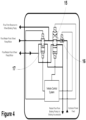
- FIG 4 there is shown the Schematic to control the hydraulic drive to and from the wheel Motor/Pumps and braking system on the one hand, and the accumulators, braking accumulators and/or the hydraulic motors/pumps 3, 4 using valves 15, 16 and 17 on the other hand.
- the configurations for these valves are set by the Vehicle Control System.
- FIG 5 there is shown the schematic to control the actuation of the clutches 7, 8, 9 and 10 (shown in FIG 2 ) of the via the valves 18, 19, 20, 21 and 22, according to the system requirement set by the Vehicle Control System.
- the actuation of the clutch is ideally effected by pressurized fluid from the accumulator.
- FIG 6 there is a shown the schematic to control the hydraulic power distribution from the Pumps 3 and 4 driven by Hydraulic Pumps M/G 1 and M/G 2, (Ref FIG 2 ) via valves 23, 24 and 25, to either power the wheels directly or through the accumulator system, according to the system requirement set by the Vehicle Control System.
- valve 26 diverts the flow from the braking pump to the Accumulators via valves 27 and 28 or the drive return flow to the reservoir via the Heat Recovery System according to the system requirement set by the Vehicle Control System.
- the power is extracted from the wheels via the wheel-mounted motor/pump units and the flow and pressure generated during the braking by the wheel-mounted motor/pump unit is stored in the braking accumulators.
- the stored energy can either be kept in the accumulators or can be used to drive the main motor/pump assembly (Ref FIG 2 ).
- the power generated is processed by the bi-directional converter to charge the batteries.
- the logic of selecting storage versus charging the battery will be set to optimise the driving condition and the vehicle range.
- the logic for the optimal control of energy storage is embedded in the Vehicle Control System.
- the bi-directional controller converts power drawn from the battery into the required input for the motor/generator; the conversion will depend on the battery and motor, but could, for example control the conversion of a DC battery output to a multiphase input for a switched DC motor. Likewise, the bi-directional controller will control the charging current energy from the motor/generator(or the compressor of the accumulator) is to be stored in the battery.
- the power module in its entirety indicating some of the major porting for the basic connections, and indicating the sections shown in the following figures.
- the power module houses the motor/generators M/G1 and M/G2 and the hydraulic motor/pumps 3, 4 as well as the connections to the hydraulic system, including the hydraulic supply inlet port, the hydraulic valving assemblies, the hydraulic inlet/outlet porting, the cooling system inlet and the hydraulic pressure and return porting which will be described further below.
- FIG 10 there is shown the orthographic view of section A-A through the Power Module, the positioning of some of the major components relative to this section, and the position of section D-D.
- a power module outer casing houses the motor/generators M/G1 and M/G2, the hydraulic motor/pumps, and the directional valves.
- the two electric motor/generator rotors are conveniently arranged coaxially in series, and can operate independently.
- the power module outer casing housing is conveniently shaped to accommodate the diameter of the motor/generator rotor with a saddle shaped portion, while the valve assemblies do not require this thickness of housing.
- the electric motor/generator conveniently has an outer stator and an inner rotor mounted on center bearing supports, and is housed in a cylindrical electric motor/generator outer casing.
- a motor/generator cooling jacket surrounds the electric motor/generator outer casing, with cooling fluid being supplied for circulation through cooling jacket transfer ports.
- the valve system is located on the lateral portions of the power module outer casing, and also has a valve system cooling jacket.
- Four hydraulic common rails for each motor/generator supplying pressure and return porting run along the long axis of the power module, having partitions 29 (shown in FIG. 17 ) between the rails each motor/generator, so that the bores of each rail exit at both ends of the casing as shown in the other diagrams. Instead of partitions 29, the rails could be combined through valving.
- FIG 11 there is shown the orthographic view of section B-B through the Power Module, indicating the position of the cooling jacket transfer porting in this section, and the position of section E-E.
- FIG 12 there is shown the orthographic view of section C-C through the Power Module, indicating the positioning of the transfer porting for the hydraulic valving system (in this figure, controlling the communication with the two lower hydraulic rails) relative to this section.
- FIG 13 there is shown the orthographic view of section F-F through the Power Module, indicating the positioning of the transfer porting for the hydraulic valving system (in this figure, controlling the communication with the two upper hydraulic rails) relative to this section.
- FIG 14 there is shown the orthographic view of section G-G through the Power Module, indicating the positioning of the inlet/outlet ports for one of the pump/motors; the pump/motor to pressurizes the fluid in the lower two hydraulic rails, or alternatively the hydraulic rails can operate the motor/generator to generate electric power to recharge the battery.
- FIG 15 there is shown the orthographic end view of the Power Module, indicating the positions of the hydraulic common rail inlet/outlet porting, and the cooling system inlet port.
- FIG 16 there is shown the orthographic bottom view of the Power Module, and the section H-H.
- FIG 17 there is shown the sectional view of section D-D through the Power Module, indicating the pressure supply and return flow options from the valving system relative to the pump/motors.
- Motor/generators assemblies 1, 2 drive or are driven by the integrated compressors 5 and 6 and hydraulic motors/pumps 3, 4, to supply or take pressurize fluid from the hydraulic rails (here, the lower rails) running axially along the power unit.
- Shut off valves (typically at both ends) control direction of flow in valving system.
- Internal valving controls hydraulic power distribution to and from the wheeldrives coming off the lateral sides of the power unit.
- a cooling jacket is supplied by a cooling system inlet, with an outlet at the opposite end.
- FIG 18 there is shown the sectional view of section E-E through the Power Module, indicating internal valving system options to control the hydraulic return distribution to and from the wheel drives.
- a further internal valving system controls hydraulic distribution to and from the wheeldrives, in this section taken from the upper hydraulic rails.
- a pump/motor inlet/outlet plenum chamber is provided for to the integrated compressors 5 and 6, which engage with the motor/generators assemblies 1, 2 via clutches 7 and 9, and 6 and 10.
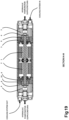
- FIG 19 there is shown the orthographic view of section H-H through the Power Module, indicating the cooling system through flow, the position of the hydraulic pump/motor supply/return flow options and the positions of some of the major components relative to this section.
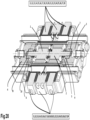
- FIG 20 there is shown a semi-transparent 3-dimensional view of the power module indicating the major component distribution.
- FIG 21 there is shown a 3-dimensional view of section H-H through the power module indicating the major component distribution, and the clutch drive configuration to the Pump/Motors and the compressor units.
- the system described herein includes two motor/power generators. It would also be possible to drive an electric/hydraulic vehicle with a single motor/power generator in a casing according to the design (with the appropriate modification of the casing valving and hydraulic rails). Including two motor/power generators allows a single motor to be used, particularly when cruising at a constant speed which would increase the efficiency; the second motor/power generator could then be activated for small deviations if necessary.
- the second motor/power generator hydraulic pump can supply additional power to accelerate the car when the first motor/power generator is supplying a constant power (particularly when a car is cruising, the requirement for acceleration may be short-lived and transitory); conversely, when the car is slowing, the second motor/power generator can be used to recapture excess energy from the hydraulic system and regenerative braking (again, particularly when a car is cruising, periods of braking or slowing may be short-lived and transitory).
- the increasing in hydraulic pressure may be too sudden for the second motor/power generator to immediately convert the excess pressure to electricity and for this to be used to charge the battery.
- the pressurised fluid can then be stored in the accumulator until the second motor/power generator can use it to charge the battery. This allows an increase in the regenerative power to be harvested, and an increase in battery life by allowing smoother charging and discharging.
- the accumulator is particularly responsive to transitory demands for either supplying or storing energy by means of the pressurised fluid; thus, the two motor/power generators and the accumulator can be operated so that the change in speed of one or both motor/power generators is minimised during the operation of the car, leading to more efficient operation and less wear on the parts.
Landscapes
- Engineering & Computer Science (AREA)
- Mechanical Engineering (AREA)
- Transportation (AREA)
- General Engineering & Computer Science (AREA)
- Combustion & Propulsion (AREA)
- Chemical & Material Sciences (AREA)
- Power Engineering (AREA)
- Fluid Mechanics (AREA)
- Physics & Mathematics (AREA)
- Life Sciences & Earth Sciences (AREA)
- Sustainable Development (AREA)
- Sustainable Energy (AREA)
- Electric Propulsion And Braking For Vehicles (AREA)
- Control Of Fluid Gearings (AREA)
- Supply Devices, Intensifiers, Converters, And Telemotors (AREA)
- Arrangement Or Mounting Of Propulsion Units For Vehicles (AREA)
Description
- This invention relates to a combined singular power module containing a decoupled Electric Motor and Hydraulic Valving system designed to be used in Multi wheel Vehicles of all descriptions. The invention results in a simpler more compact, lighter and therefore more cost-effective solution to the hybrid electric internal combustion engine and hydraulic-electric power units that exist today.
- As we move headlong into the green era, we are looking for practical solutions to the planet's reliance on our mineral and oil resources for energy. This solution addresses both these elements buy reducing costly materials (Metals and rare earth magnets for example) currently used in Power and Transmission modules of all types ITC and Electric Vehicle configurations.
- In recent years the advances in electrical devices energy storage technologies and the general aim of societies to combat climate change has propelled and accelerated the development of electromobility. The introduction of low emissions or emissions-free zones in towns and a changed political framework will speed up its expansion. Several entities are investing in electromobility and are enhancing existing concepts, introducing technological innovations and charting their future applications. This invention is part of this necessary evolution of the current solutions to electromobility to improve the sustainability of the materials used in the production of the power and transmission elements of the vehicle by reducing the amount used to obtain the same objectives.
- The advantages of electromobility are widely known to people educated in the art and can be shown not only by the indirect impact on reducing CO2 emissions and other harmful gases but also by their improved maintenance and reduced noise pollution. In addition, in the near future, severely congested and polluted town centers will be turned in to zero-emissions zones and thus only zero-emission vehicles will be able to drive through them.
- The aim of the present invention is to provide an electric vehicle drive which is convenient to manufacture and/or reliable, and/or efficient. Other benefits will become apparent in description.
- Current electromobility solutions have a high degree of efficiency of up to 96% compared with internal combustion engines that have an upper efficiency of 40%.
- Efficiency is further improved by the ability of the propulsion motor to operate as a generator to recover braking energy to be re-used when needed.
- The emergence of new Electric Vehicles of varying technologies has led to this solution. It removes the need for virtually all the existing Mechanical drive components incumbent in the existing vehicle designs seen today, which are costly and complicated.
- In embodiments of the present invention this is ideally achieved by storing the braking energy in accumulators and then using this to power the motor as a generator to recharge the batteries, or to drive the system with increased power for short periods of time, ie; overtaking.
- The unit is insulated to keep the heat in the system and subsequently turn this into electricity via a Heat Recovery System and use this to also recharge the batteries therefore further increasing the overall efficiency. Minimum energy loss through the heat produced in the system.
- If used The Heat Recovery System can be utilised as the cooling system thus improving overall efficiency.
- The cooling and Hydraulic system is a combined system, initially using a water/glycol based fluid which is encompasses the 'Green' ethos.
- The solution proposed herein can be placed strategically in the chassis of any vehicle adopting this system for any advantage it may offer. This is made possible by eliminating all the generic mechanical power transfer elements.
- The Motor/Generators being decoupled can be designed to run much faster than current solutions, thus reducing the quantity of rare earth magnet material required. This also further reduces the overall cost element, and allows greater freedom in the location of the major components for different types of vehicles
- This fully integrated hydro-electric propulsion unit is smaller, lighter, more efficient, less complicated and more cost effective than existing vehicle drive solutions. It decouples the drive to.
- It can have more than one Motor/Generator which can allow full optimization for Powering or Charging the storage systems independently, or at the same time.
- This High-speed compact Permanent Magnet Motor/Generator can reduce size and weight and further improves the efficiency of the vehicle.
- This invention optimizes the use of the Electro/hydraulic transmission approach, by opening the possibility to increase energy storage capability, by the utilization of two types of energy storage, namely, hydraulic storage and battery storage systems. The hydraulic system is used to reduce the battery rate of charge and discharge at starting and braking and thus increases its life.
- The design of this system seeks to eliminate all the fundamental existing mechanical transmission elements of current Electric Hybrid and ICE solutions.
- The accumulators can also be independently charged externally by compressed air temporarily attached to inlets provided if required.
-
WO 2019/175572 A describes an electric vehicle with an electro-hydraulic propulsion system. - According to the present invention, there is provided an electromobility Power unit as defined in
claim 1. - According to the present invention, there is provided an electromobility Power Module solution that uses an electro/hydraulic architecture that decouples the drive from the transmission system.
- According to the present invention, it allows greater degrees of freedom in the location of the major components for different types of vehicles to achieve optimal weight distribution and for performance vehicle low center of gravity.
- According to the present invention, the location of the Power Module drives the location of the center of gravity and can improve the vehicle's handling and road holding characteristics.
- According to the present invention, the Power Module eliminates the driveshafts and associated transmission components thus reducing the overall part count and simplifying the complete mechanical design
- Preferably, the Power Module can operate at substantially constant high- speed to reduce its size and weight and further improves the efficiency of the vehicle.
- Preferably, the hydraulic storage system in combination with the battery storage provides redundant energy storage solutions. The hydraulic storage system reduces the charge and discharge rate on the battery thus increases its life
- This invention allows for multi wheel driven-vehicle architectures without complicated mechanical drive systems.
- The fully integrated hydro-electric propulsion unit that is smaller, lighter, more efficient, less complicated and more cost effective solution to existing vehicle drive solutions. It decouples the drive to allow greater freedom in the location of the major components for different types of vehicles
- It can have more than one Motor/Generator which can allow full optimization for Powering or charging the storage systems independently, or at the same time.
-
-
FIG. 1a is a schematic of the general Electro-Hydraulic Power Module Assembly -
FIG. 1b is a schematic of the Electro-Hydraulic Power Module Assembly showing further details -
FIG. 2 is a schematic of the motor generator internal assembly -
FIG. 3 is the detailed section of the schematic showing the integrated hydraulic valving system for the individual wheel drives -
FIG. 4 is the detailed section of the schematic showing the individual wheel drive and braking control system -
FIG. 5 is the detailed section of the schematic showing the valving for the control of the hydraulic clutches attached to the Motor/Generator. -
FIG. 6 is the detailed section of the schematic showing the hydraulic power supply valving to control the hydraulic power to the wheels from the accumulators or the electric motor.
In another embodiment a single hydraulic power supply to a multiway distribution valve which can be used so as to distribute the power to the individual wheel to achieve vectored steering and torque control. -
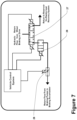
FIG. 7 is the detailed schematic showing the valve control system to distribute the hydraulic power generated under braking from the wheel pumps to the accumulators. -
FIG. 8 is a 3D view of the power module -
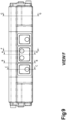
FIG. 9 is a side view of the power module showing the positions of the section views, A-A, B-B, C-C, F-F, and G-G also showing the hydraulic valve inlet/outlet porting configurations. -
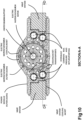
FIG. 10 is showing the detailed section A-A through the power module, and showing the position of section D-D. -
FIG. 11 is showing the detailed section B-B through the power module, and showing the position of section E-E. -
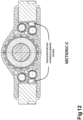
FIG. 12 is showing the detailed section C-C through the power module. -
FIG. 13 is showing the detailed section F-F through the power module. -
FIG. 14 is showing the detailed section G-G through the power module. -
FIG. 15 is showing a detailed end view of the power module showing the inlet/outlet porting for the cooling and hydraulic systems. -
FIG. 16 is showing a bottom view of the power module, and showing the position of section H-H. -
FIG. 17 is showing the detailed section D-D through the power module, showing the porting for the high-pressure supply from the pump/motor. -
FIG. 18 is showing the detailed section E-E through the power module, showing the hydraulic supply and return from the wheel pump/motors -
FIG. 19 is showing the detailed section H-H through the power module, showing the electric hydraulic drive system configuration. -
FIG. 20 is a sectional 3D view showing the major component distribution. -
FIG. 21 is showing a detailed 3D section H-H showing the electric/hydraulic drive configuration for clarity. - In the following description, numerous details are set forth to provide an understanding of the present invention. However, it will be understood by those of ordinary skill in the art that the present invention may be practiced without these details and that numerous variations or modifications from the described embodiments may be possible.
- The present invention relates to an integrated Electro/Hydraulic Power Module and its practical implementation in a standard or a sports vehicle. However, the devices and methods of the present invention are not limited tousle in the specific applications that are described herein.
- Referring generally to
FIG. 1 there is shown the schematic of a fully integrated electro/hydraulic power module that uses hydraulic power as means of power distribution and control. - A Motor/Hydraulic Integrated System includes an electric motor/generator which is driven by batteries, (or charges the batteries via the bi-directional converter), as controlled by charge controller and control system. The electric motor is connected to turbomachinery that controls the wheels of the vehicle via hydraulic lines to and from each wheel. The wheels are driven by a variable hydraulic Pump/Motor system, with an inbuilt hydraulic failsafe ABS system.
- The integrated unit is water cooled as shown in
FIG 1 , and is insulated to keep the heat in. A heat recovery system may also be included, for example an organic Rankine cycle heat to electric converter (which may use a peltier device to convert the heat to electricity) which can then be used to drive the motor or store electric power in the battery. The cooled hydraulic fluid from the converter can then be circulated back via a Sealed Hydraulic Reservoir to a Water Jacket surrounding the Motor/Hydraulic Integrated System by a Hybrid Unit Cooling System. -
FIG. 2 is a schematic diagram which showing the key circuitry within the system and their interconnections, namely the integrated control valving and distribution to the input/output ports for the power module, wheel drive and braking, and the integrated Motor/Generators assembly. - Referring to
FIG 2 . the whole power and drive system is shown, the subsystems of which will be discussed separately. Referring also toFig 3 , the motor/generators assemblies 2, which are independently controlled integrated units within the Power Unit. The motor/generators clutches - It can also drive the
integrated compressors clutches units 1 to 10 accordingly. - In motoring mode, the motor/
generators pump assemblies - The
pump assemblies FIG 6 ) can drive the wheels directly or pressurise the accumulator system which in both cases can provide power to the motor/pump units driving the wheels. - Referring to
FIG 3 , there is shown the Schematic of the systems to drive Motor/Generators, via the Motors configuration of the Pump/Motors assemblies clutches FIG 2 ) andvalves 11 to 14, as a generator using the power from the braking Accumulator to charge the batteries. Alternatively using the Pump configurations of the Pump/Motor assemblies FIG 2 ) to supply Hydraulic power for other applications. The two Motor/Generators systems are independent of each other, and the applications available and the configuration at any one time is set by the control system; one Motor/Generator may be operating to pressurize hydraulic fluid, while the other Motor/Generator is acting to charge the batteries, or alternatively both Motor/Generators may be pressurizing hydraulic fluid simultaneously, or acting as generators to charge the batteries simultaneously. - The motor/generator M/G1, when driven as a motor, drives the integrated hydraulic motor/
pump 3 to pressurize hydraulic fluid either to feed from Pump to the Wheel Drive or Accumulators via a Diverter Valve. Alternatively or addition, pressurized hydraulic fluid can be supplied to the wheel drive from the accumulator viadirection valve 13,pressure release valve 11 andcheck valve 12. A reservoir communicates the hydraulic motors/pump 3 via adirection valve 14 which allows fluid to flow in either direction, and to the Wheel Drive or Accumulators viacheck valve 12. - The motor/generator M/G2, is connected to the Wheel Drive, Accumulators and reservoir by a second set of valves and a hydraulic motor/
pump 4 set up in the same manner as the motor/generator M/G1. - Referring to
FIG 4 , there is shown the Schematic to control the hydraulic drive to and from the wheel Motor/Pumps and braking system on the one hand, and the accumulators, braking accumulators and/or the hydraulic motors/pumps 3, 4 usingvalves - Referring to
FIG 5 , there is shown the schematic to control the actuation of theclutches FIG 2 ) of the via thevalves - Referring to
FIG 6 , there is a shown the schematic to control the hydraulic power distribution from thePumps G 1 and M/G 2, (RefFIG 2 ) viavalves - Referring to
FIG 7 , there is shown the schematic showing the valves controlling the return flow from the wheel Pump/Motors. Thevalve 26, diverts the flow from the braking pump to the Accumulators viavalves - During braking, the power is extracted from the wheels via the wheel-mounted motor/pump units and the flow and pressure generated during the braking by the wheel-mounted motor/pump unit is stored in the braking accumulators. The stored energy can either be kept in the accumulators or can be used to drive the main motor/pump assembly (Ref
FIG 2 ). The power generated is processed by the bi-directional converter to charge the batteries. The logic of selecting storage versus charging the battery will be set to optimise the driving condition and the vehicle range. The logic for the optimal control of energy storage is embedded in the Vehicle Control System. - The bi-directional controller converts power drawn from the battery into the required input for the motor/generator; the conversion will depend on the battery and motor, but could, for example control the conversion of a DC battery output to a multiphase input for a switched DC motor. Likewise, the bi-directional controller will control the charging current energy from the motor/generator(or the compressor of the accumulator) is to be stored in the battery.
- Referring to
FIG 8 andFIG 9 , there is shown the power module in its entirety indicating some of the major porting for the basic connections, and indicating the sections shown in the following figures. The power module houses the motor/generators M/G1 and M/G2 and the hydraulic motor/pumps 3, 4 as well as the connections to the hydraulic system, including the hydraulic supply inlet port, the hydraulic valving assemblies, the hydraulic inlet/outlet porting, the cooling system inlet and the hydraulic pressure and return porting which will be described further below. - Referring to
FIG 10 , there is shown the orthographic view of section A-A through the Power Module, the positioning of some of the major components relative to this section, and the position of section D-D. - A power module outer casing houses the motor/generators M/G1 and M/G2, the hydraulic motor/pumps, and the directional valves. The two electric motor/generator rotors are conveniently arranged coaxially in series, and can operate independently. The power module outer casing housing is conveniently shaped to accommodate the diameter of the motor/generator rotor with a saddle shaped portion, while the valve assemblies do not require this thickness of housing. The electric motor/generator conveniently has an outer stator and an inner rotor mounted on center bearing supports, and is housed in a cylindrical electric motor/generator outer casing. A motor/generator cooling jacket surrounds the electric motor/generator outer casing, with cooling fluid being supplied for circulation through cooling jacket transfer ports. The valve system is located on the lateral portions of the power module outer casing, and also has a valve system cooling jacket. Four hydraulic common rails for each motor/generator supplying pressure and return porting run along the long axis of the power module, having partitions 29 (shown in
FIG. 17 ) between the rails each motor/generator, so that the bores of each rail exit at both ends of the casing as shown in the other diagrams. Instead ofpartitions 29, the rails could be combined through valving. - Referring to
FIG 11 , there is shown the orthographic view of section B-B through the Power Module, indicating the position of the cooling jacket transfer porting in this section, and the position of section E-E. - Referring to
FIG 12 , there is shown the orthographic view of section C-C through the Power Module, indicating the positioning of the transfer porting for the hydraulic valving system (in this figure, controlling the communication with the two lower hydraulic rails) relative to this section. - Referring to
FIG 13 , there is shown the orthographic view of section F-F through the Power Module, indicating the positioning of the transfer porting for the hydraulic valving system (in this figure, controlling the communication with the two upper hydraulic rails) relative to this section. - Referring to
FIG 14 , there is shown the orthographic view of section G-G through the Power Module, indicating the positioning of the inlet/outlet ports for one of the pump/motors; the pump/motor to pressurizes the fluid in the lower two hydraulic rails, or alternatively the hydraulic rails can operate the motor/generator to generate electric power to recharge the battery. - Referring to
FIG 15 , there is shown the orthographic end view of the Power Module, indicating the positions of the hydraulic common rail inlet/outlet porting, and the cooling system inlet port. - Referring to
FIG 16 , there is shown the orthographic bottom view of the Power Module, and the section H-H. - Referring to
FIG 17 , there is shown the sectional view of section D-D through the Power Module, indicating the pressure supply and return flow options from the valving system relative to the pump/motors. - Motor/
generators assemblies integrated compressors - Referring to
FIG 18 , there is shown the sectional view of section E-E through the Power Module, indicating internal valving system options to control the hydraulic return distribution to and from the wheel drives. A further internal valving system controls hydraulic distribution to and from the wheeldrives, in this section taken from the upper hydraulic rails. A pump/motor inlet/outlet plenum chamber is provided for to theintegrated compressors generators assemblies clutches - Referring to
FIG 19 , there is shown the orthographic view of section H-H through the Power Module, indicating the cooling system through flow, the position of the hydraulic pump/motor supply/return flow options and the positions of some of the major components relative to this section. - Referring to
FIG 20 , there is shown a semi-transparent 3-dimensional view of the power module indicating the major component distribution. - Referring to
FIG 21 , there is shown a 3-dimensional view of section H-H through the power module indicating the major component distribution, and the clutch drive configuration to the Pump/Motors and the compressor units. - The system described herein includes two motor/power generators. It would also be possible to drive an electric/hydraulic vehicle with a single motor/power generator in a casing according to the design (with the appropriate modification of the casing valving and hydraulic rails). Including two motor/power generators allows a single motor to be used, particularly when cruising at a constant speed which would increase the efficiency; the second motor/power generator could then be activated for small deviations if necessary. In particular, the second motor/power generator hydraulic pump can supply additional power to accelerate the car when the first motor/power generator is supplying a constant power (particularly when a car is cruising, the requirement for acceleration may be short-lived and transitory); conversely, when the car is slowing, the second motor/power generator can be used to recapture excess energy from the hydraulic system and regenerative braking (again, particularly when a car is cruising, periods of braking or slowing may be short-lived and transitory).
- When braking, the increasing in hydraulic pressure may be too sudden for the second motor/power generator to immediately convert the excess pressure to electricity and for this to be used to charge the battery. The pressurised fluid can then be stored in the accumulator until the second motor/power generator can use it to charge the battery. This allows an increase in the regenerative power to be harvested, and an increase in battery life by allowing smoother charging and discharging.
- The accumulator is particularly responsive to transitory demands for either supplying or storing energy by means of the pressurised fluid; thus, the two motor/power generators and the accumulator can be operated so that the change in speed of one or both motor/power generators is minimised during the operation of the car, leading to more efficient operation and less wear on the parts.
Claims (4)
- A vehicle drive system, comprisinga battery;a power unit in a housing, comprisingat least one electric motor/generator (1,2), capable of being driven as a motor by the battery or of charging the battery as a generator;at least one hydraulic motor/pump (3,4), capable of being driven by the electric motor/generator (1,2) to pressurize hydraulic fluid, or of being driven by pressurized hydraulic fluid to power the motor/generator (1,2) as a generator;a hydraulic rail communicating the pump; anddirectional control valves communicating with the hydraulic rail at least one accumulator for storing pressurized hydraulic fluid;wheel drives capable of being driven by pressurized hydraulic fluid;a hydraulic circuit connecting the directional control valves of the motor housing to the accumulator and wheel drives; anda control system for controlling the operation of the battery, power unit and wheel drives.characterised in that two independent electric motor/generators (1,2) are provided, each connected to a separate hydraulic motor/pump (3,4), independent electric motor/generators (1,2) and their connected hydraulic motor/pumps (3,4) capable of acting independently.
- A vehicle drive system, according to either previous claim, wherein the hydraulic rail communicates with more than one valve.
- A vehicle drive system, according to any previous claim, wherein more than one hydraulic is provided.
- A vehicle drive system, according to any previous claim, wherein the housing is formed from an integral body, with bores for the one or more motor/generators (1,2), and at least one directional control valve located within the body.
Applications Claiming Priority (2)
| Application Number | Priority Date | Filing Date | Title |
|---|---|---|---|
| GBGB1919160.0A GB201919160D0 (en) | 2019-12-23 | 2019-12-23 | An electro-hydraulic propulsion system combined power module |
| PCT/GB2020/053364 WO2021130497A1 (en) | 2019-12-23 | 2020-12-23 | An electro-hydraulic propulsion system combined power module |
Publications (3)
| Publication Number | Publication Date |
|---|---|
| EP4081723A1 EP4081723A1 (en) | 2022-11-02 |
| EP4081723C0 EP4081723C0 (en) | 2025-02-26 |
| EP4081723B1 true EP4081723B1 (en) | 2025-02-26 |
Family
ID=69322780
Family Applications (1)
| Application Number | Title | Priority Date | Filing Date |
|---|---|---|---|
| EP20845689.7A Active EP4081723B1 (en) | 2019-12-23 | 2020-12-23 | An electro-hydraulic propulsion system combined power module |
Country Status (6)
| Country | Link |
|---|---|
| US (1) | US12263736B2 (en) |
| EP (1) | EP4081723B1 (en) |
| JP (1) | JP7715402B2 (en) |
| ES (1) | ES3030915T3 (en) |
| GB (1) | GB201919160D0 (en) |
| WO (1) | WO2021130497A1 (en) |
Families Citing this family (3)
| Publication number | Priority date | Publication date | Assignee | Title |
|---|---|---|---|---|
| GB201919160D0 (en) * | 2019-12-23 | 2020-02-05 | Evectek Ltd | An electro-hydraulic propulsion system combined power module |
| CN111959484B (en) * | 2020-08-18 | 2022-10-25 | 北京理工大学 | Control system and control method of motor hydraulic pump/motor composite driving device |
| US12473711B2 (en) | 2023-09-22 | 2025-11-18 | Cnh Industrial America Llc | System and method for providing supplemental hydraulic power for an electric work vehicle |
Citations (1)
| Publication number | Priority date | Publication date | Assignee | Title |
|---|---|---|---|---|
| US6230829B1 (en) * | 1999-02-05 | 2001-05-15 | Poclain Hydraulics Industrie | Transmission apparatus for a vehicle having at least two drivable axles |
Family Cites Families (19)
| Publication number | Priority date | Publication date | Assignee | Title |
|---|---|---|---|---|
| JPH06336123A (en) * | 1993-05-28 | 1994-12-06 | Toyota Autom Loom Works Ltd | Vehicle travel control device with hydraulic pump |
| US7549498B2 (en) | 2004-09-28 | 2009-06-23 | Caterpillar Inc. | Control for an all-wheel-drive vehicle |
| US8408144B2 (en) * | 2006-10-04 | 2013-04-02 | The United States Of America, As Represented By The Administrator Of The U.S. Environmental Protection Agency | Hybrid locomotive regenerative energy storage system and method |
| US8978798B2 (en) * | 2007-10-12 | 2015-03-17 | Odyne Systems, Llc | Hybrid vehicle drive system and method and idle reduction system and method |
| US8408341B2 (en) * | 2007-07-12 | 2013-04-02 | Odyne Systems, Llc | Hybrid vehicle drive system and method and idle reduction system and method |
| US9308957B2 (en) | 2010-12-27 | 2016-04-12 | Kawasaki Jukogyo Kabushiki Kaisha | Saddle-type electric vehicle |
| CN103987558B (en) | 2011-11-26 | 2016-08-17 | 丰田自动车株式会社 | Vehicular electric driving means |
| CN105764764B (en) * | 2013-06-26 | 2019-06-07 | 派克汉尼汾制造有限公司 | Energy efficient control system for electric vehicle |
| US10267149B2 (en) | 2013-08-05 | 2019-04-23 | Lester J. Erlston | Combined electric and hydraulic motor |
| US9488193B2 (en) * | 2013-12-23 | 2016-11-08 | Eaton Corporation | Uninterruptible power supply systems using electrohydraulic energy storage |
| US9553484B2 (en) * | 2013-12-23 | 2017-01-24 | Eaton Corporation | Electrohydraulic generator systems and methods |
| JP6256146B2 (en) | 2014-03-27 | 2018-01-10 | マツダ株式会社 | Hydraulic accumulator and vehicle travel control device including the same |
| US10449864B2 (en) | 2014-04-15 | 2019-10-22 | Borgwarner Inc. | Motor/energy generator and energy storage device combination |
| US10513195B2 (en) * | 2016-10-11 | 2019-12-24 | Parker I L.L.C. | System and method for the improved recovery of kinetic energy |
| EP3483453B1 (en) * | 2017-11-09 | 2019-10-23 | Danfoss Power Solutions GmbH & Co. OHG | Electro-hydraulic work vehicle with energy recovery |
| GB201803947D0 (en) | 2018-03-12 | 2018-04-25 | Evectek Ltd | Electric vehicle with an electro-hydraulic propulsion system |
| US11408445B2 (en) * | 2018-07-12 | 2022-08-09 | Danfoss Power Solutions Ii Technology A/S | Dual power electro-hydraulic motion control system |
| GB201919160D0 (en) * | 2019-12-23 | 2020-02-05 | Evectek Ltd | An electro-hydraulic propulsion system combined power module |
| GB202001018D0 (en) * | 2020-01-24 | 2020-03-11 | Evectek Ltd | An integrated wheel hub and pump/motor unit |
-
2019
- 2019-12-23 GB GBGB1919160.0A patent/GB201919160D0/en not_active Ceased
-
2020
- 2020-12-23 WO PCT/GB2020/053364 patent/WO2021130497A1/en not_active Ceased
- 2020-12-23 US US17/787,889 patent/US12263736B2/en active Active
- 2020-12-23 JP JP2022538369A patent/JP7715402B2/en active Active
- 2020-12-23 ES ES20845689T patent/ES3030915T3/en active Active
- 2020-12-23 EP EP20845689.7A patent/EP4081723B1/en active Active
Patent Citations (1)
| Publication number | Priority date | Publication date | Assignee | Title |
|---|---|---|---|---|
| US6230829B1 (en) * | 1999-02-05 | 2001-05-15 | Poclain Hydraulics Industrie | Transmission apparatus for a vehicle having at least two drivable axles |
Also Published As
| Publication number | Publication date |
|---|---|
| GB201919160D0 (en) | 2020-02-05 |
| JP7715402B2 (en) | 2025-07-30 |
| EP4081723C0 (en) | 2025-02-26 |
| EP4081723A1 (en) | 2022-11-02 |
| JP2023510704A (en) | 2023-03-15 |
| WO2021130497A1 (en) | 2021-07-01 |
| US20230017589A1 (en) | 2023-01-19 |
| US12263736B2 (en) | 2025-04-01 |
| ES3030915T3 (en) | 2025-07-02 |
Similar Documents
| Publication | Publication Date | Title |
|---|---|---|
| EP4081723B1 (en) | An electro-hydraulic propulsion system combined power module | |
| US12438488B2 (en) | Variable torque motor/generator/transmission | |
| US7201095B2 (en) | Vehicle system to recapture kinetic energy | |
| US7841432B2 (en) | Hydro-electric hybrid drive system for motor vehicle | |
| US8869923B2 (en) | Rock drilling rig and method for downhill drive | |
| EP3424770B1 (en) | Extended-range electric passenger vehicle having front-mounted engine | |
| US20020092687A1 (en) | Drive device for a machine with a traction drive system and a hydraulic work system | |
| CN102628396A (en) | Regenerative assisted turbocharger system | |
| KR20080080452A (en) | Drive train, how it works and vehicle | |
| US10513195B2 (en) | System and method for the improved recovery of kinetic energy | |
| KR20210129482A (en) | Cooling system of electric power system of vehicle | |
| CN102666227A (en) | Hydraulic assembly and brake system for a motor vehicle | |
| JP7535304B2 (en) | Electric vehicle having an electrohydraulic propulsion system | |
| US9352742B2 (en) | Traction chain for a hybrid vehicle | |
| US6856033B2 (en) | Energy conversion system | |
| KR102376332B1 (en) | Hybrid special vehicle | |
| RO129544B1 (en) | Hydraulic system for braking energy recovery | |
| CN203047248U (en) | Pure electric vehicle engine and transmission and control system thereof | |
| CN103507806A (en) | Engine of full electric vehicle and drive and control system thereof |
Legal Events
| Date | Code | Title | Description |
|---|---|---|---|
| STAA | Information on the status of an ep patent application or granted ep patent |
Free format text: STATUS: UNKNOWN |
|
| STAA | Information on the status of an ep patent application or granted ep patent |
Free format text: STATUS: THE INTERNATIONAL PUBLICATION HAS BEEN MADE |
|
| PUAI | Public reference made under article 153(3) epc to a published international application that has entered the european phase |
Free format text: ORIGINAL CODE: 0009012 |
|
| STAA | Information on the status of an ep patent application or granted ep patent |
Free format text: STATUS: REQUEST FOR EXAMINATION WAS MADE |
|
| 17P | Request for examination filed |
Effective date: 20220701 |
|
| AK | Designated contracting states |
Kind code of ref document: A1 Designated state(s): AL AT BE BG CH CY CZ DE DK EE ES FI FR GB GR HR HU IE IS IT LI LT LU LV MC MK MT NL NO PL PT RO RS SE SI SK SM TR |
|
| DAV | Request for validation of the european patent (deleted) | ||
| DAX | Request for extension of the european patent (deleted) | ||
| GRAP | Despatch of communication of intention to grant a patent |
Free format text: ORIGINAL CODE: EPIDOSNIGR1 |
|
| STAA | Information on the status of an ep patent application or granted ep patent |
Free format text: STATUS: GRANT OF PATENT IS INTENDED |
|
| RIC1 | Information provided on ipc code assigned before grant |
Ipc: F16H 39/02 20060101ALI20240819BHEP Ipc: B60L 7/10 20060101ALI20240819BHEP Ipc: B60K 17/356 20060101ALI20240819BHEP Ipc: B60L 50/60 20190101ALI20240819BHEP Ipc: F16H 61/44 20060101AFI20240819BHEP |
|
| INTG | Intention to grant announced |
Effective date: 20240919 |
|
| GRAS | Grant fee paid |
Free format text: ORIGINAL CODE: EPIDOSNIGR3 |
|
| GRAA | (expected) grant |
Free format text: ORIGINAL CODE: 0009210 |
|
| STAA | Information on the status of an ep patent application or granted ep patent |
Free format text: STATUS: THE PATENT HAS BEEN GRANTED |
|
| AK | Designated contracting states |
Kind code of ref document: B1 Designated state(s): AL AT BE BG CH CY CZ DE DK EE ES FI FR GB GR HR HU IE IS IT LI LT LU LV MC MK MT NL NO PL PT RO RS SE SI SK SM TR |
|
| REG | Reference to a national code |
Ref country code: GB Ref legal event code: FG4D |
|
| REG | Reference to a national code |
Ref country code: CH Ref legal event code: EP |
|
| REG | Reference to a national code |
Ref country code: DE Ref legal event code: R096 Ref document number: 602020046925 Country of ref document: DE |
|
| REG | Reference to a national code |
Ref country code: IE Ref legal event code: FG4D |
|
| U01 | Request for unitary effect filed |
Effective date: 20250324 |
|
| U07 | Unitary effect registered |
Designated state(s): AT BE BG DE DK EE FI FR IT LT LU LV MT NL PT RO SE SI Effective date: 20250403 |
|
| REG | Reference to a national code |
Ref country code: ES Ref legal event code: FG2A Ref document number: 3030915 Country of ref document: ES Kind code of ref document: T3 Effective date: 20250702 |
|
| PG25 | Lapsed in a contracting state [announced via postgrant information from national office to epo] |
Ref country code: RS Free format text: LAPSE BECAUSE OF FAILURE TO SUBMIT A TRANSLATION OF THE DESCRIPTION OR TO PAY THE FEE WITHIN THE PRESCRIBED TIME-LIMIT Effective date: 20250526 |
|
| PG25 | Lapsed in a contracting state [announced via postgrant information from national office to epo] |
Ref country code: PL Free format text: LAPSE BECAUSE OF FAILURE TO SUBMIT A TRANSLATION OF THE DESCRIPTION OR TO PAY THE FEE WITHIN THE PRESCRIBED TIME-LIMIT Effective date: 20250226 |
|
| PG25 | Lapsed in a contracting state [announced via postgrant information from national office to epo] |
Ref country code: NO Free format text: LAPSE BECAUSE OF FAILURE TO SUBMIT A TRANSLATION OF THE DESCRIPTION OR TO PAY THE FEE WITHIN THE PRESCRIBED TIME-LIMIT Effective date: 20250526 Ref country code: IS Free format text: LAPSE BECAUSE OF FAILURE TO SUBMIT A TRANSLATION OF THE DESCRIPTION OR TO PAY THE FEE WITHIN THE PRESCRIBED TIME-LIMIT Effective date: 20250626 |
|
| PG25 | Lapsed in a contracting state [announced via postgrant information from national office to epo] |
Ref country code: HR Free format text: LAPSE BECAUSE OF FAILURE TO SUBMIT A TRANSLATION OF THE DESCRIPTION OR TO PAY THE FEE WITHIN THE PRESCRIBED TIME-LIMIT Effective date: 20250226 |
|
| PG25 | Lapsed in a contracting state [announced via postgrant information from national office to epo] |
Ref country code: GR Free format text: LAPSE BECAUSE OF FAILURE TO SUBMIT A TRANSLATION OF THE DESCRIPTION OR TO PAY THE FEE WITHIN THE PRESCRIBED TIME-LIMIT Effective date: 20250527 |
|
| PG25 | Lapsed in a contracting state [announced via postgrant information from national office to epo] |
Ref country code: SM Free format text: LAPSE BECAUSE OF FAILURE TO SUBMIT A TRANSLATION OF THE DESCRIPTION OR TO PAY THE FEE WITHIN THE PRESCRIBED TIME-LIMIT Effective date: 20250226 |
|
| PG25 | Lapsed in a contracting state [announced via postgrant information from national office to epo] |
Ref country code: CZ Free format text: LAPSE BECAUSE OF FAILURE TO SUBMIT A TRANSLATION OF THE DESCRIPTION OR TO PAY THE FEE WITHIN THE PRESCRIBED TIME-LIMIT Effective date: 20250226 |
|
| PG25 | Lapsed in a contracting state [announced via postgrant information from national office to epo] |
Ref country code: SK Free format text: LAPSE BECAUSE OF FAILURE TO SUBMIT A TRANSLATION OF THE DESCRIPTION OR TO PAY THE FEE WITHIN THE PRESCRIBED TIME-LIMIT Effective date: 20250226 |
|
| PLBE | No opposition filed within time limit |
Free format text: ORIGINAL CODE: 0009261 |
|
| STAA | Information on the status of an ep patent application or granted ep patent |
Free format text: STATUS: NO OPPOSITION FILED WITHIN TIME LIMIT |
|
| PGFP | Annual fee paid to national office [announced via postgrant information from national office to epo] |
Ref country code: GB Payment date: 20251231 Year of fee payment: 6 |
|
| 26N | No opposition filed |
Effective date: 20251127 |
|
| U20 | Renewal fee for the european patent with unitary effect paid |
Year of fee payment: 6 Effective date: 20251231 |
|
| PGFP | Annual fee paid to national office [announced via postgrant information from national office to epo] |
Ref country code: ES Payment date: 20260107 Year of fee payment: 6 |