EP4079692A1 - Method for preparing secondary battery cathode material - Google Patents
Method for preparing secondary battery cathode material Download PDFInfo
- Publication number
- EP4079692A1 EP4079692A1 EP20901242.6A EP20901242A EP4079692A1 EP 4079692 A1 EP4079692 A1 EP 4079692A1 EP 20901242 A EP20901242 A EP 20901242A EP 4079692 A1 EP4079692 A1 EP 4079692A1
- Authority
- EP
- European Patent Office
- Prior art keywords
- powder
- rotary kiln
- cathode material
- secondary battery
- battery cathode
- Prior art date
- Legal status (The legal status is an assumption and is not a legal conclusion. Google has not performed a legal analysis and makes no representation as to the accuracy of the status listed.)
- Pending
Links
Images

Classifications
-
- C—CHEMISTRY; METALLURGY
- C01—INORGANIC CHEMISTRY
- C01D—COMPOUNDS OF ALKALI METALS, i.e. LITHIUM, SODIUM, POTASSIUM, RUBIDIUM, CAESIUM, OR FRANCIUM
- C01D15/00—Lithium compounds
- C01D15/02—Oxides; Hydroxides
-
- C—CHEMISTRY; METALLURGY
- C01—INORGANIC CHEMISTRY
- C01G—COMPOUNDS CONTAINING METALS NOT COVERED BY SUBCLASSES C01D OR C01F
- C01G53/00—Compounds of nickel
- C01G53/40—Complex oxides containing nickel and at least one other metal element
- C01G53/42—Complex oxides containing nickel and at least one other metal element containing alkali metals, e.g. LiNiO2
- C01G53/44—Complex oxides containing nickel and at least one other metal element containing alkali metals, e.g. LiNiO2 containing manganese
- C01G53/50—Complex oxides containing nickel and at least one other metal element containing alkali metals, e.g. LiNiO2 containing manganese of the type (MnO2)n-, e.g. Li(NixMn1-x)O2 or Li(MyNixMn1-x-y)O2
- C01G53/502—Complex oxides containing nickel and at least one other metal element containing alkali metals, e.g. LiNiO2 containing manganese of the type (MnO2)n-, e.g. Li(NixMn1-x)O2 or Li(MyNixMn1-x-y)O2 containing lithium and cobalt
-
- C—CHEMISTRY; METALLURGY
- C01—INORGANIC CHEMISTRY
- C01G—COMPOUNDS CONTAINING METALS NOT COVERED BY SUBCLASSES C01D OR C01F
- C01G1/00—Methods of preparing compounds of metals not covered by subclasses C01B, C01C, C01D, or C01F, in general
- C01G1/02—Oxides
-
- C—CHEMISTRY; METALLURGY
- C01—INORGANIC CHEMISTRY
- C01G—COMPOUNDS CONTAINING METALS NOT COVERED BY SUBCLASSES C01D OR C01F
- C01G53/00—Compounds of nickel
- C01G53/40—Complex oxides containing nickel and at least one other metal element
- C01G53/42—Complex oxides containing nickel and at least one other metal element containing alkali metals, e.g. LiNiO2
- C01G53/44—Complex oxides containing nickel and at least one other metal element containing alkali metals, e.g. LiNiO2 containing manganese
- C01G53/50—Complex oxides containing nickel and at least one other metal element containing alkali metals, e.g. LiNiO2 containing manganese of the type (MnO2)n-, e.g. Li(NixMn1-x)O2 or Li(MyNixMn1-x-y)O2
- C01G53/502—Complex oxides containing nickel and at least one other metal element containing alkali metals, e.g. LiNiO2 containing manganese of the type (MnO2)n-, e.g. Li(NixMn1-x)O2 or Li(MyNixMn1-x-y)O2 containing lithium and cobalt
- C01G53/504—Complex oxides containing nickel and at least one other metal element containing alkali metals, e.g. LiNiO2 containing manganese of the type (MnO2)n-, e.g. Li(NixMn1-x)O2 or Li(MyNixMn1-x-y)O2 containing lithium and cobalt with the molar ratio of nickel with respect to all the metals other than alkali metals higher than or equal to 0.5, e.g. Li(MzNixCoyMn1-x-y-z)O2 with x ≥ 0.5
- C01G53/506—Complex oxides containing nickel and at least one other metal element containing alkali metals, e.g. LiNiO2 containing manganese of the type (MnO2)n-, e.g. Li(NixMn1-x)O2 or Li(MyNixMn1-x-y)O2 containing lithium and cobalt with the molar ratio of nickel with respect to all the metals other than alkali metals higher than or equal to 0.5, e.g. Li(MzNixCoyMn1-x-y-z)O2 with x ≥ 0.5 with the molar ratio of nickel with respect to all the metals other than alkali metals higher than or equal to 0.8, e.g. Li(MzNixCoyMn1-x-y-z)O2 with x ≥ 0.8
-
- C—CHEMISTRY; METALLURGY
- C01—INORGANIC CHEMISTRY
- C01G—COMPOUNDS CONTAINING METALS NOT COVERED BY SUBCLASSES C01D OR C01F
- C01G53/00—Compounds of nickel
- C01G53/80—Compounds containing nickel, with or without oxygen or hydrogen, and containing one or more other elements
- C01G53/84—Hydroxides
-
- H—ELECTRICITY
- H01—ELECTRIC ELEMENTS
- H01M—PROCESSES OR MEANS, e.g. BATTERIES, FOR THE DIRECT CONVERSION OF CHEMICAL ENERGY INTO ELECTRICAL ENERGY
- H01M4/00—Electrodes
- H01M4/02—Electrodes composed of, or comprising, active material
- H01M4/04—Processes of manufacture in general
- H01M4/0471—Processes of manufacture in general involving thermal treatment, e.g. firing, sintering, backing particulate active material, thermal decomposition, pyrolysis
-
- H—ELECTRICITY
- H01—ELECTRIC ELEMENTS
- H01M—PROCESSES OR MEANS, e.g. BATTERIES, FOR THE DIRECT CONVERSION OF CHEMICAL ENERGY INTO ELECTRICAL ENERGY
- H01M4/00—Electrodes
- H01M4/02—Electrodes composed of, or comprising, active material
- H01M4/36—Selection of substances as active materials, active masses, active liquids
- H01M4/48—Selection of substances as active materials, active masses, active liquids of inorganic oxides or hydroxides
- H01M4/50—Selection of substances as active materials, active masses, active liquids of inorganic oxides or hydroxides of manganese
- H01M4/505—Selection of substances as active materials, active masses, active liquids of inorganic oxides or hydroxides of manganese of mixed oxides or hydroxides containing manganese for inserting or intercalating light metals, e.g. LiMn2O4 or LiMn2OxFy
-
- H—ELECTRICITY
- H01—ELECTRIC ELEMENTS
- H01M—PROCESSES OR MEANS, e.g. BATTERIES, FOR THE DIRECT CONVERSION OF CHEMICAL ENERGY INTO ELECTRICAL ENERGY
- H01M4/00—Electrodes
- H01M4/02—Electrodes composed of, or comprising, active material
- H01M4/36—Selection of substances as active materials, active masses, active liquids
- H01M4/48—Selection of substances as active materials, active masses, active liquids of inorganic oxides or hydroxides
- H01M4/52—Selection of substances as active materials, active masses, active liquids of inorganic oxides or hydroxides of nickel, cobalt or iron
- H01M4/525—Selection of substances as active materials, active masses, active liquids of inorganic oxides or hydroxides of nickel, cobalt or iron of mixed oxides or hydroxides containing iron, cobalt or nickel for inserting or intercalating light metals, e.g. LiNiO2, LiCoO2 or LiCoOxFy
-
- C—CHEMISTRY; METALLURGY
- C01—INORGANIC CHEMISTRY
- C01P—INDEXING SCHEME RELATING TO STRUCTURAL AND PHYSICAL ASPECTS OF SOLID INORGANIC COMPOUNDS
- C01P2006/00—Physical properties of inorganic compounds
- C01P2006/40—Electric properties
-
- H—ELECTRICITY
- H01—ELECTRIC ELEMENTS
- H01M—PROCESSES OR MEANS, e.g. BATTERIES, FOR THE DIRECT CONVERSION OF CHEMICAL ENERGY INTO ELECTRICAL ENERGY
- H01M4/00—Electrodes
- H01M4/02—Electrodes composed of, or comprising, active material
- H01M2004/026—Electrodes composed of, or comprising, active material characterised by the polarity
- H01M2004/028—Positive electrodes
-
- Y—GENERAL TAGGING OF NEW TECHNOLOGICAL DEVELOPMENTS; GENERAL TAGGING OF CROSS-SECTIONAL TECHNOLOGIES SPANNING OVER SEVERAL SECTIONS OF THE IPC; TECHNICAL SUBJECTS COVERED BY FORMER USPC CROSS-REFERENCE ART COLLECTIONS [XRACs] AND DIGESTS
- Y02—TECHNOLOGIES OR APPLICATIONS FOR MITIGATION OR ADAPTATION AGAINST CLIMATE CHANGE
- Y02E—REDUCTION OF GREENHOUSE GAS [GHG] EMISSIONS, RELATED TO ENERGY GENERATION, TRANSMISSION OR DISTRIBUTION
- Y02E60/00—Enabling technologies; Technologies with a potential or indirect contribution to GHG emissions mitigation
- Y02E60/10—Energy storage using batteries
Definitions
- the present disclosure relates to a method of manufacturing a secondary battery cathode material.
- a method of manufacturing a secondary battery cathode material is a method of manufacturing a cathode material, which is a cathode active material.
- NCM nickel-cobalt-manganese
- the present invention has been made in an effort to provide a method of manufacturing a secondary battery cathode material capable of reducing manufacturing cost of the secondary battery cathode material by manufacturing a high nickel NCM cathode material having a nickel content of 70% or more even if Li 2 CO 3 is used without using LiOH.
- the present invention has been made in an effort to provide a method of manufacturing a secondary battery cathode material capable of mass-producing the secondary battery cathode material by manufacturing the secondary battery cathode material using a rotary kiln.
- An exemplary embodiment of the present invention provides a method of manufacturing a secondary battery cathode material, including preparing Li 2 O powder by separating CO 2 from Li 2 CO 3 powder, forming a mixed powder by mixing the Li 2 O powder with nickel-cobalt-manganese (NCM) precursor powder, and firing the mixed powder using a rotary kiln.
- NCM nickel-cobalt-manganese
- the preparing of the Li 2 O powder may include charging the Li 2 CO3 powder into a firing furnace in a high-temperature atmosphere, and separating the CO 2 from the Li 2 CO 3 powder by supplying air or oxygen into the firing furnace.
- the forming of the mixed powder includes pulverizing the Li 2 O powder, mixing the Li 2 O powder with the NCM precursor powder, and forming the mixed powder in a form of granules or briquettes.
- the forming of the mixed powder may be performed in a closed space in a nitrogen atmosphere.
- the firing of the mixed powder using the rotary kiln may include charging the mixed powder into an inside of the rotary kiln in a high-temperature atmosphere in which a refractory coating layer is formed on an inner surface of the rotary kiln and a spiral baffle is installed in the rotary kiln, and firing the mixed powder inside the rotary kiln.
- a method of manufacturing a secondary battery cathode material capable of reducing manufacturing cost of the secondary battery cathode material by manufacturing a high nickel NCM cathode material having a nickel content of 70% or more even if Li 2 CO 3 is used without using LiOH.
- FIG. 1 is a flowchart illustrating a method of manufacturing a secondary battery cathode material according to an exemplary embodiment.
- Li 2 CO 3 powder which has a lower price than LiOH powder, is charged into the firing furnace in a high-temperature atmosphere, and air or oxygen (O 2 ) gas is supplied into the firing furnace to separate CO 2 gas from Li 2 CO 3 powder to prepare Li 2 O powder.
- air or oxygen (O 2 ) gas is supplied into the firing furnace to separate CO 2 gas from Li 2 CO 3 powder to prepare Li 2 O powder.
- the firing furnace may be a rotary kiln, but is not limited thereto.
- the Li 2 CO 3 powder When air or oxygen gas is put into the Li 2 CO 3 powder before firing, the Li 2 CO 3 powder reacts with oxygen in the air or oxygen in the oxygen gas in a high-temperature atmosphere to be converted into Li 2 O powder, and the reactant is carbon dioxide (CO 2 ) gas.
- CO 2 carbon dioxide
- a reaction rate is determined by a partial pressure and temperature of carbon dioxide and oxygen, a certain amount of carbon dioxide gas may be discharged while supplying air or oxygen gas to keep the process temperature constant at 400°C to 800°C, and to maintain a constant partial pressure.
- the Li 2 O powder is mixed with a nickel-cobalt-manganese (NCM) precursor powder to form a mixed powder (S200).
- NCM nickel-cobalt-manganese
- the Li 2 O powder is pulverized, the Li 2 O powder is mixed with the NCM precursor powder, and the mixed powder is formed into the form of granules or briquettes to form the mixed powder. All steps for forming the mixed powder may be performed in a closed space in a nitrogen atmosphere to prevent the Li 2 O powder from being reduced to Li 2 CO 3 due to the reaction of the Li 2 O powder with CO 2 .
- the NCM precursor may include, but is not limited to, nickel-cobalt-manganese hydroxide [Ni a Mn b CO c ] (OH) 2 .
- the Li 2 O powder After preparing the Li 2 O powder by separating CO 2 from the Li 2 CO 3 powder, aggregation occurs in a part of the Li 2 O powder and becomes a lumped state. In this state, when the Li 2 O powder is mixed with the nickel-cobalt-manganese (NCM) precursor powder, in the firing process, since it is difficult for the LiO 2 of the Li 2 O powder to uniformly penetrate into the NCM precursor of the NCM precursor powder, the Li 2 O powder is pulverized.
- NCM nickel-cobalt-manganese
- the Li 2 O powder is pulverized, and then, mixed with the NCM precursor powder in a molar ratio of 1:1 or more.
- Li 2 O powder In order to prevent the Li 2 O powder from being reduced back to lithium carbonate (Li 2 CO 3 ) by reacting with carbon dioxide in the air at a high temperature, the above-described pulverizing and mixing are performed in the closed space in the nitrogen atmosphere.
- the mixed powder in the form of granules or briquettes having a size of 1 mm to 100 mm is formed before being put into the rotary kiln.
- the conventional firing furnace which is a roller hearth kiln (RHK) furnace using saggar
- a method of manufacturing a secondary battery cathode material uses a firing furnace of a rotary kiln to fire a cathode material
- the mixed powder is formed in the form of granules or briquettes, first-in and first-out are implemented inside the rotary kiln as the firing furnace, to minimize a deviation in firing time, prevent contamination by generation of a reactant inside the rotary kiln, and suppress a clinker from occurring inside the rotary kiln.
- the mixed powder is fired using the rotary kiln (S300).
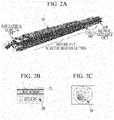
- FIG. 2 is a diagram illustrating the rotary kiln used for the method of manufacturing a secondary battery cathode material.
- FIG. 2A is a diagram illustrating the rotary kiln (RK) used for the method of manufacturing a secondary battery cathode material
- FIG. 2B is a cross-sectional view illustrating a refractory coating layer (CL) formed on an inner surface (IW) of the rotary kiln (RK)
- FIG. 2C is a photograph illustrating a spiral baffle (SB) provided inside the rotary kiln (RK).
- the mixed powder is charged into the rotary kiln (RK) in the high-temperature atmosphere in which the refractory coating layer (CL) is formed on the inner surface (IW) and the spiral baffle (SB) is provided inside the rotary kiln (RK), and the mixed powder is fired into the secondary battery cathode material, which is a cathode active material, inside the rotary kiln (RK).
- the secondary battery cathode material which is a cathode active material
- the rotary kiln (RK) includes a raw material charging unit, a raw material discharge unit, a heating unit, and a cooling unit.
- the mixed powder is charged into the inside of the rotary kiln (RK) through the raw material charging unit of the rotary kiln (RK), and the mixed powder charged into the rotary kiln (RK) is fired in the heating unit and cooled in the cooling unit, and is discharged to the outside through the raw material discharge unit of the rotary kiln (RK).
- the secondary battery cathode material which is the cathode active material fired from the mixed powder inside the rotary kiln (RK), is discharged to the outside through the raw material discharge unit.
- the mixed powder formed in the form of the briquettes or granules is put into the firing furnace, which is the rotary kiln (RK) having the spiral baffle (SB) provided inside thereof and the refractory coating layer (CL) without the saggar used in the conventional RHK furnace, in the nitrogen atmosphere.
- the rotary kiln (RK) rotates at a low speed and fires the mixed powder while maintaining a target firing temperature between 400°C and 1000°C.
- the inside of the heating unit of the rotary kiln (RK) may be controlled by being divided into a sequentially communicating temperature increase section, temperature maintenance section, and cooling section.
- the reason that the cooling section is required may be to prevent a secondary reaction and generation of residual lithium due to a sudden temperature change.
- the secondary battery cathode material which is the cathode active material in the form of the briquettes or granules fired in the firing furnace which is the rotary kiln (RK)
- the pulverized cathode active material is classified, and the de-iron process is performed on the classified cathode active material.
- a washing and drying process is performed, and when the residual lithium in the cathode active material is within a standard value, finally, a process of packaging the cathode active material through coating and heat treatment without the washing and drying process may be performed.
- the secondary battery cathode material which is the cathode active material fired in the rotary kiln (RK), is a nickel-cobalt-manganese (NCM) cathode material of LiNi x Mn y CO (1-x-y) O 2 , and a high nickel NCM cathode material having a nickel content of 70% or more.
- NCM nickel-cobalt-manganese
- the LiOH was mixed with the NCM precursor and reacts with O 2 at a low firing temperature.
- the conventional method of manufacturing a secondary battery cathode material has a problem in that the manufacturing cost of the secondary battery cathode material increases because the price of LiOH is higher than that of Li 2 CO 3 .
- the method of manufacturing a secondary battery cathode material manufactures the high nickel NCM cathode material having a nickel content of 70% or more while solving the deterioration in properties of the cathode material by not using LiOH and O 2 , converting Li 2 CO 3 into Li 2 O and mixing the Li 2 O with the NCM precursor, and firing the mixture in the rotary kiln (RK) at a low firing temperature.
- the method of manufacturing a secondary battery cathode material capable of reducing manufacturing cost of the secondary battery cathode material by manufacturing a high nickel NCM cathode material having a nickel content of 70% or more even if Li 2 CO 3 is used without using LiOH is provided.
- the method of manufacturing a secondary battery cathode material capable of mass-producing the secondary battery cathode material by manufacturing the secondary battery cathode material using the rotary kiln (RK) is provided.
Landscapes
- Chemical & Material Sciences (AREA)
- Organic Chemistry (AREA)
- Inorganic Chemistry (AREA)
- Chemical Kinetics & Catalysis (AREA)
- Electrochemistry (AREA)
- General Chemical & Material Sciences (AREA)
- Engineering & Computer Science (AREA)
- Materials Engineering (AREA)
- Manufacturing & Machinery (AREA)
- Battery Electrode And Active Subsutance (AREA)
- Inorganic Compounds Of Heavy Metals (AREA)
Abstract
Description
- The present disclosure relates to a method of manufacturing a secondary battery cathode material.
- In general, a method of manufacturing a secondary battery cathode material is a method of manufacturing a cathode material, which is a cathode active material.
- In a process of firing a nickel-cobalt-manganese (NCM) cathode material of LiNixMnyCO(1-x-y)O2 component of the conventional method of manufacturing a secondary battery cathode material, when the nickel content is 70% or less, Li2CO3 is mixed with a nickel-cobalt-manganese (NCM) precursor and the mixture is put into a firing furnace having a high firing temperature, and when the nickel content is 70% or more, LiOH is mixed with the NCM precursor and the mixture is put into a firing furnace having a low firing temperature.
- In the conventional method of manufacturing a secondary battery cathode material for manufacturing a high nickel NCM cathode material having a nickel content of 70% or more, since LiOH has a higher price than Li2CO3, in order to reduce manufacturing cost and increase the charging capacity per unit volume, there is a problem in that manufacturing cost of a high nickel NCM cathode material with a reduced cobalt content and an increased nickel content increases.
- The present invention has been made in an effort to provide a method of manufacturing a secondary battery cathode material capable of reducing manufacturing cost of the secondary battery cathode material by manufacturing a high nickel NCM cathode material having a nickel content of 70% or more even if Li2CO3 is used without using LiOH.
- The present invention has been made in an effort to provide a method of manufacturing a secondary battery cathode material capable of mass-producing the secondary battery cathode material by manufacturing the secondary battery cathode material using a rotary kiln.
- An exemplary embodiment of the present invention provides a method of manufacturing a secondary battery cathode material, including preparing Li2O powder by separating CO2 from Li2CO3 powder, forming a mixed powder by mixing the Li2O powder with nickel-cobalt-manganese (NCM) precursor powder, and firing the mixed powder using a rotary kiln.
- The preparing of the Li2O powder may include charging the Li2CO3 powder into a firing furnace in a high-temperature atmosphere, and separating the CO2 from the Li2CO3 powder by supplying air or oxygen into the firing furnace.
- The forming of the mixed powder includes pulverizing the Li2O powder, mixing the Li2O powder with the NCM precursor powder, and forming the mixed powder in a form of granules or briquettes.
- The forming of the mixed powder may be performed in a closed space in a nitrogen atmosphere.
- The firing of the mixed powder using the rotary kiln may include charging the mixed powder into an inside of the rotary kiln in a high-temperature atmosphere in which a refractory coating layer is formed on an inner surface of the rotary kiln and a spiral baffle is installed in the rotary kiln, and firing the mixed powder inside the rotary kiln.
- According to an embodiment of the present invention, it is possible to provide a method of manufacturing a secondary battery cathode material capable of reducing manufacturing cost of the secondary battery cathode material by manufacturing a high nickel NCM cathode material having a nickel content of 70% or more even if Li2CO3 is used without using LiOH.
- In addition, according to an embodiment of the present invention, it is possible to provide a method of manufacturing a secondary battery cathode material capable of mass-producing the secondary battery cathode material by manufacturing the secondary battery cathode material using a rotary kiln.
-
-
FIG. 1 is a flowchart illustrating a method of manufacturing a secondary battery cathode material according to an exemplary embodiment. -
FIG. 2 is a diagram illustrating a rotary kiln used for the method of manufacturing a secondary battery cathode material. - The present invention will be described more fully hereinafter with reference to the accompanying drawings, in which exemplary embodiments of the invention are shown. As those skilled in the art would realize, the described embodiments may be modified in various different ways, all without departing from the scope of the present invention.
- Portions unrelated to the description will be omitted in order to obviously describe the present invention, and similar components will be denoted by the same or similar reference numerals throughout the present specification.
- In addition, unless explicitly described to the contrary, the word "comprise", and variations such as "comprises" or "comprising", will be understood to imply the inclusion of stated elements but not the exclusion of any other elements.
- Hereinafter, a method of manufacturing a secondary battery cathode material according to an exemplary embodiment will be described with reference to
FIGS. 1 and2 . -
FIG. 1 is a flowchart illustrating a method of manufacturing a secondary battery cathode material according to an exemplary embodiment. - Referring to
FIG. 1 , first, CO2 is separated from Li2CO3 powder to prepare Li2O powder (S100). - Specifically, Li2CO3 powder, which has a lower price than LiOH powder, is charged into the firing furnace in a high-temperature atmosphere, and air or oxygen (O2) gas is supplied into the firing furnace to separate CO2 gas from Li2CO3 powder to prepare Li2O powder.
- Here, the firing furnace may be a rotary kiln, but is not limited thereto.
- When air or oxygen gas is put into the Li2CO3 powder before firing, the Li2CO3 powder reacts with oxygen in the air or oxygen in the oxygen gas in a high-temperature atmosphere to be converted into Li2O powder, and the reactant is carbon dioxide (CO2) gas. In this case, since a reaction rate is determined by a partial pressure and temperature of carbon dioxide and oxygen, a certain amount of carbon dioxide gas may be discharged while supplying air or oxygen gas to keep the process temperature constant at 400°C to 800°C, and to maintain a constant partial pressure.
- Next, the Li2O powder is mixed with a nickel-cobalt-manganese (NCM) precursor powder to form a mixed powder (S200).
- Specifically, the Li2O powder is pulverized, the Li2O powder is mixed with the NCM precursor powder, and the mixed powder is formed into the form of granules or briquettes to form the mixed powder. All steps for forming the mixed powder may be performed in a closed space in a nitrogen atmosphere to prevent the Li2O powder from being reduced to Li2CO3 due to the reaction of the Li2O powder with CO2.
- Here, the NCM precursor may include, but is not limited to, nickel-cobalt-manganese hydroxide [NiaMnbCOc] (OH)2.
- After preparing the Li2O powder by separating CO2 from the Li2CO3 powder, aggregation occurs in a part of the Li2O powder and becomes a lumped state. In this state, when the Li2O powder is mixed with the nickel-cobalt-manganese (NCM) precursor powder, in the firing process, since it is difficult for the LiO2 of the Li2O powder to uniformly penetrate into the NCM precursor of the NCM precursor powder, the Li2O powder is pulverized.
- The Li2O powder is pulverized, and then, mixed with the NCM precursor powder in a molar ratio of 1:1 or more.
- In order to prevent the Li2O powder from being reduced back to lithium carbonate (Li2CO3) by reacting with carbon dioxide in the air at a high temperature, the above-described pulverizing and mixing are performed in the closed space in the nitrogen atmosphere.
- After mixing the Li2O powder and the NCM precursor powder, the mixed powder in the form of granules or briquettes having a size of 1 mm to 100 mm is formed before being put into the rotary kiln. Unlike the conventional firing furnace, which is a roller hearth kiln (RHK) furnace using saggar, since a method of manufacturing a secondary battery cathode material according to an exemplary embodiment uses a firing furnace of a rotary kiln to fire a cathode material, the mixed powder is formed in the form of granules or briquettes, first-in and first-out are implemented inside the rotary kiln as the firing furnace, to minimize a deviation in firing time, prevent contamination by generation of a reactant inside the rotary kiln, and suppress a clinker from occurring inside the rotary kiln.
- Next, the mixed powder is fired using the rotary kiln (S300).
-
FIG. 2 is a diagram illustrating the rotary kiln used for the method of manufacturing a secondary battery cathode material.FIG. 2A is a diagram illustrating the rotary kiln (RK) used for the method of manufacturing a secondary battery cathode material,FIG. 2B is a cross-sectional view illustrating a refractory coating layer (CL) formed on an inner surface (IW) of the rotary kiln (RK), andFIG. 2C is a photograph illustrating a spiral baffle (SB) provided inside the rotary kiln (RK). - Referring to
FIG. 2 , specifically, the mixed powder is charged into the rotary kiln (RK) in the high-temperature atmosphere in which the refractory coating layer (CL) is formed on the inner surface (IW) and the spiral baffle (SB) is provided inside the rotary kiln (RK), and the mixed powder is fired into the secondary battery cathode material, which is a cathode active material, inside the rotary kiln (RK). - The rotary kiln (RK) includes a raw material charging unit, a raw material discharge unit, a heating unit, and a cooling unit.
- The mixed powder is charged into the inside of the rotary kiln (RK) through the raw material charging unit of the rotary kiln (RK), and the mixed powder charged into the rotary kiln (RK) is fired in the heating unit and cooled in the cooling unit, and is discharged to the outside through the raw material discharge unit of the rotary kiln (RK). The secondary battery cathode material, which is the cathode active material fired from the mixed powder inside the rotary kiln (RK), is discharged to the outside through the raw material discharge unit.
- The mixed powder formed in the form of the briquettes or granules is put into the firing furnace, which is the rotary kiln (RK) having the spiral baffle (SB) provided inside thereof and the refractory coating layer (CL) without the saggar used in the conventional RHK furnace, in the nitrogen atmosphere. The rotary kiln (RK) rotates at a low speed and fires the mixed powder while maintaining a target firing temperature between 400°C and 1000°C.
- The inside of the heating unit of the rotary kiln (RK) may be controlled by being divided into a sequentially communicating temperature increase section, temperature maintenance section, and cooling section. The reason that the cooling section is required may be to prevent a secondary reaction and generation of residual lithium due to a sudden temperature change.
- In the next step, the secondary battery cathode material, which is the cathode active material in the form of the briquettes or granules fired in the firing furnace which is the rotary kiln (RK), is pulverized, the pulverized cathode active material is classified, and the de-iron process is performed on the classified cathode active material. Thereafter, when there is a lot of residual lithium in the cathode active material, a washing and drying process is performed, and when the residual lithium in the cathode active material is within a standard value, finally, a process of packaging the cathode active material through coating and heat treatment without the washing and drying process may be performed.
- The secondary battery cathode material, which is the cathode active material fired in the rotary kiln (RK), is a nickel-cobalt-manganese (NCM) cathode material of LiNixMnyCO(1-x-y)O2, and a high nickel NCM cathode material having a nickel content of 70% or more.
- In the conventional method of manufacturing a secondary battery cathode material, when manufacturing the high nickel NCM cathode material having a nickel content of 70% or more, in the case where the Li2CO3 is mixed with the NCM precursor, in order to solve the deterioration in properties of the cathode material due to the high firing temperature for reacting with O2, the LiOH was mixed with the NCM precursor and reacts with O2 at a low firing temperature.
- However, the conventional method of manufacturing a secondary battery cathode material has a problem in that the manufacturing cost of the secondary battery cathode material increases because the price of LiOH is higher than that of Li2CO3.
- To solve this problem, the method of manufacturing a secondary battery cathode material according to an exemplary embodiment manufactures the high nickel NCM cathode material having a nickel content of 70% or more while solving the deterioration in properties of the cathode material by not using LiOH and O2, converting Li2CO3 into Li2O and mixing the Li2O with the NCM precursor, and firing the mixture in the rotary kiln (RK) at a low firing temperature.
- That is, the method of manufacturing a secondary battery cathode material capable of reducing manufacturing cost of the secondary battery cathode material by manufacturing a high nickel NCM cathode material having a nickel content of 70% or more even if Li2CO3 is used without using LiOH is provided.
- In addition, the method of manufacturing a secondary battery cathode material capable of mass-producing the secondary battery cathode material by manufacturing the secondary battery cathode material using the rotary kiln (RK) is provided.
- Although the exemplary embodiment of the present invention has been described in detail hereinabove, the scope of the present invention is not limited thereto. That is, several modifications and alterations made by a person of ordinary skill in the art using a basic concept of the present invention as defined in the claims fall within the scope of the present invention.
- Rotary Kiln (RK), Refractory coating layer(CL), Spiral baffle (SB)
Claims (5)
- A method of manufacturing a secondary battery cathode material, comprising:preparing Li2O powder by separating CO2 from Li2CO3 powder;forming a mixed powder by mixing the Li2O powder with nickel-cobalt-manganese (NCM) precursor powder; andfiring the mixed powder using a rotary kiln.
- The method of claim 1, wherein:
the preparing of the Li2O powder includes:charging the Li2CO3 powder into a firing furnace in a high-temperature atmosphere; andseparating the CO2 from the Li2CO3 powder by supplying air or oxygen into the firing furnace. - The method of claim 1, wherein:
the forming of the mixed powder includes:pulverizing the Li2O powder; andmixing the Li2O powder with the NCM precursor powder; andforming the mixed powder in a form of granules or briquettes. - The method of claim 1, wherein:
the forming of the mixed powder may be performed in a closed space in a nitrogen atmosphere. - The method of claim 1, wherein:
the firing of the mixed powder using the rotary kiln includes:charging the mixed powder into an inside of the rotary kiln in a high-temperature atmosphere in which a refractory coating layer is formed on an inner surface of the rotary kiln and a spiral baffle is installed in the rotary kiln; andfiring the mixed powder inside the rotary kiln.
Applications Claiming Priority (2)
| Application Number | Priority Date | Filing Date | Title |
|---|---|---|---|
| KR1020190172484A KR102406391B1 (en) | 2019-12-20 | 2019-12-20 | Method for manufacturing cathode material of secondary battery |
| PCT/KR2020/018387 WO2021125759A1 (en) | 2019-12-20 | 2020-12-15 | Method for preparing secondary battery cathode material |
Publications (2)
| Publication Number | Publication Date |
|---|---|
| EP4079692A1 true EP4079692A1 (en) | 2022-10-26 |
| EP4079692A4 EP4079692A4 (en) | 2024-01-31 |
Family
ID=76476638
Family Applications (1)
| Application Number | Title | Priority Date | Filing Date |
|---|---|---|---|
| EP20901242.6A Pending EP4079692A4 (en) | 2019-12-20 | 2020-12-15 | METHOD FOR PREPARING SECONDARY BATTERY CATHODE MATERIAL |
Country Status (6)
| Country | Link |
|---|---|
| US (1) | US20230073531A1 (en) |
| EP (1) | EP4079692A4 (en) |
| JP (1) | JP7415007B2 (en) |
| KR (1) | KR102406391B1 (en) |
| CN (1) | CN114845959A (en) |
| WO (1) | WO2021125759A1 (en) |
Families Citing this family (1)
| Publication number | Priority date | Publication date | Assignee | Title |
|---|---|---|---|---|
| KR102933421B1 (en) * | 2024-06-05 | 2026-03-04 | 주식회사 엘 앤 에프 | Molded and Sintered Body of Cathode Active Material and Secondary Battery Made from the Same |
Family Cites Families (14)
| Publication number | Priority date | Publication date | Assignee | Title |
|---|---|---|---|---|
| EP1341248A1 (en) * | 2000-11-17 | 2003-09-03 | Toshiba Battery Co., Ltd. | Enclosed nickel-zinc primary battery, its anode and production methods for them |
| JP2005276502A (en) | 2004-03-23 | 2005-10-06 | Mitsubishi Chemicals Corp | Lithium transition metal composite oxide powder for positive electrode active material of lithium secondary battery and production method thereof, precursor and production method thereof, lithium secondary battery positive electrode using the same, and lithium secondary battery |
| JP4696557B2 (en) | 2005-01-06 | 2011-06-08 | 日本電気株式会社 | Active material for lithium secondary battery, production method thereof, raw material used therefor, and lithium secondary battery |
| JP5401211B2 (en) * | 2009-08-21 | 2014-01-29 | 日清エンジニアリング株式会社 | Method for producing positive electrode material for secondary battery |
| JP2012121780A (en) | 2010-12-10 | 2012-06-28 | Sumitomo Metal Mining Co Ltd | Method for manufacturing lithium oxide |
| US20160156020A1 (en) * | 2014-11-27 | 2016-06-02 | Hitachi Metals, Ltd. | Method for manufacturing cathode electrode materials |
| JP2016121860A (en) | 2014-12-25 | 2016-07-07 | 株式会社島川製作所 | Rotary kiln |
| JP6479632B2 (en) * | 2015-11-30 | 2019-03-06 | ユミコア | Method for producing nickel lithium metal composite oxide |
| KR101992760B1 (en) * | 2016-03-31 | 2019-06-26 | 주식회사 엘지화학 | Positive electrode active material for lithium secondary battery and positive electrode comprising the same |
| KR101797147B1 (en) * | 2016-09-30 | 2017-11-15 | 휴먼에너지(주) | Rotary kiln |
| RU2760024C2 (en) * | 2016-12-21 | 2021-11-22 | Альбемарл Джермани Гмбх | Method for producing lithium oxide |
| JP7194891B2 (en) | 2018-03-28 | 2022-12-23 | 住友金属鉱山株式会社 | Method for producing positive electrode active material for non-aqueous electrolyte secondary battery, compact, and method for producing non-aqueous electrolyte secondary battery |
| KR102288291B1 (en) * | 2018-04-12 | 2021-08-10 | 주식회사 엘지화학 | Method for producing positive electrode active material |
| KR20190131842A (en) * | 2018-05-17 | 2019-11-27 | 주식회사 엘지화학 | Positive electrode active material for secondary battery, method for preparing the same and lithium secondary battery comprising the same |
-
2019
- 2019-12-20 KR KR1020190172484A patent/KR102406391B1/en active Active
-
2020
- 2020-12-15 WO PCT/KR2020/018387 patent/WO2021125759A1/en not_active Ceased
- 2020-12-15 EP EP20901242.6A patent/EP4079692A4/en active Pending
- 2020-12-15 US US17/787,737 patent/US20230073531A1/en active Pending
- 2020-12-15 JP JP2022538301A patent/JP7415007B2/en active Active
- 2020-12-15 CN CN202080088874.0A patent/CN114845959A/en active Pending
Also Published As
| Publication number | Publication date |
|---|---|
| CN114845959A (en) | 2022-08-02 |
| US20230073531A1 (en) | 2023-03-09 |
| JP7415007B2 (en) | 2024-01-16 |
| EP4079692A4 (en) | 2024-01-31 |
| JP2023508018A (en) | 2023-02-28 |
| KR102406391B1 (en) | 2022-06-07 |
| KR20210080091A (en) | 2021-06-30 |
| WO2021125759A1 (en) | 2021-06-24 |
Similar Documents
| Publication | Publication Date | Title |
|---|---|---|
| KR102312238B1 (en) | Precursors and Methods for Preparation of Ni-Based Cathode Materials for Rechargeable Lithium Ion Batteries | |
| JP7046412B2 (en) | Manufacturing method of positive electrode active material | |
| JP5569034B2 (en) | Lithium hydroxide for producing lithium nickel composite oxide, method for producing the same, and method for producing lithium nickel composite oxide using the lithium hydroxide | |
| TWI424606B (en) | A positive electrode active material for a lithium ion battery, a positive electrode for a lithium ion battery, and a lithium ion battery | |
| US20210126237A1 (en) | Method and firing apparatus for manufacturing cathode active material for lithium ion secondary battery | |
| US11713925B2 (en) | Sagger for firing secondary battery active material and method for manufacturing secondary battery active material using same | |
| EP3909915A1 (en) | Method for producing positive electrode active material for lithium ion secondary battery, and molded article | |
| KR100595362B1 (en) | Lithium-nickel composite oxide for non-aqueous electrolyte secondary battery positive electrode active material, method for preparing same, and positive electrode active material comprising same | |
| CN109713251B (en) | Lithium ion battery anode material and preparation method and application thereof | |
| JP2019167257A (en) | Lithium nickel-containing composite oxide and manufacturing method thereof, lithium ion secondary battery, and evaluation method of lithium nickel-containing composite oxide | |
| CN104577067A (en) | Method for preparing fluorinated carbon black coated lithium cobalt oxide cathode material | |
| JP7069666B2 (en) | Method for manufacturing lithium nickel composite oxide and method for manufacturing non-aqueous electrolyte secondary battery | |
| US20230073531A1 (en) | Method for preparing secondary battery cathode material | |
| JP6996262B2 (en) | A method for producing lithium hydroxide for producing a lithium nickel composite oxide, a raw material for lithium hydroxide for producing a lithium nickel composite oxide, and a method for producing a lithium nickel composite oxide. | |
| CN110015699B (en) | Preparation method and device of transition metal lithium oxide | |
| JP5534657B2 (en) | Method for producing lithium nickel composite oxide | |
| WO2019102766A1 (en) | Positive electrode active material for lithium ion secondary batteries and method for producing same | |
| CN114388781B (en) | A kind of particle densified cathode material for lithium battery and its preparation method | |
| CN116525784A (en) | Positive electrode composite material, preparation method thereof, positive electrode plate and battery | |
| JP7491659B2 (en) | Lithium hydroxide hydrate, method for producing lithium hydroxide hydrate, and method for producing lithium nickel composite oxide | |
| JP7155802B2 (en) | Positive electrode active material for lithium ion secondary battery, manufacturing method thereof, positive electrode for lithium ion secondary battery, and lithium ion secondary battery | |
| JP2020158187A (en) | Hopper and firing device of positive electrode active material for secondary battery using the same | |
| JP2020158188A (en) | Hopper and firing device for positive electrode active material for secondary batteries using it | |
| JP2011258398A (en) | Method of sintering lithium containing electrode material | |
| JP2011249338A (en) | Method for sintering lithium-containing electrode material |
Legal Events
| Date | Code | Title | Description |
|---|---|---|---|
| STAA | Information on the status of an ep patent application or granted ep patent |
Free format text: STATUS: THE INTERNATIONAL PUBLICATION HAS BEEN MADE |
|
| PUAI | Public reference made under article 153(3) epc to a published international application that has entered the european phase |
Free format text: ORIGINAL CODE: 0009012 |
|
| STAA | Information on the status of an ep patent application or granted ep patent |
Free format text: STATUS: REQUEST FOR EXAMINATION WAS MADE |
|
| 17P | Request for examination filed |
Effective date: 20220708 |
|
| AK | Designated contracting states |
Kind code of ref document: A1 Designated state(s): AL AT BE BG CH CY CZ DE DK EE ES FI FR GB GR HR HU IE IS IT LI LT LU LV MC MK MT NL NO PL PT RO RS SE SI SK SM TR |
|
| DAV | Request for validation of the european patent (deleted) | ||
| DAX | Request for extension of the european patent (deleted) | ||
| RAP1 | Party data changed (applicant data changed or rights of an application transferred) |
Owner name: POSCO FUTURE M CO., LTD Owner name: RESEARCH INSTITUTE OF INDUSTRIAL SCIENCE & TECHNOLOGY Owner name: POSCO HOLDINGS INC. |
|
| A4 | Supplementary search report drawn up and despatched |
Effective date: 20240104 |
|
| RIC1 | Information provided on ipc code assigned before grant |
Ipc: H01M 4/505 20100101ALI20231222BHEP Ipc: H01M 4/525 20100101ALI20231222BHEP Ipc: C01G 53/00 20060101AFI20231222BHEP |
|
| STAA | Information on the status of an ep patent application or granted ep patent |
Free format text: STATUS: EXAMINATION IS IN PROGRESS |
|
| 17Q | First examination report despatched |
Effective date: 20240814 |
|
| GRAP | Despatch of communication of intention to grant a patent |
Free format text: ORIGINAL CODE: EPIDOSNIGR1 |
|
| STAA | Information on the status of an ep patent application or granted ep patent |
Free format text: STATUS: GRANT OF PATENT IS INTENDED |
|
| INTG | Intention to grant announced |
Effective date: 20260624 |