EP4079637B1 - Combination energy impact attenuation, vibration mitigation and flotation device for aircraft seating applications - Google Patents
Combination energy impact attenuation, vibration mitigation and flotation device for aircraft seating applications Download PDFInfo
- Publication number
- EP4079637B1 EP4079637B1 EP22168219.8A EP22168219A EP4079637B1 EP 4079637 B1 EP4079637 B1 EP 4079637B1 EP 22168219 A EP22168219 A EP 22168219A EP 4079637 B1 EP4079637 B1 EP 4079637B1
- Authority
- EP
- European Patent Office
- Prior art keywords
- seat
- energy absorption
- absorption device
- adaptive energy
- seating system
- Prior art date
- Legal status (The legal status is an assumption and is not a legal conclusion. Google has not performed a legal analysis and makes no representation as to the accuracy of the status listed.)
- Active
Links
Images




Classifications
-
- B—PERFORMING OPERATIONS; TRANSPORTING
- B64—AIRCRAFT; AVIATION; COSMONAUTICS
- B64D—EQUIPMENT FOR FITTING IN OR TO AIRCRAFT; FLIGHT SUITS; PARACHUTES; ARRANGEMENT OR MOUNTING OF POWER PLANTS OR PROPULSION TRANSMISSIONS IN AIRCRAFT
- B64D11/00—Passenger or crew accommodation; Flight-deck installations not otherwise provided for
- B64D11/06—Arrangements of seats, or adaptations or details specially adapted for aircraft seats
- B64D11/0619—Arrangements of seats, or adaptations or details specially adapted for aircraft seats with energy absorbing means specially adapted for mitigating impact loads for passenger seats, e.g. at a crash
-
- B—PERFORMING OPERATIONS; TRANSPORTING
- B60—VEHICLES IN GENERAL
- B60N—SEATS SPECIALLY ADAPTED FOR VEHICLES; VEHICLE PASSENGER ACCOMMODATION NOT OTHERWISE PROVIDED FOR
- B60N2/00—Seats specially adapted for vehicles; Arrangement or mounting of seats in vehicles
- B60N2/24—Seats specially adapted for vehicles; Arrangement or mounting of seats in vehicles for particular purposes or particular vehicles
-
- B—PERFORMING OPERATIONS; TRANSPORTING
- B60—VEHICLES IN GENERAL
- B60N—SEATS SPECIALLY ADAPTED FOR VEHICLES; VEHICLE PASSENGER ACCOMMODATION NOT OTHERWISE PROVIDED FOR
- B60N2/00—Seats specially adapted for vehicles; Arrangement or mounting of seats in vehicles
- B60N2/24—Seats specially adapted for vehicles; Arrangement or mounting of seats in vehicles for particular purposes or particular vehicles
- B60N2/42—Seats specially adapted for vehicles; Arrangement or mounting of seats in vehicles for particular purposes or particular vehicles the seat constructed to protect the occupant from the effect of abnormal g-forces, e.g. crash or safety seats
- B60N2/4207—Seats specially adapted for vehicles; Arrangement or mounting of seats in vehicles for particular purposes or particular vehicles the seat constructed to protect the occupant from the effect of abnormal g-forces, e.g. crash or safety seats characterised by the direction of the g-forces
- B60N2/4242—Seats specially adapted for vehicles; Arrangement or mounting of seats in vehicles for particular purposes or particular vehicles the seat constructed to protect the occupant from the effect of abnormal g-forces, e.g. crash or safety seats characterised by the direction of the g-forces vertical
-
- B—PERFORMING OPERATIONS; TRANSPORTING
- B60—VEHICLES IN GENERAL
- B60N—SEATS SPECIALLY ADAPTED FOR VEHICLES; VEHICLE PASSENGER ACCOMMODATION NOT OTHERWISE PROVIDED FOR
- B60N2/00—Seats specially adapted for vehicles; Arrangement or mounting of seats in vehicles
- B60N2/24—Seats specially adapted for vehicles; Arrangement or mounting of seats in vehicles for particular purposes or particular vehicles
- B60N2/42—Seats specially adapted for vehicles; Arrangement or mounting of seats in vehicles for particular purposes or particular vehicles the seat constructed to protect the occupant from the effect of abnormal g-forces, e.g. crash or safety seats
- B60N2/427—Seats or parts thereof displaced during a crash
- B60N2/42727—Seats or parts thereof displaced during a crash involving substantially rigid displacement
- B60N2/42736—Seats or parts thereof displaced during a crash involving substantially rigid displacement of the whole seat
-
- B—PERFORMING OPERATIONS; TRANSPORTING
- B60—VEHICLES IN GENERAL
- B60N—SEATS SPECIALLY ADAPTED FOR VEHICLES; VEHICLE PASSENGER ACCOMMODATION NOT OTHERWISE PROVIDED FOR
- B60N2/00—Seats specially adapted for vehicles; Arrangement or mounting of seats in vehicles
- B60N2/24—Seats specially adapted for vehicles; Arrangement or mounting of seats in vehicles for particular purposes or particular vehicles
- B60N2/42—Seats specially adapted for vehicles; Arrangement or mounting of seats in vehicles for particular purposes or particular vehicles the seat constructed to protect the occupant from the effect of abnormal g-forces, e.g. crash or safety seats
- B60N2/427—Seats or parts thereof displaced during a crash
- B60N2/42772—Seats or parts thereof displaced during a crash characterised by the triggering system
- B60N2/4279—Seats or parts thereof displaced during a crash characterised by the triggering system electric or electronic triggering
-
- B—PERFORMING OPERATIONS; TRANSPORTING
- B64—AIRCRAFT; AVIATION; COSMONAUTICS
- B64D—EQUIPMENT FOR FITTING IN OR TO AIRCRAFT; FLIGHT SUITS; PARACHUTES; ARRANGEMENT OR MOUNTING OF POWER PLANTS OR PROPULSION TRANSMISSIONS IN AIRCRAFT
- B64D11/00—Passenger or crew accommodation; Flight-deck installations not otherwise provided for
- B64D11/06—Arrangements of seats, or adaptations or details specially adapted for aircraft seats
- B64D11/0627—Seats combined with storage means
- B64D11/0629—Seats combined with storage means the storage means being specially adapted for emergency equipment
- B64D11/0633—Seats combined with storage means the storage means being specially adapted for emergency equipment for devices other than life vests and intended for external use, e.g. parachutes or life rafts
-
- B—PERFORMING OPERATIONS; TRANSPORTING
- B64—AIRCRAFT; AVIATION; COSMONAUTICS
- B64D—EQUIPMENT FOR FITTING IN OR TO AIRCRAFT; FLIGHT SUITS; PARACHUTES; ARRANGEMENT OR MOUNTING OF POWER PLANTS OR PROPULSION TRANSMISSIONS IN AIRCRAFT
- B64D25/00—Emergency apparatus or devices, not otherwise provided for
- B64D25/02—Supports or holding means for living bodies
- B64D25/04—Seat modifications
-
- B—PERFORMING OPERATIONS; TRANSPORTING
- B64—AIRCRAFT; AVIATION; COSMONAUTICS
- B64D—EQUIPMENT FOR FITTING IN OR TO AIRCRAFT; FLIGHT SUITS; PARACHUTES; ARRANGEMENT OR MOUNTING OF POWER PLANTS OR PROPULSION TRANSMISSIONS IN AIRCRAFT
- B64D25/00—Emergency apparatus or devices, not otherwise provided for
- B64D25/08—Ejecting or escaping means
- B64D25/18—Flotation gear
-
- B—PERFORMING OPERATIONS; TRANSPORTING
- B63—SHIPS OR OTHER WATERBORNE VESSELS; RELATED EQUIPMENT
- B63C—LAUNCHING, HAULING-OUT, OR DRY-DOCKING OF VESSELS; LIFE-SAVING IN WATER; EQUIPMENT FOR DWELLING OR WORKING UNDER WATER; MEANS FOR SALVAGING OR SEARCHING FOR UNDERWATER OBJECTS
- B63C9/00—Life-saving in water
- B63C9/02—Lifeboats, life-rafts or the like, specially adapted for life-saving
- B63C9/04—Life-rafts
- B63C2009/042—Life-rafts inflatable
Definitions
- Aircraft typically employ singular systems for each of energy attenuation, vibration mitigation and life-saving.
- aircraft such as rotary wing aircraft can be equipped with impact detection systems and devices positioned in the fuselage or in seat systems for energy attenuation, vibration mitigating apparatus coupled to seat structures for reducing or preventing vibrations from transferring to the seat occupant, and deployable emergency life rafts retrievable from dedicated storage compartments.
- Impact detection systems and devices can be implemented as energy absorbers, energy absorption systems, load limiters, and passenger restraint systems for mitigating occupant injury due to extreme vehicle movement. Such systems may respond to changing environmental conditions and may include controllers for real-time optimization as well as sensors for detecting occupant weight, load level, motion and acceleration.
- Vibration control can be implemented as passive or active devices such as vibration isolators, electromechanical actuators, hydraulic actuators and pneumatic actuators operatively coupled to a seat frame.
- Active vibration control devices can be communicatively coupled to a controller, vibration sensors and position sensors to receive input signals corresponding to detected vibrations, and in response, generate command signals to instruct the vibration control devices.
- Life saving devices such as life rafts provide floating support in the event of a water landing and can include activation devices for auto-inflation. In the case of rotary wing aircraft, life saving devices are typically positioned external on the aircraft and therefore may not be accessible in all emergency situations. Life saving devices are disclosed in e.g. GB 1 465 698 A .
- a seating system for an aircraft as defined by claim 1.
- the seat frame may define at least two laterally adjacent seat positions and the adaptive energy absorption device may span continuously across the at least two laterally adjacent seat positions.
- the plurality of fluidly coupled inflatable elastic bladders are forming a vertical stack
- the at least one constrictor valve may be disposed between fluidly coupled adjacent ones of the plurality of inflatable elastic bladders to allow fluid to flow between the fluidly coupled adjacent ones of the plurality of inflatable elastic bladders.
- the at least one constrictor valve may be disposed in one of the plurality of inflatable elastic bladders to allow fluid escape out of the adaptive energy absorption device.
- the seating system may further include a controller communicatively coupled to the fluid supply source operable for activating the fluid supply source to output fluid to the adaptive energy absorption device to maintain a predetermined fluid pressure in the adaptive energy absorption device.
- the fluid supplied by the fluid supply source may be helium.
- the seat frame may define a plurality of laterally adjacent seat positions, wherein the seat pans of the laterally adjacent seat positions may be coupled together.
- the adaptive energy absorption device may be expandable from a partially inflated condition when disposed beneath the seat pan of the at least one seat position to a fully inflated condition when removed from beneath the seat pan of the at least one seat position for use as the emergency flotation device.
- Embodiments of the inventive concepts can include one or more or any combination of the above aspects, features and configurations within the scope of the claims.
- inventive concepts are not limited in their application to the details of construction and the arrangement of the components or steps or methodologies set forth in the following description or illustrated in the drawings.
- inventive concepts disclosed herein may be practiced without these specific details.
- well-known features may not be described in detail to avoid unnecessarily complicating the instant disclosure.
- inventive concepts disclosed herein are capable of other embodiments or of being practiced or carried out in various ways. Also, it is to be understood that the phraseology and terminology employed herein is for the purpose of description and should not be regarded as limiting.
- a letter following a reference numeral is intended to reference an embodiment of the feature or element that may be similar, but not necessarily identical, to a previously described element or feature bearing the same reference numeral (e.g., 1, 1a, 1b).
- reference numeral e.g. 1, 1a, 1b
- Such shorthand notations are used for purposes of convenience only, and should not be construed to limit the inventive concepts disclosed herein in any way unless expressly stated to the contrary.
- any reference to "one embodiment,” or “some embodiments” means that a particular element, feature, structure, or characteristic described in connection with the embodiment is included in at least one embodiment of the inventive concepts disclosed herein.
- the appearances of the phrase “in some embodiments” in various places in the specification are not necessarily all referring to the same embodiment, and embodiments of the inventive concepts disclosed may include one or more of the features expressly described or inherently present herein, or any combination of sub-combination of two or more such features, along with any other features which may not necessarily be expressly described or inherently present in the instant disclosure.
- embodiments of the inventive concepts disclosed herein are directed to a combination energy absorption and emergency flotation device compatible for use with a seating system, for instance a seating system employed in a rotary wing aircraft, and a seating system including the combination device employable in an aircraft, for instance a rotary wing aircraft.
- the device may be further configured and operable for vibration mitigation in the associated seat structure for reducing or preventing vibrations from transferring to the seat occupant(s).
- Benefits of the embodiments described herein include an overall reduction in the number of necessary singular aircraft systems in an aircraft, thereby reducing weight and complexity, among other advantages.
- Each seat pan 114 is pivotally coupled to the seat pan frame members 120 to allow pivoting movement between a raised and a lowered seat pan position.
- the plurality of seat pans 114 may be coupled together.
- each of the plurality of seat pans 114 are translatably coupled to the frame members 110 to allow vertical translation.
- the energy absorption device 104 is disposed beneath the seat pan 114 in embodiments including a singular seat position, and beneath the seat pans 114 in embodiments including two or more laterally adjacent seat positions.
- the energy absorption device 104 is preferably a singular device that extends continuously across the one or more seat positions. As shown, the adaptive energy absorption device 104 is a singular device extending across all three seat positions and includes a plurality of inflatable elastic bladders 122a, 122b, 122c, as discussed further below.
- the adaptive energy absorption device 104 has an annular shape, although other shaped are envisioned. As shown, the adaptive energy absorption device 104 has a footprint that generally corresponds to the length and width dimensions of the seat positions of the seat frame 102, collectively. Thus, the adaptive energy absorption device 104 extends generally from one lateral extent of one seat pan 114 to the opposing lateral extent of the opposing seat pan 114, and from a forward extent of the seat pans 114 to an aft extent of the seat pans 114. The height of the adaptive energy absorption device 104 in an at least partially inflated state corresponds to a distance between the floor 106 or platform 108 to a bottom of the seat pans 114.
- the adaptive energy absorption device 104 is fluidly coupled with a fluid supply source 124 fluidly coupled to the at least one inflatable elastic bladder 122a, 122b, 122c.
- the fluid supply source 124 is operable for outputting a positive flow of fluid to the at least one inflatable elastic bladder 122a, 122b, 122c.
- the fluid may be a gas such as air or helium. Helium may be preferable in particular embodiments for weight reduction.
- the fluid supply source 124 may be disposed within an interior portion defined by the adaptive energy absorption device 104 in an attached state or a detached state.
- the fluid supply source 124 may be fluidly coupled to the at least one inflatable bladder 122a, 122b, 122c via a one-way valve and include a quick-disconnect fitting for detaching the coupling line in the event of an emergency in which the adaptive energy absorption device 104 is utilized as a flotation device, as discussed further below.
- the fluid supply source 124 may be communicatively coupled with a controller 126 operable for receiving an input signal and generating a command signal in response to the input signal for instructing the fluid supply source 124 to supply fluid to the adaptive energy absorption device 104.
- the controller 126 is operable for activating the fluid supply source 124 to maintain a predetermined fluid pressure in the adaptive energy absorption device 104.
- the adaptive energy absorption device 104 includes at least one relief constrictor valve 128 disposed between adjacent ones of the plurality of inflatable elastic bladders. For example, responsive to pressure applied to the adaptive energy absorption device 104 from movement of the at least one seat pan 114, for instance in the case of extreme vehicle movement, fluid disposed in the 'top' inflatable elastic bladder 122a may transfer to the 'middle' inflatable elastic bladder 122b via the at least one relief constructor valve disposed between and fluidly coupled to the adjacent bladders. Upon removal of the applied force, the fluid may be allowed to return the 'top' inflatable elastic bladder 122a to reset for the next energy impact attenuation event.
- Relief constrictor valves 128 may be disposed in any position and between any adjacent layers for allowing fluid passage and return between adjacent inflatable elastic bladders in the respective presence and absence of force applied to the adaptive energy absorption device 104.
- the adaptive energy absorption device 104 may further include at least one pressure relief valve 130 disposed in at least one of the inflatable elastic bladders 122a, 122b, 122c, operable for relieving pressure in the at least one of the inflatable elastic bladders 122a, 122b, 122c such that fluid pressure does not increase, as a result of seat pan force applied to the adaptive energy absorption device 104, beyond a predetermined amount depending on the pre-charge pressure in the at least one of the inflatable elastic bladders 122a, 122b, 122c.
- FIG. 4 a non-limiting example of parallel seat frame members 110, their respective coupling to the floor 106, and their positional relationship to the platform 108 is shown. As shown, the frame members 110 define the plurality of seat positions and their positional relationship relative to the forward platform 108.
- the adaptive energy absorption device 104 is detached from the seat frame 102 such that the adaptive energy absorption device 104 can be removed as needed for use as an emergency flotation device in the event of a water landing/crash.
- the adaptive energy absorption device 104 serves to absorb impact energy from the seat pan(s) and/or reduce or prevent vibrations from transferring to the seat occupant via direct physical contact with the seat pan(s) as discussed above.
- the adaptive energy absorption device 104 can be removed by pulling the device from beneath the seat, for instance in a forward or lateral direction relative to the seat positions, to remove the device from the aircraft.
- the adaptive energy absorption device 104 is shown removed from the seat assembly and in a partially inflated condition for use as the impact energy attenuation and/or vibration mitigation device.
- the device 104 In the partially inflated state, the device 104 has a shape generally corresponding to the shape of the seat pans, collectively.
- the adaptive energy absorption device 104 is shown in a fully inflated condition for use as an emergency flotation device, for instance a life raft.
- the fully inflated condition expands the footprint of the device to form a life raft.
- the life raft may include an attached floor that expands in the fully inflated condition.
- the air supply 124 may or may not remain fluidly coupled to the adaptive energy absorption device 104 after removal from beath the seat pans 114.
- the air supply 124 is configured to inflate the adaptive energy absorption device 104 via the pressurized gas contained therein when activated.
Landscapes
- Engineering & Computer Science (AREA)
- Aviation & Aerospace Engineering (AREA)
- Transportation (AREA)
- Mechanical Engineering (AREA)
- Business, Economics & Management (AREA)
- Emergency Management (AREA)
- Seats For Vehicles (AREA)
Description
- Aircraft typically employ singular systems for each of energy attenuation, vibration mitigation and life-saving. For example, aircraft such as rotary wing aircraft can be equipped with impact detection systems and devices positioned in the fuselage or in seat systems for energy attenuation, vibration mitigating apparatus coupled to seat structures for reducing or preventing vibrations from transferring to the seat occupant, and deployable emergency life rafts retrievable from dedicated storage compartments.
- Impact detection systems and devices can be implemented as energy absorbers, energy absorption systems, load limiters, and passenger restraint systems for mitigating occupant injury due to extreme vehicle movement. Such systems may respond to changing environmental conditions and may include controllers for real-time optimization as well as sensors for detecting occupant weight, load level, motion and acceleration.
- Vibration control can be implemented as passive or active devices such as vibration isolators, electromechanical actuators, hydraulic actuators and pneumatic actuators operatively coupled to a seat frame. Active vibration control devices can be communicatively coupled to a controller, vibration sensors and position sensors to receive input signals corresponding to detected vibrations, and in response, generate command signals to instruct the vibration control devices.
- Life saving devices such as life rafts provide floating support in the event of a water landing and can include activation devices for auto-inflation. In the case of rotary wing aircraft, life saving devices are typically positioned external on the aircraft and therefore may not be accessible in all emergency situations. Life saving devices are disclosed in e.g.
GB 1 465 698 A - The singular nature of the aforementioned systems and devices contribute to the increased complexity of the aircraft and add weight. Increased weight and complexity increase the likelihood of system failure, increase fuel burn and reduce range.
- Therefore, it would be desirable to combine aspects of the aforementioned systems and devices into a seating system application for aircraft such as rotary wing aircraft.
- In one aspect, there is provided a seating system for an aircraft, as defined by claim 1.
- In some embodiments, the seat frame may define at least two laterally adjacent seat positions and the adaptive energy absorption device may span continuously across the at least two laterally adjacent seat positions.
- In some embodiments, the plurality of fluidly coupled inflatable elastic bladders are forming a vertical stack
- In some embodiments, the at least one constrictor valve may be disposed between fluidly coupled adjacent ones of the plurality of inflatable elastic bladders to allow fluid to flow between the fluidly coupled adjacent ones of the plurality of inflatable elastic bladders.
- In some embodiments, the at least one constrictor valve may be disposed in one of the plurality of inflatable elastic bladders to allow fluid escape out of the adaptive energy absorption device.
- In some embodiments, the seating system may further include a controller communicatively coupled to the fluid supply source operable for activating the fluid supply source to output fluid to the adaptive energy absorption device to maintain a predetermined fluid pressure in the adaptive energy absorption device.
- In some embodiments, the fluid supplied by the fluid supply source may be helium.
- In some embodiments, the seat frame may define a plurality of laterally adjacent seat positions, wherein the seat pans of the laterally adjacent seat positions may be coupled together.
- In some embodiments, the adaptive energy absorption device may be expandable from a partially inflated condition when disposed beneath the seat pan of the at least one seat position to a fully inflated condition when removed from beneath the seat pan of the at least one seat position for use as the emergency flotation device.
- Embodiments of the inventive concepts can include one or more or any combination of the above aspects, features and configurations within the scope of the claims.
- Implementations of the inventive concepts disclosed herein may be better understood when consideration is given to the following detailed description thereof. Such description makes reference to the included drawings, which are not necessarily to scale, and in which some features may be exaggerated and some features may be omitted or may be represented schematically in the interest of clarity. Like reference numerals in the drawings may represent and refer to the same or similar element, feature, or function. In the drawings:
-
FIG. 1 shows a perspective view of a seating system including a plurality of passenger seats positioned in relation to a combination adaptive energy absorption and emergency flotation device according to an embodiment of the present disclosure; -
FIG. 2 shows the seating system ofFIG. 1 with laterally adjacent seat pans removed to show the underlying combination device; -
FIG. 3 shows a detailed view of the seating system ofFIG. 1 with all seat pans removed to show the underlying combination device; -
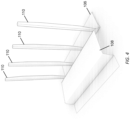
FIG. 4 shows a perspective view of the seat frame of the seating system; -
FIG. 5 shows the combination device being removed from beneath the seat assembly for emergency use; -
FIG. 6 shows a perspective view of the combination device in a partially inflated condition for use as an energy absorber; and -
FIG. 7 shows a perspective view of the combination device in a fully inflated condition for use as an emergency flotation device. - Before explaining at least one embodiment of the inventive concepts disclosed herein in detail, it is to be understood that the inventive concepts are not limited in their application to the details of construction and the arrangement of the components or steps or methodologies set forth in the following description or illustrated in the drawings. In the following detailed description of embodiments of the instant inventive concepts, numerous specific details are set forth in order to provide a more thorough understanding of the inventive concepts. However, it will be apparent to one of ordinary skill in the art having the benefit of the instant disclosure that the inventive concepts disclosed herein may be practiced without these specific details. In other instances, well-known features may not be described in detail to avoid unnecessarily complicating the instant disclosure. The inventive concepts disclosed herein are capable of other embodiments or of being practiced or carried out in various ways. Also, it is to be understood that the phraseology and terminology employed herein is for the purpose of description and should not be regarded as limiting.
- As used herein, a letter following a reference numeral is intended to reference an embodiment of the feature or element that may be similar, but not necessarily identical, to a previously described element or feature bearing the same reference numeral (e.g., 1, 1a, 1b). Such shorthand notations are used for purposes of convenience only, and should not be construed to limit the inventive concepts disclosed herein in any way unless expressly stated to the contrary.
- Further, unless expressly stated to the contrary, "or" refers to an inclusive or and not to an exclusive or. For example, a condition A or B is satisfied by anyone of the following: A is true (or present) and B is false (or not present), A is false (or not present) and B is true (or present), and both A and B are true (or present).
- In addition, use of the "a" or "an" are employed to describe elements and components of embodiments of the instant inventive concepts. This is done merely for convenience and to give a general sense of the inventive concepts, and "a" and "an" are intended to include one or at least one and the singular also includes the plural unless it is obvious that it is meant otherwise.
- Finally, as used herein any reference to "one embodiment," or "some embodiments" means that a particular element, feature, structure, or characteristic described in connection with the embodiment is included in at least one embodiment of the inventive concepts disclosed herein. The appearances of the phrase "in some embodiments" in various places in the specification are not necessarily all referring to the same embodiment, and embodiments of the inventive concepts disclosed may include one or more of the features expressly described or inherently present herein, or any combination of sub-combination of two or more such features, along with any other features which may not necessarily be expressly described or inherently present in the instant disclosure.
- Broadly speaking, embodiments of the inventive concepts disclosed herein are directed to a combination energy absorption and emergency flotation device compatible for use with a seating system, for instance a seating system employed in a rotary wing aircraft, and a seating system including the combination device employable in an aircraft, for instance a rotary wing aircraft. In some embodiments, the device may be further configured and operable for vibration mitigation in the associated seat structure for reducing or preventing vibrations from transferring to the seat occupant(s). Benefits of the embodiments described herein include an overall reduction in the number of necessary singular aircraft systems in an aircraft, thereby reducing weight and complexity, among other advantages.
-
FIG. 1 illustrates a perspective view of aseating system 100 for an aircraft or other conveyance. Theseating system 100 is particularly well suited for employment in rotary wing aircraft such as a helicopter. Theseating system 100 generally includes aseat frame 102 defining at least one seat position, and an adaptiveenergy absorption device 104 positioned beneath portions of theseat frame 102 and interacting therewith. As shown, portions of theseat frame 102 are mounted on afloor 106 installed in the aircraft. In some embodiments, thefloor 106 may include a raisedplatform 108 on which theenergy absorption device 104 is mounted. The raisedplatform 108 may serve to position the adaptiveenergy absorption device 104 elevated above the floor while providing an ergonomic seat height. - As shown, the
seat frame 102 includes a plurality of generally vertically oriented andparallel frame members 110 positioned in spaced-apart relation. Each group ofadjacent frame members 110 defines a seating position therebetween. As shown, the seat frame includes fourframe members 110 defining three seat positions. Embodiments of the invention can include a singular seat, seat groupings including two laterally adjacent seats, seat groupings including three laterally adjacent seats, and seat groupings including more than three laterally adjacent seats. Each seat position generally includes aseat back 112 and aseat pan 114 coupled to and supported by theframe members 110. In some embodiment, the seat back 112 and the seat pan may be independently coupled to theframe members 110. In other embodiments, the seat back 112 and theseat pan 114 may be coupled together and one or both elements coupled to theframe members 110. Theseat frame 102 is compatible with seat back recline and seat pan tilt mechanisms operable for adjusting the seating position for enhanced comfort. Each seat position may optionally include aheadrest 116 mounted to the seat back 112, which may or may not be adjustable. Although not shown, each seat position may be equipped with one or more deployable or fixed armrests, and a single armrest may be shared between laterally adjacent seats. - Each seat is preferably equipped with a
passenger restraint 118. Eachpassenger restraint 118 may include a lap belt and at least one shoulder belt configured as a multi-point harness, for instance the 5-point harness as shown or optionally a 3-point harness. The lap belt portion of thepassenger restraint 118 may anchor to seatpan frame members 120 coupled to the generallyvertical frame members 110. In some embodiments, eachpassenger restraint 118 may be equipped with at least one pretensioner and the shoulder harness may include an inflatable element. - Each
seat pan 114 is pivotally coupled to the seatpan frame members 120 to allow pivoting movement between a raised and a lowered seat pan position. In some embodiments, the plurality of seat pans 114 may be coupled together. In an alternative embodiment each of the plurality of seat pans 114 are translatably coupled to theframe members 110 to allow vertical translation. Theenergy absorption device 104 is disposed beneath theseat pan 114 in embodiments including a singular seat position, and beneath the seat pans 114 in embodiments including two or more laterally adjacent seat positions. - Referring to
FIG. 2 , theenergy absorption device 104 is preferably a singular device that extends continuously across the one or more seat positions. As shown, the adaptiveenergy absorption device 104 is a singular device extending across all three seat positions and includes a plurality of inflatableelastic bladders elastic bladders bladder 122a is positioned proximate a bottom of the seat pan or pans 114, a 'bottom'bladder 122c is positioned proximate theplatform 108 orfloor 106, and a 'middle'bladder 122b positioned between the 'top'bladder 122a and the 'bottom' bladder 112c. Other configurations of the adaptiveenergy absorption device 104 may include, but are not limited to, two or more inflatable elastic bladders arranged in a predetermined configuration. - In some embodiments, the adaptive
energy absorption device 104 has an annular shape, although other shaped are envisioned. As shown, the adaptiveenergy absorption device 104 has a footprint that generally corresponds to the length and width dimensions of the seat positions of theseat frame 102, collectively. Thus, the adaptiveenergy absorption device 104 extends generally from one lateral extent of oneseat pan 114 to the opposing lateral extent of the opposingseat pan 114, and from a forward extent of the seat pans 114 to an aft extent of the seat pans 114. The height of the adaptiveenergy absorption device 104 in an at least partially inflated state corresponds to a distance between thefloor 106 orplatform 108 to a bottom of the seat pans 114. The adaptiveenergy absorption device 104 substantially fills the space between the bottom of the seat pans 114 and the top of thefloor 106 orplatform 108 such that the adaptiveenergy absorption device 104 is in direct physical contact with each of thefloor 106 orplatform 108 and the seat pan(s) 114 to provide energy absorption functionality and/or vibration mitigation functionality as discussed further below. - The adaptive
energy absorption device 104 is fluidly coupled with afluid supply source 124 fluidly coupled to the at least one inflatableelastic bladder fluid supply source 124 is operable for outputting a positive flow of fluid to the at least one inflatableelastic bladder fluid supply source 124 may be disposed within an interior portion defined by the adaptiveenergy absorption device 104 in an attached state or a detached state. In some embodiments, thefluid supply source 124 may be fluidly coupled to the at least oneinflatable bladder energy absorption device 104 is utilized as a flotation device, as discussed further below. - Referring to
FIG. 3 , thefluid supply source 124 may be communicatively coupled with acontroller 126 operable for receiving an input signal and generating a command signal in response to the input signal for instructing thefluid supply source 124 to supply fluid to the adaptiveenergy absorption device 104. In some embodiments, thecontroller 126 is operable for activating thefluid supply source 124 to maintain a predetermined fluid pressure in the adaptiveenergy absorption device 104. - The adaptive
energy absorption device 104 includes at least onerelief constrictor valve 128 disposed between adjacent ones of the plurality of inflatable elastic bladders. For example, responsive to pressure applied to the adaptiveenergy absorption device 104 from movement of the at least oneseat pan 114, for instance in the case of extreme vehicle movement, fluid disposed in the 'top' inflatableelastic bladder 122a may transfer to the 'middle' inflatableelastic bladder 122b via the at least one relief constructor valve disposed between and fluidly coupled to the adjacent bladders. Upon removal of the applied force, the fluid may be allowed to return the 'top' inflatableelastic bladder 122a to reset for the next energy impact attenuation event.Relief constrictor valves 128 may be disposed in any position and between any adjacent layers for allowing fluid passage and return between adjacent inflatable elastic bladders in the respective presence and absence of force applied to the adaptiveenergy absorption device 104. - The adaptive
energy absorption device 104 may further include at least onepressure relief valve 130 disposed in at least one of the inflatableelastic bladders elastic bladders energy absorption device 104, beyond a predetermined amount depending on the pre-charge pressure in the at least one of the inflatableelastic bladders - Referring to
FIG. 4 , a non-limiting example of parallelseat frame members 110, their respective coupling to thefloor 106, and their positional relationship to theplatform 108 is shown. As shown, theframe members 110 define the plurality of seat positions and their positional relationship relative to theforward platform 108. - Referring to
FIG. 5 , the adaptiveenergy absorption device 104 is detached from theseat frame 102 such that the adaptiveenergy absorption device 104 can be removed as needed for use as an emergency flotation device in the event of a water landing/crash. In the operative position disposed beneath the seat pan(s), the adaptiveenergy absorption device 104 serves to absorb impact energy from the seat pan(s) and/or reduce or prevent vibrations from transferring to the seat occupant via direct physical contact with the seat pan(s) as discussed above. The adaptiveenergy absorption device 104 can be removed by pulling the device from beneath the seat, for instance in a forward or lateral direction relative to the seat positions, to remove the device from the aircraft. - Referring to
FIG. 6 , the adaptiveenergy absorption device 104 is shown removed from the seat assembly and in a partially inflated condition for use as the impact energy attenuation and/or vibration mitigation device. In the partially inflated state, thedevice 104 has a shape generally corresponding to the shape of the seat pans, collectively. Referring toFIG. 7 , the adaptiveenergy absorption device 104 is shown in a fully inflated condition for use as an emergency flotation device, for instance a life raft. As compared to the partially inflated condition, the fully inflated condition expands the footprint of the device to form a life raft. The life raft may include an attached floor that expands in the fully inflated condition. Theair supply 124 may or may not remain fluidly coupled to the adaptiveenergy absorption device 104 after removal from beath the seat pans 114. In some embodiments, theair supply 124 is configured to inflate the adaptiveenergy absorption device 104 via the pressurized gas contained therein when activated.
Claims (9)
- A seating system (100) for an aircraft, comprising:a seat frame (102) configured to be mounted to a floor (106) of the aircraft and defining at least one seat position, each seat position including a seat back (112) and a seat pan (114) coupled to the seat frame;an adaptive energy absorption device (104) disposed beneath the seat pan of the at least one seat position, the adaptive energy absorption device comprising a plurality of fluidly coupled inflatable elastic bladders (122a-c) and at least one constrictor valve (128) for allowing fluid to flow from one of the plurality of inflatable elastic bladders in response to predetermined pressure on the adaptive energy absorption device from the seat pan of the at least one seat position; anda fluid supply source (124) fluidly coupled to at least one of the plurality of inflatable elastic bladders operable for outputting a positive flow of fluid to the at least one inflatable elastic bladder; characterized in that:the adaptive energy absorption device (104) is detached from the seat frame (102) to allow removal from beneath the seat pan (114) of the at least one seat position for use as an emergency flotation device; andthe seat pan (114) is pivotally and/or translatably coupled to the seat frame (102) and the adaptive energy absorption device (104) is configured to be positioned in direct physical contact with the floor (106) and the seat pan (114) of the at least one seat position to provide energy absorption functionality.
- The seating system according to claim 1, wherein the seat frame (102) defines at least two laterally adjacent seat positions and the adaptive energy absorption device (104) spans continuously across the at least two laterally adjacent seat positions.
- The seating system according to claim 1 or 2, wherein the plurality of fluidly coupled inflatable elastic bladders (122a-c) are arranged to form a vertical stack.
- The seating system according to any preceding claim, wherein the at least one constrictor valve (128) is disposed between fluidly coupled adjacent ones of the plurality of inflatable elastic bladders (122a-c) to allow fluid to flow between the fluidly coupled adjacent ones of the plurality of inflatable elastic bladders (122a-c).
- The seating system according to any preceding claim, wherein the at least one constrictor valve (128) is disposed in one of the plurality of inflatable elastic bladders (122a-c) to allow fluid escape out of the adaptive energy absorption device (104).
- The seating system according to any preceding claim, further comprising a controller (126) communicatively coupled to the fluid supply source (124) operable for activating the fluid supply source (124) to output fluid to the adaptive energy absorption device (104) to maintain a predetermined fluid pressure in the adaptive energy absorption device (104).
- The seating system according to any preceding claim, wherein fluid supplied by the fluid supply source (124) is helium.
- The seating system according to any preceding claim, wherein the seat frame (102) defines a plurality of laterally adjacent seat positions, and wherein the seat pans (114) of the laterally adjacent seat positions are coupled together.
- The seating system according to any preceding claim, wherein the adaptive energy absorption device (104) is configured to be expandable from a partially inflated condition when disposed beneath the seat pan (114) of the at least one seat position to a fully inflated condition when removed from beneath the seat pan (114) of the at least one seat position for use as the emergency flotation device.
Applications Claiming Priority (1)
| Application Number | Priority Date | Filing Date | Title |
|---|---|---|---|
| US17/234,998 US11708164B2 (en) | 2021-04-20 | 2021-04-20 | Combination energy impact attenuation, vibration mitigation and flotation device for aircraft seating applications |
Publications (2)
| Publication Number | Publication Date |
|---|---|
| EP4079637A1 EP4079637A1 (en) | 2022-10-26 |
| EP4079637B1 true EP4079637B1 (en) | 2024-08-21 |
Family
ID=81307804
Family Applications (1)
| Application Number | Title | Priority Date | Filing Date |
|---|---|---|---|
| EP22168219.8A Active EP4079637B1 (en) | 2021-04-20 | 2022-04-13 | Combination energy impact attenuation, vibration mitigation and flotation device for aircraft seating applications |
Country Status (2)
| Country | Link |
|---|---|
| US (1) | US11708164B2 (en) |
| EP (1) | EP4079637B1 (en) |
Family Cites Families (19)
| Publication number | Priority date | Publication date | Assignee | Title |
|---|---|---|---|---|
| GB1465698A (en) * | 1973-07-02 | 1977-02-23 | Westland Aircraft Ltd | Seats |
| US4204657A (en) * | 1978-06-30 | 1980-05-27 | Graham Edward F | Life and weight saving aircraft seat structure |
| US4627587A (en) | 1984-07-18 | 1986-12-09 | Diane R. McCutchan | Airplane seat with convertible flotation-cushion system |
| US4736932A (en) * | 1985-06-18 | 1988-04-12 | The United States Of America As Represented By The Administrator Of The National Aeronautics And Space Administration | Segmented tubular cushion springs and spring assembly |
| GB8614813D0 (en) * | 1986-06-18 | 1986-07-23 | Fpt Industries | Inflatable seat |
| US5658050A (en) | 1996-01-11 | 1997-08-19 | Milsco Manufacturing Company | Vehicle seat with inflatable bladder |
| GB9824704D0 (en) * | 1998-11-12 | 1999-01-06 | Mgr Foamtex Ltd | Aircraft seats |
| US6203105B1 (en) | 1999-08-20 | 2001-03-20 | Mccord Winn Textron Inc. | Vehicle impact responsive multiple bladder seating and headrest system and method |
| US20020185905A1 (en) * | 2000-09-18 | 2002-12-12 | Cassinelli Jorge A. | Cushions and foam material for use in aircraft seats, and associated methods of manufacture |
| US7232001B2 (en) | 2004-08-24 | 2007-06-19 | Sam Hakki | Collision air bag and flotation system |
| US7954752B2 (en) | 2005-11-09 | 2011-06-07 | Bell Helicopter Textron Inc. | Crash attenuation system for aircraft |
| WO2011014153A1 (en) | 2009-07-27 | 2011-02-03 | Bell Helicopter Textron Inc. | Aircraft occupant protection system |
| JP5105289B2 (en) * | 2008-08-04 | 2012-12-26 | 独立行政法人 宇宙航空研究開発機構 | Shock absorber for aircraft seat |
| US8181292B1 (en) * | 2009-09-15 | 2012-05-22 | The United States Of America As Represented By The Secretary Of The Air Force | Seat cushion |
| KR20110007920U (en) | 2010-02-03 | 2011-08-10 | 주식회사 스마트에어 챔버 | Electric seat air seat |
| WO2012064926A1 (en) | 2010-11-10 | 2012-05-18 | Weber Aircraft Llc | Inflatable passenger seat assembly |
| FR3048413A1 (en) | 2016-03-03 | 2017-09-08 | Airbus Helicopters | AIRCRAFT HAVING A FLOATABILITY SYSTEM, AND FLOATABILITY METHOD |
| US11059589B2 (en) | 2018-08-03 | 2021-07-13 | B/E Aerospace, Inc. | Three-place berthing aircraft divan |
| CN110606207B (en) | 2019-10-11 | 2024-07-09 | 航宇救生装备有限公司 | Helicopter crash-resistant seat with multiple protection integration |
-
2021
- 2021-04-20 US US17/234,998 patent/US11708164B2/en active Active
-
2022
- 2022-04-13 EP EP22168219.8A patent/EP4079637B1/en active Active
Also Published As
| Publication number | Publication date |
|---|---|
| US11708164B2 (en) | 2023-07-25 |
| EP4079637A1 (en) | 2022-10-26 |
| US20220332424A1 (en) | 2022-10-20 |
Similar Documents
| Publication | Publication Date | Title |
|---|---|---|
| CA2628380C (en) | Crash attenuation system for aircraft | |
| US8418957B2 (en) | Crash attenuation system for aircraft | |
| US3603535A (en) | Lifesaving support system | |
| CA2702547C (en) | Crash attenuation system for aircraft | |
| US8588996B2 (en) | Aircraft occupant protection system | |
| US8181292B1 (en) | Seat cushion | |
| JP5128785B2 (en) | Aircraft safety seat | |
| CA2767796C (en) | Aircraft occupant protection system | |
| CA2767797C (en) | Aircraft occupant protection system | |
| JP5105289B2 (en) | Shock absorber for aircraft seat | |
| JP4889622B2 (en) | Vehicle seat and airbag device | |
| EP4079637A1 (en) | Combination energy impact attenuation, vibration mitigation and flotation device for aircraft seating applications | |
| GB2228867A (en) | Inflatable seats | |
| ITMI20100006U1 (en) | ENERGY ABSORBER DEVICE FOR A HELICOPTER SEAT |
Legal Events
| Date | Code | Title | Description |
|---|---|---|---|
| PUAI | Public reference made under article 153(3) epc to a published international application that has entered the european phase |
Free format text: ORIGINAL CODE: 0009012 |
|
| STAA | Information on the status of an ep patent application or granted ep patent |
Free format text: STATUS: THE APPLICATION HAS BEEN PUBLISHED |
|
| AK | Designated contracting states |
Kind code of ref document: A1 Designated state(s): AL AT BE BG CH CY CZ DE DK EE ES FI FR GB GR HR HU IE IS IT LI LT LU LV MC MK MT NL NO PL PT RO RS SE SI SK SM TR |
|
| STAA | Information on the status of an ep patent application or granted ep patent |
Free format text: STATUS: REQUEST FOR EXAMINATION WAS MADE |
|
| 17P | Request for examination filed |
Effective date: 20230425 |
|
| RBV | Designated contracting states (corrected) |
Designated state(s): AL AT BE BG CH CY CZ DE DK EE ES FI FR GB GR HR HU IE IS IT LI LT LU LV MC MK MT NL NO PL PT RO RS SE SI SK SM TR |
|
| P01 | Opt-out of the competence of the unified patent court (upc) registered |
Effective date: 20230922 |
|
| GRAP | Despatch of communication of intention to grant a patent |
Free format text: ORIGINAL CODE: EPIDOSNIGR1 |
|
| STAA | Information on the status of an ep patent application or granted ep patent |
Free format text: STATUS: GRANT OF PATENT IS INTENDED |
|
| RIC1 | Information provided on ipc code assigned before grant |
Ipc: B63C 9/04 20060101ALI20240301BHEP Ipc: B60N 2/42 20060101ALI20240301BHEP Ipc: B64D 25/04 20060101ALI20240301BHEP Ipc: B64D 11/06 20060101AFI20240301BHEP |
|
| INTG | Intention to grant announced |
Effective date: 20240320 |
|
| GRAS | Grant fee paid |
Free format text: ORIGINAL CODE: EPIDOSNIGR3 |
|
| GRAA | (expected) grant |
Free format text: ORIGINAL CODE: 0009210 |
|
| STAA | Information on the status of an ep patent application or granted ep patent |
Free format text: STATUS: THE PATENT HAS BEEN GRANTED |
|
| AK | Designated contracting states |
Kind code of ref document: B1 Designated state(s): AL AT BE BG CH CY CZ DE DK EE ES FI FR GB GR HR HU IE IS IT LI LT LU LV MC MK MT NL NO PL PT RO RS SE SI SK SM TR |
|
| REG | Reference to a national code |
Ref country code: GB Ref legal event code: FG4D |
|
| REG | Reference to a national code |
Ref country code: CH Ref legal event code: EP |
|
| REG | Reference to a national code |
Ref country code: IE Ref legal event code: FG4D |
|
| REG | Reference to a national code |
Ref country code: DE Ref legal event code: R096 Ref document number: 602022005416 Country of ref document: DE |
|
| REG | Reference to a national code |
Ref country code: LT Ref legal event code: MG9D |
|
| REG | Reference to a national code |
Ref country code: NL Ref legal event code: MP Effective date: 20240821 |
|
| PG25 | Lapsed in a contracting state [announced via postgrant information from national office to epo] |
Ref country code: NO Free format text: LAPSE BECAUSE OF FAILURE TO SUBMIT A TRANSLATION OF THE DESCRIPTION OR TO PAY THE FEE WITHIN THE PRESCRIBED TIME-LIMIT Effective date: 20241121 |
|
| REG | Reference to a national code |
Ref country code: AT Ref legal event code: MK05 Ref document number: 1715281 Country of ref document: AT Kind code of ref document: T Effective date: 20240821 |
|
| PG25 | Lapsed in a contracting state [announced via postgrant information from national office to epo] |
Ref country code: FI Free format text: LAPSE BECAUSE OF FAILURE TO SUBMIT A TRANSLATION OF THE DESCRIPTION OR TO PAY THE FEE WITHIN THE PRESCRIBED TIME-LIMIT Effective date: 20240821 Ref country code: NL Free format text: LAPSE BECAUSE OF FAILURE TO SUBMIT A TRANSLATION OF THE DESCRIPTION OR TO PAY THE FEE WITHIN THE PRESCRIBED TIME-LIMIT Effective date: 20240821 Ref country code: PL Free format text: LAPSE BECAUSE OF FAILURE TO SUBMIT A TRANSLATION OF THE DESCRIPTION OR TO PAY THE FEE WITHIN THE PRESCRIBED TIME-LIMIT Effective date: 20240821 Ref country code: GR Free format text: LAPSE BECAUSE OF FAILURE TO SUBMIT A TRANSLATION OF THE DESCRIPTION OR TO PAY THE FEE WITHIN THE PRESCRIBED TIME-LIMIT Effective date: 20241122 Ref country code: PT Free format text: LAPSE BECAUSE OF FAILURE TO SUBMIT A TRANSLATION OF THE DESCRIPTION OR TO PAY THE FEE WITHIN THE PRESCRIBED TIME-LIMIT Effective date: 20241223 |
|
| PG25 | Lapsed in a contracting state [announced via postgrant information from national office to epo] |
Ref country code: BG Free format text: LAPSE BECAUSE OF FAILURE TO SUBMIT A TRANSLATION OF THE DESCRIPTION OR TO PAY THE FEE WITHIN THE PRESCRIBED TIME-LIMIT Effective date: 20240821 |
|
| PG25 | Lapsed in a contracting state [announced via postgrant information from national office to epo] |
Ref country code: LV Free format text: LAPSE BECAUSE OF FAILURE TO SUBMIT A TRANSLATION OF THE DESCRIPTION OR TO PAY THE FEE WITHIN THE PRESCRIBED TIME-LIMIT Effective date: 20240821 |
|
| PG25 | Lapsed in a contracting state [announced via postgrant information from national office to epo] |
Ref country code: IS Free format text: LAPSE BECAUSE OF FAILURE TO SUBMIT A TRANSLATION OF THE DESCRIPTION OR TO PAY THE FEE WITHIN THE PRESCRIBED TIME-LIMIT Effective date: 20241221 Ref country code: AT Free format text: LAPSE BECAUSE OF FAILURE TO SUBMIT A TRANSLATION OF THE DESCRIPTION OR TO PAY THE FEE WITHIN THE PRESCRIBED TIME-LIMIT Effective date: 20240821 |
|
| PG25 | Lapsed in a contracting state [announced via postgrant information from national office to epo] |
Ref country code: HR Free format text: LAPSE BECAUSE OF FAILURE TO SUBMIT A TRANSLATION OF THE DESCRIPTION OR TO PAY THE FEE WITHIN THE PRESCRIBED TIME-LIMIT Effective date: 20240821 |
|
| PG25 | Lapsed in a contracting state [announced via postgrant information from national office to epo] |
Ref country code: RS Free format text: LAPSE BECAUSE OF FAILURE TO SUBMIT A TRANSLATION OF THE DESCRIPTION OR TO PAY THE FEE WITHIN THE PRESCRIBED TIME-LIMIT Effective date: 20241121 Ref country code: ES Free format text: LAPSE BECAUSE OF FAILURE TO SUBMIT A TRANSLATION OF THE DESCRIPTION OR TO PAY THE FEE WITHIN THE PRESCRIBED TIME-LIMIT Effective date: 20240821 |
|
| PG25 | Lapsed in a contracting state [announced via postgrant information from national office to epo] |
Ref country code: RS Free format text: LAPSE BECAUSE OF FAILURE TO SUBMIT A TRANSLATION OF THE DESCRIPTION OR TO PAY THE FEE WITHIN THE PRESCRIBED TIME-LIMIT Effective date: 20241121 Ref country code: PT Free format text: LAPSE BECAUSE OF FAILURE TO SUBMIT A TRANSLATION OF THE DESCRIPTION OR TO PAY THE FEE WITHIN THE PRESCRIBED TIME-LIMIT Effective date: 20241223 Ref country code: PL Free format text: LAPSE BECAUSE OF FAILURE TO SUBMIT A TRANSLATION OF THE DESCRIPTION OR TO PAY THE FEE WITHIN THE PRESCRIBED TIME-LIMIT Effective date: 20240821 Ref country code: NO Free format text: LAPSE BECAUSE OF FAILURE TO SUBMIT A TRANSLATION OF THE DESCRIPTION OR TO PAY THE FEE WITHIN THE PRESCRIBED TIME-LIMIT Effective date: 20241121 Ref country code: NL Free format text: LAPSE BECAUSE OF FAILURE TO SUBMIT A TRANSLATION OF THE DESCRIPTION OR TO PAY THE FEE WITHIN THE PRESCRIBED TIME-LIMIT Effective date: 20240821 Ref country code: LV Free format text: LAPSE BECAUSE OF FAILURE TO SUBMIT A TRANSLATION OF THE DESCRIPTION OR TO PAY THE FEE WITHIN THE PRESCRIBED TIME-LIMIT Effective date: 20240821 Ref country code: IS Free format text: LAPSE BECAUSE OF FAILURE TO SUBMIT A TRANSLATION OF THE DESCRIPTION OR TO PAY THE FEE WITHIN THE PRESCRIBED TIME-LIMIT Effective date: 20241221 Ref country code: HR Free format text: LAPSE BECAUSE OF FAILURE TO SUBMIT A TRANSLATION OF THE DESCRIPTION OR TO PAY THE FEE WITHIN THE PRESCRIBED TIME-LIMIT Effective date: 20240821 Ref country code: GR Free format text: LAPSE BECAUSE OF FAILURE TO SUBMIT A TRANSLATION OF THE DESCRIPTION OR TO PAY THE FEE WITHIN THE PRESCRIBED TIME-LIMIT Effective date: 20241122 Ref country code: FI Free format text: LAPSE BECAUSE OF FAILURE TO SUBMIT A TRANSLATION OF THE DESCRIPTION OR TO PAY THE FEE WITHIN THE PRESCRIBED TIME-LIMIT Effective date: 20240821 Ref country code: ES Free format text: LAPSE BECAUSE OF FAILURE TO SUBMIT A TRANSLATION OF THE DESCRIPTION OR TO PAY THE FEE WITHIN THE PRESCRIBED TIME-LIMIT Effective date: 20240821 Ref country code: BG Free format text: LAPSE BECAUSE OF FAILURE TO SUBMIT A TRANSLATION OF THE DESCRIPTION OR TO PAY THE FEE WITHIN THE PRESCRIBED TIME-LIMIT Effective date: 20240821 Ref country code: AT Free format text: LAPSE BECAUSE OF FAILURE TO SUBMIT A TRANSLATION OF THE DESCRIPTION OR TO PAY THE FEE WITHIN THE PRESCRIBED TIME-LIMIT Effective date: 20240821 |
|
| PG25 | Lapsed in a contracting state [announced via postgrant information from national office to epo] |
Ref country code: DK Free format text: LAPSE BECAUSE OF FAILURE TO SUBMIT A TRANSLATION OF THE DESCRIPTION OR TO PAY THE FEE WITHIN THE PRESCRIBED TIME-LIMIT Effective date: 20240821 Ref country code: SM Free format text: LAPSE BECAUSE OF FAILURE TO SUBMIT A TRANSLATION OF THE DESCRIPTION OR TO PAY THE FEE WITHIN THE PRESCRIBED TIME-LIMIT Effective date: 20240821 Ref country code: RO Free format text: LAPSE BECAUSE OF FAILURE TO SUBMIT A TRANSLATION OF THE DESCRIPTION OR TO PAY THE FEE WITHIN THE PRESCRIBED TIME-LIMIT Effective date: 20240821 |
|
| PG25 | Lapsed in a contracting state [announced via postgrant information from national office to epo] |
Ref country code: EE Free format text: LAPSE BECAUSE OF FAILURE TO SUBMIT A TRANSLATION OF THE DESCRIPTION OR TO PAY THE FEE WITHIN THE PRESCRIBED TIME-LIMIT Effective date: 20240821 |
|
| PG25 | Lapsed in a contracting state [announced via postgrant information from national office to epo] |
Ref country code: CZ Free format text: LAPSE BECAUSE OF FAILURE TO SUBMIT A TRANSLATION OF THE DESCRIPTION OR TO PAY THE FEE WITHIN THE PRESCRIBED TIME-LIMIT Effective date: 20240821 |
|
| PG25 | Lapsed in a contracting state [announced via postgrant information from national office to epo] |
Ref country code: SK Free format text: LAPSE BECAUSE OF FAILURE TO SUBMIT A TRANSLATION OF THE DESCRIPTION OR TO PAY THE FEE WITHIN THE PRESCRIBED TIME-LIMIT Effective date: 20240821 Ref country code: IT Free format text: LAPSE BECAUSE OF FAILURE TO SUBMIT A TRANSLATION OF THE DESCRIPTION OR TO PAY THE FEE WITHIN THE PRESCRIBED TIME-LIMIT Effective date: 20240821 |
|
| REG | Reference to a national code |
Ref country code: DE Ref legal event code: R097 Ref document number: 602022005416 Country of ref document: DE |
|
| PLBE | No opposition filed within time limit |
Free format text: ORIGINAL CODE: 0009261 |
|
| STAA | Information on the status of an ep patent application or granted ep patent |
Free format text: STATUS: NO OPPOSITION FILED WITHIN TIME LIMIT |
|
| PGFP | Annual fee paid to national office [announced via postgrant information from national office to epo] |
Ref country code: DE Payment date: 20250319 Year of fee payment: 4 |
|
| 26N | No opposition filed |
Effective date: 20250522 |
|
| PG25 | Lapsed in a contracting state [announced via postgrant information from national office to epo] |
Ref country code: SE Free format text: LAPSE BECAUSE OF FAILURE TO SUBMIT A TRANSLATION OF THE DESCRIPTION OR TO PAY THE FEE WITHIN THE PRESCRIBED TIME-LIMIT Effective date: 20240821 |
|
| REG | Reference to a national code |
Ref country code: CH Ref legal event code: H13 Free format text: ST27 STATUS EVENT CODE: U-0-0-H10-H13 (AS PROVIDED BY THE NATIONAL OFFICE) Effective date: 20251125 |
|
| PG25 | Lapsed in a contracting state [announced via postgrant information from national office to epo] |
Ref country code: LU Free format text: LAPSE BECAUSE OF NON-PAYMENT OF DUE FEES Effective date: 20250413 |
|
| PG25 | Lapsed in a contracting state [announced via postgrant information from national office to epo] |
Ref country code: MC Free format text: LAPSE BECAUSE OF FAILURE TO SUBMIT A TRANSLATION OF THE DESCRIPTION OR TO PAY THE FEE WITHIN THE PRESCRIBED TIME-LIMIT Effective date: 20240821 |
|
| REG | Reference to a national code |
Ref country code: BE Ref legal event code: MM Effective date: 20250430 |
|
| PG25 | Lapsed in a contracting state [announced via postgrant information from national office to epo] |
Ref country code: BE Free format text: LAPSE BECAUSE OF NON-PAYMENT OF DUE FEES Effective date: 20250430 |
|
| PG25 | Lapsed in a contracting state [announced via postgrant information from national office to epo] |
Ref country code: CH Free format text: LAPSE BECAUSE OF NON-PAYMENT OF DUE FEES Effective date: 20250430 |
|
| PGFP | Annual fee paid to national office [announced via postgrant information from national office to epo] |
Ref country code: GB Payment date: 20260319 Year of fee payment: 5 |
|
| PG25 | Lapsed in a contracting state [announced via postgrant information from national office to epo] |
Ref country code: IE Free format text: LAPSE BECAUSE OF NON-PAYMENT OF DUE FEES Effective date: 20250413 |
|
| PGFP | Annual fee paid to national office [announced via postgrant information from national office to epo] |
Ref country code: FR Payment date: 20260320 Year of fee payment: 5 |