EP4079125B1 - Work vehicle - Google Patents
Work vehicle Download PDFInfo
- Publication number
- EP4079125B1 EP4079125B1 EP20901456.2A EP20901456A EP4079125B1 EP 4079125 B1 EP4079125 B1 EP 4079125B1 EP 20901456 A EP20901456 A EP 20901456A EP 4079125 B1 EP4079125 B1 EP 4079125B1
- Authority
- EP
- European Patent Office
- Prior art keywords
- work
- obstacle
- vehicle body
- detecting device
- working
- Prior art date
- Legal status (The legal status is an assumption and is not a legal conclusion. Google has not performed a legal analysis and makes no representation as to the accuracy of the status listed.)
- Active
Links
Images







Classifications
-
- B—PERFORMING OPERATIONS; TRANSPORTING
- B60—VEHICLES IN GENERAL
- B60W—CONJOINT CONTROL OF VEHICLE SUB-UNITS OF DIFFERENT TYPE OR DIFFERENT FUNCTION; CONTROL SYSTEMS SPECIALLY ADAPTED FOR HYBRID VEHICLES; ROAD VEHICLE DRIVE CONTROL SYSTEMS FOR PURPOSES NOT RELATED TO THE CONTROL OF A PARTICULAR SUB-UNIT
- B60W50/00—Details of control systems for road vehicle drive control not related to the control of a particular sub-unit, e.g. process diagnostic or vehicle driver interfaces
-
- G—PHYSICS
- G05—CONTROLLING; REGULATING
- G05D—SYSTEMS FOR CONTROLLING OR REGULATING NON-ELECTRIC VARIABLES
- G05D1/00—Control of position, course, altitude or attitude of land, water, air or space vehicles, e.g. using automatic pilots
- G05D1/02—Control of position or course in two dimensions
- G05D1/021—Control of position or course in two dimensions specially adapted to land vehicles
- G05D1/0231—Control of position or course in two dimensions specially adapted to land vehicles using optical position detecting means
- G05D1/0238—Control of position or course in two dimensions specially adapted to land vehicles using optical position detecting means using obstacle or wall sensors
- G05D1/024—Control of position or course in two dimensions specially adapted to land vehicles using optical position detecting means using obstacle or wall sensors in combination with a laser
-
- A—HUMAN NECESSITIES
- A01—AGRICULTURE; FORESTRY; ANIMAL HUSBANDRY; HUNTING; TRAPPING; FISHING
- A01B—SOIL WORKING IN AGRICULTURE OR FORESTRY; PARTS, DETAILS, OR ACCESSORIES OF AGRICULTURAL MACHINES OR IMPLEMENTS, IN GENERAL
- A01B69/00—Steering of agricultural machines or implements; Guiding agricultural machines or implements on a desired track
- A01B69/001—Steering by means of optical assistance, e.g. television cameras
-
- A—HUMAN NECESSITIES
- A01—AGRICULTURE; FORESTRY; ANIMAL HUSBANDRY; HUNTING; TRAPPING; FISHING
- A01B—SOIL WORKING IN AGRICULTURE OR FORESTRY; PARTS, DETAILS, OR ACCESSORIES OF AGRICULTURAL MACHINES OR IMPLEMENTS, IN GENERAL
- A01B69/00—Steering of agricultural machines or implements; Guiding agricultural machines or implements on a desired track
- A01B69/007—Steering or guiding of agricultural vehicles, e.g. steering of the tractor to keep the plough in the furrow
- A01B69/008—Steering or guiding of agricultural vehicles, e.g. steering of the tractor to keep the plough in the furrow automatic
-
- A—HUMAN NECESSITIES
- A01—AGRICULTURE; FORESTRY; ANIMAL HUSBANDRY; HUNTING; TRAPPING; FISHING
- A01B—SOIL WORKING IN AGRICULTURE OR FORESTRY; PARTS, DETAILS, OR ACCESSORIES OF AGRICULTURAL MACHINES OR IMPLEMENTS, IN GENERAL
- A01B76/00—Parts, details or accessories of agricultural machines or implements, not provided for in groups A01B51/00 - A01B75/00
-
- B—PERFORMING OPERATIONS; TRANSPORTING
- B62—LAND VEHICLES FOR TRAVELLING OTHERWISE THAN ON RAILS
- B62D—MOTOR VEHICLES; TRAILERS
- B62D49/00—Tractors
- B62D49/06—Tractors adapted for multi-purpose use
-
- G—PHYSICS
- G05—CONTROLLING; REGULATING
- G05D—SYSTEMS FOR CONTROLLING OR REGULATING NON-ELECTRIC VARIABLES
- G05D1/00—Control of position, course, altitude or attitude of land, water, air or space vehicles, e.g. using automatic pilots
- G05D1/02—Control of position or course in two dimensions
- G05D1/021—Control of position or course in two dimensions specially adapted to land vehicles
- G05D1/0212—Control of position or course in two dimensions specially adapted to land vehicles with means for defining a desired trajectory
- G05D1/0214—Control of position or course in two dimensions specially adapted to land vehicles with means for defining a desired trajectory in accordance with safety or protection criteria, e.g. avoiding hazardous areas
-
- G—PHYSICS
- G05—CONTROLLING; REGULATING
- G05D—SYSTEMS FOR CONTROLLING OR REGULATING NON-ELECTRIC VARIABLES
- G05D1/00—Control of position, course, altitude or attitude of land, water, air or space vehicles, e.g. using automatic pilots
- G05D1/60—Intended control result
- G05D1/617—Safety or protection, e.g. defining protection zones around obstacles or avoiding hazards
-
- G—PHYSICS
- G05—CONTROLLING; REGULATING
- G05D—SYSTEMS FOR CONTROLLING OR REGULATING NON-ELECTRIC VARIABLES
- G05D1/00—Control of position, course, altitude or attitude of land, water, air or space vehicles, e.g. using automatic pilots
- G05D1/60—Intended control result
- G05D1/617—Safety or protection, e.g. defining protection zones around obstacles or avoiding hazards
- G05D1/622—Obstacle avoidance
-
- B—PERFORMING OPERATIONS; TRANSPORTING
- B60—VEHICLES IN GENERAL
- B60Y—INDEXING SCHEME RELATING TO ASPECTS CROSS-CUTTING VEHICLE TECHNOLOGY
- B60Y2200/00—Type of vehicle
- B60Y2200/20—Off-Road Vehicles
- B60Y2200/22—Agricultural vehicles
-
- G—PHYSICS
- G05—CONTROLLING; REGULATING
- G05D—SYSTEMS FOR CONTROLLING OR REGULATING NON-ELECTRIC VARIABLES
- G05D2105/00—Specific applications of the controlled vehicles
- G05D2105/15—Specific applications of the controlled vehicles for harvesting, sowing or mowing in agriculture or forestry
-
- G—PHYSICS
- G05—CONTROLLING; REGULATING
- G05D—SYSTEMS FOR CONTROLLING OR REGULATING NON-ELECTRIC VARIABLES
- G05D2107/00—Specific environments of the controlled vehicles
- G05D2107/20—Land use
- G05D2107/21—Farming, e.g. fields, pastures or barns
-
- G—PHYSICS
- G05—CONTROLLING; REGULATING
- G05D—SYSTEMS FOR CONTROLLING OR REGULATING NON-ELECTRIC VARIABLES
- G05D2109/00—Types of controlled vehicles
- G05D2109/10—Land vehicles
Definitions
- the present invention relates to a working vehicle such as a tractor.
- Patent document 1 Japanese Unexamined Patent Application Publication No. 2018-113937 is known as an automatic traveling working vehicle which travels while doing work along a travel route.
- the working vehicle (tractor) disclosed in Patent document 1 includes a vehicle body equipped with a working device, a work/travel control unit to control work/travel, a set of work/travel state detecting sensors to detect work/travel states thereof, at least one obstacle sensor to detect obstacles which hinder travel, an obstacle detecting unit to detect obstacles present within an obstacle monitoring area according to a sensor signal from the at least one obstacle sensor, and an obstacle monitoring area deciding unit to decide an obstacle monitoring area according to the work/travel states detected by the set of work/travel state detecting sensors.
- JP 2019 175048 A describes an automatic travel device of a work vehicle capable of efficiently monitoring an obstacle while reducing an electric power consumption measured by an obstacle sensor, in accordance with a travel state of the work vehicle on a target travel route, when the work vehicle is made to automatically travel along the target travel route.
- WO 2019/054277 A1 describes obstacle detection devices capable of reducing or preventing erroneous detection of an obstacle in an obstacle detection target area including both a short-distance area that exhibits an irregular disturbance in the sound pressure distribution and a long-distance area that exhibits a uniform sound pressure distribution.
- JP 2018 174890 A describes a work vehicle capable of avoiding contact of an obstacle with a rear part of a vehicle body.
- the obstacle monitoring area is decided according to the work/travel states.
- the obstacle monitoring area is decided only according to the working state during forward travel, and a rear area in which the working device is attached is not taken into consideration. That is, in reality, the obstacle monitoring area is not changed according to the working device of Patent document 1 or not changed according to work.
- an object of the present invention is to provide a working vehicle which makes it possible to improve workability while efficiently performing automatic travel by changing information regarding detection of obstacles behind the vehicle body.
- the present invention is defined by the independent claim. Preferred examples are defined in the dependent claims.
- the present invention makes it possible to improve workability while achieving efficient automatic travel by changing information regarding detection of obstacles behind the vehicle body.
- FIGS. 1 and 2 illustrate an embodiment of a working vehicle 1 according to the present invention.
- the present embodiment is discussed based on the assumption that the working vehicle 1 is a tractor 1.
- the working vehicle 1 is not limited to a tractor, and may be some other working vehicle (agricultural vehicle) such as a combine or a rice transplanter.
- the front of the tractor 1 as seen from an operator seated on the operator's seat 6 is referred to as "front”
- the rear of the tractor 1 as seen from the operator is referred to as “rear”
- the left side of the tractor 1 as seen from the operator is referred to as “left”
- the right side of the tractor 1 as seen from the operator is referred to as "right”.
- a direction indicated by arrow D is referred to as a vehicle width direction.
- a vehicle width direction going away from the widthwise center of the vehicle is referred to as a “vehicle width outward direction”
- a vehicle width direction approaching the widthwise center of the vehicle is referred to as a "vehicle width inward direction”.
- the tractor 1 includes a vehicle body 2, a traveling device 3, a prime mover 4, and a transmission 5.
- the traveling device 3 supports the vehicle body 2 such that the vehicle body 2 can travel, and includes front wheel(s) 3F and rear wheel(s) 3R.
- the front wheel(s) 3F and the rear wheel(s) 3R in the present embodiment are in the form of tires, but may be in the form of crawlers.
- the prime mover 4 is an engine (diesel engine, gasoline engine), an electric motor, and/or the like.
- the transmission 5 is capable of changing driving forces for the traveling device 3 by changing speed stages and switching the traveling state of the traveling device 3 between forward and rearward traveling states.
- the vehicle body 2 is equipped with the operator's seat 6.
- An operator's seat protector 7 is provided around the operator's seat 6.
- the operator's seat protector 7 is a cabin which surrounds the front, rear, upper, and lateral sides of the operator's seat 6 to protect the operator's seat 6, but may be a ROPS or the like.
- a linkage 8 is provided at the rear of the vehicle body 2.
- the linkage 8 is a swinging drawbar which connects a working device 9 and the vehicle body 2 but does not raise or lower the working device 9, a raising/lowering device which is composed of a three-point linkage or the like and which raises and lowers the working device 9, or the like.
- the linkage is configured to have the working device (implement or the like) 9 detachably attached thereto.
- the working device 9 is, for example, a cultivator for cultivation, a fertilizer spreader for spreading fertilizer, an agricultural chemical spreader for spreading agricultural chemicals, a harvester for harvesting, a mower for mowing grass or the like, a tedder for tedding grass or the like, a rake for raking grass or the like, a baler for baling grass or the like, or the like.
- the vehicle body 2 includes a vehicle body frame 10.
- the vehicle body frame 10 extends in a direction from the transmission 5 to the front, and supports a lower portion of the prime mover 4.
- a hood 13 is provided above the vehicle body frame 10.
- the hood 13 extends in a front-rear direction along the vehicle body frame 10.
- the hood 13 is disposed forward of a central portion of the operator's seat protector 7 in the vehicle width direction.
- the hood 13 includes a left side wall 13L provided on the left side, a right side wall 13R provided on the right side, and a top wall portion 13U which connects upper portions of the left side wall 13L and the right side wall 13R.
- the left side wall 13L, the right side wall 13R, and the top wall portion 13U define an engine room, and the engine room houses therein the prime mover 4, a cooling fan, a radiator, a battery, and/or the like.
- the front wheels 3F are disposed leftward of the left side wall 13L and rightward of the right side wall 13R, respectively.
- a weight 14 is provided forward of the hood 13, i.e., forward of the vehicle body frame 10.
- the weight 14 is attached to a weight bracket 15 provided at the front of the vehicle body 2.
- the weight bracket 15 is attached to a front portion of the vehicle body frame 10 with fastener(s) such as bolt(s).
- the weight 14 is surrounded and covered by a weight cover 16.
- the tractor 1 includes a steering unit 11.
- the steering unit 11 includes a steering wheel 11a, a rotation shaft (steering shaft) 11b which rotates as the steering wheel 11a rotates, and an assist mechanism (power steering mechanism) 11c to assist steering performed using the steering wheel 11a.
- the assist mechanism 11c includes a hydraulic pump 21, a control valve 22 supplied with hydraulic fluid discharged from the hydraulic pump 21, and a steering cylinder 23 which is caused to function by the control valve 22.
- the control valve 22 is a solenoid valve which functions based on a control signal.
- the control valve 22 is, for example, a three-way switching valve which achieves multi-position switching by movement of a spool or the like. The positions of the control valve 22 can also be switched by steering by the steering shaft 11b.
- the steering cylinder 23 is connected to arms (knuckle arms) 24 which change the orientation of the front wheels 3F.
- the steering wheel 11a upon operation of the steering wheel 11a, the position and the degree of opening of the control valve 22 change according to the steering wheel 11a, and the steering cylinder 23 extends or retracts leftward or rightward according to the position and the degree of opening of the control valve 22, making it possible to change the steering direction of the front wheels 3F.
- the foregoing steering unit 11 is an example, and a configuration of the steering unit 11 is not limited to that described above.
- the tractor 1 includes a position detecting device 20.
- the position detecting device 20 is attached to a front portion of a top plate of the cabin 7 via a mount 18. Note, however, that the location at which the position detecting device 20 is attached is not limited to that illustrated in FIGS. 1 and 2 , and the position detecting device 20 may be attached to the top plate of the cabin 7, some other location on the vehicle body 2, or the like location.
- the position detecting device 20 may be attached to the foregoing working device such as a cultivator.
- the position detecting device 20 is a device to detect the position thereof (measured position information including latitude and longitude) using a satellite positioning system. Specifically, the position detecting device 20 receives signals (positions of positioning satellites, time of transmission, correction information, and/or the like) from positioning satellites, and detects the position (latitude and longitude) on the basis of the received signals. The position detecting device 20 may detect, as the position thereof (latitude and longitude), a position corrected with a signal such as a correction signal from a base station (reference station) which is capable of receiving signals from the GPS satellites.
- a base station reference station
- the position detecting device 20 may include an inertial measurement unit such as a gyroscope sensor and/or an acceleration sensor and detect, as the position thereof, a position corrected by the inertial measurement unit. With the position detecting device 20, it is possible to detect the position of the vehicle body 2 of the tractor 1 (position of the vehicle body 2 that is traveling). The position of the tractor 1 itself detected by the position detecting device 20 may be the position of the center of the vehicle body 2 or may be, for example, the position of the front wheels 3F (e.g., the position of the front edge) or the position of the rear wheels 3R (e.g., the position of the rear edge).
- an inertial measurement unit such as a gyroscope sensor and/or an acceleration sensor
- the tractor 1 includes obstacle detecting devices 31 to detect obstacles which would hinder travel.
- the obstacle detecting devices 31 include front obstacle detecting devices 31A and a rear obstacle detecting device 31B.
- the front obstacle detecting devices 31A are each a device configured to detect obstacles in front of the vehicle body 2.
- the rear obstacle detecting device 31B is a device configured to detect obstacles behind the vehicle body 2.
- the front obstacle detecting devices 31A and the rear obstacle detecting device 31B are laser scanners to detect obstacles by emitting light waves as detection waves. Note, however, that each obstacle detecting device may be a sensor (range sensor) other than laser scanners, such as a sonar which detects obstacles by emitting sound waves (ultrasonic waves) as detection waves.
- the front obstacle detecting devices 31A are provided at different positions from the rear obstacle detecting device 31B in the front-rear direction. In the present embodiment, the front obstacle detecting devices 31A are provided forward of the rear obstacle detecting device 31B. The front obstacle detecting devices 31A are disposed forward of the front wheels 3F. The front obstacle detecting devices 31A are disposed outward of the front wheels 3F in the vehicle width outward directions (disposed on the vehicle width outward sides of the front wheels 3F). The front obstacle detecting devices 31A are disposed outward of the rear wheels 3R in the vehicle width outward directions (disposed on the vehicle width outward sides of the rear wheels 3R).
- the front obstacle detecting devices 31A are disposed at a position diagonally leftward and forward of the left front wheel 3F and a position diagonally rightward and forward of the right front wheel 3F, respectively.
- the front obstacle detecting device 31A disposed diagonally leftward and forward of the left front wheel 3F and the front obstacle detecting device 31A disposed diagonally rightward and forward of the right front wheel 3F are located symmetrically with respect to a center line bisecting the width of the tractor 1.
- Each front obstacle detecting device 31A is attached to the vehicle body frame 10 via a mounting structure 50.
- the mounting structure 50 includes a first structure 51, a second structure 52, a third structure 53, and a fourth structure 54.
- the first structure 51 is attached to the vehicle body frame 10, and extends from the vehicle body frame 10 diagonally forward and in a vehicle width outward direction (extends diagonally forward and leftward or extends diagonally forward and rightward).
- the second structure 52 is attached to a front end (distal end) of the first structure 51.
- the second structure 52 extends outward along the width direction of the machine body and supports the front obstacle detecting device 31A.
- a sonar 55 other than a sonar of the rear obstacle detecting device 31B is attached to the second structure 52.
- the direction of laser emitted from the front obstacle detecting device 31A is a horizontal direction.
- the front obstacle detecting device 31A and a part of the second structure 52 are covered by a cover 56.
- the cover 56 is attached to the second structure 52 with mounting member(s) such as bolt(s).
- the cover 56 is composed of an upper cover disposed above the front obstacle detecting device 31A and a lower cover disposed below the front obstacle detecting device 31A.
- a gap G is formed between the upper cover 56A and the lower cover 56B (see FIG. 2 ), and the front obstacle detecting device 31A can emit and receive detection waves (laser) through the gap G.
- the sonar 55 can emit and receive detection waves (sound waves) through an opening in the upper cover 56A.
- the rear obstacle detecting device 31B is attached to an upper rear portion of the cabin 7 via a bracket (not illustrated).
- the detecting direction of the rear obstacle detecting device 31B is inclined slightly downward with respect to a horizontal direction, i.e., oriented toward the working device 9.
- the detecting direction means the direction of the optical axis along which laser is emitted in the case where the rear obstacle detecting device 31B is a laser scanner, the direction in which sound waves are emitted in the case where the rear obstacle detecting device 31B is a sonar, and the direction of the optical axis of an image sensor (central axis of a lens) in the case where the rear obstacle detecting device 31B is a camera.
- Each front obstacle detecting device 31A stores front setting information regarding obstacle detection
- the rear obstacle detecting device 31B stores rear setting information regarding obstacle detection.
- the front setting information and the rear setting information include various types of information for the obstacle detecting devices 31 (front obstacle detecting devices 31A and the rear obstacle detecting device 31B) to detect obstacles, such as monitored areas, criteria for determination of whether an object detected in a monitored area is an obstacle or not, and/or the like.
- FIG. 4 illustrates examples of monitored areas Q1 and Q2 of the front obstacle detecting devices 31A and the rear obstacle detecting device 31B.
- the monitored area Q1 of each front obstacle detecting device 31A includes a side area Qa1 extending from the front obstacle detecting device 31A to the rear of the vehicle body 2 and an area lateral to the vehicle body 2 (an area outward of the vehicle body 2 in the width direction) and a front area Qa2 extending from the front obstacle detecting device 31A in a vehicle width inward direction in front of the vehicle body 2.
- Each side area Qa1 is defined by monitor dimensions L1 and L2 each extending outward along the width direction and a dimension L3 along the front-rear direction.
- the front areas Qa2 are defined by a monitor dimension L6 extending forward and a monitor dimension L5 along the width direction.
- default values (reference monitored area, reference monitor dimensions) of the size (monitor dimensions L1, L2, L3, L5, and L6) of the monitored area Q1 are stored as front setting information for the front obstacle detecting devices 31A.
- the monitored area Q2 of the rear obstacle detecting device 31B extends from the rear obstacle detecting device 31B to an area rearward of the vehicle body 2, and is defined by a monitor dimension L10 extending rearward and a monitor dimension L11 extending along the width direction.
- default values (reference monitored area, reference monitor dimensions) of the size (monitor dimensions L10 and L11) of the monitored area Q2 are stored as rear setting information for the rear obstacle detecting device 31B. Note that the sizes of the monitored areas Q1 and Q2 of the front obstacle detecting devices 31A and the rear obstacle detecting device 31B can be freely set, and thus the width, length, angle, and/or the like thereof can be changed.
- FIG. 5 illustrates examples of an object M1 detected by the front obstacle detecting device(s) 31A and an object M2 detected by the rear obstacle detecting device 31B.
- the front obstacle detecting device 31A detects the object (detected object) M1. If a height H1 of the detected object M1 is equal to or more than a height threshold H2 (H1 ⁇ H2) and an object width W1 of the detected object M1 is equal to or more than a width threshold W2 (W1 ⁇ W2), the front obstacle detecting device 31A determines the detected object M1 as an obstacle. If the height H1 of the detected object M1 is less than the height threshold H2 or the object width W1 of the detected object M1 is less than the width threshold W2, the front obstacle detecting device 31A determines the detected object M1 as not an obstacle. As shown in FIG.
- the front obstacle detecting device 31A stores the height threshold H2 and the width threshold W2 as criteria for determination of whether or not the detected object M1 is an obstacle. That is, the front obstacle detecting device 31A stores the height threshold H2 and the width threshold W2, which are criteria, as front setting information.
- the rear obstacle detecting device 31B detects the object (detected object) M2. According to an example which is out of scope of the invention, if a height H3 of the detected object M2 is equal to or more than a height threshold H4 (H3 ⁇ H4) and an object width W3 of the detected object M2 is equal to or more than a width threshold W4 (W3 ⁇ W4), the rear obstacle detecting device 31B determines the detected object M2 as an obstacle. If the height H3 of the detected object M2 is less than the height threshold H4 or the object width W3 of the detected object M2 is less than the width threshold W4, the rear obstacle detecting device 31B determines the detected object M2 as not an obstacle.
- the rear obstacle detecting device 31B stores the height threshold H4 and the width threshold W4 as criteria for determination of whether or not the detected object M2 is an obstacle. That is, the rear obstacle detecting device 31B stores the height threshold H4 and the width threshold W4, which are criteria, as rear setting information.
- whether the detected object M1 is an obstacle or not is determined based on the size H1 and object width W1 of the detected object M1, but whether the detected object M1 is an obstacle or not may be determined based on a period of time for which the detected object M1 is located in the monitored area Q1 (a period of time for which the detected object M1 stays in the monitored area Q1.
- the front obstacle detecting device 31A includes a second time calculation unit 33 and a second obstacle determination unit 34.
- the second time calculation unit 33 and the second obstacle determination unit 34 are each composed of electric circuit(s), electronic circuit(s), and/or the like provided in the front obstacle detecting device 31A, program(s) stored in the front obstacle detecting device 31A, and/or the like.
- the second time calculation unit 33 calculates a detection time (second detection time) T2 that is a period of time for which the detected object M1 is located in the monitored area Q1.
- the second obstacle determination unit 34 determines the detected object M1 as an obstacle if the second detection time T2 calculated by the second time calculation unit 33 is equal to or greater than a second threshold T11, and determines the detected object M1 as not an obstacle if the second detection time T2 is less than the second threshold T11.
- the front obstacle detecting device 31A stores the second threshold T11 as a criterion. That is, the front obstacle detecting device 31A stores the second threshold T11, which is a criterion, as front setting information.
- the default value of the second threshold T11 can be set using a setting member such as a rotary switch before the start of automatic operation. Specifically, the second threshold T11 is set according to the operation amount of the setting member, the default value is set to a minimum value when the operation amount is smallest, and the default value is set to a maximum value when the operation amount is largest.
- a method of calculating the maximum value of the second threshold T11 is not limited.
- the rear obstacle detecting device 31B includes a first time calculation unit 35 and a first obstacle determination unit 36.
- the first time calculation unit 35 and the first obstacle determination unit 36 are each composed of electric circuit(s), electronic circuit(s), and/or the like provided in the rear obstacle detecting device 31B, program(s) stored in the rear obstacle detecting device 31B, and/or the like.
- the first time calculation unit 35 calculates a detection time (first detection time) T1 that is a period of time for which the detected object M2 is located in the monitored area Q2.
- the first obstacle determination unit 36 determines the detected object M2 as an obstacle if the first detection time T1 calculated by the first time calculation unit 35 is equal to or greater than a first threshold T10, and determines the detected object M2 as not an obstacle if the first detection time T1 is less than the first threshold T10.
- the rear obstacle detecting device 31B stores the first threshold T10 as a criterion. That is, the rear obstacle detecting device 31B stores the first threshold T10, which is a criterion, as rear setting information.
- the default value of the first threshold T10 can be set using a setting member such as a rotary switch before the start of automatic operation. Specifically, the first threshold T10 is set according to the operation amount of the setting member, the default value is set to a minimum value when the operation amount is smallest, and the default value is set to a maximum value when the operation amount is largest.
- FIG. 6 shows examples of the second detection time T2 that starts upon detection of the detected object M1 by the front obstacle detecting device 31A and the first detection time T1 that starts upon detection of the detected object M2 by the rear obstacle detecting device 31B.
- the second time calculation unit 33 calculates the second detection time T2 for which the detected object M1 is in the monitored area Q1.
- the second obstacle determination unit 34 determines the detected object M1 as an obstacle.
- the first time calculation unit 35 calculates the first detection time T1 for which the detected object M2 is in the monitored area Q2.
- the first obstacle determination unit 36 determines the detected object M2 as an obstacle.
- the tractor 1 includes a control device 25.
- the control device 25 is composed of a CPU, storage unit(s) (such as RAM and/or ROM), and/or the like and performs various types of control regarding the tractor 1 on the basis of program(s) stored in the storage unit(s) and/or the like.
- the control device 25 has connected thereto a state detecting device 26 to detect the driving state and/or the like of the tractor 1.
- the state detecting device 26 is, for example, a crank sensor, a cam sensor, an engine rotation sensor, an accelerator pedal sensor, a vehicle speed sensor, an acceleration sensor, a steering angle sensor, a raising/lowering lever detection sensor, a PTO rotation detecting sensor, and/or the like.
- the control device 25 also has connected thereto the transmission 5, a forward/rearward travel switching device 28, a PTO clutch 29, and a braking device 30.
- the state detecting device 26 is connected with the transmission 5, the forward/rearward travel switching device 28, the PTO clutch 29, and the braking device 30 via an in-vehicle network N1 such as controller area network (CAN) and/or international standard ISO11783 (ISO-BUS).
- a control device 9a of the working device 9 is connected to the in-vehicle network N1.
- the control device 9a is composed of, for example, electric circuit(s), electronic circuit(s), and/or the like including a CPU, storage unit(s) (such as RAM and/or ROM), and/or the like, and controls the working device 9.
- the control device 25 controls a travelling system and a working system of the tractor 1.
- the control device 25 controls engine speed, vehicle speed, the angle of steering by the steering unit 11, and/or the like on the basis of the state(s) detected by the state detecting device 26.
- the control device 25 controls raising and lowering of the raising/lowering device, PTO rotation speed, and/or the like on the basis of the states(s) detected by the state detecting device 26.
- the control device 25 is configured to control automatic travel (perform automatic travel control) of the tractor 1 (vehicle body 2).
- the control device 25 is configured to switch between an automatic travel mode and a manual travel mode.
- the control device 25 causes the vehicle body 2 to automatically travel along a predetermined travel route.
- the control device 25 sets the position and the degree of opening of the control valve 22 so that the position of the vehicle body 2 that is traveling (the position detected by the position detecting device 20) matches a predetermined travel route (travel path), that is, the vehicle body 2 matches the travel route.
- the control device 25 sets the direction and amount of movement of the steering cylinder 23 (steering direction and steering angle of the front wheels 3F) so that the position of the traveling tractor 1 matches the travel route.
- the control device 25 compares the position of the vehicle body 2 that is traveling and the position indicated by the travel route (planned travel position), and, if the position of the vehicle body 2 that is traveling matches the planned travel position, the control device 25 maintains the angle and direction of steering by the steering wheel 11a of the steering unit 11 (the steering angle and the steering direction of the front wheels 3F) without changing them (maintains the degree of opening and the position of the control valve 22 without changing them).
- the control device 25 changes the angle and/or direction of steering by the steering wheel 11a of the steering unit 11 (changes the degree of opening and/or the position of the control valve 22) so that the deviation (amount of deviation) between the position of the vehicle body 2 that is traveling and the planned travel position is zero.
- control device 25 changes the angle of steering by the steering unit 11 on the basis of the deviation between the position of the vehicle body 2 that is traveling and the planned travel position in the automatic travel control in the present embodiment
- the control device 25 may, in the case where the direction of the travel route and the travel direction of the tractor 1 (vehicle body 2) (vehicle body heading direction) differ from each other, set the steering angle so that the vehicle body heading direction matches the direction of the travel route.
- the control device 25 may set, in the automatic travel control, the final steering angle for the automatic travel control on the basis of a steering angle determined based on the deviation (deviation in position) and a steering angle determined based on the deviation in direction.
- the steering angle may be set by a method differing from the above-described method of setting the steering angle in the automatic travel control.
- the control device 25 may control, in the automatic travel control, the rotation speed of the traveling device 3 (i.e., the front wheels 3F and/or the rear wheel 3R) so that the actual speed of the tractor 1 (vehicle body 2) matches a vehicle speed corresponding to a predetermined travel route.
- the traveling device 3 i.e., the front wheels 3F and/or the rear wheel 3R
- control device 25 controls automatic travel on the basis of a result of obstacle detection by the obstacle detecting devices 31. For example, the control device 25 continues automatic travel if the obstacle detecting device(s) 31 has/have detected no obstacles, and stops the automatic travel if the obstacle detecting device(s) 31 has/have detected obstacle(s). More specifically, if the obstacle detecting device(s) 31 has/have detected an obstacle, the control device 25 stops the automatic travel by stopping the tractor 1 from traveling if the distance between the obstacle and the tractor 1 is equal to or less than a predetermined distance.
- the control device 25 controls the operation of the transmission 5, the forward/rearward travel switching device 28, the PTO clutch 29, and the braking device 30. Specifically, the control device 25 reduces vehicle speed by changing the speed stage of the transmission 5 to a lower speed stage. Furthermore, the control device 25 switches the state of the forward/rearward travel switching device 28 to a neutral state and activates the braking device 30. This stops the automatic travel of the tractor 1. Furthermore, the control device 25 switches the PTO clutch 29 into an OFF state to block the transmission of power from the PTO shaft of the tractor 1 to the working device 9. This stops the working device 9 from being driven.
- the control device 25 includes a setting change unit 27.
- the setting change unit 27 is composed of electric circuit(s), electronic circuit(s), program(s), and/or the like provided in the control device 25.
- the setting change unit 27 is configured to change rear setting information for the rear obstacle detecting device 31B.
- the setting change unit 27 changes the size of the monitored area Q2 according to the travel speed of the vehicle body 2. Specifically, upon initiation of automatic travel under the automatic travel control by the control device 25, the setting change unit 27 refers to the vehicle speed (travel speed) of the vehicle body 2 detected by the vehicle speed sensor. When the travel speed has exceeded a travel speed threshold, the setting change unit 27 changes the monitor dimension L10 so that the monitor dimension L10 is greater than the default value (reference monitor dimension). That is, the setting change unit 27 makes the monitor dimension L10 greater than the default value (reference monitor dimension) to make the size of the monitored area Q2 lager than the reference monitored area.
- the setting change unit 27 changes the monitor dimension L10 so that the monitor dimension L10 is less than the default value (reference monitor dimension). That is, the setting change unit 27 makes the monitor dimension L10 less than the default value (reference monitor dimension) to make the size of the monitored area Q2 smaller than the reference monitored area.
- the travel speed threshold is a value for the setting change unit 27 to determine whether the vehicle speed is high speed or low speed.
- the travel speed threshold may be pre-stored in the control device 25 and may be changed using a rotary switch or the like, and there is no limitation.
- the monitor dimension L10 may be changed (increased or reduced) according to the travel speed.
- the setting change unit 27 gradually increases the monitor dimension L10 as the travel speed increases and gradually reduces the monitor dimension L10 as the trave speed decreases, in proportion to the travel speed.
- the monitored area Q2 and/or the like may be changed according to the travel speed of the vehicle body 2 during backward travel.
- the setting change unit 27 changes the monitor dimension(s) L10 and/or L11 according to the working device 9 linked to the vehicle body 2. Specifically, upon linkage of the working device 9 to the vehicle body 2, the setting change unit 27 acquires a machine width W10 and a machine length L20 of the working device 9 from the control device 9a of the working device 9 via the in-vehicle network N1. As illustrated in FIG. 8A , if the default value (reference monitor dimension) of the monitor dimension L11 is less than the machine width W10 of the working device 9, as illustrated in FIG. 8B , the setting change unit 27 makes the monitor dimension L11 greater than the machine width W10 of the working device 9.
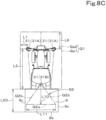
- the monitored area Q2 is defined by the default values (reference monitor dimensions) of the monitor dimensions L10 and L11, if a rear edge Q2a of the monitored area Q2 is located forward of a rear edge 9b of the working device 9 and one or both of opposite boundaries Q2b of the monitored area Q2 in the width direction is/are located inward of corresponding one(s) of opposite ends 9c of the rear edge 9b of the working device 9 in the width direction, as illustrated in FIG.
- the setting change unit 27 makes the monitor dimensions L10 and L11 greater than the default values (reference monitor dimensions) so that the rear edge Q2a of the monitored area Q2 is located rearward of the rear edge 9b of the working device 9 and the opposite boundaries Q2b of the monitored area Q2 in the width direction are located outward of the respective opposite ends 9c of the rear edge 9b of the working device 9 in the width direction.
- the front edge of the working device 9 can be detected by the front obstacle detecting devices 31A. Furthermore, by extending the monitor dimension(s) L3 of the front obstacle detecting device(s) 31A in a direction, it is possible to make a monitored area Ha1 and the working device 9 overlap each other.
- the setting change unit 27 may cause a display device 60 (see FIG. 3 ) of the tractor 1 to display an input screen for input of the machine width W10 and the machine length L20 of the working device 9 and acquire the machine width W10 of the working device 9 inputted into the input screen.
- the setting change unit 27 changes criteria (the height threshold H4, the width threshold W4, and the first threshold T10) based on which the detected object M2 is determined as an obstacle. For example, in the case where work is work involving dust formation etc. such as spreading work (fertilizer spreading work or agent spreading work) or cultivating work, the setting change unit 27 makes the height threshold H4 and the width threshold W4 smaller than the default values. In the case where the work is other than the spreading work (fertilizer spreading work or agent spreading work) and cultivating work, the setting change unit 27 sets the height threshold H4 and the width threshold W4 to the default values.
- the setting change unit 27 causes a settings screen J1 in which work (agricultural work) is set to be displayed.
- the settings screen J1 displays a plurality of types of agricultural work.
- the height threshold H4 and the width threshold W4 are made smaller than the default values.
- the height threshold H4 and the width threshold W4 are set to the default values.
- the setting change unit 27 makes the height threshold H4 and the width threshold W4 smaller than the default values, and, in the case where a working device 9 for work other than fertilizer spreading work, agent spreading work, and cultivating work is linked to the vehicle body 2, the setting change unit 27 sets the height threshold H4 and the width threshold W4 to the default values.
- an elapsed time (first threshold T10) for determination of the detected object M2 as an obstacle may be changed.
- the setting change unit 27 sets the first threshold T10 to the maximum value, and, when agricultural work other than fertilizer spreading work, agent spreading work, and cultivating work is selected, the setting change unit 27 sets the first threshold T10 to the default value.
- the setting change unit 27 sets the first threshold T10 to the maximum value and, when a working device 9 for work other than fertilizer spreading work, agent spreading work, and cultivating work is linked to the vehicle body 2, the setting change unit 27 sets the first threshold T10 to the default value.
- the setting change unit 27 is configured to also change the front setting information for the front obstacle detecting devices 31A.
- the setting change unit 27 changes the size of each monitored area Q1 according to the travel speed of the vehicle body 2. Specifically, when the vehicle speed (travel speed) of the vehicle body 2 detected by the vehicle speed sensor has exceeded a travel speed threshold, the setting change unit 27 changes the monitor dimension L6 so that the monitor dimension L6 is greater than the default value (reference monitor dimension). That is, the setting change unit 27 makes the monitor dimension L6 greater than the default value (reference monitor dimension) to make the size of the monitored area Q1 larger than the reference monitored area. On the contrary, if the travel speed has become less than the travel speed threshold, the setting change unit 27 changes the monitor dimension L6 so that the monitor dimension L6 is less than the default value (reference monitor dimension). That is, the setting change unit 27 makes the monitor dimension L6 less than the default value (reference monitor dimension) to make the size of the monitored area Q1 smaller than the reference monitored area.
- the monitor dimension L6 may be changed (increased or reduced) according to the travel speed.
- the setting change unit 27 gradually increases the monitor dimension L6 as the travel speed increases and gradually reduces the monitor dimension L6 as the trave speed decreases, in proportion to the travel speed.
- the setting change unit 27 changes the monitor dimension L5 according to the working device 9 linked to the vehicle body 2. Specifically, if the default value (reference monitor dimension) of the monitor dimension L5 is less than the machine width W10 of the working device 9, the setting change unit 27 makes the monitor dimension L5 greater than the machine width W10 of the working device 9.
- the setting change unit 27 changes criteria (the height threshold H2, the width threshold W2, and the second threshold T11) based on which the detected object M1 is determined as an obstacle. Similar to the rear obstacle detecting device 31B, in the case where work is spreading work (fertilizer spreading work or agent spreading work), cultivating work, or the like, the setting change unit 27 makes the height threshold H2 and the width threshold W2 smaller than the default values. In the case where the work is other than spreading work (fertilizer spreading work or agent spreading work) and cultivating work, the setting change unit 27 sets the height threshold H2 and the width threshold W2 to the default values. Note that the default values of the height threshold H2 and the width threshold W2 corresponding to the detected object M1 are set to smaller values than the height threshold H4 and the width threshold W4 corresponding to the detected obj ect M2.
- an elapsed time (first threshold T11) for determination of the detected object M1 as an obstacle may be changed.
- the setting change unit 27 makes the first threshold T11 smaller than a default value, and, when agricultural work other than fertilizer spreading work, agent spreading work, and cultivating work is selected, the setting change unit 27 sets the first threshold T11 to the default value.
- the setting change unit 27 makes the second threshold T11 smaller than the default value, and when a working device 9 for work other than fertilizer spreading work, agent spreading work, and cultivating work is linked to the vehicle body 2, the setting change unit 27 sets the second threshold T11 to the default value.
- the setting change unit 27 may make the monitor dimension L6 smaller than the default value when fertilizer spreading work, agent spreading work, or cultivating work is selected.
- the front setting information and the rear setting information may each be changed by the setting change unit 27 in accordance and in conjunction with travel speed, work (agricultural work), and the type of working device 9 (which are herein collectively referred to as "change conditions") or may be changed independently in accordance with the travel speed, work (agricultural work), or the type of working device 9.
- the display device 60 may display a settings screen J2, and settings regarding changes to the front setting information and the rear setting information may be performed by operating the display device 60 on the settings screen J2.
- a first section K1 of the settings screen J2 “allow changes (from default value(s) during automatic travel)” or “don't allow changes (from default value(s) during automatic travel)” can be selected for the front setting information and for the rear setting information.
- setting information can be changed by the setting change unit 27 according to travel speed, work (agricultural work), the type of the working device 9, and/or the like.
- "don't allow changes" to the front setting information and to the rear setting information in a second column changes are not made by the setting change unit 27, and default values are maintained during automatic travel.
- a second section K2 of the settings screen J2 one or more items (the monitored areas Q1 and Q2, the height thresholds H2 and H4, the width thresholds W2 and W4, the first threshold T10, and/or the second threshold T11) to be changed when changes to the setting information are allowed can be selected.
- piece(s) of the setting information (the front setting information and/or the rear setting information) corresponding to the item(s) selected in the second section K2 are changed.
- each of the change conditions [travel speed, work (agricultural work), and the type of working device 9] can be selected.
- setting information (the front setting information and/or the rear setting information) is changed when the change condition(s) [travel speed, work (agricultural work), and/or the type of working device 9] corresponding to the item(s) selected in the third section K3 is/are satisfied during automatic travel.
- a working vehicle 1 includes a vehicle body 2, a linkage 8 provided on the vehicle body 2 and configured to link a working device 9, a control device 25 to cause the vehicle body 2 to perform automatic travel, a rear obstacle detecting device 31B configured to detect obstacles behind the vehicle body 2, and a setting change unit 27 configured to change rear setting information regarding obstacle detection performed by the rear obstacle detecting device 31B.
- the rear setting information for the rear obstacle detecting device 31B provided at the rear of the vehicle body 2 can be changed by the setting change unit 27, it is possible to improve the accuracy of obstacle detection according to work done by the working device 9 and/or the travel (forward travel or rearward travel) of the vehicle body 2, and possible to do work appropriately according to various situations.
- by changing information for detection of obstacles in an area rearward of the vehicle body it is possible to improve workability while achieving efficient automatic travel.
- the rear setting information includes a size of a monitored area Q2 that is monitored for detecting the obstacles, and the setting change unit 27 changes the size of the monitored area Q2 according to a travel speed of the vehicle body 2.
- This makes it possible to change the monitored area Q2 according to travel speed corresponding to the work done by the working device 9.
- widening the monitored area Q2 makes it possible to quickly detect abnormalities during working while traveling rearward.
- narrowing the monitored area Q2 makes it possible to perform monitoring with higher accuracy.
- the working device 9 it is possible for the working device 9 to do work even in peripheral areas of the agricultural field and possible to increase work area.
- the setting change unit 27 changes a size of the monitored area Q2 according to the working device 9 linked to the vehicle body 2. With this, blind spots that may form at the rear depending on the size of the working device 9 are eliminated or minimized and, also in view of the condition of the ground after work that differs depending on the size of the working device 9, improved monitoring is achieved during work.
- the rear setting information includes a size of an object M2 to be determined as an obstacle, and the setting change unit 27 sets, according to work or the working device 9, the size of the object M2 to be determined as an obstacle.
- the rear obstacle detecting device 31B includes a first time calculation unit 35 to calculate a detection time that is a period of time for which an obj ect M2 located in the monitored area Q2 monitored for detecting the obstacles is detected, and a first obstacle determination unit 36 to determine the object M1, M2 as an obstacle if the detection time calculated by the first time calculation unit 35 is equal to or greater than a first threshold. This makes it possible to perform detection in consideration of the conditions in which the object M1 stays within the monitored area Q2.
- the setting change unit 27 changes the first threshold. With this, by changing a threshold relating to the period of time for which the object M2 stays within the monitored area Q2, it is possible to reduce false detection of obstacles in the case of work that relatively involves dust formation such as fertilizer spreading work, agent spreading work, or cultivating work, and possible to improve the accuracy of obstacle detection in the case of work that does not involve dust formation.
- the working vehicle 1 further includes a front obstacle detecting device 31A configured to detect obstacles in front of the vehicle body 2, and the setting change unit 27 changes front setting information regarding obstacle detection performed by the front obstacle detecting device 31A.
- a front obstacle detecting device 31A configured to detect obstacles in front of the vehicle body 2
- the setting change unit 27 changes front setting information regarding obstacle detection performed by the front obstacle detecting device 31A.
Landscapes
- Engineering & Computer Science (AREA)
- Life Sciences & Earth Sciences (AREA)
- Mechanical Engineering (AREA)
- Physics & Mathematics (AREA)
- Automation & Control Theory (AREA)
- Soil Sciences (AREA)
- Radar, Positioning & Navigation (AREA)
- Environmental Sciences (AREA)
- Aviation & Aerospace Engineering (AREA)
- General Physics & Mathematics (AREA)
- Remote Sensing (AREA)
- Transportation (AREA)
- Combustion & Propulsion (AREA)
- Chemical & Material Sciences (AREA)
- Human Computer Interaction (AREA)
- Optics & Photonics (AREA)
- Electromagnetism (AREA)
- Guiding Agricultural Machines (AREA)
- Control Of Position, Course, Altitude, Or Attitude Of Moving Bodies (AREA)
Description
- The present invention relates to a working vehicle such as a tractor.
- Patent document 1:
Japanese Unexamined Patent Application Publication No. 2018-113937 Patent document 1 includes a vehicle body equipped with a working device, a work/travel control unit to control work/travel, a set of work/travel state detecting sensors to detect work/travel states thereof, at least one obstacle sensor to detect obstacles which hinder travel, an obstacle detecting unit to detect obstacles present within an obstacle monitoring area according to a sensor signal from the at least one obstacle sensor, and an obstacle monitoring area deciding unit to decide an obstacle monitoring area according to the work/travel states detected by the set of work/travel state detecting sensors. -
JP 2019 175048 A WO 2019/054277 A1 describes obstacle detection devices capable of reducing or preventing erroneous detection of an obstacle in an obstacle detection target area including both a short-distance area that exhibits an irregular disturbance in the sound pressure distribution and a long-distance area that exhibits a uniform sound pressure distribution. -
JP 2018 174890 A - With the working vehicle of
Patent document 1, the obstacle monitoring area is decided according to the work/travel states. However, the obstacle monitoring area is decided only according to the working state during forward travel, and a rear area in which the working device is attached is not taken into consideration. That is, in reality, the obstacle monitoring area is not changed according to the working device ofPatent document 1 or not changed according to work. - In view of such circumstances, an object of the present invention is to provide a working vehicle which makes it possible to improve workability while efficiently performing automatic travel by changing information regarding detection of obstacles behind the vehicle body. The present invention is defined by the independent claim. Preferred examples are defined in the dependent claims.
- The present invention makes it possible to improve workability while achieving efficient automatic travel by changing information regarding detection of obstacles behind the vehicle body.
-
-
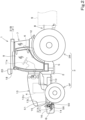
FIG. 1 is a plan view of a working vehicle. -
FIG. 2 is a side view of the working vehicle. -
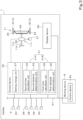
FIG. 3 is a block diagram of a control system of the working vehicle. -
FIG. 4 illustrates examples of monitored areas Q1 and Q2 of front obstacle detecting devices and a rear obstacle detecting device. -
FIG. 5 illustrates examples of an object M1 detected by the front obstacle detecting device(s) and an object M2 detected by the rear obstacle detecting device. -
FIG. 6 shows examples of a first detection time T1 and a second detection time T2. -
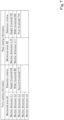
FIG. 7 is a diagram collectively showing setting information (front setting information, rear setting information). -
FIG. 8A illustrates a case in which a monitor dimension L11 is less than a machine width W10 of a working device. -
FIG. 8B illustrates a case in which the monitor dimension L11 is greater than the machine width W10 of the working device. -
FIG. 8C illustrates a case in which a monitored area Q2 is shorter than the rear edge of the working device. -
FIG. 8D illustrates a case in which the monitored area Q2 is longer than the rear edge of the working device. -
FIG. 9 illustrates an example of a settings screen J1. -
FIG. 10 illustrates an example of a settings screen J2. - The following description discusses preferred embodiments of the present invention with reference to drawings.
-
FIGS. 1 and2 illustrate an embodiment of aworking vehicle 1 according to the present invention. The present embodiment is discussed based on the assumption that theworking vehicle 1 is atractor 1. Note, however, that the workingvehicle 1 is not limited to a tractor, and may be some other working vehicle (agricultural vehicle) such as a combine or a rice transplanter. - In the following description, the front of the
tractor 1 as seen from an operator seated on the operator'sseat 6 is referred to as "front", the rear of thetractor 1 as seen from the operator is referred to as "rear", the left side of thetractor 1 as seen from the operator is referred to as "left", and the right side of thetractor 1 as seen from the operator is referred to as "right". Furthermore, a direction indicated by arrow D is referred to as a vehicle width direction. Furthermore, a vehicle width direction going away from the widthwise center of the vehicle is referred to as a "vehicle width outward direction", and a vehicle width direction approaching the widthwise center of the vehicle is referred to as a "vehicle width inward direction". - As illustrated in
FIGS. 1 and2 , thetractor 1 includes avehicle body 2, atraveling device 3, aprime mover 4, and atransmission 5. Thetraveling device 3 supports thevehicle body 2 such that thevehicle body 2 can travel, and includes front wheel(s) 3F and rear wheel(s) 3R. The front wheel(s) 3F and the rear wheel(s) 3R in the present embodiment are in the form of tires, but may be in the form of crawlers. - The
prime mover 4 is an engine (diesel engine, gasoline engine), an electric motor, and/or the like. Thetransmission 5 is capable of changing driving forces for the travelingdevice 3 by changing speed stages and switching the traveling state of the travelingdevice 3 between forward and rearward traveling states. - The
vehicle body 2 is equipped with the operator'sseat 6. An operator'sseat protector 7 is provided around the operator'sseat 6. In the present embodiment, the operator'sseat protector 7 is a cabin which surrounds the front, rear, upper, and lateral sides of the operator'sseat 6 to protect the operator'sseat 6, but may be a ROPS or the like. Alinkage 8 is provided at the rear of thevehicle body 2. Thelinkage 8 is a swinging drawbar which connects aworking device 9 and thevehicle body 2 but does not raise or lower theworking device 9, a raising/lowering device which is composed of a three-point linkage or the like and which raises and lowers theworking device 9, or the like. The linkage is configured to have the working device (implement or the like) 9 detachably attached thereto. - By linking the
working device 9 to thelinkage 8, it is possible to allow thevehicle body 2 to tow theworking device 9. Theworking device 9 is, for example, a cultivator for cultivation, a fertilizer spreader for spreading fertilizer, an agricultural chemical spreader for spreading agricultural chemicals, a harvester for harvesting, a mower for mowing grass or the like, a tedder for tedding grass or the like, a rake for raking grass or the like, a baler for baling grass or the like, or the like. - The
vehicle body 2 includes avehicle body frame 10. Thevehicle body frame 10 extends in a direction from thetransmission 5 to the front, and supports a lower portion of theprime mover 4. As illustrated inFIG. 2 , ahood 13 is provided above thevehicle body frame 10. Thehood 13 extends in a front-rear direction along thevehicle body frame 10. Thehood 13 is disposed forward of a central portion of the operator'sseat protector 7 in the vehicle width direction. Thehood 13 includes aleft side wall 13L provided on the left side, aright side wall 13R provided on the right side, and atop wall portion 13U which connects upper portions of theleft side wall 13L and theright side wall 13R. Theleft side wall 13L, theright side wall 13R, and thetop wall portion 13U define an engine room, and the engine room houses therein theprime mover 4, a cooling fan, a radiator, a battery, and/or the like. Thefront wheels 3F are disposed leftward of theleft side wall 13L and rightward of theright side wall 13R, respectively. - A
weight 14 is provided forward of thehood 13, i.e., forward of thevehicle body frame 10. Theweight 14 is attached to aweight bracket 15 provided at the front of thevehicle body 2. Theweight bracket 15 is attached to a front portion of thevehicle body frame 10 with fastener(s) such as bolt(s). Theweight 14 is surrounded and covered by aweight cover 16. - As illustrated in
FIG. 3 , thetractor 1 includes asteering unit 11. Thesteering unit 11 includes asteering wheel 11a, a rotation shaft (steering shaft) 11b which rotates as thesteering wheel 11a rotates, and an assist mechanism (power steering mechanism) 11c to assist steering performed using thesteering wheel 11a. Theassist mechanism 11c includes ahydraulic pump 21, acontrol valve 22 supplied with hydraulic fluid discharged from thehydraulic pump 21, and asteering cylinder 23 which is caused to function by thecontrol valve 22. Thecontrol valve 22 is a solenoid valve which functions based on a control signal. Thecontrol valve 22 is, for example, a three-way switching valve which achieves multi-position switching by movement of a spool or the like. The positions of thecontrol valve 22 can also be switched by steering by the steeringshaft 11b. Thesteering cylinder 23 is connected to arms (knuckle arms) 24 which change the orientation of thefront wheels 3F. - Therefore, upon operation of the
steering wheel 11a, the position and the degree of opening of thecontrol valve 22 change according to thesteering wheel 11a, and thesteering cylinder 23 extends or retracts leftward or rightward according to the position and the degree of opening of thecontrol valve 22, making it possible to change the steering direction of thefront wheels 3F. Note that the foregoingsteering unit 11 is an example, and a configuration of thesteering unit 11 is not limited to that described above. - As illustrated in
FIGS. 1 and2 , thetractor 1 includes aposition detecting device 20. Theposition detecting device 20 is attached to a front portion of a top plate of thecabin 7 via amount 18. Note, however, that the location at which theposition detecting device 20 is attached is not limited to that illustrated inFIGS. 1 and2 , and theposition detecting device 20 may be attached to the top plate of thecabin 7, some other location on thevehicle body 2, or the like location. Theposition detecting device 20 may be attached to the foregoing working device such as a cultivator. - The
position detecting device 20 is a device to detect the position thereof (measured position information including latitude and longitude) using a satellite positioning system. Specifically, theposition detecting device 20 receives signals (positions of positioning satellites, time of transmission, correction information, and/or the like) from positioning satellites, and detects the position (latitude and longitude) on the basis of the received signals. Theposition detecting device 20 may detect, as the position thereof (latitude and longitude), a position corrected with a signal such as a correction signal from a base station (reference station) which is capable of receiving signals from the GPS satellites. Theposition detecting device 20 may include an inertial measurement unit such as a gyroscope sensor and/or an acceleration sensor and detect, as the position thereof, a position corrected by the inertial measurement unit. With theposition detecting device 20, it is possible to detect the position of thevehicle body 2 of the tractor 1 (position of thevehicle body 2 that is traveling). The position of thetractor 1 itself detected by theposition detecting device 20 may be the position of the center of thevehicle body 2 or may be, for example, the position of thefront wheels 3F (e.g., the position of the front edge) or the position of therear wheels 3R (e.g., the position of the rear edge). - As illustrated in
FIGS. 1 and2 , thetractor 1 includesobstacle detecting devices 31 to detect obstacles which would hinder travel. Theobstacle detecting devices 31 include frontobstacle detecting devices 31A and a rearobstacle detecting device 31B. The frontobstacle detecting devices 31A are each a device configured to detect obstacles in front of thevehicle body 2. The rearobstacle detecting device 31B is a device configured to detect obstacles behind thevehicle body 2. The frontobstacle detecting devices 31A and the rearobstacle detecting device 31B are laser scanners to detect obstacles by emitting light waves as detection waves. Note, however, that each obstacle detecting device may be a sensor (range sensor) other than laser scanners, such as a sonar which detects obstacles by emitting sound waves (ultrasonic waves) as detection waves. - The front
obstacle detecting devices 31A are provided at different positions from the rearobstacle detecting device 31B in the front-rear direction. In the present embodiment, the frontobstacle detecting devices 31A are provided forward of the rearobstacle detecting device 31B. The frontobstacle detecting devices 31A are disposed forward of thefront wheels 3F. The frontobstacle detecting devices 31A are disposed outward of thefront wheels 3F in the vehicle width outward directions (disposed on the vehicle width outward sides of thefront wheels 3F). The frontobstacle detecting devices 31A are disposed outward of therear wheels 3R in the vehicle width outward directions (disposed on the vehicle width outward sides of therear wheels 3R). - The front
obstacle detecting devices 31A are disposed at a position diagonally leftward and forward of theleft front wheel 3F and a position diagonally rightward and forward of theright front wheel 3F, respectively. The frontobstacle detecting device 31A disposed diagonally leftward and forward of theleft front wheel 3F and the frontobstacle detecting device 31A disposed diagonally rightward and forward of theright front wheel 3F are located symmetrically with respect to a center line bisecting the width of thetractor 1. - Each front
obstacle detecting device 31A is attached to thevehicle body frame 10 via a mountingstructure 50. As illustrated inFIGS. 1 and2 , the mountingstructure 50 includes afirst structure 51, asecond structure 52, a third structure 53, and a fourth structure 54. Thefirst structure 51 is attached to thevehicle body frame 10, and extends from thevehicle body frame 10 diagonally forward and in a vehicle width outward direction (extends diagonally forward and leftward or extends diagonally forward and rightward). Thesecond structure 52 is attached to a front end (distal end) of thefirst structure 51. Thesecond structure 52 extends outward along the width direction of the machine body and supports the frontobstacle detecting device 31A. Asonar 55 other than a sonar of the rearobstacle detecting device 31B is attached to thesecond structure 52. The direction of laser emitted from the frontobstacle detecting device 31A is a horizontal direction. - The front
obstacle detecting device 31A and a part of thesecond structure 52 are covered by acover 56. Thecover 56 is attached to thesecond structure 52 with mounting member(s) such as bolt(s). Thecover 56 is composed of an upper cover disposed above the frontobstacle detecting device 31A and a lower cover disposed below the frontobstacle detecting device 31A. Around the frontobstacle detecting device 31A, a gap G is formed between the upper cover 56A and the lower cover 56B (seeFIG. 2 ), and the frontobstacle detecting device 31A can emit and receive detection waves (laser) through the gap G. Thesonar 55 can emit and receive detection waves (sound waves) through an opening in the upper cover 56A. - The rear
obstacle detecting device 31B is attached to an upper rear portion of thecabin 7 via a bracket (not illustrated). The detecting direction of the rearobstacle detecting device 31B is inclined slightly downward with respect to a horizontal direction, i.e., oriented toward the workingdevice 9. Note that the detecting direction means the direction of the optical axis along which laser is emitted in the case where the rearobstacle detecting device 31B is a laser scanner, the direction in which sound waves are emitted in the case where the rearobstacle detecting device 31B is a sonar, and the direction of the optical axis of an image sensor (central axis of a lens) in the case where the rearobstacle detecting device 31B is a camera. - Each front
obstacle detecting device 31A stores front setting information regarding obstacle detection, and the rearobstacle detecting device 31B stores rear setting information regarding obstacle detection. The front setting information and the rear setting information include various types of information for the obstacle detecting devices 31 (frontobstacle detecting devices 31A and the rearobstacle detecting device 31B) to detect obstacles, such as monitored areas, criteria for determination of whether an object detected in a monitored area is an obstacle or not, and/or the like. - First, the monitored areas are discussed.
-
FIG. 4 illustrates examples of monitored areas Q1 and Q2 of the frontobstacle detecting devices 31A and the rearobstacle detecting device 31B. - The monitored area Q1 of each front
obstacle detecting device 31A includes a side area Qa1 extending from the frontobstacle detecting device 31A to the rear of thevehicle body 2 and an area lateral to the vehicle body 2 (an area outward of thevehicle body 2 in the width direction) and a front area Qa2 extending from the frontobstacle detecting device 31A in a vehicle width inward direction in front of thevehicle body 2. Each side area Qa1 is defined by monitor dimensions L1 and L2 each extending outward along the width direction and a dimension L3 along the front-rear direction. The front areas Qa2 are defined by a monitor dimension L6 extending forward and a monitor dimension L5 along the width direction. As shown inFIG. 7 , default values (reference monitored area, reference monitor dimensions) of the size (monitor dimensions L1, L2, L3, L5, and L6) of the monitored area Q1 are stored as front setting information for the frontobstacle detecting devices 31A. - The monitored area Q2 of the rear
obstacle detecting device 31B extends from the rearobstacle detecting device 31B to an area rearward of thevehicle body 2, and is defined by a monitor dimension L10 extending rearward and a monitor dimension L11 extending along the width direction. As shown inFIG. 7 , default values (reference monitored area, reference monitor dimensions) of the size (monitor dimensions L10 and L11) of the monitored area Q2 are stored as rear setting information for the rearobstacle detecting device 31B. Note that the sizes of the monitored areas Q1 and Q2 of the frontobstacle detecting devices 31A and the rearobstacle detecting device 31B can be freely set, and thus the width, length, angle, and/or the like thereof can be changed. -
FIG. 5 illustrates examples of an object M1 detected by the front obstacle detecting device(s) 31A and an object M2 detected by the rearobstacle detecting device 31B. - In
FIG. 5 , when an object M1 is located within a monitored area Q1, the frontobstacle detecting device 31A detects the object (detected object) M1. If a height H1 of the detected object M1 is equal to or more than a height threshold H2 (H1 ≥ H2) and an object width W1 of the detected object M1 is equal to or more than a width threshold W2 (W1 ≥ W2), the frontobstacle detecting device 31A determines the detected object M1 as an obstacle. If the height H1 of the detected object M1 is less than the height threshold H2 or the object width W1 of the detected object M1 is less than the width threshold W2, the frontobstacle detecting device 31A determines the detected object M1 as not an obstacle. As shown inFIG. 7 , the frontobstacle detecting device 31A stores the height threshold H2 and the width threshold W2 as criteria for determination of whether or not the detected object M1 is an obstacle. That is, the frontobstacle detecting device 31A stores the height threshold H2 and the width threshold W2, which are criteria, as front setting information. - When an object M2 is located within the monitored area Q2, the rear
obstacle detecting device 31B detects the object (detected object) M2. According to an example which is out of scope of the invention, if a height H3 of the detected object M2 is equal to or more than a height threshold H4 (H3 ≥ H4) and an object width W3 of the detected object M2 is equal to or more than a width threshold W4 (W3 ≥ W4), the rearobstacle detecting device 31B determines the detected object M2 as an obstacle. If the height H3 of the detected object M2 is less than the height threshold H4 or the object width W3 of the detected object M2 is less than the width threshold W4, the rearobstacle detecting device 31B determines the detected object M2 as not an obstacle. As shown inFIG. 7 , the rearobstacle detecting device 31B stores the height threshold H4 and the width threshold W4 as criteria for determination of whether or not the detected object M2 is an obstacle. That is, the rearobstacle detecting device 31B stores the height threshold H4 and the width threshold W4, which are criteria, as rear setting information. - In the foregoing embodiment, whether the detected object M1 is an obstacle or not is determined based on the size H1 and object width W1 of the detected object M1, but whether the detected object M1 is an obstacle or not may be determined based on a period of time for which the detected object M1 is located in the monitored area Q1 (a period of time for which the detected object M1 stays in the monitored area Q1.
- The front
obstacle detecting device 31A includes a secondtime calculation unit 33 and a secondobstacle determination unit 34. The secondtime calculation unit 33 and the secondobstacle determination unit 34 are each composed of electric circuit(s), electronic circuit(s), and/or the like provided in the frontobstacle detecting device 31A, program(s) stored in the frontobstacle detecting device 31A, and/or the like. - The second
time calculation unit 33 calculates a detection time (second detection time) T2 that is a period of time for which the detected object M1 is located in the monitored area Q1. The secondobstacle determination unit 34 determines the detected object M1 as an obstacle if the second detection time T2 calculated by the secondtime calculation unit 33 is equal to or greater than a second threshold T11, and determines the detected object M1 as not an obstacle if the second detection time T2 is less than the second threshold T11. Note that the frontobstacle detecting device 31A stores the second threshold T11 as a criterion. That is, the frontobstacle detecting device 31A stores the second threshold T11, which is a criterion, as front setting information. - Note that the default value of the second threshold T11 can be set using a setting member such as a rotary switch before the start of automatic operation. Specifically, the second threshold T11 is set according to the operation amount of the setting member, the default value is set to a minimum value when the operation amount is smallest, and the default value is set to a maximum value when the operation amount is largest. The maximum value (T11 max) of the second threshold T11 may be determined by subtracting braking distance and fallback distance from the default value of monitor dimension L6 and then dividing it by prescribed travel speed, i.e., "T11 max = [default value of monitor dimension L6 - braking distance - fallback distance] / prescribed travel speed". The braking distance and the fallback distance are found via simulation, experimentation, and/or the like, and the prescribed travel speed is set according to agricultural work. A method of calculating the maximum value of the second threshold T11 is not limited.
- According to the invention, the rear
obstacle detecting device 31B includes a firsttime calculation unit 35 and a firstobstacle determination unit 36. The firsttime calculation unit 35 and the firstobstacle determination unit 36 are each composed of electric circuit(s), electronic circuit(s), and/or the like provided in the rearobstacle detecting device 31B, program(s) stored in the rearobstacle detecting device 31B, and/or the like. - The first
time calculation unit 35 calculates a detection time (first detection time) T1 that is a period of time for which the detected object M2 is located in the monitored area Q2. The firstobstacle determination unit 36 determines the detected object M2 as an obstacle if the first detection time T1 calculated by the firsttime calculation unit 35 is equal to or greater than a first threshold T10, and determines the detected object M2 as not an obstacle if the first detection time T1 is less than the first threshold T10. Note that the rearobstacle detecting device 31B stores the first threshold T10 as a criterion. That is, the rearobstacle detecting device 31B stores the first threshold T10, which is a criterion, as rear setting information. Note that the default value of the first threshold T10 can be set using a setting member such as a rotary switch before the start of automatic operation. Specifically, the first threshold T10 is set according to the operation amount of the setting member, the default value is set to a minimum value when the operation amount is smallest, and the default value is set to a maximum value when the operation amount is largest. -
FIG. 6 shows examples of the second detection time T2 that starts upon detection of the detected object M1 by the frontobstacle detecting device 31A and the first detection time T1 that starts upon detection of the detected object M2 by the rearobstacle detecting device 31B. - As shown in
FIG. 6 , assume that the detected object M1 entered the monitored area Q1 at a point in time P1. The secondtime calculation unit 33 calculates the second detection time T2 for which the detected object M1 is in the monitored area Q1. When the second detection time T2 has reached the second threshold T11, the secondobstacle determination unit 34 determines the detected object M1 as an obstacle. - Assume that the detected object M2 entered the monitored area Q2 at a point in time P2. The first
time calculation unit 35 calculates the first detection time T1 for which the detected object M2 is in the monitored area Q2. When the first detection time T1 has reached the first threshold T10, the firstobstacle determination unit 36 determines the detected object M2 as an obstacle. - As illustrated in
FIG. 3 , thetractor 1 includes acontrol device 25. Thecontrol device 25 is composed of a CPU, storage unit(s) (such as RAM and/or ROM), and/or the like and performs various types of control regarding thetractor 1 on the basis of program(s) stored in the storage unit(s) and/or the like. - The
control device 25 has connected thereto astate detecting device 26 to detect the driving state and/or the like of thetractor 1. Thestate detecting device 26 is, for example, a crank sensor, a cam sensor, an engine rotation sensor, an accelerator pedal sensor, a vehicle speed sensor, an acceleration sensor, a steering angle sensor, a raising/lowering lever detection sensor, a PTO rotation detecting sensor, and/or the like. Thecontrol device 25 also has connected thereto thetransmission 5, a forward/rearwardtravel switching device 28, a PTO clutch 29, and a braking device 30. - The
state detecting device 26 is connected with thetransmission 5, the forward/rearwardtravel switching device 28, the PTO clutch 29, and the braking device 30 via an in-vehicle network N1 such as controller area network (CAN) and/or international standard ISO11783 (ISO-BUS). Acontrol device 9a of the workingdevice 9 is connected to the in-vehicle network N1. Thecontrol device 9a is composed of, for example, electric circuit(s), electronic circuit(s), and/or the like including a CPU, storage unit(s) (such as RAM and/or ROM), and/or the like, and controls the workingdevice 9. - The
control device 25 controls a travelling system and a working system of thetractor 1. For example, thecontrol device 25 controls engine speed, vehicle speed, the angle of steering by thesteering unit 11, and/or the like on the basis of the state(s) detected by thestate detecting device 26. Thecontrol device 25 controls raising and lowering of the raising/lowering device, PTO rotation speed, and/or the like on the basis of the states(s) detected by thestate detecting device 26. - The
control device 25 is configured to control automatic travel (perform automatic travel control) of the tractor 1 (vehicle body 2). Thecontrol device 25 is configured to switch between an automatic travel mode and a manual travel mode. In the automatic travel mode, thecontrol device 25 causes thevehicle body 2 to automatically travel along a predetermined travel route. Thecontrol device 25 sets the position and the degree of opening of thecontrol valve 22 so that the position of thevehicle body 2 that is traveling (the position detected by the position detecting device 20) matches a predetermined travel route (travel path), that is, thevehicle body 2 matches the travel route. In other words, in the automatic travel mode, thecontrol device 25 sets the direction and amount of movement of the steering cylinder 23 (steering direction and steering angle of thefront wheels 3F) so that the position of the travelingtractor 1 matches the travel route. - Specifically, in the automatic travel mode, the
control device 25 compares the position of thevehicle body 2 that is traveling and the position indicated by the travel route (planned travel position), and, if the position of thevehicle body 2 that is traveling matches the planned travel position, thecontrol device 25 maintains the angle and direction of steering by thesteering wheel 11a of the steering unit 11 (the steering angle and the steering direction of thefront wheels 3F) without changing them (maintains the degree of opening and the position of thecontrol valve 22 without changing them). If the position of thevehicle body 2 that is traveling does not match the planned travel position, thecontrol device 25 changes the angle and/or direction of steering by thesteering wheel 11a of the steering unit 11 (changes the degree of opening and/or the position of the control valve 22) so that the deviation (amount of deviation) between the position of thevehicle body 2 that is traveling and the planned travel position is zero. - Note that, although the
control device 25 changes the angle of steering by thesteering unit 11 on the basis of the deviation between the position of thevehicle body 2 that is traveling and the planned travel position in the automatic travel control in the present embodiment, thecontrol device 25 may, in the case where the direction of the travel route and the travel direction of the tractor 1 (vehicle body 2) (vehicle body heading direction) differ from each other, set the steering angle so that the vehicle body heading direction matches the direction of the travel route. Thecontrol device 25 may set, in the automatic travel control, the final steering angle for the automatic travel control on the basis of a steering angle determined based on the deviation (deviation in position) and a steering angle determined based on the deviation in direction. The steering angle may be set by a method differing from the above-described method of setting the steering angle in the automatic travel control. - The
control device 25 may control, in the automatic travel control, the rotation speed of the traveling device 3 (i.e., thefront wheels 3F and/or therear wheel 3R) so that the actual speed of the tractor 1 (vehicle body 2) matches a vehicle speed corresponding to a predetermined travel route. - Furthermore, the
control device 25 controls automatic travel on the basis of a result of obstacle detection by theobstacle detecting devices 31. For example, thecontrol device 25 continues automatic travel if the obstacle detecting device(s) 31 has/have detected no obstacles, and stops the automatic travel if the obstacle detecting device(s) 31 has/have detected obstacle(s). More specifically, if the obstacle detecting device(s) 31 has/have detected an obstacle, thecontrol device 25 stops the automatic travel by stopping thetractor 1 from traveling if the distance between the obstacle and thetractor 1 is equal to or less than a predetermined distance. - Specifically, if the obstacle detecting device(s) 31 has/have detected an obstacle, the
control device 25 controls the operation of thetransmission 5, the forward/rearwardtravel switching device 28, the PTO clutch 29, and the braking device 30. Specifically, thecontrol device 25 reduces vehicle speed by changing the speed stage of thetransmission 5 to a lower speed stage. Furthermore, thecontrol device 25 switches the state of the forward/rearwardtravel switching device 28 to a neutral state and activates the braking device 30. This stops the automatic travel of thetractor 1. Furthermore, thecontrol device 25 switches the PTO clutch 29 into an OFF state to block the transmission of power from the PTO shaft of thetractor 1 to the workingdevice 9. This stops the workingdevice 9 from being driven. - As illustrated in
FIG. 3 , thecontrol device 25 includes a settingchange unit 27. The settingchange unit 27 is composed of electric circuit(s), electronic circuit(s), program(s), and/or the like provided in thecontrol device 25. The settingchange unit 27 is configured to change rear setting information for the rearobstacle detecting device 31B. - The setting
change unit 27 changes the size of the monitored area Q2 according to the travel speed of thevehicle body 2. Specifically, upon initiation of automatic travel under the automatic travel control by thecontrol device 25, the settingchange unit 27 refers to the vehicle speed (travel speed) of thevehicle body 2 detected by the vehicle speed sensor. When the travel speed has exceeded a travel speed threshold, the settingchange unit 27 changes the monitor dimension L10 so that the monitor dimension L10 is greater than the default value (reference monitor dimension). That is, the settingchange unit 27 makes the monitor dimension L10 greater than the default value (reference monitor dimension) to make the size of the monitored area Q2 lager than the reference monitored area. - On the contrary, if the travel speed has become less than the travel speed threshold, the setting
change unit 27 changes the monitor dimension L10 so that the monitor dimension L10 is less than the default value (reference monitor dimension). That is, the settingchange unit 27 makes the monitor dimension L10 less than the default value (reference monitor dimension) to make the size of the monitored area Q2 smaller than the reference monitored area. The travel speed threshold is a value for the settingchange unit 27 to determine whether the vehicle speed is high speed or low speed. The travel speed threshold may be pre-stored in thecontrol device 25 and may be changed using a rotary switch or the like, and there is no limitation. - Note that the monitor dimension L10 may be changed (increased or reduced) according to the travel speed. For example, the setting
change unit 27 gradually increases the monitor dimension L10 as the travel speed increases and gradually reduces the monitor dimension L10 as the trave speed decreases, in proportion to the travel speed. With regard to changing the monitored area Q2 and/or the like by the settingchange unit 27, the monitored area Q2 and/or the like may be changed according to the travel speed of thevehicle body 2 during backward travel. - The setting
change unit 27 changes the monitor dimension(s) L10 and/or L11 according to the workingdevice 9 linked to thevehicle body 2. Specifically, upon linkage of the workingdevice 9 to thevehicle body 2, the settingchange unit 27 acquires a machine width W10 and a machine length L20 of the workingdevice 9 from thecontrol device 9a of the workingdevice 9 via the in-vehicle network N1. As illustrated inFIG. 8A , if the default value (reference monitor dimension) of the monitor dimension L11 is less than the machine width W10 of the workingdevice 9, as illustrated inFIG. 8B , the settingchange unit 27 makes the monitor dimension L11 greater than the machine width W10 of the workingdevice 9. - As illustrated in
FIG. 8C , when the monitored area Q2 is defined by the default values (reference monitor dimensions) of the monitor dimensions L10 and L11, if a rear edge Q2a of the monitored area Q2 is located forward of arear edge 9b of the workingdevice 9 and one or both of opposite boundaries Q2b of the monitored area Q2 in the width direction is/are located inward of corresponding one(s) of opposite ends 9c of therear edge 9b of the workingdevice 9 in the width direction, as illustrated inFIG. 8D , the settingchange unit 27 makes the monitor dimensions L10 and L11 greater than the default values (reference monitor dimensions) so that the rear edge Q2a of the monitored area Q2 is located rearward of therear edge 9b of the workingdevice 9 and the opposite boundaries Q2b of the monitored area Q2 in the width direction are located outward of the respective opposite ends 9c of therear edge 9b of the workingdevice 9 in the width direction. In the present embodiment, the front edge of the workingdevice 9 can be detected by the frontobstacle detecting devices 31A. Furthermore, by extending the monitor dimension(s) L3 of the front obstacle detecting device(s) 31A in a direction, it is possible to make a monitored area Ha1 and the workingdevice 9 overlap each other. - Note that, although a method in which the setting
change unit 27 acquires the machine width W10 of the workingdevice 9 via the in-vehicle network N1 is discussed in the foregoing embodiment, the settingchange unit 27 may cause a display device 60 (seeFIG. 3 ) of thetractor 1 to display an input screen for input of the machine width W10 and the machine length L20 of the workingdevice 9 and acquire the machine width W10 of the workingdevice 9 inputted into the input screen. - The setting
change unit 27 changes criteria (the height threshold H4, the width threshold W4, and the first threshold T10) based on which the detected object M2 is determined as an obstacle. For example, in the case where work is work involving dust formation etc. such as spreading work (fertilizer spreading work or agent spreading work) or cultivating work, the settingchange unit 27 makes the height threshold H4 and the width threshold W4 smaller than the default values. In the case where the work is other than the spreading work (fertilizer spreading work or agent spreading work) and cultivating work, the settingchange unit 27 sets the height threshold H4 and the width threshold W4 to the default values. - As illustrated in
FIG. 9 , the settingchange unit 27 causes a settings screen J1 in which work (agricultural work) is set to be displayed. The settings screen J1 displays a plurality of types of agricultural work. When fertilizer spreading work, agent spreading work, or cultivating work is selected in the settings screen J1, the height threshold H4 and the width threshold W4 are made smaller than the default values. When agricultural work other than fertilizer spreading work, agent spreading work, and cultivating work is selected, the height threshold H4 and the width threshold W4 are set to the default values. Alternatively, in the case where a workingdevice 9 for fertilizer spreading work, agent spreading work, or cultivating work is linked to thevehicle body 2, the settingchange unit 27 makes the height threshold H4 and the width threshold W4 smaller than the default values, and, in the case where a workingdevice 9 for work other than fertilizer spreading work, agent spreading work, and cultivating work is linked to thevehicle body 2, the settingchange unit 27 sets the height threshold H4 and the width threshold W4 to the default values. - Although the height threshold H4 and the width threshold W4 are changed according to either agricultural work or the working
device 9 in the foregoing embodiment, an elapsed time (first threshold T10) for determination of the detected object M2 as an obstacle may be changed. In such a case, when fertilizer spreading work, agent spreading work, or cultivating work is selected in the settings screen J1, the settingchange unit 27 sets the first threshold T10 to the maximum value, and, when agricultural work other than fertilizer spreading work, agent spreading work, and cultivating work is selected, the settingchange unit 27 sets the first threshold T10 to the default value. Alternatively, the settingchange unit 27 sets the first threshold T10 to the maximum value and, when a workingdevice 9 for work other than fertilizer spreading work, agent spreading work, and cultivating work is linked to thevehicle body 2, the settingchange unit 27 sets the first threshold T10 to the default value. - The setting
change unit 27 is configured to also change the front setting information for the frontobstacle detecting devices 31A. - The setting
change unit 27 changes the size of each monitored area Q1 according to the travel speed of thevehicle body 2. Specifically, when the vehicle speed (travel speed) of thevehicle body 2 detected by the vehicle speed sensor has exceeded a travel speed threshold, the settingchange unit 27 changes the monitor dimension L6 so that the monitor dimension L6 is greater than the default value (reference monitor dimension). That is, the settingchange unit 27 makes the monitor dimension L6 greater than the default value (reference monitor dimension) to make the size of the monitored area Q1 larger than the reference monitored area. On the contrary, if the travel speed has become less than the travel speed threshold, the settingchange unit 27 changes the monitor dimension L6 so that the monitor dimension L6 is less than the default value (reference monitor dimension). That is, the settingchange unit 27 makes the monitor dimension L6 less than the default value (reference monitor dimension) to make the size of the monitored area Q1 smaller than the reference monitored area. - Note that the monitor dimension L6 may be changed (increased or reduced) according to the travel speed. For example, the setting
change unit 27 gradually increases the monitor dimension L6 as the travel speed increases and gradually reduces the monitor dimension L6 as the trave speed decreases, in proportion to the travel speed. - The setting
change unit 27 changes the monitor dimension L5 according to the workingdevice 9 linked to thevehicle body 2. Specifically, if the default value (reference monitor dimension) of the monitor dimension L5 is less than the machine width W10 of the workingdevice 9, the settingchange unit 27 makes the monitor dimension L5 greater than the machine width W10 of the workingdevice 9. - The setting
change unit 27 changes criteria (the height threshold H2, the width threshold W2, and the second threshold T11) based on which the detected object M1 is determined as an obstacle. Similar to the rearobstacle detecting device 31B, in the case where work is spreading work (fertilizer spreading work or agent spreading work), cultivating work, or the like, the settingchange unit 27 makes the height threshold H2 and the width threshold W2 smaller than the default values. In the case where the work is other than spreading work (fertilizer spreading work or agent spreading work) and cultivating work, the settingchange unit 27 sets the height threshold H2 and the width threshold W2 to the default values. Note that the default values of the height threshold H2 and the width threshold W2 corresponding to the detected object M1 are set to smaller values than the height threshold H4 and the width threshold W4 corresponding to the detected obj ect M2. - Although the height threshold H2 and the width threshold W2 are changed according to either agricultural work or the working
device 9 in the foregoing embodiment, an elapsed time (first threshold T11) for determination of the detected object M1 as an obstacle may be changed. - When fertilizer spreading work, agent spreading work, or cultivating work is selected, the setting
change unit 27 makes the first threshold T11 smaller than a default value, and, when agricultural work other than fertilizer spreading work, agent spreading work, and cultivating work is selected, the settingchange unit 27 sets the first threshold T11 to the default value. Alternatively, when a workingdevice 9 for fertilizer spreading work, agent spreading work, or cultivating work is linked to thevehicle body 2, the settingchange unit 27 makes the second threshold T11 smaller than the default value, and when a workingdevice 9 for work other than fertilizer spreading work, agent spreading work, and cultivating work is linked to thevehicle body 2, the settingchange unit 27 sets the second threshold T11 to the default value. Alternatively, the settingchange unit 27 may make the monitor dimension L6 smaller than the default value when fertilizer spreading work, agent spreading work, or cultivating work is selected. - As has been described, the front setting information and the rear setting information may each be changed by the setting
change unit 27 in accordance and in conjunction with travel speed, work (agricultural work), and the type of working device 9 (which are herein collectively referred to as "change conditions") or may be changed independently in accordance with the travel speed, work (agricultural work), or the type of workingdevice 9. As illustrated inFIG. 10 , thedisplay device 60 may display a settings screen J2, and settings regarding changes to the front setting information and the rear setting information may be performed by operating thedisplay device 60 on the settings screen J2. - For example, the following may be included or performed: in a first section K1 of the settings screen J2, "allow changes (from default value(s) during automatic travel)" or "don't allow changes (from default value(s) during automatic travel)" can be selected for the front setting information and for the rear setting information. In the case of "allow changes" to the front setting information and to the rear setting information in the first section K1, as described earlier, setting information can be changed by the setting
change unit 27 according to travel speed, work (agricultural work), the type of the workingdevice 9, and/or the like. On the contrary, in the case of "don't allow changes" to the front setting information and to the rear setting information in a second column, changes are not made by the settingchange unit 27, and default values are maintained during automatic travel. - The following may be included or performed: in a second section K2 of the settings screen J2, one or more items (the monitored areas Q1 and Q2, the height thresholds H2 and H4, the width thresholds W2 and W4, the first threshold T10, and/or the second threshold T11) to be changed when changes to the setting information are allowed can be selected. In such a case, piece(s) of the setting information (the front setting information and/or the rear setting information) corresponding to the item(s) selected in the second section K2 are changed.
- The following may be included or performed: in a third section K3 of the settings screen J2, each of the change conditions [travel speed, work (agricultural work), and the type of working device 9] can be selected. In such a case, setting information (the front setting information and/or the rear setting information) is changed when the change condition(s) [travel speed, work (agricultural work), and/or the type of working device 9] corresponding to the item(s) selected in the third section K3 is/are satisfied during automatic travel.
- As such, whether or not to allow changes to the front setting information and the rear setting information can be selected, and, when the changes are allowed, item(s) to be changed can be selected from a plurality of items, and change conditions can also be selected. This makes it possible to achieve settings corresponding to various situations in agricultural work. For example, changes can be made not only based on agricultural work itself but also based on the state of an agricultural filed on which agricultural work is to be done (e.g., soft soil, slope), the size of the
tractor 1, the size of the workingdevice 9, weather, and/or the like. - A working
vehicle 1 includes avehicle body 2, alinkage 8 provided on thevehicle body 2 and configured to link a workingdevice 9, acontrol device 25 to cause thevehicle body 2 to perform automatic travel, a rearobstacle detecting device 31B configured to detect obstacles behind thevehicle body 2, and a settingchange unit 27 configured to change rear setting information regarding obstacle detection performed by the rearobstacle detecting device 31B. With this, because the rear setting information for the rearobstacle detecting device 31B provided at the rear of thevehicle body 2 can be changed by the settingchange unit 27, it is possible to improve the accuracy of obstacle detection according to work done by the workingdevice 9 and/or the travel (forward travel or rearward travel) of thevehicle body 2, and possible to do work appropriately according to various situations. In particular, by changing information for detection of obstacles in an area rearward of the vehicle body, it is possible to improve workability while achieving efficient automatic travel. - The rear setting information includes a size of a monitored area Q2 that is monitored for detecting the obstacles, and the setting
change unit 27 changes the size of the monitored area Q2 according to a travel speed of thevehicle body 2. This makes it possible to change the monitored area Q2 according to travel speed corresponding to the work done by the workingdevice 9. For example, in the case where work is done with the workingdevice 9 at high speed, widening the monitored area Q2 makes it possible to quickly detect abnormalities during working while traveling rearward. On the contrary, in the case where work is done at low speed, narrowing the monitored area Q2 makes it possible to perform monitoring with higher accuracy. Furthermore, in the case where work is done at low speed, by narrowing the monitored area Q2, it is possible for the workingdevice 9 to do work even in peripheral areas of the agricultural field and possible to increase work area. - The setting
change unit 27 changes a size of the monitored area Q2 according to the workingdevice 9 linked to thevehicle body 2. With this, blind spots that may form at the rear depending on the size of the workingdevice 9 are eliminated or minimized and, also in view of the condition of the ground after work that differs depending on the size of the workingdevice 9, improved monitoring is achieved during work. - The rear setting information includes a size of an object M2 to be determined as an obstacle, and the setting
change unit 27 sets, according to work or the workingdevice 9, the size of the object M2 to be determined as an obstacle. This makes it possible to reduce false detection of obstacles in the case of work that relatively involves dust formation such as fertilizer spreading work, agent spreading work, or cultivating work, and possible to improve the accuracy of obstacle detection in the case of work that does not involve dust formation. - The rear
obstacle detecting device 31B includes a firsttime calculation unit 35 to calculate a detection time that is a period of time for which an obj ect M2 located in the monitored area Q2 monitored for detecting the obstacles is detected, and a firstobstacle determination unit 36 to determine the object M1, M2 as an obstacle if the detection time calculated by the firsttime calculation unit 35 is equal to or greater than a first threshold. This makes it possible to perform detection in consideration of the conditions in which the object M1 stays within the monitored area Q2. - The setting
change unit 27 changes the first threshold. With this, by changing a threshold relating to the period of time for which the object M2 stays within the monitored area Q2, it is possible to reduce false detection of obstacles in the case of work that relatively involves dust formation such as fertilizer spreading work, agent spreading work, or cultivating work, and possible to improve the accuracy of obstacle detection in the case of work that does not involve dust formation. - The working
vehicle 1 further includes a frontobstacle detecting device 31A configured to detect obstacles in front of thevehicle body 2, and the settingchange unit 27 changes front setting information regarding obstacle detection performed by the frontobstacle detecting device 31A. With this, because it is possible to change the front setting information for the frontobstacle detecting device 31A, it is possible to improve the accuracy of obstacle detection according to work done by the workingdevice 9 and/or the travel (forward travel or rearward travel) of thevehicle body 2, and possible to do work appropriately according to various situations. In particular, the combination of the front setting information for the front of the vehicle body and the rear setting information makes it possible to perform obstacle detection with higher accuracy during mixed work such as work in which forward travel and rearward travel are repeated. - While embodiments of the present invention have been described above, it is to be understood that the embodiments disclosed herein are considered as examples in all aspects and are not considered as limitations. The scope of the present invention is to be determined not by the foregoing description but by the claims, and is intended to include all variations and modifications within the scope of the claims.
-
- 1
- Working vehicle (tractor)
- 2
- Vehicle body
- 8
- Linkage
- 9
- Working device
- 25
- Control device
- 27
- Setting change unit
- 31
- Obstacle detecting device
- 31A
- Front obstacle detecting device
- 31B
- Rear obstacle detecting device
- 35
- First time calculation unit
- 36
- First obstacle determination unit
- Ha1
- Monitored area
- M1
- Object
- M2
- Object
- Q1
- Monitored area
- Q2
- Monitored area
- T10
- First threshold
Claims (5)
- A working vehicle (1) comprising:a vehicle body (2);a linkage (8) provided on the vehicle body (2) and configured to link a working device (9);a control device (25) configured to cause the vehicle body (2) to perform automatic travel;a rear obstacle detecting device (31B) configured to detect obstacles behind the vehicle body (2) during the automatic travel; anda setting change unit (27) configured to change rear setting information regarding obstacle detection performed by the rear obstacle detecting device (31B), wherein:the working vehicle (1) is configured to perform work by the working device (9) during the automatic travel,characterized in thatthe rear setting information includes a size of an obj ect to be determined as an obstacle,the setting change unit (27) is configured to set,according to the work or a type of the working device (9), the size of the object to be determined as an obstacle, andthe rear obstacle detecting device (31B) includes:a first time calculation unit (35) configured to calculate a detection time (T1) that is a period of time for which an object (M2) located in a monitored area (Q2) monitored for detecting the obstacles is detected; anda first obstacle determination unit (36) configured to determine the object (M2) as an obstacle if the detection time (T1) calculated by the first time calculation unit (35) is equal to or greater than a first threshold (T10).
- The working vehicle (1) according to claim 1, wherein:in the case where the work performed by the working device (9) is other than spreading work and cultivating work, the setting change unit (27) is configured to set sets the first threshold (T10) to a default value; andin the case where the work performed by the working device (9) is either the spreading work or the cultivating work, the setting change unit (27) is configured to change the first threshold (T10) to a maximum value.
- The working vehicle (1) according to any one of claims 1 to 2, wherein:the rear setting information includes a size of the monitored area (Q2); andthe setting change unit (27) is configured to change the size of the monitored area (Q2) according to a travel speed of the vehicle body (2).
- The working vehicle (1) according to any one of claims 1 to 2, wherein the setting change unit (27) is configured to change the size of the monitored area (Q2) according to the working device (9).
- The working vehicle (1) according to any one of claims 1 to 4, further comprising a front obstacle detecting device (31A) configured to detect obstacles in front of the vehicle body (2), wherein
the setting change unit (27) is configured to change front setting information regarding obstacle detection performed by the front obstacle detecting device (31A).
Applications Claiming Priority (2)
| Application Number | Priority Date | Filing Date | Title |
|---|---|---|---|
| JP2019228668A JP7547044B2 (en) | 2019-12-18 | 2019-12-18 | Work vehicles |
| PCT/JP2020/047171 WO2021125273A1 (en) | 2019-12-18 | 2020-12-17 | Work vehicle |
Publications (3)
| Publication Number | Publication Date |
|---|---|
| EP4079125A1 EP4079125A1 (en) | 2022-10-26 |
| EP4079125A4 EP4079125A4 (en) | 2023-11-22 |
| EP4079125B1 true EP4079125B1 (en) | 2025-01-29 |
Family
ID=76429733
Family Applications (1)
| Application Number | Title | Priority Date | Filing Date |
|---|---|---|---|
| EP20901456.2A Active EP4079125B1 (en) | 2019-12-18 | 2020-12-17 | Work vehicle |
Country Status (7)
| Country | Link |
|---|---|
| US (1) | US12097866B2 (en) |
| EP (1) | EP4079125B1 (en) |
| JP (1) | JP7547044B2 (en) |
| KR (1) | KR20220111254A (en) |
| CN (1) | CN114828616B (en) |
| AU (1) | AU2020408764B2 (en) |
| WO (1) | WO2021125273A1 (en) |
Families Citing this family (5)
| Publication number | Priority date | Publication date | Assignee | Title |
|---|---|---|---|---|
| JP7159083B2 (en) * | 2019-03-06 | 2022-10-24 | 株式会社クボタ | work vehicle |
| JP7482838B2 (en) * | 2021-06-28 | 2024-05-14 | 株式会社クボタ | Work Support System |
| JP2023110512A (en) | 2022-01-28 | 2023-08-09 | 株式会社小松製作所 | Work machine, method for controlling work machine, and control system for work machine |
| JP2024004976A (en) * | 2022-06-29 | 2024-01-17 | 井関農機株式会社 | work vehicle |
| US12320100B2 (en) * | 2022-10-05 | 2025-06-03 | Deere & Company | Automatic mode for object detection range setting |
Family Cites Families (12)
| Publication number | Priority date | Publication date | Assignee | Title |
|---|---|---|---|---|
| JP2643101B2 (en) * | 1988-10-13 | 1997-08-20 | 川崎重工業株式会社 | Unmanned traveling equipment |
| CN107226088B (en) * | 2016-03-25 | 2022-03-08 | 松下电器(美国)知识产权公司 | Controller, driving control method and program |
| JP6682354B2 (en) * | 2016-05-24 | 2020-04-15 | ヤンマー株式会社 | Autonomous driving route generation system |
| JP6701002B2 (en) | 2016-06-23 | 2020-05-27 | 株式会社クボタ | Driving support system and work vehicle |
| JP6739364B2 (en) * | 2017-01-20 | 2020-08-12 | 株式会社クボタ | Self-driving work vehicle |
| JP6837902B2 (en) * | 2017-04-21 | 2021-03-03 | 株式会社クボタ | Work vehicle |
| JP6648727B2 (en) * | 2017-03-28 | 2020-02-14 | 井関農機株式会社 | Farm work support system |
| JP7013170B2 (en) * | 2017-08-24 | 2022-01-31 | 株式会社クボタ | Working machine |
| JP6945399B2 (en) | 2017-09-13 | 2021-10-06 | 株式会社クボタ | Obstacle detector |
| JP2019114138A (en) * | 2017-12-25 | 2019-07-11 | 井関農機株式会社 | Farm work supporting system |
| JP6850760B2 (en) * | 2018-03-28 | 2021-03-31 | ヤンマーパワーテクノロジー株式会社 | Automatic traveling device for work vehicles |
| JP6881417B2 (en) * | 2018-10-26 | 2021-06-02 | 井関農機株式会社 | Work vehicle |
-
2019
- 2019-12-18 JP JP2019228668A patent/JP7547044B2/en active Active
-
2020
- 2020-12-17 CN CN202080080648.8A patent/CN114828616B/en active Active
- 2020-12-17 EP EP20901456.2A patent/EP4079125B1/en active Active
- 2020-12-17 WO PCT/JP2020/047171 patent/WO2021125273A1/en not_active Ceased
- 2020-12-17 AU AU2020408764A patent/AU2020408764B2/en active Active
- 2020-12-17 KR KR1020227016481A patent/KR20220111254A/en active Pending
-
2022
- 2022-05-10 US US17/740,802 patent/US12097866B2/en active Active
Also Published As
| Publication number | Publication date |
|---|---|
| KR20220111254A (en) | 2022-08-09 |
| EP4079125A4 (en) | 2023-11-22 |
| JP7547044B2 (en) | 2024-09-09 |
| US12097866B2 (en) | 2024-09-24 |
| JP2021093984A (en) | 2021-06-24 |
| CN114828616A (en) | 2022-07-29 |
| WO2021125273A1 (en) | 2021-06-24 |
| CN114828616B (en) | 2024-05-21 |
| AU2020408764B2 (en) | 2026-04-02 |
| US20220266841A1 (en) | 2022-08-25 |
| EP4079125A1 (en) | 2022-10-26 |
| AU2020408764A1 (en) | 2022-05-26 |
Similar Documents
| Publication | Publication Date | Title |
|---|---|---|
| EP4079125B1 (en) | Work vehicle | |
| JP7355902B2 (en) | Automatic driving system for work vehicles and control method for work vehicles | |
| JP7262374B2 (en) | Automated driving system for work vehicles | |
| US12268113B2 (en) | Agricultural machine | |
| EP3925425B1 (en) | Agricultural machinery | |
| KR102796554B1 (en) | Automatic steering system, automatic steering method and automatic steering program | |
| JP2019107930A (en) | Slip determination system | |
| EP3925424B1 (en) | Agricultural machine | |
| EP4162787A1 (en) | Implement control and corresponding method | |
| JPWO2023127391A5 (en) | ||
| US12599054B2 (en) | Agricultural work assistance system, agricultural machine, and agricultural work assistance device | |
| US20260048798A1 (en) | Working vehicle | |
| US20250143199A1 (en) | Working vehicle | |
| US20250143198A1 (en) | Working vehicle | |
| JP2024119075A (en) | Work vehicles | |
| JP2024085615A (en) | Control system and work vehicle |
Legal Events
| Date | Code | Title | Description |
|---|---|---|---|
| STAA | Information on the status of an ep patent application or granted ep patent |
Free format text: STATUS: THE INTERNATIONAL PUBLICATION HAS BEEN MADE |
|
| PUAI | Public reference made under article 153(3) epc to a published international application that has entered the european phase |
Free format text: ORIGINAL CODE: 0009012 |
|
| STAA | Information on the status of an ep patent application or granted ep patent |
Free format text: STATUS: REQUEST FOR EXAMINATION WAS MADE |
|
| 17P | Request for examination filed |
Effective date: 20220519 |
|
| AK | Designated contracting states |
Kind code of ref document: A1 Designated state(s): AL AT BE BG CH CY CZ DE DK EE ES FI FR GB GR HR HU IE IS IT LI LT LU LV MC MK MT NL NO PL PT RO RS SE SI SK SM TR |
|
| DAV | Request for validation of the european patent (deleted) | ||
| DAX | Request for extension of the european patent (deleted) | ||
| REG | Reference to a national code |
Ref country code: DE Ref legal event code: R079 Free format text: PREVIOUS MAIN CLASS: A01B0069000000 Ipc: G05D0001020000 Ref country code: DE Ref legal event code: R079 Ref document number: 602020045658 Country of ref document: DE Free format text: PREVIOUS MAIN CLASS: A01B0069000000 Ipc: G05D0001020000 |
|
| A4 | Supplementary search report drawn up and despatched |
Effective date: 20231024 |
|
| RIC1 | Information provided on ipc code assigned before grant |
Ipc: B62D 49/06 20060101ALI20231018BHEP Ipc: A01B 69/00 20060101ALI20231018BHEP Ipc: G05D 1/02 20200101AFI20231018BHEP |
|
| REG | Reference to a national code |
Ref country code: DE Ref legal event code: R079 Ref document number: 602020045658 Country of ref document: DE Free format text: PREVIOUS MAIN CLASS: G05D0001020000 Ipc: G05D0001000000 |
|
| GRAP | Despatch of communication of intention to grant a patent |
Free format text: ORIGINAL CODE: EPIDOSNIGR1 |
|
| STAA | Information on the status of an ep patent application or granted ep patent |
Free format text: STATUS: GRANT OF PATENT IS INTENDED |
|
| RIC1 | Information provided on ipc code assigned before grant |
Ipc: G05D 1/00 20060101AFI20240702BHEP |
|
| INTG | Intention to grant announced |
Effective date: 20240801 |
|
| GRAS | Grant fee paid |
Free format text: ORIGINAL CODE: EPIDOSNIGR3 |
|
| GRAA | (expected) grant |
Free format text: ORIGINAL CODE: 0009210 |
|
| STAA | Information on the status of an ep patent application or granted ep patent |
Free format text: STATUS: THE PATENT HAS BEEN GRANTED |
|
| AK | Designated contracting states |
Kind code of ref document: B1 Designated state(s): AL AT BE BG CH CY CZ DE DK EE ES FI FR GB GR HR HU IE IS IT LI LT LU LV MC MK MT NL NO PL PT RO RS SE SI SK SM TR |
|
| REG | Reference to a national code |
Ref country code: GB Ref legal event code: FG4D |
|
| REG | Reference to a national code |
Ref country code: CH Ref legal event code: EP |
|
| REG | Reference to a national code |
Ref country code: DE Ref legal event code: R096 Ref document number: 602020045658 Country of ref document: DE |
|
| REG | Reference to a national code |
Ref country code: IE Ref legal event code: FG4D |
|
| REG | Reference to a national code |
Ref country code: NL Ref legal event code: MP Effective date: 20250129 |
|
| PG25 | Lapsed in a contracting state [announced via postgrant information from national office to epo] |
Ref country code: NL Free format text: LAPSE BECAUSE OF FAILURE TO SUBMIT A TRANSLATION OF THE DESCRIPTION OR TO PAY THE FEE WITHIN THE PRESCRIBED TIME-LIMIT Effective date: 20250129 |
|
| PG25 | Lapsed in a contracting state [announced via postgrant information from national office to epo] |
Ref country code: RS Free format text: LAPSE BECAUSE OF FAILURE TO SUBMIT A TRANSLATION OF THE DESCRIPTION OR TO PAY THE FEE WITHIN THE PRESCRIBED TIME-LIMIT Effective date: 20250429 |
|
| PG25 | Lapsed in a contracting state [announced via postgrant information from national office to epo] |
Ref country code: FI Free format text: LAPSE BECAUSE OF FAILURE TO SUBMIT A TRANSLATION OF THE DESCRIPTION OR TO PAY THE FEE WITHIN THE PRESCRIBED TIME-LIMIT Effective date: 20250129 |
|
| PG25 | Lapsed in a contracting state [announced via postgrant information from national office to epo] |
Ref country code: PL Free format text: LAPSE BECAUSE OF FAILURE TO SUBMIT A TRANSLATION OF THE DESCRIPTION OR TO PAY THE FEE WITHIN THE PRESCRIBED TIME-LIMIT Effective date: 20250129 |
|
| PG25 | Lapsed in a contracting state [announced via postgrant information from national office to epo] |
Ref country code: ES Free format text: LAPSE BECAUSE OF FAILURE TO SUBMIT A TRANSLATION OF THE DESCRIPTION OR TO PAY THE FEE WITHIN THE PRESCRIBED TIME-LIMIT Effective date: 20250129 |
|
| REG | Reference to a national code |
Ref country code: LT Ref legal event code: MG9D |
|
| PG25 | Lapsed in a contracting state [announced via postgrant information from national office to epo] |
Ref country code: IS Free format text: LAPSE BECAUSE OF FAILURE TO SUBMIT A TRANSLATION OF THE DESCRIPTION OR TO PAY THE FEE WITHIN THE PRESCRIBED TIME-LIMIT Effective date: 20250529 Ref country code: NO Free format text: LAPSE BECAUSE OF FAILURE TO SUBMIT A TRANSLATION OF THE DESCRIPTION OR TO PAY THE FEE WITHIN THE PRESCRIBED TIME-LIMIT Effective date: 20250429 |
|
| REG | Reference to a national code |
Ref country code: AT Ref legal event code: MK05 Ref document number: 1764062 Country of ref document: AT Kind code of ref document: T Effective date: 20250129 |
|
| PG25 | Lapsed in a contracting state [announced via postgrant information from national office to epo] |
Ref country code: HR Free format text: LAPSE BECAUSE OF FAILURE TO SUBMIT A TRANSLATION OF THE DESCRIPTION OR TO PAY THE FEE WITHIN THE PRESCRIBED TIME-LIMIT Effective date: 20250129 |
|
| PG25 | Lapsed in a contracting state [announced via postgrant information from national office to epo] |
Ref country code: LV Free format text: LAPSE BECAUSE OF FAILURE TO SUBMIT A TRANSLATION OF THE DESCRIPTION OR TO PAY THE FEE WITHIN THE PRESCRIBED TIME-LIMIT Effective date: 20250129 Ref country code: PT Free format text: LAPSE BECAUSE OF FAILURE TO SUBMIT A TRANSLATION OF THE DESCRIPTION OR TO PAY THE FEE WITHIN THE PRESCRIBED TIME-LIMIT Effective date: 20250529 |
|
| PG25 | Lapsed in a contracting state [announced via postgrant information from national office to epo] |
Ref country code: GR Free format text: LAPSE BECAUSE OF FAILURE TO SUBMIT A TRANSLATION OF THE DESCRIPTION OR TO PAY THE FEE WITHIN THE PRESCRIBED TIME-LIMIT Effective date: 20250430 Ref country code: BG Free format text: LAPSE BECAUSE OF FAILURE TO SUBMIT A TRANSLATION OF THE DESCRIPTION OR TO PAY THE FEE WITHIN THE PRESCRIBED TIME-LIMIT Effective date: 20250129 |
|
| PG25 | Lapsed in a contracting state [announced via postgrant information from national office to epo] |
Ref country code: AT Free format text: LAPSE BECAUSE OF FAILURE TO SUBMIT A TRANSLATION OF THE DESCRIPTION OR TO PAY THE FEE WITHIN THE PRESCRIBED TIME-LIMIT Effective date: 20250129 |
|
| PG25 | Lapsed in a contracting state [announced via postgrant information from national office to epo] |
Ref country code: SE Free format text: LAPSE BECAUSE OF FAILURE TO SUBMIT A TRANSLATION OF THE DESCRIPTION OR TO PAY THE FEE WITHIN THE PRESCRIBED TIME-LIMIT Effective date: 20250129 |
|
| PG25 | Lapsed in a contracting state [announced via postgrant information from national office to epo] |
Ref country code: SM Free format text: LAPSE BECAUSE OF FAILURE TO SUBMIT A TRANSLATION OF THE DESCRIPTION OR TO PAY THE FEE WITHIN THE PRESCRIBED TIME-LIMIT Effective date: 20250129 |
|
| PG25 | Lapsed in a contracting state [announced via postgrant information from national office to epo] |
Ref country code: DK Free format text: LAPSE BECAUSE OF FAILURE TO SUBMIT A TRANSLATION OF THE DESCRIPTION OR TO PAY THE FEE WITHIN THE PRESCRIBED TIME-LIMIT Effective date: 20250129 |
|
| PG25 | Lapsed in a contracting state [announced via postgrant information from national office to epo] |
Ref country code: IT Free format text: LAPSE BECAUSE OF FAILURE TO SUBMIT A TRANSLATION OF THE DESCRIPTION OR TO PAY THE FEE WITHIN THE PRESCRIBED TIME-LIMIT Effective date: 20250129 |
|
| PG25 | Lapsed in a contracting state [announced via postgrant information from national office to epo] |
Ref country code: CZ Free format text: LAPSE BECAUSE OF FAILURE TO SUBMIT A TRANSLATION OF THE DESCRIPTION OR TO PAY THE FEE WITHIN THE PRESCRIBED TIME-LIMIT Effective date: 20250129 Ref country code: EE Free format text: LAPSE BECAUSE OF FAILURE TO SUBMIT A TRANSLATION OF THE DESCRIPTION OR TO PAY THE FEE WITHIN THE PRESCRIBED TIME-LIMIT Effective date: 20250129 |
|
| PG25 | Lapsed in a contracting state [announced via postgrant information from national office to epo] |
Ref country code: RO Free format text: LAPSE BECAUSE OF FAILURE TO SUBMIT A TRANSLATION OF THE DESCRIPTION OR TO PAY THE FEE WITHIN THE PRESCRIBED TIME-LIMIT Effective date: 20250129 |
|
| PG25 | Lapsed in a contracting state [announced via postgrant information from national office to epo] |
Ref country code: SK Free format text: LAPSE BECAUSE OF FAILURE TO SUBMIT A TRANSLATION OF THE DESCRIPTION OR TO PAY THE FEE WITHIN THE PRESCRIBED TIME-LIMIT Effective date: 20250129 |
|
| REG | Reference to a national code |
Ref country code: DE Ref legal event code: R097 Ref document number: 602020045658 Country of ref document: DE |
|
| PLBE | No opposition filed within time limit |
Free format text: ORIGINAL CODE: 0009261 |
|
| STAA | Information on the status of an ep patent application or granted ep patent |
Free format text: STATUS: NO OPPOSITION FILED WITHIN TIME LIMIT |
|
| 26N | No opposition filed |
Effective date: 20251030 |
|
| PGFP | Annual fee paid to national office [announced via postgrant information from national office to epo] |
Ref country code: DE Payment date: 20251028 Year of fee payment: 6 |
|
| PGFP | Annual fee paid to national office [announced via postgrant information from national office to epo] |
Ref country code: FR Payment date: 20251110 Year of fee payment: 6 |