EP4077885B1 - Exhaust manifold to turbine connection - Google Patents
Exhaust manifold to turbine connection Download PDFInfo
- Publication number
- EP4077885B1 EP4077885B1 EP20825347.6A EP20825347A EP4077885B1 EP 4077885 B1 EP4077885 B1 EP 4077885B1 EP 20825347 A EP20825347 A EP 20825347A EP 4077885 B1 EP4077885 B1 EP 4077885B1
- Authority
- EP
- European Patent Office
- Prior art keywords
- exhaust
- axis
- turbocharger
- distance
- linear portion
- Prior art date
- Legal status (The legal status is an assumption and is not a legal conclusion. Google has not performed a legal analysis and makes no representation as to the accuracy of the status listed.)
- Active
Links
Images





Classifications
-
- F—MECHANICAL ENGINEERING; LIGHTING; HEATING; WEAPONS; BLASTING
- F01—MACHINES OR ENGINES IN GENERAL; ENGINE PLANTS IN GENERAL; STEAM ENGINES
- F01D—NON-POSITIVE DISPLACEMENT MACHINES OR ENGINES, e.g. STEAM TURBINES
- F01D9/00—Stators
- F01D9/02—Nozzles; Nozzle boxes; Stator blades; Guide conduits, e.g. individual nozzles
- F01D9/026—Scrolls for radial machines or engines
-
- F—MECHANICAL ENGINEERING; LIGHTING; HEATING; WEAPONS; BLASTING
- F01—MACHINES OR ENGINES IN GENERAL; ENGINE PLANTS IN GENERAL; STEAM ENGINES
- F01N—GAS-FLOW SILENCERS OR EXHAUST APPARATUS FOR MACHINES OR ENGINES IN GENERAL; GAS-FLOW SILENCERS OR EXHAUST APPARATUS FOR INTERNAL-COMBUSTION ENGINES
- F01N13/00—Exhaust or silencing apparatus characterised by constructional features
- F01N13/08—Other arrangements or adaptations of exhaust conduits
- F01N13/10—Other arrangements or adaptations of exhaust conduits of exhaust manifolds
-
- F—MECHANICAL ENGINEERING; LIGHTING; HEATING; WEAPONS; BLASTING
- F01—MACHINES OR ENGINES IN GENERAL; ENGINE PLANTS IN GENERAL; STEAM ENGINES
- F01N—GAS-FLOW SILENCERS OR EXHAUST APPARATUS FOR MACHINES OR ENGINES IN GENERAL; GAS-FLOW SILENCERS OR EXHAUST APPARATUS FOR INTERNAL-COMBUSTION ENGINES
- F01N13/00—Exhaust or silencing apparatus characterised by constructional features
- F01N13/08—Other arrangements or adaptations of exhaust conduits
- F01N13/10—Other arrangements or adaptations of exhaust conduits of exhaust manifolds
- F01N13/107—More than one exhaust manifold or exhaust collector
-
- F—MECHANICAL ENGINEERING; LIGHTING; HEATING; WEAPONS; BLASTING
- F01—MACHINES OR ENGINES IN GENERAL; ENGINE PLANTS IN GENERAL; STEAM ENGINES
- F01N—GAS-FLOW SILENCERS OR EXHAUST APPARATUS FOR MACHINES OR ENGINES IN GENERAL; GAS-FLOW SILENCERS OR EXHAUST APPARATUS FOR INTERNAL-COMBUSTION ENGINES
- F01N13/00—Exhaust or silencing apparatus characterised by constructional features
- F01N13/18—Construction facilitating manufacture, assembly, or disassembly
- F01N13/1805—Fixing exhaust manifolds, exhaust pipes or pipe sections to each other, to engine or to vehicle body
-
- F—MECHANICAL ENGINEERING; LIGHTING; HEATING; WEAPONS; BLASTING
- F01—MACHINES OR ENGINES IN GENERAL; ENGINE PLANTS IN GENERAL; STEAM ENGINES
- F01N—GAS-FLOW SILENCERS OR EXHAUST APPARATUS FOR MACHINES OR ENGINES IN GENERAL; GAS-FLOW SILENCERS OR EXHAUST APPARATUS FOR INTERNAL-COMBUSTION ENGINES
- F01N13/00—Exhaust or silencing apparatus characterised by constructional features
- F01N13/18—Construction facilitating manufacture, assembly, or disassembly
- F01N13/1838—Construction facilitating manufacture, assembly, or disassembly characterised by the type of connection between parts of exhaust or silencing apparatus, e.g. between housing and tubes, between tubes and baffles
- F01N13/1844—Mechanical joints
- F01N13/1855—Mechanical joints the connection being realised by using bolts, screws, rivets or the like
-
- F—MECHANICAL ENGINEERING; LIGHTING; HEATING; WEAPONS; BLASTING
- F01—MACHINES OR ENGINES IN GENERAL; ENGINE PLANTS IN GENERAL; STEAM ENGINES
- F01N—GAS-FLOW SILENCERS OR EXHAUST APPARATUS FOR MACHINES OR ENGINES IN GENERAL; GAS-FLOW SILENCERS OR EXHAUST APPARATUS FOR INTERNAL-COMBUSTION ENGINES
- F01N5/00—Exhaust or silencing apparatus combined or associated with devices profiting by exhaust energy
- F01N5/04—Exhaust or silencing apparatus combined or associated with devices profiting by exhaust energy the devices using kinetic energy
-
- F—MECHANICAL ENGINEERING; LIGHTING; HEATING; WEAPONS; BLASTING
- F02—COMBUSTION ENGINES; HOT-GAS OR COMBUSTION-PRODUCT ENGINE PLANTS
- F02B—INTERNAL-COMBUSTION PISTON ENGINES; COMBUSTION ENGINES IN GENERAL
- F02B37/00—Engines characterised by provision of pumps driven at least for part of the time by exhaust
- F02B37/02—Gas passages between engine outlet and pump drive, e.g. reservoirs
-
- F—MECHANICAL ENGINEERING; LIGHTING; HEATING; WEAPONS; BLASTING
- F02—COMBUSTION ENGINES; HOT-GAS OR COMBUSTION-PRODUCT ENGINE PLANTS
- F02C—GAS-TURBINE PLANTS; AIR INTAKES FOR JET-PROPULSION PLANTS; CONTROLLING FUEL SUPPLY IN AIR-BREATHING JET-PROPULSION PLANTS
- F02C6/00—Plural gas-turbine plants; Combinations of gas-turbine plants with other apparatus; Adaptations of gas-turbine plants for special use
- F02C6/04—Gas-turbine plants providing heated or pressurised working fluid for other apparatus, e.g. without mechanical power output
- F02C6/10—Gas-turbine plants providing heated or pressurised working fluid for other apparatus, e.g. without mechanical power output supplying working fluid to a user, e.g. a chemical process, which returns working fluid to a turbine of the plant
- F02C6/12—Turbochargers, i.e. plants for augmenting mechanical power output of internal-combustion piston engines by increase of charge pressure
-
- F—MECHANICAL ENGINEERING; LIGHTING; HEATING; WEAPONS; BLASTING
- F01—MACHINES OR ENGINES IN GENERAL; ENGINE PLANTS IN GENERAL; STEAM ENGINES
- F01N—GAS-FLOW SILENCERS OR EXHAUST APPARATUS FOR MACHINES OR ENGINES IN GENERAL; GAS-FLOW SILENCERS OR EXHAUST APPARATUS FOR INTERNAL-COMBUSTION ENGINES
- F01N2260/00—Exhaust treating devices having provisions not otherwise provided for
- F01N2260/18—Exhaust treating devices having provisions not otherwise provided for for improving rigidity, e.g. by wings, ribs
-
- F—MECHANICAL ENGINEERING; LIGHTING; HEATING; WEAPONS; BLASTING
- F01—MACHINES OR ENGINES IN GENERAL; ENGINE PLANTS IN GENERAL; STEAM ENGINES
- F01N—GAS-FLOW SILENCERS OR EXHAUST APPARATUS FOR MACHINES OR ENGINES IN GENERAL; GAS-FLOW SILENCERS OR EXHAUST APPARATUS FOR INTERNAL-COMBUSTION ENGINES
- F01N2340/00—Dimensional characteristics of the exhaust system, e.g. length, diameter or volume of the exhaust apparatus; Spatial arrangements of exhaust apparatuses
- F01N2340/06—Arrangement of the exhaust apparatus relative to the turbine of a turbocharger
-
- F—MECHANICAL ENGINEERING; LIGHTING; HEATING; WEAPONS; BLASTING
- F05—INDEXING SCHEMES RELATING TO ENGINES OR PUMPS IN VARIOUS SUBCLASSES OF CLASSES F01-F04
- F05D—INDEXING SCHEME FOR ASPECTS RELATING TO NON-POSITIVE-DISPLACEMENT MACHINES OR ENGINES, GAS-TURBINES OR JET-PROPULSION PLANTS
- F05D2220/00—Application
- F05D2220/40—Application in turbochargers
-
- F—MECHANICAL ENGINEERING; LIGHTING; HEATING; WEAPONS; BLASTING
- F05—INDEXING SCHEMES RELATING TO ENGINES OR PUMPS IN VARIOUS SUBCLASSES OF CLASSES F01-F04
- F05D—INDEXING SCHEME FOR ASPECTS RELATING TO NON-POSITIVE-DISPLACEMENT MACHINES OR ENGINES, GAS-TURBINES OR JET-PROPULSION PLANTS
- F05D2250/00—Geometry
- F05D2250/10—Two-dimensional
- F05D2250/15—Two-dimensional spiral
Definitions
- This invention relates generally to an exhaust system of an internal combustion engine and, more specifically, to a turbocharger, an exhaust manifold, and the connection therebetween.
- turbochargers increase the mass of air supplied to the engine thereby enabling the increase of the power output of the engine.
- efficiency of the engine is increased by the turbocharger's utilization of the thermal energy contained in the engine's exhaust gases.
- turbocharger The connection between a turbocharger and the engine, however, may pose various design challenges.
- the engine For the engine to operate at optimum efficiency, the engine must transfer as much energy as possible from the exhaust gases of the engine to a turbine of the turbocharger, thereby maximizing the boost provided by the turbocharger. Energy, however, is lost as the exhaust gases flow through the exhaust manifold and from the exhaust manifold into the turbocharger.
- the design of the exhaust passage in both the exhaust manifold and the turbine portion of the turbocharger are important to minimizing these energy losses.
- US 5 406 795 A issued to Raub et al. on Apr. 18, 1995 discloses a conventional prior art exhaust manifold outlet flange design that includes two generally rectangular ports separated by a dividing wall.
- US 5 406 795 A further discloses an alternative exhaust manifold outlet flange having two exhaust ports separated by a divider wall where the configuration of the pair of ports and divider wall resembles a bow tie. This configuration allows the ports to have the same area and the flange to maintain the same bolt pattern as the conventional rectangular port design while reducing the thermal inertia and stiffness of the surrounding constraining material of the flanges, thereby improving transient response and reducing thermal stress.
- EP 3 460 214 Al relates to a turbine housing having a housing body which is configured to accommodate a turbine wheel and which includes an inlet section forming an inlet flow passage for guiding exhaust gas to the turbine wheel, and an outlet section forming an outlet flow passage for discharging the exhaust gas from the turbine wheel; and at least one sleeve disposed along an inner wall surface of at least one of the inlet section or the outlet section of the housing body.
- the at least one sleeve includes a plurality of sections divided along a flow direction of the exhaust gas.
- the present invention relates to a turbocharger according to claim 1.
- an exemplary embodiment of an internal combustion engine 10 such as a diesel engine
- the engine 10 may provide power to various types of applications and/or machines.
- the engine 10 may power a machine such as an off-highway truck, a railway locomotive, an earth-moving machine, such as a wheel loader, excavator, dump truck, backhoe, motor grader, material handler, or the like.
- the term "machine” can also refer to stationary equipment like a generator that is driven by the engine 10 to generate electricity.
- the engine 10 includes one or more cylinders 12 implemented therein. In the illustrated embodiment, the engine 10 includes six cylinders 12. In other embodiments, however, the engine 10 may include more or less than six cylinders 12.
- the engine 10 may be of an in-line type, as illustrated, a V-type, a rotary type, or other types known in the art.
- Each of the cylinders 12 may be configured to slidably receive a piston (not shown) therein.
- Each of the cylinders 12 includes one or more intake ports 14, each having an intake valve (not shown) and one or more exhaust ports 16, each having an exhaust valve (not shown).
- the intake valve and the exhaust valve are configured to regulate fluid communication into and out of the cylinders 12 via the one or more intake ports 14 and the one or more exhaust ports 16, respectively.
- the engine 10 includes an intake manifold 18 in fluid communication with one or more cylinders 12 and with an intake line 20 and an exhaust manifold 22 in fluid communication with the one or more cylinders 12 and with an exhaust line 24. Intake air enters the one or more intake ports 14 from the intake line 20 via the intake manifold 18 and exhaust enters the exhaust line 24 from the one or more exhaust ports 16 via the exhaust manifold 22.
- the exhaust manifold 22 is configured to mount onto one or more cylinder heads (not shown) on the engine 10.
- the exhaust manifold 22 and the one or more cylinder heads (not shown) are connected by a plurality of bolts 28 ( FIG. 2 ).
- other connection devices may be used, such as a plurality of studs and nuts.
- the engine 10 includes a turbocharger 30 having an exhaust turbine portion 32 and an intake air compressor portion 34.
- the compressor portion 34 includes an air inlet 36 and an air outlet 38.
- the air outlet 38 is in fluid communication with the intake line 20.
- the exhaust turbine portion 32 has an exhaust inlet 40 ( FIG. 3 ) and an exhaust outlet 42.
- the exhaust outlet 42 is in fluid communication with the exhaust line 24.
- the exhaust inlet 40 of the turbocharger 30 includes an exhaust inlet flange 46 (i.e., the turbine foot) surrounding an exhaust inlet port 48.
- the exhaust inlet flange 46 is configured to connect to an exhaust manifold outlet flange 50 on the exhaust manifold 22.
- the exhaust inlet flange 46 of the turbocharger 30 and the exhaust manifold outlet flange 50 of the exhaust manifold 22 are connected by a plurality of bolts 51 ( FIG. 2 ).
- other connection devices may be used, such as a plurality of studs and nuts.
- a gasket 52 is positioned between the exhaust manifold outlet flange 50 and the exhaust inlet flange 46.
- the gasket 52 has bolt holes (not shown) in the same bolt pattern as the exhaust manifold outlet flange 50 and the exhaust inlet flange 46, which is described below in more detail.
- the turbine portion 32 of the turbocharger 30 has a turbine housing 54 having one or more outer surfaces 56 and one or more inner surfaces 58.
- the inner surfaces 58 define the exhaust inlet port 48 and a spiralling exhaust passage 59 (i.e., a volute) in fluid communication with the exhaust inlet port 48 and extending from the exhaust inlet port 48 to the exhaust outlet 42.
- the exhaust passage 59 spirals about a central axis Y and the turbine housing 54 has a radius R that decreases as the exhaust passage 59 spirals inward.
- the inner surfaces 58 bounding the exhaust passage 59 are integral with and transition smoothly into the exhaust inlet flange 46 such that the exhaust passage 59 smoothly transitions into the exhaust inlet port 48.
- the exhaust inlet flange 46 includes a planar end face 60, an exterior surface 62 opposite the end face 60, and a peripheral edge 64 connecting the end face 60 to the exterior surface 62.
- the plane P defined by the planar end face 60 is a distance B1 from the central axis Y.
- the distance B1 represents the shortest distance between the plane P and the central axis Y.
- the exhaust inlet flange 46 is in a tucked configuration.
- an exhaust inlet flange 46 is "tucked” when the distance B1 is less than, or equal to, the radius R along the same radial line.
- An “extended” configuration is when the distance B1 is greater than the radius R along the same radial line ( i.e ., exhaust inlet flange 46 extends beyond the turbine housing 54).
- the distance B 1 is less than 80% of the radius R along the same radial line, or is less than 70% of the radius R along the same radial line, or is less than 60 % of the radius R along the same radial line.
- the exhaust inlet flange 46 is a distance B 1 in the range of 50% to 60% of the radius R along the same radial line.
- the peripheral edge 64 includes a first outer edge 66, a second outer edge 68 parallel to and opposite the first outer edge 66, a third outer edge 70 extending between the first outer edge 66 and the second outer edge 68, and a fourth outer edge 72 parallel to and opposite the third outer edge 70 and extending between the first outer edge 66 and the second outer edge 68.
- the first outer edge 66 is at an inner side 73 of the turbine housing 54 and the second outer edge 68 is at an outer side 75 of the turbine housing 54.
- the second outer edge 68 transitions to the third outer edge 70 via a first rounded corner 74 and transitions to the fourth outer edge 72 via a second rounded corner 76.
- the first outer edge 66 transitions to the third outer edge 70 via a third rounded corner 78 and transitions to the fourth outer edge 72 via a fourth rounded corner 80.
- the third rounded corner 78 and the fourth rounded corner 80 extend laterally outward of the third outer edge 70 and the fourth outer edge 72, respectively.
- the exhaust inlet flange 46 includes a plurality of bolt holes for mounting the turbocharger 30 to the exhaust manifold 22.
- a first hole 82 is positioned adjacent the first rounded corner 74
- a second hole 84 is positioned adjacent the second rounded corner 76
- a third hole 86 is positioned adjacent the third rounded corner 78
- a fourth hole 88 is positioned adjacent the fourth rounded corner 80.
- the first hole 82 is centered on a first axis 90 that extends perpendicular to the end face 60
- the second hole 84 is centered on a second axis 92 that extends perpendicular to the end face 60
- the third hole 86 is centered on a third axis 94 that extends perpendicular to the end face 60
- the fourth hole 88 is centered on a fourth axis 196 that extends perpendicular to the end face 60.
- the third axis 94 is a first distance D1 from the fourth axis 96
- the first axis 90 is a second distance D2 from the second axis 92
- the first axis 90 is a third distance D3 from the third axis 94
- the second axis 92 is a fourth distance D4 from fourth axis 96.
- the first distance D1 is greater than the second distance D2
- the third distance D3 is equal to the fourth distance D4.
- a first line intersecting the first axis 90 and the second axis 92 is parallel to a second line intersecting the third axis 94 and the fourth axis 96.
- the bolt pattern for the exhaust inlet flange 46 takes the shape of a trapezoid.
- the first distance D1 is in the range of 108 mm to 118 mm, or 113 mm and the second distance D2 is in the range of 90 mm to 100 mm, or 95 mm.
- the ratio of the first distance D1 to the second distance D2 is in the range of 1.08 to 1.31, or 1.19.
- the third distance D3 and the fourth distance D4 are in the range of 65 mm to 75 mm, or 70 mm.
- the exhaust inlet port 48 is a single, open port that is symmetric about a central axis A.
- the exhaust inlet port 48 is not divided into two ports by a dividing wall and is the sole exhaust inlet port for the turbocharger 30. In other embodiments, however, the exhaust inlet port 48 may not be symmetric about the central axis A.
- the exhaust inlet port 48 includes a first linear portion 100, a second linear portion 102 spaced apart from and parallel to the first linear portion 100, a third linear portion 104 perpendicular to and extending between the first linear portion 100 and the second linear portion 102, and a fourth linear portion 106 parallel to the third linear portion 104 and perpendicular to and extending between the first linear portion 100 and the second linear portion 102.
- the first linear portion 100 transitions to the third linear portion 104 via a first inner rounded corner 108 and transitions to the fourth linear portion 106 via a second inner rounded corner 110.
- the second linear portion 102 transitions to the third linear portion 104 via a first angled portion 112 positioned between a pair of first shallow curved portions 114 and transitions to the fourth linear portion 106 via a second angled portion 116 positioned between a pair of second shallow curved portions 118.
- the first angled portion 112 forms an angle relative to the second linear portion 102 in the range of 40 degrees to 60 degrees, or 45 degrees to 55 degrees, or 55 degrees.
- the first linear portion 100 has a first length L1
- the second linear portion 102 has a second length L2
- the third linear portion 104 has a third length L3
- the fourth linear portion 106 has a fourth length L4.
- the third length L3 is equal to the fourth length L4.
- the second length L2 is less than the first length L1.
- the ratio of the first length L1 to the second length L2 is in the range of 1.25 to 1.5 or 1.33.
- the one or more outer surfaces 56 of the turbine housing 54 may be configured to avoid interference between the turbine housing 54 and an installation tool, such as for example, a socket for installing the bolts 51, and provide enough clearance to make attaching of the turbocharger 30 to the exhaust manifold 22 easier for an installer.
- the one or more outer surfaces 56 of the turbine housing 54 may include one or more recessed, concave, or indented surface areas adjacent to one or more of the first axis 90, the second axis 92, the third axis 94, and the fourth axis 96.
- the turbine housing 54 may have portions of its outer surface 56 that are recessed, such as for example, one or more grooves. The recessed portions may extend along a portion of the outer surfaces 56 parallel to one or more of the first axis 90, the second axis 92, the third axis 94, and the fourth axis 96.
- the turbine housing 54 includes a first recessed portion 120 adjacent the first hole 82, a second recessed portion 122 adjacent the second hole 84, a third recessed portion 124 adjacent the third hole 86, and a fourth recessed portion 126 adjacent the fourth hole 88.
- Each of the holes 82, 84, 86, 88 has an assembling clearance defined as the closest radial distance between the central axis of the hole and a surface of the turbine housing at a position along the central axis that is exterior to the hole.
- the assembling clearance is associated with the clearance between the turbine housing and an installation tool, such as a socket or socket extension, used to drive the bolts 51 to attach the turbocharger 30 to the exhaust manifold 22.
- the first hole 82 has a first assembling clearance C1
- the second hole 84 has a second assembling clearance C2
- the third hole 86 has a third assembling clearance C3
- the fourth hole 88 has a fourth assembling clearance C4.
- the assembling clearances C1-C4 i.e., the closest radial distance between the central axis of each of the holes and a surface of the turbine housing
- the assembling clearances C1-C4 are at the recessed portions 120, 122, 124, 126 for each of the holes 82, 84, 86, 88.
- one or more of the assembling clearances may be at other portions of the turbine housing 54.
- each of the assembling clearances C1-C4 is greater than 11.5 mm, or greater than 12 mm, or greater than 12.5 mm.
- the exhaust manifold 22 has a central manifold portion 140 in fluid communication with a first pair of the cylinders 12, a first lateral manifold portion 142 in fluid communication with a second pair of the cylinders 12, and a second lateral manifold portion 144 opposite the first lateral manifold portion 142 and in fluid communication with a third pair of the cylinders 12.
- the central manifold portion 140 of the exhaust manifold 22 has a generally cylindrical, tubular body 146 having an outer surface 148 and an inner surface 150 defining an exhaust outlet port 152 and an exhaust passage 154 in fluid communication with the exhaust outlet port 152.
- the inner surface 150 bounding the exhaust passage 154 is integral with and transition smoothly into the exhaust manifold outlet flange 50 such that the exhaust passage 154 smoothly transitions into the exhaust outlet port 152.
- the exhaust manifold outlet flange 50 includes a planar end face 160, an exterior surface 162 opposite the end face 160, and a peripheral edge 164 connecting the end face 160 to the exterior surface 162.
- the peripheral edge 164 includes a first outer edge 166, a second outer edge 168 parallel to and opposite the first outer edge 166, a third outer edge 170 extending between the first outer edge 166 and the second outer edge 168, and a fourth outer edge 172 opposite the third outer edge 170 and extending between the first outer edge 166 and the second outer edge 168.
- the second outer edge 168 transitions to the third outer edge 170 via a first rounded corner 174 and transitions to the fourth outer edge 172 via a second rounded corner 176.
- the first outer edge 166 transitions to the third outer edge 170 via a third rounded corner 178 and transitions to the fourth outer edge 172 via a fourth rounded corner 180.
- the exhaust manifold outlet flange 50 includes a plurality of bolt holes for mounting the turbocharger 30 to the exhaust manifold 22.
- a first hole 182 is positioned adjacent the first rounded corner 174
- a second hole 184 is positioned adjacent the second rounded corner 176
- a third hole 186 is positioned adjacent the third rounded corner 178
- a fourth hole 188 is positioned adjacent the fourth rounded corner 180.
- the first hole 182 is centered on a first axis 190 that extends perpendicular to the end face 160
- the second hole 184 is centered on a second axis 192 that extends perpendicular to the end face 160
- the third hole 186 is centered on a third axis 194 that extends perpendicular to the end face 160
- the fourth hole 188 is centered on a fourth axis 196 that extends perpendicular to the end face 60.
- the first axis 190 is a first distance E1 from the second axis 192
- the third axis 194 is a second distance E2 from the fourth axis 196
- the first axis 190 is a third distance E3 from the third axis 194
- the second axis 192 is a fourth distance E4 from fourth axis 196.
- the first distance E1 is less than the second distance E2 and the third distance E3 is equal to the fourth distance E4.
- a first line intersecting the first axis 190 and the second axis 192 is parallel to a second line intersecting the third axis 194 and the fourth axis 196.
- the bolt pattern for the exhaust manifold outlet flange 50 takes the shape of a trapezoid.
- the third outer edge 170 and the fourth outer edge 172 taper inward from the first outer edge 166 to the second outer edge 168; thus, the outer edges of the exhaust manifold outlet flange 50 also take the shape of a trapezoid.
- the first distance E1 is in the range of 90 mm to 100 mm, or 95 mm and the second distance E2 is in the range of 108 mm to 118 mm, or 113 mm.
- the ratio of the first distance E1 to the second distance E2 is in the range of 1.08 to 1.31, or 1.19.
- the third distance E3 and the fourth distance E4 are in the range of 65 mm to 75 mm, or 70 mm.
- the exhaust outlet port 152 is a single, open port that is symmetric about a central axis B.
- the exhaust outlet port 152 is not divided into two ports by a dividing wall and is the sole exhaust outlet port for the exhaust manifold 22. In other embodiments, however, the exhaust outlet port 152 may not be symmetric about the central axis B.
- the exhaust outlet port 152 includes a first linear portion 200 and a second linear portion 202 collinear to the first linear portion 200 and separated from the first linear portion 200 by a first inward curved portion 204.
- the exhaust outlet port 152 further includes a third linear portion 206 opposite and parallel to the first linear portion 200 and a fourth linear portion 208 opposite and parallel to the second linear portion 202.
- the third linear portion 206 is collinear to the fourth linear portion 208 and separated from the fourth linear portion 208 by a second inward curved portion 210.
- the exhaust outlet port 152 further includes a fifth linear portion 212 perpendicular to and extending between the first linear portion 200 and the third linear portion 206, and a sixth linear portion 214 parallel to the fifth linear portion 212 and perpendicular to and extending between the second linear portion 202 and the fourth linear portion 208.
- the first linear portion 200 transitions to the fifth linear portion 212 via a first inner rounded corner 218 and the second linear portion 202 transitions to the sixth linear portion 214 via a second inner rounded corner 220.
- the third linear portion 206 transitions to the fifth linear portion 212 via a first angled portion 222 and the fourth linear portion 208 transitions to the sixth linear portion 214 via a second angled portion 224.
- the central manifold portion 140 includes one or more cylinder head mounting flanges for mounting the central manifold portion 140 to the one or more cylinder heads (not shown) of the engine 10.
- the central manifold portion 140 includes a first cylinder head mounting flange 230 and a second cylinder head mounting flange 232.
- the first cylinder head mounting flange 230 includes a planar end face 234, an exterior surface 236 opposite the end face 234, and a peripheral edge 238 connecting the end face 234 to the exterior surface 236.
- the first cylinder head mounting flange 230 further includes a first end 240 and a second end 242 opposite the first end 240.
- the first cylinder head mounting flange 230 includes a pair of bolt holes for mounting the central manifold portion 140 to a cylinder head (not shown).
- a first hole 244 is positioned adjacent at the first end 240 and a second hole 246 is positioned adjacent the second end 242.
- the first hole 244 is centered on a first axis 248 that extends perpendicular to the end face 234 and the second hole 246 is centered on a second axis 250 that extends perpendicular to the end face 234.
- the second cylinder head mounting flange 232 is substantially similar to the first cylinder head mounting flange 230.
- the second cylinder head mounting flange 232 includes a planar end face 254, an exterior surface 256 opposite the end face 254, and a peripheral edge 258 connecting the end face 254 to the exterior surface 256.
- the second cylinder head mounting flange 232 further includes a first end 260 and a second end 262 opposite the first end 260.
- the second cylinder head mounting flange 232 includes a pair of bolt holes for mounting the central manifold portion 140 to a cylinder head (not shown).
- a first hole 264 is positioned adjacent at the first end 260 and a second hole 266 is positioned adjacent the second end 262.
- the first hole 264 is centered on a first axis 268 that extends perpendicular to the end face 254 and the second hole 266 is centered on a second axis 270 that extends perpendicular to the end face 254.
- the planar end face 160 of the exhaust manifold outlet flange 50 extends at an angle ⁇ relative to the planar end face 254 of the second cylinder head mounting flange 232.
- the angle is in the range of 50 degrees to 60 degrees, or 55 degrees. In other embodiments, however, the angle may be greater than 60 degrees or less than 50 degrees.
- the outer surface 148 of the central manifold portion 140 may be configured to avoid interference between the central manifold portion 140 and an installation tool, such as for example, a socket for installing the bolts 28, and provide enough clearance to attach of the central manifold portion 140 to one or more cylinder heads (not shown) easier for an installer.
- the outer surface 148 of the central manifold portion 140 may include one or more recessed, concave, or indented surface areas adjacent to one or more of the first axes 248, 268 and/or one or more of the second axis 250, 270.
- the outer surface 148 cylindrical, tubular body 146 of the central portion includes one or more recessed, concave, or indented surface portions.
- the central manifold portion 140 includes a first recessed portion 272 adjacent the first hole 244 of the first cylinder head mounting flange 230, a second recessed portion 274 adjacent the second hole 246 of the first cylinder head mounting flange 230, a third recessed portion 276 adjacent the first hole 264 of the second cylinder head mounting flange 232, and a fourth recessed portion 278 adjacent the second hole 266 of the second cylinder head mounting flange 232.
- Each of the holes 244, 246, 264, 266 has an assembling clearance defined as the closest radial distance between the central axis of the hole and an outer surface of the central manifold portion 140 or an outer surface of the turbine housing 54 when assembled to the central manifold portion 140, at a position along the central axis that is exterior to the hole.
- the assembling clearance is associated with the clearance between the central manifold portion 140 or turbine housing 54 and an installation tool, such as a socket or socket extension, used to drive the bolts 28 to attach the central manifold portion 140 to the one or more cylinder heads (not shown).
- the first hole 244 of the first cylinder head mounting flange 230 has a first assembling clearance D1
- the second hole 246 of the first cylinder head mounting flange 230 has a second assembling clearance D2
- the first hole 264 of the second cylinder head mounting flange 232 has a third assembling clearance D3
- the second hole 266 of the second cylinder head mounting flange 232 has a fourth assembling clearance D4.
- the assembling clearances D1-D4 are at the recessed portions 272, 274, 276, 278 for each of the holes 244, 246, 264, 266. In other embodiments, however, one or more of the assembling clearances may be at other portions of the central manifold portion 140. In some exemplary embodiments, each of the assembling clearances D1-D4 is greater than 14.5 mm, or greater than 15 mm, or greater than 15.5 mm.
- Engines utilizing the turbocharger and exhaust manifold of the present disclosure can be used in a variety of applications, such as for example, to provide power to an off-highway truck, a railway locomotive, an earth-moving machine, an engine-driven generator or pumping system, or other engine-powered applications.
- the disclosed turbocharger and exhaust manifold are particularly well-suited for applications where spacing for the turbocharger and the exhaust manifold is constrained.
- the turbocharger may include a tucked exhaust inlet flange which provides more compact spacing between the turbocharger and the exhaust manifold.
- a more compact turbocharger and the exhaust manifold arrangement can present challenges with assembly.
- a conventional rectangular exhaust inlet flange may result in interference between an installation tool, such as a socket and a socket extension, and an exterior surface of the turbine housing and/or the exhaust manifold.
- the turbocharger and the exhaust manifold of the present disclosure may include one or more features preventing interference between an installation tool and an exterior surface of the turbine housing and/or the exhaust manifold.
- the turbine exhaust inlet flange may have novel configuration including a four hole, non-square bolt pattern with a narrower spacing between bolts on the outer side of the exhaust inlet flange, with respect to the direction that the exhaust passage spirals. The narrower spacing of the outer edge bolt holes provides additional clearance for access when bolting the turbocharger to the exhaust manifold.
- the exhaust inlet port is configured to accommodate narrower spacing of the outer edge bolt holes while still being of sufficient size and design for adequate exhaust flow to the turbine.
- the linear portion of the exhaust inlet port adjacent the inner side may be longer than the linear portion of the exhaust inlet port adjacent the outer side.
- the exhaust inlet port is wider adjacent the inner side than adjacent the outer side.
- the recessed portions in the outer surfaces of the turbine housing and the outer surfaces of the exhaust manifold provide additional space for a socket or socket extension to engage and drive the bolts attaching the exhaust manifold to the cylinder heads and attaching the turbocharger to the exhaust manifold.
Landscapes
- Engineering & Computer Science (AREA)
- Chemical & Material Sciences (AREA)
- Mechanical Engineering (AREA)
- General Engineering & Computer Science (AREA)
- Combustion & Propulsion (AREA)
- Chemical Kinetics & Catalysis (AREA)
- General Chemical & Material Sciences (AREA)
- Supercharger (AREA)
- Exhaust Silencers (AREA)
Description
- This invention relates generally to an exhaust system of an internal combustion engine and, more specifically, to a turbocharger, an exhaust manifold, and the connection therebetween.
- The use of turbochargers in internal combustion engines is well known. Turbochargers increase the mass of air supplied to the engine thereby enabling the increase of the power output of the engine. In addition, the efficiency of the engine is increased by the turbocharger's utilization of the thermal energy contained in the engine's exhaust gases.
- The connection between a turbocharger and the engine, however, may pose various design challenges. For the engine to operate at optimum efficiency, the engine must transfer as much energy as possible from the exhaust gases of the engine to a turbine of the turbocharger, thereby maximizing the boost provided by the turbocharger. Energy, however, is lost as the exhaust gases flow through the exhaust manifold and from the exhaust manifold into the turbocharger. Thus, the design of the exhaust passage in both the exhaust manifold and the turbine portion of the turbocharger are important to minimizing these energy losses.
- Furthermore, as modem engines and engine systems become more complex and include more components, constraints on spacing between components on engines and constraints on the amount of space available for an engine in the engine compartment of work machines also increase. Thus, design challenges also exist regarding spacing constraints and assembly constraints.
-
US 5 406 795 A issued to Raub et al. on Apr. 18, 1995 discloses a conventional prior art exhaust manifold outlet flange design that includes two generally rectangular ports separated by a dividing wall.US 5 406 795 A further discloses an alternative exhaust manifold outlet flange having two exhaust ports separated by a divider wall where the configuration of the pair of ports and divider wall resembles a bow tie. This configuration allows the ports to have the same area and the flange to maintain the same bolt pattern as the conventional rectangular port design while reducing the thermal inertia and stiffness of the surrounding constraining material of the flanges, thereby improving transient response and reducing thermal stress. -
US 2018 340 462 A1 ,EP 3 415 734 A1 andUS 2009 126 659 A1 show other examples of turbochargers having a turbine housing having an exhaust passage, an exhaust inlet port in fluid communication with the exhaust passage, and an exhaust inlet flange surrounding the exhaust inlet port, the exhaust inlet flange including a plurality of bolt holes arranged in a trapezoid-shaped bolt pattern. Furthermore,EP 3 460 214 - The present invention, relates to a turbocharger according to claim 1.
- Further features and advantages will be evident from the following illustrative embodiment which will now be described, purely by way of example and without limitation to the scope of the claims, and with reference to the accompanying drawings, in which:
-
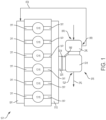
FIG. 1 is a schematic illustration of an engine with an exhaust system including a turbocharger; -
FIG. 2 is a perspective view of an exemplary embodiment of a turbine portion of a turbocharger attached to an exhaust manifold of the engine ofFIG. 1 ; -
FIG. 3 is a front view of an exemplary embodiment of an exhaust inlet flange for the turbine ofFIG. 2 ; -
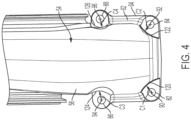
FIG. 4 is a rear view of the exhaust inlet flange ofFIG. 3 ; -
FIG. 5 is a side view of the turbine portion ofFIG. 2 ; -
FIG. 6 is a front view of an exemplary embodiment of an exhaust outlet flange for the exhaust manifold ofFIG. 2 ; -
FIG. 7 is a side view of a central portion of the exhaust manifold ofFIG. 2 ; and -
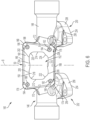
FIG. 8 is a top-front view of the exhaust manifold ofFIG. 2 . - While the present disclosure describes certain embodiments of a turbocharger and exhaust manifold for an internal combustion engine, the present disclosure is to be considered exemplary and is not intended to be limited to the disclosed embodiments. Also, certain elements or features of embodiments disclosed herein are not limited to a particular embodiment, but instead apply to all embodiments of the present disclosure.
- Referring to
FIGS. 1-2 , an exemplary embodiment of an internal combustion engine 10, such as a diesel engine, is shown. The engine 10 may provide power to various types of applications and/or machines. For example, the engine 10 may power a machine such as an off-highway truck, a railway locomotive, an earth-moving machine, such as a wheel loader, excavator, dump truck, backhoe, motor grader, material handler, or the like. The term "machine" can also refer to stationary equipment like a generator that is driven by the engine 10 to generate electricity. - The engine 10 includes one or
more cylinders 12 implemented therein. In the illustrated embodiment, the engine 10 includes sixcylinders 12. In other embodiments, however, the engine 10 may include more or less than sixcylinders 12. The engine 10 may be of an in-line type, as illustrated, a V-type, a rotary type, or other types known in the art. Each of thecylinders 12 may be configured to slidably receive a piston (not shown) therein. - Each of the
cylinders 12 includes one ormore intake ports 14, each having an intake valve (not shown) and one ormore exhaust ports 16, each having an exhaust valve (not shown). The intake valve and the exhaust valve are configured to regulate fluid communication into and out of thecylinders 12 via the one ormore intake ports 14 and the one ormore exhaust ports 16, respectively. The engine 10 includes anintake manifold 18 in fluid communication with one ormore cylinders 12 and with anintake line 20 and anexhaust manifold 22 in fluid communication with the one ormore cylinders 12 and with anexhaust line 24. Intake air enters the one ormore intake ports 14 from theintake line 20 via theintake manifold 18 and exhaust enters theexhaust line 24 from the one ormore exhaust ports 16 via theexhaust manifold 22. Theexhaust manifold 22 is configured to mount onto one or more cylinder heads (not shown) on the engine 10. In the illustrated embodiments, theexhaust manifold 22 and the one or more cylinder heads (not shown) are connected by a plurality of bolts 28 (FIG. 2 ). However, other connection devices may be used, such as a plurality of studs and nuts. - The engine 10 includes a
turbocharger 30 having anexhaust turbine portion 32 and an intakeair compressor portion 34. Thecompressor portion 34 includes anair inlet 36 and an air outlet 38. The air outlet 38 is in fluid communication with theintake line 20. Theexhaust turbine portion 32 has an exhaust inlet 40 (FIG. 3 ) and anexhaust outlet 42. Theexhaust outlet 42 is in fluid communication with theexhaust line 24. - The
exhaust inlet 40 of theturbocharger 30 includes an exhaust inlet flange 46 (i.e., the turbine foot) surrounding an exhaust inlet port 48. Theexhaust inlet flange 46 is configured to connect to an exhaustmanifold outlet flange 50 on theexhaust manifold 22. In the illustrated embodiment, theexhaust inlet flange 46 of theturbocharger 30 and the exhaustmanifold outlet flange 50 of theexhaust manifold 22 are connected by a plurality of bolts 51 (FIG. 2 ). However, other connection devices may be used, such as a plurality of studs and nuts. In the illustrated embodiment, agasket 52 is positioned between the exhaustmanifold outlet flange 50 and theexhaust inlet flange 46. Thegasket 52 has bolt holes (not shown) in the same bolt pattern as the exhaustmanifold outlet flange 50 and theexhaust inlet flange 46, which is described below in more detail. - Referring to
FIGS. 3-5 , theturbine portion 32 of theturbocharger 30 has aturbine housing 54 having one or moreouter surfaces 56 and one or moreinner surfaces 58. Theinner surfaces 58 define the exhaust inlet port 48 and a spiralling exhaust passage 59 (i.e., a volute) in fluid communication with the exhaust inlet port 48 and extending from the exhaust inlet port 48 to theexhaust outlet 42. As shown inFIG. 5 , the exhaust passage 59 spirals about a central axis Y and theturbine housing 54 has a radius R that decreases as the exhaust passage 59 spirals inward. - In the illustrated embodiment, the
inner surfaces 58 bounding the exhaust passage 59 are integral with and transition smoothly into theexhaust inlet flange 46 such that the exhaust passage 59 smoothly transitions into the exhaust inlet port 48. Theexhaust inlet flange 46 includes aplanar end face 60, anexterior surface 62 opposite theend face 60, and aperipheral edge 64 connecting theend face 60 to theexterior surface 62. As shown inFIG. 5 , the plane P defined by theplanar end face 60 is a distance B1 from the central axis Y. The distance B1 represents the shortest distance between the plane P and the central axis Y. In some exemplary embodiments, theexhaust inlet flange 46 is in a tucked configuration. As used in this disclosure, anexhaust inlet flange 46 is "tucked" when the distance B1 is less than, or equal to, the radius R along the same radial line. An "extended" configuration is when the distance B1 is greater than the radius R along the same radial line (i.e.,exhaust inlet flange 46 extends beyond the turbine housing 54). - In some exemplary embodiments, the distance B 1 is less than 80% of the radius R along the same radial line, or is less than 70% of the radius R along the same radial line, or is less than 60 % of the radius R along the same radial line. In one exemplary embodiment, the
exhaust inlet flange 46 is a distance B 1 in the range of 50% to 60% of the radius R along the same radial line. - In the illustrated embodiment, the
peripheral edge 64 includes a first outer edge 66, a second outer edge 68 parallel to and opposite the first outer edge 66, a thirdouter edge 70 extending between the first outer edge 66 and the second outer edge 68, and a fourthouter edge 72 parallel to and opposite the thirdouter edge 70 and extending between the first outer edge 66 and the second outer edge 68. With respect to the direction that the exhaust passage 59 spirals, the first outer edge 66 is at aninner side 73 of theturbine housing 54 and the second outer edge 68 is at anouter side 75 of theturbine housing 54. - The second outer edge 68 transitions to the third
outer edge 70 via a firstrounded corner 74 and transitions to the fourthouter edge 72 via a second rounded corner 76. The first outer edge 66 transitions to the thirdouter edge 70 via a thirdrounded corner 78 and transitions to the fourthouter edge 72 via a fourth rounded corner 80. The thirdrounded corner 78 and the fourth rounded corner 80 extend laterally outward of the thirdouter edge 70 and the fourthouter edge 72, respectively. - The
exhaust inlet flange 46 includes a plurality of bolt holes for mounting theturbocharger 30 to theexhaust manifold 22. In the illustrated embodiment, afirst hole 82 is positioned adjacent the firstrounded corner 74, asecond hole 84 is positioned adjacent the second rounded corner 76, a third hole 86 is positioned adjacent the thirdrounded corner 78, afourth hole 88 is positioned adjacent the fourth rounded corner 80. Thefirst hole 82 is centered on afirst axis 90 that extends perpendicular to theend face 60, thesecond hole 84 is centered on asecond axis 92 that extends perpendicular to theend face 60, the third hole 86 is centered on athird axis 94 that extends perpendicular to theend face 60, and thefourth hole 88 is centered on afourth axis 196 that extends perpendicular to theend face 60. - In the illustrated embodiment, the
third axis 94 is a first distance D1 from thefourth axis 96, thefirst axis 90 is a second distance D2 from thesecond axis 92, thefirst axis 90 is a third distance D3 from thethird axis 94, and thesecond axis 92 is a fourth distance D4 fromfourth axis 96. In the exemplary embodiment, the first distance D1 is greater than the second distance D2 and the third distance D3 is equal to the fourth distance D4. In the exemplary embodiment, a first line intersecting thefirst axis 90 and thesecond axis 92 is parallel to a second line intersecting thethird axis 94 and thefourth axis 96. Thus, the bolt pattern for theexhaust inlet flange 46 takes the shape of a trapezoid. - In one exemplary embodiment, the first distance D1 is in the range of 108 mm to 118 mm, or 113 mm and the second distance D2 is in the range of 90 mm to 100 mm, or 95 mm. Thus, the ratio of the first distance D1 to the second distance D2 is in the range of 1.08 to 1.31, or 1.19. The third distance D3 and the fourth distance D4 are in the range of 65 mm to 75 mm, or 70 mm.
- In an exemplary embodiment, the exhaust inlet port 48 is a single, open port that is symmetric about a central axis A. Thus, the exhaust inlet port 48 is not divided into two ports by a dividing wall and is the sole exhaust inlet port for the
turbocharger 30. In other embodiments, however, the exhaust inlet port 48 may not be symmetric about the central axis A. The exhaust inlet port 48 includes a firstlinear portion 100, a secondlinear portion 102 spaced apart from and parallel to the firstlinear portion 100, a thirdlinear portion 104 perpendicular to and extending between the firstlinear portion 100 and the secondlinear portion 102, and a fourthlinear portion 106 parallel to the thirdlinear portion 104 and perpendicular to and extending between the firstlinear portion 100 and the secondlinear portion 102. - The first
linear portion 100 transitions to the thirdlinear portion 104 via a first innerrounded corner 108 and transitions to the fourthlinear portion 106 via a second innerrounded corner 110. The secondlinear portion 102 transitions to the thirdlinear portion 104 via a firstangled portion 112 positioned between a pair of first shallowcurved portions 114 and transitions to the fourthlinear portion 106 via a secondangled portion 116 positioned between a pair of second shallowcurved portions 118. In some exemplary embodiments, the firstangled portion 112 forms an angle relative to the secondlinear portion 102 in the range of 40 degrees to 60 degrees, or 45 degrees to 55 degrees, or 55 degrees. - The first
linear portion 100 has a first length L1, the secondlinear portion 102 has a second length L2, the thirdlinear portion 104 has a third length L3, and the fourthlinear portion 106 has a fourth length L4. In the exemplary embodiment, the third length L3 is equal to the fourth length L4. Further, as a result of the firstangled portion 112 and the secondangled portion 116, the second length L2 is less than the first length L1. Thus, with respect to the direction that the exhaust passage 59 spirals, the linear portion of the exhaust inlet port 48 adjacent the inner side is longer than the linear portion of the exhaust inlet port 48 adjacent the outer side. In one exemplary embodiment, the ratio of the first length L1 to the second length L2 is in the range of 1.25 to 1.5 or 1.33. - The one or more
outer surfaces 56 of theturbine housing 54 may be configured to avoid interference between theturbine housing 54 and an installation tool, such as for example, a socket for installing thebolts 51, and provide enough clearance to make attaching of theturbocharger 30 to theexhaust manifold 22 easier for an installer. Referring toFIG. 4 , in one exemplary embodiment, the one or moreouter surfaces 56 of theturbine housing 54 may include one or more recessed, concave, or indented surface areas adjacent to one or more of thefirst axis 90, thesecond axis 92, thethird axis 94, and thefourth axis 96. For example, theturbine housing 54 may have portions of itsouter surface 56 that are recessed, such as for example, one or more grooves. The recessed portions may extend along a portion of theouter surfaces 56 parallel to one or more of thefirst axis 90, thesecond axis 92, thethird axis 94, and thefourth axis 96. - In the exemplary embodiment, the
turbine housing 54 includes a first recessedportion 120 adjacent thefirst hole 82, a second recessedportion 122 adjacent thesecond hole 84, a third recessedportion 124 adjacent the third hole 86, and a fourth recessedportion 126 adjacent thefourth hole 88. Each of theholes bolts 51 to attach theturbocharger 30 to theexhaust manifold 22. - As shown in
FIG. 4 , thefirst hole 82 has a first assembling clearance C1, thesecond hole 84 has a second assembling clearance C2, the third hole 86 has a third assembling clearance C3, and thefourth hole 88 has a fourth assembling clearance C4. In the illustrated embodiments, the assembling clearances C1-C4 (i.e., the closest radial distance between the central axis of each of the holes and a surface of the turbine housing) are at the recessedportions holes turbine housing 54. In some exemplary embodiments, each of the assembling clearances C1-C4 is greater than 11.5 mm, or greater than 12 mm, or greater than 12.5 mm. - Referring to
FIG. 2 , in the illustrated embodiment, theexhaust manifold 22 has acentral manifold portion 140 in fluid communication with a first pair of thecylinders 12, a firstlateral manifold portion 142 in fluid communication with a second pair of thecylinders 12, and a secondlateral manifold portion 144 opposite the firstlateral manifold portion 142 and in fluid communication with a third pair of thecylinders 12. - Referring to
FIGS. 6-8 , thecentral manifold portion 140 of theexhaust manifold 22 has a generally cylindrical,tubular body 146 having anouter surface 148 and aninner surface 150 defining anexhaust outlet port 152 and anexhaust passage 154 in fluid communication with theexhaust outlet port 152. - In the illustrated embodiment, the
inner surface 150 bounding theexhaust passage 154 is integral with and transition smoothly into the exhaustmanifold outlet flange 50 such that theexhaust passage 154 smoothly transitions into theexhaust outlet port 152. The exhaustmanifold outlet flange 50 includes aplanar end face 160, anexterior surface 162 opposite theend face 160, and aperipheral edge 164 connecting theend face 160 to theexterior surface 162. In the illustrated embodiment, theperipheral edge 164 includes a firstouter edge 166, a secondouter edge 168 parallel to and opposite the firstouter edge 166, a thirdouter edge 170 extending between the firstouter edge 166 and the secondouter edge 168, and a fourthouter edge 172 opposite the thirdouter edge 170 and extending between the firstouter edge 166 and the secondouter edge 168. - The second
outer edge 168 transitions to the thirdouter edge 170 via a firstrounded corner 174 and transitions to the fourthouter edge 172 via a secondrounded corner 176. The firstouter edge 166 transitions to the thirdouter edge 170 via a thirdrounded corner 178 and transitions to the fourthouter edge 172 via a fourthrounded corner 180. - The exhaust
manifold outlet flange 50 includes a plurality of bolt holes for mounting theturbocharger 30 to theexhaust manifold 22. In the illustrated embodiment, afirst hole 182 is positioned adjacent the firstrounded corner 174, asecond hole 184 is positioned adjacent the secondrounded corner 176, athird hole 186 is positioned adjacent the thirdrounded corner 178, and afourth hole 188 is positioned adjacent the fourthrounded corner 180. Thefirst hole 182 is centered on afirst axis 190 that extends perpendicular to theend face 160, thesecond hole 184 is centered on asecond axis 192 that extends perpendicular to theend face 160, thethird hole 186 is centered on athird axis 194 that extends perpendicular to theend face 160, and thefourth hole 188 is centered on afourth axis 196 that extends perpendicular to theend face 60. - In the illustrated embodiment, the
first axis 190 is a first distance E1 from thesecond axis 192, thethird axis 194 is a second distance E2 from thefourth axis 196, thefirst axis 190 is a third distance E3 from thethird axis 194, and thesecond axis 192 is a fourth distance E4 fromfourth axis 196. In the exemplary embodiment, the first distance E1 is less than the second distance E2 and the third distance E3 is equal to the fourth distance E4. In the exemplary embodiment, a first line intersecting thefirst axis 190 and thesecond axis 192 is parallel to a second line intersecting thethird axis 194 and thefourth axis 196. Thus, the bolt pattern for the exhaustmanifold outlet flange 50 takes the shape of a trapezoid. Likewise, the thirdouter edge 170 and the fourthouter edge 172 taper inward from the firstouter edge 166 to the secondouter edge 168; thus, the outer edges of the exhaustmanifold outlet flange 50 also take the shape of a trapezoid. - In one exemplary embodiment, the first distance E1 is in the range of 90 mm to 100 mm, or 95 mm and the second distance E2 is in the range of 108 mm to 118 mm, or 113 mm. Thus, the ratio of the first distance E1 to the second distance E2 is in the range of 1.08 to 1.31, or 1.19. The third distance E3 and the fourth distance E4 are in the range of 65 mm to 75 mm, or 70 mm.
- In an exemplary embodiment, the
exhaust outlet port 152 is a single, open port that is symmetric about a central axis B. Thus, theexhaust outlet port 152 is not divided into two ports by a dividing wall and is the sole exhaust outlet port for theexhaust manifold 22. In other embodiments, however, theexhaust outlet port 152 may not be symmetric about the central axis B. Theexhaust outlet port 152 includes a firstlinear portion 200 and a secondlinear portion 202 collinear to the firstlinear portion 200 and separated from the firstlinear portion 200 by a first inwardcurved portion 204. Theexhaust outlet port 152 further includes a thirdlinear portion 206 opposite and parallel to the firstlinear portion 200 and a fourthlinear portion 208 opposite and parallel to the secondlinear portion 202. The thirdlinear portion 206 is collinear to the fourthlinear portion 208 and separated from the fourthlinear portion 208 by a second inward curved portion 210. - The
exhaust outlet port 152 further includes a fifthlinear portion 212 perpendicular to and extending between the firstlinear portion 200 and the thirdlinear portion 206, and a sixthlinear portion 214 parallel to the fifthlinear portion 212 and perpendicular to and extending between the secondlinear portion 202 and the fourthlinear portion 208. - The first
linear portion 200 transitions to the fifthlinear portion 212 via a first innerrounded corner 218 and the secondlinear portion 202 transitions to the sixthlinear portion 214 via a second innerrounded corner 220. The thirdlinear portion 206 transitions to the fifthlinear portion 212 via a firstangled portion 222 and the fourthlinear portion 208 transitions to the sixthlinear portion 214 via a secondangled portion 224. - The
central manifold portion 140 includes one or more cylinder head mounting flanges for mounting thecentral manifold portion 140 to the one or more cylinder heads (not shown) of the engine 10. In the illustrated embodiment thecentral manifold portion 140 includes a first cylinderhead mounting flange 230 and a second cylinderhead mounting flange 232. The first cylinderhead mounting flange 230 includes aplanar end face 234, anexterior surface 236 opposite theend face 234, and aperipheral edge 238 connecting theend face 234 to theexterior surface 236. The first cylinderhead mounting flange 230 further includes afirst end 240 and asecond end 242 opposite thefirst end 240. - The first cylinder
head mounting flange 230 includes a pair of bolt holes for mounting thecentral manifold portion 140 to a cylinder head (not shown). In the illustrated embodiment, afirst hole 244 is positioned adjacent at thefirst end 240 and asecond hole 246 is positioned adjacent thesecond end 242. Thefirst hole 244 is centered on afirst axis 248 that extends perpendicular to theend face 234 and thesecond hole 246 is centered on asecond axis 250 that extends perpendicular to theend face 234. - The second cylinder
head mounting flange 232 is substantially similar to the first cylinderhead mounting flange 230. The second cylinderhead mounting flange 232 includes aplanar end face 254, anexterior surface 256 opposite theend face 254, and aperipheral edge 258 connecting theend face 254 to theexterior surface 256. The second cylinderhead mounting flange 232 further includes afirst end 260 and asecond end 262 opposite thefirst end 260. - The second cylinder
head mounting flange 232 includes a pair of bolt holes for mounting thecentral manifold portion 140 to a cylinder head (not shown). In the illustrated embodiment, afirst hole 264 is positioned adjacent at thefirst end 260 and asecond hole 266 is positioned adjacent thesecond end 262. Thefirst hole 264 is centered on afirst axis 268 that extends perpendicular to theend face 254 and thesecond hole 266 is centered on asecond axis 270 that extends perpendicular to theend face 254. - As shown in
FIG. 6 , theplanar end face 160 of the exhaustmanifold outlet flange 50 extends at an angle α relative to theplanar end face 254 of the second cylinderhead mounting flange 232. In the illustrated embodiment, the angle is in the range of 50 degrees to 60 degrees, or 55 degrees. In other embodiments, however, the angle may be greater than 60 degrees or less than 50 degrees. - The
outer surface 148 of thecentral manifold portion 140 may be configured to avoid interference between thecentral manifold portion 140 and an installation tool, such as for example, a socket for installing thebolts 28, and provide enough clearance to attach of thecentral manifold portion 140 to one or more cylinder heads (not shown) easier for an installer. Referring toFIGS. 6 and8 , in one exemplary embodiment, theouter surface 148 of thecentral manifold portion 140 may include one or more recessed, concave, or indented surface areas adjacent to one or more of thefirst axes second axis outer surface 148 cylindrical,tubular body 146 of the central portion includes one or more recessed, concave, or indented surface portions. - In the exemplary embodiment, the
central manifold portion 140 includes a first recessedportion 272 adjacent thefirst hole 244 of the first cylinderhead mounting flange 230, a second recessedportion 274 adjacent thesecond hole 246 of the first cylinderhead mounting flange 230, a third recessedportion 276 adjacent thefirst hole 264 of the second cylinderhead mounting flange 232, and a fourth recessedportion 278 adjacent thesecond hole 266 of the second cylinderhead mounting flange 232. Each of theholes central manifold portion 140 or an outer surface of theturbine housing 54 when assembled to thecentral manifold portion 140, at a position along the central axis that is exterior to the hole. In other words, the assembling clearance is associated with the clearance between thecentral manifold portion 140 orturbine housing 54 and an installation tool, such as a socket or socket extension, used to drive thebolts 28 to attach thecentral manifold portion 140 to the one or more cylinder heads (not shown). - As shown in
FIG. 8 , thefirst hole 244 of the first cylinderhead mounting flange 230 has a first assembling clearance D1, thesecond hole 246 of the first cylinderhead mounting flange 230 has a second assembling clearance D2, thefirst hole 264 of the second cylinderhead mounting flange 232 has a third assembling clearance D3, and thesecond hole 266 of the second cylinderhead mounting flange 232 has a fourth assembling clearance D4. In the illustrated embodiments, the assembling clearances D1-D4 (i.e., the closest radial distance between the central axis of each of the holes and a surface of the central manifold portion) are at the recessedportions holes central manifold portion 140. In some exemplary embodiments, each of the assembling clearances D1-D4 is greater than 14.5 mm, or greater than 15 mm, or greater than 15.5 mm. - Engines utilizing the turbocharger and exhaust manifold of the present disclosure can be used in a variety of applications, such as for example, to provide power to an off-highway truck, a railway locomotive, an earth-moving machine, an engine-driven generator or pumping system, or other engine-powered applications. The disclosed turbocharger and exhaust manifold are particularly well-suited for applications where spacing for the turbocharger and the exhaust manifold is constrained. For example, the turbocharger may include a tucked exhaust inlet flange which provides more compact spacing between the turbocharger and the exhaust manifold.
- A more compact turbocharger and the exhaust manifold arrangement, however, can present challenges with assembly. For example, a conventional rectangular exhaust inlet flange may result in interference between an installation tool, such as a socket and a socket extension, and an exterior surface of the turbine housing and/or the exhaust manifold.
- The turbocharger and the exhaust manifold of the present disclosure may include one or more features preventing interference between an installation tool and an exterior surface of the turbine housing and/or the exhaust manifold. For example, the turbine exhaust inlet flange may have novel configuration including a four hole, non-square bolt pattern with a narrower spacing between bolts on the outer side of the exhaust inlet flange, with respect to the direction that the exhaust passage spirals. The narrower spacing of the outer edge bolt holes provides additional clearance for access when bolting the turbocharger to the exhaust manifold.
- The exhaust inlet port is configured to accommodate narrower spacing of the outer edge bolt holes while still being of sufficient size and design for adequate exhaust flow to the turbine. For example, the linear portion of the exhaust inlet port adjacent the inner side may be longer than the linear portion of the exhaust inlet port adjacent the outer side. Thus, the exhaust inlet port is wider adjacent the inner side than adjacent the outer side.
- In addition, the recessed portions in the outer surfaces of the turbine housing and the outer surfaces of the exhaust manifold provide additional space for a socket or socket extension to engage and drive the bolts attaching the exhaust manifold to the cylinder heads and attaching the turbocharger to the exhaust manifold.
- While the present invention has been illustrated by the description of embodiments thereof, and while the embodiments have been described in considerable detail, it is not the intention of the applicant to restrict or in any way limit the scope of the appended claims to such detail. Additional advantages and modifications will readily appear to those skilled in the art. Therefore, the present invention in its broader aspects, is not limited to the specific details, the representative compositions or formulations, and illustrative examples shown and described. Accordingly, departures may be made from such details without departing from the scope of the appended claims.
Claims (8)
- A turbocharger (30), comprising:
a turbine housing (54) having an outer surface (56) and an inner surface (58) defining an exhaust passage (59);an exhaust inlet port (48) in fluid communication with the exhaust passage (59); anda tucked exhaust inlet flange (46) surrounding the exhaust inlet port (48), the exhaust inlet flange (46) including a plurality of bolt holes (82) arranged in a trapezoid-shaped bolt pattern, wherein the tucked exhaust inlet flange (46) has a planar end face (60) defining a first plane (P) and the turbine housing (54) circumscribes a central axis (Y), and wherein a shortest distance (B1) between the first plane (P) and the central axis (Y) along a first line is less than, or equal to, a radius (R) of the turbine housing (54) along the first linewherein the tucked exhaust inlet flange (46) comprises an outer side (75) having a first bolt hole (82) centered on a first axis (90) and a second bolt hole (84) centered on a second axis (92) and an inner side (73) having third bolt hole (86) centered on a third axis (94) and a fourth bolt hole (88) centered on a fourth axis (96), wherein the third axis (94) is a first distance (D1) from the fourth axis (96) and the first axis (90) is a second distance (D2) from the second axis (92), and wherein the first distance (D1) is greater than the second distance (D2), andwherein the exhaust inlet port (48) includes a first linear portion (100) adjacent the inner side (73) and a second linear portion (102), parallel to the first linear portion (100), and adjacent the outer side (75), wherein the first linear portion (100) has a first length (L1) and the second linear portion (102) has a second length (L2) that is less than the first length (L1) - The turbocharger (30) of claim 1, wherein a ratio of the first distance (D1) to the second distance (D2) is in the range of 1.08 to 1.31.
- The turbocharger (30) of claim 1 or 2, wherein a ratio of the first length (L1) to the second length (L2) is in a range of 1.25 to 1.5 or 1.33.
- The turbocharger (30) of any one of claims 1-3, wherein the exhaust inlet port (48) is undivided and the sole exhaust inlet port (48) of the turbocharger (30).
- The turbocharger (30) of any one of claims 1-4, wherein the distance (B1) between the first plane (P) and the central axis (Y) along the first line is in the range of 50% to 80% of the radius (R) of the turbine housing (54) along the first line.
- The turbocharger (30) any one of claims 1-5, wherein the turbine housing (54) has a minimum assembling clearance greater than 11.5 mm.
- The turbocharger (30) of claim 6, wherein the minimum assembling clearance is associated with the recessed portion adjacent a bolt hole in the tucked exhaust inlet flange (46).
- An internal combustion engine (10), comprising:one or more cylinders (12);an exhaust manifold (22) in fluid communication with the one or more cylinders (12); andthe turbocharger (30) of claim 1 connected to the exhaust manifold (22) via the tucked flange (46).
Applications Claiming Priority (2)
| Application Number | Priority Date | Filing Date | Title |
|---|---|---|---|
| US16/718,412 US11098636B2 (en) | 2019-12-18 | 2019-12-18 | Exhaust manifold to turbine connection |
| PCT/US2020/061740 WO2021126478A1 (en) | 2019-12-18 | 2020-11-23 | Exhaust manifold to turbine connection |
Publications (2)
| Publication Number | Publication Date |
|---|---|
| EP4077885A1 EP4077885A1 (en) | 2022-10-26 |
| EP4077885B1 true EP4077885B1 (en) | 2025-01-01 |
Family
ID=73854940
Family Applications (1)
| Application Number | Title | Priority Date | Filing Date |
|---|---|---|---|
| EP20825347.6A Active EP4077885B1 (en) | 2019-12-18 | 2020-11-23 | Exhaust manifold to turbine connection |
Country Status (3)
| Country | Link |
|---|---|
| US (1) | US11098636B2 (en) |
| EP (1) | EP4077885B1 (en) |
| WO (1) | WO2021126478A1 (en) |
Families Citing this family (3)
| Publication number | Priority date | Publication date | Assignee | Title |
|---|---|---|---|---|
| US11473481B2 (en) * | 2020-11-20 | 2022-10-18 | Caterpillar Inc. | Exhaust manifold having turbine connector with turbine foot |
| JP7794103B2 (en) * | 2022-11-01 | 2026-01-06 | トヨタ自動車株式会社 | Fastening structure and fastening structure design method |
| US12312985B1 (en) * | 2024-06-03 | 2025-05-27 | Kawasaki Motors, Ltd. | Engine and exhaust system |
Citations (4)
| Publication number | Priority date | Publication date | Assignee | Title |
|---|---|---|---|---|
| US3614259A (en) * | 1969-09-04 | 1971-10-19 | Cummins Engine Co Inc | Turbine casing |
| US20030014972A1 (en) * | 2001-01-16 | 2003-01-23 | Arnold Steven Don | Variable geometry turbocharger having internal bypass exhaust gas flow |
| DE102016205257A1 (en) * | 2015-04-09 | 2016-10-13 | Borgwarner Inc., Patent Department | EXHAUST GAS ASSEMBLY OF AN EXHAUST BOLDER |
| EP3460214A1 (en) * | 2016-12-16 | 2019-03-27 | Mitsubishi Heavy Industries Engine & Turbocharger, Ltd. | Turbine housing, exhaust turbine, and turbocharger |
Family Cites Families (11)
| Publication number | Priority date | Publication date | Assignee | Title |
|---|---|---|---|---|
| US5406795A (en) | 1994-01-21 | 1995-04-18 | Cummins Engine Company, Inc. | Exhaust manifold to turbine casing flanges |
| US6709235B2 (en) | 2001-09-14 | 2004-03-23 | Honeywell International Inc. | Turbine housing for high exhaust temperature |
| US6892532B2 (en) | 2002-05-31 | 2005-05-17 | Caterpillar Inc | Exhaust system having low-stress exhaust manifold flange |
| US20090026009A1 (en) * | 2005-03-24 | 2009-01-29 | Kenji Itoh | Exhaust member |
| US7784442B2 (en) * | 2007-11-19 | 2010-08-31 | Gm Global Technology Operations, Inc. | Turbocharged engine cylinder head internal cooling |
| DE102011101506B4 (en) * | 2010-05-17 | 2015-06-18 | GM Global Technology Operations LLC (n. d. Ges. d. Staates Delaware) | Motor assembly and method of manufacture |
| US8474251B2 (en) | 2010-10-19 | 2013-07-02 | Ford Global Technologies, Llc | Cylinder head cooling system |
| DE102015213470B4 (en) | 2015-07-17 | 2025-07-10 | Werkhaus GmbH & Co. KG | Fan module |
| JP6249030B2 (en) | 2016-03-14 | 2017-12-20 | マツダ株式会社 | Turbocharged engine |
| JP6315020B2 (en) | 2016-04-05 | 2018-04-25 | トヨタ自動車株式会社 | Internal combustion engine |
| JP6527548B2 (en) | 2017-05-23 | 2019-06-05 | 本田技研工業株式会社 | Flange connection structure |
-
2019
- 2019-12-18 US US16/718,412 patent/US11098636B2/en active Active
-
2020
- 2020-11-23 WO PCT/US2020/061740 patent/WO2021126478A1/en not_active Ceased
- 2020-11-23 EP EP20825347.6A patent/EP4077885B1/en active Active
Patent Citations (4)
| Publication number | Priority date | Publication date | Assignee | Title |
|---|---|---|---|---|
| US3614259A (en) * | 1969-09-04 | 1971-10-19 | Cummins Engine Co Inc | Turbine casing |
| US20030014972A1 (en) * | 2001-01-16 | 2003-01-23 | Arnold Steven Don | Variable geometry turbocharger having internal bypass exhaust gas flow |
| DE102016205257A1 (en) * | 2015-04-09 | 2016-10-13 | Borgwarner Inc., Patent Department | EXHAUST GAS ASSEMBLY OF AN EXHAUST BOLDER |
| EP3460214A1 (en) * | 2016-12-16 | 2019-03-27 | Mitsubishi Heavy Industries Engine & Turbocharger, Ltd. | Turbine housing, exhaust turbine, and turbocharger |
Also Published As
| Publication number | Publication date |
|---|---|
| WO2021126478A1 (en) | 2021-06-24 |
| US11098636B2 (en) | 2021-08-24 |
| EP4077885A1 (en) | 2022-10-26 |
| US20210189942A1 (en) | 2021-06-24 |
| CN114829745A (en) | 2022-07-29 |
Similar Documents
| Publication | Publication Date | Title |
|---|---|---|
| EP4077885B1 (en) | Exhaust manifold to turbine connection | |
| EP1016778B1 (en) | Exhaust manifold integrally cast with turbine housing for turbocharger | |
| EP0664385B1 (en) | Flanged connection of a turbocharger to an exhaust manifold | |
| JP5757280B2 (en) | Exhaust manifold mounting structure for internal combustion engines | |
| US4269158A (en) | Intercooler for internal combustion engine | |
| EP3438433B1 (en) | Engine device | |
| EP3438438B1 (en) | Engine device | |
| US6009706A (en) | Exhaust manifold assembly in an internal combustion engine | |
| CN114829745B (en) | Exhaust manifold to turbine connection | |
| JP2011169272A (en) | Cylinder head structure in multi-cylinder internal combustion engine | |
| CN101201025B (en) | Cylinder head and exhaust system of a multi-cylinder engine | |
| GB2516164A (en) | Engine mount | |
| JP7445632B2 (en) | engine equipment | |
| EP3280882B1 (en) | Exhaust gas supply arrangement of an exhaust gas turbocharger | |
| JP2004522886A (en) | Intake pipe of internal combustion engine | |
| US6343574B1 (en) | Load distribution rib for the combustion deck of an internal combustion engine | |
| CN116529467B (en) | Exhaust manifold having turbine connector with turbine feet | |
| US20140326209A1 (en) | End housing for an internal combustion engine | |
| US12078078B2 (en) | Cylinder head with integrated turbocharger | |
| US20260036078A1 (en) | Turbocharger housing and exhaust system comprising the same | |
| JP4438523B2 (en) | Turbocharger and turbocharged engine | |
| CN222315256U (en) | Engine intake manifold | |
| JP7066817B2 (en) | Engine equipment | |
| JPH06280602A (en) | Rotary piston engine | |
| WO2017198350A1 (en) | A conduit connection assembly with pressure relief |
Legal Events
| Date | Code | Title | Description |
|---|---|---|---|
| STAA | Information on the status of an ep patent application or granted ep patent |
Free format text: STATUS: UNKNOWN |
|
| STAA | Information on the status of an ep patent application or granted ep patent |
Free format text: STATUS: THE INTERNATIONAL PUBLICATION HAS BEEN MADE |
|
| PUAI | Public reference made under article 153(3) epc to a published international application that has entered the european phase |
Free format text: ORIGINAL CODE: 0009012 |
|
| STAA | Information on the status of an ep patent application or granted ep patent |
Free format text: STATUS: REQUEST FOR EXAMINATION WAS MADE |
|
| 17P | Request for examination filed |
Effective date: 20220524 |
|
| AK | Designated contracting states |
Kind code of ref document: A1 Designated state(s): AL AT BE BG CH CY CZ DE DK EE ES FI FR GB GR HR HU IE IS IT LI LT LU LV MC MK MT NL NO PL PT RO RS SE SI SK SM TR |
|
| DAV | Request for validation of the european patent (deleted) | ||
| DAX | Request for extension of the european patent (deleted) | ||
| STAA | Information on the status of an ep patent application or granted ep patent |
Free format text: STATUS: EXAMINATION IS IN PROGRESS |
|
| 17Q | First examination report despatched |
Effective date: 20230920 |
|
| GRAP | Despatch of communication of intention to grant a patent |
Free format text: ORIGINAL CODE: EPIDOSNIGR1 |
|
| STAA | Information on the status of an ep patent application or granted ep patent |
Free format text: STATUS: GRANT OF PATENT IS INTENDED |
|
| INTG | Intention to grant announced |
Effective date: 20240918 |
|
| GRAS | Grant fee paid |
Free format text: ORIGINAL CODE: EPIDOSNIGR3 |
|
| P01 | Opt-out of the competence of the unified patent court (upc) registered |
Free format text: CASE NUMBER: APP_56210/2024 Effective date: 20241015 |
|
| GRAA | (expected) grant |
Free format text: ORIGINAL CODE: 0009210 |
|
| STAA | Information on the status of an ep patent application or granted ep patent |
Free format text: STATUS: THE PATENT HAS BEEN GRANTED |
|
| AK | Designated contracting states |
Kind code of ref document: B1 Designated state(s): AL AT BE BG CH CY CZ DE DK EE ES FI FR GB GR HR HU IE IS IT LI LT LU LV MC MK MT NL NO PL PT RO RS SE SI SK SM TR |
|
| REG | Reference to a national code |
Ref country code: GB Ref legal event code: FG4D |
|
| REG | Reference to a national code |
Ref country code: CH Ref legal event code: EP |
|
| REG | Reference to a national code |
Ref country code: DE Ref legal event code: R096 Ref document number: 602020044213 Country of ref document: DE |
|
| REG | Reference to a national code |
Ref country code: IE Ref legal event code: FG4D |
|
| REG | Reference to a national code |
Ref country code: LT Ref legal event code: MG9D |
|
| REG | Reference to a national code |
Ref country code: NL Ref legal event code: MP Effective date: 20250101 |
|
| REG | Reference to a national code |
Ref country code: AT Ref legal event code: MK05 Ref document number: 1756420 Country of ref document: AT Kind code of ref document: T Effective date: 20250101 |
|
| PG25 | Lapsed in a contracting state [announced via postgrant information from national office to epo] |
Ref country code: NL Free format text: LAPSE BECAUSE OF FAILURE TO SUBMIT A TRANSLATION OF THE DESCRIPTION OR TO PAY THE FEE WITHIN THE PRESCRIBED TIME-LIMIT Effective date: 20250101 |
|
| PG25 | Lapsed in a contracting state [announced via postgrant information from national office to epo] |
Ref country code: FI Free format text: LAPSE BECAUSE OF FAILURE TO SUBMIT A TRANSLATION OF THE DESCRIPTION OR TO PAY THE FEE WITHIN THE PRESCRIBED TIME-LIMIT Effective date: 20250101 |
|
| PG25 | Lapsed in a contracting state [announced via postgrant information from national office to epo] |
Ref country code: PL Free format text: LAPSE BECAUSE OF FAILURE TO SUBMIT A TRANSLATION OF THE DESCRIPTION OR TO PAY THE FEE WITHIN THE PRESCRIBED TIME-LIMIT Effective date: 20250101 |
|
| PG25 | Lapsed in a contracting state [announced via postgrant information from national office to epo] |
Ref country code: ES Free format text: LAPSE BECAUSE OF FAILURE TO SUBMIT A TRANSLATION OF THE DESCRIPTION OR TO PAY THE FEE WITHIN THE PRESCRIBED TIME-LIMIT Effective date: 20250101 |
|
| PG25 | Lapsed in a contracting state [announced via postgrant information from national office to epo] |
Ref country code: NO Free format text: LAPSE BECAUSE OF FAILURE TO SUBMIT A TRANSLATION OF THE DESCRIPTION OR TO PAY THE FEE WITHIN THE PRESCRIBED TIME-LIMIT Effective date: 20250401 Ref country code: IS Free format text: LAPSE BECAUSE OF FAILURE TO SUBMIT A TRANSLATION OF THE DESCRIPTION OR TO PAY THE FEE WITHIN THE PRESCRIBED TIME-LIMIT Effective date: 20250501 |
|
| PG25 | Lapsed in a contracting state [announced via postgrant information from national office to epo] |
Ref country code: HR Free format text: LAPSE BECAUSE OF FAILURE TO SUBMIT A TRANSLATION OF THE DESCRIPTION OR TO PAY THE FEE WITHIN THE PRESCRIBED TIME-LIMIT Effective date: 20250101 |
|
| PG25 | Lapsed in a contracting state [announced via postgrant information from national office to epo] |
Ref country code: PT Free format text: LAPSE BECAUSE OF FAILURE TO SUBMIT A TRANSLATION OF THE DESCRIPTION OR TO PAY THE FEE WITHIN THE PRESCRIBED TIME-LIMIT Effective date: 20250502 Ref country code: LV Free format text: LAPSE BECAUSE OF FAILURE TO SUBMIT A TRANSLATION OF THE DESCRIPTION OR TO PAY THE FEE WITHIN THE PRESCRIBED TIME-LIMIT Effective date: 20250101 |
|
| PG25 | Lapsed in a contracting state [announced via postgrant information from national office to epo] |
Ref country code: GR Free format text: LAPSE BECAUSE OF FAILURE TO SUBMIT A TRANSLATION OF THE DESCRIPTION OR TO PAY THE FEE WITHIN THE PRESCRIBED TIME-LIMIT Effective date: 20250402 Ref country code: BG Free format text: LAPSE BECAUSE OF FAILURE TO SUBMIT A TRANSLATION OF THE DESCRIPTION OR TO PAY THE FEE WITHIN THE PRESCRIBED TIME-LIMIT Effective date: 20250101 |
|
| PG25 | Lapsed in a contracting state [announced via postgrant information from national office to epo] |
Ref country code: AT Free format text: LAPSE BECAUSE OF FAILURE TO SUBMIT A TRANSLATION OF THE DESCRIPTION OR TO PAY THE FEE WITHIN THE PRESCRIBED TIME-LIMIT Effective date: 20250101 |
|
| PG25 | Lapsed in a contracting state [announced via postgrant information from national office to epo] |
Ref country code: CZ Free format text: LAPSE BECAUSE OF FAILURE TO SUBMIT A TRANSLATION OF THE DESCRIPTION OR TO PAY THE FEE WITHIN THE PRESCRIBED TIME-LIMIT Effective date: 20250101 |
|
| PG25 | Lapsed in a contracting state [announced via postgrant information from national office to epo] |
Ref country code: SE Free format text: LAPSE BECAUSE OF FAILURE TO SUBMIT A TRANSLATION OF THE DESCRIPTION OR TO PAY THE FEE WITHIN THE PRESCRIBED TIME-LIMIT Effective date: 20250101 |
|
| REG | Reference to a national code |
Ref country code: DE Ref legal event code: R097 Ref document number: 602020044213 Country of ref document: DE |
|
| PG25 | Lapsed in a contracting state [announced via postgrant information from national office to epo] |
Ref country code: SM Free format text: LAPSE BECAUSE OF FAILURE TO SUBMIT A TRANSLATION OF THE DESCRIPTION OR TO PAY THE FEE WITHIN THE PRESCRIBED TIME-LIMIT Effective date: 20250101 |
|
| PG25 | Lapsed in a contracting state [announced via postgrant information from national office to epo] |
Ref country code: DK Free format text: LAPSE BECAUSE OF FAILURE TO SUBMIT A TRANSLATION OF THE DESCRIPTION OR TO PAY THE FEE WITHIN THE PRESCRIBED TIME-LIMIT Effective date: 20250101 |
|
| PG25 | Lapsed in a contracting state [announced via postgrant information from national office to epo] |
Ref country code: IT Free format text: LAPSE BECAUSE OF FAILURE TO SUBMIT A TRANSLATION OF THE DESCRIPTION OR TO PAY THE FEE WITHIN THE PRESCRIBED TIME-LIMIT Effective date: 20250101 |
|
| PG25 | Lapsed in a contracting state [announced via postgrant information from national office to epo] |
Ref country code: EE Free format text: LAPSE BECAUSE OF FAILURE TO SUBMIT A TRANSLATION OF THE DESCRIPTION OR TO PAY THE FEE WITHIN THE PRESCRIBED TIME-LIMIT Effective date: 20250101 |
|
| PG25 | Lapsed in a contracting state [announced via postgrant information from national office to epo] |
Ref country code: RO Free format text: LAPSE BECAUSE OF FAILURE TO SUBMIT A TRANSLATION OF THE DESCRIPTION OR TO PAY THE FEE WITHIN THE PRESCRIBED TIME-LIMIT Effective date: 20250101 |
|
| PG25 | Lapsed in a contracting state [announced via postgrant information from national office to epo] |
Ref country code: SK Free format text: LAPSE BECAUSE OF FAILURE TO SUBMIT A TRANSLATION OF THE DESCRIPTION OR TO PAY THE FEE WITHIN THE PRESCRIBED TIME-LIMIT Effective date: 20250101 |
|
| PLBE | No opposition filed within time limit |
Free format text: ORIGINAL CODE: 0009261 |
|
| STAA | Information on the status of an ep patent application or granted ep patent |
Free format text: STATUS: NO OPPOSITION FILED WITHIN TIME LIMIT |
|
| 26N | No opposition filed |
Effective date: 20251002 |
|
| PGFP | Annual fee paid to national office [announced via postgrant information from national office to epo] |
Ref country code: DE Payment date: 20251022 Year of fee payment: 6 |
|
| PGFP | Annual fee paid to national office [announced via postgrant information from national office to epo] |
Ref country code: GB Payment date: 20251023 Year of fee payment: 6 |