EP4077262B1 - Methods of synthesizing 4-valyloxybutyric acid - Google Patents
Methods of synthesizing 4-valyloxybutyric acid Download PDFInfo
- Publication number
- EP4077262B1 EP4077262B1 EP20845273.0A EP20845273A EP4077262B1 EP 4077262 B1 EP4077262 B1 EP 4077262B1 EP 20845273 A EP20845273 A EP 20845273A EP 4077262 B1 EP4077262 B1 EP 4077262B1
- Authority
- EP
- European Patent Office
- Prior art keywords
- compound
- formula
- solvent
- acid
- base
- Prior art date
- Legal status (The legal status is an assumption and is not a legal conclusion. Google has not performed a legal analysis and makes no representation as to the accuracy of the status listed.)
- Active
Links
Classifications
-
- C—CHEMISTRY; METALLURGY
- C07—ORGANIC CHEMISTRY
- C07C—ACYCLIC OR CARBOCYCLIC COMPOUNDS
- C07C53/00—Saturated compounds having only one carboxyl group bound to an acyclic carbon atom or hydrogen
- C07C53/15—Saturated compounds having only one carboxyl group bound to an acyclic carbon atom or hydrogen containing halogen
- C07C53/16—Halogenated acetic acids
- C07C53/18—Halogenated acetic acids containing fluorine
-
- C—CHEMISTRY; METALLURGY
- C07—ORGANIC CHEMISTRY
- C07C—ACYCLIC OR CARBOCYCLIC COMPOUNDS
- C07C227/00—Preparation of compounds containing amino and carboxyl groups bound to the same carbon skeleton
- C07C227/14—Preparation of compounds containing amino and carboxyl groups bound to the same carbon skeleton from compounds containing already amino and carboxyl groups or derivatives thereof
- C07C227/16—Preparation of compounds containing amino and carboxyl groups bound to the same carbon skeleton from compounds containing already amino and carboxyl groups or derivatives thereof by reactions not involving the amino or carboxyl groups
-
- C—CHEMISTRY; METALLURGY
- C07—ORGANIC CHEMISTRY
- C07C—ACYCLIC OR CARBOCYCLIC COMPOUNDS
- C07C227/00—Preparation of compounds containing amino and carboxyl groups bound to the same carbon skeleton
- C07C227/14—Preparation of compounds containing amino and carboxyl groups bound to the same carbon skeleton from compounds containing already amino and carboxyl groups or derivatives thereof
- C07C227/18—Preparation of compounds containing amino and carboxyl groups bound to the same carbon skeleton from compounds containing already amino and carboxyl groups or derivatives thereof by reactions involving amino or carboxyl groups, e.g. hydrolysis of esters or amides, by formation of halides, salts or esters
-
- C—CHEMISTRY; METALLURGY
- C07—ORGANIC CHEMISTRY
- C07C—ACYCLIC OR CARBOCYCLIC COMPOUNDS
- C07C227/00—Preparation of compounds containing amino and carboxyl groups bound to the same carbon skeleton
- C07C227/14—Preparation of compounds containing amino and carboxyl groups bound to the same carbon skeleton from compounds containing already amino and carboxyl groups or derivatives thereof
- C07C227/18—Preparation of compounds containing amino and carboxyl groups bound to the same carbon skeleton from compounds containing already amino and carboxyl groups or derivatives thereof by reactions involving amino or carboxyl groups, e.g. hydrolysis of esters or amides, by formation of halides, salts or esters
- C07C227/20—Preparation of compounds containing amino and carboxyl groups bound to the same carbon skeleton from compounds containing already amino and carboxyl groups or derivatives thereof by reactions involving amino or carboxyl groups, e.g. hydrolysis of esters or amides, by formation of halides, salts or esters by hydrolysis of N-acylated amino-acids or derivatives thereof, e.g. hydrolysis of carbamates
-
- C—CHEMISTRY; METALLURGY
- C07—ORGANIC CHEMISTRY
- C07C—ACYCLIC OR CARBOCYCLIC COMPOUNDS
- C07C229/00—Compounds containing amino and carboxyl groups bound to the same carbon skeleton
- C07C229/02—Compounds containing amino and carboxyl groups bound to the same carbon skeleton having amino and carboxyl groups bound to acyclic carbon atoms of the same carbon skeleton
- C07C229/04—Compounds containing amino and carboxyl groups bound to the same carbon skeleton having amino and carboxyl groups bound to acyclic carbon atoms of the same carbon skeleton the carbon skeleton being acyclic and saturated
- C07C229/06—Compounds containing amino and carboxyl groups bound to the same carbon skeleton having amino and carboxyl groups bound to acyclic carbon atoms of the same carbon skeleton the carbon skeleton being acyclic and saturated having only one amino and one carboxyl group bound to the carbon skeleton
- C07C229/08—Compounds containing amino and carboxyl groups bound to the same carbon skeleton having amino and carboxyl groups bound to acyclic carbon atoms of the same carbon skeleton the carbon skeleton being acyclic and saturated having only one amino and one carboxyl group bound to the carbon skeleton the nitrogen atom of the amino group being further bound to hydrogen atoms
-
- C—CHEMISTRY; METALLURGY
- C07—ORGANIC CHEMISTRY
- C07C—ACYCLIC OR CARBOCYCLIC COMPOUNDS
- C07C269/00—Preparation of derivatives of carbamic acid, i.e. compounds containing any of the groups, the nitrogen atom not being part of nitro or nitroso groups
- C07C269/06—Preparation of derivatives of carbamic acid, i.e. compounds containing any of the groups, the nitrogen atom not being part of nitro or nitroso groups by reactions not involving the formation of carbamate groups
-
- C—CHEMISTRY; METALLURGY
- C07—ORGANIC CHEMISTRY
- C07C—ACYCLIC OR CARBOCYCLIC COMPOUNDS
- C07C271/00—Derivatives of carbamic acids, i.e. compounds containing any of the groups, the nitrogen atom not being part of nitro or nitroso groups
- C07C271/06—Esters of carbamic acids
- C07C271/08—Esters of carbamic acids having oxygen atoms of carbamate groups bound to acyclic carbon atoms
- C07C271/10—Esters of carbamic acids having oxygen atoms of carbamate groups bound to acyclic carbon atoms with the nitrogen atoms of the carbamate groups bound to hydrogen atoms or to acyclic carbon atoms
- C07C271/22—Esters of carbamic acids having oxygen atoms of carbamate groups bound to acyclic carbon atoms with the nitrogen atoms of the carbamate groups bound to hydrogen atoms or to acyclic carbon atoms to carbon atoms of hydrocarbon radicals substituted by carboxyl groups
-
- C—CHEMISTRY; METALLURGY
- C07—ORGANIC CHEMISTRY
- C07C—ACYCLIC OR CARBOCYCLIC COMPOUNDS
- C07C309/00—Sulfonic acids; Halides, esters, or anhydrides thereof
- C07C309/01—Sulfonic acids
- C07C309/28—Sulfonic acids having sulfo groups bound to carbon atoms of six-membered aromatic rings of a carbon skeleton
- C07C309/29—Sulfonic acids having sulfo groups bound to carbon atoms of six-membered aromatic rings of a carbon skeleton of non-condensed six-membered aromatic rings
-
- C—CHEMISTRY; METALLURGY
- C07—ORGANIC CHEMISTRY
- C07C—ACYCLIC OR CARBOCYCLIC COMPOUNDS
- C07C55/00—Saturated compounds having more than one carboxyl group bound to acyclic carbon atoms
- C07C55/02—Dicarboxylic acids
- C07C55/06—Oxalic acid
- C07C55/07—Salts thereof
-
- Y—GENERAL TAGGING OF NEW TECHNOLOGICAL DEVELOPMENTS; GENERAL TAGGING OF CROSS-SECTIONAL TECHNOLOGIES SPANNING OVER SEVERAL SECTIONS OF THE IPC; TECHNICAL SUBJECTS COVERED BY FORMER USPC CROSS-REFERENCE ART COLLECTIONS [XRACs] AND DIGESTS
- Y02—TECHNOLOGIES OR APPLICATIONS FOR MITIGATION OR ADAPTATION AGAINST CLIMATE CHANGE
- Y02P—CLIMATE CHANGE MITIGATION TECHNOLOGIES IN THE PRODUCTION OR PROCESSING OF GOODS
- Y02P20/00—Technologies relating to chemical industry
- Y02P20/50—Improvements relating to the production of bulk chemicals
- Y02P20/55—Design of synthesis routes, e.g. reducing the use of auxiliary or protecting groups
Definitions
- Narcolepsy is a chronic neurological disorder characterized by excessive daytime sleepiness (EDS), cataplexy, sleep paralysis, hypnagogic hallucinations, and disturbed nocturnal sleep. EDS is present in most cases and is typically the first symptom to manifest. Cataplexy occurs in approximately 70% of patients with narcolepsy.
- GHB Gamma-hydroxybutyric acid
- CNS central nervous system
- sodium oxybate Despite its efficacy in treating EDS and cataplexy associated with narcolepsy, the therapeutic benefits of sodium oxybate are hindered by a sub-optimal pharmacokinetics profile.
- the deficiencies of sodium oxybate include: (1) variable oral bioavailability and unpredictable drug plasma concentrations resulting from erratic absorption in patients, (2) short plasma half-life (t 1/2 ⁇ 1 hr), (3) significant food effect (high-fat meals may significantly delay and hinder absorption of sodium oxybate, (4) unpleasant gastrointestinal side effects caused by high bolus oral dosing, (5) poor patient compliance and inconvenient drug administration due to the twice per night dosage regimen, and (6) risk of hypernatremia (due to significant sodium intake).
- GHB-derived compounds that overcome some or all of these shortcomings, along with methods of manufacture thereof.
- International Patent Publication Number WO 2017/050259 discloses prodrugs of gamma-hydroxybutyric acid (GHB), as well as compositions and uses thereof.
- the present disclosure provides a compound of Formula (I-A): or a pharmaceutically acceptable salt thereof, wherein,
- the C 6-15 carbocycle is unsubstituted. In some embodiments, the C 6-15 carbocycle is substituted with at least one substituent. In some embodiments, the C 6-15 carbocycle is substituted with at least two substituents.
- R 2 is benzyl
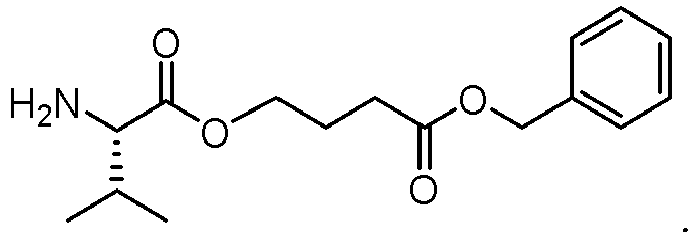
- the compound of Formula (I-A) is represented by the structure:
- the compound of Formula (I-A) is represented by the structure:
- the compound of Formula (I-A) is represented by the structure:
- the compound of Formula (I-A) is represented by the structure:
- the compound of Formula (I-A) is represented by the structure:
- the compound of Formula (I-A) is represented by the structure:
- the compound of Formula (I-A) is represented by the structure:
- the compound of Formula (I-A) is represented by the structure:
- the compound of Formula (I-A) is represented by the structure:
- the compound of Formula (I-A) is represented by the structure:
- the compound of Formula (I-A) is represented by the structure:
- the compound of Formula (I-A) is represented by the structure:
- the compound of Formula (I-A) is represented by the structure:
- the compound of Formula (I-A) is represented by the structure:
- the compound of Formula (I-A) is represented by the structure:
- the compound of Formula (I-A) is represented by the structure:
- the compound of Formula (I-A) is represented by the structure:
- the compound of Formula (I-A) is represented by the structure:
- the present disclosure provides a method of preparing a compound of Formula (I-A): or a pharmaceutically acceptable salt thereof, comprising contacting a compound of Formula (I-B): with a compound of Formula (I-C): in the presence of a base and a solvent, wherein,
- the base is N , N -diisopropylethylamine, triethylamine, potassium carbonate, sodium carbonate, or sodium bicarbonate.
- the solvent is a polar aprotic solvent. In some embodiments, the solvent is acetonitrile, propionitrile, tetrahydrofuran, dichloromethane, dimethylformamide, or dimethyl sulfoxide.
- R 3 is bromo
- the solvent is acetonitrile.
- the base is potassium carbonate. In some embodiments, the base is N , N -diisopropylethylamine.
- the compound of Formula (I-B) is represented by the structure: the compound of Formula (I-C) is represented by the structure: the base is potassium carbonate; and the solvent is acetonitrile.
- R 1 is In some embodiments, R 1 is
- the compound of Formula (I-A) is prepared in a synthetic yield of at least 70%.
- the compound of Formula (I-A) is prepared in a synthetic yield of at least 80%.
- the compound of Formula (I-A) is prepared in a synthetic yield of at least 85%.
- the present disclosure provides a method of preparing a compound of Formula (I-D): or a pharmaceutically acceptable salt thereof, comprising contacting a compound of Formula (I-E): with gaseous hydrogen in the presence of a catalyst and a solvent.
- the catalyst is a Pd-, Ph-, or Pt-based catalyst.
- the catalyst is selected from Pd/C, Pd(OH) 2 , Pd/Al 2 O 3 , Pd(OAc) 2 /Et 3 SiH, (PPh 3 ) 3 RhCl, and PtO 2 .
- the catalyst is Pd(OH) 2 .
- the solvent is selected from methanol, ethanol, diethyl ether, methyl tert-butyl ether, tetrahydrofuran, and dichloromethane. In some embodiments, the solvent is methanol.
- the compound of Formula (I-D) is prepared in a synthetic yield of at least 70%.
- the compound of Formula (I-D) is prepared in a synthetic yield of at least 80%.
- the compound of Formula (I-D) is prepared in a synthetic yield of at least 85%.
- the compound of Formula (I-D) is prepared in substantially pure form without the need for a discrete purification step. In some embodiments, the compound of Formula (I-D) is prepared in at least 90% purity. In some embodiments, the compound of Formula (I-D) is prepared in at least 95% purity.
- the present disclosure provides a method of preparing a compound of Formula (I-F): comprising contacting a compound of Formula (I-G): with an acid in the present of a solvent, and then submitting the crude product to a purification method, wherein X is selected from trifluoroacetate and chloride.
- the acid is selected from trifluoroacetic acid and hydrochloric acid.
- the solvent is selected from dichloromethane, ethyl acetate, dioxane, methyl tert -butyl ether, and isopropyl acetate.
- the purification method is selected from trituration, extraction, and recrystallization.
- the acid is hydrochloric acid
- the solvent is ethyl acetate
- X is chloride.
- the acid is trifluoroacetic acid
- the solvent is dichloromethane
- X is trifluoroacetate.
- the purification method is an extraction. In some embodiments, the purification method is a recrystallization.
- the present disclosure provides a method of preparing a compound of Formula (I-H): comprising contacting a compound of Formula (I-F): with a base.
- the base is selected from sodium hydroxide, potassium carbonate, sodium carbonate, sodium bicarbonate, ammonium bicarbonate, and ammonium carbonate. In some embodiments, the base is sodium bicarbonate.
- the present disclosure provides a method of preparing a compound of Formula (I-D): or a pharmaceutically acceptable salt thereof, comprising contacting a compound of Formula (I-H): with gaseous hydrogen in the presence of a catalyst and a solvent.
- the catalyst is a Pd-, Rh-, or Pt-based catalyst.
- the catalyst is selected from Pd/C, Pd(OH) 2 , Pd/Al 2 O 3 , Pd(OAc) 2 /Et 3 SiH, (PPh 3 ) 3 RhCl, and PtO 2 .
- the catalyst is Pd(OH) 2 .
- the solvent is selected from methanol, ethanol, diethyl ether, methyl tert-butyl ether, tetrahydrofuran, and dichloromethane.
- the catalyst is Pd(OH) 2 and the solvent is methanol.
- the present disclosure provides a method of preparing a compound of Formula (I-H): comprising contacting a compound of Formula (I-I): wherein,
- R is Fmoc.
- the base is piperidine.
- the present disclosure provides a method of preparing a compound of Formula (I-J): comprising contacting a compound of Formula (I-H): with an acid in the present of a solvent, and then submitting the crude product to a purification method, wherein Y is selected from p-toluenesulfonate, oxalate, tartrate, malonate, fumarate, and benzoate.
- the acid is selected from p-toluenesulfonic acid, oxalic acid, L -tartaric acid, malonic acid, fumaric acid, and benzoic acid.
- the solvent is selected from dichloromethane, ethyl acetate, dioxane, methyl tert -butyl ether, and isopropyl acetate.
- the purification method is selected from trituration, extraction, and recrystallization.
- the present disclosure provides a method of preparing a compound of Formula (I-H): comprising contacting a compound of Formula (I-J): with a base.
- the base is selected from sodium hydroxide, potassium carbonate, sodium carbonate, sodium bicarbonate, ammonium bicarbonate, and ammonium carbonate.
- salt or “pharmaceutically acceptable salt” refers to salts derived from a variety of organic and inorganic counter ions well known in the art.
- Pharmaceutically acceptable acid addition salts can be formed with inorganic acids and organic acids.
- Inorganic acids from which salts can be derived include, for example, hydrochloric acid, hydrobromic acid, sulfuric acid, nitric acid, phosphoric acid, and the like.
- Organic acids from which salts can be derived include, for example, acetic acid, propionic acid, glycolic acid, pyruvic acid, oxalic acid, maleic acid, malonic acid, succinic acid, fumaric acid, tartaric acid, citric acid, benzoic acid, cinnamic acid, mandelic acid, methanesulfonic acid, ethanesulfonic acid, p-toluenesulfonic acid, salicylic acid, and the like.
- Pharmaceutically acceptable base addition salts can be formed with inorganic and organic bases.
- Inorganic bases from which salts can be derived include, for example, sodium, potassium, lithium, ammonium, calcium, magnesium, iron, zinc, copper, manganese, aluminum, and the like.
- Organic bases from which salts can be derived include, for example, primary, secondary, and tertiary amines, substituted amines including naturally occurring substituted amines, cyclic amines, basic ion exchange resins, and the like, specifically such as isopropylamine, trimethylamine, diethylamine, triethylamine, tripropylamine, and ethanolamine.
- the pharmaceutically acceptable base addition salt is chosen from ammonium, potassium, sodium, calcium, and magnesium salts.
- substituted when refers to a chemical group, means the chemical group has one or more hydrogen atoms that is/are removed and replaced by substituents.
- substituted has the ordinary meaning known in the art and refers to a chemical moiety that is covalently attached to, or if appropriate fused to, a parent group.
- optionally substituted means that the chemical group may have no substituents ( i.e. unsubstituted) or may have one or more substituents ( i.e. substituted). It is to be understood that substitution at a given atom is limited by valency.
- substituent groups are specified by their conventional chemical formulae, written from left to right, they equally encompass the chemically identical substituents that would result from writing the structure from right to left, e.g., -CH 2 O- is equivalent to -OCH 2 -.
- the term "optionally” means that the subsequently described event or circumstances may or may not occur, and that the description includes instances where the event or circumstance occurs and instances in which it does not.
- “optionally substituted aryl” means that the aryl group may or may not be substituted and that the description includes both substituted aryl groups and aryl groups having no substitution.
- C n-m indicates a range of the carbon atoms numbers, wherein n and m are integers, and the range of the carbon atoms numbers includes the endpoints ( i.e. n and m) and each integer point in between.
- C 1-6 indicates a range of one to six carbon atoms, including one carbon atom, two carbon atoms, three carbon atoms, four carbon atoms, five carbon atoms and six carbon atoms.
- alkyl refers to a saturated hydrocarbon group that may be straight-chain or branched-chain.
- C n-m alkyl refers to an alkyl having n to m carbon atoms.
- the alkyl group contains 1 to 12, 1 to 8, 1 to 6, 1 to 4, 1 to 3, or 1 to 2 carbon atoms.
- alkyl group examples include, but are not limited to, chemical groups such as methyl, ethyl, n -propyl, isopropyl, n -butyl, tert -butyl, isobutyl, sec -butyl; higher homologs such as 2-methyl-1-butyl, n -pentyl, 3-pentyl, n -hexyl, 1,2,2-trimethylpropyl, and the like.
- chemical groups such as methyl, ethyl, n -propyl, isopropyl, n -butyl, tert -butyl, isobutyl, sec -butyl; higher homologs such as 2-methyl-1-butyl, n -pentyl, 3-pentyl, n -hexyl, 1,2,2-trimethylpropyl, and the like.
- the term "carbocycle” refers to a saturated, unsaturated, or aromatic ring in which each atom of the ring is a carbon atom.
- Carbocycle may include 3- to 10-membered monocyclic rings, 6- to 12-membered bicyclic rings, and 6- to 12-membered bridged rings. Each ring of a bicyclic carbocycle may be selected from saturated, unsaturated, and aromatic rings.
- the carbocycle is an aryl.
- the carbocycle is a cycloalkyl.
- the carbocycle is a cycloalkenyl.
- an aromatic ring e.g., phenyl
- a saturated or unsaturated ring e.g., cyclohexane, cyclopentane, or cyclohexene.
- Any combination of saturated, unsaturated, and aromatic bicyclic rings, as valence permits, are included in the definition of carbocycle.
- Exemplary carbocycles include cyclopentyl, cyclohexyl, cyclohexenyl, adamantyl, phenyl, indanyl, and naphthyl.
- a carbocycle is optionally substituted with one or more substituents such as those substituents described herein.
- alkoxy refers to a group of formula -O-alkyl.
- C n-m alkoxy means that the alkyl moiety of the alkoxy group has n to m carbon atoms. In some embodiments, the alkyl moiety has 1 to 6, 1 to 4, or 1 to 3 carbon atoms.
- alkoxy groups include, but are not limited to, chemical groups such as methoxy, ethoxy, propoxy ( e.g. , n -propoxy and isopropoxy), t-butoxy, and the like.
- halo and halogen refer to an atom selected from fluorine, chlorine, bromine and iodine.
- hydroxyl refers to a group of formula -OH.
- amino refers to a group of formula -NH 2 .
- the term "compound” is meant to include all stereoisomers (e.g ., enantiomers and diastereomers), geometric isomers, tautomers, and isotopes of the structures depicted.
- Compounds herein identified by name or structure as one particular tautomeric form are intended to include other tautomeric forms unless otherwise specified.
- synthetic yield refers to the molar yield of the synthetic product relative to the limiting reagent.
- the compounds described herein can be asymmetric ( e.g., having one or more stereocenters). All stereoisomers, such as enantiomers and diastereomers, are intended unless otherwise indicated.
- Compounds of the present disclosure that contain asymmetrically substituted carbon atoms can be isolated in optically active or racemic forms. Methods on how to prepare optically active forms from optically inactive starting materials are known in the art, such as by resolution of racemic mixtures or by stereoselective synthesis. Many geometric isomers of olefins, carbon-carbon double bonds, and the like can also be present in the compounds described herein, and all such stable isomers are contemplated in the present disclosure.
- the compounds described herein have the (R) -configuration. In some embodiments, the compounds described herein have the (S) -configuration.
- An example method includes fractional recrystallization using a chiral resolving acid, which is an optically active, salt-forming organic acid.
- Suitable resolving agents for fractional recrystallization methods are, for example, optically active acids, such as the D and L forms of tartaric acid, diacetyltartaric acid, dibenzoyltartaric acid, mandelic acid, malic acid, lactic acid or the various optically active camphorsulfonic acids such as ⁇ -camphorsulfonic acid.
- Resolution of racemic mixtures can also be carried out by elution on a column packed with an optically active resolving agent (e.g., dinitrobenzoylphenylglycine).
- an optically active resolving agent e.g., dinitrobenzoylphenylglycine
- Suitable elution solvent composition can be determined by one skilled in the art.
- Tautomeric forms result from the swapping of a single bond with an adjacent double bond together with the concomitant migration of a proton.
- Tautomeric forms include prototropic tautomers which are isomeric protonation states having the same empirical formula and total charge.
- Example prototropic tautomers include ketone-enol pairs, amide-imidic acid pairs, lactam-lactim pairs, enamine-imine pairs, and annular forms where a proton can occupy two or more positions of a heterocyclic system, for example, 1 H - and 3 H -imidazole, 1 H -, 2 H- and 4 H - 1,2,4-triazole, 1 H - and 2 H - isoindole, and 1 H and 2 H - pyrazole.
- Tautomeric forms can be in equilibrium or sterically locked into one form by appropriate substitution.
- Compounds of the present disclosure can also include all isotopes of atoms occurring in the intermediates or final compounds.
- Isotopes include those atoms having the same atomic number but different mass numbers.
- isotopes of hydrogen include protium, deuterium and tritium.
- the isotope of hydrogen is protium and deuterium.
- the hydrogens on the aromatic ring of the compounds include at least one deuterium.
- the hydrogens on the aromatic ring of the compounds are all deuteriums.
- the present disclosure provides a compound of Formula (I-A): or a pharmaceutically acceptable salt thereof, wherein,
- the C 6-15 carbocycle is unsubstituted. In some embodiments, the C 6-15 carbocycle is substituted with at least one substituent. In some embodiments, the C 6-15 carbocycle is substituted with at least two substituents. In some embodiments, one or more substituents are C 1-6 alkyl. In some embodiments, one or more substituents are methyl. In some embodiments, one or more substituents are ethyl. In some embodiments, one or more substituents are n -propyl. In some embodiments, one or more substituents are iso -propyl. In some embodiments, one or more substituents are n -butyl.
- one or more substituents are iso -butyl. In some embodiments, one or more substituents are sec -butyl. In some embodiments, one or more substituents are tert-butyl. In some embodiments, one or more substituents are pentyl. In some embodiments, one or more substituents are hexyl. In some embodiments, one or more substituents are bromo. In some embodiments, one or more substituents are chloro. In some embodiments, one or more substituents are fluoro. In some embodiments, one or more substituents are hydroxy. In some embodiments, one or more substituents are alkoxy. In some embodiments, one or more substituents are methoxy. In some embodiments, one or more substituents are ethoxy. In some embodiments, one or more substituents are propoxy. In some embodiments, one or more substituents are amino.
- the compound of Formula (I-A) is represented by the structure:
- the compound of Formula (I-A) is represented by the structure:
- the compound of Formula (I-A) is represented by the structure:
- the compound of Formula (I-A) is represented by the structure:
- the compound of Formula (I-A) is represented by the structure:
- the compound of Formula (I-A) is represented by the structure:
- the compound of Formula (I-A) is represented by the structure:
- the compound of Formula (I-A) is represented by the structure:
- the compound of Formula (I-A) is represented by the structure:
- the compound of Formula (I-A) is represented by the structure:
- the compound of Formula (I-A) is represented by the structure:
- the compound of Formula (I-A) is represented by the structure:
- the compound of Formula (I-A) is represented by the structure:
- the compound of Formula (I-A) is represented by the structure:
- the compound of Formula (I-A) is represented by the structure:
- the compound of Formula (I-A) is represented by the structure:
- the compound of Formula (I-A) is represented by the structure:
- the compound of Formula (I-A) is represented by the structure:
- the present disclosure provides a method of preparing a compound of Formula (I-A): or a pharmaceutically acceptable salt thereof, comprising contacting a compound of Formula (I-B): with a compound of Formula (I-C): in the presence of a base and a solvent, wherein,
- the C 6-15 carbocycle is unsubstituted. In some embodiments, the C 6-15 carbocycle is substituted with at least one substituent. In some embodiments, the C 6-15 carbocycle is substituted with at least two substituents. In some embodiments, one or more substituents are C 1-6 alkyl. In some embodiments, one or more substituents are methyl. In some embodiments, one or more substituents are ethyl. In some embodiments, one or more substituents are n -propyl. In some embodiments, one or more substituents are iso -propyl. In some embodiments, one or more substituents are n -butyl.
- one or more substituents are iso -butyl. In some embodiments, one or more substituents are sec -butyl. In some embodiments, one or more substituents are tert-butyl. In some embodiments, one or more substituents are pentyl. In some embodiments, one or more substituents are hexyl. In some embodiments, one or more substituents are bromo. In some embodiments, one or more substituents are chloro. In some embodiments, one or more substituents are fluoro. In some embodiments, one or more substituents are hydroxy. In some embodiments, one or more substituents are alkoxy. In some embodiments, one or more substituents are methoxy. In some embodiments, one or more substituents are ethoxy. In some embodiments, one or more substituents are propoxy. In some embodiments, one or more substituents are amino.
- R 2 is benzyl, tert -butyl, or allyl. In some embodiments, R 2 is benzyl.
- R 3 is -OTs. In some embodiments, R 3 is -OMs. In some embodiments, R 3 is bromo. In some embodiments, R 3 is chloro.
- the solvent is acetonitrile. In some embodiments, the solvent is propionitrile. In some embodiments, the solvent is tetrahydrofuran. In some embodiments, the solvent is dichloromethane. In some embodiments, the solvent is dimethylformamide. In some embodiments, the solvent is dimethyl sulfoxide. In some embodiments, the solvent is toluene.
- the base is N , N -diisopropylethylamine. In some embodiments, the base is triethylamine. In some embodiments, the base is potassium carbonate. In some embodiments, the base is sodium carbonate. In some embodiments, the base is sodium bicarbonate.
- the compound of Formula (I-B) is represented by the structure: the compound of Formula (I-C) is represented by the structure: the base is potassium carbonate; and the solvent is acetonitrile.
- the compound of Formula (I-B) is represented by the structure: the compound of Formula (I-C) is represented by the structure: the base is N , N -diisopropylethylamine; and the solvent is acetonitrile.
- R 1 is In some embodiments, R 1 is . In some embodiments, R 1 is In some embodiments, R 1 is In some embodiments, R 1 is
- the compound of Formula (I-A) is prepared in a synthetic yield of at least 90%. In some embodiments, the compound of Formula (I-A) is prepared in a synthetic yield of at least 95%. In some embodiments, the compound of Formula (I-A) is prepared in a synthetic yield of at least 97%. In some embodiments, the compound of Formula (I-A) is prepared in a synthetic yield of at least 99%.
- the present disclosure provides a method of preparing a compound of Formula (I-D): or a pharmaceutically acceptable salt thereof, comprising contacting a compound of Formula (I-E): with gaseous hydrogen in the presence of a catalyst and a solvent, wherein, the catalyst is selected from Pd/C, Pd(OH) 2 , Pd/Al 2 O 3 , Pd(OAc) 2 /Et 3 SiH, (PPh 3 ) 3 RhCl, and PtO 2 ; and the solvent is selected from methanol, ethanol, diethyl ether, methyl tert -butyl ether, tetrahydrofuran, and dichloromethane.
- the catalyst is selected from Pd/C, Pd(OH) 2 , Pd/Al 2 O 3 , Pd(OAc) 2 /Et 3 SiH, (PPh 3 ) 3 RhCl, and PtO 2
- the solvent is selected from methanol, ethanol, diethyl
- the catalyst is Pd/C. In some embodiments, the catalyst is Pd(OH) 2 . In some embodiments, the catalyst is Pd/Al 2 O 3 . In some embodiments, the catalyst is Pd(OAc) 2 /Et 3 SiH, In some embodiments, the catalyst is (PPh 3 ) 3 RhCl. In some embodiments, the catalyst is PtO 2 .
- the solvent is methanol. In some embodiments, the solvent is ethanol. In some embodiments, the solvent is diethyl ether. In some embodiments, the solvent is methyl tert- butyl ether. In some embodiments, the solvent is tetrahydrofuran. In some embodiments, the solvent is dichloromethane.
- the compound of Formula (I-D) is prepared in a synthetic yield of at least 90%. In some embodiments, the compound of Formula (I-D) is prepared in a synthetic yield of at least 95%. In some embodiments, the compound of Formula (I-D) is prepared in a synthetic yield of at least 97%. In some embodiments, the compound of Formula (I-D) is prepared in a synthetic yield of at least 99%.
- the compound of Formula (I-D) is prepared in substantially pure form without the need for a discrete purification step. In some embodiments, the compound of Formula (I-D) is prepared in at least 90% purity. In some embodiments, the compound of Formula (I-D) is prepared in at least 95% purity. In some embodiments, the compound of Formula (I-D) is prepared in at least 97% purity. In some embodiments, the compound of Formula (I-D) is prepared in at least 99% purity.
- the present disclosure provides a method of preparing a compound of Formula (I-F): comprising contacting a compound of Formula (I-G): with an acid in the present of a solvent, and then submitting the crude product to a purification method, wherein,
- the acid is trifluoroacetic acid. In some embodiments, the acid is hydrochloric acid. In some embodiments, the solvent is dichloromethane. In some embodiments, the solvent is ethyl acetate. In some embodiments, X is trifluoroacetate. In some embodiments, X is chloride. In some embodiments, the acid is hydrochloric acid, the solvent is ethyl acetate, and X is chloride. In some embodiments, the acid is trifluoroacetic acid, the solvent is dichloromethane, and X is trifluoroacetate. In some embodiments, the acid is para-toluenesulfonic acid, the solvent is dichloromethane, and X is para-toluenesulfonate.
- the purification method is a trituration. In some embodiments, the purification method is an extraction. In some embodiments, the purification method is a recrystallization.
- the present disclosure provides a method of preparing a compound of Formula (I-H): comprising contacting a compound of Formula (I-F): with a base, wherein, the base is selected from sodium hydroxide, potassium carbonate, sodium carbonate, and sodium bicarbonate.
- the base is sodium hydroxide. In some embodiments, the base is potassium carbonate. In some embodiments, the base is sodium carbonate. In some embodiments, the base is sodium bicarbonate.
- the present disclosure provides a method of preparing a compound of Formula (I-D): or a pharmaceutically acceptable salt thereof, comprising contacting a compound of Formula (I-H): with gaseous hydrogen in the presence of a catalyst and a solvent, wherein,
- the catalyst is Pd/C. In some embodiments, the catalyst is Pd(OH) 2 . In some embodiments, the catalyst is Pd/Al 2 O 3 . In some embodiments, the catalyst is Pd(OAc) 2 /Et 3 SiH, In some embodiments, the catalyst is (PPh 3 ) 3 RhCl. In some embodiments, the catalyst is PtO 2 .
- the solvent is methanol. In some embodiments, the solvent is ethanol. In some embodiments, the solvent is diethyl ether. In some embodiments, the solvent is methyl tert- butyl ether. In some embodiments, the solvent is tetrahydrofuran. In some embodiments, the solvent is dichloromethane.
- the catalyst is Pd(OH) 2 and the solvent is methanol.
- the present disclosure provides a method of preparing a compound of Formula (I-H): comprising contacting a compound of Formula (I-I): wherein,
- R is Fmoc. In some embodiments, R is Dtb-Fmoc.
- the base is piperidine. In some embodiments, the base is 1,8-diazabicyclo[5.4.0]undec-7-ene. In some embodiments, the base is N , N -diisopropylethylamine.
- the present disclosure provides a method of preparing a compound of Formula (I-J): comprising contacting a compound of Formula (I-H): with an acid in the present of a solvent, and then submitting the crude product to a purification method, wherein Y is selected from p-toluenesulfonate, oxalate, tartrate, malonate, fumarate, and benzoate.
- the acid is selected from p-toluenesulfonic acid, oxalic acid, L -tartaric acid, malonic acid, fumaric acid, and benzoic acid.
- the acid is p-toluenesulfonic acid.
- the acid is oxalic acid.
- the acid is L -tartaric acid.
- the acid is malonic acid.
- the acid is fumaric acid.
- the acid is benzoic acid.
- the solvent is selected from dichloromethane, ethyl acetate, dioxane, methyl tert -butyl ether, and isopropyl acetate.
- the solvent is dichloromethane.
- the solvent is ethyl acetate.
- the solvent is dioxane.
- the solvent is methyl tert -butyl ether.
- the solvent is isopropyl acetate.
- the purification method is selected from trituration, extraction, and recrystallization. In some embodiments, the purification method is trituration. In some embodiments, the purification method is extraction. In some embodiments, the purification method is recrystallization.
- the present disclosure provides a method of preparing a compound of Formula (I-H): comprising contacting a compound of Formula (I-J): with a base.
- the base is selected from sodium hydroxide, potassium carbonate, sodium carbonate, sodium bicarbonate, ammonium bicarbonate, and ammonium carbonate.
- the base is sodium hydroxide.
- the base is potassium carbonate.
- the base is sodium carbonate.
- the base is sodium bicarbonate.
- the base is ammonium bicarbonate. In some embodiments, the base is ammonium carbonate.
- the reactions for preparing compounds of the present disclosure can be carried out in suitable solvents.
- suitable solvents can be substantially non-reactive with the starting materials (reactants), the intermediates, or products at the temperatures at which the reactions are carried out, e.g., temperatures that can range from the solvent's freezing temperature to the solvent's boiling temperature.
- a given reaction can be carried out in one solvent or a mixture of more than one solvent.
- Preparation of compounds of the present disclosure can involve the protection and deprotection of various chemical groups.
- the need for protection and deprotection, and the selection of appropriate protecting groups, can be readily determined by one skilled in the art.
- the chemistry of protecting groups can be found, for example, in T. W. Greene and P. G. M. Wuts, Protective Groups in Organic Synthesis, 3rd Ed., Wiley & Sons, Inc., New York (1999 ).
- Reactions can be monitored according to any suitable method known in the art.
- product formation can be monitored by spectroscopic means, such as nuclear magnetic resonance spectroscopy (e.g., 1 H or 13 C), infrared spectroscopy, spectrophotometry (e.g., UV-visible), mass spectrometry, or by chromatographic methods such as high-performance liquid chromatography (HPLC), liquid chromatography-mass spectroscopy (LCMS), or thin layer chromatography (TLC).
- HPLC high-performance liquid chromatography
- LCMS liquid chromatography-mass spectroscopy
- TLC thin layer chromatography
- Compounds can be purified by those skilled in the art by a variety of methods, including high performance liquid chromatography (HPLC) (" Preparative LC-MS Purification: Improved Compound Specific Method Optimization" Karl F.
- Step 1 Preparation of ( S )-4-hydroxybutyl 2-( tert -butoxycarbonylamino)-3-methylbutanoate (1).
- Step 2 Preparation of ( S )-4-(2-( tert -butoxycarbonylamino)-3-methylbutanoyloxy)butanoic acid.
- Step 3 Preparation of ( S )-4-(2-amino-3-methylbutanoyloxy)butanoic acid.
- Step 1 Preparation of benzyl 4-hydroxybutanoate.
- Step 2 Preparation of 4-(benzyloxy)-4-oxobutyl((benzyloxy)carbonyl)- L -valinate.
- Step 3 Preparation of (S)-4-(2-amino-3-methylbutanoyloxy)butanoic acid.
- Step 1 Preparation of 4-(benzyloxy)-4-oxobutyl((benzyloxy)carbonyl)-L-valinate.
- Step 1 Preparation of 4-(benzyloxy)-4-oxobutyl ( tert -butoxycarbonyl)- L -valinate.
- Step 2 Preparation of hydrochloride or trifluoroacetate salt of 4-(benzyloxy)-4-oxobutyl L- valinate.
- Trifluoroacetic acid (50.6 g, ⁇ 6.0 equiv) was added to a solution of 4-(benzyloxy)-4-oxobutyl ( tert -butoxycarbonyl)- L -valinate 8 (29.2 g, 1.0 equiv) in dichloromethane (35 mL). The reaction mixture was stirred for 24 hours at room temperature, evaporated to dryness, and co-evaporated with toluene to yield the crude trifluoroacetate salt of 4-(benzyloxy)-4-oxobutyl L -valinate 9.
- Step 3 Preparation of 4-(benzyloxy)-4-oxobutyl L-valinate.
- the crude trifluoroacetate salt of 4-(benzyloxy)-4-oxobutyl L -valinate 9 was dissolved in H 2 O (350 mL). The resulting solution was washed with diethyl ether/hexane (50 mL/50 mL) and basified to pH - 8 with a saturated sodium bicarbonate solution. The resulting aqueous layer was extracted with DCM (200 mL ⁇ 3). The DCM layer was washed with brine, dried over Na 2 SO 4 , filtered, concentrated, and dried under high vacuum to give 4-(benzyloxy)-4-oxobutyl L -valinate 10 (20.0 g, yield: 92%) as a light-yellow syrup.
- Step 4 Purification of 4-(benzyloxy)-4-oxobutyl L -valinate.
- Intermediate 11 could be further purified by recrystallization in ethyl acetate.
- Intermediate 11 was dissolved in H 2 O (120 mL) and basified to pH ⁇ 8 with solid NaHCO 3 .
- the aqueous solution was extracted with DCM (50 mL ⁇ 3), and the organic layers were combined, dried over Na 2 SO 4 , filtered, and concentrated to furnish 21 g of 4-(benzyloxy)-4-oxobutyl L -valinate 10 in upgraded purity.
- Step 5 Preparation of ( S )-4-(2-amino-3-methylbutanoyloxy)butanoic acid.
- Step 1 Preparation of 4-(benzyloxy)-4-oxobutyl ( tert -butoxycarbonyl)-L-valinate
- Step 2 Preparation of hydrochloride or trifluoroacetate salt of 4-(benzyloxy)-4-oxobutyl L- valinate.
- Step 3 Preparation of 4-(benzyloxy)-4-oxobutyl L -valinate.
- Step 4 Purification of 4-(benzyloxy)-4-oxobutyl L-valinate.
- the white solid product was collected by filtration, washed with ethyl acetate (1800 mL ⁇ 2), and dried under high vacuum to give the oxalic acid salt of 4-(benzyloxy)-4-oxobutyl L -valinate 18 in 98.4 % purity.
- the oxalic acid salt of 4-(benzyloxy)-4-oxobutyl L -valinate 18 (16.0 g) was dissolved in sat. NaHCO 3 aq ( ⁇ 150 mL) and basified to pH - 8 at room temperature to give a cloudy suspension. The basic aqueous layer was extracted with EtOAc (150 mL ⁇ 3).
- Step 5 Preparation of ( S )-4-(2-amino-3-methylbutanoyloxy)butanoic acid
- Step 1 Preparation of protected 4-(benzyloxy)-4-oxobutyl L -valinate.
- R 1 was selected from Fmoc and Dtb-Fmoc.
- R 2 was selected from OTs, OMs, Cl, I, and Br.
- the base was selected from N , N -diisopropylethylamine, triethylamine, potassium carbonate, sodium carbonate, and sodium bicarbonate.
- the solvent was selected from acetonitrile, propionitrile, tetrahydrofuran, dichloromethane, dimethylformamide, and dimethyl sulfoxide.
- Step 2 Preparation of salt of 4-(benzyloxy)-4-oxobutyl L -valinate.
- the base was selected from piperidine, 1,8-diazabicyclo[5.4.0]undec-7-ene, and N,N- diisopropylethylamine.
- Step 3 Preparation of ( S )-4-(2-amino-3-methylbutanoyloxy)butanoic acid.
- the catalyst was selected from Pd/C, Pd(OH) 2 , Pd/Al 2 O 3 , Pd(OAc) 2 /Et 3 SiH, (PPh 3 ) 3 RhCl, and PtO 2 .
- Step 1 Preparation of 4-hydroxybutyl ((benzyloxy)carbonyl)-L-valinate.
- Step 2 Preparation of 4-((((benzyloxy)carbonyl)-L-valyl)oxy)butanoic acid.
- Bis(acetoxy)iodobenzene (BAIB) (2.2 g, 6.8 mmol, 2.2 equiv) and TEMPO (0.1 g, 0.6 mmol, 0.2 equiv) were added to a solution of 4-hydroxybutyl ((benzyloxy)carbonyl)-L-valinate 15 (1 g, 3.1 mmol) in acetone/H 2 O (10 mL, 8:2).
- the reaction was stirred at room temperature for 8 hours.
- the reaction was quenched with i-PrOH and stirred for 2 hours.
- the reaction was diluted with EtOAc and washed with 1N HCl, H 2 O, and brine.
- Step 3 Preparation of (S)-4-(2-amino-3-methylbutanoyloxy)butanoic acid.
- Step 1 Preparation of 4-( tert -butoxy)-4-oxobutyl ((benzyloxy)carbonyl)-L-valinate.
- Step 2 Preparation of 4-((((benzyloxy)carbonyl)-L-valyl)oxy)butanoic acid.
- Step 3 Preparation of ( S )-4-(2-amino-3-methylbutanoyloxy)butanoic acid.
Landscapes
- Chemical & Material Sciences (AREA)
- Organic Chemistry (AREA)
- Chemical Kinetics & Catalysis (AREA)
- Pharmaceuticals Containing Other Organic And Inorganic Compounds (AREA)
- Organic Low-Molecular-Weight Compounds And Preparation Thereof (AREA)
- Low-Molecular Organic Synthesis Reactions Using Catalysts (AREA)
Description
- Narcolepsy is a chronic neurological disorder characterized by excessive daytime sleepiness (EDS), cataplexy, sleep paralysis, hypnagogic hallucinations, and disturbed nocturnal sleep. EDS is present in most cases and is typically the first symptom to manifest. Cataplexy occurs in approximately 70% of patients with narcolepsy.
- Gamma-hydroxybutyric acid (GHB) is a naturally occurring central nervous system (CNS) transmitter. The GHB sodium salt, also called sodium oxybate, is currently marketed for the treatment of cataplexy associated with narcolepsy, along with excessive daytime sleepiness. Sodium oxybate has been shown to be highly efficacious, with a -70% reduction of the total number of cataplexy episodes.
- Despite its efficacy in treating EDS and cataplexy associated with narcolepsy, the therapeutic benefits of sodium oxybate are hindered by a sub-optimal pharmacokinetics profile. The deficiencies of sodium oxybate include: (1) variable oral bioavailability and unpredictable drug plasma concentrations resulting from erratic absorption in patients, (2) short plasma half-life (t1/2 < 1 hr), (3) significant food effect (high-fat meals may significantly delay and hinder absorption of sodium oxybate, (4) unpleasant gastrointestinal side effects caused by high bolus oral dosing, (5) poor patient compliance and inconvenient drug administration due to the twice per night dosage regimen, and (6) risk of hypernatremia (due to significant sodium intake). Because these flaws prevent sodium oxybate from delivering its maximum therapeutic benefit to patients, a persistent need remains for GHB-derived compounds that overcome some or all of these shortcomings, along with methods of manufacture thereof.
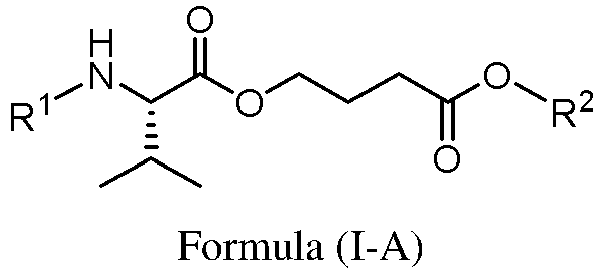
International Patent Publication NumberWO 2017/050259 discloses prodrugs of gamma-hydroxybutyric acid (GHB), as well as compositions and uses thereof. - In one aspect, the present disclosure provides a compound of Formula (I-A):

- R1 is hydrogen or -C(=O)OCH2(C6-15 carbocycle), wherein the C6-15 carbocycle is optionally substituted with one or more substituents selected from the group consisting of C1-6 alkyl, halogen, hydroxy, alkoxy, and amino; and
- R2 is benzyl, allyl, 2-(trimethylsilyl)ethyl, or 2,2,2-trichloroethyl.
- In some embodiments, R1 is hydrogen. In some embodiments, R1 is -C(=O)OCH2(C6-15 carbocycle).
- In some embodiments, the C6-15 carbocycle is unsubstituted. In some embodiments, the C6-15 carbocycle is substituted with at least one substituent. In some embodiments, the C6-15 carbocycle is substituted with at least two substituents.
- In some embodiments, R2 is benzyl.
- In some embodiments, the compound of Formula (I-A) is represented by the structure:
- In some embodiments, the compound of Formula (I-A) is represented by the structure:

- In some embodiments, the compound of Formula (I-A) is represented by the structure:

- In some embodiments, the compound of Formula (I-A) is represented by the structure:

- In some embodiments, the compound of Formula (I-A) is represented by the structure:

- In some embodiments, the compound of Formula (I-A) is represented by the structure:

- In some embodiments, the compound of Formula (I-A) is represented by the structure:

- In some embodiments, the compound of Formula (I-A) is represented by the structure:

- In some embodiments, the compound of Formula (I-A) is represented by the structure:

- In some embodiments, the compound of Formula (I-A) is represented by the structure:

- In some embodiments, the compound of Formula (I-A) is represented by the structure:

- In some embodiments, the compound of Formula (I-A) is represented by the structure:
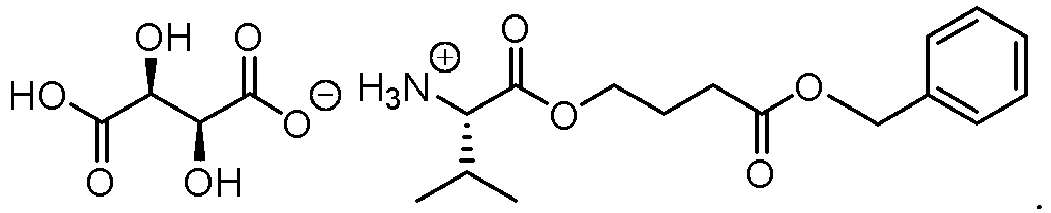
- In some embodiments, the compound of Formula (I-A) is represented by the structure:

- In some embodiments, the compound of Formula (I-A) is represented by the structure:

- In some embodiments, the compound of Formula (I-A) is represented by the structure:

- In some embodiments, the compound of Formula (I-A) is represented by the structure:

- In some embodiments, the compound of Formula (I-A) is represented by the structure:

- In some embodiments, the compound of Formula (I-A) is represented by the structure:

- In another aspect, the present disclosure provides a method of preparing a compound of Formula (I-A):


- R1 is hydrogen or -C(=O)OCH2(C6-15 carbocycle), wherein the C6-15 carbocycle is optionally substituted with one or more substituents selected from the group consisting of C1-6 alkyl, halogen, hydroxy, alkoxy, and amino;
- R2 is benzyl, allyl, 2-(trimethylsilyl)ethyl, or 2,2,2-trichloroethyl; and
- R3 is -OTs, -OMs, or halogen.
- In some embodiments, the base is N,N-diisopropylethylamine, triethylamine, potassium carbonate, sodium carbonate, or sodium bicarbonate.
- In some embodiments, the solvent is a polar aprotic solvent. In some embodiments, the solvent is acetonitrile, propionitrile, tetrahydrofuran, dichloromethane, dimethylformamide, or dimethyl sulfoxide.
- In some embodiments, R1 is -C(=O)OCH2Ph.
- In some embodiments, R3 is bromo.
- In some embodiments, the solvent is acetonitrile.
- In some embodiments, the base is potassium carbonate. In some embodiments, the base is N,N-diisopropylethylamine.
- In some embodiments, the compound of Formula (I-B) is represented by the structure:


the solvent is acetonitrile. - In some embodiments, R1 is


- In some embodiments, the compound of Formula (I-A) is prepared in a synthetic yield of at least 70%.
- In some embodiments, the compound of Formula (I-A) is prepared in a synthetic yield of at least 80%.
- In some embodiments, the compound of Formula (I-A) is prepared in a synthetic yield of at least 85%.
- In another aspect, the present disclosure provides a method of preparing a compound of Formula (I-D):


- In some embodiments, the catalyst is a Pd-, Ph-, or Pt-based catalyst. In some embodiments, the catalyst is selected from Pd/C, Pd(OH)2, Pd/Al2O3, Pd(OAc)2/Et3SiH, (PPh3)3RhCl, and PtO2. In some embodiments, the catalyst is Pd(OH)2.
- In some embodiments, the solvent is selected from methanol, ethanol, diethyl ether, methyl tert-butyl ether, tetrahydrofuran, and dichloromethane. In some embodiments, the solvent is methanol.
- In some embodiments, the compound of Formula (I-D) is prepared in a synthetic yield of at least 70%.
- In some embodiments, the compound of Formula (I-D) is prepared in a synthetic yield of at least 80%.
- In some embodiments, the compound of Formula (I-D) is prepared in a synthetic yield of at least 85%.
- In some embodiments, the compound of Formula (I-D) is prepared in substantially pure form without the need for a discrete purification step. In some embodiments, the compound of Formula (I-D) is prepared in at least 90% purity. In some embodiments, the compound of Formula (I-D) is prepared in at least 95% purity.
- In another aspect, the present disclosure provides a method of preparing a compound of Formula (I-F):


- In some embodiments, the acid is selected from trifluoroacetic acid and hydrochloric acid.
- In some embodiments, the solvent is selected from dichloromethane, ethyl acetate, dioxane, methyl tert-butyl ether, and isopropyl acetate.
- In some embodiments, the purification method is selected from trituration, extraction, and recrystallization.
- In some embodiments, the acid is hydrochloric acid, the solvent is ethyl acetate, and X is chloride. In some embodiments, the acid is trifluoroacetic acid, the solvent is dichloromethane, and X is trifluoroacetate.
- In some embodiments, the purification method is an extraction. In some embodiments, the purification method is a recrystallization.
- In another aspect, the present disclosure provides a method of preparing a compound of Formula (I-H):


- In some embodiments, the base is selected from sodium hydroxide, potassium carbonate, sodium carbonate, sodium bicarbonate, ammonium bicarbonate, and ammonium carbonate. In some embodiments, the base is sodium bicarbonate.
- In another aspect, the present disclosure provides a method of preparing a compound of Formula (I-D):


- In some embodiments, the catalyst is a Pd-, Rh-, or Pt-based catalyst. In some embodiments, the catalyst is selected from Pd/C, Pd(OH)2, Pd/Al2O3, Pd(OAc)2/Et3SiH, (PPh3)3RhCl, and PtO2. In some embodiments, the catalyst is Pd(OH)2.
- In some embodiments, the solvent is selected from methanol, ethanol, diethyl ether, methyl tert-butyl ether, tetrahydrofuran, and dichloromethane.
- In some embodiments, the catalyst is Pd(OH)2 and the solvent is methanol.
- In another aspect, the present disclosure provides a method of preparing a compound of Formula (I-H):


- R is selected from Fmoc and Dtb-Fmoc; and
- the base is selected from piperidine, 1,8-diazabicyclo[5.4.0]undec-7-ene, and N,N-diisopropylethylamine.
- In some embodiments, R is Fmoc.
- In some embodiments, the base is piperidine.
- In another aspect, the present disclosure provides a method of preparing a compound of Formula (I-J):


- In some embodiments, the acid is selected from p-toluenesulfonic acid, oxalic acid, L-tartaric acid, malonic acid, fumaric acid, and benzoic acid.
- In some embodiments, the solvent is selected from dichloromethane, ethyl acetate, dioxane, methyl tert-butyl ether, and isopropyl acetate.
- In some embodiments, the purification method is selected from trituration, extraction, and recrystallization.
- In another aspect, the present disclosure provides a method of preparing a compound of Formula (I-H):


- In some embodiments, the base is selected from sodium hydroxide, potassium carbonate, sodium carbonate, sodium bicarbonate, ammonium bicarbonate, and ammonium carbonate.
- Various features of the present disclosure that are, for brevity, described in the context of a single embodiment, can also be provided separately or in any suitable sub-combination.
- As used herein, the term "salt" or "pharmaceutically acceptable salt" refers to salts derived from a variety of organic and inorganic counter ions well known in the art. Pharmaceutically acceptable acid addition salts can be formed with inorganic acids and organic acids. Inorganic acids from which salts can be derived include, for example, hydrochloric acid, hydrobromic acid, sulfuric acid, nitric acid, phosphoric acid, and the like. Organic acids from which salts can be derived include, for example, acetic acid, propionic acid, glycolic acid, pyruvic acid, oxalic acid, maleic acid, malonic acid, succinic acid, fumaric acid, tartaric acid, citric acid, benzoic acid, cinnamic acid, mandelic acid, methanesulfonic acid, ethanesulfonic acid, p-toluenesulfonic acid, salicylic acid, and the like. Pharmaceutically acceptable base addition salts can be formed with inorganic and organic bases. Inorganic bases from which salts can be derived include, for example, sodium, potassium, lithium, ammonium, calcium, magnesium, iron, zinc, copper, manganese, aluminum, and the like. Organic bases from which salts can be derived include, for example, primary, secondary, and tertiary amines, substituted amines including naturally occurring substituted amines, cyclic amines, basic ion exchange resins, and the like, specifically such as isopropylamine, trimethylamine, diethylamine, triethylamine, tripropylamine, and ethanolamine. In some embodiments, the pharmaceutically acceptable base addition salt is chosen from ammonium, potassium, sodium, calcium, and magnesium salts.
- As used herein, the term "substituted", when refers to a chemical group, means the chemical group has one or more hydrogen atoms that is/are removed and replaced by substituents. As used herein, the term "substituent" has the ordinary meaning known in the art and refers to a chemical moiety that is covalently attached to, or if appropriate fused to, a parent group. As used herein, the term "optionally substituted" means that the chemical group may have no substituents (i.e. unsubstituted) or may have one or more substituents (i.e. substituted). It is to be understood that substitution at a given atom is limited by valency.
- It will be understood by those skilled in the art that substituents can themselves be substituted, if appropriate. Unless specifically states as "unsubstituted," references to chemical moieties herein are understood to include substituted variants. For example, reference to a "heteroaryl" group or moiety implicitly includes both substituted and unsubstituted variants.
- Where substituent groups are specified by their conventional chemical formulae, written from left to right, they equally encompass the chemically identical substituents that would result from writing the structure from right to left, e.g., -CH2O- is equivalent to -OCH2-.
- As used herein, the term "optionally" means that the subsequently described event or circumstances may or may not occur, and that the description includes instances where the event or circumstance occurs and instances in which it does not. For example, "optionally substituted aryl" means that the aryl group may or may not be substituted and that the description includes both substituted aryl groups and aryl groups having no substitution.
- As used herein, the term "Cn-m" indicates a range of the carbon atoms numbers, wherein n and m are integers, and the range of the carbon atoms numbers includes the endpoints (i.e. n and m) and each integer point in between. For examples, C1-6 indicates a range of one to six carbon atoms, including one carbon atom, two carbon atoms, three carbon atoms, four carbon atoms, five carbon atoms and six carbon atoms.
- As used herein, the term "alkyl", whether as part of another term or used independently, refers to a saturated hydrocarbon group that may be straight-chain or branched-chain. The term "Cn-m alkyl" refers to an alkyl having n to m carbon atoms. In some embodiments, the alkyl group contains 1 to 12, 1 to 8, 1 to 6, 1 to 4, 1 to 3, or 1 to 2 carbon atoms. Examples of alkyl group include, but are not limited to, chemical groups such as methyl, ethyl, n-propyl, isopropyl, n-butyl, tert-butyl, isobutyl, sec-butyl; higher homologs such as 2-methyl-1-butyl, n-pentyl, 3-pentyl, n-hexyl, 1,2,2-trimethylpropyl, and the like.
- As used herein, the term "carbocycle" refers to a saturated, unsaturated, or aromatic ring in which each atom of the ring is a carbon atom. Carbocycle may include 3- to 10-membered monocyclic rings, 6- to 12-membered bicyclic rings, and 6- to 12-membered bridged rings. Each ring of a bicyclic carbocycle may be selected from saturated, unsaturated, and aromatic rings. In some embodiments, the carbocycle is an aryl. In some embodiments, the carbocycle is a cycloalkyl. In some embodiments, the carbocycle is a cycloalkenyl. In an exemplary embodiment, an aromatic ring, e.g., phenyl, may be fused to a saturated or unsaturated ring, e.g., cyclohexane, cyclopentane, or cyclohexene. Any combination of saturated, unsaturated, and aromatic bicyclic rings, as valence permits, are included in the definition of carbocycle. Exemplary carbocycles include cyclopentyl, cyclohexyl, cyclohexenyl, adamantyl, phenyl, indanyl, and naphthyl. Unless stated otherwise specifically in the specification, a carbocycle is optionally substituted with one or more substituents such as those substituents described herein.
- As used herein, the term "alkoxy", whether as part of another term or used independently, refers to a group of formula -O-alkyl. The term "Cn-m alkoxy" means that the alkyl moiety of the alkoxy group has n to m carbon atoms. In some embodiments, the alkyl moiety has 1 to 6, 1 to 4, or 1 to 3 carbon atoms. Examples of alkoxy groups include, but are not limited to, chemical groups such as methoxy, ethoxy, propoxy (e.g., n-propoxy and isopropoxy), t-butoxy, and the like.
- As used herein the terms "halo" and "halogen" refer to an atom selected from fluorine, chlorine, bromine and iodine.
- As used herein, the term "hydroxyl" refers to a group of formula -OH.
- As used herein, the term "amino" refers to a group of formula -NH2.
- As used herein, the term "compound" is meant to include all stereoisomers (e.g., enantiomers and diastereomers), geometric isomers, tautomers, and isotopes of the structures depicted. Compounds herein identified by name or structure as one particular tautomeric form are intended to include other tautomeric forms unless otherwise specified.
- As used herein, the term "synthetic yield" refers to the molar yield of the synthetic product relative to the limiting reagent.
- The compounds described herein can be asymmetric (e.g., having one or more stereocenters). All stereoisomers, such as enantiomers and diastereomers, are intended unless otherwise indicated. Compounds of the present disclosure that contain asymmetrically substituted carbon atoms can be isolated in optically active or racemic forms. Methods on how to prepare optically active forms from optically inactive starting materials are known in the art, such as by resolution of racemic mixtures or by stereoselective synthesis. Many geometric isomers of olefins, carbon-carbon double bonds, and the like can also be present in the compounds described herein, and all such stable isomers are contemplated in the present disclosure.
- In some embodiments, the compounds described herein have the (R)-configuration. In some embodiments, the compounds described herein have the (S)-configuration.
- Resolution of racemic mixtures of compounds can be carried out by any of numerous methods known in the art. An example method includes fractional recrystallization using a chiral resolving acid, which is an optically active, salt-forming organic acid. Suitable resolving agents for fractional recrystallization methods are, for example, optically active acids, such as the D and L forms of tartaric acid, diacetyltartaric acid, dibenzoyltartaric acid, mandelic acid, malic acid, lactic acid or the various optically active camphorsulfonic acids such as β-camphorsulfonic acid. Other resolving agents suitable for fractional crystallization methods include stereoisomerically pure forms of α-methylbenzylamine (e.g., S and R forms, or diastereomerically pure forms), 2-phenylglycinol, norephedrine, ephedrine, N-methylephedrine, cyclohexylethylamine, 1,2-diaminocyclohexane, and the like.
- Resolution of racemic mixtures can also be carried out by elution on a column packed with an optically active resolving agent (e.g., dinitrobenzoylphenylglycine). Suitable elution solvent composition can be determined by one skilled in the art.
- Compounds of the present disclosure also include tautomeric forms. Tautomeric forms result from the swapping of a single bond with an adjacent double bond together with the concomitant migration of a proton. Tautomeric forms include prototropic tautomers which are isomeric protonation states having the same empirical formula and total charge. Example prototropic tautomers include ketone-enol pairs, amide-imidic acid pairs, lactam-lactim pairs, enamine-imine pairs, and annular forms where a proton can occupy two or more positions of a heterocyclic system, for example, 1H- and 3H-imidazole, 1H-, 2H- and 4H- 1,2,4-triazole, 1H- and 2H- isoindole, and 1Hand 2H- pyrazole. Tautomeric forms can be in equilibrium or sterically locked into one form by appropriate substitution.
- Compounds of the present disclosure can also include all isotopes of atoms occurring in the intermediates or final compounds. Isotopes include those atoms having the same atomic number but different mass numbers. For example, isotopes of hydrogen include protium, deuterium and tritium. In some embodiments, the isotope of hydrogen is protium and deuterium. In some embodiments, the hydrogens on the aromatic ring of the compounds include at least one deuterium. In some embodiments, the hydrogens on the aromatic ring of the compounds are all deuteriums.
- In one aspect, the present disclosure provides a compound of Formula (I-A):

- R1 is hydrogen, -C(=O)OC(CH3)3, or -C(=O)OCH2(C6-15 carbocycle), wherein the C6-15 carbocycle is optionally substituted with one or more substituents selected from the group consisting of C1-6 alkyl, halogen, hydroxy, alkoxy, and amino; and
- R2 is benzyl, tert-butyl, allyl, 2-(trimethylsilyl)ethyl, or 2,2,2-trichloroethyl.
- In some embodiments, R1 is hydrogen. In some embodiments, R1 is hydrogen and R2 is benzyl. In some embodiments, R1 is -C(=O)OCH2(C6-15 carbocycle). In some embodiments, R1 is - C(=O)OCH2(C6-15 carbocycle) and R2 is benzyl. In some embodiments, the C6-15 carbocycle is monocyclic. In some embodiments, the C6-15 carbocycle is bicyclic. In some embodiments, the C6-15 carbocycle is tricyclic. In some embodiments, the C6-15 carbocycle is phenyl.
- In some embodiments, the C6-15 carbocycle is unsubstituted. In some embodiments, the C6-15 carbocycle is substituted with at least one substituent. In some embodiments, the C6-15 carbocycle is substituted with at least two substituents. In some embodiments, one or more substituents are C1-6 alkyl. In some embodiments, one or more substituents are methyl. In some embodiments, one or more substituents are ethyl. In some embodiments, one or more substituents are n-propyl. In some embodiments, one or more substituents are iso-propyl. In some embodiments, one or more substituents are n-butyl. In some embodiments, one or more substituents are iso-butyl. In some embodiments, one or more substituents are sec-butyl. In some embodiments, one or more substituents are tert-butyl. In some embodiments, one or more substituents are pentyl. In some embodiments, one or more substituents are hexyl. In some embodiments, one or more substituents are bromo. In some embodiments, one or more substituents are chloro. In some embodiments, one or more substituents are fluoro. In some embodiments, one or more substituents are hydroxy. In some embodiments, one or more substituents are alkoxy. In some embodiments, one or more substituents are methoxy. In some embodiments, one or more substituents are ethoxy. In some embodiments, one or more substituents are propoxy. In some embodiments, one or more substituents are amino.
- In some embodiments, the compound of Formula (I-A) is represented by the structure:

- In some embodiments, the compound of Formula (I-A) is represented by the structure:

- In some embodiments, the compound of Formula (I-A) is represented by the structure:

- In some embodiments, the compound of Formula (I-A) is represented by the structure:

- In some embodiments, the compound of Formula (I-A) is represented by the structure:

- In some embodiments, the compound of Formula (I-A) is represented by the structure:

- In some embodiments, the compound of Formula (I-A) is represented by the structure:

- In some embodiments, the compound of Formula (I-A) is represented by the structure:

- In some embodiments, the compound of Formula (I-A) is represented by the structure:

- In some embodiments, the compound of Formula (I-A) is represented by the structure:

- In some embodiments, the compound of Formula (I-A) is represented by the structure:

- In some embodiments, the compound of Formula (I-A) is represented by the structure:

- In some embodiments, the compound of Formula (I-A) is represented by the structure:

- In some embodiments, the compound of Formula (I-A) is represented by the structure:
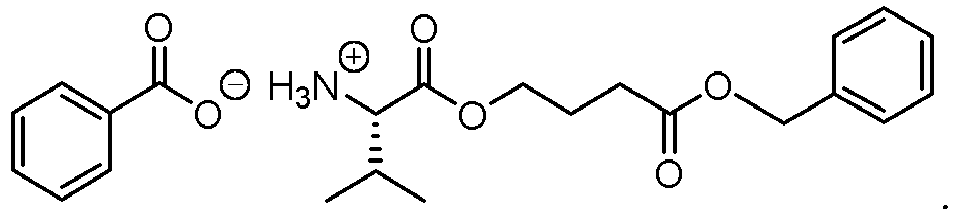
- In some embodiments, the compound of Formula (I-A) is represented by the structure:

- In some embodiments, the compound of Formula (I-A) is represented by the structure:

- In some embodiments, the compound of Formula (I-A) is represented by the structure:

- In some embodiments, the compound of Formula (I-A) is represented by the structure:

- In another aspect, the present disclosure provides a method of preparing a compound of Formula (I-A):


- R1 is hydrogen, -C(=O)OC(CH3)3, or -C(=O)OCH2(C6-15 carbocycle), wherein the C6-15 carbocycle is optionally substituted with one or more substituents selected from the group consisting of C1-6 alkyl, halogen, hydroxy, alkoxy, and amino;
- R2 is benzyl, tert-butyl, allyl, 2-(trimethylsilyl)ethyl, or 2,2,2-trichloroethyl;
- R3 is -OTs, -OMs, or halogen;
- the base is N,N-diisopropylethylamine, triethylamine, potassium carbonate, sodium carbonate, or sodium bicarbonate; and
- the solvent is acetonitrile, propionitrile, tetrahydrofuran, dichloromethane, dimethylformamide, or dimethyl sulfoxide.
- In some embodiments, R1 is hydrogen. In some embodiments, R1 is -C(=O)OCH2Ph. In some embodiments, R1 is -C(=O)OC(CH3)3. In some embodiments, R1 is -C(=O)OCH2(C6-15 carbocycle). In some embodiments, the C6-15 carbocycle is monocyclic. In some embodiments, the C6-15 carbocycle is bicyclic. In some embodiments, the C6-15 carbocycle is tricyclic. In some embodiments, the C6-15 carbocycle is phenyl.
- In some embodiments, the C6-15 carbocycle is unsubstituted. In some embodiments, the C6-15 carbocycle is substituted with at least one substituent. In some embodiments, the C6-15 carbocycle is substituted with at least two substituents. In some embodiments, one or more substituents are C1-6 alkyl. In some embodiments, one or more substituents are methyl. In some embodiments, one or more substituents are ethyl. In some embodiments, one or more substituents are n-propyl. In some embodiments, one or more substituents are iso-propyl. In some embodiments, one or more substituents are n-butyl. In some embodiments, one or more substituents are iso-butyl. In some embodiments, one or more substituents are sec-butyl. In some embodiments, one or more substituents are tert-butyl. In some embodiments, one or more substituents are pentyl. In some embodiments, one or more substituents are hexyl. In some embodiments, one or more substituents are bromo. In some embodiments, one or more substituents are chloro. In some embodiments, one or more substituents are fluoro. In some embodiments, one or more substituents are hydroxy. In some embodiments, one or more substituents are alkoxy. In some embodiments, one or more substituents are methoxy. In some embodiments, one or more substituents are ethoxy. In some embodiments, one or more substituents are propoxy. In some embodiments, one or more substituents are amino.
- In some embodiments, R2 is benzyl, tert-butyl, or allyl. In some embodiments, R2 is benzyl.
- In some embodiments, R3 is -OTs. In some embodiments, R3 is -OMs. In some embodiments, R3 is bromo. In some embodiments, R3 is chloro.
- In some embodiments, the solvent is acetonitrile. In some embodiments, the solvent is propionitrile. In some embodiments, the solvent is tetrahydrofuran. In some embodiments, the solvent is dichloromethane. In some embodiments, the solvent is dimethylformamide. In some embodiments, the solvent is dimethyl sulfoxide. In some embodiments, the solvent is toluene.
- In some embodiments, the base is N,N-diisopropylethylamine. In some embodiments, the base is triethylamine. In some embodiments, the base is potassium carbonate. In some embodiments, the base is sodium carbonate. In some embodiments, the base is sodium bicarbonate.
- In some embodiments, the compound of Formula (I-B) is represented by the structure:

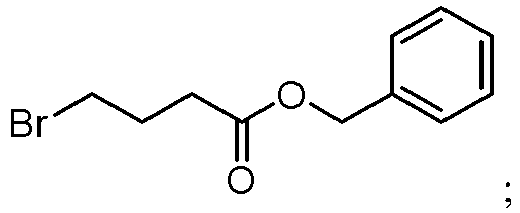
the solvent is acetonitrile. - In some embodiments, the compound of Formula (I-B) is represented by the structure:


the solvent is acetonitrile. - In some embodiments, R1 is


- In some embodiments, the compound of Formula (I-A) is prepared in a synthetic yield of at least 90%. In some embodiments, the compound of Formula (I-A) is prepared in a synthetic yield of at least 95%. In some embodiments, the compound of Formula (I-A) is prepared in a synthetic yield of at least 97%. In some embodiments, the compound of Formula (I-A) is prepared in a synthetic yield of at least 99%.
- In another aspect, the present disclosure provides a method of preparing a compound of Formula (I-D):
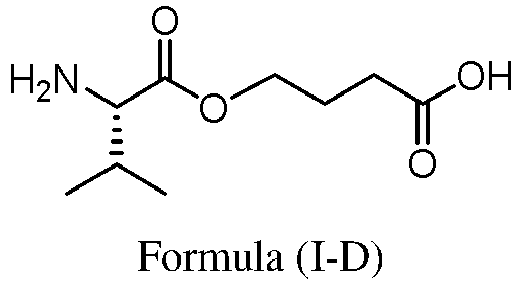

the catalyst is selected from Pd/C, Pd(OH)2, Pd/Al2O3, Pd(OAc)2/Et3SiH, (PPh3)3RhCl, and PtO2; and
the solvent is selected from methanol, ethanol, diethyl ether, methyl tert-butyl ether, tetrahydrofuran, and dichloromethane. - In some embodiments, the catalyst is Pd/C. In some embodiments, the catalyst is Pd(OH)2. In some embodiments, the catalyst is Pd/Al2O3. In some embodiments, the catalyst is Pd(OAc)2/Et3SiH, In some embodiments, the catalyst is (PPh3)3RhCl. In some embodiments, the catalyst is PtO2.
- In some embodiments, the solvent is methanol. In some embodiments, the solvent is ethanol. In some embodiments, the solvent is diethyl ether. In some embodiments, the solvent is methyl tert-butyl ether. In some embodiments, the solvent is tetrahydrofuran. In some embodiments, the solvent is dichloromethane.
- In some embodiments, the compound of Formula (I-D) is prepared in a synthetic yield of at least 90%. In some embodiments, the compound of Formula (I-D) is prepared in a synthetic yield of at least 95%. In some embodiments, the compound of Formula (I-D) is prepared in a synthetic yield of at least 97%. In some embodiments, the compound of Formula (I-D) is prepared in a synthetic yield of at least 99%.
- In some embodiments, the compound of Formula (I-D) is prepared in substantially pure form without the need for a discrete purification step. In some embodiments, the compound of Formula (I-D) is prepared in at least 90% purity. In some embodiments, the compound of Formula (I-D) is prepared in at least 95% purity. In some embodiments, the compound of Formula (I-D) is prepared in at least 97% purity. In some embodiments, the compound of Formula (I-D) is prepared in at least 99% purity.
- In another aspect, the present disclosure provides a method of preparing a compound of Formula (I-F):


- the acid is selected from trifluoroacetic acid, hydrochloric acid, and para-toluenesulfonic acid;
- the solvent is selected from dichloromethane, ethyl acetate, and methyl tert-butyl ether;
- X is selected from trifluoroacetate, chloride, and para-toluenesulfonate; and
- the purification method is selected from trituration, extraction, and recrystallization.
- In some embodiments, the acid is trifluoroacetic acid. In some embodiments, the acid is hydrochloric acid. In some embodiments, the solvent is dichloromethane. In some embodiments, the solvent is ethyl acetate. In some embodiments, X is trifluoroacetate. In some embodiments, X is chloride. In some embodiments, the acid is hydrochloric acid, the solvent is ethyl acetate, and X is chloride. In some embodiments, the acid is trifluoroacetic acid, the solvent is dichloromethane, and X is trifluoroacetate. In some embodiments, the acid is para-toluenesulfonic acid, the solvent is dichloromethane, and X is para-toluenesulfonate.
- In some embodiments, the purification method is a trituration. In some embodiments, the purification method is an extraction. In some embodiments, the purification method is a recrystallization.
- In another aspect, the present disclosure provides a method of preparing a compound of Formula (I-H):


the base is selected from sodium hydroxide, potassium carbonate, sodium carbonate, and sodium bicarbonate. - In some embodiments, the base is sodium hydroxide. In some embodiments, the base is potassium carbonate. In some embodiments, the base is sodium carbonate. In some embodiments, the base is sodium bicarbonate.
- In another aspect, the present disclosure provides a method of preparing a compound of Formula (I-D):


- the catalyst is selected from Pd/C, Pd(OH)2, Pd/Al2O3, Pd(OAc)2/Et3SiH, (PPh3)3RhCl, and PtO2; and
- the solvent is selected from methanol, ethanol, diethyl ether, methyl tert-butyl ether, tetrahydrofuran, and dichloromethane.
- In some embodiments, the catalyst is Pd/C. In some embodiments, the catalyst is Pd(OH)2. In some embodiments, the catalyst is Pd/Al2O3. In some embodiments, the catalyst is Pd(OAc)2/Et3SiH, In some embodiments, the catalyst is (PPh3)3RhCl. In some embodiments, the catalyst is PtO2.
- In some embodiments, the solvent is methanol. In some embodiments, the solvent is ethanol. In some embodiments, the solvent is diethyl ether. In some embodiments, the solvent is methyl tert-butyl ether. In some embodiments, the solvent is tetrahydrofuran. In some embodiments, the solvent is dichloromethane.
- In some embodiments, the catalyst is Pd(OH)2 and the solvent is methanol.
- In another aspect, the present disclosure provides a method of preparing a compound of Formula (I-H):


- R is selected from Fmoc and Dtb-Fmoc; and
- the base is selected from piperidine, 1,8-diazabicyclo[5.4.0]undec-7-ene, and N,N-diisopropylethylamine.
- In some embodiments, R is Fmoc. In some embodiments, R is Dtb-Fmoc.
- In some embodiments, the base is piperidine. In some embodiments, the base is 1,8-diazabicyclo[5.4.0]undec-7-ene. In some embodiments, the base is N,N-diisopropylethylamine.
- In another aspect, the present disclosure provides a method of preparing a compound of Formula (I-J):


- In some embodiments, the acid is selected from p-toluenesulfonic acid, oxalic acid, L-tartaric acid, malonic acid, fumaric acid, and benzoic acid. In some embodiments, the acid is p-toluenesulfonic acid. In some embodiments, the acid is oxalic acid. In some embodiments, the acid is L-tartaric acid. In some embodiments, the acid is malonic acid. In some embodiments, the acid is fumaric acid. In some embodiments, the acid is benzoic acid.
- In some embodiments, the solvent is selected from dichloromethane, ethyl acetate, dioxane, methyl tert-butyl ether, and isopropyl acetate. In some embodiments, the solvent is dichloromethane. In some embodiments, the solvent is ethyl acetate. In some embodiments, the solvent is dioxane. In some embodiments, the solvent is methyl tert-butyl ether. In some embodiments, the solvent is isopropyl acetate.
- In some embodiments, the purification method is selected from trituration, extraction, and recrystallization. In some embodiments, the purification method is trituration. In some embodiments, the purification method is extraction. In some embodiments, the purification method is recrystallization.
- In another aspect, the present disclosure provides a method of preparing a compound of Formula (I-H):


- In some embodiments, the base is selected from sodium hydroxide, potassium carbonate, sodium carbonate, sodium bicarbonate, ammonium bicarbonate, and ammonium carbonate. In some embodiments, the base is sodium hydroxide. In some embodiments, the base is potassium carbonate. In some embodiments, the base is sodium carbonate. In some embodiments, the base is sodium bicarbonate. In some embodiments, the base is ammonium bicarbonate. In some embodiments, the base is ammonium carbonate.
- Compounds of the present disclosure, including salts, esters, hydrates, or solvates thereof, can be prepared using any known organic synthesis techniques and can be synthesized according to any of numerous possible synthetic routes.
- The reactions for preparing compounds of the present disclosure can be carried out in suitable solvents. Suitable solvents can be substantially non-reactive with the starting materials (reactants), the intermediates, or products at the temperatures at which the reactions are carried out, e.g., temperatures that can range from the solvent's freezing temperature to the solvent's boiling temperature. A given reaction can be carried out in one solvent or a mixture of more than one solvent.
- Preparation of compounds of the present disclosure can involve the protection and deprotection of various chemical groups. The need for protection and deprotection, and the selection of appropriate protecting groups, can be readily determined by one skilled in the art. The chemistry of protecting groups can be found, for example, in T. W. Greene and P. G. M. Wuts, Protective Groups in Organic Synthesis, 3rd Ed., Wiley & Sons, Inc., New York (1999).
- Reactions can be monitored according to any suitable method known in the art. For example, product formation can be monitored by spectroscopic means, such as nuclear magnetic resonance spectroscopy (e.g., 1H or 13C), infrared spectroscopy, spectrophotometry (e.g., UV-visible), mass spectrometry, or by chromatographic methods such as high-performance liquid chromatography (HPLC), liquid chromatography-mass spectroscopy (LCMS), or thin layer chromatography (TLC). Compounds can be purified by those skilled in the art by a variety of methods, including high performance liquid chromatography (HPLC) ("Preparative LC-MS Purification: Improved Compound Specific Method Optimization" Karl F. Blom, Brian Glass, Richard Sparks, Andrew P. Combs, J. Combi. Chem. 2004, 6(6), 874-883) and normal phase silica chromatography. Exemplary synthetic schemes are listed below, the abbreviations for the reactants or for the chemical groups of the reactants included in the synthetic schemes are defined in the Examples.
- The following examples are presented to illustrate the present disclosure. They are not intended to be limiting in any matter.
- Unless stated otherwise, all reagents were purchased from commercial suppliers without further purification. Solvent drying by standard methods was employed when necessary. The plates used for thin-layer chromatography (TLC) were E. Merck silica gel 60F254 (0.24 nm thickness) precoated on aluminum plates, and then visualized under UV light (365 nm and 254 nm) or through staining with a 5% of dodecamolybdophosphoric acid in ethanol and subsequent heating. Column chromatography was performed using silica gel (200-400 mesh) from commercial suppliers. 1H NMR spectra were recorded on an Agilent 400-MR NMR spectrometer (400.00 MHz for 1H) at room temperature. Solvent signal was used as reference for 1H NMR (CDCl3, 7.26 ppm; CD3OD, 3.31 ppm; d6 -DMSO, 2.50 ppm; D2O, 4.79 ppm). The following abbreviations were used to explain the multiplicities: s = singlet, d = doublet, t = triplet, q = quartet, br.s. = broad singlet, dd = double doublet, td = triple doublet, dt = double triplet, dq = double quartet, m = multiplet. Other abbreviations used in the experimental details are as follows: Ar = aryl, Boc = tert-butyloxy carbonyl, Bn = Benzyl, δ = chemical shift in parts per million downfield from tetramethylsilane, DCC = dicyclohexylcarbodiimide, DCM = dichloromethane, DIPEA = diisopropylethylamine, DMAP = 4-(dimethylamino)pyridine, DMF = N,N'-dimethylformamide, EA = ethyl acetate, Et = ethyl, HATU = 1-[bis(dimethylamino)methylene]-1H-1,2,3-triazolo[4,5-b]pyridinium 3-oxid hexafluorophosphate, Hex.= hexanes, Hz = hertz, J = coupling constant (in NMR), Me = methyl, min = minute (s), NMR = nuclear magnetic resonance, Ph = phenyl, ppm = parts per million, iPr = isopropyl, TBAF = tetrabutylammonium fluoride, tert = tertiary, TFA = trifluoroacetic acid, THF = tetrahydrofuran, TLC = thin-layer chromatography.
-

- (S)-2-(tert-Butoxycarbonylamino)-3-methylbutanoic acid (1 g, 4.61 mmol), DCC (1044 mg, 5.07 mmol) and DMAP (10 mg) were added to a stirred solution of butane-1,4-diol (829 mg, 9.21 mmol) in DCM (20 mL). The reaction was stirred at 25°C for 16 h. After that, the reaction mixture was diluted with saturated aqueous NH4Cl (10 mL) and stirred for five minutes. The aqueous phase was separated and extracted with DCM (10 mL). The combined organic phase was washed with saturated brine (15 mL), dried over anhydrous Na2SO4, and evaporated. The residue was purified by a silica gel flash column with Hex/EA = 5:1 to yield (S)-4-hydroxybutyl 2-(tert-butoxycarbonylamino)-3-methylbutanoate 1 (700 mg, 53%) as a colorless oil. 1H NMR was performed at 400 MHz with CDC13 as solvent to characterize the titled compound, results are as follows: δ = 5.07 (d, J = 8.8 Hz, 1 H), 4.16 - 4.11 (m, 3 H), 3.62 (t, J = 6.2 Hz, 2 H), 2.32 (br. s., 1 H), 2.12 - 2.04 (m, 1 H), 1.75 - 1.68 (m, 2 H), 1.62 - 1.56 (m, 2 H), 1.40 (s, 9 H), 0.92 (d, J = 7.2 Hz, 3 H), 0.85 (d, J = 7.2 Hz, 3 H).
-

- Jones reagent was added in portions to a stirred mixture of (S)-4-hydroxybutyl 2-(tert-butoxycarbonylamino)-3-methylbutanoate 1 (500 mg, 1.73 mmol) and Celite® (diatomaceous earth, 2 g) in acetone (10 mL) at 0°C. The reaction proceeded at 0°C for over one hour and the reaction progress was monitored by TLC. After completion, the reaction was quenched with drops of iPrOH, diluted with EA (10 mL) and then filtered. The filtered cake was washed with EA (5 mL) and the combined filtrate was washed with saturated brine (2 mL × 2), dried over anhydrous Na2SO4, and concentrated. The residue was purified by a silica gel flash column with Hex/EA = 10:1-5:1 to yield (S)-4-(2-(tert-butoxycarbonylamino)-3-methylbutanoyloxy)butanoic acid 2 (170 mg, 32%) as a white solid. 1H NMR was performed at 400 MHz with CDCl3 as solvent to characterize the titled compound, results are as follows: δ = 5.03 (d, J = 9.2 Hz, 1 H), 4.30 - 4.24 (m, 1 H), 4.22 - 4.13 (m, 2 H), 2.46 (t, J = 7.4 Hz, 2 H), 2.16 - 2.08 (m, 1 H), 2.06 - 1.96 (m, 2 H), 1.45 (s, 9 H), 0.96 (d, J = 6.8 Hz, 3 H), 0.89 (d, J = 6.4 Hz, 3 H).
-

- A solution of (S)-4-(2-(tert-butoxycarbonylamino)-3-methylbutanoyloxy)butanoic acid 2 (104 mg, 0.34 mmol) in HCl/EA (~2 M, 1.5 mL) was stirred at 25°C for 24 h. After that, the reaction mixture was filtered and the resulting precipitate was collected, washed with Et2O (0.5 mL), and dried in vacuo to yield (S)-4-(2-amino-3-methylbutanoyloxy)butanoic acid (I-D) (50 mg, 71%) as a white solid in HCl salt form. 1H NMR was performed at 400 MHz with CD3OD as solvent to characterize the titled compound, results are as follows: δ = 4.33 - 4.26 (m, 2 H), 3.92 (d, J = 4.8 Hz, 1 H), 2.42 (t, J = 7.2 Hz, 2 H), 2.34 - 2.25 (m, 1 11), 2.05 - 1.94 (m, 2 H), 1.06 (d, J = 6.8 Hz, 6 H).
- A suspension of the above white solid (800 mg, 3.3 mmol) in ethanol (4 mL) was stirred at 80°C for around 30 min and a clear solution was formed. Then, the solution was gradually cooled to 25°C, and propylene oxide (580 mg, 10 mmol) was added dropwise. The reaction was stirred at 25°C for 16 h, and then the resultant suspension was filtered. The white solid was collected, washed with cold ethanol, and dried in vacuo to afford (S)-4-(2-amino-3-methylbutanoyloxy)butanoic acid (I-D) (510 mg, 75%) in free base form. 1H NMR was performed at 400 MHz with d6 -DMSO as solvent to characterize the titled compound, results are as follows: δ = 4.10 - 3.99 (m, 2 H), 3.11 (d, J = 5.2 Hz, 1 H), 2.29 (t, J = 7.4 Hz, 2 H), 1.90 - 1.74 (m, 3 H), 0.87 (d, J = 6.8 Hz, 3 H), 0.82 (d, J = 6.4 Hz, 3 H).
-

- Sodium hydroxide (1.0 equivalent) was dissolved in methanol (5 volumes) with stirring while maintaining the temperature below 40°C. The reaction mixture was cooled to room temperature and butyrolactone (1.0 equivalent) was added while maintaining the temperature below 30°C, and the reaction mixture was stirred for five to six hours. The reaction mixture was concentrated in vacuo while coevaporating with tert-butyl methyl ether. The mixture was redissolved in DMSO and benzyl bromide (0.95 equivalents) was added dropwise. The reaction mixture was stirred for 3 hours at room temperature, cooled to 15°C, and quenched with purified water. The aqueous phase was washed with tert-butyl methyl ether. The collected organics were washed with water and concentrated in vacuo while coevaporating with dichloromethane to yield benzyl 4-hydroxybutanoate 3 in 69.5% yield.
-

- Benzyl 4-hydroxybutanoate 3 (0.95 equivalents) was dissolved in dichloromethane (2.5 volumes). CBz-L-valine (1.00 equivalent) and DMAP (0.20 equivalents) were added, followed by EDCI (1.20 equivalents) while maintaining the reaction mixture at 15°C. The reaction mixture was stirred for 20 hours at room temperature. 5% HCl (5 volumes) was added and the reaction mixture was stirred for 15 minutes at room temperature. The biphasic solution was allowed to separate, and the aqueous layer was removed. The organic layer was washed with 5% sodium bicarbonate solution and purified water, concentrated in vacuo, and suspended with silica gel (50%wt). The silica plug was washed with dichloromethane, and the combined organics were concentrated in vacuo while coevaporating with methanol to yield 4-(benzyloxy)-4-oxobutyl((benzyloxy)carbonyl)-L-valinate 4 in 76.7% yield.
-

- 4-(Benzyloxy)-4-oxobutyl((benzyloxy)carbonyl)-L-valinate 4 (1.0 equivalent) was dissolved in methanol (5 volumes) and Pd/C (10% Pd, 15%wt) was added under a nitrogen atmosphere. The nitrogen atmosphere was replaced with a continuous flow of Hz and the reaction mixture was stirred for 16 hours at room temperature. The reaction mixture was filtered over Celite®(50%wt) and stirred for 18 hours with active carbon (25%wt). The reaction mixture was filtered over Celite®(50%wt) and the filter cake was rinsed with methanol. The reaction mixture was concentrated in vacuo while coevaporating with methanol. The resulting residue was redissolved in tert-butyl methyl ether and stirred for 30 minutes at room temperature. Another portion of tert-butyl methyl ether (3 volumes) was added dropwise within 2 hours. The reaction mixture was stirred for four hours and filtered. The filter cake was dried in vacuo to yield (S)-4-(2-amino-3-methylbutanoyloxy)butanoic acid (I-D) in 49.6% yield.
-

- Potassium carbonate (2.0 g, 14.3 mmol, 1.5 equiv) was added to a solution of carbobenzyloxy-L-valine 5 (2.52 g, 10.0 mmol, 1.05 equiv) and benzyl 4-bromobutanoate 6 (2.46 g, 9.5 mmol, 1.0 equiv) in acetonitrile (40 mL). The reaction was warmed to 80°C and stirred for four hours. The reaction was cooled to room temperature, filtered, and evaporated to dryness. The crude residue was dissolved in ethyl acetate and washed with a saturated sodium bicarbonate solution and brine. The organic layer was dried over magnesium sulfate, filtered, concentrated, and dried under high vacuum to yield 4-(benzyloxy)-4-oxobutyl((benzyloxy)carbonyl)-L-valinate 4 in quantitative yield. 1H NMR was performed at 600 MHz with chloroform-d as solvent to characterize the titled compound, results are as follows: δ = 7.39 - 7.25 (m, 10 H), 5.25 (d, J = 9.2 Hz, 1 H), 5.15 - 4.98 (m, 4 H), 4.27 (dd, J = 9.1, 4.7 Hz, 1 H), 4.22 - 4.03 (m, 2 H), 2.43 (t, J = 7.4 Hz, 2 H), 2.13 (td, J = 6.9, 4.7 Hz, 1H), 2.05 - 1.90 (m, 2H), 0.94 (d, J = 6.9 Hz, 3H), 0.86 (d, J = 6.9 Hz, 3H).
-

- Pd(OH)2 (5 mg) was added to a solution of 4-(benzyloxy)-4-oxobutyl((benzyloxy)carbonyl)-L-valinate 4 (100 mg, 0.2 mmol) in methanol (1 mL). The reaction was stirred at room temperature under a hydrogen atmosphere for five hours. The reaction mixture was filtered through a pad of Celite®, concentrated, and lyophilized to give (S)-4-(2-amino-3-methylbutanoyloxy)butanoic acid (I-D) in 93% yield. 1H NMR was performed at 600 MHz with deuterium oxide as solvent to characterize the titled compound, results are as follows: δ = 4.35 - 4.22 (m, 2H), 4.01 (d, J = 4.7 Hz, 1H), 2.36 (m, J = 7.1, 4.7 Hz, 1H), 2.29 (t, J = 7.3 Hz, 2H), 1.96 (m, J = 6.8 Hz, 2H), 1.03 (dd, J = 11.3, 7.0 Hz, 7H).
-

- To a solution of Boc-L-Valine 7 (202 g, 930 mmol, 1.2 equiv) and benzyl 4-bromobutanoate 6 (200 g, 778 mmol, 1.0 equiv, distilled) in acetonitrile (800 mL) was added DIPEA (252 g, 1.95 mol, 2.5 equiv). The reaction mixture was heated to reflux (internal temperature 81°C) for 3 hours. After cooling to room temperature, the reaction mixture was poured into EtOAc (~ 2.0 L), washed with HCl aq. (1 N, 500 mL × 3), sat. NaHCO3 aq (400 mL × 3), and brine (200 mL), and dried over Na2SO4 for 2 hours. The resulting organic layer was dried over Na2SO4, filtered, concentrated, and dried under high vacuum to give 4-(benzyloxy)-4-oxobutyl (tert-butoxycarbonyl)-L-valinate 8 (294 g, yield: 96.4%) as a light-yellow syrup.
-

- Trifluoroacetic acid (50.6 g, ~6.0 equiv) was added to a solution of 4-(benzyloxy)-4-oxobutyl (tert-butoxycarbonyl)-L-valinate 8 (29.2 g, 1.0 equiv) in dichloromethane (35 mL). The reaction mixture was stirred for 24 hours at room temperature, evaporated to dryness, and co-evaporated with toluene to yield the crude trifluoroacetate salt of 4-(benzyloxy)-4-oxobutyl L-valinate 9.
- Alternatively, HCl in ethyl acetate solution (2M, 500 mL, 1 mol, ~5.2 equiv) was added to 4-(benzyloxy)-4-oxobutyl (tert-butoxycarbonyl)-L-valinate 8 (76.0 g, 193 mmol, 1.0 equiv) at 0°C and the reaction mixture was allowed to stir at room temperature for 7 hours. The reaction mixture was concentrated to dryness to remove ethyl acetate to give the crude hydrochloride salt of 4-(benzyloxy)-4-oxobutyl L-valinate 9.
-

- The crude trifluoroacetate salt of 4-(benzyloxy)-4-oxobutyl L-valinate 9 was dissolved in H2O (350 mL). The resulting solution was washed with diethyl ether/hexane (50 mL/50 mL) and basified to pH - 8 with a saturated sodium bicarbonate solution. The resulting aqueous layer was extracted with DCM (200 mL × 3). The DCM layer was washed with brine, dried over Na2SO4, filtered, concentrated, and dried under high vacuum to give 4-(benzyloxy)-4-oxobutyl L-valinate 10 (20.0 g, yield: 92%) as a light-yellow syrup.
- Alternatively, the crude hydrochloride salt of 4-(benzyloxy)-4-oxobutyl L-valinate 9 was dissolved in H2O (300 mL, pH=2). The resulting aqueous solution was washed with ethyl acetate/hexane (100 mL/100 mL) twice and basified to pH - 8 with 1M NaOH aq (-350 mL) at 0°C. The basic aqueous layer was then extracted with DCM (300 mL × 3). The combined DCM layer was washed with brine, dried over Na2SO4, filtered, concentrated, and dried under high vacuum to give 4-(benzyloxy)-4-oxobutyl L-valinate 10 (55.6 g, yield: 99%) as a light-yellow syrup.
-

- 15 g of 4-(Benzyloxy)-4-oxobutyl L-valinate 10 was dissolved in MTBE (70 mL). p-toluenesulfonic acid (pTSA) solution in MTBE (10.68 g, 56.2 mmol, 1.0 eq, in 120 mL MTBE) was added and the resulting white suspension was stirred overnight. The white solid product was collected by filtration, washed with MTBE (20 mL × 3), and dried under high vacuum to give the para-toluenesulfonate salt of 4-(benzyloxy)-4-oxobutyl L-valinate 11 (23.2 g, 92% yield, 98% purity by HPLC). Intermediate 11 could be further purified by recrystallization in ethyl acetate. Intermediate 11 was dissolved in H2O (120 mL) and basified to pH ~8 with solid NaHCO3. The aqueous solution was extracted with DCM (50 mL × 3), and the organic layers were combined, dried over Na2SO4, filtered, and concentrated to furnish 21 g of 4-(benzyloxy)-4-oxobutyl L-valinate 10 in upgraded purity.
- This purification can be performed with a variety of acids as summarized below in Table 1.
Table 1. Purification with various acids. Acid MW of Acid Mole eq of Amine to Acid Melting Point of salt Yield Oxalic Acid 90 1:1 130-132.5°C 92% L-Tartaric Acid 150 1:1 72.8-74.2°C - TsOH·H2O 190 1:1 105-106.5°C 92% Benzoic Acid 122.12 1:1 64.2-64.5°C 61% Lactic Acid 90.08 1:1 colorless oil 93% Acetic Acid 60.05 1:1 colorless solution 94% Citric Acid 192.12 1:1 colorless syrup 86% Citric Acid 192.12 2:1 colorless syrup 88% Citric Acid 192.12 3:1 colorless syrup 87% DL-Camphorsulfonic Acid 232.08 1:1 colorless syrup 81% -

- Pd/C (catalytic amount) was added to a solution of 4-(benzyloxy)-4-oxobutyl L-valinate 10 in methanol (0.2 M). The reaction was stirred at room temperature under a hydrogen atmosphere for five hours. The reaction mixture was filtered through a pad of Celite®, concentrated, and lyophilized to give (S)-4-(2-amino-3-methylbutanoyloxy)butanoic acid (I-D).
-

- Alternatively, to a solution of Boc-L-Valine 7 (1.187 kg, 5.461 mol, 1.2 equiv) and benzyl 4-bromobutanoate 6 (1170 g, - 4.55 mol, 1.0 equiv) in acetonitrile (4680 mL) was added DIPEA (1.469 kg, 11.38 mol, 2.5 equiv). The reaction mixture was heated to reflux (internal temperature 81°C) for 3 hours, and then more DIPEA (223 g, 1.72 mol, 0.3 equiv) was added. The reaction mixture was heated to reflux (internal temperature 81°C) for another 3 hours. After cooling to room temperature, the reaction mixture was poured into EtOAc (~ 9.4 L), washed with HCl aq. (2 N, 2000 mL × 2), sat. NaHCO3 aq. (600 mL × 3), and brine (500 mL × 1), and dried over Na2SO4 for 2 hours. The resulting organic layer was dried over Na2SO4, filtered, concentrated, and dried under high vacuum to give crude 4-(benzyloxy)-4-oxobutyl (tert-butoxycarbonyl)-L-valinate 8 (1730 g) as a light-yellow syrup.
-

- Alternatively, HCl in ethyl acetate solution (2 M, 6885 mL, 13.771 mol, - 6.0 eq) was added to 4-(benzyloxy)-4-oxobutyl (tert-butoxycarbonyl)-L-valinate 8 (902.0 g, 2.295 mol) at 0°C and the reaction mixture was allowed to stir at room temperature for 6 hours. The reaction mixture was concentrated to dryness to remove ethyl acetate to give the crude hydrochloride salt of 4-(benzyloxy)-4-oxobutyl L-valinate 9.
-

- Alternatively, the crude salt of 4-(benzyloxy)-4-oxobutyl L-valinate 9 was dissolved in H2O (5900 mL, pH = 2). The resulting aqueous solution was washed with ethyl acetate (900 mL) and basified to pH - 8 with sat. NaHCO3 aq (~ 4000 mL) at room temperature. The basic aqueous layer was then extracted with EtOAc (2700 mL × 3). The combined EtOAc layer was washed with water (900 mL) and brine (900 mL), dried over Na2SO4 for 2 hours, and filtered to give a solution of 4-(benzyloxy)-4-oxobutyl L-valinate 10 (~9 L).
-

- Alternatively, a solution of oxalic acid (205.6 g, 2.3 mol) in 2700 mL MeOH was slowly added to the solution of 4-(benzyloxy)-4-oxobutyl L-valinate 10 (97.8% purity from 902.0 g of 4-(benzyloxy)-4-oxobutyl (tert-butoxycarbonyl)-L-valinate 8) at 30°C. A white solid precipitated after ten minutes. MeOH (675 mL) and EtOAc (2700 mL) were added, and the resulting solution was stirred at 60°C for 1 hour and gradually cooled to room temperature. The white solid product was collected by filtration, washed with ethyl acetate (1800 mL × 2), and dried under high vacuum to give the oxalic acid salt of 4-(benzyloxy)-4-oxobutyl L-valinate 18 in 98.4 % purity. The oxalic acid salt of 4-(benzyloxy)-4-oxobutyl L-valinate 18 (16.0 g) was dissolved in sat. NaHCO3 aq (~ 150 mL) and basified to pH - 8 at room temperature to give a cloudy suspension. The basic aqueous layer was extracted with EtOAc (150 mL × 3). The combined EtOAc layer was washed with 250 mL sat. brine, dried over Na2SO4, filtered, concentrated, and dried under high vacuum to give crude 4-(benzyloxy)-4-oxobutyl L-valinate 10 (11.0 g, 90% yield) as a colorless oil.
-

- Alternatively, Pd/C (0.22 g, 2% in weight) was added to a solution of 4-(benzyloxy)-4-oxobutyl L-valinate 10 (11.0 g, - 37.5 mmol) in methanol (40 mL). The reaction mixture was charged with H2 three times and hydrogenated at 60 psi (0.41 MPa) with a Parr shaker for 2 hours. The reaction mixture was filtered through a pad of Celite®, and the pad of Celite® was washed with 50 mL of methanol. 2-Methyl-THF (70 mL) was slowly added to the filtrate. The resulting white suspension was stirred overnight, filtered, and dried under high vacuum to give (S)-4-(2-amino-3-methylbutanoyloxy)butanoic acid (I-D) (5.41 g, 71 % yield) as a white solid. (S)-4-(2-Amino-3-methylbutanoyloxy)butanoic acid (I-D) (3.3 g) was further triturated in methanol (23 mL). 2-Methyl-THF was then added slowly (33 mL) and the resulting mixture was stirred for 18 hours. The white suspension was filtered, washed with 2-methyl-THF slowly (6.6 mL × 3), and dried under high vacuum to give (S)-4-(2-amino-3-methylbutanoyloxy)butanoic acid (I-D) (2.52 g, 76 % yield) as a white solid.
-

- Base (1.5 equiv) was added to a solution of protected L-valine 12 (1.05 equiv) and activated benzyl butanoate 13 (1.0 equiv) in acetonitrile (0.25 M). The reaction was warmed to 70°C and stirred for five hours. The reaction was cooled to room temperature, filtered, and evaporated to dryness. The crude residue was dissolved in ethyl acetate and washed with a saturated sodium bicarbonate solution and brine. The organic layer was dried over magnesium sulfate, filtered, concentrated, and dried under high vacuum to yield protected 4-(benzyloxy)-4-oxobutyl L-valinate 14.
- R1 was selected from Fmoc and Dtb-Fmoc. R2 was selected from OTs, OMs, Cl, I, and Br. The base was selected from N,N-diisopropylethylamine, triethylamine, potassium carbonate, sodium carbonate, and sodium bicarbonate. The solvent was selected from acetonitrile, propionitrile, tetrahydrofuran, dichloromethane, dimethylformamide, and dimethyl sulfoxide.
-

- Base (3.0 equiv) was added to a solution of protected 4-(benzyloxy)-4-oxobutyl L-valinate 14 (1.0 equiv) in dichloromethane (0.2 M). The reaction mixture was stirred for four hours at room temperature, washed with a saturated sodium bicarbonate solution and brine, dried over magnesium sulfate, filtered, concentrated, and dried under high vacuum to yield 4-(benzyloxy)-4-oxobutyl L-valinate 10.
- The base was selected from piperidine, 1,8-diazabicyclo[5.4.0]undec-7-ene, and N,N-diisopropylethylamine.
-

- Catalyst was added to a solution of 4-(benzyloxy)-4-oxobutyl L-valinate 10 in methanol (0.2 M). The reaction was stirred at room temperature under a hydrogen atmosphere for five hours. The reaction mixture is filtered through a pad of Celite®, concentrated, and lyophilized to give (S)-4-(2-amino-3-methylbutanoyloxy)butanoic acid (I-D).
- The catalyst was selected from Pd/C, Pd(OH)2, Pd/Al2O3, Pd(OAc)2/Et3SiH, (PPh3)3RhCl, and PtO2.
-

- 4-Bromo-1-butanol (0.5 g, 3.3 mmol, 0.9 equiv) and DIPEA (0.7 g, 5.4 mmol, 1.5 equiv) were added to a solution of Cbz-Val-OH 5 (1.0 g, 4.0 mmol) in CH3CN (10 mL). The reaction mixture was stirred at 80°C for 8 hours, concentrated, and redissolved in EtOAc. The resulting solution was washed with water, a saturated NaHCO3 solution, and brine. The organic layer was dried over MgSO4, filtered, and concentrated to afford 4-hydroxybutyl ((benzyloxy)carbonyl)-L-valinate 15 in quantitative yield. The product was carried forward to the next step without further purification. 1H NMR (500 MHz, CDCl3) δ 7.38 - 7.25 (m, 5H), 6.20 (d, J = 8.9 Hz, 1H), 5.10 (d, J = 11.7 Hz, 1H), 5.04 (d, J = 11.8 Hz, 1H), 4.43 (dd, J = 9.1, 6.5 Hz, 1H), 4.23 (t, J = 7.3 Hz, 1H), 4.22 - 4.13 (m, 1H), 4.06 - 3.97 (m, 1H), 3.70 - 3.55 (m, 2H), 2.41 - 2.28 (m, J = 6.6 Hz, 1H), 1.78 - 1.53 (m, 4H), 0.96 (dd, J = 25.0, 6.7 Hz, 6H). LCMS (ESI): m/z calculated for [C17H25NO5 + H]+ 324.18, found 324.25 [M + H]+.
-

- Bis(acetoxy)iodobenzene (BAIB) (2.2 g, 6.8 mmol, 2.2 equiv) and TEMPO (0.1 g, 0.6 mmol, 0.2 equiv) were added to a solution of 4-hydroxybutyl ((benzyloxy)carbonyl)-L-valinate 15 (1 g, 3.1 mmol) in acetone/H2O (10 mL, 8:2). The reaction was stirred at room temperature for 8 hours. The reaction was quenched with i-PrOH and stirred for 2 hours. The reaction was diluted with EtOAc and washed with 1N HCl, H2O, and brine. The organic layer was dried over MgSO4, filtered, concentrated, and purified by flash column chromatography to afford 4-((((benzyloxy)carbonyl)-L-valyl)oxy)butanoic acid 16 in 83% yield. 1H NMR (500 MHz, CDCl3) δ 7.38 - 7.25 (m, 5H), 6.05 (d, J = 9.0 Hz, 1H), 5.10 (d, J = 11.6 Hz, 1H), 5.04 (d, J = 11.7 Hz, 1H), 4.44 (dd, J = 9.2, 6.6 Hz, 1H), 4.25 (dt, J = 11.5, 6.2 Hz, 1H), 4.15 (dt, J = 11.5, 6.2 Hz, 1H), 2.50 - 2.34 (m, 2H), 2.32 - 2.18 (m, J = 6.7 Hz, 1H), 2.11 - 1.99 (m, 1H), 1.93 (tdd, J = 14.0, 7.0, 6.0 Hz, 1H), 0.97 (dd, J = 24.9, 6.6 Hz, 6H). LCMS (ESI): m/z calculated for [C17H23NO6 - H]- 336.14, found 336.23 [M - H]-.
-

- Pd(OH)2 was added to a solution of 4-((((benzyloxy)carbonyl)-L-valyl)oxy)butanoic acid 16 (1.5 g, 4.4 mmol) in MeOH (10 mL). The reaction was stirred for 3 hours under an H2 atmosphere and filtered through a pad of Celite®. MTBE was added and the reaction mixture was stirred vigorously to afford a white solid. The solid was filtered and dried under vacuum to afford (S)-4-(2-amino-3-methylbutanoyloxy)butanoic acid (I-D) in quantitative yield. 1H NMR (600 MHz, D2O) δ 4.35 - 4.22 (m, 2H), 4.01 (d, J = 4.7 Hz, 1H), 2.36 (pd, J = 7.1, 4.7 Hz, 1H), 2.29 (t, J = 7.3 Hz, 2H), 1.96 (p, J = 6.8 Hz, 2H), 1.03 (dd, J = 11.3, 7.0 Hz, 7H). LCMS (ESI): m/z calculated for [C9H17NO4 + H]+ 204.12, found 204.21 [M + H]+.
-

- tert-Butyl 4-bromobutyrate (0.4 g, 1.8 mmol, 0.9 equiv) and DIPEA (0.4 g, 3.0 mmol, 1.5 equiv) were added to a solution of Cbz-Val-OH 5 (0.5 g, 2.0 mmol) in CH3CN (5 mL). The reaction mixture was stirred at 80°C for 8 hours, concentrated, and redissolved in EtOAc. The resulting solution was washed with water, a saturated NaHCO3 solution, and brine. The organic layer was dried over MgSO4, filtered, and concentrated to afford 4-(tert-butoxy)-4-oxobutyl ((benzyloxy)carbonyl)-L-valinate 17 in quantitative yield, which was carried forward to the next step without further purification. 1H NMR (500 MHz, CDCl3) δ 7.37 - 7.26 (m, 5H), 6.01 (d, J = 9.1 Hz, 1H), 5.13 - 5.02 (m, 2H), 4.45 (dd, J = 9.2, 6.6 Hz, 1H), 4.22 (dt, J = 11.5, 6.0 Hz, 1H), 4.11 (dt, J = 11.5, 6.0 Hz, 1H), 2.45 (qt, J = 15.2, 7.1 Hz, 2H), 2.12 (dq, J = 13.4, 6.7 Hz, 1H), 2.07 - 1.88 (m, 2H), 1.42 (s, 7H), 0.99 (dd, J = 25.0, 6.7 Hz, 6H). LCMS (ESI): m/z calculated for [C21H31NO6 + H]+ 394.22, found 394.38 [M + H]+.
-

- TFA (1.5 g, 13 mmol, 10 equiv) was added to a solution of 4-(tert-butoxy)-4-oxobutyl ((benzyloxy)carbonyl)-L-valinate 17 (0.5 g, 1.3 mmol) in DCM (5 mL). The reaction mixture was stirred at room temperature for 2 hours and evaporated to dryness. The resulting residue was co-evaporated with toluene to afford 4-((((benzyloxy)carbonyl)-L-valyl)oxy)butanoic acid 16 in quantitative yield. 1H NMR (500 MHz, CDCl3) δ 7.38 - 7.25 (m, 5H), 6.05 (d, J = 9.0 Hz, 1H), 5.10 (d, J = 11.6 Hz, 1H), 5.04 (d, J = 11.7 Hz, 1H), 4.44 (dd, J = 9.2, 6.6 Hz, 1H), 4.25 (dt, J = 11.5, 6.2 Hz, 1H), 4.15 (dt, J = 11.5, 6.2 Hz, 1H), 2.50 - 2.34 (m, 2H), 2.32 - 2.18 (m, J = 6.7 Hz, 1H), 2.11 - 1.99 (m, 1H), 1.93 (tdd, J = 14.0, 7.0, 6.0 Hz, 1H), 0.97 (dd, J = 24.9, 6.6 Hz, 6H). LCMS (ESI): m/z calculated for [C17H23NO6 + H]+ 338.16, found 338.31 [M + H]+.
-

- Pd(OH)2 was added to a solution of 4-((((benzyloxy)carbonyl)-L-valyl)oxy)butanoic acid 16 (0.5 g, 1.5 mmol) in MeOH (5 mL). The reaction mixture was stirred for 3 hours under an H2 atmosphere, filtered through a pad of Celite®, and concentrated to afford (S)-4-(2-amino-3-methylbutanoyloxy)butanoic acid (I-D) in quantitative yield. 1H NMR (600 MHz, D2O) δ 4.35 - 4.22 (m, 2H), 4.01 (d, J = 4.7 Hz, 1H), 2.36 (pd, J = 7.1, 4.7 Hz, 1H), 2.29 (t, J = 7.3 Hz, 2H), 1.96 (p, J = 6.8 Hz, 2H), 1.03 (dd, J = 11.3, 7.0 Hz, 7H). LCMS (ESI): m/z calculated for [C9H17NO4 + H]+ 204.12, found 204.21 [M + H]+.
- While preferred embodiments of the present invention have been shown and described herein, it will be obvious to those skilled in the art that such embodiments are provided by way of example only. Numerous variations, changes, and substitutions will now occur to those skilled in the art without departing from the invention. It should be understood that various alternatives to the embodiments of the invention described herein may be employed in practicing the invention. It was intended that the following claims define the scope of the invention and that methods and structures within the scope of these claims be covered thereby.
Claims (16)
- A compound of Formula (I-A):
 R1 is selected from hydrogen, -C(=O)OCH2(C6-15carbocycle) and - C(=O)OCH2(substituted C6-15carbocycle), wherein the one or more substituents is selected from C1-6 alkyl, halogen, hydroxy, alkoxy, and amino; andR2 is benzyl, allyl, 2-(trimethylsilyl)ethyl, or 2,2,2-trichloroethyl.
 - The compound of claim 1, wherein R1 is hydrogen or -C(=O)OCH2phenyl.
- The compound of claim 1, wherein the compound or pharmaceutically acceptable salt thereof has one of the following structures:


- A method of preparing a compound of Formula (I-A):
 or a pharmaceutically acceptable salt thereof, comprising contacting a compound of Formula (I-B):
 with a compound of Formula (I-C):
 in the presence of a base and a polar aprotic solvent, wherein,R1 is selected from hydrogen, -C(=O)OCH2(C6-15carbocycle) and - C(=O)OCH2(substituted C6-15carbocycle), wherein the one or more substituents is selected from C1-6 alkyl, halogen, hydroxy, alkoxy, and amino;R2 is selected from benzyl, allyl, 2-(trimethylsilyl)ethyl, and 2,2,2-trichloroethyl; andR3 is selected from -OTs, -OMs, and halogen.
 - The method of claim 4, wherein,(a) the base is selected from N,N-diisopropylethylamine, triethylamine, potassium carbonate, sodium carbonate, and sodium bicarbonate; and
the solvent is selected from acetonitrile, propionitrile, tetrahydrofuran, dichloromethane, dimethylformamide, or dimethyl sulfoxide; or(b) R1 is -C(=O)OCH2Phenyl;R3 is bromo;the solvent is acetonitrile; andthe base is selected from potassium carbonate, N,N-diisopropylethylamine, and a combination thereof; or(c) the compound of Formula (I-B) has the structure: the compound of Formula (I-C) has the structure:
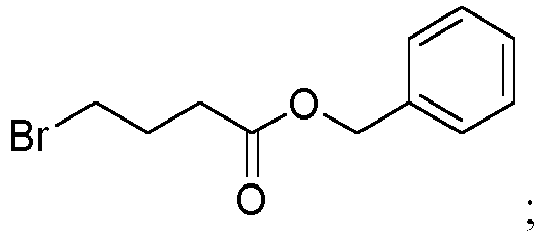 the base is potassium carbonate; andthe solvent is acetonitrile.
 - A method of preparing a compound of Formula (I-D):


- The method of claim 6, wherein,(a) the catalyst is selected from Pd/C, Pd(OH)2, Pd/Al2O3, Pd(OAc)2/Et3SiH, (PPh3)3RhCl, and PtO2; and
the solvent is selected from methanol, ethanol, diethyl ether, methyl tert-butyl ether tetrahydrofuran, and dichloromethane; or(b) the catalyst is Pd(OH)2; and the solvent is methanol. - A method of preparing a compound of Formula (I-F):

 with an acid in the present of a solvent to provide a crude product; andpurifying the crude product to provide the compound of Formula (I-F),wherein X is selected from trifluoroacetate and chloride.
 - The method of claim 8, wherein,(a) the acid is selected from trifluoroacetic acid and hydrochloric acid; and
the solvent is selected from dichloromethane, ethyl acetate, dioxane, methyl tert-butyl ether, and isopropyl acetate;(b) the acid is hydrochloric acid;the solvent is ethyl acetate; andX is chloride; or(c) the acid is trifluoroacetic acid;the solvent is dichloromethane; andX is trifluoroacetate. - A method of preparing a compound of Formula (I-H):


- A method of preparing a compound of Formula (I-D):


- The method of claim 11, wherein,(a) the catalyst is selected from Pd/C, Pd(OH)2, Pd/Al2O3, Pd(OAc)2/Et3SiH, (PPh3)3RhCl, and PtO2; and
the solvent is selected from methanol, ethanol, diethyl ether, methyl tert-butyl ether, tetrahydrofuran, and dichloromethane; or(b) the catalyst is Pd(OH)2; and
the solvent is methanol. - A method of preparing a compound of Formula (I-J):


- The method of claim 13, wherein,the acid is selected from p-toluenesulfonic acid, oxalic acid, andthe solvent is selected from dichloromethane, ethyl acetate, dioxane, methyl tert-butyl ether, and isopropyl acetate.
- A method of preparing a compound of Formula (I-H):


- The method of claim 10 or 15, wherein the base is selected from sodium hydroxide, potassium carbonate, sodium carbonate, sodium bicarbonate, ammonium bicarbonate, and ammonium carbonate.
Applications Claiming Priority (2)
| Application Number | Priority Date | Filing Date | Title |
|---|---|---|---|
| CN2019127065 | 2019-12-20 | ||
| PCT/US2020/066047 WO2021127461A1 (en) | 2019-12-20 | 2020-12-18 | Methods of synthesizing 4-valyloxybutyric acid |
Publications (3)
| Publication Number | Publication Date |
|---|---|
| EP4077262A1 EP4077262A1 (en) | 2022-10-26 |
| EP4077262B1 true EP4077262B1 (en) | 2024-07-24 |
| EP4077262C0 EP4077262C0 (en) | 2024-07-24 |
Family
ID=74195123
Family Applications (1)
| Application Number | Title | Priority Date | Filing Date |
|---|---|---|---|
| EP20845273.0A Active EP4077262B1 (en) | 2019-12-20 | 2020-12-18 | Methods of synthesizing 4-valyloxybutyric acid |
Country Status (8)
| Country | Link |
|---|---|
| US (5) | US11279669B2 (en) |
| EP (1) | EP4077262B1 (en) |
| JP (1) | JP7483890B2 (en) |
| KR (2) | KR102881504B1 (en) |
| CN (1) | CN115244028A (en) |
| AU (3) | AU2020405133B2 (en) |
| TW (2) | TW202547822A (en) |
| WO (1) | WO2021127461A1 (en) |
Families Citing this family (13)
| Publication number | Priority date | Publication date | Assignee | Title |
|---|---|---|---|---|
| US11986451B1 (en) | 2016-07-22 | 2024-05-21 | Flamel Ireland Limited | Modified release gamma-hydroxybutyrate formulations having improved pharmacokinetics |
| US11602512B1 (en) | 2016-07-22 | 2023-03-14 | Flamel Ireland Limited | Modified release gamma-hydroxybutyrate formulations having improved pharmacokinetics |
| US12186296B1 (en) | 2016-07-22 | 2025-01-07 | Flamel Ireland Limited | Modified release gamma-hydroxybutyrate formulations having improved pharmacokinetics |
| UY37341A (en) | 2016-07-22 | 2017-11-30 | Flamel Ireland Ltd | FORMULATIONS OF GAMMA-MODIFIED RELEASE HYDROXIBUTIRATE WITH IMPROVED PHARMACOCINETICS |
| US11504347B1 (en) | 2016-07-22 | 2022-11-22 | Flamel Ireland Limited | Modified release gamma-hydroxybutyrate formulations having improved pharmacokinetics |
| US12478604B1 (en) | 2016-07-22 | 2025-11-25 | Flamel Ireland Limited | Modified release gamma-hydroxybutyrate formulations having improved pharmacokinetics |
| US11602513B1 (en) | 2016-07-22 | 2023-03-14 | Flamel Ireland Limited | Modified release gamma-hydroxybutyrate formulations having improved pharmacokinetics |
| BR112021013766A2 (en) | 2019-03-01 | 2021-09-21 | Flamel Ireland Limited | GAMMA-HYDROXYBUTYRATE COMPOSITIONS WITH IMPROVED PHARMACOKINETICS IN THE FED STATE |
| WO2021127461A1 (en) * | 2019-12-20 | 2021-06-24 | Xw Laboratories Limited | Methods of synthesizing 4-valyloxybutyric acid |
| US11583510B1 (en) | 2022-02-07 | 2023-02-21 | Flamel Ireland Limited | Methods of administering gamma hydroxybutyrate formulations after a high-fat meal |
| US11779557B1 (en) | 2022-02-07 | 2023-10-10 | Flamel Ireland Limited | Modified release gamma-hydroxybutyrate formulations having improved pharmacokinetics |
| US20240092727A1 (en) * | 2022-09-06 | 2024-03-21 | XWPharma Ltd. | Crystalline 4-((l-valyl)oxy)butanoic acid |
| US20260116843A1 (en) | 2024-10-29 | 2026-04-30 | XWPharma Ltd. | Crystalline 4-((l-valyl)oxy)butanoic acid salts |
Family Cites Families (51)
| Publication number | Priority date | Publication date | Assignee | Title |
|---|---|---|---|---|
| US6458772B1 (en) | 1909-10-07 | 2002-10-01 | Medivir Ab | Prodrugs |
| DE852392C (en) | 1944-08-30 | 1952-10-13 | Hoechst Ag | Process for the preparation of selenium cyanide compounds or selenazoles from aromatic amines |
| FR2492258A1 (en) | 1980-10-17 | 1982-04-23 | Pharmindustrie | NEW AMINO-2 TRIFLUOROMETHOXY-6 BENZOTHIAZOLE-BASED MEDICINAL PRODUCT |
| ES2061442T3 (en) | 1985-10-14 | 1994-12-16 | Nippon Zoki Pharmaceutical Co | PEPTIDOS. |
| FR2662695A1 (en) | 1990-06-05 | 1991-12-06 | Rhone Poulenc Sante | 2-Amino-6-(polyfluoroalkoxy)benzoselenazoles, their preparation and the medicaments containing them |
| FR2699077B1 (en) | 1992-12-16 | 1995-01-13 | Rhone Poulenc Rorer Sa | Application of anticonvulsants in the treatment of neurological lesions linked to trauma. |
| IT1266565B1 (en) | 1993-07-22 | 1997-01-09 | Ct Lab Farm Srl | PHARMACEUTICAL COMPOSITIONS WITH CONTROLLED RELEASE ON THE BASIS OF ONE OR MORE PHARMACEUTICALLY ACCEPTABLE SALTS OF THE RANGE-HYDROXY-BUTYRIC ACID. |
| SE9702957D0 (en) * | 1997-08-15 | 1997-08-15 | Medivir Ab | antivirals |
| US20020128301A1 (en) * | 1998-02-13 | 2002-09-12 | Medivir AB | Non-nucleoside reverse transcriptase inhibitors |
| WO1999051613A1 (en) | 1998-04-03 | 1999-10-14 | Medivir Ab | Prodrugs of phosphorous-containing pharmaceuticals |
| US6489350B1 (en) | 1999-09-15 | 2002-12-03 | Elan Pharmaceuticals, Inc. | Methods for treating neuropathic pain using heteroarylmethanesulfonamides |
| GB0002952D0 (en) | 2000-02-09 | 2000-03-29 | Pharma Mar Sa | Process for producing kahalalide F compounds |
| JP2004059452A (en) | 2002-07-25 | 2004-02-26 | Asahi Glass Co Ltd | Pentafluorosulfur-substituted benzimidazole compound and process for producing the same |
| EP1610797A1 (en) | 2003-03-27 | 2006-01-04 | Boehringer Ingelheim International GmbH | Antiviral combination of nevirapine and a further antiretroviral compound |
| BRPI0507629A (en) | 2004-02-13 | 2007-07-03 | Banyu Pharma Co Ltd | compound, receptor antagonist and h3 histamine receptor inverse agonist, prophylactic or therapeutic agent for a metabolic disease, a circulatory disease or a nervous system disease, or a pharmaceutically acceptable salt thereof |
| WO2005080275A1 (en) | 2004-02-19 | 2005-09-01 | Seishiro Murakami | Method for clarification of sludge |
| MY144903A (en) | 2004-06-17 | 2011-11-30 | Novartis Ag | Pyrrolopyridine derivatives and their use as crth2 antagonists |
| US8193211B2 (en) | 2004-09-30 | 2012-06-05 | Supernus Pharmaceuticals, Inc. | Controlled release compositions of gamma-hydroxybutyrate |
| WO2006038226A2 (en) | 2004-10-08 | 2006-04-13 | Rubicon Research Pvt. Ltd. | Process for making a highly compressible controlled delivery compositions of metformin |
| EP1679076A1 (en) | 2005-01-06 | 2006-07-12 | Medivir Ab | Compounds useful in the treatment of HIV |
| US20080175873A1 (en) | 2005-06-02 | 2008-07-24 | Biovail Laboratories International S.R.L. | Modified release composition of at least one form of venlafaxine |
| JP2008543915A (en) | 2005-06-21 | 2008-12-04 | ノイロサーチ アクティーゼルスカブ | 2- (Phenylamino) benzimidazole derivatives and their use as modulators of low conductance calcium-dependent potassium channels |
| CN1990458B (en) * | 2005-12-27 | 2010-08-11 | 上海药明康德新药开发有限公司 | Preparation method of optically active 4,4-difluoro-2-amino-butyric acid and corresponding ester |
| WO2008010223A2 (en) | 2006-07-17 | 2008-01-24 | Ramot At Tel Aviv University Ltd. | Conjugates comprising a psychotropic drug or a gaba agonist and an organic acid and their use in treating pain and other cns disorders |
| ITTO20070665A1 (en) | 2007-09-24 | 2009-03-25 | Rottapharm Spa | AMIDINE, TIOUREIC AND GUANIDINE DERIVATIVES OF 2-AMMINOBENZOTIAZOLI AND AMMINOBENZOTIAZINE, NEW PHARMACOLOGICAL AGENTS FOR THE TREATMENT OF NEURODEGENERATIVE PATHOLOGIES. |
| WO2009102462A1 (en) | 2008-02-15 | 2009-08-20 | Abbott Laboratories | Thienopyrroles and pyrrolothiazoles as new therapeutic agents |
| DK2278975T3 (en) | 2008-05-07 | 2016-12-19 | Cardioxyl Pharmaceuticals Inc | NOVEL nitroso compounds WHICH NITROXYLDONORER AND METHODS OF USE THEREOF |
| FR2938431B1 (en) | 2008-11-14 | 2013-12-20 | Debregeas Et Associes Pharma | NOVEL COMPOSITION BASED ON GAMMA-HYDROXYBUTYRIC ACID |
| CA2759251C (en) | 2009-04-23 | 2017-01-03 | Concert Pharmaceuticals, Inc. | 4-hydroxybutyric acid analogs |
| US20110017806A1 (en) | 2009-07-21 | 2011-01-27 | Jerry Gomez Cayabyab | Forming gas kit design for copper bonding |
| KR101632318B1 (en) | 2009-11-05 | 2016-06-27 | 재단법인 의약바이오컨버젼스연구단 | Pharmaceutical composition for preventing and treating cancer comprising benzoheterocycle derivatives or pharmaceutically acceptable salt thereof as an active ingredient |
| EP2521711B1 (en) | 2010-01-07 | 2017-08-16 | Alkermes Pharma Ireland Limited | Quaternary ammonium salt prodrugs |
| MX391660B (en) | 2010-03-24 | 2025-03-21 | Jazz Pharmaceuticals Inc | Controlled-release dosage forms for high-dose, water-soluble, hygroscopic drug substances |
| EP2566462B1 (en) | 2010-05-04 | 2020-07-08 | Jazz Pharmaceuticals Inc. | Immediate release formulations and dosage forms of gamma-hydroxybutyrate |
| BR112013020620A2 (en) | 2011-02-14 | 2016-10-04 | Concert Pharmaceuticals Inc | 4-hydroxybutyric acid analogs |
| EA201490406A1 (en) | 2011-07-29 | 2014-07-30 | Кариофарм Терапевтикс, Инк. | NUCLEAR TRANSPORT MODULATORS AND THEIR APPLICATION |
| SG11201406759YA (en) | 2012-04-26 | 2014-11-27 | Bristol Myers Squibb Co | Imidazothiadiazole derivatives as protease activated receptor 4 (par4) inhibitors for treating platelet aggregation |
| US20150210624A1 (en) | 2012-08-22 | 2015-07-30 | Concert Pharmaceuticals, Inc. | Deuterated 4-hydroxybutyric acid analogs |
| CN102911085A (en) * | 2012-10-24 | 2013-02-06 | 甘肃省化工研究院 | Synthesis process of compound D-2- aminoxy-3-methylbutyric acid |
| ES2774932T3 (en) | 2012-11-14 | 2020-07-23 | Cj Cheiljedang Corp | Production of 4-hydroxybutyrate salts using bio-based raw materials |
| WO2014152263A1 (en) | 2013-03-15 | 2014-09-25 | Karyopharm Therapeutics Inc. | Exo olefin-containing nuclear transport modulators and uses thereof |
| WO2014205393A1 (en) | 2013-06-21 | 2014-12-24 | Karyopharm Therapeutics Inc. | Nuclear transport modulators and uses thereof |
| WO2015057884A1 (en) | 2013-10-16 | 2015-04-23 | The Regents Of The University Of California | Methods for treating seizure disorders and pain |
| ITMI20132041A1 (en) | 2013-12-06 | 2015-06-07 | Ct Lab Farm Srl | DERIVATIVES OF THE ACID RANGE-HYDROXYBUTIRRIC, THEIR PREPARATION AND THEIR MEDICAL USE. |
| WO2017049470A1 (en) * | 2015-09-23 | 2017-03-30 | Xw Laboratories Inc. | Prodrugs of gamma-hydroxybutyric acid, compositions and uses thereof |
| CN108283000B (en) | 2015-09-23 | 2021-04-13 | 凯瑞康宁生物工程(武汉)有限公司 | Prodrugs of gamma-hydroxybutyric acid, compositions and uses thereof |
| JP5973096B1 (en) | 2016-01-14 | 2016-08-23 | 三菱日立パワーシステムズ株式会社 | Plant analysis apparatus, plant analysis method, and program |
| WO2018098472A1 (en) | 2016-11-28 | 2018-05-31 | Karyopharm Therapeutics Inc. | Crm1 inhibitors for treating epilepsy |
| AU2018231044B2 (en) | 2017-03-08 | 2023-04-06 | Cinrx Pharma, Llc | Pharmaceutical formulations of phloroglucinol and trimethylphloroglucinol |
| US20190183806A1 (en) | 2017-12-20 | 2019-06-20 | Flamel Ireland Limited | Packaged modified release gamma-hydroxybutyrate formulations having improved stability |
| WO2021127461A1 (en) * | 2019-12-20 | 2021-06-24 | Xw Laboratories Limited | Methods of synthesizing 4-valyloxybutyric acid |
-
2020
- 2020-12-18 WO PCT/US2020/066047 patent/WO2021127461A1/en not_active Ceased
- 2020-12-18 TW TW114132586A patent/TW202547822A/en unknown
- 2020-12-18 TW TW109144992A patent/TWI899126B/en active
- 2020-12-18 EP EP20845273.0A patent/EP4077262B1/en active Active
- 2020-12-18 KR KR1020227024175A patent/KR102881504B1/en active Active
- 2020-12-18 KR KR1020257036647A patent/KR20250159079A/en active Pending
- 2020-12-18 CN CN202080087938.5A patent/CN115244028A/en active Pending
- 2020-12-18 JP JP2022538235A patent/JP7483890B2/en active Active
- 2020-12-18 AU AU2020405133A patent/AU2020405133B2/en active Active
-
2021
- 2021-06-18 US US17/351,550 patent/US11279669B2/en active Active
-
2022
- 2022-02-16 US US17/673,335 patent/US11746081B2/en active Active
-
2023
- 2023-07-12 US US18/221,075 patent/US12030834B2/en active Active
- 2023-07-14 AU AU2023204703A patent/AU2023204703B2/en active Active
-
2024
- 2024-05-29 US US18/676,957 patent/US12612357B2/en active Active
- 2024-11-20 AU AU2024266730A patent/AU2024266730A1/en active Pending
-
2026
- 2026-03-18 US US19/571,017 patent/US20260209170A1/en active Pending
Also Published As
| Publication number | Publication date |
|---|---|
| EP4077262A1 (en) | 2022-10-26 |
| AU2023204703B2 (en) | 2024-09-12 |
| US20220055982A1 (en) | 2022-02-24 |
| KR20220133189A (en) | 2022-10-04 |
| CN115244028A (en) | 2022-10-25 |
| US20260209170A1 (en) | 2026-07-23 |
| TWI899126B (en) | 2025-10-01 |
| CA3162919A1 (en) | 2021-06-24 |
| US20240351975A1 (en) | 2024-10-24 |
| US11746081B2 (en) | 2023-09-05 |
| US12030834B2 (en) | 2024-07-09 |
| KR102881504B1 (en) | 2025-11-06 |
| WO2021127461A1 (en) | 2021-06-24 |
| AU2024266730A1 (en) | 2024-12-12 |
| KR20250159079A (en) | 2025-11-07 |
| US20230357130A1 (en) | 2023-11-09 |
| AU2020405133A1 (en) | 2022-05-26 |
| AU2020405133B2 (en) | 2023-04-27 |
| JP7483890B2 (en) | 2024-05-15 |
| JP2023522519A (en) | 2023-05-31 |
| US12612357B2 (en) | 2026-04-28 |
| TW202547822A (en) | 2025-12-16 |
| AU2023204703A1 (en) | 2023-08-10 |
| EP4077262C0 (en) | 2024-07-24 |
| TW202136194A (en) | 2021-10-01 |
| US11279669B2 (en) | 2022-03-22 |
| US20220234994A1 (en) | 2022-07-28 |
Similar Documents
| Publication | Publication Date | Title |
|---|---|---|
| JP7483890B2 (en) | Method for synthesizing 4-valyloxybutyric acid | |
| JP7795485B2 (en) | Preparation of pyrimidinyl-3,8-diazabicyclo[3.2.1]octanylmethanone derivatives and their salts | |
| JP7287978B2 (en) | two 4-{[(2S)-2-{4-[5-chloro-2-(1H-1,2,3-triazol-1-yl)phenyl]-5-methoxy-2-oxopyridine-1 Method for preparing (2H)-yl}butanoyl]amino}-2-fluorobenzamide derivatives | |
| EP4495113A1 (en) | Kif18a inhibitor | |
| KR20150140287A (en) | Processes and intermediates for making a jak inhibitor | |
| AU2017303898B2 (en) | Production method for pyrazole-amide compound | |
| CA3162919C (en) | Methods of synthesizing 4-valyloxybutyric acid | |
| WO2021240429A1 (en) | Benzofuran and benzopyran dihydroorotate dehydrogenase inhibitors | |
| JP2014141498A (en) | Intermediates and methods for making zearalenone macrolide analogs | |
| HK40086199A (en) | Methods of synthesizing 4-valyloxybutyric acid | |
| WO2020206119A1 (en) | Process for making pyridone amides and prodrugs thereof useful as modulators of sodium channels | |
| CN116367832B (en) | Substituted heteroaryl compounds and their uses | |
| CN122036712A (en) | IL-17 inhibitors, their pharmaceutical compositions and applications | |
| WO2026064378A1 (en) | Macrocyclic sulfonamide modulators | |
| AU6289600A (en) | Method for preparing substituted (1,4)diazepino(6,7,1-hi)indol-4-ones | |
| HK40126726A (en) | Process for preparing btk inhibitors |
Legal Events
| Date | Code | Title | Description |
|---|---|---|---|
| STAA | Information on the status of an ep patent application or granted ep patent |
Free format text: STATUS: UNKNOWN |
|
| STAA | Information on the status of an ep patent application or granted ep patent |
Free format text: STATUS: THE INTERNATIONAL PUBLICATION HAS BEEN MADE |
|
| PUAI | Public reference made under article 153(3) epc to a published international application that has entered the european phase |
Free format text: ORIGINAL CODE: 0009012 |
|
| STAA | Information on the status of an ep patent application or granted ep patent |
Free format text: STATUS: REQUEST FOR EXAMINATION WAS MADE |
|
| 17P | Request for examination filed |
Effective date: 20220627 |
|
| AK | Designated contracting states |
Kind code of ref document: A1 Designated state(s): AL AT BE BG CH CY CZ DE DK EE ES FI FR GB GR HR HU IE IS IT LI LT LU LV MC MK MT NL NO PL PT RO RS SE SI SK SM TR |
|
| DAV | Request for validation of the european patent (deleted) | ||
| DAX | Request for extension of the european patent (deleted) | ||
| RAP1 | Party data changed (applicant data changed or rights of an application transferred) |
Owner name: XWPHARMA LTD. |
|
| GRAP | Despatch of communication of intention to grant a patent |
Free format text: ORIGINAL CODE: EPIDOSNIGR1 |
|
| STAA | Information on the status of an ep patent application or granted ep patent |
Free format text: STATUS: GRANT OF PATENT IS INTENDED |
|
| INTG | Intention to grant announced |
Effective date: 20230829 |
|
| GRAJ | Information related to disapproval of communication of intention to grant by the applicant or resumption of examination proceedings by the epo deleted |
Free format text: ORIGINAL CODE: EPIDOSDIGR1 |
|
| STAA | Information on the status of an ep patent application or granted ep patent |
Free format text: STATUS: REQUEST FOR EXAMINATION WAS MADE |
|
| INTC | Intention to grant announced (deleted) | ||
| GRAP | Despatch of communication of intention to grant a patent |
Free format text: ORIGINAL CODE: EPIDOSNIGR1 |
|
| STAA | Information on the status of an ep patent application or granted ep patent |
Free format text: STATUS: GRANT OF PATENT IS INTENDED |
|
| INTG | Intention to grant announced |
Effective date: 20240214 |
|
| GRAS | Grant fee paid |
Free format text: ORIGINAL CODE: EPIDOSNIGR3 |
|
| GRAA | (expected) grant |
Free format text: ORIGINAL CODE: 0009210 |
|
| STAA | Information on the status of an ep patent application or granted ep patent |
Free format text: STATUS: THE PATENT HAS BEEN GRANTED |
|
| AK | Designated contracting states |
Kind code of ref document: B1 Designated state(s): AL AT BE BG CH CY CZ DE DK EE ES FI FR GB GR HR HU IE IS IT LI LT LU LV MC MK MT NL NO PL PT RO RS SE SI SK SM TR |
|
| REG | Reference to a national code |
Ref country code: GB Ref legal event code: FG4D |
|
| REG | Reference to a national code |
Ref country code: CH Ref legal event code: EP |
|
| REG | Reference to a national code |
Ref country code: IE Ref legal event code: FG4D Ref country code: DE Ref legal event code: R096 Ref document number: 602020034624 Country of ref document: DE |
|
| U01 | Request for unitary effect filed |
Effective date: 20240823 |
|
| U07 | Unitary effect registered |
Designated state(s): AT BE BG DE DK EE FI FR IT LT LU LV MT NL PT RO SE SI Effective date: 20240903 |
|
| U20 | Renewal fee for the european patent with unitary effect paid |
Year of fee payment: 5 Effective date: 20241118 |
|
| PG25 | Lapsed in a contracting state [announced via postgrant information from national office to epo] |
Ref country code: NO Free format text: LAPSE BECAUSE OF FAILURE TO SUBMIT A TRANSLATION OF THE DESCRIPTION OR TO PAY THE FEE WITHIN THE PRESCRIBED TIME-LIMIT Effective date: 20241024 |
|
| PG25 | Lapsed in a contracting state [announced via postgrant information from national office to epo] |
Ref country code: PL Free format text: LAPSE BECAUSE OF FAILURE TO SUBMIT A TRANSLATION OF THE DESCRIPTION OR TO PAY THE FEE WITHIN THE PRESCRIBED TIME-LIMIT Effective date: 20240724 Ref country code: GR Free format text: LAPSE BECAUSE OF FAILURE TO SUBMIT A TRANSLATION OF THE DESCRIPTION OR TO PAY THE FEE WITHIN THE PRESCRIBED TIME-LIMIT Effective date: 20241025 |
|
| PG25 | Lapsed in a contracting state [announced via postgrant information from national office to epo] |
Ref country code: IS Free format text: LAPSE BECAUSE OF FAILURE TO SUBMIT A TRANSLATION OF THE DESCRIPTION OR TO PAY THE FEE WITHIN THE PRESCRIBED TIME-LIMIT Effective date: 20241124 |
|
| PG25 | Lapsed in a contracting state [announced via postgrant information from national office to epo] |
Ref country code: HR Free format text: LAPSE BECAUSE OF FAILURE TO SUBMIT A TRANSLATION OF THE DESCRIPTION OR TO PAY THE FEE WITHIN THE PRESCRIBED TIME-LIMIT Effective date: 20240724 |
|
| PG25 | Lapsed in a contracting state [announced via postgrant information from national office to epo] |
Ref country code: RS Free format text: LAPSE BECAUSE OF FAILURE TO SUBMIT A TRANSLATION OF THE DESCRIPTION OR TO PAY THE FEE WITHIN THE PRESCRIBED TIME-LIMIT Effective date: 20241024 Ref country code: ES Free format text: LAPSE BECAUSE OF FAILURE TO SUBMIT A TRANSLATION OF THE DESCRIPTION OR TO PAY THE FEE WITHIN THE PRESCRIBED TIME-LIMIT Effective date: 20240724 |
|
| PG25 | Lapsed in a contracting state [announced via postgrant information from national office to epo] |
Ref country code: RS Free format text: LAPSE BECAUSE OF FAILURE TO SUBMIT A TRANSLATION OF THE DESCRIPTION OR TO PAY THE FEE WITHIN THE PRESCRIBED TIME-LIMIT Effective date: 20241024 Ref country code: PL Free format text: LAPSE BECAUSE OF FAILURE TO SUBMIT A TRANSLATION OF THE DESCRIPTION OR TO PAY THE FEE WITHIN THE PRESCRIBED TIME-LIMIT Effective date: 20240724 Ref country code: NO Free format text: LAPSE BECAUSE OF FAILURE TO SUBMIT A TRANSLATION OF THE DESCRIPTION OR TO PAY THE FEE WITHIN THE PRESCRIBED TIME-LIMIT Effective date: 20241024 Ref country code: IS Free format text: LAPSE BECAUSE OF FAILURE TO SUBMIT A TRANSLATION OF THE DESCRIPTION OR TO PAY THE FEE WITHIN THE PRESCRIBED TIME-LIMIT Effective date: 20241124 Ref country code: HR Free format text: LAPSE BECAUSE OF FAILURE TO SUBMIT A TRANSLATION OF THE DESCRIPTION OR TO PAY THE FEE WITHIN THE PRESCRIBED TIME-LIMIT Effective date: 20240724 Ref country code: GR Free format text: LAPSE BECAUSE OF FAILURE TO SUBMIT A TRANSLATION OF THE DESCRIPTION OR TO PAY THE FEE WITHIN THE PRESCRIBED TIME-LIMIT Effective date: 20241025 Ref country code: ES Free format text: LAPSE BECAUSE OF FAILURE TO SUBMIT A TRANSLATION OF THE DESCRIPTION OR TO PAY THE FEE WITHIN THE PRESCRIBED TIME-LIMIT Effective date: 20240724 |
|
| PG25 | Lapsed in a contracting state [announced via postgrant information from national office to epo] |
Ref country code: SM Free format text: LAPSE BECAUSE OF FAILURE TO SUBMIT A TRANSLATION OF THE DESCRIPTION OR TO PAY THE FEE WITHIN THE PRESCRIBED TIME-LIMIT Effective date: 20240724 |
|
| PG25 | Lapsed in a contracting state [announced via postgrant information from national office to epo] |
Ref country code: CZ Free format text: LAPSE BECAUSE OF FAILURE TO SUBMIT A TRANSLATION OF THE DESCRIPTION OR TO PAY THE FEE WITHIN THE PRESCRIBED TIME-LIMIT Effective date: 20240724 |
|
| PG25 | Lapsed in a contracting state [announced via postgrant information from national office to epo] |
Ref country code: SK Free format text: LAPSE BECAUSE OF FAILURE TO SUBMIT A TRANSLATION OF THE DESCRIPTION OR TO PAY THE FEE WITHIN THE PRESCRIBED TIME-LIMIT Effective date: 20240724 |
|
| PLBE | No opposition filed within time limit |
Free format text: ORIGINAL CODE: 0009261 |
|
| STAA | Information on the status of an ep patent application or granted ep patent |
Free format text: STATUS: NO OPPOSITION FILED WITHIN TIME LIMIT |
|
| 26N | No opposition filed |
Effective date: 20250425 |
|
| PG25 | Lapsed in a contracting state [announced via postgrant information from national office to epo] |
Ref country code: MC Free format text: LAPSE BECAUSE OF FAILURE TO SUBMIT A TRANSLATION OF THE DESCRIPTION OR TO PAY THE FEE WITHIN THE PRESCRIBED TIME-LIMIT Effective date: 20240724 |
|
| REG | Reference to a national code |
Ref country code: CH Ref legal event code: U11 Free format text: ST27 STATUS EVENT CODE: U-0-0-U10-U11 (AS PROVIDED BY THE NATIONAL OFFICE) Effective date: 20260101 |
|
| PGFP | Annual fee paid to national office [announced via postgrant information from national office to epo] |
Ref country code: GB Payment date: 20251127 Year of fee payment: 6 |
|
| U20 | Renewal fee for the european patent with unitary effect paid |
Year of fee payment: 6 Effective date: 20251205 |
|
| PGFP | Annual fee paid to national office [announced via postgrant information from national office to epo] |
Ref country code: IE Payment date: 20251209 Year of fee payment: 6 |
|
| PGFP | Annual fee paid to national office [announced via postgrant information from national office to epo] |
Ref country code: CH Payment date: 20260101 Year of fee payment: 6 |
|
| U1N | Appointed representative for the unitary patent procedure changed after the registration of the unitary effect |
Representative=s name: MARKS & CLERK LLP; GB |
|
| PG25 | Lapsed in a contracting state [announced via postgrant information from national office to epo] |
Ref country code: CY Free format text: LAPSE BECAUSE OF FAILURE TO SUBMIT A TRANSLATION OF THE DESCRIPTION OR TO PAY THE FEE WITHIN THE PRESCRIBED TIME-LIMIT Effective date: 20240724 |
|
| PG25 | Lapsed in a contracting state [announced via postgrant information from national office to epo] |
Ref country code: TR Free format text: LAPSE BECAUSE OF FAILURE TO SUBMIT A TRANSLATION OF THE DESCRIPTION OR TO PAY THE FEE WITHIN THE PRESCRIBED TIME-LIMIT Effective date: 20240724 |
|
| PG25 | Lapsed in a contracting state [announced via postgrant information from national office to epo] |
Ref country code: HU Free format text: LAPSE BECAUSE OF FAILURE TO SUBMIT A TRANSLATION OF THE DESCRIPTION OR TO PAY THE FEE WITHIN THE PRESCRIBED TIME-LIMIT; INVALID AB INITIO Effective date: 20201218 |