EP4077074B1 - Trailer brake control system - Google Patents
Trailer brake control system Download PDFInfo
- Publication number
- EP4077074B1 EP4077074B1 EP20820275.4A EP20820275A EP4077074B1 EP 4077074 B1 EP4077074 B1 EP 4077074B1 EP 20820275 A EP20820275 A EP 20820275A EP 4077074 B1 EP4077074 B1 EP 4077074B1
- Authority
- EP
- European Patent Office
- Prior art keywords
- pressure
- trailer
- vehicle
- transmission
- sensor
- Prior art date
- Legal status (The legal status is an assumption and is not a legal conclusion. Google has not performed a legal analysis and makes no representation as to the accuracy of the status listed.)
- Active
Links
Images

Classifications
-
- B—PERFORMING OPERATIONS; TRANSPORTING
- B60—VEHICLES IN GENERAL
- B60T—VEHICLE BRAKE CONTROL SYSTEMS OR PARTS THEREOF; BRAKE CONTROL SYSTEMS OR PARTS THEREOF, IN GENERAL; ARRANGEMENT OF BRAKING ELEMENTS ON VEHICLES IN GENERAL; PORTABLE DEVICES FOR PREVENTING UNWANTED MOVEMENT OF VEHICLES; VEHICLE MODIFICATIONS TO FACILITATE COOLING OF BRAKES
- B60T7/00—Brake-action initiating means
- B60T7/12—Brake-action initiating means for automatic initiation; for initiation not subject to will of driver or passenger
- B60T7/20—Brake-action initiating means for automatic initiation; for initiation not subject to will of driver or passenger specially for trailers, e.g. in case of uncoupling of or overrunning by trailer
-
- B—PERFORMING OPERATIONS; TRANSPORTING
- B60—VEHICLES IN GENERAL
- B60T—VEHICLE BRAKE CONTROL SYSTEMS OR PARTS THEREOF; BRAKE CONTROL SYSTEMS OR PARTS THEREOF, IN GENERAL; ARRANGEMENT OF BRAKING ELEMENTS ON VEHICLES IN GENERAL; PORTABLE DEVICES FOR PREVENTING UNWANTED MOVEMENT OF VEHICLES; VEHICLE MODIFICATIONS TO FACILITATE COOLING OF BRAKES
- B60T13/00—Transmitting braking action from initiating means to ultimate brake actuator with power assistance or drive; Brake systems incorporating such transmitting means, e.g. air-pressure brake systems
- B60T13/10—Transmitting braking action from initiating means to ultimate brake actuator with power assistance or drive; Brake systems incorporating such transmitting means, e.g. air-pressure brake systems with fluid assistance, drive, or release
- B60T13/66—Electrical control in fluid-pressure brake systems
- B60T13/68—Electrical control in fluid-pressure brake systems by electrically-controlled valves
- B60T13/686—Electrical control in fluid-pressure brake systems by electrically-controlled valves in hydraulic systems or parts thereof
-
- B—PERFORMING OPERATIONS; TRANSPORTING
- B60—VEHICLES IN GENERAL
- B60T—VEHICLE BRAKE CONTROL SYSTEMS OR PARTS THEREOF; BRAKE CONTROL SYSTEMS OR PARTS THEREOF, IN GENERAL; ARRANGEMENT OF BRAKING ELEMENTS ON VEHICLES IN GENERAL; PORTABLE DEVICES FOR PREVENTING UNWANTED MOVEMENT OF VEHICLES; VEHICLE MODIFICATIONS TO FACILITATE COOLING OF BRAKES
- B60T8/00—Arrangements for adjusting wheel-braking force to meet varying vehicular or ground-surface conditions, e.g. limiting or varying distribution of braking force
- B60T8/17—Using electrical or electronic regulation means to control braking
- B60T8/1701—Braking or traction control means specially adapted for particular types of vehicles
-
- B—PERFORMING OPERATIONS; TRANSPORTING
- B60—VEHICLES IN GENERAL
- B60T—VEHICLE BRAKE CONTROL SYSTEMS OR PARTS THEREOF; BRAKE CONTROL SYSTEMS OR PARTS THEREOF, IN GENERAL; ARRANGEMENT OF BRAKING ELEMENTS ON VEHICLES IN GENERAL; PORTABLE DEVICES FOR PREVENTING UNWANTED MOVEMENT OF VEHICLES; VEHICLE MODIFICATIONS TO FACILITATE COOLING OF BRAKES
- B60T8/00—Arrangements for adjusting wheel-braking force to meet varying vehicular or ground-surface conditions, e.g. limiting or varying distribution of braking force
- B60T8/17—Using electrical or electronic regulation means to control braking
- B60T8/1701—Braking or traction control means specially adapted for particular types of vehicles
- B60T8/1708—Braking or traction control means specially adapted for particular types of vehicles for lorries or tractor-trailer combinations
-
- B—PERFORMING OPERATIONS; TRANSPORTING
- B60—VEHICLES IN GENERAL
- B60T—VEHICLE BRAKE CONTROL SYSTEMS OR PARTS THEREOF; BRAKE CONTROL SYSTEMS OR PARTS THEREOF, IN GENERAL; ARRANGEMENT OF BRAKING ELEMENTS ON VEHICLES IN GENERAL; PORTABLE DEVICES FOR PREVENTING UNWANTED MOVEMENT OF VEHICLES; VEHICLE MODIFICATIONS TO FACILITATE COOLING OF BRAKES
- B60T2230/00—Monitoring, detecting special vehicle behaviour; Counteracting thereof
- B60T2230/06—Tractor-trailer swaying
-
- B—PERFORMING OPERATIONS; TRANSPORTING
- B60—VEHICLES IN GENERAL
- B60T—VEHICLE BRAKE CONTROL SYSTEMS OR PARTS THEREOF; BRAKE CONTROL SYSTEMS OR PARTS THEREOF, IN GENERAL; ARRANGEMENT OF BRAKING ELEMENTS ON VEHICLES IN GENERAL; PORTABLE DEVICES FOR PREVENTING UNWANTED MOVEMENT OF VEHICLES; VEHICLE MODIFICATIONS TO FACILITATE COOLING OF BRAKES
- B60T2250/00—Monitoring, detecting, estimating vehicle conditions
-
- B—PERFORMING OPERATIONS; TRANSPORTING
- B60—VEHICLES IN GENERAL
- B60T—VEHICLE BRAKE CONTROL SYSTEMS OR PARTS THEREOF; BRAKE CONTROL SYSTEMS OR PARTS THEREOF, IN GENERAL; ARRANGEMENT OF BRAKING ELEMENTS ON VEHICLES IN GENERAL; PORTABLE DEVICES FOR PREVENTING UNWANTED MOVEMENT OF VEHICLES; VEHICLE MODIFICATIONS TO FACILITATE COOLING OF BRAKES
- B60T2260/00—Interaction of vehicle brake system with other systems
- B60T2260/04—Automatic transmission
-
- B—PERFORMING OPERATIONS; TRANSPORTING
- B60—VEHICLES IN GENERAL
- B60T—VEHICLE BRAKE CONTROL SYSTEMS OR PARTS THEREOF; BRAKE CONTROL SYSTEMS OR PARTS THEREOF, IN GENERAL; ARRANGEMENT OF BRAKING ELEMENTS ON VEHICLES IN GENERAL; PORTABLE DEVICES FOR PREVENTING UNWANTED MOVEMENT OF VEHICLES; VEHICLE MODIFICATIONS TO FACILITATE COOLING OF BRAKES
- B60T2270/00—Further aspects of brake control systems not otherwise provided for
- B60T2270/40—Failsafe aspects of brake control systems
- B60T2270/413—Plausibility monitoring, cross check, redundancy
Definitions
- the present invention relates to a system and method for the operation of a vehicle trailer brake.
- trailers are often provided with attached trailers for the transportation of goods and materials.
- trailers may be provided with trailer-side braking systems to allow for safe control of the trailer, and to prevent jack-knifing or skidding of the trailer when braking.
- the vehicle braking requirements (RVBR) of the so-called “Mother Regulation” introduces increased safety requirements for the operation of trailer brake systems in the agricultural sector.
- RVBR vehicle braking requirements
- agricultural trailers are required to have trailer braking systems responsive to user actuation, where such trailer braking systems must provide for improved response times, and have failsafe systems which act to brake the towed trailer in the event of a systems or communications fault with the towing vehicle.
- the present applicants International patent application WO 2017/050632 describes a method of controlling a hydraulic trailer brake system using a hydraulic fluid supply provided on a vehicle, wherein a control line (CL) and a supplementary line (SL) are arranged between the vehicle and a vehicle trailer for supply of hydraulic fluid to and from the trailer.
- the method comprises monitoring the hydraulic fluid pressure in the CL and in the SL, receiving a user braking input; and controlling the pressure of hydraulic fluid in the CL and in the SL to control the operation of the trailer brake system.
- the controlling is based on a combination of the received user braking input and the detected pressure levels in the CL and SL.
- Jack-knifing occurs when the trailer pushes the towing vehicle such as a tractor (known as a PUSH condition) rather than the tractor pulling the trailer (known as a PULL condition).
- a PUSH condition exists if the torque input to the vehicle wheels (which are driven by the trailer inertia) is greater than the nominal torque supplied by the engine (in certain conditions). It is also known to refer to a PUSH condition as a PUSH mode and to refer to a PULL condition as a PULL mode.
- a known parameter used to detect a PUSH condition in trucks is the difference of the set engine speed and the current engine speed.
- the trailer pushes the truck tractor and thereby wheels begin to rotate faster so the setting of the engine speed (depending on the desired speed) and the speed of the engine (transmitted via wheels) would show a deviation.
- the engine speed difference may not be considered as various secondary drives (PTO, hydraulic supply pump) may have an influence. This may have the result that PUSH/PULL conditions cannot be detected by engine speed.
- the trailer braking system defined in claim 1 is able to make determine whether a PUSH condition exists based on two direct measurements from the transmission and so is less prone to problems than e.g. torque measurement.
- the system can operate with only a single pressure sensor in the transmission in an arrangement which is simpler than known systems requiring two pressure sensors to identify a PUSH condition.
- a trailer braking system according to the invention can make use of a second pressure sensor in a secondary or back-up detection to improve overall safety.
- a vehicle in the form of an agricultural tractor is indicated at 10.
- the tractor 10 comprises front wheels 12 and rear wheels 14, a forward engine section 16 and a cab section 18.
- the tractor 10 includes a hydrostatic transmission 20 driven by the engine and providing motive power to the wheels 12, 14 via a driveline 15 including a speed sensor 21.
- the transmission 20 includes at least one pressure sensor 22, 23 and a rotation sensor 24 connected with an electronic control unit (ECU) 26.
- ECU 26 is suitably a programmable device that may control a number of features and functions of the tractor 10.
- the tractor 10 is coupled with a towed trailer 28.
- the trailer 28 comprises a trailer body 30, and at least one pair of wheels 32.
- a trailer brake system 34 is provided on the trailer 28, which is connected (as schematically represented by control line 36) with a hydraulic or pneumatic trailer brake valve 33 system provided on the tractor 10.
- the trailer brake valve 33 is operated under control of the ECU 26. It will be understood that hydraulic fluid lines (not shown) may extend between the tractor 10 and the trailer 28, for powering the braking system 34 of the trailer 28.
- Figure 2 shows a schematic representation of an adjustment unit ADU and a hydraulic power unit of the transmission 20.
- the components belonging to the adjustment unit ADU are located inside the rectangle defined by the broken line 40, and the components belonging to the transmission 20 are located outside the rectangle defined by the broken line 40.
- the hydraulic power unit of the transmission 20 has a pair of hydrostats 200, 210, wherein hereafter the hydrostat 200 is designated as the hydraulic pump 200 and the hydrostat 210 as the hydraulic motor 210.
- the hydrostats 200, 210 illustrated in Figure 2 are axial piston machines of oblique-axle design, of which the delivery/intake volume is changed by the pivoting of the axis of rotation of the pistons to an axle drive shaft, not shown.
- first valve unit 42 allocated to a hydraulic pump 200 By means of a first valve unit 42 allocated to a hydraulic pump 200, and by means of a second valve unit 44 allocated to the hydraulic motor 210, the individual pivot angle of the hydraulic pump 200 and/or of the hydraulic motor 210 can be adjusted.
- an actuator element 46 is rotated by means of an actuator motor 47.
- the actuator motor 47 is in this case controlled by a control device, such as the ECU 26 shown in Figure 1 . Because the valve units 42, 44 are coupled to the actuator element 46, these valve units 42, 44 are displaced corresponding to the actuator element 46. As a result, oil present in a line 48 can flow into a cylinder 50, 50', 52, 52' allocated to the valve unit 42, 44.
- the hydraulic pump 200 is connected by fluid means to the hydraulic motor 210 by means of a fluid circuit HC.
- the fluid circuit HC in this situation has an upper circuit UHC and a lower circuit LHC.
- the direction of the arrow F represents a flow direction of the fluid located inside the hydraulic circuit HC during forwards travel of the tractor 10 and the direction of the arrow R represents a flow direction of the fluid during reverse travel of the tractor 10.
- the pressure value pUHC prevailing in the upper circuit UHC can be measured.
- This pressure value pUHC is then sent to the ECU 26 represented in Figure 1 .
- both the pressure in the upper circuit UHC as well as the lower circuit LHC are conducted by means of a shuttle valve 54 to a second pressure sensor 23 in order to measure the pressure value pHCmax.
- the shuttle valve 54 in the transmission 20 is designed in such a way so as to communicate to the second pressure sensor 23 the greater of the two pressures present in the upper circuit UHC or of the lower circuit LHC as a pressure value pHCmax.
- the second pressure sensor 23 issues a system pressure arising in the upper circuit UHC or the lower circuit LHC as pressure value pHCmax.
- the second pressure sensor 23 serves the purpose to detect if the transmission is facing any load, which is explained in further detail below.
- the rotation sensor 24 is arranged at the output shaft of the hydraulic motor 210, which is drivingly connectable to the driveline 15.
- the direction of the rotation of the hydraulic motor 210 is determined by rotation sensor 24 and the direction of travel of the tractor 10 can be concluded.
- the sensor 24 may detect speed and direction of rotation for other components of the transmission 20, as will be described further below.
- a system pressure of about 1.5 MPa (15 bar) is set in the fluid circuit HC.
- This system pressure of 1.5 MPa (15 bar) results from the fact that, by means of a supply line SL, the fluid circuit HC is supplied with a constant system pressure by means of a constant hydraulic pump, not shown, driven by the engine of the tractor 10.
- a high-pressure value of over 1.5 MPa (15 bar) With an average loading of the transmission 20, a high-pressure value of 25-35 MPa (250-350 bar) is provided.
- a limit value of 50 MPa (500 bar) must not be exceeded, however, since otherwise overstressing of the transmission and its components is to be expected. Due to the pressure prevailing in the fluid circuit HC, the torque of the drive shaft leaving the hydraulic motor 210 is determined and therefore the traction force of the transmission unit 20.
- the first pressure sensor 22 serves to identify the presence of a PUSH condition or a PULL condition of the utility vehicle and therefore of the transmission unit 20.
- PULL condition is understood hereinafter to mean an operational state in which the tractor 10 is driven by the transmission unit 20.
- PUSH condition designates the operational state in which, in an uninterrupted positive or adhesion engagement, the tractor 10, including the transmission 20, is kept in a rotational movement by the tractor 10 itself, or the trailer 28. This can be the case, for example, with downhill travel or the onset of jack-knifing.
- the detection of forward travel or reverse travel of the utility vehicle, and therefore the direction of rotation of the transmission, can be carried out by the rotation sensor 24.
- the direction of rotation of the hydraulic motor 210 is detected by the rotation sensor 24.
- the individual directions of rotation of the hydraulic motor 210 during forward or reverse travel of the utility vehicle are in each case opposed to one another.
- a PULL condition of the transmission 20, and therefore also of the tractor 10 during forward travel creates a high pressure PH in the upper circuit UHC which is measured by the first pressure sensor 22.
- the high pressure PH measured is greater than a system pressure PSYS with the tractor 10 at rest.
- the hydraulic output created by the hydraulic pump 200 is converted into a mechanical output. Consequently, in the lower circuit LHC, which with forward movement of the vehicle corresponds to the hydraulic range which forms in the direction of flow between the hydraulic motor 210 and hydraulic pump 200, the system pressure PSYS of around 1.5 MPa (15 bar) pertains. At reverse movement of the utility vehicle in pulling mode, by contrast, the system pressure PSYS pertains in the upper circuit UHC and the high pressure PH in the lower circuit LHC.
- a PUSH condition on the transmission 20, and therefore also on the tractor 10 in forward movement, can be detected by the fact that in this case the hydraulic motor 210 of the transmission 20 is driven by the tractor 10 itself. Consequently, the pressure in the lower circuit LHC rises to the high pressure PH and is measured by the second pressure sensor 23. Moreover, with the tractor 10 in PUSH condition, no hydraulic output is created by the hydraulic pump 200. Rather, the hydraulic output produced by the hydraulic motor 210 is converted by the hydraulic pump 200 into a mechanical output. Consequently, the system pressure PSYS now pertains in the upper circuit UHC, which is measured by the first pressure sensor 22. With the tractor 10 in reverse travel in PUSH condition, by contrast, the high pressure PH pertains in the upper circuit UHC and the system pressure PSYS in the lower circuit LHC.
- the second pressure sensor 23 serves the purpose to detect if the transmission is facing any load in circuit HC. In standstill, the second pressure sensor 23 would therefore detect PSYS. If load in the circuit HC is present, the second pressure sensor 23 would detect PH. If e.g. the tractor rolls down a hill without any PUSH/PULL condition (vehicle only overcomes friction resistance of the road contact) the second pressure sensor 23 would detect PSYS. Therefore, second pressure sensor 23 is relevant for detecting whether an indicated PUSH/PULL condition is correctly identified.
- first pressure sensor 22 may alternatively be positioned in the lower circuit LHC to detect PUSH/PULL conditions whereby the assignment of the pressures values to PUSH/PULL conditions would be opposite to that of the upper circuit UHC.
- Detection of a PUSH condition by the ECU 26 is then used to trigger the actuation of the trailer brakes 34 - independently of the service or parking brake of the tractor 10.
- the actuation of the trailer brakes may be aborted or interrupted when the combination of rotational speed plus pressure sensor 22 indicates that the vehicle returns to PULL condition.
- the system offers a redundant system for the PUSH/PULL condition determination as explained below.
- the value determined with rotation sensor 24 (arranged at the output shaft of the hydraulic motor 210) is compared with the value of the speed sensor 21 in driveline 15. If these values do not correlate in terms of the driving direction (taking account of where in the driveline the speed sensor is located), a failure may have occurred (i.e. the identification of a PUSH condition based on the first pressure sensor 22 and rotation sensor 24 may be erroneous). In the event of failure, alternative measures are suitably triggered.
- first pressure sensor 22 and second pressure sensor 23 are compared based on the table shown in Figure 3 . For example, if in FORWARD-PULL condition first pressure sensor 22 would measure PH while second pressure sensor 23 would deviate from PH, a failure may have occurred.
- the comparison of the values in the first and second checks may be executed in a time-controlled manner (e.g. in certain time intervals) or it may be event controlled (e.g. if a change in PULUPUSH condition or FORWARD/REVERSE travel is determined).
- a trailer braking system comprising a vehicle 10 having a continuously-variable hydrostatic transmission 20, and a trailer 28 coupled for towing by the vehicle and having trailer brakes 34 operable from the vehicle 10.
- the vehicle transmission 20 includes a first pressure sensor 22 arranged to measure a fluid pressure at a predetermined point within the transmission, and a rotation sensor 24 arranged to determine a rotation direction of a predetermined component in a driveline of the vehicle.
- a control unit 26 coupled to the first pressure sensor and rotation sensor determines when a PUSH condition exists based on a particular combination of pressure and rotational direction, and operates the trailer brakes 34 in response.
- One or more back-up systems to confirm the existence of a PUSH condition may be provided.
Landscapes
- Engineering & Computer Science (AREA)
- Transportation (AREA)
- Mechanical Engineering (AREA)
- Control Of Transmission Device (AREA)
- Regulating Braking Force (AREA)
Description
- The present invention relates to a system and method for the operation of a vehicle trailer brake.
- Many vehicles are often provided with attached trailers for the transportation of goods and materials. For large-scale use, and in particular in the area of agricultural tractors, such trailers may be provided with trailer-side braking systems to allow for safe control of the trailer, and to prevent jack-knifing or skidding of the trailer when braking.
- In the EU, the vehicle braking requirements (RVBR) of the so-called "Mother Regulation" introduces increased safety requirements for the operation of trailer brake systems in the agricultural sector. In particular, agricultural trailers are required to have trailer braking systems responsive to user actuation, where such trailer braking systems must provide for improved response times, and have failsafe systems which act to brake the towed trailer in the event of a systems or communications fault with the towing vehicle.
- The present applicants International patent application
WO 2017/050632 describes a method of controlling a hydraulic trailer brake system using a hydraulic fluid supply provided on a vehicle, wherein a control line (CL) and a supplementary line (SL) are arranged between the vehicle and a vehicle trailer for supply of hydraulic fluid to and from the trailer. The method comprises monitoring the hydraulic fluid pressure in the CL and in the SL, receiving a user braking input; and controlling the pressure of hydraulic fluid in the CL and in the SL to control the operation of the trailer brake system. The controlling is based on a combination of the received user braking input and the detected pressure levels in the CL and SL. - Such an arrangement is not applicable where engine braking is used to slow the vehicle, relying on internal resistance in the vehicle (from the transmission and other components) rather than the application of a service or parking brake of the vehicle.
- The detection of a critical jack-knife situation is a major issue here. Jack-knifing occurs when the trailer pushes the towing vehicle such as a tractor (known as a PUSH condition) rather than the tractor pulling the trailer (known as a PULL condition). In general terms, a PUSH condition exists if the torque input to the vehicle wheels (which are driven by the trailer inertia) is greater than the nominal torque supplied by the engine (in certain conditions). It is also known to refer to a PUSH condition as a PUSH mode and to refer to a PULL condition as a PULL mode.
- A known parameter used to detect a PUSH condition in trucks is the difference of the set engine speed and the current engine speed. When going downhill, the trailer pushes the truck tractor and thereby wheels begin to rotate faster so the setting of the engine speed (depending on the desired speed) and the speed of the engine (transmitted via wheels) would show a deviation. In agricultural vehicles such as farm tractors the engine speed difference may not be considered as various secondary drives (PTO, hydraulic supply pump) may have an influence. This may have the result that PUSH/PULL conditions cannot be detected by engine speed.
- Alternative approaches, e.g. comparing torque supply by engine with the torque transmitted via wheels (indicating a PUSH condition) fail due to complex physical relationships and/or the fact that direct torque measuring requires a high degree of effort.
- Further alternative approaches, requiring the provision of two or more pressure sensors in a continuously-variable transmission to determine PULUPUSH conditions, are described in
EP-A-2 269 880 andDE-A-10 2016 104453 . - In accordance with the present invention there is provided a trailer braking system as defined in claim 1.
- The trailer braking system defined in claim 1 is able to make determine whether a PUSH condition exists based on two direct measurements from the transmission and so is less prone to problems than e.g. torque measurement. The system can operate with only a single pressure sensor in the transmission in an arrangement which is simpler than known systems requiring two pressure sensors to identify a PUSH condition. However, a trailer braking system according to the invention can make use of a second pressure sensor in a secondary or back-up detection to improve overall safety.
- Further optional features of the trailer braking system according to this aspect of the invention are set out in the claims dependent on claim 1.
- In accordance with a further aspect of the invention, there is provided a method of operating a trailer braking system according to the first aspect of the invention as defined in claim 9.
- Further optional features of the method according to the further aspect of the invention are set out in the claims dependent on claim 9.
- The invention will now be described, by way of example only, in which
-
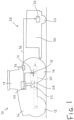
Figure 1 shows a vehicle towing a trailer equipped with a trailer braking system; -
Figure 2 represents components in the transmission of the vehicle ofFig. 1 ; and -
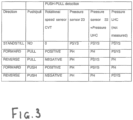
Figure 3 is a table identifying differing pressure and rotational measurements in the transmission ofFig. 2 . - The invention will now be described in the following detailed description with reference to the drawings, wherein preferred embodiments are described in detail to enable practice of the invention.
- With reference to
Fig. 1 a vehicle in the form of an agricultural tractor is indicated at 10. Thetractor 10 comprisesfront wheels 12 andrear wheels 14, aforward engine section 16 and a cab section 18. Thetractor 10 includes ahydrostatic transmission 20 driven by the engine and providing motive power to thewheels driveline 15 including aspeed sensor 21. Thetransmission 20 includes at least onepressure sensor sensors tractor 10. - The
tractor 10 is coupled with a towed trailer 28. The trailer 28 comprises atrailer body 30, and at least one pair of wheels 32. A trailer brake system 34 is provided on the trailer 28, which is connected (as schematically represented by control line 36) with a hydraulic or pneumatic trailer brake valve 33 system provided on thetractor 10. The trailer brake valve 33 is operated under control of the ECU 26. It will be understood that hydraulic fluid lines (not shown) may extend between thetractor 10 and the trailer 28, for powering the braking system 34 of the trailer 28. -
Figure 2 shows a schematic representation of an adjustment unit ADU and a hydraulic power unit of thetransmission 20. In this situation, the components belonging to the adjustment unit ADU are located inside the rectangle defined by the broken line 40, and the components belonging to thetransmission 20 are located outside the rectangle defined by the broken line 40. - The hydraulic power unit of the
transmission 20 has a pair ofhydrostats 200, 210, wherein hereafter the hydrostat 200 is designated as the hydraulic pump 200 and thehydrostat 210 as thehydraulic motor 210. Thehydrostats 200, 210 illustrated inFigure 2 are axial piston machines of oblique-axle design, of which the delivery/intake volume is changed by the pivoting of the axis of rotation of the pistons to an axle drive shaft, not shown. - By means of a
first valve unit 42 allocated to a hydraulic pump 200, and by means of asecond valve unit 44 allocated to thehydraulic motor 210, the individual pivot angle of the hydraulic pump 200 and/or of thehydraulic motor 210 can be adjusted. - In this situation, depending on the specified revolution speed transmission ratio, an actuator element 46 is rotated by means of an
actuator motor 47. Theactuator motor 47 is in this case controlled by a control device, such as the ECU 26 shown inFigure 1 . Because thevalve units valve units valve unit - Due to the displacement of the actuator element 46, the oil flow is accordingly directed out of the line 48 into the cylinders 50, 50', 52, 52' and with it the pivot angle of the hydraulic pump 200 and of the
hydraulic motor 210 is adjusted. The pivot angle, and therefore the delivery volume of the hydraulic pump 200 and the intake volume of thehydraulic motor 210 can accordingly be changed. This makes it possible for the revolution speed of the axle drive shaft, not shown inFigure 2 , to be adjusted, and with it the revolution speed transmission ratio of thetransmission 20. - In addition, the hydraulic pump 200 is connected by fluid means to the
hydraulic motor 210 by means of a fluid circuit HC. The fluid circuit HC in this situation has an upper circuit UHC and a lower circuit LHC. In this situation, the direction of the arrow F represents a flow direction of the fluid located inside the hydraulic circuit HC during forwards travel of thetractor 10 and the direction of the arrow R represents a flow direction of the fluid during reverse travel of thetractor 10. - By means of a
first pressure sensor 22, the pressure value pUHC prevailing in the upper circuit UHC can be measured. This pressure value pUHC is then sent to the ECU 26 represented inFigure 1 . Moreover, both the pressure in the upper circuit UHC as well as the lower circuit LHC are conducted by means of a shuttle valve 54 to asecond pressure sensor 23 in order to measure the pressure value pHCmax. - In this situation, the shuttle valve 54 in the
transmission 20 is designed in such a way so as to communicate to thesecond pressure sensor 23 the greater of the two pressures present in the upper circuit UHC or of the lower circuit LHC as a pressure value pHCmax. When thetractor 10 is stationary, thesecond pressure sensor 23 issues a system pressure arising in the upper circuit UHC or the lower circuit LHC as pressure value pHCmax. Thesecond pressure sensor 23 serves the purpose to detect if the transmission is facing any load, which is explained in further detail below. - The rotation sensor 24 is arranged at the output shaft of the
hydraulic motor 210, which is drivingly connectable to thedriveline 15. The direction of the rotation of thehydraulic motor 210 is determined by rotation sensor 24 and the direction of travel of thetractor 10 can be concluded. Alternately, the sensor 24 may detect speed and direction of rotation for other components of thetransmission 20, as will be described further below. - Preferably, when the vehicle is stationary a system pressure of about 1.5 MPa (15 bar) is set in the fluid circuit HC. This system pressure of 1.5 MPa (15 bar) results from the fact that, by means of a supply line SL, the fluid circuit HC is supplied with a constant system pressure by means of a constant hydraulic pump, not shown, driven by the engine of the
tractor 10. As soon as thetractor 10 moves or the transmission is no longer stationary, the pressure inside the fluid circuit rises, depending on the drive torque, to a high-pressure value of over 1.5 MPa (15 bar). With an average loading of thetransmission 20, a high-pressure value of 25-35 MPa (250-350 bar) is provided. A limit value of 50 MPa (500 bar) must not be exceeded, however, since otherwise overstressing of the transmission and its components is to be expected. Due to the pressure prevailing in the fluid circuit HC, the torque of the drive shaft leaving thehydraulic motor 210 is determined and therefore the traction force of thetransmission unit 20. - In this situation, the
first pressure sensor 22 serves to identify the presence of a PUSH condition or a PULL condition of the utility vehicle and therefore of thetransmission unit 20. The term "PULL condition" is understood hereinafter to mean an operational state in which thetractor 10 is driven by thetransmission unit 20. The term "PUSH condition" designates the operational state in which, in an uninterrupted positive or adhesion engagement, thetractor 10, including thetransmission 20, is kept in a rotational movement by thetractor 10 itself, or the trailer 28. This can be the case, for example, with downhill travel or the onset of jack-knifing. - The detection of forward travel or reverse travel of the utility vehicle, and therefore the direction of rotation of the transmission, can be carried out by the rotation sensor 24. In this situation, the direction of rotation of the
hydraulic motor 210 is detected by the rotation sensor 24. The individual directions of rotation of thehydraulic motor 210 during forward or reverse travel of the utility vehicle are in each case opposed to one another. In this situation, a PULL condition of thetransmission 20, and therefore also of thetractor 10 during forward travel, creates a high pressure PH in the upper circuit UHC which is measured by thefirst pressure sensor 22. The high pressure PH measured is greater than a system pressure PSYS with thetractor 10 at rest. - By means of the
hydraulic motor 210, the hydraulic output created by the hydraulic pump 200 is converted into a mechanical output. Consequently, in the lower circuit LHC, which with forward movement of the vehicle corresponds to the hydraulic range which forms in the direction of flow between thehydraulic motor 210 and hydraulic pump 200, the system pressure PSYS of around 1.5 MPa (15 bar) pertains. At reverse movement of the utility vehicle in pulling mode, by contrast, the system pressure PSYS pertains in the upper circuit UHC and the high pressure PH in the lower circuit LHC. - A PUSH condition on the
transmission 20, and therefore also on thetractor 10 in forward movement, can be detected by the fact that in this case thehydraulic motor 210 of thetransmission 20 is driven by thetractor 10 itself. Consequently, the pressure in the lower circuit LHC rises to the high pressure PH and is measured by thesecond pressure sensor 23. Moreover, with thetractor 10 in PUSH condition, no hydraulic output is created by the hydraulic pump 200. Rather, the hydraulic output produced by thehydraulic motor 210 is converted by the hydraulic pump 200 into a mechanical output. Consequently, the system pressure PSYS now pertains in the upper circuit UHC, which is measured by thefirst pressure sensor 22. With thetractor 10 in reverse travel in PUSH condition, by contrast, the high pressure PH pertains in the upper circuit UHC and the system pressure PSYS in the lower circuit LHC. - As mentioned above, the
second pressure sensor 23 serves the purpose to detect if the transmission is facing any load in circuit HC. In standstill, thesecond pressure sensor 23 would therefore detect PSYS. If load in the circuit HC is present, thesecond pressure sensor 23 would detect PH. If e.g. the tractor rolls down a hill without any PUSH/PULL condition (vehicle only overcomes friction resistance of the road contact) thesecond pressure sensor 23 would detect PSYS. Therefore,second pressure sensor 23 is relevant for detecting whether an indicated PUSH/PULL condition is correctly identified. - Thereby, the relationship between the detected direction (via rotational speed) and the value of
first pressure sensor 22 andsecond pressure sensor 23 enables the control system of ECU 26 to determine PUSH/PULL conditions. This is summarised in the table ofFigure 3 which also shows (in the right-hand column) that thefirst pressure sensor 22 may alternatively be positioned in the lower circuit LHC to detect PUSH/PULL conditions whereby the assignment of the pressures values to PUSH/PULL conditions would be opposite to that of the upper circuit UHC. - So to summarize: The combination of rotational speed sensor 24 plus
pressure sensor - For forward driving: a PUSH condition is detected by POSITIVE rotation (=FORWARD) plus PSYS in the upper circuit.
- For Reverse driving: a PUSH condition is detected by NEGATIVE rotation (=REVERSE) plus PH in the upper circuit.
- Detection of a PUSH condition by the ECU 26 is then used to trigger the actuation of the trailer brakes 34 - independently of the service or parking brake of the
tractor 10. The actuation of the trailer brakes (following previous detection of a PUSH condition) may be aborted or interrupted when the combination of rotational speed pluspressure sensor 22 indicates that the vehicle returns to PULL condition. - According to a further aspect of the invention, the system offers a redundant system for the PUSH/PULL condition determination as explained below.
- In a first check, the value determined with rotation sensor 24 (arranged at the output shaft of the hydraulic motor 210) is compared with the value of the
speed sensor 21 indriveline 15. If these values do not correlate in terms of the driving direction (taking account of where in the driveline the speed sensor is located), a failure may have occurred (i.e. the identification of a PUSH condition based on thefirst pressure sensor 22 and rotation sensor 24 may be erroneous). In the event of failure, alternative measures are suitably triggered. - In a second (or alternative) check, the values of
first pressure sensor 22 andsecond pressure sensor 23 are compared based on the table shown inFigure 3 . For example, if in FORWARD-PULL conditionfirst pressure sensor 22 would measure PH whilesecond pressure sensor 23 would deviate from PH, a failure may have occurred. - The comparison of the values in the first and second checks may be executed in a time-controlled manner (e.g. in certain time intervals) or it may be event controlled (e.g. if a change in PULUPUSH condition or FORWARD/REVERSE travel is determined).
- Providing this redundancy for the PUSH/PULL condition determination is very important in case of operating any brake system. Other triggers for the comparison may also be applicable without leaving the scope of the invention.
- In the foregoing, the applicants have described a trailer braking system comprising a
vehicle 10 having a continuously-variablehydrostatic transmission 20, and a trailer 28 coupled for towing by the vehicle and having trailer brakes 34 operable from thevehicle 10. Thevehicle transmission 20 includes afirst pressure sensor 22 arranged to measure a fluid pressure at a predetermined point within the transmission, and a rotation sensor 24 arranged to determine a rotation direction of a predetermined component in a driveline of the vehicle. A control unit 26 coupled to the first pressure sensor and rotation sensor determines when a PUSH condition exists based on a particular combination of pressure and rotational direction, and operates the trailer brakes 34 in response. One or more back-up systems to confirm the existence of a PUSH condition may be provided.
Claims (10)
- A trailer braking system, comprising:a vehicle (10) having a continuously-variable hydrostatic transmission (20);a trailer (28) coupled for towing by the vehicle, the trailer having two or more wheels (32) with trailer brakes (34) operable from the vehicle;the system including a first pressure sensor (22) arranged to measure a fluid pressure (PH, PSYS) at a predetermined point (UHC) within the transmission, and a rotation sensor (24) arranged to determine a rotation direction of a predetermined component (210) in a driveline of the vehicle;the system further comprising an electronic control unit (ECU 26) coupled to the first pressure sensor (22) and to the rotation sensor (24), characterized in the ECU (26) being configured to determine, based on respective output signals from the first pressure sensor (22) and the rotation sensor (24), whether a PUSH condition exists in dependence a particular combination of fluid pressure at the predetermined point within the transmission and rotational direction of the predetermined component within the driveline of the vehicle, and further configured to operate the trailer brakes (34) in response to a determination that a PUSH condition exists.
- A trailer braking system as claimed in claim 1, wherein the vehicle transmission (20) includes a hydrostatic pump (200) and a hydrostatic motor (210) connected to the pump by a first fluid line (UHC), the first pressure sensor (22) being arranged to measure a fluid pressure (PH, PSYS) in the first fluid line.
- A trailer braking system as claimed in claim 2, wherein the rotation sensor (24) is configured to measure rotation direction and speed for an output shaft of the hydrostatic motor (210).
- A trailer braking system as claimed in claim 3, comprising a further rotation sensor (21) configured to measure rotation direction at a predetermined location in a driveline of the vehicle, with the ECU (26) being configured to determine whether there is an expected correlation between the outputs of the first and second rotation sensors as a precondition to operating the trailer brakes.
- A trailer braking system as claimed in any of claims 1 to 4, comprising a second pressure sensor (23) configured to measure a fluid pressure at a second predetermined point (UHC, LHC) within the transmission (20), with the ECU (26) being configured to determine whether there is an expected correlation between the outputs of the first and second pressure sensors as a precondition to operating the trailer brakes.
- A trailer braking system as claimed in claim 1, further comprising a second system configured to determine when a PUSH condition exists, with the ECU (26) being configured to determine whether there is an expected correlation between the determinations by the first and second systems as a precondition to operating the trailer brakes.
- A trailer braking system as claimed in claim 2, wherein the hydrostatic pump (200) and the hydrostatic motor (210) are also connected by a second fluid line (LHC), and wherein the ECU (26) is configured to determine, based on the output signal from the first pressure sensor, whether the fluid pressure in the first fluid line (UHC) is at or above a system pressure (PSYS), and to determine, based on the output signal from the rotation sensor (24), whether the vehicle is travelling in a forward or a reverse direction; the ECU (26) configured to determine whether a PUSH condition exists based on a correlation between the determined direction of travel of the vehicle and whether the fluid pressure in the first fluid line is at or above the system pressure (PSYS).
- A trailer braking system as claimed in claim 7, wherein a second pressure sensor (23) is fluidly connected with the first and second fluid lines (UHC, LHC) through a shuttle valve (54) such that the second pressure sensor measures a higher fluid pressure of either of the first and second fluid lines, the ECU (26) being configured to determine whether there is an expected correlation between the outputs of the first and second pressure sensors (22, 23) as a precondition to operating the trailer brakes.
- A method of operating a trailer braking system as claimed in any one of the preceding claims, the method comprising:determining, based on respective output signals from the first pressure sensor (22) and the rotation sensor (24), whether a PUSH condition exists in dependence a particular combination of fluid pressure (PH, PSYS) at the predetermined point within the transmission and rotational direction of the predetermined component within the driveline of the vehicle; andsending an operating signal to actuate the trailer brakes (34) responsive to a determination that a PUSH condition exists.
- A method as claimed in claim 9, wherein the vehicle transmission (20) includes a hydrostatic pump (200) and a hydrostatic motor (210) connected to the pump by a first fluid line (UHC) and a second fluid line (LHC), the first pressure sensor (22) being arranged to measure a fluid pressure (PH, PSYS) in the first fluid line, and wherein determining, based on respective output signals from the first pressure sensor (22) and the rotation sensor (24), whether a PUSH condition exists comprises:determining, based on an output signal from the first pressure sensor (22), whether the fluid pressure (PH, PSYS) at the predetermined point (UHC) within the transmission (20) is at or above a system pressure (PSYS);determining, based on an output signal from the rotational sensor (24), whether the vehicle is moving in a forward direction or a reverse direction; anddetermining whether a PUSH condition exists based on a correlation between the determined direction of travel of the vehicle and whether the fluid pressure at the predetermined point (UHC) within the transmission is at or above the system pressure (PSYS).
Applications Claiming Priority (2)
| Application Number | Priority Date | Filing Date | Title |
|---|---|---|---|
| GBGB1918835.8A GB201918835D0 (en) | 2019-12-19 | 2019-12-19 | Trailer brake control system |
| PCT/IB2020/061317 WO2021123984A1 (en) | 2019-12-19 | 2020-12-01 | Trailer brake control system |
Publications (2)
| Publication Number | Publication Date |
|---|---|
| EP4077074A1 EP4077074A1 (en) | 2022-10-26 |
| EP4077074B1 true EP4077074B1 (en) | 2024-09-25 |
Family
ID=69322929
Family Applications (1)
| Application Number | Title | Priority Date | Filing Date |
|---|---|---|---|
| EP20820275.4A Active EP4077074B1 (en) | 2019-12-19 | 2020-12-01 | Trailer brake control system |
Country Status (4)
| Country | Link |
|---|---|
| US (1) | US12168430B2 (en) |
| EP (1) | EP4077074B1 (en) |
| GB (1) | GB201918835D0 (en) |
| WO (1) | WO2021123984A1 (en) |
Families Citing this family (2)
| Publication number | Priority date | Publication date | Assignee | Title |
|---|---|---|---|---|
| GB202405473D0 (en) | 2024-04-18 | 2024-06-05 | Agco Int Gmbh | Manual brake controlling of a trailer brake |
| US12612018B2 (en) * | 2024-05-13 | 2026-04-28 | GM Global Technology Operations LLC | Methods and systems for evaluating trailer braking system performance and conditions |
Citations (1)
| Publication number | Priority date | Publication date | Assignee | Title |
|---|---|---|---|---|
| EP2269880B1 (en) * | 2009-07-03 | 2015-07-29 | Dipl. Ing. Tietjen GmbH | Brake for a traction vehicle trailer combination |
Family Cites Families (8)
| Publication number | Priority date | Publication date | Assignee | Title |
|---|---|---|---|---|
| DE102007053320A1 (en) | 2007-11-08 | 2009-05-14 | Agco Gmbh | Transmission synchronization method and apparatus for at least two transmissions |
| ITTO20110588A1 (en) | 2011-07-04 | 2013-01-05 | Cnh Italia Spa | METHOD AND APPARATUS FOR BRAKING A TRACTOR EQUIPPED WITH A TRAILER |
| EP2712779B1 (en) * | 2012-09-28 | 2020-09-16 | CLAAS Tractor S.A.S. | Method for operating a self propelled agricultural machine |
| ITMO20130162A1 (en) * | 2013-06-04 | 2014-12-05 | Cnh Italia Spa | EQUIPMENT AND METHODS FOR BRAKING A TRACTOR-TRAILER COMBINATION. |
| DE102014100069A1 (en) * | 2014-01-07 | 2015-07-09 | Knorr-Bremse Systeme für Nutzfahrzeuge GmbH | Method for controlling a braking device of a tractor-trailer combination and braking device controlled by the method |
| EP3353027B1 (en) | 2015-09-23 | 2021-05-12 | AGCO International GmbH | A vehicle trailer brake system and method |
| DE102016104453A1 (en) | 2016-03-11 | 2017-09-14 | Claas Tractor Sas | Agricultural train with a towing vehicle and trailer |
| GB2620183B (en) * | 2022-06-30 | 2024-10-09 | Bamford Excavators Ltd | A method and system for enhanced braking in a tractor unit |
-
2019
- 2019-12-19 GB GBGB1918835.8A patent/GB201918835D0/en not_active Ceased
-
2020
- 2020-12-01 US US17/757,399 patent/US12168430B2/en active Active
- 2020-12-01 EP EP20820275.4A patent/EP4077074B1/en active Active
- 2020-12-01 WO PCT/IB2020/061317 patent/WO2021123984A1/en not_active Ceased
Patent Citations (1)
| Publication number | Priority date | Publication date | Assignee | Title |
|---|---|---|---|---|
| EP2269880B1 (en) * | 2009-07-03 | 2015-07-29 | Dipl. Ing. Tietjen GmbH | Brake for a traction vehicle trailer combination |
Also Published As
| Publication number | Publication date |
|---|---|
| WO2021123984A1 (en) | 2021-06-24 |
| GB201918835D0 (en) | 2020-02-05 |
| EP4077074A1 (en) | 2022-10-26 |
| US12168430B2 (en) | 2024-12-17 |
| US20230009316A1 (en) | 2023-01-12 |
Similar Documents
| Publication | Publication Date | Title |
|---|---|---|
| CA2935989C (en) | Method for controlling a brake device in a traction vehicle-trailer combination and brake device controlled according to said method | |
| US8360532B2 (en) | Brake control system | |
| US4708406A (en) | Hydraulic braking system with malfunction alarm junction | |
| US5079708A (en) | Road vehicle cornering assistance mechanism | |
| EP2766239B1 (en) | System for determining vehicle weight | |
| US7976109B2 (en) | Failsafe operation of a hybrid brake system for a vehicle | |
| EP4263301B1 (en) | Trailer brake control system | |
| CN108137021B (en) | Powered vehicle including SAHR brake | |
| EP4263303B1 (en) | Trailer brake control system | |
| US4405145A (en) | Arrangement for limiting uncontrolled articulation movements at the picot between vehicle units in articulated vehicles, preferably articulated buses | |
| EP4077074B1 (en) | Trailer brake control system | |
| US20060071549A1 (en) | Electronic controlled vacuum powered brake system for towed trailers | |
| US20040046443A1 (en) | Braking control system for a vehicle | |
| EP2223831A1 (en) | Reverse braking system | |
| JP2006513899A (en) | Method and apparatus for identifying the start of a start-up process performed by a vehicle driver | |
| US20220250596A1 (en) | Method for functional testing of a pressure generator assembly of an electronically slip-controllable external power braking system having redundant brake pressure generation, in particular for an autonomously drivable motor vehicle | |
| US11834095B2 (en) | Utility vehicle braking | |
| US12030475B2 (en) | Method and control system for controlling machine | |
| US11548549B2 (en) | Steering system and method for operating a steering system | |
| US6092880A (en) | Integrated anti-skid and hydraulic booster braking control | |
| CN107117148A (en) | A kind of mechano-electronic brake fluid system | |
| US6491118B1 (en) | Hydrostatic system with charge flow monitoring | |
| KR20120124600A (en) | Control System of Brake And Method thereof | |
| WO2002051682A1 (en) | Method and system for brakes of utility vehicles | |
| US20080051964A1 (en) | Operating unit of a vehicle having an automatic braking device |
Legal Events
| Date | Code | Title | Description |
|---|---|---|---|
| STAA | Information on the status of an ep patent application or granted ep patent |
Free format text: STATUS: UNKNOWN |
|
| STAA | Information on the status of an ep patent application or granted ep patent |
Free format text: STATUS: THE INTERNATIONAL PUBLICATION HAS BEEN MADE |
|
| PUAI | Public reference made under article 153(3) epc to a published international application that has entered the european phase |
Free format text: ORIGINAL CODE: 0009012 |
|
| STAA | Information on the status of an ep patent application or granted ep patent |
Free format text: STATUS: REQUEST FOR EXAMINATION WAS MADE |
|
| 17P | Request for examination filed |
Effective date: 20220719 |
|
| AK | Designated contracting states |
Kind code of ref document: A1 Designated state(s): AL AT BE BG CH CY CZ DE DK EE ES FI FR GB GR HR HU IE IS IT LI LT LU LV MC MK MT NL NO PL PT RO RS SE SI SK SM TR |
|
| DAV | Request for validation of the european patent (deleted) | ||
| DAX | Request for extension of the european patent (deleted) | ||
| P01 | Opt-out of the competence of the unified patent court (upc) registered |
Effective date: 20230518 |
|
| GRAP | Despatch of communication of intention to grant a patent |
Free format text: ORIGINAL CODE: EPIDOSNIGR1 |
|
| STAA | Information on the status of an ep patent application or granted ep patent |
Free format text: STATUS: GRANT OF PATENT IS INTENDED |
|
| GRAS | Grant fee paid |
Free format text: ORIGINAL CODE: EPIDOSNIGR3 |
|
| GRAA | (expected) grant |
Free format text: ORIGINAL CODE: 0009210 |
|
| STAA | Information on the status of an ep patent application or granted ep patent |
Free format text: STATUS: THE PATENT HAS BEEN GRANTED |
|
| INTG | Intention to grant announced |
Effective date: 20240805 |
|
| AK | Designated contracting states |
Kind code of ref document: B1 Designated state(s): AL AT BE BG CH CY CZ DE DK EE ES FI FR GB GR HR HU IE IS IT LI LT LU LV MC MK MT NL NO PL PT RO RS SE SI SK SM TR |
|
| REG | Reference to a national code |
Ref country code: GB Ref legal event code: FG4D |
|
| REG | Reference to a national code |
Ref country code: CH Ref legal event code: EP |
|
| REG | Reference to a national code |
Ref country code: DE Ref legal event code: R096 Ref document number: 602020038422 Country of ref document: DE |
|
| REG | Reference to a national code |
Ref country code: IE Ref legal event code: FG4D |
|
| REG | Reference to a national code |
Ref country code: LT Ref legal event code: MG9D |
|
| PG25 | Lapsed in a contracting state [announced via postgrant information from national office to epo] |
Ref country code: NO Free format text: LAPSE BECAUSE OF FAILURE TO SUBMIT A TRANSLATION OF THE DESCRIPTION OR TO PAY THE FEE WITHIN THE PRESCRIBED TIME-LIMIT Effective date: 20241225 |
|
| PG25 | Lapsed in a contracting state [announced via postgrant information from national office to epo] |
Ref country code: GR Free format text: LAPSE BECAUSE OF FAILURE TO SUBMIT A TRANSLATION OF THE DESCRIPTION OR TO PAY THE FEE WITHIN THE PRESCRIBED TIME-LIMIT Effective date: 20241226 Ref country code: FI Free format text: LAPSE BECAUSE OF FAILURE TO SUBMIT A TRANSLATION OF THE DESCRIPTION OR TO PAY THE FEE WITHIN THE PRESCRIBED TIME-LIMIT Effective date: 20240925 |
|
| PG25 | Lapsed in a contracting state [announced via postgrant information from national office to epo] |
Ref country code: BG Free format text: LAPSE BECAUSE OF FAILURE TO SUBMIT A TRANSLATION OF THE DESCRIPTION OR TO PAY THE FEE WITHIN THE PRESCRIBED TIME-LIMIT Effective date: 20240925 |
|
| PG25 | Lapsed in a contracting state [announced via postgrant information from national office to epo] |
Ref country code: LV Free format text: LAPSE BECAUSE OF FAILURE TO SUBMIT A TRANSLATION OF THE DESCRIPTION OR TO PAY THE FEE WITHIN THE PRESCRIBED TIME-LIMIT Effective date: 20240925 |
|
| PG25 | Lapsed in a contracting state [announced via postgrant information from national office to epo] |
Ref country code: RS Free format text: LAPSE BECAUSE OF FAILURE TO SUBMIT A TRANSLATION OF THE DESCRIPTION OR TO PAY THE FEE WITHIN THE PRESCRIBED TIME-LIMIT Effective date: 20241225 |
|
| REG | Reference to a national code |
Ref country code: NL Ref legal event code: MP Effective date: 20240925 |
|
| PG25 | Lapsed in a contracting state [announced via postgrant information from national office to epo] |
Ref country code: RS Free format text: LAPSE BECAUSE OF FAILURE TO SUBMIT A TRANSLATION OF THE DESCRIPTION OR TO PAY THE FEE WITHIN THE PRESCRIBED TIME-LIMIT Effective date: 20241225 Ref country code: NO Free format text: LAPSE BECAUSE OF FAILURE TO SUBMIT A TRANSLATION OF THE DESCRIPTION OR TO PAY THE FEE WITHIN THE PRESCRIBED TIME-LIMIT Effective date: 20241225 Ref country code: LV Free format text: LAPSE BECAUSE OF FAILURE TO SUBMIT A TRANSLATION OF THE DESCRIPTION OR TO PAY THE FEE WITHIN THE PRESCRIBED TIME-LIMIT Effective date: 20240925 Ref country code: GR Free format text: LAPSE BECAUSE OF FAILURE TO SUBMIT A TRANSLATION OF THE DESCRIPTION OR TO PAY THE FEE WITHIN THE PRESCRIBED TIME-LIMIT Effective date: 20241226 Ref country code: FI Free format text: LAPSE BECAUSE OF FAILURE TO SUBMIT A TRANSLATION OF THE DESCRIPTION OR TO PAY THE FEE WITHIN THE PRESCRIBED TIME-LIMIT Effective date: 20240925 Ref country code: BG Free format text: LAPSE BECAUSE OF FAILURE TO SUBMIT A TRANSLATION OF THE DESCRIPTION OR TO PAY THE FEE WITHIN THE PRESCRIBED TIME-LIMIT Effective date: 20240925 |
|
| REG | Reference to a national code |
Ref country code: AT Ref legal event code: MK05 Ref document number: 1726430 Country of ref document: AT Kind code of ref document: T Effective date: 20240925 |
|
| PG25 | Lapsed in a contracting state [announced via postgrant information from national office to epo] |
Ref country code: NL Free format text: LAPSE BECAUSE OF FAILURE TO SUBMIT A TRANSLATION OF THE DESCRIPTION OR TO PAY THE FEE WITHIN THE PRESCRIBED TIME-LIMIT Effective date: 20240925 |
|
| PG25 | Lapsed in a contracting state [announced via postgrant information from national office to epo] |
Ref country code: IS Free format text: LAPSE BECAUSE OF FAILURE TO SUBMIT A TRANSLATION OF THE DESCRIPTION OR TO PAY THE FEE WITHIN THE PRESCRIBED TIME-LIMIT Effective date: 20250125 Ref country code: PT Free format text: LAPSE BECAUSE OF FAILURE TO SUBMIT A TRANSLATION OF THE DESCRIPTION OR TO PAY THE FEE WITHIN THE PRESCRIBED TIME-LIMIT Effective date: 20250127 |
|
| PG25 | Lapsed in a contracting state [announced via postgrant information from national office to epo] |
Ref country code: SM Free format text: LAPSE BECAUSE OF FAILURE TO SUBMIT A TRANSLATION OF THE DESCRIPTION OR TO PAY THE FEE WITHIN THE PRESCRIBED TIME-LIMIT Effective date: 20240925 Ref country code: RO Free format text: LAPSE BECAUSE OF FAILURE TO SUBMIT A TRANSLATION OF THE DESCRIPTION OR TO PAY THE FEE WITHIN THE PRESCRIBED TIME-LIMIT Effective date: 20240925 |
|
| PG25 | Lapsed in a contracting state [announced via postgrant information from national office to epo] |
Ref country code: ES Free format text: LAPSE BECAUSE OF FAILURE TO SUBMIT A TRANSLATION OF THE DESCRIPTION OR TO PAY THE FEE WITHIN THE PRESCRIBED TIME-LIMIT Effective date: 20240925 |
|
| PG25 | Lapsed in a contracting state [announced via postgrant information from national office to epo] |
Ref country code: AT Free format text: LAPSE BECAUSE OF FAILURE TO SUBMIT A TRANSLATION OF THE DESCRIPTION OR TO PAY THE FEE WITHIN THE PRESCRIBED TIME-LIMIT Effective date: 20240925 Ref country code: EE Free format text: LAPSE BECAUSE OF FAILURE TO SUBMIT A TRANSLATION OF THE DESCRIPTION OR TO PAY THE FEE WITHIN THE PRESCRIBED TIME-LIMIT Effective date: 20240925 |
|
| PG25 | Lapsed in a contracting state [announced via postgrant information from national office to epo] |
Ref country code: PL Free format text: LAPSE BECAUSE OF FAILURE TO SUBMIT A TRANSLATION OF THE DESCRIPTION OR TO PAY THE FEE WITHIN THE PRESCRIBED TIME-LIMIT Effective date: 20240925 Ref country code: CZ Free format text: LAPSE BECAUSE OF FAILURE TO SUBMIT A TRANSLATION OF THE DESCRIPTION OR TO PAY THE FEE WITHIN THE PRESCRIBED TIME-LIMIT Effective date: 20240925 |
|
| PG25 | Lapsed in a contracting state [announced via postgrant information from national office to epo] |
Ref country code: SK Free format text: LAPSE BECAUSE OF FAILURE TO SUBMIT A TRANSLATION OF THE DESCRIPTION OR TO PAY THE FEE WITHIN THE PRESCRIBED TIME-LIMIT Effective date: 20240925 Ref country code: IT Free format text: LAPSE BECAUSE OF FAILURE TO SUBMIT A TRANSLATION OF THE DESCRIPTION OR TO PAY THE FEE WITHIN THE PRESCRIBED TIME-LIMIT Effective date: 20240925 |
|
| REG | Reference to a national code |
Ref country code: DE Ref legal event code: R097 Ref document number: 602020038422 Country of ref document: DE |
|
| PG25 | Lapsed in a contracting state [announced via postgrant information from national office to epo] |
Ref country code: MC Free format text: LAPSE BECAUSE OF FAILURE TO SUBMIT A TRANSLATION OF THE DESCRIPTION OR TO PAY THE FEE WITHIN THE PRESCRIBED TIME-LIMIT Effective date: 20240925 |
|
| PG25 | Lapsed in a contracting state [announced via postgrant information from national office to epo] |
Ref country code: DK Free format text: LAPSE BECAUSE OF FAILURE TO SUBMIT A TRANSLATION OF THE DESCRIPTION OR TO PAY THE FEE WITHIN THE PRESCRIBED TIME-LIMIT Effective date: 20240925 |
|
| REG | Reference to a national code |
Ref country code: CH Ref legal event code: PL |
|
| PLBE | No opposition filed within time limit |
Free format text: ORIGINAL CODE: 0009261 |
|
| STAA | Information on the status of an ep patent application or granted ep patent |
Free format text: STATUS: NO OPPOSITION FILED WITHIN TIME LIMIT |
|
| PG25 | Lapsed in a contracting state [announced via postgrant information from national office to epo] |
Ref country code: LU Free format text: LAPSE BECAUSE OF NON-PAYMENT OF DUE FEES Effective date: 20241201 |
|
| 26N | No opposition filed |
Effective date: 20250626 |
|
| PG25 | Lapsed in a contracting state [announced via postgrant information from national office to epo] |
Ref country code: SE Free format text: LAPSE BECAUSE OF FAILURE TO SUBMIT A TRANSLATION OF THE DESCRIPTION OR TO PAY THE FEE WITHIN THE PRESCRIBED TIME-LIMIT Effective date: 20240925 |
|
| REG | Reference to a national code |
Ref country code: BE Ref legal event code: MM Effective date: 20241231 |
|
| PG25 | Lapsed in a contracting state [announced via postgrant information from national office to epo] |
Ref country code: BE Free format text: LAPSE BECAUSE OF NON-PAYMENT OF DUE FEES Effective date: 20241231 |
|
| PG25 | Lapsed in a contracting state [announced via postgrant information from national office to epo] |
Ref country code: CH Free format text: LAPSE BECAUSE OF NON-PAYMENT OF DUE FEES Effective date: 20241231 |
|
| PG25 | Lapsed in a contracting state [announced via postgrant information from national office to epo] |
Ref country code: IE Free format text: LAPSE BECAUSE OF NON-PAYMENT OF DUE FEES Effective date: 20241201 |
|
| PGFP | Annual fee paid to national office [announced via postgrant information from national office to epo] |
Ref country code: DE Payment date: 20251211 Year of fee payment: 6 |
|
| PGFP | Annual fee paid to national office [announced via postgrant information from national office to epo] |
Ref country code: GB Payment date: 20251219 Year of fee payment: 6 |
|
| PG25 | Lapsed in a contracting state [announced via postgrant information from national office to epo] |
Ref country code: HR Free format text: LAPSE BECAUSE OF FAILURE TO SUBMIT A TRANSLATION OF THE DESCRIPTION OR TO PAY THE FEE WITHIN THE PRESCRIBED TIME-LIMIT Effective date: 20240925 |
|
| PGFP | Annual fee paid to national office [announced via postgrant information from national office to epo] |
Ref country code: FR Payment date: 20251229 Year of fee payment: 6 |
|
| PG25 | Lapsed in a contracting state [announced via postgrant information from national office to epo] |
Ref country code: CY Free format text: LAPSE BECAUSE OF FAILURE TO SUBMIT A TRANSLATION OF THE DESCRIPTION OR TO PAY THE FEE WITHIN THE PRESCRIBED TIME-LIMIT; INVALID AB INITIO Effective date: 20201201 |