EP4076404B1 - A pyrazole pharmaceutical composition - Google Patents
A pyrazole pharmaceutical composition Download PDFInfo
- Publication number
- EP4076404B1 EP4076404B1 EP20841906.9A EP20841906A EP4076404B1 EP 4076404 B1 EP4076404 B1 EP 4076404B1 EP 20841906 A EP20841906 A EP 20841906A EP 4076404 B1 EP4076404 B1 EP 4076404B1
- Authority
- EP
- European Patent Office
- Prior art keywords
- pharmaceutical composition
- tpgs
- compound
- formula
- composition
- Prior art date
- Legal status (The legal status is an assumption and is not a legal conclusion. Google has not performed a legal analysis and makes no representation as to the accuracy of the status listed.)
- Active
Links
Images


Classifications
-
- A—HUMAN NECESSITIES
- A61—MEDICAL OR VETERINARY SCIENCE; HYGIENE
- A61K—PREPARATIONS FOR MEDICAL, DENTAL OR TOILETRY PURPOSES
- A61K9/00—Medicinal preparations characterised by special physical form
- A61K9/14—Particulate form, e.g. powders, Processes for size reducing of pure drugs or the resulting products, Pure drug nanoparticles
- A61K9/16—Agglomerates; Granulates; Microbeadlets ; Microspheres; Pellets; Solid products obtained by spray drying, spray freeze drying, spray congealing,(multiple) emulsion solvent evaporation or extraction
- A61K9/1605—Excipients; Inactive ingredients
- A61K9/1629—Organic macromolecular compounds
- A61K9/1641—Organic macromolecular compounds obtained otherwise than by reactions only involving carbon-to-carbon unsaturated bonds, e.g. polyethylene glycol, poloxamers
-
- A—HUMAN NECESSITIES
- A61—MEDICAL OR VETERINARY SCIENCE; HYGIENE
- A61K—PREPARATIONS FOR MEDICAL, DENTAL OR TOILETRY PURPOSES
- A61K31/00—Medicinal preparations containing organic active ingredients
- A61K31/33—Heterocyclic compounds
- A61K31/395—Heterocyclic compounds having nitrogen as a ring hetero atom, e.g. guanethidine or rifamycins
- A61K31/435—Heterocyclic compounds having nitrogen as a ring hetero atom, e.g. guanethidine or rifamycins having six-membered rings with one nitrogen as the only ring hetero atom
- A61K31/44—Non condensed pyridines; Hydrogenated derivatives thereof
- A61K31/4427—Non condensed pyridines; Hydrogenated derivatives thereof containing further heterocyclic ring systems
- A61K31/4439—Non condensed pyridines; Hydrogenated derivatives thereof containing further heterocyclic ring systems containing a five-membered ring with nitrogen as a ring hetero atom, e.g. omeprazole
-
- A—HUMAN NECESSITIES
- A61—MEDICAL OR VETERINARY SCIENCE; HYGIENE
- A61K—PREPARATIONS FOR MEDICAL, DENTAL OR TOILETRY PURPOSES
- A61K9/00—Medicinal preparations characterised by special physical form
- A61K9/14—Particulate form, e.g. powders, Processes for size reducing of pure drugs or the resulting products, Pure drug nanoparticles
- A61K9/16—Agglomerates; Granulates; Microbeadlets ; Microspheres; Pellets; Solid products obtained by spray drying, spray freeze drying, spray congealing,(multiple) emulsion solvent evaporation or extraction
- A61K9/1605—Excipients; Inactive ingredients
- A61K9/1617—Organic compounds, e.g. phospholipids, fats
-
- A—HUMAN NECESSITIES
- A61—MEDICAL OR VETERINARY SCIENCE; HYGIENE
- A61K—PREPARATIONS FOR MEDICAL, DENTAL OR TOILETRY PURPOSES
- A61K31/00—Medicinal preparations containing organic active ingredients
- A61K31/33—Heterocyclic compounds
- A61K31/395—Heterocyclic compounds having nitrogen as a ring hetero atom, e.g. guanethidine or rifamycins
- A61K31/41—Heterocyclic compounds having nitrogen as a ring hetero atom, e.g. guanethidine or rifamycins having five-membered rings with two or more ring hetero atoms, at least one of which being nitrogen, e.g. tetrazole
- A61K31/415—1,2-Diazoles
- A61K31/4155—1,2-Diazoles non condensed and containing further heterocyclic rings
-
- A—HUMAN NECESSITIES
- A61—MEDICAL OR VETERINARY SCIENCE; HYGIENE
- A61K—PREPARATIONS FOR MEDICAL, DENTAL OR TOILETRY PURPOSES
- A61K47/00—Medicinal preparations characterised by the non-active ingredients used, e.g. carriers or inert additives; Targeting or modifying agents chemically bound to the active ingredient
- A61K47/30—Macromolecular organic or inorganic compounds, e.g. inorganic polyphosphates
- A61K47/34—Macromolecular compounds obtained otherwise than by reactions only involving carbon-to-carbon unsaturated bonds, e.g. polyesters, polyamino acids, polysiloxanes, polyphosphazines, copolymers of polyalkylene glycol or poloxamers
-
- A—HUMAN NECESSITIES
- A61—MEDICAL OR VETERINARY SCIENCE; HYGIENE
- A61K—PREPARATIONS FOR MEDICAL, DENTAL OR TOILETRY PURPOSES
- A61K47/00—Medicinal preparations characterised by the non-active ingredients used, e.g. carriers or inert additives; Targeting or modifying agents chemically bound to the active ingredient
- A61K47/30—Macromolecular organic or inorganic compounds, e.g. inorganic polyphosphates
- A61K47/36—Polysaccharides; Derivatives thereof, e.g. gums, starch, alginate, dextrin, hyaluronic acid, chitosan, inulin, agar or pectin
- A61K47/38—Cellulose; Derivatives thereof
-
- A—HUMAN NECESSITIES
- A61—MEDICAL OR VETERINARY SCIENCE; HYGIENE
- A61K—PREPARATIONS FOR MEDICAL, DENTAL OR TOILETRY PURPOSES
- A61K9/00—Medicinal preparations characterised by special physical form
- A61K9/14—Particulate form, e.g. powders, Processes for size reducing of pure drugs or the resulting products, Pure drug nanoparticles
- A61K9/16—Agglomerates; Granulates; Microbeadlets ; Microspheres; Pellets; Solid products obtained by spray drying, spray freeze drying, spray congealing,(multiple) emulsion solvent evaporation or extraction
- A61K9/1605—Excipients; Inactive ingredients
- A61K9/1629—Organic macromolecular compounds
- A61K9/1652—Polysaccharides, e.g. alginate, cellulose derivatives; Cyclodextrin
-
- A—HUMAN NECESSITIES
- A61—MEDICAL OR VETERINARY SCIENCE; HYGIENE
- A61K—PREPARATIONS FOR MEDICAL, DENTAL OR TOILETRY PURPOSES
- A61K9/00—Medicinal preparations characterised by special physical form
- A61K9/20—Pills, tablets, discs, rods
- A61K9/2004—Excipients; Inactive ingredients
- A61K9/2013—Organic compounds, e.g. phospholipids, fats
-
- A—HUMAN NECESSITIES
- A61—MEDICAL OR VETERINARY SCIENCE; HYGIENE
- A61K—PREPARATIONS FOR MEDICAL, DENTAL OR TOILETRY PURPOSES
- A61K9/00—Medicinal preparations characterised by special physical form
- A61K9/20—Pills, tablets, discs, rods
- A61K9/2004—Excipients; Inactive ingredients
- A61K9/2022—Organic macromolecular compounds
- A61K9/2031—Organic macromolecular compounds obtained otherwise than by reactions only involving carbon-to-carbon unsaturated bonds, e.g. polyethylene glycol, polyethylene oxide, poloxamers
-
- A—HUMAN NECESSITIES
- A61—MEDICAL OR VETERINARY SCIENCE; HYGIENE
- A61K—PREPARATIONS FOR MEDICAL, DENTAL OR TOILETRY PURPOSES
- A61K9/00—Medicinal preparations characterised by special physical form
- A61K9/20—Pills, tablets, discs, rods
- A61K9/2004—Excipients; Inactive ingredients
- A61K9/2022—Organic macromolecular compounds
- A61K9/205—Polysaccharides, e.g. alginate, gums; Cyclodextrin
- A61K9/2054—Cellulose; Cellulose derivatives, e.g. hydroxypropyl methylcellulose
-
- A—HUMAN NECESSITIES
- A61—MEDICAL OR VETERINARY SCIENCE; HYGIENE
- A61K—PREPARATIONS FOR MEDICAL, DENTAL OR TOILETRY PURPOSES
- A61K9/00—Medicinal preparations characterised by special physical form
- A61K9/20—Pills, tablets, discs, rods
- A61K9/2004—Excipients; Inactive ingredients
- A61K9/2022—Organic macromolecular compounds
- A61K9/205—Polysaccharides, e.g. alginate, gums; Cyclodextrin
- A61K9/2059—Starch, including chemically or physically modified derivatives; Amylose; Amylopectin; Dextrin
-
- A—HUMAN NECESSITIES
- A61—MEDICAL OR VETERINARY SCIENCE; HYGIENE
- A61K—PREPARATIONS FOR MEDICAL, DENTAL OR TOILETRY PURPOSES
- A61K9/00—Medicinal preparations characterised by special physical form
- A61K9/20—Pills, tablets, discs, rods
- A61K9/2095—Tabletting processes
-
- A—HUMAN NECESSITIES
- A61—MEDICAL OR VETERINARY SCIENCE; HYGIENE
- A61P—SPECIFIC THERAPEUTIC ACTIVITY OF CHEMICAL COMPOUNDS OR MEDICINAL PREPARATIONS
- A61P17/00—Drugs for dermatological disorders
-
- A—HUMAN NECESSITIES
- A61—MEDICAL OR VETERINARY SCIENCE; HYGIENE
- A61P—SPECIFIC THERAPEUTIC ACTIVITY OF CHEMICAL COMPOUNDS OR MEDICINAL PREPARATIONS
- A61P29/00—Non-central analgesic, antipyretic or antiinflammatory agents, e.g. antirheumatic agents; Non-steroidal antiinflammatory drugs [NSAID]
Definitions
- WO 2018/108969 discloses compounds of formula I which are selective Janus kinase (JAK) inhibitors, and as such are useful for the treatment of JAK-mediated diseases such as atopic dermatitis, arthritis, and cancer.
- JAK Janus kinase
- 1-[(3 R ,4 S )-4-cyanotetrahydropyran-3-yl]-3-[(2-fluoro-6-methoxy-4-pyridyl)amino]pyrazole-4-carboxamide (I) is disclosed.
- the compound of Formula (I) significantly suppressed pruritus with respect to placebo and in a similar magnitude to oclacitinib (Apoquel ® ).
- Apoquel ® is a commercially available product for the treatment of atopic dermatitis in dogs. Also disclosed are methods of treating atopic dermatitis by oral administration of compound (I).
- WO 2013/041042 discloses pyrazole carboxamides as Janus kinase inhibitors that are useful for the treatment of rheumatoid arthritis, asthma, chronic obstructive pulmonary disease (COPD) and cancer.
- the compounds of this disclosure are of the following formula.
- Atopic dermatitis is a relapsing pruritic and chronic inflammatory skin disease, that is characterized by immune system dysregulation and epidermal barrier abnormalities in humans.
- the pathological and immunological attributes of atopic dermatitis have been the subject of extensive investigations [reviewed in Rahman et al. Inflammation & Allergy-drug target 10:486-496 (2011 ) and Harskamp et al., Seminar in Cutaneous Medicine and Surgery 32:132-139 (2013 )].
- Atopic dermatitis is also a common condition in companion animals, especially dogs, where its prevalence has been estimated to be approximately 10-15% of the canine population.
- atopic dermatitis in dogs and cats show significant similarities to that of atopic dermatitis in man including skin infiltration by a variety of immune cells and CD4 + Th2 polarized cytokine milieu including the preponderance of IL-4, IL-13, and IL-31.
- IL-22 has been implicated in the exaggerated epithelial proliferation leading to epidermal hyperplasia that is characteristic of atopic dermatitis.
- TPGS D- ⁇ -Tocopheryl polyethylene glycol 1000 succinate
- An embodiment of the invention is a pharmaceutical composition
- a pharmaceutical composition comprising a pharmaceutically effective amount of 1-[(3 R ,4 S )-4-cyanotetrahydropyran-3-yl]-3-[(2-fluoro-6-methoxy-4-pyridyl)amino]pyrazole-4-carboxamide and a surfactant of an ester of a tocopherol, a polyethylene glycol (PEG) and a dicarboxylic acid.
- PEG polyethylene glycol
- Another embodiment of the invention is a method of treating atopic dermatitis comprising orally administering to an animal in need of an effective amount of the above pharmaceutical composition.
- the compound of Formula (I) is a selective Janus kinase (JAK) inhibitor.
- the compound of Formula (I) is a poorly water soluble compound.
- poor water solubility of a pharmaceutically active agent results in poor oral bioavailability in dogs, and hence, in poor biological efficacy of the agent.
- Applicants have found now that the inclusion of a surfactant of an ester of a tocopherol, a polyethylene glycol (PEG) and a dicarboxylic acid in a solid pharmaceutical composition of the compound of Formula I resulted in a formulation that afforded an improved bioavailability of the compound after oral administration to an animal compared to formulations with no surfactants.
- the compound of Formula (I) is present in a crystalline form.
- the amount of the compound of Formula (I) in the composition is between about 0.5 and about 10 % or is between about 1.0 and about 5.0 % or is about 2% (w/w).
- Tocopherols are a class of organic chemical compounds many of which have vitamin E activity. There are four tocopherol forms ( ⁇ (alpha), ⁇ (beta), ⁇ (gamma), and ⁇ (delta) (see below). All feature a chromane ring, with a hydroxyl group and a hydrophobic side chain and differ by the number and position of methyl groups on the chromanol ring.
- the tocopherol is D-alpha- tocopherol.
- Polyethylene glycol is a polyether compound with a structure of H-(O-CH 2 -CH 2 ) n -OH.
- the molecular weight of the PEG is preferably in the range of 100 to 10,000 Da. In an embodiment, the molecular weight of the PEG is 1000 Da.
- Dicarboxylic acid is an organic compound containing two carboxyl functional groups (-COOH).
- the general molecular formula for dicarboxylic acids can be written as HO 2 C-R-CO 2 H, where R can be aliphatic or aromatic.
- the dicarboxylic acid is preferably C 2 -C 20 alkyl.
- the dicarboxylic acid is succinic acid, a C 4 alkyl dicarboxylic acid.
- ther surfactant is surfactant is D- ⁇ -Tocopheryl polyethylene glycol 1000 succinate (TPGS or Vitamin E TPGS).
- TPGS is formed by the esterification of polyethylene glycol 1000 and Vitamin E succinate. Accordingly, in TPGS the molecular weight of the PEG is 1000 Da, the tocopherol is alpha tocopherol and the dicarboxylic acid is succinic acid.
- the amount of TPGS in the composition is between about 0.5 and about 10 % or is between about 1.0 and about 5.0 % or is between about 1.0% and about 2.5% (w/w).
- the weight ratio in the composition of the compound of Formula (I) and the TPGS is from about 0.1:1 to about 10:1, preferably about 0.5:1 to about 4:1.
- the pharmaceutical composition may further contain one or more lubricants.
- Lubricants reduce the friction between the formed tablet and the wall of the die used to form the tablet, thus making it easier for the tablet to be removed from the die.
- examples of lubricants are magnesium stearate, talc, colloidal silica, and sodium stearyl fumarate.
- the lubricant is magnesium stearate.
- the pharmaceutical composition may further contain one or more glidants.
- Glidants are used to improve flowability.
- the glidant is colloidal silica, talc or mixtures thereof.
- the pharmaceutical composition may further contain one or more fillers/ compression aids.
- Fillers/ compression aids are used to increase the bulk or volume of a pharmaceutical dosage form that has a low dose active ingredient and to increase the mechanical strength of a dosage form such as a tablet.
- Examples of fillers are microcrystalline cellulose (MCC) (Avicel PH102), lactose anhydrous, lactose monohydrate (Fast Flo 316), starch, polyols (e.g. sorbitol, mannitol, maltitol), maltodextrin, dextrose, calcium phosphate, and calcium sulphate.
- the filler is microcrystalline cellulose, lactose monohydrate cellulose or mixtures thereof.
- the pharmaceutical composition may further contain one or more disintegrants.
- Disintegrants help to make a tablet break into smaller pieces once in contact with a liquid.
- examples of disintegrants are sodium starch glycolate, croscarmellose sodium, and crospovidone.
- the disintegrant is sodium starch glycolate (Type A).
- the pharmaceutical composition may further contain one or more binders.
- Binders are used to increase the mechanical strength of a dosage form such as a tablet. Binders are also used to aid granule formation in the (wet or dry) granulation process. Formation of granules increase (drug) content uniformity and flowability of the final blend.
- binders are PVP, hydroxypropyl methylcellulose (HPMC) and hydroxypropyl celluose (HPC). In an embodiment, the binder is hydroxypropyl celluose (HPC).
- the formulation is of the following composition: Ingredient % (w/w) Purpose Active ingredient 2 Active Microcrystalline Cellulose 67.5 Filler Lactose Monohydrate 22 Filler TPGS 2.5 Surfactant Sodium Starch Glycolate (Type A) 5 Disintegrant Magnesium Stearate 1 Lubricant
- the concentration of the components of the formulation may vary as indicated below: Ingredient % (w/w) Purpose Active ingredient 0.5-10 Active Microcrystalline Cellulose 0-95 Filler Lactose Monohydrate 0-95 Filler TPGS 0.5-10 Surfactant Sodium Starch Glycolate (Type A) 0-10 Disintegrant Hydroxypropylcellulose 0-5 Binder Magnesium Stearate 0.25-1.5 Lubricant
- the combined w/w percent of microcrystalline cellulose and lactose monohydrate must be at least 60%.
- the pharmaceutical composition is a solid, preferably a capsule or a tablet.
- TPGS is a waxy material and can be challenging to add to a powder blend.
- TPGS can be added to powder blends as either a molten liquid or aqueous solution in either a high shear granulator or hot melt extruder.
- wet granulation process smaller particles are bound together to form granules using a granulating fluid such as water or binder solutions.
- a granulating fluid such as water or binder solutions.
- wet granulation processes are fluid bed granulation and high shear wet granulation.
- aqueous TPGS solution or TPGS-binder solution is sprayed onto the solid components in the formulation with exception of the lubricant.
- the wet mass is subsequently dried for removal of water to obtain dry granules.
- the granules are milled and blended with a lubricant. Extragranular excipients such as filler and disintegrant may also be added prior to lubrication.
- the resulted lubricated blend is compressed into tablets.
- TPGS may be heated to a molten state and be incorporated in the formulation using a high shear granulator or hot melt extruder.
- Granules composed of active, filler, disintegrant and TPGS will be cooled to room temperature but no water removal is necessary. Similar to wet granulation, the granules may then be milled and blended with a lubricant prior to compression. Extragranular excipients such as filler and disintegrant may also be added prior to lubrication.
- Granules may be dried in fluid bed or tray dried independent of scale. Fluid bed drying would be more efficient than tray drying. The use of either method is contemplated in the context of preparing the inventive pharmaceutical compositions.
- TPGS solution concentration is determined based on the TPGS concentration desired in the final pharmaceutical composition. The lower the desired concentration of TPGS in the final formulation, the more dilute the TPGS solution can be. The concentration of the TPGS solution is determined based on the desired TPGS content in the formulation and the amount of granulation liquid required to produce granules with desired attributes for downstream processing.
- the forming of the powder blend of step i) or the mixing of step ii) are accomplished with a high shear granulator.
- the compound of Formula (I) is further combined with a binder in step i).
- the filler is microcrystalline cellulose, a lactose or mixtures thereof.
- the disintegrant is sodium starch glycolate.
- the lubricant is magnesium stearate.
- the binder is hydroxypropylene cellulose.
- references to the methods of treatment of this description are to be interpreted as references to compounds, pharmaceutical compositions and medicaments of the present invention for use in those methods.
- An embodiment of the invention is a method of treating atopic dermatitis comprising administering to an animal in need thereof, an effective amount of the pharmaceutical composition of the compound of Formula (I) Formula (I), or salt or solvate thereof; and a pharmaceutically acceptable carrier wherein the carrier comprises a surfactant which is an ester of tocopherol, polyethylene glycol (PEG) and a dicarboxylic acid.
- a surfactant which is an ester of tocopherol, polyethylene glycol (PEG) and a dicarboxylic acid.
- a method of treating atopic dermatitis comprising administering to an animal in need thereof the pharmaceutical composition of the compound of Formula (I)
- Formula (I), or salt or solvate thereof a pharmaceutically acceptable carrier
- the carrier comprises a surfactant which is an ester of tocopherol, polyethylene glycol (PEG) and a dicarboxylic acid, wherein the effective amount of the compound of Formula (I) is between about 0.1 and about 2.0 mg/kg body weight.
- the pharmaceutical composition is administered orally.
- the animal to be treated is a companion animal mammal.
- the companion animal is a dog, a cat or a horse.
- the companion animal is a dog.
- the dose of the active ingredient administered to the animal is from about 0.1 mg/kg to about 2.0 mg/kg, about 0.2 to about 0.8 mg/kg, about 0.3 to about 0.7 mg/kg, about 0.5 mg/kg, about 1.0 mg/kg.
- the pharmaceutical composition is administered once a day for 28 days.
- the pharmaceutical composition is administered twice a day for 14 days, followed by once a day for 14 days.
- the administration of the pharmaceutical composition is administered daily beyond the aforementioned dosing regimens as long as medically necessary including for the life of the animal.
- the pharmaceutical composition is administered once a day as long as medically necessary including for the life of the animal.
- the pharmaceutical composition is administered twice a day for up to 14 days, followed by once a day as long as medically necessary including for the life of the animal.
- the pharmaceutical composition is administered twice a day for one day, two days, three days, four days, five days, six days, seven days, eight days, nine days, ten days, eleven days, twelve days or thirteen days, followed by once a day as long as medically necessary including for the life of the animal.
- composition of the compound of Formula (I) and TPGS may be administered in combination with antihistamines, antibiotics, antipruritics, and ceramides. These combinations may be administered simultaneously or sequentially.
- Surfactant Solution Solubility Water 0.008 1% sodium lauryl sulfate (SLS) 0.1952 1% polysorbate(Tween 80) 0.0503 10% Poloxamer 124 0.1081 10% Poloxamer 188 0.1091 10% polyvinylpyrrolidone (PVP) 0.1327 10% hydrogenated castor oil (RH40) 0.4886 10% polyoxyethylated 12-hydroxystearic acid (Solutol HS 15) 0.4595 30% HS15 1.4216 10% P407 0.2166 1% D- ⁇ -Tocopheryl polyethylene glycol 1000 succinate (TPGS) 0.099 10% ELP 0.5414 Oleoyl macrogol-6 / polyoxyl-6 glycerides (Labrafil M1944CS) 0.8072
- a formulation with 4% active ingredient (API) and 5% TPGS was prepared by wet granulation. 34g of 15% w/w TPGS aqueous solution sprayed onto approximately 90g of powder blend containing 4g of API. Water was removed by tray drying in a 40°C oven overnight. Granules were milled and blended with approximately 1g of magnesium stearate. Magnesium stearate weight was adjusted maintain 1% w/w of the final blend.
- TPGS formulations were prepared as above. When a binder was added, the MCC and lactose concentration were decreased so that all components compositions added up 99%. MCC to lactose ratio was maintained at a 3:1 weight ratio. Mg stearate was added after granulation to obtain a 1% w/w concentration.
- Example 3 (2% active ingredient, 2.5% TPGS melt granulation):
- TPGS is pre-melted in an oven. All remaining solids in the formulation with exception of magnesium stearate was preheated. 2.5g of molten TPGS were added to approximately 95g of powder blend containing 2g of API. Air cooled to RT on a tray under ambient conditions. The granules were milled and then blended with approximately 1g of magnesium stearate. Magnesium stearate weight was adjusted to maintain 1% w/w of the final blend.
- TPGS was assessed as a surfactant to promote increased bioavailability of the active ingredient, 1-[(3R,4S)-4-cyanotetrahydropyran-3-yl]-3-[(2-fluoro-6-methoxy-4-pyridyl)amino]pyrazole-4-carboxamide in dogs.
- Formulations were prepared as described above. The compositions of the formulation is given below: Ingredient % (w/w) Active ingredient 0.5-10 Microcrystalline cellulose 67.5 Lactose monohydrate 22 TPGS 2.5 Sodium Starch Glycolate (Type A) 5 Magnesium Stearate 1
- the percentage of the microcrystalline cellulose and lactose monohydrate were adjusted slightly to accommodate the change in concentration of the active ingredient.
- the bioavailability of the compound of Formula (I) in dogs was assessed for range of TPGS formulations from 1% to 10% TPGS w/w. All formulations were dosed at 1 mg/kg of body weight.
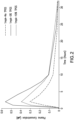
- Figure 2 shows the data comparing the pharmacokinetic (PK) profile when the compound was formulated with 10% w/w TPGS, 5% w/w TPGS, and no TPGS.
- the Cmax for the formulation that did not contain TPGS was measured at about 0.3 ⁇ M.
- the Cmax of the 5% TPGS formulation and the 10% formulation were about 0.6 ⁇ M and 0.4 ⁇ M respectively. See Figure 2 .
- a formulation with 3% active ingredient (API) and 3.75% TPGS was prepared by high shear wet granulation.
- a solution containing 11% w/w TPGS and 15% polyvinylpyrrolidone was sprayed onto approximately 2kg of powder blend containing 3% w/w API.
- Wet granules were dried in a fluid bed dryer until loss on drying is ⁇ 2.5%.
- Dried granules were milled and blended with approximately additional sodium starch glycolate type A and magnesium stearate. Extragranularly added sodium starch glycolate Type A weight was adjusted to maintain 3% w/w of the final blend.
- Magnesium stearate weight was adjusted to maintain 0.5% w/w of the final blend.
- a formulation with 3% active ingredient (API) and 3.75% TPGS was prepared by high shear wet granulation.
- a solution containing approximately 10% w/w TPGS was sprayed onto approximately 2kg of powder blend containing 3% w/w API.
- Wet granules were dried in a fluid bed dryer until loss on drying is ⁇ 2.5%.
- Dried granules were milled and blended with approximately additional sodium starch glycolate type A and magnesium stearate. Extragranularly added sodium starch glycolate Type A weight was adjusted to maintain 3% w/w of the final blend.
- Magnesium stearate weight was adjusted to maintain 0.5% w/w of the final blend.
- the compound is being evaluated in a masked and randomized proof-of-concept study in dogs with a diagnosis of atopic dermatitis.
- the objective of this study is to evaluate the efficacy and tolerability of the compound against atopic dermatitis in client-owned dogs.
- the compound will be evaluated at two doses and will be compared to a placebo control. Dogs will be dosed orally twice daily for up to 14 days followed by once daily for up to 28 days, or once daily for 28 days, and will be evaluated for pruritus and skin lesions using the Pruritus Visual Analog Scale (PVAS) and Canine Atopic Dermatitis Extent and Severity Index (CADESI-4) scoring tools, respectively.
- PVAS Pruritus Visual Analog Scale
- CADESI-4 Canine Atopic Dermatitis Extent and Severity Index
- the Canine Atopic Dermatitis Extent and Severity Index (CADESI-4) is a severity scale used to grade skin lesions in clinical trials for treatment of dogs with atopic dermatitis (AD). Three lesion types (erythema, lichenification and alopecia/excoriation) are scored from 0 to 3 at each of 20 body sites, for a maximal score of 180, with proposed benchmarks for mild, moderate and severe AD skin lesions of 10, 35 and 60, respectively.
- CADESI-4 leverage, O., Manolis, S., Nuttall, T., Bensignor, E., Griffin, C., Hill, P., for the International Committee on Allergic Diseases of Animals (ICADA).
- ICADA International Committee on Allergic Diseases of Animals
- Pruritus Visual Analog Scale is a visual analog scale that contains features of both the severity of itching and behaviors associated with itching. It is commonly used to determine the severity of pruritus in clinical trials for treatment of dogs with AD.
- PVAS Hill, P.B., Lau, P., and Rybnicek, J. Development of an owner-assessed scale to measure the severity of pruritus in dogs. Vet. Dermatol. 18:301-308, 2007 .
Landscapes
- Health & Medical Sciences (AREA)
- Life Sciences & Earth Sciences (AREA)
- Chemical & Material Sciences (AREA)
- Animal Behavior & Ethology (AREA)
- Veterinary Medicine (AREA)
- Medicinal Chemistry (AREA)
- Public Health (AREA)
- General Health & Medical Sciences (AREA)
- Pharmacology & Pharmacy (AREA)
- Epidemiology (AREA)
- Engineering & Computer Science (AREA)
- Bioinformatics & Cheminformatics (AREA)
- General Chemical & Material Sciences (AREA)
- Organic Chemistry (AREA)
- Nuclear Medicine, Radiotherapy & Molecular Imaging (AREA)
- Chemical Kinetics & Catalysis (AREA)
- Biophysics (AREA)
- Molecular Biology (AREA)
- Dermatology (AREA)
- Inorganic Chemistry (AREA)
- Pain & Pain Management (AREA)
- Rheumatology (AREA)
- Proteomics, Peptides & Aminoacids (AREA)
- Medicinal Preparation (AREA)
- Pharmaceuticals Containing Other Organic And Inorganic Compounds (AREA)
Description
-
WO 2018/108969 discloses compounds of formula I which are selective Janus kinase (JAK) inhibitors, and as such are useful for the treatment of JAK-mediated diseases such as atopic dermatitis, arthritis, and cancer. Specifically, 1-[(3R,4S)-4-cyanotetrahydropyran-3-yl]-3-[(2-fluoro-6-methoxy-4-pyridyl)amino]pyrazole-4-carboxamide (I) is disclosed.
- In a cIL-31 induced pruritus study, the compound of Formula (I) significantly suppressed pruritus with respect to placebo and in a similar magnitude to oclacitinib (Apoquel®). Apoquel® is a commercially available product for the treatment of atopic dermatitis in dogs. Also disclosed are methods of treating atopic dermatitis by oral administration of compound (I).
-
WO 2013/041042 discloses pyrazole carboxamides as Janus kinase inhibitors that are useful for the treatment of rheumatoid arthritis, asthma, chronic obstructive pulmonary disease (COPD) and cancer. The compounds of this disclosure are of the following formula.
- Atopic dermatitis (AD) is a relapsing pruritic and chronic inflammatory skin disease, that is characterized by immune system dysregulation and epidermal barrier abnormalities in humans. The pathological and immunological attributes of atopic dermatitis have been the subject of extensive investigations [reviewed in Rahman et al. Inflammation & Allergy-drug target 10:486-496 (2011) and Harskamp et al., Seminar in Cutaneous Medicine and Surgery 32:132-139 (2013)]. Atopic dermatitis is also a common condition in companion animals, especially dogs, where its prevalence has been estimated to be approximately 10-15% of the canine population. The pathogenesis of atopic dermatitis in dogs and cats [reviewed in Nuttall et al., Veterinary Records 172(8):201-207 (2013)] shows significant similarities to that of atopic dermatitis in man including skin infiltration by a variety of immune cells and CD4+ Th2 polarized cytokine milieu including the preponderance of IL-4, IL-13, and IL-31. In addition, IL-22 has been implicated in the exaggerated epithelial proliferation leading to epidermal hyperplasia that is characteristic of atopic dermatitis.
- Applicants have found that the inclusion of the surfactant D-α-Tocopheryl polyethylene glycol 1000 succinate (TPGS) in formulations of the compound of Formula (I) resulted in improved bioavailability of the compound of Formula (I) when compared to formulations without TPGS.
- An embodiment of the invention is a pharmaceutical composition comprising a pharmaceutically effective amount of 1-[(3R,4S)-4-cyanotetrahydropyran-3-yl]-3-[(2-fluoro-6-methoxy-4-pyridyl)amino]pyrazole-4-carboxamide and a surfactant of an ester of a tocopherol, a polyethylene glycol (PEG) and a dicarboxylic acid..
- Another embodiment of the invention is a method of treating atopic dermatitis comprising orally administering to an animal in need of an effective amount of the above pharmaceutical composition.
-
-
Figure 1 - Pharmacokinetic (PK) study using a sodium lauryl sulfate (SLS) surfactant -
Figure 2 - PK study using a TPGS surfactant -
Figure 3 - PK study comparing 5% w/w to 2.5% w/w and to 1% w/w TPGS - Applicants have developed a formulation of 1-[(3R,4S)-4-cyanotetrahydropyran-3-yl]-3-[(2-fluoro-6-methoxy-4-pyridyl)amino]pyrazole-4-carboxamide, the compound of Formula (I)

- The compound of Formula (I) is a selective Janus kinase (JAK) inhibitor. However, the compound of Formula (I) is a poorly water soluble compound. Generally, poor water solubility of a pharmaceutically active agent results in poor oral bioavailability in dogs, and hence, in poor biological efficacy of the agent. Applicants have found now that the inclusion of a surfactant of an ester of a tocopherol, a polyethylene glycol (PEG) and a dicarboxylic acid in a solid pharmaceutical composition of the compound of Formula I resulted in a formulation that afforded an improved bioavailability of the compound after oral administration to an animal compared to formulations with no surfactants.
- The invention as defined in the appended claims is a solid pharmaceutical composition comprising
- a) a pharmaceutically effective amount of the compound of Formula (I)

- b) a pharmaceutically acceptable carrier wherein the carrier comprises a surfactant which is D-a-Tocopheryl polyethylene glycol 1000 succinate (TPGS) and the amount of TGPS in the composition is between 1.0% and 5.0% w/w.
- In an embodiment, the compound of Formula (I) is present in a crystalline form.
- In an embodiment, the amount of the compound of Formula (I) in the composition is between about 0.5 and about 10 % or is between about 1.0 and about 5.0 % or is about 2% (w/w).
- Tocopherols are a class of organic chemical compounds many of which have vitamin E activity. There are four tocopherol forms (α (alpha), β (beta), γ (gamma), and δ (delta) (see below). All feature a chromane ring, with a hydroxyl group and a hydrophobic side chain and differ by the number and position of methyl groups on the chromanol ring.
Form Structure alpha-Tocopherol 
beta-Tocopherol 
gamma-Tocopherol 
delta-Tocopherol 
- In the invention, the tocopherol is D-alpha- tocopherol. Polyethylene glycol is a polyether compound with a structure of H-(O-CH2-CH2)n-OH. The molecular weight of the PEG is preferably in the range of 100 to 10,000 Da. In an embodiment, the molecular weight of the PEG is 1000 Da.
- Dicarboxylic acid is an organic compound containing two carboxyl functional groups (-COOH). The general molecular formula for dicarboxylic acids can be written as HO2C-R-CO2H, where R can be aliphatic or aromatic. The dicarboxylic acid is preferably C2-C20 alkyl. In an embodiment, the dicarboxylic acid is succinic acid, a C4 alkyl dicarboxylic acid.
- In the invention, ther surfactant is surfactant is D-α-Tocopheryl polyethylene glycol 1000 succinate (TPGS or Vitamin E TPGS). TPGS is formed by the esterification of polyethylene glycol 1000 and Vitamin E succinate. Accordingly, in TPGS the molecular weight of the PEG is 1000 Da, the tocopherol is alpha tocopherol and the dicarboxylic acid is succinic acid.
- In the invention, the amount of TPGS in the composition is between about 0.5 and about 10 % or is between about 1.0 and about 5.0 % or is between about 1.0% and about 2.5% (w/w).
- In an embodiment, the weight ratio in the composition of the compound of Formula (I) and the TPGS is from about 0.1:1 to about 10:1, preferably about 0.5:1 to about 4:1. The pharmaceutical composition may further contain one or more lubricants. Lubricants reduce the friction between the formed tablet and the wall of the die used to form the tablet, thus making it easier for the tablet to be removed from the die. Examples of lubricants are magnesium stearate, talc, colloidal silica, and sodium stearyl fumarate. In an embodiment, the lubricant is magnesium stearate.
- The pharmaceutical composition may further contain one or more glidants. Glidants are used to improve flowability. In an embodiment, the glidant is colloidal silica, talc or mixtures thereof.
- The pharmaceutical composition may further contain one or more fillers/ compression aids. Fillers/ compression aids are used to increase the bulk or volume of a pharmaceutical dosage form that has a low dose active ingredient and to increase the mechanical strength of a dosage form such as a tablet. Examples of fillers are microcrystalline cellulose (MCC) (Avicel PH102), lactose anhydrous, lactose monohydrate (Fast Flo 316), starch, polyols (e.g. sorbitol, mannitol, maltitol), maltodextrin, dextrose, calcium phosphate, and calcium sulphate. In an embodiment, the filler is microcrystalline cellulose, lactose monohydrate cellulose or mixtures thereof.
- The pharmaceutical composition may further contain one or more disintegrants. Disintegrants help to make a tablet break into smaller pieces once in contact with a liquid. Examples of disintegrants are sodium starch glycolate, croscarmellose sodium, and crospovidone. In an embodiment, the disintegrant is sodium starch glycolate (Type A).
- The pharmaceutical composition may further contain one or more binders. Binders are used to increase the mechanical strength of a dosage form such as a tablet. Binders are also used to aid granule formation in the (wet or dry) granulation process. Formation of granules increase (drug) content uniformity and flowability of the final blend. Examples of binders are PVP, hydroxypropyl methylcellulose (HPMC) and hydroxypropyl celluose (HPC). In an embodiment, the binder is hydroxypropyl celluose (HPC).
- In an embodiment of the invention, the formulation is of the following composition:
Ingredient % (w/w) Purpose Active ingredient 2 Active Microcrystalline Cellulose 67.5 Filler Lactose Monohydrate 22 Filler TPGS 2.5 Surfactant Sodium Starch Glycolate (Type A) 5 Disintegrant Magnesium Stearate 1 Lubricant - In alternative embodiments of the invention, the concentration of the components of the formulation may vary as indicated below:
Ingredient % (w/w) Purpose Active ingredient 0.5-10 Active Microcrystalline Cellulose 0-95 Filler Lactose Monohydrate 0-95 Filler TPGS 0.5-10 Surfactant Sodium Starch Glycolate (Type A) 0-10 Disintegrant Hydroxypropylcellulose 0-5 Binder Magnesium Stearate 0.25-1.5 Lubricant - In embodiment, the combined w/w percent of microcrystalline cellulose and lactose monohydrate must be at least 60%.
- In embodiment, the pharmaceutical composition is a solid, preferably a capsule or a tablet.
- TPGS is a waxy material and can be challenging to add to a powder blend. In practice, TPGS can be added to powder blends as either a molten liquid or aqueous solution in either a high shear granulator or hot melt extruder.
- In a wet granulation process, smaller particles are bound together to form granules using a granulating fluid such as water or binder solutions. Examples of wet granulation processes are fluid bed granulation and high shear wet granulation.
- In a high shear granulator, an aqueous TPGS solution or TPGS-binder solution is sprayed onto the solid components in the formulation with exception of the lubricant. The wet mass is subsequently dried for removal of water to obtain dry granules. The granules are milled and blended with a lubricant. Extragranular excipients such as filler and disintegrant may also be added prior to lubrication. The resulted lubricated blend is compressed into tablets.
- Alternatively, TPGS may be heated to a molten state and be incorporated in the formulation using a high shear granulator or hot melt extruder. Granules composed of active, filler, disintegrant and TPGS will be cooled to room temperature but no water removal is necessary. Similar to wet granulation, the granules may then be milled and blended with a lubricant prior to compression. Extragranular excipients such as filler and disintegrant may also be added prior to lubrication.
- Granules may be dried in fluid bed or tray dried independent of scale. Fluid bed drying would be more efficient than tray drying. The use of either method is contemplated in the context of preparing the inventive pharmaceutical compositions.
- TPGS solution concentration is determined based on the TPGS concentration desired in the final pharmaceutical composition. The lower the desired concentration of TPGS in the final formulation, the more dilute the TPGS solution can be. The concentration of the TPGS solution is determined based on the desired TPGS content in the formulation and the amount of granulation liquid required to produce granules with desired attributes for downstream processing.
- An embodiment of the invention is a process to make the pharmaceutical composition comprising
- i) forming a powder blend of the compound of Formula (I) with a filler and a disintegrant;
- ii) spraying the dry powder with an aqueous TPGS solution and mixing to combine the solution with the powder;
- iii) drying the product of step ii) to produce granules;
- iv) size reducing the granules;
- v) lubricating the product of step iv); and
- vi) compressing the product of step v) into a tablet to produce the pharmaceutical composition.
- In an embodiment, the forming of the powder blend of step i) or the mixing of step ii) are accomplished with a high shear granulator.
- An alternative embodiment of the invention is process to make the pharmaceutical composition comprising
- i) Forming a powder blend of the compound of Formula (I) with filler and disintegrant and heating this powder blend;
- ii) melting TPGS and combining it with the heated powder blend of step i);
- iii) cooling the product of step ii) to produce granules; and
- iv) size reducing the granules of step iii)
- v) lubricating the product of step iv); and
- vi) compressing the product of step v) into a tablet to produce the pharmaceutical composition.
- In an embodiment, the compound of Formula (I) is further combined with a binder in step i).
- In an embodiment, the filler is microcrystalline cellulose, a lactose or mixtures thereof.
- In an embodiment, the disintegrant is sodium starch glycolate.
- In an embodiment, the lubricant is magnesium stearate.
- In an embodiment, the binder is hydroxypropylene cellulose.
- The references to the methods of treatment of this description are to be interpreted as references to compounds, pharmaceutical compositions and medicaments of the present invention for use in those methods.
- An embodiment of the invention is a method of treating atopic dermatitis comprising administering to an animal in need thereof, an effective amount of the pharmaceutical composition of the compound of Formula (I)

- A method of treating atopic dermatitis comprising administering to an animal in need thereof the pharmaceutical composition of the compound of Formula (I)

- Formula (I), or salt or solvate thereof; and a pharmaceutically acceptable carrier wherein the carrier comprises a surfactant which is an ester of tocopherol, polyethylene glycol (PEG) and a dicarboxylic acid, wherein the effective amount of the compound of Formula (I) is between about 0.1 and about 2.0 mg/kg body weight.
- The pharmaceutical composition is administered orally.
- In an embodiment, the animal to be treated is a companion animal mammal. In another embodiment, the companion animal is a dog, a cat or a horse. In another embodiment, the companion animal is a dog.
- In an embodiment of the invention, the dose of the active ingredient administered to the animal is from about 0.1 mg/kg to about 2.0 mg/kg, about 0.2 to about 0.8 mg/kg, about 0.3 to about 0.7 mg/kg, about 0.5 mg/kg, about 1.0 mg/kg.
- In an embodiment, the pharmaceutical composition is administered once a day for 28 days.
- In another embodiment, the pharmaceutical composition is administered twice a day for 14 days, followed by once a day for 14 days.
- In other embodiment, the administration of the pharmaceutical composition is administered daily beyond the aforementioned dosing regimens as long as medically necessary including for the life of the animal.
- In an embodiment, the pharmaceutical composition is administered once a day as long as medically necessary including for the life of the animal.
- In an embodiment, the pharmaceutical composition is administered twice a day for up to 14 days, followed by once a day as long as medically necessary including for the life of the animal.
- In an embodiment, the pharmaceutical composition is administered twice a day for one day, two days, three days, four days, five days, six days, seven days, eight days, nine days, ten days, eleven days, twelve days or thirteen days, followed by once a day as long as medically necessary including for the life of the animal.
- The pharmaceutical composition of the compound of Formula (I) and TPGS may be administered in combination with antihistamines, antibiotics, antipruritics, and ceramides. These combinations may be administered simultaneously or sequentially.
- To increase solubility of the compound and promote increase bioavailability, a number of surfactants were screened. The table below lists the solubilities of 1-[(3R,4S)-4-cyanotetrahydropyran-3-yl]-3-[(2-fluoro-6-methoxy-4-pyridyl)amino]pyrazole-4-carboxamide in the tested surfactant solutions.
Surfactant Solution Solubility (mg/mL) Water 0.008 1% sodium lauryl sulfate (SLS) 0.1952 1% polysorbate(Tween 80) 0.0503 10% Poloxamer 124 0.1081 10% Poloxamer 188 0.1091 10% polyvinylpyrrolidone (PVP) 0.1327 10% hydrogenated castor oil (RH40) 0.4886 10% polyoxyethylated 12-hydroxystearic acid (Solutol HS 15) 0.4595 30% HS15 1.4216 10% P407 0.2166 1% D-α-Tocopheryl polyethylene glycol 1000 succinate (TPGS) 0.099 10% ELP 0.5414 Oleoyl macrogol-6 / polyoxyl-6 glycerides (Labrafil M1944CS) 0.8072 - Due to the strong solubilization of 1-[(3R,4S)-4-cyanotetrahydropyran-3-yl]-3-[(2-fluoro-6-methoxy-4-pyridyl)amino]pyrazole-4-carboxamide by SLS and its ability to be easily incorporated into powder blends, a pharmacokinetic (PK) study was conducted with 3% w/w SLS added to the formulation. Compositions of the formulations tested containing 1% active ingredient are given below. Formulations tested containing 0.2% active ingredient were also prepared.
-
Ingredient % (w/w) Purpose Active ingredient 1 Active Microcrystalline Cellulose 45 Filler Lactose Monohydrate 45 Filler Sodium Lauryl Sulfate 3 Surfactant Sodium Starch Glycolate (Type A) 5 Disintegrant Magnesium Stearate 1 Lubricant -
Ingredient % (w/w) Purpose Active ingredient 1 Active Microcrystalline Cellulose 48 Filler Lactose Monohydrate 45 Filler Sodium Lauryl Sulfate 0 Surfactant Sodium Starch Glycolate (Type A) 5 Disintegrant Magnesium Stearate 1 Lubricant - The results in
Figure 1 demonstrate that the addition of SLS was not successful in promoting increased bioavailabilty of the compound at two different doses despite the favorable in vitro solubility. The bioavailability of the formulations containing SLS were not improved when compared to the bioavailability of the formulations not containing SLS. For the SLS containing formulations and the non SLS formulations, the Cmax were less than 0.1 µM for the 0.2 mg/kg dose of the compound of Formula (I) and around 0.26 µM for the 1.0 mg/kg dose of the compound of Formula (I). SeeFigure 1 . No significant difference was show between the SLS formulations and the non-SLS formulations. - A formulation with 4% active ingredient (API) and 5% TPGS was prepared by wet granulation. 34g of 15% w/w TPGS aqueous solution sprayed onto approximately 90g of powder blend containing 4g of API. Water was removed by tray drying in a 40°C oven overnight. Granules were milled and blended with approximately 1g of magnesium stearate. Magnesium stearate weight was adjusted maintain 1% w/w of the final blend.
Ingredient % (w/w) Active ingredient 4 Avicel PH101 (Microcrystalline cellulose-filler) 63.75 Granulac 200 (lactose monohydrate-filler) 21.25 TPGS 5 Sodium Starch Glycolate (Type A) (Disintegrant) 5 Magnesium Stearate (Lubricant) 1 - The following TPGS formulations were prepared as above. When a binder was added, the MCC and lactose concentration were decreased so that all components compositions added up 99%. MCC to lactose ratio was maintained at a 3:1 weight ratio. Mg stearate was added after granulation to obtain a 1% w/w concentration.
- TPGS is pre-melted in an oven. All remaining solids in the formulation with exception of magnesium stearate was preheated. 2.5g of molten TPGS were added to approximately 95g of powder blend containing 2g of API. Air cooled to RT on a tray under ambient conditions. The granules were milled and then blended with approximately 1g of magnesium stearate. Magnesium stearate weight was adjusted to maintain 1% w/w of the final blend.
- TPGS was assessed as a surfactant to promote increased bioavailability of the active ingredient, 1-[(3R,4S)-4-cyanotetrahydropyran-3-yl]-3-[(2-fluoro-6-methoxy-4-pyridyl)amino]pyrazole-4-carboxamide in dogs. Formulations were prepared as described above. The compositions of the formulation is given below:
Ingredient % (w/w) Active ingredient 0.5-10 Microcrystalline cellulose 67.5 Lactose monohydrate 22 TPGS 2.5 Sodium Starch Glycolate (Type A) 5 Magnesium Stearate 1 - The percentage of the microcrystalline cellulose and lactose monohydrate were adjusted slightly to accommodate the change in concentration of the active ingredient.
- The bioavailability of the compound of Formula (I) in dogs was assessed for range of TPGS formulations from 1% to 10% TPGS w/w. All formulations were dosed at 1 mg/kg of body weight.
Figure 2 shows the data comparing the pharmacokinetic (PK) profile when the compound was formulated with 10% w/w TPGS, 5% w/w TPGS, and no TPGS. The Cmax for the formulation that did not contain TPGS was measured at about 0.3 µM. The Cmax of the 5% TPGS formulation and the 10% formulation were about 0.6 µM and 0.4 µM respectively. SeeFigure 2 . - These results demonstrated that while inclusion of TPGS is important for promoting bioavailability, a reduced concentration of TPGS may be beneficial. Therefore, a follow-up study comparing 5% w/w to 2.5% w/w and to 1% w/w TPGS was conducted. The results are shown in
Figure 3 . In this study, the Cmax of the formulation that did not contain TPGS was measured at about 0.2 µM. The Cmax of the 1%, 2.5% and 5% TPGS formulations were about 0.3 µM, 0.3 µM and 0.25 µM respectively. SeeFigure 3 . Again, here the data demonstrated that a lower concentration of TPGS improved bioavailability. Due to variations between study sites, it is not possible to directly compare the data ofFigures 2 and3 to each other or to the data ofFigure 1 . However, in both TPGS studies, the TPGS containing formulations had greater bioavailability than the formulations with no TPGS. This was unexpected given the results of the bioavailability studies with SLS where despite its much greater solubility for the compound of Formula (I), the SLS formulations produced no improvement of bioavailability of the compound of Formula (I) over the formulations with no SLS. At 1% concentration, SLS has a solubility of the compound of Formula (I) of 0.1952 mg/mL and at 1% concentration, TPGS has a solubility of the compound of Formula (I) of 0.099. mg/mL - A formulation with 3% active ingredient (API) and 3.75% TPGS was prepared by high shear wet granulation. A solution containing 11% w/w TPGS and 15% polyvinylpyrrolidone was sprayed onto approximately 2kg of powder blend containing 3% w/w API. Wet granules were dried in a fluid bed dryer until loss on drying is ≤ 2.5%. Dried granules were milled and blended with approximately additional sodium starch glycolate type A and magnesium stearate. Extragranularly added sodium starch glycolate Type A weight was adjusted to maintain 3% w/w of the final blend. Magnesium stearate weight was adjusted to maintain 0.5% w/w of the final blend.
Ingredient % (w/w) Purpose Active ingredient 3.00 Active Microcrystalline Cellulose 53.17 Filler Lactose Monohydrate 26.58 Filler TPGS 3.75 Surfactant Sodium Starch Glycolate (Type A) 8.00 Disintegrant Polyvinylpyrrolidone 5.00 Binder Magnesium Stearate 0.50 Lubricant - A formulation with 3% active ingredient (API) and 3.75% TPGS was prepared by high shear wet granulation. A solution containing approximately 10% w/w TPGS was sprayed onto approximately 2kg of powder blend containing 3% w/w API. Wet granules were dried in a fluid bed dryer until loss on drying is ≤ 2.5%. Dried granules were milled and blended with approximately additional sodium starch glycolate type A and magnesium stearate. Extragranularly added sodium starch glycolate Type A weight was adjusted to maintain 3% w/w of the final blend. Magnesium stearate weight was adjusted to maintain 0.5% w/w of the final blend.
Ingredient % (w/w) Purpose Active ingredient 3.00 Active Microcrystalline Cellulose 54.17 Filler Lactose Monohydrate 27.08 Filler TPGS 3.75 Surfactant Sodium Starch Glycolate (Type A) 8.00 Disintegrant Hydroxypropyl cellulose 3.00 Binder Magnesium Stearate 0.50 Lubricant - The compound is being evaluated in a masked and randomized proof-of-concept study in dogs with a diagnosis of atopic dermatitis. The objective of this study is to evaluate the efficacy and tolerability of the compound against atopic dermatitis in client-owned dogs. The compound will be evaluated at two doses and will be compared to a placebo control. Dogs will be dosed orally twice daily for up to 14 days followed by once daily for up to 28 days, or once daily for 28 days, and will be evaluated for pruritus and skin lesions using the Pruritus Visual Analog Scale (PVAS) and Canine Atopic Dermatitis Extent and Severity Index (CADESI-4) scoring tools, respectively.
- The Canine Atopic Dermatitis Extent and Severity Index (CADESI-4) is a severity scale used to grade skin lesions in clinical trials for treatment of dogs with atopic dermatitis (AD). Three lesion types (erythema, lichenification and alopecia/excoriation) are scored from 0 to 3 at each of 20 body sites, for a maximal score of 180, with proposed benchmarks for mild, moderate and severe AD skin lesions of 10, 35 and 60, respectively. CADESI-4: Thierry, O., Manolis, S., Nuttall, T., Bensignor, E., Griffin, C., Hill, P., for the International Committee on Allergic Diseases of Animals (ICADA). Validation of the Canine Atopic Dermatitis Extent and Severity Index (CADESI)-4, a simplified severity scale for assessing skin lesions of atopic dermatitis in dogs. Vet, Dermatol. 25:77-e25, 2014
- The Pruritus Visual Analog Scale (PVAS) is a visual analog scale that contains features of both the severity of itching and behaviors associated with itching. It is commonly used to determine the severity of pruritus in clinical trials for treatment of dogs with AD. PVAS: Hill, P.B., Lau, P., and Rybnicek, J. Development of an owner-assessed scale to measure the severity of pruritus in dogs. Vet. Dermatol. 18:301-308, 2007.
Claims (17)
- A solid pharmaceutical composition comprisinga) a pharmaceutically effective amount of the compound of Formula (I)
 b) a pharmaceutically acceptable carrier wherein the carrier comprises a surfactant which is d-α-Tocopheryl polyethylene glycol 1000 succinate (TPGS); and the amount of TPGS in the composition is between 1.0 % and 5.0 % w/w.
 - The pharmaceutical composition of claim 1, wherein the compound of Formula (I) is present in a crystalline form.
- The pharmaceutical composition of any one of claims 1-2, wherein the amount of the compound of Formula (I) in the composition is between 0.5 and 10 % or is between 1.0 and 5.0 % or is 2% (w/w).
- The pharmaceutical composition of any one of claims 1-3, wherein the amount of TPGS in the composition is between 1.0% and 2.5% (w/w).
- The pharmaceutical composition of any one of claims 1-4, further comprising one or more excipients selected from, a filler, a lubricant, a binder and a disintegrant.
- A pharmaceutical composition of any one of claims 1-5 for use in treating atopic dermatitis in an animal.
- The pharmaceutical composition for use according to claim 6, wherein the effective amount of the compound of Formula (I) is between 0.1 and 2.0 mg/kg body weight.
- The pharmaceutical composition for use according to any one of claims 6-7, wherein the pharmaceutical composition is formulated for oral administration.
- The pharmaceutical composition for use according to any one of claims 6-8, wherein the animal is a dog.
- The pharmaceutical composition for use according to any one of claims 6-9, wherein the composition is administered once per day.
- The pharmaceutical composition for use according to any one of claims 6-10, wherein the composition is administered with food.
- The pharmaceutical composition for use according to_any one of claims 6-9 and 11, wherein the composition is administered twice a day for 14 days and then once a day for 14 days.
- The pharmaceutical composition for use according to claim 10, wherein the composition is administered once a day for 28 days.
- A process to make the pharmaceutical composition of any one of claims 1-5 comprisingi) forming a powder blend of the compound of Formula (I) with a filler and a disintegrant;ii) spraying the dry powder with an aqueous TPGS solution and mixing to combine the solution with the powder;iii) drying the product of step ii) to produce granules;iv) size reducing the granules;v) lubricating the product of step iv); andvi) compressing the product of step v) into a tablet to produce the pharmaceutical composition.
- The process of claim 14, wherein the forming of the powder blend of step i) or the mixing of step ii) are accomplished with a high shear granulator.
- A process to make the pharmaceutical composition of any one of claims 1-5 comprisingi) Forming a powder blend of the compound of Formula (I) with filler and disintegrant and heating this powder blend;ii) melting TPGS and combining it with the heated powder blend of step i);iii) cooling the product of step ii) to produce granules; andiv) size reducing the granules of step iii)v) lubricating the product of step iv); andvi) compressing the product of step v) into a tablet to produce the pharmaceutical composition.
- The process of any one of claims 14-16, wherein the compound of Formula (I) is further combined with a binder in step i).
Priority Applications (1)
| Application Number | Priority Date | Filing Date | Title |
|---|---|---|---|
| EP23195988.3A EP4282475A3 (en) | 2019-12-20 | 2020-12-18 | A pyrazole pharmaceutical composition |
Applications Claiming Priority (2)
| Application Number | Priority Date | Filing Date | Title |
|---|---|---|---|
| US201962951185P | 2019-12-20 | 2019-12-20 | |
| PCT/EP2020/086944 WO2021123108A1 (en) | 2019-12-20 | 2020-12-18 | A pyrazole pharmaceutical composition |
Related Child Applications (2)
| Application Number | Title | Priority Date | Filing Date |
|---|---|---|---|
| EP23195988.3A Division EP4282475A3 (en) | 2019-12-20 | 2020-12-18 | A pyrazole pharmaceutical composition |
| EP23195988.3A Division-Into EP4282475A3 (en) | 2019-12-20 | 2020-12-18 | A pyrazole pharmaceutical composition |
Publications (2)
| Publication Number | Publication Date |
|---|---|
| EP4076404A1 EP4076404A1 (en) | 2022-10-26 |
| EP4076404B1 true EP4076404B1 (en) | 2023-11-15 |
Family
ID=74184584
Family Applications (2)
| Application Number | Title | Priority Date | Filing Date |
|---|---|---|---|
| EP20841906.9A Active EP4076404B1 (en) | 2019-12-20 | 2020-12-18 | A pyrazole pharmaceutical composition |
| EP23195988.3A Pending EP4282475A3 (en) | 2019-12-20 | 2020-12-18 | A pyrazole pharmaceutical composition |
Family Applications After (1)
| Application Number | Title | Priority Date | Filing Date |
|---|---|---|---|
| EP23195988.3A Pending EP4282475A3 (en) | 2019-12-20 | 2020-12-18 | A pyrazole pharmaceutical composition |
Country Status (15)
| Country | Link |
|---|---|
| US (1) | US12564581B2 (en) |
| EP (2) | EP4076404B1 (en) |
| JP (1) | JP7675724B2 (en) |
| KR (1) | KR20220119024A (en) |
| CN (1) | CN114845702B (en) |
| AU (1) | AU2020409588A1 (en) |
| BR (1) | BR112022011786A2 (en) |
| CA (1) | CA3163925A1 (en) |
| DK (1) | DK4076404T3 (en) |
| ES (1) | ES2967892T3 (en) |
| FI (1) | FI4076404T3 (en) |
| MX (1) | MX2022007581A (en) |
| PL (1) | PL4076404T3 (en) |
| PT (1) | PT4076404T (en) |
| WO (1) | WO2021123108A1 (en) |
Families Citing this family (2)
| Publication number | Priority date | Publication date | Assignee | Title |
|---|---|---|---|---|
| CA3242449A1 (en) * | 2021-12-24 | 2023-06-29 | Intervet International B.V. | Use of aminopyrazole compounds |
| CN117159483A (en) * | 2023-05-24 | 2023-12-05 | 燃点(南京)生物医药科技有限公司 | Preparation method of trazodone hydrochloride sustained release tablet |
Family Cites Families (14)
| Publication number | Priority date | Publication date | Assignee | Title |
|---|---|---|---|---|
| JP2001523221A (en) | 1996-09-01 | 2001-11-20 | ファーモス コーポレイション | Solid co-precipitates for enhanced bioavailability of lipophilic substances |
| US5891469A (en) | 1997-04-02 | 1999-04-06 | Pharmos Corporation | Solid Coprecipitates for enhanced bioavailability of lipophilic substances |
| US20060003002A1 (en) | 2003-11-03 | 2006-01-05 | Lipocine, Inc. | Pharmaceutical compositions with synchronized solubilizer release |
| WO2006036614A2 (en) | 2004-09-24 | 2006-04-06 | Boehringer Ingelheim Pharmaceuticals, Inc. | A new class of surfactant-like materials comprising vitamin e tpgs and a water soluble polymer |
| WO2006039268A2 (en) | 2004-09-30 | 2006-04-13 | Eastman Chemical Company | Pharmaceutical formulations containing vitamin e tpgs molecules that solubilize lipophilic drugs without significant efflux inhibition, and use of such formulations |
| WO2012060847A1 (en) * | 2010-11-07 | 2012-05-10 | Targegen, Inc. | Compositions and methods for treating myelofibrosis |
| KR20140010009A (en) * | 2010-12-03 | 2014-01-23 | 노파르티스 아게 | Pharmaceutical compositions |
| EP2685964A1 (en) * | 2011-03-18 | 2014-01-22 | AbbVie Inc. | Formulations of phenyl uracil compounds |
| EP2758389B1 (en) | 2011-09-22 | 2017-06-07 | Merck Sharp & Dohme Corp. | Pyrazole carboxamides as janus kinase inhibitors |
| CN102499929B (en) | 2011-09-29 | 2014-10-08 | 福建省微生物研究所 | 42-(Dimethylphosphinate)rapamycin solid composition and coating method thereof |
| US20150141351A1 (en) * | 2013-11-18 | 2015-05-21 | AbbVie Deutschland GmbH & Co. KG | Solid Pharmaceutical Compositions |
| CN110179801B (en) * | 2014-04-11 | 2021-08-06 | 上海宣泰医药科技股份有限公司 | Posaconazole medicine composition, preparation method and medicine preparation thereof |
| AU2017376398B2 (en) | 2016-12-14 | 2021-07-15 | Intervet International B.V. | Aminopyrazoles as selective janus kinase inhibitors |
| US20210361565A1 (en) * | 2017-12-21 | 2021-11-25 | Intervet Inc. | Oral Pharmaceutical Composition of an NK-1 Antagonist |
-
2020
- 2020-12-18 JP JP2022537139A patent/JP7675724B2/en active Active
- 2020-12-18 CN CN202080088383.6A patent/CN114845702B/en active Active
- 2020-12-18 FI FIEP20841906.9T patent/FI4076404T3/en active
- 2020-12-18 DK DK20841906.9T patent/DK4076404T3/en active
- 2020-12-18 BR BR112022011786A patent/BR112022011786A2/en unknown
- 2020-12-18 CA CA3163925A patent/CA3163925A1/en active Pending
- 2020-12-18 WO PCT/EP2020/086944 patent/WO2021123108A1/en not_active Ceased
- 2020-12-18 AU AU2020409588A patent/AU2020409588A1/en active Pending
- 2020-12-18 US US17/785,671 patent/US12564581B2/en active Active
- 2020-12-18 ES ES20841906T patent/ES2967892T3/en active Active
- 2020-12-18 MX MX2022007581A patent/MX2022007581A/en unknown
- 2020-12-18 PL PL20841906.9T patent/PL4076404T3/en unknown
- 2020-12-18 EP EP20841906.9A patent/EP4076404B1/en active Active
- 2020-12-18 KR KR1020227020362A patent/KR20220119024A/en active Pending
- 2020-12-18 EP EP23195988.3A patent/EP4282475A3/en active Pending
- 2020-12-18 PT PT208419069T patent/PT4076404T/en unknown
Also Published As
| Publication number | Publication date |
|---|---|
| CA3163925A1 (en) | 2021-06-24 |
| WO2021123108A1 (en) | 2021-06-24 |
| DK4076404T3 (en) | 2024-01-22 |
| PT4076404T (en) | 2024-01-12 |
| EP4282475A3 (en) | 2024-02-28 |
| EP4282475A2 (en) | 2023-11-29 |
| JP2023506921A (en) | 2023-02-20 |
| CN114845702B (en) | 2024-03-15 |
| EP4076404A1 (en) | 2022-10-26 |
| BR112022011786A2 (en) | 2022-08-30 |
| US12564581B2 (en) | 2026-03-03 |
| KR20220119024A (en) | 2022-08-26 |
| MX2022007581A (en) | 2022-07-19 |
| FI4076404T3 (en) | 2024-01-31 |
| JP7675724B2 (en) | 2025-05-13 |
| CN114845702A (en) | 2022-08-02 |
| ES2967892T3 (en) | 2024-05-06 |
| US20230070369A1 (en) | 2023-03-09 |
| AU2020409588A1 (en) | 2022-06-09 |
| PL4076404T3 (en) | 2024-02-19 |
Similar Documents
| Publication | Publication Date | Title |
|---|---|---|
| US10220042B2 (en) | Modified release preparations containing oxcarbazepine and derivatives thereof | |
| US12564581B2 (en) | Pyrazole pharmaceutical composition | |
| EP2359816A1 (en) | Aripiprazole formulations | |
| HK40101377A (en) | A pyrazole pharmaceutical composition | |
| RU2829944C1 (en) | Pharmaceutical composition of pyrazole | |
| US20140148507A1 (en) | Pharmaceutical composition and solid galenic form having a high dronedarone content, and method for preparing same | |
| EP4076407B1 (en) | A pharmaceutical composition of a pyrazole compound dispersed in a polymer matrix | |
| BR122024025108A2 (en) | SOLID PHARMACEUTICAL COMPOSITION, PROCESSES FOR PREPARING THE SAME AND USES OF A PYRAZOLE COMPOUND IN THE MANUFACTURE OF THE SAID COMPOSITION FOR TREATMENT OF ATOPIC DERMATITIS | |
| WO2019206472A1 (en) | Tablet compositions comprising abiraterone acetate | |
| CN117979959A (en) | Pharmaceutical composition and preparation method thereof |
Legal Events
| Date | Code | Title | Description |
|---|---|---|---|
| STAA | Information on the status of an ep patent application or granted ep patent |
Free format text: STATUS: UNKNOWN |
|
| STAA | Information on the status of an ep patent application or granted ep patent |
Free format text: STATUS: THE INTERNATIONAL PUBLICATION HAS BEEN MADE |
|
| PUAI | Public reference made under article 153(3) epc to a published international application that has entered the european phase |
Free format text: ORIGINAL CODE: 0009012 |
|
| STAA | Information on the status of an ep patent application or granted ep patent |
Free format text: STATUS: REQUEST FOR EXAMINATION WAS MADE |
|
| 17P | Request for examination filed |
Effective date: 20220720 |
|
| AK | Designated contracting states |
Kind code of ref document: A1 Designated state(s): AL AT BE BG CH CY CZ DE DK EE ES FI FR GB GR HR HU IE IS IT LI LT LU LV MC MK MT NL NO PL PT RO RS SE SI SK SM TR |
|
| DAV | Request for validation of the european patent (deleted) | ||
| DAX | Request for extension of the european patent (deleted) | ||
| GRAP | Despatch of communication of intention to grant a patent |
Free format text: ORIGINAL CODE: EPIDOSNIGR1 |
|
| STAA | Information on the status of an ep patent application or granted ep patent |
Free format text: STATUS: GRANT OF PATENT IS INTENDED |
|
| INTG | Intention to grant announced |
Effective date: 20230414 |
|
| REG | Reference to a national code |
Ref country code: HK Ref legal event code: DE Ref document number: 40082582 Country of ref document: HK |
|
| GRAJ | Information related to disapproval of communication of intention to grant by the applicant or resumption of examination proceedings by the epo deleted |
Free format text: ORIGINAL CODE: EPIDOSDIGR1 |
|
| STAA | Information on the status of an ep patent application or granted ep patent |
Free format text: STATUS: REQUEST FOR EXAMINATION WAS MADE |
|
| GRAP | Despatch of communication of intention to grant a patent |
Free format text: ORIGINAL CODE: EPIDOSNIGR1 |
|
| STAA | Information on the status of an ep patent application or granted ep patent |
Free format text: STATUS: GRANT OF PATENT IS INTENDED |
|
| INTC | Intention to grant announced (deleted) | ||
| INTG | Intention to grant announced |
Effective date: 20230628 |
|
| GRAS | Grant fee paid |
Free format text: ORIGINAL CODE: EPIDOSNIGR3 |
|
| GRAA | (expected) grant |
Free format text: ORIGINAL CODE: 0009210 |
|
| STAA | Information on the status of an ep patent application or granted ep patent |
Free format text: STATUS: THE PATENT HAS BEEN GRANTED |
|
| P01 | Opt-out of the competence of the unified patent court (upc) registered |
Effective date: 20231003 |
|
| AK | Designated contracting states |
Kind code of ref document: B1 Designated state(s): AL AT BE BG CH CY CZ DE DK EE ES FI FR GB GR HR HU IE IS IT LI LT LU LV MC MK MT NL NO PL PT RO RS SE SI SK SM TR |
|
| REG | Reference to a national code |
Ref country code: CH Ref legal event code: EP Ref country code: GB Ref legal event code: FG4D |
|
| REG | Reference to a national code |
Ref country code: DE Ref legal event code: R096 Ref document number: 602020021256 Country of ref document: DE |
|
| REG | Reference to a national code |
Ref country code: IE Ref legal event code: FG4D |
|
| REG | Reference to a national code |
Ref country code: PT Ref legal event code: SC4A Ref document number: 4076404 Country of ref document: PT Date of ref document: 20240112 Kind code of ref document: T Free format text: AVAILABILITY OF NATIONAL TRANSLATION Effective date: 20240104 |
|
| REG | Reference to a national code |
Ref country code: NO Ref legal event code: T2 Effective date: 20231115 |
|
| REG | Reference to a national code |
Ref country code: DK Ref legal event code: T3 Effective date: 20240119 |
|
| REG | Reference to a national code |
Ref country code: FI Ref legal event code: FGE |
|
| REG | Reference to a national code |
Ref country code: NL Ref legal event code: FP |
|
| REG | Reference to a national code |
Ref country code: SE Ref legal event code: TRGR |
|
| REG | Reference to a national code |
Ref country code: LT Ref legal event code: MG9D |
|
| PG25 | Lapsed in a contracting state [announced via postgrant information from national office to epo] |
Ref country code: GR Free format text: LAPSE BECAUSE OF FAILURE TO SUBMIT A TRANSLATION OF THE DESCRIPTION OR TO PAY THE FEE WITHIN THE PRESCRIBED TIME-LIMIT Effective date: 20240216 |
|
| PG25 | Lapsed in a contracting state [announced via postgrant information from national office to epo] |
Ref country code: IS Free format text: LAPSE BECAUSE OF FAILURE TO SUBMIT A TRANSLATION OF THE DESCRIPTION OR TO PAY THE FEE WITHIN THE PRESCRIBED TIME-LIMIT Effective date: 20240315 |
|
| PG25 | Lapsed in a contracting state [announced via postgrant information from national office to epo] |
Ref country code: LT Free format text: LAPSE BECAUSE OF FAILURE TO SUBMIT A TRANSLATION OF THE DESCRIPTION OR TO PAY THE FEE WITHIN THE PRESCRIBED TIME-LIMIT Effective date: 20231115 |
|
| REG | Reference to a national code |
Ref country code: AT Ref legal event code: MK05 Ref document number: 1631133 Country of ref document: AT Kind code of ref document: T Effective date: 20231115 |
|
| PG25 | Lapsed in a contracting state [announced via postgrant information from national office to epo] |
Ref country code: AT Free format text: LAPSE BECAUSE OF FAILURE TO SUBMIT A TRANSLATION OF THE DESCRIPTION OR TO PAY THE FEE WITHIN THE PRESCRIBED TIME-LIMIT Effective date: 20231115 |
|
| PG25 | Lapsed in a contracting state [announced via postgrant information from national office to epo] |
Ref country code: LT Free format text: LAPSE BECAUSE OF FAILURE TO SUBMIT A TRANSLATION OF THE DESCRIPTION OR TO PAY THE FEE WITHIN THE PRESCRIBED TIME-LIMIT Effective date: 20231115 Ref country code: IS Free format text: LAPSE BECAUSE OF FAILURE TO SUBMIT A TRANSLATION OF THE DESCRIPTION OR TO PAY THE FEE WITHIN THE PRESCRIBED TIME-LIMIT Effective date: 20240315 Ref country code: GR Free format text: LAPSE BECAUSE OF FAILURE TO SUBMIT A TRANSLATION OF THE DESCRIPTION OR TO PAY THE FEE WITHIN THE PRESCRIBED TIME-LIMIT Effective date: 20240216 Ref country code: BG Free format text: LAPSE BECAUSE OF FAILURE TO SUBMIT A TRANSLATION OF THE DESCRIPTION OR TO PAY THE FEE WITHIN THE PRESCRIBED TIME-LIMIT Effective date: 20240215 Ref country code: AT Free format text: LAPSE BECAUSE OF FAILURE TO SUBMIT A TRANSLATION OF THE DESCRIPTION OR TO PAY THE FEE WITHIN THE PRESCRIBED TIME-LIMIT Effective date: 20231115 |
|
| REG | Reference to a national code |
Ref country code: ES Ref legal event code: FG2A Ref document number: 2967892 Country of ref document: ES Kind code of ref document: T3 Effective date: 20240506 |
|
| PG25 | Lapsed in a contracting state [announced via postgrant information from national office to epo] |
Ref country code: RS Free format text: LAPSE BECAUSE OF FAILURE TO SUBMIT A TRANSLATION OF THE DESCRIPTION OR TO PAY THE FEE WITHIN THE PRESCRIBED TIME-LIMIT Effective date: 20231115 Ref country code: LV Free format text: LAPSE BECAUSE OF FAILURE TO SUBMIT A TRANSLATION OF THE DESCRIPTION OR TO PAY THE FEE WITHIN THE PRESCRIBED TIME-LIMIT Effective date: 20231115 Ref country code: HR Free format text: LAPSE BECAUSE OF FAILURE TO SUBMIT A TRANSLATION OF THE DESCRIPTION OR TO PAY THE FEE WITHIN THE PRESCRIBED TIME-LIMIT Effective date: 20231115 |
|
| PG25 | Lapsed in a contracting state [announced via postgrant information from national office to epo] |
Ref country code: CZ Free format text: LAPSE BECAUSE OF FAILURE TO SUBMIT A TRANSLATION OF THE DESCRIPTION OR TO PAY THE FEE WITHIN THE PRESCRIBED TIME-LIMIT Effective date: 20231115 |
|
| PG25 | Lapsed in a contracting state [announced via postgrant information from national office to epo] |
Ref country code: SK Free format text: LAPSE BECAUSE OF FAILURE TO SUBMIT A TRANSLATION OF THE DESCRIPTION OR TO PAY THE FEE WITHIN THE PRESCRIBED TIME-LIMIT Effective date: 20231115 |
|
| PG25 | Lapsed in a contracting state [announced via postgrant information from national office to epo] |
Ref country code: SM Free format text: LAPSE BECAUSE OF FAILURE TO SUBMIT A TRANSLATION OF THE DESCRIPTION OR TO PAY THE FEE WITHIN THE PRESCRIBED TIME-LIMIT Effective date: 20231115 Ref country code: SK Free format text: LAPSE BECAUSE OF FAILURE TO SUBMIT A TRANSLATION OF THE DESCRIPTION OR TO PAY THE FEE WITHIN THE PRESCRIBED TIME-LIMIT Effective date: 20231115 Ref country code: RO Free format text: LAPSE BECAUSE OF FAILURE TO SUBMIT A TRANSLATION OF THE DESCRIPTION OR TO PAY THE FEE WITHIN THE PRESCRIBED TIME-LIMIT Effective date: 20231115 Ref country code: IT Free format text: LAPSE BECAUSE OF NON-PAYMENT OF DUE FEES Effective date: 20231218 Ref country code: EE Free format text: LAPSE BECAUSE OF FAILURE TO SUBMIT A TRANSLATION OF THE DESCRIPTION OR TO PAY THE FEE WITHIN THE PRESCRIBED TIME-LIMIT Effective date: 20231115 Ref country code: CZ Free format text: LAPSE BECAUSE OF FAILURE TO SUBMIT A TRANSLATION OF THE DESCRIPTION OR TO PAY THE FEE WITHIN THE PRESCRIBED TIME-LIMIT Effective date: 20231115 |
|
| REG | Reference to a national code |
Ref country code: DE Ref legal event code: R097 Ref document number: 602020021256 Country of ref document: DE |
|
| PG25 | Lapsed in a contracting state [announced via postgrant information from national office to epo] |
Ref country code: LU Free format text: LAPSE BECAUSE OF NON-PAYMENT OF DUE FEES Effective date: 20231218 |
|
| PG25 | Lapsed in a contracting state [announced via postgrant information from national office to epo] |
Ref country code: MC Free format text: LAPSE BECAUSE OF FAILURE TO SUBMIT A TRANSLATION OF THE DESCRIPTION OR TO PAY THE FEE WITHIN THE PRESCRIBED TIME-LIMIT Effective date: 20231115 |
|
| PG25 | Lapsed in a contracting state [announced via postgrant information from national office to epo] |
Ref country code: MC Free format text: LAPSE BECAUSE OF FAILURE TO SUBMIT A TRANSLATION OF THE DESCRIPTION OR TO PAY THE FEE WITHIN THE PRESCRIBED TIME-LIMIT Effective date: 20231115 Ref country code: LU Free format text: LAPSE BECAUSE OF NON-PAYMENT OF DUE FEES Effective date: 20231218 |
|
| PLBE | No opposition filed within time limit |
Free format text: ORIGINAL CODE: 0009261 |
|
| STAA | Information on the status of an ep patent application or granted ep patent |
Free format text: STATUS: NO OPPOSITION FILED WITHIN TIME LIMIT |
|
| 26N | No opposition filed |
Effective date: 20240819 |
|
| PG25 | Lapsed in a contracting state [announced via postgrant information from national office to epo] |
Ref country code: SI Free format text: LAPSE BECAUSE OF FAILURE TO SUBMIT A TRANSLATION OF THE DESCRIPTION OR TO PAY THE FEE WITHIN THE PRESCRIBED TIME-LIMIT Effective date: 20231115 |
|
| PG25 | Lapsed in a contracting state [announced via postgrant information from national office to epo] |
Ref country code: SI Free format text: LAPSE BECAUSE OF FAILURE TO SUBMIT A TRANSLATION OF THE DESCRIPTION OR TO PAY THE FEE WITHIN THE PRESCRIBED TIME-LIMIT Effective date: 20231115 |
|
| PG25 | Lapsed in a contracting state [announced via postgrant information from national office to epo] |
Ref country code: IT Free format text: LAPSE BECAUSE OF NON-PAYMENT OF DUE FEES Effective date: 20231218 |
|
| PGRI | Patent reinstated in contracting state [announced from national office to epo] |
Ref country code: IT Effective date: 20240102 |
|
| PG25 | Lapsed in a contracting state [announced via postgrant information from national office to epo] |
Ref country code: IT Free format text: LAPSE BECAUSE OF NON-PAYMENT OF DUE FEES Effective date: 20231218 |
|
| PGRI | Patent reinstated in contracting state [announced from national office to epo] |
Ref country code: IT Effective date: 20240102 |
|
| PG25 | Lapsed in a contracting state [announced via postgrant information from national office to epo] |
Ref country code: CY Free format text: LAPSE BECAUSE OF FAILURE TO SUBMIT A TRANSLATION OF THE DESCRIPTION OR TO PAY THE FEE WITHIN THE PRESCRIBED TIME-LIMIT; INVALID AB INITIO Effective date: 20201218 |
|
| PG25 | Lapsed in a contracting state [announced via postgrant information from national office to epo] |
Ref country code: HU Free format text: LAPSE BECAUSE OF FAILURE TO SUBMIT A TRANSLATION OF THE DESCRIPTION OR TO PAY THE FEE WITHIN THE PRESCRIBED TIME-LIMIT; INVALID AB INITIO Effective date: 20201218 |
|
| GBPC | Gb: european patent ceased through non-payment of renewal fee |
Effective date: 20241218 |
|
| PGFP | Annual fee paid to national office [announced via postgrant information from national office to epo] |
Ref country code: PL Payment date: 20250915 Year of fee payment: 6 |
|
| PG25 | Lapsed in a contracting state [announced via postgrant information from national office to epo] |
Ref country code: GB Free format text: LAPSE BECAUSE OF NON-PAYMENT OF DUE FEES Effective date: 20241218 |
|
| PGFP | Annual fee paid to national office [announced via postgrant information from national office to epo] |
Ref country code: PT Payment date: 20251125 Year of fee payment: 6 |
|
| PG25 | Lapsed in a contracting state [announced via postgrant information from national office to epo] |
Ref country code: TR Free format text: LAPSE BECAUSE OF FAILURE TO SUBMIT A TRANSLATION OF THE DESCRIPTION OR TO PAY THE FEE WITHIN THE PRESCRIBED TIME-LIMIT Effective date: 20231115 |
|
| PGFP | Annual fee paid to national office [announced via postgrant information from national office to epo] |
Ref country code: NL Payment date: 20251113 Year of fee payment: 6 |
|
| REG | Reference to a national code |
Ref country code: CH Ref legal event code: U11 Free format text: ST27 STATUS EVENT CODE: U-0-0-U10-U11 (AS PROVIDED BY THE NATIONAL OFFICE) Effective date: 20260101 |
|
| PGFP | Annual fee paid to national office [announced via postgrant information from national office to epo] |
Ref country code: DE Payment date: 20251118 Year of fee payment: 6 |
|
| PGFP | Annual fee paid to national office [announced via postgrant information from national office to epo] |
Ref country code: NO Payment date: 20251111 Year of fee payment: 6 |
|
| PGFP | Annual fee paid to national office [announced via postgrant information from national office to epo] |
Ref country code: IT Payment date: 20251211 Year of fee payment: 6 Ref country code: FI Payment date: 20251126 Year of fee payment: 6 Ref country code: DK Payment date: 20251126 Year of fee payment: 6 |
|
| PGFP | Annual fee paid to national office [announced via postgrant information from national office to epo] |
Ref country code: FR Payment date: 20251111 Year of fee payment: 6 |
|
| PGFP | Annual fee paid to national office [announced via postgrant information from national office to epo] |
Ref country code: BE Payment date: 20251114 Year of fee payment: 6 |
|
| PGFP | Annual fee paid to national office [announced via postgrant information from national office to epo] |
Ref country code: SE Payment date: 20251208 Year of fee payment: 6 |
|
| PGFP | Annual fee paid to national office [announced via postgrant information from national office to epo] |
Ref country code: IE Payment date: 20251111 Year of fee payment: 6 |
|
| PGFP | Annual fee paid to national office [announced via postgrant information from national office to epo] |
Ref country code: ES Payment date: 20260120 Year of fee payment: 6 |
|
| PGFP | Annual fee paid to national office [announced via postgrant information from national office to epo] |
Ref country code: CH Payment date: 20260101 Year of fee payment: 6 |