EP4075373A1 - Image processing method and apparatus - Google Patents
Image processing method and apparatus Download PDFInfo
- Publication number
- EP4075373A1 EP4075373A1 EP20899209.9A EP20899209A EP4075373A1 EP 4075373 A1 EP4075373 A1 EP 4075373A1 EP 20899209 A EP20899209 A EP 20899209A EP 4075373 A1 EP4075373 A1 EP 4075373A1
- Authority
- EP
- European Patent Office
- Prior art keywords
- image
- resolution
- pixel information
- information
- format
- Prior art date
- Legal status (The legal status is an assumption and is not a legal conclusion. Google has not performed a legal analysis and makes no representation as to the accuracy of the status listed.)
- Pending
Links
Images

Classifications
-
- G—PHYSICS
- G06—COMPUTING OR CALCULATING; COUNTING
- G06T—IMAGE DATA PROCESSING OR GENERATION, IN GENERAL
- G06T3/00—Geometric image transformations in the plane of the image
- G06T3/40—Scaling of whole images or parts thereof, e.g. expanding or contracting
- G06T3/4053—Scaling of whole images or parts thereof, e.g. expanding or contracting based on super-resolution, i.e. the output image resolution being higher than the sensor resolution
-
- G—PHYSICS
- G06—COMPUTING OR CALCULATING; COUNTING
- G06T—IMAGE DATA PROCESSING OR GENERATION, IN GENERAL
- G06T5/00—Image enhancement or restoration
- G06T5/50—Image enhancement or restoration using two or more images, e.g. averaging or subtraction
-
- G—PHYSICS
- G06—COMPUTING OR CALCULATING; COUNTING
- G06T—IMAGE DATA PROCESSING OR GENERATION, IN GENERAL
- G06T7/00—Image analysis
- G06T7/10—Segmentation; Edge detection
- G06T7/11—Region-based segmentation
-
- G—PHYSICS
- G06—COMPUTING OR CALCULATING; COUNTING
- G06T—IMAGE DATA PROCESSING OR GENERATION, IN GENERAL
- G06T2207/00—Indexing scheme for image analysis or image enhancement
- G06T2207/20—Special algorithmic details
- G06T2207/20212—Image combination
- G06T2207/20221—Image fusion; Image merging
Definitions
- the present invention relates to the field of communications, such as an image processing method and apparatus.
- the super-resolution reconstruction refers to a processing procedure of converting a low-resolution image into a high-resolution image.
- the commonly used super resolution reconstruction methods are interpolation methods based on spatial position or edges.
- the interpolation methods lack local information, and the directional features referenced by the interpolation are usually derived from statistical results, and specific pixel filling processing is implemented by means of statistical information of an area where each pixel is located, such as a gradient, which leads to a decrease in definition or a negative effect of "jaggedness" in an amplification process of the method, such that a clear high-resolution image cannot be obtained.
- Embodiments of the present invention provide an image processing method and apparatus, so as to at least avoid the situation of a poor super resolution reconstruction effect in the related art.
- the embodiments of the present invention provide an image processing method, including:
- an image processing apparatus including:
- the embodiments of the present invention further provide a computer-readable storage medium, wherein computer programs are stored in the computer-readable storage medium, and the computer program are configured to, when running, execute the image processing method in the first aspect.
- the embodiments of the present invention further provide an electronic apparatus, including a memory and a processor, wherein computer programs are stored in the memory, and the processor is configured to run the computer programs to execute the image processing method in the first aspect.
- Fig. 1 is a block diagram of a hardware structure of a computing apparatus of an image processing method according to an embodiment of the present invention.
- a computing apparatus 10 can include at least a (only one is shown in Fig. 1 ) processor 102 (the processor 102 can include, but is not limited to, processing apparatuses such as a micro control unit (MCU) or a field programmable gate array (FPGA)), and a memory 104 configured to store data.
- the computing apparatus can further include a transmission device 106 configured for communication and an input and output device 108.
- the structure shown in Fig. 1 is only schematic, and does not limit the structure of the computing apparatus.
- the computing apparatus 10 can further include more or fewer components than those shown in Fig. 1 , or have a different configuration than that shown in Fig. 1 .
- the memory 104 can be configured to store computer programs, for example, software programs and modules of invention software, such as computer programs corresponding to the image processing method in the embodiment of the present invention. By running the computer programs stored in the memory 104, the processor 102 executes various functional inventions and data processing, that is, implements the above method.
- the memory 104 can include a high-speed random access memory, and can also include a nonvolatile memory, such as at least one magnetic disk storage apparatus, a flash memory, or other nonvolatile solid-state memories.
- the memory 104 can further include memories that are arranged remotely relative to the processor 102, and these memories can be connected to the computing apparatus 10 by a network. Instances of the network include, but are not limited to, the Internet, an intranet, a local area network, a mobile communication network, and combinations thereof.
- the transmission apparatus 106 is configured to receive or transmit data by means of a network.
- the network can include, for example, a wireless network provided by a communication provider of the computing apparatus 10.
- the transmission apparatus 106 includes a network interface controller (NIC), and the NIC can be connected to other network devices by means of a base station, so as to communicate with the Internet.
- the transmission apparatus 106 can be a radio frequency (RF) module, and the RF module is configured to communicate with the Internet in a wireless manner.
- RF radio frequency
- Fig. 2 is a flow diagram of a method for image processing according to an embodiment of the present invention. As shown in Fig. 2 , the flow includes steps S202 to S206.
- step S202 a first image with a resolution being a first resolution is segmented according to an image change intensity, so as to obtain a gradient part and a texture part, wherein the image change intensity of the texture part is greater than that of the gradient part.
- step S204 the gradient part is converted into first pixel information with a resolution being a second resolution, and the texture part is converted into second pixel information with a resolution being the second resolution according to second image format description information of the texture part, wherein the second image format description information of the texture part is determined according to a mapping relationship between a first image format and a second image format, and the image format of the first image is the first image format.
- step S206 the first pixel information is fused with the second pixel information to obtain a second image, wherein the resolution of the second image is the second resolution, and the second resolution is greater than the first resolution.
- the image is segmented into the texture part and the gradient part, the texture part and the gradient part of the image are processed respectively, and then the processing results are fused. Therefore, the situation of a poor super resolution reconstruction effect in the related art can be avoided, and the super resolution reconstruction effect is improved.
- the first image format can be any image format with a lower resolution
- the second image format can be any image format with a relatively higher resolution
- the first image format can be is a bitmap
- the second image format can be a vector graph
- the mapping relationship is a first model
- the first model is obtained by training a deep neural network by using multiple groups of data
- each group of data among the multiple groups of data includes: second sample images of a plurality of second image formats, and a first sample image of the first image format corresponding to the second sample image.
- the method further includes: processing the second sample image to obtain an intermediate image, wherein the resolution of the intermediate image is the second resolution, and the image format of the intermediate image is the first image format; and performing down-sampling processing on the intermediate image to obtain the first sample image, wherein the resolution of the first sample image is the first resolution, and the image format of the first sample image is the first image format.
- the step of segmenting the first image with the resolution being the first resolution according to the image change intensity includes: segmenting the first image according to space domain information of the first image, wherein the space domain information indicates the image change intensity; or, segmenting the first image according to frequency domain information of the first image, wherein the frequency domain information indicates the image change intensity.
- the step of segmenting the first image according to the space domain information of the first image includes: respectively extracting a high-frequency component and a low-frequency component of the first image according to the frequency domain information of the first image, wherein the high-frequency component is used as the texture part, and the low-frequency component is used as the gradation part.
- the step of fusing the first pixel information with the second pixel information includes: performing linear superposition on the first pixel information and the second pixel information; or, the step of fusing the first pixel information with the second pixel information includes: fusing the first pixel information with the second pixel information in a transformation domain, so as to obtain third pixel information; and performing inverse transformation on the third pixel information, wherein the inverse transformation is an inverse process of the segmentation.
- the step of performing linear superposition on the first pixel information and the second pixel information includes: performing linear superposition on the first pixel information and the second pixel information with a specified weight, wherein the specified weight is determined according to a first proportion, and the first proportion is a proportion of the texture part in the first image.
- an image processing apparatus is further provided.
- the apparatus is configured to implement the above embodiments and preferred embodiments, and what has been described will not be repeated.
- the term "module" can be at least one of software and hardware that implement predetermined functions.
- the apparatus described in the following embodiments is preferably implemented in software, implementations in hardware, or a combination of software and hardware, are also possible and conceivable.
- Fig. 3 is a structural block diagram of an apparatus for image processing according to an embodiment of the present invention. As shown in Fig. 3 , the apparatus includes:
- the image is segmented into the texture part and the gradient part, the texture part and the gradient part of the image are processed respectively, and then the processing results are fused. Therefore, the situation of a poor super resolution reconstruction effect in the related art can be avoided, and the super resolution reconstruction effect is improved.
- the mapping relationship is a first model
- the first model is obtained by training a deep neural network by using multiple groups of data
- each group of data among the multiple groups of data includes: second sample images of a plurality of second image formats, and a first sample image of the first image format corresponding to the second sample image.
- the apparatus further includes: a processing module, configured to process the second sample image to obtain an intermediate image, wherein the resolution of the intermediate image is the second resolution, and the image format of the intermediate image is the first image format; and a down-sampling module, configured to perform down-sampling processing on the intermediate image to obtain the first sample image, wherein the resolution of the first sample image is the first resolution, and the image format of the first sample image is the first image format.
- a processing module configured to process the second sample image to obtain an intermediate image, wherein the resolution of the intermediate image is the second resolution, and the image format of the intermediate image is the first image format
- a down-sampling module configured to perform down-sampling processing on the intermediate image to obtain the first sample image, wherein the resolution of the first sample image is the first resolution, and the image format of the first sample image is the first image format.
- the segmentation module 31 includes: a first segmentation sub-module, configured to segment the first image according to space domain information of the first image, wherein the space domain information indicates the image change intensity; or, a second segmentation sub-module, configured to segment the first image according to frequency domain information of the first image, wherein the frequency domain information indicates the image change intensity.
- the second segmentation sub-module includes: a segmentation sub-unit, configured to respectively extract a high-frequency component and a low-frequency component of the first image according to the frequency domain information of the first image, wherein the high-frequency component is used as the texture part, and the low-frequency component is used as the gradation part.
- the fusion module 37 includes: a first fusion sub-module, configured to perform linear superposition on the first pixel information and the second pixel information.
- the fusion module 37 includes: a second fusion sub-module, configured to fuse the first pixel information with the second pixel information in a transformation domain, so as to obtain third pixel information; and an inverse transformation module, configured to perform inverse transformation on the third pixel information, wherein the inverse transformation is an inverse process of the segmentation.
- the first fusion sub-module includes: a superposition module, configured to perform linear superposition on the first pixel information and the second pixel information with a specified weight, wherein the specified weight is determined according to a first proportion, and the first proportion is a proportion of the texture part in the first image.
- each of the above modules can be implemented by at least one of software and hardware.
- it can be implemented in the following manners, but is not limited thereto: the above modules are all located in the same processor; or, a plurality of above modules is located in different processors in any combination.
- a stripe phenomenon may be caused by forcible expression by using the method in the related art, or the complexity of representing data is greatly increased, such that it is difficult for a vector graph to express a vivid image effect with rich color layers.
- a traditional vector algorithm includes finding a suitable approximate contour curve and detection corners, in the case of too many detection corners, the smoothness of the image will be reduced, and in the case of too few detection corners, the sharpness of the image will be reduced, such that it is difficult to determine algorithm parameters of the vector graph.
- a method based on a neural network in the related art has a fixed magnification, and an expansion ratio usually requires the retraining of the model, which is time-consuming and increases the complexity of model deployment.
- Deep learning is a type of machine learning algorithm in the current field of computer vision that processes problems by simulating human brain cognition.
- a model based on deep learning can have huge data abstraction ability, and nonlinear simulation is introduced by an activation layer to enhance the processing ability of the model.
- the current super resolution methods based on deep learning are generally end-to-end solutions.
- this method is a method for a fixed magnification, so it is usually necessary to retrain the network to acquire model parameters of the corresponding magnification, which is not conducive to model deployment.
- the model has poor interpretability, which is not conducive to debugging.
- the embodiments of the present invention can simulate a process of converting an image from a bitmap to a vector graph by means of a neural network, so as to output an image with a higher definition, thereby having a broad invention prospect.
- the embodiments of the present invention can use the model abstraction ability of deep learning to segment an image into a gradient area and a texture area in terms of change intensity; then, use a traditional interpolation method to process the gradient area, and use a vector graphic algorithm to process the texture area; and finally, integrate the processing results to obtain a final output. Therefore, the above situation is effectively avoided.
- a bitmap also known as a lattice diagram or a grid image
- a bitmap is a description manner in which a real image is segmented into an ordered lattice, and each point in the lattice represents visual information of the position (or a local area).
- the color and texture of the image are represented by the arrangement of these points, color changes and subtle transitions of colors can be realized by increasing the density of the lattice, so as to generate a vivid display effect.
- the structural information of the image is lost, and the information is very important in the super resolution processing of the image. Therefore, a bitmap-based image super resolution usually has the jagged and blurry defects.
- a vector graph describes the outline of an image through analytic geometry, such as the Bezier curve. These vectors can be a single point or a line segment. Since these vector units have clear mathematical descriptions and are decoupled from pixel density, no distortion is introduced in the super resolution processing, and there is no jaggedness. In the field of processing by using vector graphs, such as logo design and text design, it has obvious advantages. However, the drawback of the current vector graph is that it is very difficult to simulate all information of natural images 100%, especially vivid images with rich color layers.
- an image vectorization super resolution reconstruction method based on deep learning in the embodiments of the present invention includes the following steps: designing and training of a deep neural network: a training set is mainly designed by using a corresponding relationship between a bitmap and a vector graph in this stage.
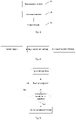
- the construction process of the network training set is shown in Fig. 4,
- Fig. 4 is a schematic diagram of a construction process of a network training set according to an optional embodiment of the present invention, and as shown in Fig. 4 , the vector graph is firstly converted into a high-resolution scalar graph (i.e., a high-resolution bitmap).
- the vector graph has nothing to do with resolution, the high-resolution bitmap can retain more detailed information, then the high-resolution bitmap is converted into a low-resolution bitmap by down-sampling, and a variety of down-sampling manners can be selected herein, such as Bicubic interpolation down-sampling or Gaussian fuzzy down-sampling.
- the process is shown in Fig. 4 .
- the network is trained by a back propagation method, and the flow is shown in Fig. 5.
- Fig. 5 is a schematic flow diagram of a method for network training according to an optional embodiment of the present invention, and as shown in Fig.
- the method includes: inputting bitmap data; and performing back propagation, when a convergence condition is satisfied, outputting a network model, and when the convergence condition is not satisfied, continuing to perform the back propagation.
- the network structure can be U-Net, the network is suitable for extracting data features, and has been widely used in tasks such as super resolution and object recognition.
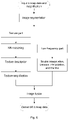
- Fig. 6 is a schematic diagram of an image processing flow according to an optional embodiment of the present invention, and as shown in Fig. 6 , the image processing flow includes:
- the vector description of the texture part of the input bitmap is obtained by using a method based on a neural network, and the result of the texture part is obtained by using a method based on a vector graph.
- interpolation can be performed on the low-frequency part by using an amplification method based on isotropy, such as Bicubic and Lanzcos.
- the embodiments of the present invention can suppress the jaggedness and blurring effects caused by the isotropic interpolation method, reduce the defect of poor processing of the gradient area by the vector graph, implement an electrodeless amplification method based on the neural network, and convert the bitmap into the vector graph, thereby being free of the jagged and blurring effects during the amplification process.
- a manually designed logo, a document and a captured natural image are added into a processing object, wherein the natural image also includes a designed building with distinct edges or natural scenery with rich colors.
- the present embodiment can be implemented according to two modules, and the first module mainly includes an architecture design of a neural network and the implementation of a training end. The focus of this module is to construct a training set, and according to the processing method of Fig. 4 , it can implement the construction of a variety of vector graphs and low-resolution bitmap pairs.
- U-net can be used to implement the conversion of this image format, but it should be pointed out that, the network structure is not unique.
- the second module is configured to implement the super resolution processing of the processing object.
- the super resolution processing of the processing object includes separation and merging of low-resolution bitmaps and different processing methods for different components.
- jaggedness caused by each isotropic method can be avoided by amplifying the vector graph, and the gradient part is processed by the isotropic method.
- segmentation and merging can be realized by two methods, for example, an edge extraction method based on space domain (e.g., a method based on gradient), or a filtering method based on frequency domain (e.g., high-frequency components of a low-resolution bitmap at each scale are obtained by using a method based on wavelet transformation or micro-genetic algorithm (MGA).
- MMA micro-genetic algorithm
- the two are combined by using a corresponding synthesis method.
- First part construction of a deep neural network training set.
- the function of a neural network K is to realize a process of mapping from the low-resolution bitmap to the vector graph, as shown in the following formula (2): K : ⁇ i ⁇ ⁇
- the deployment process is performed according to the segmentation module 31, the conversion module 33 and the fusion module 35 in Fig. 3 .
- T( ⁇ i ) represents the high-frequency component of the image extracted in a transformation domain, and corresponds to the texture part in the image
- (1-T)( ⁇ i ) represents the low-frequency component of the image, and corresponds to the content part of the image.
- low-frequency information is separated from high-frequency information by using Meyer-based wavelet transformation.
- WT(a, ⁇ ) represents an output result of the Meyer-based wavelet transformation
- ⁇ ( t ) represents a wavelet basis function
- a Meyer wavelet basis based on frequency domain transformation can be selected herein
- a represents a scale factor
- ⁇ represents a translation factor
- f(t) represents an input signal.
- the high-frequency component is expressed as T( ⁇ i )
- the low-frequency component is expressed as (1-T)( ⁇ i ).
- Step 2 after the separation processing, inputting ⁇ i t (or T( ⁇ i )) into the network trained in the first step to obtain a vector description corresponding to the texture part; and then, calculating pixel information at a new resolution in a vector amplification manner (that is, obtaining a reconstruction result ⁇ i t ′ of the texture part).
- Step 3 using different manners according to different segmentation manners during a fusion process.
- ⁇ i ′ ⁇ i c ′ + ⁇ i t ′
- ⁇ i ′ represents a fused image
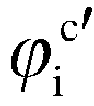
- ⁇ i c ′ represents the reconstruction result of the content part
- ⁇ i t ′ represents the reconstruction result of the texture part
- ⁇ represents the weight of the texture part.
- the weight can be valued in two methods. One is linear superposition of hard threshold values, in which a reasonable ⁇ value is determined by means of multiple offline experiments.
- the other is to perform dynamic setting according to the number of vector components in the image, when the number of vector components (i.e.,, the vector descriptions corresponding to the texture part in step 2) is large, the ⁇ value can be increased.
- setting or adaptive determination can be performed in areas according to the saliency of the texture herein.
- H represents a transformation domain processing method, in which fusion (i.e., merging) is performed for the components of the transformation domain, and then inverse transformation H -1 is performed on a merged result, for example, in view of the frequency domain component segmentation of the image based on wavelet transformation in step 1, a fusion result can be obtained herein by using wavelet inverse transformation H -1 .
- the output SR bitmap data not only has the delicate expression ability of color changes by the bitmap, but also has the approximate distortion-free expression of the texture part by the vector graph.
- the method according to the above embodiments can be implemented by means of software plus a necessary universal hardware platform, and of course can also be implemented by hardware, but the former is better embodiment in many cases.
- the technical solutions of the present invention essentially or the part contributing to the prior art can be embodied in the form of a software product, the computer software product is stored in a storage medium (such as a read-only memory (ROM)/random access memory (RAM), a magnetic disk and an optical disk), and include several instructions for instructing a computer device (can be a mobile phone, a computer, a server, or a network device and the like) to execute the method in various embodiments of the present invention.
- ROM read-only memory
- RAM random access memory
- the embodiments of the present invention further provide a computer-readable storage medium, wherein computer programs are stored in the computer-readable storage medium, and the computer programs are configured to execute the steps in any of the above method embodiments when running.
- the computer-readable storage medium can be configured to store computer programs for executing steps S1 to S3.
- Step S1 segmenting a first image with a resolution being a first resolution according to an image change intensity, so as to obtain a gradient part and a texture part, wherein the image change intensity of the texture part is greater than that of the gradient part
- Step S2 converting the gradient part into first pixel information with a resolution being a second resolution, and converting the texture part into second pixel information with a resolution being the second resolution according to second image format description information of the texture part, wherein the second image format description information of the texture part is determined according to a mapping relationship between a first image format and a second image format, and the image format of the first image is the first image format.
- Step S3 fusing the first pixel information with the second pixel information to obtain a second image, wherein the resolution of the second image is the second resolution, and the second resolution is greater than the first resolution.
- the image is segmented into the texture part and the gradient part, the texture part and the gradient part of the image are processed respectively, and then the processing results are fused. Therefore, the situation of a poor super resolution reconstruction effect in the related art can be avoided, and the super resolution reconstruction effect is improved.
- the storage medium can include, but is not limited to, various media capable of storing computer programs, such as a USB flash disk, an ROM, an RAM, a mobile hard disk, a magnetic disk, or an optical disk.
- various media capable of storing computer programs such as a USB flash disk, an ROM, an RAM, a mobile hard disk, a magnetic disk, or an optical disk.
- the embodiments of the present invention further provide an electronic apparatus, including a memory and a processor, wherein computer programs are stored in the memory, and the processor is configured to run the computer programs to execute the steps in any of the above method embodiments.
- the electronic apparatus can further include a transmission device and an input and output device, wherein the transmission device is connected to the processor, and the input and output device is connected to the processor.
- the processor can be configured to execute steps S1 to S3 by means of the computer programs.
- Step S1 segmenting a first image with a resolution being a first resolution according to an image change intensity, so as to obtain a gradient part and a texture part, wherein the image change intensity of the texture part is greater than that of the gradient part
- Step S2 converting the gradient part into first pixel information with a resolution being a second resolution, and converting the texture part into second pixel information with a resolution being the second resolution according to second image format description information of the texture part, wherein the second image format description information of the texture part is determined according to a mapping relationship between a first image format and a second image format, and the image format of the first image is the first image format.
- Step S3 fusing the first pixel information with the second pixel information to obtain a second image, wherein the resolution of the second image is the second resolution, and the second resolution is greater than the first resolution.
- the image is segmented into the texture part and the gradient part, the texture part and the gradient part of the image are processed respectively, and then the processing results are fused. Therefore, the situation of a poor super resolution reconstruction effect in the related art can be avoided, and the super resolution reconstruction effect is improved.
- modules or steps of the present invention can be implemented by a general-purpose computing apparatus, and the modules or steps can be centralized on a single computing apparatus, or distributed in a network composed of a plurality of computing apparatuses.
- the modules or steps can be implemented by program codes executable by the computing apparatus, such that the modules or steps can be stored in a storage apparatus and executed by the computing apparatus, and in some cases, the shown or described steps are executed in a different order than here, or are separately fabricated into individual integrated circuit modules for implementation, or a plurality of modules or steps therein are fabricated into individual integrated circuit modules for implementation.
- the present invention is not limited to any particular combination of hardware and software.
Landscapes
- Engineering & Computer Science (AREA)
- Physics & Mathematics (AREA)
- General Physics & Mathematics (AREA)
- Theoretical Computer Science (AREA)
- Computer Vision & Pattern Recognition (AREA)
- Image Processing (AREA)
Abstract
Description
- The present invention claims the priority of Chinese Application
CN 201911289271.2, filed with the Chinese Patent Office on December13, 2019 - The present invention relates to the field of communications, such as an image processing method and apparatus.
- The super-resolution reconstruction refers to a processing procedure of converting a low-resolution image into a high-resolution image. At present, the commonly used super resolution reconstruction methods are interpolation methods based on spatial position or edges. The interpolation methods lack local information, and the directional features referenced by the interpolation are usually derived from statistical results, and specific pixel filling processing is implemented by means of statistical information of an area where each pixel is located, such as a gradient, which leads to a decrease in definition or a negative effect of "jaggedness" in an amplification process of the method, such that a clear high-resolution image cannot be obtained.
- Embodiments of the present invention provide an image processing method and apparatus, so as to at least avoid the situation of a poor super resolution reconstruction effect in the related art.
- In a first aspect, the embodiments of the present invention provide an image processing method, including:
- A first image with a resolution being a first resolution is segmented according to an image change intensity, so as to obtain a gradient part and a texture part, wherein the image change intensity of the texture part is greater than that of the gradient part;
- The gradient part is converted into first pixel information with a resolution being a second resolution, and converting the texture part into second pixel information with a resolution being the second resolution according to second image format description information of the texture part, wherein the second image format description information of the texture part is determined according to a mapping relationship between a first image format and a second image format, and the image format of the first image is the first image format; and
- The first pixel information is fused with the second pixel information to obtain a second image, wherein the resolution of the second image is the second resolution, and the second resolution is greater than the first resolution.
- In a second aspect, the embodiments of the present invention provide an image processing apparatus, including:
- a segmentation module, configured to segment a first image with a resolution being a first resolution according to an image change intensity, so as to obtain a gradient part and a texture part, wherein the image change intensity of the texture part is greater than that of the gradient part;
- a conversion module, configured to convert the gradient part into first pixel information with a resolution being a second resolution, and convert the texture part into second pixel information with a resolution being the second resolution according to second image format description information of the texture part, wherein the second image format description information of the texture part is determined according to a mapping relationship between a first image format and a second image format, and the image format of the first image is the first image format; and
- a fusion module, configured to fuse the first pixel information with the second pixel information to obtain a second image, wherein the resolution of the second image is the second resolution, and the second resolution is greater than the first resolution.
- In a third aspect, the embodiments of the present invention further provide a computer-readable storage medium, wherein computer programs are stored in the computer-readable storage medium, and the computer program are configured to, when running, execute the image processing method in the first aspect.
- In a fourth aspect, the embodiments of the present invention further provide an electronic apparatus, including a memory and a processor, wherein computer programs are stored in the memory, and the processor is configured to run the computer programs to execute the image processing method in the first aspect.
-
-
Fig. 1 is a block diagram of a hardware structure of a computing apparatus of an image processing method according to an embodiment of the present invention; -
Fig. 2 is a flow chart of a method for image processing according to an embodiment of the present invention; -
Fig. 3 is a structural block diagram of an apparatus for image processing according to an embodiment of the present invention; -
Fig. 4 is a schematic diagram of a construction process of a network training set according to an optional embodiment of the present invention; -
Fig. 5 is a schematic flow chart of a method for network training according to an optional embodiment of the present invention; and -
Fig. 6 is a schematic diagram of an image processing flow according to an optional embodiment of the present invention. - The present invention will be described in detail below with reference to the drawings and in conjunction with the embodiments. It should be noted that, the embodiments in the present invention and the features of the embodiments can be combined with each other in the case of no conflict.
- It should be noted that, the terms "first", "second" and the like in the description and claims of the present invention and the above drawings are used for distinguishing similar objects, and are not necessarily used for describing a specific order or sequence.
- The method embodiment provided by the embodiments of the present invention can be executed in a computing apparatus, a computer terminal, or a similar apparatus. Taking operation on the computing apparatus as an example,
Fig. 1 is a block diagram of a hardware structure of a computing apparatus of an image processing method according to an embodiment of the present invention. As shown inFig. 1 , a computing apparatus 10 can include at least a (only one is shown inFig. 1 ) processor 102 (theprocessor 102 can include, but is not limited to, processing apparatuses such as a micro control unit (MCU) or a field programmable gate array (FPGA)), and amemory 104 configured to store data. Optionally, the computing apparatus can further include atransmission device 106 configured for communication and an input andoutput device 108. Those of ordinary skill in the art can understand that, the structure shown inFig. 1 is only schematic, and does not limit the structure of the computing apparatus. For example, the computing apparatus 10 can further include more or fewer components than those shown inFig. 1 , or have a different configuration than that shown inFig. 1 . - The
memory 104 can be configured to store computer programs, for example, software programs and modules of invention software, such as computer programs corresponding to the image processing method in the embodiment of the present invention. By running the computer programs stored in thememory 104, theprocessor 102 executes various functional inventions and data processing, that is, implements the above method. Thememory 104 can include a high-speed random access memory, and can also include a nonvolatile memory, such as at least one magnetic disk storage apparatus, a flash memory, or other nonvolatile solid-state memories. In some instances, thememory 104 can further include memories that are arranged remotely relative to theprocessor 102, and these memories can be connected to the computing apparatus 10 by a network. Instances of the network include, but are not limited to, the Internet, an intranet, a local area network, a mobile communication network, and combinations thereof. - The
transmission apparatus 106 is configured to receive or transmit data by means of a network. The network can include, for example, a wireless network provided by a communication provider of the computing apparatus 10. In one example, thetransmission apparatus 106 includes a network interface controller (NIC), and the NIC can be connected to other network devices by means of a base station, so as to communicate with the Internet. In one example, thetransmission apparatus 106 can be a radio frequency (RF) module, and the RF module is configured to communicate with the Internet in a wireless manner. - The present embodiment provides an image processing method running on the computing apparatus.
Fig. 2 is a flow diagram of a method for image processing according to an embodiment of the present invention. As shown inFig. 2 , the flow includes steps S202 to S206. - In step S202, a first image with a resolution being a first resolution is segmented according to an image change intensity, so as to obtain a gradient part and a texture part, wherein the image change intensity of the texture part is greater than that of the gradient part.
- In step S204, the gradient part is converted into first pixel information with a resolution being a second resolution, and the texture part is converted into second pixel information with a resolution being the second resolution according to second image format description information of the texture part, wherein the second image format description information of the texture part is determined according to a mapping relationship between a first image format and a second image format, and the image format of the first image is the first image format.
- In step S206, the first pixel information is fused with the second pixel information to obtain a second image, wherein the resolution of the second image is the second resolution, and the second resolution is greater than the first resolution.
- Through the above steps, the image is segmented into the texture part and the gradient part, the texture part and the gradient part of the image are processed respectively, and then the processing results are fused. Therefore, the situation of a poor super resolution reconstruction effect in the related art can be avoided, and the super resolution reconstruction effect is improved.
- It should be noted that, optionally, the first image format can be any image format with a lower resolution, and the second image format can be any image format with a relatively higher resolution, for example, the first image format can be is a bitmap, and the second image format can be a vector graph.
- In an embodiment, the mapping relationship is a first model, the first model is obtained by training a deep neural network by using multiple groups of data, and each group of data among the multiple groups of data includes: second sample images of a plurality of second image formats, and a first sample image of the first image format corresponding to the second sample image.
- In an embodiment, the method further includes: processing the second sample image to obtain an intermediate image, wherein the resolution of the intermediate image is the second resolution, and the image format of the intermediate image is the first image format; and performing down-sampling processing on the intermediate image to obtain the first sample image, wherein the resolution of the first sample image is the first resolution, and the image format of the first sample image is the first image format.
- In an embodiment, the step of segmenting the first image with the resolution being the first resolution according to the image change intensity includes: segmenting the first image according to space domain information of the first image, wherein the space domain information indicates the image change intensity; or, segmenting the first image according to frequency domain information of the first image, wherein the frequency domain information indicates the image change intensity.
- In an embodiment, the step of segmenting the first image according to the space domain information of the first image includes: respectively extracting a high-frequency component and a low-frequency component of the first image according to the frequency domain information of the first image, wherein the high-frequency component is used as the texture part, and the low-frequency component is used as the gradation part.
- In an embodiment, the step of fusing the first pixel information with the second pixel information includes: performing linear superposition on the first pixel information and the second pixel information; or, the step of fusing the first pixel information with the second pixel information includes: fusing the first pixel information with the second pixel information in a transformation domain, so as to obtain third pixel information; and performing inverse transformation on the third pixel information, wherein the inverse transformation is an inverse process of the segmentation.
- In an embodiment, the step of performing linear superposition on the first pixel information and the second pixel information includes: performing linear superposition on the first pixel information and the second pixel information with a specified weight, wherein the specified weight is determined according to a first proportion, and the first proportion is a proportion of the texture part in the first image.
- In the present embodiment, an image processing apparatus is further provided. The apparatus is configured to implement the above embodiments and preferred embodiments, and what has been described will not be repeated. As used below, the term "module" can be at least one of software and hardware that implement predetermined functions. Although the apparatus described in the following embodiments is preferably implemented in software, implementations in hardware, or a combination of software and hardware, are also possible and conceivable.
-
Fig. 3 is a structural block diagram of an apparatus for image processing according to an embodiment of the present invention. As shown inFig. 3 , the apparatus includes: - a
segmentation module 31, configured to segment a first image with a resolution being a first resolution according to an image change intensity, so as to obtain a gradient part and a texture part, wherein the image change intensity of the texture part is greater than that of the gradient part; - a
conversion module 33, configured to convert the gradient part into first pixel information with a resolution being a second resolution, and convert the texture part into second pixel information with a resolution being the second resolution according to second image format description information of the texture part, wherein the second image format description information of the texture part is determined according to a mapping relationship between a first image format and a second image format, and the image format of the first image is the first image format; and - a
fusion module 35, configured to fuse the first pixel information with the second pixel information to obtain a second image, wherein the resolution of the second image is the second resolution, and the second resolution is greater than the first resolution. - By means of the above module, the image is segmented into the texture part and the gradient part, the texture part and the gradient part of the image are processed respectively, and then the processing results are fused. Therefore, the situation of a poor super resolution reconstruction effect in the related art can be avoided, and the super resolution reconstruction effect is improved.
- In an embodiment, the mapping relationship is a first model, the first model is obtained by training a deep neural network by using multiple groups of data, and each group of data among the multiple groups of data includes: second sample images of a plurality of second image formats, and a first sample image of the first image format corresponding to the second sample image.
- In an embodiment, the apparatus further includes: a processing module, configured to process the second sample image to obtain an intermediate image, wherein the resolution of the intermediate image is the second resolution, and the image format of the intermediate image is the first image format; and a down-sampling module, configured to perform down-sampling processing on the intermediate image to obtain the first sample image, wherein the resolution of the first sample image is the first resolution, and the image format of the first sample image is the first image format.
- In an embodiment, the
segmentation module 31 includes: a first segmentation sub-module, configured to segment the first image according to space domain information of the first image, wherein the space domain information indicates the image change intensity; or, a second segmentation sub-module, configured to segment the first image according to frequency domain information of the first image, wherein the frequency domain information indicates the image change intensity. - In an embodiment, the second segmentation sub-module includes: a segmentation sub-unit, configured to respectively extract a high-frequency component and a low-frequency component of the first image according to the frequency domain information of the first image, wherein the high-frequency component is used as the texture part, and the low-frequency component is used as the gradation part.
- In an embodiment, the fusion module 37 includes: a first fusion sub-module, configured to perform linear superposition on the first pixel information and the second pixel information.
- Or, in an embodiment, the fusion module 37 includes: a second fusion sub-module, configured to fuse the first pixel information with the second pixel information in a transformation domain, so as to obtain third pixel information; and an inverse transformation module, configured to perform inverse transformation on the third pixel information, wherein the inverse transformation is an inverse process of the segmentation.
- In an embodiment, the first fusion sub-module includes: a superposition module, configured to perform linear superposition on the first pixel information and the second pixel information with a specified weight, wherein the specified weight is determined according to a first proportion, and the first proportion is a proportion of the texture part in the first image.
- It should be noted that, each of the above modules can be implemented by at least one of software and hardware. For hardware, it can be implemented in the following manners, but is not limited thereto: the above modules are all located in the same processor; or, a plurality of above modules is located in different processors in any combination.
- In the related art, negative effects are introduced into a super resolution amplification method based on bitmap processing, such as jaggedness and blurring, and these situations reduce the image amplification effect and affect the feeling of user perception of the image. In addition, a stripe phenomenon may be caused by forcible expression by using the method in the related art, or the complexity of representing data is greatly increased, such that it is difficult for a vector graph to express a vivid image effect with rich color layers. A traditional vector algorithm includes finding a suitable approximate contour curve and detection corners, in the case of too many detection corners, the smoothness of the image will be reduced, and in the case of too few detection corners, the sharpness of the image will be reduced, such that it is difficult to determine algorithm parameters of the vector graph. Finally, a method based on a neural network in the related art has a fixed magnification, and an expansion ratio usually requires the retraining of the model, which is time-consuming and increases the complexity of model deployment.
- Deep learning is a type of machine learning algorithm in the current field of computer vision that processes problems by simulating human brain cognition. A model based on deep learning can have huge data abstraction ability, and nonlinear simulation is introduced by an activation layer to enhance the processing ability of the model. The current super resolution methods based on deep learning are generally end-to-end solutions. Although the complexity of the algorithm is reduced, on one hand, this method is a method for a fixed magnification, so it is usually necessary to retrain the network to acquire model parameters of the corresponding magnification, which is not conducive to model deployment. On the other hand, due to the lack of explicit functional positioning between modules, the model has poor interpretability, which is not conducive to debugging.
- The embodiments of the present invention can simulate a process of converting an image from a bitmap to a vector graph by means of a neural network, so as to output an image with a higher definition, thereby having a broad invention prospect.
- The embodiments of the present invention can use the model abstraction ability of deep learning to segment an image into a gradient area and a texture area in terms of change intensity; then, use a traditional interpolation method to process the gradient area, and use a vector graphic algorithm to process the texture area; and finally, integrate the processing results to obtain a final output. Therefore, the above situation is effectively avoided.
- It should be noted that, a bitmap, also known as a lattice diagram or a grid image, is a description manner in which a real image is segmented into an ordered lattice, and each point in the lattice represents visual information of the position (or a local area). The color and texture of the image are represented by the arrangement of these points, color changes and subtle transitions of colors can be realized by increasing the density of the lattice, so as to generate a vivid display effect. But the structural information of the image is lost, and the information is very important in the super resolution processing of the image. Therefore, a bitmap-based image super resolution usually has the jagged and blurry defects.
- It should also be noted that, a vector graph describes the outline of an image through analytic geometry, such as the Bezier curve. These vectors can be a single point or a line segment. Since these vector units have clear mathematical descriptions and are decoupled from pixel density, no distortion is introduced in the super resolution processing, and there is no jaggedness. In the field of processing by using vector graphs, such as logo design and text design, it has obvious advantages. However, the drawback of the current vector graph is that it is very difficult to simulate all information of natural images 100%, especially vivid images with rich color layers.
- Exemplarily, an image vectorization super resolution reconstruction method based on deep learning in the embodiments of the present invention includes the following steps:
designing and training of a deep neural network: a training set is mainly designed by using a corresponding relationship between a bitmap and a vector graph in this stage. The construction process of the network training set is shown inFig. 4, Fig. 4 is a schematic diagram of a construction process of a network training set according to an optional embodiment of the present invention, and as shown inFig. 4 , the vector graph is firstly converted into a high-resolution scalar graph (i.e., a high-resolution bitmap). The vector graph has nothing to do with resolution, the high-resolution bitmap can retain more detailed information, then the high-resolution bitmap is converted into a low-resolution bitmap by down-sampling, and a variety of down-sampling manners can be selected herein, such as Bicubic interpolation down-sampling or Gaussian fuzzy down-sampling. The process is shown inFig. 4 . The network is trained by a back propagation method, and the flow is shown inFig. 5. Fig. 5 is a schematic flow diagram of a method for network training according to an optional embodiment of the present invention, and as shown inFig. 5 , the method includes: inputting bitmap data; and performing back propagation, when a convergence condition is satisfied, outputting a network model, and when the convergence condition is not satisfied, continuing to perform the back propagation. The network structure can be U-Net, the network is suitable for extracting data features, and has been widely used in tasks such as super resolution and object recognition. - Separation and merging of scalar data: a variety of separation means can be used, including a method based on edge extraction or a method based on frequency domain segmentation, referring to an edge segmentation and image fusion module in
Fig. 6. Fig. 6 is a schematic diagram of an image processing flow according to an optional embodiment of the present invention, and as shown inFig. 6 , the image processing flow includes: - inputting bitmap data and a target magnification;
- performing image segmentation to segment an image into a texture part and a low-frequency part (which is equivalent to the gradient part in the above embodiment);
- then performing neural network (NN) reasoning, texture description and texture amplification on the texture part, so as to obtain a processing result of the texture part; performing interpolation on the low-frequency part, for example, performing interpolation by using the Bicubic interpolation , the Lanzos interpolation and other methods, so as to obtain a processing result of the low-frequency part; and
- performing image fusion on the two processing results to output super resolution (SR) bitmap data.
- It should be noted that, super resolution is respectively implemented for the texture part and the low-frequency part. Optionally, on one hand, the vector description of the texture part of the input bitmap is obtained by using a method based on a neural network, and the result of the texture part is obtained by using a method based on a vector graph. On the other hand, interpolation can be performed on the low-frequency part by using an amplification method based on isotropy, such as Bicubic and Lanzcos.
- The embodiments of the present invention can suppress the jaggedness and blurring effects caused by the isotropic interpolation method, reduce the defect of poor processing of the gradient area by the vector graph, implement an electrodeless amplification method based on the neural network, and convert the bitmap into the vector graph, thereby being free of the jagged and blurring effects during the amplification process.
- The solutions of the embodiments of the present invention are explained below in combination with specific scenarios.
- Exemplarily, a manually designed logo, a document and a captured natural image are added into a processing object, wherein the natural image also includes a designed building with distinct edges or natural scenery with rich colors. The present embodiment can be implemented according to two modules, and the first module mainly includes an architecture design of a neural network and the implementation of a training end. The focus of this module is to construct a training set, and according to the processing method of
Fig. 4 , it can implement the construction of a variety of vector graphs and low-resolution bitmap pairs. Optionally, U-net can be used to implement the conversion of this image format, but it should be pointed out that, the network structure is not unique. The second module is configured to implement the super resolution processing of the processing object. The super resolution processing of the processing object includes separation and merging of low-resolution bitmaps and different processing methods for different components. In the present embodiment, jaggedness caused by each isotropic method can be avoided by amplifying the vector graph, and the gradient part is processed by the isotropic method. Optionally, segmentation and merging can be realized by two methods, for example, an edge extraction method based on space domain (e.g., a method based on gradient), or a filtering method based on frequency domain (e.g., high-frequency components of a low-resolution bitmap at each scale are obtained by using a method based on wavelet transformation or micro-genetic algorithm (MGA). Optionally, the two are combined by using a corresponding synthesis method. - The implementation of the technical solutions is described in detail below in conjunction with an implementation flow diagram:
- According to a corresponding relationship between a vector graph and a bitmap, a corresponding network is constructed, wherein the vector graph is φ i ∈ Φ, Φ represents a two-dimensional real number set, and the corresponding bitmap is:


- With regard to the training process, reference can be made to general network training methods, such as stochastic gradient descent (SGD), adaptive momentum (ADAM), etc.
- According to the result of the deep neural network obtained by the training in the first part, the deployment process is performed according to the
segmentation module 31, theconversion module 33 and thefusion module 35 inFig. 3 . - Step 1, firstly, segmenting input low-resolution bitmap data, wherein two methods can be used for segmentation herein, including a space domain method and a frequency domain method, and the space domain method can include: uniformly extracting edge parts by using an edge extraction strategy based on gradient, as shown in the following formula (3):


- In view of the frequency domain method, a high-frequency component and a low-frequency component of the image can be extracted by using a method based on wavelet domain or MGA, as shown in the following formula (4):


- Step 2, after the separation processing, inputting


- Step 3, using different manners according to different segmentation manners during a fusion process.
- Optionally, one is a linear superposition manner, as shown in the following formula (6):



- Optionally, the other solution is to use a transformation domain manner, as shown in the following formula (7):


- By means of the descriptions of the above embodiments, those skilled in the art can clearly understand that, the method according to the above embodiments can be implemented by means of software plus a necessary universal hardware platform, and of course can also be implemented by hardware, but the former is better embodiment in many cases. Based on this understanding, the technical solutions of the present invention essentially or the part contributing to the prior art can be embodied in the form of a software product, the computer software product is stored in a storage medium (such as a read-only memory (ROM)/random access memory (RAM), a magnetic disk and an optical disk), and include several instructions for instructing a computer device (can be a mobile phone, a computer, a server, or a network device and the like) to execute the method in various embodiments of the present invention.
- The embodiments of the present invention further provide a computer-readable storage medium, wherein computer programs are stored in the computer-readable storage medium, and the computer programs are configured to execute the steps in any of the above method embodiments when running.
- Optionally, in the present embodiment, the computer-readable storage medium can be configured to store computer programs for executing steps S1 to S3.
- Step S1, segmenting a first image with a resolution being a first resolution according to an image change intensity, so as to obtain a gradient part and a texture part, wherein the image change intensity of the texture part is greater than that of the gradient part
- Step S2, converting the gradient part into first pixel information with a resolution being a second resolution, and converting the texture part into second pixel information with a resolution being the second resolution according to second image format description information of the texture part, wherein the second image format description information of the texture part is determined according to a mapping relationship between a first image format and a second image format, and the image format of the first image is the first image format.
- Step S3, fusing the first pixel information with the second pixel information to obtain a second image, wherein the resolution of the second image is the second resolution, and the second resolution is greater than the first resolution.
- By means of the above steps, the image is segmented into the texture part and the gradient part, the texture part and the gradient part of the image are processed respectively, and then the processing results are fused. Therefore, the situation of a poor super resolution reconstruction effect in the related art can be avoided, and the super resolution reconstruction effect is improved.
- Optionally, for specific examples in the present embodiment, reference can be made to the examples described in the foregoing embodiments and optional embodiments, and details are not described herein again in the present embodiment.
- Optionally, in the present embodiment, the storage medium can include, but is not limited to, various media capable of storing computer programs, such as a USB flash disk, an ROM, an RAM, a mobile hard disk, a magnetic disk, or an optical disk.
- The embodiments of the present invention further provide an electronic apparatus, including a memory and a processor, wherein computer programs are stored in the memory, and the processor is configured to run the computer programs to execute the steps in any of the above method embodiments.
- Optionally, the electronic apparatus can further include a transmission device and an input and output device, wherein the transmission device is connected to the processor, and the input and output device is connected to the processor.
- Optionally, in the present embodiment, the processor can be configured to execute steps S1 to S3 by means of the computer programs.
- Step S1, segmenting a first image with a resolution being a first resolution according to an image change intensity, so as to obtain a gradient part and a texture part, wherein the image change intensity of the texture part is greater than that of the gradient part
- Step S2, converting the gradient part into first pixel information with a resolution being a second resolution, and converting the texture part into second pixel information with a resolution being the second resolution according to second image format description information of the texture part, wherein the second image format description information of the texture part is determined according to a mapping relationship between a first image format and a second image format, and the image format of the first image is the first image format.
- Step S3, fusing the first pixel information with the second pixel information to obtain a second image, wherein the resolution of the second image is the second resolution, and the second resolution is greater than the first resolution.
- Through the above steps, the image is segmented into the texture part and the gradient part, the texture part and the gradient part of the image are processed respectively, and then the processing results are fused. Therefore, the situation of a poor super resolution reconstruction effect in the related art can be avoided, and the super resolution reconstruction effect is improved.
- In some exemplary implementations, for specific examples in the present embodiment, reference can be made to the examples described in the foregoing embodiments and optional embodiments, and details are not described herein again in the present embodiment.
- Obviously, those having ordinary skill in the art should understand that, the various modules or steps of the present invention can be implemented by a general-purpose computing apparatus, and the modules or steps can be centralized on a single computing apparatus, or distributed in a network composed of a plurality of computing apparatuses. Optionally, the modules or steps can be implemented by program codes executable by the computing apparatus, such that the modules or steps can be stored in a storage apparatus and executed by the computing apparatus, and in some cases, the shown or described steps are executed in a different order than here, or are separately fabricated into individual integrated circuit modules for implementation, or a plurality of modules or steps therein are fabricated into individual integrated circuit modules for implementation. As such, the present invention is not limited to any particular combination of hardware and software.
Claims (10)
- An image processing method, comprising:segmenting a first image with a resolution being a first resolution according to an image change intensity, so as to obtain a gradient part and a texture part, wherein the image change intensity of the texture part is greater than that of the gradient part;converting the gradient part into first pixel information with a resolution being a second resolution, and converting the texture part into second pixel information with a resolution being the second resolution according to second image format description information of the texture part, wherein the second image format description information of the texture part is determined according to a mapping relationship between a first image format and a second image format, and the image format of the first image is the first image format; andfusing the first pixel information with the second pixel information to obtain a second image, wherein the resolution of the second image is the second resolution, and the second resolution is greater than the first resolution.
- The method according to claim 1, wherein the mapping relationship is a first model, the first model is obtained by training a deep neural network by using multiple groups of data, and each group of data among the multiple groups of data comprises: second sample images of a plurality of second image formats, and a first sample image of the first image format corresponding to the second sample image.
- The method according to claim 2, further comprising:processing the second sample image to obtain an intermediate image, wherein the resolution of the intermediate image is the second resolution, and the image format of the intermediate image is the first image format; andperforming down-sampling processing on the intermediate image to obtain the first sample image, wherein the resolution of the first sample image is the first resolution, and the image format of the first sample image is the first image format.
- The method according to claim 1, wherein the step of segmenting the first image with the resolution being the first resolution according to the image change intensity comprises:segmenting the first image according to space domain information of the first image, wherein the space domain information indicates the image change intensity; or,segmenting the first image according to frequency domain information of the first image, wherein the frequency domain information indicates the image change intensity.
- The method according to claim 4, wherein the step of segmenting the first image according to the frequency domain information of the first image comprises:
respectively extracting a high-frequency component and a low-frequency component of the first image according to the frequency domain information of the first image, wherein the high-frequency component is used as the texture part, and the low-frequency component is used as the gradation part. - The method according to claim 1, wherein the step of fusing the first pixel information with the second pixel information comprises: performing linear superposition on the first pixel information and the second pixel information; or,
the step of fusing the first pixel information with the second pixel information comprises:fusing the first pixel information with the second pixel information in a transformation domain, so as to obtain third pixel information; andperforming inverse transformation on the third pixel information, wherein the inverse transformation is an inverse process of the segmentation. - The method according to claim 6, wherein the step of performing linear superposition on the first pixel information and the second pixel information comprises:
performing linear superposition on the first pixel information and the second pixel information with a specified weight, wherein the specified weight is determined according to a first proportion, and the first proportion is a proportion of the texture part in the first image. - An image processing apparatus, comprising:a segmentation module, configured to segment a first image with a resolution being a first resolution according to an image change intensity, so as to obtain a gradient part and a texture part, wherein the image change intensity of the texture part is greater than that of the gradient part;a conversion module, configured to convert the gradient part into first pixel information with a resolution being a second resolution, and convert the texture part into second pixel information with a resolution being the second resolution according to second image format description information of the texture part, wherein the second image format description information of the texture part is determined according to a mapping relationship between a first image format and a second image format, and the image format of the first image is the first image format; anda fusion module, configured to fuse the first pixel information with the second pixel information to obtain a second image, wherein the resolution of the second image is the second resolution, and the second resolution is greater than the first resolution.
- A computer-readable storage medium, wherein computer programs are stored in the computer-readable storage medium, and the computer programs are configured to, when running, execute the method as claimed in any one of claims 1 to 7.
- An electronic apparatus, comprising a memory and a processor, wherein computer programs are stored in the memory, and the processor is configured to run the computer programs to execute the method as claimed in any one of claims 1 to 7.
Applications Claiming Priority (2)
| Application Number | Priority Date | Filing Date | Title |
|---|---|---|---|
| CN201911289271.2A CN112991165B (en) | 2019-12-13 | 2019-12-13 | Image processing method and device |
| PCT/CN2020/135536 WO2021115403A1 (en) | 2019-12-13 | 2020-12-11 | Image processing method and apparatus |
Publications (2)
| Publication Number | Publication Date |
|---|---|
| EP4075373A1 true EP4075373A1 (en) | 2022-10-19 |
| EP4075373A4 EP4075373A4 (en) | 2023-06-07 |
Family
ID=76329599
Family Applications (1)
| Application Number | Title | Priority Date | Filing Date |
|---|---|---|---|
| EP20899209.9A Pending EP4075373A4 (en) | 2019-12-13 | 2020-12-11 | IMAGE PROCESSING METHOD AND APPARATUS |
Country Status (3)
| Country | Link |
|---|---|
| EP (1) | EP4075373A4 (en) |
| CN (1) | CN112991165B (en) |
| WO (1) | WO2021115403A1 (en) |
Families Citing this family (9)
| Publication number | Priority date | Publication date | Assignee | Title |
|---|---|---|---|---|
| CN114092772A (en) * | 2021-09-30 | 2022-02-25 | 北京旷视科技有限公司 | Neural network optimization method and device, electronic equipment and storage medium |
| CN114581886B (en) * | 2022-03-07 | 2025-05-23 | 深研人工智能技术(深圳)有限公司 | Visibility discrimination method, device and medium combining semantic segmentation and frequency domain analysis |
| CN114710673B (en) * | 2022-04-06 | 2025-08-08 | 北京广播电视台 | An image upsampling method for SUVC codec |
| CN115829842B (en) * | 2023-01-05 | 2023-04-25 | 武汉图科智能科技有限公司 | Device for realizing super-resolution reconstruction of picture based on FPGA |
| CN117152287B (en) * | 2023-08-31 | 2024-10-18 | 北京百度网讯科技有限公司 | Image editing method, device, equipment, medium and product |
| CN116912132B (en) * | 2023-09-11 | 2023-12-26 | 归芯科技(深圳)有限公司 | Bayer domain 3DNR image denoising method and device |
| CN117274064B (en) * | 2023-11-15 | 2024-04-02 | 中国科学技术大学 | A method for image super-resolution |
| CN117726525B (en) * | 2023-12-28 | 2024-06-11 | 四川新视创伟超高清科技有限公司 | A distributed panoramic image processing method and processing system |
| CN118587091B (en) * | 2024-06-07 | 2025-06-20 | 江南大学 | A method and system for joint image processing based on multi-task learning |
Family Cites Families (11)
| Publication number | Priority date | Publication date | Assignee | Title |
|---|---|---|---|---|
| JP2014505491A (en) * | 2010-06-30 | 2014-03-06 | メディック ビジョン−イメージング ソリューションズ エルティーディー. | Reduction of non-linear resolution of medical images |
| CN102354397B (en) * | 2011-09-19 | 2013-05-15 | 大连理工大学 | A face image super-resolution reconstruction method based on the similarity of facial features and organs |
| CN103489173B (en) * | 2013-09-23 | 2016-08-17 | 百年金海科技有限公司 | A kind of Superresolution Video Reconstruction method |
| CN108133456A (en) * | 2016-11-30 | 2018-06-08 | 京东方科技集团股份有限公司 | Face super-resolution reconstruction method, reconstructing apparatus and computer system |
| JP6823492B2 (en) * | 2017-02-23 | 2021-02-03 | 日本放送協会 | Super-resolution complementary post-filter device and program |
| US10536164B2 (en) * | 2017-11-17 | 2020-01-14 | Adobe Inc. | Adapting image vectorization operations using machine learning |
| CN108257108B (en) * | 2018-02-07 | 2020-05-22 | 浙江师范大学 | Super-resolution image reconstruction method and system |
| CN110415169B (en) * | 2018-04-28 | 2023-07-14 | 深圳先进技术研究院 | A depth map super-resolution reconstruction method, system and electronic equipment |
| CN108765343B (en) * | 2018-05-29 | 2021-07-20 | Oppo(重庆)智能科技有限公司 | Image processing method, device, terminal and computer-readable storage medium |
| CN109767386A (en) * | 2018-12-22 | 2019-05-17 | 昆明理工大学 | A kind of rapid image super resolution ratio reconstruction method based on deep learning |
| CN110310229B (en) * | 2019-06-28 | 2023-04-18 | Oppo广东移动通信有限公司 | Image processing method, image processing apparatus, terminal device, and readable storage medium |
-
2019
- 2019-12-13 CN CN201911289271.2A patent/CN112991165B/en active Active
-
2020
- 2020-12-11 WO PCT/CN2020/135536 patent/WO2021115403A1/en not_active Ceased
- 2020-12-11 EP EP20899209.9A patent/EP4075373A4/en active Pending
Also Published As
| Publication number | Publication date |
|---|---|
| CN112991165A (en) | 2021-06-18 |
| CN112991165B (en) | 2023-07-14 |
| WO2021115403A1 (en) | 2021-06-17 |
| EP4075373A4 (en) | 2023-06-07 |
Similar Documents
| Publication | Publication Date | Title |
|---|---|---|
| CN112991165B (en) | Image processing method and device | |
| JP7542156B2 (en) | Person image restoration method, device, electronic device, storage medium, and program product | |
| US11537873B2 (en) | Processing method and system for convolutional neural network, and storage medium | |
| EP4207051B1 (en) | Image super-resolution method and electronic device | |
| CN107507134B (en) | Super-resolution method based on convolutional neural network | |
| WO2018223994A1 (en) | Method and device for synthesizing chinese printed character image | |
| EP3550509A1 (en) | Human face resolution re-establishing method and re-establishing system, and readable medium | |
| KR20200132682A (en) | Image optimization method, apparatus, device and storage medium | |
| CN111275034B (en) | Methods, devices, equipment and storage media for extracting text areas from images | |
| US9569684B2 (en) | Image enhancement using self-examples and external examples | |
| CN110570440A (en) | Image automatic segmentation method and device based on deep learning edge detection | |
| CN109359527B (en) | Hair region extraction method and system based on neural network | |
| CN110674759A (en) | Monocular face in-vivo detection method, device and equipment based on depth map | |
| CN106169174B (en) | A method for image enlargement | |
| RU2697928C1 (en) | Superresolution of an image imitating high detail based on an optical system, performed on a mobile device having limited resources, and a mobile device which implements | |
| EP4276733B1 (en) | Image processing method and apparatus, and device and readable storage medium | |
| CN110958469A (en) | Video processing method and device, electronic equipment and storage medium | |
| CN107464217A (en) | A kind of image processing method and device | |
| US11200708B1 (en) | Real-time color vector preview generation | |
| Bhowmik et al. | Training-free, single-image super-resolution using a dynamic convolutional network | |
| Kim et al. | Sredgenet: Edge enhanced single image super resolution using dense edge detection network and feature merge network | |
| CN111353955A (en) | Image processing method, device, equipment and storage medium | |
| CN118230131B (en) | Image recognition and target detection method | |
| CN103150741B (en) | Method for rapidly skeletonizing graph of binary digital image | |
| CN115797717A (en) | Image processing method, image processing device, electronic equipment and computer readable storage medium |
Legal Events
| Date | Code | Title | Description |
|---|---|---|---|
| STAA | Information on the status of an ep patent application or granted ep patent |
Free format text: STATUS: THE INTERNATIONAL PUBLICATION HAS BEEN MADE |
|
| PUAI | Public reference made under article 153(3) epc to a published international application that has entered the european phase |
Free format text: ORIGINAL CODE: 0009012 |
|
| STAA | Information on the status of an ep patent application or granted ep patent |
Free format text: STATUS: REQUEST FOR EXAMINATION WAS MADE |
|
| 17P | Request for examination filed |
Effective date: 20220621 |
|
| AK | Designated contracting states |
Kind code of ref document: A1 Designated state(s): AL AT BE BG CH CY CZ DE DK EE ES FI FR GB GR HR HU IE IS IT LI LT LU LV MC MK MT NL NO PL PT RO RS SE SI SK SM TR |
|
| DAV | Request for validation of the european patent (deleted) | ||
| DAX | Request for extension of the european patent (deleted) | ||
| A4 | Supplementary search report drawn up and despatched |
Effective date: 20230511 |
|
| RIC1 | Information provided on ipc code assigned before grant |
Ipc: G06T 5/00 20060101ALI20230504BHEP Ipc: G06T 3/40 20060101AFI20230504BHEP |
|
| STAA | Information on the status of an ep patent application or granted ep patent |
Free format text: STATUS: EXAMINATION IS IN PROGRESS |
|
| 17Q | First examination report despatched |
Effective date: 20250708 |