EP4074791A1 - Surface treatment composition for vibration damping steel sheet and vibration damping steel sheet - Google Patents
Surface treatment composition for vibration damping steel sheet and vibration damping steel sheet Download PDFInfo
- Publication number
- EP4074791A1 EP4074791A1 EP20898733.9A EP20898733A EP4074791A1 EP 4074791 A1 EP4074791 A1 EP 4074791A1 EP 20898733 A EP20898733 A EP 20898733A EP 4074791 A1 EP4074791 A1 EP 4074791A1
- Authority
- EP
- European Patent Office
- Prior art keywords
- steel sheet
- vibration damping
- damping steel
- resin
- polymer resin
- Prior art date
- Legal status (The legal status is an assumption and is not a legal conclusion. Google has not performed a legal analysis and makes no representation as to the accuracy of the status listed.)
- Granted
Links
Images

Classifications
-
- C—CHEMISTRY; METALLURGY
- C09—DYES; PAINTS; POLISHES; NATURAL RESINS; ADHESIVES; COMPOSITIONS NOT OTHERWISE PROVIDED FOR; APPLICATIONS OF MATERIALS NOT OTHERWISE PROVIDED FOR
- C09D—COATING COMPOSITIONS, e.g. PAINTS, VARNISHES OR LACQUERS; FILLING PASTES; CHEMICAL PAINT OR INK REMOVERS; INKS; CORRECTING FLUIDS; WOODSTAINS; PASTES OR SOLIDS FOR COLOURING OR PRINTING; USE OF MATERIALS THEREFOR
- C09D201/00—Coating compositions based on unspecified macromolecular compounds
-
- C—CHEMISTRY; METALLURGY
- C08—ORGANIC MACROMOLECULAR COMPOUNDS; THEIR PREPARATION OR CHEMICAL WORKING-UP; COMPOSITIONS BASED THEREON
- C08K—Use of inorganic or non-macromolecular organic substances as compounding ingredients
- C08K9/00—Use of pretreated ingredients
- C08K9/08—Ingredients agglomerated by treatment with a binding agent
-
- C—CHEMISTRY; METALLURGY
- C09—DYES; PAINTS; POLISHES; NATURAL RESINS; ADHESIVES; COMPOSITIONS NOT OTHERWISE PROVIDED FOR; APPLICATIONS OF MATERIALS NOT OTHERWISE PROVIDED FOR
- C09D—COATING COMPOSITIONS, e.g. PAINTS, VARNISHES OR LACQUERS; FILLING PASTES; CHEMICAL PAINT OR INK REMOVERS; INKS; CORRECTING FLUIDS; WOODSTAINS; PASTES OR SOLIDS FOR COLOURING OR PRINTING; USE OF MATERIALS THEREFOR
- C09D7/00—Features of coating compositions, not provided for in group C09D5/00; Processes for incorporating ingredients in coating compositions
- C09D7/40—Additives
- C09D7/60—Additives non-macromolecular
- C09D7/61—Additives non-macromolecular inorganic
-
- C—CHEMISTRY; METALLURGY
- C08—ORGANIC MACROMOLECULAR COMPOUNDS; THEIR PREPARATION OR CHEMICAL WORKING-UP; COMPOSITIONS BASED THEREON
- C08K—Use of inorganic or non-macromolecular organic substances as compounding ingredients
- C08K3/00—Use of inorganic substances as compounding ingredients
- C08K3/02—Elements
- C08K3/04—Carbon
-
- C—CHEMISTRY; METALLURGY
- C09—DYES; PAINTS; POLISHES; NATURAL RESINS; ADHESIVES; COMPOSITIONS NOT OTHERWISE PROVIDED FOR; APPLICATIONS OF MATERIALS NOT OTHERWISE PROVIDED FOR
- C09D—COATING COMPOSITIONS, e.g. PAINTS, VARNISHES OR LACQUERS; FILLING PASTES; CHEMICAL PAINT OR INK REMOVERS; INKS; CORRECTING FLUIDS; WOODSTAINS; PASTES OR SOLIDS FOR COLOURING OR PRINTING; USE OF MATERIALS THEREFOR
- C09D167/00—Coating compositions based on polyesters obtained by reactions forming a carboxylic ester link in the main chain; Coating compositions based on derivatives of such polymers
-
- C—CHEMISTRY; METALLURGY
- C09—DYES; PAINTS; POLISHES; NATURAL RESINS; ADHESIVES; COMPOSITIONS NOT OTHERWISE PROVIDED FOR; APPLICATIONS OF MATERIALS NOT OTHERWISE PROVIDED FOR
- C09D—COATING COMPOSITIONS, e.g. PAINTS, VARNISHES OR LACQUERS; FILLING PASTES; CHEMICAL PAINT OR INK REMOVERS; INKS; CORRECTING FLUIDS; WOODSTAINS; PASTES OR SOLIDS FOR COLOURING OR PRINTING; USE OF MATERIALS THEREFOR
- C09D7/00—Features of coating compositions, not provided for in group C09D5/00; Processes for incorporating ingredients in coating compositions
- C09D7/40—Additives
- C09D7/60—Additives non-macromolecular
- C09D7/61—Additives non-macromolecular inorganic
- C09D7/62—Additives non-macromolecular inorganic modified by treatment with other compounds
-
- C—CHEMISTRY; METALLURGY
- C09—DYES; PAINTS; POLISHES; NATURAL RESINS; ADHESIVES; COMPOSITIONS NOT OTHERWISE PROVIDED FOR; APPLICATIONS OF MATERIALS NOT OTHERWISE PROVIDED FOR
- C09D—COATING COMPOSITIONS, e.g. PAINTS, VARNISHES OR LACQUERS; FILLING PASTES; CHEMICAL PAINT OR INK REMOVERS; INKS; CORRECTING FLUIDS; WOODSTAINS; PASTES OR SOLIDS FOR COLOURING OR PRINTING; USE OF MATERIALS THEREFOR
- C09D7/00—Features of coating compositions, not provided for in group C09D5/00; Processes for incorporating ingredients in coating compositions
- C09D7/40—Additives
- C09D7/70—Additives characterised by shape, e.g. fibres, flakes or microspheres
-
- C—CHEMISTRY; METALLURGY
- C08—ORGANIC MACROMOLECULAR COMPOUNDS; THEIR PREPARATION OR CHEMICAL WORKING-UP; COMPOSITIONS BASED THEREON
- C08K—Use of inorganic or non-macromolecular organic substances as compounding ingredients
- C08K2201/00—Specific properties of additives
- C08K2201/016—Additives defined by their aspect ratio
-
- C—CHEMISTRY; METALLURGY
- C08—ORGANIC MACROMOLECULAR COMPOUNDS; THEIR PREPARATION OR CHEMICAL WORKING-UP; COMPOSITIONS BASED THEREON
- C08K—Use of inorganic or non-macromolecular organic substances as compounding ingredients
- C08K3/00—Use of inorganic substances as compounding ingredients
- C08K3/02—Elements
- C08K3/04—Carbon
- C08K3/041—Carbon nanotubes
-
- C—CHEMISTRY; METALLURGY
- C08—ORGANIC MACROMOLECULAR COMPOUNDS; THEIR PREPARATION OR CHEMICAL WORKING-UP; COMPOSITIONS BASED THEREON
- C08K—Use of inorganic or non-macromolecular organic substances as compounding ingredients
- C08K7/00—Use of ingredients characterised by shape
- C08K7/02—Fibres or whiskers
- C08K7/04—Fibres or whiskers inorganic
Definitions
- the present disclosure relates to a surface treatment composition for a vibration damping steel sheet and a vibration damping steel sheet.
- a vibration damping steel sheet is a steel sheet which blocks external noise or vibrations, and is used in various fields, for example, outer plates of household appliances making a lot of noise such as a refrigerator, a washing machine, or an air purifier, automotive parts such as an engine oil pan or a dash panel which are the main cause of car noise, precision instruments, building materials, and the like.
- the vibration damping steel sheet generally includes a constrained vibration damping steel sheet manufactured by laminating a polymer resin between two steel sheets and a non-constrained vibration damping steel sheet in which a polymer resin is applied or laminated on one steel sheet, and the constrained vibration damping steel sheet and the non-constrained vibration damping steel sheet are different in a method of implementing vibration damping performance.
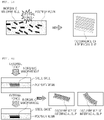
- External noise or vibrational energy is converted into thermal energy by shear deformation of the polymer resin laminated between steel sheets in the constrained vibration damping steel sheet ((a) of FIG. 1 ), or by stretch deformation of the polymer resin applied on a steel sheet in the non-constrained vibration damping steel sheet ((b) of FIG. 1 ).
- the purpose of the present disclosure is to provide a steel sheet surface treatment composition which may improve vibration damping performance of a steel sheet.
- a surface treatment composition for a vibration damping steel sheet includes: a polymer resin and inorganic nanoparticles having a mean aspect ratio (L/D) of 100 or more.
- a vibration damping steel sheet includes: a steel sheet and a vibration damping layer containing the surface treatment composition on at least one surface of the steel sheet.
- inorganic nanoparticles having a mean aspect ratio (L/D) of 100 or more are applied in the manufacturing of a vibration damping steel sheet, thereby providing a vibration damping steel sheet which may convert external vibrational energy into thermal energy by a polymer resin interfacial slip to block external vibrations or noise.
- the present disclosure relates to a composition for surface treatment of a vibration damping steel sheet including a polymer resin and inorganic nanoparticles.
- a composition for surface treatment of a vibration damping steel sheet including a polymer resin and inorganic nanoparticles.
- an interfacial slip effect of the inorganic nanoparticles having a high aspect ratio (L/D) as well as a viscoelastic effect of the polymer resin may be used to implement the vibration damping performance of the steel sheet.
- the vibration damping steel sheet includes a constrained vibration damping steel sheet manufactured by laminating a polymer resin molded in a film form between two steel sheets and a non-constrained vibration damping steel sheet in which a polymer resin is applied or laminated on one steel sheet.
- the polymer resin applied to the vibration damping steel sheet has a viscoelastic effect, and converts vibrational energy into thermal energy by shear deformation or stretch deformation.
- the polymer resin one or more resins selected from the group consisting of an ethylene vinyl acetate resin, a polyethylene resin, a polypropylene resin, a polyvinyl butyral resin, a polyester resin, a polyvinyl chloride resin, and an epoxy resin may be used.
- the inorganic nanoparticles having a high mean aspect ratio (L/D) may improve the strength of a soft area of the polymer resin and make a brittle area harder, thereby complementing the mechanical properties of the polymer resin:
- ⁇ c ⁇ f + V f ⁇ + ⁇ 1 ⁇ 1 / D / 2 L / D + ⁇ m 1 ⁇ V f
- the inorganic nanoparticles having a high aspect ratio (L/D) increases a contact area with the polymer resin, thereby also increasing a slip force with a polymer resin interface. That is, as shown in FIG. 4 , external vibrational energy is converted into thermal energy by a slip occurring on the polymer resin interface, thereby implementing improved vibration damping performance.
- inorganic nanoparticles having a mean aspect ratio (L/D) of 100 or more may be used, and the kind of inorganic nanoparticles is not particularly limited, but preferably, may be one or more selected from the group consisting of graphite nanofiber, carbon nanotubes, nano clay, and graphene.
- the inorganic nanoparticles may be included at 0.1 to 20 parts by weight with respect to 100 parts by weight of the polymer resin.
- the content of the inorganic nanoparticles is less than 0.1 parts by weight, it is difficult to express vibration damping performance which is to be implemented in the present disclosure, and when the content is more than 20 parts by weight, the viscosity of the composition is increased, so that it is difficult to form the vibration damping layer.
- composition may further include an additive which is generally used for steel sheet surface treatment, and for example, may further include a wetting agent, a defoaming agent, a crosslinking agent, an antioxidant, and the like.
- the vibration damping layer may be formed by molding the composition into a film form and laminating the film, or applying a liquid composition, on at least one surface of a steel sheet.
- the vibration damping layer may be formed by molding the composition into a film form and laminating the film, or applying a liquid composition, between steel sheets.
- the polymer resin is melted by heating to its melting point or higher, the inorganic nanoparticles are uniformly mixed therewith (melt brand method), and the mixture is molded into a film form.
- Mixing conditions may be appropriately adjusted depending on the melting point of the polymer resin, and the thickness of the film is preferably 25 to 200 ⁇ m.
- an ethylene vinyl acetate resin, a polyethylene resin, a polypropylene resin, a polyvinyl butyral resin, and the like may be used as a preferred polymer resin.
- the polymer resin is a liquid
- an appropriate amount of inorganic nanoparticles are uniformly mixed, and then the mixture is applied to a thickness of 1 to 200 ⁇ m, thereby forming the vibration damping layer.
- a polyester resin, a polyvinyl chloride resin, an epoxy resin, and the like may be preferably used.
- the steel sheet is not particularly limited in the present disclosure, but a cold rolled steel sheet, a hot rolled steel sheet, a galvanized steel sheet, a zinc alloy plated steel sheet, a stainless steel sheet, an aluminum plate, and the like may be used, and generally the thickness of the metal plate may be about 0.2 to 1.2 mm.
- vibrational energy is converted into thermal energy by the viscoelasticity of the polymer resin and the slip of the inorganic nanoparticles, thereby securing the vibration damping performance ( FIG. 4 ).
- a polyester resin was used to form a film having a thickness of 100 ⁇ m.
- a dynamic mechanical analyzer (DMA) was used to measure a damping energy (loss modulus) for every 0.1% strain with a frequency of 10 hz at room temperature.
- DMA dynamic mechanical analyzer
- the films manufactured using the inorganic nanoparticles having a mean aspect ratio of 100 or more as in Examples 1 and 2 had a high damping energy value depending on a strain, and had a rapidly increased damping energy value with a higher strain.
- vibrational energy was converted into thermal energy due to the viscoelastic properties of the polymer resin and a slip occurring in a polymer resin interface. That is, it is recognized from the results of measuring the damping energy that the coating solution composition including a polymer resin and inorganic nanoparticles having a mean aspect ratio of 100 or more according to the present disclosure may be applied to the manufacturing of a vibration damping steel sheet having excellent vibration damping performance.
Landscapes
- Chemical & Material Sciences (AREA)
- Organic Chemistry (AREA)
- Engineering & Computer Science (AREA)
- Life Sciences & Earth Sciences (AREA)
- Materials Engineering (AREA)
- Wood Science & Technology (AREA)
- Inorganic Chemistry (AREA)
- Chemical Kinetics & Catalysis (AREA)
- Health & Medical Sciences (AREA)
- Medicinal Chemistry (AREA)
- Polymers & Plastics (AREA)
- Laminated Bodies (AREA)
- Vibration Prevention Devices (AREA)
- Compositions Of Macromolecular Compounds (AREA)
Abstract
Description
- The present disclosure relates to a surface treatment composition for a vibration damping steel sheet and a vibration damping steel sheet.
- A vibration damping steel sheet is a steel sheet which blocks external noise or vibrations, and is used in various fields, for example, outer plates of household appliances making a lot of noise such as a refrigerator, a washing machine, or an air purifier, automotive parts such as an engine oil pan or a dash panel which are the main cause of car noise, precision instruments, building materials, and the like.
- The vibration damping steel sheet generally includes a constrained vibration damping steel sheet manufactured by laminating a polymer resin between two steel sheets and a non-constrained vibration damping steel sheet in which a polymer resin is applied or laminated on one steel sheet, and the constrained vibration damping steel sheet and the non-constrained vibration damping steel sheet are different in a method of implementing vibration damping performance. External noise or vibrational energy is converted into thermal energy by shear deformation of the polymer resin laminated between steel sheets in the constrained vibration damping steel sheet ((a) of
FIG. 1 ), or by stretch deformation of the polymer resin applied on a steel sheet in the non-constrained vibration damping steel sheet ((b) ofFIG. 1 ). - As the conventional technology related to the vibration damping steel sheet, technologies using a polyester resin (
Japanese Patent Laid-Open Publication No. (Sho) 51-93770 Japanese Patent Laid-Open Publication No. (Sho) 56-159160 Japanese Patent Laid-Open Publication No. (Sho) 59-152847 - The purpose of the present disclosure is to provide a steel sheet surface treatment composition which may improve vibration damping performance of a steel sheet.
- According to an aspect of the present disclosure, a surface treatment composition for a vibration damping steel sheet includes: a polymer resin and inorganic nanoparticles having a mean aspect ratio (L/D) of 100 or more.
- According to another aspect of the present disclosure, a vibration damping steel sheet includes: a steel sheet and a vibration damping layer containing the surface treatment composition on at least one surface of the steel sheet.
- As set forth above, according to an exemplary embodiment in the present disclosure, inorganic nanoparticles having a mean aspect ratio (L/D) of 100 or more are applied in the manufacturing of a vibration damping steel sheet, thereby providing a vibration damping steel sheet which may convert external vibrational energy into thermal energy by a polymer resin interfacial slip to block external vibrations or noise.
-
-
FIG. 1 is drawings illustrating a principle of blocking external vibrational energy of a conventional vibration damping steel sheet. InFIG. 1, (a) is a constrained vibration damping steel sheet and (b) is a non-constrained vibration damping steel sheet. -
FIG. 2 is a drawing illustrating that when external force is applied to a conventional vibration damping steel sheet, vibrations or cracking occur in the steel sheet. -
FIG. 3 is a drawing illustrating that when external force is applied to a vibration damping steel sheet of the present disclosure, inorganic nanoparticles cause a slip in a polymer resin interface. -
FIG. 4 is a drawing illustrating that when external force is applied to a constrained vibration damping steel sheet and a non-constrained vibration damping steel sheet according to the present disclosure, inorganic nanoparticles cause a slip in a polymer resin interface. -
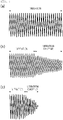
FIG. 5 is drawings illustrating vibration damping performance of (a) a steel sheet, (b) the conventional vibration damping steel sheet, and (c) the vibration damping steel sheet according to the present disclosure. - Hereinafter, exemplary embodiments in the present disclosure will now be described in detail. However, the exemplary embodiments in the present disclosure may be modified in many different forms and the scope of the disclosure should not be limited to the embodiments set forth herein.
- The present disclosure relates to a composition for surface treatment of a vibration damping steel sheet including a polymer resin and inorganic nanoparticles. According to the present disclosure, an interfacial slip effect of the inorganic nanoparticles having a high aspect ratio (L/D) as well as a viscoelastic effect of the polymer resin may be used to implement the vibration damping performance of the steel sheet.
- The vibration damping steel sheet includes a constrained vibration damping steel sheet manufactured by laminating a polymer resin molded in a film form between two steel sheets and a non-constrained vibration damping steel sheet in which a polymer resin is applied or laminated on one steel sheet. The polymer resin applied to the vibration damping steel sheet has a viscoelastic effect, and converts vibrational energy into thermal energy by shear deformation or stretch deformation. As the polymer resin, one or more resins selected from the group consisting of an ethylene vinyl acetate resin, a polyethylene resin, a polypropylene resin, a polyvinyl butyral resin, a polyester resin, a polyvinyl chloride resin, and an epoxy resin may be used.
- Meanwhile, in the case in which particles of the polymer are used alone in the manufacturing of the vibration damping steel sheet, when external force such as vibration and noise is applied to the steel sheet, vibration occurs in a vibration damping layer due to the brittle properties of the polymer resin and further, a crack may occur (
FIG. 2 ). - However, as shown in
FIG. 3 , in the case in which a composition in which a polymer resin and inorganic nanoparticles having a high mean aspect ratio (L/D) are mixed is used to manufacture a vibration damping steel sheet, a crack does not easily occur even when external force is applied to the steel sheet. This is because the polymer resin and the inorganic nanoparticles are mixed to cause a hardening effect, thereby improving mechanical properties of the polymer resin such as strength and hardness. That is, the inorganic nanoparticles having a high mean aspect ratio (L/D) according to the following Equation (1) may improve the strength of a soft area of the polymer resin and make a brittle area harder, thereby complementing the mechanical properties of the polymer resin:
- σc: mechanical properties of composite
- σf: mechanical properties of inorganic nanoparticles
- σm: mechanical properties of polymer resin
- Vf: volume fraction of inorganic nanoparticles
- θ: orientation coefficient of inorganic nanoparticles
- α: strength factor constant of inorganic nanoparticles
- L/D: mean aspect ratio
- Furthermore, the inorganic nanoparticles having a high aspect ratio (L/D) increases a contact area with the polymer resin, thereby also increasing a slip force with a polymer resin interface. That is, as shown in
FIG. 4 , external vibrational energy is converted into thermal energy by a slip occurring on the polymer resin interface, thereby implementing improved vibration damping performance. - In order to implement the vibration damping performance as described above, inorganic nanoparticles having a mean aspect ratio (L/D) of 100 or more may be used, and the kind of inorganic nanoparticles is not particularly limited, but preferably, may be one or more selected from the group consisting of graphite nanofiber, carbon nanotubes, nano clay, and graphene.
- In the surface treatment composition of the present disclosure, the inorganic nanoparticles may be included at 0.1 to 20 parts by weight with respect to 100 parts by weight of the polymer resin. When the content of the inorganic nanoparticles is less than 0.1 parts by weight, it is difficult to express vibration damping performance which is to be implemented in the present disclosure, and when the content is more than 20 parts by weight, the viscosity of the composition is increased, so that it is difficult to form the vibration damping layer.
- In addition, the composition may further include an additive which is generally used for steel sheet surface treatment, and for example, may further include a wetting agent, a defoaming agent, a crosslinking agent, an antioxidant, and the like.
- Next, a vibration damping steel sheet having a vibration damping layer formed using the composition for surface treatment of a vibration damping steel sheet will be described. The vibration damping layer may be formed by molding the composition into a film form and laminating the film, or applying a liquid composition, on at least one surface of a steel sheet. In addition, the vibration damping layer may be formed by molding the composition into a film form and laminating the film, or applying a liquid composition, between steel sheets.
- In the case of the vibration damping layer molded into a film form, the polymer resin is melted by heating to its melting point or higher, the inorganic nanoparticles are uniformly mixed therewith (melt brand method), and the mixture is molded into a film form. Mixing conditions may be appropriately adjusted depending on the melting point of the polymer resin, and the thickness of the film is preferably 25 to 200 µm. When a vibration damping layer molded into a film form is manufactured, an ethylene vinyl acetate resin, a polyethylene resin, a polypropylene resin, a polyvinyl butyral resin, and the like may be used as a preferred polymer resin.
- Meanwhile, when the polymer resin is a liquid, an appropriate amount of inorganic nanoparticles are uniformly mixed, and then the mixture is applied to a thickness of 1 to 200 µm, thereby forming the vibration damping layer. In this case, a polyester resin, a polyvinyl chloride resin, an epoxy resin, and the like may be preferably used.
- The steel sheet is not particularly limited in the present disclosure, but a cold rolled steel sheet, a hot rolled steel sheet, a galvanized steel sheet, a zinc alloy plated steel sheet, a stainless steel sheet, an aluminum plate, and the like may be used, and generally the thickness of the metal plate may be about 0.2 to 1.2 mm.
- When the polymer resin and the inorganic nanoparticles having a mean aspect ratio (L/D) of 100 or more are applied to the vibration damping steel sheet as in the present disclosure, vibrational energy is converted into thermal energy by the viscoelasticity of the polymer resin and the slip of the inorganic nanoparticles, thereby securing the vibration damping performance (
FIG. 4 ). - Hereinafter, the Examples of the present disclosure will be described in detail. The following Examples are only illustrative of the present disclosure, and do not limit the scope of the present disclosure.
- 10 g of nanoclay having a mean aspect ratio (L/D) of 100 (Aldrich) and surface-modified with trimethyl stearyl ammonium was added to 100 g of a polyester resin, and then the mixture was uniformly dispersed at a speed of 3000 rpm in a high-speed agitator, thereby preparing a coating solution. The thus-prepared coating solution was used to form a film having a thickness of 100 µm.
- 1 g of carbon nanotubes having a mean aspect ratio (L/D) of 500 were added to 100 g of a polyester resin, and then the mixture was uniformly dispersed at a speed of 3000 rpm in a high-speed agitator, thereby preparing a coating solution. The thus-prepared coating solution was used to form a film having a thickness of 100 µm.
- A polyester resin was used to form a film having a thickness of 100 µm.
- 10 g of carbon black having a mean aspect ratio (L/D) of 1 was added to 100 g of a polyester resin, and then the mixture was uniformly dispersed at a speed of 3000 rpm in a high-speed agitator, thereby preparing a coating solution. The thus-prepared coating solution was used to form a film having a thickness of 100 µm.
- On the films manufactured in the examples and the comparative examples, a dynamic mechanical analyzer (DMA) was used to measure a damping energy (loss modulus) for every 0.1% strain with a frequency of 10 hz at room temperature.
[Table 1] Damping energy (MPa) Example 1 Example 2 Comparative Example 1 Comparative Example 2 Nanoclay (mean aspect ratio = 100) Carbon nanotubes (mean aspect ratio = 500) - Carbon black (mean aspect ratio = 1) Strain (%) 0.1 16 20 13 13 0.2 20 25 14 13.5 0.3 23 28 13 14.5 0.4 28 33 14 14 0.6 31 38 14 14 0.8 33 39 14 15 1.0 38 42 14 15 1.2 39 46 13 15 1.5 41 51 14 15 - It is recognized that the films manufactured using the inorganic nanoparticles having a mean aspect ratio of 100 or more as in Examples 1 and 2 had a high damping energy value depending on a strain, and had a rapidly increased damping energy value with a higher strain. This means that though external force was applied to the film, vibrational energy was converted into thermal energy due to the viscoelastic properties of the polymer resin and a slip occurring in a polymer resin interface. That is, it is recognized from the results of measuring the damping energy that the coating solution composition including a polymer resin and inorganic nanoparticles having a mean aspect ratio of 100 or more according to the present disclosure may be applied to the manufacturing of a vibration damping steel sheet having excellent vibration damping performance.
Claims (5)
- A surface treatment composition for a vibration damping steel sheet comprising: a polymer resin and inorganic nanoparticles having a mean aspect ratio (L/D) of 100 or more.
- The surface treatment composition for a vibration damping steel sheet of claim 1, wherein the polymer resin is one or more selected from the group consisting of an ethylene vinyl acetate resin, a polyethylene resin, a polypropylene resin, a polyvinyl butyral resin, a polyester resin, a polyvinyl chloride resin, and an epoxy resin.
- The surface treatment composition for a vibration damping steel sheet of claim 1, wherein the inorganic nanoparticles are one or more selected from the group consisting of a graphite nanofiber, carbon nanotubes, nanoclay, and graphene.
- The surface treatment composition for a vibration damping steel sheet of claim 1, wherein the inorganic nanoparticles are included at 0.1 to 20 parts by weight based on 100 parts by weight of the polymer resin.
- A vibrational damping steel sheet comprising: a steel sheet, and a vibration damping layer containing the composition of any one of claims 1 to 4 on at least one surface of the steel sheet.
Applications Claiming Priority (2)
| Application Number | Priority Date | Filing Date | Title |
|---|---|---|---|
| KR1020190164858A KR102329505B1 (en) | 2019-12-11 | 2019-12-11 | Surface treatment composition for vibration damping steel sheet and vibration damping steel sheet |
| PCT/KR2020/014103 WO2021118036A1 (en) | 2019-12-11 | 2020-10-15 | Surface treatment composition for vibration damping steel sheet and vibration damping steel sheet |
Publications (4)
| Publication Number | Publication Date |
|---|---|
| EP4074791A1 true EP4074791A1 (en) | 2022-10-19 |
| EP4074791A4 EP4074791A4 (en) | 2023-05-10 |
| EP4074791C0 EP4074791C0 (en) | 2025-01-01 |
| EP4074791B1 EP4074791B1 (en) | 2025-01-01 |
Family
ID=76330492
Family Applications (1)
| Application Number | Title | Priority Date | Filing Date |
|---|---|---|---|
| EP20898733.9A Active EP4074791B1 (en) | 2019-12-11 | 2020-10-15 | Surface treatment composition for vibration damping steel sheet and vibration damping steel sheet |
Country Status (6)
| Country | Link |
|---|---|
| US (1) | US20230023200A1 (en) |
| EP (1) | EP4074791B1 (en) |
| JP (1) | JP7377977B2 (en) |
| KR (1) | KR102329505B1 (en) |
| CN (1) | CN114787303A (en) |
| WO (1) | WO2021118036A1 (en) |
Families Citing this family (1)
| Publication number | Priority date | Publication date | Assignee | Title |
|---|---|---|---|---|
| CN117584568B (en) * | 2024-01-17 | 2024-04-16 | 四川盈乐威科技有限公司 | Light vibration-damping alternate lamination damping material and preparation method thereof |
Family Cites Families (24)
| Publication number | Priority date | Publication date | Assignee | Title |
|---|---|---|---|---|
| JPS5193770A (en) | 1975-02-14 | 1976-08-17 | Danpinguseinoo jusurufukugokinzokuban | |
| JPS56159160A (en) | 1980-05-14 | 1981-12-08 | Daicel Ltd | Vibration damping composite metallic plate |
| JPS59152847A (en) | 1983-02-21 | 1984-08-31 | 住友ベークライト株式会社 | Steel plate for absorbing vibration |
| EP1349179A1 (en) * | 2002-03-18 | 2003-10-01 | ATOFINA Research | Conductive polyolefins with good mechanical properties |
| JP4290163B2 (en) * | 2005-02-14 | 2009-07-01 | アイシン化工株式会社 | Coating type damping material for automobiles |
| JP4963562B2 (en) * | 2006-04-07 | 2012-06-27 | 高圧ガス工業株式会社 | Damping adhesive composition |
| JP2008133394A (en) * | 2006-11-29 | 2008-06-12 | Dic Corp | Water-based paint for foaming damping material and damping material |
| US20080139722A1 (en) | 2006-12-08 | 2008-06-12 | 3M Innovative Properties Company | Vibration damping polymer composites |
| JP4260200B2 (en) | 2007-05-23 | 2009-04-30 | アイシン化工株式会社 | Emulsion-based anti-vibration paint |
| JP2009213976A (en) * | 2008-03-07 | 2009-09-24 | Fujifilm Corp | Coating apparatus |
| KR101035279B1 (en) * | 2008-11-05 | 2011-05-18 | 주식회사 포스코 | Resin composition for steel plate surface treatment and surface treated steel plate using the same |
| JP5396129B2 (en) | 2009-03-31 | 2014-01-22 | シーシーアイ株式会社 | Damping composition |
| JP5221487B2 (en) * | 2009-10-19 | 2013-06-26 | シーシーアイ株式会社 | Damping resin composition |
| JP2012207168A (en) * | 2011-03-30 | 2012-10-25 | Cci Corp | Vibration damping material and vibration-damping coating |
| JP2013108008A (en) | 2011-11-22 | 2013-06-06 | Sumitomo Chemical Co Ltd | Liquid crystalline polyester composition, molded article, and optical pick-up lens holder |
| JP5766151B2 (en) | 2012-06-05 | 2015-08-19 | アイシン化工株式会社 | Thermosetting one-component paint composition |
| CN103031030B (en) * | 2012-12-19 | 2015-10-28 | 湖州市汇诚船用敷料有限公司 | A kind of multi-functional deck of ship noise reducing damping coating and preparation method thereof |
| KR101403179B1 (en) | 2012-12-27 | 2014-06-02 | 주식회사 포스코 | Surface treated steel sheet and manufacturing method thereof |
| WO2014153570A2 (en) * | 2013-03-15 | 2014-09-25 | Transtar Group, Ltd | New and improved system for processing various chemicals and materials |
| JP6677456B2 (en) * | 2014-10-31 | 2020-04-08 | 花王株式会社 | Polyester resin composition for vibration damping material |
| KR101842555B1 (en) * | 2015-12-09 | 2018-03-27 | 주식회사 포스코 | Composition for surface-treating a plated steel sheet, surface-treated steel sheet using the same composition, and the method for surface-treatenting using the same composition |
| US10800907B2 (en) * | 2016-01-15 | 2020-10-13 | Qenos Pty Ltd | Process for preparation of polyethylene nanocomposite |
| JP6780363B2 (en) * | 2016-08-19 | 2020-11-04 | 東洋インキScホールディングス株式会社 | Conductive resin composition, molded product and method for producing the same |
| WO2019002907A1 (en) * | 2017-06-26 | 2019-01-03 | Nano-Tech S.P.A. | Polymeric compositions loaded with carbon nanotubes, their production and use |
-
2019
- 2019-12-11 KR KR1020190164858A patent/KR102329505B1/en active Active
-
2020
- 2020-10-15 EP EP20898733.9A patent/EP4074791B1/en active Active
- 2020-10-15 US US17/782,426 patent/US20230023200A1/en not_active Abandoned
- 2020-10-15 JP JP2022535085A patent/JP7377977B2/en active Active
- 2020-10-15 CN CN202080086168.2A patent/CN114787303A/en active Pending
- 2020-10-15 WO PCT/KR2020/014103 patent/WO2021118036A1/en not_active Ceased
Also Published As
| Publication number | Publication date |
|---|---|
| US20230023200A1 (en) | 2023-01-26 |
| EP4074791A4 (en) | 2023-05-10 |
| EP4074791C0 (en) | 2025-01-01 |
| JP2023506738A (en) | 2023-02-20 |
| EP4074791B1 (en) | 2025-01-01 |
| KR102329505B1 (en) | 2021-11-19 |
| CN114787303A (en) | 2022-07-22 |
| WO2021118036A1 (en) | 2021-06-17 |
| KR20210073985A (en) | 2021-06-21 |
| JP7377977B2 (en) | 2023-11-10 |
Similar Documents
| Publication | Publication Date | Title |
|---|---|---|
| Najafi et al. | Effect of nanoclay addition on the hygrothermal durability of glass/epoxy and fiber metal laminates | |
| Ponnarengan et al. | Evaluation of mechanical properties of novel GLARE laminates filled with nanoclay | |
| CN104947410A (en) | Glass fibre reinforcement and surface modification method | |
| Wang et al. | Mechanical and tribological characteristics of carbon nanotube-reinforced polyvinylidene fluoride (PVDF)/epoxy composites | |
| Rahmat et al. | Dynamic mechanical characterization of boron nitride nanotube—epoxy nanocomposites | |
| Karimi et al. | Comparison of the role of milled glass and carbon fibers on mechanical properties of (bisphenol A)‐based epoxy composites | |
| EP4074791B1 (en) | Surface treatment composition for vibration damping steel sheet and vibration damping steel sheet | |
| Vijayan et al. | Comprehensive characterization of AA 2024T3 fiber metal laminate with nanosilica‐reinforced epoxy based polymeric composite panel for lightweight applications | |
| Ting | Elastomer-modified epoxy resins | |
| Park et al. | Tensile strength of joints bonded with a nano-particle-reinforced adhesive | |
| JPH01266143A (en) | Poly(vinyl chloride) reinforced by glass fiber | |
| Kwon et al. | Strength and fracture toughness of nano and micron-silica particles bidispersed epoxy composites: evaluated by fragility parameter | |
| JP7822242B2 (en) | Automotive Adhesives | |
| JPH0459819A (en) | Epoxy resin composition | |
| CN103351492A (en) | Damping rubber plate and preparation method thereof | |
| US20230029854A1 (en) | Surface treatment composition for vibration damping steel sheet and vibration damping steel sheet | |
| Chen et al. | Effect of modification conditions of coal gangue on properties of natural rubber composites | |
| US4420585A (en) | Method of mixing elastomeric polymers for improved physical properties | |
| Ashida et al. | Structure and adhesive properties of epoxy resins modified with acrylic particles | |
| Abdelhady et al. | Enhancement of Epoxy-derived Polymer Nanocomposites Strengthened with Titanium Dioxide (TiO2) and Silicon Oxide (SiO2) Nanoparticles | |
| JPS61190547A (en) | Manufacture of vibration-controlling and sound-insulating high polymer material formed body | |
| JP3000417B2 (en) | Damping resin composition | |
| JP2001164044A (en) | Vibration insulating rubber composition | |
| KR102094921B1 (en) | Low specific gravity adhesive composition for automobility | |
| CN118272007A (en) | Halogen-free flame-retardant high-density damping sheet and preparation method thereof |
Legal Events
| Date | Code | Title | Description |
|---|---|---|---|
| STAA | Information on the status of an ep patent application or granted ep patent |
Free format text: STATUS: THE INTERNATIONAL PUBLICATION HAS BEEN MADE |
|
| PUAI | Public reference made under article 153(3) epc to a published international application that has entered the european phase |
Free format text: ORIGINAL CODE: 0009012 |
|
| STAA | Information on the status of an ep patent application or granted ep patent |
Free format text: STATUS: REQUEST FOR EXAMINATION WAS MADE |
|
| 17P | Request for examination filed |
Effective date: 20220629 |
|
| AK | Designated contracting states |
Kind code of ref document: A1 Designated state(s): AL AT BE BG CH CY CZ DE DK EE ES FI FR GB GR HR HU IE IS IT LI LT LU LV MC MK MT NL NO PL PT RO RS SE SI SK SM TR |
|
| DAV | Request for validation of the european patent (deleted) | ||
| DAX | Request for extension of the european patent (deleted) | ||
| A4 | Supplementary search report drawn up and despatched |
Effective date: 20230413 |
|
| RIC1 | Information provided on ipc code assigned before grant |
Ipc: C08K 3/04 20060101ALI20230405BHEP Ipc: C08K 9/04 20060101ALI20230405BHEP Ipc: C09D 167/00 20060101ALI20230405BHEP Ipc: C09D 7/61 20180101ALI20230405BHEP Ipc: C09D 201/00 20060101AFI20230405BHEP |
|
| STAA | Information on the status of an ep patent application or granted ep patent |
Free format text: STATUS: EXAMINATION IS IN PROGRESS |
|
| 17Q | First examination report despatched |
Effective date: 20231128 |
|
| GRAP | Despatch of communication of intention to grant a patent |
Free format text: ORIGINAL CODE: EPIDOSNIGR1 |
|
| STAA | Information on the status of an ep patent application or granted ep patent |
Free format text: STATUS: GRANT OF PATENT IS INTENDED |
|
| INTG | Intention to grant announced |
Effective date: 20240726 |
|
| GRAS | Grant fee paid |
Free format text: ORIGINAL CODE: EPIDOSNIGR3 |
|
| GRAA | (expected) grant |
Free format text: ORIGINAL CODE: 0009210 |
|
| STAA | Information on the status of an ep patent application or granted ep patent |
Free format text: STATUS: THE PATENT HAS BEEN GRANTED |
|
| AK | Designated contracting states |
Kind code of ref document: B1 Designated state(s): AL AT BE BG CH CY CZ DE DK EE ES FI FR GB GR HR HU IE IS IT LI LT LU LV MC MK MT NL NO PL PT RO RS SE SI SK SM TR |
|
| REG | Reference to a national code |
Ref country code: GB Ref legal event code: FG4D |
|
| REG | Reference to a national code |
Ref country code: CH Ref legal event code: EP |
|
| REG | Reference to a national code |
Ref country code: DE Ref legal event code: R096 Ref document number: 602020044318 Country of ref document: DE |
|
| REG | Reference to a national code |
Ref country code: IE Ref legal event code: FG4D |
|
| U01 | Request for unitary effect filed |
Effective date: 20250122 |
|
| U07 | Unitary effect registered |
Designated state(s): AT BE BG DE DK EE FI FR IT LT LU LV MT NL PT RO SE SI Effective date: 20250129 |
|
| PG25 | Lapsed in a contracting state [announced via postgrant information from national office to epo] |
Ref country code: PL Free format text: LAPSE BECAUSE OF FAILURE TO SUBMIT A TRANSLATION OF THE DESCRIPTION OR TO PAY THE FEE WITHIN THE PRESCRIBED TIME-LIMIT Effective date: 20250101 |
|
| PG25 | Lapsed in a contracting state [announced via postgrant information from national office to epo] |
Ref country code: ES Free format text: LAPSE BECAUSE OF FAILURE TO SUBMIT A TRANSLATION OF THE DESCRIPTION OR TO PAY THE FEE WITHIN THE PRESCRIBED TIME-LIMIT Effective date: 20250101 |
|
| PG25 | Lapsed in a contracting state [announced via postgrant information from national office to epo] |
Ref country code: NO Free format text: LAPSE BECAUSE OF FAILURE TO SUBMIT A TRANSLATION OF THE DESCRIPTION OR TO PAY THE FEE WITHIN THE PRESCRIBED TIME-LIMIT Effective date: 20250401 Ref country code: IS Free format text: LAPSE BECAUSE OF FAILURE TO SUBMIT A TRANSLATION OF THE DESCRIPTION OR TO PAY THE FEE WITHIN THE PRESCRIBED TIME-LIMIT Effective date: 20250501 |
|
| PG25 | Lapsed in a contracting state [announced via postgrant information from national office to epo] |
Ref country code: HR Free format text: LAPSE BECAUSE OF FAILURE TO SUBMIT A TRANSLATION OF THE DESCRIPTION OR TO PAY THE FEE WITHIN THE PRESCRIBED TIME-LIMIT Effective date: 20250101 |
|
| PG25 | Lapsed in a contracting state [announced via postgrant information from national office to epo] |
Ref country code: GR Free format text: LAPSE BECAUSE OF FAILURE TO SUBMIT A TRANSLATION OF THE DESCRIPTION OR TO PAY THE FEE WITHIN THE PRESCRIBED TIME-LIMIT Effective date: 20250402 |
|
| PG25 | Lapsed in a contracting state [announced via postgrant information from national office to epo] |
Ref country code: CZ Free format text: LAPSE BECAUSE OF FAILURE TO SUBMIT A TRANSLATION OF THE DESCRIPTION OR TO PAY THE FEE WITHIN THE PRESCRIBED TIME-LIMIT Effective date: 20250101 |
|
| PG25 | Lapsed in a contracting state [announced via postgrant information from national office to epo] |
Ref country code: SM Free format text: LAPSE BECAUSE OF FAILURE TO SUBMIT A TRANSLATION OF THE DESCRIPTION OR TO PAY THE FEE WITHIN THE PRESCRIBED TIME-LIMIT Effective date: 20250101 |
|
| PG25 | Lapsed in a contracting state [announced via postgrant information from national office to epo] |
Ref country code: SK Free format text: LAPSE BECAUSE OF FAILURE TO SUBMIT A TRANSLATION OF THE DESCRIPTION OR TO PAY THE FEE WITHIN THE PRESCRIBED TIME-LIMIT Effective date: 20250101 |
|
| PLBE | No opposition filed within time limit |
Free format text: ORIGINAL CODE: 0009261 |
|
| STAA | Information on the status of an ep patent application or granted ep patent |
Free format text: STATUS: NO OPPOSITION FILED WITHIN TIME LIMIT |
|
| U20 | Renewal fee for the european patent with unitary effect paid |
Year of fee payment: 6 Effective date: 20251022 |
|
| 26N | No opposition filed |
Effective date: 20251002 |