EP4073995B1 - PROVIDING AND RECEIVING ONE OR MORE DATA SETS VIA A DIGITAL COMMUNICATIONS NETWORK - Google Patents
PROVIDING AND RECEIVING ONE OR MORE DATA SETS VIA A DIGITAL COMMUNICATIONS NETWORK Download PDFInfo
- Publication number
- EP4073995B1 EP4073995B1 EP20816542.3A EP20816542A EP4073995B1 EP 4073995 B1 EP4073995 B1 EP 4073995B1 EP 20816542 A EP20816542 A EP 20816542A EP 4073995 B1 EP4073995 B1 EP 4073995B1
- Authority
- EP
- European Patent Office
- Prior art keywords
- server
- authenticator
- data set
- unique identifier
- client
- Prior art date
- Legal status (The legal status is an assumption and is not a legal conclusion. Google has not performed a legal analysis and makes no representation as to the accuracy of the status listed.)
- Active
Links
Images




Classifications
-
- H—ELECTRICITY
- H04—ELECTRIC COMMUNICATION TECHNIQUE
- H04L—TRANSMISSION OF DIGITAL INFORMATION, e.g. TELEGRAPHIC COMMUNICATION
- H04L63/00—Network architectures or network communication protocols for network security
- H04L63/08—Network architectures or network communication protocols for network security for authentication of entities
- H04L63/0884—Network architectures or network communication protocols for network security for authentication of entities by delegation of authentication, e.g. a proxy authenticates an entity to be authenticated on behalf of this entity vis-à-vis an authentication entity
-
- G—PHYSICS
- G06—COMPUTING OR CALCULATING; COUNTING
- G06F—ELECTRIC DIGITAL DATA PROCESSING
- G06F21/00—Security arrangements for protecting computers, components thereof, programs or data against unauthorised activity
- G06F21/60—Protecting data
- G06F21/62—Protecting access to data via a platform, e.g. using keys or access control rules
- G06F21/6218—Protecting access to data via a platform, e.g. using keys or access control rules to a system of files or objects, e.g. local or distributed file system or database
-
- H—ELECTRICITY
- H04—ELECTRIC COMMUNICATION TECHNIQUE
- H04L—TRANSMISSION OF DIGITAL INFORMATION, e.g. TELEGRAPHIC COMMUNICATION
- H04L63/00—Network architectures or network communication protocols for network security
- H04L63/04—Network architectures or network communication protocols for network security for providing a confidential data exchange among entities communicating through data packet networks
- H04L63/0407—Network architectures or network communication protocols for network security for providing a confidential data exchange among entities communicating through data packet networks wherein the identity of one or more communicating identities is hidden
- H04L63/0421—Anonymous communication, i.e. the party's identifiers are hidden from the other party or parties, e.g. using an anonymizer
-
- H—ELECTRICITY
- H04—ELECTRIC COMMUNICATION TECHNIQUE
- H04L—TRANSMISSION OF DIGITAL INFORMATION, e.g. TELEGRAPHIC COMMUNICATION
- H04L63/00—Network architectures or network communication protocols for network security
- H04L63/06—Network architectures or network communication protocols for network security for supporting key management in a packet data network
- H04L63/062—Network architectures or network communication protocols for network security for supporting key management in a packet data network for key distribution, e.g. centrally by trusted party
-
- H—ELECTRICITY
- H04—ELECTRIC COMMUNICATION TECHNIQUE
- H04L—TRANSMISSION OF DIGITAL INFORMATION, e.g. TELEGRAPHIC COMMUNICATION
- H04L63/00—Network architectures or network communication protocols for network security
- H04L63/08—Network architectures or network communication protocols for network security for authentication of entities
-
- H—ELECTRICITY
- H04—ELECTRIC COMMUNICATION TECHNIQUE
- H04L—TRANSMISSION OF DIGITAL INFORMATION, e.g. TELEGRAPHIC COMMUNICATION
- H04L63/00—Network architectures or network communication protocols for network security
- H04L63/08—Network architectures or network communication protocols for network security for authentication of entities
- H04L63/0823—Network architectures or network communication protocols for network security for authentication of entities using certificates
-
- H—ELECTRICITY
- H04—ELECTRIC COMMUNICATION TECHNIQUE
- H04L—TRANSMISSION OF DIGITAL INFORMATION, e.g. TELEGRAPHIC COMMUNICATION
- H04L63/00—Network architectures or network communication protocols for network security
- H04L63/08—Network architectures or network communication protocols for network security for authentication of entities
- H04L63/0853—Network architectures or network communication protocols for network security for authentication of entities using an additional device, e.g. smartcard, SIM or a different communication terminal
-
- H—ELECTRICITY
- H04—ELECTRIC COMMUNICATION TECHNIQUE
- H04L—TRANSMISSION OF DIGITAL INFORMATION, e.g. TELEGRAPHIC COMMUNICATION
- H04L63/00—Network architectures or network communication protocols for network security
- H04L63/08—Network architectures or network communication protocols for network security for authentication of entities
- H04L63/0861—Network architectures or network communication protocols for network security for authentication of entities using biometrical features, e.g. fingerprint, retina-scan
-
- H—ELECTRICITY
- H04—ELECTRIC COMMUNICATION TECHNIQUE
- H04L—TRANSMISSION OF DIGITAL INFORMATION, e.g. TELEGRAPHIC COMMUNICATION
- H04L63/00—Network architectures or network communication protocols for network security
- H04L63/08—Network architectures or network communication protocols for network security for authentication of entities
- H04L63/0876—Network architectures or network communication protocols for network security for authentication of entities based on the identity of the terminal or configuration, e.g. MAC address, hardware or software configuration or device fingerprint
-
- H—ELECTRICITY
- H04—ELECTRIC COMMUNICATION TECHNIQUE
- H04L—TRANSMISSION OF DIGITAL INFORMATION, e.g. TELEGRAPHIC COMMUNICATION
- H04L63/00—Network architectures or network communication protocols for network security
- H04L63/10—Network architectures or network communication protocols for network security for controlling access to devices or network resources
- H04L63/101—Access control lists [ACL]
Definitions
- Embodiments according to the invention relate to the field of transferring data via a digital communication network. More specifically, embodiments of the invention relate to servers and methods for providing one or more data sets via a digital communication network. Further embodiments of the invention relate to devices and methods for obtaining a data set via a digital communication network. Further embodiments relate to a method and a system for securely retrieving information about analyzed data via a digital communication network like the internet, an intranet or the like.
- Providing or transferring information can happen in distinct ways, for example the traditional way via print-out reports. This way, it is easy to guarantee that a) the recipient receives the message in appropriate time, with appropriate security features and with the appropriate convenience.
- a classical mail delivery system utilizing registered mail is used to fulfill such requirements.
- the registered letter of notary or analysis reports/ diagnostic results are sent to the customer/ patient.
- Accessing sensitive information, like personal data, via internet requires a secure transport channel as well as a secure authentication mechanism.
- the actual gold standard is authentication via username and password, which relies heavily on the strength of the used password. While weak passwords are easy to guess, strong passwords are hard to remember.
- the username often consists of a part of or even the whole name of the person who wants to authenticate himself.
- the authenticator is the person the data belongs to.
- the requester of personal data of an individual is a service provider. This might, in the healthcare setting, be a physician, clinician or laboratory service provider.
- US 7,231.450 B1 describes a method and system for providing authorization to a customer to access content on a network, according to which a network access provider providing network access to the customer provides verification of the identity of the customer to a content provider. The content provider then determines whether that customer is authorized to access the content and, if so, provides the customer with Such access. Therefore, content access based on the identity of the customer is provided, rather than on the identity of a device the customer uses to access the content. In that way, the customer is not restricted to accessing the content through an authorized device.
- US 2018/0131684 A1 describes systems and methods of delegating authorization to access isolated collections of data .
- a request to access an isolated collection of resource identifiers and relationships may be received by an application .
- the resource identifiers may correspond to resources in one or more remote data repositories.
- the application may interrogate a remote data repository to determine whether the requestor is currently authorized to access the one or more resources corresponding to the resource identifiers in the isolated collection . If the requestor is determined to be authorized , the application may use an authorization indication provided by the remote data repository to provide the requestor with access to the isolated collection . If the requestor is determined to be unauthorized, the application may prohibit access to the isolated collection.
- any embodiments as defined by the claims can be supplemented by any of the details (features and functionalities) described herein.
- the embodiments described herein can be used individually, and can also optionally be supplemented by any of the details (features and functionalities) included in the claims.
- individual aspects described herein can be used individually or in combination. Thus, details can be added to each of said individual aspects without adding details to another one of said aspects.
- the present disclosure describes explicitly or implicitly features usable for transferring, providing, retrieving, requesting or receiving information.
- Fig. 1 shows a schematic representation of a server 100 according to an embodiment.
- the server 100 is configured for providing one or more data sets via a digital communication network 90. Further, the server 100 is configured for associating an unique identifier 115 with an identified data set 110, which may be part of the one or more data sets.
- the unique identifier 115 represents a network address for accessing the identified data set 110 via the digital communication network 90, wherein the unique identifier 115 is specific to the identified data set 110.
- the server 100 is further configured for validating an authentication information 172 provided by an authenticator 170 of a client 160 requesting access to the server 100 via the unique identifier 115.
- the server is configured for selectively providing the client 160 with an access right 120 to one or more data sets, if the authentication information 172 identifies the authenticator as being associated with a registered user.
- the server 100 is configured for validating the authentication information 172 provided by the authenticator 170 of the client 160 requesting access to the identified data set 110 via the unique identifier 115.
- the server may be configured for handling an request for accessing a specific data set of the one or more data sets, for example the data set 110.
- the server 100 may be configured for selectively providing the client 160 with an access right 120 for the identified data set 100, wherein the access right 120 for the identified data set is specific to the registered user associated with the authenticator.
- the server may provide the client 160 with different access rights depending on an identity of the authenticator 170, with which the client 160 authenticates against the server by sending the authentication information 172, wherein the identity of the authenticator 170 is associated with the registered user.
- the server 100 is configured for providing a data set 110, also designated or referred to as identified data set 110, via a digital communication network 90. Further, the server 100 is configured for associating an unique identifier 115 with the data set 110, the unique identifier 115 representing a network address for accessing the data set 110 via the digital communication network 90, wherein the unique identifier 115 is specific to the data set 110. The server 100 is further configured for validating an authentication information 172 provided by an authenticator 170 of a client 160 requesting access to the data set 110 via the unique identifier 115. According to this embodiment, The server 100 is further configured for selectively providing the client 160 with an access right 120 for the data set 110, the access right 120 being specific to a registered user that is associated with the authenticator 160.
- server 100 Further details of the server 100 are described in the context of further embodiments according to the following figures. In particular, for the sake of clarity, further details of the server 100 are described in the context of an interplay between a server and a device for obtaining a data set. It should be noted that the embodiments of the server can optionally be supplemented by any of the features, functionalities and details described herein with respect to the other embodiments, both individually and taken in combination.
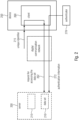
- Fig. 2 shows a schematic representation of an embodiment of a device 250 for obtaining a data set 210 via a digital communication network 90.
- the data set 210 may be similar to the data set 110 or the identified data set 110 and may be provided by a server 200, for example the server 100.
- the device 250 is configured for obtaining an unique identifier 215 of the data set 210, the unique identifier 215 representing a network address for accessing the data set 210 via the digital communication network 90, wherein the unique identifier 215 is specific to the data set 210.
- the unique identifier 215 may be provided by the server 200.
- the device 250 comprises a client 260 which may be similar to the client 160.
- the client 360 may be an internet browser or a file browser or another unit configured for communicating with the digital communication network 90.
- the client 260 is configured for using the unique identifier 215 for sending a request 262 for accessing the data set 210 to a server 200 providing the data set 210.
- the client 260 is further configured for providing the server 200 with an authentication information 272 of an authenticator 270 for authenticating the client 260 against the server 200, wherein the authenticator 270 is associated with a registered user.
- the authenticator 270 and the authentication information 272 may be similar to the authenticator 170 and the authentication information 172, respectively.
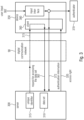
- Fig. 3 schematically illustrates an interplay between a sever 300, which may be similar to the server 100;200, and a device 350 for obtaining a data set, which may be similar to the device 150;250.
- the server 300 and the device 350 may communicate via the digital communication network 90, for example the internet.
- the server 300 may provide one or more data sets including the data set 310, for example the server 300 may host the one or more data sets or the server 300 may be capable of providing access to one or more data sets hosted elsewhere.
- the server is configured for associating the data set 310 with an unique identifier 315, for example the unique identifier 115;215.
- the unique identifier 315 represents a network address which may allow for specifically addressing the data set 310 110 when accessing the server via the digital communication network 90. For example, a user intending to retrieve the data set 310 may use the device 350 for specifically requesting the data set 310 by calling the unique identifier 315 using the client 360 of the device 350, thus sending a request 362 to the server 300 for accessing the data set 310 .
- the unique identifier 315 may comprise a network address of the server 300 and an unique data set identifier which uniquely identifies the data set 310 within an entity of information or data sets provided by the server 300.
- the unique data set identifier may also be globally unique within an specific entity of identifiers.
- the unique identifier 315 may further comprise an information about a syntax or a type or a scheme for the unique data set identifier. Additionally, the unique identifier 315 may comprise an information about a syntax of the unique identifier 315.
- the unique identifier 315 is represented by a uniform resource identifier (URI).
- URI uniform resource identifier
- the requested data e.g. the data set 310
- the URI consist of four parts, the SCHEME, the BASEURL, the IDENTIFIERTYPE, and the IDENTIFIER itself.
- the SCHEME is defined by IETF in RFC 3986 [1].
- the BASEURL is the domain name of the server which will receive the user request e.g. example.com [1].
- the IDENTIFIERTYPE defines the type of the following identifier, ideally an international standard like GS1 GDTI (for documents), but could also be any internally defined identifier type or a similar technological approach.
- IDENTIFIER itself, consisting of a unique string representing the link to the analyzed data.
- the IDENTIFIER must be system inherent or in combination with IDENTIFIERTYPE global unique string. Combining all parts a possible valid URI could be: https://example.com/gdti/408980809ADHJKCGGHBKN
- the identifier is a unique string for every data object requested.
- a possible way to ensure the uniqueness of this identifier, for example the unique identifier 315, is to relay on international standards like the ones from GS1 which are also mentioned in the EU Medical Device Regulation (MDR) and the In-vitro Diagnostic Regulation (IVDR).
- MDR EU Medical Device Regulation
- IVDR In-vitro Diagnostic Regulation
- the client 360 may be similar to the client 160;260.
- the client 360 may comprise or be part of an internet browser or a file browser or another unit for navigating in a digital communication network which may, for example be utilized by a user for accessing the server 100 or one of the data sets hosted by the server.
- the server 300 may be configured for selectively granting access to the data set 310 and optional additional data sets in dependence on an identity of a user using the client 360 for accessing the server 300. For this purpose, the server 300 may verify, if the request 362 for accessing the data set originates from a registered user, and optionally, the server 300 may check the identity of the registered user requesting access to the server.
- a user may be represented by an authenticator 370.
- a registered user may simply be represented by a previously registered authenticator 370.
- the authenticator 370 may comprise a cryptographic entity that allows for an unique identification of the authenticator 370 within a cryptographic system.
- the authenticator may comprise a pair of cryptographic keys, for example a private key that is secret to the authenticator and a public key.
- the server 300 is configured for registering the authenticator 370 by associating the authenticator 370 with an identity information identifying the registered user.
- a registered user may register the authenticator 370, so that after the registration, the authenticator 370 is associated with the registered user.
- the server 300 may store the public key of the authenticator 370 for registering the authenticator 370.
- the server 300 is configured for using a cryptographic system for validating the authentication information 372, wherein the server 300 is configured for associating the authenticator 370 with a cryptographic key that is specific to the authenticator 370.
- a registered user may register one or more authenticators.
- a possible scheme for registering an authenticator is described in the context of Fig. 4 .
- the client 360 may use the authenticator 370 associated with the registered user for verifying that a request for accessing the server occurs on behalf of a registered user and/or for verifying the identity of the registered user requesting access to the server.
- the authentication of the identity of the authenticator 370 is based on an exchange of an encrypted message between the server 300 and the client 360.
- the authenticator 370 may comprise a cryptographic key, and the authenticator 370 may be configured for using the cryptographic key for providing the authentication information 372 to the server.
- the server 300 may send an validation information to the device 350.
- the device 350 may encrypt or sign the validation information by using a secret key of the authenticator 370, for example the private key of the pair of keys, for obtaining the authentication information 372.
- the client 360 may send the authentication information 372 to the server 300.
- the server 300 may validate the identity of the authenticator 370 by testing if decrypting the authentication information 372 using the public key of the authenticator 370 results into the validation information as originally sent to the client 370 or by using the public key for testing, if the signature of the authentication information was generated by using the private key.
- the server may associate the authenticator 370 with the registered user, this authentication procedure allows for an authentication of the registered user against the server without transmitting information about the user identity.
- the authentication information 372 may allow for an anonymized authenticating of the registered user against the server.
- the cryptographic system may be symmetric. That is, the server 300 comprises a cryptographic key associated to the authenticator 370, wherein the common cryptographic key is secret to the authenticator 370 and the server 300, wherein the server 300 uses the common cryptographic key for decrypting the authentication information 372, and wherein the authentication information 372 is obtained by the device 350 by decrypting the validation information by using the common cryptographic key.
- the requester may have to authenticate against the system or the server holding this information.
- the authentication itself may be based on the WebAuthn standard and may require a so called authentication device. Every user of the system may be able to register one or more of these devices, as an alternate method for the classical username-password authentication.
- this kind of authentication there may be no need to exchange personal data between the client and the server.
- the only data exchanged is a public key, based on the users authentication device.
- the arrangement of the authenticator 370 in Figs 1-3 is schematic and exemplary.
- the device 350 or the client 360 may comprise the authenticator 370.
- the device may, for example, have access to the authenticator at any time of operation.
- the device 350 is configured for having access to the authenticator 370 via a digital interface.
- the authenticator 370 may be part of an external device connected to the device 350 via the digital interface.
- the device 350 may only authenticate using the authenticator 370, if the external device is connected to the device 350.
- the server comprises an access information, the access information associating the registered user with the access right for the data set 310, and optionally with an access right for further data sets.
- the access right for the data set 310 may comprise specific permissions for the data set 310, for example, a right to receive the data set 310 in a specific form, or to download, delete or modify the data set 310.
- the access right may be defined for a specific user or for specific groups of users or roles.
- the access information associates the registered user with one or more roles or groups of users.
- the server 300 is configured to provide a client that authenticates with an authenticator associated to any registered user with access to the data set 310 and optionally to further data sets, for example all data sets provided by the server 300.
- the server 300 is configured for directing the client 360 requesting access to the server 300 to the identified data set.
- the client 360 may access the server 300 by using the unique identifier 315.
- the server 300 may direct the client 360 to the data set 310 identified by the unique identifier 315.
- the server 300 may provide the client 360 with access to further data sets without again demanding for authentication.
- the device 350 comprises an input interface 380 for receiving an user input 382, wherein the device 350 is configured for selectively providing the authentication information 372 to the server in dependence on the user input 372.
- the device 350 may require a user to actively initiate the request for accessing the data set 310, or to confirm an initiation of the request for accessing the data set 310 by the user input 382.
- the device may allow the client 360 to use the authenticator 370 only after a user initiated or confirmed the usage via the user input 382.
- the user input 382 may comprise an input via a keyboard, a touch screen, a scanner unit, or a camera.
- the device 350 is configured for obtaining a biometric information about a user, wherein the device 350 is configured for selectively providing the authentication information 372 to the server 300, if the biometric information identifies the user as being associated with the authenticator 372.
- the user input comprises a user's fingerprint or an image of a user's face.
- the device 350 may associate the authenticator 370 with the identity of one or more users allowed to use the authenticator 370.
- the device may allow the client 360 to use the authenticator 370 only after an associated user initiated or confirmed the usage via the user input 382.
- the device 300 is configured for retrieving the unique identifier 315 from a graphical pattern representing the unique identifier 315.
- the device may receive the unique identifier 315 from a scanner unit or a camera capable, which may optionally be part of the device 350 or may be an external device.
- the user input 382 may comprise scanning the graphical pattern.
- a user scanning the graphical pattern may initiate the request for accessing the data set identified by the unique identifier represented by the graphical pattern.
- Fig. 4 shows a flow chart of a method 400 for registering an authenticator, for example the authenticator 170;270;370 according to an embodiment.
- the authenticator to be registered may be part of a device for obtaining a data set, e.g, the device 150;250;350, or may be connected to such a device.
- the authenticator may also be connected to another device.
- a security device can be, according to the WebAuthn specification, either a platform authenticator or a roaming authenticator.
- a platform authenticator is physically bound to the client device (e.g. smartphone or laptop), while a roaming authenticator (e.g. an USB security key) is removable and can be attached to different client devices.
- the server side component associates the public key, which is provided by the authenticator, with the user information.
- Fig. 5 shows a flow chart of an embodiment of a method 500 for providing one or more data sets, for example the data set 110;210;310 via a digital communication network.
- the method 500 comprises a step 501 of associating an unique identifier 115;215;315 with an identified data set 110;210;310, the unique identifier 115;215;315 representing a network address for accessing the identified data set 110;210;310 via the digital communication network 90, wherein the unique identifier 115;215;315 is specific to the identified data set.
- a further step 502 comprises validating 502 an authentication information 172;272;372 provided by an authenticator 170;270;370 of a client 160;260;360 requesting access to one or more data sets via the unique identifier 115;215;315.
- the method 500 comprises a further step 503 of selectively providing the client 160;260;360 with an access right to one or more data sets, if the authentication information 172;272;372 identifies the authenticator 170;270;370 as being associated with a registered user.
- the order of the steps of the method 500 as shown in Fig. 5 is chosen exemplarily.
- the steps 502 and 503 may be executed independently from step 501.
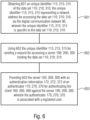
- Fig. 6 shows a flow chart of an embodiment of a method 600 for obtaining a data set 110;210;310 via a digital communication network 90.
- the method 600 comprises a step 601 of obtaining an unique identifier 115;215;315 of the data set 110;210;310, the unique identifier 115;215;315 representing a network address for accessing the data set 110;210;310 via the digital communication network 90, wherein the unique identifier 115;215;315 is specific to the data set 110;210;310.
- the method comprises a further step 602 of using the unique identifier 115;215;315 for sending a request for accessing a server 100;200;300 hosting the data set 110;210;310.
- the further step 603 comprises providing the server 100;200;300 with an authentication information 172;272;372 of an authenticator 170;270;370 for authenticating the client 160;260;360 against the server 100;200;300, wherein the authenticator 170;270;370 is associated with a registered user.
- the order of the steps of the method 600 as shown in Fig. 6 is chosen exemplarily. For example, after obtaining 601 the unique identifier the steps 602 and 603 may be executed repeatedly and/or independently from step 601.
- Fig. 7 shows a flow chart of an embodiment of a method 700 for transferring a data set between a server and a device for obtaining a data set.
- the method 700 may combine features of the methods 500 and 600, which may be executed by the server 100;200;300 or the device 150;250;350.
- the method 700 comprises an opening 702 of an unique URI for an analyzed data item, e.g. the data set 110;210;310.
- the step 702 may comprise the step 602.
- the URI directs to a server, e.g. the server 100;200;300.
- the server asks for authentication.
- the user authenticates himself via the authenticator, e.g. the authenticator 170;270;370.
- the step 704 may comprise the step 603.
- the server decides, if the authentication is successful, for example, if the user authenticates as a registered user or as a registered user authorized to access the requested data set.
- the step 705 may comprise the step 502.
- step 706 If the authentication is successful, step 706 is executed, otherwise, step 707 is executed.
- the server responds with the analyzed data item.
- the step 706 may comprise the step 503.
- step 707 the server denies the access, e.g. to the server or to the data item or data set.
- an authenticator e.g the authenticator 170;270;370
- the user is able to access the analyzed data, e.g. the data set 110;210;310 via the provided URI, e.g. the unique identifier 115;215;315, without providing a username or password.
- the URI e.g. the unique identifier 115;215;315
- the authentication process itself may also follow the principles of a WebAuthn compatible public key authentication mechanism, where the server validates the authentication information by letting the users authenticator cryptographically sign a given message with his private key and send it to the server. After that the server ensures that the transmitted message can be verified with the public key, stored on the server and associated with the user [3].
- Embodiments of the disclosure relate to a method and system for securely retrieving information about analyzed (healthcare) data via the internet.
- the information is requested by a client calling a well-formed URI [4] based on international standards which guarantees a unique one to one relation between the analyzed data and the gathered information about the data.
- the URI itself may be encoded and presented as a two dimensional code like a QR-code, a GS1 datamatrix or a similar technological approach, which is accessible through handheld as well as stationary devices.
- the client in order to retrieve the information the client has to authenticate himself against the server using Public Key Cryptography mechanisms based on the Web Authentication API specification [2] or a similar technological approach.
- the server after receiving the authentication information by the client, the server presents the information in HTML or a structured data format like for example json.
- Embodiments of the disclosure relate to a method and system for securely retrieving analyzed (healthcare) data through a convenient and yet safe way.
- Embodiments of the disclosure relate to a system for securely granting access to analyzed data via the internet, while keeping the identification of the data item unique and the identity of the requesting party secure.
- Embodiments of the presented invention relate to a method, device or system which is able to create pseudonomized access to a remote service system, authenticate the specific user against the remote system using pseudonomyzed data and grant certain access right, i.e. permissions to this user based on roles.
- the requested data may thereby be uniquely identified in order to prevent false information.
- the specific identification of requested detailed information is inevitable, especially in the context of clinical data, containing information about a specific individual.
- aspects have been described in the context of an apparatus, it is clear that these aspects also represent a description of the corresponding method, where a block or device corresponds to a method step or a feature of a method step. Analogously, aspects described in the context of a method step also represent a description of a corresponding block or item or feature of a corresponding apparatus.
- Some or all of the method steps may be executed by (or using) a hardware apparatus, like for example, a microprocessor, a programmable computer or an electronic circuit. In some embodiments, one or more of the most important method steps may be executed by such an apparatus.
- embodiments of the invention can be implemented in hardware or in software or at least partially in hardware or at least partially in software.
- the implementation can be performed using a digital storage medium, for example a floppy disk, a DVD, a Blu-Ray, a CD, a ROM, a PROM, an EPROM, an EEPROM or a FLASH memory, having electronically readable control signals stored thereon, which cooperate (or are capable of cooperating) with a programmable computer system such that the respective method is performed. Therefore, the digital storage medium may be computer readable.
- Some embodiments according to the invention comprise a data carrier having electronically readable control signals, which are capable of cooperating with a programmable computer system, such that one of the methods described herein is performed.
- embodiments of the present invention can be implemented as a computer program product with a program code, the program code being operative for performing one of the methods when the computer program product runs on a computer.
- the program code may for example be stored on a machine readable carrier.
- an embodiment of the inventive method is, therefore, a computer program having a program code for performing one of the methods described herein, when the computer program runs on a computer.
- a further embodiment of the inventive methods is, therefore, a data carrier (or a digital storage medium, or a computer-readable medium) comprising, recorded thereon, the computer program for performing one of the methods described herein.
- the data carrier, the digital storage medium or the recorded medium are typically tangible and/or non-transitory.
- a further embodiment of the inventive method is, therefore, a data stream or a sequence of signals representing the computer program for performing one of the methods described herein.
- the data stream or the sequence of signals may for example be configured to be transferred via a data communication connection, for example via the Internet.
- a further embodiment comprises a processing means, for example a computer, or a programmable logic device, configured to or adapted to perform one of the methods described herein.
- a processing means for example a computer, or a programmable logic device, configured to or adapted to perform one of the methods described herein.
- a further embodiment comprises a computer having installed thereon the computer program for performing one of the methods described herein.
- a further embodiment according to the invention comprises an apparatus or a system configured to transfer (for example, electronically or optically) a computer program for performing one of the methods described herein to a receiver.
- the receiver may, for example, be a computer, a mobile device, a memory device or the like.
- the apparatus or system may, for example, comprise a file server for transferring the computer program to the receiver.
- a programmable logic device for example a field programmable gate array
- a field programmable gate array may cooperate with a microprocessor in order to perform one of the methods described herein.
- the methods are preferably performed by any hardware apparatus.
- the apparatus described herein may be implemented using a hardware apparatus, or using a computer, or using a combination of a hardware apparatus and a computer.
- the methods described herein may be performed using a hardware apparatus, or using a computer, or using a combination of a hardware apparatus and a computer.
Landscapes
- Engineering & Computer Science (AREA)
- Computer Security & Cryptography (AREA)
- Computer Hardware Design (AREA)
- General Engineering & Computer Science (AREA)
- Computing Systems (AREA)
- Computer Networks & Wireless Communication (AREA)
- Signal Processing (AREA)
- General Health & Medical Sciences (AREA)
- Health & Medical Sciences (AREA)
- Theoretical Computer Science (AREA)
- Biomedical Technology (AREA)
- Software Systems (AREA)
- Physics & Mathematics (AREA)
- General Physics & Mathematics (AREA)
- Databases & Information Systems (AREA)
- Power Engineering (AREA)
- Bioethics (AREA)
- Storage Device Security (AREA)
- Data Exchanges In Wide-Area Networks (AREA)
- Communication Control (AREA)
- Computer And Data Communications (AREA)
Description
- Embodiments according to the invention relate to the field of transferring data via a digital communication network. More specifically, embodiments of the invention relate to servers and methods for providing one or more data sets via a digital communication network. Further embodiments of the invention relate to devices and methods for obtaining a data set via a digital communication network. Further embodiments relate to a method and a system for securely retrieving information about analyzed data via a digital communication network like the internet, an intranet or the like.
- Further embodiments of the invention relate to a computer method and system for securely granting access to analyzed data via the internet.
- Providing or transferring information, for example information of analyzed data, can happen in distinct ways, for example the traditional way via print-out reports. This way, it is easy to guarantee that a) the recipient receives the message in appropriate time, with appropriate security features and with the appropriate convenience. Most often, a classical mail delivery system utilizing registered mail is used to fulfill such requirements. As an example, the registered letter of notary or analysis reports/ diagnostic results are sent to the customer/ patient.
- However, the other way information is today transferred around the world is by utilizing the world wide web/ the internet. Here, a lot of convenience comes into play. By using the internet, or in general a digital communication network, one can give and/or create access to information fast, easy and independent of the requester location to almost everyone immediately. By using a worldwide network of servers the internet allows to send all kind of information to a client. Today, the internet is used in unlimited ways, like social networking, processing financial transactions or controlling industrial appliances. With rising penetration in all areas, security is getting a great concern. Most people already have access to the internet and are available via several ways. One of them is e-mail. The e-mail as an "everywhere" available feature of information exchange is, without a doubt, the most often used way to exchange all sorts of information, from documents, to videos, pictures and so on. Today, the wide availability of the smartphone makes it possible to almost always and everywhere check for new information regarding oneself or processes surrounding oneself. However, especially in the healthcare sector, this information is most often of such valuable and private nature that an e-mail, and most other information sharing products like instant messenger, picture/photo or video sharing platforms or even document exchange software is not appropriate for such kind of information.
- Huge efforts have been made in the last couple of years to create secure and still highly convenient places to store information, even critical and private information, in the cloud. Securing data at rest, i.e. while not in transit, is mostly a question of what encryption algorithm is used. This also holds true for data which is persisted on some kind of computer hardware. However, most often, even today, the process of authentication of some user credentials is not very secure. Again, hashing passwords in a database (as this database is persisted on some computer hardware) is a rather secure way to hold this information. In the process of logging-in (checking credentials) and retrieving data, especially healthcare data, additional, subsequent checks of permissions are needed to assure the user that only people with appropriate permissions get access to the analyzed data.
- In IT-Systems design there is a constant assessment of security vs. convenience. Many, if not all, people want their private data (especially healthcare data) to be secure and safe, wherever it is stored. However, to use such data it is granted that to access the data one needs to have the most convenient and yet most secure way of accessing it.
- Accessing sensitive information, like personal data, via internet requires a secure transport channel as well as a secure authentication mechanism. The actual gold standard is authentication via username and password, which relies heavily on the strength of the used password. While weak passwords are easy to guess, strong passwords are hard to remember. In addition to that the username often consists of a part of or even the whole name of the person who wants to authenticate himself. In most scenarios the authenticator is the person the data belongs to. However, especially in the healthcare setting - which is becoming more and more digitized - the requester of personal data of an individual is a service provider. This might, in the healthcare setting, be a physician, clinician or laboratory service provider. While, as described, transit of data is most often securely done, the information regarding the individual requesting certain (health) data is not protected because login credentials (i.e. username and password) are submitted and transferred. Thus, the identity of such an individual is traceable because besides login credentials also the actual geo-location (via ip address) is traceable. This leads to a vulnerability also for the individual the data is about. Another problem in accessing information via the internet is the identification of that information. For example requesting detailed information about a certain product may result in different information about a different product.
-
US 7,231.450 B1 describes a method and system for providing authorization to a customer to access content on a network, according to which a network access provider providing network access to the customer provides verification of the identity of the customer to a content provider. The content provider then determines whether that customer is authorized to access the content and, if so, provides the customer with Such access. Therefore, content access based on the identity of the customer is provided, rather than on the identity of a device the customer uses to access the content. In that way, the customer is not restricted to accessing the content through an authorized device. -
US 2018/0131684 A1 describes systems and methods of delegating authorization to access isolated collections of data . In aspects , a request to access an isolated collection of resource identifiers and relationships may be received by an application . The resource identifiers may correspond to resources in one or more remote data repositories. Upon receiving the request , the application may interrogate a remote data repository to determine whether the requestor is currently authorized to access the one or more resources corresponding to the resource identifiers in the isolated collection . If the requestor is determined to be authorized , the application may use an authorization indication provided by the remote data repository to provide the requestor with access to the isolated collection . If the requestor is determined to be unauthorized, the application may prohibit access to the isolated collection. - It is an object of embodiments of the invention to provide a concept for transferring information, the concept providing an improved tradeoff between user convenience and data security of both, the transferred information and information about the user.
- The invention is defined by the subject matter of the independent claims.
- Advantageous enhancements are subject to the dependent claims.
- Embodiments according to the present application will subsequently be described taking reference to the enclosed figures, in which:
- Fig. 1
- shows a schematic representation of a server according to an embodiment,
- Fig. 2
- shows a schematic representation of a device for obtaining a data set according to an embodiment,
- Fig. 3
- shows a schematic representation of a server and a device for obtaining a data set according to an embodiment,
- Fig. 4
- shows a flow chart for a method for registering a user according to an embodiment,
- Fig. 5
- shows a flow chart of a method for providing one or more data sets according to an embodiment,
- Fig. 6
- shows a flow of a method for obtaining a data set according to an embodiment,
- Fig. 7
- shows a flow chart of a method for transferring a data set between a server and a device for obtaining a data set according to a further embodiment.
- In the following, different inventive embodiments and aspects will be described. Also, further embodiments will be defined by the enclosed claims.
- It should be noted that any embodiments as defined by the claims can be supplemented by any of the details (features and functionalities) described herein. Also, the embodiments described herein can be used individually, and can also optionally be supplemented by any of the details (features and functionalities) included in the claims. Also, it should be noted that individual aspects described herein can be used individually or in combination. Thus, details can be added to each of said individual aspects without adding details to another one of said aspects. It should also be noted that the present disclosure describes explicitly or implicitly features usable for transferring, providing, retrieving, requesting or receiving information.
- The invention will be understood more fully from the detailed description given below and from the accompanying drawings of embodiments of the invention, which, however, should not be taken to limit the invention to the specific embodiments described, but are for explanation and understanding only.
- In the figures, elements drawn in dashed lines are shown to support a better understanding, but these elements are not necessarily part of the shown embodiment.
-
Fig. 1 shows a schematic representation of aserver 100 according to an embodiment. Theserver 100 is configured for providing one or more data sets via adigital communication network 90. Further, theserver 100 is configured for associating anunique identifier 115 with an identifieddata set 110, which may be part of the one or more data sets. Theunique identifier 115 represents a network address for accessing the identifieddata set 110 via thedigital communication network 90, wherein theunique identifier 115 is specific to the identifieddata set 110. Theserver 100 is further configured for validating anauthentication information 172 provided by anauthenticator 170 of aclient 160 requesting access to theserver 100 via theunique identifier 115. The server is configured for selectively providing theclient 160 with an access right 120 to one or more data sets, if theauthentication information 172 identifies the authenticator as being associated with a registered user. - According to an embodiment, the
server 100 is configured for validating theauthentication information 172 provided by theauthenticator 170 of theclient 160 requesting access to the identifieddata set 110 via theunique identifier 115. Thus, the server may configured for handling an request for accessing a specific data set of the one or more data sets, for example thedata set 110. Additionally, theserver 100 may be configured for selectively providing theclient 160 with an access right 120 for the identifieddata set 100, wherein the access right 120 for the identified data set is specific to the registered user associated with the authenticator. Thus, the server may provide theclient 160 with different access rights depending on an identity of theauthenticator 170, with which theclient 160 authenticates against the server by sending theauthentication information 172, wherein the identity of theauthenticator 170 is associated with the registered user. - According to an alternative embodiment, the
server 100 is configured for providing adata set 110, also designated or referred to as identifieddata set 110, via adigital communication network 90. Further, theserver 100 is configured for associating anunique identifier 115 with thedata set 110, theunique identifier 115 representing a network address for accessing thedata set 110 via thedigital communication network 90, wherein theunique identifier 115 is specific to thedata set 110. Theserver 100 is further configured for validating anauthentication information 172 provided by anauthenticator 170 of aclient 160 requesting access to thedata set 110 via theunique identifier 115. According to this embodiment, Theserver 100 is further configured for selectively providing theclient 160 with an access right 120 for thedata set 110, the access right 120 being specific to a registered user that is associated with theauthenticator 160. - Further details of the
server 100 are described in the context of further embodiments according to the following figures. In particular, for the sake of clarity, further details of theserver 100 are described in the context of an interplay between a server and a device for obtaining a data set. It should be noted that the embodiments of the server can optionally be supplemented by any of the features, functionalities and details described herein with respect to the other embodiments, both individually and taken in combination. -
Fig. 2 shows a schematic representation of an embodiment of adevice 250 for obtaining adata set 210 via adigital communication network 90. Thedata set 210 may be similar to thedata set 110 or the identifieddata set 110 and may be provided by aserver 200, for example theserver 100. Thedevice 250 is configured for obtaining anunique identifier 215 of thedata set 210, theunique identifier 215 representing a network address for accessing thedata set 210 via thedigital communication network 90, wherein theunique identifier 215 is specific to thedata set 210. For example, theunique identifier 215 may be provided by theserver 200. Thedevice 250 comprises aclient 260 which may be similar to theclient 160. For example, theclient 360 may be an internet browser or a file browser or another unit configured for communicating with thedigital communication network 90. Theclient 260 is configured for using theunique identifier 215 for sending arequest 262 for accessing thedata set 210 to aserver 200 providing thedata set 210. Theclient 260 is further configured for providing theserver 200 with anauthentication information 272 of anauthenticator 270 for authenticating theclient 260 against theserver 200, wherein theauthenticator 270 is associated with a registered user. For example, theauthenticator 270 and theauthentication information 272 may be similar to theauthenticator 170 and theauthentication information 172, respectively. - Further details of the
device 250 are described in the context of further embodiments according to the following figures. In particular, for the sake of clarity, further details of thedevice 250 are described in the context of an interplay between a server and a device for obtaining a data set. It should be noted that the embodiments of thedevice 250 can optionally be supplemented by any of the features, functionalities and details described herein with respect to the other embodiments, both individually and taken in combination. -
Fig. 3 schematically illustrates an interplay between asever 300, which may be similar to theserver 100;200, and adevice 350 for obtaining a data set, which may be similar to the device 150;250. Theserver 300 and thedevice 350 may communicate via thedigital communication network 90, for example the internet. Theserver 300 may provide one or more data sets including thedata set 310, for example theserver 300 may host the one or more data sets or theserver 300 may be capable of providing access to one or more data sets hosted elsewhere. The server is configured for associating thedata set 310 with anunique identifier 315, for example theunique identifier 115;215. Theunique identifier 315 represents a network address which may allow for specifically addressing thedata set 310 110 when accessing the server via thedigital communication network 90. For example, a user intending to retrieve thedata set 310 may use thedevice 350 for specifically requesting thedata set 310 by calling theunique identifier 315 using theclient 360 of thedevice 350, thus sending arequest 362 to theserver 300 for accessing thedata set 310 . - For example, the
unique identifier 315 may comprise a network address of theserver 300 and an unique data set identifier which uniquely identifies thedata set 310 within an entity of information or data sets provided by theserver 300. The unique data set identifier may also be globally unique within an specific entity of identifiers. Theunique identifier 315 may further comprise an information about a syntax or a type or a scheme for the unique data set identifier. Additionally, theunique identifier 315 may comprise an information about a syntax of theunique identifier 315. - According to an embodiment, the
unique identifier 315 is represented by a uniform resource identifier (URI). In other words, the requested data, e.g. thedata set 310, is identified by using a specially constructed URI. The URI consist of four parts, the SCHEME, the BASEURL, the IDENTIFIERTYPE, and the IDENTIFIER itself. The SCHEME is defined by IETF in RFC 3986 [1]. The BASEURL is the domain name of the server which will receive the user request e.g. example.com [1]. The IDENTIFIERTYPE defines the type of the following identifier, ideally an international standard like GS1 GDTI (for documents), but could also be any internally defined identifier type or a similar technological approach. After the identifier type follows the IDENTIFIER itself, consisting of a unique string representing the link to the analyzed data. The IDENTIFIER must be system inherent or in combination with IDENTIFIERTYPE global unique string. Combining all parts a possible valid URI could be:
https://example.com/gdti/408980809ADHJKCGGHBKN - For example, it may be important that the identifier is a unique string for every data object requested. A possible way to ensure the uniqueness of this identifier, for example the
unique identifier 315, is to relay on international standards like the ones from GS1 which are also mentioned in the EU Medical Device Regulation (MDR) and the In-vitro Diagnostic Regulation (IVDR). By using a the above described URI format, a data object, for example thedata set 310, may be uniquely identified and made accessible. - The
client 360 may be similar to theclient 160;260. For example, theclient 360 may comprise or be part of an internet browser or a file browser or another unit for navigating in a digital communication network which may, for example be utilized by a user for accessing theserver 100 or one of the data sets hosted by the server. - The
server 300 may be configured for selectively granting access to thedata set 310 and optional additional data sets in dependence on an identity of a user using theclient 360 for accessing theserver 300. For this purpose, theserver 300 may verify, if therequest 362 for accessing the data set originates from a registered user, and optionally, theserver 300 may check the identity of the registered user requesting access to the server. - For authenticating as a registered user, a user may be represented by an
authenticator 370. For example, a registered user may simply be represented by a previously registeredauthenticator 370. Theauthenticator 370 may comprise a cryptographic entity that allows for an unique identification of theauthenticator 370 within a cryptographic system. For example, the authenticator may comprise a pair of cryptographic keys, for example a private key that is secret to the authenticator and a public key. - According to an embodiment, the
server 300 is configured for registering theauthenticator 370 by associating theauthenticator 370 with an identity information identifying the registered user. - For example, a registered user may register the
authenticator 370, so that after the registration, theauthenticator 370 is associated with the registered user. For example, theserver 300 may store the public key of theauthenticator 370 for registering theauthenticator 370. - For example, the
server 300 is configured for using a cryptographic system for validating theauthentication information 372, wherein theserver 300 is configured for associating theauthenticator 370 with a cryptographic key that is specific to theauthenticator 370. - According to an embodiment, a registered user may register one or more authenticators. A possible scheme for registering an authenticator is described in the context of
Fig. 4 . - The
client 360 may use theauthenticator 370 associated with the registered user for verifying that a request for accessing the server occurs on behalf of a registered user and/or for verifying the identity of the registered user requesting access to the server. For example, the authentication of the identity of theauthenticator 370 is based on an exchange of an encrypted message between theserver 300 and theclient 360. - According to an embodiment, the
authenticator 370 may comprise a cryptographic key, and theauthenticator 370 may be configured for using the cryptographic key for providing theauthentication information 372 to the server. - For example, the
server 300 may send an validation information to thedevice 350. Thedevice 350 may encrypt or sign the validation information by using a secret key of theauthenticator 370, for example the private key of the pair of keys, for obtaining theauthentication information 372. Theclient 360 may send theauthentication information 372 to theserver 300. Theserver 300 may validate the identity of theauthenticator 370 by testing if decrypting theauthentication information 372 using the public key of theauthenticator 370 results into the validation information as originally sent to theclient 370 or by using the public key for testing, if the signature of the authentication information was generated by using the private key. As the server may associate theauthenticator 370 with the registered user, this authentication procedure allows for an authentication of the registered user against the server without transmitting information about the user identity. Thus, theauthentication information 372 may allow for an anonymized authenticating of the registered user against the server. - Alternatively, the cryptographic system may be symmetric. That is, the
server 300 comprises a cryptographic key associated to theauthenticator 370, wherein the common cryptographic key is secret to theauthenticator 370 and theserver 300, wherein theserver 300 uses the common cryptographic key for decrypting theauthentication information 372, and wherein theauthentication information 372 is obtained by thedevice 350 by decrypting the validation information by using the common cryptographic key. - In other words, in order to access the requested information, e.g. the data set, the requester may have to authenticate against the system or the server holding this information. For example, the authentication itself may be based on the WebAuthn standard and may require a so called authentication device. Every user of the system may be able to register one or more of these devices, as an alternate method for the classical username-password authentication. By using this kind of authentication, there may be no need to exchange personal data between the client and the server. For example, the only data exchanged is a public key, based on the users authentication device.
- The arrangement of the
authenticator 370 inFigs 1-3 is schematic and exemplary. Thedevice 350 or theclient 360 may comprise theauthenticator 370. Thus, the device may, for example, have access to the authenticator at any time of operation. - According to an embodiment, the
device 350 is configured for having access to theauthenticator 370 via a digital interface. For example, theauthenticator 370 may be part of an external device connected to thedevice 350 via the digital interface. Thus, thedevice 350 may only authenticate using theauthenticator 370, if the external device is connected to thedevice 350. - According to an embodiment, the server comprises an access information, the access information associating the registered user with the access right for the
data set 310, and optionally with an access right for further data sets. - For example, the access right for the
data set 310 may comprise specific permissions for thedata set 310, for example, a right to receive thedata set 310 in a specific form, or to download, delete or modify thedata set 310. For example, the access right may be defined for a specific user or for specific groups of users or roles. For example, the access information associates the registered user with one or more roles or groups of users. - According to an embodiment, the
server 300 is configured to provide a client that authenticates with an authenticator associated to any registered user with access to thedata set 310 and optionally to further data sets, for example all data sets provided by theserver 300. - According to an embodiment, the
server 300 is configured for directing theclient 360 requesting access to theserver 300 to the identified data set. - For example, the
client 360 may access theserver 300 by using theunique identifier 315. After authentication, theserver 300 may direct theclient 360 to thedata set 310 identified by theunique identifier 315. Optionally, theserver 300 may provide theclient 360 with access to further data sets without again demanding for authentication. - According to an embodiment, the
device 350 comprises aninput interface 380 for receiving an user input 382, wherein thedevice 350 is configured for selectively providing theauthentication information 372 to the server in dependence on theuser input 372. - For example, the
device 350 may require a user to actively initiate the request for accessing thedata set 310, or to confirm an initiation of the request for accessing thedata set 310 by the user input 382. For example, the device may allow theclient 360 to use theauthenticator 370 only after a user initiated or confirmed the usage via the user input 382. For example, the user input 382 may comprise an input via a keyboard, a touch screen, a scanner unit, or a camera. - According to an embodiment, the
device 350 is configured for obtaining a biometric information about a user, wherein thedevice 350 is configured for selectively providing theauthentication information 372 to theserver 300, if the biometric information identifies the user as being associated with theauthenticator 372. - For example, the user input comprises a user's fingerprint or an image of a user's face. The
device 350 may associate theauthenticator 370 with the identity of one or more users allowed to use theauthenticator 370. For example, the device may allow theclient 360 to use theauthenticator 370 only after an associated user initiated or confirmed the usage via the user input 382. - According to an embodiment, the
device 300 is configured for retrieving theunique identifier 315 from a graphical pattern representing theunique identifier 315. For example, the device may receive theunique identifier 315 from a scanner unit or a camera capable, which may optionally be part of thedevice 350 or may be an external device. - For example the user input 382 may comprise scanning the graphical pattern. For example, a user scanning the graphical pattern may initiate the request for accessing the data set identified by the unique identifier represented by the graphical pattern.
-
Fig. 4 shows a flow chart of amethod 400 for registering an authenticator, for example theauthenticator 170;270;370 according to an embodiment. The authenticator to be registered may be part of a device for obtaining a data set, e.g, the device 150;250;350, or may be connected to such a device. For registration, the authenticator may also be connected to another device. - The
method 400 may be applied for an initial registration of the authenticator. Astep 402 comprises a login of a user, e.g. a registered user, to a personal administration page using a user name and a password. For example, the administration page may be hosted by theserver 100;200;300. The administration page may also be hosted on another server that is configured for sharing information about a registered authenticator with theserver 100;200;300. In anotherstep 403, the user may select the option to register a new authenticator. Subsequently, instep 404, the server asks the user to follow the browser, or an specific App (i.e. a piece of software from something alike the Apple App-Store) instructions. Subsequently, instep 405, the user follows an authenticator specific registration process. Instep 406, the server receives and stores a public key information from the authenticator to complete the registration of the authenticator. - For example, the registration of an authentication device, may follow the principles defined by the WebAuthn standard [2]. After a successful initial login, the user is able to register a new security key/device. A security device can be, according to the WebAuthn specification, either a platform authenticator or a roaming authenticator. The main difference is that a platform authenticator is physically bound to the client device (e.g. smartphone or laptop), while a roaming authenticator (e.g. an USB security key) is removable and can be attached to different client devices. During the registration process the server side component associates the public key, which is provided by the authenticator, with the user information.
-
Fig. 5 shows a flow chart of an embodiment of a method 500 for providing one or more data sets, for example thedata set 110;210;310 via a digital communication network. - The method 500 comprises a
step 501 of associating anunique identifier 115;215;315 with an identifieddata set 110;210;310, theunique identifier 115;215;315 representing a network address for accessing the identifieddata set 110;210;310 via thedigital communication network 90, wherein theunique identifier 115;215;315 is specific to the identified data set. Afurther step 502 comprises validating 502 anauthentication information 172;272;372 provided by anauthenticator 170;270;370 of aclient 160;260;360 requesting access to one or more data sets via theunique identifier 115;215;315. The method 500 comprises afurther step 503 of selectively providing theclient 160;260;360 with an access right to one or more data sets, if theauthentication information 172;272;372 identifies theauthenticator 170;270;370 as being associated with a registered user. - The order of the steps of the method 500 as shown in
Fig. 5 is chosen exemplarily. For example, thesteps step 501. -
Fig. 6 shows a flow chart of an embodiment of a method 600 for obtaining adata set 110;210;310 via adigital communication network 90. - The method 600 comprises a
step 601 of obtaining anunique identifier 115;215;315 of thedata set 110;210;310, theunique identifier 115;215;315 representing a network address for accessing thedata set 110;210;310 via thedigital communication network 90, wherein theunique identifier 115;215;315 is specific to thedata set 110;210;310. The method comprises afurther step 602 of using theunique identifier 115;215;315 for sending a request for accessing aserver 100;200;300 hosting thedata set 110;210;310. Thefurther step 603 comprises providing theserver 100;200;300 with anauthentication information 172;272;372 of anauthenticator 170;270;370 for authenticating theclient 160;260;360 against theserver 100;200;300, wherein theauthenticator 170;270;370 is associated with a registered user. - The order of the steps of the method 600 as shown in
Fig. 6 is chosen exemplarily. For example, after obtaining 601 the unique identifier thesteps step 601. -
Fig. 7 shows a flow chart of an embodiment of a method 700 for transferring a data set between a server and a device for obtaining a data set. For example, the method 700 may combine features of the methods 500 and 600, which may be executed by theserver 100;200;300 or the device 150;250;350. - The method 700 comprises an
opening 702 of an unique URI for an analyzed data item, e.g. thedata set 110;210;310. For example, thestep 702 may comprise thestep 602. For example, the URI directs to a server, e.g. theserver 100;200;300. Subsequently, instep 703, the server asks for authentication. In thefollowing step 704, the user authenticates himself via the authenticator, e.g. theauthenticator 170;270;370. For example, thestep 704 may comprise thestep 603. Instep 705, the server decides, if the authentication is successful, for example, if the user authenticates as a registered user or as a registered user authorized to access the requested data set. For example, thestep 705 may comprise thestep 502. If the authentication is successful,step 706 is executed, otherwise,step 707 is executed. Instep 706, the server responds with the analyzed data item. For example, thestep 706 may comprise thestep 503. Instep 707, the server denies the access, e.g. to the server or to the data item or data set. - In other words, after the successful registration of an authenticator, e.g the
authenticator 170;270;370 the user is able to access the analyzed data, e.g. thedata set 110;210;310 via the provided URI, e.g. theunique identifier 115;215;315, without providing a username or password. When opening the URI, for example by typing in the URI or by scanning a two-dimensional code, the user may have to authenticate himself by using the registered authenticator. The authentication process itself may also follow the principles of a WebAuthn compatible public key authentication mechanism, where the server validates the authentication information by letting the users authenticator cryptographically sign a given message with his private key and send it to the server. After that the server ensures that the transmitted message can be verified with the public key, stored on the server and associated with the user [3]. - According to an embodiment, using this authentication method, there may be no need to transport any personal data to identify the user in order to access the information.
- Embodiments of the disclosure relate to a method and system for securely retrieving information about analyzed (healthcare) data via the internet. For example, the information is requested by a client calling a well-formed URI [4] based on international standards which guarantees a unique one to one relation between the analyzed data and the gathered information about the data. The URI itself may be encoded and presented as a two dimensional code like a QR-code, a GS1 datamatrix or a similar technological approach, which is accessible through handheld as well as stationary devices.
- According to an embodiment, in order to retrieve the information the client has to authenticate himself against the server using Public Key Cryptography mechanisms based on the Web Authentication API specification [2] or a similar technological approach. For example, after receiving the authentication information by the client, the server presents the information in HTML or a structured data format like for example json.
- Embodiments of the disclosure relate to a method and system for securely retrieving analyzed (healthcare) data through a convenient and yet safe way.
- Embodiments of the disclosure relate to a system for securely granting access to analyzed data via the internet, while keeping the identification of the data item unique and the identity of the requesting party secure.
- Embodiments of the presented invention relate to a method, device or system which is able to create pseudonomized access to a remote service system, authenticate the specific user against the remote system using pseudonomyzed data and grant certain access right, i.e. permissions to this user based on roles. The requested data may thereby be uniquely identified in order to prevent false information.
- While there has been a lot of progress in securing the transport of information via secure channels, using encrypted transport protocols, the invention of new authentication mechanisms, which are not relying on personal information like a username or an email address, has not been in the focus.
- For example, combining a unique URI for object identification, using the WebauthN standard to authenticate a user without relying on personal data and finally presenting the requested information in a structured way, solves the described problems of current solutions in a modular and unique way.
- For example, the specific identification of requested detailed information, for example an requested object or a data set, is inevitable, especially in the context of clinical data, containing information about a specific individual.
- Although some aspects have been described in the context of an apparatus, it is clear that these aspects also represent a description of the corresponding method, where a block or device corresponds to a method step or a feature of a method step. Analogously, aspects described in the context of a method step also represent a description of a corresponding block or item or feature of a corresponding apparatus.
- Some or all of the method steps may be executed by (or using) a hardware apparatus, like for example, a microprocessor, a programmable computer or an electronic circuit. In some embodiments, one or more of the most important method steps may be executed by such an apparatus.
- Depending on certain implementation requirements, embodiments of the invention can be implemented in hardware or in software or at least partially in hardware or at least partially in software. The implementation can be performed using a digital storage medium, for example a floppy disk, a DVD, a Blu-Ray, a CD, a ROM, a PROM, an EPROM, an EEPROM or a FLASH memory, having electronically readable control signals stored thereon, which cooperate (or are capable of cooperating) with a programmable computer system such that the respective method is performed. Therefore, the digital storage medium may be computer readable.
- Some embodiments according to the invention comprise a data carrier having electronically readable control signals, which are capable of cooperating with a programmable computer system, such that one of the methods described herein is performed.
- Generally, embodiments of the present invention can be implemented as a computer program product with a program code, the program code being operative for performing one of the methods when the computer program product runs on a computer. The program code may for example be stored on a machine readable carrier.
- Other embodiments comprise the computer program for performing one of the methods described herein, stored on a machine readable carrier.
- In other words, an embodiment of the inventive method is, therefore, a computer program having a program code for performing one of the methods described herein, when the computer program runs on a computer.
- A further embodiment of the inventive methods is, therefore, a data carrier (or a digital storage medium, or a computer-readable medium) comprising, recorded thereon, the computer program for performing one of the methods described herein. The data carrier, the digital storage medium or the recorded medium are typically tangible and/or non-transitory.
- A further embodiment of the inventive method is, therefore, a data stream or a sequence of signals representing the computer program for performing one of the methods described herein. The data stream or the sequence of signals may for example be configured to be transferred via a data communication connection, for example via the Internet.
- A further embodiment comprises a processing means, for example a computer, or a programmable logic device, configured to or adapted to perform one of the methods described herein.
- A further embodiment comprises a computer having installed thereon the computer program for performing one of the methods described herein.
- A further embodiment according to the invention comprises an apparatus or a system configured to transfer (for example, electronically or optically) a computer program for performing one of the methods described herein to a receiver. The receiver may, for example, be a computer, a mobile device, a memory device or the like. The apparatus or system may, for example, comprise a file server for transferring the computer program to the receiver.
- In some embodiments, a programmable logic device (for example a field programmable gate array) may be used to perform some or all of the functionalities of the methods described herein. In some embodiments, a field programmable gate array may cooperate with a microprocessor in order to perform one of the methods described herein. Generally, the methods are preferably performed by any hardware apparatus.
- The apparatus described herein may be implemented using a hardware apparatus, or using a computer, or using a combination of a hardware apparatus and a computer.
- The methods described herein may be performed using a hardware apparatus, or using a computer, or using a combination of a hardware apparatus and a computer.
-
- [1] https://tools.ietf.org/html/rfc3986
- [2] https://w3c.github.io/webauthn/
- [3] https://w3c.github.io/webauthn/#sctn-sample-authentication
- [4] https://tools.ietf.org/html/rfc1630
Claims (18)
- Server (100;200;300) for providing one or more data sets via a digital communication network (90), wherein the server (100;200;300) is configured for :associating an unique identifier (115;215;315) with an identified data set (110;210;310), the unique identifier (115;215;315) representing a network address for accessing the identified data set (110;210;310) via the digital communication network (90), wherein the unique identifier (115;215;315) is specific to the identified data set (110;210;310),validating an authentication information (172;272;372) provided by an authenticator (170;270;370) of a client (160;260;360) requesting access to the server (100;200;300) via the unique identifier (115;215;315), andselectively providing the client (160;260;360) with an access right for one or more data sets, if the authentication information (172;272;372) identifies the authenticator (170;270;370) as being associated with a registered user.
- Server (100;200;300) according to claim 1,wherein the server (100;200;300) is configured for validating the authentication information (172;272;372) provided by the authenticator (170;270;370) of the client (160;260;360) requesting access to the identified data set (110;210;310) via the unique identifier (115;215;315);wherein the server (100;200;300) is configured for selectively providing the client (160;260;360) with an access right for the identified data set (110;210;310), andwherein the access right for the identified data set (110;210;310) is specific to the registered user associated with the authenticator (170;270;370).
- Server (100;200;300) according to any of the preceding claims,
wherein the server (100;200;300) is configured for registering the authenticator (170;270;370) by associating the authenticator (170;270;370) with an identity information identifying the registered user. - Server (100;200;300) according to any of the preceding claims,
wherein the server (100;200;300) comprises an access information, the access information associating the registered user with the access right for the identified data set (110;210;310). - Server (100;200;300) according to any of the preceding claims,
wherein the server (100;200;300) is configured for directing the client (160;260;360) requesting access to the server (100;200;300) to the identified data set (110;210;310). - Server (100;200;300) according to any of the preceding claims,wherein the server (100;200;300) is configured for using a cryptographic system for validating the authentication information (172;272;372),wherein the server (100;200;300) is configured for associating the authenticator (170;270;370) with a cryptographic key that is specific to the authenticator (170;270;370).
- Server (100;200;300) according to any of the preceding claims, wherein the authentication information does not comprise a user name, a password and personal data of the registered user so that the authentication information allows for an anonymized authenticating of the registered user against the server.
- Server (100;200;300) according to claim 7, wherein the authentication information comprises an encrypted message which has been generated by using the authenticator,
wherein the authenticator is represented by an information that does not comprise personal data or a hint on personal data of the registered user associated with the authenticator. - Device (150;250;350) for obtaining a data set (110;210;310) via a digital communication network (90),wherein the device is configured for obtaining an unique identifier (115;215;315) of the data set (110;210;310), the unique identifier (115;215;315) representing a network address for accessing the data set (110;210;310) via the digital communication network (90), wherein the unique identifier (115;215;315) is specific to the data set (110;210;310),wherein the device comprises a client (160;260;360) configured for using the unique identifier (115;215;315) for sending a request for accessing the data set (110;210;310) to a server (100;200;300) providing the data set (110;210;310),wherein the client (160;260;360) is configured for providing the server (100;200;300) with an authentication information (172;272;372) of an authenticator (170;270;370) for authenticating the client (160;260;360) against the server (100;200;300), wherein the authenticator (170;270;370) is associated with a registered user.
- Device (150;250;350) according to claim 9, wherein the device comprises the authenticator (170;270;370).
- Device (150;250;350) according to claim 9, wherein the device is configured for having access to the authenticator (170;270;370) via a digital interface.
- Device (150;250;350) according to any of the claims 9-11,wherein the device comprises an input interface (380) for receiving an user input (382), andwherein the device is configured for selectively providing the authentication information (172;272;372) to the server (100;200;300) in dependence on the user input (382).
- Device (150;250;350) according to any of the claims 9-12,wherein the device is configured for obtaining a biometric information about a user, andwherein the device is configured for selectively providing the authentication information (172;272;372) to the server (100;200;300), if the biometric information identifies the user as being associated with the authenticator (170;270;370).
- Device (150;250;350) according to any of the claims 9-13, wherein the device is configured for retrieving the unique identifier (115;215;315) from a graphical pattern representing the unique identifier (115;215;315).
- Device (150;250;350) according to any of the claims 9-14,wherein the authenticator (170;270;370) comprises a cryptographic key, andwherein the authenticator (170;270;370) is configured for using the cryptographic key for providing the authentication information (172;272;372) to the server (100;200;300).
- Method (500) for providing one or more data sets via a digital communication network (90), the method comprising:associating (501) an unique identifier (115;215;315) with an identified data set (110;210;310), the unique identifier (115;215;315) representing a network address for accessing the identified data set (110;210;310) via the digital communication network (90), wherein the unique identifier (115;215;315) is specific to the identified data set,validating (502) an authentication information (172;272;372) provided by an authenticator (170;270;370) of a client (160;260;360) requesting access to one or more data sets via the unique identifier (115;215;315), andselectively providing (503) the client (160;260;360) with an access right to one or more data sets, if the authentication information (172;272;372) identifies the authenticator (170;270;370) as being associated with a registered user.
- Method (600) for obtaining a data set (110;210;310) via a digital communication network (90), the method comprising:obtaining (601) an unique identifier (115;215;315) of the data set (110;210;310), the unique identifier (115;215;315) representing a network address for accessing the data set (110;210;310) via the digital communication network (90), wherein the unique identifier (115;215;315) is specific to the data set (110;210;310),using (602) the unique identifier (115;215;315) for sending a request for accessing a server (100;200;300) hosting the data set (110;210;310),providing (603) the server (100;200;300) with an authentication information (172;272;372) of an authenticator (170;270;370) for authenticating the client (160;260;360) against the server (100;200;300), wherein the authenticator (170;270;370) is associated with a registered user.
- A computer program for implementing any of the methods of claims 17 or 18 when being executed on a computer or signal processor.
Priority Applications (4)
| Application Number | Priority Date | Filing Date | Title |
|---|---|---|---|
| HRP20250848TT HRP20250848T1 (en) | 2019-12-12 | 2020-12-07 | SECURING AND OBTAINING ONE OR MORE SETS OF DATA THROUGH A DIGITAL COMMUNICATION NETWORK |
| SI202030638T SI4073995T1 (en) | 2019-12-12 | 2020-12-07 | Providing and obtaining one or more data sets via a digital communication network |
| RS20250676A RS67047B1 (en) | 2019-12-12 | 2020-12-07 | Providing and obtaining one or more data sets via a digital communication network |
| SM20250259T SMT202500259T1 (en) | 2019-12-12 | 2020-12-07 | Providing and obtaining one or more data sets via a digital communication network |
Applications Claiming Priority (2)
| Application Number | Priority Date | Filing Date | Title |
|---|---|---|---|
| EP19215850.9A EP3836504A1 (en) | 2019-12-12 | 2019-12-12 | Providing and obtaining one or more data sets via a digital communication network |
| PCT/EP2020/084951 WO2021116046A1 (en) | 2019-12-12 | 2020-12-07 | Providing and obtaining one or more data sets via a digital communication network |
Publications (2)
| Publication Number | Publication Date |
|---|---|
| EP4073995A1 EP4073995A1 (en) | 2022-10-19 |
| EP4073995B1 true EP4073995B1 (en) | 2025-04-30 |
Family
ID=69104222
Family Applications (2)
| Application Number | Title | Priority Date | Filing Date |
|---|---|---|---|
| EP19215850.9A Withdrawn EP3836504A1 (en) | 2019-12-12 | 2019-12-12 | Providing and obtaining one or more data sets via a digital communication network |
| EP20816542.3A Active EP4073995B1 (en) | 2019-12-12 | 2020-12-07 | PROVIDING AND RECEIVING ONE OR MORE DATA SETS VIA A DIGITAL COMMUNICATIONS NETWORK |
Family Applications Before (1)
| Application Number | Title | Priority Date | Filing Date |
|---|---|---|---|
| EP19215850.9A Withdrawn EP3836504A1 (en) | 2019-12-12 | 2019-12-12 | Providing and obtaining one or more data sets via a digital communication network |
Country Status (20)
| Country | Link |
|---|---|
| US (1) | US12339983B2 (en) |
| EP (2) | EP3836504A1 (en) |
| JP (1) | JP7662642B2 (en) |
| KR (1) | KR102701199B1 (en) |
| CN (1) | CN115104287A (en) |
| AU (1) | AU2020401733B2 (en) |
| CA (1) | CA3164251A1 (en) |
| DK (1) | DK4073995T3 (en) |
| ES (1) | ES3034871T3 (en) |
| FI (1) | FI4073995T3 (en) |
| HR (1) | HRP20250848T1 (en) |
| HU (1) | HUE072184T2 (en) |
| IL (1) | IL293819B2 (en) |
| LT (1) | LT4073995T (en) |
| PL (1) | PL4073995T3 (en) |
| PT (1) | PT4073995T (en) |
| RS (1) | RS67047B1 (en) |
| SI (1) | SI4073995T1 (en) |
| SM (1) | SMT202500259T1 (en) |
| WO (1) | WO2021116046A1 (en) |
Families Citing this family (3)
| Publication number | Priority date | Publication date | Assignee | Title |
|---|---|---|---|---|
| CN119731658A (en) * | 2022-07-24 | 2025-03-28 | 谷歌有限责任公司 | Verifiable security dataset operations using private federated keys |
| CN116827640A (en) * | 2023-06-29 | 2023-09-29 | 建信金融科技有限责任公司 | Data request method and device, electronic equipment and computer-readable storage medium |
| CN120822037B (en) * | 2025-09-16 | 2025-11-11 | 南京邮电大学 | Data generation method based on size model collaboration for classification tasks |
Family Cites Families (22)
| Publication number | Priority date | Publication date | Assignee | Title |
|---|---|---|---|---|
| US7240363B1 (en) * | 1999-10-06 | 2007-07-03 | Ellingson Robert E | System and method for thwarting identity theft and other identity misrepresentations |
| US7231450B1 (en) * | 2002-04-24 | 2007-06-12 | At&T Corporation | Method for providing reliable soft goods license authorization |
| JP2004295588A (en) * | 2003-03-27 | 2004-10-21 | Ntt Docomo Inc | Confidential information browsing method and server |
| US7954141B2 (en) * | 2004-10-26 | 2011-05-31 | Telecom Italia S.P.A. | Method and system for transparently authenticating a mobile user to access web services |
| US10171998B2 (en) | 2007-03-16 | 2019-01-01 | Qualcomm Incorporated | User profile, policy, and PMIP key distribution in a wireless communication network |
| US20120054824A1 (en) | 2009-04-10 | 2012-03-01 | Ryo Furukawa | Access control policy template generating device, system, method and program |
| KR20120072014A (en) * | 2010-12-23 | 2012-07-03 | 한국전자통신연구원 | Method for providing anonymity authentication service |
| US9768962B2 (en) * | 2013-03-15 | 2017-09-19 | Microsoft Technology Licensing, Llc | Minimal disclosure credential verification and revocation |
| US9787617B2 (en) * | 2013-09-05 | 2017-10-10 | Quzzup Srl | Method and system for establishing a communication between mobile computing devices |
| EP3120591B1 (en) * | 2014-03-17 | 2019-09-25 | Telefonaktiebolaget LM Ericsson (publ) | User identifier based device, identity and activity management system |
| US20160092643A1 (en) * | 2014-09-26 | 2016-03-31 | Robert Daniel Hinkle | System and process for providing verification and validation of an individual's identity |
| KR20160085143A (en) * | 2015-01-07 | 2016-07-15 | 주식회사 케이티 | Method for providing anonymous service and method for managing user information and system therefor |
| US20160267229A1 (en) * | 2015-03-13 | 2016-09-15 | Wal-Mart Stores, Inc. | Method and system for maintaining personal inventory of medication |
| US10462008B2 (en) * | 2016-04-29 | 2019-10-29 | Microsoft Technology Licensing, Llc | Cart mode provisioning of shared computing devices |
| US10924467B2 (en) * | 2016-11-04 | 2021-02-16 | Microsoft Technology Licensing, Llc | Delegated authorization for isolated collections |
| JP7091057B2 (en) * | 2017-11-22 | 2022-06-27 | キヤノン株式会社 | Information processing equipment, methods in information processing equipment, and programs |
| US10797879B2 (en) * | 2018-07-03 | 2020-10-06 | Lawrence Liu | Methods and systems to facilitate authentication of a user |
| US11178148B2 (en) * | 2018-08-21 | 2021-11-16 | HYPR Corp. | Out-of-band authentication to access web-service with indication of physical access to client device |
| CN109088890A (en) * | 2018-10-18 | 2018-12-25 | 国网电子商务有限公司 | A kind of identity identifying method, relevant apparatus and system |
| CN109768977B (en) * | 2019-01-15 | 2021-06-29 | 杭州云毅网络科技有限公司 | Streaming media data processing method and device, related equipment and medium |
| US12301546B2 (en) * | 2021-10-01 | 2025-05-13 | Changefly Inc. | Anonymous authentication system and methods for obscuring authentication information in networked computing systems |
| US11887119B1 (en) * | 2023-06-19 | 2024-01-30 | Orrin Vincent Campbell | System and method for managing user digital assets while maintaining security and privacy |
-
2019
- 2019-12-12 EP EP19215850.9A patent/EP3836504A1/en not_active Withdrawn
-
2020
- 2020-12-07 IL IL293819A patent/IL293819B2/en unknown
- 2020-12-07 PL PL20816542.3T patent/PL4073995T3/en unknown
- 2020-12-07 SI SI202030638T patent/SI4073995T1/en unknown
- 2020-12-07 HR HRP20250848TT patent/HRP20250848T1/en unknown
- 2020-12-07 HU HUE20816542A patent/HUE072184T2/en unknown
- 2020-12-07 LT LTEPPCT/EP2020/084951T patent/LT4073995T/en unknown
- 2020-12-07 RS RS20250676A patent/RS67047B1/en unknown
- 2020-12-07 SM SM20250259T patent/SMT202500259T1/en unknown
- 2020-12-07 JP JP2022536637A patent/JP7662642B2/en active Active
- 2020-12-07 CA CA3164251A patent/CA3164251A1/en active Pending
- 2020-12-07 EP EP20816542.3A patent/EP4073995B1/en active Active
- 2020-12-07 KR KR1020227023967A patent/KR102701199B1/en active Active
- 2020-12-07 FI FIEP20816542.3T patent/FI4073995T3/en active
- 2020-12-07 CN CN202080096525.3A patent/CN115104287A/en active Pending
- 2020-12-07 AU AU2020401733A patent/AU2020401733B2/en active Active
- 2020-12-07 ES ES20816542T patent/ES3034871T3/en active Active
- 2020-12-07 WO PCT/EP2020/084951 patent/WO2021116046A1/en not_active Ceased
- 2020-12-07 PT PT208165423T patent/PT4073995T/en unknown
- 2020-12-07 DK DK20816542.3T patent/DK4073995T3/en active
-
2022
- 2022-06-10 US US17/806,448 patent/US12339983B2/en active Active
Also Published As
| Publication number | Publication date |
|---|---|
| IL293819B2 (en) | 2026-04-01 |
| AU2020401733A1 (en) | 2022-07-07 |
| PT4073995T (en) | 2025-07-01 |
| WO2021116046A1 (en) | 2021-06-17 |
| US20220300634A1 (en) | 2022-09-22 |
| FI4073995T3 (en) | 2025-06-12 |
| SMT202500259T1 (en) | 2025-09-12 |
| JP2023506500A (en) | 2023-02-16 |
| JP7662642B2 (en) | 2025-04-15 |
| IL293819B1 (en) | 2025-12-01 |
| US12339983B2 (en) | 2025-06-24 |
| RS67047B1 (en) | 2025-08-29 |
| CN115104287A (en) | 2022-09-23 |
| KR102701199B1 (en) | 2024-09-02 |
| LT4073995T (en) | 2025-06-25 |
| EP4073995A1 (en) | 2022-10-19 |
| NZ789248A (en) | 2025-02-28 |
| DK4073995T3 (en) | 2025-06-30 |
| AU2020401733B2 (en) | 2023-05-11 |
| IL293819A (en) | 2022-08-01 |
| ES3034871T3 (en) | 2025-08-25 |
| EP3836504A1 (en) | 2021-06-16 |
| PL4073995T3 (en) | 2025-08-25 |
| SI4073995T1 (en) | 2025-08-29 |
| KR20220126727A (en) | 2022-09-16 |
| HUE072184T2 (en) | 2025-10-28 |
| CA3164251A1 (en) | 2021-06-17 |
| HRP20250848T1 (en) | 2025-09-12 |
Similar Documents
| Publication | Publication Date | Title |
|---|---|---|
| US12081545B2 (en) | Out-of-band authentication to access web-service with indication of physical access to client device | |
| US11811748B2 (en) | Methods and systems for controlling access to a protected resource | |
| EP2954451B1 (en) | Barcode authentication for resource requests | |
| US9191394B2 (en) | Protecting user credentials from a computing device | |
| EP2149102B1 (en) | Request-specific authentication for accessing web service resources | |
| US9473494B2 (en) | Access credentials using biometrically generated public/private key pairs | |
| CA3034665C (en) | Methods and systems for controlling access to a protected resource | |
| KR101451359B1 (en) | User account recovery | |
| US12339983B2 (en) | Providing and obtaining one or more data sets via a digital communication network | |
| US12107956B2 (en) | Information processing device, information processing method, and non-transitory computer readable storage medium | |
| CN102893575B (en) | One-time passwords with IPSEC and IKE version 1 authentication | |
| US11303451B2 (en) | System for authentication | |
| Sharif et al. | SoK: A Survey on Technological Trends for (pre) Notified eIDAS Electronic Identity Schemes | |
| US11716331B2 (en) | Authentication method, an authentication device and a system comprising the authentication device | |
| RU2805668C1 (en) | Providing and receiving one or more set of data over a digital communication network |
Legal Events
| Date | Code | Title | Description |
|---|---|---|---|
| STAA | Information on the status of an ep patent application or granted ep patent |
Free format text: STATUS: UNKNOWN |
|
| STAA | Information on the status of an ep patent application or granted ep patent |
Free format text: STATUS: THE INTERNATIONAL PUBLICATION HAS BEEN MADE |
|
| PUAI | Public reference made under article 153(3) epc to a published international application that has entered the european phase |
Free format text: ORIGINAL CODE: 0009012 |
|
| STAA | Information on the status of an ep patent application or granted ep patent |
Free format text: STATUS: REQUEST FOR EXAMINATION WAS MADE |
|
| 17P | Request for examination filed |
Effective date: 20220712 |
|
| AK | Designated contracting states |
Kind code of ref document: A1 Designated state(s): AL AT BE BG CH CY CZ DE DK EE ES FI FR GB GR HR HU IE IS IT LI LT LU LV MC MK MT NL NO PL PT RO RS SE SI SK SM TR |
|
| REG | Reference to a national code |
Ref country code: HK Ref legal event code: DE Ref document number: 40075427 Country of ref document: HK |
|
| DAV | Request for validation of the european patent (deleted) | ||
| DAX | Request for extension of the european patent (deleted) | ||
| STAA | Information on the status of an ep patent application or granted ep patent |
Free format text: STATUS: EXAMINATION IS IN PROGRESS |
|
| 17Q | First examination report despatched |
Effective date: 20230623 |
|
| REG | Reference to a national code |
Ref country code: DE Ref legal event code: R079 Free format text: PREVIOUS MAIN CLASS: H04L0029060000 Ipc: H04W0012000000 Ref country code: DE Ref legal event code: R079 Ref document number: 602020050525 Country of ref document: DE Free format text: PREVIOUS MAIN CLASS: H04L0029060000 Ipc: H04W0012000000 |
|
| GRAP | Despatch of communication of intention to grant a patent |
Free format text: ORIGINAL CODE: EPIDOSNIGR1 |
|
| STAA | Information on the status of an ep patent application or granted ep patent |
Free format text: STATUS: GRANT OF PATENT IS INTENDED |
|
| RIC1 | Information provided on ipc code assigned before grant |
Ipc: H04W 12/00 20210101AFI20241022BHEP |
|
| INTG | Intention to grant announced |
Effective date: 20241125 |
|
| GRAS | Grant fee paid |
Free format text: ORIGINAL CODE: EPIDOSNIGR3 |
|
| GRAA | (expected) grant |
Free format text: ORIGINAL CODE: 0009210 |
|
| STAA | Information on the status of an ep patent application or granted ep patent |
Free format text: STATUS: THE PATENT HAS BEEN GRANTED |
|
| P01 | Opt-out of the competence of the unified patent court (upc) registered |
Free format text: CASE NUMBER: APP_9244/2025 Effective date: 20250224 |
|
| AK | Designated contracting states |
Kind code of ref document: B1 Designated state(s): AL AT BE BG CH CY CZ DE DK EE ES FI FR GB GR HR HU IE IS IT LI LT LU LV MC MK MT NL NO PL PT RO RS SE SI SK SM TR |
|
| REG | Reference to a national code |
Ref country code: CH Ref legal event code: EP Ref country code: GB Ref legal event code: FG4D |
|
| REG | Reference to a national code |
Ref country code: IE Ref legal event code: FG4D |
|
| REG | Reference to a national code |
Ref country code: DE Ref legal event code: R096 Ref document number: 602020050525 Country of ref document: DE |
|
| REG | Reference to a national code |
Ref country code: FI Ref legal event code: FGE |
|
| REG | Reference to a national code |
Ref country code: DK Ref legal event code: T3 Effective date: 20250626 |
|
| REG | Reference to a national code |
Ref country code: PT Ref legal event code: SC4A Ref document number: 4073995 Country of ref document: PT Date of ref document: 20250701 Kind code of ref document: T Free format text: AVAILABILITY OF NATIONAL TRANSLATION Effective date: 20250626 |
|
| REG | Reference to a national code |
Ref country code: SE Ref legal event code: TRGR |
|
| REG | Reference to a national code |
Ref country code: SK Ref legal event code: T3 Ref document number: E 46593 Country of ref document: SK |
|
| REG | Reference to a national code |
Ref country code: NL Ref legal event code: FP |
|
| REG | Reference to a national code |
Ref country code: ES Ref legal event code: FG2A Ref document number: 3034871 Country of ref document: ES Kind code of ref document: T3 Effective date: 20250825 |
|
| REG | Reference to a national code |
Ref country code: HR Ref legal event code: T1PR Ref document number: P20250848 Country of ref document: HR |
|
| REG | Reference to a national code |
Ref country code: EE Ref legal event code: FG4A Ref document number: E025132 Country of ref document: EE Effective date: 20250619 |
|
| REG | Reference to a national code |
Ref country code: HU Ref legal event code: AG4A Ref document number: E072184 Country of ref document: HU |
|
| PGFP | Annual fee paid to national office [announced via postgrant information from national office to epo] |
Ref country code: PT Payment date: 20251124 Year of fee payment: 6 |
|
| REG | Reference to a national code |
Ref country code: HR Ref legal event code: ODRP Ref document number: P20250848 Country of ref document: HR Payment date: 20251124 Year of fee payment: 6 |
|
| REG | Reference to a national code |
Ref country code: CH Ref legal event code: U11 Free format text: ST27 STATUS EVENT CODE: U-0-0-U10-U11 (AS PROVIDED BY THE NATIONAL OFFICE) Effective date: 20260101 |
|
| PGFP | Annual fee paid to national office [announced via postgrant information from national office to epo] |
Ref country code: IS Payment date: 20251209 Year of fee payment: 6 Ref country code: DE Payment date: 20251023 Year of fee payment: 6 |
|
| PGFP | Annual fee paid to national office [announced via postgrant information from national office to epo] |
Ref country code: LT Payment date: 20251124 Year of fee payment: 6 Ref country code: GB Payment date: 20251229 Year of fee payment: 6 |
|
| PGFP | Annual fee paid to national office [announced via postgrant information from national office to epo] |
Ref country code: MC Payment date: 20251227 Year of fee payment: 6 Ref country code: NO Payment date: 20251222 Year of fee payment: 6 |
|
| PGFP | Annual fee paid to national office [announced via postgrant information from national office to epo] |
Ref country code: AT Payment date: 20251222 Year of fee payment: 6 Ref country code: SM Payment date: 20251228 Year of fee payment: 6 |
|
| PGFP | Annual fee paid to national office [announced via postgrant information from national office to epo] |
Ref country code: FI Payment date: 20251227 Year of fee payment: 6 Ref country code: DK Payment date: 20251223 Year of fee payment: 6 |
|
| PGFP | Annual fee paid to national office [announced via postgrant information from national office to epo] |
Ref country code: LU Payment date: 20251218 Year of fee payment: 6 Ref country code: HR Payment date: 20251124 Year of fee payment: 6 Ref country code: HU Payment date: 20251209 Year of fee payment: 6 Ref country code: FR Payment date: 20251223 Year of fee payment: 6 Ref country code: NL Payment date: 20251223 Year of fee payment: 6 |
|
| PGFP | Annual fee paid to national office [announced via postgrant information from national office to epo] |
Ref country code: TR Payment date: 20251201 Year of fee payment: 6 Ref country code: AL Payment date: 20251206 Year of fee payment: 6 Ref country code: GR Payment date: 20251222 Year of fee payment: 6 Ref country code: BE Payment date: 20251222 Year of fee payment: 6 |
|
| PGFP | Annual fee paid to national office [announced via postgrant information from national office to epo] |
Ref country code: SE Payment date: 20251223 Year of fee payment: 6 |
|
| PGFP | Annual fee paid to national office [announced via postgrant information from national office to epo] |
Ref country code: IE Payment date: 20251217 Year of fee payment: 6 Ref country code: CY Payment date: 20251124 Year of fee payment: 6 Ref country code: CZ Payment date: 20251126 Year of fee payment: 6 |
|
| PGFP | Annual fee paid to national office [announced via postgrant information from national office to epo] |
Ref country code: MT Payment date: 20251222 Year of fee payment: 6 Ref country code: LV Payment date: 20251222 Year of fee payment: 6 |
|
| PGFP | Annual fee paid to national office [announced via postgrant information from national office to epo] |
Ref country code: BG Payment date: 20251223 Year of fee payment: 6 Ref country code: PL Payment date: 20251126 Year of fee payment: 6 |
|
| PGFP | Annual fee paid to national office [announced via postgrant information from national office to epo] |
Ref country code: EE Payment date: 20251231 Year of fee payment: 6 |
|
| PGFP | Annual fee paid to national office [announced via postgrant information from national office to epo] |
Ref country code: SK Payment date: 20251126 Year of fee payment: 6 Ref country code: RO Payment date: 20251203 Year of fee payment: 6 |
|
| PGFP | Annual fee paid to national office [announced via postgrant information from national office to epo] |
Ref country code: RS Payment date: 20251124 Year of fee payment: 6 |
|
| PGFP | Annual fee paid to national office [announced via postgrant information from national office to epo] |
Ref country code: SI Payment date: 20251126 Year of fee payment: 6 |
|
| REG | Reference to a national code |
Ref country code: DE Ref legal event code: R097 Ref document number: 602020050525 Country of ref document: DE |
|
| PLBE | No opposition filed within time limit |
Free format text: ORIGINAL CODE: 0009261 |
|
| STAA | Information on the status of an ep patent application or granted ep patent |
Free format text: STATUS: NO OPPOSITION FILED WITHIN TIME LIMIT |
|
| REG | Reference to a national code |
Ref country code: CH Ref legal event code: L10 Free format text: ST27 STATUS EVENT CODE: U-0-0-L10-L00 (AS PROVIDED BY THE NATIONAL OFFICE) Effective date: 20260311 |
|
| 26N | No opposition filed |
Effective date: 20260202 |
|
| PGFP | Annual fee paid to national office [announced via postgrant information from national office to epo] |
Ref country code: ES Payment date: 20260102 Year of fee payment: 6 |
|
| PGFP | Annual fee paid to national office [announced via postgrant information from national office to epo] |
Ref country code: IT Payment date: 20251229 Year of fee payment: 6 |
|
| PGFP | Annual fee paid to national office [announced via postgrant information from national office to epo] |
Ref country code: CH Payment date: 20260101 Year of fee payment: 6 |
|
| REG | Reference to a national code |
Ref country code: AT Ref legal event code: UEP Ref document number: 1791230 Country of ref document: AT Kind code of ref document: T Effective date: 20250430 |