EP4073977B1 - A first network node and a second network node for coordination of network function consumers - Google Patents
A first network node and a second network node for coordination of network function consumers Download PDFInfo
- Publication number
- EP4073977B1 EP4073977B1 EP20700095.1A EP20700095A EP4073977B1 EP 4073977 B1 EP4073977 B1 EP 4073977B1 EP 20700095 A EP20700095 A EP 20700095A EP 4073977 B1 EP4073977 B1 EP 4073977B1
- Authority
- EP
- European Patent Office
- Prior art keywords
- list
- network node
- consumers
- consumer
- status
- Prior art date
- Legal status (The legal status is an assumption and is not a legal conclusion. Google has not performed a legal analysis and makes no representation as to the accuracy of the status listed.)
- Active
Links
Images




Classifications
-
- H—ELECTRICITY
- H04—ELECTRIC COMMUNICATION TECHNIQUE
- H04L—TRANSMISSION OF DIGITAL INFORMATION, e.g. TELEGRAPHIC COMMUNICATION
- H04L41/00—Arrangements for maintenance, administration or management of data switching networks, e.g. of packet switching networks
- H04L41/06—Management of faults, events, alarms or notifications
- H04L41/0604—Management of faults, events, alarms or notifications using filtering, e.g. reduction of information by using priority, element types, position or time
-
- H—ELECTRICITY
- H04—ELECTRIC COMMUNICATION TECHNIQUE
- H04L—TRANSMISSION OF DIGITAL INFORMATION, e.g. TELEGRAPHIC COMMUNICATION
- H04L41/00—Arrangements for maintenance, administration or management of data switching networks, e.g. of packet switching networks
- H04L41/06—Management of faults, events, alarms or notifications
- H04L41/0686—Additional information in the notification, e.g. enhancement of specific meta-data
-
- H—ELECTRICITY
- H04—ELECTRIC COMMUNICATION TECHNIQUE
- H04L—TRANSMISSION OF DIGITAL INFORMATION, e.g. TELEGRAPHIC COMMUNICATION
- H04L41/00—Arrangements for maintenance, administration or management of data switching networks, e.g. of packet switching networks
- H04L41/08—Configuration management of networks or network elements
- H04L41/0894—Policy-based network configuration management
Definitions
- the invention relates to a first network node and a second network node for coordination of potential actions of network function consumers subscribing to analytics in relation to the analytics received. Furthermore, the invention also relates to corresponding methods and a computer program.
- the 3GPP introduced a number of analytics provided by the network data analytics function (NWDAF) enabler which could be potentially received by multiple network function (NF) consumers at the same time.
- the NF consumers could be of the same type, e.g. multiple instances of the same NF such as a session management function (SMF).
- the NF consumers could be of different types, e.g. different NFs or entities such as an application function (AF), a SMF, or a user equipment (UE).
- QoS quality-of-service
- sustainability analytics could potentially be consumed by multiple NF consumers such as one or multiple instances of AFs, e.g. vehicle-to-anything (V2X) application servers, or one or multiple instances of the same NF, e.g. a SMF or an AMF, or a combination of the above.
- V2X vehicle-to-anything
- Some of the analytics are used to trigger a specific action in the NF consumer, as described for example in the procedure for notification on potential QoS change to the V2X application server.
- the NWDAF analytics i.e. the prediction by the NWDAF, is used to trigger an action that may involve specific application adaptation in preparation for a potential upcoming QoS change.
- predictions could also be consumed by a core network NF, e.g. an AMF/SMF/PCF, or RAN e.g. master node, enhanced node B (eNB) or next generation node B (gNB), to enable some form of network reaction.
- a predicted QoS deterioration may be compensated by the network, either by initiating dual connectivity or by implementing traffic redundancy.
- RAN may also consume QoS predictions to implement reaction to predicted coverage changes, e.g. switch from normal coverage to coverage enhancements.
- the reactions may be application led or network led.
- An objective of embodiments of the invention is to provide a solution which mitigates or solves the drawbacks and problems of conventional solutions.
- An advantage of the first network node according to the first aspect is that by introducing different status for different NF consumers, it is possible to set different views of the NF consumers related to the analytics. NF consumers that are supposed to perform an action in response to the analytics will receive the analytics as they are. NF consumers that are not supposed to react, receive the analytics "modified" in order to inhibit the action to be performed. Further, by exposing the order of the NF consumers in the list of NF consumers, the second network node exposes the order in which the NF consumers will receive the notifications. In this way, the first network node may modify the order if a different NF consumer is supposed to initiate action/act before another NF consumer, allowing the actions of the NF consumers to be coordinated.
- each NF consumer in the list is set to the first status, the second status or to a third status in which the NF consumer receives the first notification type and performs the action upon an acknowledgement of an action performed by a previous NF consumer in the list of NF consumers.
- the acknowledgement of the action performed by the previous NF consumer may be indicated in a message received by the second network node from the previous NF consumer.
- An advantage with this implementation form is that it is possible to send the analytics to an NF consumer and hence trigger the action in that NF consumer only after the acknowledgment is received from a previous NF consumer. In this way, the second NF consumer action is made subordinated according to the outcome of the action of the first NF consumer. Thereby, the actions of the NF consumers can be further controlled and coordinated.
- the thm first network node can control and modify the order of the NF consumers and their status in the list of NF consumers and hence the actions of the NF consumers. Furthermore, the second network node can accept or reject any changes to the list of NF consumers.
- An advantage of the second network node according to the second aspect is that by introducing different status for different NF consumers, it is possible to set different views of the NF consumers related to the analytics. NF consumers that are supposed to perform an action in response to the analytics will receive the analytics as they are. NF consumers that are not supposed to react, receive the analytics "modified" in order to inhibit the action to be performed. Further, by exposing the order of the NF consumers in the list of NF consumers, the second network node exposes the order in which the NF consumers will receive the notifications. In this way, the first network node may modify the order if a different NF consumer is supposed to initiate action/act before another NF consumer, allowing the actions of the NF consumers to be coordinated.
- An advantage with this implementation form is that the NF consumers will receive notifications related to the analytics according to their status in the list of NF consumers. Thereby, the actions of the NF consumers in response to the analytics can be controlled and coordinated.
- each NF consumer in the list is set to the first status, the second status or to a third status in which the NF consumer receives the first notification type and performs the action upon an acknowledgement of an action performed by a previous NF consumer in the list of NF consumers.
- An advantage with this implementation form is that it is possible to send the analytics to an NF consumer and hence trigger the action in that NF consumer only after the acknowledgment is received from a previous NF consumer. In this way, the second NF consumer action is made subordinated according to the outcome of the action of the first NF consumer. Thereby, the actions of the NF consumers can be further controlled and coordinated.
- an implementation form of the method comprises the feature(s) of the corresponding implementation form of the first network node.
- an implementation form of the method comprises the feature(s) of the corresponding implementation form of the second network node.
- the invention also relates to a computer program, characterized in program code, which when run by at least one processor causes said at least one processor to execute any method according to embodiments of the invention. Further, the invention also relates to a computer program product comprising a computer readable medium and said mentioned computer program, wherein said computer program is included in the computer readable medium, and comprises of one or more from the group: ROM (Read-Only Memory), PROM (Programmable ROM), EPROM (Erasable PROM), Flash memory, EEPROM (Electrically EPROM) and hard disk drive.
- ROM Read-Only Memory
- PROM Programmable ROM
- EPROM Erasable PROM
- Flash memory Flash memory
- EEPROM Electrically EPROM
- NF consumer In general, application or network reactions is triggered in the NF consumer when analytics is received. When there are multiple NF consumers for the same analytics filter information and analytics target period, potentially multiple NF consumer reactions may be triggered in parallel in an uncoordinated way for the same event.
- "coordination" of actions of NF consumers can be defined as the methods and tools that allow several NF consumers to cooperate towards a common goal.
- Uncoordinated reaction in multiple NF consumers is not always desirable, as the effect of such an incoordination may not be foreseen, with potential undesired effects both in the network and in the application.
- the invention therefore addresses the issue of coordinating multiple NF consumers subscribing to the same analytics.
- the coordination of multiple NF consumers according to the invention is based on an inventive list of NF consumers subscribing to an analytics event and their respective notification status associated with the analytics event.
- the list of NF consumers is managed by a first network node and a second network node and enables the second network node to suppress an analytics event in notifications related to the analytics event for specific NF consumers.
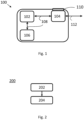
- Fig. 1 shows a first network node 100 according to an embodiment of the invention.
- the first network node 100 comprises a processor 102, a transceiver 104 and a memory 106.
- the processor 102 is coupled to the transceiver 104 and the memory 106 by communication means 108 known in the art.
- the first network node 100 may be configured for both wireless and wired communications in wireless and wired communication systems, respectively.
- the wireless communication capability may be provided with an antenna or antenna array 110 coupled to the transceiver 104, while the wired communication capability may be provided with a wired communication interface 112 coupled to the transceiver 104.
- first network node 100 is configured to perform certain actions can in this invention be understood to mean that the first network node 100 comprises suitable means, such as e.g. the processor 102 and the transceiver 104, configured to perform said actions.
- the first network node 100 is configured to transmit a get list request message 502 to a second network node 300, wherein the get list request message 502 indicates a request for a list of NF consumers subscribing to an analytics event.
- NF consumers subscribing to an analytics event can be understood to mean NF consumers which have subscribed to the analytics events from the second network node 300.
- the first network node 100 is further configured to receive a get list response message 504 from the second network node 300, wherein the get list response message 504 indicates a list of NF consumers and their respective notification status associated with the analytics event, wherein each NF consumer in the list is set to a first status in which the NF consumer receives a first notification type indicating an action is needed to be performed by the NF consumer in respect of the analytics event or to a second status in which the NF consumer receives a second notification type inhibiting an action to be performed by the NF consumer in respect of the analytics event.
- the order of the NF consumers in the list of NF consumers corresponds to the order in which the second network node 300 transmits notifications to the NF consumers.
- Fig. 2 shows a flow chart of a corresponding method 200 which may be executed in a first network node 100, such as the one shown in Fig. 1 .
- the method 200 comprises transmitting 202 a get list request message 502 to a second network node 300, wherein the get list request message 502 indicates a request for a list of NF consumers subscribing to an analytics event.
- the method 200 further comprises receiving 204 a get list response message 504 from the second network node 300, wherein the get list response message 504 indicates a list of NF consumers and their respective notification status associated with the analytics event, wherein each NF consumer in the list is set to a first status in which the NF consumer receives a first notification type indicating an action is needed to be performed by the NF consumer in respect of the analytics event or to a second status in which the NF consumer receives a second notification type inhibiting an action to be performed by the NF consumer in respect of the analytics event.
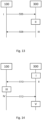
- Fig. 3 shows a second network node 300 according to an embodiment of the invention.
- the second network node 300 comprises a processor 302, a transceiver 304 and a memory 306.
- the processor 302 is coupled to the transceiver 304 and the memory 306 by communication means 308 known in the art.
- the second network node 300 may be configured for both wireless and wired communications in wireless and wired communication systems, respectively.
- the wireless communication capability may be provided with an antenna or antenna array 310 coupled to the transceiver 304, while the wired communication capability may be provided with a wired communication interface 312 coupled to the transceiver 304.
- the second network node 300 is configured to perform certain actions in this invention can be understood to mean that the second network node 300 comprises suitable means, such as e.g. the processor 302 and the transceiver 304, configured to perform said actions.
- the second network node 300 is configured to receive a get list request message 502 from a first network node 100, wherein the get list request message 502 indicates a request for a list of NF consumers subscribing to an analytics event.
- NF consumers subscribing to an analytics event can be understood to mean NF consumers which have subscribed to the analytics events from the second network node 300.
- the second network node 300 is further configured to determine a list of NF consumers and their respective notification status associated with the subscribed analytics event, wherein each NF consumer in the list is set to a first status in which the NF consumer receives a first notification type indicating an action is needed to be performed by the NF consumer in respect of the analytics event or to a second status in which the NF consumer receives a second notification type inhibiting an action to be performed by the NF consumer in respect of the analytics event. Furthermore, the second network node 300 is configured to transmit a get list response message 504 to the first network node 100, wherein the get list response message 504 indicates the determined list of NF consumers and their respective notification status associated with the subscribed analytics event.
- Fig. 4 shows a flow chart of a corresponding method 400 which may be executed in a second network node 300, such as the one shown in Fig. 3 .
- the method 400 comprises receiving 402 a get list request message 502 from a first network node 100, wherein the get list request message 502 indicates a request for a list of NF consumers subscribing to an analytics event.
- the method 400 further comprises determining 404 a list of NF consumers and their respective notification status associated with the subscribed analytics event, wherein each NF consumer in the list is set to a first status in which the NF consumer receives a first notification type indicating an action is needed to be performed by the NF consumer in respect of the analytics event or to a second status in which the NF consumer receives a second notification type inhibiting an action to be performed by the NF consumer in respect of the analytics event. Furthermore, the method 400 comprises transmitting 406 a get list response message 504 to the first network node 100, wherein the get list response message 504 indicates the determined list of NF consumers and their respective notification status associated with the subscribed analytics event.
- Fig. 5 shows a communication system 500 according to embodiments of the invention.
- the communication system 500 comprises the first network node 100 and the second network node 300 configured to communicate with each other.
- the first network node 100 and the second network node 300 may e.g. exchange information related to NF consumers and their notification status with each other.
- the second network node 300 is further configured to provide network data analytics to NF consumers such as e.g. QoS sustainability analytics.
- the communication system 500 further comprises a first NF consumer 320, a second NF consumer 340, and a third NF consumer 360.
- the NF consumers 320, 340, 360 may request and/or subscribe to the same network data analytics or different network data analytics.
- the first network node 100 may be a policy control function (PCF) and the second network node 300 may be a network data analytics function (NWDAF) as defined in the 3GPP standard.
- the NF consumers may e.g. be session management functions (SMFs), access and management functions (AMFs), policy control functions (PCFs), application functions (AFs), radio access networks (RANs), or user equipments (UEs) as defined in the 3GPP standard.
- SMFs session management functions
- AMFs access and management functions
- PCFs policy control functions
- AFs application functions
- RANs radio access networks
- UEs user equipments
- Some of those NF Consumers may not yet have a specified interface to the NWDAF.
- the RAN currently does not have a reference point to the NWDAF for requesting or subscribing to analytics.
- some NF consumers such as the AF may not have a direct interface to the NWDAF.
- the AF may instead request or subscribe to analytics via a
- the first network node 100 is a PCF and the second network node 300 is a NWDAF
- the relevant services on the first network node 100 can be exposed via the existing Npcf reference point for the PCF and the services on the second network node 300 can be exposed via the existing Nnwdaf reference point for the NWDAF.
- the NF consumers may subscribe to one or more analytics event from the second network node 300.
- An analytics event is an event that triggers the second network node 300 to send a notification to NF consumers that have subscribed to the analytics event.
- Fig. 6 shows an example of triggering of analytics events for QoS sustainability analytics.
- the analytics event is related to a threshold value for a QoS key performance indicator (KPI).
- KPI QoS key performance indicator
- An analytics event is triggered for every specific interval in which the QoS KPI crosses the threshold value in a predefined critical direction.
- the critical direction may depend on the QoS KPI. For example, throughput critical direction is when the QoS KPI is lower than the threshold value, while latency critical direction is when latency is higher than the threshold value. Over an analytics target period there may be several analytics events for a specific threshold.
- the predicted QoS KPI (illustrated with a dashed line) is compared to a first threshold Th1 during an analytics target period Ta and an analytic event is triggered when the predicted QoS KPI is lower than the first threshold Th1.
- two analytics events are triggered during the analytics target period Ta, one at a first time instance t1 and one at a second time instance t2.
- procedures for suppressing an analytics event in the notification related to the analytics event for specific NF consumers are introduced.
- the procedures are performed between the first network node 100 and the second network node 300, where the first network node 100 may be seen as a controlling function and the second network node 300 may be seen as a controlled function.
- the procedures are based on a list of NF consumers subscribing to an analytics event and their respective notification status associated with the analytics event.
- the second network node 300 may transmit or supress an analytics event in notifications associated with the analytics event to the NF consumers.
- Fig. 7 shows a flow chart of a method 700 according to embodiments of the invention.
- the method 700 may be performed in the second network node 300 with a list of NF consumers subscribing to an analytics event and their respective notification status associated with the analytics event.
- the second network node 300 detects an analytics event. Upon detecting the analytics event, the second network node 300 checks in step 704 the notification status associated with the analytics event for the NF consumer from the list of NF consumers.
- the notification status may be a first status in which the NF consumer receives a first notification type indicating an action is needed to be performed by the NF consumer in respect of the analytics event, or a second status in which the NF consumer receives a second notification type inhibiting an action to be performed by the NF consumer in respect of the analytics event. If the status of the NF consumer is the first status, the second network node 300 transmits the first notification type to the NF consumer in step 706. On the other hand, if the status of the NF consumer is the second status, the second network node 300 transmits the second notification type to the NF consumer in step 708.
- the method 700 is repeated for each NF consumer in the list of NF consumers.
- the second network node 300 transmits the first notifications and the second notifications to the NF consumers according to the list of NF consumers.
- the NF consumers set to the first status in the list of NF consumers receives the first notification type indicating an action is needed to be performed by the NF consumer in respect of the analytics event, while the NF consumers set to the second status in the list of NF consumers receives the second notification type inhibiting an action to be performed by the NF consumer in respect of the analytics event.
- the first notification type may indicate the analytics event and the second notification type may not indicate the analytics event, i.e. the analytics event is suppressed in the second notification type.
- Both the first notification type and the second notification type may further comprise additional information such as e.g. analytics information as defined in the 3GPP standard.
- the NF consumers in the list may further be set to a third status.
- Each NF consumer in the list may hence be set to the first status, the second status, or the third status.
- the NF consumer may receive the first notification type and may perform or initiate an action upon an acknowledgement of an action performed by a previous NF consumer in the list of NF consumers.
- the acknowledgement of the action performed by the previous NF consumer may be indicated in a message received by the second network node 300 from the previous NF consumer.
- the third status a sequential and conditional order of actions among the NF consumers can be achieved.
- a NF consumer set to the third status may receive the first notification type if a previous NF consumer provides an acknowledgement and may receive the second notification type if the previous NF consumer provides no acknowledgement or a negative acknowledgement.
- the NF consumers are ordered in a chronological order in the list of NF consumers for receiving notifications.
- the sequential order of notifications and actions is hence determined according to the chronological order in the list of NF consumers.
- the first status may be seen as a parallel mode, i.e. the first type of notifications is sent to all the NF consumers which are set to the first status at essentially the same time.
- Fig. 8 shows signaling between the second network node 300, a first NF consumer 320, and a second NF consumer 340 according to embodiments where the first NF consumer 320 is set to the first status and the second NF consumer 340 is set to the third status.
- the first NF consumer 320 and the second NF consumer 340 subscribes to an analytics event, respectively.
- the first NF consumer 320 and the second NF consumer 340 subscribes to the same analytics event.
- the second network node 300 derives the analytics and monitors for the analytics event.
- the second network node 300 transmits a first notification N1 to the first NF consumer 320, as shown in step III in Fig. 8 .
- the second network node 300 transmits the first notification N1 based on the status of the first NF consumer in the list of NF consumers, i.e. based on that the first NF consumer 320 is set to the first status.
- the first notification N1 indicates that an action is needed to be performed by the first NF consumer 320 in respect of the analytics event.
- the first NF consumer 320 receives the first notification N1 indicating the action that the first NF consumer 320 needs to perform. Based on the correct reception and processing by the first NF consumer 320 of the first notification N1, the first NF consumer 320 transmits an acknowledgement ACK to the second network node 320 in step IV.
- the second network node 300 Upon receiving the acknowledgement ACK from the first NF consumer 320, the second network node 300 checks the content of the acknowledgement ACK and transmits a first notification N1 to the second NF consumer 340, as shown in step V in Fig. 8 . The second network node 300 transmits the first notification N1 based on the status of the second NF consumer 340 in the list of NF consumers, i.e. based on that the second NF consumer 340 is set to the third status, and further based on the acknowledgement ACK from the first NF consumer 320.
- the first notification N1 may be of the first notification type and hence indicates that an action is needed to be performed by the second NF consumer 340 in respect of the analytics event. If the acknowledgement ACK indicates that no action is needed by any further NF consumers, the first notification N1 may be of the second notification type and hence inhibits an action to be performed by the NF consumer in respect of the analytics event.
- the second NF consumer 340 receives the first notification N1 and transmits an acknowledgement ACK to the second network node 300 based on the correct reception and processing by the second NF consumer 340 of the first notification N1, as shown in step VI in Fig. 8 .
- Fig. 9 shows notifications related to QoS sustainability analytics from the second network node 300 to a first NF consumer 320 and a second NF consumer 340 according to embodiments of the invention.
- the first NF consumer 320 and the second NF consumer 340 have subscribed to the second network node 300 for the same analytics event.
- the analytics event is based on a single threshold Th related to a QoS KPI, where an analytic event is detected when the QoS KPI is predicted to be below the threshold Th.
- Th related to a QoS KPI
- the first NF consumer 320 is supposed to react to the analytics event. Therefore, the first NF consumer 320 is set to the first status, while the second NF consumer 340 is set to the second status.
- the status and the order of the NF consumer in the list of NF consumers may be set by the first network node 100, e.g. using the signaling described with reference to Fig. 13 , or by the second network node 300 according to a policy provided by the first network node 100.
- the QoS KPI is monitored or predicted during an analytics target period Ta.
- the second network node 300 determines that the QoS KPI will be below the threshold Th. Based on the statuses of the NF consumers 320, 340 in the list of NF consumers, the second network node 300 notifies the first NF consumer 320 about the detected analytics event at the first time instance t1 but suppresses the detected analytics event in the notification to the second NF consumer 340, as illustrated in Fig. 9 where the QoS KPI reported to the first NF consumer 320 and the second NF consumer 340, respectively, is shown.
- the second network node 300 may hence send analytics such as the predicted QoS KPI to both the NF consumers 320, 340 but the notification of the detected analytics event only to the first NF consumer 320.
- Fig. 10 shows notifications related to QoS sustainability analytics from the second network node 300 to a first NF consumer 320 and a second NF consumer 340 according to embodiments of the invention where multiple thresholds are used.
- a QoS KPI is monitored or predicted against a first threshold Th1, a second threshold th2, and a third threshold Th3 during an analytics target period Ta.
- the third threshold Th3 is further configured as the standard threshold.
- an analytics event is detected when the QoS KPI is detected or predicted to cross any of the defined thresholds (Th1, Th2 or Th3) in the critical direction during the analytics target period (or time interval) Ta.
- an analytics event is detected at a first time instance t1 in Fig. 10 .
- the second network node 300 transmits a notification of the analytics event depending on the status of the NF consumers in the list of NF consumers. If the status of the NF consumer is set to the first status, the second network node 300 sends the first notification type to the NF consumer in which the analytics event is not supressed. Therefore, the QoS KPI is reported to the NF consumer to be below the third threshold Th3 and above the second threshold Th2, as it is actually predicted or detected by the second network node 300. If the status of the NF consumer is set to the second status, the analytics event is suppressed in the notification that is sent to the NF consumer by the second network node 300, i.e. the second network node 300 sends the second notification type to the NF consumer. Therefore, the QoS KPI is reported to be within the third threshold Th3 (in the critical direction), which is configured as the standard threshold.
- Fig. 11 shows signaling between the first network node 100 and the second network node 300 for establishing a list of NF consumers according to embodiments of the invention.
- the first network node 100 transmits a get list request message 502 to a second network node 300.
- the get list request message 502 indicates a request for a list of NF consumers subscribing to an analytics event.
- the analytic event may be indicated with an analytics ID, analytics filter information, and/or other information such as e.g. parameters associated with an analytics subscription.
- the analytics ID may indicate the type of analytics
- the analytics filter information may indicate information such as e.g. any one or more of QoS requirements, location information, observation period, threshold(s), and single network slice selection assistance information (S-NSSAI).
- the second network node 300 receives the get list request message 502 indicating the request for the list of NF consumers subscribing to an analytics event from the first network node 100. Based on the get list request message 502, the second network node 300 determines a list of NF consumers and their respective notification status associated with the subscribed analytics event in step II in Fig. 11 . As previously described, each NF consumer in the list may be set to the first status, the second status, or the third status. The NF consumers in the list are further ordered in a chronological order for receiving notifications. The second network node 300 may further include a unique identifier for each NF consumer in the list. The unique identifier be used by the first network node 100 to determine both the type of NF consumer and also the specific NF instance.
- step III in Fig. 11 the second network node 300 transmits a get list response message 504 to the first network node 100.
- the get list response message 504 indicates the determined list of NF consumers and their respective notification status associated with the subscribed analytics event.
- the first network node 100 receives the get list response message 504 from the second network node 300 and hence obtains the list of NF consumers and their respective notification status associated with the analytics event indicated in the get list response message 504. From the list of NF consumers the first network node 100 obtains the order in which the NF consumers receives the notifications according to their respective status.
- the list of NF consumers may comprise NF consumers who have subscribed to the second network node 300 with different analytics filter information but with overlapping analytics event sets.
- An event set may be defined as a class of analytics events that may originate during the lifetime of an analytics subscription of an NF consumer.
- Fig. 12 shows two such overlapping analytics event sets, a first event set A and a second event set B.
- Two NF consumers have subscribed to QoS sustainability analytics with the same QoS requirements, S-NSSAI, and threshold(s), but with different locations and observation periods.
- Two NF consumer has subscribed to a first event set A and one NF consumer has subscribes to a second event set B.
- the first event set A is associated with a first location L1 and a first observation period T1 and the second event set B is associated with a second location L2 and a second observation period T2.
- the second location L2 overlap the first location L1 and the second observation period T2 overlap the first observation period T1 such that the first event set A is a subset of the second event set B.
- Table 1 shows further details related to the overlapping first event set A and second event set B.
- Table 1 Event set Observation period Location NF Consumers A T1 L1 2 B T2 (excluding interval of T1) L1 1 T2 (excluding interval of T1) L2 (excluding region marked as L1) 1 T1 2 (excluding region marked as L1) 1
- the first network node 100 may modify the list of NF consumers for a specific analytics event, e.g. identified with a specific set of analytics filter information.
- the first network node 100 may for each NF consumer change the status and/or the order in the list of NF consumers.
- the first network node 100 may in embodiments not remove and/or add NF consumers from and/or to the list of NF consumers as this should be done only via the subscription mechanism between the second network node 300 and the NF consumers.
- Fig. 13 shows signaling between the first network node 100 and the second network node 300 for modifying a list of NF consumers according to embodiments of the invention.
- the first network node 100 transmits a set list request message 506 to the second network node 300.
- the set list request message 506 indicates a chronological order of NF consumers in the list for receiving notifications and their respective status.
- the set list request message 506 further indicates the status of the NF consumers in the list.
- the set list request message 506 may indicate the analytics event with an analytics ID and/or analytics filter information which allows the second network node 300 to identify the analytics event.
- the first network node 100 may compile the list of NF consumers based on a list of NF consumers and their respective notification status associated with the analytics event indicated in a get list response message 504 previously received from the second network node 300.
- the NF consumers in the set list may in this case be identified using identifiers that where retrieved from the get list response message 504.
- the second network node 300 receives the set list request message 506 from the first network node 100 and hence obtains the chronological order of NF consumers for receiving notifications and their respective status indicated in the set list request message 506. In step II in Fig. 13 , the second network node 300 determines the list of NF consumers based on the set list request message 506 and further determines an acknowledgement or a negative acknowledgement response based on the determined list of NF consumers. The second network node 300 may further determines the list of NF consumers based on the subscription received from the NF consumers.
- the second network node 300 determines a negative acknowledgement if the list of NF consumers received in the set list request message 506 is invalid, e.g. if the list of NF consumers received in the set list request message 506 does not match the list of NF consumers in the second network node 300.
- a potential reason for such a mismatch could be that one or more of the NF consumers in the list provided by the first network node 100 has cancelled its subscription, or new NF consumers had subscribed for the same or overlapping analytics event before the first network node 100 transmitted the set list request message 506.
- the second network node 300 transmits a set list response message 508 to the first network node 100.
- the set list response message 508 indicates the acknowledgement or the negative acknowledgement response to the set list request message 506.
- the first network node 100 receives the set list response message 508 from the second network node 300, wherein the set list response message 508 indicates an acknowledgement or a negative acknowledgement response to the set list request message 506. If the first network node 100 receives the negative acknowledgement response, the first network node 100 may update the NF consumers list from the second network node 300.
- a policy is used which allows the second network node 300 to update the list of NF consumers automatically.
- the policy is associated with a list of NF consumers and may be a set of rules that the second network node 300 uses to set the order of the NF consumers in the list and their respective notification status.
- Table 2 shows an example of a structure of a policy associated with a list of NF consumers. Table 2 Information name Description Category
- the first network node 100 permitted to modify in an event set Scope NF consumer type precedence Determines the order of the NF consumer in the list of NF consumers.
- Mandatory Yes Event set NF consumer type status Determines the status of the NF consumer in the list of NF consumers.
- Mandatory Yes Event set Time window The time window where the policy is applicable.
- Optional Yes Event set Location Criteria The location where the policy is applicable.
- Fig. 14 shows signaling between the first network node 100 and the second network node 300 for establishing a policy in the second network node 300 according to embodiments of the invention.
- the second network node 300 initiates the procedure for establishing the policy.
- the second network node 300 determines to establish a policy associated with a list of NF consumers.
- the second network node 300 may determine to establish the policy e.g. if the second network node 300 has not yet obtained a policy for the list of NF consumers or the policy for the list of NF consumers is no longer valid. The determination may be based on local policies in the second network node 300.
- the second network node 300 transmits a policy request message 510 to the first network node 100, wherein the policy request message 510 indicates a request for a policy associated with the list of NF consumers.
- the policy request message 510 may include at least one of analytics ID and analytics filter information. In this way, specific policies for an analytics ID or for a specific analytics event set according to the supplied analytics filter information can be requested. If the policy request message 510 does not contain analytics ID and analytics filter information a system wide policy may be requested.
- the first network node 100 receives the policy request message 510 from the second network node 300, wherein the policy request message 510 indicates the request for a policy associated with the list of NF consumers. Based on the received policy request message 510, first network node 100 establishes a policy associated with the list of NF consumers in step III in Fig. 14 .
- the first network node 100 transmits a policy response message 512 the second network node 300, wherein the policy response message 512 indicates the established policy associated with the list of NF consumers.
- the policy response message 512 may comprise a policy association ID and policy information associated with the list of NF consumers.
- the second network node 300 receives the policy response message 512 from the first network node 100, wherein the policy response message 512 indicates the policy associated with the list of NF consumers.
- the second network node 300 determines the list of NF consumers and their respective notification status based on the policy associated with the list of NF consumers.
- the second network node 300 may further consider the subscriptions received from the NF consumers when determining the list of NF consumers and their respective notification status.
- an established policy associated with a list of NF consumers may be updated using an update mechanism.
- the update mechanism may be initiated by the first network node 100 or the second network node 300.
- Fig. 15 shows signaling between the first network node 100 and the second network node 300 for updating of a policy, when the updating of the policy is initiated by the first network node 100.
- the first network node 100 determines to update a policy associated with a list of NF consumers.
- the first network node 100 may determine to update the policy based on a local decision that the policy should be modified. For example, the first network node 100 may determine to update the policy because the operator has defined new information that may trigger a policy update or because of internal triggering in the first network node 100.
- the update of the policy may e.g. update rules to determine the relative priority/order of NF consumers in receiving the analytics notification, as well as rules to determine to which status the NF consumers can be set.
- the first network node 100 transmits a policy update message 514 to the second network node 300, wherein the policy update message 514 indicates the updated policy associated with the list of NF consumers.
- the policy update message 514 may indicate the updated policy with a policy association ID and may further indicate policy information associated with the list of NF consumers.
- the second network node 300 receives the policy update message 514 from the first network node 100, wherein the policy update message 514 indicates the updated policy.
- the second network node 300 determines the list of NF consumers and their respective notification status based on the updated policy.
- the second network node 300 may further consider the subscriptions received from the NF consumers when determining the list of NF consumers and their respective notification status.
- the policy may refer to one or more analytics events and the policy update may trigger updating of all the lists in all the impacted analytics events.
- Fig. 16 shows signaling between the first network node 100 and the second network node 300 for updating of a policy, when the updating of the policy is initiated by the second network node 300.
- the second network node 300 determines to update a policy associated with a list of NF consumers.
- the second network node 300 may determine to update the policy based on a local decision that the policy should be modified. For example, the second network node 300 may determine to update the policy because a new type of NF consumer subscribes to a specific analytics event and the second network node 300 needs to know the priority for serving the new type of NF consumer in relation to other NF consumers, as well as if the relevant analytics events shall be suppressed or not for the new type of NF consumer for proper coordination.
- the second network node 300 transmits a policy update request message 516 to the first network node 100, wherein the policy update request message 516 indicates a request for an updated of the policy associated with the list of NF consumers.
- the policy update request message 516 may indicate the policy which the second network node 300 requests to be updated with a policy association ID.
- the first network node 100 receives the policy update request message 516 from the second network node 300, wherein the policy update request message 516 indicates the request for the policy update. Based on the received policy update request message 516, the first network node 100 updates the policy associated with the list of NF consumers, in step III in Fig. 16 .
- the update of the policy may e.g. trigger a change in the priority of different types of NF consumers or their status in the list of NF consumers.
- step IV in Fig. 16 the first network node 100 transmits a policy update response message 518 to the second network node 300, wherein the policy update response message 518 indicates the updated policy associated with the list of NF consumers.
- the second network node 300 receives the policy update response message 518 from the first network node 100, wherein the policy update response message 518 indicates the updated policy associated with the list of NF consumers.
- the second network node 300 deploys the policy. This may trigger updating of the list of NF consumers and their respective notification status based on the updated policy.
- the second network node 300 may further consider the subscriptions received from the NF consumers when determining the list of NF consumers and their respective notification status.
- an established policy associated with a list of NF consumers may be further be terminated.
- Fig. 17 shows signaling between the first network node 100 and the second network node 300 for termination of a policy.
- the second network node 300 determines to terminate a policy associated with a list of NF consumers.
- the second network node 300 may determine to terminate the policy e.g. based on that the first network node 100 intends to create a new policy, some analytics events, that a NF consumer type is no longer supported, or that the analytics service is no longer provided.
- the second network node 300 transmits a terminate policy request message 520 to the first network node 100, wherein the terminate policy request message 520 indicates termination of the policy associated with the list of NF consumers.
- the terminate policy request message 520 may indicate the policy which the second network node 300 requests to be terminated with a policy association ID.
- the first network node 100 receives the terminate policy request message 520 from the second network node 300, wherein the terminate policy request message 520 indicates termination of the policy associated with the list of NF consumers. Based on the received terminate policy request message 520, the first network node 100 terminates the policy associated with the list of NF consumers in step III in Fig. 17 .
- the termination may include the first network node 100 removing the policy association with the analytics event.
- the first network node 100 transmits a terminate policy response message 522 to the second network node 300, wherein the terminate policy response message 522 indicates the termination of the policy associated with the list of NF consumers.
- the terminate policy response message 522 may e.g. be an acknowledgment indicating that the termination of the policy in the first network node 100 has been successful.
- the second network node 300 receives the terminate policy response message 522 from the first network node 100, wherein the terminate policy response message 522 indicates termination of a policy associated with the list of NF consumers. Based on the received terminate policy response message 522, the second network node 300 terminates the policy associated with the list of NF consumers, in step V in Fig. 17 .
- the termination may include the second network node 300 removing the policy association for the relevant analytics events and further deleting the subscription to detected analytics events requested for that policy association.
- the first network node 100 herein may be denoted as a policy control function (PCF) or a policy control and rule function (PCRF).
- PCF policy control function
- PCRF policy control and rule function
- the PCF or PCRF may be a function configured for communication in 3GPP related LTE and LTE-Advanced, in WiMAX and its evolution, and in fifth generation wireless technologies, such as new radio (NR).
- NR new radio
- the second network node 300 herein may be denoted as a network data analytics function (NWDAF).
- NWDAF may be a function configured for communication in 3GPP related LTE and LTE-Advanced, in WiMAX and its evolution, and in fifth generation wireless technologies, such as new radio (NR).
- NR new radio
- the NF consumer herein may be denoted as a session management function (SMF), an access and management function (AMF), a policy control function (PCF), an application function (AF), a radio access networks (RAN), or a user equipment (UE).
- SMSF session management function
- AMF access and management function
- PCF policy control function
- AF application function
- RAN radio access networks
- UE user equipment
- any method according to embodiments of the invention may be implemented in a computer program, having code means, which when run by processing means causes the processing means to execute the steps of the method.
- the computer program is included in a computer readable medium of a computer program product.
- the computer readable medium may comprise essentially any memory, such as a ROM (Read-Only Memory), a PROM (Programmable Read-Only Memory), an EPROM (Erasable PROM), a Flash memory, an EEPROM (Electrically Erasable PROM), or a hard disk drive.
- embodiments of the first network node 100 and the second network node 300 comprises the necessary communication capabilities in the form of e.g., functions, means, units, elements, etc., for performing the solution.
- means, units, elements and functions comprise: processors, memory, buffers, control logic, encoders, decoders, rate matchers, de-rate matchers, mapping units, multipliers, decision units, selecting units, switches, interleavers, de-interleavers, modulators, demodulators, inputs, outputs, antennas, amplifiers, receiver units, transmitter units, DSPs, MSDs, TCM encoder, TCM decoder, power supply units, power feeders, communication interfaces, communication protocols, etc. which are suitably arranged together for performing the solution.
- the processor(s) of the first network node 100 and the second network node 300 may comprise, e.g., one or more instances of a Central Processing Unit (CPU), a processing unit, a processing circuit, a processor, an Application Specific Integrated Circuit (ASIC), a microprocessor, or other processing logic that may interpret and execute instructions.
- CPU Central Processing Unit
- ASIC Application Specific Integrated Circuit
- the expression "processor” may thus represent a processing circuitry comprising a plurality of processing circuits, such as, e.g., any, some or all of the ones mentioned above.
- the processing circuitry may further perform data processing functions for inputting, outputting, and processing of data comprising data buffering and device control functions, such as call processing control, user interface control, or the like.
Landscapes
- Engineering & Computer Science (AREA)
- Computer Networks & Wireless Communication (AREA)
- Signal Processing (AREA)
- Data Exchanges In Wide-Area Networks (AREA)
Description
- The invention relates to a first network node and a second network node for coordination of potential actions of network function consumers subscribing to analytics in relation to the analytics received. Furthermore, the invention also relates to corresponding methods and a computer program.
- 3GPP introduced a number of analytics provided by the network data analytics function (NWDAF) enabler which could be potentially received by multiple network function (NF) consumers at the same time. The NF consumers could be of the same type, e.g. multiple instances of the same NF such as a session management function (SMF). Alternatively, the NF consumers could be of different types, e.g. different NFs or entities such as an application function (AF), a SMF, or a user equipment (UE). For example, quality-of-service (QoS) sustainability analytics could potentially be consumed by multiple NF consumers such as one or multiple instances of AFs, e.g. vehicle-to-anything (V2X) application servers, or one or multiple instances of the same NF, e.g. a SMF or an AMF, or a combination of the above.
- Some of the analytics, as in the case of QoS sustainability analytics, are used to trigger a specific action in the NF consumer, as described for example in the procedure for notification on potential QoS change to the V2X application server. In this case, the NWDAF analytics, i.e. the prediction by the NWDAF, is used to trigger an action that may involve specific application adaptation in preparation for a potential upcoming QoS change. As described in QoS sustainability analytics, predictions could also be consumed by a core network NF, e.g. an AMF/SMF/PCF, or RAN e.g. master node, enhanced node B (eNB) or next generation node B (gNB), to enable some form of network reaction. For example, a predicted QoS deterioration may be compensated by the network, either by initiating dual connectivity or by implementing traffic redundancy. RAN may also consume QoS predictions to implement reaction to predicted coverage changes, e.g. switch from normal coverage to coverage enhancements. The reactions may be application led or network led.
- Further, the document C3-194062, TSG-CT refers to a description of a procedure and protocol details for abnormal behavior analytica.
- Further, the document S2-1904796, TSG-SA WG2 Meeting #132, April 8 - 12, 2019 refers to an update of abnormal behaviour related network data analytics.
- An objective of embodiments of the invention is to provide a solution which mitigates or solves the drawbacks and problems of conventional solutions.
- The above and further objectives are solved by the subject matter of the independent claims.
- Further advantageous embodiments of the invention can be found in the dependent claims.
- According to a first aspect of the invention, the above mentioned and other objectives are achieved with a first network node for a communication system according to claim 1.
- An advantage of the first network node according to the first aspect is that by introducing different status for different NF consumers, it is possible to set different views of the NF consumers related to the analytics. NF consumers that are supposed to perform an action in response to the analytics will receive the analytics as they are. NF consumers that are not supposed to react, receive the analytics "modified" in order to inhibit the action to be performed. Further, by exposing the order of the NF consumers in the list of NF consumers, the second network node exposes the order in which the NF consumers will receive the notifications. In this way, the first network node may modify the order if a different NF consumer is supposed to initiate action/act before another NF consumer, allowing the actions of the NF consumers to be coordinated.
- In an implementation form of a first network node according to the first aspect, each NF consumer in the list is set to the first status, the second status or to a third status in which the NF consumer receives the first notification type and performs the action upon an acknowledgement of an action performed by a previous NF consumer in the list of NF consumers.
- The acknowledgement of the action performed by the previous NF consumer may be indicated in a message received by the second network node from the previous NF consumer.
- An advantage with this implementation form is that it is possible to send the analytics to an NF consumer and hence trigger the action in that NF consumer only after the acknowledgment is received from a previous NF consumer. In this way, the second NF consumer action is made subordinated according to the outcome of the action of the first NF consumer. Thereby, the actions of the NF consumers can be further controlled and coordinated.
- The thm first network node can control and modify the order of the NF consumers and their status in the list of NF consumers and hence the actions of the NF consumers. Furthermore, the second network node can accept or reject any changes to the list of NF consumers.
- According to a second aspect of the invention, the above mentioned and other objectives are achieved with a second network node for a communication system according to claim 3.
- An advantage of the second network node according to the second aspect is that by introducing different status for different NF consumers, it is possible to set different views of the NF consumers related to the analytics. NF consumers that are supposed to perform an action in response to the analytics will receive the analytics as they are. NF consumers that are not supposed to react, receive the analytics "modified" in order to inhibit the action to be performed. Further, by exposing the order of the NF consumers in the list of NF consumers, the second network node exposes the order in which the NF consumers will receive the notifications. In this way, the first network node may modify the order if a different NF consumer is supposed to initiate action/act before another NF consumer, allowing the actions of the NF consumers to be coordinated.
- An advantage with this implementation form is that the NF consumers will receive notifications related to the analytics according to their status in the list of NF consumers. Thereby, the actions of the NF consumers in response to the analytics can be controlled and coordinated.
- In an implementation form of a second network node according to the second aspect, each NF consumer in the list is set to the first status, the second status or to a third status in which the NF consumer receives the first notification type and performs the action upon an acknowledgement of an action performed by a previous NF consumer in the list of NF consumers.
- An advantage with this implementation form is that it is possible to send the analytics to an NF consumer and hence trigger the action in that NF consumer only after the acknowledgment is received from a previous NF consumer. In this way, the second NF consumer action is made subordinated according to the outcome of the action of the first NF consumer. Thereby, the actions of the NF consumers can be further controlled and coordinated.
- According to a third aspect of the invention, the above mentioned and other objectives are achieved with a method for a first network node according to claim 6.
- The method according to the third aspect can be extended into implementation forms corresponding to the implementation forms of the first network node according to the first aspect. Hence, an implementation form of the method comprises the feature(s) of the corresponding implementation form of the first network node.
- The advantages of the methods according to the third aspect are the same as those for the corresponding implementation forms of the first network node according to the first aspect.
- According to a fourth aspect of the invention, the above mentioned and other objectives are achieved with a method for a second network node according to claim 7.
- The method according to the fourth aspect can be extended into implementation forms corresponding to the implementation forms of the second network node according to the second aspect. Hence, an implementation form of the method comprises the feature(s) of the corresponding implementation form of the second network node.
- The advantages of the methods according to the fourth aspect are the same as those for the corresponding implementation forms of the second network node according to the second aspect.
- The invention also relates to a computer program, characterized in program code, which when run by at least one processor causes said at least one processor to execute any method according to embodiments of the invention. Further, the invention also relates to a computer program product comprising a computer readable medium and said mentioned computer program, wherein said computer program is included in the computer readable medium, and comprises of one or more from the group: ROM (Read-Only Memory), PROM (Programmable ROM), EPROM (Erasable PROM), Flash memory, EEPROM (Electrically EPROM) and hard disk drive.
- Further applications and advantages of the embodiments of the invention will be apparent from the following detailed description.
- The appended drawings are intended to clarify and explain different embodiments of the invention, in which:
-
Fig. 1 shows a first network node according to an embodiment of the invention; -
Fig. 2 shows a method for a first network node according to an embodiment of the invention; -
Fig. 3 shows a second network node according to an embodiment of the invention; -
Fig. 4 shows a method for a second network node according to an embodiment of the invention; -
Fig. 5 shows a communication system according to an embodiment of the invention; -
Fig. 6 shows triggering of analytics events according to an embodiment of the invention; -
Fig. 7 shows a method for a second network node according to an embodiment of the invention; -
Fig. 8 shows signalling between a second network node, a first NF consumer, and a second NF consumer according to an embodiment of the invention; -
Fig. 9 shows notifications from the second network node according to an embodiment of the invention; -
Fig. 10 shows notifications from the second network node according to an embodiment of the invention; -
Fig. 11 shows signaling between the first network node and the second network node for establishing a list of NF consumers according to an embodiment of the invention; -
Fig. 12 shows overlapping analytics event sets according to an embodiment of the invention; -
Fig. 13 shows signaling between the first network node and the second network node for modifying a list of NF consumers according to an embodiment of the invention; -
Fig. 14 shows signaling between the first network node and the second network node for establishing a policy according to an embodiment of the invention; -
Fig. 15 shows signaling between the first network node and the second network node for updating a policy according to an embodiment of the invention; -
Fig. 16 shows signaling between the first network node and the second network node for updating a policy according to an embodiment of the invention; -
Fig. 17 shows signaling between the first network node and the second network node for terminating a policy according to an embodiment of the invention. - In general, application or network reactions is triggered in the NF consumer when analytics is received. When there are multiple NF consumers for the same analytics filter information and analytics target period, potentially multiple NF consumer reactions may be triggered in parallel in an uncoordinated way for the same event. In this disclosure, "coordination" of actions of NF consumers can be defined as the methods and tools that allow several NF consumers to cooperate towards a common goal.
- Uncoordinated reaction in multiple NF consumers is not always desirable, as the effect of such an incoordination may not be foreseen, with potential undesired effects both in the network and in the application.
- The invention therefore addresses the issue of coordinating multiple NF consumers subscribing to the same analytics. The coordination of multiple NF consumers according to the invention is based on an inventive list of NF consumers subscribing to an analytics event and their respective notification status associated with the analytics event. The list of NF consumers is managed by a first network node and a second network node and enables the second network node to suppress an analytics event in notifications related to the analytics event for specific NF consumers.
-
Fig. 1 shows afirst network node 100 according to an embodiment of the invention. In the embodiment shown inFig. 1 , thefirst network node 100 comprises aprocessor 102, atransceiver 104 and amemory 106. Theprocessor 102 is coupled to thetransceiver 104 and thememory 106 by communication means 108 known in the art. Thefirst network node 100 may be configured for both wireless and wired communications in wireless and wired communication systems, respectively. The wireless communication capability may be provided with an antenna orantenna array 110 coupled to thetransceiver 104, while the wired communication capability may be provided with awired communication interface 112 coupled to thetransceiver 104. - That the
first network node 100 is configured to perform certain actions can in this invention be understood to mean that thefirst network node 100 comprises suitable means, such as e.g. theprocessor 102 and thetransceiver 104, configured to perform said actions. - According to embodiments of the invention the
first network node 100 is configured to transmit a getlist request message 502 to asecond network node 300, wherein the getlist request message 502 indicates a request for a list of NF consumers subscribing to an analytics event. NF consumers subscribing to an analytics event can be understood to mean NF consumers which have subscribed to the analytics events from thesecond network node 300. Thefirst network node 100 is further configured to receive a getlist response message 504 from thesecond network node 300, wherein the getlist response message 504 indicates a list of NF consumers and their respective notification status associated with the analytics event, wherein each NF consumer in the list is set to a first status in which the NF consumer receives a first notification type indicating an action is needed to be performed by the NF consumer in respect of the analytics event or to a second status in which the NF consumer receives a second notification type inhibiting an action to be performed by the NF consumer in respect of the analytics event. The order of the NF consumers in the list of NF consumers corresponds to the order in which thesecond network node 300 transmits notifications to the NF consumers. -
Fig. 2 shows a flow chart of acorresponding method 200 which may be executed in afirst network node 100, such as the one shown inFig. 1 . Themethod 200 comprises transmitting 202 a getlist request message 502 to asecond network node 300, wherein the getlist request message 502 indicates a request for a list of NF consumers subscribing to an analytics event. Themethod 200 further comprises receiving 204 a getlist response message 504 from thesecond network node 300, wherein the getlist response message 504 indicates a list of NF consumers and their respective notification status associated with the analytics event, wherein each NF consumer in the list is set to a first status in which the NF consumer receives a first notification type indicating an action is needed to be performed by the NF consumer in respect of the analytics event or to a second status in which the NF consumer receives a second notification type inhibiting an action to be performed by the NF consumer in respect of the analytics event. -
Fig. 3 shows asecond network node 300 according to an embodiment of the invention. In the embodiment shown inFig. 3 , thesecond network node 300 comprises aprocessor 302, atransceiver 304 and amemory 306. Theprocessor 302 is coupled to thetransceiver 304 and thememory 306 by communication means 308 known in the art. Thesecond network node 300 may be configured for both wireless and wired communications in wireless and wired communication systems, respectively. The wireless communication capability may be provided with an antenna orantenna array 310 coupled to thetransceiver 304, while the wired communication capability may be provided with awired communication interface 312 coupled to thetransceiver 304. - That the
second network node 300 is configured to perform certain actions in this invention can be understood to mean that thesecond network node 300 comprises suitable means, such as e.g. theprocessor 302 and thetransceiver 304, configured to perform said actions. - According to embodiments of the invention the
second network node 300 is configured to receive a getlist request message 502 from afirst network node 100, wherein the getlist request message 502 indicates a request for a list of NF consumers subscribing to an analytics event. NF consumers subscribing to an analytics event can be understood to mean NF consumers which have subscribed to the analytics events from thesecond network node 300. Thesecond network node 300 is further configured to determine a list of NF consumers and their respective notification status associated with the subscribed analytics event, wherein each NF consumer in the list is set to a first status in which the NF consumer receives a first notification type indicating an action is needed to be performed by the NF consumer in respect of the analytics event or to a second status in which the NF consumer receives a second notification type inhibiting an action to be performed by the NF consumer in respect of the analytics event. Furthermore, thesecond network node 300 is configured to transmit a getlist response message 504 to thefirst network node 100, wherein the getlist response message 504 indicates the determined list of NF consumers and their respective notification status associated with the subscribed analytics event. -
Fig. 4 shows a flow chart of acorresponding method 400 which may be executed in asecond network node 300, such as the one shown inFig. 3 . Themethod 400 comprises receiving 402 a getlist request message 502 from afirst network node 100, wherein the getlist request message 502 indicates a request for a list of NF consumers subscribing to an analytics event. Themethod 400 further comprises determining 404 a list of NF consumers and their respective notification status associated with the subscribed analytics event, wherein each NF consumer in the list is set to a first status in which the NF consumer receives a first notification type indicating an action is needed to be performed by the NF consumer in respect of the analytics event or to a second status in which the NF consumer receives a second notification type inhibiting an action to be performed by the NF consumer in respect of the analytics event. Furthermore, themethod 400 comprises transmitting 406 a getlist response message 504 to thefirst network node 100, wherein the getlist response message 504 indicates the determined list of NF consumers and their respective notification status associated with the subscribed analytics event. -
Fig. 5 shows acommunication system 500 according to embodiments of the invention. Thecommunication system 500 comprises thefirst network node 100 and thesecond network node 300 configured to communicate with each other. Thefirst network node 100 and thesecond network node 300 may e.g. exchange information related to NF consumers and their notification status with each other. Thesecond network node 300 is further configured to provide network data analytics to NF consumers such as e.g. QoS sustainability analytics. In the embodiment shown inFig. 5 , thecommunication system 500 further comprises afirst NF consumer 320, asecond NF consumer 340, and athird NF consumer 360. TheNF consumers - In embodiments, the
first network node 100 may be a policy control function (PCF) and thesecond network node 300 may be a network data analytics function (NWDAF) as defined in the 3GPP standard. In this case, the NF consumers may e.g. be session management functions (SMFs), access and management functions (AMFs), policy control functions (PCFs), application functions (AFs), radio access networks (RANs), or user equipments (UEs) as defined in the 3GPP standard. Some of those NF Consumers may not yet have a specified interface to the NWDAF. For example, the RAN currently does not have a reference point to the NWDAF for requesting or subscribing to analytics. Furthermore, some NF consumers such as the AF may not have a direct interface to the NWDAF. The AF may instead request or subscribe to analytics via a network exposure function (NEF). - When the
first network node 100 is a PCF and thesecond network node 300 is a NWDAF, there is no need of any additional interface/reference point for the solution according to the invention. The relevant services on thefirst network node 100 can be exposed via the existing Npcf reference point for the PCF and the services on thesecond network node 300 can be exposed via the existing Nnwdaf reference point for the NWDAF. - The NF consumers may subscribe to one or more analytics event from the
second network node 300. An analytics event is an event that triggers thesecond network node 300 to send a notification to NF consumers that have subscribed to the analytics event.Fig. 6 shows an example of triggering of analytics events for QoS sustainability analytics. The analytics event is related to a threshold value for a QoS key performance indicator (KPI). An analytics event is triggered for every specific interval in which the QoS KPI crosses the threshold value in a predefined critical direction. The critical direction may depend on the QoS KPI. For example, throughput critical direction is when the QoS KPI is lower than the threshold value, while latency critical direction is when latency is higher than the threshold value. Over an analytics target period there may be several analytics events for a specific threshold. - With reference to
Fig. 6 , the predicted QoS KPI (illustrated with a dashed line) is compared to a first threshold Th1 during an analytics target period Ta and an analytic event is triggered when the predicted QoS KPI is lower than the first threshold Th1. Thus, two analytics events are triggered during the analytics target period Ta, one at a first time instance t1 and one at a second time instance t2. - According to embodiments of the invention procedures for suppressing an analytics event in the notification related to the analytics event for specific NF consumers are introduced. The procedures are performed between the
first network node 100 and thesecond network node 300, where thefirst network node 100 may be seen as a controlling function and thesecond network node 300 may be seen as a controlled function. The procedures are based on a list of NF consumers subscribing to an analytics event and their respective notification status associated with the analytics event. Depending on the order and status of the NF consumers in the list of NF consumers, thesecond network node 300 may transmit or supress an analytics event in notifications associated with the analytics event to the NF consumers. -
Fig. 7 shows a flow chart of amethod 700 according to embodiments of the invention. Themethod 700 may be performed in thesecond network node 300 with a list of NF consumers subscribing to an analytics event and their respective notification status associated with the analytics event. - In
step 702, thesecond network node 300 detects an analytics event. Upon detecting the analytics event, thesecond network node 300 checks instep 704 the notification status associated with the analytics event for the NF consumer from the list of NF consumers. The notification status may be a first status in which the NF consumer receives a first notification type indicating an action is needed to be performed by the NF consumer in respect of the analytics event, or a second status in which the NF consumer receives a second notification type inhibiting an action to be performed by the NF consumer in respect of the analytics event. If the status of the NF consumer is the first status, thesecond network node 300 transmits the first notification type to the NF consumer instep 706. On the other hand, if the status of the NF consumer is the second status, thesecond network node 300 transmits the second notification type to the NF consumer instep 708. - The
method 700 is repeated for each NF consumer in the list of NF consumers. Thus, thesecond network node 300 transmits the first notifications and the second notifications to the NF consumers according to the list of NF consumers. In this way, the NF consumers set to the first status in the list of NF consumers receives the first notification type indicating an action is needed to be performed by the NF consumer in respect of the analytics event, while the NF consumers set to the second status in the list of NF consumers receives the second notification type inhibiting an action to be performed by the NF consumer in respect of the analytics event. - In embodiments, the first notification type may indicate the analytics event and the second notification type may not indicate the analytics event, i.e. the analytics event is suppressed in the second notification type. Both the first notification type and the second notification type may further comprise additional information such as e.g. analytics information as defined in the 3GPP standard.
- According to embodiments of the invention the NF consumers in the list may further be set to a third status. Each NF consumer in the list may hence be set to the first status, the second status, or the third status. In the third status the NF consumer may receive the first notification type and may perform or initiate an action upon an acknowledgement of an action performed by a previous NF consumer in the list of NF consumers. The acknowledgement of the action performed by the previous NF consumer may be indicated in a message received by the
second network node 300 from the previous NF consumer. With the third status a sequential and conditional order of actions among the NF consumers can be achieved. For example, a NF consumer set to the third status may receive the first notification type if a previous NF consumer provides an acknowledgement and may receive the second notification type if the previous NF consumer provides no acknowledgement or a negative acknowledgement. - In embodiments, the NF consumers are ordered in a chronological order in the list of NF consumers for receiving notifications. The sequential order of notifications and actions is hence determined according to the chronological order in the list of NF consumers. In contrast the first status may be seen as a parallel mode, i.e. the first type of notifications is sent to all the NF consumers which are set to the first status at essentially the same time.
-
Fig. 8 shows signaling between thesecond network node 300, afirst NF consumer 320, and asecond NF consumer 340 according to embodiments where thefirst NF consumer 320 is set to the first status and thesecond NF consumer 340 is set to the third status. In step Ia and Ib inFig. 8 , thefirst NF consumer 320 and thesecond NF consumer 340 subscribes to an analytics event, respectively. Thefirst NF consumer 320 and thesecond NF consumer 340 subscribes to the same analytics event. - In step II in
Fig. 8 , thesecond network node 300 derives the analytics and monitors for the analytics event. Upon detecting an analytics event, thesecond network node 300 transmits a first notification N1 to thefirst NF consumer 320, as shown in step III inFig. 8 . Thesecond network node 300 transmits the first notification N1 based on the status of the first NF consumer in the list of NF consumers, i.e. based on that thefirst NF consumer 320 is set to the first status. The first notification N1 indicates that an action is needed to be performed by thefirst NF consumer 320 in respect of the analytics event. - The
first NF consumer 320 receives the first notification N1 indicating the action that thefirst NF consumer 320 needs to perform. Based on the correct reception and processing by thefirst NF consumer 320 of the first notification N1, thefirst NF consumer 320 transmits an acknowledgement ACK to thesecond network node 320 in step IV. - Upon receiving the acknowledgement ACK from the
first NF consumer 320, thesecond network node 300 checks the content of the acknowledgement ACK and transmits a first notification N1 to thesecond NF consumer 340, as shown in step V inFig. 8 . Thesecond network node 300 transmits the first notification N1 based on the status of thesecond NF consumer 340 in the list of NF consumers, i.e. based on that thesecond NF consumer 340 is set to the third status, and further based on the acknowledgement ACK from thefirst NF consumer 320. If the acknowledgement ACK indicates that an action is needed by a further NF consumer, the first notification N1 may be of the first notification type and hence indicates that an action is needed to be performed by thesecond NF consumer 340 in respect of the analytics event. If the acknowledgement ACK indicates that no action is needed by any further NF consumers, the first notification N1 may be of the second notification type and hence inhibits an action to be performed by the NF consumer in respect of the analytics event. - In the same way as for the
first NF consumer 320, thesecond NF consumer 340 receives the first notification N1 and transmits an acknowledgement ACK to thesecond network node 300 based on the correct reception and processing by thesecond NF consumer 340 of the first notification N1, as shown in step VI inFig. 8 . -
Fig. 9 shows notifications related to QoS sustainability analytics from thesecond network node 300 to afirst NF consumer 320 and asecond NF consumer 340 according to embodiments of the invention. Thefirst NF consumer 320 and thesecond NF consumer 340 have subscribed to thesecond network node 300 for the same analytics event. In the embodiment shown inFig. 9 , the analytics event is based on a single threshold Th related to a QoS KPI, where an analytic event is detected when the QoS KPI is predicted to be below the threshold Th. However, only thefirst NF consumer 320 is supposed to react to the analytics event. Therefore, thefirst NF consumer 320 is set to the first status, while thesecond NF consumer 340 is set to the second status. The status and the order of the NF consumer in the list of NF consumers may be set by thefirst network node 100, e.g. using the signaling described with reference toFig. 13 , or by thesecond network node 300 according to a policy provided by thefirst network node 100. - With reference to
Fig. 9 , the QoS KPI is monitored or predicted during an analytics target period Ta. At a first time instance t1, thesecond network node 300 determines that the QoS KPI will be below the threshold Th. Based on the statuses of theNF consumers second network node 300 notifies thefirst NF consumer 320 about the detected analytics event at the first time instance t1 but suppresses the detected analytics event in the notification to thesecond NF consumer 340, as illustrated inFig. 9 where the QoS KPI reported to thefirst NF consumer 320 and thesecond NF consumer 340, respectively, is shown. Thesecond network node 300 may hence send analytics such as the predicted QoS KPI to both theNF consumers first NF consumer 320. -
Fig. 10 shows notifications related to QoS sustainability analytics from thesecond network node 300 to afirst NF consumer 320 and asecond NF consumer 340 according to embodiments of the invention where multiple thresholds are used. A QoS KPI is monitored or predicted against a first threshold Th1, a second threshold th2, and a third threshold Th3 during an analytics target period Ta. The third threshold Th3 is further configured as the standard threshold. InFig. 10 , an analytics event is detected when the QoS KPI is detected or predicted to cross any of the defined thresholds (Th1, Th2 or Th3) in the critical direction during the analytics target period (or time interval) Ta. Thus, an analytics event is detected at a first time instance t1 inFig. 10 . Thesecond network node 300 transmits a notification of the analytics event depending on the status of the NF consumers in the list of NF consumers. If the status of the NF consumer is set to the first status, thesecond network node 300 sends the first notification type to the NF consumer in which the analytics event is not supressed. Therefore, the QoS KPI is reported to the NF consumer to be below the third threshold Th3 and above the second threshold Th2, as it is actually predicted or detected by thesecond network node 300. If the status of the NF consumer is set to the second status, the analytics event is suppressed in the notification that is sent to the NF consumer by thesecond network node 300, i.e. thesecond network node 300 sends the second notification type to the NF consumer. Therefore, the QoS KPI is reported to be within the third threshold Th3 (in the critical direction), which is configured as the standard threshold. - Procedures for establishing and updating the list of NF consumers between the
first network node 100 and thesecond network node 300 are introduced.Fig. 11 shows signaling between thefirst network node 100 and thesecond network node 300 for establishing a list of NF consumers according to embodiments of the invention. - In step I in
Fig. 11 , thefirst network node 100 transmits a getlist request message 502 to asecond network node 300. The getlist request message 502 indicates a request for a list of NF consumers subscribing to an analytics event. The analytic event may be indicated with an analytics ID, analytics filter information, and/or other information such as e.g. parameters associated with an analytics subscription. The analytics ID may indicate the type of analytics In case of QoS sustainability analytics, the analytics filter information may indicate information such as e.g. any one or more of QoS requirements, location information, observation period, threshold(s), and single network slice selection assistance information (S-NSSAI). - The
second network node 300 receives the getlist request message 502 indicating the request for the list of NF consumers subscribing to an analytics event from thefirst network node 100. Based on the getlist request message 502, thesecond network node 300 determines a list of NF consumers and their respective notification status associated with the subscribed analytics event in step II inFig. 11 . As previously described, each NF consumer in the list may be set to the first status, the second status, or the third status. The NF consumers in the list are further ordered in a chronological order for receiving notifications. Thesecond network node 300 may further include a unique identifier for each NF consumer in the list. The unique identifier be used by thefirst network node 100 to determine both the type of NF consumer and also the specific NF instance. - In step III in
Fig. 11 , thesecond network node 300 transmits a getlist response message 504 to thefirst network node 100. The getlist response message 504 indicates the determined list of NF consumers and their respective notification status associated with the subscribed analytics event. - The
first network node 100 receives the getlist response message 504 from thesecond network node 300 and hence obtains the list of NF consumers and their respective notification status associated with the analytics event indicated in the getlist response message 504. From the list of NF consumers thefirst network node 100 obtains the order in which the NF consumers receives the notifications according to their respective status. - In embodiments the list of NF consumers may comprise NF consumers who have subscribed to the
second network node 300 with different analytics filter information but with overlapping analytics event sets. An event set may be defined as a class of analytics events that may originate during the lifetime of an analytics subscription of an NF consumer.Fig. 12 shows two such overlapping analytics event sets, a first event set A and a second event set B. Two NF consumers have subscribed to QoS sustainability analytics with the same QoS requirements, S-NSSAI, and threshold(s), but with different locations and observation periods. Two NF consumer has subscribed to a first event set A and one NF consumer has subscribes to a second event set B. The first event set A is associated with a first location L1 and a first observation period T1 and the second event set B is associated with a second location L2 and a second observation period T2. With reference toFig. 12 , the second location L2 overlap the first location L1 and the second observation period T2 overlap the first observation period T1 such that the first event set A is a subset of the second event set B. Table 1 shows further details related to the overlapping first event set A and second event set B.Table 1 Event set Observation period Location NF Consumers A T1 L1 2 B T2 (excluding interval of T1) L1 1 T2 (excluding interval of T1) L2 (excluding region marked as L1) 1 T1 2 (excluding region marked as L1) 1 - According to embodiments of the invention the
first network node 100 may modify the list of NF consumers for a specific analytics event, e.g. identified with a specific set of analytics filter information. Thefirst network node 100 may for each NF consumer change the status and/or the order in the list of NF consumers. However, thefirst network node 100 may in embodiments not remove and/or add NF consumers from and/or to the list of NF consumers as this should be done only via the subscription mechanism between thesecond network node 300 and the NF consumers. -
Fig. 13 shows signaling between thefirst network node 100 and thesecond network node 300 for modifying a list of NF consumers according to embodiments of the invention. In step I inFig. 13 , thefirst network node 100 transmits a setlist request message 506 to thesecond network node 300. The setlist request message 506 indicates a chronological order of NF consumers in the list for receiving notifications and their respective status. The setlist request message 506 further indicates the status of the NF consumers in the list. As for the getlist request message 502, the setlist request message 506 may indicate the analytics event with an analytics ID and/or analytics filter information which allows thesecond network node 300 to identify the analytics event. In embodiments, thefirst network node 100 may compile the list of NF consumers based on a list of NF consumers and their respective notification status associated with the analytics event indicated in a getlist response message 504 previously received from thesecond network node 300. The NF consumers in the set list may in this case be identified using identifiers that where retrieved from the getlist response message 504. - The
second network node 300 receives the setlist request message 506 from thefirst network node 100 and hence obtains the chronological order of NF consumers for receiving notifications and their respective status indicated in the setlist request message 506. In step II inFig. 13 , thesecond network node 300 determines the list of NF consumers based on the setlist request message 506 and further determines an acknowledgement or a negative acknowledgement response based on the determined list of NF consumers. Thesecond network node 300 may further determines the list of NF consumers based on the subscription received from the NF consumers. - The
second network node 300 determines a negative acknowledgement if the list of NF consumers received in the setlist request message 506 is invalid, e.g. if the list of NF consumers received in the setlist request message 506 does not match the list of NF consumers in thesecond network node 300. A potential reason for such a mismatch could be that one or more of the NF consumers in the list provided by thefirst network node 100 has cancelled its subscription, or new NF consumers had subscribed for the same or overlapping analytics event before thefirst network node 100 transmitted the setlist request message 506. - In step III in
Fig. 13 , thesecond network node 300 transmits a setlist response message 508 to thefirst network node 100. The setlist response message 508 indicates the acknowledgement or the negative acknowledgement response to the setlist request message 506. Thus, thefirst network node 100 receives the setlist response message 508 from thesecond network node 300, wherein the setlist response message 508 indicates an acknowledgement or a negative acknowledgement response to the setlist request message 506. If thefirst network node 100 receives the negative acknowledgement response, thefirst network node 100 may update the NF consumers list from thesecond network node 300. - According to embodiments of the invention a policy is used which allows the
second network node 300 to update the list of NF consumers automatically. The policy is associated with a list of NF consumers and may be a set of rules that thesecond network node 300 uses to set the order of the NF consumers in the list and their respective notification status. Table 2 shows an example of a structure of a policy associated with a list of NF consumers.Table 2 Information name Description Category The first network node 100 permitted to modify in an event setScope NF consumer type precedence Determines the order of the NF consumer in the list of NF consumers. Mandatory Yes Event set NF consumer type status Determines the status of the NF consumer in the list of NF consumers. Mandatory Yes Event set Time window The time window where the policy is applicable. Optional Yes Event set Location Criteria The location where the policy is applicable. Optional Yes Event set -
Fig. 14 shows signaling between thefirst network node 100 and thesecond network node 300 for establishing a policy in thesecond network node 300 according to embodiments of the invention. In the embodiment shown inFig. 14 , thesecond network node 300 initiates the procedure for establishing the policy. - In step I in
Fig. 14 , thesecond network node 300 determines to establish a policy associated with a list of NF consumers. Thesecond network node 300 may determine to establish the policy e.g. if thesecond network node 300 has not yet obtained a policy for the list of NF consumers or the policy for the list of NF consumers is no longer valid. The determination may be based on local policies in thesecond network node 300. - In step II in
Fig. 14 , thesecond network node 300 transmits apolicy request message 510 to thefirst network node 100, wherein thepolicy request message 510 indicates a request for a policy associated with the list of NF consumers. In embodiments, thepolicy request message 510 may include at least one of analytics ID and analytics filter information. In this way, specific policies for an analytics ID or for a specific analytics event set according to the supplied analytics filter information can be requested. If thepolicy request message 510 does not contain analytics ID and analytics filter information a system wide policy may be requested. - The
first network node 100 receives thepolicy request message 510 from thesecond network node 300, wherein thepolicy request message 510 indicates the request for a policy associated with the list of NF consumers. Based on the receivedpolicy request message 510,first network node 100 establishes a policy associated with the list of NF consumers in step III inFig. 14 . - In step IV in
Fig. 14 , thefirst network node 100 transmits apolicy response message 512 thesecond network node 300, wherein thepolicy response message 512 indicates the established policy associated with the list of NF consumers. Thepolicy response message 512 may comprise a policy association ID and policy information associated with the list of NF consumers. - The
second network node 300 receives thepolicy response message 512 from thefirst network node 100, wherein thepolicy response message 512 indicates the policy associated with the list of NF consumers. In step V inFig. 14 , thesecond network node 300 determines the list of NF consumers and their respective notification status based on the policy associated with the list of NF consumers. Thesecond network node 300 may further consider the subscriptions received from the NF consumers when determining the list of NF consumers and their respective notification status. - In embodiments, an established policy associated with a list of NF consumers may be updated using an update mechanism. The update mechanism may be initiated by the
first network node 100 or thesecond network node 300. -
Fig. 15 shows signaling between thefirst network node 100 and thesecond network node 300 for updating of a policy, when the updating of the policy is initiated by thefirst network node 100. In step I inFig. 15 , thefirst network node 100 determines to update a policy associated with a list of NF consumers. Thefirst network node 100 may determine to update the policy based on a local decision that the policy should be modified. For example, thefirst network node 100 may determine to update the policy because the operator has defined new information that may trigger a policy update or because of internal triggering in thefirst network node 100. The update of the policy may e.g. update rules to determine the relative priority/order of NF consumers in receiving the analytics notification, as well as rules to determine to which status the NF consumers can be set. - In step II in
Fig. 15 , thefirst network node 100 transmits apolicy update message 514 to thesecond network node 300, wherein thepolicy update message 514 indicates the updated policy associated with the list of NF consumers. Thepolicy update message 514 may indicate the updated policy with a policy association ID and may further indicate policy information associated with the list of NF consumers. - The
second network node 300 receives thepolicy update message 514 from thefirst network node 100, wherein thepolicy update message 514 indicates the updated policy. In step III inFig. 15 , thesecond network node 300 determines the list of NF consumers and their respective notification status based on the updated policy. Thesecond network node 300 may further consider the subscriptions received from the NF consumers when determining the list of NF consumers and their respective notification status. The policy may refer to one or more analytics events and the policy update may trigger updating of all the lists in all the impacted analytics events. -
Fig. 16 shows signaling between thefirst network node 100 and thesecond network node 300 for updating of a policy, when the updating of the policy is initiated by thesecond network node 300. In step I inFig. 16 , thesecond network node 300 determines to update a policy associated with a list of NF consumers. Thesecond network node 300 may determine to update the policy based on a local decision that the policy should be modified. For example, thesecond network node 300 may determine to update the policy because a new type of NF consumer subscribes to a specific analytics event and thesecond network node 300 needs to know the priority for serving the new type of NF consumer in relation to other NF consumers, as well as if the relevant analytics events shall be suppressed or not for the new type of NF consumer for proper coordination. - In step II in
Fig. 16 , thesecond network node 300 transmits a policyupdate request message 516 to thefirst network node 100, wherein the policyupdate request message 516 indicates a request for an updated of the policy associated with the list of NF consumers. The policyupdate request message 516 may indicate the policy which thesecond network node 300 requests to be updated with a policy association ID. - The
first network node 100 receives the policyupdate request message 516 from thesecond network node 300, wherein the policyupdate request message 516 indicates the request for the policy update. Based on the received policyupdate request message 516, thefirst network node 100 updates the policy associated with the list of NF consumers, in step III inFig. 16 . The update of the policy may e.g. trigger a change in the priority of different types of NF consumers or their status in the list of NF consumers. - In step IV in
Fig. 16 , thefirst network node 100 transmits a policyupdate response message 518 to thesecond network node 300, wherein the policyupdate response message 518 indicates the updated policy associated with the list of NF consumers. - The
second network node 300 receives the policyupdate response message 518 from thefirst network node 100, wherein the policyupdate response message 518 indicates the updated policy associated with the list of NF consumers. In step V inFig. 16 , thesecond network node 300 deploys the policy. This may trigger updating of the list of NF consumers and their respective notification status based on the updated policy. Thesecond network node 300 may further consider the subscriptions received from the NF consumers when determining the list of NF consumers and their respective notification status. - According to embodiments of the invention an established policy associated with a list of NF consumers may be further be terminated.
Fig. 17 shows signaling between thefirst network node 100 and thesecond network node 300 for termination of a policy. - In step I in
Fig. 17 , thesecond network node 300 determines to terminate a policy associated with a list of NF consumers. Thesecond network node 300 may determine to terminate the policy e.g. based on that thefirst network node 100 intends to create a new policy, some analytics events, that a NF consumer type is no longer supported, or that the analytics service is no longer provided. - In step II in
Fig. 17 , thesecond network node 300 transmits a terminatepolicy request message 520 to thefirst network node 100, wherein the terminatepolicy request message 520 indicates termination of the policy associated with the list of NF consumers. The terminatepolicy request message 520 may indicate the policy which thesecond network node 300 requests to be terminated with a policy association ID. - The
first network node 100 receives the terminatepolicy request message 520 from thesecond network node 300, wherein the terminatepolicy request message 520 indicates termination of the policy associated with the list of NF consumers. Based on the received terminatepolicy request message 520, thefirst network node 100 terminates the policy associated with the list of NF consumers in step III inFig. 17 . The termination may include thefirst network node 100 removing the policy association with the analytics event. - In step IV in
Fig. 17 , thefirst network node 100 transmits a terminatepolicy response message 522 to thesecond network node 300, wherein the terminatepolicy response message 522 indicates the termination of the policy associated with the list of NF consumers. The terminatepolicy response message 522 may e.g. be an acknowledgment indicating that the termination of the policy in thefirst network node 100 has been successful. - The
second network node 300 receives the terminatepolicy response message 522 from thefirst network node 100, wherein the terminatepolicy response message 522 indicates termination of a policy associated with the list of NF consumers. Based on the received terminatepolicy response message 522, thesecond network node 300 terminates the policy associated with the list of NF consumers, in step V inFig. 17 . The termination may include thesecond network node 300 removing the policy association for the relevant analytics events and further deleting the subscription to detected analytics events requested for that policy association. - The
first network node 100 herein may be denoted as a policy control function (PCF) or a policy control and rule function (PCRF). The PCF or PCRF may be a function configured for communication in 3GPP related LTE and LTE-Advanced, in WiMAX and its evolution, and in fifth generation wireless technologies, such as new radio (NR). - The
second network node 300 herein may be denoted as a network data analytics function (NWDAF). The NWDAF may be a function configured for communication in 3GPP related LTE and LTE-Advanced, in WiMAX and its evolution, and in fifth generation wireless technologies, such as new radio (NR). - The NF consumer herein may be denoted as a session management function (SMF), an access and management function (AMF), a policy control function (PCF), an application function (AF), a radio access networks (RAN), or a user equipment (UE). These functions or nodes may be configured for communication in 3GPP related LTE and LTE-Advanced, in WiMAX and its evolution, and in fifth generation wireless technologies, such as new radio (NR).
- Furthermore, any method according to embodiments of the invention may be implemented in a computer program, having code means, which when run by processing means causes the processing means to execute the steps of the method. The computer program is included in a computer readable medium of a computer program product. The computer readable medium may comprise essentially any memory, such as a ROM (Read-Only Memory), a PROM (Programmable Read-Only Memory), an EPROM (Erasable PROM), a Flash memory, an EEPROM (Electrically Erasable PROM), or a hard disk drive.
- Moreover, it is realized by the skilled person that embodiments of the
first network node 100 and thesecond network node 300 comprises the necessary communication capabilities in the form of e.g., functions, means, units, elements, etc., for performing the solution. Examples of other such means, units, elements and functions comprise: processors, memory, buffers, control logic, encoders, decoders, rate matchers, de-rate matchers, mapping units, multipliers, decision units, selecting units, switches, interleavers, de-interleavers, modulators, demodulators, inputs, outputs, antennas, amplifiers, receiver units, transmitter units, DSPs, MSDs, TCM encoder, TCM decoder, power supply units, power feeders, communication interfaces, communication protocols, etc. which are suitably arranged together for performing the solution. - Especially, the processor(s) of the
first network node 100 and thesecond network node 300 may comprise, e.g., one or more instances of a Central Processing Unit (CPU), a processing unit, a processing circuit, a processor, an Application Specific Integrated Circuit (ASIC), a microprocessor, or other processing logic that may interpret and execute instructions. The expression "processor" may thus represent a processing circuitry comprising a plurality of processing circuits, such as, e.g., any, some or all of the ones mentioned above. The processing circuitry may further perform data processing functions for inputting, outputting, and processing of data comprising data buffering and device control functions, such as call processing control, user interface control, or the like. - Finally, it should be understood that the invention is not limited to the embodiments described above, but also relates to and incorporates all embodiments within the scope of the appended independent claims.
Claims (7)
- A first network node (100) for a communication system (500), the communication system (500) comprising the first network node (100), a second network node (300), and network function, NF, consumers, the first network node (100) being configured to:a.) transmit a get list request message (502) to the second network node (300), wherein the get list request message (502) indicates a request for a list of the NF consumers subscribing to an analytics event;b.) receive a get list response message (504) from the second network node (300), wherein the get list response message (504) indicates the list of the NF consumers and their respective notification status associated with the analytics event, wherein each NF consumer in the list is set to a first status in which the NF consumer receives, from the second network node (300), a first notification of a first notification type indicating an action is needed to be performed by the NF consumer in respect of the analytics event or to a second status in which the NF consumer receives, from the second network node (300), a second notification of a second notification type inhibiting an action to be performed by the NF consumer in respect of the analytics event,c.) transmit a set list request message (506) to the second network node (300), wherein the set list request message (506) indicates a chronological order in which NF consumers of an updated list of NF consumers receive the first and second notifications from the second network node (300) and indicates for each NF consumer of the updated list of NF consumers its respective notification status among the first status and the second status;d.) receive a set list response message (508) from the second network node (300), wherein the set list response message (508) indicates an acknowledgement if the updated list of NF consumers matches the list of the NF consumers indicated by the get list response message (504) and the set list response message (508) indicates a negative acknowledgement if the updated list of NF consumers does not match the list of the NF consumers indicated by the get list response message (504).
- The first network node (100) according to claim 1, wherein each NF consumer in the list is set to the first status, the second status or to a third status in which the NF consumer receives the first notification type and performs the action upon an acknowledgement of an action performed by a previous NF consumer in the list of the NF consumers.
- A second network node (300) for a communication system (500), the communication system (500) comprising a first network node (100), the second network node (300), and network function, NF, consumers, the second network node (300) being configured to:a.) receive a get list request message (502) from the first network node (100), wherein the get list request message (502) indicates a request for a list of the NF consumers subscribing to an analytics event;b.) determine the list of the NF consumers and their respective notification status associated with the subscribed analytics event, wherein each NF consumer in the list is set to a first status in which the NF consumer receives, from the second network node (300), a first notification of a first notification type indicating an action is needed to be performed by the NF consumer in respect of the analytics event or to a second status in which the NF consumer receives, from the second network node (300), a second notification of a second notification type inhibiting an action to be performed by the NF consumer in respect of the analytics event;c.) transmit a get list response message (504) to the first network node (100), wherein the get list response message (504) indicates the determined list of the NF consumers and their respective notification status associated with the subscribed analytics event,d.) receive a set list request message (506) from the first network node (100), wherein the set list request message (506) indicates a chronological order in which NF consumers of an updated list of NF consumers receive the first and second notifications from the second network node (300) and indicates for each NF consumer of the updated list of NF consumers its respective notification status among the first status and the second status;e.) determine the updated list of NF consumers based on the received set list request message (506);f.) determine an acknowledgement if the updated list of NF consumers matches the list of the NF consumers indicated by the get list response message (504) and determine a negative acknowledgement if the updated list of NF consumers does not match the list of NF consumers indicated by the get list response message (504);g.) transmit a set list response message (508) to the first network node (100), wherein the set list response message (508) indicates the acknowledgement or the negative acknowledgement, and transmit, according to the chronological order, to each NF consumer of the NF consumers in the updated list of NF consumers, either the first notification or the second notification according to its notification status as contained in the set list request message (506).
- The second network node (300) according to claim 3, wherein each NF consumer in the list is set to the first status, the second status or to a third status in which the NF consumer receives the first notification type and performs the action upon an acknowledgement of an action performed by a previous NF consumer in the list of the NF consumers.
- A communication system comprising a first network node according to any claims of 1 - 2, and a second network node according to any claims of 3 - 4.
- A communication method performed by a first network node (100) of a communication system (500), the communication system (500) comprising the first network node (100), a second network node (300), and network function, NF, consumers, the method comprising the steps of:a.) transmitting a get list request message (502) to the second network node (300), wherein the get list request message (502) indicates a request for a list of the NF consumers subscribing to an analytics event;b.) receiving a get list response message (504) from the second network node (300), wherein the get list response message (504) indicates the list of the NF consumers and their respective notification status associated with the analytics event, wherein each NF consumer in the list is set to a first status in which the NF consumer receives, from the second network node (300), a first notification of a first notification type indicating an action is needed to be performed by the NF consumer in respect of the analytics event or to a second status in which the NF consumer receives, from the second network node (300), a second notification of a second notification type inhibiting an action to be performed by the NF consumer in respect of the analytics event,c.) transmitting a set list request message (506) to the second network node (300), wherein the set list request message (506) indicates a chronological order in which NF consumers of an updated list of NF consumers receive the first and second notifications from the second network node (300) and indicates for each NF consumer of the updated list of NF consumers its respective notification status among the first status and the second status;d.) receiving a set list response message (508) from the second network node (300), wherein the set list response message (508) indicates an acknowledgement if the updated list of NF consumers matches the list of the NF consumers indicated by the get list response message (504) and the set list response message (508) indicates a negative acknowledgement if the updated list of NF consumers does not match the list of the NF consumers indicated by the get list response message (504).
- A communication method performed by a second network node (300) of a communication system (500), the communication system (500) comprising a first network node (100), the second network node (300), and network function, NF, consumers, the method comprising the steps of:a.) receiving a get list request message (502) from the first network node (100), wherein the get list request message (502) indicates a request for a list of the NF consumers subscribing to an analytics event;b.) determining the list of the NF consumers and their respective notification status associated with the subscribed analytics event, wherein each NF consumer in the list is set to a first status in which the NF consumer receives, from the second network node (300), a first notification of a first notification type indicating an action is needed to be performed by the NF consumer in respect of the analytics event or to a second status in which the NF consumer receives, from the second network node (300), a second notification of a second notification type inhibiting an action to be performed by the NF consumer in respect of the analytics event;c.) transmitting a get list response message (504) to the first network node (100), wherein the get list response message (504) indicates the determined list of the NF consumers and their respective notification status associated with the subscribed analytics event,d.) receiving a set list request message (506) from the first network node (100), wherein the set list request message (506) indicates a chronological order in which NF consumers of an updated list of NF consumers receive the first and second notifications from the second network node (300) and indicates for each NF consumer of the updated list of NF consumers its respective notification status among the first status and the second status;e.) determining the updated list of NF consumers based on the received set list request message (506);f.) determining an acknowledgement if the updated list of NF consumers matches the list of the NF consumers indicated by the get list response message (504) and determining a negative acknowledgement if the updated list of NF consumers does not match the list of NF consumers indicated by the get list response message (504);g.) transmitting a set list response message (508) to the first network node (100), wherein the set list response message (508) indicates the acknowledgement or the negative acknowledgement, and transmitting, according to the chronological order, to each NF consumer of the NF consumers in the updated list of NF consumers, either the first notification or the second notification according to its notification status as contained in the set list request message (506).
Applications Claiming Priority (1)
| Application Number | Priority Date | Filing Date | Title |
|---|---|---|---|
| PCT/EP2020/050060 WO2021136596A1 (en) | 2020-01-03 | 2020-01-03 | A first network node and a second network node for coordination of network function consumers |
Publications (2)
| Publication Number | Publication Date |
|---|---|
| EP4073977A1 EP4073977A1 (en) | 2022-10-19 |
| EP4073977B1 true EP4073977B1 (en) | 2024-08-21 |
Family
ID=69105882
Family Applications (1)
| Application Number | Title | Priority Date | Filing Date |
|---|---|---|---|
| EP20700095.1A Active EP4073977B1 (en) | 2020-01-03 | 2020-01-03 | A first network node and a second network node for coordination of network function consumers |
Country Status (3)
| Country | Link |
|---|---|
| US (1) | US11943095B2 (en) |
| EP (1) | EP4073977B1 (en) |
| WO (1) | WO2021136596A1 (en) |
Families Citing this family (3)
| Publication number | Priority date | Publication date | Assignee | Title |
|---|---|---|---|---|
| US12137035B2 (en) * | 2020-04-21 | 2024-11-05 | Qualcomm Incorporated | Network data analytics function selection |
| EP4167620B1 (en) * | 2020-06-12 | 2025-04-23 | LG Electronics, Inc. | Method for causing smf to effectively perform redundant transmission by improving function of nwdaf |
| GB2637666A (en) * | 2022-08-05 | 2025-08-06 | Nokia Technologies Oy | Apparatus, methods, and computer programs |
Family Cites Families (8)
| Publication number | Priority date | Publication date | Assignee | Title |
|---|---|---|---|---|
| US7304982B2 (en) * | 2002-12-31 | 2007-12-04 | International Business Machines Corporation | Method and system for message routing based on privacy policies |
| EP1786173B1 (en) * | 2003-01-22 | 2013-06-26 | NEC Corporation | Dynamic buddy list generation method |
| US20080201451A1 (en) * | 2007-02-16 | 2008-08-21 | Industrial Technology Research Institute | Systems and methods for real-time media communications |
| US10986567B2 (en) * | 2017-06-20 | 2021-04-20 | Motorola Mobility Llc | Creating a network slice selection policy rule |
| EP3900264A1 (en) | 2019-01-15 | 2021-10-27 | Huawei Technologies Co., Ltd. | Methods and nodes for in-advance qos prediction notification |
| US10785634B1 (en) * | 2019-03-08 | 2020-09-22 | Telefonaktiebolaget Lm Ericsson (Publ) | Method for end-to-end (E2E) user equipment (UE) trajectory network automation based on future UE location |
| WO2020224755A1 (en) | 2019-05-06 | 2020-11-12 | Huawei Technologies Co., Ltd. | Network nodes for handling non-fulfilment of qos requirments |
| EP3973721B1 (en) | 2019-06-17 | 2023-12-20 | Huawei Technologies Co., Ltd. | Potential qos change notification methods and nodes for assisting application adjustment |
-
2020
- 2020-01-03 WO PCT/EP2020/050060 patent/WO2021136596A1/en not_active Ceased
- 2020-01-03 EP EP20700095.1A patent/EP4073977B1/en active Active
-
2022
- 2022-07-01 US US17/810,402 patent/US11943095B2/en active Active
Also Published As
| Publication number | Publication date |
|---|---|
| EP4073977A1 (en) | 2022-10-19 |
| WO2021136596A1 (en) | 2021-07-08 |
| US11943095B2 (en) | 2024-03-26 |
| US20220337474A1 (en) | 2022-10-20 |
Similar Documents
| Publication | Publication Date | Title |
|---|---|---|
| US12170925B2 (en) | Network nodes for handling non-fulfillment of QoS requirements | |
| US11943095B2 (en) | First network node and a second network node for coordination of network function consumers | |
| US12095640B2 (en) | Network data analytics functionality enhancement and new service consumers | |
| EP3963841B1 (en) | Network nodes for joint mec host and upf selection | |
| CN110621032B (en) | A kind of communication method, related device and equipment | |
| CN110662260B (en) | Information processing method and device, network element and storage medium | |
| RU2756008C1 (en) | Analysis of alarm optimization in 3gpp | |
| US8855035B2 (en) | Access control for a service subscription | |
| WO2021069056A1 (en) | A first network entity and a second network entity for enforcing network slice policy | |
| US20220183018A1 (en) | Sidelink transmission method and terminal | |
| US20240031790A1 (en) | Device and method for network slice admission control | |
| CN117714290A (en) | Network node for providing binding indication and method therein | |
| EP4240054A1 (en) | System and method for controlling congestion in a network | |
| CN102057737A (en) | Terminal switching control method and device in wireless communication network | |
| WO2023141827A1 (en) | Area of interest-specific information for mulit-access edge computing | |
| EP1506682B1 (en) | Method and network node for selecting a combining point | |
| EP4740612A1 (en) | Method and system for reporting slice-specific load information | |
| CN119449712A (en) | Flow-specific congestion handling | |
| EP4209102B1 (en) | Method and apparatus of pdu session management for diverse service requirements | |
| US20090117913A1 (en) | Mobile communication system, radio channel controller, mobile station, mobile switching center, and radio channel controlling method | |
| EP3518578B1 (en) | Data manager for distributing data of a data stream of a user equipment via multiple wireless local area network links | |
| US20250233924A1 (en) | Application context relocation in edge applications | |
| US20260129013A1 (en) | Subscription resource engine(s) for suppressing transmission of notifications to originating network functions | |
| EP4482114A1 (en) | Relay device, relay method, communication device, and communication method | |
| US9560518B1 (en) | Data usage assessment when allocating roaming resources |
Legal Events
| Date | Code | Title | Description |
|---|---|---|---|
| STAA | Information on the status of an ep patent application or granted ep patent |
Free format text: STATUS: UNKNOWN |
|
| STAA | Information on the status of an ep patent application or granted ep patent |
Free format text: STATUS: THE INTERNATIONAL PUBLICATION HAS BEEN MADE |
|
| PUAI | Public reference made under article 153(3) epc to a published international application that has entered the european phase |
Free format text: ORIGINAL CODE: 0009012 |
|
| STAA | Information on the status of an ep patent application or granted ep patent |
Free format text: STATUS: REQUEST FOR EXAMINATION WAS MADE |
|
| 17P | Request for examination filed |
Effective date: 20220712 |
|
| AK | Designated contracting states |
Kind code of ref document: A1 Designated state(s): AL AT BE BG CH CY CZ DE DK EE ES FI FR GB GR HR HU IE IS IT LI LT LU LV MC MK MT NL NO PL PT RO RS SE SI SK SM TR |
|
| DAV | Request for validation of the european patent (deleted) | ||
| DAX | Request for extension of the european patent (deleted) | ||
| REG | Reference to a national code |
Ref legal event code: R079 Free format text: PREVIOUS MAIN CLASS: H04L0012240000 Ref country code: DE Ref legal event code: R079 Ref document number: 602020036138 Country of ref document: DE Free format text: PREVIOUS MAIN CLASS: H04L0012240000 Ipc: H04L0041060400 |
|
| GRAP | Despatch of communication of intention to grant a patent |
Free format text: ORIGINAL CODE: EPIDOSNIGR1 |
|
| STAA | Information on the status of an ep patent application or granted ep patent |
Free format text: STATUS: GRANT OF PATENT IS INTENDED |
|
| RIC1 | Information provided on ipc code assigned before grant |
Ipc: H04L 41/0686 20220101ALI20240306BHEP Ipc: H04L 41/0894 20220101ALI20240306BHEP Ipc: H04L 41/0604 20220101AFI20240306BHEP |
|
| INTG | Intention to grant announced |
Effective date: 20240409 |
|
| GRAS | Grant fee paid |
Free format text: ORIGINAL CODE: EPIDOSNIGR3 |
|
| GRAA | (expected) grant |
Free format text: ORIGINAL CODE: 0009210 |
|
| STAA | Information on the status of an ep patent application or granted ep patent |
Free format text: STATUS: THE PATENT HAS BEEN GRANTED |
|
| AK | Designated contracting states |
Kind code of ref document: B1 Designated state(s): AL AT BE BG CH CY CZ DE DK EE ES FI FR GB GR HR HU IE IS IT LI LT LU LV MC MK MT NL NO PL PT RO RS SE SI SK SM TR |
|
| REG | Reference to a national code |
Ref country code: GB Ref legal event code: FG4D |
|
| REG | Reference to a national code |
Ref country code: CH Ref legal event code: EP |
|
| REG | Reference to a national code |
Ref country code: IE Ref legal event code: FG4D |
|
| REG | Reference to a national code |
Ref country code: DE Ref legal event code: R096 Ref document number: 602020036138 Country of ref document: DE |
|
| REG | Reference to a national code |
Ref country code: LT Ref legal event code: MG9D |
|
| REG | Reference to a national code |
Ref country code: NL Ref legal event code: MP Effective date: 20240821 |
|
| PG25 | Lapsed in a contracting state [announced via postgrant information from national office to epo] |
Ref country code: NO Free format text: LAPSE BECAUSE OF FAILURE TO SUBMIT A TRANSLATION OF THE DESCRIPTION OR TO PAY THE FEE WITHIN THE PRESCRIBED TIME-LIMIT Effective date: 20241121 |
|
| REG | Reference to a national code |
Ref country code: AT Ref legal event code: MK05 Ref document number: 1716638 Country of ref document: AT Kind code of ref document: T Effective date: 20240821 |
|
| PG25 | Lapsed in a contracting state [announced via postgrant information from national office to epo] |
Ref country code: NL Free format text: LAPSE BECAUSE OF FAILURE TO SUBMIT A TRANSLATION OF THE DESCRIPTION OR TO PAY THE FEE WITHIN THE PRESCRIBED TIME-LIMIT Effective date: 20240821 Ref country code: FI Free format text: LAPSE BECAUSE OF FAILURE TO SUBMIT A TRANSLATION OF THE DESCRIPTION OR TO PAY THE FEE WITHIN THE PRESCRIBED TIME-LIMIT Effective date: 20240821 Ref country code: PT Free format text: LAPSE BECAUSE OF FAILURE TO SUBMIT A TRANSLATION OF THE DESCRIPTION OR TO PAY THE FEE WITHIN THE PRESCRIBED TIME-LIMIT Effective date: 20241223 Ref country code: PL Free format text: LAPSE BECAUSE OF FAILURE TO SUBMIT A TRANSLATION OF THE DESCRIPTION OR TO PAY THE FEE WITHIN THE PRESCRIBED TIME-LIMIT Effective date: 20240821 Ref country code: GR Free format text: LAPSE BECAUSE OF FAILURE TO SUBMIT A TRANSLATION OF THE DESCRIPTION OR TO PAY THE FEE WITHIN THE PRESCRIBED TIME-LIMIT Effective date: 20241122 |
|
| PG25 | Lapsed in a contracting state [announced via postgrant information from national office to epo] |
Ref country code: BG Free format text: LAPSE BECAUSE OF FAILURE TO SUBMIT A TRANSLATION OF THE DESCRIPTION OR TO PAY THE FEE WITHIN THE PRESCRIBED TIME-LIMIT Effective date: 20240821 |
|
| PG25 | Lapsed in a contracting state [announced via postgrant information from national office to epo] |
Ref country code: LV Free format text: LAPSE BECAUSE OF FAILURE TO SUBMIT A TRANSLATION OF THE DESCRIPTION OR TO PAY THE FEE WITHIN THE PRESCRIBED TIME-LIMIT Effective date: 20240821 |
|
| PG25 | Lapsed in a contracting state [announced via postgrant information from national office to epo] |
Ref country code: AT Free format text: LAPSE BECAUSE OF FAILURE TO SUBMIT A TRANSLATION OF THE DESCRIPTION OR TO PAY THE FEE WITHIN THE PRESCRIBED TIME-LIMIT Effective date: 20240821 Ref country code: IS Free format text: LAPSE BECAUSE OF FAILURE TO SUBMIT A TRANSLATION OF THE DESCRIPTION OR TO PAY THE FEE WITHIN THE PRESCRIBED TIME-LIMIT Effective date: 20241221 |
|
| PG25 | Lapsed in a contracting state [announced via postgrant information from national office to epo] |
Ref country code: HR Free format text: LAPSE BECAUSE OF FAILURE TO SUBMIT A TRANSLATION OF THE DESCRIPTION OR TO PAY THE FEE WITHIN THE PRESCRIBED TIME-LIMIT Effective date: 20240821 |
|
| PG25 | Lapsed in a contracting state [announced via postgrant information from national office to epo] |
Ref country code: RS Free format text: LAPSE BECAUSE OF FAILURE TO SUBMIT A TRANSLATION OF THE DESCRIPTION OR TO PAY THE FEE WITHIN THE PRESCRIBED TIME-LIMIT Effective date: 20241121 Ref country code: ES Free format text: LAPSE BECAUSE OF FAILURE TO SUBMIT A TRANSLATION OF THE DESCRIPTION OR TO PAY THE FEE WITHIN THE PRESCRIBED TIME-LIMIT Effective date: 20240821 |
|
| PG25 | Lapsed in a contracting state [announced via postgrant information from national office to epo] |
Ref country code: RS Free format text: LAPSE BECAUSE OF FAILURE TO SUBMIT A TRANSLATION OF THE DESCRIPTION OR TO PAY THE FEE WITHIN THE PRESCRIBED TIME-LIMIT Effective date: 20241121 Ref country code: PT Free format text: LAPSE BECAUSE OF FAILURE TO SUBMIT A TRANSLATION OF THE DESCRIPTION OR TO PAY THE FEE WITHIN THE PRESCRIBED TIME-LIMIT Effective date: 20241223 Ref country code: PL Free format text: LAPSE BECAUSE OF FAILURE TO SUBMIT A TRANSLATION OF THE DESCRIPTION OR TO PAY THE FEE WITHIN THE PRESCRIBED TIME-LIMIT Effective date: 20240821 Ref country code: NO Free format text: LAPSE BECAUSE OF FAILURE TO SUBMIT A TRANSLATION OF THE DESCRIPTION OR TO PAY THE FEE WITHIN THE PRESCRIBED TIME-LIMIT Effective date: 20241121 Ref country code: NL Free format text: LAPSE BECAUSE OF FAILURE TO SUBMIT A TRANSLATION OF THE DESCRIPTION OR TO PAY THE FEE WITHIN THE PRESCRIBED TIME-LIMIT Effective date: 20240821 Ref country code: LV Free format text: LAPSE BECAUSE OF FAILURE TO SUBMIT A TRANSLATION OF THE DESCRIPTION OR TO PAY THE FEE WITHIN THE PRESCRIBED TIME-LIMIT Effective date: 20240821 Ref country code: IS Free format text: LAPSE BECAUSE OF FAILURE TO SUBMIT A TRANSLATION OF THE DESCRIPTION OR TO PAY THE FEE WITHIN THE PRESCRIBED TIME-LIMIT Effective date: 20241221 Ref country code: HR Free format text: LAPSE BECAUSE OF FAILURE TO SUBMIT A TRANSLATION OF THE DESCRIPTION OR TO PAY THE FEE WITHIN THE PRESCRIBED TIME-LIMIT Effective date: 20240821 Ref country code: GR Free format text: LAPSE BECAUSE OF FAILURE TO SUBMIT A TRANSLATION OF THE DESCRIPTION OR TO PAY THE FEE WITHIN THE PRESCRIBED TIME-LIMIT Effective date: 20241122 Ref country code: FI Free format text: LAPSE BECAUSE OF FAILURE TO SUBMIT A TRANSLATION OF THE DESCRIPTION OR TO PAY THE FEE WITHIN THE PRESCRIBED TIME-LIMIT Effective date: 20240821 Ref country code: ES Free format text: LAPSE BECAUSE OF FAILURE TO SUBMIT A TRANSLATION OF THE DESCRIPTION OR TO PAY THE FEE WITHIN THE PRESCRIBED TIME-LIMIT Effective date: 20240821 Ref country code: BG Free format text: LAPSE BECAUSE OF FAILURE TO SUBMIT A TRANSLATION OF THE DESCRIPTION OR TO PAY THE FEE WITHIN THE PRESCRIBED TIME-LIMIT Effective date: 20240821 Ref country code: AT Free format text: LAPSE BECAUSE OF FAILURE TO SUBMIT A TRANSLATION OF THE DESCRIPTION OR TO PAY THE FEE WITHIN THE PRESCRIBED TIME-LIMIT Effective date: 20240821 |
|
| PG25 | Lapsed in a contracting state [announced via postgrant information from national office to epo] |
Ref country code: SM Free format text: LAPSE BECAUSE OF FAILURE TO SUBMIT A TRANSLATION OF THE DESCRIPTION OR TO PAY THE FEE WITHIN THE PRESCRIBED TIME-LIMIT Effective date: 20240821 Ref country code: RO Free format text: LAPSE BECAUSE OF FAILURE TO SUBMIT A TRANSLATION OF THE DESCRIPTION OR TO PAY THE FEE WITHIN THE PRESCRIBED TIME-LIMIT Effective date: 20240821 Ref country code: DK Free format text: LAPSE BECAUSE OF FAILURE TO SUBMIT A TRANSLATION OF THE DESCRIPTION OR TO PAY THE FEE WITHIN THE PRESCRIBED TIME-LIMIT Effective date: 20240821 |
|
| PG25 | Lapsed in a contracting state [announced via postgrant information from national office to epo] |
Ref country code: EE Free format text: LAPSE BECAUSE OF FAILURE TO SUBMIT A TRANSLATION OF THE DESCRIPTION OR TO PAY THE FEE WITHIN THE PRESCRIBED TIME-LIMIT Effective date: 20240821 |
|
| PG25 | Lapsed in a contracting state [announced via postgrant information from national office to epo] |
Ref country code: CZ Free format text: LAPSE BECAUSE OF FAILURE TO SUBMIT A TRANSLATION OF THE DESCRIPTION OR TO PAY THE FEE WITHIN THE PRESCRIBED TIME-LIMIT Effective date: 20240821 |
|
| PG25 | Lapsed in a contracting state [announced via postgrant information from national office to epo] |
Ref country code: SK Free format text: LAPSE BECAUSE OF FAILURE TO SUBMIT A TRANSLATION OF THE DESCRIPTION OR TO PAY THE FEE WITHIN THE PRESCRIBED TIME-LIMIT Effective date: 20240821 Ref country code: IT Free format text: LAPSE BECAUSE OF FAILURE TO SUBMIT A TRANSLATION OF THE DESCRIPTION OR TO PAY THE FEE WITHIN THE PRESCRIBED TIME-LIMIT Effective date: 20240821 |
|
| REG | Reference to a national code |
Ref country code: DE Ref legal event code: R097 Ref document number: 602020036138 Country of ref document: DE |
|
| PLBE | No opposition filed within time limit |
Free format text: ORIGINAL CODE: 0009261 |
|
| STAA | Information on the status of an ep patent application or granted ep patent |
Free format text: STATUS: NO OPPOSITION FILED WITHIN TIME LIMIT |
|
| 26N | No opposition filed |
Effective date: 20250522 |
|
| REG | Reference to a national code |
Ref country code: CH Ref legal event code: PL |
|
| PG25 | Lapsed in a contracting state [announced via postgrant information from national office to epo] |
Ref country code: SE Free format text: LAPSE BECAUSE OF FAILURE TO SUBMIT A TRANSLATION OF THE DESCRIPTION OR TO PAY THE FEE WITHIN THE PRESCRIBED TIME-LIMIT Effective date: 20240821 |
|
| PG25 | Lapsed in a contracting state [announced via postgrant information from national office to epo] |
Ref country code: LU Free format text: LAPSE BECAUSE OF NON-PAYMENT OF DUE FEES Effective date: 20250103 Ref country code: MC Free format text: LAPSE BECAUSE OF FAILURE TO SUBMIT A TRANSLATION OF THE DESCRIPTION OR TO PAY THE FEE WITHIN THE PRESCRIBED TIME-LIMIT Effective date: 20240821 |
|
| GBPC | Gb: european patent ceased through non-payment of renewal fee |
Effective date: 20250103 |
|
| PG25 | Lapsed in a contracting state [announced via postgrant information from national office to epo] |
Ref country code: BE Free format text: LAPSE BECAUSE OF NON-PAYMENT OF DUE FEES Effective date: 20250131 Ref country code: GB Free format text: LAPSE BECAUSE OF NON-PAYMENT OF DUE FEES Effective date: 20250103 |
|
| PG25 | Lapsed in a contracting state [announced via postgrant information from national office to epo] |
Ref country code: FR Free format text: LAPSE BECAUSE OF NON-PAYMENT OF DUE FEES Effective date: 20250131 |
|
| PG25 | Lapsed in a contracting state [announced via postgrant information from national office to epo] |
Ref country code: CH Free format text: LAPSE BECAUSE OF NON-PAYMENT OF DUE FEES Effective date: 20250131 |
|
| REG | Reference to a national code |
Ref country code: BE Ref legal event code: MM Effective date: 20250131 |
|
| PG25 | Lapsed in a contracting state [announced via postgrant information from national office to epo] |
Ref country code: IE Free format text: LAPSE BECAUSE OF NON-PAYMENT OF DUE FEES Effective date: 20250103 |
|
| PGFP | Annual fee paid to national office [announced via postgrant information from national office to epo] |
Ref country code: DE Payment date: 20251203 Year of fee payment: 7 |