EP4073044B1 - New braf inhibitors as paradox breakers - Google Patents
New braf inhibitors as paradox breakers Download PDFInfo
- Publication number
- EP4073044B1 EP4073044B1 EP20817376.5A EP20817376A EP4073044B1 EP 4073044 B1 EP4073044 B1 EP 4073044B1 EP 20817376 A EP20817376 A EP 20817376A EP 4073044 B1 EP4073044 B1 EP 4073044B1
- Authority
- EP
- European Patent Office
- Prior art keywords
- methyl
- cyano
- oxo
- quinazolin
- fluoro
- Prior art date
- Legal status (The legal status is an assumption and is not a legal conclusion. Google has not performed a legal analysis and makes no representation as to the accuracy of the status listed.)
- Active
Links
Classifications
-
- C—CHEMISTRY; METALLURGY
- C07—ORGANIC CHEMISTRY
- C07D—HETEROCYCLIC COMPOUNDS
- C07D239/00—Heterocyclic compounds containing 1,3-diazine or hydrogenated 1,3-diazine rings
- C07D239/70—Heterocyclic compounds containing 1,3-diazine or hydrogenated 1,3-diazine rings condensed with carbocyclic rings or ring systems
- C07D239/72—Quinazolines; Hydrogenated quinazolines
- C07D239/86—Quinazolines; Hydrogenated quinazolines with hetero atoms directly attached in position 4
- C07D239/88—Oxygen atoms
- C07D239/90—Oxygen atoms with acyclic radicals attached in position 2 or 3
-
- A—HUMAN NECESSITIES
- A61—MEDICAL OR VETERINARY SCIENCE; HYGIENE
- A61K—PREPARATIONS FOR MEDICAL, DENTAL OR TOILETRY PURPOSES
- A61K31/00—Medicinal preparations containing organic active ingredients
- A61K31/33—Heterocyclic compounds
- A61K31/395—Heterocyclic compounds having nitrogen as a ring hetero atom, e.g. guanethidine or rifamycins
- A61K31/495—Heterocyclic compounds having nitrogen as a ring hetero atom, e.g. guanethidine or rifamycins having six-membered rings with two or more nitrogen atoms as the only ring heteroatoms, e.g. piperazine or tetrazines
- A61K31/505—Pyrimidines; Hydrogenated pyrimidines, e.g. trimethoprim
- A61K31/517—Pyrimidines; Hydrogenated pyrimidines, e.g. trimethoprim ortho- or peri-condensed with carbocyclic ring systems, e.g. quinazoline, perimidine
-
- A—HUMAN NECESSITIES
- A61—MEDICAL OR VETERINARY SCIENCE; HYGIENE
- A61P—SPECIFIC THERAPEUTIC ACTIVITY OF CHEMICAL COMPOUNDS OR MEDICINAL PREPARATIONS
- A61P35/00—Antineoplastic agents
-
- C—CHEMISTRY; METALLURGY
- C07—ORGANIC CHEMISTRY
- C07D—HETEROCYCLIC COMPOUNDS
- C07D239/00—Heterocyclic compounds containing 1,3-diazine or hydrogenated 1,3-diazine rings
- C07D239/70—Heterocyclic compounds containing 1,3-diazine or hydrogenated 1,3-diazine rings condensed with carbocyclic rings or ring systems
- C07D239/72—Quinazolines; Hydrogenated quinazolines
- C07D239/86—Quinazolines; Hydrogenated quinazolines with hetero atoms directly attached in position 4
- C07D239/88—Oxygen atoms
-
- C—CHEMISTRY; METALLURGY
- C07—ORGANIC CHEMISTRY
- C07D—HETEROCYCLIC COMPOUNDS
- C07D403/00—Heterocyclic compounds containing two or more hetero rings, having nitrogen atoms as the only ring hetero atoms, not provided for by group C07D401/00
- C07D403/02—Heterocyclic compounds containing two or more hetero rings, having nitrogen atoms as the only ring hetero atoms, not provided for by group C07D401/00 containing two hetero rings
- C07D403/12—Heterocyclic compounds containing two or more hetero rings, having nitrogen atoms as the only ring hetero atoms, not provided for by group C07D401/00 containing two hetero rings linked by a chain containing hetero atoms as chain links
Definitions
- the present invention provides a compound of formula (I) which is a BRAF inhibitor and does have paradox breaking properties, its manufacture, pharmaceutical compositions containing it and its use as therapeutically active substance.
- the present invention provides a novel compound of formula (I)
- the Rapidly Accelerated Fibrosarcoma (RAF) class of serine-threonine kinases comprise three members (ARAF, BRAF, RAF1) that compose the first node of the MAP kinase signalling pathway.
- ARAF Rapidly Accelerated Fibrosarcoma
- Mutant BRAF is a targetable oncogenic driver and three BRAF inhibitors (vemurafenib, dabrafenib and encorafenib) reached the market up to now showing efficacy in BRAFV600E-positive melanoma.
- BRAFV600E-positive melanoma the number of BRAF inhibitors that are currently being explored.
- rapid acquisition of drug resistance is almost universally observed and the duration of the therapeutic benefits for the targeted therapy remains limited.
- BRAF inhibitors revealed an unexpected and "paradoxical” ability to repress MAPK signalling in BRAFV600E-driven tumours while the same inhibitors presented MAPK stimulatory activities in BRAF wild type (WT) models ( N Engl J Med 2012; 366:271-273 ; and British Journal of Cancer volume 111, pages640-645(2014 )).
- inhibitors like vemurafenib, dabrafenib or encorafenib to a WT BRAF or RAF1 protomer quickly induces RAF homo and/or hetero dimerization and membrane association of the newly formed RAF dimer.
- one RAF protomer allosterically induces conformational changes of the second resulting in a kinase active status and, importantly, in a conformation unfavourable for the binding of the inhibitor.
- the dimer induced by drug treatment promotes MEK phosphorylation by the catalysis operated by the unbound protomer with hyperactivation of the pathway.
- the RAF paradox results in two clinically relevant consequences: 1) accelerated growth of secondary tumours upon BRAFi monotherapy (mainly keratochantoma and squamous-cell carcinomas) ( N Engl J Med 2012; 366:271-273 ) and 2) the acquisition of drug resistance in the setting of BRAFi monotherapy as well as in combinations of BRAFi+MEKi presents activation of dimer-mediated RAF signalling by genetically driven events including RAS mutations, BRAF amplifications, expression of dimeric-acting BRAF splice variants ( Nature Reviews Cancer volume 14, pages455-467(2014 )).
- the present invention relates to the surprising finding that the BRAF inhibitor of formula (I) shows considerably less paradoxial activation of the MAPK signalling pathway while retaining high potency.
- This compound can also be referred to as a paradox breaker or RAF paradox breaker, compared to compounds inducing the RAF paradox (and which could be referred to as paradox inducers or RAF paradox inducers).
- salts refers to those salts which retain the biological effectiveness and properties of the free bases or free acids, which are not biologically or otherwise undesirable.
- the salts are formed with inorganic acids such as hydrochloric acid, hydrobromic acid, sulfuric acid, nitric acid, phosphoric acid and the like, in particular hydrochloric acid, and organic acids such as acetic acid, propionic acid, glycolic acid, pyruvic acid, oxalic acid, maleic acid, malonic acid, succinic acid, fumaric acid, tartaric acid, citric acid, benzoic acid, cinnamic acid, mandelic acid, methanesulfonic acid, ethanesulfonic acid, p-toluenesulfonic acid, salicylic acid, N-acetylcystein and the like.
- salts may be prepared by addition of an inorganic base or an organic base to the free acid.
- Salts derived from an inorganic base include, but are not limited to, the sodium, potassium, lithium, ammonium, calcium, magnesium salts and the like.
- Salts derived from organic bases include, but are not limited to salts of primary, secondary, and tertiary amines, substituted amines including naturally occurring substituted amines, cyclic amines and basic ion exchange resins, such as isopropylamine, trimethylamine, diethylamine, triethylamine, tripropylamine, ethanolamine, lysine, arginine, N-ethylpiperidine, piperidine, polyimine resins and the like.
- protecting group denotes a group which selectively blocks a reactive site in a multifunctional compound such that a chemical reaction can be carried out selectively at another unprotected reactive site in the meaning conventionally associated with it in synthetic chemistry.
- Protecting groups can be removed at the appropriate point.
- Exemplary protecting groups are amino-protecting groups, carboxy-protecting groups or hydroxy-protecting groups.
- Particular protecting groups are the tert-butoxycarbonyl (Boc), benzyloxycarbonyl (Cbz), fluorenylmethoxycarbonyl (Fmoc) and benzyl (Bn) groups.
- Further particular protecting groups are the tert-butoxycarbonyl (Boc) and the fluorenylmethoxycarbonyl (Fmoc) groups. More particular protecting group is the tert-butoxycarbonyl (Boc) group.
- uM means microMolar and is equivalent to the symbol ⁇ M.
- the abbreviation uL means microliter and is equivalent to the symbol ⁇ L.
- the abbreviation ug means microgram and is equivalent to the symbol ⁇ g.
- the compound of formula (I) can contain several asymmetric centers and can be present in the form of optically pure enantiomers, mixtures of enantiomers such as, for example, racemates, optically pure diastereoisomers, mixtures of diastereoisomers, diastereoisomeric racemates or mixtures of diastereoisomeric racemates.
- the asymmetric carbon atom can be of the "R” or "S” configuration.
- an embodiment of the present invention is the compound according to formula (I) as described herein and pharmaceutically acceptable salts, in particular the compound according to formula (I) as described herein.
- a particular embodiment of the present invention provides a compound according to formula (I) as described herein, wherein
- a particular embodiment of the present invention provides a compound according to formula (I) as described herein, wherein
- a particular embodiment of the present invention provides a compound according to formula (I) as described herein, wherein
- a particular embodiment of the present invention provides a compound according to formula (I) as described herein, wherein R 1 is C 1-6 -alkyl.
- a particular embodiment of the present invention provides a compound according to formula (I) as described herein, wherein R 1 is methyl.
- a particular embodiment of the present invention provides a compound according to formula (I) as described herein, wherein R 2 is selected from
- a particular embodiment of the present invention provides a compound according to formula (I) as described herein, wherein R 2 is selected from H and chloro.
- a particular embodiment of the present invention provides a compound according to formula (I) as described herein, wherein R 3 is NR 4 R 5 .
- a particular embodiment of the present invention provides a compound according to formula (I) as described herein, wherein R 3 is CHR 6 R 7 .
- a particular embodiment of the present invention provides a compound according to formula (I) as described herein, wherein R 4 is methyl.
- a particular embodiment of the present invention provides a compound according to formula (I) as described herein, wherein R 5 is ethyl.
- a particular embodiment of the present invention provides a compound according to formula (I) as described herein, wherein R 4 and R 5 together with the nitrogen atom to which they are attached form an heterocycloalkyl optionally substituted with R 8 , wherein the heterocycloalkyl is selected from pyrrolidinyl and piperidinyl.
- a particular embodiment of the present invention provides a compound according to formula (I) as described herein, wherein R 4 and R 5 together with the nitrogen atom to which they are attached form a pyrrolidinyl ring optionally substituted with R 8 .
- a particular embodiment of the present invention provides a compound according to formula (I) as described herein, wherein R 4 and R 5 together with the nitrogen atom to which they are attached form an unsubstituted heterocycloalkyl, wherein the heterocycloalkyl is pyrrolidinyl.
- a particular embodiment of the present invention provides a compound according to formula (I) as described herein, wherein R 6 and R 7 are independently selected from
- a particular embodiment of the present invention provides a compound according to formula (I) as described herein, wherein R 6 is methyl.
- a particular embodiment of the present invention provides a compound according to formula (I) as described herein, wherein R 7 is ethyl.
- a particular embodiment of the present invention provides a compound according to formula (I) as described herein, wherein R 6 and R 7 together with the nitrogen atom to which they are attached form a cyclopentyl or a cyclohexyl ring optionally substituted with R 8 .
- a particular embodiment of the present invention provides a compound according to formula (I) as described herein, wherein R 6 and R 7 together with the nitrogen atom to which they are attached form a cyclopentyl or a cyclohexyl ring.
- a particular embodiment of the present invention provides a compound according to formula (I) as described herein, wherein R 8 is fluoro.
- a particular embodiment of the present invention provides a compound according to formula (I) as described herein, wherein the compound is selected from
- a particular embodiment of the present invention provides a compound according to formula (I) as described herein, wherein the compound is selected from
- a particular embodiment of the present invention provides a compound according to formula (I) as described herein, wherein the compound is selected from
- C 1-6 -alkyl denotes a monovalent linear or branched saturated hydrocarbon group of 1 to 6 carbon atoms.
- Examples of C 1-6 -alkyl include methyl, ethyl, propyl, isopropyl, n-butyl, iso-butyl, sec-butyl, tert-butyl and pentyl.
- Particular C 1-6 -alkyl groups are methyl, ethyl, propyl and n-butyl. More particular C 1-6 -alkyl groups are methyl, ethyl and propyl.
- C 3-8 -cycloalkyl denotes a monovalent saturated monocyclic or bicyclic hydrocarbon group of 3 to 8 ring carbon atoms.
- Bicyclic means a ring system consisting of two saturated carbocycles having on or two carbon atoms in common.
- Examples of monocyclic C 3-8 -cycloalkyl are cyclopropyl, cyclobutanyl, cyclopentyl, cyclohexyl or cycloheptyl.
- Particular monocyclic cycloalkyl groups are cyclopropyl, cyclopentyl and cyclohexyl.
- C 3-8 -cycloalkyl-C 1-6 -alkyl denotes an -C 1-6 -alkyl group wherein one of the hydrogen atoms of the C 1-6 -alkyl group has been replaced by an C 3-8 -cycloalkyl group.
- C 3-8 -cycloalkyl-C 1-6 -alkyl examples include cyclopropylmethyl, cyclopropylethyl, cyclopropylbutyl, cyclobutylpropyl, 2-cyclopropylbutyl, cyclopentylbutyl, cyclohexylmethyl, cyclohexylethyl, bicyclo[4.1.0]heptanylmethyl, bicyclo[4.1.0]heptanylethyl, bicyclo[2.2.2]octanylmethyl and bicyclo[2.2.2]octanylethyl.
- a particular example of C 3-8 -cycloalkyl-C 1-6 -alkyl is cyclopropylmethyl.
- halogen and "halo”, alone or in combination, are used interchangeably herein and denote fluoro, chloro, bromo or iodo. Particular examples of halogen are chloro and fluoro. A particular halogen is fluoro.
- heterocycloalkyl denotes a monovalent saturated or partly unsaturated mono- or bicyclic ring system of 4 to 9 ring atoms, comprising 1, 2, or 3 ring heteroatoms selected from N, O and S, the remaining ring atoms being carbon.
- Bicyclic means consisting of two cycles having one or two ring atoms in common.
- Examples for monocyclic saturated heterocycloalkyl are 4,5-dihydro-oxazolyl, oxetanyl, azetidinyl, pyrrolidinyl, 2-oxo-pyrrolidin-3-yl, tetrahydrofuranyl, tetrahydrothiophenyl, pyrazolidinyl, imidazolidinyl, oxazolidinyl, isoxazolidinyl, thiazolidinyl, piperidinyl, tetrahydropyranyl, tetrahydrothiopyranyl, piperazinyl, morpholinyl, thiomorpholinyl, 1,1-dioxo-thiomorpholin-4-yl, azepanyl, diazepanyl, homopiperazinyl, or oxazepanyl.
- bicyclic saturated heterocycloalkyl examples include oxabicyclo[2.2.1]heptanyl, oxaspiro[3.3]heptanyl, 8-aza-bicyclo[3.2.1]octyl, quinuclidinyl, 8-oxa-3-aza-bicyclo[3.2.1]octyl, 9-aza-bicyclo[3.3.1]nonyl, 3-oxa-9-aza-bicyclo[3.3.1]nonyl, or 3-thia-9-aza-bicyclo[3.3.1]nonyl.
- heterocycloalkyl examples include dihydrofuryl, imidazolinyl, dihydro-oxazolyl, tetrahydro-pyridinyl, or dihydropyranyl.
- Particular heterocycloalkyl are pyrrolidinyl and piperidinyl.
- the preparation of the compound of formula (I) of the present invention may be carried out in sequential or convergent synthetic routes. Syntheses of the invention is shown in the following general scheme. The skills required for carrying out the reactions and purifications of the resulting products are known to those skilled in the art. The substituents and indices used in the following description of the processes have the significance given herein unless indicated to the contrary.
- the compound of formula (I) can be manufactured by the methods given below, by the methods given in the examples or by analogous methods.
- Appropriate reaction conditions for the individual reaction steps are known to a person skilled in the art.
- the reaction sequence is not limited to the one displayed in scheme 1, however, depending on the starting materials and their respective reactivity the sequence of reaction steps can be freely altered.
- Starting materials are either commercially available or can be prepared by methods analogous to the methods given below, by methods described in references cited in the description or in the examples, or by methods known in the art.
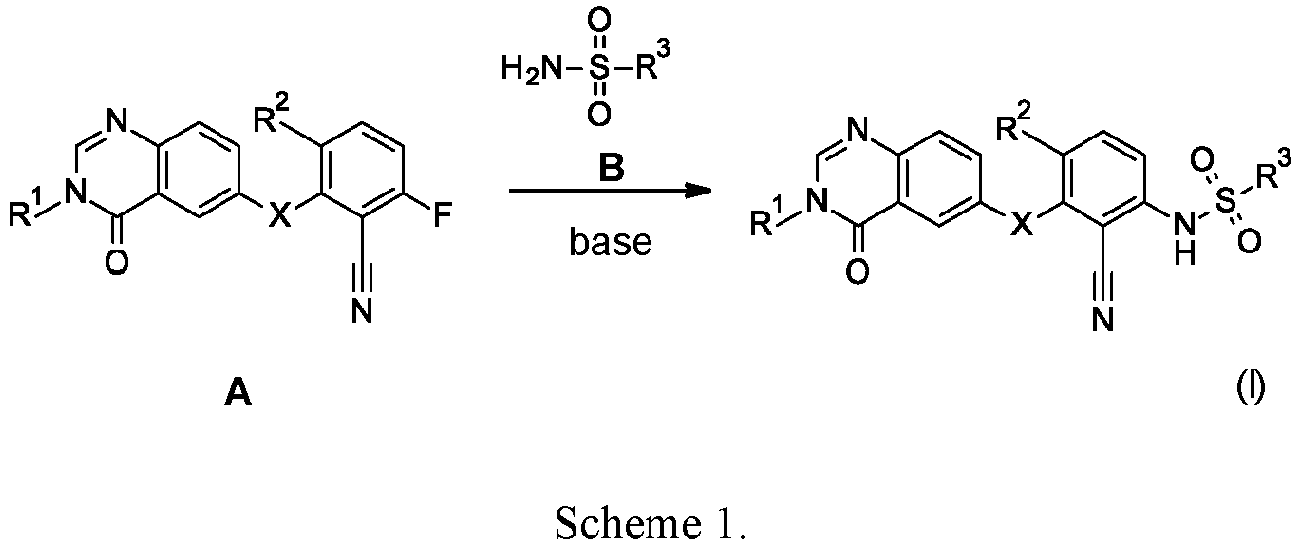
- Compounds of formula (I) can be prepared by the reaction of aryl fluorides of formula A with sulfonamides or sulfamides B in the presence of a base such as Cs 2 CO 3 or NaH in a solvent such as DMF or NMP (Scheme 1).
- Compounds of formula (I) can additionally be prepared by the reaction of anilines C with sulfonyl chlorides or sulfamoyl chlorides D in the presence of a base such as pyridine in a solvent such as DCM (Scheme 2).
- a base such as NaH or Cs 2 CO 3
- a solvent such as DMF or NMP
- Intermediates C can be prepared by the reaction of intermediates A with aqueous ammonia in a solvent such as 2-propanol (Scheme 5).
- Intermediates F can be prepared by treatment of 2,6-dinitrobenzonitrile P with sulfonamides or sulfamides B in the presence of a base such as Cs 2 CO 3 in a solvent such as DMF.
- the resultant nitro compounds Q can be reduced, for example by hydrogenation with a catalyst such as Pd(OH) 2 in a solvent such as a mixture of methanol and THF (Scheme 8).
- R 3 is of the type NR 4 R 5 (i.e. sulfamoyl chlorides), where not commercially available, can be prepared from a secondary amine T and sulfuoryl dichloride in the presence of a base such as DIPEA in a solvent such as DCM (Scheme 11).
- the compound of formula (I) in this invention may be derivatised at functional groups to provide derivatives which are capable of conversion back to the parent compound in vivo.
- the invention also relates in particular to:
- a certain embodiment of the invention relates to the compound of formula (I) as described herein, or a pharmaceutically acceptable salt thereof, for the use in the therapeutic and/or prophylactic treatment of cancer, in particular BRAF mutant driven cancers, more particularly thyroid cancer, colorectal cancer, brain cancer, melanoma or NSCLC.
- cancer in particular BRAF mutant driven cancers, more particularly thyroid cancer, colorectal cancer, brain cancer, melanoma or NSCLC.
- a certain embodiment of the invention relates to a pharmaceutical composition
- a pharmaceutical composition comprising the compound of formula (I) as described herein, or a pharmaceutically acceptable salt thereof, and a pharmaceutically acceptable excipient.
- a certain embodiment of the invention relates to the compound of formula (I) as described herein, or a pharmaceutically acceptable salt thereof, for the use as a medicament in therapeutic and/or prophylactic treatment of a patient with BRAF mutant driven cancer, in particular more particularly thyroid cancer, colorectal cancer, brain cancer, melanoma or NSCLC comprising determining the BRAF mutation status in said patient and then administering the compound of formula (I) as described herein, or a pharmaceutically acceptable salt thereof, to said patient.
- BRAF mutant driven cancer in particular more particularly thyroid cancer, colorectal cancer, brain cancer, melanoma or NSCLC comprising determining the BRAF mutation status in said patient and then administering the compound of formula (I) as described herein, or a pharmaceutically acceptable salt thereof, to said patient.
- the invention includes all substituents in their corresponding deuterated form, wherever applicable, of the compound of formula (I).
- a certain embodiment of the invention relates to the compound of formula (I) as described herein, or a pharmaceutically acceptable salt thereof, wherein at least one substituent comprises at least one radioisotope.
- radioisotopes are 2 H, 3 H, 13 C, 14 C and 18 F.
- the invention includes all optical isomers, i.e. diastereoisomers, diastereomeric mixtures, racemic mixtures, all their corresponding enantiomers and/or tautomers as well as their solvates, wherever applicable, of the compound of formula (I).
- the compound of formula (I) may contain one or more asymmetric centers and can therefore occur as racemates, racemic mixtures, single enantiomers, diastereomeric mixtures and individual diastereomers. Additional asymmetric centers may be present depending upon the nature of the various substituents on the molecule. Each such asymmetric center will independently produce two optical isomers and it is intended that all of the possible optical isomers and diastereomers in mixtures and as pure or partially purified compounds are included within this invention. The present invention is meant to encompass all such isomeric forms of these compounds. The independent syntheses of these diastereomers or their chromatographic separations may be achieved as known in the art by appropriate modification of the methodology disclosed herein.
- Their absolute stereochemistry may be determined by the x-ray crystallography of crystalline products or crystalline intermediates which are derivatized, if necessary, with a reagent containing an asymmetric center of known absolute configuration.
- racemic mixtures of the compounds may be separated so that the individual enantiomers are isolated. The separation can be carried out by methods well known in the art, such as the coupling of a racemic mixture of compounds to an enantiomerically pure compound to form a diastereomeric mixture, followed by separation of the individual diastereomers by standard methods, such as fractional crystallization or chromatography.
- optically pure enantiomer means that the compound contains > 90 % of the desired isomer by weight, particularly > 95 % of the desired isomer by weight, or more particularly > 99 % of the desired isomer by weight, said weight percent based upon the total weight of the isomer(s) of the compound.
- Chirally pure or chirally enriched compounds may be prepared by chirally selective synthesis or by separation of enantiomers. The separation of enantiomers may be carried out on the final product or alternatively on a suitable intermediate.
- DMEM no-phenol red medium supplemented with L-glutamine was purchased from (Thermo Fisher Scientific).
- Fetal bovine serum (FBS) was purchased from VWR.
- Advanced ERK phospho-T202 /Y204 kit - 10,000 tests was purchased from Cisbio cat# 64AERPEH.
- A375 and HCT116 cells were originally obtained from ATCC and banked by the Roche repository.
- 384-well microplates were purchased from Greiner Bio-One, 384-well, (With Lid, HiBase, Low volume cat 784-080).
- A375 is a cellular cancer model expressing V600E mutated BRAF and HCT116 a cellular cancer model expressing WT BRAF.
- First generation BRAF inhibitors such as e.g. dabrafenib induce a paradox effect on tumour cells in that they inhibit the growth of V600E mutated BRAF cells (such as e.g. A375), while they activate growth in WT BRAF cells (such as e.g. HCT 116).
- ERK 1,2 phosphorylation terminal member of the phosphorylation cascade of the MAPK pathway is hereafter reported as main readout for the activation status of the MAPK pathway.
- A375 and HCT116 cell lines are maintained in DMEM no-phenol red medium supplemented with 10% fetal bovine serum (FBS).
- FBS fetal bovine serum
- P-ERK levels are determined by measuring FRET fluorescence signal induced by selective binding of 2 antibodies provided in the mentioned kit (Cisbio cat# 64AERPEH) on ERK protein when phosphorylated at Thr202/Tyr204.
- p-ERK HTRF well compositions ( ⁇ l): neg ctrl pos ctrl neut ctrl cpd blank - - 12 12 12 Cells 12 - - - - Media - - - ⁇ 0.05 - Cpd - 16 - - - control lysate (ready-to-use) 4 - 4 4 4 4x lysis buffer 4 4 4 4 4 Advanced p-ERK antibody solution - - - - - 4 Advanced p-ERK1/2 Cryptate antibody solut. 20 20 20 20 20 20 20 20 20 20 20 20 20 20 20 20 20 20 20 20 20 20 20 20 20 20 20 20 20 20 20 20 20 20 20 20 20 20 20 20 20 20 20 20 20 20 20 20 20 20 20 20 20 20 20 20 20 20 20 20 20 20 20 20 20 20 20 20 20 20 20 20 20 20 20 20 20 20 20 20 20 20 20 20 20 20 20 20 20 20 20 20 20 20 20 20 20 20 20 20 20 20 20 20 20 20 20 20
- the plate is then centrifuged at 300 rcf for 30 second, sealed to prevent evaporation and incubated overnight in the dark at room temperature.
- the plate is then analyzed and fluorescence emission value collected through a Pherastast FSX (BMG Labtech) apparatus at 665 and 620 nM.
- Data are normalized in the case of A375 cells (BRAF inhibition) considering the average of the ratio (blank subtracted) derived by DMSO only treated cells as 100% and by considering the average of the ratio (blank subtracted) derived by 10uM dabrafenib treated cells as 0%. Mean of the normalized points are fitted with sigmoidal curve and IC50 determined.
- Data are normalized in the case of HCT116 cells (BRAF activation) considering the average of the ratio (blank subtracted) derived by DMSO only treated cells as 0% and by considering the average of the ratio (blank subtracted) derived by dabrafenib treated cells at the concentration which provides the highest signal as 100%.
- Individual points are fitted with either sigmoidal or bell shape curves, and the percentage of activation compared to maximum dabrafenib-mediated activation is determined.
- the EC50 is the concentration at which activation equal to 50% of the maximum achieved by dabrafenib is obtained.
- the Percentage of Maximum paradox inducing effect from dabrafenib is determined by evaluating the percentage at which the test compound induce its maximum P-ERK signal as percentage of the highest signal produced by dabrafenib within the dose range tested.
- Table 1 Examples 1 to 17 have high affinity for RAF kinases.
- WO2012/118492 discloses references compounds AR-25 as example 25, AR-30 as example 30 and AR-31 as example 31.
- the compound of formula (I) or a pharmaceutically acceptable salt thereof can be used as a medicament (e.g. in the form of a pharmaceutical preparation).
- the pharmaceutical preparation can be administered internally, such as orally (e.g. in the form of tablets, coated tablets, dragées, hard and soft gelatin capsules, solutions, emulsions or suspensions), nasally (e.g. in the form of nasal sprays), rectally (e.g. in the form of suppositories) or topical ocularly (e.g. in the form of solutions, ointments, gels or water soluble polymeric inserts).
- the administration can also be effected parenterally, such as intramuscularly, intravenously, or intraocularly (e.g. in the form of sterile injection solutions).
- the compound of formula (I) or a pharmaceutically acceptable salt thereof can be processed with pharmaceutically inert, inorganic or organic adjuvants for the production of tablets, coated tablets, dragées, hard gelatin capsules, injection solutions or topical formulations Lactose, corn starch or derivatives thereof, talc, stearic acid or its salts etc. can be used, for example, as such adjuvants for tablets, dragées and hard gelatin capsules.
- Suitable adjuvants for soft gelatin capsules are, for example, vegetable oils, waxes, fats, semi-solid substances and liquid polyols, etc.
- Suitable adjuvants for the production of solutions and syrups are, for example, water, polyols, saccharose, invert sugar, glucose, etc.
- Suitable adjuvants for injection solutions are, for example, water, alcohols, polyols, glycerol, vegetable oils, etc.
- Suitable adjuvants for suppositories are, for example, natural or hardened oils, waxes, fats, semi-solid or liquid polyols, etc.
- Suitable adjuvants for topical ocular formulations are, for example, cyclodextrins, mannitol or many other carriers and excipients known in the art.
- the pharmaceutical preparations can contain preservatives, solubilizers, viscosity-increasing substances, stabilizers, wetting agents, emulsifiers, sweeteners, colorants, flavorants, salts for varying the osmotic pressure, buffers, masking agents or antioxidants. They can also contain still other therapeutically valuable substances.
- the dosage can vary in wide limits and will, of course, be fitted to the individual requirements in each particular case.
- the formulation can contain 0.001% to 15% by weight of medicament and the required dose, which can be between 0.1 and 25 mg in can be administered either by single dose per day or per week, or by multiple doses (2 to 4) per day, or by multiple doses per week It will, however, be clear that the upper or lower limit given herein can be exceeded when this is shown to be indicated.
- the compound of formula (I) or a pharmaceutically acceptable salt thereof can be used as therapeutically active substance, e.g. in the form of a pharmaceutical preparation.
- the pharmaceutical preparation can be administered orally, e.g. in the form of tablets, coated tablets, dragées, hard and soft gelatin capsules, solutions, emulsions or suspensions.
- the administration can, however, also be effected rectally, e.g. in the form of suppositories, or parenterally, e.g. in the form of injection solutions.
- the compound of formula (I) and pharmaceutically acceptable salts thereof can be processed with a pharmaceutically inert, inorganic or organic carrier for the production of a pharmaceutical preparation.
- Lactose, corn starch or derivatives thereof, talc, stearic acids or its salts and the like can be used, for example, as such carriers for tablets, coated tablets, dragées and hard gelatin capsules.
- Suitable carriers for soft gelatin capsules are, for example, vegetable oils, waxes, fats, semi-solid and liquid polyols and the like. Depending on the nature of the active substance no carriers are however usually required in the case of soft gelatin capsules.
- Suitable carriers for the production of solutions and syrups are, for example, water, polyols, glycerol, vegetable oil and the like.
- Suitable carriers for suppositories are, for example, natural or hardened oils, waxes, fats, semi-liquid or liquid polyols and the like.
- the pharmaceutical preparation can, moreover, contain pharmaceutically acceptable auxiliary substances such as preservatives, solubilizers, stabilizers, wetting agents, emulsifiers, sweeteners, colorants, flavorants, salts for varying the osmotic pressure, buffers, masking agents or antioxidants. They can also contain still other therapeutically valuable substances.
- pharmaceutically acceptable auxiliary substances such as preservatives, solubilizers, stabilizers, wetting agents, emulsifiers, sweeteners, colorants, flavorants, salts for varying the osmotic pressure, buffers, masking agents or antioxidants. They can also contain still other therapeutically valuable substances.
- Medicaments containing the compound of formula (I) or a pharmaceutically acceptable salt thereof and a therapeutically inert carrier are also provided by the present invention, as is a process for their production, which comprises bringing one or more compounds of formula (I) and/or pharmaceutically acceptable salts thereof and, if desired, one or more other therapeutically valuable substances into a galenical administration form together with one or more therapeutically inert carriers.
- the dosage can vary within wide limits and will, of course, have to be adjusted to the individual requirements in each particular case.
- the dosage for adults can vary from about 0.01 mg to about 1000 mg per day of a compound of general formula (I) or of the corresponding amount of a pharmaceutically acceptable salt thereof.
- the daily dosage may be administered as single dose or in divided doses and, in addition, the upper limit can also be exceeded when this is found to be indicated.
- compositions according to the invention are:
- Table 1 possible tablet composition ingredient mg/tablet 5 25 100 500 Compound of formula (I) 5 25 100 500 Lactose Anhydrous DTG 125 105 30 150 Sta-Rx 1500 6 6 6 60 Microcrystalline Cellulose 30 30 30 450 Magnesium Stearate 1 1 1 1 Total 167 167 167 831
- Capsules of the following composition are manufactured: Table 2: possible capsule ingredient composition ingredient mg/capsule 5 25 100 500 Compound of formula (I) 5 25 100 500 Hydrous Lactose 159 123 148 - Corn Starch 25 35 40 70 Talk 10 15 10 25 Magnesium Stearate 1 2 2 5 Total 200 200 300 600
- the compound of formula (I), lactose and corn starch are firstly mixed in a mixer and then in a comminuting machine.
- the mixture is returned to the mixer; the talc is added thereto and mixed thoroughly.
- the mixture is filled by machine into suitable capsules, e.g. hard gelatin capsules.
- Soft Gelatin Capsules of the following composition are manufactured: Table 3: possible soft gelatin capsule ingredient composition ingredient mg/capsule Compound of formula (I) 5 Yellow wax 8 Hydrogenated Soya bean oil 8 Partially hydrogenated plant oils 34 Soya bean oil 110 Total 165 Table 4: possible soft gelatin capsule composition ingredient mg/capsule Gelatin 75 Glycerol 85 % 32 Karion 83 8 (dry matter) Titan dioxide 0.4 Iron oxide yellow 1.1 Total 116.5
- the compound of formula (I) is dissolved in a warm melting of the other ingredients and the mixture is filled into soft gelatin capsules of appropriate size.
- the filled soft gelatin capsules are treated according to the usual procedures.
- Table 5 possible suppository composition ingredient mg/supp.
- the suppository mass is melted in a glass or steel vessel, mixed thoroughly and cooled to 45°C. Thereupon, the finely powdered compound of formula (I) is added thereto and stirred until it has dispersed completely.
- the mixture is poured into suppository moulds of suitable size, left to cool; the suppositories are then removed from the moulds and packed individually in wax paper or metal foil.
- Injection solutions of the following composition are manufactured: Table 6: possible injection solution composition ingredient mg/injection solution.
- Compound of formula (I) 3 Polyethylene Glycol 400 150 acetic acid q.s. ad pH 5.0 water for injection solutions ad 1.0 ml
- the compound of formula (I) is dissolved in a mixture of Polyethylene Glycol 400 and water for injection (part).
- the pH is adjusted to 5.0 by acetic acid.
- the volume is adjusted to 1.0 ml by addition of the residual amount of water.
- the solution is filtered, filled into vials using an appropriate overage and sterilized.
- Table 7 possible sachet composition ingredient mg/sachet Compound of formula (I) 50 Lactose, fine powder 1015 Microcrystalline cellulose (AVICEL PH 102) 1400 Sodium carboxymethyl cellulose 14 Polyvinylpyrrolidon K 30 10 Magnesium stearate 10 Flavoring additives 1 Total 2500
- the compound of formula (I) is mixed with lactose, microcrystalline cellulose and sodium carboxymethyl cellulose and granulated with a mixture of polyvinylpyrrolidone in water.
- the granulate is mixed with magnesium stearate and the flavoring additives and filled into sachets.
- Step 1 (3 R )- N -(2-cyano-3-nitro-phenyl)-3-fluoro-pyrrolidine-1-sulfonamide
- 2,6-Dinitrobenzonitrile (900 mg, 4.66 mmol, Eq: 1.0) was dissolved in DMF (10 mL). Cs 2 CO 3 (2.28 g, 6.99 mmol, Eq: 1.5) and I9 (1.18 g, 6.99 mmol, Eq: 1.5) were added. The reaction mixture was stirred for 1 h at 60 °C, then concentrated in vacuo. The residue was taken up in 2-methyl-THF and washed with aq. NH 4 Cl solution, and the aqueous layer was extracted 1 ⁇ with 2-methyl-THF. The organic layers were combined, dried with Na 2 SO 4 , filtrated and concentrated in vacuo.
- Step 2 (3 R )- N -(3-amino-2-cyano-phenyl)-3-fluoro-pyrrolidine-1-sulfonamide
- 2,6-Dinitrobenzonitrile (3 g, 15.5 mmol, Eq: 1.0) was dissolved in a mixture of methanol (60 mL) and dioxane (35 mL). The reaction was heated to 75 °C, then HCl (37% aq, 11 g, 9.29 mL, 111 mmol, Eq: 7.16) was added dropwise, then iron (2.78 g, 49.7 mmol, Eq: 3.2) was added in 4 portions over 8 min. The reaction mixture was stirred for 1 h at 64 °C, then concentrated in vacuo. The residue was taken up in 2-methyl-THF and ice and washed with sat. aq. NaHCO 3 .
- 6-Bromo-3-methylquinazolin-4(3H)-one 200 mg, 820 ⁇ mol, Eq: 1.0
- 2,6-diaminobenzonitrile 109 mg, 820 ⁇ mol, Eq: 1.0
- Cs 2 CO 3 809 mg, 2.46 mmol, Eq: 3.0
- the reaction mixture was flushed with argon, then BippyPhos (25.7 mg, 49.2 ⁇ mol, Eq: 0.06) and tris(dibenzylideneacetone)dipalladium (0) chloroform adduct (26 mg, 24.6 ⁇ mol, Eq: 0.03) were added.
- the reaction was flushed with argon again, and the vial was closed.
- the reaction mixture was heated to 110 °C and stirred for 9.5 h.
- the reaction mixture was taken up in 15 mL 2-methyl-THF and ice and washed with 4 mL 1% aq. citric acid.
- the aqueous layer was back-extracted with 1 ⁇ 15 mL 2-methyl-THF.
- the organic layers were combined, washed with brine, dried over Na 2 SO 4 , filtered and concentrated in vacuo. The residue was diluted with EtOAc and transferred to a column.
- the reaction was cooled to rt, and the reaction mixture was taken up in 10 mL 0.1 M aq. NaOH, ice and EtOAc. The aq. layer was separated and extracted again with EtOAc. The aq. layer was acidified with 2 M aq. HCl to pH 4 and extracted 2 ⁇ with EtOAc, the combined org. layers were washed 3 ⁇ with water, 1 ⁇ with brine, then dried over Na 2 SO 4 , filtrated and evaporated. The residue was diluted with DCM, evaporated with silica gel to dryness and transferred to a column.
- 6-Bromo-3-methylquinazolin-4(3H)-one (21 mg, 86.1 ⁇ mol, Eq: 1.0) and I5 (21.9 mg, 86.1 ⁇ mol, Eq: 1.0) were dissolved in dioxane (1.6 mL) then Cs 2 CO 3 (85 mg, 258 ⁇ mol, Eq: 3.0) was added.
- the reaction mixture was flushed with argon, then BippyPhos (2.7 mg, 5.16 ⁇ mol, Eq: 0.06) and tris(dibenzylideneacetone)dipalladium (0) chloroform adduct (2.73 mg, 2.58 ⁇ mol, Eq: 0.03) were added.
- the reaction was flushed with argon again, and the vial was closed.
- the reaction mixture was heated to 110 °C and stirred for 1 h.
- the reaction mixture was taken up in 15 mL 2-methyl-THF and ice, and washed with 4 mL 1% aq. citric acid.
- the aqueous layer was back-extracted with 1 ⁇ 15 mL 2-methyl-THF.
- the organic layers were combined, washed with brine, dried over Na 2 SO 4 and concentrated in vacuo. The residue was diluted with EtOAc and transferred to a column.
Landscapes
- Chemical & Material Sciences (AREA)
- Organic Chemistry (AREA)
- Health & Medical Sciences (AREA)
- Life Sciences & Earth Sciences (AREA)
- Medicinal Chemistry (AREA)
- Pharmacology & Pharmacy (AREA)
- Animal Behavior & Ethology (AREA)
- General Health & Medical Sciences (AREA)
- Public Health (AREA)
- Veterinary Medicine (AREA)
- General Chemical & Material Sciences (AREA)
- Chemical Kinetics & Catalysis (AREA)
- Nuclear Medicine, Radiotherapy & Molecular Imaging (AREA)
- Epidemiology (AREA)
- Pharmaceuticals Containing Other Organic And Inorganic Compounds (AREA)
- Plural Heterocyclic Compounds (AREA)
- Organic Low-Molecular-Weight Compounds And Preparation Thereof (AREA)
- Acyclic And Carbocyclic Compounds In Medicinal Compositions (AREA)
- Luminescent Compositions (AREA)
- Nitrogen Condensed Heterocyclic Rings (AREA)
- Glass Compositions (AREA)
Description
- The present invention provides a compound of formula (I) which is a BRAF inhibitor and does have paradox breaking properties, its manufacture, pharmaceutical compositions containing it and its use as therapeutically active substance.
- The present invention provides a novel compound of formula (I)

- R1 is C1-6-alkyl;
- X is selected from
- i) -NH-, and
- ii) -O-;
- R2 is selected from
- iii) H,
- iv) cyano, and
- v) halogen;
- R3 is selected from
- vi) NR4R5, and
- vii) CHR6R7;
- R4 is selected from
viii) C1-6-alkyl, - HV / 11.11.2020
- ix) C3-8-cycloalkyl, and
- x) C3-8-cycloalkyl-C1-6-alkyl;
- R5 is selected from
- xi) C1-6-alkyl,
- xii) C3-8-cycloalkyl, and
- xiii) C3-8-cycloalkyl-C1-6-alkyl;
- or R4 and R5 together with the nitrogen atom to which they are attached form an heterocycloalkyl optionally substituted with R8, wherein the heterocycloalkyl is selected from pyrrolidinyl and piperidinyl;
- R6 is selected from
- xiv) C1-6-alkyl,
- xv) C3-8-cycloalkyl, and
- xvi) C3-8-cycloalkyl-C1-6-alkyl;
- R7 is selected from
- xvii) C1-6-alkyl,
- xviii) C3-8-cycloalkyl, and
- xix) C3-8-cycloalkyl-C1-6-alkyl;
- or R6 and R7 together with the carbon atom to which they are attached form a C3-8-cycloalkyl optionally substituted with R8; and
- R8 is halogen;
- with the proviso that N-[2-cyano-4-fluoro-3-(3-methyl-4-oxo-quinazolin-6-yl)oxy-phenyl]-3-fluoro-pyrrolidine-1-sulfonamide is excluded
- or a pharmaceutically acceptable salt thereof.
- The Rapidly Accelerated Fibrosarcoma (RAF) class of serine-threonine kinases comprise three members (ARAF, BRAF, RAF1) that compose the first node of the MAP kinase signalling pathway. Despite the apparent redundancy of the three RAF isoforms in signalling propagation through phosphorylation of MEK1 and 2, frequent oncogenic activating mutations are commonly found only for BRAF. In particular, substitution of V600 with glutamic acid or lysine renders the kinase highly activated with consequent hyper-stimulation of the MAPK pathway, independently from external stimulations (Cell. 2015 Jun 18; 161(7): 1681-1696.)
- Mutant BRAF is a targetable oncogenic driver and three BRAF inhibitors (vemurafenib, dabrafenib and encorafenib) reached the market up to now showing efficacy in BRAFV600E-positive melanoma. However rapid acquisition of drug resistance is almost universally observed and the duration of the therapeutic benefits for the targeted therapy remains limited.
- Moreover, the developed BRAF inhibitors revealed an unexpected and "paradoxical" ability to repress MAPK signalling in BRAFV600E-driven tumours while the same inhibitors presented MAPK stimulatory activities in BRAF wild type (WT) models (N Engl J Med 2012; 366:271-273; and British Journal of Cancer volume 111, pages640-645(2014)).
- Mechanistic studies on the RAF paradox then clarified that oncogenic BRAFV600E phosphorylates MEK 1/2 in its monomeric cytosolic form while WT BRAF and RAF1 activation requires a complex step of events including cell membrane translocation and homo and/or heterodimerization promoted by activated RAS (KRAS, NRAS, HRAS) (Nature Reviews Cancer volume 14, pages455-467(2014)).
- The binding of inhibitors like vemurafenib, dabrafenib or encorafenib to a WT BRAF or RAF1 protomer, quickly induces RAF homo and/or hetero dimerization and membrane association of the newly formed RAF dimer. In the dimeric conformation, one RAF protomer allosterically induces conformational changes of the second resulting in a kinase active status and, importantly, in a conformation unfavourable for the binding of the inhibitor. The dimer induced by drug treatment, as a result, promotes MEK phosphorylation by the catalysis operated by the unbound protomer with hyperactivation of the pathway.
- The RAF paradox results in two clinically relevant consequences: 1) accelerated growth of secondary tumours upon BRAFi monotherapy (mainly keratochantoma and squamous-cell carcinomas) (N Engl J Med 2012; 366:271-273) and 2) the acquisition of drug resistance in the setting of BRAFi monotherapy as well as in combinations of BRAFi+MEKi presents activation of dimer-mediated RAF signalling by genetically driven events including RAS mutations, BRAF amplifications, expression of dimeric-acting BRAF splice variants (Nature Reviews Cancer volume 14, pages455-467(2014)).
- The present invention relates to the surprising finding that the BRAF inhibitor of formula (I) shows considerably less paradoxial activation of the MAPK signalling pathway while retaining high potency. This compound can also be referred to as a paradox breaker or RAF paradox breaker, compared to compounds inducing the RAF paradox (and which could be referred to as paradox inducers or RAF paradox inducers).
- The term "pharmaceutically acceptable salt" refers to those salts which retain the biological effectiveness and properties of the free bases or free acids, which are not biologically or otherwise undesirable. The salts are formed with inorganic acids such as hydrochloric acid, hydrobromic acid, sulfuric acid, nitric acid, phosphoric acid and the like, in particular hydrochloric acid, and organic acids such as acetic acid, propionic acid, glycolic acid, pyruvic acid, oxalic acid, maleic acid, malonic acid, succinic acid, fumaric acid, tartaric acid, citric acid, benzoic acid, cinnamic acid, mandelic acid, methanesulfonic acid, ethanesulfonic acid, p-toluenesulfonic acid, salicylic acid, N-acetylcystein and the like. In addition, these salts may be prepared by addition of an inorganic base or an organic base to the free acid. Salts derived from an inorganic base include, but are not limited to, the sodium, potassium, lithium, ammonium, calcium, magnesium salts and the like. Salts derived from organic bases include, but are not limited to salts of primary, secondary, and tertiary amines, substituted amines including naturally occurring substituted amines, cyclic amines and basic ion exchange resins, such as isopropylamine, trimethylamine, diethylamine, triethylamine, tripropylamine, ethanolamine, lysine, arginine, N-ethylpiperidine, piperidine, polyimine resins and the like.
- The term "protecting group" (PG) denotes a group which selectively blocks a reactive site in a multifunctional compound such that a chemical reaction can be carried out selectively at another unprotected reactive site in the meaning conventionally associated with it in synthetic chemistry. Protecting groups can be removed at the appropriate point. Exemplary protecting groups are amino-protecting groups, carboxy-protecting groups or hydroxy-protecting groups. Particular protecting groups are the tert-butoxycarbonyl (Boc), benzyloxycarbonyl (Cbz), fluorenylmethoxycarbonyl (Fmoc) and benzyl (Bn) groups. Further particular protecting groups are the tert-butoxycarbonyl (Boc) and the fluorenylmethoxycarbonyl (Fmoc) groups. More particular protecting group is the tert-butoxycarbonyl (Boc) group.
- The abbreviation uM means microMolar and is equivalent to the symbol µM.
- The abbreviation uL means microliter and is equivalent to the symbol µL.
- The abbreviation ug means microgram and is equivalent to the symbol µg.
- The compound of formula (I) can contain several asymmetric centers and can be present in the form of optically pure enantiomers, mixtures of enantiomers such as, for example, racemates, optically pure diastereoisomers, mixtures of diastereoisomers, diastereoisomeric racemates or mixtures of diastereoisomeric racemates.
- According to the Cahn-Ingold-Prelog Convention the asymmetric carbon atom can be of the "R" or "S" configuration.
- Also an embodiment of the present invention is the compound according to formula (I) as described herein and pharmaceutically acceptable salts, in particular the compound according to formula (I) as described herein.
- A particular embodiment of the present invention provides a compound according to formula (I) as described herein, wherein
- R1 is C1-6-alkyl;
- X is selected from
- i) -NH-, and
- i) -O-;
- R2 is selected from
- ii) H, and
- iii) halogen;
- R3 is selected from
- iv) NR4R5, and
- v) CHR6R7;
- R4 is selected from
- vi) C1-6-alkyl,
- vii) C3-8-cycloalkyl, and
- viii) C3-8-cycloalkyl-C1-6-alkyl;
- R5 is selected from
- ix) C1-6-alkyl,
- x) C3-8-cycloalkyl, and
- xi) C3-8-cycloalkyl-C1-6-alkyl;
- or R4 and R5 together with the nitrogen atom to which they are attached form an heterocycloalkyl optionally substituted with R8, wherein the heterocycloalkyl is selected from pyrrolidinyl and piperidinyl;
- R6 is selected from
- xii) C1-6-alkyl,
- xiii) C3-8-cycloalkyl, and
- xiv) C3-8-cycloalkyl-C1-6-alkyl;
- R7 is selected from
- xv) C1-6-alkyl,
- xvi) C3-8-cycloalkyl, and
- xvii) C3-8-cycloalkyl-C1-6-alkyl;
- or R6 and R7 together with the carbon atom to which they are attached form a cyclopentyl or a cyclohexyl ring optionally substituted with R8;
- R8 is halogen;
- with the proviso that (3R)-N-[2-cyano-4-fluoro-3-(3-methyl-4-oxo-quinazolin-6-yl)oxyphenyl]-3-fluoro-pyrrolidine-1-sulfonamide is excluded
- or a pharmaceutically acceptable salt thereof.
- A particular embodiment of the present invention provides a compound according to formula (I) as described herein, wherein
- R1 is methyl;
- X is selected from
- i) -NH-, and
- ii) -O-;
- R2 is selected from
- iii) H,
- iv) chloro, and
- v) fluoro;
- R3 is selected from
- vi) NR4R5, and
- vii) CHR6R7;
- R4 is selected from
- viii) methyl,
- ix) ethyl,
- x) propyl,
- xi) cyclopropyl, and
- xii) cyclopropylmethyl;
- R5 is selected from
- xiii) methyl,
- xiv) ethyl,
- xv) propyl,
- xvi) cyclopropyl, and
- xvii) cyclopropylmethyl;
- or R4 and R5 together with the nitrogen atom to which they are attached form an heterocycloalkyl optionally substituted with R8, wherein the heterocycloalkyl is selected from pyrrolidinyl and piperidinyl;
- R6 is selected from
- xviii) methyl,
- xix) ethyl,
- xx) propyl,
- xxi) cyclopropyl, and
- xxii) cyclopropylmethyl;
- R7 is selected from
- xxiii) methyl,
- xxiv) ethyl,
- xxv) propyl,
- xxvi) cyclopropyl, and
- xxvii) cyclopropylmethyl;
- or R6 and R7 together with the carbon atom to which they are attached form a cyclopentyl or a cyclohexyl ring optionally substituted with R8;
- R8 is fluoro;
- with the proviso that (3R)-N-[2-cyano-4-fluoro-3-(3-methyl-4-oxo-quinazolin-6-yl)oxyphenyl]-3-fluoro-pyrrolidine-1-sulfonamide is excluded
- or a pharmaceutically acceptable salt thereof.
- A particular embodiment of the present invention provides a compound according to formula (I) as described herein, wherein
- R1 is methyl;
- X is selected from
- i) -NH-, and
- ii) -O-;
- R2 is selected from
- iii) H,
- iv) chloro, and
- v) fluoro;
- R3 is selected from
- vi) NR4R5, and
- vii) CHR6R7;
- R4 is methyl;
- R5 is ethyl;
- or R4 and R5 together with the nitrogen atom to which they are attached form a pyrrolidinyl ring optionally substituted with R8;
- R6 is methyl;
- R7 is ethyl;
- or R6 and R7 together with the nitrogen atom to which they are attached form a cyclopentyl or a cyclohexyl ring;
- R8 is fluoro;
- with the proviso that (3R)-N-[2-cyano-4-fluoro-3-(3-methyl-4-oxo-quinazolin-6-yl)oxyphenyl]-3-fluoro-pyrrolidine-1-sulfonamide is excluded
- or a pharmaceutically acceptable salt thereof.
- A particular embodiment of the present invention provides a compound according to formula (I) as described herein, wherein R1 is C1-6-alkyl.
- A particular embodiment of the present invention provides a compound according to formula (I) as described herein, wherein R1 is methyl.
- A particular embodiment of the present invention provides a compound according to formula (I) as described herein, wherein R2 is selected from
- i) H,
- ii) chloro, and
- iii) fluoro.
- A particular embodiment of the present invention provides a compound according to formula (I) as described herein, wherein R2 is selected from H and chloro.
- A particular embodiment of the present invention provides a compound according to formula (I) as described herein, wherein R3 is NR4R5.
- A particular embodiment of the present invention provides a compound according to formula (I) as described herein, wherein R3 is CHR6R7.
- A particular embodiment of the present invention provides a compound according to formula (I) as described herein, wherein R4 is methyl.
- A particular embodiment of the present invention provides a compound according to formula (I) as described herein, wherein R5 is ethyl.
- A particular embodiment of the present invention provides a compound according to formula (I) as described herein, wherein R4 and R5 together with the nitrogen atom to which they are attached form an heterocycloalkyl optionally substituted with R8, wherein the heterocycloalkyl is selected from pyrrolidinyl and piperidinyl.
- A particular embodiment of the present invention provides a compound according to formula (I) as described herein, wherein R4 and R5 together with the nitrogen atom to which they are attached form a pyrrolidinyl ring optionally substituted with R8.
- A particular embodiment of the present invention provides a compound according to formula (I) as described herein, wherein R4 and R5 together with the nitrogen atom to which they are attached form an unsubstituted heterocycloalkyl, wherein the heterocycloalkyl is pyrrolidinyl.
- A particular embodiment of the present invention provides a compound according to formula (I) as described herein, wherein R6 and R7 are independently selected from
- i) methyl,
- ii) ethyl,
- iii) propyl,
- iv) cyclopropyl, and
- v) cyclopropylmethyl.
- A particular embodiment of the present invention provides a compound according to formula (I) as described herein, wherein R6 is methyl.
- A particular embodiment of the present invention provides a compound according to formula (I) as described herein, wherein R7 is ethyl.
- A particular embodiment of the present invention provides a compound according to formula (I) as described herein, wherein R6 and R7 together with the nitrogen atom to which they are attached form a cyclopentyl or a cyclohexyl ring optionally substituted with R8.
- A particular embodiment of the present invention provides a compound according to formula (I) as described herein, wherein R6 and R7 together with the nitrogen atom to which they are attached form a cyclopentyl or a cyclohexyl ring.
- A particular embodiment of the present invention provides a compound according to formula (I) as described herein, wherein R8 is fluoro.
- A particular embodiment of the present invention provides a compound according to formula (I) as described herein, wherein the compound is selected from
- 6-[2-cyano-3-[[ethyl(methyl)sulfamoyl]amino]-6-fluoro-phenoxy]-3-methyl-4-oxo-quinazoline;
- 6-[6-chloro-2-cyano-3-[[ethyl(methyl)sulfamoyl]amino]phenoxy]-3-methyl-4-oxo-quinazoline;
- (3R)-N-[4-chloro-2-cyano-3-(3-methyl-4-oxo-quinazolin-6-yl)oxy-phenyl]-3-fluoro-pyrrolidine-1-sulfonamide;
- N-[4-chloro-2-cyano-3-(3-methyl-4-oxo-quinazolin-6-yl)oxy-phenyl]pyrrolidine-1-sulfonamide;
- 6-[2-cyano-3-[[ethyl(methyl)sulfamoyl]amino]phenoxy]-3-methyl-4-oxo-quinazoline;
- N-[2-cyano-3-(3-methyl-4-oxo-quinazolin-6-yl)oxy-phenyl]pyrrolidine-1-sulfonamide;
- (3R)-N-[2-cyano-3-(3-methyl-4-oxo-quinazolin-6-yl)oxy-phenyl]-3-fluoro-pyrrolidine-1-sulfonamide;
- N-[2-cyano-3-(3-methyl-4-oxo-quinazolin-6-yl)oxy-phenyl]cyclopentanesulfonamide;
- N-[2-cyano-3-(3-methyl-4-oxo-quinazolin-6-yl)oxy-phenyl]cyclohexanesulfonamide;
- N-[2-cyano-3-(3-methyl-4-oxo-quinazolin-6-yl)oxy-phenyl]butane-2-sulfonamide;
- 6-[2-cyano-3-[[ethyl(methyl)sulfamoyl]amino]anilino]-3-methyl-4-oxo-quinazoline;
- (3R)-N-[2-cyano-3-[(3-methyl-4-oxo-quinazolin-6-yl)amino]phenyl]-3-fluoro-pyrrolidine-1-sulfonamide;
- 6-[6-chloro-2-cyano-3-[[ethyl(methyl) sulfamoyl]amino]anilino]-3-methyl-4-oxo-quinazoline;
- N-[4-chloro-2-cyano-3-[(3-methyl-4-oxo-quinazolin-6-yl)amino]phenyl]pyrrolidine-1-sulfonamide;
- N-[2-cyano-4-fluoro-3-(3-methyl-4-oxo-quinazolin-6-yl)oxy-phenyl]pyrrolidine-1-sulfonamide;
- N-[2-cyano-4-fluoro-3-(3-methyl-4-oxo-quinazolin-6-yl)oxy-phenyl]cyclopentanesulfonamide; and
- 6-[2-cyano-3-(dimethylsulfamoylamino)-6-fluoro-phenoxy]-3-methyl-4-oxo-quinazoline;
- or a pharmaceutically acceptable salt thereof.
- A particular embodiment of the present invention provides a compound according to formula (I) as described herein, wherein the compound is selected from
- 6-[2-cyano-3-[[ethyl(methyl)sulfamoyl]amino]-6-fluoro-phenoxy]-3-methyl-4-oxo-quinazoline;
- 6-[6-chloro-2-cyano-3-[[ethyl(methyl)sulfamoyl]amino]phenoxy]-3-methyl-4-oxo-quinazoline;
- N-[4-chloro-2-cyano-3-(3-methyl-4-oxo-quinazolin-6-yl)oxy-phenyl]pyrrolidine-1-sulfonamide;
- 6-[2-cyano-3-[[ethyl(methyl)sulfamoyl]amino]phenoxy]-3-methyl-4-oxo-quinazoline;
- N-[2-cyano-3-(3-methyl-4-oxo-quinazolin-6-yl)oxy-phenyl]pyrrolidine-1-sulfonamide;
- N-[2-cyano-3-(3-methyl-4-oxo-quinazolin-6-yl)oxy-phenyl]cyclopentanesulfonamide;
- N-[2-cyano-3-(3-methyl-4-oxo-quinazolin-6-yl)oxy-phenyl]cyclohexanesulfonamide;
- N-[2-cyano-3-(3-methyl-4-oxo-quinazolin-6-yl)oxy-phenyl]butane-2-sulfonamide;
- 6-[2-cyano-3-[[ethyl(methyl)sulfamoyl]amino]anilino]-3-methyl-4-oxo-quinazoline;
- 6-[6-chloro-2-cyano-3-[[ethyl(methyl)sulfamoyl]amino]anilino]-3-methyl-4-oxo-quinazoline;
- N-[4-chloro-2-cyano-3-[(3-methyl-4-oxo-quinazolin-6-yl)amino]phenyl]pyrrolidine-1-sulfonamide;
- N-[2-cyano-4-fluoro-3-(3-methyl-4-oxo-quinazolin-6-yl)oxy-phenyl]pyrrolidine-1-sulfonamide;
- N-[2-cyano-4-fluoro-3-(3-methyl-4-oxo-quinazolin-6-yl)oxy-phenyl]cyclopentanesulfonamide; and
- 6-[2-cyano-3-(dimethylsulfamoylamino)-6-fluoro-phenoxy]-3-methyl-4-oxo-quinazoline;
- or a pharmaceutically acceptable salt thereof.
- A particular embodiment of the present invention provides a compound according to formula (I) as described herein, wherein the compound is selected from
- 6-[6-chloro-2-cyano-3-[[ethyl(methyl)sulfamoyl]amino]phenoxy]-3-methyl-4-oxo-quinazoline;
- N-[4-chloro-2-cyano-3-(3-methyl-4-oxo-quinazolin-6-yl)oxy-phenyl]pyrrolidine-1-sulfonamide;
- 6-[2-cyano-3-[[ethyl(methyl)sulfamoyl]amino]phenoxy]-3-methyl-4-oxo-quinazoline;
- N-[2-cyano-3-(3-methyl-4-oxo-quinazolin-6-yl)oxy-phenyl]pyrrolidine-1-sulfonamide;
- N-[2-cyano-3-(3-methyl-4-oxo-quinazolin-6-yl)oxy-phenyl]cyclopentanesulfonamide;
- N-[2-cyano-3-(3-methyl-4-oxo-quinazolin-6-yl)oxy-phenyl]cyclohexanesulfonamide;
- N-[2-cyano-3-(3-methyl-4-oxo-quinazolin-6-yl)oxy-phenyl]butane-2-sulfonamide;
- 6-[2-cyano-3-[[ethyl(methyl)sulfamoyl]amino]anilino]-3-methyl-4-oxo-quinazoline;
- 6-[6-chloro-2-cyano-3-[[ethyl(methyl)sulfamoyl]amino]anilino]-3-methyl-4-oxo-quinazoline; and
- N-[4-chloro-2-cyano-3-[(3-methyl-4-oxo-quinazolin-6-yl)amino]phenyl]pyrrolidine-1-sulfonamide;
- or a pharmaceutically acceptable salt thereof.
- The term "C1-6-alkyl", alone or in combination, denotes a monovalent linear or branched saturated hydrocarbon group of 1 to 6 carbon atoms. Examples of C1-6-alkyl include methyl, ethyl, propyl, isopropyl, n-butyl, iso-butyl, sec-butyl, tert-butyl and pentyl. Particular C1-6-alkyl groups are methyl, ethyl, propyl and n-butyl. More particular C1-6-alkyl groups are methyl, ethyl and propyl.
- The term "C3-8-cycloalkyl", alone or in combination, denotes a monovalent saturated monocyclic or bicyclic hydrocarbon group of 3 to 8 ring carbon atoms. Bicyclic means a ring system consisting of two saturated carbocycles having on or two carbon atoms in common. Examples of monocyclic C3-8-cycloalkyl are cyclopropyl, cyclobutanyl, cyclopentyl, cyclohexyl or cycloheptyl. Particular monocyclic cycloalkyl groups are cyclopropyl, cyclopentyl and cyclohexyl.
- The term "C3-8-cycloalkyl-C1-6-alkyl", alone or in combination, denotes an -C1-6-alkyl group wherein one of the hydrogen atoms of the C1-6-alkyl group has been replaced by an C3-8-cycloalkyl group. Examples of C3-8-cycloalkyl-C1-6-alkyl include cyclopropylmethyl, cyclopropylethyl, cyclopropylbutyl, cyclobutylpropyl, 2-cyclopropylbutyl, cyclopentylbutyl, cyclohexylmethyl, cyclohexylethyl, bicyclo[4.1.0]heptanylmethyl, bicyclo[4.1.0]heptanylethyl, bicyclo[2.2.2]octanylmethyl and bicyclo[2.2.2]octanylethyl. A particular example of C3-8-cycloalkyl-C1-6-alkyl is cyclopropylmethyl.
- The term "halogen" and "halo", alone or in combination, are used interchangeably herein and denote fluoro, chloro, bromo or iodo. Particular examples of halogen are chloro and fluoro. A particular halogen is fluoro.
- The term "heterocycloalkyl" denotes a monovalent saturated or partly unsaturated mono- or bicyclic ring system of 4 to 9 ring atoms, comprising 1, 2, or 3 ring heteroatoms selected from N, O and S, the remaining ring atoms being carbon. Bicyclic means consisting of two cycles having one or two ring atoms in common. Examples for monocyclic saturated heterocycloalkyl are 4,5-dihydro-oxazolyl, oxetanyl, azetidinyl, pyrrolidinyl, 2-oxo-pyrrolidin-3-yl, tetrahydrofuranyl, tetrahydrothiophenyl, pyrazolidinyl, imidazolidinyl, oxazolidinyl, isoxazolidinyl, thiazolidinyl, piperidinyl, tetrahydropyranyl, tetrahydrothiopyranyl, piperazinyl, morpholinyl, thiomorpholinyl, 1,1-dioxo-thiomorpholin-4-yl, azepanyl, diazepanyl, homopiperazinyl, or oxazepanyl. Examples for bicyclic saturated heterocycloalkyl are oxabicyclo[2.2.1]heptanyl, oxaspiro[3.3]heptanyl, 8-aza-bicyclo[3.2.1]octyl, quinuclidinyl, 8-oxa-3-aza-bicyclo[3.2.1]octyl, 9-aza-bicyclo[3.3.1]nonyl, 3-oxa-9-aza-bicyclo[3.3.1]nonyl, or 3-thia-9-aza-bicyclo[3.3.1]nonyl. Examples for partly unsaturated heterocycloalkyl are dihydrofuryl, imidazolinyl, dihydro-oxazolyl, tetrahydro-pyridinyl, or dihydropyranyl. Particular heterocycloalkyl are pyrrolidinyl and piperidinyl.
- Processes for the manufacture of the compound of formula (I) as described herein are also an object of the invention.
- The preparation of the compound of formula (I) of the present invention may be carried out in sequential or convergent synthetic routes. Syntheses of the invention is shown in the following general scheme. The skills required for carrying out the reactions and purifications of the resulting products are known to those skilled in the art. The substituents and indices used in the following description of the processes have the significance given herein unless indicated to the contrary.
- In more detail, the compound of formula (I) can be manufactured by the methods given below, by the methods given in the examples or by analogous methods. Appropriate reaction conditions for the individual reaction steps are known to a person skilled in the art. The reaction sequence is not limited to the one displayed in scheme 1, however, depending on the starting materials and their respective reactivity the sequence of reaction steps can be freely altered. Starting materials are either commercially available or can be prepared by methods analogous to the methods given below, by methods described in references cited in the description or in the examples, or by methods known in the art.
- Compounds of formula (I) can be prepared by the reaction of aryl fluorides of formula A with sulfonamides or sulfamides B in the presence of a base such as Cs2CO3 or NaH in a solvent such as DMF or NMP (Scheme 1).
- Compounds of formula (I) can additionally be prepared by the reaction of anilines C with sulfonyl chlorides or sulfamoyl chlorides D in the presence of a base such as pyridine in a solvent such as DCM (Scheme 2).

- Compounds of formula (I) when X = NH can additionally be prepared by the reaction of bromides E with anilines F in the presence of a base such as Cs2CO3, a palladium catalyst such as tris(dibenzylideneacetone)dipalladium (0) and a ligand such as BippyPhos in a solvent such as dioxane (Scheme 3).

- Intermediates A where X = O can be prepared by condensing 2-amino-5-hydroxybenzoic acid and N-alkylformamides G, for example by heating in the absence of solvent, to afford 6-hydroxy-quinazolin-4-ones H, which can react with fluorobenzonitriles I in the presence of a base such as NaH or Cs2CO3 in a solvent such as DMF or NMP (Scheme 4).

- Intermediates C can be prepared by the reaction of intermediates A with aqueous ammonia in a solvent such as 2-propanol (Scheme 5).

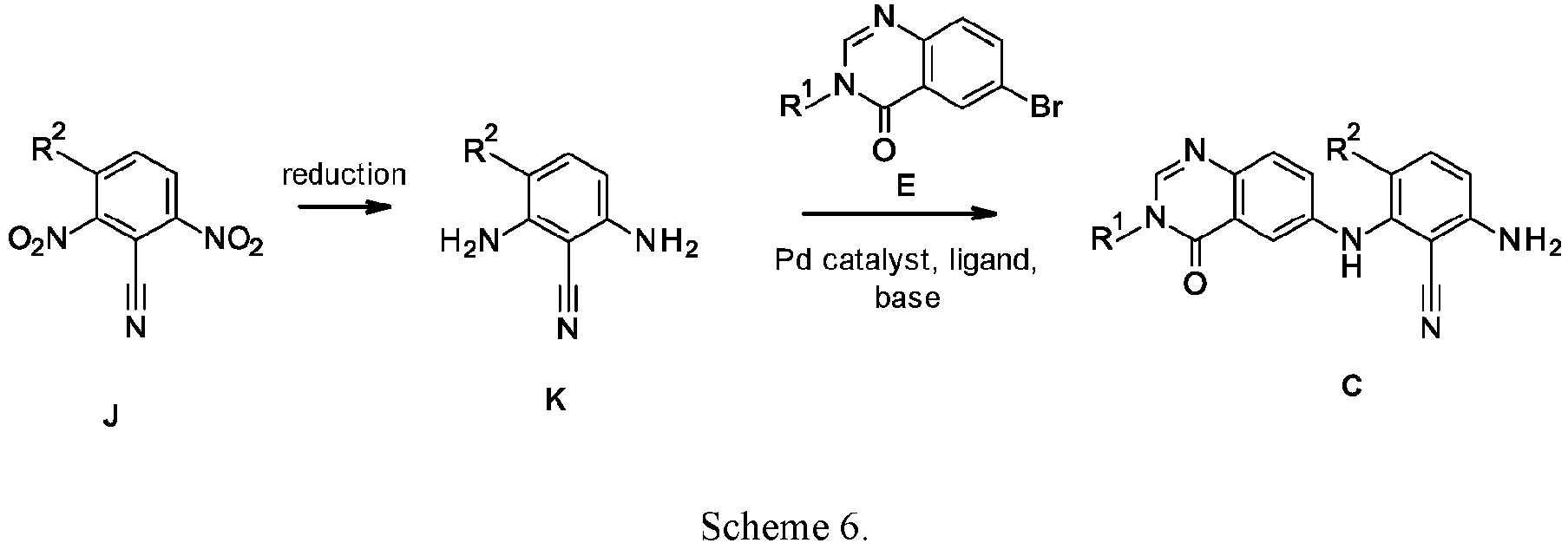
- Intermediates C where X = NH can be prepared by the reduction of 2,6-dinitrobenzonitriles J with a reducing agent such as iron in aqueous HCl in a solvent such as a mixture of methanol and dioxane, to give 2,6-diaminobenzonitriles K. Subsequent reaction with 6-bromoquinazolin-4-ones E in the presence of a catalyst such as tris(dibenzylideneacetone)dipalladium (0), a ligand such as BippyPhos and a base such as Cs2CO3, in a solvent such as dioxane gives intermediates C (Scheme 6).
- Intermediates C where X = NH can also be prepared as shown in Scheme 7. 2-Amino-6-nitrobenzoic acid and an N-alkylformamide G are condensed to form 6-nitroquinazolin-4-ones L, for example by heating in the absence of a solvent, which is then reduced to the 6-aminoquinazolin-4-one M, for example by using hydrogen and a catalyst (such as palladium on carbon) in a solvent such as a mixture of methanol and acetic acid. Reaction with fluorobenzonitriles I in the presence of a base such as potassium tert-butoxide in a solvent such as DMSO affords intermediates N. Reaction with an azide salt such as NaN3 in a solvent such as DMF affords azides O, which can be reduced to the amine C (for example, by using the procedure described in Pei and Wickham, Tetrahedron Lett. (1993), 34, 7509-7512).

- Intermediates F can be prepared by treatment of 2,6-dinitrobenzonitrile P with sulfonamides or sulfamides B in the presence of a base such as Cs2CO3 in a solvent such as DMF. The resultant nitro compounds Q can be reduced, for example by hydrogenation with a catalyst such as Pd(OH)2 in a solvent such as a mixture of methanol and THF (Scheme 8).

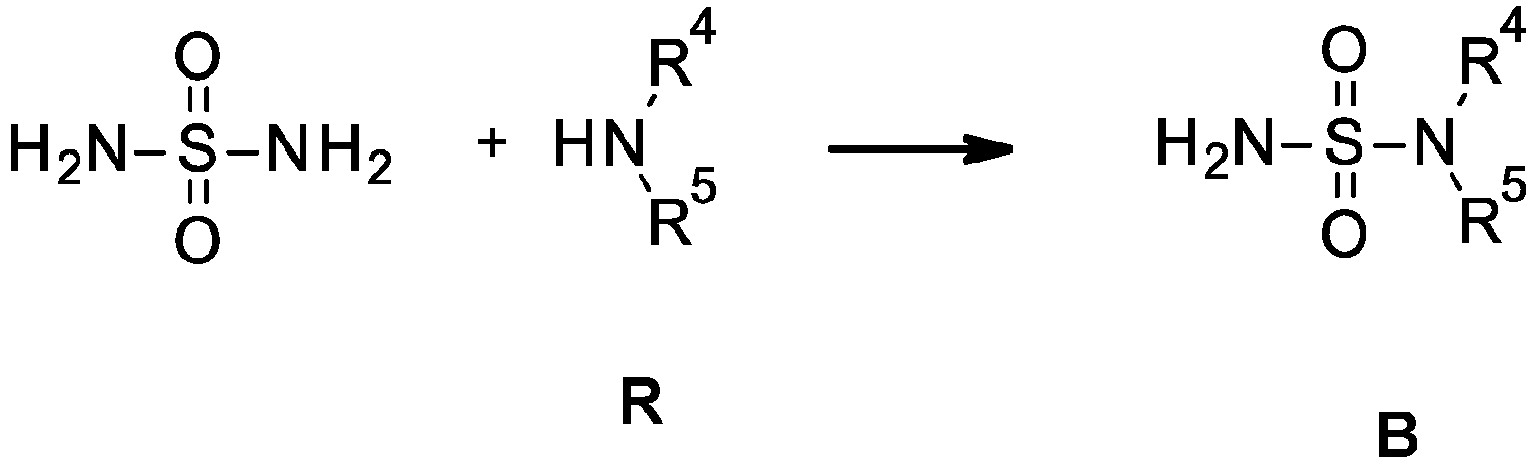
- Intermediates B, where R3 is of the type NR4R5 (i.e. sulfamides), where not commercially available, can be prepared from the reaction of sulfuric diamide with an amine R in dioxane, in the presence of absence of a base such as triethylamine (Scheme 9).

- Intermediates B, where R3 is of the type CHR6R7 (i.e. sulfonamides), where not commercially available, can be prepared from the corresponding sulfonyl chlorides S by reaction with aqueous ammonia (Scheme 10).

- Intermediates D, where R3 is of the type NR4R5 (i.e. sulfamoyl chlorides), where not commercially available, can be prepared from a secondary amine T and sulfuoryl dichloride in the presence of a base such as DIPEA in a solvent such as DCM (Scheme 11).

- It will be appreciated that the compound of formula (I) in this invention may be derivatised at functional groups to provide derivatives which are capable of conversion back to the parent compound in vivo.
- The invention also relates in particular to:
- A compound of formula (I) as described herein, or a pharmaceutically acceptable salt thereof, for use as therapeutically active substance;
- A pharmaceutical composition comprising a compound of formula (I) as described herein, or a pharmaceutically acceptable salt thereof, and a therapeutically inert carrier;
- A compound of formula (I) as described herein, or a pharmaceutically acceptable salt thereof, for use in the treatment or prophylaxis of cancer;
- A compound of formula (I) as described herein, or a pharmaceutically acceptable salt thereof, for use in the treatment or prophylaxis of thyroid cancer, colorectal cancer, brain cancer, melanoma or non-small cell lung cancer (NSCLC);
- A certain embodiment of the invention relates to the compound of formula (I) as described herein, or a pharmaceutically acceptable salt thereof, for the use in the therapeutic and/or prophylactic treatment of cancer, in particular BRAF mutant driven cancers, more particularly thyroid cancer, colorectal cancer, brain cancer, melanoma or NSCLC.
- A certain embodiment of the invention relates to a pharmaceutical composition comprising the compound of formula (I) as described herein, or a pharmaceutically acceptable salt thereof, and a pharmaceutically acceptable excipient.
- A certain embodiment of the invention relates to the compound of formula (I) as described herein, or a pharmaceutically acceptable salt thereof, for the use as a medicament in therapeutic and/or prophylactic treatment of a patient with BRAF mutant driven cancer, in particular more particularly thyroid cancer, colorectal cancer, brain cancer, melanoma or NSCLC comprising determining the BRAF mutation status in said patient and then administering the compound of formula (I) as described herein, or a pharmaceutically acceptable salt thereof, to said patient.
- Furthermore, the invention includes all substituents in their corresponding deuterated form, wherever applicable, of the compound of formula (I).
- A certain embodiment of the invention relates to the compound of formula (I) as described herein, or a pharmaceutically acceptable salt thereof, wherein at least one substituent comprises at least one radioisotope. Particular examples of radioisotopes are 2H, 3H, 13C, 14C and 18F.
- Furthermore, the invention includes all optical isomers, i.e. diastereoisomers, diastereomeric mixtures, racemic mixtures, all their corresponding enantiomers and/or tautomers as well as their solvates, wherever applicable, of the compound of formula (I).
- The compound of formula (I) may contain one or more asymmetric centers and can therefore occur as racemates, racemic mixtures, single enantiomers, diastereomeric mixtures and individual diastereomers. Additional asymmetric centers may be present depending upon the nature of the various substituents on the molecule. Each such asymmetric center will independently produce two optical isomers and it is intended that all of the possible optical isomers and diastereomers in mixtures and as pure or partially purified compounds are included within this invention. The present invention is meant to encompass all such isomeric forms of these compounds. The independent syntheses of these diastereomers or their chromatographic separations may be achieved as known in the art by appropriate modification of the methodology disclosed herein. Their absolute stereochemistry may be determined by the x-ray crystallography of crystalline products or crystalline intermediates which are derivatized, if necessary, with a reagent containing an asymmetric center of known absolute configuration. If desired, racemic mixtures of the compounds may be separated so that the individual enantiomers are isolated. The separation can be carried out by methods well known in the art, such as the coupling of a racemic mixture of compounds to an enantiomerically pure compound to form a diastereomeric mixture, followed by separation of the individual diastereomers by standard methods, such as fractional crystallization or chromatography.
- In the embodiments, where optically pure enantiomers are provided, optically pure enantiomer means that the compound contains > 90 % of the desired isomer by weight, particularly > 95 % of the desired isomer by weight, or more particularly > 99 % of the desired isomer by weight, said weight percent based upon the total weight of the isomer(s) of the compound. Chirally pure or chirally enriched compounds may be prepared by chirally selective synthesis or by separation of enantiomers. The separation of enantiomers may be carried out on the final product or alternatively on a suitable intermediate.
- DMEM no-phenol red medium supplemented with L-glutamine was purchased from (Thermo Fisher Scientific). Fetal bovine serum (FBS) was purchased from VWR. Advanced ERK phospho-T202 /Y204 kit - 10,000 tests was purchased from Cisbio cat# 64AERPEH. A375 and HCT116 cells were originally obtained from ATCC and banked by the Roche repository. 384-well microplates were purchased from Greiner Bio-One, 384-well, (With Lid, HiBase, Low volume cat 784-080).
- A375 is a cellular cancer model expressing V600E mutated BRAF and HCT116 a cellular cancer model expressing WT BRAF. First generation BRAF inhibitors such as e.g. dabrafenib induce a paradox effect on tumour cells in that they inhibit the growth of V600E mutated BRAF cells (such as e.g. A375), while they activate growth in WT BRAF cells (such as e.g. HCT 116). ERK 1,2 phosphorylation (terminal member of the phosphorylation cascade of the MAPK pathway) is hereafter reported as main readout for the activation status of the MAPK pathway. Prior to the assay, A375 and HCT116 cell lines are maintained in DMEM no-phenol red medium supplemented with 10% fetal bovine serum (FBS). Following compound treatment, P-ERK levels are determined by measuring FRET fluorescence signal induced by selective binding of 2 antibodies provided in the mentioned kit (Cisbio cat# 64AERPEH) on ERK protein when phosphorylated at Thr202/Tyr204. Briefly, 8000 cells/well in 12 µl media/well are plated in the 384-well plate and left overnight in the incubator (at 37 °C with 5% CO2-humidified atmosphere), the following day the plate is treated in duplicate with test compounds, dabrafenib and PLX8394 (the latter two as controls) at the following final drug concentrations: 10µM-3µM-1µM-0.3µM-0.1µM-0.03µM-0,01µM-0.003µM-0.001µM, all wells are subjected to DMSO normalization and drug incubation occurs for 1 hour. Then, 4µl of a 4X lysis buffer supplied with the kit are added to the wells, the plate is then centrifuged for 30 second (300 rcf) and incubated on a plate shaker for 1h at RT.
- At the end of the incubation 4µL/well of advanced P-ERK antibody solution (prepared according to manufacturer's instruction) followed by 4µL/well of criptate P-ERK antibody solution (prepared according to manufacturer's instruction) (Cisbio cat# 64AERPEH) are added to test wells.
- In order to allow proper data normalization control wells non drug treated reported in the following table are always included in each plate (according to manufacturer's instruction):
p-ERK HTRF well compositions (µl):neg ctrl pos ctrl neut ctrl cpd blank - - 12 12 12 Cells 12 - - - - Media - - - <0.05 - Cpd - 16 - - - control lysate (ready-to-use) 4 - 4 4 4 4x lysis buffer 4 4 4 4 Advanced p-ERK antibody solution - - - - 4 Advanced p-ERK1/2 Cryptate antibody solut. 20 20 20 20 20 Total volume in Well - The plate is then centrifuged at 300 rcf for 30 second, sealed to prevent evaporation and incubated overnight in the dark at room temperature.
- The plate is then analyzed and fluorescence emission value collected through a Pherastast FSX (BMG Labtech) apparatus at 665 and 620 nM.
- The obtained fluorescence values are processed according to the formula Ratio=Signal(620nm)/Signal(625nm)*10000 then the average of the ratio on the blank is subtracted to all values.
- Data are normalized in the case of A375 cells (BRAF inhibition) considering the average of the ratio (blank subtracted) derived by DMSO only treated cells as 100% and by considering the average of the ratio (blank subtracted) derived by 10uM dabrafenib treated cells as 0%. Mean of the normalized points are fitted with sigmoidal curve and IC50 determined.
- Data are normalized in the case of HCT116 cells (BRAF activation) considering the average of the ratio (blank subtracted) derived by DMSO only treated cells as 0% and by considering the average of the ratio (blank subtracted) derived by dabrafenib treated cells at the concentration which provides the highest signal as 100%. Individual points are fitted with either sigmoidal or bell shape curves, and the percentage of activation compared to maximum dabrafenib-mediated activation is determined. The EC50 is the concentration at which activation equal to 50% of the maximum achieved by dabrafenib is obtained.
- In case the activation does not reach 50% of the maximum achieved by dabrafenib, then the EC50 calculation is not applicable.
- The Percentage of Maximum paradox inducing effect from dabrafenib is determined by evaluating the percentage at which the test compound induce its maximum P-ERK signal as percentage of the highest signal produced by dabrafenib within the dose range tested.
Table 1: Examples 1 to 17 have high affinity for RAF kinases. Example Kd (µM) BRAF (V600E) BRAF CRAF 1 0.0034 0.0016 0.0063 2 0.0368 0.0304 0.0054 3 0.0063 0.01 0.0094 4 0.0046 0.0021 0.0016 5 0.0323 0.0106 0.0072 6 0.0026 0.0016 0.0011 7 0.0045 0.0089 0.0089 8 0.0070 0.0033 0.0018 9 0.0040 0.0024 0.0008 10 0.0144 0.0039 0.0068 11 0.0265 0.0116 0.0523 12 0.0075 0.0020 0.0098 13 0.0100 0.0043 0.0068 14 0.0007 0.0014 0.0015 15 0.0009 0.0004 0.0008 16 0.0019 0.0010 0.0007 17 0.0043 0.0017 0.003 AR-25 0.0001 0.0002 0.0003 AR-30 0.1740 0.5040 0.8220 AR-31 0.0459 0.1190 0.1903 Table 2: The results of Table 2 demonstrate that the compounds of the invention break the paradoxical RAF activation in HCT-116 cancer cells expressing WT BRAF. When compared with dabrafenib or with AR-25, the maximum paradox inducing effect is substantially reduced by more than 25% for all examples. Example pERK IC50 (nM) p-ERK EC50 (nM) Percentage of maximum paradox inducing effect from dabrafenib conc. at which the compound induces p-ERK activation of 50% of that induced by dabrafenib (Positive control paradox inducer) A375 HCT-116 1 5.5 >1000 56 2 28.6 >1000 69 3 14.8 >1000 61 4 34.3 714 65 5 52.5 >1000 61 6 17.1 648 59 7 26.2 not applicable 32 8 5.3 412 63 9 13.9 not applicable 44 10 8.8 not applicable 21 11 19.7 >1000 61 12 9.2 not applicable 49 13 14.8 >1000 67 14 13.7 204 74 15 1.6 172 63 16 2.3 152 70 17 2.6 970 71 AR-25 1.1 9.6 103 AR-30 406 >1000 59 AR-31 311 >1000 51 -
WO2012/118492 discloses references compounds AR-25 as example 25, AR-30 as example 30 and AR-31 as example 31. - The compound of formula (I) or a pharmaceutically acceptable salt thereof can be used as a medicament (e.g. in the form of a pharmaceutical preparation). The pharmaceutical preparation can be administered internally, such as orally (e.g. in the form of tablets, coated tablets, dragées, hard and soft gelatin capsules, solutions, emulsions or suspensions), nasally (e.g. in the form of nasal sprays), rectally (e.g. in the form of suppositories) or topical ocularly (e.g. in the form of solutions, ointments, gels or water soluble polymeric inserts). However, the administration can also be effected parenterally, such as intramuscularly, intravenously, or intraocularly (e.g. in the form of sterile injection solutions).
- The compound of formula (I) or a pharmaceutically acceptable salt thereof can be processed with pharmaceutically inert, inorganic or organic adjuvants for the production of tablets, coated tablets, dragées, hard gelatin capsules, injection solutions or topical formulations Lactose, corn starch or derivatives thereof, talc, stearic acid or its salts etc. can be used, for example, as such adjuvants for tablets, dragées and hard gelatin capsules.
- Suitable adjuvants for soft gelatin capsules, are, for example, vegetable oils, waxes, fats, semi-solid substances and liquid polyols, etc.
- Suitable adjuvants for the production of solutions and syrups are, for example, water, polyols, saccharose, invert sugar, glucose, etc.
- Suitable adjuvants for injection solutions are, for example, water, alcohols, polyols, glycerol, vegetable oils, etc.
- Suitable adjuvants for suppositories are, for example, natural or hardened oils, waxes, fats, semi-solid or liquid polyols, etc.
- Suitable adjuvants for topical ocular formulations are, for example, cyclodextrins, mannitol or many other carriers and excipients known in the art.
- Moreover, the pharmaceutical preparations can contain preservatives, solubilizers, viscosity-increasing substances, stabilizers, wetting agents, emulsifiers, sweeteners, colorants, flavorants, salts for varying the osmotic pressure, buffers, masking agents or antioxidants. They can also contain still other therapeutically valuable substances.
- The dosage can vary in wide limits and will, of course, be fitted to the individual requirements in each particular case. In general, in the case of oral administration a daily dosage of about 0.1 mg to 20 mg per kg body weight, preferably about 0.5 mg to 4 mg per kg body weight (e.g. about 300 mg per person), divided into preferably 1-3 individual doses, which can consist, for example, of the same amounts, should it be appropriate. In the case of topical administration, the formulation can contain 0.001% to 15% by weight of medicament and the required dose, which can be between 0.1 and 25 mg in can be administered either by single dose per day or per week, or by multiple doses (2 to 4) per day, or by multiple doses per week It will, however, be clear that the upper or lower limit given herein can be exceeded when this is shown to be indicated.
- The compound of formula (I) or a pharmaceutically acceptable salt thereof can be used as therapeutically active substance, e.g. in the form of a pharmaceutical preparation. The pharmaceutical preparation can be administered orally, e.g. in the form of tablets, coated tablets, dragées, hard and soft gelatin capsules, solutions, emulsions or suspensions. The administration can, however, also be effected rectally, e.g. in the form of suppositories, or parenterally, e.g. in the form of injection solutions.
- The compound of formula (I) and pharmaceutically acceptable salts thereof can be processed with a pharmaceutically inert, inorganic or organic carrier for the production of a pharmaceutical preparation. Lactose, corn starch or derivatives thereof, talc, stearic acids or its salts and the like can be used, for example, as such carriers for tablets, coated tablets, dragées and hard gelatin capsules. Suitable carriers for soft gelatin capsules are, for example, vegetable oils, waxes, fats, semi-solid and liquid polyols and the like. Depending on the nature of the active substance no carriers are however usually required in the case of soft gelatin capsules. Suitable carriers for the production of solutions and syrups are, for example, water, polyols, glycerol, vegetable oil and the like. Suitable carriers for suppositories are, for example, natural or hardened oils, waxes, fats, semi-liquid or liquid polyols and the like.
- The pharmaceutical preparation can, moreover, contain pharmaceutically acceptable auxiliary substances such as preservatives, solubilizers, stabilizers, wetting agents, emulsifiers, sweeteners, colorants, flavorants, salts for varying the osmotic pressure, buffers, masking agents or antioxidants. They can also contain still other therapeutically valuable substances.
- Medicaments containing the compound of formula (I) or a pharmaceutically acceptable salt thereof and a therapeutically inert carrier are also provided by the present invention, as is a process for their production, which comprises bringing one or more compounds of formula (I) and/or pharmaceutically acceptable salts thereof and, if desired, one or more other therapeutically valuable substances into a galenical administration form together with one or more therapeutically inert carriers.
- The dosage can vary within wide limits and will, of course, have to be adjusted to the individual requirements in each particular case. In the case of oral administration the dosage for adults can vary from about 0.01 mg to about 1000 mg per day of a compound of general formula (I) or of the corresponding amount of a pharmaceutically acceptable salt thereof. The daily dosage may be administered as single dose or in divided doses and, in addition, the upper limit can also be exceeded when this is found to be indicated.
- The following examples illustrate the present invention without limiting it, but serve merely as representative thereof. The pharmaceutical preparations conveniently contain about 1-500 mg, particularly 1-100 mg, of a compound of formula (I). Examples of compositions according to the invention are:
- Tablets of the following composition are manufactured in the usual manner:
Table 1: possible tablet composition ingredient mg/tablet 5 25 100 500 Compound of formula (I) 5 25 100 500 Lactose Anhydrous DTG 125 105 30 150 Sta-Rx 1500 6 6 6 60 Microcrystalline Cellulose 30 30 30 450 Magnesium Stearate 1 1 1 1 Total 167 167 167 831 -
- 1. Mix ingredients 1, 2, 3 and 4 and granulate with purified water.
- 2. Dry the granules at 50°C.
- 3. Pass the granules through suitable milling equipment.
- 4. Add ingredient 5 and mix for three minutes; compress on a suitable press.
- Capsules of the following composition are manufactured:
Table 2: possible capsule ingredient composition ingredient mg/capsule 5 25 100 500 Compound of formula (I) 5 25 100 500 Hydrous Lactose 159 123 148 - Corn Starch 25 35 40 70 Talk 10 15 10 25 Magnesium Stearate 1 2 2 5 Total 200 200 300 600 -
- 1. Mix ingredients 1, 2 and 3 in a suitable mixer for 30 minutes.
- 2. Add ingredients 4 and 5 and mix for 3 minutes.
- 3. Fill into a suitable capsule.
- The compound of formula (I), lactose and corn starch are firstly mixed in a mixer and then in a comminuting machine. The mixture is returned to the mixer; the talc is added thereto and mixed thoroughly. The mixture is filled by machine into suitable capsules, e.g. hard gelatin capsules.
- Soft Gelatin Capsules of the following composition are manufactured:
Table 3: possible soft gelatin capsule ingredient composition ingredient mg/capsule Compound of formula (I) 5 Yellow wax 8 Hydrogenated Soya bean oil 8 Partially hydrogenated plant oils 34 Soya bean oil 110 Total 165 Table 4: possible soft gelatin capsule composition ingredient mg/capsule Gelatin 75 Glycerol 85 % 32 Karion 83 8 (dry matter) Titan dioxide 0.4 Iron oxide yellow 1.1 Total 116.5 - The compound of formula (I) is dissolved in a warm melting of the other ingredients and the mixture is filled into soft gelatin capsules of appropriate size. The filled soft gelatin capsules are treated according to the usual procedures.
- Suppositories of the following composition are manufactured:
Table 5: possible suppository composition ingredient mg/supp. Compound of formula (I) 15 Suppository mass 1285 Total 1300 - The suppository mass is melted in a glass or steel vessel, mixed thoroughly and cooled to 45°C. Thereupon, the finely powdered compound of formula (I) is added thereto and stirred until it has dispersed completely. The mixture is poured into suppository moulds of suitable size, left to cool; the suppositories are then removed from the moulds and packed individually in wax paper or metal foil.
- Injection solutions of the following composition are manufactured:
Table 6: possible injection solution composition ingredient mg/injection solution. Compound of formula (I) 3 Polyethylene Glycol 400 150 acetic acid q.s. ad pH 5.0 water for injection solutions ad 1.0 ml - The compound of formula (I) is dissolved in a mixture of Polyethylene Glycol 400 and water for injection (part). The pH is adjusted to 5.0 by acetic acid. The volume is adjusted to 1.0 ml by addition of the residual amount of water. The solution is filtered, filled into vials using an appropriate overage and sterilized.
- Sachets of the following composition are manufactured:
Table 7: possible sachet composition ingredient mg/sachet Compound of formula (I) 50 Lactose, fine powder 1015 Microcrystalline cellulose (AVICEL PH 102) 1400 Sodium carboxymethyl cellulose 14 Polyvinylpyrrolidon K 30 10 Magnesium stearate 10 Flavoring additives 1 Total 2500 - The compound of formula (I) is mixed with lactose, microcrystalline cellulose and sodium carboxymethyl cellulose and granulated with a mixture of polyvinylpyrrolidone in water. The granulate is mixed with magnesium stearate and the flavoring additives and filled into sachets.
- The following examples are provided for illustration of the invention. They should not be considered as limiting the scope of the invention, but merely as being representative thereof.
- AcOH = acetic acid; DCM = dichloromethane; DIPEA = diisopropylethylamine; DMAP = dimethylaminopyridine; DMF = dimethylformamide; DMSO = dimethyl sulfoxide; ESI = electrospray ionization; EtOAc = ethyl acetate; EtOH = ethanol; GTP = guanosine triphosphate; HATU = hexafluorophosphate azabenzotriazole tetramethyl uronium; HPLC = high performance liquid chromatography; MeOH = methanol; MS = mass spectrometry; NMP = N-methyl-2-pyrrolidone; NMR = nuclear magnetic resonance; rt = room temperature; THF = tetrahydrofuran; TRIS = tris(hydroxymethyl)aminomethane.
-

- 2-Amino-5-hydroxybenzoic acid (10 g, 65.3 mmol, Eq: 1.0) and N-methylformamide (30 g, 29.9 mL, 503 mmol, Eq: 7.7) were heated at 145 °C for 21 h 45 min, then cooled to rt. The reaction mixture was diluted with 50 mL H2O and stirred at rt for 20 min. The resulting precipitate was collected by filtration. The light brown solid was washed 3 × with 20 mL water. The solid was taken up in toluene and evaporated to dryness (3 ×). The solid was dried in vacuo at 40 °C overnight under high vacuum to give the title compound as a light brown solid (10.3 g, 89% yield). MS (ESI) m/z: 177.1 [M+H]+.
-

- Cesium carbonate (3.22 g, 9.79 mmol, Eq: 1.15) was added at rt to a solution of I1 (1500 mg, 8.51 mmol, Eq: 1) in N,N-dimethylformamide (35 mL). The mixture was stirred for 30 min at rt then 2,3,6-trifluorobenzonitrile (1.47 g, 1.08 ml, 9.37 mmol, Eq: 1.1) was added. After 1 h, the reaction was cooled on ice and diluted with water (120 mL). The resultant solid was collected by filtration, washed with iced water (100 mL) and heptane (100 mL) and suction-dried. The solid was taken up in toluene and evaporated to dryness (3 ×) then dried overnight in vacuo to give the title compound as a light brown solid (2.58 g, 97% yield). MS (ESI) m/z: 314.1 [M+H]+.
-

- NaH (60% in mineral oil, 285 mg, 6.53 mmol, Eq: 1.15) was added at 0 °C to a solution of I1 (6-hydroxy-3-methylquinazolin-4-one) (1.00 g, 5.68 mmol, Eq: 1.0) in DMF (15 mL). The cooling bath was removed, and the reaction was stirred at rt for 15 min. The reaction was again cooled to 0 °C, and 2,6-difluorobenzonitrile (790 mg, 5.68 mmol, Eq: 1.0) in DMF (2.5 mL) was added. The reaction was warmed to rt and stirred under argon for 2 h. After 2 h, the reaction was cooled on ice, and water (100 mL) was added. The resultant precipitate was collected by filtration, and washed with water and heptanes to give the title compound as a beige solid (1.62 g, 93% purity, 90% yield). MS (ESI) m/z: 296.1 [M+H]+.
-

-

- 3-Chloro-2,6-difluorobenzonitrile (200 mg, 1.15 mmol, Eq: 1.0), I1 (6-hydroxy-3-methylquinazolin-4-one) (203 mg, 1.15 mmol, Eq: 1.0) and K2CO3 (319 mg, 2.3 mmol, Eq: 2.0) in NMP (1.15 mL) were heated at 100 °C for 14 h, the cooled to rt. The reaction was diluted with water (30 mL) and extracted with EtOAc (2 × 30 mL). The combined organic layers were washed with brine (3 × 40 mL), dried (Na2SO4), filtered and concentrated in vacuo. Purification by flash chromatography (20 g silica, 50-100% EtOAc in heptane) gave the title compound as a colourless solid (231 mg, 100% purity, 61% yield). MS (ESI) m/z: 330.1 [M+H]+.
-

- 3-Chloro-6-fluoro-2-(3-methyl-4-oxo-quinazolin-6-yl)oxy-benzonitrile (550 mg, 1.67 mmol, Eq: 1.0), ammonium hydroxide (25% in water, 2.7 g, 3 mL, 77 mmol, Eq: 46.2) and 2-propanol (3 mL) were heated in a sealed vial with microwave irradiation for 25 min at 160 °C. The reaction was cooled to rt, and the resultant precipitate was filtered, washed with water, isopropanol and diethyl ether to give the title compound as a colourless solid (426 mg, 96% purity, 78% yield). MS (ESI) m/z: 327.1 [M+H]+.
-

-

- 2,6-Dinitrobenzonitrile (1.46 g, 7.56 mmol, Eq: 1.1) was dissolved in DMF (15 mL). Cs2CO3 (2.46 g, 7.56 mmol, Eq: 1.1) and [methyl(sulfamoyl)amino]ethane (1 g, 6.87 mmol, Eq: 1.0) were added. The reaction mixture was stirred for 2 h at 65 °C, then concentrated in vacuo. The residue was taken up in 2-methyl-THF and washed with water-brine solution, and the aqueous layer was extracted 2 × with 2-methyl-THF. The organic layers were combined, dried with Na2SO4, filtered and concentrated in vacuo. The residue was diluted with DCM, evaporated with silica gel to dryness and transferred to a column. Purification by flash chromatography (40 g silica, 0-100% EtOAc in DCM) gave the title compound as a light red viscous oil (720 mg, 77% purity) which was used without further purification. MS (ESI) m/z: 285.1 [M+H]+.
-
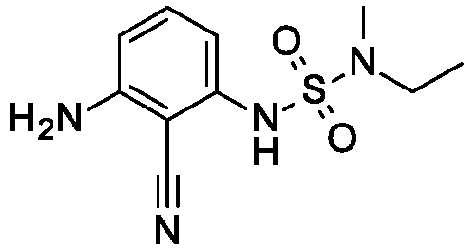
- 1-Amino-2-cyano-3-[[ethyl(methyl)sulfamoyl]amino]benzene (703 mg, 1.9 mmol, Eq: 1.0) was dissolved in MeOH (17 mL) and THF (7 mL), then Pd(OH)2 (Pearlman's catalyst, 26.7 mg, 190 µmol, Eq: 0.1) was added and the reaction mixture was stirred under a balloon of hydrogen at rt. After 1 h, the reaction mixture was filtered over a Whatman Spartan 30/0.45RC filter, and the filtrate was evaporated. The residue was diluted with EtOAc and transferred to a column. Purification by flash chromatography (80 g silica, 0-68% EtOAc in heptane) gave the title compound as a viscous orange oil (457 mg, 100% purity, 27% yield over two steps). MS (ESI) m/z: 255.1 [M+H]+.
-

-

- 2,6-Dinitrobenzonitrile (900 mg, 4.66 mmol, Eq: 1.0) was dissolved in DMF (10 mL). Cs2CO3 (2.28 g, 6.99 mmol, Eq: 1.5) and I9 (1.18 g, 6.99 mmol, Eq: 1.5) were added. The reaction mixture was stirred for 1 h at 60 °C, then concentrated in vacuo. The residue was taken up in 2-methyl-THF and washed with aq. NH4Cl solution, and the aqueous layer was extracted 1 × with 2-methyl-THF. The organic layers were combined, dried with Na2SO4, filtrated and concentrated in vacuo. The residue was diluted with DCM, evaporated with silica gel to dryness and transferred to a column. Purification by flash chromatography (40 g silica, 0-100% EtOAc in DCM) gave the title compound as a light red viscous oil (795 mg). MS (ESI) m/z: 315.1 [M+H]+.
-
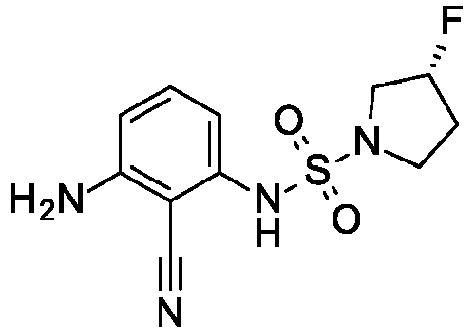
- (3R)-N-(2-Cyano-3-nitro-phenyl)-3-fluoro-pyrrolidine-1-sulfonamide (751 mg, 2.39 mmol, Eq: 1.0) was dissolved in MeOH (13 mL) and THF (6 mL), then Pd(OH)2 (Pearlman's catalyst , 33.6 mg, 239 µmol, Eq: 0.1) was added and the reaction mixture was stirred under a balloon of hydrogen at rt. After 1 h, the reaction mixture was filtered over a Whatman Spartan 30/0.45RC filter, and the filtrate was evaporated. The residue was diluted with EtOAc and transferred to a column. Purification by flash chromatography (80 g silica, 0-79% EtOAc in heptane) gave the title compound as a viscous orange oil (560 mg, 100% purity, 42% yield over two steps). MS (ESI) m/z: 285.1 [M+H]+.
-

-
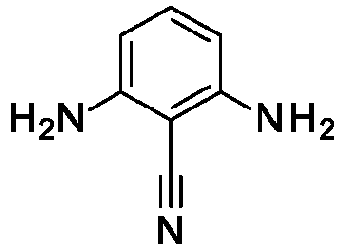
- 2,6-Dinitrobenzonitrile (3 g, 15.5 mmol, Eq: 1.0) was dissolved in a mixture of methanol (60 mL) and dioxane (35 mL). The reaction was heated to 75 °C, then HCl (37% aq, 11 g, 9.29 mL, 111 mmol, Eq: 7.16) was added dropwise, then iron (2.78 g, 49.7 mmol, Eq: 3.2) was added in 4 portions over 8 min. The reaction mixture was stirred for 1 h at 64 °C, then concentrated in vacuo. The residue was taken up in 2-methyl-THF and ice and washed with sat. aq. NaHCO3. Both layers were filtered, and the aqueous layer was back-extracted with 2-methyl-THF. The organic layers were combined, washed with brine, dried over Na2SO4 and concentrated in vacuo. The residue was diluted with DCM, evaporated with silica gel to dryness and transferred to a column. Purification by flash chromatography (80 g silica, DCM) gave the title compound (268 mg, 13% yield) along with 2-amino-6-nitro-benzonitrile (465 mg, 18% yield). 2,6-diaminobenzonitrile: 1H NMR (300 MHz, DMSO-d6 ) δ ppm 5.55 (s, 4 H) 5.89 (d, J=8.1 Hz, 2 H) 6.89 (t, J=8.1 Hz, 1 H). 2-amino-6-nitro-benzonitrile: 1H NMR (300 MHz, DMSO-d6 ) δ ppm 6.74 (br s, 2 H) 7.20 (dd, J=8.3, 1.0 Hz, 1 H) 7.40 - 7.55 (m, 2 H).
-

- 6-Bromo-3-methylquinazolin-4(3H)-one (200 mg, 820 µmol, Eq: 1.0) and 2,6-diaminobenzonitrile (109 mg, 820 µmol, Eq: 1.0) were dissolved in dioxane (10 mL) then Cs2CO3 (809 mg, 2.46 mmol, Eq: 3.0) was added. The reaction mixture was flushed with argon, then BippyPhos (25.7 mg, 49.2 µmol, Eq: 0.06) and tris(dibenzylideneacetone)dipalladium (0) chloroform adduct (26 mg, 24.6 µmol, Eq: 0.03) were added. The reaction was flushed with argon again, and the vial was closed. The reaction mixture was heated to 110 °C and stirred for 9.5 h. The reaction mixture was taken up in 15 mL 2-methyl-THF and ice and washed with 4 mL 1% aq. citric acid. The aqueous layer was back-extracted with 1 × 15 mL 2-methyl-THF. The organic layers were combined, washed with brine, dried over Na2SO4, filtered and concentrated in vacuo. The residue was diluted with EtOAc and transferred to a column. Purification by flash chromatography (40 g silica, 0-100% EtOAc in heptane) gave the title compound as a light yellow solid (21 mg, 97% purity, 8.6% yield). MS (ESI) m/z: 292.1 [M+H]+.
-

-

- 2-Amino-5-nitrobenzoic acid (5 g, 27.5 mmol, Eq: 1.0) and N-methylformamide (15.2 g, 15 mL, 257 mmol, Eq: 9.35) were heated for 4 h at 180 °C in a sealed tube. The reaction was then cooled to rt and poured into ice-cold water (150 mL). The resulting precipitate was collected by filtration and washed with further ice-cold water. The solid was concentrated twice to dryness from toluene, then dried further under high vacuum to give the title compound as a yellow-brown solid (3.17 g, 56% yield). MS (ESI) m/z: 206.1 [M+H]+.
-
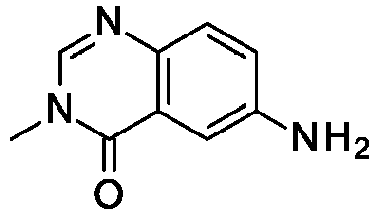
- 3-Methyl-6-nitroquinazolin-4-one (1.00 g, 4.87 mmol, Eq: 1.0) was suspended in methanol (25 mL) and AcOH (1 mL). Palladium on carbon (10 wt. % Pd, 100 mg, 940 µmol, Eq: 0.193) was added, and the reaction was stirred at rt under a balloon of hydrogen. After 14 h, the reaction was filtered through Celite (eluent MeOH), and concentrated in vacuo. The residue was concentrated twice from toluene, then dried further under high vacuum to afford the title compound as a dark brown solid (821 mg, 96% yield). The material was used without further purification, but could be further purified by recrystallization from boiling water, washing the resultant dark brown needles with cold water, isopropanol and diethyl ether. MS (ESI) m/z: 176.1 [M+H]+.
-

- 6-Amino-3-methylquinazolin-4-one (200 mg, 1.14 mmol, Eq: 1.0) and 3-chloro-2,6-difluorobenzonitrile (198 mg, 1.14 mmol, Eq: 1.0) were dissolved in DMSO (3 mL). Potassium tert-butoxide (141 mg, 1.26 mmol, Eq: 1.1) was added and the reaction was stirred at rt for 2 h. The reaction was diluted with water and extracted 2 × with EtOAc. The combined organic layers were washed with brine, dried (MgSO4), filtered and concentrated in vacuo. Purification by flash chromatography (24 g, 0-5% MeOH in DCM) to give the title compound as a yellow solid (108 mg, 29 % yield). MS (ESI) m/z: 329.2 [M+H]+.
-
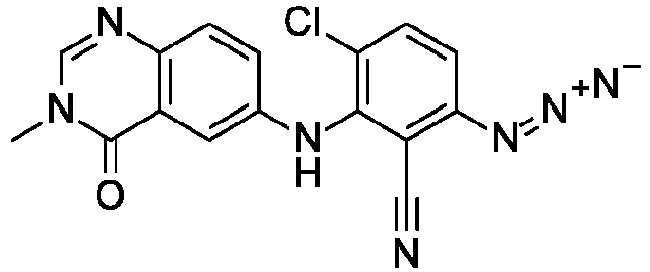
- 3-Chloro-6-fluoro-2-[(3-methyl-4-oxo-quinazolin-6-yl)amino]benzonitrile (320 mg, 973 µmol, Eq: 1.0), sodium azide (75.9 mg, 1.17 mmol, Eq: 1.2) and DMF dry (4 mL) were stirred at 120 °C for 1.5 h under a nitrogen atmosphere. The reaction mixture was cooled to rt and then diluted with water and extracted 2 × with EtOAc. The combined organic layers washed with brine, dried over Na2SO4, filtered and concentrated in vacuo to give the title compound as a brown solid (372 mg, 92% purity, quant.). MS (ESI) m/z: 352.2 [M+H]+.
-
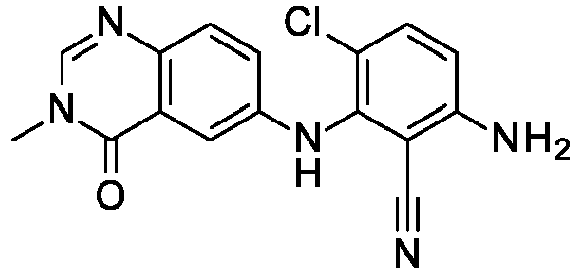
- To a solution of 6-azido-3-chloro-2-[(3-methyl-4-oxo-quinazolin-6-yl)amino]benzonitrile (372 mg, 1.06 mmol, Eq: 1) in 2-propanol (10 mL) was added triethylamine (214 mg, 295 µL, 2.12 mmol, Eq: 2), 1,3-propanedithiol (80.1 mg, 74.9 µL, 740 µmol, Eq: 0.7) and sodium borohydride (40 mg, 1.06 mmol, Eq: 1). The reaction mixture was stirred at rt overnight, the concentrated in vacuo. EtOAc and citric acid (10% aq) were added to the residue, the phases were separated and the aqueous phase was extracted 2 × with EtOAc. The combined organic layers were washed with brine, dried over Na2SO4, filtered and evaporated to dryness to give the title compound as a yellow solid (345 mg, quant.). MS (ESI) m/z: 326.1 [M+H]+.
-

- (R)-3-Fluoropyrrolidine hydrochloride (1.8 g, 14.3 mmol, Eq: 1.2) was added to a solution of sulfuric diamide (1.148 g, 11.9 mmol, Eq: 1.0) and triethylamine (2.42 g, 3.33 mL, 23.9 mmol, Eq: 2.0) in dioxane (10 mL). The reaction was stirred in a sealed tube at 115 °C for 15.5 h then cooled to rt and concentrated in vacuo. The residue was diluted with DCM, evaporated with silica gel to dryness and transferred to a column. Purification by flash chromatography (40 g silica, 80% EtOAc) gave the title compound as a white crystalline solid (1.82 g, 91% yield). MS (ESI) m/z: 169.1 [M+H]+.
-

- Pyrrolidine (1.78 g, 2.07 mL, 25 mmol, Eq: 1.2) was added to a solution of sulfuric diamide (2 g, 20.8 mmol, Eq: 1.0) in dioxane (20 mL). The reaction was stirred in a sealed tube at 115 °C for 15.5 h then cooled to rt and concentrated in vacuo. The residue was diluted with MeOH, evaporated with silica gel to dryness and transferred to a column. Purification by flash chromatography (40 g silica, 0-100% EtOAc in heptane) gave the title compound as a white solid (2.5 g, 80% yield). MS (ESI) m/z: 151.1 [M+H]+.
-

- Cyclopentanesulfonyl chloride (675 mg, 619 µL, 4 mmol, Eq: 1.0) was added dropwise at rt to ammonium hydroxide solution (30-33% in water, 10.8 g, 12 mL, 92.5 mmol, Eq: 23.1). The reaction mixture was stirred overnight at rt. After 20.5 h, HCl (25% aq.) was added dropwise until the pH of the solution was 7. The reaction mixture was extracted 3 × with EtOAc, the combined organic layers were washed 1 × with brine, dried over Na2SO4, filtered and concentrated in vacuo. The residue was dried under high vacuum to give the title compound as a light brown solid (658 mg, 91% purity, 100% yield). 1H NMR (300 MHz, DMSO-d6 ) δ ppm 1.42 - 1.74 (m, 4 H) 1.76 - 1.95 (m, 4 H) 3.33 - 3.45 (m, 1 H) 6.69 (s, 2 H).
-

- Following the procedure described for I11, the title compound was obtained from butane-2-sulfonyl chloride (626 mg, 4 mmol) as a light yellow oil (397 mg, 73% yield). 1H NMR (300 MHz, CHLOROFORM-d) δ ppm 1.06 (t, J=7.5 Hz, 3 H) 1.41 (d, J=6.9 Hz, 3 H) 1.49 - 1.68 (m, 1 H) 1.98 - 2.27 (m, 1 H) 2.85 - 3.12 (m, 1 H) 4.44 (br s, 2 H).
-

- Following the procedure described for I11, the title compound was obtained from cyclohexanesulfonyl chloride (568 mg, 2.8 mmol) as a white solid (371 mg, 81% yield). 1H NMR (300 MHz, DMSO-d6 ) δ ppm 1.14 - 1.41 (m, 5 H) 1.55 - 1.69 (m, 1 H) 1.72 - 1.86 (m, 2 H) 2.06 (br d, J=10.7 Hz, 2 H) 2.63 - 2.89 (m, 1 H) 6.61 (s, 2 H).
-

- In a 500 mL 4-necked flask (purged with argon; equipped with thermometer and dripping funnel) (R)-3-fluoropyrrolidine hydrochloride (7 g, 55.7 mmol, Eq: 1.0) was combined with DCM (200 mL) under constant argon flow. DIPEA (21.6 g, 29.2 mL, 167 mmol, Eq: 3.0) was added to give a light yellow solution and the reaction mixture was cooled to -70 °C. Sulfuryl dichloride (15 g, 9.01 mL, 111 mmol, Eq: 2.0) in DCM (20 mL) was slowly added through a dropping funnel while maintaining the temperature at -70 °C. The reaction mixture was stirred at -70 °C for 1 h and was then allowed to come to rt over 1 h. The reaction mixture was poured into iced water in an Erlenmeyer flask. The mixture was transferred into a separating funnel and the phases were separated. The organic layer was washed with 1 N aq. HCl (100 mL). The aqueous layers were extracted with two more portions of DCM (80 mL each). The organic layers were combined, dried over Na2SO4, filtered and evaporated to dryness, then dried under high vacuum for 1 h to give the title compound as a brown solid (11.0 g, quant. yield) which was stored at 4 °C prior to use. 1H NMR (300 MHz, CHLOROFORM-d) δ ppm 1.97 - 2.60 (m, 2 H) 3.53 - 3.92 (m, 4 H) 5.04 - 5.64 (m, 1 H)
-

- Following the procedure described for Intermediate I14, the title compound was obtained from pyrrolidine (2.17 g, 2.5 mL, 30.4 mmol, Eq: 1.0) and sulfuryl dichloride (8.22 g, 4.92 mL, 60.9 mmol, Eq: 2.0) as a brown liquid (4.4 g, 85% yield). 1H NMR (300 MHz, CHLOROFORM-d) δ ppm 1.90 - 2.14 (m, 4 H) 3.36 - 3.63 (m, 4 H).
-

- [Methyl(sulfamoyl)amino]ethane (185 mg, 1.34 mmol, Eq: 2.1) was dissolved in NMP (8 mL). At 0 °C NaH (60% in mineral oil, 61.3 mg, 1.4 mmol, Eq: 2.2) was added, the cooling bath was removed and the reaction mixture was stirred at 50 °C for 30 min. The reaction mixture was cooled to 0 °C, then a solution of I2 (200 mg, 638 µmol, Eq: 1.0) in NMP (2 mL) was added. The reaction mixture was stirred at 125 °C for 1 h. The reaction was cooled to rt, and the reaction mixture was taken up in 10 mL 0.1 M aq. NaOH, ice and EtOAc. The aq. layer was separated and extracted again with EtOAc. The aq. layer was acidified with 2 M aq. HCl to pH 4 and extracted 2 × with EtOAc, the combined org. layers were washed 3 × with water, 1 × with brine, then dried over Na2SO4, filtrated and evaporated. The residue was diluted with DCM, evaporated with silica gel to dryness and transferred to a column. Purification by flash chromatography (40 g silica, 0-100% EtOAc in heptane) gave the title compound as a white solid (161 mg, 97% purity, 57% yield). MS (ESI) m/z: 432.2 [M+H]+.
-

- I4 (45 mg, 138 µmol, Eq: 1.0) was dissolved in DCM (275 µL) in a sealable tube. Pyridine (490 mg, 501 µL, 6.2 mmol, Eq: 45), DMAP (1.68 mg, 13.8 µmol, Eq: 0.1) and N-ethyl-N-methylsulfamoyl chloride (65 mg, 413 µmol, Eq: 3.0) were added at rt. The tube was sealed and the reaction was heated at 80 °C. After 24 h, the reaction was cooled to rt, diluted with DCM (20 mL) washed with 10% aq. citric acid (2 × 20 mL), water (20 mL) and brine (20 mL), dried (Na2SO4), filtered and concentrated in vacuo. The crude mixture was dry-loaded onto Isolute and purified by flash chromatography (50-100% EtOAc in heptane). The resultant material was further purified by reversed phase HPLC to give the title compound as a colourless lyophilised solid (20 mg, 100% purity, 32% yield). MS (ESI) m/z: 448.2, 450.1 [M+H]+.
-

- Following the procedure described for example 2, the title compound was obtained from I4 (55 mg, 168 µmol, Eq: 1.0) and I14 (129 mg, 688 µmol, Eq: 4.1) as an off-white lyophilised solid following reversed phase HPLC purification (7 mg, 98% purity, 8.5% yield). MS (ESI) m/z: 478.0759 [M+H]+.
-
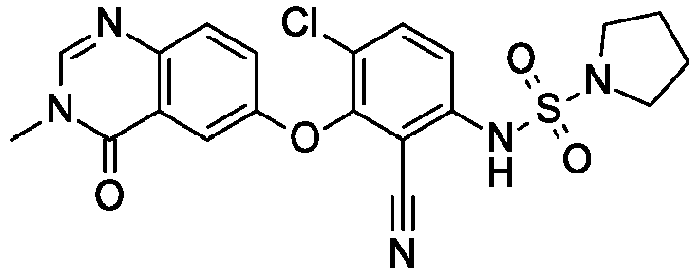
- Following the procedure described for Example 2, the title compound was obtained from I4 (100 mg, 306 µmol, Eq: 1.0) and I15 (156 mg, 918 µmol, Eq: 3.0) as an off-white solid following flash chromatography (1-6% MeOH in DCM) (25 mg, 98% purity, 17% yield). MS (ESI) m/z: 460.2, 462.2 [M+H]+.
-

- [Methyl(sulfamoyl)amino]ethane (98.3 mg, 711 µmol, Eq: 2.1) was disolved in DMF (4 mL). At 0 °C NaH (60% in mineral oil, 32.5 mg, 745 µmol, Eq: 2.2) was added, the cooling bath was removed and the reaction mixture was stirred at 50 °C for 20 min. The reaction mixture was cooled to 0 °C, then I3 (100 mg, 339 µmol, Eq: 1.0) was added. The reaction mixture was stirred at 100 °C for 21 h, then concentrated in vacuo. The residue was suspended in sat. aq. NH4Cl (40 mL), and extracted with DCM (3 × 40 mL). The combined organic layers were washed with brine (100 mL), dried (Na2SO4), filtered and concentrated in vacuo. Purification by SFC gave the title compound as a colourless solid (60 mg, 98% purity, 42% yield). MS (ESI) m/z: 414.2 [M+H]+.
-

- Following the procedure described for Example 5, the title compound was obtained from I3 (100 mg, 339 µmol, Eq: 1.0) and I10 (107 mg, 711 µmol, Eq: 2.1) as a colourless solid following SFC purification (48 mg, 100% purity, 33% yield). MS (ESI) m/z: 426.3 [M+H]+.
-

- Following the procedure described for Example 5, the title compound was obtained from I3 (100 mg, 339 µmol, Eq: 1.0) and I9 (120 mg, 711 µmol, Eq: 2.1) as a colourless solid following SFC purification (80 mg, 93% purity, 50% yield). MS (ESI) m/z: 444.2 [M+H]+.
-

- Following the procedure described for Example 5, the title compound was obtained from I3 (75 mg, 254 µmol, Eq: 1.0) and I11 (79.6 mg, 533 µmol, Eq: 2.1) as a colourless solid following reversed phase HPLC purification (63 mg, 100% purity, 58% yield). MS (ESI) m/z: 425.3 [M+H]+.
-

- Following the procedure described for Example 5, the title compound was obtained from I3(75 mg, 254 µmol, Eq: 1.0) and I13 (87.1 mg, 533 µmol, Eq: 2.1) as a colourless solid following reversed phase HPLC purification (71 mg, 98% purity, 63% yield). MS (ESI) m/z: 439.3 [M+H]+.
-
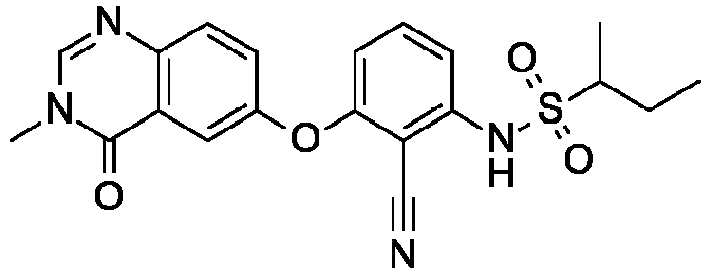
- Following the procedure described for Example 5, the title compound was obtained from I3 (75 mg, 254 µmol, Eq: 1.0) and I12 (73.2 mg, 533 µmol, Eq: 2.1) as a colourless solid following reversed phase HPLC purification (51 mg, 100% purity, 49% yield). MS (ESI) m/z: 413.3 [M+H]+.
-
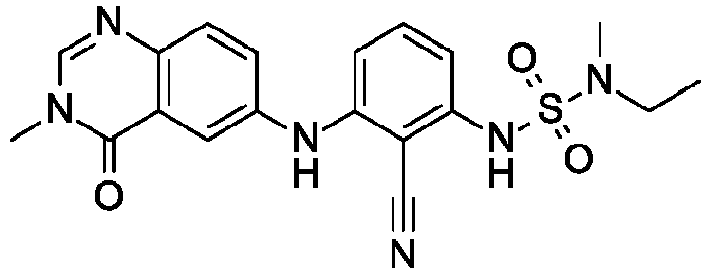
- 6-Bromo-3-methylquinazolin-4(3H)-one (21 mg, 86.1 µmol, Eq: 1.0) and I5 (21.9 mg, 86.1 µmol, Eq: 1.0) were dissolved in dioxane (1.6 mL) then Cs2CO3 (85 mg, 258 µmol, Eq: 3.0) was added. The reaction mixture was flushed with argon, then BippyPhos (2.7 mg, 5.16 µmol, Eq: 0.06) and tris(dibenzylideneacetone)dipalladium (0) chloroform adduct (2.73 mg, 2.58 µmol, Eq: 0.03) were added. The reaction was flushed with argon again, and the vial was closed. The reaction mixture was heated to 110 °C and stirred for 1 h. The reaction mixture was taken up in 15 mL 2-methyl-THF and ice, and washed with 4 mL 1% aq. citric acid. The aqueous layer was back-extracted with 1 × 15 mL 2-methyl-THF. The organic layers were combined, washed with brine, dried over Na2SO4 and concentrated in vacuo. The residue was diluted with EtOAc and transferred to a column. Purification by flash chromatography (40 g silica, 100% EtOAc) followed by preparative reversed phase HPLC gave the title compound as a white solid (13 mg, 94% purity, 53% yield). MS (ESI) m/z: 413.2 [M+H]+.
-

- I7 (20.5 mg, 70.4 µmol, Eq: 1.0) was dissolved in DCM (150 µL). At rt, pyridine (256 mg, 260 µL, 3.24 mmol, Eq: 46), DMAP (877 µg, 7.04 µmol, Eq: 0.1) and I14 (39.6 mg, 211 µmol, Eq: 3.0) were added. The reaction mixture was stirred at 75 °C for 21.5 h. The reaction mixture was taken up in 2-methyl-THF, ice and 1% aq. citric acid. The aqueous layer was back-extracted 2 × with 2-methyl-THF. The organic layers were combined, washed with brine, dried over Na2SO4 and concentrated in vacuo. The residue was diluted with DCM, evaporated with silica gel to dryness and transferred to a column. Purification by flash chromatography (25 g silica, 100% EtOAc) gave the title compound as a light yellow solid (5.1 mg, 95% purity, 16% yield). MS (ESI) m/z: 443.2 [M+H]+.
-
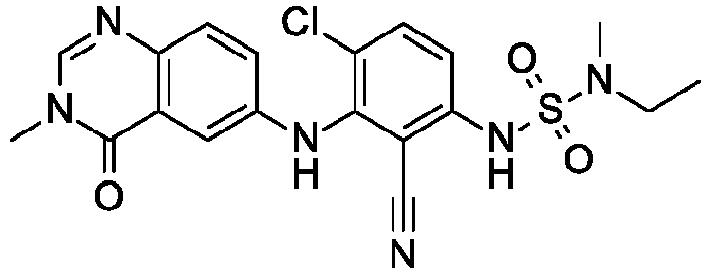
- I8 (75 mg, 230 µmol, Eq: 1) was dissolved in pyridine (1 mL) and DCM (1 mL) in a vial. Ethyl(methyl)sulfamoyl chloride (90.7 mg, 576 µmol, Eq: 2.5) and DMAP (1.41 mg, 11.5 µmol, Eq: 0.05) in DCM (1 mL) were added to the reaction mixture, and the vial was sealed. The reaction mixture was stirred for two days at 60 °C. The reaction mixture was quenched with water, diluted with DCM and washed 2 × with citric acid (10% aq.). The aqueous layers were extracted 2 × with DCM. The organic layers were combined, dried over Na2SO4, filtered and concentrated in vacuo. Purification by flash chromatography (12 g silica, 0-5% MeOH in DCM) gave the title compound as an orange solid (25 mg, 95% purity, 24% yield). MS (ESI) m/z: 447.1 [M+H]+.
-
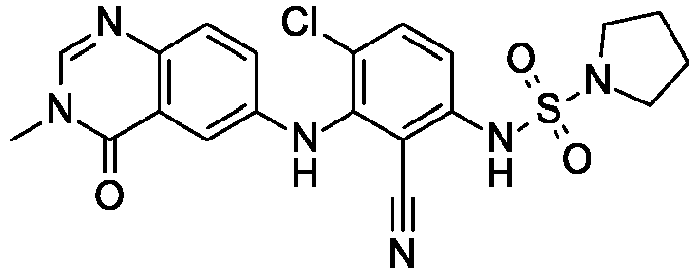
- Following the procedure described for Example 13, the title compound was obtained from I8 (75 mg, 230 µmol, Eq: 1.0) and I15 (122 mg, 576 µmol, Eq: 2.5) as a white solid (10 mg, 100% purity, 9% yield) after preparative reverse phase HPLC purification. MS (ESI) m/z: 459.2 [M+H]+.
-
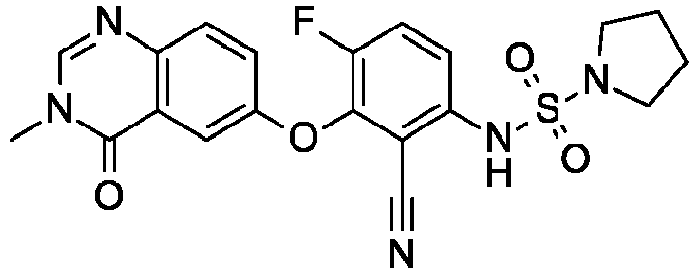
- I10 (50.3 mg, 335 µmol, Eq: 2.1) and cesium carbonate (114 mg, 351 µmol, Eq: 2.2) were combined in a heat-dried reaction tube. The tube was set under argon atmosphere and DMF (456 µl) added. The mixture was stirred for 30 minutes at 50 °C. Then, the reaction was allowed to cool down to room temperature. I2 (50 mg, 160 µmol, Eq: 1.0) in DMF (1.14 ml) was added. The tube was sealed and the reaction was stirred at 100 °C for 16 h. The mixture was taken up in sat. aq. NH4Cl (10 mL) and EtOAc (10 mL). The phases were separated, and the aqueous layer was extracted further with 3 × 10 mL EtOAc. The combined organic layers were washed with water (30 mL) and brine (30 mL), dried (Na2SO4), filtered and concentrated in vacuo. The residue was diluted with DCM and transferred to a column. Purification by flash chromatography (12 g silica, 0-3% MeOH/DCM) gave the title compound (40 mg, 100% purity, 56.5% yield) as a colourless solid. MS (ESI) m/z: 444.2 [M+H]+.
-

- Following the procedure described for Example 15, the title compound was obtained from I11 (50 mg, 335 µmol, Eq: 2.1) and I2 (50 mg, 160 µmol, Eq: 1.0) as a colourless solid (43 mg, 100% purity, 61% yield) after flash chromatography and SFC purification. MS (ESI) m/z: 443.2 [M+H]+.
-
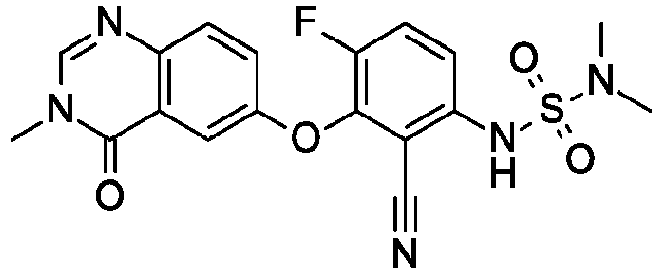
- Following the procedure described for Example 15, the title compound was obtained from N,N-dimethylsulfamide (41.6 mg, 335 µmol, Eq: 2.1) and I2 (50 mg, 160 µmol, Eq: 1.0) as a white foam (34 mg, 100% purity, 51% yield) after flash chromatography. MS (ESI) m/z: 418.2 [M+H]+.
Claims (16)
- A compound of formula (I)
 R1 is C1-6-alkyl;X is selected fromi) -NH-, andii) -O-;R2 is selected fromiii) H,iv) cyano, andv) halogen;R3 is selected fromvi) NR4R5, andvii) CHR6R7;R4 is selected fromviii) C1-6-alkyl,ix) C3-8-cycloalkyl, andx) C3-8-cycloalkyl-C1-6-alkyl;R5 is selected fromxi) C1-6-alkyl,xii) C3-8-cycloalkyl, andxiii) C3-8-cycloalkyl-C1-6-alkyl;or R4 and R5 together with the nitrogen atom to which they are attached form an heterocycloalkyl optionally substituted with R8, wherein the heterocycloalkyl is selected from pyrrolidinyl and piperidinyl;R6 is selected fromxiv) C1-6-alkyl,xv) C3-8-cycloalkyl, andxvi) C3-8-cycloalkyl-C1-6-alkyl;R7 is selected fromxvii) C1-6-alkyl,xviii) C3-8-cycloalkyl, andxix) C3-8-cycloalkyl-C1-6-alkyl;or R6 and R7 together with the carbon atom to which they are attached form a C3-8-cycloalkyl optionally substituted with R8;R8 is halogen;with the proviso that N-[2-cyano-4-fluoro-3-(3-methyl-4-oxo-quinazolin-6-yl)oxy-phenyl]-3-fluoro-pyrrolidine-1-sulfonamide is excludedor a pharmaceutically acceptable salt thereof.
 - A compound according to claim 1, whereinR1 is C1-6-alkyl;X is selected fromi) -NH-, andii) -O-;R2 is selected fromiii) H, andiv) halogen;R3 is selected fromv) NR4R5, andvi) CHR6R7;R4 is selected fromvii) C1-6-alkyl,viii) C3-8-cycloalkyl, andix) C3-8-cycloalkyl-C1-6-alkyl;R5 is selected fromx) C1-6-alkyl,xi) C3-8-cycloalkyl, andxii) C3-8-cycloalkyl-C1-6-alkyl;or R4 and R5 together with the nitrogen atom to which they are attached form an heterocycloalkyl optionally substituted with R8, wherein the heterocycloalkyl is selected from pyrrolidinyl and piperidinyl;R6 is selected fromxiii) C1-6-alkyl,xiv) C3-8-cycloalkyl, andxv) C3-8-cycloalkyl-C1-6-alkyl;R7 is selected fromxvi) C1-6-alkyl,xvii) C3-8-cycloalkyl, andxviii) C3-8-cycloalkyl-C1-6-alkyl;or R6 and R7 together with the carbon atom to which they are attached form a cyclopentyl or a cyclohexyl ring optionally substituted with R8;R8 is halogen;with the proviso that (3R)-N-[2-cyano-4-fluoro-3-(3-methyl-4-oxo-quinazolin-6-yl)oxyphenyl]-3-fluoro-pyrrolidine-1-sulfonamide is excludedor a pharmaceutically acceptable salt thereof.
- A compound according to claim 1 or 2, whereinR1 is methyl;X is selected fromi) -NH-, andii) -O-;R2 is selected fromiii) H,iv) chloro, andv) fluoro;R3 is selected fromvi) NR4R5, andvii) CHR6R7;R4 is selected fromviii) methyl,ix) ethyl,x) propyl,xi) cyclopropyl, andxii) cyclopropylmethyl;R5 is selected fromxiii) methyl,xiv) ethyl,xv) propyl,xvi) cyclopropyl, andxvii) cyclopropylmethyl;or R4 and R5 together with the nitrogen atom to which they are attached form an heterocycloalkyl optionally substituted with R8, wherein the heterocycloalkyl is selected from pyrrolidinyl and piperidinyl;R6 is selected fromxviii) methyl,xix) ethyl,xx) propyl,xxi) cyclopropyl, andxxii) cyclopropylmethyl;R7 is selected fromxxiii) methyl,xxiv) ethyl,xxv) propyl,xxvi) cyclopropyl, andxxvii) cyclopropylmethyl;or R6 and R7 together with the carbon atom to which they are attached form a cyclopentyl or a cyclohexyl ring optionally substituted with R8;R8 is fluoro;with the proviso that (3R)-N-[2-cyano-4-fluoro-3-(3-methyl-4-oxo-quinazolin-6-yl)oxyphenyl]-3-fluoro-pyrrolidine-1-sulfonamide is excludedor a pharmaceutically acceptable salt thereof.
- A compound according to any one of claims 1 to 3, wherein R2 is selected fromi) H,ii) chloro, andiii) fluoro.
- A compound according to any one of claims 1 to 4, wherein R4 is methyl.
- A compound according to any one of claims 1 to 5, wherein R5 is ethyl.
- A compound according to any one of claims 1 to 6, wherein R4 and R5 together with the nitrogen atom to which they are attached form an heterocycloalkyl optionally substituted with R8, wherein the heterocycloalkyl is selected from pyrrolidinyl and piperidinyl.
- A compound according to claim 7, wherein R4 and R5 together with the nitrogen atom to which they are attached form an unsubstituted heterocycloalkyl, wherein the heterocycloalkyl is pyrrolidinyl.
- A compound according to any one of claims 1 to 8, wherein R6 and R7 are independently selected fromi) methyl,ii) ethyl,iii) propyl,iv) cyclopropyl, andv) cyclopropylmethyl.
- A compound according to any one of claims 1 to 8, wherein R6 and R7 together with the nitrogen atom to which they are attached form a cyclopentyl or a cyclohexyl ring.
- A compound according to any one of claims 1 to 10, wherein R8 is fluoro.
- A compound according to any one of claims 1 to 11, wherein the compound is selected from6-[2-cyano-3-[[ethyl(methyl)sulfamoyl]amino]-6-fluoro-phenoxy]-3-methyl-4-oxo-quinazoline;6-[6-chloro-2-cyano-3-[[ethyl(methyl)sulfamoyl]amino]phenoxy]-3-methyl-4-oxo-quinazoline;(3R)-N-[4-chloro-2-cyano-3-(3-methyl-4-oxo-quinazolin-6-yl)oxy-phenyl]-3-fluoro-pyrrolidine-1-sulfonamide;N-[4-chloro-2-cyano-3-(3-methyl-4-oxo-quinazolin-6-yl)oxy-phenyl]pyrrolidine-1-sulfonamide;6-[2-cyano-3-[[ethyl(methyl)sulfamoyl]amino]phenoxy]-3-methyl-4-oxo-quinazoline;N-[2-cyano-3-(3-methyl-4-oxo-quinazolin-6-yl)oxy-phenyl]pyrrolidine-1-sulfonamide;(3R)-N-[2-cyano-3-(3-methyl-4-oxo-quinazolin-6-yl)oxy-phenyl]-3-fluoro-pyrrolidine-1-sulfonamide;N-[2-cyano-3-(3-methyl-4-oxo-quinazolin-6-yl)oxy-phenyl]cyclopentanesulfonamide;N-[2-cyano-3-(3-methyl-4-oxo-quinazolin-6-yl)oxy-phenyl]cyclohexanesulfonamide;N-[2-cyano-3-(3-methyl-4-oxo-quinazolin-6-yl)oxy-phenyl]butane-2-sulfonamide;6-[2-cyano-3-[[ethyl(methyl)sulfamoyl]amino]anilino]-3-methyl-4-oxo-quinazoline;(3R)-N-[2-cyano-3-[(3-methyl-4-oxo-quinazolin-6-yl)amino]phenyl]-3-fluoro-pyrrolidine-1-sulfonamide;6-[6-chloro-2-cyano-3-[[ethyl(methyl)sulfamoyl]amino]anilino]-3-methyl-4-oxo-quinazoline;N-[4-chloro-2-cyano-3-[(3-methyl-4-oxo-quinazolin-6-yl)amino]phenyl]pyrrolidine-1-sulfonamide;N-[2-cyano-4-fluoro-3-(3-methyl-4-oxo-quinazolin-6-yl)oxy-phenyl]pyrrolidine-1-sulfonamide;N-[2-cyano-4-fluoro-3-(3-methyl-4-oxo-quinazolin-6-yl)oxyphenyl]cyclopentanesulfonamide; and6-[2-cyano-3-(dimethylsulfamoylamino)-6-fluoro-phenoxy]-3-methyl-4-oxo-quinazoline;or a pharmaceutically acceptable salt thereof.
- A compound according to claim 12, wherein the compound is selected from6-[2-cyano-3-[[ethyl(methyl)sulfamoyl]amino]-6-fluoro-phenoxy]-3-methyl-4-oxo-quinazoline;6-[6-chloro-2-cyano-3-[[ethyl(methyl)sulfamoyl]amino]phenoxy]-3-methyl-4-oxo-quinazoline;N-[4-chloro-2-cyano-3-(3-methyl-4-oxo-quinazolin-6-yl)oxy-phenyl]pyrrolidine-1-sulfonamide;6-[2-cyano-3-[[ethyl(methyl)sulfamoyl]amino]phenoxy]-3-methyl-4-oxo-quinazoline;N-[2-cyano-3-(3-methyl-4-oxo-quinazolin-6-yl)oxy-phenyl]pyrrolidine-1-sulfonamide;N-[2-cyano-3-(3-methyl-4-oxo-quinazolin-6-yl)oxy-phenyl]cyclopentanesulfonamide;N-[2-cyano-3-(3-methyl-4-oxo-quinazolin-6-yl)oxy-phenyl]cyclohexanesulfonamide;N-[2-cyano-3-(3-methyl-4-oxo-quinazolin-6-yl)oxy-phenyl]butane-2-sulfonamide;6-[2-cyano-3-[[ethyl(methyl)sulfamoyl]amino]anilino]-3-methyl-4-oxo-quinazoline;6-[6-chloro-2-cyano-3-[[ethyl(methyl)sulfamoyl]amino]anilino]-3-methyl-4-oxo-quinazoline;N-[4-chloro-2-cyano-3-[(3-methyl-4-oxo-quinazolin-6-yl)amino]phenyl]pyrrolidine-1-sulfonamide;N-[2-cyano-4-fluoro-3-(3-methyl-4-oxo-quinazolin-6-yl)oxy-phenyl]pyrrolidine-1-sulfonamide;N-[2-cyano-4-fluoro-3-(3-methyl-4-oxo-quinazolin-6-yl)oxyphenyl]cyclopentanesulfonamide; and6-[2-cyano-3-(dimethylsulfamoylamino)-6-fluoro-phenoxy]-3-methyl-4-oxo-quinazoline;or a pharmaceutically acceptable salt thereof.
- A compound according to any one of claims 1 to 13 for use as therapeutically active substance.
- A pharmaceutical composition comprising a compound according to any one of claims 1 to 13 and a therapeutically inert carrier.
- A compound according to any one of claims 1 to 13 for use in the treatment or prophylaxis of thyroid cancer, colorectal cancer, brain cancer, melanoma or non-small cell lung cancer.
Applications Claiming Priority (2)
| Application Number | Priority Date | Filing Date | Title |
|---|---|---|---|
| EP19214867 | 2019-12-10 | ||
| PCT/EP2020/084969 WO2021116050A1 (en) | 2019-12-10 | 2020-12-08 | New braf inhibitors as paradox breakers |
Publications (3)
| Publication Number | Publication Date |
|---|---|
| EP4073044A1 EP4073044A1 (en) | 2022-10-19 |
| EP4073044C0 EP4073044C0 (en) | 2025-02-19 |
| EP4073044B1 true EP4073044B1 (en) | 2025-02-19 |
Family
ID=68848068
Family Applications (1)
| Application Number | Title | Priority Date | Filing Date |
|---|---|---|---|
| EP20817376.5A Active EP4073044B1 (en) | 2019-12-10 | 2020-12-08 | New braf inhibitors as paradox breakers |
Country Status (21)
| Country | Link |
|---|---|
| US (1) | US20220298145A1 (en) |
| EP (1) | EP4073044B1 (en) |
| JP (1) | JP7788380B2 (en) |
| KR (1) | KR20220112777A (en) |
| CN (1) | CN114746405B (en) |
| AR (1) | AR120697A1 (en) |
| AU (1) | AU2020403082A1 (en) |
| BR (1) | BR112022010633A2 (en) |
| CA (1) | CA3158541A1 (en) |
| CL (1) | CL2022001492A1 (en) |
| CO (1) | CO2022007621A2 (en) |
| CR (1) | CR20220252A (en) |
| ES (1) | ES3018143T3 (en) |
| IL (1) | IL292349B2 (en) |
| MX (1) | MX2022006711A (en) |
| PE (1) | PE20221027A1 (en) |
| PH (1) | PH12022551118A1 (en) |
| PL (1) | PL4073044T3 (en) |
| TW (1) | TWI857190B (en) |
| WO (1) | WO2021116050A1 (en) |
| ZA (1) | ZA202204092B (en) |
Families Citing this family (12)
| Publication number | Priority date | Publication date | Assignee | Title |
|---|---|---|---|---|
| FI4073065T3 (en) | 2019-12-10 | 2025-04-16 | Hoffmann La Roche | New methylquinazolinone derivatives |
| AU2021289163B2 (en) * | 2020-06-09 | 2024-05-02 | Array Biopharma Inc. | 4-oxo-3,4-dihydroquinazolinon compounds for the treatment of BRAF-associated diseases and disorders |
| EP4204418A1 (en) | 2020-08-28 | 2023-07-05 | Arvinas Operations, Inc. | Rapidly accelerating fibrosarcoma protein degrading compounds and associated methods of use |
| JP2024523839A (en) | 2021-06-08 | 2024-07-02 | シーフォー セラピューティクス, インコーポレイテッド | Therapeutic Agents That Degrade Mutant BRAF |
| TW202409040A (en) | 2022-07-19 | 2024-03-01 | 大陸商西藏海思科製藥有限公司 | Preparation and use of quinazolinone derivative as kinase inhibitor |
| EP4584258A1 (en) | 2022-09-07 | 2025-07-16 | Arvinas Operations, Inc. | Rapidly accelerated fibrosarcoma (raf) degrading compounds and associated methods of use |
| CN118126051A (en) * | 2022-12-02 | 2024-06-04 | C4医药公司 | Polymorphs of mutant BRAF degraders and methods for preparing the same |
| AR131372A1 (en) | 2022-12-15 | 2025-03-12 | Hoffmann La Roche | PROCEDURE FOR THE PREPARATION OF A QUINAZOLINONE DERIVATIVE |
| WO2024126660A1 (en) | 2022-12-15 | 2024-06-20 | F. Hoffmann-La Roche Ag | Combination therapy for cancer treatment |
| WO2025087822A1 (en) | 2023-10-23 | 2025-05-01 | F. Hoffmann-La Roche Ag | New process for the preparation of (3r)-fluoropyrrolidine hydrochloride |
| WO2025261943A1 (en) | 2024-06-18 | 2025-12-26 | F. Hoffmann-La Roche Ag | Anti-cancer combinations comprising mosperafenib and folfox or folfiri |
| WO2026037755A1 (en) | 2024-08-13 | 2026-02-19 | F. Hoffmann-La Roche Ag | New methylquinazolinone derivatives |
Family Cites Families (12)
| Publication number | Priority date | Publication date | Assignee | Title |
|---|---|---|---|---|
| CN102015707A (en) | 2008-02-29 | 2011-04-13 | 阵列生物制药公司 | RAF inhibitor compounds and methods of use thereof |
| PL2947072T3 (en) * | 2008-03-17 | 2017-05-31 | Ambit Biosciences Corporation | 1-(3-(6,7-dimethoxyquinazolin-4-yloxy)phenyl)-3-(5-(1,1,1-trifluoro-2-methylpropan-2-yl)isoxazol-3-yl)urea as raf kinase modulator in the treatment of cancer diseases |
| SG178899A1 (en) | 2009-08-28 | 2012-04-27 | Array Biopharma Inc | Raf inhibitor compounds and methods of use thereof |
| JP2013511541A (en) | 2009-11-18 | 2013-04-04 | プレキシコン インコーポレーテッド | Compounds and methods for kinase regulation and indications thereof |
| MA34948B1 (en) | 2011-02-07 | 2014-03-01 | Plexxikon Inc | COMPOUNDS AND METHODS FOR MODULATING KINASE, AND INDICATIONS THEREOF |
| WO2012118492A1 (en) | 2011-03-01 | 2012-09-07 | Array Biopharma Inc. | Heterocyclic sulfonamides as raf inhibitors |
| AU2013318283A1 (en) * | 2012-09-19 | 2015-03-05 | Novartis Ag | Dihydropyrrolidino-pyrimidines as kinase inhibitors |
| CN113893253A (en) | 2015-05-22 | 2022-01-07 | 普莱希科公司 | PLX-8394 or PLX-7904 for the treatment of BRAF-V600 related diseases |
| AU2018338098B2 (en) | 2017-09-20 | 2024-02-22 | Abm Therapeutics Corporation | Cyclic iminopyrimidine derivatives as kinase inhibitors |
| TWI817018B (en) * | 2019-06-28 | 2023-10-01 | 美商艾瑞生藥股份有限公司 | Compounds for the treatment of braf-associated diseases and disorders |
| FI4073065T3 (en) | 2019-12-10 | 2025-04-16 | Hoffmann La Roche | New methylquinazolinone derivatives |
| AU2021289163B2 (en) * | 2020-06-09 | 2024-05-02 | Array Biopharma Inc. | 4-oxo-3,4-dihydroquinazolinon compounds for the treatment of BRAF-associated diseases and disorders |
-
2020
- 2020-12-08 KR KR1020227019264A patent/KR20220112777A/en active Pending
- 2020-12-08 EP EP20817376.5A patent/EP4073044B1/en active Active
- 2020-12-08 PE PE2022000850A patent/PE20221027A1/en unknown
- 2020-12-08 CN CN202080084384.3A patent/CN114746405B/en active Active
- 2020-12-08 JP JP2022534223A patent/JP7788380B2/en active Active
- 2020-12-08 BR BR112022010633A patent/BR112022010633A2/en unknown
- 2020-12-08 IL IL292349A patent/IL292349B2/en unknown
- 2020-12-08 ES ES20817376T patent/ES3018143T3/en active Active
- 2020-12-08 PL PL20817376.5T patent/PL4073044T3/en unknown
- 2020-12-08 AU AU2020403082A patent/AU2020403082A1/en active Pending
- 2020-12-08 PH PH1/2022/551118A patent/PH12022551118A1/en unknown
- 2020-12-08 CR CR20220252A patent/CR20220252A/en unknown
- 2020-12-08 CA CA3158541A patent/CA3158541A1/en active Pending
- 2020-12-08 MX MX2022006711A patent/MX2022006711A/en unknown
- 2020-12-08 WO PCT/EP2020/084969 patent/WO2021116050A1/en not_active Ceased
- 2020-12-09 TW TW109143501A patent/TWI857190B/en active
- 2020-12-09 AR ARP200103415A patent/AR120697A1/en not_active Application Discontinuation
-
2022
- 2022-04-11 ZA ZA2022/04092A patent/ZA202204092B/en unknown
- 2022-05-31 CO CONC2022/0007621A patent/CO2022007621A2/en unknown
- 2022-06-07 CL CL2022001492A patent/CL2022001492A1/en unknown
- 2022-06-08 US US17/835,261 patent/US20220298145A1/en active Pending
Also Published As
| Publication number | Publication date |
|---|---|
| US20220298145A1 (en) | 2022-09-22 |
| CN114746405B (en) | 2024-03-26 |
| PH12022551118A1 (en) | 2023-09-18 |
| EP4073044A1 (en) | 2022-10-19 |
| CO2022007621A2 (en) | 2022-08-30 |
| JP2023505300A (en) | 2023-02-08 |
| JP7788380B2 (en) | 2025-12-18 |
| WO2021116050A1 (en) | 2021-06-17 |
| IL292349A (en) | 2022-06-01 |
| AR120697A1 (en) | 2022-03-09 |
| PE20221027A1 (en) | 2022-06-16 |
| CR20220252A (en) | 2022-07-11 |
| MX2022006711A (en) | 2022-07-12 |
| EP4073044C0 (en) | 2025-02-19 |
| CL2022001492A1 (en) | 2023-02-24 |
| ES3018143T3 (en) | 2025-05-14 |
| IL292349B1 (en) | 2025-12-01 |
| AU2020403082A1 (en) | 2022-05-12 |
| CA3158541A1 (en) | 2021-06-17 |
| ZA202204092B (en) | 2022-12-21 |
| BR112022010633A2 (en) | 2022-08-16 |
| PL4073044T3 (en) | 2025-05-19 |
| TWI857190B (en) | 2024-10-01 |
| KR20220112777A (en) | 2022-08-11 |
| TW202136218A (en) | 2021-10-01 |
| CN114746405A (en) | 2022-07-12 |
| IL292349B2 (en) | 2026-04-01 |
Similar Documents
| Publication | Publication Date | Title |
|---|---|---|
| US20220298145A1 (en) | Braf inhibitors as paradox breakers | |
| EP3986897B1 (en) | Egfr inhibitor for the treatment of cancer | |
| EP4073065B1 (en) | New methylquinazolinone derivatives | |
| EP3891157A1 (en) | 4-amino or 4-alkoxy-substituted aryl sulfonamide compounds with selective activity in voltage-gated sodium channels | |
| EP4076664B1 (en) | Egfr inhibitors | |
| EP3986565B1 (en) | New egfr inhibitors | |
| EP4263518B1 (en) | New quinazolinone derivatives | |
| EP4076665B1 (en) | Egfr inhibitors | |
| EA026655B1 (en) | 6-SUBSTITUTED 3-(QUINOLIN-6-YLTHIO)[1,2,4]TRIAZOLO[4,3-a]PYRIDINES AS c-Met TYROSINE KINASE INHIBITORS | |
| CN118561841A (en) | New aryl-pyrido-pyrimidin-one derivatives | |
| JP7798887B2 (en) | Novel indazole derivatives | |
| WO2025078808A9 (en) | Novel compounds | |
| RU2825870C1 (en) | New braf inhibitors as "paradox breakers" | |
| HK40068409A (en) | New braf inhibitors as paradox breakers | |
| CA3162883C (en) | (3r)-and (3s)-n-[2-cyano-4-fluoro-3-(3-methyl-4-oxo-quinazolin-6-yl)oxy-phenyl]-3-fluoro-pyrrolidine-1-sulfonamide compounds and their use as braf inhibitors | |
| HK40068409B (en) | New braf inhibitors as paradox breakers | |
| US20250313560A1 (en) | Novel bicyclic benzylamido pyridine derivatives as SOS1 inhibitors |
Legal Events
| Date | Code | Title | Description |
|---|---|---|---|
| STAA | Information on the status of an ep patent application or granted ep patent |
Free format text: STATUS: UNKNOWN |
|
| STAA | Information on the status of an ep patent application or granted ep patent |
Free format text: STATUS: THE INTERNATIONAL PUBLICATION HAS BEEN MADE |
|
| PUAI | Public reference made under article 153(3) epc to a published international application that has entered the european phase |
Free format text: ORIGINAL CODE: 0009012 |
|
| STAA | Information on the status of an ep patent application or granted ep patent |
Free format text: STATUS: REQUEST FOR EXAMINATION WAS MADE |
|
| 17P | Request for examination filed |
Effective date: 20220711 |
|
| AK | Designated contracting states |
Kind code of ref document: A1 Designated state(s): AL AT BE BG CH CY CZ DE DK EE ES FI FR GB GR HR HU IE IS IT LI LT LU LV MC MK MT NL NO PL PT RO RS SE SI SK SM TR |
|
| DAX | Request for extension of the european patent (deleted) | ||
| RAV | Requested validation state of the european patent: fee paid |
Extension state: MA Effective date: 20220711 |
|
| GRAP | Despatch of communication of intention to grant a patent |
Free format text: ORIGINAL CODE: EPIDOSNIGR1 |
|
| STAA | Information on the status of an ep patent application or granted ep patent |
Free format text: STATUS: GRANT OF PATENT IS INTENDED |
|
| INTG | Intention to grant announced |
Effective date: 20241009 |
|
| GRAS | Grant fee paid |
Free format text: ORIGINAL CODE: EPIDOSNIGR3 |
|
| GRAA | (expected) grant |
Free format text: ORIGINAL CODE: 0009210 |
|
| STAA | Information on the status of an ep patent application or granted ep patent |
Free format text: STATUS: THE PATENT HAS BEEN GRANTED |
|
| AK | Designated contracting states |
Kind code of ref document: B1 Designated state(s): AL AT BE BG CH CY CZ DE DK EE ES FI FR GB GR HR HU IE IS IT LI LT LU LV MC MK MT NL NO PL PT RO RS SE SI SK SM TR |
|
| REG | Reference to a national code |
Ref country code: GB Ref legal event code: FG4D |
|
| REG | Reference to a national code |
Ref country code: CH Ref legal event code: EP |
|
| REG | Reference to a national code |
Ref country code: IE Ref legal event code: FG4D |
|
| REG | Reference to a national code |
Ref country code: DE Ref legal event code: R096 Ref document number: 602020046436 Country of ref document: DE |
|
| U01 | Request for unitary effect filed |
Effective date: 20250219 |
|
| U07 | Unitary effect registered |
Designated state(s): AT BE BG DE DK EE FI FR IT LT LU LV MT NL PT RO SE SI Effective date: 20250225 |
|
| REG | Reference to a national code |
Ref country code: GR Ref legal event code: EP Ref document number: 20250400697 Country of ref document: GR Effective date: 20250514 |
|
| PG25 | Lapsed in a contracting state [announced via postgrant information from national office to epo] |
Ref country code: RS Free format text: LAPSE BECAUSE OF FAILURE TO SUBMIT A TRANSLATION OF THE DESCRIPTION OR TO PAY THE FEE WITHIN THE PRESCRIBED TIME-LIMIT Effective date: 20250519 |
|
| PG25 | Lapsed in a contracting state [announced via postgrant information from national office to epo] |
Ref country code: NO Free format text: LAPSE BECAUSE OF FAILURE TO SUBMIT A TRANSLATION OF THE DESCRIPTION OR TO PAY THE FEE WITHIN THE PRESCRIBED TIME-LIMIT Effective date: 20250519 Ref country code: IS Free format text: LAPSE BECAUSE OF FAILURE TO SUBMIT A TRANSLATION OF THE DESCRIPTION OR TO PAY THE FEE WITHIN THE PRESCRIBED TIME-LIMIT Effective date: 20250619 |
|
| PG25 | Lapsed in a contracting state [announced via postgrant information from national office to epo] |
Ref country code: HR Free format text: LAPSE BECAUSE OF FAILURE TO SUBMIT A TRANSLATION OF THE DESCRIPTION OR TO PAY THE FEE WITHIN THE PRESCRIBED TIME-LIMIT Effective date: 20250219 |
|
| PG25 | Lapsed in a contracting state [announced via postgrant information from national office to epo] |
Ref country code: SM Free format text: LAPSE BECAUSE OF FAILURE TO SUBMIT A TRANSLATION OF THE DESCRIPTION OR TO PAY THE FEE WITHIN THE PRESCRIBED TIME-LIMIT Effective date: 20250219 |
|
| PG25 | Lapsed in a contracting state [announced via postgrant information from national office to epo] |
Ref country code: CZ Free format text: LAPSE BECAUSE OF FAILURE TO SUBMIT A TRANSLATION OF THE DESCRIPTION OR TO PAY THE FEE WITHIN THE PRESCRIBED TIME-LIMIT Effective date: 20250219 |
|
| PG25 | Lapsed in a contracting state [announced via postgrant information from national office to epo] |
Ref country code: SK Free format text: LAPSE BECAUSE OF FAILURE TO SUBMIT A TRANSLATION OF THE DESCRIPTION OR TO PAY THE FEE WITHIN THE PRESCRIBED TIME-LIMIT Effective date: 20250219 |
|
| U20 | Renewal fee for the european patent with unitary effect paid |
Year of fee payment: 6 Effective date: 20251119 |
|
| PLBE | No opposition filed within time limit |
Free format text: ORIGINAL CODE: 0009261 |
|
| STAA | Information on the status of an ep patent application or granted ep patent |
Free format text: STATUS: NO OPPOSITION FILED WITHIN TIME LIMIT |
|
| REG | Reference to a national code |
Ref country code: CH Ref legal event code: L10 Free format text: ST27 STATUS EVENT CODE: U-0-0-L10-L00 (AS PROVIDED BY THE NATIONAL OFFICE) Effective date: 20251231 |
|
| REG | Reference to a national code |
Ref country code: CH Ref legal event code: U11 Free format text: ST27 STATUS EVENT CODE: U-0-0-U10-U11 (AS PROVIDED BY THE NATIONAL OFFICE) Effective date: 20260101 |
|
| PGFP | Annual fee paid to national office [announced via postgrant information from national office to epo] |
Ref country code: GB Payment date: 20251119 Year of fee payment: 6 |
|
| PGFP | Annual fee paid to national office [announced via postgrant information from national office to epo] |
Ref country code: TR Payment date: 20251127 Year of fee payment: 6 Ref country code: GR Payment date: 20251121 Year of fee payment: 6 |
|
| PGFP | Annual fee paid to national office [announced via postgrant information from national office to epo] |
Ref country code: PL Payment date: 20251124 Year of fee payment: 6 |
|
| 26N | No opposition filed |
Effective date: 20251120 |
|
| PGFP | Annual fee paid to national office [announced via postgrant information from national office to epo] |
Ref country code: ES Payment date: 20260102 Year of fee payment: 6 |
|
| VS25 | Lapsed in a validation state [announced via postgrant information from nat. office to epo] |
Ref country code: MA Free format text: LAPSE BECAUSE OF FAILURE TO SUBMIT A TRANSLATION OF THE DESCRIPTION OR TO PAY THE FEE WITHIN THE PRESCRIBED TIME-LIMIT; INVALID AB INITIO Effective date: 20201208 |
|
| PGFP | Annual fee paid to national office [announced via postgrant information from national office to epo] |
Ref country code: CH Payment date: 20260101 Year of fee payment: 6 |