EP4072287B1 - System and method for controlling a shock output of an electronic animal trap - Google Patents
System and method for controlling a shock output of an electronic animal trap Download PDFInfo
- Publication number
- EP4072287B1 EP4072287B1 EP20838812.4A EP20838812A EP4072287B1 EP 4072287 B1 EP4072287 B1 EP 4072287B1 EP 20838812 A EP20838812 A EP 20838812A EP 4072287 B1 EP4072287 B1 EP 4072287B1
- Authority
- EP
- European Patent Office
- Prior art keywords
- shock
- battery
- controller
- charge
- voltage
- Prior art date
- Legal status (The legal status is an assumption and is not a legal conclusion. Google has not performed a legal analysis and makes no representation as to the accuracy of the status listed.)
- Active
Links
Images


Classifications
-
- A—HUMAN NECESSITIES
- A01—AGRICULTURE; FORESTRY; ANIMAL HUSBANDRY; HUNTING; TRAPPING; FISHING
- A01M—CATCHING, TRAPPING OR SCARING OF ANIMALS; APPARATUS FOR THE DESTRUCTION OF NOXIOUS ANIMALS OR NOXIOUS PLANTS
- A01M23/00—Traps for animals
- A01M23/38—Electric traps
-
- A—HUMAN NECESSITIES
- A01—AGRICULTURE; FORESTRY; ANIMAL HUSBANDRY; HUNTING; TRAPPING; FISHING
- A01M—CATCHING, TRAPPING OR SCARING OF ANIMALS; APPARATUS FOR THE DESTRUCTION OF NOXIOUS ANIMALS OR NOXIOUS PLANTS
- A01M31/00—Hunting appliances
- A01M31/002—Detecting animals in a given area
-
- H—ELECTRICITY
- H02—GENERATION; CONVERSION OR DISTRIBUTION OF ELECTRIC POWER
- H02J—ELECTRIC POWER NETWORKS; CIRCUIT ARRANGEMENTS OR SYSTEMS FOR SUPPLYING OR DISTRIBUTING ELECTRIC POWER; SYSTEMS FOR STORING ELECTRIC ENERGY
- H02J7/00—Circuit arrangements for charging or discharging batteries or for supplying loads from batteries
- H02J7/855—Circuit arrangements for charging or discharging batteries or for supplying loads from batteries with circuits adapted for supplying loads from the battery
-
- H—ELECTRICITY
- H03—ELECTRONIC CIRCUITRY
- H03K—PULSE TECHNIQUE
- H03K17/00—Electronic switching or gating, i.e. not by contact-making and –breaking
- H03K17/51—Electronic switching or gating, i.e. not by contact-making and –breaking characterised by the components used
- H03K17/56—Electronic switching or gating, i.e. not by contact-making and –breaking characterised by the components used by the use, as active elements, of semiconductor devices
- H03K17/687—Electronic switching or gating, i.e. not by contact-making and –breaking characterised by the components used by the use, as active elements, of semiconductor devices the devices being field-effect transistors
-
- H—ELECTRICITY
- H05—ELECTRIC TECHNIQUES NOT OTHERWISE PROVIDED FOR
- H05C—ELECTRIC CIRCUITS OR APPARATUS SPECIALLY DESIGNED FOR USE IN EQUIPMENT FOR KILLING, STUNNING, OR GUIDING LIVING BEINGS
- H05C1/00—Circuits or apparatus for generating electric shock effects
- H05C1/04—Circuits or apparatus for generating electric shock effects providing pulse voltages
- H05C1/06—Circuits or apparatus for generating electric shock effects providing pulse voltages operating only when touched
Definitions
- the present invention relates to an electronic animal trap and, more particularly, to controlling a shock output of an electronic animal trap.
- Electronic animal traps function by delivering an electric shock of a certain power to an animal in the trap.
- the level of delivered power is designed to reliably kill the trapped animal.
- some electronic animal traps draw power from batteries.
- the output voltage from the batteries dictates in part the power of the shock delivered by the trap.
- WO 2019/133340 A1 discloses an electronic rodent trap with a voltage booster circuit for improved trap performance over the life of the battery.
- a circuit and method for boosting the voltage input to the gate of a MOSFET switch used in an electronic rodent trap is shown. By boosting the voltage to the gate, the MOSFET can be fully turned on to activate an effective killing cycle in the electronic rodent trap even when the trap's battery voltage has dropped to a level that would otherwise be insufficient to fully activate the MOSFET.
- the output voltage of the batteries decreases over the life of the batteries.
- the power of the shock output by the trap is therefore dependent on the remaining battery life; the electronic trap outputs a shock with more power than designed when the batteries are new, and outputs a shock with less power than designed when the batteries are low.
- Using more power than necessary when the batteries are new results in a shorter lifespan of the batteries and a correspondingly lesser number of uses of the electronic trap before replacing the batteries.
- Using less power than necessary when the batteries are low results in a less reliable kill of the trapped animal.
- a system for controlling a shock output of an electronic animal trap includes a battery, a transformer having a primary coil connected to the battery, and a controller connected to the battery and the primary coil.
- the controller has a shock cycle module determining a battery capacity of the battery and determining a shock enable time based on the battery capacity.
- the shock cycle module controls a primary current from the battery to run through the primary coil for the shock enable time.
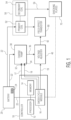
- FIG. 1 A system of an electronic animal trap according to an embodiment for controlling a shock output of the electronic animal trap is shown in Figures 1-3 .
- the system as shown in Figure 1 , comprises a controller 10, a battery 20, a charge pump 30 connected to the controller 10 and the battery 20, a voltage adjuster 40 connected to the controller 10 and the charge pump 30, a transformer 50 connected to the battery 20, a field-effect transistor 60 connected to the voltage adjuster 40 and the transformer 50, and a plurality of shocking plates 70.
- the controller 10 includes a processor 12, a memory 14 connected to the processor 12, and a shock cycle module 16.
- the memory 14 is a non-transitory computer readable medium, such as ROM or RAM, capable of storing computer instructions thereon that are executable by the processor 12.
- the shock cycle module 16, described in greater detail below with reference to Figure 4 is a process or a series of functions performed by the controller 10 when the processor 12 executes an algorithm stored in the memory 14.
- the controller 10, as shown in Figure 1 transmits a first charge pulse 17 and a second charge pulse 18 to the charge pump 30, and transmits a shock pulse 19 to the voltage adjuster 40.
- the first charge pulse 17, the second charge pulse 18, and the shock pulse 19 are each 3.3 volts (V).
- the battery 20, as shown in Figures 1 and 3 is connected to the controller 10, the charge pump 30, and the transformer 50 and supplies a battery voltage 22 to the controller 10, the charge pump 30, and the transformer 50.
- the battery voltage 22 is approximately 6 V.
- the battery 20 is a plurality of D cell batteries, for example, four D cell batteries.
- the battery 20 may be a single or any combination of known batteries capable of supplying a voltage necessary for a shock power described herein.
- the battery 20 has a battery capacity 24 corresponding to an approximate remaining life or capacity of the battery 20. In the shown embodiment, the battery capacity 24 is expressed as a percentage, but may alternatively be any other measure of capacity.
- the charge pump 30, as shown in Figures 1 and 3 receives the battery voltage 22 from the battery 20 and is connected to the controller 10 and the voltage adjuster 40.
- the charge pump 30 is connected to the controller 10 at a first charge point 32 and a second charge point 34; the first charge point 32 receives the first charge pulse 17 from the controller 10 and the second charge point 34 receives the second charge pulse 18 from the controller 10, as described in greater detail below.
- the charge pump 30 is adapted to boost the battery voltage 22 to a boosted voltage 36 that is higher than the battery voltage 22.
- the battery voltage 22 is 6 V and the boosted voltage 36 is 10 V.
- the voltage adjuster 40 receives the boosted voltage 36 from the charge pump 30 and the shock pulse 19 from the controller 10.
- the voltage adjuster 40 outputs an adjusted voltage 42 based on the boosted voltage 36 and the shock pulse 19; the voltage adjuster 40 ensures that the adjusted voltage 42 is output at a consistent voltage level.
- the adjusted voltage 42 is 10 V.
- the transformer 50 has a primary coil 52 and a secondary coil 54 inductively coupled to the primary coil 52.
- the primary coil 52 has a primary number of turns that is less than a secondary number of turns of the secondary coil 54, and the turns of the secondary coil 54 are oriented in a direction opposite to the turns of the primary coil 52.
- the primary coil 52 is connected to the battery 20 and receives the battery voltage 22 from the battery 20.
- the transformer 50 is a flyback transformer.
- the field-effect transistor 60 receives the adjusted voltage 42 from the voltage adjuster 40.
- the field-effect transistor 60 is a metal-oxide-semiconductor field-effect transistor (MOSFET).
- MOSFET metal-oxide-semiconductor field-effect transistor
- the field-effect transistor 60 based on the adjusted voltage 42 received from the voltage adjuster 40, acts as a gate to allow or prevent a primary current from the battery 20 from flowing through the primary coil 52.
- At least one of the plurality of shocking plates 70 is electrically connected to the secondary coil 54. As described in greater detail below with reference to Figures 4-6 , at least one of the shocking plates 70 receives a shock output voltage 56 from the secondary coil 54 induced from the current flowing through the primary coil 52. In an embodiment, one of the shocking plates 70 is indirectly connected to the controller 10 through a protection circuitry; this shocking plate 70 does not receive the shock output voltage 56 from the secondary coil 54 but connects to ground through a diode.
- a controlling 100 of the shock output voltage 56 executed by the shock cycle module 16 will now be described in greater detail with reference to Figures 1 and 4-6D .
- a detection step 110 initiates the shock cycle module 16.
- the shock cycle module 16 detects whether an animal is positioned on the shocking plates 70.
- the shock cycle module 16 has a detected state and an open state. In the detected state, the shock cycle module 16 determines that an animal is positioned on the shocking plates 70 by detection of a predetermined impedance across the shocking plates 70, with the animal itself connecting the shocking plates 70.
- the open state the shock cycle module 16 determines that no animal is positioned on the shocking plates 70 by detection of an open circuit between the shocking plates 70.
- the predetermined impedance is ten kilohms to one megohm, corresponding to a resistance level of a rat. In other embodiments, the predetermined impedance level may be adjusted to correspond to the resistance level of any other animal for which the trap is intended.
- the shock cycle module 16 could be initiated based on any other detection of the presence of an animal on the shocking plates 70.
- the shock cycle module 16 determines the battery capacity 24 of the battery 20 after the shock cycle module 16 is initiated.
- the controller 10 receives the battery voltage 22 of the battery 20.
- the shock cycle module 16 determines the battery capacity 24 based on a relationship between the battery voltage 22 and the battery capacity 24 stored in the memory 14. For a 6 V battery 20, for example, a battery voltage 22 of 6 V corresponds to a battery capacity 24 of 100%, and a battery voltage 22 of approximately 4.8 V corresponds to a battery capacity 24 of 0%.
- the relationship between the battery voltage 22 and the battery capacity 24 is linear and, in other embodiments, the shock cycle module 16 may determine the battery capacity 24 by any other method.
- the shock cycle module 16 sets a total shock time for applying the shock output voltage 56 to the shocking plates 70 for a single detection of an animal on the shocking plates 70.
- the total shock time includes a plurality of shock cycles 200 as shown in Figures 5A-6D .
- the total shock time is 20 seconds.
- the total shock time is 120 seconds.
- the particular animal detected on the shocking plates 70 and the total shock time can vary based on the desired application.
- the shock cycle module 16 calculates a wait time 240 and a shock enable time 230 of the shock cycle 200, shown in Figures 5A-6D , in a shock cycle calculation step 140 shown in Figure 4 .
- the shock cycle module 16 performs the calculation of Equation 1 with the battery capacity 24 determined from step 120 in units of whole number percentages (i.e. percentage* 100), calculating the wait time 240 in units of microseconds ( ⁇ s).
- the shock cycle module 16 performs the calculation of Equation 2 after the wait time 240 is calculated, calculating the shock enable time 230 in units of microseconds.
- each of the shock enable time 230 and the wait time 240 depend on the battery capacity 24 as shown in the above equations, a total duration of the shock enable time 230 and the wait time 240 is the same and is independent of the battery capacity 24. In the shown embodiment, the total duration of the shock enable time 230 and the wait time 240 is 2.3 ms.
- the shock cycle module 16 performs a start charge pump step 150, shown in Figure 4 .
- the shock cycle module 16 controls the controller 10 to send the first charge pulse 17 to the first charge point 32, and thereafter sends the second charge pulse 18 to the second charge point 34.
- the shock cycle module 16 continues to control the controller 10 to alternatingly send the first charge pulse 17 to the first charge point 32 and the second charge pulse 18 to the second charge point 34 for a number of cycles.
- the number of cycles is 20, and the first charge pulse 17 and the second charge pulse 18 each have a duration of 1 millisecond (ms).
- the step 150 in part allows the charge pump 30 to boost the battery voltage 22 to the boosted battery voltage 36 that is sufficient to operate the field-effect transistor 60.
- the shock cycle module 16 executes a shock cycle process 160 corresponding to the shock cycle 200 shown in Figures 5A-6D .
- the shock cycle module 16 controls the controller 10 to send the first charge pulse 17 to the first charge point 32 for a first charge pulse time 210 shown in Figures 5A-6D .
- the first charge pulse time 210 is 1 ms.
- the shock cycle module 16 controls the controller 10 to send the second charge pulse 18 to the second charge point 34 for a second charge pulse time 220 shown in Figures 5A-6D .
- the second charge pulse time 220 is the same as the first charge pulse time 210 and, in the shown embodiment, is 1 ms.
- the steps 162 and 164 allow the charge pump 30 to boost the battery voltage 22 to the boosted voltage 36 that is sufficient to operate the field-effect transistor 60.
- the shock cycle module 16 activates the field-effect transistor 60.
- the shock cycle module 16 controls the controller 10 to output the shock pulse 19 through the voltage adjuster 40 and to the field-effect transistor 60. With the boosted voltage 36 from steps 150, 162, and 164, and the shock pulse 19, the adjusted voltage 42 output by the voltage adjuster 40 is sufficient to activate the field-effect transistor 60.
- the shock pulse 19 is output by the controller 10 for the shock enable time 230 determined in step 140, activating the field-effect transistor 60 for the shock enable time 230.
- the shock cycle module 16 also controls the controller 10 to send the first charge pulse 17 to the charge pump 30 for the shock enable time 230 to maintain a charge of the charge pump 30.
- Figures 5A-5D show a plurality of shock cycles 200 according to a first exemplary embodiment and Figures 6A-6D show a plurality of shock cycles 200 according to a second exemplary embodiment.
- the activation of the field-effect transistor 60 in step 166 of Figure 4 applies the battery voltage 22 to the primary coil 52 and, as shown in Figures 5B and 6B , allows a primary current I 52 corresponding to the battery voltage 22 to increase in the primary coil 52 for the shock enable time 230.
- a wait step 168 of the shock cycle process 160 the shock cycle module 16 sends the second charge pulse 18 to the second charge point 34 for the wait time 240 determined in step 140.
- the field-effect transistor 60 is switched off or deactivated.
- the primary current I 52 in the primary coil 52 shown in Figures 5B and 6B induces a secondary current I 54 in the secondary coil 54 shown in Figures 5C and 6C .
- the shock output voltage 56 output from the secondary coil 54 and applied to the shocking plates 70, shown in Figures 5D and 6D is much larger than the battery voltage 22 and has a negative charge.
- the shock output voltage 56 is approximately 7 kV. In other embodiments, the particular value of the shock output voltage 56 can be different based on the application.
- the shock cycle process 160 ends at the end of the wait time 240 in step 168.
- the single shock cycle 200 has a total length of 4.3 ms.
- the shock cycle module 16 compares a current shock time to the total shock time determined in step 130 in a cycle determination step 170, the current shock time reflective of a time for the shock cycle process 160. If the current shock time is less than the total shock time, the shock cycle module 16 initiates the shock cycle process 160 again, resulting in additional shock cycles 200 as shown in Figures 5A-6D . The shock cycle module 16 continues to loop through the shock cycle process 160 until the current shock time is greater than or equal to the total shock time, upon which the process of controlling 100 the shock output voltage 56 ends.
- the calculation of the shock enable time 230 depending on the battery capacity 24 results in a shock output voltage 56 that is the same regardless of the battery capacity 24.
- Targeting a same peak primary current I 52 in the primary coil 52, as shown in Figures 5B and 6B induces a same secondary current I 54 in the secondary coil 54 at the switching off of the field-effect transistor 60, which creates a same shock output voltage 56.
- the control based on the calculated shock enable time 230 permits the shock output voltage 56 to be independent of the battery capacity 24.
- Figures 5A-5D show an exemplary embodiment in which the battery capacity 24 is 100%; in this embodiment, the shock enable time 230 is 0.9 ms according to Equation 1 and Equation 2 above.
- Figures 6A-6D conversely show an exemplary embodiment in which the battery capacity 24 is 5%; in this embodiment, the shock enable time 230 is 1.47 ms according to Equation 1 and Equation 2. Because the battery voltage 22 is lower in the exemplary embodiment of Figures 6A-6D , the field-effect transistor 60 must remain activated for a longer shock enable time 230 in order to achieve a target peak primary current I 52 in the primary coil 52. This calculation allows the output of a consistent shock output voltage 56, 7,500 kV in the shown embodiment, prolonging the life of the battery 22 and maintaining the shock output voltage 56 at an ideal level for effectiveness.
- the single shock cycle 200 can have any total length between 2 ⁇ s and 1 second, and the shock enable time 230 can have any length between 1 ⁇ s and 500 ms, provided the shock enable time 230 is adjusted based on the battery 20 condition as described above.
- the first pulse step 162 and the second pulse step 164 can be omitted, with each shock cycle process 160 starting with the shock pulse step 166 and including only the shock enable time 230 and the wait time 240.
Landscapes
- Life Sciences & Earth Sciences (AREA)
- Pest Control & Pesticides (AREA)
- Insects & Arthropods (AREA)
- Engineering & Computer Science (AREA)
- Wood Science & Technology (AREA)
- Zoology (AREA)
- Environmental Sciences (AREA)
- Power Engineering (AREA)
- Secondary Cells (AREA)
- Catching Or Destruction (AREA)
- Charge And Discharge Circuits For Batteries Or The Like (AREA)
- Electronic Switches (AREA)
Description
- The present invention relates to an electronic animal trap and, more particularly, to controlling a shock output of an electronic animal trap.
- Electronic animal traps function by delivering an electric shock of a certain power to an animal in the trap. The level of delivered power is designed to reliably kill the trapped animal. To generate the shock, some electronic animal traps draw power from batteries. The output voltage from the batteries dictates in part the power of the shock delivered by the trap.
-
WO 2019/133340 A1 discloses an electronic rodent trap with a voltage booster circuit for improved trap performance over the life of the battery. A circuit and method for boosting the voltage input to the gate of a MOSFET switch used in an electronic rodent trap is shown. By boosting the voltage to the gate, the MOSFET can be fully turned on to activate an effective killing cycle in the electronic rodent trap even when the trap's battery voltage has dropped to a level that would otherwise be insufficient to fully activate the MOSFET. - The output voltage of the batteries, however, decreases over the life of the batteries. The power of the shock output by the trap is therefore dependent on the remaining battery life; the electronic trap outputs a shock with more power than designed when the batteries are new, and outputs a shock with less power than designed when the batteries are low. Using more power than necessary when the batteries are new results in a shorter lifespan of the batteries and a correspondingly lesser number of uses of the electronic trap before replacing the batteries. Using less power than necessary when the batteries are low results in a less reliable kill of the trapped animal.
- A system according to the present invention for controlling a shock output of an electronic animal trap includes a battery, a transformer having a primary coil connected to the battery, and a controller connected to the battery and the primary coil. The controller has a shock cycle module determining a battery capacity of the battery and determining a shock enable time based on the battery capacity. The shock cycle module controls a primary current from the battery to run through the primary coil for the shock enable time.
- The invention will now be described by way of example with reference to the accompanying Figures, of which:
-
Figure 1 is a schematic block diagram of a system of an electronic animal trap according to an embodiment; -
Figure 2 is a circuit diagram of a controller of the system; -
Figure 3 is a circuit diagram of the system; -
Figure 4 is a flowchart of an adjustment of a shock output voltage of the system; -
Figure 5A is a graph of a voltage in a primary coil of a transformer of the system according to a first embodiment; -
Figure 5B is a graph of a current in the primary coil in the first embodiment; -
Figure 5C is a graph of a current in a secondary coil of the transformer of the first embodiment; -
Figure 5D is a graph of a shock output voltage of the secondary coil in the first embodiment; -
Figure 6A is a graph of the voltage in the primary coil according to a second embodiment; -
Figure 6B is a graph of the current in the primary coil in the second embodiment; -
Figure 6C is a graph of the current in the secondary coil in the second embodiment; and -
Figure 6D is a graph of the shock output voltage of the secondary coil in the second embodiment. - Exemplary embodiments of the present disclosure will be described hereinafter in detail with reference to the attached drawings, wherein like reference numerals refer to like elements. The present disclosure may, however, be embodied in many different forms and should not be construed as being limited to the embodiment set forth herein; rather, these embodiments are provided so that the present disclosure will convey the concept to those skilled in the art.
- A system of an electronic animal trap according to an embodiment for controlling a shock output of the electronic animal trap is shown in
Figures 1-3 . The system, as shown inFigure 1 , comprises acontroller 10, abattery 20, acharge pump 30 connected to thecontroller 10 and thebattery 20, avoltage adjuster 40 connected to thecontroller 10 and thecharge pump 30, atransformer 50 connected to thebattery 20, a field-effect transistor 60 connected to thevoltage adjuster 40 and thetransformer 50, and a plurality ofshocking plates 70. - The
controller 10, as shown inFigures 1 and2 , includes aprocessor 12, amemory 14 connected to theprocessor 12, and ashock cycle module 16. Thememory 14 is a non-transitory computer readable medium, such as ROM or RAM, capable of storing computer instructions thereon that are executable by theprocessor 12. Theshock cycle module 16, described in greater detail below with reference toFigure 4 , is a process or a series of functions performed by thecontroller 10 when theprocessor 12 executes an algorithm stored in thememory 14. - The
controller 10, as shown inFigure 1 , transmits afirst charge pulse 17 and asecond charge pulse 18 to thecharge pump 30, and transmits ashock pulse 19 to thevoltage adjuster 40. In an embodiment, the first charge pulse 17, the second charge pulse 18, and theshock pulse 19 are each 3.3 volts (V). - The
battery 20, as shown inFigures 1 and3 , is connected to thecontroller 10, thecharge pump 30, and thetransformer 50 and supplies abattery voltage 22 to thecontroller 10, thecharge pump 30, and thetransformer 50. In an embodiment, thebattery voltage 22 is approximately 6 V. In an embodiment, thebattery 20 is a plurality of D cell batteries, for example, four D cell batteries. In other embodiments, thebattery 20 may be a single or any combination of known batteries capable of supplying a voltage necessary for a shock power described herein. Thebattery 20 has abattery capacity 24 corresponding to an approximate remaining life or capacity of thebattery 20. In the shown embodiment, thebattery capacity 24 is expressed as a percentage, but may alternatively be any other measure of capacity. - The
charge pump 30, as shown inFigures 1 and3 , receives thebattery voltage 22 from thebattery 20 and is connected to thecontroller 10 and thevoltage adjuster 40. Thecharge pump 30 is connected to thecontroller 10 at afirst charge point 32 and asecond charge point 34; thefirst charge point 32 receives thefirst charge pulse 17 from thecontroller 10 and thesecond charge point 34 receives thesecond charge pulse 18 from thecontroller 10, as described in greater detail below. Thecharge pump 30 is adapted to boost thebattery voltage 22 to aboosted voltage 36 that is higher than thebattery voltage 22. In an embodiment, thebattery voltage 22 is 6 V and theboosted voltage 36 is 10 V. - The voltage adjuster 40, as shown in
Figures 1 and3 , receives theboosted voltage 36 from thecharge pump 30 and theshock pulse 19 from thecontroller 10. The voltage adjuster 40 outputs an adjustedvoltage 42 based on theboosted voltage 36 and theshock pulse 19; thevoltage adjuster 40 ensures that the adjustedvoltage 42 is output at a consistent voltage level. In an embodiment, the adjustedvoltage 42 is 10 V. - The
transformer 50, as shown inFigures 1 and3 , has aprimary coil 52 and asecondary coil 54 inductively coupled to theprimary coil 52. Theprimary coil 52 has a primary number of turns that is less than a secondary number of turns of thesecondary coil 54, and the turns of thesecondary coil 54 are oriented in a direction opposite to the turns of theprimary coil 52. Theprimary coil 52 is connected to thebattery 20 and receives thebattery voltage 22 from thebattery 20. In an embodiment, thetransformer 50 is a flyback transformer. - The field-
effect transistor 60, as shown inFigures 1 and3 , receives the adjustedvoltage 42 from thevoltage adjuster 40. In an embodiment, the field-effect transistor 60 is a metal-oxide-semiconductor field-effect transistor (MOSFET). The field-effect transistor 60, based on the adjustedvoltage 42 received from thevoltage adjuster 40, acts as a gate to allow or prevent a primary current from thebattery 20 from flowing through theprimary coil 52. - At least one of the plurality of
shocking plates 70, as shown inFigures 1 and3 , is electrically connected to thesecondary coil 54. As described in greater detail below with reference toFigures 4-6 , at least one of theshocking plates 70 receives ashock output voltage 56 from thesecondary coil 54 induced from the current flowing through theprimary coil 52. In an embodiment, one of theshocking plates 70 is indirectly connected to thecontroller 10 through a protection circuitry; thisshocking plate 70 does not receive theshock output voltage 56 from thesecondary coil 54 but connects to ground through a diode. - A controlling 100 of the
shock output voltage 56 executed by theshock cycle module 16 will now be described in greater detail with reference toFigures 1 and4-6D . - A
detection step 110, as shown inFigure 4 , initiates theshock cycle module 16. In thedetection step 110, theshock cycle module 16 detects whether an animal is positioned on theshocking plates 70. Theshock cycle module 16 has a detected state and an open state. In the detected state, theshock cycle module 16 determines that an animal is positioned on theshocking plates 70 by detection of a predetermined impedance across theshocking plates 70, with the animal itself connecting theshocking plates 70. In the open state, theshock cycle module 16 determines that no animal is positioned on theshocking plates 70 by detection of an open circuit between theshocking plates 70. In an exemplary embodiment, the predetermined impedance is ten kilohms to one megohm, corresponding to a resistance level of a rat. In other embodiments, the predetermined impedance level may be adjusted to correspond to the resistance level of any other animal for which the trap is intended. In other embodiments, theshock cycle module 16 could be initiated based on any other detection of the presence of an animal on theshocking plates 70. - In a
battery determination step 120, as shown inFigure 4 , theshock cycle module 16 determines thebattery capacity 24 of thebattery 20 after theshock cycle module 16 is initiated. Thecontroller 10 receives thebattery voltage 22 of thebattery 20. Theshock cycle module 16 determines thebattery capacity 24 based on a relationship between thebattery voltage 22 and thebattery capacity 24 stored in thememory 14. For a 6V battery 20, for example, abattery voltage 22 of 6 V corresponds to abattery capacity 24 of 100%, and abattery voltage 22 of approximately 4.8 V corresponds to abattery capacity 24 of 0%. In an embodiment, the relationship between thebattery voltage 22 and thebattery capacity 24 is linear and, in other embodiments, theshock cycle module 16 may determine thebattery capacity 24 by any other method. - In a total
shock time step 130, as shown inFigure 4 , theshock cycle module 16 sets a total shock time for applying theshock output voltage 56 to theshocking plates 70 for a single detection of an animal on theshocking plates 70. The total shock time, as described in greater detail below, includes a plurality ofshock cycles 200 as shown inFigures 5A-6D . In an embodiment, if the animal detected on theshocking plates 70 is a mouse, the total shock time is 20 seconds. In another embodiment, if the animal detected on theshocking plates 70 is a rat, the total shock time is 120 seconds. In other embodiments, the particular animal detected on theshocking plates 70 and the total shock time can vary based on the desired application. - The
shock cycle module 16 calculates await time 240 and a shock enabletime 230 of theshock cycle 200, shown inFigures 5A-6D , in a shockcycle calculation step 140 shown inFigure 4 . In an embodiment, thewait time 240 is calculated according to the following equation:
- The
shock cycle module 16 performs the calculation ofEquation 1 with thebattery capacity 24 determined fromstep 120 in units of whole number percentages (i.e. percentage* 100), calculating thewait time 240 in units of microseconds (µs). In an embodiment, the shock enabletime 230 is calculated according to the following equation:
- The
shock cycle module 16 performs the calculation ofEquation 2 after thewait time 240 is calculated, calculating the shock enabletime 230 in units of microseconds. - Although each of the shock enable
time 230 and thewait time 240 depend on thebattery capacity 24 as shown in the above equations, a total duration of the shock enabletime 230 and thewait time 240 is the same and is independent of thebattery capacity 24. In the shown embodiment, the total duration of the shock enabletime 230 and thewait time 240 is 2.3 ms. - With the shock enable
time 230 and thewait time 240 calculated, theshock cycle module 16 performs a startcharge pump step 150, shown inFigure 4 . In thestep 150, theshock cycle module 16 controls thecontroller 10 to send thefirst charge pulse 17 to thefirst charge point 32, and thereafter sends thesecond charge pulse 18 to thesecond charge point 34. Theshock cycle module 16 continues to control thecontroller 10 to alternatingly send thefirst charge pulse 17 to thefirst charge point 32 and thesecond charge pulse 18 to thesecond charge point 34 for a number of cycles. In an embodiment, the number of cycles is 20, and thefirst charge pulse 17 and thesecond charge pulse 18 each have a duration of 1 millisecond (ms). Thestep 150 in part allows thecharge pump 30 to boost thebattery voltage 22 to the boostedbattery voltage 36 that is sufficient to operate the field-effect transistor 60. - After the
charge pump 30 is activated in the startcharge pump step 150, as shown inFigure 4 , theshock cycle module 16 executes ashock cycle process 160 corresponding to theshock cycle 200 shown inFigures 5A-6D . - In a
first pulse step 162 of theshock cycle process 160, as shown inFigure 4 , theshock cycle module 16 controls thecontroller 10 to send thefirst charge pulse 17 to thefirst charge point 32 for a firstcharge pulse time 210 shown inFigures 5A-6D . In the shown embodiment, the firstcharge pulse time 210 is 1 ms. - In a
second pulse step 164 of theshock cycle process 160, as shown inFigure 4 , theshock cycle module 16 controls thecontroller 10 to send thesecond charge pulse 18 to thesecond charge point 34 for a secondcharge pulse time 220 shown inFigures 5A-6D . The secondcharge pulse time 220 is the same as the firstcharge pulse time 210 and, in the shown embodiment, is 1 ms. In addition to the startcharge pump step 150, thesteps charge pump 30 to boost thebattery voltage 22 to the boostedvoltage 36 that is sufficient to operate the field-effect transistor 60. - In a
shock pulse step 166 of theshock cycle process 160, as shown inFigure 4 , theshock cycle module 16 activates the field-effect transistor 60. Theshock cycle module 16 controls thecontroller 10 to output theshock pulse 19 through thevoltage adjuster 40 and to the field-effect transistor 60. With the boostedvoltage 36 fromsteps shock pulse 19, the adjustedvoltage 42 output by thevoltage adjuster 40 is sufficient to activate the field-effect transistor 60. Theshock pulse 19 is output by thecontroller 10 for the shock enabletime 230 determined instep 140, activating the field-effect transistor 60 for the shock enabletime 230. In an embodiment, in theshock pulse step 166, theshock cycle module 16 also controls thecontroller 10 to send thefirst charge pulse 17 to thecharge pump 30 for the shock enabletime 230 to maintain a charge of thecharge pump 30. -
Figures 5A-5D show a plurality ofshock cycles 200 according to a first exemplary embodiment andFigures 6A-6D show a plurality ofshock cycles 200 according to a second exemplary embodiment. As shown inFigures 5A and6A , the activation of the field-effect transistor 60 instep 166 ofFigure 4 applies thebattery voltage 22 to theprimary coil 52 and, as shown inFigures 5B and6B , allows a primary current I52 corresponding to thebattery voltage 22 to increase in theprimary coil 52 for the shock enabletime 230. - In a
wait step 168 of theshock cycle process 160, as shown inFigure 4 , theshock cycle module 16 sends thesecond charge pulse 18 to thesecond charge point 34 for thewait time 240 determined instep 140. - At the end of the shock enable
time 230, and the transition of theshock pulse step 166 to thewait step 168, the field-effect transistor 60 is switched off or deactivated. When the field-effect transistor 60 is switched off, the primary current I52 in theprimary coil 52 shown inFigures 5B and6B induces a secondary current I54 in thesecondary coil 54 shown inFigures 5C and6C . Because the secondary number of turns of thesecondary coil 54 is greater than the primary number of turns of theprimary coil 52, and is oriented in an opposite direction, theshock output voltage 56 output from thesecondary coil 54 and applied to theshocking plates 70, shown inFigures 5D and6D , is much larger than thebattery voltage 22 and has a negative charge. In an embodiment, theshock output voltage 56 is approximately 7 kV. In other embodiments, the particular value of theshock output voltage 56 can be different based on the application. - The
shock cycle process 160, corresponding to asingle shock cycle 200, ends at the end of thewait time 240 instep 168. In an embodiment, thesingle shock cycle 200 has a total length of 4.3 ms. As shown inFigure 4 , after thewait step 168, theshock cycle module 16 compares a current shock time to the total shock time determined instep 130 in acycle determination step 170, the current shock time reflective of a time for theshock cycle process 160. If the current shock time is less than the total shock time, theshock cycle module 16 initiates theshock cycle process 160 again, resulting inadditional shock cycles 200 as shown inFigures 5A-6D . Theshock cycle module 16 continues to loop through theshock cycle process 160 until the current shock time is greater than or equal to the total shock time, upon which the process of controlling 100 theshock output voltage 56 ends. - As shown in the embodiment of
Figures 5A-5D and the embodiment ofFigures 6A-6D , the calculation of the shock enabletime 230 depending on thebattery capacity 24 results in ashock output voltage 56 that is the same regardless of thebattery capacity 24. Thebattery voltage 22 and the amount of time that the field-effect transistor 60 remains open in theshock pulse step 166, determined by the shock enabletime 230, determine an energy stored in thetransformer 50 that can induce the secondary current I54 in thesecondary coil 54. Targeting a same peak primary current I52 in theprimary coil 52, as shown inFigures 5B and6B , induces a same secondary current I54 in thesecondary coil 54 at the switching off of the field-effect transistor 60, which creates a sameshock output voltage 56. The control based on the calculated shock enabletime 230 permits theshock output voltage 56 to be independent of thebattery capacity 24. -
Figures 5A-5D show an exemplary embodiment in which thebattery capacity 24 is 100%; in this embodiment, the shock enabletime 230 is 0.9 ms according toEquation 1 andEquation 2 above.Figures 6A-6D conversely show an exemplary embodiment in which thebattery capacity 24 is 5%; in this embodiment, the shock enabletime 230 is 1.47 ms according toEquation 1 andEquation 2. Because thebattery voltage 22 is lower in the exemplary embodiment ofFigures 6A-6D , the field-effect transistor 60 must remain activated for a longer shock enabletime 230 in order to achieve a target peak primary current I52 in theprimary coil 52. This calculation allows the output of a consistentshock output voltage 56, 7,500 kV in the shown embodiment, prolonging the life of thebattery 22 and maintaining theshock output voltage 56 at an ideal level for effectiveness. - In other embodiments, the
single shock cycle 200 can have any total length between 2 µs and 1 second, and the shock enabletime 230 can have any length between 1 µs and 500 ms, provided the shock enabletime 230 is adjusted based on thebattery 20 condition as described above. In another embodiment, thefirst pulse step 162 and thesecond pulse step 164 can be omitted, with eachshock cycle process 160 starting with theshock pulse step 166 and including only the shock enabletime 230 and thewait time 240. -
- 10
- controller
- 12
- processor
- 14
- memory
- 16
- shock cycle module
- 17
- first charge pulse
- 18
- second charge pulse
- 19
- shock pulse
- 20
- battery
- 22
- battery voltage
- 24
- battery capacity
- 30
- charge pump
- 32
- first charge point
- 34
- second charge point
- 36
- boosted voltage
- 40
- voltage adjuster
- 42
- adjusted voltage
- 50
- transformer
- 52
- primary coil
- 54
- secondary coil
- 56
- shock output voltage
- 60
- field-effect transistor
- 70
- shocking plates
- 100
- controlling process
- 110
- detection step
- 120
- battery determination step
- 130
- total shock time step
- 140
- shock cycle calculation step
- 150
- start charge pump step
- 160
- shock cycle process
- 162
- first pulse step
- 164
- second pulse step
- 166
- shock pulse step
- 168
- wait step
- 170
- cycle determination step
- 200
- shock cycle
- 210
- first charge pulse time
- 220
- second charge pulse time
- 230
- shock enable time
- 240
- wait time
- V52
- primary voltage in primary coil
- I52
- primary current in primary coil
- I54
- secondary current in secondary coil
- V54(56)
- secondary voltage in secondary coil and shock output voltage
Claims (15)
- A system for controlling a shock output of an electronic animal trap, comprising:a battery (20);a transformer (50) having a primary coil (52) connected to the battery (20); anda controller (10) connected to the battery (20) and the primary coil (52), characterised in that the controller (10) has a shock cycle module (16), the shock cycle module (16) being configured to determine a battery capacity (24) of the battery (20), to calculate a wait time (240) from the battery capacity (24), to determine a shock enable time (230) based on the wait time (240) calculated from the battery capacity (24), and to control a primary current (I52) from the battery (20) to run through the primary coil (52) for the shock enable time (230).
- The system of claim 1, wherein the transformer (50) has a secondary coil (54) inductively coupled to the primary coil (52), the secondary coil (54) outputs a shock output voltage (56) based on a secondary current (I54) induced in the secondary coil (54) by the primary current (I52), the shock output voltage (56) is independent of the battery capacity (24).
- The system of claim 2, further comprising a shocking plate (70) connected to the secondary coil (54) and receiving the shock output voltage (56).
- The system of claim 2, wherein the primary coil (52) has a primary number of turns and the secondary coil (54) has a secondary number of turns, the secondary number of turns is greater than the primary number of turns and the secondary number of turns is oriented in a direction opposite to the primary number of turns.
- The system of claim 1, further comprising a field-effect transistor (60) connected to the primary coil (52), the shock cycle module (16) controls the primary current (I52) in the primary coil (52) by controlling when the field-effect transistor (60) is activated.
- The system of claim 5, further comprising a charge pump (30) connected to the controller (10) and the battery (20), the charge pump (30) boosting a battery voltage (22) of the battery (20) to a boosted voltage (36) higher than the battery voltage (22), the charge pump (30) is connected to the controller (10) at a first charge point (32) and a second charge point (34), the first charge point (32) receiving a first charge pulse (17) from the controller (10) and the second charge point (34) receiving a second charge pulse (18) from the controller (10).
- The system of claim 6, further comprising a voltage adjuster (40) connected to the charge pump (30), the controller (10), and the field-effect transistor (60), the voltage adjuster (40) outputs an adjusted voltage (42) to the field-effect transistor (60) to activate the field-effect transistor (60) based on a shock pulse (19) from the controller (10), the shock pulse (19) is sent from the controller (10) to the voltage adjuster (40) for the shock enable time (230).
- A method of controlling a shock output of an electronic animal trap, comprising:providing a battery (20), a transformer (50) having a primary coil (52) connected to the battery (20), and a controller (10) connected to the battery (20) and the primary coil (52);determining a battery capacity (24) of the battery (20);the method being characterised by calculating a wait time (240) from the battery capacity (24); calculating a shock enable time (230) based on the wait time (240) calculated from the battery capacity (24); andcontrolling a primary current (I52) from the battery (20) to run through the primary coil (52) for the shock enable time (230) with a shock cycle module (16) of the controller (10).
- The method of claim 8, further comprising outputting a shock output voltage (56) at a secondary coil (54) inductively coupled to the primary coil (52) based on a secondary current (I54) induced in the secondary coil (54) by the primary current (I52), the shock output voltage (56) is independent of the battery capacity (24).
- The method of claim 9, further comprising:providing a plurality of shocking plates (70), at least one of the shocking plates (70) is connected to the secondary coil (54) and receives the shock output voltage (56); andinitiating the shock cycle module (16) if an animal is detected on the shocking plates (70).
- The method of claim 9, further comprising setting a total shock time with the shock cycle module (16), the total shock time including a plurality of shock cycles (200) each outputting the shock output voltage (56), the shock cycle module (16) controls the primary current (I52) in the primary coil (52) by activating a field-effect transistor (60) connected to the primary coil (52) for the shock enable time (230) in each shock cycle (200).
- The method of claim 11, wherein the shock cycle module (16) activates the field-effect transistor (60) by outputting a shock pulse (19) from the controller (10) to a voltage adjuster (40) connected to the field-effect transistor (60) for the shock enable time (230), the field-effect transistor (60) is deactivated after the shock enable time (230) in each shock cycle (200), inducing the secondary current (I54) in the secondary coil (54).
- The method of claim 12, further comprising:providing a charge pump (30) connected to the controller (10) at a first charge point (32) and a second charge point (34); andcalculating a wait time (240) based on the battery capacity (24), the shock cycle module (16) sending a second charge pulse (18) from the controller (10) to the second charge point (34) for the wait time (240) after the shock enable time (230) in each shock cycle (200).
- The method of claim 13, further comprising sending a first charge pulse (17) from the controller (10) to the first charge point (32) and then sending the second charge pulse (18) from the controller (10) to the second charge point (34) prior to the shock enable time (230) in each shock cycle (200).
- The method of claim 13, further comprising starting the charge pump (30) prior to the shock cycles (200) by alternatingly sending a first charge pulse (17) from the controller (10) to the first charge point (32) and the second charge pulse (18) from the controller (10) to the second charge point (34).
Applications Claiming Priority (2)
| Application Number | Priority Date | Filing Date | Title |
|---|---|---|---|
| US16/713,171 US12161106B2 (en) | 2019-12-13 | 2019-12-13 | System and method for controlling a shock output of an electronic animal trap |
| PCT/US2020/064638 WO2021119507A1 (en) | 2019-12-13 | 2020-12-11 | System and method for controlling a shock output of an electronic animal trap |
Publications (2)
| Publication Number | Publication Date |
|---|---|
| EP4072287A1 EP4072287A1 (en) | 2022-10-19 |
| EP4072287B1 true EP4072287B1 (en) | 2024-12-04 |
Family
ID=74141946
Family Applications (1)
| Application Number | Title | Priority Date | Filing Date |
|---|---|---|---|
| EP20838812.4A Active EP4072287B1 (en) | 2019-12-13 | 2020-12-11 | System and method for controlling a shock output of an electronic animal trap |
Country Status (9)
| Country | Link |
|---|---|
| US (1) | US12161106B2 (en) |
| EP (1) | EP4072287B1 (en) |
| AU (1) | AU2020400104B2 (en) |
| CA (1) | CA3159936A1 (en) |
| DK (1) | DK4072287T3 (en) |
| FI (1) | FI4072287T3 (en) |
| GB (1) | GB2605333B (en) |
| NZ (1) | NZ789011A (en) |
| WO (1) | WO2021119507A1 (en) |
Families Citing this family (1)
| Publication number | Priority date | Publication date | Assignee | Title |
|---|---|---|---|---|
| HRP20251139T1 (en) * | 2019-03-25 | 2025-11-21 | Swissinno Solutions Ag | ANIMAL TRAP FOR KILLING ANIMALS, METHOD FOR PREVENTING UNWANTED ELECTRIC SHOCK FROM ANIMAL TRAP AND USE OF SHIELD IN AN ELECTRICAL ANIMAL TRAP |
Citations (1)
| Publication number | Priority date | Publication date | Assignee | Title |
|---|---|---|---|---|
| EP1619944B1 (en) * | 2003-05-05 | 2010-09-22 | Woodstream Corporation | Cpu-controlled, rearming, high voltage output for electronic animal trap |
Family Cites Families (30)
| Publication number | Priority date | Publication date | Assignee | Title |
|---|---|---|---|---|
| US2809514A (en) * | 1954-04-21 | 1957-10-15 | John W Corcoran | Apparatus for shock testing |
| US4872084A (en) * | 1988-09-06 | 1989-10-03 | U.S. Protectors, Inc. | Enhanced electrical shocking device with improved long life and increased power circuitry |
| US5773961A (en) * | 1996-06-06 | 1998-06-30 | Heartstream, Inc. | Dynamic load controller for a battery |
| KR20000025250A (en) * | 1998-10-09 | 2000-05-06 | 김영환 | Apparatus for displaying battery remaining use time of portable mobile telephone and method for control the same |
| JP2001183728A (en) * | 1999-10-14 | 2001-07-06 | Fuji Photo Film Co Ltd | Electronic flash device |
| JP4419270B2 (en) * | 2000-04-20 | 2010-02-24 | 株式会社デンソー | Electric load drive IC |
| WO2005022992A1 (en) | 2003-09-03 | 2005-03-17 | Woodstream Corporation | Cpu-controlled, rearming electronic animal trap with three-killing-plate configuration |
| WO2005096796A2 (en) * | 2004-04-01 | 2005-10-20 | Atmel Corporation | Method and apparatus for a dual power supply to embedded non-volatile memory |
| KR100568538B1 (en) * | 2004-04-09 | 2006-04-07 | 삼성전자주식회사 | Self-biased phase-locked loop |
| EP1736834A1 (en) * | 2005-06-25 | 2006-12-27 | Samsung Electronics Co, Ltd | High Voltage Power Supply and Digital Control Method Thereof |
| US9025304B2 (en) * | 2005-09-13 | 2015-05-05 | Taser International, Inc. | Systems and methods for a user interface for electronic weaponry |
| EP1895646A1 (en) * | 2006-09-01 | 2008-03-05 | STMicroelectronics (Research & Development) Limited | Improvements in or relating to charge pumps |
| NZ560460A (en) * | 2007-08-07 | 2008-11-28 | Ib Rosendal Andersen | Stock prodder |
| DE102008006199B4 (en) * | 2008-01-26 | 2022-04-21 | Schaeffler Technologies AG & Co. KG | Actuating drive for an adjustment element |
| US8151514B2 (en) | 2008-06-18 | 2012-04-10 | Woodstream Corporation | Electrocuting mouse trap with automatic chamber-clearing mechanism |
| US8111498B2 (en) * | 2008-07-09 | 2012-02-07 | Sdi - Security Device International Inc. | Electronic circuitry for incapacitating a living target |
| US8525432B2 (en) * | 2009-04-09 | 2013-09-03 | Usai, Llc. | System and method for controlling an output illumination level of a lighting system |
| US8347423B2 (en) * | 2009-09-10 | 2013-01-08 | Joseph Baumoel | Universally installable hands free toilet seat lifter/lowerer |
| JP5402914B2 (en) * | 2010-12-03 | 2014-01-29 | オムロン株式会社 | Short-circuit detection device, booster, solar power generation system, short-circuit detection method, and program |
| US11289639B2 (en) * | 2011-03-30 | 2022-03-29 | Ambature, Inc. | Electrical, mechanical, computing, and/or other devices formed of extremely low resistance materials |
| EP2712072B1 (en) | 2012-09-21 | 2016-08-31 | Nxp B.V. | Output ripple voltage control for a capacitive DC/DC converter |
| US9520728B2 (en) * | 2014-09-05 | 2016-12-13 | Perimeter Technologies | Diagnostic charging cradle and methods of using the same |
| KR101603698B1 (en) * | 2014-10-23 | 2016-03-15 | 현대모비스 주식회사 | Door handle module for vehicle and apparatus for locking and unlocking vehicle door comprising the module |
| CN204304566U (en) * | 2015-01-15 | 2015-04-29 | 云南电网公司怒江供电局 | Power control system |
| WO2016182369A1 (en) * | 2015-05-13 | 2016-11-17 | 엘지전자 주식회사 | Method for channel sensing in wireless communication system, and apparatus therefor |
| EP3485339A4 (en) * | 2016-07-12 | 2020-02-26 | Honeywell International Inc. | Dynamic temperature sensor |
| CN206895889U (en) * | 2017-06-22 | 2018-01-19 | 深圳民盾安全技术开发有限公司 | A kind of closely intelligent pulse electric shock catching device |
| CN107592011B (en) * | 2017-09-19 | 2019-07-12 | 中国科学院微电子研究所 | Charge pump system and three-dimensional NAND memory |
| CN107668019A (en) | 2017-10-24 | 2018-02-09 | 好得科技(深圳)有限公司 | A kind of intelligence detecting safeguard protection Electric mousetrap |
| CA3087054C (en) | 2017-12-26 | 2024-03-19 | Woodstream Corporation | Electronic rodent trap with voltage booster circuit for improved trap performance over the life of the battery |
-
2019
- 2019-12-13 US US16/713,171 patent/US12161106B2/en active Active
-
2020
- 2020-12-11 AU AU2020400104A patent/AU2020400104B2/en active Active
- 2020-12-11 CA CA3159936A patent/CA3159936A1/en active Pending
- 2020-12-11 WO PCT/US2020/064638 patent/WO2021119507A1/en not_active Ceased
- 2020-12-11 NZ NZ789011A patent/NZ789011A/en unknown
- 2020-12-11 DK DK20838812.4T patent/DK4072287T3/en active
- 2020-12-11 GB GB2209048.4A patent/GB2605333B/en active Active
- 2020-12-11 EP EP20838812.4A patent/EP4072287B1/en active Active
- 2020-12-11 FI FIEP20838812.4T patent/FI4072287T3/en active
Patent Citations (1)
| Publication number | Priority date | Publication date | Assignee | Title |
|---|---|---|---|---|
| EP1619944B1 (en) * | 2003-05-05 | 2010-09-22 | Woodstream Corporation | Cpu-controlled, rearming, high voltage output for electronic animal trap |
Also Published As
| Publication number | Publication date |
|---|---|
| CA3159936A1 (en) | 2021-06-17 |
| GB2605333B (en) | 2023-09-27 |
| FI4072287T3 (en) | 2025-03-05 |
| GB2605333A (en) | 2022-09-28 |
| WO2021119507A1 (en) | 2021-06-17 |
| GB202209048D0 (en) | 2022-08-10 |
| NZ789011A (en) | 2025-12-19 |
| DK4072287T3 (en) | 2025-01-13 |
| AU2020400104B2 (en) | 2026-01-22 |
| EP4072287A1 (en) | 2022-10-19 |
| US20210176980A1 (en) | 2021-06-17 |
| US12161106B2 (en) | 2024-12-10 |
| AU2020400104A1 (en) | 2022-06-23 |
Similar Documents
| Publication | Publication Date | Title |
|---|---|---|
| DE10290424B4 (en) | Ballast for a discharge lamp and method for operating a discharge lamp | |
| US8423132B2 (en) | Efficient dynamic stimulation in an implanted device | |
| US20080278882A1 (en) | Electric Disabling Device with Controlled Immobilizing Pulse Widths | |
| US7145762B2 (en) | Systems and methods for immobilizing using plural energy stores | |
| US5381298A (en) | Electric fence charger | |
| EP1903202A2 (en) | Apparatus for driving electromagnetic valves | |
| EP4072287B1 (en) | System and method for controlling a shock output of an electronic animal trap | |
| US20170358981A1 (en) | Switching power supply device | |
| US20160352222A1 (en) | Device and method for controlling a voltage regulator and corresponding voltage regulator | |
| US10569777B2 (en) | Stabilizing power supply voltage to a load during auto start | |
| KR20190050782A (en) | Bidirectional switching regulator for electronics applications | |
| EP3731633B1 (en) | Electronic rodent trap with voltage booster circuit for improved trap performance over the life of the battery | |
| US9156430B2 (en) | Method and system for activating at least one triggering element for a passenger protection means | |
| WO2018215856A1 (en) | Ignition device for gtaw welding equipment | |
| US20060126260A1 (en) | Pasture fence device | |
| CN112840546A (en) | Control method of DC to DC voltage converter | |
| US11462996B2 (en) | Method for reducing electromagnetic disturbances generated during the switching of a transistor into the conducting state | |
| KR101600449B1 (en) | Electric fence for clearing animal and birds | |
| CN114534091A (en) | Equipment for inhibiting tumor proliferation by using electric field and control method and device thereof | |
| JP3192848U (en) | Power supply device and linear control module thereof | |
| US8390978B1 (en) | Incapacitation device and method with asynchronous T-wave avoidance | |
| CN109152117B (en) | Electromagnetic heating equipment, electromagnetic heating system and pulse width adjusting method thereof | |
| JP2013102091A (en) | Actuator drive device | |
| EP3148064B1 (en) | Electronic control device | |
| WO2003055284A2 (en) | Electric fence energizing apparatus and method |
Legal Events
| Date | Code | Title | Description |
|---|---|---|---|
| STAA | Information on the status of an ep patent application or granted ep patent |
Free format text: STATUS: UNKNOWN |
|
| STAA | Information on the status of an ep patent application or granted ep patent |
Free format text: STATUS: THE INTERNATIONAL PUBLICATION HAS BEEN MADE |
|
| PUAI | Public reference made under article 153(3) epc to a published international application that has entered the european phase |
Free format text: ORIGINAL CODE: 0009012 |
|
| STAA | Information on the status of an ep patent application or granted ep patent |
Free format text: STATUS: REQUEST FOR EXAMINATION WAS MADE |
|
| 17P | Request for examination filed |
Effective date: 20220630 |
|
| AK | Designated contracting states |
Kind code of ref document: A1 Designated state(s): AL AT BE BG CH CY CZ DE DK EE ES FI FR GB GR HR HU IE IS IT LI LT LU LV MC MK MT NL NO PL PT RO RS SE SI SK SM TR |
|
| DAV | Request for validation of the european patent (deleted) | ||
| DAX | Request for extension of the european patent (deleted) | ||
| P01 | Opt-out of the competence of the unified patent court (upc) registered |
Effective date: 20230525 |
|
| GRAP | Despatch of communication of intention to grant a patent |
Free format text: ORIGINAL CODE: EPIDOSNIGR1 |
|
| STAA | Information on the status of an ep patent application or granted ep patent |
Free format text: STATUS: GRANT OF PATENT IS INTENDED |
|
| INTG | Intention to grant announced |
Effective date: 20240805 |
|
| GRAS | Grant fee paid |
Free format text: ORIGINAL CODE: EPIDOSNIGR3 |
|
| GRAA | (expected) grant |
Free format text: ORIGINAL CODE: 0009210 |
|
| STAA | Information on the status of an ep patent application or granted ep patent |
Free format text: STATUS: THE PATENT HAS BEEN GRANTED |
|
| AK | Designated contracting states |
Kind code of ref document: B1 Designated state(s): AL AT BE BG CH CY CZ DE DK EE ES FI FR GB GR HR HU IE IS IT LI LT LU LV MC MK MT NL NO PL PT RO RS SE SI SK SM TR |
|
| REG | Reference to a national code |
Ref country code: CH Ref legal event code: EP |
|
| REG | Reference to a national code |
Ref country code: DE Ref legal event code: R096 Ref document number: 602020042676 Country of ref document: DE |
|
| REG | Reference to a national code |
Ref country code: IE Ref legal event code: FG4D |
|
| REG | Reference to a national code |
Ref country code: NL Ref legal event code: FP |
|
| REG | Reference to a national code |
Ref country code: DK Ref legal event code: T3 Effective date: 20250109 |
|
| REG | Reference to a national code |
Ref country code: SE Ref legal event code: TRGR |
|
| REG | Reference to a national code |
Ref country code: FI Ref legal event code: FGE |
|
| REG | Reference to a national code |
Ref country code: LT Ref legal event code: MG9D |
|
| PG25 | Lapsed in a contracting state [announced via postgrant information from national office to epo] |
Ref country code: HR Free format text: LAPSE BECAUSE OF FAILURE TO SUBMIT A TRANSLATION OF THE DESCRIPTION OR TO PAY THE FEE WITHIN THE PRESCRIBED TIME-LIMIT Effective date: 20241204 |
|
| PG25 | Lapsed in a contracting state [announced via postgrant information from national office to epo] |
Ref country code: BG Free format text: LAPSE BECAUSE OF FAILURE TO SUBMIT A TRANSLATION OF THE DESCRIPTION OR TO PAY THE FEE WITHIN THE PRESCRIBED TIME-LIMIT Effective date: 20241204 |
|
| PG25 | Lapsed in a contracting state [announced via postgrant information from national office to epo] |
Ref country code: ES Free format text: LAPSE BECAUSE OF FAILURE TO SUBMIT A TRANSLATION OF THE DESCRIPTION OR TO PAY THE FEE WITHIN THE PRESCRIBED TIME-LIMIT Effective date: 20241204 |
|
| PG25 | Lapsed in a contracting state [announced via postgrant information from national office to epo] |
Ref country code: NO Free format text: LAPSE BECAUSE OF FAILURE TO SUBMIT A TRANSLATION OF THE DESCRIPTION OR TO PAY THE FEE WITHIN THE PRESCRIBED TIME-LIMIT Effective date: 20250304 |
|
| PG25 | Lapsed in a contracting state [announced via postgrant information from national office to epo] |
Ref country code: LV Free format text: LAPSE BECAUSE OF FAILURE TO SUBMIT A TRANSLATION OF THE DESCRIPTION OR TO PAY THE FEE WITHIN THE PRESCRIBED TIME-LIMIT Effective date: 20241204 Ref country code: GR Free format text: LAPSE BECAUSE OF FAILURE TO SUBMIT A TRANSLATION OF THE DESCRIPTION OR TO PAY THE FEE WITHIN THE PRESCRIBED TIME-LIMIT Effective date: 20250305 |
|
| PG25 | Lapsed in a contracting state [announced via postgrant information from national office to epo] |
Ref country code: RS Free format text: LAPSE BECAUSE OF FAILURE TO SUBMIT A TRANSLATION OF THE DESCRIPTION OR TO PAY THE FEE WITHIN THE PRESCRIBED TIME-LIMIT Effective date: 20250304 |
|
| REG | Reference to a national code |
Ref country code: AT Ref legal event code: MK05 Ref document number: 1747086 Country of ref document: AT Kind code of ref document: T Effective date: 20241204 |
|
| PG25 | Lapsed in a contracting state [announced via postgrant information from national office to epo] |
Ref country code: SM Free format text: LAPSE BECAUSE OF FAILURE TO SUBMIT A TRANSLATION OF THE DESCRIPTION OR TO PAY THE FEE WITHIN THE PRESCRIBED TIME-LIMIT Effective date: 20241204 |
|
| PG25 | Lapsed in a contracting state [announced via postgrant information from national office to epo] |
Ref country code: PL Free format text: LAPSE BECAUSE OF FAILURE TO SUBMIT A TRANSLATION OF THE DESCRIPTION OR TO PAY THE FEE WITHIN THE PRESCRIBED TIME-LIMIT Effective date: 20241204 |
|
| PG25 | Lapsed in a contracting state [announced via postgrant information from national office to epo] |
Ref country code: IS Free format text: LAPSE BECAUSE OF FAILURE TO SUBMIT A TRANSLATION OF THE DESCRIPTION OR TO PAY THE FEE WITHIN THE PRESCRIBED TIME-LIMIT Effective date: 20250404 |
|
| PG25 | Lapsed in a contracting state [announced via postgrant information from national office to epo] |
Ref country code: PT Free format text: LAPSE BECAUSE OF FAILURE TO SUBMIT A TRANSLATION OF THE DESCRIPTION OR TO PAY THE FEE WITHIN THE PRESCRIBED TIME-LIMIT Effective date: 20250404 |
|
| PG25 | Lapsed in a contracting state [announced via postgrant information from national office to epo] |
Ref country code: EE Free format text: LAPSE BECAUSE OF FAILURE TO SUBMIT A TRANSLATION OF THE DESCRIPTION OR TO PAY THE FEE WITHIN THE PRESCRIBED TIME-LIMIT Effective date: 20241204 |
|
| PG25 | Lapsed in a contracting state [announced via postgrant information from national office to epo] |
Ref country code: AT Free format text: LAPSE BECAUSE OF FAILURE TO SUBMIT A TRANSLATION OF THE DESCRIPTION OR TO PAY THE FEE WITHIN THE PRESCRIBED TIME-LIMIT Effective date: 20241204 Ref country code: RO Free format text: LAPSE BECAUSE OF FAILURE TO SUBMIT A TRANSLATION OF THE DESCRIPTION OR TO PAY THE FEE WITHIN THE PRESCRIBED TIME-LIMIT Effective date: 20241204 |
|
| PG25 | Lapsed in a contracting state [announced via postgrant information from national office to epo] |
Ref country code: SK Free format text: LAPSE BECAUSE OF FAILURE TO SUBMIT A TRANSLATION OF THE DESCRIPTION OR TO PAY THE FEE WITHIN THE PRESCRIBED TIME-LIMIT Effective date: 20241204 |
|
| PG25 | Lapsed in a contracting state [announced via postgrant information from national office to epo] |
Ref country code: CZ Free format text: LAPSE BECAUSE OF FAILURE TO SUBMIT A TRANSLATION OF THE DESCRIPTION OR TO PAY THE FEE WITHIN THE PRESCRIBED TIME-LIMIT Effective date: 20241204 |
|
| PG25 | Lapsed in a contracting state [announced via postgrant information from national office to epo] |
Ref country code: IT Free format text: LAPSE BECAUSE OF FAILURE TO SUBMIT A TRANSLATION OF THE DESCRIPTION OR TO PAY THE FEE WITHIN THE PRESCRIBED TIME-LIMIT Effective date: 20241204 |
|
| REG | Reference to a national code |
Ref country code: CH Ref legal event code: PL |
|
| REG | Reference to a national code |
Ref country code: DE Ref legal event code: R097 Ref document number: 602020042676 Country of ref document: DE |
|
| PG25 | Lapsed in a contracting state [announced via postgrant information from national office to epo] |
Ref country code: MC Free format text: LAPSE BECAUSE OF FAILURE TO SUBMIT A TRANSLATION OF THE DESCRIPTION OR TO PAY THE FEE WITHIN THE PRESCRIBED TIME-LIMIT Effective date: 20241204 |
|
| PLBE | No opposition filed within time limit |
Free format text: ORIGINAL CODE: 0009261 |
|
| STAA | Information on the status of an ep patent application or granted ep patent |
Free format text: STATUS: NO OPPOSITION FILED WITHIN TIME LIMIT |
|
| PG25 | Lapsed in a contracting state [announced via postgrant information from national office to epo] |
Ref country code: CH Free format text: LAPSE BECAUSE OF NON-PAYMENT OF DUE FEES Effective date: 20241231 |
|
| PG25 | Lapsed in a contracting state [announced via postgrant information from national office to epo] |
Ref country code: IE Free format text: LAPSE BECAUSE OF NON-PAYMENT OF DUE FEES Effective date: 20241211 |
|
| 26N | No opposition filed |
Effective date: 20250905 |
|
| GBPC | Gb: european patent ceased through non-payment of renewal fee |
Effective date: 20250304 |
|
| PGFP | Annual fee paid to national office [announced via postgrant information from national office to epo] |
Ref country code: NL Payment date: 20251119 Year of fee payment: 6 Ref country code: LU Payment date: 20251119 Year of fee payment: 6 |
|
| PGFP | Annual fee paid to national office [announced via postgrant information from national office to epo] |
Ref country code: DE Payment date: 20250108 Year of fee payment: 6 |
|
| PG25 | Lapsed in a contracting state [announced via postgrant information from national office to epo] |
Ref country code: GB Free format text: LAPSE BECAUSE OF NON-PAYMENT OF DUE FEES Effective date: 20250304 |
|
| PGFP | Annual fee paid to national office [announced via postgrant information from national office to epo] |
Ref country code: FI Payment date: 20251119 Year of fee payment: 6 Ref country code: DK Payment date: 20251119 Year of fee payment: 6 |
|
| PGFP | Annual fee paid to national office [announced via postgrant information from national office to epo] |
Ref country code: FR Payment date: 20251119 Year of fee payment: 6 |
|
| PGFP | Annual fee paid to national office [announced via postgrant information from national office to epo] |
Ref country code: BE Payment date: 20251119 Year of fee payment: 6 |
|
| PGFP | Annual fee paid to national office [announced via postgrant information from national office to epo] |
Ref country code: SE Payment date: 20251119 Year of fee payment: 6 |