EP4071912B1 - Battery cell and manufacturing method and system therefor, battery, and electrical apparatus - Google Patents
Battery cell and manufacturing method and system therefor, battery, and electrical apparatus Download PDFInfo
- Publication number
- EP4071912B1 EP4071912B1 EP20962775.1A EP20962775A EP4071912B1 EP 4071912 B1 EP4071912 B1 EP 4071912B1 EP 20962775 A EP20962775 A EP 20962775A EP 4071912 B1 EP4071912 B1 EP 4071912B1
- Authority
- EP
- European Patent Office
- Prior art keywords
- battery cell
- battery
- shielding portion
- pressure relief
- weak
- Prior art date
- Legal status (The legal status is an assumption and is not a legal conclusion. Google has not performed a legal analysis and makes no representation as to the accuracy of the status listed.)
- Active
Links
Images



Classifications
-
- H—ELECTRICITY
- H01—ELECTRIC ELEMENTS
- H01M—PROCESSES OR MEANS, e.g. BATTERIES, FOR THE DIRECT CONVERSION OF CHEMICAL ENERGY INTO ELECTRICAL ENERGY
- H01M50/00—Constructional details or processes of manufacture of the non-active parts of electrochemical cells other than fuel cells, e.g. hybrid cells
- H01M50/10—Primary casings; Jackets or wrappings
- H01M50/102—Primary casings; Jackets or wrappings characterised by their shape or physical structure
- H01M50/103—Primary casings; Jackets or wrappings characterised by their shape or physical structure prismatic or rectangular
-
- H—ELECTRICITY
- H01—ELECTRIC ELEMENTS
- H01M—PROCESSES OR MEANS, e.g. BATTERIES, FOR THE DIRECT CONVERSION OF CHEMICAL ENERGY INTO ELECTRICAL ENERGY
- H01M50/00—Constructional details or processes of manufacture of the non-active parts of electrochemical cells other than fuel cells, e.g. hybrid cells
- H01M50/10—Primary casings; Jackets or wrappings
- H01M50/147—Lids or covers
- H01M50/155—Lids or covers characterised by the material
- H01M50/164—Lids or covers characterised by the material having a layered structure
-
- H—ELECTRICITY
- H01—ELECTRIC ELEMENTS
- H01M—PROCESSES OR MEANS, e.g. BATTERIES, FOR THE DIRECT CONVERSION OF CHEMICAL ENERGY INTO ELECTRICAL ENERGY
- H01M50/00—Constructional details or processes of manufacture of the non-active parts of electrochemical cells other than fuel cells, e.g. hybrid cells
- H01M50/20—Mountings; Secondary casings or frames; Racks, modules or packs; Suspension devices; Shock absorbers; Transport or carrying devices; Holders
- H01M50/218—Mountings; Secondary casings or frames; Racks, modules or packs; Suspension devices; Shock absorbers; Transport or carrying devices; Holders characterised by the material
-
- H—ELECTRICITY
- H01—ELECTRIC ELEMENTS
- H01M—PROCESSES OR MEANS, e.g. BATTERIES, FOR THE DIRECT CONVERSION OF CHEMICAL ENERGY INTO ELECTRICAL ENERGY
- H01M50/00—Constructional details or processes of manufacture of the non-active parts of electrochemical cells other than fuel cells, e.g. hybrid cells
- H01M50/20—Mountings; Secondary casings or frames; Racks, modules or packs; Suspension devices; Shock absorbers; Transport or carrying devices; Holders
- H01M50/249—Mountings; Secondary casings or frames; Racks, modules or packs; Suspension devices; Shock absorbers; Transport or carrying devices; Holders specially adapted for aircraft or vehicles, e.g. cars or trains
-
- H—ELECTRICITY
- H01—ELECTRIC ELEMENTS
- H01M—PROCESSES OR MEANS, e.g. BATTERIES, FOR THE DIRECT CONVERSION OF CHEMICAL ENERGY INTO ELECTRICAL ENERGY
- H01M50/00—Constructional details or processes of manufacture of the non-active parts of electrochemical cells other than fuel cells, e.g. hybrid cells
- H01M50/30—Arrangements for facilitating escape of gases
- H01M50/342—Non-re-sealable arrangements
- H01M50/3425—Non-re-sealable arrangements in the form of rupturable membranes or weakened parts, e.g. pierced with the aid of a sharp member
-
- H—ELECTRICITY
- H01—ELECTRIC ELEMENTS
- H01M—PROCESSES OR MEANS, e.g. BATTERIES, FOR THE DIRECT CONVERSION OF CHEMICAL ENERGY INTO ELECTRICAL ENERGY
- H01M50/00—Constructional details or processes of manufacture of the non-active parts of electrochemical cells other than fuel cells, e.g. hybrid cells
- H01M50/30—Arrangements for facilitating escape of gases
- H01M50/375—Vent means sensitive to or responsive to temperature
-
- H—ELECTRICITY
- H01—ELECTRIC ELEMENTS
- H01M—PROCESSES OR MEANS, e.g. BATTERIES, FOR THE DIRECT CONVERSION OF CHEMICAL ENERGY INTO ELECTRICAL ENERGY
- H01M50/00—Constructional details or processes of manufacture of the non-active parts of electrochemical cells other than fuel cells, e.g. hybrid cells
- H01M50/50—Current conducting connections for cells or batteries
- H01M50/543—Terminals
- H01M50/552—Terminals characterised by their shape
- H01M50/553—Terminals adapted for prismatic, pouch or rectangular cells
-
- H—ELECTRICITY
- H01—ELECTRIC ELEMENTS
- H01M—PROCESSES OR MEANS, e.g. BATTERIES, FOR THE DIRECT CONVERSION OF CHEMICAL ENERGY INTO ELECTRICAL ENERGY
- H01M2220/00—Batteries for particular applications
- H01M2220/20—Batteries in motive systems, e.g. vehicle, ship, plane
-
- H—ELECTRICITY
- H01—ELECTRIC ELEMENTS
- H01M—PROCESSES OR MEANS, e.g. BATTERIES, FOR THE DIRECT CONVERSION OF CHEMICAL ENERGY INTO ELECTRICAL ENERGY
- H01M2220/00—Batteries for particular applications
- H01M2220/30—Batteries in portable systems, e.g. mobile phone, laptop
-
- Y—GENERAL TAGGING OF NEW TECHNOLOGICAL DEVELOPMENTS; GENERAL TAGGING OF CROSS-SECTIONAL TECHNOLOGIES SPANNING OVER SEVERAL SECTIONS OF THE IPC; TECHNICAL SUBJECTS COVERED BY FORMER USPC CROSS-REFERENCE ART COLLECTIONS [XRACs] AND DIGESTS
- Y02—TECHNOLOGIES OR APPLICATIONS FOR MITIGATION OR ADAPTATION AGAINST CLIMATE CHANGE
- Y02E—REDUCTION OF GREENHOUSE GAS [GHG] EMISSIONS, RELATED TO ENERGY GENERATION, TRANSMISSION OR DISTRIBUTION
- Y02E60/00—Enabling technologies; Technologies with a potential or indirect contribution to GHG emissions mitigation
- Y02E60/10—Energy storage using batteries
Definitions
- the application relates to the technical field of batteries, and particularly relates to a battery cell and a manufacturing method and system therefor, a battery and an electric device.
- a rechargeable battery also referred to as a secondary battery, is a battery that can be charged and reused by activating an active material after the battery is discharged.
- the rechargeable batteries are widely used in electronic devices, for example, mobile phones, laptops, battery cars, electric cars, electric planes, electric ships, electric toy cars, electric toy ships, electric toy planes, electric tools, etc.
- EP2388846A1 relates to a secondary battery including a case configured to accommodate an electrode assembly, a safety vent on a first side of the case, and a film unit disposed on the first side of the case.
- the film unit includes a first film unit covering at least a part of the safety vent and including a break unit.
- the film unit further includes a second film unit extending from the first film unit and being adhered to the case.
- EP2629351A1 relates to an electric storage device that includes an electrode assembly, a case, and a sealing member.
- the case includes a gas exhaust portion that opens to exhaust internal gas when an internal pressure increases.
- the sealing member is affixed to the case.
- the sealing member includes a protective portion and at least one of a perforation and a thin section having a thickness smaller than another section of the sealing member.
- the protective portion covers the gas exhaust portion of the case.
- US2010/233520A1 relates to a lithium ion secondary battery includes a protective film fixed to a battery case while covering a safety valve part including a breakable portion.
- This protective film has a first fixed portion located around a valve-corresponding unfixed portion and fixed to the battery case and a second fixed portion located more outside than the first fixed portion and fixed to the battery case through an intermediate unfixed portion.
- the application provides a battery cell and a manufacturing method and system therefor, a battery and an electric device, which may enhance the safety of the battery.
- the embodiment of the application provides a battery cell.
- the battery cell includes: a battery box including a first wall and a pressure relief mechanism, where the pressure relief mechanism is arranged on the first wall, and the pressure relief mechanism is actuated to relieve internal pressure of the battery cell when the internal pressure or temperature of the battery cell reaches a threshold value; and a protective member positioned on an outer side of the first wall and including a body portion, a shielding portion and a weak portion, where the body portion is configured to be connected to the first wall, the shielding portion is configured to shield the pressure relief mechanism, the weak portion is configured to connect the body portion to the shielding portion, and the weak portion is configured to be broken when the pressure relief mechanism is actuated, so as to disconnect the body portion from the shielding portion.
- the shielding portion of the protective member of the battery cell may block emissions released from other battery cells, so as to reduce possibility of melt-through of the pressure relief mechanism by the emissions released from other battery cells and reduce the safety risk.
- the pressure relief mechanism is actuated to release a high-temperature and high-pressure substance from the battery cell, and meanwhile, the weak portion is broken under the action of the high-temperature and high-pressure substance, such that a channel for discharging the high-temperature and high-pressure substance is formed on the protective member, and the high-temperature and high-pressure substance is discharged in time, so as to reduce the safety risk.
- the battery cell further includes a bonding member, and the protective member is connected to the first wall by means of the bonding member.
- a surface, facing the first wall, of the body portion is provided with the bonding member, and a surface, facing the first wall, of the shielding portion and a surface, facing the first wall, of the weak portion are provided with no bonding member, so as to reduce the risk that the bonding member connects the shielding portion to the body portion when the weak portion is broken.
- a melting point of the protective member is greater than that of the pressure relief mechanism.
- the protective member with a higher melting point may bear higher temperature, so as to reduce the risk of melt-through by the emissions and improve safety performance.
- the melting point of the protective member is not less than 600 degrees Celsius.
- the protective member is made from materials that include at least one of mica, rubber and ceramic.
- a thickness of the shielding portion is less than that of the body portion.
- the pressure relief mechanism is provided with a first groove, the pressure relief mechanism is configured to be broken at the first groove to relieve the internal pressure of the battery cell when the internal pressure or temperature reaches the threshold value, and the shielding portion completely covers the first groove.
- a second groove is provided in a surface of one side, away from the first wall, of the protective member, and the weak portion is a bottom wall of the second groove; and/or a second groove is provided in a surface of one side, close to the first wall, of the protective member, and the weak portion is a bottom wall of the second groove.
- a thickness of the weak portion is 0.08 mm to 0.3 mm.
- the battery box includes: a casing provided with an accommodation cavity and an opening; and an end cover assembly including a cover plate and an electrode terminal, where the cover plate covers the opening of the casing, the electrode terminal is arranged on the cover plate, and the first wall is the cover plate.
- the battery cell further includes an electrode assembly accommodated in the accommodation cavity.
- the embodiment of the application provides a battery including a box and at least one battery cell of the first aspect, the battery cell being received in the box.
- the embodiment of the application provides an electric device configured to receive electrical energy provided by the battery of the second aspect.
- the terms “mounting”, “connecting”, “connection” and “attachment” should be understood in a broad sense, for example, they may be a fixed connection, a detachable connection, or an integrated connection; and may be a direct connection, or an indirect connection via an intermediate medium, or communication inside two elements.
- the specific meanings of the above terms in the application could be understood according to specific circumstances.
- the term "and/or” is merely used to describe an associated relationship between associated objects and means three relationships, for example, A and/or B may mean A alone, A and B together, and B alone.
- a and/or B may mean A alone, A and B together, and B alone.
- the character "/" in the application generally indicates that the associated objects are an "or" relationship.
- plality refers to two or more, and similarly, “plurality of sets” refers to two or more sets, and “plurality of pieces” refers to two or more pieces.
- battery cells may include a lithium-ion secondary battery, a lithium-ion primary battery, a lithium-sulfur battery, a sodium lithium-ion battery, a sodium ion battery or a magnesium ion battery, etc., which is not limited by the embodiments of the application.
- the battery cell may be in cylindrical, flat, cuboid or other shapes, which is not limited by the embodiments of the application.
- the battery cells are divided into three types according to packaging manners: cylindrical battery cells, square battery cells and pouch battery cells, which is not limited by the embodiments of the application.
- the battery mentioned in the embodiments of the application refers to a single physical module which includes one or a plurality of battery cells and therefore provides a higher voltage and capacity.
- the battery mentioned in the application may include a battery module or a battery pack, etc.
- the battery includes a box for packaging one or a plurality of battery cells. The box may prevent liquid or other foreign matter from affecting charging or discharging of the battery cell.
- the battery cell includes an electrode assembly and an electrolyte, where the electrode assembly is composed of a positive pole piece, a negative pole piece and a separator film.
- the battery cell works mainly depending on movement of metal ions between the positive pole piece and the negative pole piece.
- the positive pole piece includes a positive current collector and a positive active material layer, the positive active material layer coating a surface of the positive current collector, a current collector not coated with the positive active material layer protrudes out of the current collector coated with the positive active material layer, and the current collector not coated with the positive active material layer serves as a positive tab.
- a positive current collector may be made from aluminum, and the positive active material may be lithium cobalt oxide, lithium iron phosphate, ternary lithium or lithium manganate, etc.
- the negative pole piece includes a negative current collector and a negative active material layer, the negative active material layer coating a surface of the negative current collector, a current collector not coated with the negative active material layer protrudes out of the current collector coated with the negative active material layer, and the current collector not coated with the negative active material layer serves as a negative tab.
- the negative current collector may be made from copper, and the negative active material may be carbon, silicon, etc.
- the separator film may be made from PP, PE, etc.
- the electrode assembly may be in a winding structure or a laminated structure, which is not limited in the embodiments of the application.
- various design factors should be considered simultaneously, such as energy density, cycle life, discharge capacity, charge-discharge rates and other performance parameters.
- safety of the battery needs to be further considered.
- the main safety hazard comes from charging and discharging processes, suitable ambient temperature design is also needed, and there are generally at least three protective measures for the battery cell for effectively avoiding unnecessary losses.
- the protective measures at least include a switch element, selection of an appropriate separator film, and a pressure relief mechanism.
- the switch element is an element capable of stopping charging or discharging the battery when a temperature or resistance in the battery cell reaches a certain threshold value.
- the separator film is used for isolating the positive pole piece from the negative pole piece and may automatically dissolve micron-scale (even nano-scale) micropores attached to the separator film when the temperature rises to a certain value, such that metal ions may not pass through the separator film, and then reaction in the battery cell stops.
- the pressure relief mechanism refers to an element or component that is actuated to relieve internal pressure or temperature of the battery cell when the internal pressure or temperature reaches a preset threshold value.
- the threshold value is designed differently according to different design requirements. The threshold value may depend on one or more materials of a positive pole piece, a negative pole piece, an electrolyte solution and a separator film in the battery cell.
- the pressure relief mechanism may be, for example, an explosion-proof valve, an air valve, a pressure relief valve, a safety valve, etc., and may specifically use a pressure-sensitive or temperature-sensitive element or structure.
- the pressure relief mechanism executes action or a weak structure arranged in the pressure relief mechanism is broken, such that an opening or a channel through which internal pressure or temperature may be relieved is formed.
- Actuation means that the pressure relief mechanism produces action or is activated to a state, so as to relieve the internal pressure and temperature of the battery cell.
- the action produced by the pressure relief mechanism may include, but is not limited to, at least a portion of the pressure relief mechanism breaking, crushing, being torn, or opened, etc.
- a high-temperature and high-pressure substance in the battery cell may be discharged outwards from an actuated portion as emissions. In this way, the pressure of the battery cell may be relieved under the condition that the pressure or the temperature is controllable, and therefore more-serious potential accidents are avoided.
- the emissions from the battery cell in this application include, but are not limited to, the electrolyte solutions, the dissolved or split positive and negative pole pieces, fragments of the separator film, high-temperature and high-pressure gas produced by reactions, flames, etc.
- the pressure relief mechanism on the battery cell has important influence on the safety of the battery. For example, when a short circuit, overcharge, etc. occur, thermal runaway inside the battery cell may result in a sudden rise in pressure or temperature. Under the condition, the internal pressure and temperature may be released outwards by means of actuation of the pressure relief mechanism, such that the battery cell is protected from explosion and fire.
- the emissions are discharged to an outside of the battery cell.
- the plurality of battery cells are often required to be electrically connected by means of a bus component.
- the emissions discharged from the interior of the battery cell may cause a short circuit of other battery cells.
- the emissions are diffused to other normal battery cells all around, and under the action of high temperature, the emissions easily melt through a pressure relief mechanism of a normal battery cell and enter an electrode assembly, resulting in a short circuit and thermal runaway of the original normal battery cell, and further aggravating the safety problem.
- a protective member is arranged on the pressure relief mechanism of the battery cell to protect the pressure relief mechanism, prevent melt-through of the pressure relief mechanism, reduce short circuit risk, and improve the safety of the battery.
- the technical solutions described in the embodiments of the application are applicable to various devices using batteries, such as mobile phones, portable devices, notebook computers, electromobiles, electric toys, electric tools, electric vehicles, ships and spacecrafts, for example, the spacecrafts include airplanes, rockets, space shuttles, spaceships, etc.
- the battery 2 may also include other structures, which are not repeated here.
- the battery 2 may further include a bus component, and the plurality of battery cells 10 may be electrically connected to each other by means of the bus component, for example, in parallel or in series or in a series-parallel mode.
- the bus component may connect electrode terminals of the battery cells 10 to achieve electrical connection between the battery cells 10.
- the bus component may be welded to the electrode terminal of the battery cell 10. Electric energy of the plurality of battery cells 10 may be further led out through the box by means of an electric conduction mechanism.
- the electric conduction mechanism may also belong to the bus component.
- the end cover assembly 100 may also include two electrode terminals, which may be arranged on the cover plate 110.
- the cover plate 110 is generally of a flat-plate shape, two electrode terminals are fixed to a flat-plate surface of the cover plate 110, the two electrode terminals are a positive electrode terminal 121 and a negative electrode terminal 122.
- Each electrode terminal is correspondingly provided with a connection member 103, which may also be referred to as a current collecting member, located between the cover plate 110 and the electrode assembly 101 for electrically connecting the electrode assembly 101 and the electrode terminal.
- one or more electrode assemblies 101 may be provided according to actual use requirements. In some examples, two separate electrode assemblies 101 are provided in the battery cell 10.
- the end cover assembly 100 may further include a lower insulator 130, where the lower insulator 130 is arranged on one side, facing the electrode assembly 101, of the cover plate 110, and the lower insulator 130 may separate the cover plate 110 from the connection member 103 and separate the cover plate 110 from the electrode assembly 101, so as to reduce risk of short circuits.
- the battery box includes a first wall and a pressure relief mechanism 140 arranged on the first wall.
- the first wall may be one wall of the casing 102, for example, the casing 102 includes four side walls and a bottom wall connected to the four side walls, and the first wall may be either the bottom wall or one side wall.
- the first wall is the cover plate 110.
- the pressure relief mechanism 140 may be part of the first wall or may be separate from the first wall, for example, welded to the first wall.
- the cover plate 110 of the embodiment of the application is provided with a through hole 111, and the through hole 111 penetrates the cover plate 110 in a thickness direction of the cover plate 110.
- the pressure relief mechanism 140 is connected to the cover plate 110 and covers the through hole 111.
- the pressure relief mechanism 140 may seal the through hole 111 to separate the spaces of an inner side and an outer side of the cover plate 110, such that the electrolyte solution is prevented from flowing out of the through hole 111, so as to improve sealing performance of the battery cell 10.
- the pressure relief mechanism 140 is configured to be actuated to relieve internal pressure of the battery cell 10 when the internal pressure or temperature reaches a preset threshold value.
- the pressure relief mechanism 140 executes action or a weak structure arranged in the pressure relief mechanism 140 is broken, and then gas pressure and temperature are released outwards by means of an opening cracked in the pressure relief mechanism 140 and the through hole 111, so as to prevent the battery cell 10 from exploding.
- the pressure relief mechanism 140 may be of a variety of possible pressure relief structures, which is not limited by the embodiments of the application.
- the pressure relief mechanism 140 may be a temperature-sensitive pressure relief mechanism configured to melt when the internal temperature of the battery cell 10 provided with the pressure relief mechanism 140 reaches the threshold value; and/or, the pressure relief mechanism 140 may be a pressure-sensitive pressure relief mechanism configured to be broken when the internal gas pressure of the battery cell 10 provided with the pressure relief mechanism 140 reaches the threshold value.
- the battery cell of the embodiment of the application further includes a protective member 150.
- the protective member 150 is arranged on the outer side of the cover plate 110, that is, the protective member 150 is arranged on one side, away from the electrode assembly 101, of the cover plate 110.
- the protective member 150 is configured to shield the pressure relief mechanism 140 and the through hole 111 from the outside.
- the protective member 150 may completely shield the through hole 111 or shield only part of the through hole 111.
- the protective member 150 on the normal battery cell may block the emissions, accordingly, the risk that the emissions make contact with the pressure relief mechanism 140 and melt through the pressure relief mechanism 140 is reduced, and the emissions are reduced or prevented from entering the electrode assembly 101, so as to reduce the safety risk.
- the shielding portion 152 is configured to shield a portion, corresponding to the through hole 111, of the pressure relief mechanism 140.
- the shielding portion 152 may completely shield the through hole 111 or shield only part of the through hole 111.
- an orthogonal projection of the shielding portion 152 and an orthogonal projection of the through hole 111 at least partially overlap.
- the orthogonal projection of the through hole 111 refers to a region enclosed by the orthogonal projection of a hole wall of the through hole 111 in the thickness direction.
- the weak portion 153 may be configured to be conveniently broken by the high-temperature and high-pressure substance, which is not limited in the embodiment of the application.
- the strength of the weak portion 153 is less than that of the shield portion 152 and that of the body portion 151, such that the weak portion 153 may be broken when the pressure relief mechanism 140 is actuated, so as to disconnect the body portion 151 from the shielding portion 152.
- the protective member 150 may reduce the strength of the weak portion 153 by providing a structure, for example, an opening, a groove, a score, etc.
- the weak portion 153 may be made from a low-strength material.
- the weak portion 153 is broken under the action of the high-temperature and high-pressure substance, so as to disconnect the body portion 151 from the shielding portion 152.
- the high-temperature and high-pressure substance may act directly on the weak portion 153, or may transfer heat and pressure to the weak portion 153 by means of the shielding portion 152.
- the weak portion 153 may be broken entirely, and the shielding portion 152 is not restrained by the body portion 151 and is flushed away by the high-temperature and high-pressure substance, such that the shielding portion 152 does not block the high-temperature and high-pressure substance any more, and a channel for discharging the high-temperature and high-pressure substance is formed in the protective member 150, so as to quickly discharge the high-temperature and high-pressure substance out of the battery cell 10.
- the weak portion 153 may be broken partially, and the protective member 150 may form a channel at a broken position of the weak portion 153, and the high-temperature and high-pressure substance may be discharged by means of the channel.
- a connection force between the shielding portion 152 and the body portion 151 is reduced, and the shielding portion 152 is turned outwards under the impact of the high-temperature and high-pressure substance, such that a size of the channel is increased, and discharging efficiency of the high-temperature and high-pressure substance is increased.
- the shielding portion 152 of the protective member 150 of the battery cell 10 may block emissions released from other battery cells, so as to reduce the risk of melt-through of the pressure relief mechanism 140 by the emissions released from other battery cells.
- the pressure relief mechanism 140 is actuated to release a high-temperature and high-pressure substance in the battery cell, and meanwhile, the weak portion 153 is broken under the action of the high-temperature and high-pressure substance, such that a channel for discharging the high-temperature and high-pressure substance is formed on the protective member 150, and the high-temperature and high-pressure substance is discharged in time, so as to reduce the safety risk.
- a melting point of the protective member 150 is greater than that of the pressure relief mechanism 140. Compared with the pressure relief mechanism 140, the protective member 150 with a higher melting point may bear higher temperature, so as to reduce the risk of melt-through by the emissions and improve safety performance.
- the melting point of the protective member 150 is not less than 600 degrees Celsius. In this way, the protective member 150 with the higher melting point is less likely to be melted through by the emissions. Optionally, the melting point of the protective member 150 is not less than 1000 degrees Celsius.
- the protective member 150 is made from materials that include at least one of mica, rubber and ceramic.
- the protective member 150 is mica paper or a mica plate, which has insulating, high temperature resistant properties, and may effectively block the high-temperature emissions to protect the pressure relief mechanism 140.
- the mica paper or the mica plate is thin and may be timely broken at the weak portion 153 when being impacted by the high-temperature and high-pressure substance; and moreover, the mica paper or the mica plate with a smaller thickness and lower weight has small influence on energy density of the battery cell.
- the protective member 150 may also insulate heat.
- the protective member 150 may separate at least part of the emissions from the cover plate 110, thereby reducing the heat transferred to the cover plate 110, reducing a temperature rise of the battery cell 10, making the electrode assembly 101 operate in a suitable temperature range, and improving charge and discharge performance of the electrode assembly 101.
- the shielding portion 152 completely covers the through hole 111 in the thickness direction of the cover plate 110, such that the shielding portion 152 may block the emissions as much as possible, so as to reduce the risk that the emissions enter the through hole 111.
- the battery cell of the embodiment of the application further includes a bonding member 170, and the protective member 150 is connected to the cover plate 110 by means of the bonding member 170.
- the bonding member 170 may be gum.
- the protective member 150 Before being fitted to the cover plate 110, the protective member 150 may be bonded to release paper by means of the bonding member 170; and when necessary, the protective member 150 and the bonding member 170 are striped from the release paper and then bonded to the cover plate 110.
- a surface, facing the cover plate 110, of the body portion 151 is provided with the bonding member 170.
- the bonding member 170 fixes the body portion 151 to the cover plate 110.
- the bonding member 170 has adhesiveness, becomes soft at a high temperature and is not easily broken, and under the condition that the bonding member 170 is also provided on the shielding portion 152 and the weak portion 153, when the weak portion 153 is broken, the bonding member 170 may connect the shielding portion 152 to the body portion 151, resulting in that the high-temperature and high-pressure substance may not be timely discharged, and thus, neither a surface, facing the cover plate 110, of the shielding portion 152 nor a surface, facing the cover plate 110, of the weak portion 153 is provided with the bonding member 170.
- one bonding member 170 may be provided. In other embodiments, a plurality of bonding members 170 may be arranged discontinuously.
- Fig. 8 is an enlarged view of Fig. 7 at box C.
- the pressure relief mechanism 140 is provided with a first groove 141, the pressure relief mechanism 140 is configured to be broken at the first groove 141 to relieve the internal pressure of the battery cell when the internal pressure or temperature reaches a threshold value.
- a bottom wall of the first groove 141 is of a weak structure formed on the pressure relief mechanism 140, when the internal pressure or temperature of the battery cell reaches the threshold value, the bottom wall of the first groove 141 is cracked to form an opening, and the gas pressure and temperature are released outwards by means of the opening cracked in the pressure relief mechanism 140 and the through hole 111, so as to prevent the battery cell from exploding.
- the bottom wall of the first groove 141 is weaker and is more easily melted through by the emissions.
- the shielding portion 152 completely covers the first groove 141, that is, the orthogonal projection of the shielding portion 152 completely covers the orthogonal projection of the first groove 141 in the thickness direction of the cover plate 110, so as to reduce the risk that the emissions fall into the first groove 141 of the pressure relief mechanism 140, further to reduce the possibility of melt-through of the pressure relief mechanism 140.
- the shielding portion 152 protrudes outward from the body portion 151 in a direction perpendicular to the cover plate 110. In this way, a distance between the shielding portion 152 and the pressure relief mechanism 140 may be increased in the direction perpendicular to the cover plate 110 (that is, the thickness direction of the cover plate 110), so as to prolong a heat transfer path between the shielding portion 152 and the pressure relief mechanism 140 and reduce heat transferred to the pressure relief mechanism 140. Additionally, in some examples, when the internal pressure or temperature of the battery cell reaches the threshold value, the pressure relief mechanism 140 may be broken at the bottom wall of the first groove 141, and a portion, arranged along the broken position, of the pressure relief mechanism 140 folds upward to form an opening to release the high-temperature and high-pressure substance.
- the shielding portion 152 may block folding of the pressure relief mechanism 140, resulting in a small opening of the pressure relief mechanism 140, and the shielding portion 152 may not be flushed away by the high-temperature and high-pressure substance in time. Therefore, the shielding portion 152 protrudes out of the body portion 151, so as to increase the distance between the shielding portion 152 and the pressure relief mechanism 140, and accordingly, the shielding portion 152 is prevented from blocking folding of the pressure relief mechanism 140.
- the weak portion 153 extends from an edge of the shielding portion 152 toward the cover plate 110 and is connected to the body portion 151.
- the protective member 150 is provided with a recessed portion on one side, facing the cover plate 110, of the shielding portion 152.
- Each of the body portion 151 and the shielding portion 152 is of a flat-plate shape and is substantially perpendicular to the thickness direction of the cover plate 110.
- the weak portion 153 is bent at a preset angle relative to the shielding portion 152. As shown in Fig. 8 , the weak portion 153 is substantially perpendicular to the shielding portion 152.
- an included angle between the weak portion 153 and the shielding portion 152 may be set according to product requirements, for example, may be 80 degrees to 160 degrees, and specifically, may be 90 degrees, 120 degrees, 150 degrees, etc., which is not limited herein.
- the cover plate 110 is also provided with a reception groove 112 recessed from a surface, facing the electrode assembly 101, of the cover plate 110, and the reception groove 112 is arranged around the through hole 111.
- the pressure relief mechanism 140 is at least partially accommodated in the reception groove 112.
- the reception groove 112 may serve a positioning function to facilitate fitting of the pressure relief mechanism 140 and the cover plate 110.
Landscapes
- Chemical & Material Sciences (AREA)
- Chemical Kinetics & Catalysis (AREA)
- Electrochemistry (AREA)
- General Chemical & Material Sciences (AREA)
- Engineering & Computer Science (AREA)
- Aviation & Aerospace Engineering (AREA)
- Connection Of Batteries Or Terminals (AREA)
- Battery Mounting, Suspending (AREA)
- Sealing Battery Cases Or Jackets (AREA)
- Gas Exhaust Devices For Batteries (AREA)
Description
- The application relates to the technical field of batteries, and particularly relates to a battery cell and a manufacturing method and system therefor, a battery and an electric device.
- A rechargeable battery, also referred to as a secondary battery, is a battery that can be charged and reused by activating an active material after the battery is discharged. The rechargeable batteries are widely used in electronic devices, for example, mobile phones, laptops, battery cars, electric cars, electric planes, electric ships, electric toy cars, electric toy ships, electric toy planes, electric tools, etc.
- In the development of battery technology, apart from improvement to the performance of the battery, the safety is also non-negligible because the battery cannot be used unless the safety is guaranteed. Thus, how to enhance the safety of the battery is a technical problem to be solved urgently in the battery technology.
-
EP2388846A1 relates to a secondary battery including a case configured to accommodate an electrode assembly, a safety vent on a first side of the case, and a film unit disposed on the first side of the case. The film unit includes a first film unit covering at least a part of the safety vent and including a break unit. The film unit further includes a second film unit extending from the first film unit and being adhered to the case. -
EP2629351A1 relates to an electric storage device that includes an electrode assembly, a case, and a sealing member. The case includes a gas exhaust portion that opens to exhaust internal gas when an internal pressure increases. The sealing member is affixed to the case. The sealing member includes a protective portion and at least one of a perforation and a thin section having a thickness smaller than another section of the sealing member. The protective portion covers the gas exhaust portion of the case. -
US2010/233520A1 relates to a lithium ion secondary battery includes a protective film fixed to a battery case while covering a safety valve part including a breakable portion. This protective film has a first fixed portion located around a valve-corresponding unfixed portion and fixed to the battery case and a second fixed portion located more outside than the first fixed portion and fixed to the battery case through an intermediate unfixed portion. - The application provides a battery cell and a manufacturing method and system therefor, a battery and an electric device, which may enhance the safety of the battery.
- In a first aspect, the embodiment of the application provides a battery cell. The battery cell includes: a battery box including a first wall and a pressure relief mechanism, where the pressure relief mechanism is arranged on the first wall, and the pressure relief mechanism is actuated to relieve internal pressure of the battery cell when the internal pressure or temperature of the battery cell reaches a threshold value; and a protective member positioned on an outer side of the first wall and including a body portion, a shielding portion and a weak portion, where the body portion is configured to be connected to the first wall, the shielding portion is configured to shield the pressure relief mechanism, the weak portion is configured to connect the body portion to the shielding portion, and the weak portion is configured to be broken when the pressure relief mechanism is actuated, so as to disconnect the body portion from the shielding portion.
- In this embodiment of the application, the shielding portion of the protective member of the battery cell may block emissions released from other battery cells, so as to reduce possibility of melt-through of the pressure relief mechanism by the emissions released from other battery cells and reduce the safety risk. On the other hand, when thermal runaway occurs in the battery cell, the pressure relief mechanism is actuated to release a high-temperature and high-pressure substance from the battery cell, and meanwhile, the weak portion is broken under the action of the high-temperature and high-pressure substance, such that a channel for discharging the high-temperature and high-pressure substance is formed on the protective member, and the high-temperature and high-pressure substance is discharged in time, so as to reduce the safety risk.
- In some embodiments, the battery cell further includes a bonding member, and the protective member is connected to the first wall by means of the bonding member.
- In some embodiments, a surface, facing the first wall, of the body portion is provided with the bonding member, and a surface, facing the first wall, of the shielding portion and a surface, facing the first wall, of the weak portion are provided with no bonding member, so as to reduce the risk that the bonding member connects the shielding portion to the body portion when the weak portion is broken.
- In some embodiments, a melting point of the protective member is greater than that of the pressure relief mechanism. The protective member with a higher melting point may bear higher temperature, so as to reduce the risk of melt-through by the emissions and improve safety performance.
- In some embodiments, the melting point of the protective member is not less than 600 degrees Celsius.
- In some embodiments, the protective member is made from materials that include at least one of mica, rubber and ceramic.
- In some embodiments, a thickness of the shielding portion is less than that of the body portion.
- In some embodiments, the pressure relief mechanism is provided with a first groove, the pressure relief mechanism is configured to be broken at the first groove to relieve the internal pressure of the battery cell when the internal pressure or temperature reaches the threshold value, and the shielding portion completely covers the first groove.
- The shielding portion protrudes outward from the body portion in a direction perpendicular to the first wall. In this way, a distance between the shielding portion and the pressure relief mechanism may be increased in the direction perpendicular to the first wall, so as to prolong a heat transfer path between the shielding portion and the pressure relief mechanism and reduce heat transferred to the pressure relief mechanism.
- An outer surface of the first wall is provided with a protrusion, and the shielding portion is positioned on one side, away from the pressure relief mechanism, of the protrusion in the direction perpendicular to the first wall.
- The battery cell further includes a protective film arranged on a surface, facing the shielding portion, of the protrusion and covering the pressure relief mechanism. The protective film may block external dust, water vapor and other impurities to protect the pressure relief mechanism.
- In some embodiments, the shielding portion compresses the protective film. The shielding portion and the protrusion clamp the protective film to reduce the risk of falling-off of the protective film.
- A plurality of through open holes are provided between the body portion and the shielding portion, the weak portion includes a plurality of weak subareas, and the plurality of weak subareas and the plurality of open holes are alternately provided on the periphery of the shielding portion. The protective member is provided with the open hole, such that overall strength of the weak portion may be reduced, and when the shielding portion is impacted by the high-temperature and high-pressure substance, the weak subarea of the weak portion may be broken in time.
- In some embodiments, a thickness of the weak subarea is less than or equal to that of the body portion; and/or the thickness of the weak subarea is less than or equal to that of the shielding portion.
- In some embodiments, a second groove is provided in a surface of one side, away from the first wall, of the protective member, and the weak portion is a bottom wall of the second groove; and/or a second groove is provided in a surface of one side, close to the first wall, of the protective member, and the weak portion is a bottom wall of the second groove. By arranging the second groove, the strength of the weak portion may be reduced, and the weak portion may be timely broken when being impacted by the high-temperature and high-pressure substance.
- In some embodiments, the second groove is an annular groove surrounding the shielding portion. Correspondingly, the weak portion is annular and is arranged around an edge of the shielding portion. When the shielding portion is impacted by the high-temperature and high-pressure substance, all parts of the weak portion may be broken, so as to increase a discharge rate of the high-temperature and high-pressure substance.
- In some embodiments, a thickness of the weak portion is 0.08 mm to 0.3 mm.
- In some embodiments, the battery box includes: a casing provided with an accommodation cavity and an opening; and an end cover assembly including a cover plate and an electrode terminal, where the cover plate covers the opening of the casing, the electrode terminal is arranged on the cover plate, and the first wall is the cover plate.
- In some embodiments, the battery cell further includes an electrode assembly accommodated in the accommodation cavity.
- In a second aspect, the embodiment of the application provides a battery including a box and at least one battery cell of the first aspect, the battery cell being received in the box.
- In a third aspect, the embodiment of the application provides an electric device configured to receive electrical energy provided by the battery of the second aspect.
- In order to describe the technical solutions in the embodiments of the application more clearly, the accompanying drawings required for describing the embodiments are briefly described below. Obviously, the accompanying drawings in the following description show merely some embodiments of the present disclosure, and a person of ordinary skill in the art would also be able to derive other accompanying drawings from these accompanying drawings without creative efforts.
-
Fig. 1 is a structural schematic diagram of a vehicle in one embodiment of the application; -
Fig. 2 is a structural schematic diagram of a battery in one embodiment of the application; -
Fig. 3 is a structural schematic diagram of a battery module in one embodiment of the application; -
Fig. 4 is a structural schematic diagram of a battery cell in one embodiment of the application; -
Fig. 5 is a schematic exploded view of the battery cell shown inFig. 4 ; -
Fig. 6 is a schematic sectional view of the battery cell shown inFig. 4 along line A-A; -
Fig. 7 is an enlarged view of the battery cell shown inFig. 6 at box B; -
Fig. 8 is an enlarged view ofFig. 7 at circle frame C; -
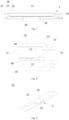
Fig. 9 is a structural schematic diagram of a protective member in one embodiment of the application; -
Fig. 10 is a structural schematic diagram of another protective member in one embodiment of the application; -
Fig. 11 is an enlarged view of the protective member shown inFig. 9 at circle frame D; -
Fig. 12 is a schematic top view of a protective member in one embodiment of the application; -
Fig. 13 is a schematic sectional view of the protective member shown inFig. 12 along line E-E; -
Fig. 14 is another schematic sectional view of the protective member shown inFig. 12 along line E-E; -
Fig. 15 is yet another schematic sectional view of the protective member shown inFig. 12 along line E-E; -
Fig. 16 is a schematic flowchart of a manufacturing method for a battery cell in one embodiment of the application; and -
Fig. 17 is a structural schematic diagram of a manufacturing system for a battery cell in one embodiment of the application. - In the drawings, the components are not drawn to actual scale.
- To make the objectives, technical solutions, and advantages of the embodiments of the application clearer, the following will clearly describe the technical solutions in the embodiments of the application with reference to the accompanying drawings in the embodiments of the application. Apparently, the described embodiments are some rather than all of the embodiments of the application.
- Unless otherwise defined, all technical and scientific terms used in the application have the same meanings as those commonly understood by those who belong to the technical field of the present application. In the application, the terms used in the specification of the application are merely for the purpose of describing specific embodiments, and are not intended to limit the application. The terms "including" and "having" and any variations thereof in the specification and claims of the application and the above accompanying drawings are intended to cover non-exclusive inclusion. The terms "first", "second", etc. in the specification and claims of the application or the above accompanying drawings are used to distinguish different objects, but not to describe a specific order or primary and secondary relationship.
- In the description of the application, it should be noted that, unless otherwise explicitly specified and defined, the terms "mounting", "connecting", "connection" and "attachment" should be understood in a broad sense, for example, they may be a fixed connection, a detachable connection, or an integrated connection; and may be a direct connection, or an indirect connection via an intermediate medium, or communication inside two elements. For those of ordinary skill in the art, the specific meanings of the above terms in the application could be understood according to specific circumstances.
- As used herein, the term "and/or" is merely used to describe an associated relationship between associated objects and means three relationships, for example, A and/or B may mean A alone, A and B together, and B alone. In addition, the character "/" in the application generally indicates that the associated objects are an "or" relationship.
- As used herein, "plurality" refers to two or more, and similarly, "plurality of sets" refers to two or more sets, and "plurality of pieces" refers to two or more pieces.
- In the application, battery cells may include a lithium-ion secondary battery, a lithium-ion primary battery, a lithium-sulfur battery, a sodium lithium-ion battery, a sodium ion battery or a magnesium ion battery, etc., which is not limited by the embodiments of the application. The battery cell may be in cylindrical, flat, cuboid or other shapes, which is not limited by the embodiments of the application. Generally, the battery cells are divided into three types according to packaging manners: cylindrical battery cells, square battery cells and pouch battery cells, which is not limited by the embodiments of the application.
- The battery mentioned in the embodiments of the application refers to a single physical module which includes one or a plurality of battery cells and therefore provides a higher voltage and capacity. For example, the battery mentioned in the application may include a battery module or a battery pack, etc. Generally, the battery includes a box for packaging one or a plurality of battery cells. The box may prevent liquid or other foreign matter from affecting charging or discharging of the battery cell.
- The battery cell includes an electrode assembly and an electrolyte, where the electrode assembly is composed of a positive pole piece, a negative pole piece and a separator film. The battery cell works mainly depending on movement of metal ions between the positive pole piece and the negative pole piece. The positive pole piece includes a positive current collector and a positive active material layer, the positive active material layer coating a surface of the positive current collector, a current collector not coated with the positive active material layer protrudes out of the current collector coated with the positive active material layer, and the current collector not coated with the positive active material layer serves as a positive tab. With a lithium-ion battery as an example, a positive current collector may be made from aluminum, and the positive active material may be lithium cobalt oxide, lithium iron phosphate, ternary lithium or lithium manganate, etc. The negative pole piece includes a negative current collector and a negative active material layer, the negative active material layer coating a surface of the negative current collector, a current collector not coated with the negative active material layer protrudes out of the current collector coated with the negative active material layer, and the current collector not coated with the negative active material layer serves as a negative tab. The negative current collector may be made from copper, and the negative active material may be carbon, silicon, etc. In order to guarantee fusing does not occur during large current flow, a plurality of positive tabs are stacked together, and a plurality of negative tabs are stacked together. The separator film may be made from PP, PE, etc. In addition, the electrode assembly may be in a winding structure or a laminated structure, which is not limited in the embodiments of the application. For development of battery technology, various design factors should be considered simultaneously, such as energy density, cycle life, discharge capacity, charge-discharge rates and other performance parameters. In addition, safety of the battery needs to be further considered.
- For a battery cell, the main safety hazard comes from charging and discharging processes, suitable ambient temperature design is also needed, and there are generally at least three protective measures for the battery cell for effectively avoiding unnecessary losses. Specifically, the protective measures at least include a switch element, selection of an appropriate separator film, and a pressure relief mechanism. The switch element is an element capable of stopping charging or discharging the battery when a temperature or resistance in the battery cell reaches a certain threshold value. The separator film is used for isolating the positive pole piece from the negative pole piece and may automatically dissolve micron-scale (even nano-scale) micropores attached to the separator film when the temperature rises to a certain value, such that metal ions may not pass through the separator film, and then reaction in the battery cell stops.
- The pressure relief mechanism refers to an element or component that is actuated to relieve internal pressure or temperature of the battery cell when the internal pressure or temperature reaches a preset threshold value. The threshold value is designed differently according to different design requirements. The threshold value may depend on one or more materials of a positive pole piece, a negative pole piece, an electrolyte solution and a separator film in the battery cell. The pressure relief mechanism may be, for example, an explosion-proof valve, an air valve, a pressure relief valve, a safety valve, etc., and may specifically use a pressure-sensitive or temperature-sensitive element or structure. That is, when the internal pressure or temperature of the battery cell reaches a preset threshold value, the pressure relief mechanism executes action or a weak structure arranged in the pressure relief mechanism is broken, such that an opening or a channel through which internal pressure or temperature may be relieved is formed.
- "Actuation" as referred to herein means that the pressure relief mechanism produces action or is activated to a state, so as to relieve the internal pressure and temperature of the battery cell. The action produced by the pressure relief mechanism may include, but is not limited to, at least a portion of the pressure relief mechanism breaking, crushing, being torn, or opened, etc. When the pressure relief mechanism is actuated, a high-temperature and high-pressure substance in the battery cell may be discharged outwards from an actuated portion as emissions. In this way, the pressure of the battery cell may be relieved under the condition that the pressure or the temperature is controllable, and therefore more-serious potential accidents are avoided.
- The emissions from the battery cell in this application include, but are not limited to, the electrolyte solutions, the dissolved or split positive and negative pole pieces, fragments of the separator film, high-temperature and high-pressure gas produced by reactions, flames, etc.
- The pressure relief mechanism on the battery cell has important influence on the safety of the battery. For example, when a short circuit, overcharge, etc. occur, thermal runaway inside the battery cell may result in a sudden rise in pressure or temperature. Under the condition, the internal pressure and temperature may be released outwards by means of actuation of the pressure relief mechanism, such that the battery cell is protected from explosion and fire.
- In an existing pressure relief mechanism design scheme, high pressure and high heat in the battery cell are released mainly, that is, the emissions are discharged to an outside of the battery cell. However, in order to ensure output voltage or current of the battery, the plurality of battery cells are often required to be electrically connected by means of a bus component. The emissions discharged from the interior of the battery cell may cause a short circuit of other battery cells. For example, the emissions are diffused to other normal battery cells all around, and under the action of high temperature, the emissions easily melt through a pressure relief mechanism of a normal battery cell and enter an electrode assembly, resulting in a short circuit and thermal runaway of the original normal battery cell, and further aggravating the safety problem.
- In view of this, the embodiment of the application provides a technical solution. A protective member is arranged on the pressure relief mechanism of the battery cell to protect the pressure relief mechanism, prevent melt-through of the pressure relief mechanism, reduce short circuit risk, and improve the safety of the battery.
- The technical solutions described in the embodiments of the application are applicable to various devices using batteries, such as mobile phones, portable devices, notebook computers, electromobiles, electric toys, electric tools, electric vehicles, ships and spacecrafts, for example, the spacecrafts include airplanes, rockets, space shuttles, spaceships, etc.
- It should be understood that the technical solutions described in the embodiments of the application are not only applicable to the devices described above, but also applicable to all devices using batteries. However, for simplicity of description, the following embodiments will be described by taking an electric vehicle as an example.
- For example,
Fig. 1 is a structural schematic diagram of avehicle 1 in one embodiment of the application. Thevehicle 1 may be a fuel, gas or new energy vehicle, and the new energy vehicle may be a pure electric vehicle, a hybrid vehicle, an extended range vehicle, etc. Thevehicle 1 may be further internally provided with abattery 2, acontroller 3 and amotor 4, where thecontroller 3 is used for controlling thebattery 2 to energize themotor 4. For example, thebattery 2 may be arranged at a bottom, head or tail of thevehicle 1. Thebattery 2 may be used for energizing thevehicle 1, for example, thebattery 2 may be used as an operating power source for thevehicle 1, for circuitry of thevehicle 1, for example, for operating power requirements during start-up, navigation and operation of thevehicle 1. In another embodiment of the application, thebattery 2 may not only be used as an operating power source for thevehicle 1, but serve as a driving power source for thevehicle 1, replacing or partially replacing fuel or natural gas to provide driving power for thevehicle 1. - For meeting different power use requirements, the battery may include a plurality of battery cells, wherein the plurality of battery cells may be connected in series, parallel or any combination, wherein a combination refers to a mixture of series connection and parallel connection. The battery may also refer to a battery pack. Optionally, the plurality of battery cells may be connected in series, in parallel or in a series-parallel mode to form a battery module, and then the plurality of battery modules may be connected in series, in parallel or in a series-parallel mode to form a battery. That is, the plurality of battery cells may form the battery directly, or may form the battery module first, and then the battery module forms the battery.
- For example,
Fig. 2 is a structural schematic diagram of abattery 2 in one embodiment of the application. Thebattery 2 may include a plurality ofbattery cells 10. Thebattery 2 may further include a box (or called a cover), the interior of the box is of a hollow structure, and the plurality ofbattery cells 10 are accommodated in the box. As shown inFig. 2 , the box may include two parts, referred to herein as afirst part 11 and asecond part 12 separately, which are buckled together. A shape of thefirst part 11 and thesecond part 12 may be determined according to a shape of combination of the plurality ofbattery cells 10, and each of thefirst part 11 and thesecond part 12 may have one opening. For example, each of thefirst part 11 and thesecond part 12 may be a hollow cuboid with only one open face, the opening of thefirst part 11 and the opening of thesecond part 12 are oppositely arranged, and thefirst part 11 and thesecond part 12 are buckled to each other to form a box with a closed cavity. The plurality ofbattery cells 10 are connected to each other in parallel or in series or in a series-parallel mode and then arranged in the box formed by buckling thefirst part 11 and thesecond part 12. - Optionally, the
battery 2 may also include other structures, which are not repeated here. For example, thebattery 2 may further include a bus component, and the plurality ofbattery cells 10 may be electrically connected to each other by means of the bus component, for example, in parallel or in series or in a series-parallel mode. Specifically, the bus component may connect electrode terminals of thebattery cells 10 to achieve electrical connection between thebattery cells 10. Further, the bus component may be welded to the electrode terminal of thebattery cell 10. Electric energy of the plurality ofbattery cells 10 may be further led out through the box by means of an electric conduction mechanism. Optionally, the electric conduction mechanism may also belong to the bus component. - The number of
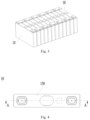
battery cells 10 may be set to any number according to different power requirements. The plurality ofbattery cells 10 may be connected in series, in parallel, or in a series-parallel mode to achieve higher capacity or power. Since the number ofbattery cells 10 included in eachbattery 2 may be large, for ease of mounting, thebattery cells 10 may be arranged in groups, each group ofbattery cells 10 constituting a battery module. The number ofbattery cells 10 included in the battery module is not limited and may be set as required. For example,Fig. 3 is an example of a battery module. The battery may include a plurality of battery modules, which may be connected in series, in parallel, or in a series-parallel mode. -
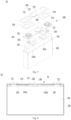
Fig. 4 is a structural schematic diagram of abattery cell 10 in one embodiment of the application;Fig. 5 is a schematic exploded view of thebattery cell 10 shown inFig. 4 ; andFig. 6 is a schematic sectional view of thebattery cell 10 shown inFig. 4 along line A-A.Fig. 7 is an enlarged view of thebattery cell 10 shown inFig. 6 at box B. - As shown in
Figs. 4 to 7 , thebattery cell 10 includes anelectrode assembly 101 and a battery box for accommodating theelectrode assembly 101, the battery box including anend cover assembly 100 and acasing 102. Thecasing 102 is provided with an accommodation cavity and an opening, and theelectrode assembly 101 is accommodated in the accommodation cavity. For example, when thecasing 102 is a hollow cuboid or cube, one of planes of thecasing 102 is an open surface, that is, the plane is provided with no wall, so as to communicate the interior to exterior of thecasing 102. When thecasing 102 may be a hollow cylinder, an end face of thecasing 102 is an open surface, that is, the end face is provided with no wall, so as to communicate the interior to the exterior of thecasing 102. Theend cover assembly 100 includes acover plate 110, thecover plate 110 covering the opening and being connected to thecasing 102, thereby closing the opening of thecasing 102 to place theelectrode assembly 101 in the closed cavity. Thecasing 102 is filled with an electrolyte, for example, an electrolyte solution. - The
end cover assembly 100 may also include two electrode terminals, which may be arranged on thecover plate 110. Thecover plate 110 is generally of a flat-plate shape, two electrode terminals are fixed to a flat-plate surface of thecover plate 110, the two electrode terminals are apositive electrode terminal 121 and anegative electrode terminal 122. Each electrode terminal is correspondingly provided with aconnection member 103, which may also be referred to as a current collecting member, located between thecover plate 110 and theelectrode assembly 101 for electrically connecting theelectrode assembly 101 and the electrode terminal. - Each
electrode assembly 101 is provided with afirst tab 101a and asecond tab 101b. Polarities of thefirst tab 101a and thesecond tab 101b are opposite. For example, when thefirst tab 101a is a positive tab, thesecond tab 101b is a negative tab. Thefirst tab 101a of one ormore electrode assemblies 101 is connected to one electrode terminal by means of oneconnection member 103, and thesecond tab 101b of the one ormore electrode assemblies 101 is connected to the other electrode terminal by means of theother connection member 103. For example, thepositive electrode terminal 121 is connected to the positive tab by means of oneconnection member 103, and thenegative electrode terminal 122 is connected to the negative tab by means of theother connection member 103. - In the
battery cell 10, one ormore electrode assemblies 101 may be provided according to actual use requirements. In some examples, twoseparate electrode assemblies 101 are provided in thebattery cell 10. - In some embodiments, the
end cover assembly 100 may further include alower insulator 130, where thelower insulator 130 is arranged on one side, facing theelectrode assembly 101, of thecover plate 110, and thelower insulator 130 may separate thecover plate 110 from theconnection member 103 and separate thecover plate 110 from theelectrode assembly 101, so as to reduce risk of short circuits. - The battery box includes a first wall and a
pressure relief mechanism 140 arranged on the first wall. In some examples, the first wall may be one wall of thecasing 102, for example, thecasing 102 includes four side walls and a bottom wall connected to the four side walls, and the first wall may be either the bottom wall or one side wall. In other examples, the first wall is thecover plate 110. Thepressure relief mechanism 140 may be part of the first wall or may be separate from the first wall, for example, welded to the first wall. - The
cover plate 110 of the embodiment of the application is provided with a throughhole 111, and the throughhole 111 penetrates thecover plate 110 in a thickness direction of thecover plate 110. Thepressure relief mechanism 140 is connected to thecover plate 110 and covers the throughhole 111. In thebattery cell 10, thepressure relief mechanism 140 may seal the throughhole 111 to separate the spaces of an inner side and an outer side of thecover plate 110, such that the electrolyte solution is prevented from flowing out of the throughhole 111, so as to improve sealing performance of thebattery cell 10. - The
pressure relief mechanism 140 is configured to be actuated to relieve internal pressure of thebattery cell 10 when the internal pressure or temperature reaches a preset threshold value. When internal pressure of thecasing 102 rises and reaches a threshold value due to too much gas generated by thebattery cell 10 or the internal temperature of thebattery cell 10 rises and reaches a threshold value due to heat generated by internal reaction of thebattery cell 10, thepressure relief mechanism 140 executes action or a weak structure arranged in thepressure relief mechanism 140 is broken, and then gas pressure and temperature are released outwards by means of an opening cracked in thepressure relief mechanism 140 and the throughhole 111, so as to prevent thebattery cell 10 from exploding. - The
pressure relief mechanism 140 may be of a variety of possible pressure relief structures, which is not limited by the embodiments of the application. For example, thepressure relief mechanism 140 may be a temperature-sensitive pressure relief mechanism configured to melt when the internal temperature of thebattery cell 10 provided with thepressure relief mechanism 140 reaches the threshold value; and/or, thepressure relief mechanism 140 may be a pressure-sensitive pressure relief mechanism configured to be broken when the internal gas pressure of thebattery cell 10 provided with thepressure relief mechanism 140 reaches the threshold value. - The battery cell of the embodiment of the application further includes a
protective member 150. Theprotective member 150 is arranged on the outer side of thecover plate 110, that is, theprotective member 150 is arranged on one side, away from theelectrode assembly 101, of thecover plate 110. Theprotective member 150 is configured to shield thepressure relief mechanism 140 and the throughhole 111 from the outside. Theprotective member 150 may completely shield the throughhole 111 or shield only part of the throughhole 111. - In the battery, when the pressure relief mechanism of a certain battery cell is actuated and releases the emissions, the emissions are diffused to other normal battery cells all around, the
protective member 150 on the normal battery cell may block the emissions, accordingly, the risk that the emissions make contact with thepressure relief mechanism 140 and melt through thepressure relief mechanism 140 is reduced, and the emissions are reduced or prevented from entering theelectrode assembly 101, so as to reduce the safety risk. - The inventors have further discovered that although the
protective member 150 of thebattery cell 10 may shield thepressure relief mechanism 140 from the outside to reduce the risk of melt-through of thepressure relief mechanism 140 by the emissions released from other battery cells, theprotective member 150 is difficult to open quickly when thebattery cell 10 needs to release the high-temperature and high-pressure substance therein due to thermal runaway, accordingly, the high-temperature and high-pressure substance may not be discharged in time, causing the safety risk. - In view of this, the
protective member 150 provided in an embodiment of the application includes abody portion 151, a shieldingportion 152, and aweak portion 153. Thebody portion 151 is configured to be connected to thecover plate 110 to fix theprotective member 150 to thecover plate 110. The shieldingportion 152 is configured to shield thepressure relief mechanism 140 to block the emissions released from other battery cells, so as to reduce the risk of melt-through of thepressure relief mechanism 140 by the emissions released from the other battery cells. Theweak portion 153 is configured to connect thebody portion 151 to the shieldingportion 152, and theweak portion 153 is configured to be broken when thepressure relief mechanism 140 is actuated, so as to disconnect thebody portion 151 from the shieldingportion 152. - The shielding
portion 152 is configured to shield a portion, corresponding to the throughhole 111, of thepressure relief mechanism 140. The shieldingportion 152 may completely shield the throughhole 111 or shield only part of the throughhole 111. In the thickness direction of thecover plate 110, an orthogonal projection of the shieldingportion 152 and an orthogonal projection of the throughhole 111 at least partially overlap. The orthogonal projection of the throughhole 111 refers to a region enclosed by the orthogonal projection of a hole wall of the throughhole 111 in the thickness direction. - The
weak portion 153 may be configured to be conveniently broken by the high-temperature and high-pressure substance, which is not limited in the embodiment of the application. The strength of theweak portion 153 is less than that of theshield portion 152 and that of thebody portion 151, such that theweak portion 153 may be broken when thepressure relief mechanism 140 is actuated, so as to disconnect thebody portion 151 from the shieldingportion 152. Theprotective member 150 may reduce the strength of theweak portion 153 by providing a structure, for example, an opening, a groove, a score, etc. Certainly, theweak portion 153 may be made from a low-strength material. - When the
pressure relief mechanism 140 is actuated, theweak portion 153 is broken under the action of the high-temperature and high-pressure substance, so as to disconnect thebody portion 151 from the shieldingportion 152. The high-temperature and high-pressure substance may act directly on theweak portion 153, or may transfer heat and pressure to theweak portion 153 by means of the shieldingportion 152. In some examples, theweak portion 153 may be broken entirely, and the shieldingportion 152 is not restrained by thebody portion 151 and is flushed away by the high-temperature and high-pressure substance, such that the shieldingportion 152 does not block the high-temperature and high-pressure substance any more, and a channel for discharging the high-temperature and high-pressure substance is formed in theprotective member 150, so as to quickly discharge the high-temperature and high-pressure substance out of thebattery cell 10. In other examples, theweak portion 153 may be broken partially, and theprotective member 150 may form a channel at a broken position of theweak portion 153, and the high-temperature and high-pressure substance may be discharged by means of the channel. In addition, a connection force between the shieldingportion 152 and thebody portion 151 is reduced, and the shieldingportion 152 is turned outwards under the impact of the high-temperature and high-pressure substance, such that a size of the channel is increased, and discharging efficiency of the high-temperature and high-pressure substance is increased. - On one hand, the shielding
portion 152 of theprotective member 150 of thebattery cell 10 may block emissions released from other battery cells, so as to reduce the risk of melt-through of thepressure relief mechanism 140 by the emissions released from other battery cells. On the other hand, when thermal runaway occurs in thebattery cell 10, thepressure relief mechanism 140 is actuated to release a high-temperature and high-pressure substance in the battery cell, and meanwhile, theweak portion 153 is broken under the action of the high-temperature and high-pressure substance, such that a channel for discharging the high-temperature and high-pressure substance is formed on theprotective member 150, and the high-temperature and high-pressure substance is discharged in time, so as to reduce the safety risk. - In some embodiments of the application, a melting point of the
protective member 150 is greater than that of thepressure relief mechanism 140. Compared with thepressure relief mechanism 140, theprotective member 150 with a higher melting point may bear higher temperature, so as to reduce the risk of melt-through by the emissions and improve safety performance. - In one embodiment of the application, the melting point of the
protective member 150 is not less than 600 degrees Celsius. In this way, theprotective member 150 with the higher melting point is less likely to be melted through by the emissions. Optionally, the melting point of theprotective member 150 is not less than 1000 degrees Celsius. - In some embodiments of the application, the
protective member 150 is made from materials that include at least one of mica, rubber and ceramic. Optionally, theprotective member 150 is mica paper or a mica plate, which has insulating, high temperature resistant properties, and may effectively block the high-temperature emissions to protect thepressure relief mechanism 140. The mica paper or the mica plate is thin and may be timely broken at theweak portion 153 when being impacted by the high-temperature and high-pressure substance; and moreover, the mica paper or the mica plate with a smaller thickness and lower weight has small influence on energy density of the battery cell. - In some embodiments of the application, the
protective member 150 may also insulate heat. Theprotective member 150 may separate at least part of the emissions from thecover plate 110, thereby reducing the heat transferred to thecover plate 110, reducing a temperature rise of thebattery cell 10, making theelectrode assembly 101 operate in a suitable temperature range, and improving charge and discharge performance of theelectrode assembly 101. - In some embodiments of the application, the shielding
portion 152 completely covers the throughhole 111 in the thickness direction of thecover plate 110, such that the shieldingportion 152 may block the emissions as much as possible, so as to reduce the risk that the emissions enter the throughhole 111. - The battery cell of the embodiment of the application further includes a
bonding member 170, and theprotective member 150 is connected to thecover plate 110 by means of thebonding member 170. Thebonding member 170 may be gum. Before being fitted to thecover plate 110, theprotective member 150 may be bonded to release paper by means of thebonding member 170; and when necessary, theprotective member 150 and thebonding member 170 are striped from the release paper and then bonded to thecover plate 110. - In some embodiments, a surface, facing the
cover plate 110, of thebody portion 151 is provided with thebonding member 170. Thebonding member 170 fixes thebody portion 151 to thecover plate 110. Thebonding member 170 has adhesiveness, becomes soft at a high temperature and is not easily broken, and under the condition that thebonding member 170 is also provided on the shieldingportion 152 and theweak portion 153, when theweak portion 153 is broken, thebonding member 170 may connect the shieldingportion 152 to thebody portion 151, resulting in that the high-temperature and high-pressure substance may not be timely discharged, and thus, neither a surface, facing thecover plate 110, of the shieldingportion 152 nor a surface, facing thecover plate 110, of theweak portion 153 is provided with thebonding member 170. - In some embodiments, one
bonding member 170 may be provided. In other embodiments, a plurality ofbonding members 170 may be arranged discontinuously. -
Fig. 8 is an enlarged view ofFig. 7 at box C. As shown inFig. 8 , in some embodiments of the application, thepressure relief mechanism 140 is provided with afirst groove 141, thepressure relief mechanism 140 is configured to be broken at thefirst groove 141 to relieve the internal pressure of the battery cell when the internal pressure or temperature reaches a threshold value. A bottom wall of thefirst groove 141 is of a weak structure formed on thepressure relief mechanism 140, when the internal pressure or temperature of the battery cell reaches the threshold value, the bottom wall of thefirst groove 141 is cracked to form an opening, and the gas pressure and temperature are released outwards by means of the opening cracked in thepressure relief mechanism 140 and the throughhole 111, so as to prevent the battery cell from exploding. - The bottom wall of the
first groove 141 is weaker and is more easily melted through by the emissions. Thus, in some embodiments, the shieldingportion 152 completely covers thefirst groove 141, that is, the orthogonal projection of the shieldingportion 152 completely covers the orthogonal projection of thefirst groove 141 in the thickness direction of thecover plate 110, so as to reduce the risk that the emissions fall into thefirst groove 141 of thepressure relief mechanism 140, further to reduce the possibility of melt-through of thepressure relief mechanism 140. - The shielding
portion 152 protrudes outward from thebody portion 151 in a direction perpendicular to thecover plate 110. In this way, a distance between the shieldingportion 152 and thepressure relief mechanism 140 may be increased in the direction perpendicular to the cover plate 110 (that is, the thickness direction of the cover plate 110), so as to prolong a heat transfer path between the shieldingportion 152 and thepressure relief mechanism 140 and reduce heat transferred to thepressure relief mechanism 140. Additionally, in some examples, when the internal pressure or temperature of the battery cell reaches the threshold value, thepressure relief mechanism 140 may be broken at the bottom wall of thefirst groove 141, and a portion, arranged along the broken position, of thepressure relief mechanism 140 folds upward to form an opening to release the high-temperature and high-pressure substance. If the distance between the shieldingportion 152 and thepressure relief mechanism 140 is too small, the shieldingportion 152 may block folding of thepressure relief mechanism 140, resulting in a small opening of thepressure relief mechanism 140, and the shieldingportion 152 may not be flushed away by the high-temperature and high-pressure substance in time. Therefore, the shieldingportion 152 protrudes out of thebody portion 151, so as to increase the distance between the shieldingportion 152 and thepressure relief mechanism 140, and accordingly, the shieldingportion 152 is prevented from blocking folding of thepressure relief mechanism 140. - In some embodiments of the application, the
weak portion 153 extends from an edge of the shieldingportion 152 toward thecover plate 110 and is connected to thebody portion 151. Theprotective member 150 is provided with a recessed portion on one side, facing thecover plate 110, of the shieldingportion 152. Each of thebody portion 151 and the shieldingportion 152 is of a flat-plate shape and is substantially perpendicular to the thickness direction of thecover plate 110. Theweak portion 153 is bent at a preset angle relative to the shieldingportion 152. As shown inFig. 8 , theweak portion 153 is substantially perpendicular to the shieldingportion 152. Certainly, an included angle between theweak portion 153 and the shieldingportion 152 may be set according to product requirements, for example, may be 80 degrees to 160 degrees, and specifically, may be 90 degrees, 120 degrees, 150 degrees, etc., which is not limited herein. - In some embodiments of the application, the
cover plate 110 is also provided with areception groove 112 recessed from a surface, facing theelectrode assembly 101, of thecover plate 110, and thereception groove 112 is arranged around the throughhole 111. Thepressure relief mechanism 140 is at least partially accommodated in thereception groove 112. Thereception groove 112 may serve a positioning function to facilitate fitting of thepressure relief mechanism 140 and thecover plate 110. - In some embodiments of the application, the
cover plate 110 includes acover plate body 114 and aprotrusion 113 connected to thecover plate body 114. The shieldingportion 152 is positioned on one side, away from thepressure relief mechanism 140, of theprotrusion 113 in the direction perpendicular to thecover plate 110. In some examples, theprotrusion 113 is positioned between the shieldingportion 152 and thecover plate body 114, and "between" refers to a spatial positional relationship of theprotrusion 113, the shieldingportion 152, and thecover plate body 114 in the thickness direction of thecover plate 110, and does not require the shieldingportion 152 and theprotrusion 113 to overlap in the thickness direction. Thecover plate body 114 is of a flat-plate shape substantially. Theprotrusion 113 protrudes out relative to a surface, facing theprotective member 150, of thecover plate body 114. The throughhole 111 penetrate thecover plate body 114 and theprotrusion 113. The throughhole 111 includes an inner section penetrating thecover plate body 114 and an outer section penetrating theprotrusion 113, and theprotrusion 113 includes a sidewall surrounding the outer section. Theprotrusion 113 extends into the recessed portion of theprotective member 150. - In some embodiments of the application, in a direction parallel to the
cover plate body 114, theweak portion 153 is positioned on one side, away from the throughhole 111, of theprotrusion 113, and theprotrusion 113 may separate theweak portion 153 from the throughhole 111, and even if a portion of theweak portion 153 is melted through by the emissions, theprotrusion 113 may block the emissions, so as to reduce or prevent the emissions from entering the throughhole 111. - The
protrusion 113 may also strengthen strength of thecover plate 110 at the throughhole 111, and reduce deformation of thecover plate 110. In some examples, thereception groove 112 may be formed by pressing thecover plate 110, and after thecover plate 110 is pressed, theprotrusion 113 is formed on thecover plate 110. - In some embodiments of the application, the
battery cell 10 further includes aprotective film 160 arranged between the shieldingportion 152 and thepressure relief mechanism 140 and covering the throughhole 111 and thepressure relief mechanism 140. In some examples, theprotective film 160 is arranged on a surface, facing the shieldingportion 152, of theprotrusion 113 and covers the throughhole 111 and thepressure relief mechanism 140. Theprotective film 160 may seal the throughhole 111 to reduce impurities, for example, external dust and water vapor entering the throughhole 111. Theprotective film 160 is of a film structure, has low strength, is easily broken under impact of the high-temperature and high-pressure substance, and does not influence discharge of the high-temperature and high-pressure substance. Optionally, theprotective film 160 is a transparent polyethylene terephthalate (PET) patch. - In some embodiments of the application, the shielding
portion 152 compresses theprotective film 160. The shieldingportion 152 and theprotrusion 113 clamp theprotective film 160, thereby reducing the risk of falling off of theprotective film 160. -
Fig. 9 is a schematic structural diagram of aprotective member 150 in one embodiment of the application and illustrates a shape of theprotective member 150 prior to fitting to thecover plate 110.Fig. 10 is a schematic structural diagram of anotherprotective member 150 in one embodiment of the application and illustrates a shape of theprotective member 150 prior to fitting to thecover plate 110. - With reference to
Fig. 9 , in some embodiments, theprotective member 150 is directly provided with the shieldingportion 152 protruding out of thebody portion 151 during manufacturing of theprotective member 150. Thebody portion 151 and the shieldingportion 152 are each of a flat-plate shape substantially and are arranged parallel to each other, and theweak portion 153 is substantially perpendicular to thebody portion 151 and the shieldingportion 152. Theprotective member 150 forms a recessed portion inside the shieldingportion 152. When theprotective member 150 and thecover plate 110 are fitted, thebody portion 151 is connected to thecover plate body 114, and the recessed portion of theprotective member 150 reserves an accommodating space for theprotrusion 113 of thecover plate 110. - With reference to
Fig. 10 , in other embodiments, theprotective member 150 may be manufactured into a flat-plate shape in advance. In this way, thebody portion 151, the shieldingportion 152, and theweak portion 152 are substantially in one plane. A forming process of the flat-plate-shapedprotective member 150 is simple. When theprotective member 150 and thecover plate 110 are fitted, the shieldingportion 152 is attached to theprotrusion 113 or theprotective film 160, and then thebody portion 151 is pressed; and the strength of theweak portion 153 is smaller, and when thebody portion 151 is pressed, theweak portion 153 may deform, thereby making thebody portion 151 close to thecover plate 110, so as to connect thebody portion 151 to thecover plate body 114. After the flat-plate-shapedprotective member 150 is fitted to thecover plate 110, theprotrusion 113 may support the shieldingportion 152, such that the shieldingportion 152 protrudes out of thebody portion 151. - The
weak portion 153 may be formed in different ways as desired, as long as the strength of the weakenedportion 153 may be reduced and theweak portion 153 may be broken when thepressure relief mechanism 140 is actuated. -
Fig. 11 is an enlarged view of theprotective member 150 shown inFig. 9 at circle frame D. As shown inFig. 11 , in some embodiments of the application, a plurality of throughopen holes 154 are provided between thebody portion 151 and the shieldingportion 152, theweak portion 153 includes a plurality of weak subareas 153a, and the plurality of weak subareas 153a and the plurality ofopen holes 154 are alternately provided on the periphery of the shieldingportion 152. Theprotective member 150 is provided with theopen hole 154, such that overall strength of theweak portion 153 may be reduced. When the shieldingportion 152 is impacted by the high-temperature and high-pressure substance, theweak subarea 153a of theweak portion 153 may be broken in time. In some examples, when thermal runaway occurs in thebattery cell 10, all of theweak subareas 153a are broken under the impact of the high-temperature and high-pressure substance, and the shieldingportion 152 is not restrained by thebody portion 151 any more and flushed away by the high-temperature and high-pressure substance. In other examples, it is possible that some of theweak subareas 153a are broken under impact of the high-temperature and high-pressure substance, and the otherweak subareas 153a are still connected to the shieldingportion 152 and thebody portion 151. In such a condition, the binding force of thebody portion 151 to the shieldingportion 152 is small, and the shieldingportion 152 may deform under the impact of the high-temperature and high-pressure substance and may also turn outwards with the undamagedweak subarea 153a as an axis, such that a channel may be formed between thebody portion 151 and the shieldingportion 152 for rapidly discharging the high-temperature and high-pressure substance. When thermal runaway occurs in thebattery cell 10, the number of the broken weak subareas 153a depends on the capacity of thebattery cell 10, whether allweak subareas 153a are broken or someweak subareas 153a are broken, as long as the temperature and pressure inside thebattery cell 10 may be relieved to within a safe range within a certain time. - In some embodiments, four
weak subareas 153a are provided, twoweak subareas 153a are oppositely arranged in a length direction of theprotective member 150, and the other twoweak subareas 153a are oppositely arranged in a width direction of theprotective member 150. - In some embodiments, in a circumferential direction of the shielding
portion 152, a ratio of a size of a connection of theweak portion 153 with the shieldingportion 152 to a circumference of the shieldingportion 152 is less than 50%; and when the shieldingportion 152 is impacted by the high-temperature and high-pressure substance, the connection of theweak portion 153 and the shieldingportion 152 is more likely to be broken. - In some embodiments, the thickness of the
weak subarea 153a is less than or equal to that of thebody portion 151. When the thickness of theweak subarea 153a is less than that of thebody portion 151, the strength of a connection of theweak subarea 153a and thebody portion 151 is lower, and when the high-temperature and high-pressure substance impacts theprotective member 150, the connection of theweak subarea 153a and thebody portion 151 is more likely to be broken. - In some embodiments, the thickness of the
weak subarea 153a is less than or equal to that of the shieldingportion 152. When the thickness of theweak subarea 153a is less than that of the shieldingportion 152, the strength of a connection of theweak subarea 153a and the shieldingportion 152 is lower, and when the high-temperature and high-pressure substance impacts theprotective member 150, the connection of theweak subarea 153a and the shieldingportion 152 is more likely to be broken. - In some embodiments, the thickness of the
weak subarea 153a is less than that of thebody portion 151 and also less than that of the shieldingportion 152. - In some examples, the thickness of the
body portion 151 is equal to that of the shieldingportion 152. In other examples, the thickness of the shieldingportion 152 may also be less than that of thebody portion 151. - In some embodiments, the thickness of the
body portion 151, the shieldingportion 152, and theweak subarea 153a is equal, such that the overall thickness of theprotective member 150 is uniform, facilitating molding. -
Fig. 12 is a structural schematic diagram of aprotective member 150 in one embodiment of the application;Fig. 13 is a schematic sectional view of theprotective member 150 shown inFig. 12 along line E-E; andFig. 14 is another schematic sectional view of theprotective member 150 shown inFig. 12 along line E-E.Fig. 15 is yet another schematic sectional view of theprotective member 150 shown inFig. 12 along line E-E. - In some embodiments, with reference to
Figs. 12-15 , theprotective member 150 is provided with asecond groove 154. A position of thesecond groove 154 may be set according to product requirements. In some examples, with reference toFig. 13 , thesecond groove 154 is arranged on an inside surface of the protective member 150 (that is, a surface of one side, close to thecover plate 110, of the protective member 150). In other examples, with reference toFig. 14 , thesecond groove 154 is arranged on an outside surface of the protective member 150 (that is, a surface of one side, away from thecover plate 110, of the protective member 150). In yet other examples, with reference toFig. 15 , thesecond groove 154 is arranged on both the surface of an inner side and the surface of an outer side of theprotective member 150. - With reference to
Figs. 12-15 , theweak portion 153 is a bottom wall of thesecond groove 154. By arranging thesecond groove 154, the thickness of theweak portion 153 may be reduced, that is, the strength of theweak portion 153 may be reduced, and theweak portion 153 may be broken rapidly when being impacted by the high-temperature and high-pressure substance. - In some embodiments, the
second groove 154 is an annular groove surrounding the shieldingportion 152. Correspondingly, theweak portion 153 is annular and is arranged around an edge of the shieldingportion 152. When the shieldingportion 152 is impacted by the high-temperature and high-pressure substance, all parts of theweak portion 153 may be broken, so as to increase a discharge rate of the high-temperature and high-pressure substance. - In some examples, one annular
second groove 154 is provided. Optionally, a plurality of annularsecond grooves 154 may be provided and are arranged at intervals from thebody portion 151 to the shieldingportion 152. The number of thesecond groove 154 may be set according to the capacity of thebattery cell 10 as long as the temperature and pressure inside thebattery cell 10 may be relieved to within the safe range within the certain time. - In some embodiments, the
second grooves 154 are a plurality of strip-shaped grooves, and the plurality ofsecond grooves 154 are arranged along the shieldingportion 152 circumferentially at intervals. - The smaller the thickness of the
weak portion 153 is, the lower the strength of theweak portion 153 is; and under the condition that the thickness of theweak portion 153 is too small, when the battery cell vibrates, theweak portion 153 is easily broken, resulting in failure of theprotective member 150. Conversely, the larger the thickness of theweak portion 153 is, the higher the strength of theweak portion 153 is; and under the condition that the thickness of theweak portion 153 is too large, when the high-temperature and high-pressure substance impacts the shieldingportion 152, the time required for theweak portion 153 to be broken is too long, influencing the discharge of the high-temperature and high-pressure substance. Thus, in some embodiments, a thickness of theweak portion 153 is 0.08 mm to 0.3 mm. - In some embodiments, a thickness of the
body portion 151 may be equal to that of the shieldingportion 152. In other embodiments, a thickness of the shieldingportion 152 may also be less than that of thebody portion 151. - As shown in
Fig. 15 , theprotective member 150 includes an innersecond groove 154 and an outersecond groove 154, the innersecond groove 154 and the outersecond groove 154 at least partially overlapping in the thickness direction of theweak portion 153, so as to reduce a minimum thickness of theweak portion 153. -
Fig. 16 shows a schematic flowchart of a manufacturing method for a battery cell in one embodiment of the application. As shown inFig. 16 , the manufacturing method may include: - S210: supply an
end cover assembly 100, wherein theend cover assembly 100 includes acover plate 110, an electrode terminal, and apressure relief mechanism 140, thepressure relief mechanism 140 and the electrode terminal being arranged on thecover plate 110, and thepressure relief mechanism 140 being actuated to relieve internal pressure of the battery cell when the internal pressure or temperature reaches a threshold value; - S220: supply an
electrode assembly 101 and connecting theelectrode assembly 101 to the electrode terminal; - S230: supply a
casing 102 provided with an accommodation cavity opening; - S240: place the
electrode assembly 101 connected to the electrode terminal into the accommodation cavity, and then connect thecover plate 110 to thecasing 102 to close the opening of thecasing 102; - S250: supply a
protective member 150, where theprotective member 150 includes abody portion 151, a shieldingportion 152, and aweak portion 153, theweak portion 153 being configured to connect thebody portion 151 to the shieldingportion 152, and theweak portion 153 being configured to be broken when thepressure relief mechanism 140 is actuated, so as to disconnect thebody portion 151 from the shieldingportion 152; and - S260: arrange the
protective member 150 on an outer side of thecover plate 110, connect thebody portion 151 to thecover plate 110 and shield thepressure relief mechanism 140 by the shieldingportion 152. - The related structure of the battery cell manufactured by the manufacturing method of the embodiment may be referred to related contents described in the corresponding embodiments of
Figs. 1-15 , and is not repeated here. -
Fig. 17 shows a structural schematic diagram of a manufacturing system for a battery cell in one embodiment of the application. As shown inFig. 17 , themanufacturing system 300 for a battery cell in the embodiment of the application may include afirst supply device 310, asecond supply device 320, athird supply device 330, afourth supply device 340, afirst assembly device 350, asecond assembly device 360, and athird assembly device 370. - The
first supply device 310 is used for supplying anend cover assembly 100, where theend cover assembly 100 includes acover plate 110, an electrode terminal, and apressure relief mechanism 140, thepressure relief mechanism 140 and the electrode terminal being arranged on thecover plate 110, and thepressure relief mechanism 140 being actuated to relieve internal pressure of the battery cell when the internal pressure or temperature reaches a threshold value. - The
second supply device 320 is used for supplying anelectrode assembly 101. Thefirst assembly device 350 is used for connecting theelectrode assembly 101 to the electrode terminal. Thethird supply device 330 is used for supplying acasing 102 provided with an accommodation cavity and an opening. Thesecond assembly device 360 is used for placing theelectrode assembly 101 connected to the electrode terminal into the accommodation cavity, and connecting thecover plate 110 to thecasing 102 to close the opening of thecasing 102. Thefourth supply device 340 is used for supplying aprotective member 150, where theprotective member 150 includes abody portion 151, a shieldingportion 152, and aweak portion 153, theweak portion 153 being configured to connect thebody portion 151 to the shieldingportion 152, and theweak portion 153 being configured to be broken when thepressure relief mechanism 140 is actuated, so as to disconnect thebody portion 151 from the shieldingportion 152. Thethird assembly device 370 is used for arranging theprotective member 150 on an outer side of thecover plate 110, connecting thebody portion 151 to thecover plate 110 and shielding thepressure relief mechanism 140 by the shieldingportion 152. - The related structure of the battery cell manufactured by the manufacturing system of the embodiment may be referred to related contents described in the corresponding embodiments of
Figs. 1-15 , and is not repeated here.
Claims (15)
- A battery cell (10), comprising:a battery box comprising a first wall and a pressure relief mechanism (140), wherein the pressure relief mechanism (140) is arranged on the first wall, and the pressure relief mechanism (140) is configured to be actuated to relieve internal pressure of the battery cell (10) when the internal pressure or temperature of the battery cell (10) reaches a threshold value;a protective member (150) positioned on an outer side of the first wall and comprising a body portion (151), a shielding portion (152) and a weak portion (153), wherein the body portion (151) is configured to be connected to the first wall, the shielding portion (152) protrudes outward from the body portion (151) in a direction perpendicular to the first wall and is configured to shield the pressure relief mechanism (140), the weak portion (153) is configured to connect the body portion (151) to the shielding portion (152), and the weak portion (153) is configured to be broken when the pressure relief mechanism (140) is actuated, so as to disconnect the body portion (151) from the shielding portion (152), wherein an outer surface of the first wall is provided with a protrusion (113), and the shielding portion (152) is positioned on one side, away from the pressure relief mechanism (140), of the protrusion (113) in the direction perpendicular to the first wall, and wherein a plurality of through open holes (154) are provided between the body portion (151) and the shielding portion (152), the weak portion (153) comprises a plurality of weak subareas (153a), and the plurality of weak subareas (153a) and the plurality of open holes (154) are alternately provided on a periphery of the shielding portion (152); anda protective film (160) arranged on a surface, facing the shielding portion (152), of the protrusion (113) and covering the pressure relief mechanism (140).
- The battery cell (10) according to claim 1, further comprising a bonding member (170), wherein the protective member (150) is connected to the first wall by means of the bonding member (170).
- The battery cell (10) according to claim 2, wherein a surface, facing the first wall, of the body portion (151) is provided with the bonding member (170), and a surface, facing the first wall, of the shielding portion (152) and a surface, facing the first wall, of the weak portion (153) are provided with no bonding member (170).
- The battery cell (10) according to any preceding claim, wherein a melting point of the protective member (150) is greater than that of the pressure relief mechanism (140).
- The battery cell (10) according to claim 4, wherein the melting point of the protective member (150) is not less than 600 degrees Celsius.
- The battery cell (10) according to any preceding claim, wherein the protective member (150) is made from materials that include at least one of mica, rubber and ceramic.
- The battery cell (10) according to any preceding claim, wherein a thickness of the shielding portion (152) is less than that of the body portion (151).
- The battery cell (10) according to any preceding claim, wherein the pressure relief mechanism (140) is provided with a first groove (141), the pressure relief mechanism (140) is configured to be broken at the first groove (141) to relieve the internal pressure of the battery cell (10) when the internal pressure or temperature reaches the threshold value, and the shielding portion (152) completely covers the first groove (141).
- The battery cell (10) according to any preceding claim , wherein the shielding portion (152) compresses the protective film (160).
- The battery cell (10) according to any preceding claim, wherein a thickness of each weak subarea (153a) is less than or equal to that of the body portion (151) and/or that of the shielding portion (152).
- The battery cell (10) according to any one of claims 1-9, wherein:
a second groove is provided in a surface of one side of the protective member (150), away from the first wall and/or close to the first wall, and the weak portion (153) is a bottom wall of the second groove. - The battery cell (10) according to claim 11, wherein the second groove is an annular groove surrounding the shielding portion (152); and
a thickness of the weak portion (153) is preferably 0.08 mm to 0.3 mm. - The battery cell (10) according to any preceding claim, wherein the battery box comprises:a casing (102) provided with an accommodation cavity and an opening, the accommodating cavity preferably housing an electrode assembly (101); andan end cover assembly (100) comprising a cover plate (110) and an electrode terminal (121, 122), wherein the cover plate (110) is configured to cover the opening of the casing (102), the electrode terminal (121, 122) is arranged on the cover plate (110), and the first wall is the cover plate (110).
- A battery, comprising a box and at least one battery cell in accordance with any one of claims 1-13, the battery cell being received in the box.
- An electric device, comprising a battery according to claim 14 and configured to receive electrical energy provided by the battery.
Priority Applications (2)
| Application Number | Priority Date | Filing Date | Title |
|---|---|---|---|
| EP24201480.1A EP4459770B1 (en) | 2020-11-25 | 2020-11-25 | Battery cell and manufacturing method and system therefor, battery and electric apparatus |
| HUE20962775A HUE070269T2 (en) | 2020-11-25 | 2020-11-25 | Battery cell and manufacturing method and system therefor, battery, and electrical apparatus |
Applications Claiming Priority (1)
| Application Number | Priority Date | Filing Date | Title |
|---|---|---|---|
| PCT/CN2020/131576 WO2022109884A1 (en) | 2020-11-25 | 2020-11-25 | Battery cell and manufacturing method and system therefor, battery, and electrical apparatus |
Related Child Applications (2)
| Application Number | Title | Priority Date | Filing Date |
|---|---|---|---|
| EP24201480.1A Division-Into EP4459770B1 (en) | 2020-11-25 | 2020-11-25 | Battery cell and manufacturing method and system therefor, battery and electric apparatus |
| EP24201480.1A Division EP4459770B1 (en) | 2020-11-25 | 2020-11-25 | Battery cell and manufacturing method and system therefor, battery and electric apparatus |
Publications (3)
| Publication Number | Publication Date |
|---|---|
| EP4071912A1 EP4071912A1 (en) | 2022-10-12 |
| EP4071912A4 EP4071912A4 (en) | 2023-04-12 |
| EP4071912B1 true EP4071912B1 (en) | 2024-11-20 |
Family
ID=81755243
Family Applications (2)
| Application Number | Title | Priority Date | Filing Date |
|---|---|---|---|
| EP20962775.1A Active EP4071912B1 (en) | 2020-11-25 | 2020-11-25 | Battery cell and manufacturing method and system therefor, battery, and electrical apparatus |
| EP24201480.1A Active EP4459770B1 (en) | 2020-11-25 | 2020-11-25 | Battery cell and manufacturing method and system therefor, battery and electric apparatus |
Family Applications After (1)
| Application Number | Title | Priority Date | Filing Date |
|---|---|---|---|
| EP24201480.1A Active EP4459770B1 (en) | 2020-11-25 | 2020-11-25 | Battery cell and manufacturing method and system therefor, battery and electric apparatus |
Country Status (7)
| Country | Link |
|---|---|
| US (1) | US20220320677A1 (en) |
| EP (2) | EP4071912B1 (en) |
| JP (1) | JP7521008B2 (en) |
| KR (1) | KR20220164047A (en) |
| CN (1) | CN115699437B (en) |
| HU (1) | HUE070269T2 (en) |
| WO (1) | WO2022109884A1 (en) |
Families Citing this family (19)
| Publication number | Priority date | Publication date | Assignee | Title |
|---|---|---|---|---|
| CN118216037A (en) * | 2022-06-21 | 2024-06-18 | 宁德时代新能源科技股份有限公司 | Battery cells, batteries and electrical devices |
| US20240030546A1 (en) * | 2022-07-20 | 2024-01-25 | Aesc Japan Ltd. | Battery, battery assembly and electronic apparatus |
| US20240030520A1 (en) * | 2022-07-20 | 2024-01-25 | Aesc Japan Ltd. | Battery and electronic device |
| CN115036643B (en) * | 2022-08-12 | 2022-12-02 | 江苏时代新能源科技有限公司 | Battery monomer, battery and consumer |
| WO2024082220A1 (en) * | 2022-10-20 | 2024-04-25 | 宁德时代新能源科技股份有限公司 | Battery cell, battery, electric device, and method for covering battery cell with insulating film |
| CN218385448U (en) * | 2022-10-25 | 2023-01-24 | 宁德时代新能源科技股份有限公司 | Shell assembly, battery monomer, battery and consumer |
| US20240154244A1 (en) * | 2022-11-07 | 2024-05-09 | Samsung Sdi Co., Ltd. | Secondary battery |
| CN115663389B (en) * | 2022-11-17 | 2024-09-06 | 宁德时代新能源科技股份有限公司 | Battery monomer, battery and electric equipment |
| US20240297400A1 (en) * | 2023-03-03 | 2024-09-05 | GM Global Technology Operations LLC | Battery assemblies, vehicles, and methods with gas manifold liners and battery tray seals for improved cell gas venting |
| WO2024259751A1 (en) * | 2023-06-19 | 2024-12-26 | 惠州亿纬锂能股份有限公司 | Battery pack |
| CN119231083A (en) | 2023-06-29 | 2024-12-31 | 宁德时代新能源科技股份有限公司 | Battery cells, batteries and electrical devices |
| CN221805773U (en) * | 2023-11-28 | 2024-10-01 | 宁德时代新能源科技股份有限公司 | Battery and electricity utilization device |
| CN222365689U (en) * | 2023-12-22 | 2025-01-17 | 宁德时代新能源科技股份有限公司 | Battery cells, batteries and electrical equipment |
| CN220774552U (en) * | 2024-01-08 | 2024-04-12 | 宁德时代新能源科技股份有限公司 | End cover assembly, battery and power utilization device |
| CN118507974A (en) * | 2024-02-22 | 2024-08-16 | 比亚迪股份有限公司 | Explosion-proof valves, cover components, battery cells, battery packs, and power systems |
| KR20250148314A (en) * | 2024-04-05 | 2025-10-14 | 삼성에스디아이 주식회사 | battery pack |
| EP4726865A1 (en) * | 2024-10-09 | 2026-04-15 | ABB Schweiz AG | Battery arrangement and method of manufacturing the battery arrangement |
| CN119092907B (en) * | 2024-11-08 | 2025-01-24 | 蜂巢能源科技股份有限公司 | Battery and battery pack |
| CN119833872B (en) * | 2025-01-22 | 2026-02-27 | 江苏正力新能电池技术股份有限公司 | Explosion-proof valve, battery and electric equipment |
Family Cites Families (23)
| Publication number | Priority date | Publication date | Assignee | Title |
|---|---|---|---|---|
| KR100551885B1 (en) * | 2003-10-20 | 2006-02-10 | 삼성에스디아이 주식회사 | Lithium ion secondary battery |
| JP5172315B2 (en) * | 2007-12-18 | 2013-03-27 | プライムアースEvエナジー株式会社 | Secondary battery |
| JP4386139B1 (en) * | 2008-08-20 | 2009-12-16 | トヨタ自動車株式会社 | battery |
| JP5407683B2 (en) | 2009-09-10 | 2014-02-05 | トヨタ自動車株式会社 | Battery and battery manufacturing method |
| KR101137366B1 (en) * | 2010-05-20 | 2012-08-23 | 에스비리모티브 주식회사 | Secondary battery |
| JP5919777B2 (en) * | 2011-01-31 | 2016-05-18 | 株式会社Gsユアサ | Electricity storage element |
| JP5966922B2 (en) * | 2012-02-14 | 2016-08-10 | 株式会社Gsユアサ | Electricity storage element |
| JP6252877B2 (en) | 2012-02-14 | 2017-12-27 | 株式会社Gsユアサ | Electricity storage element |
| KR101916964B1 (en) * | 2012-08-08 | 2018-11-08 | 삼성에스디아이 주식회사 | Secondary battery |
| JP6044450B2 (en) | 2013-05-22 | 2016-12-14 | 株式会社豊田自動織機 | Power storage device |
| CN203415658U (en) * | 2013-06-07 | 2014-01-29 | 宁德新能源科技有限公司 | Li-ion secondary battery and safety protecting device thereof |
| JP6109056B2 (en) | 2013-12-13 | 2017-04-05 | 日立オートモティブシステムズ株式会社 | Secondary battery |
| CN104319360B (en) | 2014-11-11 | 2017-01-25 | 东莞新能源科技有限公司 | Lithium ion battery and battery pack |
| KR101970650B1 (en) * | 2015-06-19 | 2019-04-22 | 주식회사 엘지화학 | Secondary battery |
| US20190006776A1 (en) * | 2017-06-29 | 2019-01-03 | NextEv USA, Inc. | Battery cell cap with integrated fusible link and method of attaching to an electrical interconnection |
| US10668832B2 (en) * | 2017-09-12 | 2020-06-02 | Chongqing Jinkang New Energy Vehicle Co., Ltd. | Temperature control apparatus for electric vehicle battery packs |
| CN111937186B (en) * | 2018-04-06 | 2024-01-02 | 松下知识产权经营株式会社 | Batteries and battery modules |
| JP7531402B2 (en) * | 2018-12-21 | 2024-08-09 | パナソニックエナジー株式会社 | Cylindrical battery |
| CN110707262A (en) * | 2019-08-13 | 2020-01-17 | 力赛凡科技有限公司 | A power battery explosion-proof vent valve and a battery system using the explosion-proof valve |
| CN210403875U (en) * | 2019-08-29 | 2020-04-24 | 惠州比亚迪实业有限公司 | Battery module, power battery package and vehicle |
| CN210429943U (en) * | 2019-11-08 | 2020-04-28 | 赛史品威奥(唐山)结构复合材料有限公司 | Matching connection structure of metal connection plate and battery box body of explosion-proof valve of automobile battery box |
| CN111668399A (en) * | 2020-03-31 | 2020-09-15 | 苏州炬鸿通讯电脑科技有限公司 | Internal thread type high capacity lithium battery cover |
| CN214254572U (en) * | 2020-11-25 | 2021-09-21 | 宁德时代新能源科技股份有限公司 | Battery cell, battery and power consumption device |
-
2020
- 2020-11-25 EP EP20962775.1A patent/EP4071912B1/en active Active
- 2020-11-25 JP JP2022567320A patent/JP7521008B2/en active Active
- 2020-11-25 HU HUE20962775A patent/HUE070269T2/en unknown
- 2020-11-25 EP EP24201480.1A patent/EP4459770B1/en active Active
- 2020-11-25 WO PCT/CN2020/131576 patent/WO2022109884A1/en not_active Ceased
- 2020-11-25 CN CN202080102031.1A patent/CN115699437B/en active Active
- 2020-11-25 KR KR1020227038730A patent/KR20220164047A/en not_active Ceased
-
2022
- 2022-06-16 US US17/842,622 patent/US20220320677A1/en active Pending
Also Published As
| Publication number | Publication date |
|---|---|
| EP4071912A4 (en) | 2023-04-12 |
| EP4071912A1 (en) | 2022-10-12 |
| HUE070269T2 (en) | 2025-05-28 |
| CN115699437B (en) | 2025-02-18 |
| JP2023524539A (en) | 2023-06-12 |
| EP4459770A3 (en) | 2025-01-15 |
| US20220320677A1 (en) | 2022-10-06 |
| EP4459770A2 (en) | 2024-11-06 |
| WO2022109884A1 (en) | 2022-06-02 |
| KR20220164047A (en) | 2022-12-12 |
| EP4459770B1 (en) | 2026-01-28 |
| JP7521008B2 (en) | 2024-07-23 |
| CN115699437A (en) | 2023-02-03 |
Similar Documents
| Publication | Publication Date | Title |
|---|---|---|
| EP4071912B1 (en) | Battery cell and manufacturing method and system therefor, battery, and electrical apparatus | |
| CN214254572U (en) | Battery cell, battery and power consumption device | |
| CN114175377B (en) | Battery and related device, preparation method and preparation equipment thereof | |
| CN114175364B (en) | Battery, electrical device, method and device for preparing battery | |
| CN114175378B (en) | Battery, electrical device, method and device for preparing battery | |
| CN114175381B (en) | Battery, electrical device, method and device for preparing battery | |
| EP4092818B1 (en) | Battery box body, battery, electric device, and method for preparing box body | |
| EP4089801A1 (en) | Case body of battery, and battery, powered apparatus, and battery preparation method and apparatus | |
| CN218414891U (en) | Battery box, battery, electric device and device for preparing battery | |
| EP3965218B1 (en) | Battery case, battery cell, battery, and method and device for preparing battery case | |
| CN116325327A (en) | Battery cell, battery, electrical device, method and device for producing battery cell | |
| EP4362187A1 (en) | Battery, power consuming apparatus, and method and apparatus for preparing battery | |
| EP4095963A1 (en) | Battery, power device, and method and device for preparing battery | |
| EP4675730A1 (en) | Battery, electric device and energy storage device | |
| EP4181295A1 (en) | Battery box, battery, electric apparatus, and method and apparatus for preparing battery | |
| WO2024016158A1 (en) | Battery cell end cover assembly, battery cell, battery, and electric device | |
| EP4009433B1 (en) | Battery, electric apparatus, and battery manufacturing method and device | |
| JP2023547006A (en) | Single battery, its manufacturing method and manufacturing system, battery and power usage equipment | |
| CN212991190U (en) | Battery box, battery monomer, battery and consumer | |
| WO2022205325A1 (en) | Battery cell, battery, power consuming apparatus, and battery cell fabrication method and device | |
| WO2024026825A1 (en) | Battery cell, battery and electrical apparatus | |
| US20250379344A1 (en) | Battery and electrical apparatus | |
| CN116711143A (en) | Battery cells, batteries and electrical equipment | |
| CN116569394A (en) | Battery cell, battery, electric device, method and device for manufacturing battery cell | |
| US12567639B2 (en) | Box, battery, electrical apparatus, and method and apparatus for preparing battery |
Legal Events
| Date | Code | Title | Description |
|---|---|---|---|
| STAA | Information on the status of an ep patent application or granted ep patent |
Free format text: STATUS: THE INTERNATIONAL PUBLICATION HAS BEEN MADE |
|
| PUAI | Public reference made under article 153(3) epc to a published international application that has entered the european phase |
Free format text: ORIGINAL CODE: 0009012 |
|
| STAA | Information on the status of an ep patent application or granted ep patent |
Free format text: STATUS: REQUEST FOR EXAMINATION WAS MADE |
|
| 17P | Request for examination filed |
Effective date: 20220707 |
|
| AK | Designated contracting states |
Kind code of ref document: A1 Designated state(s): AL AT BE BG CH CY CZ DE DK EE ES FI FR GB GR HR HU IE IS IT LI LT LU LV MC MK MT NL NO PL PT RO RS SE SI SK SM TR |
|
| RAP3 | Party data changed (applicant data changed or rights of an application transferred) |
Owner name: CONTEMPORARY AMPEREX TECHNOLOGY CO., LIMITED |
|
| REG | Reference to a national code |
Ref country code: DE Ref legal event code: R079 Free format text: PREVIOUS MAIN CLASS: H01M0050383000 Ipc: H01M0050164000 Ref document number: 602020041893 Country of ref document: DE |
|
| A4 | Supplementary search report drawn up and despatched |
Effective date: 20230314 |
|
| RIC1 | Information provided on ipc code assigned before grant |
Ipc: H01M 50/249 20210101ALN20230307BHEP Ipc: H01M 50/103 20210101ALN20230307BHEP Ipc: H01M 50/375 20210101ALI20230307BHEP Ipc: H01M 50/342 20210101ALI20230307BHEP Ipc: H01M 50/164 20210101AFI20230307BHEP |
|
| DAV | Request for validation of the european patent (deleted) | ||
| DAX | Request for extension of the european patent (deleted) | ||
| GRAP | Despatch of communication of intention to grant a patent |
Free format text: ORIGINAL CODE: EPIDOSNIGR1 |
|
| STAA | Information on the status of an ep patent application or granted ep patent |
Free format text: STATUS: GRANT OF PATENT IS INTENDED |
|
| RIC1 | Information provided on ipc code assigned before grant |
Ipc: H01M 50/249 20210101ALN20240712BHEP Ipc: H01M 50/103 20210101ALN20240712BHEP Ipc: H01M 50/375 20210101ALI20240712BHEP Ipc: H01M 50/342 20210101ALI20240712BHEP Ipc: H01M 50/164 20210101AFI20240712BHEP |
|
| INTG | Intention to grant announced |
Effective date: 20240802 |
|
| RAP1 | Party data changed (applicant data changed or rights of an application transferred) |
Owner name: CONTEMPORARY AMPEREX TECHNOLOGY(HONG KONG) LIMITED |
|
| GRAS | Grant fee paid |
Free format text: ORIGINAL CODE: EPIDOSNIGR3 |
|
| GRAA | (expected) grant |
Free format text: ORIGINAL CODE: 0009210 |
|
| STAA | Information on the status of an ep patent application or granted ep patent |
Free format text: STATUS: THE PATENT HAS BEEN GRANTED |
|
| AK | Designated contracting states |
Kind code of ref document: B1 Designated state(s): AL AT BE BG CH CY CZ DE DK EE ES FI FR GB GR HR HU IE IS IT LI LT LU LV MC MK MT NL NO PL PT RO RS SE SI SK SM TR |
|
| REG | Reference to a national code |
Ref country code: GB Ref legal event code: FG4D |
|
| REG | Reference to a national code |
Ref country code: CH Ref legal event code: EP |
|
| REG | Reference to a national code |
Ref country code: DE Ref legal event code: R096 Ref document number: 602020041893 Country of ref document: DE |
|
| REG | Reference to a national code |
Ref country code: IE Ref legal event code: FG4D |
|
| REG | Reference to a national code |
Ref country code: NL Ref legal event code: FP |
|
| P01 | Opt-out of the competence of the unified patent court (upc) registered |
Free format text: CASE NUMBER: APP_1258/2025 Effective date: 20250109 |
|
| REG | Reference to a national code |
Ref country code: LT Ref legal event code: MG9D |
|
| PG25 | Lapsed in a contracting state [announced via postgrant information from national office to epo] |
Ref country code: PT Free format text: LAPSE BECAUSE OF FAILURE TO SUBMIT A TRANSLATION OF THE DESCRIPTION OR TO PAY THE FEE WITHIN THE PRESCRIBED TIME-LIMIT Effective date: 20250320 Ref country code: IS Free format text: LAPSE BECAUSE OF FAILURE TO SUBMIT A TRANSLATION OF THE DESCRIPTION OR TO PAY THE FEE WITHIN THE PRESCRIBED TIME-LIMIT Effective date: 20250320 Ref country code: HR Free format text: LAPSE BECAUSE OF FAILURE TO SUBMIT A TRANSLATION OF THE DESCRIPTION OR TO PAY THE FEE WITHIN THE PRESCRIBED TIME-LIMIT Effective date: 20241120 |
|
| PG25 | Lapsed in a contracting state [announced via postgrant information from national office to epo] |
Ref country code: FI Free format text: LAPSE BECAUSE OF FAILURE TO SUBMIT A TRANSLATION OF THE DESCRIPTION OR TO PAY THE FEE WITHIN THE PRESCRIBED TIME-LIMIT Effective date: 20241120 |
|
| REG | Reference to a national code |
Ref country code: AT Ref legal event code: MK05 Ref document number: 1744433 Country of ref document: AT Kind code of ref document: T Effective date: 20241120 |
|
| PG25 | Lapsed in a contracting state [announced via postgrant information from national office to epo] |
Ref country code: BG Free format text: LAPSE BECAUSE OF FAILURE TO SUBMIT A TRANSLATION OF THE DESCRIPTION OR TO PAY THE FEE WITHIN THE PRESCRIBED TIME-LIMIT Effective date: 20241120 |
|
| PG25 | Lapsed in a contracting state [announced via postgrant information from national office to epo] |
Ref country code: ES Free format text: LAPSE BECAUSE OF FAILURE TO SUBMIT A TRANSLATION OF THE DESCRIPTION OR TO PAY THE FEE WITHIN THE PRESCRIBED TIME-LIMIT Effective date: 20241120 |
|
| PG25 | Lapsed in a contracting state [announced via postgrant information from national office to epo] |
Ref country code: GR Free format text: LAPSE BECAUSE OF FAILURE TO SUBMIT A TRANSLATION OF THE DESCRIPTION OR TO PAY THE FEE WITHIN THE PRESCRIBED TIME-LIMIT Effective date: 20250221 Ref country code: AT Free format text: LAPSE BECAUSE OF FAILURE TO SUBMIT A TRANSLATION OF THE DESCRIPTION OR TO PAY THE FEE WITHIN THE PRESCRIBED TIME-LIMIT Effective date: 20241120 Ref country code: LV Free format text: LAPSE BECAUSE OF FAILURE TO SUBMIT A TRANSLATION OF THE DESCRIPTION OR TO PAY THE FEE WITHIN THE PRESCRIBED TIME-LIMIT Effective date: 20241120 |
|
| PG25 | Lapsed in a contracting state [announced via postgrant information from national office to epo] |
Ref country code: PL Free format text: LAPSE BECAUSE OF FAILURE TO SUBMIT A TRANSLATION OF THE DESCRIPTION OR TO PAY THE FEE WITHIN THE PRESCRIBED TIME-LIMIT Effective date: 20241120 |
|
| PG25 | Lapsed in a contracting state [announced via postgrant information from national office to epo] |
Ref country code: RS Free format text: LAPSE BECAUSE OF FAILURE TO SUBMIT A TRANSLATION OF THE DESCRIPTION OR TO PAY THE FEE WITHIN THE PRESCRIBED TIME-LIMIT Effective date: 20250220 |
|
| REG | Reference to a national code |
Ref country code: HU Ref legal event code: AG4A Ref document number: E070269 Country of ref document: HU |
|
| REG | Reference to a national code |
Ref country code: CH Ref legal event code: PL |
|
| PG25 | Lapsed in a contracting state [announced via postgrant information from national office to epo] |
Ref country code: SM Free format text: LAPSE BECAUSE OF FAILURE TO SUBMIT A TRANSLATION OF THE DESCRIPTION OR TO PAY THE FEE WITHIN THE PRESCRIBED TIME-LIMIT Effective date: 20241120 |
|
| PG25 | Lapsed in a contracting state [announced via postgrant information from national office to epo] |
Ref country code: DK Free format text: LAPSE BECAUSE OF FAILURE TO SUBMIT A TRANSLATION OF THE DESCRIPTION OR TO PAY THE FEE WITHIN THE PRESCRIBED TIME-LIMIT Effective date: 20241120 |
|
| PG25 | Lapsed in a contracting state [announced via postgrant information from national office to epo] |
Ref country code: LU Free format text: LAPSE BECAUSE OF NON-PAYMENT OF DUE FEES Effective date: 20241125 |
|
| REG | Reference to a national code |
Ref country code: CH Ref legal event code: PL |
|
| PG25 | Lapsed in a contracting state [announced via postgrant information from national office to epo] |
Ref country code: EE Free format text: LAPSE BECAUSE OF FAILURE TO SUBMIT A TRANSLATION OF THE DESCRIPTION OR TO PAY THE FEE WITHIN THE PRESCRIBED TIME-LIMIT Effective date: 20241120 |
|
| PG25 | Lapsed in a contracting state [announced via postgrant information from national office to epo] |
Ref country code: CH Free format text: LAPSE BECAUSE OF NON-PAYMENT OF DUE FEES Effective date: 20241130 |
|
| PG25 | Lapsed in a contracting state [announced via postgrant information from national office to epo] |
Ref country code: RO Free format text: LAPSE BECAUSE OF FAILURE TO SUBMIT A TRANSLATION OF THE DESCRIPTION OR TO PAY THE FEE WITHIN THE PRESCRIBED TIME-LIMIT Effective date: 20241120 |
|
| PG25 | Lapsed in a contracting state [announced via postgrant information from national office to epo] |
Ref country code: SK Free format text: LAPSE BECAUSE OF FAILURE TO SUBMIT A TRANSLATION OF THE DESCRIPTION OR TO PAY THE FEE WITHIN THE PRESCRIBED TIME-LIMIT Effective date: 20241120 |
|
| PG25 | Lapsed in a contracting state [announced via postgrant information from national office to epo] |
Ref country code: CZ Free format text: LAPSE BECAUSE OF FAILURE TO SUBMIT A TRANSLATION OF THE DESCRIPTION OR TO PAY THE FEE WITHIN THE PRESCRIBED TIME-LIMIT Effective date: 20241120 |
|
| PG25 | Lapsed in a contracting state [announced via postgrant information from national office to epo] |
Ref country code: IT Free format text: LAPSE BECAUSE OF FAILURE TO SUBMIT A TRANSLATION OF THE DESCRIPTION OR TO PAY THE FEE WITHIN THE PRESCRIBED TIME-LIMIT Effective date: 20241120 |
|
| REG | Reference to a national code |
Ref country code: DE Ref legal event code: R097 Ref document number: 602020041893 Country of ref document: DE |
|
| REG | Reference to a national code |
Ref country code: BE Ref legal event code: MM Effective date: 20241130 |
|
| PG25 | Lapsed in a contracting state [announced via postgrant information from national office to epo] |
Ref country code: SE Free format text: LAPSE BECAUSE OF FAILURE TO SUBMIT A TRANSLATION OF THE DESCRIPTION OR TO PAY THE FEE WITHIN THE PRESCRIBED TIME-LIMIT Effective date: 20241120 |
|
| PG25 | Lapsed in a contracting state [announced via postgrant information from national office to epo] |
Ref country code: MC Free format text: LAPSE BECAUSE OF FAILURE TO SUBMIT A TRANSLATION OF THE DESCRIPTION OR TO PAY THE FEE WITHIN THE PRESCRIBED TIME-LIMIT Effective date: 20241120 |
|
| PLBE | No opposition filed within time limit |
Free format text: ORIGINAL CODE: 0009261 |
|
| STAA | Information on the status of an ep patent application or granted ep patent |
Free format text: STATUS: NO OPPOSITION FILED WITHIN TIME LIMIT |
|
| PG25 | Lapsed in a contracting state [announced via postgrant information from national office to epo] |
Ref country code: BE Free format text: LAPSE BECAUSE OF NON-PAYMENT OF DUE FEES Effective date: 20241130 |
|
| 26N | No opposition filed |
Effective date: 20250821 |
|
| PG25 | Lapsed in a contracting state [announced via postgrant information from national office to epo] |
Ref country code: IE Free format text: LAPSE BECAUSE OF NON-PAYMENT OF DUE FEES Effective date: 20241125 |
|
| PGFP | Annual fee paid to national office [announced via postgrant information from national office to epo] |
Ref country code: HU Payment date: 20251107 Year of fee payment: 6 |
|
| PGFP | Annual fee paid to national office [announced via postgrant information from national office to epo] |
Ref country code: NL Payment date: 20251127 Year of fee payment: 6 |
|
| PGFP | Annual fee paid to national office [announced via postgrant information from national office to epo] |
Ref country code: DE Payment date: 20251124 Year of fee payment: 6 |
|
| PGFP | Annual fee paid to national office [announced via postgrant information from national office to epo] |
Ref country code: GB Payment date: 20251126 Year of fee payment: 6 |
|
| PGFP | Annual fee paid to national office [announced via postgrant information from national office to epo] |
Ref country code: NO Payment date: 20251125 Year of fee payment: 6 |
|
| PGFP | Annual fee paid to national office [announced via postgrant information from national office to epo] |
Ref country code: FR Payment date: 20251128 Year of fee payment: 6 |
|
| PG25 | Lapsed in a contracting state [announced via postgrant information from national office to epo] |
Ref country code: CY Free format text: LAPSE BECAUSE OF FAILURE TO SUBMIT A TRANSLATION OF THE DESCRIPTION OR TO PAY THE FEE WITHIN THE PRESCRIBED TIME-LIMIT; INVALID AB INITIO Effective date: 20201125 |