EP4071043B1 - Vehicle assembly comprising a chair for landing and take-off - Google Patents
Vehicle assembly comprising a chair for landing and take-off Download PDFInfo
- Publication number
- EP4071043B1 EP4071043B1 EP22167306.4A EP22167306A EP4071043B1 EP 4071043 B1 EP4071043 B1 EP 4071043B1 EP 22167306 A EP22167306 A EP 22167306A EP 4071043 B1 EP4071043 B1 EP 4071043B1
- Authority
- EP
- European Patent Office
- Prior art keywords
- torso support
- seat
- vehicle assembly
- chair
- user
- Prior art date
- Legal status (The legal status is an assumption and is not a legal conclusion. Google has not performed a legal analysis and makes no representation as to the accuracy of the status listed.)
- Active
Links
Images


Classifications
-
- B—PERFORMING OPERATIONS; TRANSPORTING
- B63—SHIPS OR OTHER WATERBORNE VESSELS; RELATED EQUIPMENT
- B63B—SHIPS OR OTHER WATERBORNE VESSELS; EQUIPMENT FOR SHIPPING
- B63B29/00—Accommodation for crew or passengers not otherwise provided for
- B63B29/02—Cabins or other living spaces; Construction or arrangement thereof
- B63B29/04—Furniture peculiar to vessels
-
- A—HUMAN NECESSITIES
- A47—FURNITURE; DOMESTIC ARTICLES OR APPLIANCES; COFFEE MILLS; SPICE MILLS; SUCTION CLEANERS IN GENERAL
- A47C—CHAIRS; SOFAS; BEDS
- A47C15/00—Other seating furniture
- A47C15/004—Seating furniture for specified purposes not covered by main groups A47C1/00 or A47C9/00
-
- A—HUMAN NECESSITIES
- A47—FURNITURE; DOMESTIC ARTICLES OR APPLIANCES; COFFEE MILLS; SPICE MILLS; SUCTION CLEANERS IN GENERAL
- A47C—CHAIRS; SOFAS; BEDS
- A47C15/00—Other seating furniture
-
- B—PERFORMING OPERATIONS; TRANSPORTING
- B60—VEHICLES IN GENERAL
- B60N—SEATS SPECIALLY ADAPTED FOR VEHICLES; VEHICLE PASSENGER ACCOMMODATION NOT OTHERWISE PROVIDED FOR
- B60N2/00—Seats specially adapted for vehicles; Arrangement or mounting of seats in vehicles
- B60N2/24—Seats specially adapted for vehicles; Arrangement or mounting of seats in vehicles for particular purposes or particular vehicles
-
- B—PERFORMING OPERATIONS; TRANSPORTING
- B60—VEHICLES IN GENERAL
- B60N—SEATS SPECIALLY ADAPTED FOR VEHICLES; VEHICLE PASSENGER ACCOMMODATION NOT OTHERWISE PROVIDED FOR
- B60N2/00—Seats specially adapted for vehicles; Arrangement or mounting of seats in vehicles
- B60N2/90—Details or parts not otherwise provided for
-
- B—PERFORMING OPERATIONS; TRANSPORTING
- B64—AIRCRAFT; AVIATION; COSMONAUTICS
- B64C—AEROPLANES; HELICOPTERS
- B64C39/00—Aircraft not otherwise provided for
- B64C39/02—Aircraft not otherwise provided for characterised by special use
-
- B—PERFORMING OPERATIONS; TRANSPORTING
- B63—SHIPS OR OTHER WATERBORNE VESSELS; RELATED EQUIPMENT
- B63B—SHIPS OR OTHER WATERBORNE VESSELS; EQUIPMENT FOR SHIPPING
- B63B35/00—Vessels or similar floating structures specially adapted for specific purposes and not otherwise provided for
- B63B35/50—Vessels or floating structures for aircraft
-
- B—PERFORMING OPERATIONS; TRANSPORTING
- B64—AIRCRAFT; AVIATION; COSMONAUTICS
- B64C—AEROPLANES; HELICOPTERS
- B64C39/00—Aircraft not otherwise provided for
- B64C39/02—Aircraft not otherwise provided for characterised by special use
- B64C39/026—Aircraft not otherwise provided for characterised by special use for use as personal propulsion unit
-
- B—PERFORMING OPERATIONS; TRANSPORTING
- B64—AIRCRAFT; AVIATION; COSMONAUTICS
- B64F—GROUND OR AIRCRAFT-CARRIER-DECK INSTALLATIONS SPECIALLY ADAPTED FOR USE IN CONNECTION WITH AIRCRAFT; DESIGNING, MANUFACTURING, ASSEMBLING, CLEANING, MAINTAINING OR REPAIRING AIRCRAFT, NOT OTHERWISE PROVIDED FOR; HANDLING, TRANSPORTING, TESTING OR INSPECTING AIRCRAFT COMPONENTS, NOT OTHERWISE PROVIDED FOR
- B64F1/00—Ground or aircraft-carrier-deck installations
- B64F1/02—Ground or aircraft-carrier-deck installations for arresting aircraft, e.g. nets or cables
Definitions
- the present invention relates to a chair for use by a user of personal flying equipment such as a flight suit.
- personal flying equipment enables a person to fly without having to sit inside an enclosure.
- flying equipment specifically, a flight suit
- a flight suit is described in GB2559971 , although the invention is not so limited.
- Other alternative personal flying equipment for example, not having propulsion units held in the hand, may also use the chair of the invention.
- Such flying equipment typically requires a user to land on their feet.
- the inventor has discovered that personal flying equipment can be more difficult to land on an unstable base, such as a moving vehicle.
- CN 109 771 231 A discloses a rehabilitation walker for children with cerebral palsy.
- a chair is mounted on, or forms part of a vehicle, such as a boat.
- FIGS 1 to 4 show an embodiment of a chair 1 in accordance with the invention.
- the chair 1 comprises: a seat 10; a torso support 20; a structure 30; and a base 40.
- the chair 1 preferably has a length, L1, in the forward direction of at least 500mm, but more preferably at least 700mm. The longer the chair 1 in the forward direction, the better it is able to resist the impact of the user on landing.
- the chair 1 is intended to be for use in take-off or landing of a user wearing personal flying equipment. It should be noted that the user's flight is not perfectly accurate, and the user may wish to land on a moving vehicle. Therefore, the chair 1 preferably has a narrow seat 10 and narrow structure 30 that enables the user's legs free movement, but a wide torso support 20 for receiving the user's torso on landing.
- the torso support 20 as described below, is advantageously configured to provide a centering reaction force to the user's torso as landing takes place.
- the chair is useful for enabling comfort of the user when carrying inactive propulsion units in his/her hands.
- the seat 10 is arranged for the user to straddle. That is, the user can sit on the seat with his/her legs extending either side of the seat 10.
- the seat 10 has a width, W10, of between 90mm and 180mm, preferably . The wider the seat 10, the more comfort, but the harder it is for the seat 10 to be straddled.
- the seat 10 is mounted on a seat portion 100 of the structure 30.
- the seat portion 100 may extend below the seat 10.
- the seat portion 100 has a maximum width, W100, of no more than 180mm, so that the user can straddle the seat 10 and the seat portion 100.
- the seat 10 is preferably cushioned.
- the upper surface of the seat 10 or, if provided, the cushioning of the seat 10 may be curved or shaped to have greater depth at its rearmost end.
- the seat 10 may be sloped to have a lower front end than rear end.
- the rear edge of the seat 10 defines the rearmost end of the chair 1.
- the seat 10 defines a forward direction, which is the direction that the user faces when sitting on the seat 10, facing the torso support 20. Perpendicular to the forward direction are the lateral and vertical directions. The width of the seat 10 is measured in the lateral direction.
- the torso support 20 is for supporting a torso of the user sat on the seat 10.
- the torso support 20 is spaced from the seat 10 by a distance selected such that a user may sit on the seat and lean forward to contact their torso, preferably their chest on the torso support 20. That is, the chair 1 is intended for the user to face the torso support 20 when seated.
- the concavity of the torso support 20 is open on the side facing the seat 10.
- the torso support 20 extends outwardly to either side of the structure 30 leaving a space below for receiving a respective leg of the user sat straddling the seat 10.
- the torso support 20 preferably extends outwardly from the structure 30 by a distance, X20, of between 125mm and 350mm.
- the torso support 20 is elongate and concave.
- the torso support 20 may be said to generally define a C-shape.
- the torso support 20 preferably extends by a distance, L20, of between 400mm and 850mm in the lateral direction from end to end, preferably 550mm.
- the torso support 20 may have an adjustable width (for example, it may comprise telescopic arms supporting cushioning). The width would be adjustable between 400mm and 850mm.
- the torso support 20 is preferably cushioned.
- the cushioning of the torso support 20 may be curved with thicker cushioning at its distal ends, that is, the end at greater distance from the structure 30. This can bias the user towards the centre of the torso support 20.
- the torso support 20 preferably has a width, W20, perpendicular to the its length, which is the direction of its elongation, of between 130mm and 250mm.
- the width and length define the area which the user's torso may contact when sat on the seat 10.
- a narrower torso support 20 would not be comfortable for a landing user to impact against, whereas a wider torso support would be a hindrance to the carrying of equipment.
- the torso support 20 is preferably tilted away from the seat 10 (that is, such that the centre of the torso support 20 is lower than the distal ends of the torso support 20).
- the angle of the torso support 20 may be adjustable.
- the ends of the torso support 20 preferably extend at an angle from one another.
- the angle between the ends of the torso support 20 is in the range 90 degrees to 100 degrees, most preferably 95 degrees. That angle may be defined between straight sections of the torso support 20, or if curved, between tangents of the torso support 20 at its distal ends.
- the torso support 20 is mounted on a torso portion 200 of the structure 30.
- the torso portion 200 may be an arm 200 extending to the middle of the torso support 20.
- the arm 200 may extend from the seat portion 100.
- the user may, on landing or take-off, wish to avoid engaging the arm with his/her legs. It is therefore preferred that the width, W200, of the torso portion/arm 200 is no more than the width of the seat, or no more than 180mm.
- the angle of the arm 200 may be adjustable to enable the tilt angle of the torso support 200 to be adjusted.
- the torso support 20 may be adjusted over a range of 30 degrees.
- the structure 30 extends from a base 40.
- the base 40 is rigidly connected to the structure 30. It may, for example, be integrally connected to the structure 30, or a separate component to which the structure 30 is connected.
- the rigid connection means that the base 40 cannot move or rotate relative to the structure 30, such that the chair 1 is held stationary relative to anything to which the base 40 is attached.
- the structure 30 extends in the forward direction.
- the structure 30 is preferably elongate such that its length in the forward direction is greater than its width in the lateral direction.
- the length of the chair 1 is defined by the length of the structure 30, and so the structure 30 has a length in the forward direction of at least 500mm, but more preferably at least 700mm.
- the structure 30 is preferably formed as a framework of beam members, such as metal beam members.
- the base 40 extends laterally from the structure 30. In this way, the base 40 provides stability to the structure 30, to prevent it from wobbling relative to the ground or vehicle.
- the base 40 preferably has a width, W40, in the lateral direction of at least 600mm, most preferably at least 820mm.
- the base 40 width could be much wider, but preferably the width is up to 1000mm.
- the base 40 may be formed of one or more separate members 400a, 400b extending from the structure 30. In which case, the width of the base is defined by the widest member.
- Struts 420 between the base 40 and a portion of the structure 30 spaced from the base 40 may, optionally, be provided for additional rigidity.
- Struts 420 are preferably provided in one or more pairs on opposing sides of the structure 30.
- struts 420 are preferably not located between the seat 10 and the torso support 20, where they would reduce the freedom of movement of the user's legs.
- Struts 420 are preferably located forwardly of the torso support 20.
- the base 40 defines a planar surface 410 (the surface of contact of the chair 1 with the ground).
- Base surface 410 need not be planar.
- the base surface 410 may be the upper surface of a vehicle such as a boat, and may be slightly curved.
- angles and distances relative to the base surface 410 defined by the base 40 are discussed.
- angles are to be considered relative to the surface, and distances measured along the surface normal.
- the angle of a line is to be considered relative to the tangent to the base surface where the line intersects the base surface, and distances measured along the relevant surface normal.
- the torso support 20 is preferably inclined (such that the plane of its concavity is tilted and the centre of the torso support 20 is lower than the distal ends of the torso support 20) relative to the base surface 410 by an angle in the range 50 degrees to 80 degrees, preferably 65 degrees.
- the arm 200 therefore also extends relative to the base surface 410 at an angle in the range 50 degrees to 80 degrees, preferably 65 degrees.
- the lowermost part of the torso support 20 is spaced from the base 40 by a distance, H20, of at least 930mm, preferably 971mm. Any lower, and it could in some cases obstruct the flight of the user.
- the torso support 20 has an upper surface preferably spaced from the base 40 by a distance of no more than 985mm.
- the upper surface of the torso support 20 preferably defines the highest point on the chair 1. Accordingly, the user resting on the torso support 20 can see forward of the chair 1.
- the length of the seat 10 in the forward direction, L10, is preferably at least 19cm, more preferably at least 22cm.
- the seat 10 has a front edge, which is the forwardmost extent of the seat 10.
- the torso support 20 defines one or more rear-facing concave contact surfaces 22 for contact with the torso of a user.
- the rearmost extent of the contact surface 22 is preferably level, or substantially level, with the front edge of the seat 10.
- the rearmost extent of the contact surface 22 may be spaced from the front edge of the seat 10 by a distance, S20, of no more than 100mm in the forward direction.
- the structure 30 preferably extends forwardly beyond the rearmost part of the contact surface 22 (i.e., the centre of the torso support 20).
- the structure 30 preferably extends forwardly beyond the contact surface 22 by a distance, X30, of at least 300mm.
- the chair 1 may be used by a user having personal flying equipment that comprises a propulsion unit 700 worn by the user on each hand/forearm. Such propulsion units 700 may be heavy. Accordingly, in some embodiments, an attachment device 500 is mounted on the chair 1 and a complementary attachment device may be provided on the flight propulsion units 700.
- an attachment device 500 is mounted on the torso support 20 at either end, as shown in the figures.
- the attachment devices 500 might be provided elsewhere on the chair 1, but preferably in a location that can be reached by a user seated on the seat 10.
- the attachment devices 500 may be located 10cm to 40cm (preferably 15cm to 25cm, most preferably 20cm) forwardly of the ends of the torso support 20. In this way, a user may comfortably attach the propulsion units 700 to the chair 1 via the attachment devices 500 while seated on the seat 10.
- the attachment device 500 enables the propulsion units to be attached to the end of the torso support 20 in a manner that prevents their rotation.
- FIG. 1 may therefore include a mounted propulsion unit and chair assembly comprising a pair of propulsion units detachably attached to the attachment devices.
- the attachment device 500 of the chair 1 may be a channel, arranged to receive an elongate member forming part of the propulsion unit.
- the first attachment device 500 may be in the form of a slotted channel. That is, the first attachment device 500 may comprise a channel 510 having a slot 520. The end of the channel 510 or slot 520 may be blocked by a stop 530.
- the attachment device 500 may be mounted to the ends of the torso support 20 such that the slot is accessible by the user, for example, facing laterally outwardly with respect to the chair 1.
- the second attachment device 600 may be an elongate member with a T-shaped cross-section. That is, the second attachment device 600 may comprise a blade 610 extending from a distal side of a rib 620, where the proximal side of the rib 620 may be mounted to a propulsion unit 700 as shown.
- the propulsion unit may be attached to the torso support 20 by inserting the blade 610 into the channel 510, with the rib 620 extending through the slot 520.
- the blade 610 may have a tapered end 612 for assisting the insertion of the blade 610 into the channel 510.
- the slot 520 may have an angled opening 522 for assisting the insertion of the rib 620 into the slot 520.
- the attachment devices 500, 600 have been depicted such that the second attachment device 600 is mounted to a propulsion unit 700 and the first attachment device is mounted to the chair 1, embodiments are envisaged in which the first attachment device 500 is mounted to a propulsion unit 700 and the second attachment device is mounted to the chair 1.
- the chair 1 may comprise a fuel storage vessel, such as a tank or bladder (not shown), which may be used for refuelling the personal flying equipment while the user is seated on the seat 10.
- a fuel storage vessel such as a tank or bladder (not shown)
- the chair 1 described above may be secured to the ground or a vehicle or may form part of a vehicle, and by used for the take-off or landing of a user of personal flying equipment.
- the user may approach the chair 1 from the rearmost end, facing the contact surface 22.
- the user may extend his/her legs either side of the seat 10 and seat portion 100.
- his/her legs may straddle the arm/torso portion 200 to which the torso support 20 is mounted.
- the user will then reduce height until seated on the seat 10. If the user is further forward than desired, contact can be made with the contact surface 22, preventing the user from overshooting the seat 10 any further.
- contact with the contact surface 22 can provide a reaction force preventing the user from unintentionally moving away from seat 10 in the lateral direction. The reaction force can further act to centre the user.
- the chair 1 may be advantageously employed on a vehicle.
- the chair 1 may be mounted on a surface of the vehicle that is accessible by the user in-flight. That is, the chair 1 may be mounted on an external surface of the vehicle. Alternatively, the surface may be an internal surface that is accessible by the user in-flight.
- the chair 1 can be used for landing on a vehicle that is moving.
- the vehicle may be a surface of an automobile.
- the chair 1 is of particular utility when used on a boat (for example a "rib" - rigid-hulled inflatable boat).
- the user may have difficulty in landing on a boat that is under the influence of waves, causing the desired landing surface to pitch and roll and vary in height.
- the use of the chair 1 can enable the user to more safely land on such a vehicle.
- FIG. 1 Further embodiments of the invention may therefore include a vehicle assembly comprising a vehicle and the chair 1, wherein the base 40 is a surface of the vehicle or the base 40 is attached to a surface of a the vehicle.
- the base 40 is an external surface of the vehicle.
- the vehicle may be: a boat; a raft; an automobile; a submarine; or an aircraft.
Landscapes
- Engineering & Computer Science (AREA)
- Mechanical Engineering (AREA)
- Aviation & Aerospace Engineering (AREA)
- Transportation (AREA)
- Chemical & Material Sciences (AREA)
- Combustion & Propulsion (AREA)
- Ocean & Marine Engineering (AREA)
- Chair Legs, Seat Parts, And Backrests (AREA)
Description
- The present invention relates to a chair for use by a user of personal flying equipment such as a flight suit. Personal flying equipment enables a person to fly without having to sit inside an enclosure.
- An example of such flying equipment, specifically, a flight suit, is described in
GB2559971 - Such flying equipment typically requires a user to land on their feet. The inventor has discovered that personal flying equipment can be more difficult to land on an unstable base, such as a moving vehicle.
-
CN 109 771 231 A discloses a rehabilitation walker for children with cerebral palsy. - Gravity Industries: "Navy Assault Trials!", available from https://www.youtube.com/watch?v=H4FUBfp9kSO [retrieved on 2021-12-09] discloses a chair on a boat.
- According to the invention, there is provided a vehicle assembly defined by the claims. In preferred embodiments, a chair is mounted on, or forms part of a vehicle, such as a boat.
- For a better understanding of the invention and to show how the same may be put into effect, reference will be made, by way of example only, to the accompanying drawings in which:
-
Figure 1 shows a perspective view of a chair; -
Figure 2 shows a side view of the chair ofFigure 1 ; -
Figure 3 shows a front view of the chair ofFigure 1 ; -
Figure 4 shows a top view of the chair ofFigure 1 ; and -
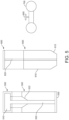
Figure 5 shows a preferred attachment device. -
Figures 1 to 4 show an embodiment of a chair 1 in accordance with the invention. The chair 1 comprises: aseat 10; a torso support 20; astructure 30; and abase 40. - The chair 1 preferably has a length, L1, in the forward direction of at least 500mm, but more preferably at least 700mm. The longer the chair 1 in the forward direction, the better it is able to resist the impact of the user on landing.
- The chair 1 is intended to be for use in take-off or landing of a user wearing personal flying equipment. It should be noted that the user's flight is not perfectly accurate, and the user may wish to land on a moving vehicle. Therefore, the chair 1 preferably has a
narrow seat 10 andnarrow structure 30 that enables the user's legs free movement, but a wide torso support 20 for receiving the user's torso on landing. The torso support 20 as described below, is advantageously configured to provide a centering reaction force to the user's torso as landing takes place. Moreover, the chair is useful for enabling comfort of the user when carrying inactive propulsion units in his/her hands. - The
seat 10 is arranged for the user to straddle. That is, the user can sit on the seat with his/her legs extending either side of theseat 10. To enable this, theseat 10 has a width, W10, of between 90mm and 180mm, preferably . The wider theseat 10, the more comfort, but the harder it is for theseat 10 to be straddled. - The
seat 10 is mounted on aseat portion 100 of thestructure 30. In preferred configurations of thestructure 30, theseat portion 100 may extend below theseat 10. In which case, theseat portion 100 has a maximum width, W100, of no more than 180mm, so that the user can straddle theseat 10 and theseat portion 100. Theseat 10 is preferably cushioned. The upper surface of theseat 10 or, if provided, the cushioning of theseat 10 may be curved or shaped to have greater depth at its rearmost end. Alternatively, or in addition, theseat 10 may be sloped to have a lower front end than rear end. These measures can bias the user forwards towards thetorso support 20. This can also be particularly advantageous to prevent the user falling off the chair 1 when the chair 1 is on a vehicle that may be subject to a variety of accelerations. - The rear edge of the
seat 10 defines the rearmost end of the chair 1. - The
seat 10 defines a forward direction, which is the direction that the user faces when sitting on theseat 10, facing thetorso support 20. Perpendicular to the forward direction are the lateral and vertical directions. The width of theseat 10 is measured in the lateral direction. - The
torso support 20 is for supporting a torso of the user sat on theseat 10. Thetorso support 20 is spaced from theseat 10 by a distance selected such that a user may sit on the seat and lean forward to contact their torso, preferably their chest on thetorso support 20. That is, the chair 1 is intended for the user to face thetorso support 20 when seated. The concavity of thetorso support 20 is open on the side facing theseat 10. - The
torso support 20 extends outwardly to either side of thestructure 30 leaving a space below for receiving a respective leg of the user sat straddling theseat 10. The torso support 20 preferably extends outwardly from thestructure 30 by a distance, X20, of between 125mm and 350mm. - The
torso support 20 is elongate and concave. For example, thetorso support 20 may be said to generally define a C-shape. The torso support 20 preferably extends by a distance, L20, of between 400mm and 850mm in the lateral direction from end to end, preferably 550mm. - In some embodiments, the
torso support 20 may have an adjustable width (for example, it may comprise telescopic arms supporting cushioning). The width would be adjustable between 400mm and 850mm. - It may be a curved concave shape or made up of straight sections. The
torso support 20 is preferably cushioned. The cushioning of thetorso support 20 may be curved with thicker cushioning at its distal ends, that is, the end at greater distance from thestructure 30. This can bias the user towards the centre of thetorso support 20. - The torso support 20 preferably has a width, W20, perpendicular to the its length, which is the direction of its elongation, of between 130mm and 250mm. The width and length define the area which the user's torso may contact when sat on the
seat 10. Anarrower torso support 20 would not be comfortable for a landing user to impact against, whereas a wider torso support would be a hindrance to the carrying of equipment. - The
torso support 20 is preferably tilted away from the seat 10 (that is, such that the centre of thetorso support 20 is lower than the distal ends of the torso support 20). In preferred embodiments, the angle of thetorso support 20 may be adjustable. - The ends of the torso support 20 preferably extend at an angle from one another. Preferably, the angle between the ends of the
torso support 20 is in the range 90 degrees to 100 degrees, most preferably 95 degrees. That angle may be defined between straight sections of the torso support 20, or if curved, between tangents of the torso support 20 at its distal ends. - The
torso support 20 is mounted on atorso portion 200 of thestructure 30. Thetorso portion 200 may be anarm 200 extending to the middle of thetorso support 20. Thearm 200 may extend from theseat portion 100. The user may, on landing or take-off, wish to avoid engaging the arm with his/her legs. It is therefore preferred that the width, W200, of the torso portion/arm 200 is no more than the width of the seat, or no more than 180mm. - In preferred embodiments, the angle of the
arm 200 may be adjustable to enable the tilt angle of thetorso support 200 to be adjusted. Preferably, thetorso support 20 may be adjusted over a range of 30 degrees. - The
structure 30 extends from abase 40. In preferred embodiments, thebase 40 is rigidly connected to thestructure 30. It may, for example, be integrally connected to thestructure 30, or a separate component to which thestructure 30 is connected. The rigid connection means that the base 40 cannot move or rotate relative to thestructure 30, such that the chair 1 is held stationary relative to anything to which thebase 40 is attached. - The
structure 30 extends in the forward direction. Thestructure 30 is preferably elongate such that its length in the forward direction is greater than its width in the lateral direction. Preferably, the length of the chair 1 is defined by the length of thestructure 30, and so thestructure 30 has a length in the forward direction of at least 500mm, but more preferably at least 700mm. - The
structure 30 is preferably formed as a framework of beam members, such as metal beam members. - The
base 40 extends laterally from thestructure 30. In this way, thebase 40 provides stability to thestructure 30, to prevent it from wobbling relative to the ground or vehicle. The base 40 preferably has a width, W40, in the lateral direction of at least 600mm, most preferably at least 820mm. The base 40 width could be much wider, but preferably the width is up to 1000mm. The base 40 may be formed of one or moreseparate members structure 30. In which case, the width of the base is defined by the widest member. -
Struts 420 between the base 40 and a portion of thestructure 30 spaced from the base 40 may, optionally, be provided for additional rigidity.Struts 420 are preferably provided in one or more pairs on opposing sides of thestructure 30. However, struts 420 are preferably not located between theseat 10 and thetorso support 20, where they would reduce the freedom of movement of the user's legs.Struts 420 are preferably located forwardly of thetorso support 20. - As can be seen in the preferred embodiment, the
base 40 defines a planar surface 410 (the surface of contact of the chair 1 with the ground).Base surface 410, however, need not be planar. For example, thebase surface 410 may be the upper surface of a vehicle such as a boat, and may be slightly curved. - In the discussion that follows, angles and distances relative to the
base surface 410 defined by thebase 40 are discussed. When the base surface is planar, angles are to be considered relative to the surface, and distances measured along the surface normal. When the base surface is curved or slightly curved, the angle of a line is to be considered relative to the tangent to the base surface where the line intersects the base surface, and distances measured along the relevant surface normal. - The
torso support 20 is preferably inclined (such that the plane of its concavity is tilted and the centre of thetorso support 20 is lower than the distal ends of the torso support 20) relative to thebase surface 410 by an angle in the range 50 degrees to 80 degrees, preferably 65 degrees. - Although not essential, in the specific embodiment, the
arm 200 therefore also extends relative to thebase surface 410 at an angle in the range 50 degrees to 80 degrees, preferably 65 degrees. - The lowermost part of the
torso support 20 is spaced from the base 40 by a distance, H20, of at least 930mm, preferably 971mm. Any lower, and it could in some cases obstruct the flight of the user. - The
torso support 20 has an upper surface preferably spaced from the base 40 by a distance of no more than 985mm. The upper surface of thetorso support 20 preferably defines the highest point on the chair 1. Accordingly, the user resting on thetorso support 20 can see forward of the chair 1. - The length of the
seat 10 in the forward direction, L10, is preferably at least 19cm, more preferably at least 22cm. Theseat 10 has a front edge, which is the forwardmost extent of theseat 10. - In some embodiments, it may be beneficial to limit the length of the
seat 10 to no more than 25cm in order to ensure that any propulsion units carried on the back of the user do not burn theseat 10. - The
torso support 20 defines one or more rear-facing concave contact surfaces 22 for contact with the torso of a user. The rearmost extent of thecontact surface 22 is preferably level, or substantially level, with the front edge of theseat 10. The rearmost extent of thecontact surface 22 may be spaced from the front edge of theseat 10 by a distance, S20, of no more than 100mm in the forward direction. - The
structure 30 preferably extends forwardly beyond the rearmost part of the contact surface 22 (i.e., the centre of the torso support 20). Thestructure 30 preferably extends forwardly beyond thecontact surface 22 by a distance, X30, of at least 300mm. - The chair 1 may be used by a user having personal flying equipment that comprises a
propulsion unit 700 worn by the user on each hand/forearm.Such propulsion units 700 may be heavy. Accordingly, in some embodiments, anattachment device 500 is mounted on the chair 1 and a complementary attachment device may be provided on theflight propulsion units 700. - In some embodiments, an
attachment device 500 is mounted on thetorso support 20 at either end, as shown in the figures. In other embodiments, theattachment devices 500 might be provided elsewhere on the chair 1, but preferably in a location that can be reached by a user seated on theseat 10. For example, theattachment devices 500 may be located 10cm to 40cm (preferably 15cm to 25cm, most preferably 20cm) forwardly of the ends of thetorso support 20. In this way, a user may comfortably attach thepropulsion units 700 to the chair 1 via theattachment devices 500 while seated on theseat 10. - Preferably, the
attachment device 500 enables the propulsion units to be attached to the end of thetorso support 20 in a manner that prevents their rotation. - Further embodiments of the invention may therefore include a mounted propulsion unit and chair assembly comprising a pair of propulsion units detachably attached to the attachment devices.
- Any complementary attachment devices may be used. However, in preferred embodiments, the
attachment device 500 of the chair 1 may be a channel, arranged to receive an elongate member forming part of the propulsion unit. - A preferred set of
complementary attachment devices Figure 5 . Thefirst attachment device 500 may be in the form of a slotted channel. That is, thefirst attachment device 500 may comprise achannel 510 having aslot 520. The end of thechannel 510 orslot 520 may be blocked by astop 530. Theattachment device 500 may be mounted to the ends of thetorso support 20 such that the slot is accessible by the user, for example, facing laterally outwardly with respect to the chair 1. - The
second attachment device 600 may be an elongate member with a T-shaped cross-section. That is, thesecond attachment device 600 may comprise ablade 610 extending from a distal side of arib 620, where the proximal side of therib 620 may be mounted to apropulsion unit 700 as shown. - In use, the propulsion unit may be attached to the
torso support 20 by inserting theblade 610 into thechannel 510, with therib 620 extending through theslot 520. - Preferably, the
blade 610 may have atapered end 612 for assisting the insertion of theblade 610 into thechannel 510. - Preferably, the
slot 520 may have anangled opening 522 for assisting the insertion of therib 620 into theslot 520. - Whereas, the
attachment devices second attachment device 600 is mounted to apropulsion unit 700 and the first attachment device is mounted to the chair 1, embodiments are envisaged in which thefirst attachment device 500 is mounted to apropulsion unit 700 and the second attachment device is mounted to the chair 1. - The chair 1 may comprise a fuel storage vessel, such as a tank or bladder (not shown), which may be used for refuelling the personal flying equipment while the user is seated on the
seat 10. - The chair 1 described above may be secured to the ground or a vehicle or may form part of a vehicle, and by used for the take-off or landing of a user of personal flying equipment.
- Taking as an example a user flying with propulsion units on each hand and on the rear of his/her torso, the user may approach the chair 1 from the rearmost end, facing the
contact surface 22. As the user approaches the chair 1, the user may extend his/her legs either side of theseat 10 andseat portion 100. Depending on the height and angle of the user's approach, his/her legs may straddle the arm/torso portion 200 to which thetorso support 20 is mounted. The user will then reduce height until seated on theseat 10. If the user is further forward than desired, contact can be made with thecontact surface 22, preventing the user from overshooting theseat 10 any further. If the user is not adequately centred, contact with thecontact surface 22 can provide a reaction force preventing the user from unintentionally moving away fromseat 10 in the lateral direction. The reaction force can further act to centre the user. - The chair 1 may be advantageously employed on a vehicle. The chair 1 may be mounted on a surface of the vehicle that is accessible by the user in-flight. That is, the chair 1 may be mounted on an external surface of the vehicle. Alternatively, the surface may be an internal surface that is accessible by the user in-flight.
- The chair 1 can be used for landing on a vehicle that is moving. For example, the vehicle may be a surface of an automobile. The chair 1 is of particular utility when used on a boat (for example a "rib" - rigid-hulled inflatable boat). The user may have difficulty in landing on a boat that is under the influence of waves, causing the desired landing surface to pitch and roll and vary in height. The use of the chair 1 can enable the user to more safely land on such a vehicle.
- Further embodiments of the invention may therefore include a vehicle assembly comprising a vehicle and the chair 1, wherein the
base 40 is a surface of the vehicle or thebase 40 is attached to a surface of a the vehicle. Preferably, thebase 40 is an external surface of the vehicle. The vehicle may be: a boat; a raft; an automobile; a submarine; or an aircraft.
Claims (16)
- A vehicle assembly comprising a chair (1) and a vehicle, wherein the vehicle is: a boat; a raft; an automobile; a submarine; or an aircraft, wherein the chair (1) is for use in take-off or landing of a user wearing personal flying equipment and is mounted on a surface of the vehicle such that it is accessible by the user in-flight, the chair (1) comprising:a seat (10) for the user to straddle such that the user faces in a forward direction;a torso support (20) for supporting a torso of the user sitting on the seat (10), the torso support (20) being concave and thereby defining an opening facing the seat (10);a structure (30) to which the seat (10) and torso support (20) are mounted; anda base member (40) rigidly connected to the structure (30) and extending outwardly therefrom,wherein the torso support (20) extends outwardly to either side of the structure (30) leaving a space below for receiving a leg of the user sat on the seat (10).
- The vehicle assembly of claim 1, wherein the torso support (20) is spaced from the base member (40) by a distance (H20) of at least 930mm.
- The vehicle assembly of claim 1 or claim 2, wherein the seat (10) has a width (W10) of no more than 180mm.
- The vehicle assembly of any preceding claim, wherein the torso support (20) is tilted away from the seat (10).
- The vehicle assembly of any preceding claim, wherein the torso support (20) extends laterally outwardly from either side of the structure (30) by a distance (X20) between 125mm and 350mm and/or the torso support (20) extends from end to end by a distance (L20) of between 400mm and 850mm in the lateral direction.
- The vehicle assembly of any preceding claim, wherein the torso support (20) has a width (W20) of between 130mm and 250mm.
- The vehicle assembly of any preceding claim, wherein the ends of the torso support (20) are angled from one another by an angle in the range 90 degrees to 100 degrees and/or the torso support (20) is cushioned with thicker cushioning at its distal ends.
- The vehicle assembly of any preceding claim, wherein the structure (30) extends forward direction beyond the torso support (20), preferably by a distance of at least 300mm and/or the chair (1) has a length in the forward direction of at least 500mm.
- The vehicle assembly of any preceding claim, wherein the torso support (20) is adjustable such that the length of the torso support in the lateral direction is adjustable and/or the angle of the torso support (20) is adjustable.
- The vehicle assembly of any preceding claim, wherein the base (40) extends laterally from the structure (30), preferably wherein the base (40) has a width (W40) in the lateral direction of at least 600mm.
- The vehicle assembly of any preceding claim, wherein the base (40) is supported relative to the structure (30) by at least a pair of struts (420), wherein the struts (420) are preferably located forwardly of the torso support (20).
- The vehicle assembly of any preceding claim, wherein the chair (10) comprises a fuel storage vessel.
- The vehicle assembly of any preceding claim, wherein the torso support (20) is inclined relative to the base (40) by an angle in the range 50 degrees to 80 degrees and/or the torso support (20) has an upper surface spaced from the base (40) by a distance of no more than 985mm.
- The vehicle assembly of any preceding claim, wherein: the torso support (20) comprises a contact surface (22) for contacting a torso of the user sitting on the seat (10); and the rearmost extent of the contact surface (22) is spaced from the front edge of the seat (10) by a distance of no more than 100mm in the forward direction.
- The vehicle assembly of any of claims 1 to 14, wherein an attachment device (500) is provided on each end of the torso support (20).
- A kit of parts comprising:the vehicle assembly of claim 15; anda pair of mounted propulsion units, whereinthe propulsion units (700) each comprise an attachment device complementary to the attachment devices (500) at either end of the torso support (20) for engagement therewith such that the propulsion units (700) are mountable on opposite ends of the torso support (20), preferably wherein the attachment devices (500) prevent rotation of the propulsion units (700) relative to the chair (1) when engaged.
Applications Claiming Priority (1)
| Application Number | Priority Date | Filing Date | Title |
|---|---|---|---|
| GB2105068.7A GB2608785B (en) | 2021-04-09 | 2021-04-09 | Chair for landing and take-off |
Publications (3)
| Publication Number | Publication Date |
|---|---|
| EP4071043A1 EP4071043A1 (en) | 2022-10-12 |
| EP4071043B1 true EP4071043B1 (en) | 2025-06-18 |
| EP4071043C0 EP4071043C0 (en) | 2025-06-18 |
Family
ID=75949446
Family Applications (1)
| Application Number | Title | Priority Date | Filing Date |
|---|---|---|---|
| EP22167306.4A Active EP4071043B1 (en) | 2021-04-09 | 2022-04-08 | Vehicle assembly comprising a chair for landing and take-off |
Country Status (3)
| Country | Link |
|---|---|
| US (1) | US12162391B2 (en) |
| EP (1) | EP4071043B1 (en) |
| GB (1) | GB2608785B (en) |
Family Cites Families (11)
| Publication number | Priority date | Publication date | Assignee | Title |
|---|---|---|---|---|
| US1107579A (en) * | 1913-06-16 | 1914-08-18 | Frank Brady | Railway-velocipede. |
| FR2551421B1 (en) * | 1983-08-31 | 1985-12-13 | Intertechnique Sa | PROTECTION AGAINST ACCELERATIONS |
| US5121744A (en) * | 1989-07-25 | 1992-06-16 | Njemanze Philip C | Physiological G-suit modulator |
| US5058506A (en) * | 1990-05-23 | 1991-10-22 | The United States Of Amaerica As Represented By The Administrator, National Aeronautics And Space Administration | Bidirectional drive and brake mechanism |
| US5477850A (en) * | 1992-10-06 | 1995-12-26 | Rockwell International Corp. | Integrated buoyancy suit crew protection system with +/-GZ protection |
| FR2983832B1 (en) * | 2011-12-07 | 2014-11-28 | Airbus Operations Sas | HEADREST FOR AIRCRAFT DRIVER SEAT AND SEAT COMPRISING SUCH A HEADREST |
| GB2559971B (en) | 2017-02-22 | 2019-03-13 | Gravity Ind Ltd | A wearable flight system with propulsion assemblies worn on a user's body |
| CN109771231A (en) * | 2019-01-21 | 2019-05-21 | 天津科技大学 | Rehabilitation walker for children with cerebral palsy |
| CH716557A2 (en) * | 2019-09-04 | 2021-03-15 | G Beyeler Patrick | Acceleration protection pants. |
| US20220081115A1 (en) * | 2020-09-16 | 2022-03-17 | Marcus Alan Sulger | Neural prosthetic flying suit |
| US12208720B2 (en) * | 2022-06-13 | 2025-01-28 | Rockwell Collins, Inc. | Vibrotactile systems and methods for aircraft seats |
-
2021
- 2021-04-09 GB GB2105068.7A patent/GB2608785B/en active Active
-
2022
- 2022-04-08 EP EP22167306.4A patent/EP4071043B1/en active Active
- 2022-04-11 US US17/717,583 patent/US12162391B2/en active Active
Also Published As
| Publication number | Publication date |
|---|---|
| US12162391B2 (en) | 2024-12-10 |
| GB202105068D0 (en) | 2021-05-26 |
| GB2608785B (en) | 2023-08-09 |
| EP4071043A1 (en) | 2022-10-12 |
| US20220324363A1 (en) | 2022-10-13 |
| GB2608785A (en) | 2023-01-18 |
| EP4071043C0 (en) | 2025-06-18 |
Similar Documents
| Publication | Publication Date | Title |
|---|---|---|
| ES2389730T3 (en) | Personal mobility vehicle with tilting seat | |
| JP2009029415A (en) | Aircraft seat rail | |
| JP5985058B2 (en) | Infant car seat with air tube | |
| CA2692423A1 (en) | Human form child car safety seat | |
| US20130267135A1 (en) | Recreational flotation device | |
| EP3272578B1 (en) | Armrest | |
| EP4071043B1 (en) | Vehicle assembly comprising a chair for landing and take-off | |
| JP2012020686A (en) | Seat structure of child-care apparatus | |
| US11369232B2 (en) | Seat system | |
| CN117104095B (en) | Juvenile automobile seat system | |
| US20130125794A1 (en) | Standing Support Apparatus | |
| KR20150064713A (en) | Cushion and chair | |
| EP2394534A1 (en) | Multifunctional children's furniture | |
| KR100538556B1 (en) | Jockey-seat for rigid inflatable boat | |
| EP2899063A1 (en) | Self-levelling seating platform | |
| CN210680473U (en) | Child safety car seat | |
| KR200379876Y1 (en) | Jockey-seat for rigid inflatable boat | |
| JP2006151299A (en) | child seat | |
| KR200489001Y1 (en) | Belly boat for fishing | |
| KR200477218Y1 (en) | Carrier for hip seat | |
| KR20190001072U (en) | Water board for fishing | |
| WO2021001375A1 (en) | Toilet support | |
| Paddan et al. | Transmission of mechanical vibration through the human body to the head | |
| KR20200002374U (en) | Fishing board | |
| EP4351746B1 (en) | Swimming aid with a tiltable back float |
Legal Events
| Date | Code | Title | Description |
|---|---|---|---|
| PUAI | Public reference made under article 153(3) epc to a published international application that has entered the european phase |
Free format text: ORIGINAL CODE: 0009012 |
|
| STAA | Information on the status of an ep patent application or granted ep patent |
Free format text: STATUS: THE APPLICATION HAS BEEN PUBLISHED |
|
| AK | Designated contracting states |
Kind code of ref document: A1 Designated state(s): AL AT BE BG CH CY CZ DE DK EE ES FI FR GB GR HR HU IE IS IT LI LT LU LV MC MK MT NL NO PL PT RO RS SE SI SK SM TR |
|
| STAA | Information on the status of an ep patent application or granted ep patent |
Free format text: STATUS: REQUEST FOR EXAMINATION WAS MADE |
|
| 17P | Request for examination filed |
Effective date: 20230404 |
|
| RBV | Designated contracting states (corrected) |
Designated state(s): AL AT BE BG CH CY CZ DE DK EE ES FI FR GB GR HR HU IE IS IT LI LT LU LV MC MK MT NL NO PL PT RO RS SE SI SK SM TR |
|
| P01 | Opt-out of the competence of the unified patent court (upc) registered |
Effective date: 20230411 |
|
| STAA | Information on the status of an ep patent application or granted ep patent |
Free format text: STATUS: EXAMINATION IS IN PROGRESS |
|
| 17Q | First examination report despatched |
Effective date: 20240131 |
|
| GRAP | Despatch of communication of intention to grant a patent |
Free format text: ORIGINAL CODE: EPIDOSNIGR1 |
|
| STAA | Information on the status of an ep patent application or granted ep patent |
Free format text: STATUS: GRANT OF PATENT IS INTENDED |
|
| RIC1 | Information provided on ipc code assigned before grant |
Ipc: B64F 1/02 20060101ALI20250117BHEP Ipc: B63B 35/50 20060101ALI20250117BHEP Ipc: B64C 39/02 20060101ALI20250117BHEP Ipc: B60N 2/24 20060101ALI20250117BHEP Ipc: A47C 15/00 20060101ALI20250117BHEP Ipc: B63B 29/04 20060101AFI20250117BHEP |
|
| INTG | Intention to grant announced |
Effective date: 20250129 |
|
| RBV | Designated contracting states (corrected) |
Designated state(s): AL AT BE BG CH CY CZ DE DK EE ES FI FR GR HR HU IE IS IT LI LT LU LV MC MK MT NL NO PL PT RO RS SE SI SK SM TR |
|
| GRAS | Grant fee paid |
Free format text: ORIGINAL CODE: EPIDOSNIGR3 |
|
| GRAA | (expected) grant |
Free format text: ORIGINAL CODE: 0009210 |
|
| STAA | Information on the status of an ep patent application or granted ep patent |
Free format text: STATUS: THE PATENT HAS BEEN GRANTED |
|
| AK | Designated contracting states |
Kind code of ref document: B1 Designated state(s): AL AT BE BG CH CY CZ DE DK EE ES FI FR GR HR HU IE IS IT LI LT LU LV MC MK MT NL NO PL PT RO RS SE SI SK SM TR |
|
| REG | Reference to a national code |
Ref country code: CH Ref legal event code: EP |
|
| REG | Reference to a national code |
Ref country code: CH Ref legal event code: EP |
|
| REG | Reference to a national code |
Ref country code: IE Ref legal event code: FG4D |
|
| U01 | Request for unitary effect filed |
Effective date: 20250625 |
|
| U07 | Unitary effect registered |
Designated state(s): AT BE BG DE DK EE FI FR IT LT LU LV MT NL PT RO SE SI Effective date: 20250701 |
|
| P04 | Withdrawal of opt-out of the competence of the unified patent court (upc) registered |
Free format text: CASE NUMBER: APP_30996/2025 Effective date: 20250627 |
|
| PG25 | Lapsed in a contracting state [announced via postgrant information from national office to epo] |
Ref country code: NO Free format text: LAPSE BECAUSE OF FAILURE TO SUBMIT A TRANSLATION OF THE DESCRIPTION OR TO PAY THE FEE WITHIN THE PRESCRIBED TIME-LIMIT Effective date: 20250918 Ref country code: GR Free format text: LAPSE BECAUSE OF FAILURE TO SUBMIT A TRANSLATION OF THE DESCRIPTION OR TO PAY THE FEE WITHIN THE PRESCRIBED TIME-LIMIT Effective date: 20250919 |
|
| PG25 | Lapsed in a contracting state [announced via postgrant information from national office to epo] |
Ref country code: HR Free format text: LAPSE BECAUSE OF FAILURE TO SUBMIT A TRANSLATION OF THE DESCRIPTION OR TO PAY THE FEE WITHIN THE PRESCRIBED TIME-LIMIT Effective date: 20250618 |
|
| PG25 | Lapsed in a contracting state [announced via postgrant information from national office to epo] |
Ref country code: RS Free format text: LAPSE BECAUSE OF FAILURE TO SUBMIT A TRANSLATION OF THE DESCRIPTION OR TO PAY THE FEE WITHIN THE PRESCRIBED TIME-LIMIT Effective date: 20250918 |
|
| PG25 | Lapsed in a contracting state [announced via postgrant information from national office to epo] |
Ref country code: IS Free format text: LAPSE BECAUSE OF FAILURE TO SUBMIT A TRANSLATION OF THE DESCRIPTION OR TO PAY THE FEE WITHIN THE PRESCRIBED TIME-LIMIT Effective date: 20251018 |
|
| PG25 | Lapsed in a contracting state [announced via postgrant information from national office to epo] |
Ref country code: SM Free format text: LAPSE BECAUSE OF FAILURE TO SUBMIT A TRANSLATION OF THE DESCRIPTION OR TO PAY THE FEE WITHIN THE PRESCRIBED TIME-LIMIT Effective date: 20250618 |
|
| PG25 | Lapsed in a contracting state [announced via postgrant information from national office to epo] |
Ref country code: CZ Free format text: LAPSE BECAUSE OF FAILURE TO SUBMIT A TRANSLATION OF THE DESCRIPTION OR TO PAY THE FEE WITHIN THE PRESCRIBED TIME-LIMIT Effective date: 20250618 |
|
| PG25 | Lapsed in a contracting state [announced via postgrant information from national office to epo] |
Ref country code: PL Free format text: LAPSE BECAUSE OF FAILURE TO SUBMIT A TRANSLATION OF THE DESCRIPTION OR TO PAY THE FEE WITHIN THE PRESCRIBED TIME-LIMIT Effective date: 20250618 |
|
| PG25 | Lapsed in a contracting state [announced via postgrant information from national office to epo] |
Ref country code: SK Free format text: LAPSE BECAUSE OF FAILURE TO SUBMIT A TRANSLATION OF THE DESCRIPTION OR TO PAY THE FEE WITHIN THE PRESCRIBED TIME-LIMIT Effective date: 20250618 |
|
| PG25 | Lapsed in a contracting state [announced via postgrant information from national office to epo] |
Ref country code: ES Free format text: LAPSE BECAUSE OF FAILURE TO SUBMIT A TRANSLATION OF THE DESCRIPTION OR TO PAY THE FEE WITHIN THE PRESCRIBED TIME-LIMIT Effective date: 20250618 |
|
| PLBE | No opposition filed within time limit |
Free format text: ORIGINAL CODE: 0009261 |
|
| STAA | Information on the status of an ep patent application or granted ep patent |
Free format text: STATUS: NO OPPOSITION FILED WITHIN TIME LIMIT |
|
| REG | Reference to a national code |
Ref country code: CH Ref legal event code: L10 Free format text: ST27 STATUS EVENT CODE: U-0-0-L10-L00 (AS PROVIDED BY THE NATIONAL OFFICE) Effective date: 20260430 |