EP4068561B1 - Charging method and power conversion device - Google Patents
Charging method and power conversion device Download PDFInfo
- Publication number
- EP4068561B1 EP4068561B1 EP21816303.8A EP21816303A EP4068561B1 EP 4068561 B1 EP4068561 B1 EP 4068561B1 EP 21816303 A EP21816303 A EP 21816303A EP 4068561 B1 EP4068561 B1 EP 4068561B1
- Authority
- EP
- European Patent Office
- Prior art keywords
- charging
- power
- battery
- conversion apparatus
- power conversion
- Prior art date
- Legal status (The legal status is an assumption and is not a legal conclusion. Google has not performed a legal analysis and makes no representation as to the accuracy of the status listed.)
- Active
Links
Images






Classifications
-
- B—PERFORMING OPERATIONS; TRANSPORTING
- B60—VEHICLES IN GENERAL
- B60L—PROPULSION OF ELECTRICALLY-PROPELLED VEHICLES; SUPPLYING ELECTRIC POWER FOR AUXILIARY EQUIPMENT OF ELECTRICALLY-PROPELLED VEHICLES; ELECTRODYNAMIC BRAKE SYSTEMS FOR VEHICLES IN GENERAL; MAGNETIC SUSPENSION OR LEVITATION FOR VEHICLES; MONITORING OPERATING VARIABLES OF ELECTRICALLY-PROPELLED VEHICLES; ELECTRIC SAFETY DEVICES FOR ELECTRICALLY-PROPELLED VEHICLES
- B60L53/00—Methods of charging batteries, specially adapted for electric vehicles; Charging stations or on-board charging equipment therefor; Exchange of energy storage elements in electric vehicles
- B60L53/20—Methods of charging batteries, specially adapted for electric vehicles; Charging stations or on-board charging equipment therefor; Exchange of energy storage elements in electric vehicles characterised by converters located in the vehicle
- B60L53/24—Using the vehicle's propulsion converter for charging
-
- H—ELECTRICITY
- H02—GENERATION; CONVERSION OR DISTRIBUTION OF ELECTRIC POWER
- H02J—ELECTRIC POWER NETWORKS; CIRCUIT ARRANGEMENTS OR SYSTEMS FOR SUPPLYING OR DISTRIBUTING ELECTRIC POWER; SYSTEMS FOR STORING ELECTRIC ENERGY
- H02J7/00—Circuit arrangements for charging or discharging batteries or for supplying loads from batteries
- H02J7/90—Regulation of charging or discharging current or voltage
- H02J7/971—Regulation of charging or discharging current or voltage the charge cycle being controlled or terminated in response to non-electric parameters
- H02J7/975—Regulation of charging or discharging current or voltage the charge cycle being controlled or terminated in response to non-electric parameters in response to temperature
-
- B—PERFORMING OPERATIONS; TRANSPORTING
- B60—VEHICLES IN GENERAL
- B60L—PROPULSION OF ELECTRICALLY-PROPELLED VEHICLES; SUPPLYING ELECTRIC POWER FOR AUXILIARY EQUIPMENT OF ELECTRICALLY-PROPELLED VEHICLES; ELECTRODYNAMIC BRAKE SYSTEMS FOR VEHICLES IN GENERAL; MAGNETIC SUSPENSION OR LEVITATION FOR VEHICLES; MONITORING OPERATING VARIABLES OF ELECTRICALLY-PROPELLED VEHICLES; ELECTRIC SAFETY DEVICES FOR ELECTRICALLY-PROPELLED VEHICLES
- B60L53/00—Methods of charging batteries, specially adapted for electric vehicles; Charging stations or on-board charging equipment therefor; Exchange of energy storage elements in electric vehicles
- B60L53/10—Methods of charging batteries, specially adapted for electric vehicles; Charging stations or on-board charging equipment therefor; Exchange of energy storage elements in electric vehicles characterised by the energy transfer between the charging station and the vehicle
- B60L53/11—DC charging controlled by the charging station, e.g. mode 4
-
- B—PERFORMING OPERATIONS; TRANSPORTING
- B60—VEHICLES IN GENERAL
- B60L—PROPULSION OF ELECTRICALLY-PROPELLED VEHICLES; SUPPLYING ELECTRIC POWER FOR AUXILIARY EQUIPMENT OF ELECTRICALLY-PROPELLED VEHICLES; ELECTRODYNAMIC BRAKE SYSTEMS FOR VEHICLES IN GENERAL; MAGNETIC SUSPENSION OR LEVITATION FOR VEHICLES; MONITORING OPERATING VARIABLES OF ELECTRICALLY-PROPELLED VEHICLES; ELECTRIC SAFETY DEVICES FOR ELECTRICALLY-PROPELLED VEHICLES
- B60L53/00—Methods of charging batteries, specially adapted for electric vehicles; Charging stations or on-board charging equipment therefor; Exchange of energy storage elements in electric vehicles
- B60L53/20—Methods of charging batteries, specially adapted for electric vehicles; Charging stations or on-board charging equipment therefor; Exchange of energy storage elements in electric vehicles characterised by converters located in the vehicle
- B60L53/22—Constructional details or arrangements of charging converters specially adapted for charging electric vehicles
-
- B—PERFORMING OPERATIONS; TRANSPORTING
- B60—VEHICLES IN GENERAL
- B60L—PROPULSION OF ELECTRICALLY-PROPELLED VEHICLES; SUPPLYING ELECTRIC POWER FOR AUXILIARY EQUIPMENT OF ELECTRICALLY-PROPELLED VEHICLES; ELECTRODYNAMIC BRAKE SYSTEMS FOR VEHICLES IN GENERAL; MAGNETIC SUSPENSION OR LEVITATION FOR VEHICLES; MONITORING OPERATING VARIABLES OF ELECTRICALLY-PROPELLED VEHICLES; ELECTRIC SAFETY DEVICES FOR ELECTRICALLY-PROPELLED VEHICLES
- B60L53/00—Methods of charging batteries, specially adapted for electric vehicles; Charging stations or on-board charging equipment therefor; Exchange of energy storage elements in electric vehicles
- B60L53/30—Constructional details of charging stations
- B60L53/31—Charging columns specially adapted for electric vehicles
-
- B—PERFORMING OPERATIONS; TRANSPORTING
- B60—VEHICLES IN GENERAL
- B60L—PROPULSION OF ELECTRICALLY-PROPELLED VEHICLES; SUPPLYING ELECTRIC POWER FOR AUXILIARY EQUIPMENT OF ELECTRICALLY-PROPELLED VEHICLES; ELECTRODYNAMIC BRAKE SYSTEMS FOR VEHICLES IN GENERAL; MAGNETIC SUSPENSION OR LEVITATION FOR VEHICLES; MONITORING OPERATING VARIABLES OF ELECTRICALLY-PROPELLED VEHICLES; ELECTRIC SAFETY DEVICES FOR ELECTRICALLY-PROPELLED VEHICLES
- B60L58/00—Methods or circuit arrangements for monitoring or controlling batteries or fuel cells, specially adapted for electric vehicles
- B60L58/10—Methods or circuit arrangements for monitoring or controlling batteries or fuel cells, specially adapted for electric vehicles for monitoring or controlling batteries
- B60L58/12—Methods or circuit arrangements for monitoring or controlling batteries or fuel cells, specially adapted for electric vehicles for monitoring or controlling batteries responding to state of charge [SoC]
-
- B—PERFORMING OPERATIONS; TRANSPORTING
- B60—VEHICLES IN GENERAL
- B60L—PROPULSION OF ELECTRICALLY-PROPELLED VEHICLES; SUPPLYING ELECTRIC POWER FOR AUXILIARY EQUIPMENT OF ELECTRICALLY-PROPELLED VEHICLES; ELECTRODYNAMIC BRAKE SYSTEMS FOR VEHICLES IN GENERAL; MAGNETIC SUSPENSION OR LEVITATION FOR VEHICLES; MONITORING OPERATING VARIABLES OF ELECTRICALLY-PROPELLED VEHICLES; ELECTRIC SAFETY DEVICES FOR ELECTRICALLY-PROPELLED VEHICLES
- B60L58/00—Methods or circuit arrangements for monitoring or controlling batteries or fuel cells, specially adapted for electric vehicles
- B60L58/10—Methods or circuit arrangements for monitoring or controlling batteries or fuel cells, specially adapted for electric vehicles for monitoring or controlling batteries
- B60L58/24—Methods or circuit arrangements for monitoring or controlling batteries or fuel cells, specially adapted for electric vehicles for monitoring or controlling batteries for controlling the temperature of batteries
- B60L58/27—Methods or circuit arrangements for monitoring or controlling batteries or fuel cells, specially adapted for electric vehicles for monitoring or controlling batteries for controlling the temperature of batteries by heating
-
- H—ELECTRICITY
- H01—ELECTRIC ELEMENTS
- H01M—PROCESSES OR MEANS, e.g. BATTERIES, FOR THE DIRECT CONVERSION OF CHEMICAL ENERGY INTO ELECTRICAL ENERGY
- H01M10/00—Secondary cells; Manufacture thereof
- H01M10/42—Methods or arrangements for servicing or maintenance of secondary cells or secondary half-cells
- H01M10/44—Methods for charging or discharging
- H01M10/443—Methods for charging or discharging in response to temperature
-
- H—ELECTRICITY
- H01—ELECTRIC ELEMENTS
- H01M—PROCESSES OR MEANS, e.g. BATTERIES, FOR THE DIRECT CONVERSION OF CHEMICAL ENERGY INTO ELECTRICAL ENERGY
- H01M10/00—Secondary cells; Manufacture thereof
- H01M10/60—Heating or cooling; Temperature control
- H01M10/61—Types of temperature control
- H01M10/615—Heating or keeping warm
-
- H—ELECTRICITY
- H02—GENERATION; CONVERSION OR DISTRIBUTION OF ELECTRIC POWER
- H02J—ELECTRIC POWER NETWORKS; CIRCUIT ARRANGEMENTS OR SYSTEMS FOR SUPPLYING OR DISTRIBUTING ELECTRIC POWER; SYSTEMS FOR STORING ELECTRIC ENERGY
- H02J7/00—Circuit arrangements for charging or discharging batteries or for supplying loads from batteries
- H02J7/40—Circuit arrangements for charging or discharging batteries or for supplying loads from batteries characterised by the exchange of charge or discharge related data
- H02J7/42—Circuit arrangements for charging or discharging batteries or for supplying loads from batteries characterised by the exchange of charge or discharge related data with electronic devices having internal batteries, e.g. mobile phones
-
- H—ELECTRICITY
- H02—GENERATION; CONVERSION OR DISTRIBUTION OF ELECTRIC POWER
- H02J—ELECTRIC POWER NETWORKS; CIRCUIT ARRANGEMENTS OR SYSTEMS FOR SUPPLYING OR DISTRIBUTING ELECTRIC POWER; SYSTEMS FOR STORING ELECTRIC ENERGY
- H02J7/00—Circuit arrangements for charging or discharging batteries or for supplying loads from batteries
- H02J7/90—Regulation of charging or discharging current or voltage
- H02J7/927—Regulation of charging or discharging current or voltage with introduction of pulses during the charging process
-
- H—ELECTRICITY
- H02—GENERATION; CONVERSION OR DISTRIBUTION OF ELECTRIC POWER
- H02J—ELECTRIC POWER NETWORKS; CIRCUIT ARRANGEMENTS OR SYSTEMS FOR SUPPLYING OR DISTRIBUTING ELECTRIC POWER; SYSTEMS FOR STORING ELECTRIC ENERGY
- H02J7/00—Circuit arrangements for charging or discharging batteries or for supplying loads from batteries
- H02J7/90—Regulation of charging or discharging current or voltage
- H02J7/971—Regulation of charging or discharging current or voltage the charge cycle being controlled or terminated in response to non-electric parameters
- H02J7/975—Regulation of charging or discharging current or voltage the charge cycle being controlled or terminated in response to non-electric parameters in response to temperature
- H02J7/977—Regulation of charging or discharging current or voltage the charge cycle being controlled or terminated in response to non-electric parameters in response to temperature of the battery
-
- B—PERFORMING OPERATIONS; TRANSPORTING
- B60—VEHICLES IN GENERAL
- B60L—PROPULSION OF ELECTRICALLY-PROPELLED VEHICLES; SUPPLYING ELECTRIC POWER FOR AUXILIARY EQUIPMENT OF ELECTRICALLY-PROPELLED VEHICLES; ELECTRODYNAMIC BRAKE SYSTEMS FOR VEHICLES IN GENERAL; MAGNETIC SUSPENSION OR LEVITATION FOR VEHICLES; MONITORING OPERATING VARIABLES OF ELECTRICALLY-PROPELLED VEHICLES; ELECTRIC SAFETY DEVICES FOR ELECTRICALLY-PROPELLED VEHICLES
- B60L2210/00—Converter types
- B60L2210/10—DC to DC converters
-
- B—PERFORMING OPERATIONS; TRANSPORTING
- B60—VEHICLES IN GENERAL
- B60L—PROPULSION OF ELECTRICALLY-PROPELLED VEHICLES; SUPPLYING ELECTRIC POWER FOR AUXILIARY EQUIPMENT OF ELECTRICALLY-PROPELLED VEHICLES; ELECTRODYNAMIC BRAKE SYSTEMS FOR VEHICLES IN GENERAL; MAGNETIC SUSPENSION OR LEVITATION FOR VEHICLES; MONITORING OPERATING VARIABLES OF ELECTRICALLY-PROPELLED VEHICLES; ELECTRIC SAFETY DEVICES FOR ELECTRICALLY-PROPELLED VEHICLES
- B60L2240/00—Control parameters of input or output; Target parameters
- B60L2240/40—Drive Train control parameters
- B60L2240/54—Drive Train control parameters related to batteries
- B60L2240/545—Temperature
-
- B—PERFORMING OPERATIONS; TRANSPORTING
- B60—VEHICLES IN GENERAL
- B60L—PROPULSION OF ELECTRICALLY-PROPELLED VEHICLES; SUPPLYING ELECTRIC POWER FOR AUXILIARY EQUIPMENT OF ELECTRICALLY-PROPELLED VEHICLES; ELECTRODYNAMIC BRAKE SYSTEMS FOR VEHICLES IN GENERAL; MAGNETIC SUSPENSION OR LEVITATION FOR VEHICLES; MONITORING OPERATING VARIABLES OF ELECTRICALLY-PROPELLED VEHICLES; ELECTRIC SAFETY DEVICES FOR ELECTRICALLY-PROPELLED VEHICLES
- B60L2240/00—Control parameters of input or output; Target parameters
- B60L2240/40—Drive Train control parameters
- B60L2240/54—Drive Train control parameters related to batteries
- B60L2240/547—Voltage
-
- B—PERFORMING OPERATIONS; TRANSPORTING
- B60—VEHICLES IN GENERAL
- B60L—PROPULSION OF ELECTRICALLY-PROPELLED VEHICLES; SUPPLYING ELECTRIC POWER FOR AUXILIARY EQUIPMENT OF ELECTRICALLY-PROPELLED VEHICLES; ELECTRODYNAMIC BRAKE SYSTEMS FOR VEHICLES IN GENERAL; MAGNETIC SUSPENSION OR LEVITATION FOR VEHICLES; MONITORING OPERATING VARIABLES OF ELECTRICALLY-PROPELLED VEHICLES; ELECTRIC SAFETY DEVICES FOR ELECTRICALLY-PROPELLED VEHICLES
- B60L2260/00—Operating Modes
- B60L2260/40—Control modes
-
- B—PERFORMING OPERATIONS; TRANSPORTING
- B60—VEHICLES IN GENERAL
- B60Y—INDEXING SCHEME RELATING TO ASPECTS CROSS-CUTTING VEHICLE TECHNOLOGY
- B60Y2200/00—Type of vehicle
- B60Y2200/90—Vehicles comprising electric prime movers
- B60Y2200/91—Electric vehicles
-
- H—ELECTRICITY
- H01—ELECTRIC ELEMENTS
- H01M—PROCESSES OR MEANS, e.g. BATTERIES, FOR THE DIRECT CONVERSION OF CHEMICAL ENERGY INTO ELECTRICAL ENERGY
- H01M2220/00—Batteries for particular applications
- H01M2220/20—Batteries in motive systems, e.g. vehicle, ship, plane
-
- H—ELECTRICITY
- H02—GENERATION; CONVERSION OR DISTRIBUTION OF ELECTRIC POWER
- H02J—ELECTRIC POWER NETWORKS; CIRCUIT ARRANGEMENTS OR SYSTEMS FOR SUPPLYING OR DISTRIBUTING ELECTRIC POWER; SYSTEMS FOR STORING ELECTRIC ENERGY
- H02J2105/00—Networks for supplying or distributing electric power characterised by their spatial reach or by the load
- H02J2105/30—Networks for supplying or distributing electric power characterised by their spatial reach or by the load the load networks being external to vehicles, i.e. exchanging power with vehicles
- H02J2105/33—Networks for supplying or distributing electric power characterised by their spatial reach or by the load the load networks being external to vehicles, i.e. exchanging power with vehicles exchanging power with road vehicles
- H02J2105/37—Networks for supplying or distributing electric power characterised by their spatial reach or by the load the load networks being external to vehicles, i.e. exchanging power with vehicles exchanging power with road vehicles exchanging power with electric vehicles [EV] or with hybrid electric vehicles [HEV]
-
- H—ELECTRICITY
- H02—GENERATION; CONVERSION OR DISTRIBUTION OF ELECTRIC POWER
- H02J—ELECTRIC POWER NETWORKS; CIRCUIT ARRANGEMENTS OR SYSTEMS FOR SUPPLYING OR DISTRIBUTING ELECTRIC POWER; SYSTEMS FOR STORING ELECTRIC ENERGY
- H02J2207/00—Details of circuit arrangements for charging or discharging batteries or supplying loads from batteries
- H02J2207/20—Charging or discharging characterised by the power electronics converter
-
- Y—GENERAL TAGGING OF NEW TECHNOLOGICAL DEVELOPMENTS; GENERAL TAGGING OF CROSS-SECTIONAL TECHNOLOGIES SPANNING OVER SEVERAL SECTIONS OF THE IPC; TECHNICAL SUBJECTS COVERED BY FORMER USPC CROSS-REFERENCE ART COLLECTIONS [XRACs] AND DIGESTS
- Y02—TECHNOLOGIES OR APPLICATIONS FOR MITIGATION OR ADAPTATION AGAINST CLIMATE CHANGE
- Y02T—CLIMATE CHANGE MITIGATION TECHNOLOGIES RELATED TO TRANSPORTATION
- Y02T10/00—Road transport of goods or passengers
- Y02T10/60—Other road transportation technologies with climate change mitigation effect
- Y02T10/70—Energy storage systems for electromobility, e.g. batteries
-
- Y—GENERAL TAGGING OF NEW TECHNOLOGICAL DEVELOPMENTS; GENERAL TAGGING OF CROSS-SECTIONAL TECHNOLOGIES SPANNING OVER SEVERAL SECTIONS OF THE IPC; TECHNICAL SUBJECTS COVERED BY FORMER USPC CROSS-REFERENCE ART COLLECTIONS [XRACs] AND DIGESTS
- Y02—TECHNOLOGIES OR APPLICATIONS FOR MITIGATION OR ADAPTATION AGAINST CLIMATE CHANGE
- Y02T—CLIMATE CHANGE MITIGATION TECHNOLOGIES RELATED TO TRANSPORTATION
- Y02T10/00—Road transport of goods or passengers
- Y02T10/60—Other road transportation technologies with climate change mitigation effect
- Y02T10/7072—Electromobility specific charging systems or methods for batteries, ultracapacitors, supercapacitors or double-layer capacitors
Definitions
- the present application relates to the field of power battery, and more specifically, relates to a charging method and a power conversion apparatus.
- a power battery technology is an important factor concerning its development. Due to the electrochemical characteristics of the power battery, in a low temperature environment, a direct current charging may have a big impact on the performance of the power battery, effecting the customer's car experience.
- WO2011/122946A2 relates to a method for charging a battery, comprising communicating with at least one electric vehicle for receiving battery data, requesting from a battery knowledge base the relationship between battery temperature and at least one of the parameters such as battery life and charge speed, calculating the best charging method based on the relationship and the received battery data from the electric vehicle, based on the calculated best charging method decide to heat the battery or not, heating or charging the battery, or performing both.
- US2019/027792A1 provide systems and control devices for charging and discharging a lithium-ion battery and relevant methods.
- a variable frequency triggering oscillation charge-discharge device constructs an oscillation loop with a lithium-ion battery using an inherent impedance characteristic of the lithium-ion battery to charge and/or discharge the lithium-ion battery in the form of an oscillation current generated by the oscillation loop, to avoid direct current (DC) charge-discharge for the lithium-ion battery or battery pack that causes polarization and lithium precipitation of the lithium.
- DC direct current
- CA2128507C relates a method and an apparatus for rapidly charging a battery.
- the preferred charging method comprises applying one or more charging pulses (C1, C2), separated by a waiting period (CW ⁇ ), with the last charging pulse, if there are more than one, being followed by a second waiting period (CW2). This is then followed by a series of discharging pulses (D1, D2, D3), which are separated by waiting periods (DW1, DW2) and followed by a last waiting period (DW3) before the occurrence the next charging pulse (C1).
- US2017/207634A1 discloses a controller of a fuel cell system performs a starting operation that switches on a first precharge circuit so as to reduce a voltage difference between a first smoothing capacitor and a second smoothing capacitor and subsequently turns on a first relay, when a start switch is turned on in a system off state that the first relay is off.
- the vehicle battery management system includes: a battery (2) connected to provide electrical power to an electric traction motor of a vehicle (1); an electric charge usable to consume more electrical power than the electrical power that can be supplied by an external power supply (6); and a control apparatus (5) operable to control the operation of the system such that, during the cold condition, when the vehicle is electrically coupled to the external power supply (6), the battery (2) is alternately charged and discharged, the battery (2) being charged by supplying electric power to the battery (2) from the external power supply (6) and the battery (2) being discharged by supplying electric power to the electric charge (4) from the battery (2) to make the electric charge (4) consume the electrical power.
- thermal management system In order to solve the problem of charging electric vehicles in low temperature environment, most of the power batteries of electric vehicles in the market are equipped with a thermal management system.
- the thermal management system can convert a part of electric energy into heat energy, thereby heating the whole battery pack.
- This preheating method can make the power battery at a more suitable temperature, based on this, the power battery is charged.
- this preheating method is to charge the power battery after the temperature of the power battery is increased.
- the space for increasing the heating efficiency of the power battery is limited, and the heating time cannot be saved, which makes it impossible to fundamentally solve the problem that the charging time of electric vehicles is too long in a low-temperature environment.
- the configuration of thermal management system in the power battery will not only increase the weight of the power battery, but also increase the cost of the power battery.
- the present application provides a new charging system and a charging method thereof, which can solve the above charging problem of the electric vehicle in the low-temperature environment without using a thermal management system to preheat the power battery.
- FIG. 1 illustrates a charging system to which embodiments of the present application apply.
- the charging system can be applied to various types of electrical devices including but not limited to electric vehicles and the like.
- the charging system 10 may include: a power conversion apparatus 110, a charging pile 120 and an electric vehicle 130.
- the charging pile 120 is a device for supplementing electric energy for the electric vehicle 130 (including a pure electric vehicle and a pluggable hybrid electric vehicle), which can be divided into two categories: an alternative current charging pile and a direct current charging pile.
- the direct current charging pile directly charges the power battery of the electric vehicle by outputting adjustable direct current power, and the output voltage and current adjustment range are large, which can meet the demand of rapid charging.
- the alternative current charging pile only provides power output, but has no charging function.
- the subsequent rectification and direct current - direct current (DC-DC) conversion are completed by an on-board charger, and the charging pile serves as a power controller.
- the charging method of the present application is explained by using the charging pile as the direct current charging pile as an example, and the relevant charging method of the on-board charger can refer to the relevant description of the embodiments below.
- electric vehicle 130 may include battery system. At least one battery pack may be provided in the battery system to provide energy and power for the electric vehicle, and the at least one battery pack may be collectively referred to as a power battery.
- the power battery may be a lithium-ion battery, a lithium-metal battery, a lead-acid battery, a nickel-cadmium battery, a nickel-hydrogen battery, a lithium-sulfur battery, a lithium-air battery, a sodium-ion battery, and the like, which are not specifically limited in the embodiment of the present application.
- the power battery in the embodiment of the present application may be a cell/battery cell, may also be a battery module or a battery pack, which is not specifically limited in the embodiment of the present application.
- the battery system is generally provided with a battery management system (BMS) 122 for monitoring the state of the power battery.
- BMS battery management system
- the BMS may be integrated with the power battery in the same device/apparatus, or the BMS may be disposed outside the power battery as an independent device/apparatus.
- the charging system 10 is additionally provided with a power conversion apparatus 110.
- the power conversion apparatus 110 may be electrically connected to the charging pile 120, and electrically connected to the battery system of the electric vehicle 130.
- the power conversion apparatus 110 can be used as a power transfer apparatus between the charging pile 120 and the battery system of the electric vehicle 130.
- the power conversion apparatus 110 can be used as a power transfer apparatus between the charging pile 120 and the power battery of the electric vehicle 130.
- the power conversion apparatus 110 is configured to receive first electric energy of a first power type transmitted by the charging pile 120, and convert it into second electric energy of a second power type different from the first power type, and then send the second electric energy to the power battery of the electric vehicle 130, to realize power conversion.
- the first electric energy of the first power type transmitted by the charging pile 120 is the direct current
- the direct current can be a constant voltage direct current or a constant current direct current
- the power conversion apparatus 110 converts the direct current into a second electric energy of other power types such as voltage change, current change, power state change, current, voltage, power timing change, etc., and then send the second electric energy to the power battery of the electric vehicle 130, to charge the power battery.
- the power conversion apparatus 110 is used as an independent power transfer apparatus and is set outside the charging pile 120 and the electric vehicle 130.
- the charging pile 120 is provided with a first charging gun head
- the power conversion apparatus 110 is provided with a first charging socket corresponding to the first charging gun head to receive the electric energy transmitted from the charging pile 120.
- the power conversion apparatus 110 is also provided with a second charging gun head, the second charging gun head is configured to be electrically connected with a second charging socket on the electric vehicle 110, to realize power conversion apparatus 110 to transmit electric energy to the electric vehicle.
- the power conversion apparatus 110 can also be integrated in the charging pile 120 or integrated in the electric vehicle 130. Or part of the functional modules in the power conversion apparatus 110 is provided in the charging pile 120, and another part of the functional modules is provided in the electric vehicle 130.
- the embodiment of the present application also does not specifically limit the specific setting manner of the power conversion apparatus 110, and it is intended to be electrically connected between the charging pile 120 and the battery system of the electric vehicle 130 to achieve the function of power conversion.
- the battery system may be the battery system in the electric vehicle 130 in the above charging system 10, and the battery system includes a power battery 131 and a battery management system (BMS) 132.
- BMS battery management system
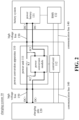
- the power conversion apparatus 110 includes a power unit 111 and a control unit 112.
- the power unit 111 is configured to convert the power type output by the charging pile 120 into the power type required by the power battery 131.
- the power unit 111 includes a power conversion module, the power conversion module may include a pulse generating circuit used for generating a pulse current to provide the power battery 131.
- the power conversion module may also include other functional circuits such as a drive circuit, a communication circuit, a processing circuit and the like.
- the control unit 112 may include a controller and/or a processor, which are responsible for detecting the states of the charging pile 120 and the BMS 130 during the charging process, and controlling operations of other electrical components in the power unit 111 and the power conversion apparatus.
- the power unit 111 is separately connected with the charging pile 120 and the power battery 131 via a high voltage line 150, to convert the charging power output by the charging pile 120 through the high-voltage line 150 and output converted charging power to the power battery 131 to charge the power battery 131.
- the power conversion module in the power unit 111 is separately connected with a positive electrode output port (for example: direct current positive electrode output port DC+) and a negative electrode output port (for example: direct current negative electrode output port DC-) of the charging pile through the high voltage line 150, and connected to the positive electrode output port and the negative electrode output port of the power battery.
- the power unit 111 includes, as shown in FIG. 2 , a first relay K1, a second relay K2 and a third relay K3.
- the power conversion module is respectively connected to the charging pile 120 and the power battery 131 through the second relay K2 and the third relay K3. It is possible to control whether the power conversion module is connected to the charging pile 120 and the power battery 131 by controlling the second relay K2 and the third relay K3.
- the charging pile 120 and the power battery 131 are connected with each other through the first relay K1.
- the first relay K1 is closed, the charging power output by the charging pile 120 may directly be transmitted to the power battery 131 at this time, without being converted by the power conversion module.
- first relay K1, the second relay K2 and the third relay K3 in FIG. 2 are only schematic illustrative circuit structure, which can also be realized by replacement with other functional circuits. It is designed to realize the selective connection of the power conversion module between the charging pile 120 and the power battery 131.
- the first relay K1, the second relay K2 and the third relay K3 can be controlled by the control unit 112 in the power conversion apparatus 110.
- Directly controlling the operating state of the power conversion module through software can also realize the selective connection of the power conversion module between the charging pile 120 and the power battery 131, so that the power conversion apparatus 110 is in different charging modes.
- the charging pile 120 and the BMS 132 can also be separately connected to the power conversion apparatus 110 through a communication line 140, to realize an information interaction among the charging pile 120, the BMS 132 and the power conversion apparatus 110.
- the control unit 112 is separately connected to the charging pile 120 and the BMS 130 through the communication line 140, to realize information interaction with the charging post 120 and the BMS 130 respectively.
- the control unit 112 is also connected to the power unit 111 through the communication line 140, to realize information interaction with the power unit 111, and control the power unit 111 to conduct a power conversion.
- the communication line 140 includes but not limited to a control area network (CAN) communication bus or a daisy chain communication bus.
- CAN control area network
- the charging pile 120, the BMS 132, the power conversion apparatus 110 may communicate based on the related protocol of physical layer, data link layer and application layer of CAN communication protocol or daisy chain communication protocol.
- the power conversion apparatus 110 can receive and send notices and a message between the charging pile 120 and the BMS 132, in case of being compatible with present communication protocol between the charging pile 120 and BMS 132, the power conversion between the charging pile 120 and the BMS 132 is realized.
- FIG. 3 a shows a schematic flow diagram of a charging method 200 which, despite any references thereto with the word embodiment, is not part of the present invention, but which is useful to illustrate characteristics related thereto.
- the method 200 is applied to a power conversion apparatus.
- the power conversion apparatus can be a power conversion apparatus 110 in above FIG. 1 and FIG. 2 .
- the charging method 200 may include the following steps.
- Step 210 a power conversion apparatus acquires a state parameter of a power battery, where the state parameter includes a battery temperature.
- the power battery may be the power battery 131 shown in FIG. 2 above.
- the power battery generally includes at least one battery pack, every battery pack may include multiple battery cells connected in series or parallel.
- the battery temperature of the power battery includes but not limited to the temperature of every battery cell.
- the battery cell may be also referred to as a battery core.
- the BMS of the power battery is configured to detect the state parameter of the power battery, such as the battery temperature of the power battery, and transmit it to the power conversion apparatus, such that the power conversion apparatus acquires the state parameter of the power battery.
- a communication may be realized between the BMS and the power conversion apparatus based on CAN.
- the battery temperature of the power battery may be the minimum power storage battery temperature in the battery state message (BSM) sent by the BMS.
- BSM battery state message
- the BMS can also communicate with the power conversion apparatus based on other communication protocols, the embodiment of the present application do not specifically limit this.
- the power conversion apparatus may also acquire the state parameter of the power battery by other manners.
- other control unit in an electric vehicle besides BMS is configured to acquire the state parameter of the power battery, then the state parameter of the power battery is transmitted to the power conversion apparatus by the control unit; or, as another example, BMS or other control unit in the electric vehicle stores the state parameter of the power battery into a storage unit or a cloud, the power conversion apparatus acquires the battery state parameter from the storage unit or the cloud
- the embodiment of the present application do not specifically limit specific manner in which the power conversion apparatus acquires the state parameter of the power battery.
- Step 220 the power conversion apparatus sets a charging mode to a pulse charging mode when the battery temperature is lower than a first preset threshold.
- the pulse charging mode is a charging mode using a pulsed voltage or a pulsed current, in other words, in the pulse charging mode, the power conversion apparatus may generate the pulsed voltage or the pulsed current.
- each functional module in the power conversion apparatus may be controlled by controlling software programs and/or hardware circuits in the power conversion apparatus, such that the power conversion apparatus can convert the direct current electricity received from the charging pile to a pulse current electricity.
- the second relay K2 and the third relay K3 can be controlled to be closed, so that the power conversion module is connected between the charging pile 120 and power battery 131, such that the power conversion apparatus 110 can convert the direct current electricity received from charging pile 120 to a pulse current electricity.
- the above first preset threshold may be a preset arbitrary value, which intends to indicate that the power battery is in a low-temperature state.
- the first preset threshold can be correspondingly set according to the geographical position of the power battery, the battery type, attribute parameters, the system architecture of the power battery and other related factors, and the embodiments of the present application do not limit the specific value thereof.
- the first preset threshold may be any value below 10 degree centigrade (°C), for example, the first preset threshold may be 5°C.
- Step 230 the power conversion apparatus converts the charging power of the charging pile and then charges the power battery in the pulse charging mode.
- the power conversion apparatus is configured to realize a conversion of the charging power of the charging pile, and output the converted charging power to the power battery, so as to charge the power battery.
- the charging power converted by the power conversion apparatus is a pulsed charging voltage or a pulsed charging current.
- the power conversion apparatus acquires a battery temperature of the power battery, when the battery temperature is low, for example, when it is lower than a first preset threshold, the charging mode of the power conversion apparatus is set to the pulse charging mode.
- the power conversion apparatus converts the charging power output by the charging pile and outputs pulsed electricity to charge the power battery, so as to prevent performance of the power battery from being affected by directly charging the power battery at a low temperature, thereby ensuring the performance of the power battery.
- the power battery does not need to be configured with a thermal management system, and on the basis of reducing the overall cost of the power battery, the heating time of the power battery at a low temperature is saved, and the charging efficiency is improved.
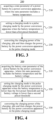
- FIG. 4 shows a schematic flow diagram of another charging method 300 which, despite any references thereto with the word embodiment, is not part of the present invention, but which is useful to illustrate characteristics related thereto.
- the charging method 300 may include the following steps.
- Step 310 the power conversion apparatus acquires the battery state parameter of the power battery, where the state parameter includes the battery temperature and the battery voltage.
- Step 320 the power conversion apparatus sets the charging mode to the pulse charging mode when the battery temperature is lower than the first preset threshold and the battery voltage is lower than a second preset threshold.
- Step 330 the power conversion apparatus converts the charging power of the charging pile and then charges the power battery in the pulse charging mode.
- step 310 the power conversion apparatus acquires the battery voltage of the power battery in addition to the battery temperature of the power battery.
- the power conversion apparatus acquires the battery voltage of the power battery in addition to the battery temperature of the power battery, and judges the charging mode of the power battery by synthesizing various information, which improves the charging safety performance.
- the battery voltage of the power battery includes, but is not limited to, the voltage of each battery cell in the power battery and/or the total voltage of the entire power battery.
- the BMS of the power battery is configured to detect the battery voltage of the power battery, and transmit it to the power conversion apparatus, such that the power conversion apparatus acquires the battery voltage of the power battery.
- the battery voltage of the power battery may be transmitted to the power conversion apparatus via a battery charge state (BCS) message.
- BCS battery charge state
- the power conversion apparatus sets the charging mode as the pulse charging mode.
- the second preset threshold value may be a preset arbitrary value, which intends to indicate that the power battery is in a low-voltage state to be charged.
- the second preset threshold may be set to different values according to different power battery types and structures, which is not specifically limited in the embodiment of the present application.
- step 330 in the embodiment of the present application can refer to the related description of above step 230, it will not be repeated here.
- the power conversion apparatus in addition to acquiring the battery temperature of the power battery, the power conversion apparatus also acquires the battery voltage of the power battery. Combining information on the two aspects of battery temperature and battery voltage, the charging mode is set to the pulse charging mode, and it is further judged whether the power battery is in a low-voltage state to be charged at low temperature, which can further ensure the charging safety.
- the power conversion apparatus in addition to acquiring the battery temperature of the power battery and the battery voltage, can also acquire other state parameters of the power battery, and further sets its charging mode as the pulse charging mode according to other state parameters.
- other state parameters of the power battery include but not limited to related parameters such as: battery current, battery state of charge (SOC), and estimated remaining charging time, etc.
- SOC battery state of charge
- estimated remaining charging time etc.
- the power conversion apparatus sets its charging mode to the pulse charging mode, and converts the output power of the charging pile and outputs it to the power battery. Further, on the basis of that, the power conversion apparatus may also switch its charging mode into the direct current charging mode, and directly transmit the charging power of the charging pile to the power battery.
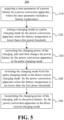
- FIG. 5 shows a schematic flow diagram of another charging method 200 which, despite any references thereto with the word embodiment, is not part of the present invention, but which is useful to illustrate characteristics related thereto.
- the above charging method 200 may also include the following steps.
- Step 240 the power conversion apparatus switches the charging mode from the pulse charging mode to the direct current charging mode when the battery temperature is not lower than the first preset threshold.
- Step 250 the power conversion apparatus transmits the charging power of the charging pile to the power battery in the direct current charging mode.
- the above steps 240 and 250 are conducted after step 230 in FIG. 3 .
- the charging mode of the power conversion apparatus can be switched from pulse charging mode to direct current charging mode.
- the power conversion apparatus directly transmits the charging power output by the charging pile to the power battery, to charge the power battery, where, the direct current charging mode is a charging mode which outputs a constant voltage or a constant current, in other words, the charging power of the charging pile is a constant voltage or a constant current.
- the software programs and/or hardware circuits in the power conversion apparatus can be controlled to control the operating status of each functional module in the power conversion apparatus, so that the power conversion apparatus can directly output the direct current received from the charging pile to the power battery.
- the power conversion apparatus 110 by controlling the second relay K2 and the third relay K3 to be disconnected, and controlling the first relay K1 to be closed, to achieve a direct electrical connection between the charging pile 120 and the power battery 131, so that the power conversion apparatus 110 can directly output the direct current received from the charging pile 120 to the power battery 131.
- the power conversion module can also be controlled to stop running to further enhance the reliability and flexibility in the charging mode switching process.
- the power conversion apparatus can continuously acquire the battery temperature of the power battery, when the battery temperature is higher, for example, when the battery temperature is not lower than the first preset threshold, the power conversion apparatus switches its charging mode from pulse charging mode to direct current charging mode. Further, the power conversion apparatus directly transmits the charging power of the charging pile to the power battery to charge the power battery, and the charging efficiency of the power battery in the non-low temperature is improved. Therefore, through the technical solution of the embodiment of the present application, the power conversion apparatus can flexibly set its charging mode, and the charging efficiency of the whole charging process is improved on the premise of ensuring the performance of the power battery.
- FIG. 6 shows a schematic flow diagram of another charging method 300 which, despite any references thereto with the word embodiment, is not part of the present invention, but which is useful to illustrate characteristics related thereto.
- the above charging method 300 may also include the following steps.
- Step 340 the power conversion apparatus switches the charging mode from the pulse charging mode to the direct current charging mode when the battery temperature is not lower than the first preset threshold, or the battery voltage is not lower than the second preset threshold.
- Step 350 the power conversion apparatus transmits the charging power of the charging pile to the power battery in the direct current charging mode.
- the steps 340 and 350 are conducted after the above step 330 in FIG. 4 .
- the battery temperature acquired by the power conversion apparatus in the current state is not lower than the first preset threshold, it means that the current power battery is in a non-low temperature state, or if the battery voltage acquired by the power conversion apparatus in the current state is not lower than the second preset threshold, it means that the current power battery is not in the state to be charged, or is in the state to be charged with a higher voltage.
- the charging mode of the power conversion apparatus can be switched from pulse charging mode to direct current charging mode, and in the direct current charging mode, the charging pile charges the power battery through the power conversion apparatus.
- the power conversion apparatus in case that the power conversion apparatus is in the pulse charging mode, if the detected battery temperature is not lower than the first preset threshold, or the battery voltage is not lower than the second preset threshold, the power conversion apparatus need to switch its charging mode from the pulse charging mode to the direct current charging mode.
- the power conversion apparatus in an initial state of the power conversion apparatus, namely, when the charging mode of the power conversion apparatus is not set, if the battery temperature of the power battery acquired by the power conversion apparatus is not lower than the first preset threshold or the battery voltage is not lower than the second preset threshold at this time, the power conversion apparatus can directly set its charging mode to the direct current charging mode.
- step 220 and step 320 in some cases, if the power conversion apparatus is in initial state, when the battery temperature is lower than the first preset threshold, or the battery temperature is lower than the first preset threshold and the battery voltage is lower than the second preset threshold, the power conversion apparatus directly set its charging mode to the pulse charging mode. In other cases, if the power conversion apparatus is in a direct current charging mode, when the battery temperature is lower than the first preset threshold, or the battery temperature is lower than the first preset threshold and the battery voltage is lower than the second preset threshold, the power conversion apparatus may switch its charging mode from the direct current charging mode into the pulse charging mode.
- the power conversion apparatus can adjust its charging mode at any time according to the state parameter of the power battery during the entire charging process. Specifically, it is possible to realize pulse charging of the power battery at a low temperature, and direct current charging of the power battery at a non-low temperature, flexibly adapting to different charging environments, and improving charging efficiency.
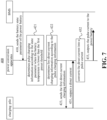
- FIG.7 shows a schematic flow diagram of a charging method which, despite any references thereto with the word embodiment, is not part of the present invention, but which is useful to illustrate characteristics related thereto.
- the charging method 400 includes the following steps.
- Step 410 the battery management system (BMS) sends the battery state parameter of the power battery to the power conversion apparatus, where the state parameter includes battery temperature and battery state of charge.
- BMS battery management system
- the battery management system in addition to sending the battery temperature of the power battery to the power conversion apparatus, the battery management system (BMS) also sends battery state of charge (SOC) of the power battery.
- SOC battery state of charge
- the SOC can accurately reflect the remaining electric quantity in the power battery.
- the battery management system (BMS) can also send other parameters such as battery voltage of the power battery to the power conversion apparatus.
- the battery temperature of the power battery may be sent to the power conversion apparatus via power storage battery state information message (BSM), and parameters such as battery state of charge (SOC), battery voltage of the power battery may be sent to the power conversion apparatus via battery charge state message (BCS).
- BSM battery state information message
- SOC battery state of charge
- BCS battery charge state message
- Step 421 the power conversion apparatus determines pulse charging information according to the state parameter when the battery temperature is lower than the first preset threshold.
- the pulse charging information jointly determined according to the battery temperature and the SOC by the power conversion apparatus can be adapted to both the current temperature of the power battery and the SOC of the power battery.
- the power conversion apparatus determines the pulse charging information according to the battery temperature and SOC jointly.
- determining pulse charging information according to the battery temperature and the SOC can be achieved in a variety of ways.
- the mapping relationship of the battery temperature, the SOC and the pulse charging information may be determined, and the specific pulse charging information is determined according to the mapping relationship.
- the mapping relationship can be a mapping relationship acquired by fitting a large number of experimental data, and the mapping relationship has a high reliability and accuracy.
- the mapping relationship may be specifically a mapping table, a mapping diagram or a mapping formula, and the like.
- a special neural network model can be trained according to a large number of experimental data, and the neural network model can output pulse charging information according to the input battery temperature and SOC.
- the above pulse charging information includes but not limited to: effective value of pulse current, peak value of pulse current, pulse voltage, pulse direction, pulse frequency, pulse interval and pulse duration.
- Step 422 the power conversion apparatus determines first direct current charging information according to the pulse charging information.
- the power conversion apparatus can calculate the first direct current charging information corresponding to the pulse charging information according to the pulse charging information.
- the first direct current charging information may include at least one of the following information: charging demand voltage, charging demand current and charging demand mode.
- the charging demand mod can be a constant current mode or a constant voltage mode.
- Step 423 the power conversion apparatus sends the first direct current charging information to the charging pile.
- the first direct current charging information can be sent to the charging pile as the charging demand of BMS.
- the power conversion apparatus may send the first direct current charging information via a battery charging demand (BCL) message.
- BCL battery charging demand
- the first direct current charging information can also be sent to the charging pile via other messages, the embodiment of present application does not specifically limit the message type and the sending method.
- steps 421 to 423 may be the implementation manners included in step 220 in FIG. 3 above.
- Step 431 the charging pile outputs a direct current to the power conversion apparatus.
- Step 432 the power conversion apparatus converts the direct current into a pulse current.
- Step 433 the power conversion apparatus outputs the pulse current to the power battery.
- the above steps 431 to 433 may be the implementation manners included in step 230 of above FIG. 3 .
- the charging pile outputs a direct current to power conversion apparatus
- the power conversion apparatus is configured to convert the direct current into a pulse current, and output the pulse current to the power battery, so as to realize a pulse charging to the power battery.
- the pulse current is a pulse current generated by converting a direct current based on the above pulse charging information.
- the direct current is a direct current output by the charging pile to the power conversion apparatus based on the first direct current charging information above.
- the power conversion apparatus may determine the corresponding pulse charging information according to the state parameter of the power battery acquired by it. And the power conversion apparatus converts different pulse currents according to the pulse charging information to adapt to the different charging requirements of the power battery in different situations, and has high flexibility and adaptability.
- the charging method 400 described in FIG. 7 above may be a schematic flowchart of a method for setting the charging mode of the power conversion apparatus to the pulse charging mode in the initial stage, that is, when the charging mode is not set.
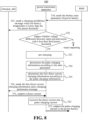
- FIG. 8 shows a schematic flow diagram of a charging method 500 according to an embodiment of the present invention.
- the charging method 500 includes the following steps.
- Step 510 the battery management system (BMS) sends the battery state parameter of the power battery to the power conversion apparatus, where the state parameter includes battery temperature and battery state of charge.
- BMS battery management system
- the battery management system can also send other parameters such as battery voltage of the power battery to the power conversion apparatus.
- step 510 may refer to the related description for step 410 in above FIG. 7 , it will not be repeated here.
- Step 521 the power conversion apparatus sends a charging prohibition message to the charging pile when the battery temperature is lower than the first preset threshold.
- the charging prohibition message is configured to indicate the charging pile to stop outputting the direct current to the power conversion apparatus.
- the power conversion apparatus when the battery temperature is lower than the first preset threshold and the battery voltage is lower than a second preset threshold, the power conversion apparatus sends a charging prohibition message to the charging pile.
- the power conversion apparatus sends a battery charging lab (BCL) message to the charging pile.
- BCL battery charging lab
- the demand voltage is a total voltage of the power battery
- the demand current is set as the minimum current of the charging pile that can be output, for example, a current value of 10A.
- the power conversion apparatus before sending a charging prohibition message to charging pile, the power conversion apparatus first sends one small demand current to charging pile, then prohibits the output of the charging pile. Therefore, it is possible to prevent the charging prohibition message from being sent directly to the charging pile, which can quickly prohibit the charging pile from outputting current, and has less impact on the entire charging system.
- Step 522 the power conversion apparatus acquires the voltage difference between its input end and output end, and judges whether the voltage difference is less than a third preset threshold.
- the switch control of the relay is involved.
- the power conversion apparatus may also acquire voltage difference between its input end and output end, and judge whether the voltage difference is less than the third preset threshold. If the voltage difference is less than the third preset threshold, the power conversion apparatus execute the subsequent action.
- the power conversion apparatus stops outputting, or, it can also wait for a period of time until the voltage difference is less than the third preset threshold.
- the third preset threshold includes but not limited to 10V.
- the power conversion apparatus may directly detect the voltage difference between its input end and output end, or, in some other implementations, the power conversion apparatus may receive a voltage value sent by the power battery and a voltage value sent by the charging pile, and the power conversion apparatus uses the voltage value sent by the power battery as the voltage of its output end, and the voltage value sent by the charging pile as the voltage of its input end.
- the relay state in the power conversion apparatus changes. For example, the second relay K2 and the third relay K3 in FIG. 2 are closed, then the following pre-charging step is executed.
- Step 523 the power conversion apparatus conducts the pre-charging.
- the power conversion module of the power conversion apparatus there are capacitors with large-capacity in the charging high voltage circuit of the input end and the output end. At the moment when the power conversion module is connected to the high voltage circuit, the high voltage in the charging high-voltage circuit will charge the large-capacity capacitor and generate a pulsed large current.
- the pulsed large current may damage the device, such as a high voltage contactor in the power conversion apparatus or power battery.
- the capacitor in the power conversion apparatus needs to be pre-charged first.
- the capacitor can be pre-charged using the battery voltage of the power battery, so that in the subsequent charging process of the power battery, the capacitor will not cause a large pulse current.
- the normal progress of the charging process and the safety of charging can be ensured.
- a first relay K1 in FIG. 2 is disconnected, to disconnect the direct current connection between the charging pile and the power battery.
- Step 524 the power conversion apparatus determines the pulse charging information according to the state parameter.
- Step 525 the power conversion apparatus determines the first direct current charging information according to the pulse charging information.
- Step 526 the power conversion apparatus sends the first direct current charging information and a charging permission message to the charging pile.
- the power conversion apparatus in addition to sending the first direct current charging information to the charging pile, the power conversion apparatus also sends a charging permission message to the charging pile, the charging permission message is configured to indicate the charging pile can output a direct current.
- Step 531 the charging pile outputs a direct current to the power conversion apparatus.
- Step 532 the power conversion apparatus converts the direct current into a pulse charging current.
- Step 533 the power conversion apparatus outputs the pulse charging current to the power battery.
- steps 531 to 533 may refer to the related description on steps 431 to 433 in above FIG.7 , it will not be repeated here.
- FIG. 9 shows a schematic flow diagram of a charging method 600 which, despite any references thereto with the word embodiment, is not part of the present invention, but which is useful to illustrate characteristics related thereto.
- the charging method 600 may include the following steps.
- Step 611 the battery management system (BMS) sends second direct current charging information of the power battery to the power conversion apparatus.
- BMS battery management system
- the battery management system (BMS) may send the second direct current charging information of the power battery to the power conversion apparatus via the battery charging demand (BCL) message.
- the second direct current charging information is a charging information determined by the battery management system (BMS) according to the present state parameter of the power battery, and the second direct current charging information can include at least one of the following information: charging demand voltage, charging demand current and charging demand mode.
- the charging demand mod can be a constant current mode or a constant voltage mode.
- the first direct current charging information can also be sent to the power conversion apparatus via other messages, the embodiment of the present application does not specifically limit the message type and sending method.
- Step 612 the battery management system (BMS) sends the battery state parameter of the power battery to the power conversion apparatus, where the state parameter includes the battery temperature and the battery state of charge.
- BMS battery management system
- the battery management system can also send other parameters such as the battery voltage of the power battery to the power conversion apparatus.
- step 612 may refer to the related description for step 410 in above FIG. 7 , it will not be repeated here.
- Step 621 the power conversion apparatus stops outputting pulse current to the power battery when the battery temperature is not lower than first preset threshold.
- the power conversion apparatus stops outputting the pulse electricity to the power battery, and realizes output of direct current to the power battery in the subsequent steps. Therefore when the battery temperature is not lower than the first preset threshold, the charging speed and charging efficiency of the power battery are improved.
- the power conversion apparatus stops outputting the pulse current to the power battery.
- the operation state of the functional module in the power conversion apparatus can be controlled through communication signaling and software programs to realize that the power conversion apparatus stops outputting pulse current to the power battery.
- the relay in the power conversion apparatus can also be controlled to realize that the power conversion apparatus stops outputting pulse current to the power battery.
- the third relay K3 in FIG. 2 can be controlled to be disconnected to realize that the power conversion apparatus stops outputting the pulse current to the power battery.
- the second relay K2 and third relay K3 in FIG. 2 can be controlled to be disconnected to realize that the power conversion apparatus stops outputting the pulse current to the power battery.
- Step 622 the power conversion apparatus sends the second direct current charging information to the charging pile.
- the power conversion apparatus directly retransmits the second direct current charging information sent by the above battery management system (BMS) to the charging pile.
- BMS battery management system
- the power conversion apparatus retransmits the above battery charging demand (BCL) message to the charging pile.
- step 612 and step 622 may be an implementation included in step 240 in above FIG. 5 .
- Step 631 the charging pile outputs a direct current to the power battery through the power conversion apparatus.
- this step by closing the first relay K1, and the second relay K2 and third relay K3 are disconnected, and a direct electrical connection between the charging pile and the power battery is realized, so that the charging pile outputs direct current to the power battery through power conversion apparatus, in other words, it can also be understood that the power conversion apparatus directly transmits the direct current of the charging pile to the power battery.
- the above step 631 may be an implementation of step 250 included in above FIG. 5 .
- FIG. 10 shows a schematic flow diagram of a charging method 700 which, despite any references thereto with the word embodiment, is not part of the present invention, but which is useful to illustrate characteristics related thereto.
- the charging method 700 may include the following steps.
- Step 711 the battery management system (BMS) sends the second direct current charging information of the power battery to the power conversion apparatus.
- BMS battery management system
- Step 712 the battery management system (BMS) sends the battery state parameter of the power battery to the power conversion apparatus, where the state parameter includes the battery temperature and the battery state of charge.
- BMS battery management system
- the battery management system can also send other parameters such as the battery voltage of the power battery to the power conversion apparatus.
- Step 721 the power conversion apparatus sends charging prohibition message to the charging pile when the battery temperature is not lower than the first preset threshold.
- the charging prohibition message is configured to indicate the charging pile to stop outputting the direct current to the power conversion apparatus.
- the power conversion apparatus when the battery temperature is not lower than the first preset threshold or the battery voltage is not lower than the second preset threshold, the power conversion apparatus sends a charging prohibition message to the charging pile.
- the power conversion apparatus sends a battery charging demand (BCL) message to the charging pile.
- BCL battery charging demand
- the demand voltage is a total voltage of the power battery
- the demand current is set as the minimum current of the charging pile that can be output, for example, a current value of 10A.
- the power conversion apparatus before stopping outputting the pulse current to the power battery, the power conversion apparatus first sends one small demand current to the charging pile, then prohibits the output of the charging pile. Therefore, it is possible to prevent the charging prohibition message from being sent directly to the charging pile, which can quickly prohibit the charging pile from outputting current, and has less impact on the entire charging system.
- Step 722 the power conversion apparatus stops outputting the pulse current to the power battery.
- the functional module in the power conversion apparatus stopping work can be controlled to stop, such that the power conversion apparatus stops outputting the pulse current to the power battery.
- Step 723 the power conversion apparatus acquires a voltage difference between its input end and output end, and judges the voltage difference whether is less than a fourth preset threshold.
- the switch control of the relay is involved.
- the power conversion apparatus may also acquire voltage difference between its input end and output end, and judge whether the voltage difference is less than the fourth preset threshold. If the voltage difference is less than the fourth preset threshold, the power conversion apparatus executes the subsequent action. If the voltage difference is not less than the fourth preset threshold, the power conversion apparatus stops output, or, can also wait for a period of time until the voltage difference is less than the fourth preset threshold.
- the fourth preset threshold includes but not limited to 10V.
- the relay state in the power conversion apparatus changes. For example, in FIG. 2 , the first relay K1 is closed, and the second relay K2 and third relay K3 are disconnected.
- step 724 and step 731 are executed.
- Step 724 the power conversion apparatus sends the second direct current charging information and a charging permission message to the charging pile.
- the power conversion apparatus in addition to sending the second direct current charging information to the charging pile, the power conversion apparatus also sends the charging permission message to the charging pile, where the charging permission message is use to indicate that the charging pile can output the direct current.
- Step 731 the charging pile outputs a direct current to the power battery through the power conversion apparatus.
- the power conversion apparatus when the voltage difference between the input end and the output end of the power conversion apparatus is less than the fourth preset threshold, the power conversion apparatus outputs the direct current output by the charging pile according to the above second direct current charging information to the power battery to charge the power battery, which can meet the charging demand of the power battery.
- the power conversion apparatus is used as the execution subject to describe various embodiments of the charging method provided in the present application.
- the following describes the charging process of the power conversion apparatus by taking the power conversion apparatus including the control unit and the power unit as an example.
- the power conversion apparatus may be power conversion apparatus 110 in FIG. 2 , and includes a control unit 112 and a power unit 111.
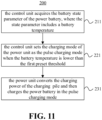
- FIG. 11 shows a schematic flow diagram of charging method of the power conversion apparatus according to another embodiment of the present application.
- the power conversion apparatus is used for power conversion between the charging pile and the power battery, and the power conversion apparatus includes a control unit and a power unit.
- FIG. 11 shows another schematic flowchart diagram of the charging method 200 which, despite any references thereto with the word embodiment, is not part of the present invention, but which is useful to illustrate characteristics related thereto.
- step 210 may include step 211: the control unit acquires the battery state parameter of the power battery, where the state parameter includes a battery temperature.
- step 220 may include step 221: the control unit sets the charging mode of the power unit as the pulse charging mode when the battery temperature is lower than the first preset threshold.
- control unit controls the operation of the power unit, such that power unit may generate a pulsed voltage or pulsed current.
- control unit controls the software program and/or hardware circuit in the power unit to control the operating state of the power unit so that the power unit can convert the direct current electricity received from the charging pile into pulsed electricity.
- the control unit controls the second relay K2 and the third relay K3 to close, and control the first relay K1 to be disconnected, to realize that the power conversion module is connected between the charging pile 120 and the power battery 131, the power conversion module is operated, and the direct current electricity received from the charging pile is converted into pulse current electricity.
- step 230 may include step 231: the power unit converts the charging power of the charging pile and then charges the power battery in the pulse charging mode.
- the power unit in the power conversion apparatus is configured to convert the charging power of the charging pile and output the converted charging power to the power battery to charge the power battery.
- the charging power converted by the power conversion apparatus is a pulsed charging voltage or a pulsed charging current.
- the above step 240 may include: when the battery temperature is not lower than the first preset threshold, the control unit switches the charging mode of the power unit from the pulse charging mode to the direct current charging mode.
- control unit controls the operation of the power unit, such that the power unit can output a constant voltage or a constant current.
- control unit can control the operating state of each functional module in the power unit by controlling the software program and/or hardware circuit in the power unit, so that the power unit can directly output the direct current received from the charging pile to the power battery.
- control unit can control the second relay K2 and the third relay K3 to be disconnected, and control the first relay K1 to be closed, so as to realize a direct electrical connection between a charging pile 120 and a power battery 131, such that the power unit 111 can directly output direct current received from the charging pile 120 to the power battery 131.
- control unit can also control the power conversion module to stop operation, to further enhance the reliability and the flexibility in the charging mode switching process.
- step 250 may include step 251: the power unit transmits charging power of the charging pile to the power battery in the direct current charging mode.
- the above step 310 may include step 311: the control unit acquires the battery state parameter of the power battery, where the state parameter includes battery temperature and battery voltage.
- step 320 may include step 321: the control unit sets the charging mode of the power unit as pulse charging mode when the battery temperature is lower than the first preset threshold and the battery voltage is lower than the second preset threshold.
- step 330 may include step 331: the power unit converts the charging power of the charging pile and then charges the power battery in the pulse charging mode.
- step 340 may include step 341: the control unit switches charging mode of the power unit from the pulse charging mode into the direct current charging mode when battery temperature is not lower than first preset threshold, or the battery voltage is not lower than the second preset threshold.
- the above step 350 may include step 351: the power unit transmits charging power of the charging pile to the power battery in the direct current charging mode.
- the power conversion apparatus realizes that the pulse charging mode is switched to the direct current charging mode to charge the power battery through the cooperation of the control unit and the power unit.
- the pulse charging mode is switched to the direct current charging mode to charge the power battery through the cooperation of the control unit and the power unit.
- FIG. 12 shows another schematic flow diagram of the charging method 400 which, despite any references thereto with the word embodiment, is not part of the present invention, but which is useful to illustrate characteristics related thereto.
- the above step 410 may include step 4101: the battery management system (BMS) sends a battery state parameter of the power battery to the control unit, where the state parameter includes a battery temperature and a battery state of charge.
- BMS battery management system
- the battery management system can also send other parameters such as a battery voltage of the power battery to the control unit.
- the battery temperature of the power battery may be sent to the control unit via power storage battery state information message (BSM), and parameters such as the battery state of charge (SOC), the battery voltage of the power battery may be sent to the control unit via the battery charge state message (BCS).
- BSM power storage battery state information message
- SOC battery state of charge
- BCS battery charge state message
- the above step 421 may include step 4211: the control unit determines the pulse charging information according to the state parameter when the battery temperature is lower than the first preset threshold.
- the pulse charging information jointly determined according to the battery temperature and the SOC by the control unit can be adapted to both the current temperature of the power battery and the SOC of the power battery.
- the control unit determines the pulse charging information according to the battery temperature and SOC jointly.
- step 422 may include step 4221: the control unit sends pulse charging information to the power unit.
- the control unit determines the pulse charging information according to the battery temperature and SOC.
- the mapping relationship of the battery temperature, the SOC and the pulse charging information may be determined, and the specific pulse charging information is determined according to the mapping relationship.
- the mapping relationship can be a mapping relationship acquired by fitting a large number of experimental data, and the mapping relationship has a high reliability and accuracy.
- a special neural network model can be trained according to a large number of experimental data, and the neural network model can output pulse charging information according to the input battery temperature and SOC.
- Step 4222 the power unit determines the first direct current charging information according to the pulse charging information.
- the power unit can determine the first direct current charging information corresponding to the pulse charging information according to the pulse charging information.
- the first direct current charging information may include at least one of the following information: charging demand voltage, charging demand current and charging demand mode.
- the charging demand mod can be a constant current mode or a constant voltage mode.
- Step 4223 the power unit sends the first direct current charging information to the control unit.
- step 423 may include step 4231: the control unit sends the first direct current charging information to the charging pile.
- control unit retransmits the first direct current charging information received from the power unit to the charging pile.
- the first direct current charging information can be sent to the charging pile as the charging demand of BMS.
- the control unit may send the first direct current charging information via the battery charging demand (BCL) message.
- BCL battery charging demand
- the first direct current charging information can also be sent to the charging pile via other messages, the embodiment of present application does not specifically limit the message type and the sending method.
- the above step 431 may include step 4311: the charging pile outputs a direct current to the power unit.
- step 432 may include step 4321: the control unit sends a start output message to the power unit.
- the start output message is configured to indicate the power unit to start operation, so as to realize subsequent step 4322.
- Step 4322 the power unit converts the direct current into a pulse current.
- step 433 may include step 4331: the power unit outputs the pulse current to the power battery.
- FIG. 13 shows another schematic flowchart diagram of the charging method 500 provided by an embodiment of the present invention.
- step 510 includes step 5101: the battery management system (BMS) sends the battery state parameter of the power battery to the control unit, where the state parameter includes the battery temperature and the battery state of charge.
- BMS battery management system
- step 521 includes step 5211: the control unit sends the charging prohibition message to the charging pile when the battery temperature is lower than the first preset threshold.
- the control unit when the battery temperature is lower than the first preset threshold and the battery voltage is lower than the second preset threshold, the control unit sends the charging prohibition message to the charging pile.
- the control unit sends a battery charging demand (BCL) message to the charging pile.
- the demand voltage may be a total voltage of the power battery
- the demand current is set as minimum current of the charging pile that can be output, for example, a current value of 10A.
- the above step 522 may include step 5221: the control unit acquires the voltage difference between input end and output end, and judge whether the voltage difference is less than the third preset threshold.
- the switch control of the relay is involved.
- the control unit may also acquire the voltage difference between the input end and the output end of the power unit, and judge whether the voltage difference is less than the third preset threshold.
- control unit executes the subsequent action, If the voltage difference is not less than the third preset threshold, the control unit controls the power unit to stop outputting, or, it can also wait for a period of time until the voltage difference is less than the third preset threshold.
- control unit may directly detect the voltage difference between the input end and the output end of the power unit, or, in some other implementations, the control unit may receive the voltage value sent by the power battery and the voltage value sent by the charging pile, and the control unit uses the voltage value sent by the power battery as the voltage of the output end of the power unit, and the voltage value sent by the charging pile as the voltage of the input end of the power unit.
- the relay state in the power conversion apparatus changes. For example, the second relay K2 and the third relay K3 in FIG. 2 are closed, and the power unit is electrically connected with the charging pile and the power battery.
- the above step 523 may include the following steps.
- Step 5231 the control unit sends a precharge instruction to the power unit.
- Step 5232 the power unit conducts a pre-charging.
- Step 5233 the power unit sends its pre-charging state to the control unit.
- Step 5234 the control unit judges whether the power unit is pre-charged successfully.
- the control unit sends a pre-charge instruction to the power unit.
- the power unit starts the pre-charging according to the precharge instruction, and the pre-charging includes: charging the capacitor in the power unit.
- the power unit sends its pre-charging state to the control unit in real time, and the control unit judges whether the pre-charging of the power unit is successful according to the pre-charging state. If it is successful, the control unit performs subsequent operations, and if it is unsuccessful, the control unit controls the power unit to stop outputting.
- control unit controls the first relay K1 in FIG. 2 to be disconnected, so as to disconnect the direct current connection between the charging pile and the power battery.
- step 524 may include step 5241: the control unit determines the pulse charging information according to the state parameter.
- the above step 525 may include the following steps.
- Step 5252 the power unit determines the first direct current charging information according to the pulse charging information.
- Step 5253 the power unit sends the first direct current charging information to the control unit.
- step 526 may include step 5261: the control unit sends the first direct current charging information to the charging pile.
- step 531 may include step 5311: the charging pile outputs a direct current to the power unit.
- step 532 may include step 5321: the control unit sends a start output message to the power unit; step 5322: the power unit converts the direct current into a pulse current.
- step 533 may include step 5331: the power unit outputs the pulse current to the power battery.
- FIG. 14 shows another schematic flowchart diagram of the charging method 600 which, despite any references thereto with the word embodiment, is not part of the present invention, but which is useful to illustrate characteristics related thereto.
- step 611 may include step 6111: the battery management system (BMS) sends the second direct current charging information of the power battery to the control unit.
- BMS battery management system
- the battery management system may send the second direct current charging information of the power battery to the control unit via the battery charging demand (BCL) message.
- the first direct current charging information can also be sent to the control unit via other messages, the embodiment of the present application does not specifically limit the message type and sending method.
- step 612 may include step 6121: the battery management system (BMS) sends the battery state parameter of the power battery to the control unit, where the state parameter includes the battery temperature and the battery state of charge.
- BMS battery management system
- the battery management system can also send other parameters such as the battery voltage of the power battery to the control unit.
- the above step 621 may include step 6211: the control unit sends a prohibit output message to the power unit when the battery temperature is not lower than the first preset threshold.
- the control unit when the battery temperature is not lower than the first preset threshold, the control unit sends a prohibit output message to the power unit to control the power unit to stop outputting the pulse current.
- control unit when the battery temperature is not lower than the first preset threshold, or the battery voltage is not lower than the second preset threshold, the control unit sends an prohibit output message to the power unit to control the power unit to stop outputting the pulse current to the power battery.
- the prohibit output message may include multiple types.
- it may include a pause output message and a stop output message, where, the pause output message is configured to indicate the power unit to stop outputting the pulse current temporarily, and in this the state, if the power unit receives a start output message, it may restore outputting the pulse current.
- the stop output message is configured to indicate the capacitor in the power unit to execute the power-off and discharge process, and the power unit enters a sleep state.
- the prohibit output message and the start output message sent to the power unit by the control unit is carried via the message of the same type.
- the start output message is represented as "1”
- the pause output message is represented as "2”
- the stop output message is represented as "3”.
- step 622 may include step 6221: the control unit sends the second direct current charging information to the charging pile.
- the above step 631 may include step 6311: the charging pile outputs a direct current to the power battery through the power unit.
- the second relay K2 and the third relay K3 are disconnected, and a direct electrical connection between the charging pile and the power battery is realized, so that the charging pile outputs a direct current to the power battery through the power unit.
- FIG. 15 shows another schematic flowchart diagram of the charging method 700 which, despite any references thereto with the word embodiment, is not part of the present invention, but which is useful to illustrate characteristics related thereto.
- step 711 may include step 7111: the battery management system (BMS) sends the second direct current charging information of the power battery to the power conversion apparatus.
- BMS battery management system
- step 712 may include step 7121: the battery management system (BMS) sends the battery state parameter of the power battery to the control unit, where the state parameter includes the battery temperature and the battery state of charge.
- BMS battery management system
- the battery management system can also send other parameters such as the battery voltage of the power battery to the control unit.
- step 721 may include step 7211: the control unit sends the charging prohibition message to the charging pile when the battery temperature is not lower than the first preset threshold.
- the control unit when the battery temperature is not lower than the first preset threshold or the battery voltage is not lower than the second preset threshold, the control unit sends the charging prohibition message to charging pile.
- the control unit may send a battery charging demand (BCL) message to the charging pile.
- BCL battery charging demand
- the demand voltage may be a total voltage of the power battery
- the demand current is set as the minimum current of the charging pile that can be output, for example, a current value of 10A.
- step 722 may include step 7221: the control unit sends the prohibit output message to the power unit.
- control unit sends the prohibit output message to the power unit, so as to control the power unit to stop outputting the pulse current.
- step 6211 in above FIG. 14 , and it will not be repeated here.
- the above step 723 may include step 7231: the control unit acquires the voltage difference between the input end and the output end of the power unit, and judges whether the voltage difference is less than the fourth preset threshold.
- the control unit continues to execute the subsequent action. If the voltage difference is not less than the fourth preset threshold, the control unit may continue to wait until the voltage difference is less than the fourth preset threshold. In this case, if the wait time of the control unit is larger than a certain threshold, the control unit may send a charging stop message to the power unit so that the capacitor in the power unit performs power-off and discharge.
- the relay state in the power conversion apparatus changes. For example, the first relay K1 in FIG. 2 is closed, the second relay K2 and the third relay K3 are disconnected, so as to disconnect the electrical connection of the power unit with the charging pile, and the electrical connection of the power unit with the power battery.
- the charging pile and the power battery are directly electrically connected.
- step 7241 is executed.
- step 724 may include step 7241: the control unit sends the second direct current charging information and a charging permission message to the charging pile.
- the above step 731 may include step 7311: the charging pile outputs a direct current to the power battery through the power unit.
- a charging method with a charging pile and a BMS as the execution body is also provided.
- the charging method with the charging pile and the BMS as the execution body may correspond to the relevant descriptions of the above method embodiments, which will not be described in detail herein.
- FIG. 16 shows a schematic structure diagram of power conversion apparatus 800 which, despite any references thereto with the word embodiment, is not part of the present invention, but which is useful to illustrate characteristics related thereto.
- the power conversion apparatus 800 includes: a receiving module 810, a sending module 820 and a processing module 830.
- the receiving module 810 is configured to receive the state parameter of the power battery, the state parameter includes the battery temperature; the processing module 830 is configured to set the charging mode to the pulse charging mode when the battery temperature is lower than the first preset threshold; the processing module 830 is configured to convert the charging power of the charging pile and then charge the power battery in the pulse charging mode, the pulse charging mode is a charging mode which output pulsed voltage or pulsed current.
- the processing module 830 is also configured to: switch the charging mode from pulse charging mode to direct current charging mode when the battery temperature is not lower than the first preset threshold; the processing module 830 transmits the charging power of the charging pile to the power battery to charge the power battery in the direct current charging mode, where the direct current charging mode is a charging mode which outputs a constant voltage or a constant current.
- the state parameter also includes a battery voltage; the processing module 830 is configured to set the charging mode to the pulse charging mode when the battery temperature is lower than the first preset threshold and the battery voltage is lower than the second preset threshold.
- the state parameter also includes a battery voltage
- the processing module 830 is configured to switch the charging mode from the pulse charging mode to the direct current charging mode when the battery temperature is not lower than the first preset threshold or the battery voltage is not lower than the second preset threshold.
- the state parameter also includes a battery state of charge
- the sending module 820 is configured to send first direct current charging information to the charging pile, the first direct current charging information is determined by the processing module 830 according to the pulse charging information, where the pulse charging information include at least one of the following information: pulse current information, pulse voltage information, pulse direction information, pulse frequency information and pulse time information.
- the pulse charging information is determined by the processing module 830 according to the battery temperature and battery state of charge.
- the processing module 830 is configured to output the pulse current to the power battery, where the pulse current is generated by converting a direct current based on the pulse charging information, the direct current is a direct current output to t the processing module 830 by the charging pile according to the first direct current charging information.
- the sending module 820 is also configured to send a charging prohibition message to the charging pile, where the charging prohibition message is configured to indicate the charging pile to stop outputting direct current to processing module 830.
- the processing module 830 is also configured to conduct a pre-charging.
- the processing module 830 is configured to acquire a voltage difference between its input end and output end; if the voltage difference is less than the third preset threshold, the processing module 830 conducts the pre-charging.
- the processing module 830 is configured to switch the charging mode from the pulse charging mode to the direct current charging mode.
- the processing module 830 is configured to stop outputting a pulse current to the power battery.
- the receiving module 810 is also configured to receive second direct current charging information of the power battery
- the sending module 820 is also configured to send the second direct current charging information to the charging pile
- the processing module 830 is configured to output the direct current output by the charging pile according to the second direct current charging information to the power battery, to charge the power battery.
- the sending module 820 is also configured to send a charging prohibition message to the charging pile, the charging prohibition message is configured to indicate the charging pile to stop outputting the direct current to the power conversion apparatus.
- the processing module 830 is configured to acquire a voltage difference between its input end and output end; if the voltage difference is less than the fourth preset threshold, the processing module 830 is configured to output the direct current output by the charging pile according to the second direct current charging information to the power battery, to charge the power battery.
- the above state parameter of the power battery is a parameter acquired by the battery management system of the power battery.
- FIG. 17 shows a schematic diagram of a power conversion apparatus 900 which, despite any references thereto with the word embodiment, is not part of the present invention, but which is useful to illustrate characteristics related thereto.
- the power conversion apparatus 900 includes a control unit 910 and a power unit 920.
- the control unit 910 may be the control unit 112 shown in FIG. 2
- the power unit 920 may be the power unit 111 shown in FIG. 2 , it may include the power conversion module, a first relay K1, a second relay K2 and a third relay K3 shown in FIG. 2 .
- the power battery, the battery management system (BMS), and the charging pile in the following may correspond to the power battery 131, the BMS 132, and the charging pile 120 shown in FIG. 2 .
- the control unit 910 is configured to acquire the state parameter of the power battery, the state parameter includes the battery temperature of the power battery.
- the control unit 910 is configured to set the charging mode of the power unit 920 as the pulse charging mode when the battery temperature is lower than the first preset threshold.
- the power unit 920 is configured to convert charging power of the charging pile and then charge the power battery in the pulse charging mode, where the pulse charging mode is a charging mode using pulsed voltage or pulsed current.
- control unit 910 is also configured to switch the charging mode of the power unit 920 from the pulse charging modes to the direct current charging mode.
- the power unit 920 is configured to transmit the charging power of the charging pile to the power battery to charge the power battery, where the direct current charging mode is a charging mode using a constant voltage or a constant current.
- the state parameter of the power battery acquired by the control unit 910 also includes the battery voltage, when the battery temperature is lower than the first preset threshold and the battery voltage is lower than the second preset threshold, the control unit 910 is configured to set the charging mode of the power unit 920 to the pulse charging mode.
- the state parameter of power battery acquired by the control unit 910 also includes the battery voltage, when the battery temperature is not lower than the first preset threshold or the battery voltage is not lower than the second preset threshold, the control unit 910 is configured to switch the charging mode of the power unit 920 from the pulse charging mode to the direct current charging mode.
- the state parameter also includes the battery state of charge; the control unit 910 is configured to determine the pulse charging information according to the battery temperature and the battery state of charge, and send the pulse charging information to the power unit 920.
- the pulse charging information includes at least one of the following information: pulse current, pulse voltage, pulse direction, pulse frequency and pulse time.
- the power unit 920 is configured to determine first direct current charging information corresponding to the pulse charging information according to the pulse charging information, and send the first direct current charging information to the control unit 910.
- the control unit 910 is configured to send the first direct current charging information to the charging pile, and control the power unit 920 to output pulse current to the power battery, where the pulse current is generated by converting a direct current based on the pulse charging information, and the direct current is a direct current output to the power unit 920 by the charging pile according to the first direct current charging information.
- control unit 910 is also configured to send a charging prohibition message to the charging pile, where the charging prohibition message is configured to indicate the charging pile to stop outputting direct current to the power unit 920.
- control unit 910 is also configured to send a precharge instruction to the power unit 920, and the power unit 920 is configured to conduct a pre-charging according to the precharge instruction.
- the power unit 920 is configured to acquire the voltage of its input end and the output end, and send the voltage of the input end and the output end to the control unit 910. If the voltage difference between the input end and the output end is less than the third preset threshold, the control unit 910 is configured to send the precharge instruction to the power unit 920.
- control unit 910 is configured to switch the charging mode of the power unit 920 from the pulse charging mode into the direct current charging mode
- the control unit 910 is also configured to acquire second direct current charging information of the power battery.
- the second direct current charging information is a direct current charging information determined according to the state parameter of the power battery.
- the control unit 910 is configured to control the power unit 920 to stop outputting the pulse current.
- the control unit 910 is configured to control the power unit 920 to output the direct current output by the charging pile according to the second direct current charging information to the power battery.
- control unit 910 before the control unit 910 is configured to control the power unit 920 to stop outputting the pulse current, the control unit 910 is also configured to send charging prohibition message to the charging pile, the charging prohibition message is configured to indicate the charging pile to stop outputting a direct current to the power unit 920.
- control unit 910 is configured to acquire a voltage difference between input end and output end of the power unit 920; if the voltage difference is less than the fourth preset threshold, the control unit 910 is configured to control the power unit 920 to output the direct current output by the charging pile according to the second direct current charging information to the power battery.
- the above state parameter of the power battery is a parameter acquired by battery management system of the power battery.
- FIG. 18 shows a schematic diagram of an electronic device 1000 which, despite any references thereto with the word embodiment, is not part of the present invention, but which is useful to illustrate characteristics related thereto.
- the electronic device 1000 includes a memory 1010 and a processor 1020, where the memory 1010 is configured to store a computer program, the processor 1020 is configured to read the computer program and execute the aforementioned method according to various embodiments of the present application based on the computer program.
- the electronic device 1000 may be used for any one or more of the charging pile, the BMS and the power conversion apparatus.
- the processor in the power conversion apparatus reads the corresponding computer program and executes the charging method corresponding to the power conversion apparatus in the foregoing various embodiments based on the computer program
- the processor in the charging pile or the BMS can also read the corresponding computer program and execute the charging method corresponding to the charging pile or the BMS in the foregoing various embodiments based on the computer program.
- the present application embodiments also provide a readable storage media configured to store a computer program, the computer program is configured to execute the method of aforementioned various embodiments of the present application.
- the computer program may be a computer program in one or more apparatuses of the above-mentioned power conversion apparatus, the charging pile and the BMS.
- serial number of each process does not mean the sequence of execution, and the execution sequence of each process should be determined by its function and internal logic, and should not constitute any limitation on the implementation process of the embodiments of the present application.
Landscapes
- Engineering & Computer Science (AREA)
- Power Engineering (AREA)
- Transportation (AREA)
- Mechanical Engineering (AREA)
- Life Sciences & Earth Sciences (AREA)
- Sustainable Development (AREA)
- Sustainable Energy (AREA)
- Manufacturing & Machinery (AREA)
- Chemical & Material Sciences (AREA)
- Chemical Kinetics & Catalysis (AREA)
- Electrochemistry (AREA)
- General Chemical & Material Sciences (AREA)
- Charge And Discharge Circuits For Batteries Or The Like (AREA)
- Secondary Cells (AREA)
- Electric Propulsion And Braking For Vehicles (AREA)
Description
- The present application relates to the field of power battery, and more specifically, relates to a charging method and a power conversion apparatus.
- With the development of the society, an electrical vehicle, due to its advantages such as high environmental protection, low noise and low use cost, has a huge market prospect and can effectively promote emission reduction, be beneficial to social development and progress.
- For the electric vehicle, a power battery technology is an important factor concerning its development. Due to the electrochemical characteristics of the power battery, in a low temperature environment, a direct current charging may have a big impact on the performance of the power battery, effecting the customer's car experience.
- Therefore, how to ensure the battery performance of the power battery is a technical problem to be solved.
-
WO2011/122946A2 relates to a method for charging a battery, comprising communicating with at least one electric vehicle for receiving battery data, requesting from a battery knowledge base the relationship between battery temperature and at least one of the parameters such as battery life and charge speed, calculating the best charging method based on the relationship and the received battery data from the electric vehicle, based on the calculated best charging method decide to heat the battery or not, heating or charging the battery, or performing both. -
US2019/027792A1 provide systems and control devices for charging and discharging a lithium-ion battery and relevant methods. A variable frequency triggering oscillation charge-discharge device constructs an oscillation loop with a lithium-ion battery using an inherent impedance characteristic of the lithium-ion battery to charge and/or discharge the lithium-ion battery in the form of an oscillation current generated by the oscillation loop, to avoid direct current (DC) charge-discharge for the lithium-ion battery or battery pack that causes polarization and lithium precipitation of the lithium. -
CA2128507C relates a method and an apparatus for rapidly charging a battery. The preferred charging method comprises applying one or more charging pulses (C1, C2), separated by a waiting period (CW~), with the last charging pulse, if there are more than one, being followed by a second waiting period (CW2). This is then followed by a series of discharging pulses (D1, D2, D3), which are separated by waiting periods (DW1, DW2) and followed by a last waiting period (DW3) before the occurrence the next charging pulse (C1). -
US2017/207634A1 discloses a controller of a fuel cell system performs a starting operation that switches on a first precharge circuit so as to reduce a voltage difference between a first smoothing capacitor and a second smoothing capacitor and subsequently turns on a first relay, when a start switch is turned on in a system off state that the first relay is off. -
DE102017206334A1 discloses a vehicle battery management system. The vehicle battery management system includes: a battery (2) connected to provide electrical power to an electric traction motor of a vehicle (1); an electric charge usable to consume more electrical power than the electrical power that can be supplied by an external power supply (6); and a control apparatus (5) operable to control the operation of the system such that, during the cold condition, when the vehicle is electrically coupled to the external power supply (6), the battery (2) is alternately charged and discharged, the battery (2) being charged by supplying electric power to the battery (2) from the external power supply (6) and the battery (2) being discharged by supplying electric power to the electric charge (4) from the battery (2) to make the electric charge (4) consume the electrical power. - The invention is set out in the appended set of claims.
- In order to more clearly illustrate the technical solution of embodiments of the present application, the accompanying drawings required in the embodiments of the present application will be introduced briefly, obviously, the accompanying drawings described below are merely some embodiments of the present application, those of ordinary skill in the art can also acquire other accompanying drawings according to the accompanying drawings without paying a creative work.
-
FIG. 1 is a schematic diagram of a charging system disclosed in one embodiment of the present application; -
FIG. 2 is a schematic diagram of an application architecture of the charging system disclosed in one embodiment of the present application; -
FIG. 3 is a schematic flow diagram of a method not covered by the present invention; -
FIG. 4 is a schematic flow diagram of the charging method not covered by the present invention; -
FIG. 5 is a schematic flow diagram of the charging method not covered by the present invention; -
FIG. 6 is a schematic flow diagram of the charging method not covered by the present invention; -
FIG. 7 is a schematic interaction flow diagram of the charging method not covered by the present invention; -
FIG. 8 is a schematic interaction flow diagram of the charging method disclosed in another embodiment of the present application; -
FIG. 9 is a schematic interaction flow diagram of the charging method not covered by the present invention; -
FIG. 10 is a schematic interaction flow diagram of the charging method not covered by the present invention; -
FIG. 11 is a schematic flow diagram of the charging method not covered by the present invention; -
FIG. 12 is a schematic interaction flow diagram of the charging method not covered by the present invention; -
FIG. 13 is a schematic interaction flow diagram of the charging method disclosed in another embodiment of the present application; -
FIG. 14 is a schematic interaction flow diagram of the charging method disclosed in another embodiment of the present application; -
FIG. 15 is a schematic interaction flow diagram of the charging method not covered by the present invention; -
FIG. 16 is a schematic block diagram of a power conversion apparatus not covered by the present invention; -
FIG. 17 is a schematic block diagram of the power conversion apparatus not covered by the present invention; -
FIG. 18 is a schematic block diagram of the power conversion apparatus not covered by the present invention. - Implementations of the present application are described in further detail below in conjunction with the accompanying drawings and embodiments. The following detailed description of the embodiments and the accompanying drawings are used to illustrate the principles of the present application, but are not intended to limit the scope of the present application, i.e., the present application is not limited to the described embodiments.
- In description of the present application, it should be noted that, unless otherwise noted, all technical and scientific terms used in the present application have the same meaning as usually understood by those skilled in the field to which the present application belongs to; the terms used in the specification of the present application are only for the purpose of describing the specific embodiments, and are not intended to limit the present application; the terms "include" and "have" and any variant thereof in the specification and claims of the present application and the above-mentioned accompanying drawings are intended to cover the non-exclusive inclusion. The terms "first", "second" etc. in specification and claims or the above-mentioned accompanying drawings of the present application are used to distinguish different objects, and not used to describe a particular order or a primary and secondary relation.
- "Embodiment" mentioned in the present application means that, a specific feature, structure or characteristic described in conjunction with an embodiment can be included in at least one embodiment of the present application. The phrase presented at various locations of the specification does not necessarily refer to the same embodiment, and not the independent or alternative embodiment being mutually exclusive with other embodiments. Those skilled in the art can explicitly and implicitly understood that, the embodiments described in the present application can be combined with other embodiments.
- In the description of the present application, it should also be noted that unless expressly specified and defined otherwise, the terms "mounted", "linked", "connected" and "attached" are understood in a broad sense, for example, it can be a fixed connection or a detachable connection, or being integrally connected; it can be being directly connected or connected through an intermediate medium. The specific meanings of the above terms in the present application will be understood by those of ordinary skill in the art depending on specific circumstances.
- In the field of new energy, as the main power source of electrical devices, such as electrical vehicles, ships or spacecraft, the importance of power batteries is self-evident. Where the temperature of power battery has great influence on its performance, life, and safety. At present, most of the power batteries in the market are rechargeable batteries, and the common ones are lithium-ion batteries or lithium-ion polymer batteries. At low temperatures, lithium-ion batteries will experience increased internal resistance and reduced capacity, and extreme conditions will lead to electrolyte freezing and battery failure to discharge, which will greatly affect the low-temperature performance of the battery system, resulting in reduced power output and range of electric vehicles. Furthermore, direct current charging of lithium-ion batteries at low temperatures will cause phenomenon of lithium deposition. Lithium deposition not only degrades the performance of lithium batteries, greatly shortens the cycle life, but also limits the fast charging capacity of batteries, and may cause disastrous consequences such as combustion and explosion.
- In order to solve the problem of charging electric vehicles in low temperature environment, most of the power batteries of electric vehicles in the market are equipped with a thermal management system. When the temperature of the power battery is too low, the thermal management system can convert a part of electric energy into heat energy, thereby heating the whole battery pack. This preheating method can make the power battery at a more suitable temperature, based on this, the power battery is charged. However, this preheating method is to charge the power battery after the temperature of the power battery is increased. The space for increasing the heating efficiency of the power battery is limited, and the heating time cannot be saved, which makes it impossible to fundamentally solve the problem that the charging time of electric vehicles is too long in a low-temperature environment. In addition, the configuration of thermal management system in the power battery will not only increase the weight of the power battery, but also increase the cost of the power battery.
- In view of this, compared with the prior art, the present application provides a new charging system and a charging method thereof, which can solve the above charging problem of the electric vehicle in the low-temperature environment without using a thermal management system to preheat the power battery.
-
FIG. 1 illustrates a charging system to which embodiments of the present application apply. The charging system can be applied to various types of electrical devices including but not limited to electric vehicles and the like. -
FIG. 1 shows a schematic diagram of acharging system 10 according to the present application. - As shown in
FIG. 1 , thecharging system 10 may include: a power conversion apparatus 110, acharging pile 120 and anelectric vehicle 130. - Specifically, the charging
pile 120 is a device for supplementing electric energy for the electric vehicle 130 (including a pure electric vehicle and a pluggable hybrid electric vehicle), which can be divided into two categories: an alternative current charging pile and a direct current charging pile. Where the direct current charging pile directly charges the power battery of the electric vehicle by outputting adjustable direct current power, and the output voltage and current adjustment range are large, which can meet the demand of rapid charging. The alternative current charging pile only provides power output, but has no charging function. The subsequent rectification and direct current - direct current (DC-DC) conversion are completed by an on-board charger, and the charging pile serves as a power controller. In the embodiment of the present application below, the charging method of the present application is explained by using the charging pile as the direct current charging pile as an example, and the relevant charging method of the on-board charger can refer to the relevant description of the embodiments below. - Specifically,
electric vehicle 130 may include battery system. At least one battery pack may be provided in the battery system to provide energy and power for the electric vehicle, and the at least one battery pack may be collectively referred to as a power battery. In terms of the type of battery, the power battery may be a lithium-ion battery, a lithium-metal battery, a lead-acid battery, a nickel-cadmium battery, a nickel-hydrogen battery, a lithium-sulfur battery, a lithium-air battery, a sodium-ion battery, and the like, which are not specifically limited in the embodiment of the present application. In terms of battery scale, the power battery in the embodiment of the present application may be a cell/battery cell, may also be a battery module or a battery pack, which is not specifically limited in the embodiment of the present application. - In addition, in order to intelligently manage and maintain the power battery, prevent overcharging and over-discharging of the battery, and prolong the service life of the battery, the battery system is generally provided with a battery management system (BMS) 122 for monitoring the state of the power battery. Optionally, the BMS may be integrated with the power battery in the same device/apparatus, or the BMS may be disposed outside the power battery as an independent device/apparatus.
- Compared with the prior art, the charging
system 10 is additionally provided with a power conversion apparatus 110. Specifically, the power conversion apparatus 110 may be electrically connected to the chargingpile 120, and electrically connected to the battery system of theelectric vehicle 130. The power conversion apparatus 110 can be used as a power transfer apparatus between the chargingpile 120 and the battery system of theelectric vehicle 130. Specifically, the power conversion apparatus 110 can be used as a power transfer apparatus between the chargingpile 120 and the power battery of theelectric vehicle 130. - Specifically, in the present application, the power conversion apparatus 110 is configured to receive first electric energy of a first power type transmitted by the charging
pile 120, and convert it into second electric energy of a second power type different from the first power type, and then send the second electric energy to the power battery of theelectric vehicle 130, to realize power conversion. As an example, the first electric energy of the first power type transmitted by the chargingpile 120 is the direct current, the direct current can be a constant voltage direct current or a constant current direct current, and the power conversion apparatus 110 converts the direct current into a second electric energy of other power types such as voltage change, current change, power state change, current, voltage, power timing change, etc., and then send the second electric energy to the power battery of theelectric vehicle 130, to charge the power battery. - Optionally, as shown in
FIG. 1 , the power conversion apparatus 110 is used as an independent power transfer apparatus and is set outside the chargingpile 120 and theelectric vehicle 130. As an optional electrical connection manner, the chargingpile 120 is provided with a first charging gun head, and the power conversion apparatus 110 is provided with a first charging socket corresponding to the first charging gun head to receive the electric energy transmitted from the chargingpile 120. In addition, the power conversion apparatus 110 is also provided with a second charging gun head, the second charging gun head is configured to be electrically connected with a second charging socket on the electric vehicle 110, to realize power conversion apparatus 110 to transmit electric energy to the electric vehicle. - In order to adapt to the electrical connection between the existing charging
pile 120 and the battery system of theelectric vehicle 130, optionally, the specific type and structure of the second charging gun head on the power conversion apparatus 110 may be the same as the specific type and structure of the first charging gun head on the chargingpile 120. Correspondingly, the specific type and structure of the first charging socket on the power conversion apparatus 110 may be the same as the specific type and structure of the second charging socket on the electric vehicle. Of course, the second charging gun head and the first charging socket on the power conversion apparatus 110 can also be different from the first charging gun head on the chargingpile 120 and the second charging socket on the electric vehicle, the embodiment of the present application does not specifically limit this, and it is intended to realize the electrical connection between the charging gun head and the corresponding charging socket. - Optionally, in addition to being designed as an independent power conversion apparatus, the power conversion apparatus 110 can also be integrated in the charging
pile 120 or integrated in theelectric vehicle 130. Or part of the functional modules in the power conversion apparatus 110 is provided in the chargingpile 120, and another part of the functional modules is provided in theelectric vehicle 130. The embodiment of the present application also does not specifically limit the specific setting manner of the power conversion apparatus 110, and it is intended to be electrically connected between the chargingpile 120 and the battery system of theelectric vehicle 130 to achieve the function of power conversion. -
FIG. 2 is a schematic diagram of an application architecture of theabove charging system 10 according to an embodiment of the present application. - As shown in
FIG. 2 , the battery system may be the battery system in theelectric vehicle 130 in theabove charging system 10, and the battery system includes apower battery 131 and a battery management system (BMS) 132. - The power conversion apparatus 110 includes a
power unit 111 and acontrol unit 112. Thepower unit 111 is configured to convert the power type output by the chargingpile 120 into the power type required by thepower battery 131. Thepower unit 111 includes a power conversion module, the power conversion module may include a pulse generating circuit used for generating a pulse current to provide thepower battery 131. In addition, the power conversion module may also include other functional circuits such as a drive circuit, a communication circuit, a processing circuit and the like. Thecontrol unit 112 may include a controller and/or a processor, which are responsible for detecting the states of the chargingpile 120 and theBMS 130 during the charging process, and controlling operations of other electrical components in thepower unit 111 and the power conversion apparatus. - Specifically, the
power unit 111 is separately connected with the chargingpile 120 and thepower battery 131 via ahigh voltage line 150, to convert the charging power output by the chargingpile 120 through the high-voltage line 150 and output converted charging power to thepower battery 131 to charge thepower battery 131. As an example, as shown inFIG. 2 , the power conversion module in thepower unit 111 is separately connected with a positive electrode output port (for example: direct current positive electrode output port DC+) and a negative electrode output port (for example: direct current negative electrode output port DC-) of the charging pile through thehigh voltage line 150, and connected to the positive electrode output port and the negative electrode output port of the power battery. - The
power unit 111 includes, as shown inFIG. 2 , a first relay K1, a second relay K2 and a third relay K3. The power conversion module is respectively connected to the chargingpile 120 and thepower battery 131 through the second relay K2 and the third relay K3. It is possible to control whether the power conversion module is connected to the chargingpile 120 and thepower battery 131 by controlling the second relay K2 and the third relay K3. - In addition, the charging
pile 120 and thepower battery 131 are connected with each other through the first relay K1. In other words, if the second relay K2 and the third relay K3 are both disconnected, the first relay K1 is closed, the charging power output by the chargingpile 120 may directly be transmitted to thepower battery 131 at this time, without being converted by the power conversion module. - It should be noted that, the first relay K1, the second relay K2 and the third relay K3 in
FIG. 2 are only schematic illustrative circuit structure, which can also be realized by replacement with other functional circuits. It is designed to realize the selective connection of the power conversion module between the chargingpile 120 and thepower battery 131. - It can be understood that, the first relay K1, the second relay K2 and the third relay K3 can be controlled by the
control unit 112 in the power conversion apparatus 110. Directly controlling the operating state of the power conversion module through software can also realize the selective connection of the power conversion module between the chargingpile 120 and thepower battery 131, so that the power conversion apparatus 110 is in different charging modes. - Further referring to
FIG. 2 , the chargingpile 120 and theBMS 132 can also be separately connected to the power conversion apparatus 110 through acommunication line 140, to realize an information interaction among the chargingpile 120, theBMS 132 and the power conversion apparatus 110. Specifically, thecontrol unit 112 is separately connected to the chargingpile 120 and theBMS 130 through thecommunication line 140, to realize information interaction with the chargingpost 120 and theBMS 130 respectively. In addition, thecontrol unit 112 is also connected to thepower unit 111 through thecommunication line 140, to realize information interaction with thepower unit 111, and control thepower unit 111 to conduct a power conversion. - As an example, the
communication line 140 includes but not limited to a control area network (CAN) communication bus or a daisy chain communication bus. Optionally, the chargingpile 120, theBMS 132, the power conversion apparatus 110 may communicate based on the related protocol of physical layer, data link layer and application layer of CAN communication protocol or daisy chain communication protocol. - Specifically, in a conventional charging system on the market, an information interaction is directly conducted between the charging
pile 120 and theBMS 132 via a communication protocol. In the embodiment of the present application, the power conversion apparatus 110 can receive and send notices and a message between the chargingpile 120 and theBMS 132, in case of being compatible with present communication protocol between the chargingpile 120 andBMS 132, the power conversion between the chargingpile 120 and theBMS 132 is realized. -
FIG. 3 a shows a schematic flow diagram of acharging method 200 which, despite any references thereto with the word embodiment, is not part of the present invention, but which is useful to illustrate characteristics related thereto. Themethod 200 is applied to a power conversion apparatus. For example, the power conversion apparatus can be a power conversion apparatus 110 in aboveFIG. 1 andFIG. 2 . - As shown in
FIG. 3 , thecharging method 200 may include the following steps. - Step 210: a power conversion apparatus acquires a state parameter of a power battery, where the state parameter includes a battery temperature.
- Optionally, in this step, the power battery may be the
power battery 131 shown inFIG. 2 above. The power battery generally includes at least one battery pack, every battery pack may include multiple battery cells connected in series or parallel. The battery temperature of the power battery includes but not limited to the temperature of every battery cell. In the related technologies, the battery cell may be also referred to as a battery core. - Optionally, in some implementations, the BMS of the power battery, such as
BMS 132 shown inFIG. 2 , is configured to detect the state parameter of the power battery, such as the battery temperature of the power battery, and transmit it to the power conversion apparatus, such that the power conversion apparatus acquires the state parameter of the power battery. As an example, a communication may be realized between the BMS and the power conversion apparatus based on CAN. In this example, the battery temperature of the power battery may be the minimum power storage battery temperature in the battery state message (BSM) sent by the BMS. In some other examples, the BMS can also communicate with the power conversion apparatus based on other communication protocols, the embodiment of the present application do not specifically limit this. - Of course, in some other implementations, the power conversion apparatus may also acquire the state parameter of the power battery by other manners. As an example, other control unit in an electric vehicle besides BMS is configured to acquire the state parameter of the power battery, then the state parameter of the power battery is transmitted to the power conversion apparatus by the control unit; or, as another example, BMS or other control unit in the electric vehicle stores the state parameter of the power battery into a storage unit or a cloud, the power conversion apparatus acquires the battery state parameter from the storage unit or the cloud, the embodiment of the present application do not specifically limit specific manner in which the power conversion apparatus acquires the state parameter of the power battery.
- Step 220: the power conversion apparatus sets a charging mode to a pulse charging mode when the battery temperature is lower than a first preset threshold.
- Specifically, in this step, the pulse charging mode is a charging mode using a pulsed voltage or a pulsed current, in other words, in the pulse charging mode, the power conversion apparatus may generate the pulsed voltage or the pulsed current.
- Optionally, the operation state of each functional module in the power conversion apparatus may be controlled by controlling software programs and/or hardware circuits in the power conversion apparatus, such that the power conversion apparatus can convert the direct current electricity received from the charging pile to a pulse current electricity.
- As an example, in the power conversion apparatus 110 shown in
FIG. 2 , the second relay K2 and the third relay K3 can be controlled to be closed, so that the power conversion module is connected between the chargingpile 120 andpower battery 131, such that the power conversion apparatus 110 can convert the direct current electricity received from chargingpile 120 to a pulse current electricity. - Optionally, the above first preset threshold may be a preset arbitrary value, which intends to indicate that the power battery is in a low-temperature state. The first preset threshold can be correspondingly set according to the geographical position of the power battery, the battery type, attribute parameters, the system architecture of the power battery and other related factors, and the embodiments of the present application do not limit the specific value thereof. As an example, the first preset threshold may be any value below 10 degree centigrade (°C), for example, the first preset threshold may be 5°C.
- Step 230: the power conversion apparatus converts the charging power of the charging pile and then charges the power battery in the pulse charging mode.
- Specifically, in this step, the power conversion apparatus is configured to realize a conversion of the charging power of the charging pile, and output the converted charging power to the power battery, so as to charge the power battery. Where, in the pulse charging mode, the charging power converted by the power conversion apparatus is a pulsed charging voltage or a pulsed charging current.
- To sum up, through the technical solutions of the embodiment of the present application, the power conversion apparatus acquires a battery temperature of the power battery, when the battery temperature is low, for example, when it is lower than a first preset threshold, the charging mode of the power conversion apparatus is set to the pulse charging mode. In the pulse charging mode, the power conversion apparatus converts the charging power output by the charging pile and outputs pulsed electricity to charge the power battery, so as to prevent performance of the power battery from being affected by directly charging the power battery at a low temperature, thereby ensuring the performance of the power battery. In addition, through the technical solution of the embodiment of the application, the power battery does not need to be configured with a thermal management system, and on the basis of reducing the overall cost of the power battery, the heating time of the power battery at a low temperature is saved, and the charging efficiency is improved.
-
FIG. 4 shows a schematic flow diagram of anothercharging method 300 which, despite any references thereto with the word embodiment, is not part of the present invention, but which is useful to illustrate characteristics related thereto. - As shown in
Fig 4 , thecharging method 300 may include the following steps. - Step 310: the power conversion apparatus acquires the battery state parameter of the power battery, where the state parameter includes the battery temperature and the battery voltage.
- Step 320: the power conversion apparatus sets the charging mode to the pulse charging mode when the battery temperature is lower than the first preset threshold and the battery voltage is lower than a second preset threshold.
- Step 330: the power conversion apparatus converts the charging power of the charging pile and then charges the power battery in the pulse charging mode.
- In the embodiment of the present application, compared with
step 210 above, instep 310, the power conversion apparatus acquires the battery voltage of the power battery in addition to the battery temperature of the power battery. - Specifically, in the charging and discharging process of the power battery, besides the battery temperature has a great influence on it, detecting its voltage at the same time can better reflect the current charging and discharging state of the power battery, and prevent it from overcharging or over-discharging and causing permanent damage to the power battery. Therefore, in the embodiments of the present application, the power conversion apparatus acquires the battery voltage of the power battery in addition to the battery temperature of the power battery, and judges the charging mode of the power battery by synthesizing various information, which improves the charging safety performance. Specifically, the battery voltage of the power battery includes, but is not limited to, the voltage of each battery cell in the power battery and/or the total voltage of the entire power battery.
- Similar to the power conversion apparatus to acquire the battery temperature of the power battery in the
above step 210, in some implementations, the BMS of the power battery is configured to detect the battery voltage of the power battery, and transmit it to the power conversion apparatus, such that the power conversion apparatus acquires the battery voltage of the power battery. In the implementation, the battery voltage of the power battery may be transmitted to the power conversion apparatus via a battery charge state (BCS) message. - In
step 320, when the battery temperature is lower than the first preset threshold and the battery voltage is lower than the second preset threshold, the power conversion apparatus sets the charging mode as the pulse charging mode. Optionally, the second preset threshold value may be a preset arbitrary value, which intends to indicate that the power battery is in a low-voltage state to be charged. The second preset threshold may be set to different values according to different power battery types and structures, which is not specifically limited in the embodiment of the present application. - Specifically, the related technical solutions of
step 330 in the embodiment of the present application can refer to the related description ofabove step 230, it will not be repeated here. - In the technical solution of the embodiment of the present application, in addition to acquiring the battery temperature of the power battery, the power conversion apparatus also acquires the battery voltage of the power battery. Combining information on the two aspects of battery temperature and battery voltage, the charging mode is set to the pulse charging mode, and it is further judged whether the power battery is in a low-voltage state to be charged at low temperature, which can further ensure the charging safety.
- It should be noted that, in the embodiment of the present application, in addition to acquiring the battery temperature of the power battery and the battery voltage, the power conversion apparatus can also acquire other state parameters of the power battery, and further sets its charging mode as the pulse charging mode according to other state parameters. Specifically, other state parameters of the power battery include but not limited to related parameters such as: battery current, battery state of charge (SOC), and estimated remaining charging time, etc. Where the SOC can be regarded as a thermodynamic quantity, which can be used to evaluate the potential electric energy of the battery
- In the charging methods of above
FIG. 3 and FIG.4 , the power conversion apparatus sets its charging mode to the pulse charging mode, and converts the output power of the charging pile and outputs it to the power battery. Further, on the basis of that, the power conversion apparatus may also switch its charging mode into the direct current charging mode, and directly transmit the charging power of the charging pile to the power battery. -
FIG. 5 shows a schematic flow diagram of anothercharging method 200 which, despite any references thereto with the word embodiment, is not part of the present invention, but which is useful to illustrate characteristics related thereto. - As shown in
FIG. 5 , theabove charging method 200 may also include the following steps. - Step 240: the power conversion apparatus switches the charging mode from the pulse charging mode to the direct current charging mode when the battery temperature is not lower than the first preset threshold.
- Step 250: the power conversion apparatus transmits the charging power of the charging pile to the power battery in the direct current charging mode.
- Specifically, in the embodiment of the present application, the
above steps 240 and 250 are conducted afterstep 230 inFIG. 3 . If the battery temperature acquired by the power conversion apparatus in the current state is not lower than the first preset threshold, it means that the current power battery is in a non-low temperature state, and the charging mode of the power conversion apparatus can be switched from pulse charging mode to direct current charging mode. In the direct current charging mode, the power conversion apparatus directly transmits the charging power output by the charging pile to the power battery, to charge the power battery, where, the direct current charging mode is a charging mode which outputs a constant voltage or a constant current, in other words, the charging power of the charging pile is a constant voltage or a constant current. - As an example, the software programs and/or hardware circuits in the power conversion apparatus can be controlled to control the operating status of each functional module in the power conversion apparatus, so that the power conversion apparatus can directly output the direct current received from the charging pile to the power battery.
- For example, in the power conversion apparatus 110 shown in
FIG. 2 , by controlling the second relay K2 and the third relay K3 to be disconnected, and controlling the first relay K1 to be closed, to achieve a direct electrical connection between the chargingpile 120 and thepower battery 131, so that the power conversion apparatus 110 can directly output the direct current received from the chargingpile 120 to thepower battery 131. - Furthermore, in the power conversion apparatus 110 shown in
FIG. 2 , the power conversion module can also be controlled to stop running to further enhance the reliability and flexibility in the charging mode switching process. - Through the technical solution of the embodiment of the present application, the power conversion apparatus can continuously acquire the battery temperature of the power battery, when the battery temperature is higher, for example, when the battery temperature is not lower than the first preset threshold, the power conversion apparatus switches its charging mode from pulse charging mode to direct current charging mode. Further, the power conversion apparatus directly transmits the charging power of the charging pile to the power battery to charge the power battery, and the charging efficiency of the power battery in the non-low temperature is improved. Therefore, through the technical solution of the embodiment of the present application, the power conversion apparatus can flexibly set its charging mode, and the charging efficiency of the whole charging process is improved on the premise of ensuring the performance of the power battery.
- Similarly,
FIG. 6 shows a schematic flow diagram of anothercharging method 300 which, despite any references thereto with the word embodiment, is not part of the present invention, but which is useful to illustrate characteristics related thereto. - As shown in
FIG. 6 , theabove charging method 300 may also include the following steps. - Step 340: the power conversion apparatus switches the charging mode from the pulse charging mode to the direct current charging mode when the battery temperature is not lower than the first preset threshold, or the battery voltage is not lower than the second preset threshold.
- Step 350: the power conversion apparatus transmits the charging power of the charging pile to the power battery in the direct current charging mode.
- In the embodiment of the present application, the
steps above step 330 inFIG. 4 . If the battery temperature acquired by the power conversion apparatus in the current state is not lower than the first preset threshold, it means that the current power battery is in a non-low temperature state, or if the battery voltage acquired by the power conversion apparatus in the current state is not lower than the second preset threshold, it means that the current power battery is not in the state to be charged, or is in the state to be charged with a higher voltage. The charging mode of the power conversion apparatus can be switched from pulse charging mode to direct current charging mode, and in the direct current charging mode, the charging pile charges the power battery through the power conversion apparatus. - Through the technical solutions of the embodiments of the present application, the power conversion apparatus continuously obtains the battery temperature and battery voltage of the power battery, and combines the information on the two aspects of the battery temperature and battery voltage to switch its charging mode from the pulse charging mode to the direct current charging mode. In the non-low temperature or non-low voltage state, direct current is configured to charge the rechargeable battery, which can further improve the charging efficiency.
- It should be noted that, in the above application embodiments, in case that the power conversion apparatus is in the pulse charging mode, if the detected battery temperature is not lower than the first preset threshold, or the battery voltage is not lower than the second preset threshold, the power conversion apparatus need to switch its charging mode from the pulse charging mode to the direct current charging mode. In other application embodiments, in an initial state of the power conversion apparatus, namely, when the charging mode of the power conversion apparatus is not set, if the battery temperature of the power battery acquired by the power conversion apparatus is not lower than the first preset threshold or the battery voltage is not lower than the second preset threshold at this time, the power conversion apparatus can directly set its charging mode to the direct current charging mode.
- In addition, it should also be noted that, in the
above step 220 and step 320, in some cases, if the power conversion apparatus is in initial state, when the battery temperature is lower than the first preset threshold, or the battery temperature is lower than the first preset threshold and the battery voltage is lower than the second preset threshold, the power conversion apparatus directly set its charging mode to the pulse charging mode. In other cases, if the power conversion apparatus is in a direct current charging mode, when the battery temperature is lower than the first preset threshold, or the battery temperature is lower than the first preset threshold and the battery voltage is lower than the second preset threshold, the power conversion apparatus may switch its charging mode from the direct current charging mode into the pulse charging mode. - In conclusion, through the technical solutions of the embodiment of the present application, the power conversion apparatus can adjust its charging mode at any time according to the state parameter of the power battery during the entire charging process. Specifically, it is possible to realize pulse charging of the power battery at a low temperature, and direct current charging of the power battery at a non-low temperature, flexibly adapting to different charging environments, and improving charging efficiency.
-
FIG.7 shows a schematic flow diagram of a charging method which, despite any references thereto with the word embodiment, is not part of the present invention, but which is useful to illustrate characteristics related thereto. - As shown in
FIG. 7 , thecharging method 400 includes the following steps. - Step 410: the battery management system (BMS) sends the battery state parameter of the power battery to the power conversion apparatus, where the state parameter includes battery temperature and battery state of charge.
- Specifically, in this step, in addition to sending the battery temperature of the power battery to the power conversion apparatus, the battery management system (BMS) also sends battery state of charge (SOC) of the power battery. The SOC can accurately reflect the remaining electric quantity in the power battery. Optionally, the battery management system (BMS) can also send other parameters such as battery voltage of the power battery to the power conversion apparatus.
- Optionally, in an embodiment of the present application, the battery temperature of the power battery may be sent to the power conversion apparatus via power storage battery state information message (BSM), and parameters such as battery state of charge (SOC), battery voltage of the power battery may be sent to the power conversion apparatus via battery charge state message (BCS).
- Step 421: the power conversion apparatus determines pulse charging information according to the state parameter when the battery temperature is lower than the first preset threshold.
- Specifically, in the step, when the battery temperature is lower than the first preset threshold, the pulse charging information jointly determined according to the battery temperature and the SOC by the power conversion apparatus can be adapted to both the current temperature of the power battery and the SOC of the power battery.
- Or, in another implementation of the step, when the battery temperature is lower than the first preset threshold and the battery voltage is lower than the second preset threshold, the power conversion apparatus determines the pulse charging information according to the battery temperature and SOC jointly.
- Optionally, determining pulse charging information according to the battery temperature and the SOC can be achieved in a variety of ways. As an example, the mapping relationship of the battery temperature, the SOC and the pulse charging information may be determined, and the specific pulse charging information is determined according to the mapping relationship. Where the mapping relationship can be a mapping relationship acquired by fitting a large number of experimental data, and the mapping relationship has a high reliability and accuracy. The mapping relationship may be specifically a mapping table, a mapping diagram or a mapping formula, and the like. In addition, in other examples, a special neural network model can be trained according to a large number of experimental data, and the neural network model can output pulse charging information according to the input battery temperature and SOC.
- In some implementations, the above pulse charging information includes but not limited to: effective value of pulse current, peak value of pulse current, pulse voltage, pulse direction, pulse frequency, pulse interval and pulse duration.
- Step 422: the power conversion apparatus determines first direct current charging information according to the pulse charging information.
- Specifically, the power conversion apparatus can calculate the first direct current charging information corresponding to the pulse charging information according to the pulse charging information. The first direct current charging information may include at least one of the following information: charging demand voltage, charging demand current and charging demand mode. Where the charging demand mod can be a constant current mode or a constant voltage mode.
- Step 423: the power conversion apparatus sends the first direct current charging information to the charging pile.
- Optionally, in some implementations, the first direct current charging information can be sent to the charging pile as the charging demand of BMS. Optionally, the power conversion apparatus may send the first direct current charging information via a battery charging demand (BCL) message. Or, in other implementations, the first direct current charging information can also be sent to the charging pile via other messages, the embodiment of present application does not specifically limit the message type and the sending method.
- Optionally, the
above steps 421 to 423 may be the implementation manners included instep 220 inFIG. 3 above. - Step 431: the charging pile outputs a direct current to the power conversion apparatus.
- Step 432: the power conversion apparatus converts the direct current into a pulse current.
- Step 433: the power conversion apparatus outputs the pulse current to the power battery.
- Optionally, the
above steps 431 to 433 may be the implementation manners included instep 230 of aboveFIG. 3 . - Specifically, during above steps, the charging pile outputs a direct current to power conversion apparatus, the power conversion apparatus is configured to convert the direct current into a pulse current, and output the pulse current to the power battery, so as to realize a pulse charging to the power battery. Where the pulse current is a pulse current generated by converting a direct current based on the above pulse charging information. The direct current is a direct current output by the charging pile to the power conversion apparatus based on the first direct current charging information above.
- Through the technical solution of the embodiment of the present application, the power conversion apparatus may determine the corresponding pulse charging information according to the state parameter of the power battery acquired by it. And the power conversion apparatus converts different pulse currents according to the pulse charging information to adapt to the different charging requirements of the power battery in different situations, and has high flexibility and adaptability.
- In can be understood that, the
charging method 400 described inFIG. 7 above may be a schematic flowchart of a method for setting the charging mode of the power conversion apparatus to the pulse charging mode in the initial stage, that is, when the charging mode is not set. - In case that the power conversion apparatus switches its charging mode from the direct current charging mode to the pulse charging mode, or switches from other charging mode to the pulse charging mode,
FIG. 8 shows a schematic flow diagram of acharging method 500 according to an embodiment of the present invention. - As shown in
FIG. 8 , thecharging method 500 includes the following steps. - Step 510: the battery management system (BMS) sends the battery state parameter of the power battery to the power conversion apparatus, where the state parameter includes battery temperature and battery state of charge.
- Optionally, the battery management system (BMS) can also send other parameters such as battery voltage of the power battery to the power conversion apparatus.
- Optionally, the related technical solution of
step 510 may refer to the related description forstep 410 in aboveFIG. 7 , it will not be repeated here. - Step 521: the power conversion apparatus sends a charging prohibition message to the charging pile when the battery temperature is lower than the first preset threshold.
- Specifically, in the step, the charging prohibition message is configured to indicate the charging pile to stop outputting the direct current to the power conversion apparatus.
- Optionally, in another implementation of this step, when the battery temperature is lower than the first preset threshold and the battery voltage is lower than a second preset threshold, the power conversion apparatus sends a charging prohibition message to the charging pile.
- Before
step 521, the power conversion apparatus sends a battery charging lab (BCL) message to the charging pile. Specifically, in the demand message, the demand voltage is a total voltage of the power battery, the demand current is set as the minimum current of the charging pile that can be output, for example, a current value of 10A. - Through the technical solution of the embodiment of the present application, before sending a charging prohibition message to charging pile, the power conversion apparatus first sends one small demand current to charging pile, then prohibits the output of the charging pile. Therefore, it is possible to prevent the charging prohibition message from being sent directly to the charging pile, which can quickly prohibit the charging pile from outputting current, and has less impact on the entire charging system.
- Step 522: the power conversion apparatus acquires the voltage difference between its input end and output end, and judges whether the voltage difference is less than a third preset threshold.
- Optionally, in this step, in the process of switching the charging mode of the power conversion apparatus from the direct current charging mode to the pulse charging mode, the switch control of the relay is involved. When the voltage difference between the input end and the output end of the power conversion apparatus is too large, it is easy to cause damage to the relay and affect the normal operation of the power conversion apparatus. Therefore, in order to protect the relay and to ensure the performance of the power conversion apparatus, before controlling the relay switch, the power conversion apparatus may also acquire voltage difference between its input end and output end, and judge whether the voltage difference is less than the third preset threshold. If the voltage difference is less than the third preset threshold, the power conversion apparatus execute the subsequent action. If the voltage difference is not less than the third preset threshold, the power conversion apparatus stops outputting, or, it can also wait for a period of time until the voltage difference is less than the third preset threshold. As an example, the third preset threshold includes but not limited to 10V.
- Optionally, in some implementations, the power conversion apparatus may directly detect the voltage difference between its input end and output end, or, in some other implementations, the power conversion apparatus may receive a voltage value sent by the power battery and a voltage value sent by the charging pile, and the power conversion apparatus uses the voltage value sent by the power battery as the voltage of its output end, and the voltage value sent by the charging pile as the voltage of its input end.
- Specifically, if the charging mode of the power conversion apparatus is switched from the direct current charging mode to the pulse charging mode, when the voltage difference between input end and output end of the power conversion apparatus is less than the third preset threshold, the relay state in the power conversion apparatus changes. For example, the second relay K2 and the third relay K3 in
FIG. 2 are closed, then the following pre-charging step is executed. - Step 523: the power conversion apparatus conducts the pre-charging.
- Specifically, in the power conversion module of the power conversion apparatus, there are capacitors with large-capacity in the charging high voltage circuit of the input end and the output end. At the moment when the power conversion module is connected to the high voltage circuit, the high voltage in the charging high-voltage circuit will charge the large-capacity capacitor and generate a pulsed large current. The pulsed large current may damage the device, such as a high voltage contactor in the power conversion apparatus or power battery.
- Therefore, in the process of switching the power conversion apparatus from the direct current charging mode to the pulse charging mode, after the power conversion apparatus sends a charging prohibition message to the charging pile, the capacitor in the power conversion apparatus needs to be pre-charged first. Optionally, the capacitor can be pre-charged using the battery voltage of the power battery, so that in the subsequent charging process of the power battery, the capacitor will not cause a large pulse current. Thus, the normal progress of the charging process and the safety of charging can be ensured.
- Further, if the pre-charging succeeds, a first relay K1 in
FIG. 2 is disconnected, to disconnect the direct current connection between the charging pile and the power battery. - Step 524: the power conversion apparatus determines the pulse charging information according to the state parameter.
- Step 525: the power conversion apparatus determines the first direct current charging information according to the pulse charging information.
- Step 526: the power conversion apparatus sends the first direct current charging information and a charging permission message to the charging pile.
- Specifically, in this
step 526, in addition to sending the first direct current charging information to the charging pile, the power conversion apparatus also sends a charging permission message to the charging pile, the charging permission message is configured to indicate the charging pile can output a direct current. - Optionally, other related solutions of the
above steps 524 to 526 may refer to related description ofsteps 421 to 423 in aboveFIG.7 , it will not be repeated here. - Step 531: the charging pile outputs a direct current to the power conversion apparatus. Step 532: the power conversion apparatus converts the direct current into a pulse charging current.
- Step 533: the power conversion apparatus outputs the pulse charging current to the power battery.
- Optionally, the above steps 531 to 533 may refer to the related description on
steps 431 to 433 in aboveFIG.7 , it will not be repeated here. - The above description in conjunction with
FIG. 8 illustrates the related technical solution that the power conversion apparatus switches its charging mode from the direct current charging mode to the pulse charging mode in the embodiment of the present application. In the following, in conjunction withFIG. 9 , a related technical solution for the power conversion apparatus to switch its charging mode from the pulse charging mode to the direct current charging mode in an embodiment of the present application will be described. -
FIG. 9 shows a schematic flow diagram of acharging method 600 which, despite any references thereto with the word embodiment, is not part of the present invention, but which is useful to illustrate characteristics related thereto. - As shown in
FIG. 9 , thecharging method 600 may include the following steps. - Step 611: the battery management system (BMS) sends second direct current charging information of the power battery to the power conversion apparatus.
- Optionally, in some implementations, the battery management system (BMS) may send the second direct current charging information of the power battery to the power conversion apparatus via the battery charging demand (BCL) message. The second direct current charging information is a charging information determined by the battery management system (BMS) according to the present state parameter of the power battery, and the second direct current charging information can include at least one of the following information: charging demand voltage, charging demand current and charging demand mode. Where the charging demand mod can be a constant current mode or a constant voltage mode.
- Or, in some other implementations, the first direct current charging information can also be sent to the power conversion apparatus via other messages, the embodiment of the present application does not specifically limit the message type and sending method.
- Step 612: the battery management system (BMS) sends the battery state parameter of the power battery to the power conversion apparatus, where the state parameter includes the battery temperature and the battery state of charge.
- Optionally, the battery management system (BMS) can also send other parameters such as the battery voltage of the power battery to the power conversion apparatus.
- Optionally, the related technical solution of
step 612 may refer to the related description forstep 410 in aboveFIG. 7 , it will not be repeated here. - Step 621: the power conversion apparatus stops outputting pulse current to the power battery when the battery temperature is not lower than first preset threshold.
- Specifically, in the step, when the battery temperature is not lower than the first preset threshold, it indicates that the present state of the power battery can receive the direct current, and the direct current charge may have no impact on the power battery. At this moment, the power conversion apparatus stops outputting the pulse electricity to the power battery, and realizes output of direct current to the power battery in the subsequent steps. Therefore when the battery temperature is not lower than the first preset threshold, the charging speed and charging efficiency of the power battery are improved.
- Optionally, in another implementation of this step, when the battery temperature is not lower than the first preset threshold, or the battery voltage is not lower than the second preset threshold, the power conversion apparatus stops outputting the pulse current to the power battery.
- It can be understood that, in this step, the operation state of the functional module in the power conversion apparatus can be controlled through communication signaling and software programs to realize that the power conversion apparatus stops outputting pulse current to the power battery.
- It also can be understood that, in this step, the relay in the power conversion apparatus can also be controlled to realize that the power conversion apparatus stops outputting pulse current to the power battery. As an example, the third relay K3 in
FIG. 2 can be controlled to be disconnected to realize that the power conversion apparatus stops outputting the pulse current to the power battery. Further, the second relay K2 and third relay K3 inFIG. 2 can be controlled to be disconnected to realize that the power conversion apparatus stops outputting the pulse current to the power battery. - Step 622: the power conversion apparatus sends the second direct current charging information to the charging pile.
- Specifically, in this step, the power conversion apparatus directly retransmits the second direct current charging information sent by the above battery management system (BMS) to the charging pile. For example, the power conversion apparatus retransmits the above battery charging demand (BCL) message to the charging pile.
- Optionally, the
above step 612 and step 622 may be an implementation included in step 240 in aboveFIG. 5 . - Step 631: the charging pile outputs a direct current to the power battery through the power conversion apparatus.
- Specifically, in this step, by closing the first relay K1, and the second relay K2 and third relay K3 are disconnected, and a direct electrical connection between the charging pile and the power battery is realized, so that the charging pile outputs direct current to the power battery through power conversion apparatus, in other words, it can also be understood that the power conversion apparatus directly transmits the direct current of the charging pile to the power battery.
- Specifically, in this step, the direct current output by the charging pile is a direct current output by the charging pile according to the above second charging information, which can meet the charging demand of the power battery.
- Optionally, the
above step 631 may be an implementation ofstep 250 included in aboveFIG. 5 . -
FIG. 10 shows a schematic flow diagram of acharging method 700 which, despite any references thereto with the word embodiment, is not part of the present invention, but which is useful to illustrate characteristics related thereto. - As shown in
FIG. 10 , thecharging method 700 may include the following steps. - Step 711: the battery management system (BMS) sends the second direct current charging information of the power battery to the power conversion apparatus.
- Step 712: the battery management system (BMS) sends the battery state parameter of the power battery to the power conversion apparatus, where the state parameter includes the battery temperature and the battery state of charge.
- Optionally, the battery management system (BMS) can also send other parameters such as the battery voltage of the power battery to the power conversion apparatus.
- Step 721: the power conversion apparatus sends charging prohibition message to the charging pile when the battery temperature is not lower than the first preset threshold.
- Specifically, in the step, the charging prohibition message is configured to indicate the charging pile to stop outputting the direct current to the power conversion apparatus.
- Optionally, in another implementation of this step, when the battery temperature is not lower than the first preset threshold or the battery voltage is not lower than the second preset threshold, the power conversion apparatus sends a charging prohibition message to the charging pile.
- Optionally, before
step 721, the power conversion apparatus sends a battery charging demand (BCL) message to the charging pile. Specifically, in the demand message, the demand voltage is a total voltage of the power battery, the demand current is set as the minimum current of the charging pile that can be output, for example, a current value of 10A. - Through the technical solution according to the embodiment of the present application, before stopping outputting the pulse current to the power battery, the power conversion apparatus first sends one small demand current to the charging pile, then prohibits the output of the charging pile. Therefore, it is possible to prevent the charging prohibition message from being sent directly to the charging pile, which can quickly prohibit the charging pile from outputting current, and has less impact on the entire charging system.
- Step 722: the power conversion apparatus stops outputting the pulse current to the power battery.
- Specifically, in the step, the functional module in the power conversion apparatus stopping work can be controlled to stop, such that the power conversion apparatus stops outputting the pulse current to the power battery.
- Step 723: the power conversion apparatus acquires a voltage difference between its input end and output end, and judges the voltage difference whether is less than a fourth preset threshold.
- Optionally, in this step, in the process of switching the charging mode of the power conversion apparatus from the pulse charging mode to the direct current charging mode, the switch control of the relay is involved. When the voltage difference between the input end and the output end of the power conversion apparatus is too large, it is easy to cause damage to the relay and affect the normal operation of the power conversion apparatus. Therefore, in order to protect the relay and ensure the performance of the power conversion apparatus, before controlling the relay switch, the power conversion apparatus may also acquire voltage difference between its input end and output end, and judge whether the voltage difference is less than the fourth preset threshold. If the voltage difference is less than the fourth preset threshold, the power conversion apparatus executes the subsequent action. If the voltage difference is not less than the fourth preset threshold, the power conversion apparatus stops output, or, can also wait for a period of time until the voltage difference is less than the fourth preset threshold. As an example, the fourth preset threshold includes but not limited to 10V.
- Specifically, if the charging mode of the power conversion apparatus is switched from the pulse charging mode to the direct current charging mode, when the voltage difference between the input end and the output end of the power conversion apparatus is less than the fourth preset threshold, the relay state in the power conversion apparatus changes. For example, in
FIG. 2 , the first relay K1 is closed, and the second relay K2 and third relay K3 are disconnected. - Further, when the voltage difference between the input end and the output end of the power conversion apparatus is less than the fourth preset threshold, and the first relay K1 is closed, the following
step 724 and step 731are executed. - Step 724: the power conversion apparatus sends the second direct current charging information and a charging permission message to the charging pile.
- Specifically, in this step, in addition to sending the second direct current charging information to the charging pile, the power conversion apparatus also sends the charging permission message to the charging pile, where the charging permission message is use to indicate that the charging pile can output the direct current.
- Step 731: the charging pile outputs a direct current to the power battery through the power conversion apparatus.
- Specifically, in this step, when the voltage difference between the input end and the output end of the power conversion apparatus is less than the fourth preset threshold, the power conversion apparatus outputs the direct current output by the charging pile according to the above second direct current charging information to the power battery to charge the power battery, which can meet the charging demand of the power battery.
- Optionally, related solutions of the embodiment of the present application may refer to the related description in above
FIG. 9 , it will not be repeated here. - In the foregoing, the power conversion apparatus is used as the execution subject to describe various embodiments of the charging method provided in the present application. The following describes the charging process of the power conversion apparatus by taking the power conversion apparatus including the control unit and the power unit as an example. For example, the power conversion apparatus may be power conversion apparatus 110 in
FIG. 2 , and includes acontrol unit 112 and apower unit 111. -
FIG. 11 shows a schematic flow diagram of charging method of the power conversion apparatus according to another embodiment of the present application. The power conversion apparatus is used for power conversion between the charging pile and the power battery, and the power conversion apparatus includes a control unit and a power unit. - Referring back to the
charging method 200 shown inFIG. 3 above,FIG. 11 shows another schematic flowchart diagram of thecharging method 200 which, despite any references thereto with the word embodiment, is not part of the present invention, but which is useful to illustrate characteristics related thereto. - As shown in
FIG. 11 , theabove step 210 may include step 211: the control unit acquires the battery state parameter of the power battery, where the state parameter includes a battery temperature. - The
above step 220 may include step 221: the control unit sets the charging mode of the power unit as the pulse charging mode when the battery temperature is lower than the first preset threshold. - Specifically, in this step, in the pulse charging mode, control unit controls the operation of the power unit, such that power unit may generate a pulsed voltage or pulsed current.
- Optionally, the control unit controls the software program and/or hardware circuit in the power unit to control the operating state of the power unit so that the power unit can convert the direct current electricity received from the charging pile into pulsed electricity.
- As an example, in the power conversion apparatus 110 shown in
FIG. 2 , the control unit controls the second relay K2 and the third relay K3 to close, and control the first relay K1 to be disconnected, to realize that the power conversion module is connected between the chargingpile 120 and thepower battery 131, the power conversion module is operated, and the direct current electricity received from the charging pile is converted into pulse current electricity. - The
above step 230 may include step 231: the power unit converts the charging power of the charging pile and then charges the power battery in the pulse charging mode. - Specifically, in this step, the power unit in the power conversion apparatus is configured to convert the charging power of the charging pile and output the converted charging power to the power battery to charge the power battery. Where, in the pulse charging mode, the charging power converted by the power conversion apparatus is a pulsed charging voltage or a pulsed charging current.
- Specifically, in the embodiment of the present application, the power conversion apparatus uses the pulse charging mode to charge the power battery through the cooperation of the control unit and the power unit. For the specific solution, please refer to the related description in
FIG. 3 above, which will not be described in detail here. - Similarly, with respect to the
method 200 shown inFigure 5 above, the above step 240 may include: when the battery temperature is not lower than the first preset threshold, the control unit switches the charging mode of the power unit from the pulse charging mode to the direct current charging mode. - Specifically, in this step, in the direct current charging mode, the control unit controls the operation of the power unit, such that the power unit can output a constant voltage or a constant current.
- As an example, the control unit can control the operating state of each functional module in the power unit by controlling the software program and/or hardware circuit in the power unit, so that the power unit can directly output the direct current received from the charging pile to the power battery.
- For example, in the power conversion apparatus 110 shown in
FIG. 2 , the control unit can control the second relay K2 and the third relay K3 to be disconnected, and control the first relay K1 to be closed, so as to realize a direct electrical connection between a chargingpile 120 and apower battery 131, such that thepower unit 111 can directly output direct current received from the chargingpile 120 to thepower battery 131. - Furthermore, in the power conversion apparatus 110 shown in
FIG. 2 , the control unit can also control the power conversion module to stop operation, to further enhance the reliability and the flexibility in the charging mode switching process. - The
above step 250 may include step 251: the power unit transmits charging power of the charging pile to the power battery in the direct current charging mode. - Similarly, with respect to the
method 300 shown in aboveFIG. 4 andFIG. 6 , theabove step 310 may include step 311: the control unit acquires the battery state parameter of the power battery, where the state parameter includes battery temperature and battery voltage. - The
above step 320 may include step 321: the control unit sets the charging mode of the power unit as pulse charging mode when the battery temperature is lower than the first preset threshold and the battery voltage is lower than the second preset threshold. - The
above step 330 may include step 331: the power unit converts the charging power of the charging pile and then charges the power battery in the pulse charging mode. - The
above step 340 may include step 341: the control unit switches charging mode of the power unit from the pulse charging mode into the direct current charging mode when battery temperature is not lower than first preset threshold, or the battery voltage is not lower than the second preset threshold. - The
above step 350 may include step 351: the power unit transmits charging power of the charging pile to the power battery in the direct current charging mode. - Specifically, in the embodiment of the present application, the power conversion apparatus realizes that the pulse charging mode is switched to the direct current charging mode to charge the power battery through the cooperation of the control unit and the power unit. For specific solutions, please refer to the related descriptions in
FIGS. 4 to 6 above, which will not be described in detail here. - Referring back to the
charging method 400 shown inFIG. 7 ,FIG. 12 shows another schematic flow diagram of thecharging method 400 which, despite any references thereto with the word embodiment, is not part of the present invention, but which is useful to illustrate characteristics related thereto. - As shown in
FIG. 12 , theabove step 410 may include step 4101: the battery management system (BMS) sends a battery state parameter of the power battery to the control unit, where the state parameter includes a battery temperature and a battery state of charge. - Optionally, the battery management system (BMS) can also send other parameters such as a battery voltage of the power battery to the control unit.
- Optionally, in the embodiment of the present application, the battery temperature of the power battery may be sent to the control unit via power storage battery state information message (BSM), and parameters such as the battery state of charge (SOC), the battery voltage of the power battery may be sent to the control unit via the battery charge state message (BCS).
- The
above step 421 may include step 4211: the control unit determines the pulse charging information according to the state parameter when the battery temperature is lower than the first preset threshold. - Specifically, in this step, when the battery temperature is lower than the first preset threshold, the pulse charging information jointly determined according to the battery temperature and the SOC by the control unit can be adapted to both the current temperature of the power battery and the SOC of the power battery.
- Or, in another implementation of the step, when the battery temperature is lower than the first preset threshold and the battery voltage is lower than the second preset threshold, the control unit determines the pulse charging information according to the battery temperature and SOC jointly.
- The
above step 422 may include step 4221: the control unit sends pulse charging information to the power unit. - Optionally, there are many ways to realize that the control unit determines the pulse charging information according to the battery temperature and SOC. As an example, the mapping relationship of the battery temperature, the SOC and the pulse charging information may be determined, and the specific pulse charging information is determined according to the mapping relationship. Where the mapping relationship can be a mapping relationship acquired by fitting a large number of experimental data, and the mapping relationship has a high reliability and accuracy. In addition, in other examples, a special neural network model can be trained according to a large number of experimental data, and the neural network model can output pulse charging information according to the input battery temperature and SOC.
- Step 4222: the power unit determines the first direct current charging information according to the pulse charging information.
- Specifically, the power unit can determine the first direct current charging information corresponding to the pulse charging information according to the pulse charging information. The first direct current charging information may include at least one of the following information: charging demand voltage, charging demand current and charging demand mode. Where the charging demand mod can be a constant current mode or a constant voltage mode.
- Step 4223: the power unit sends the first direct current charging information to the control unit.
- The
above step 423 may include step 4231: the control unit sends the first direct current charging information to the charging pile. - Specifically, the control unit retransmits the first direct current charging information received from the power unit to the charging pile.
- Optionally, in some implementations, the first direct current charging information can be sent to the charging pile as the charging demand of BMS. Optionally, the control unit may send the first direct current charging information via the battery charging demand (BCL) message. Or, in other implementations, the first direct current charging information can also be sent to the charging pile via other messages, the embodiment of present application does not specifically limit the message type and the sending method.
- The
above step 431 may include step 4311: the charging pile outputs a direct current to the power unit. - The
above step 432 may include step 4321: the control unit sends a start output message to the power unit. - Specifically, the start output message is configured to indicate the power unit to start operation, so as to realize
subsequent step 4322. - Step 4322: the power unit converts the direct current into a pulse current.
- The
above step 433 may include step 4331: the power unit outputs the pulse current to the power battery. - Specifically, specific embodiments of the present application can be found in the description of the
charging method 400 shown inFIG. 7 above, and for the sake of brevity, no more specific details will be given here. - Referring back to the
charging method 500 shown inFIG. 8 ,FIG. 13 shows another schematic flowchart diagram of thecharging method 500 provided by an embodiment of the present invention. - As shown in
FIG. 13 , theabove step 510 includes step 5101: the battery management system (BMS) sends the battery state parameter of the power battery to the control unit, where the state parameter includes the battery temperature and the battery state of charge. - The
above step 521 includes step 5211: the control unit sends the charging prohibition message to the charging pile when the battery temperature is lower than the first preset threshold. - Optionally, in another embodiment of this step, when the battery temperature is lower than the first preset threshold and the battery voltage is lower than the second preset threshold, the control unit sends the charging prohibition message to the charging pile.
- Before step 5211, the control unit sends a battery charging demand (BCL) message to the charging pile. Specifically, in the demand message, the demand voltage may be a total voltage of the power battery, the demand current is set as minimum current of the charging pile that can be output, for example, a current value of 10A.
- The
above step 522 may include step 5221: the control unit acquires the voltage difference between input end and output end, and judge whether the voltage difference is less than the third preset threshold. - Optionally, in this step, in the process that the control unit switch the charging mode of the power unit from the direct current charging mode to the pulse charging mode, the switch control of the relay is involved. When the voltage difference between the input end and the output end of the power unit is too large, it is easy to cause damage to the relay and affect the normal operation of the power conversion apparatus. Therefore, in order to protect the relay and ensure the performance of the power conversion apparatus, before controlling the relay switch, the control unit may also acquire the voltage difference between the input end and the output end of the power unit, and judge whether the voltage difference is less than the third preset threshold. If the voltage difference is less than the third preset threshold, the control unit executes the subsequent action, If the voltage difference is not less than the third preset threshold, the control unit controls the power unit to stop outputting, or, it can also wait for a period of time until the voltage difference is less than the third preset threshold.
- Optionally, in some implementations, the control unit may directly detect the voltage difference between the input end and the output end of the power unit, or, in some other implementations, the control unit may receive the voltage value sent by the power battery and the voltage value sent by the charging pile, and the control unit uses the voltage value sent by the power battery as the voltage of the output end of the power unit, and the voltage value sent by the charging pile as the voltage of the input end of the power unit.
- Specifically, if the charging mode of the power unit is switched from the direct current charging mode to the pulse charging mode, when the voltage difference between the input end and the output end of the power unit is less than the third preset threshold, the relay state in the power conversion apparatus changes. For example, the second relay K2 and the third relay K3 in
FIG. 2 are closed, and the power unit is electrically connected with the charging pile and the power battery. - The
above step 523 may include the following steps. - Step 5231: the control unit sends a precharge instruction to the power unit.
- Step 5232: the power unit conducts a pre-charging.
- Step 5233: the power unit sends its pre-charging state to the control unit.
- Step 5234: the control unit judges whether the power unit is pre-charged successfully.
- After the charging pile stops outputting direct current and the second relay K2 and the third relay K3 are closed, the control unit sends a pre-charge instruction to the power unit. The power unit starts the pre-charging according to the precharge instruction, and the pre-charging includes: charging the capacitor in the power unit.
- During the pre-charging process of the power unit, the power unit sends its pre-charging state to the control unit in real time, and the control unit judges whether the pre-charging of the power unit is successful according to the pre-charging state. If it is successful, the control unit performs subsequent operations, and if it is unsuccessful, the control unit controls the power unit to stop outputting.
- Further, if the pre-charging is successful, the control unit controls the first relay K1 in
FIG. 2 to be disconnected, so as to disconnect the direct current connection between the charging pile and the power battery. - The
above step 524 may include step 5241: the control unit determines the pulse charging information according to the state parameter. - The
above step 525 may include the following steps. - Step 5251: the control unit sends the pulse charging information to the power unit.
- Step 5252: the power unit determines the first direct current charging information according to the pulse charging information.
- Step 5253: the power unit sends the first direct current charging information to the control unit.
- The
above step 526 may include step 5261: the control unit sends the first direct current charging information to the charging pile. - The above step 531 may include step 5311: the charging pile outputs a direct current to the power unit.
- The
above step 532 may include step 5321: the control unit sends a start output message to the power unit; step 5322: the power unit converts the direct current into a pulse current. - The
above step 533 may include step 5331: the power unit outputs the pulse current to the power battery. - Specifically, specific embodiments of the present application can be found in the description of the
charging method 500 shown inFIG. 8 above, and for the sake of brevity, no more specific details will be given here. - Referring back to the
charging method 600 shown inFIG. 9 ,FIG. 14 shows another schematic flowchart diagram of thecharging method 600 which, despite any references thereto with the word embodiment, is not part of the present invention, but which is useful to illustrate characteristics related thereto. - As shown in
Fig 14 , theabove step 611 may include step 6111: the battery management system (BMS) sends the second direct current charging information of the power battery to the control unit. - Optionally, in some implementations, the battery management system (BMS) may send the second direct current charging information of the power battery to the control unit via the battery charging demand (BCL) message.
- Or, in some other implementations, the first direct current charging information can also be sent to the control unit via other messages, the embodiment of the present application does not specifically limit the message type and sending method.
- The
above step 612 may include step 6121: the battery management system (BMS) sends the battery state parameter of the power battery to the control unit, where the state parameter includes the battery temperature and the battery state of charge. - Optionally, the battery management system (BMS) can also send other parameters such as the battery voltage of the power battery to the control unit.
- The
above step 621 may include step 6211: the control unit sends a prohibit output message to the power unit when the battery temperature is not lower than the first preset threshold. - Specifically, in this step, when the battery temperature is not lower than the first preset threshold, the control unit sends a prohibit output message to the power unit to control the power unit to stop outputting the pulse current.
- Optionally, in another implementation of this step, when the battery temperature is not lower than the first preset threshold, or the battery voltage is not lower than the second preset threshold, the control unit sends an prohibit output message to the power unit to control the power unit to stop outputting the pulse current to the power battery.
- Optionally, the prohibit output message may include multiple types. For example, it may include a pause output message and a stop output message, where, the pause output message is configured to indicate the power unit to stop outputting the pulse current temporarily, and in this the state, if the power unit receives a start output message, it may restore outputting the pulse current. But the stop output message is configured to indicate the capacitor in the power unit to execute the power-off and discharge process, and the power unit enters a sleep state.
- Optionally, the prohibit output message and the start output message sent to the power unit by the control unit is carried via the message of the same type. As an example, in the message, the start output message is represented as "1", in the prohibit output message, the pause output message is represented as "2", the stop output message is represented as "3".
- The
above step 622 may include step 6221: the control unit sends the second direct current charging information to the charging pile. - The
above step 631 may include step 6311: the charging pile outputs a direct current to the power battery through the power unit. - Specifically, in this step, by closing the first relay K1 in the power unit, the second relay K2 and the third relay K3 are disconnected, and a direct electrical connection between the charging pile and the power battery is realized, so that the charging pile outputs a direct current to the power battery through the power unit.
- Referring back to the
charging method 600 shown inFIG. 10 ,FIG. 15 shows another schematic flowchart diagram of thecharging method 700 which, despite any references thereto with the word embodiment, is not part of the present invention, but which is useful to illustrate characteristics related thereto. - As shown in
FIG. 15 , theabove step 711 may include step 7111: the battery management system (BMS) sends the second direct current charging information of the power battery to the power conversion apparatus. - The
above step 712 may include step 7121: the battery management system (BMS) sends the battery state parameter of the power battery to the control unit, where the state parameter includes the battery temperature and the battery state of charge. - Optionally, the battery management system (BMS) can also send other parameters such as the battery voltage of the power battery to the control unit.
- The
above step 721 may include step 7211: the control unit sends the charging prohibition message to the charging pile when the battery temperature is not lower than the first preset threshold. - Optionally, in another implementation of this step, when the battery temperature is not lower than the first preset threshold or the battery voltage is not lower than the second preset threshold, the control unit sends the charging prohibition message to charging pile.
- Optionally, before
step 7211, the control unit may send a battery charging demand (BCL) message to the charging pile. Specifically, in the demand message, the demand voltage may be a total voltage of the power battery, the demand current is set as the minimum current of the charging pile that can be output, for example, a current value of 10A. - The
above step 722 may include step 7221: the control unit sends the prohibit output message to the power unit. - Specifically, the control unit sends the prohibit output message to the power unit, so as to control the power unit to stop outputting the pulse current.
- Optionally, the related technical solution of this step can refer to the related description of
step 6211 in aboveFIG. 14 , and it will not be repeated here. - The
above step 723 may include step 7231: the control unit acquires the voltage difference between the input end and the output end of the power unit, and judges whether the voltage difference is less than the fourth preset threshold. - If the voltage difference is less than the fourth preset threshold, the control unit continues to execute the subsequent action. If the voltage difference is not less than the fourth preset threshold, the control unit may continue to wait until the voltage difference is less than the fourth preset threshold. In this case, if the wait time of the control unit is larger than a certain threshold, the control unit may send a charging stop message to the power unit so that the capacitor in the power unit performs power-off and discharge.
- Specifically, when the voltage difference between the input end and the output end of the power unit is less than the fourth preset threshold, the relay state in the power conversion apparatus changes. For example, the first relay K1 in
FIG. 2 is closed, the second relay K2 and the third relay K3 are disconnected, so as to disconnect the electrical connection of the power unit with the charging pile, and the electrical connection of the power unit with the power battery. The charging pile and the power battery are directly electrically connected. - Further, when the voltage difference between the input end and the output end of the power unit is less than the fourth preset threshold, and the first relay K1 is closed, the following
step 7241 is executed. - The
above step 724 may include step 7241: the control unit sends the second direct current charging information and a charging permission message to the charging pile. - The
above step 731 may include step 7311: the charging pile outputs a direct current to the power battery through the power unit. - It should be noted that in this application, in addition to providing a charging method with a power conversion apparatus as the execution body, a charging method with a charging pile and a BMS as the execution body is also provided. Specifically, the charging method with the charging pile and the BMS as the execution body may correspond to the relevant descriptions of the above method embodiments, which will not be described in detail herein.
- Specific embodiments of the charging method provided by the present application have been described above with reference to
FIGS. 3 to 15 , and the charging pile provided by the present application will be described below with reference toFIGS. 16 to 18 . Repetition of functionalities and characteristics already explained in connection withFIGS. 3 to 15 will be avoided here for the sake of brevity. -
FIG. 16 shows a schematic structure diagram ofpower conversion apparatus 800 which, despite any references thereto with the word embodiment, is not part of the present invention, but which is useful to illustrate characteristics related thereto. As shown inFIG. 16 , thepower conversion apparatus 800 includes: a receivingmodule 810, a sendingmodule 820 and aprocessing module 830. - In one embodiment of the present application, the receiving
module 810 is configured to receive the state parameter of the power battery, the state parameter includes the battery temperature; theprocessing module 830 is configured to set the charging mode to the pulse charging mode when the battery temperature is lower than the first preset threshold; theprocessing module 830 is configured to convert the charging power of the charging pile and then charge the power battery in the pulse charging mode, the pulse charging mode is a charging mode which output pulsed voltage or pulsed current. - Optionally, the
processing module 830 is also configured to: switch the charging mode from pulse charging mode to direct current charging mode when the battery temperature is not lower than the first preset threshold; theprocessing module 830 transmits the charging power of the charging pile to the power battery to charge the power battery in the direct current charging mode, where the direct current charging mode is a charging mode which outputs a constant voltage or a constant current. - Optionally, the state parameter also includes a battery voltage; the
processing module 830 is configured to set the charging mode to the pulse charging mode when the battery temperature is lower than the first preset threshold and the battery voltage is lower than the second preset threshold. - Optionally, the state parameter also includes a battery voltage, the
processing module 830 is configured to switch the charging mode from the pulse charging mode to the direct current charging mode when the battery temperature is not lower than the first preset threshold or the battery voltage is not lower than the second preset threshold. - In the processing that the
processing module 830 is configured to set the charging mode to the pulse charging mode, optionally, the state parameter also includes a battery state of charge; the sendingmodule 820 is configured to send first direct current charging information to the charging pile, the first direct current charging information is determined by theprocessing module 830 according to the pulse charging information, where the pulse charging information include at least one of the following information: pulse current information, pulse voltage information, pulse direction information, pulse frequency information and pulse time information. The pulse charging information is determined by theprocessing module 830 according to the battery temperature and battery state of charge. In the pulse charging mode, theprocessing module 830 is configured to output the pulse current to the power battery, where the pulse current is generated by converting a direct current based on the pulse charging information, the direct current is a direct current output to t theprocessing module 830 by the charging pile according to the first direct current charging information. - Optionally, before the
processing module 830 sets the charging mode to the pulse charging mode, the sendingmodule 820 is also configured to send a charging prohibition message to the charging pile, where the charging prohibition message is configured to indicate the charging pile to stop outputting direct current toprocessing module 830. - Optionally, after the sending
module 820 is configured to send the charging prohibition message to the charging pile, theprocessing module 830 is also configured to conduct a pre-charging. - Optionally, the
processing module 830 is configured to acquire a voltage difference between its input end and output end; if the voltage difference is less than the third preset threshold, theprocessing module 830 conducts the pre-charging. - In the processing that the
processing module 830 is configured to switch the charging mode from the pulse charging mode to the direct current charging mode. Optionally, theprocessing module 830 is configured to stop outputting a pulse current to the power battery. The receivingmodule 810 is also configured to receive second direct current charging information of the power battery, the sendingmodule 820 is also configured to send the second direct current charging information to the charging pile; theprocessing module 830 is configured to output the direct current output by the charging pile according to the second direct current charging information to the power battery, to charge the power battery. - Optionally, before the
processing module 830 is configured to stop outputting the pulse current to the power battery, the sendingmodule 820 is also configured to send a charging prohibition message to the charging pile, the charging prohibition message is configured to indicate the charging pile to stop outputting the direct current to the power conversion apparatus. - Optionally, the
processing module 830 is configured to acquire a voltage difference between its input end and output end; if the voltage difference is less than the fourth preset threshold, theprocessing module 830 is configured to output the direct current output by the charging pile according to the second direct current charging information to the power battery, to charge the power battery. - Optionally, the above state parameter of the power battery is a parameter acquired by the battery management system of the power battery.
-
FIG. 17 shows a schematic diagram of apower conversion apparatus 900 which, despite any references thereto with the word embodiment, is not part of the present invention, but which is useful to illustrate characteristics related thereto. As shown inFIG. 17 , thepower conversion apparatus 900 includes acontrol unit 910 and apower unit 920. Optionally, thecontrol unit 910 may be thecontrol unit 112 shown inFIG. 2 , thepower unit 920 may be thepower unit 111 shown inFIG. 2 , it may include the power conversion module, a first relay K1, a second relay K2 and a third relay K3 shown inFIG. 2 . - Optionally, the power battery, the battery management system (BMS), and the charging pile in the following may correspond to the
power battery 131, theBMS 132, and the chargingpile 120 shown inFIG. 2 . - Specifically, in the
power conversion apparatus 900 provided by embodiments of the present application, thecontrol unit 910 is configured to acquire the state parameter of the power battery, the state parameter includes the battery temperature of the power battery. Thecontrol unit 910 is configured to set the charging mode of thepower unit 920 as the pulse charging mode when the battery temperature is lower than the first preset threshold. Thepower unit 920 is configured to convert charging power of the charging pile and then charge the power battery in the pulse charging mode, where the pulse charging mode is a charging mode using pulsed voltage or pulsed current. - Optionally, when the battery temperature is not lower than the first preset threshold, the
control unit 910 is also configured to switch the charging mode of thepower unit 920 from the pulse charging modes to the direct current charging mode. In the direct current charging mode, thepower unit 920 is configured to transmit the charging power of the charging pile to the power battery to charge the power battery, where the direct current charging mode is a charging mode using a constant voltage or a constant current. - Optionally, the state parameter of the power battery acquired by the
control unit 910 also includes the battery voltage, when the battery temperature is lower than the first preset threshold and the battery voltage is lower than the second preset threshold, thecontrol unit 910 is configured to set the charging mode of thepower unit 920 to the pulse charging mode. - Optionally, the state parameter of power battery acquired by the
control unit 910 also includes the battery voltage, when the battery temperature is not lower than the first preset threshold or the battery voltage is not lower than the second preset threshold, thecontrol unit 910 is configured to switch the charging mode of thepower unit 920 from the pulse charging mode to the direct current charging mode. - In the process that the
control unit 910 is configured to set the charging mode of thepower unit 920 to the pulse charging mode, optionally, the state parameter also includes the battery state of charge; thecontrol unit 910 is configured to determine the pulse charging information according to the battery temperature and the battery state of charge, and send the pulse charging information to thepower unit 920. The pulse charging information includes at least one of the following information: pulse current, pulse voltage, pulse direction, pulse frequency and pulse time. Thepower unit 920 is configured to determine first direct current charging information corresponding to the pulse charging information according to the pulse charging information, and send the first direct current charging information to thecontrol unit 910. Thecontrol unit 910 is configured to send the first direct current charging information to the charging pile, and control thepower unit 920 to output pulse current to the power battery, where the pulse current is generated by converting a direct current based on the pulse charging information, and the direct current is a direct current output to thepower unit 920 by the charging pile according to the first direct current charging information. - Optionally, before the
control unit 910 is configured to set the charging mode of thepower unit 920 to the pulse charging mode, thecontrol unit 910 is also configured to send a charging prohibition message to the charging pile, where the charging prohibition message is configured to indicate the charging pile to stop outputting direct current to thepower unit 920. - Optionally, after the
control unit 910 is configured to send the charging prohibition message to the charging pile, thecontrol unit 910 is also configured to send a precharge instruction to thepower unit 920, and thepower unit 920 is configured to conduct a pre-charging according to the precharge instruction. - Optionally, the
power unit 920 is configured to acquire the voltage of its input end and the output end, and send the voltage of the input end and the output end to thecontrol unit 910. If the voltage difference between the input end and the output end is less than the third preset threshold, thecontrol unit 910 is configured to send the precharge instruction to thepower unit 920. - In the process that the
control unit 910 is configured to switch the charging mode of thepower unit 920 from the pulse charging mode into the direct current charging mode, optionally, thecontrol unit 910 is also configured to acquire second direct current charging information of the power battery. The second direct current charging information is a direct current charging information determined according to the state parameter of the power battery. Thecontrol unit 910 is configured to control thepower unit 920 to stop outputting the pulse current. Thecontrol unit 910 is configured to control thepower unit 920 to output the direct current output by the charging pile according to the second direct current charging information to the power battery. - Optionally, before the
control unit 910 is configured to control thepower unit 920 to stop outputting the pulse current, thecontrol unit 910 is also configured to send charging prohibition message to the charging pile, the charging prohibition message is configured to indicate the charging pile to stop outputting a direct current to thepower unit 920. - Optionally, the
control unit 910 is configured to acquire a voltage difference between input end and output end of thepower unit 920; if the voltage difference is less than the fourth preset threshold, thecontrol unit 910 is configured to control thepower unit 920 to output the direct current output by the charging pile according to the second direct current charging information to the power battery. - Optionally, the above state parameter of the power battery is a parameter acquired by battery management system of the power battery.
-
FIG. 18 shows a schematic diagram of anelectronic device 1000 which, despite any references thereto with the word embodiment, is not part of the present invention, but which is useful to illustrate characteristics related thereto. As shown inFIG. 18 , theelectronic device 1000 includes amemory 1010 and aprocessor 1020, where thememory 1010 is configured to store a computer program, theprocessor 1020 is configured to read the computer program and execute the aforementioned method according to various embodiments of the present application based on the computer program. - Optionally, the
electronic device 1000 may be used for any one or more of the charging pile, the BMS and the power conversion apparatus. In the embodiment of the present application, except that the processor in the power conversion apparatus reads the corresponding computer program and executes the charging method corresponding to the power conversion apparatus in the foregoing various embodiments based on the computer program, the processor in the charging pile or the BMS can also read the corresponding computer program and execute the charging method corresponding to the charging pile or the BMS in the foregoing various embodiments based on the computer program. - In addition, the present application embodiments also provide a readable storage media configured to store a computer program, the computer program is configured to execute the method of aforementioned various embodiments of the present application. Optionally, the computer program may be a computer program in one or more apparatuses of the above-mentioned power conversion apparatus, the charging pile and the BMS.
- It should be understood that the specific examples herein are only intended to assist those skilled in the art to better understand the embodiments of the present application and are not intended to limit the scope of the embodiments of the present application.
- It should also be understood that in various embodiments of the present application, the serial number of each process does not mean the sequence of execution, and the execution sequence of each process should be determined by its function and internal logic, and should not constitute any limitation on the implementation process of the embodiments of the present application.
- It should also be understood that the various embodiments described in this specification may be implemented individually or in combination, and the embodiments of this application are not limited thereto.
- Although the present application has been described with reference to preferred embodiments various modifications may be made thereto and components therein may be replaced with equivalents without departing from the scope of the present application, said modifications being covered by the present invention as long as they do not contradict the appended claims (i.e. if they comprise all features of at least one of the appended independent claims). In particular, the various technical features mentioned in the various embodiments may be combined in any manner so long as there is no structural conflict. The present application is not limited to the specific embodiments disclosed herein but includes all technical solutions falling within the scope of the claims.
Claims (13)
- A charging method, comprising:acquiring (210) a state parameter of a power battery by a power conversion apparatus, the state parameter comprising a battery temperature;setting (220) a charging mode to a pulse charging mode by the power conversion apparatus based on the battery temperature being lower than a first preset threshold; andconverting (230) charging power to be received from a charging pile and then charging the power battery by the power conversion apparatus in the pulse charging mode, the pulse charging mode being a charging mode outputting a pulsed voltage or a pulsed current;wherein before setting (220) a charging mode to the pulse charging mode by the power conversion apparatus, the method further comprises:sending a battery charging demand message to the charging pile by the power conversion apparatus, the battery charging demand message comprising a demand current being set as the minimum current of the charging pile that can be output;after sending the battery charging demand message, sending (521) a charging prohibition message to the charging pile by the power conversion apparatus, the charging prohibition message being configured to indicate the charging pile to stop outputting a direct current to the power conversion apparatus;wherein the power conversion apparatus comprises a power unit and a control unit, and said power unit comprises a power conversion module, a first relay (K1), a second relay (K2) and a third relay (K3), the charging pile and the power battery are connected with each other through the first relay (K1), the power conversion module of the power conversion apparatus is respectively connected to the charging pile and the power battery through the second relay (K2) and the third relay (K3), and when the second relay (K2) and the third relay (K3) are both disconnected and the first relay (K1) is closed, the charging power output by the charging pile directly is transmitted to the power battery;wherein the setting (220) a charging mode to a pulse charging mode by the power conversion apparatus based on the battery temperature is lower than a first preset threshold comprises:
controlling the second relay (K2) and the third relay (K3) to be closed and the first relay (K1) to be disconnected, and setting the charging mode to the pulse charging mode by the power conversion apparatus based on the battery temperature being lower than the first preset threshold. - The method according to claim 1, wherein the method further comprises:switching (240) the charging mode from the pulse charging mode to a direct current charging mode by the power conversion apparatus based on the battery temperature is not lower than the first preset threshold; anddirectly transmitting (250) the charging power received from the charging pile to the power battery to charge the power battery by the power conversion apparatus in the direct current charging mode, wherein the direct current charging mode is a charging mode outputting constant voltage or constant current.
- The method according to claim 1 or 2, wherein the state parameter further comprises: a battery voltage; and
the setting (220) the charging mode to the pulse charging mode by the power conversion apparatus based on the battery temperature is lower than the first preset threshold comprises:
setting (320) the charging mode to the pulse charging mode by the power conversion apparatus based on the battery temperature is lower than the first preset threshold and the battery voltage is lower than a second preset threshold. - The method according to claim 2, wherein the state parameter further comprises: a battery voltage, and
the switching (240) the charging mode from the pulse charging mode to the direct current charging mode by the power conversion apparatus based on the battery temperature is not lower than the first preset threshold comprises:
switching (340) the charging mode from the pulse charging mode to the direct current charging mode by the power conversion apparatus based on the battery temperature is not lower than the first preset threshold or the battery voltage is not lower than a second preset threshold. - The method according to any one of claims 1 to 4, wherein after sending (521) the charging prohibition message to the charging pile by the power conversion apparatus, the method further comprises:
conducting a pre-charging to capacitors at the input end and output end of the power conversion apparatus by the power conversion apparatus. - The method according to claim 5, wherein the conducting the pre-charging to capacitors at the input end and output end of the power conversion apparatus by the power conversion apparatus comprises:acquiring a voltage difference between an input end and output end of the power conversion apparatus by the power conversion apparatus;conducting (523) the pre-charging to capacitors at the input end and output end of the power conversion apparatus by the power conversion apparatus under a condition that the voltage difference is less than a third preset threshold.
- The method according to claim 2 or 4, wherein the switching (240) the charging mode from the pulse charging mode to the direct current charging mode by the power conversion apparatus comprises:stopping outputting a pulse current to the power battery by the power conversion apparatus;acquiring second direct current charging information of the power battery and sending (622) the second direct current charging information to the charging pile by the power conversion apparatus; andthe transmitting (250) the charging power received from the charging pile to the power battery to charge the power battery by the power conversion apparatus comprises:
outputting (631) a direct current output by the charging pile according to the second direct current charging information to the power battery to charge the power battery by the power conversion apparatus. - The method according to claim 7, wherein before stopping outputting the pulse current to the power battery by the power conversion apparatus, the method further comprises:
sending (721) the charging prohibition message to the charging pile by the power conversion apparatus, the charging prohibition message being configured to indicate the charging pile to stop outputting a direct current to the power conversion apparatus. - The method according to claim 8, wherein the outputting (631) a direct current output by the charging pile according to the second direct current charging information to the power battery to charge the power battery by the power conversion apparatus comprises:acquiring a voltage difference between an input end and an output end of the power conversion apparatus by the power conversion apparatus;outputting (731) the direct current output by the charging pile according to the second direct current charging information to the power battery to charge the power battery by the power conversion apparatus under a condition that the voltage difference is less than a fourth preset threshold.
- A power conversion apparatus, comprising: a control unit (910) and a power unit (920);the control unit (910) configured to acquire a state parameter of a power battery; the state parameter comprising a battery temperature of the power battery;the control unit (910) configured to set a charging mode of the power unit (920) to a pulse charging mode based on the battery temperature being lower than a first preset threshold, the power unit (920) configured to convert charging power to be received from a charging pile and then charge the power battery in the pulse charging mode, the pulse charging mode being a charging mode using pulsed voltage or pulsed current;wherein before the control unit (910) is configured to set the charging mode of the power unit (920) to the pulse charging mode, the control unit (910) is further configured to:send a battery charging demand message to the charging pile, the battery charging demand message comprising a demand current being set as the minimum current of the charging pile that can be output;after sending the battery charging demand message, send a charging prohibition message to the charging pile, the charging prohibition message being configured to indicate the charging pile to stop outputting a direct current to the power unit (920);wherein the power unit (920) comprises a first relay (K1), a second relay (K2) and a third relay (K3), and the charging pile and the power battery are configured to be connected with each other through the first relay (K1), a power conversion module of the the power conversion apparatus is configured to be respectively connected to the charging pile and the power battery through the second relay (K2) and the third relay (K3), and when the second relay (K2) and the third relay (K3) are both disconnected and the first relay (K1) is closed, the charging power output by the charging pile directly is transmitted to the power battery;wherein the control unit (910) is configured to:
control the second relay (K2) and the third relay (K3) to be closed and the first relay (K1) to be disconnected, and set the charging mode to the pulse charging mode based on the battery temperature is lower than the first preset threshold. - The power conversion apparatus according to claim 10, wherein based on the battery temperature is not lower than the first preset threshold, the control unit (910) is further configured to:
switch the charging mode of the power unit (920) from the pulse charging mode to a direct current charging mode, and the power unit (920) is configured to directly transmit the charging power received from the charging pile to the power battery to charge the power battery in the direct current charging mode, wherein the direct current charging mode is a charging mode using a constant voltage or a constant current. - The power conversion apparatus according to any one of claim 10 or 11, wherein after the control unit (910) is configured to send the charging prohibition message to the charging pile,the control unit (910) is further configured to send a precharge instruction to the power unit (920); andthe power unit (920) is configured to conduct a pre-charging to capacitors at the input end and output end of the power conversion apparatus according to the precharge instruction.
- A power conversion apparatus, comprising: a power unit (920), a processor and a memory; the power unit (920) further comprising a power conversion module, a first relay (K1), a second relay (K2) and a third relay (K3), wherein a charging pile is configured to be connected to a power battery with each other through the first relay (K1), the power conversion module is configured to be respectively connected to a charging pile and to a power battery through the second relay (K2) and the third relay (K3); and the memory is configured to store a computer program, the processor configured to call the computer program, to execute the charging method of any one of claims 1 to 9.
Applications Claiming Priority (1)
| Application Number | Priority Date | Filing Date | Title |
|---|---|---|---|
| PCT/CN2021/074175 WO2022160186A1 (en) | 2021-01-28 | 2021-01-28 | Charging method and power conversion device |
Publications (4)
| Publication Number | Publication Date |
|---|---|
| EP4068561A4 EP4068561A4 (en) | 2022-10-05 |
| EP4068561A1 EP4068561A1 (en) | 2022-10-05 |
| EP4068561C0 EP4068561C0 (en) | 2025-04-23 |
| EP4068561B1 true EP4068561B1 (en) | 2025-04-23 |
Family
ID=82496108
Family Applications (1)
| Application Number | Title | Priority Date | Filing Date |
|---|---|---|---|
| EP21816303.8A Active EP4068561B1 (en) | 2021-01-28 | 2021-01-28 | Charging method and power conversion device |
Country Status (6)
| Country | Link |
|---|---|
| US (1) | US12374916B2 (en) |
| EP (1) | EP4068561B1 (en) |
| JP (1) | JP7394888B2 (en) |
| KR (1) | KR102644606B1 (en) |
| CN (1) | CN116250160B (en) |
| WO (1) | WO2022160186A1 (en) |
Families Citing this family (6)
| Publication number | Priority date | Publication date | Assignee | Title |
|---|---|---|---|---|
| KR102893180B1 (en) * | 2021-01-28 | 2025-12-01 | 컨템포러리 엠퍼렉스 테크놀로지 (홍콩) 리미티드 | Charging method, battery management system of power battery and charging file |
| KR102726227B1 (en) * | 2021-01-28 | 2024-11-05 | 컨템포러리 엠퍼렉스 테크놀로지 (홍콩) 리미티드 | Charging method, battery management system of power battery and charging file |
| WO2022261910A1 (en) * | 2021-06-17 | 2022-12-22 | 宁德时代新能源科技股份有限公司 | Charging control method and apparatus, battery management system, and readable storage medium |
| CN117067969A (en) * | 2023-07-07 | 2023-11-17 | 华为数字能源技术有限公司 | DC charging units, powertrains and electric vehicles |
| KR102854031B1 (en) * | 2023-10-19 | 2025-09-02 | (주) 캔랩 | ELECTRONIC DEVICE FOR CONTROLLING CHARGING OF electric automobile and protecting electric automobile USING THERMAL SENSOR AND METHOD FOR CONTROLLING THEREOF |
| WO2026009102A1 (en) * | 2024-07-01 | 2026-01-08 | Khalifa University of Science and Technology | A new efficient partial power dc/dc converter topology for on-board electric vehicle (ev) fast charging |
Citations (1)
| Publication number | Priority date | Publication date | Assignee | Title |
|---|---|---|---|---|
| DE102017206334A1 (en) * | 2016-05-16 | 2017-11-16 | Suzuki Motor Corporation | VEHICLE BATTERY MANAGEMENT SYSTEM |
Family Cites Families (130)
| Publication number | Priority date | Publication date | Assignee | Title |
|---|---|---|---|---|
| US4385269A (en) * | 1981-01-09 | 1983-05-24 | Redifon Telecommunications Limited | Battery charger |
| US4389608A (en) * | 1981-09-30 | 1983-06-21 | Dahl Ernest A | Transformerless battery controlled battery charger |
| US5307000A (en) * | 1992-01-22 | 1994-04-26 | Electronic Power Technology, Inc. | Method and apparatus for charging, thawing, and formatting a battery |
| US5440221A (en) * | 1992-07-08 | 1995-08-08 | Benchmarg Microelectronics, Inc. | Method and apparatus for monitoring batttery capacity with charge control |
| US5525892A (en) * | 1993-08-24 | 1996-06-11 | Pulse Charge Systems, Inc. | Pulsed battery rejuvenator having variable trailing edge shaped pulses |
| US5633574A (en) * | 1994-01-18 | 1997-05-27 | Sage; George E. | Pulse-charge battery charger |
| US5666006A (en) * | 1994-05-12 | 1997-09-09 | Apple Computer, Inc. | Circuit offering sequential discharge and simultaneous charge for a multiple battery system and method for charging multiple batteries |
| US5548200A (en) * | 1994-07-06 | 1996-08-20 | Norvik Traction Inc. | Universal charging station and method for charging electric vehicle batteries |
| JP3228097B2 (en) * | 1995-10-19 | 2001-11-12 | 株式会社日立製作所 | Charging system and electric vehicle |
| US5708348A (en) * | 1995-11-20 | 1998-01-13 | Warren Johnson | Method and apparatus for monitoring battery voltage |
| US5773955A (en) * | 1997-03-11 | 1998-06-30 | Northrop Grumman Corporation | Battery charger apparatus |
| US6137265A (en) * | 1999-01-11 | 2000-10-24 | Dell Usa, L.P. | Adaptive fast charging of lithium-ion batteries |
| JP3638109B2 (en) * | 2000-02-07 | 2005-04-13 | Necトーキン栃木株式会社 | Battery pack |
| JP2002125326A (en) * | 2000-10-12 | 2002-04-26 | Honda Motor Co Ltd | Battery charge control method |
| US6882130B2 (en) * | 2001-04-17 | 2005-04-19 | Matsushita Electric Industrial Co., Ltd. | Battery-driven electronic device and mobile communication apparatus |
| US6685334B2 (en) * | 2002-04-30 | 2004-02-03 | G-5 Electronics | System and method of power management for a solar powered device |
| US7714538B2 (en) * | 2002-11-22 | 2010-05-11 | Milwaukee Electric Tool Corporation | Battery pack |
| US7176654B2 (en) * | 2002-11-22 | 2007-02-13 | Milwaukee Electric Tool Corporation | Method and system of charging multi-cell lithium-based batteries |
| US7425816B2 (en) * | 2002-11-22 | 2008-09-16 | Milwaukee Electric Tool Corporation | Method and system for pulse charging of a lithium-based battery |
| US7589500B2 (en) * | 2002-11-22 | 2009-09-15 | Milwaukee Electric Tool Corporation | Method and system for battery protection |
| US7221125B2 (en) * | 2003-11-06 | 2007-05-22 | Y. Ding | System and method for charging a battery |
| DE102004030037B4 (en) | 2003-11-19 | 2012-01-12 | Milwaukee Electric Tool Corp. | accumulator |
| WO2005117231A1 (en) | 2004-05-24 | 2005-12-08 | Milwaukee Electric Tool Corporation | Method and system for battery charging |
| JP2007288982A (en) * | 2006-04-20 | 2007-11-01 | Nec Saitama Ltd | Charging circuit and charging method thereof |
| ITMI20061296A1 (en) * | 2006-07-04 | 2008-01-05 | Campagnolo Srl | METHOD OF CONTROL AND SYSTEM OF CHARGING A BATTERY POWER UNIT |
| US7550873B2 (en) * | 2007-01-28 | 2009-06-23 | Ming Jiang | Uninterruptible power supply for home/office networking and communication system |
| CN101257219B (en) * | 2007-02-28 | 2010-05-19 | 上海施能电器设备厂 | Intelligent charging method |
| US8493024B2 (en) * | 2007-06-06 | 2013-07-23 | Wfk & Associates, Llc | Apparatus for pulse charging electric vehicles |
| CN101789612A (en) * | 2009-01-23 | 2010-07-28 | 刘允钊 | Multipurpose charging device in vehicle and charging method thereof |
| EP2244349A1 (en) * | 2009-04-22 | 2010-10-27 | FRIWO Gerätebau GmbH | Battery charger and method for charging a battery |
| US20110106336A1 (en) * | 2009-04-30 | 2011-05-05 | Alevo, Inc. | Vehicle Utility Communication System |
| JP5563574B2 (en) * | 2009-07-15 | 2014-07-30 | パナソニック株式会社 | Power control system, power control method, power control apparatus, and power control program |
| NL2004503C2 (en) * | 2010-04-02 | 2011-10-04 | Epyon B V | Method and device for charging a battery and battery charger. |
| DE102010028626B4 (en) * | 2010-05-05 | 2021-09-16 | Bender Gmbh & Co. Kg | Electric vehicle charging device |
| US8791669B2 (en) * | 2010-06-24 | 2014-07-29 | Qnovo Inc. | Method and circuitry to calculate the state of charge of a battery/cell |
| US11397215B2 (en) * | 2010-05-21 | 2022-07-26 | Qnovo Inc. | Battery adaptive charging using battery physical phenomena |
| US11397216B2 (en) * | 2010-05-21 | 2022-07-26 | Qnovo Inc. | Battery adaptive charging using a battery model |
| US8698458B2 (en) * | 2010-07-08 | 2014-04-15 | Samsung Sdi Co., Ltd. | Battery pack having boosting charge function and method thereof |
| CN101902043B (en) * | 2010-07-23 | 2014-06-04 | 中兴通讯股份有限公司 | Charging circuit management device and wireless terminal |
| US8334675B2 (en) * | 2010-07-28 | 2012-12-18 | Honda Motor Co., Ltd. | Method of charging battery based on calcualtion of an ion concentration of a solid active material and battery charging control system |
| MX2013003209A (en) * | 2010-09-21 | 2013-06-03 | Proterra Inc | Systems and methods for equivalent rapid charging with different energy storage configurations. |
| EP2634035B1 (en) * | 2010-10-28 | 2018-05-16 | Toyota Jidosha Kabushiki Kaisha | Power supply apparatus for electric vehicle, method of controlling power supply apparatus, and electric vehicle |
| CN102468656B (en) * | 2010-11-04 | 2014-07-16 | 凹凸电子(武汉)有限公司 | Charging control device, method and battery management system |
| CN102208699A (en) * | 2011-04-12 | 2011-10-05 | 北京理工大学 | Quick pulse charge method with negative pulse discharge |
| CN202019221U (en) * | 2011-04-18 | 2011-10-26 | 成都秦川科技发展有限公司 | PWM (Pulse-Width Modulation) rectifying and variable-voltage variable-current pulse charging system for electric vehicle |
| US20130058379A1 (en) * | 2011-09-05 | 2013-03-07 | Samsung Electronics Co., Ltd. | Communication apparatus and communication method in wireless power transmission system |
| DE102011087496A1 (en) * | 2011-11-30 | 2013-06-27 | H-Tech Ag | Method and device for charging rechargeable cells |
| JP6177496B2 (en) * | 2012-01-25 | 2017-08-09 | ミツミ電機株式会社 | Charge control device with protection function and battery pack |
| CN103259299A (en) * | 2012-02-20 | 2013-08-21 | 伊顿公司 | Multi-standard compatible charger |
| CN103117421A (en) * | 2013-03-07 | 2013-05-22 | 清华大学 | Low-temperature battery charging method |
| US20140266068A1 (en) * | 2013-03-14 | 2014-09-18 | Evgentech, Inc. | Pulse battery charger methods and systems for improved charging of lithium ion batteries |
| KR101365160B1 (en) * | 2013-05-20 | 2014-02-20 | 박노식 | Intelligent battery charging device |
| EP3014734B8 (en) * | 2013-06-28 | 2022-04-27 | BYD Company Limited | Power system for electric vehicle,electric vehicle and motor controller |
| CN104249629B (en) | 2013-06-28 | 2016-09-07 | 比亚迪股份有限公司 | Electric automobile, the dynamical system of electric automobile and the charging method of electrokinetic cell |
| US9806561B2 (en) * | 2013-07-04 | 2017-10-31 | Eaton Corporation | UPS systems and methods using dual mode rectifier/inverter |
| US8907631B1 (en) * | 2013-07-31 | 2014-12-09 | Qnovo Inc. | Adaptive charging technique and circuitry for a battery/cell using multiple charge circuits and temperature data |
| US9180781B2 (en) * | 2013-11-13 | 2015-11-10 | Honda Motor Co., Ltd. | Electric automobile |
| US9331364B2 (en) * | 2014-02-04 | 2016-05-03 | Nissan North America, Inc. | Lithium sulfur battery pulse charging method and pulse waveform |
| US9673657B2 (en) * | 2014-04-03 | 2017-06-06 | Nxp B.V. | Battery charging apparatus and approach |
| CN103904747B (en) * | 2014-04-04 | 2017-04-12 | 上海聚动交能电气电子有限公司 | Electric vehicle nondestructive charging system based on temperature curve and charging method of electric vehicle nondestructive charging system based on temperature curve |
| WO2015156210A1 (en) * | 2014-04-08 | 2015-10-15 | 株式会社豊田自動織機 | Cell-monitoring device |
| EP3195445B1 (en) * | 2014-07-28 | 2020-12-02 | EC Power, LLC | Systems and methods for fast charging batteries at low temperatures |
| KR102207324B1 (en) * | 2014-08-04 | 2021-01-27 | 현대모비스 주식회사 | Interface for wireless power transmission device |
| KR20160038352A (en) * | 2014-09-30 | 2016-04-07 | 현대모비스 주식회사 | Interface between personal terminal and wireless power transmission device |
| KR102312409B1 (en) * | 2014-11-10 | 2021-10-13 | 현대모비스 주식회사 | System and method for guiding wireless charging of vehicle |
| DE102014017135A1 (en) * | 2014-11-19 | 2016-05-19 | Daimler Ag | Electric battery and method for operating an electric battery |
| US9656560B2 (en) * | 2014-12-15 | 2017-05-23 | Ford Global Technologies, Llc | Charge cycle strategy for vehicles using smaller cross section cable |
| CN104578291B (en) | 2014-12-30 | 2017-02-08 | 安科智慧城市技术(中国)有限公司 | Charging method and device for electric vehicle |
| US9991726B2 (en) * | 2015-01-12 | 2018-06-05 | Potential Difference, Inc. | Rapid battery charging |
| US10193366B2 (en) * | 2015-01-12 | 2019-01-29 | Potential Difference, Inc. | Rapid battery charging |
| JP2016164851A (en) * | 2015-03-06 | 2016-09-08 | トヨタ自動車株式会社 | Lithium-ion secondary battery charging system |
| CN107614313A (en) * | 2015-06-10 | 2018-01-19 | 沃尔沃卡车集团 | For the method and system in the life-span for optimizing energy storage system |
| KR101738846B1 (en) * | 2015-09-10 | 2017-05-23 | 주식회사 알파트로닉스 | Charging apparatus and method for cooling overheated battery |
| US10611251B2 (en) * | 2015-11-13 | 2020-04-07 | Nio Usa, Inc. | Distributed processing network for rechargeable electric vehicle tracking and routing |
| US10666070B2 (en) * | 2016-01-07 | 2020-05-26 | Fairchild Semiconductor Corporation | Battery charge termination voltage reduction |
| JP6330822B2 (en) * | 2016-01-14 | 2018-05-30 | トヨタ自動車株式会社 | Fuel cell system and control method thereof |
| DE112017000838T5 (en) * | 2016-02-16 | 2018-11-22 | Makita Corporation | Electric implement |
| CN106663957B (en) * | 2016-03-01 | 2019-08-23 | Oppo广东移动通信有限公司 | Charging method, adapter, mobile terminal and charging system |
| CN105680541B (en) | 2016-03-28 | 2017-11-03 | 西安特锐德智能充电科技有限公司 | A kind of charging method of low temperature charging strategy |
| GB2552777B (en) * | 2016-07-21 | 2022-06-08 | Petalite Ltd | A battery charging system and method |
| KR20180045694A (en) * | 2016-10-26 | 2018-05-04 | 현대오트론 주식회사 | Apparatus and method for charging battery |
| GB2547502B (en) * | 2016-11-10 | 2018-05-02 | Tanktwo Oy | Detection of false reporting in a smart battery system |
| JP6455497B2 (en) * | 2016-11-16 | 2019-01-23 | トヨタ自動車株式会社 | Vehicle battery system and control method thereof |
| EP3566259B1 (en) * | 2017-01-09 | 2023-03-08 | Milwaukee Electric Tool Corporation | Battery pack |
| US10195948B2 (en) * | 2017-03-07 | 2019-02-05 | Textron Innovations Inc. | Controlling charge on a lithium battery of a utility vehicle |
| EP3462564A4 (en) * | 2017-04-07 | 2019-05-08 | Guangdong Oppo Mobile Telecommunications Corp., Ltd. | SYSTEM, APPARATUS AND METHOD FOR WIRELESS LOADING, AND DEVICE FOR CHARGING |
| JP6941789B2 (en) * | 2017-04-27 | 2021-09-29 | パナソニックIpマネジメント株式会社 | Power supply device, power storage system, and charging method |
| CN108808754B (en) * | 2017-05-03 | 2020-10-16 | 华为技术有限公司 | Distributed battery, battery control method and electric vehicle |
| US20180339597A1 (en) * | 2017-05-23 | 2018-11-29 | Martin Kruszelnicki | Charging connector |
| US20180339601A1 (en) * | 2017-05-23 | 2018-11-29 | Martin Kruszelnicki | Charging station system and method |
| CN107394294B (en) * | 2017-07-20 | 2018-09-04 | 浙江谷神能源科技股份有限公司 | For the systems of lithium ion battery charge and discharge, control device and associated method |
| KR102446894B1 (en) * | 2017-08-07 | 2022-09-23 | 엘지이노텍 주식회사 | Foreign matter detection method for wireless charging and device therefor |
| DE102017218263A1 (en) * | 2017-10-12 | 2019-04-18 | Robert Bosch Gmbh | Method for charging an electrical energy store |
| GB2569140B (en) * | 2017-12-06 | 2020-06-03 | Oxis Energy Ltd | Battery management |
| CN108878996B (en) * | 2018-05-22 | 2021-03-23 | 宁德时代新能源科技股份有限公司 | Battery pack system, control method thereof and management equipment |
| WO2020028212A1 (en) * | 2018-07-30 | 2020-02-06 | Milwaukee Electric Tool Corporation | Battery charger |
| WO2020077176A1 (en) * | 2018-10-12 | 2020-04-16 | Briggs & Stratton Corporation | Battery assembly for battery powered equipment |
| CN210120406U (en) * | 2018-10-17 | 2020-02-28 | 米沃奇电动工具公司 | Battery charger |
| US11831186B2 (en) * | 2018-11-02 | 2023-11-28 | Gbatteries Energy Canada Inc. | Balancing a battery pack with pulse charging |
| CN111354999B (en) * | 2018-12-21 | 2021-07-09 | 比亚迪股份有限公司 | A vehicle and its power battery heating device and method |
| US10933767B2 (en) * | 2019-01-04 | 2021-03-02 | Hyundai Motor Company | Electric vehicle energy sharing marketplace |
| JP6719853B1 (en) * | 2019-03-25 | 2020-07-08 | マレリ株式会社 | Charge control device, charge control method, and charge control program |
| JP7263116B2 (en) * | 2019-05-20 | 2023-04-24 | サンデン株式会社 | TEMPERATURE ADJUSTMENT DEVICE FOR ON-BOARD DEVICE AND VEHICLE AIR CONDITIONING DEVICE INCLUDING THE SAME |
| CN110970691B (en) * | 2019-05-28 | 2021-10-22 | 宁德时代新能源科技股份有限公司 | Heating method, control unit and heating circuit of rechargeable battery |
| US11177676B2 (en) * | 2019-06-25 | 2021-11-16 | Ford Global Technologies, Llc | Systems and methods for fast charging batteries using intermittent discharge pulses |
| DE102019117944A1 (en) * | 2019-07-03 | 2021-01-07 | Dr. Ing. H.C. F. Porsche Aktiengesellschaft | Method and device for charging a vehicle battery |
| CN112448050B (en) * | 2019-08-28 | 2022-06-24 | 北京小米移动软件有限公司 | Charging method and charging device for lithium ion battery |
| KR20210079940A (en) * | 2019-12-20 | 2021-06-30 | 엘지전자 주식회사 | Charger and control method thereof |
| CN111211595B (en) * | 2020-01-14 | 2021-11-09 | 北京小米移动软件有限公司 | Charging method and device, electronic equipment and storage medium |
| CN111231726A (en) * | 2020-03-20 | 2020-06-05 | 上海度普新能源科技有限公司 | Control method and circuit of mobile charging pile |
| JP7494524B2 (en) * | 2020-03-30 | 2024-06-04 | ブラザー工業株式会社 | Information processing device, control method for information processing device, and program |
| JP7613000B2 (en) * | 2020-03-30 | 2025-01-15 | ブラザー工業株式会社 | Image forming apparatus, control method for image forming apparatus, and program |
| KR102842939B1 (en) * | 2020-07-01 | 2025-08-07 | 현대자동차주식회사 | Charging device and methid for battery of vehicle |
| US11646597B2 (en) * | 2020-09-08 | 2023-05-09 | Southwest Research Institute | Fast charging for lithium-ion batteries using pulse width modulated charging and cooling |
| CN112260372B (en) * | 2020-12-23 | 2021-04-27 | 江苏时代新能源科技有限公司 | Battery equalization method and device and battery management system |
| CN114851918B (en) * | 2021-01-20 | 2024-01-23 | 宁德时代新能源科技股份有限公司 | Charging heating device, control method and device thereof |
| KR102893180B1 (en) * | 2021-01-28 | 2025-12-01 | 컨템포러리 엠퍼렉스 테크놀로지 (홍콩) 리미티드 | Charging method, battery management system of power battery and charging file |
| KR102681017B1 (en) * | 2021-01-28 | 2024-07-03 | 컨템포러리 엠퍼렉스 테크놀로지 씨오., 리미티드 | Charging method and power conversion device |
| CN115152118B (en) * | 2021-01-28 | 2024-01-26 | 宁德时代新能源科技股份有限公司 | Precharging method of power conversion equipment and power conversion equipment |
| WO2022160194A1 (en) * | 2021-01-28 | 2022-08-04 | 宁德时代新能源科技股份有限公司 | Method for pre-charging power conversion device, and power conversion device |
| WO2022160212A1 (en) * | 2021-01-28 | 2022-08-04 | 宁德时代新能源科技股份有限公司 | Method and apparatus for detecting anomaly of lithium battery, and battery management system and battery system |
| KR102726227B1 (en) * | 2021-01-28 | 2024-11-05 | 컨템포러리 엠퍼렉스 테크놀로지 (홍콩) 리미티드 | Charging method, battery management system of power battery and charging file |
| JP7326491B2 (en) * | 2021-01-28 | 2023-08-15 | 寧徳時代新能源科技股▲分▼有限公司 | Power supply control method for power converter and power converter |
| WO2022170481A1 (en) * | 2021-02-09 | 2022-08-18 | 宁德时代新能源科技股份有限公司 | Battery charging method, controller, battery management system, battery, and electric apparatus |
| WO2022261910A1 (en) * | 2021-06-17 | 2022-12-22 | 宁德时代新能源科技股份有限公司 | Charging control method and apparatus, battery management system, and readable storage medium |
| SE2150806A1 (en) * | 2021-06-22 | 2022-12-23 | Ctek Sweden Ab | Method for communication between a battery charger and an electrically connected vehicle |
| US11485517B1 (en) * | 2021-08-20 | 2022-11-01 | Beta Air, Llc | System and method for communicating a pre-charging package stream of an electric aircraft |
| US11390178B1 (en) * | 2021-08-20 | 2022-07-19 | Beta Air, Llc | Connector and method for use for authorizing battery charging for an electric vehicle |
| EP4166381B8 (en) * | 2021-08-31 | 2024-10-23 | Contemporary Amperex Technology (Hong Kong) Limited | Method for managing charging in a battery swapping station, battery swapping cabinet and system |
| CN116761739A (en) * | 2022-01-14 | 2023-09-15 | 宁德时代新能源科技股份有限公司 | DC/DC conversion circuit, power unit, charging pile and charging and discharging heating method |
-
2021
- 2021-01-28 KR KR1020217039412A patent/KR102644606B1/en active Active
- 2021-01-28 EP EP21816303.8A patent/EP4068561B1/en active Active
- 2021-01-28 JP JP2021574313A patent/JP7394888B2/en active Active
- 2021-01-28 WO PCT/CN2021/074175 patent/WO2022160186A1/en not_active Ceased
- 2021-01-28 CN CN202180061451.4A patent/CN116250160B/en active Active
- 2021-12-10 US US17/547,691 patent/US12374916B2/en active Active
Patent Citations (1)
| Publication number | Priority date | Publication date | Assignee | Title |
|---|---|---|---|---|
| DE102017206334A1 (en) * | 2016-05-16 | 2017-11-16 | Suzuki Motor Corporation | VEHICLE BATTERY MANAGEMENT SYSTEM |
Also Published As
| Publication number | Publication date |
|---|---|
| JP7394888B2 (en) | 2023-12-08 |
| CN116250160B (en) | 2025-08-29 |
| CN116250160A8 (en) | 2024-05-31 |
| EP4068561A4 (en) | 2022-10-05 |
| EP4068561A1 (en) | 2022-10-05 |
| KR102644606B1 (en) | 2024-03-08 |
| JP2023514883A (en) | 2023-04-12 |
| EP4068561C0 (en) | 2025-04-23 |
| CN116250160A (en) | 2023-06-09 |
| KR20220110665A (en) | 2022-08-09 |
| WO2022160186A1 (en) | 2022-08-04 |
| US20220239140A1 (en) | 2022-07-28 |
| US12374916B2 (en) | 2025-07-29 |
Similar Documents
| Publication | Publication Date | Title |
|---|---|---|
| EP4068561B1 (en) | Charging method and power conversion device | |
| US12401203B2 (en) | Charging method, battery management system of traction battery and charging pile | |
| US9889751B2 (en) | Battery management apparatus and method | |
| US12051934B2 (en) | Method for charging battery, charging and discharging device | |
| KR102893181B1 (en) | Battery charging method, battery management system and charging/discharging device | |
| CN116325286B (en) | Charging and discharging device, battery charging method and charging and discharging system | |
| CN115836424B (en) | Charging methods, battery management systems for power batteries, and charging stations | |
| WO2023004716A1 (en) | Charging/discharging apparatus, battery charging and discharging method, and charging/discharging system | |
| KR102645452B1 (en) | Charge/discharge device, battery charging method, and charge/discharge system | |
| KR102817220B1 (en) | Charging method, charging device and charging system for power battery |
Legal Events
| Date | Code | Title | Description |
|---|---|---|---|
| STAA | Information on the status of an ep patent application or granted ep patent |
Free format text: STATUS: UNKNOWN |
|
| STAA | Information on the status of an ep patent application or granted ep patent |
Free format text: STATUS: THE INTERNATIONAL PUBLICATION HAS BEEN MADE |
|
| PUAI | Public reference made under article 153(3) epc to a published international application that has entered the european phase |
Free format text: ORIGINAL CODE: 0009012 |
|
| STAA | Information on the status of an ep patent application or granted ep patent |
Free format text: STATUS: REQUEST FOR EXAMINATION WAS MADE |
|
| 17P | Request for examination filed |
Effective date: 20211210 |
|
| A4 | Supplementary search report drawn up and despatched |
Effective date: 20220802 |
|
| AK | Designated contracting states |
Kind code of ref document: A1 Designated state(s): AL AT BE BG CH CY CZ DE DK EE ES FI FR GB GR HR HU IE IS IT LI LT LU LV MC MK MT NL NO PL PT RO RS SE SI SK SM TR |
|
| STAA | Information on the status of an ep patent application or granted ep patent |
Free format text: STATUS: EXAMINATION IS IN PROGRESS |
|
| 17Q | First examination report despatched |
Effective date: 20231121 |
|
| DAV | Request for validation of the european patent (deleted) | ||
| DAX | Request for extension of the european patent (deleted) | ||
| RAP1 | Party data changed (applicant data changed or rights of an application transferred) |
Owner name: CONTEMPORARY AMPEREX TECHNOLOGY(HONG KONG) LIMITED |
|
| GRAP | Despatch of communication of intention to grant a patent |
Free format text: ORIGINAL CODE: EPIDOSNIGR1 |
|
| STAA | Information on the status of an ep patent application or granted ep patent |
Free format text: STATUS: GRANT OF PATENT IS INTENDED |
|
| GRAS | Grant fee paid |
Free format text: ORIGINAL CODE: EPIDOSNIGR3 |
|
| GRAA | (expected) grant |
Free format text: ORIGINAL CODE: 0009210 |
|
| STAA | Information on the status of an ep patent application or granted ep patent |
Free format text: STATUS: THE PATENT HAS BEEN GRANTED |
|
| INTG | Intention to grant announced |
Effective date: 20250221 |
|
| AK | Designated contracting states |
Kind code of ref document: B1 Designated state(s): AL AT BE BG CH CY CZ DE DK EE ES FI FR GB GR HR HU IE IS IT LI LT LU LV MC MK MT NL NO PL PT RO RS SE SI SK SM TR |
|
| REG | Reference to a national code |
Ref country code: GB Ref legal event code: FG4D |
|
| REG | Reference to a national code |
Ref country code: CH Ref legal event code: EP |
|
| REG | Reference to a national code |
Ref country code: DE Ref legal event code: R096 Ref document number: 602021029720 Country of ref document: DE |
|
| REG | Reference to a national code |
Ref country code: IE Ref legal event code: FG4D |
|
| U01 | Request for unitary effect filed |
Effective date: 20250519 |
|
| U07 | Unitary effect registered |
Designated state(s): AT BE BG DE DK EE FI FR IT LT LU LV MT NL PT RO SE SI Effective date: 20250523 |
|
| PG25 | Lapsed in a contracting state [announced via postgrant information from national office to epo] |
Ref country code: ES Free format text: LAPSE BECAUSE OF FAILURE TO SUBMIT A TRANSLATION OF THE DESCRIPTION OR TO PAY THE FEE WITHIN THE PRESCRIBED TIME-LIMIT Effective date: 20250423 |
|
| PG25 | Lapsed in a contracting state [announced via postgrant information from national office to epo] |
Ref country code: GR Free format text: LAPSE BECAUSE OF FAILURE TO SUBMIT A TRANSLATION OF THE DESCRIPTION OR TO PAY THE FEE WITHIN THE PRESCRIBED TIME-LIMIT Effective date: 20250724 Ref country code: NO Free format text: LAPSE BECAUSE OF FAILURE TO SUBMIT A TRANSLATION OF THE DESCRIPTION OR TO PAY THE FEE WITHIN THE PRESCRIBED TIME-LIMIT Effective date: 20250723 |
|
| PG25 | Lapsed in a contracting state [announced via postgrant information from national office to epo] |
Ref country code: PL Free format text: LAPSE BECAUSE OF FAILURE TO SUBMIT A TRANSLATION OF THE DESCRIPTION OR TO PAY THE FEE WITHIN THE PRESCRIBED TIME-LIMIT Effective date: 20250423 |
|
| PG25 | Lapsed in a contracting state [announced via postgrant information from national office to epo] |
Ref country code: HR Free format text: LAPSE BECAUSE OF FAILURE TO SUBMIT A TRANSLATION OF THE DESCRIPTION OR TO PAY THE FEE WITHIN THE PRESCRIBED TIME-LIMIT Effective date: 20250423 |
|
| PG25 | Lapsed in a contracting state [announced via postgrant information from national office to epo] |
Ref country code: RS Free format text: LAPSE BECAUSE OF FAILURE TO SUBMIT A TRANSLATION OF THE DESCRIPTION OR TO PAY THE FEE WITHIN THE PRESCRIBED TIME-LIMIT Effective date: 20250723 |
|
| PG25 | Lapsed in a contracting state [announced via postgrant information from national office to epo] |
Ref country code: IS Free format text: LAPSE BECAUSE OF FAILURE TO SUBMIT A TRANSLATION OF THE DESCRIPTION OR TO PAY THE FEE WITHIN THE PRESCRIBED TIME-LIMIT Effective date: 20250823 |
|
| PG25 | Lapsed in a contracting state [announced via postgrant information from national office to epo] |
Ref country code: SM Free format text: LAPSE BECAUSE OF FAILURE TO SUBMIT A TRANSLATION OF THE DESCRIPTION OR TO PAY THE FEE WITHIN THE PRESCRIBED TIME-LIMIT Effective date: 20250423 |
|
| PG25 | Lapsed in a contracting state [announced via postgrant information from national office to epo] |
Ref country code: CZ Free format text: LAPSE BECAUSE OF FAILURE TO SUBMIT A TRANSLATION OF THE DESCRIPTION OR TO PAY THE FEE WITHIN THE PRESCRIBED TIME-LIMIT Effective date: 20250423 |
|
| PG25 | Lapsed in a contracting state [announced via postgrant information from national office to epo] |
Ref country code: SK Free format text: LAPSE BECAUSE OF FAILURE TO SUBMIT A TRANSLATION OF THE DESCRIPTION OR TO PAY THE FEE WITHIN THE PRESCRIBED TIME-LIMIT Effective date: 20250423 |
|
| PLBE | No opposition filed within time limit |
Free format text: ORIGINAL CODE: 0009261 |
|
| STAA | Information on the status of an ep patent application or granted ep patent |
Free format text: STATUS: NO OPPOSITION FILED WITHIN TIME LIMIT |
|
| REG | Reference to a national code |
Ref country code: CH Ref legal event code: L10 Free format text: ST27 STATUS EVENT CODE: U-0-0-L10-L00 (AS PROVIDED BY THE NATIONAL OFFICE) Effective date: 20260304 |
|
| U20 | Renewal fee for the european patent with unitary effect paid |
Year of fee payment: 6 Effective date: 20260127 |
|
| 26N | No opposition filed |
Effective date: 20260126 |
|
| PGFP | Annual fee paid to national office [announced via postgrant information from national office to epo] |
Ref country code: GB Payment date: 20260123 Year of fee payment: 6 |