EP4068201A1 - Generation device, data analysis system, generation method and generation program - Google Patents
Generation device, data analysis system, generation method and generation program Download PDFInfo
- Publication number
- EP4068201A1 EP4068201A1 EP20893600.5A EP20893600A EP4068201A1 EP 4068201 A1 EP4068201 A1 EP 4068201A1 EP 20893600 A EP20893600 A EP 20893600A EP 4068201 A1 EP4068201 A1 EP 4068201A1
- Authority
- EP
- European Patent Office
- Prior art keywords
- inference
- analysis target
- training data
- result
- target data
- Prior art date
- Legal status (The legal status is an assumption and is not a legal conclusion. Google has not performed a legal analysis and makes no representation as to the accuracy of the status listed.)
- Granted
Links
Images






Classifications
-
- G—PHYSICS
- G06—COMPUTING OR CALCULATING; COUNTING
- G06N—COMPUTING ARRANGEMENTS BASED ON SPECIFIC COMPUTATIONAL MODELS
- G06N5/00—Computing arrangements using knowledge-based models
- G06N5/04—Inference or reasoning models
-
- G—PHYSICS
- G06—COMPUTING OR CALCULATING; COUNTING
- G06N—COMPUTING ARRANGEMENTS BASED ON SPECIFIC COMPUTATIONAL MODELS
- G06N20/00—Machine learning
-
- G—PHYSICS
- G06—COMPUTING OR CALCULATING; COUNTING
- G06F—ELECTRIC DIGITAL DATA PROCESSING
- G06F18/00—Pattern recognition
- G06F18/20—Analysing
- G06F18/21—Design or setup of recognition systems or techniques; Extraction of features in feature space; Blind source separation
- G06F18/214—Generating training patterns; Bootstrap methods, e.g. bagging or boosting
-
- G—PHYSICS
- G06—COMPUTING OR CALCULATING; COUNTING
- G06F—ELECTRIC DIGITAL DATA PROCESSING
- G06F18/00—Pattern recognition
- G06F18/20—Analysing
- G06F18/21—Design or setup of recognition systems or techniques; Extraction of features in feature space; Blind source separation
- G06F18/217—Validation; Performance evaluation; Active pattern learning techniques
- G06F18/2193—Validation; Performance evaluation; Active pattern learning techniques based on specific statistical tests
-
- G—PHYSICS
- G06—COMPUTING OR CALCULATING; COUNTING
- G06F—ELECTRIC DIGITAL DATA PROCESSING
- G06F18/00—Pattern recognition
- G06F18/20—Analysing
- G06F18/25—Fusion techniques
- G06F18/254—Fusion techniques of classification results, e.g. of results related to same input data
-
- G—PHYSICS
- G06—COMPUTING OR CALCULATING; COUNTING
- G06F—ELECTRIC DIGITAL DATA PROCESSING
- G06F18/00—Pattern recognition
- G06F18/20—Analysing
- G06F18/25—Fusion techniques
- G06F18/259—Fusion by voting
-
- G—PHYSICS
- G06—COMPUTING OR CALCULATING; COUNTING
- G06T—IMAGE DATA PROCESSING OR GENERATION, IN GENERAL
- G06T7/00—Image analysis
- G06T7/20—Analysis of motion
- G06T7/246—Analysis of motion using feature-based methods, e.g. the tracking of corners or segments
-
- G—PHYSICS
- G06—COMPUTING OR CALCULATING; COUNTING
- G06V—IMAGE OR VIDEO RECOGNITION OR UNDERSTANDING
- G06V10/00—Arrangements for image or video recognition or understanding
- G06V10/40—Extraction of image or video features
- G06V10/62—Extraction of image or video features relating to a temporal dimension, e.g. time-based feature extraction; Pattern tracking
-
- G—PHYSICS
- G06—COMPUTING OR CALCULATING; COUNTING
- G06V—IMAGE OR VIDEO RECOGNITION OR UNDERSTANDING
- G06V10/00—Arrangements for image or video recognition or understanding
- G06V10/70—Arrangements for image or video recognition or understanding using pattern recognition or machine learning
- G06V10/74—Image or video pattern matching; Proximity measures in feature spaces
- G06V10/75—Organisation of the matching processes, e.g. simultaneous or sequential comparisons of image or video features; Coarse-fine approaches, e.g. multi-scale approaches; using context analysis; Selection of dictionaries
- G06V10/757—Matching configurations of points or features
-
- G—PHYSICS
- G06—COMPUTING OR CALCULATING; COUNTING
- G06V—IMAGE OR VIDEO RECOGNITION OR UNDERSTANDING
- G06V10/00—Arrangements for image or video recognition or understanding
- G06V10/70—Arrangements for image or video recognition or understanding using pattern recognition or machine learning
- G06V10/74—Image or video pattern matching; Proximity measures in feature spaces
- G06V10/75—Organisation of the matching processes, e.g. simultaneous or sequential comparisons of image or video features; Coarse-fine approaches, e.g. multi-scale approaches; using context analysis; Selection of dictionaries
- G06V10/759—Region-based matching
-
- G—PHYSICS
- G06—COMPUTING OR CALCULATING; COUNTING
- G06V—IMAGE OR VIDEO RECOGNITION OR UNDERSTANDING
- G06V10/00—Arrangements for image or video recognition or understanding
- G06V10/70—Arrangements for image or video recognition or understanding using pattern recognition or machine learning
- G06V10/764—Arrangements for image or video recognition or understanding using pattern recognition or machine learning using classification, e.g. of video objects
-
- G—PHYSICS
- G06—COMPUTING OR CALCULATING; COUNTING
- G06V—IMAGE OR VIDEO RECOGNITION OR UNDERSTANDING
- G06V10/00—Arrangements for image or video recognition or understanding
- G06V10/70—Arrangements for image or video recognition or understanding using pattern recognition or machine learning
- G06V10/77—Processing image or video features in feature spaces; using data integration or data reduction, e.g. principal component analysis [PCA] or independent component analysis [ICA] or self-organising maps [SOM]; Blind source separation
- G06V10/774—Generating sets of training patterns; Bootstrap methods, e.g. bagging or boosting
-
- G—PHYSICS
- G06—COMPUTING OR CALCULATING; COUNTING
- G06V—IMAGE OR VIDEO RECOGNITION OR UNDERSTANDING
- G06V10/00—Arrangements for image or video recognition or understanding
- G06V10/70—Arrangements for image or video recognition or understanding using pattern recognition or machine learning
- G06V10/77—Processing image or video features in feature spaces; using data integration or data reduction, e.g. principal component analysis [PCA] or independent component analysis [ICA] or self-organising maps [SOM]; Blind source separation
- G06V10/776—Validation; Performance evaluation
-
- G—PHYSICS
- G06—COMPUTING OR CALCULATING; COUNTING
- G06V—IMAGE OR VIDEO RECOGNITION OR UNDERSTANDING
- G06V10/00—Arrangements for image or video recognition or understanding
- G06V10/70—Arrangements for image or video recognition or understanding using pattern recognition or machine learning
- G06V10/77—Processing image or video features in feature spaces; using data integration or data reduction, e.g. principal component analysis [PCA] or independent component analysis [ICA] or self-organising maps [SOM]; Blind source separation
- G06V10/778—Active pattern-learning, e.g. online learning of image or video features
- G06V10/7796—Active pattern-learning, e.g. online learning of image or video features based on specific statistical tests
-
- G—PHYSICS
- G06—COMPUTING OR CALCULATING; COUNTING
- G06V—IMAGE OR VIDEO RECOGNITION OR UNDERSTANDING
- G06V10/00—Arrangements for image or video recognition or understanding
- G06V10/70—Arrangements for image or video recognition or understanding using pattern recognition or machine learning
- G06V10/77—Processing image or video features in feature spaces; using data integration or data reduction, e.g. principal component analysis [PCA] or independent component analysis [ICA] or self-organising maps [SOM]; Blind source separation
- G06V10/80—Fusion, i.e. combining data from various sources at the sensor level, preprocessing level, feature extraction level or classification level
- G06V10/809—Fusion, i.e. combining data from various sources at the sensor level, preprocessing level, feature extraction level or classification level of classification results, e.g. where the classifiers operate on the same input data
-
- G—PHYSICS
- G06—COMPUTING OR CALCULATING; COUNTING
- G06V—IMAGE OR VIDEO RECOGNITION OR UNDERSTANDING
- G06V10/00—Arrangements for image or video recognition or understanding
- G06V10/70—Arrangements for image or video recognition or understanding using pattern recognition or machine learning
- G06V10/77—Processing image or video features in feature spaces; using data integration or data reduction, e.g. principal component analysis [PCA] or independent component analysis [ICA] or self-organising maps [SOM]; Blind source separation
- G06V10/80—Fusion, i.e. combining data from various sources at the sensor level, preprocessing level, feature extraction level or classification level
- G06V10/817—Fusion, i.e. combining data from various sources at the sensor level, preprocessing level, feature extraction level or classification level by voting
-
- G—PHYSICS
- G06—COMPUTING OR CALCULATING; COUNTING
- G06V—IMAGE OR VIDEO RECOGNITION OR UNDERSTANDING
- G06V10/00—Arrangements for image or video recognition or understanding
- G06V10/70—Arrangements for image or video recognition or understanding using pattern recognition or machine learning
- G06V10/82—Arrangements for image or video recognition or understanding using pattern recognition or machine learning using neural networks
-
- G—PHYSICS
- G06—COMPUTING OR CALCULATING; COUNTING
- G06V—IMAGE OR VIDEO RECOGNITION OR UNDERSTANDING
- G06V20/00—Scenes; Scene-specific elements
- G06V20/40—Scenes; Scene-specific elements in video content
- G06V20/44—Event detection
-
- G—PHYSICS
- G06—COMPUTING OR CALCULATING; COUNTING
- G06V—IMAGE OR VIDEO RECOGNITION OR UNDERSTANDING
- G06V20/00—Scenes; Scene-specific elements
- G06V20/50—Context or environment of the image
- G06V20/52—Surveillance or monitoring of activities, e.g. for recognising suspicious objects
-
- G—PHYSICS
- G06—COMPUTING OR CALCULATING; COUNTING
- G06V—IMAGE OR VIDEO RECOGNITION OR UNDERSTANDING
- G06V40/00—Recognition of biometric, human-related or animal-related patterns in image or video data
- G06V40/10—Human or animal bodies, e.g. vehicle occupants or pedestrians; Body parts, e.g. hands
- G06V40/103—Static body considered as a whole, e.g. static pedestrian or occupant recognition
-
- G—PHYSICS
- G06—COMPUTING OR CALCULATING; COUNTING
- G06V—IMAGE OR VIDEO RECOGNITION OR UNDERSTANDING
- G06V40/00—Recognition of biometric, human-related or animal-related patterns in image or video data
- G06V40/20—Movements or behaviour, e.g. gesture recognition
-
- G—PHYSICS
- G06—COMPUTING OR CALCULATING; COUNTING
- G06T—IMAGE DATA PROCESSING OR GENERATION, IN GENERAL
- G06T2207/00—Indexing scheme for image analysis or image enhancement
- G06T2207/10—Image acquisition modality
- G06T2207/10016—Video; Image sequence
-
- G—PHYSICS
- G06—COMPUTING OR CALCULATING; COUNTING
- G06T—IMAGE DATA PROCESSING OR GENERATION, IN GENERAL
- G06T2207/00—Indexing scheme for image analysis or image enhancement
- G06T2207/20—Special algorithmic details
- G06T2207/20081—Training; Learning
-
- G—PHYSICS
- G06—COMPUTING OR CALCULATING; COUNTING
- G06T—IMAGE DATA PROCESSING OR GENERATION, IN GENERAL
- G06T2207/00—Indexing scheme for image analysis or image enhancement
- G06T2207/20—Special algorithmic details
- G06T2207/20084—Artificial neural networks [ANN]
-
- G—PHYSICS
- G06—COMPUTING OR CALCULATING; COUNTING
- G06T—IMAGE DATA PROCESSING OR GENERATION, IN GENERAL
- G06T2207/00—Indexing scheme for image analysis or image enhancement
- G06T2207/30—Subject of image; Context of image processing
- G06T2207/30196—Human being; Person
-
- G—PHYSICS
- G06—COMPUTING OR CALCULATING; COUNTING
- G06T—IMAGE DATA PROCESSING OR GENERATION, IN GENERAL
- G06T2207/00—Indexing scheme for image analysis or image enhancement
- G06T2207/30—Subject of image; Context of image processing
- G06T2207/30232—Surveillance
-
- G—PHYSICS
- G06—COMPUTING OR CALCULATING; COUNTING
- G06T—IMAGE DATA PROCESSING OR GENERATION, IN GENERAL
- G06T2207/00—Indexing scheme for image analysis or image enhancement
- G06T2207/30—Subject of image; Context of image processing
- G06T2207/30248—Vehicle exterior or interior
- G06T2207/30268—Vehicle interior
Definitions
- the present invention relates to a generation device for generating training data, a data analysis system, a generation method, and a generation program.
- a data processing device includes: a data extracting unit that extracts a training data candidate that is data at a specific timing from time series data; a training data generation unit that generates training data based on a label by which the training data candidate can be classified and the training data candidate; and a training data complement unit that further extracts, based on a degree of change between the specific training data candidate and another training data candidate at a timing before the specific training data candidate in the time series, a training data candidate from the time series data present between the specific training data candidate and the other training data candidate, and the training data generation unit adds a label to the extracted training data candidate, and adds the data to the training data.
- the training data is generated, for example, by adding a manual analysis result to an image to be analyzed, but this method requires a lot of man-hours to generate the training data.
- the quality of the generated training data depends on the recognition accuracy of a training data generation unit, and there is a possibility that the training data having poor quality is generated using the training data generation unit having low accuracy.
- An object of the invention is to improve quality of a training data set.
- a generation device including a processor configured to execute a program; and a storage device configured to store the program, in which the processor is configured to execute an inference process of inputting analysis target data to a plurality of inference models and outputting a plurality of inference results related to an object included in the analysis target data from the plurality of inference models, a determination process of determining, based on the plurality of inference results, a specific inference result from the plurality of inference results output by the inference process, and a generation process of generating a training data set including the specific inference result determined by the determination process and the analysis target data.
- the quality of the training data set can be improved. Problems, configurations, and effects other than those described above will become apparent from the following description of embodiments.
- first”, “second”, “third”, and the like in the present specification are used to identify the components, and do not necessarily limit numbers, orders, or contents thereof. Numbers for identifying the components are used for each context, and the numbers used in one context do not always indicate the same configuration in other contexts. It does not prevent the component identified by a certain number from having a function of a component identified by another number.
- a position, a size, a shape, a range, etc. of each configuration illustrated in the drawings may not represent an actual position, size, shape, range, etc. Therefore, the invention is not necessarily limited to the position, size, shape, range, etc. disclosed in the drawings.
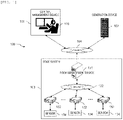
- FIG. 1 is a diagram illustrating a system configuration example of a data analysis system according to a first embodiment.
- a data analysis system 100 includes a central management device 101, a generation device 102, and one or more edge systems 103.
- the central management device 101, the generation device 102, and the edge systems 103 can communicate with one another via a network 104 such as a local area network (LAN), a wide area network (WAN), or the internet.
- LAN local area network
- WAN wide area network
- the central management device 101 manages the edge system 103. Specifically, for example, the central management device 101 controls the edge system 103 by transmitting control data to the edge system 103 based on data acquired from the edge system 103. The central management device 101 may control the edge system 103 according to determination of an operator 110.
- the generation device 102 applies analysis target data from the edge system 103 to a plurality of inference models to infer training data. Then, the generation device 102 generates a learning model by setting, as the training data, an optimal inference result among inference results from the plurality of inference models. The generation device 102 deploys the generated learning model in the edge system 103.
- the edge system 103 includes an edge management device 131 and a plurality of edge devices 132.
- the edge management device 131 manages the plurality of edge devices 132.
- the edge management device 131 can communicate with the plurality of edge devices 132 via an information control network 133 such as the LAN, the WAN, or the internet.
- the edge management device 131 is disposed in an analysis environment in which the analysis target data is acquired, and the edge device 132 is disposed in a specific location in the analysis environment.
- the analysis environment is, for example, a factory or a train.
- the edge device 132 includes a sensor 134.
- the sensor 134 detects the analysis target data from the analysis environment.
- the sensor 134 is, for example, a camera that images a still image or a moving image.
- the sensor 134 may detect a voice or an odor.
- the edge device 132 acquires the analysis target data detected by the sensor 134 from the sensor 134, and transmits the analysis target data to the edge management device 131.
- the edge device 132 infers the analysis target data by inputting the analysis target data to the learning model deployed by the generation device 102, and transmits an inference result to the edge management device 131.
- the edge management device 131 can be applied to work monitoring of a worker in the factory, defect inspection of a product, and the like by using the inference result.
- the edge management device 131 can be applied to monitoring of passengers in a train, monitoring of in-vehicle equipment, detection of disaster such as fire, and the like by using the inference result.
- the edge device 132 transmits the analysis target data to the generation device 102 via the edge management device 131. Accordingly, the generation device 102 can apply the analysis target data from the edge system 103 to the plurality of inference models to infer the training data.
- the central management device 101, the generation device 102, the edge management device 131, and at least two of the edge devices 132 may be implemented by one computer.
- a process of the function may be executed by each of the plurality of computers.
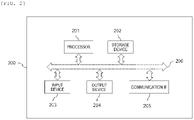
- FIG. 2 is a block diagram illustrating a hardware configuration example of the computer (the central management device 101, the generation device 102, the edge management device 131, and the edge devices 132).
- a computer 200 includes a processor 201, a storage device 202, an input device 203, an output device 204, and a communication interface (communication IF) 205.
- the processor 201, the storage device 202, the input device 203, the output device 204, and the communication IF 205 are connected by a bus 206.
- the processor 201 controls the computer 200.
- the storage device 202 serves as a work area of the processor 201.
- the storage device 202 is a non-transitory or transitory recording medium that stores various programs and data.
- Examples of the storage device 202 include a read only memory (ROM), a random access memory (RAM), a hard disk drive (HDD), and a flash memory.
- the input device 203 inputs data. Examples of the input device 203 include a keyboard, a mouse, a touch panel, a numeric keypad, and a scanner.
- the output device 204 outputs the data. Examples of the output device 204 include a display, and a printer.
- the communication IF 205 is connected to a network and transmits and receives the data.
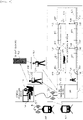
- FIG. 3 is a diagram illustrating an analysis environment example 1.
- the analysis environment example 1 is in a factory 300.
- workers 301, work robots 302, and a work lane 303 are in the factory 300.
- a monitoring camera (hereinafter, referred to as a monitoring camera 134) also exists as an example of the sensor 134.
- the monitoring camera 134 images the workers 301, the work robots 302, and the work lane 303 in the factory 300.
- the monitoring camera 134 transmits an imaged still image or moving image of the factory 300 as the analysis target data to the edge device 132 at a connection destination.
- the edge device 132 infers the analysis target data, and transmits the inference result to the edge management device 131 together with an imaging time of the analysis target data. Accordingly, the edge management device 131 can perform the work monitoring of the worker and the defect inspection of the product in the factory 300 by using the inference result.
- FIG. 4 is a diagram illustrating an analysis environment example 2.
- the analysis environment example 2 is in a train 401.
- the train 401 (the same applies to another train 402) includes a cab 411 for operating the train 401, entrances 412, seats 413, the edge management device 131, the edge devices 132, a wireless transceiver 414, the information control network 133, and the monitoring cameras 134.
- the wireless transceiver 414 communicably connects the edge management device 131 and another train 402 or the central management device 101.
- the monitoring camera 134 transmits an imaged still image or moving image of the train 401 as the analysis target data to the edge device 132 at the connection destination.
- the edge device 132 infers the analysis target data, and transmits the inference result to the central management device 101 together with an imaging time of the analysis target data via the edge management device 131.
- the edge management device 131 can determine, for example, an abnormality in the train 401, such as falling of a person 415 in the train 401, and can notify a crew member 416 in the train 401 of a judgment result by a speaker in the train 401 or notify a terminal carried by the crew member 416 of the judgment result.
- the crew member 416 who receives the notification will take appropriate measures such as rescue.
- the edge management device 131 determines, for example, a possibility of the rescue in which another train 402 needs to stop, and transmits management data indicating the determination result to the central management device 101.
- the central management device 101 specifies another train 402 that needs to be stopped, and transmits control data for stopping the train to the edge management device 131 of the specified another train 402.
- the edge management device 131 in the other train 402 notifies the crew member 416 of the stop of the operation or executes the control of stopping the operation of the other train 402.
- the central management device 101 may automatically generate the control data for stopping the train based on the determination result, and may generate the control data for stopping the train according to determination of the operator 110 as a result of displaying the judgment result.
- the inference result from the edge device 132 and a determination target of the edge management device 131 are not limited to necessity of the rescue, and may be, for example, troubles such as a fight between passengers in the train 401, a damage to train parts such as windows and the entrances, and a fire in the train 401, and the like.
- a communication band of the wireless transceiver 414 may be lower than a predetermined band.
- data in the edge management device 131 is stored in the portable storage device 202, and a maintenance worker 430 carries the storage device 202 and connects the storage device 202 to the generation device 102.
- data in the generation device 102 is stored in the portable storage device 202, and the maintenance worker 430 carries the storage device 202 and connects the storage device 202 to the edge management device 131.
- data transmission and reception using the wireless transceiver 414 may be executed instead of carrying the storage device 202 by the maintenance worker 430.
- the data transmission and reception using the wireless transceiver 414 may be executed instead of carrying the storage device 202 by the maintenance worker 430.
- An application destination of the edge system 103 is not limited to only the train 401, and may be applied to other moving means such as a bus, an airplane, and a ship.
- FIG. 5 is a block diagram illustrating a functional configuration example of the edge system 103 according to the first embodiment.
- the edge device 132 includes a data acquisition unit 501, an accumulation control unit 502, and an edge information inference unit 503.
- the data acquisition unit 501, the accumulation control unit 502, and the edge information inference unit 503 are, for example, functions implemented by causing the processor 201 to execute the programs stored in the storage device 202.
- the data acquisition unit 501 acquires the analysis target data detected by the sensor 134.
- the data acquisition unit 501 outputs the acquired analysis target data to the accumulation control unit 502 and the edge information inference unit 503.
- the accumulation control unit 502 performs capacity compression or encryption on the analysis target data to convert the analysis target data into a predetermined format. For example, if the analysis target data is a moving image, the accumulation control unit 502 converts the analysis target data into a format of moving image in unit of a frame, and if the analysis target data is a still image, the accumulation control unit 502 converts the analysis target data into a format of a still image of one frame. In the conversion, the accumulation control unit 502 may add an acquisition time of the analysis target data to the analysis target data. The accumulation control unit 502 transmits the analysis target data to a data accumulation unit of the edge management device 131 via the information control network.
- the accumulation control unit 502 may manage a use capacity of the edge device 132 in a data accumulation unit 504, and when the use capacity reaches a predetermined capacity, the accumulation control unit 502 may execute a process of stopping accumulation of new data or a process of deleting data with an oldest acquisition time in order.
- the edge information inference unit 503 infers an object and an action of the object from the analysis target data, and transmits the inference result to an edge management unit 506 via the information control network 133.
- the inference of the edge information inference unit 503 is executed by inputting the analysis target data to the learning model deployed by the generation device 102.
- the edge information inference unit 503 may transmit the inference result to the data accumulation unit 504 via the information control network 133.
- the edge management device 131 includes the data accumulation unit 504, a learning model deployment unit 505, and the edge management unit 506.
- the data accumulation unit 504, the learning model deployment unit 505, and the edge management unit 506 are, for example, functions implemented by causing the processor 201 to execute the programs stored in the storage device 202.
- the data accumulation unit 504 accumulates, in the storage device 202, the analysis target data output from the accumulation control unit 502 and the inference result output from the edge information inference unit 503.
- the data accumulation unit 504 transmits the accumulated data to the generation device 102.
- a communication path between the edge management device 131 and the generation device 102 is formed in real time, and the data accumulated in the data accumulation unit 504 is transmitted to the generation device 102 through the communication path.
- the communication path between the edge management device 131 and the generation device 102 allows communication only in a certain period of time, and during this period of time, the data accumulated in the data accumulation unit 504 may be collectively transmitted to the generation device 102.
- the maintenance worker 430 may remove the storage device 202 connected to the data accumulation unit 504, carry the storage device 202 to the generation device 102, and connect the storage device 202 to the generation device 102. In this case, the maintenance worker 430 connects another storage device 202 to the data accumulation unit 504.
- the learning model deployment unit 505 outputs the learning model generated by the generation device 102 to the edge information inference unit 503 via the information control network 133, and deploys the learning model as an inference model. Accordingly, the edge information inference unit 503 can infer a current object and an action of the object from the analysis target data from the sensor 134 by using the newly deployed inference model.
- the edge management unit 506 determines the abnormality of the above analysis environments based on the inference result from the edge information inference unit 503. When it is determined that there is an abnormality, the edge management unit 506 transmits the management data indicating that there is an abnormality to the central management device 101. Further, the edge management unit 506 executes a process corresponding to the control data from the central management device 101. For example, as described above, the edge management unit 506 notifies the crew member of the stop of the train or executes the control of stopping the operation.
- FIG. 6 is a block diagram illustrating a functional configuration example of the generation device 102 according to the first embodiment.
- the generation device 102 includes a training data inference unit 601, a training data determination unit 602, a training data set generation unit 603, a learning model determination unit 604, a learning unit 605, and a learning model judgment unit 606.
- the training data inference unit 601, the training data determination unit 602, the training data set generation unit 603, the learning model determination unit 604, the learning unit 605, and the learning model judgment unit 606 are functions implemented by causing the processor 201 to execute the programs stored in the storage device 202.
- the training data inference unit 601 inputs the analysis target data to each of a plurality of trained inference models 701 prepared in advance, and outputs an inference result 702 from each of the plurality of inference models 701 to the training data determination unit 602. Details of the training data inference unit 601 will be described later with reference to FIG. 7 .
- the training data determination unit 602 determines whether each of the plurality of inference results 702 from the training data inference unit 601 is appropriate as the training data, and outputs a specific inference result 702 determined to be appropriate to the training data set generation unit 603 as the training data. Further, the training data determination unit 602 outputs the specific inference model 701 that is a generation source of the training data to the learning model determination unit 604. Details of the training data determination unit 602 will be described later with reference to FIGS. 7 and 8 .
- the training data set generation unit 603 aggregates the training data sequentially received from the training data determination unit 602, and outputs the aggregated training data as a training data set to the learning unit 605. Details of the training data set generation unit 603 will be described later with reference to FIG. 7 .
- the learning model determination unit 604 determines a specific inference model (hereinafter, referred to as a learning model) to be output to the learning unit 605 from the plurality of specific inference models sequentially received from the training data determination unit 602. Details of the learning model determination unit 604 will be described later with reference to FIG. 7 .
- a specific inference model hereinafter, referred to as a learning model
- the learning unit 605 trains the learning model, such that the training data set can be inferred, through machine learning such as deep learning by using the training data set generated by the training data set generation unit 603 and the learning model determined by the learning model determination unit 604, and the learning unit 605 outputs the learning model to the learning model judgment unit 606.
- a function for outputting an error between the specific inference result of the training data set and a new inference result obtained from the specific inference model 701 during learning using the training data set is a loss function.
- the learning unit 605 repeats learning such that the loss function decreases.
- the learning unit 605 also outputs the loss function to the learning model judgment unit 606.
- the learning model judgment unit 606 holds test data that is not used in training in the learning unit 605.
- the learning model judgment unit 606 judges the pass/fail of the learning model by using inference accuracy of the learning model using the test data and the loss function using the test data.
- the learning model judgment unit 606 outputs the learning model to the learning model deployment unit 505 of the edge management device 131.
- the learning model judgment unit 606 judges whether the inference accuracy included in a learning result output from the learning model when the test data is input to the learning model is equal to or higher than predetermined inference accuracy. If the inference accuracy is equal to or higher than the predetermined inference accuracy, the learning model judgment unit 606 judges that the learning model passes, and outputs the learning model to the learning model deployment unit 505 of the edge management device 131.
- the learning model judgment unit 606 judges whether a value of the loss function, which uses the inference result obtained when the analysis target data is input to the learning model and the learning result obtained when the test data is input to the learning model, is equal to or less than a predetermined threshold value. If the value is equal to or less than the predetermined threshold value, the learning model judgment unit 606 judges that the learning model passes, and outputs the learning model to the learning model deployment unit 505 of the edge management device 131.
- the learning model judgment unit 606 may use at least one of the inference accuracy of the learning model using the test data, and the loss function.
- both of the inference accuracy of the learning model using the test data, and the loss function are used by the learning model judgment unit 606, if the inference accuracy included in the learning result output from the learning model when the test data is input to the learning model is equal to or higher than the predetermined inference accuracy, and the value of the loss function described above is equal to or less than the predetermined threshold value, the learning model judgment unit 606 may judge that the learning model passes, and output the learning model to the learning model deployment unit 505 of the edge management device 131.
- the learning model judgment unit 606 may judge that the learning model passes, and output the learning model to the learning model deployment unit 505 of the edge management device 131.
- the learning model judgment unit 606 outputs data indicating that fact.
- the training data determination unit 602 determines whether each of the plurality of pieces of training data from the training data inference unit 601 is appropriate as training data by a method different from a method used in the previous determination.
- the learning model judgment unit 606 may input new analysis target data 700 to the training data inference unit 601 and instruct the training data inference unit 601 to infer the training data.
- the learning model judgment unit 606 may instruct the training data determination unit 602 to change a derivation method of training data 703. Specifically, for example, by making a movement amount Ldis of the following formulas (1A) to (1N) smaller, the training data 703 in which movement amounts Adis to Ndis is equal to or greater than the predetermined movement amount Ldis, and such an object detection result 802 is excluded as inappropriate as the training data 703. Therefore, highly accurate training data 703 can be obtained.
- the learning model determination unit 604 outputs, as a learning model 704, a specific inference model, that outputs a largest amount of training data 703 among inference models 701A to 701N illustrated in FIG. 7 , to the learning unit 605. Therefore, in another method, when the learning model 704 does not satisfy the predetermined inference accuracy, the learning model judgment unit 606 may instruct the learning model determination unit 604 to output the specific inference model that outputs a next largest amount of training data 703 to the learning unit 605 as the learning model 704, as another method.
- the learning model determination unit 604 may change the predetermined inference accuracy. For example, when there is no learning model that satisfies the predetermined inference accuracy, the learning model judgment unit 606 lowers the predetermined inference accuracy. When there is a predetermined number or more of learning models that satisfy the predetermined inference accuracy, the learning model judgment unit 606 may increase the predetermined inference accuracy to limit the number of learning models that satisfy the predetermined inference accuracy.
- the communication path between the edge management device 131 and the generation device 102 is formed in real time, and the data from the generation device 102 is transmitted to the edge management device 131 through the communication path.
- the communication path between the edge management device 131 and the generation device 102 allows communication only in a certain period of time, and during this period of time, the data from the generation device 102 may be collectively transmitted to the edge management device 131.
- the maintenance worker 430 may remove the storage device 202 connected to the generation device 102, carry the storage device 202 to the edge management device 131, and connect the storage device 202 to the edge management device 131. In this case, the maintenance worker 430 connects another storage device 202 to the generation device 102.
- FIG. 7 is a diagram illustrating an operation example of the generation device 102 according to the first embodiment.
- the analysis target data 700 is, for example, an image frame detected by the sensor 134, transmitted via the edge device 132, the information control network 133, and the edge management device 131, and received by the generation device 102.
- the analysis target data 700 is input to the training data inference unit 601.
- the training data inference unit 601 holds the plurality of trained inference models 701A to 701N prepared in advance.
- Each of the inference models 701A to 701N is, for example, a model obtained by combining a skeleton detection model for inferring a shape of an object reflected in the analysis target data 700 (for example, a skeleton if the object is a person.
- the shape of the object is referred to as "skeleton" regardless of whether the object is a person or an object) and an object detection model for detecting the object reflected in the analysis target data 700.
- the inference models 701A to 701N are not limited to such a model.
- inference models 701A to 701N Functions of the inference models 701A to 701N are the same, but algorithms used for inference, such as the number of stages of neural networks, are different from one another. Therefore, inference results 702A to 702N and inference accuracy output together with the inference results 702A to 702N may be different from one another.
- the inference models 701A to 701N are simply referred to as the inference model 701.
- the analysis target data 700 is input to the inference models 701A to 701N, and the training data inference unit 601 outputs the inference results 702A to 702N from the inference models 701A to 701N.
- the inference results 702A to 702N are simply referred to as the inference result 702.
- Each of the inference results 702A to 702N includes a skeleton detection result and an object detection result.
- the training data inference unit 601 outputs the inference results 702A to 702N to the training data determination unit 602.
- the training data determination unit 602 determines whether each of the plurality of inference results 702A to 702N inferred by the training data inference unit 601 is appropriate as the training data, and outputs the specific inference result 702 determined to be appropriate to the training data set generation unit 603 as the training data 703. The details of the training data determination unit 602 will be described later with reference to FIG. 8 .
- the training data set generation unit 603 generates the training data set by associating the analysis target data 700 with the training data 703. Each time the analysis target data 700 is input to the generation device 102, the training data set generation unit 603 generates a training data set and adds the training data set to the training data set generated so far. The training data set generation unit 603 outputs the aggregated training data set to the learning unit 605.
- the learning model determination unit 604 determines the learning model 704 from the plurality of inference models 701 sequentially received from the training data determination unit 602. Specifically, for example, the learning model determination unit 604 outputs, as the learning model 704, the specific inference model 701, that outputs the largest amount of training data 703 (specific inference results 702) among the inference models 701A to 701N, to the learning unit 605. That is, the inference model 701 having the largest number of outputs of the training data 703 (specific inference results 702) is determined as the specific inference model 701.
- the specific inference model 701 is not limited to the inference model 701 having the largest number of outputs, and the learning model determination unit 604 may determine any one of the inference models 701 of which the number of outputs is not the minimum, as the specific inference model 701.
- the learning model determination unit 604 may output, as the learning model 704, the specific inference model 701 that outputs the largest amount of training data 703 among the inference models 701A to 701N having a determined number of stages of neural networks, to the learning unit 605.
- the learning model determination unit 604 may output a predetermined inference model 701 to the learning unit 605 as the learning model 704.
- the training data determination unit 602 determines whether each of the plurality of inference results 702A to 702N inferred by the training data inference unit 601 is appropriate as the training data, and outputs the specific inference result 702 determined to be appropriate to the training data set generation unit 603 as the training data 703.
- FIG. 8 is a diagram illustrating an example of a data structure of the inference results 702 for a plurality of frames accumulated in the training data determination unit 602.
- FIG. 8 an example in which n frames as the analysis target data 700 are processed for each inference model 701 is illustrated.
- a data structure 800 includes skeleton detection results 801A to 801N and object detection results 802A to 802N for each frame for each inference model 701.
- the skeleton detection results 801A to 801N are simply referred to as a skeleton detection result 801.
- object detection results 802A to 802N are simply referred to as the object detection result 802.
- the skeleton detection result 801 is data indicating a skeleton of an object in the analysis target data 700. Specifically, for example, “Skelton A” to “Skelton N" in the inference results 702A to 702N illustrated in FIG. 7 are the skeleton detection results 801A to 801N.
- FIG. 9 is a diagram illustrating a specific example of the skeleton detection result 801.
- the skeleton detection result 801 is, for example, a skeleton data group of the object detected from the analysis target data 700.
- (A) of FIG. 9 illustrates the skeleton detection result 801 of an object of a type "person".
- the skeleton detection result 801 includes a plurality of (eleven as an example of FIG. 9 ) skeleton points 900 to 910.
- (B) is a data structure 920 of the skeleton detection result 801 showing X-axis coordinate values 921, Y-axis coordinate values 922, and inference accuracy 923 of the skeleton points 900 to 910.
- the object detection result 802 includes a classification indicating the type of the detected object, inference accuracy of the object in the classification, a detection start point and a detection end point indicating a position of the detected object, among the analysis target data 700. Specifically, for example, "person" and" bag” in the inference result 702A illustrated in FIG.
- the training data determination unit 602 calculates the movement amounts Adis to Ndis of the object detected between frames according to the following formulas (1A) to (1N) by using the detection start points and the detection end points among the object detection result 802, and compares the calculated movement amounts Adis to Ndis with the predetermined movement amount Ldis.
- Adis Ax 1 1
- frame n ⁇ 1 Ax 1 1
- frame n 2 + Ay 1 1
- frame n ⁇ 1 Ay 1 1
- frame n 2 ⁇ Ldis 1
- a Bdis Bx 1 1
- frame n ⁇ 1 Bx 1 1
- frame n 2 + By 1 1
- frame n ⁇ 1 By 1 1
- frame n 2 ⁇ Ldis 1
- B Ndis Nx 1 1
- frame n ⁇ 1 Nx 1 1
- frame n 2 + Ny 1 1
- frame n ⁇ 1 Ny 1 1
- frame n 2 ⁇ Ldis 1 N
- the training data determination unit 602 stores the object detection result 802 as a candidate of the training data 703 to be output to the training data set generation unit 603. Meanwhile, if the movement amounts Adis to Ndis are equal to or greater than the predetermined movement amount Ldis, the training data 703 is determined to be inappropriate, and the object detection result 802 is excluded.
- the training data determination unit 602 calculates the movement amount between the adjacent frames, and may calculate movement amount between frames by using detection start points and detection end points in several previous frames.
- the training data determination unit 602 may average the movement amounts Adis to Ndis by using the detection start points and the detection end points of the plurality of frames. Accordingly, the method of calculating the movement amounts Adis to Ndis between frames is not limited.
- the training data determination unit 602 may determine that the object detection result 802 indicating a classification of a minority is inappropriate as the training data, and exclude the object detection result 802.
- the training data determination unit 602 determines that all the object detection results 802 are inappropriate as the training data, excludes the object detection results 802, and does not use the inference result 702 from the frame for the training data.
- the training data determination unit 602 may output the inference result 702 having a highest inference accuracy among the object detection results 802 of which the movement amounts Adis to Ndis between frames are smaller than the predetermined movement amount Ldis, as the training data 703 to the training data set generation unit 603.
- the training data 703 is not limited to the inference result 702 having the highest inference accuracy, and may be an inference result 702 of which the inference accuracy is equal to or greater than a threshold value, and may be an inference result 702 of which the inference accuracy is up to a top M inference accuracy (M is an integer of 1 or more) .
- the training data determination unit 602 may calculate a detection start point and a detection end point to be output as the training data 703 based on the detection start point and the detection end point accompanying the inference accuracy of each inference model 701 using the magnitude of the inference accuracy as an expected value. Accordingly, the method of calculating the training data 703 to be output by the training data determination unit 602 is not limited.
- the training data determination unit 602 may set a threshold value in advance for the inference accuracy, and may exclude the object detection result 802 by determining that the object detection result 802 that does not satisfy the threshold value is inappropriate as the training data 703.
- the skeleton detection result 801 includes the plurality of skeleton points 900 to 910 and the inference accuracy 923 thereof.
- the training data determination unit 602 calculates a sum of movement amounts between frames of the skeleton points 900 to 910 of the skeleton detection result 801 inferred by the inference models 701A to 701N according to the following formula (2) (a left side of the following formula (2)), and compares the calculated sum of the movement amounts with a predetermined movement amount LSumKey.
- the training data determination unit 602 stores the skeleton detection result 801 as a candidate of the inference result 702 to be output to the training data set generation unit 603. Meanwhile, if the calculated sum of movement amounts is equal to or greater than the movement amount LSumkey, the training data determination unit 602 determines that the skeleton detection result 801 is inappropriate as the training data 703, and excludes the skeleton detection result 801.
- the training data determination unit 602 calculates the sum of the movement amounts between the adjacent frames, but the training data determination unit 602 may calculate the movement amount between frames using the skeleton points 900 to 910 in several previous frames, and may calculate the movement amount between frames by averaging the movement amounts between frames of a plurality of frames, and the calculation method of the movement amount between frames is not limited.
- the training data determination unit 602 may output, the inference result 702 having a highest sum of the inference accuracy 923 among the skeleton detection results 801 in which the sum of the movement amounts between frames is smaller than the movement amount LSumKey, as the training data 703 to the training data set generation unit 603.
- the training data 703 is not limited to the inference result 702 having the highest sum of the inference accuracy 923, and may be an inference result 702 in which the sum of the inference accuracy 923 is equal to or greater than a threshold value, and may be an inference result 702 in which the sum of the inference accuracy 923 is up to a top M inference accuracy (M is an integer of 1 or more).
- the training data determination unit 602 may calculate the skeleton detection result 801 to be output as the training data 703 from the skeleton detection result 801 accompanying the inference accuracy 923 of each inference model 701 using the magnitude of the inference accuracy 923 as an expected value. Accordingly, the method of calculating the training data 703 to be output by the training data determination unit 602 is not limited.
- the training data determination unit 602 may not use the skeleton detection result 801 for each inference model 701, and as shown in the following formula (3), the training data determination unit 602 may calculate the movement amount between frames (a left side of the following formula (3)) in unit of the skeleton detection result 801, and compare the calculated movement amounts with a movement amount LKey.
- frame n ⁇ 1 ⁇ x i
- frame n 2 + y i
- frame n ⁇ 1 ⁇ y i
- frame n 2 ⁇ LKey 0 ⁇ n ⁇ 10
- the training data determination unit 602 stores the skeleton detection result 801 as the candidate of the training data 703 to be output to the training data set generation unit 603. Meanwhile, if the calculated movement amounts are equal to or greater than the movement amount Lkey, the training data determination unit 602 determines that the skeleton detection result 801 is inappropriate as the training data 703, and excludes the skeleton detection result 801.
- the training data determination unit 602 may exclude the skeleton detection result 801 even if one of the calculated movement amounts is equal to or greater than the movement amount LKey, and may exclude the skeleton detection result 801 if a predetermined number or more of the calculated movement amounts is equal to or larger than the movement amount LKey.
- the training data determination unit 602 calculates the movement amounts between the adjacent frames, but the training data determination unit 602 may calculate the movement amount between frames using the skeleton points 900 to 910 in several previous frames, and may calculate the movement amount between frames by averaging the movement amounts between frames of a plurality of frames, and the calculation method of the movement amount between frames is not limited.
- the inference result 702 having the highest sum of the inference accuracy among the object detection results 802 in which the movement amounts calculated in unit of the skeleton detection result 801 are smaller than the movement amount LKey may be output as the training data 703 to the training data set generation unit 603.
- the training data determination unit 602 may calculate the skeleton detection result 801 to be output as the training data 703 from the skeleton detection result 801 accompanying the inference accuracy 923 of each inference model 701 using the magnitude of the inference accuracy 923 as an expected value. Accordingly, the method of calculating the training data 703 to be output by the training data determination unit 602 is not limited.
- S n S0 to S10
- the training data determination unit 602 may exclude the skeleton detection result 801 if even one inference accuracy Sn does not satisfy the threshold value LS, and may exclude the skeleton detection result 801 if a predetermined number or more of the inference accuracy Sn does not satisfy the threshold value LS.
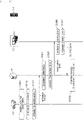
- FIG. 10 is a sequence diagram illustrating an operation sequence example 1 of the data analysis system according to the first embodiment.
- the operation sequence example 1 is an operation sequence example in which the central management device 101 controls the edge system 103 according to information from the edge system 103.
- the edge device 132 acquires the analysis target data 700 by the data acquisition unit 501 (step S1001), and executes the inference by the edge information inference unit 503 (step S1002). Then, the edge device 132 transmits the inference result to the edge management device 131 (step S1003).
- the edge management device 131 determines, by the edge management unit 506, the abnormality of the analysis environment based on the inference result (step S1004), and transmits the management data indicating that there is an abnormality to the central management device 101 (step S1005) when it is determined that there is an abnormality.
- the central management device 101 generates, based on the management data, the control data for controlling the edge system 103 (step S1006), and transmits the control data to the edge management device 131 (step S1007).
- the edge management device 131 executes the process corresponding to the control data from the central management device 101 by the edge management unit 506 (step S1008). For example, as described above, the edge management unit 506 notifies the crew member of the stop of the train or executes the control of stopping the operation.
- FIG. 11 is a sequence diagram illustrating an operation sequence example 2 of the data analysis system 100 according to the first embodiment.
- the operation sequence example 2 is an operation sequence example in which the training data is generated based on the analysis target data 700 from the edge system 103, the learning model 704 is further generated, and the learning model 704 is returned to the edge device 132.
- the operation sequence example 2 may be executed at the same timing as in the operation sequence example 1 at which the analysis target data 700 is acquired, or may be executed at a different timing.
- the edge device 132 acquires the analysis target data 700 by the data acquisition unit 501 (step S1001), and transmits the acquired analysis target data 700 to the edge management device 131 by the accumulation control unit 502 (step S1102).
- the edge management device 131 accumulates the analysis target data 700 from the edge device 132 by the data accumulation unit 504 (step S1103).
- the edge management device 131 transmits the analysis target data 700 to the generation device 102 (step S1104).
- the generation device 102 Upon receiving the analysis target data 700, the generation device 102 executes the inference by the training data inference unit 601 (step S1105). Then, the generation device 102 executes a learning process (step S1106). Details of the learning process (step S1106) will be described later with reference to FIG. 12 . After the learning process (step S1106), the generation device 102 transmits the learning model 704 obtained by the learning process (step S1106) to the edge management device 131 (step S1107) .
- the edge management device 131 Upon receiving the learning model 704, the edge management device 131 deploys the learning model 704 in the edge device 132 that is a transmission source of the analysis target data 700 (step S1108). Accordingly, the edge device 132 can execute an edge inference of FIG. 10 by using the deployed learning model 704.
- FIG. 12 is a flowchart illustrating a detailed process procedure example of the learning process (step S1106) illustrated in FIG. 11 .
- the generation device 102 determines, by the training data determination unit 602, whether each of the plurality of inference results 702A to 702N from the training data inference unit 601 is appropriate as training data, and outputs the inference result 702 determined to be appropriate to the training data set generation unit 603 as the training data.
- the training data determination unit 602 outputs the specific inference model 701 that is a generation source of the training data to the learning model determination unit 604 (step S1201).
- the generation device 102 aggregates the training data sequentially received from the training data determination unit 602 by the training data set generation unit 603, and outputs the aggregated training data as a training data set to the learning unit 605 (step S1202).
- the generation device 102 determines the learning model 704 from the plurality of specific inference models 701 sequentially received from the training data determination unit 602 by the learning model determination unit 604 (step S1203).
- the generation device 102 trains, by the learning unit 605, the learning model 704, such that the training data set can be inferred, by machine learning such as deep learning by using the training data set generated by the training data set generation unit 603 and the learning model 704 determined by the learning model determination unit 604, and the generation device 102 outputs the learning model 704 to the learning model judgment unit 606 (step S1204).
- the generation device 102 calculates, by the learning model judgment unit 606, the inference accuracy of the learning model 704 when the test data is used, and judges whether the learning model 704 satisfies the predetermined inference accuracy by using the inference accuracy and the loss function from the learning unit 605 (step S1205). If the predetermined inference accuracy is satisfied (step S1206: Yes), the process proceeds to step S1107.
- step S1206 if the learning model 704 does not satisfy the predetermined inference accuracy (step S1206: No), the generation device 102 outputs data indicating that fact to the training data determination unit 602 by the learning model judgment unit 606. In this case, the generation device 102 changes, by the training data determination unit 602, the determination method to a determination method different from the determination method used for the previous determination (step S1207), and the process returns to step S1201.
- the generation device 102 can execute the training data determination with a new determination method by the training data determination unit 602 (step S1201). Further, instead of changing the determination method, a learning model determination method (step S1203) or a learning model judgment method may be changed.
- the first embodiment quality of the training data set can be improved by the generation device 102.
- a generation speed of a high-quality training data set can be improved by the generation device 102.
- continuous performance improvement of the data analysis system 100 using machine learning can be achieved.
- the first embodiment can be implemented in the factory 300 in which work of the work robot 302 or the worker 301 is monitored, and can also be implemented in a transfer means such as the train 401.
- a second embodiment will be described focusing on differences from the first embodiment. Points common to the first embodiment are denoted by the same reference numerals, and description thereof is omitted.
- the learning models 704 deployed in the plurality of edge devices 132 installed inside the train 401 are different depending on the train 401 and positions where the edge devices 132 are deployed. For example, the learning model 704 deployed in the edge device 132 installed in a female dedicated vehicle in the train 401 is different from the learning model 704 deployed in the edge device 132 installed in other general vehicles.
- FIG. 13 is a diagram illustrating an analysis environment example 3.
- the analysis environment example 3 is in the train 401 as the analysis environment example 2.
- the plurality of edge devices 132 are, for example, six edge devices 132A to 132F.
- the generation device 102 includes an address information table 1300.
- the address information table 1300 includes edge IDs 1301 and addresses 1302 as fields.
- the edge ID 1301 is identification information for uniquely specifying the edge device 132.
- a reference numeral of the edge device 132 is used as the edge ID 1301.
- the addresses 1302 are unique physical addresses adrA to adrF assigned to the edge devices 132.
- the learning model 704 deployed in the edge information inference unit 503 may be different depending on a deviation of the analysis target data 700 acquired by the sensor 134. Specifically, for example, different learning models 704 may be deployed for each deviation of the analysis target data 700. Further, different learning models 704 may be deployed depending on the installation positions of the edge device 132 and the sensor 134 in the vehicle.
- the type of the learning model 704 may be limited as the overall learning time increases. In this case, different learning models 704 may be deployed depending on the deviation of the analysis target data 700 among the limited types.
- FIG. 14 is a block diagram illustrating a functional configuration example of the generation device 102 according to the second embodiment.
- the generation device 102 according to the second embodiment includes a completeness determination unit.
- the completeness determination unit has, for example, a function implemented by causing the processor 201 to execute a program stored in the storage device 202.
- the accumulation control unit 502 of the edge device 132 accumulates the analysis target data 700 detected by the sensor 134 in the data accumulation unit 504 of the edge management device 131 in association with the address 1302.
- a completeness determination unit 1400 analyzes the deviation of the analysis target data 700 from the edge management device 131 for each address 3102 of the edge device 132. Specifically, for example, the completeness determination unit 1400 includes an age inference model and a gender inference model, and inputs the analysis target data 700 to these models. The completeness determination unit 1400 determines whether there is a certain deviation in features indicated by analysis results from the age inference model and the gender inference model, such as age and gender, for each address 1302. Then, the completeness determination unit 1400 associates information indicating the presence or absence of a certain deviation with the address 1302, and outputs the analysis target data 700 to the training data inference unit 601.
- the training data set generation unit 603 generates a training data set by distinguishing an address 1302 having a certain deviation and an address 1302 having no certain deviation.
- the learning model determination unit 604 also determines the learning model 704 from a plurality of specific inference models sequentially received from the training data determination unit 602 by distinguishing the address 1302 having a certain deviation and the address 1302 having no certain deviation.
- the learning unit 605 also trains the learning model 704 such that the training data set can be inferred, by distinguishing the address 1302 having a certain deviation and the address 1302 having no certain deviation, and outputs the learning model 704 to the learning model judgment unit 606.
- the learning unit 605 generates a loss function by distinguishing the address 1302 having a certain deviation and the address 1302 having no certain deviation, and outputs the loss function to the learning model judgment unit 606.
- the learning model judgment unit 606 holds test data that is not used in training in the learning unit 605, by distinguishing the address 1302 having a certain deviation and the address 1302 having no certain deviation.
- the learning model judgment unit 606 judges whether the learning model 704 satisfies predetermined inference accuracy by using inference accuracy of the learning model 704 using the test data and the loss function, and distinguishing the address 1302 having a certain deviation and the address 1302 having no certain deviation.
- the learning model judgment unit 606 outputs the learning model 704 to the learning model deployment unit 505 of the edge management device 131. Meanwhile, if the learning model 704 does not satisfy the predetermined inference accuracy, the learning model judgment unit 606 outputs data indicating that fact to the training data determination unit 602. In this case, the training data determination unit 602 determines whether each of the plurality of pieces of training data from the training data inference unit 601 is appropriate as training data by a method different from a method used in the previous determination.
- the generation device 102 transmits the learning model 704 to the learning model deployment unit 505 of the edge management device 131.
- the learning model deployment unit 505 deploys the generated learning model 704 in the edge device 132 that acquired the analysis target data 700 that is a generation source of the training data set.
- the generation device 102 when the deviation is found in the features indicated by the age inference model and the gender inference model for the analysis target data 700 obtained from the edge device 132, the generation device 102 generates the learning model 704 using only the analysis target data 700 acquired from the edge device 132, and the edge management device 131 deploys the learning model 704 only in the edge device 132. In this manner, inference precision of the edge device 132 having other features can be prevented from being adversely affected by the edge device 132 that acquires the analysis target data 700 with a high deviation, and the inference precision of the edge device 132 that acquires the analysis target data 700 having a deviation can be improved.
- an attribute handled by the model for generating the analysis result is not limited to the age and the gender, and a model for inference or calculation of a time, a weather, or a total light amount at which the analysis target data 700 is acquired may be applied.
- the edge device 132 even when the deviation occurs in the features of the analysis target data 700 acquired according to the position of the edge device 132 to be deployed, inference precision of the other edge device 132 can be prevented from being adversely affected by the edge device 132 that acquires the analysis target data 700 with a high deviation, and the inference precision of the edge device 132 that acquires the analysis target data 700 having a deviation can be improved.
- the invention is not limited to the above embodiments and includes various modifications and equivalent configurations within the spirit of the claims.
- the above embodiments have been described in detail in order to make the invention easy to understand, and the invention is not necessarily limited to those which have all the configurations described.
- a part of the configurations of an embodiment may be replaced with configurations of other embodiments.
- the configuration of another embodiment may be added to the configuration of the certain embodiment.
- a part of the configuration of each embodiment may be added to, deleted from, or replaced with another configuration.
- a part or all of the configurations, functions, processing units, processing methods described above and the like may be implemented by hardware, for example by designing with an integrated circuit, or may be implemented by software, for example, by the processor 201 interpreting and executing a program that implements each function.
- Data such as a program, a table, and a file that implements each function can be stored in a storage device such as a memory, a hard disk, and a solid state drive (SSD), or a recording medium such as an integrated circuit (IC) card, an SD card, and a digital versatile disc (DVD).
- a storage device such as a memory, a hard disk, and a solid state drive (SSD), or a recording medium such as an integrated circuit (IC) card, an SD card, and a digital versatile disc (DVD).
- IC integrated circuit
- SD Secure Digital
- DVD digital versatile disc
- Control lines and data lines are shown in consideration of the necessary for description, and not all the control lines and data lines are necessarily shown in a product. In fact, it may be considered that almost all the configurations are connected with one another.
Landscapes
- Engineering & Computer Science (AREA)
- Theoretical Computer Science (AREA)
- Physics & Mathematics (AREA)
- General Physics & Mathematics (AREA)
- Computer Vision & Pattern Recognition (AREA)
- Multimedia (AREA)
- Evolutionary Computation (AREA)
- Artificial Intelligence (AREA)
- Software Systems (AREA)
- Computing Systems (AREA)
- Databases & Information Systems (AREA)
- Medical Informatics (AREA)
- General Health & Medical Sciences (AREA)
- Data Mining & Analysis (AREA)
- Health & Medical Sciences (AREA)
- General Engineering & Computer Science (AREA)
- Bioinformatics & Computational Biology (AREA)
- Life Sciences & Earth Sciences (AREA)
- Bioinformatics & Cheminformatics (AREA)
- Evolutionary Biology (AREA)
- Mathematical Physics (AREA)
- Human Computer Interaction (AREA)
- Probability & Statistics with Applications (AREA)
- Computational Linguistics (AREA)
- Psychiatry (AREA)
- Social Psychology (AREA)
- Image Analysis (AREA)
Abstract
Description
- The present application claims the priority of
Japanese Patent Application No. 2019-215695, which is a Japanese Application filed on November 28, 2019 - The present invention relates to a generation device for generating training data, a data analysis system, a generation method, and a generation program.
- The following
PTL 1 is provided as a background art in this technical field. A data processing device according to the followingPTL 1 includes: a data extracting unit that extracts a training data candidate that is data at a specific timing from time series data; a training data generation unit that generates training data based on a label by which the training data candidate can be classified and the training data candidate; and a training data complement unit that further extracts, based on a degree of change between the specific training data candidate and another training data candidate at a timing before the specific training data candidate in the time series, a training data candidate from the time series data present between the specific training data candidate and the other training data candidate, and the training data generation unit adds a label to the extracted training data candidate, and adds the data to the training data. - PTL1:
JP-A-2016-076073 - In an image analysis device using machine learning, in general, an enormous amount of training data is required in order to achieve high recognition accuracy. The training data is generated, for example, by adding a manual analysis result to an image to be analyzed, but this method requires a lot of man-hours to generate the training data. For this problem, in the technique described in
PTL 1, the quality of the generated training data depends on the recognition accuracy of a training data generation unit, and there is a possibility that the training data having poor quality is generated using the training data generation unit having low accuracy. - An object of the invention is to improve quality of a training data set.
- A generation device according to one aspect of the invention disclosed in the present application is a generation device including a processor configured to execute a program; and a storage device configured to store the program, in which the processor is configured to execute an inference process of inputting analysis target data to a plurality of inference models and outputting a plurality of inference results related to an object included in the analysis target data from the plurality of inference models, a determination process of determining, based on the plurality of inference results, a specific inference result from the plurality of inference results output by the inference process, and a generation process of generating a training data set including the specific inference result determined by the determination process and the analysis target data.
- According to a representative embodiment of the invention, the quality of the training data set can be improved. Problems, configurations, and effects other than those described above will become apparent from the following description of embodiments.
-
- [
FIG. 1] FIG. 1 is a diagram illustrating a system configuration example of a data analysis system according to a first embodiment. - [
FIG. 2] FIG. 2 is a block diagram illustrating a hardware configuration example of a computer. - [
FIG. 3] FIG. 3 is a diagram illustrating an analysis environment example 1. - [
FIG. 4] FIG. 4 is a diagram illustrating an analysis environment example 2. - [
FIG .5] FIG. 5 is a block diagram illustrating a functional configuration example of an edge system according to the first embodiment. - [
FIG. 6] FIG. 6 is a block diagram illustrating a functional configuration example of a generation device according to the first embodiment. - [
FIG. 7] FIG. 7 is a diagram illustrating an operation example of the generation device according to the first embodiment. - [
FIG. 8] FIG. 8 is a diagram illustrating an example of a data structure of inference results for a plurality of frames accumulated in a training data determination unit. - [
FIG. 9] FIG. 9 is a diagram illustrating a specific example of a skeleton detection result. - [
FIG. 10] FIG. 10 is a sequence diagram illustrating an operation sequence example 1 of the data analysis system according to the first embodiment. - [
FIG. 11] FIG. 11 is a sequence diagram illustrating an operation sequence example 2 of the data analysis system according to the first embodiment. - [
FIG. 12] FIG. 12 is a flowchart illustrating a detailed process procedure example of a learning process (step S1106) illustrated inFIG. 11 . - [
FIG. 13] FIG. 13 is a diagram illustrating an analysis environment example 3. - [
FIG. 14] FIG. 14 is a block diagram illustrating a functional configuration example of a generation device according to a second embodiment. - Hereinafter, embodiments of the invention will be described in detail with reference to the drawings. In all the drawings for describing the embodiments, the same components are denoted by the same reference numerals in principle, and repeated description thereof is omitted. In the embodiments described below, it goes without saying that the components (including element steps) are not always indispensable unless otherwise stated or except the case where the components are apparently indispensable in principle. It is needless to say that expressions "formed of A", "made of A", "having A", and "including A" do not exclude elements other than A unless otherwise stated that A is the only element thereof. Similarly, in the embodiments described below, when the shape of the components, positional relation thereof, and the like are mentioned, those substantially approximate and similar shapes and the like are included therein unless otherwise stated or except the case where it can be conceived that they are apparently excluded in principle.
- The terms "first", "second", "third", and the like in the present specification are used to identify the components, and do not necessarily limit numbers, orders, or contents thereof. Numbers for identifying the components are used for each context, and the numbers used in one context do not always indicate the same configuration in other contexts. It does not prevent the component identified by a certain number from having a function of a component identified by another number.
- In order to facilitate understanding of the invention, a position, a size, a shape, a range, etc. of each configuration illustrated in the drawings may not represent an actual position, size, shape, range, etc. Therefore, the invention is not necessarily limited to the position, size, shape, range, etc. disclosed in the drawings.
-
FIG. 1 is a diagram illustrating a system configuration example of a data analysis system according to a first embodiment. Adata analysis system 100 includes acentral management device 101, ageneration device 102, and one ormore edge systems 103. Thecentral management device 101, thegeneration device 102, and theedge systems 103 can communicate with one another via anetwork 104 such as a local area network (LAN), a wide area network (WAN), or the internet. - The
central management device 101 manages theedge system 103. Specifically, for example, thecentral management device 101 controls theedge system 103 by transmitting control data to theedge system 103 based on data acquired from theedge system 103. Thecentral management device 101 may control theedge system 103 according to determination of anoperator 110. - The
generation device 102 applies analysis target data from theedge system 103 to a plurality of inference models to infer training data. Then, thegeneration device 102 generates a learning model by setting, as the training data, an optimal inference result among inference results from the plurality of inference models. Thegeneration device 102 deploys the generated learning model in theedge system 103. - The
edge system 103 includes anedge management device 131 and a plurality ofedge devices 132. Theedge management device 131 manages the plurality ofedge devices 132. Theedge management device 131 can communicate with the plurality ofedge devices 132 via aninformation control network 133 such as the LAN, the WAN, or the internet. Theedge management device 131 is disposed in an analysis environment in which the analysis target data is acquired, and theedge device 132 is disposed in a specific location in the analysis environment. The analysis environment is, for example, a factory or a train. - The
edge device 132 includes asensor 134. Thesensor 134 detects the analysis target data from the analysis environment. Thesensor 134 is, for example, a camera that images a still image or a moving image. Thesensor 134 may detect a voice or an odor. Theedge device 132 acquires the analysis target data detected by thesensor 134 from thesensor 134, and transmits the analysis target data to theedge management device 131. - The
edge device 132 infers the analysis target data by inputting the analysis target data to the learning model deployed by thegeneration device 102, and transmits an inference result to theedge management device 131. When the analysis environment is the factory, theedge management device 131 can be applied to work monitoring of a worker in the factory, defect inspection of a product, and the like by using the inference result. When the analysis environment is the train, theedge management device 131 can be applied to monitoring of passengers in a train, monitoring of in-vehicle equipment, detection of disaster such as fire, and the like by using the inference result. - The
edge device 132 transmits the analysis target data to thegeneration device 102 via theedge management device 131. Accordingly, thegeneration device 102 can apply the analysis target data from theedge system 103 to the plurality of inference models to infer the training data. - The
central management device 101, thegeneration device 102, theedge management device 131, and at least two of theedge devices 132 may be implemented by one computer. For each of functions of thecentral management device 101, thegeneration device 102, theedge management device 131, and theedge device 132, a process of the function may be executed by each of the plurality of computers. -
FIG. 2 is a block diagram illustrating a hardware configuration example of the computer (thecentral management device 101, thegeneration device 102, theedge management device 131, and the edge devices 132). Acomputer 200 includes aprocessor 201, astorage device 202, aninput device 203, anoutput device 204, and a communication interface (communication IF) 205. Theprocessor 201, thestorage device 202, theinput device 203, theoutput device 204, and the communication IF 205 are connected by abus 206. Theprocessor 201 controls thecomputer 200. Thestorage device 202 serves as a work area of theprocessor 201. Thestorage device 202 is a non-transitory or transitory recording medium that stores various programs and data. Examples of thestorage device 202 include a read only memory (ROM), a random access memory (RAM), a hard disk drive (HDD), and a flash memory. Theinput device 203 inputs data. Examples of theinput device 203 include a keyboard, a mouse, a touch panel, a numeric keypad, and a scanner. Theoutput device 204 outputs the data. Examples of theoutput device 204 include a display, and a printer. The communication IF 205 is connected to a network and transmits and receives the data. -
FIG. 3 is a diagram illustrating an analysis environment example 1. The analysis environment example 1 is in afactory 300. For example,workers 301,work robots 302, and awork lane 303 are in thefactory 300. A monitoring camera (hereinafter, referred to as a monitoring camera 134) also exists as an example of thesensor 134. - The
monitoring camera 134 images theworkers 301, thework robots 302, and thework lane 303 in thefactory 300. Themonitoring camera 134 transmits an imaged still image or moving image of thefactory 300 as the analysis target data to theedge device 132 at a connection destination. Theedge device 132 infers the analysis target data, and transmits the inference result to theedge management device 131 together with an imaging time of the analysis target data. Accordingly, theedge management device 131 can perform the work monitoring of the worker and the defect inspection of the product in thefactory 300 by using the inference result. -
FIG. 4 is a diagram illustrating an analysis environment example 2. The analysis environment example 2 is in atrain 401. The train 401 (the same applies to another train 402) includes acab 411 for operating thetrain 401, entrances 412,seats 413, theedge management device 131, theedge devices 132, awireless transceiver 414, theinformation control network 133, and themonitoring cameras 134. Thewireless transceiver 414 communicably connects theedge management device 131 and anothertrain 402 or thecentral management device 101. - The
monitoring camera 134 transmits an imaged still image or moving image of thetrain 401 as the analysis target data to theedge device 132 at the connection destination. Theedge device 132 infers the analysis target data, and transmits the inference result to thecentral management device 101 together with an imaging time of the analysis target data via theedge management device 131. - Based on the inference result, the
edge management device 131 can determine, for example, an abnormality in thetrain 401, such as falling of aperson 415 in thetrain 401, and can notify acrew member 416 in thetrain 401 of a judgment result by a speaker in thetrain 401 or notify a terminal carried by thecrew member 416 of the judgment result. Thecrew member 416 who receives the notification will take appropriate measures such as rescue. From the inference result, theedge management device 131 determines, for example, a possibility of the rescue in which anothertrain 402 needs to stop, and transmits management data indicating the determination result to thecentral management device 101. - Based on the determination result, the
central management device 101 specifies anothertrain 402 that needs to be stopped, and transmits control data for stopping the train to theedge management device 131 of the specified anothertrain 402. Theedge management device 131 in theother train 402 notifies thecrew member 416 of the stop of the operation or executes the control of stopping the operation of theother train 402. - The
central management device 101 may automatically generate the control data for stopping the train based on the determination result, and may generate the control data for stopping the train according to determination of theoperator 110 as a result of displaying the judgment result. - The inference result from the
edge device 132 and a determination target of theedge management device 131 are not limited to necessity of the rescue, and may be, for example, troubles such as a fight between passengers in thetrain 401, a damage to train parts such as windows and the entrances, and a fire in thetrain 401, and the like. - A communication band of the
wireless transceiver 414 may be lower than a predetermined band. In such a case, instead of the communication between theedge management device 131 and thegeneration device 102, data in theedge management device 131 is stored in theportable storage device 202, and amaintenance worker 430 carries thestorage device 202 and connects thestorage device 202 to thegeneration device 102. Similarly, data in thegeneration device 102 is stored in theportable storage device 202, and themaintenance worker 430 carries thestorage device 202 and connects thestorage device 202 to theedge management device 131. - However, in a case where the communication band of the
wireless transceiver 414 is equal to or greater than the predetermined band, data transmission and reception using thewireless transceiver 414 may be executed instead of carrying thestorage device 202 by themaintenance worker 430. - Similarly, in a case where a dedicated high-speed communication path can be constructed when the
train 401 enters a garage, when thetrain 401 is maintained, or when thetrain 401 stops at a station, the data transmission and reception using thewireless transceiver 414 may be executed instead of carrying thestorage device 202 by themaintenance worker 430. An application destination of theedge system 103 is not limited to only thetrain 401, and may be applied to other moving means such as a bus, an airplane, and a ship. -
FIG. 5 is a block diagram illustrating a functional configuration example of theedge system 103 according to the first embodiment. Theedge device 132 includes adata acquisition unit 501, anaccumulation control unit 502, and an edgeinformation inference unit 503. Specifically, thedata acquisition unit 501, theaccumulation control unit 502, and the edgeinformation inference unit 503 are, for example, functions implemented by causing theprocessor 201 to execute the programs stored in thestorage device 202. - The
data acquisition unit 501 acquires the analysis target data detected by thesensor 134. Thedata acquisition unit 501 outputs the acquired analysis target data to theaccumulation control unit 502 and the edgeinformation inference unit 503. - The
accumulation control unit 502 performs capacity compression or encryption on the analysis target data to convert the analysis target data into a predetermined format. For example, if the analysis target data is a moving image, theaccumulation control unit 502 converts the analysis target data into a format of moving image in unit of a frame, and if the analysis target data is a still image, theaccumulation control unit 502 converts the analysis target data into a format of a still image of one frame. In the conversion, theaccumulation control unit 502 may add an acquisition time of the analysis target data to the analysis target data. Theaccumulation control unit 502 transmits the analysis target data to a data accumulation unit of theedge management device 131 via the information control network. - The
accumulation control unit 502 may manage a use capacity of theedge device 132 in adata accumulation unit 504, and when the use capacity reaches a predetermined capacity, theaccumulation control unit 502 may execute a process of stopping accumulation of new data or a process of deleting data with an oldest acquisition time in order. - The edge
information inference unit 503 infers an object and an action of the object from the analysis target data, and transmits the inference result to anedge management unit 506 via theinformation control network 133. The inference of the edgeinformation inference unit 503 is executed by inputting the analysis target data to the learning model deployed by thegeneration device 102. The edgeinformation inference unit 503 may transmit the inference result to thedata accumulation unit 504 via theinformation control network 133. - The
edge management device 131 includes thedata accumulation unit 504, a learningmodel deployment unit 505, and theedge management unit 506. Specifically, thedata accumulation unit 504, the learningmodel deployment unit 505, and theedge management unit 506 are, for example, functions implemented by causing theprocessor 201 to execute the programs stored in thestorage device 202. - The
data accumulation unit 504 accumulates, in thestorage device 202, the analysis target data output from theaccumulation control unit 502 and the inference result output from the edgeinformation inference unit 503. Thedata accumulation unit 504 transmits the accumulated data to thegeneration device 102. - A communication path between the
edge management device 131 and thegeneration device 102 is formed in real time, and the data accumulated in thedata accumulation unit 504 is transmitted to thegeneration device 102 through the communication path. The communication path between theedge management device 131 and thegeneration device 102 allows communication only in a certain period of time, and during this period of time, the data accumulated in thedata accumulation unit 504 may be collectively transmitted to thegeneration device 102. - When the communication path between the
edge management device 131 and thegeneration device 102 is not formed, themaintenance worker 430 may remove thestorage device 202 connected to thedata accumulation unit 504, carry thestorage device 202 to thegeneration device 102, and connect thestorage device 202 to thegeneration device 102. In this case, themaintenance worker 430 connects anotherstorage device 202 to thedata accumulation unit 504. - The learning
model deployment unit 505 outputs the learning model generated by thegeneration device 102 to the edgeinformation inference unit 503 via theinformation control network 133, and deploys the learning model as an inference model. Accordingly, the edgeinformation inference unit 503 can infer a current object and an action of the object from the analysis target data from thesensor 134 by using the newly deployed inference model. - The
edge management unit 506 determines the abnormality of the above analysis environments based on the inference result from the edgeinformation inference unit 503. When it is determined that there is an abnormality, theedge management unit 506 transmits the management data indicating that there is an abnormality to thecentral management device 101. Further, theedge management unit 506 executes a process corresponding to the control data from thecentral management device 101. For example, as described above, theedge management unit 506 notifies the crew member of the stop of the train or executes the control of stopping the operation. -
FIG. 6 is a block diagram illustrating a functional configuration example of thegeneration device 102 according to the first embodiment. Thegeneration device 102 includes a trainingdata inference unit 601, a trainingdata determination unit 602, a training dataset generation unit 603, a learningmodel determination unit 604, alearning unit 605, and a learningmodel judgment unit 606. - Specifically, for example, the training
data inference unit 601, the trainingdata determination unit 602, the training dataset generation unit 603, the learningmodel determination unit 604, thelearning unit 605, and the learningmodel judgment unit 606 are functions implemented by causing theprocessor 201 to execute the programs stored in thestorage device 202. - The training
data inference unit 601 inputs the analysis target data to each of a plurality of trained inference models 701 prepared in advance, and outputs an inference result 702 from each of the plurality of inference models 701 to the trainingdata determination unit 602. Details of the trainingdata inference unit 601 will be described later with reference toFIG. 7 . - The training
data determination unit 602 determines whether each of the plurality of inference results 702 from the trainingdata inference unit 601 is appropriate as the training data, and outputs a specific inference result 702 determined to be appropriate to the training dataset generation unit 603 as the training data. Further, the trainingdata determination unit 602 outputs the specific inference model 701 that is a generation source of the training data to the learningmodel determination unit 604. Details of the trainingdata determination unit 602 will be described later with reference toFIGS. 7 and8 . - The training data
set generation unit 603 aggregates the training data sequentially received from the trainingdata determination unit 602, and outputs the aggregated training data as a training data set to thelearning unit 605. Details of the training dataset generation unit 603 will be described later with reference toFIG. 7 . - The learning
model determination unit 604 determines a specific inference model (hereinafter, referred to as a learning model) to be output to thelearning unit 605 from the plurality of specific inference models sequentially received from the trainingdata determination unit 602. Details of the learningmodel determination unit 604 will be described later with reference toFIG. 7 . - For example, the
learning unit 605 trains the learning model, such that the training data set can be inferred, through machine learning such as deep learning by using the training data set generated by the training dataset generation unit 603 and the learning model determined by the learningmodel determination unit 604, and thelearning unit 605 outputs the learning model to the learningmodel judgment unit 606. - A function for outputting an error between the specific inference result of the training data set and a new inference result obtained from the specific inference model 701 during learning using the training data set is a loss function. The
learning unit 605 repeats learning such that the loss function decreases. Thelearning unit 605 also outputs the loss function to the learningmodel judgment unit 606. - The learning
model judgment unit 606 holds test data that is not used in training in thelearning unit 605. The learningmodel judgment unit 606 judges the pass/fail of the learning model by using inference accuracy of the learning model using the test data and the loss function using the test data. When the learning model passes, the learningmodel judgment unit 606 outputs the learning model to the learningmodel deployment unit 505 of theedge management device 131. - Specifically, for example, the learning
model judgment unit 606 judges whether the inference accuracy included in a learning result output from the learning model when the test data is input to the learning model is equal to or higher than predetermined inference accuracy. If the inference accuracy is equal to or higher than the predetermined inference accuracy, the learningmodel judgment unit 606 judges that the learning model passes, and outputs the learning model to the learningmodel deployment unit 505 of theedge management device 131. - The learning
model judgment unit 606 judges whether a value of the loss function, which uses the inference result obtained when the analysis target data is input to the learning model and the learning result obtained when the test data is input to the learning model, is equal to or less than a predetermined threshold value. If the value is equal to or less than the predetermined threshold value, the learningmodel judgment unit 606 judges that the learning model passes, and outputs the learning model to the learningmodel deployment unit 505 of theedge management device 131. - The learning
model judgment unit 606 may use at least one of the inference accuracy of the learning model using the test data, and the loss function. When both of the inference accuracy of the learning model using the test data, and the loss function are used by the learningmodel judgment unit 606, if the inference accuracy included in the learning result output from the learning model when the test data is input to the learning model is equal to or higher than the predetermined inference accuracy, and the value of the loss function described above is equal to or less than the predetermined threshold value, the learningmodel judgment unit 606 may judge that the learning model passes, and output the learning model to the learningmodel deployment unit 505 of theedge management device 131. - Further, when both of the inference accuracy of the learning model using the test data, and the loss function are used by the learning
model judgment unit 606, if the inference accuracy included in the learning result output from the learning model when the test data is input to the learning model is equal to or higher than the predetermined inference accuracy, or the value of the loss function described above is equal to or less than the predetermined threshold value, the learningmodel judgment unit 606 may judge that the learning model passes, and output the learning model to the learningmodel deployment unit 505 of theedge management device 131. - If the learning model does not pass, the learning
model judgment unit 606 outputs data indicating that fact. In this case, the trainingdata determination unit 602 determines whether each of the plurality of pieces of training data from the trainingdata inference unit 601 is appropriate as training data by a method different from a method used in the previous determination. - Specifically, as another method, for example, the learning
model judgment unit 606 may input newanalysis target data 700 to the trainingdata inference unit 601 and instruct the trainingdata inference unit 601 to infer the training data. - As another method, the learning
model judgment unit 606 may instruct the trainingdata determination unit 602 to change a derivation method oftraining data 703. Specifically, for example, by making a movement amount Ldis of the following formulas (1A) to (1N) smaller, thetraining data 703 in which movement amounts Adis to Ndis is equal to or greater than the predetermined movement amount Ldis, and such an object detection result 802 is excluded as inappropriate as thetraining data 703. Therefore, highlyaccurate training data 703 can be obtained. - The learning
model determination unit 604 outputs, as alearning model 704, a specific inference model, that outputs a largest amount oftraining data 703 amonginference models 701A to 701N illustrated inFIG. 7 , to thelearning unit 605. Therefore, in another method, when thelearning model 704 does not satisfy the predetermined inference accuracy, the learningmodel judgment unit 606 may instruct the learningmodel determination unit 604 to output the specific inference model that outputs a next largest amount oftraining data 703 to thelearning unit 605 as thelearning model 704, as another method. - As another method, the learning
model determination unit 604 may change the predetermined inference accuracy. For example, when there is no learning model that satisfies the predetermined inference accuracy, the learningmodel judgment unit 606 lowers the predetermined inference accuracy. When there is a predetermined number or more of learning models that satisfy the predetermined inference accuracy, the learningmodel judgment unit 606 may increase the predetermined inference accuracy to limit the number of learning models that satisfy the predetermined inference accuracy. - The communication path between the
edge management device 131 and thegeneration device 102 is formed in real time, and the data from thegeneration device 102 is transmitted to theedge management device 131 through the communication path. The communication path between theedge management device 131 and thegeneration device 102 allows communication only in a certain period of time, and during this period of time, the data from thegeneration device 102 may be collectively transmitted to theedge management device 131. - When the communication path between the
edge management device 131 and thegeneration device 102 is not formed, themaintenance worker 430 may remove thestorage device 202 connected to thegeneration device 102, carry thestorage device 202 to theedge management device 131, and connect thestorage device 202 to theedge management device 131. In this case, themaintenance worker 430 connects anotherstorage device 202 to thegeneration device 102. -
FIG. 7 is a diagram illustrating an operation example of thegeneration device 102 according to the first embodiment. Theanalysis target data 700 is, for example, an image frame detected by thesensor 134, transmitted via theedge device 132, theinformation control network 133, and theedge management device 131, and received by thegeneration device 102. Theanalysis target data 700 is input to the trainingdata inference unit 601. - The training
data inference unit 601 holds the plurality of trainedinference models 701A to 701N prepared in advance. Each of theinference models 701A to 701N is, for example, a model obtained by combining a skeleton detection model for inferring a shape of an object reflected in the analysis target data 700 (for example, a skeleton if the object is a person. Hereinafter, the shape of the object is referred to as "skeleton" regardless of whether the object is a person or an object) and an object detection model for detecting the object reflected in theanalysis target data 700. However, theinference models 701A to 701N are not limited to such a model. - Functions of the
inference models 701A to 701N are the same, but algorithms used for inference, such as the number of stages of neural networks, are different from one another. Therefore, inference results 702A to 702N and inference accuracy output together with the inference results 702A to 702N may be different from one another. When theinference models 701A to 701N are not distinguished from one another, theinference models 701A to 701N are simply referred to as the inference model 701. - The
analysis target data 700 is input to theinference models 701A to 701N, and the trainingdata inference unit 601 outputs the inference results 702A to 702N from theinference models 701A to 701N. When the inference results 702A to 702N are not distinguished from one another, the inference results 702A to 702N are simply referred to as the inference result 702. Each of the inference results 702A to 702N includes a skeleton detection result and an object detection result. The trainingdata inference unit 601 outputs the inference results 702A to 702N to the trainingdata determination unit 602. - The training
data determination unit 602 determines whether each of the plurality ofinference results 702A to 702N inferred by the trainingdata inference unit 601 is appropriate as the training data, and outputs the specific inference result 702 determined to be appropriate to the training dataset generation unit 603 as thetraining data 703. The details of the trainingdata determination unit 602 will be described later with reference toFIG. 8 . - The training data
set generation unit 603 generates the training data set by associating theanalysis target data 700 with thetraining data 703. Each time theanalysis target data 700 is input to thegeneration device 102, the training dataset generation unit 603 generates a training data set and adds the training data set to the training data set generated so far. The training dataset generation unit 603 outputs the aggregated training data set to thelearning unit 605. - The learning
model determination unit 604 determines thelearning model 704 from the plurality of inference models 701 sequentially received from the trainingdata determination unit 602. Specifically, for example, the learningmodel determination unit 604 outputs, as thelearning model 704, the specific inference model 701, that outputs the largest amount of training data 703 (specific inference results 702) among theinference models 701A to 701N, to thelearning unit 605. That is, the inference model 701 having the largest number of outputs of the training data 703 (specific inference results 702) is determined as the specific inference model 701. The specific inference model 701 is not limited to the inference model 701 having the largest number of outputs, and the learningmodel determination unit 604 may determine any one of the inference models 701 of which the number of outputs is not the minimum, as the specific inference model 701. - The learning
model determination unit 604 may output, as thelearning model 704, the specific inference model 701 that outputs the largest amount oftraining data 703 among theinference models 701A to 701N having a determined number of stages of neural networks, to thelearning unit 605. The learningmodel determination unit 604 may output a predetermined inference model 701 to thelearning unit 605 as thelearning model 704. - Next, an operation example of the training
data determination unit 602 will be described with reference toFIGS. 8 to 10 . The trainingdata determination unit 602 determines whether each of the plurality ofinference results 702A to 702N inferred by the trainingdata inference unit 601 is appropriate as the training data, and outputs the specific inference result 702 determined to be appropriate to the training dataset generation unit 603 as thetraining data 703. -
FIG. 8 is a diagram illustrating an example of a data structure of the inference results 702 for a plurality of frames accumulated in the trainingdata determination unit 602. In the example ofFIG. 8 , an example in which n frames as theanalysis target data 700 are processed for each inference model 701 is illustrated. - A
data structure 800 includesskeleton detection results 801A to 801N and objectdetection results 802A to 802N for each frame for each inference model 701. When theskeleton detection results 801A to 801N are not distinguished from one another, theskeleton detection results 801A to 801N are simply referred to as askeleton detection result 801. Similarly, when theobject detection results 802A to 802N are not distinguished from one another, objectdetection results 802A to 802N are simply referred to as the object detection result 802. - The
skeleton detection result 801 is data indicating a skeleton of an object in theanalysis target data 700. Specifically, for example, "Skelton A" to "Skelton N" in the inference results 702A to 702N illustrated inFIG. 7 are theskeleton detection results 801A to 801N. -
FIG. 9 is a diagram illustrating a specific example of theskeleton detection result 801. Theskeleton detection result 801 is, for example, a skeleton data group of the object detected from theanalysis target data 700. (A) ofFIG. 9 illustrates theskeleton detection result 801 of an object of a type "person". Theskeleton detection result 801 includes a plurality of (eleven as an example ofFIG. 9 ) skeleton points 900 to 910. (B) is adata structure 920 of theskeleton detection result 801 showing X-axis coordinatevalues 921, Y-axis coordinatevalues 922, andinference accuracy 923 of the skeleton points 900 to 910. - Returning to
FIG. 8 , the object detection result 802 includes a classification indicating the type of the detected object, inference accuracy of the object in the classification, a detection start point and a detection end point indicating a position of the detected object, among theanalysis target data 700. Specifically, for example, "person" and" bag" in theinference result 702A illustrated inFIG. 7 are classifications, "0.90" is inference accuracy of "person", "0.86" is inference accuracy of "bag", (Ax1 1, Ay1 1) is a detection start point of "person", (Ax1 2, Ay1 2) is a detection start point of "bag", (Ax2 1, Ay2 1) is a detection end point of "person", and (Ax2 2, Ay2 2) is a detection end point of "bag". - Next, a method of deriving the
training data 703 using the object detection result 802 will be described. The trainingdata determination unit 602 calculates the movement amounts Adis to Ndis of the object detected between frames according to the following formulas (1A) to (1N) by using the detection start points and the detection end points among the object detection result 802, and compares the calculated movement amounts Adis to Ndis with the predetermined movement amount Ldis.

- If the movement amounts Adis to Ndis are smaller than the movement amount Ldis, the training
data determination unit 602 stores the object detection result 802 as a candidate of thetraining data 703 to be output to the training dataset generation unit 603. Meanwhile, if the movement amounts Adis to Ndis are equal to or greater than the predetermined movement amount Ldis, thetraining data 703 is determined to be inappropriate, and the object detection result 802 is excluded. - In the formulas (1A) to (1N), the training
data determination unit 602 calculates the movement amount between the adjacent frames, and may calculate movement amount between frames by using detection start points and detection end points in several previous frames. The trainingdata determination unit 602 may average the movement amounts Adis to Ndis by using the detection start points and the detection end points of the plurality of frames. Accordingly, the method of calculating the movement amounts Adis to Ndis between frames is not limited. - When the classification of the inference result 702 is different between the inference models 701, for example, the training
data determination unit 602 may determine that the object detection result 802 indicating a classification of a minority is inappropriate as the training data, and exclude the object detection result 802. - When any of the classifications of the inference result 702 of the inference model 701 is less than or equal to a predetermined number, the training
data determination unit 602 determines that all the object detection results 802 are inappropriate as the training data, excludes the object detection results 802, and does not use the inference result 702 from the frame for the training data. - The training
data determination unit 602 may output the inference result 702 having a highest inference accuracy among the object detection results 802 of which the movement amounts Adis to Ndis between frames are smaller than the predetermined movement amount Ldis, as thetraining data 703 to the training dataset generation unit 603. Thetraining data 703 is not limited to the inference result 702 having the highest inference accuracy, and may be an inference result 702 of which the inference accuracy is equal to or greater than a threshold value, and may be an inference result 702 of which the inference accuracy is up to a top M inference accuracy (M is an integer of 1 or more) . - The training
data determination unit 602 may calculate a detection start point and a detection end point to be output as thetraining data 703 based on the detection start point and the detection end point accompanying the inference accuracy of each inference model 701 using the magnitude of the inference accuracy as an expected value. Accordingly, the method of calculating thetraining data 703 to be output by the trainingdata determination unit 602 is not limited. - The training
data determination unit 602 may set a threshold value in advance for the inference accuracy, and may exclude the object detection result 802 by determining that the object detection result 802 that does not satisfy the threshold value is inappropriate as thetraining data 703. - Next, a method of deriving the
training data 703 using theskeleton detection result 801 will be described. As illustrated inFIG. 9 , theskeleton detection result 801 includes the plurality of skeleton points 900 to 910 and theinference accuracy 923 thereof. Among these skeleton points and the inference accuracy, the trainingdata determination unit 602 calculates a sum of movement amounts between frames of the skeleton points 900 to 910 of theskeleton detection result 801 inferred by theinference models 701A to 701N according to the following formula (2) (a left side of the following formula (2)), and compares the calculated sum of the movement amounts with a predetermined movement amount LSumKey.
[Formula 2]
- If the calculated sum of the movement amounts is smaller than the movement amount LSumKey, the training
data determination unit 602 stores theskeleton detection result 801 as a candidate of the inference result 702 to be output to the training dataset generation unit 603. Meanwhile, if the calculated sum of movement amounts is equal to or greater than the movement amount LSumkey, the trainingdata determination unit 602 determines that theskeleton detection result 801 is inappropriate as thetraining data 703, and excludes theskeleton detection result 801. - In the above formula (2), the training
data determination unit 602 calculates the sum of the movement amounts between the adjacent frames, but the trainingdata determination unit 602 may calculate the movement amount between frames using the skeleton points 900 to 910 in several previous frames, and may calculate the movement amount between frames by averaging the movement amounts between frames of a plurality of frames, and the calculation method of the movement amount between frames is not limited. - The training
data determination unit 602 may output, the inference result 702 having a highest sum of theinference accuracy 923 among the skeleton detection results 801 in which the sum of the movement amounts between frames is smaller than the movement amount LSumKey, as thetraining data 703 to the training dataset generation unit 603. Thetraining data 703 is not limited to the inference result 702 having the highest sum of theinference accuracy 923, and may be an inference result 702 in which the sum of theinference accuracy 923 is equal to or greater than a threshold value, and may be an inference result 702 in which the sum of theinference accuracy 923 is up to a top M inference accuracy (M is an integer of 1 or more). - The training
data determination unit 602 may calculate theskeleton detection result 801 to be output as thetraining data 703 from theskeleton detection result 801 accompanying theinference accuracy 923 of each inference model 701 using the magnitude of theinference accuracy 923 as an expected value. Accordingly, the method of calculating thetraining data 703 to be output by the trainingdata determination unit 602 is not limited. - The training
data determination unit 602 may not use theskeleton detection result 801 for each inference model 701, and as shown in the following formula (3), the trainingdata determination unit 602 may calculate the movement amount between frames (a left side of the following formula (3)) in unit of theskeleton detection result 801, and compare the calculated movement amounts with a movement amount LKey.
[Formula 3]
- In this case, if the calculated movement amounts are smaller than the movement amount LKey, the training
data determination unit 602 stores theskeleton detection result 801 as the candidate of thetraining data 703 to be output to the training dataset generation unit 603. Meanwhile, if the calculated movement amounts are equal to or greater than the movement amount Lkey, the trainingdata determination unit 602 determines that theskeleton detection result 801 is inappropriate as thetraining data 703, and excludes theskeleton detection result 801. Specifically, for example, the trainingdata determination unit 602 may exclude theskeleton detection result 801 even if one of the calculated movement amounts is equal to or greater than the movement amount LKey, and may exclude theskeleton detection result 801 if a predetermined number or more of the calculated movement amounts is equal to or larger than the movement amount LKey. - In the above formula (3), the training
data determination unit 602 calculates the movement amounts between the adjacent frames, but the trainingdata determination unit 602 may calculate the movement amount between frames using the skeleton points 900 to 910 in several previous frames, and may calculate the movement amount between frames by averaging the movement amounts between frames of a plurality of frames, and the calculation method of the movement amount between frames is not limited. - Accordingly, the inference result 702 having the highest sum of the inference accuracy among the object detection results 802 in which the movement amounts calculated in unit of the
skeleton detection result 801 are smaller than the movement amount LKey may be output as thetraining data 703 to the training dataset generation unit 603. The trainingdata determination unit 602 may calculate theskeleton detection result 801 to be output as thetraining data 703 from theskeleton detection result 801 accompanying theinference accuracy 923 of each inference model 701 using the magnitude of theinference accuracy 923 as an expected value. Accordingly, the method of calculating thetraining data 703 to be output by the trainingdata determination unit 602 is not limited. - As shown in the following formula (4), the training
data determination unit 602 may set a threshold value LS in advance for the inference accuracy 923 (Sn = S0 to S10), and may exclude theskeleton detection result 801 by determining that theskeleton detection result 801 that does not satisfy the predetermined threshold value LS is inappropriate as thetraining data 703.
[Formula 4]
- Specifically, for example, the training
data determination unit 602 may exclude theskeleton detection result 801 if even one inference accuracy Sn does not satisfy the threshold value LS, and may exclude theskeleton detection result 801 if a predetermined number or more of the inference accuracy Sn does not satisfy the threshold value LS. -
FIG. 10 is a sequence diagram illustrating an operation sequence example 1 of the data analysis system according to the first embodiment. The operation sequence example 1 is an operation sequence example in which thecentral management device 101 controls theedge system 103 according to information from theedge system 103. - The
edge device 132 acquires theanalysis target data 700 by the data acquisition unit 501 (step S1001), and executes the inference by the edge information inference unit 503 (step S1002). Then, theedge device 132 transmits the inference result to the edge management device 131 (step S1003). - The
edge management device 131 determines, by theedge management unit 506, the abnormality of the analysis environment based on the inference result (step S1004), and transmits the management data indicating that there is an abnormality to the central management device 101 (step S1005) when it is determined that there is an abnormality. - The
central management device 101 generates, based on the management data, the control data for controlling the edge system 103 (step S1006), and transmits the control data to the edge management device 131 (step S1007). Theedge management device 131 executes the process corresponding to the control data from thecentral management device 101 by the edge management unit 506 (step S1008). For example, as described above, theedge management unit 506 notifies the crew member of the stop of the train or executes the control of stopping the operation. -
FIG. 11 is a sequence diagram illustrating an operation sequence example 2 of thedata analysis system 100 according to the first embodiment. The operation sequence example 2 is an operation sequence example in which the training data is generated based on theanalysis target data 700 from theedge system 103, thelearning model 704 is further generated, and thelearning model 704 is returned to theedge device 132. The operation sequence example 2 may be executed at the same timing as in the operation sequence example 1 at which theanalysis target data 700 is acquired, or may be executed at a different timing. - The
edge device 132 acquires theanalysis target data 700 by the data acquisition unit 501 (step S1001), and transmits the acquiredanalysis target data 700 to theedge management device 131 by the accumulation control unit 502 (step S1102). Theedge management device 131 accumulates theanalysis target data 700 from theedge device 132 by the data accumulation unit 504 (step S1103). Theedge management device 131 transmits theanalysis target data 700 to the generation device 102 (step S1104). - Upon receiving the
analysis target data 700, thegeneration device 102 executes the inference by the training data inference unit 601 (step S1105). Then, thegeneration device 102 executes a learning process (step S1106). Details of the learning process (step S1106) will be described later with reference toFIG. 12 . After the learning process (step S1106), thegeneration device 102 transmits thelearning model 704 obtained by the learning process (step S1106) to the edge management device 131 (step S1107) . - Upon receiving the
learning model 704, theedge management device 131 deploys thelearning model 704 in theedge device 132 that is a transmission source of the analysis target data 700 (step S1108). Accordingly, theedge device 132 can execute an edge inference ofFIG. 10 by using the deployedlearning model 704. -
FIG. 12 is a flowchart illustrating a detailed process procedure example of the learning process (step S1106) illustrated inFIG. 11 . After step S1105, thegeneration device 102 determines, by the trainingdata determination unit 602, whether each of the plurality ofinference results 702A to 702N from the trainingdata inference unit 601 is appropriate as training data, and outputs the inference result 702 determined to be appropriate to the training dataset generation unit 603 as the training data. The trainingdata determination unit 602 outputs the specific inference model 701 that is a generation source of the training data to the learning model determination unit 604 (step S1201). - Next, the
generation device 102 aggregates the training data sequentially received from the trainingdata determination unit 602 by the training dataset generation unit 603, and outputs the aggregated training data as a training data set to the learning unit 605 (step S1202). - Then, the
generation device 102 determines thelearning model 704 from the plurality of specific inference models 701 sequentially received from the trainingdata determination unit 602 by the learning model determination unit 604 (step S1203). Next, thegeneration device 102 trains, by thelearning unit 605, thelearning model 704, such that the training data set can be inferred, by machine learning such as deep learning by using the training data set generated by the training dataset generation unit 603 and thelearning model 704 determined by the learningmodel determination unit 604, and thegeneration device 102 outputs thelearning model 704 to the learning model judgment unit 606 (step S1204). - Then, the
generation device 102 calculates, by the learningmodel judgment unit 606, the inference accuracy of thelearning model 704 when the test data is used, and judges whether thelearning model 704 satisfies the predetermined inference accuracy by using the inference accuracy and the loss function from the learning unit 605 (step S1205). If the predetermined inference accuracy is satisfied (step S1206: Yes), the process proceeds to step S1107. - Meanwhile, if the
learning model 704 does not satisfy the predetermined inference accuracy (step S1206: No), thegeneration device 102 outputs data indicating that fact to the trainingdata determination unit 602 by the learningmodel judgment unit 606. In this case, thegeneration device 102 changes, by the trainingdata determination unit 602, the determination method to a determination method different from the determination method used for the previous determination (step S1207), and the process returns to step S1201. - Accordingly, the
generation device 102 can execute the training data determination with a new determination method by the training data determination unit 602 (step S1201). Further, instead of changing the determination method, a learning model determination method (step S1203) or a learning model judgment method may be changed. - Accordingly, according to the first embodiment, quality of the training data set can be improved by the
generation device 102. A generation speed of a high-quality training data set can be improved by thegeneration device 102. Accordingly, continuous performance improvement of thedata analysis system 100 using machine learning can be achieved. Regarding the analysis environment, the first embodiment can be implemented in thefactory 300 in which work of thework robot 302 or theworker 301 is monitored, and can also be implemented in a transfer means such as thetrain 401. - A second embodiment will be described focusing on differences from the first embodiment. Points common to the first embodiment are denoted by the same reference numerals, and description thereof is omitted. In the second embodiment, the learning
models 704 deployed in the plurality ofedge devices 132 installed inside thetrain 401 are different depending on thetrain 401 and positions where theedge devices 132 are deployed. For example, thelearning model 704 deployed in theedge device 132 installed in a female dedicated vehicle in thetrain 401 is different from thelearning model 704 deployed in theedge device 132 installed in other general vehicles. -
FIG. 13 is a diagram illustrating an analysis environment example 3. The analysis environment example 3 is in thetrain 401 as the analysis environment example 2. The plurality ofedge devices 132 are, for example, sixedge devices 132A to 132F. - The
generation device 102 includes an address information table 1300. The address information table 1300 includesedge IDs 1301 and addresses 1302 as fields. Theedge ID 1301 is identification information for uniquely specifying theedge device 132. InFIG. 13 , a reference numeral of theedge device 132 is used as theedge ID 1301. Theaddresses 1302 are unique physical addresses adrA to adrF assigned to theedge devices 132. - The
learning model 704 deployed in the edgeinformation inference unit 503 may be different depending on a deviation of theanalysis target data 700 acquired by thesensor 134. Specifically, for example,different learning models 704 may be deployed for each deviation of theanalysis target data 700. Further,different learning models 704 may be deployed depending on the installation positions of theedge device 132 and thesensor 134 in the vehicle. - Since an overall learning time increases as the type of the
learning model 704 to be deployed increases, the type of thelearning model 704 may be limited as the overall learning time increases. In this case,different learning models 704 may be deployed depending on the deviation of theanalysis target data 700 among the limited types. -
FIG. 14 is a block diagram illustrating a functional configuration example of thegeneration device 102 according to the second embodiment. A difference from thegeneration device 102 according to the first embodiment shown inFIG. 6 is that thegeneration device 102 according to the second embodiment includes a completeness determination unit. Specifically, the completeness determination unit has, for example, a function implemented by causing theprocessor 201 to execute a program stored in thestorage device 202. - In the second embodiment, the
accumulation control unit 502 of theedge device 132 accumulates theanalysis target data 700 detected by thesensor 134 in thedata accumulation unit 504 of theedge management device 131 in association with theaddress 1302. - A
completeness determination unit 1400 analyzes the deviation of theanalysis target data 700 from theedge management device 131 for each address 3102 of theedge device 132. Specifically, for example, thecompleteness determination unit 1400 includes an age inference model and a gender inference model, and inputs theanalysis target data 700 to these models. Thecompleteness determination unit 1400 determines whether there is a certain deviation in features indicated by analysis results from the age inference model and the gender inference model, such as age and gender, for eachaddress 1302. Then, thecompleteness determination unit 1400 associates information indicating the presence or absence of a certain deviation with theaddress 1302, and outputs theanalysis target data 700 to the trainingdata inference unit 601. - The training data
set generation unit 603 generates a training data set by distinguishing anaddress 1302 having a certain deviation and anaddress 1302 having no certain deviation. The learningmodel determination unit 604 also determines thelearning model 704 from a plurality of specific inference models sequentially received from the trainingdata determination unit 602 by distinguishing theaddress 1302 having a certain deviation and theaddress 1302 having no certain deviation. - The
learning unit 605 also trains thelearning model 704 such that the training data set can be inferred, by distinguishing theaddress 1302 having a certain deviation and theaddress 1302 having no certain deviation, and outputs thelearning model 704 to the learningmodel judgment unit 606. Thelearning unit 605 generates a loss function by distinguishing theaddress 1302 having a certain deviation and theaddress 1302 having no certain deviation, and outputs the loss function to the learningmodel judgment unit 606. - The learning
model judgment unit 606 holds test data that is not used in training in thelearning unit 605, by distinguishing theaddress 1302 having a certain deviation and theaddress 1302 having no certain deviation. The learningmodel judgment unit 606 judges whether thelearning model 704 satisfies predetermined inference accuracy by using inference accuracy of thelearning model 704 using the test data and the loss function, and distinguishing theaddress 1302 having a certain deviation and theaddress 1302 having no certain deviation. - If the predetermined inference accuracy is satisfied, the learning
model judgment unit 606 outputs thelearning model 704 to the learningmodel deployment unit 505 of theedge management device 131. Meanwhile, if thelearning model 704 does not satisfy the predetermined inference accuracy, the learningmodel judgment unit 606 outputs data indicating that fact to the trainingdata determination unit 602. In this case, the trainingdata determination unit 602 determines whether each of the plurality of pieces of training data from the trainingdata inference unit 601 is appropriate as training data by a method different from a method used in the previous determination. - The
generation device 102 transmits thelearning model 704 to the learningmodel deployment unit 505 of theedge management device 131. The learningmodel deployment unit 505 deploys the generatedlearning model 704 in theedge device 132 that acquired theanalysis target data 700 that is a generation source of the training data set. - That is, when the deviation is found in the features indicated by the age inference model and the gender inference model for the
analysis target data 700 obtained from theedge device 132, thegeneration device 102 generates thelearning model 704 using only theanalysis target data 700 acquired from theedge device 132, and theedge management device 131 deploys thelearning model 704 only in theedge device 132. In this manner, inference precision of theedge device 132 having other features can be prevented from being adversely affected by theedge device 132 that acquires theanalysis target data 700 with a high deviation, and the inference precision of theedge device 132 that acquires theanalysis target data 700 having a deviation can be improved. - Although the age inference model and the gender inference model are applied to the
completeness determination unit 1400, an attribute handled by the model for generating the analysis result is not limited to the age and the gender, and a model for inference or calculation of a time, a weather, or a total light amount at which theanalysis target data 700 is acquired may be applied. - Accordingly, according to the second embodiment, even when the deviation occurs in the features of the
analysis target data 700 acquired according to the position of theedge device 132 to be deployed, inference precision of theother edge device 132 can be prevented from being adversely affected by theedge device 132 that acquires theanalysis target data 700 with a high deviation, and the inference precision of theedge device 132 that acquires theanalysis target data 700 having a deviation can be improved. - The invention is not limited to the above embodiments and includes various modifications and equivalent configurations within the spirit of the claims. For example, the above embodiments have been described in detail in order to make the invention easy to understand, and the invention is not necessarily limited to those which have all the configurations described. Further, a part of the configurations of an embodiment may be replaced with configurations of other embodiments. The configuration of another embodiment may be added to the configuration of the certain embodiment. Further, a part of the configuration of each embodiment may be added to, deleted from, or replaced with another configuration.
- Further, a part or all of the configurations, functions, processing units, processing methods described above and the like may be implemented by hardware, for example by designing with an integrated circuit, or may be implemented by software, for example, by the
processor 201 interpreting and executing a program that implements each function. - Data such as a program, a table, and a file that implements each function can be stored in a storage device such as a memory, a hard disk, and a solid state drive (SSD), or a recording medium such as an integrated circuit (IC) card, an SD card, and a digital versatile disc (DVD).
- Control lines and data lines are shown in consideration of the necessary for description, and not all the control lines and data lines are necessarily shown in a product. In fact, it may be considered that almost all the configurations are connected with one another.
Claims (15)
- A generation device, comprising:a processor configured to execute a program; anda storage device configured to store the program, whereinthe processor is configured to executean inference process of inputting analysis target data to a plurality of inference models and outputting a plurality of inference results related to an object included in the analysis target data from the plurality of inference models,a determination process of determining, based on the plurality of inference results, a specific inference result from the plurality of inference results output by the inference process, anda generation process of generating a training data set including the specific inference result determined by the determination process and the analysis target data.
- The generation device according to claim 1, wherein
the analysis target data is image data including a plurality of time-series frames. - The generation device according to claim 2, wherein
in the determination process, the processor determines the specific inference result from the plurality of inference results based on a movement amount of the object between a first frame and a second frame in each of the plurality of inference results. - The generation device according to claim 2, wherein
in the determination process, the processor determines the specific inference result from the plurality of inference results based on a movement amount of a skeleton point, which constitutes a skeleton of the object, between a first frame and a second frame in each of the plurality of inference results. - The generation device according to claim 1, wherein
in the determination process, the processor determines the specific inference result from the plurality of inference results based on inference accuracy of the object included in each of the plurality of inference results. - The generation device according to claim 1, wherein
in the determination process, the processor determines the specific inference result from the plurality of inference results based on inference accuracy of a skeleton point, which constitutes a skeleton of the object, included in each of the plurality of inference results. - The generation device according to claim 1, wherein
in the determination process, when a classification of the object included in each of the plurality of inference results is different, the processor excludes an inference result including a classification of a minority from the plurality of inference results. - The generation device according to claim 1, wherein
the processor is configured to execute
a determination process of determining a specific inference model from the plurality of inference models based on the number of outputs of the specific inference result in each of the inference models. - The generation device according to claim 8, wherein
the processor is configured to execute
a learning process of training the specific inference model, which is determined by the determination process, by using the training data set generated by the generation process, and outputting the specific inference model as a learning model. - The generation device according to claim 9, wherein
the processor is configured to execute
a judgment process of judging whether inference accuracy included in a learning result, which is obtained as a result of inputting test data that is not input to the plurality of inference models to the learning model output by the learning process, is equal to or higher than predetermined inference accuracy. - The generation device according to claim 10, wherein
in the judgment process, when the inference accuracy included in the learning result is equal to or higher than the predetermined inference accuracy, the processor outputs the learning model. - The generation device according to claim 10, wherein
in the determination process, when it is judged by the judgment process that the inference accuracy included in the learning result is not equal to or higher than the predetermined inference accuracy, the processor determines the specific inference result, from a remaining inference result that is not determined as the specific inference result among the plurality of inference results, based on the remaining inference result. - A data analysis system, comprising:a generation device configured to generate a learning model; andan edge system configured to acquire analysis target data, whereinthe generation device is configured to executea first inference process of inputting first analysis target data to a plurality of inference models and outputting a plurality of inference results related to an object included in the first analysis target data from the plurality of inference models,a determination process of determining, based on the plurality of inference results, a specific inference result from the plurality of inference results output by the first inference process,a generation process of generating a training data set including the specific inference result determined by the determination process and the analysis target data,a determination process of determining a specific inference model from the plurality of inference models based on the number of outputs of the specific inference result in each of the inference models, anda learning process of training the specific inference model, which is determined by the determination process, by using the training data set generated by the generation process, and outputting the specific inference model as a learning model, andthe edge system is configured to executean acquisition process of acquiring the first analysis target data and second analysis target data from an analysis environment,an output process of outputting the first analysis target data acquired by the acquisition process, anda second inference process of inputting the second analysis target data acquired by the acquisition process to the learning model output by the learning process and outputting an inference result related to an object included in the second analysis target data from the learning model.
- A generation method to be executed by a generation device including a processor configured to execute a program, and a storage device configured to store the program, the generation method comprising:the processor executingan inference process of inputting analysis target data to a plurality of inference models and outputting a plurality of inference results related to an object included in the analysis target data from the plurality of inference models;a determination process of determining, based on the plurality of inference results, a specific inference result from the plurality of inference results output by the inference process; anda generation process of generating a training data set including the specific inference result determined by the determination process and the analysis target data.
- A generation program for causing a processor to execute:an inference process of inputting analysis target data to a plurality of inference models and outputting a plurality of inference results related to an object included in the analysis target data from the plurality of inference models,a determination process of determining, based on the plurality of inference results, a specific inference result from the plurality of inference results output by the inference process, anda generation process of generating a training data set including the specific inference result determined by the determination process and the analysis target data.
Applications Claiming Priority (2)
| Application Number | Priority Date | Filing Date | Title |
|---|---|---|---|
| JP2019215695A JP7285203B2 (en) | 2019-11-28 | 2019-11-28 | Generation device, data analysis system, generation method, and generation program |
| PCT/JP2020/038295 WO2021106387A1 (en) | 2019-11-28 | 2020-10-09 | Generation device, data analysis system, generation method and generation program |
Publications (3)
| Publication Number | Publication Date |
|---|---|
| EP4068201A1 true EP4068201A1 (en) | 2022-10-05 |
| EP4068201A4 EP4068201A4 (en) | 2023-12-27 |
| EP4068201B1 EP4068201B1 (en) | 2026-01-07 |
Family
ID=76087801
Family Applications (1)
| Application Number | Title | Priority Date | Filing Date |
|---|---|---|---|
| EP20893600.5A Active EP4068201B1 (en) | 2019-11-28 | 2020-10-09 | Generation device, data analysis system, generation method and generation program |
Country Status (4)
| Country | Link |
|---|---|
| US (1) | US12488258B2 (en) |
| EP (1) | EP4068201B1 (en) |
| JP (1) | JP7285203B2 (en) |
| WO (1) | WO2021106387A1 (en) |
Families Citing this family (3)
| Publication number | Priority date | Publication date | Assignee | Title |
|---|---|---|---|---|
| JP7505598B2 (en) * | 2021-01-14 | 2024-06-25 | 日本電気株式会社 | Information processing device, information processing system, information processing method, and program |
| CN113488178B (en) * | 2021-07-20 | 2022-07-12 | 上海弗莱特智能医疗科技有限公司 | Information generation method and device, storage medium and electronic equipment |
| CN115393708B (en) * | 2022-07-15 | 2025-11-11 | 西安电子科技大学 | Multi-level collaboration-based multi-source remote sensing image fusion and target perception method and device |
Family Cites Families (14)
| Publication number | Priority date | Publication date | Assignee | Title |
|---|---|---|---|---|
| US20060018516A1 (en) * | 2004-07-22 | 2006-01-26 | Masoud Osama T | Monitoring activity using video information |
| JP2012190159A (en) * | 2011-03-09 | 2012-10-04 | Canon Inc | Information processing device, information processing method, and program |
| JP6446971B2 (en) | 2014-10-06 | 2019-01-09 | 日本電気株式会社 | Data processing apparatus, data processing method, and computer program |
| CN107273782B (en) * | 2016-04-08 | 2022-12-16 | 微软技术许可有限责任公司 | Online motion detection using recurrent neural networks |
| CN108062505B (en) | 2016-11-09 | 2022-03-18 | 微软技术许可有限责任公司 | Method and apparatus for neural network based motion detection |
| US10467510B2 (en) * | 2017-02-14 | 2019-11-05 | Microsoft Technology Licensing, Llc | Intelligent assistant |
| GB2560177A (en) * | 2017-03-01 | 2018-09-05 | Thirdeye Labs Ltd | Training a computational neural network |
| US11074359B2 (en) * | 2017-06-05 | 2021-07-27 | International Business Machines Corporation | Privacy focused network sensor device object recognition |
| US10210391B1 (en) * | 2017-08-07 | 2019-02-19 | Mitsubishi Electric Research Laboratories, Inc. | Method and system for detecting actions in videos using contour sequences |
| US20190095764A1 (en) * | 2017-09-26 | 2019-03-28 | Panton, Inc. | Method and system for determining objects depicted in images |
| US11144786B2 (en) * | 2017-11-02 | 2021-10-12 | Canon Kabushiki Kaisha | Information processing apparatus, method for controlling information processing apparatus, and storage medium |
| JP7115052B2 (en) | 2018-06-13 | 2022-08-09 | 富士フイルムビジネスイノベーション株式会社 | Image processing device and program |
| US11580325B2 (en) * | 2019-01-25 | 2023-02-14 | Yahoo Assets Llc | Systems and methods for hyper parameter optimization for improved machine learning ensembles |
| US11902705B2 (en) * | 2019-09-03 | 2024-02-13 | Nvidia Corporation | Video prediction using one or more neural networks |
-
2019
- 2019-11-28 JP JP2019215695A patent/JP7285203B2/en active Active
-
2020
- 2020-10-09 WO PCT/JP2020/038295 patent/WO2021106387A1/en not_active Ceased
- 2020-10-09 EP EP20893600.5A patent/EP4068201B1/en active Active
- 2020-10-09 US US17/779,367 patent/US12488258B2/en active Active
Also Published As
| Publication number | Publication date |
|---|---|
| EP4068201B1 (en) | 2026-01-07 |
| JP7285203B2 (en) | 2023-06-01 |
| US12488258B2 (en) | 2025-12-02 |
| EP4068201A4 (en) | 2023-12-27 |
| WO2021106387A1 (en) | 2021-06-03 |
| US20220405620A1 (en) | 2022-12-22 |
| JP2021086451A (en) | 2021-06-03 |
Similar Documents
| Publication | Publication Date | Title |
|---|---|---|
| KR102416227B1 (en) | Apparatus for real-time monitoring for construction object and monitoring method and and computer program for the same | |
| EP4068201B1 (en) | Generation device, data analysis system, generation method and generation program | |
| US12175683B2 (en) | Crowd type classification system, crowd type classification method and storage medium for storing crowd type classification program | |
| KR20210149088A (en) | Object detection method, apparatus, electronic device, storage medium and program | |
| WO2019125532A1 (en) | Programmatic ally identifying a personality of an autonomous vehicle | |
| KR101944070B1 (en) | Platform screen door management system and method with big data | |
| CN116092333B (en) | Flight support node determination method, device, electronic device and storage medium | |
| WO2019187291A1 (en) | Information processing device, road analysis method, and non-transient computer-readable medium whereon program has been stored | |
| Mohamed et al. | Automated Traffic Safety Assessment Tool Utilizing Monocular 3D Convolutional Neural Network Based Detection Algorithm at Signalized Intersections | |
| US20190392317A1 (en) | Feature value generation device, feature value generation method, and program | |
| CN118172720A (en) | A method for detecting dangerous construction postures in oil field operation scenarios | |
| KR102302979B1 (en) | Data processing devices and data processing methods | |
| WO2025260703A1 (en) | Network threat detection method and apparatus, and computer-readable storage medium | |
| Campo et al. | Modeling and classification of trajectories based on a gaussian process decomposition into discrete components | |
| JP7305698B2 (en) | Vehicle congestion determination method and vehicle congestion determination system | |
| JP7647884B2 (en) | Crowding level identification device, control method, and program | |
| US12243312B2 (en) | Station monitoring apparatus, station monitoring method, and non-transitory computer readable medium | |
| US20230089561A1 (en) | Emotion estimation apparatus, emotion estimation method, and non-transitory computer readable medium | |
| KR20260051178A (en) | System and method for recognizing whether a passenger is seated using an image recording device inside a bus | |
| Nguyen et al. | Skeleton Model-Based Unsafe Behaviors Detection at a Construction Site Scaffold | |
| JP2022006414A (en) | Identification device, method, and program | |
| CN122024184A (en) | Object recognition and early warning methods and systems in public transportation venues | |
| KR20220162578A (en) | Subway congestion information kiosk utilizing image recognition technology | |
| CN117336357A (en) | Multi-role real-time data interaction and supervision traffic safety system | |
| Khandal et al. | Exploring Credibility Scoring Metrics of Perception Systems for Autonomous Driving |
Legal Events
| Date | Code | Title | Description |
|---|---|---|---|
| STAA | Information on the status of an ep patent application or granted ep patent |
Free format text: STATUS: THE INTERNATIONAL PUBLICATION HAS BEEN MADE |
|
| PUAI | Public reference made under article 153(3) epc to a published international application that has entered the european phase |
Free format text: ORIGINAL CODE: 0009012 |
|
| STAA | Information on the status of an ep patent application or granted ep patent |
Free format text: STATUS: REQUEST FOR EXAMINATION WAS MADE |
|
| 17P | Request for examination filed |
Effective date: 20220511 |
|
| AK | Designated contracting states |
Kind code of ref document: A1 Designated state(s): AL AT BE BG CH CY CZ DE DK EE ES FI FR GB GR HR HU IE IS IT LI LT LU LV MC MK MT NL NO PL PT RO RS SE SI SK SM TR |
|
| DAV | Request for validation of the european patent (deleted) | ||
| DAX | Request for extension of the european patent (deleted) | ||
| A4 | Supplementary search report drawn up and despatched |
Effective date: 20231129 |
|
| RIC1 | Information provided on ipc code assigned before grant |
Ipc: G06F 18/00 20230101ALI20231123BHEP Ipc: G06V 10/82 20220101ALI20231123BHEP Ipc: G06V 40/10 20220101ALI20231123BHEP Ipc: G06V 10/776 20220101ALI20231123BHEP Ipc: G06V 20/52 20220101ALI20231123BHEP Ipc: G06V 10/774 20220101ALI20231123BHEP Ipc: G06F 18/214 20230101ALI20231123BHEP Ipc: G06V 40/20 20220101ALI20231123BHEP Ipc: G06V 20/40 20220101ALI20231123BHEP Ipc: G06V 10/80 20220101ALI20231123BHEP Ipc: G06V 10/778 20220101ALI20231123BHEP Ipc: G06V 10/75 20220101ALI20231123BHEP Ipc: G06V 10/62 20220101ALI20231123BHEP Ipc: G06F 18/25 20230101ALI20231123BHEP Ipc: G06F 18/21 20230101ALI20231123BHEP Ipc: G06N 20/00 20190101ALI20231123BHEP Ipc: G06T 7/246 20170101ALI20231123BHEP Ipc: G06T 7/00 20170101AFI20231123BHEP |
|
| STAA | Information on the status of an ep patent application or granted ep patent |
Free format text: STATUS: EXAMINATION IS IN PROGRESS |
|
| 17Q | First examination report despatched |
Effective date: 20250513 |
|
| GRAP | Despatch of communication of intention to grant a patent |
Free format text: ORIGINAL CODE: EPIDOSNIGR1 |
|
| STAA | Information on the status of an ep patent application or granted ep patent |
Free format text: STATUS: GRANT OF PATENT IS INTENDED |
|
| INTG | Intention to grant announced |
Effective date: 20250801 |
|
| RIN1 | Information on inventor provided before grant (corrected) |
Inventor name: NEO, ATSUSHI |
|
| GRAS | Grant fee paid |
Free format text: ORIGINAL CODE: EPIDOSNIGR3 |
|
| GRAA | (expected) grant |
Free format text: ORIGINAL CODE: 0009210 |
|
| STAA | Information on the status of an ep patent application or granted ep patent |
Free format text: STATUS: THE PATENT HAS BEEN GRANTED |
|
| AK | Designated contracting states |
Kind code of ref document: B1 Designated state(s): AL AT BE BG CH CY CZ DE DK EE ES FI FR GB GR HR HU IE IS IT LI LT LU LV MC MK MT NL NO PL PT RO RS SE SI SK SM TR |
|
| REG | Reference to a national code |
Ref country code: CH Ref legal event code: F10 Free format text: ST27 STATUS EVENT CODE: U-0-0-F10-F00 (AS PROVIDED BY THE NATIONAL OFFICE) Effective date: 20260107 Ref country code: GB Ref legal event code: FG4D |
|
| REG | Reference to a national code |
Ref country code: DE Ref legal event code: R096 Ref document number: 602020065361 Country of ref document: DE |
|
| REG | Reference to a national code |
Ref country code: IE Ref legal event code: FG4D |