EP4068188A1 - Escrow system and transaction method - Google Patents
Escrow system and transaction method Download PDFInfo
- Publication number
- EP4068188A1 EP4068188A1 EP20893797.9A EP20893797A EP4068188A1 EP 4068188 A1 EP4068188 A1 EP 4068188A1 EP 20893797 A EP20893797 A EP 20893797A EP 4068188 A1 EP4068188 A1 EP 4068188A1
- Authority
- EP
- European Patent Office
- Prior art keywords
- node
- transaction
- escrow
- signature
- appliance
- Prior art date
- Legal status (The legal status is an assumption and is not a legal conclusion. Google has not performed a legal analysis and makes no representation as to the accuracy of the status listed.)
- Granted
Links
Images




Classifications
-
- G—PHYSICS
- G06—COMPUTING OR CALCULATING; COUNTING
- G06Q—INFORMATION AND COMMUNICATION TECHNOLOGY [ICT] SPECIALLY ADAPTED FOR ADMINISTRATIVE, COMMERCIAL, FINANCIAL, MANAGERIAL OR SUPERVISORY PURPOSES; SYSTEMS OR METHODS SPECIALLY ADAPTED FOR ADMINISTRATIVE, COMMERCIAL, FINANCIAL, MANAGERIAL OR SUPERVISORY PURPOSES, NOT OTHERWISE PROVIDED FOR
- G06Q20/00—Payment architectures, schemes or protocols
- G06Q20/02—Payment architectures, schemes or protocols involving a neutral party, e.g. certification authority, notary or trusted third party [TTP]
-
- G—PHYSICS
- G06—COMPUTING OR CALCULATING; COUNTING
- G06F—ELECTRIC DIGITAL DATA PROCESSING
- G06F21/00—Security arrangements for protecting computers, components thereof, programs or data against unauthorised activity
- G06F21/60—Protecting data
- G06F21/64—Protecting data integrity, e.g. using checksums, certificates or signatures
-
- G—PHYSICS
- G06—COMPUTING OR CALCULATING; COUNTING
- G06Q—INFORMATION AND COMMUNICATION TECHNOLOGY [ICT] SPECIALLY ADAPTED FOR ADMINISTRATIVE, COMMERCIAL, FINANCIAL, MANAGERIAL OR SUPERVISORY PURPOSES; SYSTEMS OR METHODS SPECIALLY ADAPTED FOR ADMINISTRATIVE, COMMERCIAL, FINANCIAL, MANAGERIAL OR SUPERVISORY PURPOSES, NOT OTHERWISE PROVIDED FOR
- G06Q20/00—Payment architectures, schemes or protocols
- G06Q20/38—Payment protocols; Details thereof
- G06Q20/382—Payment protocols; Details thereof insuring higher security of transaction
- G06Q20/3825—Use of electronic signatures
-
- G—PHYSICS
- G06—COMPUTING OR CALCULATING; COUNTING
- G06Q—INFORMATION AND COMMUNICATION TECHNOLOGY [ICT] SPECIALLY ADAPTED FOR ADMINISTRATIVE, COMMERCIAL, FINANCIAL, MANAGERIAL OR SUPERVISORY PURPOSES; SYSTEMS OR METHODS SPECIALLY ADAPTED FOR ADMINISTRATIVE, COMMERCIAL, FINANCIAL, MANAGERIAL OR SUPERVISORY PURPOSES, NOT OTHERWISE PROVIDED FOR
- G06Q20/00—Payment architectures, schemes or protocols
- G06Q20/38—Payment protocols; Details thereof
- G06Q20/389—Keeping log of transactions for guaranteeing non-repudiation of a transaction
-
- G—PHYSICS
- G06—COMPUTING OR CALCULATING; COUNTING
- G06Q—INFORMATION AND COMMUNICATION TECHNOLOGY [ICT] SPECIALLY ADAPTED FOR ADMINISTRATIVE, COMMERCIAL, FINANCIAL, MANAGERIAL OR SUPERVISORY PURPOSES; SYSTEMS OR METHODS SPECIALLY ADAPTED FOR ADMINISTRATIVE, COMMERCIAL, FINANCIAL, MANAGERIAL OR SUPERVISORY PURPOSES, NOT OTHERWISE PROVIDED FOR
- G06Q20/00—Payment architectures, schemes or protocols
- G06Q20/38—Payment protocols; Details thereof
- G06Q20/40—Authorisation, e.g. identification of payer or payee, verification of customer or shop credentials; Review and approval of payers, e.g. check credit lines or negative lists
-
- G—PHYSICS
- G06—COMPUTING OR CALCULATING; COUNTING
- G06Q—INFORMATION AND COMMUNICATION TECHNOLOGY [ICT] SPECIALLY ADAPTED FOR ADMINISTRATIVE, COMMERCIAL, FINANCIAL, MANAGERIAL OR SUPERVISORY PURPOSES; SYSTEMS OR METHODS SPECIALLY ADAPTED FOR ADMINISTRATIVE, COMMERCIAL, FINANCIAL, MANAGERIAL OR SUPERVISORY PURPOSES, NOT OTHERWISE PROVIDED FOR
- G06Q20/00—Payment architectures, schemes or protocols
- G06Q20/38—Payment protocols; Details thereof
- G06Q20/40—Authorisation, e.g. identification of payer or payee, verification of customer or shop credentials; Review and approval of payers, e.g. check credit lines or negative lists
- G06Q20/401—Transaction verification
-
- G—PHYSICS
- G06—COMPUTING OR CALCULATING; COUNTING
- G06Q—INFORMATION AND COMMUNICATION TECHNOLOGY [ICT] SPECIALLY ADAPTED FOR ADMINISTRATIVE, COMMERCIAL, FINANCIAL, MANAGERIAL OR SUPERVISORY PURPOSES; SYSTEMS OR METHODS SPECIALLY ADAPTED FOR ADMINISTRATIVE, COMMERCIAL, FINANCIAL, MANAGERIAL OR SUPERVISORY PURPOSES, NOT OTHERWISE PROVIDED FOR
- G06Q20/00—Payment architectures, schemes or protocols
- G06Q20/38—Payment protocols; Details thereof
- G06Q20/42—Confirmation, e.g. check or permission by the legal debtor of payment
-
- H—ELECTRICITY
- H04—ELECTRIC COMMUNICATION TECHNIQUE
- H04L—TRANSMISSION OF DIGITAL INFORMATION, e.g. TELEGRAPHIC COMMUNICATION
- H04L9/00—Cryptographic mechanisms or cryptographic arrangements for secret or secure communications; Network security protocols
- H04L9/08—Key distribution or management, e.g. generation, sharing or updating, of cryptographic keys or passwords
- H04L9/0894—Escrow, recovery or storing of secret information, e.g. secret key escrow or cryptographic key storage
-
- H—ELECTRICITY
- H04—ELECTRIC COMMUNICATION TECHNIQUE
- H04L—TRANSMISSION OF DIGITAL INFORMATION, e.g. TELEGRAPHIC COMMUNICATION
- H04L9/00—Cryptographic mechanisms or cryptographic arrangements for secret or secure communications; Network security protocols
- H04L9/32—Cryptographic mechanisms or cryptographic arrangements for secret or secure communications; Network security protocols including means for verifying the identity or authority of a user of the system or for message authentication, e.g. authorization, entity authentication, data integrity or data verification, non-repudiation, key authentication or verification of credentials
- H04L9/3247—Cryptographic mechanisms or cryptographic arrangements for secret or secure communications; Network security protocols including means for verifying the identity or authority of a user of the system or for message authentication, e.g. authorization, entity authentication, data integrity or data verification, non-repudiation, key authentication or verification of credentials involving digital signatures
- H04L9/3255—Cryptographic mechanisms or cryptographic arrangements for secret or secure communications; Network security protocols including means for verifying the identity or authority of a user of the system or for message authentication, e.g. authorization, entity authentication, data integrity or data verification, non-repudiation, key authentication or verification of credentials involving digital signatures using group based signatures, e.g. ring or threshold signatures
-
- H—ELECTRICITY
- H04—ELECTRIC COMMUNICATION TECHNIQUE
- H04L—TRANSMISSION OF DIGITAL INFORMATION, e.g. TELEGRAPHIC COMMUNICATION
- H04L9/00—Cryptographic mechanisms or cryptographic arrangements for secret or secure communications; Network security protocols
- H04L9/50—Cryptographic mechanisms or cryptographic arrangements for secret or secure communications; Network security protocols using hash chains, e.g. blockchains or hash trees
-
- H—ELECTRICITY
- H04—ELECTRIC COMMUNICATION TECHNIQUE
- H04L—TRANSMISSION OF DIGITAL INFORMATION, e.g. TELEGRAPHIC COMMUNICATION
- H04L2209/00—Additional information or applications relating to cryptographic mechanisms or cryptographic arrangements for secret or secure communication H04L9/00
- H04L2209/56—Financial cryptography, e.g. electronic payment or e-cash
Definitions
- the present disclosure relates to an escrow system and a transaction method in the escrow system.
- an appliance to be recycled such as a home appliance and an electrical appliance to be recycled
- a user may ask an electronics retailer or an authorized dealer to dispose of the appliance to be recycled, or may ask a buyer to purchase the appliance to be recycled as a second-hand product.
- the present disclosure proposes a technique to ensure a proper implementation of a transaction.
- An aspect of the present disclosure is related to an escrow system that includes a group of nodes and a blockchain network that connects each node of the group of nodes, wherein an escrow node sets, with respect to a transaction relating to a product or a service between a user and a first node, a multi-signature address between the first node and the escrow node in the blockchain network, the first node, in response to a completion notification of payment of a cost relating to the transaction by the user to the escrow node, executes the transaction and transmits a signature and a fulfillment notification of the transaction to the multi-signature address, the escrow node, in response to an execution of the transaction by the first node, transmits a signature and a fulfillment notification of the transaction to the multi-signature address, and the first node, in response to the signature and the fulfillment notification of the transaction from the first node and the escrow node to the multi-signature address, receives a payment notification of the cost.
- the second node when the user sets, with respect to a transaction relating to a product or a service between the user and the first node via a second node, a multi-signature address between the second node and the escrow node in the blockchain network, the second node, in response to a completion notification of payment of a cost relating to the transaction by the user to the escrow node, executes the transaction with respect to the first node and transmits a signature and a fulfillment notification of the transaction to the multi-signature address, the first node, in response to an execution of the transaction by the second node, transmits a signature and a fulfillment notification of the transaction to the multi-signature address, and the second node, in response to the signature and the fulfillment notification of the transaction from the first node and the second node to the multi-signature address, receives a payment notification of the cost.
- the multi-signature address is a 2-of-3 multi-signature address.
- the escrow node when the second node does not execute the transaction with respect to the first node within a predetermined period of time, the escrow node transmits a signature and a cancellation notification of the transaction to the multi-signature address, and the first node transmits a signature and a cancellation notification of the transaction to the multi-signature address, and the escrow node, in response to the signature and the cancellation notification of the transaction from the escrow node and the first node to the multi-signature address, notifies the user of a refund of the cost.
- the transaction if the transaction is not implemented properly, the transaction can be canceled without causing any disadvantage to the user.
- the transaction relates to a recycling of an appliance
- the first node stores state data of the appliance in a blockchain.
- the appliance is at least one of an air conditioner, a ventilation unit, an air purifier, a total heat exchanger, a refrigerator, and a freezer
- the state data includes one or more of a model number, a manufactured year, a total operating time, a maximum load, a failure history, and a repair history of the appliance.
- an application server may be further included, wherein the application server includes a recycling transaction broker section configured to provide recycling vendor information to the user and receive a transaction request with respect to a recycling vendor selected by the user based on the recycling vendor information, and a second-hand transaction broker section configured to provide second-hand appliance information to the user and receive a transaction request with respect to a second-hand appliance selected by the user based on the second-hand appliance information.
- a recycling transaction broker section configured to provide recycling vendor information to the user and receive a transaction request with respect to a recycling vendor selected by the user based on the recycling vendor information
- a second-hand transaction broker section configured to provide second-hand appliance information to the user and receive a transaction request with respect to a second-hand appliance selected by the user based on the second-hand appliance information.
- the second-hand appliance information includes at least one of a price, state data, and installation environment information of the second-hand appliance.
- Another aspect of the present disclosure is related to a transaction method implemented by an escrow system including a group of nodes and a blockchain network that connects the group of nodes, the transaction method comprising, setting, by an escrow node, with respect to a transaction relating to a product or a service between a user and a first node, a multi-signature address between the first node and the escrow node in the blockchain network, executing, by the first node, in response to a completion notification of payment of a cost relating to the transaction by the user to the escrow node, the transaction, transmitting, by the first node, a signature and a fulfillment notification of the transaction to the multi-signature address, transmitting, by the escrow node, in response to an execution of the transaction by the first node, a signature and a fulfillment notification of the transaction to the multi-signature address, and receiving, by the first node, in response to the signature and the fulfillment notification of the transaction from the first node and the escrow node
- an escrow system that implements escrow transactions utilizing a blockchain.
- an escrow system 10 includes multiple nodes 100 and a blockchain network 20, each node 100 being interconnected via the blockchain network 20.
- the escrow system 10 may be implemented as a public, private, or another type of blockchain.
- the escrow system 10 is implemented as a public blockchain
- a transaction indicating a transaction content is generated and the generated transaction is verified and approved by the node 100.
- a miner motivated by any appropriate incentive calculates a hash value, and a block is composed of transactions that have been approved using the calculated hash value.
- the configured blocks are added to the blockchain and distributed to each node 100.
- the escrow system 10 is implemented as a private blockchain
- a transaction indicating the transaction content is generated, similar to the public blockchain, and the generated transaction is verified and approved by the node 100.
- a predetermined node such as an administrator node, or a node specified by the administrator node or the like calculates a hash value, and a block is composed of transactions that have been approved using the calculated hash value.
- the configured blocks are added to the blockchain and distributed to each node 100.
- the Node 100 may be, for example, a computing device such as a server, a personal computer, or the like.
- An application or a tool for implementing a blockchain in the escrow system 10 may be installed at each node 100.
- the node 100 may have a hardware configuration as illustrated in FIG. 2 . That is, the node 100 includes a drive device 101, an auxiliary storage device 102, a memory device 103, a Central Processing Unit (CPU) 104, an interface device 105, and a communication device 106 which are interconnected via the bus B.
- CPU Central Processing Unit
- a recording medium 107 such as a Compact Disk-Read Only Memory (CD-ROM).
- CD-ROM Compact Disk-Read Only Memory
- the program is installed in the auxiliary storage device 102 from the recording medium 107 through the drive device 101.
- the program need not necessarily be installed from the recording medium 107, and may be downloaded from any external device via a network or the like.
- the auxiliary storage device 102 stores the installed program and stores necessary files, data, and the like.
- the memory device 103 reads out and stores a program or data from the auxiliary storage device 102 when an instruction to start a program is issued.
- the auxiliary storage device 102 and the memory device 103 are implemented as a non-temporary computer-readable storage medium that stores programs or instructions.
- the CPU 104 which functions as a processor, performs various functions and processes of the node 100 according to various data such as the program stored in the memory device 103 and the parameters necessary to execute the program.
- the interface device 105 is used as a communication interface for connecting to a network or an external device.
- the communication device 106 performs various communication processing for communicating with the external device.
- the node 100 is not limited to the hardware configurations described above, and may be implemented in any other suitable hardware configuration, such as one or more circuitry that implements one or more of the functions and processing by the node 100.
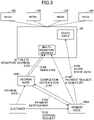
- FIG. 3 is a schematic diagram illustrating an escrow transaction according to an embodiment of the present disclosure.
- a vendor node 100A which receives a disposal request for an appliance from a customer, disposes of the appliance requested by a blockchain based escrow transaction in conjunction with an escrow node 100E.
- step S101 the customer requests a vendor to dispose of the appliance to be recycled.
- the customer may use his/her personal computer, smartphone, or the like to access the vendor node 100A, such as a manufacturer of the appliance, distributor, or recycler and request the disposal of the appliance.
- step S102 the customer notifies the escrow node 100E that the vendor has been requested the disposal of the appliance and notifies the escrow node 100E of identification information, such as the address of the vendor node 100A.
- the vendor node 100A that has received the disposal request may redirect the communication with the customer to the escrow node 100E and guide the customer to the escrow node 100E.
- the customer pays a disposal cost to the escrow node 100E.
- the customer may use a credit card or the like to pay the disposal cost to the escrow node 100E or may settle the disposal cost using a virtual currency or the like.
- the escrow node 100E sets a multi-signature address (for example, a 2-of-2 multi-signature address) according to the escrow node 100E and the vendor node 100A.
- a multi-signature address for example, a 2-of-2 multi-signature address
- the address of the vendor node 100A and the escrow node 100E, identification information of the appliance to be disposed of, the disposal cost, and the like may be set in the multi-signature address.
- step S104 the escrow node 100E notifies the vendor node 100A that the disposal cost has been paid by the customer.
- the vendor node 100A stores the state data indicating an operation state or the like of the accepted appliance in the blockchain.
- the vendor node A can generate a transaction including the collected state data, and when the transaction is verified and approved, the state data can be stored in a distributed manner by adding a block including the transaction to the blockchain.
- the state data may be stored by the vendor node 100A instead of being stored in the blockchain or in addition to being stored in the blockchain.
- the appliance may be, without limitation, at least one of an air conditioner, a ventilation unit, an air purifier, a total heat exchanger, a refrigerator, a freezer, or the like.
- the state data may include, without limitation, one or more of a model number, a manufactured year, a total operating time, a maximum load, a failure history, and a repair history of the appliance.
- step S106 upon completion of the disposal of the requested appliance, the vendor node 100A transmits a disposal cost receipt request and its own signature to the multi-signature address.
- step S107 the vendor node 100A notifies the escrow node 100E of the completion of the disposal.
- step S108 the escrow node 100E transmits its own signature to the multi-signature address whereby the disposal cost is paid to the vendor node 100A.
- FIG. 4 is a schematic diagram illustrating an escrow transaction according to another embodiment of the present disclosure.
- a customer requests a disposal vendor 100A to dispose of an appliance via a broker node 100B.
- the vendor node 100A disposes of the appliance by a blockchain based escrow transaction in conjunction with the broker node 100B and the escrow node 100E.
- step S201 the customer requests the disposal of the appliance to be recycled by a disposal company, such as a manufacturer of the appliance, via a broker.
- a disposal company such as a manufacturer of the appliance
- the customer may use his/her personal computer, smartphone, or the like to access the broker node 100B, such as a manufacturer of the appliance, distributor, or recycler and request the disposal of the appliance, and request the disposal of the appliance to be recycled by the disposal vendor node 100A such as a manufacturer of the appliance.
- step S202 the customer notifies the escrow node 100E that the broker has been requested the disposal of the appliance and notifies the escrow node 100E of identification information, such as the address of the disposal vendor node 100A and the broker node 100B.
- the broker node 100B that has received the disposal request may redirect the communication with the customer to the escrow node 100E and guide the customer to the escrow node 100E.
- the customer pays the disposal cost to the escrow node 100E.
- the customer may use a credit card or the like to pay the disposal cost to the escrow node 100E or may settle the disposal cost using a virtual currency or the like.
- the escrow node 100E sets a multi-signature address (for example, a 2-of-3 multi-signature address) according to the escrow node 100E, the vendor node 100A, and the broker node 100B.
- a multi-signature address for example, a 2-of-3 multi-signature address
- the address of the disposal vendor node 100A, the broker node 100B, and the escrow node 100E, identification information of the appliance to be disposed of, the disposal cost, and the like may be set in the multi-signature address.
- step S204 the escrow node 100E notifies the disposal vendor node 100A and the broker node 100B that the disposal cost has been paid by the customer.
- step S205 the broker node 100B delivers the appliance to the disposal vendor node 100A.
- the disposal cost is paid to the disposal vendor node 100A from the broker node 100B at any time.
- the disposal vendor node 100A stores the state data indicating an operation state or the like of the accepted appliance in the blockchain.
- the disposal vendor node 100A can generate a transaction including the collected state data, and when the transaction is verified and approved, the state data can be stored in a distributed manner by adding a block including the transaction to the blockchain.
- the state data may be stored by the disposal vendor node 100A instead of being stored in the blockchain or in addition to being stored in the blockchain.
- step S207 upon completion of delivery of the appliance, the broker node 100B transmits a disposal cost receipt request and its own signature to the multi-signature address.
- step S208 the disposal vendor node 100A transmits its own signature to the multi-signature address whereby the disposal cost is paid to the broker node 100B.
- FIG. 5 is a schematic diagram illustrating an escrow transaction according to another embodiment of the present disclosure.
- a case where a disposal vendor node 100A is requested to dispose of an appliance by a customer via a broker node 100B but the broker node 100B does not deliver the appliance to the disposal vendor node 100A will be described.
- the customer requests the disposal of the appliance to be recycled by a disposal company, such as a manufacturer of the appliance, via a broker.
- a disposal company such as a manufacturer of the appliance
- the customer may use his/her personal computer, smartphone, or the like to access the broker node 100B, such as a manufacturer of the appliance, distributor, or recycler and request the disposal of the appliance, and request the disposal of the appliance to be recycled by a disposal vendor node 100A such as a manufacturer of the appliance.
- step S302 the customer notifies the escrow node 100E that the broker has been requested the disposal of the appliance and notifies the escrow node 100E of identification information, such as the address of the disposal vendor node 100A and the broker node 100B.
- the broker node 100B that has received the disposal request may redirect the communication with the customer to the escrow node 100E and guide the customer to the escrow node 100E.
- the customer pays the disposal cost to the escrow node 100E.
- the customer may use a credit card or the like to pay the disposal cost to the escrow node 100E or may settle the disposal cost using a virtual currency or the like.
- the escrow node 100E sets a multi-signature address (for example, a 2-of-3 multi-signature address) according to the escrow node 100E, the vendor node 100A, and the broker node 100B.
- a multi-signature address for example, a 2-of-3 multi-signature address
- the address of the disposal vendor node 100A, the broker node 100B, and the escrow node 100E, identification information of the appliance to be disposed of, the disposal cost, and the like may be set in the multi-signature address.
- step S304 the escrow node 100E notifies the disposal vendor node 100A and the broker node 100B that the disposal cost has been paid by the customer.
- the escrow node 100E transmits a transaction cancellation request to the multi-signature address with its own signature.
- the deadline may be set by the escrow node 100E based on a disposal contract with the customer or the like.
- step S306 the escrow node 100E notifies the disposal vendor node 100A that the transaction has been canceled.
- step S307 the disposal vendor node 100A transmits the transaction cancellation request with its own signature to the multi-signature address, thereby canceling the transaction. As a result, the deposited disposal cost is refunded to the customer without being paid to the broker node 100B.
- FIG. 6 is a schematic diagram illustrating an escrow transaction according to another embodiment of the present disclosure.
- a case where a customer requests a broker node 100C to dispose of an appliance including not only recycling of the appliance but also a resale of the appliance to a third party, etc.
- the appliance is delivered to a purchase vendor node 100D according to a purchase request from the purchase vendor node 100D, is described.
- step S401 the customer requests the disposal of the appliance to a broker.
- the customer may use his/her personal computer, smartphone, or the like to access the broker node 100C, such as a manufacturer of the appliance, distributor, or recycler and requests the disposal of the appliance.
- the disposal includes not only recycling of an appliance but also resale to a third party.
- step S402 the customer notifies the escrow node 100E that the broker node 100C has been requested the disposal of the appliance and notifies the escrow node 100E of identification information, such as the address of the broker node 100C.
- the broker node 100C that has received the disposal request may redirect the communication with the customer to the escrow node 100E and guide the customer to the escrow node 100E.
- the customer may pay the disposal cost to the escrow node 100E.
- the customer may use a credit card or the like to pay the disposal cost to the escrow node 100E or may settle the disposal cost using a virtual currency or the like.
- the escrow node 100E sets a multi-signature address 1 (for example, a 2-of-2 multi-signature address) according to the escrow node 100E and the broker node 100C.
- a multi-signature address 1 for example, a 2-of-2 multi-signature address
- the address of the broker node 100C and the escrow node 100E, identification information of the appliance to be disposed of, disposal cost, and the like may be set in the multi-signature address 1.
- the purchase vendor node 100D transmits a purchase request for the appliance to the escrow node 100E.
- the purchase vendor node 100D may be requested to purchase the appliance by a purchaser who has accessed second-hand appliance information provided by an application server operated by the escrow node 100E. Then a purchase request for the appliance may be transmitted to the escrow node 100E in accordance with the request. Further, the purchase vendor node 100D pays a purchase cost to the escrow node 100E.
- the escrow node 100E sets a multi-signature address 2 (for example, a 2-of-3 multi-signature address) according to the escrow node 100E, the broker node 100C, and the purchase vendor node 100D.
- a multi-signature address 2 for example, a 2-of-3 multi-signature address
- the address of the broker node 100C, the purchase vendor node 100D, and the escrow node 100E, the identification information of the appliance to be disposed of, the purchase cost, and the like may be set in the multi-signature address 2.
- step S406 the broker node 100C delivers the appliance to the purchase vendor node 100D.
- step S407 upon completion of the delivery of the appliance, the broker node 100C transmits a purchase cost receipt request and its own signature to the multi-signature address 2.
- step S408 the purchase vendor node 100D transmits its own signature to the multi-signature address 2 whereby the purchase cost is paid to the broker node 100C.
- step S409 the escrow node 100E notifies the customer that the transaction has been canceled due to the purchase of the appliance, with respect to the disposal request from the customer in step S401 to the broker node 100C.
- step S410 the escrow node 100E and the broker node 100C transmit a signature to the multi-signature address 1, cancel the transaction, and refund the disposal cost paid by the customer to the customer. Further, the escrow node 100E pays a part or all of the purchase cost to the customer according to an agreement or contract between the customer and the broker node 100C, or another agreement.
- the customer initially requests the broker node 100C to dispose of the appliance, but is not limited thereto, and it will be clear that the present disclosure can be readily applied even when the customer originally intended to sell the appliance as a second-hand item.
- an escrow transaction using the multi-signature address 2 according to the broker node 100C, the purchase vendor node 100D, and the escrow node 100E, which are requested by the customer, may be executed.
- FIG. 7 is a block diagram illustrating a functional configuration of the application server according to an embodiment of the present disclosure.
- an application server 200 includes a recycling transaction broker section 210 and a second-hand transaction broker section 220.
- the recycling transaction broker section provides recycling vendor information to the user and receives a transaction request with respect to a recycling vendor selected by the user based on the recycling vendor information.
- the recycling transaction broker section 210 stores a list of nodes 100 (for example, disposal vendors, brokers, or the like) providing recycling services in the escrow system 10 as recycling vendor information and provides the recycling vendor information to the node 100, other users, and the like.
- nodes 100 for example, disposal vendors, brokers, or the like
- the recycling transaction broker section 210 executes the escrow transaction described above in conjunction with the vendor node 100 of the selected vendor.
- the second-hand transaction broker section 220 provides the user with the second-hand appliance information and receives the transaction request for the second-hand appliance selected by the user based on second-hand appliance information.
- the second-hand appliance information may include at least one of a price of the second-hand appliance, state data, and installation environment information.
- the second-hand appliance information may be distributed and stored as a blockchain or stored in the escrow node 100E.
- the price of the second-hand appliance may be determined from the state data of the second-hand appliance. Further, the price determination may be automatically determined from the state data by a predetermined calculation formula, AI, or the like. Alternatively, the price may be determined by any node 100, a customer who owns the appliance, or the like. Alternatively, the price may be determined by a first-come-first-served basis, an auction method, or the like.
- the state data may be any data indicative of an operating state of the appliance, for example, a manufactured year, a total operating time, a maximum load, a failure history, and a repair history.
- the installation environment information may include an installation location of the appliance (for example, information that can identify the climate of the cities, towns, villages, or the like), a purpose (for example, use in a commercial facility, factory, hotel, or the like), surrounding environment (for example, salt damage, dust, wind and rain, snow accidental, or the like, in the case of outdoor appliance, oil, humidity, water drops, dust, or the like, in the case of indoor appliance), a purpose of the installation location (for example, a rooftop, a balcony, or the like, in the case of outdoor appliance, an office, a guest room, a smoking area, a kitchen, or the like, in the case of indoor appliance), and the like.
- an installation location of the appliance for example, information that can identify the climate of the cities, towns, villages, or the like
- a purpose for example, use in a commercial facility, factory, hotel, or the like
- surrounding environment for example, salt damage, dust, wind and rain, snow accidental, or the like, in the case of outdoor appliance, oil, humidity, water drops,
- the second-hand transaction broker section 220 collects the second-hand appliance information from the node 100 or the like and provides screen information representing the second-hand appliance information to the user.
- the screen information may display the second-hand appliance information together with images of each appliance, specifications (for example, a horsepower, a color, a weight, size, refrigerant, or the like), an accessory option (for example, a remote control, an internet connection adapter, a decorative panel, or the like), a product review (for example, quantified ratings), a vendor evaluation (for example, quantified evaluations), a similar product, a competing product, a recommended product, and the like.
- specifications for example, a horsepower, a color, a weight, size, refrigerant, or the like
- an accessory option for example, a remote control, an internet connection adapter, a decorative panel, or the like
- a product review for example, quantified ratings
- a vendor evaluation for example, quantified evaluations
- the second-hand transaction broker section 220 executes the above-described escrow transaction in conjunction with the broker node 100C of the selected appliance and the purchase vendor node 100D that notified the purchase request.
Landscapes
- Engineering & Computer Science (AREA)
- Business, Economics & Management (AREA)
- Accounting & Taxation (AREA)
- Computer Security & Cryptography (AREA)
- Theoretical Computer Science (AREA)
- General Physics & Mathematics (AREA)
- Physics & Mathematics (AREA)
- Strategic Management (AREA)
- General Business, Economics & Management (AREA)
- Finance (AREA)
- Signal Processing (AREA)
- Computer Networks & Wireless Communication (AREA)
- Health & Medical Sciences (AREA)
- Bioethics (AREA)
- General Health & Medical Sciences (AREA)
- Computer Hardware Design (AREA)
- Software Systems (AREA)
- General Engineering & Computer Science (AREA)
- Management, Administration, Business Operations System, And Electronic Commerce (AREA)
- Financial Or Insurance-Related Operations Such As Payment And Settlement (AREA)
Abstract
Description
- The present disclosure relates to an escrow system and a transaction method in the escrow system.
- When disposing of an appliance to be recycled, such as a home appliance and an electrical appliance to be recycled, for example, a user may ask an electronics retailer or an authorized dealer to dispose of the appliance to be recycled, or may ask a buyer to purchase the appliance to be recycled as a second-hand product.
- In these cases, however, it may be difficult for the user to confirm whether the requested appliance is properly disposed of in accordance with the requested contents by the vendor.
- The present disclosure proposes a technique to ensure a proper implementation of a transaction.
- An aspect of the present disclosure is related to an escrow system that includes a group of nodes and a blockchain network that connects each node of the group of nodes, wherein an escrow node sets, with respect to a transaction relating to a product or a service between a user and a first node, a multi-signature address between the first node and the escrow node in the blockchain network, the first node, in response to a completion notification of payment of a cost relating to the transaction by the user to the escrow node, executes the transaction and transmits a signature and a fulfillment notification of the transaction to the multi-signature address, the escrow node, in response to an execution of the transaction by the first node, transmits a signature and a fulfillment notification of the transaction to the multi-signature address, and the first node, in response to the signature and the fulfillment notification of the transaction from the first node and the escrow node to the multi-signature address, receives a payment notification of the cost.
- According to the aspect of the present disclosure, a proper implementation of the transaction can be ensured.
- According to an embodiment, when the user sets, with respect to a transaction relating to a product or a service between the user and the first node via a second node, a multi-signature address between the second node and the escrow node in the blockchain network, the second node, in response to a completion notification of payment of a cost relating to the transaction by the user to the escrow node, executes the transaction with respect to the first node and transmits a signature and a fulfillment notification of the transaction to the multi-signature address, the first node, in response to an execution of the transaction by the second node, transmits a signature and a fulfillment notification of the transaction to the multi-signature address, and the second node, in response to the signature and the fulfillment notification of the transaction from the first node and the second node to the multi-signature address, receives a payment notification of the cost.
- According to the present embodiment, even when another node is interposed between the user and the node that executes the transaction of the user, a proper implementation of the transaction can be ensured.
- According to an embodiment, the multi-signature address is a 2-of-3 multi-signature address.
- According to the present embodiment, even when another node is interposed between the user and the node that executes the transaction of the user, a proper implementation of the transaction can be ensured.
- According to an embodiment, when the second node does not execute the transaction with respect to the first node within a predetermined period of time, the escrow node transmits a signature and a cancellation notification of the transaction to the multi-signature address, and the first node transmits a signature and a cancellation notification of the transaction to the multi-signature address, and the escrow node, in response to the signature and the cancellation notification of the transaction from the escrow node and the first node to the multi-signature address, notifies the user of a refund of the cost.
- According to the present embodiment, if the transaction is not implemented properly, the transaction can be canceled without causing any disadvantage to the user.
- According to an embodiment, the transaction relates to a recycling of an appliance, and the first node stores state data of the appliance in a blockchain.
- According to an embodiment, the appliance is at least one of an air conditioner, a ventilation unit, an air purifier, a total heat exchanger, a refrigerator, and a freezer, and the state data includes one or more of a model number, a manufactured year, a total operating time, a maximum load, a failure history, and a repair history of the appliance.
- According to an embodiment, an application server may be further included, wherein the application server includes a recycling transaction broker section configured to provide recycling vendor information to the user and receive a transaction request with respect to a recycling vendor selected by the user based on the recycling vendor information, and a second-hand transaction broker section configured to provide second-hand appliance information to the user and receive a transaction request with respect to a second-hand appliance selected by the user based on the second-hand appliance information.
- According to an embodiment, the second-hand appliance information includes at least one of a price, state data, and installation environment information of the second-hand appliance.
- Another aspect of the present disclosure is related to a transaction method implemented by an escrow system including a group of nodes and a blockchain network that connects the group of nodes, the transaction method comprising, setting, by an escrow node, with respect to a transaction relating to a product or a service between a user and a first node, a multi-signature address between the first node and the escrow node in the blockchain network, executing, by the first node, in response to a completion notification of payment of a cost relating to the transaction by the user to the escrow node, the transaction, transmitting, by the first node, a signature and a fulfillment notification of the transaction to the multi-signature address, transmitting, by the escrow node, in response to an execution of the transaction by the first node, a signature and a fulfillment notification of the transaction to the multi-signature address, and receiving, by the first node, in response to the signature and the fulfillment notification of the transaction from the first node and the escrow node to the multi-signature address, a payment notification of the cost.
- According to the aspect of the present disclosure, a proper implementation of the transaction can be ensured.
-
-
FIG. 1 is a schematic diagram illustrating a blockchain system according to an embodiment of the present disclosure; -
FIG. 2 is a block diagram illustrating a hardware configuration of a node according to an embodiment of the present disclosure; -
FIG. 3 is a schematic diagram illustrating an escrow transaction according to an embodiment of the present disclosure; -
FIG. 4 is a schematic diagram illustrating an escrow transaction according to another embodiment of the present disclosure; -
FIG. 5 is a schematic diagram illustrating an escrow transaction according to another embodiment of the present disclosure; -
FIG. 6 is a schematic diagram illustrating an escrow transaction according to another embodiment of the present disclosure; and -
FIG. 7 is a block diagram illustrating a functional configuration of an application server according to an embodiment of the present disclosure. - Hereinafter, embodiments will be described.
- In the following embodiment, an escrow system is disclosed that implements escrow transactions utilizing a blockchain.
- As illustrated in
FIG. 1 , anescrow system 10 according to an embodiment of the present disclosure includesmultiple nodes 100 and ablockchain network 20, eachnode 100 being interconnected via theblockchain network 20. For example, theescrow system 10 may be implemented as a public, private, or another type of blockchain. - For example, if the
escrow system 10 is implemented as a public blockchain, when each transaction described below is executed, a transaction indicating a transaction content is generated and the generated transaction is verified and approved by thenode 100. Then, a miner motivated by any appropriate incentive (such as a virtual currency) calculates a hash value, and a block is composed of transactions that have been approved using the calculated hash value. The configured blocks are added to the blockchain and distributed to eachnode 100. - On the other hand, if the
escrow system 10 is implemented as a private blockchain, when each transaction described below is executed, a transaction indicating the transaction content is generated, similar to the public blockchain, and the generated transaction is verified and approved by thenode 100. Then, a predetermined node, such as an administrator node, or a node specified by the administrator node or the like calculates a hash value, and a block is composed of transactions that have been approved using the calculated hash value. The configured blocks are added to the blockchain and distributed to eachnode 100. - The Node 100 may be, for example, a computing device such as a server, a personal computer, or the like. An application or a tool for implementing a blockchain in the
escrow system 10 may be installed at eachnode 100. Thenode 100 may have a hardware configuration as illustrated inFIG. 2 . That is, thenode 100 includes adrive device 101, anauxiliary storage device 102, amemory device 103, a Central Processing Unit (CPU) 104, aninterface device 105, and acommunication device 106 which are interconnected via the bus B. - Various computer programs including programs or instructions for implementing the various functions and processes described below in the
node 100 may be provided by arecording medium 107 such as a Compact Disk-Read Only Memory (CD-ROM). When therecording medium 107 on which the program is stored is set to thedrive device 101, the program is installed in theauxiliary storage device 102 from therecording medium 107 through thedrive device 101. However, the program need not necessarily be installed from therecording medium 107, and may be downloaded from any external device via a network or the like. Theauxiliary storage device 102 stores the installed program and stores necessary files, data, and the like. Thememory device 103 reads out and stores a program or data from theauxiliary storage device 102 when an instruction to start a program is issued. Theauxiliary storage device 102 and thememory device 103 are implemented as a non-temporary computer-readable storage medium that stores programs or instructions. TheCPU 104, which functions as a processor, performs various functions and processes of thenode 100 according to various data such as the program stored in thememory device 103 and the parameters necessary to execute the program. Theinterface device 105 is used as a communication interface for connecting to a network or an external device. Thecommunication device 106 performs various communication processing for communicating with the external device. - However, the
node 100 is not limited to the hardware configurations described above, and may be implemented in any other suitable hardware configuration, such as one or more circuitry that implements one or more of the functions and processing by thenode 100. - With reference to
FIG. 3 , an escrow transaction in theescrow system 10 according to an embodiment of the present disclosure will be described.FIG. 3 is a schematic diagram illustrating an escrow transaction according to an embodiment of the present disclosure. In the embodiment illustrated inFIG. 3 , avendor node 100A, which receives a disposal request for an appliance from a customer, disposes of the appliance requested by a blockchain based escrow transaction in conjunction with anescrow node 100E. - As illustrated in
FIG. 3 , in step S101, the customer requests a vendor to dispose of the appliance to be recycled. For example, the customer may use his/her personal computer, smartphone, or the like to access thevendor node 100A, such as a manufacturer of the appliance, distributor, or recycler and request the disposal of the appliance. - In step S102, the customer notifies the
escrow node 100E that the vendor has been requested the disposal of the appliance and notifies theescrow node 100E of identification information, such as the address of thevendor node 100A. Alternatively, thevendor node 100A that has received the disposal request may redirect the communication with the customer to theescrow node 100E and guide the customer to theescrow node 100E. Subsequently, the customer pays a disposal cost to theescrow node 100E. For example, the customer may use a credit card or the like to pay the disposal cost to theescrow node 100E or may settle the disposal cost using a virtual currency or the like. - In step S103, the
escrow node 100E sets a multi-signature address (for example, a 2-of-2 multi-signature address) according to theescrow node 100E and thevendor node 100A. For example, the address of thevendor node 100A and theescrow node 100E, identification information of the appliance to be disposed of, the disposal cost, and the like may be set in the multi-signature address. - In step S104, the
escrow node 100E notifies thevendor node 100A that the disposal cost has been paid by the customer. - In optional step S105, the
vendor node 100A stores the state data indicating an operation state or the like of the accepted appliance in the blockchain. For example, the vendor node A can generate a transaction including the collected state data, and when the transaction is verified and approved, the state data can be stored in a distributed manner by adding a block including the transaction to the blockchain. However, the state data may be stored by thevendor node 100A instead of being stored in the blockchain or in addition to being stored in the blockchain. - For example, the appliance may be, without limitation, at least one of an air conditioner, a ventilation unit, an air purifier, a total heat exchanger, a refrigerator, a freezer, or the like. The state data may include, without limitation, one or more of a model number, a manufactured year, a total operating time, a maximum load, a failure history, and a repair history of the appliance.
- In step S106, upon completion of the disposal of the requested appliance, the
vendor node 100A transmits a disposal cost receipt request and its own signature to the multi-signature address. - In step S107, the
vendor node 100A notifies theescrow node 100E of the completion of the disposal. - In step S108, the
escrow node 100E transmits its own signature to the multi-signature address whereby the disposal cost is paid to thevendor node 100A. - Next, with reference to
FIG. 4 , an escrow transaction in theescrow system 10 according to another embodiment of the present disclosure will be described.FIG. 4 is a schematic diagram illustrating an escrow transaction according to another embodiment of the present disclosure. In the embodiment illustrated inFIG. 4 , a customer requests adisposal vendor 100A to dispose of an appliance via abroker node 100B. Thevendor node 100A disposes of the appliance by a blockchain based escrow transaction in conjunction with thebroker node 100B and theescrow node 100E. - As illustrated in
FIG. 4 , in step S201, the customer requests the disposal of the appliance to be recycled by a disposal company, such as a manufacturer of the appliance, via a broker. For example, the customer may use his/her personal computer, smartphone, or the like to access thebroker node 100B, such as a manufacturer of the appliance, distributor, or recycler and request the disposal of the appliance, and request the disposal of the appliance to be recycled by thedisposal vendor node 100A such as a manufacturer of the appliance. - In step S202, the customer notifies the
escrow node 100E that the broker has been requested the disposal of the appliance and notifies theescrow node 100E of identification information, such as the address of thedisposal vendor node 100A and thebroker node 100B. Alternatively, thebroker node 100B that has received the disposal request may redirect the communication with the customer to theescrow node 100E and guide the customer to theescrow node 100E. Subsequently, the customer pays the disposal cost to theescrow node 100E. For example, the customer may use a credit card or the like to pay the disposal cost to theescrow node 100E or may settle the disposal cost using a virtual currency or the like. - In step S203, the
escrow node 100E sets a multi-signature address (for example, a 2-of-3 multi-signature address) according to theescrow node 100E, thevendor node 100A, and thebroker node 100B. For example, the address of thedisposal vendor node 100A, thebroker node 100B, and theescrow node 100E, identification information of the appliance to be disposed of, the disposal cost, and the like may be set in the multi-signature address. - In step S204, the
escrow node 100E notifies thedisposal vendor node 100A and thebroker node 100B that the disposal cost has been paid by the customer. - In step S205, the
broker node 100B delivers the appliance to thedisposal vendor node 100A. The disposal cost is paid to thedisposal vendor node 100A from thebroker node 100B at any time. - In optional step S206, the
disposal vendor node 100A stores the state data indicating an operation state or the like of the accepted appliance in the blockchain. For example, thedisposal vendor node 100A can generate a transaction including the collected state data, and when the transaction is verified and approved, the state data can be stored in a distributed manner by adding a block including the transaction to the blockchain. However, the state data may be stored by thedisposal vendor node 100A instead of being stored in the blockchain or in addition to being stored in the blockchain. - In step S207, upon completion of delivery of the appliance, the
broker node 100B transmits a disposal cost receipt request and its own signature to the multi-signature address. - In step S208, the
disposal vendor node 100A transmits its own signature to the multi-signature address whereby the disposal cost is paid to thebroker node 100B. - Next, with reference to
FIG. 5 , an escrow transaction in theescrow system 10 according to another embodiment of the present disclosure will be described.FIG. 5 is a schematic diagram illustrating an escrow transaction according to another embodiment of the present disclosure. In the embodiment illustrated inFIG. 5 , a case where adisposal vendor node 100A is requested to dispose of an appliance by a customer via abroker node 100B but thebroker node 100B does not deliver the appliance to thedisposal vendor node 100A will be described. - As illustrated in
FIG. 5 , in step S301, the customer requests the disposal of the appliance to be recycled by a disposal company, such as a manufacturer of the appliance, via a broker. For example, the customer may use his/her personal computer, smartphone, or the like to access thebroker node 100B, such as a manufacturer of the appliance, distributor, or recycler and request the disposal of the appliance, and request the disposal of the appliance to be recycled by adisposal vendor node 100A such as a manufacturer of the appliance. - In step S302, the customer notifies the
escrow node 100E that the broker has been requested the disposal of the appliance and notifies theescrow node 100E of identification information, such as the address of thedisposal vendor node 100A and thebroker node 100B. Alternatively, thebroker node 100B that has received the disposal request may redirect the communication with the customer to theescrow node 100E and guide the customer to theescrow node 100E. Subsequently, the customer pays the disposal cost to theescrow node 100E. For example, the customer may use a credit card or the like to pay the disposal cost to theescrow node 100E or may settle the disposal cost using a virtual currency or the like. - In step S303, the
escrow node 100E sets a multi-signature address (for example, a 2-of-3 multi-signature address) according to theescrow node 100E, thevendor node 100A, and thebroker node 100B. For example, the address of thedisposal vendor node 100A, thebroker node 100B, and theescrow node 100E, identification information of the appliance to be disposed of, the disposal cost, and the like may be set in the multi-signature address. - In step S304, the
escrow node 100E notifies thedisposal vendor node 100A and thebroker node 100B that the disposal cost has been paid by the customer. - Meanwhile, if the
broker node 100B does not deliver the appliance to thedisposal vendor node 100A by a predetermined deadline, in step S305, theescrow node 100E transmits a transaction cancellation request to the multi-signature address with its own signature. For example, the deadline may be set by theescrow node 100E based on a disposal contract with the customer or the like. - Further, in step S306, the
escrow node 100E notifies thedisposal vendor node 100A that the transaction has been canceled. - In step S307, the
disposal vendor node 100A transmits the transaction cancellation request with its own signature to the multi-signature address, thereby canceling the transaction. As a result, the deposited disposal cost is refunded to the customer without being paid to thebroker node 100B. - Next, with reference to
FIG. 6 , an escrow transaction in theescrow system 10 according to another embodiment of the present disclosure will be described.FIG. 6 is a schematic diagram illustrating an escrow transaction according to another embodiment of the present disclosure. In the embodiment illustrated inFIG. 6 , a case where a customer requests abroker node 100C to dispose of an appliance (including not only recycling of the appliance but also a resale of the appliance to a third party, etc.), and the appliance is delivered to apurchase vendor node 100D according to a purchase request from thepurchase vendor node 100D, is described. - As illustrated in
FIG. 6 , in step S401, the customer requests the disposal of the appliance to a broker. For example, the customer may use his/her personal computer, smartphone, or the like to access thebroker node 100C, such as a manufacturer of the appliance, distributor, or recycler and requests the disposal of the appliance. Here, the disposal includes not only recycling of an appliance but also resale to a third party. - In step S402, the customer notifies the
escrow node 100E that thebroker node 100C has been requested the disposal of the appliance and notifies theescrow node 100E of identification information, such as the address of thebroker node 100C. Alternatively, thebroker node 100C that has received the disposal request may redirect the communication with the customer to theescrow node 100E and guide the customer to theescrow node 100E. At this time, the customer may pay the disposal cost to theescrow node 100E. For example, the customer may use a credit card or the like to pay the disposal cost to theescrow node 100E or may settle the disposal cost using a virtual currency or the like. - In step S403, the
escrow node 100E sets a multi-signature address 1 (for example, a 2-of-2 multi-signature address) according to theescrow node 100E and thebroker node 100C. For example, the address of thebroker node 100C and theescrow node 100E, identification information of the appliance to be disposed of, disposal cost, and the like may be set in themulti-signature address 1. - In step S404, the
purchase vendor node 100D transmits a purchase request for the appliance to theescrow node 100E. For example, thepurchase vendor node 100D may be requested to purchase the appliance by a purchaser who has accessed second-hand appliance information provided by an application server operated by theescrow node 100E. Then a purchase request for the appliance may be transmitted to theescrow node 100E in accordance with the request. Further, thepurchase vendor node 100D pays a purchase cost to theescrow node 100E. - In step S405, the
escrow node 100E sets a multi-signature address 2 (for example, a 2-of-3 multi-signature address) according to theescrow node 100E, thebroker node 100C, and thepurchase vendor node 100D. For example, the address of thebroker node 100C, thepurchase vendor node 100D, and theescrow node 100E, the identification information of the appliance to be disposed of, the purchase cost, and the like may be set in themulti-signature address 2. - In step S406, the
broker node 100C delivers the appliance to thepurchase vendor node 100D. - In step S407, upon completion of the delivery of the appliance, the
broker node 100C transmits a purchase cost receipt request and its own signature to themulti-signature address 2. - In step S408, the
purchase vendor node 100D transmits its own signature to themulti-signature address 2 whereby the purchase cost is paid to thebroker node 100C. - In step S409, the
escrow node 100E notifies the customer that the transaction has been canceled due to the purchase of the appliance, with respect to the disposal request from the customer in step S401 to thebroker node 100C. - In step S410, the
escrow node 100E and thebroker node 100C transmit a signature to themulti-signature address 1, cancel the transaction, and refund the disposal cost paid by the customer to the customer. Further, theescrow node 100E pays a part or all of the purchase cost to the customer according to an agreement or contract between the customer and thebroker node 100C, or another agreement. - In the present embodiment, the customer initially requests the
broker node 100C to dispose of the appliance, but is not limited thereto, and it will be clear that the present disclosure can be readily applied even when the customer originally intended to sell the appliance as a second-hand item. In this case, an escrow transaction using themulti-signature address 2 according to thebroker node 100C, thepurchase vendor node 100D, and theescrow node 100E, which are requested by the customer, may be executed. - Next, an application server according to one embodiment of the present disclosure will be described with reference to
FIG. 7 . In the present embodiment, the application server is operated as a function of theescrow node 100E. However, the present disclosure is not limited to this, and for example, the application server may be operated by anyother node 100, an external server of theescrow system 10, or the like.FIG. 7 is a block diagram illustrating a functional configuration of the application server according to an embodiment of the present disclosure. - As illustrated in
FIG. 7 , anapplication server 200 includes a recyclingtransaction broker section 210 and a second-handtransaction broker section 220. - The recycling transaction broker section provides recycling vendor information to the user and receives a transaction request with respect to a recycling vendor selected by the user based on the recycling vendor information. For example, the recycling
transaction broker section 210 stores a list of nodes 100 (for example, disposal vendors, brokers, or the like) providing recycling services in theescrow system 10 as recycling vendor information and provides the recycling vendor information to thenode 100, other users, and the like. When a user who desires to recycle the appliance selects a vendor from the recycling vendor information, the recyclingtransaction broker section 210 executes the escrow transaction described above in conjunction with thevendor node 100 of the selected vendor. - The second-hand
transaction broker section 220 provides the user with the second-hand appliance information and receives the transaction request for the second-hand appliance selected by the user based on second-hand appliance information. - Here, the second-hand appliance information may include at least one of a price of the second-hand appliance, state data, and installation environment information. The second-hand appliance information may be distributed and stored as a blockchain or stored in the
escrow node 100E. - For example, the price of the second-hand appliance may be determined from the state data of the second-hand appliance. Further, the price determination may be automatically determined from the state data by a predetermined calculation formula, AI, or the like. Alternatively, the price may be determined by any
node 100, a customer who owns the appliance, or the like. Alternatively, the price may be determined by a first-come-first-served basis, an auction method, or the like. - The state data may be any data indicative of an operating state of the appliance, for example, a manufactured year, a total operating time, a maximum load, a failure history, and a repair history.
- The installation environment information may include an installation location of the appliance (for example, information that can identify the climate of the cities, towns, villages, or the like), a purpose (for example, use in a commercial facility, factory, hotel, or the like), surrounding environment (for example, salt damage, dust, wind and rain, snow accidental, or the like, in the case of outdoor appliance, oil, humidity, water drops, dust, or the like, in the case of indoor appliance), a purpose of the installation location (for example, a rooftop, a balcony, or the like, in the case of outdoor appliance, an office, a guest room, a smoking area, a kitchen, or the like, in the case of indoor appliance), and the like.
- For example, the second-hand
transaction broker section 220 collects the second-hand appliance information from thenode 100 or the like and provides screen information representing the second-hand appliance information to the user. For example, the screen information may display the second-hand appliance information together with images of each appliance, specifications (for example, a horsepower, a color, a weight, size, refrigerant, or the like), an accessory option (for example, a remote control, an internet connection adapter, a decorative panel, or the like), a product review (for example, quantified ratings), a vendor evaluation (for example, quantified evaluations), a similar product, a competing product, a recommended product, and the like. When the user detects a desired appliance from the information on the second-hand appliance and indicates a purchase request, the second-handtransaction broker section 220 executes the above-described escrow transaction in conjunction with thebroker node 100C of the selected appliance and thepurchase vendor node 100D that notified the purchase request. - Although a description has been given of the embodiments, it may be understood that various modifications may be made to the configurations and details thereof, without departing from the subject matter and scope of the claims.
- This application is based on and claims priority to
Japanese Patent Application No. 2019-213351, filed on November 26, 2019 -
- 10
- escrow system
- 20
- blockchain network
- 100
- node
- 200
- application server
- 210
- recycling transaction broker section
- 220
- second-hand transaction broker section
Claims (9)
- An escrow system comprising:a group of nodes; anda blockchain network that connects each node of the group of nodes,wherein an escrow node sets, with respect to a transaction relating to a product or a service between a user and a first node, a multi-signature address, according to the first node and the escrow node, in the blockchain network,the first node, in response to a completion notification of payment of a cost relating to the transaction by the user to the escrow node, executes the transaction and transmits a signature and a fulfillment notification of the transaction to the multi-signature address,the escrow node, in response to an execution of the transaction by the first node, transmits a signature and a fulfillment notification of the transaction to the multi-signature address, andthe first node, in response to the signature and the fulfillment notification of the transaction from the first node and the escrow node to the multi-signature address, receives a payment notification of the cost.
- The escrow system according to claim 1, wherein, when the user sets, with respect to a transaction relating to a product or a service between the user and the first node via a second node, a multi-signature address between the second node and the escrow node in the blockchain network,the second node, in response to a completion notification of payment of a cost relating to the transaction by the user to the escrow node, executes the transaction with respect to the first node and transmits a signature and a fulfillment notification of the transaction to the multi-signature address,the first node, in response to an execution of the transaction by the second node, transmits a signature and a fulfillment notification of the transaction to the multi-signature address, andthe second node, in response to the signature and the fulfillment notification of the transaction from the first node and the second node to the multi-signature address, receives a payment notification of the cost.
- The escrow system according to claim 2, wherein, the multi-signature address is a 2-of-3 multi-signature address.
- The escrow system according to claim 2 or 3, wherein, when the second node does not execute the transaction with respect to the first node within a predetermined period of time, the escrow node transmits a signature and a cancellation notification of the transaction to the multi-signature address, and the first node transmits a signature and a cancellation notification of the transaction to the multi-signature address, and
the escrow node, in response to the signature and the cancellation notification of the transaction from the escrow node and the first node to the multi-signature address, notifies the user of a refund of the cost. - The escrow system according to any one of claims 1 to 4, wherein the transaction relates to a recycling of an appliance, and
the first node stores state data of the appliance in a blockchain. - The escrow system according to claim 5, wherein the appliance is at least one of an air conditioner, a ventilation unit, an air purifier, a total heat exchanger, a refrigerator, and a freezer, and
the state data includes one or more of a model number, a manufactured year, a total operating time, a maximum load, a failure history, and a repair history of the appliance. - The escrow system according to any one of claims 1 to 6, further comprising an application server, and,
wherein the application server includes:a recycling transaction broker section configured to provide recycling vendor information to the user and receive a transaction request with respect to a recycling vendor selected by the user based on the recycling vendor information; anda second-hand transaction broker section configured to provide second-hand appliance information to the user and receive a transaction request with respect to a second-hand appliance selected by the user based on the second-hand appliance information. - The escrow system according to claim 7, wherein the second-hand appliance information includes at least one of a price, state data, and installation environment information of the second-hand appliance.
- A transaction method implemented by an escrow system including a group of nodes and a blockchain network that connects each node of the group of nodes, the transaction method comprising:setting, by an escrow node, with respect to a transaction relating to a product or a service between a user and a first node, a multi-signature address between the first node and the escrow node in the blockchain network;executing, by the first node, in response to a completion notification of payment of a cost relating to the transaction by the user to the escrow node, the transaction;transmitting, by the first node, a signature and a fulfillment notification of the transaction to the multi-signature address;transmitting, by the escrow node, in response to an execution of the transaction by the first node, a signature and a fulfillment notification of the transaction to the multi-signature address; andreceiving, by the first node, in response to the signature and the fulfillment notification of the transaction from the first node and the escrow node to the multi-signature address, a payment notification of the cost.
Applications Claiming Priority (2)
| Application Number | Priority Date | Filing Date | Title |
|---|---|---|---|
| JP2019213351A JP6891943B2 (en) | 2019-11-26 | 2019-11-26 | Escrow system and trading method |
| PCT/JP2020/043212 WO2021106740A1 (en) | 2019-11-26 | 2020-11-19 | Escrow system and transaction method |
Publications (3)
| Publication Number | Publication Date |
|---|---|
| EP4068188A1 true EP4068188A1 (en) | 2022-10-05 |
| EP4068188A4 EP4068188A4 (en) | 2023-01-11 |
| EP4068188B1 EP4068188B1 (en) | 2024-02-21 |
Family
ID=76087708
Family Applications (1)
| Application Number | Title | Priority Date | Filing Date |
|---|---|---|---|
| EP20893797.9A Active EP4068188B1 (en) | 2019-11-26 | 2020-11-19 | Escrow system and transaction method |
Country Status (5)
| Country | Link |
|---|---|
| US (1) | US20230004946A1 (en) |
| EP (1) | EP4068188B1 (en) |
| JP (1) | JP6891943B2 (en) |
| CN (1) | CN114730428B (en) |
| WO (1) | WO2021106740A1 (en) |
Families Citing this family (1)
| Publication number | Priority date | Publication date | Assignee | Title |
|---|---|---|---|---|
| KR102568418B1 (en) * | 2021-08-26 | 2023-08-18 | 하이파이브랩 주식회사 | Electronic authentication system and method supporting multi-signature |
Citations (1)
| Publication number | Priority date | Publication date | Assignee | Title |
|---|---|---|---|---|
| JP2019213351A (en) | 2018-06-05 | 2019-12-12 | コニカミノルタ株式会社 | Control device of permanent magnet synchronous motor and image forming apparatus |
Family Cites Families (9)
| Publication number | Priority date | Publication date | Assignee | Title |
|---|---|---|---|---|
| US9519925B2 (en) * | 2013-08-01 | 2016-12-13 | Omnibazaar, Inc. | Decentralized internet shopping marketplaces |
| US20190173884A1 (en) * | 2016-07-29 | 2019-06-06 | nChain Holdings Limited | Blockchain-implemented method and system |
| JP6224283B1 (en) * | 2017-02-24 | 2017-11-01 | 株式会社三井住友銀行 | Escrow settlement method and system by smart contract |
| CN107038578B (en) * | 2017-04-19 | 2020-10-16 | 浙江数秦科技有限公司 | Multi-signature transaction information processing method in blockchain-based data transaction platform |
| CN107464117B (en) * | 2017-08-04 | 2021-06-22 | 平安科技(深圳)有限公司 | Block chain based data management method and block chain system |
| PH12023550536A1 (en) * | 2018-03-06 | 2024-02-12 | Americorp Invest Llc | Customized view of restricted information recorded into a blockchain |
| JP2021532466A (en) * | 2018-07-29 | 2021-11-25 | プラヴィーン バラタム, | Computer-enhanced methods, computer systems, and cryptocurrency depository to enable secure escrowing and storage of cryptocurrencies. |
| CN109493024B (en) * | 2018-09-29 | 2021-02-09 | 杭州复杂美科技有限公司 | Digital asset hosting method, apparatus, and storage medium |
| CN110443609A (en) * | 2019-07-04 | 2019-11-12 | 杭州复杂美科技有限公司 | Multi-signature method of commerce, equipment and storage medium |
-
2019
- 2019-11-26 JP JP2019213351A patent/JP6891943B2/en active Active
-
2020
- 2020-11-19 US US17/756,322 patent/US20230004946A1/en not_active Abandoned
- 2020-11-19 WO PCT/JP2020/043212 patent/WO2021106740A1/en not_active Ceased
- 2020-11-19 CN CN202080081116.6A patent/CN114730428B/en active Active
- 2020-11-19 EP EP20893797.9A patent/EP4068188B1/en active Active
Patent Citations (1)
| Publication number | Priority date | Publication date | Assignee | Title |
|---|---|---|---|---|
| JP2019213351A (en) | 2018-06-05 | 2019-12-12 | コニカミノルタ株式会社 | Control device of permanent magnet synchronous motor and image forming apparatus |
Also Published As
| Publication number | Publication date |
|---|---|
| US20230004946A1 (en) | 2023-01-05 |
| EP4068188A4 (en) | 2023-01-11 |
| EP4068188B1 (en) | 2024-02-21 |
| CN114730428A (en) | 2022-07-08 |
| CN114730428B (en) | 2025-05-13 |
| WO2021106740A1 (en) | 2021-06-03 |
| JP6891943B2 (en) | 2021-06-18 |
| JP2021086288A (en) | 2021-06-03 |
Similar Documents
| Publication | Publication Date | Title |
|---|---|---|
| CN101923683A (en) | Technician control system | |
| WO2017013754A1 (en) | Power control device, power control method, and program | |
| CN105934770B (en) | Message mediation method, message processing method, service management method and apparatus for executing the above methods | |
| WO2014142077A1 (en) | Information provision device, constructor management apparatus, information presentation device, program, communication system, and information provision method | |
| CN113781169B (en) | Group purchase method, group purchase platform device and readable storage medium | |
| JP2002049435A (en) | License management method and device | |
| JP6856376B2 (en) | Electricity trading system | |
| JPWO2015045235A1 (en) | Charging system, charging information generation method, and charging information generation program | |
| WO2021106582A1 (en) | Maintenance management system and maintenance management method | |
| KR102263781B1 (en) | Method for offering real estate information by predicting moving data | |
| KR20220035579A (en) | Facility construction brokerage and management system | |
| US20230004946A1 (en) | Escrow system and transaction method | |
| US20050010493A1 (en) | Information disclosure and contracting method for the demander of distributed power supply business | |
| JP2008233989A (en) | Securities trading order management device and securities trading order management method | |
| JP6780099B2 (en) | Aggregator side system, prosumer side system, and aggregation system, and aggregation method | |
| JP2002109018A (en) | Server system and managed device system | |
| JP7615965B2 (en) | Management device, method, and power management system | |
| JP2023136071A (en) | Power transaction system and program | |
| KR20130017814A (en) | System and method for trading sales information using open market | |
| JP6418427B1 (en) | Private accommodation management support system and private accommodation management support method | |
| JP6580659B2 (en) | Lease information management device | |
| KR102102808B1 (en) | Operation management system for support Facility management service and Drive Method of the Same | |
| KR101796019B1 (en) | Curation service providing server for furnishings preparation of construction work office | |
| JP2005050164A (en) | Power trading brokerage system and power retail system using network | |
| KR102535732B1 (en) | Method of profit generation through rental platforms for construction sites and Rental platform system for construction sites |
Legal Events
| Date | Code | Title | Description |
|---|---|---|---|
| STAA | Information on the status of an ep patent application or granted ep patent |
Free format text: STATUS: THE INTERNATIONAL PUBLICATION HAS BEEN MADE |
|
| PUAI | Public reference made under article 153(3) epc to a published international application that has entered the european phase |
Free format text: ORIGINAL CODE: 0009012 |
|
| STAA | Information on the status of an ep patent application or granted ep patent |
Free format text: STATUS: REQUEST FOR EXAMINATION WAS MADE |
|
| 17P | Request for examination filed |
Effective date: 20220523 |
|
| AK | Designated contracting states |
Kind code of ref document: A1 Designated state(s): AL AT BE BG CH CY CZ DE DK EE ES FI FR GB GR HR HU IE IS IT LI LT LU LV MC MK MT NL NO PL PT RO RS SE SI SK SM TR |
|
| A4 | Supplementary search report drawn up and despatched |
Effective date: 20221208 |
|
| RIC1 | Information provided on ipc code assigned before grant |
Ipc: H04L 9/00 20220101ALI20221202BHEP Ipc: G06F 21/64 20130101ALI20221202BHEP Ipc: G06Q 20/02 20120101ALI20221202BHEP Ipc: G06Q 20/40 20120101AFI20221202BHEP |
|
| RAP3 | Party data changed (applicant data changed or rights of an application transferred) |
Owner name: DAIKIN INDUSTRIES, LTD. |
|
| DAV | Request for validation of the european patent (deleted) | ||
| DAX | Request for extension of the european patent (deleted) | ||
| P01 | Opt-out of the competence of the unified patent court (upc) registered |
Effective date: 20230525 |
|
| GRAP | Despatch of communication of intention to grant a patent |
Free format text: ORIGINAL CODE: EPIDOSNIGR1 |
|
| STAA | Information on the status of an ep patent application or granted ep patent |
Free format text: STATUS: GRANT OF PATENT IS INTENDED |
|
| RIC1 | Information provided on ipc code assigned before grant |
Ipc: H04L 9/00 20220101ALI20230830BHEP Ipc: G06Q 20/42 20120101ALI20230830BHEP Ipc: G06Q 20/38 20120101ALI20230830BHEP Ipc: H04L 9/08 20060101ALI20230830BHEP Ipc: H04L 9/32 20060101ALI20230830BHEP Ipc: G06F 21/64 20130101ALI20230830BHEP Ipc: G06Q 20/02 20120101ALI20230830BHEP Ipc: G06Q 20/40 20120101AFI20230830BHEP |
|
| INTG | Intention to grant announced |
Effective date: 20230921 |
|
| GRAS | Grant fee paid |
Free format text: ORIGINAL CODE: EPIDOSNIGR3 |
|
| GRAA | (expected) grant |
Free format text: ORIGINAL CODE: 0009210 |
|
| STAA | Information on the status of an ep patent application or granted ep patent |
Free format text: STATUS: THE PATENT HAS BEEN GRANTED |
|
| AK | Designated contracting states |
Kind code of ref document: B1 Designated state(s): AL AT BE BG CH CY CZ DE DK EE ES FI FR GB GR HR HU IE IS IT LI LT LU LV MC MK MT NL NO PL PT RO RS SE SI SK SM TR |
|
| REG | Reference to a national code |
Ref country code: GB Ref legal event code: FG4D |
|
| REG | Reference to a national code |
Ref country code: CH Ref legal event code: EP |
|
| REG | Reference to a national code |
Ref country code: IE Ref legal event code: FG4D |
|
| REG | Reference to a national code |
Ref country code: DE Ref legal event code: R096 Ref document number: 602020026232 Country of ref document: DE |
|
| REG | Reference to a national code |
Ref country code: LT Ref legal event code: MG9D |
|
| REG | Reference to a national code |
Ref country code: NL Ref legal event code: MP Effective date: 20240221 |
|
| PG25 | Lapsed in a contracting state [announced via postgrant information from national office to epo] |
Ref country code: IS Free format text: LAPSE BECAUSE OF FAILURE TO SUBMIT A TRANSLATION OF THE DESCRIPTION OR TO PAY THE FEE WITHIN THE PRESCRIBED TIME-LIMIT Effective date: 20240621 |
|
| PG25 | Lapsed in a contracting state [announced via postgrant information from national office to epo] |
Ref country code: LT Free format text: LAPSE BECAUSE OF FAILURE TO SUBMIT A TRANSLATION OF THE DESCRIPTION OR TO PAY THE FEE WITHIN THE PRESCRIBED TIME-LIMIT Effective date: 20240221 |
|
| PG25 | Lapsed in a contracting state [announced via postgrant information from national office to epo] |
Ref country code: GR Free format text: LAPSE BECAUSE OF FAILURE TO SUBMIT A TRANSLATION OF THE DESCRIPTION OR TO PAY THE FEE WITHIN THE PRESCRIBED TIME-LIMIT Effective date: 20240522 |
|
| REG | Reference to a national code |
Ref country code: AT Ref legal event code: MK05 Ref document number: 1659748 Country of ref document: AT Kind code of ref document: T Effective date: 20240221 |
|
| PG25 | Lapsed in a contracting state [announced via postgrant information from national office to epo] |
Ref country code: RS Free format text: LAPSE BECAUSE OF FAILURE TO SUBMIT A TRANSLATION OF THE DESCRIPTION OR TO PAY THE FEE WITHIN THE PRESCRIBED TIME-LIMIT Effective date: 20240521 Ref country code: NL Free format text: LAPSE BECAUSE OF FAILURE TO SUBMIT A TRANSLATION OF THE DESCRIPTION OR TO PAY THE FEE WITHIN THE PRESCRIBED TIME-LIMIT Effective date: 20240221 Ref country code: HR Free format text: LAPSE BECAUSE OF FAILURE TO SUBMIT A TRANSLATION OF THE DESCRIPTION OR TO PAY THE FEE WITHIN THE PRESCRIBED TIME-LIMIT Effective date: 20240221 |
|
| PG25 | Lapsed in a contracting state [announced via postgrant information from national office to epo] |
Ref country code: ES Free format text: LAPSE BECAUSE OF FAILURE TO SUBMIT A TRANSLATION OF THE DESCRIPTION OR TO PAY THE FEE WITHIN THE PRESCRIBED TIME-LIMIT Effective date: 20240221 |
|
| PG25 | Lapsed in a contracting state [announced via postgrant information from national office to epo] |
Ref country code: AT Free format text: LAPSE BECAUSE OF FAILURE TO SUBMIT A TRANSLATION OF THE DESCRIPTION OR TO PAY THE FEE WITHIN THE PRESCRIBED TIME-LIMIT Effective date: 20240221 |
|
| PG25 | Lapsed in a contracting state [announced via postgrant information from national office to epo] |
Ref country code: RS Free format text: LAPSE BECAUSE OF FAILURE TO SUBMIT A TRANSLATION OF THE DESCRIPTION OR TO PAY THE FEE WITHIN THE PRESCRIBED TIME-LIMIT Effective date: 20240521 Ref country code: NO Free format text: LAPSE BECAUSE OF FAILURE TO SUBMIT A TRANSLATION OF THE DESCRIPTION OR TO PAY THE FEE WITHIN THE PRESCRIBED TIME-LIMIT Effective date: 20240521 Ref country code: NL Free format text: LAPSE BECAUSE OF FAILURE TO SUBMIT A TRANSLATION OF THE DESCRIPTION OR TO PAY THE FEE WITHIN THE PRESCRIBED TIME-LIMIT Effective date: 20240221 Ref country code: LT Free format text: LAPSE BECAUSE OF FAILURE TO SUBMIT A TRANSLATION OF THE DESCRIPTION OR TO PAY THE FEE WITHIN THE PRESCRIBED TIME-LIMIT Effective date: 20240221 Ref country code: IS Free format text: LAPSE BECAUSE OF FAILURE TO SUBMIT A TRANSLATION OF THE DESCRIPTION OR TO PAY THE FEE WITHIN THE PRESCRIBED TIME-LIMIT Effective date: 20240621 Ref country code: HR Free format text: LAPSE BECAUSE OF FAILURE TO SUBMIT A TRANSLATION OF THE DESCRIPTION OR TO PAY THE FEE WITHIN THE PRESCRIBED TIME-LIMIT Effective date: 20240221 Ref country code: GR Free format text: LAPSE BECAUSE OF FAILURE TO SUBMIT A TRANSLATION OF THE DESCRIPTION OR TO PAY THE FEE WITHIN THE PRESCRIBED TIME-LIMIT Effective date: 20240522 Ref country code: FI Free format text: LAPSE BECAUSE OF FAILURE TO SUBMIT A TRANSLATION OF THE DESCRIPTION OR TO PAY THE FEE WITHIN THE PRESCRIBED TIME-LIMIT Effective date: 20240221 Ref country code: ES Free format text: LAPSE BECAUSE OF FAILURE TO SUBMIT A TRANSLATION OF THE DESCRIPTION OR TO PAY THE FEE WITHIN THE PRESCRIBED TIME-LIMIT Effective date: 20240221 Ref country code: BG Free format text: LAPSE BECAUSE OF FAILURE TO SUBMIT A TRANSLATION OF THE DESCRIPTION OR TO PAY THE FEE WITHIN THE PRESCRIBED TIME-LIMIT Effective date: 20240221 Ref country code: AT Free format text: LAPSE BECAUSE OF FAILURE TO SUBMIT A TRANSLATION OF THE DESCRIPTION OR TO PAY THE FEE WITHIN THE PRESCRIBED TIME-LIMIT Effective date: 20240221 |
|
| PG25 | Lapsed in a contracting state [announced via postgrant information from national office to epo] |
Ref country code: PL Free format text: LAPSE BECAUSE OF FAILURE TO SUBMIT A TRANSLATION OF THE DESCRIPTION OR TO PAY THE FEE WITHIN THE PRESCRIBED TIME-LIMIT Effective date: 20240221 Ref country code: PT Free format text: LAPSE BECAUSE OF FAILURE TO SUBMIT A TRANSLATION OF THE DESCRIPTION OR TO PAY THE FEE WITHIN THE PRESCRIBED TIME-LIMIT Effective date: 20240621 |
|
| PG25 | Lapsed in a contracting state [announced via postgrant information from national office to epo] |
Ref country code: SE Free format text: LAPSE BECAUSE OF FAILURE TO SUBMIT A TRANSLATION OF THE DESCRIPTION OR TO PAY THE FEE WITHIN THE PRESCRIBED TIME-LIMIT Effective date: 20240221 Ref country code: PT Free format text: LAPSE BECAUSE OF FAILURE TO SUBMIT A TRANSLATION OF THE DESCRIPTION OR TO PAY THE FEE WITHIN THE PRESCRIBED TIME-LIMIT Effective date: 20240621 Ref country code: PL Free format text: LAPSE BECAUSE OF FAILURE TO SUBMIT A TRANSLATION OF THE DESCRIPTION OR TO PAY THE FEE WITHIN THE PRESCRIBED TIME-LIMIT Effective date: 20240221 Ref country code: LV Free format text: LAPSE BECAUSE OF FAILURE TO SUBMIT A TRANSLATION OF THE DESCRIPTION OR TO PAY THE FEE WITHIN THE PRESCRIBED TIME-LIMIT Effective date: 20240221 |
|
| PG25 | Lapsed in a contracting state [announced via postgrant information from national office to epo] |
Ref country code: DK Free format text: LAPSE BECAUSE OF FAILURE TO SUBMIT A TRANSLATION OF THE DESCRIPTION OR TO PAY THE FEE WITHIN THE PRESCRIBED TIME-LIMIT Effective date: 20240221 |
|
| PG25 | Lapsed in a contracting state [announced via postgrant information from national office to epo] |
Ref country code: SM Free format text: LAPSE BECAUSE OF FAILURE TO SUBMIT A TRANSLATION OF THE DESCRIPTION OR TO PAY THE FEE WITHIN THE PRESCRIBED TIME-LIMIT Effective date: 20240221 |
|
| PG25 | Lapsed in a contracting state [announced via postgrant information from national office to epo] |
Ref country code: EE Free format text: LAPSE BECAUSE OF FAILURE TO SUBMIT A TRANSLATION OF THE DESCRIPTION OR TO PAY THE FEE WITHIN THE PRESCRIBED TIME-LIMIT Effective date: 20240221 Ref country code: CZ Free format text: LAPSE BECAUSE OF FAILURE TO SUBMIT A TRANSLATION OF THE DESCRIPTION OR TO PAY THE FEE WITHIN THE PRESCRIBED TIME-LIMIT Effective date: 20240221 |
|
| PG25 | Lapsed in a contracting state [announced via postgrant information from national office to epo] |
Ref country code: SK Free format text: LAPSE BECAUSE OF FAILURE TO SUBMIT A TRANSLATION OF THE DESCRIPTION OR TO PAY THE FEE WITHIN THE PRESCRIBED TIME-LIMIT Effective date: 20240221 |
|
| PG25 | Lapsed in a contracting state [announced via postgrant information from national office to epo] |
Ref country code: SM Free format text: LAPSE BECAUSE OF FAILURE TO SUBMIT A TRANSLATION OF THE DESCRIPTION OR TO PAY THE FEE WITHIN THE PRESCRIBED TIME-LIMIT Effective date: 20240221 Ref country code: SK Free format text: LAPSE BECAUSE OF FAILURE TO SUBMIT A TRANSLATION OF THE DESCRIPTION OR TO PAY THE FEE WITHIN THE PRESCRIBED TIME-LIMIT Effective date: 20240221 Ref country code: RO Free format text: LAPSE BECAUSE OF FAILURE TO SUBMIT A TRANSLATION OF THE DESCRIPTION OR TO PAY THE FEE WITHIN THE PRESCRIBED TIME-LIMIT Effective date: 20240221 Ref country code: EE Free format text: LAPSE BECAUSE OF FAILURE TO SUBMIT A TRANSLATION OF THE DESCRIPTION OR TO PAY THE FEE WITHIN THE PRESCRIBED TIME-LIMIT Effective date: 20240221 Ref country code: DK Free format text: LAPSE BECAUSE OF FAILURE TO SUBMIT A TRANSLATION OF THE DESCRIPTION OR TO PAY THE FEE WITHIN THE PRESCRIBED TIME-LIMIT Effective date: 20240221 Ref country code: CZ Free format text: LAPSE BECAUSE OF FAILURE TO SUBMIT A TRANSLATION OF THE DESCRIPTION OR TO PAY THE FEE WITHIN THE PRESCRIBED TIME-LIMIT Effective date: 20240221 |
|
| REG | Reference to a national code |
Ref country code: DE Ref legal event code: R097 Ref document number: 602020026232 Country of ref document: DE |
|
| PG25 | Lapsed in a contracting state [announced via postgrant information from national office to epo] |
Ref country code: IT Free format text: LAPSE BECAUSE OF FAILURE TO SUBMIT A TRANSLATION OF THE DESCRIPTION OR TO PAY THE FEE WITHIN THE PRESCRIBED TIME-LIMIT Effective date: 20240221 |
|
| PLBE | No opposition filed within time limit |
Free format text: ORIGINAL CODE: 0009261 |
|
| STAA | Information on the status of an ep patent application or granted ep patent |
Free format text: STATUS: NO OPPOSITION FILED WITHIN TIME LIMIT |
|
| PG25 | Lapsed in a contracting state [announced via postgrant information from national office to epo] |
Ref country code: IT Free format text: LAPSE BECAUSE OF FAILURE TO SUBMIT A TRANSLATION OF THE DESCRIPTION OR TO PAY THE FEE WITHIN THE PRESCRIBED TIME-LIMIT Effective date: 20240221 |
|
| 26N | No opposition filed |
Effective date: 20241122 |
|
| PG25 | Lapsed in a contracting state [announced via postgrant information from national office to epo] |
Ref country code: SI Free format text: LAPSE BECAUSE OF FAILURE TO SUBMIT A TRANSLATION OF THE DESCRIPTION OR TO PAY THE FEE WITHIN THE PRESCRIBED TIME-LIMIT Effective date: 20240221 |
|
| REG | Reference to a national code |
Ref country code: CH Ref legal event code: PL |
|
| PG25 | Lapsed in a contracting state [announced via postgrant information from national office to epo] |
Ref country code: MC Free format text: LAPSE BECAUSE OF FAILURE TO SUBMIT A TRANSLATION OF THE DESCRIPTION OR TO PAY THE FEE WITHIN THE PRESCRIBED TIME-LIMIT Effective date: 20240221 |
|
| PG25 | Lapsed in a contracting state [announced via postgrant information from national office to epo] |
Ref country code: LU Free format text: LAPSE BECAUSE OF NON-PAYMENT OF DUE FEES Effective date: 20241119 |
|
| REG | Reference to a national code |
Ref country code: CH Ref legal event code: PL |
|
| GBPC | Gb: european patent ceased through non-payment of renewal fee |
Effective date: 20241119 |
|
| PG25 | Lapsed in a contracting state [announced via postgrant information from national office to epo] |
Ref country code: CH Free format text: LAPSE BECAUSE OF NON-PAYMENT OF DUE FEES Effective date: 20241130 |
|
| REG | Reference to a national code |
Ref country code: BE Ref legal event code: MM Effective date: 20241130 |
|
| PG25 | Lapsed in a contracting state [announced via postgrant information from national office to epo] |
Ref country code: GB Free format text: LAPSE BECAUSE OF NON-PAYMENT OF DUE FEES Effective date: 20241119 Ref country code: BE Free format text: LAPSE BECAUSE OF NON-PAYMENT OF DUE FEES Effective date: 20241130 |
|
| PG25 | Lapsed in a contracting state [announced via postgrant information from national office to epo] |
Ref country code: IE Free format text: LAPSE BECAUSE OF NON-PAYMENT OF DUE FEES Effective date: 20241119 |
|
| PGFP | Annual fee paid to national office [announced via postgrant information from national office to epo] |
Ref country code: DE Payment date: 20251119 Year of fee payment: 6 |
|
| PGFP | Annual fee paid to national office [announced via postgrant information from national office to epo] |
Ref country code: FR Payment date: 20251126 Year of fee payment: 6 |
|
| PG25 | Lapsed in a contracting state [announced via postgrant information from national office to epo] |
Ref country code: HU Free format text: LAPSE BECAUSE OF FAILURE TO SUBMIT A TRANSLATION OF THE DESCRIPTION OR TO PAY THE FEE WITHIN THE PRESCRIBED TIME-LIMIT; INVALID AB INITIO Effective date: 20201119 |
|
| PG25 | Lapsed in a contracting state [announced via postgrant information from national office to epo] |
Ref country code: CY Free format text: LAPSE BECAUSE OF FAILURE TO SUBMIT A TRANSLATION OF THE DESCRIPTION OR TO PAY THE FEE WITHIN THE PRESCRIBED TIME-LIMIT; INVALID AB INITIO Effective date: 20201119 |