EP4067889A1 - Detection method and devices - Google Patents
Detection method and devices Download PDFInfo
- Publication number
- EP4067889A1 EP4067889A1 EP21382273.7A EP21382273A EP4067889A1 EP 4067889 A1 EP4067889 A1 EP 4067889A1 EP 21382273 A EP21382273 A EP 21382273A EP 4067889 A1 EP4067889 A1 EP 4067889A1
- Authority
- EP
- European Patent Office
- Prior art keywords
- diffusion layer
- nanoparticles
- mea
- proton
- glucosamine
- Prior art date
- Legal status (The legal status is an assumption and is not a legal conclusion. Google has not performed a legal analysis and makes no representation as to the accuracy of the status listed.)
- Withdrawn
Links
- 238000001514 detection method Methods 0.000 title claims abstract description 26
- 239000012528 membrane Substances 0.000 claims abstract description 122
- MSWZFWKMSRAUBD-IVMDWMLBSA-N 2-amino-2-deoxy-D-glucopyranose Chemical compound N[C@H]1C(O)O[C@H](CO)[C@@H](O)[C@@H]1O MSWZFWKMSRAUBD-IVMDWMLBSA-N 0.000 claims abstract description 69
- MSWZFWKMSRAUBD-UHFFFAOYSA-N beta-D-galactosamine Natural products NC1C(O)OC(CO)C(O)C1O MSWZFWKMSRAUBD-UHFFFAOYSA-N 0.000 claims abstract description 66
- 229960002442 glucosamine Drugs 0.000 claims abstract description 66
- 238000000034 method Methods 0.000 claims abstract description 45
- 102000003886 Glycoproteins Human genes 0.000 claims abstract description 26
- 108090000288 Glycoproteins Proteins 0.000 claims abstract description 26
- 238000004519 manufacturing process Methods 0.000 claims abstract description 22
- 230000009385 viral infection Effects 0.000 claims abstract description 20
- 238000002848 electrochemical method Methods 0.000 claims abstract description 10
- 239000002105 nanoparticle Substances 0.000 claims description 131
- 238000009792 diffusion process Methods 0.000 claims description 99
- 239000007864 aqueous solution Substances 0.000 claims description 41
- 239000003054 catalyst Substances 0.000 claims description 40
- CWERGRDVMFNCDR-UHFFFAOYSA-N thioglycolic acid Chemical compound OC(=O)CS CWERGRDVMFNCDR-UHFFFAOYSA-N 0.000 claims description 34
- 229910052751 metal Inorganic materials 0.000 claims description 33
- 239000002184 metal Substances 0.000 claims description 33
- 229910044991 metal oxide Inorganic materials 0.000 claims description 33
- 150000004706 metal oxides Chemical class 0.000 claims description 33
- 239000002245 particle Substances 0.000 claims description 31
- 150000001875 compounds Chemical class 0.000 claims description 27
- 239000011248 coating agent Substances 0.000 claims description 24
- 238000000576 coating method Methods 0.000 claims description 24
- 125000002843 carboxylic acid group Chemical group 0.000 claims description 22
- 125000003277 amino group Chemical group 0.000 claims description 21
- QVGXLLKOCUKJST-UHFFFAOYSA-N atomic oxygen Chemical compound [O] QVGXLLKOCUKJST-UHFFFAOYSA-N 0.000 claims description 19
- 125000005462 imide group Chemical group 0.000 claims description 19
- 239000001301 oxygen Substances 0.000 claims description 19
- 229910052760 oxygen Inorganic materials 0.000 claims description 19
- -1 N-hydroxysuccinimide (NHS) ester Chemical class 0.000 claims description 18
- 239000007789 gas Substances 0.000 claims description 18
- 229910052737 gold Inorganic materials 0.000 claims description 17
- WYTZZXDRDKSJID-UHFFFAOYSA-N (3-aminopropyl)triethoxysilane Chemical compound CCO[Si](OCC)(OCC)CCCN WYTZZXDRDKSJID-UHFFFAOYSA-N 0.000 claims description 16
- 229920002313 fluoropolymer Polymers 0.000 claims description 14
- 229910052697 platinum Inorganic materials 0.000 claims description 12
- 238000000835 electrochemical detection Methods 0.000 claims description 10
- 239000012530 fluid Substances 0.000 claims description 10
- 229910052709 silver Inorganic materials 0.000 claims description 10
- 229940031182 nanoparticles iron oxide Drugs 0.000 claims description 9
- 239000011230 binding agent Substances 0.000 claims description 8
- LSNNMFCWUKXFEE-UHFFFAOYSA-M Bisulfite Chemical compound OS([O-])=O LSNNMFCWUKXFEE-UHFFFAOYSA-M 0.000 claims description 6
- 238000000338 in vitro Methods 0.000 claims description 6
- 241000711573 Coronaviridae Species 0.000 claims description 5
- 229910052742 iron Inorganic materials 0.000 claims description 5
- XEEYBQQBJWHFJM-UHFFFAOYSA-N iron Substances [Fe] XEEYBQQBJWHFJM-UHFFFAOYSA-N 0.000 claims description 5
- 208000001528 Coronaviridae Infections Diseases 0.000 claims description 4
- 238000005304 joining Methods 0.000 claims description 4
- 230000001590 oxidative effect Effects 0.000 claims description 3
- BFKJFAAPBSQJPD-UHFFFAOYSA-N tetrafluoroethene Chemical group FC(F)=C(F)F BFKJFAAPBSQJPD-UHFFFAOYSA-N 0.000 claims description 3
- 101710167605 Spike glycoprotein Proteins 0.000 claims description 2
- 229910000765 intermetallic Inorganic materials 0.000 claims description 2
- 229920001577 copolymer Polymers 0.000 claims 1
- 210000004027 cell Anatomy 0.000 description 71
- HEMHJVSKTPXQMS-UHFFFAOYSA-M Sodium hydroxide Chemical compound [OH-].[Na+] HEMHJVSKTPXQMS-UHFFFAOYSA-M 0.000 description 36
- OVRNDRQMDRJTHS-UHFFFAOYSA-N N-acelyl-D-glucosamine Natural products CC(=O)NC1C(O)OC(CO)C(O)C1O OVRNDRQMDRJTHS-UHFFFAOYSA-N 0.000 description 33
- OVRNDRQMDRJTHS-FMDGEEDCSA-N N-acetyl-beta-D-glucosamine Chemical compound CC(=O)N[C@H]1[C@H](O)O[C@H](CO)[C@@H](O)[C@@H]1O OVRNDRQMDRJTHS-FMDGEEDCSA-N 0.000 description 33
- 229950006780 n-acetylglucosamine Drugs 0.000 description 33
- MBLBDJOUHNCFQT-LXGUWJNJSA-N N-acetylglucosamine Natural products CC(=O)N[C@@H](C=O)[C@@H](O)[C@H](O)[C@H](O)CO MBLBDJOUHNCFQT-LXGUWJNJSA-N 0.000 description 32
- 239000010931 gold Substances 0.000 description 32
- 239000000243 solution Substances 0.000 description 31
- LOKCTEFSRHRXRJ-UHFFFAOYSA-I dipotassium trisodium dihydrogen phosphate hydrogen phosphate dichloride Chemical compound P(=O)(O)(O)[O-].[K+].P(=O)(O)([O-])[O-].[Na+].[Na+].[Cl-].[K+].[Cl-].[Na+] LOKCTEFSRHRXRJ-UHFFFAOYSA-I 0.000 description 24
- 239000002953 phosphate buffered saline Substances 0.000 description 24
- KRKNYBCHXYNGOX-UHFFFAOYSA-N citric acid Chemical compound OC(=O)CC(O)(C(O)=O)CC(O)=O KRKNYBCHXYNGOX-UHFFFAOYSA-N 0.000 description 18
- 239000000446 fuel Substances 0.000 description 18
- 238000005259 measurement Methods 0.000 description 17
- LFQSCWFLJHTTHZ-UHFFFAOYSA-N Ethanol Chemical compound CCO LFQSCWFLJHTTHZ-UHFFFAOYSA-N 0.000 description 15
- XLYOFNOQVPJJNP-UHFFFAOYSA-N water Substances O XLYOFNOQVPJJNP-UHFFFAOYSA-N 0.000 description 15
- 229910001868 water Inorganic materials 0.000 description 13
- PCHJSUWPFVWCPO-UHFFFAOYSA-N gold Chemical compound [Au] PCHJSUWPFVWCPO-UHFFFAOYSA-N 0.000 description 12
- BASFCYQUMIYNBI-UHFFFAOYSA-N platinum Substances [Pt] BASFCYQUMIYNBI-UHFFFAOYSA-N 0.000 description 12
- 241000700605 Viruses Species 0.000 description 10
- UQSQSQZYBQSBJZ-UHFFFAOYSA-N fluorosulfonic acid Chemical compound OS(F)(=O)=O UQSQSQZYBQSBJZ-UHFFFAOYSA-N 0.000 description 10
- 239000003570 air Substances 0.000 description 8
- 230000027455 binding Effects 0.000 description 8
- 238000006056 electrooxidation reaction Methods 0.000 description 8
- 239000002069 magnetite nanoparticle Substances 0.000 description 8
- 239000010944 silver (metal) Substances 0.000 description 8
- 102000004856 Lectins Human genes 0.000 description 7
- 108090001090 Lectins Proteins 0.000 description 7
- 229910052799 carbon Inorganic materials 0.000 description 7
- 238000002474 experimental method Methods 0.000 description 7
- 239000002523 lectin Substances 0.000 description 7
- 229920001223 polyethylene glycol Polymers 0.000 description 7
- 238000012360 testing method Methods 0.000 description 7
- 239000012901 Milli-Q water Substances 0.000 description 6
- 229920000557 Nafion® Polymers 0.000 description 6
- 239000002202 Polyethylene glycol Substances 0.000 description 6
- 108090000765 processed proteins & peptides Proteins 0.000 description 6
- 125000000467 secondary amino group Chemical group [H]N([*:1])[*:2] 0.000 description 6
- 229910002849 PtRu Inorganic materials 0.000 description 5
- 239000002122 magnetic nanoparticle Substances 0.000 description 5
- 239000000203 mixture Substances 0.000 description 5
- 229920000642 polymer Polymers 0.000 description 5
- 210000003296 saliva Anatomy 0.000 description 5
- 235000002639 sodium chloride Nutrition 0.000 description 5
- 229910001220 stainless steel Inorganic materials 0.000 description 5
- 239000010935 stainless steel Substances 0.000 description 5
- UQSXHKLRYXJYBZ-UHFFFAOYSA-N Iron oxide Chemical compound [Fe]=O UQSXHKLRYXJYBZ-UHFFFAOYSA-N 0.000 description 4
- KFZMGEQAYNKOFK-UHFFFAOYSA-N Isopropanol Chemical compound CC(C)O KFZMGEQAYNKOFK-UHFFFAOYSA-N 0.000 description 4
- PXHVJJICTQNCMI-UHFFFAOYSA-N Nickel Chemical compound [Ni] PXHVJJICTQNCMI-UHFFFAOYSA-N 0.000 description 4
- 238000004082 amperometric method Methods 0.000 description 4
- 230000015572 biosynthetic process Effects 0.000 description 4
- 239000006185 dispersion Substances 0.000 description 4
- 239000004033 plastic Substances 0.000 description 4
- 229920003023 plastic Polymers 0.000 description 4
- 238000004313 potentiometry Methods 0.000 description 4
- 239000001509 sodium citrate Substances 0.000 description 4
- NLJMYIDDQXHKNR-UHFFFAOYSA-K sodium citrate Chemical compound O.O.[Na+].[Na+].[Na+].[O-]C(=O)CC(O)(CC([O-])=O)C([O-])=O NLJMYIDDQXHKNR-UHFFFAOYSA-K 0.000 description 4
- 238000003786 synthesis reaction Methods 0.000 description 4
- OKTJSMMVPCPJKN-UHFFFAOYSA-N Carbon Chemical compound [C] OKTJSMMVPCPJKN-UHFFFAOYSA-N 0.000 description 3
- 229920000049 Carbon (fiber) Polymers 0.000 description 3
- 229910004042 HAuCl4 Inorganic materials 0.000 description 3
- KWYUFKZDYYNOTN-UHFFFAOYSA-M Potassium hydroxide Chemical compound [OH-].[K+] KWYUFKZDYYNOTN-UHFFFAOYSA-M 0.000 description 3
- 102000007056 Recombinant Fusion Proteins Human genes 0.000 description 3
- 108010008281 Recombinant Fusion Proteins Proteins 0.000 description 3
- RTAQQCXQSZGOHL-UHFFFAOYSA-N Titanium Chemical compound [Ti] RTAQQCXQSZGOHL-UHFFFAOYSA-N 0.000 description 3
- 239000012491 analyte Substances 0.000 description 3
- 230000008901 benefit Effects 0.000 description 3
- 230000001680 brushing effect Effects 0.000 description 3
- 239000004917 carbon fiber Substances 0.000 description 3
- 150000001732 carboxylic acid derivatives Chemical class 0.000 description 3
- 230000008859 change Effects 0.000 description 3
- 238000004891 communication Methods 0.000 description 3
- 239000004744 fabric Substances 0.000 description 3
- 239000000463 material Substances 0.000 description 3
- 229920000344 molecularly imprinted polymer Polymers 0.000 description 3
- 230000003647 oxidation Effects 0.000 description 3
- 238000007254 oxidation reaction Methods 0.000 description 3
- 230000008569 process Effects 0.000 description 3
- 102000004169 proteins and genes Human genes 0.000 description 3
- 108090000623 proteins and genes Proteins 0.000 description 3
- 150000003839 salts Chemical class 0.000 description 3
- 229910000077 silane Inorganic materials 0.000 description 3
- 239000010936 titanium Substances 0.000 description 3
- 229910052719 titanium Inorganic materials 0.000 description 3
- 238000004627 transmission electron microscopy Methods 0.000 description 3
- IJGRMHOSHXDMSA-UHFFFAOYSA-N Atomic nitrogen Chemical compound N#N IJGRMHOSHXDMSA-UHFFFAOYSA-N 0.000 description 2
- 229930186217 Glycolipid Natural products 0.000 description 2
- 241000124008 Mammalia Species 0.000 description 2
- 229910000990 Ni alloy Inorganic materials 0.000 description 2
- 229910019142 PO4 Inorganic materials 0.000 description 2
- BLRPTPMANUNPDV-UHFFFAOYSA-N Silane Chemical compound [SiH4] BLRPTPMANUNPDV-UHFFFAOYSA-N 0.000 description 2
- FAPWRFPIFSIZLT-UHFFFAOYSA-M Sodium chloride Chemical compound [Na+].[Cl-] FAPWRFPIFSIZLT-UHFFFAOYSA-M 0.000 description 2
- 229910000831 Steel Inorganic materials 0.000 description 2
- QAOWNCQODCNURD-UHFFFAOYSA-N Sulfuric acid Chemical compound OS(O)(=O)=O QAOWNCQODCNURD-UHFFFAOYSA-N 0.000 description 2
- 238000003556 assay Methods 0.000 description 2
- 238000005119 centrifugation Methods 0.000 description 2
- 238000005260 corrosion Methods 0.000 description 2
- 230000007797 corrosion Effects 0.000 description 2
- 238000000151 deposition Methods 0.000 description 2
- 238000009795 derivation Methods 0.000 description 2
- 238000009826 distribution Methods 0.000 description 2
- 239000004811 fluoropolymer Substances 0.000 description 2
- 238000004128 high performance liquid chromatography Methods 0.000 description 2
- 125000002887 hydroxy group Chemical group [H]O* 0.000 description 2
- 208000015181 infectious disease Diseases 0.000 description 2
- SZVJSHCCFOBDDC-UHFFFAOYSA-N iron(II,III) oxide Inorganic materials O=[Fe]O[Fe]O[Fe]=O SZVJSHCCFOBDDC-UHFFFAOYSA-N 0.000 description 2
- VNWKTOKETHGBQD-UHFFFAOYSA-N methane Chemical group C VNWKTOKETHGBQD-UHFFFAOYSA-N 0.000 description 2
- 238000001000 micrograph Methods 0.000 description 2
- 230000003278 mimic effect Effects 0.000 description 2
- 238000002156 mixing Methods 0.000 description 2
- 230000004048 modification Effects 0.000 description 2
- 238000012986 modification Methods 0.000 description 2
- 229910052759 nickel Inorganic materials 0.000 description 2
- HXITXNWTGFUOAU-UHFFFAOYSA-N phenylboronic acid Chemical compound OB(O)C1=CC=CC=C1 HXITXNWTGFUOAU-UHFFFAOYSA-N 0.000 description 2
- 235000021317 phosphate Nutrition 0.000 description 2
- CFQCIHVMOFOCGH-UHFFFAOYSA-N platinum ruthenium Chemical compound [Ru].[Pt] CFQCIHVMOFOCGH-UHFFFAOYSA-N 0.000 description 2
- 230000009467 reduction Effects 0.000 description 2
- 239000011734 sodium Substances 0.000 description 2
- 239000002904 solvent Substances 0.000 description 2
- 239000010959 steel Substances 0.000 description 2
- 238000003756 stirring Methods 0.000 description 2
- 239000000126 substance Substances 0.000 description 2
- 125000003396 thiol group Chemical group [H]S* 0.000 description 2
- 238000002371 ultraviolet--visible spectrum Methods 0.000 description 2
- MSWZFWKMSRAUBD-GASJEMHNSA-N 2-amino-2-deoxy-D-galactopyranose Chemical group N[C@H]1C(O)O[C@H](CO)[C@H](O)[C@@H]1O MSWZFWKMSRAUBD-GASJEMHNSA-N 0.000 description 1
- HVCOBJNICQPDBP-UHFFFAOYSA-N 3-[3-[3,5-dihydroxy-6-methyl-4-(3,4,5-trihydroxy-6-methyloxan-2-yl)oxyoxan-2-yl]oxydecanoyloxy]decanoic acid;hydrate Chemical compound O.OC1C(OC(CC(=O)OC(CCCCCCC)CC(O)=O)CCCCCCC)OC(C)C(O)C1OC1C(O)C(O)C(O)C(C)O1 HVCOBJNICQPDBP-UHFFFAOYSA-N 0.000 description 1
- 241000004176 Alphacoronavirus Species 0.000 description 1
- VHUUQVKOLVNVRT-UHFFFAOYSA-N Ammonium hydroxide Chemical compound [NH4+].[OH-] VHUUQVKOLVNVRT-UHFFFAOYSA-N 0.000 description 1
- 241000894006 Bacteria Species 0.000 description 1
- 241000008904 Betacoronavirus Species 0.000 description 1
- 241000282465 Canis Species 0.000 description 1
- RYGMFSIKBFXOCR-UHFFFAOYSA-N Copper Chemical compound [Cu] RYGMFSIKBFXOCR-UHFFFAOYSA-N 0.000 description 1
- 241001461743 Deltacoronavirus Species 0.000 description 1
- 241000283073 Equus caballus Species 0.000 description 1
- 241000282324 Felis Species 0.000 description 1
- 241000008920 Gammacoronavirus Species 0.000 description 1
- 241000282412 Homo Species 0.000 description 1
- DGAQECJNVWCQMB-PUAWFVPOSA-M Ilexoside XXIX Chemical compound C[C@@H]1CC[C@@]2(CC[C@@]3(C(=CC[C@H]4[C@]3(CC[C@@H]5[C@@]4(CC[C@@H](C5(C)C)OS(=O)(=O)[O-])C)C)[C@@H]2[C@]1(C)O)C)C(=O)O[C@H]6[C@@H]([C@H]([C@@H]([C@H](O6)CO)O)O)O.[Na+] DGAQECJNVWCQMB-PUAWFVPOSA-M 0.000 description 1
- 229910021577 Iron(II) chloride Inorganic materials 0.000 description 1
- 229910021578 Iron(III) chloride Inorganic materials 0.000 description 1
- SHZGCJCMOBCMKK-DHVFOXMCSA-N L-fucopyranose Chemical group C[C@@H]1OC(O)[C@@H](O)[C@H](O)[C@@H]1O SHZGCJCMOBCMKK-DHVFOXMCSA-N 0.000 description 1
- 241001465754 Metazoa Species 0.000 description 1
- NQTADLQHYWFPDB-UHFFFAOYSA-N N-Hydroxysuccinimide Chemical compound ON1C(=O)CCC1=O NQTADLQHYWFPDB-UHFFFAOYSA-N 0.000 description 1
- 239000004698 Polyethylene Substances 0.000 description 1
- 239000004743 Polypropylene Substances 0.000 description 1
- WCUXLLCKKVVCTQ-UHFFFAOYSA-M Potassium chloride Chemical class [Cl-].[K+] WCUXLLCKKVVCTQ-UHFFFAOYSA-M 0.000 description 1
- 241000288906 Primates Species 0.000 description 1
- 229910002848 Pt–Ru Inorganic materials 0.000 description 1
- 241000283984 Rodentia Species 0.000 description 1
- 238000003917 TEM image Methods 0.000 description 1
- 108020000999 Viral RNA Proteins 0.000 description 1
- 239000003513 alkali Substances 0.000 description 1
- 229910001854 alkali hydroxide Inorganic materials 0.000 description 1
- 150000008044 alkali metal hydroxides Chemical class 0.000 description 1
- 150000001447 alkali salts Chemical class 0.000 description 1
- 125000003275 alpha amino acid group Chemical group 0.000 description 1
- 229910052782 aluminium Inorganic materials 0.000 description 1
- XAGFODPZIPBFFR-UHFFFAOYSA-N aluminium Chemical compound [Al] XAGFODPZIPBFFR-UHFFFAOYSA-N 0.000 description 1
- 239000012080 ambient air Substances 0.000 description 1
- 150000007514 bases Chemical class 0.000 description 1
- 238000009835 boiling Methods 0.000 description 1
- 239000000872 buffer Substances 0.000 description 1
- 239000007853 buffer solution Substances 0.000 description 1
- 150000001720 carbohydrates Chemical class 0.000 description 1
- 235000014633 carbohydrates Nutrition 0.000 description 1
- 239000003575 carbonaceous material Substances 0.000 description 1
- 230000003197 catalytic effect Effects 0.000 description 1
- 210000003850 cellular structure Anatomy 0.000 description 1
- 238000012512 characterization method Methods 0.000 description 1
- 238000006243 chemical reaction Methods 0.000 description 1
- 238000000975 co-precipitation Methods 0.000 description 1
- 239000002131 composite material Substances 0.000 description 1
- 230000006835 compression Effects 0.000 description 1
- 238000007906 compression Methods 0.000 description 1
- 239000004020 conductor Substances 0.000 description 1
- 229910052802 copper Inorganic materials 0.000 description 1
- 239000010949 copper Substances 0.000 description 1
- 230000008878 coupling Effects 0.000 description 1
- 238000010168 coupling process Methods 0.000 description 1
- 238000005859 coupling reaction Methods 0.000 description 1
- 230000003247 decreasing effect Effects 0.000 description 1
- 239000008367 deionised water Substances 0.000 description 1
- 229910021641 deionized water Inorganic materials 0.000 description 1
- 230000008021 deposition Effects 0.000 description 1
- 230000010460 detection of virus Effects 0.000 description 1
- 238000003745 diagnosis Methods 0.000 description 1
- KZNICNPSHKQLFF-UHFFFAOYSA-N dihydromaleimide Natural products O=C1CCC(=O)N1 KZNICNPSHKQLFF-UHFFFAOYSA-N 0.000 description 1
- 201000010099 disease Diseases 0.000 description 1
- 208000037265 diseases, disorders, signs and symptoms Diseases 0.000 description 1
- 238000004090 dissolution Methods 0.000 description 1
- 239000012153 distilled water Substances 0.000 description 1
- 239000010411 electrocatalyst Substances 0.000 description 1
- 238000000157 electrochemical-induced impedance spectroscopy Methods 0.000 description 1
- 239000003792 electrolyte Substances 0.000 description 1
- 238000001493 electron microscopy Methods 0.000 description 1
- 125000004185 ester group Chemical group 0.000 description 1
- 125000000524 functional group Chemical group 0.000 description 1
- MSWZFWKMSRAUBD-SPZCMYQFSA-N glucosamine Chemical compound N[C@H]1C(O)OC(CO)[C@@H](O)[C@@H]1O MSWZFWKMSRAUBD-SPZCMYQFSA-N 0.000 description 1
- 150000004676 glycans Chemical class 0.000 description 1
- XLYOFNOQVPJJNP-ZSJDYOACSA-N heavy water Substances [2H]O[2H] XLYOFNOQVPJJNP-ZSJDYOACSA-N 0.000 description 1
- 239000001257 hydrogen Substances 0.000 description 1
- 229910052739 hydrogen Inorganic materials 0.000 description 1
- XLYOFNOQVPJJNP-UHFFFAOYSA-M hydroxide Chemical compound [OH-] XLYOFNOQVPJJNP-UHFFFAOYSA-M 0.000 description 1
- 230000006872 improvement Effects 0.000 description 1
- 230000003993 interaction Effects 0.000 description 1
- 150000002500 ions Chemical class 0.000 description 1
- NMCUIPGRVMDVDB-UHFFFAOYSA-L iron dichloride Chemical compound Cl[Fe]Cl NMCUIPGRVMDVDB-UHFFFAOYSA-L 0.000 description 1
- 159000000014 iron salts Chemical class 0.000 description 1
- RBTARNINKXHZNM-UHFFFAOYSA-K iron trichloride Chemical compound Cl[Fe](Cl)Cl RBTARNINKXHZNM-UHFFFAOYSA-K 0.000 description 1
- VCJMYUPGQJHHFU-UHFFFAOYSA-N iron(III) nitrate Inorganic materials [Fe+3].[O-][N+]([O-])=O.[O-][N+]([O-])=O.[O-][N+]([O-])=O VCJMYUPGQJHHFU-UHFFFAOYSA-N 0.000 description 1
- 239000007791 liquid phase Substances 0.000 description 1
- 125000000311 mannosyl group Chemical group C1([C@@H](O)[C@@H](O)[C@H](O)[C@H](O1)CO)* 0.000 description 1
- 239000007769 metal material Substances 0.000 description 1
- 239000011259 mixed solution Substances 0.000 description 1
- 230000004001 molecular interaction Effects 0.000 description 1
- 238000012544 monitoring process Methods 0.000 description 1
- 229910052757 nitrogen Inorganic materials 0.000 description 1
- 150000002482 oligosaccharides Polymers 0.000 description 1
- 230000035515 penetration Effects 0.000 description 1
- NBIIXXVUZAFLBC-UHFFFAOYSA-K phosphate Chemical compound [O-]P([O-])([O-])=O NBIIXXVUZAFLBC-UHFFFAOYSA-K 0.000 description 1
- 239000010452 phosphate Substances 0.000 description 1
- 150000003013 phosphoric acid derivatives Chemical class 0.000 description 1
- 229920000573 polyethylene Polymers 0.000 description 1
- 229920001155 polypropylene Polymers 0.000 description 1
- 235000011164 potassium chloride Nutrition 0.000 description 1
- 239000000843 powder Substances 0.000 description 1
- 239000002244 precipitate Substances 0.000 description 1
- 238000002360 preparation method Methods 0.000 description 1
- 239000000047 product Substances 0.000 description 1
- 230000005180 public health Effects 0.000 description 1
- 102000005962 receptors Human genes 0.000 description 1
- 108020003175 receptors Proteins 0.000 description 1
- 238000011160 research Methods 0.000 description 1
- 230000000241 respiratory effect Effects 0.000 description 1
- 230000004044 response Effects 0.000 description 1
- 238000004626 scanning electron microscopy Methods 0.000 description 1
- 239000003566 sealing material Substances 0.000 description 1
- 230000035945 sensitivity Effects 0.000 description 1
- 125000005629 sialic acid group Chemical group 0.000 description 1
- 229910052708 sodium Inorganic materials 0.000 description 1
- 239000011780 sodium chloride Substances 0.000 description 1
- 239000001488 sodium phosphate Substances 0.000 description 1
- 229910000162 sodium phosphate Inorganic materials 0.000 description 1
- 238000001179 sorption measurement Methods 0.000 description 1
- 230000009870 specific binding Effects 0.000 description 1
- 239000003381 stabilizer Substances 0.000 description 1
- 229960002317 succinimide Drugs 0.000 description 1
- 239000000725 suspension Substances 0.000 description 1
- 208000011580 syndromic disease Diseases 0.000 description 1
- 150000003573 thiols Chemical class 0.000 description 1
- HRXKRNGNAMMEHJ-UHFFFAOYSA-K trisodium citrate Chemical compound [Na+].[Na+].[Na+].[O-]C(=O)CC(O)(CC([O-])=O)C([O-])=O HRXKRNGNAMMEHJ-UHFFFAOYSA-K 0.000 description 1
- RYFMWSXOAZQYPI-UHFFFAOYSA-K trisodium phosphate Chemical compound [Na+].[Na+].[Na+].[O-]P([O-])([O-])=O RYFMWSXOAZQYPI-UHFFFAOYSA-K 0.000 description 1
- 229910021642 ultra pure water Inorganic materials 0.000 description 1
- 239000012498 ultrapure water Substances 0.000 description 1
- 238000000870 ultraviolet spectroscopy Methods 0.000 description 1
- 239000002351 wastewater Substances 0.000 description 1
Images

Classifications
-
- G—PHYSICS
- G01—MEASURING; TESTING
- G01N—INVESTIGATING OR ANALYSING MATERIALS BY DETERMINING THEIR CHEMICAL OR PHYSICAL PROPERTIES
- G01N33/00—Investigating or analysing materials by specific methods not covered by groups G01N1/00 - G01N31/00
- G01N33/48—Biological material, e.g. blood, urine; Haemocytometers
- G01N33/50—Chemical analysis of biological material, e.g. blood, urine; Testing involving biospecific ligand binding methods; Immunological testing
-
- H—ELECTRICITY
- H01—ELECTRIC ELEMENTS
- H01M—PROCESSES OR MEANS, e.g. BATTERIES, FOR THE DIRECT CONVERSION OF CHEMICAL ENERGY INTO ELECTRICAL ENERGY
- H01M4/00—Electrodes
- H01M4/86—Inert electrodes with catalytic activity, e.g. for fuel cells
- H01M4/88—Processes of manufacture
-
- H—ELECTRICITY
- H01—ELECTRIC ELEMENTS
- H01M—PROCESSES OR MEANS, e.g. BATTERIES, FOR THE DIRECT CONVERSION OF CHEMICAL ENERGY INTO ELECTRICAL ENERGY
- H01M4/00—Electrodes
- H01M4/86—Inert electrodes with catalytic activity, e.g. for fuel cells
- H01M4/90—Selection of catalytic material
- H01M4/9016—Oxides, hydroxides or oxygenated metallic salts
-
- H—ELECTRICITY
- H01—ELECTRIC ELEMENTS
- H01M—PROCESSES OR MEANS, e.g. BATTERIES, FOR THE DIRECT CONVERSION OF CHEMICAL ENERGY INTO ELECTRICAL ENERGY
- H01M4/00—Electrodes
- H01M4/86—Inert electrodes with catalytic activity, e.g. for fuel cells
- H01M4/90—Selection of catalytic material
- H01M4/9041—Metals or alloys
-
- H—ELECTRICITY
- H01—ELECTRIC ELEMENTS
- H01M—PROCESSES OR MEANS, e.g. BATTERIES, FOR THE DIRECT CONVERSION OF CHEMICAL ENERGY INTO ELECTRICAL ENERGY
- H01M8/00—Fuel cells; Manufacture thereof
- H01M8/10—Fuel cells with solid electrolytes
- H01M8/1004—Fuel cells with solid electrolytes characterised by membrane-electrode assemblies [MEA]
-
- H—ELECTRICITY
- H01—ELECTRIC ELEMENTS
- H01M—PROCESSES OR MEANS, e.g. BATTERIES, FOR THE DIRECT CONVERSION OF CHEMICAL ENERGY INTO ELECTRICAL ENERGY
- H01M8/00—Fuel cells; Manufacture thereof
- H01M8/16—Biochemical fuel cells, i.e. cells in which microorganisms function as catalysts
-
- G—PHYSICS
- G01—MEASURING; TESTING
- G01N—INVESTIGATING OR ANALYSING MATERIALS BY DETERMINING THEIR CHEMICAL OR PHYSICAL PROPERTIES
- G01N2333/00—Assays involving biological materials from specific organisms or of a specific nature
- G01N2333/005—Assays involving biological materials from specific organisms or of a specific nature from viruses
-
- G—PHYSICS
- G01—MEASURING; TESTING
- G01N—INVESTIGATING OR ANALYSING MATERIALS BY DETERMINING THEIR CHEMICAL OR PHYSICAL PROPERTIES
- G01N2333/00—Assays involving biological materials from specific organisms or of a specific nature
- G01N2333/005—Assays involving biological materials from specific organisms or of a specific nature from viruses
- G01N2333/08—RNA viruses
- G01N2333/165—Coronaviridae, e.g. avian infectious bronchitis virus
-
- G—PHYSICS
- G01—MEASURING; TESTING
- G01N—INVESTIGATING OR ANALYSING MATERIALS BY DETERMINING THEIR CHEMICAL OR PHYSICAL PROPERTIES
- G01N2400/00—Assays, e.g. immunoassays or enzyme assays, involving carbohydrates
Definitions
- the present invention relates to the field of virus detection. More specifically, the present invention relates to the field of virus detection by electrochemical methods.
- Uichi et al. ( Uichi et al., Sensors 2016, 16, 2045 ) describes detection systems based on electrochemical biosensors for glycoproteins based on the use of binding domains including antibodies, lectins, phenylboronic acid and molecularly imprinted polymers.
- Uichi et al. also discusses biosensors for viruses and bacteria based on their specific interactions with carbohydrates.
- some of the glycoprotein sensors cited in Uichi et al. require multi-step measurements for the enhancement of the signals detected.
- US2015369806 A1 describes a sensor for detecting molecular interactions between a target and a binding domain by electrochemical impedance spectroscopy.
- Said document uses a lectin as specific domain that specifically binds to a mannose residue, a fucose residue, a sialic acid residue, a glucosamine residue, or a galactosamine residue. Nevertheless binding domains as antibodies, proteins such as lectins or molecularly imprinted polymers require long fabrication process.
- Detection methods should have sufficient sensitivity and accuracy to make appropriate clinical decisions rapidly during a pandemic. Therefore, despite the above-mentioned systems, it is desirable to develop alternative detection methods and devices with increased efficiency and overall performance.
- MEA membrane electrode assembly
- the authors of the present invention have developed a membrane electrode assembly (MEA) comprising a proton-exchange membrane coated with functionalized nanoparticles that allows the detection of glucosamine alone or as part of a glycoprotein being part of a virus.
- the use of the membrane electrode assembly (MEA) of the invention has the advantage of a reduced operative and fabrication cost compared to other techniques of the state of the art (i.e. no binding domains are used in the present invention).
- said MEA can be used to detect glucosamine by measuring different electrical parameters such as electrical current or an electrical potential of very small samples within seconds/minutes. The system can also be regenerated and reused.
- a first aspect of the invention is directed to a membrane electrode assembly (MEA) comprising:
- the contact between the proton-exchange membrane and the diffusion layers comprises an electrical contact; preferably is a physical and an electrical contact.
- the invention is directed to a fabrication method of the membrane electrode assembly (MEA) according to the invention, comprising the following steps:
- the present invention is directed to membrane electrode assembly (MEA) obtainable by the method of fabrication as defined in the invention.
- MEA membrane electrode assembly
- the present invention is directed to a cell comprising
- the present invention is directed to an electrochemical method for detection of glucosamine in an aqueous solution comprising the following steps:
- the present invention is directed to the use of the membrane electrode assembly (MEA) or the cell of the invention for the detection of glucosamine; preferably for the electrochemical detection of glucosamine.
- MEA membrane electrode assembly
- the present invention is directed to an in vitro method for determining a virus infection in a subject comprising:
- a first aspect of the invention is directed to a membrane electrode assembly (MEA) comprising:
- a particular embodiment is directed to a membrane electrode assembly (MEA) comprising:
- diffusion layer in understood as known by an expert in the field of cells; preferably in fuel cells.
- the membrane electrode assembly (MEA) of the invention comprises a first and a second gas diffusion layers.
- any of the diffusion layers of the invention is a gas diffusion layer; preferably is a paper gas diffusion layer or a cloth gas diffusion layer.
- the diffusion layer comprises a carbon material; more preferably carbon fibers.
- the first diffusion layer is a carbon fiber composite paper.
- any of the diffusion layers of the invention has a thickness of between 10 and 400 microns; preferably between 50 and 350 microns; even more preferably about 190 microns.
- the second diffusion layer of the invention is coated by a catalyst; preferably wherein the catalyst is a metallic compound; preferably a Pt compound; more preferably is PtB.
- the second diffusion layer is a woven carbon cloth coated with a catalyst.
- the catalyst is coating the second diffusion layer in a concentration of at least 0.1 mg/cm 2 , more preferably of between 0.5 and 10 mg/cm 2 ; even more preferably of between 1 and 6 mg/cm 2 ; even much more preferably of about 4 mg/cm 2 .
- the sides of the diffusion layers of the invention have an area of between 0.1 and 100000 cm 2 ; preferably of between 0.5 and 100 cm 2 ; more preferably of between 1 and 50 cm 2 ; even more preferably of between 1 and 20 cm 2 ; much more preferably of about 1, 2, 3, 4, 5, 6, 7, 8, 9 or 10 cm 2 .
- the membrane electrode assembly (MEA) of the present invention comprises metal or metal oxide nanoparticles functionalized with a compound comprising a carboxylic acid group, an imide group, an amine group or a combination thereof; wherein the nanoparticles have an average particle size of between 0.1 and 500 nm; and wherein the nanoparticles comprise an element selected from the group consisting of Fe, Au, Ag, and Pt.
- the nanoparticles of the present invention are chemically functionalized. In particular they do not comprise a binding domain such as an antibody, lectin, receptor, recombinant protein, glycolipid, glycan or molecularly imprinted polymers, particularly attached to the nanoparticle, more particularly covalently attached to the nanoparticle.
- a binding domain such as an antibody, lectin, receptor, recombinant protein, glycolipid, glycan or molecularly imprinted polymers
- average particle size is understood as the arithmetic mean size of the particles calculated from a significant number of measurements of particle sizes, for example over 10, 50 or 100, by any technique known in the art, for example by electron microscopy (transmission electron microscopy or scanning electron microscopy).
- the nanoparticles of the present invention have an average particle size of between 1 and 200 nm; preferably of between 5 and 100 nm.
- the nanoparticles of the invention comprise an element selected from the group consisting of Fe, Au, Ag, and Pt; preferably from the group consisting of Fe, Au and Pt; more preferably from Au or Fe.
- the nanoparticles of the invention comprise a carboxylic acid group, an imide group, an amine group or a combination thereof; preferably they comprise a carboxylic acid group, an imide group, a secondary amine group or a combination thereof; preferably they comprise a compound selected from the group consisting of N-hydroxysuccinimide (NHS) ester, thioglycolic acid (TGA), aminopropyltriethoxysilane (APTS), citric acid or combinations thereof.
- NHS N-hydroxysuccinimide
- TGA thioglycolic acid
- APTS aminopropyltriethoxysilane
- the nanoparticles of the invention are nanoparticles functionalized with carboxylic acid groups, amine groups, imide groups or with combinations thereof.
- the nanoparticles of the invention are nanoparticles functionalized with carboxylic acid groups; preferably with a compound comprising at least one carboxylic acid; preferably wherein the compound further comprises at least one hydroxyl functional group (-OH) or a thiol (-SH) functional group; more preferably is thioglycolic acid (TGA) or citric acid.
- carboxylic acid groups preferably with a compound comprising at least one carboxylic acid; preferably wherein the compound further comprises at least one hydroxyl functional group (-OH) or a thiol (-SH) functional group; more preferably is thioglycolic acid (TGA) or citric acid.
- the nanoparticles of the invention are nanoparticles functionalized with amine groups; preferably with a compound comprising at least one amine group; more preferably a silane compound comprising at least one amine group; preferably at least one secondary amine group; most preferably aminopropyltriethoxysilane (APTS).
- amine groups preferably with a compound comprising at least one amine group; more preferably a silane compound comprising at least one amine group; preferably at least one secondary amine group; most preferably aminopropyltriethoxysilane (APTS).
- APTS aminopropyltriethoxysilane
- the nanoparticles of the invention are nanoparticles functionalized with imide groups; preferably with a compound comprising at least one imide group; more preferably a compound comprising at least one imide group and an ester group; more preferably a succinimide ester; more preferably a N-hydroxysuccinimide (NHS) ester.
- imide groups preferably with a compound comprising at least one imide group; more preferably a compound comprising at least one imide group and an ester group; more preferably a succinimide ester; more preferably a N-hydroxysuccinimide (NHS) ester.
- the nanoparticles of the invention are Au nanoparticles functionalized with a compound comprising a carboxylic acid group, an imide group, an amine group or a combination thereof; preferably with a compound comprising a carboxylic acid group or an imide group; more preferably with an N-hydroxysuccinimide (NHS) ester or with thioglycolic acid (TGA).
- a compound comprising a carboxylic acid group, an imide group, an amine group or a combination thereof preferably with a compound comprising a carboxylic acid group or an imide group; more preferably with an N-hydroxysuccinimide (NHS) ester or with thioglycolic acid (TGA).
- NHS N-hydroxysuccinimide
- TGA thioglycolic acid
- the nanoparticles of the invention are gold nanoparticles functionalized with carboxylic acid groups; preferably with a compound comprising a carboxylic acid and a thiol group; more preferably thioglycolic acid (TGA).
- carboxylic acid groups preferably with a compound comprising a carboxylic acid and a thiol group; more preferably thioglycolic acid (TGA).
- the nanoparticles of the invention are gold nanoparticles functionalized with N-hydroxysuccinimide (NHS) ester; more preferably coated with polyethylene glycol and functionalized with N-hydroxysuccinimide (NHS) ester.
- NHS N-hydroxysuccinimide
- the poly(ethylene glycol) coating the nanoparticles of the invention has an average molecular weight of between 10 and 10000 g/mol; preferably an average molecular weight of between 100 and 8000 g/mol; more preferably of between 200 and 6000 g/mol; more preferably of between 205 and 5500 g/mol; more preferably of about 5000 g/mol.
- the "molecular weight" of the polyethylene glycol may be calculated by any technique known in the art, for example as the z-average molecular weight as measured by high performance liquid chromatography (HPLC) as known in the art; preferably, as the z-average molecular weight calculated from the molecular weight distribution measured by high performance liquid chromatography (HPLC) in g/mol.
- HPLC high performance liquid chromatography
- the nanoparticles of the invention are iron oxide nanoparticles functionalized with a compound comprising a carboxylic acid group, an imide group, an amine group or a combination thereof; more preferably with a compound comprising a carboxylic acid group or an amine group; preferably with aminopropyltriethoxysilane (APTS) or citric acid.
- APTS aminopropyltriethoxysilane
- the nanoparticles of the invention are magnetite nanoparticles functionalized with amine groups; preferably with secondary amine groups; more preferably with a silane comprising secondary amine groups; more preferably with aminopropyltriethoxysilane (APTS).
- amine groups preferably with secondary amine groups; more preferably with a silane comprising secondary amine groups; more preferably with aminopropyltriethoxysilane (APTS).
- APTS aminopropyltriethoxysilane
- the nanoparticles of the invention are iron oxide nanoparticles functionalized with carboxylic acid groups; preferably with citric acid; more preferably wherein the average particle size of the nanoparticles is between 10 and 30 nm.
- the nanoparticles of the invention are:
- the membrane electrode assembly (MEA) of the present invention comprises a proton exchange membrane.
- the proton exchange membrane comprises a fluorinated polymer; preferably a fluorinated polymer with sulfonic acid sites; preferably a perfluorosulfonic acid (PFSA) polymer.
- PFSA perfluorosulfonic acid
- the proton exchange membrane consist of a fluorinated polymer; preferably a fluorinated polymer with sulfonic acid sites; preferably a sulfonated tetrafluoroethylene based fluoropolymer or perfluorosulfonic acid (PFSA) polymer.
- PFSA perfluorosulfonic acid
- the thickness of the proton exchange membrane of the invention is between 0.050 mm and 0.500 mm; preferably between 0.100 and 0.300 mm; more preferably between 0.150 and 0.200 mm; even more preferably of around 0.180 mm.
- the sides of the proton exchange membrane of the invention have an area of between 0.1 and 100000 cm 2 ; preferably of between 0.5 and 100 cm 2 ; more preferably of between 1 and 50 cm 2 ; even more preferably of between 1 and 20 cm 2 ; much more preferably of about 1, 2, 3, 4, 5, 6, 7, 8, 9 or 10 cm 2 .
- the proton exchange membrane of the invention comprises two opposite sides; wherein the metal or metal oxide nanoparticles of the invention are coating one side of the proton-exchange membrane.
- the metal or metal oxide nanoparticles of the invention are coating the proton-exchange membrane in an amount of between 0.1 and 10 mg/cm 2 ; preferably between 0.2 and 5 mg/cm 2 ; more preferably between 0.4 and 2 mg/cm 2 ; more preferably between 0.5 and 1 mg/cm 2 .
- the side coated with the metal or metal oxide nanoparticles of the proton exchange membrane of the invention is in contact with the first diffusion layer, and the opposite side of the proton exchange membrane is in contact with the catalyst coated side of the second diffusion layer.
- the membrane electrode assembly (MEA) of the invention further comprises a binder; preferably a polymeric binder; more preferably a fluorinated polymer; preferably a fluorinated polymer with sulfonic acid sites; preferably a perfluorosulfonic acid (PFSA) polymer.
- PFSA perfluorosulfonic acid
- the first diffusion layer in contact with the side coated with the metal or metal oxide nanoparticles of the proton exchange membrane of the invention is an electrode of the membrane electrode assembly (MEA) of the invention; preferably is an anode.
- MEA membrane electrode assembly
- the second gas diffusion layer coated with the catalyst of the invention is an electrode of the membrane electrode assembly (MEA) of the invention; preferably is a cathode.
- MEA membrane electrode assembly
- all the layers of the membrane electrode assembly (MEA) of the invention are joined; preferably are joined by a binder.
- the membrane electrode assembly (MEA) of the invention has two opposite sides; wherein each side has an area of between 0.1 and 100000 cm 2 ; preferably of between 0.5 and 100 cm 2 ; more preferably of between 1 and 50 cm 2 ; even more preferably of between 1 and 20 cm 2 ; much more preferably of about 1, 2, 3, 4, 5, 6, 7, 8, 9 or 10 cm 2 .
- a particular embodiment is directed to a membrane electrode assembly (MEA) consisting of:
- the MEA of the present invention does not comprise binding domains; preferably biological binding domains; more preferably receptors, recombinant proteins, glycolipids, glycans antibodies or lectins; even more preferably antibodies or lectins.
- An advantage of the use of functionalized metal or metal oxide nanoparticles on the MEA of the invention is the improvement of the surface area-to-weight ratio and easy modification of the surfaces of said MEA.
- the inventors have observed that the use of said particles allows the specific binding of glucosamine to the surface of the proton-exchange membrane.
- the MEA of the invention is more robust, cheaper to build and its fabrication requires less steps than a MEA comprising biological binding domains such as antibodies or lectin, among others.
- the MEA of the invention allows a quick detection of glucosamine and, if necessary, the MEA can be regenerated and reused several times, thus reducing the overall cost of the measurements.
- a second aspect of the invention is directed to a fabrication method of the membrane electrode assembly (MEA) of the present invention, comprising the following steps:
- step (i) of the fabrication method of the invention comprises providing a binder.
- the coating of step (ii) of the fabrication method of the invention is coating by air brushing; preferably at a temperature of between 20 and 40 °C and at a pressure of between 1 and 5 bars; more preferably at a temperature of around 30 °C and at 3 bars.
- step (ii) of the fabrication method of the membrane electrode assembly (MEA) of the present invention comprises coating one side of the proton-exchange membrane with the metal or metal oxide nanoparticles by air brushing; preferably at a temperature of between 20 and 40 °C and at a pressure of between 1 and 5 bars; more preferably at a temperature of around 30 °C and at 3 bars.
- the metal or metal oxide nanoparticles of the fabrication method of the invention are in an ink.
- the ink of the fabrication method of the invention comprises
- the fluorinated polymer is in the ink of the invention in between 1 and 10 wt% of the total weight of the ink; preferably between 2 and 8 wt% of the total weight of the ink.
- step (iv) of the fabrication method of the invention is performed under pressure, preferably at between 100 and 600 psi; preferably at between 200 and 500 psi; more preferably around 400 psi.
- step (iv) of the fabrication method of the invention is performed during between 0.1 and 48 h; preferably between 1 and 30 h; more preferably between 2 and 24h.
- step (iv) of the fabrication method of the invention is performed under heat, preferably at temperatures of between 50 and 350 °C; more preferably of between 100 and 300 °C, even more preferably at 150 °C.
- the binder of step (iv) is a a fluorinated polymer; preferably a fluorinated polymer with sulfonic acid sites; preferably a sulfonated tetrafluoroethylene based fluoropolymer or perfluorosulfonic acid (PFSA) polymer.
- PFSA perfluorosulfonic acid
- Another aspect of the invention is directed to a membrane electrode assembly (MEA) obtainable by the method of fabrication of the invention in any of its particular embodiments.
- the membrane electrode assembly (MEA) obtainable by the method of fabrication of the invention may present all the features and characteristics as the membrane electrode assembly (MEA) described in the first aspect of the invention in any of its embodiments.
- Another aspect of the invention is directed to a cell comprising:
- membrane electrode assembly is placed in the cell of the present invention between the current collectors.
- the membrane electrode assembly is in electrical contact with the at least two current collectors. More particularly, the first diffusion layer of the MEA is in contact with one of the at least two current collectors and the second diffusion layer of the MEA is in contact with the other of the at least two current collectors. Even more particularly, one side of the first diffusion layer of the MEA is in contact with one of the at least two current collectors and a side of the second diffusion layer of the MEA is in contact with the other of the at least two current collectors.
- the contact comprises an electrical contact; preferably is a physical and an electrical contact.
- the current collectors are made of stainless steel, copper, aluminum or titanium. In a more particular embodiment, the current collectors are in the form of sheets, mesh, or in any configuration of which the current collector allow fluid flow; preferably a mesh. Current collector materials can be selected to be stable at the operating potentials of the cell.
- the cell of the invention is a fuel cell; preferably is a passive fuel cell.
- the first diffusion layer in contact with the side coated with the metal or metal oxide nanoparticles of the proton exchange membrane of the invention is an electrode of the membrane electrode assembly (MEA) of the cell of the invention; preferably an anode.
- MEA membrane electrode assembly
- the second gas diffusion layer coated with the catalyst of the invention is an electrode of the membrane electrode assembly (MEA) of the cell of the invention; preferably a cathode.
- MEA membrane electrode assembly
- the current collectors of the invention have a sheet shape; preferably they comprise holes; more preferably they are metallic.
- the current collectors are made of an electrically conductive material; preferably of stainless steel, titanium, gold or platinum; more preferably of stainless steel.
- the compartment comprised in the cell of the present invention is configured to be modular, replaceable, scalable and/or independent of the rest of the cell components.
- the compartment of the cell of the present invention is made of a plastic material (e.g., polypropylene, polyethylene, etc.) or a coated steel material (e.g., a plastic-coated or rubber-coated, steel tank) to substantially avoid corrosion due to galvanic coupling.
- the compartment is of any metallic material that avoids corrosion, such as stainless steel, titanium, nickel or nickel alloys; preferably stainless steel, nickel or nickel alloys.
- the compartment of the cell of the present invention comprises at least two openings; preferably four openings.
- the membrane electrode assembly (MEA) of the invention is placed in the compartment dividing the compartment in two subcompartments; one at each side of the MEA.
- each of the two subcompartments of the cell is in fluidic communication with one of the two opposite surfaces of the MEA.
- the subcompartment at the left side of the cell is in fluidic communication with the left side of the MEA (i.e. the chemicals present in a fluid which is contained by the left subcompartment can reach the left side of the MEA) and the right subcompartment is in fluidic communication with the right side of the MEA (i.e. the chemicals present in a fluid contained by the right subcompartment can reach the right side of the MEA, for example if the right subcompartment comprises air, oxygen can reach the right side of the MEA, in particular its surface) .
- a "subcompartment” is understood as a compartment that is part of a larger one.
- each subcompartment comprises an opening.
- one of said openings is a sample deposition opening.
- the cell of the present invention may comprise a controller.
- the cell of the present invention may comprise a potenciostat.
- the cell of the present invention may comprise a control unit; preferably a control unit adapted to measure volts, coulombs and ampere.
- the cell of the present invention may comprise a power/load source.
- the power/load source is any external electrical device such as an electrical grid, an electric vehicle, a domestic appliance or a sensor, that draws/transfers energy from/to the cell.
- the power/load source have controllable voltages and/or current supplies or uptakes.
- Another aspect of the invention is directed to an electrochemical method for detection of glucosamine in an aqueous solution comprising the following steps:
- glucosamine is understood as (3R,4R,5S)-3-Amino-6-(hydroxymethyl)oxane-2,4,5-triol, derivatives or salts thereof.
- the glucosamine of the present invention is N-acetylglucosamine; more preferably of N-acetyl-D-glucosamine.
- the glucosamine of the present invention is part of a glycoprotein; preferably is part of a spike (S) glycoprotein.
- the electrochemical method of the invention can be a method for detection of virus, particularly of any virus containing glycoproteins, more particularly of any virus containing glycoproteins comprising glucosamine.
- the glucosamine of the present invention is part of a virus; preferably part of a coronavirus; more preferably part of alpha, beta, gamma, and delta coronavirus.
- glycoprotein is understood as proteins which contain oligosaccharide chains (glycans) such as glucosamine; preferably wherein said glycans are covalently attached to amino acid side-chains of the protein.
- glycans oligosaccharide chains
- the oxygen source of the present invention is O 2 or air; preferably air.
- the aqueous solution of the invention further comprises ion conducting compounds; preferably salts, preferably phosphate and/or alkali salts; more preferably comprises sodium or potassium chlorides.
- the aqueous solution of the invention further comprises a basic compound; preferably an alkali hydroxide; more preferably sodium hydroxide or potassium hydroxide; even much more preferably in a concentration of between 0.01 and 1 M (mol/L); more preferably about 0.1 mol/L.
- a basic pH preferably has a pH greater than 7, 8 or 9; more preferably has a pH of between 10 and 14; more preferably of between 11 and 13; even more preferably between 11.5 and 12.5; eve much more preferably between 11.75 and 12.25.
- aqueous solution of the invention further comprises phosphates; preferably is a phosphate-buffered saline solution as known in the art.
- the aqueous solution is water, preferably wastewater.
- the aqueous solution of the invention is a mammal fluid; preferably saliva. In a particular embodiment, the aqueous solution is human saliva.
- the glucosamine of the aqueous solution is oxidized in the anode of the cell of the present invention; preferably is electroxidized in the anode of the cell of the present invention.
- the oxidation of the glucosamine is catalyzed by the nanoparticles of the cell.
- oxygen from the oxygen source is reduced in the cathode of the cell of the present invention.
- the reduction of the oxygen is catalyzed by the catalyst of the cell.
- the reference value is obtained from a known aqueous solution; preferably from a known aqueous solution comprising a known amount of glucosamine; preferable comprising a known amount of glucosamine from Glycoprotein (S). In a particular embodiment the reference value is obtained from an aqueous solution not containing glucosamine, preferably not containing Glycoprotein (S).
- step (iii) is measured between the anode and the cathode of the cell.
- the electrical parameter value of step (iii) is an electrical current or an electrical potential.
- the electrical parameter value of step (iii) is an electrical current while a known potential is applied between the anode and the cathode; preferably a potential of 0 V.
- the cell or the membrane electrode assembly (MEA) of the present invention might be used for the detection of glucosamine by amperometric measurements, wherein the electrical current occurring due to the oxidation of the glucosamine in the anode and the reduction of oxygen in the cathode is measured, while applying a known potential between the anode and the cathode.
- the electrical parameter value of step (iii) is an electrical potential while there is a known electric current between the anode and the cathode of the cell of the invention.
- the electrical parameter value of step (iii) is an electrical potential measured in open-circuit potential conditions of the cell of the invention.
- open-circuit potential conditions is understood as known in the art.
- An aspect of the invention is directed to the use of the membrane electrode assembly (MEA) of the invention as defined in any of the particular embodiments, for the detection of glucosamine; preferably for the electrochemical detection of glucosamine; more preferably for the electrochemical detection of glucosamine by amperometric or potentiometric methods.
- MEA membrane electrode assembly
- An aspect of the invention is directed to the use of cell of the invention as defined in any of the particular embodiments, for the detection of glucosamine; preferably for the electrochemical detection of glucosamine; more preferably for the electrochemical detection of glucosamine by amperometric or potentiometric methods.
- An aspect of the invention is directed to a method for the detection of glucosamine comprising using the membrane electrode assembly (MEA) of the invention as defined in any of the particular embodiments; preferably for the electrochemical detection of glucosamine; more preferably for the electrochemical detection of glucosamine by amperometric or potentiometric methods.
- MEA membrane electrode assembly
- An aspect of the invention is directed to a method for the detection of glucosamine comprising using the cell of the invention as defined in any of the particular embodiments; preferably for the electrochemical detection of glucosamine; more preferably for the electrochemical detection of glucosamine by amperometric or potentiometric methods.
- the glucosamine forms part of a glycoprotein; preferably wherein the glycoprotein is spike (S) glycoprotein; more preferably wherein the S glycoprotein is part of a coronavirus.
- the present invention is directed to an in vitro method for determining a virus infection in a subject comprising:
- the aqueous solution is an aqueous fluid from a mammal; preferably is saliva.
- the non-invasive method for determining a virus infection is an in vitro method.
- the non-invasive method for determining a virus infection is a non-invasive method.
- the term "non-invasive" regarding to the method of the invention relates to an in vitro method, i.e., a method which is applied to an aqueous sample fluid previously obtained from the subject under examination and which is able to detect a specific compound in the aqueous sample fluid but which does not require damaging, passing, entering, or penetration through the tissue of the subject.
- the non-invasive method for determining a virus infection is an in vitro method.
- determining refers to detecting the presence or absence of a virus infection in a subject. According to the present invention, “determining” also includes detecting, evaluating, quantifying, or measuring. This term also includes determining a virus infection in a subject at a time point and determining a virus infection in a subject over time (also denoted herein as “monitoring” and derivations of this term).
- subject typically includes humans, but can also include other animals such as, e.g., other primates, rodents, canines, felines, equines, ovines, porcines, and the like.
- the subject is a human subject of any sex, race or age.
- reference value relates to a predetermined criteria used as a reference for evaluating the values or data obtained from the samples collected from a subject.
- the reference value or reference level can be an absolute value; a relative value; a value that has an upper or a lower limit; a range of values; an average value; a median value; a mean value; or a value as compared to a particular control or baseline value.
- a reference value can be based on an individual sample value, such as for example, a value obtained from a sample from the subject being tested, but at an earlier point in time.
- the reference value can be based on a large number of samples, such as from population of subjects of the chronological age matched group, or based on a pool of samples including or excluding the sample to be tested.
- the reference value is obtained from a healthy subject, particularly from a subject not infected with a virus, more particularly from a subject not infected by a coronavirus.
- the reference value corresponds to an average or mean level determined from a pool of samples obtained from a group of patients who are well documented from the clinical point of view, and who present no disease, particularly who are not suffering a virus infection, particularly not suffering from a coronavirus infection.
- the levels of glucosamine can be determined, for example, by means of the determination of the average levels in a reference population.
- the reference value can be obtained from identical amounts of a group of at least 2, at least 10, at least 100 to more than 1000 individuals, such that the population is statistically significant. It will be understood that the reference value used for the diagnosis of patients according to the method of the invention is a value obtained from the same type of sample which is being considered in the method.
- the term "smaller" in relation to the measured electrical parameter relates to a value detected using the method according to the invention in a sample lower than the reference value.
- the measured electrical parameter is considered to be decreased or to be lower or smaller than its reference value when it is at least 1%, at least 5%, at least 10%, at least 15%, at least 20%, at least 25%, at least 30%, at least 35%, at least 40%, at least 45%, at least 50%, at least 55%, at least 60%, at least 65%, at least 70%, at least 75%, at least 80%, at least 85%, at least 90%, at least 95%, at least 100%, at least 110%, at least 120%, at least 130%, at least 140%, at least 150%, or more lower than its reference value.
- the term "larger" in relation to the measured electrical parameter relates to a value detected using the method according to the invention in a sample higher than the reference value.
- the measured electrical parameter is considered to be increased or to be larger than its reference value when it is at least 1%, at least 5%, at least 10%, at least 15%, at least 20%, at least 25%, at least 30%, at least 35%, at least 40%, at least 45%, at least 50%, at least 55%, at least 60%, at least 65%, at least 70%, at least 75%, at least 80%, at least 85%, at least 90%, at least 95%, at least 100%, at least 110%, at least 120%, at least 130%, at least 140%, at least 150%, or more higher than its reference value.
- the term "equal" in relation to the measured electrical parameter relates to a value detected using the method according to the invention in a sample equal or substantially equal to the reference value.
- the measured electrical parameter is considered to be equal compared to its reference value when is less than 1%, less than 0.9%, less than 0.8%, less than 0.7%, less than 0.6%, less than 0.5%, less than 0.4%, less than 0.3%, less than 0.2%, less than 0.1%, less than 0.05%, less than 0.01%, less than 0.001%, higher or lower than its reference value.
- the virus infection of the present invention is a coronavirus infection, more preferably a coronavirus infection causing a respiratory syndrome.
- nanoparticles have been used in the present invention as catalyst of glucosamine electrooxidation:
- a solution of 2.2 mM sodium citrate in Milli-Q water (150 mL) was heated for 15 min under vigorous stirring. After boiling, 1 mL of HAuCl 4 (25 mM) was injected in the solution. The color of the solution changed from yellow to bluish gray and then to soft pink in 10 min. The resulting particles (of about 10 nm) are coated with negatively charged citrate ions and hence are dispersed in H 2 O. This particles were named Au seeds.
- the reaction was cooled until the temperature of the solution reached 90 °C. Then, 1 mL of sodium citrate (60 mM) and 1 mL of a HAuCl 4 solution (25 mM) were sequentially injected (time delay about 2 min). By repeating the sequential addition of 1 mL of 60 mM sodium citrate and 1 mL of 25 mM HAuCl 4 , gold particles of progressively larger sizes were grown. The concentration of each generation of NPs was approximately the same as the original seed particles (3 x 10 12 nanoparticles/mL).
- the as synthesized Au nanoparticles were cleaned from excess of the stabilizer (sodium citrate) by subsequent centrifugation and redispersion in a Milli-Q water.
- a nanoparticle ink was prepared by mixing Milli-Q water, isopropanol and a Nafion ® 117 solution (5 wt.% in a mixture of low aliphatic alcohols and water) with 2.5-5 ml of the Au nanoparticle solution obtained above.
- a 50 ⁇ L of 0.25 M solution of TGA in EtOH was added to the ink to functionalize the Au nanoparticles with thioglycolic acid (TGA).
- TGA thioglycolic acid
- the magnetite nanoparticles were synthesized as follows: Magnetic nanoparticles (MNPs) of magnetite (Fe 3 O 4 ) were synthesized by coprecipitation of iron salts in alkaline medium. An aqueous solution, 50 ml, containing 0.36 M FeCl 2 and 0.72 M FeCl 3 was pumped at 5.0 ml/min (LKB Pump P-1, Pharmacia, Uppsala, Sweden) into 450 ml of 1 M NH 4 OH solution under continuous mechanic stirring at room temperature.
- MNPs Magnetic nanoparticles
- Fe 3 O 4 magnetite
- the obtained black precipitate was separated from the liquid phase using a magnetic field, and then magnetically washed thrice with ultrapure water (MilliQ, Millipore Co., Bedford, MA, USA) and twice with phosphate buffered saline (PBS, 100 mM sodium phosphate, 150 mM NaCl, pH 7.4). All solutions used for the synthesis of MNPs were prepared using MilliQ water. Moreover, a N 2 gas stream was continuously bubbled through all solutions during the process.
- the resulting magnetic nanoparticles contained -OH groups on their surface.
- MNPs 300 mg, dry weight
- APTS aminopropyltriethoxysilane
- the nitrogen of the amine functional group of the nanoparticles is able to form hydrogen bonds with the hydroxyl groups of glucosamine allowing its adsorption on the surface of the nanoparticles.
- Iron oxide was synthesized according to the article Hui et al. (J. Phys. Chem. C 2008, 112, 30, 11336-11339 ) with a few modifications. Briefly the synthesis was made as follows: 2 mmol of C 6 H 5 Na 3 O 7 ⁇ 2H 2 O (citric acid, trisodium salt dehydrate), 8 mmol of NaOH, and 0.4 mmol of NaSO 4 are mixed in 38 mL of deionized water. The mixture was then heated to 100°C and formed a pellucid solution.
- Iron oxide nanoparticles were naturally cooled down to room temperature and cleaned by subsequent centrifugation and redispersion in distilled water. Finally, a stable dispersion of the iron oxide nanoparticles in water was obtained.
- the mean diameter of Iron oxide nanoparticles was around 20 nm and they are giving a stable dispersion in water and keep colloidal stability for at least one month.
- the NPs can be redispersed in water even after dried into a powder.
- a nanoparticle ink was prepared by mixing Milli-Q water, isopropanol and a Nafion ® 117 solution (5 wt% in a mixture of low aliphatic alcohols and water) with:
- the nanoparticle ink was sonicated (Ultrasons Selecta 3000683, 50/60 kHz, 110 W) during 30 min.
- an electrode (anode) for a membrane electrode assembly (MEA) was prepared by depositing the nanoparticle ink described above using air brushing (3 bar, 60°C support heat) on a Nafion ® 117 membrane to create a catalyst coated membrane (CCM) leading to a nanoparticle concentration in the anode of 0.5-1 mg/cm 2 .
- the catalyst from Example 1: 1.4.1 was used directly on the Nafion ® membrane during MEA preparation step.
- a MEA of a fuel cell was prepared using
- the three parts were glued with 100 ⁇ L of Nafion ® 117 solution (5 wt. %) and pressed for 2 to 24h with 400 psi.
- the pressure was applied by a manual home-made cell and it was measured with the load compression cell distributed by SENSING, S.L.
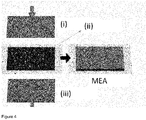
- Figure 4 shows a scheme of the membrane electrode assembly fabrication comprising joining a (i) Gas Diffusion Layer (GDL) with a (ii) Catalyst Coated Membrane as anode and a (iii) Gas diffusion electrode as cathode, using as sealing material Nafion ® .
- GDL Gas Diffusion Layer
- EXAMPLE 3 Electrochemical N-acetylglucosamine and / or glycoprotein detection by amperometric and potentiometric measurements.
- Amperometric and potentiometric measurements were performed to detect N-acetylglucosamine and/or glycoprotein in aqueous solution using a Potentiostat (PGSTAT101 Metrohm) to follow the change of signal in time.
- PGSTAT101 Metrohm Potentiostat
- PBS phosphate buffered saline
- the MEA prepared in Example 2 was assembled together with current collectors, in a 3D-printed plastic cell, where the analyte is supplied at the anode, while the cathode is open to air (O 2 ).
- the assembled cell was activated with 0.1% H 2 SO 4 during approximately 2 hours. Then the cell was connected to the potentiostat (PGSTAT101. Metrohm) in two-electrode configuration and
- Table 1 and Table 2 below show a linear response of log(C) to potential (mV) obtained for N-acetylglucosamine in 0.1 M NaOH aqueous solution and in a PBS solution, respectively, when Au-TGA NPs act as catalyst.
- Table 1 shows the results of the dependence of the OCV potential of a cell comprising the MEA described above on the inverse logarithm of glucosamine concentration in 0.1M NaOH solution.
- Table 2 shows the results of the dependence of OCV potential of cell on the inverse logarithm of glucosamine concentration in standard PBS solution.
- Table 2 -Log(C) Potential [mV] 2.086 125 1.792 108 1.623 95
- a signal in the range of between 50 and 100 ⁇ A was obtained for amperometric measurements of the electrooxidation of N-acetylglucosamine in PBS at a concentration 1.6*10 -2 M using magnetite nanoparticles functionalized with APTS (as described in Experiment 1.2) as a catalyst in a cell with a 9 cm 2 of MEA as described above working in amperometric mode.
- TGA-Au nanoparticles (as described in Experiment 1.1) are also able to catalyze a Glycoprotein peptide electroxidation in the anode of a MEA.
- Fuel cells with an anode comprising the nanoparticles described on Example 1 were tested to detect N-acetylglucosamine in aqueous solutions.
- a fuel cell comprising the Membrane Electrode Assembly (MEA) described in Example 2 was used for the tests.
- the fuel cell was a passive fuel cell wherein the anode side had a capacity of 7.2 ml. Ambient air was used as an oxygen source for the cathodic compartment.
- a Fuel cell Monitor 3.0 fuel cell store was used for the electrochemical characterization of the fuel cells in terms of open circuit potential (OCP) [V].
- N-acetylglucosamine at different concentrations 0.0-0.8 M were fed to the anode side of the fuel cell.
- N-acetylglucosamine was dissolved: i) in milli-q water, ii) in a 0.1 M NaOH aqueous solution or iii) in a PBS aqueous solution.
- aqueous solutions using ethanol instead of N-acetylglucosamine were also tested.
- the MEA prepared in Example 2 was assembled with current collectors, in a 3D-printed plastic cell, where the analyte is supplied at the anode, while the cathode is open to air (as an O 2 source).
- the assembled cell was activated with 0.1% H 2 SO 4 during approximately 2 hours.
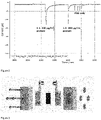
- the cell was connected to the Fuel Cell Monitor 3.0. in two-electrode configuration and voltage was measured in Open Circuit Potential (OCP) mode for different concentrations of analyte (mol/I (M)) (N-acetylglucosamine or ethanol). Results showed that not all the nanoparticles were suitable to act as catalysts in the electrooxidation of glucosamine in the anode of the fuel cell.
- OCP Open Circuit Potential
- N-acetylglucosamine dissolved in PBS aqueous solutions leads to a signal that rises with the concentration of N-acetylglucosamine.
- ethanol did not give any signal.
- PBS solutions were used to mimic saliva.
Landscapes
- Chemical & Material Sciences (AREA)
- Engineering & Computer Science (AREA)
- Life Sciences & Earth Sciences (AREA)
- Chemical Kinetics & Catalysis (AREA)
- Electrochemistry (AREA)
- General Chemical & Material Sciences (AREA)
- Health & Medical Sciences (AREA)
- Manufacturing & Machinery (AREA)
- Sustainable Energy (AREA)
- Molecular Biology (AREA)
- Microbiology (AREA)
- Materials Engineering (AREA)
- Sustainable Development (AREA)
- Biomedical Technology (AREA)
- Biochemistry (AREA)
- Urology & Nephrology (AREA)
- Hematology (AREA)
- Immunology (AREA)
- Biotechnology (AREA)
- Cell Biology (AREA)
- Food Science & Technology (AREA)
- Medicinal Chemistry (AREA)
- Physics & Mathematics (AREA)
- Analytical Chemistry (AREA)
- General Health & Medical Sciences (AREA)
- General Physics & Mathematics (AREA)
- Pathology (AREA)
- Inert Electrodes (AREA)
Abstract
The present invention refers to a membrane electrode assembly (MEA), to a fabrication method of the membrane electrode assembly (MEA), to a cell, electrochemical method for detection of glucosamine, to the use of the membrane electrode assembly (MEA) for the detection of glucosamine, to the use of the cell for the detection of glucosamine or a glycoprotein, and to a non-invasive method for determining a virus infection in a subject.
Description
- The present invention relates to the field of virus detection. More specifically, the present invention relates to the field of virus detection by electrochemical methods.
- Testing, tracking infected people, and tracing their contacts has proved as an effective strategy to reduce the spread of virus. Several methods have been reported for detecting virus, particularly coronavirus, in clinical, research, and public health laboratories. Some tests detect the infection directly by detecting the viral RNA and other tests detect the infection indirectly by detecting the host antibodies.
- Uichi et al., (Uichi et al., Sensors 2016, 16, 2045) describes detection systems based on electrochemical biosensors for glycoproteins based on the use of binding domains including antibodies, lectins, phenylboronic acid and molecularly imprinted polymers. In addition, Uichi et al. also discusses biosensors for viruses and bacteria based on their specific interactions with carbohydrates. Unfortunately, some of the glycoprotein sensors cited in Uichi et al., require multi-step measurements for the enhancement of the signals detected.
US2015369806 A1 describes a sensor for detecting molecular interactions between a target and a binding domain by electrochemical impedance spectroscopy. Said document uses a lectin as specific domain that specifically binds to a mannose residue, a fucose residue, a sialic acid residue, a glucosamine residue, or a galactosamine residue. Nevertheless binding domains as antibodies, proteins such as lectins or molecularly imprinted polymers require long fabrication process. - Detection methods should have sufficient sensitivity and accuracy to make appropriate clinical decisions rapidly during a pandemic. Therefore, despite the above-mentioned systems, it is desirable to develop alternative detection methods and devices with increased efficiency and overall performance.
- The authors of the present invention have developed a membrane electrode assembly (MEA) comprising a proton-exchange membrane coated with functionalized nanoparticles that allows the detection of glucosamine alone or as part of a glycoprotein being part of a virus. The use of the membrane electrode assembly (MEA) of the invention has the advantage of a reduced operative and fabrication cost compared to other techniques of the state of the art (i.e. no binding domains are used in the present invention). In addition, said MEA can be used to detect glucosamine by measuring different electrical parameters such as electrical current or an electrical potential of very small samples within seconds/minutes. The system can also be regenerated and reused.
- Thus, a first aspect of the invention is directed to a membrane electrode assembly (MEA) comprising:
- a first diffusion layer comprising two opposite sides;
- metal or metal oxide nanoparticles functionalized with a compound comprising a carboxylic acid group, an imide group, an amine group or a combination thereof; wherein the nanoparticles have an average particle size of between 0.1 and 500 nm; and wherein the nanoparticles comprise an element selected from the group consisting of Au, Fe, Ag, Pt and combinations thereof;
- a proton-exchange membrane comprising two opposite sides;
- a catalyst; and
- a second diffusion layer comprising two opposite sides; wherein the second diffusion layer is a gas diffusion layer;
- In a particular embodiment, the contact between the proton-exchange membrane and the diffusion layers comprises an electrical contact; preferably is a physical and an electrical contact.
- In a second aspect, the invention is directed to a fabrication method of the membrane electrode assembly (MEA) according to the invention, comprising the following steps:
- i.providing:
- a first diffusion layer comprising two opposite sides;
- metal or metal oxide nanoparticles functionalized with a compound comprising a carboxylic acid group, an imide group, an amine group or a combination thereof; wherein the nanoparticles have an average particle size of between 0.1 and 500 nm; and wherein the nanoparticles comprise an element selected from the group consisting of Fe, Au, Ag, Pt and combinations thereof;
- a proton-exchange membrane comprising two opposite sides;
- a catalyst; and
- a second diffusion layer comprising two opposite sides; wherein the second diffusion layer is a gas diffusion layer;
- ii. coating one side of the proton-exchange membrane with the metal or metal oxide nanoparticles and coating one side of the second diffusion layer with the catalyst;
- iii. placing the proton-exchange membrane between the first and the second diffusion layer; wherein the side of the proton-exchange membrane coated with the metal or metal oxide nanoparticles is in contact with one side of the first diffusion layer, and wherein the opposite side of the proton-exchange membrane is in contact with the coated side of the second diffusion layer;
- iv. joining the first diffusion layer, the proton-exchange membrane and the second diffusion layer; preferably with a binder, more preferably under pressure and/or heat.
- In a third aspect, the present invention is directed to membrane electrode assembly (MEA) obtainable by the method of fabrication as defined in the invention.
- In another aspect, the present invention is directed to a cell comprising
- a compartment comprising the membrane electrode assembly (MEA) of the invention, and
- at least two current collectors;
- In another aspect, the present invention is directed to an electrochemical method for detection of glucosamine in an aqueous solution comprising the following steps:
- i. providing
- a cell as defined in the present invention, and
- an aqueous solution optionally comprising glucosamine; wherein the aqueous solution is in contact with the nanoparticles of the cell; and
- an oxygen source; wherein the catalyst of the cell is in contact with the oxygen source;
- ii. optionally oxidizing the glucosamine of the aqueous solution to the corresponding oxidized state, while oxygen from the oxygen source is reduced to the corresponding reduced state;
- iii. measuring an electrical parameter value of the cell; and
- iv. identifying the presence or absence of glucosamine by comparing the electrical parameter value of step (iii) with a reference value;
- In another aspect, the present invention is directed to the use of the membrane electrode assembly (MEA) or the cell of the invention for the detection of glucosamine; preferably for the electrochemical detection of glucosamine.
- In another aspect, the present invention is directed to an in vitro method for determining a virus infection in a subject comprising:
- measuring an electrical parameter value in an aqueous sample fluid from the subject and comparing the electrical parameter value with a reference value by the electrochemical method defined in the present invention,
- wherein a subject is identified as having a virus infection if the measured electrical parameter value is larger than the reference value, or
- wherein a subject is identified as not having a virus infection if the measured electrical parameter value is equal to or smaller than the reference value.
-
-
Figure 1 . UV-VIS absorption spectra of the Au particles in dispersion and (b) a transmission electron microscopy (TEM) micrograph of the Au particles. -
Figure 2 . Results of amperometric measurements of a glycoprotein peptide at a concentration of 200 mg/mL in PBS. -
Figure 3 . Exploded view of a cell. -
Figure 4 . Scheme of the membrane electrode assembly fabrication. - A first aspect of the invention is directed to a membrane electrode assembly (MEA) comprising:
- a first diffusion layer comprising two opposite sides;
- metal or metal oxide nanoparticles functionalized with a compound comprising a carboxylic acid group, an imide group, an amine group or a combination thereof; wherein the nanoparticles have an average particle size of between 0.1 and 500 nm; and wherein the nanoparticles comprise an element selected from the group consisting of Au, Fe, Ag, Pt and combinations thereof;
- a proton-exchange membrane comprising two opposite sides;
- a catalyst; and
- a second diffusion layer comprising two opposite sides; wherein the second diffusion layer is a gas diffusion layer;
- A particular embodiment is directed to a membrane electrode assembly (MEA) comprising:
- a first diffusion layer comprising two opposite sides;
- metal or metal oxide nanoparticles functionalized with a compound comprising a carboxylic acid group, an imide group, an amine group or a combination thereof; wherein the nanoparticles have an average particle size of between 0.1 and 500 nm; and wherein the nanoparticles comprise an element selected from the group consisting of Fe, Au, Ag, Pt and combinations thereof;
- a proton-exchange membrane comprising two opposite sides;
- a catalyst; and
- a second diffusion layer comprising two opposite sides; wherein the second diffusion layer is a gas diffusion layer;
- In the context of the present invention the term "diffusion layer" in understood as known by an expert in the field of cells; preferably in fuel cells.
- In a particular embodiment, the membrane electrode assembly (MEA) of the invention comprises a first and a second gas diffusion layers.
- In a particular embodiment, any of the diffusion layers of the invention is a gas diffusion layer; preferably is a paper gas diffusion layer or a cloth gas diffusion layer.
- In an embodiment, the diffusion layer comprises a carbon material; more preferably carbon fibers. In a more particular embodiment, the first diffusion layer is a carbon fiber composite paper.
- In another particular embodiment, any of the diffusion layers of the invention has a thickness of between 10 and 400 microns; preferably between 50 and 350 microns; even more preferably about 190 microns.
- In a particular embodiment, the second diffusion layer of the invention is coated by a catalyst; preferably wherein the catalyst is a metallic compound; preferably a Pt compound; more preferably is PtB. In a more particular embodiment, the second diffusion layer is a woven carbon cloth coated with a catalyst. In a particular embodiment, the catalyst is coating the second diffusion layer in a concentration of at least 0.1 mg/cm2, more preferably of between 0.5 and 10 mg/cm2; even more preferably of between 1 and 6 mg/cm2; even much more preferably of about 4 mg/cm2.
- In a particular embodiment, the sides of the diffusion layers of the invention have an area of between 0.1 and 100000 cm2; preferably of between 0.5 and 100 cm2; more preferably of between 1 and 50 cm2; even more preferably of between 1 and 20 cm2; much more preferably of about 1, 2, 3, 4, 5, 6, 7, 8, 9 or 10 cm2.
- The membrane electrode assembly (MEA) of the present invention comprises metal or metal oxide nanoparticles functionalized with a compound comprising a carboxylic acid group, an imide group, an amine group or a combination thereof; wherein the nanoparticles have an average particle size of between 0.1 and 500 nm; and wherein the nanoparticles comprise an element selected from the group consisting of Fe, Au, Ag, and Pt.
- In a particular embodiment, the nanoparticles of the present invention are chemically functionalized. In particular they do not comprise a binding domain such as an antibody, lectin, receptor, recombinant protein, glycolipid, glycan or molecularly imprinted polymers, particularly attached to the nanoparticle, more particularly covalently attached to the nanoparticle.
- In the context of the present invention, the expression "average particle size" is understood as the arithmetic mean size of the particles calculated from a significant number of measurements of particle sizes, for example over 10, 50 or 100, by any technique known in the art, for example by electron microscopy (transmission electron microscopy or scanning electron microscopy).
- In an embodiment, the nanoparticles of the present invention have an average particle size of between 1 and 200 nm; preferably of between 5 and 100 nm.
- In a particular embodiment, the nanoparticles of the invention comprise an element selected from the group consisting of Fe, Au, Ag, and Pt; preferably from the group consisting of Fe, Au and Pt; more preferably from Au or Fe.
- In a particular embodiment, the nanoparticles of the invention comprise a carboxylic acid group, an imide group, an amine group or a combination thereof; preferably they comprise a carboxylic acid group, an imide group, a secondary amine group or a combination thereof; preferably they comprise a compound selected from the group consisting of N-hydroxysuccinimide (NHS) ester, thioglycolic acid (TGA), aminopropyltriethoxysilane (APTS), citric acid or combinations thereof.
- In a more particular embodiment, the nanoparticles of the invention are nanoparticles functionalized with carboxylic acid groups, amine groups, imide groups or with combinations thereof.
- In a more particular embodiment, the nanoparticles of the invention are nanoparticles functionalized with carboxylic acid groups; preferably with a compound comprising at least one carboxylic acid; preferably wherein the compound further comprises at least one hydroxyl functional group (-OH) or a thiol (-SH) functional group; more preferably is thioglycolic acid (TGA) or citric acid.
- In a more particular embodiment, the nanoparticles of the invention are nanoparticles functionalized with amine groups; preferably with a compound comprising at least one amine group; more preferably a silane compound comprising at least one amine group; preferably at least one secondary amine group; most preferably aminopropyltriethoxysilane (APTS).
- In a more particular embodiment, the nanoparticles of the invention are nanoparticles functionalized with imide groups; preferably with a compound comprising at least one imide group; more preferably a compound comprising at least one imide group and an ester group; more preferably a succinimide ester; more preferably a N-hydroxysuccinimide (NHS) ester.
- In a particular embodiment, the nanoparticles of the invention are Au nanoparticles functionalized with a compound comprising a carboxylic acid group, an imide group, an amine group or a combination thereof; preferably with a compound comprising a carboxylic acid group or an imide group; more preferably with an N-hydroxysuccinimide (NHS) ester or with thioglycolic acid (TGA).
- In a more particular embodiment, the nanoparticles of the invention are gold nanoparticles functionalized with carboxylic acid groups; preferably with a compound comprising a carboxylic acid and a thiol group; more preferably thioglycolic acid (TGA).
- In a more particular embodiment, the nanoparticles of the invention are gold nanoparticles functionalized with N-hydroxysuccinimide (NHS) ester; more preferably coated with polyethylene glycol and functionalized with N-hydroxysuccinimide (NHS) ester.
- Preferably, the poly(ethylene glycol) coating the nanoparticles of the invention has an average molecular weight of between 10 and 10000 g/mol; preferably an average molecular weight of between 100 and 8000 g/mol; more preferably of between 200 and 6000 g/mol; more preferably of between 205 and 5500 g/mol; more preferably of about 5000 g/mol. In the context of the present invention, the "molecular weight" of the polyethylene glycol may be calculated by any technique known in the art, for example as the z-average molecular weight as measured by high performance liquid chromatography (HPLC) as known in the art; preferably, as the z-average molecular weight calculated from the molecular weight distribution measured by high performance liquid chromatography (HPLC) in g/mol.
- In another particular embodiment, the nanoparticles of the invention are iron oxide nanoparticles functionalized with a compound comprising a carboxylic acid group, an imide group, an amine group or a combination thereof; more preferably with a compound comprising a carboxylic acid group or an amine group; preferably with aminopropyltriethoxysilane (APTS) or citric acid.
- In a more particular embodiment, the nanoparticles of the invention are magnetite nanoparticles functionalized with amine groups; preferably with secondary amine groups; more preferably with a silane comprising secondary amine groups; more preferably with aminopropyltriethoxysilane (APTS).
- In a more particular embodiment, the nanoparticles of the invention are iron oxide nanoparticles functionalized with carboxylic acid groups; preferably with citric acid; more preferably wherein the average particle size of the nanoparticles is between 10 and 30 nm.
- In a more particular embodiment, the nanoparticles of the invention are:
- gold nanoparticles functionalized with carboxylic acid groups; preferably with a compound comprising a carboxylic acid and a thiol group; more preferably thioglycolic acid (TGA); and/or
- gold nanoparticles functionalized with N-hydroxysuccinimide (NHS) ester; more preferably coated with polyethylene glycol and functionalized with N-hydroxysuccinimide (NHS) ester; and/or
- magnetite nanoparticles functionalized with amine groups; preferably with secondary amine groups; more preferably with a silane comprising secondary amine groups; more preferably with aminopropyltriethoxysilane (APTS); and /or
- iron oxide nanoparticles functionalized with carboxylic acid groups; preferably with citric acid; more preferably wherein the average particle size of the nanoparticles is between 10 and 30 nm.
- The membrane electrode assembly (MEA) of the present invention comprises a proton exchange membrane.
- In a particular embodiment, the proton exchange membrane comprises a fluorinated polymer; preferably a fluorinated polymer with sulfonic acid sites; preferably a perfluorosulfonic acid (PFSA) polymer.
- In more particular embodiment, the proton exchange membrane consist of a fluorinated polymer; preferably a fluorinated polymer with sulfonic acid sites; preferably a sulfonated tetrafluoroethylene based fluoropolymer or perfluorosulfonic acid (PFSA) polymer.
- In a particular embodiment, the thickness of the proton exchange membrane of the invention is between 0.050 mm and 0.500 mm; preferably between 0.100 and 0.300 mm; more preferably between 0.150 and 0.200 mm; even more preferably of around 0.180 mm.
- In a particular embodiment, the sides of the proton exchange membrane of the invention have an area of between 0.1 and 100000 cm2; preferably of between 0.5 and 100 cm2; more preferably of between 1 and 50 cm2; even more preferably of between 1 and 20 cm2; much more preferably of about 1, 2, 3, 4, 5, 6, 7, 8, 9 or 10 cm2.
- In an embodiment, the proton exchange membrane of the invention comprises two opposite sides; wherein the metal or metal oxide nanoparticles of the invention are coating one side of the proton-exchange membrane. In a more particular embodiment, the metal or metal oxide nanoparticles of the invention are coating the proton-exchange membrane in an amount of between 0.1 and 10 mg/cm2; preferably between 0.2 and 5 mg/cm2; more preferably between 0.4 and 2 mg/cm2; more preferably between 0.5 and 1 mg/cm2. In a more particular embodiment, the nanoparticles coated completely one side of the proton exchange membrane.
- In particular, in the membrane electrode assembly (MEA) of the invention, the side coated with the metal or metal oxide nanoparticles of the proton exchange membrane of the invention is in contact with the first diffusion layer, and the opposite side of the proton exchange membrane is in contact with the catalyst coated side of the second diffusion layer.
- In a particular embodiment, the membrane electrode assembly (MEA) of the invention further comprises a binder; preferably a polymeric binder; more preferably a fluorinated polymer; preferably a fluorinated polymer with sulfonic acid sites; preferably a perfluorosulfonic acid (PFSA) polymer.
- In an embodiment, the first diffusion layer in contact with the side coated with the metal or metal oxide nanoparticles of the proton exchange membrane of the invention is an electrode of the membrane electrode assembly (MEA) of the invention; preferably is an anode.
- In another embodiment, the second gas diffusion layer coated with the catalyst of the invention is an electrode of the membrane electrode assembly (MEA) of the invention; preferably is a cathode.
- In a particular embodiment, all the layers of the membrane electrode assembly (MEA) of the invention are joined; preferably are joined by a binder.
- In a particular embodiment, the membrane electrode assembly (MEA) of the invention has two opposite sides; wherein each side has an area of between 0.1 and 100000 cm2; preferably of between 0.5 and 100 cm2; more preferably of between 1 and 50 cm2; even more preferably of between 1 and 20 cm2; much more preferably of about 1, 2, 3, 4, 5, 6, 7, 8, 9 or 10 cm2.
- A particular embodiment is directed to a membrane electrode assembly (MEA) consisting of:
- a first diffusion layer comprising two opposite sides;
- metal or metal oxide nanoparticles functionalized with a compound comprising a carboxylic acid group, an imide group, an amine group or a combination thereof; wherein the nanoparticles have an average particle size of between 0.1 and 500 nm; and wherein the nanoparticles comprise an element selected from the group consisting of Fe, Au, Ag, and Pt;
- a proton-exchange membrane comprising two opposite sides;
- a catalyst; and
- a second diffusion layer comprising two opposite sides; wherein the second diffusion layer is a gas diffusion layer;
- In a particular embodiment, the MEA of the present invention does not comprise binding domains; preferably biological binding domains; more preferably receptors, recombinant proteins, glycolipids, glycans antibodies or lectins; even more preferably antibodies or lectins.
- An advantage of the use of functionalized metal or metal oxide nanoparticles on the MEA of the invention is the improvement of the surface area-to-weight ratio and easy modification of the surfaces of said MEA. In addition, the inventors have observed that the use of said particles allows the specific binding of glucosamine to the surface of the proton-exchange membrane. In addition, the MEA of the invention is more robust, cheaper to build and its fabrication requires less steps than a MEA comprising biological binding domains such as antibodies or lectin, among others. Moreover, the MEA of the invention allows a quick detection of glucosamine and, if necessary, the MEA can be regenerated and reused several times, thus reducing the overall cost of the measurements. These advantages also apply to the cell of the invention.
- A second aspect of the invention is directed to a fabrication method of the membrane electrode assembly (MEA) of the present invention, comprising the following steps:
- i.providing:
- a first diffusion layer comprising two opposite sides;
- metal or metal oxide nanoparticles functionalized with a compound comprising a carboxylic acid group, an imide group, an amine group or a combination thereof; wherein the nanoparticles have an average particle size of between 0.1 and 500 nm; and wherein the nanoparticles comprise an element selected from the group consisting of Fe, Au, Ag, Pt and combinations thereof;
- a proton-exchange membrane comprising two opposite sides;
- a catalyst; and
- a second diffusion layer comprising two opposite sides; wherein the second diffusion layer is a gas diffusion layer;
- ii. coating one side of the proton-exchange membrane with the metal or metal oxide nanoparticles and coating one side of the second diffusion layer with the catalyst;
- iii. placing the proton-exchange membrane between the first and the second diffusion layer; wherein one side of the first diffusion layer is in contact with the side of the proton-exchange membrane coated with the metal or metal oxide nanoparticles and wherein the opposite side of the proton-exchange membrane is in contact with the coated side of the second diffusion layer; and
- iv. joining the first diffusion layer, the proton-exchange membrane and the second diffusion layer; preferably with a binder, more preferably under pressure and/or heat.
- In an embodiment, step (i) of the fabrication method of the invention comprises providing a binder.
- In an embodiment, the coating of step (ii) of the fabrication method of the invention is coating by air brushing; preferably at a temperature of between 20 and 40 °C and at a pressure of between 1 and 5 bars; more preferably at a temperature of around 30 °C and at 3 bars.
- In an embodiment, step (ii) of the fabrication method of the membrane electrode assembly (MEA) of the present invention, comprises coating one side of the proton-exchange membrane with the metal or metal oxide nanoparticles by air brushing; preferably at a temperature of between 20 and 40 °C and at a pressure of between 1 and 5 bars; more preferably at a temperature of around 30 °C and at 3 bars.
- In a particular embodiment, the metal or metal oxide nanoparticles of the fabrication method of the invention are in an ink.
- In particular, the ink of the fabrication method of the invention comprises
- the metal or metal oxide nanoparticles of the invention;
- a solvent or a mixture of solvents; preferably water and alcohol; and
- a fluorinated polymer; preferably a fluorinated polymer with sulfonic acid sites; preferably perfluorosulfonic acid (PFSA) polymer.
- In a particular embodiment, the fluorinated polymer is in the ink of the invention in between 1 and 10 wt% of the total weight of the ink; preferably between 2 and 8 wt% of the total weight of the ink.
- In an embodiment, step (iv) of the fabrication method of the invention is performed under pressure, preferably at between 100 and 600 psi; preferably at between 200 and 500 psi; more preferably around 400 psi.
- In an embodiment, step (iv) of the fabrication method of the invention is performed during between 0.1 and 48 h; preferably between 1 and 30 h; more preferably between 2 and 24h.
- In another embodiment, step (iv) of the fabrication method of the invention is performed under heat, preferably at temperatures of between 50 and 350 °C; more preferably of between 100 and 300 °C, even more preferably at 150 °C.
- In an embodiment, the binder of step (iv) is a a fluorinated polymer; preferably a fluorinated polymer with sulfonic acid sites; preferably a sulfonated tetrafluoroethylene based fluoropolymer or perfluorosulfonic acid (PFSA) polymer.
- Another aspect of the invention is directed to a membrane electrode assembly (MEA) obtainable by the method of fabrication of the invention in any of its particular embodiments. The membrane electrode assembly (MEA) obtainable by the method of fabrication of the invention, may present all the features and characteristics as the membrane electrode assembly (MEA) described in the first aspect of the invention in any of its embodiments.
- Another aspect of the invention is directed to a cell comprising:
- a compartment comprising the membrane electrode assembly (MEA) of the invention as defined in any of its particular embodiments, and
- a least two current collectors;
- In a particular embodiment, membrane electrode assembly is placed in the cell of the present invention between the current collectors. In another particular embodiment, the membrane electrode assembly is in electrical contact with the at least two current collectors. More particularly, the first diffusion layer of the MEA is in contact with one of the at least two current collectors and the second diffusion layer of the MEA is in contact with the other of the at least two current collectors. Even more particularly, one side of the first diffusion layer of the MEA is in contact with one of the at least two current collectors and a side of the second diffusion layer of the MEA is in contact with the other of the at least two current collectors. In a particular embodiment, the contact comprises an electrical contact; preferably is a physical and an electrical contact.
- In a more particular embodiment, the current collectors are made of stainless steel, copper, aluminum or titanium. In a more particular embodiment, the current collectors are in the form of sheets, mesh, or in any configuration of which the current collector allow fluid flow; preferably a mesh. Current collector materials can be selected to be stable at the operating potentials of the cell.
- In a particular embodiment the cell of the invention, is a fuel cell; preferably is a passive fuel cell.
- In an embodiment, the first diffusion layer in contact with the side coated with the metal or metal oxide nanoparticles of the proton exchange membrane of the invention is an electrode of the membrane electrode assembly (MEA) of the cell of the invention; preferably an anode.
- In another embodiment, the second gas diffusion layer coated with the catalyst of the invention is an electrode of the membrane electrode assembly (MEA) of the cell of the invention; preferably a cathode.
- In a particular embodiment, the current collectors of the invention have a sheet shape; preferably they comprise holes; more preferably they are metallic.
- In another particular embodiment, the current collectors are made of an electrically conductive material; preferably of stainless steel, titanium, gold or platinum; more preferably of stainless steel.
- In another particular embodiment, the compartment comprised in the cell of the present invention is configured to be modular, replaceable, scalable and/or independent of the rest of the cell components.
- In a particular embodiment, the compartment of the cell of the present invention is made of a plastic material (e.g., polypropylene, polyethylene, etc.) or a coated steel material (e.g., a plastic-coated or rubber-coated, steel tank) to substantially avoid corrosion due to galvanic coupling. In another particular embodiment, the compartment is of any metallic material that avoids corrosion, such as stainless steel, titanium, nickel or nickel alloys; preferably stainless steel, nickel or nickel alloys.
- In a particular embodiment, the compartment of the cell of the present invention comprises at least two openings; preferably four openings.
- In a particular embodiment, the membrane electrode assembly (MEA) of the invention is placed in the compartment dividing the compartment in two subcompartments; one at each side of the MEA. In a particular embodiment, each of the two subcompartments of the cell is in fluidic communication with one of the two opposite surfaces of the MEA. For example, the subcompartment at the left side of the cell is in fluidic communication with the left side of the MEA (i.e. the chemicals present in a fluid which is contained by the left subcompartment can reach the left side of the MEA) and the right subcompartment is in fluidic communication with the right side of the MEA (i.e. the chemicals present in a fluid contained by the right subcompartment can reach the right side of the MEA, for example if the right subcompartment comprises air, oxygen can reach the right side of the MEA, in particular its surface) .
- In the context of the present invention, a "subcompartment" is understood as a compartment that is part of a larger one.
- In a particular embodiment, each subcompartment comprises an opening. Preferably, one of said openings is a sample deposition opening.
- The cell of the present invention may comprise a controller.
- In a particular embodiment, the cell of the present invention may comprise a potenciostat.
- In a particular embodiment, the cell of the present invention may comprise a control unit; preferably a control unit adapted to measure volts, coulombs and ampere.
- The cell of the present invention may comprise a power/load source. The power/load source is any external electrical device such as an electrical grid, an electric vehicle, a domestic appliance or a sensor, that draws/transfers energy from/to the cell. In general, the power/load source have controllable voltages and/or current supplies or uptakes.
- Another aspect of the invention is directed to an electrochemical method for detection of glucosamine in an aqueous solution comprising the following steps:
- i. providing
- a cell as defined in the present invention in any of its particular embodiments,
- an aqueous solution optionally comprising glucosamine; wherein the aqueous solution is in contact with the nanoparticles of the cell; and
- an oxygen source; wherein the catalyst of the cell is in contact with the oxygen source;
- ii. optionally oxidizing the glucosamine of the aqueous solution to the corresponding oxidized state, while oxygen from the oxygen source is reduced to the corresponding reduced state;
- iii. measuring an electrical parameter value of the cell; and
- iv. identifying the presence or absence of glucosamine by comparing the electrical parameter value of step (iii) with a reference value;
- In an embodiment, glucosamine is understood as (3R,4R,5S)-3-Amino-6-(hydroxymethyl)oxane-2,4,5-triol, derivatives or salts thereof.
- In a particular embodiment the glucosamine of the present invention is N-acetylglucosamine; more preferably of N-acetyl-D-glucosamine.
- In another particular embodiment, the glucosamine of the present invention is part of a glycoprotein; preferably is part of a spike (S) glycoprotein.
- The electrochemical method of the invention can be a method for detection of virus, particularly of any virus containing glycoproteins, more particularly of any virus containing glycoproteins comprising glucosamine.
- In another embodiment, the glucosamine of the present invention is part of a virus; preferably part of a coronavirus; more preferably part of alpha, beta, gamma, and delta coronavirus.
- In the context of the present invention, the term "glycoprotein" is understood as proteins which contain oligosaccharide chains (glycans) such as glucosamine; preferably wherein said glycans are covalently attached to amino acid side-chains of the protein.
- In a particular embodiment, the oxygen source of the present invention is O2 or air; preferably air.
- In a particular embodiment the aqueous solution of the invention further comprises ion conducting compounds; preferably salts, preferably phosphate and/or alkali salts; more preferably comprises sodium or potassium chlorides.
- In a particular embodiment the aqueous solution of the invention further comprises a basic compound; preferably an alkali hydroxide; more preferably sodium hydroxide or potassium hydroxide; even much more preferably in a concentration of between 0.01 and 1 M (mol/L); more preferably about 0.1 mol/L. In a particular embodiment the aqueous solution of the invention has a basic pH; preferably has a pH greater than 7, 8 or 9; more preferably has a pH of between 10 and 14; more preferably of between 11 and 13; even more preferably between 11.5 and 12.5; eve much more preferably between 11.75 and 12.25.
- In a particular embodiment the aqueous solution of the invention further comprises phosphates; preferably is a phosphate-buffered saline solution as known in the art.
- In a particular embodiment the aqueous solution is water, preferably wastewater.
- In a particular embodiment the aqueous solution of the invention is a mammal fluid; preferably saliva. In a particular embodiment, the aqueous solution is human saliva.
- In a particular embodiment the glucosamine of the aqueous solution is oxidized in the anode of the cell of the present invention; preferably is electroxidized in the anode of the cell of the present invention. In another embodiment, the oxidation of the glucosamine is catalyzed by the nanoparticles of the cell.
- In a particular embodiment oxygen from the oxygen source is reduced in the cathode of the cell of the present invention. In another embodiment, the reduction of the oxygen is catalyzed by the catalyst of the cell.
- In a particular embodiment the reference value is obtained from a known aqueous solution; preferably from a known aqueous solution comprising a known amount of glucosamine; preferable comprising a known amount of glucosamine from Glycoprotein (S). In a particular embodiment the reference value is obtained from an aqueous solution not containing glucosamine, preferably not containing Glycoprotein (S).
- In a particular embodiment, the electrical parameter value of step (iii) is measured between the anode and the cathode of the cell.
- In a particular embodiment, the electrical parameter value of step (iii) is an electrical current or an electrical potential.
- In a particular embodiment, the electrical parameter value of step (iii) is an electrical current while a known potential is applied between the anode and the cathode; preferably a potential of 0 V.
- In particular, the cell or the membrane electrode assembly (MEA) of the present invention might be used for the detection of glucosamine by amperometric measurements, wherein the electrical current occurring due to the oxidation of the glucosamine in the anode and the reduction of oxygen in the cathode is measured, while applying a known potential between the anode and the cathode.
- In a particular embodiment, the electrical parameter value of step (iii) is an electrical potential while there is a known electric current between the anode and the cathode of the cell of the invention.
- In a particular embodiment, the electrical parameter value of step (iii) is an electrical potential measured in open-circuit potential conditions of the cell of the invention. In the context of the present invention "open-circuit potential conditions" is understood as known in the art.
- An aspect of the invention is directed to the use of the membrane electrode assembly (MEA) of the invention as defined in any of the particular embodiments, for the detection of glucosamine; preferably for the electrochemical detection of glucosamine; more preferably for the electrochemical detection of glucosamine by amperometric or potentiometric methods.
- An aspect of the invention is directed to the use of cell of the invention as defined in any of the particular embodiments, for the detection of glucosamine; preferably for the electrochemical detection of glucosamine; more preferably for the electrochemical detection of glucosamine by amperometric or potentiometric methods.
- An aspect of the invention is directed to a method for the detection of glucosamine comprising using the membrane electrode assembly (MEA) of the invention as defined in any of the particular embodiments; preferably for the electrochemical detection of glucosamine; more preferably for the electrochemical detection of glucosamine by amperometric or potentiometric methods.
- An aspect of the invention is directed to a method for the detection of glucosamine comprising using the cell of the invention as defined in any of the particular embodiments; preferably for the electrochemical detection of glucosamine; more preferably for the electrochemical detection of glucosamine by amperometric or potentiometric methods.
- In a particular embodiment, the glucosamine forms part of a glycoprotein; preferably wherein the glycoprotein is spike (S) glycoprotein; more preferably wherein the S glycoprotein is part of a coronavirus.
- In another aspect, the present invention is directed to an in vitro method for determining a virus infection in a subject comprising:
- measuring an electrical parameter value in an aqueous sample fluid from the subject and comparing the electrical parameter value with a reference value by the electrochemical method defined in the present invention,
- wherein a subject is identified as having a virus infection if the measured electrical parameter value is larger than the reference value, or
- wherein a subject is identified as not having a virus infection if the measured electrical parameter value is equal to or smaller than the reference value.
- In a particular embodiment, the aqueous solution is an aqueous fluid from a mammal; preferably is saliva.
- In a particular embodiment, the non-invasive method for determining a virus infection is an in vitro method.
- In a particular embodiment, the non-invasive method for determining a virus infection is a non-invasive method. The term "non-invasive" regarding to the method of the invention relates to an in vitro method, i.e., a method which is applied to an aqueous sample fluid previously obtained from the subject under examination and which is able to detect a specific compound in the aqueous sample fluid but which does not require damaging, passing, entering, or penetration through the tissue of the subject.
- In a particular embodiment, the non-invasive method for determining a virus infection is an in vitro method.
- As used herein the term "determining" and derivations of this term refer to detecting the presence or absence of a virus infection in a subject. According to the present invention, "determining" also includes detecting, evaluating, quantifying, or measuring. This term also includes determining a virus infection in a subject at a time point and determining a virus infection in a subject over time (also denoted herein as "monitoring" and derivations of this term).
- The term "subject" or "patient" typically includes humans, but can also include other animals such as, e.g., other primates, rodents, canines, felines, equines, ovines, porcines, and the like. In a preferred embodiment, the subject is a human subject of any sex, race or age.
- The term "reference value", as used herein, relates to a predetermined criteria used as a reference for evaluating the values or data obtained from the samples collected from a subject. The reference value or reference level can be an absolute value; a relative value; a value that has an upper or a lower limit; a range of values; an average value; a median value; a mean value; or a value as compared to a particular control or baseline value. A reference value can be based on an individual sample value, such as for example, a value obtained from a sample from the subject being tested, but at an earlier point in time. The reference value can be based on a large number of samples, such as from population of subjects of the chronological age matched group, or based on a pool of samples including or excluding the sample to be tested. In one embodiment, the reference value is obtained from a healthy subject, particularly from a subject not infected with a virus, more particularly from a subject not infected by a coronavirus.
- In another embodiment, the reference value corresponds to an average or mean level determined from a pool of samples obtained from a group of patients who are well documented from the clinical point of view, and who present no disease, particularly who are not suffering a virus infection, particularly not suffering from a coronavirus infection. In said samples, the levels of glucosamine can be determined, for example, by means of the determination of the average levels in a reference population. For example, the reference value can be obtained from identical amounts of a group of at least 2, at least 10, at least 100 to more than 1000 individuals, such that the population is statistically significant. It will be understood that the reference value used for the diagnosis of patients according to the method of the invention is a value obtained from the same type of sample which is being considered in the method.
- The term "smaller" in relation to the measured electrical parameter relates to a value detected using the method according to the invention in a sample lower than the reference value. Thus, the measured electrical parameter is considered to be decreased or to be lower or smaller than its reference value when it is at least 1%, at least 5%, at least 10%, at least 15%, at least 20%, at least 25%, at least 30%, at least 35%, at least 40%, at least 45%, at least 50%, at least 55%, at least 60%, at least 65%, at least 70%, at least 75%, at least 80%, at least 85%, at least 90%, at least 95%, at least 100%, at least 110%, at least 120%, at least 130%, at least 140%, at least 150%, or more lower than its reference value.
- The term "larger" in relation to the measured electrical parameter relates to a value detected using the method according to the invention in a sample higher than the reference value. Thus, the measured electrical parameter is considered to be increased or to be larger than its reference value when it is at least 1%, at least 5%, at least 10%, at least 15%, at least 20%, at least 25%, at least 30%, at least 35%, at least 40%, at least 45%, at least 50%, at least 55%, at least 60%, at least 65%, at least 70%, at least 75%, at least 80%, at least 85%, at least 90%, at least 95%, at least 100%, at least 110%, at least 120%, at least 130%, at least 140%, at least 150%, or more higher than its reference value.
- The term "equal" in relation to the measured electrical parameter relates to a value detected using the method according to the invention in a sample equal or substantially equal to the reference value. Thus, the measured electrical parameter is considered to be equal compared to its reference value when is less than 1%, less than 0.9%, less than 0.8%, less than 0.7%, less than 0.6%, less than 0.5%, less than 0.4%, less than 0.3%, less than 0.2%, less than 0.1%, less than 0.05%, less than 0.01%, less than 0.001%, higher or lower than its reference value.
Preferably the virus infection of the present invention is a coronavirus infection, more preferably a coronavirus infection causing a respiratory syndrome. - The present invention will be described in further detail with reference to the following examples. These examples are for illustrative purposes only and are not intended to limit the scope of the present invention.
- The present invention will be described in further detail with reference to the following examples. These examples are for illustrative purposes only and are not intended to limit the scope of the present invention.
- Several types of nanoparticles have been used in the present invention as catalyst of glucosamine electrooxidation:
- A solution of 2.2 mM sodium citrate in Milli-Q water (150 mL) was heated for 15 min under vigorous stirring. After boiling, 1 mL of HAuCl4 (25 mM) was injected in the solution. The color of the solution changed from yellow to bluish gray and then to soft pink in 10 min. The resulting particles (of about 10 nm) are coated with negatively charged citrate ions and hence are dispersed in H2O. This particles were named Au seeds.
- Immediately after the synthesis of the Au seeds and in the same vessel, the reaction was cooled until the temperature of the solution reached 90 °C. Then, 1 mL of sodium citrate (60 mM) and 1 mL of a HAuCl4 solution (25 mM) were sequentially injected (time delay about 2 min). By repeating the sequential addition of 1 mL of 60 mM sodium citrate and 1 mL of 25 mM HAuCl4, gold particles of progressively larger sizes were grown. The concentration of each generation of NPs was approximately the same as the original seed particles (3 x 10¹² nanoparticles/mL).
- Following the previous process, 60-70 nm Au nanoparticles were synthesized. The particles were characterized by UV-VIS spectroscopy and their size distribution was calculated from a statistically significant number of nanoparticle measurements by transmission electron microscopy (TEM) images.
Figure 1 (a) shows a UV-VIS absorption spectra of the Au particles in dispersion and (b) a transmission electron microscopy (TEM) micrograph of the Au particles. - Then, the as synthesized Au nanoparticles were cleaned from excess of the stabilizer (sodium citrate) by subsequent centrifugation and redispersion in a Milli-Q water.
- A nanoparticle ink was prepared by mixing Milli-Q water, isopropanol and a Nafion® 117 solution (5 wt.% in a mixture of low aliphatic alcohols and water) with 2.5-5 ml of the Au nanoparticle solution obtained above. A 50 µL of 0.25 M solution of TGA in EtOH was added to the ink to functionalize the Au nanoparticles with thioglycolic acid (TGA). Finally the nanoparticle ink was sonicated (Ultrasons Selecta 3000683, 50/60 kHz, 110 W) during 30 min.
- The magnetite nanoparticles were synthesized as follows:
Magnetic nanoparticles (MNPs) of magnetite (Fe3O4) were synthesized by coprecipitation of iron salts in alkaline medium. An aqueous solution, 50 ml, containing 0.36 M FeCl2 and 0.72 M FeCl3 was pumped at 5.0 ml/min (LKB Pump P-1, Pharmacia, Uppsala, Sweden) into 450 ml of 1 M NH4OH solution under continuous mechanic stirring at room temperature. The obtained black precipitate was separated from the liquid phase using a magnetic field, and then magnetically washed thrice with ultrapure water (MilliQ, Millipore Co., Bedford, MA, USA) and twice with phosphate buffered saline (PBS, 100 mM sodium phosphate, 150 mM NaCl, pH 7.4). All solutions used for the synthesis of MNPs were prepared using MilliQ water. Moreover, a N2 gas stream was continuously bubbled through all solutions during the process. - The resulting magnetic nanoparticles contained -OH groups on their surface. In order to functionalize them with -NH 2 groups, MNPs (300 mg, dry weight) were incubated with aminopropyltriethoxysilane (APTS) at 70 °C with orbital shaking (200 rpm). After 24 h, they were washed thrice with PBS.
- The nitrogen of the amine functional group of the nanoparticles is able to form hydrogen bonds with the hydroxyl groups of glucosamine allowing its adsorption on the surface of the nanoparticles.
- Iron oxide was synthesized according to the article Hui et al. (J. Phys. ) with a few modifications. Briefly the synthesis was made as follows:
2 mmol of C6H5Na3O7·2H2O (citric acid, trisodium salt dehydrate), 8 mmol of NaOH, and 0.4 mmol of NaSO4 are mixed in 38 mL of deionized water. The mixture was then heated to 100°C and formed a pellucid solution. 2 mL of 2 M solution of Fe(NO3)3 solution was added into the mixture rapidly (equivalent to 0.10 M Fe2+ in the alkali solution), and the mixed solution was kept at 100°C for 6h. The solution was then cooled down to room temperature naturally. - Iron oxide nanoparticles were naturally cooled down to room temperature and cleaned by subsequent centrifugation and redispersion in distilled water. Finally, a stable dispersion of the iron oxide nanoparticles in water was obtained. The mean diameter of Iron oxide nanoparticles was around 20 nm and they are giving a stable dispersion in water and keep colloidal stability for at least one month. The NPs can be redispersed in water even after dried into a powder.
- Commercial Pt-Ru nanoparticles supported on a Woven Carbon Fiber Cloth in a concentration per area of 4 mg/cm2 were obtained from The Fuel Cell Store (www.fuelcellstore.com; Product Ref.: W1S100).
- Commercial gold nanoparticles coated with polyethylene glycol (PEG) 5000 and functionalized with an N-hydroxysuccinimide (NHS) ester were bought from Sigma Aldrich (Ref.: 900475-1EA).
- A nanoparticle ink was prepared by mixing Milli-Q water, isopropanol and a Nafion® 117 solution (5 wt% in a mixture of low aliphatic alcohols and water) with:
- 3-80 mg of the nanoparticles obtained in Example 1.2 or 1.4.2, or
- 2.5-5 ml of the nanoparticle suspension obtained in Example 1.1 or 1.3.
- The nanoparticle ink was sonicated (Ultrasons Selecta 3000683, 50/60 kHz, 110 W) during 30 min.
- Then, an electrode (anode) for a membrane electrode assembly (MEA) was prepared by depositing the nanoparticle ink described above using air brushing (3 bar, 60°C support heat) on a Nafion®117 membrane to create a catalyst coated membrane (CCM) leading to a nanoparticle concentration in the anode of 0.5-1 mg/cm2. The catalyst from Example 1: 1.4.1 was used directly on the Nafion® membrane during MEA preparation step.
- A MEA of a fuel cell was prepared using
- i) Toray T-060 carbon paper (9 cm2 Gas Diffusion Layer (GDL)),
- ii) the anode described above (catalyst coated membrane (CCM)),
- iii) a commercial cathode (9 cm2 cathode Cloth Gas diffusion electrode (GDE) 4 mg/cm2 PtB).
- The three parts were glued with 100 µL of Nafion® 117 solution (5 wt. %) and pressed for 2 to 24h with 400 psi. The pressure was applied by a manual home-made cell and it was measured with the load compression cell distributed by SENSING, S.L.
-
Figure 4 shows a scheme of the membrane electrode assembly fabrication comprising joining a (i) Gas Diffusion Layer (GDL) with a (ii) Catalyst Coated Membrane as anode and a (iii) Gas diffusion electrode as cathode, using as sealing material Nafion®. - Amperometric and potentiometric measurements were performed to detect N-acetylglucosamine and/or glycoprotein in aqueous solution using a Potentiostat (PGSTAT101 Metrohm) to follow the change of signal in time.
- Different concentration of 200 mg/ml solutions of N-acetylglucosamine were prepared in aqueous solution of phosphate buffered saline (PBS). PBS is used in biological studies to mimic the saliva conditions as it contains similar salts and it keeps pH stable in around 7. Moreover, PBS works as electrolyte in the studies of glucosamine electrooxidation. The buffer solution was obtained by dissolution of commercial PBS in tablets (pH 7.2-7.6 (1 tablet/200 mL)) in milli-q water.
- For the assay, the MEA prepared in Example 2 was assembled together with current collectors, in a 3D-printed plastic cell, where the analyte is supplied at the anode, while the cathode is open to air (O2). The assembled cell was activated with 0.1% H2SO4 during approximately 2 hours. Then the cell was connected to the potentiostat (PGSTAT101. Metrohm) in two-electrode configuration and
- i) potential in open-circuit voltage (OCV) mode and
- ii) current in amperometric mode (at a potential 0V)
- The following results were obtained for the different nanoparticles tested as catalyst for electrooxidation of N-acetylglucosamine:
- The results shown below represent the potentiometric measurements of membrane electrode assembly (MEA) prepared with TGA-Au nanoparticles, synthesized as described in Experiment 1.1. In these tests the TGA-Au nanoparticles act as electrocatalysts for oxidation of N-acetylglucosamine in the anode compartment of the fuel cell. All experiments described herein are done in an open-circuit voltage (OCV) mode.
- In particular, the results of Table 1 and Table 2 below show a linear response of log(C) to potential (mV) obtained for N-acetylglucosamine in 0.1 M NaOH aqueous solution and in a PBS solution, respectively, when Au-TGA NPs act as catalyst. IN particular, Table 1 shows the results of the dependence of the OCV potential of a cell comprising the MEA described above on the inverse logarithm of glucosamine concentration in 0.1M NaOH solution. In addition, Table 2 shows the results of the dependence of OCV potential of cell on the inverse logarithm of glucosamine concentration in standard PBS solution.
Table 1 -Log(C) Potential [mV] 1.415 231 1.146 209 0.788 150 0.602 128 0.301 65 Table 2 -Log(C) Potential [mV] 2.086 125 1.792 108 1.623 95 - Amperometric measurements results are shown below representing the TGA-Au nanoparticles synthesized as described in Experiment 1.1 and acting as catalyst for electrooxidation of N-acetylglucosamine or a glycoprotein peptide in the anode compartment of MEA as described above and working in amperometric mode
- N-acetylglucosamine.
Amperometric measurements of N-acetylglucosamine in PBS showed a signal intensity in a range of 1-100 µA, depending on concentration of the N-acetylglucosamine and the area of MEA used for the tests. The signal loses intensity and returns to the background in a time scale of minutes. In particular, the amperometric measurements for solutions of N-acetylglucosamine in PBS with concentrations 2.5*10-2M and 6.1*10-4M gave a signal of about 3µA in a cell with about 2 cm2 MEA. - Glycoprotein peptide
The results of amperometric measurements of a glycoprotein peptide (S1 recombinant protein) at a concentration of 200 mg/mL in PBS are shown inFigure 2 . The results show a change in the current when the electrode comprising the TGA-Au nanoparticles is in contact with an aqueous solution of peptide in PBS. However, no change is observed when the solution is containing the PBS buffer only. - A signal in the range of between 50 and 100 µA was obtained for amperometric measurements of the electrooxidation of N-acetylglucosamine in PBS at a concentration 1.6*10-2M using magnetite nanoparticles functionalized with APTS (as described in Experiment 1.2) as a catalyst in a cell with a 9 cm2 of MEA as described above working in amperometric mode.
- Thus, results showed that TGA-Au nanoparticles (as described in Experiment 1.1) and magnetite nanoparticles functionalized with APTS (as described in Experiment 1.2) are able to catalyze the electroxidation of N-acetylglucosamine on the anode of a MEA.
- In addition, TGA-Au nanoparticles (as described in Experiment 1.1) are also able to catalyze a Glycoprotein peptide electroxidation in the anode of a MEA.
- Fuel cells with an anode comprising the nanoparticles described on Example 1 were tested to detect N-acetylglucosamine in aqueous solutions.
- A fuel cell comprising the Membrane Electrode Assembly (MEA) described in Example 2 was used for the tests. The fuel cell was a passive fuel cell wherein the anode side had a capacity of 7.2 ml. Ambient air was used as an oxygen source for the cathodic compartment. A Fuel cell Monitor 3.0 (fuel cell store) was used for the electrochemical characterization of the fuel cells in terms of open circuit potential (OCP) [V].
- Aqueous solutions of N-acetylglucosamine at different concentrations 0.0-0.8 M were fed to the anode side of the fuel cell. N-acetylglucosamine was dissolved: i) in milli-q water, ii) in a 0.1 M NaOH aqueous solution or iii) in a PBS aqueous solution. In addition, aqueous solutions using ethanol instead of N-acetylglucosamine were also tested.
- The catalytic properties of different types of nanoparticles coating the anode were tested using the fuel cell measurements. In particular, the following particles were used:
- Magnetite nanoparticles functionalized with -NH2 of Example 1, point 1.2.
- Commercial Platinum-ruthenium nanoparticles supported on a carbon cloth in concentration PtRu 4 mg/cm2 from Example 1, point 1.4.1. ; and
- Commercial gold nanoparticles functionalized with -NHS from Example 1 point 1.4.2.
- For the assay, the MEA prepared in Example 2 was assembled with current collectors, in a 3D-printed plastic cell, where the analyte is supplied at the anode, while the cathode is open to air (as an O2 source). The assembled cell was activated with 0.1% H2SO4 during approximately 2 hours. Then the cell was connected to the Fuel Cell Monitor 3.0. in two-electrode configuration and voltage was measured in Open Circuit Potential (OCP) mode for different concentrations of analyte (mol/I (M)) (N-acetylglucosamine or ethanol). Results showed that not all the nanoparticles were suitable to act as catalysts in the electrooxidation of glucosamine in the anode of the fuel cell.
- When using PtRu particles (Example 1, point 1.4.1) as catalyst, signals of about 40 mV were obtained for N-acetylglucosamine dissoved in 0.1 M NaOH, independently of the concentration of N-acetylglucosamine (see Table 3 below). In addition, ethanol solution also gave similar results when tested in the same conditions as N-acetylglucosamine. Therefore, PtRu particles were not selective to glucosamine. The PtRu particles were not tested with N-acetylglucosamine dissolved in water or in PBS solution.
- Therefore, results showed that PtRu particles do not allow the selective detection of glucosamine in basic aqueous solutions.
Table 3 Concentration of N-acetylglucosamine in a NaOH solution (0.1M) [M] OCP [V] 0 0.009 0.1 0.040 0.2 0.046 0.4 0.039 0.8 0.035 - Results for magnetite nanoparticles functionalized with -NH2 (Example 1, point 1.2.) are showed in Table 4. In summary, N-acetylglucosamine was not detected when dissolved in water at different concentrations in mol/I (M) due to the low conductivity of water. When N-acetylglucosamine is dissolved in a 0.1 M NaOH solution the signal of the hydroxide itself is too high and suppresses that of glucosamine.
- Finally, N-acetylglucosamine dissolved in PBS aqueous solutions leads to a signal that rises with the concentration of N-acetylglucosamine. In addition, when tested in the same conditions, ethanol did not give any signal. PBS solutions were used to mimic saliva.
- Therefore, results showed that magnetite nanoparticles functionalized with -NH 2 groups allow the selective detection of glucosamine against ethanol in aqueous PBS solutions by its electrooxidation in the anode of a membrane electrode assembly (MEA).
Table 4 N-acetyl glucosamine [M] OCP [V] in NaOH 0.1M OCP [V] in PBS OCP [V] in H2O 0 0.10 0.17 n.d. 0.1 0.13 - n.d. 0.3 0.12 0.25 n.d. - Results for gold nanoparticles functionalized with -NHS molecules (Example 1, point 1.4.2.) showed in Table 5 show that signals for N-acetylglucosamine are obtained when said compound is dissolved at a concentration of 0.1 M in a 0.1 M NaOH aqueous solution. Ethanol gave no results when tested in the same conditions.
- Therefore, results showed that gold nanoparticles functionalized with -NHS molecules allow the selective detection of glucosamine in a 0.1 M NaOH aqueous solution by the electrooxidation of glucosamine in the anode of a membrane electrode assembly (MEA).
Table 5 N-acetylglucosamine in NaOH (0.1 M) [M] OCP [V] pH 0 0.05 12.5 0.1 0.16 12 0.3 0.06 11.5
wherein the catalyst is coating one side of the second diffusion layer;
wherein the proton-exchange membrane is between the first and the second diffusion layer; and
wherein the side of the proton-exchange membrane coated with the metal or metal oxide nanoparticles is in contact with one side of the first diffusion layer and wherein the opposite side of the proton-exchange membrane is in contact with the coated side of the second diffusion layer.
wherein the catalyst is coating one side of the second diffusion layer;
wherein the proton-exchange membrane is between the first and the second diffusion layer; and
wherein the side of the proton-exchange membrane coated with the metal or metal oxide nanoparticles is in contact with one side of the first diffusion layer and wherein the opposite side of the proton-exchange membrane is in contact with the coated side of the second diffusion layer.
wherein the catalyst is coating one side of the two opposite sides of the second diffusion layer (coated-side);
wherein the proton-exchange membrane is between the first and the second diffusion layer; and
wherein the coated-side of the proton-exchange membrane is in contact with one side of the first diffusion layer and
wherein the opposite side of the proton-exchange membrane (uncoated side) is in contact with the coated side of the second diffusion layer.
wherein the catalyst is coating one side of the second diffusion layer;
wherein the proton-exchange membrane is between the first and the second diffusion layer; and
wherein the side of the proton-exchange membrane coated with the metal or metal oxide nanoparticles is in contact with one side of the first diffusion layer and wherein the opposite side of the proton-exchange membrane is in contact with the coated side of the second diffusion layer.
Claims (15)
- A membrane electrode assembly (MEA) comprising:- a first diffusion layer comprising two opposite sides;- metal or metal oxide nanoparticles functionalized with a compound comprising a carboxylic acid group, an imide group, an amine group or a combination thereof; wherein the nanoparticles have an average particle size of between 0.1 and 500 nm; and wherein the nanoparticles comprise an element selected from the group consisting of Au, Fe, Ag, Pt and combinations thereof;- a proton-exchange membrane comprising two opposite sides;- a catalyst; and- a second diffusion layer comprising two opposite sides; wherein the second diffusion layer is a gas diffusion layer;wherein the metal or metal oxide nanoparticles are coating one side of the proton-exchange membrane;
wherein the catalyst is coating one side of the second diffusion layer;
wherein the proton-exchange membrane is between the first and the second diffusion layer; and
wherein the side of the proton-exchange membrane coated with the metal or metal oxide nanoparticles is in contact with one side of the first diffusion layer and wherein the opposite side of the proton-exchange membrane is in contact with the coated side of the second diffusion layer. - The membrane electrode assembly (MEA) according to claim 1, wherein the nanoparticles are Au or iron oxide nanoparticles functionalized with a compound comprising a carboxylic acid group, an imide group or an amine group and having an average particle size of between 1 and 200 nm.
- The membrane electrode assembly (MEA) according to claim 2, wherein the nanoparticles are Au nanoparticles functionalized with thioglycolic acid (TGA) or Au nanoparticles functionalized with N-hydroxysuccinimide (NHS) ester.
- The membrane electrode assembly (MEA) according to claim 2, wherein the nanoparticles are iron oxide nanoparticles functionalized with aminopropyltriethoxysilane (APTS).
- The membrane electrode assembly (MEA) according to any one of claims 1 to 4, wherein the proton-exchange membrane is coated with between 0.1 and 10 mg/cm2 of nanoparticles.
- The membrane electrode assembly (MEA) according to any one of claims 1 to 5, wherein the proton-exchange membrane comprises a fluorinated polymer with sulfonic acid sites; preferably a sulfonated tetrafluoroethylene based fluoropolymer-copolymer; and/or
wherein the catalyst is a metallic compound; preferably is a Pt compound; even more preferably is PtB. - A fabrication method of the membrane electrode assembly (MEA) according to any one of claims 1 to 5, comprising the following steps:i.providing:- a first diffusion layer comprising two opposite sides;- metal or metal oxide nanoparticles functionalized with a compound comprising a carboxylic acid group, an imide group, an amine group or a combination thereof; wherein the nanoparticles have an average particle size of between 0.1 and 500 nm; and wherein the nanoparticles comprise an element selected from the group consisting of Au, Fe, Ag, Pt and combinations thereof;- a proton-exchange membrane comprising two opposite sides;- a catalyst; and- a second diffusion layer comprising two opposite sides; wherein the second diffusion layer is a gas diffusion layer;ii. coating one side of the proton-exchange membrane with the metal or metal oxide nanoparticles and coating one side of the second diffusion layer with the catalyst;iii. placing the proton-exchange membrane between the first and the second diffusion layer; wherein the side of the proton-exchange membrane coated with the metal or metal oxide nanoparticles is in contact with one side of the first diffusion layer and wherein the opposite side of the proton-exchange membrane is in contact with the coated side of the second diffusion layer;iv.joining the first diffusion layer, the proton-exchange membrane and the second diffusion layer; preferably with a binder, more preferably under pressure and/or heat.
- A membrane electrode assembly (MEA) obtainable by the method of fabrication as defined in claim 7.
- A cell comprising- a compartment comprisingwherein the MEA is sandwiched between the current collectors.∘ the membrane electrode assembly (M EA) as defined in any one of claims 1 to 6 or 8, and∘ at least two current collectors;
- An electrochemical method for detection of glucosamine in an aqueous solution comprising the following steps:i. providing- a cell as defined in claim 9, and- an aqueous solution optionally comprising glucosamine; wherein the aqueous solution is in contact with the nanoparticles of the cell; and- an oxygen source; wherein the catalyst of the cell is in contact with the oxygen source;ii. optionally oxidizing the glucosamine of the aqueous solution to the corresponding oxidized state, while oxygen from the oxygen source is reduced to the corresponding reduced state;iii. measuring an electrical parameter value of the cell; andiv. identifying the presence or absence of glucosamine by comparing the electrical parameter value of step (iii) with a reference value;if the electrical parameter value of step (iii) is larger than the reference value, then glucosamine is present in the aqueous solution.
- The method of claim 10, wherein the glucosamine forms part of a glycoprotein; preferably wherein the glycoprotein is a spike (S) glycoprotein; more preferably wherein the S glycoprotein is part of a coronavirus.
- The method according to any one of claims 10 or 11, wherein the electrical parameter value measured in step (iii) is an electrical current or an electrical potential.
- Use of the membrane electrode assembly (MEA) as defined in any of claims 1-6 and 8 or the cell as defined in claim 9 for the detection of glucosamine or a glycoprotein comprising glucosamine; preferably for the electrochemical detection of glucosamine or a glycoprotein comprising glucosamine.
- An in vitro method for determining a virus infection in a subject comprising:measuring an electrical parameter value in an aqueous sample fluid from the subject and comparing the electrical parameter value with a reference value by the electrochemical method defined in any one of claims 10 to 12,wherein a subject is identified as having a virus infection if the measured electrical parameter value is larger than the reference value, orwherein a subject is identified as not having a virus infection if the measured electrical parameter value is equal to or smaller than the reference value.
- The method for determining a virus infection according to claim 14, wherein the virus infection is a coronavirus infection.
Priority Applications (3)
| Application Number | Priority Date | Filing Date | Title |
|---|---|---|---|
| EP21382273.7A EP4067889A1 (en) | 2021-03-31 | 2021-03-31 | Detection method and devices |
| PCT/EP2022/058379 WO2022207686A1 (en) | 2021-03-31 | 2022-03-30 | Detection method and devices |
| EP22719835.5A EP4314791A1 (en) | 2021-03-31 | 2022-03-30 | Detection method and devices |
Applications Claiming Priority (1)
| Application Number | Priority Date | Filing Date | Title |
|---|---|---|---|
| EP21382273.7A EP4067889A1 (en) | 2021-03-31 | 2021-03-31 | Detection method and devices |
Publications (1)
| Publication Number | Publication Date |
|---|---|
| EP4067889A1 true EP4067889A1 (en) | 2022-10-05 |
Family
ID=75529934
Family Applications (2)
| Application Number | Title | Priority Date | Filing Date |
|---|---|---|---|
| EP21382273.7A Withdrawn EP4067889A1 (en) | 2021-03-31 | 2021-03-31 | Detection method and devices |
| EP22719835.5A Pending EP4314791A1 (en) | 2021-03-31 | 2022-03-30 | Detection method and devices |
Family Applications After (1)
| Application Number | Title | Priority Date | Filing Date |
|---|---|---|---|
| EP22719835.5A Pending EP4314791A1 (en) | 2021-03-31 | 2022-03-30 | Detection method and devices |
Country Status (2)
| Country | Link |
|---|---|
| EP (2) | EP4067889A1 (en) |
| WO (1) | WO2022207686A1 (en) |
Citations (1)
| Publication number | Priority date | Publication date | Assignee | Title |
|---|---|---|---|---|
| US20150369806A1 (en) | 2014-06-19 | 2015-12-24 | National Chung Hsing University | Detection of viral diseases using a biochip that contains gold nanoparticles |
-
2021
- 2021-03-31 EP EP21382273.7A patent/EP4067889A1/en not_active Withdrawn
-
2022
- 2022-03-30 WO PCT/EP2022/058379 patent/WO2022207686A1/en not_active Ceased
- 2022-03-30 EP EP22719835.5A patent/EP4314791A1/en active Pending
Patent Citations (1)
| Publication number | Priority date | Publication date | Assignee | Title |
|---|---|---|---|---|
| US20150369806A1 (en) | 2014-06-19 | 2015-12-24 | National Chung Hsing University | Detection of viral diseases using a biochip that contains gold nanoparticles |
Non-Patent Citations (5)
| Title |
|---|
| DONG CHUNG KIM ET AL: "Molecular Recognition and Specific Interactions for Biosensing Applications", SENSORS, vol. 8, no. 10, 23 October 2008 (2008-10-23), pages 6605 - 6641, XP055294699, DOI: 10.3390/s8106605 * |
| HUI ET AL., J. PHYS. CHEM. C, vol. 112, no. 30, 2008, pages 11336 - 11339 |
| KANDASAMY GANESHLENIN ET AL: "Recent advances in superparamagnetic iron oxide nanoparticles (SPIONs) forin vitroandin vivocancer nanotheranostics", INTERNATIONAL JOURNAL OF PHARMACEUTICS, ELSEVIER, NL, vol. 496, no. 2, 28 October 2015 (2015-10-28), pages 191 - 218, XP029344025, ISSN: 0378-5173, DOI: 10.1016/J.IJPHARM.2015.10.058 * |
| NOGALSKA ADRIANNA ET AL: "MEA Preparation for Direct Formate/Formic Acid Fuel Cell-Comparison of Palladium Black and Palladium Supported on Activated Carbon Performance on Power Generation in Passive Fuel Cell", MEMBRANES, vol. 10, no. 11, 19 November 2020 (2020-11-19), CH, pages 355, XP055838829, ISSN: 2077-0375, DOI: 10.3390/membranes10110355 * |
| UICHI ET AL., SENSORS, vol. 16, 2016, pages 2045 |
Also Published As
| Publication number | Publication date |
|---|---|
| EP4314791A1 (en) | 2024-02-07 |
| WO2022207686A1 (en) | 2022-10-06 |
Similar Documents
| Publication | Publication Date | Title |
|---|---|---|
| Wei et al. | Electrochemical non-enzymatic glucose sensors: recent progress and perspectives | |
| Zhang et al. | A highly sensitive electrochemical sensor containing nitrogen-doped ordered mesoporous carbon (NOMC) for voltammetric determination of l-tryptophan | |
| Amani-Beni et al. | A novel non-enzymatic glucose sensor based on the modification of carbon paste electrode with CuO nanoflower: designing the experiments by response surface methodology (RSM) | |
| Haghighi et al. | Electrochemical behavior and application of Prussian blue nanoparticle modified graphite electrode | |
| Pei et al. | A sandwich-type electrochemical immunosensor based on RhPt NDs/NH2-GS and Au NPs/PPy NS for quantitative detection hepatitis B surface antigen | |
| Santos et al. | Biomimetic sensor based on hemin/carbon nanotubes/chitosan modified microelectrode for nitric oxide measurement in the brain | |
| Chen et al. | A highly sensitive non-enzymatic glucose sensor based on tremella-like Ni (OH) 2 and Au nanohybrid films | |
| Chawla et al. | An amperometric hemoglobin A1c biosensor based on immobilization of fructosyl amino acid oxidase onto zinc oxide nanoparticles–polypyrrole film | |
| WO2020172972A1 (en) | Glucose oxidase-based nanocapsule sensor and preparation and application thereof | |
| Pashai et al. | An electrochemical nitric oxide biosensor based on immobilized cytochrome c on a chitosan-gold nanocomposite modified gold electrode | |
| CN101603940A (en) | MWCNTs-TiO2Preparation method of enzyme electrode of Nafion composite medium | |
| Emregul et al. | A novel carboxymethylcellulose–gelatin–titanium dioxide–superoxide dismutase biosensor; electrochemical properties of carboxymethylcellulose–gelatin–titanium dioxide–superoxide dismutase | |
| Baingane et al. | Sensitive electrochemical detection of glucose via a hybrid self-powered biosensing system | |
| Narayanan et al. | Towards a dual in-line electrochemical biosensor for the determination of glucose and hydrogen peroxide | |
| Zhiani et al. | Synthesis and evaluation of Pt/rGO as the anode electrode in abiotic glucose fuel cell: Near to the human body physiological condition | |
| Luan et al. | Ni3S2/ionic liquid-functionalized graphene as an enhanced material for the nonenzymatic detection of glucose | |
| CN104034786A (en) | Preparation of superoxide anion sensor based on noble metal alloy/carbon composite material | |
| Sanz et al. | Disposable superoxide dismutase biosensors based on gold covered polycaprolactone fibers for the detection of superoxide in cell culture media | |
| MAZLOUM et al. | A certain electrochemical nanosensor based on functionalized multi-walled carbon nanotube for determination of cysteine in the presence of paracetamol | |
| CN108918623A (en) | A kind of preparation method and application of the Electrochemical enzyme biosensor based on zinc-base metal-organic framework materials and nanogold composite material | |
| US20230303806A1 (en) | Composite film, sensor element comprising said composite film, body fat percentage measuring device, and electrochemical cell device, and wearable measuring device comprising said sensor element | |
| EP4067889A1 (en) | Detection method and devices | |
| CN113567531B (en) | Composite material N-Co-MOF@PDA-Ag and preparation method and application thereof | |
| Murugan et al. | Electrochemical sensing of Vitamin C using graphene/poly-thionine composite film modified electrode | |
| CN102426180A (en) | Electrochemical enzyme sensor device for detecting blood sugar and preparation method thereof |
Legal Events
| Date | Code | Title | Description |
|---|---|---|---|
| PUAI | Public reference made under article 153(3) epc to a published international application that has entered the european phase |
Free format text: ORIGINAL CODE: 0009012 |
|
| STAA | Information on the status of an ep patent application or granted ep patent |
Free format text: STATUS: THE APPLICATION HAS BEEN PUBLISHED |
|
| AK | Designated contracting states |
Kind code of ref document: A1 Designated state(s): AL AT BE BG CH CY CZ DE DK EE ES FI FR GB GR HR HU IE IS IT LI LT LU LV MC MK MT NL NO PL PT RO RS SE SI SK SM TR |
|
| STAA | Information on the status of an ep patent application or granted ep patent |
Free format text: STATUS: THE APPLICATION IS DEEMED TO BE WITHDRAWN |
|
| 18D | Application deemed to be withdrawn |
Effective date: 20230406 |