EP4067359A1 - Pyrimidoimidazole compounds used as dna-pk inhibitors - Google Patents
Pyrimidoimidazole compounds used as dna-pk inhibitors Download PDFInfo
- Publication number
- EP4067359A1 EP4067359A1 EP20892868.9A EP20892868A EP4067359A1 EP 4067359 A1 EP4067359 A1 EP 4067359A1 EP 20892868 A EP20892868 A EP 20892868A EP 4067359 A1 EP4067359 A1 EP 4067359A1
- Authority
- EP
- European Patent Office
- Prior art keywords
- compound
- reaction
- completed
- mmol
- solution
- Prior art date
- Legal status (The legal status is an assumption and is not a legal conclusion. Google has not performed a legal analysis and makes no representation as to the accuracy of the status listed.)
- Withdrawn
Links
Images

Classifications
-
- C—CHEMISTRY; METALLURGY
- C07—ORGANIC CHEMISTRY
- C07D—HETEROCYCLIC COMPOUNDS
- C07D473/00—Heterocyclic compounds containing purine ring systems
- C07D473/26—Heterocyclic compounds containing purine ring systems with an oxygen, sulphur, or nitrogen atom directly attached in position 2 or 6, but not in both
- C07D473/32—Nitrogen atom
-
- A—HUMAN NECESSITIES
- A61—MEDICAL OR VETERINARY SCIENCE; HYGIENE
- A61K—PREPARATIONS FOR MEDICAL, DENTAL OR TOILETRY PURPOSES
- A61K31/00—Medicinal preparations containing organic active ingredients
- A61K31/33—Heterocyclic compounds
- A61K31/395—Heterocyclic compounds having nitrogen as a ring hetero atom, e.g. guanethidine or rifamycins
- A61K31/495—Heterocyclic compounds having nitrogen as a ring hetero atom, e.g. guanethidine or rifamycins having six-membered rings with two or more nitrogen atoms as the only ring heteroatoms, e.g. piperazine or tetrazines
- A61K31/505—Pyrimidines; Hydrogenated pyrimidines, e.g. trimethoprim
- A61K31/519—Pyrimidines; Hydrogenated pyrimidines, e.g. trimethoprim ortho- or peri-condensed with heterocyclic rings
- A61K31/52—Purines, e.g. adenine
- A61K31/522—Purines, e.g. adenine having oxo groups directly attached to the heterocyclic ring, e.g. hypoxanthine, guanine, acyclovir
-
- C—CHEMISTRY; METALLURGY
- C07—ORGANIC CHEMISTRY
- C07D—HETEROCYCLIC COMPOUNDS
- C07D519/00—Heterocyclic compounds containing more than one system of two or more relevant hetero rings condensed among themselves or condensed with a common carbocyclic ring system not provided for in groups C07D453/00 or C07D455/00
-
- A—HUMAN NECESSITIES
- A61—MEDICAL OR VETERINARY SCIENCE; HYGIENE
- A61K—PREPARATIONS FOR MEDICAL, DENTAL OR TOILETRY PURPOSES
- A61K31/00—Medicinal preparations containing organic active ingredients
- A61K31/33—Heterocyclic compounds
- A61K31/395—Heterocyclic compounds having nitrogen as a ring hetero atom, e.g. guanethidine or rifamycins
- A61K31/535—Heterocyclic compounds having nitrogen as a ring hetero atom, e.g. guanethidine or rifamycins having six-membered rings with at least one nitrogen and one oxygen as the ring hetero atoms, e.g. 1,2-oxazines
- A61K31/5375—1,4-Oxazines, e.g. morpholine
- A61K31/5377—1,4-Oxazines, e.g. morpholine not condensed and containing further heterocyclic rings, e.g. timolol
-
- A—HUMAN NECESSITIES
- A61—MEDICAL OR VETERINARY SCIENCE; HYGIENE
- A61K—PREPARATIONS FOR MEDICAL, DENTAL OR TOILETRY PURPOSES
- A61K31/00—Medicinal preparations containing organic active ingredients
- A61K31/33—Heterocyclic compounds
- A61K31/395—Heterocyclic compounds having nitrogen as a ring hetero atom, e.g. guanethidine or rifamycins
- A61K31/535—Heterocyclic compounds having nitrogen as a ring hetero atom, e.g. guanethidine or rifamycins having six-membered rings with at least one nitrogen and one oxygen as the ring hetero atoms, e.g. 1,2-oxazines
- A61K31/5375—1,4-Oxazines, e.g. morpholine
- A61K31/5386—1,4-Oxazines, e.g. morpholine spiro-condensed or forming part of bridged ring systems
-
- A—HUMAN NECESSITIES
- A61—MEDICAL OR VETERINARY SCIENCE; HYGIENE
- A61K—PREPARATIONS FOR MEDICAL, DENTAL OR TOILETRY PURPOSES
- A61K45/00—Medicinal preparations containing active ingredients not provided for in groups A61K31/00 - A61K41/00
- A61K45/06—Mixtures of active ingredients without chemical characterisation, e.g. antiphlogistics and cardiaca
-
- A—HUMAN NECESSITIES
- A61—MEDICAL OR VETERINARY SCIENCE; HYGIENE
- A61P—SPECIFIC THERAPEUTIC ACTIVITY OF CHEMICAL COMPOUNDS OR MEDICINAL PREPARATIONS
- A61P35/00—Antineoplastic agents
-
- C—CHEMISTRY; METALLURGY
- C07—ORGANIC CHEMISTRY
- C07D—HETEROCYCLIC COMPOUNDS
- C07D473/00—Heterocyclic compounds containing purine ring systems
- C07D473/02—Heterocyclic compounds containing purine ring systems with oxygen, sulphur, or nitrogen atoms directly attached in positions 2 and 6
- C07D473/18—Heterocyclic compounds containing purine ring systems with oxygen, sulphur, or nitrogen atoms directly attached in positions 2 and 6 one oxygen and one nitrogen atom, e.g. guanine
-
- C—CHEMISTRY; METALLURGY
- C07—ORGANIC CHEMISTRY
- C07D—HETEROCYCLIC COMPOUNDS
- C07D487/00—Heterocyclic compounds containing nitrogen atoms as the only ring hetero atoms in the condensed system, not provided for by groups C07D451/00 - C07D477/00
- C07D487/02—Heterocyclic compounds containing nitrogen atoms as the only ring hetero atoms in the condensed system, not provided for by groups C07D451/00 - C07D477/00 in which the condensed system contains two hetero rings
- C07D487/04—Ortho-condensed systems
Definitions
- the present disclosure relates to a DNA-PK inhibitor, in particlular to a compound represented by formula (IV) or a pharmaceutically acceptable salt thereof, and a use thereof in the manufacture of a madicament related to a DNA-PK inhibitor.
- DNA breaks especially double-strand breaks (DSBs) are extremely serious damages that can cause loss of genetic material, genetic recombination, and lead to cancer or cell death.
- Eukaryotic cells have evolved a variety of mechanisms to deal with the serious threat of DNA double-strand breaks, which are the DNA damage response mechanism (DDR), which mainly include DNA damage detection, signal transduction, and damage repair.
- DDR DNA damage response mechanism
- DNA double-strand break repair mainly includes homologous recombination (HR) repair and non-homologous end joining (NHEJ) repair. In higher eukaryotes, NHEJ repair, preferentially used during early G1/S phase, is the main mechanism.
- DDR initial damage factors such as MRN detect and identify the damage site, recruit members of the phosphatidylinositol kinase family (ATM, ATR, DNA-PK), phosphorylate H2AX to promote the formation of ⁇ H2AX, guide downstream signal transduction and recruit related proteins to complete the repair of damaged DNA.
- ATM phosphatidylinositol kinase family
- DNA-PK catalytic subunit belonging to the phosphoinositide-3-kinaserelated protein (PI3K-related kinase, PIKK) family, is mainly for the repair of non-homologous end joining (NHEJ) of DNA double strand breaks, and is an important member of DNA damage repair.
- NHEJ non-homologous end joining
- the Ku70/Ku80 heterodimer specifically connects to the double-strand damage site through a pre-formed channel to identify double-strand breaks and bind to the ends of the breaks respectively.
- the ATPdependent manner is used to slide a distance along the DNA chain to both ends to form KU-DNA complexes and recruit DNA-PKcs to bind to the double-strand break sites.
- DNA-PKcs guides damage signal transduction and recruits DNA end processing-related proteins such as PNKP, XRCC4, XLF, Pol X, and DNA ligase IV to participate in double-strand break repair.
- DNA damaging chemotherapeutic drugs such as bleomycin, topoisomerase II inhibitors such as etoposide and doxorubicin
- radiotherapy commonly used in tumor therapy are to cause fatal double-strand breaks of DNA molecules, and then induce the death of tumor cells.
- high expression of DNA-PK is found in tumor tissues treated with chemoradiotherapy, and the increase of DNA-PKcs activity to a certain extent enhances the repair of damaged DNA, prevents tumor cell death, and leads to the tolerance of chemoradiotherapy.
- DNA-PK inhibitors can inhibit the activity of DNA-PKcs, thereby greatly reducing tumor DNA repair, inducing cells to enter the apoptosis process, and achieving better therapeutic effects.
- ATM plays an important role in homologous recombination (HR) repair, and when tumor cells are deficient in ATM, DNA break repair becomes more dependent on DNA-PKcsdominated NHEJ repair for their survival. Therefore, DNA-PK inhibitors can also act as single drugs in tumors with defects in other DNA repair pathways.
- the present disclosure aims to discover a DNA-PK small molecule inhibitor, which can not only be used as a single drug to treat tumors with defects in other DNA repair pathways. It can also be combined with chemoradiotherapy drugs to enhance the sensitivity of tumor tissues to chemoradiotherapy, overcome the drug resistance problem, and enhance the inhibitory effect on various solid tumors and hematological tumors. Such compounds have good activity and show excellent effects and functions, with broad prospects.
- the present disclosure provides a compound represented by formula (III) or a pharmaceutically acceptable salt thereof, wherein,
- the present disclosure provides a compound represented by formula (II) or a pharmaceutically acceptable salt thereof, wherein,
- the present disclosure provides a compound represented by formula (I) or a pharmaceutically acceptable salt thereof wherein,
- the compound is selected from wherein, ring B is selected from C 3 - 5 cycloalkyl;
- the compound is selected from wherein, R 5 is as defined in the present disclosure.
- the R 1 and R 2 are connected together such that the structural moiety is selected from and and other variables are as defined in the present disclosure.
- the R 3 and R 4 are connected together such that the structural moiety is selected from , and other variables are as defined in the present disclosure.
- the R 1 and R 4 are connected together such that the structural moiety is selected from , and other variables are as defined in the present disclosure.
- the ring A is selected from and and other variables are as defined in the present disclosure.
- the R 6 and R 7 connected together with the carbon atoms to which they are attached form , and other variables are as defined in the present disclosure.
- R 2 and R" connected together with the carbon atoms to which they are attached form and other variables are as defined in the present disclosure.
- the R 1 and R 2 are connected together such that the structural moiety is and other variables are as defined in the present disclosure.
- the R 3 and R 4 are connected together such that the structural moiety is and other variables are as defined in the present disclosure.
- the structural moiety is selected from and other variables are as defined in the present disclosure.
- the R 5 is selected from F, Cl, CH 2 OH, CF 3 and CH 3 , and other variables are as defined in the present disclosure.
- the R 5 is selected from F, Cl and CH 3 , and other variables are as defined in the present disclosure.
- the present disclosure also provides a compound represented by the following formula or a pharmaceutically acceptable salt thereof
- a use of the compound or the pharmaceutically acceptable salt thereof in the manufacture of a medicament related to DNA-PK inhibitor in some embodiments of the present disclosure, a use of the compound or the pharmaceutically acceptable salt thereof in the manufacture of a medicament related to DNA-PK inhibitor.
- the medicament related to DNA-PK inhibitor plays a therapeutic effect as a single medicament in tumors with defects in other DNA repair pathways.
- the medicament related to DNA-PK inhibitor is used in combination with a chemoradiotherapy medicament to enhance the inhibitory effect on solid tumors and hematological tumors.
- the compounds of the present disclosure exhibit significant DNA-PK kinase inhibitory activity.
- the PK results show that the compounds of the present disclosure have a longer half-life, a lower clearance rate and a higher drug exposure, and have excellent pharmacokinetic properties, which are good candidate molecules that can be developed for oral administration.
- the in vivo pharmacodynamic results show that the compounds of the present disclosure have significant antitumor effect.
- pharmaceutically acceptable is used herein in terms of those compounds, materials, compositions, and/or dosage forms, which are suitable for use in contact with human and animal tissues within the scope of reliable medical judgment, with no excessive toxicity, irritation, an allergic reaction or other problems or complications, commensurate with a reasonable benefit/risk ratio.
- pharmaceutically acceptable salt refers to a salt of the compound of the present disclosure that is prepared by reacting the compound having a specific substituent of the present disclosure with a relatively non-toxic acid or base.
- a base addition salt can be obtained by bringing the neutral form of the compound into contact with a sufficient amount of base in a pure solution or a suitable inert solvent.
- the pharmaceutically acceptable base addition salt includes a salt of sodium, potassium, calcium, ammonium, organic amine or magnesium, or similar salts.
- an acid addition salt can be obtained by bringing the neutral form of the compound into contact with a sufficient amount of acid in a pure solution or a suitable inert solvent.
- the pharmaceutically acceptable acid addition salt include an inorganic acid salt, wherein the inorganic acid includes, for example, hydrochloric acid, hydrobromic acid, nitric acid, carbonic acid, bicarbonate, phosphoric acid, monohydrogen phosphate, dihydrogen phosphate, sulfuric acid, hydrogen sulfate, hydroiodic acid, phosphorous acid, and the like; and an organic acid salt, wherein the organic acid includes, for example, acetic acid, propionic acid, isobutyric acid, maleic acid, malonic acid, benzoic acid, succinic acid, suberic acid, fumaric acid, lactic acid, mandelic acid, phthalic acid, benzenesulfonic acid, p-toluenesulfonic acid, citric acid
- the pharmaceutically acceptable salt of the present disclosure can be prepared from the parent compound that contains an acidic or basic moiety by conventional chemical method.
- such salt can be prepared by reacting the free acid or base form of the compound with a stoichiometric amount of an appropriate base or acid in water or an organic solvent or a mixture thereof.
- the compounds of the present disclosure may exist in specific geometric or stereoisomeric forms.
- the present disclosure contemplates all such compounds, including cis and trans isomers, (-)-and (+)-enantiomers, ( R )-and ( S )-enantiomers, diastereomers isomers, (D)-isomers, (L)-isomers, and racemic and other mixtures thereof, such as enantiomers or diastereomeric enriched mixtures, all of which are within the scope of the present disclosure.
- Additional asymmetric carbon atoms may be present in substituents such as alkyl. All these isomers and their mixtures are included within the scope of the present disclosure.
- enantiomer or “optical isomer” refers to stereoisomers that are mirror images of each other.
- cis-trans isomer or “geometric isomer” is caused by the inability to rotate freely of double bonds or single bonds of ring-forming carbon atoms.
- diastereomer refers to a stereoisomer in which a molecule has two or more chiral centers and the relationship between the molecules is not mirror images.
- the absolute configuration of a stereogenic center is represented by a wedged solid bond ( ) and a wedged dashed bond ( )
- the relative configuration of a stereogenic center is represented by a straight solid bond ( ) and a straight dashed bond ( )
- a wave line ( ) is used to represent a wedged solid bond ( ) or a wedged dashed bond ( )
- the wave line ( ) is used to represent a straight solid bond ( ) or a straight dashed bond ( ).
- the terms "enriched in one isomer”, “enriched in isomers”, “enriched in one enantiomer” or “enriched in enantiomers” refer to the content of one of the isomers or enantiomers is less than 100 %, and the content of the isomer or enantiomer is greater than or equal to 60 %, or greater than or equal to 70 %, or greater than or equal to 80 %, or greater than or equal to 90 %, or greater than or equal to 95 %, or greater than or equal to 96 %, or greater than or equal to 97 %, or greater than or equal to 98 %, or greater than or equal to 99 %, or greater than or equal to 99.5 %, or greater than or equal to 99.6 %, or greater than or equal to 99.7 %, or greater than or equal to 99.8 %, or greater than or equal to 99.9 %.
- the term “isomer excess” or “enantiomeric excess” refers to the difference between the relative percentages of two isomers or two enantiomers. For example, if the content of one isomer or enantiomer is 90 %, and the content of the other isomer or enantiomer is 10 %, the isomer or enantiomer excess (ee value) is 80 %.
- Optically active (R)- and ( S )-isomer, or D and L isomer can be prepared using chiral synthesis or chiral reagents or other conventional techniques. If one kind of enantiomer of certain compound of the present disclosure is to be obtained, the pure desired enantiomer can be obtained by asymmetric synthesis or derivative action of chiral auxiliary followed by separating the resulting diastereomeric mixture and cleaving the auxiliary group.
- the compound when the molecule contains a basic functional group (such as amino) or an acidic functional group (such as carboxyl), the compound reacts with an appropriate optically active acid or base to form a salt of the diastereomeric isomer which is then subjected to diastereomeric resolution through the conventional method in the art to give the pure enantiomer.
- the enantiomer and the diastereoisomer are generally isolated through chromatography which uses a chiral stationary phase and optionally combines with a chemical derivative method (such as carbamate generated from amine).
- the compound of the present disclosure may contain an unnatural proportion of atomic isotope at one or more than one atom(s) that constitute the compound.
- the compound can be radiolabeled with a radioactive isotope, such as tritium ( 3 H), iodine-125 ( 125 I) or C-14 ( 14 C).
- deuterated drugs can be formed by replacing hydrogen with heavy hydrogen, the bond formed by deuterium and carbon is stronger than that of ordinary hydrogen and carbon, compared with non-deuterated drugs, deuterated drugs have the advantages of reduced toxic and side effects, increased drug stability, enhanced efficacy, extended biological half-life of drugs, etc. All isotopic variations of the compound of the present disclosure, whether radioactive or not, are encompassed within the scope of the present disclosure.
- substituted means one or more than one hydrogen atom(s) on a specific atom are substituted with the substituent, including deuterium and hydrogen variables, as long as the valence of the specific atom is normal and the substituted compound is stable.
- it means two hydrogen atoms are substituted.
- Positions on an aromatic ring cannot be substituted with a ketone.
- optionally substituted means an atom can be substituted with a substituent or not, unless otherwise specified, the type and number of the substituent may be arbitrary as long as being chemically achievable.
- variable such as R
- the definition of the variable at each occurrence is independent.
- the group can be optionally substituted with up to two R, wherein the definition of R at each occurrence is independent.
- a combination of the substituent and/or the variant thereof is allowed only when the combination results in a stable compound.
- linking group When the number of a linking group is 0, such as -(CRR)o-, it means that the linking group is a single bond.
- one of the variables When one of the variables is selected from a single bond, it means that the two groups linked by the single bond are connected directly. For example, when L in A-L-Z represents a single bond, the structure of A-L-Z is actually A-Z.
- a substituent When the bond of a substituent can be cross-linked to two or more atoms on a ring, such a substituent can be bonded to any atom on the ring, for example, a structural moiety means that R can substitute on any position of cyclohexyl or cyclohexadiene.
- the enumerative substituent does not indicate by which atom it is linked to the group to be substituted, such substituent can be bonded by any atom thereof.
- pyridyl acts as a substituent, it can be linked to the group to be substituted by any carbon atom on the pyridine ring.
- the direction for linking is arbitrary, for example, the linking group L contained in is -M-W-, then -M-W- can link ring A and ring B to form in the direction same as left-to-right reading order, and form in the direction contrary to left-to-right reading order.
- a combination of the linking groups, substituents and/or variables thereof is allowed only when such combination can result in a stable compound.
- any one or more sites of the group can be linked to other groups through chemical bonds.
- the linking site of the chemical bond is not positioned, and there is H atom at the linkable site, then the number of H atom at the site will decrease correspondingly with the number of chemical bond linking thereto so as to meet the corresponding valence.
- the chemical bond between the site and other groups can be represented by a straight solid bond a straight dashed bond or a wavy line
- the straight solid bond in -OCH 3 means that it is linked to other groups through the oxygen atom in the group
- the straight dashed bonds in means that it is linked to other groups through the two ends of nitrogen atom in the group
- the wave lines in means that the phenyl group is linked to other groups through carbon atoms at position 1 and position 2
- the number of atoms in a ring is generally defined as the number of ring members, eg, "5- to 7- membered ring” refers to a “ring” of 5-7 atoms arranged around it.
- C 1-3 alkyl refers to a linear or branched saturated hydrocarbon group composed of 1 to 3 carbon atoms.
- the C 1-3 alkyl group includes C 1-2 and C 2-3 alkyl groups and the like; it can be monovalent (such as methyl), divalent (such as methylene) or multivalent (such as methine).
- Examples of C 1-3 alkyl include, but are not limited to methyl (Me), ethyl (Et), propyl (including n -propyl and isopropyl), etc.
- C 3-5 cycloalkyl refers to a saturated cyclic hydrocarbon group composed of 3 to 5 carbon atoms, which is a monocyclic ring system, and the C 3 - 5 cycloalkyl includes C 3-4 and C 4-5 cycloalkyl, etc.; it can be monovalent, divalent or multivalent.
- Examples of C 3 - 5 alkoxy include, but are not limited to, cyclopropyl, cyclobutyl, cyclopentyl, etc.
- Cn-n+m or Cn-Cn+m includes any specific case of n to n+m carbons, for example, C 1-12 includes C 1 , C 2 , C 3 , C 4 , C 5 , C 6 , C 7 , C 8 , C 9 , C 10 , C 11 , and C 12 , and any range from n to n+m is also included, for example C 1-12 includes C 1-3 , C 1-6 , C 1-9 , C 3-6 , C 3-9 , C 3-12 , C 6-9 , C 6-12 , and C 9-12 , etc.; similarly, n-membered to n+m-membered means that the number of atoms on the ring is from n to n+m, for example, 3- to 12-membered ring includes 3-membered ring, 4-membered ring, 5-membered ring, 6-membered ring, 7-membered ring, 8-membered ring,
- the compounds of the present disclosure can be prepared by a variety of synthetic methods known to those skilled in the art, including the specific embodiments listed below, the embodiments formed by their combination with other chemical synthesis methods, and equivalent alternatives known to those skilled in the art, preferred implementations include but are not limited to the embodiments of the present disclosure.
- the structure of the compounds of the present disclosure can be confirmed by conventional methods known to those skilled in the art, and if the disclosure involves an absolute configuration of a compound, then the absolute configuration can be confirmed by means of conventional techniques in the art.
- the absolute configuration can be confirmed by collecting diffraction intensity data from the cultured single crystal using a Bruker D8 venture diffractometer with CuK ⁇ radiation as the light source and scanning mode: ⁇ / ⁇ scan, and after collecting the relevant data, the crystal structure can be further analyzed by direct method (Shelxs97).
- the solvent used in the present disclosure is commercially available.
- eq stands for equivalent
- DMSO dimethyl sulfoxide
- ATP adenosine triphosphate
- EDTA ethylenediaminetetraacetic acid
- DNA stands for deoxyribonucleic acid
- PEG polyethylene glycol
- Balb/c stands for mouse strain.
- the compounds of the present disclosure are named according to the conventional naming principles in the art or by ChemDraw ® software, and the commercially available compounds use the supplier catalog names.
- Figure 1 Tumor photographs of day 21 of an in vivo pharmacodynamic study of human NCI-H1703 non-small cell lung cancer.
- Iron powder (1.18 g, 21.18 mmol, 5 eq) and ammonium chloride (1.13 g, 21.18 mmol, 5 eq) were added sequentially to a mixed solution of compound 1c (1.1 g, 4.24 mmol, 1 eq) in ethanol (10 mL) and water (10 mL), and after the addition was completed, the reaction was carried out at 80 °C for 1 hour. After the reaction was completed, the reaction mixture was filtered through celite, and the filtrate was concentrated under reduced pressure to obtain a crude product.
- N,N -Dimethylformamide dimethyl acetal (14.30 g, 120 mmol, 15.94 mL, 3 eq) was added to a solution of compound 2a (10.18 g, 40 mmol, 1 eq) in toluene (80 mL), and after the addition was completed, the reaction solution was reacted at 110 °C for 4 hours. After the reaction was completed, the reaction solution was concentrated under reduced pressure to obtain a crude product of compound 2b. MS: m / z 309.8 [M+H] + .
- trifluoroacetic anhydride (12.60 g, 60 mmol, 8.35 mL, 1.5 eq) was added to a solution of compound 2c (11.90 g, 40 mmol, 1 eq) in tetrahydrofuran (100 mL), and after the addition was completed, the reaction solution was reacted at 25 °C for 12 hours. After the reaction was completed, the reaction solution was concentrated under reduced pressure to remove the solvent.
- reaction solution was filtered through celite and concentrated under reduced pressure to obtain a crude product.
- the crude product was dissolved in tetrahydrofuran (100 mL), and 3 N hydrochloric acid (20 mL) was added thereto, and the mixture was stirred at 20 °C for 0.5 hours.
- water 100 mL was added to the reaction solution.
- the reaction solution was extracted with ethyl acetate (100 mL ⁇ 3), and the organic phase was discarded; ammonium hydroxide (30 mL) was added to the aqueous phase to adjust the pH to basic, and the aqueous phase was extracted with ethyl acetate (100 mL ⁇ 3) again.
- N,N -Dimethylformamide dimethyl acetal (12.54 g, 105.25 mmol, 3 eq) was added to a solution of compound 3a (6.7 g, 35.08 mmol, 1 eq) in toluene (100 mL), and after the addition was completed, the reaction was carried out at 110 °C for 1.5 hours. After the reaction was completed, the reaction solution was concentrated under reduced pressure to obtain a crude product of compound 3b.
- 1,1'-Binaphthyl-2,2'-diphemyl phosphine (288.3 mg, 462.94 ⁇ mol, 0.1 eq)
- compound 2e (922.9 mg, 5.09 mmol, 1.1 eq)
- tris(dibenzylideneacetone)dipalladium 211.9 mg, 231.47 ⁇ mol, 0.05 eq
- potassium tert -butoxide (1.04 g, 9.26 mmol, 2 eq) were added sequentially to a solution of compound 3d (1 g, 4.63 mmol, 1 eq) in toluene (50 mL), and after the addition was completed, the reaction was carried out at 110 °C for 4 hours.
- reaction solution was concentrated under reduced pressure to remove the solvent, and the concentrated reaction solution was diluted with water (50 mL), extracted with ethyl acetate (50 mL ⁇ 2), washed with saturated brine (100 mL), dried over anhydrous sodium sulfate, filtered, and the filtrate was concentrated under reduced pressure to obtain a crude product. Then, the crude product was dissolved in ethanol (20 mL), and 1 N hydrochloric acid (12 mL) was added thereto and stirred for half an hour.
- Methanesulfonato(2-dicyclohexylphosphino-3,6-dimethoxy-2',4',6'-tri-i-propyl-1,1'-biphenyl)(2'-amino-1,1'-biphenyl-2-yl)palladium(II) (21.7 mg, 20.93 ⁇ mol, 0.05 eq) and cesium carbonate (311.5 mg, 956.13 ⁇ mol, 2 eq) were added sequentially to a solution of compound 3f (132 mg, 489.46 ⁇ mol, 1.02 eq) and compound 1f (80 mg, 525.87 ⁇ mol, 1.1 eq) in dioxane (20 mL), and after the addition was completed, the reaction was carried out at 100 °C for 2 hours. After the reaction was completed, the crude product obtained by concentrating the reaction solution under reduced pressure was purified by column chromatography (methanol: dichloromethane 0:1-1:9) to obtain compound 3.
- compound 4c (3.01 g, 16 mmol, 1 eq, acetate) and triethylamine (8.10 g, 80 mmol, 5 eq, 11.14 mL) were added sequentially to a solution of compound 1a (6.21 g, 32 mmol, 2 eq) in dioxane (150 mL), and after the addition was completed, the reaction solution was reacted at 20 °C for 5 hours.
- Iron powder (1.79 g, 32 mmol, 5 eq) and ammonium chloride (1.71 g, 32 mmol, 5 eq) were added sequentially to a mixed solution of compound 4e (2.03 g, 6.4 mmol, 1 eq) in ethanol (16 mL) and water (4 mL), and after the addition was completed, the reaction solution was reacted at 75 °C for 3 hours. After the reaction was completed, the reaction solution was cooled to room temperature and diluted with ethyl acetate (300 mL), filtered through celite, and the filtrate was concentrated under reduced pressure to obtain a crude product of compound 4f. MS: m / z 256.0 [M+H] + .
- Cesium carbonate (0.489 g, 1.5 mmol, 1.5 eq) and iodomethane (0.177 g, 1.25 mmol, 1.25 eq) were added sequentially to a solution of compound 4g (0.282 g, 1 mmol, 1 eq) in N,N- dimethylformamide (10 mL), and after the addition was completed, the reaction solution was reacted at 21 °C for 4 hours.
- compound 5c (4.89 g, 26 mmol, 1 eq) and triethylamine (13.15 g, 130 mmol, 5 eq, 18.09 mL) were added sequentially to a solution of compound 1a (10.09 g, 52 mmol, 2 eq ) in dioxane (150 mL), and after the addition was completed, the reaction solution was reacted at 20 °C for 5 hours.
- Iron powder (2.37 g, 42.5 mmol, 5 eq) and ammonium chloride (2.27 g, 42.5 mmol, 5 eq) were added sequentially to a mixed solution of compound 5e (2.43 g, 8.5 mmol, 1 eq) in ethanol (120 mL) and water (30 mL), and after the addition was completed, the reaction solution was reacted at 75 °C for 3 hours. After the reaction was completed, the reaction solution was cooled to room temperature and diluted with ethyl acetate (200 mL), filtered through celite and concentrated under reduced pressure to obtain a crude product of compound 5f. MS: m / z 256.0 [M+H] + .
- Iron powder (234.35 mg, 4.2 mmol, 5 eq) and ammonium chloride (224.47 mg, 4.2 mmol, 5 eq) were added sequentially to a solution of compound 6e (228 mg, 839.28 ⁇ mol, 1 eq) in ethanol (5 mL) and water (5 mL), and after the addition was completed, the reaction solution was reacted at 75 °C for 1 hour.
- reaction solution was cooled to room temperature, filtered through celite and washed with ethanol (20 mL), and the washing solution was concentrated under reduced pressure to obtain a crude product, and the crude product was dissolved in a solution of dichloromethane/methanol (20 mL: 2 mL), stirred for 15 minutes, filtered, and the filtrate was concentrated under reduced pressure to obtain compound 6f.
- reaction solution was filtered through celite and concentrated under reduced pressure to obtain a crude product, and the crude product was purified by preparative high performance liquid chromatography (Welch Xtimate C18 100 ⁇ 40 mm ⁇ 3 ⁇ m; mobile phase: [water 0.225 % formic acid)-acetonitrile]; B (acetonitrile) %: 6 %-36 %, 8 minutes) to obtain compound 6.
- Iron powder (475.47 mg, 8.51 mmol, 5 eq) and ammonium chloride (455.38 mg, 8.51 mmol, 5 eq) were added sequentially to a mixed solution of compound 7e (0.5 g, 1.70 mmol, 1 eq) in ethanol (20 mL) and water (5 mL), and after the addition was completed, the reaction solution was reacted at 75 °C for 1 hour. After the reaction was completed, the reaction solution was cooled to room temperature, filtered through celite and concentrated under reduced pressure to obtain a crude product. At 25 °C, the crude product was dissolved in a solution of dichloromethane/methanol (20 mL: 2 mL), stirred for 15 minutes, filtered. The filtrate was concentrated under reduced pressure to obtain compound 7f. MS: m / z 263.8 [M+H] + .
- Iron powder (513.97 mg, 9.20 mmol, 5 eq) and ammonium chloride (492.25 mg, 9.20 mmol, 5 eq) were added sequentially to a mixed solution of compound 8e (0.5 g, 1.84 mmol, 1 eq) in ethanol (5 mL) and water (5 mL), and after the addition was completed, the reaction solution was reacted at 75 °C for 0.5 hours. After the reaction was completed, the reaction solution was cooled to room temperature, filtered through celite and concentrated under reduced pressure to obtain a crude product.
- compound 10c (1.41 g, 4.5 mmol, 1 eq, acetate) and triethylamine (910.7 mg, 9 mmol, 2 eq) were added to a solution of compound 1a (1.75 g, 9 mmol, 2 eq) in dioxane (60 mL), and after the addition was completed, the reaction solution was reacted at 20 °C for 5 hours.
- Iron powder (156.38 mg, 2.8 mmol, 5 eq) and ammonium chloride (149.79 mg, 2.8 mmol, 5 eq) were added sequentially to a mixed solution of compound 10e (160 mg, 560.05 ⁇ mol, 1 eq) in ethanol (8 mL) and water (2 mL), and after the addition was completed, the reaction solution was reacted at 75 °C for 3 hours. After the reaction was completed, the reaction solution was cooled to room temperature, filtered through celite and washed with ethanol (100 mL), and the washing solution was concentrated under reduced pressure to obtain a crude product 10f .
- MS m/z 430.0 [M+Na] + ;
- Iron powder (93.17 mg, 1.67 mmol, 5 eq) and ammonium chloride (89.24 mg, 1.67 mmol, 5 eq) were added sequentially to a mixed solution of compound 11e (0.1 g, 333.65 ⁇ mol, 1 eq) in ethanol (2 mL) and water (2 mL), and after the addition was completed, the reaction solution was reacted at 75 °C for 1 hour. After the reaction was completed, the reaction solution was cooled to room temperature, filtered through celite and concentrated under reduced pressure to obtain a crude product. At 25 °C, the crude product was dissolved in a solution of dichloromethane/methanol (10 mL: 1 mL), stirred for 15 minutes, filtered, and the filtrate was concentrated under reduced pressure to obtain compound 11f.
- N,N' -Carbonyldiimidazole 120.83 mg, 745.19 ⁇ mol, 3 eq
- acetonitrile 2 mL
- the reaction solution was reacted at 80 °C for 1 hour.
- Iron powder (234.79 mg, 4.20 mmol, 5 eq) and ammonium chloride (224.87 mg, 4.20 mmol, 5 eq) were added sequentially to a mixed solution of compound 12e (252 mg, 840.80 ⁇ mol, 1 eq) in ethanol (12 mL) and water (4 mL), and after the addition was completed, the reaction solution was reacted at 75 °C for 1 hour. After the reaction was completed, the reaction solution was cooled to room temperature, filtered through celite and concentrated under reduced pressure to obtain a crude product. At 25 °C, the crude product was dissolved in a solution of dichloromethane/methanol (10 mL: 1 mL), stirred for 15 minutes, filtered, and the filtrate was concentrated under reduced pressure to obtain compound 12f.
- Iron powder (130.43 mg, 2.34 mmol, 5 eq) and ammonium chloride (124.93 mg, 2.34 mmol, 5 eq) were added sequentially to a mixed solution of compound 13e (140 mg, 467.11 ⁇ mol, 1 eq) in ethanol (3 mL) and water (3 mL), and after the addition was completed, the reaction solution was reacted at 75 °C for 1 hour. After the reaction was completed, the reaction solution was cooled to room temperature, filtered through celite and washed with ethanol (20 mL), and the washing solution was concentrated under reduced pressure to obtain a crude product. At 25 °C, the crude product was dissolved in a solution of dichloromethane/methanol (10 mL: 1 mL), stirred for 15 minutes, filtered, and the filtrate was concentrated under reduced pressure to obtain compound 13f.
- Iron powder (96.80 mg, 1.73 mmol, 5 eq) and ammonium chloride (92.72 mg, 1.73 mmol, 5 eq) were added sequentially to a mixed solution of compound 14e (98 mg, 346.67 ⁇ mol, 1 eq) in ethanol (2 mL) and water (2 mL), and after the addition was completed, the reaction solution was reacted at 75 °C for 1 hour. After the reaction was completed, the reaction solution was cooled to room temperature, filtered through celite and washed with ethanol (20 mL), and the washing solution was concentrated under reduced pressure to obtain a crude product. At 25 °C, the crude product was dissolved in a solution of dichloromethane/methanol (10 mL: 1 mL), stirred for 15 minutes, filtered, and the filtrate was concentrated under reduced pressure to obtain compound 14f.
- Iron powder (113.19 mg, 2.03 mmol, 5 eq) and ammonium chloride (108.41 mg, 2.03 mmol, 5 eq) were added sequentially to a mixed solution of compound 15e (115 mg, 405.34 ⁇ mol, 1 eq) in ethanol (2 mL) and water (2 mL), and after the addition was completed, the reaction solution was reacted at 75 °C for 1 hour. After the reaction was completed, the reaction solution was cooled to room temperature, filtered through celite and concentrated under reduced pressure to obtain acrude product. At 25 °C, the crude product was dissolved in a solution of dichloromethane/methanol (10 mL: 1 mL), stirred for 15 minutes, filtered, and the filtrate was concentrated under reduced pressure to obtain compound 15f.
- compound 16c (2.2 g, 22.42 mmol, 1 eq) and diisopropylethylamine (14.49 g, 112.08 mmol, 5 eq, 19.52 mL) were added sequentially to a solution of compound 1a (4.35 g, 22.42 mmol, 1 eq) in ethanol (30 mL), and after the addition was completed, the reaction solution was reacted at 0 °C for 1 hour.
- Iron powder (87.37 mg, 1.56 mmol, 4 eq) and ammonium chloride (83.69 mg, 1.56 mmol, 4 eq) were added sequentially to a solution of compound 16e (100 mg, 391.14 ⁇ mol, 1 eq) in ethanol (2 mL) and water (2 mL), and after the addition was completed, the reaction solution was reacted at 80 °C for 2 hours. After the reaction was completed, the reaction solution was cooled to room temperature, filtered through celite and washed with ethanol (50 mL), and the filtrate was concentrated under reduced pressure to obtain a crude product. At 25 °C, the crude product was dissolved in a solution of dichloromethane/methanol (50 mL: 10 mL), stirred for 15 minutes, filtered, and the filtrate was concentrated under reduced pressure to obtain compound 16f.
- reaction solution was diluted with water (50 mL), extracted with ethyl acetate (20 mL ⁇ 2), washed with saturated brine (100 mL), dried over anhydrous sodium sulfate, filtered, and the filtrate was concentrated under reduced pressure to obtain a crude product of compound 16h.
- Iron powder (1.51 g, 27.09 mmol, 4 eq) and ammonium chloride (1.45 g, 27.09 mmol, 4 eq) were added sequentially to a mixed solution of compound 19b (1.2 g, 6.77 mmol, 1 eq) in ethanol (6 mL) and water (6 mL), and after the addition was completed, the reaction solution was reacted at 80 °C for 1 hour. After the reaction was completed, the reaction solution was cooled to room temperature, filtered through celite, and the filtrate was concentrated under reduced pressure to obtain a crude product.
- MS m / z 407.3 [M+H] + .
- Trifluoroacetic acid (6.93 g, 60.78 mmol, 4.5 mL, 27 eq) was added to a solution of compound 21b (865 g, 2.25 mmol, 1 eq) in dichloromethane (9 mL), and after the addition was completed, the reaction solution was reacted at 20 °C for 12 hours.
- N,N -Dimethylformamide dimethyl acetal (572.80 mg, 4.81 mmol, 638.58 ⁇ L, 3 eq) was added to a solution of compound 21c (375 mg, 1.6 mmol, 1 eq) in toluene (4 mL), and after the addition was completed, the reaction solution was reacted at 110 °C for 2 hours. After the reaction was completed, the reaction solution was concentrated under reduced pressure to obtain a crude product of compound 21d.
- reaction solution was concentrated under reduced pressure, then tetrahydrofuran (10 mL) and 3 mol/L hydrochloric acid solution (3 mL) were added, and the mixture was stirred at 20 °C for 0.5 hours, and then diluted with water (20 mL), extracted with ethyl acetate (15 mL ⁇ 2), and the organic phase was discarded.
- Chloroacetaldehyde (5.26 g, 26.80 mmol, 670.12 ⁇ L, 40 % purity, 1.2 eq) was added to a mixed solution of compound 23a (4.2 g, 22.34 mmol, 1 eq) in ethanol (42 mL) and water (17.5 mL), and after the addition was completed, the reaction solution was reacted at 100 °C for 16 hours.
- reaction solution was cooled to room temperature, concentrated under reduced pressure, then tetrahydrofuran (10 mL) and 3 mol/L hydrochloric acid solution (12 mL) were added, and the reaction solution was stirred at 20 °C for half an hour, then diluted with water (20 mL), extracted with ethyl acetate (20 mL ⁇ 3), and the organic phase was discarded.
- DNA-PK (h) was incubated in assay buffer containing 50 nM GST-cMyc-p53 and Mg/ATP (according to the required concentration). The reaction was initiated by adding Mg/ATP mixture. After 30 minutes of incubation at room temperature, the reaction was stopped by adding a stop solution containing EDTA. Finally, detection buffer (containing labeled anti-GST monoclonal antibody and europium-labeled anti-Ser15 antibody against phosphorylated p53) was added.
- HTRF homogeneous time-resolved fluorescence
- Test compounds were mixed with 10 % dimethyl sulfoxide/50 % polyethylene glycol 200/40 % water (compounds 1, 4, 10, 17) or 20 % N,N -dimethylacetamide/80 % water (compound 5), vortexed and sonicated to prepare a nearly clear solution of 0.08 mg/mL (compounds 1, 4, 10, 17) or 0.50 mg/mL (compound 5), then filtered through a microporous membrane for next step.
- Balb/c male mice of 18 to 20 grams were selected and administered intravenously with the candidate compound solution at a dose of 0.4 (compounds 1, 4, 10, 17) or 1 mg/kg (compound 5).
- Test compounds were mixed with 10 % dimethyl sulfoxide/50 % polyethylene glycol 200/40 % water (compounds 1, 4, 10, 17) or 20 %-hydroxypropyl- ⁇ -cyclodextrin (compound 5), vortexed and sonicated to prepare a nearly clear solution of 0.2 mg/mL (compounds 1, 4, 10, 17) or 1 mg/mL (compound 5), then filtered through a microporous membrane for next step.
- Balb/c male mice of 18 to 20 grams were selected and orally administered with the candidate compound solution at a dose of 2 (compounds 1, 4, 10, 17) or 5 mg/kg (compound 5).
- Whole blood was collected for a certain period of time, and plasma was prepared, then drug concentration was detected by LC-MS/MS method, and pharmacokinetic parameters were calculated by Phoenix WinNonlin software (Pharsight, USA).
- IV intravenous injection
- PO oral
- Co instantaneous required concentration after intravenous injection
- C max highest plasma concentration after administration
- T max time required to reach peak of drug concentration after administration
- T 1/2 time required for the plasma drug concentration to decrease by half
- V dss apparent volume of distribution, refers to the proportional constant of the drug dose in vivo and the blood drug concentration when the drug reaches a dynamic equilibrium in vivo.
- clearance rate refers to the apparent volume of distribution of the drug cleared from the body per unit time
- T last time at the last detection point
- AUC 0-last area under the drug-time curve, refers to the area covered by the plasma concentration curve and the time axis
- F a measure of the speed and degree of drug absorption into the blood circulation, which is an important indicator for evaluating the degree of drug absorption.
- the compounds of the present disclosure exhibit longer half-life, lower clearance rate and higher drug exposure, and have good pharmacokinetic properties in vivo.
- Test compounds were mixed with 10 % dimethyl sulfoxide/50 % polyethylene glycol 200/40 % water, vortexed and sonicated to prepare a nearly clear solution of 0.4 mg/mL (compound 5), then filtered through a microporous membrane for next step.
- Balb/c male mice of 18 to 20 grams were selected and administered intravenously with the candidate compound solution at a dose of 2 mg/kg.
- Test compounds were mixed with 10 % dimethyl sulfoxide/50 % polyethylene glycol 200/40 % water, vortexed and sonicated to prepare a nearly clear solution of 1 mg/mL, then filtered with a microporous membrane for next step.
- mice of 18 to 20 grams were selected and orally administered with the candidate compound solution at a dose of 10 mg/kg.
- the compounds of the present disclosure exhibit longer half-life, lower clearance rate and higher drug exposure, and have good pharmacokinetic properties in vivo.
- Test compounds were mixed with 10 % dimethyl sulfoxide/50 % polyethylene glycol 200/40 % water, vortexed and sonicated to prepare a nearly clear solution of 0.5 mg/mL (compound 5) or 1 mg/mL (compound 17), then filtered through a microporous membrane for next step.
- SD male rats were selected and administered intravenously with the candidate compound solution at a dose of 1 mg/kg (compound 5) or 2 mg/kg (compound 17).
- Test compounds were mixed with 10 % dimethyl sulfoxide/50 % polyethylene glycol 200/40 % water, vortexed and sonicated to prepare a homogeneous suspension of 4 mg/mL (compound 5) or a nearly clear solution of 1 mg/mL (compound 17).
- SD male rats were selected and orally administered with the candidate compound solution at a dose of 40 mg/kg (compound 5) or 10 mg/kg (compound 17).
- Whole blood, cerebrospinal fluid, brain tissue were collected for a certain period of time and plasma was prepared, and the drug concentration was detected by LC-MS/MS method, and the pharmacokinetic parameters were calculated by Phoenix WinNonlin software (Pharsight, USA).
- the compounds of the present disclosure exhibit longer half-life, lower clearance rate and higher drug exposure, and have good pharmacokinetic properties in vivo. At the same time, the compound has a good brain exposure.
- Test compounds were mixed with 10 % dimethyl sulfoxide/50 % polyethylene glycol 200/40 % water, vortexed and sonicated to prepare a nearly clear solution of 1 mg/mL, then filtered through a microporous membrane for next step.
- Male Beagle dogs were selected and administered intravenously with the candidate compound solution at a dose of 1 mg/kg.
- Test compounds were mixed with 10 % dimethyl sulfoxide/50 % polyethylene glycol 200/40 % water, vortexed and sonicated to prepare a nearly clear solution of 1 mg/mL, then filtered with a microporous membrane for next step.
- Male Beagle dogs were selected and orally administered with the candidate compound solution at a dose of 5 mg/kg.
- Whole blood was collected for a certain period of time, and plasma was prepared, then drug concentration was detected by LC-MS/MS method, and pharmacokinetic parameters were calculated by Phoenix WinNonlin software (Pharsight, USA).
- the compounds of the present disclosure exhibit longer half-life, lower clearance rate and higher drug exposure, and have good pharmacokinetic properties in vivo.
- Test compound was mixed with 10 % dimethyl sulfoxide/50 % polyethylene glycol 200/40 % water, vortexed and sonicated to prepare a nearly clear solution of 1 mg/mL, then filtered through a microporous membrane for next step.
- Male cynomolgus monkeys were selected and administered intravenously with the candidate compound solution at a dose of 1 mg/kg.
- Test compound was mixed with 10 % dimethyl sulfoxide/50 % polyethylene glycol 200/40 % water, vortexed and sonicated to prepare a nearly clear solution of 1 mg/mL, then filtered with a microporous membrane for next step.
- the compounds of the present disclosure exhibit longer half-life, lower clearance rate and higher drug exposure, and have good pharmacokinetic properties in vivo.
- mice Female BALB/c nude mice, 6-8 weeks old, weighing 18-22 grams; supplier: Shanghai Sippe-Bk Lab Animal Co., Ltd.
- NCI-H1703 cells Human non-small cell lung cancer NCI-H1703 cells were cultured in vitro in RPMI1640 medium with 10 % fetal bovine serum, 100 U/mL penicillin and 100 ⁇ g/mL streptomycin at 37 °C in a 5% CO 2 incubator. Conventional digestion with trypsin-EDTA was performed twice a week for passage. When the cell saturation was 80 %-90 % and the number reached the requirement, the cells were collected, counted, and seeded.
- NCI-H1703 cells (added with matrigel, volume ratio of 1:1) were subcutaneously inoculated into the right back of each mouse, and the group administration started when the average tumor volume reached about 130 mm 3 .
- Compound 5 was prepared into 3 mg/mL, 6 mg/mL, 9 mg/mL suspension solutions, and compound 17 was prepared into 9 mg/mL suspensions, and the solvent was 0.5 % HPMC+1 % Tween 80.
- Tumor diameters were measured with vernier calipers twice a week.
- TGI percent or relative tumor proliferation rate T/C (%).
- Relative tumor proliferation rate T/C (%) T RTV /C RTV ⁇ 100% (T RTV : means RTV in the treatment group; C RTV : means RTV in the negative control group).
- TGI (%) reflecting tumor growth inhibition rate.
- TGI(%) [1-(average tumor volume at the end of administration of a certain treatment group-average tumor volume at the beginning of administration of this treatment group)/(average tumor volume at the end of treatment in the solvent control group-average volume at the beginning of treatment in the solvent control group tumor volume)] ⁇ 100%.
- the tumor weight was detected, and the T/weight percentage was calculated.
- T weight and C weight represent the tumor weight of the administration group and the solvent control group, respectively.
- compound 5 at doses of 60 mg/kg and 90 mg/kg (dosed twice a day), and compound 17 at a dose of 90 mg/kg (dosed twice a day), compared with the blank control have a significant inhibitory effect.
- Compound 5 has a certain tumor inhibitory effect at a dose of 30 mg/kg (administered twice a day).
- the therapeutic effects of compound 5 are all dose-dependent, and the experimental results are shown in Table 7. Results of tumor weights and tumor photographs on day 21 are shown in Table 8 and Figure 1 .
- TGI (%) [1-(T 21 -T 0 )/(V 21 -V 0 )] ⁇ 100).
- p -value was obtained by analyzing relative tumor volume (RTV) using one-way ANOVA.
Landscapes
- Health & Medical Sciences (AREA)
- Chemical & Material Sciences (AREA)
- Organic Chemistry (AREA)
- Veterinary Medicine (AREA)
- General Health & Medical Sciences (AREA)
- Medicinal Chemistry (AREA)
- Public Health (AREA)
- Pharmacology & Pharmacy (AREA)
- Life Sciences & Earth Sciences (AREA)
- Animal Behavior & Ethology (AREA)
- Epidemiology (AREA)
- General Chemical & Material Sciences (AREA)
- Nuclear Medicine, Radiotherapy & Molecular Imaging (AREA)
- Chemical Kinetics & Catalysis (AREA)
- Pharmaceuticals Containing Other Organic And Inorganic Compounds (AREA)
- Medicines That Contain Protein Lipid Enzymes And Other Medicines (AREA)
- Nitrogen And Oxygen Or Sulfur-Condensed Heterocyclic Ring Systems (AREA)
- Nitrogen Condensed Heterocyclic Rings (AREA)
Abstract
Description
-
CN201911164961.5, filing date: November 25, 2019 -
CN202010209352.3, filing date: March 23, 2020 -
CN202010911879.0, filing date: September 02, 2020 -
CN202011269768.0, filing date: November 13, 2020 - The present disclosure relates to a DNA-PK inhibitor, in particlular to a compound represented by formula (IV) or a pharmaceutically acceptable salt thereof, and a use thereof in the manufacture of a madicament related to a DNA-PK inhibitor.
- DNA breaks, especially double-strand breaks (DSBs), are extremely serious damages that can cause loss of genetic material, genetic recombination, and lead to cancer or cell death. Eukaryotic cells have evolved a variety of mechanisms to deal with the serious threat of DNA double-strand breaks, which are the DNA damage response mechanism (DDR), which mainly include DNA damage detection, signal transduction, and damage repair. DNA double-strand break repair mainly includes homologous recombination (HR) repair and non-homologous end joining (NHEJ) repair. In higher eukaryotes, NHEJ repair, preferentially used during early G1/S phase, is the main mechanism. DDR initial damage factors such as MRN detect and identify the damage site, recruit members of the phosphatidylinositol kinase family (ATM, ATR, DNA-PK), phosphorylate H2AX to promote the formation of γH2AX, guide downstream signal transduction and recruit related proteins to complete the repair of damaged DNA.
- DNA-PK catalytic subunit (DNA-PKcs), belonging to the phosphoinositide-3-kinaserelated protein (PI3K-related kinase, PIKK) family, is mainly for the repair of non-homologous end joining (NHEJ) of DNA double strand breaks, and is an important member of DNA damage repair. During the repair of DNA double-strand damage, the Ku70/Ku80 heterodimer specifically connects to the double-strand damage site through a pre-formed channel to identify double-strand breaks and bind to the ends of the breaks respectively. Then, the ATPdependent manner is used to slide a distance along the DNA chain to both ends to form KU-DNA complexes and recruit DNA-PKcs to bind to the double-strand break sites. Subsequently, Ku dimer moves inward to activate DNA-PKcs and make them selfphosphorylated. Finally, phosphorylated DNA-PKcs guides damage signal transduction and recruits DNA end processing-related proteins such as PNKP, XRCC4, XLF, Pol X, and DNA ligase IV to participate in double-strand break repair.
- At present, the main mechanisms of DNA damaging chemotherapeutic drugs (such as bleomycin, topoisomerase II inhibitors such as etoposide and doxorubicin) and radiotherapy commonly used in tumor therapy are to cause fatal double-strand breaks of DNA molecules, and then induce the death of tumor cells. Studies have shown that high expression of DNA-PK is found in tumor tissues treated with chemoradiotherapy, and the increase of DNA-PKcs activity to a certain extent enhances the repair of damaged DNA, prevents tumor cell death, and leads to the tolerance of chemoradiotherapy. In addition, the surviving cells in the tumor tissue after chemoradiotherapy are often cells with high DNA-PKcs activity that are not sensitive to the treatment, which are also the reason for the poor curative effect and poor prognosis. Combined with chemoradiotherapy drugs, DNA-PK inhibitors can inhibit the activity of DNA-PKcs, thereby greatly reducing tumor DNA repair, inducing cells to enter the apoptosis process, and achieving better therapeutic effects.
- ATM plays an important role in homologous recombination (HR) repair, and when tumor cells are deficient in ATM, DNA break repair becomes more dependent on DNA-PKcsdominated NHEJ repair for their survival. Therefore, DNA-PK inhibitors can also act as single drugs in tumors with defects in other DNA repair pathways.
- The present disclosure aims to discover a DNA-PK small molecule inhibitor, which can not only be used as a single drug to treat tumors with defects in other DNA repair pathways. It can also be combined with chemoradiotherapy drugs to enhance the sensitivity of tumor tissues to chemoradiotherapy, overcome the drug resistance problem, and enhance the inhibitory effect on various solid tumors and hematological tumors. Such compounds have good activity and show excellent effects and functions, with broad prospects.
- The present disclosure provides a compound represented by formula (IV) or a pharmaceutically acceptable salt thereof,

- the structural moiety


- E1 is selected from a single bond, -O- and -C(R6R7)-;
- R1, R2, R3, R4, R' and R" are each independently selected from H, F and Cl;
- or R1 and R2 are connected together such that the structural moiety


- or R3 and R4 are connected together such that the structural moiety


- or R1 and R4 are connected together such that the structural moiety

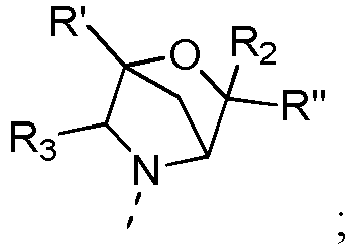
- or R2 and R" connected together with the carbon atoms to which they are attached form a C3-5 cycloalkyl;
- R5 is selected from F, Cl, Br, I, cyclopropyl and C1-3 alkyl, and the C1-3 alkyl is optionally substituted with OH or 1, 2 or 3 Ra;
- R6 and R7 are each independently selected from H, F, Cl, Br, I and CN;
- or R6 and R7 connected together with the carbon atoms to which they are attached form a cyclopropyl or a 4-membered oxetanyl;
- ring A is selected from C3-5 cycloalkyl;
- Y1 is selected from cyclopropyl and C1-3 alkyl, and the C1-3 alkyl is optionally substituted with 1, 2, 3, 4 or 5 F;
- Ra is selected from H, F, Cl, Br and I.
- The present disclosure provides a compound represented by formula (III) or a pharmaceutically acceptable salt thereof,

- the structural moiety


- E1 is selected from a single bond, -O- and -C(R6R7)-;
- R1, R2, R3, R4, R' and R" are each independently selected from H, F and Cl;
- or R1 and R2 are connected together such that the structural moiety


- or R3 and R4 are connected together such that the structural moiety
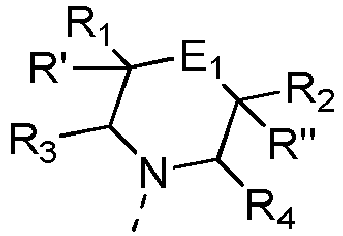

- or R1 and R4 are connected together such that the structural moiety


- or R2 and R" connected together with the carbon atoms to which they are attached form a C3-5 cycloalkyl;
- R5 is selected from F, Cl, Br, I, cyclopropyl and C1-3 alkyl, and the C1-3 alkyl is optionally substituted with OH or 1, 2 or 3 Ra;
- R6 and R7 are each independently selected from H, F, Cl, Br, I and CN;
- or R6 and R7 connected together with the carbon atoms to which they are attached form a cyclopropyl or a 4-membered oxetanyl;
- ring A is selected from C3-5 cycloalkyl;
- Ra is selected from H, F, Cl, Br and I.
- The present disclosure provides a compound represented by formula (II) or a pharmaceutically acceptable salt thereof,

- E1 is selected from a single bond, -O- and -C(R6R7)-;
- R1, R2, R3, R4, R' and R" are each independently selected from H, F and Cl;
- or R1 and R2 are connected together such that the structural moiety


- or R3 and R4 are connected together such that the structural moiety


- or R1 and R4 are connected together such that the structural moiety


- or R2 and R" connected together with the carbon atoms to which they are attached form a C3-5 cycloalkyl;
- R5 is selected from F, Cl, Br, I, cyclopropyl and C1-3 alkyl, and the C1-3 alkyl is optionally substituted with OH or 1, 2 or 3 Ra;
- R6 and R7 are each independently selected from H, F, Cl, Br, I and CN;
- or R6 and R7 connected together with the carbon atoms to which they are attached form a cyclopropyl or a 4-membered oxetanyl;
- ring A is selected from C3-5 cycloalkyl;
- Ra is selected from H, F, Cl, Br, I.
- The present disclosure provides a compound represented by formula (I) or a pharmaceutically acceptable salt thereof

- R1, R2, R3 and R4 are each independently selected from H, F and Cl;
- or R1 and R2 are connected together such that the structural moiety


- or R3 and R4 are connected together such that the structural moiety


- R5 is selected from F, Cl, Br, I, cyclopropyl and C1-3 alkyl, and the C1-3 alkyl is optionally substituted with OH or 1, 2 or 3 Ra;
- Ra is selected from H, F, Cl, Br, I.
- In some embodiments of the present disclosure, the compound is selected from


- ring C is cyclopropyl or 4-membered oxetanyl;
- n is selected from 0 and 1;
- rings A, R1, R2, R3, R4, R5, R6 and R7 are as defined in the present disclosure.
- In some embodiments of the present disclosure, the compound is selected from

- In some embodiments of the present disclosure, the R1 and R2 are connected together such that the structural moiety


- In some embodiments of the present disclosure, the R3 and R4 are connected together such that the structural moiety


- In some embodiments of the present disclosure, the R1 and R4 are connected together such that the structural moiety


- In some embodiments of the present disclosure, the ring A is selected from


- In some embodiments of the present disclosure, the R6 and R7 connected together with the carbon atoms to which they are attached form

- In some embodiments of the present disclosure, R2 and R" connected together with the carbon atoms to which they are attached form

- In some embodiments of the present disclosure, the R1 and R2 are connected together such that the structural moiety
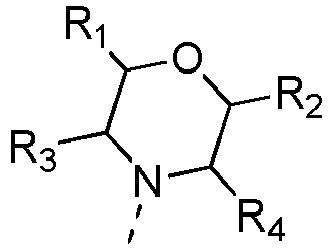

- In some embodiments of the present disclosure, the R3 and R4 are connected together such that the structural moiety


- In some embodiments of the present disclosure, the structural moiety


- In some embodiments of the present disclosure, the R5 is selected from F, Cl, CH2OH, CF3 and CH3, and other variables are as defined in the present disclosure.
- In some embodiments of the present disclosure, the R5 is selected from F, Cl and CH3, and other variables are as defined in the present disclosure.
- There are also some embodiments of the present disclosure that come from any combination of the above-mentioned variables.
- The present disclosure also provides a compound represented by the following formula or a pharmaceutically acceptable salt thereof


- In some embodiments of the present disclosure, a use of the compound or the pharmaceutically acceptable salt thereof in the manufacture of a medicament related to DNA-PK inhibitor.
- In some embodiments of the present disclosure, the medicament related to DNA-PK inhibitor plays a therapeutic effect as a single medicament in tumors with defects in other DNA repair pathways.
- In some embodiments of the present disclosure, the medicament related to DNA-PK inhibitor is used in combination with a chemoradiotherapy medicament to enhance the inhibitory effect on solid tumors and hematological tumors.
- As a class of DNA-PK inhibitors, the compounds of the present disclosure exhibit significant DNA-PK kinase inhibitory activity. The PK results show that the compounds of the present disclosure have a longer half-life, a lower clearance rate and a higher drug exposure, and have excellent pharmacokinetic properties, which are good candidate molecules that can be developed for oral administration. The in vivo pharmacodynamic results show that the compounds of the present disclosure have significant antitumor effect.
- Unless otherwise specified, the following terms and phrases when used herein have the following meanings. A specific term or phrase should not be considered indefinite or unclear in the absence of a particular definition, but should be understood in the ordinary sense. When a trade name appears herein, it is intended to refer to its corresponding commodity or active ingredient thereof.
- The term "pharmaceutically acceptable" is used herein in terms of those compounds, materials, compositions, and/or dosage forms, which are suitable for use in contact with human and animal tissues within the scope of reliable medical judgment, with no excessive toxicity, irritation, an allergic reaction or other problems or complications, commensurate with a reasonable benefit/risk ratio.
- The term "pharmaceutically acceptable salt" refers to a salt of the compound of the present disclosure that is prepared by reacting the compound having a specific substituent of the present disclosure with a relatively non-toxic acid or base. When the compound of the present disclosure contains a relatively acidic functional group, a base addition salt can be obtained by bringing the neutral form of the compound into contact with a sufficient amount of base in a pure solution or a suitable inert solvent. The pharmaceutically acceptable base addition salt includes a salt of sodium, potassium, calcium, ammonium, organic amine or magnesium, or similar salts. When the compound of the present disclosure contains a relatively basic functional group, an acid addition salt can be obtained by bringing the neutral form of the compound into contact with a sufficient amount of acid in a pure solution or a suitable inert solvent. Examples of the pharmaceutically acceptable acid addition salt include an inorganic acid salt, wherein the inorganic acid includes, for example, hydrochloric acid, hydrobromic acid, nitric acid, carbonic acid, bicarbonate, phosphoric acid, monohydrogen phosphate, dihydrogen phosphate, sulfuric acid, hydrogen sulfate, hydroiodic acid, phosphorous acid, and the like; and an organic acid salt, wherein the organic acid includes, for example, acetic acid, propionic acid, isobutyric acid, maleic acid, malonic acid, benzoic acid, succinic acid, suberic acid, fumaric acid, lactic acid, mandelic acid, phthalic acid, benzenesulfonic acid, p-toluenesulfonic acid, citric acid, tartaric acid, and methanesulfonic acid, and the like; and salts of amino acid (such as arginine and the like), and a salt of an organic acid such as glucuronic acid and the like. Certain specific compounds of the present disclosure contain both basic and acidic functional groups, thus can be converted to any base or acid addition salt.
- The pharmaceutically acceptable salt of the present disclosure can be prepared from the parent compound that contains an acidic or basic moiety by conventional chemical method. Generally, such salt can be prepared by reacting the free acid or base form of the compound with a stoichiometric amount of an appropriate base or acid in water or an organic solvent or a mixture thereof.
- The compounds of the present disclosure may exist in specific geometric or stereoisomeric forms. The present disclosure contemplates all such compounds, including cis and trans isomers, (-)-and (+)-enantiomers, (R)-and (S)-enantiomers, diastereomers isomers, (D)-isomers, (L)-isomers, and racemic and other mixtures thereof, such as enantiomers or diastereomeric enriched mixtures, all of which are within the scope of the present disclosure. Additional asymmetric carbon atoms may be present in substituents such as alkyl. All these isomers and their mixtures are included within the scope of the present disclosure.
- Unless otherwise specified, the term "enantiomer" or "optical isomer" refers to stereoisomers that are mirror images of each other.
- Unless otherwise specified, the term "cis-trans isomer" or "geometric isomer" is caused by the inability to rotate freely of double bonds or single bonds of ring-forming carbon atoms.
- Unless otherwise specified, the term "diastereomer" refers to a stereoisomer in which a molecule has two or more chiral centers and the relationship between the molecules is not mirror images.
- Unless otherwise specified, "(+)" refers to dextrorotation, "(-)" refers to levorotation, and or "(±)" refers to racemic.
- Unless otherwise specified, the absolute configuration of a stereogenic center is represented by a wedged solid bond () and a wedged dashed bond (
 ), and the relative configuration of a stereogenic center is represented by a straight solid bond (
 ) and a straight dashed bond (
 ), a wave line (
 ) is used to represent a wedged solid bond (
 ) or a wedged dashed bond (
 ), or the wave line (
 ) is used to represent a straight solid bond (
 ) or a straight dashed bond (
 ).
).
- Unless otherwise specified, the terms "enriched in one isomer", "enriched in isomers", "enriched in one enantiomer" or "enriched in enantiomers" refer to the content of one of the isomers or enantiomers is less than 100 %, and the content of the isomer or enantiomer is greater than or equal to 60 %, or greater than or equal to 70 %, or greater than or equal to 80 %, or greater than or equal to 90 %, or greater than or equal to 95 %, or greater than or equal to 96 %, or greater than or equal to 97 %, or greater than or equal to 98 %, or greater than or equal to 99 %, or greater than or equal to 99.5 %, or greater than or equal to 99.6 %, or greater than or equal to 99.7 %, or greater than or equal to 99.8 %, or greater than or equal to 99.9 %.
- Unless otherwise specified, the term "isomer excess" or "enantiomeric excess" refers to the difference between the relative percentages of two isomers or two enantiomers. For example, if the content of one isomer or enantiomer is 90 %, and the content of the other isomer or enantiomer is 10 %, the isomer or enantiomer excess (ee value) is 80 %.
- Optically active (R)- and (S)-isomer, or D and L isomer can be prepared using chiral synthesis or chiral reagents or other conventional techniques. If one kind of enantiomer of certain compound of the present disclosure is to be obtained, the pure desired enantiomer can be obtained by asymmetric synthesis or derivative action of chiral auxiliary followed by separating the resulting diastereomeric mixture and cleaving the auxiliary group. Alternatively, when the molecule contains a basic functional group (such as amino) or an acidic functional group (such as carboxyl), the compound reacts with an appropriate optically active acid or base to form a salt of the diastereomeric isomer which is then subjected to diastereomeric resolution through the conventional method in the art to give the pure enantiomer. In addition, the enantiomer and the diastereoisomer are generally isolated through chromatography which uses a chiral stationary phase and optionally combines with a chemical derivative method (such as carbamate generated from amine).
- The compound of the present disclosure may contain an unnatural proportion of atomic isotope at one or more than one atom(s) that constitute the compound. For example, the compound can be radiolabeled with a radioactive isotope, such as tritium (3H), iodine-125 (125I) or C-14 (14C). For another example, deuterated drugs can be formed by replacing hydrogen with heavy hydrogen, the bond formed by deuterium and carbon is stronger than that of ordinary hydrogen and carbon, compared with non-deuterated drugs, deuterated drugs have the advantages of reduced toxic and side effects, increased drug stability, enhanced efficacy, extended biological half-life of drugs, etc. All isotopic variations of the compound of the present disclosure, whether radioactive or not, are encompassed within the scope of the present disclosure.
- The term "substituted" means one or more than one hydrogen atom(s) on a specific atom are substituted with the substituent, including deuterium and hydrogen variables, as long as the valence of the specific atom is normal and the substituted compound is stable. When the substituent is an oxygen (i.e., =O), it means two hydrogen atoms are substituted. Positions on an aromatic ring cannot be substituted with a ketone. The term "optionally substituted" means an atom can be substituted with a substituent or not, unless otherwise specified, the type and number of the substituent may be arbitrary as long as being chemically achievable.
- When any variable (such as R) occurs in the constitution or structure of the compound more than once, the definition of the variable at each occurrence is independent. Thus, for example, if a group is substituted with 0-2 R, the group can be optionally substituted with up to two R, wherein the definition of R at each occurrence is independent. Moreover, a combination of the substituent and/or the variant thereof is allowed only when the combination results in a stable compound.
- When the number of a linking group is 0, such as -(CRR)o-, it means that the linking group is a single bond.
- When a substituent is 0, it means that the substituent does not exist, for example, -A-(R)o means that the structure is actually -A.
- When a substituent is vacant, it means that the substituent does not exist, for example, when X is vacant in A-X, the structure of A-X is actually A.
- When one of the variables is selected from a single bond, it means that the two groups linked by the single bond are connected directly. For example, when L in A-L-Z represents a single bond, the structure of A-L-Z is actually A-Z.
- When the bond of a substituent can be cross-linked to two or more atoms on a ring, such a substituent can be bonded to any atom on the ring, for example, a structural moiety

- When the enumerative linking group does not indicate the direction for linking, the direction for linking is arbitrary, for example, the linking group L contained in


- Unless otherwise specified, when a group has one or more linkable sites, any one or more sites of the group can be linked to other groups through chemical bonds. When the linking site of the chemical bond is not positioned, and there is H atom at the linkable site, then the number of H atom at the site will decrease correspondingly with the number of chemical bond linking thereto so as to meet the corresponding valence. The chemical bond between the site and other groups can be represented by a straight solid bond




- Unless otherwise specified, the number of atoms in a ring is generally defined as the number of ring members, eg, "5- to 7- membered ring" refers to a "ring" of 5-7 atoms arranged around it.
- Unless otherwise specified, the term "C1-3 alkyl" refers to a linear or branched saturated hydrocarbon group composed of 1 to 3 carbon atoms. The C1-3 alkyl group includes C1-2 and C2-3 alkyl groups and the like; it can be monovalent (such as methyl), divalent (such as methylene) or multivalent (such as methine). Examples of C1-3 alkyl include, but are not limited to methyl (Me), ethyl (Et), propyl (including n-propyl and isopropyl), etc.
- Unless otherwise specified, "C3-5 cycloalkyl" refers to a saturated cyclic hydrocarbon group composed of 3 to 5 carbon atoms, which is a monocyclic ring system, and the C3-5 cycloalkyl includes C3-4 and C4-5 cycloalkyl, etc.; it can be monovalent, divalent or multivalent. Examples of C3-5 alkoxy include, but are not limited to, cyclopropyl, cyclobutyl, cyclopentyl, etc.
- Unless otherwise specified, Cn-n+m or Cn-Cn+m includes any specific case of n to n+m carbons, for example, C1-12 includes C1, C2, C3, C4, C5, C6, C7, C8, C9, C10, C11, and C12, and any range from n to n+m is also included, for example C1-12 includes C1-3, C1-6, C1-9, C3-6, C3-9, C3-12, C6-9, C6-12, and C9-12, etc.; similarly, n-membered to n+m-membered means that the number of atoms on the ring is from n to n+m, for example, 3- to 12-membered ring includes 3-membered ring, 4-membered ring, 5-membered ring, 6-membered ring, 7-membered ring, 8-membered ring, 9-membered ring, 10-membered ring, 11-membered ring, and 12-membered ring, and any range from n to n+m is also included, for example, 3- to 12-membered ring includes 3- to 6-membered ring, 3- to 9-membered ring, 5- to 6-membered ring, 5- to 7-membered ring, 6- to 7-membered ring, 6- to 8-membered ring, and 6- to 10-membered ring, etc.
- The compounds of the present disclosure can be prepared by a variety of synthetic methods known to those skilled in the art, including the specific embodiments listed below, the embodiments formed by their combination with other chemical synthesis methods, and equivalent alternatives known to those skilled in the art, preferred implementations include but are not limited to the embodiments of the present disclosure.
- The structure of the compounds of the present disclosure can be confirmed by conventional methods known to those skilled in the art, and if the disclosure involves an absolute configuration of a compound, then the absolute configuration can be confirmed by means of conventional techniques in the art. For example, in the case of single crystal X-ray diffraction (SXRD), the absolute configuration can be confirmed by collecting diffraction intensity data from the cultured single crystal using a Bruker D8 venture diffractometer with CuKα radiation as the light source and scanning mode: ϕ/ω scan, and after collecting the relevant data, the crystal structure can be further analyzed by direct method (Shelxs97).
- The solvent used in the present disclosure is commercially available.
- The present disclosure uses the following abbreviations: eq stands for equivalent; DMSO stands for dimethyl sulfoxide; ATP stands for adenosine triphosphate, EDTA stands for ethylenediaminetetraacetic acid; DNA stands for deoxyribonucleic acid; PEG stands for polyethylene glycol; Balb/c stands for mouse strain.
- The compounds of the present disclosure are named according to the conventional naming principles in the art or by ChemDraw® software, and the commercially available compounds use the supplier catalog names.
-
Figure 1 . Tumor photographs of day 21 of an in vivo pharmacodynamic study of human NCI-H1703 non-small cell lung cancer. - The present disclosure will be specifically described below by way of embodiments, but the scope of the present disclosure is not limited thereto. The present disclosure has been described in detail herein, wherein specific embodiments thereof are also disclosed, for those skilled in the art, it is obvious that various changes and improvements can be made to the specific embodiments of the present disclosure without departing from the spirit and scope of the present disclosure.
-

- At 0 °C, compound 1b (1.84 g, 18.0 mmol, 1.2 eq) was added to a solution of compound 1a (2.91 g, 15.0 mmol, 1 eq) in 1,4-dioxane (50 mL), and after the addition was completed, the reaction was carried out at 0 °C for 8 hours. After the reaction was completed, the reaction solution was concentrated under reduced pressure and purified by column chromatography (ethyl acetate: petroleum ether=0:1-1:3) to obtain compound 1c. MS: m/z. 259.8 [M+H]+.
- 1H NMR (400 MHz, CDCl3) δ ppm 9.08 (s, 1H), 9.06 (s, 1H), 3.84-4.06 (m, 4H), 2.93-3.11 (m, 4H).
- Iron powder (1.18 g, 21.18 mmol, 5 eq) and ammonium chloride (1.13 g, 21.18 mmol, 5 eq) were added sequentially to a mixed solution of compound 1c (1.1 g, 4.24 mmol, 1 eq) in ethanol (10 mL) and water (10 mL), and after the addition was completed, the reaction was carried out at 80 °C for 1 hour. After the reaction was completed, the reaction mixture was filtered through celite, and the filtrate was concentrated under reduced pressure to obtain a crude product. The crude product was diluted with water (50 mL), extracted with ethyl acetate (50 mL∗2), washed with saturated brine (50 mL), dried over anhydrous sodium sulfate, and filtered, and the filtrate was concentrated under reduced pressure to obtain a crude product of compound 1d. MS: m/z. 229.9 [M+H]+.
- N,N'-Carbonyldiimidazole (0.97 g, 6.0 mmol, 1.22 mL, 2 eq) was added to a solution of compound 1d (0.69 g, 3.0 mmol, 1 eq) in acetonitrile (15 mL), and after the addition was completed, the reaction was carried out at 80 °C for 1 hour. After the reaction was completed, the reaction solution was concentrated under reduced pressure and purified by column chromatography (ethyl acetate: petroleum ether=0:1-4:1) to obtain compound 1e. MS: m/z 255.9 [M+H]+.
- 1H NMR (400 MHz, CDCl3) δ: 8.09 (s, 1H), 3.86-3.97 (m, 4H), 3.45-3.65 (m, 4H).
- Cesium carbonate (3.5 g, 10.76 mmol, 5 eq) and iodomethane (1.06 g, 7.45 mmol, 465 µL, 3 eq) were added sequentially to a solution of compound 1e (1.1 g, 2.15 mmol, 1 eq) in N,N-dimethylformamide (50 mL), and after the addition was completed, the reaction was carried out at 20 °C for 1 hour. After the reaction was completed, the reaction mixture was diluted with water (50 mL), extracted with ethyl acetate (50 mL∗3), washed with saturated brine (50 mL), dried over anhydrous sodium sulfate, filtered, and the filtrate was concentrated under reduced pressure and purified by column chromatography (ethyl acetate: petroleum ether = 0:1-1:1) to obtain compound 1f. MS: m/z 269.8 [M+H]+.
- A solution of compound 1f (0.13 g, 500 µmol, 1 eq), compound 1g (188.9 mg, 600.00 µmol, 1.2 eq), methanesulfonato(2-dicyclohexylphosphino-3,6-dimethoxy-2',4',6'-tri-i-propyl-1,1'-biphenyl)(2'-amino-1,1'-biphenyl-2-yl)palladium(II) (90.6 mg, 100.00 µmol, 0.2 eq) and cesium carbonate (325.8 mg, 1.00 mmol, 2 eq) in dioxane (5 mL) and water (0.5 mL) was replaced with nitrogen three times, and the reaction was carried out at 100 °C for 16 hours under nitrogen protection. After the reaction was completed, the reaction mixture was filtered with celite, and concentrated under reduced pressure to obtain a crude product. The crude product was purified by preparative high performance liquid chromatography (Welch Xtimate C18 150∗25 mm∗5 µm; mobile phase: [water (0.225 % formic acid)-acetonitrile]; B (acetonitrile) %: 8 %-38 %, 8 minutes) to obtain compound 1. MS: m/z 382.2 [M+H].
- 1H NMR (400 MHz, CDCl3) δ ppm 9.81 (s, 1H), 8.27 (s, 1H), 7.94 (s, 1H), 7.58 (s, 1H), 6.80 (s, 1H), 3.96 (t, J =4.6 Hz, 4H), 3.47-3.55 (m, 4H), 3.42 (s, 3H), 2.53 (s, 3H).
-

- N,N-Dimethylformamide dimethyl acetal (14.30 g, 120 mmol, 15.94 mL, 3 eq) was added to a solution of compound 2a (10.18 g, 40 mmol, 1 eq) in toluene (80 mL), and after the addition was completed, the reaction solution was reacted at 110 °C for 4 hours. After the reaction was completed, the reaction solution was concentrated under reduced pressure to obtain a crude product of compound 2b. MS: m/z 309.8 [M+H]+.
- Hydroxylamine hydrochloride (5.56 g, 80 mmol, 2 eq) was added to a solution of compound 2b (12.38 g, 40 mmol, 1 eq) in methanol (100 mL), and after the addition was completed, the reaction solution was reacted at 70 °C for 2 hours. After the reaction was completed, the reaction solution was concentrated under reduced pressure to obtain a crude product of compound 2c. MS: m/z 297.7 [M+H]+.
- At 0 °C, trifluoroacetic anhydride (12.60 g, 60 mmol, 8.35 mL, 1.5 eq) was added to a solution of compound 2c (11.90 g, 40 mmol, 1 eq) in tetrahydrofuran (100 mL), and after the addition was completed, the reaction solution was reacted at 25 °C for 12 hours. After the reaction was completed, the reaction solution was concentrated under reduced pressure to remove the solvent. The concentrated reaction solution was diluted with water (100 mL), extracted with 300 mL of ethyl acetate (100 mL∗3), washed with 30 mL of saturated brine, dried over anhydrous sodium sulfate, filtered, and the filtrate was concentrated under reduced pressure and purified by column chromatography (ethyl acetate: petroleum ether=0:1-1:1) to obtain compound 2d. MS: m/z 279.7 [M+H]+.
- 1H NMR (400 MHz, DMSO-d 6) δ ppm 9.55 (s, 1H), 8.51 (s, 1H), 8.26 (s, 1H).
- Compound 2d (3.91 g, 14 mmol, 1 eq), compound 2e (2.79 g, 15.40 mmol, 1.1 eq), tris(dibenzylideneacetone)dipalladium (641 mg, 700 µmol, 0.05 eq), 4,5-bis(diphenylphosphino)-9,9-dimethylxanthene (810.1 mg, 1.4 mmol, 0.1 eq) and cesium carbonate (9.12 g, 28 mmol, 2 eq) were placed in a reaction flask, and the reaction flask was vacuumized and replaced with nitrogen three times, and then anhydrous N,N-dimethylformamide (30 mL) was added to the mixture and the reaction was carried out at 80 °C for 6 hours. After the reaction was completed, the reaction solution was filtered through celite and concentrated under reduced pressure to obtain a crude product. The crude product was dissolved in tetrahydrofuran (100 mL), and 3 N hydrochloric acid (20 mL) was added thereto, and the mixture was stirred at 20 °C for 0.5 hours. After the reaction was completed, water (100 mL) was added to the reaction solution. The reaction solution was extracted with ethyl acetate (100 mL∗3), and the organic phase was discarded; ammonium hydroxide (30 mL) was added to the aqueous phase to adjust the pH to basic, and the aqueous phase was extracted with ethyl acetate (100 mL∗3) again. The organic phase was washed with 50 mL of saturated brine, dried over anhydrous sodium sulfate, filtered, and the filtrate was concentrated under reduced pressure and purified by column chromatography (ethyl acetate: petroleum ether=0:1-1:0) to obtain compound 2f. MS: m/z 168.8 [M+H]+.
- 1H NMR (400 MHz, DMSO-d 6) δ ppm 8.28 (s, 1H), 8.26 (s, 1H), 7.96 (s, 1H), 5.35-5.43 (m, 2H).
- Compound 2f (67.4 mg, 400 µmol, 1 eq), compound 1f (107.8 mg, 400 µmol, 1 eq), tris(dibenzylideneacetone)dipalladium (36.6 mg, 40 µmol, 0.1 eq), 4,5-bis(diphenylphosphino)-9,9-dimethylxanthene (46.3 mg, 80 µmol, 0.2 eq) and cesium carbonate (195.5 mg, 600 µmol, 1.5 eq) were placed in a reaction flask, and the reaction flask was vacuumized and repaced with nitrogen three times, and then anhydrous dioxane (8 mL) was added to the mixture and the reaction was carried out at 100 °C for 2 hours. After the reaction was completed, the reaction solution was filtered through celite and concentrated under reduced pressure to obtain a crude product. The crude product was purified by thin-layer preparative chromatography (dichloromethane: methanol=10:1) to obtain compound 2. MS: m/z 401.9 [M+H]+.
- 1H NMR (400 MHz, CDCl3) δ ppm 10.24 (s, 1H), 8.31 (s, 1H), 7.98 (s, 1H), 7.87 (s, 1H), 7.47 (s, 1H), 3.96 (t, J=4.69 Hz, 4H), 3.51-3.57 (m, 4H), 3.43 (s, 3H).
-

- N,N-Dimethylformamide dimethyl acetal (12.54 g, 105.25 mmol, 3 eq) was added to a solution of compound 3a (6.7 g, 35.08 mmol, 1 eq) in toluene (100 mL), and after the addition was completed, the reaction was carried out at 110 °C for 1.5 hours. After the reaction was completed, the reaction solution was concentrated under reduced pressure to obtain a crude product of compound 3b.
- Hydroxylamine hydrochloride (4.69 g, 67.46 mmol, 2 eq) was added to a solution of compound 3b (8.3 g, 33.73 mmol, 1 eq) in methanol (100 mL), and the reaction was carried out at 80 °C for 1 hour. After the reaction was completed, the reaction solution was concentrated under reduced pressure to obtain a crude product of compound 3c. MS: m/z 233.8 [M+H]+.
- At 0 °C, trifluoroacetic anhydride (15.33 mL, 100.24 mmol, 2 eq) was added to a solution of compound 3c (12.9 g, 55.12 mmol, 1 eq) in tetrahydrofuran (100 mL), and after the addition was completed, the reaction was carried out at 21 °C for 21 hours. After the reaction was completed, the crude product obtained by concentrating the reaction solution under reduced pressure was purified by column chromatography (ethyl acetate: petroleum ether=0:1-1:2) to obtain compound 3d. MS: m/z 217.8 [M+H]+.
- 1,1'-Binaphthyl-2,2'-diphemyl phosphine (288.3 mg, 462.94 µmol, 0.1 eq), compound 2e (922.9 mg, 5.09 mmol, 1.1 eq), tris(dibenzylideneacetone)dipalladium (211.9 mg, 231.47 µmol, 0.05 eq) and potassium tert-butoxide (1.04 g, 9.26 mmol, 2 eq) were added sequentially to a solution of compound 3d (1 g, 4.63 mmol, 1 eq) in toluene (50 mL), and after the addition was completed, the reaction was carried out at 110 °C for 4 hours. After the reaction was completed, the reaction solution was concentrated under reduced pressure to remove the solvent, and the concentrated reaction solution was diluted with water (50 mL), extracted with ethyl acetate (50 mL∗2), washed with saturated brine (100 mL), dried over anhydrous sodium sulfate, filtered, and the filtrate was concentrated under reduced pressure to obtain a crude product. Then, the crude product was dissolved in ethanol (20 mL), and 1 N hydrochloric acid (12 mL) was added thereto and stirred for half an hour. After the reaction was completed, the pH was adjusted to basic by adding ammonium hydroxide, and the mixture was concentrated under reduced pressure to remove the solvent and purified by column chromatography (methanol: dichloromethane= 0:1-1:6) to obtain compound 3f.
- Methanesulfonato(2-dicyclohexylphosphino-3,6-dimethoxy-2',4',6'-tri-i-propyl-1,1'-biphenyl)(2'-amino-1,1'-biphenyl-2-yl)palladium(II) (21.7 mg, 20.93 µmol, 0.05 eq) and cesium carbonate (311.5 mg, 956.13 µmol, 2 eq) were added sequentially to a solution of compound 3f (132 mg, 489.46 µmol, 1.02 eq) and compound 1f (80 mg, 525.87 µmol, 1.1 eq) in dioxane (20 mL), and after the addition was completed, the reaction was carried out at 100 °C for 2 hours. After the reaction was completed, the crude product obtained by concentrating the reaction solution under reduced pressure was purified by column chromatography (methanol: dichloromethane=0:1-1:9) to obtain compound 3. MS: m/z 386.0 [M+H]+.
- 1H NMR (400 MHz, CDCl3) δ ppm 10.15 (br d, J=7.03 Hz, 1H), 8.28 (s, 1H), 7.99 (s, 1H), 7.47 (br d, J=9.54 Hz, 1H), 3.96 (br s, 4H), 3.53 (br s, 4H), 3.43 (s, 3 H).
-

- At 0 °C, a solution of sodium nitrite (1.52 g, 22 mmol, 1.1 eq) in water (3 mL) was slowly added to a mixed solution of compound 4a (2.99 g, 20 mmol, 1 eq, hydrochloride) in acetic acid (30 mL) and water (9 mL), and after the addition was completed, the reaction was carried out at 20 °C for 3 hours. After the reaction was completed, the reaction solution was diluted with water (50 mL), extracted with 300 mL of ethyl acetate (100 mL∗3), washed with saturated brine (50 mL), dried over anhydrous sodium sulfate, filtered, and the filtrate was concentrated under reduced pressure and purified by column chromatography (ethyl acetate: petroleum ether=0:1-1:1) to obtain compound 4b.
- 1H NMR (400 MHz, CDCl3) δ ppm 5.08 (br d, J=7.03 Hz, 1H), 4.89 (br d, J=6.27 Hz, 1H), 3.77-3.93 (m, 2H), 3.54-3.68 (m, 2H), 2.05-2.22 (m, 3H), 1.78-1.94 (m, 1H).
- At 0 °C, zinc powder (4.71 g, 72 mmol, 4 eq) and acetic acid (20 mL) were added sequentially to a solution of compound 4b (2.56 g, 18 mmol, 1 eq) in methanol (20 mL), and after the addition was completed, the reaction solution was reacted at 20 °C for 4 hours. After the reaction was completed, the reaction solution was filtered through celite and washed with ethyl acetate (200 mL), and the filtrate was concentrated under reduced pressure to obtain a crude product of compound 4c.
- At 0 °C, compound 4c (3.01 g, 16 mmol, 1 eq, acetate) and triethylamine (8.10 g, 80 mmol, 5 eq, 11.14 mL) were added sequentially to a solution of compound 1a (6.21 g, 32 mmol, 2 eq) in dioxane (150 mL), and after the addition was completed, the reaction solution was reacted at 20 °C for 5 hours. After the reaction was completed, the reaction solution was diluted with water (100 mL), extracted with 300 mL of ethyl acetate (100 mL∗3), washed with saturated brine (50 mL), dried over anhydrous sodium sulfate, filtered, and the filtrate was concentrated under reduced pressure and purified by column chromatography (ethyl acetate: petroleum ether=0:1-1:1) to obtain compound 4e. MS: m/z 285.9 [M+H]+.
- 1H NMR (400MHz, CDCl3) δ ppm 9.29 (br s, 1H), 9.04 (s, 1H), 4.02 (d, J=11.13 Hz, 2H), 3.64 (dd, J=11.32, 1.94 Hz, 2H), 3.48 (br d, J=2.88 Hz, 2H), 2.07-2.21 (m, 4H).
- Iron powder (1.79 g, 32 mmol, 5 eq) and ammonium chloride (1.71 g, 32 mmol, 5 eq) were added sequentially to a mixed solution of compound 4e (2.03 g, 6.4 mmol, 1 eq) in ethanol (16 mL) and water (4 mL), and after the addition was completed, the reaction solution was reacted at 75 °C for 3 hours. After the reaction was completed, the reaction solution was cooled to room temperature and diluted with ethyl acetate (300 mL), filtered through celite, and the filtrate was concentrated under reduced pressure to obtain a crude product of compound 4f. MS: m/z 256.0 [M+H]+.
- N,N'-Carbonyldiimidazole (1.62 g, 10 mmol, 2 eq) was added to a solution of compound 4f (1.28 g, 5 mmol, 1 eq) in acetonitrile (20 mL), and after the addition was completed, the reaction solution was reacted at 80 °C for 2 hours. After the reaction was completed, the crude product obtained by concentrating the reaction solution under reduced pressure was purified by column chromatography (ethyl acetate: petroleum ether=0:1-1:0) and slurrying (methanol/dichloromethane: 2 mL/10 mL, 25 °C, 15 minutes) to obtain compound 4g. MS: m/z 281.2 [M+H]+.
- 1H NMR (400 MHz, DMSO-d 6) δ ppm 11.63 (br s, 1H), 8.09 (s, 1H), 3.76-3.86 (m, 4H), 3.59 (br d, J=8.63 Hz, 2H), 2.27 -2.36 (m, 2H), 1.90-1.99 (m, 2H).
- Cesium carbonate (0.489 g, 1.5 mmol, 1.5 eq) and iodomethane (0.177 g, 1.25 mmol, 1.25 eq) were added sequentially to a solution of compound 4g (0.282 g, 1 mmol, 1 eq) in N,N-dimethylformamide (10 mL), and after the addition was completed, the reaction solution was reacted at 21 °C for 4 hours. After the reaction was completed, the reaction solution was diluted with water (20 mL), extracted with 90 mL of ethyl acetate (30 mL∗3), washed with saturated brine (20 mL), dried over anhydrous sodium sulfate, filtered, and the filtrate was concentrated under reduced pressure and purified by column chromatography (ethyl acetate: petroleum ether=0:1-4:1) to obtain compound 4h. MS: m/z 295.9 [M+H]+.
- 1H NMR (400 MHz, CDCl3) δ ppm 7.99 (s, 1H), 4.10 (d, J=10.51 Hz, 2H), 3.83-3.91 (m, 2H), 3.68 (dd, J=10.63, 2.00 Hz, 2H), 3.42 (s, 3H), 2.39-2.47 (m, 2H), 2.12-2.20 (m, 2H).
- Compound 4h (221.8 mg, 0.75 mmol, 1 eq), compound 1g (88.9 mg, 0.6 mmol, 0.8 eq), methanesulfonato(2-dicyclohexylphosphino-3,6-dimethoxy-2',4',6'-tri-i-propyl-1,1'-biphenyl)(2'-amino-1,1'-biphenyl-2-yl)palladium(II) (136 mg, 150 µmol, 0.2 eq) and cesium carbonate (366.6 mg, 1.13 mmol, 1.5 eq) were placed in a reaction flask, and the reaction flask was vacuumized and repaced with nitrogen three times, then anhydrous dioxane (20 mL) was added to the mixture, and the reaction was carried out at 100 °C for 3 hours. After the reaction was completed, the reaction solution was filtered through celite and concentrated under reduced pressure to obtain a crude product, then the crude product was purified by column chromatography (methanol: dichloromethane=0:1-1:9) and slurrying (dichloromethane/ethyl acetate: 3 mL/3 mL, 25 °C, 15 minutes) to obtain compound 4. MS: m/z 408.2 [M+H]+.
- 1H NMR (400 MHz, CDCl3) δ ppm 9.77 (s, 1H), 8.26 (s, 1H), 7.89 (s, 1H), 7.57 (s, 1H), 6.72 (s, 1H), 4.15 (d, J=10.54 Hz, 2H), 3.84-3.90 (m, 2H), 3.71 (br d, J=10.54 Hz, 2H), 3.39 (s, 3H), 2.51 (s, 3H), 2.37-2.46 (m, 2H), 2.09-2.18 (m, 2H).
-

- At 0 °C, a solution of sodium nitrite (2.28 g, 33 mmol, 1.1 eq) in water (4.5 mL) was slowly added to a mixed solution of compound 5a (4.49 g, 30 mmol, 1 eq, hydrochloride) in acetic acid (50 mL) and water (18 mL), and after the addition was completed, the reaction solution was reacted at 20 °C for 3 hours. After the reaction was completed, the reaction solution was diluted with water (50 mL), extracted with 150 mL of ethyl acetate (50 mL∗3), and the organic phase was washed with saturated brine (30 mL), dried over anhydrous sodium sulfate, filtered, and the filtrate was concentrated under reduced pressure and purified by column chromatography (ethyl acetate: petroleum ether=0:1-1:1) to obtain compound 5b. MS: m/z. 143.0 [M+H]+.
- At 0 °C, zinc powder (6.80 g, 104 mmol, 4 eq) and acetic acid (20 mL) were added sequentially to a solution of compound 5b (3.70 g, 26 mmol, 1 eq) in methanol (20 mL), and after the addition was completed, the reaction solution was reacted at 20 °C for 4 hours. After the reaction was completed, the reaction solution was filtered through celite and washed with ethyl acetate (200 mL), and the filtrate was concentrated under reduced pressure to obtain a crude product of compound 5c.
- At 0 °C, compound 5c (4.89 g, 26 mmol, 1 eq) and triethylamine (13.15 g, 130 mmol, 5 eq, 18.09 mL) were added sequentially to a solution of compound 1a (10.09 g, 52 mmol, 2 eq) in dioxane (150 mL), and after the addition was completed, the reaction solution was reacted at 20 °C for 5 hours. After the reaction was completed, the reaction solution was diluted with water (100 mL), extracted with 300 mL of ethyl acetate (100 mL∗3), and the organic phase was washed with saturated brine (50 mL), dried over anhydrous sodium sulfate, filtered, and the filtrate was concentrated under reduced pressure and purified by column chromatography (ethyl acetate: petroleum ether=0:1-1:1) to obtain compound 5e. MS: m/z 285.9 [M+H]+.
- 1H NMR (400 MHz, CDCl3) δ ppm 9.05 (s, 1H), 8.97 (br s, 1H), 4.43 (br dd, J=4.44, 2.06 Hz, 2H), 2.94-3.06 (m, 4H), 2.19-2.28 (m, 2H), 1.90-2.03 (m, 2H).
- Iron powder (2.37 g, 42.5 mmol, 5 eq) and ammonium chloride (2.27 g, 42.5 mmol, 5 eq) were added sequentially to a mixed solution of compound 5e (2.43 g, 8.5 mmol, 1 eq) in ethanol (120 mL) and water (30 mL), and after the addition was completed, the reaction solution was reacted at 75 °C for 3 hours. After the reaction was completed, the reaction solution was cooled to room temperature and diluted with ethyl acetate (200 mL), filtered through celite and concentrated under reduced pressure to obtain a crude product of compound 5f. MS: m/z 256.0 [M+H]+.
- N,N'-Carbonyldiimidazole (2.76 g, 17 mmol, 2 eq) was added to a solution of compound 5f (2.17 g, 8.5 mmol, 1 eq) in acetonitrile (30 mL), and after the addition was completed, the reaction solution was reacted at 80 °C for 2 hours. After the reaction was completed, the reaction solution was concentrated under reduced pressure and purified by column chromatography (ethyl acetate: petroleum ether=0:1-1:0) to obtain compound 5g. MS: m/z 281.9 [M+H]+.
- 1H NMR (400 MHz, DMSO-d 6) δ ppm 11.61 (brs, 1H), 8.12(s, 1H), 4.38 (brd, J=2.01 Hz, 2H), 3.73 (dd, J=9.91, 1.63 Hz, 2H), 2.81 (d, J=9.54 Hz, 2H), 1.99-2.09 (m, 2H), 1.78-1.87 (m, 2H).
- Cesium carbonate (2.15 g, 6.6 mmol, 1.5 eq) and iodomethane (780 mg, 5.5 mmol, 1.25 eq) were added sequentially to a solution of compound 5g (1.24 g, 4.4 mmol, 1 eq) in N,N-dimethylformamide (40 mL), and after the addition was completed, the reaction solution was reacted at 21 °C for 4 hours. After the reaction was completed, the reaction solution was diluted with water (50 mL), extracted with 180 mL of ethyl acetate (60 mL∗3), and the organic phase was washed with saturated brine (50 mL), dried over anhydrous sodium sulfate, filtered, and the filtrate was concentrated under reduced pressure and purified by column chromatography (ethyl acetate: petroleum ether=0:1-4:1) to obtain compound 5h. MS: m/z 295.9 [M+H]+.
- 1H NMR (400 MHz, CDCl3) δ ppm 7.98-8.05 (m, 1H), 4.45 (br d, J=2.25 Hz, 2H), 3.99 (dd, J=9.69, 1.81 Hz, 2H), 3.41 (s, 3H), 2.80 (br d, J=9.51 Hz, 2H), 2.23-2.31 (m, 2H), 1.94-2.04 (m, 2H).
- Compound 5h (502.7 mg, 1.7 mmol, 1 eq), compound 1g (201.5 mg, 1.36 mmol, 0.8 eq), methanesulfonato(2-dicyclohexylphosphino-3,6-dimethoxy-2',4',6'-tri-i-propyl-1,1'-biphenyl)(2'-amino-1,1'-biphenyl-2-yl)palladium(II) (231.2 mg, 255µmol, 0.15 eq) and cesium carbonate (830.8 mg, 2.55 mmol, 1.5 eq) were placed in a reaction flask, and the reaction flask was vacuumized and repaced with nitrogen three times, then anhydrous dioxane (30 mL) was added to the mixture and the reaction was carried out at 100 °C for 3 hours. After the reaction was completed, the reaction solution was filtered through celite and concentrated under reduced pressure to obtain a crude product, then the crude product was purified by column chromatography (methanol/dichloromethane: 0-10 %) and slurrying (dichloromethane/ethyl acetate: 1.5 mL/3 mL, 25 °C, 15 min) to obtain compound 5. MS: m/z 408.2 [M+H]+.
- 1H NMR (400 MHz, CDCl3) δ ppm 9.87 (s, 1H), 8.26 (s, 1H), 7.91 (s, 1H), 7.57 (s, 1H), 6.76 (s, 1H), 4.48 (br d, J=2.25 Hz, 2H), 4.04 (dd, J=9.76, 1.88 Hz, 2H), 3.40 (s, 3H), 2.85 (d, J=9.51 Hz, 2H), 2.53 (s, 3H) 2.29-2.37 (m, 2H), 2.00-2.10 (m, 2H).
-

- At 0 °C, a solution of sodium nitrite (97.90 mg, 1.42 mmol, 1.1 eq) in water (1 mL) was slowly added to a mixed solution of compound 6a (350 mg, 1.29 mmol, 1 eq, p-toluenesulfonate) in acetic acid (5 mL) and water (1 mL), and after the addition was completed, the reaction solution was reacted at 20 °C for 3 hours. After the reaction was completed, the reaction solution was diluted with water (30 mL), extracted with 60 mL of ethyl acetate (20 mL∗3), washed with saturated brine (20 mL), dried over anhydrous sodium sulfate, filtered, and the filtrate was concentrated under reduced pressure and purified by column chromatography (ethyl acetate: petroleum ether=0:1-1:1) to obtain compound 6b.
- 1H NMR (400 MHz, CDCl3) δ ppm 4.79-4.87 (m, 1H), 4.68-4.76 (m, 2H), 4.59-4.66 (m, 1H), 4.20 (d, J=15.26 Hz, 1H), 3.61-3.73 (m, 1H), 3.29-3.40 (m, 1H), 1.79 (d, J=9.51 Hz, 1H).
- At 0 °C, zinc powder (1.28 g, 19.51 mmol, 4 eq) and acetic acid (7 mL) were added sequentially to a solution of compound 6b (625 mg, 4.88 mmol, 1 eq) in methanol (7 mL), and after the addition was completed, the reaction solution was reacted at 20 °C for 4 hours. After the reaction was completed, the reaction solution was filtered through celite and washed with ethyl acetate (100 mL), and the filtrate was concentrated under reduced pressure to obtain compound 6c.
- At 0 °C, compound 6c (1.92 g, 3.56 mmol, 1 eq, acetate) was added to a solution of compound 1a (1.72 g, 8.89 mmol, 2.5 eq) in dioxane (35 mL), and after the addition was completed, the reaction solution was reacted at 20 °C for 1 hour. After the reaction was completed, the reaction solution was diluted with water (30 mL), extracted with ethyl acetate (30 mL∗3), washed with saturated brine (30 mL), dried over anhydrous sodium sulfate, filtered, and the filtrate was concentrated under reduced pressure and purified by column chromatography (ethyl acetate: petroleum ether=0:1-1:1) to obtain compound 6e. MS: m/z 271.9 [M+H]+.
- Iron powder (234.35 mg, 4.2 mmol, 5 eq) and ammonium chloride (224.47 mg, 4.2 mmol, 5 eq) were added sequentially to a solution of compound 6e (228 mg, 839.28 µmol, 1 eq) in ethanol (5 mL) and water (5 mL), and after the addition was completed, the reaction solution was reacted at 75 °C for 1 hour. After the reaction was completed, the reaction solution was cooled to room temperature, filtered through celite and washed with ethanol (20 mL), and the washing solution was concentrated under reduced pressure to obtain a crude product, and the crude product was dissolved in a solution of dichloromethane/methanol (20 mL: 2 mL), stirred for 15 minutes, filtered, and the filtrate was concentrated under reduced pressure to obtain compound 6f.
- N,N'-Carbonyldiimidazole (207.99 mg, 1.28 mmol, 2 eq) was added to a solution of compound 6f (155 mg, 641.35 µmol, 1 eq) in acetonitrile (6 mL), and after the addition was completed, the reaction solution was reacted at 80 °C for 2 hours. After the reaction was completed, the reaction solution was concentrated under reduced pressure, and purified by column chromatography (methanol: dichloromethane=0:1-1:9) to obtain compound 6g. MS: m/z 267.9 [M+H]+.
- 1H NMR (400 MHz, CD3OD) δ ppm 9.00 (s, 1H), 5.38 (d, J=6.13 Hz, 2H), 4.76 (d, J=10.13 Hz, 2H), 4.04-4.13 (m, 2H), 3.80-3.91 (m, 1H), 3.21 (d, J=8.38 Hz, 1H).
- Cesium carbonate (255.62 mg, 784.54 µmol, 2 eq) and iodomethane (0.58 g, 4.09 mmol, 1.2 eq) were added sequentially to a solution of compound 6g (105 mg, 392.27 µmol, 1 eq) in N,N-dimethylformamide (6 mL), and after the addition was completed, the reaction solution was reacted at 20 °C for 1 hour. After the reaction was completed, the reaction solution was diluted with water (10 mL), extracted with ethyl acetate (10 mL∗3), washed with saturated brine (20 mL), dried over anhydrous sodium sulfate, filtered, and the filtrate was concentrated under reduced pressure and purified by column chromatography (methanol: dichloromethane=0:1-1:9) to obtain compound 6h. MS: m/z 281.8 [M+H]+
- 1H NMR (400 MHz, DMSO-d 6) δ ppm 8.38 (s, 1H), 4.54 (d, J=6.13 Hz, 2H), 3.90 (d, J=10.13 Hz, 2H), 3.35 (s, 3 H), 3.23-3.28 (m, 2H), 2.96-3.03 (m, 1H), 2.37 (d, J=8.38 Hz, 1H).
- Compound 6h (95 mg, 337.24 µmol, 1 eq), compound 1g (44.97 mg, 303.52 µmol, 0.9 eq), methanesulfonato(2-dicyclohexylphosphino-3,6-dimethoxy-2',4',6'-tri-i-propyl-1,1'-biphenyl)(2'-amino-1,1'-biphenyl-2-yl)palladium(II) (61.14 mg, 67.45 µmol, 0.2 eq) and cesium carbonate (219.76 mg, 674.48 µmol, 2 eq) were placed in a reaction flask, and the reaction flask was vacuumized and repaced with nitrogen three times, then anhydrous dioxane (7 mL) was added to the mixture and the reaction was carried out at 100 °C for 3 hours. After the reaction was completed, the reaction solution was filtered through celite and concentrated under reduced pressure to obtain a crude product, and the crude product was purified by preparative high performance liquid chromatography (Welch Xtimate C18 100∗40 mm∗3 µm; mobile phase: [water 0.225 % formic acid)-acetonitrile]; B (acetonitrile) %: 6 %-36 %, 8 minutes) to obtain compound 6.
- MS: m/z 394.0 [M+H]+.
- 1H NMR (400 MHz, CDCl3) δ ppm 9.85 (s, 1H), 8.26 (s, 1H), 7.95 (s, 1H), 7.57 (s, 1H), 6.80 (s, 1H), 4.68 (d, J=6.53 Hz, 2H), 4.23 (d, J=9.79 Hz, 2H), 3.45-3.48 (m, 1H), 3.44 (s, 3H), 3.42-3.44 (m, 1H), 3.19-3.31 (m, 1H), 2.71 (d, J=8.53 Hz, 1H), 2.52 (s, 3H).
-

- At 0 °C, a solution of sodium nitrite (1.31 g, 18.99 mmol, 1 eq) in water (2.4 mL) was slowly added to a mixed solution of compound 7a (2.3 g, 18.99 mmol, 1 eq) in acetic acid (24 mL) and water (8 mL), and after the addition was completed, the reaction solution was reacted at 25 °C for 1.5 hours. After the reaction was completed, the reaction solution was diluted with water (20 mL), extracted with ethyl acetate (30 mL∗3), dried over anhydrous sodium sulfate, filtered, and the filtrate was concentrated under reduced pressure and purified by column chromatography (ethyl acetate: petroleum ether= 0:1-1:3) to obtain compound 7b.
- 1H NMR (400 MHz, CDCl3) δ ppm 4.32-4.36 (m, 2H), 3.84-3.89 (m, 2H), 2.17 (tt, J=12.89, 6.31 Hz, 2H), 1.90 (tt, J=13.05, 6.40 Hz, 2H).
- At 0 °C, zinc powder (3.12 g, 47.69 mmol, 4 eq) was added to a mixed solution of compound 7b (1.79 g, 11.92 mmol, 1 eq) in acetic acid (10 mL) and methanol (10 mL), and after the addition was completed, the reaction solution was reacted at 25 °C for 0.5 hours. After the reaction was completed, ethyl acetate (40 mL) was added to dilute the reaction solution, and the reaction solution was filtered through celite, and the filtrate was concentrated under reduced pressure to obtain compound 7c.
- At 0 °C, a solution of compound 7c (3.8 g, 19.37 mmol, 1 eq, acetate) in dioxane (80 mL) and triethylamine (7.84 g, 77.47 mmol, 4 eq, 10.78 mL) were added sequentially to a solution of compound 1a (7.51 g, 38.74 mmol, 2 eq) in dioxane (100 mL), and after the addition was completed, the reaction solution was reacted at 25 °C for 1 hour. After the reaction was completed, the reaction was diluted with water (100 mL), extracted with ethyl acetate (100 mL∗3), dried over anhydrous sodium sulfate, filtered, and the filtrate was concentrated under reduced pressure and purified by column chromatography (ethyl acetate: petroleum ether=0:1-1:4) to obtain compound 7e. MS: m/z 293.8 [M+H]+;
- 1H NMR (400 MHz, CDCl3) δ ppm 9.12 (s, 1H), 9.08 (s, 1H), 3.13 (t, J=5.65 Hz, 4H), 2.20-2.30 (m, 4H).
- Iron powder (475.47 mg, 8.51 mmol, 5 eq) and ammonium chloride (455.38 mg, 8.51 mmol, 5 eq) were added sequentially to a mixed solution of compound 7e (0.5 g, 1.70 mmol, 1 eq) in ethanol (20 mL) and water (5 mL), and after the addition was completed, the reaction solution was reacted at 75 °C for 1 hour. After the reaction was completed, the reaction solution was cooled to room temperature, filtered through celite and concentrated under reduced pressure to obtain a crude product. At 25 °C, the crude product was dissolved in a solution of dichloromethane/methanol (20 mL: 2 mL), stirred for 15 minutes, filtered. The filtrate was concentrated under reduced pressure to obtain compound 7f. MS: m/z 263.8 [M+H]+.
- N,N'-Carbonyldiimidazole (848.64 mg, 5.23 mmol, 3 eq) was added to a solution of compound 7f (460 mg, 1.74 mmol, 1 eq) in acetonitrile (10 mL), and after the addition was completed, the reaction solution was reacted at 80 °C for 1 hour. After the reaction was completed, the reaction solution was concentrated under reduced pressure and purified by column chromatography (ethyl acetate: petroleum ether=0:1-1:1) to obtain compound 7g. MS: m/z 289.7 [M+H]+;
- 1H NMR (400 MHz, CDCl3) δ ppm 8.32 (br s, 1H), 7.99 (s, 1H), 3.53 (brt, J=5.52 Hz, 4H), 2.13-2.25 (m, 4H).
- Cesium carbonate (2.43 g, 7.44 mmol, 4 eq) and iodomethane (792.34 mg, 5.58 mmol, 3 eq) were added sequentially to a solution of compound 7g (539 mg, 1.86 mmol, 1 eq) in N,N-dimethylformamide (6 mL), and after the addition was completed, the reaction solution was reacted at 25 °C for 1 hour. After the reaction was completed, water (6 mL) was added to quench the reaction, and the reaction solution was concentrated under reduced pressure, then diluted with water (6 mL), extracted with ethyl acetate (10 mL∗3), dried over anhydrous sodium sulfate, filtered, and the filtrate was concentrated under reduced pressure and purified by column chromatography (ethyl acetate: petroleum ether=0:1-1:1) to obtain compound 7h. MS: m/z 303.8 [M+H]+;
- 1H NMR (400 MHz, CDCl3) δ ppm 8.06 (s, 1H), 3.59 (br t, J=5.52 Hz, 4H), 3.46 (s, 3H), 2.24-2.34 (m, 4H).
- Compound 7h (218 mg, 717.82 µmol, 1 eq), compound 1g (95.72 mg, 646.04 µmol, 0.9 eq), methanesulfonato(2-dicyclohexylphosphino-3,6-dimethoxy-2',4',6'-tri-i-propyl-1, 1'-biphenyl)(2'-amino-1,1'-biphenyl-2-yl)palladium(II) (130.14 mg, 143.56 µmol, 0.2 eq) and cesium carbonate (350.82 mg, 1.08 mmol, 1.5 eq) were placed in a reaction flask, and the reaction flask was vacuumized and repaced with nitrogen three times, then anhydrous dioxane (6 mL) was added to the mixture and the reaction was carried out at 100 °C for 2 hours. After the reaction was completed, the reaction solution was concentrated under reduced pressure, and then purified by column chromatography (methanol: dichloromethane=0:1-1:9) to obtain compound 7. MS: m/z 416.1 [M+H]+;
- 1H NMR (400 MHz, CDCl3) δ ppm 9.75 (s, 1H), 8.28 (s, 1H), 7.94 (s, 1H), 7.60 (s, 1H), 6.79 (s, 1H), 3.56-3.66 (m, 4H), 3.43 (s, 3H), 2.54 (s, 3H), 2.30 (s, 4H).
-

- At 0 °C, a solution of sodium nitrite (2.54 g, 36.88 mmol, 1 eq) in water (5 mL) was slowly added to a mixed solution of compound 8a (5 g, 36.88 mmol, 1 eq, hydrochloride) in acetic acid (50 mL) and water (17 mL), and after the addition was completed, the reaction solution was reacted at 25 °C for 18 hours. After the reaction was completed, the reaction solution was diluted with water (40 mL), extracted with ethyl acetate (50 mL∗8), dried over anhydrous sodium sulfate, filtered, and the filtrate was concentrated under reduced pressure and purified by column chromatography (ethyl acetate: petroleum ether= 0:1-2:1) to obtain compound 8b.
- 1H NMR (400 MHz, CDCl3) δ ppm 5.47 (s, 1H), 4.79 (s, 1H), 4.02 (s, 2H), 3.46-3.62 (m, 2H), 2.12 (d, J=10.29 Hz, 1H), 1.96 (dd, J=10.29, 2.26 Hz, 1H).
- At 0 °C, zinc powder (3.94 g, 60.25 mmol, 4 eq) was added to a mixed solution of compound 8b (1.93 g, 15.06 mmol, 1 eq) in acetic acid (10 mL) and methanol (10 mL), and after the addition was completed, the reaction solution was reacted at 25 °C for 1 hour. After the reaction was completed, the reaction solution was filtered through celite, and the filtrate was concentrated under reduced pressure to obtain compound 8c.
- At 0 °C, a solution of compound 8c (4.4 g, 25.26 mmol, 1 eq, acetate) in dioxane (80 mL) and triethylamine (12.78 g, 126.29 mmol, 5 eq, 17.58 mL) were added sequentially to a solution of compound 1a (9.80 g, 50.52 mmol, 2 eq) in dioxane (140 mL), and after the addition was completed, the reaction solution was reacted at 25 °C for 1 hour. After the reaction was completed, the reaction was diluted with water (100 mL), extracted with ethyl acetate (100 mL∗3), dried over anhydrous sodium sulfate, filtered, and the filtrate was concentrated under reduced pressure and purified by column chromatography (ethyl acetate: petroleum ether=0:1-1:2) to obtain compound 8e. MS: m/z 272.0 [M+H]+.
- 1H NMR (400 MHz, CDCl3) δ ppm 9.37 (br s, 1H), 8.99 (s, 1H), 4.48 (s, 1H), 4.11 (d, J=9.29 Hz, 1H), 3.95 (s, 1H), 3.72 (dd, J=9.16, 1.63 Hz, 1H), 3.39-3.48 (m, 1H), 2.90-2.97 (m, 1H), 2.11 (d, J=10.29 Hz, 1H), 1.81-2.02 (m, 1H).
- Iron powder (513.97 mg, 9.20 mmol, 5 eq) and ammonium chloride (492.25 mg, 9.20 mmol, 5 eq) were added sequentially to a mixed solution of compound 8e (0.5 g, 1.84 mmol, 1 eq) in ethanol (5 mL) and water (5 mL), and after the addition was completed, the reaction solution was reacted at 75 °C for 0.5 hours. After the reaction was completed, the reaction solution was cooled to room temperature, filtered through celite and concentrated under reduced pressure to obtain a crude product. At 25 °C, the crude product was dissolved in a solution of dichloromethane/methanol (10 mL: 1 mL), stirred for 15 minutes, filtered, and the filtrate was concentrated under reduced pressure to obtain compound 8f. MS: m/z 242.0 [M+H]+.
- N,N'-Carbonyldiimidazole (509.91 mg, 3.14 mmol, 2 eq) was added to a solution of compound 8f (380 mg, 1.57 mmol, 1 eq) in acetonitrile (8 mL), and after the addition was completed, the reaction solution was reacted at 80 °C for 1.5 hours. After the reaction was completed, the reaction solution was concentrated under reduced pressure and purified by column chromatography (ethyl acetate: petroleum ether=0:1-1:0) to obtain compound 8g. MS: m/z 267.8 [M+H]+;
- 1H NMR (400 MHz, CDCl3) δ ppm 8.00 (s, 1H), 4.63 (s, 1H), 4.21 (d, J=7.53 Hz, 1H), 3.76-3.83 (m, 2H), 3.71 (dd, J=7.78, 1.76 Hz, 1H), 3.60 (d, J=10.04 Hz, 1H), 2.73 (d, J=10.04 Hz, 1H), 1.87 (d, J=10.79 Hz, 1H).
- Cesium carbonate (2.53 g, 7.77 mmol, 4 eq) and methyl iodide (827.22 mg, 5.83 mmol, 3 eq) were added sequentially to a solution of compound 8g (520 mg, 1.94 mmol, 1 eq) in N,N-dimethylformamide (6 mL), and after the addition was completed, the reaction solution was reacted at 25 °C for 1 hour. After the reaction was completed, water (5 mL) was added to quench the reaction, and the reaction solution was concentrated under reduced pressure, then diluted with water (5 mL), extracted with ethyl acetate (10 mL∗6), dried over anhydrous sodium sulfate, filtered, and the filtrate was concentrated under reduced pressure and purified by column chromatography (ethyl acetate: petroleum ether=0:1-4:1) to obtain compound 8h. MS: m/z 281.8 [M+H]+;
- 1H NMR (400 MHz, CDCl3) δ ppm 8.05 (s, 1H), 4.71 (s, 1H), 4.28 (d, J=7.78 Hz, 1H), 3.82-3.88 (m, 2H), 3.79 (dd, J=7.78, 1.76 Hz, 1H), 3.66 (d, J=9.29 Hz, 1H), 3.47 (s, 3H), 2.81 (d, J=8.53 Hz, 1H), 1.95 (d, J=11.04 Hz, 1H).
- Compound 8h (160 mg, 567.98 µmol, 1 eq), compound 1g (75.74 mg, 511.18 µmol, 0.9 eq), methanesulfonato(2-dicyclohexylphosphino-3,6-dimethoxy-2',4',6'-tri-i-propyl-1, 1'-biphenyl)(2'-amino-1,1'-biphenyl-2-yl)palladium(II) (102.98 mg, 113.60 µmol, 0.2 eq) and cesium carbonate (277.59 mg, 851.97 µmol, 1.5 eq) were placed in a reaction flask, and the reaction flask was vacuumized and repaced with nitrogen three times, then anhydrous dioxane (5 mL) was added to the mixture and the reaction was carried out at 100 °C for 2 hours. After the reaction was completed, the reaction solution was concentrated under reduced pressure and purified by column chromatography (methanol: dichloromethane=0:1-1:9) to obtain a racemate, then the racemate was purified by supercritical fluid chromatography (column: Phenomenex-Cellulose-2 (250 mm∗3\0 mm,10 µm); Mobile Phase: [0.1 % ammonium hydroxideisopropanol];-B (0.1 % ammonium hydroxide/isopropanol)%: 55 %-55 %)to obtain compound 8 and compound 9.
- Compound 8: (retention time 9.25 min) MS: m/z 394.1 [M+H]+;
- 1H NMR (400 MHz, CDCl3) δ ppm 9.86 (s, 1H), 8.29 (s, 1H), 7.95 (s, 1H), 7.59 (s, 1H), 6.85 (s, 1H), 4.77 (s, 1H), 4.32 (d, J=8.03 Hz, 1H), 3.99 (d, J=9.79 Hz, 1H), 3.91 (s, 1H), 3.83 (dd, J=7.78, 1.51 Hz, 1H), 3.70 (d , J=8.78 Hz, 1H), 3.44 (s, 3H), 2.75 (d, J=10.29 Hz, 1H), 2.54 (s, 3H), 1.97 (d, J=10.04 Hz, 1H).
- Compound 9: (retention time 11.75 min) MS: m/z 394.1 [M+H]+;
- 1H NMR (400 MHz, CDCl3) δ ppm 9.86 (s, 1H), 8.29 (s, 1H), 7.95 (s, 1H), 7.59 (s, 1H), 6.84 (s, 1H), 4.77 (s, 1H), 4.32 (d, J=7.78 Hz, 1H), 3.99 (d, J=9.79 Hz, 1H), 3.91 (s, 1H), 3.83 (dd, J=7.78, 1.76 Hz, 1H), 3.70 (d , J=9.79 Hz, 1H) 3.45 (s, 3H), 2.75 (d, J=8.53 Hz, 1H), 2.54 (s, 3 H) 1.97 (d, J=10.04 Hz, 1H).
-

- At 0 °C, a solution of sodium nitrite (507.3 mg, 7.35 mmol, 1.1 eq) in water (1 mL) was slowly added to a mixed solution of compound 10a (1 g, 1.29 mmol, 1 eq, hydrochloride) in acetic acid (12 mL) and water (4 mL), and after the addition was completed, the reaction solution was reacted at 20 °C for 4 hours. After the reaction was completed, the reaction solution was diluted with water (30 mL), extracted with ethyl acetate (30 mL∗3), washed with saturated brine (20 mL), dried over anhydrous sodium sulfate, filtered, and the filtrate was concentrated under reduced pressure and purified by column chromatography (ethyl acetate: petroleum ether=0:1-1:1) to obtain compound 10b.
- At 0 °C, zinc powder (1.58 g, 24.2 mmol, 4 eq) and acetic acid (5 mL) were added sequentially to a solution of compound 10b (860 mg, 6.05 mmol, 1 eq) in methanol (5 mL), and after the addition was completed, the reaction solution was reacted at 20 °C for 4 hours. After the reaction was completed, the reaction solution was diluted with ethyl acetate (100 mL), filtered through celite, and the filtrate was concentrated under reduced pressure to obtain compound 10c.
- At 0 °C, compound 10c (1.41 g, 4.5 mmol, 1 eq, acetate) and triethylamine (910.7 mg, 9 mmol, 2 eq) were added to a solution of compound 1a (1.75 g, 9 mmol, 2 eq) in dioxane (60 mL), and after the addition was completed, the reaction solution was reacted at 20 °C for 5 hours. After the reaction was completed, the reaction solution was diluted with water (100 mL), extracted with ethyl acetate (100 mL∗3), washed with saturated brine (50 mL), dried over anhydrous sodium sulfate, filtered, and the filtrate was concentrated under reduced pressure and purified by column chromatography (ethyl acetate: petroleum ether=0:1-1:1) to obtain compound 10e. MS: m/z 285.9 [M+H]+;
- 1H NMR (400 MHz, CDCl3) δ ppm 9.32 (br s, 1H), 9.07 (s, 1H), 3.90-3.99 (m, 2H), 3.12-3.22 (m, 2H), 3.03 (s, 2H), 0.89-0.97 (m, 2H), 0.64-0.75 (m, 2H).
- Iron powder (156.38 mg, 2.8 mmol, 5 eq) and ammonium chloride (149.79 mg, 2.8 mmol, 5 eq) were added sequentially to a mixed solution of compound 10e (160 mg, 560.05 µmol, 1 eq) in ethanol (8 mL) and water (2 mL), and after the addition was completed, the reaction solution was reacted at 75 °C for 3 hours. After the reaction was completed, the reaction solution was cooled to room temperature, filtered through celite and washed with ethanol (100 mL), and the washing solution was concentrated under reduced pressure to obtain a crude product 10f.
- N,N'-Carbonyldiimidazole (190.24 mg, 1.17 mmol, 2 eq) was added to a solution of compound 10f (150 mg, 586.62 µmol, 1 eq) in acetonitrile (4 mL), and after the addition was completed, the reaction solution was reacted at 80 °C for 2 hours. After the reaction was completed, the reaction solution was concentrated under reduced pressure, and the obtained crude product was purified by column chromatography (ethyl acetate: petroleum ether=0:1-1:0) to obtain compound 10g. MS: m/z 281.8 [M+H]+.
- Cesium carbonate (242.89 mg, 745.48 µmol, 1.5 eq) and iodomethane (88.18 mg, 624.23 µmol, 1.25 eq) were added sequentially to a solution of compound 10g (140 mg, 496.99 µmol, 1 eq) in N,N-dimethylformamide (6 mL), and after the addition was completed, the reaction solution was reacted at 21 °C for 4 hours. After the reaction was completed, the reaction solution was diluted with water (10 mL), extracted with ethyl acetate (10 mL∗3), washed with saturated brine (10 mL), dried over anhydrous sodium sulfate, filtered, and the filtrate was concentrated under reduced pressure and purified by column chromatography (ethyl acetate: petroleum ether=0:1-1:0) to obtain compound 10h. MS: m/z 296.0 [M+H]+;
- 1H NMR (400 MHz, CDCl3) δ ppm 8.02 (s, 1H), 3.92-4.00 (m, 2H), 3.52-3.64 (m, 2H), 3.39-3.46 (m, 5H), 0.84-0.97 (m, 2H), 0.64-0.71 (m, 2H).
- Compound 10h (59.14 mg, 200 µmol, 1 eq), compound 1g (26.67 mg, 180 µmol, 0.9 eq), methanesulfonato(2-dicyclohexylphosphino-3,6-dimethoxy-2',4',6'-tri-i-propyl-1,1'-biphenyl)(2'-amino-1,1'-biphenyl-2-yl)palladium(II) (36.26 mg, 40 µmol, 0.2 eq) and cesium carbonate (97.75 mg, 300 µmol, 1.5 eq) were placed in a reaction flask, and the reaction flask was vacuumized and repaced with nitrogen three times, then anhydrous dioxane (5 mL) was added to the mixture and the reaction was carried out at 100 °C for 3 hours. After the reaction was completed, the reaction solution was filtered through celite and concentrated under reduced pressure to obtain a crude product, and the crude product was first purified by column chromatography (methanol: dichloromethane=0:1-1:9), and then purified by supercritical fluid chromatography (DAICEL CHIRALPAK AD-H (250 mm∗30 mm, 5 µm); mobile phase: [0.1 % ammonium hydroxide/ethanol];-B (0.1 % ammonium hydroxide/ethanol)%: 30 %-30 %) to obtain compound 10 (retention time 1.59 minutes). MS: m/z 430.0 [M+Na]+;
- 1H NMR (400 MHz, CDCl3) δ ppm 9.83 (s, 1H), 8.26 (s, 1H), 7.92 (s, 1H), 7.57 (s, 1H), 6.77 (s, 1H), 3.96-4.04 (m, 2H), 3.60-3.69 (m, 2H), 3.44-3.50 (m, 2H), 3.41 (s, 3H), 2.53 (s, 3H), 0.91-1.03 (m, 2H), 0.62-0.76 (m, 2H).
-

- At 0 °C, a solution of sodium nitrite (501.83 mg, 7.27 mmol, 1 eq) in water (1.5 mL) was slowly added to a mixed solution of compound 11a (1.25 g, 7.27 mmol, 1 eq, hemioxalate) in acetic acid (15 mL) and water (5 mL), and after the addition was completed, the reaction solution was reacted at 25 °C for 2 hours. After the reaction was completed, the reaction solution was diluted with water (20 mL), extracted with ethyl acetate (30 mL∗6), dried over anhydrous sodium sulfate, filtered, and the filtrate was concentrated under reduced pressure and purified by column chromatography (ethyl acetate: petroleum ether=0: 1-2:1) to obtain compound 11b.
- 1H NMR (400 MHz, CDCl3) δ ppm 4.53 (q, J=6.00 Hz, 4H), 4.17-4.22 (m, 2H), 3.74-3.79 (m, 2H), 2.09-2.16 (m, 2H), 1.83 -1.90 (m, 2H).
- At 0 °C, zinc powder (574.43 mg, 8.78 mmol, 4 eq) was added to a mixed solution of compound 11b (343 mg, 2.20 mmol, 1 eq) in acetic acid (2 mL) and methanol (2 mL), and after the addition was completed, the reaction solution was reacted at 25 °C for 6 hours. After the reaction was completed, ethyl acetate (30 mL) was added to dilute the reaction solution, and the reaction solution was filtered through celite, and the filtrate was concentrated under reduced pressure to obtain compound 11c.
- At 0 °C, a solution of compound 11c (755 mg, 1.87 mmol, 1 eq, acetate) in dioxane (5 mL) and triethylamine (755.48 mg, 7.47 mmol, 5 eq, 1.04 mL) were added sequentially to a solution of compound 1a (724.11 mg, 3.73 mmol, 2 eq) in dioxane (30 mL), and after the addition was completed, the reaction solution was reacted at 25 °C for 1 hour. After the reaction was completed, the reaction solution was diluted with water (50 mL), extracted with ethyl acetate (50 mL∗3), dried over anhydrous sodium sulfate, filtered, and the filtrate was concentrated under reduced pressure and purified by column chromatography (ethyl acetate: petroleum ether=0: 1-1:1) to obtain compound 11e. MS: m/z 299.8 [M+H]+;
- 1H NMR (400 MHz, CDCl3) δ ppm 9.06 (s, 1H), 9.01 (br s, 1H), 4.48 (s, 4H), 2.89 (t, J=5.14 Hz, 4H), 2.11 (t, J= 5.52 Hz, 4H).
- Iron powder (93.17 mg, 1.67 mmol, 5 eq) and ammonium chloride (89.24 mg, 1.67 mmol, 5 eq) were added sequentially to a mixed solution of compound 11e (0.1 g, 333.65 µmol, 1 eq) in ethanol (2 mL) and water (2 mL), and after the addition was completed, the reaction solution was reacted at 75 °C for 1 hour. After the reaction was completed, the reaction solution was cooled to room temperature, filtered through celite and concentrated under reduced pressure to obtain a crude product. At 25 °C, the crude product was dissolved in a solution of dichloromethane/methanol (10 mL: 1 mL), stirred for 15 minutes, filtered, and the filtrate was concentrated under reduced pressure to obtain compound 11f.
- N,N'-Carbonyldiimidazole (120.83 mg, 745.19 µmol, 3 eq) was added to a solution of compound 11f (67 mg, 248.40 µmol, 1 eq) in acetonitrile (2 mL), and after the addition was completed, the reaction solution was reacted at 80 °C for 1 hour. After the reaction was completed, the reaction solution was concentrated under reduced pressure and purified by thin-layer preparative chromatography (ethyl acetate: petroleum ether=1:0) to obtain compound 11g. MS: m/z 295.8 [M+H]+.
- Cesium carbonate (282.05 mg, 865.67 µmol, 4 eq) and iodomethane (92.16 mg, 649.25 µmol, 3 eq) were added sequentially to a solution of compound 11g (64 mg, 216.42 µmol, 1 eq) in N,N-dimethylformamide (2 mL), and after the addition was completed, the reaction solution was reacted at 25 °C for 1 hour. After the reaction was completed, water (3 mL) was added to quench the reaction, and the reaction solution was concentrated under reduced pressure, then diluted with water (3 mL), extracted with ethyl acetate (10 mL∗6), dried over anhydrous sodium sulfate, filtered, and the filtrate was concentrated under reduced pressure to obtain compound 11h.
- Compound 11h (21 mg, 67.80 µmol, 1 eq), compound 1g (9.04 mg, 61.02 µmol, 0.9 eq), methanesulfonato(2-dicyclohexylphosphino-3,6-dimethoxy-2',4',6'-tri-i-propyl-1,1'-biphenyl)(2'-amino-1,1'-biphenyl-2-yl)palladium(II) (12.29 mg, 13.56 µmol, 0.2 eq) and cesium carbonate (33.13 mg, 101.69 µmol, 1.5 eq) were placed in a reaction flask, and the reaction flask was vacuumized and repaced with nitrogen three times, then anhydrous dioxane (3 mL) was added to the mixture and the reaction was carried out at 100 °C for 2 hours. After the reaction was completed, the reaction solution was concentrated under reduced pressure, and then purified by thin-layer preparative chromatography (methanol: dichloromethane=1:20) to obtain compound 11. MS: m/z 422.4 [M+H]+;
- 1H NMR (400 MHz, CDCl3) δ ppm 9.69 (s, 1H), 8.26 (s, 1H), 7.91 (s, 1H), 7.57 (s, 1H), 6.75 (s, 1H), 4.52 (s, 4H), 3.39 (s, 7H) 2.50 (s, 3H), 2.13 (t, J=4.64 Hz, 4H).
-

- At 0 °C, a solution of sodium nitrite (834.47 mg, 12.09 mmol, 1 eq) in water (3.5 mL) was slowly added to a mixed solution of compound 12a (3.55 g, 12.09 mmol, 1 eq, hemioxalate) in acetic acid (35 mL) and water (12 mL), and after the addition was completed, the reaction solution was reacted at 25 °C for 16 hours. After the reaction was completed, water (10 mL) was added to quench the reaction, and the reaction solution was concentrated under reduced pressure, then diluted with water (15 mL), extracted with ethyl acetate (50 mL∗6), dried over anhydrous sodium sulfate, filtered, and the filtrate was concentrated under reduced pressure and purified by column chromatography (ethyl acetate: petroleum ether=0:1-1:1) to obtain compound 12b.
- 1H NMR (400 MHz, CDCl3) δ ppm 4.52-4.69 (m, 2H), 4.40-4.50 (m, 2H), 4.09-4.17 (m, 1H), 3.25-3.34 (m, 1H), 2.43-2.54 (m, 2H), 2.24-2.33 (m, 1H), 2.02-2.11 (m, 1H), 1.88-1.99 (m, 1H), 1.61-1.70 (m, 1H).
- At 0 °C, zinc powder (1.59 g, 24.33 mmol, 4 eq) was added to a mixed solution of compound 12b (0.95 g, 6.08 mmol, 1 eq) in acetic acid (5 mL) and methanol (5 mL), and after the addition was completed, the reaction solution was reacted at 25 °C for 2 hours. After the reaction was completed, ethyl acetate (50 mL) was added to dilute the reaction solution, and the reaction solution was filtered through celite, and the filtrate was concentrated under reduced pressure to obtain compound 12c.
- At 0 °C, a solution of compound 12c (2.7 g, 6.67 mmol, 1 eq, acetate) in dioxane (35 mL) and triethylamine (2.70 g, 26.70 mmol, 4 eq, 3.72 mL) were added sequentially to a solution of compound 1a (2.59 g, 13.35 mmol, 2 eq) in dioxane (100 mL), and after the addition was completed, the reaction solution was reacted at 25 °C for 1 hour. After the reaction was completed, water (50 mL) was added to quench the reaction, and the reaction solution was diluted with water (25 mL), extracted with ethyl acetate (50 mL∗3), dried over anhydrous sodium sulfate, filtered, and the filtrate was concentrated under reduced pressure and purified by column chromatography (ethyl acetate: petroleum ether=0:1-1:1) to obtain compound 12e. MS: m/z 299.8 [M+H]+;
- 1H NMR (400 MHz, CDCl3) δ ppm 9.05 (s, 2H), 4.55 (t, J=7.78 Hz, 2H), 2.90-3.07 (m, 4H), 2.46 (t, J=7.78 Hz, 2H), 2.13-2.22 (m, 2H), 2.04-2.11 (m, 2H).
- Iron powder (234.79 mg, 4.20 mmol, 5 eq) and ammonium chloride (224.87 mg, 4.20 mmol, 5 eq) were added sequentially to a mixed solution of compound 12e (252 mg, 840.80 µmol, 1 eq) in ethanol (12 mL) and water (4 mL), and after the addition was completed, the reaction solution was reacted at 75 °C for 1 hour. After the reaction was completed, the reaction solution was cooled to room temperature, filtered through celite and concentrated under reduced pressure to obtain a crude product. At 25 °C, the crude product was dissolved in a solution of dichloromethane/methanol (10 mL: 1 mL), stirred for 15 minutes, filtered, and the filtrate was concentrated under reduced pressure to obtain compound 12f.
- N,N'-Carbonyldiimidazole (180.35 mg, 1.11 mmol, 3 eq) was added to a solution of compound 12f (100 mg, 370.74 µmol, 1 eq) in acetonitrile (3 mL), and after the addition was completed, the reaction solution was reacted at 80 °C for 1 hour. After the reaction was completed, the reaction solution was concentrated under reduced pressure and purified by thin-layer preparative chromatography (ethyl acetate: petroleum ether=1:0) to obtain compound 12g. MS: m/z 296.0 [M+H]+.
- Cesium carbonate (581.73 mg, 1.79 mmol, 4 eq) and iodomethane (190.07 mg, 1.34 mmol, 3 eq) were added sequentially to a solution of compound 12g (132 mg, 446.36 µmol, 1 eq) in N,N-dimethylformamide (4 mL), and after the addition was completed, the reaction solution was reacted at 20 °C for 1 hour. After the reaction was completed, water (5 mL) was added to quench the reaction, and the reaction solution was concentrated under reduced pressure, then diluted with water (5 mL), extracted with ethyl acetate (10 mL∗6), dried over anhydrous sodium sulfate, filtered, and the filtrate was concentrated under reduced pressure to obtain a crude product of compound 12h.
- Compound 12h (55 mg, 177.56 µmol, 1 eq), compound 1g (23.68 mg, 159.81 µmol, 0.9 eq), methanesulfonato(2-dicyclohexylphosphino-3,6-dimethoxy-2',4',6'-tri-i-propyl-1,1'-biphenyl)(2'-amino-1,1'-biphenyl-2-yl)palladium(II) (32.19 mg, 35.51 µmol, 0.2 eq) and cesium carbonate (86.78 mg, 266.34 µmol, 1.5 eq) were placed in a reaction flask, and the reaction flask was vacuumized and repaced with nitrogen three times, then anhydrous dioxane (3 mL) was added to the mixture and the reaction was carried out at 100 °C for 2 hours. After the reaction was completed, the reaction solution was concentrated under reduced pressure, and then purified by thin-layer preparative chromatography (methanol: dichloromethane=1:20) to obtain compound 12. MS: m/z 422.2 [M+H]+;
- 1H NMR (400 MHz, CDCl3) δ ppm 9.70 (s, 1H), 8.25 (s, 1H), 7.89 (s, 1H), 7.57 (s, 1H), 6.85 (s, 1H), 4.57 (t, J =7.69 Hz, 2H), 3.58 (br s, 2H), 3.39 (s, 3H), 3.36 (br s, 2H), 2.50 (s, 3H), 2.45-2.49 (m, 2H), 2.07-2.23 (m, 4H).
-

- At 0 °C, sodium nitrite (477.39 mg, 6.92 mmol, 1.1 eq) was slowly added to a mixed solution of compound 13a (800 mg, 6.29 mmol, 1 eq) in acetic acid (8 mL) and water (3.2 mL), and after the addition was completed, the reaction solution was reacted at 20 °C for 3 hours. After the reaction was completed, the reaction solution was concentrated under reduced pressure and purified by column chromatography (ethyl acetate: petroleum ether=0:1-1:1) to obtain compound 13b.
- 1H NMR (400 MHz, CDCl3) δ ppm 4.18-4.23 (m, 2H), 3.86 (s, 1H), 3.78-3.83 (m, 2H), 3.53-3.59 (m, 1H), 2.0-2.12 (m, 3H), 1.63-1.95 (m, 3H)
- At 0 °C, zinc powder (1.5 g, 22.92 mmol, 4 eq) was added to a mixed solution of compound 13b (895 mg, 5.73 mmol, 1 eq) in acetic acid (5 mL) and methanol (5 mL), and after the addition was completed, the reaction solution was reacted at 20 °C for 1 hour. After the reaction was completed, ethyl acetate (100 mL) was added to dilute the reaction solution, and the reaction solution was filtered through celite, and the filtrate was concentrated under reduced pressure to obtain compound 13c.
- At 0 °C, compound 13c (813.37 mg, 5.72 mmol, 1 eq, acetate) was added sequentially to a solution of compound 1a (2.22 g, 11.44 mmol, 2 eq) in dioxane (50 mL), and after the addition was completed, the reaction solution was reacted at 20 °C for 1 hour. After the reaction was completed, the reaction solution was concentrated under reduced pressure and purified by column chromatography (ethyl acetate: petroleum ether=0:1-1:1) to obtain compound 13e. MS: m/z 299.9 [M+H]+
- 1H NMR (400 MHz, CDCl3) δ ppm 9.07 (s, 1H), 9.03 (s, 1H), 3.80-3.83 (m, 2H), 2.93-2.98 (m, 4H), 2.08-2.22 (m, 4H), 1.83-1.94 (m, 1H), 1.61-1.74 (m, 1H).
- Iron powder (130.43 mg, 2.34 mmol, 5 eq) and ammonium chloride (124.93 mg, 2.34 mmol, 5 eq) were added sequentially to a mixed solution of compound 13e (140 mg, 467.11 µmol, 1 eq) in ethanol (3 mL) and water (3 mL), and after the addition was completed, the reaction solution was reacted at 75 °C for 1 hour. After the reaction was completed, the reaction solution was cooled to room temperature, filtered through celite and washed with ethanol (20 mL), and the washing solution was concentrated under reduced pressure to obtain a crude product. At 25 °C, the crude product was dissolved in a solution of dichloromethane/methanol (10 mL: 1 mL), stirred for 15 minutes, filtered, and the filtrate was concentrated under reduced pressure to obtain compound 13f.
- N,N'-Carbonyldiimidazole (174.33 mg, 1.08 mmol, 2 eq) was added to a solution of compound 13f (145 mg, 537.57 µmol, 1 eq) in acetonitrile (4 mL), and after the addition was completed, the reaction solution was reacted at 80 °C for 2 hours. After the reaction was completed, the reaction solution was concentrated under reduced pressure and purified by column chromatography (methanol: dichloromethane=0:1-1:10) to obtain compound 13g. MS: m/z 295.8 [M+H]+.
- Cesium carbonate (275.44 mg, 845.38 µmol, 2 eq) and iodomethane (71.9 mg, 507.22 µmol, 1.2 eq) were added sequentially to a solution of compound 13g (125 mg, 422.69 µmol, 1 eq) in N,N-dimethylformamide (2 mL), and after the addition was completed, the reaction solution was reacted at 20 °C for 1 hour. After the reaction was completed, water (10 mL) was added to quench the reaction, and the reaction solution was extracted with ethyl acetate (10 mL∗3), washed with saturated brine (20 mL), dried over anhydrous sodium sulfate, filtered, and the filtrate was concentrated under reduced pressure and purified by column chromatography (methanol: dichloromethane=0:1-1:10) to obtain compound 13h. MS: m/z 309.9 [M+H]+;
- 1H NMR (400 MHz, CDCl3) δ ppm 8.02 (s, 1H), 3.83-3.84 (m, 2H), 3.40-3.44 (m, 7H), 2.10-2.24 (m, 4H), 1.81-1.90 (m, 1H), 1.56-1.63 (m, 1H).
- Compound 13h (45 mg, 145.28 µmol, 1 eq), compound 1g (19.37 mg, 130.75 µmol, 0.9 eq), methanesulfonato(2-dicyclohexylphosphino-3,6-dimethoxy-2',4',6'-tri-i-propyl-1, 1'-biphenyl)(2'-amino-1,1'-biphenyl-2-yl)palladium(II) (26.34 mg, 29.06 µmol, 0.2 eq) and cesium carbonate (94.67 mg, 290.56 µmol, 2 eq) were placed in a reaction flask, and the reaction flask was vacuumized and repaced with nitrogen three times, then anhydrous dioxane (2 mL) was added to the mixture and the reaction was carried out at 100 °C for 3 hours. After the reaction was completed, the reaction solution was concentrated under reduced pressure and purified by column chromatography (methanol: dichloromethane=0:1-1:10) to obtain compound 13. MS: m/z 422.0 [M+H]+;
- 1H NMR (400 MHz, CDCl3) δ ppm 9.84 (s, 1H), 8.26 (s, 1H), 7.92 (s, 1H), 7.57 (s, 1H), 6.74 (s, 1H), 3.83-3.88 (m, 2H), 3.43-3.51 (m, 4H), 3.41 (s, 3H), 2.53 (s, 3H), 2.18-2.29 (m, 3H), 2.10-2.16 (m, 1H), 1.79-1.94 (m, 1H), 1.59-1.69 (m, 1H).
-

- At 0 °C, sodium nitrite (688.97 mg, 9.99 mmol, 1.1 eq) was added to a mixed solution of compound 14a (1 g, 9.08 mmol, 1 eq) in acetic acid (10 mL) and water (4 mL), and after the addition was completed, the reaction solution was reacted at 20 °C for 3 hours. After the reaction was completed, the reaction solution was concentrated under reduced pressure and purified by column chromatography (ethyl acetate: petroleum ether=0:1-1:1) to obtain compound 14b.
- 1H NMR (400 MHz, CDCl3) δ ppm 4.31-4.46 (m, 2H), 3.97-4.10 (m, 1H), 3.73-3.85 (m, 1H), 2.99-3.11 (m, 1H), 2.05-2.18 (m, 2H), 1.77-1.91 (m, 2H).
- At 0 °C, zinc powder (1.88 g, 28.69 mmol, 4 eq) was added to a mixed solution of compound 14b (998 mg, 7.17 mmol, 1 eq) in acetic acid (8 mL) and methanol (8 mL), and after the addition was completed, the reaction solution was reacted at 20 °C for 1 hour. After the reaction was completed, ethyl acetate (20 mL) was added to dilute the reaction solution, and the reaction solution was filtered through celite, and the filtrate was concentrated under reduced pressure to obtain compound 14c.
- At 0 °C, compound 14c (897.48 mg, 7.17 mmol, 1 eq, acetate) was added sequentially to a solution of compound 1a (2.78 g, 14.34 mmol, 2 eq) in dioxane (26 mL), and after the addition was completed, the reaction solution was reacted at 20 °C for 1 hour. After the reaction was completed, the reaction solution was concentrated under reduced pressure and purified by column chromatography (ethyl acetate: petroleum ether=0:1-1:1) to obtain compound 14e. MS: m/z 282.9 [M+H]+;
- 1H NMR (400 MHz, CDCl3) δ ppm 9.11 (s, 1H), 9.08 (s, 1H), 3.10-3.19 (m, 2H), 3.01-3.09 (m, 2H), 2.77-2.86 (m, 1H), 2.09-2.20 (m, 4H).
- Iron powder (96.80 mg, 1.73 mmol, 5 eq) and ammonium chloride (92.72 mg, 1.73 mmol, 5 eq) were added sequentially to a mixed solution of compound 14e (98 mg, 346.67 µmol, 1 eq) in ethanol (2 mL) and water (2 mL), and after the addition was completed, the reaction solution was reacted at 75 °C for 1 hour. After the reaction was completed, the reaction solution was cooled to room temperature, filtered through celite and washed with ethanol (20 mL), and the washing solution was concentrated under reduced pressure to obtain a crude product. At 25 °C, the crude product was dissolved in a solution of dichloromethane/methanol (10 mL: 1 mL), stirred for 15 minutes, filtered, and the filtrate was concentrated under reduced pressure to obtain compound 14f.
- N,N'-Carbonyldiimidazole (93.68 mg, 577.75 µmol, 2 eq) was added to a solution of compound 14f (73 mg, 288.88 µmol, 1 eq) in acetonitrile (2 mL), and after the addition was completed, the reaction solution was reacted at 80 °C for 1 hour. After the reaction was completed, the reaction solution was concentrated under reduced pressure and purified by column chromatography (methanol: dichloromethane=0:1-1:10) to obtain compound 14g. MS: m/z 278.9 [M+H]+.
- Cesium carbonate (135.61 mg, 416.22 µmol, 2 eq) and iodomethane (35.45 mg, 249.73 µmol, 1.2 eq) were added sequentially to a solution of compound 14g (58 mg, 208.11 µmol, 1 eq) in N,N-dimethylformamide (2 mL), and after the addition was completed, the reaction solution was reacted at 20 °C for 1 hour. After the reaction was completed, water (10 mL) was added to quench the reaction, and the reaction solution was extracted with 30 mL of ethyl acetate (10 mL∗3), washed with saturated brine (20 mL), dried over anhydrous sodium sulfate, filtered, and the filtrate was concentrated under reduced pressure and purified by column chromatography (methanol: dichloromethane=0:1-1:10) to obtain compound 14h. MS: m/z 292.9 [M+H]+;
- 1H NMR (400 MHz, CDCl3) δ ppm 8.03 (s, 1H), 3.51-3.59 (m, 2H), 3.44-3.50 (m, 2H), 3.43 (s, 3H), 2.61-2.93 (m, 1H), 2.13-2.24 (m, 4H).
- Compound 14h (38 mg, 129.82 µmol, 1 eq), compound 1g (17.31 mg, 116.83 µmol, 0.9 eq), methanesulfonato(2-dicyclohexylphosphino-3,6-dimethoxy-2',4',6'-tri-i-propyl-1,1'-biphenyl)(2'-amino-1,1'-biphenyl-2-yl)palladium(II) (23.54 mg, 25.96 µmol, 0.2 eq) and cesium carbonate (84.59 mg, 259.63 µmol, 2 eq) were placed in a reaction flask, and the reaction flask was vacuumized and repaced with nitrogen three times, then anhydrous dioxane (2 mL) was added to the mixture and the reaction was carried out at 100 °C for 3 hours. After the reaction was completed, the reaction solution was concentrated under reduced pressure and purified by thin-layer preparative chromatography (methanol: dichloromethane=1:10) to obtain compound 14. MS: m/z 405.0 [M+H]+;
- 1H NMR (400 MHz, CDCl3) δ ppm 9.75 (s, 1H), 8.27 (s, 1H), 7.93 (s, 1H), 7.58 (s, 1H), 6.81 (s, 1H), 3.52-3.62 (m, 4H), 3.41 (s, 3H), 2.75-2.87 (m, 1H), 2.51 (s, 3H), 2.16-2.24 (m, 4H).
-

- At 0 °C, a solution of sodium nitrite (1.40 g, 20.32 mmol, 1 eq) in water (3 mL) was slowly added to a mixed solution of compound 15a (3 g, 20.32 mmol, 1 eq, hydrochloride) in acetic acid (30 mL) and water (10 mL), and after the addition was completed, the reaction solution was reacted at 25 °C for 16 hours. After the reaction was completed, water (10 mL) was added to quench the reaction, and the reaction solution was concentrated under reduced pressure, diluted with water (30 mL), extracted with ethyl acetate (50 mL∗3), dried over anhydrous sodium sulfate, filtered, and the filtrate was concentrated under reduced pressure and purified by column chromatography (ethyl acetate: petroleum ether=0:1-1:2) to obtain compound 15b.
- 1H NMR (400 MHz, CDCl3) δ ppm 4.43 (dd, J=12.69, 7.82 Hz, 1H), 4.10 (dd, J=12.63, 4.50 Hz, 1H), 3.79 (dd, J=15.20, 8.69 Hz, 1H), 3.42 (dd, J=15.32, 4.69 Hz, 1H), 2.69-2.89 (m, 2H), 1.85-2.00 (m, 2H), 1.61-1.82 (m, 2H), 1.41-1.56 (m, 2H).
- At 0 °C, zinc powder (1.51 g, 23.11 mmol, 4 eq) was added to a mixed solution of compound 15b (0.81 g, 5.78 mmol, 1 eq) in acetic acid (5 mL) and methanol (5 mL), and after the addition was completed, the reaction solution was reacted at 20 °C for 2 hours. After the reaction was completed, ethyl acetate (100 mL) was added to dilute the reaction solution, and the reaction solution was filtered through celite, and the filtrate was concentrated under reduced pressure to obtain compound 15c.
- At 0 °C, a solution of compound 15c (2.6 g, 6.98 mmol, 1 eq, acetate) in dioxane (3 mL) and triethylamine (2.83 g, 27.92 mmol, 4 eq, 3.89 mL) were added sequentially to a solution of compound 1a (2.71 g, 13.96 mmol, 2 eq) in dioxane (100 mL), and after the addition was completed, the reaction solution was reacted at 20 °C for 1 hour. After the reaction was completed, water (30 mL) was added to quench the reaction, and the reaction solution was concentrated under reduced pressure, diluted with water (50 mL), extracted with ethyl acetate (60 mL∗4), dried over anhydrous sodium sulfate, filtered, and the filtrate was concentrated under reduced pressure and purified by column chromatography (ethyl acetate: petroleum ether=0:1-1:6) to obtain compound 15e. MS: m/z 284.0 [M+H]+.
- 1H NMR (400 MHz, CDCl3) δ ppm 9.04 (s, 1H), 8.99 (br s, 1H), 3.37 (br t, J=7.94 Hz, 2H), 2.76 (br s, 2H), 2.50-2.59 (m, 2H), 1.65-1.77 (m, 4H), 1.25 (br s, 2H).
- Iron powder (113.19 mg, 2.03 mmol, 5 eq) and ammonium chloride (108.41 mg, 2.03 mmol, 5 eq) were added sequentially to a mixed solution of compound 15e (115 mg, 405.34 µmol, 1 eq) in ethanol (2 mL) and water (2 mL), and after the addition was completed, the reaction solution was reacted at 75 °C for 1 hour. After the reaction was completed, the reaction solution was cooled to room temperature, filtered through celite and concentrated under reduced pressure to obtain acrude product. At 25 °C, the crude product was dissolved in a solution of dichloromethane/methanol (10 mL: 1 mL), stirred for 15 minutes, filtered, and the filtrate was concentrated under reduced pressure to obtain compound 15f.
- N,N'-Carbonyldiimidazole (230.06 mg, 1.42 mmol, 3 eq) was added to a solution of compound 15f (120 mg, 472.94 µmol, 1 eq) in acetonitrile (4 mL), and after the addition was completed, the reaction solution was reacted at 80 °C for 1 hour. After the reaction was completed, the reaction solution was concentrated under reduced pressure and purified by thin-layer preparative chromatography (ethyl acetate: petroleum ether=1:0) to obtain compound 15g. MS: m/z 280.0 [M+H]+.
- Cesium carbonate (172.39 mg, 529.09 µmol, 4 eq) and iodomethane (56.32 mg, 396.82 µmol, 3 eq) were added sequentially to a solution of compound 15g (37 mg, 132.27 µmol, 1 eq) in N,N-dimethylformamide (1.5 mL), and after the addition was completed, the reaction solution was reacted at 20 °C for 1 hour. After the reaction was completed, water (3 mL) was added to quench the reaction, and the reaction solution was concentrated under reduced pressure, then diluted with water (3 mL), extracted with ethyl acetate (10 mL∗2), dried over anhydrous sodium sulfate, filtered, and the filtrate was concentrated under reduced pressure to obtain a crude product of compound 15h.
- Compound 15h (26.5 mg, 90.21 µmol, 1 eq), compound 1g (12.03 mg, 81.19 µmol, 0.9 eq), methanesulfonato(2-dicyclohexylphosphino-3,6-dimethoxy-2',4',6'-tri-i-propyl-1,1'-biphenyl)(2'-amino-1,1'-biphenyl-2-yl)palladium(II) (16.36 mg, 18.04 µmol, 0.2 eq) and cesium carbonate (44.09 mg, 135.32 µmol, 1.5 eq) were placed in a reaction flask, and the reaction flask was vacuumized and repaced with nitrogen three times, then anhydrous dioxane (2 mL) was added to the mixture and the reaction was carried out at 100 °C for 2 hours. After the reaction was completed, the reaction solution was concentrated under reduced pressure, and then purified by thin-layer preparative chromatography (methanol: dichloromethane=1:20) to obtain compound 15. MS: m/z 406.2 [M+H]+;
- 1H NMR (400 MHz, CDCl3) δ ppm 9.70 (s, 1H), 8.24 (s, 1H), 7.89 (s, 1H), 7.55 (s, 1H), 6.80 (s, 1H), 3.58 (s, 2H), 3.39 (s, 3H), 3.29 (s, 2H), 2.79 (s, 2H), 2.48 (s, 3H), 1.62-1.89 (m, 6H).
-

- At 0 °C, a solution of sodium nitrite (634.66 mg, 9.20 mmol, 1.1 eq) in water (1 mL) was slowly added to a mixed solution of compound 16a (1 g, 8.36 mmol, 1 eq, hydrochloride) in acetic acid (10 mL) and water (3.5 mL), and after the addition was completed, the reaction solution was reacted at 20 °C for 3 hours. After the reaction was completed, saturated aqueous sodium bicarbonate solution (200 mL) was added to quench the reaction, and the reaction solution was extracted with ethyl acetate (100 mL∗2), dried over anhydrous sodium sulfate, filtered, and the filtrate was concentrated under reduced pressure and purified by column chromatography (ethyl acetate: petroleum ether = 0:1-1:4) to obtain compound 16b.
- 1H NMR (400 MHz, CDCl3) δ ppm 4.51 (d, J=12.05 Hz, 1H), 4.31 (dd, J=11.92, 4.14 Hz, 1H), 4.08 (d, J=14.4 Hz, 1H), 3.38 (ddd, J=14.31, 4.64, 1.13 Hz, 1H), 1.57-1.73 (m, 2H), 0.83-0.95 (m, 1H), 0.08-0.20 (m, 1H).
- At 0 °C, zinc powder (1.70 g, 26.04 mmol, 4 eq) was added to a mixed solution of compound 16b (0.73 g, 6.51 mmol, 1 eq) in acetic acid (3 mL) and methanol (3 mL), and after the addition was completed, the reaction solution was reacted at 25 °C for 1 hour. After the reaction was completed, ethyl acetate (50 mL) was added to dilute the reaction solution, and the reaction solution was filtered through celite, and the filtrate was concentrated under reduced pressure to obtain compound 16c.
- At 0 °C, compound 16c (2.2 g, 22.42 mmol, 1 eq) and diisopropylethylamine (14.49 g, 112.08 mmol, 5 eq, 19.52 mL) were added sequentially to a solution of compound 1a (4.35 g, 22.42 mmol, 1 eq) in ethanol (30 mL), and after the addition was completed, the reaction solution was reacted at 0 °C for 1 hour. After the reaction was completed, water (100 mL) was added to quench the reaction, and the reaction solution was extracted with dichloromethane (100 mL∗2), dried over anhydrous sodium sulfate, filtered, and the filtrate was concentrated under reduced pressure and purified by column chromatography (ethyl acetate: petroleum ether=0:1-1:9) to obtain compound 16e. MS: m/z 255.7 [M+H]+;
- 1H NMR (400 MHz, CDCl3) δ ppm 9.03 (s, 1H), 8.99 (br s, 1H), 3.37 (d, J=8.25 Hz, 2H), 3.09 (br d, J=7.88 Hz, 2H), 1.55-1.58 (m, 2H), 0.87 (q, J=4.17 Hz, 1H), 0.58-0.68 (m, 1H).
- Iron powder (87.37 mg, 1.56 mmol, 4 eq) and ammonium chloride (83.69 mg, 1.56 mmol, 4 eq) were added sequentially to a solution of compound 16e (100 mg, 391.14 µmol, 1 eq) in ethanol (2 mL) and water (2 mL), and after the addition was completed, the reaction solution was reacted at 80 °C for 2 hours. After the reaction was completed, the reaction solution was cooled to room temperature, filtered through celite and washed with ethanol (50 mL), and the filtrate was concentrated under reduced pressure to obtain a crude product. At 25 °C, the crude product was dissolved in a solution of dichloromethane/methanol (50 mL: 10 mL), stirred for 15 minutes, filtered, and the filtrate was concentrated under reduced pressure to obtain compound 16f.
- N,N'-Carbonyldiimidazole (71.85 mg, 443.11 µmol, 1 eq) was added to a solution of compound 16f (100 mg, 443.11 µmol, 1 eq) in acetonitrile (2 mL), and after the addition was completed, the reaction solution was reacted at 80 °C for 1 hour. After the reaction was completed, the reaction solution was extracted with ethyl acetate (20 mL∗2), washed with water (20 mL∗2), and purified by thin-layer preparative chromatography (ethyl acetate: petroleum ether=1:2) to obtain compound 16g. MS: m/z 252.0 [M+H]+;
- 1H NMR (400 MHz, DMSO-d 6) δ ppm 8.12 (s, 1H), 3.73 (d, J=7.03 Hz, 2H), 3.11 (d, J=7.78 Hz, 2H), 1.55-1.61 (m, 2H), 0.73-0.77 (m, 1H), 0.57-0.65 (m, 1H).
- Cesium carbonate (51.78 mg, 158.94 µmol, 2 eq) and iodomethane (11.28 mg, 79.47 µmol, 1 eq) were added sequentially to a solution of compound 16g (20 mg, 79.47 µmol, 1 eq) in N,N-dimethylformamide (3 mL), and after the addition was completed, the reaction solution was reacted at 25 °C for 3 hours. After the reaction was completed, the reaction solution was diluted with water (50 mL), extracted with ethyl acetate (20 mL∗2), washed with saturated brine (100 mL), dried over anhydrous sodium sulfate, filtered, and the filtrate was concentrated under reduced pressure to obtain a crude product of compound 16h.
- Compound 16h (28 mg, 105.38 µmol, 1 eq), compound 1g (14.05 mg, 94.84 µmol, 0.9 eq), methanesulfonato(2-dicyclohexylphosphino-3,6-dimethoxy-2',4',6'-tri-i-propyl-1,1'-biphenyl)(2'-amino-1,1'-biphenyl-2-yl)palladium(II) (19.11 mg, 21.08 µmol, 0.2 eq) and cesium carbonate (51.50 mg, 158.07 µmol, 1.5 eq) were placed in a reaction flask, and the reaction flask was vacuumized and repaced with nitrogen three times, then anhydrous dioxane (3 mL) was added to the mixture and the reaction was carried out at 100 °C for 3 hours. After the reaction was completed, the reaction solution was filtered and washed with ethyl acetate (50 mL), and the filtrate was concentrated under reduced pressure, then purified by thin-layer preparative chromatography (methanol: dichloromethane= 1:20) to obtain compound 16. MS: m/z 378.3 [M+H]+;
- 1H NMR (400 MHz, DMSO-d 6) δ ppm 9.16 (s, 1H), 8.72 (s, 1H), 8.36 (s, 1H), 8.08 (s, 1H), 7.69 (s, 1H), 3.76 (br d, J=7.03 Hz, 2H), 3.27 (s, 3H), 3.11 (br d, J=7.78 Hz, 2H), 2.39 (s, 3H), 1.52-1.61 (m, 2H), 0.70-0.76 (m, 1H), 0.53-0.62 (m, 1H).
-

- At 15 °C, hydrazine monohydrate (4.61 g, 120.0 mmol, 4 eq) was added to a solution of compound 17a (5.18 g, 30.0 mmol, 1 eq) in 1,4-dioxane (30 mL), and after the addition was completed, the reaction was carried out at 15 °C for 8 hours. After the reaction was completed, the reaction solution was filtered, and the filter cake was washed with water (50 mL) and dried under reduced pressure to obtain compound 17b. MS: m/z. 168.9 [M+H]+.
- At 25 °C, trimethyl orthoformate (12.73 g, 120 mmol, 4 eq) and trifluoroacetic acid (0.684 g, 6 mmol, 0.2 eq) were added sequentially to a solution of compound 17b (5.04 g, 30 mmol, 1 eq) in dichloromethane (60 mL), and after the addition was completed, the reaction was carried out at 25 °C for 2 hours. After the reaction was completed, the reaction solution was concentrated under reduced pressure and purified by column chromatography (methanol: dichloromethane=0:1-1:9) to obtain compound 17c. MS: m/z. 178.9 [M+H]+.
- 1H NMR (400 MHz, DMSO-d 6) δ ppm 9.70 (s, 1H), 9.35 (s, 1H), 7.84 (s, 1H), 2.59 (s, 3H).
- Iron powder (6.14 g, 110 mmol, 5 eq) and ammonium chloride (5.88 g, 110 mmol, 5 eq) were added sequentially to a mixed solution of compound 17c (3.92 g, 22 mmol, 1 eq) in ethanol (80 mL) and water (20 mL), and after the addition was completed, the reaction was carried out at 70 °C for 3 hours. After the reaction was completed, the reaction solution was filtered and washed with ethanol (20 mL), and the filtrate was concentrated under reduced pressure and purified by column chromatography (methanol: dichloromethane=0:1-1:9) to obtain compound 17d. MS: m/z 148.8 [M+H]+.
- 1H NMR (400 MHz, DMSO-d 6) δ ppm 8.11 (s, 1H), 8.07 (s, 1H), 7.46 (s, 1H), 5.01 (s, 2H), 2.25 (d, J=0.88 Hz, 3H).
- A solution of compound 17d (29.63 mg, 200 µmol, 1 eq), compound 5h (59.14 mg, 200.00 µmol, 1 eq), methanesulfonato(2-dicyclohexylphosphino-3,6-dimethoxy-2',4',6'-tri-i-propyl-1,1'-biphenyl)(2'-amino-1,1'-biphenyl-2-yl)palladium(II) (27.19 mg, 30.00 µmol, 0.15 eq) and cesium carbonate (97.75 mg, 300 µmol, 1.5 eq) in dioxane (2.5 mL) was repaced with nitrogen three times, and the reaction was carried out at 100 °C for 2 hours under nitrogen protection. After the reaction was completed, the filtrate was filtered through celite, and the filtrate was concentrated under reduced pressure to obtain a crude product. The crude product was purified by thin-layer preparative chromatography (methanol: dichloromethane=1:12) to obtain compound 17. MS: m/z 408.2 [M+H] +.
- 1H NMR (400 MHz, CDCl3) δ ppm 9.88 (s, 1H), 8.28 (s, 1H), 7.91 (s, 1H), 7.60 (s, 1H), 6.93 (s, 1H), 4.46-4.54 (m, 2H), 4.05 (dd, J=9.88, 2.13 Hz, 2H), 3.41 (s, 3H), 2.86 (d, J=9.63 Hz, 2H), 2.55 (s, 3H), 2.29-2.36 (m, 2H), 2.01-2.09 (m, 2H).
-

- A solution of compound 17d (29.63 mg, 200 µmol, 1 eq), compound 4h (59.14 mg, 200.00 µmol, 1 eq), methanesulfonato(2-dicyclohexylphosphino-3,6-dimethoxy-2',4',6'-tri-i-propyl-1,1'-biphenyl)(2'-amino-1,1'-biphenyl-2-yl)palladium(II) (27.19 mg, 30.00 µmol, 0.15 eq) and cesium carbonate (97.75 mg, 300 µmol, 1.5 eq) in dioxane (2.5 mL) was replaced with nitrogen three times, and the reaction was carried out at 100 °C for 2 hours under nitrogen protection. After the reaction was completed, the reaction solution was filtered through celite, concentrated under reduced pressure to obtain a crude product, and the crude product was purified by thin-layer preparative chromatography (methanol: dichloromethane=1:12) to obtain compound 18. MS: m/z 408.1 [M+H] +.
- 1H NMR (400 MHz, CDCl3) δ ppm 9.77 (s, 1H), 8.27 (s, 1H), 7.90 (s, 1H), 7.59 (s, 1H), 6.77 (s, 1H), 4.13-4.22 (m, 2H), 3.85-3.94 (m, 2H), 3.69-3.75 (m, 2H), 3.40 (s, 3H), 2.52 (s, 3H), 2.37-2.46 (m, 2H), 2.09-2.18 (m, 2H).
-
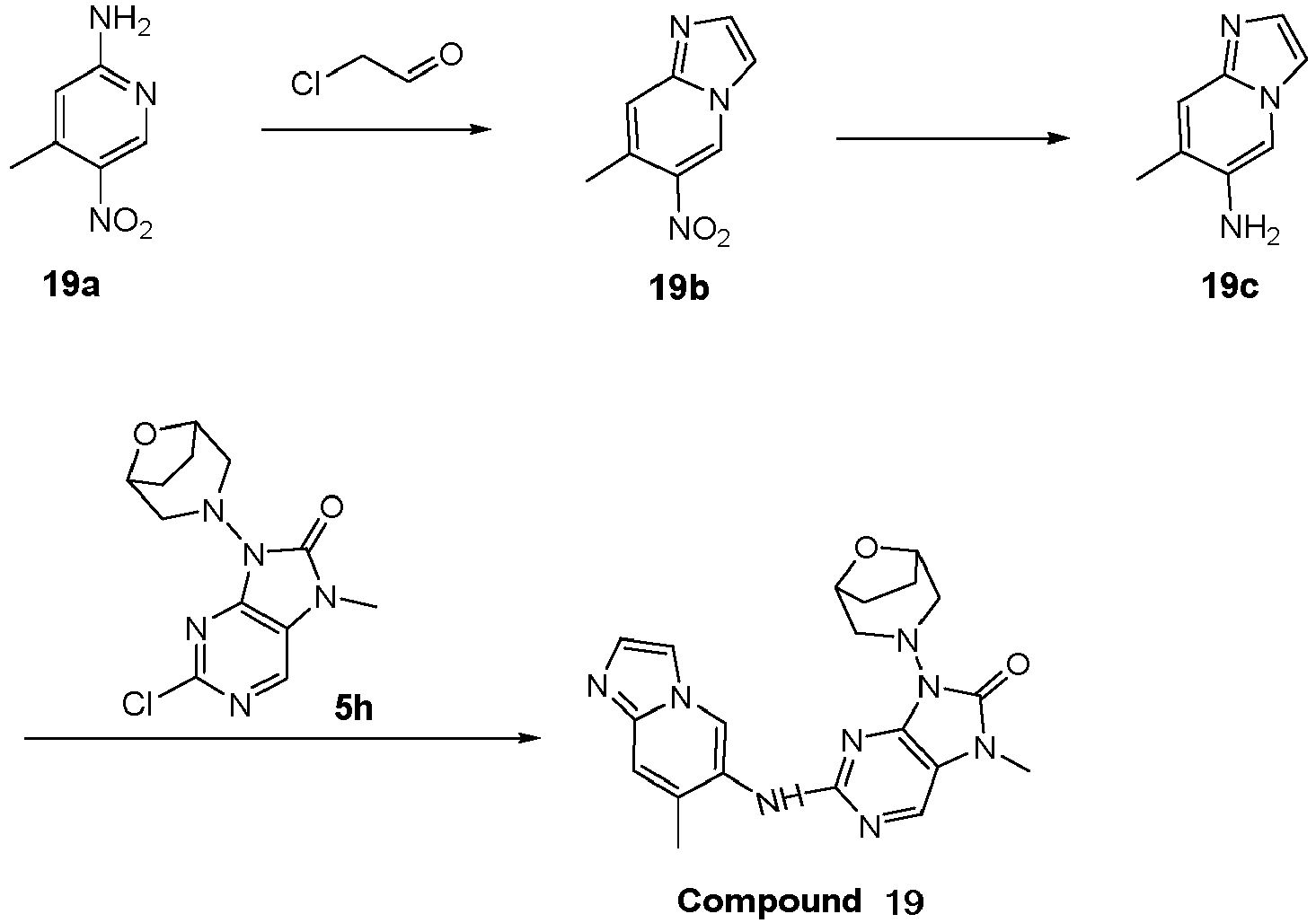
- Chloroacetaldehyde (1.92 g, 9.80 mmol, 1.58 mL, 40 % purity, 1.5 eq) was added to a solution of compound 19a (1 g, 6.53 mmol, 1 eq) in ethanol (10 mL), and after the addition was completed, the reaction solution was reacted at 70 °C for 2 hours. After the reaction was completed, the reaction solution was concentrated under reduced pressure and purified by column chromatography (methanol: dichloromethane=0:1-1:9) to obtain compound 19b.
- 1H NMR (400 MHz, DMSO-d 6) δ ppm 9.95 (s, 1H), 8.34 (d, J=1.50 Hz, 1H), 8.15 (d, J=1.88 Hz, 1H), 7.93 (s, 1H), 2.71 (s, 3H).
- Iron powder (1.51 g, 27.09 mmol, 4 eq) and ammonium chloride (1.45 g, 27.09 mmol, 4 eq) were added sequentially to a mixed solution of compound 19b (1.2 g, 6.77 mmol, 1 eq) in ethanol (6 mL) and water (6 mL), and after the addition was completed, the reaction solution was reacted at 80 °C for 1 hour. After the reaction was completed, the reaction solution was cooled to room temperature, filtered through celite, and the filtrate was concentrated under reduced pressure to obtain a crude product. At 25 °C, the crude product was treated with sonication in dichloromethane: methanol=30 mL: 3 mL for 5 minutes, filtered, and the filtrate was concentrated to obtain compound 19c. MS: m/z 147.9 [M+H]+.
- Compound 5h (50 mg, 169.08 µmol, 1 eq), compound 19c (22.40 mg, 152.17 µmol, 0.9 eq), methanesulfonato(2-dicyclohexylphosphino-3,6-dimethoxy-2',4',6'-tri-i-propyl-1,1'-biphenyl)(2'-amino-1,1'-biphenyl-2-yl)palladium(II) (30.65 mg, 33.82 µmol, 0.2 eq) and cesium carbonate (82.63 mg, 253.61 µmol, 1.5 eq) were placed in a reaction flask, and the reaction flask was vacuumized and repaced with nitrogen three times, then anhydrous dioxane (2 mL) was added to the mixture, and after the addition was completed, the reaction solution was reacted at 100 °C for 2 hours. After the reaction was completed, the reaction solution was concentrated under reduced pressure, and the residue was first purified by column chromatography (methanol: dichloromethane=0:1-1:9) to obtain a crude product, and then purified by preparative high performance liquid chromatography (neutral conditions: chromatographic column: Phenomenex Gemini-NX 80∗30 mm∗3 µm; mobile phase: [Water (10 mM ammonium bicarbonate)-acetonitrile]; % acetonitrile: 16 %-46 %, 9 minutes) to obtain compound 19. MS: m/z 407.3 [M+H]+.
- 1H NMR (400 MHz, CDCl3) δ ppm 9.46 (s, 1H), 7.91 (s, 1H), 7.62 (s, 1H), 7.56 (s, 1H), 7.48 (s, 1H), 6.77 (s, 1H), 4.47-4.56 (m, 2H), 4.07-4.15 (m, 2H), 3.39 (s, 3H), 2.82-2.93 (m, 2H), 2.46 (s, 3H), 2.26-2.35 (m, 2H), 2.01-2.11 (m, 2H).
-

- Compound 4h (50 mg, 169.08 µmol, 1 eq), compound 19c (22.40 mg, 152.17 µmol, 0.9 eq), methanesulfonato(2-dicyclohexylphosphino-3,6-dimethoxy-2',4',6'-tri-i-propyl-1,1'-biphenyl)(2'-amino-1,1'-biphenyl-2-yl)palladium(II) (30.65 mg, 33.82 µmol, 0.2 eq) and cesium carbonate (82.63 mg, 253.61 µmol, 1.5 eq) were placed in a reaction flask, and the reaction flask was vacuumized and repaced with nitrogen three times, then anhydrous dioxane (2 mL) was added to the mixture, and after the addition was completed, the reaction solution was reacted at 100 °C for 2 hours. After the reaction was completed, the reaction solution was concentrated under reduced pressure, and first purified by column chromatography (methanol: dichloromethane=0:1-1:9) to obtain a crude product, then purified by preparative high performance liquid chromatography (neutral condition: chromatographic column: Phenomenex Gemini-NX 80∗30 mm∗3 µm; mobile phase: [Water (10 mM ammonium bicarbonate)-acetonitrile]; % acetonitrile: 13 %-43 %, 9 minutes) to obtain compound 20. MS: m/z 407.3 [M+H]+.
- 1H NMR (400 MHz, CDCl3) δ ppm 9.20 (s, 1H), 7.87 (s, 1H), 7.57 (s, 1H), 7.51 (s, 1H), 7.47 (s, 1H), 6.65 (s, 1H), 4.07-4.16 (m, 2H), 3.79-3.88 (m, 2H), 3.66-3.75 (m, 2H), 3.38 (s, 3H), 2.35-2.47 (m, 5H), 2.05-2.15 (m, 2H).
-

- 2,2-Dimethoxybenzylamine (6.35 g, 37.97 mmol, 5.72 mL, 3 eq) and N,N-diisopropylethylamine (4.91 g, 37.97 mmol, 6.61 mL, 3 eq) were added to a solution of compound 21a (3 g, 12.66 mmol, 1 eq) in dioxane (20 mL), and after the addition was completed, the reaction solution was reacted at 110 °C for 16 hours. After the reaction was completed, the reaction solution was cooled to room temperature, concentrated under reduced pressure, and purified by column chromatography (ethyl acetate: petroleum ether=0:1-1:3) to obtain compound 21b. MS: m/z 385.0 [M+H]+.
- 1H NMR (400 MHz, CDCl3) δ ppm 7.84 (s, 1H), 7.16-7.20 (m, 1H), 6.95 (s, 1H), 6.40-6.48 (m, 2H), 4.78 (s, 1H), 4.31-4.37 (m, 2H), 3.83 (s, 3H), 3.79 (s, 3H), 2.22 (s, 3H).
- Trifluoroacetic acid (6.93 g, 60.78 mmol, 4.5 mL, 27 eq) was added to a solution of compound 21b (865 g, 2.25 mmol, 1 eq) in dichloromethane (9 mL), and after the addition was completed, the reaction solution was reacted at 20 °C for 12 hours. After the reaction was completed, the reaction solution was concentrated under reduced pressure, and saturated sodium bicarbonate (20 mL) was added to adjust the pH to 8-9, then the reaction solution was extracted with ethyl acetate (10 mL∗3), washed with saturated brine (20 mL), dried over anhydrous sodium sulfate, filtered, and the filtrate was concentrated under reduced pressure and purified by column chromatography (ethyl acetate: petroleum ether=0:1-1:1) to obtain compound 21c. MS: m/z 234.9 [M+H] +.
- N,N-Dimethylformamide dimethyl acetal (572.80 mg, 4.81 mmol, 638.58 µL, 3 eq) was added to a solution of compound 21c (375 mg, 1.6 mmol, 1 eq) in toluene (4 mL), and after the addition was completed, the reaction solution was reacted at 110 °C for 2 hours. After the reaction was completed, the reaction solution was concentrated under reduced pressure to obtain a crude product of compound 21d.
- Hydroxylamine hydrochloride (298.04 mg, 4.29 mmol, 2 eq) was added to a solution of compound 21d (620 mg, 2.14 mmol, 1 eq) in methanol (6 mL), and after the addition was completed, the reaction solution was reacted at 70 °C for 1 hour. After the reaction was completed, the reaction solution was concentrated under reduced pressure to obtain compound 21e.
- At 0 °C, trifluoroacetic anhydride (1.30 g, 6.17 mmol, 858.47 µL, 1.5 eq) was added to a solution of compound 21e (1.14 g, 4.11 mmol, 1 eq) in tetrahydrofuran (12 mL), and after the addition was completed, the reaction solution was reacted at 20 °C for 18 hours. After the reaction was completed, the reaction solution was concentrated under reduced pressure and purified by column chromatography (ethyl acetate: petroleum ether=0:1-1:1) to obtain compound 21f. MS: m/z 259.9 [M+H] +.
- Compound 21f (175 mg, 675.55 µmol, 1 eq), benzophenoneimine (134.68 mg, 743.11 µmol, 124.70 µL, 1.1 eq), tris(dibenzylideneacetone)dipalladium (12.37 mg, 13.51 µmol), 0.02 eq), 1,1'-binaphthyl-2,2'-bisdiphenylphosphine (11.74 mg, 20.29 µmol, 0.03 eq) and sodium tert-butoxide (97.38 mg, 1.01 mmol, 1.5 eq) were placed in a reaction flask, and the reaction flask was vacuumized and repaced with nitrogen three times, then anhydrous toluene (3 mL) was added to the mixture, and after the addition was completed, the reaction solution was reacted at 90 ° C for 3 hours. After the reaction was completed, the reaction solution was concentrated under reduced pressure, then tetrahydrofuran (10 mL) and 3 mol/L hydrochloric acid solution (3 mL) were added, and the mixture was stirred at 20 °C for 0.5 hours, and then diluted with water (20 mL), extracted with ethyl acetate (15 mL∗2), and the organic phase was discarded. The pH of aqueous phase was adjusted to 9-11 by adding an appropriate amount of aqueous ammonium hydroxide solution, then the aqueous phase was extracted with ethyl acetate (10 mL∗3), washed with saturated brine (20 mL), dried over anhydrous sodium sulfate, filtered, and the filtrate was concentrated under reduced pressure and purified by column chromatography (methanol: dichloromethane=0:1-1:9) to obtain compound 21g. MS: m/z 148.9 [M+H] +.
- 1H NMR (400 MHz, CDCl3) δ ppm 8.20 (s, 1H), 8.08 (s, 1H), 6.78 (s, 1H), 4.17 (s, 2H), 2.20-2.24 (m, 3H).
- Compound 21g (22.55 mg, 152.17 µmol, 0.9 eq), compound 5h (50 mg, 169.08 µmol, 1 eq), methanesulfonato(2-dicyclohexylphosphino-3,6-dimethoxy-2',4',6'-tri-i-propyl-1,1'-biphenyl)(2'-amino-1,1'-biphenyl-2-yl)palladium(II) (30.65 mg, 33.82 µmol, 0.2 eq) and cesium carbonate (110.18 mg, 338.15 µmol, 2 eq) were placed in a reaction flask, and the reaction flask was vacuumized and repaced with nitrogen three times, then anhydrous dioxane (2 mL) was added to the mixture and the reaction was carried out at 100 °C for 2 hours. After the reaction was completed, the reaction solution was concentrated under reduced pressure and purified by thin-layer preparative chromatography (methanol: dichloromethane=1:10) to obtain compound 21. MS: m/z 408.1 [M+H] +.
- 1H NMR (400 MHz, CDCl3) δ ppm 9.03 (s, 1H), 8.35 (s, 1H), 8.21 (s, 1H), 7.97 (s, 1H), 7.11 (s, 1H), 4.46-4.54 (m, 2H), 4.01-4.11 (m, 2H), 3.42 (s, 3H), 2.80-2.91 (m, 2H), 2.45 (s, 3H), 2.30-2.39 (m, 2H), 2.01-2.08 (m, 2H).
-

- Compound 4h (50 mg, 169.08 µmol, 1 eq), compound 21g (22.55 mg, 152.17 µmol, 0.9 eq), methanesulfonato(2-dicyclohexylphosphino-3,6-dimethoxy-2',4',6'-tri-i-propyl-1,1'-biphenyl)(2'-amino-1,1'-biphenyl-2-yl)palladium(II) (30.65 mg, 33.82 µmol, 0.2 eq) and cesium carbonate (110.18 mg, 338.15 µmol, 2 eq) were placed in a reaction flask, and the reaction flask was vacuumized and repaced with nitrogen three times, then anhydrous dioxane (3 mL) was added to the mixture and the reaction was carried out at 100 °C for 2 hours. After the reaction was completed, the reaction solution was concentrated under reduced pressure and purified by thin-layer preparative chromatography (methanol: dichloromethane=1:10) to obtain compound 22. MS: m/z 430.1 [M+Na]+.
- 1H NMR (400 MHz, CDCl3) δ ppm 8.97 (s, 1H), 8.34 (s, 1H), 8.21 (s, 1H), 7.96 (s, 1H), 7.10 (s, 1H), 4.13-4.19 (m, 2H), 3.87-3.93 (m, 2H), 3.70-3.76 (m, 2H), 3.41 (s, 3H), 2.41-2.49 (m, 5H), 2.14-2.20 (m, 2H).
-

- Chloroacetaldehyde (5.26 g, 26.80 mmol, 670.12 µL, 40 % purity, 1.2 eq) was added to a mixed solution of compound 23a (4.2 g, 22.34 mmol, 1 eq) in ethanol (42 mL) and water (17.5 mL), and after the addition was completed, the reaction solution was reacted at 100 °C for 16 hours. After the reaction was completed, the reaction solution was diluted with saturated sodium bicarbonate solution (60 mL), extracted with ethyl acetate (50 mL∗3), washed with saturated brine (30 mL), dried over anhydrous sodium sulfate, filtered, and the filtrate was concentrated under reduced pressure and purified by column chromatography (ethyl acetate: petroleum ether=0:1-1:1) to obtain compound 23b. MS: m/z 213.8 [M+H+2]+.
- 1H NMR (400 MHz, CDCl3) δ ppm 8.57 (s, 1H), 7.84-7.86 (m, 1H), 7.48-7.50 (m, 1H), 2.79 (s, 3H).
- Compound 23b (1 g, 4.72 mmol, 1 eq), benzophenoneimine (940.15 mg, 5.19 mmol, 870.51 µL, 1.1 eq), tris(dibenzylideneacetone)dipalladium (431.85 mg, 471.59 µmol, 0.1 eq), 4,5-bis(diphenylphosphino)-9,9-dimethylxanthene (545.75 mg, 943.19 µmol, 0.2 eq) and cesium carbonate (3.07 g, 9.43 mmol, 2 eq) were placed in a reaction flask, and the reaction flask was vacuumized and repaced with nitrogen three times, then anhydrous dioxane (30 mL) was added to the mixture and the reaction was carried out at 120 °C for 3 hours. After the reaction was completed, the reaction solution was cooled to room temperature, concentrated under reduced pressure, then tetrahydrofuran (10 mL) and 3 mol/L hydrochloric acid solution (12 mL) were added, and the reaction solution was stirred at 20 °C for half an hour, then diluted with water (20 mL), extracted with ethyl acetate (20 mL∗3), and the organic phase was discarded. An appropriate amount of ammonium hydroxide solution was added to the aqueous phase to adjust the pH to 9-11, then the aqueous phase was directly concentrated under reduced pressure and purified by column chromatography (methanol: dichloromethane=0:1-1:9) to obtain compound 23c. MS: m/z 148.8 [M+H] +.
- Compound 23c (40.08 mg, 270.52 µmol, 2 eq), compound 5h (40 mg, 135.26 µmol, 1 eq), tris(dibenzylideneacetone)dipalladium (12.39 mg, 13.53 µmol, 0.1 eq), 4,5-bis(diphenylphosphino)-9,9-dimethylxanthene (15.65 mg, 27.05 µmol, 0.2 eq) and cesium carbonate (88.14 mg, 270.52 µmol, 2 eq) were placed in a reaction flask, and the reaction flask was vacuumized and repaced with nitrogen three times, then anhydrous dioxane (2 mL) was added to the mixture and the reaction was carried out at 100 °C for 2 hours. After the reaction was completed, the reaction solution was concentrated under reduced pressure and purified by thin-layer preparative chromatography (methanol: dichloromethane=1:10) to obtain compound 23. MS: m/z 408.2 [M+H] +.
- 1H NMR (400 MHz, CDCl3) δ ppm 9.74 (s, 1H), 7.93 (s, 1H), 7.73 (s, 1H), 7.53 (s, 1H), 6.83 (s, 1H), 4.48-4.54 (m, 2H), 4.03-4.10 (m, 2H), 3.41 (s, 3H), 2.84-2.90 (m, 2H), 2.74 (s, 3H), 2.25-2.32 (m, 2H), 2.03-2.11 (m, 2H).
-

- Compound 4h (40 mg, 135.26 µmol, 1 eq), compound 23c (40.08 mg, 270.52 µmol, 2 eq), tris(dibenzylideneacetone)dipalladium (12.39 mg, 13.53 µmol, 0.1 eq), 4,5-bis(diphenylphosphino)-9,9-dimethylxanthene (15.65 mg, 27.05 µmol, 0.2 eq) and cesium carbonate (88.14 mg, 270.52 µmol, 2 eq) were placed in a reaction flask, and the reaction flask was vacuumized and repaced with nitrogen three times, and then anhydrous dioxane (2 mL) was added to the mixture and the reaction was carried out at 100 °C for 2 hours. After the reaction was completed, the reaction solution was concentrated under reduced pressure and purified by thin-layer preparative chromatography (methanol: dichloromethane=1:10) to obtain compound 24. MS: m/z 408.1 [M+H]+.
- 1H NMR (400 MHz, CDCl3) δ ppm 9.60 (s, 1H), 7.89 (s, 1H), 7.74 (s, 1H), 7.43-7.50 (m, 1H), 6.76 (s, 1H), 4.06-4.14 (m, 2H), 3.79-3.86 (m, 2H), 3.67-3.75 (m, 2H), 3.39 (s, 3H), 2.72 (s, 3H), 2.39-2.47 (m, 2H), 2.09-2.18 (m, 2H).
- This experiment was tested in the Eurofins
- Experimental materials and methods:
Human DNA-PK; Mg/ATP; GST-cMyc-p53; EDTA; Ser15 antibody; ATP: 10 µM. - Experimental method (Eurofins Pharma Discovery Service):
DNA-PK (h) was incubated in assay buffer containing 50 nM GST-cMyc-p53 and Mg/ATP (according to the required concentration). The reaction was initiated by adding Mg/ATP mixture. After 30 minutes of incubation at room temperature, the reaction was stopped by adding a stop solution containing EDTA. Finally, detection buffer (containing labeled anti-GST monoclonal antibody and europium-labeled anti-Ser15 antibody against phosphorylated p53) was added. The plate was then read in time-resolved fluorescence mode, and the homogeneous time-resolved fluorescence (HTRF) signal was determined according to the formula HTRF = 10000 × (Em665 nm/Em620 nm). -
Table 1 DNA-PK kinase activity test results Testing sample DNA-PK kinase inhibition IC50 (nM) Compound 1 2 Compound 4 1 Compound 5 1 Compound 6 1 Compound 7 2 Compound 8 7 Compound 9 3 Compound 10 2.5 Compound 11 5 Compound 12 4 Compound 13 2 Compound 14 5 Compound 15 1 Compound 16 0.5 Compound 17 0.5 Compound 18 0.9 Compound 19 0.6 Compound 20 0.9 Compound 21 0.5 Compound 22 0.4 Compound 23 10 Compound 24 68 Conclusion: The compounds of the present disclosure have significant DNA-PK kinase inhibitory activity. - Test compounds were mixed with 10 % dimethyl sulfoxide/50 % polyethylene glycol 200/40 % water (compounds 1, 4, 10, 17) or 20 % N,N-dimethylacetamide/80 % water (compound 5), vortexed and sonicated to prepare a nearly clear solution of 0.08 mg/mL (compounds 1, 4, 10, 17) or 0.50 mg/mL (compound 5), then filtered through a microporous membrane for next step. Balb/c male mice of 18 to 20 grams were selected and administered intravenously with the candidate compound solution at a dose of 0.4 (compounds 1, 4, 10, 17) or 1 mg/kg (compound 5). Test compounds were mixed with 10 % dimethyl sulfoxide/50 % polyethylene glycol 200/40 % water (compounds 1, 4, 10, 17) or 20 %-hydroxypropyl-β-cyclodextrin (compound 5), vortexed and sonicated to prepare a nearly clear solution of 0.2 mg/mL (compounds 1, 4, 10, 17) or 1 mg/mL (compound 5), then filtered through a microporous membrane for next step. Balb/c male mice of 18 to 20 grams were selected and orally administered with the candidate compound solution at a dose of 2 (compounds 1, 4, 10, 17) or 5 mg/kg (compound 5). Whole blood was collected for a certain period of time, and plasma was prepared, then drug concentration was detected by LC-MS/MS method, and pharmacokinetic parameters were calculated by Phoenix WinNonlin software (Pharsight, USA).
- IV: intravenous injection; PO: oral; Co: instantaneous required concentration after intravenous injection; Cmax: highest plasma concentration after administration; Tmax: time required to reach peak of drug concentration after administration; T1/2: time required for the plasma drug concentration to decrease by half; Vdss: apparent volume of distribution, refers to the proportional constant of the drug dose in vivo and the blood drug concentration when the drug reaches a dynamic equilibrium in vivo. Cl: clearance rate, refers to the apparent volume of distribution of the drug cleared from the body per unit time; Tlast: time at the last detection point; AUC0-last: area under the drug-time curve, refers to the area covered by the plasma concentration curve and the time axis; F: a measure of the speed and degree of drug absorption into the blood circulation, which is an important indicator for evaluating the degree of drug absorption.
- The experimental results are shown in Table 2.
Table 2 Cassette PK test results of compounds in plasma Parameter Co (nM) Cmax (nM) Tmax (h) T1/2 (h) Vdss (L/kg) Cl (mL/min/k g) Tlast (h) AUC0-last (nM.h) F (%) Compound 1 IV(0.4 mg/kg) 959 - - 0.598 1.51 37.7 4 426 - PO(2 mg/kg) - 1425 0.5 0.841 - - 8 2497 96.4 Compound 4 IV(0.4 mg/kg) 919 - - 0.24 1.08 57 2 286 - PO(2 mg/kg) - 1595 0.25 0.609 - - 4 1736 123 Compound 5 IV(1 mg/kg) 3604 - - 1.28 1.49 24.7 ND 1657 - PO(5 - 2170 0.25 3.85 - - 10 3489 44.5 mg/kg) Compound 10 IV(0.4 mg/kg) 1121 - - 0.591 0.883 25.4 4 640 - PO(2 mg/kg) - 2065 0.5 1.22 - - 8 3832 120 Compound 17 IV(0.4 mg/kg) 748 - - 0.559 1.39 34.7 4 470 - PO(2 mg/kg) - 1545 1.0 0.81 - - 8 3397 144 ND: Not detected
"--" means that not tested or no data was obtained. - Conclusion: The compounds of the present disclosure exhibit longer half-life, lower clearance rate and higher drug exposure, and have good pharmacokinetic properties in vivo.
- Test compounds were mixed with 10 % dimethyl sulfoxide/50 % polyethylene glycol 200/40 % water, vortexed and sonicated to prepare a nearly clear solution of 0.4 mg/mL (compound 5), then filtered through a microporous membrane for next step. Balb/c male mice of 18 to 20 grams were selected and administered intravenously with the candidate compound solution at a dose of 2 mg/kg. Test compounds were mixed with 10 % dimethyl sulfoxide/50 % polyethylene glycol 200/40 % water, vortexed and sonicated to prepare a nearly clear solution of 1 mg/mL, then filtered with a microporous membrane for next step. Balb/c male mice of 18 to 20 grams were selected and orally administered with the candidate compound solution at a dose of 10 mg/kg. Whole blood was collected for a certain period of time, and plasma was prepared, then drug concentration was detected by LC-MS/MS method, and pharmacokinetic parameters were calculated by Phoenix WinNonlin software (Pharsight, USA).
- The experimental results are shown in Table 3.
Table 3 PK test results of compound in plasma Parameter Co (nM) Cmax (nM) Tmax (h) T1/2 (h) Vdss (L/kg) Cl (mL/min/kg ) Tlast (h) AUC0-last (nM.h) F (%) Compound 5 IV (2 mpk) 4742 - - 0.733 1.07 23.7 8 3454 - PO (10 - 11433 0.50 0.850 - - 10 23184 134 mpk) "--" means that not tested or no data was obtained. - Conclusion: The compounds of the present disclosure exhibit longer half-life, lower clearance rate and higher drug exposure, and have good pharmacokinetic properties in vivo.
- Test compounds were mixed with 10 % dimethyl sulfoxide/50 % polyethylene glycol 200/40 % water, vortexed and sonicated to prepare a nearly clear solution of 0.5 mg/mL (compound 5) or 1 mg/mL (compound 17), then filtered through a microporous membrane for next step. SD male rats were selected and administered intravenously with the candidate compound solution at a dose of 1 mg/kg (compound 5) or 2 mg/kg (compound 17). Test compounds were mixed with 10 % dimethyl sulfoxide/50 % polyethylene glycol 200/40 % water, vortexed and sonicated to prepare a homogeneous suspension of 4 mg/mL (compound 5) or a nearly clear solution of 1 mg/mL (compound 17). SD male rats were selected and orally administered with the candidate compound solution at a dose of 40 mg/kg (compound 5) or 10 mg/kg (compound 17). Whole blood, cerebrospinal fluid, brain tissue were collected for a certain period of time and plasma was prepared, and the drug concentration was detected by LC-MS/MS method, and the pharmacokinetic parameters were calculated by Phoenix WinNonlin software (Pharsight, USA).
- The experimental results are shown in Table 4.
Table 4 PK test results of compounds in plasma, cerebrospinal fluid, and brain tissue Parameter Co (nM) Cmax (nM) Tmax (h) T1/2 (h) Vdss (L/kg) Cl (mL/min/kg) Tlast (h) AUC0-last (nM.h) Compound 5 IV (1 mpk) 3043 - - 1.45 1.41 17.0 8 2382 PO (40 mp k) Plasma - 10223 2 ND - - 8 59896 Cerebr ospinal fluid - 1260 2 ND - - 8 7740 Brain tissue - 1019a 4 ND - - 8 6369b Compound IV (2 mpk) 5303 - - 1.16 1.40 16.9 8 4861 PO (10 mpk) - 6245 2 2.29 - - 8 32535 17 ND: Not detected
"--" means that not tested or no data was obtained.
a: unit nmol/kg; b: unit h∗nmol/kg. - Conclusion: The compounds of the present disclosure exhibit longer half-life, lower clearance rate and higher drug exposure, and have good pharmacokinetic properties in vivo. At the same time, the compound has a good brain exposure.
- Test compounds were mixed with 10 % dimethyl sulfoxide/50 % polyethylene glycol 200/40 % water, vortexed and sonicated to prepare a nearly clear solution of 1 mg/mL, then filtered through a microporous membrane for next step. Male Beagle dogs were selected and administered intravenously with the candidate compound solution at a dose of 1 mg/kg. Test compounds were mixed with 10 % dimethyl sulfoxide/50 % polyethylene glycol 200/40 % water, vortexed and sonicated to prepare a nearly clear solution of 1 mg/mL, then filtered with a microporous membrane for next step. Male Beagle dogs were selected and orally administered with the candidate compound solution at a dose of 5 mg/kg. Whole blood was collected for a certain period of time, and plasma was prepared, then drug concentration was detected by LC-MS/MS method, and pharmacokinetic parameters were calculated by Phoenix WinNonlin software (Pharsight, USA).
- The experimental results are shown in Table 5.
Table 5 PK test results of compounds in plasma Parameter Co (nM) Cmax (nM) Tmax (h) T1/2 (h) Vdss (L/kg) Cl (mL/min/kg) Tlast (h) AUC0-last (nM.h) F (%) Compound 17 IV (1 mpk) 1450 - - 5.04 1.58 5.89 24 6817 - PO (5 mpk) - 4935 1.50 4.27 - - 24 31535 92.3 Compound 5 IV (1 mpk) 1820 - - 4.04 1.87 8.26 24 4957 - PO (5 mpk) - 9270 1.67 4.27 - - 24 68263 279 "--" means that not tested or no data was obtained. - Conclusion: The compounds of the present disclosure exhibit longer half-life, lower clearance rate and higher drug exposure, and have good pharmacokinetic properties in vivo.
- Test compound was mixed with 10 % dimethyl sulfoxide/50 % polyethylene glycol 200/40 % water, vortexed and sonicated to prepare a nearly clear solution of 1 mg/mL, then filtered through a microporous membrane for next step. Male cynomolgus monkeys were selected and administered intravenously with the candidate compound solution at a dose of 1 mg/kg. Test compound was mixed with 10 % dimethyl sulfoxide/50 % polyethylene glycol 200/40 % water, vortexed and sonicated to prepare a nearly clear solution of 1 mg/mL, then filtered with a microporous membrane for next step. Male cynomolgus monkeys were selected and orally administered with the candidate compound solution at a dose of 5 mg/kg. Whole blood was collected for a certain period of time, and plasma was prepared, then drug concentration was detected by LC-MS/MS method, and pharmacokinetic parameters were calculated by Phoenix WinNonlin software (Pharsight, USA).
- The experimental results are shown in Table 6.
Table 6 PK test results of compound in plasma Parameter Co (nM) Cmax (nM) Tmax (h) T1/2 (h) Vdss (L/kg) Cl (mL/min/kg) Tlast (h) AUC0-last (nM.h) F (%) Compound 5 IV (1 mpk) 2291 - - 3.60 1.52 16.8 ND 2440 - PO (5 mpk) - 4503 1.17 1.35 - - 12 14024 115 ND: Not detected
"--" means that not tested or no data was obtained. - Conclusion: The compounds of the present disclosure exhibit longer half-life, lower clearance rate and higher drug exposure, and have good pharmacokinetic properties in vivo.
- Experimental purpose: To study the in vivo pharmacodynamics of the test compounds in BALB/c nude mice model with human non-small cell lung cancer NCI-H1703 cell subcutaneous xenograft tumor
- Experimental animals: Female BALB/c nude mice, 6-8 weeks old, weighing 18-22 grams; supplier: Shanghai Sippe-Bk Lab Animal Co., Ltd.
- Human non-small cell lung cancer NCI-H1703 cells were cultured in vitro in RPMI1640 medium with 10 % fetal bovine serum, 100 U/mL penicillin and 100 µg/mL streptomycin at 37 °C in a 5% CO2 incubator. Conventional digestion with trypsin-EDTA was performed twice a week for passage. When the cell saturation was 80 %-90 % and the number reached the requirement, the cells were collected, counted, and seeded.
- 0.2 mL (5×10⁶ cells) NCI-H1703 cells (added with matrigel, volume ratio of 1:1) were subcutaneously inoculated into the right back of each mouse, and the group administration started when the average tumor volume reached about 130 mm3.
- Compound 5 was prepared into 3 mg/mL, 6 mg/mL, 9 mg/mL suspension solutions, and compound 17 was prepared into 9 mg/mL suspensions, and the solvent was 0.5 % HPMC+1 % Tween 80.
- Tumor diameters were measured with vernier calipers twice a week. The calculation formula of tumor volume is: V = 0.5a × b 2, wherein a and b represent the long and short diameters of the tumor, respectively.
- The antitumor efficacy of the compounds was evaluated by TGI (%) or relative tumor proliferation rate T/C (%). Relative tumor proliferation rate T/C (%) = TRTV/CRTV × 100% (TRTV: means RTV in the treatment group; CRTV: means RTV in the negative control group). The relative tumor volume (RTV) was calculated according to the results of tumor measurement. The calculation formula is RTV = Vt/V0, wherein V0 is the tumor volume measured at the time of group administration (i.e., day 0), and Vt is the tumor volume at one measurement. Data of the same day was taken for TRTV and CRTV.
- TGI (%), reflecting tumor growth inhibition rate. TGI(%)=[1-(average tumor volume at the end of administration of a certain treatment group-average tumor volume at the beginning of administration of this treatment group)/(average tumor volume at the end of treatment in the solvent control group-average volume at the beginning of treatment in the solvent control group tumor volume)] × 100%. After the experiment, the tumor weight was detected, and the T/weight percentage was calculated. T weight and C weight represent the tumor weight of the administration group and the solvent control group, respectively.
- Statistical analysis was performed using SPSS software based on RTV data at the end of the experiment. The treatment group showed the best treatment effect on the 21st day after dosing at the end of the experiment, therefore statistical analysis was performed based on this data to evaluate the difference between groups. T-test was used to analyze the comparison between two groups, and one-way ANOVA was used to analyze the comparison between three or more groups. If the variance was homogeneous (F value had no significant difference), Tukey ' s method was used for analysis. If the variance was not homogeneous (F value had significant difference), the Games-Howell method was used to test. p < 0.05 was considered a significant difference.
- In this experiment, compound 5 at doses of 60 mg/kg and 90 mg/kg (dosed twice a day), and compound 17 at a dose of 90 mg/kg (dosed twice a day), compared with the blank control have a significant inhibitory effect. Compound 5 has a certain tumor inhibitory effect at a dose of 30 mg/kg (administered twice a day). The therapeutic effects of compound 5 are all dose-dependent, and the experimental results are shown in Table 7. Results of tumor weights and tumor photographs on day 21 are shown in Table 8 and
Figure 1 .Table 7 Tumor inhibitory effect of compounds on human lung cancer NCI-H1703 xenograft tumor model Group Tumor volume (mm3)a (Day 0) Tumor volume (mm3)a (Day 21) RTV (Day 21) TGI (%)b (Day 21) T/C (%)b (Day 21) p c Blank control group 131 ± 11 1200 ± 54 9.55 ± 0.69 - - - Compound 5 (30 mg/kg) 131 ± 10 979 ± 86 7.57 ± 0.53 20.6 79.3 0.202 Compound 5 (60 mg/kg) 131 ± 10 427 ± 64 3.31 ± 0.51 72.3 34.7 <0.001 Compound 5 (90 mg/kg) 130 ± 10 351 ± 64 2.64 ± 0.45 79.4 27.7 <0.001 Compound 17 (90 mg/kg) 130 ± 13 435 ± 94 3.19 ± 0.46 71.6 33.4 <0.001 Notes: a. Mean ± SEM, n=9 (compound 5) or n=6 (compound 17).
b. Tumor growth inhibition was calculated from T/C and TGI (TGI (%) = [1-(T21-T0)/(V21-V0)] × 100).
c. p-value was obtained by analyzing relative tumor volume (RTV) using one-way ANOVA.Table 8 Tumor weights and photographs in each experimental group Group Tumor weight (g)a (PG-D21) T/Cweight b (%) p-valuec Corresponding photographs Blank control group 1.296 ± 0.060 - - First row Compound 5 (30 mg/kg) 1.031 ± 0.095 79.6 0.301 Second row Compound 5 (60 mg/kg) 0.467 ± 0.078 36.0 <0.001 Third row Compound 5 (90 mg/kg) 0.379 ± 0.069 29.2 <0.001 Fourth row Compound 17 (90 mg/kg) 0.466 ± 0.103 35.9 <0.001 Fifth row Note: a. Mean ± SEM, n=9 (compound 5) or n=6 (compound 17).
b. Tumor growth inhibition was calculated from T/Cweight = TWtreatment/TW solvent.
c. The p value was analyzed by one-way ANOVA and solvent treatment group, if there was a significant difference in the F value, Games-Howell method should be used to analyze. - Conclusion: In this experiment, compound 5 at the dose of 60 mg/kg and 90 mg/kg, and compound 17 at the dose of 90 mg/kg, have a significant tumor inhibitory effect compared with the control group, and the curative effect of compound 5 is dose-dependent. In this experiment, the tumor-bearing mice show good tolerance to the compounds, and there is no significant weight loss in all treatment groups.
Claims (14)
- The present disclosure provides a compound represented by formula (IV) or a pharmaceutically acceptable salt thereof,
 the structural moiety

 E1 is selected from a single bond, -O- and -C(R6R7)-;R1, R2, R3, R4, R' and R" are each independently selected from H, F and Cl;or R1 and R2 are connected together such that the structural moiety
 or R3 and R4 are connected together such that the structural moiety
 or R1 and R4 are connected together such that the structural moiety
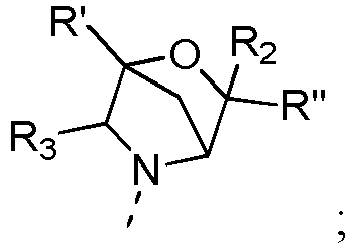 or R2 and R" connected together with the carbon atoms to which they are attached form a C3-5 cycloalkyl;R5 is selected from F, Cl, Br, I, cyclopropyl and C1-3 alkyl, and the C1-3 alkyl is optionally substituted with OH or 1, 2 or 3 Ra;R6 and R7 are each independently selected from H, F, Cl, Br, I and CN;or R6 and R7 connected together with the carbon atoms to which they are attached form a cyclopropyl or a 4-membered oxetanyl;ring A is selected from C3-5 cycloalkyl;Y1 is selected from cyclopropyl and C1-3 alkyl, and the C1-3 alkyl is optionally substituted with 1, 2, 3, 4 or 5 F;Ra is selected from H, F, Cl, Br and I.
 - The compound as claimed in claim 1 or the pharmaceutically acceptable salt thereof, wherein the compound represented by formula (IV) or the pharmaceutically acceptable salt thereof is selected from a compound represented by formula (III) or a pharmaceutically acceptable salt thereof,

- The compound as claimed in claim 1 or 2 or the pharmaceutically acceptable salt thereof, wherein the compound is selected from


 ring C is cyclopropyl or 4-membered oxetanyl;n is selected from 0 and 1;ring A, R1, R2, R3, R4, R5, R6 and R7 are as defined in claim 1.
 - The compound as claimed in any one of claims 1-3 or the pharmaceutically acceptable salt thereof, wherein R1 and R2 are connected together such that the structural moiety


- The compound as claimed in any one of claims 1-3 or the pharmaceutically acceptable salt thereof, wherein R3 and R4 are connected together such that the structural moiety


- The compound as claimed in any one of claims 1-3 or the pharmaceutically acceptable salt thereof, wherein R1 and R4 are connected together such that the structural moiety


- The compound as claimed in any one of claims 1-3 or the pharmaceutically acceptable salt thereof, wherein ring A is selected from

- The compound as claimed in any one of claims 1-3 or the pharmaceutically acceptable salt thereof, wherein R6 and R7 connected together with the carbon atoms to which they are attached form

- The compound as claimed in any one of claims 1-3 or the pharmaceutically acceptable salt thereof, wherein R2 and R" connected together with the carbon atoms to which they are attached form

- The compound as claimed in any one of claims 1-9 or the pharmaceutically acceptable salt thereof, wherein R5 is selected from F, Cl, CH2OH, CF3 and CH3.
- A compound represented by following formula or a pharmaceutically acceptable salt thereof


- A use of the compound as defined in any one of claims 1-11 or the pharmaceutically acceptable salt thereof in the manufacture of a medicament related to DNA-PK inhibitor.
- The use as claimed in claim 12, wherein the medicament related to DNA-PK inhibitor plays a therapeutic effect as a single medicament in tumors with defects in other DNA repair pathways.
- The use as claimed in claim 12, wherein the medicament related to DNA-PK inhibitor is used in combination with a chemoradiotherapy medicament to enhance the inhibitory effect on solid tumors and hematological tumors.
Applications Claiming Priority (5)
| Application Number | Priority Date | Filing Date | Title |
|---|---|---|---|
| CN201911164961 | 2019-11-25 | ||
| CN202010209352 | 2020-03-23 | ||
| CN202010911879 | 2020-09-02 | ||
| CN202011269768 | 2020-11-13 | ||
| PCT/CN2020/131275 WO2021104277A1 (en) | 2019-11-25 | 2020-11-25 | Pyrimidoimidazole compounds used as dna-pk inhibitors |
Publications (2)
| Publication Number | Publication Date |
|---|---|
| EP4067359A1 true EP4067359A1 (en) | 2022-10-05 |
| EP4067359A4 EP4067359A4 (en) | 2024-01-10 |
Family
ID=76129965
Family Applications (1)
| Application Number | Title | Priority Date | Filing Date |
|---|---|---|---|
| EP20892868.9A Withdrawn EP4067359A4 (en) | 2019-11-25 | 2020-11-25 | Pyrimidoimidazole compounds used as dna-pk inhibitors |
Country Status (10)
| Country | Link |
|---|---|
| US (1) | US20230026616A1 (en) |
| EP (1) | EP4067359A4 (en) |
| JP (1) | JP7383818B2 (en) |
| KR (1) | KR20220106799A (en) |
| CN (1) | CN114728969B (en) |
| AU (1) | AU2020390962B2 (en) |
| CA (1) | CA3159290A1 (en) |
| IL (1) | IL293318A (en) |
| TW (1) | TWI807228B (en) |
| WO (1) | WO2021104277A1 (en) |
Families Citing this family (27)
| Publication number | Priority date | Publication date | Assignee | Title |
|---|---|---|---|---|
| CN113121573A (en) * | 2019-12-31 | 2021-07-16 | 成都百裕制药股份有限公司 | Purine derivatives and their use in medicine |
| WO2021204111A1 (en) * | 2020-04-10 | 2021-10-14 | 南京明德新药研发有限公司 | Aminopyrimidine compound as dna-pk inhibitor and derivatives thereof |
| WO2022017368A1 (en) * | 2020-07-20 | 2022-01-27 | 首药控股(北京)股份有限公司 | Dna-pk selective inhibitor, preparation method therefor and use thereof |
| CN114249753A (en) * | 2020-09-22 | 2022-03-29 | 山东轩竹医药科技有限公司 | Triazolopyridine kinase inhibitors |
| CN114573605A (en) * | 2020-12-01 | 2022-06-03 | 武汉光谷亚太医药研究院有限公司 | DNA-dependent protein kinase inhibitors and uses thereof |
| WO2022135555A1 (en) * | 2020-12-24 | 2022-06-30 | 江苏恒瑞医药股份有限公司 | Purinone compound, preparation method therefor, and pharmaceutical application thereof |
| EP4342899A1 (en) * | 2021-05-19 | 2024-03-27 | Zai Lab (Shanghai) Co., Ltd. | Salt form and crystal form of heterocyclic substituted purinone derivative |
| WO2023274310A1 (en) * | 2021-06-29 | 2023-01-05 | 成都百裕制药股份有限公司 | Crystal form of purine derivatives and pharmaceutical compositions thereof |
| WO2023165603A1 (en) * | 2022-03-03 | 2023-09-07 | Zai Lab (Shanghai) Co., Ltd. | Dna-pk inhibitor and combination use thereof |
| CN121712509A (en) | 2023-05-04 | 2026-03-20 | 锐新医药公司 | Combination therapy for RAS related diseases or conditions |
| US20250049810A1 (en) | 2023-08-07 | 2025-02-13 | Revolution Medicines, Inc. | Methods of treating a ras protein-related disease or disorder |
| IL327306A (en) | 2023-10-12 | 2026-05-01 | Revolution Medicines Inc | Macrocyclic ras inhibitors |
| WO2025171296A1 (en) | 2024-02-09 | 2025-08-14 | Revolution Medicines, Inc. | Ras inhibitors |
| WO2025217307A1 (en) | 2024-04-09 | 2025-10-16 | Revolution Medicines, Inc. | Methods for predicting response to a ras(on) inhibitor and combination therapies |
| WO2025240847A1 (en) | 2024-05-17 | 2025-11-20 | Revolution Medicines, Inc. | Ras inhibitors |
| WO2025255438A1 (en) | 2024-06-07 | 2025-12-11 | Revolution Medicines, Inc. | Methods of treating a ras protein-related disease or disorder |
| WO2025265060A1 (en) | 2024-06-21 | 2025-12-26 | Revolution Medicines, Inc. | Therapeutic compositions and methods for managing treatment-related effects |
| WO2026006747A1 (en) | 2024-06-28 | 2026-01-02 | Revolution Medicines, Inc. | Ras inhibitors |
| WO2026015825A1 (en) | 2024-07-12 | 2026-01-15 | Revolution Medicines, Inc. | Use of ras inhibitor for treating pancreatic cancer |
| WO2026015790A1 (en) | 2024-07-12 | 2026-01-15 | Revolution Medicines, Inc. | Methods of treating a ras related disease or disorder |
| WO2026015796A1 (en) | 2024-07-12 | 2026-01-15 | Revolution Medicines, Inc. | Methods of treating a ras related disease or disorder |
| WO2026015801A1 (en) | 2024-07-12 | 2026-01-15 | Revolution Medicines, Inc. | Methods of treating a ras related disease or disorder |
| WO2026050446A1 (en) | 2024-08-29 | 2026-03-05 | Revolution Medicines, Inc. | Ras inhibitors |
| WO2026072904A2 (en) | 2024-09-26 | 2026-04-02 | Revolution Medicines, Inc. | Compositions and methods for treating lung cancer |
| WO2026090116A2 (en) | 2024-10-21 | 2026-04-30 | Revolution Medicines, Inc. | Ras inhibitors |
| WO2026090245A1 (en) | 2024-10-22 | 2026-04-30 | Revolution Medicines, Inc. | Use of ras inhibitors for treating cancer |
| US20260108528A1 (en) | 2024-10-22 | 2026-04-23 | Revolution Medicines, Inc. | Methods of treating a ras protein-related disease or disorder |
Family Cites Families (12)
| Publication number | Priority date | Publication date | Assignee | Title |
|---|---|---|---|---|
| CN101679412A (en) * | 2007-05-23 | 2010-03-24 | 药典有限责任公司 | Purinones and 1H-imidazopyridones as PKC-theta inhibitors |
| WO2009062059A2 (en) * | 2007-11-08 | 2009-05-14 | Pharmacopeia, Inc. | Isomeric purinones and 1h-imidazopyridinones as pkc-theta inhibitors |
| WO2011098451A1 (en) * | 2010-02-10 | 2011-08-18 | Glaxosmithkline Llc | Purine derivatives and their pharmaceutical uses |
| KR101978537B1 (en) | 2011-10-19 | 2019-05-14 | 시그날 파마소티칼 엘엘씨 | Treatment of cancer with tor kinase inhibitors |
| PE20191474A1 (en) | 2016-12-20 | 2019-10-16 | Astrazeneca Ab | AMINO-TRIAZOLOPYRIDINE COMPOUNDS AND THEIR USE IN THE TREATMENT OF CANCER |
| US11052091B2 (en) * | 2016-12-21 | 2021-07-06 | Ono Pharmaceutical Co., Ltd. | BRK inhibitory compound |
| TWI820146B (en) | 2018-06-15 | 2023-11-01 | 瑞典商阿斯特捷利康公司 | Purinone compounds and their use in treating cancer |
| CA3159110A1 (en) * | 2019-11-22 | 2021-05-27 | Kevin X Chen | Pyrimidopyrrole spiro compounds and derivatives thereof as dna-pk inhibitors |
| WO2021204111A1 (en) * | 2020-04-10 | 2021-10-14 | 南京明德新药研发有限公司 | Aminopyrimidine compound as dna-pk inhibitor and derivatives thereof |
| WO2022017368A1 (en) * | 2020-07-20 | 2022-01-27 | 首药控股(北京)股份有限公司 | Dna-pk selective inhibitor, preparation method therefor and use thereof |
| CN113956272A (en) * | 2020-07-20 | 2022-01-21 | 首药控股(北京)有限公司 | DNA-PK selective inhibitor and preparation method and application thereof |
| EP4342899A1 (en) * | 2021-05-19 | 2024-03-27 | Zai Lab (Shanghai) Co., Ltd. | Salt form and crystal form of heterocyclic substituted purinone derivative |
-
2020
- 2020-11-25 CA CA3159290A patent/CA3159290A1/en active Pending
- 2020-11-25 US US17/779,322 patent/US20230026616A1/en not_active Abandoned
- 2020-11-25 AU AU2020390962A patent/AU2020390962B2/en not_active Ceased
- 2020-11-25 KR KR1020227021633A patent/KR20220106799A/en not_active Ceased
- 2020-11-25 JP JP2022530844A patent/JP7383818B2/en active Active
- 2020-11-25 CN CN202080081020.XA patent/CN114728969B/en active Active
- 2020-11-25 EP EP20892868.9A patent/EP4067359A4/en not_active Withdrawn
- 2020-11-25 WO PCT/CN2020/131275 patent/WO2021104277A1/en not_active Ceased
- 2020-11-25 TW TW109141226A patent/TWI807228B/en not_active IP Right Cessation
- 2020-11-25 IL IL293318A patent/IL293318A/en unknown
Also Published As
| Publication number | Publication date |
|---|---|
| TW202120506A (en) | 2021-06-01 |
| US20230026616A1 (en) | 2023-01-26 |
| CN114728969A (en) | 2022-07-08 |
| AU2020390962A1 (en) | 2022-07-14 |
| TWI807228B (en) | 2023-07-01 |
| JP2023504021A (en) | 2023-02-01 |
| KR20220106799A (en) | 2022-07-29 |
| WO2021104277A1 (en) | 2021-06-03 |
| AU2020390962B2 (en) | 2023-09-28 |
| JP7383818B2 (en) | 2023-11-20 |
| CA3159290A1 (en) | 2021-06-03 |
| EP4067359A4 (en) | 2024-01-10 |
| CN114728969B (en) | 2024-03-08 |
| IL293318A (en) | 2022-07-01 |
Similar Documents
| Publication | Publication Date | Title |
|---|---|---|
| TWI807228B (en) | Pyrimidopyrrole compound as dna-pk inhibitor | |
| TWI765640B (en) | Aminopyrimidine compound and derivative thereof as dna-pk inhibitor | |
| EP4596552A1 (en) | Macrocyclic derivative and use thereof | |
| EP4063371A1 (en) | Pyrimidopyrrole spiro compounds and derivatives thereof as dna-pk inhibitors | |
| WO2021197159A1 (en) | Macrocyclic compounds that serve as dna-pk inhibitors | |
| EP4071152B1 (en) | Spiro compound serving as erk inhibitor, and application thereof | |
| EP4063364B1 (en) | Pyrrolotriazine compounds acting as mnk inhibitor | |
| EP4105211A1 (en) | Pyrimidoheterocyclic compounds and application thereof | |
| EP4578862A1 (en) | Amide-containing heterocyclic derivatives and use thereof | |
| EP4186903A1 (en) | Quinazoline compound | |
| EP4067351A1 (en) | Diazaindole derivative and use thereof as chk1 inhibitor | |
| EP4349833A1 (en) | Pyridazinone compound as parp7 inhibitor | |
| EP4046999A1 (en) | Aminopyrimidine compound as cdk2/4/6 triple inhibitor | |
| EP4375287A1 (en) | Macrocyclic amide compounds and application thereof | |
| RU2796163C1 (en) | Pyrimidoimidazole compounds used as dna-rk inhibitors | |
| EP4471040A1 (en) | Indole-containing macrocyclic compounds and uses thereof | |
| EP4219461A1 (en) | Tetrahydroisoquinoline derivative and use thereof | |
| HK40068838A (en) | Pyrimidoimidazole compounds used as dna-pk inhibitors | |
| EP4144731A1 (en) | Compounds containing benzosultam | |
| HK40068838B (en) | Pyrimidoimidazole compounds used as dna-pk inhibitors | |
| HK40068387A (en) | Pyrimidopyrrole spiro compounds and derivatives thereof as dna-pk inhibitors | |
| HK40085541A (en) | Class of 1,7-naphthyridine compounds and application thereof |
Legal Events
| Date | Code | Title | Description |
|---|---|---|---|
| STAA | Information on the status of an ep patent application or granted ep patent |
Free format text: STATUS: THE INTERNATIONAL PUBLICATION HAS BEEN MADE |
|
| PUAI | Public reference made under article 153(3) epc to a published international application that has entered the european phase |
Free format text: ORIGINAL CODE: 0009012 |
|
| STAA | Information on the status of an ep patent application or granted ep patent |
Free format text: STATUS: REQUEST FOR EXAMINATION WAS MADE |
|
| 17P | Request for examination filed |
Effective date: 20220621 |
|
| AK | Designated contracting states |
Kind code of ref document: A1 Designated state(s): AL AT BE BG CH CY CZ DE DK EE ES FI FR GB GR HR HU IE IS IT LI LT LU LV MC MK MT NL NO PL PT RO RS SE SI SK SM TR |
|
| DAV | Request for validation of the european patent (deleted) | ||
| DAX | Request for extension of the european patent (deleted) | ||
| RAP1 | Party data changed (applicant data changed or rights of an application transferred) |
Owner name: ZAI LAB (SHANGHAI) CO., LTD. |
|
| REG | Reference to a national code |
Ref country code: DE Ref legal event code: R079 Free format text: PREVIOUS MAIN CLASS: C07D0473180000 Ipc: C07D0519000000 |
|
| A4 | Supplementary search report drawn up and despatched |
Effective date: 20231207 |
|
| RIC1 | Information provided on ipc code assigned before grant |
Ipc: A61P 35/00 20060101ALI20231201BHEP Ipc: A61K 31/522 20060101ALI20231201BHEP Ipc: C07D 519/00 20060101AFI20231201BHEP |
|
| STAA | Information on the status of an ep patent application or granted ep patent |
Free format text: STATUS: THE APPLICATION HAS BEEN WITHDRAWN |
|
| 18W | Application withdrawn |
Effective date: 20240723 |