EP4067184B1 - Method and apparatus for starting engine in dual-motor hybrid power system, and vehicle - Google Patents
Method and apparatus for starting engine in dual-motor hybrid power system, and vehicle Download PDFInfo
- Publication number
- EP4067184B1 EP4067184B1 EP21908117.1A EP21908117A EP4067184B1 EP 4067184 B1 EP4067184 B1 EP 4067184B1 EP 21908117 A EP21908117 A EP 21908117A EP 4067184 B1 EP4067184 B1 EP 4067184B1
- Authority
- EP
- European Patent Office
- Prior art keywords
- engine
- vehicle
- motor
- torque
- clutch
- Prior art date
- Legal status (The legal status is an assumption and is not a legal conclusion. Google has not performed a legal analysis and makes no representation as to the accuracy of the status listed.)
- Active
Links
Images


Classifications
-
- B—PERFORMING OPERATIONS; TRANSPORTING
- B60—VEHICLES IN GENERAL
- B60W—CONJOINT CONTROL OF VEHICLE SUB-UNITS OF DIFFERENT TYPE OR DIFFERENT FUNCTION; CONTROL SYSTEMS SPECIALLY ADAPTED FOR HYBRID VEHICLES; ROAD VEHICLE DRIVE CONTROL SYSTEMS FOR PURPOSES NOT RELATED TO THE CONTROL OF A PARTICULAR SUB-UNIT
- B60W50/00—Details of control systems for road vehicle drive control not related to the control of a particular sub-unit, e.g. process diagnostic or vehicle driver interfaces
- B60W50/08—Interaction between the driver and the control system
- B60W50/082—Selecting or switching between different modes of propelling
-
- B—PERFORMING OPERATIONS; TRANSPORTING
- B60—VEHICLES IN GENERAL
- B60K—ARRANGEMENT OR MOUNTING OF PROPULSION UNITS OR OF TRANSMISSIONS IN VEHICLES; ARRANGEMENT OR MOUNTING OF PLURAL DIVERSE PRIME-MOVERS IN VEHICLES; AUXILIARY DRIVES FOR VEHICLES; INSTRUMENTATION OR DASHBOARDS FOR VEHICLES; ARRANGEMENTS IN CONNECTION WITH COOLING, AIR INTAKE, GAS EXHAUST OR FUEL SUPPLY OF PROPULSION UNITS IN VEHICLES
- B60K6/00—Arrangement or mounting of plural diverse prime-movers for mutual or common propulsion, e.g. hybrid propulsion systems comprising electric motors and internal combustion engines
- B60K6/20—Arrangement or mounting of plural diverse prime-movers for mutual or common propulsion, e.g. hybrid propulsion systems comprising electric motors and internal combustion engines the prime-movers consisting of electric motors and internal combustion engines, e.g. HEVs
- B60K6/22—Arrangement or mounting of plural diverse prime-movers for mutual or common propulsion, e.g. hybrid propulsion systems comprising electric motors and internal combustion engines the prime-movers consisting of electric motors and internal combustion engines, e.g. HEVs characterised by apparatus, components or means specially adapted for HEVs
- B60K6/38—Arrangement or mounting of plural diverse prime-movers for mutual or common propulsion, e.g. hybrid propulsion systems comprising electric motors and internal combustion engines the prime-movers consisting of electric motors and internal combustion engines, e.g. HEVs characterised by apparatus, components or means specially adapted for HEVs characterised by the driveline clutches
- B60K6/387—Actuated clutches, i.e. clutches engaged or disengaged by electric, hydraulic or mechanical actuating means
-
- B—PERFORMING OPERATIONS; TRANSPORTING
- B60—VEHICLES IN GENERAL
- B60K—ARRANGEMENT OR MOUNTING OF PROPULSION UNITS OR OF TRANSMISSIONS IN VEHICLES; ARRANGEMENT OR MOUNTING OF PLURAL DIVERSE PRIME-MOVERS IN VEHICLES; AUXILIARY DRIVES FOR VEHICLES; INSTRUMENTATION OR DASHBOARDS FOR VEHICLES; ARRANGEMENTS IN CONNECTION WITH COOLING, AIR INTAKE, GAS EXHAUST OR FUEL SUPPLY OF PROPULSION UNITS IN VEHICLES
- B60K6/00—Arrangement or mounting of plural diverse prime-movers for mutual or common propulsion, e.g. hybrid propulsion systems comprising electric motors and internal combustion engines
- B60K6/20—Arrangement or mounting of plural diverse prime-movers for mutual or common propulsion, e.g. hybrid propulsion systems comprising electric motors and internal combustion engines the prime-movers consisting of electric motors and internal combustion engines, e.g. HEVs
- B60K6/42—Arrangement or mounting of plural diverse prime-movers for mutual or common propulsion, e.g. hybrid propulsion systems comprising electric motors and internal combustion engines the prime-movers consisting of electric motors and internal combustion engines, e.g. HEVs characterised by the architecture of the hybrid electric vehicle
- B60K6/44—Series-parallel type
- B60K6/442—Series-parallel switching type
-
- B—PERFORMING OPERATIONS; TRANSPORTING
- B60—VEHICLES IN GENERAL
- B60W—CONJOINT CONTROL OF VEHICLE SUB-UNITS OF DIFFERENT TYPE OR DIFFERENT FUNCTION; CONTROL SYSTEMS SPECIALLY ADAPTED FOR HYBRID VEHICLES; ROAD VEHICLE DRIVE CONTROL SYSTEMS FOR PURPOSES NOT RELATED TO THE CONTROL OF A PARTICULAR SUB-UNIT
- B60W10/00—Conjoint control of vehicle sub-units of different type or different function
- B60W10/02—Conjoint control of vehicle sub-units of different type or different function including control of driveline clutches
-
- B—PERFORMING OPERATIONS; TRANSPORTING
- B60—VEHICLES IN GENERAL
- B60W—CONJOINT CONTROL OF VEHICLE SUB-UNITS OF DIFFERENT TYPE OR DIFFERENT FUNCTION; CONTROL SYSTEMS SPECIALLY ADAPTED FOR HYBRID VEHICLES; ROAD VEHICLE DRIVE CONTROL SYSTEMS FOR PURPOSES NOT RELATED TO THE CONTROL OF A PARTICULAR SUB-UNIT
- B60W10/00—Conjoint control of vehicle sub-units of different type or different function
- B60W10/04—Conjoint control of vehicle sub-units of different type or different function including control of propulsion units
- B60W10/06—Conjoint control of vehicle sub-units of different type or different function including control of propulsion units including control of combustion engines
-
- B—PERFORMING OPERATIONS; TRANSPORTING
- B60—VEHICLES IN GENERAL
- B60W—CONJOINT CONTROL OF VEHICLE SUB-UNITS OF DIFFERENT TYPE OR DIFFERENT FUNCTION; CONTROL SYSTEMS SPECIALLY ADAPTED FOR HYBRID VEHICLES; ROAD VEHICLE DRIVE CONTROL SYSTEMS FOR PURPOSES NOT RELATED TO THE CONTROL OF A PARTICULAR SUB-UNIT
- B60W10/00—Conjoint control of vehicle sub-units of different type or different function
- B60W10/04—Conjoint control of vehicle sub-units of different type or different function including control of propulsion units
- B60W10/08—Conjoint control of vehicle sub-units of different type or different function including control of propulsion units including control of electric propulsion units, e.g. motors or generators
-
- B—PERFORMING OPERATIONS; TRANSPORTING
- B60—VEHICLES IN GENERAL
- B60W—CONJOINT CONTROL OF VEHICLE SUB-UNITS OF DIFFERENT TYPE OR DIFFERENT FUNCTION; CONTROL SYSTEMS SPECIALLY ADAPTED FOR HYBRID VEHICLES; ROAD VEHICLE DRIVE CONTROL SYSTEMS FOR PURPOSES NOT RELATED TO THE CONTROL OF A PARTICULAR SUB-UNIT
- B60W20/00—Control systems specially adapted for hybrid vehicles
- B60W20/40—Controlling the engagement or disengagement of prime movers, e.g. for transition between prime movers
-
- B—PERFORMING OPERATIONS; TRANSPORTING
- B60—VEHICLES IN GENERAL
- B60W—CONJOINT CONTROL OF VEHICLE SUB-UNITS OF DIFFERENT TYPE OR DIFFERENT FUNCTION; CONTROL SYSTEMS SPECIALLY ADAPTED FOR HYBRID VEHICLES; ROAD VEHICLE DRIVE CONTROL SYSTEMS FOR PURPOSES NOT RELATED TO THE CONTROL OF A PARTICULAR SUB-UNIT
- B60W30/00—Purposes of road vehicle drive control systems not related to the control of a particular sub-unit, e.g. of systems using conjoint control of vehicle sub-units
- B60W30/18—Propelling the vehicle
- B60W30/20—Reducing vibrations in the driveline
-
- B—PERFORMING OPERATIONS; TRANSPORTING
- B60—VEHICLES IN GENERAL
- B60W—CONJOINT CONTROL OF VEHICLE SUB-UNITS OF DIFFERENT TYPE OR DIFFERENT FUNCTION; CONTROL SYSTEMS SPECIALLY ADAPTED FOR HYBRID VEHICLES; ROAD VEHICLE DRIVE CONTROL SYSTEMS FOR PURPOSES NOT RELATED TO THE CONTROL OF A PARTICULAR SUB-UNIT
- B60W2510/00—Input parameters relating to a particular sub-units
- B60W2510/02—Clutches
- B60W2510/0275—Clutch torque
-
- B—PERFORMING OPERATIONS; TRANSPORTING
- B60—VEHICLES IN GENERAL
- B60W—CONJOINT CONTROL OF VEHICLE SUB-UNITS OF DIFFERENT TYPE OR DIFFERENT FUNCTION; CONTROL SYSTEMS SPECIALLY ADAPTED FOR HYBRID VEHICLES; ROAD VEHICLE DRIVE CONTROL SYSTEMS FOR PURPOSES NOT RELATED TO THE CONTROL OF A PARTICULAR SUB-UNIT
- B60W2510/00—Input parameters relating to a particular sub-units
- B60W2510/06—Combustion engines, Gas turbines
- B60W2510/0638—Engine speed
-
- B—PERFORMING OPERATIONS; TRANSPORTING
- B60—VEHICLES IN GENERAL
- B60W—CONJOINT CONTROL OF VEHICLE SUB-UNITS OF DIFFERENT TYPE OR DIFFERENT FUNCTION; CONTROL SYSTEMS SPECIALLY ADAPTED FOR HYBRID VEHICLES; ROAD VEHICLE DRIVE CONTROL SYSTEMS FOR PURPOSES NOT RELATED TO THE CONTROL OF A PARTICULAR SUB-UNIT
- B60W2510/00—Input parameters relating to a particular sub-units
- B60W2510/06—Combustion engines, Gas turbines
- B60W2510/0676—Engine temperature
-
- B—PERFORMING OPERATIONS; TRANSPORTING
- B60—VEHICLES IN GENERAL
- B60W—CONJOINT CONTROL OF VEHICLE SUB-UNITS OF DIFFERENT TYPE OR DIFFERENT FUNCTION; CONTROL SYSTEMS SPECIALLY ADAPTED FOR HYBRID VEHICLES; ROAD VEHICLE DRIVE CONTROL SYSTEMS FOR PURPOSES NOT RELATED TO THE CONTROL OF A PARTICULAR SUB-UNIT
- B60W2520/00—Input parameters relating to overall vehicle dynamics
- B60W2520/10—Longitudinal speed
-
- B—PERFORMING OPERATIONS; TRANSPORTING
- B60—VEHICLES IN GENERAL
- B60W—CONJOINT CONTROL OF VEHICLE SUB-UNITS OF DIFFERENT TYPE OR DIFFERENT FUNCTION; CONTROL SYSTEMS SPECIALLY ADAPTED FOR HYBRID VEHICLES; ROAD VEHICLE DRIVE CONTROL SYSTEMS FOR PURPOSES NOT RELATED TO THE CONTROL OF A PARTICULAR SUB-UNIT
- B60W2540/00—Input parameters relating to occupants
- B60W2540/10—Accelerator pedal position
-
- B—PERFORMING OPERATIONS; TRANSPORTING
- B60—VEHICLES IN GENERAL
- B60W—CONJOINT CONTROL OF VEHICLE SUB-UNITS OF DIFFERENT TYPE OR DIFFERENT FUNCTION; CONTROL SYSTEMS SPECIALLY ADAPTED FOR HYBRID VEHICLES; ROAD VEHICLE DRIVE CONTROL SYSTEMS FOR PURPOSES NOT RELATED TO THE CONTROL OF A PARTICULAR SUB-UNIT
- B60W2540/00—Input parameters relating to occupants
- B60W2540/10—Accelerator pedal position
- B60W2540/106—Rate of change
-
- B—PERFORMING OPERATIONS; TRANSPORTING
- B60—VEHICLES IN GENERAL
- B60W—CONJOINT CONTROL OF VEHICLE SUB-UNITS OF DIFFERENT TYPE OR DIFFERENT FUNCTION; CONTROL SYSTEMS SPECIALLY ADAPTED FOR HYBRID VEHICLES; ROAD VEHICLE DRIVE CONTROL SYSTEMS FOR PURPOSES NOT RELATED TO THE CONTROL OF A PARTICULAR SUB-UNIT
- B60W2710/00—Output or target parameters relating to a particular sub-units
- B60W2710/02—Clutches
- B60W2710/027—Clutch torque
-
- Y—GENERAL TAGGING OF NEW TECHNOLOGICAL DEVELOPMENTS; GENERAL TAGGING OF CROSS-SECTIONAL TECHNOLOGIES SPANNING OVER SEVERAL SECTIONS OF THE IPC; TECHNICAL SUBJECTS COVERED BY FORMER USPC CROSS-REFERENCE ART COLLECTIONS [XRACs] AND DIGESTS
- Y02—TECHNOLOGIES OR APPLICATIONS FOR MITIGATION OR ADAPTATION AGAINST CLIMATE CHANGE
- Y02T—CLIMATE CHANGE MITIGATION TECHNOLOGIES RELATED TO TRANSPORTATION
- Y02T10/00—Road transport of goods or passengers
- Y02T10/60—Other road transportation technologies with climate change mitigation effect
- Y02T10/62—Hybrid vehicles
Definitions
- the present invention relates to the technical field of vehicles, and in particular, to a start method and apparatus for an engine in a dual-motor hybrid power system, and a hybrid electric vehicle.
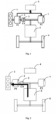
- a dual-motor hybrid power system is a high-efficiency hybrid power system, and its general structure is as shown in FIG. 1 .
- the dual-motor hybrid power system generally has three engine start modes: a 12V starter dragging the engine to start (called 12V start), a P1 motor dragging the engine to start (called P1 motor start) and a clutch C0 dragging the engine to start (called clutch start).
- 12V start a 12V starter dragging the engine to start
- P1 motor start dragging the engine to start
- clutch start a clutch C0 dragging the engine to start
- the dual-motor hybrid power systems are all started by the P1 motor; and in the case that the P1 motor is in failure, 12V start or clutch start are selected according to the condition of the vehicle speed.
- Document US 2011/0118915 A1 discloses a vehicle and method for controlling engine start in a vehicle.
- the vehicle includes a motor/generator, a starter motor, a disconnect clutch disposed between the engine and the motor/generator.
- various parameters are controlled to ensure a smooth engine start wherein drive line torque disturbances are minimized.
- the starter motor is used to crank the engine upon an engine start request, thereby eliminating the need to transfer torque from the motor/generator to the engine.
- the drag torque of the P1 motor or the drag torque of the clutch C0 are directly increased to the maximum, causing the drag torque to rise too fast, resulting in an impact, and leading to unsmooth engine start.
- the engine starts to inject fuel when the drag torque of the P1 motor or of the clutch has not been unloaded yet, resulting in start impact; moreover, when a cold engine starts, the engine fails to start or the rotating speed of the engine drops due to the long fuel injection delay time, which seriously affects the start smoothness and safety of the engine.
- a preset vehicle speed threshold such as 10 km/h
- 12V start will be adopted; however, during 12V start, the noise and oscillation are large, the Noise-Vibration-Harshness (NVH) property and the stability of the vehicle are low, and the user experience is poor.
- a preset vehicle speed threshold such as 10 km/h
- the present invention provides a start method and apparatus for an engine in a dual-motor hybrid power system and a hybrid electric vehicle, so as to overcome the above problem or at least partially solve the above problem.
- An object of the present invention is to provide a start method for an engine in a dual-motor hybrid power system, which improves the start smoothness of the engine by adopting at least one of a pre-dragging torque strategy, a fuel injection control strategy and a clutch start waiting strategy.
- a further object of the present invention is to prevent motor jitter in the process of clutch start, thereby further improving the start smoothness.
- the present invention provides a start method for an engine in a dual-motor hybrid power system, the dual-motor hybrid power system including the engine, a first motor connected to the engine, and a clutch connected between the first motor and a gear shift system; the start method including: when receiving an engine start request, acquiring a current state of the first motor and current state data of a vehicle;
- the current state data of the vehicle further includes a rotating speed of the engine and an accelerator state or a driver request torque;
- the step of determining whether the start mode intended by the driver is the stable start mode according to the acquired accelerator opening degree and accelerator change rate, or according to the acquired driver request torque includes:
- the current state data of the vehicle further includes a cooling liquid temperature of the engine; and the step of determining an available start strategy according to the current state of the first motor and the current state data of the vehicle, and executing the available start strategy to start the engine further includes:
- the step of determining the fuel injection time of the engine corresponding to the target component according to the cooling liquid temperature of the engine and the start mode intended by the driver includes:
- the step of controlling the engine to inject fuel at the determined fuel injection time in the process where the target component drags the engine to start includes:
- the step of determining whether the target component is the first motor or the clutch according to the current state of the first motor and the current vehicle speed of the vehicle includes:
- the step of determining an available start strategy according to the current state of the first motor and the current state data of the vehicle, and executing the available start strategy to start the engine further includes:
- the current state data of the vehicle further includes a driver request torque; and the clutch start waiting condition further includes: the driver request torque is less than a second wheel end torque threshold.
- the dual-motor hybrid power system further includes a second motor connected to the gear shift system and used to drive wheels; and in response to that the engine is dragged by the clutch in the start process of the engine, the start method further includes:
- the present application also provides a start apparatus for an engine in a dual-motor hybrid power system, characterized by including a memory and a processor, wherein a control program is stored in the memory; and the control program is used to implement the start method when being executed by the processor.
- the present application also provides a hybrid electric vehicle, characterized by including a dual-motor hybrid power system, and the start apparatus for the engine in the dual-motor hybrid power system.
- the dual-motor hybrid power system is a key technology to realize energy saving and emission reduction of the vehicles at present.
- the dual-motor hybrid power system may generally include an engine 1, a first motor 2 (shown as P1 in FIG. 1 ) connected to the engine 1, and a clutch 3 (shown as C0 in FIG. 1 ) connected between the first motor 2 and a gear shift system 5.
- the gear shift system 5 is connected to wheels 6.
- the dual-motor hybrid power system may further include a battery 4 connected to the first motor 2.
- the dual-motor hybrid power system may further include a second motor 7 (shown as P2 in FIG. 1 ), wherein the second motor 7 is connected to the gear shift system 5, and is connected to the battery 4 and the clutch 3 at the same time.
- the dual-motor hybrid power system generally has three modes: a pure electric mode, a series mode and a parallel mode.
- the clutch C0 In the series mode, the clutch C0 is not engaged, the engine 1 charges the battery 4 through the first motor 2 (that is, a P1 motor), and the battery 4 supplies power for the second motor 7 (that is, a P2 motor) so as to enable the P2 motor to drive the wheels 6.
- the clutch C0 In the parallel mode, the clutch C0 is engaged, and the engine 1 and the P2 motor directly drive the wheels 6 at the same time.
- the dual-motor hybrid power system generally has three engine start modes: a 12V starter dragging the engine 1 to start (called 12V start, the 12V starter is not shown in FIG. 1 ), a P1 motor dragging the engine 1 to start (called P1 motor start) and a clutch C0 dragging the engine 1 to start (called clutch start).
- 12V start the 12V starter is not shown in FIG. 1
- P1 motor start a P1 motor dragging the engine 1 to start
- clutch start dragging the engine 1 to start
- clutch start dragging the engine 1 to start
- clutch start dragging the engine 1 to start
- the embodiments of the present invention provide a start method for an engine in a dual-motor hybrid power system.
- the technical solutions of the embodiments of the present invention are described below clearly and completely through the embodiment I to the embodiment VIII of the present invention.
- the structure of the dual-motor hybrid power system in this embodiment is as shown in FIG. 1 .
- the dual-motor hybrid power system includes the engine 1, the first motor 2 (that is, the P1 motor) connected to the engine 1, and the clutch 3 (that is, the clutch C0) connected between the first motor 2 and the gear shift system 5.
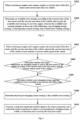
- the start method for the engine in the dual-motor hybrid power system at least may include the following step S302 to step S304.
- Step S302 when an engine start request is received, a current state of the first motor 2 and current state data of a vehicle are acquired.
- Step S304 an available start strategy is determined according to the current state of the first motor 2 and the current state data of the vehicle, and the available start strategy is executed to start the engine, wherein the available start strategy includes at least one of the following: a pre-dragging torque strategy, a fuel injection control strategy and a clutch start waiting strategy.
- the pre-dragging torque strategy controls a target component (specifically may be the first motor or the clutch), which drags the engine to start, to output a pre-dragging torque before an output drag torque thereof is increased to a maximum value to drag the engine to a target rotating speed.
- the fuel injection control strategy controls a fuel injection time of the engine according to a cooling liquid temperature of the engine and a start mode intended by a driver.
- the clutch start waiting strategy controls the clutch to drag the engine to start when the vehicle speed is increased to be greater than a preset vehicle speed threshold under a specific condition, so as to avoid start with the 12V starter.
- At least one of the pre-dragging torque strategy, the fuel injection control strategy and the clutch start waiting strategy is selected according to the current state of the first motor 2 and the current state data of the vehicle to start the engine, and at least the start smoothness of the engine is improved through these strategies.
- the dual-motor hybrid power system provided by this embodiment may further include the second motor 7 (that is, the P2 motor) connected to gear shift system 5 and used to drive wheels 6.
- the second motor 7 drives the wheels 6, so the second motor 7 may also be called a driving motor.
- the second motor 7 needs to compensate the loss of clutch start in addition to driving the wheels 6, so the second motor 7 may jitter, affecting the start smoothness.
- the start method may further include the following step: performing active damping control on the second motor 7 in the process where the clutch 3 drags the engine 1 to start.
- the step of performing active damping control on the second motor 7 may include:
- the proportional-integral control is a common control strategy, which will not be described in detail in this specification.
- the second motor 7 is subjected to active damping control, so that jittering of the second motor 7 in the process of the clutch start can be avoided, and the start smoothness is further improved.
- This embodiment adopts the pre-dragging torque strategy, and is different from the embodiment I in that the step S304 is specifically implemented as the step S404 to the step S410.
- the start method for the engine in the dual-motor hybrid power system at least may include the following step S402 to step S410.
- Step S402 when an engine start request is received, the current state of the first motor 2 and the current state data of the vehicle are acquired, wherein the current state data of the vehicle at least includes a current vehicle speed of the vehicle.
- Step S404 it is determined whether the target component for dragging the engine 1 to start is the first motor 2 or the clutch 3 according to the current state of the first motor 2 and the current vehicle speed of the vehicle. If so, step S406 is performed.
- Step S406 it is determined whether a pre-dragging torque applying condition is met according to the current state data of the vehicle. If so, step S408 is performed.
- Step S408 it is determined that the pre-dragging torque strategy is the available start strategy. Then, the pre-dragging torque strategy is executed, specifically as step S410.
- Step S410 a drag start signal is generated and sent to the target component, and the target component is controlled to output a corresponding pre-dragging torque within a set duration since the drag start signal is received.
- the target component (the P1 motor or clutch C0) is controlled to output the corresponding pre-dragging torque within the set duration since receiving the drag start signal, so that the target component drags the engine 1 to a certain rotating speed by the pre-dragging torque before the drag torque of the target component is increased to the maximum value to drag the engine 1 to achieve the target rotating speed.
- the above step S404 specifically may be implemented as follows: if the current state of the first motor 2 is normal, it may be determined that the target component is the first motor 2 (that is, the P1 motor); and if the current state of the first motor 2 is faulty and the current vehicle speed of the vehicle is greater than a preset vehicle speed threshold, it may be determined that the target component is the clutch 3 (that is, the clutch C0).
- the preset vehicle speed threshold is a maximum vehicle speed allowed by 12V start attempt under the general conditions, and may serve as a distinguishing standard for selecting 12V start or clutch start in the case that the P1 motor is in failure.
- the preset vehicle speed threshold may be set according to the actual application configuration parameters of the vehicle, for example, it may be set to 10 km/h.
- the current state data of the vehicle may further include a rotating speed of the engine 1, and an accelerator state or a driver request torque.
- the pre-dragging torque applying condition mentioned in step S406 may include that the rotating speed of the engine 1 is less than or equal to a preset rotating speed threshold and the start mode intended by the driver is a stable start mode, wherein the start mode intended by the driver may be determined according to the accelerator state or the driver request torque.
- the preset rotating speed threshold may be set according to a result of real vehicle calibration under the actual parameters of the engine 1. When the rotating speed of the engine 1 is greater than the preset rotating speed threshold, the pre-dragging torque cannot drag the engine 1.
- the preset rotating speed threshold for example, may be set to 50 rpm.
- the accelerator state may include an accelerator opening degree and an accelerator change rate.
- step S406 may be specifically implemented as follows: it is determined whether the acquired rotating speed of the engine 1 is less than or equal to the preset rotating speed threshold; and it is determined whether the start mode intended by the driver is the stable start mode according to the acquired accelerator opening degree and accelerator change rate, or according to the acquired driver request torque. If the rotating speed of the engine 1 is less than or equal to the preset rotating speed threshold and the start mode intended by the driver is the stable start mode, step S408 is performed.
- the step of determining whether the start mode intended by the driver is the stable start mode according to the acquired accelerator opening degree and accelerator change rate, or according to the acquired driver request torque includes that:
- the first accelerator opening degree threshold and the preset change rate threshold may be respectively set to 70% and 300%/s.
- the first wheel end torque threshold is related to the current vehicle speed of the vehicle, and may be determined by the current vehicle speed of the vehicle. Specifically, according to the current vehicle speed of the vehicle, a vehicle end torque limit value corresponding to the current vehicle speed of the vehicle may be obtained by searching a relationship table of the vehicle speed and the wheel end torque limit value to serve as the first wheel end torque threshold.
- the following table 1 exemplarily shows the relationship table of the vehicle speed and the wheel end torque limit value. Table 1 The relationship table of the vehicle speed and the wheel end torque limit value Vehicle speed (km/h) 3 10 20 30 50 100 Wheel end torque limit value (N ⁇ m) 1500 600 235 200 150 100
- the wheel end torque limit value corresponding to the current vehicle speed may be calculated through an interpolation method.
- the effectiveness of the pre-dragging torque in improving the smoothness in the start process of the engine 1 may be ensured.
- the set duration may be within 0.2-0.4 s.
- the pre-dragging torques corresponding to different target components may be set according to the actual vehicle calibration result when the vehicle is started.
- the target component is the P1 motor
- impact will be generated if the value of the pre-dragging torque is set too large, and the buffer effect will not be achieved if the pre-dragging torque is set too small. Therefore, the pre-dragging torque corresponding to the P1 motor may be preferably set to 15-30 N ⁇ m.
- the target component is the clutch C0
- the corresponding pre-dragging torque may be set to ensure that the clutch C0 may complete attachment, so the pre-dragging torque may be set to 2-4 N ⁇ m.
- step S404 other current state data (such as the rotating speed of the engine 1, the accelerator state and the like) besides the current vehicle speed of the vehicle may also be acquired after it is determined in step S404 that the target component is the first motor 2 or the clutch 3, which will not affect the solution of the present invention.
- other current state data such as the rotating speed of the engine 1, the accelerator state and the like
- FIG. 5 shows the start effect in the start method of this embodiment after the pre-dragging torque is adopted in the P1 motor start; and FIG. 6 shows the start effect in a case that a pre-dragging torque is not adopted in the P1 motor start in the prior art.
- the P1 motor outputs the pre-dragging torque from the moment (set to 0s moment) when the P1 motor receives the drag start signal, the pre-dragging torque reaches 20 N ⁇ m at 0.1s, and keeps at 20 N ⁇ m from 0.1s to 0.2 s, so that the engine 1 is dragged to reach a certain rotating speed.
- the pre-dragging torque is gradually unloaded, and the pre-dragging torque is reduced to 0 at 0.4 s.
- the drag torque output by the P1 motor is increased to the maximum value to drag the engine 1 to reach the target rotating speed; and after the engine 1 reaches the target rotating speed, the drag torque of the P1 motor is unloaded.
- the P1 motor has no pre-dragging torque after receiving the drag start signal, and the drag torque thereof is directly increased to the maximum value.
- the fluctuation range of the acceleration of the vehicle in the start process in FIG. 5 is 0.16 m/s 2
- the fluctuation range of the acceleration of the vehicle in the start process in FIG. 6 reaches 0.23 m/s 2 and is 0.07 m/s 2 larger than the fluctuation range of the acceleration in FIG. 5 . It can be seen that by the start method of this embodiment, the impact during start of the engine 1 can be significantly reduced, and the start smoothness can be improved.
- This embodiment adopts a fuel injection control strategy, and is different from the embodiment I in that the S304 is specifically implemented as step S704 to step S712.
- the start method for the engine in the dual-motor hybrid power system at least may include the following step S702 to step S712.
- Step S702 when an engine start request is received, the current state of the first motor 2 and the current state data of the vehicle are acquired, wherein the current state data of the vehicle at least includes the current vehicle speed of the vehicle and the cooling liquid temperature of the engine 1 (generally a cooling water temperature of the engine 1).
- Step S704 it is determined whether the target component for dragging the engine 1 to start is the first motor 2 or the clutch 3 according to the current state of the first motor 2 and the current vehicle speed of the vehicle. If so, step S706 is performed.
- Step S706 it is determined that the fuel injection control strategy is the available start strategy. Then, the fuel injection control strategy is executed, specifically as step S708 to step S712.
- Step S708 the start mode intended by the driver is determined according to the current state data of the vehicle.
- Step S710 the fuel injection time of the engine 1 corresponding to the target component is determined according to the cooling liquid temperature of the engine 1 and the start mode intended by the driver.
- Step S712 the engine 1 is controlled to inject fuel at the determined fuel injection time in the process where the target component drags the engine 1 to start.
- the start mode intended by the driver may be determined according to the current state data of the vehicle, and then the fuel injection time of the engine 1 corresponding to the target component (the first motor 2, namely the P1 motor, or the clutch 3, namely, the clutch C0) is determined according to the cooling liquid temperature of the engine 1 and the start mode intended by the driver, so that the time when the engine 1 starts to inject fuel can be controlled pertinently in the process of the P1 motor start or the clutch start, the phenomena of start impact, start failure or rotating speed dropping of the engine 1 caused by advanced or delayed oil injection of the engine 1 are avoided, and the start smoothness and safety of the engine 1 are improved.
- the target component the first motor 2, namely the P1 motor, or the clutch 3, namely, the clutch C0
- step S704 is the same as step S404, which will not be elaborated again.
- the current state data of the vehicle may further include an accelerator state or a driver request torque.
- the accelerator state may include an accelerator opening degree and an accelerator change rate.
- the start mode intended by the driver may include a rapid start mode and a stable start mode.
- the step that the start mode intended by the driver is determined according to the current state data of the vehicle may be implemented as follows: it is determined whether the accelerator opening degree is greater than a first accelerator opening degree threshold and the accelerator change rate is greater than a preset change rate threshold; if so, it is determined that the start mode intended by the driver is the rapid start mode; if not (that is, the accelerator opening degree is less than or equal to the first accelerator opening degree threshold, or the accelerator change rate is less than or equal to the preset change rate threshold), it is determined that the start mode intended by the driver is the stable start mode.
- driver request torque is greater than or equal to a first wheel end torque threshold; if so, it is determined that the start mode intended by the driver is the rapid start mode; and if not, it is determined that the start mode intended by the driver is the stable start mode.
- the limitations of the first accelerator opening degree threshold, the preset change rate threshold and the first wheel end torque threshold are the same as those in the embodiment II, which will not be repeated.
- step S710 may be implemented as follows:
- the correspondence relationship table includes a first correspondence relationship table of the cooling liquid temperature of the engine and the torque limit value of the first motor 2 (that is, the P1 motor), and a second correspondence relationship table of the cooling liquid temperature of the engine and the torque limit value of the clutch 3 (that is, the clutch C0).
- the cooling liquid temperature of the engine is inversely proportional to the torque limit value of the first motor 2.
- the cooling liquid temperature of the engine is inversely proportional to the torque limit value of the clutch 3.
- the cooling liquid temperature of the engine and the corresponding torque limit value are calibrated according to the actual vehicle performance; and the torque limit value corresponding to each temperature is a critical value which may cause start failure or reduction of the rotating speed of the engine due to no fuel injection when the cooling liquid temperature of the engine is below the preset hot engine start temperature and the drag torque of the target component reaches the limit value.
- the preset hot engine start temperature may be set according to the property parameters of the engine 1 in the practical application, and may be generally set to 60°C.
- the following table 2 and table 3 exemplarily show the first correspondence relationship table of the cooling liquid temperature of the engine and the torque limit value of the P1 motor, and the second correspondence relationship table of the cooling liquid temperature of the engine and the torque limit value of the clutch C0.
- Table 2 The first correspondence relationship table of the cooling liquid temperature of the engine and the torque limit value of the P1 motor
- Table 3 The second correspondence relationship table of the cooling liquid temperature of the engine and the torque limit value of the clutch C0
- the cooling liquid temperatures and the torque limit values in the first and second correspondence relationship tables are a one-to-one correspondence linear relationship.
- the torque limit value corresponding to the cooling liquid temperature of the engine may be calculated by an interpolation method.
- a cooling liquid temperature interval in the first and second correspondence relationship tables corresponds to a torque limit value.
- the torque limit value corresponding to the temperature interval less than or equal to -5°C is 75 N ⁇ m
- the torque limit value corresponding to the temperature interval greater than -5°C and less than or equal to 10°C is 65 N ⁇ m, and so on.
- the torque limit value corresponding to the cooling liquid temperature of the engine is determined according to the temperature interval where the cooling liquid temperature of the engine is.
- step S712 may be implemented according to different conditions. Specifically, when the start mode intended by the driver is the rapid start mode, the current rotating speed of the engine 1 is acquired in real time in the process where the target component drags the engine 1 to start; and when the current rotating speed of the engine 1 is greater than 0, the engine 1 is controlled to inject fuel.
- the drag torque of the target component is acquired in real time in the process where the target component drags the engine 1 to start; in a case that the cooling liquid temperature of the engine 1 is greater than the preset hot engine start temperature, the engine 1 is controlled to inject fuel when the drag torque of the target component is completely unloaded; and in a case that the cooling liquid temperature of the engine 1 is less than or equal to the preset hot engine start temperature, the engine 1 is controlled to inject fuel when the drag torque of the target component is less than the target torque limit value.
- the standard of completely unloading the drag torque of the target component may be set according to the practical application requirements.
- the preset torque lower limit value of the P1 motor may be set to 10 N ⁇ m, that is, when the drag torque of the P1 motor is less than 10 N ⁇ m, it may be considered that the drag torque of the P1 motor has been completely unloaded.
- the preset torque lower limit value of the clutch C0 may be set to -3 N m, that is, when the drag torque of the clutch C0 is less than -3 N ⁇ m, it may be considered that the drag torque of the clutch C0 has been completely unloaded.
- the fuel injection time of the engine 1 is the time when the rotating speed of the engine 1 is greater than 0, that is, the engine 1 does not delay fuel injection, thereby ensuring the response speed of rapid start.
- the fuel injection time of the engine 1 is the time when the drag torque of the first motor 2 or the clutch 3 is completely unloaded, that is, the engine 1 delays fuel injection (it may be defined as delayed fuel injection) until the drag torque is completely unloaded, so that the disturbance impact caused by that the torque of the first motor 2 or the clutch 3 is not completely unloaded can be avoided, and the start smoothness can be improved.
- the fuel injection time of the engine 1 is the time when the drag torque of the first motor 2 or the clutch 3 is less than the target torque limit value.
- the engine 1 does not need to wait for the drag torque to be completely unloaded before injecting fuel, but may start to inject fuel (it may be defined as advanced fuel injection) when the drag torque of the first motor 2 or the clutch 3 is less than the corresponding target torque limit value, so reduction of the rotating speed or start failure of the engine 1 is avoided.
- step S712 is performed in the process where the target component (the P1 motor or clutch C0) drags the engine 1 to start, especially in the stable start mode, whether to control the engine 1 for delayed fuel injection or advanced fuel injection is performed in the process of unloading the drag torque after the target component has dragged the engine 1 to reach the target rotating speed.
- the target component the P1 motor or clutch C0
- step S304 is specifically implemented as step S804 to step S808.
- the start method for the engine in the dual-motor hybrid power system at least may include the following step S802 to step S808.
- Step S802 when an engine start request is received, the current state of the first motor 2 and the current state data of the vehicle are acquired, wherein the current state data of the vehicle at least includes the current vehicle speed of the vehicle.
- Step S804 if the current state of the first motor 2 is faulty, it is determined whether the current vehicle speed of the vehicle is less than or equal to the preset vehicle speed threshold and whether other current state data of the vehicle meets a clutch start waiting condition. If so, that is, the current vehicle speed of the vehicle is less than or equal to the preset vehicle speed threshold and the other current state data of vehicle meets the clutch start waiting condition, step S806 is performed.
- Step S806 it is determined that the clutch start waiting strategy is the available start strategy. Then, the clutch start waiting strategy is executed, specifically as step S808.
- Step S808 the vehicle speed of the vehicle is monitored in real time until the vehicle speed of the vehicle is greater than the preset vehicle speed threshold, and the clutch 3 is controlled to drag the engine 1 to start.
- the definition of the preset vehicle speed threshold is the same as the above.
- the 12V start is not performed, but the clutch start is performed when the vehicle speed is increased to be greater than the preset vehicle speed threshold and meet the vehicle speed condition for the clutch start, so that noise and vibration generated during the 12V start are avoided, and the NVH property and the stability of the engine start are improved.
- the clutch start waiting condition may include a condition that the vehicle is accelerated, and a condition that the vehicle does not require the engine to operate all the time.
- the condition that the vehicle is accelerated is met, it may be ensured that the vehicle may reach the vehicle speed required by clutch start in a short time, thereby avoiding that normal operation of the vehicle cannot be ensured due to excessively long waiting time.
- the condition that the vehicle does not require the engine to operate all the time is met, the rationality of the clutch start waiting strategy and the normal operation of the vehicle may be ensured.
- the current state data of the vehicle may further include an acceleration or an accelerator opening degree (may also be called accelerator pedal opening degree) and a driving mode of the vehicle;
- the condition that the vehicle has the requirement on acceleration includes that the acceleration is a positive value (that is, the vehicle has a positive acceleration) and is greater than a preset acceleration threshold, or the accelerator opening degree is greater than a second accelerator opening degree threshold (indicating that the accelerator pedal is in an activated state).
- the preset acceleration threshold and the second accelerator opening degree threshold may be set according to the practical application requirements. For example, the preset acceleration threshold may be set to 0.4 m/s 2 , and the second accelerator opening degree threshold may be set to 5%.
- the condition that the vehicle does not require the engine to operate all the time includes that the driving mode of the vehicle is not equal to a sport mode.
- the hybrid electric vehicle generally may have a plurality of driving modes, such as an energy-saving mode, an ordinary mode, a sport mode and the like.
- the engine will be required to run all the time to ensure a high-power requirement of the sport mode, so the clutch start waiting strategy cannot be available in the sport mode.
- the current state data of the vehicle may further include a driver request torque.
- the driver request torque refers to a requested wheel torque of the driver.
- the clutch start waiting condition may further include that the driver request torque is less than a second wheel end torque threshold.
- the second wheel end torque threshold may be set according to the practical application requirement, for example, the second wheel end torque threshold may be set to 1000 N ⁇ m.
- the other current state data (such as the acceleration, the accelerator opening degree, the driving mode of the vehicle and the like) besides the current vehicle speed of the vehicle may also be acquired after it is determined that the current state of the first motor 2 is faulty, which will not affect the solution of the present invention.
- This embodiment is different from the embodiment II in that in addition to the pre-dragging torque strategy, the fuel injection control strategy is also adopted. Specifically, in the process that the target component (the first motor 2 or the clutch 3) drags the engine 1 to start, the target component is controlled to output the corresponding pre-dragging torque since receiving the drag start signal, and the fuel injection time of the engine 1 is pertinently controlled according to the cooling liquid temperature of the engine 1 and the start mode intended by the driver, so that the phenomena of start impact, start failure or rotating speed dropping of the engine 1 caused by advanced or delayed oil injection of the engine 1 are avoided, and the start smoothness and safety of the engine 1 are improved.
- the target component the first motor 2 or the clutch 3
- the target component is controlled to output the corresponding pre-dragging torque since receiving the drag start signal
- the fuel injection time of the engine 1 is pertinently controlled according to the cooling liquid temperature of the engine 1 and the start mode intended by the driver, so that the phenomena of start impact, start failure or rotating speed dropping of the engine 1 caused by advanced or delayed oil injection of the engine 1 are
- the start method for the engine in the dual-motor hybrid power system at least may include the following step S902 to step S914.
- Step S902 when an engine start request is received, the current state of the first motor 2 and the current state data of the vehicle are acquired, wherein the current state data of the vehicle at least includes the current vehicle speed of the vehicle, the rotating speed of the engine 1 and the cooling liquid temperature of the engine 1.
- Step S904 it is determined whether the target component for dragging the engine 1 to start is the first motor 2 or the clutch 3 according to the current state of the first motor 2 and the current vehicle speed of the vehicle. If so, step S906 is performed.
- Step S906 the start mode intended by the driver is determined according to the current state data of the vehicle.
- Step S908 it is determined whether the pre-dragging torque applying condition is met according to the rotating speed of the engine 1 and the start mode intended by the driver. If so, step S910 is performed.
- Step S910 a drag start signal is generated and sent to the target component for dragging the engine 1 to start, and the target component is controlled to output the corresponding pre-dragging torque within the set duration since the drag start signal is received.
- Step S912 the fuel injection time of the engine 1 corresponding to the target component is determined according to the cooling liquid temperature of the engine 1 and the start mode intended by the driver.
- Step S914 the engine 1 is controlled to inject fuel at the determined fuel injection time in the process where the target component drags the engine 1 to start.
- step S904 when it is determined in step S904 that the target component is the first motor 2 or the clutch 3, it may be determined that the fuel injection control strategy may be available.
- step S908 when it is determined in step S908 that the pre-dragging torque applying condition is met, it may be determined that the pre-dragging torque strategy may be available.
- step S904 and step S910 are the same as the step S404 and step S410 respectively, and the steps S906, S912 and S914 are the same as the steps S708, S710 and S712, which will not be described repeatedly.
- step S908 the pre-dragging torque applying condition is as described in the embodiment II, which will not be repeated again. Specifically, if the rotating speed of the engine 1 is less than or equal to the preset rotating speed threshold and the start mode intended by the driver is the stable start mode, it is determined that the pre-dragging torque applying condition is met.
- step S914 is performed in the process where the target component (the P1 motor or the clutch C0) drags the engine 1 to start, especially in the stable start mode, whether to control the engine 1 for delayed fuel injection or advanced fuel injection is performed in the process of unloading the drag torque after the target component has dragged the engine 1 to reach the target rotating speed.
- the process where the P1 motor or the clutch C0 drags the engine 1 to start may be divided into four stages: (1) a pre-dragging stage, in which the P1 motor or the clutch C0 outputs the pre-dragging torque to drag the engine 1 to reach a certain rotating speed; (2) an engine dragging stage, in which the P1 motor or the clutch C0 drags the engine 1 to reach the target rotating speed; (3) a torque unloading stage, in which the drag torque of the P1 motor or the clutch C0 is unloaded to about the preset torque lower limit value; and (4) an engine fuel injection stage, in which the engine 1 starts to inject fuel.
- FIG. 10 exemplarily shows the above four stages in the process of the P1 motor start in the embodiment V. Those skilled in the art may understand that the above four stages also exist in the process of the clutch start in this embodiment.
- step S912 may be performed at any time after step S906 and before step S914, but may not necessarily be performed after step S910.
- steps S912 to S914 may be directly performed.
- This embodiment is different from the embodiment II in that in addition to the pre-dragging torque strategy, the clutch start waiting strategy is also adopted. Specifically, before the engine 1 is started by the pre-dragging torque strategy, it is firstly determined whether the clutch start waiting strategy may be available, so that even if there is an engine start request when the P1 motor is in failure and the vehicle speed is less than or equal to the preset vehicle speed threshold, the 12V start is not performed, but the clutch start is performed when the vehicle speed is increased to be greater than the preset vehicle speed threshold and meet the vehicle speed condition for the clutch start.
- the start method for the engine in the dual-motor hybrid power system at least may include the following step S1102 to step S1112.
- Step S1102 when an engine start request is received, the current state of the first motor 2 and the current state data of the vehicle are acquired, wherein the current state data of the vehicle at least includes the current vehicle speed of the vehicle and the rotating speed of the engine 1.
- Step S1104 if the current state of the first motor 2 is faulty, it is determined whether the current vehicle speed of the vehicle is less than or equal to the preset vehicle speed threshold and whether other current state data of the vehicle meets the clutch start waiting condition. If so, that is, the current vehicle speed of the vehicle is less than or equal to the preset vehicle speed threshold and the other current state data of vehicle meets the clutch start waiting condition, step S1106 is performed.
- Step S1106 the vehicle speed of the vehicle is monitored in real time.
- Step S1108 the start mode intended by the driver is determined according to the current state data of the vehicle.
- Step S1110 it is determined whether the pre-dragging torque applying condition is met according to the rotating speed of the engine 1 and the start mode intended by the driver. If so, step S1112 is performed.
- Step S1112 when the vehicle speed of the vehicle is greater than the preset vehicle speed threshold, a drag start signal is generated and sent to the clutch 3, to control the clutch 3 to drag the engine 1 to start, and control the clutch 3 to output the corresponding pre-dragging torque within the set duration since receiving the drag start signal.
- step S1104 when it is determined in step S1104 that the current vehicle speed of the vehicle is less than or equal to the preset vehicle speed threshold and the other current state data of the vehicle meets the clutch start waiting condition, it may be determined that the clutch start waiting strategy may be available.
- step S1110 when it is determined in step S1110 that the pre-dragging torque applying condition is met, it may be determined that the pre-dragging torque strategy may be available.
- step S1104 is the same as step S804, and steps S1108 and S1110 are the same as the steps S708 and S908 respectively, which will not be described repeatedly.
- step S1112 when it is monitored in real time that the vehicle speed of the vehicle is greater than the preset vehicle speed threshold (that is, the vehicle speed meets the vehicle speed condition for the clutch start), the drag start signal is generated and sent to the clutch 3.
- the clutch 3 drags the engine 1 to start in response to the drag start signal, and outputs the corresponding pre-dragging torque within the set duration since receiving the drag start signal, thereby preventing the drag torque of the clutch 3 from being directly increased to the maximum value.
- the limitations of the set duration and the pre-dragging torque here are the same as those in the embodiment II, which will not be elaborated again.
- Step S1108 and S1110 may alternatively be performed at the same time as step S1106, or before step S1106.
- step S1102 if the current state of the first motor 2 acquired in step S1102 is normal and it is determined that the first motor 2 serves as the target component for dragging the engine 1 to start, the subsequent steps are the same as the steps in the embodiment II in a case that the target component is the first motor 2, which will not be elaborated herein.
- the 12V start is not performed, but the clutch start is performed when the vehicle speed is increased to be greater than the preset vehicle speed threshold and meet the vehicle speed condition for the clutch start, so that noise and vibration generated during the 12V start are avoided, and the NVH property and the stability of the engine start are improved.
- This embodiment is different from the embodiment III in that in addition to the fuel injection control strategy, the clutch start waiting strategy is also adopted. Specifically, before the engine 1 is started, it is firstly determined whether the clutch start waiting strategy may be available, so that even if there is an engine start request when the P1 motor is in failure and the vehicle speed is less than or equal to the preset vehicle speed threshold, the 12V start is not performed, but the clutch start is performed when the vehicle speed is increased to be greater than the preset vehicle speed threshold and meet the vehicle speed condition for the clutch start
- the start method for the engine in the dual-motor hybrid power system at least may include the following step S1202 to step S1214.
- Step S1202 when an engine start request is received, the current state of the first motor 2 and the current state data of the vehicle are acquired, wherein the current state data of the vehicle at least includes the current vehicle speed of the vehicle and the cooling liquid temperature of the engine 1.
- Step S1204 if the current state of the first motor 2 is faulty, it is determined whether the current vehicle speed of the vehicle is less than or equal to the preset vehicle speed threshold and whether other current state data of the vehicle meets the clutch start waiting condition. If so, that is, the current vehicle speed of the vehicle is less than or equal to the preset vehicle speed threshold and the other current state data of vehicle meets the clutch start waiting condition, step S1206 is performed.
- Step S1206 the vehicle speed of the vehicle is monitored in real time.
- Step S1208 when the vehicle speed of the vehicle is greater than the preset vehicle speed threshold, a drag start signal is generated and sent to the clutch 3 to control the clutch 3 to drag the engine 1 to start.
- Step S1210 the start mode intended by the driver is determined according to the current state data of the vehicle.
- Step S1212 the fuel injection time of the engine 1 corresponding to the clutch 3 is determined according to the cooling liquid temperature of the engine 1 and the start mode intended by the driver.
- Step S1214 the engine 1 is controlled to inject fuel at the determined fuel injection time in the process that the clutch 3 drags the engine 1 to start.
- step S1204 when it is determined in step S1204 that the current vehicle speed of the vehicle is less than or equal to the preset vehicle speed threshold and the other current state data of the vehicle meets the clutch start waiting condition, it may be determined that the clutch start waiting strategy may be available.
- step S1204 is the same as step S804, and steps S1210, S1212 and S1114 are the same as steps S708, S710 and S712 respectively, which will not be described repeatedly.
- steps S1210 and S1212 may alternatively be performed at any time after step S1204 and before step S1214.
- steps S1210 and S1212 may be performed in the period of monitoring the vehicle speed of the vehicle in real time and before step S1208.
- step S1202 if the current state of the first motor 2 acquired in step S1202 is normal and it is determined that the first motor 2 serves as the target component for dragging the engine 1 to start, the subsequent steps are the same as the steps in the embodiment III in a case that the target component is the first motor 2, which will not be elaborated herein.
- the start smoothness and safety of engine start are improved by the fuel injection control strategy, and at the same time, the NVH performance and the stability of engine start are improved by the clutch start waiting strategy.
- This embodiment is different from the embodiment V in that before the engine 1 is started by the pre-dragging torque strategy, it is determined whether the clutch start waiting strategy may be available.
- the start method for the engine in the dual-motor hybrid power system provided by this embodiment at least may include the following steps:
- step of determining the start mode intended by the driver is as described above. (6) It is determined whether the pre-dragging torque applying condition is met according to the rotating speed of the engine 1 and the start mode intended by the driver. If so, step (7) is performed, and if not, step (8) is performed.
- the step of determining whether the pre-dragging torque applying condition is met is as described above.
- the step of determining whether the pre-dragging torque applying condition is met is as described above.
- This embodiment defines the clutch start waiting strategy after the failure of the P1 motor in combination with the pre-dragging torque strategy and the fuel injection strategy in the P1 motor start or clutch start, so that the start smoothness and safety of the engine 1 can be effectively improved.
- the embodiments of the present invention further provide a start apparatus 100 for an engine in a dual-motor hybrid power system.
- the start apparatus 100 includes a memory 110 and a processor 120.
- a control program is stored in the memory 110.
- the control program when being executed by the processor 120, is used to implement the start method for the engine in the dual-motor hybrid power system in any one of the above embodiments or embodiment combinations.
- At least one of the pre-dragging torque strategy, the fuel injection control strategy and the clutch start waiting strategy may be selected according to the current state of the first motor and the current state data of the vehicle; and at least the start smoothness of engine start is improved through these strategies.
- the embodiments of the present invention further provide a hybrid electric vehicle, including a dual-motor hybrid power system, and the start apparatus 100 for the engine in the dual-motor hybrid power system described in the above embodiments.
- the dual-motor hybrid power system may be referred to FIG. 1 .
- the embodiments of the present invention can achieve the following beneficial effects:
- at least one of the pre-dragging torque strategy, the fuel injection control strategy and the clutch start waiting strategy is selected to start the engine according to the current state of the first motor and the current state data of the vehicle, and at least the start smoothness of the engine is improved through these strategies.
- the pre-dragging torque strategy can be executed. Specifically, the target component is controlled to output the corresponding pre-dragging torque within the set duration since receiving the drag start signal, so that the target component drags the engine to a certain rotating speed by the pre-dragging torque before the drag torque of the target component is increased to the maximum value to drag the engine to achieve the target rotating speed.
- the fuel injection control strategy may be executed.
- the start mode intended by the driver may be determined according to the current state data of the vehicle, and then the fuel injection time of the engine corresponding to the target component (the first motor, namely the P1 motor, or the clutch) is determined according to the cooling liquid temperature of the engine and the start mode intended by the driver, so that the time when the engine starts to inject fuel can be controlled pertinently in the process of the P1 motor start or the clutch start, the phenomena of start impact, start failure or rotating speed dropping of the engine caused by advanced or delayed oil injection of the engine are avoided, and the start smoothness and safety of the engine are improved.
- the clutch start waiting strategy may be executed. Specifically, the vehicle speed of the vehicle is monitored in real time until the vehicle speed of the vehicle is greater than the preset vehicle speed threshold, and then the clutch is controlled to drag the engine to start.
- the 12V start is not performed, but the clutch start is performed when the vehicle speed is increased to be greater than the preset vehicle speed threshold and meet the vehicle speed condition for the clutch start, so that noise and vibration generated during the 12V start are avoided, and the NVH property and the stability of the engine start are improved.
- the second motor that is, a driving motor
- active damping control so that jittering of the second motor in the process of the clutch start can be avoided, and the start smoothness is further improved.
Landscapes
- Engineering & Computer Science (AREA)
- Transportation (AREA)
- Mechanical Engineering (AREA)
- Chemical & Material Sciences (AREA)
- Combustion & Propulsion (AREA)
- Automation & Control Theory (AREA)
- Human Computer Interaction (AREA)
- Hybrid Electric Vehicles (AREA)
- Electric Propulsion And Braking For Vehicles (AREA)
Description
- The present invention relates to the technical field of vehicles, and in particular, to a start method and apparatus for an engine in a dual-motor hybrid power system, and a hybrid electric vehicle.
- With the increasingly stringent requirements for vehicle fuel consumption and emission in various countries and the development of the electrification system, the hybrid power technology has become the key to achieve energy saving and emission reduction of the vehicles. Due to the complex battery technology and high cost of the current pure electric systems, a hybrid power system is widely promoted. A dual-motor hybrid power system is a high-efficiency hybrid power system, and its general structure is as shown in
FIG. 1 . The dual-motor hybrid power system generally has three engine start modes: a 12V starter dragging the engine to start (called 12V start), a P1 motor dragging the engine to start (called P1 motor start) and a clutch C0 dragging the engine to start (called clutch start). In normal cases, the dual-motor hybrid power systems are all started by the P1 motor; and in the case that the P1 motor is in failure, 12V start or clutch start are selected according to the condition of the vehicle speed. - Document
US 2011/0118915 A1 discloses a vehicle and method for controlling engine start in a vehicle. The vehicle includes a motor/generator, a starter motor, a disconnect clutch disposed between the engine and the motor/generator. When an engine start is requested, various parameters are controlled to ensure a smooth engine start wherein drive line torque disturbances are minimized. The starter motor is used to crank the engine upon an engine start request, thereby eliminating the need to transfer torque from the motor/generator to the engine. - However, in the prior art, in the P1 motor start or clutch start process, the drag torque of the P1 motor or the drag torque of the clutch C0 are directly increased to the maximum, causing the drag torque to rise too fast, resulting in an impact, and leading to unsmooth engine start. Meanwhile, in the P1 motor start or clutch start process, generally the engine starts to inject fuel when the drag torque of the P1 motor or of the clutch has not been unloaded yet, resulting in start impact; moreover, when a cold engine starts, the engine fails to start or the rotating speed of the engine drops due to the long fuel injection delay time, which seriously affects the start smoothness and safety of the engine. In addition, when the vehicle speed is less than or equal to a preset vehicle speed threshold (such as 10 km/h), 12V start will be adopted; however, during 12V start, the noise and oscillation are large, the Noise-Vibration-Harshness (NVH) property and the stability of the vehicle are low, and the user experience is poor.
- In view of the above problem, the present invention provides a start method and apparatus for an engine in a dual-motor hybrid power system and a hybrid electric vehicle, so as to overcome the above problem or at least partially solve the above problem.
- An object of the present invention is to provide a start method for an engine in a dual-motor hybrid power system, which improves the start smoothness of the engine by adopting at least one of a pre-dragging torque strategy, a fuel injection control strategy and a clutch start waiting strategy.
- A further object of the present invention is to prevent motor jitter in the process of clutch start, thereby further improving the start smoothness.The present invention provides a start method for an engine in a dual-motor hybrid power system, the dual-motor hybrid power system including the engine, a first motor connected to the engine, and a clutch connected between the first motor and a gear shift system; the start method including: when receiving an engine start request, acquiring a current state of the first motor and current state data of a vehicle;
- characterized in that the start method further includes: determining an available start strategy according to the current state of the first motor and the current state data of the vehicle, and executing the available start strategy to start the engine, wherein the available start strategy includes at least one of the following: a pre-dragging torque strategy, and a clutch start waiting strategy in which it is waiting for a vehicle speed of the vehicle to be increased to be greater than a preset vehicle speed threshold and the clutch is controlled to drag the engine to start when the vehicle speed of the vehicle has been increased to be greater than the preset vehicle speed;
- wherein the current state data of the vehicle at least includes a current vehicle speed of the vehicle; and
- the step of determining an available start strategy according to the current state of the first motor and the current state data of the vehicle, and executing the available start strategy to start the engine includes:
- determining whether a target component that is going to drag the engine to start is the first motor or the clutch according to the current state of the first motor and the current vehicle speed of the vehicle;
- in response to that the target component that is going to drag the engine to start is the first motor or the clutch, determining whether a pre-dragging torque applying condition is met according to the current state data of the vehicle;
- in response to that the pre-dragging torque applying condition is met, determining that the pre-dragging torque strategy is the available start strategy; and
- executing the pre-dragging torque strategy, including: generating a drag start signal and sending the signal to the target component, and controlling the target component to output a corresponding pre-dragging torque within a set duration since receiving the drag start signal; and
- after the target component has completed the output of the pre-dragging torque, increasing the drag torque output by the target component to a maximum drag torque that is required to drag the engine to a target rotating speed, so as to drag the engine to reach the target rotating speed, the pre-dragging torque being smaller than the maximum drag torque.
- In an embodiment, the current state data of the vehicle further includes a rotating speed of the engine and an accelerator state or a driver request torque; and
- the pre-dragging torque applying condition includes that the rotating speed of the engine is less than or equal to a preset rotating speed threshold and a start mode intended by the driver is a stable start mode, wherein
- the accelerator state includes an accelerator opening degree and an accelerator change rate; and
- the step of determining whether the pre-dragging torque applying condition is met according to the current state data of the vehicle includes:
- determining whether the acquired rotating speed of the engine is less than or equal to the preset rotating speed threshold; and
- determining whether the start mode intended by the driver is the stable start mode according to the acquired accelerator opening degree and accelerator change rate or according to the acquired driver request torque.
- In an embodiment, the step of determining whether the start mode intended by the driver is the stable start mode according to the acquired accelerator opening degree and accelerator change rate, or according to the acquired driver request torque includes:
- determining whether the accelerator opening degree is greater than a first accelerator opening degree threshold and the accelerator change rate is greater than a preset change rate threshold; if not, determining that the start mode intended by the driver is the stable start mode; or
- determining whether the driver request torque is less than or equal to a first wheel end torque threshold; if so, determining that the start mode intended by the driver is the stable start mode.
- In an embodiment, the current state data of the vehicle further includes a cooling liquid temperature of the engine; and
the step of determining an available start strategy according to the current state of the first motor and the current state data of the vehicle, and executing the available start strategy to start the engine further includes: - when it is determined that the target component is the first motor or the clutch, determining that a fuel injection control strategy is the available start strategy; and
- executing the fuel injection control strategy, including: determining a start mode intended by a driver according to the current state data of the vehicle;
- determining a fuel injection time of the engine corresponding to the target component according to the cooling liquid temperature of the engine and the start mode intended by the driver; and
- controlling the engine to inject fuel at the determined fuel injection time in the process where the target component drags the engine to start.
- In an embodiment, the current state data of the vehicle further includes an accelerator state or a driver request torque; and
- the start mode intended by the driver includes a rapid start mode and a stable start mode, wherein
- the accelerator state includes an accelerator opening degree and an accelerator change rate; and
- the step of determining the start mode intended by the driver according to the current state data of the vehicle includes:
- determining whether the accelerator opening degree is greater than a first accelerator opening degree threshold and the accelerator change rate is greater than a preset change rate threshold;
- in response to that the accelerator opening degree is greater than the first accelerator opening degree threshold and the accelerator change rate is greater than the preset change rate threshold, determining that the start mode intended by the driver is the rapid start mode;
- in response to that the accelerator opening degree is not greater than the first accelerator opening degree threshold and or accelerator change rate is not greater than the preset change rate threshold, determining that the start mode intended by the driver is the stable start mode; or
- determining whether the driver request torque is greater than a first wheel end torque threshold;
- in response to that the driver request torque is greater than the first wheel end torque threshold, determining that the start mode intended by the driver is the rapid start mode;
- in response to that the driver request torque is not greater than the first wheel end torque threshold, determining that the start mode intended by the driver is the stable start mode.
- In an embodiment, the step of determining the fuel injection time of the engine corresponding to the target component according to the cooling liquid temperature of the engine and the start mode intended by the driver includes:
- when the start mode intended by the driver is the rapid start mode, determining that the fuel injection time of the engine is the time when the rotating speed of the engine is greater than 0;
- when the start mode intended by the driver is the stable start mode and the cooling liquid temperature of the engine is greater than a preset hot engine start temperature, determining that the fuel injection time of the engine is the time when a drag torque of the target component is completely unloaded; and
- when the start mode intended by the driver is the stable start mode and the cooling liquid temperature of the engine is less than or equal to the preset hot engine start temperature, searching a correspondence relationship table between a cooling liquid temperature of the engine and a torque limit value of the target component to obtain a target torque limit value of the target component corresponding to the cooling liquid temperature of the engine, and determining that the fuel injection time of the engine is the time when the drag torque of the target component is less than the target torque limit value.
- In an embodiment, the step of controlling the engine to inject fuel at the determined fuel injection time in the process where the target component drags the engine to start includes:
- when the start mode intended by the driver is the rapid start mode, acquiring a current rotating speed of the engine in real time in the process where the target component drags the engine to start;
- when the current rotating speed of the engine is greater than 0, controlling the engine to inject fuel;
- when the start mode intended by the driver is the stable start mode, acquiring the drag torque of the target component in real time in the process where the target component drags the engine to start;
- in a case that the cooling liquid temperature of the engine is greater than the preset hot engine start temperature, when the drag torque of the target component is completely unloaded, controlling the engine to inject fuel; and
- in a case that the cooling liquid temperature of the engine is less than or equal to the preset hot engine start temperature, when the drag torque of the target component is less than the target torque limit value, controlling the engine to inject fuel.
- In an embodiment, the step of determining whether the target component is the first motor or the clutch according to the current state of the first motor and the current vehicle speed of the vehicle includes:
- in response to that the current state of the first motor is normal, determining that the target component is the first motor; and
- in response to that the current state of the first motor is faulty and the current vehicle speed of the vehicle is greater than a preset vehicle speed threshold, determining that the target component is the clutch.
- In an embodiment, the step of determining an available start strategy according to the current state of the first motor and the current state data of the vehicle, and executing the available start strategy to start the engine further includes:
- in response to that the current state of the first motor is faulty, determining whether the current vehicle speed of the vehicle is less than or equal to a preset vehicle speed threshold and whether other current state data of the vehicle meets a clutch start waiting condition;
- in response to that the current vehicle speed of the vehicle is less than or equal to the preset vehicle speed threshold and the other current state data of the vehicle meets the clutch start waiting condition, determining that the clutch start waiting strategy is the available start strategy; and
- executing the clutch start waiting strategy, including: monitoring the vehicle speed of the vehicle in real time until the vehicle speed of the vehicle is greater than the preset vehicle speed threshold, and controlling the clutch to drag the engine to start.
- In an embodiment, the clutch start waiting condition includes a condition that the vehicle is accelerated, and a condition that the vehicle does not require the engine to operate all the time, wherein
- the current state data of the vehicle further includes an acceleration or an accelerator opening degree and a driving mode of the vehicle;
- the condition that the vehicle is accelerated includes:
- the acceleration is a positive value and is greater than a preset acceleration threshold, or
- the accelerator opening degree is greater than a second accelerator opening degree threshold; and
- the condition that the vehicle does not require the engine to operate all the time includes:
the driving mode of the vehicle is not a sport mode.
- In an embodiment, the current state data of the vehicle further includes a driver request torque; and
the clutch start waiting condition further includes:
the driver request torque is less than a second wheel end torque threshold. - In an embodiment, the dual-motor hybrid power system further includes a second motor connected to the gear shift system and used to drive wheels; and
in response to that the engine is dragged by the clutch in the start process of the engine, the start method further includes: - in the process where the clutch drags the engine to start, performing active damping control on the second motor, wherein
- the step of performing active damping control on the second motor includes:
- acquiring a requested rotating speed of a driver and an actual rotating speed of the second motor;
- calculating a difference value between the requested rotating speed and the actual rotating speed; and
- performing proportional-integral control on the second motor according to the difference value, so as to compensate an output torque of the second motor.
- The present application also provides a start apparatus for an engine in a dual-motor hybrid power system, characterized by including a memory and a processor, wherein a control program is stored in the memory; and the control program is used to implement the start method when being executed by the processor.
- The present application also provides a hybrid electric vehicle, characterized by including a dual-motor hybrid power system, and the start apparatus for the engine in the dual-motor hybrid power system.
- The above description is only an overview of the technical solution of the present invention. To understand more clearly the technical means of the present invention, to implement in accordance with the contents of the specification, and to make the above and other purposes, features and advantages of the present invention more apparent and understandable, specific embodiments of the present invention are described below.
- According to detailed description of specific embodiments of the present invention with the combination of drawings, the above and other objects, advantages and features of the present invention will be better understood by those skilled in the art.
- Some specific embodiments of the present invention will be described later in detail in an exemplary and non-limiting manner with reference to the drawings. Identical reference numerals in the drawings indicate identical or similar components or parts. It should be understood by those skilled in the art that these drawings are not necessarily drawn to scale. In drawings:
-
FIG. 1 is a structural schematic diagram of a dual-motor hybrid power system; -
FIG. 2 is a schematic diagram of the dual-motor hybrid power system shown inFIG. 1 when in clutch start; -
FIG. 3 is a schematic flowchart of a start method for an engine in the dual-motor hybrid power system according to an embodiment I of the present invention; -
FIG. 4 is a schematic flowchart of a start method for an engine in the dual-motor hybrid power system according to an embodiment II of the present invention; -
FIG. 5 is a schematic diagram of the start effect after a pre-dragging torque is adopted during the P1 motor start in the start method for the engine in the dual-motor hybrid power system according to the embodiment II of the present invention; -
FIG. 6 is a schematic diagram of the start effect in a case that a pre-dragging torque is not adopted during the P1 motor start in the prior art; -
FIG. 7 is a schematic flowchart of a start method for an engine in the dual-motor hybrid power system according to an embodiment III of the present invention; -
FIG. 8 is a schematic flowchart of a start method for an engine in the dual-motor hybrid power system according to an embodiment IV of the present invention; -
FIG. 9 is a schematic flowchart of a start method for an engine in the dual-motor hybrid power system according to an embodiment V of the present invention; -
FIG. 10 is a schematic diagram of each stage in the process of the P1 motor start according to the embodiment V of the present invention; -
FIG. 11 is a schematic flowchart of a start method for an engine in the dual-motor hybrid power system according to an embodiment VI of the present invention; -
FIG. 12 is a schematic flowchart of a start method for an engine in the dual-motor hybrid power system according to an embodiment VII of the present invention; and -
FIG. 13 is a structural schematic diagram of a start apparatus for an engine in a dual-motor hybrid power system according to an embodiment of the present invention. - The dual-motor hybrid power system is a key technology to realize energy saving and emission reduction of the vehicles at present. As shown in
FIG. 1 , the dual-motor hybrid power system may generally include anengine 1, a first motor 2 (shown as P1 inFIG. 1 ) connected to theengine 1, and a clutch 3 (shown as C0 inFIG. 1 ) connected between thefirst motor 2 and agear shift system 5. Thegear shift system 5 is connected towheels 6. The dual-motor hybrid power system may further include abattery 4 connected to thefirst motor 2. Further, the dual-motor hybrid power system may further include a second motor 7 (shown as P2 inFIG. 1 ), wherein thesecond motor 7 is connected to thegear shift system 5, and is connected to thebattery 4 and the clutch 3 at the same time. - The dual-motor hybrid power system generally has three modes: a pure electric mode, a series mode and a parallel mode. In the series mode, the clutch C0 is not engaged, the
engine 1 charges thebattery 4 through the first motor 2 (that is, a P1 motor), and thebattery 4 supplies power for the second motor 7 (that is, a P2 motor) so as to enable the P2 motor to drive thewheels 6. In the parallel mode, the clutch C0 is engaged, and theengine 1 and the P2 motor directly drive thewheels 6 at the same time. - As described above, the dual-motor hybrid power system generally has three engine start modes: a 12V starter dragging the
engine 1 to start (called 12V start, the 12V starter is not shown inFIG. 1 ), a P1 motor dragging theengine 1 to start (called P1 motor start) and a clutch C0 dragging theengine 1 to start (called clutch start). In normal cases, the dual-motor hybrid power systems all adopts the P1 motor start, while in the case of P1 motor failure, the 12V start or the clutch start is selected according to the condition of the current vehicle speed. When in the clutch start, as shown inFIG. 2 , the clutch C0 is engaged, the clutch C0 drags theengine 1 to start, and the black arrow inFIG. 2 represents a transmission direction of the drag torque. - However, in the prior art, the start smoothness, safety and NVH property of the engine are poor, which urgently need to be improved.
- To solve or at least partially solve the above technical problem, the embodiments of the present invention provide a start method for an engine in a dual-motor hybrid power system. The technical solutions of the embodiments of the present invention are described below clearly and completely through the embodiment I to the embodiment VIII of the present invention.
- The structure of the dual-motor hybrid power system in this embodiment is as shown in
FIG. 1 . The dual-motor hybrid power system includes theengine 1, the first motor 2 (that is, the P1 motor) connected to theengine 1, and the clutch 3 (that is, the clutch C0) connected between thefirst motor 2 and thegear shift system 5. - Referring to
FIG. 3 , the start method for the engine in the dual-motor hybrid power system provided by this embodiment at least may include the following step S302 to step S304. - Step S302: when an engine start request is received, a current state of the
first motor 2 and current state data of a vehicle are acquired. - Step S304: an available start strategy is determined according to the current state of the
first motor 2 and the current state data of the vehicle, and the available start strategy is executed to start the engine, wherein the available start strategy includes at least one of the following: a pre-dragging torque strategy, a fuel injection control strategy and a clutch start waiting strategy. - Specifically, the pre-dragging torque strategy controls a target component (specifically may be the first motor or the clutch), which drags the engine to start, to output a pre-dragging torque before an output drag torque thereof is increased to a maximum value to drag the engine to a target rotating speed. The fuel injection control strategy controls a fuel injection time of the engine according to a cooling liquid temperature of the engine and a start mode intended by a driver. The clutch start waiting strategy controls the clutch to drag the engine to start when the vehicle speed is increased to be greater than a preset vehicle speed threshold under a specific condition, so as to avoid start with the 12V starter.
- In the start method for the engine in the dual-motor hybrid power system provided by the embodiments of the present invention, at least one of the pre-dragging torque strategy, the fuel injection control strategy and the clutch start waiting strategy is selected according to the current state of the
first motor 2 and the current state data of the vehicle to start the engine, and at least the start smoothness of the engine is improved through these strategies. - In addition, as shown in
FIG. 1 , the dual-motor hybrid power system provided by this embodiment may further include the second motor 7 (that is, the P2 motor) connected togear shift system 5 and used to drivewheels 6. Thesecond motor 7 drives thewheels 6, so thesecond motor 7 may also be called a driving motor. In the process of the clutch start, thesecond motor 7 needs to compensate the loss of clutch start in addition to driving thewheels 6, so thesecond motor 7 may jitter, affecting the start smoothness. In order to prevent thesecond motor 7 from jittering in the process of the clutch start, in the start method for the engine in the dual-motor hybrid power system provided by this embodiment, if the clutch 3 drags theengine 1 to start (that is, the clutch start mode) in the start process of the engine, the start method may further include the following step: performing active damping control on thesecond motor 7 in the process where the clutch 3 drags theengine 1 to start. - Specifically, the step of performing active damping control on the
second motor 7 may include: - acquiring a requested rotating speed of the driver and an actual rotating speed of the
second motor 7; - calculating a difference value between the requested rotating speed and the actual rotating speed; and
- performing proportional-integral (PI) control on the
second motor 7 according to the difference value, so as to compensate an output torque of thesecond motor 7. - The proportional-integral control is a common control strategy, which will not be described in detail in this specification.
- According to this embodiment, in the process of the clutch start, the
second motor 7 is subjected to active damping control, so that jittering of thesecond motor 7 in the process of the clutch start can be avoided, and the start smoothness is further improved. - This embodiment adopts the pre-dragging torque strategy, and is different from the embodiment I in that the step S304 is specifically implemented as the step S404 to the step S410.
- Specifically, referring to
FIG. 4 , the start method for the engine in the dual-motor hybrid power system provided by this embodiment at least may include the following step S402 to step S410. - Step S402: when an engine start request is received, the current state of the
first motor 2 and the current state data of the vehicle are acquired, wherein the current state data of the vehicle at least includes a current vehicle speed of the vehicle. - Step S404: it is determined whether the target component for dragging the
engine 1 to start is thefirst motor 2 or the clutch 3 according to the current state of thefirst motor 2 and the current vehicle speed of the vehicle. If so, step S406 is performed. - Step S406: it is determined whether a pre-dragging torque applying condition is met according to the current state data of the vehicle. If so, step S408 is performed.
- Step S408: it is determined that the pre-dragging torque strategy is the available start strategy. Then, the pre-dragging torque strategy is executed, specifically as step S410.
- Step S410: a drag start signal is generated and sent to the target component, and the target component is controlled to output a corresponding pre-dragging torque within a set duration since the drag start signal is received.
- In the start method for the engine in the dual-motor hybrid power system provided by this embodiment of the present invention, in a case that the pre-dragging torque applying condition is met, the target component (the P1 motor or clutch C0) is controlled to output the corresponding pre-dragging torque within the set duration since receiving the drag start signal, so that the target component drags the
engine 1 to a certain rotating speed by the pre-dragging torque before the drag torque of the target component is increased to the maximum value to drag theengine 1 to achieve the target rotating speed. In this way, the drag torque of the target component will not be increased to the maximum value directly, but an intermediate value (that is, the value of the pre-dragging torque) is reached first before the maximum value is reached, so that impact caused by the overquick rising of the drag torque is avoided, and thus the start smoothness of the engine is effectively improved. - The above step S404 specifically may be implemented as follows: if the current state of the
first motor 2 is normal, it may be determined that the target component is the first motor 2 (that is, the P1 motor); and if the current state of thefirst motor 2 is faulty and the current vehicle speed of the vehicle is greater than a preset vehicle speed threshold, it may be determined that the target component is the clutch 3 (that is, the clutch C0). The preset vehicle speed threshold is a maximum vehicle speed allowed by 12V start attempt under the general conditions, and may serve as a distinguishing standard for selecting 12V start or clutch start in the case that the P1 motor is in failure. The preset vehicle speed threshold may be set according to the actual application configuration parameters of the vehicle, for example, it may be set to 10 km/h. - In the above step S402, the current state data of the vehicle may further include a rotating speed of the
engine 1, and an accelerator state or a driver request torque. Correspondingly, the pre-dragging torque applying condition mentioned in step S406 may include that the rotating speed of theengine 1 is less than or equal to a preset rotating speed threshold and the start mode intended by the driver is a stable start mode, wherein the start mode intended by the driver may be determined according to the accelerator state or the driver request torque. The preset rotating speed threshold may be set according to a result of real vehicle calibration under the actual parameters of theengine 1. When the rotating speed of theengine 1 is greater than the preset rotating speed threshold, the pre-dragging torque cannot drag theengine 1. Specifically, the preset rotating speed threshold, for example, may be set to 50 rpm. - In a specific implementation solution, the accelerator state may include an accelerator opening degree and an accelerator change rate. In this case, step S406 may be specifically implemented as follows: it is determined whether the acquired rotating speed of the
engine 1 is less than or equal to the preset rotating speed threshold; and it is determined whether the start mode intended by the driver is the stable start mode according to the acquired accelerator opening degree and accelerator change rate, or according to the acquired driver request torque. If the rotating speed of theengine 1 is less than or equal to the preset rotating speed threshold and the start mode intended by the driver is the stable start mode, step S408 is performed. - Further, the step of determining whether the start mode intended by the driver is the stable start mode according to the acquired accelerator opening degree and accelerator change rate, or according to the acquired driver request torque includes that:
- it is determined whether the accelerator opening degree is greater than a first accelerator opening degree threshold and the accelerator change rate is greater than a preset change rate threshold; if not (that is, the accelerator opening degree is less than or equal to the first accelerator opening degree threshold, or the accelerator change rate is less than or equal to the preset change rate threshold), it is determined that the start mode intended by the driver is the stable start mode; or
- it is determined whether the driver request torque is less than or equal to a first wheel end torque threshold; if so, it is determined that the start mode intended by the driver is the stable start mode.
- In this embodiment, the first accelerator opening degree threshold and the preset change rate threshold may be respectively set to 70% and 300%/s. The first wheel end torque threshold is related to the current vehicle speed of the vehicle, and may be determined by the current vehicle speed of the vehicle. Specifically, according to the current vehicle speed of the vehicle, a vehicle end torque limit value corresponding to the current vehicle speed of the vehicle may be obtained by searching a relationship table of the vehicle speed and the wheel end torque limit value to serve as the first wheel end torque threshold. The following table 1 exemplarily shows the relationship table of the vehicle speed and the wheel end torque limit value.
Table 1 The relationship table of the vehicle speed and the wheel end torque limit value Vehicle speed (km/h) 3 10 20 30 50 100 Wheel end torque limit value (N·m) 1500 600 235 200 150 100 - When the table is searched, for the current vehicle speed of the vehicle that falls between the vehicle speed points in the relationship table of the vehicle speed and the wheel end torque limit value, the wheel end torque limit value corresponding to the current vehicle speed may be calculated through an interpolation method.
- In this embodiment, by accurately determining whether the pre-dragging torque applying condition is met according to the rotating speed of the
engine 1 and the accelerator state or the driver request torque, the effectiveness of the pre-dragging torque in improving the smoothness in the start process of theengine 1 may be ensured. - In the above step S410, the set duration may be within 0.2-0.4 s. The pre-dragging torques corresponding to different target components may be set according to the actual vehicle calibration result when the vehicle is started. When the target component is the P1 motor, impact will be generated if the value of the pre-dragging torque is set too large, and the buffer effect will not be achieved if the pre-dragging torque is set too small. Therefore, the pre-dragging torque corresponding to the P1 motor may be preferably set to 15-30 N·m. When the target component is the clutch C0, the corresponding pre-dragging torque may be set to ensure that the clutch C0 may complete attachment, so the pre-dragging torque may be set to 2-4 N·m.
- In addition, it should be noted that in this embodiment, other current state data (such as the rotating speed of the
engine 1, the accelerator state and the like) besides the current vehicle speed of the vehicle may also be acquired after it is determined in step S404 that the target component is thefirst motor 2 or theclutch 3, which will not affect the solution of the present invention. - After the pre-dragging torque is applied, the drag torque of the target component is increased to the maximum value to drag the
engine 1 to achieve the target rotating speed, so as to achieve the start of theengine 1, thus preventing the drag torque of the target component from directly increasing to the maximum value, and improving the smoothness. The following description takes the P1 motor start as an example.FIG. 5 shows the start effect in the start method of this embodiment after the pre-dragging torque is adopted in the P1 motor start; andFIG. 6 shows the start effect in a case that a pre-dragging torque is not adopted in the P1 motor start in the prior art. Referring toFIG. 5 , the P1 motor outputs the pre-dragging torque from the moment (set to 0s moment) when the P1 motor receives the drag start signal, the pre-dragging torque reaches 20 N·m at 0.1s, and keeps at 20 N·m from 0.1s to 0.2 s, so that theengine 1 is dragged to reach a certain rotating speed. After 0.2s, the pre-dragging torque is gradually unloaded, and the pre-dragging torque is reduced to 0 at 0.4 s. Meanwhile, after 0.2 s, the drag torque output by the P1 motor is increased to the maximum value to drag theengine 1 to reach the target rotating speed; and after theengine 1 reaches the target rotating speed, the drag torque of the P1 motor is unloaded. By contrast, inFIG. 6 , the P1 motor has no pre-dragging torque after receiving the drag start signal, and the drag torque thereof is directly increased to the maximum value. Through comparison betweenFIG. 5 and FIG. 6 , the fluctuation range of the acceleration of the vehicle in the start process inFIG. 5 is 0.16 m/s2, and the fluctuation range of the acceleration of the vehicle in the start process inFIG. 6 reaches 0.23 m/s2 and is 0.07 m/s2 larger than the fluctuation range of the acceleration inFIG. 5 . It can be seen that by the start method of this embodiment, the impact during start of theengine 1 can be significantly reduced, and the start smoothness can be improved. - This embodiment adopts a fuel injection control strategy, and is different from the embodiment I in that the S304 is specifically implemented as step S704 to step S712.
- Specifically, referring to
FIG. 7 , the start method for the engine in the dual-motor hybrid power system provided by this embodiment at least may include the following step S702 to step S712. - Step S702: when an engine start request is received, the current state of the
first motor 2 and the current state data of the vehicle are acquired, wherein the current state data of the vehicle at least includes the current vehicle speed of the vehicle and the cooling liquid temperature of the engine 1 (generally a cooling water temperature of the engine 1). - Step S704: it is determined whether the target component for dragging the
engine 1 to start is thefirst motor 2 or the clutch 3 according to the current state of thefirst motor 2 and the current vehicle speed of the vehicle. If so, step S706 is performed. - Step S706: it is determined that the fuel injection control strategy is the available start strategy. Then, the fuel injection control strategy is executed, specifically as step S708 to step S712.
- Step S708: the start mode intended by the driver is determined according to the current state data of the vehicle.
- Step S710: the fuel injection time of the
engine 1 corresponding to the target component is determined according to the cooling liquid temperature of theengine 1 and the start mode intended by the driver. - Step S712: the
engine 1 is controlled to inject fuel at the determined fuel injection time in the process where the target component drags theengine 1 to start. - In the start method for the engine in the dual-motor hybrid power system provided by the embodiment of the present invention, the start mode intended by the driver may be determined according to the current state data of the vehicle, and then the fuel injection time of the
engine 1 corresponding to the target component (thefirst motor 2, namely the P1 motor, or theclutch 3, namely, the clutch C0) is determined according to the cooling liquid temperature of theengine 1 and the start mode intended by the driver, so that the time when theengine 1 starts to inject fuel can be controlled pertinently in the process of the P1 motor start or the clutch start, the phenomena of start impact, start failure or rotating speed dropping of theengine 1 caused by advanced or delayed oil injection of theengine 1 are avoided, and the start smoothness and safety of theengine 1 are improved. - The performing mode of step S704 is the same as step S404, which will not be elaborated again.
- In the above step S702, the current state data of the vehicle may further include an accelerator state or a driver request torque. Further, the accelerator state may include an accelerator opening degree and an accelerator change rate.
- Correspondingly, in step S708, the start mode intended by the driver may include a rapid start mode and a stable start mode. Specifically, the step that the start mode intended by the driver is determined according to the current state data of the vehicle may be implemented as follows: it is determined whether the accelerator opening degree is greater than a first accelerator opening degree threshold and the accelerator change rate is greater than a preset change rate threshold; if so, it is determined that the start mode intended by the driver is the rapid start mode; if not (that is, the accelerator opening degree is less than or equal to the first accelerator opening degree threshold, or the accelerator change rate is less than or equal to the preset change rate threshold), it is determined that the start mode intended by the driver is the stable start mode. Alternatively, it is determined whether the driver request torque is greater than or equal to a first wheel end torque threshold; if so, it is determined that the start mode intended by the driver is the rapid start mode; and if not, it is determined that the start mode intended by the driver is the stable start mode.
- In this embodiment, the limitations of the first accelerator opening degree threshold, the preset change rate threshold and the first wheel end torque threshold are the same as those in the embodiment II, which will not be repeated.
- In a specific implementation solution, the above step S710 may be implemented as follows:
- when the start mode intended by the driver is the rapid start mode, it is determined that the fuel injection time of the
engine 1 is the time when the rotating speed of theengine 1 is greater than 0; - when the start mode intended by the driver is the stable start mode and the cooling liquid temperature of the
engine 1 is greater than a preset hot engine start temperature, it is determined that the fuel injection time of theengine 1 is the time when the drag torque of target component is completely unloaded; and - when the start mode intended by the driver is the stable start mode and the cooling liquid temperature of the
engine 1 is less than or equal to the preset hot engine start temperature, a correspondence relationship table of a cooling liquid temperature of the engine and a torque limit value of the target component is searched to obtain a target torque limit value of the target component corresponding to the cooling liquid temperature of theengine 1, and it is determined that the fuel injection time of theengine 1 is the time when the drag torque of the target component is less than the target torque limit value. - Further, the correspondence relationship table includes a first correspondence relationship table of the cooling liquid temperature of the engine and the torque limit value of the first motor 2 (that is, the P1 motor), and a second correspondence relationship table of the cooling liquid temperature of the engine and the torque limit value of the clutch 3 (that is, the clutch C0). In the first correspondence relationship table, the cooling liquid temperature of the engine is inversely proportional to the torque limit value of the
first motor 2. In the second correspondence relationship table, the cooling liquid temperature of the engine is inversely proportional to the torque limit value of theclutch 3. In the above correspondence relationship tables, the cooling liquid temperature of the engine and the corresponding torque limit value are calibrated according to the actual vehicle performance; and the torque limit value corresponding to each temperature is a critical value which may cause start failure or reduction of the rotating speed of the engine due to no fuel injection when the cooling liquid temperature of the engine is below the preset hot engine start temperature and the drag torque of the target component reaches the limit value. The preset hot engine start temperature may be set according to the property parameters of theengine 1 in the practical application, and may be generally set to 60°C. - The following table 2 and table 3 exemplarily show the first correspondence relationship table of the cooling liquid temperature of the engine and the torque limit value of the P1 motor, and the second correspondence relationship table of the cooling liquid temperature of the engine and the torque limit value of the clutch C0.
Table 2 The first correspondence relationship table of the cooling liquid temperature of the engine and the torque limit value of the P1 motor The cooling liquid temperature of the engine (°C) -5 10 25 35 45 60 Torque limit value (N·m) 75 65 55 50 45 10 Table 3 The second correspondence relationship table of the cooling liquid temperature of the engine and the torque limit value of the clutch C0 The cooling liquid temperature of the engine (°C) -5 10 25 35 45 60 Torque limit value (N·m) 75 65 55 50 45 -3 - In a practical application solution, the cooling liquid temperatures and the torque limit values in the first and second correspondence relationship tables are a one-to-one correspondence linear relationship. When the table is searched, for the cooling liquid temperature of the engine falling between the temperature points of the table 2 or the table 3, the torque limit value corresponding to the cooling liquid temperature of the engine may be calculated by an interpolation method. In another practical application solution, a cooling liquid temperature interval in the first and second correspondence relationship tables corresponds to a torque limit value. For example, the torque limit value corresponding to the temperature interval less than or equal to -5°C is 75 N·m, the torque limit value corresponding to the temperature interval greater than -5°C and less than or equal to 10°C is 65 N·m, and so on. When the table is searched, the torque limit value corresponding to the cooling liquid temperature of the engine is determined according to the temperature interval where the cooling liquid temperature of the engine is.
- Further, in an implementation solution, after the fuel injection time of the
engine 1 under different conditions is determined, the above step S712 may be implemented according to different conditions. Specifically, when the start mode intended by the driver is the rapid start mode, the current rotating speed of theengine 1 is acquired in real time in the process where the target component drags theengine 1 to start; and when the current rotating speed of theengine 1 is greater than 0, theengine 1 is controlled to inject fuel. When the start mode intended by the driver is the stable start mode, the drag torque of the target component is acquired in real time in the process where the target component drags theengine 1 to start; in a case that the cooling liquid temperature of theengine 1 is greater than the preset hot engine start temperature, theengine 1 is controlled to inject fuel when the drag torque of the target component is completely unloaded; and in a case that the cooling liquid temperature of theengine 1 is less than or equal to the preset hot engine start temperature, theengine 1 is controlled to inject fuel when the drag torque of the target component is less than the target torque limit value. In this implementation solution, the standard of completely unloading the drag torque of the target component may be set according to the practical application requirements. Generally, when the drag torque of the target component is less than a preset torque lower limit value, it may be considered that the drag torque of the target component has been completely unloaded. In one example, the preset torque lower limit value of the P1 motor may be set to 10 N·m, that is, when the drag torque of the P1 motor is less than 10 N·m, it may be considered that the drag torque of the P1 motor has been completely unloaded. The preset torque lower limit value of the clutch C0 may be set to -3 N m, that is, when the drag torque of the clutch C0 is less than -3 N·m, it may be considered that the drag torque of the clutch C0 has been completely unloaded. - In this embodiment, for the rapid start mode, the fuel injection time of the
engine 1 is the time when the rotating speed of theengine 1 is greater than 0, that is, theengine 1 does not delay fuel injection, thereby ensuring the response speed of rapid start. For the stable start mode and the situation that the cooling liquid temperature of theengine 1 is greater than the preset hot engine start temperature (that is, hot engine start), the fuel injection time of theengine 1 is the time when the drag torque of thefirst motor 2 or theclutch 3 is completely unloaded, that is, theengine 1 delays fuel injection (it may be defined as delayed fuel injection) until the drag torque is completely unloaded, so that the disturbance impact caused by that the torque of thefirst motor 2 or theclutch 3 is not completely unloaded can be avoided, and the start smoothness can be improved. For the stable start mode and the situation that the cooling liquid temperature of theengine 1 is less than or equal to the preset hot engine start temperature (that is, cold engine start), the fuel injection time of theengine 1 is the time when the drag torque of thefirst motor 2 or theclutch 3 is less than the target torque limit value. At this time, theengine 1 does not need to wait for the drag torque to be completely unloaded before injecting fuel, but may start to inject fuel (it may be defined as advanced fuel injection) when the drag torque of thefirst motor 2 or theclutch 3 is less than the corresponding target torque limit value, so reduction of the rotating speed or start failure of theengine 1 is avoided. - Of course, those skilled in the art should realize that in this embodiment, step S712 is performed in the process where the target component (the P1 motor or clutch C0) drags the
engine 1 to start, especially in the stable start mode, whether to control theengine 1 for delayed fuel injection or advanced fuel injection is performed in the process of unloading the drag torque after the target component has dragged theengine 1 to reach the target rotating speed. - This embodiment adopts a clutch start waiting strategy, and is different from the embodiment I in that step S304 is specifically implemented as step S804 to step S808.
- Specifically, referring to
FIG. 8 , the start method for the engine in the dual-motor hybrid power system provided by this embodiment at least may include the following step S802 to step S808. - Step S802: when an engine start request is received, the current state of the
first motor 2 and the current state data of the vehicle are acquired, wherein the current state data of the vehicle at least includes the current vehicle speed of the vehicle. - Step S804: if the current state of the
first motor 2 is faulty, it is determined whether the current vehicle speed of the vehicle is less than or equal to the preset vehicle speed threshold and whether other current state data of the vehicle meets a clutch start waiting condition. If so, that is, the current vehicle speed of the vehicle is less than or equal to the preset vehicle speed threshold and the other current state data of vehicle meets the clutch start waiting condition, step S806 is performed. - Step S806: it is determined that the clutch start waiting strategy is the available start strategy. Then, the clutch start waiting strategy is executed, specifically as step S808.
- Step S808: the vehicle speed of the vehicle is monitored in real time until the vehicle speed of the vehicle is greater than the preset vehicle speed threshold, and the
clutch 3 is controlled to drag theengine 1 to start. - In this embodiment, the definition of the preset vehicle speed threshold is the same as the above.
- In the start method for the engine in the dual-motor hybrid power system provided by the embodiment of the present invention, by defining the clutch start waiting strategy after the failure of the P1 motor, even if there is an engine start request when the P1 motor is in failure and the vehicle speed is less than or equal to the preset vehicle speed threshold, the 12V start is not performed, but the clutch start is performed when the vehicle speed is increased to be greater than the preset vehicle speed threshold and meet the vehicle speed condition for the clutch start, so that noise and vibration generated during the 12V start are avoided, and the NVH property and the stability of the engine start are improved.
- Further, the clutch start waiting condition may include a condition that the vehicle is accelerated, and a condition that the vehicle does not require the engine to operate all the time. When the condition that the vehicle is accelerated is met, it may be ensured that the vehicle may reach the vehicle speed required by clutch start in a short time, thereby avoiding that normal operation of the vehicle cannot be ensured due to excessively long waiting time. When the condition that the vehicle does not require the engine to operate all the time is met, the rationality of the clutch start waiting strategy and the normal operation of the vehicle may be ensured.
- Specifically, the current state data of the vehicle may further include an acceleration or an accelerator opening degree (may also be called accelerator pedal opening degree) and a driving mode of the vehicle; Correspondingly, the condition that the vehicle has the requirement on acceleration includes that the acceleration is a positive value (that is, the vehicle has a positive acceleration) and is greater than a preset acceleration threshold, or the accelerator opening degree is greater than a second accelerator opening degree threshold (indicating that the accelerator pedal is in an activated state). The preset acceleration threshold and the second accelerator opening degree threshold may be set according to the practical application requirements. For example, the preset acceleration threshold may be set to 0.4 m/s2, and the second accelerator opening degree threshold may be set to 5%. The condition that the vehicle does not require the engine to operate all the time includes that the driving mode of the vehicle is not equal to a sport mode. The hybrid electric vehicle generally may have a plurality of driving modes, such as an energy-saving mode, an ordinary mode, a sport mode and the like. In the sport mode, the engine will be required to run all the time to ensure a high-power requirement of the sport mode, so the clutch start waiting strategy cannot be available in the sport mode.
- In one further implementation solution, the current state data of the vehicle may further include a driver request torque. The driver request torque refers to a requested wheel torque of the driver. Correspondingly, the clutch start waiting condition may further include that the driver request torque is less than a second wheel end torque threshold. The second wheel end torque threshold may be set according to the practical application requirement, for example, the second wheel end torque threshold may be set to 1000 N·m. When the driver request torque is low, it indicates that the start response speed required by a user is low. In this case, the clutch start waiting strategy is available, so that the NVH performance and the stability can be improved, and at the same time, influence on the acceleration driving experience of the user will be avoided as much as possible.
- It should be noted that in this embodiment, the other current state data (such as the acceleration, the accelerator opening degree, the driving mode of the vehicle and the like) besides the current vehicle speed of the vehicle may also be acquired after it is determined that the current state of the
first motor 2 is faulty, which will not affect the solution of the present invention. - This embodiment is different from the embodiment II in that in addition to the pre-dragging torque strategy, the fuel injection control strategy is also adopted. Specifically, in the process that the target component (the
first motor 2 or the clutch 3) drags theengine 1 to start, the target component is controlled to output the corresponding pre-dragging torque since receiving the drag start signal, and the fuel injection time of theengine 1 is pertinently controlled according to the cooling liquid temperature of theengine 1 and the start mode intended by the driver, so that the phenomena of start impact, start failure or rotating speed dropping of theengine 1 caused by advanced or delayed oil injection of theengine 1 are avoided, and the start smoothness and safety of theengine 1 are improved. - Referring to
FIG. 9 , the start method for the engine in the dual-motor hybrid power system provided by this embodiment at least may include the following step S902 to step S914. - Step S902: when an engine start request is received, the current state of the
first motor 2 and the current state data of the vehicle are acquired, wherein the current state data of the vehicle at least includes the current vehicle speed of the vehicle, the rotating speed of theengine 1 and the cooling liquid temperature of theengine 1. - Step S904: it is determined whether the target component for dragging the
engine 1 to start is thefirst motor 2 or the clutch 3 according to the current state of thefirst motor 2 and the current vehicle speed of the vehicle. If so, step S906 is performed. - Step S906: the start mode intended by the driver is determined according to the current state data of the vehicle.
- Step S908: it is determined whether the pre-dragging torque applying condition is met according to the rotating speed of the
engine 1 and the start mode intended by the driver. If so, step S910 is performed. - Step S910: a drag start signal is generated and sent to the target component for dragging the
engine 1 to start, and the target component is controlled to output the corresponding pre-dragging torque within the set duration since the drag start signal is received. - Step S912: the fuel injection time of the
engine 1 corresponding to the target component is determined according to the cooling liquid temperature of theengine 1 and the start mode intended by the driver. - Step S914: the
engine 1 is controlled to inject fuel at the determined fuel injection time in the process where the target component drags theengine 1 to start. - Those skilled in the art may understand that when it is determined in step S904 that the target component is the
first motor 2 or theclutch 3, it may be determined that the fuel injection control strategy may be available. When it is determined in step S908 that the pre-dragging torque applying condition is met, it may be determined that the pre-dragging torque strategy may be available. - In this embodiment, the step S904 and step S910 are the same as the step S404 and step S410 respectively, and the steps S906, S912 and S914 are the same as the steps S708, S710 and S712, which will not be described repeatedly. In step S908, the pre-dragging torque applying condition is as described in the embodiment II, which will not be repeated again. Specifically, if the rotating speed of the
engine 1 is less than or equal to the preset rotating speed threshold and the start mode intended by the driver is the stable start mode, it is determined that the pre-dragging torque applying condition is met. - Of course, those skilled in the art should realize that in this embodiment, step S914 is performed in the process where the target component (the P1 motor or the clutch C0) drags the
engine 1 to start, especially in the stable start mode, whether to control theengine 1 for delayed fuel injection or advanced fuel injection is performed in the process of unloading the drag torque after the target component has dragged theengine 1 to reach the target rotating speed. Thus, the process where the P1 motor or the clutch C0 drags theengine 1 to start may be divided into four stages: (1) a pre-dragging stage, in which the P1 motor or the clutch C0 outputs the pre-dragging torque to drag theengine 1 to reach a certain rotating speed; (2) an engine dragging stage, in which the P1 motor or the clutch C0 drags theengine 1 to reach the target rotating speed; (3) a torque unloading stage, in which the drag torque of the P1 motor or the clutch C0 is unloaded to about the preset torque lower limit value; and (4) an engine fuel injection stage, in which theengine 1 starts to inject fuel.FIG. 10 exemplarily shows the above four stages in the process of the P1 motor start in the embodiment V. Those skilled in the art may understand that the above four stages also exist in the process of the clutch start in this embodiment. - It should be noted that step S912 may be performed at any time after step S906 and before step S914, but may not necessarily be performed after step S910.
- In addition, if it is determined in step S908 that the pre-dragging torque applying condition is not met, steps S912 to S914 may be directly performed.
- This embodiment is different from the embodiment II in that in addition to the pre-dragging torque strategy, the clutch start waiting strategy is also adopted. Specifically, before the
engine 1 is started by the pre-dragging torque strategy, it is firstly determined whether the clutch start waiting strategy may be available, so that even if there is an engine start request when the P1 motor is in failure and the vehicle speed is less than or equal to the preset vehicle speed threshold, the 12V start is not performed, but the clutch start is performed when the vehicle speed is increased to be greater than the preset vehicle speed threshold and meet the vehicle speed condition for the clutch start. - Referring to
FIG. 11 , the start method for the engine in the dual-motor hybrid power system provided by this embodiment at least may include the following step S1102 to step S1112. - Step S1102: when an engine start request is received, the current state of the
first motor 2 and the current state data of the vehicle are acquired, wherein the current state data of the vehicle at least includes the current vehicle speed of the vehicle and the rotating speed of theengine 1. - Step S1104: if the current state of the
first motor 2 is faulty, it is determined whether the current vehicle speed of the vehicle is less than or equal to the preset vehicle speed threshold and whether other current state data of the vehicle meets the clutch start waiting condition. If so, that is, the current vehicle speed of the vehicle is less than or equal to the preset vehicle speed threshold and the other current state data of vehicle meets the clutch start waiting condition, step S1106 is performed. - Step S1106: the vehicle speed of the vehicle is monitored in real time.
- Step S1108: the start mode intended by the driver is determined according to the current state data of the vehicle.
- Step S1110: it is determined whether the pre-dragging torque applying condition is met according to the rotating speed of the
engine 1 and the start mode intended by the driver. If so, step S1112 is performed. - Step S1112: when the vehicle speed of the vehicle is greater than the preset vehicle speed threshold, a drag start signal is generated and sent to the
clutch 3, to control the clutch 3 to drag theengine 1 to start, and control the clutch 3 to output the corresponding pre-dragging torque within the set duration since receiving the drag start signal. - Those skilled in the art may understand that when it is determined in step S1104 that the current vehicle speed of the vehicle is less than or equal to the preset vehicle speed threshold and the other current state data of the vehicle meets the clutch start waiting condition, it may be determined that the clutch start waiting strategy may be available. When it is determined in step S1110 that the pre-dragging torque applying condition is met, it may be determined that the pre-dragging torque strategy may be available.
- In this embodiment, step S1104 is the same as step S804, and steps S1108 and S1110 are the same as the steps S708 and S908 respectively, which will not be described repeatedly.
- In step S1112, when it is monitored in real time that the vehicle speed of the vehicle is greater than the preset vehicle speed threshold (that is, the vehicle speed meets the vehicle speed condition for the clutch start), the drag start signal is generated and sent to the
clutch 3. The clutch 3 drags theengine 1 to start in response to the drag start signal, and outputs the corresponding pre-dragging torque within the set duration since receiving the drag start signal, thereby preventing the drag torque of the clutch 3 from being directly increased to the maximum value. The limitations of the set duration and the pre-dragging torque here are the same as those in the embodiment II, which will not be elaborated again. - It should be noted that the performing sequence between steps S1108 and S1110 and step S1106 is not fixed. Steps S1108 and S1110 may alternatively be performed at the same time as step S1106, or before step S1106.
- Of course, if the current state of the
first motor 2 acquired in step S1102 is normal and it is determined that thefirst motor 2 serves as the target component for dragging theengine 1 to start, the subsequent steps are the same as the steps in the embodiment II in a case that the target component is thefirst motor 2, which will not be elaborated herein. - In this embodiment, on the basis of improving the start smoothness by means of the pre-dragging torque strategy, by defining the clutch start waiting strategy after the failure of the P1 motor, even if there is an engine start request when the P1 motor is in failure and the vehicle speed is less than or equal to the preset vehicle speed threshold, the 12V start is not performed, but the clutch start is performed when the vehicle speed is increased to be greater than the preset vehicle speed threshold and meet the vehicle speed condition for the clutch start, so that noise and vibration generated during the 12V start are avoided, and the NVH property and the stability of the engine start are improved.
- This embodiment is different from the embodiment III in that in addition to the fuel injection control strategy, the clutch start waiting strategy is also adopted. Specifically, before the
engine 1 is started, it is firstly determined whether the clutch start waiting strategy may be available, so that even if there is an engine start request when the P1 motor is in failure and the vehicle speed is less than or equal to the preset vehicle speed threshold, the 12V start is not performed, but the clutch start is performed when the vehicle speed is increased to be greater than the preset vehicle speed threshold and meet the vehicle speed condition for the clutch start - Referring to
FIG. 12 , the start method for the engine in the dual-motor hybrid power system provided by this embodiment at least may include the following step S1202 to step S1214. - Step S1202: when an engine start request is received, the current state of the
first motor 2 and the current state data of the vehicle are acquired, wherein the current state data of the vehicle at least includes the current vehicle speed of the vehicle and the cooling liquid temperature of theengine 1. - Step S1204: if the current state of the
first motor 2 is faulty, it is determined whether the current vehicle speed of the vehicle is less than or equal to the preset vehicle speed threshold and whether other current state data of the vehicle meets the clutch start waiting condition. If so, that is, the current vehicle speed of the vehicle is less than or equal to the preset vehicle speed threshold and the other current state data of vehicle meets the clutch start waiting condition, step S1206 is performed. - Step S1206: the vehicle speed of the vehicle is monitored in real time.
- Step S1208: when the vehicle speed of the vehicle is greater than the preset vehicle speed threshold, a drag start signal is generated and sent to the clutch 3 to control the clutch 3 to drag the
engine 1 to start. - Step S1210: the start mode intended by the driver is determined according to the current state data of the vehicle.
- Step S1212: the fuel injection time of the
engine 1 corresponding to theclutch 3 is determined according to the cooling liquid temperature of theengine 1 and the start mode intended by the driver. - Step S1214: the
engine 1 is controlled to inject fuel at the determined fuel injection time in the process that the clutch 3 drags theengine 1 to start. - Those skilled in the art may understand that when it is determined in step S1204 that the current vehicle speed of the vehicle is less than or equal to the preset vehicle speed threshold and the other current state data of the vehicle meets the clutch start waiting condition, it may be determined that the clutch start waiting strategy may be available.
- In this embodiment, step S1204 is the same as step S804, and steps S1210, S1212 and S1114 are the same as steps S708, S710 and S712 respectively, which will not be described repeatedly.
- It should be noted that steps S1210 and S1212 may alternatively be performed at any time after step S1204 and before step S1214. For example, steps S1210 and S1212 may be performed in the period of monitoring the vehicle speed of the vehicle in real time and before step S1208.
- Of course, if the current state of the
first motor 2 acquired in step S1202 is normal and it is determined that thefirst motor 2 serves as the target component for dragging theengine 1 to start, the subsequent steps are the same as the steps in the embodiment III in a case that the target component is thefirst motor 2, which will not be elaborated herein. - In this embodiment, the start smoothness and safety of engine start are improved by the fuel injection control strategy, and at the same time, the NVH performance and the stability of engine start are improved by the clutch start waiting strategy.
- This embodiment is different from the embodiment V in that before the
engine 1 is started by the pre-dragging torque strategy, it is determined whether the clutch start waiting strategy may be available. Specifically, the start method for the engine in the dual-motor hybrid power system provided by this embodiment at least may include the following steps: - (1) When an engine start request is received, the current state of the
first motor 2 is acquired. Step (2) is performed if the current state of thefirst motor 2 is faulty; and step (11) is performed if the current state of thefirst motor 2 is normal. - (2) The current state data of the vehicle is acquired, wherein the current state data of the vehicle at least includes the current vehicle speed of the vehicle, the rotating speed of the
engine 1 and the cooling liquid temperature of theengine 1. Then step (3) is performed. - (3) It is determined whether the current vehicle speed of the vehicle is less than or equal to the preset vehicle speed threshold and whether other current state data of the vehicle meets the clutch start waiting condition. If so, that is, the current vehicle speed of the vehicle is less than or equal to the preset vehicle speed threshold and the other current state data of the vehicle meets the clutch start waiting condition, step (4) is performed.
- (4) The vehicle speed of the vehicle is monitored in real time; and then step (5) is performed.
- (5) The start mode intended by the driver is determined according to the current state data of the vehicle; and then step (6) is performed.
- The step of determining the start mode intended by the driver is as described above.
(6) It is determined whether the pre-dragging torque applying condition is met according to the rotating speed of theengine 1 and the start mode intended by the driver. If so, step (7) is performed, and if not, step (8) is performed. - The step of determining whether the pre-dragging torque applying condition is met is as described above.
- (7) When the vehicle speed of the vehicle is greater than the preset vehicle speed threshold, a first drag start signal is generated and sent to the
clutch 3, so as to control the clutch 3 to drag theengine 1 to start and control the clutch 3 to output the corresponding pre-dragging torque within the set duration since receiving the first drag start signal. Then step (9) is performed. - (8) When the vehicle speed of the vehicle is greater than the preset vehicle speed threshold, a second drag start signal is generated and sent to the
clutch 3, so as to control the clutch 3 to drag theengine 1 to start. Then, step (9) is performed. - In this step, in a case that the pre-dragging torque applying condition is not met, the clutch start in an existing mode without a pre-dragging torque is performed.
- (9) The fuel injection time of the
engine 1 corresponding to theclutch 3 is determined according to the cooling liquid temperature of theengine 1 and the start mode intended by the driver. Then step (10) is performed. - (10) The
engine 1 is controlled to inject fuel at the determined fuel injection time in the process where the clutch 3 drags theengine 1 to start, so that start of theengine 1 is completed. - (11) The current state data of the vehicle is acquired, wherein the current state data of the vehicle at least includes the rotating speed of the
engine 1 of the vehicle and the cooling liquid temperature of theengine 1. Then step (12) is performed. - (12) The start mode intended by the driver is determined according to the current state data of the vehicle. Then step (13) is performed.
- (13) It is determined whether the pre-dragging torque applying condition is met according to the rotating speed of the
engine 1 and the start mode intended by the driver. If so, step (14) is performed, and if not, step (15) is performed. - The step of determining whether the pre-dragging torque applying condition is met is as described above.
- (14) A third drag start signal is generated and sent to the
first motor 2, so as to control thefirst motor 2 to drag theengine 1 to start and control thefirst motor 2 to output the corresponding pre-dragging torque within the set duration since receiving the third drag start signal. Then step (16) is performed. - (15) A fourth drag start signal is generated and sent to the
first motor 2 so as to control thefirst motor 2 to drag theengine 1 to start. Then, step (16) is performed. - (16) The fuel injection time of the
engine 1 corresponding to thefirst motor 2 is determined according to the cooling liquid temperature of theengine 1 and the start mode intended by the driver. Then step (17) is performed. - (17) The
engine 1 is controlled to inject fuel at the determined fuel injection time in the process where thefirst motor 2 drags theengine 1 to start, so that start of theengine 1 is completed. - This embodiment defines the clutch start waiting strategy after the failure of the P1 motor in combination with the pre-dragging torque strategy and the fuel injection strategy in the P1 motor start or clutch start, so that the start smoothness and safety of the
engine 1 can be effectively improved. - Based on the same technical concept, the embodiments of the present invention further provide a
start apparatus 100 for an engine in a dual-motor hybrid power system. As shown inFIG. 13 , thestart apparatus 100 includes amemory 110 and aprocessor 120. A control program is stored in thememory 110. The control program, when being executed by theprocessor 120, is used to implement the start method for the engine in the dual-motor hybrid power system in any one of the above embodiments or embodiment combinations. - In the start apparatus provided by this embodiment, at least one of the pre-dragging torque strategy, the fuel injection control strategy and the clutch start waiting strategy may be selected according to the current state of the first motor and the current state data of the vehicle; and at least the start smoothness of engine start is improved through these strategies.
- Based on the same technical concept, the embodiments of the present invention further provide a hybrid electric vehicle, including a dual-motor hybrid power system, and the
start apparatus 100 for the engine in the dual-motor hybrid power system described in the above embodiments. The dual-motor hybrid power system may be referred toFIG. 1 . - According to any optional embodiment or a combination of multiple optional embodiments, the embodiments of the present invention can achieve the following beneficial effects:
In the start method and apparatus for the engine in the dual-motor hybrid power system provided by the embodiments of the present invention, at least one of the pre-dragging torque strategy, the fuel injection control strategy and the clutch start waiting strategy is selected to start the engine according to the current state of the first motor and the current state data of the vehicle, and at least the start smoothness of the engine is improved through these strategies. - Further, in a case that the target component is the first motor or the clutch and the pre-dragging torque applying condition is met, the pre-dragging torque strategy can be executed. Specifically, the target component is controlled to output the corresponding pre-dragging torque within the set duration since receiving the drag start signal, so that the target component drags the engine to a certain rotating speed by the pre-dragging torque before the drag torque of the target component is increased to the maximum value to drag the engine to achieve the target rotating speed. In this way, the drag torque of the target component will not be increased to the maximum value directly, but an intermediate value (that is, the value of the pre-dragging torque) is reached first before the maximum value is reached, so that impact caused by the overquick rising of the drag torque in the start process is avoided, and the start smoothness of the engine is effectively improved.
- Further, in a case that the target component is the first motor or the clutch, the fuel injection control strategy may be executed. Specifically, the start mode intended by the driver may be determined according to the current state data of the vehicle, and then the fuel injection time of the engine corresponding to the target component (the first motor, namely the P1 motor, or the clutch) is determined according to the cooling liquid temperature of the engine and the start mode intended by the driver, so that the time when the engine starts to inject fuel can be controlled pertinently in the process of the P1 motor start or the clutch start, the phenomena of start impact, start failure or rotating speed dropping of the engine caused by advanced or delayed oil injection of the engine are avoided, and the start smoothness and safety of the engine are improved.
- Further, in a case that the first motor is in failure, the vehicle speed is less than or equal to the preset vehicle speed threshold and the clutch start waiting condition is met, the clutch start waiting strategy may be executed. Specifically, the vehicle speed of the vehicle is monitored in real time until the vehicle speed of the vehicle is greater than the preset vehicle speed threshold, and then the clutch is controlled to drag the engine to start. Therefore, even if there is an engine start request when the P1 motor is in failure and the vehicle speed is less than or equal to the preset vehicle speed threshold, the 12V start is not performed, but the clutch start is performed when the vehicle speed is increased to be greater than the preset vehicle speed threshold and meet the vehicle speed condition for the clutch start, so that noise and vibration generated during the 12V start are avoided, and the NVH property and the stability of the engine start are improved.
- Further, in the process of the clutch start, the second motor (that is, a driving motor) is subjected to active damping control, so that jittering of the second motor in the process of the clutch start can be avoided, and the start smoothness is further improved.
Claims (14)
- A start method for an engine (1) in a dual-motor hybrid power system, the dual-motor hybrid power system comprising the engine (1), a first motor (2) connected to the engine (1), and a clutch (3) connected between the first motor (2) and a gear shift system (5); the start method comprising:when receiving an engine start request, acquiring a current state of the first motor (2) and current state data of a vehicle (S302);characterizedin that the start method further comprises: determining an available start strategy according to the current state of the first motor (2) and the current state data of the vehicle, and executing the available start strategy to start the engine, wherein the available start strategy comprises at least one of the following: a pre-dragging torque strategy, and a clutch start waiting strategy in which it is waiting for a vehicle speed of the vehicle to be increased to be greater than a preset vehicle speed threshold and the clutch is controlled to drag the engine to start when the vehicle speed of the vehicle has been increased to be greater than the preset vehicle speed (S304);wherein the current state data of the vehicle at least comprises a current vehicle speed of the vehicle; andthe step of determining an available start strategy according to the current state of the first motor (2) and the current state data of the vehicle, and executing the available start strategy to start the engine comprises:determining whether a target component that is going to drag the engine (1) to start is the first motor (2) or the clutch (3) according to the current state of the first motor (2) and the current vehicle speed of the vehicle (S404);in response to that the target component that is going to drag the engine (1) to start is the first motor (2) or the clutch (3), determining whether a pre-dragging torque applying condition is met according to the current state data of the vehicle (S406);in response to that the pre-dragging torque applying condition is met, determining that the pre-dragging torque strategy is the available start strategy (S408); andexecuting the pre-dragging torque strategy, comprising: generating a drag start signal and sending the signal to the target component, and controlling the target component to output a corresponding pre-dragging torque within a set duration since receiving the drag start signal (S410); andafter the target component has completed the output of the pre-dragging torque, increasing the drag torque output by the target component to a maximum drag torque that is required to drag the engine to a target rotating speed, so as to drag the engine to reach the target rotating speed, the pre-dragging torque being smaller than the maximum drag torque.
- The start method according to claim 1, whereinthe current state data of the vehicle further comprises a rotating speed of the engine (1) and an accelerator state or a driver request torque; andthe pre-dragging torque applying condition comprises that the rotating speed of the engine (1) is less than or equal to a preset rotating speed threshold and a start mode intended by the driver is a stable start mode, whereinthe accelerator state comprises an accelerator opening degree and an accelerator change rate; andthe step of determining whether the pre-dragging torque applying condition is met according to the current state data of the vehicle comprises:determining whether the acquired rotating speed of the engine (1) is less than or equal to the preset rotating speed threshold; anddetermining whether the start mode intended by the driver is the stable start mode according to the acquired accelerator opening degree and accelerator change rate or according to the acquired driver request torque.
- The start method according to claim 2, wherein
the step of determining whether the start mode intended by the driver is the stable start mode according to the acquired accelerator opening degree and accelerator change rate, or according to the acquired driver request torque comprises:determining whether the accelerator opening degree is greater than a first accelerator opening degree threshold and the accelerator change rate is greater than a preset change rate threshold; if not, determining that the start mode intended by the driver is the stable start mode; ordetermining whether the driver request torque is less than or equal to a first wheel end torque threshold; if so, determining that the start mode intended by the driver is the stable start mode. - The start method according to claim 1, wherein the current state data of the vehicle further comprises a cooling liquid temperature of the engine (1); and
the step of determining an available start strategy according to the current state of the first motor (2) and the current state data of the vehicle, and executing the available start strategy to start the engine further comprises:when it is determined that the target component is the first motor or the clutch, determining that a fuel injection control strategy is the available start strategy (S706); andexecuting the fuel injection control strategy, comprising: determining a start mode intended by a driver according to the current state data of the vehicle (S708);determining a fuel injection time of the engine (1) corresponding to the target component according to the cooling liquid temperature of the engine (1) and the start mode intended by the driver (S708); andcontrolling the engine (1) to inject fuel at the determined fuel injection time in the process where the target component drags the engine (1) to start (S712). - The start method according to claim 4, whereinthe current state data of the vehicle further comprises an accelerator state or a driver request torque; andthe start mode intended by the driver comprises a rapid start mode and a stable start mode, whereinthe accelerator state comprises an accelerator opening degree and an accelerator change rate; andthe step of determining the start mode intended by the driver according to the current state data of the vehicle comprises:determining whether the accelerator opening degree is greater than a first accelerator opening degree threshold and the accelerator change rate is greater than a preset change rate threshold;in response to that the accelerator opening degree is greater than the first accelerator opening degree threshold and the accelerator change rate is greater than the preset change rate threshold, determining that the start mode intended by the driver is the rapid start mode;in response to that the accelerator opening degree is not greater than the first accelerator opening degree threshold and or accelerator change rate is not greater than the preset change rate threshold, determining that the start mode intended by the driver is the stable start mode; ordetermining whether the driver request torque is greater than a first wheel end torque threshold;in response to that the driver request torque is greater than the first wheel end torque threshold, determining that the start mode intended by the driver is the rapid start mode;in response to that the driver request torque is not greater than the first wheel end torque threshold, determining that the start mode intended by the driver is the stable start mode.
- The start method according to claim 5, wherein
the step of determining the fuel injection time of the engine (1) corresponding to the target component according to the cooling liquid temperature of the engine (1) and the start mode intended by the driver comprises:when the start mode intended by the driver is the rapid start mode, determining that the fuel injection time of the engine (1) is the time when the rotating speed of the engine (1) is greater than 0;when the start mode intended by the driver is the stable start mode and the cooling liquid temperature of the engine (1) is greater than a preset hot engine start temperature, determining that the fuel injection time of the engine (1) is the time when a drag torque of the target component is completely unloaded; andwhen the start mode intended by the driver is the stable start mode and the cooling liquid temperature of the engine (1) is less than or equal to the preset hot engine start temperature, searching a correspondence relationship table between a cooling liquid temperature of the engine and a torque limit value of the target component to obtain a target torque limit value of the target component corresponding to the cooling liquid temperature of the engine (1), and determining that the fuel injection time of the engine (1) is the time when the drag torque of the target component is less than the target torque limit value. - The start method according to claim 6, wherein
the step of controlling the engine (1) to inject fuel at the determined fuel injection time in the process where the target component drags the engine (1) to start comprises:when the start mode intended by the driver is the rapid start mode, acquiring a current rotating speed of the engine (1) in real time in the process where the target component drags the engine (1) to start;when the current rotating speed of the engine (1) is greater than 0, controlling the engine (1) to inject fuel;when the start mode intended by the driver is the stable start mode, acquiring the drag torque of the target component in real time in the process where the target component drags the engine (1) to start;in a case that the cooling liquid temperature of the engine is greater than the preset hot engine start temperature, when the drag torque of the target component is completely unloaded, controlling the engine (1) to inject fuel; andin a case that the cooling liquid temperature of the engine (1) is less than or equal to the preset hot engine start temperature, when the drag torque of the target component is less than the target torque limit value, controlling the engine (1) to inject fuel. - The start method according to claim 1, wherein
the step of determining whether the target component is the first motor (2) or the clutch (3) according to the current state of the first motor (2) and the current vehicle speed of the vehicle comprises:in response to that the current state of the first motor (2) is normal, determining that the target component is the first motor (2); andin response to that the current state of the first motor (2) is faulty and the current vehicle speed of the vehicle is greater than a preset vehicle speed threshold, determining that the target component is the clutch (3). - The start method according to claim 1, wherein
the step of determining an available start strategy according to the current state of the first motor (2) and the current state data of the vehicle, and executing the available start strategy to start the engine further comprises:in response to that the current state of the first motor (2) is faulty, determining whether the current vehicle speed of the vehicle is less than or equal to a preset vehicle speed threshold and whether other current state data of the vehicle meets a clutch start waiting condition (S804);in response to that the current vehicle speed of the vehicle is less than or equal to the preset vehicle speed threshold and the other current state data of the vehicle meets the clutch start waiting condition, determining that the clutch start waiting strategy is the available start strategy (S806); andexecuting the clutch start waiting strategy, comprising: monitoring the vehicle speed of the vehicle in real time until the vehicle speed of the vehicle is greater than the preset vehicle speed threshold, and controlling the clutch (3) to drag the engine (1) to start (S808). - The start method according to claim 9, whereinthe clutch start waiting condition comprises a condition that the vehicle is accelerated, and a condition that the vehicle does not require the engine (1) to operate all the time, whereinthe current state data of the vehicle further comprises an acceleration or an accelerator opening degree and a driving mode of the vehicle;the condition that the vehicle is accelerated comprises:the acceleration is a positive value and is greater than a preset acceleration threshold, orthe accelerator opening degree is greater than a second accelerator opening degree threshold; andthe condition that the vehicle does not require the engine (1) to operate all the time comprises:
the driving mode of the vehicle is not a sport mode. - The start method according to claim 10, whereinthe current state data of the vehicle further comprises a driver request torque; andthe clutch start waiting condition further comprises:
the driver request torque is less than a second wheel end torque threshold. - The start method according to any one of claims 1 to 11, wherein the dual-motor hybrid power system further comprises a second motor (7) connected to the gear shift system (5) and used to drive wheels (6); and
in response to that the engine (1) is dragged by the clutch (3) in the start process of the engine (1), the start method further comprises:in the process where the clutch (3) drags the engine (1) to start, performing active damping control on the second motor (7), whereinthe step of performing active damping control on the second motor (7) comprises:acquiring a requested rotating speed of a driver and an actual rotating speed of the second motor (7);calculating a difference value between the requested rotating speed and the actual rotating speed; andperforming proportional-integral control on the second motor (7) according to the difference value, so as to compensate an output torque of the second motor (7). - A start apparatus (100) for an engine (1) in a dual-motor hybrid power system, characterized by comprising a memory (110) and a processor (120), wherein a control program is stored in the memory (110); and the control program is used to implement the start method according to any one of claims 1-12 when being executed by the processor (120).
- A hybrid electric vehicle, characterized by comprising a dual-motor hybrid power system, and the start apparatus (100) for the engine (1) in the dual-motor hybrid power system according to claim 13.
Applications Claiming Priority (4)
| Application Number | Priority Date | Filing Date | Title |
|---|---|---|---|
| CN202110018887.7A CN112677954B (en) | 2021-01-07 | 2021-01-07 | Starting method and device of engine in dual-motor hybrid power system and vehicle |
| CN202110018874.XA CN112721905B (en) | 2021-01-07 | 2021-01-07 | Starting method and device of engine in dual-motor hybrid power system and vehicle |
| CN202110018057.4A CN112677953B (en) | 2021-01-07 | 2021-01-07 | Starting method and device of engine in dual-motor hybrid power system and vehicle |
| PCT/CN2021/074766 WO2022147870A1 (en) | 2021-01-07 | 2021-02-02 | Method and apparatus for starting engine in dual-motor hybrid power system, and vehicle |
Publications (4)
| Publication Number | Publication Date |
|---|---|
| EP4067184A1 EP4067184A1 (en) | 2022-10-05 |
| EP4067184A4 EP4067184A4 (en) | 2023-08-02 |
| EP4067184B1 true EP4067184B1 (en) | 2024-07-31 |
| EP4067184C0 EP4067184C0 (en) | 2024-07-31 |
Family
ID=80975348
Family Applications (1)
| Application Number | Title | Priority Date | Filing Date |
|---|---|---|---|
| EP21908117.1A Active EP4067184B1 (en) | 2021-01-07 | 2021-02-02 | Method and apparatus for starting engine in dual-motor hybrid power system, and vehicle |
Country Status (2)
| Country | Link |
|---|---|
| EP (1) | EP4067184B1 (en) |
| CN (1) | CN114302838B (en) |
Families Citing this family (4)
| Publication number | Priority date | Publication date | Assignee | Title |
|---|---|---|---|---|
| SE546630C2 (en) * | 2023-05-17 | 2025-01-07 | Scania Cv Ab | Method and control arrangement for starting an internal combustion engine |
| CN116717552B (en) * | 2023-06-09 | 2025-11-04 | 上海汽车变速器有限公司 | Pre-fill oil control method, control device, storage medium, clutch and vehicle |
| CN117048615B (en) * | 2023-07-31 | 2025-02-11 | 东风商用车有限公司 | Vehicle vibration identification and optimization control method |
| CN118907067B (en) * | 2024-10-12 | 2025-02-25 | 浙江吉利控股集团有限公司 | Hybrid vehicle control method, system, hybrid vehicle and storage medium |
Family Cites Families (9)
| Publication number | Priority date | Publication date | Assignee | Title |
|---|---|---|---|---|
| US8565990B2 (en) * | 2009-11-13 | 2013-10-22 | Ford Global Technologies, Llc. | Vehicle and method for controlling engine start in a vehicle |
| GB2487733B (en) * | 2011-02-01 | 2018-01-24 | Jaguar Land Rover Ltd | Hybrid electric vehicle controller and method of controlling a hybrid electric vehicle |
| JP2015209017A (en) * | 2014-04-24 | 2015-11-24 | トヨタ自動車株式会社 | Hybrid vehicle control device |
| KR101584002B1 (en) * | 2014-10-29 | 2016-01-21 | 현대자동차주식회사 | Synchronization control method for engine clutch lock-up of hybrid electric vehicle |
| CN104859635B (en) * | 2015-05-15 | 2017-10-10 | 北汽福田汽车股份有限公司 | Engine control, system and the motor vehicle driven by mixed power of motor vehicle driven by mixed power |
| KR101694015B1 (en) * | 2015-06-25 | 2017-01-06 | 현대자동차주식회사 | A driving force control method in case of clutch slipping of tmed hev engine |
| US9937919B2 (en) * | 2016-03-10 | 2018-04-10 | Ford Global Technologies, Llc | System and method for coupled and decoupled engine starting in a hybrid vehicle |
| CN108162954B (en) * | 2016-12-07 | 2020-02-04 | 郑州宇通客车股份有限公司 | Hybrid electric vehicle starting method, gas engine starting method and power system |
| CN108528429B (en) * | 2018-04-26 | 2020-01-17 | 科力远混合动力技术有限公司 | Control method for static starting engine of hybrid electric vehicle |
-
2021
- 2021-02-02 CN CN202180004476.0A patent/CN114302838B/en active Active
- 2021-02-02 EP EP21908117.1A patent/EP4067184B1/en active Active
Also Published As
| Publication number | Publication date |
|---|---|
| CN114302838B (en) | 2024-08-20 |
| EP4067184A4 (en) | 2023-08-02 |
| CN114302838A (en) | 2022-04-08 |
| EP4067184A1 (en) | 2022-10-05 |
| EP4067184C0 (en) | 2024-07-31 |
Similar Documents
| Publication | Publication Date | Title |
|---|---|---|
| EP4067184A1 (en) | Method and apparatus for starting engine in dual-motor hybrid power system, and vehicle | |
| CN112721905B (en) | Starting method and device of engine in dual-motor hybrid power system and vehicle | |
| WO2022147870A1 (en) | Method and apparatus for starting engine in dual-motor hybrid power system, and vehicle | |
| US7216729B2 (en) | Method and system of requesting engine on/off state in a hybrid electric vehicle | |
| CN114834427B (en) | Method and device for starting engine in dual-motor hybrid power system and vehicle | |
| CN114559922B (en) | Method and device for starting engine in double-motor hybrid power system and vehicle | |
| CN113022571B (en) | Control method for gear shifting and speed regulating, controller thereof and parallel hybrid vehicle | |
| KR102343953B1 (en) | Hybrid vehicle and method of controlling gear shift | |
| US6335609B1 (en) | Method for reducing peak phase current and decreasing staring time for an internal combustion engine having an induction machine | |
| US10675984B2 (en) | Drive system and method for vehicle employing multiple electric motors | |
| US20160375889A1 (en) | Driving force control method during engine clutch slipping of tmed hev | |
| EP4663979A1 (en) | Gear-shifting control method, vehicle controller, and hybrid vehicle | |
| CN114132301B (en) | Control method and system for starting engine during running of hybrid electric vehicle, vehicle and storage medium | |
| CN115443227B (en) | Device and method for controlling an electric machine | |
| KR102824005B1 (en) | Hybrid vehicle and method of catalyst heating control for the same | |
| CN114715134A (en) | Hundred-kilometer acceleration control method and system for hybrid electric vehicle and vehicle | |
| US8126603B2 (en) | Reduction of shift occurrences associated with hybrid vehicles | |
| CN115370499B (en) | Method and system for controlling starting of engine of hybrid electric vehicle, electronic equipment and vehicle | |
| JP2012214059A (en) | Control device of internal combustion engine, and vehicle that installs the same | |
| CN112172548B (en) | A control method for a power system of a vehicle, a power system, and a vehicle | |
| JP2020075653A (en) | Engine start control device for hybrid vehicle | |
| US12194862B2 (en) | Electrified vehicle and method for manufacturing electrified vehicle | |
| US12503098B2 (en) | Hybrid vehicle engine start using clutches of dual clutch transmission | |
| EP4139160B1 (en) | Apparatus and method for controlling an electric machine of a vehicle | |
| US20250065923A1 (en) | Vehicle control device |
Legal Events
| Date | Code | Title | Description |
|---|---|---|---|
| STAA | Information on the status of an ep patent application or granted ep patent |
Free format text: STATUS: UNKNOWN |
|
| STAA | Information on the status of an ep patent application or granted ep patent |
Free format text: STATUS: THE INTERNATIONAL PUBLICATION HAS BEEN MADE |
|
| PUAI | Public reference made under article 153(3) epc to a published international application that has entered the european phase |
Free format text: ORIGINAL CODE: 0009012 |
|
| STAA | Information on the status of an ep patent application or granted ep patent |
Free format text: STATUS: REQUEST FOR EXAMINATION WAS MADE |
|
| 17P | Request for examination filed |
Effective date: 20220701 |
|
| AK | Designated contracting states |
Kind code of ref document: A1 Designated state(s): AL AT BE BG CH CY CZ DE DK EE ES FI FR GB GR HR HU IE IS IT LI LT LU LV MC MK MT NL NO PL PT RO RS SE SI SK SM TR |
|
| STAA | Information on the status of an ep patent application or granted ep patent |
Free format text: STATUS: EXAMINATION IS IN PROGRESS |
|
| A4 | Supplementary search report drawn up and despatched |
Effective date: 20230704 |
|
| RIC1 | Information provided on ipc code assigned before grant |
Ipc: B60W 30/18 20120101ALI20230628BHEP Ipc: B60W 20/15 20160101ALI20230628BHEP Ipc: B60W 30/20 20060101ALI20230628BHEP Ipc: B60W 10/08 20060101ALI20230628BHEP Ipc: B60W 10/02 20060101ALI20230628BHEP Ipc: B60W 10/06 20060101AFI20230628BHEP |
|
| 17Q | First examination report despatched |
Effective date: 20230714 |
|
| DAV | Request for validation of the european patent (deleted) | ||
| DAX | Request for extension of the european patent (deleted) | ||
| GRAP | Despatch of communication of intention to grant a patent |
Free format text: ORIGINAL CODE: EPIDOSNIGR1 |
|
| STAA | Information on the status of an ep patent application or granted ep patent |
Free format text: STATUS: GRANT OF PATENT IS INTENDED |
|
| INTG | Intention to grant announced |
Effective date: 20240418 |
|
| GRAS | Grant fee paid |
Free format text: ORIGINAL CODE: EPIDOSNIGR3 |
|
| GRAA | (expected) grant |
Free format text: ORIGINAL CODE: 0009210 |
|
| STAA | Information on the status of an ep patent application or granted ep patent |
Free format text: STATUS: THE PATENT HAS BEEN GRANTED |
|
| AK | Designated contracting states |
Kind code of ref document: B1 Designated state(s): AL AT BE BG CH CY CZ DE DK EE ES FI FR GB GR HR HU IE IS IT LI LT LU LV MC MK MT NL NO PL PT RO RS SE SI SK SM TR |
|
| REG | Reference to a national code |
Ref country code: CH Ref legal event code: EP Ref country code: GB Ref legal event code: FG4D |
|
| REG | Reference to a national code |
Ref country code: DE Ref legal event code: R096 Ref document number: 602021016623 Country of ref document: DE |
|
| REG | Reference to a national code |
Ref country code: IE Ref legal event code: FG4D |
|
| U01 | Request for unitary effect filed |
Effective date: 20240806 |
|
| U07 | Unitary effect registered |
Designated state(s): AT BE BG DE DK EE FI FR IT LT LU LV MT NL PT RO SE SI Effective date: 20240902 |
|
| PG25 | Lapsed in a contracting state [announced via postgrant information from national office to epo] |
Ref country code: NO Free format text: LAPSE BECAUSE OF FAILURE TO SUBMIT A TRANSLATION OF THE DESCRIPTION OR TO PAY THE FEE WITHIN THE PRESCRIBED TIME-LIMIT Effective date: 20241031 |
|
| PG25 | Lapsed in a contracting state [announced via postgrant information from national office to epo] |
Ref country code: GR Free format text: LAPSE BECAUSE OF FAILURE TO SUBMIT A TRANSLATION OF THE DESCRIPTION OR TO PAY THE FEE WITHIN THE PRESCRIBED TIME-LIMIT Effective date: 20241101 Ref country code: PL Free format text: LAPSE BECAUSE OF FAILURE TO SUBMIT A TRANSLATION OF THE DESCRIPTION OR TO PAY THE FEE WITHIN THE PRESCRIBED TIME-LIMIT Effective date: 20240731 |
|
| PG25 | Lapsed in a contracting state [announced via postgrant information from national office to epo] |
Ref country code: IS Free format text: LAPSE BECAUSE OF FAILURE TO SUBMIT A TRANSLATION OF THE DESCRIPTION OR TO PAY THE FEE WITHIN THE PRESCRIBED TIME-LIMIT Effective date: 20241130 |
|
| PG25 | Lapsed in a contracting state [announced via postgrant information from national office to epo] |
Ref country code: HR Free format text: LAPSE BECAUSE OF FAILURE TO SUBMIT A TRANSLATION OF THE DESCRIPTION OR TO PAY THE FEE WITHIN THE PRESCRIBED TIME-LIMIT Effective date: 20240731 |
|
| PG25 | Lapsed in a contracting state [announced via postgrant information from national office to epo] |
Ref country code: ES Free format text: LAPSE BECAUSE OF FAILURE TO SUBMIT A TRANSLATION OF THE DESCRIPTION OR TO PAY THE FEE WITHIN THE PRESCRIBED TIME-LIMIT Effective date: 20240731 Ref country code: RS Free format text: LAPSE BECAUSE OF FAILURE TO SUBMIT A TRANSLATION OF THE DESCRIPTION OR TO PAY THE FEE WITHIN THE PRESCRIBED TIME-LIMIT Effective date: 20241031 |
|
| PG25 | Lapsed in a contracting state [announced via postgrant information from national office to epo] |
Ref country code: RS Free format text: LAPSE BECAUSE OF FAILURE TO SUBMIT A TRANSLATION OF THE DESCRIPTION OR TO PAY THE FEE WITHIN THE PRESCRIBED TIME-LIMIT Effective date: 20241031 Ref country code: PL Free format text: LAPSE BECAUSE OF FAILURE TO SUBMIT A TRANSLATION OF THE DESCRIPTION OR TO PAY THE FEE WITHIN THE PRESCRIBED TIME-LIMIT Effective date: 20240731 Ref country code: NO Free format text: LAPSE BECAUSE OF FAILURE TO SUBMIT A TRANSLATION OF THE DESCRIPTION OR TO PAY THE FEE WITHIN THE PRESCRIBED TIME-LIMIT Effective date: 20241031 Ref country code: IS Free format text: LAPSE BECAUSE OF FAILURE TO SUBMIT A TRANSLATION OF THE DESCRIPTION OR TO PAY THE FEE WITHIN THE PRESCRIBED TIME-LIMIT Effective date: 20241130 Ref country code: HR Free format text: LAPSE BECAUSE OF FAILURE TO SUBMIT A TRANSLATION OF THE DESCRIPTION OR TO PAY THE FEE WITHIN THE PRESCRIBED TIME-LIMIT Effective date: 20240731 Ref country code: GR Free format text: LAPSE BECAUSE OF FAILURE TO SUBMIT A TRANSLATION OF THE DESCRIPTION OR TO PAY THE FEE WITHIN THE PRESCRIBED TIME-LIMIT Effective date: 20241101 Ref country code: ES Free format text: LAPSE BECAUSE OF FAILURE TO SUBMIT A TRANSLATION OF THE DESCRIPTION OR TO PAY THE FEE WITHIN THE PRESCRIBED TIME-LIMIT Effective date: 20240731 |
|
| U20 | Renewal fee for the european patent with unitary effect paid |
Year of fee payment: 5 Effective date: 20250102 |
|
| PG25 | Lapsed in a contracting state [announced via postgrant information from national office to epo] |
Ref country code: SM Free format text: LAPSE BECAUSE OF FAILURE TO SUBMIT A TRANSLATION OF THE DESCRIPTION OR TO PAY THE FEE WITHIN THE PRESCRIBED TIME-LIMIT Effective date: 20240731 |
|
| PG25 | Lapsed in a contracting state [announced via postgrant information from national office to epo] |
Ref country code: CZ Free format text: LAPSE BECAUSE OF FAILURE TO SUBMIT A TRANSLATION OF THE DESCRIPTION OR TO PAY THE FEE WITHIN THE PRESCRIBED TIME-LIMIT Effective date: 20240731 |
|
| PG25 | Lapsed in a contracting state [announced via postgrant information from national office to epo] |
Ref country code: SK Free format text: LAPSE BECAUSE OF FAILURE TO SUBMIT A TRANSLATION OF THE DESCRIPTION OR TO PAY THE FEE WITHIN THE PRESCRIBED TIME-LIMIT Effective date: 20240731 |
|
| PLBE | No opposition filed within time limit |
Free format text: ORIGINAL CODE: 0009261 |
|
| STAA | Information on the status of an ep patent application or granted ep patent |
Free format text: STATUS: NO OPPOSITION FILED WITHIN TIME LIMIT |
|
| 26N | No opposition filed |
Effective date: 20250501 |
|
| PG25 | Lapsed in a contracting state [announced via postgrant information from national office to epo] |
Ref country code: MC Free format text: LAPSE BECAUSE OF FAILURE TO SUBMIT A TRANSLATION OF THE DESCRIPTION OR TO PAY THE FEE WITHIN THE PRESCRIBED TIME-LIMIT Effective date: 20240731 |
|
| REG | Reference to a national code |
Ref country code: CH Ref legal event code: PL |
|
| PG25 | Lapsed in a contracting state [announced via postgrant information from national office to epo] |
Ref country code: CH Free format text: LAPSE BECAUSE OF NON-PAYMENT OF DUE FEES Effective date: 20250228 |
|
| GBPC | Gb: european patent ceased through non-payment of renewal fee |
Effective date: 20250202 |
|
| PG25 | Lapsed in a contracting state [announced via postgrant information from national office to epo] |
Ref country code: GB Free format text: LAPSE BECAUSE OF NON-PAYMENT OF DUE FEES Effective date: 20250202 |
|
| U20 | Renewal fee for the european patent with unitary effect paid |
Year of fee payment: 6 Effective date: 20251209 |
|
| PG25 | Lapsed in a contracting state [announced via postgrant information from national office to epo] |
Ref country code: IE Free format text: LAPSE BECAUSE OF NON-PAYMENT OF DUE FEES Effective date: 20250202 |