EP4065989B1 - Busbar as current sensor - Google Patents
Busbar as current sensor Download PDFInfo
- Publication number
- EP4065989B1 EP4065989B1 EP20842190.9A EP20842190A EP4065989B1 EP 4065989 B1 EP4065989 B1 EP 4065989B1 EP 20842190 A EP20842190 A EP 20842190A EP 4065989 B1 EP4065989 B1 EP 4065989B1
- Authority
- EP
- European Patent Office
- Prior art keywords
- busbar
- location
- voltage
- current
- solid state
- Prior art date
- Legal status (The legal status is an assumption and is not a legal conclusion. Google has not performed a legal analysis and makes no representation as to the accuracy of the status listed.)
- Active
Links
Images


Classifications
-
- G—PHYSICS
- G01—MEASURING; TESTING
- G01R—MEASURING ELECTRIC VARIABLES; MEASURING MAGNETIC VARIABLES
- G01R1/00—Details of instruments or arrangements of the types included in groups G01R5/00 - G01R13/00 and G01R31/00
- G01R1/20—Modifications of basic electric elements for use in electric measuring instruments; Structural combinations of such elements with such instruments
- G01R1/203—Resistors used for electric measuring, e.g. decade resistors standards, resistors for comparators, series resistors, shunts
-
- G—PHYSICS
- G01—MEASURING; TESTING
- G01R—MEASURING ELECTRIC VARIABLES; MEASURING MAGNETIC VARIABLES
- G01R19/00—Arrangements for measuring currents or voltages or for indicating presence or sign thereof
- G01R19/0023—Measuring currents or voltages from sources with high internal resistance by means of measuring circuits with high input impedance, e.g. OP-amplifiers
-
- G—PHYSICS
- G01—MEASURING; TESTING
- G01R—MEASURING ELECTRIC VARIABLES; MEASURING MAGNETIC VARIABLES
- G01R19/00—Arrangements for measuring currents or voltages or for indicating presence or sign thereof
- G01R19/32—Compensating for temperature change
-
- H—ELECTRICITY
- H02—GENERATION; CONVERSION OR DISTRIBUTION OF ELECTRIC POWER
- H02M—APPARATUS FOR CONVERSION BETWEEN AC AND AC, BETWEEN AC AND DC, OR BETWEEN DC AND DC, AND FOR USE WITH MAINS OR SIMILAR POWER SUPPLY SYSTEMS; CONVERSION OF DC OR AC INPUT POWER INTO SURGE OUTPUT POWER; CONTROL OR REGULATION THEREOF
- H02M7/00—Conversion of AC power input into DC power output; Conversion of DC power input into AC power output
- H02M7/003—Constructional details, e.g. physical layout, assembly, wiring or busbar connections
Definitions
- the present invention is directed to a current sensor and, more particularly, to utilizing a pre-calibrated busbar as a device to determine current flowing through the busbar.
- Mechanical circuit breakers have been used for years to protect electrical components from short circuits or over current conditions, e.g., an electrical fault.
- a time lag between the occurrence of an electrical fault and a mechanical circuit breaker actually breaking the circuit exists due to the slow response time of the breaker's mechanical components.
- system ratings rise lag times of a mechanical circuit breaker also rise.
- SSCBs solid state circuit breakers
- SSCBs utilize electronic switches, which have no moving parts, in place of mechanical switches.
- the electronic switches enable the SSCB to respond to an electrical fault much more quickly than a mechanical circuit breaker and, thereby, provide more responsive protection to electrical circuit components.
- JP 2019 047474 A there is disclosed a current detector which includes a semiconductor relay and a control circuit for controlling the semiconductor relay.
- the semiconductor relay includes a switching element which is arranged on a bus bar between a high-voltage battery and a high-voltage load.
- the semiconductor relay further comprises a detection unit that detects a physical quantity related to a flowing current.
- the present invention is directed to a current sensor that has numerous applications and is particularly suited to, for example, a solid state power control system or, its equivalent, a solid state circuit breaker (SSCB) system whose weight and volume is reduced by eliminating a high weight, high volume current detector relied upon by an SSCB.
- the function of the current detector is replaced by utilizing an existing busbar as a current measurement shunt resistor.
- the busbar in combination with a voltage measurement of the voltage between first and second voltage detection points on the busbar and thermal properties of the busbar, are used to provide current monitoring for the SSCB system.
- the present invention is a solid state circuit breaker system as it is defined in claim 1.
- the solid state circuit breaker system includes a parallel configuration of an electronic switching module and an electronic energy absorbing module, a voltage sensor, a temperature sensor and a controller.
- the parallel configuration is connected between a voltage source, via a busbar, and a load.
- the voltage sensor detects a difference in voltage between a first location on the busbar and a second location on the busbar.
- the temperature sensor indicates a temperature of the busbar.
- the present invention is a method of determining an over current fault to activate a solid state circuit breaker that is coupled between a power supply, via a busbar, and a load, as it is defined in claim 4.
- volume and/or weight of an electrical system's power converter plays an important role in efficient and effective power management as does the volume and/or weight of the circuit breaker that protects electrical components supplied by the converter.
- Volume and weight constraints affect selection of every electrical component within an electrical system. As such, any possibility to reduce weight or volume of an electrical component is highly desirable.
- SSCBs replace the traditional moving parts of an electromechanical circuit breaker with power electronics and software algorithms that control power and can interrupt a current within microseconds.
- SSCBs rely on a component that can be used to measure and monitor current flow.
- a current sensor such as a hall effect sensor
- the current sensor adds significant weight, takes up significant space and reduces current density.
- An alternative solution provides for the addition of a shunt resistor external to the SSCB that is used to monitor current flow.
- an external shunt resistor is typically a power resistor that is high in weight, subjects the electrical system to power dissipation and may, itself, require additional cooling.
- FIG. 1 depicts a simplified diagram of an SSCB system 10 with an external current sensor 110.
- a power source S1 is coupled, via a first busbar 102, through the current sensor 110 to the SSCB 100, which is coupled to a second busbar 104 and positioned ahead of a load 120; the load 120 is represented by inductor L and resistor R.
- the SSCB 100 includes an electronic switching module 112 in parallel with an electronic energy absorbing module 114 controlled by a controller 116 receiving input from the current sensor 110.
- the switching module 112 carries the current through normal operation.
- the controller 116 directs the switching module 112 to open/trip while the current stored in the line is dissipated by the energy absorbing module 114 thereby protecting the load 120.
- FIG. 2 depicts a simplified diagram of the SSCB system 20 of the present invention.
- a power source S1 is coupled, via a first busbar 202 (absent a current sensor) to the SSCB 200, which is coupled to a second busbar 204 and positioned ahead of a load 220; the load 220 is represented by an inductor L and a resistor R.
- An added voltage sensor 206 measures the difference in voltage between a first location V1 and a second location V2 on the first busbar 202 while an added temperature sensor T1 detects the temperature of the first busbar and/or detects the temperature of the atmosphere surrounding the first busbar 202 (e.g., the ambient temperature).
- a controller 216 is in communication with the voltage sensor 206, the temperature sensor T1 and the SSCB 200.
- the first busbar 202 comprises a pre-calibrated busbar having a known resistance, a known variation in resistance with respect to temperature and known dimensions.
- the pre-calibrated busbar is fabricated from copper or any other material having good electrical conductivity.
- the voltage sensor 206 comprises an operational amplifier (op-amp) or another suitable electrical component or circuit capable of determining the voltage difference between first and second locations, V1 and V2, on the first busbar 202 and capable of producing an output representative of that difference.
- the temperature sensor T1 comprises a thermocouple, resistance thermometer (RTD), thermistor or any suitable electronic component or circuit capable of obtaining a temperature and producing an output representative of that temperature.
- the SSCB 200 includes a parallel electronics configuration comprising an electronic switching module 212 in parallel with an electronic energy absorbing module 214; the parallel electronics configuration is controlled by the controller 216.
- the electronic switching module 212 generally includes a main switch such as a thyristor, a gate turn-off thyristor (GTO), integrated gate commutated thyristor (IGCT), insulated gate bipolar transistor (IGBT), metal oxide semiconductor field effect transistor (MOSFET) or other appropriate electronic switch.
- the electronic switching module 212 can be a single switch or a combination of series and/or parallel switches. Further, the electronic switching module 212 can also be a unidirectional switch or a bidirectional switch that has current blocking capabilities.
- the electronic switching module 212 can additionally include auxiliary switches and passive elements.
- the electronic energy absorbing module 214 generally comprises a varistor, zener diode, resistor, transient-voltage suppression diode (TVS) or other appropriate electronic energy absorbing component.
- VTS transient-voltage suppression diode
- the controller 216 generally comprises a field programmable gate array (FPGA), digital signal processing (DSP) based controller or other suitable controller.
- FPGA field programmable gate array
- DSP digital signal processing
- the electronic switching module 212 In normal operation, the electronic switching module 212 carries the current. However, when an over current fault occurs (e.g., the current exceeds the rated amperage capacity of the load on the circuit) as described further herein, the controller 216 instructs the switching module 212 to open/trip and the current stored in the line is dissipated by the energy absorbing module 214 thereby protecting the load 220.
- an over current fault e.g., the current exceeds the rated amperage capacity of the load on the circuit
- Over current fault detection, and current monitoring in general, is achieved through use of the existing first busbar 202 (e.g., the pre-calibrated busbar) as a current measurement shunt resistor. More specifically, the electrical and thermal properties of the existing first busbar 202 are used to determine current (and determine the presence of the over current fault) without adding an additional external current sensor or an additional external shunt resistor. Rather, additional elements include the voltage sensor 206 and the temperature sensor T1 which, in the present context, are smaller electrical components that have a combined weight and volume less than that of an external current sensor or an external shunt resistor.
- the current determined by the controller 216, through Equation (1), is monitored by the controller 216 to determine if a rated amperage capacity of the load 220 is exceeded.
- the controller 216 determines that the rated amperage capacity is exceeded an over current situation is occurring and the controller 216 directs the electronic switching module 212 to trip creating an open circuit.
- the solid state circuit breaker system 200 of the present invention provides the same functionality as one utilizing a current sensor without the weight and volume imposed by an added external current sensor or added external shunt resistor.
- the present invention is directed to a specific application (e.g., a solid state circuit breaker or an equivalent interchangeable device such as a solid state power controller) of current measurement utilizing a pre-calibrated busbar with voltage and temperature detection
- the current measurement technique can also be utilized in other electronic applications as appreciated by one skilled in the art.
- the current measurement technique utilizing a pre-calibrated busbar with voltage and temperature detection could also be used with converters, distribution devices, controllers, etc.
Landscapes
- Physics & Mathematics (AREA)
- General Physics & Mathematics (AREA)
- Engineering & Computer Science (AREA)
- Power Engineering (AREA)
- Emergency Protection Circuit Devices (AREA)
- Measurement Of Current Or Voltage (AREA)
Description
- The present invention is directed to a current sensor and, more particularly, to utilizing a pre-calibrated busbar as a device to determine current flowing through the busbar.
- Mechanical circuit breakers have been used for years to protect electrical components from short circuits or over current conditions, e.g., an electrical fault. However, a time lag between the occurrence of an electrical fault and a mechanical circuit breaker actually breaking the circuit exists due to the slow response time of the breaker's mechanical components. Moreover, as system ratings rise lag times of a mechanical circuit breaker also rise.
- As such, there has been a move towards solid state circuit breakers (SSCBs). SSCBs utilize electronic switches, which have no moving parts, in place of mechanical switches. The electronic switches enable the SSCB to respond to an electrical fault much more quickly than a mechanical circuit breaker and, thereby, provide more responsive protection to electrical circuit components.
- An increase in electrical subsystems within aerospace and automotive applications has made circuit protection a top priority in these sectors and SSCBs have become a preferred choice to provide this protection. However, due to the weight and volume constraints (e.g., many electrical components in a small space) present in aerospace and automotive applications, current density within an electrical subsystem must be high. Accordingly, the weight and volume of every electrical component is of concern including the weight and volume of an SSCB.
- In
JP 2019 047474 A - The present invention is directed to a current sensor that has numerous applications and is particularly suited to, for example, a solid state power control system or, its equivalent, a solid state circuit breaker (SSCB) system whose weight and volume is reduced by eliminating a high weight, high volume current detector relied upon by an SSCB. The function of the current detector is replaced by utilizing an existing busbar as a current measurement shunt resistor. The busbar, in combination with a voltage measurement of the voltage between first and second voltage detection points on the busbar and thermal properties of the busbar, are used to provide current monitoring for the SSCB system.
- in a first aspect, the present invention is a solid state circuit breaker system as it is defined in
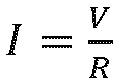
claim 1. The solid state circuit breaker system includes a parallel configuration of an electronic switching module and an electronic energy absorbing module, a voltage sensor, a temperature sensor and a controller. The parallel configuration is connected between a voltage source, via a busbar, and a load. The voltage sensor detects a difference in voltage between a first location on the busbar and a second location on the busbar. The temperature sensor indicates a temperature of the busbar. The controller determines the current flowing to the parallel configuration based on the difference in voltage and based on the electrical resistance of the busbar based on the following equation:
- I = determined current
- V = difference in voltage detected between the first location (V1) and the second location (V2);

- R =
- electrical resistance of the busbar (202);
- r =
- electrical resistivity of the busbar material;
- t =
- temperature of the busbar (202) provided by the temperature sensor (T1);
- l =
- length of the busbar (202) between the firstlocation (V1) and the second location (V2);
- A =
- area of the busbar (202) between the first location (V1) and the second location (V2).
- In a second aspect the present invention is a method of determining an over current fault to activate a solid state circuit breaker that is coupled between a power supply, via a busbar, and a load, as it is defined in claim 4.
-
-
FIG. 1 is a prior art diagram of solid state circuit breaker system using an external current sensor for detecting over current faults. -
FIG. 2 is a diagram of a solid state circuit breaker system of the present invention utilizing an existing busbar, absent an external current sensor, for detecting over current faults. - Various embodiments will be described in detail with reference to the drawings, wherein like reference numerals represent like parts and assemblies throughout the several views. Reference to various embodiments does not limit the scope of the claims attached hereto. Additionally, any examples set forth in this specification are not intended to be limiting and merely set forth some of the many possible embodiments for the appended claims.
- Whenever appropriate, terms used in the singular also will include the plural and vice versa. The use of "a" herein means "one or more" unless stated otherwise or where the use of "one or more" is clearly inappropriate. The use of "or" means "and/or" unless stated otherwise. The use of "comprise," "comprises," "comprising," "include," "includes," and "including" are interchangeable and not intended to be limiting. The term "such as" also is not intended to be limiting. For example, the term "including" shall mean "including, but not limited to."
- Efforts continue to expand the functionality and use of electrical systems in automobile, aircraft and other applications where the volume and/or weight of the electrical system are constrained. For example, high voltage and high current electrical systems are being proposed for future aircraft ranging from 230 V AC to 1000 V DC, and above. Accordingly, the volume and/or weight of an electrical system's power converter plays an important role in efficient and effective power management as does the volume and/or weight of the circuit breaker that protects electrical components supplied by the converter. Volume and weight constraints affect selection of every electrical component within an electrical system. As such, any possibility to reduce weight or volume of an electrical component is highly desirable.
- Reduction in weight and volume within volume-constrained and/or weight-constrained electrical systems has, at least in-part, been achieved by replacing mechanical circuit breakers with solid state circuit breakers (SSCBs). SSCBs replace the traditional moving parts of an electromechanical circuit breaker with power electronics and software algorithms that control power and can interrupt a current within microseconds. In order to operate, SSCBs rely on a component that can be used to measure and monitor current flow. Typically, a current sensor, such as a hall effect sensor, provides the current monitoring ability external to the SSCB. However, the current sensor adds significant weight, takes up significant space and reduces current density. An alternative solution provides for the addition of a shunt resistor external to the SSCB that is used to monitor current flow. However, an external shunt resistor is typically a power resistor that is high in weight, subjects the electrical system to power dissipation and may, itself, require additional cooling.
-
FIG. 1 depicts a simplified diagram of anSSCB system 10 with an externalcurrent sensor 110. As shown, a power source S1 is coupled, via afirst busbar 102, through thecurrent sensor 110 to theSSCB 100, which is coupled to asecond busbar 104 and positioned ahead of aload 120; theload 120 is represented by inductor L and resistor R. TheSSCB 100 includes anelectronic switching module 112 in parallel with an electronicenergy absorbing module 114 controlled by acontroller 116 receiving input from thecurrent sensor 110. Theswitching module 112 carries the current through normal operation. However, when a fault occurs (e.g., thecurrent sensor 110 indicates an over current) thecontroller 116 directs theswitching module 112 to open/trip while the current stored in the line is dissipated by theenergy absorbing module 114 thereby protecting theload 120. - The present invention provides an
SSCB system 20 that utilizes an existing pre-calibrated busbar for current monitoring thereby eliminating the need for an external current sensor or an external shunt resistor.FIG. 2 depicts a simplified diagram of theSSCB system 20 of the present invention. As shown, a power source S1 is coupled, via a first busbar 202 (absent a current sensor) to theSSCB 200, which is coupled to asecond busbar 204 and positioned ahead of aload 220; theload 220 is represented by an inductor L and a resistor R. An addedvoltage sensor 206 measures the difference in voltage between a first location V1 and a second location V2 on thefirst busbar 202 while an added temperature sensor T1 detects the temperature of the first busbar and/or detects the temperature of the atmosphere surrounding the first busbar 202 (e.g., the ambient temperature). Acontroller 216 is in communication with thevoltage sensor 206, the temperature sensor T1 and theSSCB 200. - The
first busbar 202 comprises a pre-calibrated busbar having a known resistance, a known variation in resistance with respect to temperature and known dimensions. The pre-calibrated busbar is fabricated from copper or any other material having good electrical conductivity. - The
voltage sensor 206 comprises an operational amplifier (op-amp) or another suitable electrical component or circuit capable of determining the voltage difference between first and second locations, V1 and V2, on thefirst busbar 202 and capable of producing an output representative of that difference. The temperature sensor T1 comprises a thermocouple, resistance thermometer (RTD), thermistor or any suitable electronic component or circuit capable of obtaining a temperature and producing an output representative of that temperature. - The
SSCB 200 includes a parallel electronics configuration comprising anelectronic switching module 212 in parallel with an electronicenergy absorbing module 214; the parallel electronics configuration is controlled by thecontroller 216. - The
electronic switching module 212 generally includes a main switch such as a thyristor, a gate turn-off thyristor (GTO), integrated gate commutated thyristor (IGCT), insulated gate bipolar transistor (IGBT), metal oxide semiconductor field effect transistor (MOSFET) or other appropriate electronic switch. Theelectronic switching module 212 can be a single switch or a combination of series and/or parallel switches. Further, theelectronic switching module 212 can also be a unidirectional switch or a bidirectional switch that has current blocking capabilities. Theelectronic switching module 212 can additionally include auxiliary switches and passive elements. - The electronic
energy absorbing module 214 generally comprises a varistor, zener diode, resistor, transient-voltage suppression diode (TVS) or other appropriate electronic energy absorbing component. - The
controller 216 generally comprises a field programmable gate array (FPGA), digital signal processing (DSP) based controller or other suitable controller. - In normal operation, the
electronic switching module 212 carries the current. However, when an over current fault occurs (e.g., the current exceeds the rated amperage capacity of the load on the circuit) as described further herein, thecontroller 216 instructs theswitching module 212 to open/trip and the current stored in the line is dissipated by theenergy absorbing module 214 thereby protecting theload 220. - Over current fault detection, and current monitoring in general, is achieved through use of the existing first busbar 202 (e.g., the pre-calibrated busbar) as a current measurement shunt resistor. More specifically, the electrical and thermal properties of the existing
first busbar 202 are used to determine current (and determine the presence of the over current fault) without adding an additional external current sensor or an additional external shunt resistor. Rather, additional elements include thevoltage sensor 206 and the temperature sensor T1 which, in the present context, are smaller electrical components that have a combined weight and volume less than that of an external current sensor or an external shunt resistor. The signal from thevoltage sensor 206, representing the difference in voltage between locations V1 and V2 on thefirst busbar 202, and the signal from the temperature sensor T1, representing the temperature of thefirst busbar 202, are provided to thecontroller 216 which uses the signals to calculate/determine current flowing to theSSCB 200. More specifically, current is determined by thecontroller 216, as programmed, according to Equation (1) below:
- I = determined current;
- V = dif ference in voltage detected on busbar;
- R = f(r,t,l,A);
- Where:
- R = electrical resistance of first busbar;
- r = electrical resistivity of the first busbar material;
- t = temperature of first busbar provided by T1;
- l = length of the first busbar between V1 and V2;
- A = area of the first busbar between V1 and V2.
- The current determined by the
controller 216, through Equation (1), is monitored by thecontroller 216 to determine if a rated amperage capacity of theload 220 is exceeded. When thecontroller 216 determines that the rated amperage capacity is exceeded an over current situation is occurring and thecontroller 216 directs theelectronic switching module 212 to trip creating an open circuit. As such, the solid statecircuit breaker system 200 of the present invention provides the same functionality as one utilizing a current sensor without the weight and volume imposed by an added external current sensor or added external shunt resistor. - It should be noted that, while the present invention is directed to a specific application (e.g., a solid state circuit breaker or an equivalent interchangeable device such as a solid state power controller) of current measurement utilizing a pre-calibrated busbar with voltage and temperature detection, the current measurement technique can also be utilized in other electronic applications as appreciated by one skilled in the art. For example, the current measurement technique utilizing a pre-calibrated busbar with voltage and temperature detection could also be used with converters, distribution devices, controllers, etc.
- The various embodiments described above are provided by way of illustration only and should not be construed to limit the claims attached hereto. Those skilled in the art will readily recognize various modifications and changes that may be made without following the example embodiments and applications illustrated and described herein, and without departing from the scope of the following claims.
Claims (5)
- A solid state circuit breaker system (200), comprising:a parallel configuration comprising an electronic switching module (212) connected in parallel with an electronic energy absorbing module (214), the parallel configuration connected between a voltage source, via a busbar (202), and a load (220);a voltage sensor (206) detecting a difference in voltage between a first location (V1) and a second location (V2) on the busbar (202);a temperature sensor (T1) indicating a temperature of the busbar (202);a controller (216) determining the current flowing to the parallel configuration based on the difference in voltage and the electrical resistance of the busbar (202) based on the following equation:
 I = determined currentV = difference in voltage detected between the first location (V1) and the second location (V2);
 R = electrical resistance of the busbar (202);r = electrical resistivity of the busbar material;t = temperature of the busbar (202) provided by the temperature sensor (T1);l = length of the busbar (202) between the first location (V1) and the second location (V2);A = area of the busbar (202) between the first location (V1) and the second location (V2).
 - The system of claim 1, wherein the controller (216) determines an over current fault based on the determined current.
- The system of claim 2, wherein the over current fault trips a switch in the electronic switching module (212) to open a circuit between the power source (S1) and the load (220).
- A method of determining an over current fault to activate a solid state circuit breaker (200) controlled by a controller (216), the solid state circuit breaker being coupled between a power supply (S1), via a busbar (202), and a load (220), wherein the controller (216) carries out the method steps comprising:obtaining a difference in voltage between a first location (V1) and a second location (V2) on the busbar (202);determining a current flowing to the solid state circuit breaker (200) based on the difference in voltage and the electrical resistance of the busbar (202) based on the following equation:
 I = determined currentV = difference in voltage detected between the first location (V1) and the second location (V2);
 R = electrical resistance of the busbar (202);r = electrical resistivity of the busbar material;t = temperature of the busbar (202) provided by a temperature sensor (T1);l = length of the busbar (202) between the first location (V1) and the second location (V2);A = area of the busbar (202) between the first location (V1) and the second location (V2); anddetermining that an over current fault has occurred based on the determined current exceeding a rated amperage capacity of the load (220).
 - The method of claim 4, further comprising providing notification of the over current fault to the solid state circuit breaker, the notification causing the solid state circuit breaker to trip and open a circuit between the power source (S1) and a load (220).
Applications Claiming Priority (2)
| Application Number | Priority Date | Filing Date | Title |
|---|---|---|---|
| US201962941463P | 2019-11-27 | 2019-11-27 | |
| PCT/EP2020/025536 WO2021104670A1 (en) | 2019-11-27 | 2020-11-25 | Busbar as current sensor |
Publications (2)
| Publication Number | Publication Date |
|---|---|
| EP4065989A1 EP4065989A1 (en) | 2022-10-05 |
| EP4065989B1 true EP4065989B1 (en) | 2025-02-26 |
Family
ID=74186617
Family Applications (1)
| Application Number | Title | Priority Date | Filing Date |
|---|---|---|---|
| EP20842190.9A Active EP4065989B1 (en) | 2019-11-27 | 2020-11-25 | Busbar as current sensor |
Country Status (3)
| Country | Link |
|---|---|
| US (1) | US12228591B2 (en) |
| EP (1) | EP4065989B1 (en) |
| WO (1) | WO2021104670A1 (en) |
Families Citing this family (2)
| Publication number | Priority date | Publication date | Assignee | Title |
|---|---|---|---|---|
| US20250052786A1 (en) * | 2021-12-16 | 2025-02-13 | Vitesco Technologies GmbH | Current sensing system |
| EP4362256A1 (en) * | 2022-10-28 | 2024-05-01 | HS Elektronik Systeme GmbH | Aircraft solid state power controller and method of monitoring the temperature of a solid state switch in an aircraft solid state power controller |
Family Cites Families (17)
| Publication number | Priority date | Publication date | Assignee | Title |
|---|---|---|---|---|
| DE2250440A1 (en) | 1972-10-14 | 1974-04-18 | Bosch Gmbh Robert | ARRANGEMENT FOR CONTROLLING THE MAIN PRESSURE IN AUTOMATIC GEAR CONTROL DEVICES |
| WO1979000449A1 (en) | 1977-12-28 | 1979-07-26 | Datapower | Variable intensity control apparatus for operating a gas discharge lamp |
| US5828559A (en) * | 1997-02-03 | 1998-10-27 | Chen; Keming | Soft switching active snubber |
| US6028426A (en) * | 1997-08-19 | 2000-02-22 | Statpower Technologies Partnership | Temperature compensated current measurement device |
| US6411109B1 (en) | 2000-05-19 | 2002-06-25 | Hamilton Sundstrand Corporation | Connecting lug used as a current-sense resistor |
| US6606227B2 (en) * | 2001-02-12 | 2003-08-12 | Delphi Technologies, Inc. | High voltage battery cutout circuit for a motor vehicle electrical system |
| US6956725B2 (en) * | 2002-09-18 | 2005-10-18 | Schweitzer Engineering Laboratories, Inc. | Current controlled contact arc suppressor |
| JP2005181119A (en) | 2003-12-19 | 2005-07-07 | Auto Network Gijutsu Kenkyusho:Kk | Current sensor and circuit structure including the same |
| JP2006230168A (en) | 2005-02-21 | 2006-08-31 | Toshiba Corp | Power converter |
| JP4442660B2 (en) | 2007-08-10 | 2010-03-31 | 株式会社デンソー | Vehicle system |
| US9755630B2 (en) | 2009-04-30 | 2017-09-05 | The United States of America as represented by the Secretary of the Government | Solid-state circuit breakers and related circuits |
| JP5926495B2 (en) | 2011-04-05 | 2016-05-25 | 矢崎総業株式会社 | Shunt resistance type current sensor |
| JP6010468B2 (en) | 2013-01-23 | 2016-10-19 | 矢崎総業株式会社 | Shunt resistance type current sensor |
| US10014680B2 (en) | 2014-12-09 | 2018-07-03 | Electronic Systems Protection, Inc. | Overvoltage notching of electricity delivered to an electrical load |
| DE102015105075A1 (en) | 2015-04-01 | 2016-10-06 | Infineon Technologies Ag | current sensor |
| JP6797778B2 (en) | 2017-08-30 | 2020-12-09 | 矢崎総業株式会社 | Semiconductor relays and vehicle current detectors |
| EP3678295B1 (en) | 2017-08-30 | 2022-03-09 | Yazaki Corporation | Semiconductor relay and vehicle current detection device |
-
2020
- 2020-11-25 EP EP20842190.9A patent/EP4065989B1/en active Active
- 2020-11-25 WO PCT/EP2020/025536 patent/WO2021104670A1/en not_active Ceased
- 2020-11-25 US US17/780,444 patent/US12228591B2/en active Active
Also Published As
| Publication number | Publication date |
|---|---|
| EP4065989A1 (en) | 2022-10-05 |
| US20230003765A1 (en) | 2023-01-05 |
| WO2021104670A1 (en) | 2021-06-03 |
| US12228591B2 (en) | 2025-02-18 |
Similar Documents
| Publication | Publication Date | Title |
|---|---|---|
| EP2605355B1 (en) | Intrinsically safe energy limiting circuit | |
| US6052268A (en) | Electrical apparatus | |
| EP2550713B1 (en) | A hybrid circuit breaker | |
| US11005253B2 (en) | Circuit and method of over-current protection | |
| US11569653B2 (en) | Electronic fuse for a power supply | |
| EP2395619B1 (en) | SSPC with dual fault detectors | |
| EP3229252B1 (en) | Current circuit breaker | |
| EP4065989B1 (en) | Busbar as current sensor | |
| CN115461637B (en) | Method and apparatus for detecting fuse failure | |
| KR101904578B1 (en) | Device and method for protecting a load | |
| KR102465165B1 (en) | Circuit breaker composed of semiconductor element | |
| US9654102B2 (en) | Hybrid direct-current circuit breaker | |
| US9325165B2 (en) | Device and method for protecting a consumer | |
| US9520707B2 (en) | Device for protecting a user | |
| Dahmen et al. | Ultra-Fast Bidirectional SiC Solid-State Circuit Breaker for 800V/400A Aircraft Applications | |
| Ahmed et al. | Design specification of a 270 V 100 A solid-state power controller suitable for aerospace applications | |
| CN111049097A (en) | Circuit overload protection method and overcurrent protection device | |
| US7421353B1 (en) | Digital integration method | |
| EP4362256A1 (en) | Aircraft solid state power controller and method of monitoring the temperature of a solid state switch in an aircraft solid state power controller | |
| Wang et al. | Hybrid direct-current circuit breaker | |
| JP2024129447A (en) | Protection system, DC power system and protection method | |
| CN119726604A (en) | Switching devices used to protect electrical loads from overcurrent |
Legal Events
| Date | Code | Title | Description |
|---|---|---|---|
| STAA | Information on the status of an ep patent application or granted ep patent |
Free format text: STATUS: UNKNOWN |
|
| STAA | Information on the status of an ep patent application or granted ep patent |
Free format text: STATUS: THE INTERNATIONAL PUBLICATION HAS BEEN MADE |
|
| PUAI | Public reference made under article 153(3) epc to a published international application that has entered the european phase |
Free format text: ORIGINAL CODE: 0009012 |
|
| STAA | Information on the status of an ep patent application or granted ep patent |
Free format text: STATUS: REQUEST FOR EXAMINATION WAS MADE |
|
| 17P | Request for examination filed |
Effective date: 20220608 |
|
| AK | Designated contracting states |
Kind code of ref document: A1 Designated state(s): AL AT BE BG CH CY CZ DE DK EE ES FI FR GB GR HR HU IE IS IT LI LT LU LV MC MK MT NL NO PL PT RO RS SE SI SK SM TR |
|
| DAV | Request for validation of the european patent (deleted) | ||
| DAX | Request for extension of the european patent (deleted) | ||
| P01 | Opt-out of the competence of the unified patent court (upc) registered |
Effective date: 20230521 |
|
| STAA | Information on the status of an ep patent application or granted ep patent |
Free format text: STATUS: EXAMINATION IS IN PROGRESS |
|
| 17Q | First examination report despatched |
Effective date: 20240314 |
|
| GRAP | Despatch of communication of intention to grant a patent |
Free format text: ORIGINAL CODE: EPIDOSNIGR1 |
|
| STAA | Information on the status of an ep patent application or granted ep patent |
Free format text: STATUS: GRANT OF PATENT IS INTENDED |
|
| INTG | Intention to grant announced |
Effective date: 20240923 |
|
| GRAS | Grant fee paid |
Free format text: ORIGINAL CODE: EPIDOSNIGR3 |
|
| GRAA | (expected) grant |
Free format text: ORIGINAL CODE: 0009210 |
|
| STAA | Information on the status of an ep patent application or granted ep patent |
Free format text: STATUS: THE PATENT HAS BEEN GRANTED |
|
| AK | Designated contracting states |
Kind code of ref document: B1 Designated state(s): AL AT BE BG CH CY CZ DE DK EE ES FI FR GB GR HR HU IE IS IT LI LT LU LV MC MK MT NL NO PL PT RO RS SE SI SK SM TR |
|
| REG | Reference to a national code |
Ref country code: GB Ref legal event code: FG4D |
|
| REG | Reference to a national code |
Ref country code: CH Ref legal event code: EP |
|
| REG | Reference to a national code |
Ref country code: DE Ref legal event code: R096 Ref document number: 602020046918 Country of ref document: DE |
|
| REG | Reference to a national code |
Ref country code: IE Ref legal event code: FG4D |
|
| REG | Reference to a national code |
Ref country code: NL Ref legal event code: MP Effective date: 20250226 |
|
| PG25 | Lapsed in a contracting state [announced via postgrant information from national office to epo] |
Ref country code: RS Free format text: LAPSE BECAUSE OF FAILURE TO SUBMIT A TRANSLATION OF THE DESCRIPTION OR TO PAY THE FEE WITHIN THE PRESCRIBED TIME-LIMIT Effective date: 20250526 |
|
| PG25 | Lapsed in a contracting state [announced via postgrant information from national office to epo] |
Ref country code: FI Free format text: LAPSE BECAUSE OF FAILURE TO SUBMIT A TRANSLATION OF THE DESCRIPTION OR TO PAY THE FEE WITHIN THE PRESCRIBED TIME-LIMIT Effective date: 20250226 |
|
| PG25 | Lapsed in a contracting state [announced via postgrant information from national office to epo] |
Ref country code: PL Free format text: LAPSE BECAUSE OF FAILURE TO SUBMIT A TRANSLATION OF THE DESCRIPTION OR TO PAY THE FEE WITHIN THE PRESCRIBED TIME-LIMIT Effective date: 20250226 |
|
| PG25 | Lapsed in a contracting state [announced via postgrant information from national office to epo] |
Ref country code: ES Free format text: LAPSE BECAUSE OF FAILURE TO SUBMIT A TRANSLATION OF THE DESCRIPTION OR TO PAY THE FEE WITHIN THE PRESCRIBED TIME-LIMIT Effective date: 20250226 |
|
| REG | Reference to a national code |
Ref country code: LT Ref legal event code: MG9D |
|
| PG25 | Lapsed in a contracting state [announced via postgrant information from national office to epo] |
Ref country code: NO Free format text: LAPSE BECAUSE OF FAILURE TO SUBMIT A TRANSLATION OF THE DESCRIPTION OR TO PAY THE FEE WITHIN THE PRESCRIBED TIME-LIMIT Effective date: 20250526 Ref country code: IS Free format text: LAPSE BECAUSE OF FAILURE TO SUBMIT A TRANSLATION OF THE DESCRIPTION OR TO PAY THE FEE WITHIN THE PRESCRIBED TIME-LIMIT Effective date: 20250626 |
|
| PG25 | Lapsed in a contracting state [announced via postgrant information from national office to epo] |
Ref country code: NL Free format text: LAPSE BECAUSE OF FAILURE TO SUBMIT A TRANSLATION OF THE DESCRIPTION OR TO PAY THE FEE WITHIN THE PRESCRIBED TIME-LIMIT Effective date: 20250226 |
|
| PG25 | Lapsed in a contracting state [announced via postgrant information from national office to epo] |
Ref country code: HR Free format text: LAPSE BECAUSE OF FAILURE TO SUBMIT A TRANSLATION OF THE DESCRIPTION OR TO PAY THE FEE WITHIN THE PRESCRIBED TIME-LIMIT Effective date: 20250226 |
|
| PG25 | Lapsed in a contracting state [announced via postgrant information from national office to epo] |
Ref country code: PT Free format text: LAPSE BECAUSE OF FAILURE TO SUBMIT A TRANSLATION OF THE DESCRIPTION OR TO PAY THE FEE WITHIN THE PRESCRIBED TIME-LIMIT Effective date: 20250626 Ref country code: LV Free format text: LAPSE BECAUSE OF FAILURE TO SUBMIT A TRANSLATION OF THE DESCRIPTION OR TO PAY THE FEE WITHIN THE PRESCRIBED TIME-LIMIT Effective date: 20250226 |
|
| PG25 | Lapsed in a contracting state [announced via postgrant information from national office to epo] |
Ref country code: BG Free format text: LAPSE BECAUSE OF FAILURE TO SUBMIT A TRANSLATION OF THE DESCRIPTION OR TO PAY THE FEE WITHIN THE PRESCRIBED TIME-LIMIT Effective date: 20250226 Ref country code: GR Free format text: LAPSE BECAUSE OF FAILURE TO SUBMIT A TRANSLATION OF THE DESCRIPTION OR TO PAY THE FEE WITHIN THE PRESCRIBED TIME-LIMIT Effective date: 20250527 |
|
| REG | Reference to a national code |
Ref country code: AT Ref legal event code: MK05 Ref document number: 1771121 Country of ref document: AT Kind code of ref document: T Effective date: 20250226 |
|
| PG25 | Lapsed in a contracting state [announced via postgrant information from national office to epo] |
Ref country code: SE Free format text: LAPSE BECAUSE OF FAILURE TO SUBMIT A TRANSLATION OF THE DESCRIPTION OR TO PAY THE FEE WITHIN THE PRESCRIBED TIME-LIMIT Effective date: 20250226 |
|
| PG25 | Lapsed in a contracting state [announced via postgrant information from national office to epo] |
Ref country code: SM Free format text: LAPSE BECAUSE OF FAILURE TO SUBMIT A TRANSLATION OF THE DESCRIPTION OR TO PAY THE FEE WITHIN THE PRESCRIBED TIME-LIMIT Effective date: 20250226 |
|
| PG25 | Lapsed in a contracting state [announced via postgrant information from national office to epo] |
Ref country code: DK Free format text: LAPSE BECAUSE OF FAILURE TO SUBMIT A TRANSLATION OF THE DESCRIPTION OR TO PAY THE FEE WITHIN THE PRESCRIBED TIME-LIMIT Effective date: 20250226 |
|
| PG25 | Lapsed in a contracting state [announced via postgrant information from national office to epo] |
Ref country code: IT Free format text: LAPSE BECAUSE OF FAILURE TO SUBMIT A TRANSLATION OF THE DESCRIPTION OR TO PAY THE FEE WITHIN THE PRESCRIBED TIME-LIMIT Effective date: 20250226 |
|
| PG25 | Lapsed in a contracting state [announced via postgrant information from national office to epo] |
Ref country code: AT Free format text: LAPSE BECAUSE OF FAILURE TO SUBMIT A TRANSLATION OF THE DESCRIPTION OR TO PAY THE FEE WITHIN THE PRESCRIBED TIME-LIMIT Effective date: 20250226 |
|
| PG25 | Lapsed in a contracting state [announced via postgrant information from national office to epo] |
Ref country code: CZ Free format text: LAPSE BECAUSE OF FAILURE TO SUBMIT A TRANSLATION OF THE DESCRIPTION OR TO PAY THE FEE WITHIN THE PRESCRIBED TIME-LIMIT Effective date: 20250226 Ref country code: EE Free format text: LAPSE BECAUSE OF FAILURE TO SUBMIT A TRANSLATION OF THE DESCRIPTION OR TO PAY THE FEE WITHIN THE PRESCRIBED TIME-LIMIT Effective date: 20250226 |
|
| PG25 | Lapsed in a contracting state [announced via postgrant information from national office to epo] |
Ref country code: RO Free format text: LAPSE BECAUSE OF FAILURE TO SUBMIT A TRANSLATION OF THE DESCRIPTION OR TO PAY THE FEE WITHIN THE PRESCRIBED TIME-LIMIT Effective date: 20250226 |
|
| PG25 | Lapsed in a contracting state [announced via postgrant information from national office to epo] |
Ref country code: SK Free format text: LAPSE BECAUSE OF FAILURE TO SUBMIT A TRANSLATION OF THE DESCRIPTION OR TO PAY THE FEE WITHIN THE PRESCRIBED TIME-LIMIT Effective date: 20250226 |
|
| REG | Reference to a national code |
Ref country code: DE Ref legal event code: R097 Ref document number: 602020046918 Country of ref document: DE |
|
| PLBE | No opposition filed within time limit |
Free format text: ORIGINAL CODE: 0009261 |
|
| STAA | Information on the status of an ep patent application or granted ep patent |
Free format text: STATUS: NO OPPOSITION FILED WITHIN TIME LIMIT |
|
| PGFP | Annual fee paid to national office [announced via postgrant information from national office to epo] |
Ref country code: DE Payment date: 20251022 Year of fee payment: 6 |
|
| PGFP | Annual fee paid to national office [announced via postgrant information from national office to epo] |
Ref country code: FR Payment date: 20251023 Year of fee payment: 6 |
|
| 26N | No opposition filed |
Effective date: 20251127 |