EP4064611A2 - Communication apparatus, communication method, program, and storage medium - Google Patents
Communication apparatus, communication method, program, and storage medium Download PDFInfo
- Publication number
- EP4064611A2 EP4064611A2 EP22162699.7A EP22162699A EP4064611A2 EP 4064611 A2 EP4064611 A2 EP 4064611A2 EP 22162699 A EP22162699 A EP 22162699A EP 4064611 A2 EP4064611 A2 EP 4064611A2
- Authority
- EP
- European Patent Office
- Prior art keywords
- communication apparatus
- scheme
- user
- communication
- frequency band
- Prior art date
- Legal status (The legal status is an assumption and is not a legal conclusion. Google has not performed a legal analysis and makes no representation as to the accuracy of the status listed.)
- Granted
Links
Images




Classifications
-
- H—ELECTRICITY
- H04—ELECTRIC COMMUNICATION TECHNIQUE
- H04L—TRANSMISSION OF DIGITAL INFORMATION, e.g. TELEGRAPHIC COMMUNICATION
- H04L63/00—Network architectures or network communication protocols for network security
- H04L63/10—Network architectures or network communication protocols for network security for controlling access to devices or network resources
- H04L63/105—Multiple levels of security
-
- H—ELECTRICITY
- H04—ELECTRIC COMMUNICATION TECHNIQUE
- H04W—WIRELESS COMMUNICATION NETWORKS
- H04W12/00—Security arrangements; Authentication; Protecting privacy or anonymity
- H04W12/06—Authentication
-
- H—ELECTRICITY
- H04—ELECTRIC COMMUNICATION TECHNIQUE
- H04B—TRANSMISSION
- H04B1/00—Details of transmission systems, not covered by a single one of groups H04B3/00 - H04B13/00; Details of transmission systems not characterised by the medium used for transmission
- H04B1/005—Details of transmission systems, not covered by a single one of groups H04B3/00 - H04B13/00; Details of transmission systems not characterised by the medium used for transmission adapting radio receivers, transmitters andtransceivers for operation on two or more bands, i.e. frequency ranges
- H04B1/0067—Details of transmission systems, not covered by a single one of groups H04B3/00 - H04B13/00; Details of transmission systems not characterised by the medium used for transmission adapting radio receivers, transmitters andtransceivers for operation on two or more bands, i.e. frequency ranges with one or more circuit blocks in common for different bands
-
- H—ELECTRICITY
- H04—ELECTRIC COMMUNICATION TECHNIQUE
- H04W—WIRELESS COMMUNICATION NETWORKS
- H04W12/00—Security arrangements; Authentication; Protecting privacy or anonymity
- H04W12/02—Protecting privacy or anonymity, e.g. protecting personally identifiable information [PII]
-
- H—ELECTRICITY
- H04—ELECTRIC COMMUNICATION TECHNIQUE
- H04W—WIRELESS COMMUNICATION NETWORKS
- H04W12/00—Security arrangements; Authentication; Protecting privacy or anonymity
- H04W12/03—Protecting confidentiality, e.g. by encryption
-
- H—ELECTRICITY
- H04—ELECTRIC COMMUNICATION TECHNIQUE
- H04W—WIRELESS COMMUNICATION NETWORKS
- H04W12/00—Security arrangements; Authentication; Protecting privacy or anonymity
- H04W12/03—Protecting confidentiality, e.g. by encryption
- H04W12/037—Protecting confidentiality, e.g. by encryption of the control plane, e.g. signalling traffic
-
- H—ELECTRICITY
- H04—ELECTRIC COMMUNICATION TECHNIQUE
- H04W—WIRELESS COMMUNICATION NETWORKS
- H04W12/00—Security arrangements; Authentication; Protecting privacy or anonymity
- H04W12/04—Key management, e.g. using generic bootstrapping architecture [GBA]
-
- H—ELECTRICITY
- H04—ELECTRIC COMMUNICATION TECHNIQUE
- H04W—WIRELESS COMMUNICATION NETWORKS
- H04W84/00—Network topologies
- H04W84/02—Hierarchically pre-organised networks, e.g. paging networks, cellular networks, WLAN [Wireless Local Area Network] or WLL [Wireless Local Loop]
- H04W84/10—Small scale networks; Flat hierarchical networks
- H04W84/12—WLAN [Wireless Local Area Networks]
-
- H—ELECTRICITY
- H04—ELECTRIC COMMUNICATION TECHNIQUE
- H04W—WIRELESS COMMUNICATION NETWORKS
- H04W88/00—Devices specially adapted for wireless communication networks, e.g. terminals, base stations or access point devices
- H04W88/08—Access point devices
- H04W88/10—Access point devices adapted for operation in multiple networks, e.g. multi-mode access points
Definitions
- the present invention relates to a communication apparatus that performs wireless communication.
- Wi-Fi wireless local area network
- the communication apparatus discussed in Japanese Patent Application Laid-Open No. 2012-89926 performs authentication by Wi-Fi Protected Access (WPA)/WPA2, which are authentication programs provided by Wi-Fi Alliance.
- WPA Wi-Fi Protected Access
- WPA2 Wi-Fi Protected Access 2
- Open a conventional scheme that does not require a user to enter a password, called Open, in which communication can be performed without authentication or encryption.
- Wi-Fi Alliance has released a new security scheme called Wi-Fi Enhanced Open in which encrypted communication can be performed based on Opportunistic Wireless Encryption (OWE) without a user entering a password.
- OWE Opportunistic Wireless Encryption
- Wi-Fi Enhanced Open in which encrypted communication can be performed without a user entering a password has been included as a security scheme that does not require a user to enter a password.
- the user is asked to further select between Open and Wi-Fi Enhanced Open. This may impair user convenience.
- the present invention is directed to a communication apparatus that, in a case where the user selects a security scheme that does not require a user to enter a password, switches between security schemes without a user operation, thereby improving user convenience.
- a communication apparatus as specified in claims 1 to 10.
- a communication method of a communication apparatus as specified in claim 11.
- a computer-readable storage medium carrying a program as specified in claim 13.
- Fig. 1 illustrates a configuration example of a network established by an access point (AP) 102 according to the embodiments.
- the AP 102 is a communication apparatus that has the role of establishing a network 101.
- the network 101 is a wireless network.
- the AP may be a printer, camera, projector, smartphone, mobile/portable device, computer or similar device.
- the AP may be any communication apparatus capable of communication (e.g. wireless communication) and establishing a network 101.
- a station (STA) 103 is a communication apparatus that has the role of participating in the network 101.
- the STA 103 is compliant with Institute of Electrical and Electronics Engineers (IEEE) 802.11be Extremely High Throughput (EHT) standards and can execute wireless communication in conformity with IEEE802.11be standards via the network 101.
- IEEE Institute of Electrical and Electronics Engineers
- EHT Extremely High Throughput
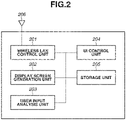
- Fig. 2 illustrates a functional configuration example of the AP 102.
- the AP 102 includes a wireless local area network (LAN) control unit 201, a display screen generation unit 202, a user input analysis unit 203, a user interface (UI) control unit 204, a storage unit 205, and an external wireless detection unit 206.
- LAN wireless local area network
- UI user interface
- the wireless LAN control unit 201 includes an antenna and a circuit for transmitting and receiving wireless signals to and from another wireless LAN apparatus, and programs for controlling the antenna and the circuit.
- the wireless LAN control unit 201 executes wireless LAN communication control in conformity with IEEE 802.11 standard family.
- the AP 102 includes the wireless LAN control unit 201.
- the number of wireless LAN control units is one, but the number thereof is not limited thereto.
- the UI control unit 204 includes hardware relating to a user interface such as a touch panel or buttons for accepting operations on the AP 102 performed by a user of the AP 102, and a program for controlling the hardware.
- a program for controlling the hardware By the program in the UI control unit 204, user inputs obtained via an input unit 304 illustrated in Fig. 3 are sent to the user input analysis unit 203, and images generated by the display screen generation unit 202 are sent to an output unit 305 illustrated in Fig. 3 .
- the UI control unit 204 has a function of presenting information such as audio outputs to the user, for example.
- the user input analysis unit 203 receives the information obtained by the UI control unit 204 and analyzes contents of user instructions. Specifically, the user input analysis unit 203 analyzes contents of control to be performed by the wireless LAN control unit 201 and extracts information to be displayed on the display screen generation unit 202. The user input analysis unit 203 sends the extracted information to the display screen generation unit 202.
- the display screen generation unit 202 generates contents to be displayed on the UI based on the information received from the user input analysis unit 203 and the information in the storage unit 205, and sends the generated contents to the UI control unit 204.
- a screen generated by the display screen generation unit 202 may vary depending on the user inputs or with a lapse of time.
- the storage unit 205 is a storage device that may include a program on which the AP 102 runs and programs for controlling a read-only memory (ROM), a random-access memory (RAM), and the like that store data.
- ROM read-only memory
- RAM random-access memory
- the external wireless detection unit 206 includes a program for detecting signals transmitted by other wireless systems at specified frequencies.
- the other wireless systems include, but are not limited to, fixed wireless systems and satellite communication systems. Broadcast communication systems may also be included.
- Fig. 3 illustrates a hardware configuration example of the AP 102.
- the AP 102 includes a storage unit 301, a control unit 302, a functional unit 303, the input unit 304, the output unit 305, a communication unit 306, and a wireless antenna 307.
- the storage unit 301 includes both or either of a ROM and a RAM and stores programs for performing various operations described below and various types of information such as communication parameters for wireless communication.
- storage media such as a flexible disk, a hard disk, an optical disk, a magneto-optical disk, a compact disk (CD)-ROM, a CD-recordable (R), a magnetic tape, a non-volatile memory card, and a digital versatile disk (DVD) may be used.
- the control unit 302 includes a processor such as a central processing unit (CPU) or a micro processing unit (MPU), an application specific integrated circuit (ASIC), a digital signal processor (DSP), a field programmable gate array (FPGA), or the like.
- the control unit 302 controls the entire AP 102 by executing the programs stored in the storage unit 301.
- the control unit 302 may control the entire AP 102 in cooperation with the programs stored in the storage unit 301 and an operating system (OS).
- OS operating system
- the control unit 302 controls the functional unit 303 to execute predetermined processing such as image capturing, printing, or projection.
- the functional unit 303 is hardware for the AP 102 to execute the predetermined processing. If the AP 102 is a camera, for example, the functional unit 303 is an imaging unit that performs imaging processing. If the AP 102 is a printer, for example, the functional unit 303 is a printing unit that performs print processing. If the AP 102 is a projector, for example, the functional unit 303 is a projection unit that performs projection processing.
- the data processed by the functional unit 303 may be data stored in the storage unit 301 or may be data communicated with another communication apparatus (such as another AP 102 or a station such as an STA 103) via the communication unit 306 described below.
- the input unit 304 accepts various operations from the user.
- the output unit 305 provides various outputs to the user.
- the outputs from the output unit 305 include at least one of display on a screen, audio output from a speaker, vibration output, and the like. Both the input unit 304 and the output unit 305 may be implemented by one module such as a touch panel.
- the output unit 305 does not need to be mounted in a main body of the AP 102 but may be mounted in another device together with a program for controlling the output unit 305 and providing outputs to the user.
- Possible output destination media include, but not limited to, a personal computer (PC) or a smartphone connected by wire or wirelessly to the AP 102.
- the communication unit 306 controls wireless communication in conformity with IEEE 802.11 standard family or controls Internet Protocol (IP) communication.
- IP Internet Protocol
- the communication unit 306 also controls the wireless antenna 307 to transmit and receive wireless signals for wireless communication.
- the AP 102 communicates content such as image data, document data, and video data with another communication apparatus via the communication unit 306.
- the wireless antenna 307 is an antenna that is capable of receiving signals in any of a sub-gigahertz (GHz) band, 2.4-GHz band, 3.6-GHz band, 4.9- and 5-GHz bands, 6-GHz band, and 60-GHz band.
- the wireless antenna 307 may physically include one or more antennas to implement Multi-Input and Multi-Output (MIMO) transmission and reception.
- MIMO Multi-Input and Multi-Output
- a security-related scheme is a scheme for supporting communication with or without encryption and/or with or without authentication.
- the security-related scheme may use an encryption method and an authentication method (e.g. the security-related scheme requires a user to enter a password) or may use an encryption method but not an authentication method (e.g. the security-related scheme does not require a user to enter a password) or may not use encryption nor authentication.
- the security-related scheme may include an authentication method such as Wi-Fi Protected Access (WPA)/WPA2/WPA3 and an encryption method.
- the AP 102 switches between encrypted communication and non-encrypted communication at the time of startup of the AP 102.
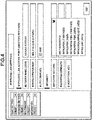
- Fig. 4 illustrates a display example in which the wireless operation mode of the AP 102 is set to the 2.4-GHz band by the user.
- Wi-Fi Enhanced Open is a security scheme in which encrypted communication can be performed based on Opportunistic Wireless Encryption (OWE) without a user entering a password.
- OWE Opportunistic Wireless Encryption
- the AP when a first frequency band is selected for operation, such as 2.4-GHz, and when no password is set related to authentication, the AP (e.g. by means of the control unit 302) may select or set the scheme for supporting communication as a security-related scheme without encryption, such as Open.
- a security-related scheme without encryption such as Open.
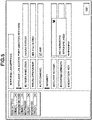
- Fig. 5 illustrates a display example in which the wireless operation mode of the AP 102 is set to the 6-GHz band by the user. Since it is essential to perform authentication using WPA3 (not to perform authentication using WPA/WPA2) in the communication in the 6-GHz band, the security scheme illustrated in Fig. 5 may be WPA3. In addition, it is stipulated that no authentication should be performed under Open in the 6-GHz band. Thus, if the wireless operation mode is set to the 6-GHz band and no password is selected, setting of no password illustrated in Fig. 5 means that encrypted communication will be performed based on OWE. In other words, when a second frequency band is selected for operation, such as 6-GHz, the AP (e.g. by means of the control unit 302) may select or set the scheme for supporting communication as a security-related scheme with encryption, such as Wi-Fi Enhanced Open with OWE, if the security-related scheme with encryption not requiring a user to enter a password is selected.
- a security-related scheme with encryption such as Wi-Fi Enhanced Open with O
- the present embodiment has been described taking the 2.4-GHz band and 6-GHz band as examples. However, the present invention is not limited to these bands. In the 5-GHz band as well, if no password is selected by the user, non-encrypted communication will be set.
- Fig. 6 is a flowchart illustrating a procedure of processing performed by the control unit 302 executing the programs stored in the storage unit 301 of the AP 102.
- the flowchart illustrates a procedure of processing for the AP 102 to perform a function as the AP with predetermined security settings in the specified frequency band.
- the processing in the flowchart is started when the AP 102 is powered on.
- the AP 102 displays AP wireless setting items to the user.
- the AP may collectively display security-related schemes (requiring and/or not requiring a user to enter a password).
- the displayed wireless settings may include at least part of the display examples and menus shown in Figs. 4 and 5 , such as the drop down menu for the security scheme.
- the displayed wireless settings may include a list of one or more security-related schemes not requiring a user to enter a password and/or a list of one or more security-related schemes requiring a user to enter a password.
- step S602 the AP 102 determines that the user has finished inputting the setting items.
- the AP 102 determines that the user has finished inputting the setting items by detecting a press on a set button. If it is determined in step S602 that the user has finished inputting the setting items, in step S603, the AP 102 acquires wireless setting values including the frequency band and the security-related scheme specified by the user. In step S604, the AP 102 determines whether the input security scheme is a security scheme that requires a user to enter a password based on the wireless setting values acquired in step S603.
- step S604 If it is determined in step S604 that the selected security scheme is a security scheme that requires a user to enter a password (YES in step S604), the processing proceeds to step S605.
- step S605 the AP 102 is activated as an access point with the setting values of the security scheme and the frequency band specified by the user.
- step S604 determines whether the selected frequency band is the 6-GHz band. If it is determined in step S606 that the selected frequency band is the 6-GHz band (YES in step S606), the processing proceeds to step S607. In step S607, the AP 102 sets the security scheme to Wi-Fi Enhanced Open under which encryption is enabled based on OWE, and is activated as an access point in the 6-GHz band. If it is determined in step S606 that the selected frequency band is not the 6-GHz band (NO in step S606), the processing proceeds to step S608. In step S608, the AP 102 sets the security scheme to Open under which non-encrypted communication will be performed, and is activated as an access point in the user-specified frequency band.
- the user can activate the AP while switching between communication using encryption and communication not using encryption depending on the frequency band.
- Figs. 4 and 5 illustrates the cases where the frequency band is selected by the wireless operation mode.
- the frequency band and the security scheme may be associated with each other by another method. Any method can be used as far as it allows for identification of the frequency band to use and identification of the security scheme that does not require a user to enter a password (passphrase) among a plurality of security schemes.
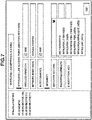
- Fig. 7 illustrates an example of UI presented to the user.
- the frequency band may not be selected by the wireless operation mode as illustrated in Figs. 4 and 5 , but the frequency band and the security scheme may be identified in a different setting screen for each frequency band.
- the communication device if no password is specified among the security schemes presented in the UI for general users, the communication device is set to switch between the communication using encryption and the communication not using encryption depending on the frequency band selected by the user.
- some users conversant with security settings may wish to perform the encrypted communication also in the 2.4-GHz band or 5-GHz band, knowing issues of compatibility with conventional authentication methods.
- an extended setting for such a user conversant with security settings will be described.
- Fig. 8 illustrates an example of setting screen displayed to a user by the AP 102 having an extended security mode. If the user selects the security scheme that does not require a user to enter a password, the AP 102 allows the user to select whether or not to enable the extended security mode. If the extended security mode is enabled, encrypted communication will be performed based on OWE regardless of the setting of the frequency band.
- Fig. 9 is a flowchart illustrating a procedure of processing performed by a control unit 302 executing programs stored in a storage unit 301 of the AP 102 having the extended security mode.
- the flowchart illustrates a procedure of processing for the AP 102 to perform the function as the AP with predetermined security settings in the specified frequency band.
- the processing in the flowchart is started when the AP 102 is powered on.
- Steps S901 to S903 are similar to steps S601 to S603 illustrated in Fig. 6 , and thus description thereof will be omitted.
- the AP 102 determines whether the selected security scheme is the security scheme that requires a user to enter a password. If it is determined in step S904 that the security scheme is not the security scheme that requires a user to enter a password (NO in step S904), the processing proceeds to step S909.
- the AP 102 determines whether the extended security mode is enabled.
- the extended security mode is a mode in which encrypted communication can be performed based on OWE without a user entering a password even in the 2.4-GHz or 5-GHz band.
- step S909 If it is determined in step S909 that the extended security mode is enabled (YES in step S909), the processing proceeds to step S907.
- step S907 the AP 102 is set to the encrypted communication and activated as an access point in the user-specified frequency band. If it is determined in step S909 that the extended security mode is disabled (NO in step S909), the processing proceeds to step S906.
- step S906 the AP 102 determines whether the selected frequency band is the 6-GHz band. Step S906 and the subsequent steps are similar to the steps in the first embodiment.
- the step performed by the AP 102 after it is determined in step S904 that the security scheme is the security scheme that requires a user to enter a password is also similar to the step in the first embodiment, and thus description thereof will be omitted.
- providing the AP 102 with the extended security mode makes it possible to provide security settings with a high degree of flexibility to users conversant with security settings.
- control unit 302 executing one or more programs stored in the storage unit 301 provides: a setting means for making a setting related to authentication of the AP (e.g. the setting means makes a setting indicating whether or not a user is required to enter a password based on user inputs such as the user selection of 'No Password' or a security-related scheme with or without an authentication method, as discussed above with respect to steps S603 and S903); selection means for selecting a frequency band in which the AP is to operate (e.g.
- the selection means selects a frequency band based on user inputs such as the user selection of a frequency band as discussed above with respect to steps S603 and S903); and control means for, in a case where a setting not requiring a user to enter a password is made by the setting means, switching between a first scheme and a second scheme based on the frequency band selected by the selection means.
- control means of the AP 102 e.g.
- the control unit 302 may set the AP to use a first scheme (for example, a security-related scheme which supports non-encrypted communication) or a second scheme which is different to the first scheme (for example, a security-related scheme which supports secure communication (e.g. using an encryption method)) based on a selected frequency band.
- a first frequency band e.g. 2.4-GHz or 5-GHz
- the control unit 302 may set the AP 102 to use the first scheme (e.g. supporting communication without encryption).
- the selected frequency band is a second frequency band (e.g. 6-GHz)
- the control unit 302 may set the AP 102 to use the second scheme (e.g. supporting communication with encryption).
- an extended security mode is enabled (i.e. a mode for encrypted communication regardless of the selected frequency band is enabled)
- the control unit 302 may set the AP 102 to use the second scheme (e.g. supporting communication with encryption) irrespective of the frequency band.
- a storage medium storing program codes of software for performing the above-described functions may be supplied to a system or an apparatus, and a computer (a CPU or MPU) in the system or the apparatus may read and execute the program codes stored in the storage medium.
- the program codes read from the storage medium implement the above-described functions of the embodiments, and the storage medium storing the program codes constitutes the above-described apparatus.
- Examples of the storage medium for supplying the program codes include a flexible disk, a hard disk, an optical disk, a magneto-optical disk, a CD-ROM, a CD-R, a magnetic tape, a non-volatile memory card, a ROM, and a DVD.
- the computer executes the read program codes to implement the above-described functions but also the OS running on the computer may execute part or all of the actual processing based on instructions from the program codes to implement the above-described functions.
- the OS is an abbreviation of operating system.
- the program codes read from the storage medium are written into a memory included in a function enhancement board inserted into the computer or a function enhancement unit connected to the computer.
- a CPU included in the function enhancement board or the function enhancement unit may perform part or all of the actual processing based on instructions from the program codes to implement the above-described functions.
- the present invention can be realized by supplying a program implementing one or more functions of the above-mentioned embodiments to a system or an apparatus via a network or a recording medium and by reading and executing the program by one or more processors in the system or the apparatus.
- the present invention can also be realized by a circuit (for example, an ASIC) implementing the one or more functions.
- the present invention if the user selects a security scheme that does not require a user to enter a password, it is possible to switch between security schemes without a user operation, thereby user convenience can be improved.
- Embodiment(s) of the present invention can also be realized by a computer of a system or apparatus that reads out and executes computer executable instructions (e.g., one or more programs) recorded on a storage medium (which may also be referred to more fully as a 'non-transitory computer-readable storage medium') to perform the functions of one or more of the above-described embodiment(s) and/or that includes one or more circuits (e.g., application specific integrated circuit (ASIC)) for performing the functions of one or more of the above-described embodiment(s), and by a method performed by the computer of the system or apparatus by, for example, reading out and executing the computer executable instructions from the storage medium to perform the functions of one or more of the above-described embodiment(s) and/or controlling the one or more circuits to perform the functions of one or more of the above-described embodiment(s).
- computer executable instructions e.g., one or more programs
- a storage medium which may also be referred to more fully as
- the computer may comprise one or more processors (e.g., central processing unit (CPU), micro processing unit (MPU)) and may include a network of separate computers or separate processors to read out and execute the computer executable instructions.
- the computer executable instructions may be provided to the computer, for example, from a network or the storage medium.
- the storage medium may include, for example, one or more of a hard disk, a random-access memory (RAM), a read only memory (ROM), a storage of distributed computing systems, an optical disk (such as a compact disc (CD), digital versatile disc (DVD), or Blu-ray Disc (BD) TM ), a flash memory device, a memory card, and the like.
Landscapes
- Engineering & Computer Science (AREA)
- Computer Security & Cryptography (AREA)
- Computer Networks & Wireless Communication (AREA)
- Signal Processing (AREA)
- Computer Hardware Design (AREA)
- Computing Systems (AREA)
- General Engineering & Computer Science (AREA)
- Mobile Radio Communication Systems (AREA)
- Circuits Of Receivers In General (AREA)
Abstract
Description
- The present invention relates to a communication apparatus that performs wireless communication.
- In the advancement of wireless local area network (WLAN) techniques, standardization by Wi-Fi Alliance that assures interconnection in the WLAN techniques has played an important role.
- The communication apparatus discussed in
Japanese Patent Application Laid-Open No. 2012-89926 - In addition, Wi-Fi Alliance has released a new security scheme called Wi-Fi Enhanced Open in which encrypted communication can be performed based on Opportunistic Wireless Encryption (OWE) without a user entering a password.
- In addition to conventional Open, Wi-Fi Enhanced Open in which encrypted communication can be performed without a user entering a password has been included as a security scheme that does not require a user to enter a password. Thus, in a case where the user selects a security scheme that does not require a user to enter a password, the user is asked to further select between Open and Wi-Fi Enhanced Open. This may impair user convenience.
- The present invention is directed to a communication apparatus that, in a case where the user selects a security scheme that does not require a user to enter a password, switches between security schemes without a user operation, thereby improving user convenience.
- According to a first aspect of the present invention, there is provided a communication apparatus as specified in claims 1 to 10. According to a second aspect of the present invention, there is provided a communication method of a communication apparatus as specified in claim 11. According to a third aspect of the present invention, there is provided a program for causing a computer to operate as the communication apparatus as specified in claim 12. According to a fourth aspect of the present invention, there is provided a computer-readable storage medium carrying a program as specified in claim 13.
- Further features of the present invention will become apparent from the following description of embodiments with reference to the attached drawings.
-
-
Fig. 1 is a diagram illustrating a configuration example of a network established by a communication apparatus. -
Fig. 2 is a block diagram illustrating a functional configuration example of the communication apparatus. -
Fig. 3 is a block diagram illustrating a hardware configuration example of the communication apparatus. -
Fig. 4 is a diagram illustrating a display example in which a wireless operation mode is set in a 2.4-gigahertz (GHz) band. -
Fig. 5 is a diagram illustrating a display example in which the wireless operation mode is set in a 6-GHz band. -
Fig. 6 is a flowchart of processing executed by the communication apparatus. -
Fig. 7 is a diagram illustrating a display example in which the wireless operation mode is set in the 2.4-GHz band. -
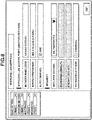
Fig. 8 is diagram illustrating a display example in which no password is selected in a case where an extended security mode is available. -
Fig. 9 is a flowchart of processing executed by a communication apparatus with the extended security mode. - Hereinafter, embodiments of the present invention will be described in detail with reference to the accompanying drawings. The configurations described in the following embodiments are merely examples, and the present invention is not limited to the configurations illustrated in the drawings.
-
Fig. 1 illustrates a configuration example of a network established by an access point (AP) 102 according to the embodiments. The AP 102 is a communication apparatus that has the role of establishing anetwork 101. Thenetwork 101 is a wireless network. The AP may be a printer, camera, projector, smartphone, mobile/portable device, computer or similar device. In other words, the AP may be any communication apparatus capable of communication (e.g. wireless communication) and establishing anetwork 101. - A station (STA) 103 is a communication apparatus that has the role of participating in the
network 101. The STA 103 is compliant with Institute of Electrical and Electronics Engineers (IEEE) 802.11be Extremely High Throughput (EHT) standards and can execute wireless communication in conformity with IEEE802.11be standards via thenetwork 101. -
Fig. 2 illustrates a functional configuration example of theAP 102. The AP 102 includes a wireless local area network (LAN)control unit 201, a displayscreen generation unit 202, a userinput analysis unit 203, a user interface (UI)control unit 204, astorage unit 205, and an externalwireless detection unit 206. - The wireless
LAN control unit 201 includes an antenna and a circuit for transmitting and receiving wireless signals to and from another wireless LAN apparatus, and programs for controlling the antenna and the circuit. The wirelessLAN control unit 201 executes wireless LAN communication control in conformity with IEEE 802.11 standard family. The AP 102 includes the wirelessLAN control unit 201. In the embodiments, the number of wireless LAN control units is one, but the number thereof is not limited thereto. - The
UI control unit 204 includes hardware relating to a user interface such as a touch panel or buttons for accepting operations on the AP 102 performed by a user of the AP 102, and a program for controlling the hardware. By the program in theUI control unit 204, user inputs obtained via aninput unit 304 illustrated inFig. 3 are sent to the userinput analysis unit 203, and images generated by the displayscreen generation unit 202 are sent to anoutput unit 305 illustrated inFig. 3 . Besides, theUI control unit 204 has a function of presenting information such as audio outputs to the user, for example. - The user
input analysis unit 203 receives the information obtained by theUI control unit 204 and analyzes contents of user instructions. Specifically, the userinput analysis unit 203 analyzes contents of control to be performed by the wirelessLAN control unit 201 and extracts information to be displayed on the displayscreen generation unit 202. The userinput analysis unit 203 sends the extracted information to the displayscreen generation unit 202. - The display
screen generation unit 202 generates contents to be displayed on the UI based on the information received from the userinput analysis unit 203 and the information in thestorage unit 205, and sends the generated contents to theUI control unit 204. A screen generated by the displayscreen generation unit 202 may vary depending on the user inputs or with a lapse of time. - The
storage unit 205 is a storage device that may include a program on which theAP 102 runs and programs for controlling a read-only memory (ROM), a random-access memory (RAM), and the like that store data. - The external
wireless detection unit 206 includes a program for detecting signals transmitted by other wireless systems at specified frequencies. The other wireless systems include, but are not limited to, fixed wireless systems and satellite communication systems. Broadcast communication systems may also be included. -
Fig. 3 illustrates a hardware configuration example of the AP 102. The AP 102 includes astorage unit 301, acontrol unit 302, afunctional unit 303, theinput unit 304, theoutput unit 305, acommunication unit 306, and awireless antenna 307. - The
storage unit 301 includes both or either of a ROM and a RAM and stores programs for performing various operations described below and various types of information such as communication parameters for wireless communication. As thestorage unit 301, instead of memories such as the ROM and the RAM, storage media such as a flexible disk, a hard disk, an optical disk, a magneto-optical disk, a compact disk (CD)-ROM, a CD-recordable (R), a magnetic tape, a non-volatile memory card, and a digital versatile disk (DVD) may be used. - The
control unit 302 includes a processor such as a central processing unit (CPU) or a micro processing unit (MPU), an application specific integrated circuit (ASIC), a digital signal processor (DSP), a field programmable gate array (FPGA), or the like. Thecontrol unit 302 controls the entire AP 102 by executing the programs stored in thestorage unit 301. Thecontrol unit 302 may control the entire AP 102 in cooperation with the programs stored in thestorage unit 301 and an operating system (OS). - The
control unit 302 controls thefunctional unit 303 to execute predetermined processing such as image capturing, printing, or projection. Thefunctional unit 303 is hardware for the AP 102 to execute the predetermined processing. If theAP 102 is a camera, for example, thefunctional unit 303 is an imaging unit that performs imaging processing. If theAP 102 is a printer, for example, thefunctional unit 303 is a printing unit that performs print processing. If theAP 102 is a projector, for example, thefunctional unit 303 is a projection unit that performs projection processing. The data processed by thefunctional unit 303 may be data stored in thestorage unit 301 or may be data communicated with another communication apparatus (such as anotherAP 102 or a station such as an STA 103) via thecommunication unit 306 described below. - The
input unit 304 accepts various operations from the user. Theoutput unit 305 provides various outputs to the user. The outputs from theoutput unit 305 include at least one of display on a screen, audio output from a speaker, vibration output, and the like. Both theinput unit 304 and theoutput unit 305 may be implemented by one module such as a touch panel. Theoutput unit 305 does not need to be mounted in a main body of theAP 102 but may be mounted in another device together with a program for controlling theoutput unit 305 and providing outputs to the user. Possible output destination media include, but not limited to, a personal computer (PC) or a smartphone connected by wire or wirelessly to theAP 102. - The
communication unit 306 controls wireless communication in conformity with IEEE 802.11 standard family or controls Internet Protocol (IP) communication. Thecommunication unit 306 also controls thewireless antenna 307 to transmit and receive wireless signals for wireless communication. TheAP 102 communicates content such as image data, document data, and video data with another communication apparatus via thecommunication unit 306. - The
wireless antenna 307 is an antenna that is capable of receiving signals in any of a sub-gigahertz (GHz) band, 2.4-GHz band, 3.6-GHz band, 4.9- and 5-GHz bands, 6-GHz band, and 60-GHz band. Thewireless antenna 307 may physically include one or more antennas to implement Multi-Input and Multi-Output (MIMO) transmission and reception. - In a first embodiment, an example of a graphical user interface is described. However, the graphical user interface may not necessarily be provided. The user can input, as settings for activating the
AP 102, a network name (service set identifier (SSID)), a wireless operation mode (a wireless LAN standard and a frequency band to be used), a security-related scheme, an encryption key, and the like. Generally, a security-related scheme (also referred to as security scheme) is a scheme for supporting communication with or without encryption and/or with or without authentication. For example, the security-related scheme may use an encryption method and an authentication method (e.g. the security-related scheme requires a user to enter a password) or may use an encryption method but not an authentication method (e.g. the security-related scheme does not require a user to enter a password) or may not use encryption nor authentication. The security-related scheme may include an authentication method such as Wi-Fi Protected Access (WPA)/WPA2/WPA3 and an encryption method. - In the present embodiment, based on a combination of a user-specified frequency band and a user-specified security scheme, the
AP 102 switches between encrypted communication and non-encrypted communication at the time of startup of theAP 102. -
Fig. 4 illustrates a display example in which the wireless operation mode of theAP 102 is set to the 2.4-GHz band by the user. There are two security schemes that do not require a user to enter a password in the 2.4-GHz band, namely, conventional Open without authentication/encryption and Wi-Fi Enhanced Open. Wi-Fi Enhanced Open is a security scheme in which encrypted communication can be performed based on Opportunistic Wireless Encryption (OWE) without a user entering a password. In the present embodiment, however, if the wireless operation mode is set to the 2.4-GHz band and no password is selected, non-encrypted communication is set for enhanced compatibility. In other words, when a first frequency band is selected for operation, such as 2.4-GHz, and when no password is set related to authentication, the AP (e.g. by means of the control unit 302) may select or set the scheme for supporting communication as a security-related scheme without encryption, such as Open. -
Fig. 5 illustrates a display example in which the wireless operation mode of theAP 102 is set to the 6-GHz band by the user. Since it is essential to perform authentication using WPA3 (not to perform authentication using WPA/WPA2) in the communication in the 6-GHz band, the security scheme illustrated inFig. 5 may be WPA3. In addition, it is stipulated that no authentication should be performed under Open in the 6-GHz band. Thus, if the wireless operation mode is set to the 6-GHz band and no password is selected, setting of no password illustrated inFig. 5 means that encrypted communication will be performed based on OWE. In other words, when a second frequency band is selected for operation, such as 6-GHz, the AP (e.g. by means of the control unit 302) may select or set the scheme for supporting communication as a security-related scheme with encryption, such as Wi-Fi Enhanced Open with OWE, if the security-related scheme with encryption not requiring a user to enter a password is selected. - The present embodiment has been described taking the 2.4-GHz band and 6-GHz band as examples. However, the present invention is not limited to these bands. In the 5-GHz band as well, if no password is selected by the user, non-encrypted communication will be set.
-
Fig. 6 is a flowchart illustrating a procedure of processing performed by thecontrol unit 302 executing the programs stored in thestorage unit 301 of theAP 102. The flowchart illustrates a procedure of processing for theAP 102 to perform a function as the AP with predetermined security settings in the specified frequency band. The processing in the flowchart is started when theAP 102 is powered on. - In step S601, the
AP 102 displays AP wireless setting items to the user. For example, the AP may collectively display security-related schemes (requiring and/or not requiring a user to enter a password). The displayed wireless settings may include at least part of the display examples and menus shown inFigs. 4 and5 , such as the drop down menu for the security scheme. The displayed wireless settings may include a list of one or more security-related schemes not requiring a user to enter a password and/or a list of one or more security-related schemes requiring a user to enter a password. When the wireless setting items are displayed, the user inputs the frequency band in which theAP 102 is to operate and the security-related scheme including the authentication method and the encryption method. Then, in step S602, theAP 102 determines that the user has finished inputting the setting items. TheAP 102 determines that the user has finished inputting the setting items by detecting a press on a set button. If it is determined in step S602 that the user has finished inputting the setting items, in step S603, theAP 102 acquires wireless setting values including the frequency band and the security-related scheme specified by the user. In step S604, theAP 102 determines whether the input security scheme is a security scheme that requires a user to enter a password based on the wireless setting values acquired in step S603. If it is determined in step S604 that the selected security scheme is a security scheme that requires a user to enter a password (YES in step S604), the processing proceeds to step S605. In step S605, theAP 102 is activated as an access point with the setting values of the security scheme and the frequency band specified by the user. - If it is determined in step S604 that the selected security scheme is a security scheme that does not require a user to enter a password (NO in step S604), the processing proceeds to step S606. In step S606, the
AP 102 determines whether the selected frequency band is the 6-GHz band. If it is determined in step S606 that the selected frequency band is the 6-GHz band (YES in step S606), the processing proceeds to step S607. In step S607, theAP 102 sets the security scheme to Wi-Fi Enhanced Open under which encryption is enabled based on OWE, and is activated as an access point in the 6-GHz band. If it is determined in step S606 that the selected frequency band is not the 6-GHz band (NO in step S606), the processing proceeds to step S608. In step S608, theAP 102 sets the security scheme to Open under which non-encrypted communication will be performed, and is activated as an access point in the user-specified frequency band. - As above, in the present embodiment, if the user specifies the security scheme that does not require the user to enter a password, the user can activate the AP while switching between communication using encryption and communication not using encryption depending on the frequency band.
-
Figs. 4 and5 illustrates the cases where the frequency band is selected by the wireless operation mode. Alternatively, the frequency band and the security scheme may be associated with each other by another method. Any method can be used as far as it allows for identification of the frequency band to use and identification of the security scheme that does not require a user to enter a password (passphrase) among a plurality of security schemes. -
Fig. 7 illustrates an example of UI presented to the user. The frequency band may not be selected by the wireless operation mode as illustrated inFigs. 4 and5 , but the frequency band and the security scheme may be identified in a different setting screen for each frequency band. - In the first embodiment, if no password is specified among the security schemes presented in the UI for general users, the communication device is set to switch between the communication using encryption and the communication not using encryption depending on the frequency band selected by the user. However, some users conversant with security settings may wish to perform the encrypted communication also in the 2.4-GHz band or 5-GHz band, knowing issues of compatibility with conventional authentication methods. In a second embodiment, an extended setting for such a user conversant with security settings will be described.
-
Fig. 8 illustrates an example of setting screen displayed to a user by theAP 102 having an extended security mode. If the user selects the security scheme that does not require a user to enter a password, theAP 102 allows the user to select whether or not to enable the extended security mode. If the extended security mode is enabled, encrypted communication will be performed based on OWE regardless of the setting of the frequency band. -
Fig. 9 is a flowchart illustrating a procedure of processing performed by acontrol unit 302 executing programs stored in astorage unit 301 of theAP 102 having the extended security mode. The flowchart illustrates a procedure of processing for theAP 102 to perform the function as the AP with predetermined security settings in the specified frequency band. The processing in the flowchart is started when theAP 102 is powered on. - Steps S901 to S903 are similar to steps S601 to S603 illustrated in
Fig. 6 , and thus description thereof will be omitted. In step S904, theAP 102 determines whether the selected security scheme is the security scheme that requires a user to enter a password. If it is determined in step S904 that the security scheme is not the security scheme that requires a user to enter a password (NO in step S904), the processing proceeds to step S909. In step S909, theAP 102 determines whether the extended security mode is enabled. The extended security mode is a mode in which encrypted communication can be performed based on OWE without a user entering a password even in the 2.4-GHz or 5-GHz band. If it is determined in step S909 that the extended security mode is enabled (YES in step S909), the processing proceeds to step S907. In step S907, theAP 102 is set to the encrypted communication and activated as an access point in the user-specified frequency band. If it is determined in step S909 that the extended security mode is disabled (NO in step S909), the processing proceeds to step S906. In step S906, theAP 102 determines whether the selected frequency band is the 6-GHz band. Step S906 and the subsequent steps are similar to the steps in the first embodiment. In addition, the step performed by theAP 102 after it is determined in step S904 that the security scheme is the security scheme that requires a user to enter a password is also similar to the step in the first embodiment, and thus description thereof will be omitted. - As above, in the present embodiment, providing the
AP 102 with the extended security mode makes it possible to provide security settings with a high degree of flexibility to users conversant with security settings. - In summary, the
control unit 302 executing one or more programs stored in thestorage unit 301 provides: a setting means for making a setting related to authentication of the AP (e.g. the setting means makes a setting indicating whether or not a user is required to enter a password based on user inputs such as the user selection of 'No Password' or a security-related scheme with or without an authentication method, as discussed above with respect to steps S603 and S903); selection means for selecting a frequency band in which the AP is to operate (e.g. the selection means selects a frequency band based on user inputs such as the user selection of a frequency band as discussed above with respect to steps S603 and S903); and control means for, in a case where a setting not requiring a user to enter a password is made by the setting means, switching between a first scheme and a second scheme based on the frequency band selected by the selection means. In an example, when a setting relating to authentication is provided to theAP 102 indicating no password is specified (e.g. a user is not required to enter a password), control means of the AP 102 (e.g. the control unit 302) may set the AP to use a first scheme (for example, a security-related scheme which supports non-encrypted communication) or a second scheme which is different to the first scheme (for example, a security-related scheme which supports secure communication (e.g. using an encryption method)) based on a selected frequency band. In an example, when the selected frequency band is a first frequency band (e.g. 2.4-GHz or 5-GHz), thecontrol unit 302 may set theAP 102 to use the first scheme (e.g. supporting communication without encryption). In an example, when the selected frequency band is a second frequency band (e.g. 6-GHz), thecontrol unit 302 may set theAP 102 to use the second scheme (e.g. supporting communication with encryption). If an extended security mode is enabled (i.e. a mode for encrypted communication regardless of the selected frequency band is enabled), thecontrol unit 302 may set theAP 102 to use the second scheme (e.g. supporting communication with encryption) irrespective of the frequency band. - A storage medium storing program codes of software for performing the above-described functions may be supplied to a system or an apparatus, and a computer (a CPU or MPU) in the system or the apparatus may read and execute the program codes stored in the storage medium. In this case, the program codes read from the storage medium implement the above-described functions of the embodiments, and the storage medium storing the program codes constitutes the above-described apparatus.
- Examples of the storage medium for supplying the program codes include a flexible disk, a hard disk, an optical disk, a magneto-optical disk, a CD-ROM, a CD-R, a magnetic tape, a non-volatile memory card, a ROM, and a DVD.
- In addition, not only the computer executes the read program codes to implement the above-described functions but also the OS running on the computer may execute part or all of the actual processing based on instructions from the program codes to implement the above-described functions. The OS is an abbreviation of operating system.
- The program codes read from the storage medium are written into a memory included in a function enhancement board inserted into the computer or a function enhancement unit connected to the computer.
- A CPU included in the function enhancement board or the function enhancement unit may perform part or all of the actual processing based on instructions from the program codes to implement the above-described functions.
- The present invention can be realized by supplying a program implementing one or more functions of the above-mentioned embodiments to a system or an apparatus via a network or a recording medium and by reading and executing the program by one or more processors in the system or the apparatus. The present invention can also be realized by a circuit (for example, an ASIC) implementing the one or more functions.
- In the present invention, if the user selects a security scheme that does not require a user to enter a password, it is possible to switch between security schemes without a user operation, thereby user convenience can be improved.
- Embodiment(s) of the present invention can also be realized by a computer of a system or apparatus that reads out and executes computer executable instructions (e.g., one or more programs) recorded on a storage medium (which may also be referred to more fully as a 'non-transitory computer-readable storage medium') to perform the functions of one or more of the above-described embodiment(s) and/or that includes one or more circuits (e.g., application specific integrated circuit (ASIC)) for performing the functions of one or more of the above-described embodiment(s), and by a method performed by the computer of the system or apparatus by, for example, reading out and executing the computer executable instructions from the storage medium to perform the functions of one or more of the above-described embodiment(s) and/or controlling the one or more circuits to perform the functions of one or more of the above-described embodiment(s). The computer may comprise one or more processors (e.g., central processing unit (CPU), micro processing unit (MPU)) and may include a network of separate computers or separate processors to read out and execute the computer executable instructions. The computer executable instructions may be provided to the computer, for example, from a network or the storage medium. The storage medium may include, for example, one or more of a hard disk, a random-access memory (RAM), a read only memory (ROM), a storage of distributed computing systems, an optical disk (such as a compact disc (CD), digital versatile disc (DVD), or Blu-ray Disc (BD)™), a flash memory device, a memory card, and the like.
- While the present invention has been described with reference to embodiments, it is to be understood that the invention is not limited to the disclosed embodiments and is defined by the accompanying claims.
Claims (13)
- A communication apparatus (102) that executes communication using a first scheme or a second scheme being a security-related scheme not requiring a user to enter a password, the communication apparatus comprising:setting means for making a setting related to authentication of the communication apparatus;selection means for selecting a frequency band in which the communication apparatus is to operate; andcontrol means for, in a case where a setting not requiring a user to enter a password is made by the setting means, switching between the first scheme and the second scheme based on the frequency band selected by the selection means.
- The communication apparatus according to claim 1, wherein, in a case where operation in a first frequency band is selected by the selection means, the control means is configured to set the communication apparatus to use the first scheme and execute a function as the communication apparatus.
- The communication apparatus according to claim 1 or 2, wherein, in a case where operation in a second frequency band is selected by the selection means, the control means is configured to set the communication apparatus to use the second scheme and execute a function as the communication apparatus.
- The communication apparatus according to claims 2 and 3, wherein the first frequency band is a 2.4-gigahertz (GHz) band or a 5-GHz band, and the second frequency band is a 6-GHz band.
- The communication apparatus according to any one of claims 1 to 4, further comprising a determination means configured to determine whether a mode for encrypted communication regardless of the selected frequency band is enabled,
wherein, in a case where the determination means determines that the mode is enabled, the control means is configured to set the communication apparatus to use the second scheme and execute a function as the communication apparatus even if operation in a first frequency band is selected by the selection means. - The communication apparatus according to any one of claims 1 to 5, wherein, in a case where operation in a security-related scheme requiring a user to enter a password is set by the setting means, the communication apparatus is configured to execute the communication based on the security-related scheme set by the setting means.
- The communication apparatus according to any one of claims 1 to 6, wherein the communication apparatus is configured to collectively display security-related schemes not requiring a user to enter a password.
- The communication apparatus according to any one of claims 1 to 7, wherein, in the second scheme, the communication apparatus performs encryption based on Opportunistic Wireless Encryption, OWE, standards.
- The communication apparatus according to any one of claims 1 to 8, wherein the second scheme is Wi-Fi Enhanced Open.
- The communication apparatus according to any one of claims 1 to 9, wherein the function as the communication apparatus is a function as an access point.
- A communication method of a communication apparatus configured to execute communication using a first scheme or a second scheme being a security-related scheme not requiring a user to enter a password, the communication method comprising:making a setting related to authentication of the communication apparatus;selecting a frequency band in which the communication apparatus is to operate; andperforming control to, in a case where a setting not requiring a user to enter a password is made in the setting, switch between the first scheme and the second scheme based on the frequency band selected in the selecting.
- A program for causing a computer to operate as the communication apparatus according to any one of claims 1 to 10.
- A computer-readable storage medium carrying a program according to claim 12.
Applications Claiming Priority (1)
| Application Number | Priority Date | Filing Date | Title |
|---|---|---|---|
| JP2021050080A JP7686421B2 (en) | 2021-03-24 | 2021-03-24 | COMMUNICATION DEVICE, COMMUNICATION METHOD, AND PROGRAM |
Publications (3)
| Publication Number | Publication Date |
|---|---|
| EP4064611A2 true EP4064611A2 (en) | 2022-09-28 |
| EP4064611A3 EP4064611A3 (en) | 2022-10-05 |
| EP4064611B1 EP4064611B1 (en) | 2025-11-12 |
Family
ID=80928781
Family Applications (1)
| Application Number | Title | Priority Date | Filing Date |
|---|---|---|---|
| EP22162699.7A Active EP4064611B1 (en) | 2021-03-24 | 2022-03-17 | Communication apparatus, communication method, program, and storage medium |
Country Status (4)
| Country | Link |
|---|---|
| US (2) | US20220312203A1 (en) |
| EP (1) | EP4064611B1 (en) |
| JP (1) | JP7686421B2 (en) |
| CN (1) | CN115209406A (en) |
Citations (1)
| Publication number | Priority date | Publication date | Assignee | Title |
|---|---|---|---|---|
| JP2012089926A (en) | 2010-10-15 | 2012-05-10 | Seiko Epson Corp | Radio communication device and peripheral device having the same |
Family Cites Families (28)
| Publication number | Priority date | Publication date | Assignee | Title |
|---|---|---|---|---|
| SE9703327L (en) * | 1997-09-12 | 1999-03-13 | Ericsson Telefon Ab L M | Method and apparatus for data communication |
| US7240364B1 (en) * | 2000-05-20 | 2007-07-03 | Ciena Corporation | Network device identity authentication |
| US7941669B2 (en) * | 2001-01-03 | 2011-05-10 | American Express Travel Related Services Company, Inc. | Method and apparatus for enabling a user to select an authentication method |
| US8942375B2 (en) * | 2002-09-17 | 2015-01-27 | Broadcom Corporation | Method and system for providing multiple encryption in a multi-band multi-protocol hybrid wired/wireless network |
| JP4455418B2 (en) * | 2005-06-13 | 2010-04-21 | キヤノン株式会社 | Communication parameter setting method and communication apparatus |
| JP5193850B2 (en) * | 2008-12-26 | 2013-05-08 | 株式会社東芝 | Wireless communication method |
| US9197420B2 (en) * | 2010-01-06 | 2015-11-24 | International Business Machines Corporation | Using information in a digital certificate to authenticate a network of a wireless access point |
| TW201301928A (en) * | 2011-06-30 | 2013-01-01 | Ibm | Method, program product, and system of network connection in a wireless local area network |
| EP2756701B1 (en) * | 2011-12-08 | 2019-02-13 | Siemens Aktiengesellschaft | Method and devices for running push-button configuration sessions |
| US9559859B2 (en) * | 2012-01-05 | 2017-01-31 | Dell Products L.P. | Home hub |
| US9418209B2 (en) * | 2012-10-02 | 2016-08-16 | Google Technology Holdings LLC | Systems and methods for manipulating sensitive information in a secure mobile environment |
| US20160127365A1 (en) * | 2013-04-02 | 2016-05-05 | Verayo, Inc. | Authentication token |
| US9173103B2 (en) * | 2014-01-30 | 2015-10-27 | International Business Machines Corporation | Signal security for wireless access point |
| US10049202B1 (en) * | 2014-03-25 | 2018-08-14 | Amazon Technologies, Inc. | Strong authentication using authentication objects |
| US9519618B2 (en) * | 2014-06-03 | 2016-12-13 | Mitsubishi Electric Research Laboratories, Inc. | System and method for determining distance between signals |
| US9264419B1 (en) * | 2014-06-26 | 2016-02-16 | Amazon Technologies, Inc. | Two factor authentication with authentication objects |
| JP6584210B2 (en) * | 2015-08-10 | 2019-10-02 | キヤノン株式会社 | COMMUNICATION DEVICE, ITS CONTROL METHOD, PROGRAM, AND STORAGE MEDIUM |
| US9935771B2 (en) * | 2015-09-22 | 2018-04-03 | Verisign, Inc. | Methods and systems for bootstrapping |
| US20170244692A1 (en) * | 2016-02-24 | 2017-08-24 | Gemalto Inc. | Authentication of a user using a security device |
| US9996679B2 (en) * | 2016-05-03 | 2018-06-12 | Pegasus Media Security, Llc | Methods and apparatus for device authentication and secure data exchange between a server application and a device |
| US11176237B2 (en) * | 2016-06-12 | 2021-11-16 | Apple Inc. | Modifying security state with secured range detection |
| US11250118B2 (en) * | 2016-06-12 | 2022-02-15 | Apple Inc. | Remote interaction with a device using secure range detection |
| US11133930B2 (en) * | 2017-03-24 | 2021-09-28 | Metrarc Limited | Security credentials |
| US11805411B2 (en) * | 2017-05-11 | 2023-10-31 | Telefonaktiebolaget Lm Ericsson (Publ) | Establishing connections between WiFi access points and wireless devices via light fidelity access points |
| ES2920959T3 (en) * | 2017-08-23 | 2022-08-12 | Huawei Tech Co Ltd | Wi-Fi access point and terminal connection method |
| US10973028B2 (en) * | 2018-05-23 | 2021-04-06 | Google Llc | Intelligent band selection for wireless access point |
| JP7319807B2 (en) * | 2019-03-29 | 2023-08-02 | キヤノン株式会社 | Communication device, communication method, and program |
| CN111356209B (en) * | 2020-02-17 | 2022-04-26 | Oppo广东移动通信有限公司 | Multi-frequency WiFi hotspot opening method and device, storage medium and electronic equipment |
-
2021
- 2021-03-24 JP JP2021050080A patent/JP7686421B2/en active Active
-
2022
- 2022-03-17 CN CN202210265186.8A patent/CN115209406A/en active Pending
- 2022-03-17 EP EP22162699.7A patent/EP4064611B1/en active Active
- 2022-03-17 US US17/697,746 patent/US20220312203A1/en active Pending
-
2025
- 2025-10-21 US US19/364,249 patent/US20260046620A1/en active Pending
Patent Citations (1)
| Publication number | Priority date | Publication date | Assignee | Title |
|---|---|---|---|---|
| JP2012089926A (en) | 2010-10-15 | 2012-05-10 | Seiko Epson Corp | Radio communication device and peripheral device having the same |
Also Published As
| Publication number | Publication date |
|---|---|
| EP4064611B1 (en) | 2025-11-12 |
| CN115209406A (en) | 2022-10-18 |
| US20220312203A1 (en) | 2022-09-29 |
| EP4064611A3 (en) | 2022-10-05 |
| US20260046620A1 (en) | 2026-02-12 |
| JP7686421B2 (en) | 2025-06-02 |
| JP2022148408A (en) | 2022-10-06 |
Similar Documents
| Publication | Publication Date | Title |
|---|---|---|
| US11197141B2 (en) | Information processing apparatus, method of controlling the same, and storage medium | |
| US20250338265A1 (en) | Communication apparatus, control method, and storage medium | |
| CN108882338B (en) | Information processing apparatus and control method | |
| US12150040B2 (en) | Communication device, communication method, and computer-readable storage medium | |
| US11296749B2 (en) | Communication system, communication apparatus, method of controlling the same, and storage medium | |
| US10291795B2 (en) | Communication apparatus, method for controlling communication apparatus, and storage medium for selecting an apparatus in a wireless network | |
| US20240107306A1 (en) | Communication apparatus, communication method, and storage medium | |
| US9357479B2 (en) | Communication system, communication control system, communication apparatus, communication method, and connection program | |
| US20160192259A1 (en) | Communication system, communication control system, communication apparatus, communication method, and connection program | |
| US20260046620A1 (en) | Communication apparatus, communication method, and storage medium | |
| US12363533B2 (en) | Communication apparatus, method of controlling communication apparatus, and non-transitory computer-readable storage medium | |
| US12294857B2 (en) | Communication apparatus for providing a setting screen having high convenience of user input of communication parameters, control method, and storage medium | |
| US12058521B2 (en) | Communication apparatus, control method, and storage medium | |
| US20230328616A1 (en) | Wireless communication apparatus, method for controlling the same, and storage medium | |
| EP4160357A1 (en) | Communication apparatus, control method, and program | |
| JP2023121535A (en) | Communication device, control method and program | |
| EP4576853A1 (en) | Communication apparatus, control method, storage medium, and program product | |
| US20260095813A1 (en) | Communication device and control method | |
| US20240195927A1 (en) | Communication apparatus having first and second setting information, control method, and storage medium for storing program | |
| JP2024141564A (en) | Information processing device, control method, and program | |
| WO2023181840A1 (en) | Wireless communication device, wireless communication device control method, and program |
Legal Events
| Date | Code | Title | Description |
|---|---|---|---|
| PUAI | Public reference made under article 153(3) epc to a published international application that has entered the european phase |
Free format text: ORIGINAL CODE: 0009012 |
|
| STAA | Information on the status of an ep patent application or granted ep patent |
Free format text: STATUS: THE APPLICATION HAS BEEN PUBLISHED |
|
| PUAL | Search report despatched |
Free format text: ORIGINAL CODE: 0009013 |
|
| AK | Designated contracting states |
Kind code of ref document: A2 Designated state(s): AL AT BE BG CH CY CZ DE DK EE ES FI FR GB GR HR HU IE IS IT LI LT LU LV MC MK MT NL NO PL PT RO RS SE SI SK SM TR |
|
| AK | Designated contracting states |
Kind code of ref document: A3 Designated state(s): AL AT BE BG CH CY CZ DE DK EE ES FI FR GB GR HR HU IE IS IT LI LT LU LV MC MK MT NL NO PL PT RO RS SE SI SK SM TR |
|
| RIC1 | Information provided on ipc code assigned before grant |
Ipc: H04L 67/00 20220101ALI20220826BHEP Ipc: H04W 12/06 20210101ALI20220826BHEP Ipc: H04W 12/67 20210101ALI20220826BHEP Ipc: H04W 84/12 20090101ALI20220826BHEP Ipc: H04L 41/0806 20220101ALI20220826BHEP Ipc: H04L 9/40 20220101AFI20220826BHEP |
|
| STAA | Information on the status of an ep patent application or granted ep patent |
Free format text: STATUS: REQUEST FOR EXAMINATION WAS MADE |
|
| 17P | Request for examination filed |
Effective date: 20230405 |
|
| RBV | Designated contracting states (corrected) |
Designated state(s): AL AT BE BG CH CY CZ DE DK EE ES FI FR GB GR HR HU IE IS IT LI LT LU LV MC MK MT NL NO PL PT RO RS SE SI SK SM TR |
|
| STAA | Information on the status of an ep patent application or granted ep patent |
Free format text: STATUS: EXAMINATION IS IN PROGRESS |
|
| 17Q | First examination report despatched |
Effective date: 20241122 |
|
| GRAP | Despatch of communication of intention to grant a patent |
Free format text: ORIGINAL CODE: EPIDOSNIGR1 |
|
| STAA | Information on the status of an ep patent application or granted ep patent |
Free format text: STATUS: GRANT OF PATENT IS INTENDED |
|
| RIC1 | Information provided on ipc code assigned before grant |
Ipc: H04W 84/12 20090101ALN20250531BHEP Ipc: H04W 12/06 20210101ALI20250531BHEP Ipc: H04W 12/03 20210101ALI20250531BHEP Ipc: H04L 9/40 20220101AFI20250531BHEP |
|
| INTG | Intention to grant announced |
Effective date: 20250612 |
|
| GRAS | Grant fee paid |
Free format text: ORIGINAL CODE: EPIDOSNIGR3 |
|
| GRAA | (expected) grant |
Free format text: ORIGINAL CODE: 0009210 |
|
| STAA | Information on the status of an ep patent application or granted ep patent |
Free format text: STATUS: THE PATENT HAS BEEN GRANTED |
|
| AK | Designated contracting states |
Kind code of ref document: B1 Designated state(s): AL AT BE BG CH CY CZ DE DK EE ES FI FR GB GR HR HU IE IS IT LI LT LU LV MC MK MT NL NO PL PT RO RS SE SI SK SM TR |
|
| REG | Reference to a national code |
Ref country code: CH Ref legal event code: F10 Free format text: ST27 STATUS EVENT CODE: U-0-0-F10-F00 (AS PROVIDED BY THE NATIONAL OFFICE) Effective date: 20251112 Ref country code: GB Ref legal event code: FG4D |
|
| REG | Reference to a national code |
Ref country code: DE Ref legal event code: R096 Ref document number: 602022024728 Country of ref document: DE |
|
| REG | Reference to a national code |
Ref country code: IE Ref legal event code: FG4D |
|
| REG | Reference to a national code |
Ref country code: NL Ref legal event code: MP Effective date: 20251112 |
|
| PGFP | Annual fee paid to national office [announced via postgrant information from national office to epo] |
Ref country code: GB Payment date: 20260219 Year of fee payment: 5 |
|
| PG25 | Lapsed in a contracting state [announced via postgrant information from national office to epo] |
Ref country code: ES Free format text: LAPSE BECAUSE OF FAILURE TO SUBMIT A TRANSLATION OF THE DESCRIPTION OR TO PAY THE FEE WITHIN THE PRESCRIBED TIME-LIMIT Effective date: 20251112 |
|
| REG | Reference to a national code |
Ref country code: LT Ref legal event code: MG9D |
|
| PG25 | Lapsed in a contracting state [announced via postgrant information from national office to epo] |
Ref country code: NO Free format text: LAPSE BECAUSE OF FAILURE TO SUBMIT A TRANSLATION OF THE DESCRIPTION OR TO PAY THE FEE WITHIN THE PRESCRIBED TIME-LIMIT Effective date: 20260212 |
|
| PG25 | Lapsed in a contracting state [announced via postgrant information from national office to epo] |
Ref country code: HR Free format text: LAPSE BECAUSE OF FAILURE TO SUBMIT A TRANSLATION OF THE DESCRIPTION OR TO PAY THE FEE WITHIN THE PRESCRIBED TIME-LIMIT Effective date: 20251112 Ref country code: AT Free format text: LAPSE BECAUSE OF FAILURE TO SUBMIT A TRANSLATION OF THE DESCRIPTION OR TO PAY THE FEE WITHIN THE PRESCRIBED TIME-LIMIT Effective date: 20251112 Ref country code: FI Free format text: LAPSE BECAUSE OF FAILURE TO SUBMIT A TRANSLATION OF THE DESCRIPTION OR TO PAY THE FEE WITHIN THE PRESCRIBED TIME-LIMIT Effective date: 20251112 |
|
| PGFP | Annual fee paid to national office [announced via postgrant information from national office to epo] |
Ref country code: AT Payment date: 20260301 Year of fee payment: 5 |
|
| REG | Reference to a national code |
Ref country code: AT Ref legal event code: MK05 Ref document number: 1857752 Country of ref document: AT Kind code of ref document: T Effective date: 20251112 |
|
| PG25 | Lapsed in a contracting state [announced via postgrant information from national office to epo] |
Ref country code: NL Free format text: LAPSE BECAUSE OF FAILURE TO SUBMIT A TRANSLATION OF THE DESCRIPTION OR TO PAY THE FEE WITHIN THE PRESCRIBED TIME-LIMIT Effective date: 20251112 |
|
| PG25 | Lapsed in a contracting state [announced via postgrant information from national office to epo] |
Ref country code: RS Free format text: LAPSE BECAUSE OF FAILURE TO SUBMIT A TRANSLATION OF THE DESCRIPTION OR TO PAY THE FEE WITHIN THE PRESCRIBED TIME-LIMIT Effective date: 20260212 |
|
| PG25 | Lapsed in a contracting state [announced via postgrant information from national office to epo] |
Ref country code: IS Free format text: LAPSE BECAUSE OF FAILURE TO SUBMIT A TRANSLATION OF THE DESCRIPTION OR TO PAY THE FEE WITHIN THE PRESCRIBED TIME-LIMIT Effective date: 20260312 |
|
| PG25 | Lapsed in a contracting state [announced via postgrant information from national office to epo] |
Ref country code: PT Free format text: LAPSE BECAUSE OF FAILURE TO SUBMIT A TRANSLATION OF THE DESCRIPTION OR TO PAY THE FEE WITHIN THE PRESCRIBED TIME-LIMIT Effective date: 20260312 |
|
| PG25 | Lapsed in a contracting state [announced via postgrant information from national office to epo] |
Ref country code: PL Free format text: LAPSE BECAUSE OF FAILURE TO SUBMIT A TRANSLATION OF THE DESCRIPTION OR TO PAY THE FEE WITHIN THE PRESCRIBED TIME-LIMIT Effective date: 20251112 |
|
| PG25 | Lapsed in a contracting state [announced via postgrant information from national office to epo] |
Ref country code: LV Free format text: LAPSE BECAUSE OF FAILURE TO SUBMIT A TRANSLATION OF THE DESCRIPTION OR TO PAY THE FEE WITHIN THE PRESCRIBED TIME-LIMIT Effective date: 20251112 |
|
| PG25 | Lapsed in a contracting state [announced via postgrant information from national office to epo] |
Ref country code: BG Free format text: LAPSE BECAUSE OF FAILURE TO SUBMIT A TRANSLATION OF THE DESCRIPTION OR TO PAY THE FEE WITHIN THE PRESCRIBED TIME-LIMIT Effective date: 20251112 |