EP4064217A1 - Extracting region of interest from scanned images and determining an associated image type thereof - Google Patents
Extracting region of interest from scanned images and determining an associated image type thereof Download PDFInfo
- Publication number
- EP4064217A1 EP4064217A1 EP21188677.5A EP21188677A EP4064217A1 EP 4064217 A1 EP4064217 A1 EP 4064217A1 EP 21188677 A EP21188677 A EP 21188677A EP 4064217 A1 EP4064217 A1 EP 4064217A1
- Authority
- EP
- European Patent Office
- Prior art keywords
- image
- hardware processors
- resized
- interest
- region
- Prior art date
- Legal status (The legal status is an assumption and is not a legal conclusion. Google has not performed a legal analysis and makes no representation as to the accuracy of the status listed.)
- Granted
Links
Images






Classifications
-
- G—PHYSICS
- G06—COMPUTING OR CALCULATING; COUNTING
- G06V—IMAGE OR VIDEO RECOGNITION OR UNDERSTANDING
- G06V10/00—Arrangements for image or video recognition or understanding
- G06V10/98—Detection or correction of errors, e.g. by rescanning the pattern or by human intervention; Evaluation of the quality of the acquired patterns
- G06V10/993—Evaluation of the quality of the acquired pattern
-
- G—PHYSICS
- G06—COMPUTING OR CALCULATING; COUNTING
- G06T—IMAGE DATA PROCESSING OR GENERATION, IN GENERAL
- G06T3/00—Geometric image transformations in the plane of the image
- G06T3/40—Scaling of whole images or parts thereof, e.g. expanding or contracting
- G06T3/4053—Scaling of whole images or parts thereof, e.g. expanding or contracting based on super-resolution, i.e. the output image resolution being higher than the sensor resolution
- G06T3/4076—Scaling of whole images or parts thereof, e.g. expanding or contracting based on super-resolution, i.e. the output image resolution being higher than the sensor resolution using the original low-resolution images to iteratively correct the high-resolution images
-
- G—PHYSICS
- G06—COMPUTING OR CALCULATING; COUNTING
- G06T—IMAGE DATA PROCESSING OR GENERATION, IN GENERAL
- G06T5/00—Image enhancement or restoration
- G06T5/20—Image enhancement or restoration using local operators
-
- G—PHYSICS
- G06—COMPUTING OR CALCULATING; COUNTING
- G06T—IMAGE DATA PROCESSING OR GENERATION, IN GENERAL
- G06T5/00—Image enhancement or restoration
- G06T5/73—Deblurring; Sharpening
-
- G—PHYSICS
- G06—COMPUTING OR CALCULATING; COUNTING
- G06T—IMAGE DATA PROCESSING OR GENERATION, IN GENERAL
- G06T7/00—Image analysis
- G06T7/10—Segmentation; Edge detection
- G06T7/11—Region-based segmentation
-
- G—PHYSICS
- G06—COMPUTING OR CALCULATING; COUNTING
- G06T—IMAGE DATA PROCESSING OR GENERATION, IN GENERAL
- G06T7/00—Image analysis
- G06T7/10—Segmentation; Edge detection
- G06T7/13—Edge detection
-
- G—PHYSICS
- G06—COMPUTING OR CALCULATING; COUNTING
- G06T—IMAGE DATA PROCESSING OR GENERATION, IN GENERAL
- G06T7/00—Image analysis
- G06T7/10—Segmentation; Edge detection
- G06T7/136—Segmentation; Edge detection involving thresholding
-
- G—PHYSICS
- G06—COMPUTING OR CALCULATING; COUNTING
- G06T—IMAGE DATA PROCESSING OR GENERATION, IN GENERAL
- G06T7/00—Image analysis
- G06T7/90—Determination of colour characteristics
-
- G—PHYSICS
- G06—COMPUTING OR CALCULATING; COUNTING
- G06V—IMAGE OR VIDEO RECOGNITION OR UNDERSTANDING
- G06V10/00—Arrangements for image or video recognition or understanding
- G06V10/20—Image preprocessing
- G06V10/25—Determination of region of interest [ROI] or a volume of interest [VOI]
-
- G—PHYSICS
- G06—COMPUTING OR CALCULATING; COUNTING
- G06V—IMAGE OR VIDEO RECOGNITION OR UNDERSTANDING
- G06V10/00—Arrangements for image or video recognition or understanding
- G06V10/40—Extraction of image or video features
- G06V10/56—Extraction of image or video features relating to colour
-
- H—ELECTRICITY
- H04—ELECTRIC COMMUNICATION TECHNIQUE
- H04N—PICTORIAL COMMUNICATION, e.g. TELEVISION
- H04N1/00—Scanning, transmission or reproduction of documents or the like, e.g. facsimile transmission; Details thereof
- H04N1/00127—Connection or combination of a still picture apparatus with another apparatus, e.g. for storage, processing or transmission of still picture signals or of information associated with a still picture
- H04N1/00132—Connection or combination of a still picture apparatus with another apparatus, e.g. for storage, processing or transmission of still picture signals or of information associated with a still picture in a digital photofinishing system, i.e. a system where digital photographic images undergo typical photofinishing processing, e.g. printing ordering
- H04N1/00167—Processing or editing
-
- G—PHYSICS
- G06—COMPUTING OR CALCULATING; COUNTING
- G06T—IMAGE DATA PROCESSING OR GENERATION, IN GENERAL
- G06T2207/00—Indexing scheme for image analysis or image enhancement
- G06T2207/10—Image acquisition modality
- G06T2207/10024—Color image
-
- G—PHYSICS
- G06—COMPUTING OR CALCULATING; COUNTING
- G06T—IMAGE DATA PROCESSING OR GENERATION, IN GENERAL
- G06T2207/00—Indexing scheme for image analysis or image enhancement
- G06T2207/20—Special algorithmic details
- G06T2207/20024—Filtering details
- G06T2207/20032—Median filtering
-
- G—PHYSICS
- G06—COMPUTING OR CALCULATING; COUNTING
- G06T—IMAGE DATA PROCESSING OR GENERATION, IN GENERAL
- G06T2207/00—Indexing scheme for image analysis or image enhancement
- G06T2207/20—Special algorithmic details
- G06T2207/20092—Interactive image processing based on input by user
- G06T2207/20104—Interactive definition of region of interest [ROI]
-
- G—PHYSICS
- G06—COMPUTING OR CALCULATING; COUNTING
- G06T—IMAGE DATA PROCESSING OR GENERATION, IN GENERAL
- G06T2207/00—Indexing scheme for image analysis or image enhancement
- G06T2207/30—Subject of image; Context of image processing
- G06T2207/30176—Document
Definitions
- the disclosure herein generally relates to image processing techniques, and, more particularly, to extracting region of interest from scanned images and determining an associated image type thereof.
- ROI detection is an important step in extracting relevant information from a document image.
- Scanned image typically contains actual document in a very small region compared to the whole image area. Only a small part of the image contains actual relevant information which is Region of Interest (ROI) in context.
- ROI Region of Interest
- Such images are very high-resolution images in nature and the size of images is in order of megabytes, which makes the text detection pipeline very slow.
- Conventional image processing-based solutions are not able to detect exact document region as a region of interest in automated way. There are few traditional methods which detect and extract region of interest from images, but these work only for specific image types. Other approaches include deep learning (DL) based methods for ROI detect which need intensive training (with huge data) to perform with good accuracy. These solutions are resource hungry and require high end computing infrastructure with graphical processing unit (GPU) capabilities.
- DL deep learning
- GPU graphical processing unit
- Embodiments of the present disclosure present technological improvements as solutions to one or more of the above-mentioned technical problems recognized by the inventors in conventional systems. For example, in one aspect, there is provided a processor implemented method for extracting region of interest from scanned images and determining an associated image type thereof.
- the method comprises: obtaining, via one or more hardware processors, an input comprising a scanned image; resizing, via the one or more hardware processors, the obtained scanned image to obtain a resized image; partitioning, via the one or more hardware processors, the resized image into a pre-defined number of parts; classifying, via the one or more hardware processors, the resized image into a first class or a second class based on a property associated with a foreground and a background comprised in the pre-defined number of parts of the resized image to obtain a classified image; based on the classified image, obtaining a region of interest by performing one of: (i) converting, via the one or more hardware processors, the scanned image into a gray scale image and resizing the gray scale image to obtain a resized gray scale image; (ii) applying, via the one or more hardware processors, a first filtering technique on the resized gray scale image to obtain a first filtered image; (iii)
- the step of classifying, via the one or more hardware processors, the resized image into a first class or a second class comprises: calculating an intensity of the grey channel space for each part and computing a difference in the intensities across the predefined number of parts; performing a third comparison of the difference with a predefined threshold; classifying, based on the third comparison, the resized image into the first class or the second class to obtain the classified image.
- the step of extracting, via the one or more hardware processors, a region of interest from the obtained output image based on the first comparison comprises: concatenating two or more black areas from the plurality of black areas based on the first comparison to obtain a consolidated black area, wherein the two or more black areas are concatenated based on a corresponding presence within a predefined range, wherein the consolidated black area serves as the region of interest.
- the plurality of clusters is obtained based on an intersection of (i) an output of the clustering technique performed on the mode color intensity of H channel and (ii) an output of the clustering technique performed on the mode color intensity of V channel.
- the step of selecting a cluster from the plurality of clusters is based on there being (i) a single common corner point or (ii) no common corner point.
- the method further comprises determining, via the one or more hardware processors, a type of the scanned image as a pre-cropped scanned image or a normal scanned image based on the region of interest.
- the step of determining, via the one or more hardware processors, a type of the scanned image a pre-cropped scanned image or a normal scanned image is based on a fourth comparison of (i) a difference between the region of interest and the scanned image and (ii) a predetermined threshold.
- a system for extracting region of interest from scanned images and determining an associated image type thereof comprises: a memory storing instructions; one or more communication interfaces; and one or more hardware processors coupled to the memory via the one or more communication interfaces, wherein the one or more hardware processors are configured by the instructions to: obtain an input comprising a scanned image; resize the obtained scanned image to obtain a resized image; partition the resized image into a pre-defined number of parts; classify the resized image into a first class or a second class based on a property associated with a foreground and a background comprised in the pre-defined number of parts of the resized image to obtain a classified image; based on the classified image, obtain a region of interest by performing one of: (i) converting the scanned image into a gray scale image and resizing the gray scale image to obtain a resized gray scale image; (ii) applying a first filtering technique on the resized gray scale
- the one or more hardware processors classify the resized image into a first class or a second class by: calculating an intensity of the grey channel space for each part and computing a difference in the intensities across the predefined number of parts; performing a third comparison of the difference with a predefined threshold; classifying, based on the third comparison, the resized image into the first class or the second class to obtain the classified image.
- the step of extracting, via the one or more hardware processors, a region of interest from the obtained output image based on the first comparison comprises: concatenating two or more black areas from the plurality of black areas based on the first comparison to obtain a consolidated black area, wherein the two or more black areas are concatenated based on a corresponding presence within a predefined range, wherein the consolidated black area serves as the region of interest.
- the plurality of clusters is obtained based on an intersection of (i) an output of the clustering technique performed on the mode color intensity of H channel and (ii) an output of the clustering technique performed on the mode color intensity of V channel.
- the cluster is selected from the plurality of clusters based on there being (i) a single common corner point or (ii) no common corner point.
- the one or more hardware processors are further configured by the instructions to determine a type of the scanned image as a pre-cropped scanned image or a normal scanned image based on the region of interest.
- the type of the scanned image is determined as the pre-cropped scanned image or the normal scanned image is based on a fourth comparison of (i) a difference between the region of interest and the scanned image and (ii) a predetermined threshold.
- one or more non-transitory machine readable information storage mediums comprising one or more instructions which when executed by one or more hardware processors causes a method for extracting region of interest from scanned images and determining an associated image type thereof.
- the method comprises: obtaining, via one or more hardware processors, an input comprising a scanned image; resizing, via the one or more hardware processors, the obtained scanned image to obtain a resized image; partitioning, via the one or more hardware processors, the resized image into a pre-defined number of parts; classifying, via the one or more hardware processors, the resized image into a first class or a second class based on a property associated with a foreground and a background comprised in the pre-defined number of parts of the resized image to obtain a classified image; based on the classified image, obtaining a region of interest by performing one of: (i) converting, via the one or more hardware processors, the scanned image into a gray scale image and resizing
- the step of classifying, via the one or more hardware processors, the resized image into a first class or a second class comprises: calculating an intensity of the grey channel space for each part and computing a difference in the intensities across the predefined number of parts; performing a third comparison of the difference with a predefined threshold; and classifying, based on the third comparison, the resized image into the first class or the second class to obtain the classified image.
- the step of extracting, via the one or more hardware processors, a region of interest from the obtained output image based on the first comparison comprises: concatenating two or more black areas from the plurality of black areas based on the first comparison to obtain a consolidated black area, wherein the two or more black areas are concatenated based on a corresponding presence within a predefined range, wherein the consolidated black area serves as the region of interest.
- the plurality of clusters is obtained based on an intersection of (i) an output of the clustering technique performed on the mode color intensity of H channel and (ii) an output of the clustering technique performed on the mode color intensity of V channel.
- the step of selecting a cluster from the plurality of clusters is based on there being (i) a single common corner point or (ii) no common corner point.
- the method further comprises determining, via the one or more hardware processors, a type of the scanned image as a pre-cropped scanned image or a normal scanned image based on the region of interest.
- the step of determining, via the one or more hardware processors, a type of the scanned image a pre-cropped scanned image or a normal scanned image is based on a fourth comparison of (i) a difference between the region of interest and the scanned image and (ii) a predetermined threshold
- FIG. 1 through 5H where similar reference characters denote corresponding features consistently throughout the figures, there are shown preferred embodiments and these embodiments are described in the context of the following exemplary system and/or method.
- FIG. 1 depicts a system 100 for extracting region of interest from scanned images and determining an associated image type thereof, in accordance with an embodiment of the present disclosure.
- the system 100 includes one or more hardware processors 104, communication interface device(s) or input/output (I/O) interface(s) 106 (also referred as interface(s)), and one or more data storage devices or memory 102 operatively coupled to the one or more hardware processors 104.
- the one or more processors 104 may be one or more software processing components and/or hardware processors.
- the hardware processors can be implemented as one or more microprocessors, microcomputers, microcontrollers, digital signal processors, central processing units, state machines, logic circuitries, and/or any devices that manipulate signals based on operational instructions.
- the processor(s) is/are configured to fetch and execute computer-readable instructions stored in the memory.
- the system 100 can be implemented in a variety of computing systems, such as laptop computers, notebooks, hand-held devices, workstations, mainframe computers, servers, a network cloud and the like.
- the I/O interface device(s) 106 can include a variety of software and hardware interfaces, for example, a web interface, a graphical user interface, and the like and can facilitate multiple communications within a wide variety of networks N/W and protocol types, including wired networks, for example, LAN, cable, etc., and wireless networks, such as WLAN, cellular, or satellite.
- the I/O interface device(s) can include one or more ports for connecting a number of devices to one another or to another server.
- the memory 102 may include any computer-readable medium known in the art including, for example, volatile memory, such as static random access memory (SRAM) and dynamic random access memory (DRAM), and/or non-volatile memory, such as read only memory (ROM), erasable programmable ROM, flash memories, hard disks, optical disks, and magnetic tapes.
- volatile memory such as static random access memory (SRAM) and dynamic random access memory (DRAM)
- non-volatile memory such as read only memory (ROM), erasable programmable ROM, flash memories, hard disks, optical disks, and magnetic tapes.
- ROM read only memory
- ROM erasable programmable ROM
- the information stored in the database 108 further comprises various techniques such as filtering technique as known in the art.
- filtering techniques include but are not limited to adaptive thresholding technique(s), median blurring technique(s), edge detection, image morphological technique(s), bounding box creating technique(s), clustering technique(s), image area calculation technique(s), and the like.
- the above-mentioned techniques comprised in the memory 102/database 108 are invoked as per the requirement by the system 100 to perform the methodologies described herein.
- the memory 102 further comprises (or may further comprise) information pertaining to input(s)/output(s) of each step performed by the systems and methods of the present disclosure. In other words, input(s) fed at each step and output(s) generated at each step are comprised in the memory 102 and can be utilized in further processing and analysis.
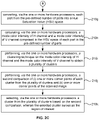
- FIGS. 2A through 2C depict an exemplary flow chart illustrating a method for extracting region of interest from scanned images and determining an associated image type thereof, using the system 100 of FIG. 1 , in accordance with an embodiment of the present disclosure.
- the system(s) 100 comprises one or more data storage devices or the memory 102 operatively coupled to the one or more hardware processors 104 and is configured to store instructions for execution of steps of the method by the one or more processors 104.
- the steps of the method of the present disclosure will now be explained with reference to components of the system 100 of FIG. 1 , and the flow diagram as depicted in FIG. 2 .
- the one or more hardware processors 104 obtain an input comprising a scanned image.
- FIG. 3A depicts an exemplary scanned image received as an input by the system 100 of FIG. 1 , in accordance with an embodiment of the present disclosure.
- the system 100 receives an input scanned image of an image size say 2250*4000 pixels.
- the expression 'scanned image' may also be referred as 'input image', or 'image' and may be interchangeably used herein.
- the image may be in any file format as known in the art (e.g., jpeg, gif, png, jpg, bmp, and the like), in one example embodiment.
- the image may also be received in the form of a Portable Document Format (PDF), in another example embodiment.
- PDF Portable Document Format
- the one or more hardware processors 104 resize the obtained scanned image to obtain a resized image.
- the above scanned image having the image size 2250*4000 pixels is resized to obtain the resized image with image size say 225*400 pixels.
- FIG. 3B depicts an exemplary resized image, in accordance with an embodiment of the present disclosure.
- the one or more hardware processors 104 partition the resized image into a pre-defined number of parts. Such partitioning of the resized image into the pre-defined number of parts is based on visual perception of the image, in one example embodiment.
- FIG. 3C depicts an exemplary the resized image being partitioning into a pre-defined number of parts by the system 100 of FIG. 1 , in accordance with an embodiment of the present disclosure. More specifically, FIG. 3C , depicts the resized image being partitioning into 9 parts, in one example embodiment of the present disclosure.
- SLIC Simple Linear Iterative Clustering
- the one or more hardware processors 104 classify the resized image into a first class or a second class based on a property (e.g., color) associated with a foreground and a background comprised in the pre-defined number of parts of the resized image to obtain a classified image.
- Class 1 Image refers to an image which contains only one predominant color
- class 2 image refers to an image contains more than one predominant colors.
- Image(s) with very similar foreground and background colour are example of class 1 images such as identity proof documents (e.g., Aadhar card with white background).
- Images with different foreground and background colour are example of class 2 images such as Permanent Account Number (PAN) card (e.g., blue colour) on white background (e.g., when PAN card placed on white paper and scanned).
- the step of classifying, via the one or more hardware processors, the resized image into a first class or a second class comprises: converting each part from the predefined number of parts to a grey channel space; calculating an intensity of the grey channel space for each part and computing a difference in the intensities across the predefined number of parts; performing a comparison (also referred as a third comparison) of the difference with a predefined threshold; and classifying, based on the comparison (also referred as the third comparison), the resized image into the first class or the second class to obtain the classified image.
- PAN Permanent Account Number
- D max(m1, m2, .., mn) - min(m1, m2, .., mn), where D is the difference in the intensities across the parts.
- the predefined threshold e.g., ⁇
- the predefined threshold ⁇ say is 50. The difference D is compared with the predefined threshold ⁇ .
- the scanned image/resized image is classified as a first class (e.g., also referred as first category, and interchangeably used herein), else it is classified into a second class (e.g., also referred as second category, and interchangeably used herein.
- first class e.g., also referred as first category, and interchangeably used herein
- second class e.g., also referred as second category, and interchangeably used herein.
- Table 1 depicts exemplary parts (also referred as 'segments' and interchangeably used herein) of the scanned image and gray channel (also referred as 'grey channel' and interchangeably used herein) being computed for each part. For the sake of brevity, only 7 parts/segments are depicted for better understanding of the embodiments of the present disclosure.
- the grey channel intensity of Part_3 is 178 and grey channel intensity of Part_6 is 165.
- the scanned image was classified as a first class image or the first category image.
- the one or more hardware processors 104 obtain a region of interest based on the classified image by performing one of steps 210a through 210f or 210g through 210k.
- steps 210a through 210f are performed for obtaining region of interest and are described herein below.
- steps 210g through 210k are performed for obtaining the region of interest (described later in the below paragraphs).
- the one or more hardware processors 104 convert the scanned image into a gray scale image and resize the gray scale image to obtain a resized gray scale image.
- the expression 'gray scale' may also be referred as 'grayscale' or 'grey scale' or 'greyscale', and interchangeably used herein.
- the scanned image of step 202 is converted into grayscale and resized to 300*300 pixels.
- the horizontal and vertical factors (e.g., h_factor and w_factor respectively) are stored in the database 108 for further analysis and processing at later stage(s) as per the requirements.
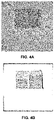
- FIG. 4A depicts an exemplary resized grayscale image as outputted by the system 100 of FIG. 1 , in accordance with an embodiment of the present disclosure.
- the one or more hardware processors 104 apply a first filtering technique on the resized gray scale image to obtain a first filtered image.
- FIG. 4B depicts an exemplary first filtered image outputted by the system 100 of FIG. 1 , in accordance with an embodiment of the present disclosure. More specifically, the system 100 applies adaptive thresholding technique and followed by a median blur technique. Post applying the adaptive thresholding technique and the median blur technique, the system 100 outputs the first filtered image as depicted in FIG. 4B . More specifically, FIG. 4B , with reference to FIGS.
- the first filtering technique comprises of adaptive threshold and median blur, in one example embodiment of the present disclosure.
- the one or more hardware processors 104 apply a second filtering technique on the resized gray scaled image to obtain a second filtered image.
- FIG. 4C depicts an exemplary second filtered image outputted by the system 100 of FIG. 1 , in accordance with an embodiment of the present disclosure. More specifically, the system 100 detects one or more edges from grey scale image to obtain the second filtered image. The detected edges are thickened so that they merge together to form a dense cluster, in one example embodiment.
- the one or more hardware processors 104 obtain an output image based on an intersection of the first filtered image and the second filtered image, wherein the output image comprises a plurality of black areas and a white area.
- FIG. 4D depicts an exemplary output image comprises a plurality of black areas and white area, based on the intersection of the first filtered image and the second filtered image, in accordance with an embodiment of the present disclosure.
- FIG. 4D depicts an exemplary intersection of the first filtered image and the second filtered image, in accordance with an embodiment of the present disclosure.
- the one or more hardware processors 104 perform a first comparison of each black are from the plurality of black areas and the white area comprised in the obtained output image.
- the one or more hardware processors 104 extract the region of interest from the obtained output image based on the first comparison.
- the step of extracting the region of interest based on the first comparison comprises concatenating two or more black areas from the plurality of black areas based on the first comparison to obtain a consolidated black area.
- the two or more black areas are concatenated based on a corresponding presence within a predefined range.
- the output image contains either black pixels (0) or white pixels (255), with count of white pixels greater than black pixels and accordingly image is outputted.
- Contours around the black pixels are identified and area of each of the contours/black area is calculated wherein the contours/black areas having area in a specific range (e.g., [3000, 70000] are consolidated and concatenated.
- Example of such specific/predefined range shall not be construed as limiting the scope of the present dsiclosure.
- the system 100 calculates/creates the bounding box around the consolidated black area/region (e.g., largest dark area). If the height and width of bounding box obtained is less than a specific value (e.g., 290), then accordingly region of interest identified for extraction. Example of such specific value shall not be construed as limiting the scope of the present disclosure.
- the bounding box is projected to original image (e.g., the scanned image received as input) using h factor and w_factor which is returned by the system as extracted region of interest.
- intersection of the first filtered image and the second filtered image is taken to obtain the output image.
- area of dark region which is basically the document region
- that region is a region of interest which is extracted from the original input image (e.g., also referred as the 'input image/scanned image).
- the system 100 takes the largest bounding box (e.g., bounding box being created by the system 100) enclosing all the dark regions which are significant i.e., which are not very small and lies in certain range (e.g., say [3000,70000] are consolidated and concatenated (experimentally determined)). If the height and width of the bounding box is less than a predetermined threshold (e.g., say 290 as per the experiment conducted by the present disclosure), then region of interest is extracted accordingly.
- a predetermined threshold e.g., say 290 as per the experiment conducted by the present disclosure
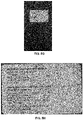
- FIG. 4E depicts the larger/consolidated black area with a bounding box being created around the larger/consolidated black area by the system 100 of FIG. 1 , in accordance with an embodiment of the present disclosure.
- FIG. 4F depicts the region of interested being extracted from the scanned image by the system 100 of FIG. 1 , in accordance with an embodiment of the present disclosure. In the experiments conducted by the embodiments of the present disclosure, the region of interest was outputted with a size of 1235*1570 pixels.
- the scanned image is classified as second class image (or second category image), then the steps 210g till 210k are performed which are discussed below. Since, the likelihood of classifying the same input scanned image into a second category is low or not possible by the system, for the sake of brevity and for better understanding of the embodiments of the present disclosure, the system 100 has considered another input scanned image which is assumed to be classified as second category image.
- the second category image e.g., say image of 2250*4000
- FIG. 5A depicts an exemplary second category resized image (also referred as resized scanned image of 225*400), in accordance with an embodiment of the present disclosure.
- second category image is obtained as an input and resized to maintain aspect ratio and enable faster processing for region of interest extraction.
- Grey channel intensities of various parts of a resized input image (or a new input scanned image) were computed, wherein difference between various grey channel intensities was calculated and compared with a predefined threshold. For instance, Part_3 of the resized second category image was determined to be 165 and grey channel intensity of Part_7 was determined to be 25. The difference resulted in 140 which is greater than the predefined threshold, 50.
- the new input scanned image was classified as second category scanned image wherein the steps 210g till 210k were performed for region of interest extraction from the new input scanned image.
- the one or more hardware processors 104 convert each part from the pre-defined number of parts into a Hue Saturation Value (HSV) space.
- HSV Hue Saturation Value
- the pre-defined number of parts of the scanned image are converted into HSV color/space.
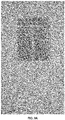
- FIG. 5B depicts the exemplary second category resized image having the pre-defined number of parts, each part being converted into a Hue Saturation Value (HSV) space, in accordance with an embodiment of the present disclosure. Since, the color representations of the second category image are not depicted, the density of the grey space can be realized which corresponds to HSV space.
- FIG. 5C with reference to FIGS.
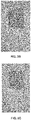
- FIG. 1 through 5B depict an exemplary a mode color intensity of H channel being calculated for each part, in accordance with an embodiment of the present disclosure.
- FIG. 5D depict an exemplary a mode color intensity of V channel being calculated for each part, in accordance with an embodiment of the present disclosure.
- the one or more hardware processors 104 perform a clustering technique (e.g., k-means clustering technique) on the mode color intensity of H channel and the mode color intensity of V channel to obtain a plurality of clusters.
- a clustering technique e.g., k-means clustering technique
- the plurality of clusters is obtained based on an intersection of (i) an output of the clustering technique performed on the mode color intensity of H channel and (ii) an output of the clustering technique performed on the mode color intensity of V channel.
- FIG. 5E depicts an exemplary output image of a cluster obtained upon performing the clustering technique on the mode color intensity of H channel and the mode color intensity of V channel, in accordance with an embodiment of the present disclosure.
- FIG. 5F depicts an exemplary output image of another cluster obtained upon performing the clustering technique on the mode color intensity of H channel and the mode color intensity of V channel, in accordance with an embodiment of the present disclosure.
- the one or more hardware processors 104 perform a second comparison of (i) one or more corner points of each cluster from the plurality of clusters and (ii) one or more corner points of the resized image.
- the one or more corner points of the clusters depicted in FIGS. 5E-5F are compared with the one or more corner points of the resized image depicted in FIG. 5A .
- the one or more hardware processors 104 select a cluster from the plurality of clusters based on the second comparison, wherein the selected cluster serves as the region of interest.
- the selected cluster is the region of interest that is extracted from the whole image.
- one or more parts (or at least a portion of the one or more parts) of the pre-defined number of parts form the selected cluster.
- the step of selecting a cluster from the plurality of clusters is based on there being (i) a single common corner point or (ii) no common corner point. Based on the second comparison, it is evident that one or more corner points of cluster depicted in FIG. 5E matches the one or more corner points of the resized image of FIG. 5A . It is further evident that cluster depicted in FIG. 5F satisfies the criteria of (i) a single common corner point or (ii) no common corner point when compared with the resized image.
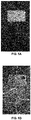
- FIG. 5F serves as region of interest.
- FIG. 5G depicts selection of a cluster amongst the plurality of clusters for region of interest extraction, in accordance with an embodiment of the present disclosure.
- FIG. 5H depicts a region of interest being extracted or a cluster serving as the region of interest, in accordance with an embodiment of the present disclosure.
- a fine-tuning technique (comprised in the memory 102) is applied to the region of interest to further align the extracted region to be a rectangle (as documents are rectangle in shape). This removes the unwanted (extra) noise region in the extracted region of interest.
- the one or more hardware processors 104 determine a type of the scanned image as a pre-cropped scanned image or a normal scanned image based on the region of interest.
- the scanned image is identified as the pre-cropped scanned image or the normal scanned image is based on a fourth comparison of (i) a difference between the region of interest and the scanned image and (ii) a predetermined threshold. For instance, in the present disclosure, area of the region of interest extracted is calculated. Similarly, area of the input image (or scanned image) is calculated. Such area calculation is carried by the present disclosure by multiplying width and height of the image.
- predetermined threshold e.g., say 7% of the input scanned image area
- the type of the scanned image is determined as the pre-cropped scanned image and the original scanned image as obtained at step 202 is outputted. If the difference in the area of the region of interest and the area of the input image (or scanned image) is greater than predetermined threshold (e.g., say 7% of the input scanned image area), then the type of the scanned image is determined as the normal scanned image and the region of interest that is extracted or cluster serving the region of interest is outputted.
- predetermined threshold e.g., say 7% of the input scanned image area
- 4F of the first category image was outputted with a size of 1235*1570 pixels. Therefore, the area of the region of interest is calculated as 1938950, whereas area of the input scanned image is 9000000.
- the difference between the two areas is 7061050 which is 78.47% ((7061050/9000000) * 100).
- the difference 78.47% is greater than 7% (predetermined threshold). Since the difference between the area of ROI extracted and the area of input image is greater than the predetermined threshold, the input scanned image is determined to be of normal scanned image and not a pre-cropped scanned image. Referring to FIG.
- the region of interest of the second category image was outputted with a size of 1422*986 pixels. Therefore, the area of the ROI of FIG. 5H is 127112.
- the area of the input scanned image as depicted in 6A is 9000000.
- the difference between the two areas is 8872888 which is 85.84% ((127112/9000000) * 100).
- the difference 85.84% is greater than 7% (predetermined threshold). Since the difference between the area of ROI extracted and the area of input image is greater than the predetermined threshold, the input scanned image is determined to be of normal scanned image and not a pre-cropped scanned image.
- the area of the ROI was 4911192.
- the area of the input scanned image was 4925232.
- the difference between the two areas is determined to be 14040 which is 0.28% ((14040/4925232) * 100).
- the difference 0.28% is less than 7% (predetermined threshold). Since the difference between the area of ROI extracted and the area of input image is less than the predetermined threshold, the input scanned image is determined to be of a pre-cropped scanned image and not a normal scanned image.
- the scanned image is in the form of already a pre-cropped image.
- a pre-cropped image of size x*y (e.g., 2808*1754) is fed as an input to the system 100.
- the pre-cropped image is then resized to obtain a resized image 400*250.
- the steps 206 and 210 are performed to extract region of interest wherein the steps 210a till 210f or steps 210g till 210k are accordingly performed for region of interest extraction depending upon output of step 208 wherein the scanned image is determined whether it falls under first category image or second category image.
- the expressions 'first comparison', 'second comparison', 'third comparison' and 'fourth comparison' shall not be construed with a literal meaning.
- Such comparison shall refer to a comparison occurring for an instance (e.g., single time) depending upon the steps being carried out by the method of the present disclosure.
- the expression 'second comparison' shall not be construed as comparing the same components second time, rather the second comparison is performed for components of that specific step being carried out by the method of the present disclosure described herein.
- Embodiments of the present disclosure provide systems and methods for extracting region of interest from scanned image (or document) and further determining whether the scanned image is a pre-cropped image or a normal image. More specifically, the present disclosure detects region of interest for extraction in all types of images serving as input to the system 100, irrespective of foreground/background similarity or differences. Unlike conventional systems and methods which are template based, and use predefined bounding box, background color, etc., method of the present disclosure automatically extracts ROI from the scanned image without having to rely on any pre-defined templates, bounding boxes and/or background colors.
- the present disclosure and its method has been time efficient in the way the scanned image are processed for ROI extraction using resized variant of the scanned images when compared to deep learning-based models (as training is required for deep learning-based models). Further, ROI extraction is done using the methods (e.g., refer steps 210a through 210f - method 1 and steps 210g through 210k - method 2) which improves the overall accuracy. Moreover, unlike conventional methods and systems which fail to process images with very similar foreground and background, or very narrow difference between foreground and background, present disclosure overcomes this technical problem/challenge by way of executing the method which is based on first category image (or refer steps 202 till 210f).
- the hardware device can be any kind of device which can be programmed including e.g. any kind of computer like a server or a personal computer, or the like, or any combination thereof.
- the device may also include means which could be e.g. hardware means like e.g. an application-specific integrated circuit (ASIC), a field-programmable gate array (FPGA), or a combination of hardware and software means, e.g.
- ASIC application-specific integrated circuit
- FPGA field-programmable gate array
- the means can include both hardware means and software means.
- the method embodiments described herein could be implemented in hardware and software.
- the device may also include software means.
- the embodiments may be implemented on different hardware devices, e.g. using a plurality of CPUs.
- the embodiments herein can comprise hardware and software elements.
- the embodiments that are implemented in software include but are not limited to, firmware, resident software, microcode, etc.
- the functions performed by various components described herein may be implemented in other components or combinations of other components.
- a computer-usable or computer readable medium can be any apparatus that can comprise, store, communicate, propagate, or transport the program for use by or in connection with the instruction execution system, apparatus, or device.
- a computer-readable storage medium refers to any type of physical memory on which information or data readable by a processor may be stored.
- a computer-readable storage medium may store instructions for execution by one or more processors, including instructions for causing the processor(s) to perform steps or stages consistent with the embodiments described herein.
- the term "computer-readable medium” should be understood to include tangible items and exclude carrier waves and transient signals, i.e., be non-transitory. Examples include random access memory (RAM), read-only memory (ROM), volatile memory, nonvolatile memory, hard drives, CD ROMs, DVDs, flash drives, disks, and any other known physical storage media.
Landscapes
- Engineering & Computer Science (AREA)
- Physics & Mathematics (AREA)
- General Physics & Mathematics (AREA)
- Theoretical Computer Science (AREA)
- Computer Vision & Pattern Recognition (AREA)
- Multimedia (AREA)
- Quality & Reliability (AREA)
- Signal Processing (AREA)
- Image Processing (AREA)
- Image Analysis (AREA)
Abstract
Description
- The present application claims priority to
Indian application, Application No. 202121013778, filed in India on March 27, 2021 - The disclosure herein generally relates to image processing techniques, and, more particularly, to extracting region of interest from scanned images and determining an associated image type thereof.
- ROI (Region of Interest) detection is an important step in extracting relevant information from a document image. Scanned image typically contains actual document in a very small region compared to the whole image area. Only a small part of the image contains actual relevant information which is Region of Interest (ROI) in context. Such images are very high-resolution images in nature and the size of images is in order of megabytes, which makes the text detection pipeline very slow. Conventional image processing-based solutions are not able to detect exact document region as a region of interest in automated way. There are few traditional methods which detect and extract region of interest from images, but these work only for specific image types. Other approaches include deep learning (DL) based methods for ROI detect which need intensive training (with huge data) to perform with good accuracy. These solutions are resource hungry and require high end computing infrastructure with graphical processing unit (GPU) capabilities.
- Embodiments of the present disclosure present technological improvements as solutions to one or more of the above-mentioned technical problems recognized by the inventors in conventional systems. For example, in one aspect, there is provided a processor implemented method for extracting region of interest from scanned images and determining an associated image type thereof. The method comprises: obtaining, via one or more hardware processors, an input comprising a scanned image; resizing, via the one or more hardware processors, the obtained scanned image to obtain a resized image; partitioning, via the one or more hardware processors, the resized image into a pre-defined number of parts; classifying, via the one or more hardware processors, the resized image into a first class or a second class based on a property associated with a foreground and a background comprised in the pre-defined number of parts of the resized image to obtain a classified image; based on the classified image, obtaining a region of interest by performing one of: (i) converting, via the one or more hardware processors, the scanned image into a gray scale image and resizing the gray scale image to obtain a resized gray scale image; (ii) applying, via the one or more hardware processors, a first filtering technique on the resized gray scale image to obtain a first filtered image; (iii) applying, via the one or more hardware processors, a second filtering technique on the resized gray scaled image to obtain a second filtered image; (iv) obtaining, via the one or more hardware processors, an output image based on an intersection of the first filtered image and the second filtered image, wherein the output image comprises a plurality of black areas and a white area; (v) performing, via the one or more hardware processors, a first comparison of each black area from the plurality of black areas and the white area comprised in the obtained output image; and (vi) extracting, via the one or more hardware processors, the region of interest from the obtained output image based on the first comparison; or converting, via the one or more hardware processors, each part from the pre-defined number of parts into a Hue Saturation Value (HSV) space; calculating, via the one or more hardware processors, a mode color intensity of H channel and a mode color intensity of V channel comprised in the HSV space of each part in the pre-defined number of parts; performing, via the one or more hardware processors, a clustering technique on the mode color intensity of H channel and the mode color intensity of V channel to obtain a plurality of clusters; performing, via the one or more hardware processors, a second comparison of (i) one or more corner points of each cluster from the plurality of clusters and (ii) one or more corner points of the scanned image; and selecting, via the one or more hardware processors, a cluster from the plurality of clusters based on the second comparison, wherein the selected cluster serves as the region of interest, and wherein one or more parts of the pre-defined number of parts form the selected cluster.
- In an embodiment, the step of classifying, via the one or more hardware processors, the resized image into a first class or a second class comprises: calculating an intensity of the grey channel space for each part and computing a difference in the intensities across the predefined number of parts; performing a third comparison of the difference with a predefined threshold; classifying, based on the third comparison, the resized image into the first class or the second class to obtain the classified image.
- In an embodiment, the step of extracting, via the one or more hardware processors, a region of interest from the obtained output image based on the first comparison comprises: concatenating two or more black areas from the plurality of black areas based on the first comparison to obtain a consolidated black area, wherein the two or more black areas are concatenated based on a corresponding presence within a predefined range, wherein the consolidated black area serves as the region of interest.
- In an embodiment, the plurality of clusters is obtained based on an intersection of (i) an output of the clustering technique performed on the mode color intensity of H channel and (ii) an output of the clustering technique performed on the mode color intensity of V channel.
- In an embodiment, the step of selecting a cluster from the plurality of clusters is based on there being (i) a single common corner point or (ii) no common corner point.
- In an embodiment, the method further comprises determining, via the one or more hardware processors, a type of the scanned image as a pre-cropped scanned image or a normal scanned image based on the region of interest.
- In an embodiment, the step of determining, via the one or more hardware processors, a type of the scanned image a pre-cropped scanned image or a normal scanned image is based on a fourth comparison of (i) a difference between the region of interest and the scanned image and (ii) a predetermined threshold.
- In another aspect, there is provided a system for extracting region of interest from scanned images and determining an associated image type thereof. The system comprises: a memory storing instructions; one or more communication interfaces; and one or more hardware processors coupled to the memory via the one or more communication interfaces, wherein the one or more hardware processors are configured by the instructions to: obtain an input comprising a scanned image; resize the obtained scanned image to obtain a resized image; partition the resized image into a pre-defined number of parts; classify the resized image into a first class or a second class based on a property associated with a foreground and a background comprised in the pre-defined number of parts of the resized image to obtain a classified image; based on the classified image, obtain a region of interest by performing one of: (i) converting the scanned image into a gray scale image and resizing the gray scale image to obtain a resized gray scale image; (ii) applying a first filtering technique on the resized gray scale image to obtain a first filtered image; (iii) applying a second filtering technique on the resized gray scaled image to obtain a second filtered image; (iv) obtaining an output image based on an intersection of the first filtered image and the second filtered image, wherein the output image comprises a plurality of black areas and a white area; (v) performing a first comparison of each black area from the plurality of one or more black areas and the white area comprised in the obtained output image; and (vi) extracting the region of interest from the obtained output image based on the first comparison; or converting each part from the pre-defined number of parts into a Hue Saturation Value (HSV) space; calculating a mode color intensity of H channel and a mode color intensity of V channel comprised in the HSV space of each part in the pre-defined number of parts; performing a clustering technique on the mode color intensity of H channel and the mode color intensity of V channel to obtain a plurality of clusters; performing a second comparison of (i) one or more corner points of each cluster from the plurality of clusters and (ii) one or more corner points of the scanned image; and selecting a cluster from the plurality of clusters based on the second comparison, wherein the selected cluster serves as the region of interest, and wherein one or more parts of the pre-defined number of parts form the selected cluster.
- In an embodiment, the one or more hardware processors classify the resized image into a first class or a second class by: calculating an intensity of the grey channel space for each part and computing a difference in the intensities across the predefined number of parts; performing a third comparison of the difference with a predefined threshold; classifying, based on the third comparison, the resized image into the first class or the second class to obtain the classified image.
- In an embodiment, the step of extracting, via the one or more hardware processors, a region of interest from the obtained output image based on the first comparison comprises: concatenating two or more black areas from the plurality of black areas based on the first comparison to obtain a consolidated black area, wherein the two or more black areas are concatenated based on a corresponding presence within a predefined range, wherein the consolidated black area serves as the region of interest.
- In an embodiment, the plurality of clusters is obtained based on an intersection of (i) an output of the clustering technique performed on the mode color intensity of H channel and (ii) an output of the clustering technique performed on the mode color intensity of V channel.
- In an embodiment, the cluster is selected from the plurality of clusters based on there being (i) a single common corner point or (ii) no common corner point.
- In an embodiment, the one or more hardware processors are further configured by the instructions to determine a type of the scanned image as a pre-cropped scanned image or a normal scanned image based on the region of interest.
- In an embodiment, the type of the scanned image is determined as the pre-cropped scanned image or the normal scanned image is based on a fourth comparison of (i) a difference between the region of interest and the scanned image and (ii) a predetermined threshold.
- In yet another aspect, one or more non-transitory machine readable information storage mediums comprising one or more instructions which when executed by one or more hardware processors causes a method for extracting region of interest from scanned images and determining an associated image type thereof. The method comprises: obtaining, via one or more hardware processors, an input comprising a scanned image; resizing, via the one or more hardware processors, the obtained scanned image to obtain a resized image; partitioning, via the one or more hardware processors, the resized image into a pre-defined number of parts; classifying, via the one or more hardware processors, the resized image into a first class or a second class based on a property associated with a foreground and a background comprised in the pre-defined number of parts of the resized image to obtain a classified image; based on the classified image, obtaining a region of interest by performing one of: (i) converting, via the one or more hardware processors, the scanned image into a gray scale image and resizing the gray scale image to obtain a resized gray scale image; (ii) applying, via the one or more hardware processors, a first filtering technique on the resized gray scale image to obtain a first filtered image; (iii) applying, via the one or more hardware processors, a second filtering technique on the resized gray scaled image to obtain a second filtered image; (iv) obtaining, via the one or more hardware processors, an output image based on an intersection of the first filtered image and the second filtered image, wherein the output image comprises a plurality of black areas and a white area; (v) performing, via the one or more hardware processors, a first comparison of each black area from the plurality of black areas and the white area comprised in the obtained output image; and (vi) extracting, via the one or more hardware processors, the region of interest from the obtained output image based on the first comparison; or converting, via the one or more hardware processors, each part from the pre-defined number of parts into a Hue Saturation Value (HSV) space; calculating, via the one or more hardware processors, a mode color intensity of H channel and a mode color intensity of V channel comprised in the HSV space of each part in the pre-defined number of parts; performing, via the one or more hardware processors, a clustering technique on the mode color intensity of H channel and the mode color intensity of V channel to obtain a plurality of clusters; performing, via the one or more hardware processors, a second comparison of (i) one or more corner points of each cluster from the plurality of clusters and (ii) one or more corner points of the scanned image; and selecting, via the one or more hardware processors, a cluster from the plurality of clusters based on the second comparison, wherein the selected cluster serves as the region of interest, and wherein one or more parts of the pre-defined number of parts form the selected cluster.
- In an embodiment, the step of classifying, via the one or more hardware processors, the resized image into a first class or a second class comprises: calculating an intensity of the grey channel space for each part and computing a difference in the intensities across the predefined number of parts; performing a third comparison of the difference with a predefined threshold; and classifying, based on the third comparison, the resized image into the first class or the second class to obtain the classified image.
- In an embodiment, the step of extracting, via the one or more hardware processors, a region of interest from the obtained output image based on the first comparison comprises: concatenating two or more black areas from the plurality of black areas based on the first comparison to obtain a consolidated black area, wherein the two or more black areas are concatenated based on a corresponding presence within a predefined range, wherein the consolidated black area serves as the region of interest.
- In an embodiment, the plurality of clusters is obtained based on an intersection of (i) an output of the clustering technique performed on the mode color intensity of H channel and (ii) an output of the clustering technique performed on the mode color intensity of V channel.
- In an embodiment, the step of selecting a cluster from the plurality of clusters is based on there being (i) a single common corner point or (ii) no common corner point.
- In an embodiment, the method further comprises determining, via the one or more hardware processors, a type of the scanned image as a pre-cropped scanned image or a normal scanned image based on the region of interest.
- In an embodiment, the step of determining, via the one or more hardware processors, a type of the scanned image a pre-cropped scanned image or a normal scanned image is based on a fourth comparison of (i) a difference between the region of interest and the scanned image and (ii) a predetermined threshold
- It is to be understood that both the foregoing general description and the following detailed description are exemplary and explanatory only and are not restrictive of the invention, as claimed.
- The accompanying drawings, which are incorporated in and constitute a part of this disclosure, illustrate exemplary embodiments and, together with the description, serve to explain the disclosed principles:
-
FIG. 1 depicts a system for extracting region of interest from scanned images and determining an associated image type thereof, in accordance with an embodiment of the present disclosure. -
FIGS. 2A through 2C depict an exemplary flow chart illustrating a method for extracting region of interest from scanned images and determining an associated image type thereof, using thesystem 100 ofFIG. 1 , in accordance with an embodiment of the present disclosure. -
FIG. 3A depicts an exemplary scanned image received as an input by the system ofFIG. 1 , in accordance with an embodiment of the present disclosure. -
FIG. 3B depicts an exemplary resized image, in accordance with an embodiment of the present disclosure. -
FIG. 3C depicts the exemplary resized image being partitioned into a pre-defined number of parts by the system ofFIG. 1 , in accordance with an embodiment of the present disclosure. -
FIG. 4A depicts an exemplary resized grayscale image as outputted by thesystem 100 ofFIG. 1 , in accordance with an embodiment of the present disclosure. -
FIG. 4B depicts an exemplary first filtered image serving as an output upon applying the first filtering technique on the resized gray scale image, in accordance with an embodiment of the present disclosure. -
FIG. 4C depicts an exemplary second filtered image outputted by the system ofFIG. 1 , in accordance with an embodiment of the present disclosure. -
FIG. 4D depicts an exemplary output image comprises one or more black areas and white area, based on an intersection of the first filtered image and the second filtered image, in accordance with an embodiment of the present disclosure. -
FIG. 4E depicts a larger black area with a bounding box being created around the larger black area by the system ofFIG. 1 , in accordance with an embodiment of the present disclosure. -
FIG. 4F depicts a region of interested being extracted from the scanned image by the system ofFIG. 1 , in accordance with an embodiment of the present disclosure. -
FIG. 5A depicts an exemplary second category resized image (also referred as scanned image), in accordance with an embodiment of the present disclosure. -
FIG. 5B depicts the exemplary second category resized image having the pre-defined number of parts, each part being converted into a Hue Saturation Value (HSV) space, in accordance with an embodiment of the present disclosure. -
FIG. 5C depicts an exemplary a mode color intensity of H channel being calculated for each part, in accordance with an embodiment of the present disclosure. -
FIG. 5D depicts an exemplary a mode color intensity of V channel being calculated for each part, in accordance with an embodiment of the present disclosure. -
FIG. 5E depicts an exemplary output image of a cluster obtained upon performing the clustering technique on the mode color intensity of H channel and the mode color intensity of V channel, in accordance with an embodiment of the present disclosure. -
FIG. 5F depicts an exemplary output image of another cluster obtained upon performing the clustering technique on the mode color intensity of H channel and the mode color intensity of V channel, in accordance with an embodiment of the present disclosure. -
FIG. 5G depicts selection of a cluster amongst the plurality of clusters for region of interest extraction, in accordance with an embodiment of the present disclosure. -
FIG. 5H depicts a region of interest being extracted or a cluster serving as the region of interest, in accordance with an embodiment of the present disclosure. - Exemplary embodiments are described with reference to the accompanying drawings. In the figures, the left-most digit(s) of a reference number identifies the figure in which the reference number first appears. Wherever convenient, the same reference numbers are used throughout the drawings to refer to the same or like parts. While examples and features of disclosed principles are described herein, modifications, adaptations, and other implementations are possible without departing from the scope of the disclosed embodiments.
- Referring now to the drawings, and more particularly to
FIG. 1 through 5H , where similar reference characters denote corresponding features consistently throughout the figures, there are shown preferred embodiments and these embodiments are described in the context of the following exemplary system and/or method. -
FIG. 1 depicts asystem 100 for extracting region of interest from scanned images and determining an associated image type thereof, in accordance with an embodiment of the present disclosure. In an embodiment, thesystem 100 includes one ormore hardware processors 104, communication interface device(s) or input/output (I/O) interface(s) 106 (also referred as interface(s)), and one or more data storage devices ormemory 102 operatively coupled to the one ormore hardware processors 104. The one ormore processors 104 may be one or more software processing components and/or hardware processors. In an embodiment, the hardware processors can be implemented as one or more microprocessors, microcomputers, microcontrollers, digital signal processors, central processing units, state machines, logic circuitries, and/or any devices that manipulate signals based on operational instructions. Among other capabilities, the processor(s) is/are configured to fetch and execute computer-readable instructions stored in the memory. In an embodiment, thesystem 100 can be implemented in a variety of computing systems, such as laptop computers, notebooks, hand-held devices, workstations, mainframe computers, servers, a network cloud and the like. - The I/O interface device(s) 106 can include a variety of software and hardware interfaces, for example, a web interface, a graphical user interface, and the like and can facilitate multiple communications within a wide variety of networks N/W and protocol types, including wired networks, for example, LAN, cable, etc., and wireless networks, such as WLAN, cellular, or satellite. In an embodiment, the I/O interface device(s) can include one or more ports for connecting a number of devices to one another or to another server.
- The
memory 102 may include any computer-readable medium known in the art including, for example, volatile memory, such as static random access memory (SRAM) and dynamic random access memory (DRAM), and/or non-volatile memory, such as read only memory (ROM), erasable programmable ROM, flash memories, hard disks, optical disks, and magnetic tapes. In an embodiment, adatabase 108 is comprised in thememory 102, wherein thedatabase 108 comprises one or more scanned images or documents from which region of interest are extracted. Thedatabase 108 further stores information on various properties of images whether they have various predominant colors, resized properties, partitioned details, color intensity, and the like. - The information stored in the
database 108 further comprises various techniques such as filtering technique as known in the art. Such filtering techniques include but are not limited to adaptive thresholding technique(s), median blurring technique(s), edge detection, image morphological technique(s), bounding box creating technique(s), clustering technique(s), image area calculation technique(s), and the like. The above-mentioned techniques comprised in thememory 102/database 108 are invoked as per the requirement by thesystem 100 to perform the methodologies described herein. Thememory 102 further comprises (or may further comprise) information pertaining to input(s)/output(s) of each step performed by the systems and methods of the present disclosure. In other words, input(s) fed at each step and output(s) generated at each step are comprised in thememory 102 and can be utilized in further processing and analysis. -
FIGS. 2A through 2C , with reference toFIG. 1 , depict an exemplary flow chart illustrating a method for extracting region of interest from scanned images and determining an associated image type thereof, using thesystem 100 ofFIG. 1 , in accordance with an embodiment of the present disclosure. In an embodiment, the system(s) 100 comprises one or more data storage devices or thememory 102 operatively coupled to the one ormore hardware processors 104 and is configured to store instructions for execution of steps of the method by the one ormore processors 104. The steps of the method of the present disclosure will now be explained with reference to components of thesystem 100 ofFIG. 1 , and the flow diagram as depicted inFIG. 2 . In an embodiment, atstep 202 of the present disclosure, the one ormore hardware processors 104 obtain an input comprising a scanned image.FIG. 3A , with reference toFIGS. 1 through 2C , depicts an exemplary scanned image received as an input by thesystem 100 ofFIG. 1 , in accordance with an embodiment of the present disclosure. For example, in the present disclosure, thesystem 100 receives an input scanned image of an image size say 2250*4000 pixels. In an embodiment, the expression 'scanned image' may also be referred as 'input image', or 'image' and may be interchangeably used herein. The image may be in any file format as known in the art (e.g., jpeg, gif, png, jpg, bmp, and the like), in one example embodiment. The image may also be received in the form of a Portable Document Format (PDF), in another example embodiment. - In an embodiment, at
step 204 of the present disclosure, the one ormore hardware processors 104 resize the obtained scanned image to obtain a resized image. For example, the above scanned image having the image size 2250*4000 pixels is resized to obtain the resized image with image size say 225*400 pixels.FIG. 3B , with reference toFIGS. 1 through 3A , depicts an exemplary resized image, in accordance with an embodiment of the present disclosure. - In an embodiment, at
step 206 of the present disclosure, the one ormore hardware processors 104 partition the resized image into a pre-defined number of parts. Such partitioning of the resized image into the pre-defined number of parts is based on visual perception of the image, in one example embodiment.FIG. 3C , with reference toFIGS. 1 through 3B , depicts an exemplary the resized image being partitioning into a pre-defined number of parts by thesystem 100 ofFIG. 1 , in accordance with an embodiment of the present disclosure. More specifically,FIG. 3C , depicts the resized image being partitioning into 9 parts, in one example embodiment of the present disclosure. It is to be understood by a person having ordinary skill in the art or person having skilled in the art that such partitioning of resized image into 9 parts shall not be construed as limiting the scope of the present disclosure and partitioning of the resized image can be done into any number of parts. In the present disclosure, Simple Linear Iterative Clustering (SLIC) Segmentation technique is executed by thesystem 100 to partition the resized Image into 9 parts. It is to be understood by a person having ordinary skill in the art or person having skilled in the art that example of such SLIC segmentation technique shall not be construed as limiting the scope of the present disclosure and partitioning of the resized image can be achieved by any segmentation/partitioning technique as known in the art. - In an embodiment, at
step 208 of the present disclosure, the one ormore hardware processors 104 classify the resized image into a first class or a second class based on a property (e.g., color) associated with a foreground and a background comprised in the pre-defined number of parts of the resized image to obtain a classified image.Class 1 Image refers to an image which contains only one predominant color whereas class 2 image refers to an image contains more than one predominant colors. Image(s) with very similar foreground and background colour are example ofclass 1 images such as identity proof documents (e.g., Aadhar card with white background). Images with different foreground and background colour are example of class 2 images such as Permanent Account Number (PAN) card (e.g., blue colour) on white background (e.g., when PAN card placed on white paper and scanned). The step of classifying, via the one or more hardware processors, the resized image into a first class or a second class comprises: converting each part from the predefined number of parts to a grey channel space; calculating an intensity of the grey channel space for each part and computing a difference in the intensities across the predefined number of parts; performing a comparison (also referred as a third comparison) of the difference with a predefined threshold; and classifying, based on the comparison (also referred as the third comparison), the resized image into the first class or the second class to obtain the classified image. For instance, thesystem 100 of the present disclosure calculates mode intensity for each segments/part say m1, m2, ..., mn, n <= 9. D = max(m1, m2, .., mn) - min(m1, m2, .., mn), where D is the difference in the intensities across the parts. In the present disclosure, the predefined threshold (e.g., ε) say is 50. The difference D is compared with the predefined threshold ε. If the difference D is smaller than predefined threshold 50, then the scanned image/resized image is classified as a first class (e.g., also referred as first category, and interchangeably used herein), else it is classified into a second class (e.g., also referred as second category, and interchangeably used herein. The above description can be better understood by way of following Table 1. Below Table 1 depicts exemplary parts (also referred as 'segments' and interchangeably used herein) of the scanned image and gray channel (also referred as 'grey channel' and interchangeably used herein) being computed for each part. For the sake of brevity, only 7 parts/segments are depicted for better understanding of the embodiments of the present disclosure.Table 1 Part/Segment_number Parts/segment Grey channel 0 Part_0 {'mode': 169} 1 Part_1 {'mode': 170} 2 Part_2 {'mode': 175} 3 Part_3 {'mode': 178} 4 Part_4 {'mode': 175} 5 Part_5 {'mode': 173} 6 Part_6 {'mode': 165} - In the above Table 1, the grey channel intensity of Part_3 is 178 and grey channel intensity of Part_6 is 165. The difference in the grey channel intensity between Part_3 and Part_6 is 13, which is less than the pre-defined threshold (ε=50). Thus, the scanned image was classified as a first class image or the first category image.
- In an embodiment, at
step 210 of the present disclosure, the one ormore hardware processors 104 obtain a region of interest based on the classified image by performing one ofsteps 210a through 210f or 210g through 210k. As the above scanned image is classified as the first category image, thesteps 210a through 210f are performed for obtaining region of interest and are described herein below. In case, if the above scanned image is classified as the second category image, then thesteps 210g through 210k are performed for obtaining the region of interest (described later in the below paragraphs). - In an embodiment, at
step 210a of the present disclosure, the one ormore hardware processors 104 convert the scanned image into a gray scale image and resize the gray scale image to obtain a resized gray scale image. In an embodiment of the present disclosure, the expression 'gray scale' may also be referred as 'grayscale' or 'grey scale' or 'greyscale', and interchangeably used herein. The scanned image ofstep 202 is converted into grayscale and resized to 300*300 pixels. The horizontal and vertical factors (e.g., h_factor and w_factor respectively) are stored in thedatabase 108 for further analysis and processing at later stage(s) as per the requirements.FIG. 4A , with reference toFIGS. 1 through 3C , depicts an exemplary resized grayscale image as outputted by thesystem 100 ofFIG. 1 , in accordance with an embodiment of the present disclosure. - In an embodiment, at
step 210b of the present disclosure, the one ormore hardware processors 104 apply a first filtering technique on the resized gray scale image to obtain a first filtered image.FIG. 4B , with reference toFIGS. 1 through 4A , depicts an exemplary first filtered image outputted by thesystem 100 ofFIG. 1 , in accordance with an embodiment of the present disclosure. More specifically, thesystem 100 applies adaptive thresholding technique and followed by a median blur technique. Post applying the adaptive thresholding technique and the median blur technique, thesystem 100 outputs the first filtered image as depicted inFIG. 4B . More specifically,FIG. 4B , with reference toFIGS. 1 through 4A , depicts the first filtered image serving as an output upon applying the first filtering technique on the resized gray scale image, in accordance with an embodiment of the present disclosure. The first filtering technique comprises of adaptive threshold and median blur, in one example embodiment of the present disclosure. By applying adaptive threshold and median blur, the contrast of the resized grayscale image is enhanced, and all the edges appear to be prominent and visible. - In an embodiment, at
step 210c of the present disclosure, the one ormore hardware processors 104 apply a second filtering technique on the resized gray scaled image to obtain a second filtered image.FIG. 4C , with reference toFIGS. 1 through 4B , depicts an exemplary second filtered image outputted by thesystem 100 ofFIG. 1 , in accordance with an embodiment of the present disclosure. More specifically, thesystem 100 detects one or more edges from grey scale image to obtain the second filtered image. The detected edges are thickened so that they merge together to form a dense cluster, in one example embodiment. - In an embodiment, at
step 210d of the present disclosure, the one ormore hardware processors 104 obtain an output image based on an intersection of the first filtered image and the second filtered image, wherein the output image comprises a plurality of black areas and a white area.FIG. 4D , with reference toFIGS. 1 through 4C , depicts an exemplary output image comprises a plurality of black areas and white area, based on the intersection of the first filtered image and the second filtered image, in accordance with an embodiment of the present disclosure.FIG. 4D , with reference toFIGS. 1 through 4C , depicts an exemplary intersection of the first filtered image and the second filtered image, in accordance with an embodiment of the present disclosure. - In an embodiment, at
step 210e of the present disclosure, the one ormore hardware processors 104 perform a first comparison of each black are from the plurality of black areas and the white area comprised in the obtained output image. In an embodiment, atstep 210f of the present disclosure, the one ormore hardware processors 104 extract the region of interest from the obtained output image based on the first comparison. The step of extracting the region of interest based on the first comparison comprises concatenating two or more black areas from the plurality of black areas based on the first comparison to obtain a consolidated black area. The two or more black areas are concatenated based on a corresponding presence within a predefined range. For instance, two or more black areas which lie in a specific/predefined range, say for example, between 3000 and 70000 are concatenated to obtain the consolidated black area. The consolidated black area serves as the region of interest. The above steps of 210e and 210f are better understood by way of following description. The output image contains either black pixels (0) or white pixels (255), with count of white pixels greater than black pixels and accordingly image is outputted. Contours around the black pixels (wherein contours also referred as black areas and interchangeably used herein) are identified and area of each of the contours/black area is calculated wherein the contours/black areas having area in a specific range (e.g., [3000, 70000] are consolidated and concatenated. Example of such specific/predefined range shall not be construed as limiting the scope of the present dsiclosure. Further, thesystem 100 calculates/creates the bounding box around the consolidated black area/region (e.g., largest dark area). If the height and width of bounding box obtained is less than a specific value (e.g., 290), then accordingly region of interest identified for extraction. Example of such specific value shall not be construed as limiting the scope of the present disclosure. The bounding box is projected to original image (e.g., the scanned image received as input) using h factor and w_factor which is returned by the system as extracted region of interest. Theabove step 210f is better understood by way of following exemplary explanation. As mentioned above, intersection of the first filtered image and the second filtered image is taken to obtain the output image. If area of dark region (which is basically the document region) in the output image is larger, then that region is a region of interest which is extracted from the original input image (e.g., also referred as the 'input image/scanned image). In particular, thesystem 100 takes the largest bounding box (e.g., bounding box being created by the system 100) enclosing all the dark regions which are significant i.e., which are not very small and lies in certain range (e.g., say [3000,70000] are consolidated and concatenated (experimentally determined)). If the height and width of the bounding box is less than a predetermined threshold (e.g., say 290 as per the experiment conducted by the present disclosure), then region of interest is extracted accordingly. - There could be instances where there are black areas that are small, medium, and large, these black areas are consolidated / concatenated prior to creating a bounding box around these by the
system 100.FIG. 4E , with reference toFIGS. 1 through 4D , depicts the larger/consolidated black area with a bounding box being created around the larger/consolidated black area by thesystem 100 ofFIG. 1 , in accordance with an embodiment of the present disclosure.FIG. 4F , with reference toFIGS. 1 through 4E , depicts the region of interested being extracted from the scanned image by thesystem 100 ofFIG. 1 , in accordance with an embodiment of the present disclosure. In the experiments conducted by the embodiments of the present disclosure, the region of interest was outputted with a size of 1235*1570 pixels. - In case, at the
step 208 of classification, the scanned image is classified as second class image (or second category image), then thesteps 210g till 210k are performed which are discussed below. Since, the likelihood of classifying the same input scanned image into a second category is low or not possible by the system, for the sake of brevity and for better understanding of the embodiments of the present disclosure, thesystem 100 has considered another input scanned image which is assumed to be classified as second category image. The second category image (e.g., say image of 2250*4000) is depicted inFIG. 5A . More specifically,FIG. 5A depicts an exemplary second category resized image (also referred as resized scanned image of 225*400), in accordance with an embodiment of the present disclosure. More specifically, second category image is obtained as an input and resized to maintain aspect ratio and enable faster processing for region of interest extraction. Grey channel intensities of various parts of a resized input image (or a new input scanned image) were computed, wherein difference between various grey channel intensities was calculated and compared with a predefined threshold. For instance, Part_3 of the resized second category image was determined to be 165 and grey channel intensity of Part_7 was determined to be 25. The difference resulted in 140 which is greater than the predefined threshold, 50. Hence, the new input scanned image was classified as second category scanned image wherein thesteps 210g till 210k were performed for region of interest extraction from the new input scanned image. Referring to steps of 210g till 210k, in an embodiment, atstep 210g of the present disclosure, the one ormore hardware processors 104 convert each part from the pre-defined number of parts into a Hue Saturation Value (HSV) space. In an embodiment of the present disclosure, the pre-defined number of parts of the scanned image are converted into HSV color/space.FIG. 5B , with reference toFIGS. 1 through 5A , depicts the exemplary second category resized image having the pre-defined number of parts, each part being converted into a Hue Saturation Value (HSV) space, in accordance with an embodiment of the present disclosure. Since, the color representations of the second category image are not depicted, the density of the grey space can be realized which corresponds to HSV space. - In an embodiment, at
step 210h of the present disclosure, the one ormore hardware processors 104 calculate a mode color intensity of H channel and a mode color intensity of V channel comprised in the HSV space of each part in the pre-defined number of parts. More specifically, atstep 210h, the HSV space of each part in the pre-defined number of parts is split into individual channels. and mode color intensity of H channel for each segment say h1, h2, ..., hn, n <= 9, and the mode color intensity of V channel for each segments say v1, v2, ..., vn, n <= 9 are calculated.FIG. 5C , with reference toFIGS. 1 through 5B , depict an exemplary a mode color intensity of H channel being calculated for each part, in accordance with an embodiment of the present disclosure.FIG. 5D , with reference toFIGS. 1 through 5C , depict an exemplary a mode color intensity of V channel being calculated for each part, in accordance with an embodiment of the present disclosure. - In an embodiment, at
step 210i of the present disclosure, the one ormore hardware processors 104 perform a clustering technique (e.g., k-means clustering technique) on the mode color intensity of H channel and the mode color intensity of V channel to obtain a plurality of clusters. In an embodiment, the plurality of clusters is obtained based on an intersection of (i) an output of the clustering technique performed on the mode color intensity of H channel and (ii) an output of the clustering technique performed on the mode color intensity of V channel. In other words, k-means clustering (for n = 2) is performed separately using first the H channel mode intensities and then the V channel mode intensities of the parts. This result in creating two cluster of parts (based on proximity of mode value intensity) each for H and V channel, respectively. The plurality of clusters is then obtained by taking an intersection of the two clusters obtained from H and V channels. Below Table 2 depicts the mode color intensities for H channel and V channels, respectively.Table 2 Part/Segment_number Parts/segment H channel V channel 0 Part_0 {'mode':34} {'mode':45} 1 Part_1 {'mode':30} {'mode':43} 2 Part_2 {'mode':101} {'mode':233} 3 Part_3 {'mode':21} {'mode':50} 4 Part_4 {'mode':11} {'mode':50} 5 Part_5 {'mode':8} {'mode':37} 6 Part_6 {'mode':13} {'mode':28} 7 Part_7 {'mode':13} {'mode':26} - Upon performing clustering technique on the mode color intensities of H and V channels, the clusters for H channel are as [0, 1, 3, 4, 5, 6, and 7] and [2] and the clusters for V channel are as [0, 1, 3, 4, 5, 6, and 7] and [2]. The final plurality of clusters obtained is based on the intersection of the clusters of the H channel and V channel, which are [0, 1, 3, 4, 5, 6, and 7] and [2].
FIG. 5E , with reference toFIGS. 1 through 5D , depicts an exemplary output image of a cluster obtained upon performing the clustering technique on the mode color intensity of H channel and the mode color intensity of V channel, in accordance with an embodiment of the present disclosure.FIG. 5F , with reference toFIGS. 1 through 5E , depicts an exemplary output image of another cluster obtained upon performing the clustering technique on the mode color intensity of H channel and the mode color intensity of V channel, in accordance with an embodiment of the present disclosure. - In an embodiment, at
step 210j of the present disclosure, the one ormore hardware processors 104 perform a second comparison of (i) one or more corner points of each cluster from the plurality of clusters and (ii) one or more corner points of the resized image. The one or more corner points of the clusters depicted inFIGS. 5E-5F are compared with the one or more corner points of the resized image depicted inFIG. 5A . In an embodiment, atstep 210k of the present disclosure, the one ormore hardware processors 104 select a cluster from the plurality of clusters based on the second comparison, wherein the selected cluster serves as the region of interest. In an embodiment, the selected cluster is the region of interest that is extracted from the whole image. In an embodiment, one or more parts (or at least a portion of the one or more parts) of the pre-defined number of parts form the selected cluster. In an embodiment, the step of selecting a cluster from the plurality of clusters is based on there being (i) a single common corner point or (ii) no common corner point. Based on the second comparison, it is evident that one or more corner points of cluster depicted inFIG. 5E matches the one or more corner points of the resized image ofFIG. 5A . It is further evident that cluster depicted inFIG. 5F satisfies the criteria of (i) a single common corner point or (ii) no common corner point when compared with the resized image. More specifically, to decide which cluster, contain the actual document region, boundary point examination is performed. The document/image under consider can align with at most one corner of the input/resized image, or commonly it is located in the central region of the input image, in former case it has one common boundary point with respect to the input image or zero in the latter case. The cluster with one or less common corner points with the input/resized image is the cluster containing the region of interest and is accordingly extracted and the remaining cluster(s) is/are discarded. Thus, cluster depicted inFIG. 5F serves as region of interest. More specifically,FIG. 5G , with reference toFIGS. 1 through 5F , depicts selection of a cluster amongst the plurality of clusters for region of interest extraction, in accordance with an embodiment of the present disclosure. A bounding box is then created for the selected cluster and the region of interest is extracted as depicted inFIG. 5H . The bounding box is shown inFIG. 5G by way of dash line representation (white dash line representation), in one embodiment of the present disclosure. More specifically,FIG. 5H , with reference toFIGS. 1 through 5G , depicts a region of interest being extracted or a cluster serving as the region of interest, in accordance with an embodiment of the present disclosure. A fine-tuning technique (comprised in the memory 102) is applied to the region of interest to further align the extracted region to be a rectangle (as documents are rectangle in shape). This removes the unwanted (extra) noise region in the extracted region of interest. - Once the region of interest is extracted from the scanned image, the one or
more hardware processors 104 determine a type of the scanned image as a pre-cropped scanned image or a normal scanned image based on the region of interest. The scanned image is identified as the pre-cropped scanned image or the normal scanned image is based on a fourth comparison of (i) a difference between the region of interest and the scanned image and (ii) a predetermined threshold. For instance, in the present disclosure, area of the region of interest extracted is calculated. Similarly, area of the input image (or scanned image) is calculated. Such area calculation is carried by the present disclosure by multiplying width and height of the image. If the difference in the area of the region of interest and the area of the input image (or scanned image) is less than predetermined threshold (e.g., say 7% of the input scanned image area), then the type of the scanned image is determined as the pre-cropped scanned image and the original scanned image as obtained atstep 202 is outputted. If the difference in the area of the region of interest and the area of the input image (or scanned image) is greater than predetermined threshold (e.g., say 7% of the input scanned image area), then the type of the scanned image is determined as the normal scanned image and the region of interest that is extracted or cluster serving the region of interest is outputted. In the experiments conducted by the embodiments of the present disclosure, the region of interest ofFIG. 4F of the first category image was outputted with a size of 1235*1570 pixels. Therefore, the area of the region of interest is calculated as 1938950, whereas area of the input scanned image is 9000000. The difference between the two areas is 7061050 which is 78.47% ((7061050/9000000) * 100). The difference 78.47% is greater than 7% (predetermined threshold). Since the difference between the area of ROI extracted and the area of input image is greater than the predetermined threshold, the input scanned image is determined to be of normal scanned image and not a pre-cropped scanned image. Referring toFIG. 5H , in the experiments conducted by the embodiments of the present disclosure, the region of interest of the second category image was outputted with a size of 1422*986 pixels. Therefore, the area of the ROI ofFIG. 5H is 127112. The area of the input scanned image as depicted in 6A is 9000000. The difference between the two areas is 8872888 which is 85.84% ((127112/9000000) * 100). The difference 85.84% is greater than 7% (predetermined threshold). Since the difference between the area of ROI extracted and the area of input image is greater than the predetermined threshold, the input scanned image is determined to be of normal scanned image and not a pre-cropped scanned image. In further experiments conducted by the present disclosure on yet another input scanned image (not shown in FIGS), the area of the ROI was 4911192. The area of the input scanned image was 4925232. The difference between the two areas is determined to be 14040 which is 0.28% ((14040/4925232) * 100). The difference 0.28% is less than 7% (predetermined threshold). Since the difference between the area of ROI extracted and the area of input image is less than the predetermined threshold, the input scanned image is determined to be of a pre-cropped scanned image and not a normal scanned image. - There could be instances, where the scanned image is in the form of already a pre-cropped image. For example, say a pre-cropped image of size x*y (e.g., 2808*1754) is fed as an input to the
system 100. The pre-cropped image is then resized to obtain a resized image 400*250. Once the resized image is obtained, thesteps steps 210a till 210f orsteps 210g till 210k are accordingly performed for region of interest extraction depending upon output ofstep 208 wherein the scanned image is determined whether it falls under first category image or second category image. In an embodiment of the present disclosure, the expressions 'first comparison', 'second comparison', 'third comparison' and 'fourth comparison' shall not be construed with a literal meaning. Such comparison shall refer to a comparison occurring for an instance (e.g., single time) depending upon the steps being carried out by the method of the present disclosure. For instance, the expression 'second comparison' shall not be construed as comparing the same components second time, rather the second comparison is performed for components of that specific step being carried out by the method of the present disclosure described herein. - Embodiments of the present disclosure provide systems and methods for extracting region of interest from scanned image (or document) and further determining whether the scanned image is a pre-cropped image or a normal image. More specifically, the present disclosure detects region of interest for extraction in all types of images serving as input to the
system 100, irrespective of foreground/background similarity or differences. Unlike conventional systems and methods which are template based, and use predefined bounding box, background color, etc., method of the present disclosure automatically extracts ROI from the scanned image without having to rely on any pre-defined templates, bounding boxes and/or background colors. Further, the present disclosure and its method has been time efficient in the way the scanned image are processed for ROI extraction using resized variant of the scanned images when compared to deep learning-based models (as training is required for deep learning-based models). Further, ROI extraction is done using the methods (e.g., refersteps 210a through 210f -method 1 and steps 210g through 210k - method 2) which improves the overall accuracy. Moreover, unlike conventional methods and systems which fail to process images with very similar foreground and background, or very narrow difference between foreground and background, present disclosure overcomes this technical problem/challenge by way of executing the method which is based on first category image (or refersteps 202 till 210f). - The written description describes the subject matter herein to enable any person skilled in the art to make and use the embodiments. The scope of the subject matter embodiments is defined by the claims and may include other modifications that occur to those skilled in the art. Such other modifications are intended to be within the scope of the claims if they have similar elements that do not differ from the literal language of the claims or if they include equivalent elements with insubstantial differences from the literal language of the claims.
- It is to be understood that the scope of the protection is extended to such a program and in addition to a computer-readable means having a message therein; such computer-readable storage means contain program-code means for implementation of one or more steps of the method, when the program runs on a server or mobile device or any suitable programmable device. The hardware device can be any kind of device which can be programmed including e.g. any kind of computer like a server or a personal computer, or the like, or any combination thereof. The device may also include means which could be e.g. hardware means like e.g. an application-specific integrated circuit (ASIC), a field-programmable gate array (FPGA), or a combination of hardware and software means, e.g. an ASIC and an FPGA, or at least one microprocessor and at least one memory with software processing components located therein. Thus, the means can include both hardware means and software means. The method embodiments described herein could be implemented in hardware and software. The device may also include software means. Alternatively, the embodiments may be implemented on different hardware devices, e.g. using a plurality of CPUs.
- The embodiments herein can comprise hardware and software elements. The embodiments that are implemented in software include but are not limited to, firmware, resident software, microcode, etc. The functions performed by various components described herein may be implemented in other components or combinations of other components. For the purposes of this description, a computer-usable or computer readable medium can be any apparatus that can comprise, store, communicate, propagate, or transport the program for use by or in connection with the instruction execution system, apparatus, or device.
- The illustrated steps are set out to explain the exemplary embodiments shown, and it should be anticipated that ongoing technological development will change the manner in which particular functions are performed. These examples are presented herein for purposes of illustration, and not limitation. Further, the boundaries of the functional building blocks have been arbitrarily defined herein for the convenience of the description. Alternative boundaries can be defined so long as the specified functions and relationships thereof are appropriately performed. Alternatives (including equivalents, extensions, variations, deviations, etc., of those described herein) will be apparent to persons skilled in the relevant art(s) based on the teachings contained herein. Such alternatives fall within the scope of the disclosed embodiments. Also, the words "comprising," "having," "containing," and "including," and other similar forms are intended to be equivalent in meaning and be open ended in that an item or items following any one of these words is not meant to be an exhaustive listing of such item or items, or meant to be limited to only the listed item or items. It must also be noted that as used herein and in the appended claims, the singular forms "a," "an," and "the" include plural references unless the context clearly dictates otherwise.
- Furthermore, one or more computer-readable storage media may be utilized in implementing embodiments consistent with the present disclosure. A computer-readable storage medium refers to any type of physical memory on which information or data readable by a processor may be stored. Thus, a computer-readable storage medium may store instructions for execution by one or more processors, including instructions for causing the processor(s) to perform steps or stages consistent with the embodiments described herein. The term "computer-readable medium" should be understood to include tangible items and exclude carrier waves and transient signals, i.e., be non-transitory. Examples include random access memory (RAM), read-only memory (ROM), volatile memory, nonvolatile memory, hard drives, CD ROMs, DVDs, flash drives, disks, and any other known physical storage media.
- It is intended that the disclosure and examples be considered as exemplary only, with a true scope of disclosed embodiments being indicated by the following claims.
Claims (15)
- A processor implemented method, comprising:obtaining, via one or more hardware processors, an input comprising a scanned image (202);resizing, via the one or more hardware processors, the obtained scanned image to obtain a resized image (204);partitioning, via the one or more hardware processors, the resized image into a pre-defined number of parts (206);classifying, via the one or more hardware processors, the resized image into a first class or a second class based on a property associated with a foreground and a background comprised in the pre-defined number of parts of the resized image to obtain a classified image (208); andobtaining a region of interest based on the classified image (210) by performing one of:(i) converting, via the one or more hardware processors, the scanned image into a gray scale image and resizing the gray scale image to obtain a resized gray scale image (210a);(ii) applying, via the one or more hardware processors, a first filtering technique on the resized gray scale image to obtain a first filtered image (210b);(iii) applying, via the one or more hardware processors, a second filtering technique on the resized gray scaled image to obtain a second filtered image (210c);(iv) obtaining, via the one or more hardware processors, an output image based on an intersection of the first filtered image and the second filtered image, wherein the output image comprises a plurality of black areas and a white area (210d);(v) performing, via the one or more hardware processors, a first comparison of each black area from the plurality of black areas and the white area comprised in the obtained output image (210e); and(vi) extracting, via the one or more hardware processors, the region of interest from the obtained output image based on the first comparison (210f); or(a) converting, via the one or more hardware processors, each part from the pre-defined number of parts into a Hue Saturation Value (HSV) space (210g);(b) calculating, via the one or more hardware processors, a mode color intensity of H channel and a mode color intensity of V channel comprised in the HSV space of each part in the pre-defined number of parts (210h);(c) performing, via the one or more hardware processors, a clustering technique on the mode color intensity of H channel and the mode color intensity of V channel to obtain a plurality of clusters (210i);(d) performing, via the one or more hardware processors, a second comparison of (i) one or more corner points of each cluster from the plurality of clusters and (ii) one or more corner points of the scanned image (210j); and(e) selecting, via the one or more hardware processors, a cluster from the plurality of clusters based on the second comparison, wherein the selected cluster serves as the region of interest, and wherein one or more parts of the pre-defined number of parts form the selected cluster (210k).
- The processor implemented method of claim 1, wherein the step of classifying, via the one or more hardware processors, the resized image into a first class or a second class comprises:calculating an intensity of the grey channel space for each part and computing a difference in the intensities across the predefined number of parts;performing a third comparison of the difference with a predefined threshold; andclassifying, based on the third comparison, the resized image into the first class or the second class to obtain the classified image.
- The processor implemented method of claim 1, wherein the step of extracting, via the one or more hardware processors, a region of interest from the obtained output image based on the first comparison comprises:
concatenating two or more black areas from the plurality of black areas based on the first comparison to obtain a consolidated black area, wherein the two or more black areas are concatenated based on a corresponding presence within a predefined range, wherein the consolidated black area serves as the region of interest. - The processor implemented method of claim 1, wherein the plurality of clusters is obtained based on an intersection of (i) an output of the clustering technique performed on the mode color intensity of H channel and (ii) an output of the clustering technique performed on the mode color intensity of V channel.
- The processor implemented method of claim 1, wherein the step of selecting a cluster from the plurality of clusters is based on there being (i) a single common corner point or (ii) no common corner point.
- The processor implemented method of claim 1, further comprising determining, via the one or more hardware processors, a type of the scanned image as a pre-cropped scanned image or a normal scanned image based on the region of interest.
- The processor implemented method of claim 6, wherein the step of determining, via the one or more hardware processors, a type of the scanned image a pre-cropped scanned image or a normal scanned image is based on a fourth comparison of (i) a difference between the region of interest and the scanned image and (ii) a predetermined threshold.
- A system (100), comprising:a memory (102) storing instructions;one or more communication interfaces (106); andone or more hardware processors (104) coupled to the memory (102) via the one or more communication interfaces (106), wherein the one or more hardware processors (104) are configured by the instructions to:obtain an input comprising a scanned image;resize the obtained scanned image to obtain a resized image;partition the resized image into a pre-defined number of parts;classify the resized image into a first class or a second class based on a property associated with a foreground and a background comprised in the pre-defined number of parts of the resized image to obtain a classified image; andobtain a region of interest based on the classified image by performing one of:(i) converting the scanned image into a gray scale image and resizing the gray scale image to obtain a resized gray scale image;(ii) applying a first filtering technique on the resized gray scale image to obtain a first filtered image;(iii) applying a second filtering technique on the resized gray scaled image to obtain a second filtered image;(iv) obtaining an output image based on an intersection of the first filtered image and the second filtered image, wherein the output image comprises a plurality of black areas and a white area;(v) performing a first comparison of each black area from the plurality of black areas and the white area comprised in the obtained output image; and(vi) extracting the region of interest from the obtained output image based on the first comparison; or(a) converting each part from the pre-defined number of parts into a Hue Saturation Value (HSV) space;(b) calculating a mode color intensity of H channel and a mode color intensity of V channel comprised in the HSV space of each part in the pre-defined number of parts;(c) performing a clustering technique on the mode color intensity of H channel and the mode color intensity of V channel to obtain a plurality of clusters;(d) performing a second comparison of (i) one or more corner points of each cluster from the plurality of clusters and (ii) one or more corner points of the scanned image; and(e) selecting a cluster from the plurality of clusters based on the second comparison, wherein the selected clusters serving as the region of interest, and wherein one or more parts of the pre-defined number of parts for the selected cluster.
- The system of claim 8, wherein the one or more hardware processors classify the resized image into a first class or a second class by:calculating an intensity of the grey channel space for each part and computing a difference in the intensities across the predefined number of parts;performing a third comparison of the difference with a predefined threshold; andclassifying, based on the third comparison, the resized image into the first class or the second class to obtain the classified image.
- The system of claim 8, wherein the step of extracting, via the one or more hardware processors, a region of interest from the obtained output image based on the first comparison comprises:
concatenating two or more black areas from the plurality of black areas based on the first comparison to obtain a consolidated black area, wherein the two or more black areas are concatenated based on a corresponding presence within a predefined range, wherein the consolidated black area serves as the region of interest. - The system of claim 8, wherein the plurality of clusters is obtained based on an intersection of (i) an output of the clustering technique performed on the mode color intensity of H channel and (ii) an output of the clustering technique performed on the mode color intensity of V channel.
- The system of claim 8, wherein the cluster is selected from the plurality of clusters based on there being (i) a single common corner point or (ii) no common corner point.
- The system of claim 8, wherein the one or more hardware processors are further configured by the instructions to determine a type of the scanned image as a pre-cropped scanned image or a normal scanned image based on the region of interest.
- The system of claim 13, wherein the type of the scanned image is determined as the pre-cropped scanned image or the normal scanned image is based on a fourth comparison of (i) a difference between the region of interest and the scanned image and (ii) a predetermined threshold.
- One or more non-transitory machine readable information storage mediums comprising one or more instructions which when executed by one or more hardware processors causes a method for extracting region of interest from scanned images and determining an associated image type thereof by:obtaining, via the one or more hardware processors, an input comprising a scanned image;resizing, via the one or more hardware processors, the obtained scanned image to obtain a resized image;partitioning, via the one or more hardware processors, the resized image into a pre-defined number of parts;classifying, via the one or more hardware processors, the resized image into a first class or a second class based on a property associated with a foreground and a background comprised in the pre-defined number of parts of the resized image to obtain a classified image; andobtaining a region of interest based on the classified image by performing one of:(i) converting, via the one or more hardware processors, the scanned image into a gray scale image and resizing the gray scale image to obtain a resized gray scale image;(ii) applying, via the one or more hardware processors, a first filtering technique on the resized gray scale image to obtain a first filtered image;(iii) applying, via the one or more hardware processors, a second filtering technique on the resized gray scaled image to obtain a second filtered image;(iv) obtaining, via the one or more hardware processors, an output image based on an intersection of the first filtered image and the second filtered image, wherein the output image comprises a plurality of black areas and a white area;(v) performing, via the one or more hardware processors, a first comparison of each black area from the plurality of black areas and the white area comprised in the obtained output image; and(vi) extracting, via the one or more hardware processors, the region of interest from the obtained output image based on the first comparison; or(a) converting, via the one or more hardware processors, each part from the pre-defined number of parts into a Hue Saturation Value (HSV) space;(b) calculating, via the one or more hardware processors, a mode color intensity of H channel and a mode color intensity of V channel comprised in the HSV space of each part in the pre-defined number of parts;(c) performing, via the one or more hardware processors, a clustering technique on the mode color intensity of H channel and the mode color intensity of V channel to obtain a plurality of clusters;(d) performing, via the one or more hardware processors, a second comparison of (i) one or more corner points of each cluster from the plurality of clusters and (ii) one or more corner points of the scanned image; and(e) selecting, via the one or more hardware processors, a cluster from the plurality of clusters based on the second comparison, wherein the selected cluster serves as the region of interest, and wherein one or more parts of the pre-defined number of parts form the selected cluster.
Applications Claiming Priority (1)
| Application Number | Priority Date | Filing Date | Title |
|---|---|---|---|
| IN202121013778 | 2021-03-27 |
Publications (3)
| Publication Number | Publication Date |
|---|---|
| EP4064217A1 true EP4064217A1 (en) | 2022-09-28 |
| EP4064217B1 EP4064217B1 (en) | 2025-09-03 |
| EP4064217C0 EP4064217C0 (en) | 2025-09-03 |
Family
ID=77155616
Family Applications (1)
| Application Number | Title | Priority Date | Filing Date |
|---|---|---|---|
| EP21188677.5A Active EP4064217B1 (en) | 2021-03-27 | 2021-07-30 | Extracting region of interest from scanned images and determining an associated image type thereof |
Country Status (2)
| Country | Link |
|---|---|
| US (1) | US12045953B2 (en) |
| EP (1) | EP4064217B1 (en) |
Family Cites Families (15)
| Publication number | Priority date | Publication date | Assignee | Title |
|---|---|---|---|---|
| US5555556A (en) | 1994-09-30 | 1996-09-10 | Xerox Corporation | Method and apparatus for document segmentation by background analysis |
| FR2778476B1 (en) | 1998-05-07 | 2000-06-16 | France Telecom | PROCESS FOR SEGMENTATION AND RECOGNITION OF A DOCUMENT, ESPECIALLY FROM A TECHNICAL PLAN |
| US7277580B2 (en) * | 2001-12-12 | 2007-10-02 | Sony Corporation | Multiple thresholding for video frame segmentation |
| KR100537829B1 (en) * | 2003-04-24 | 2005-12-19 | 주식회사신도리코 | Method for segmenting Scan Image |
| US7907778B2 (en) * | 2007-08-13 | 2011-03-15 | Seiko Epson Corporation | Segmentation-based image labeling |
| US10169877B2 (en) * | 2017-04-10 | 2019-01-01 | Xerox Corporation | Methods and systems for segmenting multiple documents from a single input image |
| US10796145B2 (en) * | 2017-06-29 | 2020-10-06 | Samsung Electronics Co., Ltd. | Method and apparatus for separating text and figures in document images |
| WO2019090533A1 (en) * | 2017-11-08 | 2019-05-16 | Shenzhen United Imaging Healthcare Co., Ltd. | System and method for diagnositic and treatment |
| GB2574608B (en) * | 2018-06-11 | 2020-12-30 | Innoplexus Ag | System and method for extracting tabular data from electronic document |
| US10331966B1 (en) * | 2018-10-19 | 2019-06-25 | Capital One Services, Llc | Image processing to detect a rectangular object |
| FR3095286B1 (en) | 2019-04-19 | 2024-07-12 | Surys | Image processing method of an identity document. |
| KR102706932B1 (en) * | 2020-02-10 | 2024-09-13 | 삼성전자주식회사 | method for generating image and electronic device thereof |
| CN113472997B (en) * | 2020-03-31 | 2022-11-04 | 北京小米移动软件有限公司 | Image processing method and device, mobile terminal and storage medium |
| US11144752B1 (en) * | 2020-05-12 | 2021-10-12 | Cyxtera Cybersecurity, Inc. | Physical document verification in uncontrolled environments |
| CN111709890B (en) * | 2020-06-12 | 2023-11-24 | 北京小米松果电子有限公司 | Training method and device for image enhancement model and storage medium |
-
2021
- 2021-07-30 EP EP21188677.5A patent/EP4064217B1/en active Active
- 2021-08-03 US US17/393,081 patent/US12045953B2/en active Active
Non-Patent Citations (1)
| Title |
|---|
| SHIVAKUMARA P ET AL: "Accurate video text detection through classification of low and high contrast images", PATTERN RECOGNITION, ELSEVIER, GB, vol. 43, no. 6, 1 June 2010 (2010-06-01), pages 2165 - 2185, XP026917138, ISSN: 0031-3203, [retrieved on 20100125], DOI: 10.1016/J.PATCOG.2010.01.009 * |
Also Published As
| Publication number | Publication date |
|---|---|
| EP4064217B1 (en) | 2025-09-03 |
| US20220343464A1 (en) | 2022-10-27 |
| EP4064217C0 (en) | 2025-09-03 |
| US12045953B2 (en) | 2024-07-23 |
Similar Documents
| Publication | Publication Date | Title |
|---|---|---|
| EP3591582B1 (en) | Method and system for automatic object annotation using deep network | |
| US11227153B2 (en) | Automated systems and methods for identifying fields and regions of interest within a document image | |
| Karatzas et al. | ICDAR 2011 robust reading competition-challenge 1: reading text in born-digital images (web and email) | |
| US20190304066A1 (en) | Synthesis method of chinese printed character images and device thereof | |
| US11899704B2 (en) | Systems and methods for extracting, digitizing, and using engineering drawing data | |
| US11210507B2 (en) | Automated systems and methods for identifying fields and regions of interest within a document image | |
| US20250299461A1 (en) | Detection of annotated regions of interest in images | |
| CN114463767B (en) | Letter of credit identification method, device, computer equipment and storage medium | |
| US20240212380A1 (en) | Systems and methods for automatic context-based annotation | |
| CN111553923B (en) | Image processing method, electronic equipment and computer readable storage medium | |
| JP2012500428A (en) | Segment print pages into articles | |
| US9235757B1 (en) | Fast text detection | |
| US20230090313A1 (en) | Autonomously removing scan marks from digital documents utilizing content-aware filters | |
| CN109919149B (en) | Object labeling method and related equipment based on object detection model | |
| CN111062317A (en) | A method and system for trimming edges of scanned documents | |
| US10460219B2 (en) | Generating an object map from a plurality of binary images | |
| EP4064217B1 (en) | Extracting region of interest from scanned images and determining an associated image type thereof | |
| US20180285675A1 (en) | System and method for text localization in images | |
| Bhaskar et al. | Implementing optical character recognition on the android operating system for business cards | |
| EP4125066A1 (en) | Method and system for table structure recognition via deep spatial association of words | |
| US12062246B2 (en) | Extracting text from an image | |
| Vu et al. | Automatic extraction of text regions from document images by multilevel thresholding and k-means clustering | |
| Hirata et al. | Comics image processing: learning to segment text | |
| CN116386064A (en) | Image text detection method, device, equipment and readable storage medium | |
| AU2018229526B2 (en) | Recursive contour merging based detection of text area in an image |
Legal Events
| Date | Code | Title | Description |
|---|---|---|---|
| PUAI | Public reference made under article 153(3) epc to a published international application that has entered the european phase |
Free format text: ORIGINAL CODE: 0009012 |
|
| STAA | Information on the status of an ep patent application or granted ep patent |
Free format text: STATUS: REQUEST FOR EXAMINATION WAS MADE |
|
| 17P | Request for examination filed |
Effective date: 20220802 |
|
| AK | Designated contracting states |
Kind code of ref document: A1 Designated state(s): AL AT BE BG CH CY CZ DE DK EE ES FI FR GB GR HR HU IE IS IT LI LT LU LV MC MK MT NL NO PL PT RO RS SE SI SK SM TR |
|
| STAA | Information on the status of an ep patent application or granted ep patent |
Free format text: STATUS: EXAMINATION IS IN PROGRESS |
|
| 17Q | First examination report despatched |
Effective date: 20240404 |
|
| GRAP | Despatch of communication of intention to grant a patent |
Free format text: ORIGINAL CODE: EPIDOSNIGR1 |
|
| STAA | Information on the status of an ep patent application or granted ep patent |
Free format text: STATUS: GRANT OF PATENT IS INTENDED |
|
| RIC1 | Information provided on ipc code assigned before grant |
Ipc: G06V 10/25 20220101ALI20250524BHEP Ipc: G06V 10/56 20220101ALI20250524BHEP Ipc: G06V 10/98 20220101AFI20250524BHEP |
|
| INTG | Intention to grant announced |
Effective date: 20250605 |
|
| GRAS | Grant fee paid |
Free format text: ORIGINAL CODE: EPIDOSNIGR3 |
|
| GRAA | (expected) grant |
Free format text: ORIGINAL CODE: 0009210 |
|
| STAA | Information on the status of an ep patent application or granted ep patent |
Free format text: STATUS: THE PATENT HAS BEEN GRANTED |
|
| AK | Designated contracting states |
Kind code of ref document: B1 Designated state(s): AL AT BE BG CH CY CZ DE DK EE ES FI FR GB GR HR HU IE IS IT LI LT LU LV MC MK MT NL NO PL PT RO RS SE SI SK SM TR |
|
| REG | Reference to a national code |
Ref country code: CH Ref legal event code: EP |
|
| REG | Reference to a national code |
Ref country code: DE Ref legal event code: R096 Ref document number: 602021037589 Country of ref document: DE |
|
| REG | Reference to a national code |
Ref country code: IE Ref legal event code: FG4D |
|
| U01 | Request for unitary effect filed |
Effective date: 20250903 |
|
| U07 | Unitary effect registered |
Designated state(s): AT BE BG DE DK EE FI FR IT LT LU LV MT NL PT RO SE SI Effective date: 20250910 |
|
| PG25 | Lapsed in a contracting state [announced via postgrant information from national office to epo] |
Ref country code: NO Free format text: LAPSE BECAUSE OF FAILURE TO SUBMIT A TRANSLATION OF THE DESCRIPTION OR TO PAY THE FEE WITHIN THE PRESCRIBED TIME-LIMIT Effective date: 20251203 |
|
| PG25 | Lapsed in a contracting state [announced via postgrant information from national office to epo] |
Ref country code: HR Free format text: LAPSE BECAUSE OF FAILURE TO SUBMIT A TRANSLATION OF THE DESCRIPTION OR TO PAY THE FEE WITHIN THE PRESCRIBED TIME-LIMIT Effective date: 20250903 |
|
| PG25 | Lapsed in a contracting state [announced via postgrant information from national office to epo] |
Ref country code: GR Free format text: LAPSE BECAUSE OF FAILURE TO SUBMIT A TRANSLATION OF THE DESCRIPTION OR TO PAY THE FEE WITHIN THE PRESCRIBED TIME-LIMIT Effective date: 20251204 |
|
| PG25 | Lapsed in a contracting state [announced via postgrant information from national office to epo] |
Ref country code: PL Free format text: LAPSE BECAUSE OF FAILURE TO SUBMIT A TRANSLATION OF THE DESCRIPTION OR TO PAY THE FEE WITHIN THE PRESCRIBED TIME-LIMIT Effective date: 20250903 |
|
| PG25 | Lapsed in a contracting state [announced via postgrant information from national office to epo] |
Ref country code: RS Free format text: LAPSE BECAUSE OF FAILURE TO SUBMIT A TRANSLATION OF THE DESCRIPTION OR TO PAY THE FEE WITHIN THE PRESCRIBED TIME-LIMIT Effective date: 20251203 |
|
| PG25 | Lapsed in a contracting state [announced via postgrant information from national office to epo] |
Ref country code: ES Free format text: LAPSE BECAUSE OF FAILURE TO SUBMIT A TRANSLATION OF THE DESCRIPTION OR TO PAY THE FEE WITHIN THE PRESCRIBED TIME-LIMIT Effective date: 20250903 |
|
| PG25 | Lapsed in a contracting state [announced via postgrant information from national office to epo] |
Ref country code: SM Free format text: LAPSE BECAUSE OF FAILURE TO SUBMIT A TRANSLATION OF THE DESCRIPTION OR TO PAY THE FEE WITHIN THE PRESCRIBED TIME-LIMIT Effective date: 20250903 |
|
| PG25 | Lapsed in a contracting state [announced via postgrant information from national office to epo] |
Ref country code: IS Free format text: LAPSE BECAUSE OF FAILURE TO SUBMIT A TRANSLATION OF THE DESCRIPTION OR TO PAY THE FEE WITHIN THE PRESCRIBED TIME-LIMIT Effective date: 20260103 |
|
| PG25 | Lapsed in a contracting state [announced via postgrant information from national office to epo] |
Ref country code: CZ Free format text: LAPSE BECAUSE OF FAILURE TO SUBMIT A TRANSLATION OF THE DESCRIPTION OR TO PAY THE FEE WITHIN THE PRESCRIBED TIME-LIMIT Effective date: 20250903 |
|
| PG25 | Lapsed in a contracting state [announced via postgrant information from national office to epo] |
Ref country code: SK Free format text: LAPSE BECAUSE OF FAILURE TO SUBMIT A TRANSLATION OF THE DESCRIPTION OR TO PAY THE FEE WITHIN THE PRESCRIBED TIME-LIMIT Effective date: 20250903 |