EP4063979A1 - System and method for risk based control of a process performed by production equipment - Google Patents
System and method for risk based control of a process performed by production equipment Download PDFInfo
- Publication number
- EP4063979A1 EP4063979A1 EP22168108.3A EP22168108A EP4063979A1 EP 4063979 A1 EP4063979 A1 EP 4063979A1 EP 22168108 A EP22168108 A EP 22168108A EP 4063979 A1 EP4063979 A1 EP 4063979A1
- Authority
- EP
- European Patent Office
- Prior art keywords
- item
- total risk
- risk value
- alternative
- physical
- Prior art date
- Legal status (The legal status is an assumption and is not a legal conclusion. Google has not performed a legal analysis and makes no representation as to the accuracy of the status listed.)
- Withdrawn
Links
Images



Classifications
-
- G—PHYSICS
- G06—COMPUTING OR CALCULATING; COUNTING
- G06Q—INFORMATION AND COMMUNICATION TECHNOLOGY [ICT] SPECIALLY ADAPTED FOR ADMINISTRATIVE, COMMERCIAL, FINANCIAL, MANAGERIAL OR SUPERVISORY PURPOSES; SYSTEMS OR METHODS SPECIALLY ADAPTED FOR ADMINISTRATIVE, COMMERCIAL, FINANCIAL, MANAGERIAL OR SUPERVISORY PURPOSES, NOT OTHERWISE PROVIDED FOR
- G06Q10/00—Administration; Management
- G06Q10/06—Resources, workflows, human or project management; Enterprise or organisation planning; Enterprise or organisation modelling
- G06Q10/063—Operations research, analysis or management
- G06Q10/0635—Risk analysis of enterprise or organisation activities
-
- G—PHYSICS
- G05—CONTROLLING; REGULATING
- G05B—CONTROL OR REGULATING SYSTEMS IN GENERAL; FUNCTIONAL ELEMENTS OF SUCH SYSTEMS; MONITORING OR TESTING ARRANGEMENTS FOR SUCH SYSTEMS OR ELEMENTS
- G05B19/00—Program-control systems
- G05B19/02—Program-control systems electric
- G05B19/418—Total factory control, i.e. centrally controlling a plurality of machines, e.g. direct or distributed numerical control [DNC], flexible manufacturing systems [FMS], integrated manufacturing systems [IMS] or computer integrated manufacturing [CIM]
- G05B19/4183—Total factory control, i.e. centrally controlling a plurality of machines, e.g. direct or distributed numerical control [DNC], flexible manufacturing systems [FMS], integrated manufacturing systems [IMS] or computer integrated manufacturing [CIM] characterised by data acquisition, e.g. workpiece identification
-
- G—PHYSICS
- G05—CONTROLLING; REGULATING
- G05B—CONTROL OR REGULATING SYSTEMS IN GENERAL; FUNCTIONAL ELEMENTS OF SUCH SYSTEMS; MONITORING OR TESTING ARRANGEMENTS FOR SUCH SYSTEMS OR ELEMENTS
- G05B19/00—Program-control systems
- G05B19/02—Program-control systems electric
- G05B19/418—Total factory control, i.e. centrally controlling a plurality of machines, e.g. direct or distributed numerical control [DNC], flexible manufacturing systems [FMS], integrated manufacturing systems [IMS] or computer integrated manufacturing [CIM]
- G05B19/41875—Total factory control, i.e. centrally controlling a plurality of machines, e.g. direct or distributed numerical control [DNC], flexible manufacturing systems [FMS], integrated manufacturing systems [IMS] or computer integrated manufacturing [CIM] characterised by quality surveillance of production
-
- G—PHYSICS
- G05—CONTROLLING; REGULATING
- G05B—CONTROL OR REGULATING SYSTEMS IN GENERAL; FUNCTIONAL ELEMENTS OF SUCH SYSTEMS; MONITORING OR TESTING ARRANGEMENTS FOR SUCH SYSTEMS OR ELEMENTS
- G05B2219/00—Program-control systems
- G05B2219/30—Nc systems
- G05B2219/31—From computer integrated manufacturing till monitoring
- G05B2219/31461—Use risk analysis to identify process parts that should be specially monitored
-
- G—PHYSICS
- G06—COMPUTING OR CALCULATING; COUNTING
- G06Q—INFORMATION AND COMMUNICATION TECHNOLOGY [ICT] SPECIALLY ADAPTED FOR ADMINISTRATIVE, COMMERCIAL, FINANCIAL, MANAGERIAL OR SUPERVISORY PURPOSES; SYSTEMS OR METHODS SPECIALLY ADAPTED FOR ADMINISTRATIVE, COMMERCIAL, FINANCIAL, MANAGERIAL OR SUPERVISORY PURPOSES, NOT OTHERWISE PROVIDED FOR
- G06Q50/00—Information and communication technology [ICT] specially adapted for implementation of business processes of specific business sectors, e.g. utilities or tourism
- G06Q50/04—Manufacturing
-
- G—PHYSICS
- G06—COMPUTING OR CALCULATING; COUNTING
- G06Q—INFORMATION AND COMMUNICATION TECHNOLOGY [ICT] SPECIALLY ADAPTED FOR ADMINISTRATIVE, COMMERCIAL, FINANCIAL, MANAGERIAL OR SUPERVISORY PURPOSES; SYSTEMS OR METHODS SPECIALLY ADAPTED FOR ADMINISTRATIVE, COMMERCIAL, FINANCIAL, MANAGERIAL OR SUPERVISORY PURPOSES, NOT OTHERWISE PROVIDED FOR
- G06Q50/00—Information and communication technology [ICT] specially adapted for implementation of business processes of specific business sectors, e.g. utilities or tourism
- G06Q50/10—Services
- G06Q50/18—Legal services
- G06Q50/184—Intellectual property management
-
- Y—GENERAL TAGGING OF NEW TECHNOLOGICAL DEVELOPMENTS; GENERAL TAGGING OF CROSS-SECTIONAL TECHNOLOGIES SPANNING OVER SEVERAL SECTIONS OF THE IPC; TECHNICAL SUBJECTS COVERED BY FORMER USPC CROSS-REFERENCE ART COLLECTIONS [XRACs] AND DIGESTS
- Y02—TECHNOLOGIES OR APPLICATIONS FOR MITIGATION OR ADAPTATION AGAINST CLIMATE CHANGE
- Y02P—CLIMATE CHANGE MITIGATION TECHNOLOGIES IN THE PRODUCTION OR PROCESSING OF GOODS
- Y02P90/00—Enabling technologies with a potential contribution to greenhouse gas [GHG] emissions mitigation
- Y02P90/02—Total factory control, e.g. smart factories, flexible manufacturing systems [FMS] or integrated manufacturing systems [IMS]
-
- Y—GENERAL TAGGING OF NEW TECHNOLOGICAL DEVELOPMENTS; GENERAL TAGGING OF CROSS-SECTIONAL TECHNOLOGIES SPANNING OVER SEVERAL SECTIONS OF THE IPC; TECHNICAL SUBJECTS COVERED BY FORMER USPC CROSS-REFERENCE ART COLLECTIONS [XRACs] AND DIGESTS
- Y02—TECHNOLOGIES OR APPLICATIONS FOR MITIGATION OR ADAPTATION AGAINST CLIMATE CHANGE
- Y02P—CLIMATE CHANGE MITIGATION TECHNOLOGIES IN THE PRODUCTION OR PROCESSING OF GOODS
- Y02P90/00—Enabling technologies with a potential contribution to greenhouse gas [GHG] emissions mitigation
- Y02P90/30—Computing systems specially adapted for manufacturing
Definitions
- the present invention generally relates to control of a production process, and more particularly, relates to control of production processes in accordance with risk assessments.
- Production control systems are known in the art to control production equipment for automatically manufacturing physical products.
- the degree of automation varies. Some production lines still need substantial interaction with human operators.
- Other types of production lines are operated independently from human interaction by use of robots and/or cyber physical systems which can communicate amongst each other as well as with control systems providing the corresponding operating instructions to the various components of the production equipment to automatically perform respective steps of the production process.
- the production equipment receives control instructions including technical control parameters for the respective functions of the production equipment wherein the control parameters are configured to cause the production equipment to perform a sequence of production steps to manufacture a final product (physical item).
- a final product physical item
- firstly components of the product are manufactured which are then assembled into the final product.
- the depth of production that is, the number of hierarchy levels in the component structure of the final product, may vary significantly for different types of products.
- production equipment refers to any machine or tool (production module) which can be controlled in such way that it automatically performs steps of an automated process in response to corresponding operating instructions.
- production equipment includes a plurality of production modules which are used sequentially or in parallel to perform the process steps applied to the products and/or components. In some cases, the production equipment may include only one production module.
- the control system is configured to determine mentioned actual risk values for the production of respective products and/or their components and use such risk values directly to control the process performed by the production equipment accordingly by providing adjusted process control data to the production equipment.
- the adjusted process control data is configured to switch the process from a processing mode associated with a particular risk value to another processing mode associated with a lower risk value. It can be advantageous that the adjustment of the process control data based on determined risk values occurs automatically without any interaction with a human operator.
- a risk value as used in the present disclosure, can be a scalar value, a risk vector, or a multidimensional risk matrix where different risk categories may be reflected by the various elements of the risk value.
- the control system includes one or more processors and at least one memory component which are configured to implement the functions of the control system via software modules which are stored in the memory component and executed by the one or more processors at runtime of the control system.
- the process control data relates to operating instructions configured to control the production equipment to automatically process one or more physical items (of physical products) and their respective components.
- the process control data either already includes or can at least be transformed into control data configured for operating the production equipment to perform the various steps of the production process.
- the process control data may include information from a bill of material of the manufactured product and information about the work steps accordingly.
- data is typically provided by data provision modules, such as for example, Enterprise Resource Planning (ERP) systems or similar systems.
- ERP Enterprise Resource Planning
- the process control data may also include control production equipment specific instructions (e.g., computer-integrated manufacturing (CIM) data), such as for example, instructions to control the movement of a robot in accordance with the production step to be performed.
- control production equipment specific instructions e.g., computer-integrated manufacturing (CIM) data
- CCM computer-integrated manufacturing
- Such data can be provided by equipment specific libraries.
- a data provisioning module can be any software or hardware system which provides data that is relevant for controlling the process performed by the production equipment.
- the control system further includes a risk evaluator module configured to determine for each physical item (or physical product) a total risk value based on mentioned partial risk values associated with the respective components of the product. Further, the risk evaluator monitors the determined risk values over time and can detect changes in the determined total risk values.
- a change in the previously determined total risk values is detected when a particular change of at least one of the determined risk values exceeds a predefined tolerance range. That is, only when the change of a total risk value is large enough in that it exceeds a predefined threshold (tolerance range) it will be recognized by the risk evaluator as a relevant change which requires an adjustment of the (production) process.
- the control system further includes a control unit configured to control the production equipment to perform a process by sending operating instructions to the respective production modules of the production equipment.
- a control unit configured to control the production equipment to perform a process by sending operating instructions to the respective production modules of the production equipment.
- such an automatic control unit can be used to control any risk-relevant process (i.e. manufacturing, treatment, analysis/testing/screening (incl. high-throughput screening), supply chain, procurement, sales, software release etc.) the control unit may carry out various control modes which may depend on the input of the risk evaluator module.
- the operating instructions when executed by the production modules, cause the production modules to perform the corresponding processing steps of the production process.
- the control system has a second interface which is configured to communicate with production modules of the production equipment to provide corresponding operating instructions to the production modules. Via the second interface the control unit initiates execution of the operating instructions for processing a particular physical item (in the following only referred to as "item") having the lowest total risk value during a first operating time interval.
- a particular physical item in the following only referred to as "item” having the lowest total risk value during a first operating time interval.
- the first operating time interval is a defined period of time with defined start and end time points during which the production equipment is operated to process the particular item.
- operating time intervals are provided by a production planning system.
- the control unit initiates termination of the execution of the operating instructions for processing the particular item. Particularly, if the change in the determined total risk values results in an alternative item having the lowest total risk value and results in a difference between said total risk value of the alternative item and the updated total risk value of the particular item exceeding a predefined threshold difference value, the control unit initiates termination of the execution of the operating instructions for processing the particular item.
- the alternative item may be selected from a plurality of physical items in accordance with a product specification of the particular item in that the alternative item performs a similar chemical, physical or technical function or structure and/or technical feature, or the same chemical, physical or technical function, or structure and/or technical feature, as the particular item.
- the particular item is a cleaning liquid having the function to remove limescale from a surface
- items which do not include limescale remover components may not be taken into consideration as alternative items.
- the term "similar” in "similar function" with respect to function no. 1 and function no. 2 means the following: Under the assumption that function no. 1 achieves 100% value of a specific parameter (e.g. 100% of cleaning efficiency for limescale within 5 minutes under specific conditions), function no.
- function no. 1 achieves 100% value of a specific parameter (e.g. 100% of cleaning efficiency for limescale within 5 minutes under specific conditions)
- function no. 2 achieves at least 70% value, at most 140% value of this parameter (e.g. at least 70%, or at most 140% cleaning efficiency for limescale within 5 minutes under the same conditions).
- the termination of the execution of the operating instructions is also initiated if the change of the total risk value associated with the particular item exceeds a predefined threshold value.
- the particular item may still be associated with the lowest risk value of all determined risk values.
- the absolute value of the total risk value requires termination of the execution.
- processing of the particular item is stopped by the respective production modules in response to a corresponding termination instruction sent by the control unit.
- the control unit initiates, via the second interface, execution of the operating instructions for processing the alternative item during a second operating time interval.
- the second operating time interval is subsequent to the first operating interval.
- the start of the second operating time interval is typically delayed versus the end of the first operating interval by a setup time interval which is needed to switch the configuration of the production modules from the particular item to the alternative item.
- alternative items includes items which differ in at least one technical feature compared to the particular item.
- alternative items includes items which are physically different from the particular item (e.g., having a different physical or chemical composition), and further includes items which are physically identical (e.g., having the same physical or chemical composition) to the particular item but where the process applied to the alternative item is different from the process applied to the particular item.
- lowest total risk value means “lowest total risk value of the determined total risk values”.
- the control unit may support different control modes. For example, in a first control mode, the instruction to terminate the execution of the operating instructions for processing the particular item may lead to a termination of the process at the end of the first operating time interval. This may be advantageous if no immediate action is required. In a second control mode, the instruction to terminate the execution of the operating instructions for processing the particular item may lead to the termination of the process during the first operating time interval. This may be advantageous in emergency situations where immediate action is required. For example, if a partial risk value indicates that one of the product components is not complying with a technical specification (for example, the purity of a solvent is insufficient) the process may be stopped immediately.
- a technical specification for example, the purity of a solvent is insufficient
- the risk evaluator module is further configured to determine the total risk value based on partial risk values comprising risk values regarding the physical items and their respective components.
- the total risk value of a physical item typically includes multiple risk components (partial risk values) which may be associated with different risk categories.
- partial risk values may be associated with technical issues, such as for example, technical specifications of the items and/or components or the maintenance status of the production modules needed for the processing of a particular item/component.
- risk values as used in the present disclosure relate to uncertainties regarding the potential later use of one or more processed physical items and/or to the process applied to the physical items wherein the risk values are directly used to control the process performed by the respective production modules in accordance with the findings of the risk evaluator without any human interaction.
- a change of a particular total risk value for a particular item may be associated with risk contributions of one or more particular components. That is, the total risk value for the particular item depends on risk values of its components.
- the risk evaluator may then identify for the particular item one or more alternative components as substitutes with lower risk value contributions by searching for components with at least one similar or very similar structure, function and/or technical feature in a corresponding database.
- control unit can instruct the production equipment to replace at least one of the one or more particular components with an identified alternative component so that the total risk value of the particular item becomes the lowest total risk value.
- the production equipment does not switch to a totally different final product with a lower risk value but changes the component structure of the currently manufactured item by replacing high risk components with low-risk substitute components so that the modified currently manufactured products has again the lowest risk value of all physical items which can be produced by the production equipment.
- a control method performed by the previously disclosed control system is used to control the production equipment using the steps: obtaining, from a data provisioning module, process control data for operating the production equipment wherein the process control data includes operating instructions configured to control the production equipment to automatically process one or more physical items and their respective components; determining for each item a total risk value based on partial risk values associated with the respective components; initiating execution of the operating instructions for processing a particular item having the lowest total risk value during a first operating time interval; detecting a change in the determined total risk values; if the change in the determined total risk values results in an alternative item having the lowest total risk value, or if the change of the total risk value associated with the particular item exceeds a predefined threshold value, initiating termination of the execution of the operating instructions for processing the particular item; and if the change in the determined total risk values results in the alternative item having the lowest total risk value, initiating execution of the operating instructions for processing the alternative item during a second operating time interval.
- computer program instructions may be stored on a computer readable medium forming a computer program product which when executed by one or more processors of the control system causes the control system to perform said control method.
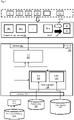
- FIG. 1 is a simplified component diagram of a production control system 100 for controlling a process performed by production equipment 200.
- the functioning of the production control system is described in view of the simplified flow chart of the production control method 1000, as illustrated in FIG. 2 , performed the by production control system 100. Therefore, reference numbers of both figures ( FIG. 1 , FIG. 2 ) are used in the following paragraphs.
- the production equipment 200 includes one or more production modules PM1 to PMn (e.g., robots, chemical reactors, etc.).
- the various production modules can perform production steps for producing one or more physical items 11, 12.
- the production equipment 200 can be a production line for performing the assembly of the physical items 11, 12 based on a plurality of components C1 to Cm.
- Each of the physical items 11, 12 (e.g., final products) may be based on a different subset of the plurality of components C1 to Cm.
- the respective components are automatically provided to the production equipment (e.g., via robots, conveyor belts, tubes, valves, etc.).
- the production equipment 200 may be chemical plant equipment configured to perform a chemical process.
- the respective components of the final product are, for example, chemical substances.
- the production equipment may be configured to perform test production runs for tuning a production process.
- the production equipment 200 is controlled by the control system 100 to automatically produce various physical items 11, 12 during corresponding operating time intervals OTV1, OTV2.
- the production equipment 200 is set up to produce the first item 11 during the first operating time interval OTV1.
- the production equipment may be reconfigured to produce the second item 12 during the second operating time interval OTV2.
- the first and second items 11, 12 may be based on different components and may make use of different production modules.
- Automated production equipment is well known in the art (e.g., in the automotive, chemical industry, and other many industries) and does not require further disclosure to a person skilled in the art of automated production processes.
- Physical existent means anything that has a state of matter, including but not limited to the low-energy classical states of matters such as solid, liquid, gas and plasma.
- component means any physically existent part of the physical item. Two components are different from each other if they differ in at least one technical feature.
- the term "technical feature” means any feature which can be determined by a human sense organ or by sense organ of another living organism or by a physically existent instrument.
- Technical features include but are not limited to physical features, chemical features and biological features.
- physical features are physical parameters such as weight, geometries, density, temperature, color, viscosity, conductivity, and durability.
- chemical features are chemical composition in the analytical sense (i.e. which molecules or chemical substances are contained in a component), solubility reactivity, reaction rate, chemical structure.
- Examples for biological features are sterility, reproduction rate, fertility, and gene sequences. The fact that a physical item or a component comprises computer data is also an example for a technical feature.
- a physical item or a component has undergone a certain physical or chemical process is also an example for a technical feature.
- physical item 11 and physical item 12 are physically identical (i.e. have the same physical or chemical composition), but item 11 was produced by process P1 and item 12 by a different process P2, then both components differ in the technical feature regarding their production process.
- component A1 and component A2 are physically identical (i.e. have the same physical or chemical composition), but component C1 was produced by process P1 and component C2 by a different process P2, then both components differ in the technical feature regarding their production process.
- the component is the physical item as such.
- production equipment means any physically existent equipment which is suitable for processing at least one component of a physical item or suitable for processing the physical item as such.
- processing a component means either (a) changing at least one of the technical features of the component, or (b) obtaining information on (e.g. testing, measuring or analyzing) at least one of the technical features of the component, or (c) manufacturing or producing the component, (d) treating, purifying, cleaning or recycling the component, (e) transforming the component to another component or to a part of another component, or (f) adding this component to or removing this component from the physical item.
- processing a physical item means manufacturing or producing it, or processing a component of the physical item.
- the control system 100 is illustrated as a monolithic block (e.g., implementation on a single hardware resource). However, in some embodiments, the modules of the control system 100 may be distributed across multiple hardware resources which together form the control system at the logical level.
- the control unit 120 of the control system may be an integral part of the production equipment 200 and the risk evaluator sub-modules 111, 112 may be integral parts of the respective databases 320, 330.
- the control system 100 may be a module of a central enterprise control system, such as for example, an enterprise resource planning (ERP) system, which has appropriate interfaces 191, 192 to communicate with external databases and the production equipment.
- ERP enterprise resource planning
- control system (100) can also control or communicate with other production equipment connected to production equipment (200), for example production equipment on the upstream or downstream side of the production equipment (200).
- the first interface 191 is configured to obtain 1100, from a data provisioning module 310, production control data 311 for operating the production equipment 200.
- the process control data corresponds to production control data (PCD) 311 including operating instructions configured to control the production equipment 200 to automatically process one or more physical items 11, 12 and their respective components C1 to Cn.
- PCD 311 can include so-called routings which include lists of the various productions steps to be applied to respective items/components. Information like routings of bills of materials for the various items is typically provided by ERP systems.
- This information can be transformed by the control unit into technical control parameter information which is provided to the various production modules PM1 to PMn via the second interface 192 to instruct the production modules to perform production steps according to PCD 311. It is well known to a person skilled in the art how to retrieve (e.g., via remote function call interfaces or appropriate web service interfaces) and transform production control data from such data provisioning modules 310 into technical control parameters which can be directly applied to respective production modules.
- the control system 100 further includes the risk evaluator module 110 configured to determine 1200 for each item 11, 12 a total risk value based on partial risk values associated with the respective components. Further, the risk evaluator 110 can detect if there occurs any change in the determined total risk values. In other words, the risk evaluator 110 can compute the initial total risk values for the plurality of physical items 11, 12 and can further update and monitor the total risk values over time. As a consequence, changes in the risk values over time can be detected.
- the control unit (CU) 120 of the control system 100 can communicate with the production equipment 200 via the second interface 192.
- Any interface technology which is suitable to transfer control data from CU 120 to the production modules PM1 to PMn may be used for implementing the second interface 192.
- This also includes wireless communication interfaces with respective protocols.
- the CU 120 receives the PCD 311 with the production control data for the physical items 11, 12. It further receives from the risk evaluator 110 the information which physical item has the lowest total risk value. In the example, of FIG. 1 , the particular item 11 has the lowest total risk value.
- the CU120 initiates 1300, via the second interface 192, the execution of the operating instructions for manufacturing particular item 11 during the first operating time interval OTV1.
- the risk evaluator 130 may provide the entire risk ranking for the plurality of physical items to the CU 120 and the CU120 selects the item with the lowest total risk value for production.
- the risk evaluator 110 already performs the filtering of the risk ranking and only provides the item with the lowest total risk value to the CU 120.
- the CU 120 may then query the data provisioning module 310 to retrieve the PCD 311 for the item 11 with the lowest risk value.
- the CU 120 may have a cache memory for storing PCD 311 for potential items to be manufactured by the production equipment. In the alternative embodiment the CU 120 may simply select the cached PCD data which correspond to the item 11 with the lowest total risk value.
- the CU 120 may further include a transformation module which can transform the production control data received from the data provisioning module 310 into a format which can be processed by the various production modules of the production equipment 200.
- the CU 120 initiates termination of the execution of the operating instructions for processing (e.g. manufacturing) the particular item 11.
- the risk evaluator 110 detects 1400 a change in the determined total risk values which results in an alternative item 12 having the lowest total risk value and results in a difference between said total risk value of the alternative item 12 and the updated total risk value of the particular item 11 exceeding a predefined threshold difference value
- the CU 120 initiates termination of the execution of the operating instructions for processing (e.g. manufacturing) the particular item 11.
- Updated in relation to the "total risk value of the particular item” means “updated through said change in the determined total risk values".
- the CU 120 sends operating instructions to the production equipment causing the corresponding production modules to terminate the manufacturing of the particular item I1 (i.e., initiates 1500 termination of the execution). For example, in a standard control mode, this may occur at the end of the first operating time interval OTV1 (i.e., when the production batch for the item 11 is completed). However, in some implementations (e.g., in an emergency control mode), the operating instructions may cause the production equipment 200 to immediately stop production of the particular item l1even before the end of the first operating time interval.
- such a change may only be detected by the risk evaluator if the change of the total risk value exceeds a predefined tolerance range (e.g., defined by threshold value(s)). That is, minor changes of the total risk value may be ignored by the control system in that no corrective action is triggered.
- a predefined tolerance range e.g., defined by threshold value(s)
- the CU 120 initiates 1600, via the second interface 192, execution of the operating instructions for processing (e.g. manufacturing) the alternative item 12 during a second operating time interval OTV2.
- the production is automatically switched to the alternative item 12 which now has the lowest total risk value.
- the predefined tolerance range is chosen in such a way that a significant advantage as a result of the production switching is achieved only if total risk value changes exceed the predefined threshold value(s).
- the alternative item 12 can be a variant of the particular item 11 where one or more of the components of 11 are replaced by substitute components associated with lower risk values.
- the change of the total risk value for the particular item is associated with risk contributions of one or more of its components.
- the control unit 120 may then identify for the particular item one or more alternative components as substitutes with lower risk value contributions by searching for components with at least one similar or very similar structure, function and/or technical feature in a corresponding database. At least one of the one or more particular components may then be replaced with an identified alternative component so that the total risk value of the modified particular item (i.e., alternative item 12) becomes the lowest total risk value of all items.
- the NIRA sub-module 112 may retrieve the information relevant for the computation from one or more databases 330.
- risk factors are technical risks, EHS (environment, health and safety) risks - including risks related to toxicity, pathogenicity, electromagnetic radiation, particle radiation and acoustic radiation -, IT related risks (data loss or misappropriation) etc.
- Smart risk assessment tools such as the risk evaluator 110 with the IRA and NIRA sub-modules, may be extended by further sub-modules directed to the computation of further partial risk values in relation to, for example, EHS (environment, health and safety) risks- including risks related to toxicity, pathogenicity, electromagnetic radiation, particle radiation and acoustic radiation -, IT related risks (data loss or misappropriation of data).
- EHS environment, health and safety
- EHS environment, health and safety
- EHS environment, health and safety
- the risk evaluator 110 is communicatively coupled with the CU 120.
- the communicative coupling may be implemented via an internal bus of the control system 100.
- the communicative coupling may be implemented via any appropriate Wide Area Network (WAN), Local Area Network (LAN), or Wireless Local Area Network (WLAN) connection.
- WAN Wide Area Network
- LAN Local Area Network
- WLAN Wireless Local Area Network
- the risk evaluator 110 provides the risk information to the CU 120 which is needed to transmit the operating instructions to the production equipment which ensure that only items are produced which are usable afterwards.
- the risk evaluator 110 received input information from the databases 320, 330 and optionally from the data provisioning module 310 (e.g., the name and the chemical structure of the item).
- the risk evaluator 110 may also receive input from the CU 120.
- the actual composition of the item "MASTERADDITIVE” may have changed in the production process during operating time interval OTV1 because the manufacturing process may have changed.
- the item may be actually produced according to a specification which deviates from the original specification included in the production control data PCD 311.
- the CU 120 may also perform a monitoring function on the production equipment 200 and recognize such a change (e.g., by receiving appropriate sensor data monitoring the status of the various production modules PM1 to PMn).
- the CU 120 may then provide the actual composition to the risk evaluator 110 which can compute an updated total risk value for the actually produced item.
- the updated total risk value for the currently produced item may have changed in such a way that an alternative item has a lower risk value.
- the CU 120 may provide operating instructions to the production equipment to switch the production to the alternative item for the next operating time interval OTV2.
- FIG. 3 is a table 3000 which illustrates an example of control system behavior for regularly updated total risk values of a currently produced item (e.g., "MASTERADDITIVE").
- the risk evaluator may perform update computations for the total risk values on a regular basis. For example, the update intervals may be monthly, weekly, daily, hourly, per second, or even in real time. It is assumed that in the example the risk evaluator automatically computes total risk value updates hourly.
- the total risk value column of table 3000 shows threshold values for the total risk value of the currently produced item.
- the operating instructions column includes information regarding the operating instructions which are sent by the CU 120 to the production equipment in case the actual total risk value exceeds the respective threshold value.
- control mode 1 is associated with all total risk values up to 40 %. That is, any change of the total risk value which is resulting in a total risk value in the tolerance range 0% to 40% is ignored by the control system.
- the control system does not treat changes within the tolerance range as relevant changes and therefore no further action is taken and the manufacturing process is not changed.
- control mode 2 which includes sending a notification about the current risk status.
- the control system notifies a respective target (e.g., a monitoring system or a human operator) about the detected change. Otherwise, the control system does not automatically trigger any further corrective action.
- control mode 3 which may include changing the manufacturing process to a predefined alternative process (design-around solution) for producing an alternative item during a future operating interval. This may include the use of a low-risk substitute component instead of a high-risk component provided that the total risk value of the alternative item is not >40%.
- the control system further sends operating instructions to the production modules to prepare for the switch event to switch to the substitute component.
- the system also sends a notification about the current risk status to a respective target.
- control mode 4 which may include terminating the manufacturing process after completion of the current operating time interval (e.g., within one day) and preparing for the switching event. It may be advantageous to select an updating frequency for the determination of risk changes which is higher than the frequency at which switching events can occur. This ensures that any risk re-evaluation including recent risk changes can be taken into account by the control system before a switching instruction is sent to the production equipment. The system also sends a notification about the current risk status to a respective target.
- control mode 5 (emergency mode) which may include terminating the manufacturing process during the current operating time interval (e.g., within one hour) and prepare for the switching event.
- the system also sends a notification about the current risk status to a respective target.
- the same or similar scheme as shown in FIG. 3 may also be applied to other risk relevant processes such as treatment, analysis/testing/screening (incl. high-throughput screening), supply chain, procurement, sales, software release, R&D, and simulation processes.
- risk relevant processes such as treatment, analysis/testing/screening (incl. high-throughput screening), supply chain, procurement, sales, software release, R&D, and simulation processes.
- the CU may send a request for automatic patentability/validity assessment to the IRA sub-module for the most relevant patents regarding currently produced item.
- the CU is configured in a way that it automatically searches for design-around options in interaction with the risk evaluator and selects the one with the best total risk value.
- the CU is configured in a way that maintenance actions for one or more production modules are scheduled after the manufacturing process is stopped (control modes 4 and 5 with termination operating instructions).
- a public notification about the maintenance state of the respective production module e.g., "the system ... is now maintained"
- output means e.g., monitor, touch screen, audio output, etc.
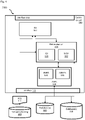
- FIG. 4 illustrates an embodiment of the control system 100 further including a module 130 which is configured to perform an automatic search for alternative items to be processed (ASPA).
- ASPA module 130 may have a sub-module 131 which is configured to perform automatic searches for alternatives (ASNIPA).
- a person skilled in the art is able to use known search technologies in combination with respective databases to retrieve the relevant information needed for the decision of the control system to automatically switch manufacturing to an alternative item.
- the ASIPA sub-module 131 can output one or more alternative solutions for production items (referred to as "ASIPA solutions” in the following). These ASIPA solutions can be evaluated by the IRA/NIRA sub-modules 111, 112 regarding their associated risks. For example, for evaluating such technical risks (e.g., technical feasibility of an item), optionally NIRA 112 can be communicatively coupled to an automatic quick screening or testing equipment, wherein the quick screening or testing results can be transformed to technical risks. The total risk value is computed based on the risk value for the respective alternative solution.
- the risk evaluator may output a signal to the CU to switch the manufacturing process from the current solution to this ASIPA solution.
- FIG. 5 is a diagram that shows an example of a generic computer device 900 and a generic mobile computer device 950, which may be used with the techniques described here.
- Computing device 900 relate to the control system 100 (cf. FIG. 1 ).
- Computing device 950 is intended to represent various forms of mobile devices, such as personal digital assistants, cellular telephones, smart phones, and other similar computing devices. In the context of this disclosure the computing device 950 may serve as a frontend control device of the control system 900.
- the components shown here, their connections and relationships, and their functions, are meant to be exemplary only, and are not meant to limit implementations of the inventions described and/or claimed in this document.
- Computing device 900 includes a processor 902, memory 904, a storage device 906, a high-speed interface 908 connecting to memory 904 and high-speed expansion ports 910, and a low-speed controller 912 connecting to low-speed expansion port 914 and storage device 906.
- Each of the components 902, 904, 906, 908, 910, and 912 are interconnected using various busses, and may be mounted on a common motherboard or in other manners as appropriate.
- the processor 902 can process instructions for execution within the computing device 900, including instructions stored in the memory 904 or on the storage device 906 to display graphical information for a GUI on an external input/output device, such as display 916 coupled to high-speed interface 908.
- multiple processors and/or multiple buses may be used, as appropriate, along with multiple memories and types of memory.
- multiple computing devices 900 may be connected, with each device providing portions of the necessary operations (e.g., as a server bank, a group of blade servers, or a multi-processor system).
- the memory 904 stores information within the computing device 900.
- the memory 904 is a volatile memory unit or units.
- the memory 904 is a non-volatile memory unit or units.
- the memory 904 may also be another form of computer-readable medium, such as a magnetic or optical disk.
- the storage device 906 is capable of providing mass storage for the computing device 900.
- the storage device 906 may be or contain a computer-readable medium, such as a floppy disk device, a hard disk device, an optical disk device, or a tape device, a flash memory or other similar solid state memory device, or an array of devices, including devices in a storage area network or other configurations.
- a computer program product can be tangibly embodied in an information carrier.
- the computer program product may also contain instructions that, when executed, perform one or more methods, such as those described above.
- the information carrier is a computer- or machine-readable medium, such as the memory 904, the storage device 906, or memory on processor 902.
- the high-speed controller 908 manages bandwidth-intensive operations for the computing device 900, while the low-speed controller 912 manages lower bandwidth-intensive operations. Such allocation of functions is exemplary only.
- the high-speed controller 908 is coupled to memory 904, display 916 (e.g., through a graphics processor or accelerator), and to high-speed expansion ports 910, which may accept various expansion cards (not shown).
- low-speed controller 912 is coupled to storage device 906 and low-speed expansion port 914.
- the low-speed expansion port which may include various communication ports (e.g., USB, Bluetooth, Ethernet, wireless Ethernet) may be coupled to one or more input/output devices, such as a keyboard, a pointing device, a scanner, or a networking device such as a switch or router, e.g., through a network adapter.
- input/output devices such as a keyboard, a pointing device, a scanner, or a networking device such as a switch or router, e.g., through a network adapter.
- the computing device 900 may be implemented in a number of different forms, as shown in the figure. For example, it may be implemented as a standard server 920, or multiple times in a group of such servers. It may also be implemented as part of a rack server system 924. In addition, it may be implemented in a personal computer such as a laptop computer 922. Alternatively, components from computing device 900 may be combined with other components in a mobile device (not shown), such as device 950. Each of such devices may contain one or more of computing device 900, 950, and an entire system may be made up of multiple computing devices 900, 950 communicating with each other.
- Computing device 950 includes a processor 952, memory 964, an input/output device such as a display 954, a communication interface 966, and a transceiver 968, among other components.
- the device 950 may also be provided with a storage device, such as a microdrive or other device, to provide additional storage.
- a storage device such as a microdrive or other device, to provide additional storage.
- Each of the components 950, 952, 964, 954, 966, and 968 are interconnected using various buses, and several of the components may be mounted on a common motherboard or in other manners as appropriate.
- the processor 952 can execute instructions within the computing device 950, including instructions stored in the memory 964.
- the processor may be implemented as a chipset of chips that include separate and multiple analog and digital processors.
- the processor may provide, for example, for coordination of the other components of the device 950, such as control of user interfaces, applications run by device 950, and wireless communication by device 950.
- Processor 952 may communicate with a user through control interface 958 and display interface 956 coupled to a display 954.
- the display 954 may be, for example, a TFT LCD (Thin-Film-Transistor Liquid Crystal Display) or an OLED (Organic Light Emitting Diode) display, or other appropriate display technology.
- the display interface 956 may comprise appropriate circuitry for driving the display 954 to present graphical and other information to a user.
- the control interface 958 may receive commands from a user and convert them for submission to the processor 952.
- an external interface 962 may be provided in communication with processor 952, so as to enable near area communication of device 950 with other devices.
- External interface 962 may provide, for example, for wired communication in some implementations, or for wireless communication in other implementations, and multiple interfaces may also be used.
- the memory 964 stores information within the computing device 950.
- the memory 964 can be implemented as one or more of a computer-readable medium or media, a volatile memory unit or units, or a non-volatile memory unit or units.
- Expansion memory 974 may also be provided and connected to device 950 through expansion interface 972, which may include, for example, a SIMM (Single In Line Memory Module) card interface.
- SIMM Single In Line Memory Module
- expansion memory 974 may provide extra storage space for device 950, or may also store applications or other information for device 950.
- expansion memory 974 may include instructions to carry out or supplement the processes described above, and may include secure information also.
- expansion memory 974 may act as a security module for device 950, and may be programmed with instructions that permit secure use of device 950.
- secure applications may be provided via the SIMM cards, along with additional information, such as placing the identifying information on the SIMM card in a non-hackable manner.
- the memory may include, for example, flash memory and/or NVRAM memory, as discussed below.
- a computer program product is tangibly embodied in an information carrier.
- the computer program product contains instructions that, when executed, perform one or more methods, such as those described above.
- the information carrier is a computer- or machine-readable medium, such as the memory 964, expansion memory 974, or memory on processor 952, that may be received, for example, over transceiver 968 or external interface 962.
- Device 950 may communicate wirelessly through communication interface 966, which may include digital signal processing circuitry where necessary. Communication interface 966 may provide for communications under various modes or protocols, such as GSM voice calls, SMS, EMS, or MMS messaging, CDMA, TDMA, PDC, WCDMA, CDMA2000, or GPRS, among others. Such communication may occur, for example, through radio-frequency transceiver 968. In addition, short-range communication may occur, such as using a Bluetooth, WiFi, or other such transceiver (not shown). In addition, GPS (Global Positioning System) receiver module 970 may provide additional navigation- and location-related wireless data to device 950, which may be used as appropriate by applications running on device 950.
- GPS Global Positioning System
- Device 950 may also communicate audibly using audio codec 960, which may receive spoken information from a user and convert it to usable digital information. Audio codec 960 may likewise generate audible sound for a user, such as through a speaker, e.g., in a handset of device 950. Such sound may include sound from voice telephone calls, may include recorded sound (e.g., voice messages, music files, etc.) and may also include sound generated by applications operating on device 950.
- Audio codec 960 may receive spoken information from a user and convert it to usable digital information. Audio codec 960 may likewise generate audible sound for a user, such as through a speaker, e.g., in a handset of device 950. Such sound may include sound from voice telephone calls, may include recorded sound (e.g., voice messages, music files, etc.) and may also include sound generated by applications operating on device 950.
- the computing device 950 may be implemented in a number of different forms, as shown in the figure. For example, it may be implemented as a cellular telephone 980. It may also be implemented as part of a smart phone 982, personal digital assistant, or other similar mobile device.
- implementations of the systems and techniques described here can be realized in digital electronic circuitry, integrated circuitry, especially designed ASICs (application specific integrated circuits), computer hardware, firmware, software, and/or combinations thereof.
- ASICs application specific integrated circuits
- These various implementations can include implementation in one or more computer programs that are executable and/or interpretable on a programmable system including at least one programmable processor, which may be special or general purpose, coupled to receive data and instructions from, and to transmit data and instructions to, a storage system, at least one input device, and at least one output device.
- the systems and techniques described here can be implemented on a computer having a display device (e.g., a CRT (cathode ray tube) or LCD (liquid crystal display) monitor) for displaying information to the user and a keyboard and a pointing device (e.g., a mouse or a trackball) by which the user can provide input to the computer.
- a display device e.g., a CRT (cathode ray tube) or LCD (liquid crystal display) monitor
- a keyboard and a pointing device e.g., a mouse or a trackball
- Other kinds of devices can be used to provide for interaction with a user as well; for example, feedback provided to the user can be any form of sensory feedback (e.g., visual feedback, auditory feedback, or tactile feedback); and input from the user can be received in any form, including acoustic, speech, or tactile input.
- the systems and techniques described here can be implemented in a computing device that includes a back end component (e.g., as a data server), or that includes a middleware component (e.g., an application server), or that includes a front end component (e.g., a client computer having a graphical user interface or a Web browser through which a user can interact with an implementation of the systems and techniques described here), or any combination of such back end, middleware, or front end components.
- the components of the system can be interconnected by any form or medium of digital data communication (e.g., a communication network). Examples of communication networks include a local area network ("LAN”), a wide area network (“WAN”), and the Internet.
- LAN local area network
- WAN wide area network
- the Internet the global information network
- the computing device can include clients and servers.
- a client and server are generally remote from each other and typically interact through a communication network.
- the relationship of client and server arises by virtue of computer programs running on the respective computers and having a client-server relationship to each other.
- a further advantage of the pre-described examples is that more expensive or complex processes (for example the test on the capability to remove fat) only need to be done for a preselected subset of items, thus accelerating the speed of these processes and saving valuable resources.
Landscapes
- Engineering & Computer Science (AREA)
- Business, Economics & Management (AREA)
- Human Resources & Organizations (AREA)
- Quality & Reliability (AREA)
- Physics & Mathematics (AREA)
- General Physics & Mathematics (AREA)
- Economics (AREA)
- Entrepreneurship & Innovation (AREA)
- Strategic Management (AREA)
- Manufacturing & Machinery (AREA)
- Automation & Control Theory (AREA)
- General Engineering & Computer Science (AREA)
- Marketing (AREA)
- Game Theory and Decision Science (AREA)
- Educational Administration (AREA)
- Development Economics (AREA)
- Operations Research (AREA)
- Tourism & Hospitality (AREA)
- General Business, Economics & Management (AREA)
- Theoretical Computer Science (AREA)
- Management, Administration, Business Operations System, And Electronic Commerce (AREA)
- General Factory Administration (AREA)
- Testing And Monitoring For Control Systems (AREA)
Abstract
Description
- The present invention generally relates to control of a production process, and more particularly, relates to control of production processes in accordance with risk assessments.
- Production control systems are known in the art to control production equipment for automatically manufacturing physical products. The degree of automation varies. Some production lines still need substantial interaction with human operators. Other types of production lines are operated independently from human interaction by use of robots and/or cyber physical systems which can communicate amongst each other as well as with control systems providing the corresponding operating instructions to the various components of the production equipment to automatically perform respective steps of the production process. Typically, the production equipment receives control instructions including technical control parameters for the respective functions of the production equipment wherein the control parameters are configured to cause the production equipment to perform a sequence of production steps to manufacture a final product (physical item). Typically, in such a process firstly components of the product are manufactured which are then assembled into the final product. The depth of production, that is, the number of hierarchy levels in the component structure of the final product, may vary significantly for different types of products.
- The higher the degree of automation, the lower the possibility for human operators to control the production equipment. In situations, where a high degree of automation is achieved, operators are likely not available to assess potential risks for the production process which may lead to the production of waste. For example, a particular risk may occur during the operation of the production equipment leading to the production of non-usable final products when ignoring the risk.
- There is therefore a need to improve control mechanisms of production equipment for automated processes performed by production equipment to avoid the production of non-usable physical products (physical items) because of ignored technical risks. Such technical risks comprise "EHS" risks, i.e. environment, health and safety risks, including but not limited to risks related to toxicity, pathogenicity, electromagnetic radiation, particle radiation and acoustic radiation of final products or any IT related risks like data loss or misappropriation. Thereby, production equipment, as used in the present disclosure, refers to any machine or tool (production module) which can be controlled in such way that it automatically performs steps of an automated process in response to corresponding operating instructions. Typically, production equipment includes a plurality of production modules which are used sequentially or in parallel to perform the process steps applied to the products and/or components. In some cases, the production equipment may include only one production module.
- The above technical problem is solved by a control system and a control method according to the independent claims. Thereby, the control system is configured to determine mentioned actual risk values for the production of respective products and/or their components and use such risk values directly to control the process performed by the production equipment accordingly by providing adjusted process control data to the production equipment. The adjusted process control data is configured to switch the process from a processing mode associated with a particular risk value to another processing mode associated with a lower risk value. It can be advantageous that the adjustment of the process control data based on determined risk values occurs automatically without any interaction with a human operator. Thereby, a risk value, as used in the present disclosure, can be a scalar value, a risk vector, or a multidimensional risk matrix where different risk categories may be reflected by the various elements of the risk value. The control system includes one or more processors and at least one memory component which are configured to implement the functions of the control system via software modules which are stored in the memory component and executed by the one or more processors at runtime of the control system.
- In one embodiment, a control system for controlling a process (e.g., production process, testing process, cleaning process, etc.) performed by production equipment includes a first interface which obtains process control data from a data provisioning module. The process control data relates to operating instructions configured to control the production equipment to automatically process one or more physical items (of physical products) and their respective components. In other words, the process control data either already includes or can at least be transformed into control data configured for operating the production equipment to perform the various steps of the production process. The process control data may include information from a bill of material of the manufactured product and information about the work steps accordingly. Such data is typically provided by data provision modules, such as for example, Enterprise Resource Planning (ERP) systems or similar systems. The process control data may also include control production equipment specific instructions (e.g., computer-integrated manufacturing (CIM) data), such as for example, instructions to control the movement of a robot in accordance with the production step to be performed. Such data can be provided by equipment specific libraries. As used herein after, a data provisioning module can be any software or hardware system which provides data that is relevant for controlling the process performed by the production equipment.
- The control system further includes a risk evaluator module configured to determine for each physical item (or physical product) a total risk value based on mentioned partial risk values associated with the respective components of the product. Further, the risk evaluator monitors the determined risk values over time and can detect changes in the determined total risk values.
- In one embodiment, a change in the previously determined total risk values is detected when a particular change of at least one of the determined risk values exceeds a predefined tolerance range. That is, only when the change of a total risk value is large enough in that it exceeds a predefined threshold (tolerance range) it will be recognized by the risk evaluator as a relevant change which requires an adjustment of the (production) process.
- The control system further includes a control unit configured to control the production equipment to perform a process by sending operating instructions to the respective production modules of the production equipment. In general, such an automatic control unit can be used to control any risk-relevant process (i.e. manufacturing, treatment, analysis/testing/screening (incl. high-throughput screening), supply chain, procurement, sales, software release etc.) the control unit may carry out various control modes which may depend on the input of the risk evaluator module.
- The operating instructions, when executed by the production modules, cause the production modules to perform the corresponding processing steps of the production process. For this purpose, the control system has a second interface which is configured to communicate with production modules of the production equipment to provide corresponding operating instructions to the production modules. Via the second interface the control unit initiates execution of the operating instructions for processing a particular physical item (in the following only referred to as "item") having the lowest total risk value during a first operating time interval. In other words, as an example, once the risk evaluator has determined the total risk values for the physical products or respective physical items which are candidates for production by the production equipment, the risk evaluator can identify the particular item which has the lowest risk value of all items as the item to be processed by the equipment during the first operating time interval. The first operating time interval is a defined period of time with defined start and end time points during which the production equipment is operated to process the particular item. Typically, operating time intervals are provided by a production planning system.
- If the change in the determined total risk values results in an alternative item having the lowest total risk value, or if the change of the total risk value associated with the particular item exceeds a predefined threshold value, the control unit initiates termination of the execution of the operating instructions for processing the particular item. Particularly, if the change in the determined total risk values results in an alternative item having the lowest total risk value and results in a difference between said total risk value of the alternative item and the updated total risk value of the particular item exceeding a predefined threshold difference value, the control unit initiates termination of the execution of the operating instructions for processing the particular item. Optionally, the alternative item may be selected from a plurality of physical items in accordance with a product specification of the particular item in that the alternative item performs a similar chemical, physical or technical function or structure and/or technical feature, or the same chemical, physical or technical function, or structure and/or technical feature, as the particular item. For example, if the particular item is a cleaning liquid having the function to remove limescale from a surface, items which do not include limescale remover components may not be taken into consideration as alternative items. The term "similar" in "similar function" with respect to function no. 1 and function no. 2 means the following: Under the assumption that function no. 1 achieves 100% value of a specific parameter (e.g. 100% of cleaning efficiency for limescale within 5 minutes under specific conditions), function no. 2 achieves at least 50% value, at most 200% value of this parameter (e.g. at least 50%, or at most 200% of cleaning efficiency for limescale within 5 minutes under the same conditions).The term "very similar" in "very similar function" with respect to function no. 1 and function no. 2 means the following: Under the assumption that function no. 1 achieves 100% value of a specific parameter (e.g. 100% of cleaning efficiency for limescale within 5 minutes under specific conditions), function no. 2 achieves at least 70% value, at most 140% value of this parameter (e.g. at least 70%, or at most 140% cleaning efficiency for limescale within 5 minutes under the same conditions).
- The termination of the execution of the operating instructions is also initiated if the change of the total risk value associated with the particular item exceeds a predefined threshold value. In this case, the particular item may still be associated with the lowest risk value of all determined risk values. However, in this case, the absolute value of the total risk value requires termination of the execution.
- In other words, once a change in the total risk values is detected by the risk evaluator in that the currently processed particular item is not associated anymore with the lowest risk value or in that its risk value has increased substantially (exceeding the predefined threshold) then processing of the particular item is stopped by the respective production modules in response to a corresponding termination instruction sent by the control unit. In case the change in the determined total risk values results in the alternative item having the lowest total risk value, the control unit initiates, via the second interface, execution of the operating instructions for processing the alternative item during a second operating time interval. The second operating time interval is subsequent to the first operating interval. The start of the second operating time interval is typically delayed versus the end of the first operating interval by a setup time interval which is needed to switch the configuration of the production modules from the particular item to the alternative item.
- The term "alternative items", as used in the present disclosure, includes items which differ in at least one technical feature compared to the particular item. The term "alternative items" includes items which are physically different from the particular item (e.g., having a different physical or chemical composition), and further includes items which are physically identical (e.g., having the same physical or chemical composition) to the particular item but where the process applied to the alternative item is different from the process applied to the particular item.
- The term "lowest total risk value", as used in the present disclosure, means "lowest total risk value of the determined total risk values"
- Regarding the discontinuation of the processing of the currently manufactured item, in one embodiment, the control unit may support different control modes. For example, in a first control mode, the instruction to terminate the execution of the operating instructions for processing the particular item may lead to a termination of the process at the end of the first operating time interval. This may be advantageous if no immediate action is required. In a second control mode, the instruction to terminate the execution of the operating instructions for processing the particular item may lead to the termination of the process during the first operating time interval. This may be advantageous in emergency situations where immediate action is required. For example, if a partial risk value indicates that one of the product components is not complying with a technical specification (for example, the purity of a solvent is insufficient) the process may be stopped immediately.
- In one embodiment, the risk evaluator module is further configured to determine the total risk value based on partial risk values comprising risk values regarding the physical items and their respective components. In other words, the total risk value of a physical item typically includes multiple risk components (partial risk values) which may be associated with different risk categories. For example, partial risk values may be associated with technical issues, such as for example, technical specifications of the items and/or components or the maintenance status of the production modules needed for the processing of a particular item/component.
- In any case, risk values as used in the present disclosure, relate to uncertainties regarding the potential later use of one or more processed physical items and/or to the process applied to the physical items wherein the risk values are directly used to control the process performed by the respective production modules in accordance with the findings of the risk evaluator without any human interaction.
- In some embodiments, a change of a particular total risk value for a particular item may be associated with risk contributions of one or more particular components. That is, the total risk value for the particular item depends on risk values of its components. The risk evaluator may then identify for the particular item one or more alternative components as substitutes with lower risk value contributions by searching for components with at least one similar or very similar structure, function and/or technical feature in a corresponding database. For example, in the field of chemical components used in chemical processes, established databases for such structure/function/technical feature analyses are for example SciFinder, REAXYS, ChemSpider, PubChem, ChemlDplus, SPRESI database, CAMPUS (Computer Aided Material Preselection by Uniform Standards) database, Beilstein database, or DrugBank. Once the alternative component(s) are identified, the control unit can instruct the production equipment to replace at least one of the one or more particular components with an identified alternative component so that the total risk value of the particular item becomes the lowest total risk value. In this embodiment, the production equipment does not switch to a totally different final product with a lower risk value but changes the component structure of the currently manufactured item by replacing high risk components with low-risk substitute components so that the modified currently manufactured products has again the lowest risk value of all physical items which can be produced by the production equipment.
- In one embodiment, a control method performed by the previously disclosed control system is used to control the production equipment using the steps: obtaining, from a data provisioning module, process control data for operating the production equipment wherein the process control data includes operating instructions configured to control the production equipment to automatically process one or more physical items and their respective components; determining for each item a total risk value based on partial risk values associated with the respective components; initiating execution of the operating instructions for processing a particular item having the lowest total risk value during a first operating time interval; detecting a change in the determined total risk values; if the change in the determined total risk values results in an alternative item having the lowest total risk value, or if the change of the total risk value associated with the particular item exceeds a predefined threshold value, initiating termination of the execution of the operating instructions for processing the particular item; and if the change in the determined total risk values results in the alternative item having the lowest total risk value, initiating execution of the operating instructions for processing the alternative item during a second operating time interval.
- In a further embodiment, computer program instructions may be stored on a computer readable medium forming a computer program product which when executed by one or more processors of the control system causes the control system to perform said control method.
- Further aspects of the invention will be realized and attained by means of the elements and combinations particularly depicted in the appended claims. It is to be understood that both the foregoing general description and the following detailed description are exemplary and explanatory only and are not restrictive of the invention as described.
-
-
FIG. 1 is a simplified block diagram of a control system for controlling a process performed by production equipment according to an embodiment of the invention; -
FIG. 2 is a simplified flow chart of a control method performed by the control system according to an embodiment of the invention; -
FIG. 3 shows a table which illustrates an example of control system behavior in different control modes; -
FIG. 4 is a simplified component diagram of the control system including the optional automatic search module according to an embodiment of the invention; and -
FIG. 5 is a diagram that shows an example of a generic computer device and a generic mobile computer device, which may be used in embodiments of the invention. -
FIG. 1 is a simplified component diagram of aproduction control system 100 for controlling a process performed byproduction equipment 200. The functioning of the production control system is described in view of the simplified flow chart of theproduction control method 1000, as illustrated inFIG. 2 , performed the byproduction control system 100. Therefore, reference numbers of both figures (FIG. 1 ,FIG. 2 ) are used in the following paragraphs. - The
production equipment 200 includes one or more production modules PM1 to PMn (e.g., robots, chemical reactors, etc.). For example, the various production modules can perform production steps for producing one or morephysical items production equipment 200 can be a production line for performing the assembly of thephysical items physical items 11, 12 (e.g., final products) may be based on a different subset of the plurality of components C1 to Cm. The respective components are automatically provided to the production equipment (e.g., via robots, conveyor belts, tubes, valves, etc.). In some embodiments, theproduction equipment 200 may be chemical plant equipment configured to perform a chemical process. In case of a chemical process, the respective components of the final product are, for example, chemical substances. In one embodiment, the production equipment may be configured to perform test production runs for tuning a production process. Theproduction equipment 200 is controlled by thecontrol system 100 to automatically produce variousphysical items production equipment 200 is set up to produce thefirst item 11 during the first operating time interval OTV1. Then the production equipment may be reconfigured to produce thesecond item 12 during the second operating time interval OTV2. The first andsecond items - The term "physical item" is any item which is physically existent, including but not limited to:
- (a) machines, mechanical parts, electrical parts, devices, instruments, vehicles, building elements,
- (b) consumer goods, food, beverage,
- (c) molecules, chemical compounds, chemical substances, chemical compositions,
- (d) organisms in a living or dead state (for example plants or micro-organisms in a living or dead state).
- "Physically existent" means anything that has a state of matter, including but not limited to the low-energy classical states of matters such as solid, liquid, gas and plasma.
- The term "component" means any physically existent part of the physical item. Two components are different from each other if they differ in at least one technical feature.
- The term "technical feature" means any feature which can be determined by a human sense organ or by sense organ of another living organism or by a physically existent instrument. Technical features include but are not limited to physical features, chemical features and biological features. Examples for physical features are physical parameters such as weight, geometries, density, temperature, color, viscosity, conductivity, and durability. Examples for chemical features are chemical composition in the analytical sense (i.e. which molecules or chemical substances are contained in a component), solubility reactivity, reaction rate, chemical structure. Examples for biological features are sterility, reproduction rate, fertility, and gene sequences. The fact that a physical item or a component comprises computer data is also an example for a technical feature. The fact that a physical item or a component has undergone a certain physical or chemical process is also an example for a technical feature. For example, if
physical item 11 andphysical item 12 are physically identical (i.e. have the same physical or chemical composition), butitem 11 was produced by process P1 anditem 12 by a different process P2, then both components differ in the technical feature regarding their production process. For example, if component A1 and component A2 are physically identical (i.e. have the same physical or chemical composition), but component C1 was produced by process P1 and component C2 by a different process P2, then both components differ in the technical feature regarding their production process. - If the physical item consists of only one component, the component is the physical item as such.
- The term "production equipment" means any physically existent equipment which is suitable for processing at least one component of a physical item or suitable for processing the physical item as such. "processing a component" means either (a) changing at least one of the technical features of the component, or (b) obtaining information on (e.g. testing, measuring or analyzing) at least one of the technical features of the component, or (c) manufacturing or producing the component, (d) treating, purifying, cleaning or recycling the component, (e) transforming the component to another component or to a part of another component, or (f) adding this component to or removing this component from the physical item. With regard to a physical item, "processing a physical item" means manufacturing or producing it, or processing a component of the physical item.
- In the example of
FIG. 1 , thecontrol system 100 is illustrated as a monolithic block (e.g., implementation on a single hardware resource). However, in some embodiments, the modules of thecontrol system 100 may be distributed across multiple hardware resources which together form the control system at the logical level. For example, in a real implementation, thecontrol unit 120 of the control system may be an integral part of theproduction equipment 200 and the risk evaluator sub-modules 111, 112 may be integral parts of therespective databases control system 100 may be a module of a central enterprise control system, such as for example, an enterprise resource planning (ERP) system, which hasappropriate interfaces - In another embodiment, the control system (100) can also control or communicate with other production equipment connected to production equipment (200), for example production equipment on the upstream or downstream side of the production equipment (200).
- The
first interface 191 is configured to obtain 1100, from adata provisioning module 310,production control data 311 for operating theproduction equipment 200. In the example, the process control data corresponds to production control data (PCD) 311 including operating instructions configured to control theproduction equipment 200 to automatically process one or morephysical items PCD 311 can include so-called routings which include lists of the various productions steps to be applied to respective items/components. Information like routings of bills of materials for the various items is typically provided by ERP systems. This information can be transformed by the control unit into technical control parameter information which is provided to the various production modules PM1 to PMn via thesecond interface 192 to instruct the production modules to perform production steps according toPCD 311. It is well known to a person skilled in the art how to retrieve (e.g., via remote function call interfaces or appropriate web service interfaces) and transform production control data from suchdata provisioning modules 310 into technical control parameters which can be directly applied to respective production modules. - The
control system 100 further includes therisk evaluator module 110 configured to determine 1200 for eachitem 11, 12 a total risk value based on partial risk values associated with the respective components. Further, therisk evaluator 110 can detect if there occurs any change in the determined total risk values. In other words, therisk evaluator 110 can compute the initial total risk values for the plurality ofphysical items - The control unit (CU) 120 of the
control system 100 can communicate with theproduction equipment 200 via thesecond interface 192. Any interface technology which is suitable to transfer control data fromCU 120 to the production modules PM1 to PMn may be used for implementing thesecond interface 192. This also includes wireless communication interfaces with respective protocols. TheCU 120 receives thePCD 311 with the production control data for thephysical items risk evaluator 110 the information which physical item has the lowest total risk value. In the example, ofFIG. 1 , theparticular item 11 has the lowest total risk value. In this example, the CU120 initiates 1300, via thesecond interface 192, the execution of the operating instructions for manufacturingparticular item 11 during the first operating time interval OTV1. - In one embodiment, the
risk evaluator 130 may provide the entire risk ranking for the plurality of physical items to theCU 120 and the CU120 selects the item with the lowest total risk value for production. In an alternative embodiment, therisk evaluator 110 already performs the filtering of the risk ranking and only provides the item with the lowest total risk value to theCU 120. - In one embodiment the
CU 120 may then query thedata provisioning module 310 to retrieve thePCD 311 for theitem 11 with the lowest risk value. In an alternative embodiment, theCU 120 may have a cache memory for storingPCD 311 for potential items to be manufactured by the production equipment. In the alternative embodiment theCU 120 may simply select the cached PCD data which correspond to theitem 11 with the lowest total risk value. TheCU 120 may further include a transformation module which can transform the production control data received from thedata provisioning module 310 into a format which can be processed by the various production modules of theproduction equipment 200. - If the
risk evaluator 110 detects 1400 a change in the determined total risk values which results in analternative item 12 having the lowest total risk value, or if the change of the total risk value associated with theparticular item 11 exceeds a predefined threshold value, theCU 120 initiates termination of the execution of the operating instructions for processing (e.g. manufacturing) theparticular item 11. Particularly, if therisk evaluator 110 detects 1400 a change in the determined total risk values which results in analternative item 12 having the lowest total risk value and results in a difference between said total risk value of thealternative item 12 and the updated total risk value of theparticular item 11 exceeding a predefined threshold difference value, theCU 120 initiates termination of the execution of the operating instructions for processing (e.g. manufacturing) theparticular item 11. "Updated" in relation to the "total risk value of the particular item" means "updated through said change in the determined total risk values". For example, in the first scenario, the change in the determined total risk values results in analternative item 12 having the lowest total risk value which is 30% and results in theparticular item 11 having an updated total risk value of 32% (difference of both total risk values is 2%), and the predefined threshold difference value is delta=15%, in thisscenario CU 120 will not initiate termination of the execution of the operating instructions for processing theparticular item 11. For example, in the second scenario, the change in the determined total risk values results in analternative item 12 having the lowest total risk value which is 10% and results in theparticular item 11 having an updated total risk value of 32% (difference of both total risk values is 22%), and the predefined threshold difference value is delta=15%, in thisscenario CU 120 will initiate termination of the execution of the operating instructions for processing theparticular item 11. - In other words, once the risk evaluator updates the total risk values for the plurality of physical items and a change is detected so that after the change the
particular item 11 is not associated with the lowest total risk value anymore, theCU 120 sends operating instructions to the production equipment causing the corresponding production modules to terminate the manufacturing of the particular item I1 (i.e., initiates 1500 termination of the execution). For example, in a standard control mode, this may occur at the end of the first operating time interval OTV1 (i.e., when the production batch for theitem 11 is completed). However, in some implementations (e.g., in an emergency control mode), the operating instructions may cause theproduction equipment 200 to immediately stop production of the particular item l1even before the end of the first operating time interval. In some embodiments, such a change may only be detected by the risk evaluator if the change of the total risk value exceeds a predefined tolerance range (e.g., defined by threshold value(s)). That is, minor changes of the total risk value may be ignored by the control system in that no corrective action is triggered. - Once the production of the
particular item 11 has been terminated by theproduction equipment 200, theCU 120initiates 1600, via thesecond interface 192, execution of the operating instructions for processing (e.g. manufacturing) thealternative item 12 during a second operating time interval OTV2. In other words, the production is automatically switched to thealternative item 12 which now has the lowest total risk value. If the detection of a change depends on the predefined tolerance range, in cases of minor changes of the total risk value below the respective threshold value(s) the control system will not switch the production equipment towards the production of thealternative item 12. Advantageously, the predefined tolerance range is chosen in such a way that a significant advantage as a result of the production switching is achieved only if total risk value changes exceed the predefined threshold value(s). - It is to be noted that the
alternative item 12 can be a variant of theparticular item 11 where one or more of the components of 11 are replaced by substitute components associated with lower risk values. In such a scenario, the change of the total risk value for the particular item is associated with risk contributions of one or more of its components. Thecontrol unit 120 may then identify for the particular item one or more alternative components as substitutes with lower risk value contributions by searching for components with at least one similar or very similar structure, function and/or technical feature in a corresponding database. At least one of the one or more particular components may then be replaced with an identified alternative component so that the total risk value of the modified particular item (i.e., alternative item 12) becomes the lowest total risk value of all items. - For computing risk values, the NIRA sub-module 112 may retrieve the information relevant for the computation from one or
more databases 330. Example of such risk factors are technical risks, EHS (environment, health and safety) risks - including risks related to toxicity, pathogenicity, electromagnetic radiation, particle radiation and acoustic radiation -, IT related risks (data loss or misappropriation) etc. - Smart risk assessment tools, such as the
risk evaluator 110 with the IRA and NIRA sub-modules, may be extended by further sub-modules directed to the computation of further partial risk values in relation to, for example, EHS (environment, health and safety) risks- including risks related to toxicity, pathogenicity, electromagnetic radiation, particle radiation and acoustic radiation -, IT related risks (data loss or misappropriation of data). Thereby, such sub-modules become integrated with automatic control units, such as for example theCU 120, used for the control of processes, such as for example, manufacturing, treatment, analysis/testing/screening (incl. high-throughput screening), supply chain, procurement, sales, software release, R&D, simulation processes, which may be affected by said risk factors. - In the example of
FIG. 1 , therisk evaluator 110 is communicatively coupled with theCU 120. In an embodiment where thecontrol system 100 is not distributed, the communicative coupling may be implemented via an internal bus of thecontrol system 100. In distributed implementations the communicative coupling may be implemented via any appropriate Wide Area Network (WAN), Local Area Network (LAN), or Wireless Local Area Network (WLAN) connection. Therisk evaluator 110 provides the risk information to theCU 120 which is needed to transmit the operating instructions to the production equipment which ensure that only items are produced which are usable afterwards. In the previously disclosed examples, therisk evaluator 110 received input information from thedatabases - The
risk evaluator 110 may also receive input from theCU 120. For example, the actual composition of the item "MASTERADDITIVE" may have changed in the production process during operating time interval OTV1 because the manufacturing process may have changed. As result, the item may be actually produced according to a specification which deviates from the original specification included in the productioncontrol data PCD 311. TheCU 120 may also perform a monitoring function on theproduction equipment 200 and recognize such a change (e.g., by receiving appropriate sensor data monitoring the status of the various production modules PM1 to PMn). TheCU 120 may then provide the actual composition to therisk evaluator 110 which can compute an updated total risk value for the actually produced item. The updated total risk value for the currently produced item may have changed in such a way that an alternative item has a lower risk value. In this case, theCU 120 may provide operating instructions to the production equipment to switch the production to the alternative item for the next operating time interval OTV2. -
FIG. 3 is a table 3000 which illustrates an example of control system behavior for regularly updated total risk values of a currently produced item (e.g., "MASTERADDITIVE"). The risk evaluator may perform update computations for the total risk values on a regular basis. For example, the update intervals may be monthly, weekly, daily, hourly, per second, or even in real time. It is assumed that in the example the risk evaluator automatically computes total risk value updates hourly. The total risk value column of table 3000 shows threshold values for the total risk value of the currently produced item. The operating instructions column includes information regarding the operating instructions which are sent by theCU 120 to the production equipment in case the actual total risk value exceeds the respective threshold value. - In the example, the control mode 1 is associated with all total risk values up to 40 %. That is, any change of the total risk value which is resulting in a total risk value in the tolerance range 0% to 40% is ignored by the control system. The control system does not treat changes within the tolerance range as relevant changes and therefore no further action is taken and the manufacturing process is not changed.
- However, once a change is detected in that the total risk value exceeds the 40% threshold value, the CU activates
control mode 2 which includes sending a notification about the current risk status. In other words, the control system notifies a respective target (e.g., a monitoring system or a human operator) about the detected change. Otherwise, the control system does not automatically trigger any further corrective action. - However, once a change is detected in that the total risk value exceeds a 60% threshold value, the CU activates
control mode 3 which may include changing the manufacturing process to a predefined alternative process (design-around solution) for producing an alternative item during a future operating interval. This may include the use of a low-risk substitute component instead of a high-risk component provided that the total risk value of the alternative item is not >40%. The control system further sends operating instructions to the production modules to prepare for the switch event to switch to the substitute component. The system also sends a notification about the current risk status to a respective target. - Once a change is detected in that the total risk value exceeds an 80% threshold value, the CU activates control mode 4 which may include terminating the manufacturing process after completion of the current operating time interval (e.g., within one day) and preparing for the switching event. It may be advantageous to select an updating frequency for the determination of risk changes which is higher than the frequency at which switching events can occur. This ensures that any risk re-evaluation including recent risk changes can be taken into account by the control system before a switching instruction is sent to the production equipment. The system also sends a notification about the current risk status to a respective target.
- Once a change is detected in that the total risk value exceeds a 90% threshold value, the CU activates control mode 5 (emergency mode) which may include terminating the manufacturing process during the current operating time interval (e.g., within one hour) and prepare for the switching event. The system also sends a notification about the current risk status to a respective target.
- The same or similar scheme as shown in
FIG. 3 may also be applied to other risk relevant processes such as treatment, analysis/testing/screening (incl. high-throughput screening), supply chain, procurement, sales, software release, R&D, and simulation processes. - In one embodiment, in any one of the
above control modes 2 to 5, the CU may send a request for automatic patentability/validity assessment to the IRA sub-module for the most relevant patents regarding currently produced item. - In one embodiment, the CU is configured in a way that it automatically searches for design-around options in interaction with the risk evaluator and selects the one with the best total risk value.
- In one embodiment, the CU is configured in a way that maintenance actions for one or more production modules are scheduled after the manufacturing process is stopped (control modes 4 and 5 with termination operating instructions). In this case a public notification about the maintenance state of the respective production module (e.g., "the system ... is now maintained...") is automatically published by output means (e.g., monitor, touch screen, audio output, etc.) of the control system, and/or sent to the operator(s) of the respective production modules.
- In the following, some more example scenarios are explained to illustrate the application of the inventive concept of the automatic risk-based production control system.
-
FIG. 4 illustrates an embodiment of thecontrol system 100 further including amodule 130 which is configured to perform an automatic search for alternative items to be processed (ASPA). TheASPA module 130 may have a sub-module 131 which is configured to perform automatic searches for alternatives (ASNIPA). A person skilled in the art is able to use known search technologies in combination with respective databases to retrieve the relevant information needed for the decision of the control system to automatically switch manufacturing to an alternative item. - The ASIPA sub-module 131 can output one or more alternative solutions for production items (referred to as "ASIPA solutions" in the following). These ASIPA solutions can be evaluated by the IRA/
NIRA sub-modules NIRA 112 can be communicatively coupled to an automatic quick screening or testing equipment, wherein the quick screening or testing results can be transformed to technical risks. The total risk value is computed based on the risk value for the respective alternative solution. If one ASIPA solution leads to a better total risk value than the current solution which is in the production mode (i.e., the item currently being produced or scheduled for production), then the risk evaluator may output a signal to the CU to switch the manufacturing process from the current solution to this ASIPA solution. -
FIG. 5 is a diagram that shows an example of ageneric computer device 900 and a genericmobile computer device 950, which may be used with the techniques described here.Computing device 900 relate to the control system 100 (cf.FIG. 1 ).Computing device 950 is intended to represent various forms of mobile devices, such as personal digital assistants, cellular telephones, smart phones, and other similar computing devices. In the context of this disclosure thecomputing device 950 may serve as a frontend control device of thecontrol system 900. The components shown here, their connections and relationships, and their functions, are meant to be exemplary only, and are not meant to limit implementations of the inventions described and/or claimed in this document. -
Computing device 900 includes aprocessor 902,memory 904, astorage device 906, a high-speed interface 908 connecting tomemory 904 and high-speed expansion ports 910, and a low-speed controller 912 connecting to low-speed expansion port 914 andstorage device 906. Each of thecomponents processor 902 can process instructions for execution within thecomputing device 900, including instructions stored in thememory 904 or on thestorage device 906 to display graphical information for a GUI on an external input/output device, such asdisplay 916 coupled to high-speed interface 908. In other implementations, multiple processors and/or multiple buses may be used, as appropriate, along with multiple memories and types of memory. Also,multiple computing devices 900 may be connected, with each device providing portions of the necessary operations (e.g., as a server bank, a group of blade servers, or a multi-processor system). - The
memory 904 stores information within thecomputing device 900. In one implementation, thememory 904 is a volatile memory unit or units. In another implementation, thememory 904 is a non-volatile memory unit or units. Thememory 904 may also be another form of computer-readable medium, such as a magnetic or optical disk. - The
storage device 906 is capable of providing mass storage for thecomputing device 900. In one implementation, thestorage device 906 may be or contain a computer-readable medium, such as a floppy disk device, a hard disk device, an optical disk device, or a tape device, a flash memory or other similar solid state memory device, or an array of devices, including devices in a storage area network or other configurations. A computer program product can be tangibly embodied in an information carrier. The computer program product may also contain instructions that, when executed, perform one or more methods, such as those described above. The information carrier is a computer- or machine-readable medium, such as thememory 904, thestorage device 906, or memory onprocessor 902. - The high-
speed controller 908 manages bandwidth-intensive operations for thecomputing device 900, while the low-speed controller 912 manages lower bandwidth-intensive operations. Such allocation of functions is exemplary only. In one implementation, the high-speed controller 908 is coupled tomemory 904, display 916 (e.g., through a graphics processor or accelerator), and to high-speed expansion ports 910, which may accept various expansion cards (not shown). In the implementation, low-speed controller 912 is coupled tostorage device 906 and low-speed expansion port 914. The low-speed expansion port, which may include various communication ports (e.g., USB, Bluetooth, Ethernet, wireless Ethernet) may be coupled to one or more input/output devices, such as a keyboard, a pointing device, a scanner, or a networking device such as a switch or router, e.g., through a network adapter. - The
computing device 900 may be implemented in a number of different forms, as shown in the figure. For example, it may be implemented as astandard server 920, or multiple times in a group of such servers. It may also be implemented as part of arack server system 924. In addition, it may be implemented in a personal computer such as alaptop computer 922. Alternatively, components fromcomputing device 900 may be combined with other components in a mobile device (not shown), such asdevice 950. Each of such devices may contain one or more ofcomputing device multiple computing devices -
Computing device 950 includes aprocessor 952,memory 964, an input/output device such as adisplay 954, acommunication interface 966, and atransceiver 968, among other components. Thedevice 950 may also be provided with a storage device, such as a microdrive or other device, to provide additional storage. Each of thecomponents - The
processor 952 can execute instructions within thecomputing device 950, including instructions stored in thememory 964. The processor may be implemented as a chipset of chips that include separate and multiple analog and digital processors. The processor may provide, for example, for coordination of the other components of thedevice 950, such as control of user interfaces, applications run bydevice 950, and wireless communication bydevice 950. -
Processor 952 may communicate with a user throughcontrol interface 958 anddisplay interface 956 coupled to adisplay 954. Thedisplay 954 may be, for example, a TFT LCD (Thin-Film-Transistor Liquid Crystal Display) or an OLED (Organic Light Emitting Diode) display, or other appropriate display technology. Thedisplay interface 956 may comprise appropriate circuitry for driving thedisplay 954 to present graphical and other information to a user. Thecontrol interface 958 may receive commands from a user and convert them for submission to theprocessor 952. In addition, anexternal interface 962 may be provided in communication withprocessor 952, so as to enable near area communication ofdevice 950 with other devices.External interface 962 may provide, for example, for wired communication in some implementations, or for wireless communication in other implementations, and multiple interfaces may also be used. - The
memory 964 stores information within thecomputing device 950. Thememory 964 can be implemented as one or more of a computer-readable medium or media, a volatile memory unit or units, or a non-volatile memory unit or units.Expansion memory 974 may also be provided and connected todevice 950 throughexpansion interface 972, which may include, for example, a SIMM (Single In Line Memory Module) card interface.Such expansion memory 974 may provide extra storage space fordevice 950, or may also store applications or other information fordevice 950. Specifically,expansion memory 974 may include instructions to carry out or supplement the processes described above, and may include secure information also. Thus, for example,expansion memory 974 may act as a security module fordevice 950, and may be programmed with instructions that permit secure use ofdevice 950. In addition, secure applications may be provided via the SIMM cards, along with additional information, such as placing the identifying information on the SIMM card in a non-hackable manner. - The memory may include, for example, flash memory and/or NVRAM memory, as discussed below. In one implementation, a computer program product is tangibly embodied in an information carrier. The computer program product contains instructions that, when executed, perform one or more methods, such as those described above. The information carrier is a computer- or machine-readable medium, such as the
memory 964,expansion memory 974, or memory onprocessor 952, that may be received, for example, overtransceiver 968 orexternal interface 962. -
Device 950 may communicate wirelessly throughcommunication interface 966, which may include digital signal processing circuitry where necessary.Communication interface 966 may provide for communications under various modes or protocols, such as GSM voice calls, SMS, EMS, or MMS messaging, CDMA, TDMA, PDC, WCDMA, CDMA2000, or GPRS, among others. Such communication may occur, for example, through radio-frequency transceiver 968. In addition, short-range communication may occur, such as using a Bluetooth, WiFi, or other such transceiver (not shown). In addition, GPS (Global Positioning System)receiver module 970 may provide additional navigation- and location-related wireless data todevice 950, which may be used as appropriate by applications running ondevice 950. -
Device 950 may also communicate audibly usingaudio codec 960, which may receive spoken information from a user and convert it to usable digital information.Audio codec 960 may likewise generate audible sound for a user, such as through a speaker, e.g., in a handset ofdevice 950. Such sound may include sound from voice telephone calls, may include recorded sound (e.g., voice messages, music files, etc.) and may also include sound generated by applications operating ondevice 950. - The
computing device 950 may be implemented in a number of different forms, as shown in the figure. For example, it may be implemented as acellular telephone 980. It may also be implemented as part of asmart phone 982, personal digital assistant, or other similar mobile device. - Various implementations of the systems and techniques described here can be realized in digital electronic circuitry, integrated circuitry, especially designed ASICs (application specific integrated circuits), computer hardware, firmware, software, and/or combinations thereof. These various implementations can include implementation in one or more computer programs that are executable and/or interpretable on a programmable system including at least one programmable processor, which may be special or general purpose, coupled to receive data and instructions from, and to transmit data and instructions to, a storage system, at least one input device, and at least one output device.
- These computer programs (also known as programs, software, software applications or code) include machine instructions for a programmable processor, and can be implemented in a high-level procedural and/or object-oriented programming language, and/or in assembly/machine language. As used herein, the terms "machine-readable medium" "computer-readable medium" refers to any computer program product, apparatus and/or device (e.g., magnetic discs, optical disks, memory, Programmable Logic Devices (PLDs)) used to provide machine instructions and/or data to a programmable processor, including a machine-readable medium that receives machine instructions as a machine-readable signal. The term "machine-readable signal" refers to any signal used to provide machine instructions and/or data to a programmable processor.
- To provide for interaction with a user, the systems and techniques described here can be implemented on a computer having a display device (e.g., a CRT (cathode ray tube) or LCD (liquid crystal display) monitor) for displaying information to the user and a keyboard and a pointing device (e.g., a mouse or a trackball) by which the user can provide input to the computer. Other kinds of devices can be used to provide for interaction with a user as well; for example, feedback provided to the user can be any form of sensory feedback (e.g., visual feedback, auditory feedback, or tactile feedback); and input from the user can be received in any form, including acoustic, speech, or tactile input.
- The systems and techniques described here can be implemented in a computing device that includes a back end component (e.g., as a data server), or that includes a middleware component (e.g., an application server), or that includes a front end component (e.g., a client computer having a graphical user interface or a Web browser through which a user can interact with an implementation of the systems and techniques described here), or any combination of such back end, middleware, or front end components. The components of the system can be interconnected by any form or medium of digital data communication (e.g., a communication network). Examples of communication networks include a local area network ("LAN"), a wide area network ("WAN"), and the Internet.
- The computing device can include clients and servers. A client and server are generally remote from each other and typically interact through a communication network. The relationship of client and server arises by virtue of computer programs running on the respective computers and having a client-server relationship to each other.
- A number of embodiments have been described. Nevertheless, it will be understood that various modifications may be made without departing from the spirit and scope of the invention.
- In addition, the logic flows depicted in the figures do not require the particular order shown, or sequential order, to achieve desirable results. In addition, other steps may be provided, or steps may be eliminated, from the described flows, and other components may be added to, or removed from, the described systems. Accordingly, other embodiments are within the scope of the following claims.
- A further advantage of the pre-described examples is that more expensive or complex processes (for example the test on the capability to remove fat) only need to be done for a preselected subset of items, thus accelerating the speed of these processes and saving valuable resources.
Claims (12)
- A control system (100) for controlling a process performed by production equipment (200), comprising:a first interface (191) configured to obtain, from a data provisioning module (310), process control data (311) for operating the production equipment (200) wherein the process control data (311) relates to operating instructions configured to control the production equipment (200) to automatically process one or more physical items (11, 12) and their respective components (C1 to Cn);a risk evaluator module (110) configured to determine for each item a total risk value based on partial risk values associated with the respective components (C1 to Cn), andfurther configured to detect a change in the determined total risk values, wherein the risk values concern technical risks according to one or more of the following risks:
"EHS" risks, in particular related to toxicity, pathogenicity, electromagnetic radiation, particle radiation and acoustic radiation related risks or IT related risks;a control unit (120) configured to:initiate, via a second interface (192), execution of the operating instructions for processing a particular item (11) having the lowest total risk value of the determined total risk values during a first operating time interval (OTV1);initiate termination of the execution of the operating instructions for processing the particular item (11) if the change in the determined total risk values results in an alternative item (12) having the lowest total risk value, or if the change of the total risk value associated with the particular item (11) exceeds a predefined threshold value; andinitiate, via the second interface (192), execution of the operating instructions for processing the alternative item (12) during a second operating time interval (OTV2) if the change in the determined total risk values results in the alternative item (12) having the lowest total risk value. - The control system (100) of claim 1, wherein the change in the determined total risk values results in an alternative item (12) having the lowest total risk value and results in a difference between said total risk value of the alternative item (12) and the updated total risk value of the particular item (11) exceeding a predefined threshold difference value.
- The control system (100) of any one of the preceding claims, wherein the alternative item (12) complies with a product specification of the particular item (11) in that the alternative item performs a similar chemical, physical or technical function or similar structure and/or technical feature, or the same chemical, physical or technical function or the same structure and /or technical feature, as the particular item (11).
- The control system (100) of any one of the preceding claims, wherein the risk evaluator module (110) is further configured to determine the total risk value based on partial risk values comprising risk values regarding the physical items and/or their respective components.
- The control system (100) of any one of the claims 3 or 4, wherein the first interface (191) is further configured to retrieve information for computing risk values from one or more databases (330).
- The control system (100) of any claim5, further comprising:
an automatic search tool (130) configured to perform an automatic search for alternative items regarding the particular item (11) if a detected change of the total risk value associated with the particular item (11) exceeds a predefined threshold, the search result including the alternative item (12). - The control system (100) of any one of the previous claims, wherein a change of a particular total risk value for a particular item is associated with risk contributions of one or more particular components, the control unit (120) further configured:to identify for the particular item one or more alternative components as substitutes with lower risk value contributions by searching for components with at least one similar or very similar structure, function and/or technical feature in a corresponding database, andto replace at least one of the one or more particular components with an identified alternative component so that the total risk value of the particular item becomes the lowest total risk value.
- A process control method (1000) performed by a control system to control production equipment, the method comprising:obtaining (1100), from a data provisioning module, process control data for operating the production equipment wherein the process control data relates to operating instructions configured to control the production equipment to automatically process one or more physical items of chemical or physical products and their respective components;determining (1200) for each physical item a total risk value based on partial risk values associated with the respective components;initiating (1300) execution of the operating instructions for processing a particular physical item having the lowest total risk value of the determined total risk values during a first operating time interval;detecting (1400) a change in the determined total risk values;if the change in the determined total risk values results in an alternative physical item having the lowest total risk value, or if the change of the total risk value associated with the particular physical item exceeds a predefined threshold value, initiating (1500) termination of the execution of the operating instructions for processing the particular physical item; andif the change in the determined total risk values results in the alternative physical item having the lowest total risk value, initiating (1600) execution of the operating instructions for processing the alternative physical item during a second operating time interval.
- The method of claim 8, wherein the change in the determined total risk values results in an alternative item (12) having the lowest total risk value and results in a difference between said total risk value of the alternative item (12) and the updated total risk value of the particular item (11) exceeding a predefined threshold difference value.
- The method of any one of the claims 8 or 9, wherein the partial risk values comprise risk values regarding the physical items and their respective components.
- The method of any one of the claims 8 to 10, wherein the change of a particular risk value for an item is associated with risk contributions of one or more particular components, the method further comprising:
identifying one or more alternative components as substitutes with lower risk value contributions by searching for components with at least one similar or very similar structure, function or technical feature in a corresponding database and determining the respective risk contributions. - A computer program product for controlling a process performed by production equipment (200), comprising instructions that when loaded into a memory of a control system and being executed by at least one processor of the control system cause the control system to perform the method steps according to any one of the claims 8 to 11.
Applications Claiming Priority (3)
| Application Number | Priority Date | Filing Date | Title |
|---|---|---|---|
| EP16152836.9A EP3200037A1 (en) | 2016-01-26 | 2016-01-26 | System and method for risk based control of a process performed by production equipment |
| PCT/EP2017/051575 WO2017129636A1 (en) | 2016-01-26 | 2017-01-26 | System and method for risk based control of a process performed by production equipment |
| EP17706160.3A EP3408717A1 (en) | 2016-01-26 | 2017-01-26 | System and method for risk based control of a process performed by production equipment |
Related Parent Applications (1)
| Application Number | Title | Priority Date | Filing Date |
|---|---|---|---|
| EP17706160.3A Division EP3408717A1 (en) | 2016-01-26 | 2017-01-26 | System and method for risk based control of a process performed by production equipment |
Publications (1)
| Publication Number | Publication Date |
|---|---|
| EP4063979A1 true EP4063979A1 (en) | 2022-09-28 |
Family
ID=55237560
Family Applications (3)
| Application Number | Title | Priority Date | Filing Date |
|---|---|---|---|
| EP16152836.9A Withdrawn EP3200037A1 (en) | 2016-01-26 | 2016-01-26 | System and method for risk based control of a process performed by production equipment |
| EP22168108.3A Withdrawn EP4063979A1 (en) | 2016-01-26 | 2017-01-26 | System and method for risk based control of a process performed by production equipment |
| EP17706160.3A Ceased EP3408717A1 (en) | 2016-01-26 | 2017-01-26 | System and method for risk based control of a process performed by production equipment |
Family Applications Before (1)
| Application Number | Title | Priority Date | Filing Date |
|---|---|---|---|
| EP16152836.9A Withdrawn EP3200037A1 (en) | 2016-01-26 | 2016-01-26 | System and method for risk based control of a process performed by production equipment |
Family Applications After (1)
| Application Number | Title | Priority Date | Filing Date |
|---|---|---|---|
| EP17706160.3A Ceased EP3408717A1 (en) | 2016-01-26 | 2017-01-26 | System and method for risk based control of a process performed by production equipment |
Country Status (6)
| Country | Link |
|---|---|
| US (3) | US10915845B2 (en) |
| EP (3) | EP3200037A1 (en) |
| JP (2) | JP6989744B2 (en) |
| CN (1) | CN108885446B (en) |
| BR (1) | BR112018015119A2 (en) |
| WO (1) | WO2017129636A1 (en) |
Families Citing this family (22)
| Publication number | Priority date | Publication date | Assignee | Title |
|---|---|---|---|---|
| EP3200037A1 (en) * | 2016-01-26 | 2017-08-02 | Basf Se | System and method for risk based control of a process performed by production equipment |
| US10664440B2 (en) * | 2017-02-09 | 2020-05-26 | International Business Machines Corporation | Format management for a content repository |
| US11659837B2 (en) | 2017-07-10 | 2023-05-30 | Basf Se | Mixtures comprising an urease inhibitor (UI) and a nitrification inhibitor such as 2-(3,4-dimethyl-1H-pyrazol-1-yl)succinic acid (DMPSA) or 3,4-dimethyl pyrazolium glycolate (DMPG) |
| CN107506942B (en) * | 2017-09-11 | 2020-09-25 | 中冶赛迪工程技术股份有限公司 | Method and system for evaluating explosion risk of mixed wet flue gas |
| EP4375778A1 (en) * | 2018-08-24 | 2024-05-29 | Cytiva Sweden AB | Monitoring system and method for biopharmaceutical products |
| EP3683743A1 (en) * | 2019-01-17 | 2020-07-22 | Basf Se | Computer-implemented method, system and computer program for providing audit records that relate to technical equipment |
| CN109902931B (en) * | 2019-01-28 | 2021-04-13 | 北京航空航天大学 | Operation risk modeling method of multi-state manufacturing system based on operation data fusion |
| US11209795B2 (en) | 2019-02-28 | 2021-12-28 | Nanotronics Imaging, Inc. | Assembly error correction for assembly lines |
| EP3712579B1 (en) * | 2019-03-18 | 2021-12-29 | Evonik Operations GmbH | Method for generating a composition for paints, varnishes, inks, grinding resins, pigment concentrates or other coatings |
| US11156991B2 (en) | 2019-06-24 | 2021-10-26 | Nanotronics Imaging, Inc. | Predictive process control for a manufacturing process |
| US11100221B2 (en) | 2019-10-08 | 2021-08-24 | Nanotronics Imaging, Inc. | Dynamic monitoring and securing of factory processes, equipment and automated systems |
| US12153408B2 (en) | 2019-11-06 | 2024-11-26 | Nanotronics Imaging, Inc. | Systems, methods, and media for manufacturing processes |
| TW202223567A (en) | 2019-11-06 | 2022-06-16 | 美商奈米創尼克影像公司 | Manufacturing system and method for automatic production line in factory |
| US12165353B2 (en) | 2019-11-06 | 2024-12-10 | Nanotronics Imaging, Inc. | Systems, methods, and media for manufacturing processes |
| KR102866210B1 (en) | 2019-11-20 | 2025-09-29 | 나노트로닉스 이미징, 인코포레이티드 | Protecting industrial production from sophisticated attacks |
| WO2021160584A1 (en) | 2020-02-14 | 2021-08-19 | Basf Se | Method for extracting instructions for monitoring and/or controlling a chemical plant from unstructured data |
| US11086988B1 (en) | 2020-02-28 | 2021-08-10 | Nanotronics Imaging, Inc. | Method, systems and apparatus for intelligently emulating factory control systems and simulating response data |
| US20230115408A1 (en) * | 2020-03-16 | 2023-04-13 | Bayer Cropscience K.K. | Information processor |
| US20230418272A1 (en) * | 2020-11-06 | 2023-12-28 | Basf Se | System for Determining Operating Points in a Chemical Plant |
| CN116050597A (en) * | 2022-12-30 | 2023-05-02 | 鼎捷软件股份有限公司 | Task risk identification and optimization system and task risk identification and optimization method |
| WO2025132061A1 (en) * | 2023-12-21 | 2025-06-26 | Basf Se | Error-free and safe operation of chemical plants |
| JP7789445B1 (en) * | 2025-05-28 | 2025-12-22 | アイクリスタル株式会社 | Information processing system, information processing method and program |
Citations (2)
| Publication number | Priority date | Publication date | Assignee | Title |
|---|---|---|---|---|
| US20090171493A1 (en) * | 2007-12-31 | 2009-07-02 | Nirmal Govind | System and method for performance based production scheduling and dispatching |
| US20140019471A1 (en) * | 2012-07-05 | 2014-01-16 | Flextronics Ap, Llc | Method and system for managing multiple supply chains |
Family Cites Families (25)
| Publication number | Priority date | Publication date | Assignee | Title |
|---|---|---|---|---|
| JPH06241956A (en) * | 1993-02-23 | 1994-09-02 | Toshiba Corp | Plant risk analysis system |
| US7536311B1 (en) | 2000-08-31 | 2009-05-19 | Rapt, Inc. | Method and apparatus for estimation of component gating and shortage risk in manufacturing operations |
| US7305351B1 (en) * | 2000-10-06 | 2007-12-04 | Qimonda Ag | System and method for managing risk and opportunity |
| US20040215551A1 (en) * | 2001-11-28 | 2004-10-28 | Eder Jeff S. | Value and risk management system for multi-enterprise organization |
| JP4392498B2 (en) * | 2004-11-24 | 2010-01-06 | 独立行政法人国立高等専門学校機構 | A research and development support method for supporting research, development or improvement of a device configured by connecting a plurality of modules together. |
| US8355932B2 (en) * | 2005-04-08 | 2013-01-15 | Ocean Tomo Llc | System and method for managing intellectual property-based risks |
| US20070073561A1 (en) * | 2005-04-08 | 2007-03-29 | Malackowski James E | Intellectual property umbrella captive insurer |
| EP1746475A1 (en) * | 2005-07-19 | 2007-01-24 | MTU Aero Engines GmbH | Process for the generation of process chains |
| US7948977B2 (en) * | 2006-05-05 | 2011-05-24 | Broadcom Corporation | Packet routing with payload analysis, encapsulation and service module vectoring |
| WO2008046520A1 (en) | 2006-10-13 | 2008-04-24 | Kennametal Inc. | Bit for a drill tool |
| JP5357164B2 (en) | 2007-10-04 | 2013-12-04 | アイピー ストリート インコーポレイテッド | Aggregation, analysis and presentation of intellectual property and financial information |
| US8606378B2 (en) * | 2010-09-27 | 2013-12-10 | Fisher-Rosemount Systems, Inc. | Methods, apparatus, and articles of manufacture to identify hazardous process conditions associated with devices in a process control system |
| US20120197675A1 (en) * | 2011-01-28 | 2012-08-02 | Bank Of America Corporation | Automated control plan |
| CN102129614A (en) * | 2011-02-28 | 2011-07-20 | 中国环境科学研究院 | Method for diagnosing and grading risk of sudden pollution accident at drinking water source |
| EP2748235B1 (en) * | 2011-08-26 | 2017-12-20 | Basf Se | Process for producing moulded parts |
| US8856936B2 (en) * | 2011-10-14 | 2014-10-07 | Albeado Inc. | Pervasive, domain and situational-aware, adaptive, automated, and coordinated analysis and control of enterprise-wide computers, networks, and applications for mitigation of business and operational risks and enhancement of cyber security |
| US9137261B2 (en) * | 2012-02-03 | 2015-09-15 | Apple Inc. | Centralized operation management |
| US20150324715A1 (en) * | 2014-05-12 | 2015-11-12 | Jerald Scott Nelson | Logistics settlement risk scoring system |
| CN104331833B (en) * | 2014-11-03 | 2017-10-10 | 沈阳环境科学研究院 | Environment risk source method for early warning |
| CN104463363A (en) * | 2014-12-03 | 2015-03-25 | 浙江图讯科技有限公司 | Method, device and system for giving early warning about production risk |
| CN104852992B (en) * | 2015-06-09 | 2018-11-02 | 湖北天盾电子技术有限公司 | A kind of emergent on-line intelligence system of the safety based on multi communication network and sensing equipment |
| EP3200037A1 (en) * | 2016-01-26 | 2017-08-02 | Basf Se | System and method for risk based control of a process performed by production equipment |
| US10803414B2 (en) * | 2016-05-25 | 2020-10-13 | Dassault Systemes Americas Corp. | Risk identification in supply chain |
| US10747210B2 (en) * | 2017-09-11 | 2020-08-18 | Lam Research Corporation | System and method for automating user interaction for semiconductor manufacturing equipment |
| CN113330470A (en) * | 2019-01-25 | 2021-08-31 | 西门子股份公司 | Autonomous coordination of devices in an industrial environment |
-
2016
- 2016-01-26 EP EP16152836.9A patent/EP3200037A1/en not_active Withdrawn
-
2017
- 2017-01-26 BR BR112018015119A patent/BR112018015119A2/en not_active Application Discontinuation
- 2017-01-26 EP EP22168108.3A patent/EP4063979A1/en not_active Withdrawn
- 2017-01-26 JP JP2018538836A patent/JP6989744B2/en active Active
- 2017-01-26 EP EP17706160.3A patent/EP3408717A1/en not_active Ceased
- 2017-01-26 WO PCT/EP2017/051575 patent/WO2017129636A1/en not_active Ceased
- 2017-01-26 US US16/072,421 patent/US10915845B2/en active Active
- 2017-01-26 CN CN201780018134.8A patent/CN108885446B/en active Active
-
2021
- 2021-01-19 US US17/152,311 patent/US11699117B2/en active Active
- 2021-11-10 JP JP2021183497A patent/JP7174136B2/en active Active
-
2023
- 2023-07-11 US US18/220,531 patent/US12380388B2/en active Active
Patent Citations (2)
| Publication number | Priority date | Publication date | Assignee | Title |
|---|---|---|---|---|
| US20090171493A1 (en) * | 2007-12-31 | 2009-07-02 | Nirmal Govind | System and method for performance based production scheduling and dispatching |
| US20140019471A1 (en) * | 2012-07-05 | 2014-01-16 | Flextronics Ap, Llc | Method and system for managing multiple supply chains |
Also Published As
| Publication number | Publication date |
|---|---|
| US12380388B2 (en) | 2025-08-05 |
| JP2019507421A (en) | 2019-03-14 |
| JP6989744B2 (en) | 2022-01-12 |
| US20190026666A1 (en) | 2019-01-24 |
| US20210142240A1 (en) | 2021-05-13 |
| JP7174136B2 (en) | 2022-11-17 |
| US10915845B2 (en) | 2021-02-09 |
| US11699117B2 (en) | 2023-07-11 |
| CN108885446A (en) | 2018-11-23 |
| BR112018015119A2 (en) | 2018-12-18 |
| US20240013119A1 (en) | 2024-01-11 |
| EP3200037A1 (en) | 2017-08-02 |
| WO2017129636A1 (en) | 2017-08-03 |
| JP2022020778A (en) | 2022-02-01 |
| EP3408717A1 (en) | 2018-12-05 |
| CN108885446B (en) | 2021-10-15 |
Similar Documents
| Publication | Publication Date | Title |
|---|---|---|
| EP4063979A1 (en) | System and method for risk based control of a process performed by production equipment | |
| US9971991B2 (en) | Automated, new spare parts forecasting and demand planning system | |
| Mourtzis et al. | Integrated and adaptive AR maintenance and shop-floor rescheduling | |
| CN110991905B (en) | Risk model training method and device | |
| US10496657B2 (en) | Displaying an interactive communication time series | |
| CN101424944B (en) | Mes appliance integrated with control modules | |
| US20230324901A1 (en) | Apparatus, engine, system and method for predictive analytics in a manufacturing system | |
| KR101837021B1 (en) | Prediction and scheduling server | |
| SG173553A1 (en) | Use of prediction data in monitoring actual production targets | |
| US20090119669A1 (en) | User-specified configuration of scheduling services | |
| CN111401788A (en) | Attribution method and device for business time series indicators | |
| US10248097B2 (en) | Method and apparatus for optimizing process control systems | |
| KR20090046741A (en) | Use simulation to generate forecasts related to manufacturing facilities | |
| JP2011233147A (en) | System, method, and apparatus for deploying application code change configurations for multiple target controllers | |
| CN112348576A (en) | Operation strategy configuration method and device based on machine learning and electronic equipment | |
| Gyulai et al. | Towards a connected factory: Shop-floor data analytics in cyber-physical environments | |
| CN118861754A (en) | Intelligent operation and maintenance indicator dynamic monitoring method and system | |
| Zhang et al. | FASTQuick: rapid and comprehensive quality assessment of raw sequence reads | |
| EP3377950B1 (en) | Configuring process modules for operation in plants | |
| Rudenko et al. | Classification of CRM systems | |
| Haq et al. | Fuzzy logic based failure mode and effect analysis of automotive powertrain assembly systems | |
| CN109460303B (en) | A data processing method and device, a computing device and a storage medium | |
| US20250131803A1 (en) | Intelligent Alert System for Warehouse Environments and Related Methods | |
| US20250348815A1 (en) | Warehouse machine and workflow implementation system | |
| CN111241477A (en) | Method for constructing monitoring reference line, method and device for monitoring data object state |
Legal Events
| Date | Code | Title | Description |
|---|---|---|---|
| PUAI | Public reference made under article 153(3) epc to a published international application that has entered the european phase |
Free format text: ORIGINAL CODE: 0009012 |
|
| STAA | Information on the status of an ep patent application or granted ep patent |
Free format text: STATUS: THE APPLICATION HAS BEEN PUBLISHED |
|
| AC | Divisional application: reference to earlier application |
Ref document number: 3408717 Country of ref document: EP Kind code of ref document: P |
|
| AK | Designated contracting states |
Kind code of ref document: A1 Designated state(s): AL AT BE BG CH CY CZ DE DK EE ES FI FR GB GR HR HU IE IS IT LI LT LU LV MC MK MT NL NO PL PT RO RS SE SI SK SM TR |
|
| STAA | Information on the status of an ep patent application or granted ep patent |
Free format text: STATUS: REQUEST FOR EXAMINATION WAS MADE |
|
| 17P | Request for examination filed |
Effective date: 20230328 |
|
| RBV | Designated contracting states (corrected) |
Designated state(s): AL AT BE BG CH CY CZ DE DK EE ES FI FR GB GR HR HU IE IS IT LI LT LU LV MC MK MT NL NO PL PT RO RS SE SI SK SM TR |
|
| STAA | Information on the status of an ep patent application or granted ep patent |
Free format text: STATUS: THE APPLICATION IS DEEMED TO BE WITHDRAWN |
|
| 18D | Application deemed to be withdrawn |
Effective date: 20230329 |