EP4063536A1 - Methods and compositions for inhibiting alpha case on titanium alloy surfaces - Google Patents
Methods and compositions for inhibiting alpha case on titanium alloy surfaces Download PDFInfo
- Publication number
- EP4063536A1 EP4063536A1 EP22158199.4A EP22158199A EP4063536A1 EP 4063536 A1 EP4063536 A1 EP 4063536A1 EP 22158199 A EP22158199 A EP 22158199A EP 4063536 A1 EP4063536 A1 EP 4063536A1
- Authority
- EP
- European Patent Office
- Prior art keywords
- article
- ceramic coating
- applying
- titanium
- percent
- Prior art date
- Legal status (The legal status is an assumption and is not a legal conclusion. Google has not performed a legal analysis and makes no representation as to the accuracy of the status listed.)
- Pending
Links
Images




Classifications
-
- C—CHEMISTRY; METALLURGY
- C23—COATING METALLIC MATERIAL; COATING MATERIAL WITH METALLIC MATERIAL; CHEMICAL SURFACE TREATMENT; DIFFUSION TREATMENT OF METALLIC MATERIAL; COATING BY VACUUM EVAPORATION, BY SPUTTERING, BY ION IMPLANTATION OR BY CHEMICAL VAPOUR DEPOSITION, IN GENERAL; INHIBITING CORROSION OF METALLIC MATERIAL OR INCRUSTATION IN GENERAL
- C23C—COATING METALLIC MATERIAL; COATING MATERIAL WITH METALLIC MATERIAL; SURFACE TREATMENT OF METALLIC MATERIAL BY DIFFUSION INTO THE SURFACE, BY CHEMICAL CONVERSION OR SUBSTITUTION; COATING BY VACUUM EVAPORATION, BY SPUTTERING, BY ION IMPLANTATION OR BY CHEMICAL VAPOUR DEPOSITION, IN GENERAL
- C23C24/00—Coating starting from inorganic powder
- C23C24/02—Coating starting from inorganic powder by application of pressure only
- C23C24/04—Impact or kinetic deposition of particles
-
- C—CHEMISTRY; METALLURGY
- C04—CEMENTS; CONCRETE; ARTIFICIAL STONE; CERAMICS; REFRACTORIES
- C04B—LIME, MAGNESIA; SLAG; CEMENTS; COMPOSITIONS THEREOF, e.g. MORTARS, CONCRETE OR LIKE BUILDING MATERIALS; ARTIFICIAL STONE; CERAMICS; REFRACTORIES; TREATMENT OF NATURAL STONE
- C04B41/00—After-treatment of mortars, concrete, artificial stone or ceramics; Treatment of natural stone
- C04B41/45—Coating or impregnating, e.g. injection in masonry, partial coating of green or fired ceramics, organic coating compositions for adhering together two concrete elements
- C04B41/50—Coating or impregnating, e.g. injection in masonry, partial coating of green or fired ceramics, organic coating compositions for adhering together two concrete elements with inorganic materials
- C04B41/5025—Coating or impregnating, e.g. injection in masonry, partial coating of green or fired ceramics, organic coating compositions for adhering together two concrete elements with inorganic materials with ceramic materials
- C04B41/5035—Silica
-
- B—PERFORMING OPERATIONS; TRANSPORTING
- B33—ADDITIVE MANUFACTURING TECHNOLOGY
- B33Y—ADDITIVE MANUFACTURING, i.e. MANUFACTURING OF THREE-DIMENSIONAL [3D] OBJECTS BY ADDITIVE DEPOSITION, ADDITIVE AGGLOMERATION OR ADDITIVE LAYERING, e.g. BY 3D PRINTING, STEREOLITHOGRAPHY OR SELECTIVE LASER SINTERING
- B33Y10/00—Processes of additive manufacturing
-
- C—CHEMISTRY; METALLURGY
- C04—CEMENTS; CONCRETE; ARTIFICIAL STONE; CERAMICS; REFRACTORIES
- C04B—LIME, MAGNESIA; SLAG; CEMENTS; COMPOSITIONS THEREOF, e.g. MORTARS, CONCRETE OR LIKE BUILDING MATERIALS; ARTIFICIAL STONE; CERAMICS; REFRACTORIES; TREATMENT OF NATURAL STONE
- C04B35/00—Shaped ceramic products characterised by their composition; Ceramics compositions; Processing powders of inorganic compounds preparatory to the manufacturing of ceramic products
- C04B35/01—Shaped ceramic products characterised by their composition; Ceramics compositions; Processing powders of inorganic compounds preparatory to the manufacturing of ceramic products based on oxide ceramics
- C04B35/14—Shaped ceramic products characterised by their composition; Ceramics compositions; Processing powders of inorganic compounds preparatory to the manufacturing of ceramic products based on oxide ceramics based on silica
-
- C—CHEMISTRY; METALLURGY
- C04—CEMENTS; CONCRETE; ARTIFICIAL STONE; CERAMICS; REFRACTORIES
- C04B—LIME, MAGNESIA; SLAG; CEMENTS; COMPOSITIONS THEREOF, e.g. MORTARS, CONCRETE OR LIKE BUILDING MATERIALS; ARTIFICIAL STONE; CERAMICS; REFRACTORIES; TREATMENT OF NATURAL STONE
- C04B35/00—Shaped ceramic products characterised by their composition; Ceramics compositions; Processing powders of inorganic compounds preparatory to the manufacturing of ceramic products
- C04B35/622—Forming processes; Processing powders of inorganic compounds preparatory to the manufacturing of ceramic products
- C04B35/64—Burning or sintering processes
- C04B35/645—Pressure sintering
- C04B35/6455—Hot isostatic pressing
-
- C—CHEMISTRY; METALLURGY
- C04—CEMENTS; CONCRETE; ARTIFICIAL STONE; CERAMICS; REFRACTORIES
- C04B—LIME, MAGNESIA; SLAG; CEMENTS; COMPOSITIONS THEREOF, e.g. MORTARS, CONCRETE OR LIKE BUILDING MATERIALS; ARTIFICIAL STONE; CERAMICS; REFRACTORIES; TREATMENT OF NATURAL STONE
- C04B41/00—After-treatment of mortars, concrete, artificial stone or ceramics; Treatment of natural stone
- C04B41/009—After-treatment of mortars, concrete, artificial stone or ceramics; Treatment of natural stone characterised by the material treated
-
- C—CHEMISTRY; METALLURGY
- C23—COATING METALLIC MATERIAL; COATING MATERIAL WITH METALLIC MATERIAL; CHEMICAL SURFACE TREATMENT; DIFFUSION TREATMENT OF METALLIC MATERIAL; COATING BY VACUUM EVAPORATION, BY SPUTTERING, BY ION IMPLANTATION OR BY CHEMICAL VAPOUR DEPOSITION, IN GENERAL; INHIBITING CORROSION OF METALLIC MATERIAL OR INCRUSTATION IN GENERAL
- C23C—COATING METALLIC MATERIAL; COATING MATERIAL WITH METALLIC MATERIAL; SURFACE TREATMENT OF METALLIC MATERIAL BY DIFFUSION INTO THE SURFACE, BY CHEMICAL CONVERSION OR SUBSTITUTION; COATING BY VACUUM EVAPORATION, BY SPUTTERING, BY ION IMPLANTATION OR BY CHEMICAL VAPOUR DEPOSITION, IN GENERAL
- C23C26/00—Coating not provided for in groups C23C2/00 - C23C24/00
-
- B—PERFORMING OPERATIONS; TRANSPORTING
- B22—CASTING; POWDER METALLURGY
- B22F—WORKING METALLIC POWDER; MANUFACTURE OF ARTICLES FROM METALLIC POWDER; MAKING METALLIC POWDER; APPARATUS OR DEVICES SPECIALLY ADAPTED FOR METALLIC POWDER
- B22F3/00—Manufacture of workpieces or articles from metallic powder characterised by the manner of compacting or sintering; Apparatus specially adapted therefor ; Presses and furnaces
- B22F3/24—After-treatment of workpieces or articles
- B22F2003/241—Chemical after-treatment on the surface
- B22F2003/242—Coating
-
- B—PERFORMING OPERATIONS; TRANSPORTING
- B22—CASTING; POWDER METALLURGY
- B22F—WORKING METALLIC POWDER; MANUFACTURE OF ARTICLES FROM METALLIC POWDER; MAKING METALLIC POWDER; APPARATUS OR DEVICES SPECIALLY ADAPTED FOR METALLIC POWDER
- B22F3/00—Manufacture of workpieces or articles from metallic powder characterised by the manner of compacting or sintering; Apparatus specially adapted therefor ; Presses and furnaces
- B22F3/12—Both compacting and sintering
- B22F3/14—Both compacting and sintering simultaneously
- B22F3/15—Hot isostatic pressing
-
- Y—GENERAL TAGGING OF NEW TECHNOLOGICAL DEVELOPMENTS; GENERAL TAGGING OF CROSS-SECTIONAL TECHNOLOGIES SPANNING OVER SEVERAL SECTIONS OF THE IPC; TECHNICAL SUBJECTS COVERED BY FORMER USPC CROSS-REFERENCE ART COLLECTIONS [XRACs] AND DIGESTS
- Y02—TECHNOLOGIES OR APPLICATIONS FOR MITIGATION OR ADAPTATION AGAINST CLIMATE CHANGE
- Y02P—CLIMATE CHANGE MITIGATION TECHNOLOGIES IN THE PRODUCTION OR PROCESSING OF GOODS
- Y02P10/00—Technologies related to metal processing
- Y02P10/25—Process efficiency
Definitions
- Alpha case is a brittle surface layer that forms on the surface of titanium/titanium alloys when exposed to oxygen, carbon or nitrogen at temperatures above 1000 °F, such as from 1200 to 1800 °F.
- additive manufactured parts are chemically milled to remove alpha case on the surface. Chemical milling requires printing extra layers on a net-shaped part or oversizing the part to compensate based on the thickness of alpha case. This added thickness increases stress ratio, thermal gradient, build time, and final part dimensions.
- Other drawbacks to the current methods include cost, increased production time, exposure to hydrofluoric acid, surface defects creating a means for hydrofluoric acid to be trapped inside the surface, NOx emissions, proper disposal costs, and hydrogen embrittlement.
- Disclosed is a method for inhibiting alpha case on an article.
- the disclosed method for inhibiting alpha case on an article includes applying a ceramic coating to a surface of the article, wherein the article includes titanium or titanium alloy.
- the method further includes heating the article to a temperature of at least 800 °F while the ceramic coating is applied to the surface of the article.
- the disclosed method for manufacturing a titanium article that is substantially free of alpha case includes fabricating a preform by additive manufacturing.
- the method further includes applying a ceramic coating to a surface of the preform, the ceramic coating having a nominal coating thickness of at least about 1 mil.
- the method further includes subjecting the preform to hot isostatic pressing while the ceramic coating is applied to the surface.
- the method further includes removing the ceramic coating after hot isostatic pressing.
- the disclosed slurry composition includes about 25 to about 50 precent by weight water, about 6o to about 70 percent by weight silicate, about 6 to about 10 percent by weight calcium, about 16 to about 19 percent by weight aluminum, about 0.3 to about 7 percent by weight iron, and about 1 to about 2 percent by weight titanium.
- the article 200 may be fabricated from (or may otherwise include) titanium or a titanium alloy.
- the article 200 may be fabricated from (or may otherwise include) Ti-6Al- 4 V.
- the method 100 may begin with the step of fabricating 110 the article 200.
- the fabricating 110 may include additive manufacturing.
- the method 100 may further include the step of treating 120 the surface 225 of the article 200.
- the treating 120 step may be performed after the fabricating 110 step and prior to the other steps depicted in FIG. 1 .
- the treating 120 the surface 225 includes impinging the surface 225 with abrasive blasting media, such as with abrasive blasting media that includes aluminum oxide.
- the method 100 further includes applying 130 a ceramic coating 220 to the surface 225 of the article 200.
- the applying 130 includes applying 130 the ceramic coating 220 to the surface 225 of the article 200 to achieve a nominal coating thickness of at least about 1 mil.
- the applying 130 includes applying 130 the ceramic coating 220 to the surface 225 of the article 200 to achieve a nominal coating thickness of about 1 to about 30 mils.
- the applying 130 includes applying 130 the ceramic coating 220 to the surface 225 of the article 200 to achieve a nominal coating thickness of at least about 3 mil.
- the applying 130 includes applying 130 the ceramic coating 220 to the surface 225 of the article 200 to achieve a nominal coating thickness of about 3 to about 25 mils.
- the applying 130 includes applying 130 the ceramic coating 220 to the surface 225 of the article 200 to achieve a nominal coating thickness of about 5 to about 20 mils. In yet another example, the applying 130 includes applying 130 the ceramic coating 220 to the surface 225 of the article 200 to achieve a nominal coating thickness of about 7 to about 15 mil.
- the applying 130 includes applying 130 a slurry composition 275 ( FIG. 3 ) to the surface 225 of the article 200 to yield the ceramic coating 220.
- the applying 130 the slurry composition 275 includes dipping the article 200 into the slurry composition 275.
- the applying 130 the slurry composition 275 includes brushing the slurry composition 275 onto the article 200.
- the slurry composition 275 is a water-based slurry.
- the slurry composition 275 that yields the ceramic coating 220 on the article 200 may be a water-based slurry, and may include silicate and calcium. Therefore, the resulting ceramic coating 220 may include silicate and calcium.
- the ceramic coating 220 may further include aluminum.
- the ceramic coating 220 may further include titanium.
- the ceramic coating 220 may further include both titanium and aluminum.
- the ceramic coating 220 has a coefficient of thermal expansion.
- the coefficient of thermal expansion of the ceramic coating 220 is substantially the same as a coefficient of thermal expansion of the article 200.
- the ceramic coating 220 has a first coefficient of thermal expansion and the article 200 has a second coefficient of thermal expansion that is different than the first coefficient of thermal expansion.
- the difference between the first coefficient of thermal expansion and the second coefficient of thermal expansion is at most ⁇ 5 percent, or a difference of from 1 to about 15 percent.
- the difference between the first coefficient of thermal expansion and the second coefficient of thermal expansion is at most ⁇ 10 percent, or from 5 to about 15 percent.
- the difference between the first coefficient of thermal expansion and the second coefficient of thermal expansion is at most ⁇ 15 percent.
- the method 100 may further include the step of air drying 140 the article 200 after applying 130 the slurry composition 275 to the surface 225, thereby yielding a dry ceramic coating 220 on the surface 225 of the article 200.
- the air drying 140 is performed at ambient conditions. In other examples, the air drying 140 is performed at a temperature between about 70 °F to about 125 °F.
- the step of air drying 140 the article 200 after applying 130 the slurry composition 275 may be performed for a duration of time sufficient to achieve a desired moisture content within the resulting ceramic coating 220.
- the air drying 140 is performed for a duration of time sufficient to achieve an equilibrium moisture content within the resulting ceramic coating 220.
- the air drying 140 is performed for at least about 10 minutes, or about 10 minutes to about 1 hour.
- the air drying 140 is performed for at least about 15 minutes, or about 15 minutes up to about 45 minutes.
- the air drying 140 is performed for about 30 minutes to about 90 minutes.
- the method 100 may further include the step of, after the air drying 140, applying 150 an additional layer of the ceramic coating 220 over the dry ceramic coating 220 on the surface 225 of the article 200.
- the applying 150 includes applying 150 a slurry composition 275 to the previously applied and dried ceramic coating 220 to yield an even thicker ceramic coating 220.
- the slurry composition 275 used during the second/subsequent step(s) of applying 150 may be compositionally the same as (or at least similar to) the slurry composition 275 used during the initial step of applying 130.
- the step of applying 150 an additional layer of the ceramic coating 220 may optionally be repeated a number of times to achieve the desired total coating thickness of the resulting ceramic coating 220.
- the applying 150 an additional layer yields a nominal coating thickness of the ceramic coating 220 of at least about 3 mil, or from about 3 to about 25 mils.
- the applying 150 yields a nominal coating thickness of the ceramic coating 220 of at least about 5 mil, or from about 5 to about 20 mils.
- the applying 150 yields a nominal coating thickness of the ceramic coating 220 of at least about 7 mil.
- the applying 150 the slurry composition 275 includes dipping the article 200 into the slurry composition 275.
- the applying 150 the slurry composition 275 includes brushing the slurry composition 275 onto the article 200.
- the applying 150 the slurry composition 275 includes spraying the slurry composition 275 of the ceramic coating 220 onto the article 200.
- the slurry composition 275 is a water-based slurry.
- the method 100 may further include the step of air drying 160 the article 200 after applying 150 the additional layer of the ceramic coating 220.
- the steps of applying an additional layer of ceramic coating 220 to the article 200 and subsequently air drying 160 the additional layer may be repeated multiple times until the desired coating thickness of the ceramic coating 220 is achieved.
- the method 100 further includes heating 170 the article 200 with the applied ceramic coating 220.
- the heating 170 the article 200 may be performed at a temperature and for a duration of time sufficient to substantially relieve stresses within the article 200.
- the heating 170 occurs at a temperature of at least 800 °F.
- the heating 170 occurs at a temperature of at least 1000 °F.
- the heating 170 occurs at a temperature of at least 1200 °F, or 1200 to about 1800 °F.
- the heating 170 occurs at a temperature of at least 1500 °F.
- the heating 170 occurs at a temperature of at least 800 °F for at least 30 minutes.
- the heating 170 occurs at a temperature of at least 800 °F for at least 6o minutes to about 20 hours. In another example, the heating 170 occurs at a temperature of at least 800 °F for at least 90 minutes to about 10 hours. In yet another example, the heating 170 occurs at a temperature of at least 800 °F for at least 120 minutes.
- heating 170 includes hot isostatic pressing.
- thermo-mechanical or thermo-pneumatic processes for heating is also contemplated.
- the method 100 may further include the step of removing 180 the ceramic coating 220 after the heating 170.
- the removing 180 may be achieved by mechanically scraping, chemically removing by submerging in a liquid or spraying with a liquid, or any other suitable means of removing the ceramic coating 220.
- the article 200 may be substantially free of alpha case.
- the article 235 may be fabricated from (or may otherwise include) titanium or a titanium alloy.
- the article 200 may be fabricated from (or may otherwise include) Ti-6Al- 4 V.
- the method 300 may begin with the step of fabricating 310 a preform 250.
- the method includes fabricating 310 a preform 250 by additive manufacturing.
- the method 300 may further include the step of treating 320 the surface 255 of the preform 250 prior to applying 330 a ceramic coating 220 to the surface 255.
- the treating 320 the surface 255 includes impinging the surface 255 with abrasive blasting media, such as abrasive blasting media that includes aluminum oxide.
- the method 300 further includes the step of applying 330 a ceramic coating 220 to the surface 255 of the preform 250.
- the ceramic coating 220 has a nominal coating thickness of at least about 1 mil.
- the ceramic coating 220 has a nominal coating thickness of about 1 to about 30 mil.
- the ceramic coating 220 has a nominal coating thickness of about 3 to about 25 mil.
- the ceramic coating 220 has a nominal coating thickness of about 5 to about 20 mil.
- ceramic coating 220 has a nominal coating thickness of about 7 to about 15 mil.
- the applying 330 the ceramic coating 220 includes dipping the preform 250 into a slurry composition 275 ( FIG. 3 ), such as a water-based slurry.
- the applying 330 includes brushing the slurry composition 275 onto the preform 250.
- the applying 330 includes spraying the slurry composition 275 onto the preform 250. The slurry can also be applied by hand.
- the method 300 may further include air drying 340 the preform 250 after applying 330 the ceramic coating 220 to yield a dry ceramic coating 220 on the surface 255 of the preform 250.
- the air drying 340 is performed for at least about 10 minutes.
- the air drying 340 is performed for about 10 to about 6o minutes.
- the air drying 340 is performed for about 15 to about 45 minutes.
- the air drying 340 is performed for about 30 to about 90 minutes.
- the air drying 340 is performed at a temperature between about 70 °F to about 125 °F.
- the steps of applying 330 and air drying 340 are repeated until a desired coating thickness of the ceramic coating 220 is achieved.
- the method 300 further includes the step of, while the ceramic coating 220 is applied to the surface 255, subjecting 350 the preform 250 to hot isostatic pressing.
- the subjecting 350 is performed at a temperature and for a duration of time sufficient to substantially relieve stresses within the preform 250.
- the subjecting 350 is performed at a temperature that reaches a minimum of 800 °F.
- the subjecting 350 is performed at a temperature that reaches a minimum of 900 °F.
- the subjecting 350 is performed at a temperature that reaches a minimum of 1000 °F.
- the subjecting 350 is performed at a temperature between about 1200 °F and about 1800 °F.
- the method 300 may further include the step of, after hot isostatic pressing, removing 360 the ceramic coating 220.
- the removing 360 may be achieved by mechanically scraping, chemically removing by submerging in a liquid or spraying with a liquid, or any other suitable means of removing the ceramic coating 220.
- slurry compositions 275 for inhibiting alpha case on titanium and titanium alloys, such as in accordance with method 100 ( FIG. 1 ) and/or method 300 ( FIG. 2 ).
- the ceramic coating 220 is derived from the slurry composition 275.
- the slurry composition 275 is water-based slurry.
- the slurry composition 275 includes at least 20 percent by weight water, such as about 25 to about 50 percent by weight water. In one example, the slurry composition 275 includes at least 50 percent by weight silicate, such as about 60 to about 70 percent by weight silicate. In another example, the slurry composition 275 includes about 65 percent by weight silicate. In one example, the slurry composition 275 includes at least 5 percent by weight calcium, such as about 6 to about 10 percent by weight calcium. In another example, the slurry composition 275 includes about 8 percent by weight calcium. In one example, the slurry composition 275 includes at least 10 percent by weight aluminum, such as about 15 to about 19 percent by weight aluminum.
- the slurry composition 275 includes about 17 to about 18 percent by weight aluminum. In one example, the slurry composition 275 includes at least 0.1 percent by weight iron, such as about 0.25 to about 0.75 percent by weight iron. In another example, the slurry composition 275 includes about 0.5 to about 0.6 percent by weight iron. In one example, the slurry composition 275 includes at least 0.5 percent by weight titanium, such as about 1 to about 2 percent by weight titanium.
- illustrative method 1100 may include specification and design (block 1104) of aircraft 1102 and material procurement (block 1106).
- component and subassembly manufacturing (block 1108) and system integration (block 1110) of aircraft 1102 may take place. Thereafter, aircraft 1102 may go through certification and delivery (block 1112) to be placed in service (block 1114). While in service, aircraft 1102 may be scheduled for routine maintenance and service (block 1116). Routine maintenance and service may include modification, reconfiguration, refurbishment, etc. of one or more systems of aircraft 1102.
- a system integrator may include, without limitation, any number of aircraft manufacturers and major-system subcontractors; a third party may include, without limitation, any number of vendors, subcontractors, and suppliers; and an operator may be an airline, leasing company, military entity, service organization, and so on.
- aircraft 1102 produced by illustrative method 1100 may include airframe 1118 with a plurality of high-level systems 1120 and interior 1122.
- high-level systems 1120 include one or more of propulsion system 1124, electrical system 1126, hydraulic system 1128, and environmental system 1130. Any number of other systems may be included.
- Apparatus(es) and method(s) shown or described herein may be employed during any one or more of the stages of the manufacturing and service method 1100.
- components or subassemblies corresponding to component and subassembly manufacturing (block 1108) may be fabricated or manufactured in a manner similar to components or subassemblies produced while aircraft 1102 is in service (block 1114).
- one or more examples of the apparatus(es), method(s), or combination thereof may be utilized during production stages (block 1108 and block 1110), for example, by substantially expediting assembly of or reducing the cost of aircraft 1102.
- one or more examples of the apparatus or method realizations, or a combination thereof may be utilized, for example and without limitation, while aircraft 1102 is in service (block 1114) and/or during maintenance and service (block 1116).
- the resulting methods described herein provide a high temperature (1200-1800 °F) barrier coating on the surface of a part, such as an additive manufactured part, such that, in embodiments, the coating prevents diffusion of oxygen, nitrogen and carbon on the surface of the part at an elevated temperature.
- a titanium article 235 comprising Ti-6Al- 4 V base material was produced in accordance with the disclosed method 300 and analyzed prior to removal of the ceramic coating 220.
- the titanium article 235 was characterized by conventional techniques to determine effectiveness of the method 300. Microstructure and phase composition of the titanium article 235 and ceramic coating 220 were studied using scanning electron microscopy ("SEM") and Energy Dispersive X-Ray Spectroscopy ("EDX"). The above-mentioned techniques were used to determine the chemical composition and alpha/beta microstructural evaluation of the titanium article 235 and of the surface 255. For the SEM analyses, the sample was mounted in resin, grinded, and polished.
- FIG. 4 illustrates the microstructure of titanium article 235 with ceramic coating 220. SEM imaging revealed Alpha/Beta basketweave microstructure of the titanium article 235.
- a graph of EDX analysis of the base material and surface 255 shows no diffused layers present in the microstructure.
Landscapes
- Chemical & Material Sciences (AREA)
- Engineering & Computer Science (AREA)
- Ceramic Engineering (AREA)
- Materials Engineering (AREA)
- Organic Chemistry (AREA)
- Structural Engineering (AREA)
- Manufacturing & Machinery (AREA)
- Inorganic Chemistry (AREA)
- Chemical Kinetics & Catalysis (AREA)
- Mechanical Engineering (AREA)
- Metallurgy (AREA)
- Application Of Or Painting With Fluid Materials (AREA)
Abstract
Description
- Alpha case is a brittle surface layer that forms on the surface of titanium/titanium alloys when exposed to oxygen, carbon or nitrogen at temperatures above 1000 °F, such as from 1200 to 1800 °F. Currently, additive manufactured parts are chemically milled to remove alpha case on the surface. Chemical milling requires printing extra layers on a net-shaped part or oversizing the part to compensate based on the thickness of alpha case. This added thickness increases stress ratio, thermal gradient, build time, and final part dimensions. Other drawbacks to the current methods include cost, increased production time, exposure to hydrofluoric acid, surface defects creating a means for hydrofluoric acid to be trapped inside the surface, NOx emissions, proper disposal costs, and hydrogen embrittlement.
- Accordingly, those skilled in the art continue with research and development efforts in the field of alpha case inhibition.
- Disclosed is a method for inhibiting alpha case on an article.
- In one example, the disclosed method for inhibiting alpha case on an article includes applying a ceramic coating to a surface of the article, wherein the article includes titanium or titanium alloy. The method further includes heating the article to a temperature of at least 800 °F while the ceramic coating is applied to the surface of the article.
- Also disclosed is a method for manufacturing a titanium article that is substantially free of alpha case.
- In one example, the disclosed method for manufacturing a titanium article that is substantially free of alpha case includes fabricating a preform by additive manufacturing. The method further includes applying a ceramic coating to a surface of the preform, the ceramic coating having a nominal coating thickness of at least about 1 mil. The method further includes subjecting the preform to hot isostatic pressing while the ceramic coating is applied to the surface. The method further includes removing the ceramic coating after hot isostatic pressing.
- Also disclosed is a slurry composition for inhibiting alpha case on titanium.
- In one example, the disclosed slurry composition includes about 25 to about 50 precent by weight water, about 6o to about 70 percent by weight silicate, about 6 to about 10 percent by weight calcium, about 16 to about 19 percent by weight aluminum, about 0.3 to about 7 percent by weight iron, and about 1 to about 2 percent by weight titanium.
- Other examples of the disclosed methods and compositions will become apparent from the following detailed description, the accompanying drawings, and the appended claims
-
-
FIG. 1 is a block diagram of a method for inhibiting alpha case on an article; -
FIG. 2 is a block diagram of a method for manufacturing a titanium article that is substantially free of alpha case; -
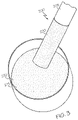
FIG. 3 is a perspective view of an article manufactured by the method of FIG. i; -
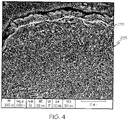
FIG. 4 is a scanning electron microscope micrograph of a portion of a titanium article coated with a ceramic coating in accordance with the method ofFIG. 2 ; -
FIG. 5 is a graph of energy-dispersive X-ray spectroscopy data obtained from the portion of the article shown inFIG. 4 . -
FIG. 6 is a block diagram of aircraft production and service methodology; and -
FIG. 7 is a schematic illustration of an aircraft. - Referring to FIG. i, disclosed is a
method 100 for inhibiting alpha case on anarticle 200 by providing a high temperature (1200 to 1800 °F) barrier coating on the surface of an article. Thearticle 200 may be fabricated from (or may otherwise include) titanium or a titanium alloy. As one specific, non-limiting example, thearticle 200 may be fabricated from (or may otherwise include) Ti-6Al-4V. - The
method 100 may begin with the step of fabricating 110 thearticle 200. For example, the fabricating 110 may include additive manufacturing. Fabricating 110 using techniques other than additive manufacturing, such as casting, forging, machining, and the like, are also contemplated. - Still referring to
FIG. 1 , themethod 100 may further include the step of treating 120 thesurface 225 of thearticle 200. The treating 120 step may be performed after the fabricating 110 step and prior to the other steps depicted inFIG. 1 . In one example, the treating 120 thesurface 225 includes impinging thesurface 225 with abrasive blasting media, such as with abrasive blasting media that includes aluminum oxide. - Still referring to
FIG. 1 , themethod 100 further includes applying 130 aceramic coating 220 to thesurface 225 of thearticle 200. In one example, the applying 130 includes applying 130 theceramic coating 220 to thesurface 225 of thearticle 200 to achieve a nominal coating thickness of at least about 1 mil. In another example, the applying 130 includes applying 130 theceramic coating 220 to thesurface 225 of thearticle 200 to achieve a nominal coating thickness of about 1 to about 30 mils. In another example, the applying 130 includes applying 130 theceramic coating 220 to thesurface 225 of thearticle 200 to achieve a nominal coating thickness of at least about 3 mil. In another example, the applying 130 includes applying 130 theceramic coating 220 to thesurface 225 of thearticle 200 to achieve a nominal coating thickness of about 3 to about 25 mils. In another example, the applying 130 includes applying 130 theceramic coating 220 to thesurface 225 of thearticle 200 to achieve a nominal coating thickness of about 5 to about 20 mils. In yet another example, the applying 130 includes applying 130 theceramic coating 220 to thesurface 225 of thearticle 200 to achieve a nominal coating thickness of about 7 to about 15 mil. - In one or more examples, the applying 130 includes applying 130 a slurry composition 275 (
FIG. 3 ) to thesurface 225 of thearticle 200 to yield theceramic coating 220. Referring toFIG. 3 , in one example, the applying 130 theslurry composition 275 includes dipping thearticle 200 into theslurry composition 275. In another example, the applying 130 theslurry composition 275 includes brushing theslurry composition 275 onto thearticle 200. In yet another example, theslurry composition 275 is a water-based slurry. - As one specific, non-limiting example, the
slurry composition 275 that yields theceramic coating 220 on thearticle 200 may be a water-based slurry, and may include silicate and calcium. Therefore, the resultingceramic coating 220 may include silicate and calcium. In another example, theceramic coating 220 may further include aluminum. In another example, theceramic coating 220 may further include titanium. In yet another example, theceramic coating 220 may further include both titanium and aluminum. - The
ceramic coating 220 has a coefficient of thermal expansion. In one example, the coefficient of thermal expansion of theceramic coating 220 is substantially the same as a coefficient of thermal expansion of thearticle 200. In another example, theceramic coating 220 has a first coefficient of thermal expansion and thearticle 200 has a second coefficient of thermal expansion that is different than the first coefficient of thermal expansion. In one example, the difference between the first coefficient of thermal expansion and the second coefficient of thermal expansion is at most ±5 percent, or a difference of from 1 to about 15 percent. In another example, the difference between the first coefficient of thermal expansion and the second coefficient of thermal expansion is at most ±10 percent, or from 5 to about 15 percent. In yet another example, the difference between the first coefficient of thermal expansion and the second coefficient of thermal expansion is at most ±15 percent. - Referring back to FIG. i, the
method 100 may further include the step of air drying 140 thearticle 200 after applying 130 theslurry composition 275 to thesurface 225, thereby yielding a dryceramic coating 220 on thesurface 225 of thearticle 200. In some examples, theair drying 140 is performed at ambient conditions. In other examples, theair drying 140 is performed at a temperature between about 70 °F to about 125 °F. - The step of air drying 140 the
article 200 after applying 130 theslurry composition 275 may be performed for a duration of time sufficient to achieve a desired moisture content within the resultingceramic coating 220. In one example, the air drying 140 is performed for a duration of time sufficient to achieve an equilibrium moisture content within the resultingceramic coating 220. In another example, the air drying 140 is performed for at least about 10 minutes, or about 10 minutes to about 1 hour. In another example, the air drying 140 is performed for at least about 15 minutes, or about 15 minutes up to about 45 minutes. In yet another example, the air drying 140 is performed for about 30 minutes to about 90 minutes. - Still referring to
FIG. 1 , themethod 100 may further include the step of, after the air drying 140, applying 150 an additional layer of theceramic coating 220 over the dryceramic coating 220 on thesurface 225 of thearticle 200. - In one or more examples, the applying 150 includes applying 150 a
slurry composition 275 to the previously applied and driedceramic coating 220 to yield an even thickerceramic coating 220. Theslurry composition 275 used during the second/subsequent step(s) of applying 150 may be compositionally the same as (or at least similar to) theslurry composition 275 used during the initial step of applying 130. - The step of applying 150 an additional layer of the
ceramic coating 220 may optionally be repeated a number of times to achieve the desired total coating thickness of the resultingceramic coating 220. In one example, the applying 150 an additional layer yields a nominal coating thickness of theceramic coating 220 of at least about 3 mil, or from about 3 to about 25 mils. In another example, the applying 150 yields a nominal coating thickness of theceramic coating 220 of at least about 5 mil, or from about 5 to about 20 mils. In yet another example, the applying 150 yields a nominal coating thickness of theceramic coating 220 of at least about 7 mil. - Referring to
FIG. 3 , in one example, the applying 150 theslurry composition 275 includes dipping thearticle 200 into theslurry composition 275. In another example, the applying 150 theslurry composition 275 includes brushing theslurry composition 275 onto thearticle 200. In yet another example, the applying 150 theslurry composition 275 includes spraying theslurry composition 275 of theceramic coating 220 onto thearticle 200. In one another example, theslurry composition 275 is a water-based slurry. - Referring back to FIG. i, the
method 100 may further include the step of air drying 160 thearticle 200 after applying 150 the additional layer of theceramic coating 220. The steps of applying an additional layer ofceramic coating 220 to thearticle 200 and subsequently air drying 160 the additional layer may be repeated multiple times until the desired coating thickness of theceramic coating 220 is achieved. - Still referring to
FIG. 1 , themethod 100 further includesheating 170 thearticle 200 with the appliedceramic coating 220. Theheating 170 thearticle 200 may be performed at a temperature and for a duration of time sufficient to substantially relieve stresses within thearticle 200. In one example, theheating 170 occurs at a temperature of at least 800 °F. In another example, theheating 170 occurs at a temperature of at least 1000 °F. In another example, theheating 170 occurs at a temperature of at least 1200 °F, or 1200 to about 1800 °F. In another example, theheating 170 occurs at a temperature of at least 1500 °F. In another example, theheating 170 occurs at a temperature of at least 800 °F for at least 30 minutes. In another example, theheating 170 occurs at a temperature of at least 800 °F for at least 6o minutes to about 20 hours. In another example, theheating 170 occurs at a temperature of at least 800 °F for at least 90 minutes to about 10 hours. In yet another example, theheating 170 occurs at a temperature of at least 800 °F for at least 120 minutes. - Various techniques may be used for
heating 170 thearticle 200 and theceramic coating 220 without departing from the scope of the present disclosure. In one specific, non-limiting example, theheating 170 includes hot isostatic pressing. The use of other thermo-mechanical or thermo-pneumatic processes for heating is also contemplated. - Referring to FIG. i, the
method 100 may further include the step of removing 180 theceramic coating 220 after theheating 170. The removing 180 may be achieved by mechanically scraping, chemically removing by submerging in a liquid or spraying with a liquid, or any other suitable means of removing theceramic coating 220. Upon completion of themethod 100, thearticle 200 may be substantially free of alpha case. - Referring to
FIG. 2 , also disclosed is amethod 300 for manufacturing anarticle 235 that is substantially free of alpha case. Thearticle 235 may be fabricated from (or may otherwise include) titanium or a titanium alloy. As one specific, non-limiting example, thearticle 200 may be fabricated from (or may otherwise include) Ti-6Al-4V. - The
method 300 may begin with the step of fabricating 310 apreform 250. In specific, non-limiting example, the method includes fabricating 310 apreform 250 by additive manufacturing. - Still referring to
FIG. 2 , themethod 300 may further include the step of treating 320 thesurface 255 of thepreform 250 prior to applying 330 aceramic coating 220 to thesurface 255. In one example, the treating 320 thesurface 255 includes impinging thesurface 255 with abrasive blasting media, such as abrasive blasting media that includes aluminum oxide. - Still referring to
FIG. 2 , themethod 300 further includes the step of applying 330 aceramic coating 220 to thesurface 255 of thepreform 250. In one example, theceramic coating 220 has a nominal coating thickness of at least about 1 mil. In another example, theceramic coating 220 has a nominal coating thickness of about 1 to about 30 mil. In another example, theceramic coating 220 has a nominal coating thickness of about 3 to about 25 mil. In another example, theceramic coating 220 has a nominal coating thickness of about 5 to about 20 mil. In yet another example,ceramic coating 220 has a nominal coating thickness of about 7 to about 15 mil. - In one example, the applying 330 the
ceramic coating 220 includes dipping thepreform 250 into a slurry composition 275 (FIG. 3 ), such as a water-based slurry. In another example, the applying 330 includes brushing theslurry composition 275 onto thepreform 250. In yet another example, the applying 330 includes spraying theslurry composition 275 onto thepreform 250. The slurry can also be applied by hand. - Still referring to
FIG. 2 , themethod 300 may further include air drying 340 thepreform 250 after applying 330 theceramic coating 220 to yield a dryceramic coating 220 on thesurface 255 of thepreform 250. In one example, the air drying 340 is performed for at least about 10 minutes. In another example, the air drying 340 is performed for about 10 to about 6o minutes. In another example, the air drying 340 is performed for about 15 to about 45 minutes. In another example, the air drying 340 is performed for about 30 to about 90 minutes. In one or mor examples, the air drying 340 is performed at a temperature between about 70 °F to about 125 °F. In another example, the steps of applying 330 and air drying 340 are repeated until a desired coating thickness of theceramic coating 220 is achieved. - Still referring to
Fig. 2 , themethod 300 further includes the step of, while theceramic coating 220 is applied to thesurface 255, subjecting 350 thepreform 250 to hot isostatic pressing. In one example, the subjecting 350 is performed at a temperature and for a duration of time sufficient to substantially relieve stresses within thepreform 250. In one example, the subjecting 350 is performed at a temperature that reaches a minimum of 800 °F. In one example, the subjecting 350 is performed at a temperature that reaches a minimum of 900 °F. In another example, the subjecting 350 is performed at a temperature that reaches a minimum of 1000 °F. In yet another example, the subjecting 350 is performed at a temperature between about 1200 °F and about 1800 °F. - Still referring to
Fig. 2 , themethod 300 may further include the step of, after hot isostatic pressing, removing 360 theceramic coating 220. The removing 360 may be achieved by mechanically scraping, chemically removing by submerging in a liquid or spraying with a liquid, or any other suitable means of removing theceramic coating 220. - Also disclosed are slurry compositions 275 (
FIG. 3 ) for inhibiting alpha case on titanium and titanium alloys, such as in accordance with method 100 (FIG. 1 ) and/or method 300 (FIG. 2 ). In one or more examples, theceramic coating 220 is derived from theslurry composition 275. In one example, theslurry composition 275 is water-based slurry. - In one or more examples, the
slurry composition 275 includes at least 20 percent by weight water, such as about 25 to about 50 percent by weight water. In one example, theslurry composition 275 includes at least 50 percent by weight silicate, such as about 60 to about 70 percent by weight silicate. In another example, theslurry composition 275 includes about 65 percent by weight silicate. In one example, theslurry composition 275 includes at least 5 percent by weight calcium, such as about 6 to about 10 percent by weight calcium. In another example, theslurry composition 275 includes about 8 percent by weight calcium. In one example, theslurry composition 275 includes at least 10 percent by weight aluminum, such as about 15 to about 19 percent by weight aluminum. In another example, theslurry composition 275 includes about 17 to about 18 percent by weight aluminum. In one example, theslurry composition 275 includes at least 0.1 percent by weight iron, such as about 0.25 to about 0.75 percent by weight iron. In another example, theslurry composition 275 includes about 0.5 to about 0.6 percent by weight iron. In one example, theslurry composition 275 includes at least 0.5 percent by weight titanium, such as about 1 to about 2 percent by weight titanium. - Examples of the subject matter disclosed herein may be described in the context of aircraft manufacturing and
service method 1100 as shown inFIG. 6 andaircraft 1102 as shown inFIG. 7 . During pre-production,illustrative method 1100 may include specification and design (block 1104) ofaircraft 1102 and material procurement (block 1106). During production, component and subassembly manufacturing (block 1108) and system integration (block 1110) ofaircraft 1102 may take place. Thereafter,aircraft 1102 may go through certification and delivery (block 1112) to be placed in service (block 1114). While in service,aircraft 1102 may be scheduled for routine maintenance and service (block 1116). Routine maintenance and service may include modification, reconfiguration, refurbishment, etc. of one or more systems ofaircraft 1102. - Each of the processes of
illustrative method 1100 may be performed or carried out by a system integrator, a third party, and/or an operator (e.g., a customer). For the purposes of this description, a system integrator may include, without limitation, any number of aircraft manufacturers and major-system subcontractors; a third party may include, without limitation, any number of vendors, subcontractors, and suppliers; and an operator may be an airline, leasing company, military entity, service organization, and so on. - As shown in
FIG. 7 ,aircraft 1102 produced byillustrative method 1100 may includeairframe 1118 with a plurality of high-level systems 1120 and interior 1122. Examples of high-level systems 1120 include one or more ofpropulsion system 1124,electrical system 1126,hydraulic system 1128, andenvironmental system 1130. Any number of other systems may be included. Although an aerospace example is shown, the principles disclosed herein may be applied to other industries, such as the automotive industry. Accordingly, in addition toaircraft 1102, the principles disclosed herein may apply to other vehicles, e.g., land vehicles, marine vehicles, space vehicles, etc. - Apparatus(es) and method(s) shown or described herein may be employed during any one or more of the stages of the manufacturing and
service method 1100. For example, components or subassemblies corresponding to component and subassembly manufacturing (block 1108) may be fabricated or manufactured in a manner similar to components or subassemblies produced whileaircraft 1102 is in service (block 1114). Also, one or more examples of the apparatus(es), method(s), or combination thereof may be utilized during production stages (block 1108 and block 1110), for example, by substantially expediting assembly of or reducing the cost ofaircraft 1102. Similarly, one or more examples of the apparatus or method realizations, or a combination thereof, may be utilized, for example and without limitation, whileaircraft 1102 is in service (block 1114) and/or during maintenance and service (block 1116). - Different examples of the apparatus(es) and method(s) disclosed herein include a variety of components, features, and functionalities. It should be understood that the various examples of the apparatus(es) and method(s), disclosed herein, may include any of the components, features, and functionalities of any of the other examples of the apparatus(es) and method(s) disclosed herein in any combination.
- The resulting methods described herein provide a high temperature (1200-1800 °F) barrier coating on the surface of a part, such as an additive manufactured part, such that, in embodiments, the coating prevents diffusion of oxygen, nitrogen and carbon on the surface of the part at an elevated temperature.
- A
titanium article 235 comprising Ti-6Al-4V base material was produced in accordance with the disclosedmethod 300 and analyzed prior to removal of theceramic coating 220. Referring toFIG. 4 andFIG. 5 , thetitanium article 235 was characterized by conventional techniques to determine effectiveness of themethod 300. Microstructure and phase composition of thetitanium article 235 andceramic coating 220 were studied using scanning electron microscopy ("SEM") and Energy Dispersive X-Ray Spectroscopy ("EDX"). The above-mentioned techniques were used to determine the chemical composition and alpha/beta microstructural evaluation of thetitanium article 235 and of thesurface 255. For the SEM analyses, the sample was mounted in resin, grinded, and polished.FIG. 4 illustrates the microstructure oftitanium article 235 withceramic coating 220. SEM imaging revealed Alpha/Beta basketweave microstructure of thetitanium article 235. - As illustrated in
FIG. 5 , a graph of EDX analysis of the base material andsurface 255 shows no diffused layers present in the microstructure. Thus, no alpha case formed on thesurface 255 of thetitanium article 235 when thetitanium article 235 was manufactured in accordance withmethod 300. - Many modifications of examples, set forth herein, will come to mind of one skilled in the art, having the benefit of the teachings, presented in the foregoing descriptions and the associated drawings.
- Further, the disclosure comprises embodiments according to the following Examples:
- 1. A method (100) for inhibiting alpha case on an article (200), the method comprising:
- applying (130) a ceramic coating (220) to a surface (225) of the article (200), wherein the article (200) comprises titanium or titanium alloy; and
- while the ceramic coating (220) is applied to the surface (225) of the article (200), heating (170) the article (200) to a temperature of at least 800 °F.
- 2. The method (100) of Example i, further comprising fabricating (110) the article (200) prior to the applying (130).
- 3. The method (100) of Example 2, wherein the fabricating (110) comprises additive manufacturing.
- 4. The method (100) of any of Examples 1 to 3, wherein the applying (130) comprises dipping the article (200) into a slurry composition (275) or brushing the slurry composition (275) onto the article (200).
- 5. The method (100) of any of Examples 1 to 4, wherein the ceramic coating (220) comprises aluminum, titanium, or mixtures thereof.
- 6. The method (100) of any of Examples 1 to 5, wherein a coefficient of thermal expansion of the ceramic coating (220) is substantially the same as a coefficient of thermal expansion of the article (200).
- 7. The method (100) of any of Examples 1 to 6, wherein the applying (130) comprising applying (130) the ceramic coating (220) to the surface (225) of the article (200) to achieve a nominal coating thickness of at least about 1 mil.
- 8. The method (100) of any of Examples 1 to 7, wherein the applying (130) comprising applying (130) the ceramic coating (220) to the surface (225) of the article (200) to achieve a nominal coating thickness of at least about 3 mil.
- 9. The method (100) of any of Examples 1 to 8, wherein the heating (170) the article (200) comprises hot isostatic pressing.
- 10. The method (100) of any of Examples 1 to 9, wherein the heating (170) the article (200) is performed at a temperature and for a duration of time sufficient to substantially relieve stresses within the article (200).
- 11. The method (100) of any of Examples 1 to 10, wherein the heating (170) comprises heating (170) the article (200) to a temperature of at least 900 °F.
- 12. The method (100) of any of Examples 1 to 11, further comprising treating (120) the surface (225) of the article (200) prior to the applying (130) the ceramic coating (220).
- 13. The method (100) of any of Examples 1 to 12, further comprising air drying (140) the article (200) after applying (130) the ceramic coating (220) to yield a dry ceramic coating (220) on the surface (225) of the article (200).
- 14. The method (100) of Example 13, further comprising, after the air drying (140), applying (150) an additional layer of the ceramic coating (220) over the dry ceramic coating (220).
- 15. The method (100) of Example 14, further comprising air drying (160) the article (200) after applying (150) the additional layer of the ceramic coating (220).
- 16. The method (100) of Example 13, further comprising, after the air drying (140), applying (150) more than one additional layer of the ceramic coating (220) and air drying (160) the article (200) after each step of applying (150) the more than one additional layer of the ceramic coating (220).
- 17. The method (100) of any of Examples 1 to 16, further comprising removing (180) the ceramic coating (220) after the heating (170).
- 18. The article (200) manufactured by the method of any of Examples 1 to 17, wherein the article (200) is substantially free of alpha case.
- 19. A method (300) for manufacturing a titanium article (235) that is substantially free of alpha case, the method comprising:
- fabricating (310) a preform (250) by additive manufacturing;
- applying (330) a
ceramic coating 220 to a surface (255) of the preform (250), the ceramic coating (220) having a nominal coating thickness of at least about 1 mil; - while the ceramic coating (220) is applied to the surface (255), subjecting (350) the preform (250) to hot isostatic pressing; and
- after hot isostatic pressing, removing (360) the ceramic coating (220).
- 20. A slurry composition (275) for inhibiting alpha case on titanium, the slurry composition (275) comprising:
- about 25 to about 50 percent by weight water;
- about 60 to about 70 percent by weight silicate;
- about 6 to about 10 percent by weight calcium;
- about 15 to about 19 percent by weight aluminum;
- about 0.25 to about 0.7 percent by weight iron; and
- about 1 to about 2 percent by weight titanium.
- Therefore, it is to be understood that the subject matter, disclosed herein, is not to be limited to the specific examples illustrated and that modifications and other examples are intended to be included within the scope of the appended claims. Moreover, although the foregoing description and the associated drawings describe examples of the subject matter, disclosed herein, in the context of certain illustrative combinations of elements and/or functions, it should be appreciated that different combinations of elements and/or functions may be provided by alternative implementations without departing from the scope of the appended claims. Accordingly, parenthetical reference numerals in the appended claims are presented for illustrative purposes only and are not intended to limit the scope of the claimed subject matter to the specific examples provided herein.
Claims (15)
- A method (100) for inhibiting alpha case on an article (200), the method comprising:applying (130) a ceramic coating (220) to a surface (225) of the article (200), wherein the article (200) comprises titanium or titanium alloy; andwhile the ceramic coating (220) is applied to the surface (225) of the article (200), heating (170) the article (200) to a temperature of at least 800 °F.
- The method (100) of Claim i, further comprising fabricating (110) the article (200) prior to the applying (130).
- The method (100) of Claim 2, wherein the fabricating (110) comprises additive manufacturing.
- The method (100) of any of Claims 1 to 3, wherein the applying (130) comprises dipping the article (200) into a slurry composition (275) or brushing the slurry composition (275) onto the article (200).
- The method (100) of any of Claims 1 to 4, wherein the ceramic coating (220) comprises aluminum, titanium, or mixtures thereof.
- The method (100) of any of Claims 1 to 5, wherein a coefficient of thermal expansion of the ceramic coating (220) is substantially the same as a coefficient of thermal expansion of the article (200).
- The method (100) of any of Claims 1 to 6, wherein the applying (130) comprising applying (130) the ceramic coating (220) to the surface (225) of the article (200) to achieve a nominal coating thickness of at least about 3 mil.
- The method (100) of any of Claims 1 to 7, wherein the heating (170) the article (200) comprises hot isostatic pressing.
- The method (100) of any of Claims 1 to 8, wherein the heating (170) comprises heating (170) the article (200) to a temperature of at least 900 °F.
- The method (100) of any of Claims 1 to 9, further comprising air drying (140) the article (200) after applying (130) the ceramic coating (220) to yield a dry ceramic coating (220) on the surface (225) of the article (200).
- The method (100) of Claim 10, further comprising, after the air drying (140), applying (150) an additional layer of the ceramic coating (220) over the dry ceramic coating (220).
- The method (100) of any of Claims 1 to 11, further comprising removing (180) the ceramic coating (220) after the heating (170).
- An article (200) manufactured by the method of any of Claims 1 to 12, wherein the article (200) is substantially free of alpha case.
- A method (300) for manufacturing a titanium article (235) that is substantially free of alpha case, the method comprising:fabricating (310) a preform (250) by additive manufacturing;applying (330) a ceramic coating (220) to a surface (255) of the preform (250), the ceramic coating (220) having a nominal coating thickness of at least about 1 mil;while the ceramic coating (220) is applied to the surface (255), subjecting (350) the preform (250) to hot isostatic pressing; andafter hot isostatic pressing, removing (360) the ceramic coating (220).
- A slurry composition (275) for inhibiting alpha case on titanium, the slurry composition (275) comprising:about 25 to about 50 percent by weight water;about 60 to about 70 percent by weight silicate;about 6 to about 10 percent by weight calcium;about 15 to about 19 percent by weight aluminum;about 0.25 to about 0.7 percent by weight iron; andabout 1 to about 2 percent by weight titanium.
Applications Claiming Priority (1)
| Application Number | Priority Date | Filing Date | Title |
|---|---|---|---|
| US202163165217P | 2021-03-24 | 2021-03-24 |
Publications (1)
| Publication Number | Publication Date |
|---|---|
| EP4063536A1 true EP4063536A1 (en) | 2022-09-28 |
Family
ID=80787382
Family Applications (1)
| Application Number | Title | Priority Date | Filing Date |
|---|---|---|---|
| EP22158199.4A Pending EP4063536A1 (en) | 2021-03-24 | 2022-02-23 | Methods and compositions for inhibiting alpha case on titanium alloy surfaces |
Country Status (2)
| Country | Link |
|---|---|
| US (1) | US12559434B2 (en) |
| EP (1) | EP4063536A1 (en) |
Citations (4)
| Publication number | Priority date | Publication date | Assignee | Title |
|---|---|---|---|---|
| EP0914884A1 (en) * | 1997-10-30 | 1999-05-12 | Howmet Research Corporation | Method of casting with improved detectability of subsurface inclusions |
| US20020193177A1 (en) * | 2001-06-18 | 2002-12-19 | Raymond Poynor | Peen conditioning of titanium metal wood golf club heads |
| US20200391292A1 (en) * | 2019-06-17 | 2020-12-17 | Rolls-Royce Corporation | Surface treatment of additively manufactured components |
| US20200397589A1 (en) * | 2016-08-03 | 2020-12-24 | Titan Spine, Inc. | Titanium implant surfaces free from alpha case and with enhanced osteoinduction |
Family Cites Families (7)
| Publication number | Priority date | Publication date | Assignee | Title |
|---|---|---|---|---|
| US3454433A (en) * | 1964-04-03 | 1969-07-08 | Scm Corp | Low temperature temporary protective ceramic coating compositions for metals,and resulting coated metal articles |
| US3836380A (en) * | 1972-09-21 | 1974-09-17 | Smith Corp A | Dual coating for protecting metal surface during heat treatment |
| US4250610A (en) * | 1979-01-02 | 1981-02-17 | General Electric Company | Casting densification method |
| EP0414458A1 (en) * | 1989-08-21 | 1991-02-27 | Corning Incorporated | Glass-ceramic coatings for titanium aluminide surfaces |
| US20080169270A1 (en) | 2007-01-17 | 2008-07-17 | United Technologies Corporation | Method of removing a case layer from a metal alloy |
| CH701373A1 (en) * | 2009-06-30 | 2010-12-31 | Alstom Technology Ltd | Schlickerformulierung for the manufacture of thermal barrier coatings. |
| AU2015243170A1 (en) * | 2014-04-11 | 2016-10-27 | Smith & Nephew, Inc. | DMLS orthopedic intramedullary device and method of manufacture |
-
2022
- 2022-02-23 EP EP22158199.4A patent/EP4063536A1/en active Pending
- 2022-03-02 US US17/684,490 patent/US12559434B2/en active Active
Patent Citations (4)
| Publication number | Priority date | Publication date | Assignee | Title |
|---|---|---|---|---|
| EP0914884A1 (en) * | 1997-10-30 | 1999-05-12 | Howmet Research Corporation | Method of casting with improved detectability of subsurface inclusions |
| US20020193177A1 (en) * | 2001-06-18 | 2002-12-19 | Raymond Poynor | Peen conditioning of titanium metal wood golf club heads |
| US20200397589A1 (en) * | 2016-08-03 | 2020-12-24 | Titan Spine, Inc. | Titanium implant surfaces free from alpha case and with enhanced osteoinduction |
| US20200391292A1 (en) * | 2019-06-17 | 2020-12-17 | Rolls-Royce Corporation | Surface treatment of additively manufactured components |
Also Published As
| Publication number | Publication date |
|---|---|
| US12559434B2 (en) | 2026-02-24 |
| US20220315498A1 (en) | 2022-10-06 |
Similar Documents
| Publication | Publication Date | Title |
|---|---|---|
| US11787159B2 (en) | Method to process a ceramic matrix composite (CMC) with a protective ceramic coating | |
| EP2141138B1 (en) | Method of repairing a thermal barrier coating and repaired coating formed thereby | |
| US5804306A (en) | Ceramic matrix composite/organic matrix composite hybrid fire shield | |
| US20050228098A1 (en) | Field repairable high temperature smooth wear coating | |
| US10415128B2 (en) | Method for manufacturing anodized aluminum alloy parts without surface discoloration | |
| Seng et al. | Impact of spray angle and particle velocity in cold sprayed IN718 coatings | |
| US7455881B2 (en) | Methods for coating a magnesium component | |
| JP7144139B2 (en) | Method for preparing a wrinkle reference standard for inspection of composite structures | |
| CA2564172A1 (en) | Method for the application of a protective coating to a thermally stressed component | |
| EP4063536A1 (en) | Methods and compositions for inhibiting alpha case on titanium alloy surfaces | |
| US5582861A (en) | Method for repair of coatings on carbon - carbon composites | |
| US20070224407A1 (en) | Low-density ablative heat shield fabrication | |
| US20210147303A1 (en) | Method to repair cmc components | |
| CN107915499B (en) | Method for repairing C/SiC ceramic matrix composite | |
| GB2060436A (en) | Method of applying a ceramic coating to a metal workpiece | |
| WO2005038072A1 (en) | Method for coating a component and component | |
| CN114349539A (en) | Preparation method of C/SiC-HfC composite material part transition phase coating, transition phase coating slurry and component thermal protection method | |
| US8127442B2 (en) | Compressor blade flow form technique for repair | |
| Gordon | Leading Edge Structural Subsystem and Reinforced Carbon-Carbon Reference Manual | |
| EP4368852B1 (en) | Method for manufacturing friction units | |
| US11603586B2 (en) | Interim temper process | |
| CN121428465A (en) | A method for simultaneous preparation of high emissivity films on the inner and outer surfaces of GH4099 parts | |
| Bernard et al. | High temperature thermal properties of columnar yttria stabilized zirconia thermal barrier coating performed by suspension plasma spraying | |
| Shafigullin et al. | Investigation into the Effects of High Temperature on Mechanical Properties of Thermal Spray Coatings Applied by Plasma Spraying | |
| CN120673938A (en) | Method for predicting service life of coating by taking temperature as acceleration stress |
Legal Events
| Date | Code | Title | Description |
|---|---|---|---|
| PUAI | Public reference made under article 153(3) epc to a published international application that has entered the european phase |
Free format text: ORIGINAL CODE: 0009012 |
|
| STAA | Information on the status of an ep patent application or granted ep patent |
Free format text: STATUS: THE APPLICATION HAS BEEN PUBLISHED |
|
| AK | Designated contracting states |
Kind code of ref document: A1 Designated state(s): AL AT BE BG CH CY CZ DE DK EE ES FI FR GB GR HR HU IE IS IT LI LT LU LV MC MK MT NL NO PL PT RO RS SE SI SK SM TR |
|
| STAA | Information on the status of an ep patent application or granted ep patent |
Free format text: STATUS: REQUEST FOR EXAMINATION WAS MADE |
|
| 17P | Request for examination filed |
Effective date: 20221201 |
|
| RBV | Designated contracting states (corrected) |
Designated state(s): AL AT BE BG CH CY CZ DE DK EE ES FI FR GB GR HR HU IE IS IT LI LT LU LV MC MK MT NL NO PL PT RO RS SE SI SK SM TR |
|
| RAP3 | Party data changed (applicant data changed or rights of an application transferred) |
Owner name: THE BOEING COMPANY |