EP4063381A1 - Echinocandin analogues and preparation method therefor - Google Patents
Echinocandin analogues and preparation method therefor Download PDFInfo
- Publication number
- EP4063381A1 EP4063381A1 EP20897067.3A EP20897067A EP4063381A1 EP 4063381 A1 EP4063381 A1 EP 4063381A1 EP 20897067 A EP20897067 A EP 20897067A EP 4063381 A1 EP4063381 A1 EP 4063381A1
- Authority
- EP
- European Patent Office
- Prior art keywords
- group
- compound
- lower alkyl
- integer
- pharmaceutically acceptable
- Prior art date
- Legal status (The legal status is an assumption and is not a legal conclusion. Google has not performed a legal analysis and makes no representation as to the accuracy of the status listed.)
- Pending
Links
Images
Classifications
-
- C—CHEMISTRY; METALLURGY
- C07—ORGANIC CHEMISTRY
- C07K—PEPTIDES
- C07K7/00—Peptides having 5 to 20 amino acids in a fully defined sequence; Derivatives thereof
- C07K7/50—Cyclic peptides containing at least one abnormal peptide link
- C07K7/54—Cyclic peptides containing at least one abnormal peptide link with at least one abnormal peptide link in the ring
- C07K7/56—Cyclic peptides containing at least one abnormal peptide link with at least one abnormal peptide link in the ring the cyclisation not occurring through 2,4-diamino-butanoic acid
-
- A—HUMAN NECESSITIES
- A61—MEDICAL OR VETERINARY SCIENCE; HYGIENE
- A61K—PREPARATIONS FOR MEDICAL, DENTAL OR TOILETRY PURPOSES
- A61K38/00—Medicinal preparations containing peptides
- A61K38/04—Peptides having up to 20 amino acids in a fully defined sequence; Derivatives thereof
- A61K38/12—Cyclic peptides, e.g. bacitracins; Polymyxins; Gramicidins S, C; Tyrocidins A, B or C
-
- A—HUMAN NECESSITIES
- A61—MEDICAL OR VETERINARY SCIENCE; HYGIENE
- A61P—SPECIFIC THERAPEUTIC ACTIVITY OF CHEMICAL COMPOUNDS OR MEDICINAL PREPARATIONS
- A61P31/00—Antiinfectives, i.e. antibiotics, antiseptics, chemotherapeutics
- A61P31/10—Antimycotics
-
- A—HUMAN NECESSITIES
- A61—MEDICAL OR VETERINARY SCIENCE; HYGIENE
- A61K—PREPARATIONS FOR MEDICAL, DENTAL OR TOILETRY PURPOSES
- A61K38/00—Medicinal preparations containing peptides
Definitions
- the present disclosure relates to the field of medicinal chemistry, and particularly to a class of echinocandin analogs that can be used for combating fungal infections.
- drugs for the treatment of fungal infections include amphotericin B, a macrolide polyene that interacts with fungal membrane sterols; flucytosine, a fluoropyrimidine that interacts with fungal protein and DNA biosynthesis; and a variety of azole antifungals that inhibit fungal membrane-sterol biosynthesis (e.g., ketoconazole, itraconazole and fluconazole) (Alexander et al., Drugs, 54:657, 1997).
- amphotericin B is restricted for the infusion-related reactions and renal toxicity, in spite of the fact that it has a wide range of activity and is considered the "gold standard" for antifungal therapy ( Warnock, J. Antimicrob. Chemother., 41:95, 1998 ).
- the use of flucytosine is also restricted due to the development of drug-resistant microorganisms and its narrow spectrum of activity.
- the widespread use of azole antifungals is leading to the occurrence of clinical drug-resistant strains of Candida spp.
- Echinocandins are a novel class of antifungals. They generally comprise a cyclic hexapeptide and a lipophilic tail, with the latter linked to the hexapeptide core by an amide bond.
- Such drugs interfere with the synthesis of ⁇ -1,3-glucose in fungal cell walls by noncompetitive inhibition of ⁇ -1,3-glucose synthase, leading to changes of the fungal cell walls in permeability and to lysis, and thus death, of the cells.
- drugs on the market include caspofungin, micafungin and anidulafungin.
- Caspofungin the first echinocandin antifungal, was developed by Merck Sharp & Dohme, U.S. and was approved by USFDA for the treatment of fungal infections in 2004 and approved for the treatment of Candida infections in children in 2008.
- Micafungin (Mycamine) is a novel semi-synthetic antifungal, launched in Japan in 2002.
- Anidulafungin is a third-generation semi-synthetic echinocandin antifungal, launched in 2006.
- WO2017049102A and WO2018102407A disclose echinocandin antifungals shown as formula 1 below.
- R 1 is selected from the group consisting of hydroxy, O(C(R A1 )(R A2 )) a (C(R A3 )(R A4 )) j X 1 , NH(C(R A1 )(R A2 ))a(C(R A3 )(R A4 ))jX 1 , O(CH 2 CH 2 O) b CH 2 CH 2 X 1 , O(CH 2 CH 2 CH 2 O)bCH 2 CH 2 X 1 , O(CH 2 CH 2 NH) b CH 2 CH 2 X 1 , NH(CH 2 CH 2 O) b CH 2 CH 2 X 1 , NH(CH 2 CH 2 NH) b CH 2 CH 2 X 1 , NH(CH 2 CH 2 CH 2 X 1 , NH(CH 2 CH 2 NH) b CH 2 CH 2 X 1 , NH(CH 2 CH 2 CH 2 O) b CH 2 CH 2 X1, NH[(CH 2 (CH
- R 1 may be selected from the group consisting of O(C(R A1 )(R A2 )) a (C(R A3 )(R A4 )) j X 1 , NH(C(R A1 )(R A2 ))a(C(R A3 )(R A4 ))jX 1 , O(CH 2 CH 2 O) b CH 2 CH 2 X 1 , O(CH 2 CH 2 CH 2 O) b CH 2 CH 2 X 1 , O(CH 2 CH 2 NH) b CH 2 CH 2 X 1 , NH(CH 2 CH 2 O) b CH 2 CH 2 X 1 , NH(CH 2 CH 2 NH) b CH 2 CH 2 X 1 , NH(CH 2 CH 2 CH 2 O) b CH 2 CH 2 X1, NH[(CH 2 (CH 2 ) c O)] b CH ⁇ CH 2[ OCH 2 (CH 2 ) c]d X 1 ⁇
- X 1 may be selected from the group consisting of the following structures: wherein each R F is independently selected from the group consisting of H, deuterium, hydroxy, hydroxyalkyl, amino, alkoxy, lower alkyl, alkenyl, alkynyl, halogen, SR', SOR', SO 2 R', NR'(R"), COOR' and CONR'(R"), wherein the lower alkyl may be optionally substituted with one or more substituents selected from the group consisting of deuterium, alkyl, cycloalkyl, alkoxy, hydroxyalkyl, alkenyl and alkynyl;
- G may be selected from the group consisting of wherein X is independently selected from the group consisting of O, C(R B1 )(R B2 ), NR p4 - and S; R T may be C 1 - 5 linear or branched alkyl, wherein the alkyl is optionally substituted with one or more substituents selected from the group consisting of deuterium, halogen, alkyl,
- R p1 , R p2 and R p3 are independently selected from the group consisting of hydrogen, deuterium, halogen, C 1 - 10 lower alkyl, C 1 - 10 lower haloalkyl, C 2 - 10 alkenyl, C 2 - 10 alkynyl, aryl, heteroaryl, cyclohydrocarbyl, heterocyclyl and PEG; m is an integer from 0 to 4; n is an integer from 1 to 7; R p4 is hydrogen or C 1 - 6 lower alkyl; R B1 and R B2 are each independently selected from the group consisting of H, -C(O)R J and C 1 - 10 lower alkyl, wherein R J is selected from the group consisting of hydrogen, deuterium, C 1 - 10 lower alkyl, cyclohydrocarbyl and cyclohydrocarbylene.
- G may be selected from the group consisting of:
- R 1 may be selected from the group consisting of:
- R 1 may be selected from the group consisting of:
- the present disclosure provides a compound of formula II or a pharmaceutically acceptable salt or isomer thereof, wherein
- the present disclosure also provides a compound of formula III or a pharmaceutically acceptable salt or isomer thereof, wherein R G1 , R G2 , R G3 and R G4 are independently selected from the group consisting of hydrogen, deuterium, halogen and lower alkyl, and at least one of R G1 , R G2 , R G3 and R G4 is not hydrogen.
- the present disclosure provides the following compounds or pharmaceutically acceptable salts or isomers thereof, and
- the pharmaceutically acceptable salt of the compound is selected from the group consisting of an acetate salt, a trifluoroacetate salt and a formate salt.
- the present disclosure also provides a method for preparing the compound or the pharmaceutically acceptable salt thereof.
- the present disclosure also provides a pharmaceutical composition
- a pharmaceutical composition comprising the compound or the pharmaceutically acceptable salt thereof, and a pharmaceutically acceptable excipient.
- the present disclosure also provides a method for treating a fungal infection in a patient by administering to the patient an amount of the pharmaceutical composition of the present disclosure sufficient to treat the infection.
- the pharmaceutical composition is administered intravenously, topically or orally.
- the pharmaceutical composition may be administered to treat a bloodstream infection, a tissue infection (e.g., a lung, kidney or liver infection) or other types of infection in a patient.
- the fungal infection to be treated may be an infection selected from the group consisting of: tinea capitis, tinea corporis, tinea pedis, tinea unguium, perionychomycosis, chromophytosis, thrush, vaginal candidiasis, respiratory candidiasis, biliary tract candidiasis, esophageal candidiasis, urethral candidiasis, systemic candidiasis, mucosal and cutaneous candidiasis, aspergillosis, mucormycosis, paracoccidioidomycosis, North American blastomycosis, histoplasmosis, coccidioidomycosis, sporotrichosis, fungal sinusitis and chronic paranasal sinusitis.
- the infection to be treated is an infection caused by Candida albicans, C. parapsilosis, C. glabrata, C. guilliermondii, C. krusei, C. lusitaniae, C. tropicalis, Aspergillus fumigatus, A. flavus, A. terreus, A. niger, A. candidus, A. clavatus or A. ochraceus.
- the present disclosure also provides a method for preventing a fungal infection in a patient by administering to the patient an amount of the pharmaceutical composition of the present invention sufficient to prevent the infection.
- the method of the present disclosure may be used for prophylactic treatment in patients who are preparing for invasive medical procedures (e.g., patients who are preparing for surgery, such as transplant, stem-cell therapy, transplant, reconstructive surgery or long-term or frequent intravenous catheterization, or for treatment in intensive care units), in patients who have lowered immunity (e.g., patients who have cancer or HIV/AIDS, or are taking immunosuppressive agents), or in patients who are receiving long-term antibiotic therapy.
- the pharmaceutical composition comprises compound 1, or any other compound described herein, or a pharmaceutically acceptable salt thereof.
- the present disclosure also provides a method for preventing, stabilizing or inhibiting the growth of fungi or killing fungi by contacting the fungi or a site favoring the growth of fungi with the compound of the present invention or the pharmaceutically acceptable salt thereof.
- the term "sufficient amount” refers to an amount of drug required for treating or preventing an infection.
- the sufficient amount for implementing the present disclosure to therapeutically or prophylactically treat a condition caused or contributed to by an infection varies depending on the route of administration, the type of the infection, and the age, weight and general health of the patient.
- fungal infection is meant that pathogenic fungi affect the host.
- an infection may include the overgrowth of fungi that are normally found in a patient or on the patient's skin, or the growth of fungi that are not normally found in a patient or on the patient's skin.
- a fungal infection may be any case in which the presence of a fungal population is detrimental to the host organism.
- a patient is "afflicted” with a fungal infection when an excess of the fungal population is present in the patient or on the patient's skin, or when the fungal population is causing damage to the patient's cells or other tissues.
- treatment refers to the administration of a pharmaceutical composition for prophylactic and/or therapeutic purposes.
- preventing a disease is meant prophylactically treating a subject who has not yet developed a disease but is susceptible to, or is at risk of developing, a specific disease.
- treating a disease is meant treating a patient who is suffering from a disease to improve or stabilize the patient's condition.
- present disclosure also provides use of the compound or the pharmaceutically acceptable salt thereof in preparing a medicament for treating fungal infections.
- the present disclosure also provides use of the compound or the pharmaceutically acceptable salt thereof in preparing a medicament for preventing fungal infections.
- the present disclosure also provides use of the compound or the pharmaceutically acceptable salt thereof in preparing a medicament for preventing, stabilizing or inhibiting the growth of fungi or killing fungi.
- the use comprises contacting the fungi or a part favoring the growth of fungi with the compound or the pharmaceutically acceptable salt or isomer thereof.
- the compounds of the present disclosure may be synthesized, for example, by reacting echinocandin compounds with appropriate acyl, alkyl, carboxyl, hydroxy and/or amino groups under standard reaction conditions, as described in the examples.
- the stereochemistry of the compounds will be determined by the starting materials.
- the non-natural echinocandin derivatives will typically be identical in stereochemistry to the naturally occurring echinocandin structures from which they are derived (representative stereochemistry is described in the examples).
- the compounds of the present disclosure can be synthesized, for example, using the methods described in the examples.
- Alkyl refers to a linear or branched alkane group containing preferably 1 to 10 carbon atoms, more preferably 1 to 6 carbon atoms; non-limiting examples include methyl, ethyl, n -propyl, isopropyl, n -butyl, sec -butyl, tert -butyl, pentyl, hexyl, heptyl, octyl, nonyl, decyl, etc. Unless otherwise specifically indicated in the specification, alkyl may be optionally substituted with one or more of the following substituents: halogen, cyano, nitro, oxo, thio, trimethylsilyl, etc.
- lower alkyl refers to a linear or branched alkane group containing 1 to 10 carbon atoms; non-limiting examples include methyl, ethyl, n -propyl, isopropyl, n -butyl, sec -butyl, tert- butyl, pentyl, hexyl, heptyl, octyl, nonyl, decyl, etc.
- lower alkyl may be optionally substituted with one or more of the following substituents: halogen, cyano, nitro, oxo, thio, trimethylsilyl, etc.
- alkenyl refers to an alkyl compound containing carbon-carbon double bonds in the molecule, wherein the alkyl is as defined above. Non-limiting examples include vinyl, 1-propen-2-yl, 1-buten-4-yl, 1-penten-5-yl, 1-buten-1-yl, etc. Unless otherwise indicated in the specification, alkenyl may be optionally substituted with one or more of the following substituents: halogen, cyano, nitro, oxo, thio, trimethylsilyl, etc.
- Alkynyl refers to an alkyl compound containing carbon-carbon triple bonds in the molecule, wherein the alkyl is as defined above. Non-limiting examples include ethynyl, propynyl, pentynyl, butynyl, etc. Unless otherwise indicated in the specification, alkynyl may be optionally substituted with one or more of the following substituents: halogen, cyano, nitro, oxo, thio, trimethylsilyl, etc.
- C 10 - 36 lipophilic unit refers to substituted or unsubstituted alkyl, substituted or unsubstituted alkenyl, substituted or unsubstituted alkynyl, substituted or unsubstituted cyclohydrocarbyl, substituted or unsubstituted aryl, substituted or unsubstituted heteroaryl, substituted or unsubstituted heterocyclyl, etc., containing 10-36 carbon atoms.
- Aryl refers to a hydrocarbon ring system group containing hydrogen atoms, 6 to 14 carbon atoms and at least one aromatic ring.
- Aryl groups include, but are not limited to, those derived from acenaphthene, anthracene, azulene, benzene, 6,7,8,9-tetrahydro-5 H -benzo[7]annulene, fluorene, indene, naphthalene, phenalene and phenanthrene.
- aryl may be optionally substituted with one or more substituents independently selected from the group consisting of alkyl, alkenyl, alkynyl, halogen, haloalkyl, haloalkenyl, haloalkynyl, cyano, nitro, etc.
- Cyclohydrocarbyl refers to a stable non-aromatic monocyclic or polycyclic hydrocarbyl group consisting of carbon and hydrogen atoms only, which may comprise a spiro or bridged ring system, and contains 3 to 15 carbon atoms, 3 to 10 carbon atoms or 5 to 7 carbon atoms; it is saturated or unsaturated, and is linked to the remainder of the molecule by a single bond.
- Monocyclic cyclohydrocarbyl groups include non-bridged cyclohydrocarbyl groups such as cyclopropyl, cyclobutyl, cyclopentyl, cyclohexyl, cycloheptyl and cyclooctyl.
- Polycyclic groups include fused, spiro, or bridged cyclohydrocarbyl groups, for example, C10 groups such as adamantyl (bridged) and decalinyl (fused), and C7 groups such as bicyclo[3.2.0]heptyl (fused), norbornyl and norbornenyl (bridged); and substituted polycyclic groups, for example, substituted C7 groups such as 7,7-dimethylbicyclo[2.2.1]heptyl (bridged).
- cyclohydrocarbyl may be optionally substituted with one or more substituents independently selected from the group consisting of alkyl, alkenyl, alkynyl, halogen, haloalkyl, haloalkenyl, haloalkynyl, oxo, thio, cyano, nitro, etc.
- Cycloalkyl refers to a saturated monocyclic or polycyclic hydrocarbon substituent containing 3 to 15 carbon atoms, 3 to 10 carbon atoms or 5 to 7 carbon atoms.
- Non-limiting examples of monocyclic cycloalkyl include cyclopropyl, cyclobutyl, cyclopentyl, cyclohexyl, cycloheptyl, cyclooctyl, etc.
- polycyclic cycloalkyl groups include spiro, fused and bridged cycloalkyl groups.
- Halogen refers to bromine, chlorine, fluorine or iodine.
- Heterocyclyl refers to a stable 3- to 18-membered non-aromatic ring group containing 1 to 12 carbon atoms and 1 to 6 heteroatoms selected from the group consisting of nitrogen, oxygen and sulfur. Unless otherwise specifically indicated in the specification, heterocyclyl may be a monocyclic, bicyclic, tricyclic or tetracyclic system, and may include spiro or bridged ring systems; the nitrogen, carbon or sulfur atoms in heterocyclyl may optionally be oxidized; the nitrogen atoms may optionally be quaternized; and heterocyclyl may be partially or fully saturated.
- heterocyclyl groups include those that are optionally substituted with one or more substituents selected from the group consisting of alkyl, alkenyl, alkynyl, halogen, haloalkyl, haloalkenyl, haloalkynyl, oxo, thio, cyano, nitro, etc.
- Heteroaryl refers to a 5- to 14-membered ring system group containing hydrogen atoms, 1 to 13 carbon atoms, 1 to 6 heteroatoms selected from the group consisting of nitrogen, oxygen and sulfur, and at least one aromatic ring. Heteroaryl may be a monocyclic, bicyclic, tricyclic or tetracyclic system, and may include spiro ring systems; the nitrogen, carbon or sulfur atoms in heteroaryl may optionally be oxidized; and the nitrogen atoms may optionally be quaternized.
- the aromatic ring of heteroaryl does not necessarily contain heteroatoms, provided that one ring of heteroaryl contains heteroatoms.
- heteroaryl groups include those that are optionally substituted with one or more substituents selected from the group consisting of alkyl, alkenyl, alkynyl, halogen, haloalkyl, haloalkenyl, haloalkynyl, oxo, thio, cyano, nitro, etc.
- PEG refers to polyethylene glycol, and unless otherwise defined, “PEG” includes ethylene oxide polymers of any length.
- the PEG may also be optionally substituted with one or more substituents selected from the group consisting of deuterium, alkyl, alkenyl, alkynyl, halogen, haloalkyl, haloalkenyl, haloalkynyl, oxo, thio, cyano, nitro, etc.
- Anidulafungin and caspofungin were both purchased from Taizhou KEDE Chemical.
- Rezafungin was synthesized according to CN103889221A.
- Echinocandin B 50 mg, 0.06 mmol
- mono- tert- butyl octadecanedioate 24.43 mg, 1.1 eq.
- DMF 2 mL
- TBTU 28.9 mg, 1.5 eq.
- DIPEA 15.5 mg, 2 eq.
- Echinocandin B 200 mg, 0.2397 mmol
- SM8 89 mg, 1.0 eq.
- DMF 5 mL
- TBTU 115 mg, 1.5 eq.
- DIPEA 62 mg, 2 eq.
- N-(2-hydroxyethyl)-pyrrolidine (6.5 g, 50 mmol) was dissolved in 25 mL of acetonitrile, and iodomethane (7.09 g, 1.0 eq.) was slowly added. The reaction mixture was heated at reflux with stirring for 4 h and concentrated until half of the solvent remained, and a solid precipitated. The solid was collected by filtration and dried to give compound SM10 as a white solid (12.1 g, 90% yield). MS: 144.0[M + ].
- SM12 (100 mg, 0.086 mmol) was dissolved in tetrahydrofuran (10 mL) under nitrogen, and phenylboronic acid (21.3 mg, 0.173 mmol) was added. The reaction mixture was stirred at room temperature for 2 h and concentrated in vacuo to dryness to remove the solvent. 10 mL of dioxane was added, followed by addition of compound SM7 (108 mg, 0.777 mmol) and camphorsulfonic acid (100 mg, 0.43 mmol). The reaction mixture was stirred at room temperature for 16 h, quenched with 1 N aqueous sodium acetate solution (1 mL), and concentrated by rotary evaporation to remove the solvent. The resulting crude product was purified by preparative chromatography to give a formate salt (39.5 mg, 97.0% purity, 35.5% yield). HRMS: 1243.5936[M + ].
- SM18 (150 mg, 0.13 mmol) was dissolved in tetrahydrofuran (7.5 mL) under nitrogen, and phenylboronic acid (31.6 mg, 0.259 mmol) was added. The reaction mixture was stirred at room temperature for 2 h and concentrated in vacuo to dryness to remove the solvent. 7.5 mL of dioxane was added, followed by addition of compound SM7 (108 mg, 0.777 mmol) and camphorsulfonic acid (150 mg, 0.65 mmol). The reaction mixture was stirred at room temperature for 16 h, quenched with 1 N aqueous sodium acetate solution (1 mL), and concentrated by rotary evaporation to remove the solvent. The resulting crude product was purified by preparative chromatography to give a formate salt (57 mg, 97.8% purity, 34.1% yield). HRMS: 1243.5928[M + ].
- SM20 (200 mg, 0.18 mmol) was dissolved in tetrahydrofuran (4 mL) under nitrogen, and phenylboronic acid (42.8 mg, 0.351 mmol) was added. The reaction mixture was stirred at room temperature for 2 h and concentrated in vacuo to dryness to remove the solvent. 8 mL of dioxane was added, followed by addition of compound SM7 (146 mg, 1.05 mmol) and camphorsulfonic acid (204 mg, 0.88 mmol). The reaction mixture was stirred at room temperature for 16 h, quenched with 1 N aqueous sodium acetate solution (1 mL), and concentrated by rotary evaporation to remove the solvent. The resulting crude product was purified by preparative chromatography to give an acetate salt (123 mg, 97.6% purity, 54.6% yield). HRMS: 1223.6224[M + ].
- SM25 (100 mg, 0.084 mmol) was dissolved in tetrahydrofuran (4 mL) under nitrogen, and phenylboronic acid (20.4 mg, 2.0 eq) was added. The reaction mixture was stirred at room temperature for 2 h and concentrated in vacuo to dryness to remove the solvent. 4 mL of dioxane was added, followed by addition of compound SM7 (70 mg, 6.0 eq) and camphorsulfonic acid (97.6 mg, 5.0 eq). The reaction mixture was stirred at room temperature for 16 h, quenched with 1 N aqueous sodium acetate solution (1 mL), and concentrated by rotary evaporation to remove the solvent. The resulting crude product was purified by preparative chromatography to give an acetate salt (33 mg, 97.2% purity, 29.4% yield). HRMS: 1279.5720[M + ].
- SM-26 (590 mg, 1 eq.) was dissolved in 10 mL of acetonitrile, and methyl p- toluenesulfonate (1.2 g, 1.1 eq.) was added. The reaction mixture was heated at reflux with stirring for 4 h and concentrated, and the residue was slurried with acetone petroleum ether to give compound SM-27 as a white solid (1.6 g, 95% yield). MS: 117.1 [M + ].
- SM-35 (505 mg, 1 eq.) was dissolved in 5 mL of acetone, and methyl p -toluenesulfonate (1.02 g, 1.1 eq.) was added. The reaction mixture was stirred at room temperature for 2 h and filtered, and the filter cake was rinsed with acetone to give compound SM-36 as a white solid (1.22 g, 85% yield). MS: 116.2[M + ].
- SM-37 (505 mg, 1 eq.) was dissolved in 5 mL of acetone, and methyl p -toluenesulfonate (1.02 g, 1.1 eq.) was added. The reaction mixture was stirred at room temperature for 2 h and filtered, and the filter cake was rinsed with acetone to give compound SM-38 as a white solid (1.29 g, 90% yield). MS: 116.2[M + ].
- Test Example 1 Test Method for Antifungal Activity
- MIC minimum inhibitory concentration
- MEC minimum effective concentration
- the frozen strain was passaged at least twice, and a single colony was picked and resuspended in normal saline or sterile water in a tube.
- the suspension was vortexed and adjusted to 0.5 McF (1 ⁇ 10 6 to 5 ⁇ 10 6 CFU/mL) using a spectrophotometer at wavelength 530 nm.
- the suspension was 50-fold diluted with normal saline and then 20-fold diluted with 1 ⁇ RPMI 1640 broth (1 ⁇ 10 3 to 5 ⁇ 10 3 CFU/mL). 10 ⁇ L of the suspension was applied to an SDA plate for colony counting, with a range from about 10 to 50 single colonies.
- the bacterial suspension was added to a 96-well plate at 100 ⁇ L per well using a multi-channel pipette. At this time, the bacterium concentration in each well should be 0.5 ⁇ 10 3 to 2.5 ⁇ 10 3 CFU/mL.
- Aspergillus was passaged onto an SDA plate and cultured at 35 °C for 48 h to 7 d to induce sporulation. Colonies on the plate were covered with about 1 mL of 0.85% normal saline or sterile water (polysorbate 20 was added at a final concentration of 0.1%-0.01%). The medium was gently wiped on its surface with a tip or a sterile cotton swab (be careful not to break the medium), and the spore hyphae suspension was transferred to a sterile tube and let stand for 3-5 min so that the heavy particles settled.
- the homogeneous upper layer of the suspension was transferred to a new sterile tube, which was then sealed and vortexed for 15 s (be careful as the suspension may produce an aerosol when the cover is removed).
- the concentration of the suspension was adjusted until an OD value of 0.09-0.13 was achieved using a spectrophotometer at 530 nm.
- the suspension was 50-fold diluted with 1 ⁇ RPMI 1640. 100 ⁇ L of sample was added to each well of the 96-well plate within 2 h after dilution (the final spore concentration in the susceptibility testing plate was at 0.4 ⁇ 10 4 to 5 ⁇ 10 4 CFU/mL).
- Colony counting The suspension diluted with RPMI 1640 was further diluted 10-fold, and 10 ⁇ L of the dilution was applied to an SDA plate, cultured at 28 °C, and observed every day; colonies were immediately counted upon being visible to the naked eye.
- the assay plate for yeast-type fungi was incubated in an incubator at 35 °C with 85% humidity for 24 h, and then the MIC value was read.
- Aspergillus was incubated at 28 °C for 21-26 h, and then the MEC results were read.
- Yeast-type fungi A disposable sealing film was applied to the 96-well plate, and the mixture was well mixed by shaking. Observation was performed through a plate reader with the naked eye. Comparisons were made to the growth control, and the minimum compound concentration corresponding to ⁇ 50% growth inhibition was defined as MIC. Pictures were taken and saved using an automatic plate reader.
- Aspergillus For echinocandin drugs, comparisons were made to the growth control under a plate reader, and the minimum drug concentration that could cause the hyphae to form small, round, compact hyphal particles was defined as MEC. For accurate determination of MEC values, the plate must not be vortexed before reading. Table 1.
- Candidaparapsilosis ATCC 22019 and Candida krusei ATCC6258 were quality control strains. According to CLSI-M60, the 24 h MIC of ANI for ATCC 22019 is (0.25-2) ⁇ g/mL, and that of CAS is (0.25-1) ⁇ g/mL; the 24 h MIC of ANI for ATCC6258 is (0.03-0.12) ⁇ g/mL, and that of CAS is (0.12-1) ⁇ g/mL. Table 2.
- the assay data show that a significant number of the example compounds of the present disclosure have excellent antifungal activity, and some of the compounds have more excellent antifungal activity compared to the positive drugs.
- 12 SD rats were divided into 2 groups of 6 (half are male and half female). The rats were observed at least once a day. The body weights were measured once before administration. Administration was performed by single intravenous injection for 20 min per animal. PK measurement was performed once before administration and 5 min, 30 min, 1 h, 4 h, 8 h, 24 h, 48 h, 72 h and 96 h after administration. A histamine assay was performed once before administration and 30 min, 4 h, 8 h and 24 h after administration.
- the dose design is shown in the table below: Group Route of administration Dose for administration (mg/kg) Concentration for administration (mg/mL) Volume for administration (mL/kg) Number of animals Male Female 1 (Example 13 final product group) Intravenous injection 10 2 5 3 3 2 (Rezafungin acetate group) Intravenous injection 10 2 5 3 3
- the SD rats in each group were in good general conditions, showed normal spontaneous locomotor activity, had clean skin and hair, and showed normal defecation and urination, and no other abnormality was observed.
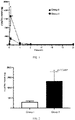
- a transient increase in the histamine level was caused in both group 1 and group 2 by intravenous administration.
- the plasma histamine concentration peaked at 30 min, showed a tendency to recover at 4 h, and substantially returned to the normal level at 8-24 h, as shown in FIG. 1 .
- the ability of the group 1 compound to induce increases in the histamine level in rats is significantly lower than that of the group 2 compound when they are administered at the same dose.
- the pharmacokinetic parameters in animals after administration to group 1 or group 2 are shown in the table below: Group Sex T 1/2 Cmax AUC 0 - 96 AUC 0-inf CL MRT IV Vdss h ⁇ g/mL hr ⁇ ug/mL hr ⁇ ug/mL mL/min/kg hr L/kg 1 Male 27.7 8.0 173.9 191.2 0.9 37.1 1.9 Female 25.5 9.3 179.6 195.0 0.9 34.6 1.8 2 Male 28.0 7.8 190.5 212.1 0.8 38.4 1.8 Female 27.9 8.6 205.8 227.2 0.8 39.1 1.8
- the assay data show that after administration at the same dose by single intravenous injection, group 1 and group 2 are close to each other in the plasma drug exposure levels (C max and AUC) and shows no significant sex-related difference, and the other pharmacokinetic parameters each have substantially equivalent values for both groups.
Landscapes
- Health & Medical Sciences (AREA)
- Chemical & Material Sciences (AREA)
- Organic Chemistry (AREA)
- Life Sciences & Earth Sciences (AREA)
- General Health & Medical Sciences (AREA)
- Medicinal Chemistry (AREA)
- Animal Behavior & Ethology (AREA)
- Proteomics, Peptides & Aminoacids (AREA)
- Veterinary Medicine (AREA)
- Public Health (AREA)
- Pharmacology & Pharmacy (AREA)
- Nuclear Medicine, Radiotherapy & Molecular Imaging (AREA)
- Biochemistry (AREA)
- Chemical Kinetics & Catalysis (AREA)
- Oncology (AREA)
- Molecular Biology (AREA)
- General Chemical & Material Sciences (AREA)
- Genetics & Genomics (AREA)
- Biophysics (AREA)
- Communicable Diseases (AREA)
- Engineering & Computer Science (AREA)
- Epidemiology (AREA)
- Immunology (AREA)
- Bioinformatics & Cheminformatics (AREA)
- Gastroenterology & Hepatology (AREA)
- Medicines That Contain Protein Lipid Enzymes And Other Medicines (AREA)
- Pharmaceuticals Containing Other Organic And Inorganic Compounds (AREA)
- Peptides Or Proteins (AREA)
- Medicinal Preparation (AREA)
Abstract
Description
- The present application claims priority to the
Chinese Patent Application 201911241526.8 filed on Dec. 6, 2019 Chinese Patent Application 201911249226.4 filed on Dec. 9, 2019 Chinese Patent Application 202010165349.6 filed on Mar. 11, 2020 Chinese Patent Application 202010799506.9 filed on Aug. 11, 2020 Chinese Patent Application 202011164541.X filed on Oct. 27, 2020 Chinese Patent Application 202011371550.6 filed on Nov. 30, 2020 - The present disclosure relates to the field of medicinal chemistry, and particularly to a class of echinocandin analogs that can be used for combating fungal infections.
- The development of antifungal treatment regimens has been a consistent challenge for today's society. Currently available drugs for the treatment of fungal infections include amphotericin B, a macrolide polyene that interacts with fungal membrane sterols; flucytosine, a fluoropyrimidine that interacts with fungal protein and DNA biosynthesis; and a variety of azole antifungals that inhibit fungal membrane-sterol biosynthesis (e.g., ketoconazole, itraconazole and fluconazole) (Alexander et al., Drugs, 54:657, 1997). The application of amphotericin B is restricted for the infusion-related reactions and renal toxicity, in spite of the fact that it has a wide range of activity and is considered the "gold standard" for antifungal therapy (Warnock, J. Antimicrob. Chemother., 41:95, 1998). The use of flucytosine is also restricted due to the development of drug-resistant microorganisms and its narrow spectrum of activity. The widespread use of azole antifungals is leading to the occurrence of clinical drug-resistant strains of Candida spp. Echinocandins are a novel class of antifungals. They generally comprise a cyclic hexapeptide and a lipophilic tail, with the latter linked to the hexapeptide core by an amide bond. Such drugs interfere with the synthesis of β-1,3-glucose in fungal cell walls by noncompetitive inhibition of β-1,3-glucose synthase, leading to changes of the fungal cell walls in permeability and to lysis, and thus death, of the cells. Due to the absence of cell walls in human cells and the presence of cell walls in fungal cells, echinocandin antifungals can directly act upon the components of the fungal cell walls, thereby having low toxicity to humans. Therefore, they have been one of the safest antifungals to date. Currently, such drugs on the market include caspofungin, micafungin and anidulafungin. Caspofungin, the first echinocandin antifungal, was developed by Merck Sharp & Dohme, U.S. and was approved by USFDA for the treatment of fungal infections in 2004 and approved for the treatment of Candida infections in children in 2008. Micafungin (Mycamine) is a novel semi-synthetic antifungal, launched in Japan in 2002. Anidulafungin is a third-generation semi-synthetic echinocandin antifungal, launched in 2006.
-
- The present disclosure provides a compound of formula I or a pharmaceutically acceptable salt or isomer thereof,

- R3 is selected from the group consisting of H, OSO3H and CH2NRB1RB2;
- G is a C10-42 fatty unit;
- RA1, RA2, RA3 and RA4 are independently selected from the group consisting of hydrogen, deuterium, halogen, lower alkyl, cyclohydrocarbyl and cyclohydrocarbylene

- RB1 and RB2 are independently selected from the group consisting of H, -C(O)RJ and lower alkyl;
- X1 is independently N(Rc1Rc2Rc3) or the structure

- RC1, RC2 and RC3 are independently selected from the group consisting of H, C1-6 alkyl, C1-6 lower haloalkyl and deuterated C1-6 lower alkyl, and at least one of RC1, RC2 and RC3 is not hydrogen;
- each RF is independently selected from the group consisting of H, deuterium, hydroxy, hydroxyalkyl, amino, alkoxy, lower alkyl, alkenyl, alkynyl, halogen, SR', SOR', SO2R', NR'(R"), COOR' and CONR'(R"), wherein the lower alkyl is optionally substituted with a substituent substituted with one or more substituents selected from the group consisting of deuterium, alkyl, cycloalkyl, alkoxy, hydroxyalkyl, alkenyl, alkynyl, aryl, heteroaryl, nitro, nitrile groups, hydroxy, halogen, SR', NR'(R"), COOR' and CONR'(R");
- X2 is N(RD1RD2RD3) or X1 structure;
- RD1, RD2 and RD3 are independently selected from the group consisting of H, C1-6 lower alkyl, C1-6 lower haloalkyl and deuterated C1-6 lower alkyl;
- R' and R" are independently selected from the group consisting of hydrogen, hydroxy, alkyl, alkoxy, alkenyl and -C(O)RJ;
- RJ is selected from the group consisting of hydrogen, deuterium, C1-10 lower alkyl, cyclohydrocarbyl and cyclohydrocarbylene;
- a is an integer from 0 to 5;
- b is an integer from 1 to 5;
- c is an integer from 1 to 2;
- d is an integer from 0 to 3;
- e is an integer from 1 to 5;
- k is an integer from 0 to 20;
- j is an integer from 0 to 5; and
- n is an integer from 1 to 7.
- "Independently selected from the group consisting of" or "independently is/are" means that variable groups, at each occurrence, are independently selected from the group consisting of defined substituents.
- In some embodiments, R1 may be selected from the group consisting of O(C(RA1)(RA2))a(C(RA3)(RA4))jX1, NH(C(RA1)(RA2))a(C(RA3)(RA4))jX1, O(CH2CH2O)bCH2CH2X1, O(CH2CH2CH2O)bCH2CH2X1, O(CH2CH2NH)bCH2CH2X1, NH(CH2CH2O)bCH2CH2X1, NH(CH2CH2NH)bCH2CH2X1, NH(CH2CH2CH2O)bCH2CH2X1, NH[(CH2(CH2)cO)]bCH{CH2[OCH2(CH2)c]dX1}2, O[(CH2(CH2)cO)]bCH{CH2[OCH2(CH2)c]dX1}2 and (OCH2CH2)b(NHCH2CH2)eX2; R2 may be selected from the group consisting of hydrogen, RB1RB2N-, CH2CH2NRB1RB2, CH2C(O)NRB1RB2, C1-10 lower alkyl, C2-10 alkenyl, C2-10 alkynyl, aryl, heteroaryl, cyclohydrocarbyl, heterocyclyl and PEG;
- R3 may be selected from the group consisting of H, OSO3H and CH2NRB1RB2;
- G may be a C10-36 lipophilic unit;
- RA1, RA2, RA3 and RA4 are independently selected from the group consisting of hydrogen, deuterium, halogen, lower alkyl, cyclohydrocarbyl and cyclohydrocarbylene

- RB1 and RB2 are each independently selected from the group consisting of H, -C(O)RJ and lower alkyl;
- X1 is independently N(Rc1Rc2Rc3) or the structure

- Rc1, RC2 and RC3 are each independently selected from the group consisting of H, C1-6 lower haloalkyl and deuterated C1-6 lower alkyl, and at least one of RC1, RC2 and RC3 is not hydrogen;
- each RF is independently selected from the group consisting of H, deuterium, hydroxy, hydroxyalkyl, amino, alkoxy, lower alkyl, alkenyl, alkynyl, halogen, SR', SOR', SO2R', NR'(R"), COOR' and CONR'(R"), wherein the lower alkyl may be optionally substituted with one or more substituents selected from the group consisting of deuterium, alkyl, cycloalkyl, alkoxy, hydroxyalkyl, alkenyl and alkynyl;
- X2 is N(RD1RD2RD3) or X1 structure;
- RD1, RD2 and RD3 are independently selected from the group consisting of H, C1-6 lower alkyl, C1-6 lower haloalkyl and deuterated C1-6 lower alkyl;
- R' and R" are independently selected from the group consisting of hydrogen, hydroxy, alkyl, alkoxy, alkenyl and -C(O)RJ;
- RJ is independently selected from the group consisting of hydrogen, C1-10 lower alkyl, cyclohydrocarbyl and cyclohydrocarbylene;
- a is an integer from 0 to 5;
- b is an integer from 1 to 5;
- c is an integer from 1 to 2;
- d is an integer from 0 to 3;
- e is an integer from 1 to 5;
- k is an integer from 0 to 20;
- j is independently an integer from 0 to 5; and
- n is an integer from 1 to 7.
- In some embodiments, X1 may be selected from the group consisting of the following structures:

- Rq1 and Rq2 may independently be H or C1-6 lower alkyl optionally substituted with one or more substituents selected from the group consisting of deuterium, alkyl, cycloalkyl, alkoxy, hydroxyalkyl, alkenyl, alkynyl, aryl, heteroaryl, nitro, nitrile groups, hydroxy, halogen, SR', NR'(R"), COOR' and CONR'(R");
- R' and R" are independently selected from the group consisting of hydrogen, hydroxy, alkyl, alkoxy, alkenyl and -C(O)RJ;
- RJ is selected from the group consisting of hydrogen, deuterium, C1-10 lower alkyl, cyclohydrocarbyl and cyclohydrocarbylene;
- f is an integer from 0 to 16;
- g is an integer from 0 to 16;
- h is an integer from 0 to 9;
- i is an integer from 0 to 4;
- n is an integer from 1 to 7; and
- p is an integer from 1 to 3.
- In some embodiments, G may be selected from the group consisting of

- cyclohydrocarbyl and cyclohydrocarbylene (

- In some embodiments, G may be selected from the group consisting of:


- In some embodiments, R1 may be selected from the group consisting of:


- In other embodiments, R1 may be selected from the group consisting of:

- The present disclosure provides a compound of formula II or a pharmaceutically acceptable salt or isomer thereof, wherein

- G1 may be selected from the group consisting of


- X is independently selected from the group consisting of O, C(RB1)(RB2), NRp4- and S;
- Rp4 is hydrogen or C1-3 lower alkyl;
- RT may be C1-5 linear or branched alkyl, wherein the alkyl is optionally substituted with one or more substituents selected from the group consisting of deuterium, hydroxy, amino, alkoxy, amino, NR'(R"), halogen, cyclohydrocarbyl and cyclohydrocarbylene

- RB1 and RB2 are each independently selected from the group consisting of H, -C(O)RJ and C1-10 lower alkyl;
- RJ is selected from the group consisting of hydrogen, C1-10 lower alkyl, cyclohydrocarbyl and cyclohydrocarbylene;
- m is an integer from 0 to 4; and
- n is an integer from 1 to 7.
- The present disclosure also provides a compound of formula III or a pharmaceutically acceptable salt or isomer thereof,

- The present disclosure provides the following compounds or pharmaceutically acceptable salts or isomers thereof,


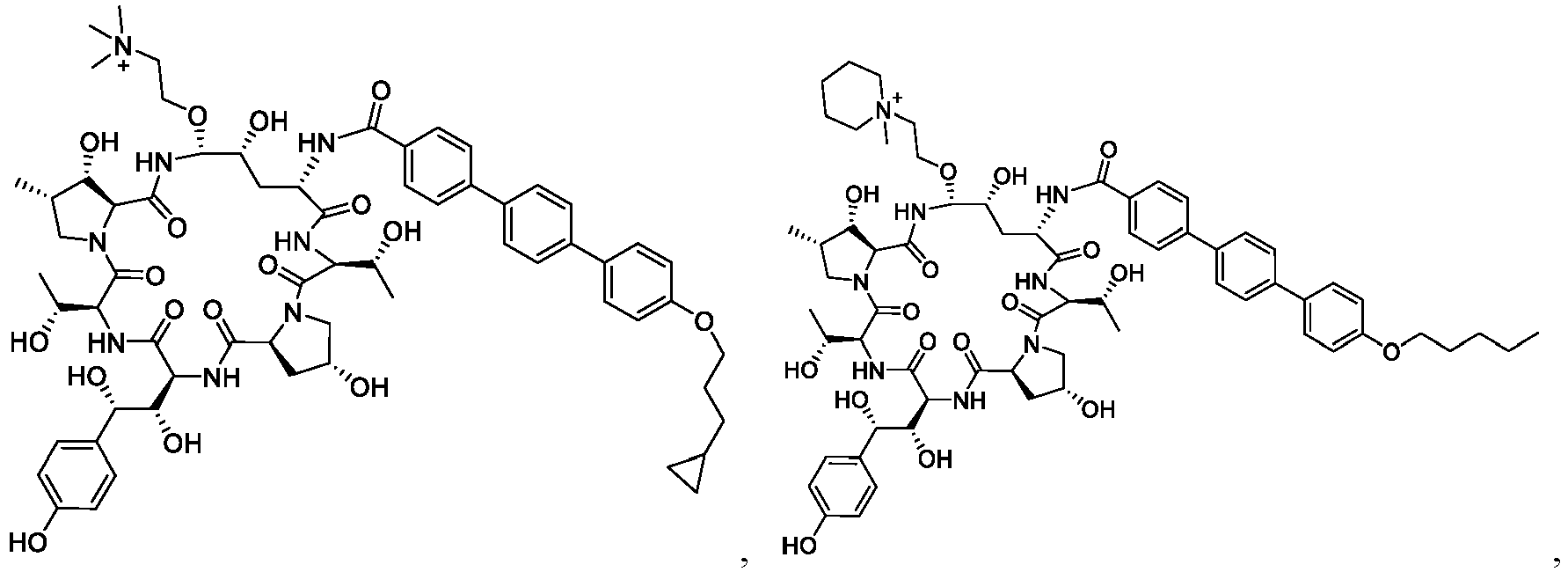


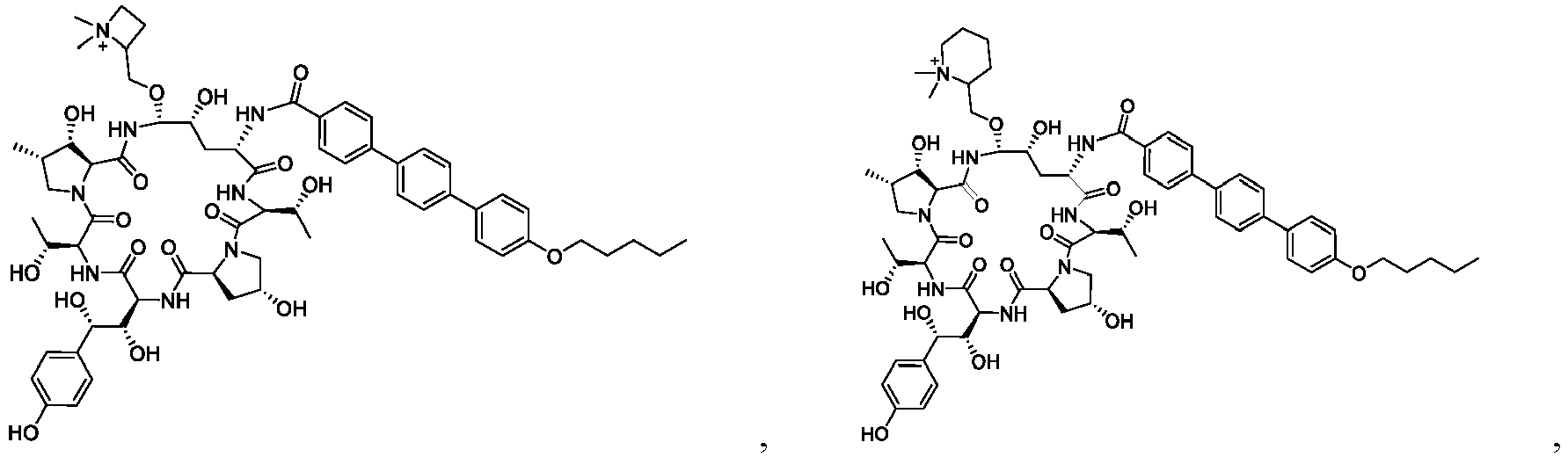


- In certain embodiments, the pharmaceutically acceptable salt of the compound is selected from the group consisting of an acetate salt, a trifluoroacetate salt and a formate salt. The present disclosure also provides a method for preparing the compound or the pharmaceutically acceptable salt thereof.
- The present disclosure also provides a pharmaceutical composition comprising the compound or the pharmaceutically acceptable salt thereof, and a pharmaceutically acceptable excipient.
- The present disclosure also provides a method for treating a fungal infection in a patient by administering to the patient an amount of the pharmaceutical composition of the present disclosure sufficient to treat the infection. In specific embodiments, the pharmaceutical composition is administered intravenously, topically or orally. The pharmaceutical composition may be administered to treat a bloodstream infection, a tissue infection (e.g., a lung, kidney or liver infection) or other types of infection in a patient. The fungal infection to be treated may be an infection selected from the group consisting of: tinea capitis, tinea corporis, tinea pedis, tinea unguium, perionychomycosis, chromophytosis, thrush, vaginal candidiasis, respiratory candidiasis, biliary tract candidiasis, esophageal candidiasis, urethral candidiasis, systemic candidiasis, mucosal and cutaneous candidiasis, aspergillosis, mucormycosis, paracoccidioidomycosis, North American blastomycosis, histoplasmosis, coccidioidomycosis, sporotrichosis, fungal sinusitis and chronic paranasal sinusitis. In certain embodiments, the infection to be treated is an infection caused by Candida albicans, C. parapsilosis, C. glabrata, C. guilliermondii, C. krusei, C. lusitaniae, C. tropicalis, Aspergillus fumigatus, A. flavus, A. terreus, A. niger, A. candidus, A. clavatus or A. ochraceus.
- The present disclosure also provides a method for preventing a fungal infection in a patient by administering to the patient an amount of the pharmaceutical composition of the present invention sufficient to prevent the infection. For example, the method of the present disclosure may be used for prophylactic treatment in patients who are preparing for invasive medical procedures (e.g., patients who are preparing for surgery, such as transplant, stem-cell therapy, transplant, reconstructive surgery or long-term or frequent intravenous catheterization, or for treatment in intensive care units), in patients who have lowered immunity (e.g., patients who have cancer or HIV/AIDS, or are taking immunosuppressive agents), or in patients who are receiving long-term antibiotic therapy. In one specific embodiment of the method of the present disclosure, the pharmaceutical composition comprises
compound 1, or any other compound described herein, or a pharmaceutically acceptable salt thereof. - The present disclosure also provides a method for preventing, stabilizing or inhibiting the growth of fungi or killing fungi by contacting the fungi or a site favoring the growth of fungi with the compound of the present invention or the pharmaceutically acceptable salt thereof.
- The term "sufficient amount" refers to an amount of drug required for treating or preventing an infection. The sufficient amount for implementing the present disclosure to therapeutically or prophylactically treat a condition caused or contributed to by an infection varies depending on the route of administration, the type of the infection, and the age, weight and general health of the patient.
- By "fungal infection" is meant that pathogenic fungi affect the host. For example, an infection may include the overgrowth of fungi that are normally found in a patient or on the patient's skin, or the growth of fungi that are not normally found in a patient or on the patient's skin. More generally, a fungal infection may be any case in which the presence of a fungal population is detrimental to the host organism. Thus, a patient is "afflicted" with a fungal infection when an excess of the fungal population is present in the patient or on the patient's skin, or when the fungal population is causing damage to the patient's cells or other tissues.
- The term "treatment" refers to the administration of a pharmaceutical composition for prophylactic and/or therapeutic purposes. By "preventing a disease" is meant prophylactically treating a subject who has not yet developed a disease but is susceptible to, or is at risk of developing, a specific disease. By "treating a disease" is meant treating a patient who is suffering from a disease to improve or stabilize the patient's condition. The present disclosure also provides use of the compound or the pharmaceutically acceptable salt thereof in preparing a medicament for treating fungal infections.
- The present disclosure also provides use of the compound or the pharmaceutically acceptable salt thereof in preparing a medicament for preventing fungal infections.
- The present disclosure also provides use of the compound or the pharmaceutically acceptable salt thereof in preparing a medicament for preventing, stabilizing or inhibiting the growth of fungi or killing fungi. In some embodiments, the use comprises contacting the fungi or a part favoring the growth of fungi with the compound or the pharmaceutically acceptable salt or isomer thereof.
- The compounds of the present disclosure may be synthesized, for example, by reacting echinocandin compounds with appropriate acyl, alkyl, carboxyl, hydroxy and/or amino groups under standard reaction conditions, as described in the examples.
- For the semi-synthetic route to the disclosed compounds, the stereochemistry of the compounds will be determined by the starting materials. Thus, the non-natural echinocandin derivatives will typically be identical in stereochemistry to the naturally occurring echinocandin structures from which they are derived (representative stereochemistry is described in the examples).
- The compounds of the present disclosure can be synthesized, for example, using the methods described in the examples.
- Unless otherwise stated, the following terms used in the specification and claims have the following meanings.
- "Alkyl" refers to a linear or branched alkane group containing preferably 1 to 10 carbon atoms, more preferably 1 to 6 carbon atoms; non-limiting examples include methyl, ethyl, n-propyl, isopropyl, n-butyl, sec-butyl, tert-butyl, pentyl, hexyl, heptyl, octyl, nonyl, decyl, etc. Unless otherwise specifically indicated in the specification, alkyl may be optionally substituted with one or more of the following substituents: halogen, cyano, nitro, oxo, thio, trimethylsilyl, etc. Unless otherwise stated, "lower alkyl" refers to a linear or branched alkane group containing 1 to 10 carbon atoms; non-limiting examples include methyl, ethyl, n-propyl, isopropyl, n-butyl, sec-butyl, tert-butyl, pentyl, hexyl, heptyl, octyl, nonyl, decyl, etc. Unless otherwise specifically indicated in the specification, lower alkyl may be optionally substituted with one or more of the following substituents: halogen, cyano, nitro, oxo, thio, trimethylsilyl, etc.
- "Alkenyl" refers to an alkyl compound containing carbon-carbon double bonds in the molecule, wherein the alkyl is as defined above. Non-limiting examples include vinyl, 1-propen-2-yl, 1-buten-4-yl, 1-penten-5-yl, 1-buten-1-yl, etc. Unless otherwise indicated in the specification, alkenyl may be optionally substituted with one or more of the following substituents: halogen, cyano, nitro, oxo, thio, trimethylsilyl, etc.
- "Alkynyl" refers to an alkyl compound containing carbon-carbon triple bonds in the molecule, wherein the alkyl is as defined above. Non-limiting examples include ethynyl, propynyl, pentynyl, butynyl, etc. Unless otherwise indicated in the specification, alkynyl may be optionally substituted with one or more of the following substituents: halogen, cyano, nitro, oxo, thio, trimethylsilyl, etc.
- "C10-36 lipophilic unit" refers to substituted or unsubstituted alkyl, substituted or unsubstituted alkenyl, substituted or unsubstituted alkynyl, substituted or unsubstituted cyclohydrocarbyl, substituted or unsubstituted aryl, substituted or unsubstituted heteroaryl, substituted or unsubstituted heterocyclyl, etc., containing 10-36 carbon atoms. "Aryl" refers to a hydrocarbon ring system group containing hydrogen atoms, 6 to 14 carbon atoms and at least one aromatic ring. It may be a monocyclic, bicyclic or tricyclic ring system, and may include a spiro ring system. Aryl groups include, but are not limited to, those derived from acenaphthene, anthracene, azulene, benzene, 6,7,8,9-tetrahydro-5H-benzo[7]annulene, fluorene, indene, naphthalene, phenalene and phenanthrene. Unless otherwise specifically indicated in the specification, aryl may be optionally substituted with one or more substituents independently selected from the group consisting of alkyl, alkenyl, alkynyl, halogen, haloalkyl, haloalkenyl, haloalkynyl, cyano, nitro, etc.
- "Cyclohydrocarbyl" refers to a stable non-aromatic monocyclic or polycyclic hydrocarbyl group consisting of carbon and hydrogen atoms only, which may comprise a spiro or bridged ring system, and contains 3 to 15 carbon atoms, 3 to 10 carbon atoms or 5 to 7 carbon atoms; it is saturated or unsaturated, and is linked to the remainder of the molecule by a single bond. Monocyclic cyclohydrocarbyl groups include non-bridged cyclohydrocarbyl groups such as cyclopropyl, cyclobutyl, cyclopentyl, cyclohexyl, cycloheptyl and cyclooctyl. Polycyclic groups include fused, spiro, or bridged cyclohydrocarbyl groups, for example, C10 groups such as adamantyl (bridged) and decalinyl (fused), and C7 groups such as bicyclo[3.2.0]heptyl (fused), norbornyl and norbornenyl (bridged); and substituted polycyclic groups, for example, substituted C7 groups such as 7,7-dimethylbicyclo[2.2.1]heptyl (bridged). Unless otherwise specifically indicated in the specification, cyclohydrocarbyl may be optionally substituted with one or more substituents independently selected from the group consisting of alkyl, alkenyl, alkynyl, halogen, haloalkyl, haloalkenyl, haloalkynyl, oxo, thio, cyano, nitro, etc.
- "Cycloalkyl" refers to a saturated monocyclic or polycyclic hydrocarbon substituent containing 3 to 15 carbon atoms, 3 to 10 carbon atoms or 5 to 7 carbon atoms. Non-limiting examples of monocyclic cycloalkyl include cyclopropyl, cyclobutyl, cyclopentyl, cyclohexyl, cycloheptyl, cyclooctyl, etc.; polycyclic cycloalkyl groups include spiro, fused and bridged cycloalkyl groups.
- "Halogen" refers to bromine, chlorine, fluorine or iodine.
- "Heterocyclyl" refers to a stable 3- to 18-membered non-aromatic ring group containing 1 to 12 carbon atoms and 1 to 6 heteroatoms selected from the group consisting of nitrogen, oxygen and sulfur. Unless otherwise specifically indicated in the specification, heterocyclyl may be a monocyclic, bicyclic, tricyclic or tetracyclic system, and may include spiro or bridged ring systems; the nitrogen, carbon or sulfur atoms in heterocyclyl may optionally be oxidized; the nitrogen atoms may optionally be quaternized; and heterocyclyl may be partially or fully saturated. Unless otherwise specifically indicated in the specification, heterocyclyl groups include those that are optionally substituted with one or more substituents selected from the group consisting of alkyl, alkenyl, alkynyl, halogen, haloalkyl, haloalkenyl, haloalkynyl, oxo, thio, cyano, nitro, etc.
- "Heteroaryl" refers to a 5- to 14-membered ring system group containing hydrogen atoms, 1 to 13 carbon atoms, 1 to 6 heteroatoms selected from the group consisting of nitrogen, oxygen and sulfur, and at least one aromatic ring. Heteroaryl may be a monocyclic, bicyclic, tricyclic or tetracyclic system, and may include spiro ring systems; the nitrogen, carbon or sulfur atoms in heteroaryl may optionally be oxidized; and the nitrogen atoms may optionally be quaternized. The aromatic ring of heteroaryl does not necessarily contain heteroatoms, provided that one ring of heteroaryl contains heteroatoms. For example, 1,2,3,4-tetrahydroisoquinolin-7-yl is considered a "heteroaryl" group. Unless otherwise specifically indicated in the specification, heteroaryl groups include those that are optionally substituted with one or more substituents selected from the group consisting of alkyl, alkenyl, alkynyl, halogen, haloalkyl, haloalkenyl, haloalkynyl, oxo, thio, cyano, nitro, etc.
- "PEG" refers to polyethylene glycol, and unless otherwise defined, "PEG" includes ethylene oxide polymers of any length. The PEG may also be optionally substituted with one or more substituents selected from the group consisting of deuterium, alkyl, alkenyl, alkynyl, halogen, haloalkyl, haloalkenyl, haloalkynyl, oxo, thio, cyano, nitro, etc.
-
-
FIG. 1 shows changes in histamine concentration after intravenous administration of compounds. -
FIG. 2 shows a comparison of the histamine concentrations at 30 min after intravenous administration of compounds. - The present invention is further described below with reference to examples, but these examples are not intended to limit the scope of the present invention.
- Experimental procedures without specific conditions indicated in the following examples, are generally conducted according to conventional conditions, or according to conditions recommended by the manufacturers of the starting materials or commercial products. Reagents without specific origins indicated are commercially available conventional reagents.
- Anidulafungin and caspofungin were both purchased from Taizhou KEDE Chemical. Rezafungin was synthesized according to CN103889221A.
-
Instrument HPLC (Agilent 1260) Chromatography column Welch Xtimate C18 (3 µm, 4.6 mm × 150 mm) Oven temperature 30 °C Mobile phase Gradient program: Time (min) A: 0.05% TFA in water B: 0.05% TFA in ACN 0.0 95 5 15.00 50 50 21.00 47 53 30.00 5 95 30.10 95 5 35.00 95 5 Flowrate 1.0 mL/min Detector UV 214 nm Eluent ACN Calculation method Area% -
Instrument LCMS (Agilent 6120) Chromatography column Welch Boltimate C18 (4.6 × 50 mm × 2.7 µm) Mobile phase Gradient program Time (min) A: 0.05% FA in water B: 0.05% FA in can 0.01 90 10 5.5 5 95 7.0 5 95 7.1 90 10 9.0 90 10 Flowrate 0.8 mL/min Oven temperature 40 °C Detector UV 214 nm Ion source ESI Mass range of scanning 100~2000 Mode Positive polarity -
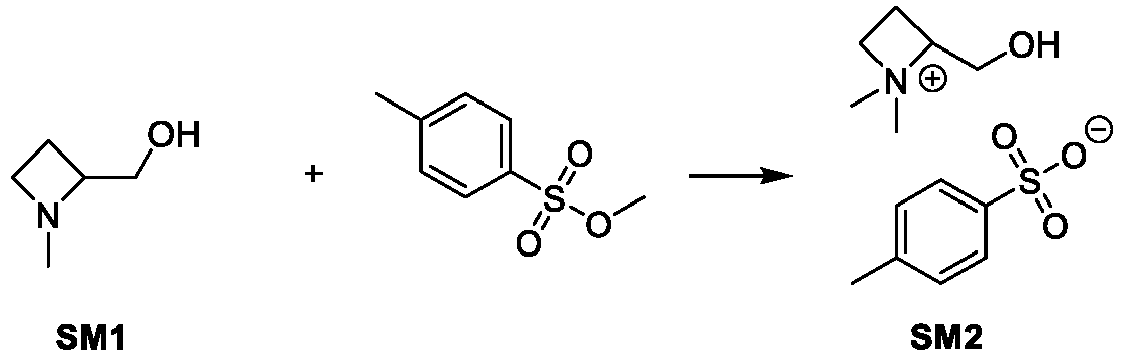
- Compound SM1 (510 mg, 5.04 mmol) was dissolved in acetone (5.1 mL), and methyl p-toluenesulfonate (938 mg, 5.04 mmol) was added dropwise. The reaction mixture was heated at reflux for 4 h, and a white solid precipitated. The reaction mixture was filtered, and the filter cake was dried in vacuo to give compound SM2 (385 mg, 98% purity, 26.7% yield). MS: 116.1[M+].
-

- Anidulafungin (114 mg, 0.1 mmol) was dissolved in tetrahydrofuran (10 mL) under nitrogen, and phenylboronic acid (24 mg, 0.2 mmol) was added. The reaction mixture was stirred at room temperature for 2 h and concentrated in vacuo to dryness to remove the solvent. 10 mL of acetonitrile was added, followed by addition of compound SM2 (170 mg, 0.6 mmol) and p-toluenesulfonic acid (86 mg, 0.5 mmol). The reaction mixture was stirred at room temperature for 16 h, quenched with 1 N aqueous sodium acetate solution (1 mL), and concentrated by rotary evaporation to remove the solvent. The resulting crude product was purified by preparative chromatography to give an acetate salt (79 mg, 97.6% purity, 60.8% yield). HRMS: 1237.6021 [M+].
- 1H NMR (400 MHz, METHANOL-d4) δ 7.98-8.01 (m, 2H), 7.82 (d, J = 8.3 Hz, 2H), 7.71-7.78 (m, 4H), 7.63 (d, J = 8.8 Hz, 2H), 7.17 (d, J = 8.6 Hz, 2H), 7.03 (d, J = 8.8 Hz, 2H), 6.79 (d, J = 8.6 Hz, 2H), 5.40-5.42 (m, 1H), 5.00-5.05 (m, 1H), 4.58-4.80 (m, 7H), 4.41 (d, J = 4.4 Hz, 1H), 4.34-4.36 (m, 2H), 4.25-4.32 (m, 2H), 3.97-4.24 (m, 8H), 3.89-3.96 (m, 1H), 3.82-3.87 (m, 1H), 3.48-3.53 (m, 1H), 3.12-3.17 (m, 6H), 2.45-2.57 (m, 4H), 2.27-2.35 (m, 1H), 2.05-2.15 (m, 2H), 1.79-1.87 (m, 5H), 1.40-1.53 (m, 4H), 1.26-1.32 (m, 6H), 1.10 (d, J = 6.8 Hz, 3H), 0.99 (t, J = 7.2 Hz, 3H).
-

- Compound SM3 (1.29 g, 10 mmol) was dissolved in acetone (13 mL), and iodomethane (1.42 g, 10 mmol) was added dropwise. The reaction mixture was heated at reflux for 4 h, and a white solid precipitated. The reaction mixture was filtered, and the filter cake was dried in vacuo to give compound SM4 (2.54 g, 98% purity, 89.2% yield). MS: 144. 1 [M+].
-

- Anidulafungin (114 mg, 0.1 mmol) was dissolved in tetrahydrofuran (10 mL) under nitrogen, and phenylboronic acid (24 mg, 0.2 mmol) was added. The reaction mixture was stirred at room temperature for 2 h and concentrated in vacuo to dryness to remove the solvent. 10 mL of acetonitrile was added, followed by addition of compound SM4 (171 mg, 0.6 mmol) and D-(+)-camphorsulfonic acid (120 mg, 0.5 mmol). The reaction mixture was stirred at room temperature for 16 h, quenched with 1 N aqueous sodium acetate solution (1 mL), and concentrated by rotary evaporation to remove the solvent. The resulting crude product was purified by preparative chromatography to give an acetate salt (61 mg, 97.0% purity, 46.2% yield). HRMS: 1265.6327[M+].
- 1H NMR (400 MHz, METHANOL-d4) δ 8.01 (d, J = 8.3 Hz, 2H), 7.83 (dd, J = 0.49, 8.3 Hz, 2H), 7.71-7.79 (m, 4H), 7.63 (d, J = 8.80 Hz, 2H), 7.17 (d, J = 8.6 Hz, 2H), 7.03 (d, J = 8.80 Hz, 2H), 6.79 (d, J = 8.6 Hz, 2H), 5.34-5.41 (m, 1H), 5.00-5.05 (m, 1H), 4.58-4.80 (m, 7H), 4.40 (d, J = 4.4 Hz, 1H), 4.32-4.38 (m, 2H), 4.25-4.32 (m, 2H), 4.18-4.22 (m, 1H), 4.15-4.24 (m, 1H), 3.81-4.15 (m, 8H), 3.43-3.52 (m, 2H), 3.21 (d, J = 6.6 Hz, 3H), 3.04 (d, J = 6.6 Hz, 3H), 2.42-2.59 (m, 2H), 2.24-2.36 (m, 1H), 2.05-2.12 (m, 2H), 1.80-1.88 (m, 9H), 1.42-1.53 (m, 5H), 1.28 (d, J = 6.4 Hz, 6H), 1.10 (d, J = 6.9 Hz, 3H), 0.99 (t, J = 7.1 Hz, 3H).
-

- Anidulafungin (114 mg, 0.1 mmol) was dissolved in tetrahydrofuran (10 mL) under nitrogen, and phenylboronic acid (24 mg, 0.2 mmol) was added. The reaction mixture was stirred at room temperature for 2 h and concentrated in vacuo to dryness to remove the solvent. 10 mL of dioxane was added, followed by addition of compound SM5 (73 mg, 0.6 mmol) and p-toluenesulfonic acid (86 mg, 0.5 mmol). The reaction mixture was stirred at room temperature for 16 h, quenched with 1 N aqueous sodium acetate solution (1 mL), and concentrated by rotary evaporation to remove the solvent. The resulting crude product was purified by preparative chromatography to give an acetate salt (68 mg, 97.8% purity, 52.3% yield). HRMS: 1243.5924[M+].
- 1H NMR (400 MHz, METHANOL-d4) δ 7.97 (d, J = 8.0 Hz, 2H), 7.79 (d, J = 8.0 Hz, 2H), 7.69-7.75 (m, 4H), 7.61 (d, J= 8.4 Hz, 2H), 7.15 (d, J= 8.0 Hz, 2H), 7.01 (d, J = 8.4 Hz, 2H), 6.76 (d, J = 8.0 Hz, 2H), 5.45 (d, J = 17.6 Hz, 2H), 5.36 (s, 1H), 5.05 (s, 1H), 4.73-4.77 (m, 1H), 4.58-4.61 (m, 3H), 4.16-4.40 (m, 6H), 3.81-4.10 (m, 8H), 3.63-3.73 (m, 2H), 3.46-3.50 (m, 1H), 3.20 (s, 6H), 2.42-2.53 (m, 2H), 2.26-2.29 (m, 1H), 2.05-2.11 (m, 2H), 1.78-1.84 (m, 2H), 1.40-1.52 (m, 4H), 1.25-1.30 (m, 7H), 1.07 (d, J = 6.8 Hz, 3H), 0.97 (t, J = 7.2 Hz , 3H).
-

- Echinocandin B (50 mg, 0.06 mmol) and mono-tert-butyl octadecanedioate (24.43 mg, 1.1 eq.) were dissolved in DMF (2 mL), and the resulting solution was stirred in an ice-water bath. TBTU (28.9 mg, 1.5 eq.) and DIPEA (15.5 mg, 2 eq.) were added. The reaction mixture was stirred in the ice-water bath for another 1.5 h, quenched with water (5.0 mL), and extracted with ethyl acetate (5 mL × 5). The organic phases were combined, washed with saturated brine (5 mL × 2), dried over anhydrous sodium sulfate, and concentrated. The residue was purified by preparative HPLC to give a product (55.2 mg, 97.1% purity, 80% yield). HRMS: 1150.6482[M+1].
- 1H NMR (400 MHz, DMSO d6 ): δ 9.31 (s, 1H), 8.06-7.94 (m, 3H), 7.40 (s, br, 1H), 7.29 (d, 1H, J = 9.2 Hz), 7.02 (d, 2H, J = 8.4 Hz), 6.68 (d, 2H, J = 8.0 Hz), 5.45 (d, 1H, J = 6.4 Hz), 5.19 (d, 1H, J = 3.2 Hz), 5.14 (d, 1H, J = 4.4 Hz), 5.10 (d, 1H, J = 5.2 Hz), 5.04-4.91 (m, 3H), 4.75-4.64 (m, 4H), 4.42 (s, 1H), 4.36-4.28 (m, 2H), 4.21-4.16 (m, 3H), 4.04-4.01 (m, 1H), 4.00-3.93 (m, 3H), 3.88-3.84 (m, 1H), 3.79-3.77 (m, 1H), 3.71-3.68 (m, 1H), 3.19 (t, 1H, J = 8.0 Hz), 2.35-2.34 (m, 1H), 2.24-2.15 (m, 3H), 2.08-2.08 (m, 2H), 1.90-1.82 (m, 2H), 1.69-1.59 (m, 1H), 1.47-1.43 (m, 5H), 1.39 (s, 9H), 1.24 (s, 24H), 1.08-1.06 (m, 6H), 0.96 (d, 3H, J = 6.8 Hz).
-

- N-(2-hydroxyethyl)-pyrrolidine (2.30 g, 20 mmol) was dissolved in 40 mL of acetone, and iodomethane (2.84 g, 1.0 eq.) was slowly added. The reaction mixture was heated at reflux with stirring for 4 h and concentrated until half of the solvent remained, and a solid precipitated. The solid was collected by filtration and dried to give compound SM6 as a white solid (4.88 g, 95% yield). MS: 130.0[M+].
- 1H NMR (400 MHz, D2O): δ 4.09 (d, 2H, J = 2.0 Hz), 3.63-3.56 (m, 6H), 3.15 (s, 3H), 2.26 (s, 4H).
-

- Anidulafungin (300 mg, 0.26 mmol) and phenylboronic acid (64.2 mg, 2 eq.) were dissolved in THF (10 mL). The reaction mixture was stirred at room temperature for 1 h and concentrated to dryness. Anhydrous acetonitrile (10 mL) was added, followed by addition of compound SM6 (422.7 mg, 6 eq.) and p-toluenesulfonic acid (340 mg, 7.5 eq.). The reaction mixture was stirred at room temperature under nitrogen for 5 h, quenched with aqueous sodium acetate solution, and concentrated to give a crude product, which was then purified by preparative HPLC to give an acetate salt (259 mg, 96.5% purity, 76% yield). HRMS: 1251.6174[M+].
- 1H NMR (400 MHz, CD3OD): δ 8.00 (d, 2H, J = 8.4 Hz), 7.83 (d, 2H, J = 8.0 Hz), 7.77 (m, 4H), 7.63 (d, 2H, J = 8.8 Hz), 7.17 (d, 2H, J = 8.4 Hz), 7.03 (d, 2H, J = 8.8 Hz), 6.78 (d, 2H, J = 8.8 Hz), 5.45 (d, 1H, J = 2.0 Hz), 5.06 (d, 1H, J = 3.2 Hz), 4.81-4.76 (m, 1H), 4.62-4.60 (m, 3H), 4.41 (d, 1H, J = 4.4 Hz), 4.36-4.33 (m, 2H), 4.28-4.25 (m, 2H), 4.22-4.18 (m, 1H), 4.11-3.83 (m, 8H), 3.68-3.42 (m, 8H), 3.09 (s, 3H), 2.55-2.44 (m, 2H), 2.33-2.27 (m, 1H), 2.23-2.03 (m, 6H), 1.92 (s, 3H), 1.87-1.80 (m, 2H), 1.55-1.40 (m, 4H), 1.28 (d, 6H, J = 5.6 Hz), 1.09 (d, 3H, J = 7.2 Hz), 0.92 (t, 3H, J = 6.4 Hz).
-

- Echinocandin B (100 mg, 0.12 mmol) and semaglutide side chain (100.9 mg, 1.0 eq.) were dissolved in DMF (4 mL), and the resulting solution was stirred in an ice-water bath. TBTU (58 mg, 1.5 eq.) and DIPEA (31 mg, 2 eq.) were added. The reaction mixture was stirred in the ice-water bath for another 1.5 h and added dropwise to 100 mL of ice water, and a solid precipitated. The solid was collected by filtration, dried, and slurried with acetonitrile to give a product (120 mg, 95.8% purity, 61.5% yield). HRMS: 1625.8989[M+ 1].
- 1H NMR (400 MHz, DMSOd6): δ 9.31 (s, 1H), 8.05 (d, 2H, J = 7.6 Hz), 7.95 (d, 1H, J = 8.4 Hz), 7.90-7.88 (m, 1H), 7.73-7.69 (m, 2H), 7.43-7.31 (m, 2H), 7.02 (d, 2H, J = 8.4 Hz), 6.69 (d, 2H, J = 8.0 Hz), 5.52 (d, 1H, J = 5.6 Hz), 5.20 (d, 1H, J = 2.8 Hz), 5.15 (d, 1H, J = 3.6 Hz), 5.10 (d, 1H, J = 5.6 Hz), 5.01-4.91 (m, 3H), 4.80-4.60 (m, 4H), 4.42 (s, 1H), 4.37-4.33 (m, 3H), 4.22-4.17 (m, 2H), 4.05-3.57 (m, 11H), 3.57 (s, br, 9H), 3.48-3.45 (m, 2H), 3.43-3.40 (m, 2H), 3.30-3.28 (m, 2H), 3.21-3.18 (m, 3H), 2.36-2.33 (m, 1H), 2.24-2.05 (m, 7H), 1.94-1.84 (m, 3H), 1.76-1.62 (m, 2H), 1.47 (s, br, 5H), 1.39 (s, 18H), 1.24 (s, 24H), 1.08-1.06 (m, 6H), 0.96 (d, 3H, J = 6.8 Hz).
-

- The compound of Example 6 (100 mg, 0.0615 mmol) and phenylboronic acid (15 mg, 2 eq.) were dissolved in THF (4 mL). The reaction mixture was stirred at room temperature for 1 h and concentrated to dryness. Compound SM7 (101.6 mg, 6 eq.) and p-toluenesulfonic acid (53 mg, 5 eq.) were added. The reaction mixture was stirred at room temperature under nitrogen for another 5 h, quenched with aqueous sodium acetate solution, and concentrated to give a crude product, which was then purified by preparative HPLC to give a trifluoroacetate salt (44.9 mg, 96.5% purity, 40% yield). HRMS: 1710.9867[M ÷].
- 1H NMR (400 MHz, CD3OD): δ 8.48 (d, 1H, J = 8.4 Hz), 8.41 (d, 1H, J = 8.8 Hz), 8.23 (d, 1H, J = 7.6 Hz), 8.04-7.99 (m, 2H), 7.60-7.54 (m, 2H), 7.15 (d, 2H, J = 8.0 Hz), 6.77 (d, 2H, J = 8.4 Hz), 5.51 (d, 1H, J = 9.6 Hz), 5.05-4.89 (m, 1H), 4.60-4.45 (m, 4H), 4.37-4.32 (m, 3H), 4.28-4.25 (m, 3H), 4.13-3.82 (m, 10H), 3.76-3.63 (m, 10H), 3.59-3.56 (m, 3H), 3.54-3.56 (m, 3H), 3.53-3.46 (m, 3H), 3.41-3.38 (m, 3H), 3.21 (m, 9H), 2.55-2.44 (m, 2H), 2.36-2.21 (m, 6H), 2.17-2.06 (m, 2H), 1.92-1.83 (m, 2H), 1.64-1.56 (m, 4H), 1.49 (s, 9H), 1.46 (s, 9H), 1.31 (s, 24H), 1.22 (d, 6H, J = 6.4 Hz), 1.08 (d, 3H, J = 6.4 Hz).
-

- The trifluoroacetate salt of the compound of Example 7 (24 mg, 0.014 mmol) was dissolved in TFA (1 mL), and the resulting solution was stirred in an ice-water bath for 5 h and concentrated to dryness. The residue was purified by preparative HPLC to give a trifluoroacetate salt (7.2 mg, 97.8% purity, 30% yield). HRMS: 1598.8629[M +].
-

- Echinocandin B (200 mg, 0.2397 mmol) and SM8 (89 mg, 1.0 eq.) were dissolved in DMF (5 mL), and the resulting solution was stirred in an ice-water bath. TBTU (115 mg, 1.5 eq.) and DIPEA (62 mg, 2 eq.) were added. The reaction mixture was stirred in the ice-water bath for another 1.5 h and purified by reversed-phase column chromatography to give a product (234 mg, 85% yield). MS: 1152.5[M+1], 1H NMR (400 MHz, CD3OD): δ 7.96 (d, 2H, J = 6.0 Hz), 7.77-7.69 (m, 6H), 7.62 (d, 2H, J = 8.4 Hz), 7.17 (d, 2H, J = 8.4 Hz), 7.02 (d, 2H, J = 8.8 Hz), 6.78 (d, 2H, J = 8.4 Hz), 5.37 (d, 1H, J = 2.8 Hz), 5.05-5.02 (m, 1H), 4.89-4.88 (m, 1H), 4.70-4.58 (m, 5H), 4.39-4.33 (m, 3H), 4.28-4.22 (m, 3H), 4.10-4.07 (m, 2H), 4.03-4.00 (m, 1H), 3.93-3.83 (m, 2H), 3.45-3.40 (m, 1H), 2.55-2.44 (m, 2H), 2.25-2.06 (m, 3H), 1.98-1.91 (m, 2H), 1.46-1.37 (m, 2H), 1.31-1.27 (m, 6H), 1.08 (d, 3H, J = 6.8 Hz), 0.77-0.74 (m, 1H), 0.50-0.46 (m, 2H), 0.10-0.06 (m, 2H).
-

- SM9 (140 mg, 0.1214 mmol) and phenylboronic acid (0.728 mg, 2 eq.) were dissolved in THF (5 mL). The reaction mixture was stirred at room temperature for 1 h and concentrated to dryness. Compound SM7 (200 mg, 6 eq.), p-toluenesulfonic acid (105 mg, 5 eq.) and anhydrous acetonitrile (5 mL) were added. The reaction mixture was stirred at room temperature under nitrogen for 5 h, quenched with aqueous sodium acetate solution, and concentrated to give a crude product, which was then purified by preparative HPLC to give an acetate salt (102 mg, 95.8% purity, 65% yield). HRMS: 1237.6022[M +].
- 1H NMR (400 MHz, CD3OD): δ 7.99 (d, 2H, J = 8.4 Hz), 7.82 (d, 2H, J = 8.0 Hz), 7.78-7.71 (m, 4H), 7.62 (d, 2H, J = 8.4 Hz), 7.17 (d, 2H, J = 8.4 Hz), 7.03 (d, 2H, J = 8.4 Hz), 6.78 (d, 2H, J = 8.4 Hz), 5.46 (d, 1H, J = 8.4 Hz), 5.08-5.05 (m, 1H), 4.90-4.77 (m, 2H), 4.63-4.59 (m, 3H), 4.41-4.33 (m, 3H), 4.29-4.26 (m, 2H), 4.21-4.18 (m, 1H), 4.11-3.90 (m, 7H), 3.84 (d, 1H, J = 11.2 Hz), 3.64-3.62 (m, 1H), 3.67-3.48 (m, 2H), 3.17 (s, 9H), ), 2.55-2.44 (m, 2H), 2.34-2.27 (m, 1H), 2.13-2.02 (m, 2H), 1.97-1.90 (m, 2H), 1.46-1.41 (m, 2H), 1.29 (s, 3H), 1.27 (s, 3H), 1.10 (d, 3H, J = 6.8 Hz) 0.80-0.74 (m, 1H), 0.50-0.46 (m, 2H), 0.10-0.06 (m, 2H).
-

- N-(2-hydroxyethyl)-pyrrolidine (6.5 g, 50 mmol) was dissolved in 25 mL of acetonitrile, and iodomethane (7.09 g, 1.0 eq.) was slowly added. The reaction mixture was heated at reflux with stirring for 4 h and concentrated until half of the solvent remained, and a solid precipitated. The solid was collected by filtration and dried to give compound SM10 as a white solid (12.1 g, 90% yield). MS: 144.0[M+].
-

- Anidulafungin (100 mg, 0.0877 mmol) was dissolved in tetrahydrofuran (10 mL) under nitrogen, and phenylboronic acid (21.4 mg, 0.1754 mmol) was added. The reaction mixture was stirred at room temperature for 2 h and concentrated in vacuo to dryness to remove the solvent. 10 mL of dioxane was added, followed by addition of compound SM10 (162.6 mg, 0.6 mmol) and p-toluenesulfonic acid (75.5 mg, 0.44 mmol). The reaction mixture was stirred at room temperature for 16 h, quenched with 1 N aqueous sodium acetate solution (1 mL), and concentrated by rotary evaporation to remove the solvent. The resulting crude product was purified by preparative chromatography to give an acetate salt (47.6 mg, 97.1% purity, 41% yield). HRMS: 1265.6324[M+].
- 1H NMR (400 MHz, METHANOL-d4) δ 7.98 (d, J = 8.4 Hz, 2H), 7.81 (d, J = 8.4 Hz, 2H), 7.70-7.76 (m, 4H), 7.61 (d, J = 8.8 Hz, 2H), 7.15 (d, J = 8.4 Hz, 2H), 7.01 (d, J = 8.8 Hz, 2H), 6.76 (d, J = 8.4 Hz, 2H), 5.42 (d, J = 1.6 Hz, 1H), 5.04 (d, J = 3.2 Hz, 1H), 4.74-4.78 (m, 1H), 4.58-4.61 (m, 3H), 4.16-4.40 (m, 6H), 3.81-4.10 (m, 8H), 3.38-3.65 (m, 7H), 3.09 (s, 3H), 2.42-2.53 (m, 2H), 2.26-2.28 (m, 1H), 2.03-2.12 (m, 2H), 1.90 (s, 3H), 1.78-1.83 (m, 6H), 1.38-1.63 (m, 6H), 1.26-1.30 (m, 7H), 1.08 (d, J = 7.2 Hz, 3H), 0.97 (t, J = 7.2 Hz , 3H).
-

- Echinocandin B (300 mg, 0.36 mmol) and SM11 (147 mg, 1.1 eq.) were dissolved in DMF (15 mL), and the resulting solution was stirred in an ice-water bath. TBTU (174 mg, 1.5 eq.) and DIPEA (141 mg, 3 eq.) were added. The reaction mixture was stirred in the ice-water bath for another hour and purified by reversed-phase column chromatography (MECN/H2O) to give compound SM12 (392 mg, 96% purity, 70.6% yield). MS: 1158.5[M+1],
-

- SM12 (100 mg, 0.086 mmol) was dissolved in tetrahydrofuran (10 mL) under nitrogen, and phenylboronic acid (21.3 mg, 0.173 mmol) was added. The reaction mixture was stirred at room temperature for 2 h and concentrated in vacuo to dryness to remove the solvent. 10 mL of dioxane was added, followed by addition of compound SM7 (108 mg, 0.777 mmol) and camphorsulfonic acid (100 mg, 0.43 mmol). The reaction mixture was stirred at room temperature for 16 h, quenched with 1 N aqueous sodium acetate solution (1 mL), and concentrated by rotary evaporation to remove the solvent. The resulting crude product was purified by preparative chromatography to give a formate salt (39.5 mg, 97.0% purity, 35.5% yield). HRMS: 1243.5936[M+].
- 1H NMR (400 MHz, METHANOL-d4) δ 8.54 (s, 1H), 7.98 (d, J = 8.0 Hz, 2H), 7.81 (d, J = 8.0 Hz, 2H), 7.70-7.76 (m, 4H), 7.61 (d, J = 8.4 Hz, 2H), 7.15 (d, J = 8.4 Hz, 2H), 7.02 (d, J = 8.0 Hz, 2H), 6.76 (d, J = 8.4 Hz, 2H), 5.42 (s, 1H), 5.04 (s, 1H), 4.71-4.78 (m, 1H), 4.48-4.58 (m, 4H), 4.16-4.42 (m, 7H), 4.05 (t, J = 6.4 Hz , 3H), 3.81-4.01 (m, 3H), 3.47-3.65 (m, 4H), 3.22 (s, 9H), 2.42-2.53 (m, 2H), 2.25-2.32 (m, 1H), 2.00-2.11 (m, 2H), 1.73-1.88 (m, 4H), 1.59-1.66 (m, 2H), 1.26-1.37 (m, 8H), 1.08 (d, J = 6.8 Hz, 3H).
-

- Anidulafungin (200 mg, 0.175 mmol) was dissolved in tetrahydrofuran (20 mL) under nitrogen, and phenylboronic acid (42.8 mg, 0.351 mmol) was added. The reaction mixture was stirred at room temperature for 2 h and concentrated in vacuo to dryness to remove the solvent. 20 mL of dioxane was added, followed by addition of compound SM13 (235 mg, 1.58 mmol) and p-toluenesulfonic acid (151 mg, 0.877 mmol). The reaction mixture was stirred at room temperature for 16 h, quenched with 1 N aqueous sodium acetate solution (2 mL), and concentrated by rotary evaporation to remove the solvent. The resulting crude product was purified by preparative chromatography to give an acetate salt (48.3 mg, 97.7% purity, 21.3% yield). HRMS: 1234.6581[M+].
-
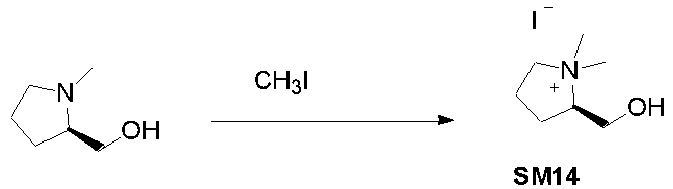
- N-methyl-D-prolinol (1.15 g, 10 mmol) was dissolved in 20 mL of acetone, and iodomethane (1.56 g, 1.1 eq.) was slowly added. The reaction mixture was heated at reflux with stirring for 4 h and concentrated until half of the solvent remained, and a solid precipitated. The solid was collected by filtration and dried to give compound SM14 as a white solid (2.44 g, 95% yield). MS: 130.0[M+].
-

- Anidulafungin (100 mg, 0.0877 mmol) and phenylboronic acid (21.39 mg, 2 eq.) were dissolved in THF (5 mL). The reaction mixture was stirred at room temperature for 1 h and concentrated to dryness. Compound SM14 (135.2 mg, 6 eq.), p-toluenesulfonic acid (75.6 mg, 5 eq.) and anhydrous dioxane (5 mL) were added. The reaction mixture was stirred at room temperature under nitrogen for 5 h, quenched with aqueous sodium acetate solution, and concentrated to give a crude product, which was then purified by preparative HPLC to give an acetate salt (57.5 mg, 95.8% purity, 50% yield). HRMS: 1251.6173 [M+]. 1H NMR (400 MHz, METHANOL-d4) δ 7.98 (d, J = 8.8 Hz, 2H), 7.81 (d, J = 8.0 Hz, 2H), 7.69-7.76 (m, 4H), 7.61 (d, J = 9.2 Hz, 2H), 7.15 (d, J = 8.8 Hz, 2H), 7.01 (d, J = 8.8 Hz, 2H), 6.76 (d, J = 8.4 Hz, 2H), 5.42 (d, J = 2.4 Hz, 1H), 5.03 (d, J = 3.2 Hz, 1H), 4.92-4.93 (m, 1H), 4.74-4.78 (m, 1H), 4.57-4.61 (m, 3H), 4.38 (d, J = 4.0 Hz, 1H), 4.32-4.34 (m, 2H), 4.24-4.28 (m, 2H), 4.16-4.20 (m, 1H), 4.06-4.10 (m, 1H), 3.97-4.04 (m, 4H), 3.81-3.92 (m, 4H), 3.46-3.63 (m, 3H), 3.21 (s, 3H), 3.00 (s, 3H), 2.42-2.52 (m, 2H), 2.26-2.31 (m, 2H), 1.92-2.15 (m, 5H), 1.90 (s, 3H), 1.78-1.85 (m, 2H), 1.40-1.52 (m, 4H), 1.25-1.28 (m, 6H), 1.08 (d, J = 6.8 Hz, 3H), 0.97 (t, J = 6.8 Hz, 3H).
-

- Compound SM15 (1.02 g, 10.08 mmol) was dissolved in acetonitrile (10 mL), and methyl p-toluenesulfonate (1.88 g, 10.08 mmol) was added dropwise. The reaction mixture was heated at reflux for 4 h. The solvent was removed by rotary evaporation to give crude compound SM16, which was directly used in the next step. MS: 116.1[M+].
-

- Anidulafungin (1.14 g, 1 mmol) was dissolved in tetrahydrofuran (40 mL) under nitrogen, and phenylboronic acid (244 mg, 2 mmol) was added. The reaction mixture was stirred at room temperature for 2 h and concentrated in vacuo to dryness to remove the solvent. 50 mL of dioxane was added, followed by addition of compound SM16 (2.86 g, 10 mmol) and camphorsulfonic acid (1.16 g, 5 mmol). The reaction mixture was stirred at room temperature for 16 h, quenched with 1 N aqueous sodium acetate solution (10 mL), and concentrated by rotary evaporation to remove the solvent. The resulting crude product was purified by preparative chromatography to give an acetate salt (563 mg, 95.4% purity, 43.4% yield). HRMS: 1237.6023[M+].
- 1H NMR (400 MHz, METHANOL-d4) δ 7.97 (d, J = 8.3 Hz, 2H), 7.80-7.82 (m, 2H), 7.69-7.76 (m, 4H), 7.61 (d, J = 8.8 Hz, 2H), 7.14 (d, J = 8.6 Hz, 2H), 7.01 (d, J = 8.8 Hz, 2H), 6.76 (d, J = 8.6 Hz, 2H), 5.35-5.36 (m, 1H), 5.02-5.03 (m, 1H), 4.86 (d, J = 5.1 Hz, 1H), 4.74 (dd, J = 5.3, 12.1 Hz, 1H), 4.44-4.65 (m, 5H), 4.39 (d, J = 4.4 Hz, 1H), 4.31-4.33 (m, 2H), 4.22-4.26 (m, 2H), 4.06-4.20 (m, 4H), 4.02 (t, J = 6.5 Hz, 3H), 3.81-3.98 (m, 4H), 3.51-3.69 (m, 2H), 3.43-3.50 (m, 1H), 3.19 (s, 3H), 2.60-2.72 (m, 1H), 2.34-2.56 (m, 3H), 2.21-2.33 (m, 1H), 1.97-2.14 (m, 2H), 1.75-1.87 (m, 5H), 1.39-1.52 (m, 4H), 1.24-1.28 (m, 6H), 1.07 (d, J = 6.8 Hz, 3H), 0.92-1.01 (m, 3H).
-

- Echinocandin B (250 mg, 0.3 mmol) and SM17 (114 mg, 1.0 eq.) were dissolved in DMF (2.5 mL), and the resulting solution was stirred in an ice-water bath. TBTU (145 mg, 1.5 eq.) and DIPEA (78 mg, 2.0 eq.) were added. The reaction mixture was stirred in the ice-water bath for another hour and purified by reversed-phase column chromatography (MECN/H2O) to give compound SM18 (298 mg, 97% purity, 72.6% yield). MS: 1158.5[M+1].
-

- SM18 (150 mg, 0.13 mmol) was dissolved in tetrahydrofuran (7.5 mL) under nitrogen, and phenylboronic acid (31.6 mg, 0.259 mmol) was added. The reaction mixture was stirred at room temperature for 2 h and concentrated in vacuo to dryness to remove the solvent. 7.5 mL of dioxane was added, followed by addition of compound SM7 (108 mg, 0.777 mmol) and camphorsulfonic acid (150 mg, 0.65 mmol). The reaction mixture was stirred at room temperature for 16 h, quenched with 1 N aqueous sodium acetate solution (1 mL), and concentrated by rotary evaporation to remove the solvent. The resulting crude product was purified by preparative chromatography to give a formate salt (57 mg, 97.8% purity, 34.1% yield). HRMS: 1243.5928[M+].
- 1H NMR (400 MHz, METHANOL-d4) δ 8.55 (s, 1H), 7.61-7.81 (m, 9H), 7.15 (d, J= 8.8 Hz, 2H), 7.02 (d, J = 8.8 Hz, 2H), 6.76 (d, J = 8.4 Hz, 2H), 5.37 (d, J = 2.4 Hz, 1H), 5.03 (d, J = 3.2 Hz, 1H), 4.71-4.76 (m, 1H), 4.58-4.61 (m, 4H), 4.14-4.40 (m, 6H), 3.81-4.08 (m, 8H), 3.46-3.65 (m, 3H), 3.16 (s, 9H), 2.42-2.54 (m, 2H), 2.25-2.31 (m, 1H), 2.01-2.12 (m, 2H), 1.78-1.85 (m, 2H), 1.38-1.53 (m, 4H), 1.25-127 (m, 6H), 1.08 (d, J = 6.8 Hz, 3H), 0.97 (t, J = 7.2 Hz, 3H).
-
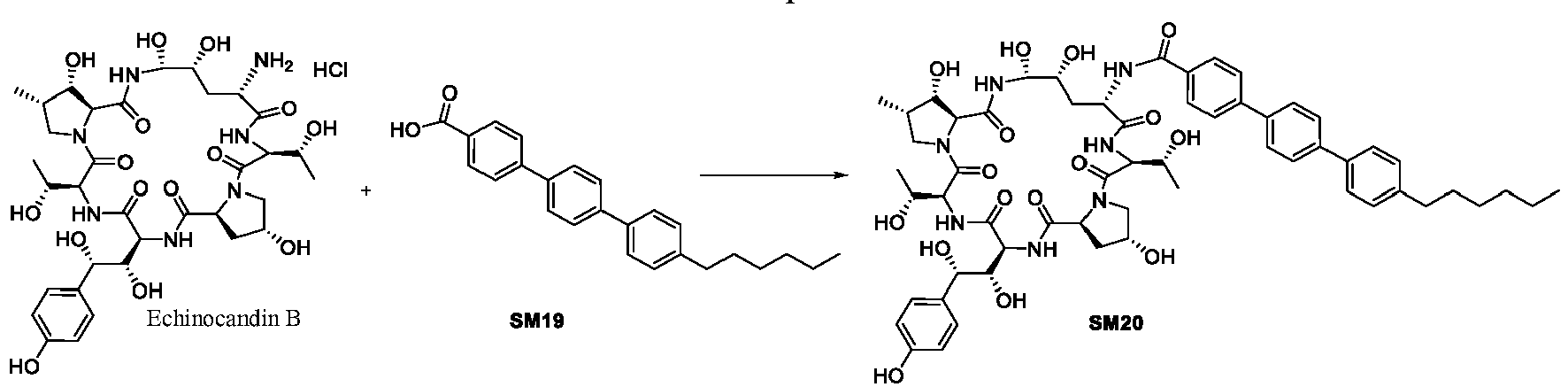
- Echinocandin B (400 mg, 1.12 mmol) and SM19 (930 mg, 1.0 eq.) were dissolved in DMF (8 mL), and the resulting solution was stirred in an ice-water bath. TBTU (359 mg, 1.0 eq.) and DIPEA (288 mg, 2.0 eq.) were added. The reaction mixture was stirred in the ice-water bath for another hour and purified by reversed-phase column chromatography (MECN/H2O) to give compound SM20 (890 mg, 89.6% purity, 70.1% yield). MS: 1138.5[M+ 1].
-
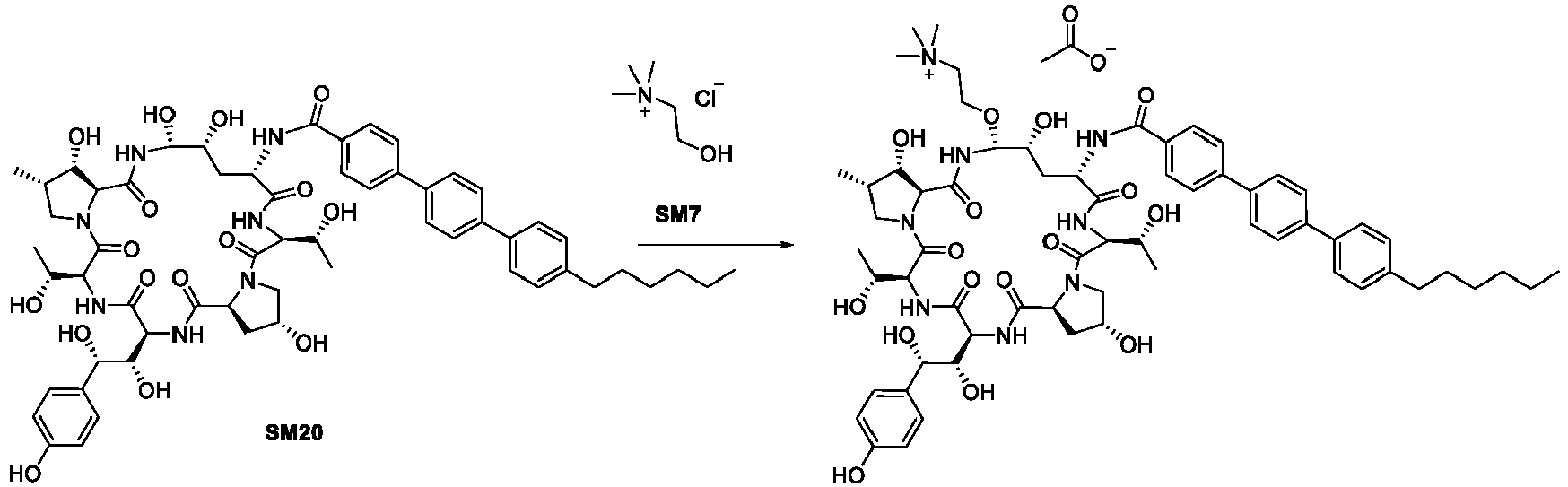
- SM20 (200 mg, 0.18 mmol) was dissolved in tetrahydrofuran (4 mL) under nitrogen, and phenylboronic acid (42.8 mg, 0.351 mmol) was added. The reaction mixture was stirred at room temperature for 2 h and concentrated in vacuo to dryness to remove the solvent. 8 mL of dioxane was added, followed by addition of compound SM7 (146 mg, 1.05 mmol) and camphorsulfonic acid (204 mg, 0.88 mmol). The reaction mixture was stirred at room temperature for 16 h, quenched with 1 N aqueous sodium acetate solution (1 mL), and concentrated by rotary evaporation to remove the solvent. The resulting crude product was purified by preparative chromatography to give an acetate salt (123 mg, 97.6% purity, 54.6% yield). HRMS: 1223.6224[M+].
- 1H NMR (400 MHz, METHANOL-d4) δ 7.98 (d, J = 8.4 Hz, 2H), 7.80 (d, J = 8.4 Hz, 2H), 7.72-7.78 (m, 4H), 7.59 (d, J = 8.0 Hz, 2H), 7.28 (d, J = 8.0 Hz, 2H), 7.15 (d, J = 8.4 Hz, 2H), 6.76 (d, J = 8.8 Hz, 2H), 5.42 (d, J = 2.0 Hz, 1H), 5.04 (d, J = 3.2 Hz, 1H), 4.87 (s, 1H), 4.74-4.78 (m, 1H), 4.56-4.61 (m, 3H), 4.16-4.40 (m, 6H), 3.81-4.11 (m, 6H), 3.46-3.62 (m, 3H), 3.14 (s, 9H), 2.64-2.68 (m, 2H), 2.42-2.53 (m, 2H), 2.26-2.29 (m, 1H), 2.04-2.12 (m, 2H), 1.91 (s, 3H), 1.62-1.68 (m, 2H), 1.35-1.40 (m, 6H), 1.26-1.27 (m, 6H), 1.07 (d, J = 7.2 Hz, 3H), 0.91 (t, J = 6.8 Hz, 3H).
-

- Echinocandin B (162 mg, 0.195 mmol) and SM21 (70 mg, 1.0 eq.) were dissolved in DMF (1.4 mL), and the resulting solution was stirred in an ice-water bath. TBTU (84.6 mg, 1.5 eq.) and DIPEA (50 mg, 2.0 eq.) were added. The reaction mixture was stirred in the ice-water bath for another hour and purified by reversed-phase column chromatography (MECN/H2O) to give compound SM22 (94 mg, 73% purity, 32.9% yield). MS: 1139.5[M+ 1].
-

- SM22 (100 mg, 0.18 mmol) was dissolved in tetrahydrofuran (2 mL) under nitrogen, and phenylboronic acid (21.4 mg, 2.0 eq) was added. The reaction mixture was stirred at room temperature for 2 h and concentrated in vacuo to dryness to remove the solvent. 4 mL of dioxane was added, followed by addition of compound SM7 (73.5 mg, 6.0 eq) and camphorsulfonic acid (102 mg, 5.0 eq). The reaction mixture was stirred at room temperature for 16 h, quenched with 1 N aqueous sodium acetate solution (1 mL), and concentrated by rotary evaporation to remove the solvent. The resulting crude product was purified by preparative chromatography to give an acetate salt (31 mg, 96.1% purity, 27.5% yield). HRMS: 1224.6163[M+].
- 1H NMR (400 MHz, METHANOL-d4) δ 7.96 (d, J = 8.4 Hz, 2H), 7.79 (d, J = 8.0 Hz, 2H), 7.65-7.72 (m, 4H), 7.48 (d, J = 8.8 Hz, 2H), 7.15 (d, J = 8.4 Hz, 2H), 6.71-6.78 (m, 4H), 5.43 (d, J = 2.0 Hz, 1H), 5.04 (d, J = 3.6 Hz, 1H), 4.91-4.93 (m, 1H), 4.73-4.78 (m, 1H), 4.57-4.61 (m, 3H), 4.16-4.40 (m, 6H), 3.81-4.10 (m, 6H), 3.46-3.62 (m, 3H), 3.11-3.14 (m, 11H), 2.42-2.53 (m, 2H), 2.26-2.31 (m, 1H), 2.02-2.12 (m, 2H), 1.91 (s, 3H), 1.62-1.67 (m, 2H), 1.38-1.44 (m, 4H), 1.26 (d, J = 6.0 Hz, 6H), 1.08 (d, J = 6.8 Hz, 3H), 0.96 (t, J = 6.8 Hz, 3H).
-

- Anidulafungin (100 mg, 0.088 mmol) was dissolved in tetrahydrofuran (4 mL) under nitrogen, and phenylboronic acid (21.4 mg, 0.175 mmol) was added. The reaction mixture was stirred at room temperature for 2 h and concentrated in vacuo to dryness to remove the solvent. 4 mL of dioxane was added, followed by addition of compound SM23 (75.6 mg, 0.526 mmol) and p-toluenesulfonic acid (75.5 mg, 0.438 mmol). The reaction mixture was stirred at room temperature for 16 h, quenched with 1 N aqueous sodium acetate solution (2 mL), and concentrated by rotary evaporation to remove the solvent. The resulting crude product was purified by preparative chromatography to give an acetate salt (35 mg, 97.3% purity, 30.9% yield). HRMS: 1229.6268[M +].
- 1H NMR (400 MHz, METHANOL-d4) δ 7.97 (d, J = 8.4 Hz, 2H), 7.79 (d, J = 8.4 Hz, 2H), 7.69-7.76 (m, 4H), 7.61 (d, J = 8.8 Hz, 2H), 7.15 (d, J = 8.4 Hz, 2H), 7. 00 (d, J = 8.8 Hz, 2H), 6.76 (d, J = 8.4 Hz, 2H), 5.42 (d, J = 2.4 Hz, 1H), 5.04 (d, J = 2.8 Hz, 1H), 4.88 (s, 1H), 4.74-4.78 (m, 1H), 4.57-4.61 (m, 3H), 4.15-4.40 (m, 6H), 3.81-4.11 (m, 6H), 3.46-3.50 (m, 1H), 3.14 (s, 9H), 2.42-2.54 (m, 2H), 2.25-2.32 (m, 1H), 2.01-2.11 (m, 2H), 1.91 (s, 3H), 1.77-1.84 (m, 2H), 1.38-1.53 (m, 4H), 1.27 (d, J = 5.6 Hz, 6H), 1.07 (d, J = 7.6 Hz, 3H), 0.97 (t, J = 6.8 Hz, 3H).
-

- Echinocandin B (161 mg, 0.193 mmol) and SM24 (80 mg, 1.0 eq.) were dissolved in DMF (3.2 mL), and the resulting solution was stirred in an ice-water bath. TBTU (93 mg, 1.5 eq.) and DIPEA (50 mg, 2.0 eq.) were added. The reaction mixture was stirred in the ice-water bath for another hour and purified by reversed-phase column chromatography (MECN/H2O) to give compound SM25 (165 mg, 95.9% purity, 71.6% yield). MS: 1194.5[M+1],
-

- SM25 (100 mg, 0.084 mmol) was dissolved in tetrahydrofuran (4 mL) under nitrogen, and phenylboronic acid (20.4 mg, 2.0 eq) was added. The reaction mixture was stirred at room temperature for 2 h and concentrated in vacuo to dryness to remove the solvent. 4 mL of dioxane was added, followed by addition of compound SM7 (70 mg, 6.0 eq) and camphorsulfonic acid (97.6 mg, 5.0 eq). The reaction mixture was stirred at room temperature for 16 h, quenched with 1 N aqueous sodium acetate solution (1 mL), and concentrated by rotary evaporation to remove the solvent. The resulting crude product was purified by preparative chromatography to give an acetate salt (33 mg, 97.2% purity, 29.4% yield). HRMS: 1279.5720[M+].
- 1H NMR (400 MHz, METHANOL-d4) δ 7.97 (d, J = 8.0 Hz, 2H), 7.80 (d, J = 8.4 Hz, 2H), 7.69-7.76 (m, 4H), 7.62 (d, J = 8.4 Hz, 2H), 7.15 (d, J = 8.4 Hz, 2H), 7.03 (d, J = 8.8 Hz, 2H), 6.76 (d, J = 8.4 Hz, 2H), 5.42 (d, J = 2.0 Hz, 1H), 5.04 (d, J = 3.2 Hz, 1H), 4.88 (s, 1H), 4.73-4.78 (m, 1H), 4.57-4.61 (m, 3H), 4.16-4.40 (m, 6H), 3.81-4.11 (m, 8H), 3.46-3.62 (m, 3H), 3.15 (s, 9H), 2.42-2.53 (m, 2H), 2.23-2.32 (m, 3H), 2.04-2.11 (m, 2H), 1.93 (s, 3H), 1.87-1.90 (m, 2H), 1.76-1.82 (m, 2H), 1.26 (d, J = 6.4 Hz, 6H), 1.08 (d, J = 6.8 Hz, 3H).
-

- SM-26 (590 mg, 1 eq.) was dissolved in 10 mL of acetonitrile, and methyl p-toluenesulfonate (1.2 g, 1.1 eq.) was added. The reaction mixture was heated at reflux with stirring for 4 h and concentrated, and the residue was slurried with acetone petroleum ether to give compound SM-27 as a white solid (1.6 g, 95% yield). MS: 117.1 [M+].
-

- Anidulafungin (100 mg, 0.0877 mmol) and phenylboronic acid (21.39 mg, 2 eq.) were dissolved in THF (5 mL). The reaction mixture was stirred at room temperature for 1 h and concentrated to dryness. Compound SM-27 (151 mg, 6 eq.), p-toluenesulfonic acid (75.4 mg, 5 eq.) and anhydrous dioxane (5 mL) were added. The reaction mixture was stirred at room temperature under nitrogen for 5 h, quenched with aqueous sodium acetate solution, and concentrated to give a crude product, which was then purified by preparative HPLC to give a formate salt (60 mg, 97.8% purity, 55.6% yield). HRMS: 1237.6024[M+]. 1H NMR (400 MHz, CD3OD): δ 8.56 (s, 1H), 8.02 (d, 2H, J = 10.8 Hz), 7.82 (d, 2H, J = 8.4 Hz), 7.77 (m, 4H), 7.63 (d, 2H, J = 8.4 Hz), 7.17 (d, 2H, J = 8.8 Hz), 7.03 (d, 2H, J = 8.8 Hz), 6.78 (d, 2H, J = 8.8 Hz), 5.42 (d, 1H, J = 2.4 Hz), 5.06 (d, 1H, J = 2.8 Hz), 4.92-4.88 (m, 2H), 4.81-4.72 (m, 2H), 4.63-4.58 (m, 3H), 4.42 (d, 1H, J = 4.0 Hz), 4.29-3.81 (m, 14H), 3.52-3.38 (m, 1H), 3.19 (s, 6H), 2.57-2.43 (m, 4H), 2.34-2.27 (m, 1H), 2.13-2.04 (m, 2H), 1.87-1.80 (m, 2H), 1.55-1.40 (m, 4H), 1.29 (d, 6H, J = 6.0 Hz), 1.08 (d, 3H, J = 6.8 Hz), 0.99 (t, 3H, J = 6.8 Hz).
-

- The trifluoroacetate salt of the compound of Example 6 (24 mg, 0.014 mmol) was dissolved in TFA (1 mL), and the resulting solution was stirred in an ice-water bath for 5 h and concentrated to dryness. The residue was purified by preparative HPLC to give a trifluoroacetate salt (7.2 mg, 97.8% purity, 30% yield). HRMS: 1513.7743[M+1].
-

- Compound SM-29 (5.4 g, 52.3 mmol) was dissolved in acetone (54 mL), and methyl p-toluenesulfonate (10.23 g, 54 mmol) was added dropwise. The reaction mixture was heated at reflux for 2 h, and a white solid precipitated. The reaction mixture was cooled to room temperature and filtered, and the filter cake was dried in vacuo to give compound SM-30 (6.5 g, 98% purity, 42.9% yield). MS: 118.12[M+].
-

- Anidulafungin (100 mg, 0.0877 mmol) and phenylboronic acid (21.39 mg, 2 eq.) were dissolved in tetrahydrofuran (4 mL) under nitrogen, and the resulting solution was stirred at room temperature for 2 h and concentrated in vacuo to dryness to remove the solvent. 4 mL of dioxane was added, followed by addition of compound SM-30 (152.3 mg, 0.526 mmol) and camphorsulfonic acid (102 mg, 0.44 mmol). The reaction mixture was stirred at room temperature for 16 h, quenched with 1 N aqueous sodium acetate solution (1 mL), and concentrated by rotary evaporation to remove the solvent. The resulting crude product was purified by preparative chromatography to give an acetate salt (53 mg, 96.1% purity, 46.5% yield). HRMS: 1239.6225[M+].
- 1H NMR (400 MHz, METHANOL-d4) δ 7.98 (d, J = 8.4 Hz, 2H), 7.81 (d, J = 7.2 Hz, 2H), 7.69-7.76 (m, 4H), 7.61 (d, J = 8.8 Hz, 2H), 7.15 (d, J = 8.4 Hz, 2H), 7.01 (d, J = 8.8 Hz, 2H), 6.76 (d, J = 8.4 Hz, 2H), 5.44 (s, 1H), 5.04 (d, J = 3.2 Hz, 1H), 4.85 (m, 1H), 4.74-4.78 (m, 1H), 4.57-4.61 (m, 3H), 4.39 (d, J = 4.0 Hz, 1H), 4.32-4.34 (m, 2H), 4.24-4.27 (m, 2H), 4.16-4.20 (m, 1H), 3.81-4.07 (m, 8H), 3.74 (m, 1H), 3.46-3.50 (m, 1H), 3.11 (s, 9H), 2.42-2.53 (m, 2H), 2.28-2.36 (m, 1H), 2.02-2.11 (m, 2H), 1.90 (s, 3H), 1.78-1.85 (m, 2H), 1.43-1.52 (m, 7H), 1.25-1.27 (m, 6H), 1.08 (d, J = 6.4 Hz, 3H), 0.97 (t, J = 7.2 Hz, 3H).
-

- Compound SM-31 (2.15 g, 20.84 mmol) was dissolved in acetone (21.5 mL), and methyl p-toluenesulfonate (4.08 g, 22 mmol) was added dropwise. The reaction mixture was heated at reflux for 2 h, and a white solid precipitated. The reaction mixture was cooled to room temperature and filtered, and the filter cake was dried in vacuo to give compound SM-32 (3.2 g, 98% purity, 53% yield). MS: 118.12[M+].
-
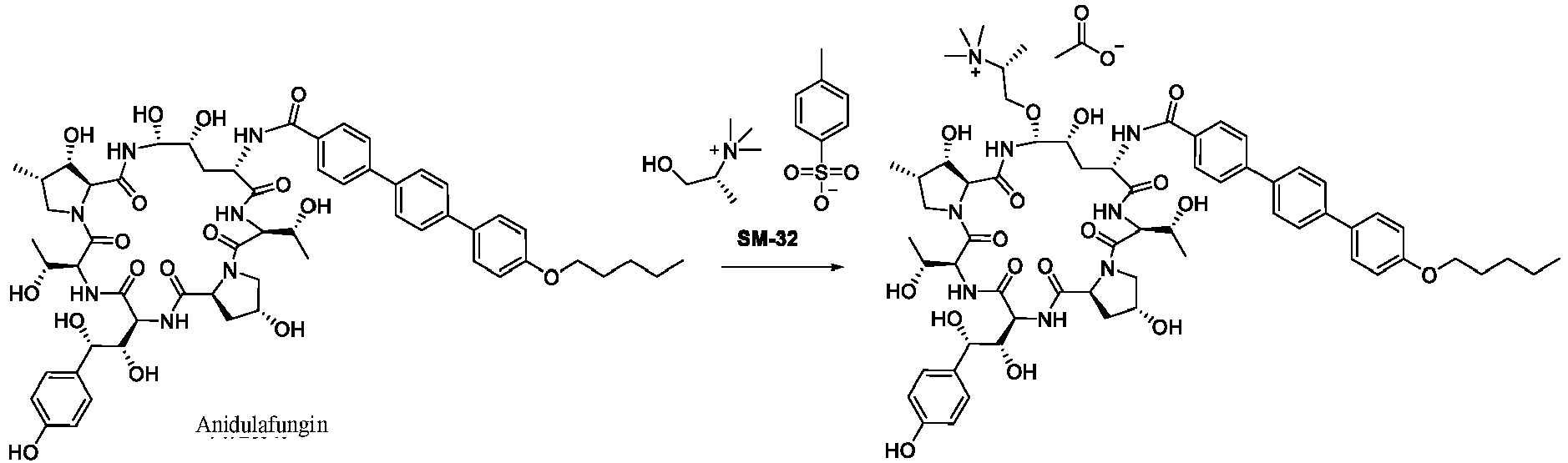
- Anidulafungin (100 mg, 0.0877 mmol) and phenylboronic acid (21.39 mg, 2 eq.) were dissolved in tetrahydrofuran (4 mL) under nitrogen, and the resulting solution was stirred at room temperature for 2 h and concentrated in vacuo to dryness to remove the solvent. 4 mL of dioxane was added, followed by addition of compound SM-32 (152.3 mg, 0.526 mmol) and camphorsulfonic acid (102 mg, 0.44 mmol). The reaction mixture was stirred at room temperature for 16 h, quenched with 1 N aqueous sodium acetate solution (1 mL), and concentrated by rotary evaporation to remove the solvent. The resulting crude product was purified by preparative chromatography to give an acetate salt (39 mg, 99.6% purity, 34.2% yield). HRMS: 1239.6226[M+].
- 1H NMR (400 MHz, METHANOL-d4) δ 7.97 (d, J = 8.4 Hz, 2H), 7.69-7.81 (m, 6H), 7.61 (d, J = 8.4 Hz, 2H), 7.15 (d, J = Hz8.4 Hz, 2H), 7.01 (d, J = 8.4 Hz, 2H), 6.76 (d, J = 8.4 Hz, 2H), 5.34 (d, J= 2.8 Hz, 1H), 5.02 (d, J = 2.4 Hz, 1H), 4.85 (m, 1H), 4.73-4.78 (m, 1H), 4.57-4.61 (m, 3H), 4.39 (d, J = 4.4 Hz, 1H), 4.32-4.34 (m, 2H), 4.24-4.28 (m, 2H), 4.17-4.21 (m, 1H), 3.79-4.10 (m, 8H), 3.66 (m, 1H), 3.46-3.50 (m, 1H), 3.12 (s, 9H), 2.42-2.53 (m, 2H), 2.25-2.31 (m, 1H), 2.03-2.11 (m, 2H), 1.89 (s, 3H), 1.78-1.84 (m, 2H), 1.37-1.53 (m, 7H), 1.25-1.28 (m, 6H), 1.08 (d, J = 6.8 Hz, 3H), 0.97 (t, J = 7.2 Hz, 3H).
-

- Compound SM-33 (2.2 g, 21.3 mmol) was dissolved in acetone (22 mL), and methyl p-toluenesulfonate (4.17 g, 22.4 mmol) was added dropwise. The reaction mixture was heated at reflux for 2 h, and a white solid precipitated. The reaction mixture was cooled to room temperature and filtered, and the filter cake was dried in vacuo to give compound SM-34 (2.05 g, 98% purity, 33% yield). MS: 118.12[M+].
-

- Anidulafungin (100 mg, 0.0877 mmol) and phenylboronic acid (21.39 mg, 2 eq.) were dissolved in tetrahydrofuran (4 mL) under nitrogen, and the resulting solution was stirred at room temperature for 2 h and concentrated in vacuo to dryness to remove the solvent. 4 mL of dioxane was added, followed by addition of compound SM-34 (152.3 mg, 0.526 mmol) and camphorsulfonic acid (102 mg, 0.44 mmol). The reaction mixture was stirred at room temperature for 16 h, quenched with 1 N aqueous sodium acetate solution (1 mL), and concentrated by rotary evaporation to remove the solvent. The resulting crude product was purified by preparative chromatography to give an acetate salt (29 mg, 97.5% purity, 25.4% yield). HRMS: 1239.6223[M+].
- 1H NMR (400 MHz, METHANOL-d4) δ 7.96 (d, J = 7.2 Hz, 2H), 7.69-7.80 (m, 6H), 7.61 (d, J = 8.4 Hz, 2H), 7.15 (d, J = 8.8 Hz, 2H), 7.01 (d, J = 7.6 Hz, 2H), 6.76 (d, J = 8.4 Hz, 2H), 5.50 (s, 1H), 5.04 (d, J = 3.2 Hz, 1H), 4.85 (m, 1H), 4.78-4.79 (m, 1H), 4.55-4.60 (m, 3H), 4.30-4.36 (m, 4H), 4.22-4.27 (m, 2H), 4.16-4.20 (m, 1H), 3.80-4.10 (m, 6H), 3.52-3.55 (m, 1H), 3.34-3.43 (m, 2H), 3.18 (s, 9H), 2.42-2.51 (m, 2H), 2.24-2.30 (m, 1H), 2.05-2.13 (m, 2H), 1.90 (s, 3H), 1.78-1.84 (m, 2H), 1.40-1.51 (m, 4H), 1.27 (t, J = 7.2 Hz, 6H), 1.20 (d, J = 5.2 Hz, 3H), 1.07 (d, J = 7.2 Hz, 3H), 0.97 (t, J = 6.8 Hz, 3H).
-

- SM-35 (505 mg, 1 eq.) was dissolved in 5 mL of acetone, and methyl p-toluenesulfonate (1.02 g, 1.1 eq.) was added. The reaction mixture was stirred at room temperature for 2 h and filtered, and the filter cake was rinsed with acetone to give compound SM-36 as a white solid (1.22 g, 85% yield). MS: 116.2[M+].
-

- Anidulafungin (100 mg, 0.0877 mmol) and phenylboronic acid (21.39 mg, 2 eq.) were dissolved in tetrahydrofuran (4 mL) under nitrogen, and the resulting solution was stirred at room temperature for 2 h and concentrated in vacuo to dryness to remove the solvent. 4 mL of dioxane was added, followed by addition of compound SM-36 (151.2 mg, 0.526 mmol) and camphorsulfonic acid (102 mg, 0.44 mmol). The reaction mixture was stirred at room temperature for 16 h, quenched with 1 N aqueous sodium acetate solution (1 mL), and concentrated to give a crude product, which was then purified by preparative HPLC to give an acetate salt (50 mg, 96.2% purity, 44% yield). HRMS: 1238.4225[M+].
- 1H NMR (400 MHz, METHANOL-d4): δ 8.02 (d, 2H, J = 8.4 Hz), 7.84 (d, 2H, J = 8.0 Hz), 7.78-7.71 (m, 4H), 7.63 (d, 2H, J = 6.8 Hz), 7.17 (d, 2H, J = 8.8 Hz), 7.03 (d, 2H, J = 8.8 Hz), 6.81 (d, 2H, J = 7.2 Hz), 5.52 (d, 1H, J = 1.6 Hz), 5.08 (d, 1H, J = 3.2 Hz), 4.84-4.76 (m, 1H), 4.63-4.60 (m, 6H), 4.42 (d, 1H, J = 4.4 Hz), 4.36-4.33 (m, 2H), 4.27-4.23 (m, 2H), 4.18-4.15 (m, 1H), 4.06-4.00 (m, 4H), 3.96-3.90 (m, 2H), 3.86-3.83 (m, 1H), 3.74-3.46 (m, 4H), 3.18 (s, 3H), 3.11 (s, 3H), 2.60-2.30 (m, 4H), 2.10-2.04 (m, 2H), 1.91 (s, 3H), 1.85-1.80 (m, 2H), 1.53-1.40 (m, 4H), 1.29-1.26 (m, 6H), 1.10 (d, 3H, J = 7.2 Hz), 0.99 (t, 3H, J = 7.2 Hz).
-

- SM-37 (505 mg, 1 eq.) was dissolved in 5 mL of acetone, and methyl p-toluenesulfonate (1.02 g, 1.1 eq.) was added. The reaction mixture was stirred at room temperature for 2 h and filtered, and the filter cake was rinsed with acetone to give compound SM-38 as a white solid (1.29 g, 90% yield). MS: 116.2[M+].
-

- Anidulafungin (100 mg, 0.0877 mmol) and phenylboronic acid (21.39 mg, 2 eq.) were dissolved in tetrahydrofuran (4 mL) under nitrogen, and the resulting solution was stirred at room temperature for 2 h and concentrated in vacuo to dryness to remove the solvent. 4 mL of dioxane was added, followed by addition of compound SM-38 (151.2 mg, 0.526 mmol) and camphorsulfonic acid (102 mg, 0.44 mmol). The reaction mixture was stirred at room temperature for 16 h, quenched with 1 N aqueous sodium acetate solution (1 mL), and concentrated to give a crude product, which was then purified by preparative HPLC to give an acetate salt (40 mg, 96.2% purity, 34% yield). HRMS: 1238.4225[M+].
- 1H NMR (400 MHz, METHANOL-d4): δ 8.00 (d, 2H, J = 8.4 Hz), 7.82 (d, 2H, J = 8.4 Hz), 7.78-7.71 (m, 4H), 7.63 (d, 2H, J = 8.8 Hz), 7.17 (d, 2H, J = 8.8 Hz), 7.03 (d, 2H, J = 8.8 Hz), 6.78 (d, 2H, J = 8.4 Hz), 5.44 (d, 1H, J = 2.4 Hz), 5.06 (d, 1H, J = 2.8 Hz), 4.83-4.77 (m, 1H), 4.63-4.60 (m, 6H), 4.42 (d, 1H, J = 4.0 Hz), 4.36-4.33 (m, 2H), 4.27-4.25 (m, 2H), 4.20-4.18 (m, 1H), 4.06-4.00 (m, 4H), 3.94-3.90 (m, 2H), 3.86-3.78 (m, 1H), 3.71-3.46 (m, 4H), 3.25 (s, 3H), 3.19 (s, 3H), 2.58-2.41 (m, 4H), 2.32-2.28 (m, 2H), 1.92 (s, 3H), 1.86-1.80 (m, 2H), 1.53-1.40 (m, 4H), 1.32-1.27 (m, 6H), 1.10 (d, 3H, J = 7.2 Hz), 0.99 (t, 3H, J = 7.2 Hz).
-
Instrument Thermo-UItiMate 3000 Q Exactive Chromatography column Waters BEH C18 1.7U 2.1 × 50 mm Mobile phase A: 0.1% FA in water B: 0.1% FA in acetonitrile Gradient Time (min) B(%) 0 10 1 10 5 90 7 90 9 10 Column temperature 40 °C Flowrate 0.3 mL/min Conditions for mass spectrometry Polarity: Positive polarity Scanning range: 100-1500 m/z 133-2000 m/z - After a test compound was serially diluted, an MIC (minimum inhibitory concentration) assay was performed on the standard Candida strain and an MEC (minimum effective concentration) assay on the standard Aspergillus strain. The MIC assay was performed according to the guidelines of the Clinical and Laboratory Standards Institute (CLSI M27-A3) and the MEC assay according to the guidelines of the Clinical and Laboratory Standards Institute (CLSI M38-A2).
- The frozen strain was passaged at least twice, and a single colony was picked and resuspended in normal saline or sterile water in a tube. The suspension was vortexed and adjusted to 0.5 McF (1 × 10⁶ to 5 × 10⁶ CFU/mL) using a spectrophotometer at wavelength 530 nm. The suspension was 50-fold diluted with normal saline and then 20-fold diluted with 1 × RPMI 1640 broth (1 × 10³ to 5 × 10³ CFU/mL). 10 µL of the suspension was applied to an SDA plate for colony counting, with a range from about 10 to 50 single colonies.
- After complete dissolution was achieved at room temperature in the prepared susceptibility testing plate, the bacterial suspension was added to a 96-well plate at 100 µL per well using a multi-channel pipette. At this time, the bacterium concentration in each well should be 0.5 × 10³ to 2.5 × 10³ CFU/mL.
- Aspergillus was passaged onto an SDA plate and cultured at 35 °C for 48 h to 7 d to induce sporulation. Colonies on the plate were covered with about 1 mL of 0.85% normal saline or sterile water (
polysorbate 20 was added at a final concentration of 0.1%-0.01%). The medium was gently wiped on its surface with a tip or a sterile cotton swab (be careful not to break the medium), and the spore hyphae suspension was transferred to a sterile tube and let stand for 3-5 min so that the heavy particles settled. The homogeneous upper layer of the suspension was transferred to a new sterile tube, which was then sealed and vortexed for 15 s (be careful as the suspension may produce an aerosol when the cover is removed). The concentration of the suspension was adjusted until an OD value of 0.09-0.13 was achieved using a spectrophotometer at 530 nm. The suspension was 50-fold diluted with 1× RPMI 1640. 100 µL of sample was added to each well of the 96-well plate within 2 h after dilution (the final spore concentration in the susceptibility testing plate was at 0.4 × 10⁴ to 5 × 10⁴ CFU/mL). - Colony counting: The suspension diluted with RPMI 1640 was further diluted 10-fold, and 10 µL of the dilution was applied to an SDA plate, cultured at 28 °C, and observed every day; colonies were immediately counted upon being visible to the naked eye.
- The assay plate for yeast-type fungi was incubated in an incubator at 35 °C with 85% humidity for 24 h, and then the MIC value was read. For echinocandin drugs, Aspergillus was incubated at 28 °C for 21-26 h, and then the MEC results were read.
- Yeast-type fungi: A disposable sealing film was applied to the 96-well plate, and the mixture was well mixed by shaking. Observation was performed through a plate reader with the naked eye. Comparisons were made to the growth control, and the minimum compound concentration corresponding to ≥50% growth inhibition was defined as MIC. Pictures were taken and saved using an automatic plate reader.
- Aspergillus: For echinocandin drugs, comparisons were made to the growth control under a plate reader, and the minimum drug concentration that could cause the hyphae to form small, round, compact hyphal particles was defined as MEC. For accurate determination of MEC values, the plate must not be vortexed before reading.
Table 1. Bacteriostatic activity assay results for compounds (first batch) Compound Initial assay concentration ) Candida albicans Candida glabrata Candida parapsilosis Candida krusei Meyerozyma guilliermondii Candida tropicalis Aspergillus flavus ATCC 90029 ATCC 15126 ATCC 22019 ATCC 6258 ATCC 6260 ATCC 750 ATCC 28539 Anidulafungin 16 0.016 0.125 0.5 0.063 1 0.016 0.031 Caspofungin acetate 16 0.063 0.25 1 1 1 0.016 0.031 Rezafungin acetate 16 0.125 0.125 2 0.25 2 0.016 0.031 Final product of Example 5 16 0.125 0.125 2 0.125 4 0.016 0.031 Final product of Example 10 16 0.25 0.5 2 0.5 4 0.031 0.031 Final product of Example 1 16 0.031 0.031 1 0.031 2 0.016 0.031 Final product of Example 2 16 0.125 0.125 1 0.125 2 0.016 0.031 Final product of Example 3 16 0.031 0.25 2 0.25 2 0.016 0.031 Final product of Example 7 16 2 4 4 4 2 4 16 Final product of Example 11 16 0.125 0.5 4 0.5 2 0.031 0.031 Final product of Example 13 16 0.031 / 1 0.047 1 0.016 0.031 Note: 1. Candidaparapsilosis ATCC 22019 and Candida krusei ATCC6258 were quality control strains. According to CLSI-M60, the 24 h MIC of ANI for ATCC 22019 is (0.25-2) µg/mL, and that of CAS is (0.25-1) µg/mL; the 24 h MIC of ANI for ATCC6258 is (0.03-0.12) µg/mL, and that of CAS is (0.12-1) µg/mL. Table 2. Bacteriostatic activity assay results for compounds (second batch) Compound Initial assay concentration (µg/mL) Candida albicans Candida albicans +50% human serum Candida albicans Candida glabrata Candida albicans (azole drug-resistant strain) Candida albicans (azole drug-resistant strain) Candida tropicalis (amphotericin-resistant strain) ATCC 90028 ATCC 90028 ATCC 44858 ATCC 36583 R357 R358 ATCC 200956 Rezafungin acetate 16 0.25 0.25 0.25 0.25 0.25 0.25 0.25 Final product of Example 13 16 0.25 0.25 0.25 0.5 0.5 0.25 0.25 Final product of Example 16 16 0.25 0.5 0.25 0.25 0.25 0.25 0.25 Final product of Example 17 16 0.25 0.25 0.25 0.5 0.5 0.25 0.25 Final product of Example 22 16 0.25 0.25 0.25 0.5 0.5 0.25 0.25 Final product of Example 23 16 0.25 0.25 0.25 0.25 0.25 0.125 0.25 Final product of Example 24 16 0.25 0.25 0.125 0.25 0.5 0.0625 0.125 Final product of Example 25 16 0.25 0.125 0.125 0.25 0.25 0.25 0.25 Final product of Example 26 16 0.25 0.25 0.25 0.25 0.5 0.25 0.25 - The assay data show that a significant number of the example compounds of the present disclosure have excellent antifungal activity, and some of the compounds have more excellent antifungal activity compared to the positive drugs.
- 12 SD rats were divided into 2 groups of 6 (half are male and half female). The rats were observed at least once a day. The body weights were measured once before administration. Administration was performed by single intravenous injection for 20 min per animal. PK measurement was performed once before administration and 5 min, 30 min, 1 h, 4 h, 8 h, 24 h, 48 h, 72 h and 96 h after administration. A histamine assay was performed once before administration and 30 min, 4 h, 8 h and 24 h after administration.
- The dose design is shown in the table below:
Group Route of administration Dose for administration (mg/kg) Concentration for administration (mg/mL) Volume for administration (mL/kg) Number of animals Male Female 1 (Example 13 final product group) Intravenous injection 10 2 5 3 3 2 (Rezafungin acetate group) Intravenous injection 10 2 5 3 3 - A transient slight decrease in activity occurred in 2 females in group 2 (2/3 of the rats) on the day of administration.
- Apart from that, the SD rats in each group were in good general conditions, showed normal spontaneous locomotor activity, had clean skin and hair, and showed normal defecation and urination, and no other abnormality was observed.
- A transient increase in the histamine level was caused in both
group 1 andgroup 2 by intravenous administration. The plasma histamine concentration peaked at 30 min, showed a tendency to recover at 4 h, and substantially returned to the normal level at 8-24 h, as shown inFIG. 1 . 30 min after administration, the mean histamine concentration in the plasma of the rats ingroup 2 was 1333.0 ng/mL, which is 4.5 times significantly (p = 0.046) higher than that in group 1 (296.6 ng/mL), as shown inFIG. 2 . The ability of thegroup 1 compound to induce increases in the histamine level in rats is significantly lower than that of thegroup 2 compound when they are administered at the same dose. - The pharmacokinetic parameters in animals after administration to
group 1 orgroup 2 are shown in the table below:Group Sex T1/2 Cmax AUC0-96 AUC0-inf CL MRTIV Vdss h µg/mL hr∗ug/mL hr∗ug/mL mL/min/kg hr L/ kg 1 Male 27.7 8.0 173.9 191.2 0.9 37.1 1.9 Female 25.5 9.3 179.6 195.0 0.9 34.6 1.8 2 Male 28.0 7.8 190.5 212.1 0.8 38.4 1.8 Female 27.9 8.6 205.8 227.2 0.8 39.1 1.8 group 1 andgroup 2 are close to each other in the plasma drug exposure levels (Cmax and AUC) and shows no significant sex-related difference, and the other pharmacokinetic parameters each have substantially equivalent values for both groups. In conclusion, after administration at the same dose (10 mg/kg) by single intravenous injection, the plasma drug exposure levels of the final product of Example 13 and rezafungin acetate are close, while the ability of the final product of Example 13 to induce increases in the histamine level in rats is significantly lower than that of rezafungin acetate, suggesting that the final product of Example 13, when applied clinically, will not easily cause allergies compared to rezafungin.
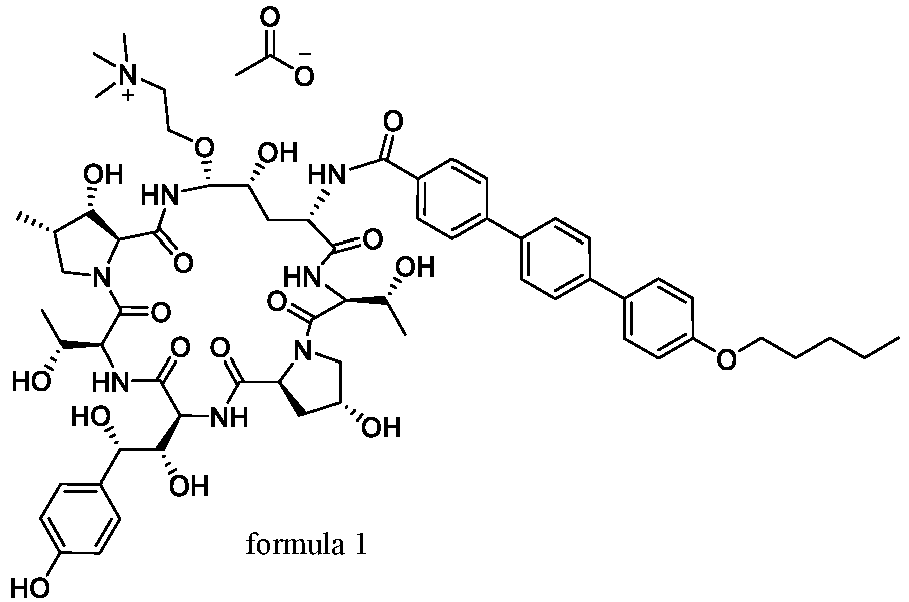
Claims (21)
- A compound of formula I or a pharmaceutically acceptable salt or isomer thereof,
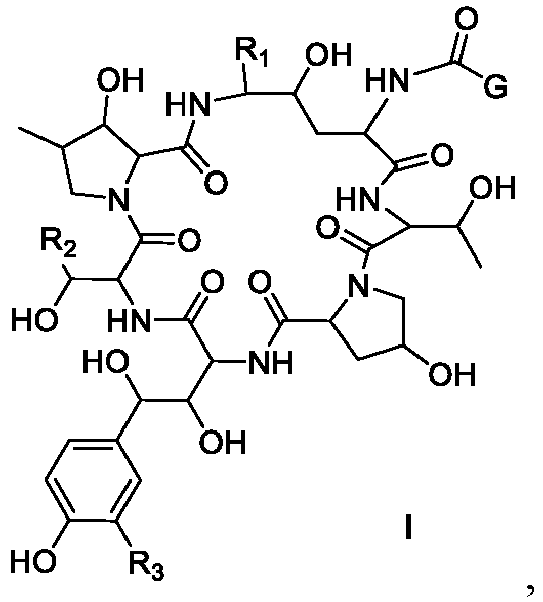 R3 is selected from the group consisting of H, OSO3H and CH2NRB1RB2;G is a C10-42 fatty unit;RA1, RA2, RA3 and RA4 are independently selected from the group consisting of hydrogen, deuterium, halogen, lower alkyl, cyclohydrocarbyl and cyclohydrocarbylene
 RB1 and RB2 are independently selected from the group consisting of H, -C(O)RJ and lower alkyl;X1 is independently N(Rc1Rc2Rc3) or the structure
 Rc1, RC2 and RC3 are independently selected from the group consisting of H, C1-6 alkyl, C1-6 lower haloalkyl and deuterated C1-6 lower alkyl, and at least one of RC1, RC2 and RC3 is not hydrogen;each RF is independently selected from the group consisting of H, deuterium, hydroxy, hydroxyalkyl, amino, alkoxy, lower alkyl, alkenyl, alkynyl, halogen, SR', SOR', SO2R', NR'(R"), COOR' and CONR'(R"), wherein the lower alkyl is optionally substituted with a substituent substituted with one or more substituents selected from the group consisting of deuterium, alkyl, cycloalkyl, alkoxy, hydroxyalkyl, alkenyl, alkynyl, aryl, heteroaryl,nitro, nitrile groups, hydroxy, halogen, SR', NR'(R"), COOR' and CONR'(R");X2 is N(RD1RD2RD3) or X1 structure;RD1, RD2 and RD3 are independently selected from the group consisting of H, C1-6 lower alkyl, C1-6 lower haloalkyl and deuterated C1-6 lower alkyl;R' and R" are independently selected from the group consisting of hydrogen, hydroxy, alkyl, alkoxy, alkenyl and -C(O)RJ;RJ is selected from the group consisting of hydrogen, deuterium, C1-10 lower alkyl, cyclohydrocarbyl and cyclohydrocarbylene;a is an integer from 0 to 5;b is an integer from 1 to 5;c is an integer from 1 to 2;d is an integer from 0 to 3;e is an integer from 1 to 5;k is an integer from 0 to 20;j is an integer from 0 to 5; andn is an integer from 1 to 7.
 - The compound of formula I or the pharmaceutically acceptable salt or isomer thereof according to claim 1, wherein R1 is selected from the group consisting of O(C(RA1)(RA2))a(C(RA3)(RA4))jX1, NH(C(RA1)(RA2))a(C(RA3)(RA4))jX1, O(CH2CH2O)bCH2CH2X1, O(CH2CH2CH2O)bCH2CH2X1, O(CH2CH2NH)bCH2CH2X1, NH(CH2CH2O)bCH2CH2X1, NH(CH2CH2NH)bCH2CH2X1, NH(CH2CH2CH2O)bCH2CH2X1, NH[(CH2(CH2)cO)]bCH{CH2[OCH2(CH2)c]dX1}2, O[(CH2(CH2)cO)]bCH{CH2[OCH2(CH2)c]dX1}2and (OCH2CH2)b(NHCH2CH2)eX2; R2 is selected from the group consisting of hydrogen, RB1RB2N-, CH2CH2NRB1RB2, CH2C(O)NRB1RB2, C1-10 lower alkyl, C2-10 alkenyl, C2-10 alkynyl, aryl, heteroaryl, cyclohydrocarbyl, heterocyclyl and PEG;R3 is selected from the group consisting of H, OSO3H and CH2NRB1RB2;G is a C10-36 lipophilic unit;RA1, RA2, RA3 and RA4 are independently selected from the group consisting of hydrogen, deuterium, halogen, lower alkyl, cyclohydrocarbyl and cyclohydrocarbylene
 RB1 and RB2 are independently selected from the group consisting of H, -C(O)RJ and lower alkyl;X1 is independently N(Rc1Rc2Rc3) or the structure
 Rc1, RC2 and RC3 are independently selected from the group consisting of H, C1-6 lower haloalkyl and deuterated C1-6 lower alkyl, and at least one of RC1, RC2 and RC3 is not hydrogen;each RF is independently selected from the group consisting of H, deuterium, hydroxy, hydroxyalkyl, amino, alkoxy, lower alkyl, alkenyl, alkynyl, halogen, SR', SOR', SO2R', NR'(R"), COOR' and CONR'(R"), wherein the lower alkyl is optionally substituted with one or more substituents selected from the group consisting of deuterium, alkyl, cycloalkyl, alkoxy, hydroxyalkyl, alkenyl and alkynyl;X2 is N(RD1RD2RD3) or X1 structure;RD1, RD2 and RD3 are independently selected from the group consisting of H, C1-6 lower alkyl, C1-6 lower haloalkyl and deuterated C1-6 lower alkyl;R' and R" are independently selected from the group consisting of hydrogen, hydroxy, alkyl, alkoxy, alkenyl and -C(O)RJ;RJ is selected from the group consisting of hydrogen, C1-10 lower alkyl, cyclohydrocarbyl and cyclohydrocarbylene;a is an integer from 0 to 5;b is an integer from 1 to 5;c is an integer from 1 to 2;d is an integer from 0 to 3;e is an integer from 1 to 5;k is an integer from 0 to 20;j is an integer from 0 to 5; andn is an integer from 1 to 7.
 - The compound of formula I or the pharmaceutically acceptable salt or isomer thereof according to claim 1 or 2, wherein X1 is selected from the group consisting of the following structures:
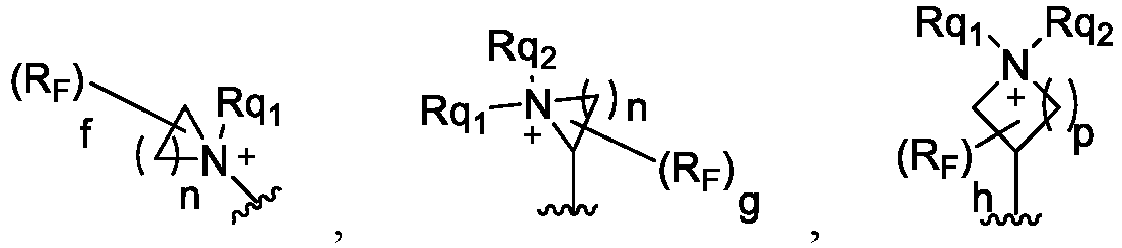
 Rq1 and Rq2 are independently H or C1-6 lower alkyl optionally substituted with one or more substituents selected from the group consisting of deuterium, alkyl, cycloalkyl, alkoxy, hydroxyalkyl, alkenyl, alkynyl, aryl, heteroaryl, nitro, nitrile groups, hydroxy, halogen, SR', NR'(R"), COOR' and CONR'(R");R' and R" are independently selected from the group consisting of hydrogen, hydroxy, alkyl, alkoxy, alkenyl and -C(O)RJ;RJ is selected from the group consisting of hydrogen, deuterium, C1-10 lower alkyl, cyclohydrocarbyl and cyclohydrocarbylene;f is an integer from 0 to 16;g is an integer from 0 to 16;h is an integer from 0 to 9;i is an integer from 0 to 4;n is an integer from 1 to 7; andp is an integer from 1 to 3;
 - The compound of formula I or the pharmaceutically acceptable salt or isomer thereof according to any one of claims 1-3, wherein G is selected from the group consisting of


- The compound of formula I or the pharmaceutically acceptable salt or isomer thereof according to any one of claims 1-4, wherein G is selected from the group consisting of


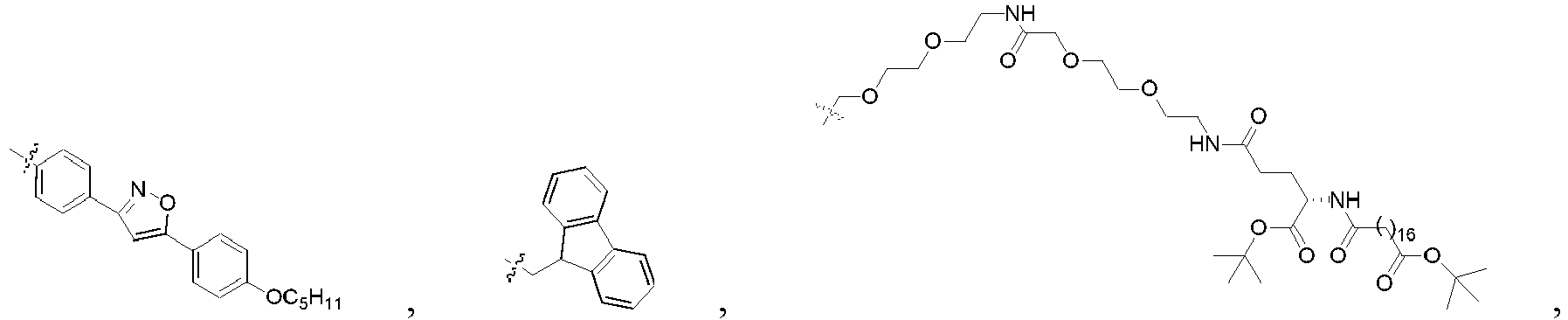


- The compound of formula I or the pharmaceutically acceptable salt or isomer thereof according to any one of claims 1-5, wherein G is selected from the group consisting of:


- The compound of formula I or the pharmaceutically acceptable salt or isomer thereof according to any one of claims 1-6, wherein G is selected from the group consisting of:


- The compound of formula I or the pharmaceutically acceptable salt or isomer thereof according to any one of claims 1-7, wherein G is selected from the group consisting of:


- The compound of formula I or the pharmaceutically acceptable salt or isomer thereof according to any one of claims 1-8, wherein R1 is selected from the group consisting of


- The compound of formula I or the pharmaceutically acceptable salt or isomer thereof according to any one of claims 1-9 wherein R1 is selected from the group consisting of:


- The compound of formula I or the pharmaceutically acceptable salt or isomer thereof according to any one of claims 1-10, wherein R1 is selected from the group consisting of:

- The compound of formula I or the pharmaceutically acceptable salt or isomer thereof according to any one of claims 1-11, wherein R1 is selected from the group consisting of:

- The compound of formula I or the pharmaceutically acceptable salt or isomer thereof according to any one of claims 1-12, wherein R1 is selected from the group consisting of:

- The compound of formula I or the pharmaceutically acceptable salt or isomer thereof according to any one of claims 1-13, wherein R1 is selected from the group consisting of:

- The compound of formula I or the pharmaceutically acceptable salt or isomer thereof according to claim 1, wherein the compound of formula I is:


 X is independently selected from the group consisting of O, C( RB1)(RB2), NRp4- and S; Rp4 is hydrogen or C1-3 lower alkyl;RT is C1-5 linear or branched alkyl, wherein the alkyl is optionally substituted with one or more substituents selected from the group consisting of deuterium, hydroxy, amino, alkoxy, amino, NR'(R"), halogen, cyclohydrocarbyl and cyclohydrocarbylene
 RB1 and RB2 are each independently selected from the group consisting of H, -C(O)RJ and C1-10 lower alkyl;RJ is selected from the group consisting of hydrogen, C1-10 lower alkyl, cyclohydrocarbyl and cyclohydrocarbylene;m is independently an integer from 0 to 4; andn is an integer from 1 to 7.
 - The compound of formula I or the pharmaceutically acceptable salt or isomer thereof according to claim 1, wherein the compound of formula I is:

- The compound of formula I or the pharmaceutically acceptable salt or isomer thereof according to any one of claims 1-16, wherein the compound of formula I is:


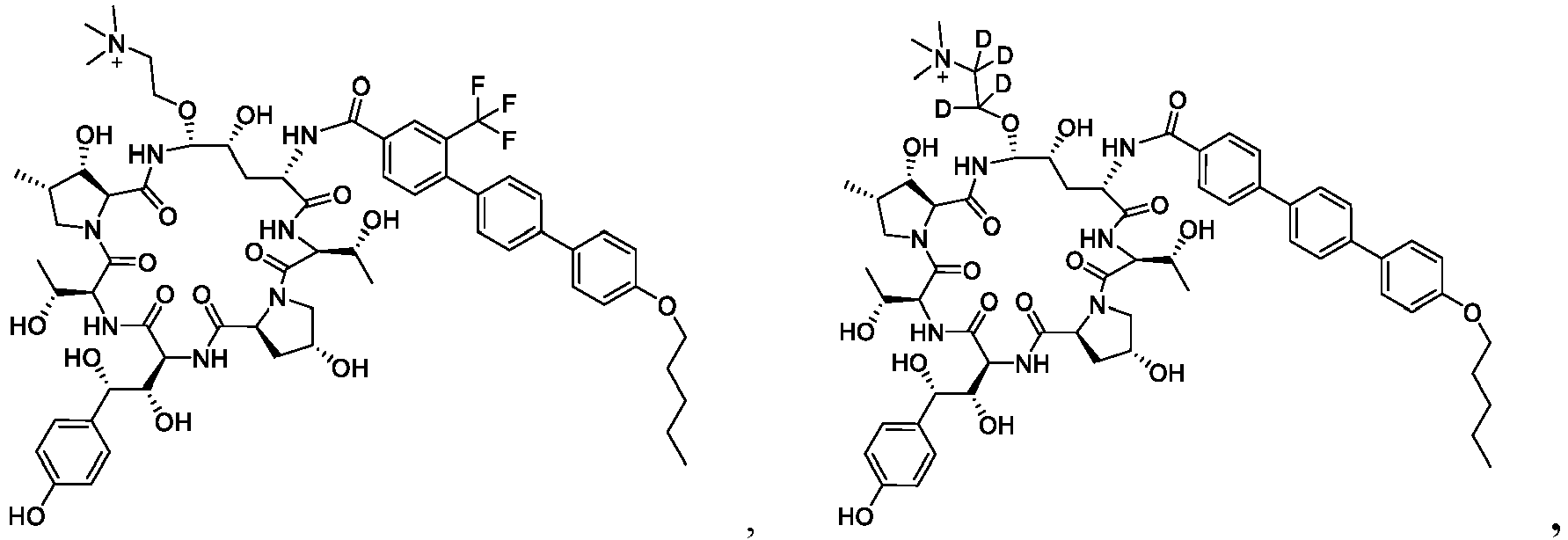

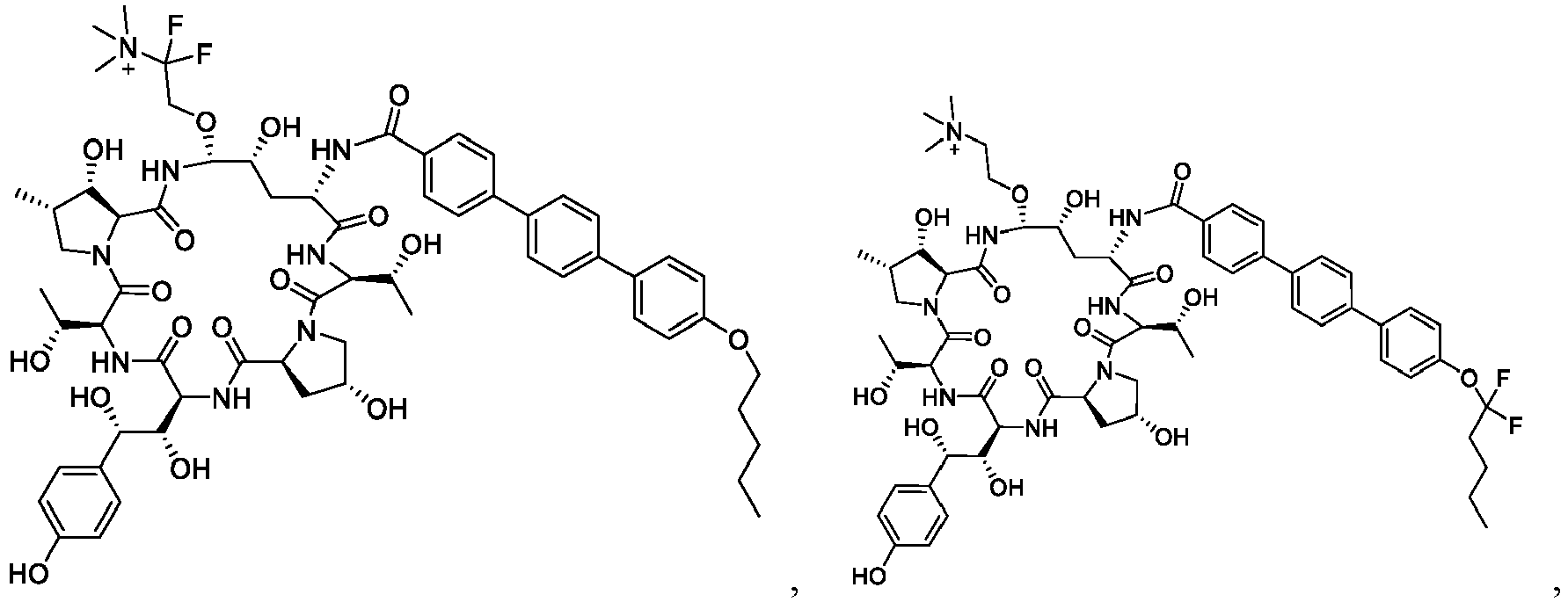


- The compound according to any one of claims 1-17, wherein the pharmaceutically acceptable salt thereof is selected from the group consisting of an acetate salt, a trifluoroacetate salt and a formate salt.
- A pharmaceutical composition comprising the compound or the pharmaceutically acceptable salt or isomer thereof according to any one of claims 1-17, and a pharmaceutically acceptable excipient.
- Use of the compound or the pharmaceutically acceptable salt or isomer thereof according to any one of claims 1-17 in preparing a medicament for treating and/or preventing fungal infections.
- Use of the compound or the pharmaceutically acceptable salt or isomer thereof according to any one of claims 1-17 in preparing a medicament for preventing, stabilizing or inhibiting the growth of fungi or killing fungi.
Applications Claiming Priority (7)
| Application Number | Priority Date | Filing Date | Title |
|---|---|---|---|
| CN201911241526 | 2019-12-06 | ||
| CN201911249226 | 2019-12-09 | ||
| CN202010165349 | 2020-03-11 | ||
| CN202010799506 | 2020-08-11 | ||
| CN202011164541 | 2020-10-27 | ||
| CN202011371550 | 2020-11-30 | ||
| PCT/CN2020/133815 WO2021110125A1 (en) | 2019-12-06 | 2020-12-04 | Echinocandin analogues and preparation method therefor |
Publications (2)
| Publication Number | Publication Date |
|---|---|
| EP4063381A1 true EP4063381A1 (en) | 2022-09-28 |
| EP4063381A4 EP4063381A4 (en) | 2023-04-26 |
Family
ID=76222453
Family Applications (1)
| Application Number | Title | Priority Date | Filing Date |
|---|---|---|---|
| EP20897067.3A Pending EP4063381A4 (en) | 2019-12-06 | 2020-12-04 | ECHINOCANDIN ANALOGS AND METHOD FOR PREPARING THEM |
Country Status (11)
| Country | Link |
|---|---|
| US (2) | US12466856B2 (en) |
| EP (1) | EP4063381A4 (en) |
| JP (2) | JP7794736B2 (en) |
| KR (1) | KR20220110513A (en) |
| CN (3) | CN120484067A (en) |
| AU (1) | AU2020397311A1 (en) |
| BR (1) | BR112022010441A2 (en) |
| CA (1) | CA3161287A1 (en) |
| MX (1) | MX2022006424A (en) |
| TW (1) | TWI891685B (en) |
| WO (1) | WO2021110125A1 (en) |
Cited By (1)
| Publication number | Priority date | Publication date | Assignee | Title |
|---|---|---|---|---|
| EP4609874A4 (en) * | 2022-10-25 | 2026-02-18 | Jiangsu Hengrui Pharmaceuticals Co Ltd | Pharmaceutical composition with echinocandin analogue and manufacturing process for pharmaceutical composition |
Families Citing this family (3)
| Publication number | Priority date | Publication date | Assignee | Title |
|---|---|---|---|---|
| US20240262866A1 (en) * | 2021-06-03 | 2024-08-08 | Shanghai Senhui Medicine Co., Ltd. | Method for preparing anidulafungin derivative |
| CN116903706B (en) * | 2023-06-13 | 2024-05-17 | 深圳市祥根生物有限公司 | An echinocandin drug and its preparation method and use |
| WO2025152953A1 (en) * | 2024-01-15 | 2025-07-24 | 深圳市祥根生物有限公司 | Use of echinocandin compound against tumor |
Family Cites Families (9)
| Publication number | Priority date | Publication date | Assignee | Title |
|---|---|---|---|---|
| DE2704030A1 (en) * | 1976-02-12 | 1977-08-18 | Sandoz Ag | NEW ORGANIC COMPOUNDS, THEIR PRODUCTION AND USE |
| US5914313A (en) * | 1991-10-17 | 1999-06-22 | Merck & Co., Inc. | 1- 4-hydroxy-5-aminoethyloxy-N2 -(10,12-dimethyl-1-oxotetradecyl)ornithine!-5-(3-hydroxyglutamine)-6-(3-hydroxyproline)echinocandin B, other aminoalkyl derivatives and salts thereof |
| US5652213A (en) | 1995-05-26 | 1997-07-29 | Eli Lilly And Company | Cyclic peptide antifungal agents |
| EP2470190A4 (en) * | 2009-08-27 | 2013-07-17 | Seachaid Pharmaceuticals Inc | Echinocandin derivatives |
| ES2645074T3 (en) | 2011-03-03 | 2017-12-04 | Cidara Therapeutics, Inc. | Antifungal agents and their uses |
| WO2016201283A1 (en) | 2015-06-12 | 2016-12-15 | Cidara Therapeutics, Inc. | Antifungal agents |
| WO2017049102A1 (en) | 2015-09-16 | 2017-03-23 | Cidara Therapeutics, Inc. | Methods for treating fungal infections |
| CN108883152A (en) * | 2016-01-08 | 2018-11-23 | 奇达拉治疗公司 | Methods of preventing and treating Pneumocystis infection |
| US20210002346A1 (en) | 2016-11-29 | 2021-01-07 | Cidara Therapeutics, Inc | Methods for preventing fungal infections |
-
2020
- 2020-12-04 US US17/756,721 patent/US12466856B2/en active Active
- 2020-12-04 AU AU2020397311A patent/AU2020397311A1/en active Pending
- 2020-12-04 MX MX2022006424A patent/MX2022006424A/en unknown
- 2020-12-04 WO PCT/CN2020/133815 patent/WO2021110125A1/en not_active Ceased
- 2020-12-04 KR KR1020227021867A patent/KR20220110513A/en active Pending
- 2020-12-04 CN CN202510466024.4A patent/CN120484067A/en active Pending
- 2020-12-04 TW TW109142863A patent/TWI891685B/en active
- 2020-12-04 CA CA3161287A patent/CA3161287A1/en active Pending
- 2020-12-04 BR BR112022010441A patent/BR112022010441A2/en unknown
- 2020-12-04 CN CN202510465954.8A patent/CN120484066A/en active Pending
- 2020-12-04 JP JP2022530717A patent/JP7794736B2/en active Active
- 2020-12-04 EP EP20897067.3A patent/EP4063381A4/en active Pending
- 2020-12-04 CN CN202080075108.0A patent/CN114616238B/en active Active
-
2025
- 2025-07-29 US US19/283,497 patent/US20250353879A1/en active Pending
- 2025-09-19 JP JP2025155845A patent/JP2026001045A/en active Pending
Cited By (1)
| Publication number | Priority date | Publication date | Assignee | Title |
|---|---|---|---|---|
| EP4609874A4 (en) * | 2022-10-25 | 2026-02-18 | Jiangsu Hengrui Pharmaceuticals Co Ltd | Pharmaceutical composition with echinocandin analogue and manufacturing process for pharmaceutical composition |
Also Published As
| Publication number | Publication date |
|---|---|
| US20230159591A1 (en) | 2023-05-25 |
| JP2023504389A (en) | 2023-02-03 |
| WO2021110125A1 (en) | 2021-06-10 |
| JP2026001045A (en) | 2026-01-06 |
| KR20220110513A (en) | 2022-08-08 |
| CN114616238B (en) | 2025-04-11 |
| TWI891685B (en) | 2025-08-01 |
| CA3161287A1 (en) | 2021-06-10 |
| TW202134257A (en) | 2021-09-16 |
| US12466856B2 (en) | 2025-11-11 |
| US20250353879A1 (en) | 2025-11-20 |
| JP7794736B2 (en) | 2026-01-06 |
| AU2020397311A1 (en) | 2022-07-14 |
| CN114616238A (en) | 2022-06-10 |
| BR112022010441A2 (en) | 2022-09-06 |
| EP4063381A4 (en) | 2023-04-26 |
| CN120484067A (en) | 2025-08-15 |
| MX2022006424A (en) | 2022-06-22 |
| CN120484066A (en) | 2025-08-15 |
Similar Documents
| Publication | Publication Date | Title |
|---|---|---|
| US20250353879A1 (en) | Echinocandin analoges and preparation method therefor | |
| CN101454010B (en) | Antifungal agents | |
| US9745335B2 (en) | N-substituted second generation derivatives of antifungal antibiotic amphotericin B and methods of their preparation and application | |
| ES2880029T3 (en) | Amphotericin B derivatives | |
| ES2535327T3 (en) | Rifamycin derivatives | |
| EP3450450B1 (en) | Vancomycin derivative, preparation method, pharmaceutical composition and use thereof | |
| US20250011365A1 (en) | Echinocandin-based drug, and preparation method therefor and use thereof | |
| RU2832679C1 (en) | Echinocandin analogues and method for production thereof | |
| US9447136B2 (en) | Semisynthetic derivatives of Nystatin A1 | |
| US8633154B2 (en) | Cyclodepsipeptides with antineoplastic activity and methods of using to inhibit cancer and microbial growth | |
| HK40075051B (en) | Echinocandin analogues and preparation method therefor | |
| HK40075051A (en) | Echinocandin analogues and preparation method therefor | |
| WO2023017450A1 (en) | Lipidated polymyxin analogues | |
| EP4349851A1 (en) | Method for preparing anidulafungin derivative | |
| Connor et al. | Antifungal agents. 4. Chemical modification of antibiotics from Polyangium cellulosum var fulvum. Ester and amide analogues of ambruticin | |
| WO2026056993A1 (en) | Quaternary ammonium salt derivative of amphotericin b and use thereof | |
| WO2026056996A1 (en) | Amphotericin b hydrazide derivative and use thereof |
Legal Events
| Date | Code | Title | Description |
|---|---|---|---|
| STAA | Information on the status of an ep patent application or granted ep patent |
Free format text: STATUS: THE INTERNATIONAL PUBLICATION HAS BEEN MADE |
|
| PUAI | Public reference made under article 153(3) epc to a published international application that has entered the european phase |
Free format text: ORIGINAL CODE: 0009012 |
|
| STAA | Information on the status of an ep patent application or granted ep patent |
Free format text: STATUS: REQUEST FOR EXAMINATION WAS MADE |
|
| 17P | Request for examination filed |
Effective date: 20220621 |
|
| AK | Designated contracting states |
Kind code of ref document: A1 Designated state(s): AL AT BE BG CH CY CZ DE DK EE ES FI FR GB GR HR HU IE IS IT LI LT LU LV MC MK MT NL NO PL PT RO RS SE SI SK SM TR |
|
| RAP3 | Party data changed (applicant data changed or rights of an application transferred) |
Owner name: JIANGSU HENGRUI PHARMACEUTICALS CO., LTD. Owner name: SHANGHAI SHENGDI PHARMACEUTICAL CO., LTD Owner name: SHANGHAI SENHUI MEDICINE CO., LTD. |
|
| DAV | Request for validation of the european patent (deleted) | ||
| DAX | Request for extension of the european patent (deleted) | ||
| A4 | Supplementary search report drawn up and despatched |
Effective date: 20230324 |
|
| RIC1 | Information provided on ipc code assigned before grant |
Ipc: A61P 31/10 20060101ALI20230320BHEP Ipc: A61K 38/12 20060101ALI20230320BHEP Ipc: C07K 7/56 20060101AFI20230320BHEP |