EP4063363A1 - Pyrazolo-heteroaryl derivative, preparation method therefor, and medical use thereof - Google Patents
Pyrazolo-heteroaryl derivative, preparation method therefor, and medical use thereof Download PDFInfo
- Publication number
- EP4063363A1 EP4063363A1 EP20890856.6A EP20890856A EP4063363A1 EP 4063363 A1 EP4063363 A1 EP 4063363A1 EP 20890856 A EP20890856 A EP 20890856A EP 4063363 A1 EP4063363 A1 EP 4063363A1
- Authority
- EP
- European Patent Office
- Prior art keywords
- compound
- formula
- cycloalkyl
- heterocyclyl
- alkyl
- Prior art date
- Legal status (The legal status is an assumption and is not a legal conclusion. Google has not performed a legal analysis and makes no representation as to the accuracy of the status listed.)
- Pending
Links
Classifications
-
- C—CHEMISTRY; METALLURGY
- C07—ORGANIC CHEMISTRY
- C07D—HETEROCYCLIC COMPOUNDS
- C07D413/00—Heterocyclic compounds containing two or more hetero rings, at least one ring having nitrogen and oxygen atoms as the only ring hetero atoms
- C07D413/02—Heterocyclic compounds containing two or more hetero rings, at least one ring having nitrogen and oxygen atoms as the only ring hetero atoms containing two hetero rings
- C07D413/12—Heterocyclic compounds containing two or more hetero rings, at least one ring having nitrogen and oxygen atoms as the only ring hetero atoms containing two hetero rings linked by a chain containing hetero atoms as chain links
-
- C—CHEMISTRY; METALLURGY
- C07—ORGANIC CHEMISTRY
- C07D—HETEROCYCLIC COMPOUNDS
- C07D471/00—Heterocyclic compounds containing nitrogen atoms as the only ring hetero atoms in the condensed system, at least one ring being a six-membered ring with one nitrogen atom, not provided for by groups C07D451/00 - C07D463/00
- C07D471/02—Heterocyclic compounds containing nitrogen atoms as the only ring hetero atoms in the condensed system, at least one ring being a six-membered ring with one nitrogen atom, not provided for by groups C07D451/00 - C07D463/00 in which the condensed system contains two hetero rings
- C07D471/04—Ortho-condensed systems
-
- A—HUMAN NECESSITIES
- A61—MEDICAL OR VETERINARY SCIENCE; HYGIENE
- A61K—PREPARATIONS FOR MEDICAL, DENTAL OR TOILETRY PURPOSES
- A61K31/00—Medicinal preparations containing organic active ingredients
- A61K31/33—Heterocyclic compounds
- A61K31/395—Heterocyclic compounds having nitrogen as a ring hetero atom, e.g. guanethidine or rifamycins
- A61K31/535—Heterocyclic compounds having nitrogen as a ring hetero atom, e.g. guanethidine or rifamycins having six-membered rings with at least one nitrogen and one oxygen as the ring hetero atoms, e.g. 1,2-oxazines
- A61K31/5375—1,4-Oxazines, e.g. morpholine
- A61K31/5377—1,4-Oxazines, e.g. morpholine not condensed and containing further heterocyclic rings, e.g. timolol
-
- A—HUMAN NECESSITIES
- A61—MEDICAL OR VETERINARY SCIENCE; HYGIENE
- A61P—SPECIFIC THERAPEUTIC ACTIVITY OF CHEMICAL COMPOUNDS OR MEDICINAL PREPARATIONS
- A61P35/00—Antineoplastic agents
-
- A—HUMAN NECESSITIES
- A61—MEDICAL OR VETERINARY SCIENCE; HYGIENE
- A61P—SPECIFIC THERAPEUTIC ACTIVITY OF CHEMICAL COMPOUNDS OR MEDICINAL PREPARATIONS
- A61P35/00—Antineoplastic agents
- A61P35/02—Antineoplastic agents specific for leukemia
-
- C—CHEMISTRY; METALLURGY
- C07—ORGANIC CHEMISTRY
- C07D—HETEROCYCLIC COMPOUNDS
- C07D413/00—Heterocyclic compounds containing two or more hetero rings, at least one ring having nitrogen and oxygen atoms as the only ring hetero atoms
- C07D413/02—Heterocyclic compounds containing two or more hetero rings, at least one ring having nitrogen and oxygen atoms as the only ring hetero atoms containing two hetero rings
- C07D413/06—Heterocyclic compounds containing two or more hetero rings, at least one ring having nitrogen and oxygen atoms as the only ring hetero atoms containing two hetero rings linked by a carbon chain containing only aliphatic carbon atoms
-
- C—CHEMISTRY; METALLURGY
- C07—ORGANIC CHEMISTRY
- C07D—HETEROCYCLIC COMPOUNDS
- C07D487/00—Heterocyclic compounds containing nitrogen atoms as the only ring hetero atoms in the condensed system, not provided for by groups C07D451/00 - C07D477/00
- C07D487/02—Heterocyclic compounds containing nitrogen atoms as the only ring hetero atoms in the condensed system, not provided for by groups C07D451/00 - C07D477/00 in which the condensed system contains two hetero rings
- C07D487/04—Ortho-condensed systems
-
- Y—GENERAL TAGGING OF NEW TECHNOLOGICAL DEVELOPMENTS; GENERAL TAGGING OF CROSS-SECTIONAL TECHNOLOGIES SPANNING OVER SEVERAL SECTIONS OF THE IPC; TECHNICAL SUBJECTS COVERED BY FORMER USPC CROSS-REFERENCE ART COLLECTIONS [XRACs] AND DIGESTS
- Y02—TECHNOLOGIES OR APPLICATIONS FOR MITIGATION OR ADAPTATION AGAINST CLIMATE CHANGE
- Y02P—CLIMATE CHANGE MITIGATION TECHNOLOGIES IN THE PRODUCTION OR PROCESSING OF GOODS
- Y02P20/00—Technologies relating to chemical industry
- Y02P20/50—Improvements relating to the production of bulk chemicals
- Y02P20/55—Design of synthesis routes, e.g. reducing the use of auxiliary or protecting groups
Definitions
- the present disclosure relates to the field of pharmaceutics, and particularly to a pyrazolo-heteroaryl derivative of formula (I), a method for preparing the derivative, a pharmaceutical composition comprising the derivative, and use of the derivative as a therapeutic agent, specifically use as an ATR kinase inhibitor and use in preparing a medicament for treating and/or preventing hyperproliferative diseases.
- a pyrazolo-heteroaryl derivative of formula (I) a method for preparing the derivative, a pharmaceutical composition comprising the derivative, and use of the derivative as a therapeutic agent, specifically use as an ATR kinase inhibitor and use in preparing a medicament for treating and/or preventing hyperproliferative diseases.
- Homologous recombination repair is the prominent repair mode of DNA double-strand break, which takes the homologous sequence of undamaged sister chromatid as the template for repair to replicate the DNA sequence at the damaged part and precisely repair the DNA. This repair occurs primarily in the G2 and S phases.
- ATR a member of the PIKK family, is a key enzyme in the homologous recombination repair pathway.
- ATR/ATRIP complex binds to damaged DNA covered by replication protein A (RPA)
- RPA replication protein A
- ATR is activated and regulates checkpoints of the cell cycle by phosphorylating downstream proteins such as Chk1 and SMARCAL, causing cell cycle arrest. It also ensures the stability of damaged DNA and elevates dNTP concentration to promote DNA damage repair.
- ATR DNA damage repair occurring during the S phase of the cell cycle is mainly accomplished by the ATR pathway, suggesting that ATR is very important to ensure cell proliferation.
- higher levels of ATR is usually associated with lower survival rates. As such, ATR is an important target for tumor therapy.
- Disclosed patent applications of ATR inhibitors include Patent Nos. WO2010071837 , WO2011154737 , WO2016020320 , WO2016130581 , WO2017121684 , WO2017118734 , WO2018049400 , WO2019050889 , WO2014140644 , etc.
- the present disclosure is intended to provide a compound of formula (I) or a tautomer, mesomer, racemate, enantiomer, diastereomer thereof or a mixture thereof, or a pharmaceutically acceptable salt thereof, wherein:
- ring A is selected from the group consisting of pyrazolyl, pyrrolyl and imidazolyl.
- the compound of formula (I) or the tautomer, mesomer, racemate, enantiomer or diastereomer thereof or the mixture thereof, or the pharmaceutically acceptable salt thereof is a compound of formula (II) or a tautomer, mesomer, racemate, enantiomer or diastereomer thereof or a mixture thereof, or a pharmaceutically acceptable salt thereof, wherein: G 1 , G 2 , R 1 , R 2 , R 3 and n are as defined in formula (I).
- the compound of formula (I) or the tautomer, mesomer, racemate, enantiomer or diastereomer thereof or the mixture thereof, or the pharmaceutically acceptable salt thereof is a compound of formula (III) or (IV) or a tautomer, mesomer, racemate, enantiomer or diastereomer thereof or a mixture thereof, or a pharmaceutically acceptable salt thereof, wherein: R 1 , R 2 , R 3 and n are as defined in formula (I).
- R 1 is selected from the group consisting of alkyl, cycloalkyl, heterocyclyl, aryl and heteroaryl, wherein the alkyl, cycloalkyl, heterocyclyl, aryl and heteroaryl are each independently optionally substituted with one or more substituents selected from the group consisting of halogen, alkyl, alkoxy, haloalkyl, hydroxy, hydroxyalkyl, cyano, amino, nitro, cycloalkyl, heterocyclyl, aryl and heteroaryl.
- R 1 is selected from the group consisting of alkyl, cycloalkyl or heterocyclyl, wherein the alkyl is optionally substituted with one or more substituents selected from the group consisting of halogen, alkyl, alkoxy, haloalkyl, hydroxyalkyl, cyano, amino, nitro, cycloalkyl, heterocyclyl, aryl and heteroaryl, and the cycloalkyl and heterocyclyl are each independently optionally substituted with one or more substituents selected from the group consisting of halogen, alkyl, alkoxy, haloalkyl, hydroxy, hydroxyalkyl, cyano, amino, nitro, cycloalkyl, heterocyclyl, aryl and heteroaryl; preferably,
- R 2 is hydrogen or alkyl, preferably alkyl and more preferably C 1-6 alkyl.
- R 2 is alkyl
- R 3 is hydrogen
- Typical compounds disclosed herein include, but are not limited to: Example Structure and name of compound 1 ( R )-2-methyl-2-(1-methyl-5-(3-methylmorpholinyl)-3-(1 H -pyrazol-3-yl)-1 H -pyrazolo[4,3- b ]pyridin-7-yl)propanenitrile 1 2 ( R )-1-(1-methyl-5-(3-methylmorpholinyl)-3-(1 H -pyrazol-3-yl)-1 H -pyrazolo[ 4,3- b ]pyridin-7-yl)cyclopropanenitrile 2 3 ( R )-3-methyl-4-(1-methyl-7-(1-methy1-1 H -pyrazol-5-yl)-3-(1 H -pyrazol-3-yl )-1 H -pyrazolo[4,3- b ]pyridin-5-yl)morpholine 3 4 ( R )-2-(1-ethyl-5-
- Another aspect of the present disclosure relates to a compound of formula (IA) or a tautomer, mesomer, racemate, enantiomer or diastereomer thereof or a mixture thereof, or a pharmaceutically acceptable salt thereof, wherein:
- Another aspect of the present disclosure relates to a compound of formula (IIIC) or a tautomer, mesomer, racemate, enantiomer or diastereomer thereof or a mixture thereof, or a pharmaceutically acceptable salt thereof, wherein: X, R 1 and R 2 are as defined in formula (IA).
- Another aspect of the present disclosure relates to a compound of formula (IIA) or a tautomer, mesomer, racemate, enantiomer or diastereomer thereof or a mixture thereof, or a pharmaceutically acceptable salt thereof, wherein:
- Another aspect of the present disclosure relates to a compound of formula (IIGA) or a tautomer, mesomer, racemate, enantiomer or diastereomer thereof or a mixture thereof, or a pharmaceutically acceptable salt thereof, wherein: G 1 , G 2 , R 1 , R 2 , R 3 , R a and n are as defined in formula (IIA).
- Another aspect of the present disclosure relates to a compound of formula (IIIA) or a tautomer, mesomer, racemate, enantiomer or diastereomer thereof or a mixture thereof, or a pharmaceutically acceptable salt thereof, wherein: R a , R 1 , R 2 , R 3 and n are as defined in formula (IIA).
- Another aspect of the present disclosure relates to a compound of formula (IIIGA) or a tautomer, mesomer, racemate, enantiomer or diastereomer thereof or a mixture thereof, or a pharmaceutically acceptable salt thereof, wherein: R a , R 1 , R 2 , R 3 and n are as defined in formula (IIIA).
- Typical intermediate compounds described herein include, but are not limited to: Example Structure and name of compound 1i 2-methyl-2-(1-methyl-5-(( R )-3-methylmorpholinyl)-3-(1-(tetrahydro-2 H- pyr an-2-yl)-1 H -pyrazol-3-yl)-1 H -pyrazolo[4,3- b ]pyridin-7-yl)propanenitrile 1i 2c 1-(1-methyl-5-(( R )-3-methylmorpholinyl)-3-(1-(tetrahydro-2 H -pyran-2-yl)-1 H -pyrazol-3-yl)-1 H -pyrazolo[4,3- b ]pyridin-7-yl)cyclopropanenitrile 2c 3c (3 R )-3-methyl-4-(1-methy1-7-(1-methyl-1 H -pyrazol-5-yl)-3-(1-(tetrahydro-2 H -pyran-2
- Another aspect of the present disclosure relates to a method for preparing a compound of formula (I) or a tautomer, mesomer, racemate, enantiomer or diastereomer thereof or a mixture thereof, or a pharmaceutically acceptable salt thereof, comprising: subjecting a compound of formula (IA) and a compound of formula (IB) to a coupling reaction to obtain the compound of formula (I), wherein:
- Another aspect of the present disclosure relates to a method for preparing a compound of formula (II) or a tautomer, mesomer, racemate, enantiomer or diastereomer thereof or a mixture thereof, or a pharmaceutically acceptable salt thereof, comprising: subjecting a compound of formula (IA) and a compound of formula (IID) to a coupling reaction to obtain the compound of formula (II), wherein:
- Another aspect of the present disclosure relates to a method for preparing a compound of formula (III) or a tautomer, mesomer, racemate, enantiomer or diastereomer thereof or a mixture thereof, or a pharmaceutically acceptable salt thereof, comprising: subjecting a compound of formula (IIIC) and a compound of formula (IID) to a coupling reaction to obtain the compound of formula (III), wherein:
- Another aspect of the present disclosure relates to a method for preparing a compound of formula (IV) or a tautomer, mesomer, racemate, enantiomer or diastereomer thereof or a mixture thereof, or a pharmaceutically acceptable salt thereof, comprising: subjecting a compound of formula (IVC) and a compound of formula (IID) to a coupling reaction to obtain the compound of formula (IV), wherein:
- Another aspect of the present disclosure relates to a method for preparing a compound of formula (IIA) or a tautomer, mesomer, racemate, enantiomer or diastereomer thereof or a mixture thereof, or a pharmaceutically acceptable salt thereof, comprising: subjecting a compound of formula (IA) and a compound of formula (IIB) to a coupling reaction to obtain the compound of formula (IIA), wherein:
- Another aspect of the present disclosure relates to a method for preparing a compound of formula (II) or a tautomer, mesomer, racemate, enantiomer or diastereomer thereof or a mixture thereof, or a pharmaceutically acceptable salt thereof, comprising: removing an amino protecting group from a compound of formula (IIA) to obtain the compound of formula (II), wherein:
- Another aspect of the present disclosure relates to a method for preparing a compound of formula (IIGA) or a tautomer, mesomer, racemate, enantiomer or diastereomer thereof or a mixture thereof, or a pharmaceutically acceptable salt thereof, comprising: subjecting a compound of formula (IA) and a compound of formula (IIGB) to a coupling reaction to obtain the compound of formula (IIGA), wherein:
- Another aspect of the present disclosure relates to a method for preparing a compound of formula (II) or a tautomer, mesomer, racemate, enantiomer or diastereomer thereof or a mixture thereof, or a pharmaceutically acceptable salt thereof, comprising: removing an amino protecting group from a compound of formula (IIGA) to obtain the compound of formula (II), wherein:
- Another aspect of the present disclosure relates to a method for preparing a compound of formula (IIIA) or a tautomer, mesomer, racemate, enantiomer or diastereomer thereof or a mixture thereof, or a pharmaceutically acceptable salt thereof, comprising: subjecting a compound of formula (IIIC) and a compound of formula (IIB) to a coupling reaction to obtain the compound of formula (IIIA), wherein:
- Another aspect of the present disclosure relates to a method for preparing a compound of formula (III) or a tautomer, mesomer, racemate, enantiomer or diastereomer thereof or a mixture thereof, or a pharmaceutically acceptable salt thereof, comprising: removing an amino protecting group from a compound of formula (IIIA) to obtain the compound of formula (III), wherein:
- Another aspect of the present disclosure relates to a method for preparing a compound of formula (IIIGA) or a tautomer, mesomer, racemate, enantiomer or diastereomer thereof or a mixture thereof, or a pharmaceutically acceptable salt thereof, comprising: subjecting a compound of formula (IIIC) and a compound of formula (IIGB) to a coupling reaction to obtain the compound of formula (IIIGA), wherein:
- Another aspect of the present disclosure relates to a method for preparing a compound of formula (III) or a tautomer, mesomer, racemate, enantiomer or diastereomer thereof or a mixture thereof, or a pharmaceutically acceptable salt thereof, comprising: removing an amino protecting group from a compound of formula (IIIGA) to obtain the compound of formula (III), wherein:
- Another aspect of the present disclosure relates to a method for preparing a compound of formula (IV) or a tautomer, mesomer, racemate, enantiomer or diastereomer thereof or a mixture thereof, or a pharmaceutically acceptable salt thereof, comprising: removing an amino protecting group from a compound of formula (IVA) to obtain the compound of formula (IV), wherein:
- Another aspect of the present disclosure relates to a pharmaceutical composition
- a pharmaceutical composition comprising the compound of formula (I) or the tautomer, mesomer, racemate, enantiomer or diastereomer thereof or the mixture thereof, or the pharmaceutically acceptable salt thereof disclosed herein, and one or more pharmaceutically acceptable carrier, diluent or excipient.
- the present disclosure further relates to use of the compound of formula (I) or the tautomer, mesomer, racemate, enantiomer or diastereomer thereof or the mixture thereof, or the pharmaceutically acceptable salt thereof disclosed herein, or the pharmaceutical composition comprising the same in preparing a medicament for inhibiting ATR kinase.
- the present disclosure further relates to use of the compound of formula (I) or the tautomer, mesomer, racemate, enantiomer or diastereomer thereof or the mixture thereof, or the pharmaceutically acceptable salt thereof disclosed herein, or the pharmaceutical composition comprising the same in preparing a medicament for treating and/or preventing a hyperproliferative disease.
- the present disclosure further relates to use of the compound of formula (I) or the tautomer, mesomer, racemate, enantiomer or diastereomer thereof or the mixture thereof, or the pharmaceutically acceptable salt thereof disclosed herein, or the pharmaceutical composition comprising the same in preparing a medicament for treating and/or preventing a tumor.
- the present disclosure further relates to use of the compound of formula (I) or the tautomer, mesomer, racemate, enantiomer or diastereomer thereof or the mixture thereof, or the pharmaceutically acceptable salt thereof disclosed herein, or the pharmaceutical composition comprising the same in preparing a medicament for treating a tumor.
- the present disclosure further relates to a method for inhibiting ATR kinase, comprising: administering to a patient in need an effective amount of the compound of formula (I) or the tautomer, mesomer, racemate, enantiomer or diastereomer or the mixture thereof, or the pharmaceutically acceptable salt thereof, or the pharmaceutical composition comprising the same.
- the present disclosure further relates to a method for treating and/or preventing a hyperproliferative disease, comprising: administering to a patient in need an effective amount of the compound of formula (I) or the tautomer, mesomer, racemate, enantiomer or diastereomer or the mixture thereof, or the pharmaceutically acceptable salt thereof, or the pharmaceutical composition comprising the same.
- the present disclosure further relates to a method for treating and/or preventing a tumor, comprising: administering to a patient in need an effective amount of the compound of formula (I) or the tautomer, mesomer, racemate, enantiomer or diastereomer or the mixture thereof, or the pharmaceutically acceptable salt thereof, or the pharmaceutical composition comprising the same.
- the present disclosure further relates to the compound of formula (I) or the tautomer, mesomer, racemate, enantiomer or diastereomer thereof or the mixture thereof, or the pharmaceutically acceptable salt thereof disclosed herein, or the pharmaceutical composition comprising the same for use as a medicament.
- the medicament can be used for treating and/or preventing a hyperproliferative disease, in particular a tumor.
- the present disclosure further relates to the compound of formula (I) or the tautomer, mesomer, racemate, enantiomer or diastereomer thereof or the mixture thereof, or the pharmaceutically acceptable salt thereof disclosed herein, or the pharmaceutical composition comprising the same for use as an ATR kinase inhibitor.
- the present disclosure further relates to the compound of formula (I) or the tautomer, mesomer, racemate, enantiomer or diastereomer thereof or the mixture thereof, or the pharmaceutically acceptable salt thereof disclosed herein, or the pharmaceutical composition comprising the same for use in treating and/or preventing a hyperproliferative disease.
- the present disclosure further relates to the compound of formula (I) or the tautomer, mesomer, racemate, enantiomer or diastereomer thereof or the mixture thereof, or the pharmaceutically acceptable salt thereof disclosed herein, or the pharmaceutical composition comprising the same for use in treating a tumor.
- the tumor described herein is selected from the group consisting of melanoma, brain tumor, esophageal cancer, gastric cancer, liver cancer, pancreatic cancer, colorectal cancer, lung cancer, kidney cancer, breast cancer, cervical cancer, ovarian cancer, prostate cancer, skin cancer, neuroblastoma, neuroglioma, sarcoma, bone cancer, uterine cancer, endometrial cancer, head and neck tumor, multiple myeloma, B-cell lymphoma, polycythemia vera, leukemia, thyroid tumor, bladder cancer and gallbladder cancer.
- the active compound may be formulated into a form suitable for administration by any suitable route, preferably in a form of a unit dose, or in a form of a single dose that can be self-administered by a patient.
- the unit dose of the compound or composition disclosed herein may be in a tablet, a capsule, a cachet, a vial, a powder, a granule, a lozenge, a suppository, a powder for reconstitution or a liquid formulation.
- the dosage of the compound or composition used in the treatment method disclosed herein will generally vary with the severity of the disease, the weight of the patient, and the relative efficacy of the compound.
- a suitable unit dose may be 0.1 to 1000 mg.
- compositions disclosed herein may comprise, in addition to the active compound, one or more excipients selected from the group consisting of: a filler (diluent), binder, wetting agent, disintegrant, excipient, and the like.
- excipients selected from the group consisting of: a filler (diluent), binder, wetting agent, disintegrant, excipient, and the like.
- the compositions may comprise 0.1 to 99 wt.% of active compound.
- compositions comprising the active ingredient may be in a form suitable for oral administration, for example, a tablet, a dragee, a lozenge, an aqueous or oil suspension, a dispersible powder or granule, an emulsion, a hard or soft capsule, or a syrup or elixir.
- Oral compositions can be prepared according to any method known in the art for preparing pharmaceutical compositions and may comprise one or more ingredients selected from the group consisting of a sweetener, a corrigent, a colorant and a preservative, so as to provide a pleasant-to-eye and palatable pharmaceutical formulation.
- a tablet comprises an active ingredient and a non-toxic pharmaceutically acceptable excipient which is used for mixing and is suitable for the preparation of the tablet.
- a non-toxic pharmaceutically acceptable excipient may be an inert excipient, a granulating agent, a disintegrating agent, a binder and a lubricant.
- Such a tablet may be uncoated or may be coated by known techniques for masking the taste of the drug or delaying the disintegration and absorption of the drug in the gastrointestinal tract and thus enabling sustained release of the drug over a longer period.
- An oral formulation in a soft gelatin capsule where the active ingredient is mixed with an inert solid diluent or with a water-soluble carrier or oil vehicle may also be provided.
- An aqueous suspension comprises an active substance and an excipient which is used for mixing and suitable for the preparation of the aqueous suspension.
- an excipient is a suspending agent, a dispersant or a wetting agent.
- the aqueous suspension may also comprise one or more preservatives, one or more colorants, one or more corrigents and one or more sweeteners.
- An oil suspension may be formulated by suspending the active ingredient in a vegetable oil, or in a mineral oil.
- the oil suspension may comprise a thickening agent.
- the sweeteners and corrigents described above may be added to provide a palatable formulation.
- Antioxidants can also be added to preserve the compositions.
- Dispersible powders and granules suitable for the preparation of an aqueous suspension can be allowed to provide an active ingredient, and a dispersant or a wetting agent, a suspending agent or one or more preservatives for mixing, by adding water.
- a dispersant or a wetting agent e.g., a sulfate
- a suspending agent e.g., a suspending agent
- preservatives for mixing by adding water.
- suitable dispersants or wetting agents and suspending agents exemplified by suitable dispersants or wetting agents and suspending agents.
- Other excipients, such as sweeteners, corrigents and colorants may also be added.
- Antioxidants such as ascorbic acid are added to preserve these compositions.
- the pharmaceutical composition disclosed herein may also be in the form of an oil-in-water emulsion.
- the oil phase may be a vegetable oil or a mineral oil, or a mixture thereof.
- Suitable emulsifiers may be naturally occurring phospholipids, and the emulsion may also comprise a sweetener, a corrigent, a preservative and an antioxidant.
- Such a formulation may also comprise a palliative, a preservative, a colorant and an antioxidant.
- the pharmaceutical composition disclosed herein may be in the form of a sterile injectable aqueous solution.
- Available and acceptable vehicles or solvents include water, Ringer's solution and isotonic sodium chloride solution.
- a sterile injectable formulation may be a sterile injectable oil-in-water microemulsion in which an active ingredient is dissolved in an oil phase.
- the injection or microemulsion can be locally injected into the bloodstream of a patient in large quantities.
- a continuous intravenous delivery device may be used.
- An example of such a device is a Deltec CADD-PLUS. TM. 5400 intravenous injection pump.
- the pharmaceutical composition disclosed herein may be in the form of a sterile injectable aqueous or oil suspension for intramuscular and subcutaneous administration.
- the suspension can be prepared according to the prior art using those suitable dispersants or wetting agents and suspending agents mentioned above.
- the sterile injectable formulation may also be a sterile injection or suspension prepared in a parenterally acceptable non-toxic diluent or solvent.
- a sterile fixed oil may be conventionally used as a solvent or a suspending medium. For this purpose, any blend fixed oil may be employed.
- fatty acids can also be used to prepare injections.
- the compound disclosed herein may be administered in the form of a suppository for rectal administration.
- a pharmaceutical composition can be prepared by mixing a drug with a suitable non-irritating excipient which is a solid at an ambient temperature but a liquid in the rectum and therefore will melt in the rectum to release the drug.
- the dosage of the drug administered depends on a variety of factors, including but not limited to, the activity of the particular compound employed, the age of the patient, the weight of the patient, the health condition of the patient, the behavior of the patient, the diet of the patient, the time of administration, the route of administration, the rate of excretion, the combination of drugs, and the like.
- the optimal treatment regimen such as the mode of administration, the daily dose of the compound of formula (I) or the type of pharmaceutically acceptable salts, can be verified according to conventional treatment regimens.
- alkyl refers to a saturated aliphatic hydrocarbon group which is a linear or branched group containing 1 to 20 carbon atoms, preferably an alkyl containing 1 to 12 (e.g., 1, 2, 3, 4, 5, 6, 7, 8, 9, 10, 11 and 12) carbon atoms, and more preferably an alkyl containing 1 to 6 carbon atoms.
- Non-limiting examples include methyl, ethyl, n -propyl, isopropyl, n -butyl, isobutyl, tert -butyl, sec -butyl, n -pentyl, 1,1-dimethylpropyl, 1,2-dimethylpropyl, 2,2-dimethylpropyl, 1-ethylpropyl, 2-methylbutyl, 3-methylbutyl, n -hexyl, 1-ethyl-2-methylpropyl, 1,1,2-trimethylpropyl, 1,1-dimethylbutyl, 1,2-dimethylbutyl, 2,2-dimethylbutyl, 1,3-dimethylbutyl, 2-ethylbutyl, 2-methylpentyl, 3-methylpentyl, 4-methylpentyl, 2,3-dimethylbutyl, n -heptyl, 2-methylhexyl, 3-methylhexyl, 4-methylhexyl,
- a lower alkyl having 1 to 6 carbon atoms More preferred is a lower alkyl having 1 to 6 carbon atoms, and non-limiting examples include methyl, ethyl, n -propyl, isopropyl, n -butyl, isobutyl, tert -butyl, sec -butyl, n -pentyl, 1,1-dimethylpropyl, 1,2-dimethylpropyl, 2,2-dimethylpropyl, 1-ethylpropyl, 2-methylbutyl, 3-methylbutyl, n -hexyl, 1-ethyl-2-methylpropyl, 1,1,2-trimethylpropyl, 1,1-dimethylbutyl, 1,2-dimethylbutyl, 2,2-dimethylbutyl, 1,3-dimethylbutyl, 2-ethylbutyl, 2-methylpentyl, 3-methylpentyl, 4-methylpentyl, 2,3-dimethylbut
- the alkyl may be substituted or unsubstituted.
- the substituent may be substituted at any available connection site with one or more substituents preferably independently optionally selected from the group consisting of H, D, halogen, alkyl, alkoxy, haloalkyl, hydroxy, hydroxyalkyl, cyano, amino, nitro, cycloalkyl, heterocyclyl, aryl and heteroaryl.
- alkylene refers to a saturated linear or branched aliphatic hydrocarbon group having 2 residues derived from the parent alkane by removal of two hydrogen atoms from the same carbon atom or two different carbon atoms, which is a linear or branched group containing 1 to 20 carbon atoms, preferably an alkylene group containing 1 to 12 (e.g., 1, 2, 3, 4, 5, 6, 7, 8, 9, 10, 11 and 12) carbon atoms, and more preferably an alkylene group containing 1 to 6 carbon atoms.
- Non-limiting examples of alkylene include, but are not limited to, methylene (-CH 2 -), 1,1-ethylene (-CH(CH 3 )-), 1,2-ethylene (-CH 2 CH 2 -), 1,1-propylene (-CH(CH 2 CH 3 )-), 1,2-propylene (-CH 2 CH(CH 3 )-), 1,3-propylene (-CH 2 CH 2 CH 2 -), 1,4-butylene (-CH 2 CH 2 CH 2 CH 2 -) and the like.
- the alkylene may be substituted or unsubstituted.
- the substituent may be substituted at any available connection site with one or more substituents preferably independently optionally selected from the group consisting of alkyl, alkenyl, alkynyl, alkoxy, alkylthio, alkylamino, halogen, thiol, hydroxy, nitro, cyano, cycloalkyl, heterocyclyl, aryl, heteroaryl, cycloalkoxy, heterocycloalkoxy, cycloalkylthio, heterocycloalkylthio and oxo.
- alkenyl refers to an alkyl compound containing at least one carbon-carbon double bond in the molecule, wherein the alkyl is as defined above.
- the alkenyl may be substituted or unsubstituted. When substituted, the alkenyl may be substituted with one or more substituents preferably independently selected from the group consisting of hydrogen, alkyl, alkoxy, halogen, haloalkyl, hydroxy, hydroxyalkyl, cyano, amino, nitro, cycloalkyl, heterocyclyl, aryl and heteroaryl.
- alkynyl refers to an alkyl compound containing at least one carbon-carbon triple bond in the molecule, wherein the alkyl is as defined above.
- the alkynyl may be substituted or unsubstituted. When substituted, the alkynyl may be substituted with one or more substituents preferably independently selected from the group consisting of hydrogen, alkyl, alkoxy, halogen, haloalkyl, hydroxy, hydroxyalkyl, cyano, amino, nitro, cycloalkyl, heterocyclyl, aryl and heteroaryl.
- cycloalkyl refers to a saturated or partially unsaturated monocyclic or polycyclic hydrocarbon substituent.
- the cycloalkyl ring contains 3 to 20 carbon atoms, preferably 3 to 12 carbon atoms, more preferably 3 to 8 (e.g., 3, 4, 5, 6, 7 or 8) carbon atoms, and most preferably 3 to 6 carbon atoms.
- Non-limiting examples of monocyclic cycloalkyl include cyclopropyl, cyclobutyl, cyclopentyl, cyclopentenyl, cyclohexyl, cyclohexenyl, cyclohexadienyl, cycloheptyl, cycloheptatrienyl, cyclooctyl, and the like.
- Polycyclic cycloalkyl includes spiro cycloalkyl, fused cycloalkyl, and bridged cycloalkyl.
- spiro cycloalkyl refers to a 5- to 20-membered polycyclic group in which monocyclic rings share one carbon atom (referred to as the spiro atom), wherein the spiro cycloalkyl may contain one or more double bonds.
- the spiro cycloalkyl is 6- to 14-membered, and more preferably 7- to 10-membered (e.g., 7, 8, 9 or 10-membered).
- the spiro cycloalkyl may be monospiro cycloalkyl, bispiro cycloalkyl or polyspiro cycloalkyl, preferably monospiro cycloalkyl and bispiro cycloalkyl, more preferably 4-membered/4-membered, 4-membered/5-membered, 4-membered/6-membered, 5-membered/5-membered or 5-membered/6-membered monospiro cycloalkyl.
- Non-limiting examples of spiro cycloalkyl include:
- fused cycloalkyl refers to a 5- to 20-membered carbon polycyclic group in which each ring shares a pair of adjacent carbon atoms with the other rings in the system, wherein one or more of the rings may contain one or more double bonds.
- the fused cycloalkyl is 6- to 14-membered, and more preferably 7- to 10-membered (e.g., 7, 8, 9 or 10-membered).
- the fused cycloalkyl may be bicyclic, tricyclic, tetracyclic or polycyclic cycloalkyl, preferably bicyclic or tricyclic cycloalkyl, and more preferably 3-membered/4-membered, 3-membered/5-membered, 3-membered/6-membered, 4-membered/4-membered, 4-membered/5-membered, 4-membered/6-membered, 5-membered/4-membered, 5-membered/5-membered, 5-membered/6-membered, 6-membered/3-membered, 6-membered/4-membered, 6-membered/5-membered and 6-membered/6-membered bicyclic cycloalkyl.
- fused cycloalkyl include:
- bridged cycloalkyl refers to a 5- to 20-membered carbon polycyclic group in which any two rings share two carbon atoms that are not directly connected to each other, wherein the bridged cycloalkyl may contain one or more double bonds.
- the bridged cycloalkyl is 6- to 14-membered, and more preferably 7- to 10-membered (e.g., 7, 8, 9 or 10-membered).
- the bridged cycloalkyl may be bicyclic, tricyclic, tetracyclic or polycyclic, preferably bicyclic, tricyclic or tetracyclic, and more preferably bicyclic or tricyclic.
- Non-limiting examples of bridged cycloalkyl include:
- the cycloalkyl ring includes those in which the cycloalkyl described above (including monocyclic, spiro, fused and bridged rings) is fused to an aryl, heteroaryl or heterocycloalkyl ring, wherein the ring connected to the parent structure is cycloalkyl.
- Non-limiting examples include indanyl, tetrahydronaphthyl, benzocyclopentyl, benzocycloheptanyl, and the like, preferably benzocyclopentyl and tetrahydronaphthyl.
- the cycloalkyl may be substituted or unsubstituted.
- the substituent When substituted, the substituent may be substituted at any available connection site with one or more substituents preferably independently optionally selected from the group consisting of hydrogen, halogen, alkyl, alkoxy, haloalkyl, hydroxy, hydroxyalkyl, cyano, amino, nitro, cycloalkyl, heterocyclyl, aryl and heteroaryl.
- substituents preferably independently optionally selected from the group consisting of hydrogen, halogen, alkyl, alkoxy, haloalkyl, hydroxy, hydroxyalkyl, cyano, amino, nitro, cycloalkyl, heterocyclyl, aryl and heteroaryl.
- alkoxy refers to -O-(alkyl) and -O-(unsubstituted cycloalkyl), wherein the alkyl is as defined above.
- alkoxy include: methoxy, ethoxy, propoxy, butoxy, cyclopropyloxy, cyclobutoxy, cyclopentyloxy, cyclohexyloxy.
- the alkoxy may be substituted or unsubstituted.
- the alkoxy may be substituted with one or more substituents preferably independently selected from the group consisting of H, D, halogen, alkyl, alkoxy, haloalkyl, hydroxy, hydroxyalkyl, cyano, amino, nitro, cycloalkyl, heterocyclyl, aryl and heteroaryl.
- heterocyclyl refers to a saturated or partially unsaturated monocyclic or polycyclic hydrocarbon substituent containing 3 to 20 ring atoms, wherein one or more of the ring atoms are heteroatoms selected from the group consisting of nitrogen, oxygen, S, S(O) and S(O) 2 , excluding a cyclic portion of -O-O-, -O-S- or -S-S-, and the remaining ring atoms are carbon.
- the heterocyclyl preferably contains 3 to 12 ring atoms, wherein 1 to 4 (e.g., 1, 2, 3 and 4) are heteroatoms; more preferably, contains 3 to 8 (e.g., 3, 4, 5, 6, 7 or 8) ring atoms, wherein 1 to 3 (e.g., 1, 2 or 3) are heteroatoms; even more preferably, contains 3 to 6 ring atoms, wherein 1 to 3 are heteroatoms; and most preferably, contains 5 or 6 ring atoms, wherein 1 to 3 are heteroatoms.
- Non-limiting examples of monocyclic heterocyclyl include pyrrolidinyl, tetrahydropyranyl, 1,2,3,6-tetrahydropyridinyl, piperidinyl, piperazinyl, morpholinyl, thiomorpholinyl, homopiperazinyl, and the like.
- Polycyclic heterocyclyl includes spiro heterocyclyl, fused heterocyclyl, and bridged heterocyclyl.
- spiro heterocyclyl refers to a 5- to 20-membered polycyclic heterocyclyl group in which monocyclic rings share one atom (referred to as the spiro atom), wherein one or more ring atoms are heteroatoms selected from the group consisting of nitrogen, oxygen, S, S(O) and S(O) 2 , and the remaining ring atoms are carbon atoms.
- the spiro heterocyclyl may contain one or more double bonds.
- the spiro heterocyclyl is 6- to 14-membered, and more preferably 7- to 10-membered.
- the spiro heterocyclyl may be monospiro heterocyclyl, bispiro heterocyclyl or polyspiro heterocyclyl, preferably monospiro heterocyclyl and bispiro heterocyclyl, and more preferably 4-membered/4-membered, 4-membered/5-membered, 4-membered/6-membered, 5-membered/5-membered or 5-membered/6-membered monospiro heterocyclyl.
- Non-limiting examples of spiro heterocyclyl include:
- fused heterocyclyl refers to a 5- to 20-membered polycyclic heterocyclyl group in which each ring shares a pair of adjacent atoms with the other rings in the system, wherein one or more of the rings may contain one or more double bonds.
- one or more of the ring atoms are heteroatoms selected from the group consisting of nitrogen, oxygen, S, S(O) and S(O) 2 , and the remaining ring atoms are carbon atoms.
- the fused heterocyclyl is 6- to 14-membered, and more preferably 7- to 10-membered (e.g., 7, 8, 9 or 10-membered).
- the fused heterocyclyl may be bicyclic, tricyclic, tetracyclic or polycyclic fused heterocyclyl, preferably bicyclic or tricyclic fused heterocyclyl, and more preferably 3-membered/4-membered, 3-membered/5-membered, 3-membered/6-membered, 4-membered/4-membered, 4-membered/5-membered, 4-membered/6-membered, 5-membered/4-membered, 5-membered/5-membered, 5-membered/6-membered, 6-membered/3-membered, 6-membered/4-membered, 6-membered/5-membered and 6-membered/6-membered bicyclic fused heterocyclyl.
- fused heterocyclyl include:
- bridged heterocyclyl refers to a 5- to 14-membered polycyclic heterocyclyl group in which any two rings share two carbon atoms that are not directly connected to each other, wherein the bridged heterocyclyl may contain one or more double bonds.
- one or more of the ring atoms are heteroatoms selected from the group consisting of nitrogen, oxygen, S, S(O) and S(O) 2 , and the remaining ring atoms are carbon atoms.
- the bridged heterocyclyl is 6- to 14-membered, and more preferably 7- to 10-membered (e.g., 7, 8, 9 or 10-membered).
- the bridged heterocyclyl may be bicyclic, tricyclic, tetracyclic or polycyclic, preferably bicyclic, tricyclic or tetracyclic, and more preferably bicyclic or tricyclic.
- bridged heterocyclyl include:
- the heterocyclyl ring includes those in which the heterocyclyl described above (including monocyclic, spiro heterocyclic, fused heterocyclic and bridged heterocyclic rings) is fused to an aryl, heteroaryl or cycloalkyl ring, wherein the ring connected to the parent structure is heterocyclyl.
- Non-limiting examples include:
- the heterocyclyl may be substituted or unsubstituted.
- the substituent may be substituted at any available connection site with one or more substituents preferably independently optionally selected from the group consisting of hydrogen, halogen, alkyl, alkoxy, haloalkyl, hydroxy, hydroxyalkyl, cyano, amino, nitro, cycloalkyl, heterocyclyl, aryl and heteroaryl.
- aryl refers to a 6- to 14-membered, preferably 6- to 10-membered carbon monocyclic or fused polycyclic (fused polycyclic rings are those sharing a pair of adjacent carbon atoms) group having a conjugated ⁇ -electron system such as phenyl and naphthyl.
- the aryl ring includes those in which the aryl ring described above is fused to a heteroaryl, heterocyclyl or cycloalkyl ring, wherein the ring connected to the parent structure is an aryl ring.
- Non-limiting examples include:
- the aryl may be substituted or unsubstituted.
- the substituent may be substituted at any available connection site with one or more substituents preferably independently optionally selected from the group consisting of hydrogen, halogen, alkyl, alkoxy, haloalkyl, hydroxy, hydroxyalkyl, cyano, amino, nitro, cycloalkyl, heterocyclyl, aryl and heteroaryl.
- heteroaryl refers to a heteroaromatic system containing 1 to 4 (e.g., 1, 2, 3 and 4) heteroatoms and 5 to 14 ring atoms, wherein the heteroatoms are selected from the group consisting of oxygen, sulfur and nitrogen.
- the heteroaryl is preferably 5- to 10-membered (e.g., 5, 6, 7, 8, 9 and 10) and more preferably 5- or 6-membered, e.g., furanyl, thienyl, pyridinyl, pyrrolyl, N -alkylpyrrolyl, pyrimidinyl, pyrazinyl, pyridazinyl, imidazolyl, pyrazolyl, triazolyl, and tetrazolyl.
- the heteroaryl ring includes those in which the heteroaryl ring described above is fused to an aryl, heterocyclyl or cycloalkyl ring, wherein the ring connected to the parent structure is a heteroaryl ring.
- Non-limiting examples include:
- the heteroaryl may be substituted or unsubstituted.
- the substituent may be substituted at any available connection site with one or more substituents preferably independently optionally selected from the group consisting of hydrogen, halogen, alkyl, alkoxy, haloalkyl, hydroxy, hydroxyalkyl, cyano, amino, nitro, cycloalkyl, heterocyclyl, aryl and heteroaryl.
- the cycloalkyl, heterocyclyl, aryl and heteroaryl described above have 1 residue derived from the parent ring by removal of one hydrogen atom from a ring atom, or 2 residues derived from the parent ring by removal of two hydrogen atoms from the same ring atom or two different ring atoms, i.e., "divalent cycloalkyl", “divalent heterocyclyl", “arylene”, or "heteroarylene".
- amino protecting group refers to a group that can be easily removed and is intended to protect an amino group from being changed when a reaction is conducted elsewhere in the molecule.
- Non-limiting examples include tetrahydropyranyl, tert -butoxycarbonyl, acetyl, benzyl, allyl, p -methoxybenzyl, and the like. These groups may be optionally substituted with 1 to 3 substituents selected from the group consisting of halogen, alkoxy and nitro.
- the amino protecting group is preferably tetrahydropyranyl.
- cycloalkyloxy refers to cycloalkyl-O-, wherein the cycloalkyl is as defined above.
- haloalkyl refers to an alkyl group substituted with one or more halogens, wherein the alkyl group is as defined above.
- deuterated alkyl refers to an alkyl group substituted with one or more deuterium atoms, wherein the alkyl group is as defined above.
- hydroxy refers to -OH group.
- hydroxyalkyl refers to an alkyl group substituted with hydroxy, wherein the alkyl group is as defined above.
- halogen refers to fluorine, chlorine, bromine or iodine.
- amino refers to -NH 2 .
- cyano refers to -CN.
- nitro refers to -NO 2 .
- carboxylate refers to -C(O)O(alkyl) or -C(O)O(cycloalkyl), wherein the alkyl and cycloalkyl are as defined above.
- THP refers to tetrahydropyranyl
- a compound of formula (I) refers to the compound itself, or any one tautomer thereof itself, or a mixture of two or more tautomers.
- reference to pyrazolyl is understood to include any one of the following two structures or a mixture of the two tautomers,
- the compounds disclosed herein include isotopic derivatives thereof.
- isotopic derivative refers to compounds that differ in structure only by having one or more enriched isotopic atoms.
- compounds having the structure disclosed herein having "deuterium” or “tritium” in place of hydrogen, or 18 F-fluorine labeling ( 18 F isotope) in place of fluorine, or 11 C-, 13 C- or 14 C-enriched carbon ( 11 C-, 13 C- or 14 C-carbon labeling; 11 C-, 13 C- or 14 C-isotope) in place of a carbon atom are within the scope of the present disclosure.
- Such a compound can be used as an analytical tool or a probe in, for example, a biological assay, or may be used as a tracer for in vivo diagnostic imaging of disease, or as a tracer in a pharmacodynamic, pharmacokinetic or receptor study.
- the present disclosure encompasses various deuterated forms of the compounds of formula (I). Each available hydrogen atom connected to a carbon atom may be independently replaced with a deuterium atom. Those skilled in the art are able to synthesize the compounds of formula (I) in deuterated form with reference to the relevant literature.
- deuterated starting materials can be used in preparing the deuterated forms of the compounds of formula (I), or they can be synthesized using conventional techniques with deuterated reagents including, but not limited to, deuterated borane, tri-deuterated borane in tetrahydrofuran, deuterated lithium aluminum hydride, deuterated iodoethane, deuterated iodomethane, and the like.
- deuterated borane tri-deuterated borane in tetrahydrofuran
- deuterated lithium aluminum hydride deuterated iodoethane
- deuterated iodomethane deuterated iodomethane
- the term “optional” or “optionally” means that the event or circumstance subsequently described may, but not necessarily, occur, and that the description includes instances where the event or circumstance occurs or does not occur.
- a heterocyclyl group optionally substituted with alkyl means that alkyl may be, but not necessarily,
- substituted means that one or more, preferably up to 5, more preferably 1 to 3 hydrogen atoms in the group are independently substituted with a corresponding number of substituents. It goes without saying that a substituent is only in its possible chemical position, and those skilled in the art will be able to determine (experimentally or theoretically) possible or impossible substitution without undue efforts. For example, it may be unstable when an amino or hydroxy group having a free hydrogen is bound to a carbon atom having an unsaturated (e.g., olefinic) bond.
- pharmaceutical composition refers to a mixture containing one or more of the compounds described herein or a physiologically/pharmaceutically acceptable salt or pro-drug thereof, and other chemical components, for example physiologically/pharmaceutically acceptable carriers and excipients.
- the purpose of the pharmaceutical composition is to promote the administration to an organism, which facilitates the absorption of the active ingredient, thereby exerting biological activities.
- pharmaceutically acceptable salt refers to salts of the disclosed compounds which are safe and effective for use in the body of a mammal and possess the requisite biological activities.
- the term "therapeutically effective amount” refers to an amount of a medicament or an agent that is sufficient to provide the desired effect but is non-toxic. The determination of the effective amount varies from person to person. It depends on the age and general condition of a subject, as well as the particular active substance used. The appropriate effective amount in a case may be determined by those skilled in the art in the light of routine tests.
- a method for preparing the compound of formula (I) or the salt thereof disclosed herein comprises the following steps: subjecting a compound of formula (IA) and a compound of formula (IB) to a coupling reaction in an alkaline condition in the presence of a catalyst to obtain the compound of formula (I), wherein:
- a method for preparing the compound of formula (II) or the salt thereof disclosed herein comprises the following steps: subjecting a compound of formula (IA) and a compound of formula (IID) to a coupling reaction in an alkaline condition in the presence of a catalyst to obtain the compound of formula (II), wherein:
- a method for preparing the compound of formula (II) or the salt thereof disclosed herein comprises the following steps: subjecting a compound of formula (IA) and a compound of formula (IIB) to a coupling reaction in an alkaline condition in the presence of a catalyst to obtain a compound of formula (IIA); and
- a method for preparing the compound of formula (II) or the salt thereof disclosed herein comprises the following steps: subjecting a compound of formula (IA) and a compound of formula (IIGB) to a coupling reaction in an alkaline condition in the presence of a catalyst to obtain a compound of formula (IIGA); and
- a method for preparing the compound of formula (III) or the salt thereof disclosed herein comprises the following steps: subjecting a compound of formula (IIIC) and a compound of formula (IID) to a coupling reaction in an alkaline condition in the presence of a catalyst to obtain the compound of formula (III), wherein:
- a method for preparing the compound of formula (III) or the salt thereof disclosed herein comprises the following steps: subjecting a compound of formula (IIIC) and a compound of formula (IIB) to a coupling reaction in an alkaline condition in the presence of a catalyst to obtain a compound of formula (IIIA); and
- a method for preparing the compound of formula (III) or the salt thereof disclosed herein comprises the following steps: subjecting a compound of formula (IIIC) and a compound of formula (IIGB) to a coupling reaction in an alkaline condition in the presence of a catalyst to obtain a compound of formula (IIIGA); and
- a method for preparing the compound of formula (IV) or the salt thereof disclosed herein comprises the following steps: subjecting a compound of formula (IVC) and a compound of formula (IID) to a coupling reaction in an alkaline condition in the presence of a catalyst to obtain the compound of formula (IV), wherein:
- a method for preparing the compound of formula (IV) or the salt thereof disclosed herein comprises the following steps: subjecting a compound of formula (IVC) and a compound of formula (IIB) to a coupling reaction in an alkaline condition in the presence of a catalyst to obtain a compound of formula (IVA); and
- a method for preparing the compound of formula (IV) or the salt thereof disclosed herein comprises the following steps: subjecting a compound of formula (IVC) and a compound of formula (IIGB) to a coupling reaction in an alkaline condition in the presence of a catalyst to obtain a compound of formula (IVGA); and
- the reagents that provide alkaline conditions in the above synthesis schemes include organic bases including, but not limited to, triethylamine, N , N -diisopropylethylamine, n -butyllithium, lithium diisopropylamide, lithium bis(trimethylsilyl)amide, potassium acetate, sodium tert -butoxide, potassium tert -butoxide and sodium n -butoxide, and inorganic bases including, but not limited to, sodium hydride, potassium phosphate, sodium carbonate, potassium carbonate, cesium carbonate, sodium hydroxide and lithium hydroxide.
- organic bases including, but not limited to, triethylamine, N , N -diisopropylethylamine, n -butyllithium, lithium diisopropylamide, lithium bis(trimethylsilyl)amide, potassium acetate, sodium tert -butoxide, potassium tert -butoxide and sodium
- the catalysts described in the above synthesis schemes include, but are not limited to, palladium on carbon, tetrakis(triphenylphosphine)palladium(0), palladium dichloride, palladium acetate, bis(triphenylphosphine)palladium(II) dichloride, bis(dibenzylideneacetone)palladium, chlorine(2-dicyclohexylphosphino-2',4',6'-triisopropyl-1,1'-biphenyl)[2-(2'-amino-1,1'-b iphenyl)]palladium, [1,1'-bis(diphenylphosphino)ferrocene]palladium(II) dichloride, [1,1'-bis(dibenzylphosphino)ferrocene]palladium dichloride or tris(dibenzylideneacetone)dipalladium(0), preferably tetrakis(triphen
- the reagents that provide acidic conditions in the above synthesis schemes include, but are not limited to, hydrogen chloride, hydrogen chloride in 1,4-dioxane, trifluoroacetic acid, formic acid, acetic acid, hydrochloric acid, sulfuric acid, methanesulfonic acid, nitric acid, phosphoric acid, p -toluenesulfonic acid, Me 3 SiCl, TMSOTf, preferably trifluoroacetic acid.
- the amino protecting groups in the above synthetic schemes include, but are not limited to, tetrahydropyranyl (THP), tert -butyloxycarbonyl, acetyl, benzyl, allyl and p -methoxybenzyl. These groups may be optionally substituted with 1-3 substituents selected from the group consisting of halogen, alkoxy and nitro. Tetrahydropyranyl is preferred.
- the above reactions are preferably conducted in a solvent including, but not limited to: ethylene glycol dimethyl ether, acetic acid, methanol, ethanol, n -butanol, toluene, tetrahydrofuran, dichloromethane, petroleum ether, ethyl acetate, n -hexane, dimethyl sulfoxide, 1,4-dioxane, water or N , N -dimethylformamide.
- a solvent including, but not limited to: ethylene glycol dimethyl ether, acetic acid, methanol, ethanol, n -butanol, toluene, tetrahydrofuran, dichloromethane, petroleum ether, ethyl acetate, n -hexane, dimethyl sulfoxide, 1,4-dioxane, water or N , N -dimethylformamide.
- NMR nuclear magnetic resonance
- MS mass spectrometry
- Mass spectra were measured using Agilent 1200/1290 DAD-6110/6120 Quadrupole MS liquid chromatography-mass spectrometry system (manufacturer: Agilent; MS model: 6110/6120 Quadrupole MS), Waters ACQuity UPLC-QD/SQD (manufacturer: Waters, MS model: Waters ACQuity Qda Detector/waters SQ Detector) and THERMO Ultimate 3000-Q Exactive (manufacturer: THERMO, MS model: THERMO Q Exactive).
- HPLC High performance liquid chromatography
- HPLC preparation was performed using Waters 2545-2767, Waters 2767-SQ Detecor2, Shimadzu LC-20AP and Gilson GX-281 preparative chromatographs.
- the silica gel column chromatography generally used 200 to 300-mesh silica gel (Huanghai, Yantai) as the carrier.
- the mean inhibition of kinase and the IC 50 value were measured using a NovoStar microplate reader (BMG, Germany).
- the reactions were performed in an argon atmosphere or a nitrogen atmosphere unless otherwise specified.
- An argon atmosphere or a nitrogen atmosphere means that the reaction flask is connected to a balloon containing about 1 L of argon or nitrogen.
- a hydrogen atmosphere means that the reaction flask is connected to a balloon containing about 1 L of hydrogen.
- Parr 3916EKX hydrogenator, Qinglan QL-500 hydrogenator or HC2-SS hydrogenator was used for pressurized hydrogenation reactions.
- the hydrogenation reaction usually involved 3 cycles of vacuumization and hydrogen purge.
- a CEM Discover-S 908860 microwave reactor was used for the microwave reaction.
- a solution refers to an aqueous solution unless otherwise specified.
- reaction temperature was room temperature, i.e., 20 °C to 30 °C, unless otherwise specified.
- the monitoring of the reaction progress in the examples was conducted by thin layer chromatography (TLC).
- TLC thin layer chromatography
- the volume ratio of the solvents was adjusted according to the polarity of the compound, or by adding a small amount of basic or acidic reagents such as triethylamine, and acetic acid.
- THP refers to tetrahydropyranyl
- the reaction system was heated to 80 °C and stirred for 2 h. The mixture was cooled to room temperature and concentrated at reduced pressure. The residue was diluted with dichloromethane (200 mL), and cooled in an ice/water bath. Saturated sodium bicarbonate solution was added dropwise to neutralize the dilution to pH 8 to 9. The organic phase was washed with saturated brine (50 mL), dried over anhydrous sodium sulfate and filtered. The filtrate was purified by silica gel column chromatography with eluent system C to obtain the target compound 1c (4.8 g, 94% yield).
- the reaction mixture was cooled to room temperature before 20 mL of water was added. Ethyl acetate (20 mL ⁇ 3) was added for extraction. The organic phases were combined, concentrated at reduced pressure, washed with saturated sodium chloride solution, dried over anhydrous sodium sulfate and filtered. The filtrate was concentrated at reduced pressure, and the residue was purified by silica gel column chromatography with eluent system C to obtain the target compound 4i (40 mg, 85% yield).
- Methyl 4-nitro-1 H -pyrazole-3-carboxylate 6a (2 g, 11.69 mmol, Meryer) was dissolved in 30 mL of N , N -dimethylformamide. Potassium carbonate (1.75 g, 12.66 mmol) and benzyl bromide (2.04 g, 11.93 mmol) were added. The mixture was stirred at room temperature for 17 h. 80 mL of ethyl acetate was added to the reaction mixture, which was then washed with water (30 mL ⁇ 3) and saturated sodium chloride solution (30 mL), dried over anhydrous sodium sulfate and filtered. The filtrate was concentrated at reduced pressure, and the residue was purified by silica gel column chromatography with eluent system C to obtain the target compound 6b (710 mg, 23.3% yield).
- Lithium bis(trimethylsilyl)amide (11.29 mL, a 1 M solution in tetrahydrofuran, 11.29 mmol) was transferred to a three-necked flask. In a nitrogen atmosphere, the mixture was cooled to an internal temperature of -10 °C to 0 °C and a solution of 1b in 2-methyltetrahydrofuran (0.65 g, 4.54 mmol, 1.6 mL) was added dropwise. The system was incubated for reaction for 40 min. A solution of 6c in 2-methyltetrahydrofuran (0.65 g, 2.81 mmol, 2.6 mL) was then added dropwise. The reaction system was incubated for reaction for 1 h.
- the reaction system was heated by microwave to 120 °C and reacted for 1 h.
- the reaction mixture was cooled to room temperature before 20 mL of water was added.
- Ethyl acetate (20 mL ⁇ 3) was added for extraction.
- the organic phases were combined, concentrated at reduced pressure, washed with saturated sodium chloride solution, dried over anhydrous sodium sulfate and filtered. The filtrate was concentrated at reduced pressure, and the residue was purified by silica gel column chromatography with eluent system C to obtain the target compound 7d (45 mg, 32.3% yield).
- Test Example 1 Inhibitory Effect of Compounds Disclosed Herein on ATR Enzyme The following method was used to determine the inhibitory effect of the compounds disclosed herein on ATR enzyme. The experimental methodology is briefly described as follows:
- the inhibitory activity of the compounds disclosed herein against ATR enzyme can be determined by the above assay, and the IC 50 values obtained are shown in Table 1. Table 1. IC 50 for ATR enzyme inhibition by compounds disclosed herein Example IC 50 /nM Maximum inhibition (%) 1 3 100 2 9 100 3 15 100 4 6 100 5 8 100 6 3 100 Comparative Example 1 73 97
- the following method evaluates the inhibitory effect of the compounds disclosed herein on the proliferation of LoVo cells via IC 50 by measuring the intracellular ATP content.
- the experimental methodology is briefly described as follows:
- LoVo cells were cultured in an F-12K culture medium containing 10% of FBS, and passaged twice or thrice a week in a passage ratio of 1:3 or 1:5. During passage, cells were digested by pancreatin, transferred to a centrifuge tube, and centrifuged for 3 min at 1200 rpm. The supernatant was discarded, and fresh culture medium was added to resuspend the cells. To a 96-well cell culture plate, 90 ⁇ L of the cell suspension was added at a density of 3.88 ⁇ 10 4 cells/mL. To peripheral wells of the 96-well plate, only 100 ⁇ L of complete medium was added. The plate was incubated in an incubator for 24 h (37 °C, 5% CO 2 ).
- test samples were diluted to 2 mM in DMSO and serially 3-fold diluted to the 10 th concentration. Blank and control wells were set. 5 ⁇ L of the serially diluted test compound solutions was added to 95 ⁇ L of fresh medium. 10 ⁇ L of the medium containing the compound above was added to the plate. The plate was incubated in an incubator for 3 days (37 °C, 5% CO 2 ). 50 ⁇ L of CellTiter-Glo reagent was added into each well of the 96-well cell culture plate. The plate was let stand for 5-10 min in the dark at room temperature. The chemiluminescence signals were read by a PHERAstar system, and the data were processed by GraphPad software.
- the inhibitory activity of the compounds disclosed herein against LoVo cell proliferation can be determined by the above assay, and the IC 50 values obtained are shown in Table 2. Table 2. IC 50 for LoVo cell proliferation inhibition by compounds disclosed herein Example IC 50 /nM Maximum inhibition (%) 1 43 93 2 75 90 3 124 87 4 64 89 5 100 93 6 55 95 Comparative Example 1 316 92
- the plasma concentration of the compounds of Examples 1, 2 and 3 in rats after intragastric administration were measured by LC/MS/MS.
- the pharmacokinetic performance in rats of the compounds disclosed herein was studied and their pharmacokinetic profile was evaluated.
- a certain amount of the compound was added to a mixed solvent containing 5% of DMSO, 5% of Tween 80 and 90% of normal saline to obtain a colorless and clear solution.
- SD rats were intragastrically administered with the compounds after fasting overnight, at a dose of 2 mg/kg and a volume of 10.0 mL/kg.
- Rats were intragastrically administered with the compounds of Examples 1, 2 and 3.
- 0.2 mL of blood was collected from the orbit pre-dose and at 0.25, 0.5, 1.0, 2.0, 4.0, 6.0, 8.0, 11.0 and 24.0 h post-does.
- the blood samples were transferred to EDTA-K2kk anticoagulation vacutainers, centrifuged at 4 °C and 11000 rpm for 5 min to separate plasma.
- the plasma samples were stored at -20 °C.
- the mice were fed 2 h after administration.
- the plasma concentration of the compounds in rats after intragastric administration was determined: 25 ⁇ L of rat plasma at each time point post-dose was mixed with 50 ⁇ L of internal standard and 175 ⁇ L of acetonitrile; the mixture was vortexed 5 min, and centrifuged for 10 min at 4000 rpm. 1 ⁇ L of supernatant was taken for LC/MS/MS analysis.
Landscapes
- Chemical & Material Sciences (AREA)
- Organic Chemistry (AREA)
- Health & Medical Sciences (AREA)
- Veterinary Medicine (AREA)
- General Health & Medical Sciences (AREA)
- Medicinal Chemistry (AREA)
- Public Health (AREA)
- Pharmacology & Pharmacy (AREA)
- Life Sciences & Earth Sciences (AREA)
- Animal Behavior & Ethology (AREA)
- General Chemical & Material Sciences (AREA)
- Nuclear Medicine, Radiotherapy & Molecular Imaging (AREA)
- Chemical Kinetics & Catalysis (AREA)
- Epidemiology (AREA)
- Hematology (AREA)
- Oncology (AREA)
- Pharmaceuticals Containing Other Organic And Inorganic Compounds (AREA)
- Nitrogen Condensed Heterocyclic Rings (AREA)
Abstract
Description
- The present disclosure relates to the field of pharmaceutics, and particularly to a pyrazolo-heteroaryl derivative of formula (I), a method for preparing the derivative, a pharmaceutical composition comprising the derivative, and use of the derivative as a therapeutic agent, specifically use as an ATR kinase inhibitor and use in preparing a medicament for treating and/or preventing hyperproliferative diseases.
- Thousands of DNA damages occur every day in both normal and tumor cells. This makes DNA damage repair a crucial role in maintaining genomic stability and cell viability. Compared to normal cells, tumor cells are subject to greater replication stress. They carry more endogenous DNA damages, and often demonstrate loss of one or more DNA damage repair pathways. This makes the survival of tumor cells more dependent on the successful repair of DNA damages.
- Homologous recombination repair is the prominent repair mode of DNA double-strand break, which takes the homologous sequence of undamaged sister chromatid as the template for repair to replicate the DNA sequence at the damaged part and precisely repair the DNA. This repair occurs primarily in the G2 and S phases. ATR, a member of the PIKK family, is a key enzyme in the homologous recombination repair pathway. When ATR/ATRIP complex binds to damaged DNA covered by replication protein A (RPA), ATR is activated and regulates checkpoints of the cell cycle by phosphorylating downstream proteins such as Chk1 and SMARCAL, causing cell cycle arrest. It also ensures the stability of damaged DNA and elevates dNTP concentration to promote DNA damage repair. DNA damage repair occurring during the S phase of the cell cycle is mainly accomplished by the ATR pathway, suggesting that ATR is very important to ensure cell proliferation. Analysis of clinical tumor samples indicated that elevated ATR expression levels were observed in a variety of tumor tissues, such as gastric cancer, liver cancer, colorectal cancer, ovarian cancer, and pancreatic cancer. Moreover, in patients with ovarian cancer and pancreatic cancer, higher levels of ATR is usually associated with lower survival rates. As such, ATR is an important target for tumor therapy.
- Disclosed patent applications of ATR inhibitors include Patent Nos.
WO2010071837 ,WO2011154737 ,WO2016020320 ,WO2016130581 ,WO2017121684 ,WO2017118734 ,WO2018049400 ,WO2019050889 ,WO2014140644 , etc. - The present disclosure is intended to provide a compound of formula (I) or a tautomer, mesomer, racemate, enantiomer, diastereomer thereof or a mixture thereof, or a pharmaceutically acceptable salt thereof,

- G1 and G2 are identical or different and are each independently CH or N, provided that G1 and G2 are not both CH;
- ring A is heteroaryl;
- R1 is selected from the group consisting of hydrogen, halogen, alkyl, alkenyl, alkoxy, haloalkyl, haloalkoxy, hydroxy, hydroxyalkyl, cyano, amino, -NR4R5, -CONR4R5, -SO2NR4R5, -R6N-CO-NR4R5, -COOR7, -SO2R7, cycloalkyl, heterocyclyl, aryl and heteroaryl, wherein the alkyl, alkoxy, amino, cycloalkyl, heterocyclyl, aryl and heteroaryl are each independently optionally substituted with one or more substituents selected from the group consisting of halogen, alkyl, alkoxy, haloalkyl, hydroxy, hydroxyalkyl, cyano, amino, nitro, -NR4R5, -CONR4R5, -SO2NR4R5, -R6N-CO-NR4R5, -COOR7, -SO2R7, cycloalkyl, heterocyclyl, aryl and heteroaryl;
- R2 is selected from the group consisting of hydrogen, halogen, alkyl, alkenyl, alkoxy, haloalkyl, haloalkoxy, hydroxy, hydroxyalkyl, cyano, amino, cycloalkyl, heterocyclyl, aryl and heteroaryl, wherein the alkyl, alkoxy, cycloalkyl, heterocyclyl, aryl and heteroaryl are each independently optionally substituted with one or more substituents selected from the group consisting of halogen, alkyl, alkoxy, haloalkyl, hydroxy, hydroxyalkyl, cyano, amino, nitro, cycloalkyl, heterocyclyl, aryl and heteroaryl;
- R3 is selected from the group consisting of hydrogen, halogen, alkyl, alkenyl, alkoxy, haloalkyl, haloalkoxy, hydroxy, hydroxyalkyl, cyano, amino, cycloalkyl, heterocyclyl, aryl and heteroaryl, wherein the alkyl, alkoxy, cycloalkyl, heterocyclyl, aryl and heteroaryl are each independently optionally substituted with one or more substituents selected from the group consisting of halogen, alkyl, alkoxy, haloalkyl, hydroxy, hydroxyalkyl, cyano, amino, nitro, cycloalkyl, heterocyclyl, aryl and heteroaryl;
- R4 and R5 are identical or different and are each independently selected from the group consisting of hydrogen, alkyl, haloalkyl, hydroxy, amino, cycloalkyl, heterocyclyl, aryl and heteroaryl;
- R6 is selected from the group consisting of hydrogen, alkyl, haloalkyl, cycloalkyl, heterocyclyl, aryl and heteroaryl;
- R7 is selected from the group consisting of hydrogen, alkyl, haloalkyl, cycloalkyl, heterocyclyl, aryl and heteroaryl; and
- n is 0, 1, 2 or 3.
- In some embodiments of the present disclosure, in the compound of formula (I) or the tautomer, mesomer, racemate, enantiomer or diastereomer thereof or the mixture thereof, or the pharmaceutically acceptable salt thereof, ring A is selected from the group consisting of pyrazolyl, pyrrolyl and imidazolyl.
- In some preferred embodiments of the present disclosure, the compound of formula (I) or the tautomer, mesomer, racemate, enantiomer or diastereomer thereof or the mixture thereof, or the pharmaceutically acceptable salt thereof is a compound of formula (II) or a tautomer, mesomer, racemate, enantiomer or diastereomer thereof or a mixture thereof, or a pharmaceutically acceptable salt thereof,

G1, G2, R1, R2, R3 and n are as defined in formula (I). - In some preferred embodiments of the present disclosure, the compound of formula (I) or the tautomer, mesomer, racemate, enantiomer or diastereomer thereof or the mixture thereof, or the pharmaceutically acceptable salt thereof is a compound of formula (III) or (IV) or a tautomer, mesomer, racemate, enantiomer or diastereomer thereof or a mixture thereof, or a pharmaceutically acceptable salt thereof,

- In some embodiments of the present disclosure, in the compound of formula (I) or the tautomer, mesomer, racemate, enantiomer or diastereomer thereof or the mixture thereof, or the pharmaceutically acceptable salt thereof, R1 is selected from the group consisting of alkyl, cycloalkyl, heterocyclyl, aryl and heteroaryl, wherein the alkyl, cycloalkyl, heterocyclyl, aryl and heteroaryl are each independently optionally substituted with one or more substituents selected from the group consisting of halogen, alkyl, alkoxy, haloalkyl, hydroxy, hydroxyalkyl, cyano, amino, nitro, cycloalkyl, heterocyclyl, aryl and heteroaryl.
- In some embodiments of the present disclosure, in the compound of formula (I) or the tautomer, mesomer, racemate, enantiomer or diastereomer thereof or the mixture thereof, or the pharmaceutically acceptable salt thereof, R1 is selected from the group consisting of alkyl, cycloalkyl or heterocyclyl, wherein the alkyl is optionally substituted with one or more substituents selected from the group consisting of halogen, alkyl, alkoxy, haloalkyl, hydroxyalkyl, cyano, amino, nitro, cycloalkyl, heterocyclyl, aryl and heteroaryl, and the cycloalkyl and heterocyclyl are each independently optionally substituted with one or more substituents selected from the group consisting of halogen, alkyl, alkoxy, haloalkyl, hydroxy, hydroxyalkyl, cyano, amino, nitro, cycloalkyl, heterocyclyl, aryl and heteroaryl; preferably, R1 is C1-C6 alkyl or 3- to 6-membered cycloalkyl, wherein the C1-C6 alkyl and 3- to 6-membered cycloalkyl are each independently optionally substituted with one or more substituents selected from the group consisting of halogen, C1-C6 alkyl, C1-C6 alkoxy, C1-C6 haloalkyl, C1-C6 hydroxyalkyl, cyano, amino, nitro, 3- to 6-membered cycloalkyl, 3- to 6-membered heterocyclyl, 6- to 10-membered aryl and 5- to 10-membered heteroaryl; more preferably, R1 is C1-C6 alkyl or 3- to 6-membered cycloalkyl, wherein the C1-C6 alkyl and 3- to 6-membered cycloalkyl are each independently optionally substituted with a cyano; and most preferably R1 is

- In some embodiments of the present disclosure, in the compound of formula (I) or the tautomer, mesomer, racemate, enantiomer or diastereomer thereof or the mixture thereof, or the pharmaceutically acceptable salt thereof, R2 is hydrogen or alkyl, preferably alkyl and more preferably C1-6 alkyl.
- In some embodiments of the present disclosure, in the compound of formula (I) or the tautomer, mesomer, racemate, enantiomer or diastereomer thereof or the mixture thereof, or the pharmaceutically acceptable salt thereof, R2 is alkyl.
- In some embodiments of the present disclosure, in the compound of formula (I) or the tautomer, mesomer, racemate, enantiomer or diastereomer thereof or the mixture thereof, or the pharmaceutically acceptable salt thereof, R3 is hydrogen.
- Typical compounds disclosed herein include, but are not limited to:
Example Structure and name of compound 1 
(R)-2-methyl-2-(1-methyl-5-(3-methylmorpholinyl)-3-(1H-pyrazol-3-yl)-1H -pyrazolo[4,3-b]pyridin-7-yl)propanenitrile 1 2 
(R)-1-(1-methyl-5-(3-methylmorpholinyl)-3-(1H-pyrazol-3-yl)-1H-pyrazolo[ 4,3-b]pyridin-7-yl)cyclopropanenitrile 2 3 
(R)-3-methyl-4-(1-methyl-7-(1-methy1-1H-pyrazol-5-yl)-3-(1H-pyrazol-3-yl )-1H-pyrazolo[4,3-b]pyridin-5-yl)morpholine 3 4 
(R)-2-(1-ethyl-5-(3-methylmorpholinyl)-3-(1H-pyrazol-3-yl)-1H-pyrazolo[4, 3-b]pyridin-7-yl)-2-methylpropanenitrile 4 5 
(R)-1-(1-ethyl-5-(3-methylmorpholinyl)-3-(1H-pyrazol-3-yl)-1H-pyrazolo[4, 3-b]pyridin-7-yl)cyclopropanenitrile 5 6 
(R)-2-methyl-2-(5-(3-methylmorpholinyl)-3-(1H-pyrazol-3-yl)-1H-pyrazolo[ 4,3-b]pyridin-7-yl)propanenitrile 6 
(R)-3-methyl-4-(1-methyl-7-(1-methyl-1H-pyrazol-5-yl)-3-(1H-pyrazol-3-yl )-1H-pyrazolo[4,3-b]pyrimidin-5-yl)morpholine 
(R)-2-methyl-2-(1-methyl-5-(3-methylmorpholinyl)-3-(1H-pyrazol-3-yl)-1H -pyrazolo[4,3-b]pyrimidin-7-yl)propanenitrile 
(R)-1-(1-methyl-5-(3-methylmorpholinyl)-3-(1H-pyrazol-3-yl)-1H-pyrazolo[ 4,3-b]pyrimidin-7-yl)cyclopropanenitrile - Another aspect of the present disclosure relates to a compound of formula (IA) or a tautomer, mesomer, racemate, enantiomer or diastereomer thereof or a mixture thereof, or a pharmaceutically acceptable salt thereof,

- X is halogen, preferably Br;
- G1 and G2 are identical or different and are each independently CH or N, provided that G1 and G2 are not both CH;
- R1 is selected from the group consisting of hydrogen, halogen, alkyl, alkenyl, alkoxy, haloalkyl, haloalkoxy, hydroxy, hydroxyalkyl, cyano, amino, -NR4R5, -CONR4R5, -SO2NR4R5, -R6N-CO-NR4R5, -COOR7, -SO2R7, cycloalkyl, heterocyclyl, aryl and heteroaryl, wherein the alkyl, alkoxy, amino, cycloalkyl, heterocyclyl, aryl and heteroaryl are each independently optionally substituted with one or more substituents selected from the group consisting of halogen, alkyl, alkoxy, haloalkyl, hydroxy, hydroxyalkyl, cyano, amino, nitro, -NR4R5, -CONR4R5, -SO2NR4R5, -R6N-CO-NR4R5, -COOR7, -SO2R7, cycloalkyl, heterocyclyl, aryl and heteroaryl;
- R2 is selected from the group consisting of hydrogen, halogen, alkyl, alkenyl, alkoxy, haloalkyl, haloalkoxy, hydroxy, hydroxyalkyl, cyano, amino, cycloalkyl, heterocyclyl, aryl and heteroaryl, wherein the alkyl, alkoxy, cycloalkyl, heterocyclyl, aryl and heteroaryl are each independently optionally substituted with one or more substituents selected from the group consisting of halogen, alkyl, alkoxy, haloalkyl, hydroxy, hydroxyalkyl, cyano, amino, nitro, cycloalkyl, heterocyclyl, aryl and heteroaryl;
- R4 and R5 are identical or different and are each independently selected from the group consisting of hydrogen, alkyl, haloalkyl, hydroxy, amino, cycloalkyl, heterocyclyl, aryl and heteroaryl;
- R6 is selected from the group consisting of hydrogen, alkyl, haloalkyl, cycloalkyl, heterocyclyl, aryl and heteroaryl; and
- R7 is selected from the group consisting of hydrogen, alkyl, haloalkyl, cycloalkyl, heterocyclyl, aryl and heteroaryl.
- Another aspect of the present disclosure relates to a compound of formula (IIIC) or a tautomer, mesomer, racemate, enantiomer or diastereomer thereof or a mixture thereof, or a pharmaceutically acceptable salt thereof,

- Another aspect of the present disclosure relates to a compound of formula (IIA) or a tautomer, mesomer, racemate, enantiomer or diastereomer thereof or a mixture thereof, or a pharmaceutically acceptable salt thereof,

- Ra is an amino protecting group;
- G1 and G2 are identical or different and are each independently CH or N, provided that G1 and G2 are not both CH;
- R1 is selected from the group consisting of hydrogen, halogen, alkyl, alkenyl, alkoxy, haloalkyl, haloalkoxy, hydroxy, hydroxyalkyl, cyano, amino, -NR4R5, -CONR4R5, -SO2NR4R5, -R6N-CO-NR4R5, -COOR7, -SO2R7, cycloalkyl, heterocyclyl, aryl and heteroaryl, wherein the alkyl, alkoxy, amino, cycloalkyl, heterocyclyl, aryl and heteroaryl are each independently optionally substituted with one or more substituents selected from the group consisting of halogen, alkyl, alkoxy, haloalkyl, hydroxy, hydroxyalkyl, cyano, amino, nitro, -NR4R5, -CONR4R5, -SO2NR4R5, -R6N-CO-NR4R5, -COOR7, -SO2R7, cycloalkyl, heterocyclyl, aryl and heteroaryl;
- R2 is selected from the group consisting of hydrogen, halogen, alkyl, alkenyl, alkoxy, haloalkyl, haloalkoxy, hydroxy, hydroxyalkyl, cyano, amino, cycloalkyl, heterocyclyl, aryl and heteroaryl, wherein the alkyl, alkoxy, cycloalkyl, heterocyclyl, aryl and heteroaryl are each independently optionally substituted with one or more substituents selected from the group consisting of halogen, alkyl, alkoxy, haloalkyl, hydroxy, hydroxyalkyl, cyano, amino, nitro, cycloalkyl, heterocyclyl, aryl and heteroaryl;
- R3 is selected from the group consisting of hydrogen, halogen, alkyl, alkenyl, alkoxy, haloalkyl, haloalkoxy, hydroxy, hydroxyalkyl, cyano, amino, cycloalkyl, heterocyclyl, aryl and heteroaryl, wherein the alkyl, alkoxy, cycloalkyl, heterocyclyl, aryl and heteroaryl are each independently optionally substituted with one or more substituents selected from the group consisting of halogen, alkyl, alkoxy, haloalkyl, hydroxy, hydroxyalkyl, cyano, amino, nitro, cycloalkyl, heterocyclyl, aryl and heteroaryl;
- R4 and R5 are identical or different and are each independently selected from the group consisting of hydrogen, alkyl, haloalkyl, hydroxy, amino, cycloalkyl, heterocyclyl, aryl and heteroaryl;
- R6 is selected from the group consisting of hydrogen, alkyl, haloalkyl, cycloalkyl, heterocyclyl, aryl and heteroaryl;
- R7 is selected from the group consisting of hydrogen, alkyl, haloalkyl, cycloalkyl, heterocyclyl, aryl and heteroaryl; and
- n is 0, 1, 2 or 3.
- Another aspect of the present disclosure relates to a compound of formula (IIGA) or a tautomer, mesomer, racemate, enantiomer or diastereomer thereof or a mixture thereof, or a pharmaceutically acceptable salt thereof,

- Another aspect of the present disclosure relates to a compound of formula (IIIA) or a tautomer, mesomer, racemate, enantiomer or diastereomer thereof or a mixture thereof, or a pharmaceutically acceptable salt thereof,

- Another aspect of the present disclosure relates to a compound of formula (IIIGA) or a tautomer, mesomer, racemate, enantiomer or diastereomer thereof or a mixture thereof, or a pharmaceutically acceptable salt thereof,

- Typical intermediate compounds described herein include, but are not limited to:
Example Structure and name of compound 1i 
2-methyl-2-(1-methyl-5-((R)-3-methylmorpholinyl)-3-(1-(tetrahydro-2H-pyr an-2-yl)-1H-pyrazol-3-yl)-1H-pyrazolo[4,3-b]pyridin-7-yl)propanenitrile 1i 2c 
1-(1-methyl-5-((R)-3-methylmorpholinyl)-3-(1-(tetrahydro-2H-pyran-2-yl)-1 H-pyrazol-3-yl)-1H-pyrazolo[4,3-b]pyridin-7-yl)cyclopropanenitrile 2c 3c 
(3R)-3-methyl-4-(1-methy1-7-(1-methyl-1H-pyrazol-5-yl)-3-(1-(tetrahydro-2 H-pyran-2-yl)-1H-pyrazol-3-yl)-1H-pyrazolo[4,3-b]pyridin-5-yl)morpholine 3c 4i 
2-(1-ethyl-5-((R)-3-methylmorpholinyl)-3-(1-(tetrahydro-2H-pyran-2-yl)-1H -pyrazol-3-yl)-1H-pyrazolo[4,3-b]pyridin-7-yl)-2-methylpropanenitrile 4i 6j 
2-methyl-2-(5-((R)-3-methylmorpholinyl)-3-(1-(tetrahydro-2H-pyran-2-yl)-1 H-pyrazol-5-yl)-1H-pyrazolo[4,3-b]pyridin-7-yl)propanenitrile 6j 1h 
(R)-2-(3-bromo-1-methyl-5-(3-methylmorpholinyl)-1H-pyrazolo[4,3-b]pyrid in-7-yl)-2-methylpropanenitrile 1h 2b 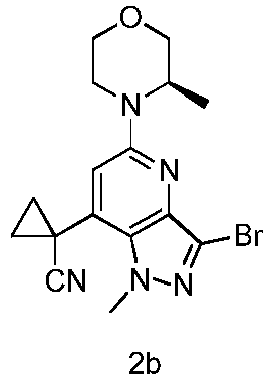
(R)-1-(3-bromo-1-methyl-5-(3-methylmorpholinyl)-1H-pyrazolo[4,3-b]pyrid in-7-yl)cyclopropanenitrile 2b 3b 
(R)-4-(3-bromo-1-methyl-7-(1-methyl-1H-pyrazol-5-yl)-1H-pyrazolo[4,3-b] pyridin-5-yl)-3-methylmorpholine 3b 4h 
(R)-2-(3-bromo-1-ethyl-5-(3-methylmorpholinyl)-1H-pyrazolo[4,3-b]pyridin -7-yl)-2-methylpropanenitrile 4h 5b 
(R)-1-(3-bromo-1-ethyl-5-(3-methylmorpholinyl)-1H-pyrazolo[4,3-b]pyridin -7-yl)cyclopropanenitrile 5b 6h 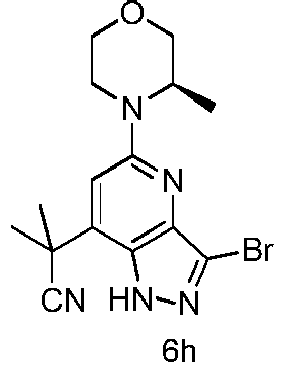
(R)-2-(3-bromo-5-(3-methylmorpholinyl)-1H-pyrazolo[4,3-b]pyridin-7-yl)-2 -methylpropanenitrile 6h - Another aspect of the present disclosure relates to a method for preparing a compound of formula (I) or a tautomer, mesomer, racemate, enantiomer or diastereomer thereof or a mixture thereof, or a pharmaceutically acceptable salt thereof, comprising:

wherein: - X is halogen, preferably Br;
- Rb is

- ring A, G1, G2, R1, R2, R3 and n are as defined in formula (I).
- Another aspect of the present disclosure relates to a method for preparing a compound of formula (II) or a tautomer, mesomer, racemate, enantiomer or diastereomer thereof or a mixture thereof, or a pharmaceutically acceptable salt thereof, comprising:

- X is halogen, preferably Br;
- Rb is

- G1, G2, R1, R2, R3 and n are as defined in formula (II).
- Another aspect of the present disclosure relates to a method for preparing a compound of formula (III) or a tautomer, mesomer, racemate, enantiomer or diastereomer thereof or a mixture thereof, or a pharmaceutically acceptable salt thereof, comprising:

wherein: - X is halogen, preferably Br;
- Rb is

- R1, R2, R3 and n are as defined in formula (III).
- Another aspect of the present disclosure relates to a method for preparing a compound of formula (IV) or a tautomer, mesomer, racemate, enantiomer or diastereomer thereof or a mixture thereof, or a pharmaceutically acceptable salt thereof, comprising:

wherein: - X is halogen, preferably Br;
- Rb is

- R1, R2, R3 and n are as defined in formula (IV).
- Another aspect of the present disclosure relates to a method for preparing a compound of formula (IIA) or a tautomer, mesomer, racemate, enantiomer or diastereomer thereof or a mixture thereof, or a pharmaceutically acceptable salt thereof, comprising:

wherein: - X is halogen, preferably Br;
- Ra is an amino protecting group;
- Rb is

- G1, G2, R1, R2, R3 and n are as defined in formula (II).
- Another aspect of the present disclosure relates to a method for preparing a compound of formula (II) or a tautomer, mesomer, racemate, enantiomer or diastereomer thereof or a mixture thereof, or a pharmaceutically acceptable salt thereof, comprising:
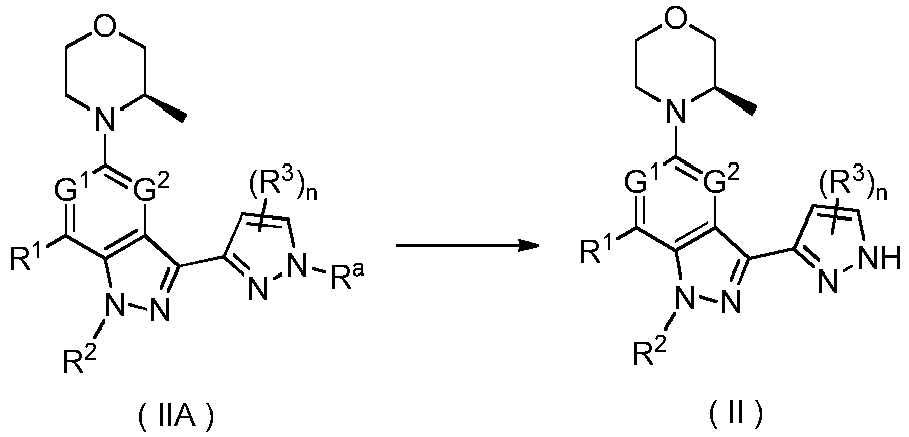
wherein: - Ra is the amino protecting group; and
- G1, G2, R1, R2, R3 and n are as defined in formula (II).
- Another aspect of the present disclosure relates to a method for preparing a compound of formula (IIGA) or a tautomer, mesomer, racemate, enantiomer or diastereomer thereof or a mixture thereof, or a pharmaceutically acceptable salt thereof, comprising:

- X is halogen, preferably Br;
- Ra is an amino protecting group;
- Rb is

- G1, G2, R1, R2, R3 and n are as defined in formula (IIGA).
- Another aspect of the present disclosure relates to a method for preparing a compound of formula (II) or a tautomer, mesomer, racemate, enantiomer or diastereomer thereof or a mixture thereof, or a pharmaceutically acceptable salt thereof, comprising:

wherein: - Ra is the amino protecting group; and
- G1, G2, R1, R2, R3 and n are as defined in formula (II).
- Another aspect of the present disclosure relates to a method for preparing a compound of formula (IIIA) or a tautomer, mesomer, racemate, enantiomer or diastereomer thereof or a mixture thereof, or a pharmaceutically acceptable salt thereof, comprising:

- X is halogen, preferably Br;
- Ra is an amino protecting group;
- Rb is
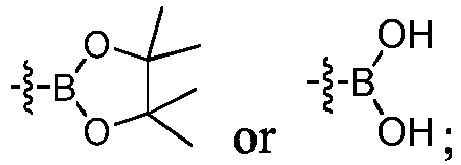
- R1, R2, R3 and n are as defined in formula (III).
- Another aspect of the present disclosure relates to a method for preparing a compound of formula (III) or a tautomer, mesomer, racemate, enantiomer or diastereomer thereof or a mixture thereof, or a pharmaceutically acceptable salt thereof, comprising:
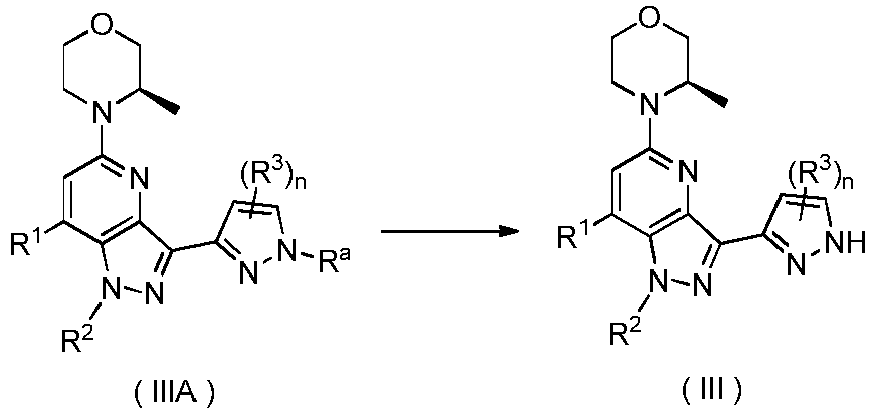
wherein: - Ra is the amino protecting group; and
- R1, R2, R3 and n are as defined in formula (III).
- Another aspect of the present disclosure relates to a method for preparing a compound of formula (IIIGA) or a tautomer, mesomer, racemate, enantiomer or diastereomer thereof or a mixture thereof, or a pharmaceutically acceptable salt thereof, comprising:

- X is halogen, preferably Br;
- Ra is an amino protecting group;
- Rb is

- R1, R2, R3 and n are as defined in formula (IIIG).
- Another aspect of the present disclosure relates to a method for preparing a compound of formula (III) or a tautomer, mesomer, racemate, enantiomer or diastereomer thereof or a mixture thereof, or a pharmaceutically acceptable salt thereof, comprising:

wherein: - Ra is the amino protecting group; and
- R1, R2, R3 and n are as defined in formula (III).
- Another aspect of the present disclosure relates to a method for preparing a compound of formula (IV) or a tautomer, mesomer, racemate, enantiomer or diastereomer thereof or a mixture thereof, or a pharmaceutically acceptable salt thereof, comprising:

wherein: - Ra is the amino protecting group; and
- R1, R2, R3 and n are as defined in formula (IV).
- Another aspect of the present disclosure relates to a pharmaceutical composition comprising the compound of formula (I) or the tautomer, mesomer, racemate, enantiomer or diastereomer thereof or the mixture thereof, or the pharmaceutically acceptable salt thereof disclosed herein, and one or more pharmaceutically acceptable carrier, diluent or excipient.
- The present disclosure further relates to use of the compound of formula (I) or the tautomer, mesomer, racemate, enantiomer or diastereomer thereof or the mixture thereof, or the pharmaceutically acceptable salt thereof disclosed herein, or the pharmaceutical composition comprising the same in preparing a medicament for inhibiting ATR kinase.
- The present disclosure further relates to use of the compound of formula (I) or the tautomer, mesomer, racemate, enantiomer or diastereomer thereof or the mixture thereof, or the pharmaceutically acceptable salt thereof disclosed herein, or the pharmaceutical composition comprising the same in preparing a medicament for treating and/or preventing a hyperproliferative disease.
- The present disclosure further relates to use of the compound of formula (I) or the tautomer, mesomer, racemate, enantiomer or diastereomer thereof or the mixture thereof, or the pharmaceutically acceptable salt thereof disclosed herein, or the pharmaceutical composition comprising the same in preparing a medicament for treating and/or preventing a tumor.
- The present disclosure further relates to use of the compound of formula (I) or the tautomer, mesomer, racemate, enantiomer or diastereomer thereof or the mixture thereof, or the pharmaceutically acceptable salt thereof disclosed herein, or the pharmaceutical composition comprising the same in preparing a medicament for treating a tumor.
- The present disclosure further relates to a method for inhibiting ATR kinase, comprising: administering to a patient in need an effective amount of the compound of formula (I) or the tautomer, mesomer, racemate, enantiomer or diastereomer or the mixture thereof, or the pharmaceutically acceptable salt thereof, or the pharmaceutical composition comprising the same.
- The present disclosure further relates to a method for treating and/or preventing a hyperproliferative disease, comprising: administering to a patient in need an effective amount of the compound of formula (I) or the tautomer, mesomer, racemate, enantiomer or diastereomer or the mixture thereof, or the pharmaceutically acceptable salt thereof, or the pharmaceutical composition comprising the same.
- The present disclosure further relates to a method for treating and/or preventing a tumor, comprising: administering to a patient in need an effective amount of the compound of formula (I) or the tautomer, mesomer, racemate, enantiomer or diastereomer or the mixture thereof, or the pharmaceutically acceptable salt thereof, or the pharmaceutical composition comprising the same.
- The present disclosure further relates to the compound of formula (I) or the tautomer, mesomer, racemate, enantiomer or diastereomer thereof or the mixture thereof, or the pharmaceutically acceptable salt thereof disclosed herein, or the pharmaceutical composition comprising the same for use as a medicament. The medicament can be used for treating and/or preventing a hyperproliferative disease, in particular a tumor. The present disclosure further relates to the compound of formula (I) or the tautomer, mesomer, racemate, enantiomer or diastereomer thereof or the mixture thereof, or the pharmaceutically acceptable salt thereof disclosed herein, or the pharmaceutical composition comprising the same for use as an ATR kinase inhibitor.
- The present disclosure further relates to the compound of formula (I) or the tautomer, mesomer, racemate, enantiomer or diastereomer thereof or the mixture thereof, or the pharmaceutically acceptable salt thereof disclosed herein, or the pharmaceutical composition comprising the same for use in treating and/or preventing a hyperproliferative disease.
- The present disclosure further relates to the compound of formula (I) or the tautomer, mesomer, racemate, enantiomer or diastereomer thereof or the mixture thereof, or the pharmaceutically acceptable salt thereof disclosed herein, or the pharmaceutical composition comprising the same for use in treating a tumor.
- The tumor described herein is selected from the group consisting of melanoma, brain tumor, esophageal cancer, gastric cancer, liver cancer, pancreatic cancer, colorectal cancer, lung cancer, kidney cancer, breast cancer, cervical cancer, ovarian cancer, prostate cancer, skin cancer, neuroblastoma, neuroglioma, sarcoma, bone cancer, uterine cancer, endometrial cancer, head and neck tumor, multiple myeloma, B-cell lymphoma, polycythemia vera, leukemia, thyroid tumor, bladder cancer and gallbladder cancer.
- The active compound may be formulated into a form suitable for administration by any suitable route, preferably in a form of a unit dose, or in a form of a single dose that can be self-administered by a patient. The unit dose of the compound or composition disclosed herein may be in a tablet, a capsule, a cachet, a vial, a powder, a granule, a lozenge, a suppository, a powder for reconstitution or a liquid formulation.
- The dosage of the compound or composition used in the treatment method disclosed herein will generally vary with the severity of the disease, the weight of the patient, and the relative efficacy of the compound. However, as a general guide, a suitable unit dose may be 0.1 to 1000 mg.
- The pharmaceutical composition disclosed herein may comprise, in addition to the active compound, one or more excipients selected from the group consisting of: a filler (diluent), binder, wetting agent, disintegrant, excipient, and the like. Depending on the method of administration, the compositions may comprise 0.1 to 99 wt.% of active compound.
- The pharmaceutical compositions comprising the active ingredient may be in a form suitable for oral administration, for example, a tablet, a dragee, a lozenge, an aqueous or oil suspension, a dispersible powder or granule, an emulsion, a hard or soft capsule, or a syrup or elixir. Oral compositions can be prepared according to any method known in the art for preparing pharmaceutical compositions and may comprise one or more ingredients selected from the group consisting of a sweetener, a corrigent, a colorant and a preservative, so as to provide a pleasant-to-eye and palatable pharmaceutical formulation. A tablet comprises an active ingredient and a non-toxic pharmaceutically acceptable excipient which is used for mixing and is suitable for the preparation of the tablet. Such an excipient may be an inert excipient, a granulating agent, a disintegrating agent, a binder and a lubricant. Such a tablet may be uncoated or may be coated by known techniques for masking the taste of the drug or delaying the disintegration and absorption of the drug in the gastrointestinal tract and thus enabling sustained release of the drug over a longer period.
- An oral formulation in a soft gelatin capsule where the active ingredient is mixed with an inert solid diluent or with a water-soluble carrier or oil vehicle may also be provided. An aqueous suspension comprises an active substance and an excipient which is used for mixing and suitable for the preparation of the aqueous suspension. Such an excipient is a suspending agent, a dispersant or a wetting agent. The aqueous suspension may also comprise one or more preservatives, one or more colorants, one or more corrigents and one or more sweeteners.
- An oil suspension may be formulated by suspending the active ingredient in a vegetable oil, or in a mineral oil. The oil suspension may comprise a thickening agent. The sweeteners and corrigents described above may be added to provide a palatable formulation. Antioxidants can also be added to preserve the compositions.
- Dispersible powders and granules suitable for the preparation of an aqueous suspension can be allowed to provide an active ingredient, and a dispersant or a wetting agent, a suspending agent or one or more preservatives for mixing, by adding water. The description above can be exemplified by suitable dispersants or wetting agents and suspending agents. Other excipients, such as sweeteners, corrigents and colorants, may also be added. Antioxidants such as ascorbic acid are added to preserve these compositions.
- The pharmaceutical composition disclosed herein may also be in the form of an oil-in-water emulsion. The oil phase may be a vegetable oil or a mineral oil, or a mixture thereof. Suitable emulsifiers may be naturally occurring phospholipids, and the emulsion may also comprise a sweetener, a corrigent, a preservative and an antioxidant. Such a formulation may also comprise a palliative, a preservative, a colorant and an antioxidant.
- The pharmaceutical composition disclosed herein may be in the form of a sterile injectable aqueous solution. Available and acceptable vehicles or solvents include water, Ringer's solution and isotonic sodium chloride solution. A sterile injectable formulation may be a sterile injectable oil-in-water microemulsion in which an active ingredient is dissolved in an oil phase. The injection or microemulsion can be locally injected into the bloodstream of a patient in large quantities. Alternatively, it may be desirable to administer solutions and microemulsions in such a way as to maintain a constant circulating concentration of the compound disclosed herein. To maintain such a constant concentration, a continuous intravenous delivery device may be used. An example of such a device is a Deltec CADD-PLUS. TM. 5400 intravenous injection pump.
- The pharmaceutical composition disclosed herein may be in the form of a sterile injectable aqueous or oil suspension for intramuscular and subcutaneous administration. The suspension can be prepared according to the prior art using those suitable dispersants or wetting agents and suspending agents mentioned above. The sterile injectable formulation may also be a sterile injection or suspension prepared in a parenterally acceptable non-toxic diluent or solvent. In addition, a sterile fixed oil may be conventionally used as a solvent or a suspending medium. For this purpose, any blend fixed oil may be employed. In addition, fatty acids can also be used to prepare injections.
- The compound disclosed herein may be administered in the form of a suppository for rectal administration. Such a pharmaceutical composition can be prepared by mixing a drug with a suitable non-irritating excipient which is a solid at an ambient temperature but a liquid in the rectum and therefore will melt in the rectum to release the drug.
- As is well known to those skilled in the art, the dosage of the drug administered depends on a variety of factors, including but not limited to, the activity of the particular compound employed, the age of the patient, the weight of the patient, the health condition of the patient, the behavior of the patient, the diet of the patient, the time of administration, the route of administration, the rate of excretion, the combination of drugs, and the like. In addition, the optimal treatment regimen, such as the mode of administration, the daily dose of the compound of formula (I) or the type of pharmaceutically acceptable salts, can be verified according to conventional treatment regimens.
- Unless otherwise stated, the terms used in the specification and claims have the following meanings.
- The term "alkyl" refers to a saturated aliphatic hydrocarbon group which is a linear or branched group containing 1 to 20 carbon atoms, preferably an alkyl containing 1 to 12 (e.g., 1, 2, 3, 4, 5, 6, 7, 8, 9, 10, 11 and 12) carbon atoms, and more preferably an alkyl containing 1 to 6 carbon atoms. Non-limiting examples include methyl, ethyl, n-propyl, isopropyl, n-butyl, isobutyl, tert-butyl, sec-butyl, n-pentyl, 1,1-dimethylpropyl, 1,2-dimethylpropyl, 2,2-dimethylpropyl, 1-ethylpropyl, 2-methylbutyl, 3-methylbutyl, n-hexyl, 1-ethyl-2-methylpropyl, 1,1,2-trimethylpropyl, 1,1-dimethylbutyl, 1,2-dimethylbutyl, 2,2-dimethylbutyl, 1,3-dimethylbutyl, 2-ethylbutyl, 2-methylpentyl, 3-methylpentyl, 4-methylpentyl, 2,3-dimethylbutyl, n-heptyl, 2-methylhexyl, 3-methylhexyl, 4-methylhexyl, 5-methylhexyl, 2,3-dimethylpentyl, 2,4-dimethylpentyl, 2,2-dimethylpentyl, 3,3-dimethylpentyl, 2-ethylpentyl, 3-ethylpentyl, n-octyl, 2,3-dimethylhexyl, 2,4-dimethylhexyl, 2,5-dimethylhexyl, 2,2-dimethylhexyl, 3,3-dimethylhexyl, 4,4-dimethylhexyl, 2-ethylhexyl, 3-ethylhexyl, 4-ethylhexyl, 2-methyl-2-ethylpentyl, 2-methyl-3-ethylpentyl, n-nonyl, 2-methyl-2-ethylhexyl, 2-methyl-3-ethylhexyl, 2,2-diethylpentyl, n-decyl, 3,3-diethylhexyl, 2,2-diethylhexyl, and various side-chain isomers thereof, etc. More preferred is a lower alkyl having 1 to 6 carbon atoms, and non-limiting examples include methyl, ethyl, n-propyl, isopropyl, n-butyl, isobutyl, tert-butyl, sec-butyl, n-pentyl, 1,1-dimethylpropyl, 1,2-dimethylpropyl, 2,2-dimethylpropyl, 1-ethylpropyl, 2-methylbutyl, 3-methylbutyl, n-hexyl, 1-ethyl-2-methylpropyl, 1,1,2-trimethylpropyl, 1,1-dimethylbutyl, 1,2-dimethylbutyl, 2,2-dimethylbutyl, 1,3-dimethylbutyl, 2-ethylbutyl, 2-methylpentyl, 3-methylpentyl, 4-methylpentyl, 2,3-dimethylbutyl and the like. The alkyl may be substituted or unsubstituted. When substituted, the substituent may be substituted at any available connection site with one or more substituents preferably independently optionally selected from the group consisting of H, D, halogen, alkyl, alkoxy, haloalkyl, hydroxy, hydroxyalkyl, cyano, amino, nitro, cycloalkyl, heterocyclyl, aryl and heteroaryl.
- The term "alkylene" refers to a saturated linear or branched aliphatic hydrocarbon group having 2 residues derived from the parent alkane by removal of two hydrogen atoms from the same carbon atom or two different carbon atoms, which is a linear or branched group containing 1 to 20 carbon atoms, preferably an alkylene group containing 1 to 12 (e.g., 1, 2, 3, 4, 5, 6, 7, 8, 9, 10, 11 and 12) carbon atoms, and more preferably an alkylene group containing 1 to 6 carbon atoms. Non-limiting examples of alkylene include, but are not limited to, methylene (-CH2-), 1,1-ethylene (-CH(CH3)-), 1,2-ethylene (-CH2CH2-), 1,1-propylene (-CH(CH2CH3)-), 1,2-propylene (-CH2CH(CH3)-), 1,3-propylene (-CH2CH2CH2-), 1,4-butylene (-CH2CH2CH2CH2-) and the like. The alkylene may be substituted or unsubstituted. When substituted, the substituent may be substituted at any available connection site with one or more substituents preferably independently optionally selected from the group consisting of alkyl, alkenyl, alkynyl, alkoxy, alkylthio, alkylamino, halogen, thiol, hydroxy, nitro, cyano, cycloalkyl, heterocyclyl, aryl, heteroaryl, cycloalkoxy, heterocycloalkoxy, cycloalkylthio, heterocycloalkylthio and oxo.
- The term "alkenyl" refers to an alkyl compound containing at least one carbon-carbon double bond in the molecule, wherein the alkyl is as defined above. The alkenyl may be substituted or unsubstituted. When substituted, the alkenyl may be substituted with one or more substituents preferably independently selected from the group consisting of hydrogen, alkyl, alkoxy, halogen, haloalkyl, hydroxy, hydroxyalkyl, cyano, amino, nitro, cycloalkyl, heterocyclyl, aryl and heteroaryl.
- The term "alkynyl" refers to an alkyl compound containing at least one carbon-carbon triple bond in the molecule, wherein the alkyl is as defined above. The alkynyl may be substituted or unsubstituted. When substituted, the alkynyl may be substituted with one or more substituents preferably independently selected from the group consisting of hydrogen, alkyl, alkoxy, halogen, haloalkyl, hydroxy, hydroxyalkyl, cyano, amino, nitro, cycloalkyl, heterocyclyl, aryl and heteroaryl.
- The term "cycloalkyl" refers to a saturated or partially unsaturated monocyclic or polycyclic hydrocarbon substituent. The cycloalkyl ring contains 3 to 20 carbon atoms, preferably 3 to 12 carbon atoms, more preferably 3 to 8 (e.g., 3, 4, 5, 6, 7 or 8) carbon atoms, and most preferably 3 to 6 carbon atoms. Non-limiting examples of monocyclic cycloalkyl include cyclopropyl, cyclobutyl, cyclopentyl, cyclopentenyl, cyclohexyl, cyclohexenyl, cyclohexadienyl, cycloheptyl, cycloheptatrienyl, cyclooctyl, and the like. Polycyclic cycloalkyl includes spiro cycloalkyl, fused cycloalkyl, and bridged cycloalkyl.
- The term "spiro cycloalkyl" refers to a 5- to 20-membered polycyclic group in which monocyclic rings share one carbon atom (referred to as the spiro atom), wherein the spiro cycloalkyl may contain one or more double bonds. Preferably, the spiro cycloalkyl is 6- to 14-membered, and more preferably 7- to 10-membered (e.g., 7, 8, 9 or 10-membered). According to the number of the spiro atoms shared among the rings, the spiro cycloalkyl may be monospiro cycloalkyl, bispiro cycloalkyl or polyspiro cycloalkyl, preferably monospiro cycloalkyl and bispiro cycloalkyl, more preferably 4-membered/4-membered, 4-membered/5-membered, 4-membered/6-membered, 5-membered/5-membered or 5-membered/6-membered monospiro cycloalkyl. Non-limiting examples of spiro cycloalkyl include:

- The term "fused cycloalkyl" refers to a 5- to 20-membered carbon polycyclic group in which each ring shares a pair of adjacent carbon atoms with the other rings in the system, wherein one or more of the rings may contain one or more double bonds. Preferably, the fused cycloalkyl is 6- to 14-membered, and more preferably 7- to 10-membered (e.g., 7, 8, 9 or 10-membered). According to the number of the formed rings, the fused cycloalkyl may be bicyclic, tricyclic, tetracyclic or polycyclic cycloalkyl, preferably bicyclic or tricyclic cycloalkyl, and more preferably 3-membered/4-membered, 3-membered/5-membered, 3-membered/6-membered, 4-membered/4-membered, 4-membered/5-membered, 4-membered/6-membered, 5-membered/4-membered, 5-membered/5-membered, 5-membered/6-membered, 6-membered/3-membered, 6-membered/4-membered, 6-membered/5-membered and 6-membered/6-membered bicyclic cycloalkyl. Non-limiting examples of fused cycloalkyl include:

- The term "bridged cycloalkyl" refers to a 5- to 20-membered carbon polycyclic group in which any two rings share two carbon atoms that are not directly connected to each other, wherein the bridged cycloalkyl may contain one or more double bonds. Preferably, the bridged cycloalkyl is 6- to 14-membered, and more preferably 7- to 10-membered (e.g., 7, 8, 9 or 10-membered). According to the number of the formed rings, the bridged cycloalkyl may be bicyclic, tricyclic, tetracyclic or polycyclic, preferably bicyclic, tricyclic or tetracyclic, and more preferably bicyclic or tricyclic. Non-limiting examples of bridged cycloalkyl include:


- The cycloalkyl ring includes those in which the cycloalkyl described above (including monocyclic, spiro, fused and bridged rings) is fused to an aryl, heteroaryl or heterocycloalkyl ring, wherein the ring connected to the parent structure is cycloalkyl. Non-limiting examples include indanyl, tetrahydronaphthyl, benzocyclopentyl, benzocycloheptanyl, and the like, preferably benzocyclopentyl and tetrahydronaphthyl. The cycloalkyl may be substituted or unsubstituted. When substituted, the substituent may be substituted at any available connection site with one or more substituents preferably independently optionally selected from the group consisting of hydrogen, halogen, alkyl, alkoxy, haloalkyl, hydroxy, hydroxyalkyl, cyano, amino, nitro, cycloalkyl, heterocyclyl, aryl and heteroaryl.
- The term "alkoxy" refers to -O-(alkyl) and -O-(unsubstituted cycloalkyl), wherein the alkyl is as defined above. Non-limiting examples of alkoxy include: methoxy, ethoxy, propoxy, butoxy, cyclopropyloxy, cyclobutoxy, cyclopentyloxy, cyclohexyloxy. The alkoxy may be substituted or unsubstituted. When substituted, the alkoxy may be substituted with one or more substituents preferably independently selected from the group consisting of H, D, halogen, alkyl, alkoxy, haloalkyl, hydroxy, hydroxyalkyl, cyano, amino, nitro, cycloalkyl, heterocyclyl, aryl and heteroaryl. The term "heterocyclyl" refers to a saturated or partially unsaturated monocyclic or polycyclic hydrocarbon substituent containing 3 to 20 ring atoms, wherein one or more of the ring atoms are heteroatoms selected from the group consisting of nitrogen, oxygen, S, S(O) and S(O)2, excluding a cyclic portion of -O-O-, -O-S- or -S-S-, and the remaining ring atoms are carbon. The heterocyclyl preferably contains 3 to 12 ring atoms, wherein 1 to 4 (e.g., 1, 2, 3 and 4) are heteroatoms; more preferably, contains 3 to 8 (e.g., 3, 4, 5, 6, 7 or 8) ring atoms, wherein 1 to 3 (e.g., 1, 2 or 3) are heteroatoms; even more preferably, contains 3 to 6 ring atoms, wherein 1 to 3 are heteroatoms; and most preferably, contains 5 or 6 ring atoms, wherein 1 to 3 are heteroatoms. Non-limiting examples of monocyclic heterocyclyl include pyrrolidinyl, tetrahydropyranyl, 1,2,3,6-tetrahydropyridinyl, piperidinyl, piperazinyl, morpholinyl, thiomorpholinyl, homopiperazinyl, and the like. Polycyclic heterocyclyl includes spiro heterocyclyl, fused heterocyclyl, and bridged heterocyclyl.
- The term "spiro heterocyclyl" refers to a 5- to 20-membered polycyclic heterocyclyl group in which monocyclic rings share one atom (referred to as the spiro atom), wherein one or more ring atoms are heteroatoms selected from the group consisting of nitrogen, oxygen, S, S(O) and S(O)2, and the remaining ring atoms are carbon atoms. The spiro heterocyclyl may contain one or more double bonds. Preferably, the spiro heterocyclyl is 6- to 14-membered, and more preferably 7- to 10-membered. According to the number of spiro atoms shared among the rings, the spiro heterocyclyl may be monospiro heterocyclyl, bispiro heterocyclyl or polyspiro heterocyclyl, preferably monospiro heterocyclyl and bispiro heterocyclyl, and more preferably 4-membered/4-membered, 4-membered/5-membered, 4-membered/6-membered, 5-membered/5-membered or 5-membered/6-membered monospiro heterocyclyl. Non-limiting examples of spiro heterocyclyl include:

- The term "fused heterocyclyl" refers to a 5- to 20-membered polycyclic heterocyclyl group in which each ring shares a pair of adjacent atoms with the other rings in the system, wherein one or more of the rings may contain one or more double bonds. In the fused heterocyclyl, one or more of the ring atoms are heteroatoms selected from the group consisting of nitrogen, oxygen, S, S(O) and S(O)2, and the remaining ring atoms are carbon atoms. Preferably, the fused heterocyclyl is 6- to 14-membered, and more preferably 7- to 10-membered (e.g., 7, 8, 9 or 10-membered). According to the number of the formed rings, the fused heterocyclyl may be bicyclic, tricyclic, tetracyclic or polycyclic fused heterocyclyl, preferably bicyclic or tricyclic fused heterocyclyl, and more preferably 3-membered/4-membered, 3-membered/5-membered, 3-membered/6-membered, 4-membered/4-membered, 4-membered/5-membered, 4-membered/6-membered, 5-membered/4-membered, 5-membered/5-membered, 5-membered/6-membered, 6-membered/3-membered, 6-membered/4-membered, 6-membered/5-membered and 6-membered/6-membered bicyclic fused heterocyclyl. Non-limiting examples of fused heterocyclyl include:


- The term "bridged heterocyclyl" refers to a 5- to 14-membered polycyclic heterocyclyl group in which any two rings share two carbon atoms that are not directly connected to each other, wherein the bridged heterocyclyl may contain one or more double bonds. In the bridged heterocyclyl, one or more of the ring atoms are heteroatoms selected from the group consisting of nitrogen, oxygen, S, S(O) and S(O)2, and the remaining ring atoms are carbon atoms. Preferably, the bridged heterocyclyl is 6- to 14-membered, and more preferably 7- to 10-membered (e.g., 7, 8, 9 or 10-membered). According to the number of the formed rings, the bridged heterocyclyl may be bicyclic, tricyclic, tetracyclic or polycyclic, preferably bicyclic, tricyclic or tetracyclic, and more preferably bicyclic or tricyclic. Non-limiting examples of bridged heterocyclyl include:


- The heterocyclyl ring includes those in which the heterocyclyl described above (including monocyclic, spiro heterocyclic, fused heterocyclic and bridged heterocyclic rings) is fused to an aryl, heteroaryl or cycloalkyl ring, wherein the ring connected to the parent structure is heterocyclyl. Non-limiting examples include:

- The heterocyclyl may be substituted or unsubstituted. When substituted, the substituent may be substituted at any available connection site with one or more substituents preferably independently optionally selected from the group consisting of hydrogen, halogen, alkyl, alkoxy, haloalkyl, hydroxy, hydroxyalkyl, cyano, amino, nitro, cycloalkyl, heterocyclyl, aryl and heteroaryl.
- The term "aryl" refers to a 6- to 14-membered, preferably 6- to 10-membered carbon monocyclic or fused polycyclic (fused polycyclic rings are those sharing a pair of adjacent carbon atoms) group having a conjugated π-electron system such as phenyl and naphthyl. The aryl ring includes those in which the aryl ring described above is fused to a heteroaryl, heterocyclyl or cycloalkyl ring, wherein the ring connected to the parent structure is an aryl ring. Non-limiting examples include:


- The aryl may be substituted or unsubstituted. When substituted, the substituent may be substituted at any available connection site with one or more substituents preferably independently optionally selected from the group consisting of hydrogen, halogen, alkyl, alkoxy, haloalkyl, hydroxy, hydroxyalkyl, cyano, amino, nitro, cycloalkyl, heterocyclyl, aryl and heteroaryl.
- The term "heteroaryl" refers to a heteroaromatic system containing 1 to 4 (e.g., 1, 2, 3 and 4) heteroatoms and 5 to 14 ring atoms, wherein the heteroatoms are selected from the group consisting of oxygen, sulfur and nitrogen. The heteroaryl is preferably 5- to 10-membered (e.g., 5, 6, 7, 8, 9 and 10) and more preferably 5- or 6-membered, e.g., furanyl, thienyl, pyridinyl, pyrrolyl, N-alkylpyrrolyl, pyrimidinyl, pyrazinyl, pyridazinyl, imidazolyl, pyrazolyl, triazolyl, and tetrazolyl. The heteroaryl ring includes those in which the heteroaryl ring described above is fused to an aryl, heterocyclyl or cycloalkyl ring, wherein the ring connected to the parent structure is a heteroaryl ring. Non-limiting examples include:


- The heteroaryl may be substituted or unsubstituted. When substituted, the substituent may be substituted at any available connection site with one or more substituents preferably independently optionally selected from the group consisting of hydrogen, halogen, alkyl, alkoxy, haloalkyl, hydroxy, hydroxyalkyl, cyano, amino, nitro, cycloalkyl, heterocyclyl, aryl and heteroaryl.
- The cycloalkyl, heterocyclyl, aryl and heteroaryl described above have 1 residue derived from the parent ring by removal of one hydrogen atom from a ring atom, or 2 residues derived from the parent ring by removal of two hydrogen atoms from the same ring atom or two different ring atoms, i.e., "divalent cycloalkyl", "divalent heterocyclyl", "arylene", or "heteroarylene".
- The term "amino protecting group" refers to a group that can be easily removed and is intended to protect an amino group from being changed when a reaction is conducted elsewhere in the molecule. Non-limiting examples include tetrahydropyranyl, tert-butoxycarbonyl, acetyl, benzyl, allyl, p-methoxybenzyl, and the like. These groups may be optionally substituted with 1 to 3 substituents selected from the group consisting of halogen, alkoxy and nitro. The amino protecting group is preferably tetrahydropyranyl.
- The term "cycloalkyloxy" refers to cycloalkyl-O-, wherein the cycloalkyl is as defined above.
- The term "haloalkyl" refers to an alkyl group substituted with one or more halogens, wherein the alkyl group is as defined above.
- The term "deuterated alkyl" refers to an alkyl group substituted with one or more deuterium atoms, wherein the alkyl group is as defined above.
- The term "hydroxy" refers to -OH group.
- The term "hydroxyalkyl" refers to an alkyl group substituted with hydroxy, wherein the alkyl group is as defined above.
- The term "halogen" refers to fluorine, chlorine, bromine or iodine.
- The term "amino" refers to -NH2.
- The term "cyano" refers to -CN.
- The term "nitro" refers to -NO2.
- The term "carbonyl" refers to C=O.
- The term "carboxy" refers to -C(O)OH.
- The term "carboxylate" refers to -C(O)O(alkyl) or -C(O)O(cycloalkyl), wherein the alkyl and cycloalkyl are as defined above.
- THP refers to tetrahydropyranyl.
- The compounds disclosed herein may be present as tautomers. For the purposes of the present disclosure, reference to a compound of formula (I) refers to the compound itself, or any one tautomer thereof itself, or a mixture of two or more tautomers. For example, reference to pyrazolyl is understood to include any one of the following two structures or a mixture of the two tautomers,

- The compounds disclosed herein include isotopic derivatives thereof. The term "isotopic derivative" refers to compounds that differ in structure only by having one or more enriched isotopic atoms. For example, compounds having the structure disclosed herein having "deuterium" or "tritium" in place of hydrogen, or 18F-fluorine labeling (18F isotope) in place of fluorine, or 11C-, 13C- or 14C-enriched carbon (11C-, 13C- or 14C-carbon labeling; 11C-, 13C- or 14C-isotope) in place of a carbon atom are within the scope of the present disclosure. Such a compound can be used as an analytical tool or a probe in, for example, a biological assay, or may be used as a tracer for in vivo diagnostic imaging of disease, or as a tracer in a pharmacodynamic, pharmacokinetic or receptor study. The present disclosure encompasses various deuterated forms of the compounds of formula (I). Each available hydrogen atom connected to a carbon atom may be independently replaced with a deuterium atom. Those skilled in the art are able to synthesize the compounds of formula (I) in deuterated form with reference to the relevant literature. Commercially available deuterated starting materials can be used in preparing the deuterated forms of the compounds of formula (I), or they can be synthesized using conventional techniques with deuterated reagents including, but not limited to, deuterated borane, tri-deuterated borane in tetrahydrofuran, deuterated lithium aluminum hydride, deuterated iodoethane, deuterated iodomethane, and the like. The term "optional" or "optionally" means that the event or circumstance subsequently described may, but not necessarily, occur, and that the description includes instances where the event or circumstance occurs or does not occur. For example, "a heterocyclyl group optionally substituted with alkyl" means that alkyl may be, but not necessarily, present, and that the description includes instances where the heterocyclyl group is or is not substituted with alkyl.
- The term "substituted" means that one or more, preferably up to 5, more preferably 1 to 3 hydrogen atoms in the group are independently substituted with a corresponding number of substituents. It goes without saying that a substituent is only in its possible chemical position, and those skilled in the art will be able to determine (experimentally or theoretically) possible or impossible substitution without undue efforts. For example, it may be unstable when an amino or hydroxy group having a free hydrogen is bound to a carbon atom having an unsaturated (e.g., olefinic) bond.
- The term "pharmaceutical composition" refers to a mixture containing one or more of the compounds described herein or a physiologically/pharmaceutically acceptable salt or pro-drug thereof, and other chemical components, for example physiologically/pharmaceutically acceptable carriers and excipients. The purpose of the pharmaceutical composition is to promote the administration to an organism, which facilitates the absorption of the active ingredient, thereby exerting biological activities. The term "pharmaceutically acceptable salt" refers to salts of the disclosed compounds which are safe and effective for use in the body of a mammal and possess the requisite biological activities.
- For drugs and pharmacological active agents, the term "therapeutically effective amount" refers to an amount of a medicament or an agent that is sufficient to provide the desired effect but is non-toxic. The determination of the effective amount varies from person to person. It depends on the age and general condition of a subject, as well as the particular active substance used. The appropriate effective amount in a case may be determined by those skilled in the art in the light of routine tests.
- In order to achieve the purpose of the present disclosure, the following technical schemes are adopted in the present disclosure:
- A method for preparing the compound of formula (I) or the salt thereof disclosed herein comprises the following steps:

- X is halogen, preferably Br;
- Rb is

- ring A, G1, G2, R1, R2, R3 and n are as defined in formula (I).
- A method for preparing the compound of formula (II) or the salt thereof disclosed herein comprises the following steps:
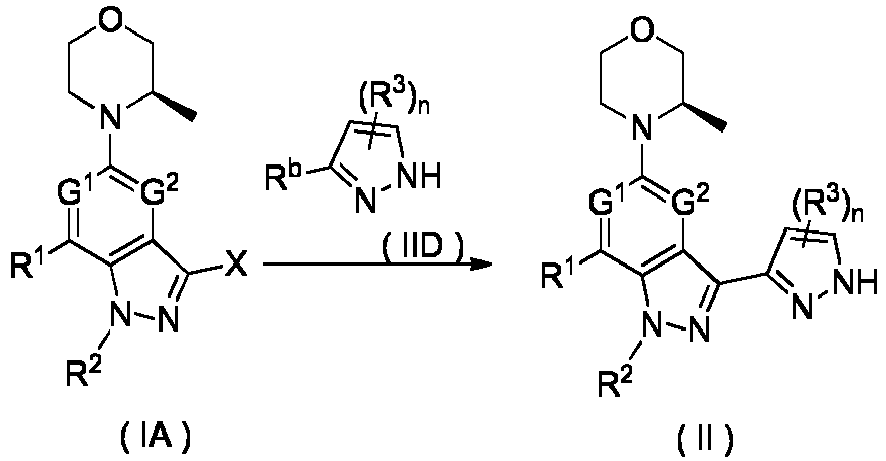
- X is halogen, preferably Br;
- Rb is

- G1, G2, R1, R2, R3 and n are as defined in formula (II).
- A method for preparing the compound of formula (II) or the salt thereof disclosed herein comprises the following steps:

- removing an amino protecting group from the compound of formula (IIA) in an acidic condition to obtain the compound of formula (II),
- wherein:
- X is halogen, preferably Br;
- Rb is

- G1, G2, R1, R2, R3 and n are as defined in formula (II).
- A method for preparing the compound of formula (II) or the salt thereof disclosed herein comprises the following steps:

- removing an amino protecting group from the compound of formula (IIGA) in an acidic condition to obtain the compound of formula (II),
- wherein:
- X is halogen, preferably Br;
- Rb is

- G1, G2, R1, R2, R3 and n are as defined in formula (II).
- A method for preparing the compound of formula (III) or the salt thereof disclosed herein comprises the following steps:

wherein: - X is halogen, preferably Br;
- Rb is

- R1, R2, R3 and n are as defined in formula (III).
- A method for preparing the compound of formula (III) or the salt thereof disclosed herein comprises the following steps:

- removing an amino protecting group from the compound of formula (IIIA) in an acidic condition to obtain the compound of formula (III),
- wherein:
- X is halogen, preferably Br;
- Ra is the amino protecting group;
- Rb is

- R1, R2, R3 and n are as defined in formula (III).
- A method for preparing the compound of formula (III) or the salt thereof disclosed herein comprises the following steps:

- removing an amino protecting group from the compound of formula (IIIGA) in an acidic condition to obtain the compound of formula (III),
- wherein:
- X is halogen, preferably Br;
- Ra is the amino protecting group;
- Rb is
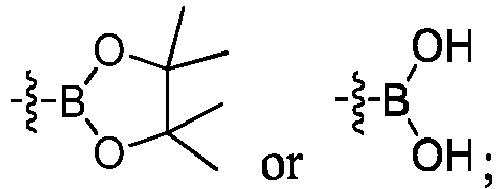
- R1, R2, R3 and n are as defined in formula (III).
- A method for preparing the compound of formula (IV) or the salt thereof disclosed herein comprises the following steps:

- X is halogen, preferably Br;
- Rb is

- R1, R2, R3 and n are as defined in formula (IV).
- A method for preparing the compound of formula (IV) or the salt thereof disclosed herein comprises the following steps:

- removing an amino protecting group from the compound of formula (IVA) in an acidic condition to obtain the compound of formula (IV),
- wherein:
- X is halogen, preferably Br;
- Ra is the amino protecting group;
- Rb is
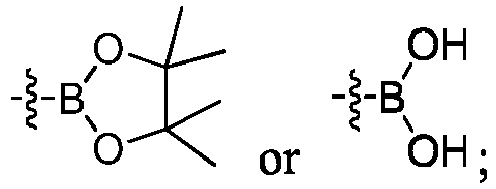
- R1, R2, R3 and n are as defined in formula (IV).
- A method for preparing the compound of formula (IV) or the salt thereof disclosed herein comprises the following steps:

- removing an amino protecting group from the compound of formula (IVGA) in an acidic condition to obtain the compound of formula (IV),
- wherein:
- X is halogen, preferably Br;
- Ra is the amino protecting group;
- Rb is

- R1, R2, R3 and n are as defined in formula (IV).
- The reagents that provide alkaline conditions in the above synthesis schemes include organic bases including, but not limited to, triethylamine, N,N-diisopropylethylamine, n-butyllithium, lithium diisopropylamide, lithium bis(trimethylsilyl)amide, potassium acetate, sodium tert-butoxide, potassium tert-butoxide and sodium n-butoxide, and inorganic bases including, but not limited to, sodium hydride, potassium phosphate, sodium carbonate, potassium carbonate, cesium carbonate, sodium hydroxide and lithium hydroxide.
- The catalysts described in the above synthesis schemes include, but are not limited to, palladium on carbon, tetrakis(triphenylphosphine)palladium(0), palladium dichloride, palladium acetate, bis(triphenylphosphine)palladium(II) dichloride, bis(dibenzylideneacetone)palladium, chlorine(2-dicyclohexylphosphino-2',4',6'-triisopropyl-1,1'-biphenyl)[2-(2'-amino-1,1'-b iphenyl)]palladium, [1,1'-bis(diphenylphosphino)ferrocene]palladium(II) dichloride, [1,1'-bis(dibenzylphosphino)ferrocene]palladium dichloride or tris(dibenzylideneacetone)dipalladium(0), preferably tetrakis(triphenylphosphine)palladium(0) or bis(triphenylphosphine)palladium(II) dichloride.
- The reagents that provide acidic conditions in the above synthesis schemes include, but are not limited to, hydrogen chloride, hydrogen chloride in 1,4-dioxane, trifluoroacetic acid, formic acid, acetic acid, hydrochloric acid, sulfuric acid, methanesulfonic acid, nitric acid, phosphoric acid, p-toluenesulfonic acid, Me3SiCl, TMSOTf, preferably trifluoroacetic acid.
- The amino protecting groups in the above synthetic schemes include, but are not limited to, tetrahydropyranyl (THP), tert-butyloxycarbonyl, acetyl, benzyl, allyl and p-methoxybenzyl. These groups may be optionally substituted with 1-3 substituents selected from the group consisting of halogen, alkoxy and nitro. Tetrahydropyranyl is preferred.
- The above reactions are preferably conducted in a solvent including, but not limited to: ethylene glycol dimethyl ether, acetic acid, methanol, ethanol, n-butanol, toluene, tetrahydrofuran, dichloromethane, petroleum ether, ethyl acetate, n-hexane, dimethyl sulfoxide, 1,4-dioxane, water or N,N-dimethylformamide.
- The following examples further illustrate the present disclosure, but the present disclosure is not limited thereto.
- The structure of the compound was determined by nuclear magnetic resonance (NMR) spectroscopy and/or mass spectrometry (MS). NMR shift (δ) is given in a unit of 10-6 (ppm). NMR spectra were measured using a Bruker AVANCE-400 nuclear magnetic resonance instrument, with deuterated dimethyl sulfoxide (DMSO-d6 ), deuterated chloroform (CDCl3) and deuterated methanol (CD3OD) as determination solvents, with tetramethylsilane (TMS) as internal standard.
- Mass spectra were measured using Agilent 1200/1290 DAD-6110/6120 Quadrupole MS liquid chromatography-mass spectrometry system (manufacturer: Agilent; MS model: 6110/6120 Quadrupole MS), Waters ACQuity UPLC-QD/SQD (manufacturer: Waters, MS model: Waters ACQuity Qda Detector/waters SQ Detector) and THERMO Ultimate 3000-Q Exactive (manufacturer: THERMO, MS model: THERMO Q Exactive).
- High performance liquid chromatography (HPLC) was performed using Agilent HPLC 1200DAD, Agilent HPLC 1200VWD and Waters HPLC e2695-2489 high pressure liquid chromatography.
- Chiral HPLC was performed on Agilent 1260 DAD HPLC.
- HPLC preparation was performed using Waters 2545-2767, Waters 2767-SQ Detecor2, Shimadzu LC-20AP and Gilson GX-281 preparative chromatographs.
- Chiral preparation was performed on a Shimadzu LC-20AP preparative chromatograph. A CombiFlash Rf200 (TELEDYNE ISCO) system was used for rapid preparation. Huanghai HSGF254 or Qingdao GF254 silica gel plates of specifications 0.15 mm to 0.2 mm were adopted for thin layer chromatography (TLC) analysis and 0.4 mm to 0.5 mm for TLC separation and purification.
- The silica gel column chromatography generally used 200 to 300-mesh silica gel (Huanghai, Yantai) as the carrier.
- The mean inhibition of kinase and the IC50 value were measured using a NovoStar microplate reader (BMG, Germany).
- Known starting materials described herein may be synthesized using or according to methods known in the art, or may be purchased from ABCR GmbH & Co. KG, Acros Organics, Aldrich Chemical Company, Accela ChemBio Inc., Chembee Chemicals, and other companies.
- In the examples, the reactions were performed in an argon atmosphere or a nitrogen atmosphere unless otherwise specified.
- An argon atmosphere or a nitrogen atmosphere means that the reaction flask is connected to a balloon containing about 1 L of argon or nitrogen.
- A hydrogen atmosphere means that the reaction flask is connected to a balloon containing about 1 L of hydrogen.
- Parr 3916EKX hydrogenator, Qinglan QL-500 hydrogenator or HC2-SS hydrogenator was used for pressurized hydrogenation reactions.
- The hydrogenation reaction usually involved 3 cycles of vacuumization and hydrogen purge.
- A CEM Discover-S 908860 microwave reactor was used for the microwave reaction.
- In the examples, a solution refers to an aqueous solution unless otherwise specified.
- In the examples, the reaction temperature was room temperature, i.e., 20 °C to 30 °C, unless otherwise specified.
- The monitoring of the reaction progress in the examples was conducted by thin layer chromatography (TLC). The developing solvent for reactions, the eluent system for column chromatography purification and the developing solvent system for thin layer chromatography included: A: dichloromethane/methanol system, B: n-hexane/ethyl acetate system, and C: petroleum ether/ethyl acetate system. The volume ratio of the solvents was adjusted according to the polarity of the compound, or by adding a small amount of basic or acidic reagents such as triethylamine, and acetic acid.
- THP refers to tetrahydropyranyl.
-


- Compound (R)-1-(3-methylmorpholinyl)ethan-1-one 1b (2.5 g, 17.7 mmol, prepared by the method disclosed on page 86 for intermediate-1 in the Example of the Patent
Publication No. WO2016020320A1 ) was dissolved in 1,2-dichloroethane, and cooled in an ice/water bath in an argon atmosphere. Phosphorus oxychloride (7.4 g, 48.3 mmol) was slowly and dropwise added before the mixture was stirred at room temperature for 30 min. Compound methyl 4-amino-1-methyl-1H-pyrazole-5-carboxylate 1a (2.5 g, 16.1 mmol, Jiangsu Aikon) was added. The reaction system was heated to 80 °C and stirred for 2 h. The mixture was cooled to room temperature and concentrated at reduced pressure. The residue was diluted with dichloromethane (200 mL), and cooled in an ice/water bath. Saturated sodium bicarbonate solution was added dropwise to neutralize the dilution to pH 8 to 9. The organic phase was washed with saturated brine (50 mL), dried over anhydrous sodium sulfate and filtered. The filtrate was purified by silica gel column chromatography with eluent system C to obtain the target compound 1c (4.8 g, 94% yield). - MS m/z (ESI): 281.2 [M+1].
- Compound 1c (2.6 g, 9.3 mmol) was dissolved in tetrahydrofuran (20 mL) and cooled in an ice/water bath. Lithium bis(trimethylsilyl)amide (27.8 mL, a 1 M solution in tetrahydrofuran, 27.8 mmol) was added slowly and the system was reacted at 0 °C for 1 h. The reaction was quenched by adding methanol (10 mL). The mixture was purified by silica gel column chromatography with eluent system A to obtain the target compound 1d (400 mg, 55.8% yield).
- MS m/z (ESI): 249.0 [M+1].
- Compound 1d (400 mg, 1.6 mmol) was dissolved in 3.0 mL of phosphorus oxychloride. The system was heated to 90 °C and stirred for 2.0 h. The reaction mixture was cooled to room temperature and concentrated at reduced pressure. The residue was diluted with dichloromethane (50 mL), and cooled in an ice/water bath. Saturated sodium bicarbonate solution was added to neutralize the dilution to pH 8 to 9. The system was stirred for 0.5 h for reaction and let stand for separation. The organic phase was collected, washed with saturated brine (50 mL), dried over anhydrous sodium sulfate and filtered. The filtrate was purified by silica gel column chromatography with eluent system C to obtain the target compound 1e (240 mg, 56% yield).
- MS m/z (ESI): 267.0 [M+1].
- Compound 1e (240 mg, 0.91 mmol) and compound isobutyronitrile 1f (620 mg, 8.9 mmol, Shanghai Bide) were dissolved in 30 mL of tetrahydrofuran in a nitrogen atmosphere and cooled in a dry ice/acetone bath. Lithium bis(trimethylsilyl)amide (8.9 mL, a 1 M solution in tetrahydrofuran, 8.9 mmol) was added dropwise. The system was stirred at a low temperature for 0.5 h, naturally warmed to room temperature and stirred for 1 h. The reaction was quenched with water. The organic phase was washed with saturated brine (50 mL), dried over anhydrous sodium sulfate and filtered. The filtrate was concentrated at reduced pressure, and the residue was purified by silica gel column chromatography with eluent system C to obtain the target compound 1g (200 mg, 74% yield).
- MS m/z (ESI): 300.1 [M+1].
- Compound 1g (200 mg, 0.67 mmol) was dissolved in 5 mL of 1,4-dioxane, and a solution of sodium hydroxide (0.66 mL, 2 M, 1.32 mmol) was added. The mixture was cooled in an ice/water bath before bromine (427 mg, 2.67 mmol) was added. The reaction system was stirred at a low temperature for 10 min, naturally warmed to room temperature and stirred for 1 h for reaction. Ethyl acetate was added for dilution. The organic phase was washed with saturated sodium thiosulfate solution and saturated sodium chloride solution, dried over anhydrous sodium sulfate and filtered. The filtrate was concentrated at reduced pressure, and the residue was purified by silica gel column chromatography with eluent system C to obtain the target compound 1h (140 mg, 55% yield).
- MS m/z (ESI): 377.9 [M+1].
- Compound 1h (20 mg, 0.05 mmol), tetrakis(triphenylphosphine)palladium(0) (18 mg, 0.015 mmol), sodium carbonate (11 mg, 0.10 mmol) and 1-(tetrahydro-2H-pyran-2-yl)-3-(4,4,5,5-tetramethyl-1,3,2-dioxaborolan-2-y1)-1H-pyraz ole (29 mg, 0.10 mmol, Shanghai Bide) were dissolved in 4 mL of ethylene glycol dimethyl ether. 1 mL of water was added. In an argon atmosphere, the reaction system was heated by microwave to 120 °C and reacted for 1 h. The reaction mixture was cooled to room temperature before 20 mL of water was added. Ethyl acetate (20 mL × 3) was added for extraction. The organic phases were combined, concentrated at reduced pressure, washed with saturated sodium chloride solution, dried over anhydrous sodium sulfate and filtered. The filtrate was concentrated at reduced pressure, and the residue was purified by silica gel column chromatography with eluent system C to obtain the target compound 1i (20 mg, 84% yield).
- MS m/z (ESI): 450.1 [M+1].
- Compound 1i (20 mg, 0.04 mmol) was dissolved in 5 mL of dichloromethane. 5 mL of trifluoroacetic acid was added dropwise before the reaction system was stirred for 4 h for reaction. The reaction mixture was concentrated at reduced pressure and adjusted to pH 8 to 9 by dropwise adding a 7 M solution of ammonia in methanol. The resulting mixture was concentrated at reduced pressure, and the residue was purified by silica gel column chromatography with eluent system A to obtain the target compound 1 (7.0 mg, 43% yield).
- MS m/z (ESI): 366.0 [M+1].
- 1H NMR (400 MHz, CD3OD): δ 7.58 (s, 1H), 7.03 (s, 1H), 6.86 (s, 1H), 4.39 (s, 4H), 4.04-3.82 (m, 2H), 3.74 (s, 2H), 3.58 (td, 1H), 3.26 (dd, 1H), 1.88 (d, 6H), 1.19 (d, 3H).
-

- Compound 1e (86 mg, 0.32 mmol), cyclopropanenitrile (65 mg, 0.97 mmol), tris(dibenzylideneacetone)dipalladium(0) (30 mg, 0.03 mmol) and 1,1'-binaphthyl-2,2'-bis-diphenylphosphine (40 mg, 0.06 mmol) were dissolved in 2 mL of tetrahydrofuran. In an argon atmosphere, lithium bis(trimethylsilyl)amide (1.0 mL, a 1 M solution in tetrahydrofuran, 1.0 mmol) was added. The reaction mixture was sealed, heated to 80 °C, stirred for 1 h and cooled to room temperature. 20 mL of water was added. Ethyl acetate (20 mL × 3) was added for extraction. The organic phases were combined, washed with saturated sodium chloride solution, dried over anhydrous sodium sulfate and filtered. The filtrate was concentrated at reduced pressure, and the residue was purified by silica gel column chromatography with eluent system C to obtain the target compound 2a (80 mg, 84% yield).
- MS m/z (ESI): 298.3 [M+1].
- Compound 2a (30 mg, 0.1 mmol) was dissolved in 5 mL of 1,4-dioxane, and a solution of sodium hydroxide (0.1 mL, 2 M, 0.2 mmol) was added. The mixture was cooled in an ice/water bath before bromine (64 mg, 0.4 mmol) was added. The reaction system was stirred at a low temperature for 10 min, naturally warmed to room temperature and stirred for 1 h for reaction. 20 mL of ethyl acetate was added for dilution. The organic phase was washed with saturated sodium thiosulfate solution and saturated sodium chloride solution, dried over anhydrous sodium sulfate and filtered. The filtrate was concentrated at reduced pressure, and the residue was purified by silica gel column chromatography with eluent system C to obtain the target compound 2b (30 mg, 80% yield).
- MS m/z (ESI): 376.4 [M+1].
- Compound 2b (30 mg, 0.08 mmol), tetrakis(triphenylphosphine)palladium(0) (10 mg, 0.08 mmol), sodium carbonate (17 mg, 0.16 mmol) and 1-(tetrahydro-2H-pyran-2-yl)-3-(4,4,5,5-tetramethyl-1,3,2-dioxaborolan-2-yl)-1H-pyraz ole (44 mg, 0.16 mmol) were dissolved in 4.0 mL of ethylene glycol dimethyl ether. 1.0 mL of water was added. In an argon atmosphere, the reaction system was heated by microwave to 120 °C, stirred for 1 h for reaction and cooled to room temperature. 20 mL of water was added. Ethyl acetate (20 mL × 3) was added for extraction. The organic phases were combined, concentrated at reduced pressure, washed with saturated sodium chloride solution, dried over anhydrous sodium sulfate and filtered. The filtrate was concentrated at reduced pressure, and the residue was purified by silica gel column chromatography with eluent system C to obtain the target compound 2c (30 mg, 84% yield).
- MS m/z (ESI): 448.3 [M+1].
- Compound 2c (30 mg, 0.07 mmol) was dissolved in 5 mL of dichloromethane. 1 mL of trifluoroacetic acid was added dropwise before the reaction system was stirred for 4 h for reaction. The reaction mixture was concentrated at reduced pressure and adjusted to pH 8 to 9 by dropwise adding a 7 M solution of ammonia in methanol. The resulting mixture was concentrated at reduced pressure, and the residue was purified by silica gel column chromatography with eluent system A to obtain the target compound 2 (13.5 mg, 55% yield).
- MS m/z (ESI): 364.3 [M+1].
- 1H NMR (400 MHz, CD3OD): δ 7.58 (d, 1H), 7.01 (d , 1H), 6.93 (s, 1H), 4.40 (d, 1H), 4.38 (s, 3H), 3.95 (dd, 2H), 3.79-3.68 (m, 2H), 3.57 (td, 1H), 3.30-3.25 (m, 1H), 1.92-1.80 (m, 2H), 1.72-1.58 (m, 2H), 1.18 (d, 3H).
-

- Compound 1e (250 mg, 0.94 mmol), bis(triphenylphosphine)palladium(II) dichloride (66 mg, 0.09 mmol), potassium carbonate (260 mg, 1.8 mmol) and 1-methyl-5-(4,4,5,5-tetramethyl-1,3,2-dioxaborolan-2-yl)-1H-pyrazole (390 mg, 1.87 mmol) were dissolved in 8.0 mL of ethylene glycol dimethyl ether. 2.0 mL of water was added. In an argon atmosphere, the reaction system was heated by microwave to 120 °C, reacted for 2 h and cooled to room temperature. 20 mL of water was added for dilution. Ethyl acetate (20 mL × 3) was added for extraction. The organic phases were combined, washed with saturated sodium chloride solution, dried over anhydrous sodium sulfate and filtered. The filtrate was concentrated at reduced pressure, and the residue was purified by silica gel column chromatography with eluent system C to obtain the target compound 3a (290 mg, 99% yield).
- MS m/z (ESI): 313.2 [M+1].
- Compound 3a (300 mg, 0.97 mmol) was dissolved in 5 mL of N,N-dimethylformamide and cooled in an ice/water bath. N-bromosuccinimide (205 mg, 1.2 mmol) was added. The mixture was stirred at a low temperature for 10 min, naturally warmed to room temperature and stirred for 1 h. 20 mL of ethyl acetate was added for dilution. The organic phase was washed with saturated sodium thiosulfate solution and saturated sodium chloride solution, dried over anhydrous sodium sulfate and filtered. The filtrate was concentrated at reduced pressure, and the residue was purified by silica gel column chromatography with eluent system C to obtain the target compound 3b (115 mg, 30% yield).
- MS m/z (ESI): 391.1 [M+1].
- Compound 3b (35 mg, 0.09 mmol), tetrakis(triphenylphosphine)palladium(0) (10 mg, 0.009 mmol), sodium carbonate (19 mg, 0.18 mmol) and 1-(tetrahydro-2H-pyran-2-yl)-3-(4,4,5,5-tetramethyl-1,3,2-dioxaborolan-2-yl)-1H-pyraz ole (50 mg, 0.18 mmol) were dissolved in 5.0 mL of ethylene glycol dimethyl ether. 1 mL of water was added. In an argon atmosphere, the reaction system was heated by microwave to 120 °C, reacted for 1 h and cooled. 20 mL of water was added. Ethyl acetate (20 mL × 3) was added for extraction. The organic phases were combined, washed with saturated sodium chloride solution, dried over anhydrous sodium sulfate and filtered. The filtrate was concentrated at reduced pressure, and the residue was purified by silica gel column chromatography with eluent system C to obtain the target compound 3c (20 mg, 48% yield).
- MS m/z (ESI): 463.4 [M+1].
- Compound 3c (60 mg, 0.13 mmol) was dissolved in 5 mL of dichloromethane. 1 mL of trifluoroacetic acid was added dropwise before the reaction system was stirred for 4 h for reaction. The reaction mixture was concentrated at reduced pressure and adjusted to pH 8 to 9 by dropwise adding a 7 M solution of ammonia in methanol. The resulting mixture was concentrated at reduced pressure, and the residue was purified by silica gel column chromatography with eluent system A to obtain the target compound 3 (20 mg, 40.7% yield).
- MS m/z (ESI): 379.2 [M+1].
- 1H NMR (400 MHz, CD3OD): δ 7.58 (d, 1H), 7.57 (d , 1H), 7.03 (d, 1H), 6.90 (s, 1H), 6.48 (d, 1H), 4.38 (d, 1H), 4.02-3.88 (m, 2H), 3.72 (s, 2H), 3.65 (s, 3H), 3.57 (td, 1H), 3.50 (s, 3H), 3.27-3.22 (m, 1H), 1.19 (d, 3H).
-


- Compound methyl 1-ethyl-4-nitro-1H-pyrazole-5-carboxylate 4a (5 g, 25.1 mmol, Shanghai Bide) was dissolved in 100 mL of methanol. 10% palladium on carbon (1 g) was added. The system was purged with hydrogen three times and stirred for 14 h. The mixture was filtered and the filtrate was concentrated at reduced pressure to obtain a crude product of the target compound 4b (4.2 g), which was used directly in the next reaction without purification.
- MS m/z (ESI): 170.1 [M+1].
- Compound 1b (3.3 g, 23.0 mmol) was dissolved in 1,2-dichloroethane and cooled in an ice/water bath in an argon atmosphere. Phosphorus oxychloride (5.4 g, 35.2 mmol) was dropwise and slowly added. The mixture was stirred at room temperature for 30 min before compound 4b (2.5 g, 16.1 mmol) was added. The mixture was heated to 80 °C and stirred for reaction for 2 h. The mixture was cooled to room temperature and concentrated at reduced pressure. The residue was diluted with dichloromethane (200 mL), and cooled in an ice/water bath. Saturated sodium bicarbonate solution was added dropwise to neutralize the dilution to pH 8 to 9. The organic phase was washed with saturated brine (50 mL), dried over anhydrous sodium sulfate and filtered. The filtrate was purified by silica gel column chromatography with eluent system C to give the target compound 4c (2.3 g, 66.1% yield).
- MS m/z (ESI): 295.2 [M+1].
- Compound 4c (1 g, 3.39 mmol) was dissolved in tetrahydrofuran (20 mL) and cooled in an ice/water bath. Lithium bis(trimethylsilyl)amide (10 mL, a 1 M solution in tetrahydrofuran, 10 mmol) was added slowly and the system was reacted at 0 °C for 1 h. The reaction was quenched by adding methanol (10 mL). The mixture was purified by silica gel column chromatography with eluent system A to give the target compound 4d (250 mg, 28.1% yield).
- MS m/z (ESI): 263.1 [M+1].
- Compound 4d (250 mg, 0.95 mmol) was dissolved in 2.0 mL of phosphorus oxychloride. The system was heated to 90 °C and stirred for 2 h. The reaction mixture was cooled to room temperature and concentrated at reduced pressure. The residue was diluted with dichloromethane (50 mL), and cooled in ice water. Saturated sodium bicarbonate solution was added to neutralize the dilution to pH 8 to 9. The system was stirred for 0.5 h for reaction and let stand for separation. The organic phase was collected and washed with saturated brine (50 mL), dried over anhydrous sodium sulfate and filtered. The filtrate was purified by silica gel column chromatography with eluent system C to give the target compound 4e (120 mg, 42.5% yield).
- MS m/z (ESI): 281.3 [M+1].
- Compound 4e (120 mg, 0.43 mmol) and compound 1f (295 mg, 4.3 mmol, Shanghai Bide) were dissolved in 30 mL of tetrahydrofuran and cooled in a dry ice/acetone bath in an argon atmosphere. Lithium bis(trimethylsilyl)amide (1.7 mL, a 1 M solution in tetrahydrofuran, 1.7 mmol) was added dropwise. The system was stirred at a low temperature for 0.5 h, naturally warmed to room temperature and stirred for 1 h. The reaction was quenched with water. The organic phase was washed with saturated brine (50 mL), dried over anhydrous sodium sulfate and filtered. The filtrate was concentrated at reduced pressure, and the residue was purified by silica gel column chromatography with eluent system C to obtain the target compound 4g (95 mg, 74% yield).
- MS m/z (ESI): 314.1 [M+1].
- Compound 4g (95 mg, 0.67 mmol) was dissolved in 5 mL of 1,4-dioxane, and a solution of sodium hydroxide (0.3 mL, 2 M, 0.6 mmol) was added. The mixture was cooled in an ice/water bath before bromine (194 mg, 1.2 mmol) was added. The reaction system was stirred at a low temperature for 10 min, naturally warmed to room temperature and stirred for 1 h for reaction. Ethyl acetate was added for dilution. The organic phase was washed with saturated sodium thiosulfate solution and saturated sodium chloride solution, dried over anhydrous sodium sulfate and filtered. The filtrate was concentrated at reduced pressure, and the residue was purified by silica gel column chromatography with eluent system C to obtain the target compound 4h (41 mg, 34% yield).
- MS m/z (ESI): 392.1 [M+1].
- Compound 4h (40 mg, 0.1 mmol), tetrakis(triphenylphosphine)palladium(0) (12 mg, 0.01 mmol), sodium carbonate (32 mg, 0.3 mmol) and 1-(tetrahydro-2H-pyran-2-yl)-3-(4,4,5,5-tetramethyl-1,3,2-dioxaborolan-2-yl)-1H-pyraz ole (32 mg, 0.20 mmol, Shanghai Bide) were dissolved in 4 mL of dioxane. 1 mL of water was added. In an argon atmosphere, the reaction system was heated by microwave to 120 °C and reacted for 1 h. The reaction mixture was cooled to room temperature before 20 mL of water was added. Ethyl acetate (20 mL × 3) was added for extraction. The organic phases were combined, concentrated at reduced pressure, washed with saturated sodium chloride solution, dried over anhydrous sodium sulfate and filtered. The filtrate was concentrated at reduced pressure, and the residue was purified by silica gel column chromatography with eluent system C to obtain the target compound 4i (40 mg, 85% yield).
- MS m/z (ESI): 464.1 [M+1].
- Compound 4i (20 mg, 0.04 mmol) was dissolved in 5 mL of dichloromethane. 5 mL of trifluoroacetic acid was added dropwise before the reaction system was stirred for 4 h for reaction. The reaction mixture was concentrated at reduced pressure and adjusted to pH 8 to 9 by dropwise adding a 7 M solution of ammonia in methanol. The resulting mixture was concentrated at reduced pressure, and the residue was purified by silica gel column chromatography with eluent system A to obtain the target compound 4 (15 mg, 45% yield).
- MS m/z (ESI): 380.2 [M+1].
- 1H NMR (400 MHz, CD3OD): δ 7.57 (s, 1H), 7.04 (s, 1H), 6.85 (s, 1H), 4.66-4.64 (m, 2H), 4.39-4.38 (m, 1H), 3.97-3.91 (m, 2H), 3.74 (s, 2H), 3.58-3.57 (m, 1H), 3.28-3.27 (m, 1H), 1.86 (d, 6H), 1.46(t, 3H), 1.18 (d, 3H).
-

- Compound 4e (500 mg, 1.78 mmol), cyclopropanenitrile (239 mg, 3.56 mmol), tris(dibenzylideneacetone)dipalladium(0) (162 mg, 0.18 mmol) and 1,1'-binaphthyl-2,2'-bis-diphenylphosphine (222 mg, 0.36 mmol) were dissolved in 2 mL of tetrahydrofuran. In an argon atmosphere, lithium bis(trimethylsilyl)amide (5.3 mL, a 1 M solution in tetrahydrofuran, 5.3 mmol) was added. The reaction mixture was sealed, heated to 80 °C, stirred for 1 h and cooled to room temperature. 20 mL of water was added. Ethyl acetate (20 mL × 3) was added for extraction. The organic phases were combined, washed with saturated sodium chloride solution, dried over anhydrous sodium sulfate and filtered. The filtrate was concentrated at reduced pressure, and the residue was purified by silica gel column chromatography with eluent system C to obtain the target compound 5a (360 mg, 64.9% yield).
- MS m/z (ESI): 312.2 [M+1].
- Compound 5a (377 mg, 1.2 mmol) was dissolved in 5 mL of tetrahydrofuran and cooled in an ice/water bath. N-bromosuccinimide (215 mg, 1.2 mmol) was added. The mixture was stirred at a low temperature for 10 min, naturally warmed to room temperature and stirred for 2 h. 20 mL of ethyl acetate was added for dilution. The organic phase was washed with saturated sodium thiosulfate solution and saturated sodium chloride solution, dried over anhydrous sodium sulfate and filtered. The filtrate was concentrated at reduced pressure, and the residue was purified by silica gel column chromatography with eluent system C to obtain the target compound 5b (100 mg, 21% yield).
- MS m/z (ESI): 390.3 [M+1].
- Compound 5b (100 mg, 0.25 mmol), [1,1'-bis(diphenylphosphino)ferrocene]palladium(II) dichloride dichloromethane complex (43 mg, 0.05 mmol), sodium carbonate (81 mg, 0.78 mmol) and (1H-pyrazol-3-yl)boronic acid (43 mg, 0.38 mmol, Shanghai Bide) were dissolved in 4.0 mL of dioxane. 1.0 mL of water was added. In an argon atmosphere, the reaction system was stirred at 100 °C for 2 h and cooled to room temperature. 20 mL of water was added. Ethyl acetate (20 mL × 3) was added for extraction. The organic phases were combined, washed with saturated sodium chloride solution, dried over anhydrous sodium sulfate and filtered. The filtrate was concentrated at reduced pressure, and the residue was purified by silica gel column chromatography with eluent system A to obtain the target compound 5 (10 mg, 10% yield).
- 1H NMR (400 MHz, CD3OD): δ 7.82 (s, 1H), 7.04-7.12 (m, 2H), 4.84-4.82 (m, 2H), 4.51-4.50 (m, 1H), 4.09-4.05 (m, 2H), 3.86-3.85 (m, 2H), 3.69-3.66 (m, 1H), 3.43-3.42 (m, 1H), 1.97 (d, 2H), 1.80-1.78(m, 2H), 1.67 (t, 3H), 1.32 (d, 3H).
-


- Methyl 4-nitro-1H-pyrazole-3-carboxylate 6a (2 g, 11.69 mmol, Meryer) was dissolved in 30 mL of N,N-dimethylformamide. Potassium carbonate (1.75 g, 12.66 mmol) and benzyl bromide (2.04 g, 11.93 mmol) were added. The mixture was stirred at room temperature for 17 h. 80 mL of ethyl acetate was added to the reaction mixture, which was then washed with water (30 mL × 3) and saturated sodium chloride solution (30 mL), dried over anhydrous sodium sulfate and filtered. The filtrate was concentrated at reduced pressure, and the residue was purified by silica gel column chromatography with eluent system C to obtain the target compound 6b (710 mg, 23.3% yield).
- MS m/z (ESI): 262.0 [M+1].
- Compound 6b (710 mg, 2.72 mmol) was dissolved in 20 mL of absolute ethanol, and iron powder (1.52 g, 27.22 mmol) and ammonium chloride (1.46 g, 27.29 mmol) were added. The reaction system was heated at reflux and stirred for 17 h. The reaction mixture was cooled to room temperature, and filtered through a Buchner funnel pre-layered with celite. The solid was washed with ethyl acetate, and the combined filtrates were concentrated at reduced pressure, and the residue was purified by silica gel column chromatography with eluent system C to obtain the target compound 6c (650 mg, containing ethanol transesterification products, 100% yield).
- MS m/z (ESI): 232.2 [M+1], 246.2 [M+1].
- Lithium bis(trimethylsilyl)amide (11.29 mL, a 1 M solution in tetrahydrofuran, 11.29 mmol) was transferred to a three-necked flask. In a nitrogen atmosphere, the mixture was cooled to an internal temperature of -10 °C to 0 °C and a solution of 1b in 2-methyltetrahydrofuran (0.65 g, 4.54 mmol, 1.6 mL) was added dropwise. The system was incubated for reaction for 40 min. A solution of 6c in 2-methyltetrahydrofuran (0.65 g, 2.81 mmol, 2.6 mL) was then added dropwise. The reaction system was incubated for reaction for 1 h. 10 mL of water was added to the reaction mixture. Ethyl acetate (10 mL × 3) was added for extraction. The organic phase was dried over anhydrous sodium sulfate and filtered. The filtrate was concentrated at reduced pressure, and the residue was purified by silica gel column chromatography with eluent system C to obtain the target compound 6d (440 mg, 45.7% yield).
- MS m/z (ESI): 343.2 [M+1].
- Compound 6d (0.44 g, 1.29 mmol) was dissolved in 5 mL of acetonitrile. N,N-diisopropylethylamine (0.5 g, 3.87 mmol) was added. The mixture was cooled to an inner temperature of -5 °C to 0 °C. Phosphorus oxychloride (0.79 g, 5.15 mmol) was added dropwise. The system was incubated for reaction for 1.5 h, and reacted at 65 °C for 4 h. The reaction solution was cooled to room temperature and poured into 20 mL of saturated sodium carbonate solution. Ethyl acetate (20 mL × 3) was added for extraction. The organic phase was dried over anhydrous sodium sulfate and filtered. The filtrate was concentrated at reduced pressure, and the residue was purified by silica gel column chromatography with eluent system C to obtain the target compound 6e (180 mg, 40.8% yield).
- MS m/z (ESI): 343.1 [M+1].
- Compound 6e (180 mg, 0.53 mmol) and isobutyronitrile 6f (218 mg, 3.15 mmol) were dissolved in 5 mL of tetrahydrofuran. In a nitrogen atmosphere, the mixture was cooled to an internal temperature of less than -70 °C. Lithium bis(trimethylsilyl)amide (3.15 mL, a 1 M solution in tetrahydrofuran, 3.15 mmol) was added dropwise. The system was incubated for 30 min for reaction, and further reacted at room temperature for 1 h. 10 mL of water was added. Ethyl acetate (10 mL × 3) was added for extraction. The organic phase was dried over anhydrous sodium sulfate and filtered. The filtrate was concentrated at reduced pressure, and the residue was purified by silica gel column chromatography with eluent system C to obtain the target compound 6g (80 mg, 53.3% yield).
- MS m/z (ESI): 286.2 [M+1].
- Compound 6g (80 mg, 0.28 mmol) was dissolved in 2 mL of tetrahydrofuran. N-bromosuccinimide (50 mg, 0.28 mmol) was added. The mixture was stirred at room temperature for 30 min. 10 mL of saturated sodium thiosulfate solution was added. Ethyl acetate (10 mL × 3) was added for extraction. The organic phase was dried over anhydrous sodium sulfate and filtered. The filtrate was concentrated at reduced pressure, and the residue was purified by silica gel column chromatography with eluent system C to obtain the target compound 6h (40 mg, 39.2% yield).
- MS m/z (ESI): 364.1 [M+1].
- Compound 6h (40 mg, 0.11 mmol), 1-(tetrahydro-2H-pyran-2-yl)-5-(4,4,5,5-tetramethyl-1,3,2-dioxaborolan-2-yl)-1H-pyraz ole 6i (61 mg, 0.22 mmol, Shanghai Bide) and sodium carbonate (24 mg, 0.22 mmol) were added to a three-necked flask. 2 mL of 1,4-dioxane and 0.5 mL of water were added. After 3 nitrogen purges, bis(triphenylphosphine)palladium(II) dichloride (16 mg, 22.8 µmol) was added, followed by another 3 nitrogen purges. In a nitrogen atmosphere, the external temperature was raised to 85 °C, and the system was stirred for 1 h. The reaction solution was cooled to room temperature before 10 mL of water was added to the reaction mixture. Ethyl acetate (10 mL × 3) was added for extraction. The organic phase was dried over anhydrous sodium sulfate and filtered. The filtrate was concentrated at reduced pressure, and the residue was purified by silica gel column chromatography with eluent system C to obtain the target compound 6j (25 mg, 52.3% yield).
- MS m/z (ESI): 436.3 [M+1].
- Compound 6j (22 mg, 50.51 µmol) was dissolved in 3 mL of isopropanol. Trifluoroacetic acid (404 mg, 3.54 mmol) was added. The system was stirred at room temperature for 30 min. The reaction solution was poured into 10 mL of saturated sodium bicarbonate solution. The mixture was concentrated at reduced pressure. Ethyl acetate (10 mL × 3) was added for extraction. The organic phase was dried over anhydrous sodium sulfate and filtered. The filtrate was concentrated at reduced pressure, and the residue was purified by thin layer chromatography with developing solvent system C to obtain the target compound 6 (5 mg, 28.2% yield).
- MS m/z (ESI): 352.1 [M+1].
- 1H NMR (500 MHz, CDCl3): δ 7.77 (s, 1H), 7.18 (s, 1H), 6.93 (s, 1H), 4.42-4.43 (d, 1H), 4.14-4.11 (m, 1H), 4.01-3.98 (m, 1H), 3.88-3.89 (m, 2H), 3.74-3.67 (m, 1H), 3.44-3.42 (m, 1H), 2.00 (s, 6H), 1.36-1.35(d, 3H).
-


- Compound 1d (500 mg, 2.0 mmol) was dissolved in 5.0 mL of dichloromethane. N,N-diisopropylethylamine (520 mg, 4.0 mmol) and N-pheny1-bis(trifluoromethanesulfonimide) (790 mg, 2.2 mmol) were added. The system was stirred for 2.0 h. The reaction mixture was concentrated at reduced pressure, and the residue was purified by silica gel column chromatography with eluent system C to obtain the target compound 7a (600 mg, 78.3% yield).
- MS m/z (ESI): 381.3 [M+1].
- Compound 7a (400 mg, 1.05 mmol), [1,1'-bis(diphenylphosphino)ferrocene]palladium(II) dichloride dichloromethane complex (178 mg, 0.21 mmol, Shanghai Bide) and triethylamine (210 mg, 2.09 mmol) were dissolved in 8 mL of methanol. In a carbon monoxide atmosphere, the system was stirred at 65 °C for 15 h. The resulting mixture was cooled to room temperature and filtered. The filtrate was concentrated at reduced pressure, and the residue was purified by silica gel column chromatography with eluent system C to obtain the target compound 7b (90 mg, 29.5% yield).
- MS m/z (ESI): 291.1 [M+1].
- Compound 7b (90 mg, 0.31 mmol) was dissolved in 5 mL of tetrahydrofuran. N-bromosuccinimide (110 mg, 0.62 mmol) was added. The mixture was stirred at room temperature for 30 min. 10 mL of saturated sodium thiosulfate solution was added. Ethyl acetate (10 mL × 3) was added for extraction. The organic phase was dried over anhydrous sodium sulfate and filtered. The filtrate was concentrated at reduced pressure to obtain a crude product of the target compound 7c (180 mg), which was directly used in the next step without purification.
- MS m/z (ESI): 369.1 [M+1].
- Compound 7c (180 mg, 0.316 mmol), [1,1'-bis(diphenylphosphino)ferrocene]palladium(II) dichloride dichloromethane complex (30 mg, 0.032 mmol), sodium carbonate (83 mg, 0.783 mmol) and 1-(tetrahydro-2H-pyran-2-yl)-3-(4,4,5,5-tetramethyl-1,3,2-dioxaborolan-2-yl)-1H-pyraz ole (176 mg, 0.632 mmol, Shanghai Bide) were dissolved in 4 mL of dioxane. 1 mL of water was added. In an argon atmosphere, the reaction system was heated by microwave to 120 °C and reacted for 1 h. The reaction mixture was cooled to room temperature before 20 mL of water was added. Ethyl acetate (20 mL × 3) was added for extraction. The organic phases were combined, concentrated at reduced pressure, washed with saturated sodium chloride solution, dried over anhydrous sodium sulfate and filtered. The filtrate was concentrated at reduced pressure, and the residue was purified by silica gel column chromatography with eluent system C to obtain the target compound 7d (45 mg, 32.3% yield).
- MS m/z (ESI): 441.2 [M+1].
- Compound 7d (45 mg, 0.102 mmol) was dissolved in 5 mL of tetrahydrofuran. In an ice bath, a 1 M solution of methylmagnesium bromide in tetrahydrofuran (36 mg, 0.301 mmol, Shanghai Bide) was added dropwise before the reaction system was stirred for 2 h for reaction. 10 mL of saturated ammonium chloride solution was added to the reaction mixture. Ethyl acetate (10 mL × 3) was added for extraction. The organic phase was concentrated at reduced pressure, and the residue was purified by silica gel column chromatography with eluent system A to obtain the target compound 7e (40 mg, 88.9 % yield).
- MS m/z (ESI): 441.6 [M+1].
- Compound 7e (40 mg, 90 µmol) was dissolved in 3 mL of methanol. A solution of hydrochloric acid in dioxane (1 mL, 4 N) was added. The system was stirred at room temperature for 30 min. The reaction solution was concentrated at reduced pressure, and the residue was purified by thin layer chromatography with developing solvent system C to obtain the target compound 7 (10 mg, 30.9 % yield).
- MS m/z (ESI): 357.6 [M+1].
- 1H NMR (400 MHz, CD3OD): δ 7.68 (s, 1H), 7.43 (s, 1H), 7.11 (s, 1H), 4.50-4.42 (m, 2H), 4.21 (s, 3H), 4.10-3.99 (m, 4H), 3.84 (d, 2H), 3.68 (td, 2H), 1.28 (d, 6H).
- Test Example 1. Inhibitory Effect of Compounds Disclosed Herein on ATR Enzyme The following method was used to determine the inhibitory effect of the compounds disclosed herein on ATR enzyme. The experimental methodology is briefly described as follows:
-
- 1. ATR enzyme (Eurofins Pharma Discovery Services, 14-953-M)
- 2. GST-tag P53 protein (Eurofins Pharma Discovery Services, 14-952-M)
- 3. 384-well plate (Thermo Scientific, 267462)
- 4. U-shaped bottom 96-well plate (Corning, 3795)
- 5. MAb Anti-phospho p53-Eu cryptate (Cisbio, 61P08KAE)
- 6. MAb Anti GST-d2 (Cisbio, 61GSTDLF)
- 7. ATP solution (Promega, V916B)
- 8. EDTA (Thermo Scientific, AM9260G)
- 9. HEPES (Gibco, 15630-080)
- 10. Microplate reader (BMG, PHERAsta)
- 1 nM ATR enzyme, 50 nM P53 protein, 7.435 µM ATP and small molecule compounds of different concentrations (serially 3-fold diluted from 1 µM to the 11th concentration) were mixed and incubated at room temperature for 2 h. A terminating buffer (12.5 mM HEPES, 250 mM EDTA) was added. The mixture was well mixed before 0.42 ng/well of mAb anti-phospho p53-Eu cryptate and 25 ng/well of mAb anti GST-d2 were added. The mixture was incubated overnight at room temperature, and the fluorescence signals at 620 nm and 665 nm were detected using a PHERAstar system. Data were processed using GraphPad software.
- The inhibitory activity of the compounds disclosed herein against ATR enzyme can be determined by the above assay, and the IC50 values obtained are shown in Table 1.
Table 1. IC50 for ATR enzyme inhibition by compounds disclosed herein Example IC50/nM Maximum inhibition (%) 1 3 100 2 9 100 3 15 100 4 6 100 5 8 100 6 3 100 Comparative Example 1 73 97 - Conclusions: The compounds disclosed herein had superior inhibitory activities against ATR enzyme than that of Comparative Example 1.
- The following method evaluates the inhibitory effect of the compounds disclosed herein on the proliferation of LoVo cells via IC50 by measuring the intracellular ATP content. The experimental methodology is briefly described as follows:
-
- 1. LoVo, human colon cancer cells (Cobioer, Nanjing, CBP60032)
- 2. Fetal bovine serum (FBS) (Gibco, 10091-148)
- 3. F-12K Medium (Gibco, 21127030)
- 4. CellTite-Glo reagent (Promega, G7573)
- 5. 96-well cell culture plate (Corning, 3903)
- 6. Pancreatin (Invitrogen, 25200-072)
- 7. Microplate reader (BMG, PHERAstar)
- 8. Cell counter (Countstar, Shanghai, IC1000)
- LoVo cells were cultured in an F-12K culture medium containing 10% of FBS, and passaged twice or thrice a week in a passage ratio of 1:3 or 1:5. During passage, cells were digested by pancreatin, transferred to a centrifuge tube, and centrifuged for 3 min at 1200 rpm. The supernatant was discarded, and fresh culture medium was added to resuspend the cells. To a 96-well cell culture plate, 90 µL of the cell suspension was added at a density of 3.88 × 10⁴ cells/mL. To peripheral wells of the 96-well plate, only 100 µL of complete medium was added. The plate was incubated in an incubator for 24 h (37 °C, 5% CO2).
- The test samples were diluted to 2 mM in DMSO and serially 3-fold diluted to the 10th concentration. Blank and control wells were set. 5 µL of the serially diluted test compound solutions was added to 95 µL of fresh medium. 10 µL of the medium containing the compound above was added to the plate. The plate was incubated in an incubator for 3 days (37 °C, 5% CO2). 50 µL of CellTiter-Glo reagent was added into each well of the 96-well cell culture plate. The plate was let stand for 5-10 min in the dark at room temperature. The chemiluminescence signals were read by a PHERAstar system, and the data were processed by GraphPad software.
- The inhibitory activity of the compounds disclosed herein against LoVo cell proliferation can be determined by the above assay, and the IC50 values obtained are shown in Table 2.
Table 2. IC50 for LoVo cell proliferation inhibition by compounds disclosed herein Example IC50/nM Maximum inhibition (%) 1 43 93 2 75 90 3 124 87 4 64 89 5 100 93 6 55 95 Comparative Example 1 316 92 - Conclusions: The compounds disclosed herein had superior inhibitory activities against LoVo cell proliferation than that of Comparative Example 1.
- Test Example 3. Pharmacokinetic Study of Compounds Disclosed Herein
- The plasma concentration of the compounds of Examples 1, 2 and 3 in rats after intragastric administration were measured by LC/MS/MS. The pharmacokinetic performance in rats of the compounds disclosed herein was studied and their pharmacokinetic profile was evaluated.
- The compounds of Examples 1, 2 and 3.
- 12 healthy adult SD rats (half male and half female; purchased from Vital River) were evenly divided into 3 groups of 4.
- A certain amount of the compound was added to a mixed solvent containing 5% of DMSO, 5% of Tween 80 and 90% of normal saline to obtain a colorless and clear solution.
- SD rats were intragastrically administered with the compounds after fasting overnight, at a dose of 2 mg/kg and a volume of 10.0 mL/kg.
- Rats were intragastrically administered with the compounds of Examples 1, 2 and 3. 0.2 mL of blood was collected from the orbit pre-dose and at 0.25, 0.5, 1.0, 2.0, 4.0, 6.0, 8.0, 11.0 and 24.0 h post-does. The blood samples were transferred to EDTA-K2kk anticoagulation vacutainers, centrifuged at 4 °C and 11000 rpm for 5 min to separate plasma. The plasma samples were stored at -20 °C. The mice were fed 2 h after administration.
- The plasma concentration of the compounds in rats after intragastric administration was determined: 25 µL of rat plasma at each time point post-dose was mixed with 50 µL of internal standard and 175 µL of acetonitrile; the mixture was vortexed 5 min, and centrifuged for 10 min at 4000 rpm. 1 µL of supernatant was taken for LC/MS/MS analysis.
-
Table 3. Pharmacokinetics of compounds disclosed herein No. Pharmaceutical study (2 mg/kg) Plasma concentration Area under curve Half life Retention time Clearance Apparent volume of distribution Cmax (ng/mL) AUC (ng/mL∗h) T1/2 (h) MRT (h) CL/F (mL/min/kg) Vz/F (mL/kg) 1 1112±394 3203±2747 2.62±2.48 3.08±2.31 17.7±12.4 2058±1222 2 309±219 1592±1392 2.57±1.39 3.99±2.26 51.7±49.5 7804±6135 3 673.57±86.67 2706±807 2.23±0.53 3.26±0.67 13.14±3.7 2437±448 - Conclusions: The compounds disclosed herein demonstrated good absorption profile and significant pharmacokinetic superiority.
Claims (22)
- A compound of formula (I) or a tautomer, mesomer, racemate, enantiomer or diastereomer thereof or a mixture thereof, or a pharmaceutically acceptable salt thereof,
 G1 and G2 are identical or different and are each independently CH or N, provided that G1 and G2 are not both CH;ring A is heteroaryl;R1 is selected from the group consisting of hydrogen, halogen, alkyl, alkenyl, alkoxy, haloalkyl, haloalkoxy, hydroxy, hydroxyalkyl, cyano, amino, -NR4R5, -CONR4R5, -SO2NR4R5, -R6N-CO-NR4R5, -COOR7, -SO2R7, cycloalkyl, heterocyclyl, aryl and heteroaryl, wherein the alkyl, alkoxy, amino, cycloalkyl, heterocyclyl, aryl and heteroaryl are each independently optionally substituted with one or more substituents selected from the group consisting of halogen, alkyl, alkoxy, haloalkyl, hydroxy, hydroxyalkyl, cyano, amino, nitro, -NR4R5, -CONR4R5, -SO2NR4R5, -R6N-CO-NR4R5, -COOR7, -SO2R7, cycloalkyl, heterocyclyl, aryl and heteroaryl;R2 is selected from the group consisting of hydrogen, halogen, alkyl, alkenyl, alkoxy, haloalkyl, haloalkoxy, hydroxy, hydroxyalkyl, cyano, amino, cycloalkyl, heterocyclyl, aryl and heteroaryl, wherein the alkyl, alkoxy, cycloalkyl, heterocyclyl, aryl and heteroaryl are each independently optionally substituted with one or more substituents selected from the group consisting of halogen, alkyl, alkoxy, haloalkyl, hydroxy, hydroxyalkyl, cyano, amino, nitro, cycloalkyl, heterocyclyl, aryl and heteroaryl;R3 is selected from the group consisting of hydrogen, halogen, alkyl, alkenyl, alkoxy, haloalkyl, haloalkoxy, hydroxy, hydroxyalkyl, cyano, amino, cycloalkyl, heterocyclyl, aryl and heteroaryl, wherein the alkyl, alkoxy, cycloalkyl, heterocyclyl, aryl and heteroaryl are each independently optionally substituted with one or more substituents selected from the group consisting of halogen, alkyl, alkoxy, haloalkyl, hydroxy, hydroxyalkyl, cyano, amino, nitro, cycloalkyl, heterocyclyl, aryl and heteroaryl;R4 and R5 are identical or different and are each independently selected from the group consisting of hydrogen, alkyl, haloalkyl, hydroxy, amino, cycloalkyl, heterocyclyl, aryl and heteroaryl;R6 is selected from the group consisting of hydrogen, alkyl, haloalkyl, cycloalkyl, heterocyclyl, aryl and heteroaryl;R7 is selected from the group consisting of hydrogen, alkyl, haloalkyl, cycloalkyl, heterocyclyl, aryl and heteroaryl; andn is 0, 1, 2 or 3.
 - The compound of formula (I) or the tautomer, mesomer, racemate, enantiomer or diastereomer thereof or the mixture thereof, or the pharmaceutically acceptable salt thereof according to claim 1, wherein ring A is selected from the group consisting of pyrazolyl, pyrrolyl and imidazolyl.
- The compound of formula (I) or the tautomer, mesomer, racemate, enantiomer or diastereomer thereof or the mixture thereof, or the pharmaceutically acceptable salt thereof according to claim 1 or 2, wherein the compound of formula (I) or the tautomer, mesomer, racemate, enantiomer or diastereomer thereof or the mixture thereof, or the pharmaceutically acceptable salt thereof is a compound of formula (II) or a tautomer, mesomer, racemate, enantiomer or diastereomer thereof or a mixture thereof, or a pharmaceutically acceptable salt thereof,

G1, G2, R1, R2, R3 and n are as defined in claim 1. - The compound of formula (I) or the tautomer, mesomer, racemate, enantiomer or diastereomer thereof or the mixture thereof, or the pharmaceutically acceptable salt thereof according to any of claims 1 to 3, wherein the compound of formula (I) or the tautomer, mesomer, racemate, enantiomer or diastereomer thereof or the mixture thereof, or the pharmaceutically acceptable salt thereof is a compound of formula (III) or (IV) or a tautomer, mesomer, racemate, enantiomer or diastereomer thereof or a mixture thereof, or a pharmaceutically acceptable salt thereof,

- The compound of formula (I) or the tautomer, mesomer, racemate, enantiomer or diastereomer thereof or the mixture thereof, or the pharmaceutically acceptable salt thereof according to any of claims 1 to 4, wherein R1 is selected from the group consisting of alkyl, cycloalkyl, heterocyclyl, aryl and heteroaryl, wherein the alkyl, cycloalkyl, heterocyclyl, aryl and heteroaryl are each independently optionally substituted with one or more substituents selected from the group consisting of halogen, alkyl, alkoxy, haloalkyl, hydroxy, hydroxyalkyl, cyano, amino, nitro, cycloalkyl, heterocyclyl, aryl and heteroaryl.
- The compound of formula (I) or the tautomer, mesomer, racemate, enantiomer or diastereomer thereof or the mixture thereof, or the pharmaceutically acceptable salt thereof according to any of claims 1 to 5, wherein R2 is hydrogen or alkyl, preferably alkyl.
- The compound of formula (I) or the tautomer, mesomer, racemate, enantiomer or diastereomer thereof or the mixture thereof, or the pharmaceutically acceptable salt thereof according to any of claims 1 to 6, wherein R3 is hydrogen.
- The compound of formula (I) or the tautomer, mesomer, racemate, enantiomer or diastereomer thereof or the mixture thereof, or the pharmaceutically acceptable salt thereof according to any of claims 1 to 7, wherein the compound of formula (I) or the tautomer, mesomer, racemate, enantiomer or diastereomer thereof or the mixture thereof, or the pharmaceutically acceptable salt thereof is selected from the group consisting of any of the following compounds:


- A compound of formula (IA) or a tautomer, mesomer, racemate, enantiomer or diastereomer thereof or a mixture thereof, or a pharmaceutically acceptable salt thereof,
 X is halogen, preferably Br;G1 and G2 are identical or different and are each independently CH or N, provided that G1 and G2 are not both CH;R1 is selected from the group consisting of hydrogen, halogen, alkyl, alkenyl, alkoxy, haloalkyl, haloalkoxy, hydroxy, hydroxyalkyl, cyano, amino, -NR4R5, -CONR4R5, -SO2NR4R5, -R6N-CO-NR4R5, -COOR7, -SO2R7, cycloalkyl, heterocyclyl, aryl and heteroaryl, wherein the alkyl, alkoxy, amino, cycloalkyl, heterocyclyl, aryl and heteroaryl are each independently optionally substituted with one or more substituents selected from the group consisting of halogen, alkyl, alkoxy, haloalkyl, hydroxy, hydroxyalkyl, cyano, amino, nitro, -NR4R5, -CONR4R5, -SO2NR4R5, -R6N-CO-NR4R5, -COOR7, -SO2R7, cycloalkyl, heterocyclyl, aryl and heteroaryl;R2 is selected from the group consisting of hydrogen, halogen, alkyl, alkenyl, alkoxy, haloalkyl, haloalkoxy, hydroxy, hydroxyalkyl, cyano, amino, cycloalkyl, heterocyclyl, aryl and heteroaryl, wherein the alkyl, alkoxy, cycloalkyl, heterocyclyl, aryl and heteroaryl are each independently optionally substituted with one or more substituents selected from the group consisting of halogen, alkyl, alkoxy, haloalkyl, hydroxy, hydroxyalkyl, cyano, amino, nitro, cycloalkyl, heterocyclyl, aryl and heteroaryl;R4 and R5 are identical or different and are each independently selected from the group consisting of hydrogen, alkyl, haloalkyl, hydroxy, amino, cycloalkyl, heterocyclyl, aryl and heteroaryl;R6 is selected from the group consisting of hydrogen, alkyl, haloalkyl, cycloalkyl, heterocyclyl, aryl and heteroaryl; andR7 is selected from the group consisting of hydrogen, alkyl, haloalkyl, cycloalkyl, heterocyclyl, aryl and heteroaryl.
 - A compound of formula (IIA) or a tautomer, mesomer, racemate, enantiomer or diastereomer thereof or a mixture thereof, or a pharmaceutically acceptable salt thereof,
 Ra is an amino protecting group;G1 and G2 are identical or different and are each independently CH or N, provided that G1 and G2 are not both CH;R1 is selected from the group consisting of hydrogen, halogen, alkyl, alkenyl, alkoxy, haloalkyl, haloalkoxy, hydroxy, hydroxyalkyl, cyano, amino, -NR4R5, -CONR4R5, -SO2NR4R5, -R6N-CO-NR4R5, -COOR7, -SO2R7, cycloalkyl, heterocyclyl, aryl and heteroaryl, wherein the alkyl, alkoxy, amino, cycloalkyl, heterocyclyl, aryl and heteroaryl are each independently optionally substituted with one or more substituents selected from the group consisting of halogen, alkyl, alkoxy, haloalkyl, hydroxy, hydroxyalkyl, cyano, amino, nitro, -NR4R5, -CONR4R5, -SO2NR4R5, -R6N-CO-NR4R5, -COOR7, -SO2R7, cycloalkyl, heterocyclyl, aryl and heteroaryl;R2 is selected from the group consisting of hydrogen, halogen, alkyl, alkenyl, alkoxy, haloalkyl, haloalkoxy, hydroxy, hydroxyalkyl, cyano, amino, cycloalkyl, heterocyclyl, aryl and heteroaryl, wherein the alkyl, alkoxy, cycloalkyl, heterocyclyl, aryl and heteroaryl are each independently optionally substituted with one or more substituents selected from the group consisting of halogen, alkyl, alkoxy, haloalkyl, hydroxy, hydroxyalkyl, cyano, amino, nitro, cycloalkyl, heterocyclyl, aryl and heteroaryl;R3 is selected from the group consisting of hydrogen, halogen, alkyl, alkenyl, alkoxy, haloalkyl, haloalkoxy, hydroxy, hydroxyalkyl, cyano, amino, cycloalkyl, heterocyclyl, aryl and heteroaryl, wherein the alkyl, alkoxy, cycloalkyl, heterocyclyl, aryl and heteroaryl are each independently optionally substituted with one or more substituents selected from the group consisting of halogen, alkyl, alkoxy, haloalkyl, hydroxy, hydroxyalkyl, cyano, amino, nitro, cycloalkyl, heterocyclyl, aryl and heteroaryl;R4 and R5 are identical or different and are each independently selected from the group consisting of hydrogen, alkyl, haloalkyl, hydroxy, amino, cycloalkyl, heterocyclyl, aryl and heteroaryl;R6 is selected from the group consisting of hydrogen, alkyl, haloalkyl, cycloalkyl, heterocyclyl, aryl and heteroaryl;R7 is selected from the group consisting of hydrogen, alkyl, haloalkyl, cycloalkyl, heterocyclyl, aryl and heteroaryl; andn is 0, 1, 2 or 3.
 - A compound of formula (IIGA) or a tautomer, mesomer, racemate, enantiomer or diastereomer thereof or a mixture thereof, or a pharmaceutically acceptable salt thereof,

- The compound of formula (IA) or the tautomer, mesomer, racemate, enantiomer or diastereomer thereof or the mixture thereof, or the pharmaceutically acceptable salt thereof according to claim 9, wherein the compound of formula (IA) or the tautomer, mesomer, racemate, enantiomer or diastereomer thereof or the mixture thereof, or the pharmaceutically acceptable salt thereof is selected from the group consisting of any of the following compounds:
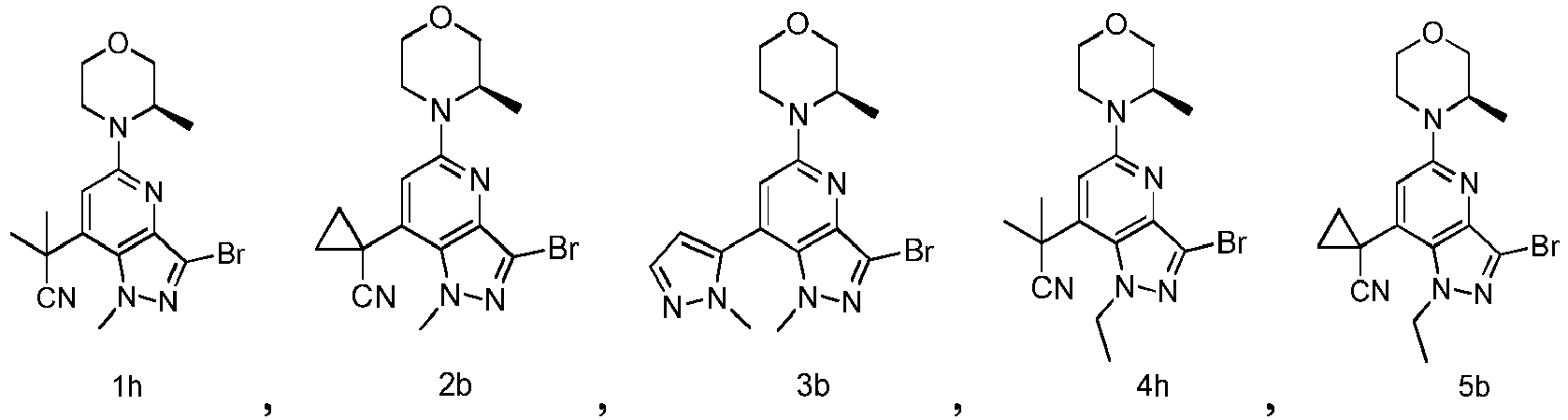

- The compound of formula (IIA) or the tautomer, mesomer, racemate, enantiomer or diastereomer thereof or the mixture thereof, or the pharmaceutically acceptable salt thereof according to claim 10, wherein the compound of formula (IIA) or the tautomer, mesomer, racemate, enantiomer or diastereomer thereof or the mixture thereof, or the pharmaceutically acceptable salt thereof is selected from the group consisting of any of the following compounds:


- The compound of formula (IIGA) or the tautomer, mesomer, racemate, enantiomer or diastereomer thereof or the mixture thereof, or the pharmaceutically acceptable salt thereof according to claim 11, wherein the compound of formula (IIGA) or the tautomer, mesomer, racemate, enantiomer or diastereomer thereof or the mixture thereof, or the pharmaceutically acceptable salt thereof is selected from the group consisting of:

- A method for preparing the compound of formula (I) or the tautomer, mesomer, racemate, enantiomer or diastereomer thereof or the mixture thereof, or the pharmaceutically acceptable salt thereof according to claim 1, comprising:

wherein:X is halogen, preferably Br;Rb is ring A, G1, G2, R1, R2, R3 and n are as defined in claim 1.
 - A method for preparing the compound of formula (IIA) or the tautomer, mesomer, racemate, enantiomer or diastereomer thereof or the mixture thereof, or the pharmaceutically acceptable salt thereof according to claim 10, comprising:

wherein:X is halogen, preferably Br;Ra is an amino protecting group;Rb is G1, G2, R1, R2, R3 and n are as defined in claim 10.
 - A method for preparing a compound of formula (IIGA) or a tautomer, mesomer, racemate, enantiomer or diastereomer thereof or a mixture thereof, or a pharmaceutically acceptable salt thereof, comprising:

wherein:X is halogen, preferably Br;Ra is an amino protecting group;Rb is G1, G2, R1, R2, R3 and n are as defined in claim 11.
 - A method for preparing a compound of formula (II) or a tautomer, mesomer, racemate, enantiomer or diastereomer thereof or a mixture thereof, or a pharmaceutically acceptable salt thereof, comprising:

 Ra is the amino protecting group; andG1, G2, R1, R2, R3 and n are as defined in claim 3.
 - A pharmaceutical composition comprising the compound of formula (I) or the tautomer, mesomer, racemate, enantiomer or diastereomer thereof or the mixture thereof, or the pharmaceutically acceptable salt thereof according to any of claims 1 to 8, and one or more pharmaceutically acceptable carrier, diluent or excipient.
- Use of the compound of formula (I) or the tautomer, mesomer, racemate, enantiomer or diastereomer thereof or the mixture thereof, or the pharmaceutically acceptable salt thereof according to any of claims 1 to 8, or the pharmaceutical composition according to claim 19 in preparing a medicament for inhibiting ATR kinase.
- Use of the compound of formula (I) or the tautomer, mesomer, racemate, enantiomer or diastereomer thereof or the mixture thereof, or the pharmaceutically acceptable salt thereof according to any of claims 1 to 8, or the pharmaceutical composition according to claim 19 in preparing a medicament for treating and/or preventing a hyperproliferative disease.
- Use of the compound of formula (I) or the tautomer, mesomer, racemate, enantiomer or diastereomer thereof or the mixture thereof, or the pharmaceutically acceptable salt thereof according to any of claims 1 to 8, or the pharmaceutical composition according to claim 19 in preparing a medicament for treating and/or preventing a tumor.
Applications Claiming Priority (3)
| Application Number | Priority Date | Filing Date | Title |
|---|---|---|---|
| CN201911147956 | 2019-11-21 | ||
| CN202010837381 | 2020-08-19 | ||
| PCT/CN2020/130326 WO2021098811A1 (en) | 2019-11-21 | 2020-11-20 | Pyrazolo-heteroaryl derivative, preparation method therefor, and medical use thereof |
Publications (2)
| Publication Number | Publication Date |
|---|---|
| EP4063363A1 true EP4063363A1 (en) | 2022-09-28 |
| EP4063363A4 EP4063363A4 (en) | 2023-11-29 |
Family
ID=75981069
Family Applications (1)
| Application Number | Title | Priority Date | Filing Date |
|---|---|---|---|
| EP20890856.6A Pending EP4063363A4 (en) | 2019-11-21 | 2020-11-20 | PYRAZOL-HETEROARYL DERIVATIVE, ITS PREPARATION METHOD AND ITS MEDICAL USE |
Country Status (11)
| Country | Link |
|---|---|
| US (1) | US12559488B2 (en) |
| EP (1) | EP4063363A4 (en) |
| JP (1) | JP7781059B2 (en) |
| KR (1) | KR20220103987A (en) |
| CN (5) | CN120004887A (en) |
| AU (1) | AU2020386587A1 (en) |
| BR (1) | BR112022008000A2 (en) |
| CA (1) | CA3159376A1 (en) |
| MX (1) | MX2022005985A (en) |
| TW (1) | TW202128690A (en) |
| WO (1) | WO2021098811A1 (en) |
Cited By (1)
| Publication number | Priority date | Publication date | Assignee | Title |
|---|---|---|---|---|
| EP4192836A4 (en) * | 2020-08-07 | 2024-08-14 | Antengene Discovery Limited | ATR INHIBITORS AND USES THEREOF |
Families Citing this family (6)
| Publication number | Priority date | Publication date | Assignee | Title |
|---|---|---|---|---|
| CN112142744A (en) | 2019-06-28 | 2020-12-29 | 上海瑛派药业有限公司 | Substituted fused heteroaromatic bicyclic compounds as kinase inhibitors and their applications |
| WO2022135560A1 (en) * | 2020-12-25 | 2022-06-30 | Impact Therapeutics (Shanghai) , Inc | Substituted imidazo[1,5-b]pyridazine compounds as kinase inhibitors and use thereof |
| KR20240012471A (en) | 2021-05-21 | 2024-01-29 | 지앙수 헨그루이 파마슈티컬스 컴퍼니 리미티드 | Pharmaceutically acceptable salts of pyrazoloheteroaryl derivatives and their crystalline forms |
| WO2023109883A1 (en) * | 2021-12-15 | 2023-06-22 | 上海翊石医药科技有限公司 | Aromatic heterocycle-substituted compounds, and preparation method therefor and use thereof |
| WO2024109727A1 (en) * | 2022-11-21 | 2024-05-30 | 江苏恒瑞医药股份有限公司 | Crystalline form of pharmaceutically acceptable salt of pyrazolo heteroaryl derivative |
| CN119143753B (en) * | 2023-06-14 | 2026-01-02 | 石药集团中奇制药技术(石家庄)有限公司 | A salt of a heterocyclic antitumor compound and its crystal form |
Family Cites Families (15)
| Publication number | Priority date | Publication date | Assignee | Title |
|---|---|---|---|---|
| ES2921576T3 (en) | 2008-12-19 | 2022-08-29 | Vertex Pharma | Compounds useful as ATR kinase inhibitors |
| US20110053923A1 (en) * | 2008-12-22 | 2011-03-03 | Astrazeneca | Chemical compounds 610 |
| SA111320519B1 (en) * | 2010-06-11 | 2014-07-02 | Astrazeneca Ab | Pyrimidinyl compounds for use as ATR inhibitors |
| CA2819373A1 (en) * | 2010-12-09 | 2012-06-14 | Amgen Inc. | Bicyclic compounds as pim inhibitors |
| ME03336B (en) | 2013-03-12 | 2019-10-20 | Vertex Pharma | DNA-PK INHIBITORS |
| AR095443A1 (en) | 2013-03-15 | 2015-10-14 | Fundación Centro Nac De Investig Oncológicas Carlos Iii | HEREROCICLES CONDENSED WITH ACTION ON ATR |
| TWI656121B (en) * | 2014-08-04 | 2019-04-11 | 德商拜耳製藥公司 | 2-(morpholin-4-yl)-1,7-naphthyridine |
| US20190000850A1 (en) | 2015-02-09 | 2019-01-03 | The Regents Of The University Of California | Combination cancer therapy |
| WO2017118734A1 (en) | 2016-01-08 | 2017-07-13 | The Institute Of Cancer Research: Royal Cancer Hospital | Inhibitors of ataxia-telangiectasia mutated and rad3-related protein kinase (atr) for use in methods of treating cancer |
| CA3011189C (en) | 2016-01-14 | 2024-02-20 | Bayer Pharma Aktiengesellschaft | 5-substituted 2-(morpholin-4-yl)-1,7-naphthyridines |
| US11730734B2 (en) | 2016-09-12 | 2023-08-22 | University Of Florida Research Foundation, Incorporated | Use of ATR and Chk1 inhibitor compounds |
| WO2018153970A1 (en) | 2017-02-24 | 2018-08-30 | Bayer Pharma Aktiengesellschaft | Solid forms of 2-[(3r)-3-methylmorpholin-4-yl]-4-(1-methyl-1h-pyrazol-5-yl)-8-(1h-pyrazol-5-yl)-1,7-naphthyridine |
| EP3679041B1 (en) | 2017-09-08 | 2022-07-06 | Newave Pharmaceutical Inc. | Substituted pyrrolopyridines as atr inhibitors |
| CN112654396B (en) * | 2018-09-07 | 2025-07-01 | 默克专利股份公司 | 5-Morpholin-4-yl-pyrazolo[4,3-b]pyridine derivatives |
| WO2020068729A1 (en) | 2018-09-25 | 2020-04-02 | Incyte Corporation | Pyrazolo[4,3-d]pyrimidine compounds as alk2 abd/or fgfr modulators |
-
2020
- 2020-11-20 TW TW109140787A patent/TW202128690A/en unknown
- 2020-11-20 CN CN202510105110.2A patent/CN120004887A/en active Pending
- 2020-11-20 BR BR112022008000A patent/BR112022008000A2/en unknown
- 2020-11-20 AU AU2020386587A patent/AU2020386587A1/en active Pending
- 2020-11-20 JP JP2022529505A patent/JP7781059B2/en active Active
- 2020-11-20 MX MX2022005985A patent/MX2022005985A/en unknown
- 2020-11-20 WO PCT/CN2020/130326 patent/WO2021098811A1/en not_active Ceased
- 2020-11-20 CN CN202510104960.0A patent/CN120004872A/en active Pending
- 2020-11-20 CN CN202080066108.4A patent/CN114423760B/en active Active
- 2020-11-20 KR KR1020227019663A patent/KR20220103987A/en not_active Ceased
- 2020-11-20 CN CN202510105174.2A patent/CN120004888A/en active Pending
- 2020-11-20 US US17/778,632 patent/US12559488B2/en active Active
- 2020-11-20 EP EP20890856.6A patent/EP4063363A4/en active Pending
- 2020-11-20 CN CN202510105045.3A patent/CN120004886A/en active Pending
- 2020-11-20 CA CA3159376A patent/CA3159376A1/en active Pending
Cited By (1)
| Publication number | Priority date | Publication date | Assignee | Title |
|---|---|---|---|---|
| EP4192836A4 (en) * | 2020-08-07 | 2024-08-14 | Antengene Discovery Limited | ATR INHIBITORS AND USES THEREOF |
Also Published As
| Publication number | Publication date |
|---|---|
| JP2023502458A (en) | 2023-01-24 |
| CN114423760A (en) | 2022-04-29 |
| CN120004886A (en) | 2025-05-16 |
| WO2021098811A1 (en) | 2021-05-27 |
| KR20220103987A (en) | 2022-07-25 |
| TW202128690A (en) | 2021-08-01 |
| AU2020386587A1 (en) | 2022-06-02 |
| BR112022008000A2 (en) | 2022-07-12 |
| CN120004872A (en) | 2025-05-16 |
| EP4063363A4 (en) | 2023-11-29 |
| JP7781059B2 (en) | 2025-12-05 |
| CN120004888A (en) | 2025-05-16 |
| CA3159376A1 (en) | 2021-05-27 |
| US20230018728A1 (en) | 2023-01-19 |
| CN120004887A (en) | 2025-05-16 |
| MX2022005985A (en) | 2022-06-17 |
| US12559488B2 (en) | 2026-02-24 |
| CN114423760B (en) | 2024-12-27 |
Similar Documents
| Publication | Publication Date | Title |
|---|---|---|
| US12559488B2 (en) | Substituted morpholines as ATR kinase inhibitors | |
| EP4563580A1 (en) | Fused ring compound, preparation method therefor and medicinal application thereof | |
| EP4361157A1 (en) | Fused tetracyclic compound, preparation method therefor and application thereof in medicine | |
| EP3991731A1 (en) | Pyrimidine five-membered nitrogen heterocyclic derivative, preparation method thereof and pharmaceutical use thereof | |
| CA3172285A1 (en) | Fused imidazole derivatives, preparation method and medical use thereof | |
| EP4166555A1 (en) | Pyridine-pyrimidine derivative, preparation method therefor and pharmaceutical use thereof | |
| EP3889153A1 (en) | Pyrimidine and five-membered nitrogen heterocycle derivative, preparation method therefor, and medical uses thereof | |
| EP4385989A1 (en) | Sulfonamide derivative, preparation method therefor and medical use thereof | |
| EP4349836A1 (en) | Nitrogen-containing heterocyclic compound, preparation method therefor, and application thereof in medicines | |
| EP3950690A1 (en) | Pyrroloheterocyclic derivative, preparation method therefor, and application thereof in medicine | |
| EP3750891A1 (en) | Pyrazolo[1,5-a][1,3,5]triazine-2-amine derivative, preparation method therefor and medical use thereof | |
| CN115594695A (en) | Macrocyclic compound, preparation method and medical application thereof | |
| EP3978498A1 (en) | Substituted fused bicyclic derivative, preparation method therefor, and application thereof in medicines | |
| EP3950693A1 (en) | Thienoheterocyclic derivative, preparation method therefor and medical use thereof | |
| CN112996783A (en) | 2-aminopyrimidine derivatives, preparation method and application thereof in medicines | |
| EP4122922A1 (en) | Fused bicyclic derivative, preparation method therefor, and pharmaceutical use thereof | |
| EP4067349A1 (en) | Fused pyridine ring derivative, preparation method therefor, and pharmaceutical use thereof | |
| CN115867552B (en) | Imidazolopyrimidine derivatives, preparation methods thereof and their application in medicine | |
| CN113912608B (en) | Pyrimidopyrimidinone derivatives, their preparation method and their application in medicine | |
| EP4190789A1 (en) | Oxa-azaspiro derivative, and preparation method therefor and pharmaceutical use thereof | |
| CN113004303A (en) | Pyrimido-oxazine tricyclic derivative, preparation method and application thereof in medicine | |
| HK40070277A (en) | Pyrazolo-heteroaryl derivative, preparation method therefor, and medical use thereof | |
| HK40070277B (en) | Pyrazolo-heteroaryl derivative, preparation method therefor, and medical use thereof | |
| WO2021143821A1 (en) | Fused heteroaryl derivative, preparation method therefor, and application thereof in medicine | |
| CN114634522A (en) | Purine ketone derivative, preparation method and medical application thereof |
Legal Events
| Date | Code | Title | Description |
|---|---|---|---|
| STAA | Information on the status of an ep patent application or granted ep patent |
Free format text: STATUS: THE INTERNATIONAL PUBLICATION HAS BEEN MADE |
|
| PUAI | Public reference made under article 153(3) epc to a published international application that has entered the european phase |
Free format text: ORIGINAL CODE: 0009012 |
|
| STAA | Information on the status of an ep patent application or granted ep patent |
Free format text: STATUS: REQUEST FOR EXAMINATION WAS MADE |
|
| 17P | Request for examination filed |
Effective date: 20220505 |
|
| AK | Designated contracting states |
Kind code of ref document: A1 Designated state(s): AL AT BE BG CH CY CZ DE DK EE ES FI FR GB GR HR HU IE IS IT LI LT LU LV MC MK MT NL NO PL PT RO RS SE SI SK SM TR |
|
| DAV | Request for validation of the european patent (deleted) | ||
| DAX | Request for extension of the european patent (deleted) | ||
| A4 | Supplementary search report drawn up and despatched |
Effective date: 20231102 |
|
| RIC1 | Information provided on ipc code assigned before grant |
Ipc: A61P 35/00 20060101ALI20231026BHEP Ipc: A61K 31/5377 20060101ALI20231026BHEP Ipc: C07D 487/04 20060101ALI20231026BHEP Ipc: C07D 471/04 20060101AFI20231026BHEP |
|
| STAA | Information on the status of an ep patent application or granted ep patent |
Free format text: STATUS: EXAMINATION IS IN PROGRESS |
|
| 17Q | First examination report despatched |
Effective date: 20250407 |