EP4063179A1 - State of charge lower limit control method and apparatus for power battery, and vehicle - Google Patents
State of charge lower limit control method and apparatus for power battery, and vehicle Download PDFInfo
- Publication number
- EP4063179A1 EP4063179A1 EP21760659.9A EP21760659A EP4063179A1 EP 4063179 A1 EP4063179 A1 EP 4063179A1 EP 21760659 A EP21760659 A EP 21760659A EP 4063179 A1 EP4063179 A1 EP 4063179A1
- Authority
- EP
- European Patent Office
- Prior art keywords
- time period
- power battery
- minimum
- battery temperature
- temperature
- Prior art date
- Legal status (The legal status is an assumption and is not a legal conclusion. Google has not performed a legal analysis and makes no representation as to the accuracy of the status listed.)
- Pending
Links
Images


Classifications
-
- B—PERFORMING OPERATIONS; TRANSPORTING
- B60—VEHICLES IN GENERAL
- B60L—PROPULSION OF ELECTRICALLY-PROPELLED VEHICLES; SUPPLYING ELECTRIC POWER FOR AUXILIARY EQUIPMENT OF ELECTRICALLY-PROPELLED VEHICLES; ELECTRODYNAMIC BRAKE SYSTEMS FOR VEHICLES IN GENERAL; MAGNETIC SUSPENSION OR LEVITATION FOR VEHICLES; MONITORING OPERATING VARIABLES OF ELECTRICALLY-PROPELLED VEHICLES; ELECTRIC SAFETY DEVICES FOR ELECTRICALLY-PROPELLED VEHICLES
- B60L58/00—Methods or circuit arrangements for monitoring or controlling batteries or fuel cells, specially adapted for electric vehicles
- B60L58/10—Methods or circuit arrangements for monitoring or controlling batteries or fuel cells, specially adapted for electric vehicles for monitoring or controlling batteries
- B60L58/12—Methods or circuit arrangements for monitoring or controlling batteries or fuel cells, specially adapted for electric vehicles for monitoring or controlling batteries responding to state of charge [SoC]
- B60L58/13—Maintaining the SoC within a determined range
-
- B—PERFORMING OPERATIONS; TRANSPORTING
- B60—VEHICLES IN GENERAL
- B60W—CONJOINT CONTROL OF VEHICLE SUB-UNITS OF DIFFERENT TYPE OR DIFFERENT FUNCTION; CONTROL SYSTEMS SPECIALLY ADAPTED FOR HYBRID VEHICLES; ROAD VEHICLE DRIVE CONTROL SYSTEMS FOR PURPOSES NOT RELATED TO THE CONTROL OF A PARTICULAR SUB-UNIT
- B60W20/00—Control systems specially adapted for hybrid vehicles
- B60W20/10—Controlling the power contribution of each of the prime movers to meet required power demand
- B60W20/13—Controlling the power contribution of each of the prime movers to meet required power demand in order to stay within battery power input or output limits; in order to prevent overcharging or battery depletion
-
- B—PERFORMING OPERATIONS; TRANSPORTING
- B60—VEHICLES IN GENERAL
- B60L—PROPULSION OF ELECTRICALLY-PROPELLED VEHICLES; SUPPLYING ELECTRIC POWER FOR AUXILIARY EQUIPMENT OF ELECTRICALLY-PROPELLED VEHICLES; ELECTRODYNAMIC BRAKE SYSTEMS FOR VEHICLES IN GENERAL; MAGNETIC SUSPENSION OR LEVITATION FOR VEHICLES; MONITORING OPERATING VARIABLES OF ELECTRICALLY-PROPELLED VEHICLES; ELECTRIC SAFETY DEVICES FOR ELECTRICALLY-PROPELLED VEHICLES
- B60L58/00—Methods or circuit arrangements for monitoring or controlling batteries or fuel cells, specially adapted for electric vehicles
- B60L58/10—Methods or circuit arrangements for monitoring or controlling batteries or fuel cells, specially adapted for electric vehicles for monitoring or controlling batteries
- B60L58/12—Methods or circuit arrangements for monitoring or controlling batteries or fuel cells, specially adapted for electric vehicles for monitoring or controlling batteries responding to state of charge [SoC]
-
- H—ELECTRICITY
- H01—ELECTRIC ELEMENTS
- H01M—PROCESSES OR MEANS, e.g. BATTERIES, FOR THE DIRECT CONVERSION OF CHEMICAL ENERGY INTO ELECTRICAL ENERGY
- H01M10/00—Secondary cells; Manufacture thereof
- H01M10/42—Methods or arrangements for servicing or maintenance of secondary cells or secondary half-cells
- H01M10/425—Structural combination with electronic components, e.g. electronic circuits integrated to the outside of the casing
-
- H—ELECTRICITY
- H01—ELECTRIC ELEMENTS
- H01M—PROCESSES OR MEANS, e.g. BATTERIES, FOR THE DIRECT CONVERSION OF CHEMICAL ENERGY INTO ELECTRICAL ENERGY
- H01M10/00—Secondary cells; Manufacture thereof
- H01M10/42—Methods or arrangements for servicing or maintenance of secondary cells or secondary half-cells
- H01M10/48—Accumulators combined with arrangements for measuring, testing or indicating the condition of cells, e.g. the level or density of the electrolyte
- H01M10/486—Accumulators combined with arrangements for measuring, testing or indicating the condition of cells, e.g. the level or density of the electrolyte for measuring temperature
-
- H—ELECTRICITY
- H02—GENERATION; CONVERSION OR DISTRIBUTION OF ELECTRIC POWER
- H02J—ELECTRIC POWER NETWORKS; CIRCUIT ARRANGEMENTS OR SYSTEMS FOR SUPPLYING OR DISTRIBUTING ELECTRIC POWER; SYSTEMS FOR STORING ELECTRIC ENERGY
- H02J7/00—Circuit arrangements for charging or discharging batteries or for supplying loads from batteries
- H02J7/80—Circuit arrangements for charging or discharging batteries or for supplying loads from batteries including monitoring or indicating arrangements
-
- H—ELECTRICITY
- H02—GENERATION; CONVERSION OR DISTRIBUTION OF ELECTRIC POWER
- H02J—ELECTRIC POWER NETWORKS; CIRCUIT ARRANGEMENTS OR SYSTEMS FOR SUPPLYING OR DISTRIBUTING ELECTRIC POWER; SYSTEMS FOR STORING ELECTRIC ENERGY
- H02J7/00—Circuit arrangements for charging or discharging batteries or for supplying loads from batteries
- H02J7/80—Circuit arrangements for charging or discharging batteries or for supplying loads from batteries including monitoring or indicating arrangements
- H02J7/82—Control of state of charge [SOC]
-
- B—PERFORMING OPERATIONS; TRANSPORTING
- B60—VEHICLES IN GENERAL
- B60L—PROPULSION OF ELECTRICALLY-PROPELLED VEHICLES; SUPPLYING ELECTRIC POWER FOR AUXILIARY EQUIPMENT OF ELECTRICALLY-PROPELLED VEHICLES; ELECTRODYNAMIC BRAKE SYSTEMS FOR VEHICLES IN GENERAL; MAGNETIC SUSPENSION OR LEVITATION FOR VEHICLES; MONITORING OPERATING VARIABLES OF ELECTRICALLY-PROPELLED VEHICLES; ELECTRIC SAFETY DEVICES FOR ELECTRICALLY-PROPELLED VEHICLES
- B60L2240/00—Control parameters of input or output; Target parameters
- B60L2240/40—Drive Train control parameters
- B60L2240/44—Drive Train control parameters related to combustion engines
-
- B—PERFORMING OPERATIONS; TRANSPORTING
- B60—VEHICLES IN GENERAL
- B60L—PROPULSION OF ELECTRICALLY-PROPELLED VEHICLES; SUPPLYING ELECTRIC POWER FOR AUXILIARY EQUIPMENT OF ELECTRICALLY-PROPELLED VEHICLES; ELECTRODYNAMIC BRAKE SYSTEMS FOR VEHICLES IN GENERAL; MAGNETIC SUSPENSION OR LEVITATION FOR VEHICLES; MONITORING OPERATING VARIABLES OF ELECTRICALLY-PROPELLED VEHICLES; ELECTRIC SAFETY DEVICES FOR ELECTRICALLY-PROPELLED VEHICLES
- B60L2240/00—Control parameters of input or output; Target parameters
- B60L2240/40—Drive Train control parameters
- B60L2240/54—Drive Train control parameters related to batteries
-
- B—PERFORMING OPERATIONS; TRANSPORTING
- B60—VEHICLES IN GENERAL
- B60L—PROPULSION OF ELECTRICALLY-PROPELLED VEHICLES; SUPPLYING ELECTRIC POWER FOR AUXILIARY EQUIPMENT OF ELECTRICALLY-PROPELLED VEHICLES; ELECTRODYNAMIC BRAKE SYSTEMS FOR VEHICLES IN GENERAL; MAGNETIC SUSPENSION OR LEVITATION FOR VEHICLES; MONITORING OPERATING VARIABLES OF ELECTRICALLY-PROPELLED VEHICLES; ELECTRIC SAFETY DEVICES FOR ELECTRICALLY-PROPELLED VEHICLES
- B60L2240/00—Control parameters of input or output; Target parameters
- B60L2240/40—Drive Train control parameters
- B60L2240/54—Drive Train control parameters related to batteries
- B60L2240/545—Temperature
-
- B—PERFORMING OPERATIONS; TRANSPORTING
- B60—VEHICLES IN GENERAL
- B60L—PROPULSION OF ELECTRICALLY-PROPELLED VEHICLES; SUPPLYING ELECTRIC POWER FOR AUXILIARY EQUIPMENT OF ELECTRICALLY-PROPELLED VEHICLES; ELECTRODYNAMIC BRAKE SYSTEMS FOR VEHICLES IN GENERAL; MAGNETIC SUSPENSION OR LEVITATION FOR VEHICLES; MONITORING OPERATING VARIABLES OF ELECTRICALLY-PROPELLED VEHICLES; ELECTRIC SAFETY DEVICES FOR ELECTRICALLY-PROPELLED VEHICLES
- B60L2240/00—Control parameters of input or output; Target parameters
- B60L2240/60—Navigation input
- B60L2240/66—Ambient conditions
- B60L2240/662—Temperature
-
- B—PERFORMING OPERATIONS; TRANSPORTING
- B60—VEHICLES IN GENERAL
- B60L—PROPULSION OF ELECTRICALLY-PROPELLED VEHICLES; SUPPLYING ELECTRIC POWER FOR AUXILIARY EQUIPMENT OF ELECTRICALLY-PROPELLED VEHICLES; ELECTRODYNAMIC BRAKE SYSTEMS FOR VEHICLES IN GENERAL; MAGNETIC SUSPENSION OR LEVITATION FOR VEHICLES; MONITORING OPERATING VARIABLES OF ELECTRICALLY-PROPELLED VEHICLES; ELECTRIC SAFETY DEVICES FOR ELECTRICALLY-PROPELLED VEHICLES
- B60L2240/00—Control parameters of input or output; Target parameters
- B60L2240/80—Time limits
-
- B—PERFORMING OPERATIONS; TRANSPORTING
- B60—VEHICLES IN GENERAL
- B60W—CONJOINT CONTROL OF VEHICLE SUB-UNITS OF DIFFERENT TYPE OR DIFFERENT FUNCTION; CONTROL SYSTEMS SPECIALLY ADAPTED FOR HYBRID VEHICLES; ROAD VEHICLE DRIVE CONTROL SYSTEMS FOR PURPOSES NOT RELATED TO THE CONTROL OF A PARTICULAR SUB-UNIT
- B60W2510/00—Input parameters relating to a particular sub-units
- B60W2510/24—Energy storage means
- B60W2510/242—Energy storage means for electrical energy
- B60W2510/244—Charge state
-
- B—PERFORMING OPERATIONS; TRANSPORTING
- B60—VEHICLES IN GENERAL
- B60W—CONJOINT CONTROL OF VEHICLE SUB-UNITS OF DIFFERENT TYPE OR DIFFERENT FUNCTION; CONTROL SYSTEMS SPECIALLY ADAPTED FOR HYBRID VEHICLES; ROAD VEHICLE DRIVE CONTROL SYSTEMS FOR PURPOSES NOT RELATED TO THE CONTROL OF A PARTICULAR SUB-UNIT
- B60W2510/00—Input parameters relating to a particular sub-units
- B60W2510/24—Energy storage means
- B60W2510/242—Energy storage means for electrical energy
- B60W2510/246—Temperature
-
- B—PERFORMING OPERATIONS; TRANSPORTING
- B60—VEHICLES IN GENERAL
- B60W—CONJOINT CONTROL OF VEHICLE SUB-UNITS OF DIFFERENT TYPE OR DIFFERENT FUNCTION; CONTROL SYSTEMS SPECIALLY ADAPTED FOR HYBRID VEHICLES; ROAD VEHICLE DRIVE CONTROL SYSTEMS FOR PURPOSES NOT RELATED TO THE CONTROL OF A PARTICULAR SUB-UNIT
- B60W2555/00—Input parameters relating to exterior conditions, not covered by groups B60W2552/00, B60W2554/00
- B60W2555/20—Ambient conditions, e.g. wind or rain
-
- B—PERFORMING OPERATIONS; TRANSPORTING
- B60—VEHICLES IN GENERAL
- B60W—CONJOINT CONTROL OF VEHICLE SUB-UNITS OF DIFFERENT TYPE OR DIFFERENT FUNCTION; CONTROL SYSTEMS SPECIALLY ADAPTED FOR HYBRID VEHICLES; ROAD VEHICLE DRIVE CONTROL SYSTEMS FOR PURPOSES NOT RELATED TO THE CONTROL OF A PARTICULAR SUB-UNIT
- B60W2710/00—Output or target parameters relating to a particular sub-units
- B60W2710/24—Energy storage means
- B60W2710/242—Energy storage means for electrical energy
- B60W2710/244—Charge state
-
- H—ELECTRICITY
- H01—ELECTRIC ELEMENTS
- H01M—PROCESSES OR MEANS, e.g. BATTERIES, FOR THE DIRECT CONVERSION OF CHEMICAL ENERGY INTO ELECTRICAL ENERGY
- H01M10/00—Secondary cells; Manufacture thereof
- H01M10/42—Methods or arrangements for servicing or maintenance of secondary cells or secondary half-cells
- H01M10/425—Structural combination with electronic components, e.g. electronic circuits integrated to the outside of the casing
- H01M2010/4271—Battery management systems including electronic circuits, e.g. control of current or voltage to keep battery in healthy state, cell balancing
-
- H—ELECTRICITY
- H01—ELECTRIC ELEMENTS
- H01M—PROCESSES OR MEANS, e.g. BATTERIES, FOR THE DIRECT CONVERSION OF CHEMICAL ENERGY INTO ELECTRICAL ENERGY
- H01M2220/00—Batteries for particular applications
- H01M2220/20—Batteries in motive systems, e.g. vehicle, ship, plane
Definitions
- the present disclosure relates to the technical field of new energy vehicles, and more particularly to a method for controlling lower limit of state-of-charge of power battery, a device for controlling lower limit of state-of-charge of power battery, and a vehicle.
- hybrid vehicles have become an important development direction of automotive industry due to their prominent advantages in aspects of energy conservation and environmental protection.
- a lower limit of a state of charge of power battery used by the hybrid vehicles is fixed during use of the hybrid vehicles; when a battery of a vehicle has a low state-of-charge value, after the vehicle is stopped and powered-off, the battery has such a low state-of-charge value that it may not be able to enable the vehicle to be normally powered-up at a low temperature environment, so that an usage of normal functions of the vehicle is affected after the vehicle is powered-up next time.
- an objective of the present disclosure is to propose a method for controlling a lower limit of a state-of-charge of a power battery, a device for controlling the lower limit of the state-of-charge of the power battery, and a vehicle, thereby ensuring that the state-of-charge value of the battery at the low temperature environment can enable the vehicle to be normally powered-up.
- a method for controlling a lower limit of a state-of-charge of a power battery including: detecting a minimum ambient temperature and a minimum power battery temperature in at least one time period; evaluating a minimum power battery temperature in a preset time period after the at least one time period according to the minimum ambient temperature and the minimum power battery temperature in the at least one time period; determining a minimum state-of-charge value that can meet a start-up power requirement of a vehicle engine at the minimum power battery temperature in the preset time period according to the minimum power battery temperature in the preset time period; adjusting a lower limit value of the state-of-charge according to the minimum state-of-charge value .
- the minimum ambient temperature and the minimum power battery temperature in the at least one time period only include a minimum ambient temperature and a minimum power battery temperature in a first time period
- evaluating the minimum power battery temperature in the preset time period after the at least one time period according to the minimum ambient temperature and the minimum power battery temperature in the at least one time period includes: calculating the minimum power battery temperature in the preset time period according to the minimum power battery temperature, a temperature constant and a first power battery temperature evaluation factor in the first time period.
- the minimum ambient temperature and the minimum power battery temperature in the at least one time period include a minimum ambient temperature and a minimum power battery temperature in a first time period and a minimum ambient temperature and a minimum power battery temperature in a second time period, the second time period is subsequent to the first time period, evaluating the minimum power battery temperature in the preset time period after the at least one time period according to the minimum ambient temperature and the minimum power battery temperature in the at least one time period includes: evaluating the minimum power battery temperature in the preset time period as the minimum power battery temperature in the first time period, when determining that the minimum ambient temperature in the first time period is lower than or equal to the minimum ambient temperature in the second time period, and the minimum power battery temperature in the first time period is lower than or equal to the minimum power battery temperature in the second time period; evaluating the minimum power battery temperature in the preset time period as the minimum power battery temperature in the second time period, when determining that the minimum ambient temperature in the first time period is lower than or equal to the minimum ambient temperature in the second time period, and the minimum power battery temperature
- the minimum ambient temperature and the minimum power battery temperature in the at least one time period include a minimum ambient temperature and a minimum power battery temperature in a first time period and a minimum ambient temperature and a minimum power battery temperature in a second time period, the second time period is subsequent to the first time period, evaluating the minimum power battery temperature in the preset time period after the at least one time period according to the minimum ambient temperature and the minimum power battery temperature in the at least one time period includes: calculating the minimum power battery temperature in the preset time period according to the minimum power battery temperature in the first time period, the minimum power battery temperature in the second time period and a second power battery temperature evaluation factor when determining that the minimum ambient temperature in the first time period is higher than the minimum ambient temperature in the second time period, and the minimum power battery temperature in the first time period is higher than the minimum power battery temperature in the second time period; calculating the minimum power battery temperature in the preset time period according to the minimum power battery temperature in the first time period, a temperature constant and a third power battery temperature evaluation factor, when determining that the minimum
- determining the minimum state-of-charge value that can meet the start-up power requirement of the vehicle engine at the minimum power battery temperature in the preset time period according to the minimum power battery temperature in the preset time period includes: substituting the minimum power battery temperature in the preset time period into a discharge power Map of the power battery to obtain the minimum state-of-charge value .
- the method for controlling the lower limit of the state-of-charge of the power battery has the following advantages:
- the method for controlling the lower limit of the state-of-charge of the power battery includes: detecting a minimum ambient temperature and a minimum power battery temperature in at least one time period; evaluating a minimum power battery temperature in a preset time period after the at least one time period according to the minimum ambient temperature and the minimum power battery temperature in the at least one time period; determining a minimum state-of-charge value that can meet a start-up power requirement of a vehicle engine at the minimum power battery temperature in the preset time period according to the minimum power battery temperature in the preset time period; adjusting a lower limit value of the state-of-charge according to the minimum state-of-charge value.
- the lower limit value of the state-of-charge of the power battery is adjusted according to the minimum power battery temperature in the future preset time period, in order that the state-of-charge value of the power battery of the vehicle is not lower thanq the lower limit value, so that it is ensured that the state-of-charge value at the low temperature environment can enable the vehicle to be normally powered-up.
- Another objective of the present disclosure is to propose a device for controlling a lower limit of a state-of-charge of a power battery, thereby ensuring that the state-of-charge value of the power battery at the low temperature environment can enable the vehicle to be powered-up normally.
- a device for controlling a lower limit of a state-of-charge of a power battery including a detection unit, an evaluation unit and a processing unit, where the detection unit is configured to detect a minimum ambient temperature and a minimum power battery temperature in at least one time period; the evaluation unit is configured to evaluate a minimum power battery temperature in a preset time period after the at least one time period according to the minimum ambient temperature and the minimum power battery temperature in the at least one time period; the processing unit is configured to determine a minimum state-of-charge value that can meet a start-up power requirement of a vehicle engine at the minimum power battery temperature in the preset time period according to the minimum power battery temperature in the preset time period, adjust a lower limit value of the state-of-charge according to the minimum state-of-charge value.
- the minimum ambient temperature and the minimum power battery temperature in the at least one time period only include a minimum ambient temperature and a minimum power battery temperature in a first time period
- the evaluation unit is further configured to calculate the minimum power battery temperature in the preset time period according to the minimum power battery temperature, a temperature constant and a first power battery temperature evaluation factor in the first time period.
- the minimum ambient temperature and the minimum power battery temperature in the at least one time period include a minimum ambient temperature and a minimum power battery temperature in a first time period and a minimum ambient temperature and a minimum power battery temperature in a second time period, the second time period is subsequent to the first time period, the evaluation unit is further configured to: evaluate the minimum power battery temperature in the preset time period as the minimum power battery temperature in the first time period when determining that the minimum ambient temperature in the first time period is lower than or equal to the minimum ambient temperature in the second time period, and the minimum power battery temperature in the first time period is lower than or equal to the minimum power battery temperature in the second time period; evaluate the minimum power battery temperature in the preset time period as the minimum power battery temperature in the second time period when determining that the minimum ambient temperature in the first time period is lower than or equal to the minimum ambient temperature in the second time period, and the minimum power battery temperature in the first time period is higher than the minimum power battery temperature in the second time period.
- the minimum ambient temperature and the minimum power battery temperature in the at least one time period include a minimum ambient temperature and a minimum power battery temperature in a first time period and a minimum ambient temperature and a minimum power battery temperature in a second time period, the second time period is subsequent to the first time period, the evaluation unit is further configured to: calculate the minimum power battery temperature in the preset time period according to the minimum power battery temperature in the first time period, the minimum power battery temperature in the second time period and a second power battery temperature evaluation factor when determining that the minimum ambient temperature in the first time period is higher than the minimum ambient temperature in the second time period, and the minimum power battery temperature in the first time period is higher than the minimum power battery temperature in the second time period; calculate the minimum power battery temperature in the preset time period according to the minimum power battery temperature in the first time period, a temperature constant and a third power battery temperature evaluation factor when determining that the minimum ambient temperature in the first time period is higher than the minimum ambient temperature in the second time period, and the minimum power battery temperature in the first time period is lower than or equal
- the device for controlling the lower limit of the state-of-charge of the power battery and the method for controlling the lower limit of the state-of-charge of the power battery have the same advantages over the prior art, so that the advantages of the device for controlling the lower limit of the state-of-charge of the power battery are not repeatedly described here.
- Another objective of the present disclosure is to propose a vehicle to ensure that the state-of-charge value of the power battery at the low temperature environment can enable the vehicle to be powered-up normally.
- a vehicle including the device for controlling the lower limit of the state-of-charge of the power battery as described above.
- the vehicle and the device for controlling the lower limit of the state-of-charge of the power battery have the same advantages over the prior art, so that the advantages of the vehicle are not repeatedly described here.
- Another objective of the present disclosure is to propose a computer readable storage medium to ensure that the state-of-charge value of the power battery at the low temperature environment can enable the vehicle to be powered-up normally.
- a computer readable storage medium which stores an instruction that is executed to cause a machine to perform the aforesaid method for controlling the lower limit of the state-of-charge of the power battery.
- the computer readable storage medium and the method for controlling the lower limit of the state-of-charge of the power battery have the same advantages over the prior art, so that the advantages of the computer readable storage medium are not repeatedly described here.
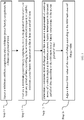
- FIG. 1 is a flowchart of a method for controlling a state-of-charge of a power battery according to one embodiment of the present disclosure. As shown in FIG. 1 , this control method includes:
- step S11 a minimum ambient temperature and a minimum power battery temperature in at least one time period are detected.
- a temperature sensor may be used to detect an ambient temperature and a power battery temperature, then, the ambient temperature and the power battery temperature are stored, then, the minimum ambient temperature and the minimum power battery temperature are calculated.
- the at least one time period may be, for example, a time period such as 5 days, 10 days or 30 days, as an alternative, the at least one time period may be two time periods (two separate 5 days). If the at least one time period refers to two separate time periods, the minimum ambient temperature and the minimum power battery temperature in each of the two separate time periods are obtained respectively.
- BMS Battery Management System
- a CAN Controller Area Network
- a temperature threshold e.g., 0°C
- an air conditioner controller is awakened to send the current ambient temperature to a HCU (Hybrid Control Unit), and then waits for sleep.
- a HUT Head Unit System
- HCU Hybrid Control Unit
- the HCU After the HCU is awakened, the HCU is configured to: receive the temperature of the power battery and the ambient temperature; write the received temperature of the power battery and the ambient temperature into a daily record of power battery temperature and ambient temperature; and calculate the minimum power battery temperature and the minimum ambient temperature in this day based on the effective record (the effective record is not equal to a default value 100, the temperature is invalid if a failure of temperature detection of the BMS or the air conditioner controller occurs) of power battery temperature and the ambient temperature record in this day; and record the minimum power battery temperature and the ambient temperature in this day, and thereby obtains the minimum power battery temperature and the minimum ambient temperature in any time period according to the daily record of the minimum power battery temperature and the ambient temperature.
- the effective record is not equal to a default value 100, the temperature is invalid if a failure of temperature detection of the BMS or the air conditioner controller occurs
- the daily record of the minimum power battery temperature and the daily record of the minimum ambient temperature are invalid in one certain time period (i.e., the default value 100), it means that the minimum power battery temperature or the minimum ambient temperature in this time period is also invalid (i.e., the default value 100).
- a minimum power battery temperature in a preset time period after the at least one time period is evaluated according to the minimum ambient temperature and the minimum power battery temperature in the at least one time period.
- the at least one time period is only one time period (e.g., the first time period), or the at least one time period refers to two time periods, however, the minimum ambient temperature or the minimum power battery temperature in one of the two time periods is invalid (i.e., the default value is 100), in this case, the step S212 is performed to replace the step S12, and the minimum power battery temperature in the preset time period is calculated according to the minimum power battery temperature in the first time period, the temperature constant and the first power battery temperature evaluation factor.
- the temperature constant is, for example, 5°C, this constant value may be calibrated according to actual requirement.
- the first power battery temperature evaluation factor q1 may be obtained by being substituted into the minimum power battery temperature T1 and the minimum ambient temperature in the first time period, and by querying a "correspondence table between the power battery temperature evaluation factor and the minimum power battery temperature and the minimum ambient temperature".
- a range of the first power battery temperature evaluation factor q1 is between 0 and 2, preferably.
- the aforesaid process is repeatedly executed for many times, so that the first power battery temperature evaluation factor q1 corresponding to the various minimum ambient temperatures and the minimum power battery temperatures in many past 10 days may be obtained according to a large amount of actual data; this calibration method is commonly used, and the details of this calibration method are not repeatedly described here.
- the at least one time period refers to two time periods, that is, the first time period and the second time period (i.e., the second time period is subsequent to the first time period), and the minimum ambient temperatures and the minimum power battery temperatures in the two time periods are valid, the following steps S221-S227 are performed to replace the step S12.
- step S221 whether the minimum ambient temperature in the first time period is lower than or equal to the minimum ambient temperature in the second time period is determined
- step S222 whether the minimum power battery temperature in the first time period is lower than or equal to the minimum power battery temperature in the second time period is determined when the minimum ambient temperature in the first time period is lower than or equal to the minimum ambient temperature in the second time period;
- the minimum power battery temperature in the preset time period is evaluated as the minimum power battery temperature in the first time period, when the minimum power battery temperature in the first time period is lower than or equal to the minimum power battery temperature in the second time period;
- the minimum power battery temperature in the preset time period is evaluated as the minimum power battery temperature in the second time period, when the minimum power battery temperature in the first time period is higher than the minimum power battery temperature in the second time period.
- step S225 whether the minimum power battery temperature in the first time period is lower than or equal to the minimum power battery temperature in the second time period is determined, when the minimum ambient temperature in the first time period is higher than the minimum ambient temperature in the second time period;
- the minimum power battery temperature in the preset time period is calculated according to the minimum power battery temperature, the temperature constant and the third power battery temperature evaluation factor in the first time period, when the minimum power battery temperature in the first time period is lower than or equal to the minimum power battery temperature in the second time period.
- TO T1+C ⁇ q3, where TO is the minimum power battery temperature in the preset time period, T1 is the minimum power battery temperature in the first time period, C is the temperature constant, and q3 is the third power battery temperature evaluation factor.
- the third power battery temperature evaluation factor may likewise be obtained by being substituted into the minimum power battery temperature T1 and the minimum ambient temperature in the first time period, and by querying the "correspondence table between the power battery temperature evaluation factor and the minimum power battery temperature and the minimum ambient temperature".
- a range of the third power battery temperature evaluation factor q3 is between 0 and 2, preferably.
- step S227 the minimum power battery temperature in the preset time period is calculated according to the minimum power battery temperature in the first time period, the minimum power battery temperature in the second time period and the second power battery temperature evaluation factor, when the minimum power battery temperature in the first time period is higher than the minimum power battery temperature in the second time period.
- TO T2 +(T2-T1) ⁇ q2, where TO is the minimum power battery temperature in the preset time period, T1 is the minimum power battery temperature in the first time period, T2 is the minimum power battery temperature in the second time period, and q2 is the second power battery temperature evaluation factor.
- the second power battery temperature evaluation factor q2 may likewise be obtained by being substituted into a difference between the minimum ambient temperature T2 in the second time period and the minimum ambient temperature T1 in the first time period and a difference between the minimum power battery temperature in the second time period and the minimum power battery temperature in the first time period, and by querying the corresponding table between power battery temperature evaluation factor and the minimum power battery temperature and the minimum ambient temperature.
- a range of the second power battery temperature evaluation factor q2 is between 0 and 2, preferably.
- step S13 determining a minimum state-of-charge value that can meet a start-up power requirement of a vehicle engine at the minimum power battery temperature in the preset time period according to the minimum power battery temperature in the preset time period;
- the minimum power battery temperature in the preset time period is substituted into a discharge power Map of the power battery to obtain the minimum state-of-charge value.
- the discharge power Map of the power battery is known, but is different for different vehicles or power batteries.
- a lower limit value of the state-of-charge is adjusted according to the minimum state-of-charge value.
- a reserved quantity is added to the minimum state-of-charge value to serve as the lower limit value of the evaluated state-of-charge for ensuring low-temperature cold start of the engine.
- the one having greater value in the evaluated lower limit value of the state-of-charge for ensuring the low-temperature cold start of the engine and a lower limit value of a state-of-charge of a battery pack defined by a battery supplier is selected, and is taken as the final lower limit value of the state-of-charge.
- the state-of-charge value needs to be adjusted to be 25% or above 25% in order to start up the vehicle, so that the lower limit value of the state-of-charge is adjusted to be 25% from a fixed value of 15%, and the state-of-charge value being no less than 25% is maintained; for example, the vehicle is stopped and can not be used when the state-of-charge value is about to be dropped below 25%; as an alternative, the state-of-charge value is kept above 25% by charging when the state-of-charge value of the power battery is dropped below 25%, so that a problem that a battery discharge power does not meet the start-up power requirement of the vehicle engine after the vehicle is stopped and powered-off due to the drop of power battery pack temperature, which is further caused due to the drop of ambient temperature in the future 10 days, so that the engine cannot be started, and the vehicle cannot be used is solved.
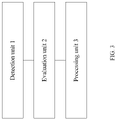
- FIG. 3 is a structural block diagram of a device for controlling a lower limit of a state-of-charge of a power battery according to one embodiment of the present disclosure.
- the control device includes: a detection unit 1, an evaluation unit 2, and a processing unit 3, where the detection unit 1 is configured to detect a minimum ambient temperature and a minimum power battery temperature in at least one time period; the evaluation unit 2 is configured to evaluate a minimum power battery temperature in a preset time period after the at least one time period according to the minimum ambient temperature and the minimum power battery temperature in the at least one time period; the processing unit 3 is configured to determine a minimum state-of-charge value that can meet a start-up power requirement of a vehicle engine at a minimum power battery temperature in the preset time period according to the minimum power battery temperature in the preset time period, and adjust a lower limit value of the state-of-charge according to the minimum state-of-charge value .
- the minimum ambient temperature and the minimum power battery temperature in the at least one time period only include a minimum ambient temperature and a minimum power battery temperature in a first time period
- the evaluation unit 2 is further configured to: calculate the minimum power battery temperature in the preset time period according to the minimum power battery temperature, a temperature constant and a first power battery temperature evaluation factor in the first time period.
- the minimum ambient temperature and the minimum power battery temperature in the at least one time period include a minimum ambient temperature and a minimum power battery temperature in a first time period and a minimum ambient temperature and a minimum power battery temperature in a second time period, the second time period is subsequent to the first time period, the evaluation unit 2 is further configured to: evaluate the minimum power battery temperature in the preset time period as the minimum power battery temperature in the first time period when determining that the minimum ambient temperature in the first time period is lower than or equal to the minimum ambient temperature in the second time period, and the minimum power battery temperature in the first time period is lower than or equal to the minimum power battery temperature in the second time period; or evaluate the minimum power battery temperature in the preset time period as the minimum power battery temperature in the second time period when determining that the minimum ambient temperature in the first time period is lower than or equal to the minimum ambient temperature in the second time period, and the minimum power battery temperature in the first time period is higher than the minimum power battery temperature in the second time period.
- the minimum ambient temperature and the minimum power battery temperature in the at least one time period include a minimum ambient temperature and a minimum power battery temperature in a first time period and a minimum ambient temperature and a minimum power battery temperature in a second time period, the second time period is subsequent to the first time period, the evaluation unit 2 is further configured to: calculate the minimum power battery temperature in the preset time period according to the minimum power battery temperature in the first time period, the minimum power battery temperature in the second time period and a second power battery temperature evaluation factor when determining that the minimum ambient temperature in the first time period is higher than the minimum ambient temperature in the second time period, and the minimum power battery temperature in the first time period is higher than the minimum power battery temperature in the second time period; or calculate the minimum power battery temperature in the preset time period according to the minimum power battery temperature in the first time period, a temperature constant and a third power battery temperature evaluation factor when determining that the minimum ambient temperature in the first time period is higher than the minimum ambient temperature in the second time period, and the minimum power battery temperature in the first time period is
- the processing unit 3 is configured to substitute the minimum power battery temperature in the preset time period into a discharge power Map of the power battery to obtain the minimum state-of-charge value.
- the embodiment of the device for controlling the lower limit of the state-of-charge of the power battery has basically the same technical contents with the embodiment of the method for controlling the lower limit of the state-of-charge of the power battery, so that the embodiment of the device for controlling the lower limit of the state-of-charge of the power battery is not repeatedly described here.
- a vehicle is further provided in the present disclosure, this vehicle includes the aforesaid device for controlling the lower limit of the state-of-charge of the power battery.
- a computer readable storage medium stores an instruction, that causes a machine to perform the aforesaid method for controlling the lower limit of the state-of-charge of the power battery.
- the embodiment of the vehicle and the embodiment of the computer readable storage medium have basically the same technical contents with the embodiment of the method for controlling the lower limit of the state-of-charge of the power battery, so that the embodiment of the vehicle and the embodiment of the computer readable storage medium are not repeatedly described here.
Landscapes
- Engineering & Computer Science (AREA)
- Power Engineering (AREA)
- Transportation (AREA)
- Mechanical Engineering (AREA)
- General Chemical & Material Sciences (AREA)
- Manufacturing & Machinery (AREA)
- Chemical & Material Sciences (AREA)
- Chemical Kinetics & Catalysis (AREA)
- Electrochemistry (AREA)
- Sustainable Energy (AREA)
- Sustainable Development (AREA)
- Life Sciences & Earth Sciences (AREA)
- Automation & Control Theory (AREA)
- Microelectronics & Electronic Packaging (AREA)
- Charge And Discharge Circuits For Batteries Or The Like (AREA)
- Secondary Cells (AREA)
Abstract
Description
- This application claims priority to
Chinese patent application No. 202010115661.4 filed on February 25, 2020 - The present disclosure relates to the technical field of new energy vehicles, and more particularly to a method for controlling lower limit of state-of-charge of power battery, a device for controlling lower limit of state-of-charge of power battery, and a vehicle.
- Along with energy crisis and environmental pollution problems becoming apparent, hybrid vehicles have become an important development direction of automotive industry due to their prominent advantages in aspects of energy conservation and environmental protection. At present, a lower limit of a state of charge of power battery used by the hybrid vehicles is fixed during use of the hybrid vehicles; when a battery of a vehicle has a low state-of-charge value, after the vehicle is stopped and powered-off, the battery has such a low state-of-charge value that it may not be able to enable the vehicle to be normally powered-up at a low temperature environment, so that an usage of normal functions of the vehicle is affected after the vehicle is powered-up next time.
- In view of this, an objective of the present disclosure is to propose a method for controlling a lower limit of a state-of-charge of a power battery, a device for controlling the lower limit of the state-of-charge of the power battery, and a vehicle, thereby ensuring that the state-of-charge value of the battery at the low temperature environment can enable the vehicle to be normally powered-up.
- In order to achieve this objective, the technical solutions of the present disclosure are implemented in this manner:
- a method for controlling a lower limit of a state-of-charge of a power battery, including: detecting a minimum ambient temperature and a minimum power battery temperature in at least one time period; evaluating a minimum power battery temperature in a preset time period after the at least one time period according to the minimum ambient temperature and the minimum power battery temperature in the at least one time period; determining a minimum state-of-charge value that can meet a start-up power requirement of a vehicle engine at the minimum power battery temperature in the preset time period according to the minimum power battery temperature in the preset time period; adjusting a lower limit value of the state-of-charge according to the minimum state-of-charge value .
- In one embodiment, the minimum ambient temperature and the minimum power battery temperature in the at least one time period only include a minimum ambient temperature and a minimum power battery temperature in a first time period, evaluating the minimum power battery temperature in the preset time period after the at least one time period according to the minimum ambient temperature and the minimum power battery temperature in the at least one time period includes: calculating the minimum power battery temperature in the preset time period according to the minimum power battery temperature, a temperature constant and a first power battery temperature evaluation factor in the first time period.
- In one embodiment, the minimum ambient temperature and the minimum power battery temperature in the at least one time period include a minimum ambient temperature and a minimum power battery temperature in a first time period and a minimum ambient temperature and a minimum power battery temperature in a second time period, the second time period is subsequent to the first time period, evaluating the minimum power battery temperature in the preset time period after the at least one time period according to the minimum ambient temperature and the minimum power battery temperature in the at least one time period includes: evaluating the minimum power battery temperature in the preset time period as the minimum power battery temperature in the first time period, when determining that the minimum ambient temperature in the first time period is lower than or equal to the minimum ambient temperature in the second time period, and the minimum power battery temperature in the first time period is lower than or equal to the minimum power battery temperature in the second time period; evaluating the minimum power battery temperature in the preset time period as the minimum power battery temperature in the second time period, when determining that the minimum ambient temperature in the first time period is lower than or equal to the minimum ambient temperature in the second time period, and the minimum power battery temperature in the first time period is higher than the minimum power battery temperature in the second time period.
- In one embodiment, the minimum ambient temperature and the minimum power battery temperature in the at least one time period include a minimum ambient temperature and a minimum power battery temperature in a first time period and a minimum ambient temperature and a minimum power battery temperature in a second time period, the second time period is subsequent to the first time period, evaluating the minimum power battery temperature in the preset time period after the at least one time period according to the minimum ambient temperature and the minimum power battery temperature in the at least one time period includes: calculating the minimum power battery temperature in the preset time period according to the minimum power battery temperature in the first time period, the minimum power battery temperature in the second time period and a second power battery temperature evaluation factor when determining that the minimum ambient temperature in the first time period is higher than the minimum ambient temperature in the second time period, and the minimum power battery temperature in the first time period is higher than the minimum power battery temperature in the second time period; calculating the minimum power battery temperature in the preset time period according to the minimum power battery temperature in the first time period, a temperature constant and a third power battery temperature evaluation factor, when determining that the minimum ambient temperature in the first time period is higher than the minimum ambient temperature in the second time period, and the minimum power battery temperature in the first time period is lower than or equal to the minimum power battery temperature in the second time period.
- In one embodiment, determining the minimum state-of-charge value that can meet the start-up power requirement of the vehicle engine at the minimum power battery temperature in the preset time period according to the minimum power battery temperature in the preset time period includes: substituting the minimum power battery temperature in the preset time period into a discharge power Map of the power battery to obtain the minimum state-of-charge value .
- As compared to the prior art, the method for controlling the lower limit of the state-of-charge of the power battery has the following advantages:
- the method for controlling the lower limit of the state-of-charge of the power battery includes: detecting a minimum ambient temperature and a minimum power battery temperature in at least one time period; evaluating a minimum power battery temperature in a preset time period after the at least one time period according to the minimum ambient temperature and the minimum power battery temperature in the at least one time period; determining a minimum state-of-charge value that can meet a start-up power requirement of a vehicle engine at the minimum power battery temperature in the preset time period according to the minimum power battery temperature in the preset time period; adjusting a lower limit value of the state-of-charge according to the minimum state-of-charge value. Since the minimum power battery temperature in the future preset time of period has been evaluated, the lower limit value of the state-of-charge of the power battery is adjusted according to the minimum power battery temperature in the future preset time period, in order that the state-of-charge value of the power battery of the vehicle is not lower thanq the lower limit value, so that it is ensured that the state-of-charge value at the low temperature environment can enable the vehicle to be normally powered-up.
- Another objective of the present disclosure is to propose a device for controlling a lower limit of a state-of-charge of a power battery, thereby ensuring that the state-of-charge value of the power battery at the low temperature environment can enable the vehicle to be powered-up normally.
- In order to achieve this objective, the technical solutions of the present disclosure are implemented in this manner:
- a device for controlling a lower limit of a state-of-charge of a power battery, including a detection unit, an evaluation unit and a processing unit, where the detection unit is configured to detect a minimum ambient temperature and a minimum power battery temperature in at least one time period; the evaluation unit is configured to evaluate a minimum power battery temperature in a preset time period after the at least one time period according to the minimum ambient temperature and the minimum power battery temperature in the at least one time period; the processing unit is configured to determine a minimum state-of-charge value that can meet a start-up power requirement of a vehicle engine at the minimum power battery temperature in the preset time period according to the minimum power battery temperature in the preset time period, adjust a lower limit value of the state-of-charge according to the minimum state-of-charge value.
- In one embodiment, the minimum ambient temperature and the minimum power battery temperature in the at least one time period only include a minimum ambient temperature and a minimum power battery temperature in a first time period, the evaluation unit is further configured to calculate the minimum power battery temperature in the preset time period according to the minimum power battery temperature, a temperature constant and a first power battery temperature evaluation factor in the first time period.
- In one embodiment, the minimum ambient temperature and the minimum power battery temperature in the at least one time period include a minimum ambient temperature and a minimum power battery temperature in a first time period and a minimum ambient temperature and a minimum power battery temperature in a second time period, the second time period is subsequent to the first time period, the evaluation unit is further configured to: evaluate the minimum power battery temperature in the preset time period as the minimum power battery temperature in the first time period when determining that the minimum ambient temperature in the first time period is lower than or equal to the minimum ambient temperature in the second time period, and the minimum power battery temperature in the first time period is lower than or equal to the minimum power battery temperature in the second time period; evaluate the minimum power battery temperature in the preset time period as the minimum power battery temperature in the second time period when determining that the minimum ambient temperature in the first time period is lower than or equal to the minimum ambient temperature in the second time period, and the minimum power battery temperature in the first time period is higher than the minimum power battery temperature in the second time period.
- In one embodiment, the minimum ambient temperature and the minimum power battery temperature in the at least one time period include a minimum ambient temperature and a minimum power battery temperature in a first time period and a minimum ambient temperature and a minimum power battery temperature in a second time period, the second time period is subsequent to the first time period, the evaluation unit is further configured to: calculate the minimum power battery temperature in the preset time period according to the minimum power battery temperature in the first time period, the minimum power battery temperature in the second time period and a second power battery temperature evaluation factor when determining that the minimum ambient temperature in the first time period is higher than the minimum ambient temperature in the second time period, and the minimum power battery temperature in the first time period is higher than the minimum power battery temperature in the second time period; calculate the minimum power battery temperature in the preset time period according to the minimum power battery temperature in the first time period, a temperature constant and a third power battery temperature evaluation factor when determining that the minimum ambient temperature in the first time period is higher than the minimum ambient temperature in the second time period, and the minimum power battery temperature in the first time period is lower than or equal to the minimum power battery temperature in the second time period.
- The device for controlling the lower limit of the state-of-charge of the power battery and the method for controlling the lower limit of the state-of-charge of the power battery have the same advantages over the prior art, so that the advantages of the device for controlling the lower limit of the state-of-charge of the power battery are not repeatedly described here.
- Another objective of the present disclosure is to propose a vehicle to ensure that the state-of-charge value of the power battery at the low temperature environment can enable the vehicle to be powered-up normally.
- In order to achieve this objective, the technical solutions of the present disclosure are implemented in this manner:
- A vehicle, including the device for controlling the lower limit of the state-of-charge of the power battery as described above.
- The vehicle and the device for controlling the lower limit of the state-of-charge of the power battery have the same advantages over the prior art, so that the advantages of the vehicle are not repeatedly described here.
- Another objective of the present disclosure is to propose a computer readable storage medium to ensure that the state-of-charge value of the power battery at the low temperature environment can enable the vehicle to be powered-up normally.
- In order to achieve this objective, the technical solutions of the present disclosure are implemented in this manner:
- A computer readable storage medium which stores an instruction that is executed to cause a machine to perform the aforesaid method for controlling the lower limit of the state-of-charge of the power battery.
- The computer readable storage medium and the method for controlling the lower limit of the state-of-charge of the power battery have the same advantages over the prior art, so that the advantages of the computer readable storage medium are not repeatedly described here.
- Other features and benefits of the present disclosure will be described in detail in the subsequent detailed description of embodiments.
- The accompanying figures that constitute a part of the present disclosure are used to provide further interpretation of the present disclosure, the schematic implementations and the explanations of the schematic implementations are intended to explain the present disclosure but not constitute as inappropriate limitation to the present disclosure. In the figures:
-
FIG. 1 is a schematic flowchart of a method for controlling a lower limit of a state-of-charge of a power battery provided by one embodiment of the present disclosure; -
FIGS. 2A-2B are schematic flowcharts of the method for controlling the lower limit of the state-of-charge of the power battery provided by another embodiment of the present disclosure; -
FIG. 3 illustrates a schematic diagram of a device for controlling a lower limit of a state-of-charge of a power battery provided by one embodiment of the present disclosure. -
- 1-detection unit; 2-evaluation unit
- 3-processing unit
- It should be noted that, in the case of no conflict, the embodiments of the present disclosure and the features in the embodiments may be combined with each other.
- The present disclosure will be described in detail below with reference to the accompanying drawings and in combination with the embodiments.
-
FIG. 1 is a flowchart of a method for controlling a state-of-charge of a power battery according to one embodiment of the present disclosure. As shown inFIG. 1 , this control method includes: - At step S11, a minimum ambient temperature and a minimum power battery temperature in at least one time period are detected.
- In particular, a temperature sensor may be used to detect an ambient temperature and a power battery temperature, then, the ambient temperature and the power battery temperature are stored, then, the minimum ambient temperature and the minimum power battery temperature are calculated. The at least one time period may be, for example, a time period such as 5 days, 10 days or 30 days, as an alternative, the at least one time period may be two time periods (two separate 5 days). If the at least one time period refers to two separate time periods, the minimum ambient temperature and the minimum power battery temperature in each of the two separate time periods are obtained respectively.
- It is obvious that, since the present disclosure is directed to vehicles, it is also possible to use various functional devices equipped on a vehicle to detect the minimum ambient temperature and the minimum power battery temperature. For example, in particular:
- BMS (Battery Management System) can detect the temperature of the power battery after regular self-wake-up (which may be performed by multiple times), a CAN (Controller Area Network) of the vehicle is waken up when the temperature of the power battery is below a temperature threshold (e.g., 0°C), then, the BMS waits for sleep. Then, an air conditioner controller is awakened to send the current ambient temperature to a HCU (Hybrid Control Unit), and then waits for sleep. A HUT (Head Unit System) is awakened to send the current date and time to the HCU, and then waits for sleep. After the HCU is awakened, the HCU is configured to: receive the temperature of the power battery and the ambient temperature; write the received temperature of the power battery and the ambient temperature into a daily record of power battery temperature and ambient temperature; and calculate the minimum power battery temperature and the minimum ambient temperature in this day based on the effective record (the effective record is not equal to a default value 100, the temperature is invalid if a failure of temperature detection of the BMS or the air conditioner controller occurs) of power battery temperature and the ambient temperature record in this day; and record the minimum power battery temperature and the ambient temperature in this day, and thereby obtains the minimum power battery temperature and the minimum ambient temperature in any time period according to the daily record of the minimum power battery temperature and the ambient temperature. If the daily record of the minimum power battery temperature and the daily record of the minimum ambient temperature are invalid in one certain time period (i.e., the default value 100), it means that the minimum power battery temperature or the minimum ambient temperature in this time period is also invalid (i.e., the default value 100).
- At step S12, a minimum power battery temperature in a preset time period after the at least one time period is evaluated according to the minimum ambient temperature and the minimum power battery temperature in the at least one time period.
- In particular, as shown in
FIG. 2A , if the at least one time period is only one time period (e.g., the first time period), or the at least one time period refers to two time periods, however, the minimum ambient temperature or the minimum power battery temperature in one of the two time periods is invalid (i.e., the default value is 100), in this case, the step S212 is performed to replace the step S12, and the minimum power battery temperature in the preset time period is calculated according to the minimum power battery temperature in the first time period, the temperature constant and the first power battery temperature evaluation factor. - A formula is expressed as: T0=T1+C×q1, where TO is the minimum power battery temperature in the preset time period, T1 is the minimum power battery temperature in the first time period, C is the temperature constant, and q1 is the first power battery temperature evaluation factor. The temperature constant is, for example, 5°C, this constant value may be calibrated according to actual requirement. The first power battery temperature evaluation factor q1 may be obtained by being substituted into the minimum power battery temperature T1 and the minimum ambient temperature in the first time period, and by querying a "correspondence table between the power battery temperature evaluation factor and the minimum power battery temperature and the minimum ambient temperature". A range of the first power battery temperature evaluation factor q1 is between 0 and 2, preferably. The correspondence table between the power battery temperature evaluation factor and the minimum power battery temperature and the minimum ambient temperature may be obtained by calibrating previously; for example, if the minimum ambient temperature and the minimum power battery temperature of the past 10 days are used to evaluate the minimum ambient temperature and the minimum power battery temperature in the future 10 days after the past 10 days (i.e., the preset time period described above), then, the minimum ambient temperature and the minimum power battery temperature in the past 10 days are detected after the temperature constant C is set, then, the minimum ambient temperature and the minimum power battery temperature in the future 10 days after the past 10 days are detected, then, the detection values are substituted into the formula T0=T1+C×q1 to obtain the first power battery temperature evaluation factor q1. The aforesaid process is repeatedly executed for many times, so that the first power battery temperature evaluation factor q1 corresponding to the various minimum ambient temperatures and the minimum power battery temperatures in many past 10 days may be obtained according to a large amount of actual data; this calibration method is commonly used, and the details of this calibration method are not repeatedly described here.
- As shown in
FIG. 2B , if the at least one time period refers to two time periods, that is, the first time period and the second time period (i.e., the second time period is subsequent to the first time period), and the minimum ambient temperatures and the minimum power battery temperatures in the two time periods are valid, the following steps S221-S227 are performed to replace the step S12. - At step S221, whether the minimum ambient temperature in the first time period is lower than or equal to the minimum ambient temperature in the second time period is determined;
- At step S222, whether the minimum power battery temperature in the first time period is lower than or equal to the minimum power battery temperature in the second time period is determined when the minimum ambient temperature in the first time period is lower than or equal to the minimum ambient temperature in the second time period;
- At step S223, the minimum power battery temperature in the preset time period is evaluated as the minimum power battery temperature in the first time period, when the minimum power battery temperature in the first time period is lower than or equal to the minimum power battery temperature in the second time period;
- At step S224, the minimum power battery temperature in the preset time period is evaluated as the minimum power battery temperature in the second time period, when the minimum power battery temperature in the first time period is higher than the minimum power battery temperature in the second time period.
- At step S225, whether the minimum power battery temperature in the first time period is lower than or equal to the minimum power battery temperature in the second time period is determined, when the minimum ambient temperature in the first time period is higher than the minimum ambient temperature in the second time period;
- At step S226, the minimum power battery temperature in the preset time period is calculated according to the minimum power battery temperature, the temperature constant and the third power battery temperature evaluation factor in the first time period, when the minimum power battery temperature in the first time period is lower than or equal to the minimum power battery temperature in the second time period.
- At step S226, the specific calculation formula is expressed as:
- TO = T1+C×q3, where TO is the minimum power battery temperature in the preset time period, T1 is the minimum power battery temperature in the first time period, C is the temperature constant, and q3 is the third power battery temperature evaluation factor. The third power battery temperature evaluation factor may likewise be obtained by being substituted into the minimum power battery temperature T1 and the minimum ambient temperature in the first time period, and by querying the "correspondence table between the power battery temperature evaluation factor and the minimum power battery temperature and the minimum ambient temperature". A range of the third power battery temperature evaluation factor q3 is between 0 and 2, preferably.
- In step S227, the minimum power battery temperature in the preset time period is calculated according to the minimum power battery temperature in the first time period, the minimum power battery temperature in the second time period and the second power battery temperature evaluation factor, when the minimum power battery temperature in the first time period is higher than the minimum power battery temperature in the second time period.
- At step S227, the specific calculation formula is expressed as:
- TO=T2 +(T2-T1)×q2, where TO is the minimum power battery temperature in the preset time period, T1 is the minimum power battery temperature in the first time period, T2 is the minimum power battery temperature in the second time period, and q2 is the second power battery temperature evaluation factor. The second power battery temperature evaluation factor q2 may likewise be obtained by being substituted into a difference between the minimum ambient temperature T2 in the second time period and the minimum ambient temperature T1 in the first time period and a difference between the minimum power battery temperature in the second time period and the minimum power battery temperature in the first time period, and by querying the corresponding table between power battery temperature evaluation factor and the minimum power battery temperature and the minimum ambient temperature. A range of the second power battery temperature evaluation factor q2 is between 0 and 2, preferably.
- At step S13, determining a minimum state-of-charge value that can meet a start-up power requirement of a vehicle engine at the minimum power battery temperature in the preset time period according to the minimum power battery temperature in the preset time period;
- In particular, the minimum power battery temperature in the preset time period is substituted into a discharge power Map of the power battery to obtain the minimum state-of-charge value. The discharge power Map of the power battery is known, but is different for different vehicles or power batteries.
- At step S14, a lower limit value of the state-of-charge is adjusted according to the minimum state-of-charge value.
- In particular, a reserved quantity is added to the minimum state-of-charge value to serve as the lower limit value of the evaluated state-of-charge for ensuring low-temperature cold start of the engine. The one having greater value in the evaluated lower limit value of the state-of-charge for ensuring the low-temperature cold start of the engine and a lower limit value of a state-of-charge of a battery pack defined by a battery supplier is selected, and is taken as the final lower limit value of the state-of-charge. If the evaluated temperature in the future 10 days is reduced, the state-of-charge value needs to be adjusted to be 25% or above 25% in order to start up the vehicle, so that the lower limit value of the state-of-charge is adjusted to be 25% from a fixed value of 15%, and the state-of-charge value being no less than 25% is maintained; for example, the vehicle is stopped and can not be used when the state-of-charge value is about to be dropped below 25%; as an alternative, the state-of-charge value is kept above 25% by charging when the state-of-charge value of the power battery is dropped below 25%, so that a problem that a battery discharge power does not meet the start-up power requirement of the vehicle engine after the vehicle is stopped and powered-off due to the drop of power battery pack temperature, which is further caused due to the drop of ambient temperature in the future 10 days, so that the engine cannot be started, and the vehicle cannot be used is solved.
-
FIG. 3 is a structural block diagram of a device for controlling a lower limit of a state-of-charge of a power battery according to one embodiment of the present disclosure. As shown inFIG. 3 , the control device includes: adetection unit 1, anevaluation unit 2, and aprocessing unit 3, where thedetection unit 1 is configured to detect a minimum ambient temperature and a minimum power battery temperature in at least one time period; theevaluation unit 2 is configured to evaluate a minimum power battery temperature in a preset time period after the at least one time period according to the minimum ambient temperature and the minimum power battery temperature in the at least one time period; theprocessing unit 3 is configured to determine a minimum state-of-charge value that can meet a start-up power requirement of a vehicle engine at a minimum power battery temperature in the preset time period according to the minimum power battery temperature in the preset time period, and adjust a lower limit value of the state-of-charge according to the minimum state-of-charge value . - In one preferable embodiment, the minimum ambient temperature and the minimum power battery temperature in the at least one time period only include a minimum ambient temperature and a minimum power battery temperature in a first time period, the
evaluation unit 2 is further configured to: calculate the minimum power battery temperature in the preset time period according to the minimum power battery temperature, a temperature constant and a first power battery temperature evaluation factor in the first time period. - In one preferable embodiment, the minimum ambient temperature and the minimum power battery temperature in the at least one time period include a minimum ambient temperature and a minimum power battery temperature in a first time period and a minimum ambient temperature and a minimum power battery temperature in a second time period, the second time period is subsequent to the first time period, the
evaluation unit 2 is further configured to: evaluate the minimum power battery temperature in the preset time period as the minimum power battery temperature in the first time period when determining that the minimum ambient temperature in the first time period is lower than or equal to the minimum ambient temperature in the second time period, and the minimum power battery temperature in the first time period is lower than or equal to the minimum power battery temperature in the second time period; or evaluate the minimum power battery temperature in the preset time period as the minimum power battery temperature in the second time period when determining that the minimum ambient temperature in the first time period is lower than or equal to the minimum ambient temperature in the second time period, and the minimum power battery temperature in the first time period is higher than the minimum power battery temperature in the second time period. - In one preferable embodiment, the minimum ambient temperature and the minimum power battery temperature in the at least one time period include a minimum ambient temperature and a minimum power battery temperature in a first time period and a minimum ambient temperature and a minimum power battery temperature in a second time period, the second time period is subsequent to the first time period, the evaluation unit 2 is further configured to: calculate the minimum power battery temperature in the preset time period according to the minimum power battery temperature in the first time period, the minimum power battery temperature in the second time period and a second power battery temperature evaluation factor when determining that the minimum ambient temperature in the first time period is higher than the minimum ambient temperature in the second time period, and the minimum power battery temperature in the first time period is higher than the minimum power battery temperature in the second time period; or calculate the minimum power battery temperature in the preset time period according to the minimum power battery temperature in the first time period, a temperature constant and a third power battery temperature evaluation factor when determining that the minimum ambient temperature in the first time period is higher than the minimum ambient temperature in the second time period, and the minimum power battery temperature in the first time period is lower than or equal to the minimum power battery temperature in the second time period.
- In one preferable embodiment, the
processing unit 3 is configured to substitute the minimum power battery temperature in the preset time period into a discharge power Map of the power battery to obtain the minimum state-of-charge value. - The embodiment of the device for controlling the lower limit of the state-of-charge of the power battery has basically the same technical contents with the embodiment of the method for controlling the lower limit of the state-of-charge of the power battery, so that the embodiment of the device for controlling the lower limit of the state-of-charge of the power battery is not repeatedly described here.
- A vehicle is further provided in the present disclosure, this vehicle includes the aforesaid device for controlling the lower limit of the state-of-charge of the power battery.
- A computer readable storage medium is further provided in the present disclosure, the computer readable storage medium stores an instruction, that causes a machine to perform the aforesaid method for controlling the lower limit of the state-of-charge of the power battery.
- The embodiment of the vehicle and the embodiment of the computer readable storage medium have basically the same technical contents with the embodiment of the method for controlling the lower limit of the state-of-charge of the power battery, so that the embodiment of the vehicle and the embodiment of the computer readable storage medium are not repeatedly described here.
- The foregoing embodiments are only preferable embodiments of the present disclosure, and should not be regarded as limitations to the present disclosure. All modifications, equivalent replacements, and improvements, which are made within the spirit and the principle of the present disclosure, should all be included in the protection scope of the present disclosure.
Claims (12)
- A method for controlling a lower limit of a state-of-charge of a power battery, comprising:detecting a minimum ambient temperature and a minimum power battery temperature in at least one time period;evaluating a minimum power battery temperature in a preset time period after the at least one time period according to the minimum ambient temperature and the minimum power battery temperature in the at least one time period;determining a minimum state-of-charge value that can meet a start-up power requirement of a vehicle engine at the minimum power battery temperature in the preset time period according to the minimum power battery temperature in the preset time period;adjusting a lower limit value of the state-of-charge according to the minimum state-of-charge value.
- The method for controlling the lower limit of the state-of-charge of the power battery according to claim 1, wherein the minimum ambient temperature and the minimum power battery temperature in the at least one time period only comprise a minimum ambient temperature and a minimum power battery temperature in a first time period, said evaluating the minimum power battery temperature in the preset time period after the at least one time period according to the minimum ambient temperature and the minimum power battery temperature in the at least one time period comprises:
calculating the minimum power battery temperature in the preset time period according to the minimum power battery temperature, a temperature constant and a first power battery temperature evaluation factor in the first time period. - The method for controlling the lower limit of the state-of-charge of the power battery according to claim 1, wherein the minimum ambient temperature and the minimum power battery temperature in the at least one time period comprise a minimum ambient temperature and a minimum power battery temperature in a first time period and a minimum ambient temperature and a minimum power battery temperature in a second time period, the second time period is subsequent to the first time period, evaluating the minimum power battery temperature in the preset time period after the at least one time period according to the minimum ambient temperature and the minimum power battery temperature in the at least one time period comprises:evaluating the minimum power battery temperature in the preset time period as the minimum power battery temperature in the first time period, when determining that the minimum ambient temperature in the first time period is lower than or equal to the minimum ambient temperature in the second time period, and the minimum power battery temperature in the first time period is lower than or equal to the minimum power battery temperature in the second time period;evaluating the minimum power battery temperature in the preset time period as the minimum power battery temperature in the second time period, when determining that the minimum ambient temperature in the first time period is lower than or equal to the minimum ambient temperature in the second time period, and the minimum power battery temperature in the first time period is higher than the minimum power battery temperature in the second time period.
- The method for controlling the lower limit of the state-of-charge of the power battery according to claim 1, wherein the minimum ambient temperature and the minimum power battery temperature in the at least one time period comprise a minimum ambient temperature and a minimum power battery temperature in a first time period and a minimum ambient temperature and a minimum power battery temperature in a second time period, the second time period is subsequent to the first time period, evaluating the minimum power battery temperature in the preset time period after the at least one time period according to the minimum ambient temperature and the minimum power battery temperature in the at least one time period comprises:calculating the minimum power battery temperature in the preset time period according to the minimum power battery temperature in the first time period, the minimum power battery temperature in the second time period and a second power battery temperature evaluation factor when determining that the minimum ambient temperature in the first time period is higher than the minimum ambient temperature in the second time period, and the minimum power battery temperature in the first time period is higher than the minimum power battery temperature in the second time period;calculating the minimum power battery temperature in the preset time period according to the minimum power battery temperature in the first time period, a temperature constant and a third power battery temperature evaluation factor when determining that the minimum ambient temperature in the first time period is higher than the minimum ambient temperature in the second time period, and the minimum power battery temperature in the first time period is lower than or equal to the minimum power battery temperature in the second time period.
- The method for controlling the lower limit of the state-of-charge of the power battery according to claim 1, wherein determining the minimum state-of-charge value that can meet the start-up power requirement of the vehicle engine at the minimum power battery temperature in the preset time period according to the minimum power battery temperature in the preset time period comprises:
substituting the minimum power battery temperature in the preset time period into a discharge power Map of the power battery to obtain the minimum state-of-charge value. - A device for controlling a lower limit of a state-of-charge of a power battery, comprising a detection unit, an evaluation unit and a processing unit, wherein:the detection unit is configured to detect a minimum ambient temperature and a minimum power battery temperature in at least one time period;the evaluation unit is configured to evaluate a minimum power battery temperature in a preset time period after the at least one time period according to the minimum ambient temperature and the minimum power battery temperature in the at least one time period;the processing unit is configured to determine a minimum state-of-charge value that can meet a start-up power requirement of a vehicle engine at the minimum power battery temperature in the preset time period according to the minimum power battery temperature in the preset time period;adjust a lower limit value of the state-of-charge according to the minimum state-of-charge value.
- The device for controlling the lower limit of the state-of-charge of the power battery according to claim 6, wherein the minimum ambient temperature and the minimum power battery temperature in the at least one time period only comprise a minimum ambient temperature and a minimum power battery temperature in a first time period, the evaluation unit is further configured to:calculate the minimum power battery temperature in the preset time period according to the minimum power battery temperature, a temperature constant and a first power battery temperature evaluation factor in the first time period.
- The device for controlling the lower limit of the state-of-charge of the power battery according to claim 6, wherein the minimum ambient temperature and the minimum power battery temperature in the at least one time period comprise a minimum ambient temperature and a minimum power battery temperature in a first time period and a minimum ambient temperature and a minimum power battery temperature in a second time period, the second time period is subsequent to the first time period, the evaluation unit is further configured to:evaluate the minimum power battery temperature in the preset time period as the minimum power battery temperature in the first time period when determining that the minimum ambient temperature in the first time period is lower than or equal to the minimum ambient temperature in the second time period, and the minimum power battery temperature in the first time period is lower than or equal to the minimum power battery temperature in the second time period;evaluate the minimum power battery temperature in the preset time period as the minimum power battery temperature in the second time period when determining that the minimum ambient temperature in the first time period is lower than or equal to the minimum ambient temperature in the second time period, and the minimum power battery temperature in the first time period is higher than the minimum power battery temperature in the second time period.
- The device for controlling the lower limit of the state-of-charge of the power battery according to claim 6, wherein the minimum ambient temperature and the minimum power battery temperature in the at least one time period comprise a minimum ambient temperature and a minimum power battery temperature in a first time period and a minimum ambient temperature and a minimum power battery temperature in a second time period, the second time period is subsequent to the first time period, the evaluation unit is further configured to:calculate the minimum power battery temperature in the preset time period according to the minimum power battery temperature in the first time period, the minimum power battery temperature in the second time period and a second power battery temperature evaluation factor when determining that the minimum ambient temperature in the first time period is higher than the minimum ambient temperature in the second time period, and the minimum power battery temperature in the first time period is higher than the minimum power battery temperature in the second time period;calculate the minimum power battery temperature in the preset time period according to the minimum power battery temperature in the first time period, a temperature constant and a third power battery temperature evaluation factor when determining that the minimum ambient temperature in the first time period is higher than the minimum ambient temperature in the second time period, and the minimum power battery temperature in the first time period is lower than or equal to the minimum power battery temperature in the second time period.
- The device for controlling the lower limit of the state-of-charge of the power battery according to claim 6, wherein the processing unit is configured to:
substitute the minimum power battery temperature in the preset time period into a discharge power Map of the power battery to obtain the minimum state-of-charge value. - A vehicle, comprising the device for controlling the lower limit of the state-of-charge of the power battery according to any one of claims 6-10.
- A computer readable storage medium which stores an instruction that is executed to cause a machine to implement the method for controlling the lower limit of the state-of-charge of the power battery according to any one of claims 1-5.
Applications Claiming Priority (2)
| Application Number | Priority Date | Filing Date | Title |
|---|---|---|---|
| CN202010115661.4A CN112498172B (en) | 2020-02-25 | 2020-02-25 | Method, device and vehicle for lower limit control of power battery state of charge |
| PCT/CN2021/077829 WO2021170024A1 (en) | 2020-02-25 | 2021-02-25 | State of charge lower limit control method and apparatus for power battery, and vehicle |
Publications (2)
| Publication Number | Publication Date |
|---|---|
| EP4063179A1 true EP4063179A1 (en) | 2022-09-28 |
| EP4063179A4 EP4063179A4 (en) | 2023-02-08 |
Family
ID=74953262
Family Applications (1)
| Application Number | Title | Priority Date | Filing Date |
|---|---|---|---|
| EP21760659.9A Pending EP4063179A4 (en) | 2020-02-25 | 2021-02-25 | METHOD AND APPARATUS FOR CONTROLLING LOWER STATE OF CHARGE LIMIT FOR POWER BATTERY AND VEHICLE |
Country Status (4)
| Country | Link |
|---|---|
| US (1) | US20230038882A1 (en) |
| EP (1) | EP4063179A4 (en) |
| CN (1) | CN112498172B (en) |
| WO (1) | WO2021170024A1 (en) |
Families Citing this family (9)
| Publication number | Priority date | Publication date | Assignee | Title |
|---|---|---|---|---|
| CN112519633A (en) * | 2020-02-25 | 2021-03-19 | 长城汽车股份有限公司 | Power battery state of charge lower limit control method and device and vehicle |
| CN112224093B (en) * | 2020-09-16 | 2022-04-15 | 中国汽车技术研究中心有限公司 | Low temperature start control method of fuel cell vehicle |
| CN113581012B (en) * | 2021-08-31 | 2023-03-03 | 东风商用车有限公司 | Low-temperature protection method, device, equipment and storage medium for power battery |
| KR20230162245A (en) * | 2022-05-20 | 2023-11-28 | 현대자동차주식회사 | Battery management device, vehicle having the same, and server communicating with the vehicle |
| US12434598B2 (en) * | 2022-09-08 | 2025-10-07 | New Flyer Industries Canada Ulc | Electric battery temperature monitoring system |
| US12308649B2 (en) | 2022-11-18 | 2025-05-20 | Ford Global Technologies, Llc | Control of vehicle and home energy storage systems |
| US12170456B2 (en) * | 2022-11-18 | 2024-12-17 | Ford Global Technologies, Llc | Control of vehicle and home energy storage systems |
| CN119550874A (en) * | 2023-09-01 | 2025-03-04 | 北京车和家汽车科技有限公司 | Power battery management method, device, equipment, readable storage medium and vehicle |
| CN118991541A (en) * | 2024-07-17 | 2024-11-22 | 北汽福田汽车股份有限公司 | Dynamic SOC regulating method and device for battery, vehicle, medium and product |
Family Cites Families (27)
| Publication number | Priority date | Publication date | Assignee | Title |
|---|---|---|---|---|
| US5493198A (en) * | 1994-05-13 | 1996-02-20 | Motorola, Inc. | Apparatus and method for maintaining the charge of a battery |
| JP3864560B2 (en) * | 1998-06-03 | 2007-01-10 | 日産自動車株式会社 | Battery control device |
| DE19847648A1 (en) * | 1998-10-15 | 2000-04-20 | Vb Autobatterie Gmbh | Procedure for determining the state of charge and the high current carrying capacity of batteries |
| US8148994B2 (en) * | 2006-04-25 | 2012-04-03 | Nippon Telegraph And Telephone Corporation | Device and method for determining replacement of storage battery |
| JP4929839B2 (en) * | 2006-05-22 | 2012-05-09 | トヨタ自動車株式会社 | Charge / discharge control device for power storage device |
| US7538520B2 (en) * | 2006-06-07 | 2009-05-26 | Gm Global Technology Operations, Inc. | Method and apparatus for quantifying quiescent period temperature effects upon an electric energy storage device |
| US7545109B2 (en) * | 2006-12-22 | 2009-06-09 | Gm Global Technology Operations, Inc. | Method and apparatus for monitoring an electrical energy storage device |
| JP2009049005A (en) * | 2007-07-26 | 2009-03-05 | Panasonic Corp | Device and method for battery internal short circuit detection, battery pack, and electronic device system |
| US8937452B2 (en) * | 2011-02-04 | 2015-01-20 | GM Global Technology Operations LLC | Method of controlling a state-of-charge (SOC) of a vehicle battery |
| JP5757298B2 (en) * | 2013-01-25 | 2015-07-29 | トヨタ自動車株式会社 | Vehicle power supply system and vehicle equipped with the same |
| DE102013205893A1 (en) * | 2013-04-03 | 2014-10-09 | Bayerische Motoren Werke Aktiengesellschaft | A method of controlling a state of charge of a vehicle battery |
| DE102014203417A1 (en) * | 2014-02-26 | 2015-08-27 | Robert Bosch Gmbh | Method for monitoring a state of charge |
| EP3121613A4 (en) * | 2014-03-18 | 2017-12-27 | Kabushiki Kaisha Toshiba | Degradation estimation method, degradation estimation system, and degradation estimation program |
| US9956887B2 (en) * | 2014-06-16 | 2018-05-01 | Ford Global Technologies, Llc | Batter capacity degradation indication |
| CN104122504B (en) * | 2014-08-11 | 2016-10-05 | 电子科技大学 | A kind of SOC estimation method of battery |
| KR101628489B1 (en) * | 2014-09-25 | 2016-06-08 | 현대자동차주식회사 | Apparatus and method for controlling high voltage battery in vehicle |
| CN104462847B (en) * | 2014-12-23 | 2017-06-16 | 哈尔滨工业大学 | A kind of internal temperature of battery real-time predicting method |
| US20170047745A1 (en) * | 2015-08-11 | 2017-02-16 | Schneider Electric It Corporation | Battery monitoring method and apparatus |
| US10640004B2 (en) * | 2016-01-29 | 2020-05-05 | Toyota Motor Engineering & Manufacturing North America, Inc. | Systems and methods for charging and warming vehicle components |
| CN105789719B (en) * | 2016-05-13 | 2020-07-31 | 金龙联合汽车工业(苏州)有限公司 | Temperature management method for power battery of electric automobile |
| CN107069118B (en) * | 2016-12-26 | 2019-08-20 | 惠州市蓝微新源技术有限公司 | The modification method of SOC under a kind of cryogenic conditions |
| CN106802394B (en) * | 2017-02-06 | 2020-05-22 | 清华大学深圳研究生院 | Method and device for correcting charge state of automobile battery |
| US10118460B1 (en) * | 2017-05-02 | 2018-11-06 | Ford Global Technologies, Llc | Vehicle charge and climate control system |
| US11658503B2 (en) * | 2017-07-31 | 2023-05-23 | Nissan Motor Co., Ltd. | Charging time computation method and charge control device |
| FR3070346B1 (en) * | 2017-08-30 | 2021-01-01 | Renault Sas | PROCESS FOR MANAGING THE STATE OF CHARGE OF A HYBRID VEHICLE |
| US10755494B2 (en) * | 2018-08-03 | 2020-08-25 | Ford Global Technologies, Llc | Vehicle component diagnostic |
| CN109941111B (en) * | 2019-04-28 | 2021-02-19 | 广州小鹏汽车科技有限公司 | Method for estimating remaining driving range and electric automobile |
-
2020
- 2020-02-25 CN CN202010115661.4A patent/CN112498172B/en active Active
-
2021
- 2021-02-25 EP EP21760659.9A patent/EP4063179A4/en active Pending
- 2021-02-25 WO PCT/CN2021/077829 patent/WO2021170024A1/en not_active Ceased
- 2021-02-25 US US17/790,154 patent/US20230038882A1/en not_active Abandoned
Also Published As
| Publication number | Publication date |
|---|---|
| US20230038882A1 (en) | 2023-02-09 |
| EP4063179A4 (en) | 2023-02-08 |
| WO2021170024A1 (en) | 2021-09-02 |
| CN112498172B (en) | 2022-07-15 |
| CN112498172A (en) | 2021-03-16 |
Similar Documents
| Publication | Publication Date | Title |
|---|---|---|
| EP4063179A1 (en) | State of charge lower limit control method and apparatus for power battery, and vehicle | |
| EP4063178A1 (en) | Method and device for controlling lower limit of state of charge of power battery, and vehicle | |
| CN111987776B (en) | Battery charging control method, device, equipment and storage medium | |
| CN110435480B (en) | Remaining mileage determining method and device and vehicle | |
| CN106114426A (en) | A kind of Vehicular power management system and control method thereof | |
| CN114379419B (en) | Electric automobile and power battery balancing method, battery management system and medium thereof | |
| CN113147503A (en) | Electric vehicle power supply management method | |
| US20140306668A1 (en) | System and method of controlling low-voltage dc/dc converter for electric vehicle | |
| CN113507156B (en) | A sleep and wake-up circuit for energy storage BMS | |
| CN110509814A (en) | Electric vehicle battery low battery Preservation tactics | |
| CN113022381B (en) | Power self-adaptive control method and system for fuel cell power system | |
| CN104466282A (en) | Storage battery pretreatment method and device | |
| CN112148538A (en) | A vehicle fault identification method, device, system, automobile and computer-readable storage medium | |
| CN113809809B (en) | Balancing method and system for vehicle battery | |
| CN115503625B (en) | Vehicle power shortage analysis method, device, equipment and computer readable storage medium | |
| CN114851866A (en) | Storage battery power supplementing method and device, vehicle control unit and storage medium | |
| CN115416544B (en) | Method for determining endurance mileage, vehicle and storage medium | |
| CN115946698A (en) | Driving mode determining method and device, terminal equipment and storage medium | |
| CN116424159B (en) | Battery pack cooling method, device, vehicle and storage medium | |
| CN116979661A (en) | A vehicle low-voltage energy management method, system and vehicle | |
| CN113910910B (en) | Electric automobile low-voltage power supply supplementing method, device, equipment and storage medium | |
| CN116148668A (en) | Battery management system and its SOC correction method, computer-readable storage medium | |
| CN114013388A (en) | Vehicle warning prompting method, device, readable storage medium and vehicle | |
| CN117416254A (en) | Method and device for preventing vehicle battery from losing power and vehicle | |
| CN118082538A (en) | Control method, device, equipment and storage medium of whole vehicle controller |
Legal Events
| Date | Code | Title | Description |
|---|---|---|---|
| STAA | Information on the status of an ep patent application or granted ep patent |
Free format text: STATUS: THE INTERNATIONAL PUBLICATION HAS BEEN MADE |
|
| PUAI | Public reference made under article 153(3) epc to a published international application that has entered the european phase |
Free format text: ORIGINAL CODE: 0009012 |
|
| STAA | Information on the status of an ep patent application or granted ep patent |
Free format text: STATUS: REQUEST FOR EXAMINATION WAS MADE |
|
| 17P | Request for examination filed |
Effective date: 20220621 |
|
| AK | Designated contracting states |
Kind code of ref document: A1 Designated state(s): AL AT BE BG CH CY CZ DE DK EE ES FI FR GB GR HR HU IE IS IT LI LT LU LV MC MK MT NL NO PL PT RO RS SE SI SK SM TR |
|
| REG | Reference to a national code |
Ref country code: DE Ref legal event code: R079 Free format text: PREVIOUS MAIN CLASS: B60L0058120000 Ipc: B60L0058130000 |
|
| A4 | Supplementary search report drawn up and despatched |
Effective date: 20230109 |
|
| RIC1 | Information provided on ipc code assigned before grant |
Ipc: B60L 58/13 20190101AFI20230102BHEP |
|
| DAV | Request for validation of the european patent (deleted) | ||
| DAX | Request for extension of the european patent (deleted) | ||
| STAA | Information on the status of an ep patent application or granted ep patent |
Free format text: STATUS: EXAMINATION IS IN PROGRESS |
|
| 17Q | First examination report despatched |
Effective date: 20260331 |