EP4061003A1 - Wireless microphone holder, wireless microphone connection method, and wireless microphone system - Google Patents
Wireless microphone holder, wireless microphone connection method, and wireless microphone system Download PDFInfo
- Publication number
- EP4061003A1 EP4061003A1 EP22162136.0A EP22162136A EP4061003A1 EP 4061003 A1 EP4061003 A1 EP 4061003A1 EP 22162136 A EP22162136 A EP 22162136A EP 4061003 A1 EP4061003 A1 EP 4061003A1
- Authority
- EP
- European Patent Office
- Prior art keywords
- wireless
- wireless microphone
- host device
- microphones
- microphone holder
- Prior art date
- Legal status (The legal status is an assumption and is not a legal conclusion. Google has not performed a legal analysis and makes no representation as to the accuracy of the status listed.)
- Granted
Links
Images



Classifications
-
- H—ELECTRICITY
- H04—ELECTRIC COMMUNICATION TECHNIQUE
- H04W—WIRELESS COMMUNICATION NETWORKS
- H04W4/00—Services specially adapted for wireless communication networks; Facilities therefor
- H04W4/70—Services for machine-to-machine communication [M2M] or machine type communication [MTC]
-
- H—ELECTRICITY
- H04—ELECTRIC COMMUNICATION TECHNIQUE
- H04R—LOUDSPEAKERS, MICROPHONES, GRAMOPHONE PICK-UPS OR LIKE ACOUSTIC ELECTROMECHANICAL TRANSDUCERS; ELECTRIC HEARING AIDS; PUBLIC ADDRESS SYSTEMS
- H04R1/00—Details of transducers, loudspeakers or microphones
- H04R1/08—Mouthpieces; Microphones; Attachments therefor
-
- H—ELECTRICITY
- H04—ELECTRIC COMMUNICATION TECHNIQUE
- H04W—WIRELESS COMMUNICATION NETWORKS
- H04W12/00—Security arrangements; Authentication; Protecting privacy or anonymity
- H04W12/50—Secure pairing of devices
-
- H—ELECTRICITY
- H04—ELECTRIC COMMUNICATION TECHNIQUE
- H04W—WIRELESS COMMUNICATION NETWORKS
- H04W76/00—Connection management
- H04W76/10—Connection setup
- H04W76/14—Direct-mode setup
-
- H—ELECTRICITY
- H04—ELECTRIC COMMUNICATION TECHNIQUE
- H04W—WIRELESS COMMUNICATION NETWORKS
- H04W8/00—Network data management
- H04W8/005—Discovery of network devices, e.g. terminals
-
- H—ELECTRICITY
- H04—ELECTRIC COMMUNICATION TECHNIQUE
- H04R—LOUDSPEAKERS, MICROPHONES, GRAMOPHONE PICK-UPS OR LIKE ACOUSTIC ELECTROMECHANICAL TRANSDUCERS; ELECTRIC HEARING AIDS; PUBLIC ADDRESS SYSTEMS
- H04R2227/00—Details of public address [PA] systems covered by H04R27/00 but not provided for in any of its subgroups
- H04R2227/003—Digital PA systems using, e.g. LAN or internet
-
- H—ELECTRICITY
- H04—ELECTRIC COMMUNICATION TECHNIQUE
- H04R—LOUDSPEAKERS, MICROPHONES, GRAMOPHONE PICK-UPS OR LIKE ACOUSTIC ELECTROMECHANICAL TRANSDUCERS; ELECTRIC HEARING AIDS; PUBLIC ADDRESS SYSTEMS
- H04R2420/00—Details of connection covered by H04R, not provided for in its groups
- H04R2420/07—Applications of wireless loudspeakers or wireless microphones
-
- H—ELECTRICITY
- H04—ELECTRIC COMMUNICATION TECHNIQUE
- H04R—LOUDSPEAKERS, MICROPHONES, GRAMOPHONE PICK-UPS OR LIKE ACOUSTIC ELECTROMECHANICAL TRANSDUCERS; ELECTRIC HEARING AIDS; PUBLIC ADDRESS SYSTEMS
- H04R3/00—Circuits for transducers
- H04R3/005—Circuits for transducers for combining the signals of two or more microphones
-
- H—ELECTRICITY
- H04—ELECTRIC COMMUNICATION TECHNIQUE
- H04W—WIRELESS COMMUNICATION NETWORKS
- H04W12/00—Security arrangements; Authentication; Protecting privacy or anonymity
- H04W12/03—Protecting confidentiality, e.g. by encryption
-
- H—ELECTRICITY
- H04—ELECTRIC COMMUNICATION TECHNIQUE
- H04W—WIRELESS COMMUNICATION NETWORKS
- H04W48/00—Access restriction; Network selection; Access point selection
- H04W48/08—Access restriction or access information delivery, e.g. discovery data delivery
- H04W48/10—Access restriction or access information delivery, e.g. discovery data delivery using broadcasted information
Definitions
- An embodiment of the present disclosure relates to a wireless microphone holder, a wireless microphone connection method, and a wireless microphone system.
- Japanese Unexamined Patent Application Publication No. 2017-143725 discloses a battery that performs wireless communication with an information terminal.
- the battery of Japanese Unexamined Patent Application Publication No. 2017-143725 receives information for connecting to an access point, from the information terminal through a charging apparatus.
- Japanese Unexamined Patent Application Publication No. 2004-207866 discloses a transmitter of a wireless microphone.
- a charge adapter connected to a receiver receives channel data, and sets a communication channel.
- a large number of microphones may be used simultaneously in some cases.
- the configurations disclosed in Japanese Unexamined Patent Application Publication No. 2017-143725 and Japanese Unexamined Patent Application Publication No. 2004-207866 do not assume the use of a plurality of microphones. It is troublesome to configure connection settings for each of a plurality of microphones.
- an object of an embodiment of the present disclosure is to provide a wireless microphone holder capable of easily configuring connection settings of a plurality of wireless microphones.
- a wireless microphone holder includes a storage device that stores identification information of a host device, a communication interface that communicates with the host device, and a processor configured to receive a pairing instruction to pair a plurality of wireless microphones with the host device, connect to the plurality of wireless microphones, and send the identification information to the plurality of wireless microphones.
- the processor receives the pairing instruction, the processor sends the identification information and instruction information according to the pairing instruction to the plurality of wireless microphones connected to the processor, sends the instruction information to the host device, and mutually connects the plurality of wireless microphones and the host device.
- connection settings of a plurality of wireless microphones are able to be easily configured.
- FIG. 1 is a block diagram showing a configuration of a wireless microphone system 1 according to various embodiments of the present disclosure.
- the wireless microphone system 1 includes a host device 10, a plurality of wireless microphones 11 to 14, and a wireless microphone holder 15.
- the wireless microphone holder 15 holds the plurality of wireless microphones 11 to 14.
- the wireless microphone holder 15 functions as a charging stand that charges the plurality of wireless microphones 11 to 14.
- the host device 10 and the plurality of wireless microphones 11 to 14 are connected to each other, for example, by predetermined wireless communication standards such as DECT (Digital Enhanced Cordless Telecommunications).
- the host device 10 and the wireless microphone holder 15 are connected to each other by wired communication through a LAN cable or the like. However, the host device 10 and the wireless microphone holder 15 may be connected wirelessly.
- the wireless microphone holder 15 is connected to the wireless microphones 11 to 14 by the communication standards that function as communication and power supply, such as USB. However, the wireless microphone holder 15 may be connected to the wireless microphones 11 to 14 with a dedicated communication terminal and charging terminal. In addition, the wireless microphone 11 and the wireless microphone holder 15 may be connected to each other by wireless communication standards. Moreover, the wireless microphone 11 may receive power supply from the wireless microphone holder 15 by contactless charging standards.
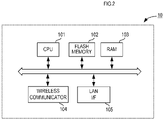
- FIG. 2 is a block diagram showing a configuration of the host device 10.
- FIG. 3 is a block diagram showing a configuration of the wireless microphone 11.
- FIG. 4 is a block diagram showing a configuration of the wireless microphone holder 15. It is to be noted that, since all the wireless microphones 11 to 14 have the same configuration and function, the configuration of the wireless microphone 11 is shown in FIG. 3 as a representative.
- the host device 10 includes a CPU 101, a flash memory 102, a RAM 103, a wireless communicator 104, and a LAN interface (I/F) 105.
- the CPU 101 reads a program stored in the flash memory 102, being a storage medium, to the RAM 103 and implements a predetermined function. For example, the CPU 101 receives an audio signal from the wireless microphones 11 to 14 through the wireless communicator 104.
- the wireless communicator 104 connects to the wireless microphones 11 to 14, for example, by the wireless communication standards such as the DECT, and receives an audio signal.
- the connection standards of the host device 10 and the wireless microphones 11 to 14 is not limited to the DECT.
- the host device 10 and the wireless microphones 11 to 14 may be connected by other wireless communication standards such as Wi-Fi (registered trademark) or Bluetooth (registered trademark).
- the CPU 101 sends the audio signal received from the wireless microphones 11 to 14 to a different apparatus through the LAN I/F 105.
- the LAN I/F 105 connects to the different apparatus by the communication standards such as Dante (registered trademark), for example, and sends the audio signal received from the wireless microphones 11 to 14.
- Dante registered trademark
- the communication standards of the host device 10 and the different apparatus is not limited to Dante (registered trademark).
- the host device 10 may connect to the different apparatus by other communication standards such as USB, and may send the audio signal.
- the host device 10 may connect to the different apparatus by wireless communication standards, and may send the audio signal.
- the different apparatus is an information processing apparatus such as a personal computer, for example.
- the information processing apparatus outputs the audio signal received from the host device 10 to a speaker.
- the information processing apparatus amplifies voice of a talker or the like collected by the wireless microphones 11 to 14, to a venue such as a conference room, for example.
- the information processing apparatus sends the audio signal received from the host device 10 through the Internet, to a remote place.
- the information processing apparatus may function as a remote conversation apparatus.
- the wireless microphone 11 may include a CPU 111, a flash memory 112, a RAM 113, a wireless communicator 114, a USB I/F 115, and a microphone unit 116.
- the CPU 111 reads a program stored in the flash memory 112, being a storage medium, to the RAM 113 and implements a predetermined function. For example, the CPU 111 receives an audio signal according to the voice collected by the microphone unit 116. The CPU 111 sends a received audio signal to the host device 10 through the wireless communicator 114.
- the wireless communicator 104 connects to the host device 10, for example, by the wireless communication standards such as the DECT, as described above, and sends the audio signal.
- the USB I/F 115 connects to the wireless microphone holder 15.
- the USB I/F 115 communicates with the wireless microphone holder 15, and receives power supply from the wireless microphone holder 15.
- a function to communicate with the wireless microphone holder 15 and a function to receive power supply from the wireless microphone holder 15 may be different configurations.
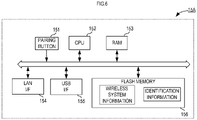
- the wireless microphone holder 15 may include a pairing button 151, a CPU 152, a RAM 153, a LAN I/F 154, a USB I/F 155, and a flash memory 156.
- the pairing button 151 is provided in a housing of the wireless microphone holder 15. When the pairing button 151 is pressed, the wireless microphone holder 15 takes a pairing instruction to pair the wireless microphones 11 to 14 with the host device 10.
- the CPU 152 reads a program stored in the flash memory 156 being a storage medium to the RAM 153 and implements a predetermined function. For example, the CPU 152 communicates with the host device 10 through the LAN I/F 154. In addition, the CPU 152 communicates with the wireless microphones 11 to 14 through the USB I/F 155. The USB I/F 155 also functions as a power supplier to supply electric power to the wireless microphones 11 to 14.
- the flash memory 156 stores identification information of the host device 10.
- the identification information of the host device 10 is information required to connect to the host device 10 by communication standards such as the DECT.
- the CPU 152 in a case in which the pairing instruction are taken by the pairing button 151, reads the identification information stored in the flash memory 156, and sends the identification information to a wireless microphone connected to the USB I/F 155.
- the wireless microphone connects to the host device 10 by use of received identification information.
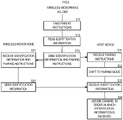
- FIG. 5 is a flow chart showing an operation of the wireless microphones 11 to 14, the wireless microphone holder 15, and the host device 10.
- the wireless microphone holder 15 takes pairing instruction through the pairing button 151 (S11). It is to be noted that the pairing instruction do not need to be taken through the pairing button 151.
- the wireless microphone holder 15 may take the pairing instruction, when detecting mounting of a wireless microphone. In such a case, the wireless microphone holder 15, upon detecting the mounting of a wireless microphone, may take the pairing instruction.
- the wireless microphone holder 15 may take the pairing instruction through GUI (a WEB UI to take the setting of the host device 10, for example) of the information processing apparatus connected through the LAN.
- the wireless microphone holder 15, when taking the pairing instruction reads the identification information of the host device 10 stored in the flash memory 156 (S12). Then, the wireless microphone holder 15 sends the identification information and the pairing instruction to the wireless microphones 11 to 14 and the host device 10 (S13). However, the wireless microphone holder 15 does not need to send the identification information to the host device 10.
- the wireless microphones 11 to 14 receive the identification information and the pairing instruction (S21).
- the host device 10 receives the pairing instruction (S31).
- the host device 10 when receiving the pairing instruction, shifts to a pairing mode (S32).
- the pairing mode is a mode to release encryption of wireless communication and receive the identification information to be sent from a different apparatus.
- the host device 10 receives the identification information that the wireless microphones 11 to 14 have sent (S33).
- the host device 10 assigns a channel of Dante (registered trademark) in order in which the identification information is received (S34).
- the host device 10 in a case of receiving first identification information from the wireless microphone 11, assigns Channel 1 of Dante (registered trademark) to the wireless microphone 11.
- the wireless microphones 11 to 14 and the host device 10 are connected to each other.
- a sound collected by the wireless microphone 11 is sent from the host device 10 to another apparatus in Channel 1 of Dante (registered trademark).
- a sound collected by the wireless microphone 12 is sent from the host device 10 to another apparatus in Channel 2 of Dante (registered trademark).
- a sound collected by the wireless microphone 13 is sent from the host device 10 to another apparatus in Channel 3 of Dante (registered trademark).
- a sound collected by the wireless microphone 14 is sent from the host device 10 to another apparatus in Channel 4 of Dante (registered trademark).
- the host device 10 assigns a channel in order of connection. A user does not need to connect a plurality of wireless microphones to use in a particular order, but simply presses the pairing button 151 of the wireless microphone holder 15 once, and can easily connect the plurality of wireless microphones to use to the host device 10.
- the identification information and the pairing instruction are sent to a wireless microphone connected to the wireless microphone holder 15.
- the identification information and the pairing instruction are not sent to a wireless microphone that is not connected to the wireless microphone holder 15. Therefore, the host device 10, when the pairing button 151 of the wireless microphone holder 15 is pressed, is paired with only the wireless microphone connected to the wireless microphone holder 15. For example, in a case in which the wireless microphones 11 to 13 are connected to the wireless microphone holder 15 and the wireless microphone 14 is not connected to the wireless microphone holder 15, the host device 10 is paired with the wireless microphones 11 to 13, and is not paired with the wireless microphone 14.
- the wireless microphone system 1 is used in venues of various sizes or for events of various scales.
- the required number of wireless microphones differs according to the size of a venue or the scale of an event.
- An event operator connects the required number of wireless microphones to the wireless microphone holder 15 according to the size of the venue or the scale of the event. Subsequently, when the event operator presses the pairing button 151, only the wireless microphone connected to the wireless microphone holder 15 at the time is connected to the host device 10. In such a manner, the event operator can adjust the number of wireless microphones to be easily connected to the host device 10 according to the size of the venue or the scale of the event.
- the number of microphones to be used is not limited to four.
- Dante registered trademark
- the wireless microphone system 1 is able to connect the larger number of wireless microphones to the host device 10 than the number of wireless microphones simultaneously connectable to the wireless microphone holder 15.
- the event operator first mounts the four wireless microphones 11 to 14 to the host device 10, and connects the four wireless microphones 11 to 14 to the host device 10 by pressing the pairing button 151.
- the event operator replaces the four wireless microphones 11 to 14 with other wireless microphones, and connects the other wireless microphones to the host device 10 by pressing the pairing button 151 again.
- the host device 10 assigns a channel of Dante (registered trademark) in order in which the identification information is received.
- the host device 10 in a case of having already assigned Channel 1 to Channel 4 of Dante (registered trademark) to each of the wireless microphones 11 to 14, assigns Channel 5 of Dante (registered trademark) to other wireless microphones to be connected to the host device 10 next.
- the wireless microphone system 1 may include a plurality of wireless microphone holders 15.
- the event operator may mount a wireless microphone to each of the plurality of wireless microphone holders 15, and may press each pairing button 151 of the plurality of wireless microphone holders 15.
- the host device 10 assigns a channel of Dante (registered trademark) in order in which the identification information is received.
- Dante registered trademark
- the host device 10 in a case in which the number of channels to connect reaches the maximum number of connectable channels, may refuse connection to any more wireless microphones.
- the host device 10 in a case in which the number of channels to connect reaches the maximum number of connectable channels, may release connection to a wireless microphone that has been already connected, and may assign a channel to a new wireless microphone.
- the host device 10 may release connection to the wireless microphone to which Channel 1 is assigned, and may assign Channel 1 to a wireless microphone to be newly connected.
- the host device 10 may include a mode change switch.
- the host device 10 in a case in which the number of channels to connect reaches the maximum number of connectable channels, may take either a first mode to refuse connection to a new wireless microphone or a second mode to release connection to the already connected wireless microphone and make connection to a new wireless microphone, through the mode change switch.
- the host device 10 may take mode switch instructions through the GUI of the information processing apparatus connected through LAN.
- the wireless microphone holder 15, may designate whether to add a new wireless microphone or to redo the assignment of Channel 1. For example, in a case in which the pairing button 151 continues being pressed for 1 second, the wireless microphone holder 15 sends pairing instructions to the wireless microphone and the host device 10 that are connected at the time. In such a case, the host device 10 is connected to a new wireless microphone in addition to the currently connected wireless microphone. On the other hand, in a case in which the pairing button 151 continues being pressed for 5 seconds, the wireless microphone holder 15 sends pairing instructions including initial setting instructions to the host device 10.
- the host device 10 releases connection to the currently connected wireless microphone, and newly assigns the wireless microphones connected at the time, in order from Channel 1.
- the event operator can easily provide instructions on whether to add a wireless microphone or to redo the setting from the beginning.
- FIG. 6 is a block diagram showing a configuration of a wireless microphone holder 15A according to a modification.
- the flash memory 156 of the wireless microphone holder 15A further stores wireless system information.
- Other configurations are the same as the configurations of the wireless microphone holder 15, and the description will be omitted.
- the wireless system information is information showing a system (such as standards, an encryption system, or a frequency) of wireless communication to be used.
- the system of wireless communication to be used is different for each country or region to which a product is shipped.
- the host device 10 and the wireless microphone holder 15 are previously set to a wireless communication system suitable for each country or region to which a product is shipped, at the time of factory shipment.
- the wireless microphones 11 to 14 are not set to the wireless communication system at the time of factory shipment.
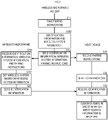
- FIG. 7 is a flow chart showing an operation of wireless microphones 11 to 14 according to the modification, the wireless microphone holder 15A, and the host device 10. Like reference numerals are used to refer to the operation common to FIG. 5 , and the description will be omitted.
- the wireless microphone holder 15 when taking pairing instructions, reads identification information and wireless system information (S102). Then, the wireless microphone holder 15 sends the identification information, the wireless system information, and the pairing instruction, to the currently connected wireless microphone (S103).
- the wireless microphones 11 to 14 receive the identification information, the wireless system information, and the pairing instruction (S201).
- the wireless microphones 11 to 14 set a wireless communication system, based on received wireless system information (S202). As a result, the wireless microphones 11 to 14 are set to the wireless communication system suitable for each country or region to which a product is shipped, and are able to be connected to the host device 10.
- the wireless microphones 11 to 14 are set to the wireless communication system suitable for each country or region to which a product is shipped, at the beginning of use of the product. Therefore, the wireless microphones 11 to 14 do not need to be set to the wireless communication system at the time of factory shipment. Accordingly, a manufacturer of the wireless microphone system does not need to previously set each of a large number of wireless microphones to be used, to the wireless communication system suitable for each country or region. Therefore, the manufacturer can manufacture and ship a wireless microphone, without distinguishing a country or a region of a shipping destination.
Landscapes
- Engineering & Computer Science (AREA)
- Signal Processing (AREA)
- Computer Networks & Wireless Communication (AREA)
- Physics & Mathematics (AREA)
- Acoustics & Sound (AREA)
- Databases & Information Systems (AREA)
- Computer Security & Cryptography (AREA)
- Transmitters (AREA)
- Mobile Radio Communication Systems (AREA)
- Circuit For Audible Band Transducer (AREA)
- Details Of Audible-Bandwidth Transducers (AREA)
Abstract
Description
- An embodiment of the present disclosure relates to a wireless microphone holder, a wireless microphone connection method, and a wireless microphone system.
-
Japanese Unexamined Patent Application Publication No. 2017-143725 Japanese Unexamined Patent Application Publication No. 2017-143725 -
Japanese Unexamined Patent Application Publication No. 2004-207866 - A large number of microphones may be used simultaneously in some cases. The configurations disclosed in
Japanese Unexamined Patent Application Publication No. 2017-143725 Japanese Unexamined Patent Application Publication No. 2004-207866 - In view of the foregoing, an object of an embodiment of the present disclosure is to provide a wireless microphone holder capable of easily configuring connection settings of a plurality of wireless microphones.
- A wireless microphone holder according to an embodiment of the present disclosure includes a storage device that stores identification information of a host device, a communication interface that communicates with the host device, and a processor configured to receive a pairing instruction to pair a plurality of wireless microphones with the host device, connect to the plurality of wireless microphones, and send the identification information to the plurality of wireless microphones. In a case in which the processor receives the pairing instruction, the processor sends the identification information and instruction information according to the pairing instruction to the plurality of wireless microphones connected to the processor, sends the instruction information to the host device, and mutually connects the plurality of wireless microphones and the host device.
- According to an embodiment of the present disclosure, connection settings of a plurality of wireless microphones are able to be easily configured.
-
-
FIG. 1 is a block diagram showing a configuration of awireless microphone system 1. -
FIG. 2 is a block diagram showing a configuration of ahost device 10. -
FIG. 3 is a block diagram showing a configuration of awireless microphone 11. -
FIG. 4 is a block diagram showing a configuration of awireless microphone holder 15. -
FIG. 5 is a flow chart showing an operation ofwireless microphones 11 to 14, thewireless microphone holder 15, and thehost device 10. -
FIG. 6 is a block diagram showing a configuration of awireless microphone holder 15A according to a modification. -
FIG. 7 is a flow chart showing an operation ofwireless microphones 11 to 14 according to the modification, thewireless microphone holder 15A, and thehost device 10. -
FIG. 1 is a block diagram showing a configuration of awireless microphone system 1 according to various embodiments of the present disclosure. Thewireless microphone system 1 includes ahost device 10, a plurality ofwireless microphones 11 to 14, and awireless microphone holder 15. Thewireless microphone holder 15 holds the plurality ofwireless microphones 11 to 14. In addition, the wireless microphone holder 15 functions as a charging stand that charges the plurality ofwireless microphones 11 to 14. - The
host device 10 and the plurality ofwireless microphones 11 to 14 are connected to each other, for example, by predetermined wireless communication standards such as DECT (Digital Enhanced Cordless Telecommunications). Thehost device 10 and thewireless microphone holder 15 are connected to each other by wired communication through a LAN cable or the like. However, thehost device 10 and thewireless microphone holder 15 may be connected wirelessly. - The
wireless microphone holder 15 is connected to thewireless microphones 11 to 14 by the communication standards that function as communication and power supply, such as USB. However, thewireless microphone holder 15 may be connected to thewireless microphones 11 to 14 with a dedicated communication terminal and charging terminal. In addition, thewireless microphone 11 and thewireless microphone holder 15 may be connected to each other by wireless communication standards. Moreover, thewireless microphone 11 may receive power supply from thewireless microphone holder 15 by contactless charging standards. -
FIG. 2 is a block diagram showing a configuration of thehost device 10.FIG. 3 is a block diagram showing a configuration of thewireless microphone 11.FIG. 4 is a block diagram showing a configuration of thewireless microphone holder 15. It is to be noted that, since all thewireless microphones 11 to 14 have the same configuration and function, the configuration of thewireless microphone 11 is shown inFIG. 3 as a representative. - The
host device 10 includes aCPU 101, aflash memory 102, aRAM 103, awireless communicator 104, and a LAN interface (I/F) 105. - The
CPU 101 reads a program stored in theflash memory 102, being a storage medium, to theRAM 103 and implements a predetermined function. For example, theCPU 101 receives an audio signal from thewireless microphones 11 to 14 through thewireless communicator 104. Thewireless communicator 104 connects to thewireless microphones 11 to 14, for example, by the wireless communication standards such as the DECT, and receives an audio signal. It is to be noted that the connection standards of thehost device 10 and thewireless microphones 11 to 14 is not limited to the DECT. For example, thehost device 10 and thewireless microphones 11 to 14 may be connected by other wireless communication standards such as Wi-Fi (registered trademark) or Bluetooth (registered trademark). - The
CPU 101 sends the audio signal received from thewireless microphones 11 to 14 to a different apparatus through the LAN I/F 105. The LAN I/F 105 connects to the different apparatus by the communication standards such as Dante (registered trademark), for example, and sends the audio signal received from thewireless microphones 11 to 14. It is to be noted that the communication standards of thehost device 10 and the different apparatus is not limited to Dante (registered trademark). For example, thehost device 10 may connect to the different apparatus by other communication standards such as USB, and may send the audio signal. As a matter of course, thehost device 10 may connect to the different apparatus by wireless communication standards, and may send the audio signal. - The different apparatus is an information processing apparatus such as a personal computer, for example. The information processing apparatus outputs the audio signal received from the
host device 10 to a speaker. As a result, the information processing apparatus amplifies voice of a talker or the like collected by thewireless microphones 11 to 14, to a venue such as a conference room, for example. Alternatively, the information processing apparatus sends the audio signal received from thehost device 10 through the Internet, to a remote place. As a result, the information processing apparatus may function as a remote conversation apparatus. - As illustrated in
FIG. 3 , thewireless microphone 11 may include aCPU 111, aflash memory 112, aRAM 113, awireless communicator 114, a USB I/F 115, and amicrophone unit 116. - The
CPU 111 reads a program stored in theflash memory 112, being a storage medium, to theRAM 113 and implements a predetermined function. For example, theCPU 111 receives an audio signal according to the voice collected by themicrophone unit 116. TheCPU 111 sends a received audio signal to thehost device 10 through thewireless communicator 114. Thewireless communicator 104 connects to thehost device 10, for example, by the wireless communication standards such as the DECT, as described above, and sends the audio signal. - The USB I/F 115 connects to the
wireless microphone holder 15. The USB I/F 115 communicates with thewireless microphone holder 15, and receives power supply from thewireless microphone holder 15. - It is to be noted that a function to communicate with the
wireless microphone holder 15 and a function to receive power supply from thewireless microphone holder 15 may be different configurations. - As illustrated in
FIG. 4 , thewireless microphone holder 15 may include apairing button 151, aCPU 152, aRAM 153, a LAN I/F 154, a USB I/F 155, and aflash memory 156. - The
pairing button 151 is provided in a housing of thewireless microphone holder 15. When thepairing button 151 is pressed, thewireless microphone holder 15 takes a pairing instruction to pair thewireless microphones 11 to 14 with thehost device 10. - The
CPU 152 reads a program stored in theflash memory 156 being a storage medium to theRAM 153 and implements a predetermined function. For example, theCPU 152 communicates with thehost device 10 through the LAN I/F 154. In addition, theCPU 152 communicates with thewireless microphones 11 to 14 through the USB I/F 155. The USB I/F 155 also functions as a power supplier to supply electric power to thewireless microphones 11 to 14. - In addition, the
flash memory 156 stores identification information of thehost device 10. The identification information of thehost device 10 is information required to connect to thehost device 10 by communication standards such as the DECT. TheCPU 152, in a case in which the pairing instruction are taken by thepairing button 151, reads the identification information stored in theflash memory 156, and sends the identification information to a wireless microphone connected to the USB I/F 155. The wireless microphone connects to thehost device 10 by use of received identification information. -
FIG. 5 is a flow chart showing an operation of thewireless microphones 11 to 14, thewireless microphone holder 15, and thehost device 10. - The
wireless microphone holder 15 takes pairing instruction through the pairing button 151 (S11). It is to be noted that the pairing instruction do not need to be taken through thepairing button 151. For example, thewireless microphone holder 15 may take the pairing instruction, when detecting mounting of a wireless microphone. In such a case, thewireless microphone holder 15, upon detecting the mounting of a wireless microphone, may take the pairing instruction. Alternatively, thewireless microphone holder 15 may take the pairing instruction through GUI (a WEB UI to take the setting of thehost device 10, for example) of the information processing apparatus connected through the LAN. Thewireless microphone holder 15, when taking the pairing instruction, reads the identification information of thehost device 10 stored in the flash memory 156 (S12). Then, thewireless microphone holder 15 sends the identification information and the pairing instruction to thewireless microphones 11 to 14 and the host device 10 (S13). However, thewireless microphone holder 15 does not need to send the identification information to thehost device 10. - The
wireless microphones 11 to 14 receive the identification information and the pairing instruction (S21). In addition, thehost device 10 receives the pairing instruction (S31). Thehost device 10, when receiving the pairing instruction, shifts to a pairing mode (S32). The pairing mode is a mode to release encryption of wireless communication and receive the identification information to be sent from a different apparatus. Thewireless microphones 11 to 14, when receiving the identification information and the pairing instruction, send the received identification information by broadcast (S22). Thehost device 10 receives the identification information that thewireless microphones 11 to 14 have sent (S33). Thehost device 10 assigns a channel of Dante (registered trademark) in order in which the identification information is received (S34). - For example, the
host device 10, in a case of receiving first identification information from thewireless microphone 11, assignsChannel 1 of Dante (registered trademark) to thewireless microphone 11. Thehost device 10, in a case of receiving second identification information from thewireless microphone 12, assigns Channel 2 of Dante (registered trademark) to thewireless microphone 12. Thehost device 10, in a case of receiving third identification information from thewireless microphone 13, assigns Channel 3 of Dante (registered trademark) to thewireless microphone 13. Thehost device 10, in a case of receiving fourth identification information from thewireless microphone 14, assigns Channel 4 of Dante (registered trademark) to thewireless microphone 14. - In such a manner, the
wireless microphones 11 to 14 and thehost device 10 are connected to each other. Hereinafter, a sound collected by thewireless microphone 11 is sent from thehost device 10 to another apparatus inChannel 1 of Dante (registered trademark). A sound collected by thewireless microphone 12 is sent from thehost device 10 to another apparatus in Channel 2 of Dante (registered trademark). A sound collected by thewireless microphone 13 is sent from thehost device 10 to another apparatus in Channel 3 of Dante (registered trademark). A sound collected by thewireless microphone 14 is sent from thehost device 10 to another apparatus in Channel 4 of Dante (registered trademark). - As described above, the
host device 10 assigns a channel in order of connection. A user does not need to connect a plurality of wireless microphones to use in a particular order, but simply presses thepairing button 151 of thewireless microphone holder 15 once, and can easily connect the plurality of wireless microphones to use to thehost device 10. - In the wireless microphone system according to various embodiments, the identification information and the pairing instruction are sent to a wireless microphone connected to the
wireless microphone holder 15. In other words, the identification information and the pairing instruction are not sent to a wireless microphone that is not connected to thewireless microphone holder 15. Therefore, thehost device 10, when thepairing button 151 of thewireless microphone holder 15 is pressed, is paired with only the wireless microphone connected to thewireless microphone holder 15. For example, in a case in which thewireless microphones 11 to 13 are connected to thewireless microphone holder 15 and thewireless microphone 14 is not connected to thewireless microphone holder 15, thehost device 10 is paired with thewireless microphones 11 to 13, and is not paired with thewireless microphone 14. - The
wireless microphone system 1 is used in venues of various sizes or for events of various scales. The required number of wireless microphones differs according to the size of a venue or the scale of an event. An event operator connects the required number of wireless microphones to thewireless microphone holder 15 according to the size of the venue or the scale of the event. Subsequently, when the event operator presses thepairing button 151, only the wireless microphone connected to thewireless microphone holder 15 at the time is connected to thehost device 10. In such a manner, the event operator can adjust the number of wireless microphones to be easily connected to thehost device 10 according to the size of the venue or the scale of the event. - It is to be noted that, while the present embodiment shows the example in which the four
wireless microphones 11 to 14 are connected to thehost device 10, the number of microphones to be used is not limited to four. For example, Dante (registered trademark) is able to transmit an audio signal of 64 channels in 100 base-TX. Therefore, thehost device 10 is able to be connected to up to 64 microphones simultaneously. Thewireless microphone system 1 is able to connect the larger number of wireless microphones to thehost device 10 than the number of wireless microphones simultaneously connectable to thewireless microphone holder 15. The event operator first mounts the fourwireless microphones 11 to 14 to thehost device 10, and connects the fourwireless microphones 11 to 14 to thehost device 10 by pressing thepairing button 151. Subsequently, the event operator replaces the fourwireless microphones 11 to 14 with other wireless microphones, and connects the other wireless microphones to thehost device 10 by pressing thepairing button 151 again. In such a case as well, thehost device 10 assigns a channel of Dante (registered trademark) in order in which the identification information is received. For example, thehost device 10, in a case of having already assignedChannel 1 to Channel 4 of Dante (registered trademark) to each of thewireless microphones 11 to 14, assigns Channel 5 of Dante (registered trademark) to other wireless microphones to be connected to thehost device 10 next. - In addition, the number of
wireless microphone holders 15 is not limited to one. Thewireless microphone system 1 may include a plurality ofwireless microphone holders 15. The event operator may mount a wireless microphone to each of the plurality ofwireless microphone holders 15, and may press eachpairing button 151 of the plurality ofwireless microphone holders 15. In such a case as well, thehost device 10 assigns a channel of Dante (registered trademark) in order in which the identification information is received. - The
host device 10, in a case in which the number of channels to connect reaches the maximum number of connectable channels, may refuse connection to any more wireless microphones. Alternatively, thehost device 10, in a case in which the number of channels to connect reaches the maximum number of connectable channels, may release connection to a wireless microphone that has been already connected, and may assign a channel to a new wireless microphone. For example, thehost device 10 may release connection to the wireless microphone to whichChannel 1 is assigned, and may assignChannel 1 to a wireless microphone to be newly connected. - In addition, the
host device 10 may include a mode change switch. Thehost device 10, in a case in which the number of channels to connect reaches the maximum number of connectable channels, may take either a first mode to refuse connection to a new wireless microphone or a second mode to release connection to the already connected wireless microphone and make connection to a new wireless microphone, through the mode change switch. In addition, thehost device 10 may take mode switch instructions through the GUI of the information processing apparatus connected through LAN. - In addition, the
wireless microphone holder 15, according to how thepairing button 151 is pressed, may designate whether to add a new wireless microphone or to redo the assignment ofChannel 1. For example, in a case in which thepairing button 151 continues being pressed for 1 second, thewireless microphone holder 15 sends pairing instructions to the wireless microphone and thehost device 10 that are connected at the time. In such a case, thehost device 10 is connected to a new wireless microphone in addition to the currently connected wireless microphone. On the other hand, in a case in which thepairing button 151 continues being pressed for 5 seconds, thewireless microphone holder 15 sends pairing instructions including initial setting instructions to thehost device 10. In such a case, thehost device 10 releases connection to the currently connected wireless microphone, and newly assigns the wireless microphones connected at the time, in order fromChannel 1. As a result, the event operator can easily provide instructions on whether to add a wireless microphone or to redo the setting from the beginning. - Next,
FIG. 6 is a block diagram showing a configuration of awireless microphone holder 15A according to a modification. Theflash memory 156 of thewireless microphone holder 15A further stores wireless system information. Other configurations are the same as the configurations of thewireless microphone holder 15, and the description will be omitted. - The wireless system information is information showing a system (such as standards, an encryption system, or a frequency) of wireless communication to be used. The system of wireless communication to be used is different for each country or region to which a product is shipped. The
host device 10 and thewireless microphone holder 15 are previously set to a wireless communication system suitable for each country or region to which a product is shipped, at the time of factory shipment. On the other hand, thewireless microphones 11 to 14 are not set to the wireless communication system at the time of factory shipment. -
FIG. 7 is a flow chart showing an operation ofwireless microphones 11 to 14 according to the modification, thewireless microphone holder 15A, and thehost device 10. Like reference numerals are used to refer to the operation common toFIG. 5 , and the description will be omitted. - The
wireless microphone holder 15, when taking pairing instructions, reads identification information and wireless system information (S102). Then, thewireless microphone holder 15 sends the identification information, the wireless system information, and the pairing instruction, to the currently connected wireless microphone (S103). Thewireless microphones 11 to 14 receive the identification information, the wireless system information, and the pairing instruction (S201). Thewireless microphones 11 to 14 set a wireless communication system, based on received wireless system information (S202). As a result, thewireless microphones 11 to 14 are set to the wireless communication system suitable for each country or region to which a product is shipped, and are able to be connected to thehost device 10. - In such a manner, the
wireless microphones 11 to 14 are set to the wireless communication system suitable for each country or region to which a product is shipped, at the beginning of use of the product. Therefore, thewireless microphones 11 to 14 do not need to be set to the wireless communication system at the time of factory shipment. Accordingly, a manufacturer of the wireless microphone system does not need to previously set each of a large number of wireless microphones to be used, to the wireless communication system suitable for each country or region. Therefore, the manufacturer can manufacture and ship a wireless microphone, without distinguishing a country or a region of a shipping destination. - Finally, the descriptions of the embodiments of the present disclosure are illustrative in all points and should not be construed to limit the present disclosure. The scope of the present disclosure is defined not by the foregoing embodiments but by the following claims for patent. Further, the scope of the present disclosure includes the scopes of the claims for patent and the scopes of equivalents.
Claims (15)
- A wireless microphone holder (15, 15A) comprising:a storage device (156) that stores identification information of a host device (10);a communication interface (154) configured to communicate with the host device (10); anda processor (152) configured to:receive a pairing instruction to pair a plurality of wireless microphones (11, 12, 13, 14) with the host device (10) ;connect to the plurality of wireless microphones (11, 12, 13, 14); andsend the identification information to the plurality of wireless microphones (11, 12, 13, 14),wherein, in a case in which the processor (152) receives the pairing instruction, the processor (152) is configured to:send the identification information and instruction information according to the pairing instruction to the plurality of wireless microphones (11, 12, 13, 14) connected to the processor (152);send the instruction information to the host device (10) via the communication interface (154); andmutually connect the plurality of wireless microphones (11, 12, 13, 14) and the host device (10).
- The wireless microphone holder (15, 15A) according to claim 1, wherein the processor (152) is configured to assign a channel that is different in each of the plurality of wireless microphones (11, 12, 13, 14) to the host device (10).
- The wireless microphone holder (15, 15A) according to claim 1 or 2, wherein the processor (152) is configured to wirelessly connect to the host device (10).
- The wireless microphone holder (15, 15A) according to any one of claims 1 to 3, further comprising a power supply (155) configured to supply electric power to the plurality of wireless microphones (11, 12, 13, 14).
- The wireless microphone holder (15, 15A) according to any one of claims 1 to 4, wherein the processor (152) is configured to send same identification information to two or more wireless microphones (11, 12, 13, 14) among the plurality of wireless microphones (11, 12, 13, 14).
- The wireless microphone holder (15, 15A) according to any one of claims 1 to 5, wherein the processor (152) is configured to, in response to receiving the pairing instruction, send information that shows a system of wireless communication to the plurality of wireless microphones (11, 12, 13, 14) connected to the processor (152).
- A wireless microphone connection method comprising:receiving, by a wireless microphone holder (15, 15A), a pairing instruction to pair a plurality of wireless microphones (11, 12, 13, 14) with a host device (10);sending, by the wireless microphone holder (15, 15A), identification information of the host device (10) that is stored in a storage device (156) of the wireless microphone holder, and instruction information according to the pairing instruction, to the plurality of wireless microphones (11, 12, 13, 14) connected to the wireless microphone holder (15, 15A);sending the instruction information from the wireless microphone holder (15, 15A) to the host device (10); andmutually connecting the plurality of wireless microphones (11, 12, 13, 14) and the host device (10).
- The wireless microphone connection method according to claim 7, further comprising assigning a channel that is different in each of the plurality of wireless microphones (11, 12, 13, 14) to the host device (10).
- The wireless microphone connection method according to claim 7 or 8, wherein the wireless microphone holder (15, 15A) is wirelessly connected to the host device (10).
- The wireless microphone connection method according to any one of claims 7 to 9, wherein the wireless microphone holder (15, 15A) supplies electric power to the plurality of wireless microphones (11, 12, 13, 14).
- The wireless microphone connection method according to any one of claims 7 to 10, wherein the wireless microphone holder (15, 15A) sends same identification information to two or more wireless microphones (11, 12, 13, 14) among the plurality of wireless microphones (11, 12, 13, 14).
- The wireless microphone connection method according to any one of claims 7 to 11, wherein the wireless microphone holder (15, 15A) sends information that shows a system of wireless communication to the plurality of wireless microphones (11, 12, 13, 14).
- A wireless microphone system (1) comprising:a plurality of wireless microphones (11, 12, 13, 14);a host device (10); anda wireless microphone holder (15, 15A), wherein:the wireless microphone holder (15, 15A) is configured to receive a pairing instruction;the wireless microphone holder (15, 15A) is configured to send identification information of the host device (10) that is stored in a storage device (156) of the wireless microphone holder (15, 15A), and instruction information according to the pairing instruction, to the plurality of wireless microphones (11, 12, 13, 14) connected to the wireless microphone holder (15, 15A);the wireless microphone holder (15, 15A) is configured to send the instruction information to the host device (10); andthe plurality of wireless microphones (11, 12, 13, 14) and the host device (10) are configured to connect to each other.
- The wireless microphone system (1) according to claim 13, wherein the wireless microphone holder (15, 15A) is configured to assign a channel that is different in each of the plurality of wireless microphones (11, 12, 13, 14) to the host device (10).
- The wireless microphone system (1) according to claim 13 or 14, wherein the wireless microphone holder (15, 15A) is configured to wirelessly connect to the host device (10).
Applications Claiming Priority (1)
| Application Number | Priority Date | Filing Date | Title |
|---|---|---|---|
| JP2021040946A JP7629763B2 (en) | 2021-03-15 | 2021-03-15 | Holder for wireless microphone, method for connecting wireless microphone, wireless microphone system, parent unit for wireless microphone, and wireless microphone |
Publications (2)
| Publication Number | Publication Date |
|---|---|
| EP4061003A1 true EP4061003A1 (en) | 2022-09-21 |
| EP4061003B1 EP4061003B1 (en) | 2025-09-03 |
Family
ID=80780652
Family Applications (1)
| Application Number | Title | Priority Date | Filing Date |
|---|---|---|---|
| EP22162136.0A Active EP4061003B1 (en) | 2021-03-15 | 2022-03-15 | Wireless microphone holder, wireless microphone connection method, and wireless microphone system |
Country Status (4)
| Country | Link |
|---|---|
| US (1) | US11985461B2 (en) |
| EP (1) | EP4061003B1 (en) |
| JP (1) | JP7629763B2 (en) |
| CN (1) | CN115086919B (en) |
Families Citing this family (3)
| Publication number | Priority date | Publication date | Assignee | Title |
|---|---|---|---|---|
| WO2023081645A1 (en) * | 2021-11-05 | 2023-05-11 | Shure Acquisition Holdings, Inc. | Distributed algorithm for automixing speech over wireless networks |
| CN117544938B (en) * | 2024-01-10 | 2024-04-09 | 广东鼎创智造科技有限公司 | Wireless microphone pairing method, device, equipment and storage medium |
| KR102767887B1 (en) * | 2024-09-03 | 2025-02-14 | 주식회사 프라임아이씨티 | Digital wireless microphone system |
Citations (5)
| Publication number | Priority date | Publication date | Assignee | Title |
|---|---|---|---|---|
| EP1309222A2 (en) * | 2001-10-31 | 2003-05-07 | Matsushita Electric Industrial Co., Ltd. | Wireless microphone system, voice receiving apparatus and wireless microphone |
| JP2004207866A (en) | 2002-12-24 | 2004-07-22 | Azden Corp | Wireless microphone system |
| JP2017143725A (en) | 2016-02-10 | 2017-08-17 | パナソニックIpマネジメント株式会社 | Power storage device, control method for power storage device, charging device, control method for charging device and radio connection setting system |
| US9800985B1 (en) * | 2016-06-01 | 2017-10-24 | Harman International Industries, Incorporated | Wireless microphone locator light |
| US20200068282A1 (en) * | 2018-08-22 | 2020-02-27 | Sennheiser Electronic Gmbh & Co. Kg | Automatic identification of a wireless microphone, a body-pack transmitter or a body-pack receiver |
Family Cites Families (11)
| Publication number | Priority date | Publication date | Assignee | Title |
|---|---|---|---|---|
| JP3806700B2 (en) * | 2003-03-20 | 2006-08-09 | 株式会社第一興商 | Wireless microphone system, receiver, wireless microphone, charging stand |
| US20070149246A1 (en) * | 2004-01-09 | 2007-06-28 | Revolabs, Inc. | Wireless multi-user audio system |
| US20070117556A1 (en) * | 2005-11-10 | 2007-05-24 | Gary Rogalski | Handset powered wireless table top conferencing system |
| KR101029682B1 (en) | 2008-12-31 | 2011-04-15 | 정동준 | Transceiver for Wireless Microphone |
| US8744087B2 (en) * | 2009-02-09 | 2014-06-03 | Revo Labs, Inc. | Wireless multi-user audio system |
| US8699948B2 (en) * | 2011-01-25 | 2014-04-15 | Sony Corporation | Connection method for near field communication |
| WO2012116123A2 (en) * | 2011-02-22 | 2012-08-30 | Revolabs, Inc. | Systems and methods for wireless audio conferencing |
| KR200462127Y1 (en) * | 2012-06-15 | 2012-08-30 | 이준영 | Customized Multi-Channel Sound Recycling System |
| US10038948B2 (en) * | 2014-05-21 | 2018-07-31 | Revo Labs | Battery charging adaptor for a wireless microphone |
| DK3057340T3 (en) * | 2015-02-13 | 2019-08-19 | Oticon As | PARTNER MICROPHONE UNIT AND A HEARING SYSTEM INCLUDING A PARTNER MICROPHONE UNIT |
| EP3304951B1 (en) * | 2015-06-05 | 2022-09-21 | Apple Inc. | Changing companion communication device behavior based on status of wearable device |
-
2021
- 2021-03-15 JP JP2021040946A patent/JP7629763B2/en active Active
-
2022
- 2022-03-11 CN CN202210237390.9A patent/CN115086919B/en active Active
- 2022-03-14 US US17/654,756 patent/US11985461B2/en active Active
- 2022-03-15 EP EP22162136.0A patent/EP4061003B1/en active Active
Patent Citations (5)
| Publication number | Priority date | Publication date | Assignee | Title |
|---|---|---|---|---|
| EP1309222A2 (en) * | 2001-10-31 | 2003-05-07 | Matsushita Electric Industrial Co., Ltd. | Wireless microphone system, voice receiving apparatus and wireless microphone |
| JP2004207866A (en) | 2002-12-24 | 2004-07-22 | Azden Corp | Wireless microphone system |
| JP2017143725A (en) | 2016-02-10 | 2017-08-17 | パナソニックIpマネジメント株式会社 | Power storage device, control method for power storage device, charging device, control method for charging device and radio connection setting system |
| US9800985B1 (en) * | 2016-06-01 | 2017-10-24 | Harman International Industries, Incorporated | Wireless microphone locator light |
| US20200068282A1 (en) * | 2018-08-22 | 2020-02-27 | Sennheiser Electronic Gmbh & Co. Kg | Automatic identification of a wireless microphone, a body-pack transmitter or a body-pack receiver |
Also Published As
| Publication number | Publication date |
|---|---|
| CN115086919A (en) | 2022-09-20 |
| CN115086919B (en) | 2025-09-16 |
| EP4061003B1 (en) | 2025-09-03 |
| US11985461B2 (en) | 2024-05-14 |
| JP2022140898A (en) | 2022-09-29 |
| JP7629763B2 (en) | 2025-02-14 |
| US20220295164A1 (en) | 2022-09-15 |
Similar Documents
| Publication | Publication Date | Title |
|---|---|---|
| US11985461B2 (en) | Wireless microphone holder, wireless microphone connection method, and wireless microphone system | |
| US12316801B2 (en) | Information processing system, wireless terminal, and information processing method | |
| CN101690125A (en) | Via intermediate equipment transmission information between main process equipment and annex | |
| CN111356044B (en) | Audio communication system and method of operating audio communication system | |
| US20140370818A1 (en) | Auto-discovery and auto-configuration of media devices | |
| KR20200139198A (en) | Earphone wireless communication method, master earphone, slave earphone and earphone system | |
| US20140270284A1 (en) | Characteristic-based communications | |
| CN104853406A (en) | Service set identifier SSID providing method, acquiring method and device | |
| CN111447600A (en) | Audio sharing method for wireless earphone, terminal device and storage medium | |
| CN107148649B (en) | Audio reproducing apparatus and audio reproducing system | |
| WO2022242528A1 (en) | Volume adjustment method and terminal device | |
| US20140269651A1 (en) | Media device configuration and ecosystem setup | |
| JP2018533139A (en) | Voice assistant expander device and its operating system | |
| CN111971985A (en) | Earphone pairing method, earphone control method, Bluetooth earphone accommodating device and medium | |
| WO2021033954A1 (en) | Electronic device for retransmitting data in bluetooth network environment and method thereof | |
| WO2019019050A1 (en) | Wireless communication pairing method, wireless receiving device, and wireless transmitting device and system | |
| WO2019078597A1 (en) | Method for generating audio signal using plurality of speakers and microphones and electronic device thereof | |
| CN112074019A (en) | Communication method, terminal, device and communication system | |
| WO2020180113A1 (en) | Method for sharing channel information in bluetooth network, and electronic device therefor | |
| CN103546531A (en) | Quick parameter setting method and quick parameter setting system for smart televisions | |
| CN115348494B (en) | Method, device and computer equipment for configuring earphones in earphone storage box | |
| KR20210039818A (en) | Electronic device for transmitting data packet in bluetooth network environment and method thereof | |
| US20170078467A1 (en) | Cordless phone apparatus, cordless phone system, and method for transferring data | |
| KR101946900B1 (en) | Media peripherals Wireless connection system | |
| JP7452280B2 (en) | Information processing terminals, audio systems, information processing methods and programs |
Legal Events
| Date | Code | Title | Description |
|---|---|---|---|
| PUAI | Public reference made under article 153(3) epc to a published international application that has entered the european phase |
Free format text: ORIGINAL CODE: 0009012 |
|
| STAA | Information on the status of an ep patent application or granted ep patent |
Free format text: STATUS: THE APPLICATION HAS BEEN PUBLISHED |
|
| AK | Designated contracting states |
Kind code of ref document: A1 Designated state(s): AL AT BE BG CH CY CZ DE DK EE ES FI FR GB GR HR HU IE IS IT LI LT LU LV MC MK MT NL NO PL PT RO RS SE SI SK SM TR |
|
| STAA | Information on the status of an ep patent application or granted ep patent |
Free format text: STATUS: REQUEST FOR EXAMINATION WAS MADE |
|
| 17P | Request for examination filed |
Effective date: 20230214 |
|
| RBV | Designated contracting states (corrected) |
Designated state(s): AL AT BE BG CH CY CZ DE DK EE ES FI FR GB GR HR HU IE IS IT LI LT LU LV MC MK MT NL NO PL PT RO RS SE SI SK SM TR |
|
| STAA | Information on the status of an ep patent application or granted ep patent |
Free format text: STATUS: EXAMINATION IS IN PROGRESS |
|
| 17Q | First examination report despatched |
Effective date: 20231222 |
|
| GRAP | Despatch of communication of intention to grant a patent |
Free format text: ORIGINAL CODE: EPIDOSNIGR1 |
|
| STAA | Information on the status of an ep patent application or granted ep patent |
Free format text: STATUS: GRANT OF PATENT IS INTENDED |
|
| RIC1 | Information provided on ipc code assigned before grant |
Ipc: H04W 12/50 20210101ALI20250430BHEP Ipc: H04R 3/00 20060101ALI20250430BHEP Ipc: H04W 72/04 20090101ALI20250430BHEP Ipc: H04R 1/08 20060101AFI20250430BHEP |
|
| INTG | Intention to grant announced |
Effective date: 20250512 |
|
| GRAS | Grant fee paid |
Free format text: ORIGINAL CODE: EPIDOSNIGR3 |
|
| GRAA | (expected) grant |
Free format text: ORIGINAL CODE: 0009210 |
|
| STAA | Information on the status of an ep patent application or granted ep patent |
Free format text: STATUS: THE PATENT HAS BEEN GRANTED |
|
| AK | Designated contracting states |
Kind code of ref document: B1 Designated state(s): AL AT BE BG CH CY CZ DE DK EE ES FI FR GB GR HR HU IE IS IT LI LT LU LV MC MK MT NL NO PL PT RO RS SE SI SK SM TR |
|
| REG | Reference to a national code |
Ref country code: CH Ref legal event code: EP |
|
| REG | Reference to a national code |
Ref country code: DE Ref legal event code: R096 Ref document number: 602022020532 Country of ref document: DE |
|
| REG | Reference to a national code |
Ref country code: IE Ref legal event code: FG4D |
|
| REG | Reference to a national code |
Ref country code: NL Ref legal event code: MP Effective date: 20250903 |
|
| PG25 | Lapsed in a contracting state [announced via postgrant information from national office to epo] |
Ref country code: NO Free format text: LAPSE BECAUSE OF FAILURE TO SUBMIT A TRANSLATION OF THE DESCRIPTION OR TO PAY THE FEE WITHIN THE PRESCRIBED TIME-LIMIT Effective date: 20251203 |
|
| REG | Reference to a national code |
Ref country code: LT Ref legal event code: MG9D |
|
| PG25 | Lapsed in a contracting state [announced via postgrant information from national office to epo] |
Ref country code: FI Free format text: LAPSE BECAUSE OF FAILURE TO SUBMIT A TRANSLATION OF THE DESCRIPTION OR TO PAY THE FEE WITHIN THE PRESCRIBED TIME-LIMIT Effective date: 20250903 |
|
| PG25 | Lapsed in a contracting state [announced via postgrant information from national office to epo] |
Ref country code: HR Free format text: LAPSE BECAUSE OF FAILURE TO SUBMIT A TRANSLATION OF THE DESCRIPTION OR TO PAY THE FEE WITHIN THE PRESCRIBED TIME-LIMIT Effective date: 20250903 |
|
| PG25 | Lapsed in a contracting state [announced via postgrant information from national office to epo] |
Ref country code: GR Free format text: LAPSE BECAUSE OF FAILURE TO SUBMIT A TRANSLATION OF THE DESCRIPTION OR TO PAY THE FEE WITHIN THE PRESCRIBED TIME-LIMIT Effective date: 20251204 |
|
| PG25 | Lapsed in a contracting state [announced via postgrant information from national office to epo] |
Ref country code: SE Free format text: LAPSE BECAUSE OF FAILURE TO SUBMIT A TRANSLATION OF THE DESCRIPTION OR TO PAY THE FEE WITHIN THE PRESCRIBED TIME-LIMIT Effective date: 20250903 |
|
| PG25 | Lapsed in a contracting state [announced via postgrant information from national office to epo] |
Ref country code: LV Free format text: LAPSE BECAUSE OF FAILURE TO SUBMIT A TRANSLATION OF THE DESCRIPTION OR TO PAY THE FEE WITHIN THE PRESCRIBED TIME-LIMIT Effective date: 20250903 |
|
| PG25 | Lapsed in a contracting state [announced via postgrant information from national office to epo] |
Ref country code: BG Free format text: LAPSE BECAUSE OF FAILURE TO SUBMIT A TRANSLATION OF THE DESCRIPTION OR TO PAY THE FEE WITHIN THE PRESCRIBED TIME-LIMIT Effective date: 20250903 Ref country code: PL Free format text: LAPSE BECAUSE OF FAILURE TO SUBMIT A TRANSLATION OF THE DESCRIPTION OR TO PAY THE FEE WITHIN THE PRESCRIBED TIME-LIMIT Effective date: 20250903 |
|
| PG25 | Lapsed in a contracting state [announced via postgrant information from national office to epo] |
Ref country code: RS Free format text: LAPSE BECAUSE OF FAILURE TO SUBMIT A TRANSLATION OF THE DESCRIPTION OR TO PAY THE FEE WITHIN THE PRESCRIBED TIME-LIMIT Effective date: 20251203 |
|
| PG25 | Lapsed in a contracting state [announced via postgrant information from national office to epo] |
Ref country code: ES Free format text: LAPSE BECAUSE OF FAILURE TO SUBMIT A TRANSLATION OF THE DESCRIPTION OR TO PAY THE FEE WITHIN THE PRESCRIBED TIME-LIMIT Effective date: 20250903 |
|
| REG | Reference to a national code |
Ref country code: AT Ref legal event code: MK05 Ref document number: 1834647 Country of ref document: AT Kind code of ref document: T Effective date: 20250903 |
|
| PG25 | Lapsed in a contracting state [announced via postgrant information from national office to epo] |
Ref country code: NL Free format text: LAPSE BECAUSE OF FAILURE TO SUBMIT A TRANSLATION OF THE DESCRIPTION OR TO PAY THE FEE WITHIN THE PRESCRIBED TIME-LIMIT Effective date: 20250903 |
|
| PG25 | Lapsed in a contracting state [announced via postgrant information from national office to epo] |
Ref country code: SM Free format text: LAPSE BECAUSE OF FAILURE TO SUBMIT A TRANSLATION OF THE DESCRIPTION OR TO PAY THE FEE WITHIN THE PRESCRIBED TIME-LIMIT Effective date: 20250903 |
|
| PGFP | Annual fee paid to national office [announced via postgrant information from national office to epo] |
Ref country code: DE Payment date: 20260323 Year of fee payment: 5 |
|
| PG25 | Lapsed in a contracting state [announced via postgrant information from national office to epo] |
Ref country code: AT Free format text: LAPSE BECAUSE OF FAILURE TO SUBMIT A TRANSLATION OF THE DESCRIPTION OR TO PAY THE FEE WITHIN THE PRESCRIBED TIME-LIMIT Effective date: 20250903 |
|
| PG25 | Lapsed in a contracting state [announced via postgrant information from national office to epo] |
Ref country code: IT Free format text: LAPSE BECAUSE OF FAILURE TO SUBMIT A TRANSLATION OF THE DESCRIPTION OR TO PAY THE FEE WITHIN THE PRESCRIBED TIME-LIMIT Effective date: 20250903 |
|
| PG25 | Lapsed in a contracting state [announced via postgrant information from national office to epo] |
Ref country code: IS Free format text: LAPSE BECAUSE OF FAILURE TO SUBMIT A TRANSLATION OF THE DESCRIPTION OR TO PAY THE FEE WITHIN THE PRESCRIBED TIME-LIMIT Effective date: 20260103 |
|
| PG25 | Lapsed in a contracting state [announced via postgrant information from national office to epo] |
Ref country code: PT Free format text: LAPSE BECAUSE OF FAILURE TO SUBMIT A TRANSLATION OF THE DESCRIPTION OR TO PAY THE FEE WITHIN THE PRESCRIBED TIME-LIMIT Effective date: 20260105 Ref country code: CZ Free format text: LAPSE BECAUSE OF FAILURE TO SUBMIT A TRANSLATION OF THE DESCRIPTION OR TO PAY THE FEE WITHIN THE PRESCRIBED TIME-LIMIT Effective date: 20250903 |
|
| PG25 | Lapsed in a contracting state [announced via postgrant information from national office to epo] |
Ref country code: EE Free format text: LAPSE BECAUSE OF FAILURE TO SUBMIT A TRANSLATION OF THE DESCRIPTION OR TO PAY THE FEE WITHIN THE PRESCRIBED TIME-LIMIT Effective date: 20250903 Ref country code: SK Free format text: LAPSE BECAUSE OF FAILURE TO SUBMIT A TRANSLATION OF THE DESCRIPTION OR TO PAY THE FEE WITHIN THE PRESCRIBED TIME-LIMIT Effective date: 20250903 |
|
| REG | Reference to a national code |
Ref country code: DE Ref legal event code: R097 Ref document number: 602022020532 Country of ref document: DE |
|
| PG25 | Lapsed in a contracting state [announced via postgrant information from national office to epo] |
Ref country code: LT Free format text: LAPSE BECAUSE OF FAILURE TO SUBMIT A TRANSLATION OF THE DESCRIPTION OR TO PAY THE FEE WITHIN THE PRESCRIBED TIME-LIMIT Effective date: 20250903 |
|
| PG25 | Lapsed in a contracting state [announced via postgrant information from national office to epo] |
Ref country code: DK Free format text: LAPSE BECAUSE OF FAILURE TO SUBMIT A TRANSLATION OF THE DESCRIPTION OR TO PAY THE FEE WITHIN THE PRESCRIBED TIME-LIMIT Effective date: 20250903 |
|
| PLBE | No opposition filed within time limit |
Free format text: ORIGINAL CODE: 0009261 |
|
| STAA | Information on the status of an ep patent application or granted ep patent |
Free format text: STATUS: NO OPPOSITION FILED WITHIN TIME LIMIT |
|
| REG | Reference to a national code |
Ref country code: CH Ref legal event code: L10 Free format text: ST27 STATUS EVENT CODE: U-0-0-L10-L00 (AS PROVIDED BY THE NATIONAL OFFICE) Effective date: 20260715 |
|
| 26N | No opposition filed |
Effective date: 20260604 |