EP4060308B1 - Leak detection system and method - Google Patents
Leak detection system and method Download PDFInfo
- Publication number
- EP4060308B1 EP4060308B1 EP22159083.9A EP22159083A EP4060308B1 EP 4060308 B1 EP4060308 B1 EP 4060308B1 EP 22159083 A EP22159083 A EP 22159083A EP 4060308 B1 EP4060308 B1 EP 4060308B1
- Authority
- EP
- European Patent Office
- Prior art keywords
- gas turbine
- leak
- sensor
- window
- turbine enclosure
- Prior art date
- Legal status (The legal status is an assumption and is not a legal conclusion. Google has not performed a legal analysis and makes no representation as to the accuracy of the status listed.)
- Active
Links
Images


Classifications
-
- G—PHYSICS
- G01—MEASURING; TESTING
- G01M—TESTING STATIC OR DYNAMIC BALANCE OF MACHINES OR STRUCTURES; TESTING OF STRUCTURES OR APPARATUS, NOT OTHERWISE PROVIDED FOR
- G01M3/00—Investigating fluid-tightness of structures
- G01M3/38—Investigating fluid-tightness of structures by using light
-
- G—PHYSICS
- G01—MEASURING; TESTING
- G01M—TESTING STATIC OR DYNAMIC BALANCE OF MACHINES OR STRUCTURES; TESTING OF STRUCTURES OR APPARATUS, NOT OTHERWISE PROVIDED FOR
- G01M3/00—Investigating fluid-tightness of structures
- G01M3/02—Investigating fluid-tightness of structures by using fluid or vacuum
- G01M3/025—Details with respect to the testing of engines or engine parts
-
- F—MECHANICAL ENGINEERING; LIGHTING; HEATING; WEAPONS; BLASTING
- F02—COMBUSTION ENGINES; HOT-GAS OR COMBUSTION-PRODUCT ENGINE PLANTS
- F02D—CONTROLLING COMBUSTION ENGINES
- F02D41/00—Electrical control of supply of combustible mixture or its constituents
- F02D41/22—Safety or indicating devices for abnormal conditions
-
- G—PHYSICS
- G01—MEASURING; TESTING
- G01M—TESTING STATIC OR DYNAMIC BALANCE OF MACHINES OR STRUCTURES; TESTING OF STRUCTURES OR APPARATUS, NOT OTHERWISE PROVIDED FOR
- G01M3/00—Investigating fluid-tightness of structures
- G01M3/002—Investigating fluid-tightness of structures by using thermal means
-
- F—MECHANICAL ENGINEERING; LIGHTING; HEATING; WEAPONS; BLASTING
- F02—COMBUSTION ENGINES; HOT-GAS OR COMBUSTION-PRODUCT ENGINE PLANTS
- F02D—CONTROLLING COMBUSTION ENGINES
- F02D41/00—Electrical control of supply of combustible mixture or its constituents
- F02D41/22—Safety or indicating devices for abnormal conditions
- F02D2041/224—Diagnosis of the fuel system
- F02D2041/225—Leakage detection
Definitions
- the present invention relates to systems and methods for detecting leaks in an enclosure surrounding equipment that may leak hazardous fluids.
- Embodiments are not intended to limit the scope of the claimed subject matter, but rather these embodiments are intended only to provide a brief summary of possible forms of the subject matter disclosed in the application. Indeed, the disclosed subject matter may encompass a variety of forms that may be similar to or different from the embodiments set forth below.
- the leak sensor comprises a transceiver.
- the leak detection system comprises a reflector configured to couple to the gas turbine enclosure opposite from the first window; the transceiver is disposed adjacent the first window; the transceiver is configured to transmit the beam through the first window toward the reflector; and the reflector is configured to reflect the beam back to the transceiver.
- the leak sensor is configured to mount adjacent an air vent exhaust of the gas turbine enclosure.
- the system includes a gas turbine engine disposed in the gas turbine enclosure.
- a plurality of the leak sensors are configured to couple to the gas turbine enclosure in a plurality of different locations; and the controller is configured to evaluate sensor feedback from the plurality of sensors to monitor for the leak of the hazardous fluid in the gas turbine enclosure.
- the controller is configured to estimate a location of the leak based on the sensor feedback from the plurality of sensors.
- each location of the plurality of different locations includes at least two leak sensors of the plurality of leak sensors.
- a sensor mount is configured to mount the leak sensor to the gas turbine enclosure, wherein the sensor mount includes at least one of a protective housing, a thermal control system, or a vibration damper, and wherein the leak sensor is a self-contained sensor unit.
- a gas turbine engine may be disposed in the gas turbine enclosure.
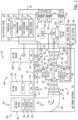
- FIG. 1 is a schematic of an embodiment of a gas turbine system 10 having a leak detection system 12 coupled to a gas turbine enclosure 14 housing a gas turbine engine 16.
- the leak detection system 12 includes a controller 18 communicatively coupled to a plurality of leak sensors 20 (e.g., open path infrared (OPIR) sensors or other types of light sensors) via one or more communicational lines 22.
- the leak detection system 12 is configured to obtain sensor feedback from the leak sensors 20 to facilitate an identification of a fuel leak (or other hazardous fluid leak) within the gas turbine enclosure 14, such as a leak of gas or liquid fuel.
- the leak detection system 12 also may be configured to detect other types of leaks of undesirable gases within the gas turbine enclosure 14 .
- the illustrated controller 18 includes a processor 24, a memory 26, and instructions 30 stored on the memory and executable by the processor 24 to perform a leak detection analysis and control.
- the controller 18 also includes communications circuitry 32, data processing circuitry 34, and one or more control actions 36 in response to the detected leak or other conditions within the gas turbine enclosure 14.
- the communications circuitry 32 may include wired and/or wireless communications circuitry to communicate with the leak sensors 20 and retrieve sensor data.
- the control action 36 may trigger a change from liquid fuel operation to gas fuel operation. If the sensor feedback indicates a gradually increasing amount of leakage within the gas turbine enclosure 14 and/or a leakage level above one or more thresholds, then the control actions 36 may trigger an alarm, a corrective action, and/or a shutdown of the gas turbine engine 16.
- the leak sensors 20 may include a variety of light or infra-red sensors (e.g., an open path infrared (OPIR) sensor). Each depicted sensor 20 may include one or more transceivers (e.g., OPIR transceivers) or one or more pairs of transmitters and receivers (e.g., OPIR transmitters and receivers). Details of the leak detection system 12 will be discussed in further detail below after providing context for the gas turbine system 10.
- OPIR open path infrared
- the illustrated gas turbine engine 16 includes an air intake section 40, a compressor section 42, a combustor section 44, a turbine section 46, an exhaust section 48, and one or more loads 50.
- the air intake section 40 includes an air treatment system 52 disposed in an intake duct 54 extending from an exterior of the gas turbine enclosure 14 and into the gas turbine enclosure 14 to connect with the compressor section 42.
- the air treatment system 52 includes one or more air filters 56, one or more silencers 58, and an anti-ice system 60.
- the air intake section 40 routes an air flow 62 through the intake duct 54 to the compressor section 42, while filtering the air flow 62 with the one or more air filters 56, reducing noise in the air intake section 40 with the one or more silencers 58, and inhibiting ice formation in the air flow 62 with the anti-ice system 60.
- the air flow 62 then passes through the compressor section 42, which includes a single stage or multi-stage compressor 64.
- the compressor 64 has a plurality of stages of compressor blades 66 coupled to a compressor shaft 68 within an outer compressor casing 70.
- the compressor 64 may include between 1 and 28 or more compressor stages to compress the air flow 62 before entering the combustor section 44.
- Each combustor 72 in the combustor section 44 may include one or more fuel nozzles 76.
- the fuel nozzles 76 are configured to mix the compressed air 74 with one or more fuels, such as a liquid fuel delivered along a liquid fuel line 78 (or liquid fuel circuit or flow path) from a liquid fuel system 80 of a dual fuel system 82 and/or a gas fuel delivered along a gas fuel line 84 (or gas fuel circuit or flow path) from a gas fuel system 86 of the dual fuel system 82.
- the fuel nozzles 76 may be configured to use only one of the liquid fuel or the gas fuel for a liquid fuel operation or a gas fuel operation, respectively. However, the fuel nozzles 76 also may be configured to simultaneously use both the liquid fuel and the gas fuel for combustion in the combustor 72, for example, during a transition between liquid and gas fuel operation.
- the liquid fuel and the gas fuel may be selected from a variety of fuel types and compositions.
- the gas fuel may include natural gas, synthetic gas (or syngas), hydrogen, methane, or another suitable gas turbine fuel.
- the fuel nozzles 76 mix the fuel with the compressed air 74, and the fuel-air mixture ignites in a combustion chamber 88 to generate hot combustion gases 90, which are then directed into the gas turbine section 46.
- the gas turbine section 46 may include a single stage or multi-stage turbine 92, which includes one or more stages of turbine blades 94 coupled to a turbine shaft 96 within a turbine casing 98.
- the turbine 92 may include between 1 and 28 turbine stages of turbine blades 94.
- rotation of the turbine shaft 96 drives rotation of the compressor 64 via an intermediate shaft 100 coupled to the compressor shaft 68, and drives rotation of the load 50 via a shaft 102.
- certain embodiments of the gas turbine engine 16 may include one or more common shafts between the compressor section 42, the turbine section 46, and the load 50.
- the load 50 may include a generator, industrial machinery, a vehicle propulsion system, or any other suitable equipment.
- the gas turbine enclosure 14 generally surrounds the gas turbine engine 16 and provides a protective barrier around the gas turbine engine 16.
- the gas turbine enclosure 14 may substantially contain the heat generated by combustion in the combustor section 44, and the gas turbine enclosure 14 may provide a containment for safety reasons.
- the gas turbine system 10 also includes a ventilation system 104 coupled to the gas turbine enclosure 14.
- the ventilation system 104 includes an air vent intake 106 and air vent exhaust 108 coupled to the gas turbine enclosure 14.
- the air vent intake 106 includes one or more air filters 110 and one or more fans 112 disposed in an intake duct 114, thereby directing and filtering an air flow into the gas turbine enclosure 14 as illustrated by arrow 116.
- the air vent exhaust 108 includes one or more fans 118 disposed in an exhaust duct 120 to route the ventilation flow out of the gas turbine enclosure 14 as illustrated by arrow 122.
- the air vent intake 106 and the air vent exhaust 108 may each include fans 112 and 118, in certain embodiments, the fans may be disposed in only one of the air vent intake 106 or the air vent exhaust 108.
- the ventilation system 104 circulates the air flow through the gas turbine enclosure 14 as illustrated by arrows 116 and 122, thereby withdrawing heat and/or any leaked fluids (e.g., leaked fuel) out of the gas turbine enclosure 14.
- the leak detection system 12 is configured to identify the leaks and enable certain control actions 36.
- the leak detection system 12 is communicatively coupled to the plurality of leak sensors 20 that are coupled to the gas turbine enclosure 14 of the gas turbine system 10 and to one or more sensors 20 that are coupled to enclosures 124 housing turbomachines 126.
- the turbomachines 126 may include additional gas turbine engines similar to the gas turbine engine 16 disposed inside the gas turbine enclosure 14.
- the turbomachines 126 also may include other equipment, such as combustion systems, gas compressors, reciprocating piston-cylinder combustion engines, boilers, gas treatment systems (e.g., sulfur removal units) for treating a syngas generated by a gasifier (e.g., using coal or another fuel feedstock), or other equipment having a potential for leakage of fuels or hazardous gases.
- the leak detection system 12 is configured to simultaneously monitor sensor feedback from the leak sensors 20 disposed in each of these systems and provide appropriate control actions 36. If the gas turbine engine 16 and the turbomachines 126 are functionally related and/or dependent on one another as part of a larger system, such as a power plant, then the leak detection system 12 may coordinate the control actions 36 between the gas turbine engine 16 and the turbomachines 126. However, in certain embodiments, the gas turbine engine 16 and the turbomachines 126 may be independent from one another, such that the leak detection system 12 can provide independent control actions 36 to the gas turbine engine 16 and the various turbomachines 126.
- the leak sensors 20 may be distributed at different locations about the gas turbine enclosure 14, which may provide redundancy in the sensor measurement and also provide additional information regarding the location of any potential leak occurring in the particular enclosure (e.g., 14 and 124).
- the leak sensors 20 are distributed at various locations along the gas fuel line 84 and the liquid fuel line 78, the combustors 72, and the air vent exhaust 108.
- the leak sensors 20 may be coupled to a removable roof panel 15 (or other removable access panel) of the gas turbine enclosure 14.
- the leak sensors 20 may obtain sensor feedback indicative of a greater or lesser presence of leakage in certain locations of the gas turbine enclosure 14, such that the controller 18 can estimate a specific location of the leak, a potential component having a leak, a possible corrective measure, and a possible control actions 36 in the event that the leak cannot be corrected.
- the leak sensors 20 also may be configured to identify a specific type of fuel leak, such as a type of liquid fuel or gas fuel.
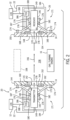
- the first window 142 is disposed in or at an opening or cut-out 152 in the first wall portion 144, while the second window 148 is disposed in or at an opening or cut-out 154 in the second wall portion 150.
- Each of the windows 142 and 148 may be a transparent sheet of material, such as a glass sheet or panel (e.g., sapphire window panel).
- the windows 142 and 148 may include a single layer or multiple layers of transparent material.
- the first and second windows 142 and 148 are configured to enable a beam 156 i.e. a light beam, infrared beam, or a laser beam, to pass from the transmitter 140, through the first window 142 across an internal space 158 within the enclosure 14, through the second window 148, and into the receiver 146.
- the transmitter 140 and the receiver 146 are completely external from the internal space 158 of the gas turbine enclosure 14, such that the transmitter 140 and the receiver 146 are not exposed to the higher temperatures within the gas turbine enclosure 14. Additionally, the external position of the transmitter 140 and the receiver 146 facilitates easier access for installation, inspection, and maintenance.
- Each of the transmitter 140 and the receiver 146 is a self-contained unit (i.e., a prepackaged unit), in which all electronics, circuits, optical elements, lenses, memory, processors, etc. are contained in a dedicated sensor housing 149 of the respective transmitter 140 or receiver 146. Accordingly, the protective housing 184, the thermal control system 186, and the vibration damper 182 are configured to adapt and enhance the transmitter 140 and the receiver 146 for use with the environment of the gas turbine system 10.
- the sensor 20 configuration of FIG. 2 may be used at any one or more of the sensor locations illustrated in FIG. 1 .
- FIG. 3 is a schematic of an embodiment of the leak detection system 12 having sensors 20 disposed on first and second wall portions 144 and 150 of the gas turbine enclosure 14, in which each sensor 20 includes a plurality of transmitters 140 on the first wall portion 144 and a plurality of receivers 146 on the second wall portion 150.
- each sensor 20 includes a plurality of transmitters 140 on the first wall portion 144 and a plurality of receivers 146 on the second wall portion 150.
- FIG. 3 is substantially the same as the embodiment of FIG. 2 . Accordingly, like reference numbers are used in FIGS. 2 and 3 to depict the same components described above with reference to FIG. 2 . The differences will be described in detail below.
- the mounts 172 for the transmitters 140 and the receivers 146 are substantially the same as one another. However, certain modifications may be made to accommodate different sizes or configurations of the transmitters 140 and the receivers 146. In the illustrated embodiment, the transmitters 140 and the receivers 146 may be spaced at a uniform or non-uniform spacing relative to one another.
- the plurality of transmitters 140 and receivers 146 may be configured to obtain redundant measurements in a particular location of the gas turbine enclosure 14, or the plurality of transmitters 140 and receivers 146 may be configured to provide additional spatial information relating to the sensor measurements in a particularly sensitive area of the gas turbine enclosure 14.
- the sensor 20 configuration of FIG. 3 may be used at any one or more of the sensor locations illustrated in FIG. 1 .
- FIG. 4 is a schematic of an embodiment of the leak detection system 12 having leak sensors 20 coupled to the gas turbine enclosure 14.
- the embodiment of FIG. 4 is similar to the embodiment of FIG. 2 as described above, except that the transmitter 140 is replaced with a transceiver 200 at the first wall portion 144 and the receiver 146 is replaced with a reflector 202 at the second wall portion 150. Accordingly, the mounting system 171 at the first wall portion 144 is substantially the same as described above with reference to FIG. 2 .
- the transceiver 200 is mounted to the first wall portion 144 with the mount 172 having the central body 180 with the angled arms 178.
- the central body 180 also includes the vibration damper 182 as described above.
- the transceiver 200 is protected by the protective housing 184 and is provided with a thermal flow (e.g., a cooling flow and/or a heating flow) by the thermal control system 186.
- the thermal control system 186 may include one or more fluid injection ducts 187, which are configured to direct a thermal flow (e.g., a cleaning fluid jet, a cooling flow and/or heating flow) against the window (e.g., first window 142).
- the first window 142 is mounted to the first wall portion 144 with the mount 160 and threaded fasteners 162 and 164.
- the mount 172 may exclude the protective housing 184 and/or the thermal control system 186.
- the transceiver 200 may be at least partially or entirely exposed to the environment (i.e., without the protective housing 184 and the thermal control system 186), such that the ambient temperature and weather (e.g., wind, rain, snow, and/or hail) helps to maintain a suitable temperature of the transceiver 200.
- the transceiver 200 also may be spaced apart from the first window 142 by a distance 141 sufficient to reduce the transfer of heat and vibration from the gas turbine enclosure 14 to the transceiver 200.
- the second wall portion 150 may be configured with a reflector 202 (e.g., an externally mounted reflector in a first embodiment) or a reflector 203 (e.g., an internally mounted reflector in a second embodiment).
- a reflector 202 e.g., an externally mounted reflector in a first embodiment
- a reflector 203 e.g., an internally mounted reflector in a second embodiment
- the second window 148 and the reflector 202 may be mounted to the second wall portion 150 in a similar manner as described above with reference to FIG. 2 .
- the second window 148 is disposed at or in the opening or cut-out 154
- the reflector 202 is disposed against an exterior surface of the second window 148
- a mount 204 e.g., a rectangular or annular flange
- the mount 204 is coupled to the second wall portion 150 with a plurality of threaded fasteners 206 (e.g., bolts)
- the mount 204 is coupled to the second window 148 and the reflector 202 with a plurality of threaded fasteners 208 (e.g., bolts).
- threaded fasteners 162, 164, 206, and 208 for the mounts 160 and 204
- certain embodiments may include other fasteners or joints, such as a welded joint, a hinged joint, a latch, a dovetail joint, an interference fit or shrink fit, an adhesive, and/or any suitable fixed or removable joint.
- the transceiver 200 is configured to transmit an optical beam 210 through the first window 142, through the internal space 158, through the second window 148 and against the reflector 202, which in turn reflects a return optical beam 212 back to the transceiver 200.
- the received beam 212 is then processed by the transceiver 200 and/or the controller 18 to evaluate whether or not a leak is occurring in the gas turbine enclosure 14.
- the reflector 203 may be mounted to an interior surface of the second wall portion 150 via a mount 205 (e.g., a rectangular or annular flange) and a plurality of threaded fasteners 207 (e.g., bolts). Additionally, the opening or cut-out 154, the second window 148, the reflector 202, the mount 204, and the threaded fasteners 206 and 208 may be excluded when using the reflector 203, thereby eliminating any potential leak paths in the second wall portion 150.
- a mount 205 e.g., a rectangular or annular flange
- threaded fasteners 207 e.g., bolts
- the transceiver 200 is configured to transmit an optical beam 210 through the first window 142, through the internal space 158, and against the reflector 203, which in turn reflects a return optical beam 212 back to the transceiver 200.
- the received beam 212 is then processed by the transceiver 200 and/or the controller 18 to evaluate whether or not a leak is occurring in the gas turbine enclosure 14.
- FIG. 5 is a schematic of an embodiment of the leak detection system 12 having sensors 20 configured to detect fuel leaks inside the gas turbine enclosure 14.
- the mounting system 172 and sensor 20 configuration disposed on the first wall portion 144 are substantially the same as described above with reference to FIG. 3 , except that the transmitters 140 are replaced with transceivers 200 as described with reference to FIG. 4 .
- the transceivers 200 of FIG. 5 are disposed in substantially the same mount 172 of FIG. 3 .
- the mount 172 includes the angled arms 174 extending from the central body 180 having the vibration dampers 182.
- the mount 172 also includes the intermediate support 190 having the plurality of recesses 192 configured to support the plurality of transceivers 200.
- the transceivers 200 are also protected by the protective housing 184 having the thermal control system 186.
- the thermal control system 186 may include one or more fluid injection ducts 187, which are configured to direct a thermal flow (e.g., a cleaning fluid jet, a cooling flow and/or heating flow) against the window (e.g., first window 142).
- the mount 172 may exclude the protective housing 184 and/or the thermal control system 186.
- the first wall portion 144 also has the first window 142 disposed at or in the opening or cut-out 152, and the first window 142 is coupled to the first wall portion 44 with the mount 160 and threaded fasteners 162 and 164.
- the transceivers 200 also may be spaced apart from the first window 142 by a distance 141 sufficient to reduce the transfer of heat and vibration from the gas turbine enclosure 14 to the transceivers 200.
- the second wall portion 150 has a similar configuration as discussed above with reference to FIG. 4 , which may include the reflector 202 (e.g., an externally mounted reflector in a first embodiment) or the reflector 203 (e.g., an internally mounted reflector in a second embodiment).
- the second window 148 is disposed at or in the opening or cut-out 154 in the second wall portion 150
- the reflector 202 is disposed against an outer surface of the second window 148
- the mount 204 couples both the second window 148 and the reflector 202 to the second wall portion 150.
- the mount 204 is coupled to the second wall portion 150 with the plurality of threaded fasteners 206
- the mount 204 is coupled to the second window 148 and the reflector 202 with the plurality of threaded fasteners 208.
- each transceiver 200 is configured to transmit a light or infra-red beam 210 through the first window 142, through the internal space 158, through the second window 148 and against the reflector 202, which in turn reflects a return light or infra-red beam 212 back to the transceiver 200.
- the transceivers 200 and/or the controller 18 then process the received light or infrared beams 212 to evaluate whether or not a fuel leak is occurring in the gas turbine enclosure 14.
- the transceivers 200 are spaced uniformly or nonuniformly with respect to one another.
- the transceivers 200 may be configured to provide redundant measurements or measurements that provide spatial information about potential leaks within the gas turbine enclosure 14.
- the sensor 20 configuration of FIG. 5 may be used at any one or more of the sensor locations illustrated in FIG. 1 .
- FIG. 6 is a schematic of an embodiment of the leak detection system 12 having a plurality of different configurations of sensors 20 (e.g., transmitters 140, receivers 146, transceivers 200, and reflectors 220) coupled to the gas turbine enclosure.
- the transmitters 140, receivers 146, and transceivers 200 may have substantially the same features as discussed in detail above with reference to FIGS. 1-5 , including the windows 142 and 148, the mounting system 171, the protective housing 184, the vibration damper 182, the protective housing 184, and the thermal control system 186.
- the transmitters 140, receivers 146, and transceivers 200 may exclude the protective housing 184 and/or the thermal control system 186.
- the reflectors 220 may include the reflector 202 (e.g., an externally mounted reflector outside of a window in a first embodiment) or the reflector 203 (e.g., an internally mounted reflector in a second embodiment).
- the leak detection system 12 includes a first sensor configuration 222, a second sensor configuration 224, a third sensor configuration 226, a fourth sensor configuration 228, and a fifth sensor configuration 230. These sensor configurations 222, 224, 226, 228, and 230 may be used independent from one another or in various combinations with one another.
- the first sensor configuration 222 may be substantially the same as discussed above with reference to FIGS. 2 and 3 , including the transmitters 140 and the receivers 146 on opposite sides of the gas turbine enclosure 14.
- the second sensor configuration 224 may be substantially the same as discussed above with reference to FIGS. 4 and 5 , including the transceivers 200 and reflectors 220 (e.g., reflectors 202 or 203) on opposite sides of the gas turbine enclosure 14.
- the third sensor configuration 226 includes a first sensor set 232 having the transmitter 140 and the receiver 146 on the first wall portion 144 and the reflector 220 on the second wall portion 150, and a second sensor set 234 having the transmitter 140 and the receiver 146 on the second wall portion 150 and the reflector 220 on the first wall portion 144.
- Each sensor set 232 and 234 reflects the optical beam 156 off of the reflector 220 at an angle 236, such as between 1 and 170 degrees, 2 and 120 degrees, 3 and 90 degrees, 4 and 60 degrees, or 10 and 30 degrees.
- the fourth sensor configuration 228 adds further enhancements to the third sensor configuration 226.
- the reflector 220 is disposed on a different wall portion 238 than the first wall portion 144 having the transmitters 140 and the second wall portion 150 having the receivers 146.
- the optical beam 156 from each transmitter 140 is split into respective first and second optical beams 240 and 242 by a beam splitter 244, such that the first optical beam 240 passes directly between the transmitter 140 and receiver 146 whereas the second optical beam 242 reflects off of the reflector 220 at an angle 246 between the transmitter 140 and the receiver 146.
- the angle 246 may be the same or different for each set of the transmitters 140 and receivers 146.
- the angle 246 may be between 20 and 175 degrees, 30 and 150 degrees, 40 and 120 degrees, 50 and 100 degrees, or 60 and 90 degrees.
- Each of the receivers 146 may independently receive the first and second optical beams 240 and 242 from the respective transmitters 140, or a beam combiner 250 may combine the first and second optical beams 240 and 242 as a single optical beam into each of the receivers 146.
- the beam splitters 244 may be integrated into the respective transmitters 140, or the beam splitters 244 may be separate from the respective transmitters 140 (e.g., mounted on the windows 142).
- the beam combiners 250 may be integrated into the respective receivers 146, or the beam combiners 250 may be separate from the respective receivers 146 (e.g., mounted on the windows 148).
- the fifth sensor configuration 230 may be substantially the same as discussed above with reference to FIGS. 4 and 5 , including the transceivers 200 and reflectors 220 (e.g., reflectors 202 or 203) on opposite sides of the gas turbine enclosure 14.
- the transceivers 200 are disposed on a wall portion 252 opposite from the wall portion 238 having the reflector 220, which is also different that the first and second wall portions 144 and 150 having the transmitters 140, the receivers 146, the transceivers 200, and the reflectors 20 of the first, second, and third sensor configurations 222, 224, and 226 and the transmitters 140 and the receivers 146 of the fourth sensor configuration 228.
- the light or infra-red beams (e.g., 210, 212) associated with the fifth sensor configuration 230 pass through the gas turbine enclosure 14 crosswise relative to the light or infra-red beams (e.g., 156, 210, and 212) associated with the first, second, third, and fourth sensor configurations 222, 224, 226, and 228, thereby defining an optical measurement grid of optical beams 254 inside of the gas turbine enclosure 14.
- the illustrated grid of light or infra-red beams 254 may improve the leak measurements in the gas turbine enclosure 14.
- the leak detection system 12 of FIG. 6 operates substantially the same as discussed in detail above with reference to FIGS. 1-5 . Accordingly, the leak detection system 12 is configured to monitor for changes in the light or infra-red beams associated with leakage of fluids (e.g., gaseous fuels or liquid fuel vapor) inside of the gas turbine enclosure 14.
- fluids e.g., gaseous fuels or liquid fuel vapor
- the various sensor configurations 222, 224, 226, 228, and 230 may be used alone or in combination with one another to provide redundancy in the leak detection measurements, improved accuracy in the leak detection measurements, and/or location specific data associated with leakage in the gas turbine enclosure 14.
- the disclosed measurement techniques use one or more leak sensors 20 disposed at windows (e.g., 142, 148) in the gas turbine enclosure 14.
- the leak sensors 20 are completely outside of the gas turbine enclosure 14, and the windows enable the leak sensors 20 to send and receive beams (e.g light beams, IR beams) through the internal space 158 of the gas turbine enclosure 14 to evaluate whether or not a leak is occurring in the gas turbine enclosure 14.
- the leak sensors 20 also may include one or more features to adapt the sensors 20 for use with the gas turbine system 10.
- the leak sensors 20 may include the protective housing 184, the thermal control system 186 with the fluid injection ducts 187, and/or the vibration dampers 182.
Landscapes
- Physics & Mathematics (AREA)
- General Physics & Mathematics (AREA)
- Engineering & Computer Science (AREA)
- Chemical & Material Sciences (AREA)
- Combustion & Propulsion (AREA)
- Mechanical Engineering (AREA)
- General Engineering & Computer Science (AREA)
- Examining Or Testing Airtightness (AREA)
- Photometry And Measurement Of Optical Pulse Characteristics (AREA)
- Control Of Turbines (AREA)
Description
- The present invention relates to systems and methods for detecting leaks in an enclosure surrounding equipment that may leak hazardous fluids.
- An enclosure may be used to house a variety of equipment, such as compressors, pumps, turbines, valves, furnaces, boilers, furnaces, gasifiers, gas treatment systems such as acid gas removal (AGR) systems and carbon capture systems, and a variety of other industrial equipment. This equipment and various fluid lines disposed in the enclosure can potentially leak inside the enclosure. As an example, gas turbines engines are used in a variety of applications, including power plants. A gas turbine engine may be coupled to a generator in a stationary or mobile power plant. The gas turbine engine receives fuel for combustion in one or more combustors. The fuel, which may include liquid or gas fuel, may potentially leak within a gas turbine enclosure housing the gas turbine engine. A monitoring system may be fluidly coupled to the gas turbine enclosure to sample the air (i.e., extract the air through one or more fluid lines) to detect the presence of hazardous fluids. Unfortunately, under certain conditions, these monitoring systems may trip the power generation units (e.g., due to moisture or ice in the fluid lines), resulting in unnecessary costly shutdowns. Due to this issue, certain operators may inactivate monitoring systems and forego monitoring for hazardous gas within the gas turbine enclosure. Similar leakage problems may exist with other types of equipment, such as the equipment listed above. As a result, a need exists for an improved monitoring system to detect leaks in the enclosure surrounding such equipment.
US 2015/260611 A1 discloses an acoustic transceiver that is implemented for measuring acoustic properties of a gas in a turbine engine combustor. The transceiver housing defines a measurement chamber and has an opening adapted for attachment to a turbine engine combustor wall. The opening permits propagation of acoustic signals between the gas in the turbine engine combustor and gas in the measurement chamber. An acoustic sensor mounted to the housing receives acoustic signals propagating in the measurement chamber, and an acoustic transmitter mounted to the housing creates acoustic signals within the measurement chamber. An acoustic measurement system includes at least two such transceivers attached to a turbine engine combustor wall and connected to a controller.
US 2015/054650A1 discloses an apparatus for detecting leaks from a gas pipeline or storage system. The apparatus includes a light source configured to emit a beam with at least one spectral component capable of interacting with pipeline gas, a reflector configured to reflect a portion of the beam, an optical detector configured to detect the reflected beam, a signal processing module coupled to the output of the optical detector configured to analyze the detected beam and output a measured concentration value that characterizes the amount of target gas in the beam path, and a statistical processing module coupled to the signal processing module configured to store and analyze the measured concentration value.
EP27225112 - The invention as herein claimed is defined by the system according to claim 1 and the method according to
claim 12. - Embodiments are not intended to limit the scope of the claimed subject matter, but rather these embodiments are intended only to provide a brief summary of possible forms of the subject matter disclosed in the application. Indeed, the disclosed subject matter may encompass a variety of forms that may be similar to or different from the embodiments set forth below.
- Further, in connection with the subject matter set forth in claim 1, the leak sensor may comprise a light sensor.
- In connection with any above-disclosed embodiment, the leak sensor comprises an open path infrared (OPIR) sensor.
- In connection with any above-disclosed embodiment, the leak sensor comprises a transmitter and a receiver.
- In connection with any above-disclosed embodiment, the leak detection system includes a second window configured to mount at a second opening in a second wall portion in the gas turbine enclosure; the transmitter is disposed adjacent the first window; and the receiver is disposed adjacent the second window.
- In connection with any above-disclosed embodiment, the leak sensor comprises a transceiver.
- In connection with any above-disclosed embodiment, the leak detection system comprises a reflector configured to couple to the gas turbine enclosure opposite from the first window; the transceiver is disposed adjacent the first window; the transceiver is configured to transmit the beam through the first window toward the reflector; and the reflector is configured to reflect the beam back to the transceiver.
- In connection with any above-disclosed embodiment, the leak detection system includes a second window configured to mount at a second opening in a second wall portion in the gas turbine enclosure, and the reflector is disposed adjacent the second window.
- In connection with any above-disclosed embodiment, the leak sensor is configured to mount adjacent an air vent exhaust of the gas turbine enclosure.
- In connection with any above-disclosed embodiment, the leak sensor is configured to mount in a removable roof panel of the gas turbine enclosure.
- In connection with any above-disclosed embodiment, the gas turbine enclosure includes the leak detection system.
- In connection with any above-disclosed embodiment, the system includes a gas turbine engine disposed in the gas turbine enclosure.
- In connection with any above-disclosed embodiment, a plurality of the leak sensors are configured to couple to the gas turbine enclosure in a plurality of different locations; and the controller is configured to evaluate sensor feedback from the plurality of sensors to monitor for the leak of the hazardous fluid in the gas turbine enclosure.
- In connection with any above-disclosed embodiment, the controller is configured to estimate a location of the leak based on the sensor feedback from the plurality of sensors.
- In connection with any above-disclosed embodiment, each location of the plurality of different locations includes at least two leak sensors of the plurality of leak sensors.
- In connection with any above-disclosed embodiment, a sensor mount is configured to mount the leak sensor to the gas turbine enclosure, wherein the sensor mount includes at least one of a protective housing, a thermal control system, or a vibration damper, and wherein the leak sensor is a self-contained sensor unit.
- A gas turbine engine may be disposed in the gas turbine enclosure.
- In another aspect, a method is provided as defined in
claim 12. - These and other features, aspects, and advantages of the disclosed subject matter will become better understood when the following detailed description is read with reference to the accompanying drawings in which like characters represent like parts throughout the drawings, wherein:
-
FIG. 1 is a schematic of an embodiment of a gas turbine system having a leak detection system with a plurality of sensors; -
FIG. 2 is a schematic of an embodiment of the leak detection system having a first sensor (e.g., transmitter) disposed at a first window in a first wall portion and a second sensor (e.g., receiver) disposed at a second window in a second wall portion of a gas turbine enclosure; -
FIG. 3 is a schematic of an embodiment of the leak detection system having multiple first sensors (e.g., transmitters) disposed at the first window in the first wall portion and multiple second sensors (e.g., receivers) disposed at the second window in the second wall portion of the gas turbine enclosure; -
FIG. 4 is a schematic of an embodiment of the leak detection system having a sensor (e.g., transceiver) disposed at the first window in the first wall portion and a reflector disposed at the second window in the second wall portion of the gas turbine enclosure; -
FIG. 5 is a schematic of an embodiment of the leak detection system having multiple sensors (e.g., transceivers) disposed at the first window in the first wall portion and the reflector disposed at the second window in the second wall portion of the gas turbine enclosure; and -
FIG. 6 is a schematic of an embodiment of the leak detection system having a plurality of different configurations of sensors (e.g., transmitters, receivers, transceivers, and reflectors) coupled to the gas turbine enclosure. - One or more specific embodiments of the invention will be described below. In an effort to provide a concise description of these embodiments, all features of an actual implementation may not be described in the specification. It should be appreciated that in the development of any such actual implementation, as in any engineering or design project, numerous implementation-specific decisions must be made to achieve the developers' specific goals, such as compliance with system-related and business-related constraints, which may vary from one implementation to another. Moreover, it should be appreciated that such a development effort might be complex and time consuming, but would nevertheless be a routine undertaking of design, fabrication, and manufacture for those of ordinary skill having the benefit of this disclosure.
- When introducing elements of various embodiments of the disclosed subject matter, the articles "a," "an," "the," and "said" are intended to mean that there are one or more of the elements. The terms "comprising," "including," and "having" are intended to be inclusive and mean that there may be additional elements other than the listed elements.
-
FIG. 1 is a schematic of an embodiment of agas turbine system 10 having aleak detection system 12 coupled to agas turbine enclosure 14 housing agas turbine engine 16. In the illustrated embodiment, theleak detection system 12 includes acontroller 18 communicatively coupled to a plurality of leak sensors 20 (e.g., open path infrared (OPIR) sensors or other types of light sensors) via one or morecommunicational lines 22. Theleak detection system 12 is configured to obtain sensor feedback from theleak sensors 20 to facilitate an identification of a fuel leak (or other hazardous fluid leak) within thegas turbine enclosure 14, such as a leak of gas or liquid fuel. However, theleak detection system 12 also may be configured to detect other types of leaks of undesirable gases within thegas turbine enclosure 14 . - The
leak sensors 20 do not require any sampling of air from within thegas turbine enclosure 14, and the leak sensors do not require any contact with the air within thegas turbine enclosure 14. As a result, theleak sensors 20 can be mounted completely outside of thegas turbine enclosure 14 without creating any potential leak paths for an air sampling conduit. Although the illustrated embodiment showscommunicational lines 22 extending between thecontroller 18 and thevarious leak sensors 20, certain embodiments of theleak detection system 12 may use wireless communications to obtain sensor data from theleak sensors 20. - The illustrated
controller 18 includes aprocessor 24, amemory 26, andinstructions 30 stored on the memory and executable by theprocessor 24 to perform a leak detection analysis and control. Thecontroller 18 also includescommunications circuitry 32,data processing circuitry 34, and one ormore control actions 36 in response to the detected leak or other conditions within thegas turbine enclosure 14. Thecommunications circuitry 32 may include wired and/or wireless communications circuitry to communicate with theleak sensors 20 and retrieve sensor data. - The
data processing circuitry 34 is configured to process the sensor data from theleak sensors 20 and perform one or more analyses on the sensor data in order to determine if a leak has occurred or is occurring, if the leak is worsening over time, if the leak is in a particular location, if the leak is attributed to a particular type of fluid (e.g., gas fuel or liquid fuel), and/or if the leak is attributed to another event occurring in the gas turbinegas turbine system 10. Thecontrol actions 36 may include triggering an alarm, modifying operational parameters of thegas turbine engine 16, switching between different types of fuel such as liquid and gas fuel, or stopping operation of thegas turbine engine 16. Theparticular control actions 36 initiated by thecontroller 18 may depend on the type of feedback retrieved from theleak sensors 20. For example, if theleak sensors 20 indicate a leakage of liquid fuel, then thecontrol action 36 may trigger a change from liquid fuel operation to gas fuel operation. If the sensor feedback indicates a gradually increasing amount of leakage within thegas turbine enclosure 14 and/or a leakage level above one or more thresholds, then thecontrol actions 36 may trigger an alarm, a corrective action, and/or a shutdown of thegas turbine engine 16. - As discussed in further detail below, the
leak sensors 20 may include a variety of light or infra-red sensors (e.g., an open path infrared (OPIR) sensor). Each depictedsensor 20 may include one or more transceivers (e.g., OPIR transceivers) or one or more pairs of transmitters and receivers (e.g., OPIR transmitters and receivers). Details of theleak detection system 12 will be discussed in further detail below after providing context for thegas turbine system 10. - The illustrated
gas turbine engine 16 includes anair intake section 40, acompressor section 42, acombustor section 44, aturbine section 46, anexhaust section 48, and one or more loads 50. Theair intake section 40 includes anair treatment system 52 disposed in anintake duct 54 extending from an exterior of thegas turbine enclosure 14 and into thegas turbine enclosure 14 to connect with thecompressor section 42. Theair treatment system 52 includes one ormore air filters 56, one ormore silencers 58, and ananti-ice system 60. Theair intake section 40 routes anair flow 62 through theintake duct 54 to thecompressor section 42, while filtering theair flow 62 with the one ormore air filters 56, reducing noise in theair intake section 40 with the one ormore silencers 58, and inhibiting ice formation in theair flow 62 with theanti-ice system 60. Theair flow 62 then passes through thecompressor section 42, which includes a single stage ormulti-stage compressor 64. In the illustrated embodiment, thecompressor 64 has a plurality of stages ofcompressor blades 66 coupled to acompressor shaft 68 within anouter compressor casing 70. Although the illustrated embodiment shows four compressor stages, thecompressor 64 may include between 1 and 28 or more compressor stages to compress theair flow 62 before entering thecombustor section 44. - The compressed air is then directed into a plurality of
combustors 72 of thecombustor section 44 as illustrated byarrows 74. Eachcombustor 72 in thecombustor section 44 may include one ormore fuel nozzles 76. The fuel nozzles 76 are configured to mix thecompressed air 74 with one or more fuels, such as a liquid fuel delivered along a liquid fuel line 78 (or liquid fuel circuit or flow path) from aliquid fuel system 80 of adual fuel system 82 and/or a gas fuel delivered along a gas fuel line 84 (or gas fuel circuit or flow path) from agas fuel system 86 of thedual fuel system 82. The fuel nozzles 76 may be configured to use only one of the liquid fuel or the gas fuel for a liquid fuel operation or a gas fuel operation, respectively. However, thefuel nozzles 76 also may be configured to simultaneously use both the liquid fuel and the gas fuel for combustion in thecombustor 72, for example, during a transition between liquid and gas fuel operation. - The liquid fuel and the gas fuel may be selected from a variety of fuel types and compositions. For example, the gas fuel may include natural gas, synthetic gas (or syngas), hydrogen, methane, or another suitable gas turbine fuel. Regardless of the specific type of fuel being used in the
combustors 72, thefuel nozzles 76 mix the fuel with thecompressed air 74, and the fuel-air mixture ignites in acombustion chamber 88 to generatehot combustion gases 90, which are then directed into thegas turbine section 46. - The
gas turbine section 46 may include a single stage ormulti-stage turbine 92, which includes one or more stages ofturbine blades 94 coupled to aturbine shaft 96 within aturbine casing 98. For example, in certain embodiments, theturbine 92 may include between 1 and 28 turbine stages ofturbine blades 94. As thehot combustion gases 90 flow through theturbine section 46, thegases 90 drive rotation of theturbine blades 94 and theturbine shaft 96. In turn, rotation of theturbine shaft 96 drives rotation of thecompressor 64 via anintermediate shaft 100 coupled to thecompressor shaft 68, and drives rotation of theload 50 via ashaft 102. Althoughseparate shafts gas turbine engine 16, certain embodiments of thegas turbine engine 16 may include one or more common shafts between thecompressor section 42, theturbine section 46, and theload 50. Theload 50 may include a generator, industrial machinery, a vehicle propulsion system, or any other suitable equipment. - The
gas turbine enclosure 14 generally surrounds thegas turbine engine 16 and provides a protective barrier around thegas turbine engine 16. For example, thegas turbine enclosure 14 may substantially contain the heat generated by combustion in thecombustor section 44, and thegas turbine enclosure 14 may provide a containment for safety reasons. Thegas turbine system 10 also includes aventilation system 104 coupled to thegas turbine enclosure 14. As illustrated, theventilation system 104 includes anair vent intake 106 andair vent exhaust 108 coupled to thegas turbine enclosure 14. Theair vent intake 106 includes one ormore air filters 110 and one ormore fans 112 disposed in anintake duct 114, thereby directing and filtering an air flow into thegas turbine enclosure 14 as illustrated byarrow 116. Similarly, theair vent exhaust 108 includes one ormore fans 118 disposed in anexhaust duct 120 to route the ventilation flow out of thegas turbine enclosure 14 as illustrated byarrow 122. Although theair vent intake 106 and theair vent exhaust 108 may each includefans air vent intake 106 or theair vent exhaust 108. In operation, theventilation system 104 circulates the air flow through thegas turbine enclosure 14 as illustrated byarrows gas turbine enclosure 14. However, if any leakage occurs inside thegas turbine enclosure 14, theleak detection system 12 is configured to identify the leaks and enablecertain control actions 36. - The
leak detection system 12 is communicatively coupled to the plurality ofleak sensors 20 that are coupled to thegas turbine enclosure 14 of thegas turbine system 10 and to one ormore sensors 20 that are coupled toenclosures 124housing turbomachines 126. In certain embodiments, theturbomachines 126 may include additional gas turbine engines similar to thegas turbine engine 16 disposed inside thegas turbine enclosure 14. However, theturbomachines 126 also may include other equipment, such as combustion systems, gas compressors, reciprocating piston-cylinder combustion engines, boilers, gas treatment systems (e.g., sulfur removal units) for treating a syngas generated by a gasifier (e.g., using coal or another fuel feedstock), or other equipment having a potential for leakage of fuels or hazardous gases. - The
leak detection system 12 is configured to simultaneously monitor sensor feedback from theleak sensors 20 disposed in each of these systems and provideappropriate control actions 36. If thegas turbine engine 16 and theturbomachines 126 are functionally related and/or dependent on one another as part of a larger system, such as a power plant, then theleak detection system 12 may coordinate thecontrol actions 36 between thegas turbine engine 16 and theturbomachines 126. However, in certain embodiments, thegas turbine engine 16 and theturbomachines 126 may be independent from one another, such that theleak detection system 12 can provideindependent control actions 36 to thegas turbine engine 16 and thevarious turbomachines 126. - In each of these systems, the
leak sensors 20 may be distributed at different locations about thegas turbine enclosure 14, which may provide redundancy in the sensor measurement and also provide additional information regarding the location of any potential leak occurring in the particular enclosure (e.g., 14 and 124). For example, as illustrated with thegas turbine enclosure 14, theleak sensors 20 are distributed at various locations along thegas fuel line 84 and theliquid fuel line 78, thecombustors 72, and theair vent exhaust 108. By further example, theleak sensors 20 may be coupled to a removable roof panel 15 (or other removable access panel) of thegas turbine enclosure 14. Accordingly, theleak sensors 20 may obtain sensor feedback indicative of a greater or lesser presence of leakage in certain locations of thegas turbine enclosure 14, such that thecontroller 18 can estimate a specific location of the leak, a potential component having a leak, a possible corrective measure, and apossible control actions 36 in the event that the leak cannot be corrected. As discussed in further detail below, theleak sensors 20 also may be configured to identify a specific type of fuel leak, such as a type of liquid fuel or gas fuel. - In certain embodiments, the
leak sensors 20 are non-intrusive, non-contact sensors, such as optical sensors, disposed outside of thegas turbine enclosure 14. For example, theleak sensors 20 may transmit and receive an optical beam (e.g., a beam of light or radiation) through an interior of thegas turbine enclosure 14, such that changes in characteristics of the optical beam can be analyzed to determine whether or not a leak is occurring inside thegas turbine enclosure 14. For example, theleak sensors 20 and/or thedata processing circuitry 34 of thecontroller 18 may be configured to analyze changes in the optical beam passing through thegas turbine enclosure 14 to determine a composition of any fluid leakage inside thegas turbine enclosure 14. - The
sensors 20 may include infrared (IR) light sensors, laser sensors, electromagnetic radiation sensors, or any other suitable light-based sensor. In particular, the disclosedleak sensor 20 may include an open path infrared (OPIR) sensor. TheOPIR sensors 20 may include a pair of a transmitter and a receiver or a pair of a transceiver and a reflector (e.g., a retroreflector). The reflector may include a reflective panel having a substrate layer and a reflective layer (e.g., a mirror layer). Details of thesensors 20 will be described in further detail below with reference toFIGS. 2-5 . - The
OPIR sensor 20 is configured to direct a beam of infrared light through thegas turbine enclosure 14. The presence of a potential fuel leak in thegas turbine enclosure 14 can be detected due to an absorption of an infrared wavelength in the beam of infrared light. For example, a particular infrared wavelength may correspond to a particular fuel type, such as a particular liquid fuel, a particular gas fuel, or other hazardous fluid within thegas turbine enclosure 14. Accordingly, theOPIR sensor 20 is configured to detect specific types of leakages within thegas turbine enclosure 14, such that thecontroller 18 can identify possiblecorrective actions 36 for thegas turbine engine 16. -
FIGS. 2 ,3 ,4 , and5 are schematics of embodiments of thesensors 20 coupled to an exterior of thegas turbine enclosure 14 housing thegas turbine engine 16. For example, thesensors 20 may be disposed on opposite sides of thegas turbine enclosure 14 in the vicinity of theair vent exhaust 108. However, thesensors 20 may be disposed in other wall portions of thegas turbine enclosure 14 as illustrated inFIG. 1 . - As illustrated in
FIG. 2 , theleak sensors 20 may include atransmitter 140 disposed adjacent afirst window 142 in afirst wall portion 144 of thegas turbine enclosure 14 and areceiver 146 disposed adjacent asecond window 148 in asecond wall portion 150 of thegas turbine enclosure 14. For example, thetransmitter 140 may include a light transmitter, such as an IR transmitter, a laser transmitter, or an OPIR transmitter. Similarly, thereceiver 146 may include a light receiver, such as an IR receiver, a laser receiver, or an OPIR receiver, respectively. - The
first window 142 is disposed in or at an opening or cut-out 152 in thefirst wall portion 144, while thesecond window 148 is disposed in or at an opening or cut-out 154 in thesecond wall portion 150. Each of thewindows windows second windows beam 156 i.e. a light beam, infrared beam, or a laser beam, to pass from thetransmitter 140, through thefirst window 142 across aninternal space 158 within theenclosure 14, through thesecond window 148, and into thereceiver 146. In this way, thetransmitter 140 and thereceiver 146 are completely external from theinternal space 158 of thegas turbine enclosure 14, such that thetransmitter 140 and thereceiver 146 are not exposed to the higher temperatures within thegas turbine enclosure 14. Additionally, the external position of thetransmitter 140 and thereceiver 146 facilitates easier access for installation, inspection, and maintenance. - The
first window 142 may be mounted to thefirst wall portion 144 via one ormore mounts 160, such as a rectangular or annular flange, which may be fastened to both thefirst wall portion 144 and thefirst window 142. For example, themount 160 may be fastened to thefirst wall portion 144 with a plurality of threaded fasteners 162 (e.g., bolts), and themount 160 may be fastened to thefirst window 142 with a plurality of threaded fasteners 164 (e.g., bolts). Similarly, thesecond window 148 may be mounted to thesecond wall portion 150 via one ormore mounts 166, such as a rectangular or annular shaped flange. For example, themount 166 may be fastened to thesecond wall portion 150 via a plurality of threaded fasteners 168 (e.g., bolts), and themount 166 may be fastened to thesecond window 148 with a plurality of threaded fasteners 170 (e.g., bolts). Although the illustrated embodiment uses threadedfasteners mounts - The
transmitter 140 may be coupled to thefirst wall portion 144 with a mountingsystem 171. The illustratedmounting system 171 may include at least onemount 172, which may be fastened to thefirst wall portion 144 with a plurality of threaded fasteners 174 (e.g., bolts). Themount 172 also may be fastened to thetransmitter 140 with a plurality of threaded fasteners 176 (e.g., bolts). In some embodiments, threadedfasteners mount 172 has angledarms 178 extending outwardly from acentral body 180. Thecentral body 180 is disposed about thetransmitter 140, and thecentral body 180 also may include a vibration damper orshock absorber 182. For example, thevibration damper 182 may include one or more springs, shock absorbing material, a piston cylinder assembly, or a combination thereof. Thevibration damper 182 may be configured to reduce vibration associated with operation of thegas turbine engine 16. However, certain embodiments of themount 172 may exclude thevibration damper 182. - In certain embodiments, the
mount 172 also may include aprotective housing 184 disposed about thetransmitter 140. Theprotective housing 184 may be configured to protect thetransmitter 140 from heat, electrical interference, or impact damage. For example, theprotective housing 184 may include one or more layers of electrical insulation, thermal insulation, and structural protection. Thetransmitter 140 also may include athermal control system 186 configured to provide ventilation and/or a thermal flow (e.g., a cooling flow and/or a heating flow) through theprotective housing 184. Thethermal control system 186 may include one or more fans, a liquid thermal control system (e.g., liquid heating/cooling system) having one or more pumps and heat exchangers, an electric heater, or any combination thereof. Thethermal control system 186 may be configured to maintain a temperature (e.g., by heating and/or cooling) within an interior of theprotective housing 184, and thetransmitter 140, within a desired temperature range (i.e., between upper and lower temperature thresholds). Thethermal control system 186 may include one or morefluid injection ducts 187, which are configured to direct a thermal flow (e.g., a cleaning fluid jet, a cooling flow and/or heating flow) against the window (e.g., first window 142). For example, the thermal flow from theducts 187 may be configured to clear the window of any debris, moisture, ice, or other contaminants. Thethermal control system 186 is communicatively coupled to theleak detection system 12 via one ormore control lines 188. However, certain embodiments of themount 172 may exclude theprotective housing 184 and/or thethermal control system 186. For example, in certain embodiments, thetransmitter 140 may be at least partially or entirely exposed to the environment (i.e., without theprotective housing 184 and the thermal control system 186), such that the ambient temperature and weather (e.g., wind, rain, snow, and/or hail) helps to maintain a suitable temperature of thetransmitter 140. Thetransmitter 140 also may be spaced apart from thefirst window 142 by adistance 141 sufficient to reduce the transfer of heat and vibration from thegas turbine enclosure 14 to thetransmitter 140. - In the illustrated embodiment, the
receiver 146 has substantially thesame mounting system 171 as thetransmitter 140. In particular, themount 172, which may be coupled to thesecond wall portion 150 and thereceiver 146 viarespective fasteners angled arms 178 and thecentral body 180 having thevibration damper 182. Additionally, similarly to thetransmitter 140, thereceiver 146 has theprotective housing 184 with thethermal control system 186 communicatively coupled to theleak detection system 12 via the one ormore control lines 188. Thethermal control system 186 may include one or morefluid injection ducts 187, which are configured to direct a thermal flow (e.g., a cleaning fluid jet, a cooling flow and/or heating flow) against the window (e.g., second window 150). Accordingly, thereceiver 146 has substantially the same features as described above with reference to the mountingsystem 171 for thetransmitter 140. - Similar to the
transmitter 140, certain embodiments of themount 172 may exclude theprotective housing 184 and/or thethermal control system 186 for thereceiver 146. For example, in certain embodiments, thereceiver 146 may be at least partially or entirely exposed to the environment (i.e., without theprotective housing 184 and the thermal control system 186), such that the ambient temperature and weather (e.g., wind, rain, snow, and/or hail) helps to maintain a suitable temperature of thereceiver 146. Thereceiver 146 also may be spaced apart from thesecond window 148 by adistance 147 sufficient to reduce the transfer of heat and vibration from thegas turbine enclosure 14 to thereceiver 146. - Each of the
transmitter 140 and thereceiver 146 is a self-contained unit (i.e., a prepackaged unit), in which all electronics, circuits, optical elements, lenses, memory, processors, etc. are contained in adedicated sensor housing 149 of therespective transmitter 140 orreceiver 146. Accordingly, theprotective housing 184, thethermal control system 186, and thevibration damper 182 are configured to adapt and enhance thetransmitter 140 and thereceiver 146 for use with the environment of thegas turbine system 10. Thesensor 20 configuration ofFIG. 2 may be used at any one or more of the sensor locations illustrated inFIG. 1 . -
FIG. 3 is a schematic of an embodiment of theleak detection system 12 havingsensors 20 disposed on first andsecond wall portions gas turbine enclosure 14, in which eachsensor 20 includes a plurality oftransmitters 140 on thefirst wall portion 144 and a plurality ofreceivers 146 on thesecond wall portion 150. Otherwise, the embodiment ofFIG. 3 is substantially the same as the embodiment ofFIG. 2 . Accordingly, like reference numbers are used inFIGS. 2 and3 to depict the same components described above with reference toFIG. 2 . The differences will be described in detail below. - At the
first wall portion 144, themount 172 is substantially the same as depicted inFIG. 2 , except that thecentral body 180 of the mount has anintermediate support 190 extending between theangled arms 178. Theintermediate support 190 defines a plurality ofrecesses 192 configured to support ends of the plurality oftransmitters 140. Although only twotransmitters 140 are depicted inFIG. 3 , the illustrated embodiment may include any number of transmitters 140 (e.g., 2, 3, 4, 5 6, or more) disposed within themount 172. Themount 172 supporting thereceivers 146 at thesecond wall portion 150 is substantially the same as themount 172 supporting thetransmitters 140 at thefirst wall portion 144. As illustrated, themount 172 supporting thereceivers 146 has theintermediate support 190 extending between theangled arms 178, and theintermediate support 190 includes the plurality ofrecesses 192 configured to support end portions of the plurality ofreceivers 146. - In the illustrated embodiment, the
mounts 172 for thetransmitters 140 and thereceivers 146 are substantially the same as one another. However, certain modifications may be made to accommodate different sizes or configurations of thetransmitters 140 and thereceivers 146. In the illustrated embodiment, thetransmitters 140 and thereceivers 146 may be spaced at a uniform or non-uniform spacing relative to one another. The plurality oftransmitters 140 andreceivers 146 may be configured to obtain redundant measurements in a particular location of thegas turbine enclosure 14, or the plurality oftransmitters 140 andreceivers 146 may be configured to provide additional spatial information relating to the sensor measurements in a particularly sensitive area of thegas turbine enclosure 14. Thesensor 20 configuration ofFIG. 3 may be used at any one or more of the sensor locations illustrated inFIG. 1 . -
FIG. 4 is a schematic of an embodiment of theleak detection system 12 havingleak sensors 20 coupled to thegas turbine enclosure 14. The embodiment ofFIG. 4 is similar to the embodiment ofFIG. 2 as described above, except that thetransmitter 140 is replaced with atransceiver 200 at thefirst wall portion 144 and thereceiver 146 is replaced with areflector 202 at thesecond wall portion 150. Accordingly, the mountingsystem 171 at thefirst wall portion 144 is substantially the same as described above with reference toFIG. 2 . Thetransceiver 200 is mounted to thefirst wall portion 144 with themount 172 having thecentral body 180 with theangled arms 178. Thecentral body 180 also includes thevibration damper 182 as described above. Thetransceiver 200 is protected by theprotective housing 184 and is provided with a thermal flow (e.g., a cooling flow and/or a heating flow) by thethermal control system 186. Thethermal control system 186 may include one or morefluid injection ducts 187, which are configured to direct a thermal flow (e.g., a cleaning fluid jet, a cooling flow and/or heating flow) against the window (e.g., first window 142). Thefirst window 142 is mounted to thefirst wall portion 144 with themount 160 and threadedfasteners - As discussed above, certain embodiments of the
mount 172 may exclude theprotective housing 184 and/or thethermal control system 186. For example, in certain embodiments, thetransceiver 200 may be at least partially or entirely exposed to the environment (i.e., without theprotective housing 184 and the thermal control system 186), such that the ambient temperature and weather (e.g., wind, rain, snow, and/or hail) helps to maintain a suitable temperature of thetransceiver 200. Thetransceiver 200 also may be spaced apart from thefirst window 142 by adistance 141 sufficient to reduce the transfer of heat and vibration from thegas turbine enclosure 14 to thetransceiver 200. - The
second wall portion 150 may be configured with a reflector 202 (e.g., an externally mounted reflector in a first embodiment) or a reflector 203 (e.g., an internally mounted reflector in a second embodiment). In the first embodiment having thereflector 202 on thesecond wall portion 150, thesecond window 148 and thereflector 202 may be mounted to thesecond wall portion 150 in a similar manner as described above with reference toFIG. 2 . In particular, thesecond window 148 is disposed at or in the opening or cut-out 154, thereflector 202 is disposed against an exterior surface of thesecond window 148, and a mount 204 (e.g., a rectangular or annular flange) secures both thesecond window 148 and thereflector 202 to thesecond wall portion 150. As illustrated, themount 204 is coupled to thesecond wall portion 150 with a plurality of threaded fasteners 206 (e.g., bolts), and themount 204 is coupled to thesecond window 148 and thereflector 202 with a plurality of threaded fasteners 208 (e.g., bolts). Although the illustrated embodiment uses threadedfasteners mounts - In operation of the first embodiment, the
transceiver 200 is configured to transmit anoptical beam 210 through thefirst window 142, through theinternal space 158, through thesecond window 148 and against thereflector 202, which in turn reflects a returnoptical beam 212 back to thetransceiver 200. The receivedbeam 212 is then processed by thetransceiver 200 and/or thecontroller 18 to evaluate whether or not a leak is occurring in thegas turbine enclosure 14. - The
transceiver 200 may include an optical or light transceiver, such as an IR transceiver, a laser transceiver, or an OPIR transceiver. The illustratedtransceiver 200 is a self-contained transceiver unit (i.e., a prepackaged unit), in which all electronics, circuits, optical elements, lenses, memory, processors, etc. are contained in a dedicated sensor housing of thetransceiver 200. Accordingly, theprotective housing 184, thethermal control system 186, and thevibration damper 182 are configured to adapt and enhance the illustratedtransceiver 200 for use with the environment of thegas turbine system 10. Thesensor 20 configuration ofFIG. 4 may be used at any one or more of the sensor locations illustrated inFIG. 1 . - In the second embodiment having the
reflector 203 rather than thereflector 202, thereflector 203 may be mounted to an interior surface of thesecond wall portion 150 via a mount 205 (e.g., a rectangular or annular flange) and a plurality of threaded fasteners 207 (e.g., bolts). Additionally, the opening or cut-out 154, thesecond window 148, thereflector 202, themount 204, and the threadedfasteners reflector 203, thereby eliminating any potential leak paths in thesecond wall portion 150. In operation of the second embodiment, thetransceiver 200 is configured to transmit anoptical beam 210 through thefirst window 142, through theinternal space 158, and against thereflector 203, which in turn reflects a returnoptical beam 212 back to thetransceiver 200. The receivedbeam 212 is then processed by thetransceiver 200 and/or thecontroller 18 to evaluate whether or not a leak is occurring in thegas turbine enclosure 14. -
FIG. 5 is a schematic of an embodiment of theleak detection system 12 havingsensors 20 configured to detect fuel leaks inside thegas turbine enclosure 14. In the illustrated embodiment, the mountingsystem 172 andsensor 20 configuration disposed on thefirst wall portion 144 are substantially the same as described above with reference toFIG. 3 , except that thetransmitters 140 are replaced withtransceivers 200 as described with reference toFIG. 4 . Accordingly, thetransceivers 200 ofFIG. 5 are disposed in substantially thesame mount 172 ofFIG. 3 . Themount 172 includes theangled arms 174 extending from thecentral body 180 having thevibration dampers 182. Themount 172 also includes theintermediate support 190 having the plurality ofrecesses 192 configured to support the plurality oftransceivers 200. Thetransceivers 200 are also protected by theprotective housing 184 having thethermal control system 186. Thethermal control system 186 may include one or morefluid injection ducts 187, which are configured to direct a thermal flow (e.g., a cleaning fluid jet, a cooling flow and/or heating flow) against the window (e.g., first window 142). - In certain embodiments, the
mount 172 may exclude theprotective housing 184 and/or thethermal control system 186. Thefirst wall portion 144 also has thefirst window 142 disposed at or in the opening or cut-out 152, and thefirst window 142 is coupled to thefirst wall portion 44 with themount 160 and threadedfasteners transceivers 200 also may be spaced apart from thefirst window 142 by adistance 141 sufficient to reduce the transfer of heat and vibration from thegas turbine enclosure 14 to thetransceivers 200. - The
second wall portion 150 has a similar configuration as discussed above with reference toFIG. 4 , which may include the reflector 202 (e.g., an externally mounted reflector in a first embodiment) or the reflector 203 (e.g., an internally mounted reflector in a second embodiment). In the first embodiment having thereflector 202, thesecond window 148 is disposed at or in the opening or cut-out 154 in thesecond wall portion 150, thereflector 202 is disposed against an outer surface of thesecond window 148, and themount 204 couples both thesecond window 148 and thereflector 202 to thesecond wall portion 150. Similarly toFIG. 4 , themount 204 is coupled to thesecond wall portion 150 with the plurality of threadedfasteners 206, and themount 204 is coupled to thesecond window 148 and thereflector 202 with the plurality of threadedfasteners 208. - In the first embodiment, the
transceivers 200 and thereflector 202 operate substantially the same as discussed above with reference toFIG. 4 . In particular, eachtransceiver 200 is configured to transmit a light or infra-red beam 210 through thefirst window 142, through theinternal space 158, through thesecond window 148 and against thereflector 202, which in turn reflects a return light or infra-red beam 212 back to thetransceiver 200. Thetransceivers 200 and/or thecontroller 18 then process the received light orinfrared beams 212 to evaluate whether or not a fuel leak is occurring in thegas turbine enclosure 14. - Similarly to
FIG. 3 , thetransceivers 200 are spaced uniformly or nonuniformly with respect to one another. Thetransceivers 200 may be configured to provide redundant measurements or measurements that provide spatial information about potential leaks within thegas turbine enclosure 14. Thesensor 20 configuration ofFIG. 5 may be used at any one or more of the sensor locations illustrated inFIG. 1 . - In the second embodiment having the
reflector 203 rather than thereflector 202, thereflector 203 may be mounted to the interior surface of thesecond wall portion 150 via themount 205 and the threaded fasteners 207 (e.g., bolts). Additionally, the opening or cut-out 154, thesecond window 148, thereflector 202, themount 204, and the threadedfasteners reflector 203, thereby eliminating any potential leak paths in thesecond wall portion 150. In operation of the second embodiment, thetransceiver 200 is configured to transmit anoptical beam 210 through thefirst window 142, through theinternal space 158, and against thereflector 203, which in turn reflects a returnoptical beam 212 back to thetransceiver 200. The receivedbeam 212 is then processed by thetransceiver 200 and/or thecontroller 18 to evaluate whether or not a leak is occurring in thegas turbine enclosure 14. -
FIG. 6 is a schematic of an embodiment of theleak detection system 12 having a plurality of different configurations of sensors 20 (e.g.,transmitters 140,receivers 146,transceivers 200, and reflectors 220) coupled to the gas turbine enclosure. Thetransmitters 140,receivers 146, andtransceivers 200 may have substantially the same features as discussed in detail above with reference toFIGS. 1-5 , including thewindows system 171, theprotective housing 184, thevibration damper 182, theprotective housing 184, and thethermal control system 186. However, in certain embodiments, thetransmitters 140,receivers 146, andtransceivers 200 may exclude theprotective housing 184 and/or thethermal control system 186. Thereflectors 220 may include the reflector 202 (e.g., an externally mounted reflector outside of a window in a first embodiment) or the reflector 203 (e.g., an internally mounted reflector in a second embodiment). In the illustrated embodiment, theleak detection system 12 includes afirst sensor configuration 222, asecond sensor configuration 224, athird sensor configuration 226, afourth sensor configuration 228, and afifth sensor configuration 230. Thesesensor configurations - The
first sensor configuration 222 may be substantially the same as discussed above with reference toFIGS. 2 and3 , including thetransmitters 140 and thereceivers 146 on opposite sides of thegas turbine enclosure 14. Thesecond sensor configuration 224 may be substantially the same as discussed above with reference toFIGS. 4 and5 , including thetransceivers 200 and reflectors 220 (e.g.,reflectors 202 or 203) on opposite sides of thegas turbine enclosure 14. Thethird sensor configuration 226 includes a first sensor set 232 having thetransmitter 140 and thereceiver 146 on thefirst wall portion 144 and thereflector 220 on thesecond wall portion 150, and a second sensor set 234 having thetransmitter 140 and thereceiver 146 on thesecond wall portion 150 and thereflector 220 on thefirst wall portion 144. Each sensor set 232 and 234 reflects theoptical beam 156 off of thereflector 220 at anangle 236, such as between 1 and 170 degrees, 2 and 120 degrees, 3 and 90 degrees, 4 and 60 degrees, or 10 and 30 degrees. - The
fourth sensor configuration 228 adds further enhancements to thethird sensor configuration 226. In thefourth sensor configuration 228, thereflector 220 is disposed on adifferent wall portion 238 than thefirst wall portion 144 having thetransmitters 140 and thesecond wall portion 150 having thereceivers 146. Theoptical beam 156 from eachtransmitter 140 is split into respective first and secondoptical beams beam splitter 244, such that the firstoptical beam 240 passes directly between thetransmitter 140 andreceiver 146 whereas the secondoptical beam 242 reflects off of thereflector 220 at anangle 246 between thetransmitter 140 and thereceiver 146. Theangle 246 may be the same or different for each set of thetransmitters 140 andreceivers 146. Theangle 246 may be between 20 and 175 degrees, 30 and 150 degrees, 40 and 120 degrees, 50 and 100 degrees, or 60 and 90 degrees. Each of thereceivers 146 may independently receive the first and secondoptical beams respective transmitters 140, or abeam combiner 250 may combine the first and secondoptical beams receivers 146. In certain embodiments, thebeam splitters 244 may be integrated into therespective transmitters 140, or thebeam splitters 244 may be separate from the respective transmitters 140 (e.g., mounted on the windows 142). Additionally, thebeam combiners 250 may be integrated into therespective receivers 146, or thebeam combiners 250 may be separate from the respective receivers 146 (e.g., mounted on the windows 148). - The
fifth sensor configuration 230 may be substantially the same as discussed above with reference toFIGS. 4 and5 , including thetransceivers 200 and reflectors 220 (e.g.,reflectors 202 or 203) on opposite sides of thegas turbine enclosure 14. However, in the illustrated embodiment, thetransceivers 200 are disposed on awall portion 252 opposite from thewall portion 238 having thereflector 220, which is also different that the first andsecond wall portions transmitters 140, thereceivers 146, thetransceivers 200, and thereflectors 20 of the first, second, andthird sensor configurations transmitters 140 and thereceivers 146 of thefourth sensor configuration 228. As a result, the light or infra-red beams (e.g., 210, 212) associated with thefifth sensor configuration 230 pass through thegas turbine enclosure 14 crosswise relative to the light or infra-red beams (e.g., 156, 210, and 212) associated with the first, second, third, andfourth sensor configurations optical beams 254 inside of thegas turbine enclosure 14. The illustrated grid of light or infra-red beams 254 may improve the leak measurements in thegas turbine enclosure 14. - The
leak detection system 12 ofFIG. 6 operates substantially the same as discussed in detail above with reference toFIGS. 1-5 . Accordingly, theleak detection system 12 is configured to monitor for changes in the light or infra-red beams associated with leakage of fluids (e.g., gaseous fuels or liquid fuel vapor) inside of thegas turbine enclosure 14. Thevarious sensor configurations gas turbine enclosure 14. - Technical effects of the disclosed subject matter include non-intrusive, non-contact leak measurement techniques, which do not require any sampling of air from within a
gas turbine enclosure 14. In particular, rather than extracting an air sample from thegas turbine enclosure 14, the disclosed measurement techniques use one ormore leak sensors 20 disposed at windows (e.g., 142, 148) in thegas turbine enclosure 14. Thus, theleak sensors 20 are completely outside of thegas turbine enclosure 14, and the windows enable theleak sensors 20 to send and receive beams (e.g light beams, IR beams) through theinternal space 158 of thegas turbine enclosure 14 to evaluate whether or not a leak is occurring in thegas turbine enclosure 14. Theleak sensors 20 also may include one or more features to adapt thesensors 20 for use with thegas turbine system 10. For example, theleak sensors 20 may include theprotective housing 184, thethermal control system 186 with thefluid injection ducts 187, and/or thevibration dampers 182. - The scope of the invention as herein claimed is defined by the claims, and may include other embodiments that occur to those skilled in the art.
Claims (12)
- A system (10), comprising:a leak detection system (12), comprisinga first window (142) configured to mount at a first opening in a first wall portion (144) in a gas turbine enclosure (14);a leak sensor (20) configured to transmit a light beam or an infra-red beam through the first window (142) and an interior of the gas turbine enclosure (14) to obtain sensor feedback; anda (18) configured to evaluate the sensor feedback to monitor for a leak of a hazardous fluid in the gas turbine enclosure (14).
- The system of claim 1, wherein the leak sensor (20) comprises a light sensor or an open infrared (OPIR) sensor.
- The system of claim 1, wherein the leak sensor (20) comprises a transmitter (140) and a receiver (146); and wherein the leak detection system (12) comprises a second window (148) configured to mount at a second opening in a second wall portion (150) in the gas turbine enclosure (14), the transmitter (140) is disposed adjacent the first window (142), and the receiver (146) is disposed adjacent the second window (148).
- The system of claim 1, wherein the leak sensor (20) comprises a transceiver (200); and wherein the leak detection system (12) comprises a reflector (202) configured to couple to the gas turbine enclosure (14) opposite from the first window (142), the transceiver (200) is disposed adjacent the first window (142), the transceiver (200) is configured to transmit the beam through the first window (142) toward the reflector (202), and the reflector (202) is configured to reflect the beam back to the transceiver (200).
- The system of claim 4, wherein the leak detection system (12) comprises a second window (148) configured to mount at a second opening in a second wall portion (150) in the gas turbine enclosure (14), and the reflector (202) is disposed adjacent the second window (148).
- The system of claim 1, comprising a plurality of the leak sensors (20) configured to couple to the gas turbine enclosure (14) in a plurality of different locations, wherein the controller (18) is configured to evaluate sensor feedback from the plurality of sensors (20) to monitor for the leak of the hazardous fluid in the gas turbine enclosure (14); and wherein, based on the sensor feedback from the plurality of sensors (20), the controller (18) is configured to estimate a location of the leak of the hazardous fluid.
- The system of claim 6, wherein each location of the plurality of different locations includes at least two leak sensors (20) of the plurality of leak sensors (20).
- The system of any preceding claim, comprising a sensor mount (172) configured to mount the leak sensor (20) to the gas turbine enclosure (14), wherein the sensor mount (172) comprises at least one of a protective housing (184), a thermal control system (186), or a vibration damper (182), wherein the leak sensor (20) is a self-contained sensor unit.
- The system of any preceding claim, wherein the leak sensor (20) is configured to mount adjacent an air vent exhaust (108) of the gas turbine enclosure (14) or in a removable roof panel (15) of the gas turbine enclosure (14).
- The system of any preceding claim, comprising the gas turbine enclosure (14) having the leak detection system (12).
- The system of claim 10, comprising a gas turbine engine (16) disposed in the gas turbine enclosure (14).
- A method of detecting a leak of a hazardous fluid in a gas turbine enclosure (14), the method comprising:transmitting a light beam or an infra-red beam, via a leak sensor (20), through a first window (142) at a first opening in a first wall portion (144) in the gas turbine enclosure (14) and through an interior of the gas turbine enclosure (14) to obtain sensor feedback; andevaluating the sensor feedback, via a controller (18), to monitor for a leak of the hazardous fluid in the gas turbine enclosure (14).
Applications Claiming Priority (1)
| Application Number | Priority Date | Filing Date | Title |
|---|---|---|---|
| US17/204,923 US11821814B2 (en) | 2021-03-17 | 2021-03-17 | Leak detection system and method |
Publications (2)
| Publication Number | Publication Date |
|---|---|
| EP4060308A1 EP4060308A1 (en) | 2022-09-21 |
| EP4060308B1 true EP4060308B1 (en) | 2025-05-21 |
Family
ID=80489150
Family Applications (1)
| Application Number | Title | Priority Date | Filing Date |
|---|---|---|---|
| EP22159083.9A Active EP4060308B1 (en) | 2021-03-17 | 2022-02-28 | Leak detection system and method |
Country Status (4)
| Country | Link |
|---|---|
| US (1) | US11821814B2 (en) |
| EP (1) | EP4060308B1 (en) |
| JP (1) | JP2022145550A (en) |
| CN (1) | CN115112317A (en) |
Families Citing this family (6)
| Publication number | Priority date | Publication date | Assignee | Title |
|---|---|---|---|---|
| US11946811B2 (en) * | 2021-08-13 | 2024-04-02 | Pratt & Whitney Canada Corp. | Non-contact high temperature measurement system |
| US11965652B2 (en) * | 2022-03-16 | 2024-04-23 | Valmet Ab | Mounting system for a sensor in a ductwork |
| EP4336162A1 (en) * | 2022-09-07 | 2024-03-13 | Honeywell International Inc. | Multi-directional open path detector system and method of using the same |
| CN115824516A (en) * | 2022-12-02 | 2023-03-21 | 华能国际电力股份有限公司 | Leak detection system and control method suitable for hydrogen-fired gas turbine |
| WO2024137460A1 (en) * | 2022-12-23 | 2024-06-27 | Ge Infrastructure Technology Llc | Gas detection system |
| AU2024335562A1 (en) * | 2023-09-08 | 2026-03-26 | Nuovo Pignone Tecnologie - S.R.L. | System and method for detecting hydrogen leakages in a turbomachine enclosure |
Family Cites Families (11)
| Publication number | Priority date | Publication date | Assignee | Title |
|---|---|---|---|---|
| FR2971587B1 (en) * | 2011-02-14 | 2013-10-18 | Saint Gobain | LASER GAS ANALYSIS |
| EP2604999A1 (en) * | 2011-12-15 | 2013-06-19 | Mettler-Toledo AG | Gas measuring device |
| US9239008B2 (en) * | 2012-10-16 | 2016-01-19 | General Electric Company | Turbine leak detection system |
| US9797798B2 (en) * | 2013-08-21 | 2017-10-24 | Physical Sciences, Inc. | Systems and methods for sensitive open-path gas leak and detection alarm |
| US9752959B2 (en) * | 2014-03-13 | 2017-09-05 | Siemens Energy, Inc. | Nonintrusive transceiver and method for characterizing temperature and velocity fields in a gas turbine combustor |
| US9506835B2 (en) * | 2014-04-23 | 2016-11-29 | General Electric Company | Fuel leak detection system for use in a turbine enclosure |
| CN104568834B (en) * | 2015-01-08 | 2017-08-08 | 天津大学 | Ammonia checking test based on TDLAS |
| WO2017162804A1 (en) * | 2016-03-23 | 2017-09-28 | Koninklijke Philips N.V. | Fiber assembly for respiratory gas detection |
| US10386259B2 (en) * | 2016-08-25 | 2019-08-20 | General Electric Company | Hazgas system with acoustic wave sensors |
| EP3460438B1 (en) * | 2017-09-26 | 2021-02-17 | General Electric Company | Gas turbomachine leak detection system and method |
| CN212207080U (en) * | 2020-04-29 | 2020-12-22 | 高利通科技(深圳)有限公司 | Composite universal optical gas pool, combined gas pool and composite universal gas measuring system |
-
2021
- 2021-03-17 US US17/204,923 patent/US11821814B2/en active Active
-
2022
- 2022-02-24 JP JP2022027104A patent/JP2022145550A/en active Pending
- 2022-02-28 EP EP22159083.9A patent/EP4060308B1/en active Active
- 2022-03-07 CN CN202210226735.0A patent/CN115112317A/en active Pending
Also Published As
| Publication number | Publication date |
|---|---|
| JP2022145550A (en) | 2022-10-04 |
| CN115112317A (en) | 2022-09-27 |
| US20220299395A1 (en) | 2022-09-22 |
| EP4060308A1 (en) | 2022-09-21 |
| US11821814B2 (en) | 2023-11-21 |
Similar Documents
| Publication | Publication Date | Title |
|---|---|---|
| EP4060308B1 (en) | Leak detection system and method | |
| EP0183846B1 (en) | Optical pyrometer sight tube assembly for controlling a gas turbine | |
| US9255835B2 (en) | System for remote vibration detection on combustor basket and transition in gas turbines | |
| EP3109613A1 (en) | Monitoring system and turbo engine with a monitoring system | |
| US8033719B2 (en) | Gas turbine with protective sheath for a probe and method for protecting an instrument lead which is laid in a protective sheath | |
| US20130008180A1 (en) | Method and apparatus for distributed cleft and liberated tile detection achieving full coverage of the turbine combustion chamber | |
| US20140176695A1 (en) | Imaging system for inspecting a turbine | |
| EP0175698A1 (en) | High speed hot air leak sensor. | |
| US8125646B2 (en) | Apparatus and methods for monitoring combustion dynamics in a gas turbine engine | |
| EP1829006B1 (en) | Fire warning system | |
| JP6042960B2 (en) | Turbocharger configuration | |
| WO2026075652A2 (en) | Sliding gas sensor settings for dual gases and/or variable gas mixtures | |
| JP2852179B2 (en) | Fluidized bed boiler abnormality detection method and apparatus | |
| IT202300018513A1 (en) | SYSTEM AND METHOD FOR DETECTING HYDROGEN LEAKS IN A TURBOMACHINE CASING | |
| CN121866455A (en) | Systems and methods for detecting hydrogen leaks in turbine housings | |
| Santon | Explosion hazards at CHP and CCGT plants | |
| Beynon | Infra-red radiation thermometry applied to the development and control of gas turbines | |
| Smalley et al. | Diagnostic technology for combustion turbines in power plants | |
| Quentin | AJ Smalley and RM Baldwin | |
| MANUAL | SYSTEM NO. 8 BUILDING MECHANICAL | |
| Simmons | AJ Smalley and RM Baldwin Southwest Research Institute, San Antonio, TX, USA GH Quentin Electric Power Research Institute, Palo Alto, CA, USA |
Legal Events
| Date | Code | Title | Description |
|---|---|---|---|
| PUAI | Public reference made under article 153(3) epc to a published international application that has entered the european phase |
Free format text: ORIGINAL CODE: 0009012 |
|
| STAA | Information on the status of an ep patent application or granted ep patent |
Free format text: STATUS: THE APPLICATION HAS BEEN PUBLISHED |
|
| AK | Designated contracting states |
Kind code of ref document: A1 Designated state(s): AL AT BE BG CH CY CZ DE DK EE ES FI FR GB GR HR HU IE IS IT LI LT LU LV MC MK MT NL NO PL PT RO RS SE SI SK SM TR |
|
| STAA | Information on the status of an ep patent application or granted ep patent |
Free format text: STATUS: REQUEST FOR EXAMINATION WAS MADE |
|
| 17P | Request for examination filed |
Effective date: 20221223 |
|
| RBV | Designated contracting states (corrected) |
Designated state(s): AL AT BE BG CH CY CZ DE DK EE ES FI FR GB GR HR HU IE IS IT LI LT LU LV MC MK MT NL NO PL PT RO RS SE SI SK SM TR |
|
| RAP1 | Party data changed (applicant data changed or rights of an application transferred) |
Owner name: GENERAL ELECTRIC TECHNOLOGY GMBH |
|
| GRAP | Despatch of communication of intention to grant a patent |
Free format text: ORIGINAL CODE: EPIDOSNIGR1 |
|
| STAA | Information on the status of an ep patent application or granted ep patent |
Free format text: STATUS: GRANT OF PATENT IS INTENDED |
|
| INTG | Intention to grant announced |
Effective date: 20241107 |
|
| GRAJ | Information related to disapproval of communication of intention to grant by the applicant or resumption of examination proceedings by the epo deleted |
Free format text: ORIGINAL CODE: EPIDOSDIGR1 |
|
| STAA | Information on the status of an ep patent application or granted ep patent |
Free format text: STATUS: REQUEST FOR EXAMINATION WAS MADE |
|
| GRAP | Despatch of communication of intention to grant a patent |
Free format text: ORIGINAL CODE: EPIDOSNIGR1 |
|
| STAA | Information on the status of an ep patent application or granted ep patent |
Free format text: STATUS: GRANT OF PATENT IS INTENDED |
|
| INTC | Intention to grant announced (deleted) | ||
| GRAS | Grant fee paid |
Free format text: ORIGINAL CODE: EPIDOSNIGR3 |
|
| INTG | Intention to grant announced |
Effective date: 20250317 |
|
| GRAA | (expected) grant |
Free format text: ORIGINAL CODE: 0009210 |
|
| STAA | Information on the status of an ep patent application or granted ep patent |
Free format text: STATUS: THE PATENT HAS BEEN GRANTED |
|
| AK | Designated contracting states |
Kind code of ref document: B1 Designated state(s): AL AT BE BG CH CY CZ DE DK EE ES FI FR GB GR HR HU IE IS IT LI LT LU LV MC MK MT NL NO PL PT RO RS SE SI SK SM TR |
|
| REG | Reference to a national code |
Ref country code: GB Ref legal event code: FG4D |
|
| REG | Reference to a national code |
Ref country code: CH Ref legal event code: EP |
|
| REG | Reference to a national code |
Ref country code: DE Ref legal event code: R096 Ref document number: 602022014817 Country of ref document: DE |
|
| REG | Reference to a national code |
Ref country code: IE Ref legal event code: FG4D |
|
| RAP4 | Party data changed (patent owner data changed or rights of a patent transferred) |
Owner name: GE VERNOVA TECHNOLOGY GMBH |
|
| REG | Reference to a national code |
Ref country code: NL Ref legal event code: MP Effective date: 20250521 |
|
| PG25 | Lapsed in a contracting state [announced via postgrant information from national office to epo] |
Ref country code: PT Free format text: LAPSE BECAUSE OF FAILURE TO SUBMIT A TRANSLATION OF THE DESCRIPTION OR TO PAY THE FEE WITHIN THE PRESCRIBED TIME-LIMIT Effective date: 20250922 Ref country code: ES Free format text: LAPSE BECAUSE OF FAILURE TO SUBMIT A TRANSLATION OF THE DESCRIPTION OR TO PAY THE FEE WITHIN THE PRESCRIBED TIME-LIMIT Effective date: 20250521 Ref country code: FI Free format text: LAPSE BECAUSE OF FAILURE TO SUBMIT A TRANSLATION OF THE DESCRIPTION OR TO PAY THE FEE WITHIN THE PRESCRIBED TIME-LIMIT Effective date: 20250521 |
|
| REG | Reference to a national code |
Ref country code: LT Ref legal event code: MG9D |
|
| PG25 | Lapsed in a contracting state [announced via postgrant information from national office to epo] |
Ref country code: NO Free format text: LAPSE BECAUSE OF FAILURE TO SUBMIT A TRANSLATION OF THE DESCRIPTION OR TO PAY THE FEE WITHIN THE PRESCRIBED TIME-LIMIT Effective date: 20250821 Ref country code: GR Free format text: LAPSE BECAUSE OF FAILURE TO SUBMIT A TRANSLATION OF THE DESCRIPTION OR TO PAY THE FEE WITHIN THE PRESCRIBED TIME-LIMIT Effective date: 20250822 |
|
| PG25 | Lapsed in a contracting state [announced via postgrant information from national office to epo] |
Ref country code: PL Free format text: LAPSE BECAUSE OF FAILURE TO SUBMIT A TRANSLATION OF THE DESCRIPTION OR TO PAY THE FEE WITHIN THE PRESCRIBED TIME-LIMIT Effective date: 20250521 Ref country code: NL Free format text: LAPSE BECAUSE OF FAILURE TO SUBMIT A TRANSLATION OF THE DESCRIPTION OR TO PAY THE FEE WITHIN THE PRESCRIBED TIME-LIMIT Effective date: 20250521 |
|
| PG25 | Lapsed in a contracting state [announced via postgrant information from national office to epo] |
Ref country code: BG Free format text: LAPSE BECAUSE OF FAILURE TO SUBMIT A TRANSLATION OF THE DESCRIPTION OR TO PAY THE FEE WITHIN THE PRESCRIBED TIME-LIMIT Effective date: 20250521 |
|
| PG25 | Lapsed in a contracting state [announced via postgrant information from national office to epo] |
Ref country code: HR Free format text: LAPSE BECAUSE OF FAILURE TO SUBMIT A TRANSLATION OF THE DESCRIPTION OR TO PAY THE FEE WITHIN THE PRESCRIBED TIME-LIMIT Effective date: 20250521 |
|
| PG25 | Lapsed in a contracting state [announced via postgrant information from national office to epo] |
Ref country code: RS Free format text: LAPSE BECAUSE OF FAILURE TO SUBMIT A TRANSLATION OF THE DESCRIPTION OR TO PAY THE FEE WITHIN THE PRESCRIBED TIME-LIMIT Effective date: 20250821 |
|
| PG25 | Lapsed in a contracting state [announced via postgrant information from national office to epo] |
Ref country code: IS Free format text: LAPSE BECAUSE OF FAILURE TO SUBMIT A TRANSLATION OF THE DESCRIPTION OR TO PAY THE FEE WITHIN THE PRESCRIBED TIME-LIMIT Effective date: 20250921 |
|
| PG25 | Lapsed in a contracting state [announced via postgrant information from national office to epo] |
Ref country code: LV Free format text: LAPSE BECAUSE OF FAILURE TO SUBMIT A TRANSLATION OF THE DESCRIPTION OR TO PAY THE FEE WITHIN THE PRESCRIBED TIME-LIMIT Effective date: 20250521 |
|
| REG | Reference to a national code |
Ref country code: AT Ref legal event code: MK05 Ref document number: 1797111 Country of ref document: AT Kind code of ref document: T Effective date: 20250521 |
|
| PG25 | Lapsed in a contracting state [announced via postgrant information from national office to epo] |
Ref country code: DK Free format text: LAPSE BECAUSE OF FAILURE TO SUBMIT A TRANSLATION OF THE DESCRIPTION OR TO PAY THE FEE WITHIN THE PRESCRIBED TIME-LIMIT Effective date: 20250521 Ref country code: AT Free format text: LAPSE BECAUSE OF FAILURE TO SUBMIT A TRANSLATION OF THE DESCRIPTION OR TO PAY THE FEE WITHIN THE PRESCRIBED TIME-LIMIT Effective date: 20250521 Ref country code: SM Free format text: LAPSE BECAUSE OF FAILURE TO SUBMIT A TRANSLATION OF THE DESCRIPTION OR TO PAY THE FEE WITHIN THE PRESCRIBED TIME-LIMIT Effective date: 20250521 |
|
| PG25 | Lapsed in a contracting state [announced via postgrant information from national office to epo] |
Ref country code: CZ Free format text: LAPSE BECAUSE OF FAILURE TO SUBMIT A TRANSLATION OF THE DESCRIPTION OR TO PAY THE FEE WITHIN THE PRESCRIBED TIME-LIMIT Effective date: 20250521 |
|
| PG25 | Lapsed in a contracting state [announced via postgrant information from national office to epo] |
Ref country code: EE Free format text: LAPSE BECAUSE OF FAILURE TO SUBMIT A TRANSLATION OF THE DESCRIPTION OR TO PAY THE FEE WITHIN THE PRESCRIBED TIME-LIMIT Effective date: 20250521 |
|
| PG25 | Lapsed in a contracting state [announced via postgrant information from national office to epo] |
Ref country code: SK Free format text: LAPSE BECAUSE OF FAILURE TO SUBMIT A TRANSLATION OF THE DESCRIPTION OR TO PAY THE FEE WITHIN THE PRESCRIBED TIME-LIMIT Effective date: 20250521 |
|
| REG | Reference to a national code |
Ref country code: DE Ref legal event code: R097 Ref document number: 602022014817 Country of ref document: DE |
|
| PLBE | No opposition filed within time limit |
Free format text: ORIGINAL CODE: 0009261 |
|
| STAA | Information on the status of an ep patent application or granted ep patent |
Free format text: STATUS: NO OPPOSITION FILED WITHIN TIME LIMIT |
|
| REG | Reference to a national code |
Ref country code: CH Ref legal event code: L10 Free format text: ST27 STATUS EVENT CODE: U-0-0-L10-L00 (AS PROVIDED BY THE NATIONAL OFFICE) Effective date: 20260402 |
|
| PGFP | Annual fee paid to national office [announced via postgrant information from national office to epo] |
Ref country code: DE Payment date: 20260121 Year of fee payment: 5 |
|
| PGFP | Annual fee paid to national office [announced via postgrant information from national office to epo] |
Ref country code: IT Payment date: 20260121 Year of fee payment: 5 |
|
| 26N | No opposition filed |
Effective date: 20260224 |