EP4059846B1 - Bearing current mitigation for an electric machine embedded in a gas turbine engine - Google Patents
Bearing current mitigation for an electric machine embedded in a gas turbine engine Download PDFInfo
- Publication number
- EP4059846B1 EP4059846B1 EP22157192.0A EP22157192A EP4059846B1 EP 4059846 B1 EP4059846 B1 EP 4059846B1 EP 22157192 A EP22157192 A EP 22157192A EP 4059846 B1 EP4059846 B1 EP 4059846B1
- Authority
- EP
- European Patent Office
- Prior art keywords
- rotor
- shaft
- electric machine
- hub
- electric
- Prior art date
- Legal status (The legal status is an assumption and is not a legal conclusion. Google has not performed a legal analysis and makes no representation as to the accuracy of the status listed.)
- Active
Links
Images






Classifications
-
- B—PERFORMING OPERATIONS; TRANSPORTING
- B64—AIRCRAFT; AVIATION; COSMONAUTICS
- B64D—EQUIPMENT FOR FITTING IN OR TO AIRCRAFT; FLIGHT SUITS; PARACHUTES; ARRANGEMENT OR MOUNTING OF POWER PLANTS OR PROPULSION TRANSMISSIONS IN AIRCRAFT
- B64D33/00—Arrangement in aircraft of power plant parts or auxiliaries not otherwise provided for
-
- B—PERFORMING OPERATIONS; TRANSPORTING
- B64—AIRCRAFT; AVIATION; COSMONAUTICS
- B64D—EQUIPMENT FOR FITTING IN OR TO AIRCRAFT; FLIGHT SUITS; PARACHUTES; ARRANGEMENT OR MOUNTING OF POWER PLANTS OR PROPULSION TRANSMISSIONS IN AIRCRAFT
- B64D27/00—Arrangement or mounting of power plants in aircraft; Aircraft characterised by the type or position of power plants
- B64D27/02—Aircraft characterised by the type or position of power plants
- B64D27/30—Aircraft characterised by electric power plants
- B64D27/33—Hybrid electric aircraft
-
- B—PERFORMING OPERATIONS; TRANSPORTING
- B64—AIRCRAFT; AVIATION; COSMONAUTICS
- B64D—EQUIPMENT FOR FITTING IN OR TO AIRCRAFT; FLIGHT SUITS; PARACHUTES; ARRANGEMENT OR MOUNTING OF POWER PLANTS OR PROPULSION TRANSMISSIONS IN AIRCRAFT
- B64D27/00—Arrangement or mounting of power plants in aircraft; Aircraft characterised by the type or position of power plants
- B64D27/02—Aircraft characterised by the type or position of power plants
- B64D27/30—Aircraft characterised by electric power plants
- B64D27/35—Arrangements for on-board electric energy production, distribution, recovery or storage
- B64D27/351—Arrangements for on-board electric energy production, distribution, recovery or storage using energy recovery
-
- B—PERFORMING OPERATIONS; TRANSPORTING
- B64—AIRCRAFT; AVIATION; COSMONAUTICS
- B64D—EQUIPMENT FOR FITTING IN OR TO AIRCRAFT; FLIGHT SUITS; PARACHUTES; ARRANGEMENT OR MOUNTING OF POWER PLANTS OR PROPULSION TRANSMISSIONS IN AIRCRAFT
- B64D35/00—Transmitting power from power plants to propellers or rotors; Arrangements of transmissions
- B64D35/02—Transmitting power from power plants to propellers or rotors; Arrangements of transmissions specially adapted for specific power plants
- B64D35/021—Transmitting power from power plants to propellers or rotors; Arrangements of transmissions specially adapted for specific power plants for electric power plants
- B64D35/022—Transmitting power from power plants to propellers or rotors; Arrangements of transmissions specially adapted for specific power plants for electric power plants of hybrid-electric type
- B64D35/024—Transmitting power from power plants to propellers or rotors; Arrangements of transmissions specially adapted for specific power plants for electric power plants of hybrid-electric type of series type
-
- F—MECHANICAL ENGINEERING; LIGHTING; HEATING; WEAPONS; BLASTING
- F02—COMBUSTION ENGINES; HOT-GAS OR COMBUSTION-PRODUCT ENGINE PLANTS
- F02C—GAS-TURBINE PLANTS; AIR INTAKES FOR JET-PROPULSION PLANTS; CONTROLLING FUEL SUPPLY IN AIR-BREATHING JET-PROPULSION PLANTS
- F02C6/00—Plural gas-turbine plants; Combinations of gas-turbine plants with other apparatus; Adaptations of gas-turbine plants for special use
- F02C6/20—Adaptations of gas-turbine plants for driving vehicles
- F02C6/206—Adaptations of gas-turbine plants for driving vehicles the vehicles being airscrew driven
-
- F—MECHANICAL ENGINEERING; LIGHTING; HEATING; WEAPONS; BLASTING
- F02—COMBUSTION ENGINES; HOT-GAS OR COMBUSTION-PRODUCT ENGINE PLANTS
- F02C—GAS-TURBINE PLANTS; AIR INTAKES FOR JET-PROPULSION PLANTS; CONTROLLING FUEL SUPPLY IN AIR-BREATHING JET-PROPULSION PLANTS
- F02C7/00—Features, components parts, details or accessories, not provided for in, or of interest apart form groups F02C1/00 - F02C6/00; Air intakes for jet-propulsion plants
- F02C7/06—Arrangements of bearings; Lubricating
-
- F—MECHANICAL ENGINEERING; LIGHTING; HEATING; WEAPONS; BLASTING
- F02—COMBUSTION ENGINES; HOT-GAS OR COMBUSTION-PRODUCT ENGINE PLANTS
- F02C—GAS-TURBINE PLANTS; AIR INTAKES FOR JET-PROPULSION PLANTS; CONTROLLING FUEL SUPPLY IN AIR-BREATHING JET-PROPULSION PLANTS
- F02C7/00—Features, components parts, details or accessories, not provided for in, or of interest apart form groups F02C1/00 - F02C6/00; Air intakes for jet-propulsion plants
- F02C7/32—Arrangement, mounting, or driving, of auxiliaries
-
- F—MECHANICAL ENGINEERING; LIGHTING; HEATING; WEAPONS; BLASTING
- F02—COMBUSTION ENGINES; HOT-GAS OR COMBUSTION-PRODUCT ENGINE PLANTS
- F02K—JET-PROPULSION PLANTS
- F02K1/00—Plants characterised by the form or arrangement of the jet pipe or nozzle; Jet pipes or nozzles peculiar thereto
- F02K1/04—Mounting of an exhaust cone in the jet pipe
-
- H—ELECTRICITY
- H02—GENERATION; CONVERSION OR DISTRIBUTION OF ELECTRIC POWER
- H02K—DYNAMO-ELECTRIC MACHINES
- H02K1/00—Details of the magnetic circuit
- H02K1/06—Details of the magnetic circuit characterised by the shape, form or construction
- H02K1/22—Rotating parts of the magnetic circuit
- H02K1/27—Rotor cores with permanent magnets
- H02K1/2786—Outer rotors
-
- H—ELECTRICITY
- H02—GENERATION; CONVERSION OR DISTRIBUTION OF ELECTRIC POWER
- H02K—DYNAMO-ELECTRIC MACHINES
- H02K11/00—Structural association of dynamo-electric machines with electric components or with devices for shielding, monitoring or protection
- H02K11/02—Structural association of dynamo-electric machines with electric components or with devices for shielding, monitoring or protection for suppression of electromagnetic interference
-
- H—ELECTRICITY
- H02—GENERATION; CONVERSION OR DISTRIBUTION OF ELECTRIC POWER
- H02K—DYNAMO-ELECTRIC MACHINES
- H02K11/00—Structural association of dynamo-electric machines with electric components or with devices for shielding, monitoring or protection
- H02K11/20—Structural association of dynamo-electric machines with electric components or with devices for shielding, monitoring or protection for measuring, monitoring, testing, protecting or switching
- H02K11/21—Devices for sensing speed or position, or actuated thereby
-
- H—ELECTRICITY
- H02—GENERATION; CONVERSION OR DISTRIBUTION OF ELECTRIC POWER
- H02K—DYNAMO-ELECTRIC MACHINES
- H02K11/00—Structural association of dynamo-electric machines with electric components or with devices for shielding, monitoring or protection
- H02K11/40—Structural association with grounding devices
-
- H—ELECTRICITY
- H02—GENERATION; CONVERSION OR DISTRIBUTION OF ELECTRIC POWER
- H02K—DYNAMO-ELECTRIC MACHINES
- H02K24/00—Machines adapted for the instantaneous transmission or reception of the angular displacement of rotating parts, e.g. synchro, selsyn
-
- H—ELECTRICITY
- H02—GENERATION; CONVERSION OR DISTRIBUTION OF ELECTRIC POWER
- H02K—DYNAMO-ELECTRIC MACHINES
- H02K7/00—Arrangements for handling mechanical energy structurally associated with dynamo-electric machines, e.g. structural association with mechanical driving motors or auxiliary dynamo-electric machines
- H02K7/003—Couplings; Details of shafts
-
- H—ELECTRICITY
- H02—GENERATION; CONVERSION OR DISTRIBUTION OF ELECTRIC POWER
- H02K—DYNAMO-ELECTRIC MACHINES
- H02K7/00—Arrangements for handling mechanical energy structurally associated with dynamo-electric machines, e.g. structural association with mechanical driving motors or auxiliary dynamo-electric machines
- H02K7/08—Structural association with bearings
-
- H—ELECTRICITY
- H02—GENERATION; CONVERSION OR DISTRIBUTION OF ELECTRIC POWER
- H02K—DYNAMO-ELECTRIC MACHINES
- H02K7/00—Arrangements for handling mechanical energy structurally associated with dynamo-electric machines, e.g. structural association with mechanical driving motors or auxiliary dynamo-electric machines
- H02K7/18—Structural association of electric generators with mechanical driving motors, e.g. with turbines
- H02K7/1807—Rotary generators
- H02K7/1823—Rotary generators structurally associated with turbines or similar engines
-
- H—ELECTRICITY
- H03—ELECTRONIC CIRCUITRY
- H03H—IMPEDANCE NETWORKS, e.g. RESONANT CIRCUITS; RESONATORS
- H03H1/00—Constructional details of impedance networks whose electrical mode of operation is not specified or applicable to more than one type of network
- H03H1/0007—Constructional details of impedance networks whose electrical mode of operation is not specified or applicable to more than one type of network of radio frequency interference filters
-
- B—PERFORMING OPERATIONS; TRANSPORTING
- B64—AIRCRAFT; AVIATION; COSMONAUTICS
- B64D—EQUIPMENT FOR FITTING IN OR TO AIRCRAFT; FLIGHT SUITS; PARACHUTES; ARRANGEMENT OR MOUNTING OF POWER PLANTS OR PROPULSION TRANSMISSIONS IN AIRCRAFT
- B64D27/00—Arrangement or mounting of power plants in aircraft; Aircraft characterised by the type or position of power plants
- B64D27/02—Aircraft characterised by the type or position of power plants
- B64D27/30—Aircraft characterised by electric power plants
- B64D27/31—Aircraft characterised by electric power plants within, or attached to, wings
-
- B—PERFORMING OPERATIONS; TRANSPORTING
- B64—AIRCRAFT; AVIATION; COSMONAUTICS
- B64D—EQUIPMENT FOR FITTING IN OR TO AIRCRAFT; FLIGHT SUITS; PARACHUTES; ARRANGEMENT OR MOUNTING OF POWER PLANTS OR PROPULSION TRANSMISSIONS IN AIRCRAFT
- B64D27/00—Arrangement or mounting of power plants in aircraft; Aircraft characterised by the type or position of power plants
- B64D27/02—Aircraft characterised by the type or position of power plants
- B64D27/30—Aircraft characterised by electric power plants
- B64D27/35—Arrangements for on-board electric energy production, distribution, recovery or storage
- B64D27/357—Arrangements for on-board electric energy production, distribution, recovery or storage using batteries
-
- B—PERFORMING OPERATIONS; TRANSPORTING
- B64—AIRCRAFT; AVIATION; COSMONAUTICS
- B64D—EQUIPMENT FOR FITTING IN OR TO AIRCRAFT; FLIGHT SUITS; PARACHUTES; ARRANGEMENT OR MOUNTING OF POWER PLANTS OR PROPULSION TRANSMISSIONS IN AIRCRAFT
- B64D27/00—Arrangement or mounting of power plants in aircraft; Aircraft characterised by the type or position of power plants
- B64D27/02—Aircraft characterised by the type or position of power plants
- B64D27/30—Aircraft characterised by electric power plants
- B64D27/35—Arrangements for on-board electric energy production, distribution, recovery or storage
- B64D27/359—Arrangements for on-board electric energy production, distribution, recovery or storage using capacitors
-
- F—MECHANICAL ENGINEERING; LIGHTING; HEATING; WEAPONS; BLASTING
- F05—INDEXING SCHEMES RELATING TO ENGINES OR PUMPS IN VARIOUS SUBCLASSES OF CLASSES F01-F04
- F05D—INDEXING SCHEME FOR ASPECTS RELATING TO NON-POSITIVE-DISPLACEMENT MACHINES OR ENGINES, GAS-TURBINES OR JET-PROPULSION PLANTS
- F05D2220/00—Application
- F05D2220/30—Application in turbines
- F05D2220/32—Application in turbines in gas turbines
- F05D2220/323—Application in turbines in gas turbines for aircraft propulsion, e.g. jet engines
-
- F—MECHANICAL ENGINEERING; LIGHTING; HEATING; WEAPONS; BLASTING
- F05—INDEXING SCHEMES RELATING TO ENGINES OR PUMPS IN VARIOUS SUBCLASSES OF CLASSES F01-F04
- F05D—INDEXING SCHEME FOR ASPECTS RELATING TO NON-POSITIVE-DISPLACEMENT MACHINES OR ENGINES, GAS-TURBINES OR JET-PROPULSION PLANTS
- F05D2220/00—Application
- F05D2220/70—Application in combination with
- F05D2220/76—Application in combination with an electrical generator
-
- F—MECHANICAL ENGINEERING; LIGHTING; HEATING; WEAPONS; BLASTING
- F05—INDEXING SCHEMES RELATING TO ENGINES OR PUMPS IN VARIOUS SUBCLASSES OF CLASSES F01-F04
- F05D—INDEXING SCHEME FOR ASPECTS RELATING TO NON-POSITIVE-DISPLACEMENT MACHINES OR ENGINES, GAS-TURBINES OR JET-PROPULSION PLANTS
- F05D2220/00—Application
- F05D2220/70—Application in combination with
- F05D2220/76—Application in combination with an electrical generator
- F05D2220/766—Application in combination with an electrical generator via a direct connection, i.e. a gearless transmission
-
- F—MECHANICAL ENGINEERING; LIGHTING; HEATING; WEAPONS; BLASTING
- F05—INDEXING SCHEMES RELATING TO ENGINES OR PUMPS IN VARIOUS SUBCLASSES OF CLASSES F01-F04
- F05D—INDEXING SCHEME FOR ASPECTS RELATING TO NON-POSITIVE-DISPLACEMENT MACHINES OR ENGINES, GAS-TURBINES OR JET-PROPULSION PLANTS
- F05D2260/00—Function
- F05D2260/30—Retaining components in desired mutual position
- F05D2260/31—Retaining bolts or nuts
-
- Y—GENERAL TAGGING OF NEW TECHNOLOGICAL DEVELOPMENTS; GENERAL TAGGING OF CROSS-SECTIONAL TECHNOLOGIES SPANNING OVER SEVERAL SECTIONS OF THE IPC; TECHNICAL SUBJECTS COVERED BY FORMER USPC CROSS-REFERENCE ART COLLECTIONS [XRACs] AND DIGESTS
- Y02—TECHNOLOGIES OR APPLICATIONS FOR MITIGATION OR ADAPTATION AGAINST CLIMATE CHANGE
- Y02T—CLIMATE CHANGE MITIGATION TECHNOLOGIES RELATED TO TRANSPORTATION
- Y02T50/00—Aeronautics or air transport
- Y02T50/60—Efficient propulsion technologies, e.g. for aircraft
Definitions
- the present subject matter relates generally to gas turbine engines equipped with embedded electric machines.
- a conventional commercial aircraft generally includes a fuselage, a pair of wings, and a propulsion system that provides thrust.
- the propulsion system typically includes at least two aircraft engines, such as turbofan jet engines.
- Each turbofan jet engine is typically mounted to a respective one of the wings of the aircraft, such as in a suspended position beneath the wing separated from the wing and fuselage.
- Hybrid-electric propulsion systems are being developed to improve an efficiency of conventional commercial aircraft.
- Some hybrid electric propulsion systems include one or more electric machines each being operatively coupled with a rotating component of one of the aircraft engines.
- the inventors of the present disclosure have developed various configurations and/or methods to improve hybrid electric propulsion systems.
- US 2020/044518 A1 discloses an engine including a drive shaft, an electric machine including a stator assembly, a rotor assembly, the rotor assembly being rotatable relative to the stator assembly, and an electrical break.
- the drive shaft is coupled to the rotor assembly through the electrical break.
- the hybrid-electric propulsion system includes a power converter and a propulsor.
- the propulsor includes a gas turbine engine having a shaft and one or more bearings supporting the shaft. Further, the propulsor includes an electric machine electrically coupled with the power converter.
- the electric machine includes a stator assembly and a rotor assembly.
- the rotor assembly has a rotor and a rotor connection assembly.
- the rotor connection assembly operatively couples the rotor with the shaft.
- the rotor connection assembly has an insulated joint for interrupting common mode electric current from flowing from the rotor to the shaft.
- a grounding device may be included to electrically ground the shaft.
- first, second, and third may be used interchangeably to distinguish one component from another and are not intended to signify location or importance of the individual components.
- forward and aft refer to relative positions within a gas turbine engine or vehicle, and refer to the normal operational attitude of the gas turbine engine or vehicle.
- forward refers to a position closer to an engine inlet and aft refers to a position closer to an engine nozzle or exhaust.
- upstream and downstream refer to the relative direction with respect to a flow in a pathway.
- upstream refers to the direction from which the fluid flows
- downstream refers to the direction to which the fluid flows.
- upstream and downstream as used herein may also refer to a flow of electricity.
- Approximating language is applied to modify any quantitative representation that could permissibly vary without resulting in a change in the basic function to which it is related. Accordingly, a value modified by a term or terms, such as “about”, “approximately”, and “substantially”, are not to be limited to the precise value specified.
- the approximating language may correspond to the precision of an instrument for measuring the value, or the precision of the methods or machines for constructing or manufacturing the components and/or systems.
- the approximating language may correspond to the precision of an instrument for measuring the value, or the precision of the methods or machines for constructing or manufacturing the components and/or systems.
- the approximating language may refer to being within a 1, 2, 4, 5, 10, 15, or 20 percent margin in either individual values, range(s) of values and/or endpoints defining range(s) of values.
- common mode voltages can be produced by sinusoidal power supplies, such as power converter supplies.
- an electric machine connected to a power converter supply is inherently subject to common mode voltages.
- Such common mode voltages can induce or drive electric currents in the bearings supporting the shaft to which the electric machine is coupled.
- Electric currents in bearings can cause pitting of bearing elements, such as the balls, rollers, races, etc., and consequently, premature failures of such bearings can occur. Accordingly, mitigation of such bearing electric currents is desirable.
- Some conventional techniques for mitigating bearing currents in electric machines connected to power converters involve using ceramic bearings to support the shaft to which the electric machine is coupled. While such ceramic bearings are effective, in some instances, the use of ceramic bearings is not a viable option, e.g., when the bearings are shared with other components. Further, grounding brushes have been conventionally used in addition to ceramic bearings. However, like ceramic bearings, in some instances grounding brushes may not be allowed.
- the bearing electric current mitigation solutions developed by the inventors of the present disclosure provide alternative solutions to such conventional techniques.
- a three-prong solution can be implemented.
- the three-prong solution can include 1) reducing the common mode voltage reaching the electric machine from the power converter connected thereto; 2) interrupting the common mode current conductive path between the rotor of the electric machine and the shaft to which it is coupled; and 3) grounding at least one of the members connecting the rotor of the electric machine and the shaft.
- an electromagnetic interference filter of a power converter electrically coupled with the electric machine can reduce the common mode voltage reaching the electric machine.
- shielded cables or shielded bus bars electrically coupling the power converter and the electric machine can be used to further reduce the common mode voltage reaching the electric machine.
- a rotor connection assembly coupling the rotor of the electric machine with the shaft includes an insulated joint.
- the insulated joint includes one or more insulative members strategically arranged to interrupt common mode electric current from flowing to the shaft.
- a grounding device is positioned relative to the shaft or a component rotatable with the shaft to electrically ground the shaft. The grounding device can be integrated into an existing component of the engine.
- the grounding device can be integrated into a resolver, an encoder, or an existing seal, such as a carbon seal or a brush seal.
- bearing electric current mitigation can be achieved.
- this may enable achieving a specific fuel burn gain through the circulation of electric power between low speed and high speed spools without shortening the life of bearings supporting the spools.
- this may enable mitigating the low speed bearing currents without modification of such bearings and with only minimal modification to the spool rotor structure.
- FIG. 1 provides a schematic top view of an exemplary aircraft 100 as may incorporate one or more inventive aspects of the present disclosure.
- the aircraft 100 defines a longitudinal direction L1 and a lateral direction L2.
- the lateral direction L2 is perpendicular to the longitudinal direction L1.
- the aircraft 100 also defines a longitudinal centerline 114 that extends therethrough along the longitudinal direction L1.
- the aircraft 100 extends between a forward end 116 and an aft end 118, e.g., along the longitudinal direction L1.
- the aircraft 100 includes a fuselage 112 that extends longitudinally from the forward end 116 of the aircraft 100 to the aft end 118 of the aircraft 100.
- the aircraft 100 also includes an empennage 119 at the aft end 118 of the aircraft 100.
- the aircraft 100 includes a wing assembly including a first, port side wing 120 and a second, starboard side wing 122.
- the first and second wings 120, 122 each extend laterally outward with respect to the longitudinal centerline 114.
- the first wing 120 and a portion of the fuselage 112 together define a first side 124 of the aircraft 100 and the second wing 122 and another portion of the fuselage 112 together define a second side 126 of the aircraft 100.
- the first side 124 of the aircraft 100 is configured as the port side of the aircraft 100 and the second side 126 of the aircraft 100 is configured as the starboard side of the aircraft 100.
- each wing 120, 122 includes one or more leading edge flaps 128 and one or more trailing edge flaps 130.
- the aircraft 100 further includes, or more specifically, the empennage 119 of the aircraft 100 includes a vertical stabilizer 132 having a rudder flap (not shown) for yaw control and a pair of horizontal stabilizers 134 each having an elevator flap 136 for pitch control.
- the fuselage 112 additionally includes an outer surface or skin 138. It should be appreciated that in other exemplary embodiments of the present disclosure, the aircraft 100 may additionally or alternatively include any other suitable configuration. For example, in other embodiments, the aircraft 100 may include any other control surface configuration.
- the exemplary aircraft 100 of FIG. 1 also includes a hybrid-electric propulsion system 150.
- the hybrid-electric propulsion system 150 has a first propulsor 200A and a second propulsor 200B both operable to produce thrust.
- the first propulsor 200A is mounted to the first wing 120 and the second propulsor 200B is mounted to the second wing 122.
- the first propulsor 200A and second propulsor 200B are each configured in an underwing-mounted configuration.
- one or both of the first and second propulsors 200A, 200B may be mounted at any other suitable location in other exemplary embodiments.
- the first propulsor 200A includes a gas turbine engine 210A and one or more electric machines, such as electric machine 300A operatively coupled with the gas turbine engine 210A.
- the electric machine 300A can be an electric generator, an electric motor, or a combination generator/motor.
- the electric machine 300A is a combination generator/motor. In this manner, when operating as an electric generator, the electric machine 300A can generate electrical power when driven by the gas turbine engine 210A. When operating as an electric motor, the electric machine 300A can drive or motor the gas turbine engine 210A.
- the second propulsor 200B includes a gas turbine engine 210B and one or more electric machines, such as electric machine 300B operatively coupled with the gas turbine engine 210B.
- the electric machine 300B can be an electric generator, an electric motor, or a combination generator/motor.
- the electric machine 300B is a combination generator/motor.
- the electric machine 300B can generate electrical power when driven by the gas turbine engine 210B.
- the electric machine 300B can drive or motor a spool of the gas turbine engine 210B.
- Electric machine 300B can be configured and can operate in a similar manner as electric machine 300A described herein.
- the hybrid-electric propulsion system 150 further includes an electric energy storage unit 180 (only one shown in FIG. 1 ) electrically connectable to the electric machines 300A, 300B, and in some embodiments, other electrical loads.
- the electric energy storage unit 180 may include one or more batteries. Additionally, or alternatively, the electric energy storage units 180 may include one or more supercapacitor arrays, one or more ultracapacitor arrays, or both.
- the electric energy storage unit 180 is configured to store a relatively large amount of electrical power.
- the electric energy storage unit 180 may be configured to store at least about fifty kilowatt hours of electrical power, such as at least about sixty-five kilowatt hours of electrical power, such as at least about seventy-five kilowatts hours of electrical power, and up to about one thousand kilowatt hours of electrical power.
- the hybrid-electric propulsion system 150 also includes a power management system having a controller 182 and a power bus 184.
- the electric machines 300A, 300B, the electric energy storage unit 180, and the controller 182 are each electrically connectable to one another through one or more electric lines 186 of the power bus 184.
- the power bus 184 may include various switches or other power electronics movable to selectively electrically connect the various components of the hybrid-electric propulsion system 150. Particularly, as shown in FIG.
- a first power converter 188A of the power bus 184 is electrically coupled or connectable with the electric machine 300A via one or more electric lines 186 and a second power converter 188B of the power bus 184 is electrically coupled or connectable with the electric machine 300B via one or more electric lines 186.
- the power bus 184 may include other power electronics, such as inverters, converters, rectifiers, etc., for conditioning or converting electrical power within the hybrid-electric propulsion system 150.
- the controller 182 is configured to control the power electronics to distribute electrical power between the various components of the hybrid-electric propulsion system 150.
- the controller 182 may control the power electronics of the power bus 184 to provide electrical power to, or draw electrical power from, the various components, such as the electric machines 300A, 300B, to operate the hybrid-electric propulsion system 150 between various operating modes and perform various functions.
- the electric lines 186 of the power bus 184 extend through the controller 182.
- the controller 182 can form a part of a computing system 190 of the aircraft 100.
- the computing system 190 of the aircraft 100 can include one or more processors and one or more memory devices embodied in one or more computing devices.
- the computing system 190 includes controller 182 as well as other computing devices, such as computing device 192.
- the computing system 190 can include other computing devices as well, such as engine controllers (not shown).
- the computing devices of the computing system 190 can be communicatively coupled with one another via a communication network.
- computing device 192 is located in the cockpit of the aircraft 100 and is communicatively coupled with the controller 182 of the hybrid-electric propulsion system 150 via a communication link 194 of the communication network.
- the communication link 194 can include one or more wired or wireless communication links.
- the computing device 192 is configured to receive and process inputs, e.g., from a pilot or other crew members, and/or other information.
- the one or more processors of the computing device 192 can receive an input indicating a command to change a thrust output of the first and/or second propulsors 200A, 200B and can cause, in response to the input, the controller 182 to control the electrical power drawn from or delivered to one or both of the electric machines 300A, 300B to ultimately change the thrust output of one or both of the propulsors 200A, 200B.
- the controller 182 and other computing devices of the computing system 190 of the aircraft 100 may be configured in substantially the same manner as the exemplary computing devices of the computing system 700 described below with reference to FIG. 15 (and may be configured to perform one or more of the functions of the exemplary method (600) described below).
- FIG. 2 provides a schematic view of the first propulsor 200A of the hybrid-electric propulsion system 150 of the aircraft 100 of FIG. 1 .
- the exemplary gas turbine engine of FIG. 2 is configured as a single unducted rotor engine 210A defining an axial direction A, a radial direction R, and a circumferential direction C.
- the engine 210A also defines a central longitudinal axis 214.
- the engine 210A takes the form of an open rotor propulsion system and has a rotor assembly 212 that includes an array of airfoils arranged around the central longitudinal axis 214 of engine 210A. More particularly, the rotor assembly 212 includes an array of rotor blades 216 arranged around the central longitudinal axis 214 of the engine 210A. Moreover, as will be explained in more detail below, the engine 210A also includes a non-rotating vane assembly 218 positioned aft of the rotor assembly 212 (i.e., non-rotating with respect to the central axis 214). The non-rotating vane assembly 218 includes an array of airfoils also disposed around central axis 214. More specifically, the vane assembly 218 includes an array of vanes 220 disposed around central longitudinal axis 214.
- the rotor blades 216 are arranged in typically equally-spaced relation around the central longitudinal axis 214, and each blade has a root 222 and a tip 224 and a span defined therebetween.
- the vanes 220 are also arranged in typically equally-spaced relation around the central longitudinal axis 214, and each has a root 226 and a tip 228 and a span defined therebetween.
- the rotor assembly 212 further includes a hub 245 located forward of the plurality of rotor blades 216.
- the engine 210A includes a turbomachine 230 having a core (or high pressure/ high speed system) 232 and a low pressure/ low speed system.
- a turbomachine 230 having a core (or high pressure/ high speed system) 232 and a low pressure/ low speed system.
- the core 232 generally includes a high speed compressor 234, a high speed turbine 236, and a high speed shaft 238 extending therebetween and connecting the high speed compressor 234 and high speed turbine 236.
- the high speed compressor 234, the high speed turbine 236, and the high speed shaft 238 may collectively be referred to as a high speed spool 253 of the engine.
- a combustion section 240 is located between the high speed compressor 234 and high speed turbine 236.
- the combustion section 240 may include one or more configurations for receiving a mixture of fuel and air, and providing a flow of combustion gasses through the high speed turbine 236 for driving the high speed spool 253.
- the low speed system includes a low speed turbine 242, a low speed compressor 244 or booster, and a low speed shaft 246 extending between and connecting the low speed compressor 244 and low speed turbine 242.
- the low speed compressor 244, the low speed turbine 242, and the low speed shaft 246 may collectively be referred to as a low speed spool 255 of the engine.
- the engine 210A is depicted with the low speed compressor 244 positioned forward of the high speed compressor 234, in certain embodiments the compressors 234, 244 may be in an interdigitated arrangement. Additionally, or alternatively, although the engine 210A is depicted with the high speed turbine 236 positioned forward of the low speed turbine 242, in certain embodiments the turbines 236, 242 may similarly be in an interdigitated arrangement.
- the engine 210A includes a plurality of bearings coupling the rotating components to various structural components.
- bearings 290 support and facilitate rotation of the low speed shaft 246.
- bearings 292 support and facilitate rotation of the high speed shaft 238.
- the bearings 290, 292 are illustrated as being located generally at forward and aft ends of their associated shafts 246, 238, the bearings 290, 292 may be located at any desired location along their associated shafts.
- one or more additional bearings other than the bearings 290 shown in FIG. 2 can be used to support the low speed shaft 246.
- an additional bearing can be positioned at a central or mid-span region of the low speed shaft 2462 provides support thereto.
- one or more additional bearings other than the bearings 290 shown in FIG. 2 can be used to support the high-speed shaft 238.
- the bearings 290, 290 can be any suitable type of bearings, such as air bearings, oil-lubricated bearings, etc.
- the turbomachine 230 is generally encased in a cowl 248.
- the cowl 248 defines at least in part an inlet 250 and an exhaust 252, and includes a turbomachinery flowpath 254 extending between the inlet 250 and the exhaust 252.
- the inlet 250 is, for the embodiment shown, an annular or axisymmetric 360 degree inlet 250 located between the rotor assembly 212 and the fixed or stationary vane assembly 218 along the axial direction A, and provides a path for incoming atmospheric air to enter the turbomachinery flowpath 254 (and compressors 244, 234, combustion section 240, and turbines 236, 242) inwardly of the guide vanes 220 along the radial direction R.
- the inlet 250 may be positioned at any other suitable location, e.g., aft of the vane assembly 218, arranged in a non-axisymmetric manner, etc.
- the rotor assembly 212 is driven by the turbomachine 230, and more specifically, the low speed spool 255 of the turbomachine 230. More specifically, for this embodiment, the engine 210A includes a power gearbox 256. The rotor assembly 212 is driven by the low speed spool 255 of the turbomachine 230 across the power gearbox 256. In such a manner, the rotating rotor blades 216 of the rotor assembly 212 may rotate around the central longitudinal axis 214 and generate thrust to propel engine 210A, and hence, the aircraft 100 ( FIG. 1 ) to which it is associated, in a forward direction F.
- the power gearbox 256 can include a gearset for decreasing a rotational speed of the low speed spool 255 relative to the low speed turbine 242 such that the rotor assembly 212 may rotate at a slower rotational speed than the low speed spool 255.
- the engine 210A includes vane assembly 218.
- the vane assembly 218 extends from the cowl 248 and is positioned aft of the rotor assembly 212.
- the vanes 220 of the vane assembly 218 may be mounted to a stationary frame or other mounting structure and do not rotate relative to the central longitudinal axis 214.
- FIG. 2 depicts the forward direction with arrow F, which in turn defines the forward and aft portions of the engine 210A.
- the rotor assembly 212 is located forward of the turbomachine 230 in a "puller" configuration and the exhaust 252 is located aft of the guide vanes 220.
- the vanes 220 of the vane assembly 218 are aerodynamically contoured to straighten out an airflow (e.g., reducing a swirl in the airflow) from the rotor assembly 212 to increase an efficiency of the engine 210A.
- the vanes 220 may be sized, shaped, and configured to impart a counteracting swirl to the airflow from the rotor blades 216 so that in a downstream direction aft of both rows of airfoils (e.g., blades 216, vanes 220) the airflow has a greatly reduced degree of swirl, which may translate to an increased level of induced efficiency.
- the rotor blades 216, the vanes 220, or both incorporate a pitch change mechanism such that the airfoils (e.g., blades 216, vanes 220, etc.) can be rotated with respect to an axis of pitch rotation either independently or in conjunction with one another.
- a pitch change mechanism such that the airfoils (e.g., blades 216, vanes 220, etc.) can be rotated with respect to an axis of pitch rotation either independently or in conjunction with one another.
- Such pitch change can be utilized to vary thrust and/or swirl effects under various operating conditions, including to adjust a magnitude or direction of thrust produced at the rotor blades 216, or to provide a thrust reversing feature which may be useful in certain operating conditions, such as upon landing an aircraft, or to desirably adjust acoustic noise produced at least in part by the rotor blades 216, the vanes 220, or aerodynamic interactions from the rotor blades 216 relative to the vanes 220. More specifically, for the embodiment of FIG.
- the rotor assembly 212 is depicted with a pitch change mechanism 258 for rotating the rotor blades 216 about their respective pitch axes 260
- the vane assembly 218 is depicted with a pitch change mechanism 262 for rotating the vanes 220 about their respective pitch axes 264.
- the exemplary single rotor unducted engine 210A depicted in FIG. 2 is provided by way of example only. Accordingly, it will be appreciated that the engine 210A may have other suitable configurations.
- the engine 210A can have other suitable numbers of shafts or spools, turbines, compressors, etc.; fixed-pitch blades or vanes 216, 220, or both; a direct-drive configuration (i.e., may not include the gearbox 256); etc.
- the engine 210A may be a three-spool engine, having an intermediate speed compressor and/or turbine.
- any other suitable gas turbine engine may be provided.
- the gas turbine engine may be a turboshaft engine, a turboprop engine, turbojet engine, etc.
- the engine may include a multistage open rotor configuration, and aspects of the disclosure described hereinbelow may be incorporated therein.
- the engine 210A may be configured as a ducted turbofan engine.
- FIG. 3 an engine 210A in accordance with another exemplary embodiment of the present disclosure is depicted.
- the exemplary embodiment of FIG. 3 may be configured in substantially the same manner as the exemplary engine 210A described above with respect to FIG. 2 except as noted below.
- the same or similar reference numerals may refer to the same or similar parts.
- the engine 210A of FIG. 3 includes a nacelle 280 circumferentially surrounding at least in part the rotor assembly 212 and turbomachine 230, defining a bypass passage 282 therebetween.
- the vanes 220 of the vane assembly 218 extend between and connect the nacelle 280 with the cowl 248.
- the first propulsor 200A includes electric machine 300A operably coupled with a rotating component thereof.
- the first propulsor 200A is an aeronautical hybrid-electric propulsion machine.
- the electric machine 300A is operatively coupled with the low speed spool 255 of the gas turbine engine 210A, and more particularly, the low speed shaft 246 of the low speed spool 255.
- the electric machine 300A is embedded within the core of the gas turbine engine 210A.
- the electric machine 300A is positioned inward of the turbomachinery flowpath 254 along the radial direction R.
- the electric machine 300A is positioned generally at the aft end of the gas turbine engine 210A and is at least partially overlapping with or aft of the low pressure turbine 242 along the axial direction A.
- the electric machine 300A may be positioned at other suitable locations within the gas turbine engine 210A.
- the electric machine 300A can be coupled with the low speed spool 255 in other suitable locations.
- the electric machine 300A can be positioned forward of the low pressure compressor 244 along the axial direction A and inward of the turbomachinery flowpath 254 along the radial direction R.
- the electric machine 300A operatively coupled with the low speed shaft 246 is electrically coupled with the power bus 184 and is electrically connected to its associated power converter supply 188A.
- the gas turbine engine 210A can include an electric machine 302A operatively coupled with the high speed spool 253 of the gas turbine engine 210A, and more particularly, the high speed shaft 238 of the high speed spool 253.
- the electric machine 302A is embedded within the core of the gas turbine engine 210A and is operatively coupled with the high speed shaft 238.
- the electric machine 302A is positioned inward of the turbomachinery flowpath 254 along the radial direction R and is positioned forward of the combustion section 140 along the axial direction A.
- the electric machine 302A may be positioned at other suitable locations within the gas turbine engine 210A.
- the electric machine 302A operatively coupled with the high speed shaft 238 can be electrically coupled with the power bus 184 and can be electrically connected to its own power converter supply.
- the electric machine 302A mechanically coupled with the high speed spool 253 can be an electric motor operable to drive or motor the high speed shaft 238, e.g., during an engine burst.
- the electric machine 302A can be an electric generator operable to convert mechanical energy into electrical energy. In this way, electrical power generated by the electric machine 302A can be directed to various engine and/or aircraft systems.
- the electric machine 302A can be a motor/generator with dual functionality.
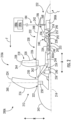
- FIG. 4 provides a close-up, schematic view of the electric machine 300A embedded within the gas turbine engine 210A.
- the electric machine 300A defines a centerline 304, which is aligned with or coaxial with the central longitudinal axis 214 of the gas turbine engine 210A in this example embodiment.
- the electric machine 300A includes a rotor assembly 310 and a stator assembly 340.
- the rotor assembly 310 includes a rotor 312 and the stator assembly 340 includes a stator 342.
- the rotor 312 of the rotor assembly 310 and the stator 342 of the stator assembly 340 together define an air gap 306 therebetween.
- the rotor 312 includes a plurality of magnets 314, such as a plurality of permanent magnets, and the stator 342 includes a plurality of windings or coils 344.
- the electric machine 300A may be referred to as a permanent magnet electric machine.
- the electric machine 300A may be configured in any suitable manner.
- the electric machine 300A may be configured as an electromagnetic electric machine, including a plurality of electromagnets and active circuitry, as an induction type electric machine, a switched reluctance type electric machine, a synchronous AC electric machine, an asynchronous electric machine, or as any other suitable type of electric machine.
- the rotor assembly 310 also includes a rotor connection assembly 316.
- the rotor connection assembly 316 operatively couples the rotor 312 with the low speed shaft 246.
- the rotor connection assembly 316 has a rotor hub 318 and a rotor connection member 320.
- the rotor hub 318 is connected to the low speed shaft 246 and the rotor connection member 320 is connected to the rotor 312.
- the rotor hub 318 and the rotor connection member 320 are mechanically coupled or connected with one another by an insulated joint 322.
- the insulated joint 322 of the rotor connection assembly 316 interrupts common mode electric current from flowing between the rotor 312 and the low speed shaft 246, e.g., from the rotor 312 to the low speed shaft 246. In this way, common mode electric current is prevented from flowing to one or more bearings supporting the low speed shaft 246, among other components.
- the insulated joint 322 will be further described below with reference to FIG. 6 .
- the rotor hub 318 of the rotor connection assembly 316 is connected to the low speed shaft 246 through a splined connection. More particularly, the rotor hub 318 includes a connection portion having a plurality of teeth 324. Similarly, the low speed shaft 246 includes a connection portion having a plurality of teeth 247. The plurality of teeth 324 of the rotor hub 318 are configured to engage with the plurality of teeth 247 of the low speed shaft 246, fixing the two components to one another. In alternative embodiments, the rotor hub 318 may be coupled to the low speed shaft 246 in any other suitable manner.
- the stator assembly 340 also includes a stator connection assembly 346.
- the stator connection assembly 346 includes a stator connection member 348 that supports the stator 342.
- the stator connection member 348 is connected to a structural support member 266 of the turbine section of the gas turbine engine 210A.
- the structural support member 266 can be configured as part of an aft frame assembly of the gas turbine engine 210A.
- the aft frame assembly can include an aft strut 268 ( FIG. 2 ) extending through the turbomachinery flowpath 254 along the radial direction R.
- the aft frame strut 268 provides structural support for the aft end of the cowl 248.
- the gas turbine engine 210A further includes a cavity wall 270 surrounding at least a portion of the electric machine 300A. More specifically, the cavity wall 270 substantially completely surrounds the electric machine 300A, extending from a location proximate a forward end of the electric machine 300A to a location aft of the electric machine 300A along the axial direction A.
- the cavity wall 270 may function as, e.g., a cooling air cavity wall, a sump for cooling fluid, a protective cover for the electric machine 300A, etc.
- the gas turbine engine 210A may further include a second cavity wall (not shown) to form a buffer cavity surrounding the electric machine 300A. The buffer cavity formed by the second cavity wall may thermally protect the electric machine 300A.
- the low speed shaft 246 rotates the rotor assembly 310 of the electric machine 300A, allowing the electric machine 300A to generate electrical power.
- the electric machine 300A is operable in a generator mode.
- the electric machine 300A is operable in a drive mode during certain operations of the gas turbine engine 210A.
- the rotor assembly 310 of the electric machine 300A drives the low speed shaft 246.
- the power converter 188A ( FIG.
- the electric machine 300A can be controlled to provide electrical power to the electric machine 300A via the electric lines 186, e.g., when the electric machine 300A is operating in a drive mode, and electrical power generated by the electric machine 300A can be carried or transmitted to the power converter 188A ( FIG. 2 ) and ultimately to various electrical loads via the electric lines 186, e.g., when the electric machine 300A is operating in a generator mode. As shown best in FIG.
- the electric lines 186 of the power bus 184 may extend through the turbomachinery flowpath 254 (e.g., through the aft frame strut 268) and electrically connect the electric machine 300A to the power converter 188A and ultimately to one or more electrical loads (accessory systems, electric/ hybrid-electric propulsion devices, etc.), electrical sources (other electric machines, electric energy storage units, etc.), or both.
- the electric machine 300A has been described and illustrated in FIG. 4 as having a particular configuration, it will be appreciated that the inventive aspects of the present disclosure may apply to electric machines having alternative configurations.
- the stator assembly 340 and/or rotor assembly 310 may have different configurations or may be arranged in a different manner than illustrated in FIG. 4 .
- the electric machine 300A may have an inner-rotor configuration as shown in FIG. 5 rather than the outer-rotor configuration shown in FIG. 4 .
- the rotor 312 is positioned inward of the stator 342 along the radial direction R.
- an outer-rotor configuration as shown in FIG.
- the rotor 312 is positioned outward of the stator 342 along the radial direction R.
- the electric machine 300A may have a tapered configuration in which the rotor 312 and the stator 342 may extend lengthwise along the axial direction A at an angle with respect to the central longitudinal axis 214, e.g., so that they are not oriented parallel with the central longitudinal axis 214.
- a three-prong solution can be implemented.
- the three-prong solution can include 1) reducing the common mode voltage reaching the electric machine from the power converter connected thereto; 2) interrupting the common mode current conductive path between the rotor of the electric machine and the shaft to which it is coupled; and 3) grounding at least one of the members connecting the rotor of the electric machine and the shaft.
- the common mode voltage reaching the electric machine 300A from its associated power converter 188A can be reduced via an electromagnetic interference filter, or EMI filter.
- the power converter 188A has an electromagnetic interference filter 189A operable to reduce a common mode voltage reaching the electric machine 300A from the power converter 188A.
- the power converter 188A can be electrically coupled with the electric machine 300A by one or more shielded cables.
- the electric line 186 coupling the electric machine 300A with the power converter 188A can include one or more shielded cables.
- the power converter 188A can be electrically coupled with the electric machine 300A by one or more shielded bus bars.
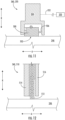
- FIG. 6 provides a close-up, cross-sectional view of the insulated joint 322 taken from Section 5 of FIG. 4 .
- the insulated joint 322 is an insulated bolted joint in this embodiment.
- the insulated joint 322 is collectively formed by a bolt 330, various insulative components, and components of the rotor connection assembly 316.
- the rotor hub 318 includes a hub flange 326 and the rotor connection member 320 includes a connection flange 328.
- the hub flange 326 extends in a plane orthogonal to the axial direction A.
- the connection flange 328 extends in a plane orthogonal to the axial direction A.
- the hub flange 326 and the connection flange 328 are in communication with one another so that bolt 330 may extend through the hub flange 326 and the connection flange 328. More particularly, the hub flange 326 defines an aperture that is in communication with an aperture defined by the connection flange 328.
- the bolt 330 extends through the aperture defined by the hub flange 326 and through the aperture defined by the connection flange 328 to secure the rotor connection member 320 with the rotor hub 318.
- a nut 338 can be threaded onto the bolt 330 to further secure the rotor connection member 320 with the rotor hub 318.
- the bolt 330 has a head 332 and a shank 334 extending from the head 332.
- the head 332 has a larger diameter than the shank 334.
- the head 332 of the bolt 330 is positioned on the hub flange side of the insulated joint 322.
- the shank 334 of the bolt 330 extends through the hub flange 326 and the connection flange 328 and a distal end of the shank 334 is positioned on the connection flange side of the insulated joint 322.
- the nut 338 is secured to the portion of the shank 334 positioned on the connection flange side of the insulated joint 322.
- the head 332 of the bolt 330 and the nut 338 clamp or otherwise couple the rotor hub 318 and the rotor connection member 320 together.
- the bolt 330 and the nut 338 may be formed of an electrically conductive material, such as a suitable metallic material.
- the head 332 of the bolt 330 and the nut 338 may be positioned on opposite sides than what is shown in FIG. 6 .
- the insulated joint 322 includes a plurality of insulative members.
- Each of the insulative members are formed of an electrically insulative material, such as a ceramic material.
- the insulative members electrically isolate the rotor connection member 320 and the rotor hub 318, and thus, the rotor 312 is electrically isolated from the low speed shaft 246.
- the common mode current conductive path between the rotor 312 of the electric machine 300A and the low speed shaft 246 can be interrupted by insulated joint 322.
- the insulative members include a hub shim 333, an interface shim 335, and a connection shim 337.
- each insulative member including the hub shim 333, interface shim 335, and connection shim 337, is formed of an insulative material.
- the hub shim 333 is positioned between the head 332 of the bolt 330 and the hub flange 326, e.g., along the axial direction A.
- the hub shim 333 extends a distance along the radial direction R so that the head 332 of the bolt 330 does not physically contact the hub flange 326 of the rotor hub 318 as shown in FIG. 6 .
- the interface shim 335 is positioned between the rotor hub 318 and the rotor connection member 320 so that they do not physically contact one another. Particularly, as depicted, the interface shim 335 is positioned between the hub flange 326 of the rotor hub 318 and the connection flange 328 of the rotor connection member 320, e.g., along the axial direction A. In addition, for this embodiment, the interface shim 335 is also positioned between an outer member 329 of the hub flange 326 and the rotor connection member 320, e.g., along the radial direction R. In this manner, the interface shim 335 has an L-shaped cross-section in this example embodiment. However, in other example embodiments, the interface shim 335 may have any suitable cross-sectional shape.
- connection shim 337 is positioned between the connection flange 328 and the nut 338, e.g., along the axial direction A.
- the connection shim 337 extends a distance along the radial direction R so that the nut 338 does not physically contact the connection flange 328 of the rotor connection member 320 as shown in FIG. 6 .
- the hub shim 333, the interface shim 335, and the connection shim 337 may each define an aperture.
- the apertures defined by the shims 333, 335, 337 may be in communication with one another as well as the apertures defined by the hub flange 326 and the connection flange 328.
- the bolt 330 may extend through the hub shim 333, the hub flange 326, the interface shim 335, the connection flange 328, and the connection shim 337.
- the bolt 330 may also extend through and may be threadingly engaged with the nut 338.
- the threads or circumference of the shank 334 of the bolt 330 is coated with an insulative coating 339, such as a ceramic coating.
- the insulative coating 339 may extend substantially along the axial length of the shank 334.
- the shank 334 may engage (e.g., threadingly engage) the hub flange 326, the connection flange 328, and the nut 338, all of which may be formed of electrically conductive material.
- the insulative coating 339 on the bolt 330 prevents electric current from flowing between these electrically conductive elements.
- the insulative coating 339 on the bolt 330 and the insulative members, including the hub shim 333, the interface shim 335, and the connection shim 337, collectively electrically isolate the rotor connection member 320 from the rotor hub 318.
- the common mode current conductive path between the rotor 312 of the electric machine 300A and the low speed shaft 246 can be interrupted by insulated joint 322.
- the entire outer surface of the bolt 330 can be coated with the insulative coating 339.
- the bolt 330 is not coated with the insulative coating 339 but rather an insulative sleeve (not shown) may extend circumferentially around and axially along the shank 334 of the bolt 330 so that the bolt 330 does not engage the other electrically conductive components of the insulated joint 322.
- the hub flange 326 and the connection flange 328 can be coated with the insulative coating 339, particularly around the circumference of the apertures 317, 319 through which the bolt 330 extends.
- the hub flange 326 and the connection flange 328 can be coated with the insulative coating 339 in addition or alternatively to the bolt 330 being coated with the insulative coating 339.
- the insulated joint 322 does not include any insulative members but rather the bolt 330, the nut 338, and the flanges 326, 328 are all coated with the insulative coating 339 where they physically engage one another.
- the insulative coating 339 can be applied using a suitable technique, such as by electrophoretic deposition or via an electrostatic coating process. Such techniques can provide an insulation power coating on the desired surfaces ultimately to electrically isolate the rotor connection member 320 and the rotor hub 318 so that the rotor 312 is electrically isolated from the low speed shaft 246. In this way, the common mode current conductive path between the rotor 312 of the electric machine 300A and the low speed shaft 246 can be interrupted by insulated joint 322.
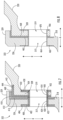
- the rotor hub 318 and/or the rotor connection member 320 can include one or more insulative layers.
- the hub flange 326 includes a plurality of double-layered insulative layers, including hub-side insulative layers, interface-side insulative layers, and aperture insulative layers.
- the bolt 330 and associated nut 338 are removed for illustrative clarity.
- the hub-side insulative layers include an outer layer 400 and an inner layer 402.
- the outer layer 400 forms the outer surface of the hub-side of the hub flange 326.
- a metallic layer 404 is sandwiched or positioned between the outer layer 400 and the inner layer 402, e.g., along the axial direction A.
- the interface-side insulative layers include an outer layer 410 and an inner layer 412.
- the outer layer 410 forms the outer surface of the interface-side of the hub flange 326.
- the outer layer 410 and the inner layer 412 may also extend along the outer member 329 of the hub flange 326.
- a metallic layer 414 is sandwiched or positioned between the outer layer 410 and the inner layer 412, e.g., along the axial direction A and along the radial direction R along the outer member 329 of the hub flange 326.
- the aperture insulative layers include an outer layer 420 and an inner layer 422.
- the aperture insulative layers generally extend circumferentially around the circumference of aperture 317 defined by the hub flange 326 of the rotor hub 318.
- a metallic layer 424 is sandwiched or positioned between the outer layer 420 and the inner layer 422, e.g., along the radial direction R.
- the aperture insulative layers may include only a single layer (e.g., the outer layer 420) extending circumferentially along the circumference defining the aperture 317.
- Each insulative layer of the rotor hub 318 can be formed of an electrically insulative material, such as a ceramic material.
- connection flange 328 includes connection-side insulative layers, interface-side insulative layers, and aperture insulative layers.
- the connection-side insulative layers include an outer layer 430 and an inner layer 432.
- the outer layer 430 forms the outer surface of the connection-side of the connection flange 328.
- a metallic layer 434 is sandwiched or positioned between the outer layer 430 and the inner layer 432, e.g., along the axial direction A.
- the interface-side insulative layers include an outer layer 440 and an inner layer 442.
- the outer layer 440 forms the outer surface of the interface-side of the connection flange 328.
- the outer layer 440 and the inner layer 442 may also extend lengthwise along the axial direction A so as to extend complementary to the interface insulative layers 410, 412 extending along the outer member 329 of the hub flange 326.
- a metallic layer 444 is sandwiched or positioned between the outer layer 440 and the inner layer 442.
- the aperture insulative layers include an outer layer 450 and an inner layer 452.
- the aperture insulative layers generally extend circumferentially around the circumference of aperture 319 defined by the connection flange 328 of the rotor connection member 320.
- a metallic layer 454 is sandwiched or positioned between the outer layer 450 and the inner layer 452, e.g., along the radial direction R.
- the aperture insulative layers may include only a single layer (e.g., the outer layer 450) extending circumferentially along the circumference defining the aperture 319.
- Each insulative layer of the rotor connection member 320 can be formed of an electrically insulative material, such as a ceramic material.
- the strategic arrangement of the insulative layers of the rotor hub 318 and the rotor connection member 320 can electrically isolate the rotor connection member 320 and the rotor hub 318, and thus, the rotor 312 is electrically isolated from the low speed shaft 246.
- the common mode current conductive path between the rotor 312 of the electric machine 300A and the low speed shaft 246 can be interrupted by insulated joint 322.
- the bolt 330 and corresponding nut 338 (not pictured in FIG. 7 ; see FIG. 6 ) can but need not be coated with an insulative material.
- FIG. 6 can but need not be arranged between components as shown in FIG. 6 .
- the double-layered arrangement of the insulative layers depicted in FIG. 7 allows for an outer layer to be easily replaced when worn and also provides an extra layer of insulation, among other benefits.
- the hub flange 326 and the connection flange 328 both include a plurality of single-layered insulative layers.
- the hub flange 326 includes a hub-side insulative layer 460, an interface-side insulative layer 462, and an aperture insulative layer 464.
- the connection flange 328 includes a connection-side insulative layer 466, an interface-side insulative layer 468, and an aperture insulative layer 470.
- Each insulative layer of the rotor hub 318 and the rotor connection member 320 can be formed of an electrically insulative material, such as a ceramic material.
- the bolt 330 and associated nut 338 are removed for illustrative clarity.
- the rotor hub 318 and the rotor connection member 320 can electrically isolate the rotor connection member 320 and the rotor hub 318, and thus, the rotor 312 is electrically isolated from the low speed shaft 246.
- the common mode current conductive path between the rotor 312 of the electric machine 300A and the low speed shaft 246 can be interrupted by insulated joint 322.
- the bolt 330 and corresponding nut 338 (not pictured in FIG. 8 ; see FIG. 6 ) can but need not be coated with an insulative material.
- insulative members such as the insulative shims of FIG. 6 , can but need not be arranged between components as shown in FIG. 6 .
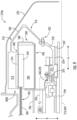
- At least one of the members connecting the rotor 312 of the electric machine 320A and the low speed shaft 246 is electrically grounded by a grounding device 360.
- the grounding device 360 is shown electrically grounding the rotor hub 318, which as noted previously, is a member that connects the rotor 312 of the electric machine 320A and the low speed shaft 246.
- the grounding device 360 can be electrically connected to the rotor hub 318 and a transmission cable 352 can electrically connect the grounding device 360 and a ground point, such as a grounding system 350 (shown schematically in FIG. 4 ).
- the grounding system 350 can be any suitable grounding system, such as an aircraft grounding system. For instance, on an aircraft having a high electrically conductive fuselage, such as an aluminum fuselage, the grounding system 350 can be the fuselage itself.
- an internal metallic structure within the fuselage or other components of the aircraft, such as the wings, tail cone, or empennage of the aircraft, can be used for the grounding system 350.
- the grounding device 360 includes a stationary component 362 connected to a structure of the engine 210A, a rotating component 364 operatively coupled with and rotatable with the rotor hub 318, and one or more electrical contacts 366 connected to one or both of the stationary component 362 and the rotating component 364.
- the electrical contacts 366 can be grounding brushes formed of an electrically conductive material, such as metal or carbon.
- the electrical contacts 366 allow electric current to flow between the stationary component 362 and the rotating component 364 to facilitate grounding of the rotor hub 318.
- the transmission cable 352 is electrically connected to the electrical contacts 366, and thus, the electrical contacts 366 are electrically coupled with the grounding system 350.
- the grounding device 360 can be integrated into an existing component of the gas turbine engine 210A.
- the grounding device 360 is integrated into a resolver operable to measure degrees of rotation or angular position of the rotor hub 318 and the low speed shaft 246 operatively coupled thereto.
- electrical contacts 366 connected to the stationary component 362 can contact the rotating component 364 coupled with the rotor hub 318 to provide an electrical grounding pathway.
- the electrical contacts 366 can be grounding brushes, as noted above. In this regard, a grounding brush can be integrated into the resolver.
- the resolver has dual functionality in that it is operable to provide the grounding connection point for electrically grounding the rotor hub 318 and low speed shaft 246 and it measures degrees of rotation or angular position of the rotor hub 318 and the low speed shaft 246. Integrating the electrical grounding functionality into a resolver can reduce the number of parts required for electrically grounding the rotor hub 318 and low speed shaft 246, can reduce the weight of the first propulsor 200A ( FIG. 1 ) and thus the weight of the aircraft 100 ( FIG. 1 ), and can be an efficient use of space.
- the grounding device 360 can be integrated into other suitable components.
- the grounding device 360 can be integrated into an encoder operable to measure a rotational speed of the rotor hub 318 and the low speed shaft 246 operatively coupled thereto.
- electrical contacts 366 connected to the stationary component 362 of the encoder can contact the rotating component 364 of the encoder coupled with the rotor hub 318 to provide an electrical grounding pathway.
- the electrical contacts 366 can be grounding brushes, as noted above. In this regard, a grounding brush can be integrated into the encoder.
- the encoder has dual functionality in that it is operable to provide the grounding connection point for electrically grounding the rotor hub 318 and low speed shaft 246 and it measures rotational speed of the rotor hub 318 and the low speed shaft 246. Integrating the electrical grounding functionality into an encoder can reduce the number of parts required for electrically grounding the rotor hub 318 and low speed shaft 246, can reduce the weight of the first propulsor 200A ( FIG. 1 ) and thus the weight of the aircraft 100 ( FIG. 1 ), and can be an efficient use of space.
- the shaft electric current and/or shaft voltage can be measured by one or more sensors, represented by sensor 380.
- the sensor 380 can be integrated into the grounding brush circuitry of the grounding device 360, for example.
- the measured shaft electric current and/or shaft voltage can be provided to controller 182 and/or other computing or control devices, e.g., for facilitating control of the electric machine 300A and/or the gas turbine engine 210A.
- the grounding device 360 can be integrated into an existing seal of the gas turbine engine 210A.
- the grounding device 360 can be integrated into any suitable type of existing seal, such as a carbon seal, including end face and radial carbon seals, a finger seal, a brush seal, a labyrinth seal, etc.
- a carbon seal including end face and radial carbon seals, a finger seal, a brush seal, a labyrinth seal, etc.
- the grounding device 360 can be integrated into a carbon seal 370 as depicted in FIG. 9 .
- the carbon seal 370 can be configured to seal a fluid (e.g., oil or air) within a chamber.
- the carbon seal 370 can include a stationary component and a rotating component.
- the stationary component is a stationary carbon element 372 connected to a stationary structure of the engine 210A and the rotating component is a ring 374 rotatable with a rotating shaft, which is the low speed shaft 246 in this example embodiment.
- the ring 374 can be formed of an electrically conductive material, such as a metallic material.
- the state of the carbon element 372 can be such that it is also electrically conductive.
- the grounding element which in this example embodiment is carbon element 372, can be formed of a material other than carbon.
- the grounding element can be formed of any suitable material that is electrically conductive and that has similar wear characteristics to carbon.
- the grounding element can be formed of a suitable composite, mixture, alloy, metal, or other material, for example.
- the carbon element 372 and/or stationary structure to which the carbon element 372 is mounted can be electrically connected to a dedicated grounding system, such as grounding system 350.
- Transmission line 352 can be electrically connected to the carbon element 372 or an adjacent structure electrically coupled with the carbon element 372.
- the grounding system 350 can be used to electrically ground the low speed shaft 246.
- the carbon element 372 and/or its adjacent structures can provide the grounding system.
- the carbon seal 370 has dual functionality in that it is operable to provide the grounding connection point for electrically grounding the low speed shaft 246 and the rotor hub 318 operatively coupled thereto and is operable to seal fluid within a chamber.
- Integrating the electrical grounding functionality into carbon seal 370 can reduce the number of parts required for electrically grounding the rotor hub 318 and low speed shaft 246, can reduce the weight of the first propulsor 200A ( FIG. 1 ) and thus the weight of the aircraft 100 ( FIG. 1 ), and can be an efficient use of space, among other benefits.
- FIG. 10 provides a close-up, cross-sectional view of another example grounding device 360 integrated into a carbon seal 370 according to one example embodiment of the present disclosure.
- carbon seal 370 is an end face carbon seal.
- the carbon seal 370 includes a plurality of stationary components and a rotating component.
- the stationary components include a first carbon element 480 and a second carbon element 482.
- Both the first carbon element 480 and the second carbon element 482 can be formed of an electrically conductive carbon material.
- the grounding elements which in this example embodiment is first carbon element 480 and second carbon element 482, can be formed of a material other than carbon.
- the grounding elements can be formed of any suitable material that is electrically conductive and that has similar wear characteristics to carbon.
- the grounding elements can be formed of a suitable composite, mixture, alloy, metal, or other material, for example.
- the second carbon element 482 is positioned outward of the first carbon element 480 along the radial direction R.
- the first carbon element 480 and the second carbon element 482 can be carbon rings, for example.
- the first carbon element 480 and the second carbon element 482 can be carried or held in position by a seal holder 484, which is also a stationary component.
- the second carbon element 482 is positioned between two flanges of the seal holder 484 along the radial direction R while the first carbon element 480 is positioned inward of the two flanges of the seal holder 484 along the radial direction R.
- the rotating component is a seal runner 486 that is coupled to and rotatable with the low speed shaft 246.
- the seal runner 486 can be coupled with the rotor hub 318.
- the seal runner 486 can be formed of an electrically conductive material, such as a metallic material.
- a spring 488 is positioned between the seal holder 484 and a seal housing 494, e.g., along the axial direction A. The spring 488 applies a force on the seal holder 484, which biases the first carbon element 480 and the second carbon element 482 in contact with the seal runner 486. As shown in FIG.
- a face 490 of the first carbon element 480 engages the seal runner 486 and a face 492 of the second carbon element 482 engages the seal runner 486.
- the face 492 of the second carbon element 482 engages the seal runner 486 with more surface area than which the face 490 of the first carbon element 480 engages the seal runner 486.
- the seal housing 494 may provide the grounding system in some embodiments, or alternatively, the seal housing 494 may be electrically connected to a dedicated grounding system 350 via transmission line 352. In this manner, the low speed shaft 246, as well as the rotor hub 318 ( FIG. 9 ), can be electrically grounded.
- the carbon seal 370 has dual functionality in that it is operable to provide grounding connection points for electrically grounding the low speed shaft 246 and the rotor hub 318 operatively coupled thereto and is operable to seal fluid within a chamber.
- the engagement of the first carbon element 480 with the seal runner 486 provides sealing functionality along with a first grounding pathway while the engagement of the second carbon element 482 provides a second grounding pathway and increases the number of electrical connection points with the seal runner 486, which may provide improved electrical grounding of the low speed shaft 246. Integrating the electrical grounding functionality into the carbon seal 370 of FIG.
- 10 can reduce the number of parts required for electrically grounding the rotor hub 318 and low speed shaft 246, can reduce the weight of the first propulsor 200A ( FIG. 1 ) and thus the weight of the aircraft 100 ( FIG. 1 ), and can be an efficient use of space, among other benefits.
- FIG. 11 provides a close-up, cross-sectional view of a grounding device 360 integrated into a carbon seal 370 according to another example embodiment of the present disclosure.
- carbon seal 370 is a radial carbon seal.
- the carbon seal 370 includes a carbon element 500 that has a face 502 that directly engages the low speed shaft 246.
- the face 502 can engage the rotor hub 318 of the rotor connection assembly 316 ( FIG. 9 ).
- the carbon element 500 can be formed of an electrically conductive carbon material.
- the carbon element 500 is carried or held by a seal holder 504, which may be mechanically coupled with various support structures.
- a spring 506 is positioned between the seal holder 504 and the carbon element 500. The spring 506 biases the carbon element 500 into the desired axial position.
- the seal holder 504 may provide the grounding system in some embodiments, or alternatively as shown in FIG. 11 , the seal holder 504 may be electrically connected to a dedicated grounding system 350 via transmission line 352. In this manner, the low speed shaft 246, as well as the rotor hub 318 ( FIG. 9 ), can be electrically grounded. Integrating the electrical grounding functionality into the carbon seal 370 of FIG.
- 11 can reduce the number of parts required for electrically grounding the rotor hub 318 and low speed shaft 246, can reduce the weight of the first propulsor 200A ( FIG. 1 ) and thus the weight of the aircraft 100 ( FIG. 1 ), and can be an efficient use of space, among other benefits.
- FIG. 12 provides a close-up, cross-sectional view of a grounding device 360 integrated into a finger seal 510 according to an example embodiment of the present disclosure.
- the finger seal 510 includes a stack or plurality of finger elements 512.
- the plurality of finger elements 512 are positioned between a first plate 514 and a second plate 516, e.g., along the axial direction A.
- the finger elements 512 and the first plate 514 and second plate 516 can be clamped or secured together in any suitable manner, e.g., by one or more mechanical fasteners.
- the plates 514, 516 can be formed of an electrically conductive material, such as a metallic material.
- the finger elements 512 extend along the radial direction R so as to contact the low speed shaft 246. In alternative embodiments, the finger elements 512 can extend to contact other rotating elements coupled with the low speed shaft 246, such as the rotor hub 318 ( FIG. 9 ).
- the finger elements 512 can be formed of a flexible material. In this manner, the finger elements 512 can accommodate displacement and/or deformation of the low speed shaft 246 whilst maintaining contact thereto.
- the flexible material used for the finger elements 512 can also be an electrically conductive material.
- the low speed shaft 246 rotates about the central longitudinal axis 214 ( FIG. 9 )
- an electrical grounding pathway is created between the low speed shaft 246 and the finger elements 512 of the finger seal 510.
- electric current may flow between the low speed shaft 246 and the finger elements 512.
- the plates 514, 516 may provide the grounding system in some embodiments, or alternatively, the plates 514, 516 may be electrically connected to a dedicated grounding system 350 via transmission line 352 as shown in FIG. 12 .
- the low speed shaft 246, as well as the rotor hub 318 ( FIG. 9 ) can be electrically grounded. Integrating the electrical grounding functionality into the finger seal 510 of FIG.
- the 12 can reduce the number of parts required for electrically grounding the rotor hub 318 and low speed shaft 246, can reduce the weight of the first propulsor 200A ( FIG. 1 ) and thus the weight of the aircraft 100 ( FIG. 1 ), and can be an efficient use of space, among other benefits.
- the grounding device 360 can be integrated into a brush seal, such as brush seal 520 depicted in FIG. 13 .
- the brush seal 520 can be configured to seal a fluid (e.g., oil or air) within a chamber.
- the brush seal 520 includes a housing 522 spaced from the low speed shaft 246, e.g., along the radial direction R.
- the brush seal 520 also includes one or more brushes.
- the brush seal 520 includes a plurality of brushes 524.
- Each brush 524 includes a plurality of filaments.
- the filaments can be formed of an electrically conductive material, such as a metallic material.
- Walls 526 can be positioned between adjacent brushes 524, e.g., along the axial direction A. Further, each brush 524 extends between a proximal end 528 and a distal end 530, e.g., along the radial direction R. The brushes 524 are attached to the housing 522 at their respective proximal ends 528. The brushes 524 are engaged with the low speed shaft 246 at their respective distal ends 530.
- the low speed shaft 246 can include a wear resistant coating 249 along its outer circumference as shown in FIG. 13 . The wear resistant coating 249 can prevent damage to the low speed shaft 246 due to engagement of the brushes 524 therewith.
- the brushes 524 can be electrically connected to the grounding system 350 via the transmission line 352.
- the brush seal 520 has dual functionality in that it is operable to provide the grounding connection point for electrically grounding the low speed shaft 246 and the rotor hub 318 operatively coupled thereto and is operable to seal fluid within a chamber.
- Integrating the electrical grounding functionality into brush seal 520 can reduce the number of parts required for electrically grounding the rotor hub 318 and low speed shaft 246, can reduce the weight of the first propulsor 200A ( FIG. 1 ) and thus the weight of the aircraft 100 ( FIG. 1 ), and can be an efficient use of space, among other benefits.
- FIG. 14 provides a flow diagram for a method (600) of operating a hybrid-electric propulsor according to one example embodiment of the present disclosure.
- method (600) can be used to operate one or both of the propulsors 200A, 200B disclosed herein or any other propulsor having a gas turbine engine equipped with an embedded electric machine operatively coupled with a shaft of the engine. It will be appreciated that method (600) is discussed herein to describe exemplary aspects of the present subject matter and is not intended to be limiting.
- the method (600) includes operating a propulsor having a gas turbine engine equipped with an electric machine operatively coupled with a shaft of the gas turbine engine, the electric machine being electrically coupled with a power converter.
- the propulsor can be the first propulsor 200A disclosed herein.
- the electric machine can be embedded within the core of the gas turbine engine can be mechanically coupled with a shaft, such as a low speed shaft, a high-speed shaft, or any other suitable shaft of the gas turbine engine.
- One or more bearings may support the shaft.
- the shaft is rotated about its axis of rotation, and as the rotor of the electric machine is operatively coupled with the shaft, the rotor rotates in unison with the shaft.
- the electric machine may operate in a drive or motor mode.
- the power converter provides electrical power to the electric machine, which causes the electric machine to drive the shaft.
- the electric machine may operate in a generator mode.
- the shaft drives the rotor, causing the electric machine to generate electrical power.
- the generated electrical power can then be provided to the power converter and ultimately to one or more electrical loads.
- common mode voltage can drive common mode electric currents through the electric machine and through electrically conductive components associated with the electric machine.
- the method (600) in operating the propulsor at (602), includes reducing, via an electromagnetic interface filter of the power converter, a common mode voltage reaching the electric machine from the power converter. For instance, an EMI filter of the power converter associated with the propulsor can reduce the common mode voltage reaching the electric machine. In addition, in some implementations, one or more shielded cables or bus bars can further reduce the common mode voltage reaching the electric machine.
- the method (600) includes interrupting, via an insulated joint of a rotor connection assembly operatively coupling a rotor of the electric machine with the shaft, a common mode electric current driven by the power converter to the electric machine from flowing from the rotor to the shaft.
- the insulated joint can be embodied in any of the configurations provided herein.
- the insulated joint mechanically couples a rotor connection member connected to a rotor of the electric machine and a rotor hub connected to the shaft.
- the insulated joint cannot only mechanically couple the rotor connection member and the rotor hub, but it also electrically isolates the rotor and the shaft.
- the insulated joint interrupts common mode electric current from flowing from the rotor to the shaft.
- this prevents common mode electric currents from reaching the one or more bearings supporting the shaft.
- the method (600) includes electrically grounding, by a grounding device, the shaft.
- the grounding device can be embodied in any of the configurations provided herein.
- the grounding device can be configured as shown in FIG. 4 .
- the grounding device can have a stationary component, a rotating component connected to the shaft or some other component rotatable with the shaft, and one or more electrical contacts providing an electrical grounding pathway between the rotating component and the stationary component.
- the grounding device is integrated into a resolver operable to measure an angle of the shaft.
- the grounding device is integrated into an encoder operable to measure a rotational speed of the shaft.
- the grounding device is integrated into a carbon seal.
- the grounding device is integrated into a brush seal.
- the method (600) can include, in combination, reducing the common mode voltage reaching the electric machine at (602A), interrupting common mode electric current from reaching the shaft to which the electric machine is coupled at (602B), and electrically grounding the shaft to which the electric machine is coupled at (602C).
- this may enable achieving a specific fuel burn gain through the circulation of electric power between low speed and high speed spools without shortening the life of the spool bearings.
- this may enable mitigating the spool bearing currents without modification of such bearings and with only minimal modification to the spool rotor structure.
- FIG. 15 provides an example computing system 700 according to an example not presently being claimed.
- the computing systems and devices described herein may include various components and perform various functions of the computing system 700 described below, for example.
- the computing system 700 can include one or more computing device(s) 710.
- the computing device(s) 710 can include one or more processor(s) 710A and one or more memory device(s) 710B.
- the one or more processor(s) 710A can include any suitable processing device, such as a microprocessor, microcontroller, integrated circuit, logic device, and/or other suitable processing device.
- the one or more memory device(s) 710B can include one or more computer-readable media, including, but not limited to, non-transitory computer-readable media, RAM, ROM, hard drives, flash drives, and/or other memory devices.
- the one or more memory device(s) 710B can store information accessible by the one or more processor(s) 710A, including computer-readable instructions 710C that can be executed by the one or more processor(s) 710A.
- the instructions 710C can be any set of instructions that when executed by the one or more processor(s) 710A, cause the one or more processor(s) 710A to perform operations.
- the instructions 710C can be executed by the one or more processor(s) 710A to cause the one or more processor(s) 710A to perform operations, such as any of the operations and functions for which the computing system 700 and/or the computing device(s) 710 are configured.
- the instructions 710C can be software written in any suitable programming language or can be implemented in hardware.
- the instructions 710C can be executed in logically and/or virtually separate threads on processor(s) 710A.
- the memory device(s) 710B can further store data 710D that can be accessed by the processor(s) 710A.
- the data 710D can include models, databases, etc.
- the computing device(s) 710 can also include a network interface 710E used to communicate, for example, with the other components of system 700 (e.g., via a communication network).
- the network interface 710E can include any suitable components for interfacing with one or more network(s), including for example, transmitters, receivers, ports, controllers, antennas, and/or other suitable components.
- One or more devices can be configured to receive one or more commands from the computing device(s) 710 or provide one or more commands to the computing device(s) 710.
Landscapes
- Engineering & Computer Science (AREA)
- Power Engineering (AREA)
- Aviation & Aerospace Engineering (AREA)
- Mechanical Engineering (AREA)
- Chemical & Material Sciences (AREA)
- Combustion & Propulsion (AREA)
- General Engineering & Computer Science (AREA)
- Physics & Mathematics (AREA)
- Electromagnetism (AREA)
- Microelectronics & Electronic Packaging (AREA)
- Connection Of Motors, Electrical Generators, Mechanical Devices, And The Like (AREA)
- Motor Or Generator Frames (AREA)
- Structures Of Non-Positive Displacement Pumps (AREA)
Description
- The present subject matter relates generally to gas turbine engines equipped with embedded electric machines.
- A conventional commercial aircraft generally includes a fuselage, a pair of wings, and a propulsion system that provides thrust. The propulsion system typically includes at least two aircraft engines, such as turbofan jet engines. Each turbofan jet engine is typically mounted to a respective one of the wings of the aircraft, such as in a suspended position beneath the wing separated from the wing and fuselage.
- Hybrid-electric propulsion systems are being developed to improve an efficiency of conventional commercial aircraft. Some hybrid electric propulsion systems include one or more electric machines each being operatively coupled with a rotating component of one of the aircraft engines. The inventors of the present disclosure have developed various configurations and/or methods to improve hybrid electric propulsion systems.
-
US 2020/044518 A1 discloses an engine including a drive shaft, an electric machine including a stator assembly, a rotor assembly, the rotor assembly being rotatable relative to the stator assembly, and an electrical break. The drive shaft is coupled to the rotor assembly through the electrical break. - Aspects and advantages of the invention will be set forth in part in the following description, or may be obvious from the description, or may be learned through practice of the invention.
- The present disclosure relates to a hybrid-electric propulsion system as defined in appended claim 1, and to a method as defined in appended claim 13. Further aspects of the hybrid-electric propulsion system are defined according to the appended dependent claims. The hybrid-electric propulsion system includes a power converter and a propulsor. The propulsor includes a gas turbine engine having a shaft and one or more bearings supporting the shaft. Further, the propulsor includes an electric machine electrically coupled with the power converter. The electric machine includes a stator assembly and a rotor assembly. The rotor assembly has a rotor and a rotor connection assembly. The rotor connection assembly operatively couples the rotor with the shaft. The rotor connection assembly has an insulated joint for interrupting common mode electric current from flowing from the rotor to the shaft. A grounding device may be included to electrically ground the shaft.
- These and other features, aspects and advantages of the present invention will become better understood with reference to the following description and appended claims. The accompanying drawings, which are incorporated in and constitute a part of this specification, illustrate embodiments of the invention and, together with the description, serve to explain the principles of the invention.
- A full and enabling disclosure of the present invention, including the best mode thereof, directed to one of ordinary skill in the art, is set forth in the specification, which makes reference to the appended figures, in which:
-
FIG. 1 provides a schematic top view of an aircraft according to various exemplary embodiments of the present disclosure; -
FIG. 2 provides a schematic cross-sectional view of one of the hybrid-electric propulsors of the aircraft ofFIG. 1 ; -
FIG. 3 provides a schematic cross-sectional view of a hybrid-electric propulsor that may be implemented with the aircraft ofFIG. 1 ; -
FIG. 4 provides a schematic cross-sectional view of an electric machine embedded in a gas turbine engine of the hybrid-electric propulsor ofFIG. 2 ; -
FIG. 5 provides a schematic cross-sectional view of an electric machine having an inner-rotor configuration and being embedded in a gas turbine engine according to various exemplary embodiments of the present disclosure; -
FIG. 6 provides a close-up, cross-sectional view of an insulated joint of a rotor assembly of the electric machine taken from Section 5 ofFIG. 4 ; -
FIG. 7 provides a close-up, cross-sectional view of an insulated joint of a rotor assembly of the electric machine according to one example embodiment of the present disclosure; -
FIG. 8 provides a close-up, cross-sectional view of an insulated joint of a rotor assembly of the electric machine according to another example embodiment of the present disclosure; -
FIG. 9 provides a schematic cross-sectional view of an electric machine embedded in a gas turbine engine according to various exemplary embodiments of the present disclosure; -
FIG. 10 provides a close-up, cross-sectional view of a grounding device integrated into a carbon seal according to one example embodiment of the present disclosure; -
FIG. 11 provides a close-up, cross-sectional view of a grounding device integrated into a carbon seal according to another example embodiment of the present disclosure; -
FIG. 12 provides a close-up, cross-sectional view of a grounding device integrated into a carbon seal according to yet another example embodiment of the present disclosure; -
FIG. 13 provides a close-up view of an example brush seal integrated as a grounding device according to various exemplary embodiments of the present disclosure; -
FIG. 14 provides a flow diagram for a method of operating a hybrid-electric propulsor according to various exemplary embodiments of the present disclosure; and -
FIG. 15 provides an example computing system according to an example not presently being claimed. - Reference will now be made in detail to present embodiments of the invention, one or more examples of which are illustrated in the accompanying drawings. The detailed description uses numerical and letter designations to refer to features in the drawings. Like or similar designations in the drawings and description have been used to refer to like or similar parts of the invention.
- The word "exemplary" is used herein to mean "serving as an example, instance, or illustration." Any implementation described herein as "exemplary" is not necessarily to be construed as preferred or advantageous over other implementations. Additionally, unless specifically identified otherwise, all embodiments described herein should be considered exemplary.
- As used herein, the terms "first", "second", and "third" may be used interchangeably to distinguish one component from another and are not intended to signify location or importance of the individual components.
- The terms "forward" and "aft" refer to relative positions within a gas turbine engine or vehicle, and refer to the normal operational attitude of the gas turbine engine or vehicle. For example, with regard to a gas turbine engine, forward refers to a position closer to an engine inlet and aft refers to a position closer to an engine nozzle or exhaust.
- The terms "upstream" and "downstream" refer to the relative direction with respect to a flow in a pathway. For example, with respect to a fluid flow, "upstream" refers to the direction from which the fluid flows, and "downstream" refers to the direction to which the fluid flows. However, the terms "upstream" and "downstream" as used herein may also refer to a flow of electricity.
- The singular forms "a", "an", and "the" include plural references unless the context clearly dictates otherwise.
- Approximating language, as used herein throughout the specification and claims, is applied to modify any quantitative representation that could permissibly vary without resulting in a change in the basic function to which it is related. Accordingly, a value modified by a term or terms, such as "about", "approximately", and "substantially", are not to be limited to the precise value specified. In at least some instances, the approximating language may correspond to the precision of an instrument for measuring the value, or the precision of the methods or machines for constructing or manufacturing the components and/or systems. In at least some instances, the approximating language may correspond to the precision of an instrument for measuring the value, or the precision of the methods or machines for constructing or manufacturing the components and/or systems. For example, the approximating language may refer to being within a 1, 2, 4, 5, 10, 15, or 20 percent margin in either individual values, range(s) of values and/or endpoints defining range(s) of values.
- Here and throughout the specification and claims, range limitations are combined and interchanged, such ranges are identified and include all the sub-ranges contained therein unless context or language indicates otherwise. For example, all ranges disclosed herein are inclusive of the endpoints, and the endpoints are independently combinable with each other.
- The inventors of the present disclosure have developed various solutions for mitigating electric currents in bearings that support a shaft of a gas turbine engine to which an electric machine is coupled. As will be appreciated, common mode voltages can be produced by sinusoidal power supplies, such as power converter supplies. In this regard, an electric machine connected to a power converter supply is inherently subject to common mode voltages. Such common mode voltages can induce or drive electric currents in the bearings supporting the shaft to which the electric machine is coupled. Electric currents in bearings can cause pitting of bearing elements, such as the balls, rollers, races, etc., and consequently, premature failures of such bearings can occur. Accordingly, mitigation of such bearing electric currents is desirable.
- Some conventional techniques for mitigating bearing currents in electric machines connected to power converters involve using ceramic bearings to support the shaft to which the electric machine is coupled. While such ceramic bearings are effective, in some instances, the use of ceramic bearings is not a viable option, e.g., when the bearings are shared with other components. Further, grounding brushes have been conventionally used in addition to ceramic bearings. However, like ceramic bearings, in some instances grounding brushes may not be allowed. The bearing electric current mitigation solutions developed by the inventors of the present disclosure provide alternative solutions to such conventional techniques.
- In accordance with the inventive aspects of the present disclosure, various bearing mitigation solutions are provided. Such solutions can be used alone or in combination with one another. For instance, in one example aspect, a three-prong solution can be implemented. The three-prong solution can include 1) reducing the common mode voltage reaching the electric machine from the power converter connected thereto; 2) interrupting the common mode current conductive path between the rotor of the electric machine and the shaft to which it is coupled; and 3) grounding at least one of the members connecting the rotor of the electric machine and the shaft.
- In one example aspect, under prong one, an electromagnetic interference filter of a power converter electrically coupled with the electric machine can reduce the common mode voltage reaching the electric machine. In addition, shielded cables or shielded bus bars electrically coupling the power converter and the electric machine can be used to further reduce the common mode voltage reaching the electric machine. Under prong two, a rotor connection assembly coupling the rotor of the electric machine with the shaft includes an insulated joint. The insulated joint includes one or more insulative members strategically arranged to interrupt common mode electric current from flowing to the shaft. Under prong three, a grounding device is positioned relative to the shaft or a component rotatable with the shaft to electrically ground the shaft. The grounding device can be integrated into an existing component of the engine. For instance, the grounding device can be integrated into a resolver, an encoder, or an existing seal, such as a carbon seal or a brush seal. Under this three-prong approach, bearing electric current mitigation can be achieved. Advantageously, this may enable achieving a specific fuel burn gain through the circulation of electric power between low speed and high speed spools without shortening the life of bearings supporting the spools. Moreover, this may enable mitigating the low speed bearing currents without modification of such bearings and with only minimal modification to the spool rotor structure.
-
FIG. 1 provides a schematic top view of anexemplary aircraft 100 as may incorporate one or more inventive aspects of the present disclosure. As shown inFIG. 1 , for reference, theaircraft 100 defines a longitudinal direction L1 and a lateral direction L2. The lateral direction L2 is perpendicular to the longitudinal direction L1. Theaircraft 100 also defines alongitudinal centerline 114 that extends therethrough along the longitudinal direction L1. Theaircraft 100 extends between aforward end 116 and anaft end 118, e.g., along the longitudinal direction L1. - As depicted, the
aircraft 100 includes afuselage 112 that extends longitudinally from theforward end 116 of theaircraft 100 to theaft end 118 of theaircraft 100. Theaircraft 100 also includes anempennage 119 at theaft end 118 of theaircraft 100. In addition, theaircraft 100 includes a wing assembly including a first,port side wing 120 and a second,starboard side wing 122. The first andsecond wings longitudinal centerline 114. Thefirst wing 120 and a portion of thefuselage 112 together define afirst side 124 of theaircraft 100 and thesecond wing 122 and another portion of thefuselage 112 together define asecond side 126 of theaircraft 100. For the embodiment depicted, thefirst side 124 of theaircraft 100 is configured as the port side of theaircraft 100 and thesecond side 126 of theaircraft 100 is configured as the starboard side of theaircraft 100. - The
aircraft 100 includes various control surfaces. For this embodiment, eachwing aircraft 100 further includes, or more specifically, theempennage 119 of theaircraft 100 includes avertical stabilizer 132 having a rudder flap (not shown) for yaw control and a pair ofhorizontal stabilizers 134 each having anelevator flap 136 for pitch control. Thefuselage 112 additionally includes an outer surface orskin 138. It should be appreciated that in other exemplary embodiments of the present disclosure, theaircraft 100 may additionally or alternatively include any other suitable configuration. For example, in other embodiments, theaircraft 100 may include any other control surface configuration. - The
exemplary aircraft 100 ofFIG. 1 also includes a hybrid-electric propulsion system 150. For this embodiment, the hybrid-electric propulsion system 150 has afirst propulsor 200A and asecond propulsor 200B both operable to produce thrust. Thefirst propulsor 200A is mounted to thefirst wing 120 and thesecond propulsor 200B is mounted to thesecond wing 122. Moreover, for the embodiment depicted, thefirst propulsor 200A andsecond propulsor 200B are each configured in an underwing-mounted configuration. However, in other example embodiments, one or both of the first andsecond propulsors - The
first propulsor 200A includes agas turbine engine 210A and one or more electric machines, such aselectric machine 300A operatively coupled with thegas turbine engine 210A. Theelectric machine 300A can be an electric generator, an electric motor, or a combination generator/motor. For this example embodiment, theelectric machine 300A is a combination generator/motor. In this manner, when operating as an electric generator, theelectric machine 300A can generate electrical power when driven by thegas turbine engine 210A. When operating as an electric motor, theelectric machine 300A can drive or motor thegas turbine engine 210A. - Likewise, the
second propulsor 200B includes agas turbine engine 210B and one or more electric machines, such aselectric machine 300B operatively coupled with thegas turbine engine 210B. Theelectric machine 300B can be an electric generator, an electric motor, or a combination generator/motor. For this example embodiment, theelectric machine 300B is a combination generator/motor. In this manner, when operating as an electric generator, theelectric machine 300B can generate electrical power when driven by thegas turbine engine 210B. When operating as an electric motor, theelectric machine 300B can drive or motor a spool of thegas turbine engine 210B.Electric machine 300B can be configured and can operate in a similar manner aselectric machine 300A described herein. - The hybrid-
electric propulsion system 150 further includes an electric energy storage unit 180 (only one shown inFIG. 1 ) electrically connectable to theelectric machines energy storage unit 180 may include one or more batteries. Additionally, or alternatively, the electricenergy storage units 180 may include one or more supercapacitor arrays, one or more ultracapacitor arrays, or both. For the hybrid-electric propulsion system 150 described herein, the electricenergy storage unit 180 is configured to store a relatively large amount of electrical power. For example, in certain exemplary embodiments, the electricenergy storage unit 180 may be configured to store at least about fifty kilowatt hours of electrical power, such as at least about sixty-five kilowatt hours of electrical power, such as at least about seventy-five kilowatts hours of electrical power, and up to about one thousand kilowatt hours of electrical power. - The hybrid-
electric propulsion system 150 also includes a power management system having acontroller 182 and apower bus 184. Theelectric machines energy storage unit 180, and thecontroller 182 are each electrically connectable to one another through one or moreelectric lines 186 of thepower bus 184. For instance, thepower bus 184 may include various switches or other power electronics movable to selectively electrically connect the various components of the hybrid-electric propulsion system 150. Particularly, as shown inFIG. 1 , afirst power converter 188A of thepower bus 184 is electrically coupled or connectable with theelectric machine 300A via one or moreelectric lines 186 and asecond power converter 188B of thepower bus 184 is electrically coupled or connectable with theelectric machine 300B via one or moreelectric lines 186. Thepower bus 184 may include other power electronics, such as inverters, converters, rectifiers, etc., for conditioning or converting electrical power within the hybrid-electric propulsion system 150. - The
controller 182 is configured to control the power electronics to distribute electrical power between the various components of the hybrid-electric propulsion system 150. For example, thecontroller 182 may control the power electronics of thepower bus 184 to provide electrical power to, or draw electrical power from, the various components, such as theelectric machines electric propulsion system 150 between various operating modes and perform various functions. Such is depicted schematically as theelectric lines 186 of thepower bus 184 extend through thecontroller 182. - The
controller 182 can form a part of acomputing system 190 of theaircraft 100. Thecomputing system 190 of theaircraft 100 can include one or more processors and one or more memory devices embodied in one or more computing devices. For instance, as depicted inFIG. 1 , thecomputing system 190 includescontroller 182 as well as other computing devices, such ascomputing device 192. Thecomputing system 190 can include other computing devices as well, such as engine controllers (not shown). The computing devices of thecomputing system 190 can be communicatively coupled with one another via a communication network. For instance,computing device 192 is located in the cockpit of theaircraft 100 and is communicatively coupled with thecontroller 182 of the hybrid-electric propulsion system 150 via acommunication link 194 of the communication network. Thecommunication link 194 can include one or more wired or wireless communication links. - For this embodiment, the
computing device 192 is configured to receive and process inputs, e.g., from a pilot or other crew members, and/or other information. In this manner, as one example, the one or more processors of thecomputing device 192 can receive an input indicating a command to change a thrust output of the first and/orsecond propulsors controller 182 to control the electrical power drawn from or delivered to one or both of theelectric machines propulsors - The
controller 182 and other computing devices of thecomputing system 190 of theaircraft 100 may be configured in substantially the same manner as the exemplary computing devices of thecomputing system 700 described below with reference toFIG. 15 (and may be configured to perform one or more of the functions of the exemplary method (600) described below). -
FIG. 2 provides a schematic view of thefirst propulsor 200A of the hybrid-electric propulsion system 150 of theaircraft 100 ofFIG. 1 . Although thefirst propulsor 200A is shown, it will be appreciated that thesecond propulsor 200B can be configured in the same or similar manner as thefirst propulsor 200A depicted inFIG. 2 . The exemplary gas turbine engine ofFIG. 2 is configured as a singleunducted rotor engine 210A defining an axial direction A, a radial direction R, and a circumferential direction C. Theengine 210A also defines a centrallongitudinal axis 214. - As shown in
FIG. 2 , theengine 210A takes the form of an open rotor propulsion system and has arotor assembly 212 that includes an array of airfoils arranged around the centrallongitudinal axis 214 ofengine 210A. More particularly, therotor assembly 212 includes an array ofrotor blades 216 arranged around the centrallongitudinal axis 214 of theengine 210A. Moreover, as will be explained in more detail below, theengine 210A also includes anon-rotating vane assembly 218 positioned aft of the rotor assembly 212 (i.e., non-rotating with respect to the central axis 214). Thenon-rotating vane assembly 218 includes an array of airfoils also disposed aroundcentral axis 214. More specifically, thevane assembly 218 includes an array ofvanes 220 disposed around centrallongitudinal axis 214. - The
rotor blades 216 are arranged in typically equally-spaced relation around the centrallongitudinal axis 214, and each blade has aroot 222 and atip 224 and a span defined therebetween. Similarly, thevanes 220 are also arranged in typically equally-spaced relation around the centrallongitudinal axis 214, and each has aroot 226 and atip 228 and a span defined therebetween. Therotor assembly 212 further includes ahub 245 located forward of the plurality ofrotor blades 216. - Additionally, the
engine 210A includes aturbomachine 230 having a core (or high pressure/ high speed system) 232 and a low pressure/ low speed system. It will be appreciated that as used herein, the terms "speed" and "pressure" are used with respect to the high pressure/high speed system and low pressure/low speed system interchangeably. Further, it will be appreciated that the terms "high" and "low" are used in this same context to distinguish the two systems, and are not meant to imply any absolute speed and/or pressure values. - The
core 232 generally includes ahigh speed compressor 234, ahigh speed turbine 236, and ahigh speed shaft 238 extending therebetween and connecting thehigh speed compressor 234 andhigh speed turbine 236. Thehigh speed compressor 234, thehigh speed turbine 236, and thehigh speed shaft 238 may collectively be referred to as ahigh speed spool 253 of the engine. Further, acombustion section 240 is located between thehigh speed compressor 234 andhigh speed turbine 236. Thecombustion section 240 may include one or more configurations for receiving a mixture of fuel and air, and providing a flow of combustion gasses through thehigh speed turbine 236 for driving thehigh speed spool 253. - The low speed system includes a
low speed turbine 242, alow speed compressor 244 or booster, and alow speed shaft 246 extending between and connecting thelow speed compressor 244 andlow speed turbine 242. Thelow speed compressor 244, thelow speed turbine 242, and thelow speed shaft 246 may collectively be referred to as alow speed spool 255 of the engine. - Although the
engine 210A is depicted with thelow speed compressor 244 positioned forward of thehigh speed compressor 234, in certain embodiments thecompressors engine 210A is depicted with thehigh speed turbine 236 positioned forward of thelow speed turbine 242, in certain embodiments theturbines - In order to support the rotating components of the
engine 210A, theengine 210A includes a plurality of bearings coupling the rotating components to various structural components. Specifically, as depicted inFIG. 2 ,bearings 290 support and facilitate rotation of thelow speed shaft 246. Further,bearings 292 support and facilitate rotation of thehigh speed shaft 238. Although thebearings shafts bearings bearings 290 shown inFIG. 2 can be used to support thelow speed shaft 246. For instance, in some embodiments, an additional bearing can be positioned at a central or mid-span region of the low speed shaft 2462 provides support thereto. Similarly, one or more additional bearings other than thebearings 290 shown inFIG. 2 can be used to support the high-speed shaft 238. Thebearings - Referring still to
FIG. 2 , theturbomachine 230 is generally encased in acowl 248. Moreover, it will be appreciated that thecowl 248 defines at least in part aninlet 250 and anexhaust 252, and includes aturbomachinery flowpath 254 extending between theinlet 250 and theexhaust 252. Theinlet 250 is, for the embodiment shown, an annular or axisymmetric 360degree inlet 250 located between therotor assembly 212 and the fixed orstationary vane assembly 218 along the axial direction A, and provides a path for incoming atmospheric air to enter the turbomachinery flowpath 254 (andcompressors combustion section 240, andturbines 236, 242) inwardly of theguide vanes 220 along the radial direction R. Such a location may be advantageous for a variety of reasons, including management of icing performance as well as protecting theinlet 250 from various objects and materials as may be encountered in operation. In other embodiments, however, theinlet 250 may be positioned at any other suitable location, e.g., aft of thevane assembly 218, arranged in a non-axisymmetric manner, etc. - As depicted, the
rotor assembly 212 is driven by theturbomachine 230, and more specifically, thelow speed spool 255 of theturbomachine 230. More specifically, for this embodiment, theengine 210A includes apower gearbox 256. Therotor assembly 212 is driven by thelow speed spool 255 of theturbomachine 230 across thepower gearbox 256. In such a manner, therotating rotor blades 216 of therotor assembly 212 may rotate around the centrallongitudinal axis 214 and generate thrust to propelengine 210A, and hence, the aircraft 100 (FIG. 1 ) to which it is associated, in a forward direction F. Thepower gearbox 256 can include a gearset for decreasing a rotational speed of thelow speed spool 255 relative to thelow speed turbine 242 such that therotor assembly 212 may rotate at a slower rotational speed than thelow speed spool 255. - As briefly noted above, the
engine 210A includesvane assembly 218. Thevane assembly 218 extends from thecowl 248 and is positioned aft of therotor assembly 212. Thevanes 220 of thevane assembly 218 may be mounted to a stationary frame or other mounting structure and do not rotate relative to the centrallongitudinal axis 214. For reference purposes,FIG. 2 depicts the forward direction with arrow F, which in turn defines the forward and aft portions of theengine 210A. As shown inFIG. 2 , therotor assembly 212 is located forward of theturbomachine 230 in a "puller" configuration and theexhaust 252 is located aft of the guide vanes 220. Thevanes 220 of thevane assembly 218 are aerodynamically contoured to straighten out an airflow (e.g., reducing a swirl in the airflow) from therotor assembly 212 to increase an efficiency of theengine 210A. For example, thevanes 220 may be sized, shaped, and configured to impart a counteracting swirl to the airflow from therotor blades 216 so that in a downstream direction aft of both rows of airfoils (e.g.,blades 216, vanes 220) the airflow has a greatly reduced degree of swirl, which may translate to an increased level of induced efficiency. - In some embodiments, it may be desirable that the
rotor blades 216, thevanes 220, or both, incorporate a pitch change mechanism such that the airfoils (e.g.,blades 216,vanes 220, etc.) can be rotated with respect to an axis of pitch rotation either independently or in conjunction with one another. Such pitch change can be utilized to vary thrust and/or swirl effects under various operating conditions, including to adjust a magnitude or direction of thrust produced at therotor blades 216, or to provide a thrust reversing feature which may be useful in certain operating conditions, such as upon landing an aircraft, or to desirably adjust acoustic noise produced at least in part by therotor blades 216, thevanes 220, or aerodynamic interactions from therotor blades 216 relative to thevanes 220. More specifically, for the embodiment ofFIG. 2 , therotor assembly 212 is depicted with apitch change mechanism 258 for rotating therotor blades 216 about their respective pitch axes 260, and thevane assembly 218 is depicted with apitch change mechanism 262 for rotating thevanes 220 about their respective pitch axes 264. - The exemplary single rotor
unducted engine 210A depicted inFIG. 2 is provided by way of example only. Accordingly, it will be appreciated that theengine 210A may have other suitable configurations. For example, in other example embodiments, theengine 210A can have other suitable numbers of shafts or spools, turbines, compressors, etc.; fixed-pitch blades orvanes engine 210A may be a three-spool engine, having an intermediate speed compressor and/or turbine. In such a configuration, it will be appreciated that the terms "high" and "low," as used herein with respect to the speed and/or pressure of a turbine, compressor, or spool are terms of convenience to differentiate between the components, but do not require any specific relative speeds and/or pressures, and are not exclusive of additional compressors, turbines, and/or spools or shafts. - Additionally or alternatively, in other exemplary embodiments, any other suitable gas turbine engine may be provided. For example, in other exemplary embodiments, the gas turbine engine may be a turboshaft engine, a turboprop engine, turbojet engine, etc. Moreover, for example, although the engine is depicted as a single unducted rotor engine, in other embodiments, the engine may include a multistage open rotor configuration, and aspects of the disclosure described hereinbelow may be incorporated therein.
- Further, in other exemplary embodiments, the
engine 210A may be configured as a ducted turbofan engine. For example, referring briefly toFIG. 3 , anengine 210A in accordance with another exemplary embodiment of the present disclosure is depicted. The exemplary embodiment ofFIG. 3 may be configured in substantially the same manner as theexemplary engine 210A described above with respect toFIG. 2 except as noted below. The same or similar reference numerals may refer to the same or similar parts. As shown, theengine 210A ofFIG. 3 includes anacelle 280 circumferentially surrounding at least in part therotor assembly 212 andturbomachine 230, defining abypass passage 282 therebetween. Thevanes 220 of thevane assembly 218 extend between and connect thenacelle 280 with thecowl 248. - Referring again to
FIG. 2 , as noted, thefirst propulsor 200A includeselectric machine 300A operably coupled with a rotating component thereof. In this regard, thefirst propulsor 200A is an aeronautical hybrid-electric propulsion machine. Particularly, as shown inFIG. 2 , theelectric machine 300A is operatively coupled with thelow speed spool 255 of thegas turbine engine 210A, and more particularly, thelow speed shaft 246 of thelow speed spool 255. As depicted, theelectric machine 300A is embedded within the core of thegas turbine engine 210A. Specifically, theelectric machine 300A is positioned inward of theturbomachinery flowpath 254 along the radial direction R. Moreover, for this embodiment, theelectric machine 300A is positioned generally at the aft end of thegas turbine engine 210A and is at least partially overlapping with or aft of thelow pressure turbine 242 along the axial direction A. However, in other exemplary embodiments, theelectric machine 300A may be positioned at other suitable locations within thegas turbine engine 210A. For instance, in some embodiments, theelectric machine 300A can be coupled with thelow speed spool 255 in other suitable locations. For instance, in some embodiments, theelectric machine 300A can be positioned forward of thelow pressure compressor 244 along the axial direction A and inward of theturbomachinery flowpath 254 along the radial direction R. Further, as shown inFIG. 2 , theelectric machine 300A operatively coupled with thelow speed shaft 246 is electrically coupled with thepower bus 184 and is electrically connected to its associatedpower converter supply 188A. - In addition or alternatively to the
gas turbine engine 210A havingelectric machine 300A coupled to thelow speed spool 255, in some embodiments, thegas turbine engine 210A can include anelectric machine 302A operatively coupled with thehigh speed spool 253 of thegas turbine engine 210A, and more particularly, thehigh speed shaft 238 of thehigh speed spool 253. As depicted inFIG. 2 , theelectric machine 302A is embedded within the core of thegas turbine engine 210A and is operatively coupled with thehigh speed shaft 238. Theelectric machine 302A is positioned inward of theturbomachinery flowpath 254 along the radial direction R and is positioned forward of the combustion section 140 along the axial direction A. However, in other exemplary embodiments, theelectric machine 302A may be positioned at other suitable locations within thegas turbine engine 210A. Although not shown, theelectric machine 302A operatively coupled with thehigh speed shaft 238 can be electrically coupled with thepower bus 184 and can be electrically connected to its own power converter supply. - Like the
electric machine 300A mechanically coupled with thelow speed spool 255, theelectric machine 302A mechanically coupled with thehigh speed spool 253 can be an electric motor operable to drive or motor thehigh speed shaft 238, e.g., during an engine burst. In other embodiments, theelectric machine 302A can be an electric generator operable to convert mechanical energy into electrical energy. In this way, electrical power generated by theelectric machine 302A can be directed to various engine and/or aircraft systems. In some embodiments, theelectric machine 302A can be a motor/generator with dual functionality. -
FIG. 4 provides a close-up, schematic view of theelectric machine 300A embedded within thegas turbine engine 210A. As depicted, theelectric machine 300A defines a centerline 304, which is aligned with or coaxial with the centrallongitudinal axis 214 of thegas turbine engine 210A in this example embodiment. Theelectric machine 300A includes arotor assembly 310 and astator assembly 340. Therotor assembly 310 includes arotor 312 and thestator assembly 340 includes astator 342. Therotor 312 of therotor assembly 310 and thestator 342 of thestator assembly 340 together define anair gap 306 therebetween. Moreover, for this embodiment, therotor 312 includes a plurality ofmagnets 314, such as a plurality of permanent magnets, and thestator 342 includes a plurality of windings or coils 344. As such, theelectric machine 300A may be referred to as a permanent magnet electric machine. However, in other exemplary embodiments, theelectric machine 300A may be configured in any suitable manner. For example, theelectric machine 300A may be configured as an electromagnetic electric machine, including a plurality of electromagnets and active circuitry, as an induction type electric machine, a switched reluctance type electric machine, a synchronous AC electric machine, an asynchronous electric machine, or as any other suitable type of electric machine. - The
rotor assembly 310 also includes arotor connection assembly 316. Generally, therotor connection assembly 316 operatively couples therotor 312 with thelow speed shaft 246. As therotor assembly 310 of theelectric machine 300A is coupled with or attached to thelow speed shaft 246, therotor assembly 310 is rotatable with thelow speed shaft 246. As shown, therotor connection assembly 316 has arotor hub 318 and arotor connection member 320. Therotor hub 318 is connected to thelow speed shaft 246 and therotor connection member 320 is connected to therotor 312. Therotor hub 318 and therotor connection member 320 are mechanically coupled or connected with one another by aninsulated joint 322. Notably, theinsulated joint 322 of therotor connection assembly 316 interrupts common mode electric current from flowing between therotor 312 and thelow speed shaft 246, e.g., from therotor 312 to thelow speed shaft 246. In this way, common mode electric current is prevented from flowing to one or more bearings supporting thelow speed shaft 246, among other components. The insulated joint 322 will be further described below with reference toFIG. 6 . - For this embodiment, the
rotor hub 318 of therotor connection assembly 316 is connected to thelow speed shaft 246 through a splined connection. More particularly, therotor hub 318 includes a connection portion having a plurality ofteeth 324. Similarly, thelow speed shaft 246 includes a connection portion having a plurality ofteeth 247. The plurality ofteeth 324 of therotor hub 318 are configured to engage with the plurality ofteeth 247 of thelow speed shaft 246, fixing the two components to one another. In alternative embodiments, therotor hub 318 may be coupled to thelow speed shaft 246 in any other suitable manner. - The
stator assembly 340 also includes astator connection assembly 346. Thestator connection assembly 346 includes astator connection member 348 that supports thestator 342. Thestator connection member 348 is connected to astructural support member 266 of the turbine section of thegas turbine engine 210A. Thestructural support member 266 can be configured as part of an aft frame assembly of thegas turbine engine 210A. The aft frame assembly can include an aft strut 268 (FIG. 2 ) extending through theturbomachinery flowpath 254 along the radial direction R. Theaft frame strut 268 provides structural support for the aft end of thecowl 248. - The
gas turbine engine 210A further includes acavity wall 270 surrounding at least a portion of theelectric machine 300A. More specifically, thecavity wall 270 substantially completely surrounds theelectric machine 300A, extending from a location proximate a forward end of theelectric machine 300A to a location aft of theelectric machine 300A along the axial direction A. Thecavity wall 270 may function as, e.g., a cooling air cavity wall, a sump for cooling fluid, a protective cover for theelectric machine 300A, etc. In some embodiments, thegas turbine engine 210A may further include a second cavity wall (not shown) to form a buffer cavity surrounding theelectric machine 300A. The buffer cavity formed by the second cavity wall may thermally protect theelectric machine 300A. - During certain operations of the
gas turbine engine 210A, thelow speed shaft 246 rotates therotor assembly 310 of theelectric machine 300A, allowing theelectric machine 300A to generate electrical power. Thus, theelectric machine 300A is operable in a generator mode. In some embodiments, in addition or alternatively to being operable in a generator mode, theelectric machine 300A is operable in a drive mode during certain operations of thegas turbine engine 210A. In a drive mode, therotor assembly 310 of theelectric machine 300A drives thelow speed shaft 246. Thepower converter 188A (FIG. 2 ) can be controlled to provide electrical power to theelectric machine 300A via theelectric lines 186, e.g., when theelectric machine 300A is operating in a drive mode, and electrical power generated by theelectric machine 300A can be carried or transmitted to thepower converter 188A (FIG. 2 ) and ultimately to various electrical loads via theelectric lines 186, e.g., when theelectric machine 300A is operating in a generator mode. As shown best inFIG. 2 , theelectric lines 186 of thepower bus 184 may extend through the turbomachinery flowpath 254 (e.g., through the aft frame strut 268) and electrically connect theelectric machine 300A to thepower converter 188A and ultimately to one or more electrical loads (accessory systems, electric/ hybrid-electric propulsion devices, etc.), electrical sources (other electric machines, electric energy storage units, etc.), or both. - Although the
electric machine 300A has been described and illustrated inFIG. 4 as having a particular configuration, it will be appreciated that the inventive aspects of the present disclosure may apply to electric machines having alternative configurations. For instance, thestator assembly 340 and/orrotor assembly 310 may have different configurations or may be arranged in a different manner than illustrated inFIG. 4 . As one example, theelectric machine 300A may have an inner-rotor configuration as shown inFIG. 5 rather than the outer-rotor configuration shown inFIG. 4 . In an inner-rotor configuration, as depicted inFIG. 5 , therotor 312 is positioned inward of thestator 342 along the radial direction R. In an outer-rotor configuration, as shown inFIG. 4 , therotor 312 is positioned outward of thestator 342 along the radial direction R. As another example, in some embodiments, theelectric machine 300A may have a tapered configuration in which therotor 312 and thestator 342 may extend lengthwise along the axial direction A at an angle with respect to the centrallongitudinal axis 214, e.g., so that they are not oriented parallel with the centrallongitudinal axis 214. - As noted previously, the inventors of the present disclosure have developed various solutions for mitigating electric currents in bearings that support a shaft of a gas turbine engine to which an electric machine is coupled. Such solutions can be used alone or in combination with one another. For instance, in one example aspect, a three-prong solution can be implemented. The three-prong solution can include 1) reducing the common mode voltage reaching the electric machine from the power converter connected thereto; 2) interrupting the common mode current conductive path between the rotor of the electric machine and the shaft to which it is coupled; and 3) grounding at least one of the members connecting the rotor of the electric machine and the shaft.
- By way of example and with reference to
FIGS. 2 and4 , under the first prong, the common mode voltage reaching theelectric machine 300A from its associatedpower converter 188A can be reduced via an electromagnetic interference filter, or EMI filter. For this embodiment, for example, thepower converter 188A has anelectromagnetic interference filter 189A operable to reduce a common mode voltage reaching theelectric machine 300A from thepower converter 188A. Moreover, in addition, thepower converter 188A can be electrically coupled with theelectric machine 300A by one or more shielded cables. Particularly, as shown best inFIG. 4 , theelectric line 186 coupling theelectric machine 300A with thepower converter 188A can include one or more shielded cables. In addition or alternatively to shielded cables, thepower converter 188A can be electrically coupled with theelectric machine 300A by one or more shielded bus bars. - Under the second prong, with reference to
FIGS. 4 and5 , the common mode current conductive path between therotor 312 of theelectric machine 300A and thelow speed shaft 246 can be interrupted by insulated joint 322.FIG. 6 provides a close-up, cross-sectional view of the insulated joint 322 taken from Section 5 ofFIG. 4 . As depicted, the insulated joint 322 is an insulated bolted joint in this embodiment. The insulated joint 322 is collectively formed by abolt 330, various insulative components, and components of therotor connection assembly 316. - As shown best in
FIG. 6 , therotor hub 318 includes ahub flange 326 and therotor connection member 320 includes aconnection flange 328. Thehub flange 326 extends in a plane orthogonal to the axial direction A. Likewise, theconnection flange 328 extends in a plane orthogonal to the axial direction A. Thehub flange 326 and theconnection flange 328 are in communication with one another so thatbolt 330 may extend through thehub flange 326 and theconnection flange 328. More particularly, thehub flange 326 defines an aperture that is in communication with an aperture defined by theconnection flange 328. Thebolt 330 extends through the aperture defined by thehub flange 326 and through the aperture defined by theconnection flange 328 to secure therotor connection member 320 with therotor hub 318. Anut 338 can be threaded onto thebolt 330 to further secure therotor connection member 320 with therotor hub 318. - The
bolt 330 has ahead 332 and ashank 334 extending from thehead 332. Thehead 332 has a larger diameter than theshank 334. For this embodiment, thehead 332 of thebolt 330 is positioned on the hub flange side of the insulated joint 322. Theshank 334 of thebolt 330 extends through thehub flange 326 and theconnection flange 328 and a distal end of theshank 334 is positioned on the connection flange side of the insulated joint 322. As depicted, thenut 338 is secured to the portion of theshank 334 positioned on the connection flange side of the insulated joint 322. In this regard, thehead 332 of thebolt 330 and thenut 338 clamp or otherwise couple therotor hub 318 and therotor connection member 320 together. Thebolt 330 and thenut 338 may be formed of an electrically conductive material, such as a suitable metallic material. In other embodiments, thehead 332 of thebolt 330 and thenut 338 may be positioned on opposite sides than what is shown inFIG. 6 . - As further shown in
FIG. 6 , the insulated joint 322 includes a plurality of insulative members. Each of the insulative members are formed of an electrically insulative material, such as a ceramic material. Generally, the insulative members electrically isolate therotor connection member 320 and therotor hub 318, and thus, therotor 312 is electrically isolated from thelow speed shaft 246. In this regard, the common mode current conductive path between therotor 312 of theelectric machine 300A and thelow speed shaft 246 can be interrupted by insulated joint 322. - For the depicted embodiment of
FIG. 6 , the insulative members include ahub shim 333, aninterface shim 335, and aconnection shim 337. As noted above, each insulative member, including thehub shim 333,interface shim 335, andconnection shim 337, is formed of an insulative material. Thehub shim 333 is positioned between thehead 332 of thebolt 330 and thehub flange 326, e.g., along the axial direction A. Thehub shim 333 extends a distance along the radial direction R so that thehead 332 of thebolt 330 does not physically contact thehub flange 326 of therotor hub 318 as shown inFIG. 6 . - Generally, the
interface shim 335 is positioned between therotor hub 318 and therotor connection member 320 so that they do not physically contact one another. Particularly, as depicted, theinterface shim 335 is positioned between thehub flange 326 of therotor hub 318 and theconnection flange 328 of therotor connection member 320, e.g., along the axial direction A. In addition, for this embodiment, theinterface shim 335 is also positioned between anouter member 329 of thehub flange 326 and therotor connection member 320, e.g., along the radial direction R. In this manner, theinterface shim 335 has an L-shaped cross-section in this example embodiment. However, in other example embodiments, theinterface shim 335 may have any suitable cross-sectional shape. - The
connection shim 337 is positioned between theconnection flange 328 and thenut 338, e.g., along the axial direction A. Theconnection shim 337 extends a distance along the radial direction R so that thenut 338 does not physically contact theconnection flange 328 of therotor connection member 320 as shown inFIG. 6 . - The
hub shim 333, theinterface shim 335, and theconnection shim 337 may each define an aperture. The apertures defined by theshims hub flange 326 and theconnection flange 328. In this manner, thebolt 330 may extend through thehub shim 333, thehub flange 326, theinterface shim 335, theconnection flange 328, and theconnection shim 337. Thebolt 330 may also extend through and may be threadingly engaged with thenut 338. - Furthermore, for this embodiment, the threads or circumference of the
shank 334 of thebolt 330 is coated with aninsulative coating 339, such as a ceramic coating. As depicted inFIG. 6 , theinsulative coating 339 may extend substantially along the axial length of theshank 334. Theshank 334 may engage (e.g., threadingly engage) thehub flange 326, theconnection flange 328, and thenut 338, all of which may be formed of electrically conductive material. Theinsulative coating 339 on thebolt 330 prevents electric current from flowing between these electrically conductive elements. In this way, theinsulative coating 339 on thebolt 330 and the insulative members, including thehub shim 333, theinterface shim 335, and theconnection shim 337, collectively electrically isolate therotor connection member 320 from therotor hub 318. As a result, the common mode current conductive path between therotor 312 of theelectric machine 300A and thelow speed shaft 246 can be interrupted by insulated joint 322. Advantageously, this prevents common mode electric current from reaching the bearings 290 (FIG. 2 ) supporting thelow speed shaft 246, among other benefits. - In some alternative embodiments, the entire outer surface of the
bolt 330 can be coated with theinsulative coating 339. In yet other embodiments, thebolt 330 is not coated with theinsulative coating 339 but rather an insulative sleeve (not shown) may extend circumferentially around and axially along theshank 334 of thebolt 330 so that thebolt 330 does not engage the other electrically conductive components of the insulated joint 322. - In some further embodiments, the
hub flange 326 and theconnection flange 328 can be coated with theinsulative coating 339, particularly around the circumference of theapertures bolt 330 extends. Thehub flange 326 and theconnection flange 328 can be coated with theinsulative coating 339 in addition or alternatively to thebolt 330 being coated with theinsulative coating 339. In yet other embodiments, the insulated joint 322 does not include any insulative members but rather thebolt 330, thenut 338, and theflanges insulative coating 339 where they physically engage one another. Theinsulative coating 339 can be applied using a suitable technique, such as by electrophoretic deposition or via an electrostatic coating process. Such techniques can provide an insulation power coating on the desired surfaces ultimately to electrically isolate therotor connection member 320 and therotor hub 318 so that therotor 312 is electrically isolated from thelow speed shaft 246. In this way, the common mode current conductive path between therotor 312 of theelectric machine 300A and thelow speed shaft 246 can be interrupted by insulated joint 322. - In some further embodiments, the
rotor hub 318 and/or therotor connection member 320 can include one or more insulative layers. For the depicted embodiment ofFIG. 7 , for example, thehub flange 326 includes a plurality of double-layered insulative layers, including hub-side insulative layers, interface-side insulative layers, and aperture insulative layers. InFIG. 7 , thebolt 330 and associated nut 338 (seeFIG. 6 ) are removed for illustrative clarity. The hub-side insulative layers include anouter layer 400 and aninner layer 402. Theouter layer 400 forms the outer surface of the hub-side of thehub flange 326. Ametallic layer 404 is sandwiched or positioned between theouter layer 400 and theinner layer 402, e.g., along the axial direction A. The interface-side insulative layers include anouter layer 410 and aninner layer 412. Theouter layer 410 forms the outer surface of the interface-side of thehub flange 326. Theouter layer 410 and theinner layer 412 may also extend along theouter member 329 of thehub flange 326. Ametallic layer 414 is sandwiched or positioned between theouter layer 410 and theinner layer 412, e.g., along the axial direction A and along the radial direction R along theouter member 329 of thehub flange 326. In addition, the aperture insulative layers include anouter layer 420 and aninner layer 422. The aperture insulative layers generally extend circumferentially around the circumference ofaperture 317 defined by thehub flange 326 of therotor hub 318. Ametallic layer 424 is sandwiched or positioned between theouter layer 420 and theinner layer 422, e.g., along the radial direction R. In some embodiments, the aperture insulative layers may include only a single layer (e.g., the outer layer 420) extending circumferentially along the circumference defining theaperture 317. Each insulative layer of therotor hub 318 can be formed of an electrically insulative material, such as a ceramic material. - As further depicted in
FIG. 7 , theconnection flange 328 includes connection-side insulative layers, interface-side insulative layers, and aperture insulative layers. The connection-side insulative layers include anouter layer 430 and aninner layer 432. Theouter layer 430 forms the outer surface of the connection-side of theconnection flange 328. Ametallic layer 434 is sandwiched or positioned between theouter layer 430 and theinner layer 432, e.g., along the axial direction A. The interface-side insulative layers include anouter layer 440 and aninner layer 442. Theouter layer 440 forms the outer surface of the interface-side of theconnection flange 328. Theouter layer 440 and theinner layer 442 may also extend lengthwise along the axial direction A so as to extend complementary to the interface insulative layers 410, 412 extending along theouter member 329 of thehub flange 326. Ametallic layer 444 is sandwiched or positioned between theouter layer 440 and theinner layer 442. Furthermore, the aperture insulative layers include anouter layer 450 and aninner layer 452. The aperture insulative layers generally extend circumferentially around the circumference ofaperture 319 defined by theconnection flange 328 of therotor connection member 320. Ametallic layer 454 is sandwiched or positioned between theouter layer 450 and theinner layer 452, e.g., along the radial direction R. In some embodiments, the aperture insulative layers may include only a single layer (e.g., the outer layer 450) extending circumferentially along the circumference defining theaperture 319. Each insulative layer of therotor connection member 320 can be formed of an electrically insulative material, such as a ceramic material. - Notably, the strategic arrangement of the insulative layers of the
rotor hub 318 and therotor connection member 320 can electrically isolate therotor connection member 320 and therotor hub 318, and thus, therotor 312 is electrically isolated from thelow speed shaft 246. In this regard, the common mode current conductive path between therotor 312 of theelectric machine 300A and thelow speed shaft 246 can be interrupted by insulated joint 322. Moreover, in such embodiments, thebolt 330 and corresponding nut 338 (not pictured inFIG. 7 ; seeFIG. 6 ) can but need not be coated with an insulative material. Further, in such embodiments, insulative members, such as the insulative shims ofFIG. 6 , can but need not be arranged between components as shown inFIG. 6 . Further, the double-layered arrangement of the insulative layers depicted inFIG. 7 allows for an outer layer to be easily replaced when worn and also provides an extra layer of insulation, among other benefits. - In some alternative embodiments, as shown in
FIG. 8 , thehub flange 326 and theconnection flange 328 both include a plurality of single-layered insulative layers. Particularly, thehub flange 326 includes a hub-side insulative layer 460, an interface-side insulative layer 462, and anaperture insulative layer 464. Theconnection flange 328 includes a connection-side insulative layer 466, an interface-side insulative layer 468, and anaperture insulative layer 470. Each insulative layer of therotor hub 318 and therotor connection member 320 can be formed of an electrically insulative material, such as a ceramic material. InFIG. 8 , thebolt 330 and associated nut 338 (seeFIG. 6 ) are removed for illustrative clarity. - Notably, due to the strategic arrangement of the
insulative layers rotor hub 318 and therotor connection member 320 can electrically isolate therotor connection member 320 and therotor hub 318, and thus, therotor 312 is electrically isolated from thelow speed shaft 246. In this regard, the common mode current conductive path between therotor 312 of theelectric machine 300A and thelow speed shaft 246 can be interrupted by insulated joint 322. Moreover, thebolt 330 and corresponding nut 338 (not pictured inFIG. 8 ; seeFIG. 6 ) can but need not be coated with an insulative material. Further, in such embodiments, insulative members, such as the insulative shims ofFIG. 6 , can but need not be arranged between components as shown inFIG. 6 . - Under the third prong for mitigating bearing electric currents, with reference again to
FIG. 4 , at least one of the members connecting therotor 312 of the electric machine 320A and thelow speed shaft 246 is electrically grounded by agrounding device 360. For instance, as shown inFIG. 4 , thegrounding device 360 is shown electrically grounding therotor hub 318, which as noted previously, is a member that connects therotor 312 of the electric machine 320A and thelow speed shaft 246. By electrically grounding therotor hub 318, the bearings 290 (FIG. 2 ) supporting thelow speed shaft 246 can be protected from common mode electric current surges or electrical overloads associated with the electric machine 310A, among other benefits. - As depicted in
FIG. 4 , thegrounding device 360 can be electrically connected to therotor hub 318 and atransmission cable 352 can electrically connect thegrounding device 360 and a ground point, such as a grounding system 350 (shown schematically inFIG. 4 ). Thegrounding system 350 can be any suitable grounding system, such as an aircraft grounding system. For instance, on an aircraft having a high electrically conductive fuselage, such as an aluminum fuselage, thegrounding system 350 can be the fuselage itself. On an aircraft having a fuselage having an insulating or low electrically conductive fuselage, such as a carbon fiber fuselage, an internal metallic structure within the fuselage or other components of the aircraft, such as the wings, tail cone, or empennage of the aircraft, can be used for thegrounding system 350. - For this embodiment, the
grounding device 360 includes astationary component 362 connected to a structure of theengine 210A, arotating component 364 operatively coupled with and rotatable with therotor hub 318, and one or moreelectrical contacts 366 connected to one or both of thestationary component 362 and therotating component 364. Theelectrical contacts 366 can be grounding brushes formed of an electrically conductive material, such as metal or carbon. Theelectrical contacts 366 allow electric current to flow between thestationary component 362 and therotating component 364 to facilitate grounding of therotor hub 318. Thetransmission cable 352 is electrically connected to theelectrical contacts 366, and thus, theelectrical contacts 366 are electrically coupled with thegrounding system 350. - Notably, the
grounding device 360 can be integrated into an existing component of thegas turbine engine 210A. For instance, in some embodiments, thegrounding device 360 is integrated into a resolver operable to measure degrees of rotation or angular position of therotor hub 318 and thelow speed shaft 246 operatively coupled thereto. Moreover, as thelow speed shaft 246,rotor hub 318, androtating component 364 rotate about the centrallongitudinal axis 214,electrical contacts 366 connected to thestationary component 362 can contact therotating component 364 coupled with therotor hub 318 to provide an electrical grounding pathway. In this manner, therotor hub 318 andlow speed shaft 246 can be electrically grounded. Theelectrical contacts 366 can be grounding brushes, as noted above. In this regard, a grounding brush can be integrated into the resolver. - Accordingly, in such embodiments, the resolver has dual functionality in that it is operable to provide the grounding connection point for electrically grounding the
rotor hub 318 andlow speed shaft 246 and it measures degrees of rotation or angular position of therotor hub 318 and thelow speed shaft 246. Integrating the electrical grounding functionality into a resolver can reduce the number of parts required for electrically grounding therotor hub 318 andlow speed shaft 246, can reduce the weight of thefirst propulsor 200A (FIG. 1 ) and thus the weight of the aircraft 100 (FIG. 1 ), and can be an efficient use of space. - In alternative example embodiments, the
grounding device 360 can be integrated into other suitable components. For instance, in some embodiments, thegrounding device 360 can be integrated into an encoder operable to measure a rotational speed of therotor hub 318 and thelow speed shaft 246 operatively coupled thereto. Moreover, as thelow speed shaft 246,rotor hub 318, androtating component 364 rotate about the centrallongitudinal axis 214,electrical contacts 366 connected to thestationary component 362 of the encoder can contact therotating component 364 of the encoder coupled with therotor hub 318 to provide an electrical grounding pathway. In this manner, therotor hub 318 andlow speed shaft 246 can be electrically grounded. Theelectrical contacts 366 can be grounding brushes, as noted above. In this regard, a grounding brush can be integrated into the encoder. - Accordingly, in such embodiments, the encoder has dual functionality in that it is operable to provide the grounding connection point for electrically grounding the
rotor hub 318 andlow speed shaft 246 and it measures rotational speed of therotor hub 318 and thelow speed shaft 246. Integrating the electrical grounding functionality into an encoder can reduce the number of parts required for electrically grounding therotor hub 318 andlow speed shaft 246, can reduce the weight of thefirst propulsor 200A (FIG. 1 ) and thus the weight of the aircraft 100 (FIG. 1 ), and can be an efficient use of space. - As further depicted in
FIG. 4 , in some embodiments, the shaft electric current and/or shaft voltage can be measured by one or more sensors, represented bysensor 380. Thesensor 380 can be integrated into the grounding brush circuitry of thegrounding device 360, for example. The measured shaft electric current and/or shaft voltage can be provided tocontroller 182 and/or other computing or control devices, e.g., for facilitating control of theelectric machine 300A and/or thegas turbine engine 210A. - Further, in some embodiments, the
grounding device 360 can be integrated into an existing seal of thegas turbine engine 210A. Thegrounding device 360 can be integrated into any suitable type of existing seal, such as a carbon seal, including end face and radial carbon seals, a finger seal, a brush seal, a labyrinth seal, etc. For instance, as an alternative to thegrounding device 360 being integrated into the resolver or encoder depicted inFIG. 4 , thegrounding device 360 can be integrated into a carbon seal 370 as depicted inFIG. 9 . The carbon seal 370 can be configured to seal a fluid (e.g., oil or air) within a chamber. The carbon seal 370 can include a stationary component and a rotating component. For this embodiment, the stationary component is astationary carbon element 372 connected to a stationary structure of theengine 210A and the rotating component is aring 374 rotatable with a rotating shaft, which is thelow speed shaft 246 in this example embodiment. Thering 374 can be formed of an electrically conductive material, such as a metallic material. Likewise, the state of thecarbon element 372 can be such that it is also electrically conductive. In some alternative embodiments, the grounding element, which in this example embodiment iscarbon element 372, can be formed of a material other than carbon. For instance, the grounding element can be formed of any suitable material that is electrically conductive and that has similar wear characteristics to carbon. The grounding element can be formed of a suitable composite, mixture, alloy, metal, or other material, for example. - Further, as depicted in
FIG. 9 , thecarbon element 372 and/or stationary structure to which thecarbon element 372 is mounted can be electrically connected to a dedicated grounding system, such asgrounding system 350.Transmission line 352 can be electrically connected to thecarbon element 372 or an adjacent structure electrically coupled with thecarbon element 372. In this manner, thegrounding system 350 can be used to electrically ground thelow speed shaft 246. In yet other embodiments, thecarbon element 372 and/or its adjacent structures can provide the grounding system. - Accordingly, as the
low speed shaft 246,rotor hub 318, andring 374 rotate about the centrallongitudinal axis 214, an electrical grounding pathway is created between thering 374 and the carbon element 372 (the electric current pathway may extend through fluid flowing therebetween). Thus, electric current may flow between thering 374 and thecarbon element 372. In this manner, thelow speed shaft 246 as well as therotor hub 318 can be electrically grounded. Accordingly, in such embodiments, the carbon seal 370 has dual functionality in that it is operable to provide the grounding connection point for electrically grounding thelow speed shaft 246 and therotor hub 318 operatively coupled thereto and is operable to seal fluid within a chamber. Integrating the electrical grounding functionality into carbon seal 370 can reduce the number of parts required for electrically grounding therotor hub 318 andlow speed shaft 246, can reduce the weight of thefirst propulsor 200A (FIG. 1 ) and thus the weight of the aircraft 100 (FIG. 1 ), and can be an efficient use of space, among other benefits. -
FIG. 10 provides a close-up, cross-sectional view of anotherexample grounding device 360 integrated into a carbon seal 370 according to one example embodiment of the present disclosure. For this embodiment, carbon seal 370 is an end face carbon seal. As depicted, the carbon seal 370 includes a plurality of stationary components and a rotating component. Particularly, for this example embodiment, the stationary components include afirst carbon element 480 and asecond carbon element 482. Both thefirst carbon element 480 and thesecond carbon element 482 can be formed of an electrically conductive carbon material. In some alternative embodiments, the grounding elements, which in this example embodiment isfirst carbon element 480 andsecond carbon element 482, can be formed of a material other than carbon. For instance, the grounding elements can be formed of any suitable material that is electrically conductive and that has similar wear characteristics to carbon. The grounding elements can be formed of a suitable composite, mixture, alloy, metal, or other material, for example. - The
second carbon element 482 is positioned outward of thefirst carbon element 480 along the radial direction R. Thefirst carbon element 480 and thesecond carbon element 482 can be carbon rings, for example. Thefirst carbon element 480 and thesecond carbon element 482 can be carried or held in position by aseal holder 484, which is also a stationary component. Thesecond carbon element 482 is positioned between two flanges of theseal holder 484 along the radial direction R while thefirst carbon element 480 is positioned inward of the two flanges of theseal holder 484 along the radial direction R. - The rotating component is a
seal runner 486 that is coupled to and rotatable with thelow speed shaft 246. In some alternative embodiments, theseal runner 486 can be coupled with therotor hub 318. Theseal runner 486 can be formed of an electrically conductive material, such as a metallic material. As illustrated, aspring 488 is positioned between theseal holder 484 and aseal housing 494, e.g., along the axial direction A. Thespring 488 applies a force on theseal holder 484, which biases thefirst carbon element 480 and thesecond carbon element 482 in contact with theseal runner 486. As shown inFIG. 10 , aface 490 of thefirst carbon element 480 engages theseal runner 486 and aface 492 of thesecond carbon element 482 engages theseal runner 486. Theface 492 of thesecond carbon element 482 engages theseal runner 486 with more surface area than which theface 490 of thefirst carbon element 480 engages theseal runner 486. - Accordingly, as the
low speed shaft 246 andseal runner 486 rotate about the central longitudinal axis 214 (FIG. 9 ), a first electrical grounding pathway is created between theseal runner 486 and thefirst carbon element 480 and a second electrical grounding pathway is created between theseal runner 486 and thesecond carbon element 482. Thus, electric current may flow between theseal runner 486 and the first andsecond carbon elements seal housing 494 may provide the grounding system in some embodiments, or alternatively, theseal housing 494 may be electrically connected to adedicated grounding system 350 viatransmission line 352. In this manner, thelow speed shaft 246, as well as the rotor hub 318 (FIG. 9 ), can be electrically grounded. - Thus, in such embodiments, the carbon seal 370 has dual functionality in that it is operable to provide grounding connection points for electrically grounding the
low speed shaft 246 and therotor hub 318 operatively coupled thereto and is operable to seal fluid within a chamber. The engagement of thefirst carbon element 480 with theseal runner 486 provides sealing functionality along with a first grounding pathway while the engagement of thesecond carbon element 482 provides a second grounding pathway and increases the number of electrical connection points with theseal runner 486, which may provide improved electrical grounding of thelow speed shaft 246. Integrating the electrical grounding functionality into the carbon seal 370 ofFIG. 10 can reduce the number of parts required for electrically grounding therotor hub 318 andlow speed shaft 246, can reduce the weight of thefirst propulsor 200A (FIG. 1 ) and thus the weight of the aircraft 100 (FIG. 1 ), and can be an efficient use of space, among other benefits. -
FIG. 11 provides a close-up, cross-sectional view of agrounding device 360 integrated into a carbon seal 370 according to another example embodiment of the present disclosure. For this embodiment, carbon seal 370 is a radial carbon seal. As depicted, the carbon seal 370 includes acarbon element 500 that has aface 502 that directly engages thelow speed shaft 246. In alternative embodiments, theface 502 can engage therotor hub 318 of the rotor connection assembly 316 (FIG. 9 ). Thecarbon element 500 can be formed of an electrically conductive carbon material. Thecarbon element 500 is carried or held by aseal holder 504, which may be mechanically coupled with various support structures. Aspring 506 is positioned between theseal holder 504 and thecarbon element 500. Thespring 506 biases thecarbon element 500 into the desired axial position. - As the
low speed shaft 246 rotates about the central longitudinal axis 214 (FIG. 9 ), an electrical grounding pathway is created between thelow speed shaft 246 and thecarbon element 500. Thus, electric current may flow between thelow speed shaft 246 and thecarbon element 500. Theseal holder 504 may provide the grounding system in some embodiments, or alternatively as shown inFIG. 11 , theseal holder 504 may be electrically connected to adedicated grounding system 350 viatransmission line 352. In this manner, thelow speed shaft 246, as well as the rotor hub 318 (FIG. 9 ), can be electrically grounded. Integrating the electrical grounding functionality into the carbon seal 370 ofFIG. 11 can reduce the number of parts required for electrically grounding therotor hub 318 andlow speed shaft 246, can reduce the weight of thefirst propulsor 200A (FIG. 1 ) and thus the weight of the aircraft 100 (FIG. 1 ), and can be an efficient use of space, among other benefits. -
FIG. 12 provides a close-up, cross-sectional view of agrounding device 360 integrated into a finger seal 510 according to an example embodiment of the present disclosure. As depicted, the finger seal 510 includes a stack or plurality offinger elements 512. The plurality offinger elements 512 are positioned between afirst plate 514 and asecond plate 516, e.g., along the axial direction A. Thefinger elements 512 and thefirst plate 514 andsecond plate 516 can be clamped or secured together in any suitable manner, e.g., by one or more mechanical fasteners. Theplates finger elements 512 extend along the radial direction R so as to contact thelow speed shaft 246. In alternative embodiments, thefinger elements 512 can extend to contact other rotating elements coupled with thelow speed shaft 246, such as the rotor hub 318 (FIG. 9 ). Thefinger elements 512 can be formed of a flexible material. In this manner, thefinger elements 512 can accommodate displacement and/or deformation of thelow speed shaft 246 whilst maintaining contact thereto. Moreover, the flexible material used for thefinger elements 512 can also be an electrically conductive material. - In this regard, as the
low speed shaft 246 rotates about the central longitudinal axis 214 (FIG. 9 ), an electrical grounding pathway is created between thelow speed shaft 246 and thefinger elements 512 of the finger seal 510. Thus, electric current may flow between thelow speed shaft 246 and thefinger elements 512. Theplates plates dedicated grounding system 350 viatransmission line 352 as shown inFIG. 12 . In this manner, thelow speed shaft 246, as well as the rotor hub 318 (FIG. 9 ), can be electrically grounded. Integrating the electrical grounding functionality into the finger seal 510 ofFIG. 12 can reduce the number of parts required for electrically grounding therotor hub 318 andlow speed shaft 246, can reduce the weight of thefirst propulsor 200A (FIG. 1 ) and thus the weight of the aircraft 100 (FIG. 1 ), and can be an efficient use of space, among other benefits. - In yet other embodiments, as noted above, the
grounding device 360 can be integrated into a brush seal, such as brush seal 520 depicted inFIG. 13 . The brush seal 520 can be configured to seal a fluid (e.g., oil or air) within a chamber. As shown inFIG. 13 , the brush seal 520 includes ahousing 522 spaced from thelow speed shaft 246, e.g., along the radial direction R. The brush seal 520 also includes one or more brushes. For this embodiment, the brush seal 520 includes a plurality ofbrushes 524. Eachbrush 524 includes a plurality of filaments. The filaments can be formed of an electrically conductive material, such as a metallic material.Walls 526 can be positioned betweenadjacent brushes 524, e.g., along the axial direction A. Further, eachbrush 524 extends between aproximal end 528 and adistal end 530, e.g., along the radial direction R. Thebrushes 524 are attached to thehousing 522 at their respective proximal ends 528. Thebrushes 524 are engaged with thelow speed shaft 246 at their respective distal ends 530. Notably, thelow speed shaft 246 can include a wearresistant coating 249 along its outer circumference as shown inFIG. 13 . The wearresistant coating 249 can prevent damage to thelow speed shaft 246 due to engagement of thebrushes 524 therewith. In some embodiments, thebrushes 524 can be electrically connected to thegrounding system 350 via thetransmission line 352. - Accordingly, as the
low speed shaft 246 androtor hub 318 rotate about the central longitudinal axis 214 (FIG. 2 ) and thebrushes 524 engage thelow speed shaft 246, an electrical grounding pathway is created between thebrushes 524 and thelow speed shaft 246. Thus, electric current may flow between thelow speed shaft 246 and thebrushes 524. In this manner, thelow speed shaft 246 as well as therotor hub 318 can be electrically grounded. Accordingly, in such embodiments, the brush seal 520 has dual functionality in that it is operable to provide the grounding connection point for electrically grounding thelow speed shaft 246 and therotor hub 318 operatively coupled thereto and is operable to seal fluid within a chamber. Integrating the electrical grounding functionality into brush seal 520 can reduce the number of parts required for electrically grounding therotor hub 318 andlow speed shaft 246, can reduce the weight of thefirst propulsor 200A (FIG. 1 ) and thus the weight of the aircraft 100 (FIG. 1 ), and can be an efficient use of space, among other benefits. -
FIG. 14 provides a flow diagram for a method (600) of operating a hybrid-electric propulsor according to one example embodiment of the present disclosure. For instance, method (600) can be used to operate one or both of thepropulsors - At (602), the method (600) includes operating a propulsor having a gas turbine engine equipped with an electric machine operatively coupled with a shaft of the gas turbine engine, the electric machine being electrically coupled with a power converter. For instance, the propulsor can be the
first propulsor 200A disclosed herein. The electric machine can be embedded within the core of the gas turbine engine can be mechanically coupled with a shaft, such as a low speed shaft, a high-speed shaft, or any other suitable shaft of the gas turbine engine. One or more bearings may support the shaft. During operation, the shaft is rotated about its axis of rotation, and as the rotor of the electric machine is operatively coupled with the shaft, the rotor rotates in unison with the shaft. In some implementations, the electric machine may operate in a drive or motor mode. In the drive mode, the power converter provides electrical power to the electric machine, which causes the electric machine to drive the shaft. In some implementations, the electric machine may operate in a generator mode. In the generator mode, the shaft drives the rotor, causing the electric machine to generate electrical power. The generated electrical power can then be provided to the power converter and ultimately to one or more electrical loads. As electric power is transmitted between the power converter and the electric machine, common mode voltage can drive common mode electric currents through the electric machine and through electrically conductive components associated with the electric machine. - At (602A), in some implementations, in operating the propulsor at (602), the method (600) includes reducing, via an electromagnetic interface filter of the power converter, a common mode voltage reaching the electric machine from the power converter. For instance, an EMI filter of the power converter associated with the propulsor can reduce the common mode voltage reaching the electric machine. In addition, in some implementations, one or more shielded cables or bus bars can further reduce the common mode voltage reaching the electric machine.
- At (602B), in operating the propulsor at (602), the method (600) includes interrupting, via an insulated joint of a rotor connection assembly operatively coupling a rotor of the electric machine with the shaft, a common mode electric current driven by the power converter to the electric machine from flowing from the rotor to the shaft. The insulated joint can be embodied in any of the configurations provided herein. The insulated joint mechanically couples a rotor connection member connected to a rotor of the electric machine and a rotor hub connected to the shaft. The insulated joint cannot only mechanically couple the rotor connection member and the rotor hub, but it also electrically isolates the rotor and the shaft. In this regard, the insulated joint interrupts common mode electric current from flowing from the rotor to the shaft. Advantageously, this prevents common mode electric currents from reaching the one or more bearings supporting the shaft.
- At (602C), in operating the propulsor at (602), the method (600) includes electrically grounding, by a grounding device, the shaft. For instance, the grounding device can be embodied in any of the configurations provided herein. As one example, the grounding device can be configured as shown in
FIG. 4 . Particularly, the grounding device can have a stationary component, a rotating component connected to the shaft or some other component rotatable with the shaft, and one or more electrical contacts providing an electrical grounding pathway between the rotating component and the stationary component. In some implementations, the grounding device is integrated into a resolver operable to measure an angle of the shaft. In yet other implementations, the grounding device is integrated into an encoder operable to measure a rotational speed of the shaft. In some further implementations, the grounding device is integrated into a carbon seal. In some further implementations, the grounding device is integrated into a brush seal. - Accordingly, during operation of the propulsor at (602), the method (600) can include, in combination, reducing the common mode voltage reaching the electric machine at (602A), interrupting common mode electric current from reaching the shaft to which the electric machine is coupled at (602B), and electrically grounding the shaft to which the electric machine is coupled at (602C). In this way, a three-prong solution to bearing electric current mitigation is achieved. Advantageously, this may enable achieving a specific fuel burn gain through the circulation of electric power between low speed and high speed spools without shortening the life of the spool bearings. Moreover, this may enable mitigating the spool bearing currents without modification of such bearings and with only minimal modification to the spool rotor structure.
-
FIG. 15 provides anexample computing system 700 according to an example not presently being claimed. The computing systems and devices described herein may include various components and perform various functions of thecomputing system 700 described below, for example. - As shown in
FIG. 15 , thecomputing system 700 can include one or more computing device(s) 710. The computing device(s) 710 can include one or more processor(s) 710A and one or more memory device(s) 710B. The one or more processor(s) 710A can include any suitable processing device, such as a microprocessor, microcontroller, integrated circuit, logic device, and/or other suitable processing device. The one or more memory device(s) 710B can include one or more computer-readable media, including, but not limited to, non-transitory computer-readable media, RAM, ROM, hard drives, flash drives, and/or other memory devices. - The one or more memory device(s) 710B can store information accessible by the one or more processor(s) 710A, including computer-readable instructions 710C that can be executed by the one or more processor(s) 710A. The instructions 710C can be any set of instructions that when executed by the one or more processor(s) 710A, cause the one or more processor(s) 710A to perform operations. In some examples, the instructions 710C can be executed by the one or more processor(s) 710A to cause the one or more processor(s) 710A to perform operations, such as any of the operations and functions for which the
computing system 700 and/or the computing device(s) 710 are configured. The instructions 710C can be software written in any suitable programming language or can be implemented in hardware. Additionally, and/or alternatively, the instructions 710C can be executed in logically and/or virtually separate threads on processor(s) 710A. The memory device(s) 710B can further storedata 710D that can be accessed by the processor(s) 710A. For example, thedata 710D can include models, databases, etc. - The computing device(s) 710 can also include a
network interface 710E used to communicate, for example, with the other components of system 700 (e.g., via a communication network). Thenetwork interface 710E can include any suitable components for interfacing with one or more network(s), including for example, transmitters, receivers, ports, controllers, antennas, and/or other suitable components. One or more devices can be configured to receive one or more commands from the computing device(s) 710 or provide one or more commands to the computing device(s) 710. - The technology discussed herein makes reference to computer-based systems and actions taken by and information sent to and from computer-based systems. One of ordinary skill in the art will recognize that the inherent flexibility of computer-based systems allows for a great variety of possible configurations, combinations, and divisions of tasks and functionality between and among components. For instance, processes discussed herein can be implemented using a single computing device or multiple computing devices working in combination. Databases, memory, instructions, and applications can be implemented on a single system or distributed across multiple systems. Distributed components can operate sequentially or in parallel.
- Although specific features of various embodiments may be shown in some drawings and not in others, this is for convenience only.
- This written description uses examples to disclose the invention, including the best mode, and also to enable any person skilled in the art to practice the invention, including making and using any devices or systems and performing any incorporated methods. The patentable scope of the invention is defined by the claims, and may include other examples that occur to those skilled in the art. Such other examples are intended to be within the scope of the claims if they include structural elements that do not differ from the literal language of the claims.
Claims (13)
- A hybrid-electric propulsion system (150), comprising:a power converter (188A); anda propulsor (200A), comprising:a gas turbine engine (210A) having a shaft (246) and one or more bearings (290) supporting the shaft (246); andan electric machine (300A) electrically coupled with the power converter (188A) and including a stator assembly (340) and a rotor assembly (310), the rotor assembly (310) having a rotor (312) and a rotor connection assembly (316), the rotor connection assembly (316) operatively coupling the rotor (312) with the shaft (246), the rotor connection assembly (316) having an insulated joint (322) for interrupting common mode electric current from flowing between the rotor (312) and the shaft (246),wherein the rotor connection assembly (316) has a rotor hub (318) and a rotor connection member (320), the rotor hub (318) being connected to the shaft (246) and the rotor connection member (320) being connected to the rotor (312), the rotor hub (318) and the rotor connection member (320) being mechanically coupled with one another by the insulated joint (322), andwherein the insulated joint (322) comprises a hub flange (326) of the rotor hub (318), a connection flange (328) of the rotor connection member (320), a bolt (330) extending through the hub flange (326) and the connection flange (328), and one or more insulative members (333, 335, 337) electrically isolating the rotor connection member (320) from the rotor hub (318).
- The hybrid-electric propulsion system (150) of claim 1, wherein the one or more insulative members (333, 335, 337) include a hub shim (333) positioned between the hub flange (326) and one of a head (332) of the bolt (330) and a nut (338) secured to the bolt (330) opposite the head (332), an interface shim (335) positioned between the hub flange (326) and the connection flange (328) so that the hub flange (326) and the connection flange (328) are not in physical contact with one another, and a connection shim (337) positioned between the connection flange (328) and one of the head (332) of the bolt (330) and the nut (338) secured to the bolt (330) opposite the head (332).
- The hybrid-electric propulsion system (150) of claim 2, wherein at least a portion of the bolt (330) is coated with an insulative coating (339), the portion being in physical contact with at least one of the hub flange (326) and the connection flange (328).
- The hybrid-electric propulsion system (150) of any preceding claim, wherein the power converter (188A) has an electromagnetic interference filter (189A) operable to reduce a common mode voltage reaching the electric machine (300A) from the power converter (188A).
- The hybrid-electric propulsion system (150) of any preceding claim, wherein the power converter (188A) is electrically coupled with the electric machine (300A) by one or more shielded cables (186).
- The hybrid-electric propulsion system (150) of any preceding claim, wherein the gas turbine engine (210A) further comprises a grounding device (360) having a stationary component (362), a rotating component (364) connected to the shaft (246), and one or more electrical contacts (366) providing an electrical grounding pathway between the rotating component (364) and the stationary component (362), the stationary component (362) being electrically coupled with a grounding system (350).
- The hybrid-electric propulsion system (150) of claim 6, wherein the grounding device (360) is integrated into a resolver operable to measure an angle of the shaft (246) or an encoder operable to measure a rotational speed of the shaft (246).
- The hybrid-electric propulsion system (150) of claim 6 or 7, wherein the grounding device (360) is integrated into a carbon seal (370) or a brush seal (520).
- The hybrid-electric propulsion system (150) of any preceding claim, wherein the propulsor (200A) defines a radial direction (R), and wherein the rotor (312) is positioned inward of a stator (342) of the stator assembly (340) along the radial direction (R).
- The hybrid-electric propulsion system (150) of any of claims 1 to 8, wherein the propulsor (200A) defines a radial direction (R), and wherein the rotor (312) is positioned outward of a stator (342) of the stator assembly (340) along the radial direction (R).
- The hybrid-electric propulsion system (150) of any preceding claim, wherein the gas turbine engine (210A) includes a low speed shaft (246) and a high speed shaft (238), and wherein the shaft (246) is the low speed shaft (246).
- The hybrid-electric propulsion system (150) of any of claims 1 to 10, wherein the gas turbine engine (210A) includes a low speed shaft (246) and a high speed shaft (238), and wherein the shaft (238) is the high speed shaft (238).
- A method (600), comprising:operating a propulsor (200A) having a gas turbine engine (210A) equipped with an electric machine (300A) operatively coupled with a shaft (246) of the gas turbine engine (210A), the electric machine (300A) being electrically coupled with a power converter (188A),wherein the electric machine (300A) includes a stator assembly (340) and a rotor assembly (310), the rotor assembly (310) having a rotor (312) and a rotor connection assembly (316), the rotor connection assembly (316) operatively coupling the rotor (312) with the shaft (246), the rotor connection assembly (316) having an insulated joint (322) for interrupting common mode electric current from flowing between the rotor (312) and the shaft (246),wherein the rotor connection assembly (316) has a rotor hub (318) and a rotor connection member (320), the rotor hub (318) being connected to the shaft (246) and the rotor connection member (320) being connected to the rotor (312), the rotor hub (318) and the rotor connection member (320) being mechanically coupled with one another by the insulated joint (322),wherein the insulated joint (322) comprises a hub flange (326) of the rotor hub (318), a connection flange (328) of the rotor connection member (320), a bolt (330) extending through the hub flange (326) and the connection flange (328), and one or more insulative members (333, 335, 337) electrically isolating the rotor connection member (320) from the rotor hub (318), andwherein operating the propulsor (200A) comprises:i) reducing, via an electromagnetic interference filter (189A) of the power converter (188A), a common mode voltage reaching the electric machine (300A) from the power converter (188A);ii) interrupting, via the insulated joint (322), a common mode electric current driven by the power converter (188A) to the electric machine (300A) from flowing between the rotor (312) and the shaft (246); andiii) electrically grounding, by a grounding device (360), the shaft (246).
Priority Applications (1)
| Application Number | Priority Date | Filing Date | Title |
|---|---|---|---|
| EP24163075.5A EP4361425A3 (en) | 2021-03-18 | 2022-02-17 | Bearing current mitigation for an electric machine embedded in a gas turbine engine |
Applications Claiming Priority (1)
| Application Number | Priority Date | Filing Date | Title |
|---|---|---|---|
| US17/205,028 US11735982B2 (en) | 2021-03-18 | 2021-03-18 | Bearing current mitigation for an electric machine embedded in a gas turbine engine |
Related Child Applications (1)
| Application Number | Title | Priority Date | Filing Date |
|---|---|---|---|
| EP24163075.5A Division EP4361425A3 (en) | 2021-03-18 | 2022-02-17 | Bearing current mitigation for an electric machine embedded in a gas turbine engine |
Publications (2)
| Publication Number | Publication Date |
|---|---|
| EP4059846A1 EP4059846A1 (en) | 2022-09-21 |
| EP4059846B1 true EP4059846B1 (en) | 2024-04-17 |
Family
ID=80682448
Family Applications (2)
| Application Number | Title | Priority Date | Filing Date |
|---|---|---|---|
| EP22157192.0A Active EP4059846B1 (en) | 2021-03-18 | 2022-02-17 | Bearing current mitigation for an electric machine embedded in a gas turbine engine |
| EP24163075.5A Pending EP4361425A3 (en) | 2021-03-18 | 2022-02-17 | Bearing current mitigation for an electric machine embedded in a gas turbine engine |
Family Applications After (1)
| Application Number | Title | Priority Date | Filing Date |
|---|---|---|---|
| EP24163075.5A Pending EP4361425A3 (en) | 2021-03-18 | 2022-02-17 | Bearing current mitigation for an electric machine embedded in a gas turbine engine |
Country Status (3)
| Country | Link |
|---|---|
| US (3) | US11735982B2 (en) |
| EP (2) | EP4059846B1 (en) |
| CN (2) | CN115149681B (en) |
Cited By (1)
| Publication number | Priority date | Publication date | Assignee | Title |
|---|---|---|---|---|
| FR3165120A1 (en) * | 2024-07-29 | 2026-01-30 | AMPERE s.a.s | Electric machine with a function for dissipating electrical charges induced in the rotor. |
Families Citing this family (8)
| Publication number | Priority date | Publication date | Assignee | Title |
|---|---|---|---|---|
| US11794915B2 (en) * | 2021-04-27 | 2023-10-24 | Beta Air, Llc | Method and system for a two-motor propulsion system for an electric aircraft |
| US11634232B1 (en) * | 2022-04-30 | 2023-04-25 | Beta Air, Llc | Hybrid propulsion systems for an electric aircraft |
| US12195192B2 (en) * | 2022-04-30 | 2025-01-14 | Beta Air Llc | Hybrid propulsion systems for an electric aircraft |
| US11639230B1 (en) * | 2022-04-30 | 2023-05-02 | Beta Air, Llc | System for an integral hybrid electric aircraft |
| US12583609B2 (en) * | 2022-12-23 | 2026-03-24 | Pratt & Whitney Canada Corp. | Exhaust duct for hybrid aircraft powerplant |
| US12246844B1 (en) * | 2023-11-29 | 2025-03-11 | Pratt & Whitney Canada Corp. | Hybrid aircraft power plant |
| US12595737B2 (en) * | 2023-12-21 | 2026-04-07 | Rtx Corporation | Two piece retractable engine center body for balancing |
| CN120735961B (en) * | 2025-09-01 | 2025-12-12 | 四川沃飞长空科技发展有限公司 | Electric motor, electric propulsion device and aircraft |
Family Cites Families (22)
| Publication number | Priority date | Publication date | Assignee | Title |
|---|---|---|---|---|
| US4939506A (en) | 1988-01-26 | 1990-07-03 | Dresser-Rand Company | Grounding brush monitor |
| US5914547A (en) | 1997-11-21 | 1999-06-22 | Magnetek, Inc. | Auxiliary bearing assembly for reduction of unwanted shaft voltages in an electric motor |
| GB9910594D0 (en) * | 1999-05-07 | 1999-07-07 | Rolls Royce Plc | Improved rotor-shaft connector |
| US8189317B2 (en) | 2007-04-23 | 2012-05-29 | Illinois Tool Works Inc. | Grounding brush system for mitigating electrical current on rotating shafts |
| US8277174B2 (en) * | 2007-09-21 | 2012-10-02 | United Technologies Corporation | Gas turbine engine compressor arrangement |
| US20090162139A1 (en) * | 2007-12-19 | 2009-06-25 | General Electric Company | Thermally Insulated Flange Bolts |
| US8376708B2 (en) * | 2009-06-30 | 2013-02-19 | General Electric Company | Drivetrain system for a wind turbine generator and method of assembling the same |
| US8229682B2 (en) | 2009-08-17 | 2012-07-24 | General Electric Company | Apparatus and method for bearing condition monitoring |
| US9097134B2 (en) | 2012-09-14 | 2015-08-04 | Pratt & Whitney Canada Corp. | Air cooling design for tail-cone generator installation |
| US9977858B2 (en) | 2014-07-03 | 2018-05-22 | The Boeing Company | Electromagnetic interference filters for power converter applications |
| PL3465889T3 (en) | 2016-06-07 | 2021-10-25 | Tesla, Inc. | Electric motor rotor discharge protection |
| US10071811B2 (en) * | 2016-08-22 | 2018-09-11 | General Electric Company | Embedded electric machine |
| US10992201B2 (en) | 2017-08-07 | 2021-04-27 | General Electric Company | Electrical propulsion system with corona suppression on a vehicle |
| WO2019051482A1 (en) | 2017-09-11 | 2019-03-14 | Illinois Tool Works Inc. | Methods and apparatus to mitigate electrical voltage on a rotating shaft |
| US20190186745A1 (en) * | 2017-12-20 | 2019-06-20 | Plasma Igniter, LLC | Jet engine with plasma-assisted afterburner having Resonator with Fuel Conduit |
| US10951095B2 (en) | 2018-08-01 | 2021-03-16 | General Electric Company | Electric machine arc path protection |
| US11156128B2 (en) * | 2018-08-22 | 2021-10-26 | General Electric Company | Embedded electric machine |
| US11149795B2 (en) | 2019-03-01 | 2021-10-19 | Pratt & Whitney Canada Corp. | Turbine engine bearing used as a static electricity leak path |
| US11333077B2 (en) * | 2019-05-06 | 2022-05-17 | The Boeing Company | Systems and methods for transferring mechanical power in a turbine engine |
| US11679891B2 (en) | 2019-06-06 | 2023-06-20 | Beta Air, Llc | Integrated electric propulsion assembly |
| GB201910009D0 (en) * | 2019-07-12 | 2019-08-28 | Rolls Royce Plc | Gas turbine engine electrical generator |
| CN111277187B (en) * | 2020-03-13 | 2023-10-27 | 南京航空航天大学 | An active control method for radial and torsional force of permanent magnet generator for aeroengines |
-
2021
- 2021-03-18 US US17/205,028 patent/US11735982B2/en active Active
-
2022
- 2022-02-17 EP EP22157192.0A patent/EP4059846B1/en active Active
- 2022-02-17 EP EP24163075.5A patent/EP4361425A3/en active Pending
- 2022-03-17 CN CN202210267029.0A patent/CN115149681B/en active Active
- 2022-03-17 CN CN202511480025.0A patent/CN120964051A/en active Pending
-
2023
- 2023-06-21 US US18/338,390 patent/US12384553B2/en active Active
-
2025
- 2025-07-28 US US19/281,919 patent/US20250353604A1/en active Pending
Cited By (2)
| Publication number | Priority date | Publication date | Assignee | Title |
|---|---|---|---|---|
| FR3165120A1 (en) * | 2024-07-29 | 2026-01-30 | AMPERE s.a.s | Electric machine with a function for dissipating electrical charges induced in the rotor. |
| WO2026027435A1 (en) * | 2024-07-29 | 2026-02-05 | Ampere Sas | Electric machine with a function for discharging the electric charges induced in the rotor |
Also Published As
| Publication number | Publication date |
|---|---|
| US12384553B2 (en) | 2025-08-12 |
| US20220302801A1 (en) | 2022-09-22 |
| EP4059846A1 (en) | 2022-09-21 |
| US20230344322A1 (en) | 2023-10-26 |
| US20250353604A1 (en) | 2025-11-20 |
| EP4361425A3 (en) | 2024-06-26 |
| CN115149681A (en) | 2022-10-04 |
| US11735982B2 (en) | 2023-08-22 |
| EP4361425A2 (en) | 2024-05-01 |
| CN115149681B (en) | 2025-11-07 |
| CN120964051A (en) | 2025-11-18 |
Similar Documents
| Publication | Publication Date | Title |
|---|---|---|
| EP4059846B1 (en) | Bearing current mitigation for an electric machine embedded in a gas turbine engine | |
| US12370908B2 (en) | Propulsion system for an aircraft | |
| EP3421367B1 (en) | Propulsion system for an aircraft | |
| CA3009823C (en) | Propulsion system for an aircraft | |
| US12043399B2 (en) | Hybrid propulsion system for use during uncommanded thrust loss and method of operating | |
| EP3421368B1 (en) | Propulsion system for an aircraft | |
| CA2958814C (en) | Propulsion system for an aircraft | |
| EP3421369A1 (en) | Propulsion system for an aircraft | |
| EP3360783A1 (en) | Propulsion system for an aircraft | |
| US20180370646A1 (en) | Propulsion system for an aircraft | |
| EP3418197A1 (en) | Propulsion system for an aircraft | |
| US11618580B2 (en) | Hybrid electric aircraft engine | |
| EP3960633B1 (en) | Ground operations of a hybrid electric propulsion system | |
| US20180334258A1 (en) | Propulsion system for an aircraft | |
| EP4529017A1 (en) | Electric machine assembly and method of operating the same | |
| US20250242930A1 (en) | Aeronautical power system |
Legal Events
| Date | Code | Title | Description |
|---|---|---|---|
| PUAI | Public reference made under article 153(3) epc to a published international application that has entered the european phase |
Free format text: ORIGINAL CODE: 0009012 |
|
| STAA | Information on the status of an ep patent application or granted ep patent |
Free format text: STATUS: THE APPLICATION HAS BEEN PUBLISHED |
|
| AK | Designated contracting states |
Kind code of ref document: A1 Designated state(s): AL AT BE BG CH CY CZ DE DK EE ES FI FR GB GR HR HU IE IS IT LI LT LU LV MC MK MT NL NO PL PT RO RS SE SI SK SM TR |
|
| STAA | Information on the status of an ep patent application or granted ep patent |
Free format text: STATUS: REQUEST FOR EXAMINATION WAS MADE |
|
| 17P | Request for examination filed |
Effective date: 20230310 |
|
| RBV | Designated contracting states (corrected) |
Designated state(s): AL AT BE BG CH CY CZ DE DK EE ES FI FR GB GR HR HU IE IS IT LI LT LU LV MC MK MT NL NO PL PT RO RS SE SI SK SM TR |
|
| GRAP | Despatch of communication of intention to grant a patent |
Free format text: ORIGINAL CODE: EPIDOSNIGR1 |
|
| STAA | Information on the status of an ep patent application or granted ep patent |
Free format text: STATUS: GRANT OF PATENT IS INTENDED |
|
| RIC1 | Information provided on ipc code assigned before grant |
Ipc: F02K 1/04 20060101ALN20231027BHEP Ipc: B64D 27/02 20060101ALN20231027BHEP Ipc: F02C 7/32 20060101ALI20231027BHEP Ipc: B64D 27/24 20060101ALI20231027BHEP Ipc: B64D 33/00 20060101AFI20231027BHEP |
|
| INTG | Intention to grant announced |
Effective date: 20231120 |
|
| GRAS | Grant fee paid |
Free format text: ORIGINAL CODE: EPIDOSNIGR3 |
|
| GRAA | (expected) grant |
Free format text: ORIGINAL CODE: 0009210 |
|
| STAA | Information on the status of an ep patent application or granted ep patent |
Free format text: STATUS: THE PATENT HAS BEEN GRANTED |
|
| AK | Designated contracting states |
Kind code of ref document: B1 Designated state(s): AL AT BE BG CH CY CZ DE DK EE ES FI FR GB GR HR HU IE IS IT LI LT LU LV MC MK MT NL NO PL PT RO RS SE SI SK SM TR |
|
| REG | Reference to a national code |
Ref country code: GB Ref legal event code: FG4D |
|
| REG | Reference to a national code |
Ref country code: CH Ref legal event code: EP |
|
| P01 | Opt-out of the competence of the unified patent court (upc) registered |
Effective date: 20240326 |
|
| REG | Reference to a national code |
Ref country code: DE Ref legal event code: R096 Ref document number: 602022002852 Country of ref document: DE |
|
| REG | Reference to a national code |
Ref country code: IE Ref legal event code: FG4D |
|
| REG | Reference to a national code |
Ref country code: LT Ref legal event code: MG9D |
|
| REG | Reference to a national code |
Ref country code: NL Ref legal event code: MP Effective date: 20240417 |
|
| REG | Reference to a national code |
Ref country code: AT Ref legal event code: MK05 Ref document number: 1677041 Country of ref document: AT Kind code of ref document: T Effective date: 20240417 |
|
| PG25 | Lapsed in a contracting state [announced via postgrant information from national office to epo] |
Ref country code: NL Free format text: LAPSE BECAUSE OF FAILURE TO SUBMIT A TRANSLATION OF THE DESCRIPTION OR TO PAY THE FEE WITHIN THE PRESCRIBED TIME-LIMIT Effective date: 20240417 |
|
| PG25 | Lapsed in a contracting state [announced via postgrant information from national office to epo] |
Ref country code: NL Free format text: LAPSE BECAUSE OF FAILURE TO SUBMIT A TRANSLATION OF THE DESCRIPTION OR TO PAY THE FEE WITHIN THE PRESCRIBED TIME-LIMIT Effective date: 20240417 |
|
| PG25 | Lapsed in a contracting state [announced via postgrant information from national office to epo] |
Ref country code: IS Free format text: LAPSE BECAUSE OF FAILURE TO SUBMIT A TRANSLATION OF THE DESCRIPTION OR TO PAY THE FEE WITHIN THE PRESCRIBED TIME-LIMIT Effective date: 20240817 |
|
| PG25 | Lapsed in a contracting state [announced via postgrant information from national office to epo] |
Ref country code: BG Free format text: LAPSE BECAUSE OF FAILURE TO SUBMIT A TRANSLATION OF THE DESCRIPTION OR TO PAY THE FEE WITHIN THE PRESCRIBED TIME-LIMIT Effective date: 20240417 |
|
| PG25 | Lapsed in a contracting state [announced via postgrant information from national office to epo] |
Ref country code: HR Free format text: LAPSE BECAUSE OF FAILURE TO SUBMIT A TRANSLATION OF THE DESCRIPTION OR TO PAY THE FEE WITHIN THE PRESCRIBED TIME-LIMIT Effective date: 20240417 Ref country code: FI Free format text: LAPSE BECAUSE OF FAILURE TO SUBMIT A TRANSLATION OF THE DESCRIPTION OR TO PAY THE FEE WITHIN THE PRESCRIBED TIME-LIMIT Effective date: 20240417 |
|
| PG25 | Lapsed in a contracting state [announced via postgrant information from national office to epo] |
Ref country code: GR Free format text: LAPSE BECAUSE OF FAILURE TO SUBMIT A TRANSLATION OF THE DESCRIPTION OR TO PAY THE FEE WITHIN THE PRESCRIBED TIME-LIMIT Effective date: 20240718 |
|
| PG25 | Lapsed in a contracting state [announced via postgrant information from national office to epo] |
Ref country code: PT Free format text: LAPSE BECAUSE OF FAILURE TO SUBMIT A TRANSLATION OF THE DESCRIPTION OR TO PAY THE FEE WITHIN THE PRESCRIBED TIME-LIMIT Effective date: 20240819 |
|
| PG25 | Lapsed in a contracting state [announced via postgrant information from national office to epo] |
Ref country code: ES Free format text: LAPSE BECAUSE OF FAILURE TO SUBMIT A TRANSLATION OF THE DESCRIPTION OR TO PAY THE FEE WITHIN THE PRESCRIBED TIME-LIMIT Effective date: 20240417 |
|
| PG25 | Lapsed in a contracting state [announced via postgrant information from national office to epo] |
Ref country code: AT Free format text: LAPSE BECAUSE OF FAILURE TO SUBMIT A TRANSLATION OF THE DESCRIPTION OR TO PAY THE FEE WITHIN THE PRESCRIBED TIME-LIMIT Effective date: 20240417 |
|
| PG25 | Lapsed in a contracting state [announced via postgrant information from national office to epo] |
Ref country code: PL Free format text: LAPSE BECAUSE OF FAILURE TO SUBMIT A TRANSLATION OF THE DESCRIPTION OR TO PAY THE FEE WITHIN THE PRESCRIBED TIME-LIMIT Effective date: 20240417 |
|
| PG25 | Lapsed in a contracting state [announced via postgrant information from national office to epo] |
Ref country code: LV Free format text: LAPSE BECAUSE OF FAILURE TO SUBMIT A TRANSLATION OF THE DESCRIPTION OR TO PAY THE FEE WITHIN THE PRESCRIBED TIME-LIMIT Effective date: 20240417 |
|
| PG25 | Lapsed in a contracting state [announced via postgrant information from national office to epo] |
Ref country code: PT Free format text: LAPSE BECAUSE OF FAILURE TO SUBMIT A TRANSLATION OF THE DESCRIPTION OR TO PAY THE FEE WITHIN THE PRESCRIBED TIME-LIMIT Effective date: 20240819 Ref country code: PL Free format text: LAPSE BECAUSE OF FAILURE TO SUBMIT A TRANSLATION OF THE DESCRIPTION OR TO PAY THE FEE WITHIN THE PRESCRIBED TIME-LIMIT Effective date: 20240417 Ref country code: NO Free format text: LAPSE BECAUSE OF FAILURE TO SUBMIT A TRANSLATION OF THE DESCRIPTION OR TO PAY THE FEE WITHIN THE PRESCRIBED TIME-LIMIT Effective date: 20240717 Ref country code: LV Free format text: LAPSE BECAUSE OF FAILURE TO SUBMIT A TRANSLATION OF THE DESCRIPTION OR TO PAY THE FEE WITHIN THE PRESCRIBED TIME-LIMIT Effective date: 20240417 Ref country code: IS Free format text: LAPSE BECAUSE OF FAILURE TO SUBMIT A TRANSLATION OF THE DESCRIPTION OR TO PAY THE FEE WITHIN THE PRESCRIBED TIME-LIMIT Effective date: 20240817 Ref country code: HR Free format text: LAPSE BECAUSE OF FAILURE TO SUBMIT A TRANSLATION OF THE DESCRIPTION OR TO PAY THE FEE WITHIN THE PRESCRIBED TIME-LIMIT Effective date: 20240417 Ref country code: GR Free format text: LAPSE BECAUSE OF FAILURE TO SUBMIT A TRANSLATION OF THE DESCRIPTION OR TO PAY THE FEE WITHIN THE PRESCRIBED TIME-LIMIT Effective date: 20240718 Ref country code: FI Free format text: LAPSE BECAUSE OF FAILURE TO SUBMIT A TRANSLATION OF THE DESCRIPTION OR TO PAY THE FEE WITHIN THE PRESCRIBED TIME-LIMIT Effective date: 20240417 Ref country code: ES Free format text: LAPSE BECAUSE OF FAILURE TO SUBMIT A TRANSLATION OF THE DESCRIPTION OR TO PAY THE FEE WITHIN THE PRESCRIBED TIME-LIMIT Effective date: 20240417 Ref country code: BG Free format text: LAPSE BECAUSE OF FAILURE TO SUBMIT A TRANSLATION OF THE DESCRIPTION OR TO PAY THE FEE WITHIN THE PRESCRIBED TIME-LIMIT Effective date: 20240417 Ref country code: AT Free format text: LAPSE BECAUSE OF FAILURE TO SUBMIT A TRANSLATION OF THE DESCRIPTION OR TO PAY THE FEE WITHIN THE PRESCRIBED TIME-LIMIT Effective date: 20240417 Ref country code: RS Free format text: LAPSE BECAUSE OF FAILURE TO SUBMIT A TRANSLATION OF THE DESCRIPTION OR TO PAY THE FEE WITHIN THE PRESCRIBED TIME-LIMIT Effective date: 20240717 |
|
| PG25 | Lapsed in a contracting state [announced via postgrant information from national office to epo] |
Ref country code: DK Free format text: LAPSE BECAUSE OF FAILURE TO SUBMIT A TRANSLATION OF THE DESCRIPTION OR TO PAY THE FEE WITHIN THE PRESCRIBED TIME-LIMIT Effective date: 20240417 |
|
| REG | Reference to a national code |
Ref country code: DE Ref legal event code: R097 Ref document number: 602022002852 Country of ref document: DE |
|
| PG25 | Lapsed in a contracting state [announced via postgrant information from national office to epo] |
Ref country code: EE Free format text: LAPSE BECAUSE OF FAILURE TO SUBMIT A TRANSLATION OF THE DESCRIPTION OR TO PAY THE FEE WITHIN THE PRESCRIBED TIME-LIMIT Effective date: 20240417 |
|
| PG25 | Lapsed in a contracting state [announced via postgrant information from national office to epo] |
Ref country code: CZ Free format text: LAPSE BECAUSE OF FAILURE TO SUBMIT A TRANSLATION OF THE DESCRIPTION OR TO PAY THE FEE WITHIN THE PRESCRIBED TIME-LIMIT Effective date: 20240417 |
|
| PG25 | Lapsed in a contracting state [announced via postgrant information from national office to epo] |
Ref country code: SK Free format text: LAPSE BECAUSE OF FAILURE TO SUBMIT A TRANSLATION OF THE DESCRIPTION OR TO PAY THE FEE WITHIN THE PRESCRIBED TIME-LIMIT Effective date: 20240417 Ref country code: RO Free format text: LAPSE BECAUSE OF FAILURE TO SUBMIT A TRANSLATION OF THE DESCRIPTION OR TO PAY THE FEE WITHIN THE PRESCRIBED TIME-LIMIT Effective date: 20240417 |
|
| PG25 | Lapsed in a contracting state [announced via postgrant information from national office to epo] |
Ref country code: SM Free format text: LAPSE BECAUSE OF FAILURE TO SUBMIT A TRANSLATION OF THE DESCRIPTION OR TO PAY THE FEE WITHIN THE PRESCRIBED TIME-LIMIT Effective date: 20240417 |
|
| PG25 | Lapsed in a contracting state [announced via postgrant information from national office to epo] |
Ref country code: SM Free format text: LAPSE BECAUSE OF FAILURE TO SUBMIT A TRANSLATION OF THE DESCRIPTION OR TO PAY THE FEE WITHIN THE PRESCRIBED TIME-LIMIT Effective date: 20240417 Ref country code: SK Free format text: LAPSE BECAUSE OF FAILURE TO SUBMIT A TRANSLATION OF THE DESCRIPTION OR TO PAY THE FEE WITHIN THE PRESCRIBED TIME-LIMIT Effective date: 20240417 Ref country code: RO Free format text: LAPSE BECAUSE OF FAILURE TO SUBMIT A TRANSLATION OF THE DESCRIPTION OR TO PAY THE FEE WITHIN THE PRESCRIBED TIME-LIMIT Effective date: 20240417 Ref country code: EE Free format text: LAPSE BECAUSE OF FAILURE TO SUBMIT A TRANSLATION OF THE DESCRIPTION OR TO PAY THE FEE WITHIN THE PRESCRIBED TIME-LIMIT Effective date: 20240417 Ref country code: DK Free format text: LAPSE BECAUSE OF FAILURE TO SUBMIT A TRANSLATION OF THE DESCRIPTION OR TO PAY THE FEE WITHIN THE PRESCRIBED TIME-LIMIT Effective date: 20240417 Ref country code: CZ Free format text: LAPSE BECAUSE OF FAILURE TO SUBMIT A TRANSLATION OF THE DESCRIPTION OR TO PAY THE FEE WITHIN THE PRESCRIBED TIME-LIMIT Effective date: 20240417 |
|
| PG25 | Lapsed in a contracting state [announced via postgrant information from national office to epo] |
Ref country code: IT Free format text: LAPSE BECAUSE OF FAILURE TO SUBMIT A TRANSLATION OF THE DESCRIPTION OR TO PAY THE FEE WITHIN THE PRESCRIBED TIME-LIMIT Effective date: 20240417 |
|
| PLBE | No opposition filed within time limit |
Free format text: ORIGINAL CODE: 0009261 |
|
| STAA | Information on the status of an ep patent application or granted ep patent |
Free format text: STATUS: NO OPPOSITION FILED WITHIN TIME LIMIT |
|
| 26N | No opposition filed |
Effective date: 20250120 |
|
| PG25 | Lapsed in a contracting state [announced via postgrant information from national office to epo] |
Ref country code: SI Free format text: LAPSE BECAUSE OF FAILURE TO SUBMIT A TRANSLATION OF THE DESCRIPTION OR TO PAY THE FEE WITHIN THE PRESCRIBED TIME-LIMIT Effective date: 20240417 |
|
| PG25 | Lapsed in a contracting state [announced via postgrant information from national office to epo] |
Ref country code: SE Free format text: LAPSE BECAUSE OF FAILURE TO SUBMIT A TRANSLATION OF THE DESCRIPTION OR TO PAY THE FEE WITHIN THE PRESCRIBED TIME-LIMIT Effective date: 20240417 |
|
| PG25 | Lapsed in a contracting state [announced via postgrant information from national office to epo] |
Ref country code: MC Free format text: LAPSE BECAUSE OF FAILURE TO SUBMIT A TRANSLATION OF THE DESCRIPTION OR TO PAY THE FEE WITHIN THE PRESCRIBED TIME-LIMIT Effective date: 20240417 |
|
| REG | Reference to a national code |
Ref country code: CH Ref legal event code: PL |
|
| PG25 | Lapsed in a contracting state [announced via postgrant information from national office to epo] |
Ref country code: LU Free format text: LAPSE BECAUSE OF NON-PAYMENT OF DUE FEES Effective date: 20250217 |
|
| PG25 | Lapsed in a contracting state [announced via postgrant information from national office to epo] |
Ref country code: CH Free format text: LAPSE BECAUSE OF NON-PAYMENT OF DUE FEES Effective date: 20250228 |
|
| REG | Reference to a national code |
Ref country code: BE Ref legal event code: MM Effective date: 20250228 |
|
| PG25 | Lapsed in a contracting state [announced via postgrant information from national office to epo] |
Ref country code: BE Free format text: LAPSE BECAUSE OF NON-PAYMENT OF DUE FEES Effective date: 20250228 |
|
| PG25 | Lapsed in a contracting state [announced via postgrant information from national office to epo] |
Ref country code: IE Free format text: LAPSE BECAUSE OF NON-PAYMENT OF DUE FEES Effective date: 20250217 |
|
| PGFP | Annual fee paid to national office [announced via postgrant information from national office to epo] |
Ref country code: GB Payment date: 20260121 Year of fee payment: 5 |
|
| PGFP | Annual fee paid to national office [announced via postgrant information from national office to epo] |
Ref country code: DE Payment date: 20260121 Year of fee payment: 5 |
|
| PGFP | Annual fee paid to national office [announced via postgrant information from national office to epo] |
Ref country code: FR Payment date: 20260121 Year of fee payment: 5 |