EP4057720A1 - Paging occasion monitoring method, device, terminal, and storage medium - Google Patents
Paging occasion monitoring method, device, terminal, and storage medium Download PDFInfo
- Publication number
- EP4057720A1 EP4057720A1 EP19951538.8A EP19951538A EP4057720A1 EP 4057720 A1 EP4057720 A1 EP 4057720A1 EP 19951538 A EP19951538 A EP 19951538A EP 4057720 A1 EP4057720 A1 EP 4057720A1
- Authority
- EP
- European Patent Office
- Prior art keywords
- bits
- reserved bits
- paging
- information field
- target reserved
- Prior art date
- Legal status (The legal status is an assumption and is not a legal conclusion. Google has not performed a legal analysis and makes no representation as to the accuracy of the status listed.)
- Pending
Links
- 238000012544 monitoring process Methods 0.000 title claims abstract description 60
- 238000000034 method Methods 0.000 title claims abstract description 53
- 238000013507 mapping Methods 0.000 claims description 18
- 238000001228 spectrum Methods 0.000 claims description 15
- 230000004044 response Effects 0.000 claims description 5
- 238000004891 communication Methods 0.000 abstract description 16
- 230000000694 effects Effects 0.000 description 16
- 238000012986 modification Methods 0.000 description 13
- 230000004048 modification Effects 0.000 description 11
- 238000010586 diagram Methods 0.000 description 8
- 238000005516 engineering process Methods 0.000 description 4
- 238000013461 design Methods 0.000 description 3
- 230000006870 function Effects 0.000 description 3
- 230000009471 action Effects 0.000 description 2
- 230000005540 biological transmission Effects 0.000 description 2
- 230000003287 optical effect Effects 0.000 description 2
- 238000012545 processing Methods 0.000 description 2
- 230000009286 beneficial effect Effects 0.000 description 1
- 230000008859 change Effects 0.000 description 1
- 238000009472 formulation Methods 0.000 description 1
- 230000006872 improvement Effects 0.000 description 1
- 230000010365 information processing Effects 0.000 description 1
- 239000000203 mixture Substances 0.000 description 1
- 238000010295 mobile communication Methods 0.000 description 1
- 230000008520 organization Effects 0.000 description 1
- 230000003068 static effect Effects 0.000 description 1
Images

Classifications
-
- H—ELECTRICITY
- H04—ELECTRIC COMMUNICATION TECHNIQUE
- H04W—WIRELESS COMMUNICATION NETWORKS
- H04W68/00—User notification, e.g. alerting and paging, for incoming communication, change of service or the like
- H04W68/02—Arrangements for increasing efficiency of notification or paging channel
-
- H—ELECTRICITY
- H04—ELECTRIC COMMUNICATION TECHNIQUE
- H04W—WIRELESS COMMUNICATION NETWORKS
- H04W68/00—User notification, e.g. alerting and paging, for incoming communication, change of service or the like
- H04W68/005—Transmission of information for alerting of incoming communication
-
- H—ELECTRICITY
- H04—ELECTRIC COMMUNICATION TECHNIQUE
- H04W—WIRELESS COMMUNICATION NETWORKS
- H04W16/00—Network planning, e.g. coverage or traffic planning tools; Network deployment, e.g. resource partitioning or cells structures
- H04W16/14—Spectrum sharing arrangements between different networks
-
- H—ELECTRICITY
- H04—ELECTRIC COMMUNICATION TECHNIQUE
- H04W—WIRELESS COMMUNICATION NETWORKS
- H04W24/00—Supervisory, monitoring or testing arrangements
- H04W24/08—Testing, supervising or monitoring using real traffic
-
- H—ELECTRICITY
- H04—ELECTRIC COMMUNICATION TECHNIQUE
- H04W—WIRELESS COMMUNICATION NETWORKS
- H04W72/00—Local resource management
- H04W72/04—Wireless resource allocation
- H04W72/044—Wireless resource allocation based on the type of the allocated resource
- H04W72/0446—Resources in time domain, e.g. slots or frames
-
- H—ELECTRICITY
- H04—ELECTRIC COMMUNICATION TECHNIQUE
- H04W—WIRELESS COMMUNICATION NETWORKS
- H04W72/00—Local resource management
- H04W72/04—Wireless resource allocation
- H04W72/044—Wireless resource allocation based on the type of the allocated resource
- H04W72/0453—Resources in frequency domain, e.g. a carrier in FDMA
-
- H—ELECTRICITY
- H04—ELECTRIC COMMUNICATION TECHNIQUE
- H04W—WIRELESS COMMUNICATION NETWORKS
- H04W72/00—Local resource management
- H04W72/20—Control channels or signalling for resource management
- H04W72/23—Control channels or signalling for resource management in the downlink direction of a wireless link, i.e. towards a terminal
-
- H—ELECTRICITY
- H04—ELECTRIC COMMUNICATION TECHNIQUE
- H04W—WIRELESS COMMUNICATION NETWORKS
- H04W74/00—Wireless channel access
- H04W74/08—Non-scheduled access, e.g. ALOHA
- H04W74/0808—Non-scheduled access, e.g. ALOHA using carrier sensing, e.g. carrier sense multiple access [CSMA]
-
- Y—GENERAL TAGGING OF NEW TECHNOLOGICAL DEVELOPMENTS; GENERAL TAGGING OF CROSS-SECTIONAL TECHNOLOGIES SPANNING OVER SEVERAL SECTIONS OF THE IPC; TECHNICAL SUBJECTS COVERED BY FORMER USPC CROSS-REFERENCE ART COLLECTIONS [XRACs] AND DIGESTS
- Y02—TECHNOLOGIES OR APPLICATIONS FOR MITIGATION OR ADAPTATION AGAINST CLIMATE CHANGE
- Y02D—CLIMATE CHANGE MITIGATION TECHNOLOGIES IN INFORMATION AND COMMUNICATION TECHNOLOGIES [ICT], I.E. INFORMATION AND COMMUNICATION TECHNOLOGIES AIMING AT THE REDUCTION OF THEIR OWN ENERGY USE
- Y02D30/00—Reducing energy consumption in communication networks
- Y02D30/70—Reducing energy consumption in communication networks in wireless communication networks
Definitions
- the disclosure relates to the field of communication technologies, and in particular to a method and an apparatus for monitoring a paging occasion (PO), a terminal and a storage medium.
- PO paging occasion
- a design on the 5 th generation mobile communication technology (5G) new radio in unlicensed spectrum (NR-U) should comply with relevant regulations in major regions around the world, including relevant requirements for listen before talk (LBT): a base station monitors, before transmitting data, whether there are other devices transmitting data on a channel of the unlicensed spectrum; and if there are other devices transmitting data, the base station postpones transmitting its own data to a terminal.
- 5G 5 th generation mobile communication technology
- LBT listen before talk
- the performance of the NR-U system will be affected.
- the 5G standard formulation organization designed an extended PO, that is, an original PO is extended exponentially based on a number of synchronization signal blocks (SSBs), to avoid that the terminal is affected to receive the paging message when the base station has the LBT failure.
- SSBs synchronization signal blocks
- the terminal when the terminal does not receive a paging schedule at the PO, the terminal still needs to continuously monitor the extended PO after the PO since the terminal does not know a reason of not receiving the paging schedule (for example, the base station has the LBT failure or the LBT succeed but the base station does not need to transmit the paging schedule), which causes the power consumption of the terminal.
- a reason of not receiving the paging schedule for example, the base station has the LBT failure or the LBT succeed but the base station does not need to transmit the paging schedule
- Embodiments of the disclosure provide a method and an apparatus for monitoring a PO, a terminal and a storage medium, which can solve the problem that under the design of extended PO, when the terminal does not receive the paging schedule at the PO, the terminal still needs to continuously monitor the extended PO after the PO since the terminal does not know the reason of not receiving the paging schedule (for example, the base station has the LBT failure or the LBT succeed but the base station does not need to transmit the paging schedule), causing the power consumption of the terminal.
- the technical solutions are as follows.
- a method for monitoring a PO is provided.
- the method is applicable to a terminal in a NR-U system.
- a paging cycle of the terminal includes an original PO and at least one extended PO of the original PO.
- the original PO and the extended PO form a PO window.
- the method includes: receiving, at a first PO, paging downlink control information (Paging DCI), carried in a paging physical downlink control channel (PDCCH) scrambled by a paging radio network temporary identity (P-RNTI), from an access network device, in which the first PO is one of the original PO and the extended PO; and determining to stop monitoring, other PO that is located after the first PO in the paging cycle, based on an indicator bit of the Paging DCI.
- Paging DCI paging downlink control information
- PDCCH physical downlink control channel
- P-RNTI paging radio network temporary identity
- the indicator bit of the Paging DCI includes at least one bit in target reserved bits and the target reserved bits is one of groups of reserved bits in the Paging DCI.
- the target reserved bits include 2 bits in a short-message-indicator information field.
- the target reserved bits include 6 redundant bits among 8 bits in a short message information field.
- the Paging DCI is Paging DCI not carrying paging scheduling information and a short message
- the target reserved bits include 2 bits in a short-message-indicator information field; or, the target reserved bits include 8 bits in a short message information field; or, the target reserved bits include a frequency-domain-allocation information field; or, the target reserved bits include 4 bits of a time-domain-allocation information field; or, the target reserved bits include 1 bit of a mapping information field from a virtual resource block (VRB) to a physical resource block (PRB); or, the target reserved bits include 5 bits of a modulation-and-coding information field; or, the target reserved bits include 2 bits of a transport block (TB) ratio information field; or, the target reserved bits include 6 bits of original reserved bits.
- VRB virtual resource block
- PRB physical resource block
- the target reserved bits include 5 bits of a modulation-and-coding information field
- the target reserved bits include 2 bits of a transport block (TB) ratio information field
- the target reserved bits include
- the Paging DCI is Paging DCI only carrying paging scheduling information
- the target reserved bits include 2 bits in a short-message-indicator information field; or, the target reserved bits include 8 bits in a short message information field; or, the target reserved bits include 6 bits of original reserved bits.
- the Paging DCI is Paging DCI only carrying a short message
- the target reserved bits include 2 bits in a short-message-indicator information field; or, the target reserved bits include 6 redundant bits among 8 bits in a short message information field; or, the target reserved bits include a frequency-domain-allocation information field; or, the target reserved bits include 4 bits of a time-domain-allocation information field; or, the target reserved bits include 1 bit of a mapping information field from a VRB to a PRB; or, the target reserved bits include 5 bits of a modulation-and-coding information field; or, the target reserved bits include 2 bits of a TB ratio information field; or, the target reserved bits include 6 bits of original reserved bits.
- the Paging DCI is Paging DCI carrying paging scheduling information and a short message
- the target reserved bits include 2 bits in a short-message-indicator information field; or, the target reserved bits include 6 redundant bits among 8 bits in a short message information field; or, the target reserved bits include 6 bits of original reserved bits.
- a method for monitoring a PO is provided.
- the method is applicable to an access network device in a NR-U system.
- the method includes: performing, at a first PO, LBT on a terminal, in which a paging cycle of the terminal includes an original PO and at least one extended PO of the original PO and the original PO and the extended PO form a PO window; and transmitting, Paging DCI, carried in a paging PDCCH scrambled by a P-RNTI, to the terminal in response to that the LBT is successful at the first PO, in which the first PO is one of the original PO and the extended PO and an indicator bit of the Paging DCI is configured to instruct the terminal to stop monitoring other PO located after the first PO in the paging cycle.
- an apparatus for monitoring a PO includes: a receiving module, configured to receive, at a first PO, Paging DCI, carried in a paging PDCCH scrambled by a P-RNTI, from an access network device, in which the first PO is one of the original PO and the extended PO; and a determining module, configured to determine to stop monitoring, other PO that is located after the first PO in the paging cycle, based on an indicator bit of the Paging DCI.
- an apparatus for monitoring a PO includes: a detecting module, configured to perform, at a first PO, LBT on a terminal, in which a paging cycle of the terminal includes an original PO and at least one extended PO of the original PO and the original PO and the extended PO form a PO window; and a transmitting module, configured to transmit, Paging DCI, carried in a paging PDCCH scrambled by a P-RNTI, to the terminal in response to that the LBT is successful at the first PO, in which the first PO is one of the original PO and the extended PO and an indicator bit of the Paging DCI is configured to instruct the terminal to stop monitoring other PO located after the first PO in the paging cycle.
- a terminal includes: a processor; a transceiver connected to the processor; and a memory for storing executable instructions of the processor; in which the processor is configured to load and execute the executable instructions to perform the method for monitoring a PO according to the above aspect.
- an access network device includes: a processor; a transceiver connected to the processor; and a memory for storing executable instructions of the processor; in which the processor is configured to load and execute the executable instructions to perform the method for monitoring a PO according to the above aspect.
- a chip includes a programmable logic circuit and/or program instructions, in which when the chip is running, the method for monitoring a PO according to the above aspect is performed.
- a computer-readable storage medium has stored therein executable instructions that, when loaded and executed by a processor, the method for monitoring a PO according to the above aspect is performed.
- the technical solutions provided in embodiments of the disclosure include at least the following beneficial effects.
- the terminal receives, at the first PO, the Paging DCI transmitted by the access network device and determines whether to monitor other PO located after the first PO in the paging cycle based on the indicator bit of the Paging DCI. It is avoided that the terminal always monitors other PO located after the first PO when the LBT of the access network device succeeds but there is no need to perform paging scheduling, thereby saving the power of the terminal.
- NR-based unlicensed spectrum a spectrum for communication of radio device, which is divided by countries and regions.
- This spectrum is usually considered to be a shared spectrum, that is, communication devices in different communication systems can use this spectrum as long as they meet regulations set by countries and regions on the spectrum and there is no need to apply for a proprietary spectrum license from the government.
- paging scheduling information is configured to schedule and allocate a resource location located by a paging message; and the short message includes System Info Modification, earthquake and tsunami warning system indication (Etws-Indication), commercial mobile alert system indication (Cmas-Indication), extended access barring parameter modification (Eab-Param Modification), Redistribution Indication, System Info Modification Extended Discontinuous Reception (System Info Modification-eDRX) and Paging Record (including S-Temporary Mobile Station Identifier (S-TMSI) or International Mobile Subscriber Identity (IMSI) and other messages).
- Etws-Indication earthquake and tsunami warning system indication
- Cmas-Indication commercial mobile alert system indication
- Eab-Param Modification extended access barring parameter modification
- Redistribution Indication System Info Modification Extended Discontinuous Reception
- System Info Modification-eDRX System Info Modification Extended Discontinuous Reception
- Paging Record including S-Temporary Mobile Station Identifier (S-TMSI) or International Mobile Subscriber Identity (IM
- the short message only includes a system-info-modification-type message (such as System Info Modification, Etws-Indication, Cmas-Indication, Eab-Param Modification, Redistribution Indication and System Info Modification-eDRX), this type of message can be directly carried in the Paging DCI, which is called direct indication.
- system-info-modification-type message such as System Info Modification, Etws-Indication, Cmas-Indication, Eab-Param Modification, Redistribution Indication and System Info Modification-eDRX
- FIG. 1 is a block diagram illustrating a communication system, according to some embodiments of the disclosure.
- the communication system works on the NR-based unlicensed spectrum and includes an access network 12 and a terminal 13.
- the access network 12 includes several access network devices 120.
- the access network device 120 may be a base station.
- the base station is a device deployed in the access network to provide a wireless communication function for the terminal.
- the base stations may include various forms of macro base stations, micro base stations, relay stations, access points and the like.
- the device with a base station function is called gNodeB or gNB.
- base station As communication technologies evolve, the description of "base station" may change.
- the terminals 13 may include various handheld devices, vehicle-mounted devices, wearable devices and computing devices with wireless communication functions, other processing devices connected to wireless modems, as well as various forms of user equipment, mobile stations (MSs), terminal devices and the like. For ease of description, the devices mentioned above are collectively referred to as terminals.
- the access network device 120 and the terminal 13 communicate with each other through a certain air interface technology, such as a Uu interface.
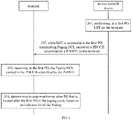
- FIG. 2 is a flow chart illustrating a method for monitoring a PO, according to some embodiments of the disclosure.
- the method is applicable to a terminal and an access network device in a NR-U system.
- a paging cycle of the terminal includes an original PO and at least one extended PO of the original PO.
- the original PO and the extended PO(s) form a PO window.
- the method includes the following.
- the access network device performs, at a first PO, LBT on the terminal.
- the first PO is one of the original PO and the extended PO(s).
- the extended PO is, a candidate PO located after the original PO, in the paging cycle.
- the number of extended PO(s) is one or more, which is not limited in embodiments of the disclosure.
- LBT means that the access network device, before transmitting data, first monitors whether there are other devices transmitting data on the channel of the unlicensed spectrum; and if there are other devices transmitting data, it postpones transmitting its own data to the terminal.
- the access network device In the paging cycle, if LBT of the access network device is unsuccessful and the access network device may not transmit a paging message to the terminal at the original PO, the access network device will continue to try to transmit the paging message to the terminal at the extended PO located after the original PO, to prevent the terminal from missing the paging message in the paging cycle.
- the access network device transmits Paging DCI, carried in a PDCCH scrambled by a P-RNTI, to the terminal.
- An indicator bit in the Paging DCI is configured to instruct the terminal to stop monitoring other PO, located after the first PO, in the paging cycle.
- P-RNTI is configured to identify a transmission of the paging message.
- the access network device transmits the Paging DCI at the first PO to notify whether the terminal is paged, the system information has changed and the like.
- the terminal receives at the first PO the Paging DCI carried in the paging PDCCH scrambled by the P-RNTI from the access network device.
- the first PO is one of the original PO and the extended PO(s).
- the extended PO is, a candidate PO located after the original PO, in the paging cycle.
- the number of extended PO(s) is one or more, which is not limited in embodiments of the disclosure.
- the original PO and the extended PO(s) form a PO window.
- a length of the PO window in the time domain is limited.
- the length of the PO window is in units of subframes.
- the access network device In the paging cycle, if LBT of the access network device is unsuccessful and the access network device may not transmit a paging message to the terminal at the original PO, the access network device will continue to try to transmit the paging message to the terminal at the extended PO located after the original PO, to prevent the terminal from missing the paging message in the paging cycle.
- P-RNTI is configured to identify a transmission of the paging message.
- the terminal determines whether it is paged or the system information changes by receiving the Paging DCI at the first PO.
- the Paging DCI When the terminal is paged, the Paging DCI carries paging scheduling information and the paging scheduling information is for the terminal; and when the system information (such as System Info Modification, Etws-Indication, Cmas-Indication, Eab-Param Modification, Redistribution Indication, System Info Modification-eDRX) changes, the Paging DCI carries a short message and the short message is for all terminals in the cell.
- system information such as System Info Modification, Etws-Indication, Cmas-Indication, Eab-Param Modification, Redistribution Indication, System Info Modification-eDRX
- the terminal When the terminal monitors that the paging PDCCH has its own paging scheduling information at the first PO, the terminal receives a physical downlink shared channel (PDSCH) based on the Paging DCI carried on the paging PDCCH to obtain the paging information.
- PDSCH physical downlink shared channel
- one paging cycle includes the original PO, a first extended PO, a second extended PO and a third extended PO.
- the first PO is the original PO.
- the terminal receives, at the first PO, the Paging DCI carried in the paging PDCCH scrambled by the P-RNTI from the access network device.
- one paging cycle includes the original PO, a first extended PO, a second extended PO and a third extended PO.
- the first PO is the first extended PO.
- the terminal receives, at the first extended PO, the Paging DCI carried in the paging PDCCH scrambled by the P-RNTI from the access network device.
- the indicator bit of the Paging DCI carries indication information.
- the indication information is configured to instruct the terminal whether to monitor other PO located after the first PO in the paging cycle.
- the Paging DCI is Paging DCI carrying paging scheduling information; or, the Paging DCI is Paging DCI carrying a short message; or, the Paging DCI is Paging DCI carrying paging scheduling information and a short message; or, Paging DCI is Paging DCI not carrying Paging scheduling information and a short message.
- one paging cycle includes the original PO, a first extended PO, a second extended PO and a third extended PO.
- the first PO is the original PO.
- the terminal receives, at the first PO, the Paging DCI carried in the paging PDCCH scrambled by the P-RNTI from the access network device.
- the Paging DCI is the Paging DCI that carries the short message.
- the indication information is determined based on the indicator bit of the Paging DCI.
- the indication information is configured to indicate not to continue to monitor other POs located after the first PO in the paging cycle, that is, the terminal will not monitor the POs (including the first extended PO, the second extended PO and the third extended PO) located after the original PO.
- one paging cycle includes the original PO, a first extended PO, a second extended PO and a third extended PO.
- the first PO is the first extended PO.
- the terminal receives, at the first extended PO, the Paging DCI carried in the paging PDCCH scrambled by the P-RNTI from the access network device.
- the Paging DCI is the Paging DCI that carries the short message.
- the indication information is determined based on the indicator bit of the Paging DCI.
- the indication information is configured to indicate not to continue to monitor other POs located after the first PO in the paging cycle, that is, the terminal will not monitor the POs (including the second extended PO and the third extended PO) located after the first extended PO.
- a format of the Paging DCI is fallback format 1-0.
- DCI is content transmitted in PDCCH.
- DCI has a variety of formats. Different formats are used according to different purposes and scenarios.
- the fallback format 1-0 is a DCI format used for downlink scheduling allocation.
- An information field of the fallback format 1-0 is not configurable.
- the terminal receives, at the first PO, the Paging DCI transmitted by the access network device and determines whether to monitor other PO located after the first PO in the paging cycle based on the indicator bit of the Paging DCI. It is avoided that the terminal always monitors other PO located after the first PO when the LBT of the access network device succeeds but there is no need to perform paging scheduling, thereby saving the power of the terminal.
- the indicator bit of the Paging DCI includes at least one bit in target reserved bits and the target reserved bits is one of groups of reserved bits in the Paging DCI.
- Reserved bits are bits that do not carry relevant information in the Paging DCI transmitted by the access network device this time.
- the information field located by the target reserved bits is a fixed information field.
- the information field located by the target reserved bits is different and the number of bits corresponding to the target reserved bits may also be different.
- the indicator bit of the Paging DCI includes at least one bit. Some embodiments of the disclosure may not limit the number of the indicator bit(s) of the Paging DCI.
- the terminal determines indication information based on the indicator bit of the Paging DCI. The indication information is configured to indicate whether to continue to monitor other PO located after the first PO in the paging cycle.
- the disclosure provides at least the following three solutions.
- the target reserved bits include 2 bits in a short-message-indicator information field.
- the target reserved bits are located in the short-message-indicator information field.
- the short-message-indicator information field corresponds to 2 bits.
- Table 1 short message indicator bit field short message indicator 00 reserved bits 01
- the Paging DCI only carries paging scheduling information 10
- the Paging DCI only carries a short message 11
- the Paging DCI carries paging scheduling information and a short message
- R15 introduces a short message indicator in the Paging DCI to notify a type of paging.
- the short message indicator corresponds to 2 bits: 00 are reserved bits; 01 are used to indicate that the Paging DCI only carries paging scheduling information; 10 are used to indicate that the Paging DCI only carries a short message; and 11 are used to indicate that the Paging DCI carries paging scheduling information and a short message.
- the indicator bit of the Paging DCI includes the reserved bits 00 of the short-message-indicator information field.
- the terminal when the terminal receives the Paging DCI at the first PO and determines that the indicator bits of the short-message-indicator information field in the Paging DCI are 00, it is determined that the LBT of the access network device at the first PO is successful and the terminal will stop monitoring the PO after the first PO and enter sleep, thereby achieving the effect of power saving.
- the terminal receives, at the first PO, the Paging DCI transmitted by the access network device and determines whether to monitor other PO located after the first PO in the paging cycle based on the indicator bit of the Paging DCI. It is avoided that the terminal always monitors other PO located after the first PO when the LBT of the access network device succeeds but there is no need to perform paging scheduling, thereby saving the power of the terminal.
- the terminal determines that the LBT has succeeded in the access network device at the first PO and the terminal will stop monitoring the PO after the first PO and enter sleep, thereby achieving the effect of saving power.
- the target reserved bits include 6 redundant bits among 8 bits in a short message information field.
- the target reserved bits are located in the short message information field.
- the short message information field includes 8 bits, among which the target reserved bits are 6 redundant bits (the third bit to the eighth bit or bits 3-8) among the 8 bits.
- the 6 redundant bits are not used to indicate other paging related information to the terminal.
- Table 2 short message bit short message 1 System Info Modification 2 Etws And Cmas Indication 3-8 reserved bits
- bit 1 is a system-info-modification bit, in which if this bit is set to 1, it is used to indicate broadcast control channel (BCCH) modification in addition to system information block6 (SIB6), SIB7 and SIB8;
- bit 2 is a system-info-modification bit, in which if this bit is set to 1, it is used to indicate an Etws main notification, and/or an Etws minor notification, and/or a Cmas notification; and bits 3-8 are reserved bits.
- the indicator bit of the Paging DCI includes at least one of the reserved bits, bits 3-8, of the short message information field.
- the terminal when the terminal receives the Paging DCI at the first PO and determines that the indicator bit of the short message information field (bit 3 of the short message information field) in the Paging DCI is 0, it is determined that the LBT of the access network device at the first PO is successful and the terminal will stop monitoring the PO after the first PO and enter sleep, thereby achieving the effect of power saving.
- the terminal when the terminal receives the Paging DCI at the first PO and determines that the indicator bits of the short message information field (bits 3-4 of the short message information field) in the Paging DCI are 00, it is determined that the LBT of the access network device at the first PO is successful and the terminal will stop monitoring the PO after the first PO and enter sleep, thereby achieving the effect of power saving.
- the terminal when the terminal receives the Paging DCI at the first PO and determines that the indicator bits of the short message information field (bits 6-8 of the short message information field) in the Paging DCI are 000, it is determined that the LBT of the access network device at the first PO is successful and the terminal will stop monitoring the PO after the first PO and enter sleep, thereby achieving the effect of power saving.
- the terminal receives, at the first PO, the Paging DCI transmitted by the access network device and determines whether to monitor other PO located after the first PO in the paging cycle based on the indicator bit of the Paging DCI. It is avoided that the terminal always monitors other PO located after the first PO when the LBT of the access network device succeeds but there is no need to perform paging scheduling, thereby saving the power of the terminal.
- the terminal uses at least one of the 6 redundant bits among the 8 bits of the short message information field to determine that the LBT of the access network device at the first PO is successful and the terminal will stop monitoring the PO after the first PO and enter sleep, thereby achieving the effect of power saving.
- the information field located by the target reserved bits is different based on the different content carried by the Paging DCI.
- the Paging DCI carries content in four cases: the Paging DCI not carrying paging scheduling information and a short message, the Paging DCI only carrying paging scheduling information, the Paging DCI only carrying a short message and the Paging DCI carrying paging scheduling information and a short message.
- the location of the target reserved bits is as follows.
- the Paging DCI is Paging DCI not carrying paging scheduling information and a short message.
- the target reserved bits include 2 bits in a short-message-indicator information field; or, the target reserved bits include 8 bits in a short message information field; or, the target reserved bits include a frequency-domain-allocation information field; or, the target reserved bits include 4 bits of a time-domain-allocation information field; or, the target reserved bits include 1 bit of a mapping information field from a VRB to a PRB; or, the target reserved bits include 5 bits of a modulation-and-coding information field; or, the target reserved bits include 2 bits of a TB ratio information field; or, the target reserved bits include 6 bits of original reserved bits.
- reserved bits 00 in the short-message-indicator information field or 8 reserved bits in the short message information field are used as two groups of reserved bits.
- the frequency-domain-allocation information field, the time-domain-allocation information field, the mapping information field from VRB to PRB, the modulation-and-coding information field and the TB ratio information field of the Paging DCI are reserved and may not carry relevant information for indicating the paging scheduling of the terminal.
- the above 6 information fields are regarded as 6 groups of reserved bits.
- the original reserved bits are bits that are not used by the base station to notify the terminal of paging related information in the Paging DCI regardless of the content carried by the Paging DCI.
- the 6 bits of the above-mentioned original reserved bits are regarded as one group of reserved bits.
- the indicator bit of the Paging DCI includes at least one bit in one of the multiple groups of reserved bits of the Paging DCI.
- the terminal when the terminal receives the Paging DCI at the first PO and determines that the indicator bits of the short-message-indicator information field in the Paging DCI are 00, it is determined that the LBT of the access network device at the first PO is successful and the terminal will stop monitoring the PO after the first PO and enter sleep, thereby achieving the effect of power saving.
- the terminal when the terminal receives the Paging DCI at the first PO and determines that the indicator bits (bits 1-2) of the time-domain-allocation information field in the Paging DCI are 00, it is determined that the LBT of the access network device at the first PO is successful and the terminal will stop monitoring the PO after the first PO and enter sleep, thereby achieving the effect of power saving.
- the terminal when the terminal receives the Paging DCI at the first PO and determines that the indicator bits (bits 1-3) of the original reserved bits in the Paging DCI are 000, it is determined that the LBT of the access network device at the first PO is successful and the terminal will stop monitoring the PO after the first PO and enter sleep, thereby achieving the effect of power saving.
- the Paging DCI is Paging DCI only carrying paging scheduling information.
- the target reserved bits include 2 bits in a short-message-indicator information field; or, the target reserved bits include 8 bits in a short message information field; or, the target reserved bits include 6 bits of original reserved bits.
- reserved bits 00 in the short-message-indicator information field are used as a group of reserved bits.
- the original reserved bits are bits that are not used by the base station to notify the terminal of paging related information in the Paging DCI regardless of the content carried by the Paging DCI.
- the 6 bits of the above-mentioned original reserved bits are regarded as one group of reserved bits.
- the indicator bit of the Paging DCI includes at least one bit in one of the multiple groups of reserved bits of the Paging DCI.
- the terminal when the terminal receives the Paging DCI at the first PO and determines that the indicator bits of the short-message-indicator information field in the Paging DCI are 00, it is determined that the LBT of the access network device at the first PO is successful and the terminal will stop monitoring the PO after the first PO and enter sleep, thereby achieving the effect of power saving.
- the terminal when the terminal receives the Paging DCI at the first PO and determines that the indicator bits (bits 1-3) of the original reserved bits in the Paging DCI are 000, it is determined that the LBT of the access network device at the first PO is successful and the terminal will stop monitoring the PO after the first PO and enter sleep, thereby achieving the effect of power saving.
- the Paging DCI is Paging DCI only carrying a short message.
- the target reserved bits include 2 bits in a short-message-indicator information field; or, the target reserved bits include 6 redundant bits among 8 bits in a short message information field; or, the target reserved bits include a frequency-domain-allocation information field; or, the target reserved bits include 4 bits of a time-domain-allocation information field; or, the target reserved bits include 1 bit of a mapping information field from a VRB to a PRB; or, the target reserved bits include 5 bits of a modulation-and-coding information field; or, the target reserved bits include 2 bits of a TB ratio information field; or, the target reserved bits include 6 bits of original reserved bits.
- reserved bits 00 in the short-message-indicator information field or 6 redundant bits among 8 bits in the short message information field are used as two groups of reserved bits.
- the frequency-domain-allocation information field, the time-domain-allocation information field, the mapping information field from VRB to PRB, the modulation-and-coding information field and the TB ratio information field of the Paging DCI are reserved and may not carry relevant information for indicating the paging scheduling of the terminal.
- the above 6 information fields are regarded as 6 groups of reserved bits.
- the original reserved bits are bits that are not used by the base station to notify the terminal of paging related information in the Paging DCI regardless of the content carried by the Paging DCI.
- the 6 bits of the above-mentioned original reserved bits are regarded as one group of reserved bits.
- the indicator bit of the Paging DCI includes at least one bit in one of the multiple groups of reserved bits of the Paging DCI.
- the terminal when the terminal receives the Paging DCI at the first PO and determines that the indicator bits of the short message information field (bits 6-8 of the short message information field) in the Paging DCI are 000, it is determined that the LBT of the access network device at the first PO is successful and the terminal will stop monitoring the PO after the first PO and enter sleep, thereby achieving the effect of power saving.
- the terminal when the terminal receives the Paging DCI at the first PO and determines that the indicator bits (bits 1-2) of the time-domain-allocation information field in the Paging DCI are 00, it is determined that the LBT of the access network device at the first PO is successful and the terminal will stop monitoring the PO after the first PO and enter sleep, thereby achieving the effect of power saving.
- the terminal when the terminal receives the Paging DCI at the first PO and determines that the indicator bits (bits 1-3) of the original reserved bits in the Paging DCI are 000, it is determined that the LBT of the access network device at the first PO is successful and the terminal will stop monitoring the PO after the first PO and enter sleep, thereby achieving the effect of power saving.
- the Paging DCI is Paging DCI carrying paging scheduling information and a short message.
- the target reserved bits include 2 bits in a short-message-indicator information field; or, the target reserved bits include 6 redundant bits among 8 bits in a short message information field; or the target reserved bits include 6 bits of original reserved bits.
- the Paging DCI is Paging DCI carrying paging scheduling information and a short message, as shown in Tables 1 and 2, reserved bits 00 in the short-message-indicator information field or 6 redundant bits among 8 bits in the short message information field are used as two groups of reserved bits.
- the original reserved bits are bits that are not used by the base station to notify the terminal of paging related information in the Paging DCI regardless of the content carried by the Paging DCI.
- the 6 bits of the above-mentioned original reserved bits are regarded as one group of reserved bits.
- the indicator bit of the Paging DCI includes at least one bit in one of the multiple groups of reserved bits of the Paging DCI.
- the terminal when the terminal receives the Paging DCI at the first PO and determines that the indicator bits of the short message information field (bits 6-8 of the short message information field) in the Paging DCI are 000, it is determined that the LBT of the access network device at the first PO is successful and the terminal will stop monitoring the PO after the first PO and enter sleep, thereby achieving the effect of power saving.
- the terminal when the terminal receives the Paging DCI at the first PO and determines that the indicator bits (bits 1-2) of the original reserved bits in the Paging DCI are 00, it is determined that the LBT of the access network device at the first PO is successful and the terminal will stop monitoring the PO after the first PO and enter sleep, thereby achieving the effect of power saving.
- the terminal receives, at the first PO, the Paging DCI transmitted by the access network device and determines whether to monitor other PO located after the first PO in the paging cycle based on the indicator bit of the Paging DCI. It is avoided that the terminal always monitors other PO located after the first PO when the LBT of the access network device succeeds but there is no need to perform paging scheduling, thereby saving the power of the terminal.
- the information field located by the target reserved bits is different.
- the terminal determines that the LBT has succeeded in the network access device at the first PO through the indicator bit of at least one bit in one of the multiple groups of reserved bits.
- the terminal will stop monitoring the PO after the first PO and enter sleep to save power.
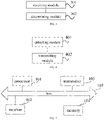
- FIG. 3 is a block diagram illustrating an apparatus for monitoring a PO, according to some embodiments of the disclosure.
- the apparatus includes a receiving module 301 and a determining module 302.
- the receiving module 301 is configured to receive, at a first PO, Paging DCI, carried in a paging PDCCH scrambled by a P-RNTI, from an access network device, in which the first PO is one of the original PO and the extended PO.
- the determining module 302 is configured to determine to stop monitoring, other PO that is located after the first PO in the paging cycle, based on an indicator bit of the Paging DCI.
- the indicator bit of the Paging DCI includes at least one bit in target reserved bits and the target reserved bits is one of groups of reserved bits in the Paging DCI.
- the target reserved bits include 2 bits in a short-message-indicator information field.
- the target reserved bits include 6 redundant bits among 8 bits in a short message information field.
- the Paging DCI is Paging DCI not carrying paging scheduling information and a short message
- the target reserved bits include 2 bits in a short-message-indicator information field; or, the target reserved bits include 8 bits in a short message information field; or, the target reserved bits include a frequency-domain-allocation information field; or, the target reserved bits include 4 bits of a time-domain-allocation information field; or, the target reserved bits include 1 bit of a mapping information field from a VRB to a PRB; or, the target reserved bits include 5 bits of a modulation-and-coding information field; or, the target reserved bits include 2 bits of a TB ratio information field; or, the target reserved bits include 6 bits of original reserved bits.
- the Paging DCI is Paging DCI only carrying paging scheduling information
- the target reserved bits include 2 bits in a short-message-indicator information field; or, the target reserved bits include 8 bits in a short message information field; or, the target reserved bits include 6 bits of original reserved bits.
- the Paging DCI is Paging DCI only carrying a short message
- the target reserved bits include 2 bits in a short-message-indicator information field; or, the target reserved bits include 6 redundant bits among 8 bits in a short message information field; or, the target reserved bits include a frequency-domain-allocation information field; or, the target reserved bits include 4 bits of a time-domain-allocation information field; or, the target reserved bits include 1 bit of a mapping information field from a VRB to a PRB; or, the target reserved bits include 5 bits of a modulation-and-coding information field; or, the target reserved bits include 2 bits of a TB ratio information field; or, the target reserved bits include 6 bits of original reserved bits.
- the Paging DCI is Paging DCI carrying paging scheduling information and a short message
- the target reserved bits include 2 bits in a short-message-indicator information field; or, the target reserved bits include 6 redundant bits among 8 bits in a short message information field; or, the target reserved bits include 6 bits of original reserved bits.
- a format of the Paging DCI is fallback format 1-0.
- FIG. 4 is a block diagram illustrating an apparatus for monitoring a PO, according to some embodiments of the disclosure.
- the apparatus includes a detecting module 401 and a transmitting module 402.
- the detecting module 401 is configured to perform, at a first PO, LBT on a terminal, in which a paging cycle of the terminal includes an original PO and at least one extended PO of the original PO and the original PO and the extended PO form a PO window.
- the transmitting module 402 is configured to transmit, Paging DCI, carried in a paging PDCCH scrambled by a P-RNTI, to the terminal in response to that the LBT is successful at the first PO, in which the first PO is one of the original PO and the extended PO.
- An indicator bit of the Paging DCI is configured to instruct the terminal to stop monitoring other PO located after the first PO in the paging cycle.
- the indicator bit of the Paging DCI includes at least one bit in target reserved bits and the target reserved bits is one of groups of reserved bits in the Paging DCI.
- the target reserved bits include 2 bits in a short-message-indicator information field.
- the target reserved bits include 6 redundant bits among 8 bits in a short message information field.
- the Paging DCI is Paging DCI not carrying paging scheduling information and a short message
- the target reserved bits include 2 bits in a short-message-indicator information field; or, the target reserved bits include 8 bits in a short message information field; or, the target reserved bits include a frequency-domain-allocation information field; or, the target reserved bits include 4 bits of a time-domain-allocation information field; or, the target reserved bits include 1 bit of a mapping information field from a VRB to a PRB; or, the target reserved bits include 5 bits of a modulation-and-coding information field; or, the target reserved bits include 2 bits of a TB ratio information field; or, the target reserved bits include 6 bits of original reserved bits.
- the Paging DCI is Paging DCI only carrying paging scheduling information
- the target reserved bits include 2 bits in a short-message-indicator information field; or, the target reserved bits include 8 bits in a short message information field; or, the target reserved bits include 6 bits of original reserved bits.
- the Paging DCI is Paging DCI only carrying a short message
- the target reserved bits include 2 bits in a short-message-indicator information field; or, the target reserved bits include 6 redundant bits among 8 bits in a short message information field; or, the target reserved bits include a frequency-domain-allocation information field; or, the target reserved bits include 4 bits of a time-domain-allocation information field; or, the target reserved bits include 1 bit of a mapping information field from a VRB to a PRB; or, the target reserved bits include 5 bits of a modulation-and-coding information field; or, the target reserved bits include 2 bits of a TB ratio information field; or, the target reserved bits include 6 bits of original reserved bits.
- the Paging DCI is Paging DCI carrying paging scheduling information and a short message
- the target reserved bits include 2 bits in a short-message-indicator information field; or, the target reserved bits include 6 redundant bits among 8 bits in a short message information field; or, the target reserved bits include 6 bits of original reserved bits.
- a format of the Paging DCI is fallback format 1-0.
- FIG. 5 is a block diagram illustrating a communication device (a terminal or an access network device), according to some embodiments of the disclosure.
- the terminal includes: a processor 101, a receiver 102, a transmitter 103, a memory 104 and a bus 105.
- the processor 101 includes one or more processing cores.
- the processor 101 executes various functional applications and information processing by running software programs and modules.
- the receiver 102 and the transmitter 103 may be implemented as a communication component.
- the communication component may be a communication chip.
- the memory 104 is connected to the processor 101 through the bus 105.
- the memory 104 may be configured to store at least one instruction.
- the processor 101 is configured to execute the at least one instruction to implement each action in the foregoing method embodiments.
- the memory 104 may be implemented using any type of volatile or non-volatile memory devices, or a combination thereof.
- the volatile or non-volatile memory device include, but is not limited to: a magnetic disk or optical disk, an electrically erasable programmable read-only memory (EEPROM), an erasable programmable read-only memory (EPROM), a static random access memory (SRAM), a read-only memory (ROM), a magnetic memory, a flash memory, a programmable read-only memory (PROM).
- a computer-readable storage medium stores at least one instruction, at least one program, a code set or an instruction se.
- the at least one instruction, the at least one program, the code set or the instruction set is loaded and executed by the processor to implement the method for monitoring a PO provided by the foregoing method embodiments.
- the program can be stored in a computer-readable storage medium.
- the storage medium mentioned can be a read-only memory, a magnetic disk, an optical disk or the like.
Landscapes
- Engineering & Computer Science (AREA)
- Computer Networks & Wireless Communication (AREA)
- Signal Processing (AREA)
- Mobile Radio Communication Systems (AREA)
Abstract
Description
- The disclosure relates to the field of communication technologies, and in particular to a method and an apparatus for monitoring a paging occasion (PO), a terminal and a storage medium.
- A design on the 5th generation mobile communication technology (5G) new radio in unlicensed spectrum (NR-U) should comply with relevant regulations in major regions around the world, including relevant requirements for listen before talk (LBT): a base station monitors, before transmitting data, whether there are other devices transmitting data on a channel of the unlicensed spectrum; and if there are other devices transmitting data, the base station postpones transmitting its own data to a terminal.
- In a NR-U system, if the base station fails to transmit a paging message at a PO to the terminal due to a LBT failure, the performance of the NR-U system will be affected. To reduce an impact of the LBT failure on the PO, the 5G standard formulation organization designed an extended PO, that is, an original PO is extended exponentially based on a number of synchronization signal blocks (SSBs), to avoid that the terminal is affected to receive the paging message when the base station has the LBT failure.
- However, under the design of extended PO, when the terminal does not receive a paging schedule at the PO, the terminal still needs to continuously monitor the extended PO after the PO since the terminal does not know a reason of not receiving the paging schedule (for example, the base station has the LBT failure or the LBT succeed but the base station does not need to transmit the paging schedule), which causes the power consumption of the terminal.
- Embodiments of the disclosure provide a method and an apparatus for monitoring a PO, a terminal and a storage medium, which can solve the problem that under the design of extended PO, when the terminal does not receive the paging schedule at the PO, the terminal still needs to continuously monitor the extended PO after the PO since the terminal does not know the reason of not receiving the paging schedule (for example, the base station has the LBT failure or the LBT succeed but the base station does not need to transmit the paging schedule), causing the power consumption of the terminal. The technical solutions are as follows.
- According to an aspect of the disclosure, a method for monitoring a PO is provided. The method is applicable to a terminal in a NR-U system. A paging cycle of the terminal includes an original PO and at least one extended PO of the original PO. The original PO and the extended PO form a PO window. The method includes: receiving, at a first PO, paging downlink control information (Paging DCI), carried in a paging physical downlink control channel (PDCCH) scrambled by a paging radio network temporary identity (P-RNTI), from an access network device, in which the first PO is one of the original PO and the extended PO; and determining to stop monitoring, other PO that is located after the first PO in the paging cycle, based on an indicator bit of the Paging DCI.
- In some embodiments, the indicator bit of the Paging DCI includes at least one bit in target reserved bits and the target reserved bits is one of groups of reserved bits in the Paging DCI.
- In some embodiments, the target reserved bits include 2 bits in a short-message-indicator information field.
- In some embodiments, the target reserved bits include 6 redundant bits among 8 bits in a short message information field.
- In some embodiments, the Paging DCI is Paging DCI not carrying paging scheduling information and a short message, the target reserved bits include 2 bits in a short-message-indicator information field; or, the target reserved bits include 8 bits in a short message information field; or, the target reserved bits include a frequency-domain-allocation information field; or, the target reserved bits include 4 bits of a time-domain-allocation information field; or, the target reserved bits include 1 bit of a mapping information field from a virtual resource block (VRB) to a physical resource block (PRB); or, the target reserved bits include 5 bits of a modulation-and-coding information field; or, the target reserved bits include 2 bits of a transport block (TB) ratio information field; or, the target reserved bits include 6 bits of original reserved bits.
- In some embodiments, the Paging DCI is Paging DCI only carrying paging scheduling information, the target reserved bits include 2 bits in a short-message-indicator information field; or, the target reserved bits include 8 bits in a short message information field; or, the target reserved bits include 6 bits of original reserved bits.
- In some embodiments, the Paging DCI is Paging DCI only carrying a short message, the target reserved bits include 2 bits in a short-message-indicator information field; or, the target reserved bits include 6 redundant bits among 8 bits in a short message information field; or, the target reserved bits include a frequency-domain-allocation information field; or, the target reserved bits include 4 bits of a time-domain-allocation information field; or, the target reserved bits include 1 bit of a mapping information field from a VRB to a PRB; or, the target reserved bits include 5 bits of a modulation-and-coding information field; or, the target reserved bits include 2 bits of a TB ratio information field; or, the target reserved bits include 6 bits of original reserved bits.
- In some embodiments, the Paging DCI is Paging DCI carrying paging scheduling information and a short message, the target reserved bits include 2 bits in a short-message-indicator information field; or, the target reserved bits include 6 redundant bits among 8 bits in a short message information field; or, the target reserved bits include 6 bits of original reserved bits.
- According to an aspect of the disclosure, a method for monitoring a PO is provided. The method is applicable to an access network device in a NR-U system. The method includes: performing, at a first PO, LBT on a terminal, in which a paging cycle of the terminal includes an original PO and at least one extended PO of the original PO and the original PO and the extended PO form a PO window; and transmitting, Paging DCI, carried in a paging PDCCH scrambled by a P-RNTI, to the terminal in response to that the LBT is successful at the first PO, in which the first PO is one of the original PO and the extended PO and an indicator bit of the Paging DCI is configured to instruct the terminal to stop monitoring other PO located after the first PO in the paging cycle.
- According to an aspect of the disclosure, an apparatus for monitoring a PO is provided. The apparatus includes: a receiving module, configured to receive, at a first PO, Paging DCI, carried in a paging PDCCH scrambled by a P-RNTI, from an access network device, in which the first PO is one of the original PO and the extended PO; and a determining module, configured to determine to stop monitoring, other PO that is located after the first PO in the paging cycle, based on an indicator bit of the Paging DCI.
- According to an aspect of the disclosure, an apparatus for monitoring a PO is provided. The apparatus includes: a detecting module, configured to perform, at a first PO, LBT on a terminal, in which a paging cycle of the terminal includes an original PO and at least one extended PO of the original PO and the original PO and the extended PO form a PO window; and a transmitting module, configured to transmit, Paging DCI, carried in a paging PDCCH scrambled by a P-RNTI, to the terminal in response to that the LBT is successful at the first PO, in which the first PO is one of the original PO and the extended PO and an indicator bit of the Paging DCI is configured to instruct the terminal to stop monitoring other PO located after the first PO in the paging cycle.
- According to an aspect of the disclosure, a terminal is provided. The terminal includes: a processor; a transceiver connected to the processor; and a memory for storing executable instructions of the processor; in which the processor is configured to load and execute the executable instructions to perform the method for monitoring a PO according to the above aspect.
- According to an aspect of the disclosure, an access network device is provided. The access network device includes: a processor; a transceiver connected to the processor; and a memory for storing executable instructions of the processor; in which the processor is configured to load and execute the executable instructions to perform the method for monitoring a PO according to the above aspect.
- According to an aspect of the disclosure, a chip is provided. The chip includes a programmable logic circuit and/or program instructions, in which when the chip is running, the method for monitoring a PO according to the above aspect is performed.
- According to an aspect of the disclosure, a computer-readable storage medium is provided. The computer-readable storage medium has stored therein executable instructions that, when loaded and executed by a processor, the method for monitoring a PO according to the above aspect is performed.
- The technical solutions provided in embodiments of the disclosure include at least the following beneficial effects. The terminal receives, at the first PO, the Paging DCI transmitted by the access network device and determines whether to monitor other PO located after the first PO in the paging cycle based on the indicator bit of the Paging DCI. It is avoided that the terminal always monitors other PO located after the first PO when the LBT of the access network device succeeds but there is no need to perform paging scheduling, thereby saving the power of the terminal.
- To more clearly describe technical solutions in embodiments of the disclosure, it will briefly introduce the drawings needed in the description of embodiments in the following. Obviously, the drawings in the following description are only some embodiments of the disclosure. For those of ordinary skill in the art, without creative labor, other drawings may be obtained based on these drawings.
-
FIG. 1 is a block diagram illustrating a communication system, according to some embodiments of the disclosure. -
FIG. 2 is a flow chart illustrating a method for monitoring a PO, according to some embodiments of the disclosure. -
FIG. 3 is a block diagram illustrating an apparatus for monitoring a PO, according to some embodiments of the disclosure. -
FIG. 4 is a block diagram illustrating an apparatus for monitoring a PO, according to some embodiments of the disclosure. -
FIG. 5 is a block diagram illustrating a communication device, according to some embodiments of the disclosure. - To make objectives, technical solutions and advantages of the disclosure clearer, the following describes embodiments of the disclosure in detail with reference to the drawings.
- First, a brief introduction to terms and implementation environments involved in embodiments of the disclosure will be given before describing in detail the method for monitoring a PO according to embodiments of the disclosure.
- NR-based unlicensed spectrum: a spectrum for communication of radio device, which is divided by countries and regions. This spectrum is usually considered to be a shared spectrum, that is, communication devices in different communication systems can use this spectrum as long as they meet regulations set by countries and regions on the spectrum and there is no need to apply for a proprietary spectrum license from the government.
- Messages carried in Paging downlink control information (DCI): including paging scheduling information and/or a short message. The paging scheduling information is configured to schedule and allocate a resource location located by a paging message; and the short message includes System Info Modification, earthquake and tsunami warning system indication (Etws-Indication), commercial mobile alert system indication (Cmas-Indication), extended access barring parameter modification (Eab-Param Modification), Redistribution Indication, System Info Modification Extended Discontinuous Reception (System Info Modification-eDRX) and Paging Record (including S-Temporary Mobile Station Identifier (S-TMSI) or International Mobile Subscriber Identity (IMSI) and other messages). If the short message only includes a system-info-modification-type message (such as System Info Modification, Etws-Indication, Cmas-Indication, Eab-Param Modification, Redistribution Indication and System Info Modification-eDRX), this type of message can be directly carried in the Paging DCI, which is called direct indication.
-
FIG. 1 is a block diagram illustrating a communication system, according to some embodiments of the disclosure. The communication system works on the NR-based unlicensed spectrum and includes anaccess network 12 and aterminal 13. - The
access network 12 includes severalaccess network devices 120. Theaccess network device 120 may be a base station. The base station is a device deployed in the access network to provide a wireless communication function for the terminal. The base stations may include various forms of macro base stations, micro base stations, relay stations, access points and the like. In the 5G NR-U system, the device with a base station function is called gNodeB or gNB. As communication technologies evolve, the description of "base station" may change. - The
terminals 13 may include various handheld devices, vehicle-mounted devices, wearable devices and computing devices with wireless communication functions, other processing devices connected to wireless modems, as well as various forms of user equipment, mobile stations (MSs), terminal devices and the like. For ease of description, the devices mentioned above are collectively referred to as terminals. Theaccess network device 120 and the terminal 13 communicate with each other through a certain air interface technology, such as a Uu interface. - It should be noted that the following embodiments of the disclosure only take the terminal accessing the access network device as an example for illustration. After understanding the technical solutions of the disclosure, those of ordinary skill in the art will easily think of applying the method for stopping monitoring of the PO provided by the disclosure to other methods for stopping monitoring of the PO in subsequent evolutions and applying to situations where other terminals access other access network devices. These extended solutions should be included in the protection scope of the disclosure.
-
FIG. 2 is a flow chart illustrating a method for monitoring a PO, according to some embodiments of the disclosure. The method is applicable to a terminal and an access network device in a NR-U system. A paging cycle of the terminal includes an original PO and at least one extended PO of the original PO. The original PO and the extended PO(s) form a PO window. The method includes the following. - 201: the access network device performs, at a first PO, LBT on the terminal.
- The first PO is one of the original PO and the extended PO(s).
- Optionally, the extended PO is, a candidate PO located after the original PO, in the paging cycle. The number of extended PO(s) is one or more, which is not limited in embodiments of the disclosure.
- LBT means that the access network device, before transmitting data, first monitors whether there are other devices transmitting data on the channel of the unlicensed spectrum; and if there are other devices transmitting data, it postpones transmitting its own data to the terminal.
- In the paging cycle, if LBT of the access network device is unsuccessful and the access network device may not transmit a paging message to the terminal at the original PO, the access network device will continue to try to transmit the paging message to the terminal at the extended PO located after the original PO, to prevent the terminal from missing the paging message in the paging cycle.
- 202: when LBT is successful at the first PO, the access network device transmits Paging DCI, carried in a PDCCH scrambled by a P-RNTI, to the terminal.
- An indicator bit in the Paging DCI is configured to instruct the terminal to stop monitoring other PO, located after the first PO, in the paging cycle.
- Optionally, P-RNTI is configured to identify a transmission of the paging message.
- Optionally, the access network device transmits the Paging DCI at the first PO to notify whether the terminal is paged, the system information has changed and the like.
- 203: the terminal receives at the first PO the Paging DCI carried in the paging PDCCH scrambled by the P-RNTI from the access network device.
- The first PO is one of the original PO and the extended PO(s).
- Optionally, the extended PO is, a candidate PO located after the original PO, in the paging cycle. The number of extended PO(s) is one or more, which is not limited in embodiments of the disclosure.
- Optionally, the original PO and the extended PO(s) form a PO window. A length of the PO window in the time domain is limited. The length of the PO window is in units of subframes.
- In the paging cycle, if LBT of the access network device is unsuccessful and the access network device may not transmit a paging message to the terminal at the original PO, the access network device will continue to try to transmit the paging message to the terminal at the extended PO located after the original PO, to prevent the terminal from missing the paging message in the paging cycle.
- Optionally, P-RNTI is configured to identify a transmission of the paging message.
- Optionally, the terminal determines whether it is paged or the system information changes by receiving the Paging DCI at the first PO.
- When the terminal is paged, the Paging DCI carries paging scheduling information and the paging scheduling information is for the terminal; and when the system information (such as System Info Modification, Etws-Indication, Cmas-Indication, Eab-Param Modification, Redistribution Indication, System Info Modification-eDRX) changes, the Paging DCI carries a short message and the short message is for all terminals in the cell.
- When the terminal monitors that the paging PDCCH has its own paging scheduling information at the first PO, the terminal receives a physical downlink shared channel (PDSCH) based on the Paging DCI carried on the paging PDCCH to obtain the paging information.
- Exemplarily, one paging cycle includes the original PO, a first extended PO, a second extended PO and a third extended PO. The first PO is the original PO. The terminal receives, at the first PO, the Paging DCI carried in the paging PDCCH scrambled by the P-RNTI from the access network device.
- Exemplarily, one paging cycle includes the original PO, a first extended PO, a second extended PO and a third extended PO. The first PO is the first extended PO. The terminal receives, at the first extended PO, the Paging DCI carried in the paging PDCCH scrambled by the P-RNTI from the access network device.
- 204: it is determined to stop monitoring, other PO that is located after the first PO in the paging cycle, based on the indicator bit of the Paging DCI.
- Optionally, the indicator bit of the Paging DCI carries indication information. The indication information is configured to instruct the terminal whether to monitor other PO located after the first PO in the paging cycle.
- Optionally, the Paging DCI is Paging DCI carrying paging scheduling information; or, the Paging DCI is Paging DCI carrying a short message; or, the Paging DCI is Paging DCI carrying paging scheduling information and a short message; or, Paging DCI is Paging DCI not carrying Paging scheduling information and a short message.
- Exemplarily, one paging cycle includes the original PO, a first extended PO, a second extended PO and a third extended PO. The first PO is the original PO. The terminal receives, at the first PO, the Paging DCI carried in the paging PDCCH scrambled by the P-RNTI from the access network device. The Paging DCI is the Paging DCI that carries the short message. The indication information is determined based on the indicator bit of the Paging DCI. The indication information is configured to indicate not to continue to monitor other POs located after the first PO in the paging cycle, that is, the terminal will not monitor the POs (including the first extended PO, the second extended PO and the third extended PO) located after the original PO.
- Exemplarily, one paging cycle includes the original PO, a first extended PO, a second extended PO and a third extended PO. The first PO is the first extended PO. The terminal receives, at the first extended PO, the Paging DCI carried in the paging PDCCH scrambled by the P-RNTI from the access network device. The Paging DCI is the Paging DCI that carries the short message. The indication information is determined based on the indicator bit of the Paging DCI. The indication information is configured to indicate not to continue to monitor other POs located after the first PO in the paging cycle, that is, the terminal will not monitor the POs (including the second extended PO and the third extended PO) located after the first extended PO.
- In an example, a format of the Paging DCI is fallback format 1-0.
- Optionally, DCI is content transmitted in PDCCH. DCI has a variety of formats. Different formats are used according to different purposes and scenarios. The fallback format 1-0 is a DCI format used for downlink scheduling allocation. An information field of the fallback format 1-0 is not configurable.
- In summary, in the method provided in some embodiments, the terminal receives, at the first PO, the Paging DCI transmitted by the access network device and determines whether to monitor other PO located after the first PO in the paging cycle based on the indicator bit of the Paging DCI. It is avoided that the terminal always monitors other PO located after the first PO when the LBT of the access network device succeeds but there is no need to perform paging scheduling, thereby saving the power of the terminal.
- In some optional embodiments based on
FIG. 2 , the indicator bit of the Paging DCI includes at least one bit in target reserved bits and the target reserved bits is one of groups of reserved bits in the Paging DCI. - Reserved bits are bits that do not carry relevant information in the Paging DCI transmitted by the access network device this time.
- Optionally, regardless of the content carried by the Paging DCI, the information field located by the target reserved bits is a fixed information field.
- Optionally, when the content carried by the Paging DCI is different, the information field located by the target reserved bits is different and the number of bits corresponding to the target reserved bits may also be different.
- Optionally, the indicator bit of the Paging DCI includes at least one bit. Some embodiments of the disclosure may not limit the number of the indicator bit(s) of the Paging DCI. The terminal determines indication information based on the indicator bit of the Paging DCI. The indication information is configured to indicate whether to continue to monitor other PO located after the first PO in the paging cycle.
- Exemplarily, regarding the location of the target reserved bits, the disclosure provides at least the following three solutions.
- Solution 1, the target reserved bits include 2 bits in a short-message-indicator information field.
- Optionally, in this solution, the target reserved bits are located in the short-message-indicator information field. The short-message-indicator information field corresponds to 2 bits.
Table 1: short message indicator bit field short message indicator 00 reserved bits 01 The Paging DCI only carries paging scheduling information 10 The Paging DCI only carries a short message 11 The Paging DCI carries paging scheduling information and a short message - R15 introduces a short message indicator in the Paging DCI to notify a type of paging. As shown in Table 1, the short message indicator corresponds to 2 bits: 00 are reserved bits; 01 are used to indicate that the Paging DCI only carries paging scheduling information; 10 are used to indicate that the Paging DCI only carries a short message; and 11 are used to indicate that the Paging DCI carries paging scheduling information and a short message.
- Optionally, the indicator bit of the Paging DCI includes the reserved bits 00 of the short-message-indicator information field.
- Exemplarily, in the paging cycle, when the terminal receives the Paging DCI at the first PO and determines that the indicator bits of the short-message-indicator information field in the Paging DCI are 00, it is determined that the LBT of the access network device at the first PO is successful and the terminal will stop monitoring the PO after the first PO and enter sleep, thereby achieving the effect of power saving.
- In summary, in the method provided in some embodiments, the terminal receives, at the first PO, the Paging DCI transmitted by the access network device and determines whether to monitor other PO located after the first PO in the paging cycle based on the indicator bit of the Paging DCI. It is avoided that the terminal always monitors other PO located after the first PO when the LBT of the access network device succeeds but there is no need to perform paging scheduling, thereby saving the power of the terminal.
- Through the reserved bits 00 of the short-message-indicator information field, the terminal determines that the LBT has succeeded in the access network device at the first PO and the terminal will stop monitoring the PO after the first PO and enter sleep, thereby achieving the effect of saving power.
- Solution 2, the target reserved bits include 6 redundant bits among 8 bits in a short message information field.
- Optionally, in this solution, the target reserved bits are located in the short message information field. The short message information field includes 8 bits, among which the target reserved bits are 6 redundant bits (the third bit to the eighth bit or bits 3-8) among the 8 bits.
- Optionally, regardless of the content of the information carried by the Paging DCI, the 6 redundant bits are not used to indicate other paging related information to the terminal.
Table 2: short message bit short message 1 System Info Modification 2 Etws And Cmas Indication 3-8 reserved bits - As shown in Table 2, the short message information field corresponds to 8 bits: bit 1 is a system-info-modification bit, in which if this bit is set to 1, it is used to indicate broadcast control channel (BCCH) modification in addition to system information block6 (SIB6), SIB7 and SIB8; bit 2 is a system-info-modification bit, in which if this bit is set to 1, it is used to indicate an Etws main notification, and/or an Etws minor notification, and/or a Cmas notification; and bits 3-8 are reserved bits.
- Optionally, the indicator bit of the Paging DCI includes at least one of the reserved bits, bits 3-8, of the short message information field.
- Exemplarily, in the paging cycle, when the terminal receives the Paging DCI at the first PO and determines that the indicator bit of the short message information field (bit 3 of the short message information field) in the Paging DCI is 0, it is determined that the LBT of the access network device at the first PO is successful and the terminal will stop monitoring the PO after the first PO and enter sleep, thereby achieving the effect of power saving.
- Exemplarily, in the paging cycle, when the terminal receives the Paging DCI at the first PO and determines that the indicator bits of the short message information field (bits 3-4 of the short message information field) in the Paging DCI are 00, it is determined that the LBT of the access network device at the first PO is successful and the terminal will stop monitoring the PO after the first PO and enter sleep, thereby achieving the effect of power saving.
- Exemplarily, in the paging cycle, when the terminal receives the Paging DCI at the first PO and determines that the indicator bits of the short message information field (bits 6-8 of the short message information field) in the Paging DCI are 000, it is determined that the LBT of the access network device at the first PO is successful and the terminal will stop monitoring the PO after the first PO and enter sleep, thereby achieving the effect of power saving.
- In summary, in the method provided in some embodiments, the terminal receives, at the first PO, the Paging DCI transmitted by the access network device and determines whether to monitor other PO located after the first PO in the paging cycle based on the indicator bit of the Paging DCI. It is avoided that the terminal always monitors other PO located after the first PO when the LBT of the access network device succeeds but there is no need to perform paging scheduling, thereby saving the power of the terminal.
- The terminal uses at least one of the 6 redundant bits among the 8 bits of the short message information field to determine that the LBT of the access network device at the first PO is successful and the terminal will stop monitoring the PO after the first PO and enter sleep, thereby achieving the effect of power saving.
- Solution 3, the information field located by the target reserved bits is different based on the different content carried by the Paging DCI.
- The Paging DCI carries content in four cases: the Paging DCI not carrying paging scheduling information and a short message, the Paging DCI only carrying paging scheduling information, the Paging DCI only carrying a short message and the Paging DCI carrying paging scheduling information and a short message.
- In the above four cases, the location of the target reserved bits is as follows.
- The target reserved bits include 2 bits in a short-message-indicator information field; or, the target reserved bits include 8 bits in a short message information field; or, the target reserved bits include a frequency-domain-allocation information field; or, the target reserved bits include 4 bits of a time-domain-allocation information field; or, the target reserved bits include 1 bit of a mapping information field from a VRB to a PRB; or, the target reserved bits include 5 bits of a modulation-and-coding information field; or, the target reserved bits include 2 bits of a TB ratio information field; or, the target reserved bits include 6 bits of original reserved bits.
- Optionally, when the Paging DCI is Paging DCI not carrying paging scheduling information and a short message, as shown in Tables 1 and 2, reserved bits 00 in the short-message-indicator information field or 8 reserved bits in the short message information field are used as two groups of reserved bits.
- Optionally, when the Paging DCI is Paging DCI not carrying paging scheduling information and a short message, the frequency-domain-allocation information field, the time-domain-allocation information field, the mapping information field from VRB to PRB, the modulation-and-coding information field and the TB ratio information field of the Paging DCI are reserved and may not carry relevant information for indicating the paging scheduling of the terminal. The above 6 information fields are regarded as 6 groups of reserved bits.
- Optionally, the original reserved bits are bits that are not used by the base station to notify the terminal of paging related information in the Paging DCI regardless of the content carried by the Paging DCI. The 6 bits of the above-mentioned original reserved bits are regarded as one group of reserved bits.
- The indicator bit of the Paging DCI includes at least one bit in one of the multiple groups of reserved bits of the Paging DCI.
- Exemplarily, in the paging cycle, when the terminal receives the Paging DCI at the first PO and determines that the indicator bits of the short-message-indicator information field in the Paging DCI are 00, it is determined that the LBT of the access network device at the first PO is successful and the terminal will stop monitoring the PO after the first PO and enter sleep, thereby achieving the effect of power saving.
- Exemplarily, in the paging cycle, when the terminal receives the Paging DCI at the first PO and determines that the indicator bits (bits 1-2) of the time-domain-allocation information field in the Paging DCI are 00, it is determined that the LBT of the access network device at the first PO is successful and the terminal will stop monitoring the PO after the first PO and enter sleep, thereby achieving the effect of power saving.
- Exemplarily, in the paging cycle, when the terminal receives the Paging DCI at the first PO and determines that the indicator bits (bits 1-3) of the original reserved bits in the Paging DCI are 000, it is determined that the LBT of the access network device at the first PO is successful and the terminal will stop monitoring the PO after the first PO and enter sleep, thereby achieving the effect of power saving.
- The target reserved bits include 2 bits in a short-message-indicator information field; or, the target reserved bits include 8 bits in a short message information field; or, the target reserved bits include 6 bits of original reserved bits.
- Optionally, when the Paging DCI is Paging DCI only carrying paging scheduling information, as shown in Table 1, reserved bits 00 in the short-message-indicator information field are used as a group of reserved bits.
- Optionally, the original reserved bits are bits that are not used by the base station to notify the terminal of paging related information in the Paging DCI regardless of the content carried by the Paging DCI. The 6 bits of the above-mentioned original reserved bits are regarded as one group of reserved bits.
- The indicator bit of the Paging DCI includes at least one bit in one of the multiple groups of reserved bits of the Paging DCI.
- Exemplarily, in the paging cycle, when the terminal receives the Paging DCI at the first PO and determines that the indicator bits of the short-message-indicator information field in the Paging DCI are 00, it is determined that the LBT of the access network device at the first PO is successful and the terminal will stop monitoring the PO after the first PO and enter sleep, thereby achieving the effect of power saving.
- Exemplarily, in the paging cycle, when the terminal receives the Paging DCI at the first PO and determines that the indicator bits (bits 1-3) of the original reserved bits in the Paging DCI are 000, it is determined that the LBT of the access network device at the first PO is successful and the terminal will stop monitoring the PO after the first PO and enter sleep, thereby achieving the effect of power saving.
- The target reserved bits include 2 bits in a short-message-indicator information field; or, the target reserved bits include 6 redundant bits among 8 bits in a short message information field; or, the target reserved bits include a frequency-domain-allocation information field; or, the target reserved bits include 4 bits of a time-domain-allocation information field; or, the target reserved bits include 1 bit of a mapping information field from a VRB to a PRB; or, the target reserved bits include 5 bits of a modulation-and-coding information field; or, the target reserved bits include 2 bits of a TB ratio information field; or, the target reserved bits include 6 bits of original reserved bits.
- Optionally, when the Paging DCI is Paging DCI only carrying a short message, as shown in Tables 1 and 2, reserved bits 00 in the short-message-indicator information field or 6 redundant bits among 8 bits in the short message information field are used as two groups of reserved bits.
- Optionally, when the Paging DCI is Paging DCI only carrying a short message, the frequency-domain-allocation information field, the time-domain-allocation information field, the mapping information field from VRB to PRB, the modulation-and-coding information field and the TB ratio information field of the Paging DCI are reserved and may not carry relevant information for indicating the paging scheduling of the terminal. The above 6 information fields are regarded as 6 groups of reserved bits.
- Optionally, the original reserved bits are bits that are not used by the base station to notify the terminal of paging related information in the Paging DCI regardless of the content carried by the Paging DCI. The 6 bits of the above-mentioned original reserved bits are regarded as one group of reserved bits.
- The indicator bit of the Paging DCI includes at least one bit in one of the multiple groups of reserved bits of the Paging DCI.
- Exemplarily, in the paging cycle, when the terminal receives the Paging DCI at the first PO and determines that the indicator bits of the short message information field (bits 6-8 of the short message information field) in the Paging DCI are 000, it is determined that the LBT of the access network device at the first PO is successful and the terminal will stop monitoring the PO after the first PO and enter sleep, thereby achieving the effect of power saving.
- Exemplarily, in the paging cycle, when the terminal receives the Paging DCI at the first PO and determines that the indicator bits (bits 1-2) of the time-domain-allocation information field in the Paging DCI are 00, it is determined that the LBT of the access network device at the first PO is successful and the terminal will stop monitoring the PO after the first PO and enter sleep, thereby achieving the effect of power saving.
- Exemplarily, in the paging cycle, when the terminal receives the Paging DCI at the first PO and determines that the indicator bits (bits 1-3) of the original reserved bits in the Paging DCI are 000, it is determined that the LBT of the access network device at the first PO is successful and the terminal will stop monitoring the PO after the first PO and enter sleep, thereby achieving the effect of power saving.
- The target reserved bits include 2 bits in a short-message-indicator information field; or, the target reserved bits include 6 redundant bits among 8 bits in a short message information field; or the target reserved bits include 6 bits of original reserved bits.
- Optionally, when the Paging DCI is Paging DCI carrying paging scheduling information and a short message, as shown in Tables 1 and 2, reserved bits 00 in the short-message-indicator information field or 6 redundant bits among 8 bits in the short message information field are used as two groups of reserved bits.
- Optionally, the original reserved bits are bits that are not used by the base station to notify the terminal of paging related information in the Paging DCI regardless of the content carried by the Paging DCI. The 6 bits of the above-mentioned original reserved bits are regarded as one group of reserved bits.
- The indicator bit of the Paging DCI includes at least one bit in one of the multiple groups of reserved bits of the Paging DCI.
- Exemplarily, in the paging cycle, when the terminal receives the Paging DCI at the first PO and determines that the indicator bits of the short message information field (bits 6-8 of the short message information field) in the Paging DCI are 000, it is determined that the LBT of the access network device at the first PO is successful and the terminal will stop monitoring the PO after the first PO and enter sleep, thereby achieving the effect of power saving.
- Exemplarily, in the paging cycle, when the terminal receives the Paging DCI at the first PO and determines that the indicator bits (bits 1-2) of the original reserved bits in the Paging DCI are 00, it is determined that the LBT of the access network device at the first PO is successful and the terminal will stop monitoring the PO after the first PO and enter sleep, thereby achieving the effect of power saving.
- In summary, in the method provided in some embodiments, the terminal receives, at the first PO, the Paging DCI transmitted by the access network device and determines whether to monitor other PO located after the first PO in the paging cycle based on the indicator bit of the Paging DCI. It is avoided that the terminal always monitors other PO located after the first PO when the LBT of the access network device succeeds but there is no need to perform paging scheduling, thereby saving the power of the terminal.
- Depending on the content carried by the Paging DCI, the information field located by the target reserved bits is different. The terminal determines that the LBT has succeeded in the network access device at the first PO through the indicator bit of at least one bit in one of the multiple groups of reserved bits. The terminal will stop monitoring the PO after the first PO and enter sleep to save power.
-
FIG. 3 is a block diagram illustrating an apparatus for monitoring a PO, according to some embodiments of the disclosure. The apparatus includes a receivingmodule 301 and a determiningmodule 302. - The receiving
module 301 is configured to receive, at a first PO, Paging DCI, carried in a paging PDCCH scrambled by a P-RNTI, from an access network device, in which the first PO is one of the original PO and the extended PO. - The determining
module 302 is configured to determine to stop monitoring, other PO that is located after the first PO in the paging cycle, based on an indicator bit of the Paging DCI. - In some embodiments, the indicator bit of the Paging DCI includes at least one bit in target reserved bits and the target reserved bits is one of groups of reserved bits in the Paging DCI.
- In some embodiments, the target reserved bits include 2 bits in a short-message-indicator information field.
- In some embodiments, the target reserved bits include 6 redundant bits among 8 bits in a short message information field.
- In some embodiments, the Paging DCI is Paging DCI not carrying paging scheduling information and a short message, the target reserved bits include 2 bits in a short-message-indicator information field; or, the target reserved bits include 8 bits in a short message information field; or, the target reserved bits include a frequency-domain-allocation information field; or, the target reserved bits include 4 bits of a time-domain-allocation information field; or, the target reserved bits include 1 bit of a mapping information field from a VRB to a PRB; or, the target reserved bits include 5 bits of a modulation-and-coding information field; or, the target reserved bits include 2 bits of a TB ratio information field; or, the target reserved bits include 6 bits of original reserved bits.
- In some embodiments, the Paging DCI is Paging DCI only carrying paging scheduling information, the target reserved bits include 2 bits in a short-message-indicator information field; or, the target reserved bits include 8 bits in a short message information field; or, the target reserved bits include 6 bits of original reserved bits.
- In some embodiments, the Paging DCI is Paging DCI only carrying a short message, the target reserved bits include 2 bits in a short-message-indicator information field; or, the target reserved bits include 6 redundant bits among 8 bits in a short message information field; or, the target reserved bits include a frequency-domain-allocation information field; or, the target reserved bits include 4 bits of a time-domain-allocation information field; or, the target reserved bits include 1 bit of a mapping information field from a VRB to a PRB; or, the target reserved bits include 5 bits of a modulation-and-coding information field; or, the target reserved bits include 2 bits of a TB ratio information field; or, the target reserved bits include 6 bits of original reserved bits.
- In some embodiments, the Paging DCI is Paging DCI carrying paging scheduling information and a short message, the target reserved bits include 2 bits in a short-message-indicator information field; or, the target reserved bits include 6 redundant bits among 8 bits in a short message information field; or, the target reserved bits include 6 bits of original reserved bits.
- In some embodiments, a format of the Paging DCI is fallback format 1-0.
-
FIG. 4 is a block diagram illustrating an apparatus for monitoring a PO, according to some embodiments of the disclosure. The apparatus includes a detectingmodule 401 and atransmitting module 402. - The detecting
module 401 is configured to perform, at a first PO, LBT on a terminal, in which a paging cycle of the terminal includes an original PO and at least one extended PO of the original PO and the original PO and the extended PO form a PO window. - The transmitting
module 402 is configured to transmit, Paging DCI, carried in a paging PDCCH scrambled by a P-RNTI, to the terminal in response to that the LBT is successful at the first PO, in which the first PO is one of the original PO and the extended PO. - An indicator bit of the Paging DCI is configured to instruct the terminal to stop monitoring other PO located after the first PO in the paging cycle.
- In some embodiments, the indicator bit of the Paging DCI includes at least one bit in target reserved bits and the target reserved bits is one of groups of reserved bits in the Paging DCI.
- In some embodiments, the target reserved bits include 2 bits in a short-message-indicator information field.
- In some embodiments, the target reserved bits include 6 redundant bits among 8 bits in a short message information field.
- In some embodiments, the Paging DCI is Paging DCI not carrying paging scheduling information and a short message, the target reserved bits include 2 bits in a short-message-indicator information field; or, the target reserved bits include 8 bits in a short message information field; or, the target reserved bits include a frequency-domain-allocation information field; or, the target reserved bits include 4 bits of a time-domain-allocation information field; or, the target reserved bits include 1 bit of a mapping information field from a VRB to a PRB; or, the target reserved bits include 5 bits of a modulation-and-coding information field; or, the target reserved bits include 2 bits of a TB ratio information field; or, the target reserved bits include 6 bits of original reserved bits.
- In some embodiments, the Paging DCI is Paging DCI only carrying paging scheduling information, the target reserved bits include 2 bits in a short-message-indicator information field; or, the target reserved bits include 8 bits in a short message information field; or, the target reserved bits include 6 bits of original reserved bits.
- In some embodiments, the Paging DCI is Paging DCI only carrying a short message, the target reserved bits include 2 bits in a short-message-indicator information field; or, the target reserved bits include 6 redundant bits among 8 bits in a short message information field; or, the target reserved bits include a frequency-domain-allocation information field; or, the target reserved bits include 4 bits of a time-domain-allocation information field; or, the target reserved bits include 1 bit of a mapping information field from a VRB to a PRB; or, the target reserved bits include 5 bits of a modulation-and-coding information field; or, the target reserved bits include 2 bits of a TB ratio information field; or, the target reserved bits include 6 bits of original reserved bits.
- In some embodiments, the Paging DCI is Paging DCI carrying paging scheduling information and a short message, the target reserved bits include 2 bits in a short-message-indicator information field; or, the target reserved bits include 6 redundant bits among 8 bits in a short message information field; or, the target reserved bits include 6 bits of original reserved bits.
- In some embodiments, a format of the Paging DCI is fallback format 1-0.
-
FIG. 5 is a block diagram illustrating a communication device (a terminal or an access network device), according to some embodiments of the disclosure. The terminal includes: aprocessor 101, areceiver 102, atransmitter 103, amemory 104 and abus 105. - The
processor 101 includes one or more processing cores. Theprocessor 101 executes various functional applications and information processing by running software programs and modules. - The
receiver 102 and thetransmitter 103 may be implemented as a communication component. The communication component may be a communication chip. - The
memory 104 is connected to theprocessor 101 through thebus 105. - The
memory 104 may be configured to store at least one instruction. Theprocessor 101 is configured to execute the at least one instruction to implement each action in the foregoing method embodiments. - In addition, the
memory 104 may be implemented using any type of volatile or non-volatile memory devices, or a combination thereof. The volatile or non-volatile memory device include, but is not limited to: a magnetic disk or optical disk, an electrically erasable programmable read-only memory (EEPROM), an erasable programmable read-only memory (EPROM), a static random access memory (SRAM), a read-only memory (ROM), a magnetic memory, a flash memory, a programmable read-only memory (PROM). - In some embodiments, a computer-readable storage medium is also provided. The computer-readable storage medium stores at least one instruction, at least one program, a code set or an instruction se. The at least one instruction, the at least one program, the code set or the instruction set is loaded and executed by the processor to implement the method for monitoring a PO provided by the foregoing method embodiments.
- Those of ordinary skill in the art can understand that all or part of the actions in the above-mentioned embodiments can be completed by hardware or by a program instructing relevant hardware. The program can be stored in a computer-readable storage medium. The storage medium mentioned can be a read-only memory, a magnetic disk, an optical disk or the like.
- The above are only optional embodiments of the disclosure and are not intended to limit the disclosure. Any modification, equivalent replacement, improvement, etc. made within the spirit and principle of the disclosure shall be included in the protection range of the disclosure.
Claims (40)
- A method for monitoring a paging occasion (PO), applicable to a terminal in a new-radio-in-unlicensed-spectrum (NR-U) system, wherein a paging cycle of the terminal comprises an original PO and at least one extended PO of the original PO, the original PO and the extended PO form a PO window and the method comprises:receiving, at a first PO, paging downlink control information (Paging DCI), carried in a paging physical downlink control channel (PDCCH) scrambled by a paging radio network temporary identity (P-RNTI), from an access network device, wherein the first PO is one of the original PO and the extended PO; anddetermining to stop monitoring, other PO that is located after the first PO in the paging cycle, based on an indicator bit of the Paging DCI.
- The method as claimed in claim 1, wherein,
the indicator bit of the Paging DCI comprises at least one bit in target reserved bits, and the target reserved bits is one of groups of reserved bits in the Paging DCI. - The method as claimed in claim 2, wherein,
the target reserved bits comprise 2 bits in a short-message-indicator information field. - The method as claimed in claim 2, wherein,
the target reserved bits comprise 6 redundant bits among 8 bits in a short message information field. - The method as claimed in claim 2, wherein the Paging DCI is Paging DCI not carrying paging scheduling information and a short message, andthe target reserved bits comprise 2 bits in a short-message-indicator information field; orthe target reserved bits comprise 8 bits in a short message information field; orthe target reserved bits comprise a frequency-domain-allocation information field; orthe target reserved bits comprise 4 bits of a time-domain-allocation information field; orthe target reserved bits comprise 1 bit of a mapping information field from a virtual resource block (VRB) to a physical resource block (PRB); orthe target reserved bits comprise 5 bits of a modulation-and-coding information field; orthe target reserved bits comprise 2 bits of a transport block (TB) ratio information field; orthe target reserved bits comprise 6 bits of original reserved bits.
- The method as claimed in claim 2, wherein the Paging DCI is Paging DCI only carrying paging scheduling information, andthe target reserved bits comprise 2 bits in a short-message-indicator information field; orthe target reserved bits comprise 8 bits in a short message information field; orthe target reserved bits comprise 6 bits of original reserved bits.
- The method as claimed in claim 2, wherein the Paging DCI is Paging DCI only carrying a short message, andthe target reserved bits comprise 2 bits in a short-message-indicator information field; orthe target reserved bits comprise 6 redundant bits among 8 bits in a short message information field; orthe target reserved bits comprise a frequency-domain-allocation information field; orthe target reserved bits comprise 4 bits of a time-domain-allocation information field; orthe target reserved bits comprise 1 bit of a mapping information field from a virtual resource block (VRB) to a physical resource block (PRB); orthe target reserved bits comprise 5 bits of a modulation-and-coding information field; orthe target reserved bits comprise 2 bits of a transport block (TB) ratio information field; orthe target reserved bits comprise 6 bits of original reserved bits.
- The method as claimed in claim 2, wherein the Paging DCI is Paging DCI carrying paging scheduling information and a short message, andthe target reserved bits comprise 2 bits in a short-message-indicator information field; orthe target reserved bits comprise 6 redundant bits among 8 bits in a short message information field; orthe target reserved bits comprise 6 bits of original reserved bits.
- The method as claimed in any one of claims 1 to 8, wherein a format of the Paging DCI is fallback format 1-0.
- A method for monitoring a paging occasion (PO), applicable to an access network device in a new-radio-in-unlicensed-spectrum (NR-U) system, comprising:performing, at a first PO, listen before talk (LBT) on a terminal, wherein a paging cycle of the terminal comprises an original PO and at least one extended PO of the original PO and the original PO and the extended PO form a PO window; andtransmitting, paging downlink control information (Paging DCI), carried in a paging physical downlink control channel (PDCCH) scrambled by a paging radio network temporary identity (P-RNTI), to the terminal in response to that the LBT is successful at the first PO, wherein the first PO is one of the original PO and the extended PO,wherein an indicator bit of the Paging DCI is configured to instruct the terminal to stop monitoring other PO located after the first PO in the paging cycle.
- The method as claimed in claim 10, wherein,
the indicator bit of the Paging DCI comprises at least one bit in target reserved bits and the target reserved bits is one of groups of reserved bits in the Paging DCI. - The method as claimed in claim 11, wherein,
the target reserved bits comprise 2 bits in a short-message-indicator information field. - The method as claimed in claim 11, wherein,
the target reserved bits comprise 6 redundant bits among 8 bits in a short message information field. - The method as claimed in claim 11, wherein the Paging DCI is Paging DCI not carrying paging scheduling information and a short message, andthe target reserved bits comprise 2 bits in a short-message-indicator information field; orthe target reserved bits comprise 8 bits in a short message information field; orthe target reserved bits comprise a frequency-domain-allocation information field; orthe target reserved bits comprise 4 bits of a time-domain-allocation information field; orthe target reserved bits comprise 1 bit of a mapping information field from a virtual resource block (VRB) to a physical resource block (PRB); orthe target reserved bits comprise 5 bits of a modulation-and-coding information field; orthe target reserved bits comprise 2 bits of a transport block (TB) ratio information field; orthe target reserved bits comprise 6 bits of original reserved bits.
- The method as claimed in claim 11, wherein the Paging DCI is Paging DCI only carrying paging scheduling information, andthe target reserved bits comprise 2 bits in a short-message-indicator information field;or the target reserved bits comprise 8 bits in a short message information field;or the target reserved bits comprise 6 bits of original reserved bits.
- The method as claimed in claim 11, wherein the Paging DCI is Paging DCI only carrying a short message, andthe target reserved bits comprise 2 bits in a short-message-indicator information field; orthe target reserved bits comprise 6 redundant bits among 8 bits in a short message information field; orthe target reserved bits comprise a frequency-domain-allocation information field; orthe target reserved bits comprise 4 bits of a time-domain-allocation information field; orthe target reserved bits comprise 1 bit of a mapping information field from a virtual resource block (VRB) to a physical resource block (PRB); orthe target reserved bits comprise 5 bits of a modulation-and-coding information field; orthe target reserved bits comprise 2 bits of a transport block (TB) ratio information field; orthe target reserved bits comprise 6 bits of original reserved bits.
- The method as claimed in claim 11, wherein the Paging DCI is Paging DCI carrying paging scheduling information and a short message, andthe target reserved bits comprise 2 bits in a short-message-indicator information field; orthe target reserved bits comprise 6 redundant bits among 8 bits in a short message information field; orthe target reserved bits comprise 6 bits of original reserved bits.
- The method as claimed in any one of claims 10 to 17, wherein a format of the Paging DCI is fallback format 1-0.
- An apparatus for monitoring a paging occasion (PO), applicable to a terminal in a new-radio-in-unlicensed-spectrum (NR-U) system, wherein a paging cycle of the terminal comprises an original PO and at least one extended PO of the original PO, the original PO and the extended PO form a PO window and the apparatus comprises:a receiving module, configured to receive, at a first PO, paging downlink control information (Paging DCI), carried in a paging physical downlink control channel (PDCCH) scrambled by a paging radio network temporary identity (P-RNTI), from an access network device, wherein the first PO is one of the original PO and the extended PO; anda determining module, configured to determine to stop monitoring, other PO that is located after the first PO in the paging cycle, based on an indicator bit of the Paging DCI.
- The apparatus as claimed in claim 19, wherein,
the indicator bit of the Paging DCI comprises at least one bit in target reserved bits and the target reserved bits is one of groups of reserved bits in the Paging DCI. - The apparatus as claimed in claim 20, wherein,
the target reserved bits comprise 2 bits in a short-message-indicator information field. - The apparatus as claimed in claim 20, wherein,
the target reserved bits comprise 6 redundant bits among 8 bits in a short message information field. - The apparatus as claimed in claim 20, wherein the Paging DCI is Paging DCI not carrying paging scheduling information and a short message, andthe target reserved bits comprise 2 bits in a short-message-indicator information field; orthe target reserved bits comprise 8 bits in a short message information field; orthe target reserved bits comprise a frequency-domain-allocation information field; orthe target reserved bits comprise 4 bits of a time-domain-allocation information field; orthe target reserved bits comprise 1 bit of a mapping information field from a virtual resource block (VRB) to a physical resource block (PRB); orthe target reserved bits comprise 5 bits of a modulation-and-coding information field; orthe target reserved bits comprise 2 bits of a transport block (TB) ratio information field; orthe target reserved bits comprise 6 bits of original reserved bits.
- The apparatus as claimed in claim 20, wherein the Paging DCI is Paging DCI only carrying paging scheduling information, andthe target reserved bits comprise 2 bits in a short-message-indicator information field; orthe target reserved bits comprise 8 bits in a short message information field; orthe target reserved bits comprise 6 bits of original reserved bits.
- The apparatus as claimed in claim 20, wherein the Paging DCI is Paging DCI only carrying a short message, andthe target reserved bits comprise 2 bits in a short-message-indicator information field; orthe target reserved bits comprise 6 redundant bits among 8 bits in a short message information field; orthe target reserved bits comprise a frequency-domain-allocation information field; orthe target reserved bits comprise 4 bits of a time-domain-allocation information field; orthe target reserved bits comprise 1 bit of a mapping information field from a virtual resource block (VRB) to a physical resource block (PRB); orthe target reserved bits comprise 5 bits of a modulation-and-coding information field; orthe target reserved bits comprise 2 bits of a transport block (TB) ratio information field; orthe target reserved bits comprise 6 bits of original reserved bits.
- The apparatus as claimed in claim 20, wherein the Paging DCI is Paging DCI carrying paging scheduling information and a short message, andthe target reserved bits comprise 2 bits in a short-message-indicator information field; orthe target reserved bits comprise 6 redundant bits among 8 bits in a short message information field; orthe target reserved bits comprise 6 bits of original reserved bits.
- The apparatus as claimed in any one of claims 19 to 26, wherein a format of the Paging DCI is fallback format 1-0.
- An apparatus for monitoring a paging occasion (PO), applicable to an access network device in a new-radio-in-unlicensed-spectrum (NR-U) system, comprising:a detecting module, configured to perform, at a first PO, listen before talk (LBT) on a terminal, wherein a paging cycle of the terminal comprises an original PO and at least one extended PO of the original PO and the original PO and the extended PO form a PO window; anda transmitting module, configured to transmit, paging downlink control information (Paging DCI), carried in a paging physical downlink control channel (PDCCH) scrambled by a paging radio network temporary identity (P-RNTI), to the terminal in response to that the LBT is successful at the first PO, wherein the first PO is one of the original PO and the extended PO,wherein an indicator bit of the Paging DCI is configured to instruct the terminal to stop monitoring other PO located after the first PO in the paging cycle.
- The apparatus as claimed in claim 28, wherein,
the indicator bit of the Paging DCI comprises at least one bit in target reserved bits and the target reserved bits is one of groups of reserved bits in the Paging DCI. - The apparatus as claimed in claim 29, wherein,
the target reserved bits comprise 2 bits in a short-message-indicator information field. - The apparatus as claimed in claim 29, wherein,
the target reserved bits comprise 6 redundant bits among 8 bits in a short message information field. - The apparatus as claimed in claim 29, wherein the Paging DCI is Paging DCI not carrying paging scheduling information and a short message, andthe target reserved bits comprise 2 bits in a short-message-indicator information field; orthe target reserved bits comprise 8 bits in a short message information field; orthe target reserved bits comprise a frequency-domain-allocation information field; orthe target reserved bits comprise 4 bits of a time-domain-allocation information field; orthe target reserved bits comprise 1 bit of a mapping information field from a virtual resource block (VRB) to a physical resource block (PRB); orthe target reserved bits comprise 5 bits of a modulation-and-coding information field; orthe target reserved bits comprise 2 bits of a transport block (TB) ratio information field; orthe target reserved bits comprise 6 bits of original reserved bits.
- The apparatus as claimed in claim 29, wherein the Paging DCI is Paging DCI only carrying paging scheduling information, andthe target reserved bits comprise 2 bits in a short-message-indicator information field; orthe target reserved bits comprise 8 bits in a short message information field; orthe target reserved bits comprise 6 bits of original reserved bits.
- The apparatus as claimed in claim 29, wherein the Paging DCI is Paging DCI only carrying a short message, andthe target reserved bits comprise 2 bits in a short-message-indicator information field; orthe target reserved bits comprise 6 redundant bits among 8 bits in a short message information field; orthe target reserved bits comprise a frequency-domain-allocation information field; orthe target reserved bits comprise 4 bits of a time-domain-allocation information field; orthe target reserved bits comprise 1 bit of a mapping information field from a virtual resource block (VRB) to a physical resource block (PRB); orthe target reserved bits comprise 5 bits of a modulation-and-coding information field; orthe target reserved bits comprise 2 bits of a transport block (TB) ratio information field; orthe target reserved bits comprise 6 bits of original reserved bits.
- The apparatus as claimed in claim 29, wherein the Paging DCI is Paging DCI carrying paging scheduling information and a short message, andthe target reserved bits comprise 2 bits in a short-message-indicator information field; orthe target reserved bits comprise 6 redundant bits among 8 bits in a short message information field; orthe target reserved bits comprise 6 bits of original reserved bits.
- The method as claimed in any one of claims 28 to 35, wherein a format of the Paging DCI is fallback format 1-0.
- A terminal, comprising:a processor;a transceiver connected to the processor; anda memory for storing executable instructions of the processor;wherein the processor is configured to load and execute the executable instructions to perform the method for monitoring a PO according to any one of claims 1-9.
- An access network device, comprising:a processor;a transceiver connected to the processor; anda memory for storing executable instructions of the processor;wherein the processor is configured to load and execute the executable instructions to perform the method for monitoring a PO according to any one of claims 10 to 18.
- A chip, comprising a programmable logic circuit and/or program instructions, wherein when the chip is running, the method for monitoring a PO according to any one of claims 1 to 18 is performed.
- A computer-readable storage medium having stored therein executable instructions that, when loaded and executed by a processor, the method for monitoring a PO according to any one of claims 1 to 18 is performed.
Applications Claiming Priority (1)
| Application Number | Priority Date | Filing Date | Title |
|---|---|---|---|
| PCT/CN2019/115753 WO2021087755A1 (en) | 2019-11-05 | 2019-11-05 | Paging occasion monitoring method, device, terminal, and storage medium |
Publications (2)
| Publication Number | Publication Date |
|---|---|
| EP4057720A1 true EP4057720A1 (en) | 2022-09-14 |
| EP4057720A4 EP4057720A4 (en) | 2022-11-09 |
Family
ID=69914047
Family Applications (1)
| Application Number | Title | Priority Date | Filing Date |
|---|---|---|---|
| EP19951538.8A Pending EP4057720A4 (en) | 2019-11-05 | 2019-11-05 | METHOD OF MONITORING PHONE OPPORTUNITIES, DEVICE, TERMINAL AND STORAGE MEDIA |
Country Status (4)
| Country | Link |
|---|---|
| US (1) | US12185275B2 (en) |
| EP (1) | EP4057720A4 (en) |
| CN (1) | CN110945928B (en) |
| WO (1) | WO2021087755A1 (en) |
Families Citing this family (17)
| Publication number | Priority date | Publication date | Assignee | Title |
|---|---|---|---|---|
| WO2021159244A1 (en) * | 2020-02-10 | 2021-08-19 | 华为技术有限公司 | Paging method and device |
| WO2021159280A1 (en) * | 2020-02-11 | 2021-08-19 | 华为技术有限公司 | Communication method and apparatus |
| WO2021206409A1 (en) * | 2020-04-08 | 2021-10-14 | 엘지전자 주식회사 | Method for performing channel access procedure and device therefor |
| US12452836B2 (en) | 2020-04-29 | 2025-10-21 | Beijing Xiaomi Mobile Software Co., Ltd. | Paging processing methods, base station and user equipment |
| WO2022000187A1 (en) | 2020-06-29 | 2022-01-06 | Zte Corporation | Method for paging wireless terminal groups |
| US12477515B2 (en) | 2020-07-08 | 2025-11-18 | Mediatek Inc. | Downlink control information-based paging early indicator |
| CN115702593B (en) * | 2020-07-08 | 2026-04-28 | 联发科技股份有限公司 | Paging Early Indication Method and User Equipment Based on Downlink Control Information |
| CN113938995B (en) * | 2020-07-14 | 2023-09-22 | 华为技术有限公司 | A communication method and device |
| CN112088541A (en) * | 2020-07-16 | 2020-12-15 | 北京小米移动软件有限公司 | Paging channel monitoring method, paging channel monitoring device and storage medium |
| WO2022016544A1 (en) * | 2020-07-24 | 2022-01-27 | Oppo广东移动通信有限公司 | Wireless communication method, terminal device and network device |
| EP4203574A4 (en) * | 2020-08-20 | 2024-08-28 | KT Corporation | METHOD AND APPARATUS FOR CONTROLLING A PAGING OPERATION |
| CN115989701B (en) * | 2020-09-30 | 2025-06-27 | 华为技术有限公司 | Paging information sending and monitoring method and communication device and system |
| WO2022126536A1 (en) * | 2020-12-17 | 2022-06-23 | 北京小米移动软件有限公司 | Short message acquisition method and apparatus, user equipment and storage medium |
| CN115474160B (en) * | 2021-06-11 | 2024-02-27 | 普天信息技术有限公司 | Instruction method and device for cluster system message update |
| CN115884373A (en) * | 2021-08-06 | 2023-03-31 | 大唐移动通信设备有限公司 | Paging processing method and device |
| KR102570678B1 (en) * | 2021-10-18 | 2023-08-25 | 주식회사 블랙핀 | Method and Apparatus for terminal in RRC_INACTIVE to perform System Information update in mobile wireless communication system |
| WO2025171562A1 (en) * | 2024-02-15 | 2025-08-21 | Apple Inc. | Methods for broadcast signals transmission and cell management in wireless communications |
Family Cites Families (10)
| Publication number | Priority date | Publication date | Assignee | Title |
|---|---|---|---|---|
| EP2453710B1 (en) * | 2010-11-11 | 2013-10-30 | BlackBerry Limited | Reducing energy consumption of mobile devices using early paging indicator |
| CN103209395B (en) * | 2012-01-12 | 2015-07-15 | 中国普天信息产业股份有限公司 | Sending and receiving method of clustering paging message |
| CN102740235B (en) * | 2012-06-27 | 2014-12-24 | 华为技术有限公司 | Information transmission method, base station and user equipment (UE) |
| US10034269B2 (en) | 2016-04-18 | 2018-07-24 | Qualcomm Incorporated | Enhanced discontinuous reception design for a shared frequency band |
| CN108632961B (en) | 2017-03-24 | 2022-08-19 | 北京三星通信技术研究有限公司 | Method and device for receiving paging information |
| CN107071903B (en) * | 2017-06-07 | 2021-03-26 | 深圳佰才邦技术有限公司 | Transmission method and device of paging message |
| CN110167109B (en) | 2018-02-13 | 2022-08-30 | 北京紫光展锐通信技术有限公司 | Monitoring method and device for paging, computer readable storage medium and equipment |
| US11206633B2 (en) * | 2018-03-28 | 2021-12-21 | Samsung Electronics Co., Ltd. | Method and apparatus for transmitting and receiving system information |
| CN119743835A (en) * | 2018-09-26 | 2025-04-01 | 交互数字专利控股公司 | Paging unlicensed new radio |
| WO2020200252A1 (en) * | 2019-04-04 | 2020-10-08 | FG Innovation Company Limited | Method for monitoring paging and apparatus using the same |
-
2019
- 2019-11-05 EP EP19951538.8A patent/EP4057720A4/en active Pending
- 2019-11-05 CN CN201980002926.5A patent/CN110945928B/en active Active
- 2019-11-05 US US17/773,584 patent/US12185275B2/en active Active
- 2019-11-05 WO PCT/CN2019/115753 patent/WO2021087755A1/en not_active Ceased
Also Published As
| Publication number | Publication date |
|---|---|
| US20220394663A1 (en) | 2022-12-08 |
| CN110945928A (en) | 2020-03-31 |
| EP4057720A4 (en) | 2022-11-09 |
| WO2021087755A1 (en) | 2021-05-14 |
| US12185275B2 (en) | 2024-12-31 |
| CN110945928B (en) | 2022-09-09 |
Similar Documents
| Publication | Publication Date | Title |
|---|---|---|
| EP4057720A1 (en) | Paging occasion monitoring method, device, terminal, and storage medium | |
| KR102419405B1 (en) | Paging message transmission method and device | |
| CN110677900B (en) | Paging processing method and related device | |
| CN109792712B (en) | Paging method, network equipment and terminal equipment | |
| US20230085484A1 (en) | Power saving method and apparatus, device, and readable storage medium | |
| RU2667037C1 (en) | Paging message transmission method, base station and user | |
| US20230049119A1 (en) | Method, apparatus and terminal for skipping paging detection, and access network device | |
| ES2986534T3 (en) | Method and apparatus of communication | |
| EP3285508B1 (en) | Obtaining and determining method of system message and terminal device thereof | |
| CN101312585B (en) | Method, system and apparatus for bearing call message by downlink common control channel | |
| CN112514424A (en) | User equipment and new wireless vehicle-to-equipment communication method thereof | |
| EP4213547A1 (en) | Paging information sending and monitoring methods and communication apparatus and system | |
| US12604178B2 (en) | Method for multi-card terminal device cooperative communication and electronic device | |
| CN113543317B (en) | System information transmission method, device and system | |
| CN116848903A (en) | Communication methods and devices | |
| EP4543095A1 (en) | Method and apparatus for stopping terminal positioning, device and storage medium | |
| EP4608051A1 (en) | Signal sending method and apparatus, and signal receiving method and apparatus | |
| CN118044322A (en) | Apparatus and method for remapping paging subgroups | |
| US11910355B2 (en) | Method and device of transmitting information and base station | |
| CN113068220A (en) | Communication method, communication apparatus, communication device, storage medium, and program product | |
| CN113940119A (en) | Wireless communication method and device | |
| EP4478801A1 (en) | Communication processing method and apparatus | |
| CN114071713B (en) | Paging method and device | |
| US20250056517A1 (en) | Capability indication method and apparatus, and device and storage medium | |
| CN117716670A (en) | Method and device for activating or deactivating uplink positioning reference signal |
Legal Events
| Date | Code | Title | Description |
|---|---|---|---|
| STAA | Information on the status of an ep patent application or granted ep patent |
Free format text: STATUS: THE INTERNATIONAL PUBLICATION HAS BEEN MADE |
|
| PUAI | Public reference made under article 153(3) epc to a published international application that has entered the european phase |
Free format text: ORIGINAL CODE: 0009012 |
|
| STAA | Information on the status of an ep patent application or granted ep patent |
Free format text: STATUS: REQUEST FOR EXAMINATION WAS MADE |
|
| 17P | Request for examination filed |
Effective date: 20220602 |
|
| AK | Designated contracting states |
Kind code of ref document: A1 Designated state(s): AL AT BE BG CH CY CZ DE DK EE ES FI FR GB GR HR HU IE IS IT LI LT LU LV MC MK MT NL NO PL PT RO RS SE SI SK SM TR |
|
| A4 | Supplementary search report drawn up and despatched |
Effective date: 20221012 |
|
| RIC1 | Information provided on ipc code assigned before grant |
Ipc: H04W 74/08 20090101ALI20221006BHEP Ipc: H04W 68/02 20090101AFI20221006BHEP |
|
| DAV | Request for validation of the european patent (deleted) | ||
| DAX | Request for extension of the european patent (deleted) | ||
| STAA | Information on the status of an ep patent application or granted ep patent |
Free format text: STATUS: EXAMINATION IS IN PROGRESS |
|
| 17Q | First examination report despatched |
Effective date: 20250306 |