EP4057481A1 - Microgrid including dual mode microgrid inverter and load management method - Google Patents
Microgrid including dual mode microgrid inverter and load management method Download PDFInfo
- Publication number
- EP4057481A1 EP4057481A1 EP22159333.8A EP22159333A EP4057481A1 EP 4057481 A1 EP4057481 A1 EP 4057481A1 EP 22159333 A EP22159333 A EP 22159333A EP 4057481 A1 EP4057481 A1 EP 4057481A1
- Authority
- EP
- European Patent Office
- Prior art keywords
- power
- grid
- line
- ats
- critical load
- Prior art date
- Legal status (The legal status is an assumption and is not a legal conclusion. Google has not performed a legal analysis and makes no representation as to the accuracy of the status listed.)
- Pending
Links
Images


Classifications
-
- H—ELECTRICITY
- H02—GENERATION; CONVERSION OR DISTRIBUTION OF ELECTRIC POWER
- H02J—ELECTRIC POWER NETWORKS; CIRCUIT ARRANGEMENTS OR SYSTEMS FOR SUPPLYING OR DISTRIBUTING ELECTRIC POWER; SYSTEMS FOR STORING ELECTRIC ENERGY
- H02J9/00—Circuit arrangements for emergency or stand-by power supply, e.g. for emergency lighting
- H02J9/04—Circuit arrangements for emergency or stand-by power supply, e.g. for emergency lighting in which the distribution system is disconnected from the normal source and connected to a standby source
- H02J9/06—Circuit arrangements for emergency or stand-by power supply, e.g. for emergency lighting in which the distribution system is disconnected from the normal source and connected to a standby source with automatic change-over, e.g. UPS systems
- H02J9/062—Circuit arrangements for emergency or stand-by power supply, e.g. for emergency lighting in which the distribution system is disconnected from the normal source and connected to a standby source with automatic change-over, e.g. UPS systems for AC powered loads
-
- H—ELECTRICITY
- H02—GENERATION; CONVERSION OR DISTRIBUTION OF ELECTRIC POWER
- H02J—ELECTRIC POWER NETWORKS; CIRCUIT ARRANGEMENTS OR SYSTEMS FOR SUPPLYING OR DISTRIBUTING ELECTRIC POWER; SYSTEMS FOR STORING ELECTRIC ENERGY
- H02J9/00—Circuit arrangements for emergency or stand-by power supply, e.g. for emergency lighting
- H02J9/04—Circuit arrangements for emergency or stand-by power supply, e.g. for emergency lighting in which the distribution system is disconnected from the normal source and connected to a standby source
- H02J9/06—Circuit arrangements for emergency or stand-by power supply, e.g. for emergency lighting in which the distribution system is disconnected from the normal source and connected to a standby source with automatic change-over, e.g. UPS systems
- H02J9/061—Circuit arrangements for emergency or stand-by power supply, e.g. for emergency lighting in which the distribution system is disconnected from the normal source and connected to a standby source with automatic change-over, e.g. UPS systems for DC powered loads
-
- H—ELECTRICITY
- H02—GENERATION; CONVERSION OR DISTRIBUTION OF ELECTRIC POWER
- H02J—ELECTRIC POWER NETWORKS; CIRCUIT ARRANGEMENTS OR SYSTEMS FOR SUPPLYING OR DISTRIBUTING ELECTRIC POWER; SYSTEMS FOR STORING ELECTRIC ENERGY
- H02J3/00—Circuit arrangements for AC mains or AC distribution networks
-
- H—ELECTRICITY
- H02—GENERATION; CONVERSION OR DISTRIBUTION OF ELECTRIC POWER
- H02J—ELECTRIC POWER NETWORKS; CIRCUIT ARRANGEMENTS OR SYSTEMS FOR SUPPLYING OR DISTRIBUTING ELECTRIC POWER; SYSTEMS FOR STORING ELECTRIC ENERGY
- H02J3/00—Circuit arrangements for AC mains or AC distribution networks
- H02J3/001—Arrangements for handling faults or abnormalities, e.g. emergencies or contingencies
- H02J3/00125—Transmission line or load transient problems, e.g. overvoltage, resonance or self-excitation of inductive loads
-
- H—ELECTRICITY
- H02—GENERATION; CONVERSION OR DISTRIBUTION OF ELECTRIC POWER
- H02J—ELECTRIC POWER NETWORKS; CIRCUIT ARRANGEMENTS OR SYSTEMS FOR SUPPLYING OR DISTRIBUTING ELECTRIC POWER; SYSTEMS FOR STORING ELECTRIC ENERGY
- H02J3/00—Circuit arrangements for AC mains or AC distribution networks
- H02J3/007—Arrangements for selectively connecting one or more loads to one or more power sources or power lines
-
- H—ELECTRICITY
- H02—GENERATION; CONVERSION OR DISTRIBUTION OF ELECTRIC POWER
- H02J—ELECTRIC POWER NETWORKS; CIRCUIT ARRANGEMENTS OR SYSTEMS FOR SUPPLYING OR DISTRIBUTING ELECTRIC POWER; SYSTEMS FOR STORING ELECTRIC ENERGY
- H02J3/00—Circuit arrangements for AC mains or AC distribution networks
- H02J3/007—Arrangements for selectively connecting one or more loads to one or more power sources or power lines
- H02J3/0075—Arrangements for selectively connecting one or more loads to one or more power sources or power lines for providing alternative feeding paths between load and source according to economic or energy efficiency considerations, e.g. economic dispatch
-
- H—ELECTRICITY
- H02—GENERATION; CONVERSION OR DISTRIBUTION OF ELECTRIC POWER
- H02J—ELECTRIC POWER NETWORKS; CIRCUIT ARRANGEMENTS OR SYSTEMS FOR SUPPLYING OR DISTRIBUTING ELECTRIC POWER; SYSTEMS FOR STORING ELECTRIC ENERGY
- H02J3/00—Circuit arrangements for AC mains or AC distribution networks
- H02J3/38—Arrangements for feeding a single network from two or more generators or sources in parallel; Arrangements for feeding already energised networks from additional generators or sources in parallel
- H02J3/381—Dispersed generators
-
- H—ELECTRICITY
- H02—GENERATION; CONVERSION OR DISTRIBUTION OF ELECTRIC POWER
- H02J—ELECTRIC POWER NETWORKS; CIRCUIT ARRANGEMENTS OR SYSTEMS FOR SUPPLYING OR DISTRIBUTING ELECTRIC POWER; SYSTEMS FOR STORING ELECTRIC ENERGY
- H02J3/00—Circuit arrangements for AC mains or AC distribution networks
- H02J3/38—Arrangements for feeding a single network from two or more generators or sources in parallel; Arrangements for feeding already energised networks from additional generators or sources in parallel
- H02J3/388—Arrangements for the handling of islanding, e.g. for disconnection or for avoiding the disconnection of power
-
- H—ELECTRICITY
- H02—GENERATION; CONVERSION OR DISTRIBUTION OF ELECTRIC POWER
- H02J—ELECTRIC POWER NETWORKS; CIRCUIT ARRANGEMENTS OR SYSTEMS FOR SUPPLYING OR DISTRIBUTING ELECTRIC POWER; SYSTEMS FOR STORING ELECTRIC ENERGY
- H02J9/00—Circuit arrangements for emergency or stand-by power supply, e.g. for emergency lighting
- H02J9/04—Circuit arrangements for emergency or stand-by power supply, e.g. for emergency lighting in which the distribution system is disconnected from the normal source and connected to a standby source
- H02J9/06—Circuit arrangements for emergency or stand-by power supply, e.g. for emergency lighting in which the distribution system is disconnected from the normal source and connected to a standby source with automatic change-over, e.g. UPS systems
- H02J9/068—Electronic means for switching from one power supply to another power supply, e.g. to avoid parallel connection
-
- H—ELECTRICITY
- H02—GENERATION; CONVERSION OR DISTRIBUTION OF ELECTRIC POWER
- H02M—APPARATUS FOR CONVERSION BETWEEN AC AND AC, BETWEEN AC AND DC, OR BETWEEN DC AND DC, AND FOR USE WITH MAINS OR SIMILAR POWER SUPPLY SYSTEMS; CONVERSION OF DC OR AC INPUT POWER INTO SURGE OUTPUT POWER; CONTROL OR REGULATION THEREOF
- H02M7/00—Conversion of AC power input into DC power output; Conversion of DC power input into AC power output
- H02M7/42—Conversion of DC power input into AC power output without possibility of reversal
- H02M7/44—Conversion of DC power input into AC power output without possibility of reversal by static converters
-
- H—ELECTRICITY
- H01—ELECTRIC ELEMENTS
- H01M—PROCESSES OR MEANS, e.g. BATTERIES, FOR THE DIRECT CONVERSION OF CHEMICAL ENERGY INTO ELECTRICAL ENERGY
- H01M2250/00—Fuel cells for particular applications; Specific features of fuel cell system
- H01M2250/10—Fuel cells in stationary systems, e.g. emergency power source in plant
-
- H—ELECTRICITY
- H02—GENERATION; CONVERSION OR DISTRIBUTION OF ELECTRIC POWER
- H02J—ELECTRIC POWER NETWORKS; CIRCUIT ARRANGEMENTS OR SYSTEMS FOR SUPPLYING OR DISTRIBUTING ELECTRIC POWER; SYSTEMS FOR STORING ELECTRIC ENERGY
- H02J2101/00—Supply or distribution of decentralised, dispersed or local electric power generation
- H02J2101/20—Dispersed power generation using renewable energy sources
- H02J2101/30—Fuel cells
-
- Y—GENERAL TAGGING OF NEW TECHNOLOGICAL DEVELOPMENTS; GENERAL TAGGING OF CROSS-SECTIONAL TECHNOLOGIES SPANNING OVER SEVERAL SECTIONS OF THE IPC; TECHNICAL SUBJECTS COVERED BY FORMER USPC CROSS-REFERENCE ART COLLECTIONS [XRACs] AND DIGESTS
- Y04—INFORMATION OR COMMUNICATION TECHNOLOGIES HAVING AN IMPACT ON OTHER TECHNOLOGY AREAS
- Y04S—SYSTEMS INTEGRATING TECHNOLOGIES RELATED TO POWER NETWORK OPERATION, COMMUNICATION OR INFORMATION TECHNOLOGIES FOR IMPROVING THE ELECTRICAL POWER GENERATION, TRANSMISSION, DISTRIBUTION, MANAGEMENT OR USAGE, i.e. SMART GRIDS
- Y04S10/00—Systems supporting electrical power generation, transmission or distribution
- Y04S10/12—Monitoring or controlling equipment for energy generation units, e.g. distributed energy generation [DER] or load-side generation
- Y04S10/123—Monitoring or controlling equipment for energy generation units, e.g. distributed energy generation [DER] or load-side generation the energy generation units being or involving renewable energy sources
-
- Y—GENERAL TAGGING OF NEW TECHNOLOGICAL DEVELOPMENTS; GENERAL TAGGING OF CROSS-SECTIONAL TECHNOLOGIES SPANNING OVER SEVERAL SECTIONS OF THE IPC; TECHNICAL SUBJECTS COVERED BY FORMER USPC CROSS-REFERENCE ART COLLECTIONS [XRACs] AND DIGESTS
- Y04—INFORMATION OR COMMUNICATION TECHNOLOGIES HAVING AN IMPACT ON OTHER TECHNOLOGY AREAS
- Y04S—SYSTEMS INTEGRATING TECHNOLOGIES RELATED TO POWER NETWORK OPERATION, COMMUNICATION OR INFORMATION TECHNOLOGIES FOR IMPROVING THE ELECTRICAL POWER GENERATION, TRANSMISSION, DISTRIBUTION, MANAGEMENT OR USAGE, i.e. SMART GRIDS
- Y04S10/00—Systems supporting electrical power generation, transmission or distribution
- Y04S10/18—Systems supporting electrical power generation, transmission or distribution using switches, relays or circuit breakers, e.g. intelligent electronic devices [IED]
Definitions
- the present disclosure is directed a microgrids in general, and in particular to a microgrid including a fuel cell system and a dual mode inverter, and method of load management utilizing the microgrid.
- a microgrid is a group of interconnected loads and distributed energy resources within clearly defined electrical boundaries that acts as a single controllable entity with respect to the main power grid.
- a microgrid may include a local power generator, a load, a load management controller, a grid isolation switch, and a switch controller.
- a microgrid can operate in a grid mode where the microgrid is electrically connected to the main power grid, and can operate in an island mode where the microgrid is disconnected from the main power grid and the microgrid is powered by the local power generator only.
- the power grid may operate as a buffer (slack bus) to provide or absorb power differences between local generation and loads in microgrid.
- a microgrid includes a power system configured to output system power and an automatic transfer switch (ATS).
- the ATS includes a normal terminal that is electrically connected to a grid power line configured to receive grid power from a power utility, an emergency terminal that is electrically connected to a system power line configured to receive system power from the power system, and a load terminal that is electrically connected to a critical load line configured to provide power to a critical load.
- the microgrid also includes a bypass line electrically connected to the system power line and the critical load line, so as to bypass the ATS, and a circuit breaker configured to control power flow through the bypass line.
- a method includes sequentially operating a microgrid in a grid parallel mode and in an island mode.
- the method includes providing grid power to a non-critical load via a grid power line electrically connected to the non-critical load, and to a critical load via the grid power line, a critical load line electrically connected to the critical load, and an automatic transfer switch (ATS) electrically connected to the grid power line and the critical load power line, and providing system power generated by a power system to the critical load via a system power line, the critical load line, and a bypass line that is electrically connected to the system power line and the critical power line, in parallel to the ATS.
- the method includes providing the system power to the critical load via the system power line, the ATS, and the critical load power line, such that the system power is not provided to the non-critical load.
- a fuel cell system is a type of distributed power source that may be utilized to provide power to one or more loads, such as essential and non-essential loads of a microgrid.
- loads such as essential and non-essential loads of a microgrid.
- loads such as essential and non-essential loads of a microgrid.
- power in excess of that required by microgrid loads may be supplied to the power grid.
- power from the power grid may be utilized to operate fuel cell system balance of plant (BOP) elements during fuel cell system startup.
- BOP fuel cell system balance of plant
- fuel cell power generation systems such as solid oxide fuel cell (SOFC) based distributed power generation systems
- SOFC solid oxide fuel cell
- Such systems are generally provided with power from an external source, such as a connected utility or other external AC generator, in order to power BOP elements (e.g., fans, blowers, switches, etc.) and/or parasitic loads.
- BOP elements e.g., fans, blowers, switches, etc.
- This external startup power may be provided by converting the externally provided AC voltage to a DC voltage that is usable by the converters powering the BOP elements and other parasitic loads.
- FIG. 1A is a schematic illustrating power flow through electrical architecture of a fuel cell system 10 during system startup
- FIG. 1B is a schematic illustrating power flow through the fuel cell system electrical architecture during steady-state operation, according to a comparative example of the present disclosure.
- the component "connections” described below are intended to refer to “electrical connections” unless otherwise specified.
- the system 10 may include an inverter module 200 and at least one power module 100 including fuel cells 110.
- the fuel cells 110 may be arranged in one or more stacks or columns.
- the fuel cells 110 may include solid oxide fuel cells having a ceramic oxide electrolyte separated by conductive interconnect plates. Other fuel cell types, such as proton exchange membrane (PEM), molten carbonate, phosphoric acid, etc. may be used.
- the power module 100 may be connected to the inverter module 200 by a startup bus and a fuel cell (e.g., steady state) bus, as described below.
- the system 10 may include multiple inverter modules 200 that are each connected to multiple power modules 100.
- the system 10 may include a controller 50 configured to control the operations of the inverter module 200 and/or the power module 100.
- the controller 50 may be disposed in, or operatively connected to, the inverter module 200 or the power module 100.
- the controller 50 may include a central processing unit and/or a memory configured to store operating software. In some embodiments, the controller 50 may provide an interface to allow an operator to control the system 10.
- the controller 50 may be implemented using computing devices (such as computer) comprising processors, memory and other components that have been programmed with instructions to perform specific functions or may be implemented in processors designed to perform the specified functions.
- a processor may be any programmable microprocessor, microcomputer or multiple processor chip or chips that can be configured by software instructions (applications) to perform a variety of functions, including the functions of the various embodiments described herein.
- multiple processors may be provided.
- software applications may be stored in the internal memory before they are accessed and loaded into the processor.
- the processor may include internal memory sufficient to store the application software instructions.
- the processor may include a general purpose processor, a digital signal processor (DSP), an application specific integrated circuit (ASIC), a field programmable gate array (FPGA) or other programmable logic device, discrete gate or transistor logic, discrete hardware components, or any combination thereof designed to perform the functions described herein.
- a general purpose processor may be a microprocessor, but, in the alternative, the processor may be any conventional processor, controller, microcontroller, or state machine.
- a processor may also be implemented as a combination of computing devices, e.g., a combination of a DSP and a microprocessor, a plurality of microprocessors, one or more microprocessors in conjunction with a DSP core, or any other such configuration.
- the inverter module 200 may include a steady-state transformer 202 and a startup transformer 204 that are connected to an external power source, such as an electrical utility 201 (e.g., power grid or external power generator) by an external power source bus 226.
- the steady-state transformer 202 may be connected to an AC/DC inverter 212.
- the inverter 212 may be connected to a steady-state diode 210 that is connected to a first balance-of-plant load BOP1.
- the startup transformer 204 may be connected to a rectifier 206.
- the rectifier 206 may be connected via the startup bus 222 to a startup diode 208 connected to the load BOP1.
- the power module 100 may include a DC/DC converter 218, a startup diode 214, and a steady-state diode 216.
- the DC/DC converter 218 may be electrically connected to the inverter 212 and fuel cells 110 of the power module 100.
- the DC/DC converter 218 may also be connected to the steady-state diode 216.
- the diodes 214, 216 may be connected to a second balance-of-plant load BOP2.
- the startup diode 214 may also be electrically connected to the rectifier 206.
- the fuel cells 110 may not generate an amount of power sufficient for the BOP loads.
- the power from the utility is provided to the loads BOP1, BOP2, via the startup bus 222.
- power flows via the startup bus 222 through the startup transformer 204, the rectifier 206, the startup diodes 208, 214, and then to the BOP loads BOP1, BOP2.
- the inverter 212, converter 218 and steady-state bus 220 are not used during system startup.
- steady-state operation of the system 10 begins and power is provided from the fuel cells 110 to the loads BOP1, BOP2.
- power flows from the fuel cells 110 via the steady-state bus 220 through the DC/DC converter 218, the inverter 212, and through the steady-state transformer 202 to the utility and/or to any local load.
- Power is also diverted to loads BOP1, BOP2 as needed through the steady-state diodes 210, 216. As such, the rectifier 206 and startup transformer 204 are not used.
- Steady-state mode operation continues at all times when the fuel cells 110 are hot enough to generate power, which accounts for almost all of the fuel cell's operational life. This includes periods when the transformers 202, 204 are disconnected from the utility 201 (e.g., power grid) during which the steady-state transformer 202 provides power from the fuel cells 110 to a local load "L" instead of to the power grid.
- the utility 201 e.g., power grid
- the transformer 204, rectifier 206, fuses (not shown), and wiring used for power conversion during startup are not used during steady-state operation, which represents most of the life cycle of the system 10.
- this architecture increases the cost of the system 10 and decreases the energy density of the system 10.
- the rectifier 206 may also produce harmonic currents during startup.
- FIG. 2A is a schematic illustrating electrical architecture of a fuel cell system 20 according to another comparative embodiment of the present disclosure.
- the electrical architecture of the system 20 is similar to the electrical architecture of the system 10 shown in FIGS. 1A and 1B , so only differences there between will be discussed in detail.
- the system 20 includes a power module 100A and an inverter module 200A electrically connected by a combination bus 224.
- the inverter module 200A includes a bidirectional inverter 240 that is electrically connected to the combination bus 224.
- the bidirectional inverter 240 can convert AC power provided from a utility into DC power suitable for driving the loads BOP1, BOP2 during system startup, and can convert DC power from the fuel cells 110 into AC power that may be provided to the utility during steady-state operation.
- the combination bus 224 can be used to transmit power during both steady-state and startup operation.
- the startup bus 222, the startup transformer 204, the rectifier 206, and the startup diodes 208, 214, of the system 10 of FIGS. 1A and 1B may be omitted from the system 20, without loss of functionality during startup.
- FIG. 2B is a schematic illustrating electrical architecture of a fuel cell system 30, according to various embodiments of the present disclosure.
- the electrical architecture of the system 30 is similar to the electrical architecture of the system 10 shown in FIGS. 1A and 1B , so only differences there between will be discussed in detail.
- the system 30 includes the power module 100 and an inverter module 200B, which are electrically connected by the steady-state bus 220 and the startup bus 222. While one power module 100 is shown, the system 30 may include multiple power modules 100 electrically connected to the inverter module 200B.
- the system 30 may also include a controller 50 configured to control steady-state and startup operations of the system 30.
- the inverter module 200B may include a first bidirectional inverter 240, a second bidirectional inverter 242, and at least one mono-directional third inverter 244 (e.g., one to ten mono-directional inverters), which may be electrically connected to a power utility (e.g., a power source external to the system 30) and the system transformer 202 by the external power source bus 226.
- the inverter module 200B contains a single system transformer 202 which operates in both startup and steady-state modes, instead of the two transformers 202, 204 shown in FIGS. 1A and 1B .
- the inverter module 200B may also include a startup diode 208 and a steady-state diode 210, which are electrically connected to a first balance-of-plant load BOP1.
- the inverter module 200B may also include a fault diode 230 and an optional auxiliary diode 232.
- the power module 100 may include the startup diode 214 that is electrically connected to the startup bus 222, and the steady-state diode 216 that is electrically connected to the steady-state bus 220. Both diodes 214, 216 control current flow to the second load BOP2.
- the external power source bus 226 may provide power from the utility 201 sequentially to the system transformer 302 and the first inverter 240.
- the transformer 202 may operate to change the voltage of the utility power, and the first inverter 240 may operate to convert the AC utility power (i.e., alternating current) into a DC power (i.e., direct current).
- the startup bus 222 may then provide the utility power to the first load BOP1, via the startup diode 208.
- the first inverter 240 may operate as a rectifier and the separate rectifier 206 and the startup transformer 204 shown in FIG. 1A may be omitted to decrease the cost of the system 30.
- the system 30 may exclude any additional transformers (other than the single system transformer 202) and any rectifiers.
- the startup bus 222 may also provide the utility 201 power to the second load BOP2 via the startup diode 214.
- the fault diode 230 prevents current from flowing into through the steady-state bus 220 into the fuel cells 110 during the start-up mode.
- the second inverter 242 may remain off, such that power does not pass through the second inverter 242 to the steady-state bus 220.
- the third inverter 244 since the third inverter 244 is unidirectional, the third inverter 244 may also prevent power from being supplied to the steady-state bus 220, during startup. Accordingly, during system startup, the inverter module 200B may be configured to supply utility power to both loads BOP1, BOP2 via the startup bus 222.
- Microgrid island formation due to grid failure is generally detected through a standard protection relay, such as an SEL 751 or Beckwith relay, which monitors voltage (V) and frequency (F) of grid. Apart from V and F monitoring, these protection relays also monitor power following in either direction between the power grid and the microgrid, to detect islanding and open a grid isolation device.
- V voltage
- F frequency
- these protection relays also monitor power following in either direction between the power grid and the microgrid, to detect islanding and open a grid isolation device.
- the reverse power method of islanding detection doesn't work. Therefore all the generators in the microgrid may be required to have expensive UL certified active anti-islanding protection.
- a microgrid generally includes a load management controller that operates to ensure the total load on the microgrid is less than available total generation at all times.
- a microgrid controller When a sufficient power storage buffer is available in the microgrid, a microgrid controller will be able to detect excess demand by monitoring storage output power and shed the load accordingly. However, if sufficient power storage is not available, a microgrid load management controller should operate to shed the load after a power grid failure and before local generation begins supporting local microgrid loads. Load shedding may involve several challenges and several single point failures.
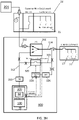
- FIG. 3A is a schematic of a microgrid 400, according to various embodiments of the present disclosure.
- FIGS. 3B-3H are schematics showing power flow through the microgrid 400 as the microgrid 400 transitions between a grid mode and an island mode.
- the microgrid 400 may include a power system 40, a power distribution system (PDS) 310, a circuit breaker 320, and an automatic transfer switch (ATS) 330.
- the PDS 310 may include an additional conventional circuit breaker.
- the circuit breaker 320 may be a wrap-around circuit breaker described in more detail below.
- the power system 40 may include least one power module 100 and an inverter module 300. In one embodiment, the power system 40 may include plural power modules 100 and plural inverter modules 300 connected to the same PDS 310.
- the power module 100 may include a fuel cell stack, such as an SOFC stack.
- the ATS 330 may include a normal terminal N, an emergency terminal E, a load terminal L, and an optional floating middle terminal or position M.
- the ATS 330 may switch between a normal position, where the ATS 330 electrically connects the normal terminal N to the load terminal L, an open position where the ATS 330 does not electrically connect the load terminal L to the normal terminal N or the emergency terminal E, and an emergency position where the ATS 330 connects the emergency terminal E to the load terminal L.
- the ATS 330 may be a two position rather than a three position ATS.
- the ATS 330 may be contactor based, circuit breaker based or molded case switch based ATS 330 depending on the system requirements.
- the power module 100, inverter module 300, and PDS 310 may be electrically connected to the emergency terminal E of the ATS 330 by a system power line 312 (e.g., a local power line).
- the load terminal L of may be connected to a critical load panel 22 including one or more critical loads 23 by a critical load line 314.
- the normal source terminal N may be connected to a utility power grid 201 by a grid power line 316.
- the grid power line 316 may be electrically connected to a main panel (i.e., main load switchboard or panel) 24 including one or more non-critical loads 25.
- a bypass line 322 may electrically connect the system power line 312 and the critical load line 314, while bypassing the ATS 330.
- the circuit breaker 320 may be located on the bypass line 322 and configured to control power flow through the bypass line 322.
- the circuit breaker 320 may be an electrically operated circuit breaker, contactor, relay, or semiconductor switch, depending on the current rating of the ATS 330.
- the microgrid 400 may include an uninterruptable power supply (UPS) 326, and an interpose relay 324 to operate the circuit breaker 320.
- UPS uninterruptable power supply
- the inverter module 300 may be similar to any of the inverter modules 200, 200A, or 200B, of FIGS. 1A-2B .
- the inverter module 300 may include a controller 50, a transformer 202 electrically connected to the system power line 312, at least one inverter, such as bidirectional first and second inverters 240, 242 electrically connected to the transformer 202, a fault diode 230 electrically connected to the first inverter 240, a first balance of plant (BOP) load BOP1, a steady-state bus 222 electrically connecting the first and second inverters 240, 242 to the first BOP load and a second BOP load BOP2 of the power module 100, and a startup bus 220 electrically connecting the first and second inverters 240, 242 to the first BOP load BOP1 and the second BOP load BOP2.
- the at least one inverter may include one or more one directional inverters.
- the controller 50 of the inverter module 300 may be configured to monitor the connection status of circuit breaker 320 via data connection path "CB Status", a connection status of the ATS 330 via data connection path "ATS Status", and the condition of the grid power (e.g., voltage and/or frequency of the grid power).
- the data connections may be wired or wireless connections.
- the inverter module 300 may be electrically connected to and/or configured to monitor current flow through the circuit breaker 320 and/or the ATS 330.
- the inverter module 300 may also be configured to control power output to the system power line 312 and the operation of the circuit breaker 320 (e.g., via the interpose relay 324 powered by the UPS 322), based on the condition of the power grid 201, the connection status of the circuit breaker 320, and/or the connection status of the ATS 330.
- the ATS 330 when the microgrid 400 is operating in a grid parallel mode, the ATS 330 may be set in the normal position to electrically connect the grid power line 316 to the critical load line 314. In particular, the ATS 330 may electrically connect the normal terminal N to the load terminal L.
- the circuit breaker 320 may be closed, such that the bypass line 322 electrically connects the system power line 312 to the critical load line 314.
- DC power generated by the power module 100 may be output as AC power from the inverter module 300 at a grid-mode voltage and supplied to the critical loads 23, via the system power line 312, the bypass line 322, and the critical load line 314.
- Excess generated power not required by the critical loads 23 may be supplied to the non-critical loads 25 and/or the power grid 201 via the ATS 330 and grid power line 316.
- the voltage output by the inverter module 300 may be synchronized with a voltage requirement of the critical loads 23 and/or may be synchronized with a voltage of the grid 201. If the power demand of the critical loads 23 exceeds the power output of the power module 100, then additional power may be supplied to the critical loads 23 from the power grid 201 through the ATS 330 to satisfy the load demand of the critical loads 23. If the power demand of the non-critical loads 25 exceeds the power output of the power module 100, then additional power may be supplied to the non-critical loads 25 from the power grid 201 through the grid power line 316 to satisfy the load demand of the non-critical loads 25.
- the inverter module 300 may monitor the grid power on the load side of the ATS 330, in order to determine whether the grid power is suitable for interconnection with the power system 40. For example, the inverter module 300 may constantly or periodically monitor the grid power to determine whether it is in compliance with power utility, IEEE 1547, and/or UL 1741 standards. The inverter module 300 may constantly or periodically monitor current flow through the circuit breaker 320 and/or the ATS 330, in order to monitor the connection status thereof. In addition, the ATS 330 may also constantly or periodically monitor the status of the power grid 201.
- the inverter module 300 if the inverter module 300 detects a grid power non-compliance condition that the ATS 330 does not detect, the inverter module 300 stops exporting power to the system power line 312 and the power system 40 operates in a no load condition, while the ATS 330 remains in the normal position to supply grid power from the grid 201 to the critical loads 23.
- the inverter module 300 may continue to monitor the grid power through the closed circuit breaker 320, and if the inverter module 300 determines that the grid power is in compliance with power utility, IEEE 1547, and/or UL 1741 standards, the inverter module 300 may resume supplying fuel cell system power to the system power line 312.
- the controller 50 (which monitors inverter module 300 and/or ATS 330 status) determines that the grid power is not suitable for interconnection, such as if the grid power from the grid 201 fails or is disrupted, the inverter module 300 stops power output to the system power line 312 and the power system 40 operates in a no load condition.
- the ATS 330 remains in the normal position and the circuit breaker 320 remains closed, as shown in FIG. 3C .
- the inverter module 300 functions as the primary anti-islanding protective device in accordance with utility, IEEE 1547 and/or UL 1741 limits, and shuts down (e.g., disconnects from the system power line at the PDS 310) as soon as the power grid (e.g., utility) 201 fails.
- the power grid e.g., utility
- the inverter module 300 if the controller 50 of the inverter module 300 detects that grid power from the grid 201 is not available at the load terminal L of the ATS 330 (via path ATS status), and determines that there is no fault in the circuit breaker 320 (via path CB status), the inverter module 300 outputs a drive signal (via the third data path in FIG. 3D ) to have the interpose relay 324 open the circuit breaker 320 using power from the UPS 322.
- the controller 50 of the inverter module 300 may then confirm that the circuit breaker 320 is open by reading an auxiliary contact of the circuit breaker 320 via data path CB Status. After confirmation of the open circuit breaker 320, the power system 40 begins island mode, the PDS 310 is activated and the inverter module 300 outputs an island mode voltage, such as a 480V AC voltage, to the system power line 312 via the PDS 310. If the ATS 330 detects the island voltage, then the ATS 330 switches to its middle position M after a first delay period expires.
- an island mode voltage such as a 480V AC voltage
- the controller 50 controls the microgrid 400 to begin island mode operation.
- the controller 50 controls the ATS 330 (via path ATS Status) to switch the ATS 330 to its emergency position after a second delay period expires, to electrically connect the system power line 312 to the critical load line 314, by connecting the emergency terminal E and the load terminal L.
- the island mode voltage may be provided to the critical loads 23 of the critical load panel 22 from the power module 100 via the system power line 312, the ATS 330 and the critical load line 314. Accordingly, power from the power system 40 is supplied to the critical loads 23 and is not provided to the non-critical loads 25.
- the controller 50 of the inverter module 300 may constantly or periodically monitor the connection status of the ATS 330 during island mode operation.
- microgrid 400 may begin a grid parallel transition mode, as shown in FIGS. 3F-3H .
- the controller may switch the ATS 330 to its middle position after a third delay period expires, such that no power is supplied to the critical loads 23.
- the power system 40 stops island mode operations (e.g., PDS 310 is opened and no power flows into the system power line 312 from the inverter module 300) and may begin transition mode operations. During transition mode operations, the power system 40 may ramp down regenerative loads such as motor loads and may stop outputting power to the system power line 312. The ATS 330 may remain in the middle position M for a fourth delay period.
- island mode operations e.g., PDS 310 is opened and no power flows into the system power line 312 from the inverter module 300
- the power system 40 may ramp down regenerative loads such as motor loads and may stop outputting power to the system power line 312.
- the ATS 330 may remain in the middle position M for a fourth delay period.
- the controller 50 may then switch the ATS 330 to the normal terminal N to electrically connect the grid power line 316 to the load terminal L and provide grid power the critical loads 23.
- the inverter 300 may stop all power output to the system power line 312 during and/or after the fourth delay period. As such, the non-critical loads 25 and the critical loads 23 are supplied with grid power from the grid 201 through lines 316 and 314 and the ATS 330.
- the controller 50 of the inverter module 300 if the controller 50 of the inverter module 300 subsequently determines that the grid power is suitable for interconnection, then the controller 50 of the inverter module 300 sends a signal to close the circuit breaker 320.
- the controller 50 of the inverter module 300 closes the circuit breaker 320 if the controller 50 of the inverter module 300 detects that no voltage is applied to the system power line 312, the ATS 330 has electrically connected the normal terminal N to the load terminal L, grid power is available through the ATS 330, and there is no fault in the circuit breaker 320.
- the controller 50 of the inverter module 300 detects that the ATS 330 is in the normal position, the circuit breaker 320 is closed, and the grid power is suitable for interconnection, the controller 50 of the inverter module 300 controls the power system 40 to output a grid mode voltage to the system power line 312 via the PDS 310, and grid parallel mode operation of the power system 40 is resumed, as shown in FIG. 3B .
- the embodiments of the invention provide hardware configurations and control methods to reliably support critical loads in a microgrid while allowing power export back to grid when grid is available.
- one or more inverters are operated in grid parallel and island modes while being able to offset power to critical loads first and then also able to export excess power non-critical loads and then to the power grid when the grid is available, without requiring real time load management when switching between the grid parallel and island modes.
- the critical load(s), the non-critical load(s) and the grid are electrically connected through a standard ATS 330 and a wrap-around circuit breaker 320 which functions as an operable switch.
- the wrap around circuit breaker 320 is controlled to separate the grid and non-critical loads from microgrid with critical loads, or to allow excess power to non-critical loads and the grid.
- the load shed control may be eliminated while retaining voltage ride-through by using the circuit breaker 320 as an operable switch.
Landscapes
- Engineering & Computer Science (AREA)
- Power Engineering (AREA)
- Business, Economics & Management (AREA)
- Emergency Management (AREA)
- Supply And Distribution Of Alternating Current (AREA)
- Stand-By Power Supply Arrangements (AREA)
Abstract
Description
- The present disclosure is directed a microgrids in general, and in particular to a microgrid including a fuel cell system and a dual mode inverter, and method of load management utilizing the microgrid.
- A microgrid is a group of interconnected loads and distributed energy resources within clearly defined electrical boundaries that acts as a single controllable entity with respect to the main power grid. For example, a microgrid may include a local power generator, a load, a load management controller, a grid isolation switch, and a switch controller.
- A microgrid can operate in a grid mode where the microgrid is electrically connected to the main power grid, and can operate in an island mode where the microgrid is disconnected from the main power grid and the microgrid is powered by the local power generator only. In grid mode, the power grid may operate as a buffer (slack bus) to provide or absorb power differences between local generation and loads in microgrid.
- According various embodiments, a microgrid includes a power system configured to output system power and an automatic transfer switch (ATS). The ATS includes a normal terminal that is electrically connected to a grid power line configured to receive grid power from a power utility, an emergency terminal that is electrically connected to a system power line configured to receive system power from the power system, and a load terminal that is electrically connected to a critical load line configured to provide power to a critical load. The microgrid also includes a bypass line electrically connected to the system power line and the critical load line, so as to bypass the ATS, and a circuit breaker configured to control power flow through the bypass line.
- According various embodiments, a method includes sequentially operating a microgrid in a grid parallel mode and in an island mode. During the grid parallel mode, the method includes providing grid power to a non-critical load via a grid power line electrically connected to the non-critical load, and to a critical load via the grid power line, a critical load line electrically connected to the critical load, and an automatic transfer switch (ATS) electrically connected to the grid power line and the critical load power line, and providing system power generated by a power system to the critical load via a system power line, the critical load line, and a bypass line that is electrically connected to the system power line and the critical power line, in parallel to the ATS. During the island mode, the method includes providing the system power to the critical load via the system power line, the ATS, and the critical load power line, such that the system power is not provided to the non-critical load.
- The accompanying drawings, which are incorporated herein and constitute part of this specification, illustrate examples of the disclosed devices and methods, and together with the general description given above and the detailed description given below, serve to explain the features of the invention.
-
FIG. 1A is a schematic illustrating power flow through electrical architecture of a fuel cell system during system startup, andFIG. 1B is a schematic illustrating power flow through the fuel cell system electrical architecture during steady-state operation, according to embodiments of the present disclosure. -
FIG. 2A and 2B are schematics illustrating electrical architecture of fuel cell systems, according to other embodiments of the present disclosure. -
FIG. 3A is a schematic of a microgrid, according to various embodiments of the present disclosure, andFIGS. 3B-3H are schematics showing power flow through the microgrid ofFIG. 3A , as the microgrid transitions between grid parallel mode and island mode. - The various examples will be described in detail with reference to the accompanying drawings. Wherever possible, the same reference numbers will be used throughout the drawings to refer to the same or like parts. References made to particular examples and implementations are for illustrative purposes, and are not intended to limit the scope of the invention or the claims. It is also understood that the examples shown in the figures are not mutually exclusive. Features shown in one example (e.g., in one figure) may be included in other examples (e.g., in other figures).
- A fuel cell system is a type of distributed power source that may be utilized to provide power to one or more loads, such as essential and non-essential loads of a microgrid. When such a microgrid is connected to a main power grid, power in excess of that required by microgrid loads may be supplied to the power grid. In addition, power from the power grid may be utilized to operate fuel cell system balance of plant (BOP) elements during fuel cell system startup.
- For example, fuel cell power generation systems, such as solid oxide fuel cell (SOFC) based distributed power generation systems, may have relatively high operating temperatures, such as temperatures of 750 °C and above for SOFCs, during a steady-state power generation mode. Accordingly, during system startup, such systems are generally provided with power from an external source, such as a connected utility or other external AC generator, in order to power BOP elements (e.g., fans, blowers, switches, etc.) and/or parasitic loads. This external startup power may be provided by converting the externally provided AC voltage to a DC voltage that is usable by the converters powering the BOP elements and other parasitic loads.
-
FIG. 1A is a schematic illustrating power flow through electrical architecture of afuel cell system 10 during system startup, andFIG. 1B is a schematic illustrating power flow through the fuel cell system electrical architecture during steady-state operation, according to a comparative example of the present disclosure. As would be apparent to one of ordinary skill in the art, the component "connections" described below are intended to refer to "electrical connections" unless otherwise specified. - Referring to
FIGS. 1A and 1B , thesystem 10 may include aninverter module 200 and at least onepower module 100 includingfuel cells 110. Thefuel cells 110 may be arranged in one or more stacks or columns. Thefuel cells 110 may include solid oxide fuel cells having a ceramic oxide electrolyte separated by conductive interconnect plates. Other fuel cell types, such as proton exchange membrane (PEM), molten carbonate, phosphoric acid, etc. may be used. Thepower module 100 may be connected to theinverter module 200 by a startup bus and a fuel cell (e.g., steady state) bus, as described below. In some embodiments, thesystem 10 may includemultiple inverter modules 200 that are each connected tomultiple power modules 100. - The
system 10 may include acontroller 50 configured to control the operations of theinverter module 200 and/or thepower module 100. Thecontroller 50 may be disposed in, or operatively connected to, theinverter module 200 or thepower module 100. Thecontroller 50 may include a central processing unit and/or a memory configured to store operating software. In some embodiments, thecontroller 50 may provide an interface to allow an operator to control thesystem 10. - The
controller 50 may be implemented using computing devices (such as computer) comprising processors, memory and other components that have been programmed with instructions to perform specific functions or may be implemented in processors designed to perform the specified functions. A processor may be any programmable microprocessor, microcomputer or multiple processor chip or chips that can be configured by software instructions (applications) to perform a variety of functions, including the functions of the various embodiments described herein. In some computing devices, multiple processors may be provided. Typically, software applications may be stored in the internal memory before they are accessed and loaded into the processor. In some computing devices, the processor may include internal memory sufficient to store the application software instructions. The processor may include a general purpose processor, a digital signal processor (DSP), an application specific integrated circuit (ASIC), a field programmable gate array (FPGA) or other programmable logic device, discrete gate or transistor logic, discrete hardware components, or any combination thereof designed to perform the functions described herein. A general purpose processor may be a microprocessor, but, in the alternative, the processor may be any conventional processor, controller, microcontroller, or state machine. A processor may also be implemented as a combination of computing devices, e.g., a combination of a DSP and a microprocessor, a plurality of microprocessors, one or more microprocessors in conjunction with a DSP core, or any other such configuration. - The
inverter module 200 may include a steady-state transformer 202 and astartup transformer 204 that are connected to an external power source, such as an electrical utility 201 (e.g., power grid or external power generator) by an externalpower source bus 226. The steady-state transformer 202 may be connected to an AC/DC inverter 212. Theinverter 212 may be connected to a steady-state diode 210 that is connected to a first balance-of-plant load BOP1. Thestartup transformer 204 may be connected to arectifier 206. Therectifier 206 may be connected via thestartup bus 222 to astartup diode 208 connected to the load BOP1. - The
power module 100 may include a DC/DC converter 218, astartup diode 214, and a steady-state diode 216. The DC/DC converter 218 may be electrically connected to theinverter 212 andfuel cells 110 of thepower module 100. The DC/DC converter 218 may also be connected to the steady-state diode 216. Thediodes startup diode 214 may also be electrically connected to therectifier 206. - Referring to
FIG. 1A , during startup of thesystem 10, before thefuel cells 110 reach the steady-state operating temperature (e.g., at least 750 °C, such as 750 °C to 900 °C for SOFCs), thefuel cells 110 may not generate an amount of power sufficient for the BOP loads. As such, during startup, the power from the utility is provided to the loads BOP1, BOP2, via thestartup bus 222. In particular, power flows via thestartup bus 222 through thestartup transformer 204, therectifier 206, thestartup diodes inverter 212,converter 218 and steady-state bus 220 are not used during system startup. - Referring to
FIG. 1B , once the fuel cells reach the desired steady-state operating temperature (e.g., 750°C and above), steady-state operation of thesystem 10 begins and power is provided from thefuel cells 110 to the loads BOP1, BOP2. In particular, power flows from thefuel cells 110 via the steady-state bus 220 through the DC/DC converter 218, theinverter 212, and through the steady-state transformer 202 to the utility and/or to any local load. Power is also diverted to loads BOP1, BOP2 as needed through the steady-state diodes rectifier 206 andstartup transformer 204 are not used. Steady-state mode operation continues at all times when thefuel cells 110 are hot enough to generate power, which accounts for almost all of the fuel cell's operational life. This includes periods when thetransformers state transformer 202 provides power from thefuel cells 110 to a local load "L" instead of to the power grid. - Accordingly, the
transformer 204,rectifier 206, fuses (not shown), and wiring used for power conversion during startup are not used during steady-state operation, which represents most of the life cycle of thesystem 10. As such, this architecture increases the cost of thesystem 10 and decreases the energy density of thesystem 10. Therectifier 206 may also produce harmonic currents during startup. -
FIG. 2A is a schematic illustrating electrical architecture of afuel cell system 20 according to another comparative embodiment of the present disclosure. The electrical architecture of thesystem 20 is similar to the electrical architecture of thesystem 10 shown inFIGS. 1A and 1B , so only differences there between will be discussed in detail. - Referring to
FIG 2A , thesystem 20 includes apower module 100A and aninverter module 200A electrically connected by acombination bus 224. Theinverter module 200A includes abidirectional inverter 240 that is electrically connected to thecombination bus 224. Thebidirectional inverter 240 can convert AC power provided from a utility into DC power suitable for driving the loads BOP1, BOP2 during system startup, and can convert DC power from thefuel cells 110 into AC power that may be provided to the utility during steady-state operation. In other words, thecombination bus 224 can be used to transmit power during both steady-state and startup operation. As such, thestartup bus 222, thestartup transformer 204, therectifier 206, and thestartup diodes system 10 ofFIGS. 1A and 1B may be omitted from thesystem 20, without loss of functionality during startup. -
FIG. 2B is a schematic illustrating electrical architecture of afuel cell system 30, according to various embodiments of the present disclosure. The electrical architecture of thesystem 30 is similar to the electrical architecture of thesystem 10 shown inFIGS. 1A and 1B , so only differences there between will be discussed in detail. Referring toFIG 2B , thesystem 30 includes thepower module 100 and aninverter module 200B, which are electrically connected by the steady-state bus 220 and thestartup bus 222. While onepower module 100 is shown, thesystem 30 may includemultiple power modules 100 electrically connected to theinverter module 200B. Thesystem 30 may also include acontroller 50 configured to control steady-state and startup operations of thesystem 30. - The
inverter module 200B may include a firstbidirectional inverter 240, a secondbidirectional inverter 242, and at least one mono-directional third inverter 244 (e.g., one to ten mono-directional inverters), which may be electrically connected to a power utility (e.g., a power source external to the system 30) and thesystem transformer 202 by the externalpower source bus 226. Theinverter module 200B contains asingle system transformer 202 which operates in both startup and steady-state modes, instead of the twotransformers FIGS. 1A and 1B . Theinverter module 200B may also include astartup diode 208 and a steady-state diode 210, which are electrically connected to a first balance-of-plant load BOP1. Theinverter module 200B may also include afault diode 230 and an optionalauxiliary diode 232. - The
power module 100 may include thestartup diode 214 that is electrically connected to thestartup bus 222, and the steady-state diode 216 that is electrically connected to the steady-state bus 220. Bothdiodes - During startup mode, the external
power source bus 226 may provide power from theutility 201 sequentially to the system transformer 302 and thefirst inverter 240. Thetransformer 202 may operate to change the voltage of the utility power, and thefirst inverter 240 may operate to convert the AC utility power (i.e., alternating current) into a DC power (i.e., direct current). Thestartup bus 222 may then provide the utility power to the first load BOP1, via thestartup diode 208. According, thefirst inverter 240 may operate as a rectifier and theseparate rectifier 206 and thestartup transformer 204 shown inFIG. 1A may be omitted to decrease the cost of thesystem 30. Thus, thesystem 30 may exclude any additional transformers (other than the single system transformer 202) and any rectifiers. Thestartup bus 222 may also provide theutility 201 power to the second load BOP2 via thestartup diode 214. Thefault diode 230 prevents current from flowing into through the steady-state bus 220 into thefuel cells 110 during the start-up mode. Thesecond inverter 242 may remain off, such that power does not pass through thesecond inverter 242 to the steady-state bus 220. Further, since thethird inverter 244 is unidirectional, thethird inverter 244 may also prevent power from being supplied to the steady-state bus 220, during startup. Accordingly, during system startup, theinverter module 200B may be configured to supply utility power to both loads BOP1, BOP2 via thestartup bus 222. - Microgrid island formation due to grid failure is generally detected through a standard protection relay, such as an SEL 751 or Beckwith relay, which monitors voltage (V) and frequency (F) of grid. Apart from V and F monitoring, these protection relays also monitor power following in either direction between the power grid and the microgrid, to detect islanding and open a grid isolation device. However when a microgrid designed to export excess power to the power grid due excess power generation in microgrid, the reverse power method of islanding detection doesn't work. Therefore all the generators in the microgrid may be required to have expensive UL certified active anti-islanding protection.
- A microgrid generally includes a load management controller that operates to ensure the total load on the microgrid is less than available total generation at all times. When a sufficient power storage buffer is available in the microgrid, a microgrid controller will be able to detect excess demand by monitoring storage output power and shed the load accordingly. However, if sufficient power storage is not available, a microgrid load management controller should operate to shed the load after a power grid failure and before local generation begins supporting local microgrid loads. Load shedding may involve several challenges and several single point failures.
-
FIG. 3A is a schematic of amicrogrid 400, according to various embodiments of the present disclosure.FIGS. 3B-3H are schematics showing power flow through themicrogrid 400 as themicrogrid 400 transitions between a grid mode and an island mode. - Referring to
FIG. 3A , themicrogrid 400 may include apower system 40, a power distribution system (PDS) 310, acircuit breaker 320, and an automatic transfer switch (ATS) 330. ThePDS 310 may include an additional conventional circuit breaker. Thecircuit breaker 320 may be a wrap-around circuit breaker described in more detail below. Thepower system 40 may include least onepower module 100 and aninverter module 300. In one embodiment, thepower system 40 may includeplural power modules 100 andplural inverter modules 300 connected to thesame PDS 310. Thepower module 100 may include a fuel cell stack, such as an SOFC stack. - The
ATS 330 may include a normal terminal N, an emergency terminal E, a load terminal L, and an optional floating middle terminal or positionM. The ATS 330 may switch between a normal position, where theATS 330 electrically connects the normal terminal N to the load terminal L, an open position where theATS 330 does not electrically connect the load terminal L to the normal terminal N or the emergency terminal E, and an emergency position where theATS 330 connects the emergency terminal E to the load terminal L. Alternatively, theATS 330 may be a two position rather than a three position ATS. TheATS 330 may be contactor based, circuit breaker based or molded case switch basedATS 330 depending on the system requirements. - The
power module 100,inverter module 300, andPDS 310 may be electrically connected to the emergency terminal E of theATS 330 by a system power line 312 (e.g., a local power line). The load terminal L of may be connected to acritical load panel 22 including one or morecritical loads 23 by acritical load line 314. The normal source terminal N may be connected to autility power grid 201 by agrid power line 316. Thegrid power line 316 may be electrically connected to a main panel (i.e., main load switchboard or panel) 24 including one or morenon-critical loads 25. - A
bypass line 322 may electrically connect thesystem power line 312 and thecritical load line 314, while bypassing theATS 330. Thecircuit breaker 320 may be located on thebypass line 322 and configured to control power flow through thebypass line 322. Thecircuit breaker 320 may be an electrically operated circuit breaker, contactor, relay, or semiconductor switch, depending on the current rating of theATS 330. In some embodiments, themicrogrid 400 may include an uninterruptable power supply (UPS) 326, and aninterpose relay 324 to operate thecircuit breaker 320. - The
inverter module 300 may be similar to any of theinverter modules FIGS. 1A-2B . For example, theinverter module 300 may include acontroller 50, atransformer 202 electrically connected to thesystem power line 312, at least one inverter, such as bidirectional first andsecond inverters transformer 202, afault diode 230 electrically connected to thefirst inverter 240, a first balance of plant (BOP) load BOP1, a steady-state bus 222 electrically connecting the first andsecond inverters power module 100, and astartup bus 220 electrically connecting the first andsecond inverters - The
controller 50 of theinverter module 300 may be configured to monitor the connection status ofcircuit breaker 320 via data connection path "CB Status", a connection status of theATS 330 via data connection path "ATS Status", and the condition of the grid power (e.g., voltage and/or frequency of the grid power). The data connections may be wired or wireless connections. For example, theinverter module 300 may be electrically connected to and/or configured to monitor current flow through thecircuit breaker 320 and/or theATS 330. Theinverter module 300 may also be configured to control power output to thesystem power line 312 and the operation of the circuit breaker 320 (e.g., via theinterpose relay 324 powered by the UPS 322), based on the condition of thepower grid 201, the connection status of thecircuit breaker 320, and/or the connection status of theATS 330. - As shown in
FIG. 3A , when themicrogrid 400 is operating in a grid parallel mode, theATS 330 may be set in the normal position to electrically connect thegrid power line 316 to thecritical load line 314. In particular, theATS 330 may electrically connect the normal terminal N to the load terminal L. Thecircuit breaker 320 may be closed, such that thebypass line 322 electrically connects thesystem power line 312 to thecritical load line 314. DC power generated by thepower module 100 may be output as AC power from theinverter module 300 at a grid-mode voltage and supplied to thecritical loads 23, via thesystem power line 312, thebypass line 322, and thecritical load line 314. Excess generated power not required by thecritical loads 23 may be supplied to thenon-critical loads 25 and/or thepower grid 201 via theATS 330 andgrid power line 316. For example, the voltage output by theinverter module 300 may be synchronized with a voltage requirement of thecritical loads 23 and/or may be synchronized with a voltage of thegrid 201. If the power demand of thecritical loads 23 exceeds the power output of thepower module 100, then additional power may be supplied to thecritical loads 23 from thepower grid 201 through theATS 330 to satisfy the load demand of the critical loads 23. If the power demand of thenon-critical loads 25 exceeds the power output of thepower module 100, then additional power may be supplied to thenon-critical loads 25 from thepower grid 201 through thegrid power line 316 to satisfy the load demand of the non-critical loads 25. - The
inverter module 300 may monitor the grid power on the load side of theATS 330, in order to determine whether the grid power is suitable for interconnection with thepower system 40. For example, theinverter module 300 may constantly or periodically monitor the grid power to determine whether it is in compliance with power utility, IEEE 1547, and/or UL 1741 standards. Theinverter module 300 may constantly or periodically monitor current flow through thecircuit breaker 320 and/or theATS 330, in order to monitor the connection status thereof. In addition, theATS 330 may also constantly or periodically monitor the status of thepower grid 201. - Referring to
FIG. 3B , if theinverter module 300 detects a grid power non-compliance condition that theATS 330 does not detect, theinverter module 300 stops exporting power to thesystem power line 312 and thepower system 40 operates in a no load condition, while theATS 330 remains in the normal position to supply grid power from thegrid 201 to the critical loads 23. Theinverter module 300 may continue to monitor the grid power through theclosed circuit breaker 320, and if theinverter module 300 determines that the grid power is in compliance with power utility, IEEE 1547, and/or UL 1741 standards, theinverter module 300 may resume supplying fuel cell system power to thesystem power line 312. - Referring to
FIGS. 3C-3E , during an island transition mode of themicrogrid 400, if the controller 50 (which monitorsinverter module 300 and/orATS 330 status) determines that the grid power is not suitable for interconnection, such as if the grid power from thegrid 201 fails or is disrupted, theinverter module 300 stops power output to thesystem power line 312 and thepower system 40 operates in a no load condition. TheATS 330 remains in the normal position and thecircuit breaker 320 remains closed, as shown inFIG. 3C . Thus, theinverter module 300 functions as the primary anti-islanding protective device in accordance with utility, IEEE 1547 and/or UL 1741 limits, and shuts down (e.g., disconnects from the system power line at the PDS 310) as soon as the power grid (e.g., utility) 201 fails. - Referring to
FIG. 3D , if thecontroller 50 of theinverter module 300 detects that grid power from thegrid 201 is not available at the load terminal L of the ATS 330 (via path ATS status), and determines that there is no fault in the circuit breaker 320 (via path CB status), theinverter module 300 outputs a drive signal (via the third data path inFIG. 3D ) to have theinterpose relay 324 open thecircuit breaker 320 using power from theUPS 322. - The
controller 50 of theinverter module 300 may then confirm that thecircuit breaker 320 is open by reading an auxiliary contact of thecircuit breaker 320 via data path CB Status. After confirmation of theopen circuit breaker 320, thepower system 40 begins island mode, thePDS 310 is activated and theinverter module 300 outputs an island mode voltage, such as a 480V AC voltage, to thesystem power line 312 via thePDS 310. If theATS 330 detects the island voltage, then theATS 330 switches to its middle position M after a first delay period expires. - Referring to
FIG. 3E , if theATS 330 continues to detect the island voltage, thecontroller 50 controls themicrogrid 400 to begin island mode operation. In particular, thecontroller 50 controls the ATS 330 (via path ATS Status) to switch theATS 330 to its emergency position after a second delay period expires, to electrically connect thesystem power line 312 to thecritical load line 314, by connecting the emergency terminal E and the load terminal L. As such, in island mode, the island mode voltage may be provided to thecritical loads 23 of thecritical load panel 22 from thepower module 100 via thesystem power line 312, theATS 330 and thecritical load line 314. Accordingly, power from thepower system 40 is supplied to thecritical loads 23 and is not provided to the non-critical loads 25. Thecontroller 50 of theinverter module 300 may constantly or periodically monitor the connection status of theATS 330 during island mode operation. - If the
ATS 330 detects that the grid power has been restored (i.e., if the grid power is detected at theATS 330 by thecontroller 50 via data path ATS Status) while thepower system 40 is in island mode, then then microgrid 400 may begin a grid parallel transition mode, as shown inFIGS. 3F-3H . In particular, as shown inFIG. 3F , the controller may switch theATS 330 to its middle position after a third delay period expires, such that no power is supplied to the critical loads 23. If thecontroller 50 of theinverter module 300 determines that theATS 330 is in the middle position M, thepower system 40 stops island mode operations (e.g.,PDS 310 is opened and no power flows into thesystem power line 312 from the inverter module 300) and may begin transition mode operations. During transition mode operations, thepower system 40 may ramp down regenerative loads such as motor loads and may stop outputting power to thesystem power line 312. TheATS 330 may remain in the middle position M for a fourth delay period. - As shown in
FIG. 3G , after the fourth delay period expires, thecontroller 50 may then switch theATS 330 to the normal terminal N to electrically connect thegrid power line 316 to the load terminal L and provide grid power the critical loads 23. Theinverter 300 may stop all power output to thesystem power line 312 during and/or after the fourth delay period. As such, thenon-critical loads 25 and thecritical loads 23 are supplied with grid power from thegrid 201 throughlines ATS 330. - As shown in
FIG. 3H , if thecontroller 50 of theinverter module 300 subsequently determines that the grid power is suitable for interconnection, then thecontroller 50 of theinverter module 300 sends a signal to close thecircuit breaker 320. In particular, thecontroller 50 of theinverter module 300 closes thecircuit breaker 320 if thecontroller 50 of theinverter module 300 detects that no voltage is applied to thesystem power line 312, theATS 330 has electrically connected the normal terminal N to the load terminal L, grid power is available through theATS 330, and there is no fault in thecircuit breaker 320. - If the
controller 50 of theinverter module 300 detects that theATS 330 is in the normal position, thecircuit breaker 320 is closed, and the grid power is suitable for interconnection, thecontroller 50 of theinverter module 300 controls thepower system 40 to output a grid mode voltage to thesystem power line 312 via thePDS 310, and grid parallel mode operation of thepower system 40 is resumed, as shown inFIG. 3B . - The embodiments of the invention provide hardware configurations and control methods to reliably support critical loads in a microgrid while allowing power export back to grid when grid is available. Specifically, one or more inverters are operated in grid parallel and island modes while being able to offset power to critical loads first and then also able to export excess power non-critical loads and then to the power grid when the grid is available, without requiring real time load management when switching between the grid parallel and island modes.
- In one embodiment, the critical load(s), the non-critical load(s) and the grid are electrically connected through a
standard ATS 330 and a wrap-aroundcircuit breaker 320 which functions as an operable switch. The wrap aroundcircuit breaker 320 is controlled to separate the grid and non-critical loads from microgrid with critical loads, or to allow excess power to non-critical loads and the grid. The load shed control may be eliminated while retaining voltage ride-through by using thecircuit breaker 320 as an operable switch. - The construction and arrangements as shown in the various examples are illustrative only. Although only a few examples have been described in detail in this disclosure, many modifications are possible (e.g., variations in sizes, dimensions, structures, shapes and proportions of the various elements, values of parameters, mounting arrangements, use of materials, colors, orientations, etc.) without materially departing from the novel teachings and advantages of the subject matter described herein. Some elements shown as integrally formed may be constructed of multiple parts or elements, the position of elements may be reversed or otherwise varied, and the nature or number of discrete elements or positions may be altered or varied. The order or sequence of any process, logical algorithm, or method steps may be varied or re-sequenced according to alternative examples. Other substitutions, modifications, changes, and omissions may also be made in the design, operating conditions and arrangement of the various examples without departing from the scope of the present disclosure. Any one or more features of any example may be used in any combination with any one or more other features of one or more other examples. It is intended that the specification and examples be considered as exemplary only, with a true scope being indicated by the following claims and their equivalents.
- The invention also refers to the following embodiments, wherein the term "claim" means "embodiment":
- 1. A microgrid, comprising:
- a power system configured to output system power;
- an automatic transfer switch (ATS) comprising:
- a normal terminal that is electrically connected to a grid power line configured to receive grid power from a power utility;
- an emergency terminal that is electrically connected to a system power line configured to receive system power from the power system; and
- a load terminal that is electrically connected to a critical load line configured to provide power to a critical load;
- a bypass line electrically connected to the system power line and the critical load line, so as to bypass the ATS; and
- a circuit breaker configured to control power flow through the bypass line.
- 2. The microgrid of claim 1, wherein when the microgrid is operating in a grid parallel mode, then the microgrid is configured to:
- provide the grid power to the critical load via the grid power line, the ATS, and the critical load line;
- close the circuit breaker; and
- provide the system power to the critical load via the bypass line.
- 3. The microgrid of claim 2, wherein when the microgrid is operating in the grid parallel mode, the microgrid is configured to provide system power in excess of a power requirement of the critical load to a non-critical load electrically connected to one of the grid power line or the power utility.
- 4. The microgrid of claim 1, wherein when the microgrid is operating in an island mode, then the microgrid is configured to:
- open the circuit breaker; and
- provide the system power to the critical load via the ATS.
- 5. The microgrid of claim 1, wherein the ATS is configured to:
- electrically connect the grid power line to the critical load power line, if the ATS determines that the grid power is suitable for interconnection; and
- electrically connect the system power line to the critical load power line, if the ATS determines that the grid power is not suitable for interconnection and the power system is providing the system power to the system power line.
- 6. The microgrid of claim 5, wherein the ATS is configured to electrically disconnect the load terminal from the normal terminal and the emergency terminal for a delay period, before electrically connecting the emergency terminal to the load terminal.
- 7. The microgrid of claim 6, wherein the ATS is configured to electrically reconnect the load terminal to the normal terminal, if the ATS determines that grid power suitable for interconnection is restored to the grid power line.
- 8. The microgrid of claim 1, wherein the power system is configured to open the circuit breaker if the power system determines that the grid power is not suitable for interconnection.
- 9. The microgrid of claim 8, wherein the power system is configured to close the circuit breaker if the power system determines that the grid power is suitable for interconnection.
- 10. The microgrid of claim 1, wherein the power system comprises:
- a power module comprising a fuel cell stack; and
- an inverter module containing a controller configured to control the system power output to the system power line and operation of the circuit breaker, based on at least one of a connection state of the ATS, a connection state of the circuit breaker, or a suitability of the grid power for interconnection.
- 11. A method of sequentially operating a microgrid in a grid parallel mode and in an island mode, comprising:
- during the grid parallel mode:
- providing grid power to a non-critical load via a grid power line electrically connected to the non-critical load, and to a critical load via the grid power line, a critical load line electrically connected to the critical load, and an automatic transfer switch (ATS) electrically connected to the grid power line and the critical load power line; and
- providing system power generated by a power system to the critical load via a system power line, the critical load line, and a bypass line that is electrically connected to the system power line and the critical power line, in parallel to the ATS; and
- during the island mode:
providing the system power to the critical load via the system power line, the ATS, and the critical load power line, such that the system power is not provided to the non-critical load.
- during the grid parallel mode:
- 12. The method of claim 11, wherein:
- during the island mode, the ATS electrically connects the system power line to the critical load line, and a circuit breaker disposed on the bypass line is open, to prevent the system power from bypassing the ATS; and
- during the grid parallel mode, the ATS electrically connects the grid power line to the critical load line, and the circuit breaker is closed such that the system power bypasses the ATS.
- 13. The method of claim 12, wherein the circuit breaker is opened if the grid power is not suitable for interconnection, and the circuit breaker is closed if the grid power is suitable for interconnection.
- 14. The method of claim 12, wherein during the grid parallel mode, system power in excess of a power requirement of the critical load is provided to at least one of the non-critical load or to a power utility electrically connected to the grid power line.
- 15. The method of claim 12, wherein during a transition mode that occurs between the grid parallel mode and the island mode, the system power is not output to the system power line, if the voltage or frequency of the grid power is determined to not be suitable for interconnection.
- 16. The method of claim 15, wherein during the transition mode, the circuit breaker is opened if the system power is not output to the system power line.
- 17. The method of claim 11, wherein:
- the ATS electrically connects the grid power line to the critical load power line if the grid power is suitable for interconnection; and
- ATS electrically connects the system power line to the critical load power line if the grid power is not suitable for interconnection and the power system is providing the system power to the system power line.
- 18. The method of claim 17, further comprising if the grid power is not suitable for interconnection, then the ATS electrically disconnects the critical load power line from the grid power line, before electrically connecting the system power line to the critical load power line.
- 19. The method of claim 18, further comprising if the grid power becomes suitable for interconnection is restored to the grid power line, then the ATS electrically reconnects the critical load power line to the grid power line.
- 20. The method of claim 12, wherein the power system comprises:
- a power module comprising a fuel cell stack; and
- an inverter module containing a controller configured to control the system power output to the system power line and operation of the circuit breaker, based on at least one of a connection state of the ATS, a connection state of the circuit breaker, or a suitability of the grid power for interconnection.
Claims (15)
- A microgrid, comprising:a power system configured to output system power;an automatic transfer switch (ATS) comprising:a normal terminal that is electrically connected to a grid power line configured to receive grid power from a power utility;an emergency terminal that is electrically connected to a system power line configured to receive system power from the power system; anda load terminal that is electrically connected to a critical load line configured to provide power to a critical load;a bypass line electrically connected to the system power line and the critical load line, so as to bypass the ATS; anda circuit breaker configured to control power flow through the bypass line.
- The microgrid of claim 1, wherein when the microgrid is operating in a grid parallel mode, then the microgrid is configured to:provide the grid power to the critical load via the grid power line, the ATS, and the critical load line;close the circuit breaker; andprovide the system power to the critical load via the bypass line.
- The microgrid of claim 2, wherein when the microgrid is operating in the grid parallel mode, the microgrid is configured to provide system power in excess of a power requirement of the critical load to a non-critical load electrically connected to one of the grid power line or the power utility.
- The microgrid of claim 1, wherein when the microgrid is operating in an island mode, then the microgrid is configured to:open the circuit breaker; andprovide the system power to the critical load via the ATS.
- The microgrid of claim 1, wherein the ATS is configured to:electrically connect the grid power line to the critical load power line, if the ATS determines that the grid power is suitable for interconnection; andelectrically connect the system power line to the critical load power line, if the ATS determines that the grid power is not suitable for interconnection and the power system is providing the system power to the system power line;wherein the ATS is configured to electrically disconnect the load terminal from the normal terminal and the emergency terminal for a delay period, before electrically connecting the emergency terminal to the load terminal; andwherein the ATS is configured to electrically reconnect the load terminal to the normal terminal, if the ATS determines that grid power suitable for interconnection is restored to the grid power line.
- The microgrid of claim 1, wherein the power system is configured to open the circuit breaker if the power system determines that the grid power is not suitable for interconnection, and wherein the power system is configured to close the circuit breaker if the power system determines that the grid power is suitable for interconnection.
- The microgrid of claim 1, wherein the power system comprises:a power module comprising a fuel cell stack; andan inverter module containing a controller configured to control the system power output to the system power line and operation of the circuit breaker, based on at least one of a connection state of the ATS, a connection state of the circuit breaker, or a suitability of the grid power for interconnection.
- A method of sequentially operating a microgrid in a grid parallel mode and in an island mode, comprising:during the grid parallel mode:providing grid power to a non-critical load via a grid power line electrically connected to the non-critical load, and to a critical load via the grid power line, a critical load line electrically connected to the critical load, and an automatic transfer switch (ATS) electrically connected to the grid power line and the critical load power line; andproviding system power generated by a power system to the critical load via a system power line, the critical load line, and a bypass line that is electrically connected to the system power line and the critical power line, in parallel to the ATS; andduring the island mode:
providing the system power to the critical load via the system power line, the ATS, and the critical load power line, such that the system power is not provided to the non-critical load. - The method of claim 8, wherein:during the island mode, the ATS electrically connects the system power line to the critical load line, and a circuit breaker disposed on the bypass line is open, to prevent the system power from bypassing the ATS; andduring the grid parallel mode, the ATS electrically connects the grid power line to the critical load line, and the circuit breaker is closed such that the system power bypasses the ATS.
- The method of claim 9, wherein the circuit breaker is opened if the grid power is not suitable for interconnection, and the circuit breaker is closed if the grid power is suitable for interconnection.
- The method of claim 9, wherein during the grid parallel mode, system power in excess of a power requirement of the critical load is provided to at least one of the non-critical load or to a power utility electrically connected to the grid power line.
- The method of claim 9, wherein during a transition mode that occurs between the grid parallel mode and the island mode, the system power is not output to the system power line, if the voltage or frequency of the grid power is determined to not be suitable for interconnection, and wherein during the transition mode, the circuit breaker is opened if the system power is not output to the system power line.
- The method of claim 8, wherein:the ATS electrically connects the grid power line to the critical load power line if the grid power is suitable for interconnection; andATS electrically connects the system power line to the critical load power line if the grid power is not suitable for interconnection and the power system is providing the system power to the system power line.
- The method of claim 13, further comprising:if the grid power is not suitable for interconnection, then the ATS electrically disconnects the critical load power line from the grid power line, before electrically connecting the system power line to the critical load power line; andif the grid power becomes suitable for interconnection is restored to the grid power line, then the ATS electrically reconnects the critical load power line to the grid power line.
- The method of claim 9, wherein the power system comprises:a power module comprising a fuel cell stack; andan inverter module containing a controller configured to control the system power output to the system power line and operation of the circuit breaker, based on at least one of a connection state of the ATS, a connection state of the circuit breaker, or a suitability of the grid power for interconnection.
Applications Claiming Priority (1)
| Application Number | Priority Date | Filing Date | Title |
|---|---|---|---|
| US202163158147P | 2021-03-08 | 2021-03-08 |
Publications (1)
| Publication Number | Publication Date |
|---|---|
| EP4057481A1 true EP4057481A1 (en) | 2022-09-14 |
Family
ID=80623644
Family Applications (1)
| Application Number | Title | Priority Date | Filing Date |
|---|---|---|---|
| EP22159333.8A Pending EP4057481A1 (en) | 2021-03-08 | 2022-03-01 | Microgrid including dual mode microgrid inverter and load management method |
Country Status (6)
| Country | Link |
|---|---|
| US (1) | US11990790B2 (en) |
| EP (1) | EP4057481A1 (en) |
| JP (1) | JP7731823B2 (en) |
| KR (1) | KR102864375B1 (en) |
| CN (1) | CN115051348A (en) |
| TW (1) | TWI899442B (en) |
Families Citing this family (5)
| Publication number | Priority date | Publication date | Assignee | Title |
|---|---|---|---|---|
| EP4057481A1 (en) * | 2021-03-08 | 2022-09-14 | Bloom Energy Corporation | Microgrid including dual mode microgrid inverter and load management method |
| US12413076B2 (en) | 2023-06-27 | 2025-09-09 | Bloom Energy Corporation | Systems and methods for microgrid-power distribution management when distributed energy resources transition between operating modes |
| CN118316180A (en) * | 2024-04-08 | 2024-07-09 | 苏州明纬科技有限公司 | Power Synchronous Switching System |
| CN119093423B (en) * | 2024-08-19 | 2025-09-26 | 天津大学 | Microgrid control method and device for hydrometallurgy plant based on energy storage inverter |
| CN118677015B (en) * | 2024-08-22 | 2024-10-29 | 杭州东贝智算科技有限公司 | Micro-grid power supply mode switching control circuit |
Citations (2)
| Publication number | Priority date | Publication date | Assignee | Title |
|---|---|---|---|---|
| US20040046458A1 (en) * | 2002-08-22 | 2004-03-11 | Robin Mackay | Precise power system |
| US20170070087A1 (en) * | 2014-02-28 | 2017-03-09 | Wal-Mart Stores, Inc. | Automatic transfer switch maintenance bypass cabinet |
Family Cites Families (38)
| Publication number | Priority date | Publication date | Assignee | Title |
|---|---|---|---|---|
| JP3188239B2 (en) * | 1998-10-27 | 2001-07-16 | 株式会社エヌ・ティ・ティ ファシリティーズ | AC uninterruptible power supply |
| JP3676638B2 (en) * | 2000-01-07 | 2005-07-27 | 東芝三菱電機産業システム株式会社 | Power system switching device and switching method |
| JP2001211570A (en) * | 2000-01-26 | 2001-08-03 | Osaka Gas Co Ltd | Power-feeding method for important load |
| US7061139B2 (en) | 2001-02-13 | 2006-06-13 | Utc Fuel Cells, Llc | System for providing assured power to a critical load |
| JP2007028754A (en) * | 2005-07-14 | 2007-02-01 | Toshiba Mitsubishi-Electric Industrial System Corp | Power supply system switching unit |
| JP4476980B2 (en) * | 2006-08-10 | 2010-06-09 | 鹿島建設株式会社 | Non-instantaneous switching device |
| EP1965483B1 (en) * | 2007-02-27 | 2015-07-08 | SMA Solar Technology AG | Circuit for connecting an energy generation unit to the power grid |
| JP2013031321A (en) * | 2011-07-29 | 2013-02-07 | Daiwa House Industry Co Ltd | Power supply system and method for building |
| US9972852B2 (en) | 2012-07-09 | 2018-05-15 | Bloom Energy Corporation | Fuel cell system with variable frequency drive for support equipment |
| US9639130B2 (en) | 2014-04-07 | 2017-05-02 | Bloom Energy Corporation | Parallel control of multiple uninterruptable power modules (“UPMs”) |
| US9819192B2 (en) | 2014-07-29 | 2017-11-14 | General Electric Company | Solid oxide fuel cell-based power generation and delivery system and method of operating the same |
| JP6555684B2 (en) * | 2015-03-30 | 2019-08-07 | 大同信号株式会社 | Power switching device with bypass |
| US10666058B2 (en) | 2015-06-04 | 2020-05-26 | Bloom Energy Corporation | Intergrated fuel cell and energy storage systems and method of operating thereof |
| EP3257129B1 (en) * | 2015-07-02 | 2020-11-04 | Dynapower Company LLC | Power converter system having active standby mode and method of controlling the same |
| US10243226B2 (en) | 2015-09-09 | 2019-03-26 | Fuelcell Energy, Inc. | Fuel cell system ride-through of electric grid disturbances |
| JP2017127137A (en) * | 2016-01-14 | 2017-07-20 | 三菱電機株式会社 | Switch box and power supply system |
| US10886737B2 (en) * | 2016-01-25 | 2021-01-05 | S&C Electric Company | Energization control for establishing microgrids |
| US10367215B2 (en) | 2016-05-23 | 2019-07-30 | Bloom Energy Corporation | Fuel cell system with variable auxiliary bus voltage and method of operating thereof |
| US20180131268A1 (en) * | 2016-10-19 | 2018-05-10 | Dynapower Company Llc | Power system and method of starting multiple power converters in grid forming mode |
| KR20180127771A (en) * | 2017-05-22 | 2018-11-30 | 주식회사 럭스코 | Military microgrid system |
| US10658843B2 (en) | 2017-05-24 | 2020-05-19 | Rolls-Royce Plc | DC coupled power electronics system for a fuel cell power system |
| JP2019017141A (en) * | 2017-07-04 | 2019-01-31 | 株式会社豊田自動織機 | Power supply system |
| US10756546B2 (en) | 2017-08-10 | 2020-08-25 | Bloom Energy Corporation | Methods of advanced grid and microgrid support functionalities through hybrid fuel cell systems |
| US11271406B2 (en) | 2018-01-24 | 2022-03-08 | Bloom Energy Corporation | Selective grounding of grid parallel inverter systems |
| US10651479B2 (en) | 2018-02-05 | 2020-05-12 | Bloom Energy Corporation | Method of recovering metal compounds from solid oxide fuel cell scrap |
| US11128147B2 (en) | 2018-04-04 | 2021-09-21 | Bloom Energy Corporation | Power system integrated with dual power electrical load |
| US10601226B2 (en) | 2018-04-04 | 2020-03-24 | Bloom Energy Corporation | Advanced uninterruptable power module controller and method of operating same |
| WO2020014101A1 (en) | 2018-07-11 | 2020-01-16 | Bloom Energy Corporation | Fuel cell stack grounding through an impedance creating element |
| WO2020047227A1 (en) | 2018-08-30 | 2020-03-05 | Bloom Energy Corporation | Power source communication with downstream device by changing output voltage on a power bus |
| CN109687570B (en) * | 2018-12-17 | 2021-03-02 | 国网北京市电力公司 | Zero-flicker low-voltage power distribution system and operation method |
| WO2020139818A1 (en) | 2018-12-26 | 2020-07-02 | Bloom Energy Corporation | Fuel cell system including exhaust heat recovery components |
| KR102579054B1 (en) | 2019-02-20 | 2023-09-15 | 블룸 에너지 코퍼레이션 | Hybrid DC power installation for data center loads |
| CN110474373A (en) * | 2019-10-14 | 2019-11-19 | 深圳奥特迅电力设备股份有限公司 | A kind of intelligent micro-grid system of high reliability |
| US11258294B2 (en) | 2019-11-19 | 2022-02-22 | Bloom Energy Corporation | Microgrid with power equalizer bus and method of operating same |
| JP2023514202A (en) | 2020-02-19 | 2023-04-05 | ブルーム エネルギー コーポレイション | Fault Tolerant Electrical Architecture of Fuel Cell Systems |
| US11369592B2 (en) | 2020-02-21 | 2022-06-28 | Florida State University Research Foundation, Inc. | Treatment of human coronavirus infections using alpha-glucosidase glycoprotein processing inhibitors |
| CN115917911A (en) | 2020-05-18 | 2023-04-04 | 博隆能源股份有限公司 | Fuel cell operation method with bidirectional inverter |
| EP4057481A1 (en) | 2021-03-08 | 2022-09-14 | Bloom Energy Corporation | Microgrid including dual mode microgrid inverter and load management method |
-
2022
- 2022-03-01 EP EP22159333.8A patent/EP4057481A1/en active Pending
- 2022-03-01 KR KR1020220026442A patent/KR102864375B1/en active Active
- 2022-03-01 JP JP2022030610A patent/JP7731823B2/en active Active
- 2022-03-01 TW TW111107230A patent/TWI899442B/en active
- 2022-03-01 CN CN202210194604.9A patent/CN115051348A/en active Pending
- 2022-03-04 US US17/686,877 patent/US11990790B2/en active Active
Patent Citations (2)
| Publication number | Priority date | Publication date | Assignee | Title |
|---|---|---|---|---|
| US20040046458A1 (en) * | 2002-08-22 | 2004-03-11 | Robin Mackay | Precise power system |
| US20170070087A1 (en) * | 2014-02-28 | 2017-03-09 | Wal-Mart Stores, Inc. | Automatic transfer switch maintenance bypass cabinet |
Also Published As
| Publication number | Publication date |
|---|---|
| CN115051348A (en) | 2022-09-13 |
| TW202241008A (en) | 2022-10-16 |
| JP2022136989A (en) | 2022-09-21 |
| KR102864375B1 (en) | 2025-09-25 |
| KR20220126216A (en) | 2022-09-15 |
| JP7731823B2 (en) | 2025-09-01 |
| US20220285977A1 (en) | 2022-09-08 |
| TWI899442B (en) | 2025-10-01 |
| US11990790B2 (en) | 2024-05-21 |
Similar Documents
| Publication | Publication Date | Title |
|---|---|---|
| US11990790B2 (en) | Microgrid including dual mode microgrid inverter and load management method | |
| US11316471B2 (en) | Manual transfer switch for onsite energy generation and storage systems | |
| US7800248B2 (en) | Backup power system | |
| US9831675B2 (en) | System for common redundant bypass feed paths in uninterruptible power supplies | |
| US11799316B2 (en) | Fuel cell system for information technology loads | |
| US11387476B2 (en) | Fault tolerant electrical architecture for fuel cell systems | |
| US11689049B2 (en) | DC transfer switch for fuel cell systems with auxiliary storage module | |
| JP7708910B2 (en) | Uninterruptible power supply control device and UPS module to which the power supply control device is applied | |
| CN116316761A (en) | A kind of energy storage cabinet and energy storage system | |
| KR20230069020A (en) | Power management in fuel cell system based microgrids | |
| KR102537206B1 (en) | Grid-connected system for renewable power generation and method for operating the same | |
| JP2023141037A (en) | power converter | |
| US12341369B2 (en) | Inverter-based microgrid including kinetic storage device and method of operating the same | |
| US20250385526A1 (en) | Control system for protecting multi-unit fuel cell system | |
| US20250385524A1 (en) | Multi-unit fuel cell system with microgrid | |
| JP7440752B2 (en) | power system | |
| JP2004120828A (en) | Power converter | |
| Gobbi et al. | Maximizing battery reserve in high availability power systems |
Legal Events
| Date | Code | Title | Description |
|---|---|---|---|
| PUAI | Public reference made under article 153(3) epc to a published international application that has entered the european phase |
Free format text: ORIGINAL CODE: 0009012 |
|
| STAA | Information on the status of an ep patent application or granted ep patent |
Free format text: STATUS: THE APPLICATION HAS BEEN PUBLISHED |
|
| AK | Designated contracting states |
Kind code of ref document: A1 Designated state(s): AL AT BE BG CH CY CZ DE DK EE ES FI FR GB GR HR HU IE IS IT LI LT LU LV MC MK MT NL NO PL PT RO RS SE SI SK SM TR |
|
| STAA | Information on the status of an ep patent application or granted ep patent |
Free format text: STATUS: REQUEST FOR EXAMINATION WAS MADE |
|
| 17P | Request for examination filed |
Effective date: 20230302 |
|
| RBV | Designated contracting states (corrected) |
Designated state(s): AL AT BE BG CH CY CZ DE DK EE ES FI FR GB GR HR HU IE IS IT LI LT LU LV MC MK MT NL NO PL PT RO RS SE SI SK SM TR |